


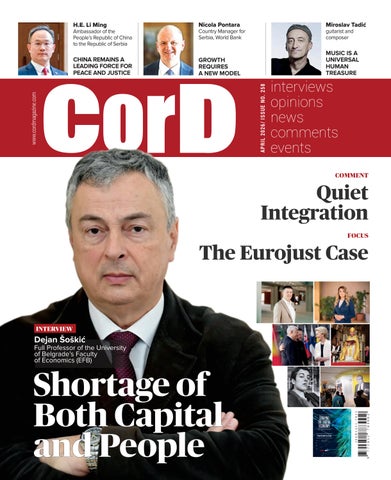





DRAGUTIN NENEZIĆ
DEJAN
ŠOŠKIĆ
Full Professor of the University of Belgrade’s Faculty of Economics (EFB)

FABIAN HEDIN
Co-Founder and CTO of Lovable

Country
H.E.
Ambassador of the People’s Republic of China to the Republic of Serbia
NAĐA PETROVSKI
Press Attaché, Embassy of France in Belgrade

EDITOR IN CHIEF: Neda Lukić n.lukic@aim.rs
DESIGN: Slađan Radosavljević
Zoran Perović design@aim.rs
COPY EDITOR: Mark Pullen
TRANSLATION & EDITING: Pullen Editorial, Halifax

MIROSLAV TADIĆ guitarist and composer
“CorD - 23 Years of Independent Thought and Inspiration”
CONTRIBUTORS:
Ljubica Gojgić
Zoran Panović
Radmila Stanković
Maja Vukadinović
Mirjana Jovanović
Miša Brkić, Rob Dugdale
Steve MacKenzie
Zorica Todorović Mirković
Sonja Ćirić, Miloš Belčević
SALES MANAGERS: Biljana Dević b.devic@aim.rs Vesna Vukajlović v.vukajlovic@aim.rs
SUPSCRIPTIONS: office@aim.rs
FINANCE: finance@aim.rs
DIRECTOR: Ana Novčić a.novcic@cordmagazine.com
PUBLISHER: Ivan Novčić i.novcic@aim.rs
PRINTING: Rotografika d.o.o. Segedinski put 72, Subotica CorD is published by: alliance international media d.o.o. Resavska 1/III, 11111 Belgrade 17, PAK 125806, Serbia Phone: +(381 11) 2450 508
E-mail: office@aim.rs office@cordmagazine.com www.cordmagazine.com www.aim.rs
ISSN no: 1451-7833 All rights reserved alliance international media 2026
The
By
Dragutin
Nenezić,
Legal Expert
applying of Kosovo’s laws and the latest agreement mediated by the EU serve to open the final phase of the integration of Serbian institutions in Kosovo, alongside numerous unresolved issues
hen it comes to the situation in Kosovo, the past few months have been marked by the start of the implementation of two Kosovo laws: on foreigners; and on vehicles. Despite having been adopted in 2013 and 2017 respectively, their application to Serbs in Kosovo has been postponed on several occasions and only started this 15th March.
WThe Law on Foreigners stipulates, among other things, that all persons who don’t have Kosovo documents and plan to stay in Kosovo for a longer period must obtain a residence permit, which will only be issued on the basis of appropriate grounds for residency. This is particularly problematic when it comes to the professors and students of the University of Priština temporarily headquartered in Kosovska Mitrovica who lack such documentation for various reasons, while the University itself isn’t explicitly recognised within the Kosovo system and is therefore unable to secure appropriate grounds for residency.
On the other front, the law on vehicles limits the number of days that vehicles registered abroad can be driven
on the territory of Kosovo. Given the de facto removal from use of Serbian plates for Kosovo cities, Serbs living in northern Kosovo now drive vehicles with registration plates of Serbian cities located outside of Kosovo and are therefore subjected to the restrictions of this law. This has been perceived by a section of the Serbian public as an attack on the remaining functioning institutions of the Serbian legal system in Kosovo - which are, alongside the aforementioned University, also institutions of education and health (where the problem of ambulances bearing registration plates of Serbian cities not in Kosovo is particularly pronounced). However, an EU-mediated agreement was reached on 14th
Time has been bought with this agreement, but not a solution - the integration process is entering its final, and most uncertain, phase
March that has enabled two things: the obtaining of residence permits in four municipalities of northern Kosovo for the next year on the basis of a list that will be compiled by the municipal authorities (and will thus provide the basis for residence); the enabling of all those who don’t possess Kosovo documents to acquire them on the basis of Serbian documents over the next three months (which is primarily important for people who married in the Serbian system and whose surname changes and the like aren’t recognised in Kosovo).
As of the time of writing this article, an agreement for vehicles has yet to be reached, though one is expected. In terms of the formal dimension of the agreement (e.g. that the only written trace of it is an EEAS announcement, while it has yet to be codified by any legal act), this represents the first stage in the final phase of the integrating of Serbian institutions that began with the first Brussels Agreement of 2013, or rather it represents one form of integration for the people employed at those institutions before they integrate themselves (which was also announced in the same EEAS announcement as being a consequence of 2023’s Second Brussels Agreement). This move has practically secured another year of peace in the north, but also a little more EU political support for the authorities in Belgrade, at least when it comes to their Kosovo policy, alongside the unresolved issue of what will happen over the course of that year on the integration front.
It seems that, for now, this integration won’t be carried out within the framework of the Brussels Agreements (i.e. through the Association of Serb Municipalities), rather a solution will be sought a few steps back, in the expanded competences of the municipalities of the north as specified in the Ahtisaari Plan. And it is interesting to note that this plan expressly recognises the University and envisages it being under the ownership of the municipality of North Mitrovica. All that remains to be seen is how this will all be packaged by the authorities in Belgrade....


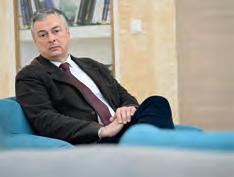
In an economic sense, Serbia is in a poor state and on the wrong path, and that demands immediate deep-rooted systemic and structural reforms. Instead of that, we receive statements that come across like a collection of wishful thinking from individuals who have obviously no understanding of the country’s real economic problems
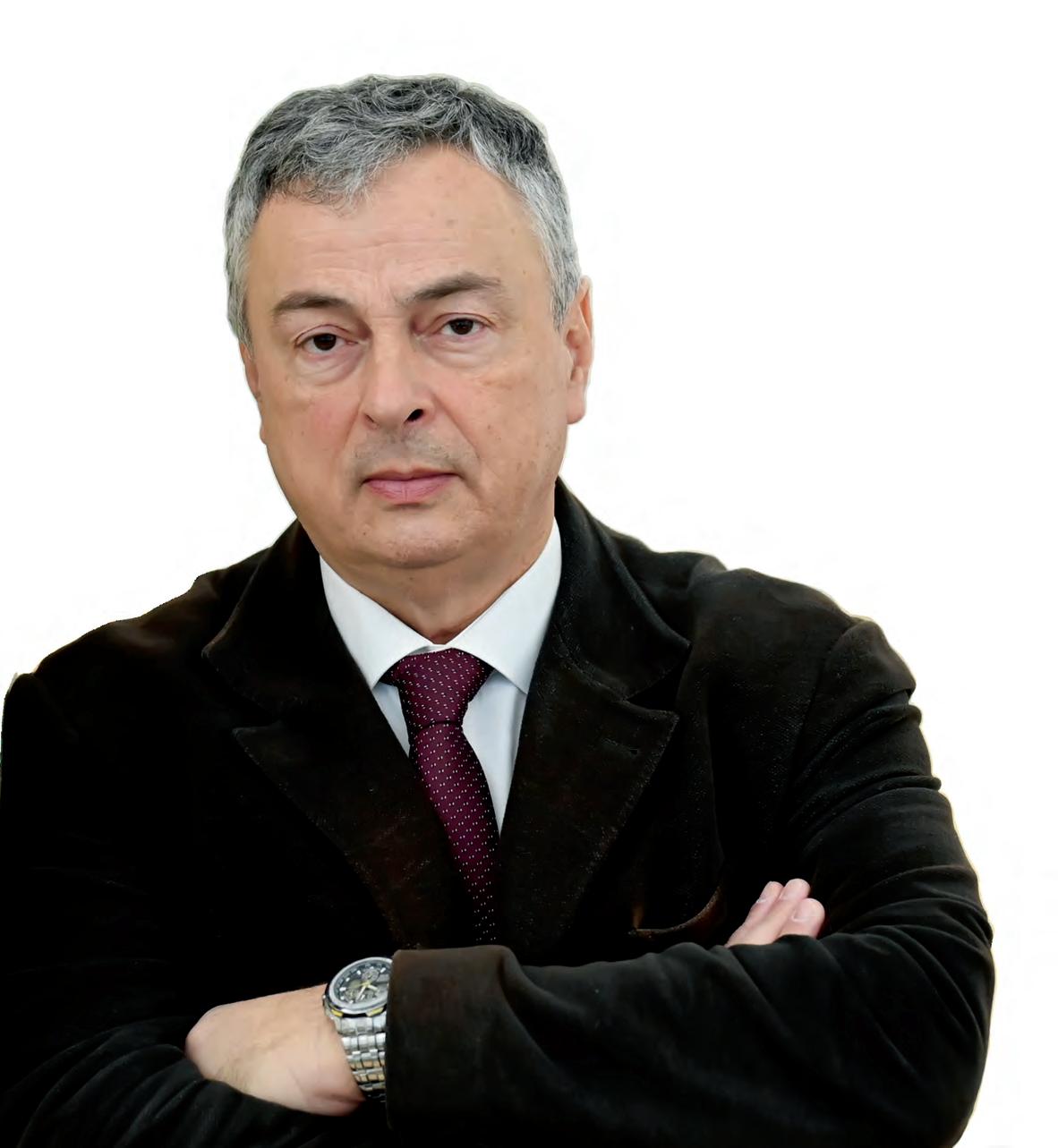
Full Professor of the University of Belgrade’s Faculty of Economics (EFB)
Despite local election campaigns being underway in Serbia, the key topics being addressed in recent days by representatives of the Serbian Government and the President of Serbia relate to the country’s strategic development directions until 2030 and 2035. We asked EFB Professor Dejan Šoškićhow he would evaluate the plans that have been presented and whether they represent a suitable economic response to the challenges confronting us.
It doesn’t seem to me that the statements of Serbian officials are realistically based on any serious strategic plan for the country’s development, and it is certainly an unfortunate fact that the state has published nosuch document over the previous dozen years.

There are too many statements that come across as a collection of wishful thinking from individuals who have obviously no understanding of the country’s real economic problems, and those wishes also change often, and don’t include clear economic arguments, while they also have a tendency towards the erroneous and even manipulative use of economic statistics, to ensure that such statements and “plans”can be considered something more than political propaganda. There has been an endless series of statements and promises of Serbian officials that haven’t been fulfilled, as well as an endless number of mistaken and unprofessional assessments and opinions. However, the realityis extremely concerning.
According to the statistics of Eurostat (the Statistical Office of the EU), more than 490,000 people emigrated from Serbia to the EU between 2013 and 2024. Domestic private investments, which should form the basis of the county’s long-term sustainable development, have remained at a very low level for years already. And FDI aimed at exports, which arrived previously thanks to cheap labour, have been on the decline for several years. Last year’s FDI totals were significantly less than had been planned and accounted for just 2.4% of GDP, which is more than half of the total achieved in 2024, when FDI equated to 5.6% of GDP. Economic growth in 2025 was also half of the figure announced by officials.
That’s why it should come as no surprise that the NBS [Serbia’s central bank] spent 810 million euros of foreign exchange reserves to defend the dinar’s exchange rate in the first two months of this year alone. According to the assessments of international institutions that analyse the institutional environment, corruption, market freedom and levels of democracy, our country has been recording extremely negative trends in all these domains over the past ten years.
Serbia should, firstly, put a stop to the dissolution of institutions, corruption and the dismantling of the legal system and the rule of law, and prioritise within its development policy high-quality education, investments in science, and research and development. Instead of doing so, Serbia languishes at European bottom in terms of investment in education,at just 3.4% of GDP, and is among the most corrupt countries in Europe according to Transparency International.
Economic growth rates could actually be considered relatively encouraging under the current circumstances. Serbia’s S&P credit rating remains at the investment level and with a stable outlook, while the wave of closures of foreign companies in Serbiahas subsided. What do we have to thank for such results and why are numerous economists still concerned about longterm economic prospects?
— Our economic results are beyond modest. Since 2012, Serbia has averaged an economic growth rate that’s below the average of Central and Eastern Europe, meaning there’s no so-called convergence (catching up) of Serbia. Our growth rates have been slightly higher over the last few years,but we still ended last year with economic growth of 2.0%, which (with the exception of the pandemic year of 2020) is the poorest result since 2015, and that was despite major investments in the controversial EXPO project. Meanwhile, the CEE growth rate totalled 2.3%, which means that the trend of Serbia lagging
behind the region remains despite several better years. These poor economic results since 2012 have nonetheless been accompanied by a huge increase in public debt in absolute terms – up from approximately€12.5 billion in 2012 to €40 billion today. Serbia has a negative rate of natural population growth and has emigration each year in tens of thousands of working-age people.Domestic private investments in the country are very low, FDI is decreasing and domestic public investments are often associated with high levels of corruption. It’s worth remembering that there is no economic activity without people and capital, and both are increasingly becoming scarce in Serbia. In an economic sense, Serbia is in a poor state and on the wrong path, and that demands immediate deep-rooted systemic and structural reforms.
There has been an endless series of statements and promises of Serbian officials that haven’t been fulfilled, as well as an endless number of mistaken and unprofessional assessments and opinions
Do you expect the conflict with Iran and rising oil prices to have longerterm impacts on inflation and economic stability, or are we still beyond the main tides of instability?
— The conflict with Iran could have enormous negative consequences for the world’s economy and especially that of Europe, and naturally also our country. Recessionary trends in the EU could deepen, which would have a negative impact on Southeast Europe as a whole, both in terms of trade and investments. A particular disadvantage is the multiple negative effects of possible increases in the price of energy, fertilisers and, consequently, food, in terms of inflation and stagnation, i.e. recession.Such negative effects can be expected to hit Europe more than some other parts of the world. Such so-called stagflation (stagnation with inflation) tends to lack an effective economic pol-
icy response, and this kind of situation can be reflected extremely unfavourably when it comes to economic activity and inflation in the EU, and consequently also in Serbia. Under conditions of expensive energy, it isn’t only inflation that becomes a problem, but rather the enduring of such a situation must result in declining competitiveness and reduced growth rates for the economy of the EU, and consequently of Serbia.The closure of the Strait of Hormuz represents a circumstance that may change shortly if agreement is reached between the parties to the conflict, but destroyed energy facilities and infrastructure will require months and years to rebuild, and those could be years of expensive energy and food, disrupted supply chains and reduced access to traditional markets.
In the case that the political and economic situation worsens globally, what do you think should concern us more: the possible return of inflation or rising unemployment? — Both. Europe and Serbia actually have a similar problem, though it is much more pronounced in our country. That problem is insufficient competitiveness. Increasing competitiveness becomes a difficult goal to achieve under conditions of rising energy prices and reduced budget frameworks caused by stagnation. If we add to this the need to increase military spending in response to rising international security challenges, then the goal of increasing competitiveness becomes practically unattainable.If current circumstances continue without a positive change in international relations, European economies will have serious challenges caused by both inflation and economic stagnation, possibly leading to further deindustrialisation. If the additional deterioration suggested by your question comes, then probable economic stagnation in Europe would almost certainly turn into a recession with negative consequences that are tough to estimate – not only in the economic dimension, but also in political, social and security dimensions.
If inflation does rise again, could the Government of Serbia turn to administrative measures it has used in the past to stabilise the market?
— The measures applied to date in Serbia have mostly been administrative and populist, which are essentially contrary to the normal functioning of the market economy. Any state intervention in terms of controlling prices (and profit margins) essentially reveals the state’s powerlessness when it comes to establishing an orderly economic system based on the principles of free market competition. In theory, the state could also try to control and freeze some other prices, but such a move could easily lead to reduction of supply and economic activity, which makes the move counterproductive. It has been clear since the time of Diocletian in ancient Rome that regulating and freezing of prices doesn’t produce the desired results, but rather many more unwanted results. Positive results are produced by systems that are well ordered and based on strong institutions, the rule of law and a free market economy.
How should we interpret Delhaize’s lawsuit in this context? Should we be more concerned that retail chains have been limited in their freedom or that indications suggest part of the burden of these measures has been shifted to suppliers and producers, including local farmers?
— Delhaize’s lawsuit is a natural consequence of the inappropriate and mistaken measures taken by the government. Both domestic and foreign investors have invested in an economic system that guarantees private property, economic freedom and a competitive market. Freezing of profit margins is contrary to those principles, and anyone could sue the Government for disrupting the economic environment that’s guaranteed by the Constitution and laws.The state should naturally have checked to ensure the actual existence of a free market, competition and efficiency in all phases of transactions from purchase and production of ag-
ricultural products, import, transport, storage, logistics, wholesale to retail, and it should have checked to ensure whether the accompanying state administration (issuance of licences, permits and other documents) is efficient and free of corruption.It is necessary to thoroughly examine if companies in the supply chain, whether formally or informally, are additionally burdened with additional unnecessary costs that are then transferred all the way to retail prices. There is no justification for prices in Serbian supermarkets to be
higher than they are in Czechia, Slovakia, Hungary and many other countries.
It was this specific example that you used to discuss the possibility of comprehensive measures to remove bottlenecks that reduce market competition. Under conditions in which many sections of the market are under majority foreign ownership, does the state have the strength, knowledge and tools to dismantle oligopolies?
— Of course it does, if it so desires. The key is to eliminate monopolies, and that problem doesn’t relate to foreign investors. The problem, as a
rule, lies with us and with the system which – contrary to the Constitution and laws – might limit free competition and allow only privileged companies to perform certain economic activities. As we know, as a rule, this also forms the basis of corrupt dealings with public procurements and the root of so-called “crony capitalism”. And Serbia, which this year fell on Transparency International’s Corruption Perceptions Index, has more than strong reasons to address this issue.
The Government of Serbia’s current promises include increasing budget allocations for arming the army and police. Whether we observe this from the perspective of the spending burden on GDP or that of the usual allocation of such costs in European budgets, could it be said that investments in these sectors are an objective priority for Serbia?
— Our country should become a country of internal stability, with the free and truthful informing of citizens, free voting in elections, a functioning democracy and protection of the interests and dignity of all citizens. State bodies should work efficiently, impartially, competently and in the interest of citizens. This is all envisaged by our country’s Constitution and laws, but isn’t applied in practice. At the same time, our country should cultivate good-neighbourly relations with all countries of the neighbourhood and should be a productive member of the international community.Such a country would have much less need to allocate funds for the police and the army, while achieving increased actual security for citizens. This would then free up additional budget funds for projects and investments that have a direct positive impact on citizens’ quality of life. Well-ordered societies, which rank highly in international surveys on perception of the happiness of their citizens, tend to have lower budget allocations for the army and the police.
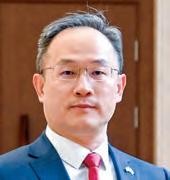
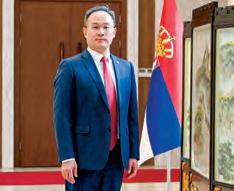
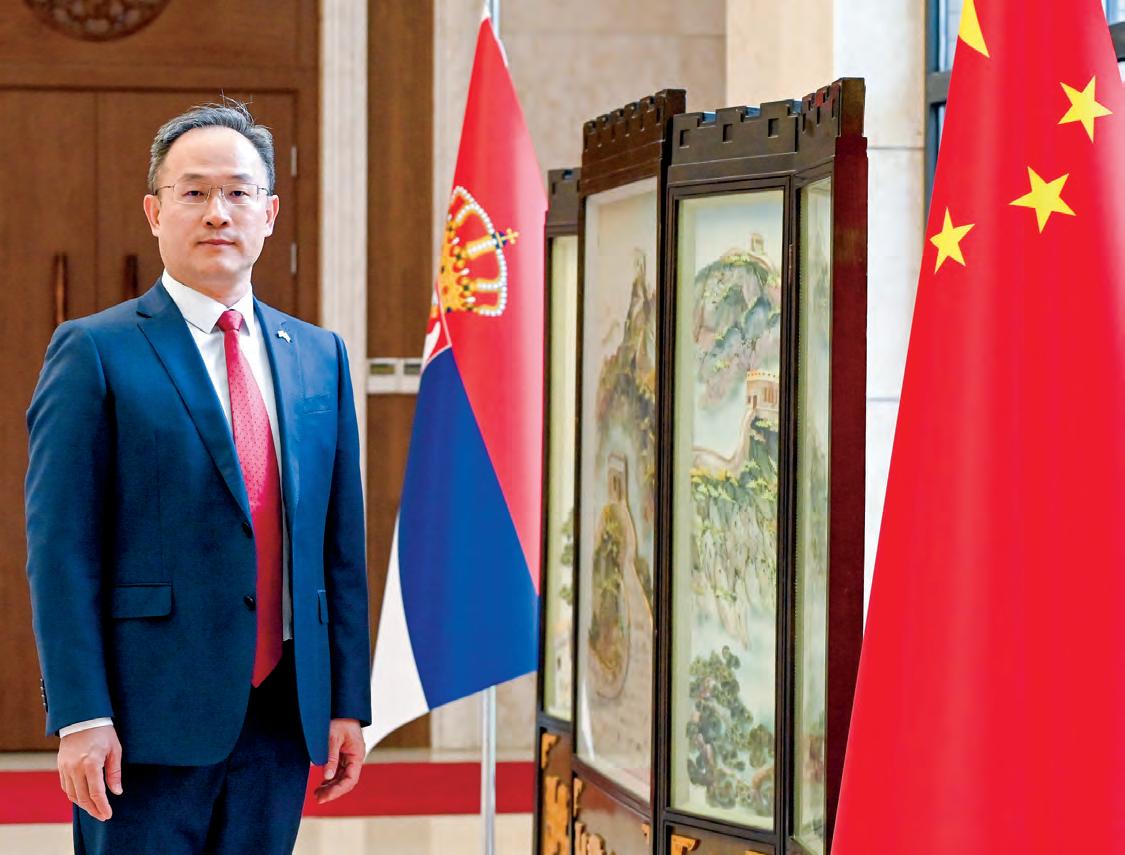
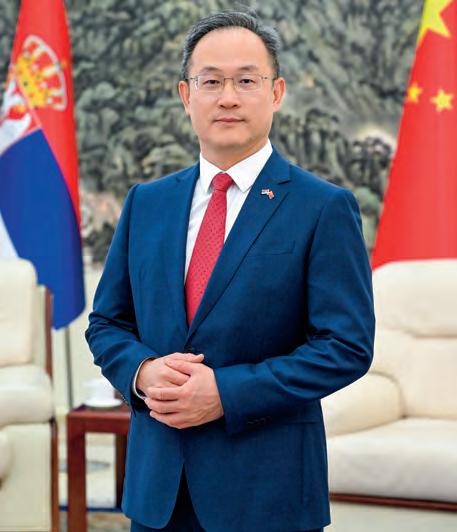
H.E. Li Ming
Ambassador of the People’s Republic of China to the Republic of Serbia
By Ljubica Gojgić
The current conflict in the Middle East is a war that should not have happened—it is a war
that does no one any good. China’s attitude towards the Middle East is objective and impartial. We have stated our principled position on multiple occasions and call for an immediate end to military operations in order to avoid the spiralling
escalation
of the situation and prevent the conflict
from spilling over and spreading ~
In another year that’s seen its beginning marred by conflict in the Middle East, China is calling for respect for the sovereignty and integrity of Iran and all countries of the region, while Beijing condemns the misuse of force to attack civilians and advocates striving to resolve the conflict through dialogue, where the great powers can provide a special contribution, says Ambassador Li Ming. Speaking in this interview for CorD Magazine, Ambassador Ming discusses a major event for China in the form of the presenting of the 15th Five-Year Plan for development that will enable a continuation of the country’s “modernisation through high-quality development, promoting common prosperity for all its people, with a people-centred approach, and – as a responsible major country – working to build a community with a shared future for mankind”.
Your Excellency, we are conducting this interview at a moment when the conflict in the Middle East is once again intensifying. Geopolitical analyses suggest that a potential U.S.–Israeli war against Iran could destabilise the region and even weaken China. How do you view this conflict, and how long do you believe it could last?
— The current conflict in the Middle East is a war that should not have happened—it is a war that does no one any good. China’s attitude towards this issue is objective and impartial.
Li Ming
We have stated our principled position on multiple occasions and call for an immediate end to military operations to avoid the spiralling escalation of the situation and prevent the conflict from spilling over and spreading.
China has consistently adhered to five key principles regarding the Middle East conflict. First, respecting national sovereignty: the sovereignty, security and territorial integrity of Iran and all countries of the Gulf region must be upheld. Second, rejecting the abuse of force: wilful use of force only harms innocent civilians. Third, non-interference in internal affairs: Middle Eastern affairs should be determined by regional countries independently. Fourth, promoting po-
High-level exchanges between China and Europe have become increasingly frequent since 2025, while trade interactions have remained robust and people-topeople exchanges have grown ever more dynamic
litical settlement of hot-spot issues: all parties should resolve differences through equal dialogue and make efforts to realise common security. Fifth, major countries should play a constructive role and use their strengths in goodwill: major countries should act in the spirit of justice and right-
eousness, and should contribute more positive energy to peace and development in the Middle East.
As a sincere friend and strategic partner, China stands ready to work with Middle Eastern countries to implement the Global Security Initiative, and to restore order to the Middle East, restore tranquillity to the people, and restore peace to the world.
China hosted the biggest political gathering in March, in the form of the annual sessions of the National People’s Congress and the Chinese People’s Political Consultative Conference. What key messages emerged from these meetings? — The year 2026 marks the opening of the 15 th Five-Year Plan period, giving this year’s “Two Sessions” special significance. Nearly 5,000 deputies and members from across China’s ethnic groups, regions. and sectors gathered recently in Beijing to deliberate on state affairs, while hundreds of millions of netizens engaged actively in discussions and contributed proposals online—vividly demonstrating whole-process people’s democracy.
The Two Sessions have yielded substantial outcomes. These include the adoption of the Government Work Report, the review and approval of the outline of the 15th Five-Year Plan, and the enactment of three important laws: the Ecological and Environmental Code, the Ethnic Unity and Progress Promotion Law and the National Development Planning Law. Together, these achievements not only chart an ambitious blueprint for China’s development over the next five years and lay a solid foundation for basically realising socialist modernisation, but also provide valuable stability and positive energy to a turbulent and uncertain world.
China will advance Chinese modernisation through high-quality development, promote common prosperity for all its people, with a people-centred approach, and – as a responsible major country – work to build
a community with a shared future for mankind. Confronted by a world marked by profound changes and instability, China will remain steadfast as a leading force for peace, stability and justice.
As you noted, this year marks the beginning of China’s 15th Five-Year Plan. What is its core focus?
— The 15th Five-Year Plan sets out in detail 20 major indicators, covering a wide range of areas including economic development, innovation-driven growth, public wellbeing, green and low-carbon transition, and security safeguards. It also outlines 109 major projects across six key priorities: leading the development of new quality productive forces, building a modern infrastructure system, promoting integrated urban–rural development, safeguarding and improving people’s livelihoods, advancing green and low-carbon transformation, and strengthening security in key sectors.
First, the Plan underscores the driving role of scientific and technological innovation in fostering new quality productive forces, with forward-looking arrangements in future sectors such as artificial intelligence and robotics, while maintaining the real economy as its foundation. Second, it coordinates domestic and international priorities, emphasising that amid a complex and challenging external environment, China will expand domestic demand, strengthen the domestic economic cycle, and firmly support inclusive and universally beneficial economic globalisation. Third, it balances development with public wellbeing, steadfastly advancing common prosperity for all. Fourth, it integrates development with security, stressing that security is the precondition for development, while development provides the foundation for security.
President Aleksandar Vučić recently unveiled the “Serbia 2030” national strategy, which aligns closely with the 15 th Five-Year Plan in terms of timeframe and priority areas. Chi -
na stands ready to enhance strategic alignment with Serbia and to advance the building of a China–Serbia community with a shared future in the new era, ensuring that this partnership continues to deepen and deliver concrete results.
The beginning of this year has been marked by diplomatic meetings that suggest a rapprochement between China and European countries. You yourself have written about the need for cooperation between China and the EU in order to “safeguard
world peace and stability”. Given that it wasn’t long ago that voices within the EU were calling for the economic and political counterbalancing of China, which approach do you believe will prevail over the long run?
— High-level exchanges between China and Europe have become increasingly frequent since 2025, while trade interactions have remained robust and people-to-people exchanges have grown ever more dynamic. A growing number of insightful individuals in Europe—particularly among the younger generations—view China through a more objective and positive lens. These
developments demonstrate that the stability of China–EU relations stems from shared interests, while their predictability is grounded in mutual benefit and win-win cooperation.
China has consistently regarded Europe as a natural pole in a multipolar world, an important force for maintaining the stability of the international order, and a key partner in advancing Chinese modernisation. China supports Europe’s strategic autonomy. For China–EU relations to remain steady and develop soundly, it is essential for Europe to form a proper understanding of China.
The essence of China–EU economic and trade relations lies in complementarity of strengths, and a dynamic balance can be achieved throughout the course of development. The European Union should adopt a comprehensive, objective and positive approach to bilateral economic and trade ties, promote their upward and forward – as well as balanced – development through mutual openness, properly manage potential differences and friction through dialogue and consultation, and deepen mutual trust to jointly foster global prosperity and stability.
Ten years ago, with the signing of a bilateral cooperation agreement, Serbia became China’s first strategic partner in the region of Central and Eastern Europe. In July 2024, the Free Trade Agreement between China and Serbia entered into force, making Serbia, once again, the first country in this part of Europe to have such an agreement with China. How would you assess the results of the partnership between China and Serbia so far?
— Over the past decade, since the establishment of the comprehensive strategic partnership between China and Serbia, bilateral economic and trade cooperation has continued to deepen under the strategic guidance of the two heads of state. This progress has been strongly supported by efficient platforms like the Belt and Road Initiative and China–Central and East-
The stability of China–EU relations stems from shared interests, while their predictability is grounded in mutual benefit and win-win cooperationn
Between 2013 and 2025, Serbia’s exports to China increased from a value of US$22 million to US$2.1 billion— nearly a hundredfold rise
China’s stock of direct investment in Serbia has reached €7.1 billion, maintaining its position as Serbia’s second-largest source of foreign investment
ern European Countries cooperation, as well as by a series of bilateral arrangements facilitating trade and investment liberalisation and facilitation, including the China–Serbia Free Trade Agreement.
Between 2013 and 2025, Serbia’s exports to China increased from a value of US$22 million to US$2.1 billion— nearly a hundredfold rise—while China has remained Serbia’s second-largest trading partner. High-quality Serbian agricultural products, including wine, beef and lamb, fruit juices, honey, raspberries and blueberries, have entered China’s vast market of 1.4 billion consumers.
China’s stock of direct investment in Serbia has reached €7.1 billion, maintaining its position as Serbia’s second-largest source of foreign investment. Chinese companies operating in Serbia employ more than 22,000 local workers. Represented by the automotive parts manufacturing sector, Chinese investment has effectively strengthened Serbia’s upstream and downstream industrial chains and enhanced the value-added of its export products.
During the period of the 15th FiveYear Plan, China will continue to expand high-level opening-up and promote the development of an open world economy, which will undoubtedly inject new momentum into the high-quality development of our bilateral relations.
You have stated that the most striking achievements when it comes to cooperation between China and Serbia to date are the infrastructure projects: railways, bridges, roads and the Kostolac thermal power plant. Will the future bring a shift towards cooperation in other ar-
eas, such as artificial intelligence and the digital economy?
— China–Serbia cooperation in science, technology and innovation has achieved rapid progress in recent years. This not only reflects the broader global trend toward international scientific collaboration, but also enables both countries to enhance their innovation capacity, strengthen development advantages and cultivate new drivers of growth through openness and cooperation.
Relying on mechanisms such as the China–Serbia Joint Committee on Science and Technology Cooperation,
Practical cooperation in areas such as artificial intelligence, the digital economy and new energy is becoming an important pillar and a vivid manifestation of the China–Serbia community with a shared future in the new era
the two sides’ science and technology authorities meet annually, while research institutions and scientists jointly carry out cooperative projects and build collaborative platforms, continuously generating new progress and tangible results. Practical cooperation in areas such as artificial intelligence, the digital economy and new energy is becoming an important pillar and a vivid manifestation of the China–Serbia community with a shared future in the new era. In addition, as one of the initial measures supporting the development of China-Serbia community with a shared future in the new era, the project of
inviting 50 young Serbian scientists to travel to China for research exchanges has already achieved encouraging progress. China will also continue to promote exchanges and cooperation by encouraging Chinese research institutions to engage with their Serbian counterparts.
How do you respond to claims that the operations of Chinese companies in Serbia are not aligned with best practices in terms of environmental protection and labour rights? — The Chinese government has consistently required Chinese enterprises to actively embrace the concept of green development, fulfil their social responsibilities, effectively protect the legitimate rights and interests of workers, strictly abide by the laws of the host countries, and conduct project construction and investment in according with laws and regulations. Not long ago, the Chinese Embassy in Serbia hosted the briefing conference on the spirit of China’s “Two Sessions”, and specially invited companies Serbia Zijin Mining, Serbia Zijin Copper and HBIS Serbia to share their positive contributions to local environmental protection. Their combined investment in environmental protection has approached nearly a billion U.S. dollars, covering areas such as wastewater treatment, dust removal, air quality management, ecological greening and vegetation restoration. Both enterprises have consistently adhered to stringent environmental monitoring standards that exceed EU requirements, and have achieved notable results. We firmly believe that Serbia will enjoy both “mountains of gold and silver” as well as “lucid waters and lush mountains” on its path to modernisation.
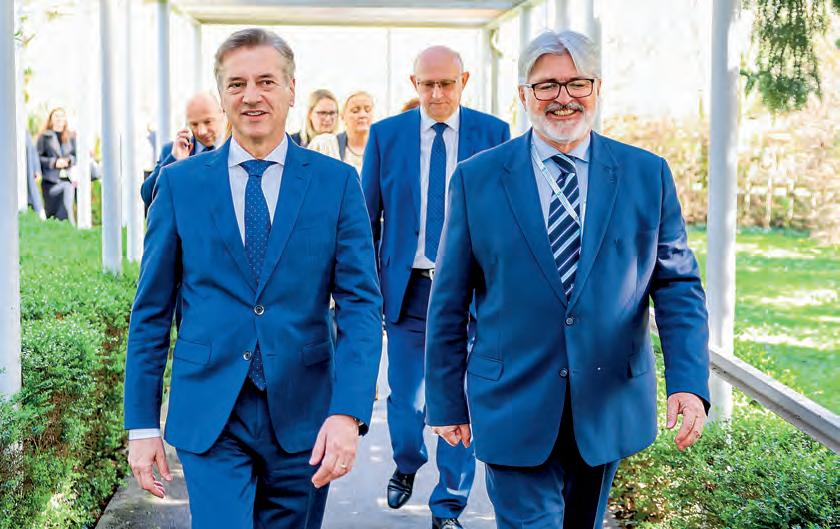
Prime Minister Robert Golob’s Freedom Movement narrowly won Slovenia’s parliamentary election, securing 28.6% of the vote, just ahead of Janez Janša’s SDS at 27.9%. Neither party achieved a majority in the 90-seat parliament, leaving coalition negotiations unavoidable. The result points to a fragmented political landscape and the likelihood of a less stable government in the EU member state.
“The future will be shaped by what we do together”
Ursula von der Leyen
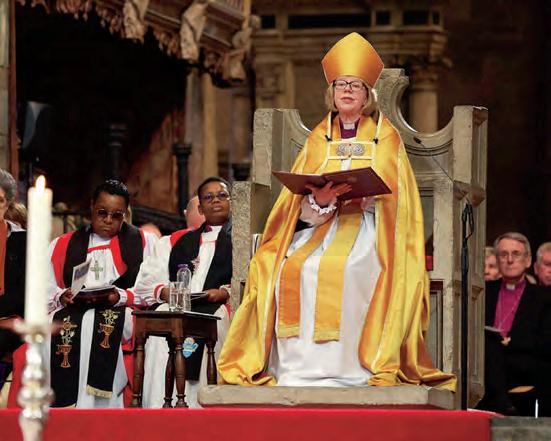
The Church of England has appointed its first female Archbishop of Canterbury, marking a historic shift in its centuries-old leadership tradition. The move reflects ongoing efforts toward greater inclusion within the Church while signalling alignment with changing societal expectations. The new Archbishop now faces the task of leading a global Anglican community amid internal divisions and evolving debates on faith and identity.
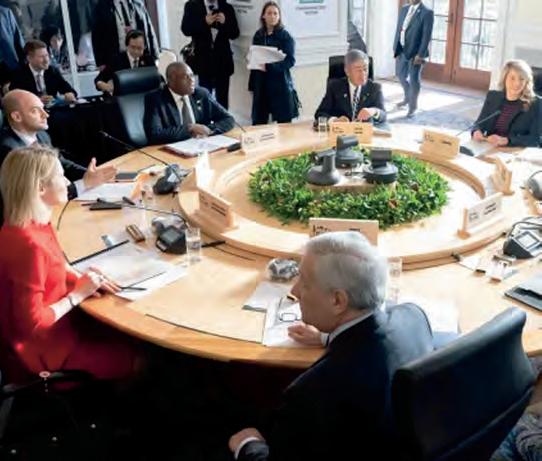
Foreign ministers of the G7 countries met in Canada in March to address pressing global challenges, including security, economic stability and ongoing geopolitical tensions. The gathering underscored the group’s continued role in shaping coordinated responses to international crises, while reinforcing transatlantic cooperation in an increasingly fragmented global order.
“Peace is not absence of conflict, it is the ability to handle conflict by peaceful means”
Ronald Reagan
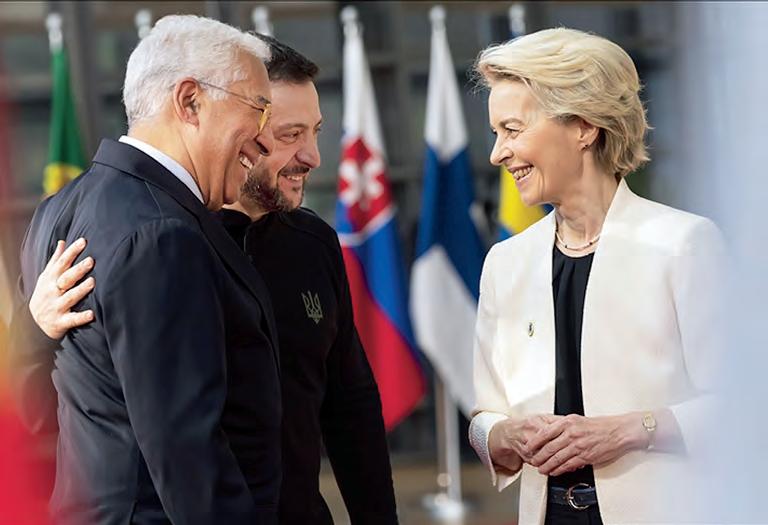
European Union leaders gathered in Brussels on 19–20 March for a European Council meeting focused on competitiveness, security and energy resilience. They adopted conclusions addressing Ukraine, the Middle East, European defence and migration, while reaffirming priorities around the single market and multilateralism. The summit also highlighted efforts to strengthen democratic resilience, protect children online, and support development in the EU’s eastern regions, including the Dniester area.
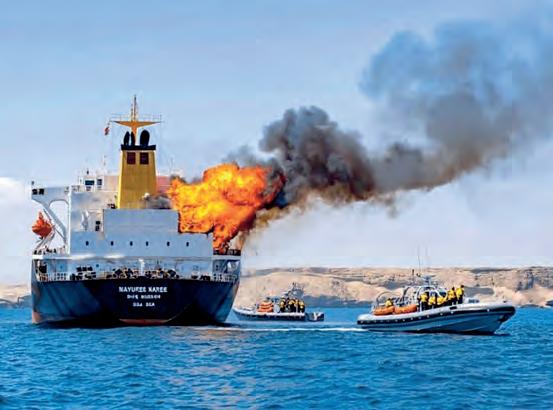
The US–Iran confrontation escalated sharply in March as military operations expanded and Iran disrupted shipping through the Strait of Hormuz, a route carrying roughly a fifth of global oil supply. Oil prices surged and maritime traffic dropped dramatically, with major shipping routes effectively halted. Diplomacy continues through intermediaries, but with ongoing strikes and retaliatory attacks, the conflict is increasingly shaping global energy and security dynamics.
Protests intensified across Argentina as President Javier Milei pressed ahead with sweeping economic reforms. While the government continues fiscal restructuring, public resistance is mounting. The situation highlights the political strain of rapid economic transformation.

The significance of shutting down Serbia’s Eurojust office can only be fully understood in the context of the fact that the prosecution of high-level corruption cases is directly linked to meeting the interim benchmarks (IBAR) set by the European Commission and obtaining a roadmap for closing accession negotiations

How should we interpret the news of the closure of Serbia’s Eurojust office? Is this a temporary institutional vacuum that can be quickly overcome, or a move that reinforces concerns that previously hard-won progress in judicial reform is being further undermined? What does this
mean in practical terms for cases that relied on international judicial cooperation? What message does it send to the domestic public, and what signal does it convey to the European Union and other international stakeholders? And finally, is this yet another indication of Serbia drifting away from its European
path, or a reflection of a political logic in which the authorities, having created an institutional problem, once again position themselves as the only actor capable of resolving it and restoring the process to acceptable parameters? We discussed these issues with our interlocutors.
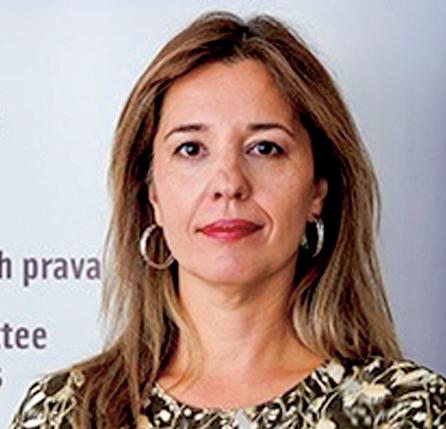
Dr Katarina Golubović President of the Lawyers’ Committee for Human Rights (YUCOM)
With both the so-called Mrdić laws and the election of members of the High Prosecutorial Council, legal provisions and institutions have been misused in order to strengthen political influence over the judiciary
The empty seat of Serbia’s liaison prosecutor at Eurojust is already slowing down ongoing investigations at both national and international levels. It is clear that the executive branch opposes the reappointment of the current liaison prosecutor, regardless of the damage this causes to Serbia’s reputation in its relations with the European Union. This suggests that certain actions undertaken by the previous prosecutor may have threatened the vital interests of the ruling party. Through her work, she enabled direct cooperation with national prosecution bodies, particularly the Prosecutor’s Office for Organised Crime, and proceedings before this institution are now being delayed.
The Prosecutor’s Office for Organised Crime is persistently being deprived of key operational tools from multiple directions. One of those tools is Eurojust, through which various forms of support are provided for prosecuting organised crime cases with a cross-border dimension.
At a time when the European Union is closely monitoring the conduct of the authorities in relation to the judiciary, the adoption of the so-called “Mrdić laws”, which have also affected the Prosecutor’s Office for Organised Crime, sends a clear signal that the liaison prosecutor is not a position open to negotiation.
For any state genuinely committed to combating crime, it is unacceptable to allow a vacuum in the conduct of investigations. On the contrary, a timely appointment of a new liaison prosecutor, with a delayed start of mandate, should have ensured a transition period during which the new appointee could familiarise themselves with ongoing cases.
According to Eurojust’s latest annual report, Serbia was involved in as many as 88 cases in 2024 alone.
Depending on the speed of appointment, the integrity of the new public prosecutor, and the future implementation of
the Mrdić laws – which ambiguously introduce the Ministry of Justice into international cooperation cases – it will largely be determined whether such cooperation will continue to be effectively utilised in proceedings before Serbian courts.
The fact that the High Prosecutorial Council currently holds the key and final authority over personnel decisions within the prosecution is clearly an obstacle for the ruling majority.
The current division of interests within the Council has contributed to the deadlock in appointing a liaison pros-
The fact that the High Prosecutorial Council holds the key and final say over prosecutorial appointments is clearly at odds with the ruling majority
ecutor. The Government will likely argue that it is not responsible for the delay, claiming that the decision lies with an “independent body”.
The blockage of appointments, including that of the liaison prosecutor to Eurojust, will be attributed to a supposedly “detached” segment of the prosecution, one that is portrayed as being detached from the “state”. The only way for the ruling majority to regain control over кадровска решења is to rely on other institutions – the National Assembly, by adopting laws that weaken the High Prosecutorial Council, or the Constitutional Court, by overturning its decisions. This has already been seen with the Mrdić laws and the election of Council members. In both cases, legal provisions and institutions have been misused to strengthen political influence over the judiciary.
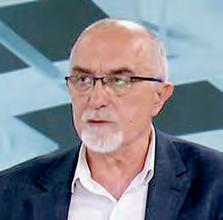
Savo Đurđić Member of CEPRIS, Retired Judge of the Court of Appeal in Novi Sad and Former Member of the High Judicial Council
We
are sending a negative message to both the international community and the citizens of Serbia that
much of what is
happening in the sphere of organised crime can spill onto the streets with impunity
Thanks to Eurojust, EU Member States and candidate countries have improved the fight against serious cross-border and organised crime through the coordination of investigations and prosecutions. Unfortunately, Serbia suspended this cooperation on 1 March, as the mandate of Supreme Public Prosecutor Gordana Janićijević was not extended, nor was a new liaison prosecutor appointed.
Anyone who followed the session of the High Prosecutorial Council at which these decisions were taken – including those concerning the assignment of prosecutors to the Prosecutor’s Office for Organised Crime – could have gained the impression, as also suggested by Janićijević, that personal interests may have played a role, but that the decisive factor was the effort of interest groups linked to the current authorities to halt or suspend successful cooperation and to control the flow of exchanged data. This is not a mere institutional vacuum that can be quickly overcome.
Previously, through amendments to five judicial laws adopted without public debate and under an urgent procedure, at the initiative of MP Mrdić and despite opposition from the professional community, the independence of the judiciary was weakened. Among other things, the constitutionally guaranteed autonomy of the public prosecution was undermined, as the Supreme Public Prosecutor can now conduct international cooperation only with the consent of the Ministry of Justice. Article 155 of the Constitution stipulates that “no one outside the public prosecution may influence the public prosecution or its office-holders in the conduct and decision-making of individual cases”.
The suspension of Serbia’s Eurojust office jeopardises work on more than 200 organised crime cases, including nine involving “high-level targets” in Serbia, as well as four cases initiated by the Serbian office at the request of the EU concerning suspected criminal activity in Serbia. Access to protected systems, analyses from coordination meetings with Europol and Interpol, as well as their tools and databases, is also hindered.
The Chief Prosecutor of the Prosecutor’s Office for Organised Crime, Nenadić, points out that Serbia has also lost participation in three international joint investigation teams dealing with drug trafficking. The Serbian Minister of Justice is the only one who has not signed the act enabling cooperation with three countries, two of which are EU Member States. Nenadić also claims that cooperation with the police is lacking. The prosecution of ministers in cases such as “Nadstrešnica” and “Generalštab” coincided with intensified pressure on the Prosecutor’s Office for Organised Crime, the dismantling of specialised units, changes within the police and a reduction in the number of prosecutors assigned to that office.
The Eurojust case is not a mere or temporary institutional vacuum that can be quickly overcomec
If Serbia remains permanently without a Eurojust office, this will weaken the functioning and integrity of the system for combating crime. At the same time, criminals are aware that intelligence and police services are primarily focused on so-called “internal enemies”, and now also that international cooperation via Eurojust has been undermined.
All of the above sends a negative signal to the EU and other international actors and undoubtedly represents a further step away from Serbia’s European path. It reflects a political logic in which the authorities, having created an institutional problem, once again position themselves as the only actor capable of reversing the situation. The Venice Commission has likely drawn lessons from its previous cooperation with Serbia: wherever it has not taken a firm stance that certain solutions are unacceptable, the authorities have found ways to retain them at the last moment. The situation has progressed so far, and the damage has already been done, that it is highly questionable whether it can be returned to its previous or even acceptable state.

Vladimir Međak Lawyer and Expert in European Law, Vice President of the European Movement in Serbia
By shutting down the Eurojust office, the ruling structures have once again confirmed their determination to obstruct the initiation of proceedings against the highest state officials
The objective of the recently adopted judicial laws – now under review by the Venice Commission – and the outcomes they envisage are clear and unambiguous: to place the prosecution under full control in order to ensure the legal untouchability of the highest state officials. The fact that the new law restricts international cooperation of the public prosecution (Article 31.1.4 of the Law on Public Prosecution), making it conditional upon prior approval by the Minister of Justice, combined with the closure of the Eurojust office, sends a clear signal that the authorities must control, and even suspend, international links in order to halt the two-way exchange of data that could lead to proceedings against senior officials.
The office will certainly be reopened at some point, but by then all levers of control over the prosecution will have been consolidated, and its reopening will no longer be an issue.
Chapter 23 – Judiciary and Fundamental Rights – is crucial for EU accession. It was opened in July 2016, when the EU set interim benchmarks that Serbia must meet in order to move towards closing negotiations and eventual accession. One of the key requirements explicitly calls for establishing a track record in combating high-level corruption, which implies proceedings against the highest state officials, including prosecution, conviction and asset confiscation. Thus, the question is not whether such cases exist in Serbia, but whether they are being processed.
Montenegro was given the same benchmark and, precisely on the basis of such cases, received a positive
European Commission report (IBAR) in 2024, followed by a roadmap for closing negotiations from the end of 2026, which it is now implementing.
Just as the Prosecutor’s Office for Organised Crime in Serbia began addressing such cases in 2025, these laws were adopted – now under review by the Venice Commission and already negatively assessed by the European Commission. Without completed cases of high-level corruption, there can be no fulfilment of interim benchmarks, no positive IBAR report and consequently no roadmap for closing accession negotiations. The European Commission has clearly stated that the adoption of these laws represents backsliding in the accession process.
Serbia’s Eurojust office will certainly be reopened – but only once the prosecution is brought fully under political control
Until these laws are amended and the consequences of their implementation addressed, it can be said that Serbia’s European integration process is effectively on hold. Accession had already been stalled since 2021 due to a serious decline in democracy, the rule of law and fundamental freedoms. These newly adopted laws merely confirm the direction in which Serbia is heading – and it is not towards EU membership.
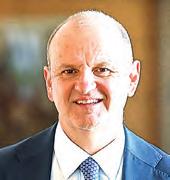
Nicola Pontara Country Manager for Serbia, World Bank
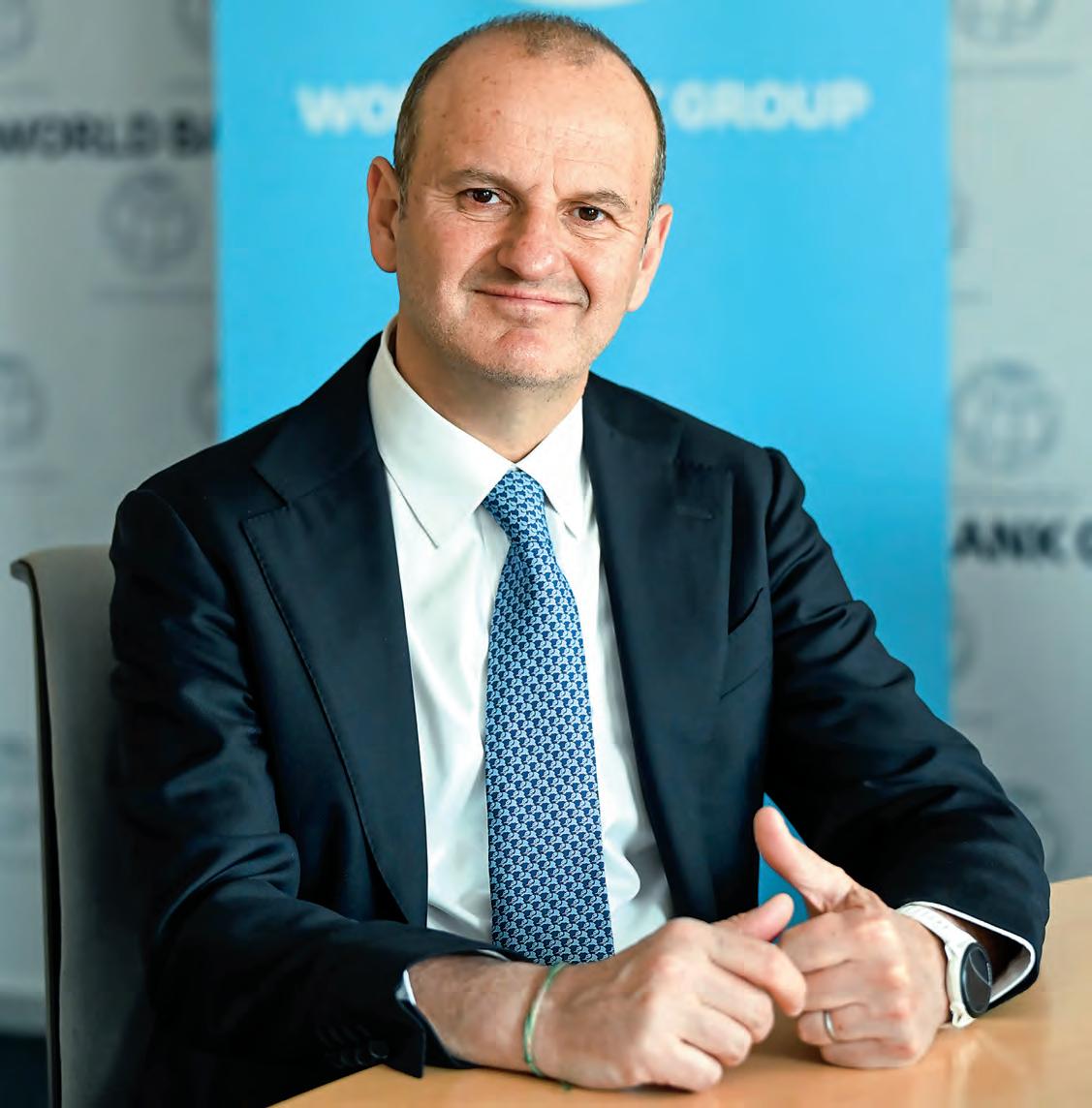
From cost competitiveness to productivity, innovation and stronger institutions, Serbia must accelerate structural reforms to unlock higher and more sustainable growth
Despite steady growth and macroeconomic stability, Serbia’s pace of convergence with the EU remains modest. According to the World Bank, accelerating growth will depend on a shift towards higher-value activities, stronger institutions and a more dynamic private sector.
Serbia has maintained macroeconomic stability and recorded solid growth in recent years, yet the World Bank has often pointed out that the country could grow much faster. What are the key structural constraints that still prevent Serbia from reaching annual growth rates of 5–6 percent?
— Serbia needs to undertake ‘second generation reforms’ to boost growth and create quality jobs. ‘First generation reforms’ – implemented since the early 2000s to stabilize the macroeconomic environment, strengthen the institutional and legal framework, liberalize the economy, privatize some SOEs and close the infrastructure gap – resulted in substantial inflows of capital, sustained growth, higher living standards, and a remarkable decline in poverty. But structural reforms are now needed to complete the transition to a full-fledged market economy capable of competing in Europe and delivering prosperity to its citizens. Priority areas include ensuring greater transparency, enforcement of the rule of law and a level playing field for businesses; refining investment incentives to attract higher value-added FDI; enhancing the participation of women, young adults and ethnic minorities in the labor market; facilitating cross-border trade; deepening capital markets; and reducing the state influence on the economy. These reforms, if comprehensively implemented, could add as
much as 2.4% to Serbia’s annual rate of growth and speed up economic convergence with Europe.
At this year’s Kopaonik Business Forum, several speakers said Serbia’s current growth model—driven by public investment, consumption and subsidies for foreign investors— may be approaching its limits. Do you think Serbia needs a new development model, and what should it look like?
— Economic growth in Serbia is slowing down due to both internal and external factors. In 2025, growth reached 2%, down from 3.9% in 2024 and the current crisis in the Middle East may lead to slower global growth and re-
Sustainable growth will depend on a shift from volume to quality — towards innovation, productivity and higher valueadded investments
newed inflationary pressures, including higher energy prices. A notable concern is the much lower level of foreign direct investment during 2025 and early 2026. It is also undeniable that the days when Serbia competed on low-cost labor and energy are now behind us, as Serbia has joined the ranks of upper middle-income countries. Moreover, focusing on cost elements alone is reductive: when firms set up their activities in a country, they pay attention not only to the costs of utilities and workers but also to what is on offer in terms of operational quality, availability of talent, and the conduciveness of the business environment. If Serbia can improve in these areas, it will more than compensate
for the loss of cost competitiveness. The growth model should focus on higher value-added and more innovative activities to boost productivity and international competitiveness.
There is an ongoing public debate about the long-term sustainability of an investment strategy that relies heavily on state subsidies for foreign investors. Should Serbia reconsider this policy and instead strengthen domestic companies, innovation and productivity? — Serbia should focus on a dual track strategy. Track 1 should focus on the refinement and better targeting of foreign investment incentives in key priority sectors – such as ICT, e-mobility solutions, biotech, advanced healthcare, machinery, food for the future, the creative industry – with decisions made consistently and transparently. This shift from ‘volumes to quality’ –that is, focusing on modern technologies and innovation – can create higher quality and better paid jobs. Track 2 should focus on addressing the low levels of domestic private investment in Serbia, one of the lowest in Eastern Europe. During this year’s Kopaonik business forum we heard the constraints that prevent the emergence of a more dynamic private sector in Serbia. These include the perceived lack of transparency, low control of corruption and inefficiency of the judiciary system. Evidence from countries that avoided the middle-income trap shows that the quality of institutions and the governance environment matter a great deal.
The reform of state-owned enterprises has long been identified as one of the key challenges for the Serbian economy, both in terms of productivity and fiscal risk. Has Serbia made meaningful progress in this area, or are the most difficult decisions still being postponed?
—In Serbia, SOEs continue to play a key role in the economy. They employ nearly 200,000 people (roughly 9% of the
registered workforce) but account for just under 6% of total business sector revenues. In addition, important SOEs – such as EPS and Srbijagas – continue to be significant contingencies on the national budget, as we saw during the energy crisis of 2021 and 2022. Serbia realized important progress. In rail and road, the sustainability and competitiveness of SOEs were achieved through rightsizing, changing their legal form, stronger financial resilience, and the tweaking of operational priorities. Going forward, these companies will need clear ownership policy and performance contracts, stronger governance, and independent boards and managers. And there’s a need for a change in the mindset for the state – moving from the role of owner/operator to that of a shareholder, seeking to maximize the returns of the government’s investments.
Despite macroeconomic stability and steady investment inflows, Serbia is still converging relatively slowly with the EU’s average income levels. From the World Bank’s perspective, what are the main reasons for this slow convergence and what would need to change to accelerate the process?
— A couple of years ago I co-authored a paper which argued that Serbia would converge with the EU only in 2074 if it continues to grow at an average of 2.8 percent, that is, the average growth rate attained during 2001–21. But it could bring this goal forward to 2050 with an average growth rate of 4 percent; and to 2042 if it manages to push growth to an average of 5 percent per year. I never tire of repeating that the EU has been a formidable ‘convergence machine.’ Since 1990, 13 of the 31 countries in the world that managed to transition to high-income economies have done so in the EU. The progressive convergence of New Member States, first during the enlargement ‘big bang’ of 2004 and then again in 2007 and 2013, spurred economic development and the achievement of higher standards of living. Those countries grew fast thanks to the access to the large EU market, EU
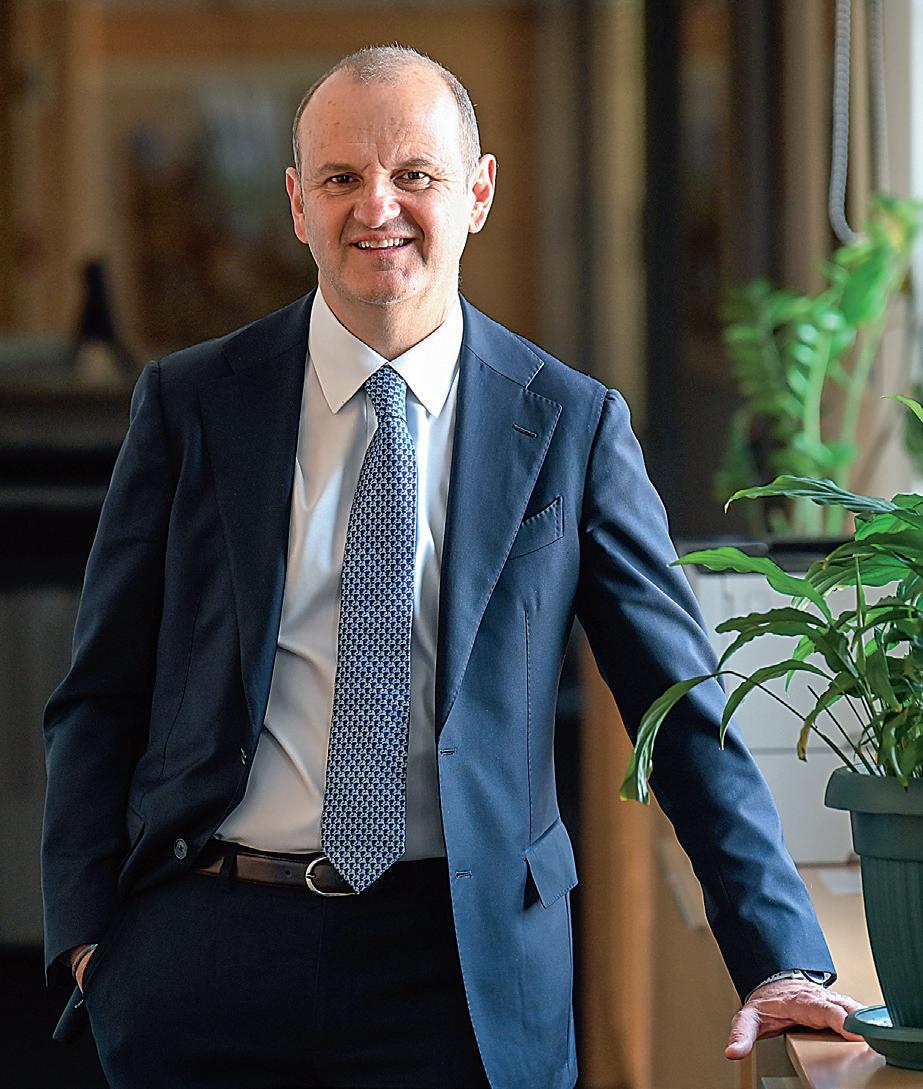
EU integration remains the most effective driver of convergence, provided reforms are implemented with greater urgency
structural and cohesion funds and sustained improvement in institutions and governance. Serbia should follow this path with a renewed sense of urgency by delivering on the commitments it made under the EU Growth Plan.
Serbia is entering a period of large public investments in major infrastructure and EXPO 2027. How important is it to strengthen public investment management and transparency mechanisms to ensure that such projects generate long-term economic value rather than fiscal risks?
— This is a crucial point. We have done significant work to improve public financial management in Serbia, in collaboration with the authorities. We have advised the government to strengthen the existing public investment management system by imple-
menting key policies such as creating a single project pipeline and having transparent and harmonized procurement practices across all investment projects – underpinned by the timely disclosure of the relevant documentation. Going forward, the challenge is to ensure consistent implementation and further expand the coverage of the system to all public investments, including those deemed of ‘special importance’, always looking to deliver the highest positive impact on the economy and society and the lowest negative impact on the environment.
Demographic decline and the outflow of labor are increasingly cited as constraints on long-term growth across the region. To what extent do these trends affect Serbia’s development prospects, and how can these challenges be mitigated?
— Indeed, this is one of the main challenges for Serbia, and there are no simple solutions. Still, the government can help – by raising the labor force participation rate of women, young adults, and ethnic minorities. It would be also important to help families with children have more productive working lives, so that both parents can work. This also requires greater investment in human development, with special attention to the inclusion of the poor and vulnerable through more robust poverty-targeted programs that are responsive to shocks. The health system needs to provide affordable care options and evolve its longterm care system in line with an ageing society. Additional policies should focus on the modernization of labor market legislation and institutions. But the outlook for migration does not have to be entirely bleak, as Ireland shows. Ireland, a small economy on the periphery of Europe, was once characterized by low incomes and persistent out-migration. Yet, today, it enjoys one of Europe’s highest living standards and is a magnet for talent and investors. Serbia can emulate this approach by capitalizing on the ideas, skills, networks, and investment potential of the Serbian diaspora.
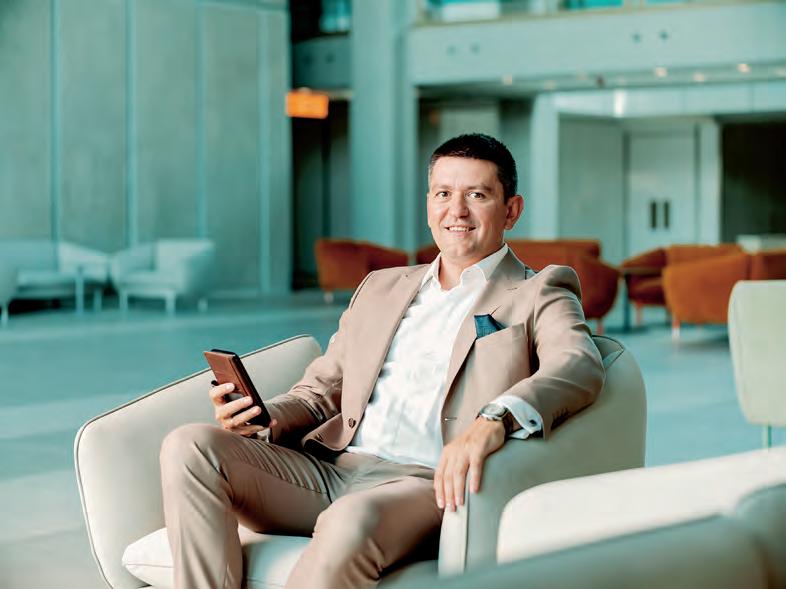
Ivan Tanasković Director, eCommerce Association of Serbia
Despite steady growth, Serbia’s digital commerce market is still not reaching its full potential, with further development depending on cross-sector cooperation, consumer trust and systemic solutions
E-commerce in Serbia has been growing steadily, yet it still lags behind more developed markets in terms of structure, digital maturity and its share in retail. Ivan Tanasković, Director of the eCommerce Association of Serbia, discusses key challenges, the importance of cross-sector cooperation and the potential for further regional and international growth.
E-commerce in Serbia has recorded strong growth in recent years. How would you assess the current development of the market and where does Serbia stand in relation to European and regional trends?
— The development of e-commerce in Serbia can be described as accelerated, yet still underutilised compared to its real potential. On the one h and, we are seeing continuous growth in online transactions, an expanding offer and increasing involvement of various industries in digital sales, supported by gradual improvements in the regulatory framework. On the other, there remains significant room for progress, particularly in terms of market structure, companies’ digital maturity and consumer trust.
According to data from the National Bank of Serbia, online card payments continue to grow steadily. In 2025, more than 108 million online card transactions were recorded, with a total value
exceeding €3.1 billion. Nevertheless, compared to more developed European markets, Serbia still lags behind in the share of e-commerce in retail and in average transaction value.
One of the key reasons is that many companies still lack developed or optimised online channels. Some do not sell online at all, while others do so without a clear strategy or integrated processes. As a result, the market is growing more due to changing consumer habits than to the strategic development of companies.
In the regional context, Serbia sits somewhere in the middle – ahead of some markets, yet still behind those that began developing their e-commerce ecosystems earlier. The region shares similar challenges: logistics, trust and regulation, but also opportunities for joint development.
E-commerce is no longer an additional channel, but a core part of business strategy. Companies that recognise this are already making a difference, while others are entering a phase of rapid catch-up.
The eCommerce Association of Serbia brings together companies from across the digital ecosystem – from retailers and logistics providers to fintech and technology firms. How important is this cross-sector cooperation for further development?
— One of the most common mistakes is to view e-commerce as purely a domain of retail or marketing. In reality, it is a system where logistics, finance, technology, regulation and customer experience intersect. This is why cross-sector cooperation is essential.
No single segment can drive progress on its own. A retailer may have an excellent webshop, but without reliable logistics or appropriate payment solutions, the customer experience suffers. The same applies to regulation – if it does not keep pace with the market, uncertainty arises.
This is where organisations such as the eCommerce Association of Serbia play a key role. In addition to education and market networking, the Association organises industry working groups that identify barriers and initiate regulatory improvements aligned with real business needs.
Such cooperation enables companies to understand the broader picture – retailers gain better insight into logistics, fintech into customer needs, while tech companies develop applicable solutions. While we see increasing examples of collaboration, there is still room for improvement, particularly in standardisation and data exchange.
E-commerce is not an individual effort, but an ecosystem. Its development depends on the quality of cooperation among all participants.
Consumer trust remains a key issue for the development of e-commerce. What are the main challenges today in terms of online security, consumer protection and trust-building? — Consumer trust is fundamental to the growth of e-commerce. Without it, there is no conversion or sustainable development. While progress has been made in Serbia, challenges remain.

The first relates to perceptions of online payment security. Although systems are secure, some consumers remain hesitant to use cards, which is reflected in the continued popularity of cash on delivery.
eCommerce is not an individual effort, but an ecosystem – its development depends on the quality of cooperation among all participants
The second is the reliability of merchants. Delays, unclear terms and complicated returns directly affect trust, with one negative experience often outweighing several positive ones.
The third aspect is education. Many users are not fully aware of their rights or how to assess the reliability of an online store, which creates additional caution.
At the same time, there are positive developments. More companies are investing in security, transparency and customer communication, while competition is gradually raising standards.
Going forward, trust will depend on consistency in the customer experience. It is not built through campaigns, but through every interaction.
An increasing number of Serbian companies are expanding into regional and international markets. What is the potential for cross-border e-commerce and how can it be fully realised?
— Cross-border e-commerce represents one of the greatest growth opportunities for domestic companies. Serbia has solid foundations – competitive pricing, flexibility and strong product quality in certain sectors.
However, entering foreign markets is not straightforward. In addition to logistics and marketing, companies face operational and administrative requirements that can slow development, particularly for smaller businesses.
This is why systemic solutions are essential to facilitate exports and enhance competitiveness. One direction is the fulfilment model, which enables storage closer to customers, faster delivery and easier returns, reducing operational complexity.
Another is the use of marketplace platforms, which allow rapid market entry and testing without significant upfront investment.
A third key element is localisation –understanding local markets, payment methods and customer expectations.
The potential is clear, but it requires coordinated development of both companies and the wider business environment.
Digital commerce is increasingly part of the broader digital economy. How do you see its role in Serbia’s future economic development and where should the focus lie?
— E-commerce today is not just a sales channel, but an important component of the digital economy. Its impact is reflected in increased competitiveness, market expansion and improved business performance.
Entering e-commerce often drives wider digitalisation – from logistics to data management – enhancing efficiency. It also enables SMEs to access markets that were previously out of reach, supporting entrepreneurship.
In the period ahead, the focus should be on logistics, digital skills, trust and regulation, as well as integration with regional and European markets.
E-commerce will not replace traditional retail, but it will transform it. Those who adapt will have the advantage.


Danilo Jerinić Director of EXPO 2027 Belgrade
A record international response and a strong development agenda confirm that Expo 2027 is positioning Serbia as a reliable host, an attractive investment destination and a regional centre of innovation
Expo 2027 Belgrade is already surpassing the framework of a world exhibition, evolving into a platform that connects countries, companies and institutions worldwide. With record interest from participating nations and preparations entering their final stages, this project confirms Serbia’s capacity to organise an event of global significance, while also advancing its economy, infrastructure and international standing in the long term.
The second IPM brought together around 500 delegates from more than 130 countries in Belgrade. What does such a strong international response say about the importance of Expo 2027 and the level of trust Serbia has been given as host of this world exhibition?
— The second International Participants Meeting (IPM) for Expo 2027 Belgrade, held from 10 to 12 March 2026, gathered around 480 delegates from as many as 141 countries, placing it among the largest international events held in Serbia in recent history. This figure in itself clearly reflects the
global significance of Expo 2027 Belgrade, as well as the high level of trust Serbia enjoys as host. Particular weight is added by th e presence of representatives of leading global economies, including the United States, Germany, France, Italy, Spain and China, as well as international organisations such as the United Nations. Such a response also sends a strong diplomatic message – that Serbia today has the capacity to bring the world together and organise an event of this scale at a high professional level.
Serbia has already set a record for the number of countries registered for a specialised exhibition. How do you interpret such strong interest and what
does it say about the global potential of the theme “Play for Humanity – Sport and Music for All”?
— To date, 138 countries have confirmed their participation, significantly surpassing the previous record set in Astana in 2017, which hosted 117 countries. This result reflects two key factors. The first is the theme itself, “Play for Humanity – Sport and Music for All”, conceived as a universal and inclusive platform. Through sport, music and creativity – globally understood languages – it enables all countries to present their identities while contributing to a shared dialogue on contemporary challenges.
The second factor is Serbia’s international positioning. Being awarded the role of Expo 2027 host in competition with Spain, Argenti-
na, the United States and Thailand, followed by a record response, clearly demonstrates that Serbia is recognised as a stable, open and reliable host.
It is precisely this combination of a strong theme and the credibility of the host country that positions Belgrade and Serbia as one of the key global meeting points in the years ahead.
IPM meetings play an important role in connecting organisers and participating countries. In what way do such meetings contribute to building partnerships and jointly shaping the content that visitors will experience at Expo 2027 in Belgrade? — These meetings represent a key operational mechanism in the preparation process, enabling direct communication and coordination with participating countries. During the second IPM in Belgrade, more than 600 meetings were held with interna-
The “100% legacy” concept ensures that Expo 2027 delivers lasting benefits through new infrastructure, urban development and long-term economic growth
tional participants, alongside over 40 bilateral meetings, seven multilateral sessions and 69 parallel sessions. These discussions defined concrete steps for participation –from administrative procedures and design to the construction and fitting-out of national pavilions. This level of cooperation ensures that countries are not merely participants, but active partners in content creation. In addition, the IPM opens space for business networking, knowledge exchange and the development of long-term relationships. In this sense, Expo 2027 functions as a platform that connects states, companies and institutions, laying the foundations for cooperation that will continue beyond the exhibition.
Expo 2027 will be the largest international event ever organised by Serbia. What long-term economic and developmental effects do you expect this project to have for Belgrade, Serbia and the wider region?
— Expo 2027 has been conceived from the outset as a development platform with long-
term effects, rather than a one-off event. A key element of this approach is the so-called “100% legacy” concept, meaning that all facilities and infrastructure built for the exhibition will retain their function after its conclusion. This includes the exhibition complex, residential units and the broader urban transformation of the Surčin area, which will permanently expand Belgrade’s urban zone.
The economic effects are multi-layered – from direct investment and the engagement of domestic industry to international spending generated by participating countries. At the same time, the project stimulates the development of sectors such as construction, tourism, logistics and the creative industries.
The international dimension is equally significant – Expo further strengthens Serbia’s image as a regional business hub, creates opportunities for new investments and positions Belgrade as a meeting place for global business, innovation and ideas. The arrival of the world’s leading technology exhibition,
GITEX Global, in Belgrade in 2027 during Expo further confirms this. At the same time, one of our strategic partners in the field of cybersecurity will be Cisco, demonstrating that Expo can help attract new investments and strategic partnerships for the future.
As 2027 approaches, preparations are entering an increasingly intensive phase. What are the key priorities in the coming period and what will be the most important factors of success for this exhibition?
— In the second half of last year, the project moved from the planning phase into intensive implementation, with clearly defined deadlines and priorities. Progress is already visible – the exhibition halls are in an advanced stage of construction, while the Expo Village is nearing completion, which IPM delegations were able to witness during site visits in Surčin.
One of the key operational goals is to hand over pavilions to participating countries by 1 December this year. Prior to that, the first apartments – part of 1,500 residential units intended for participant representatives – will be available as early as September. The deadline for completing pavilion works is set for 15 April 2027, after which system testing and final preparations for the opening will follow.
When it comes to success factors, these extend beyond infrastructure. Equally important are the quality of cooperation with international participants, the content developed jointly and the overall experience offered to visitors during the 93 days of the exhibition. The success of Expo 2027 will be measured not only immediately after its conclusion, but in the years that follow. As an accelerator of economic development – driving job creation, urban transformation, modern business practices and stronger connections between domestic and international stakeholders – Expo 2027 will undoubtedly bring benefits to Serbia and the wider Western Balkans region. Ultimately, its success will also be measured by the legacy it leaves behind – through new business opportunities, enhanced infrastructure and a s trengthened international position for the country.

“A mature system requires predictable financial flows, clear rules and resilience to market disruptions”
Violeta Belanović Sekopak
MPC Properties has appointed Dijana Sikimić, ACCA, as its new Chief Financial Officer, strengthening its leadership as the company expands its real estate portfolio across the region. With over 20 years of experience in banking and corporate finance, she has worked on financial modelling for major real estate and infrastructure projects, including hotels, shopping centres, and residential developments. Sikimić previously served as CFO at Delta Real Estate and held roles on World Bank projects focused on cadastral digitalisation.

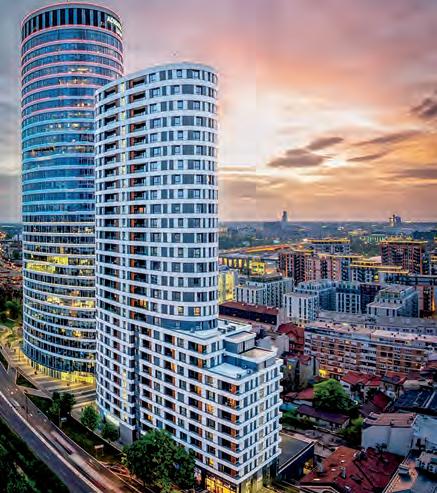
Sales have begun for luxury apartments in the AFI Skyline Residence tower, part of the Skyline Belgrade complex on one of the capital’s most prestigious addresses, Knez Miloš Street. The project offers 147 fully equipped apartments across 27 floors, with units ranging from 52 to 226 square metres, all ready for immediate move-in and designed in a refined, contemporary style. Combining a central location with elevated privacy, the residences provide panoramic views stretching from Avala and the Temple of Saint Sava to the rivers and Kalemegdan.
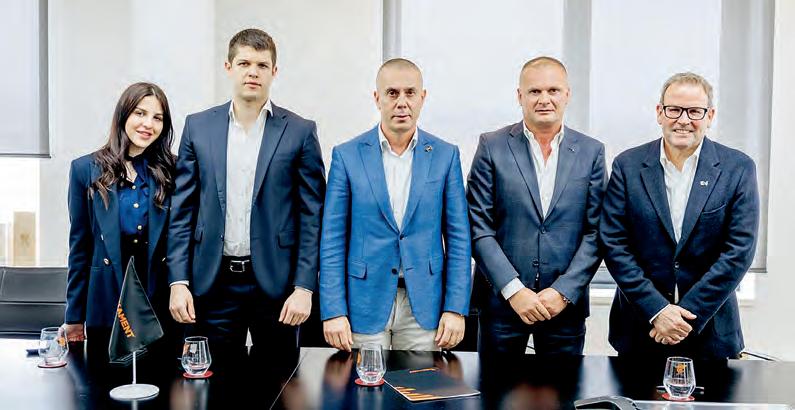
Bekament has signed a franchise agreement with Hilton to build a new hotel in Aranđelovac, marking a major step into hospitality for the construction materials company. The agreement was signed by Michael Collini, Hilton’s Vice President for Development in Central and Eastern Europe, and Bekament co-owner Aleksandar Čolović, officially launching the project. As both investor and contractor, Bekament will lead the development, aiming to deliver a hotel that meets Hilton’s global standards of quality, sustainability and functionality.
“Short-term price declines do not weaken the long-term potential of digital assets ”
Dušan Petrović Crypto12
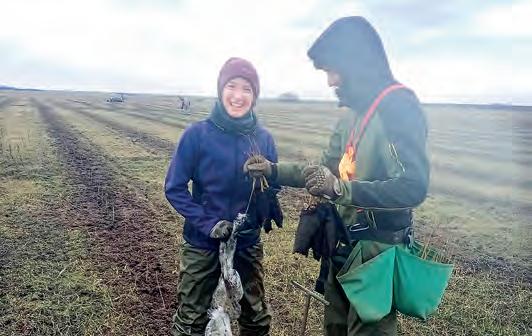
Al Dahra Serbia has launched a reforestation project in the Padinska Skela area, where most of its agricultural operations are based, reinforcing its focus on sustainable land management. The initiative envisages planting between 35 and 40 hectares annually over a three-year period, with the first phase already underway and this year’s plan covering more than 92,000 oak and poplar trees. The company, which manages around 218 hectares of forest, is also maintaining existing woodland in line with its approved Forest Management Plan for 2024–2033.
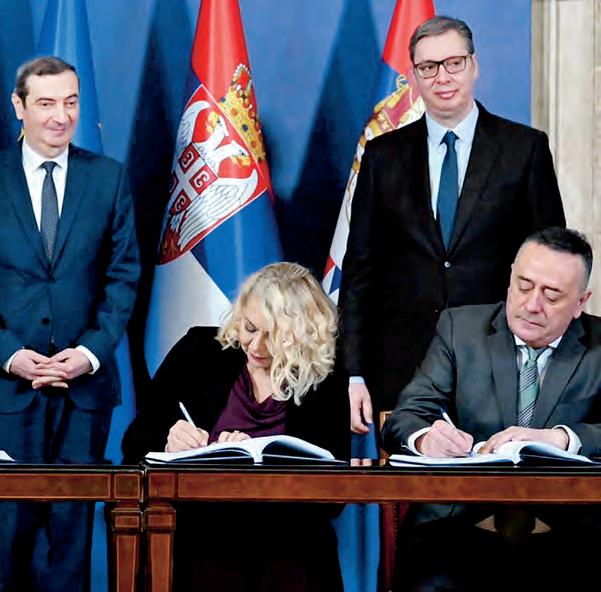
Serbia has signed an agreement with Azvirt to advance the construction of the “Smile of Vojvodina” expressway, continuing major transport investments in the country’s north. The project will improve connectivity between key cities, enabling faster movement of people and goods while supporting regional economic growth and attracting new investment. Built in phases, the expressway forms part of a broader strategy to modernise road infrastructure and strengthen Serbia’s role as a key transit corridor in Southeast Europe.
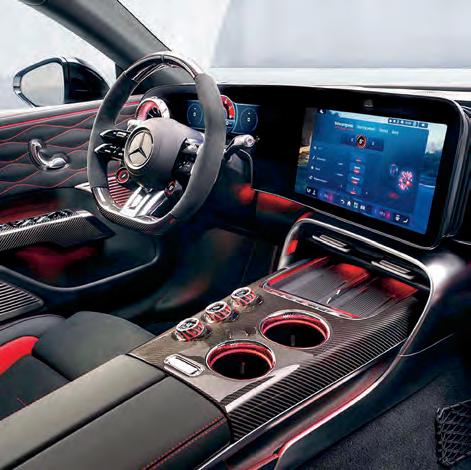
Mercedes-Benz has unveiled the interior of its upcoming Mercedes-AMG GT 4-Door Coupé, highlighting a driver-focused design that blends high performance with digital precision. The cockpit features a fully integrated digital display system, AMG RACE ENGINEER controls and intuitive interaction through touch, voice and haptic inputs, creating a true “control centre” for driving dynamics. According to Michael Schiebe, every detail has been engineered to enhance performance and deliver an authentic AMG driving experience even before the car is set in motion.
Biljana Blagojević Finance Director, CRH Western Balkans
Through acquisitions, innovation and investments in sustainable technologies, CRH Western Balkans is strengthening its regional position and laying the foundations for long-term, low-carbon development
As Finance Director for Western Balkans, Biljana Blagojević oversees a complex business system spanning cement, ready-mix concrete, aggregates and AAC products. In this interview, she discusses regional growth strategy, managing in uncertain conditions and the transition towards more sustainable and energy-efficient operations.
Moravacem, a member of the CRH Group, has played an important role in Serbia’s construction materials industry for decades. How do you see the company’s position on the market today and its key development priorities in the period ahead?
— Moravacem has a long tradition, albeit under different names, brands and ownership structures. The backbone of the company is the cement plant in Popovac, which will mark 130 years of operation in two years’ time. The company also includes concrete plants in Belgrade, as well as its subsidiary Sapphire, which since 2004 has been engaged in waste management, including treatment and environmentally responsi-

ble processing of waste into alternative fuels that are subsequently co-processed in cement production.
In addition to Moravacem and Sapphire, CRH Western Balkans also includes Thermostone, the only producer of aerated concrete in Croatia. In July last year, we also acquired the Kufner Group, a leading Croatian producer of stone materials with a long-standing tradition, modern technologies and strategically positioned mineral resource deposits.
We are part of the CRH Group, a global manufacturer of building materials. Since its establishment in 1972, CRH has completed 1,200 acquisitions throughout its history.
This dynamic business philosophy and strategy are also reflected in the position and role of our company, which has, for
several years now, extended beyond a local footprint to encompass the Western Balkans region. We are therefore now speaking about a new entity – the CRH Western Balkans cluster.
Our key development priority is growth across the Western Balkans region, both organically and through the acquisition of new companies.
Other business priorities include a focus on innovative technologies, including AI, as well as decarbonisation, with the goal of achieving net-zero CO2 emissions by 2050.
As Finance Director for Western Balkans, you are responsible for several business segments – cement, ready-mix concrete, aggregates and AAC products. What are today’s key factors of successful finan-
cial management in such a complex industrial environment?
— The key factor is finance that does not serve solely as a control function, but rather as a true business partner. It can only play that role if it is closely aligned with the company’s business strategy. Equally important is a strong controlling team that goes beyond reporting to actively challenge business decisions.
Given that the cement and concrete industry is highly dependent on energy, transport and raw materials, the key lies not in reacting to price changes, but in anticipating them and ensuring supply stability through long-term contracts. Risk management is an integral part of everyday decision-making.
There are, of course, several other important factors, but without people capable of navigating a turbulent environment, none of the above would be possible.
The construction materials industry is facing significant challenges in terms of sustainability and reducing CO2 emissions. What are the most important steps that CRH and Moravacem are taking to advance sustainable operations and energy efficiency?
— The recent introduction of a GHG emissions tax was an expected step, given Serbia’s commitments and the adoption of a National Decarbonisation Strategy. As part of a multinational group, Moravacem has been working for years on its own decarbonisation programme and has already implemented numerous projects.
We have taken three main approaches to reducing our CO2 footprint: reducing the clinker factor by increasing the use of supplementary materials in cement (slag, ash), increasing the use of alternative fuels, and improving the energy efficiency of our facilities.
Across all three pillars, Moravacem has systematically implemented a range of projects in recent years, including a new clinker cooler, a chlorine bypass system, a waste processing platform for the production of alternative fuels, a solar farm, and more.
The introduction of a GHG emissions tax will certainly represent an additional burden for the company. However, it is equally important that this is accompanied by the introduction of a carbon border adjustment

Our key development priority is growth across the Western Balkans region, both organically and through the acquisition of new companies
mechanism, which effectively protects domestic industry.
Large-scale infrastructure investments in the region are creating new development opportunities for the construction industry. How do you see the further development of the market in Serbia and the Western Balkans, and what role can Moravacem play in that context?
— The Western Balkans may not be the most developed part of Europe, but it is certainly a region with significant business opportunities and strong growth potential. According to projections by the World Bank and the European Bank for Reconstruction and Development (EBRD), economic growth in the region is expected to range between 3.2% and 3.5% in 2026.
The Western Balkans represent a unified market of 18 million consumers and
a crossroads between the EU and eastern markets. Infrastructure is being modernised, with strong support from international financial institutions.
The construction market in Serbia and the Western Balkans is currently in a strong investment cycle that is expected to last at least another five to seven years. The most significant growth is driven by infrastructure, energy, industrial zones and the modernisation of the public sector. In such an environment, Moravacem, i.e. the CRH Western Balkans cluster, can become a key pillar of regional development if it positions itself as the most technologically advanced producer, an ESG and low-carbon leader, an integrated partner across cement, concrete, aggregates and AAC, and ultimately as a company recognised for building trust through supply reliability, expertise and sustainable growth.
Your career includes international experience with Siemens and work across multiple markets, including Germany and China. How have these experiences shaped your approach to leadership and financial management in large industrial companies?
— My international experience in Germany and China has shaped my leadership approach through a combination of operational discipline and strategic agility. I have learned that financial management is not only about control, but also about the ability to react quickly and make decisions in situations where not all variables are known. Today, I combine these two approaches –maintaining discipline and structured control, while remaining sufficiently flexible to adapt to people, markets and circumstances. In financial management, this translates into a balance between control and speed.
I believe that this balance, along with the ability to make decisions under uncertainty, is crucial for successfully managing finance in a complex and dynamic environment.
Leading teams in different environments, I have had the opportunity to work with people who have very different approaches to work, communication and decision-making. In managing people, I have learned that there is no universal leadership style. Today, I adapt my approach to the team – combining clear structure and goals with understanding, transparency and openness.
“The cooperation with the EBRD has had a profound transformational effect on Voli”
Dragan Bokan Voli

Slovenia has introduced temporary daily limits on fuel purchases per vehicle, as part of efforts to stabilise the market and protect consumers from price volatility. The measure includes exemptions for emergency services, essential transport and certain professional sectors, while authorities monitor its impact on households and businesses. Officials say the policy also aims to encourage more efficient fuel use, though it has drawn mixed reactions over potential disruptions to drivers and logistics companies.
The International Monetary Fund will establish a new Regional Capacity Development Center in Rome, with the Southeast Europe Technical Assistance Center (SEETAC) set to begin operations in January 2027. The centre will support countries including Albania, Bosnia and Herzegovina, Montenegro, North Macedonia, Serbia and Moldova by strengthening public finance management, monetary policy and institutional capacity as they advance toward EU membership. IMF Managing Director Kristalina Georgieva said the initiative will enhance macroeconomic stability and growth, marking a shift toward more hands-on support as reforms move from strategy to execution.
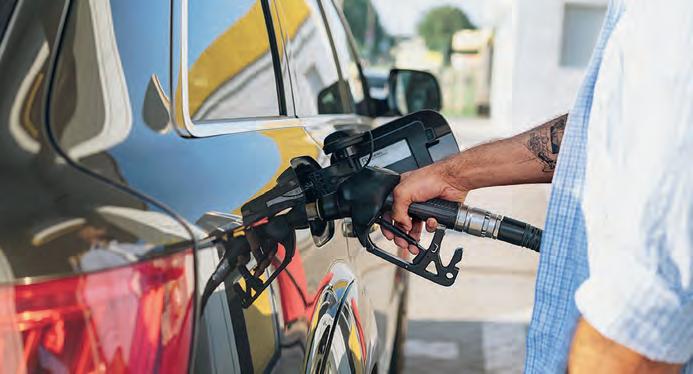
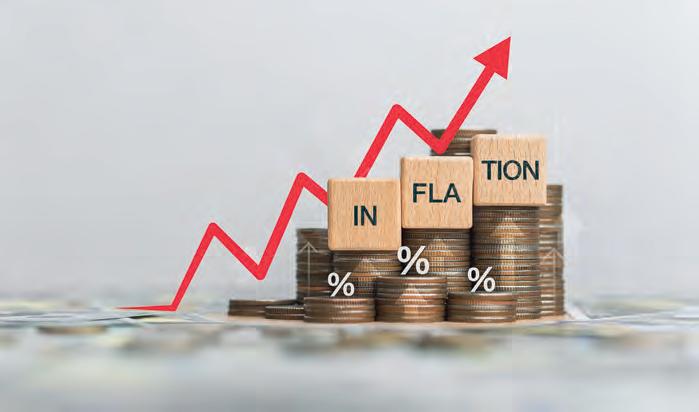
Albania recorded annual inflation of 2.5% in February 2026, surpassing the EU average of 2.1%, according to HICP data. Prices rose by 0.5% month-on-month, with the strongest increase in entertainment, sports and culture, while food and non-alcoholic beverages had the largest overall impact due to their weight in household spending. Although close to the European average, Albania’s inflation remained above major economies such as Germany, France and Italy, while countries like Romania and Iceland reported higher rates.
“ICT and digitalisation are also key drivers of competitiveness and integration into EU economic flows”
Mirjana Kojić Montenegrin Investment Agency
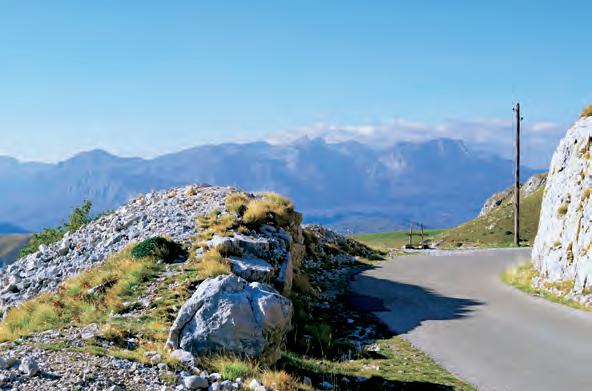
Croatia has stepped up oversight of olive oil quality after inspections revealed inconsistencies between product labels and actual standards. Testing showed that some oils did not meet their declared categories, raising concerns over consumer protection and market transparency. Authorities announced stricter controls and ongoing inspections to ensure compliance and safeguard the reputation of Croatia’s olive oil sector.


Montenegro is advancing road infrastructure projects worth over €150 million, led by the construction of the Tivat–Jaz boulevard, one of the country’s largest ongoing developments. Works include upgrades to key roads and bridges, such as the Đurđevića Tara bridge, alongside major routes like Nikšić–Plužine, with a focus on improving connectivity across regions. Officials say the Tivat–Jaz section is expected to ease congestion along the coast ahead of the summer season, while broader efforts aim to enhance safety and align infrastructure with EU standards.


North Macedonia citizens spend an average of 228 minutes per month on mobile phone calls, underscoring the continued relevance of voice communication. Despite the rise of messaging apps and digital platforms, mobile services remain a central part of daily life across age groups. Experts note that while data usage is growing rapidly, traditional calls still play a significant role alongside newer communication tools.
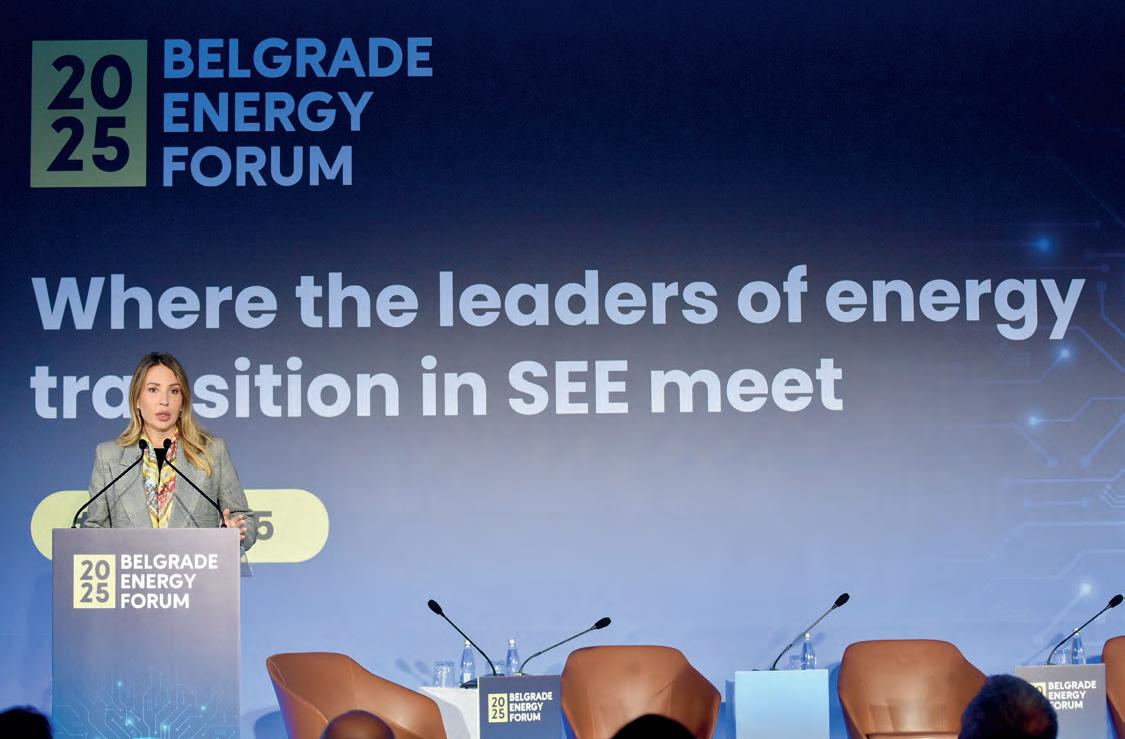
The fourth edition of the Belgrade Energy Forum, a premier regional B2B and B2G energy conference, will take place on 11–12 May. Established by the energy news portal and event organiser Balkan Green Energy News, the Forum brings together key players driving and shaping the green transition in Southeast Europe and beyond. Since its inception in 2023, Belgrade Energy Forum has served as a platform for energy leaders, international organisations, professional associations,
technology companies, financial institutions, experts and top government officials to share views and insights, discuss trends and challenges, connect with clients and partners, and enhance media visibility.
Amid geopolitical tensions fuelled by conflicts in Ukraine and the Middle East, global energy supplies are under pressure. Countries worldwide, including those in Southeast Europe, are focusing on energy security and resilience while striving to remain on course with the green transition and de-
carbonisation. This shift in focus could slow the pace of the energy transition, but it may also provide fresh momentum, as renewables reduce dependence on fossil fuels.
Hear from energy ministers and engage with them directly
Against this backdrop, Belgrade Energy Forum – BEF 2026 will bring together 400–500 participants to discuss challenges and opportunities. Taking place at the Hyatt Re-
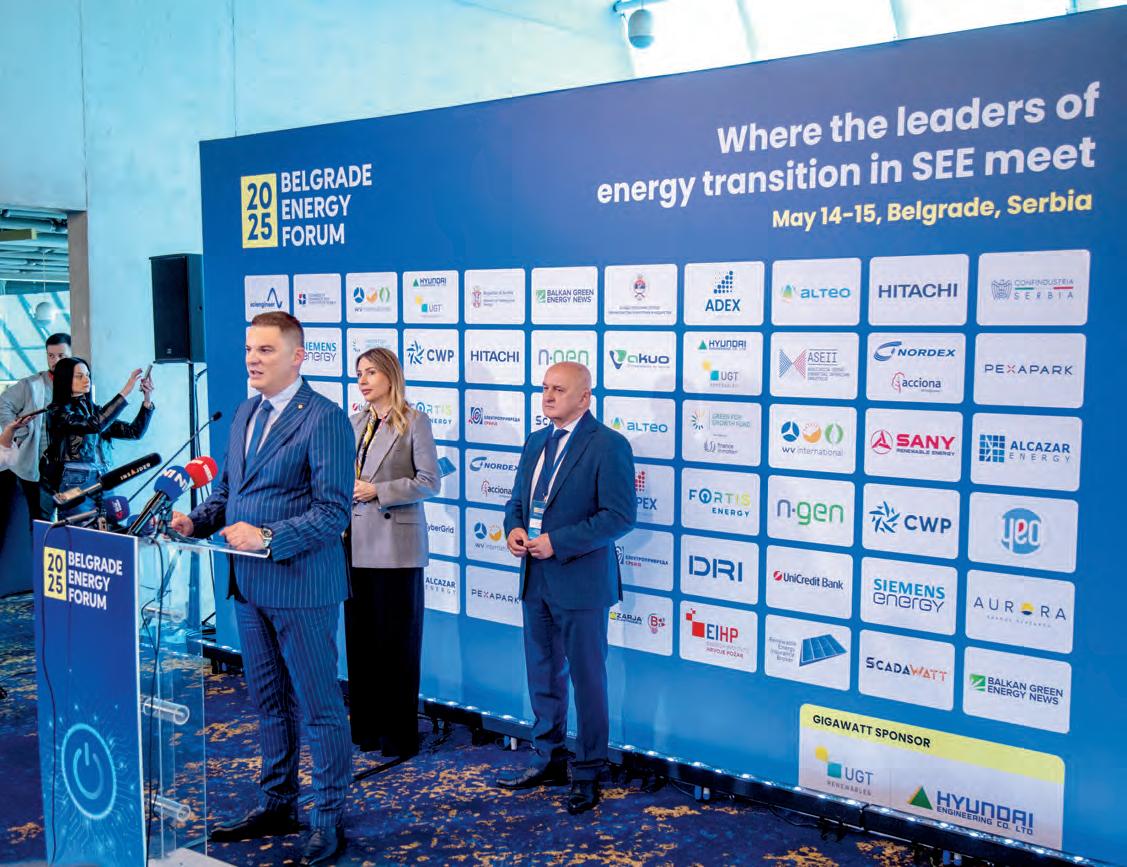
gency Belgrade, the Forum will host energy ministers from Serbia, Montenegro, North Macedonia, the Republic of Srpska, and the Federation of Bosnia and Herzegovina, with their counterparts from Hungary, Azerbaijan, Romania, Greece and Albania yet to confirm attendance. A top-level delegation from the Energy Community Secretariat will also join the event, led by its Director, Artur Lorkowski.
Securing energy system resilience in turbulent geopolitical times
Panel discussions, keynote speeches and presentations will cover topics such as regional cooperation, the impact of the EU’s
carbon border tax (CBAM) on the power market, virtual trading, the decarbonisation of energy-intensive industries, technologies to ensure energy security and resilience, ways to build sustainable and robust grids, the scaling of renewables, the rise of battery storage, and digitalisation and AI as tools to build flexible power systems.
The organiser of the event, Balkan Green Energy News, as the leading energy news portal in Southeast Europe, offers its partners enhanced media visibility throughout the year and a platform to reach new audiences and clients.
Branislava Jovičić, the portal’s founder and editor, emphasised the importance of the conference, which is institutionally supported by
the energy ministries of Serbia, North Macedonia, Montenegro and the Republic of Srpska: “BEF is a conference of influence, a hub for gaining insider insight into strategies and securing exclusive agreements. At BEF, the most influential stakeholders in the energy sector come together to shape the region’s energy future.”


“In the business world, the rearview mirror is always clearer than the windshield”
Warren Buffett
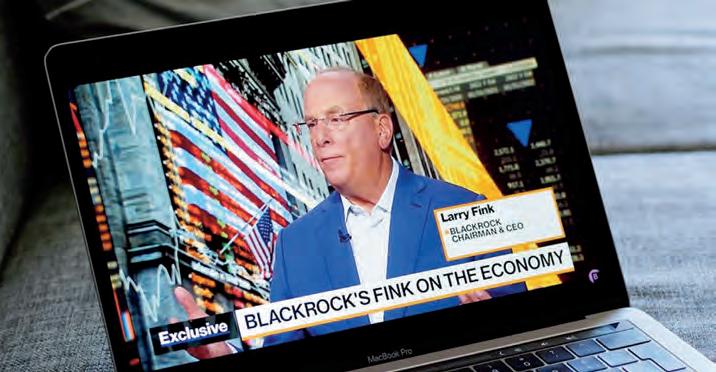
Alibaba Group is advancing its restructuring strategy by giving greater independence to its core business units, including cloud and e-commerce. The company aims to improve agility, attract investment and sharpen competitiveness in a rapidly evolving tech landscape. The changes mark a significant step in redefining one of China’s largest corporate ecosystems.
BlackRock has launched a new multi-billion-dollar infrastructure fund aimed at energy, transport and digital assets. The move reflects growing investor demand for long-term, stable returns amid market volatility. It also signals a deeper shift of institutional capital toward private markets and real assets.

Companies worldwide accelerated equity offerings in March, raising billions as geopolitical tensions and market volatility intensified. The surge reflects a strategic push to secure capital while financing conditions remain relatively favourable. It underscores how quickly corporate funding strategies adapt in response to global uncertainty.






Co-Founder and CTO of Lovable
In the traditional mythology of Silicon Valley, building a technology company required two things: deep technical expertise and years of coding experience. But a new generation of entrepreneurs is quietly rewriting those rules. Among them is Fabian Hedin, a Swedish founder whose work in artificial intelligence is helping transform software development from a specialised skill into something far more accessible.
At just 26 years old, Hedin has already become one of Europe’s most closely watched young technologists. As co-founder and chief technology
officer of the Stockholm-based startup Lovable, he helped build one of the fastest-growing software companies of the AI era. The company’s central idea is simple but potentially revolutionary: instead of writing code, users describe what they want to build in plain language, and artificial intelligence generates the software for them.
Ayman Sadiq was named in Forbes’ “30 Under 30 Asia” list and received international accolades for youth leadership
If that sounds radical, it is. And it reflects a deeper shift underway across the technology industry.
An Entrepreneurial Start
Hedin’s path into artificial intelligence began long before the current wave of generative AI tools reshaped the global tech conversation. Raised in Sweden, he developed an interest in programming and digital systems early in life, combining technical curiosity with a strong entrepreneurial instinct.
While still in high school, he launched his first company—a property-technology startup that developed digital

tools for managing real estate. The venture eventually grew into a functioning business and was later sold, giving Hedin an early taste of startup building and product development.
His academic journey continued at the KTH Royal Institute of Technology in Stockholm, where he studied industrial economics while simultaneously working on new software products. One of those projects, TenFAST, focused on digital platforms for property management and was adopted by landlords and municipalities across Sweden.
By the time he reached his early twenties, Hedin had already moved
through several cycles of experimentation familiar to seasoned entrepreneurs: building products, testing markets, learning from failure and scaling ideas that worked.
Hedin’s breakthrough came when he joined forces with entrepreneur Anton Osika to create Lovable, an AI company built around a bold premise: that writing software could become as simple as describing an idea.
For decades, coding has been the gateway to the digital world. Every website, application or digital service required skilled developers who
could translate ideas into programming languages. Lovable attempts to remove that barrier.
Using advanced AI models, the platform allows users to explain what they want—a marketplace, a booking system, a mobile application— and the system generates the underlying code automatically. The process can take minutes rather than weeks.
The concept quickly gained traction in the global startup ecosystem, where founders constantly search for ways to prototype products faster and at lower cost.
Within months of its launch, Lovable began spreading rapidly among
developers, designers and entrepreneurs eager to experiment with AI-assisted software creation.
The company’s growth soon attracted the attention of investors.
In less than a year, Lovable reportedly reached around $100 million in annualised subscription revenue, an extraordinary pace even in the fast-moving world of software startups. Venture capital followed, and a major funding round pushed the company’s valuation to approximately $6.6 billion.
For Hedin, the milestone carried another headline: at 26, he became one of Europe’s youngest self-made billionaires.
Yet inside the company, the focus remains less on valuation and more on technological ambition.
Lovable’s long-term goal is to expand its platform into a broader ecosystem of AI tools capable of building not just websites but entire digital businesses—from mobile apps and internal systems to automated AI agents that perform tasks independently.
In that vision, software development begins to resemble creative direction rather than engineering.
Hedin represents a new type of European tech founder—one who operates in a global market while remaining rooted in the continent’s growing startup ecosystem.
Unlike earlier generations of entrepreneurs who often relocated to Silicon Valley, Lovable has remained firmly based in Stockholm. The company’s rapid growth is part of a broader shift that has seen Europe produce an increasing number of influential AI and software companies.
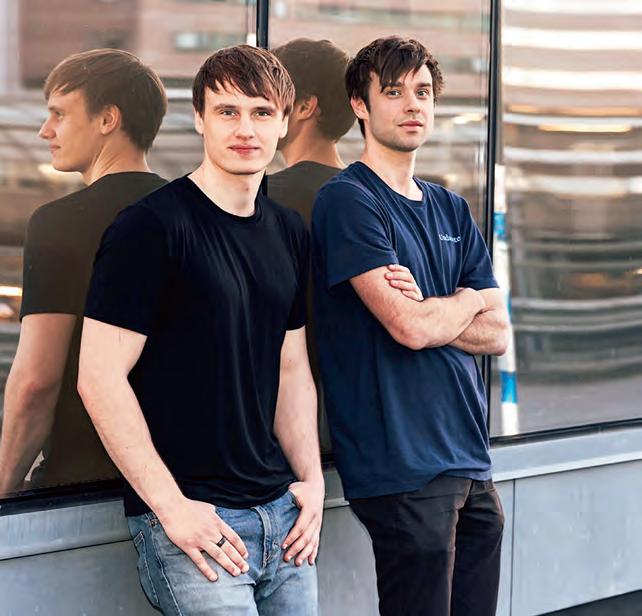
For Hedin, the broader mission extends beyond building a successful startup.
He often speaks about democratising software creation—a future in which millions of people who have ideas but lack programming skills can still build digital products. In that world, the role of technology shifts from gatekeeper to enabler.
The implications are significant. Entrepreneurs could test new ven -
tures without hiring development teams. Designers could build interactive tools. Small companies could launch sophisticated digital services on their own.
In other words, the next wave of innovation might come not from professional programmers but from anyone with a clear idea and access to the right tools.
The Next Chapter of AI
Artificial intelligence has already transformed fields ranging from design and marketing to scientific research. But in software development, its impact may be even more profound.
If platforms like Lovable succeed, the act of programming could gradually shift away from writing lines of code toward shaping ideas and guiding AI systems.
Fabian Hedin’s career, still in its early stages, sits at the centre of that transformation.
For now, the young Swedish founder continues to build tools that blur the line between imagination and execution. And if his vision proves correct, the most important skill in the digital economy may no longer be knowing how to code.
It may simply be knowing what you want to create.


Serbia’s digital economy has entered a new and more demanding phase of development. After more than a decade of rapid expansion, driven primarily by IT services and strong export growth, the focus is gradually shifting from volume to value — and from potential to performance.
The country has built a solid technological base, with ICT exports reaching record levels and a startup ecosystem that continues to evolve. However, this growth has been largely service-oriented, while the number of companies capable of developing globally competitive products remains limited. The challenge ahead is therefore not one of capacity, but of transformation: moving from outsourcing to ownership, from engineering excellence to market relevance.
This transition is further complicated by structural constraints. Limited go-to-market capabilities, a shortage of growth-stage capital and an insufficient level of collaboration between startups and large domestic companies continue to slow down the scaling process. At the same time, the rapid emergence of artificial intelligence is introducing a new layer of urgency, requiring faster adaptation, stronger infrastructure and more decisive strategic alignment.
In parallel, digital infrastructure is becoming a central pillar of competitiveness. The development of the State Data Centre, the expansion of national AI capacities and the broader concept of digital sovereignty are positioning Serbia to play a more prominent role in the regional digital landscape. In this context, infrastructure is no longer a supporting element, but a strategic asset — one that shapes not only technological capabilities, but also economic resilience and investment attractiveness.
What emerges from these perspectives is a clear shift in the understanding of the digital economy itself. It can no longer be seen as a single high-performing sector, but rather as a system that depends on the interaction of multiple components: business, government, education and regulatory frameworks. Progress in one area, without corresponding development in others, produces limited and often unsustainable results.
The next phase will therefore depend on alignment — on the ability to connect infrastructure with innovation, talent with capital and policy with execution. Serbia has already demonstrated that it can grow. The question now is whether it can scale, compete and sustain that growth in an increasingly demanding global environment.

SERBIA’S DIGITAL ECONOMY STANDS AT A TURNING POINT – FUTURE GROWTH WILL DEPEND NOT ON CAPACITY, BUT ON THE ABILITY TO SCALE INNOVATION, STRENGTHEN INFRASTRUCTURE AND ALIGN STRATEGY WITH EXECUTION

TANJA KUZMAN
CEO, Digital Serbia Initiative
Serbia’s digital ecosystem has grown rapidly, yet structural challenges continue to limit its global reach and long-term competitiveness
As the country’s ICT sector records impressive export growth, the key question is no longer potential, but performance – and whether Serbia can translate technical strength into globally scalable innovation.
In the last decade, Serbia has built a relatively developed digital and startup ecosystem. How would you assess its maturity today, and what will determine whether the next phase brings globally competitive companies?
— ICT exports have grown from €375 million in 2012 to €4.55 billion in 2025
– a twelvefold increase that has made this the country’s largest net exporting industry. These figures demonstrate strong potential, but also a clear limitation: growth remains largely service-driven, while product exports are still marginal.
The startup ecosystem is also undergoing a structural shift. The total number of startups is declining, as many transition into innovative SMEs, often with limited global ambition and slower growth. Only 3.4% exceeded €1 million in annual revenue last year, highlighting a bottleneck in the innovation pipeline.
The next phase will depend on two factors: the ability to respond to
AI-driven competition and shift from selling engineering hours to building products, and the need to increase both the number of startups and the share achieving global commercial traction.
The key question is whether we can build go-to-market capabilities and a culture of serial entrepreneurship at a pace comparable to leading global markets.
The IT sector continues to record stable export growth, yet only a limited number of startups manage to position themselves globally. In your view, what are the main obstacles to scaling internationally? — For most startups, Serbia remains the primary market, which is a significant constraint. The focus on the local market Focusing on the local market is the most frequent trap for founders. It is a small and specific market, and local success rarely translates globally.
Three challenges stand out. First, a gap in international sales and marketing capabilities – we still lack sufficient experience in scaling companies to millions in revenue within short time frames. Second, the pace of execution: only 44.4% of founders work full-time on their startups, limiting growth and investor confidence. This is reflected in performance metrics, with only a small share achieving
over 10% month-on-month growth, compared to more than 30% in mature ecosystems. Third, there is a disconnect between ambition and reality. While 18% of startups plan to raise Series A or B funding in 2026, more than half currently generate no revenue.
At Digital Serbia Initiative, we focus on closing the go-to-market knowledge gap, as it is the most direct lever for international growth. The upcoming Soonicorn programme reflects this approach, combining global mentorship with tailored support.
Access to growth-stage capital is often highlighted as a major issue. Does Serbia need more funds, stronger corporate involvement, or regulatory changes to support innovation investment?
— All three are important. On the surface, we do not have enough VCs that are capable of supporting later-stage growth. This sounds like a primary challenge, but the reality is more nuanced. Founders will rarely seek to raise Series A or B from a locally based fund as their lead investor. The goal is to secure a term sheet from established international VC to gain validation, access and strategic support. Currently, 61.9% of startups have never accessed smart capital – whether from angels, VCs or accelerators. The ecosystem entered a grant trap: startups relying on non-repayable funding without building scalable business models.
At the same time, companies need to recognise that collaboration with startups is no longer optional; it is essential for maintaining competitiveness. Regulatory frameworks should also evolve, aligning more closely with developed ecosystems and initiatives such as EU Inc.
Artificial intelligence is reshaping business models worldwide. Where do you see the greatest opportunities for Serbia, and does the ecosystem have the capacity to develop globally relevant AI solutions?
— AI development depends on strong data infrastructure, processing ca-
pacity and secure pipelines. While user-facing elements evolve quickly, long-term advantage is built in the back end.
Serbia has the talent and technical expertise, but lacks the urgency and speed required in this cycle. Domestic companies use advanced AI tools 40% less than their EU counterparts, a gap that will increasingly affect competitiveness.
Encouragingly, startups are moving towards AI-native products. However, global relevance will depend on the ability to solve high-impact problems and to build for international markets from the outset.
What changes are most needed in education and talent development to ensure long-term competitiveness?
— The market is evolving faster than formal education can follow. Research by Digital Serbia Initiative, supported by UNDP, shows that 91% of companies see AI as a key technical skill for all employees over the next five years. At the same time, 82% highlight adaptability, flexibility and continuous learning as critical competencies – areas where candidates most often fall short. Employers also point to a lack of practical skills, experience with specific technologies and underdeveloped soft skills.
Although improvements are visible, education still does not fully meet market needs. In an environment where skills quickly become outdated, continuous learning is no longer an advantage, but a requirement. Multidisciplinary programmes and adaptable curricula are therefore essential.
In developed economies, startups increasingly drive the transformation of traditional industries. How strong is the connection between Serbia’s tech sector and the wider economy?
— It remains limited. Although B2B dominates the startup ecosystem, collaboration with large domestic companies is still insufficient.
Startups need structured opportunities to validate their products in
real business environments and use those references to scale internationally. In practice, cooperation is often slowed by complex procedures and lack of agility.
The paradox is that Serbian startups frequently succeed in engaging international corporations, while facing obstacles at home. This reflects a broader lack of urgency in the domestic market. Until collaboration with startups becomes a strategic priority, this gap will persist.
Looking ahead to the next decade, what would signal that Serbia has truly advanced towards a digital economy?
— Progress should be visible in three areas. First, ICT exports need to shift towards a higher share of product-based revenue. Services dominate
SOONICORN
– A SPECIALISED
today. Within five years, that balance should look fundamentally different - with a substantially larger number of companies generating tens of millions of dollars in annual revenue from their own products.
Second, the ecosystem must produce more serial entrepreneurs who reinvest knowledge and capital, creating a stronger growth cycle. Third, education must evolve towards continuous, market-aligned learning.
At Digital Serbia Initiative, our ambition is to achieve a tenfold positive impact on the ecosystem. Progress in the abovementioned areas is at the core of our activities.
Resolution of a structural break will require stronger alignment between business, government and education. The opportunity remains open – but not indefinitely.
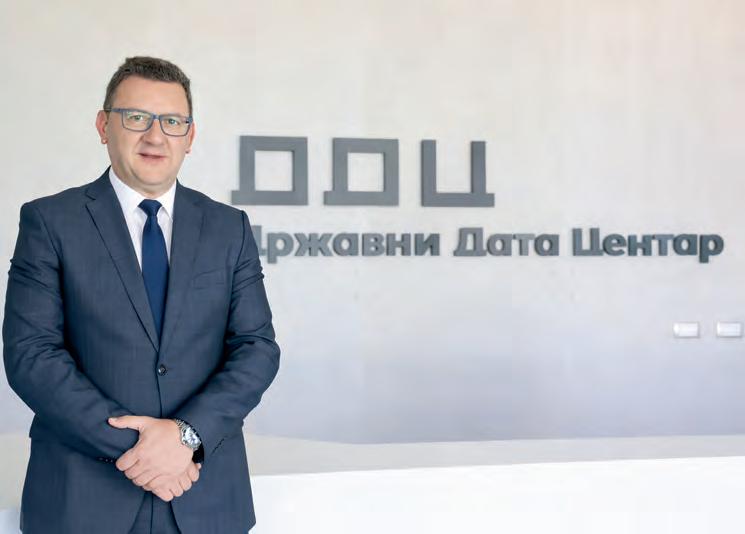
DANILO SAVIĆ
CEO, Data Cloud Technology (DCT)

The Government Data Centre stands as a central pillar of Serbia’s development as a regional hub for artificial intelligence, providing the infrastructure required to advance innovation, safeguard data and reinforce digital sovereignty
n an era when data and artificial intelligence are becoming key resources of global competitiveness, the development of reliable digital infrastructure and domestic capacities is increasingly emerging as a matter of strategic stability and longterm growth. In this context, the Government Data Centre and Data Cloud Technology play an ever more important role in positioning Serbia as a regional digital hub.
IHow do you see the role of the Government Data Centre and DCT in shaping the digital economy of Serbia and the region over the next five years — particularly in the context of global competition for data, artificial intelligence and digital sovereignty?
— Over the next five years, the role of the Government Data Centre and DCT, as a state-owned company, will extend beyond infrastructure support. They will become one of the
key pillars of Serbia’s digital economy, as competitiveness is no longer measured solely by the number of IT companies, but by the ability of the state and the economy to provide a reliable, secure and accessible environment for the development of artificial intelligence and digital services.
In this regard, the Government Data Centre represents strategic infrastructure, while DCT contributes operational knowledge, technological expertise and the capacity to apply high global standards in practice. This combination enables Serbia to position itself not only as a user of advanced technologies, but also as a regional hub for the development, hosting and protection of critical digital systems.
It is also worth noting that the expansion of the Government Data Centre’s capacity in Kragujevac is in its final phase, alongside the upgrade of the National AI Platform, which in its second phase will be seven times more powerful than the current system, while in its third phase the new supercomputer will have 20 times more superchips and nearly 30 times more data storage capacity than the existing one.
This is particularly important at a time when data and artificial intelligence are becoming strategic resources, and digital sovereignty is increasingly linked to economic stability, institutional resilience and international competitiveness. Countries with reliable and sovereign infrastructure, clear standards and partners capable of meeting enterprise-level requirements will have a significant advantage in attracting investment, technological partnerships and new digital projects.
As Vice President of NALED’s eGovernment Alliance, where do you see the main regulatory or institutional challenges in accelerating the digital transformation of the public sector — and what should be prioritised for change? — The challenges include the pace of capacity development within pub-
lic administration, overlapping registries, issues of interoperability, as well as the incomplete digitalisation of procedures. The business and administrative environment remains characterised by a significant level of administrative burden and frequent regulatory changes.
The eGovernment Alliance recognises these challenges and actively contributes to addressing them. The Action Plan for 2025–2026 includes 55 activities across 11 objectives, aimed at improving electronic services and user experience on the eGovernment Portal and other state platforms, as well as supporting capacity-building among civil servants and users of eServices through training and promotional activities. Particular attention is also given to supporting line ministries in legislative drafting through suggestions and comments from Alliance members.
In this context, the Programme for the Simplification of Administrative Procedures and Regulation – ePAPER – and the accompanying Action Plan for 2026–2030 are in preparation. This is complemented by amendments to the Law on eGovernment and the Law on Electronic Documents, aimed at strengthening interoperability, promoting open data and enhancing legal certainty. At the same time, a Law on Artificial Intelligence is also in preparation, contributing to the systemic application of AI solutions in public administration, while the development of large language models for the Serbian language and improved data governance represent an additional step forward.
To what extent do you believe that the development of domestic human capital — from primary education to top-level AI experts — can represent a competitive advantage for Serbia in the digital economy, and how can this potential be best activated?
— Infrastructure is essential, but without expertise there can be neither sustainable digital transformation nor long-term advantage.
It is therefore crucial to strengthen the entire development chain — from modern education and digital literacy to specialised knowledge in artificial intelligence, cybersecurity and data management. Competitive advantage does not arise solely from individual talent, but from the system’s ability to continuously educate, guide and retain high-quality professionals.
This potential is best activated through stronger links between education, science and the economy. When cooperation exists between academic institutions, the research sector and companies working on real IT projects, conditions are created for knowledge to remain in the country, develop further and directly contribute to the economy. The Innovation District in Kragujevac is intended to serve as the foundation of such an ecosystem — a space where infrastructure, knowledge, research and application converge, enabling the development of talent, new technologies and competitive domestic solutions.
Artificial intelligence is becoming central to competitiveness; how do you view the responsibility of companies, institutions and the state in building AI infrastructure that is at once innovative, ethical and aligned with the principles of digital sovereignty?
— Responsibility for building AI infrastructure should be based on synergy, while shared among companies, institutions and the state. Companies have an obligation to develop and implement AI solutions that are technically reliable, secure and aligned with applicable regulations and ethical standards. Institutions should provide rules, oversight and standards that enable innovation while protecting the public interest and reducing risks of misuse or non-transparent application. The state, for its part, bears a particular responsibility to develop infrastructural and institutional capacities for AI, ensuring that data, systems and strategic resources remain within national frameworks. The key
point is that AI competitiveness today can no longer rely solely on technological efficiency, but on the combination of innovation, regulatory certainty and digital sovereignty. Advantage will lie with those systems that succeed in establishing this balance. Notably, in 2023 the OECD recognised the National AI Platform as one of the nine best innovative public sector projects among 1,048 projects from 94 countries worldwide.
How can the need for data protection and digital resilience (sovereignty) be balanced with openness to investment, partnerships and interoperable solutions?
— Data, critical infrastructure and systems of strategic importance must maintain a high lev-
DIGITAL COMPETITIVENESS TODAY IS BUILT NOT ONLY ON TECHNOLOGY, BUT ON THE SYNERGY OF
KNOWLEDGE AND REGULATORY CERTAINTY
el of protection and reliability, but this does not imply closing off to partnerships and investment. This is the essence of a sustainable approach: an open investment ecosystem within clearly defined technical, security and regulatory frameworks. Where such frameworks exist, partnerships do not undermine digital resilience, but strengthen it. Serbia has demonstrated openness to investment and cooperation through the development of modern digital infrastructure, as evidenced by the Government Data Centre in Kragujevac and the National AI Platform. Furthermore, the fact that DCT’s clients include major global IT companies shows that it is possible to build an open digital investment environment while maintaining reliance on domestic core infrastructure and control over strategically important digital resources.
Serbia’s next phase of digital development will depend on its ability to move beyond growth and build scalable, globally competitive business models
Serbia’s digital economy is entering a phase where growth alone is no longer sufficient. After years of rapid expansion, the focus is shifting towards scale — and the ability to translate technical strength into sustainable, globally competitive business models.
While the country has built a strong foundation in terms of talent and export performance, structural challenges continue to limit progress. Many companies remain service-oriented, while only a small number of startups manage to scale beyond local or regional markets. This gap between capacity and outcome is becoming the defining issue of the ecosystem.
At the same time, the broader digital environment is evolving. The development of advanced

infrastructure, increasing investment in artificial intelligence and the strengthening of regulatory frameworks are creating new conditions for growth. However, these elements only generate impact when aligned with market needs and business capabilities.
The central question is therefore no longer whether Serbia can grow, but whether it can scale. This requires a more integrated approach — one that connects innovation with market access, talent with capital and strategy with execution.
The direction is clear. The pace of change will determine the outcome.
It is not an escape, but a leap into freedom – a journey into the unknown that dissolves the need for control

In my line of work, one must be exceptionally well-informed, maintain a strong network of contacts, choose the right opportunities and the right words, meet tight deadlines and find the precise nuance in every message – whether sharp, gentle, ambiguous or courteous, one that intentionally says little or much.
For someone inclined towards control, this can easily become a closed circle. Never without a phone, newspapers or digital media – day and night I had to stay informed, even on holiday, perhaps especially then.
And then, as Steinbeck said (“we do not take a trip; a trip takes us”) trips came to pull me out of my reality, away from details, commas and carefully crafted formulations. Journeys, not always comfortable, nor easy, nor entirely safe. “Why go there? Do you really have to?” they ask. It seems that I do. Perhaps this is another side of me, or the missing piece that makes the first one whole.
It is not an escape, but a leap. Into freedom. Like Alice falling down the rabbit hole, into a labyrinth and a world of wonders. Since then, I have often set off for places with no signal, no GPS, no
iquette or reception halls. It even becomes comfortable after days of riding restless horses across the endless steppe.
Such journeys have extinguished in me the former “princess and the pea”, along with the need to constantly follow everything happening back home. The intensity of what surrounds me erases the need for control. Alice’s fall is no longer a trauma, but the joy of a slide where you do not choose the consequences or the impression you leave behind.
Salkantay trek, The Andes, Peru
electricity or running water, where I understand neither the language nor the script, and where time follows a different rhythm. There, I lose myself – not only along unmarked paths, but also in years, days and hours – where I know no one and have no idea what awaits me.
My journeys are a time machine, a fairytale, an expedition, an exploration and a waking dream. I spend nights in a caravanserai in Yazd and, in my dreams, converse with Zarathustra. In a small
Travel has taught me that the world is not to be controlled, but understood – through people, encounters and experiences that change us for good
room of a medieval madrasa in Khiva, I become a student again, inspired by Ulugh Beg, who supported girls’ education as early as the 15th century.
At times I sleep in a tent, listening to hyenas; at others in a yurt, or in a mechanic’s workshop on a camp bed somewhere in Mongolia. Without et-
Difficulties, of course, occur. I once found myself trapped in a flooded canyon in Syria, which led to jumping into icy water and climbing vertical cliffs with an injured wrist. On another occasion, our small expedition was detained by Eritrean border guards after we strayed from the Ethiopian desert, one of the most inhospitable places in the world.
I have travelled above 4,000 metres, but also below sea level, where, surrounded by surreal volcanic landscapes, I sang with joy. I have grown accustomed to covering thousands of kilometres, exploring the world in every direction – on foot, by train, by boat, in ageing aircraft, on horseback or in offroad vehicles.
A friend once said one should travel slowly, at a “lover’s pace” – one that allows you to truly observe what, and who, comes your way. It is the pace of an ordinary train on the Trans-Siberian Railway, with stops and detours, as I tend to do, following inspiration.
I always write. I have dozens of notebooks and thousands of photographs I rarely revisit, yet they preserve everything I have seen, felt and learned. And I have learned much – not only about the countries I have travelled through, but above all about people, boundaries and my own ignorance.
I have learned how to overcome fears, rely on intuition and, at times, let go. Not out of weakness, but out of understanding.
As Flaubert would say, travel teaches us humility. We come to realise how small a place we occupy in the world.
The work of Goranka Matić remains one of the most valuable visual testimonies of the cultural, social and political history of Belgrade and former Yugoslavia, while the recently published monograph finally brings her oeuvre together in a form that reflects its true significance
Self-Portrait, 1988
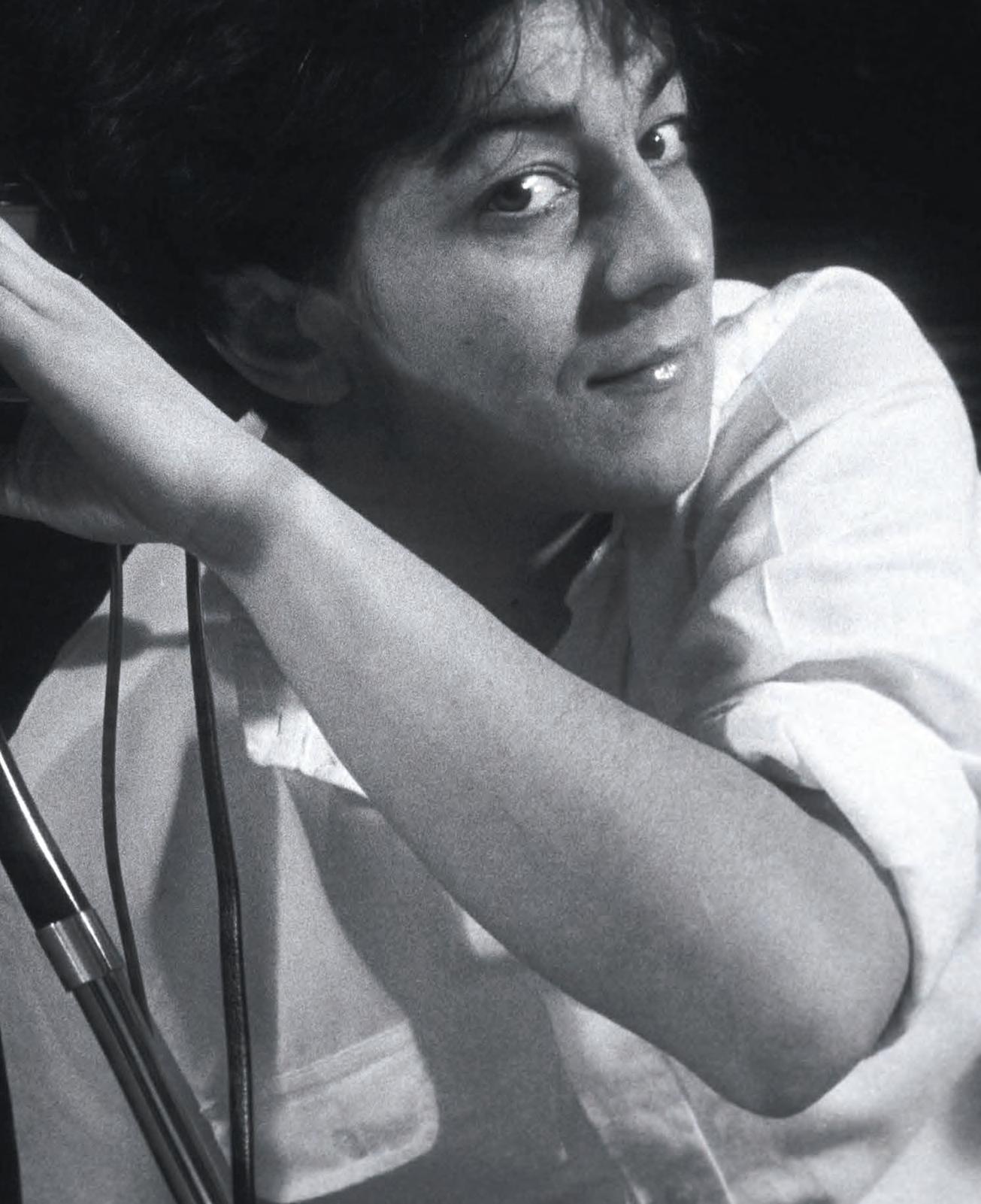
There are artists whose work cannot be measured solely by aesthetic criteria, but by their ability to give a face, a rhythm and a lasting presence to an entire era. Goranka Matić belongs to that rare group. Her photographs are not merely records of events, people or moments, but documents of emotion, social tension and cultural transformation. Within them reside the energy of Belgrade’s New Wave scene, the atmosphere of the artistic circles of the 1980s and the political unease of the 1990s, as well as a rare, almost immediate intimacy with the subject –something only photographers with a finely attuned sensibility for both moment and human presence can achieve.
Born in Maribor on 13th August 1949, Goranka Matić spent her early years in Slovenia and North Macedonia before moving to Belgrade, where she completed the Tenth Gymnasium and later studied art history at the Faculty of Philosophy. From the founding of the Student Cultural Centre in 1971, she became part of Belgrade’s artistic milieu, initially working as a curator and within cultural institutions before photography became her primary medium. She began her professional photographic career in the late 1970s, contributing to publications such as
Džuboks, Start and Svijet, while her work appeared across leading magazines in former Yugoslavia.
What makes her oeuvre particularly distinctive is its simultaneous presence across several registers: journalistic, documentary and artistic photography. As noted by the Museum of Contemporary Art in Belgrade, her work from the outset unfolded in both the domains of press and art photography, without any compromise in authorial integrity. On the contrary, her consistency of vision, focus on people and situations, and readiness to be an active participant rather than a detached observer, shaped one of the most compelling photographic bodies of work in the region.
For a broader audience, Goranka Matić remains closely associated with the visual identity of Belgrade’s music scene in the 1980s. Her portraits and concert photographs are inseparable from the collective memory of the New Wave movement, its bands, clubs and the sense of cultural freedom that defined an entire generation. Yet to reduce her to a “rock photographer” would be to overlook the full scope of her work. Her camera followed artists, writers, actors and intellectuals with the same clarity with which it captured protests, social upheavals and political actors in the dec-
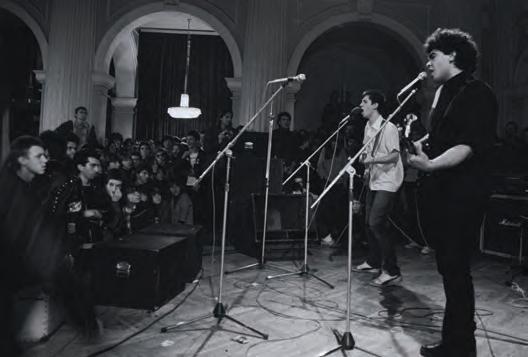

2.
3.
4. Ljuba
5. Audience at a Gang of Four concert, Zagreb, 1981
6. Mića Popović, 1984
7. Šarlo
SKC, November 1980
ades that followed. Her photographs thus form both a cultural and a civic history.
A particular strength of her work lies in the balance between immediacy and perspective. In awarding her the Tanja Petrović Foundation Prize in 2021, the jury highlighted her contribution to both personal and collective memory, from the New Wave y ears through the turbulent 1990s. This duality defines her approach: she did not simply document events, but constructed a visual memory of society. Her photographs do not read as archived past, but as living material that continues to shape how we understand that time.
It is therefore no coincidence that her major retrospective at the Museum of Contemporary Art was titled Experience in a Crowd. The phrase captures both her method and her position: always within the event, among people, in close proximity to unfolding situations, yet with the clarity and discipline of an author capable of isolating the decisive detail. Her photography never sought spectacle; it drew meaning from everyday gestures, faces and atmospheres, which is precisely why it remains strikingly contemporary.
The recently published monograph Goranka, initiated with the author during 2024 and completed after her passing in January 2025, represents
the most comprehensive effort to systematise and present her work as a whole. Comprising around 670 pages and approximately 1,000 photographs, and edited by Una Popović, Nebojša Grujičić and Borut Vild, the publication offers both a historical record and an insight into her personal and professional trajectory – from early years and the New Wave era to later political and artistic cycles. In 2025, it was recognised as Publishing Endeavour of the Year by ULUPUDS. This recognition reflects not only the scale of the publication, but also the extent to which Matić’s work transcends the boundaries of photography to become part of a broader cultural consciousness. Exhibitions such as Slikati muziku at RTS Club further confirm that interest in her work continues to grow, reaching new audiences and generations.
Goranka Matić passed away on 5th January 2025 in Belgrade, yet her photographs remain among the most reliable guides through the cultural and social history of this region. They are neither nostalgic artefacts nor mere documentary records. Instead, they embody something far rarer: an authorial gaze that is precise, engaged and enduring. We return to her images not only to see how things once were, but to better understand what truly mattered in that time.

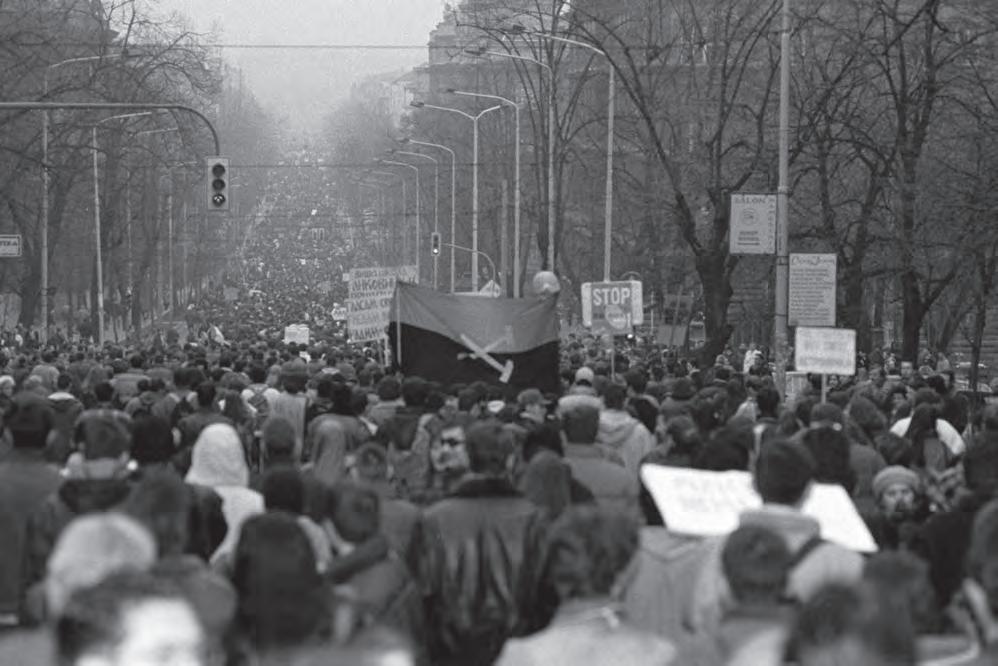

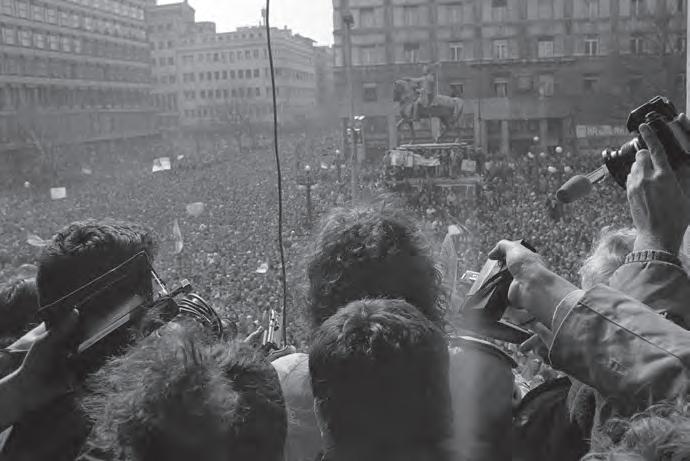
1. Zoran Đinđić, February 1997
2. Protest March, December 1996
3. Vuk Drašković addressing demonstrators from the balcony of the National Theatre in Belgrade, 9 March 1991
4. Goranka Matić as Ira Fassbinder, 1978

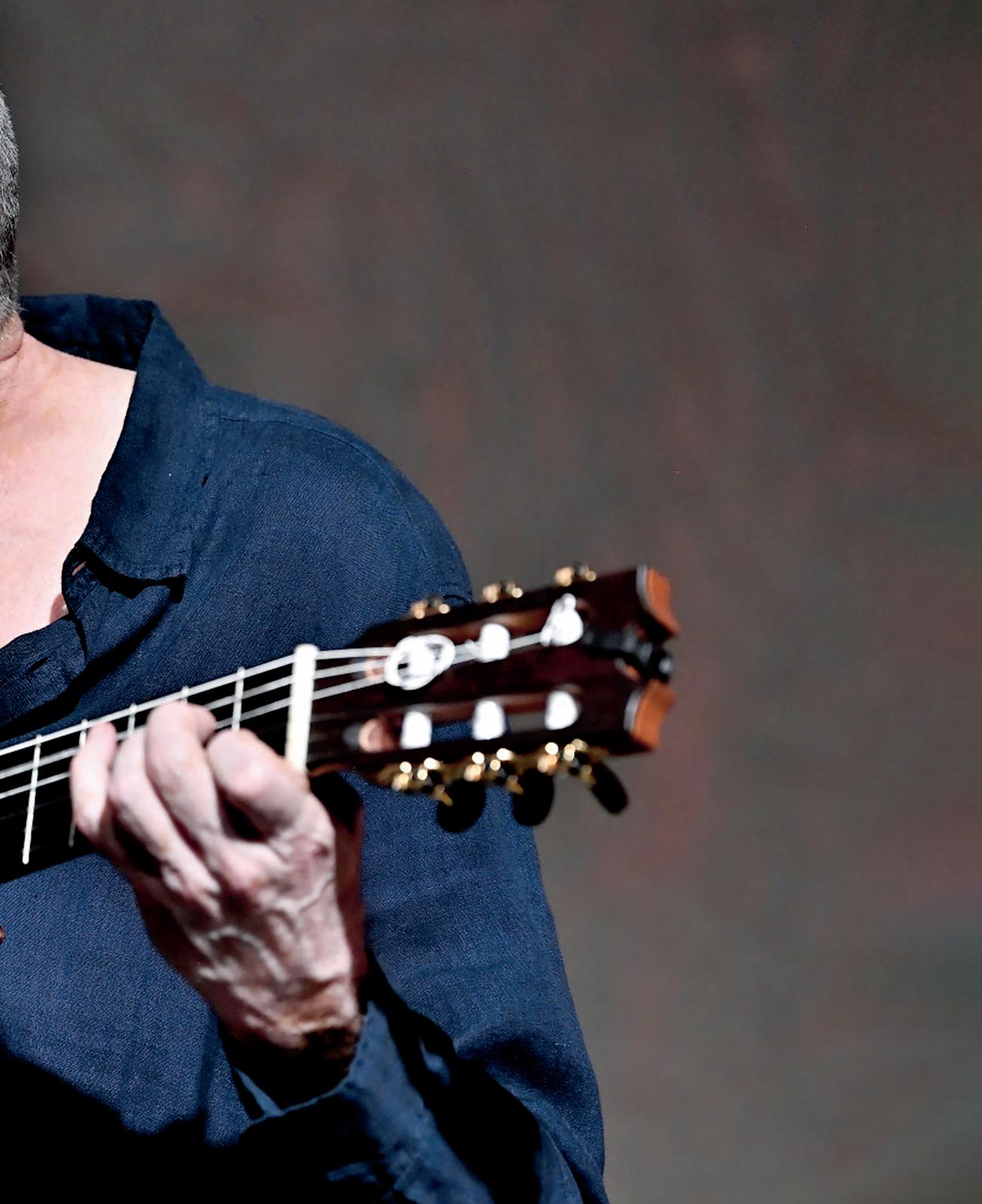
An occupation in music only makes sense if it’s inextricably linked to life in its entirety. It should depict within it our relationship towards others, towards the past, present and future, and towards the planet that we inhabit. That’s the only way our life experiences melt into music, and in return music teaches us how to be better in everything we do
Miroslav Tadić guitarist and composer
by EG
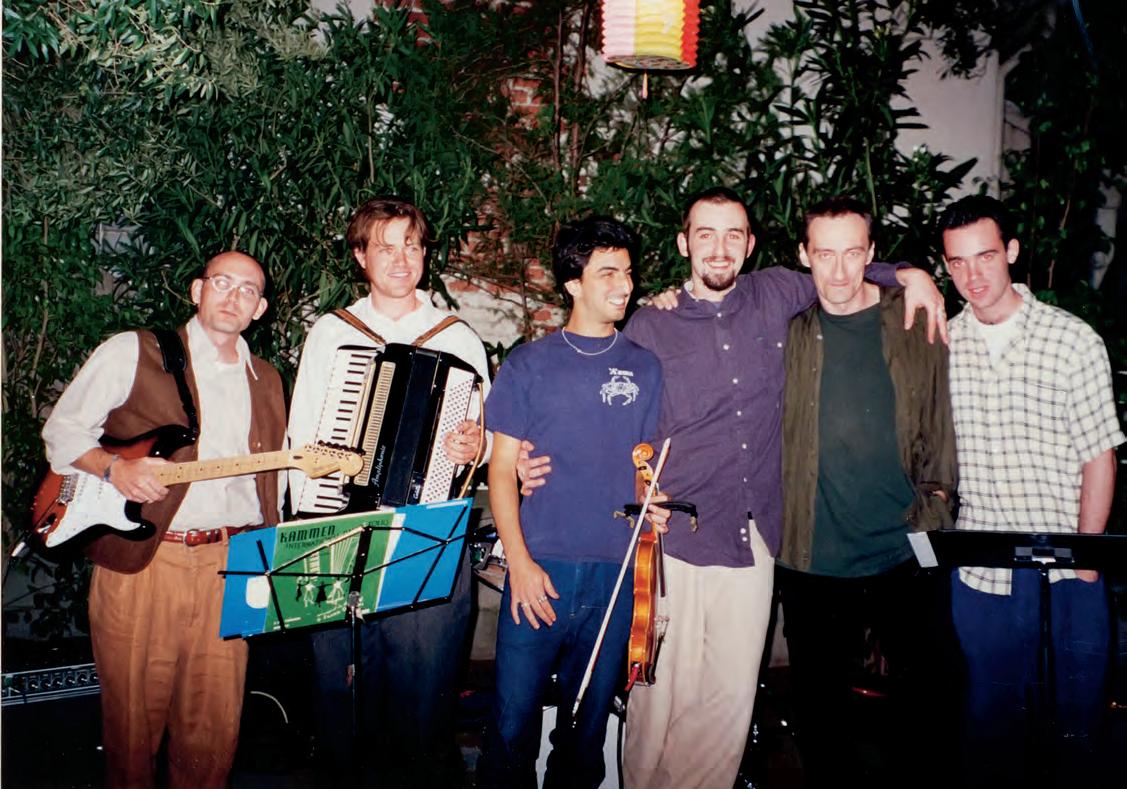
Miroslav Tadić is among the former Yugoslavia’s most important contemporary guitarists and composers, as an artist whose career has developed over the course of decades between Europe and the U.S. Born in Tuzla in 1959, he began classical guitar studies at music conservatories in Belgrade and Ferrara, after which he continued his schooling in the States, where he has lived and worked since the mid-eighties. He has been a professor of guitar and improvisation at one of the world’s most influential art schools, the California Institute of the Arts in Los Angeles, since 1985.
His artistic works encompass a wide range of styles and musical traditions – from Renaissance and Baroque music to contemporary jazz, improvisa-
I realised while I was still a student that my connection to the traditional music of the territory of the former Yugoslavia gave me recognisability, and it has since become a constant source of inspiration and part of my musical explorations
tion and Balkan musical heritage. It is precisely this unique combination of different aesthetic and cultural sources that has made him one of the most recognisable guitarists of his generation. Over the course of his career, Tadić has collaborated with numer-
With his students, 1997
ous prominent musicians, including the likes of Vlatko Stefanovski, Dušan Bogdanović, Terry Riley and Howard Levy, and has performed on stages and at festivals around Europe, America and Asia.
He has to date released more than 30 discographies, both independently and in collaboration with other artists, and his albums and projects often explore the points of contact between different musical cultures. Occupying a special place in his work are interpretations and arrangements of traditional Balkan music, which Tadić moulds through contemporary musical expression and classical guitar virtuosity.
Numerous awards serve to confirm the reputation that he enjoys in international music circles, as does
the fact that Guitar Player magazine included him among the 30 most radical and individual guitarists alive today. As a performer, composer and educator, Tadić constantly pushes the boundaries of the instrument to which he has dedicated his life by exploring new sound spaces and combining different musical traditions to form a unique artistic language.
When you look back today on the path your life has taken, do you recall the moment you realised that the guitar wouldn’t just be an instrument for you, but a way of life?
— If I remember well, that happened gradually over the course of 1976, when I was 17. I started playing classical, practiced increasingly and more regularly, and took formal guitar lessons for the first time. I had a group of peers in Belgrade who all started playing the guitar seriously around that time. We socialised together and exchanged notes and technical information, which was quite a rarity back then. I liked that group and many of them became important musicians and music educators. That was also the year that I transferred from high school to secondary music school, and it was then that I first had a clear sense that music and the guitar could become my life’s calling.
You were born in Tuzla, in the then Yugoslavia, while you’ve spent decades living and working in America. How much has that life between contrasting cultures shaped your musical identity?
— Being connected to the culture and language of our lands has been, and remains, a very important part of my artistic identity. When I arrived in America to study in 1979, I was most interested in jazz, blues, improvisation and contemporary experimental music. But I realised while I was still a student that my connection to the traditional music of the territory of the former Yugoslavia gave me recognisability, and it has since become a constant source
of inspiration and part of my musical explorations.
Your collaboration with Vlatko Stefanovski and other Balkan musicians is often described as a dialogue between tradition and modernity. How do you view that connection with the homeland?
— I haven’t seen any clear boundary between the traditional and the contemporary for a long time, except perhaps in academic circles. Today on YouTube you can see and hear the sounds of the zurla oboe and tapana drums from some remote Mace-
I view genres as something that’s on the exterior side of music. The deeper we delve under those layers, the more we see the threads connecting those genres. It’s like clothing or a costume
donian village one minute, and the next you’re listening to electronic dance music by a DJ performing in front of a hundred thousand people in London. That cannot fail to influence our consciousness and experience of reality, and that’s probably why I find it quite easy to combine musical styles that are very distant from one another in terms of time and geography. On the other hand, my connection with the traditional music of our region provides me with a kind of root or foundation, and that helps to ensure I don’t lose my way in that sea of information and inspiration. I think that situation is similar when it comes to my collaborators, such as Vlatko Stefanovski, the Teofilović brothers, Božo Vrećo or Merima Ključo. We all stand with one foot in the past and tradition, and the other in the present moment.
In your music one can hear elements of Baroque, jazz and Bal -

kan traditions. Do you experience these genres as different worlds, or as a single language with many dialects?
— I view genres as something that’s on the exterior side of music. The deeper we delve under those layers, the more we see the threads connecting those genres. It’s like clothing or a costume. Two people may look very different on the outside, but they appear much more alike without clothes. When you become well acquainted with a genre or musical direction, it becomes easier to connect and combine it at a deeper level with some other genre, with which you also need to be well acquainted.
You regularly collaborate with artists from different cultures and traditions. Does music really erase borders, or does it merely make them less discernible?
— Collaborating with top musicians from other cultures has shown me how complex and rich the human experience is. If I view that like an astronaut observing the Earth as a whole from some space station, then I don’t see any borders, but rather I perceive music as a universal human treasure.
Many musicians talk about techniques, but you often talk about sound and feeling. What actually represents the “soul” of an instrument?
— An instrument is our tool, into which we need to breathe life and soul. Of course, a good or distinctive instrument can help us a lot in that sense. I don’t like to distinguish between technique and feeling because they’re fully intertwined. Technique and a good instrument enable us to express emotions and convey our own vision of a piece of music to listeners. As long as technique, emotion and expression are connected, I know that I’m on the right track.
You’ve often experimented with instrument tunings and construction throughout your career. When
Rade Serbedzija and Miroslav, Australia 2018

An instrument is our tool, into which we need to breathe life and soul. Of course, a good or distinctive instrument can help us a lot. I don’t like to distinguish between technique and feeling because they’re fully intertwined
you change an instrument or its sound, are you actually attempting to find new music that’s yet to be played?
— There are only three instruments that I play regularly, and those are classical guitar, baritone guitar or electric guitar. They each have their own character and their own pluses and minuses, as though they are a human being. That’s also why they complement each other and how they provide me with huge space in which to express myself when I combine them all. As for new music that’s yet to be played: each person is unique, which means that everything we play is also unique and has never been played in that exact way before.
You’ve been lecturing at the California Institute of the Arts since 1985. What have your students taught you about music and life?
— Something that I liked from the very start of my studies in America was the fact that there’s a truly collegial relationship between students and professors here, without formality and mystification. Given that I’ve spent a lot of time in both roles, I’ve learnt that we are all actually stu -
dents or pupils, and that a professor can learn as much from his student as the student can from him, and this doesn’t only apply to music, but to life in general.
How important is improvisation – not only in music, but in life generally?
— It’s impossible to live without improvisation, because we can’t control what happens to us, and the more we try, the more that control slips away from us. In music, improvisation helps us gain a deeper understanding of various musical languages and systems, and at the highest level it opens the door for us to return to the state of a curious child free of prejudices. I only felt like a true musician for the first time when I real-
Miroslav
From the perspective of an astronaut in outer space, borders are invisible. Such a picture of the world causes music to cease to belong to individual nations or cultures and to become that which it has always been: a universal human treasure

ised that improvisation is an essential part of my occupation.
Do you feel more like a guitarist, composer, educator or sound researcher?
— I actually feel most like a human being into which all that has been integrated. I think the approach to what we do is more important than the calling itself, or the field we deal with. Curiosity, dedication, communicativeness and love can be part of any profession. That’s why I can imagine being equally useful and happy in another life if I were, for example, a postman, doctor or gardener.
What’s the toughest thing to preserve during a long artistic career – curiosity, discipline or courage?
— It’s difficult to maintain all three constantly, but one assists the other. For example, when curiosity and inspiration run dry, I increase my discipline and methodical approach. If courage is lacking, then curiosity brings new discoveries and inspiration that cause courage to return.
In these times when music is often reduced to fast consumption and digital platforms, how can we preserve the idea of music as an art that requires attention, time and contemplation?
— You simply need to create that kind of music, because - regardless of trends – there’s always been, and still is, an audience that will give it their time and attention, and that will be enriched by it.
If you had to single out one life lesson that music has taught you, what would you choose?
— An occupation in music only makes sense if it’s inextricably linked to life in its entirety. It should depict within it our relationship towards others, towards the past, present and future, and towards the planet that we inhabit. That’s the only way our life experiences melt into music, and in return music teaches us how to be better in everything we do.
This year’s Indian Wells finals brought together the sport’s biggest names, with Daniil Medvedev facing Jannik Sinner and Aryna Sabalenka meeting Elena Rybakina. The tournament continues to position itself just below Grand Slam level — in quality, attention, and prestige. For fans, it’s a reminder that tennis doesn’t wait for Paris or Wimbledon to get serious.
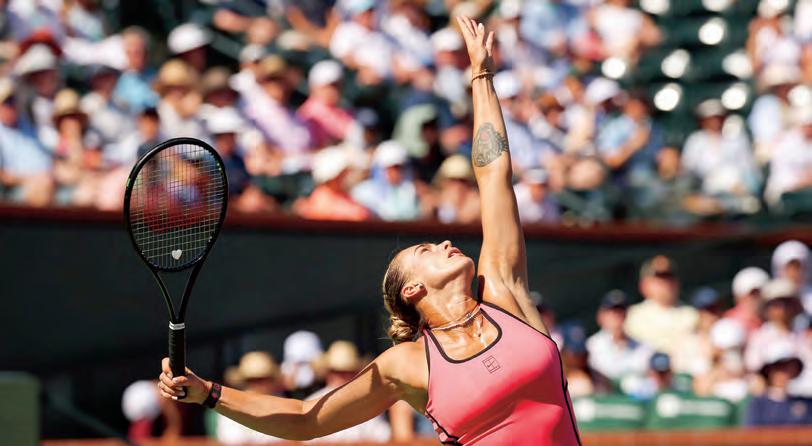
James Murdoch is backing a new global ideas festival designed to compete with Davos and Aspen. Built on the Art Basel ecosystem, the initiative promises a mix of culture, tech, business and influence — less panel talk, more real-world impact. Translation: networking just got a lot more curated.

More than a decade after the failed Fire Phone, Amazon is reportedly preparing a return to the smartphone market, this time with a strong focus on artificial intelligence. The new device is expected to lean heavily on AI-driven features, positioning it as a direct challenger to Apple and Samsung. If confirmed, the move would mark one of the company’s boldest hardware bets in years — and a clear signal that the next smartphone battle will be fought on intelligence, not just design.
The 2026 Academy Awards saw Sean Baker’s Anora take home Best Picture, capping a strong showing for independent cinema. Adrien Brody won Best Actor for his performance in The Brutalist, while Mikey Madison secured Best Actress for her role in Anora, marking a breakthrough moment in her career. The results signalled a continued shift within the Academy, with bold, character-driven films and performances taking precedence over big-budget spectacle. For Hollywood, it was a night that reaffirmed the power of storytelling over scale.

Bruno Mars has kicked off 2026 in commanding fashion, landing his second No.1 debut on the Streaming Songs chart with his latest single, Risk It All. The early success reinforces his continued dominance in global pop, proving his ability to deliver hits that resonate instantly. As the year unfolds, Mars is once again setting the pace for the industry.

As investment in artificial intelligence accelerates, a growing number of data centre projects are running into a more basic problem: electricity. A new report suggests that up to half of planned facilities are facing delays due to limited access to power, exposing a critical gap between digital ambition and physical infrastructure. The message is clear — the future of AI will depend not only on algorithms, but on the energy needed to run them.
A classic with just enough personality to mark the season change.
Bose
QuietComfort
Ultra Earbuds
Compact, discreet, and ideal for movementheavy days.


Boglioli K-Jacket
Unlined, relaxed, and built for warmer days that still demand structure.
Loro
Soft tailoring that replaces heavy winter coats without losing presence.
Anderson’s Woven
Leather Belt
Flexible, discreet, and built for everyday use.



Eton Linen Shirt
Breathable, sharp, and designed for warmer meetings.

Bellroy Tech Kit Compact
Keeps cables, chargers, and essentials under control — without bulk.


Minimal, precise, and refined enough to sit under tailoring.

Clean, bright, and unmistakably seasonal without being obvious.
Carl Friedrik Bowen Leather Tote
Structured but light — built for hybrid work and constant motion.
Steel, balanced proportions, and effortless transition from office to weekend.


A small, tactile object that adds weight — literally and visually — to a lighter workspace.

Soft, flexible, and ideal for days that start formal and end somewhere else.

Portable power for work that doesn’t stay in one place.
2 April – 14 June – Zepter Museum, Belgrade
The exhibition From Earth to Sky by Serbian sculptor Dušan Petrović opens on 2 April at the Zepter Museum. Featuring recent works, the display brings together sculptures created from wood, stone, metal and crystal, exploring the relationship between natural materials and artistic form.

Rooted in a holistic view of nature and matter, Petrović’s work moves beyond the traditional gallery space, creating an immersive dialogue between organic structures and contemporary expression. The exhibition is accompanied by a catalogue text by art historian Danijela Purešević.
7 April – Yugoslav Drama Theatre, Belgrade
Choreographed by Hervé Koubi, Barbarian Nights is a powerful dance piece inspired by the shared cultural heritage of the Mediterranean. Blending classical music with traditional Algerian sounds, the performance explores themes of identity, migration and belonging through striking physical expression. Performed by an international ensemble, the piece celebrates cultural diversity and unity, offering a poetic reflection on history, memory and the idea of freedom.

17 April – Kolarac Concert Hall, Belgrade
Conductor Aleksandar Briger and Finnish cellist Senja Rumukainen perform a programme contrasting elegance and emotional depth. The evening opens with Tchaikovsky’s Variations on a Rococo Theme, a refined and lyrical showcase for cello inspired by the spirit of Mozart.
The second half features Josef Suk’s rarely performed Symphony No. 2 “Asrael”, a powerful and deeply personal work shaped by loss, yet ultimately imbued with a sense of hope.
18 April – Dorćol Platz, Belgrade
C ult Croatian band Let 3 returns to Belgrade with a full-scale live show as part of the 10th anniversary Kontakt festival. Known for their explosive performances, provocative aesthetics and genre-blending sound, the band continues to captivate both longtime fans and new audiences.
Following their Eurovision appearance and latest album RKTRD NDRD, Let 3 promise an energetic and theatrical concert experience.

28 April – Sava Centre, Belgrade
Renowned Italian tenor Alessandro Safina returns to Belgrade with a programme featuring his greatest hits, including Luna, Sarai Qui and music from Moulin Rouge!. Known for blending classical opera with pop and contemporary styles, Safina has created a distinctive crossover sound that has earned him global acclaim. With a career spanning major international stages and collaborations with leading artists, his Belgrade concert promises an evening of powerful vocals and timeless melodies.
28 April –Bitefartcafe, Belgrade
One of the most exciting voices of the new generation, Michael Mayo brings his distinctive blend of jazz, neo-soul and vocal experimentation to Belgrade. Known for pushing the boundaries of voice and improvisation, Mayo combines rich harmonies, beatbox and layered textures into a unique musical expression. Following the success of his acclaimed albums Bones and Fly, his performance promises an intimate yet dynamic evening of inventive sound and emotional depth.

1–29 April – SASA Gallery, Belgrade
This exhibition explores the life and work of Émile Borel (1871–1956), one of the most influential mathematicians of the early 20th century. Originally presented at the Henri Poincaré Institute in Paris, the display highlights Borel’s contributions to mathematics and physics, as well as his role in shaping scientific institutions and promoting knowledge. The Belgrade edition also sheds light on French-Serbian scientific ties, particularly through Borel’s collaboration with mathematician Mihailo Petrović. Accompanied by lectures and workshops, the exhibition offers a broader insight into the cultural and intellectual exchange that shaped modern science.
2–9 April – SASA Branch Gallery, Novi Sad
An exhibition marking the 90th birthday and 65-year artistic career of Dr Vladimir Jokanović, offering an overview of his long-standing contribution to Serbian art.
26/2/2026
The Embassy of Japan in Serbia hosted a reception in Belgrade to mark the 66th birthday of Emperor Naruhito, attended by Serbia’s First Lady Tamara Vučić, ministers and representatives of the diplomatic corps and public life. Ambassador Naohiro Tsutsumi highlighted the strong ties between Serbia and Japan and expressed gratitude for continued cooperation. He also announced Japan’s participation at EXPO 2027 in Belgrade, as an opportunity to present its culture and values.

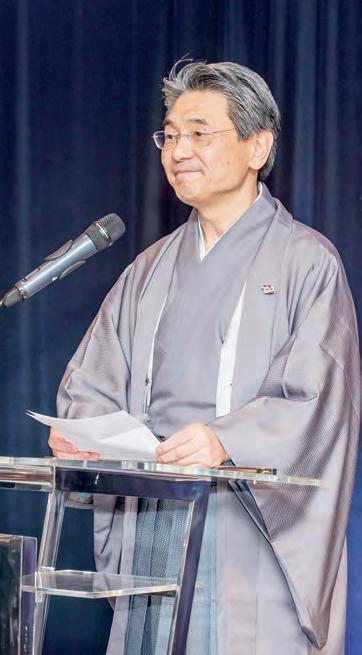
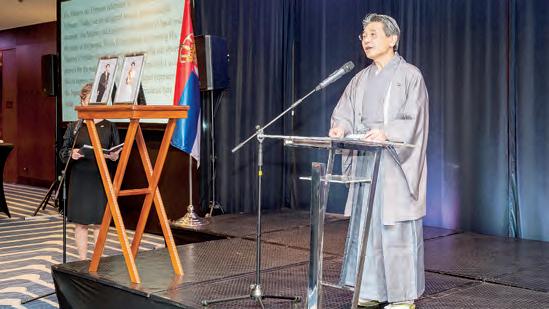
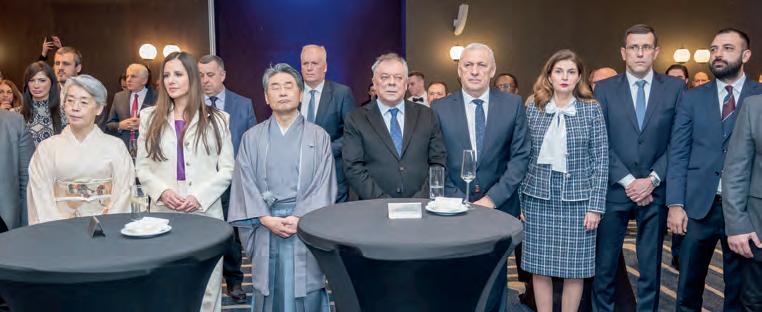
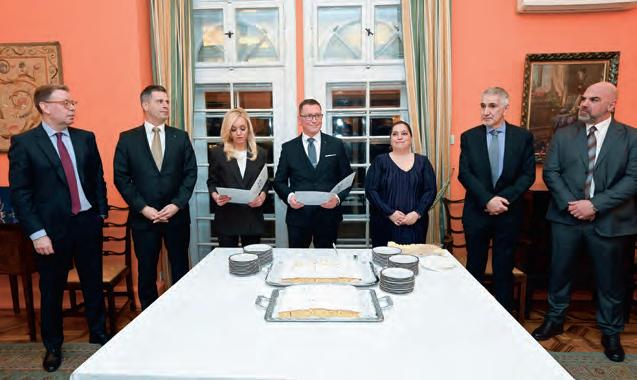
27/2/2026
The traditional Vasilopita cutting ceremony was held at the residence of the Greek Ambassador in Belgrade, hosted by Ambassador Maria Levanti. The event gathered members of the Hellenic Business Association Board, celebrating the New Year in line with Greek custom. The evening combined tradition and networking, reaffirming the strong ties between the Greek business community and Serbia.


4/3/2026
The Month of Francophonie 2026 was marked with a ceremony at the Palace of Serbia, launching a series of cultural and educational events celebrating the French language and francophone cultures. Serbia’s First Lady Tamara Vučić highlighted that francophonie represents a community of values and a living bridge between cultures, as well as a symbol of long-standing friendship between Serbia and France. She also expressed hope that Serbia will become a full member of the International Organisation of La Francophonie, underlining the country’s continued commitment to the French language and cultural ties.
9/3/2026
A panel discussion titled “On the Occasion of 8 March – Honouring the Women Who Built the European Union” was held at the European House in Belgrade, dedicated to Simone Veil, the first female President of the European Parliament. The event was opened by Duško Lopandić, who highlighted Veil as a symbol of European reconciliation and cooperation and one of the key figures of postwar Europe. The panel reflected on her legacy, emphasising her role in strengthening both the moral and institutional foundations of the European Union.
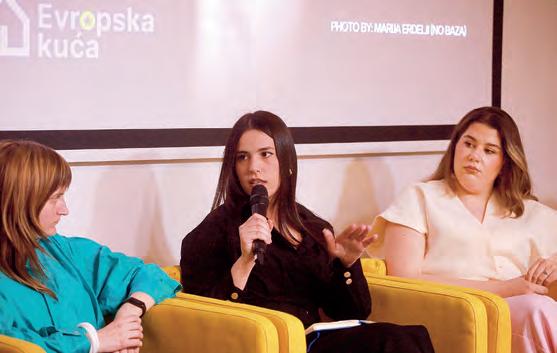

13/3/2026
The Embassy of the People’s Republic of China in Serbia hosted a media briefing for representatives of media and think tanks to present the key messages of China’s “Two Sessions” and the role of Chinese companies operating in Serbia. Ambassador Li Ming delivered the opening address, outlining achievements in economic development, technological innovation and green transformation, while reaffirming China’s commitment to high-quality growth and global openness. He also highlighted strong China–Serbia cooperation, noting the contribution of companies such as Serbia Zijin Copper, Serbia Zijin Mining and HBIS Serbia to local employment, environmental standards and industrial development.
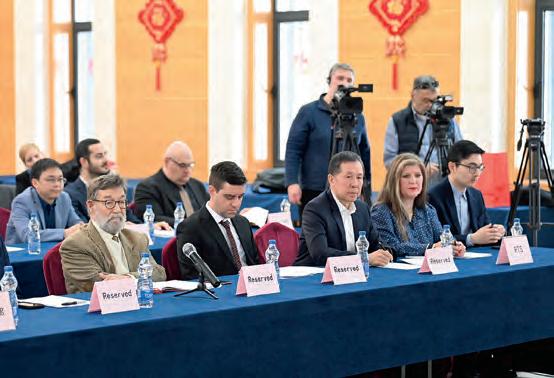
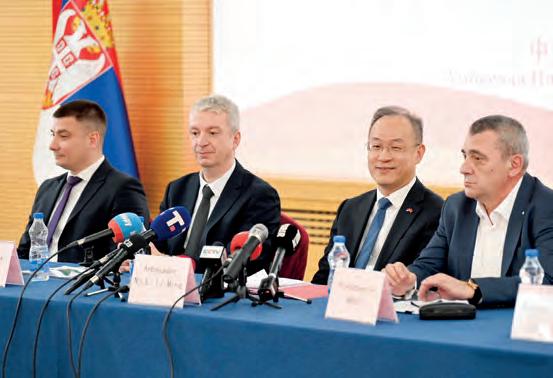
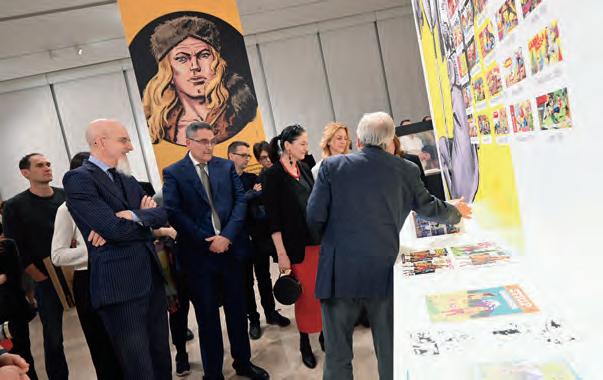
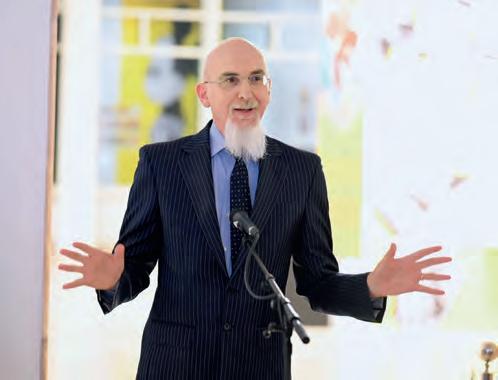
19/3/2026
The exhibition “Strip Made in Italy – Generations” opened at the Museum of Yugoslavia in Belgrade, organised by Lucca Crea, Fumo di China magazine and the Italian Cultural Institute, with the support of the Italian Embassy. In his opening remarks, Ambassador Luca Gori highlighted the strong cultural ties between Italy and Serbia and the enduring popularity of Italian comics in the region. The exhibition offers a comprehensive overview of Italian comic art — from its historical development to contemporary creators — through thematic sections, interactive content and collaborations with Serbian publishers.
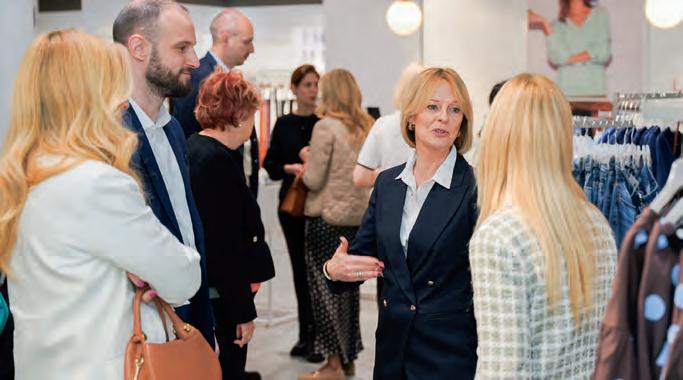
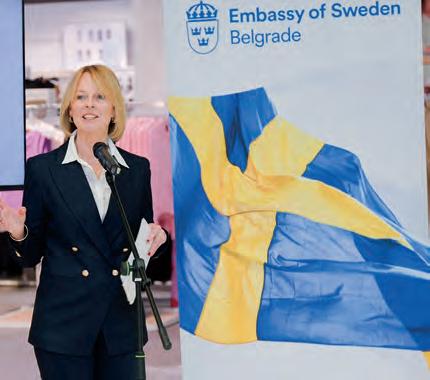
20/3/2026
The Embassy of Sweden in Belgrade marked the National Day of the Fight Against Breast Cancer by organising free breast ultrasound screenings for women at the Lindex store in Rajićeva Shopping Center. The event, held in cooperation with Lindex, AstraZeneca and Oriflame, was attended by Ambassador Charlotte Sammelin, company representatives and members of the Europa Donna association. The initiative aimed to raise awareness of the importance of prevention and early detection, encouraging women to take regular care of their health.
21/3/2026
A discussion on the Serbian translation of François de Callières’ book “On the Art of Negotiation”, translated by diplomat Duško Lopandić, was held at the Institute for European Studies in Belgrade. The panel featured Slobodan Zečević, Vladimir Vereš, Ratomir Milikić, Aleksandra Kolaković and the translator himself, who examined the relevance of diplomatic negotiation in both historical and contemporary contexts. The event brought together experts and audience members for a discussion on the enduring importance of negotiation skills in international relations.
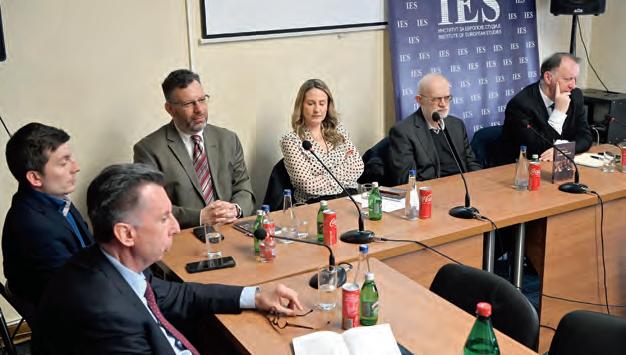
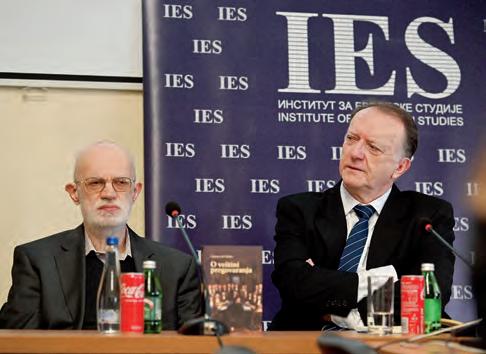
25/3/2026
The Embassy of Greece in Serbia marked Greece’s National Day with a reception at the Ambassador’s Residence, hosted by Ambassador Maria Levanti. The event gathered diplomats, Serbian officials and members of the business community to celebrate the historic ties and friendship between the two countries. In her address, Ambassador Levanti highlighted strong bilateral relations and continued cooperation across economic, cultural and regional initiatives.
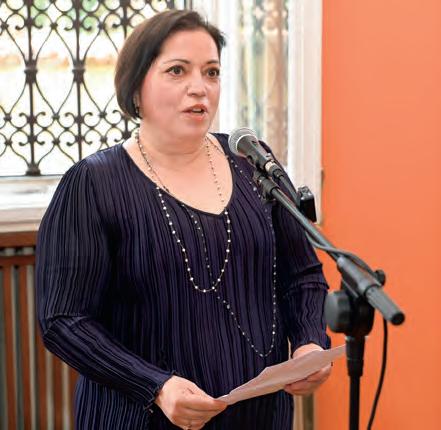


65.000€ E 220 d 4MATIC Business Edition 570€ Monthly

Average fuel consumption for the E 220 d 4M is 5.6–4.8 l/100 km, with CO₂ emissions of 148–127 g/km. The image is for illustrative purposes only.
Representative example: https://www.mercedes-benz.rs/ Discover our special Car Show offer at your nearest Mercedes-Benz dealership.
Nominal interest rate: 3.99% in cooperation with Intesa Leasing. The fair campaign is valid for a limited number of vehicles, while stocks last, and for the period until 30 April 2026. Financing offers refer to: 30% down payment, 60-month repayment period, and 27.5% residual value. The offer applies exclusively to legal entities. The amounts stated in this offer may vary due to exchange rate changes, the credit rating of the potential lessee, and other factors. This informational offer does not constitute an invitation to conclude a financial leasing agreement, but only information provided by the lessor to the recipient in the event of concluding a financial leasing agreement. The final offer will be presented based on the request of the potential lessee, the assessment of their creditworthiness, and the
invoice
by
of