Building Partnerships for the Future







CELEBRATING 85 YEARS of Diplomatic Relations with Serbia



Ivana
CELEBRATING 85 YEARS of Diplomatic Relations with Serbia
Ivana
Eighty-five years after establishing diplomatic relations, Serbia and Canada are expanding their partnership through trade, investment, innovation and responsible resource development. As economic ties continue to strengthen, both countries are finding new opportunities in sectors ranging from professional services and advanced technologies to mining and engineering
his year marks two important milestones in relations between Serbia and Canada. Canada Day, celebrated on 1 July, marked the 159th anniversary of Canadian Confederation, while the two countries also celebrated 85 years of diplomatic relations—a partnership built on mutual respect, shared democratic values and strong people-to-people ties.
TToday, bilateral relations are increasingly shaped by practical economic cooperation. Total merchandise trade reached €108.3 million in 2025, with Serbian exports amounting to €62.1 million and imports from Canada standing at €46.2 million. Canadian companies are expanding their presence in Serbia, while Serbian businesses are increasingly finding opportunities in the Canadian market. Beyond trade and investment, the relationship also benefits from strong academic, scientific and cultural cooperation, supported by a vibrant Serbian community in Canada.
The interviews presented in this special section reflect several dimensions of this evolving relationship. They highlight the importance of creating a predictable business environment, accelerating digital transformation and developing
highly specialised professional services that enable companies to compete globally. They also underline the growing role of knowledge-intensive industries, where expertise is becoming the most valuable competitive advantage.
Mining and geology occupy a special place in today’s dialogue between Serbia and Canada. As the global transition towards cleaner energy accelerates demand for critical minerals, both countries recognise the strategic importance of responsible resource development. At the same time, the discussion is no longer limited to geological potential alone. Public trust, environmental responsibility, transparent regulation and the application of the highest ESG standards have become equally important prerequisites for sustainable growth.
Perhaps most importantly, this anniversary reminds us that successful bilateral relations are built gradually. Eighty-five years of diplomatic ties have created a solid foundation, but their real value lies in the ability to adapt to changing economic realities. Innovation, advanced technologies, sustainable resource development and knowledge-based industries are shaping a partnership that is firmly focused on the future.
Strong partnerships are built over time, but they grow through shared expertise, innovation and mutual trust
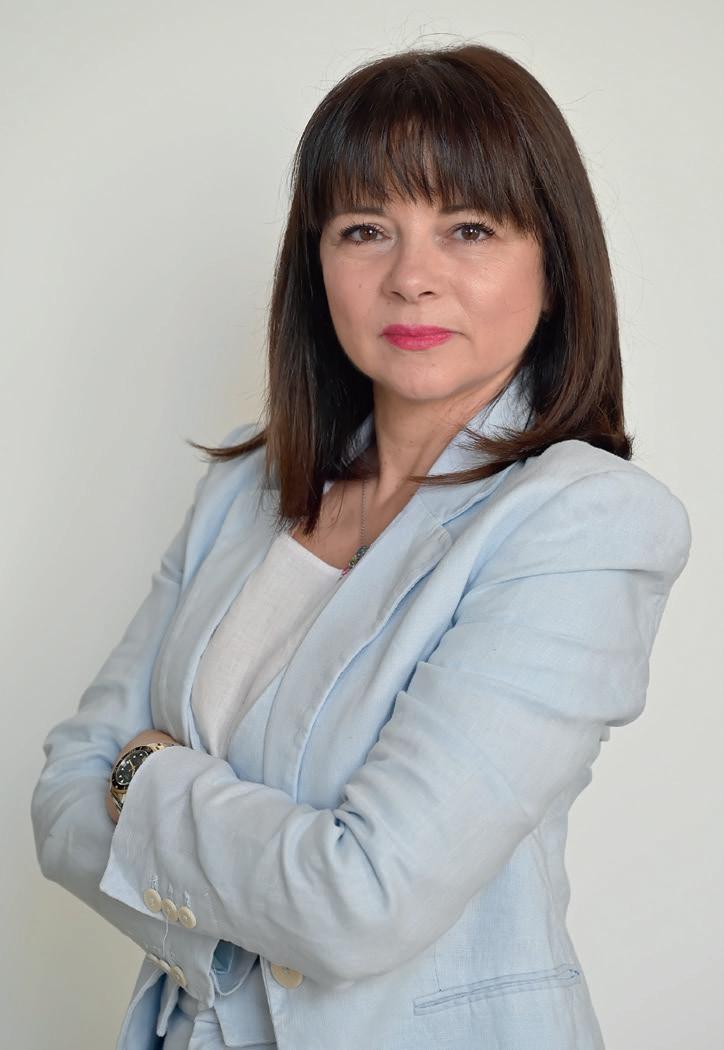
Slobodanka Lazarev Director, Jantar Group
Serbia’s geological resources represent a major development opportunity, but only responsible resource management can turn that potential into lasting economic, social and environmental value
Critical minerals have become central to Europe’s industrial and energy agenda, giving Serbia an opportunity to turn its geological resources into a strategic advantage. Slobodanka Lazarev, Director of Jantar Group, discusses how responsible resource management, international cooperation and the highest professional standards can support the development of a modern mining sector.
Critical minerals have become a major focus of global economic and geopolitical interest in recent years. How do you assess Serbia’s potential to become an important part of Europe’s critical minerals supply chain, and what conditions must be met to realise that potential? — Serbia has significant geological potential in critical minerals, while its location and mineral resources offer an important opportunity within Europe’s strategy to strengthen secure and sustainable supply chains. However, geological potential alone is not enough. Realising it requires a predictable regulatory framework, effective institutional coordination and the consistent application of the highest environmental standards. Equally important is transparent dialogue between government, investors, the professional community and local communities, as this is the only way to build the trust needed
for responsible long-term mining projects. One possible improvement would be better coordination between the relevant authorities through a one-stop-shop system, enabling a more transparent and predictable permitting process while maintaining all necessary safeguards.
Canada is recognised as a global leader in geology, mining and responsible mineral resource management. As a member of the Canadian-Serbian Business Association, where do you see the greatest opportunities for cooperation between Serbian and Canadian companies and for the exchange of knowledge and technology?
— The greatest strength of the Canadian model lies not only in its mineral wealth, but in
Geological potential alone is not enough. Realising it requires a predictable regulatory framework, effective institutional coordination and the consistent application of the highest environmental standards
the way Canada has developed responsible mining over decades through advanced technologies, a stable regulatory framework and close cooperation with local communities. That is where I see the greatest potential for
stronger cooperation between Serbian and Canadian companies. Alongside the exchange of expertise in geological exploration, mining and mineral processing, Canada’s experience in environmental protection, community engagement and open stakeholder dialogue is particularly valuable. Such cooperation strengthens not only individual projects, but also professional capacity and the adoption of international business standards.
Modern mining increasingly requires a balance between economic development, environmental protection and social responsibility. How is Jantar Group responding to these challenges, and how important are sustainability and transparency in attracting investment and developing new projects?
— Sustainable mining is not a choice between economic development and environmental protection—it depends on both. At Jantar Group, we strive to be a reliable partner to investors, public institutions and local communities through a professional, responsible and transparent approach. Our experience shows that successful projects depend on sound preparation, transparent communication and full compliance with legal and environmental standards. Only through partnership between all stakeholders can mining projects create lasting value for the economy, society and the environment.
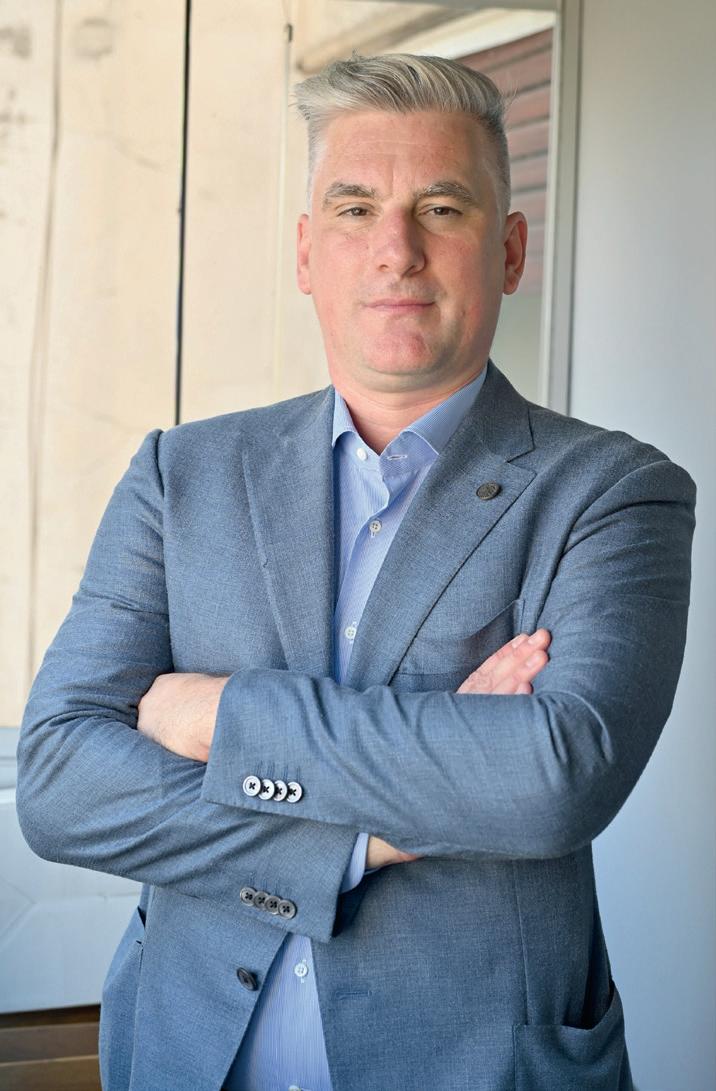
Rastko Petrović Director, TASH GROUP
Geology and mining are once again in focus as global demand for critical raw materials continues to grow. Rastko Petrović, Director of TASH GROUP, believes the future of Serbia’s mining sector will depend on expertise, responsible management and public trust
s critical raw materials become strategic resources, responsible management, professional expertise and public trust are becoming as important as the deposits themselves.
AThe energy transition and growing global demand for critical raw materials have placed geology and mining back at the centre of strategic economic policy. How do you assess Serbia’s potential in this context and what is needed for the domestic mining sector to become more competitive and attract responsible investment?
— Historically, Serbia was strongest when its mining industry was strong. The energy transition now offers the country an exceptional opportunity to position itself as a key European partner by reviving this sector and making full use of its resources and competitive workforce. Creating a healthy business environment that attracts responsible investment requires, on the one hand, a predictable legal framework ensuring long-term certainty, consistent application of the highest ESG standards and open dialogue with local communities. On the other hand, the industry needs renewal and depoliticisation so that sensitive issues are finally discussed by qualified professionals, through facts and arguments, rather than by laypeople or experts from unrelated fields driven by emotion.
TASH GROUP is involved in projects covering geology, engineering, permitting
Integrated knowledge and services under one roof will become the key competitive advantage
and project management. How do you see the development of mining consultancy services, and will a multidisciplinary approach become the industry’s key competitive advantage?
— According to the theory of evolution, survival depends not on strength, but on the ability to adapt. In Serbia’s business environment, particularly during the transition period, consultants have been forced
to offer not only specialist solutions, however innovative, but also a range of related services supporting each project. This requires a thorough understanding of business processes and the role of every activity within them. Ideally, consultancy should be combined with operational services, creating a complete solution. In the years ahead, integrated knowledge and services under one roof will be the key competitive advantage.
During your career, you have worked on geological and mining projects ranging from mineral exploration to the development and management of complex projects. Which experiences have shaped your professional approach the most, and what changes would you like to see in the way geological exploration and mining are developing in Serbia today? — My professional approach has been shaped by the problems I faced and the challenges I accepted. My natural persistence never allowed me to give up, so today I am grateful for every difficult situation that helped build my character.
I believe Serbia most needs a better understanding of geological exploration, mining and their importance to society. I would like to see positive real-life examples become part of primary and secondary education. Besides helping build a more responsible society, this could encourage more young people to study these fields, increasing competition and raising quality overall. The knowledge is still there to restore the industry’s former strength and international reputation. Ultimately, it is up to all of us to become better—not only for ourselves, but because only then can the industry give more back to society.

Inovation. Stability. Opportunity.
2nd €108.3M
of diplomatic relations between Serbia and Canada.
Bilateral merchandise trade, reflecting steady growth and expanding opportunities.
Canada is a G7 economy with strong institutions, macroeconomic stability and a highly skilled workforce.
The world`s second-largest country by area, rich in natural resources and global connections.
A global leader in AI, life sciences, clean technologies and advanced manufacturing.
Knowledge, technology and responsible investment are shaping the future of Serbia-Canada relations.
Ivana Janković Managing Director for Serbia & Partner at Unija ETL Accounting
A stable and predictable business environment, digital transformation and knowledge sharing are key drivers of competitiveness today. We spoke with Ivana Janković about how Serbia can further improve its investment climate and where the greatest opportunities lie for stronger economic cooperation with Canada
Doing business internationally today requires more than knowledge of regulations and administrative procedures. Companies need partners who understand local markets while following global standards and trends in accounting, taxation and human resources. This is why expert support has become a key factor in sustainable growth and successful business expansion.
Unija ETL operates in several European markets and works with international companies. How do you assess Serbia’s business environment from the perspective of foreign investors, and what changes would further improve its competitiveness?

— Serbia offers a number of important advantages for foreign investors: a skilled and educated workforce, an excellent geographical position, developed infrastructure and access to the European Union and the wider regional market. Domestic companies have gained extensive experience working with international businesses and have adapted to their standards, deadlines and expectations. At the same time, investors need long-term predictability. I see the greatest room for improvement in a more stable regulatory framework, simpler administrative procedures and greater digitalisation of public services. I believe Serbia’s ability to provide a stable, efficient and predictable business environment will remain one of the main reasons why foreign investors continue to choose our country for expanding their operations.
Digital transformation is not just about introducing new technologies; it is about changing the way organisations work and make decisions
More and more companies are transforming their financial and administrative processes. What are the biggest challenges and benefits of digitalising accounting, tax and HR functions?
— The biggest challenge of digital transformation is usually not technology, but changing the way people think and work. Introducing new systems requires standardised process-
es, employee training and a willingness to review established practices. Data quality and security are also major challenges, as financial and HR information is among the most sensitive in any organisation. When implemented properly, digitalisation reduces errors, speeds up document processing and allows employees to spend less time on routine tasks and more on analysis, advisory work and business support. Accounting, tax advisory and HR thus become strategic partners to management, while professionals play a greater role in interpreting data, managing risk and supporting better decisions.
Unija ETL has positioned itself as a partner to companies expanding internationally. Where do you see the greatest opportunities for stronger economic cooperation between Serbia and Canada, and which sectors have the strongest potential in the years ahead?
— Serbia and Canada have significant potential to strengthen economic cooperation, particularly where Canadian capital, expertise and international experience can be combined with Serbia’s skilled workforce, technological potential and regional position. I see major opportunities in information technology, energy, mining, agriculture and the food industry, as well as professional and business services. Serbia has a strong base of experts in finance, accounting, technology, engineering and administration, making it a good location for regional business support centres and high-value services. I believe the greatest potential lies in cooperation based on knowledge and technology transfer.