

04 No Alternative to Stability
By Sladjana Andrian Sredojević, PhD Editor-in-Chief of Bankarstvo Journal

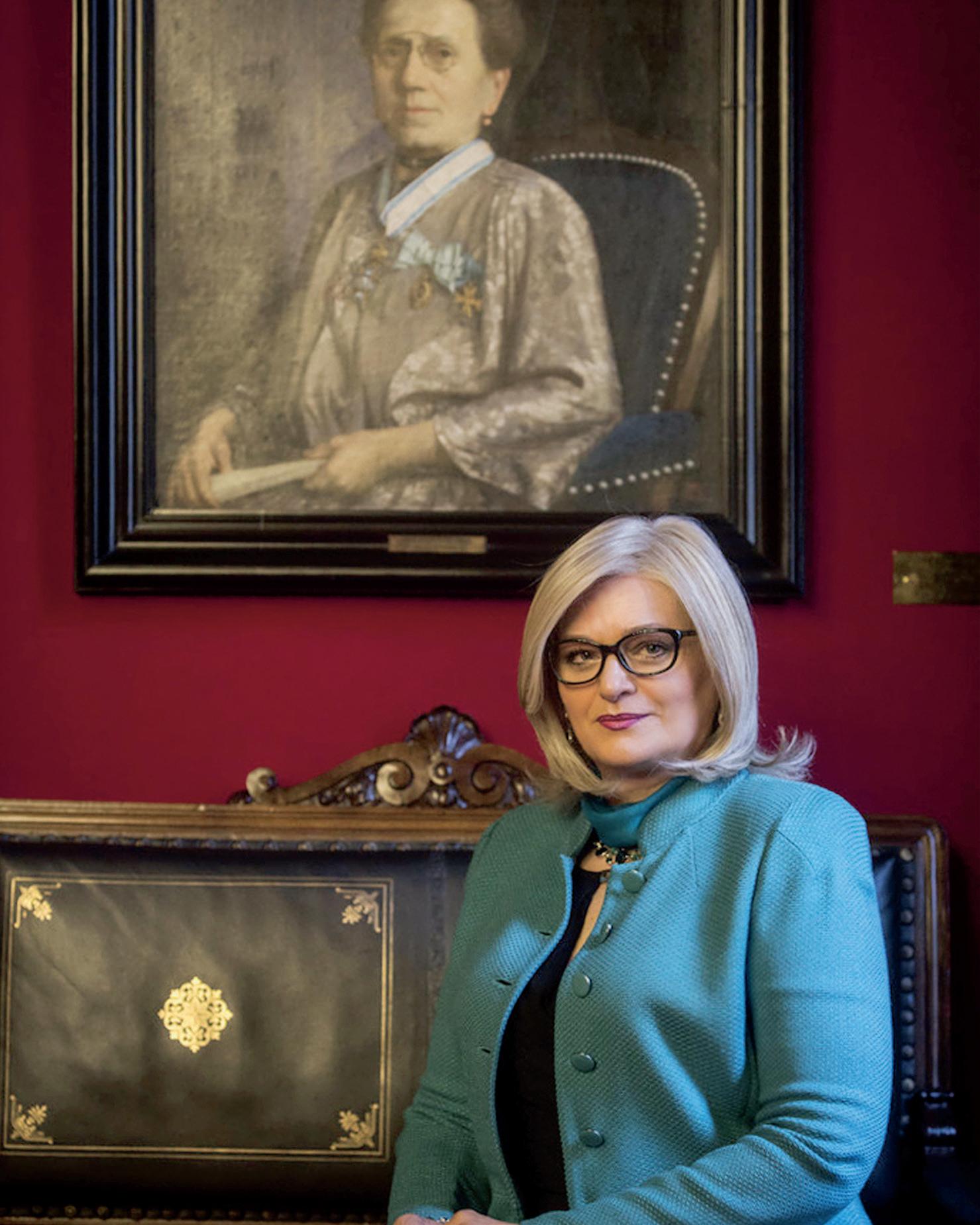
Our reality will continue to include uncertainty, but the National Bank of Serbia will continue leading a responsible policy that preserves economic stability and represents a reliable pillar of support for the economy and citizens
Iwould like to start by sharing my observation that good ratings and the positive state of the banking sector are sometimes overlooked and rarely reported on, as if good news is not news; as if, at a certain juncture, financial and even macroeconomic stability began to be taken for granted. And that mustn’t be the case. That’s why it’s important to write about this topic in this way.
Pronounced geopolitical and trade tensions, coupled with uncertainty over the intensity and duration of the conflict in the Middle East, lead to less favourable inflation projections and weaker economic growth prospects for many European countries. I would, thus, like to emphasise the fact that the National Bank of Serbia, with its prudent monetary policy, has contributed significantly to preserving the country’s macroeconomic stability, while the stability achieved and the resilience of the financial sector, and above all the banking sector, provide an additional level of security to both citizens and the economy.
As I often highlight, there’s no alternative to the stability that we’ve been building and maintaining consistently for years, because only a stable and reliable financial system can ensure permanent trust among market participants and sustainable economic growth under conditions of increasingly accentuated global uncertainties.
Such positive assessments of macroeconomic trends in Serbia are confirmed by relevant international financial institutions, while the acquiring of an investment credit rating further strengthens investor confidence and confirms the general economic policy’s credibility.
Within the banking sector operate 19 banks with almost 22,000 employees and almost 1,300 business units. The banking sector’s
assets and capital are growing continuously, with a capital adequacy rate exceeding 20%, which is significantly higher than the legal minimum. It is precisely these buffers that are crucial in times of crisis, as they enable the system to remain resilient and for it to continue to support the economy. In order for us to further strengthen the banking sector’s resilience, we increased the rate of the countercyclical capital buffer to 0.5% of banks’ risky assets, effective as of 15th December 2026, thereby creating a reserve of the highest quality capital.
Banks also have significant liquidity reserves, while the population’s dinar savings (220 billion dinars) and foreign currency savings (16.6 billion euros) are also on the rise. The Serbian banking sector has continued to operate with high profitability, while the focus of regulatory activities at this juncture is on the further harmonisation of the regulatory framework for banks with regulations currently in force in the EU, aimed at achieving complete harmonisation.
Implementation of the Law on the Protection of Users of Financial Services and supervisory expectations from banks regarding more favourable borrowing conditions for citizens with lower incomes, as well as the implementation of a state mortgage programme for young people, have all contributed to the February 2026 reduction in the average interest rate on new cash loans to 8.4% and on new mortgages to 4.4%. However, due to international market uncertainty and the impact of the conflict in the Middle East on energy prices, occasional EURIBOR fluctuations have been recorded since March of this year. Precisely such situations compelled us to introduce legal restrictions on interest rates – in order to mitigate all sharp increases in reference interest rates in the future and prevent drastic increas-
es in interest rates on retail loans, but also to adjust to market conditions gradually. When it comes to corporate loans, the interest rate in February 2026 was 6.8% on new dinar loans and 4.9% on loans indexed in euros.
Falling interest rates, as well as increased demand for financing, further accelerated the growth in credit activity year-on-year to 16.4%, which in the segment of the economy (growth of 12.2%) was driven by investment and loans for liquidity and working capital. Rapid credit growth, together with the improvement of the quality of the loan portfolio, contributed to reducing the share of NPLs in the total loans to the lowest level to date, at only 2.05%, while that share is 1.8% in the corporate segment.
Corporate lending continues to be one of the key support channels for economic activity, with banks still concentrating on the financing of sustainable projects, with careful risk assessment and the increasing application of customised financing models that satisfy companies’ specific needs. Maintaining continuity in the availability of financing sources enables the economy to preserve liquidity, implement investments and ease the negative impacts of slow growth, in which we will - as an institution - continue to support economic growth primarily by preserving price and financial stability, as well as maintaining the relative stability of the exchange rate. In this context, we will place a special focus on preserving investor confidence, thus ensuring that financing remains available even under conditions of global disruptions and in support of further economic growth.
One important area in the further strengthening of the financial system is dinarisation, which contributes to reducing foreign exchange risk and increasing resistance to external shocks. The continuation of this process, through
the strengthening of confidence in the local currency and encouraging dinar lending and saving, remains among our main priorities.
When it comes to the further development of banking in Serbia, banks will certainly continue investing in innovative technologies and artificial intelligence, which brings efficiency, but also new risks, meaning that the management of those risks will become increasingly important.
The aforementioned results haven’t been achieved by accident, but rather represent the result of many years of dedicated work and considered measures — built gradually, on foundations of a responsible policy and consistency. They simultaneously serve to confirm that the National Bank of Serbia
BANKING SECTOR RESILIENCE OFTEN REMAINS IN THE SHADOWS, AS IF FINANCIAL AND MACROECONOMIC STABILITY ARE GIVENS THAT AREN’T ACHIEVED AS A RESULT OF RESPONSIBLE POLICIES
has successfully handled numerous and complex circumstances, and that neither the conflict in Ukraine nor events connected to the Oil Industry of Serbia, but also the current conflicts in the Middle East, have threatened Serbia’s financial stability.
To conclude, under conditions that include numerous global challenges, the only certainty is that unpredictability will remain a constant companion of the economic environment. This is precisely why the National Bank of Serbia will continue to manage monetary policy cautiously and responsibly, in an effort to preserve stability and ensure continuity in terms of support for our economy and citizens.
Serbia's No.1 Bank By Household Term Deposits Portfolio introduces Banking tailored to the needs of the client
veryday habits – from shopping and food delivery to financial management – are rapidly evolving alongside the innovation in technology. Today’s clients expect financial services to be as simple, fast and customised as the digital platforms they use daily. The quality of digital service is set to become an increasingly decisive factor when choosing a bank.
EAccording to the PwC comparative study of banks’ commercial performance*, AikBank ranks first in Serbia by term deposits portfolio, with €1.36 billion. This is yet another indicator of the trust clients have placed for decades in the leading domestic bank. As a stable systemic institution, AikBank continues to enhance its operations, focusing on the development of digital services and the improvement of products across all client segments – from retail and entrepreneurs to SMEs and large corporates. The emphasis is on solutions that simplify everyday financial management, from daily transactions and lending to savings and business banking.
Recognising the trust clients have placed for decades in the leading domestic bank, AikBank has introduced a unique personalised approach to savings. Through a website mechanism, which analyses a range of individual habits and financial preferences, clients get a customised offer customized offers – that includes the preferred currency, with or without salary transfers, along with a clear projection of interest earnings at maturity. In this way, AikBank moves beyond traditional offerings, enabling clients to shape savings solutions that suit them best.
One of the defining trends in contemporary banking is personalisation – products and services, aligned with each client’s specific habits and needs. Advances in data, digitalisation and artificial intelligence now make it possible to tailor offerings with increasing precision. While the application of AI in banking is still evolving, it already supports process automation, faster request handling and a deeper understanding of client expectations.
In response to the demand for efficient and flexible solutions, AikBank has recently introduced digital onboarding, allowing clients to open any account package entirely online, without visiting a branch. In line with the pace of modern life, the process can be initiated at any time, offering greater convenience.
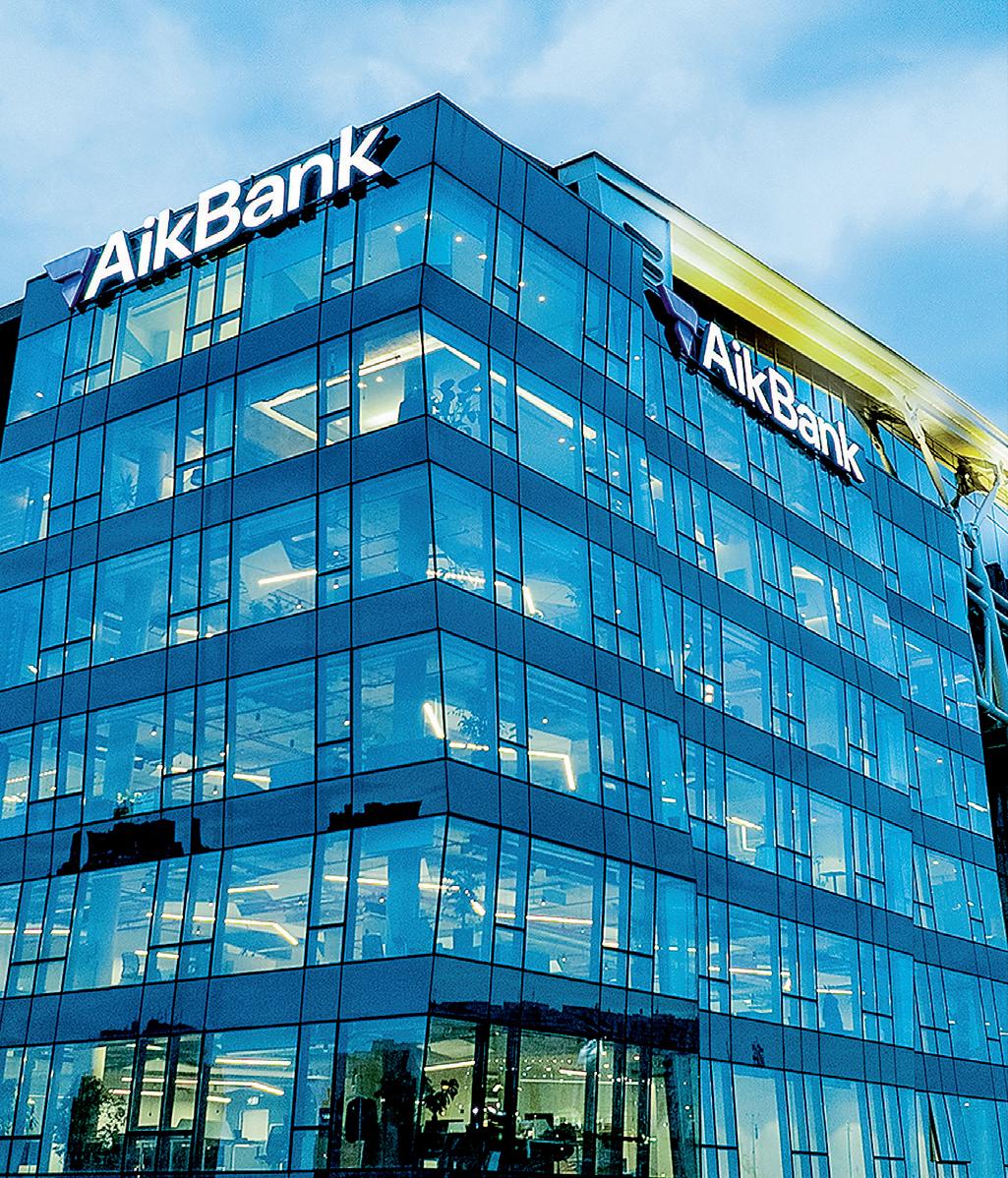
THE OBJECTIVE OF MODERN BANKING IS NOT ONLY TECHNOLOGICAL ADVANCEMENT, BUT THE DELIVERY OF SECURE, FLEXIBLE FINANCIAL SOLUTIONS TAILORED TO THE EVOLVING NEEDS OF CLIENTS
Within its account packages, clients also have access to the “Salary in Advance” service, enabling salary payments up to seven days before the official date. For business clients, the Biz Assistant service provides a streamlined way to perform key banking activities quickly and efficiently, without the need to visit a branch.
As technology continues to advance, banking will become ever simpler, faster and more accessible. The goal of modern banking is not merely technological innovation, but the development of financial services that deliver both security and flexibility – making it essential to choose a partner capable of supporting all your plans.
*Source: PwC comparative study of banks’ commercial performance, based on official financial statements, publicly available data from the National Bank of Serbia and data provided by banks, as at 31 December 2025.

For more than five decades, Bankarstvo Journal has played a defining role in shaping financial thought, professional dialogue and financial literacy in Serbia and the region
By Sladjana Andrian Sredojević, PhD, Editor-in-Chief of Bankarstvo Journal
Bankarstvo Journal stands as one of the longest-running and most relevant professional publications in the fields of economics, finance and banking in Serbia and the wider region. This year, the journal marks 55 years of continuous publication, a milestone that reflects not only its longevity, but also its sustained contribution to the development of economic and financial thought.
Since its founding in 1971 under the name Yugoslav Banking, Bankarstvo has evolved alongside the domestic financial system. Over time, it has developed from a traditional professional journal into a contemporary publication that bridges theory and practice, and today holds the position of a scientific journal open to theoretical research, empirical analysis and interdisciplinary perspectives from experts across Serbia, the region and internationally. Its pages bring together academic papers, analyses of regulatory and market trends, insights into international practices, and expert commentary on key issues shaping modern banking and finance.
At the end of 2025, years of continuous work on improving editorial standards and the peer-review process were recognised through an upgraded ranking – category M51 – and the status of a leading national journal, awarded by the Ministry of Science, Technological Development and Innovation. This represents an important step forward in the journal’s further development and international positioning, as well as that of Serbia’s banking sector.
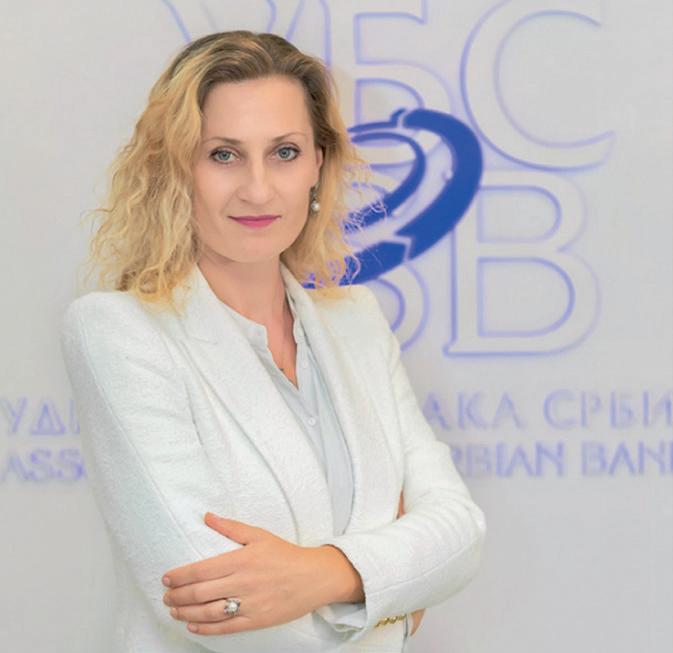
FOR 55 YEARS, BANKARSTVO HAS BEEN CONNECTING ACADEMIA, FINANCIAL PRACTICE AND POLICY, CONTRIBUTING TO KNOWLEDGE, DIALOGUE AND FINANCIAL LITERACY IN SERBIA’S BANKING SECTOR
An important dimension of Bankarstvo’s contemporary identity lies in its international cooperation. Openness to authors, reviewers and topics from abroad has enabled the exchange of knowledge and comparative analysis of domestic and global financial trends. This international perspective contributes to the quality of published work, encourages innovative approaches and strengthens collaboration between individuals and institutions.
Today, Bankarstvo has a clear mission: to serve as a bridge between the academic community, banking practice and decision-makers. At the same time, the journal plays a broader social role in advancing financial literacy among current and future users of financial services. Financial literacy today goes beyond basic personal finance management; it encompasses the ability to make informed decisions, understand financial products, manage risks and plan for the long term – at both individual and institutional levels.
It is therefore important to recognise that financial education is not the responsibility of individuals alone. Banks, insurance companies, regulators, educational institutions and professional associations all share a role in building a financially aware and responsible society. Only through coordinated action and a long-term approach is it possible to develop a culture of financial understanding that contributes to economic stability and greater trust in the financial sector. By publishing relevant and well-founded content, Bankarstvo contributes to a better understanding of financial products, regulation and risk, a role that is becoming increasingly important in a time of rapid innovation and digital transformation.
The longevity of Bankarstvo Journal is the result of its ability to balance tradition and modernity, academic standards and practical relevance, as well as its ongoing commitment to quality and open dialogue. In this sense, it is no coincidence that its values align with the editorial philosophy of CorD magazine – a platform that has, for decades, encouraged thoughtful discussion of economic and social issues within an international and responsible framework.