Chief Marketing & Communications Officer | Jeremy Burton
Vice President of Marketing & Communications Operations | Ben Breit
Editor | Hannah Harris
Managing Editor | Haley Powell
Content Editors | Kourtney Christiansen, Scott Harrup, Morgan Mills & Ava Staggs
Reporters | India Banks, Kourtney Christiansen, Rhett Noonan & Ava Staggs
Photography & Videography | Clayton Gilligan, Kirsten Jennings, Jason Ko, Andre Benedict Malabanan, Joe Mason, Simen Reinemo, Stephen Rippee, Dylan Stine & Esy White
Dr. Aaron Cole (Chair), Dr. Brad Trask (Vice Chair), Telvin Jeffries (Treasurer), Dominick Garcia (Executive Member), Dr. Mike Burnette, Larry Henderson, Dr. Sam Huddleston, Lindsay Jacobs, Cheryl Jamison, Klayton Ko, Kay Logsdon, Rich Nathan, Tom Rankin & Hal Donaldson (President)
Feedback | editor@convoyofhope.org
Website | convoyofhope.org
Instagram | @convoyofhope
Facebook | /convoyofhope
LinkedIn | /convoyofhope
Postmaster | Send address changes to: Hope Quarterly
Convoy Drive, Springfield, MO 65802
Yah (iStock)
HOPE BEYOND THEIR CIRCUMSTANCES
Asyou may know, two devastating earthquakes struck Venezuela on June 24, causing catastrophic damage to homes, apartment buildings, and critical infrastructure.
At the time of this writing, the estimated cost of the destruction exceeds $37 billion. Thousands of people have been confirmed dead, and tens of thousands remain missing.
Even now, as mass graves are being filled, the death toll continues to rise.
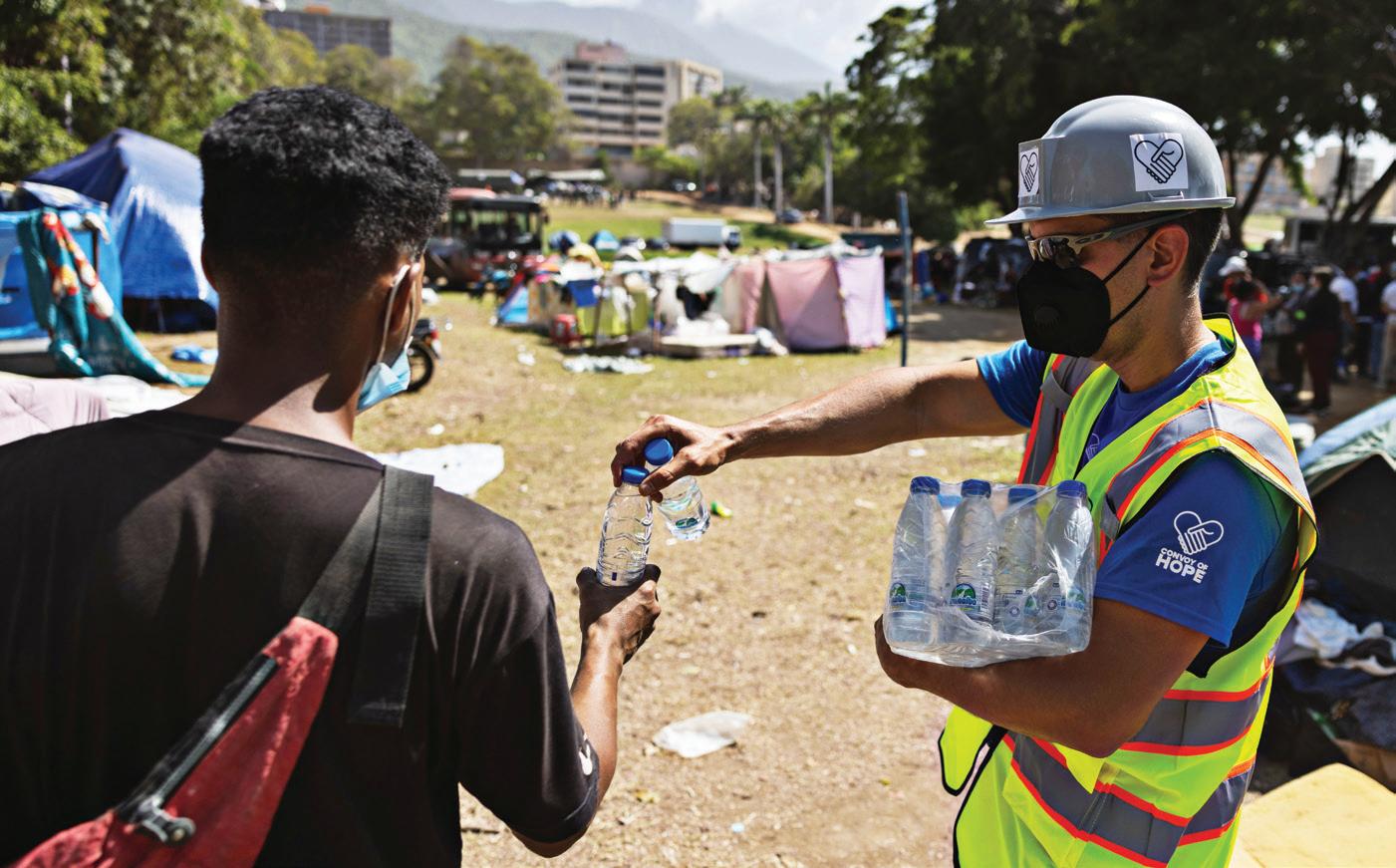
Please know that Convoy of Hope responded immediately, opening mobile kitchens in the hardest-hit communities where hot meals, clean water, and emergency supplies began flowing into the hands of survivors.
Strangely, the story did not remain in the headlines for long. Perhaps the world’s attention shifted to war in the Middle East, the World Cup, economic uncertainty, or relentless heat waves.
I’m not sure.
What I do know is this: you — our faithful partners — stepped up, enabling us to help survivors in Venezuela when they needed it most.
In more than 30 years of being a part of Convoy of Hope, I have had the privilege of witnessing extraordinary generosity in the wake of disasters.
Media pundits may tell us our nation is divided beyond repair — that empathy and compassion are fading.
That simply hasn’t been our experience. Together, we remain united by a common purpose: bringing children and families in Venezuela and around the world hope beyond their circumstances.
We couldn’t be more grateful for you.
Thank you for giving through Convoy of Hope. The world is a better place because you do.
Hal Donaldson President, Convoy of Hope
By Ava Staggs
WAITWATER THE FOR
Juma’s village experienced tragedy, but today
TRANSFORMATION.
Hewas only in fifth grade.
Last year, Juma’s friend died getting water to drink.
In his village in Tanzania, the dangers of fetching water caused a death — long before dehydration could. Gathering “rainwater” doesn’t sound lethal. But that proved to be the case in a nearby mountain.
“There are deep holes in the mountains that collect water,” said Headmaster Masatu from Juma’s school. “A child would climb down into the hole.
Then a bucket tied to a rope would be lowered and pulled back up. Last year one of our Grade 5 students, who would have been in Grade 6 this year...”
Masatu paused.
“He fell into one of those holes. And he died.”
Juma used to get water the same way.
“We had no choice,” he said.
Almost every day he climbed across slippery rocks to heave his water bucket up. Risking his life wasn’t something he could back out of.
continued on p. 8
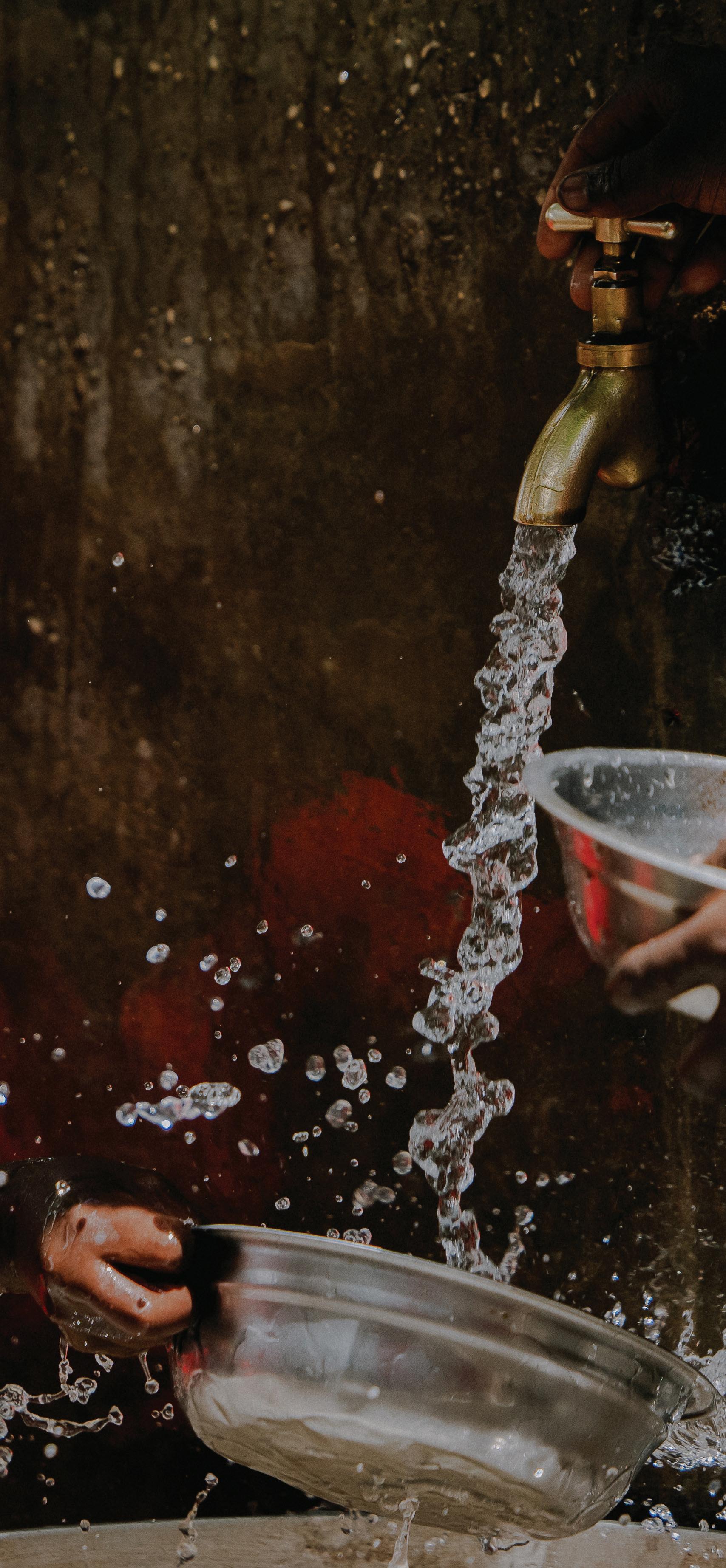
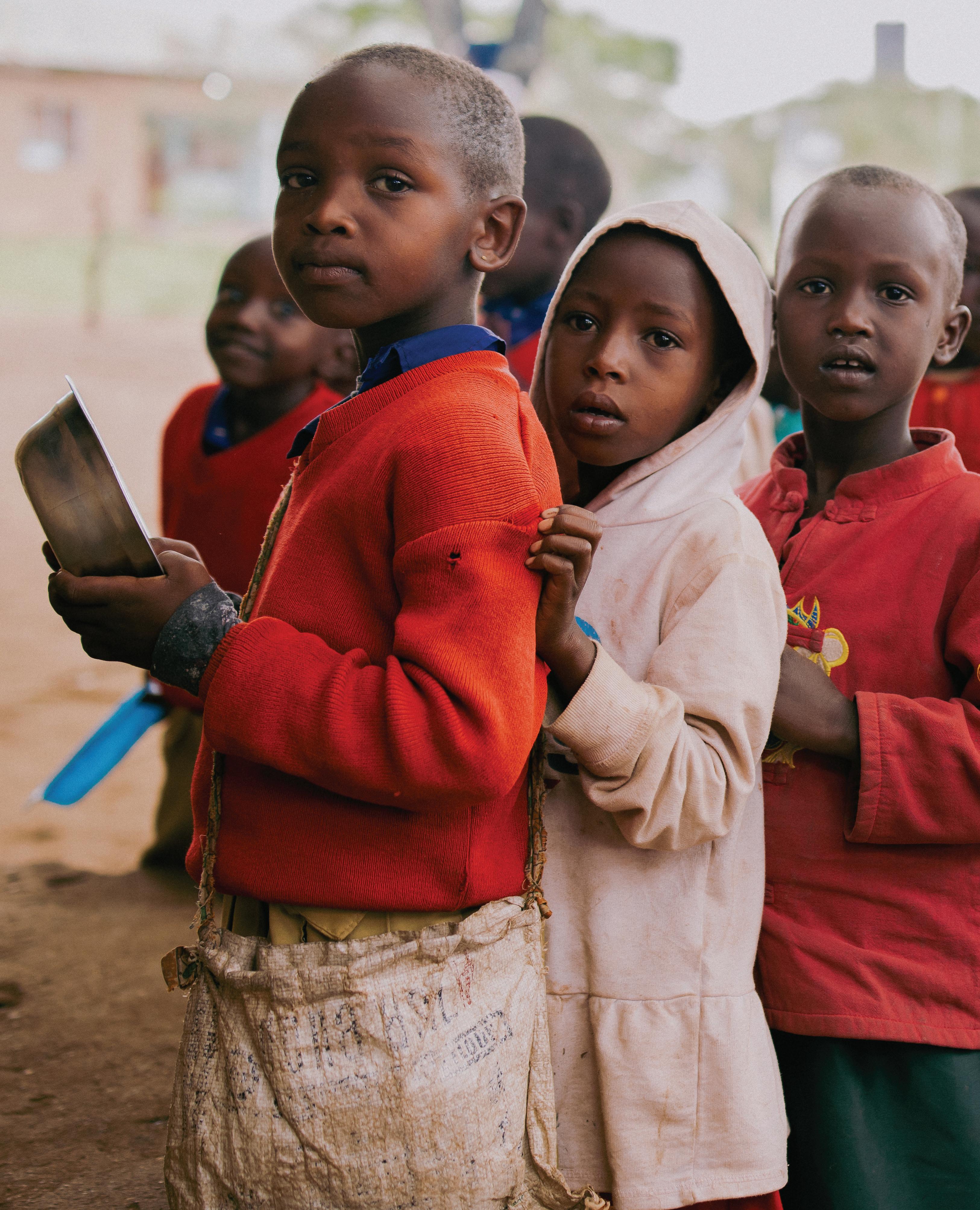
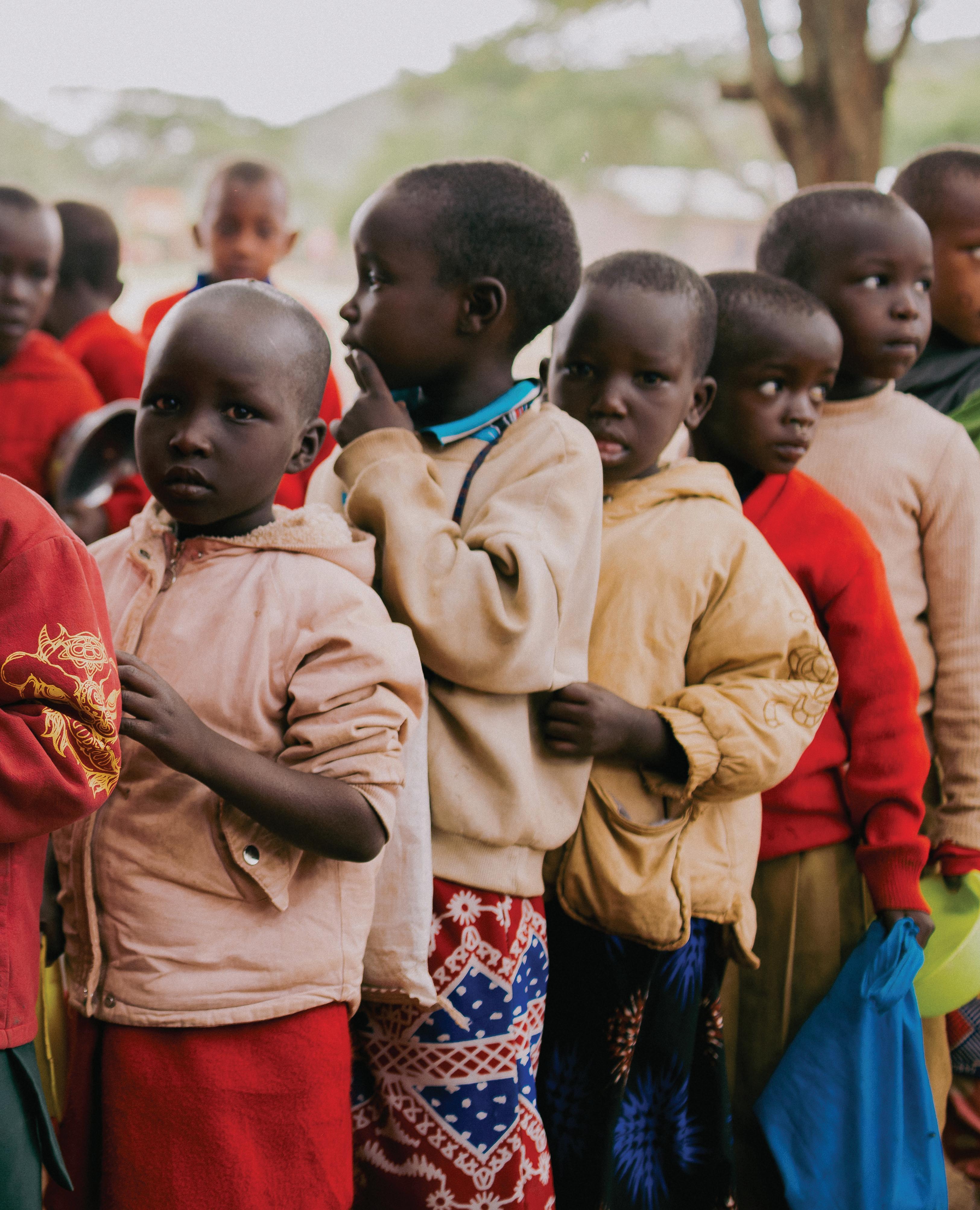
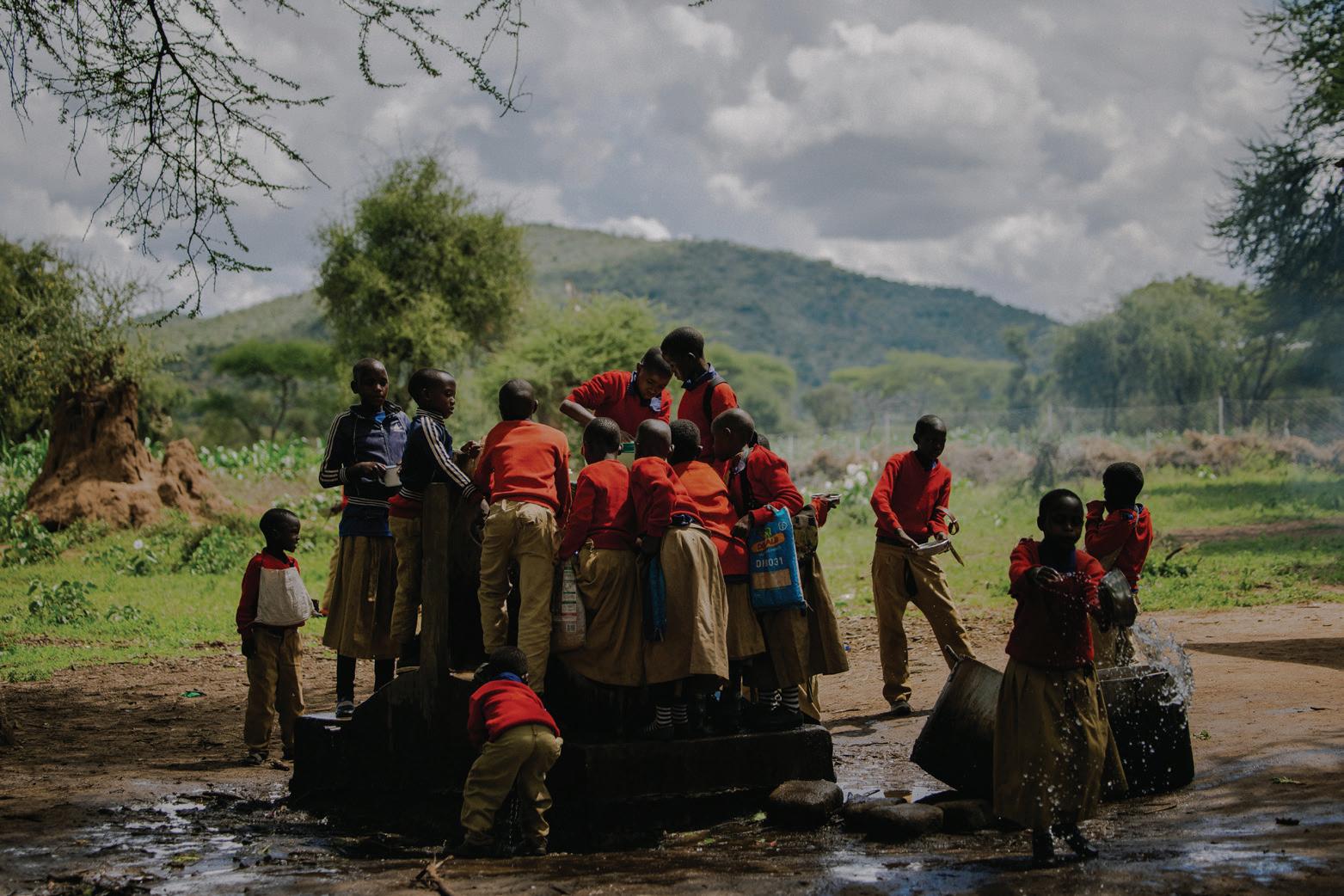
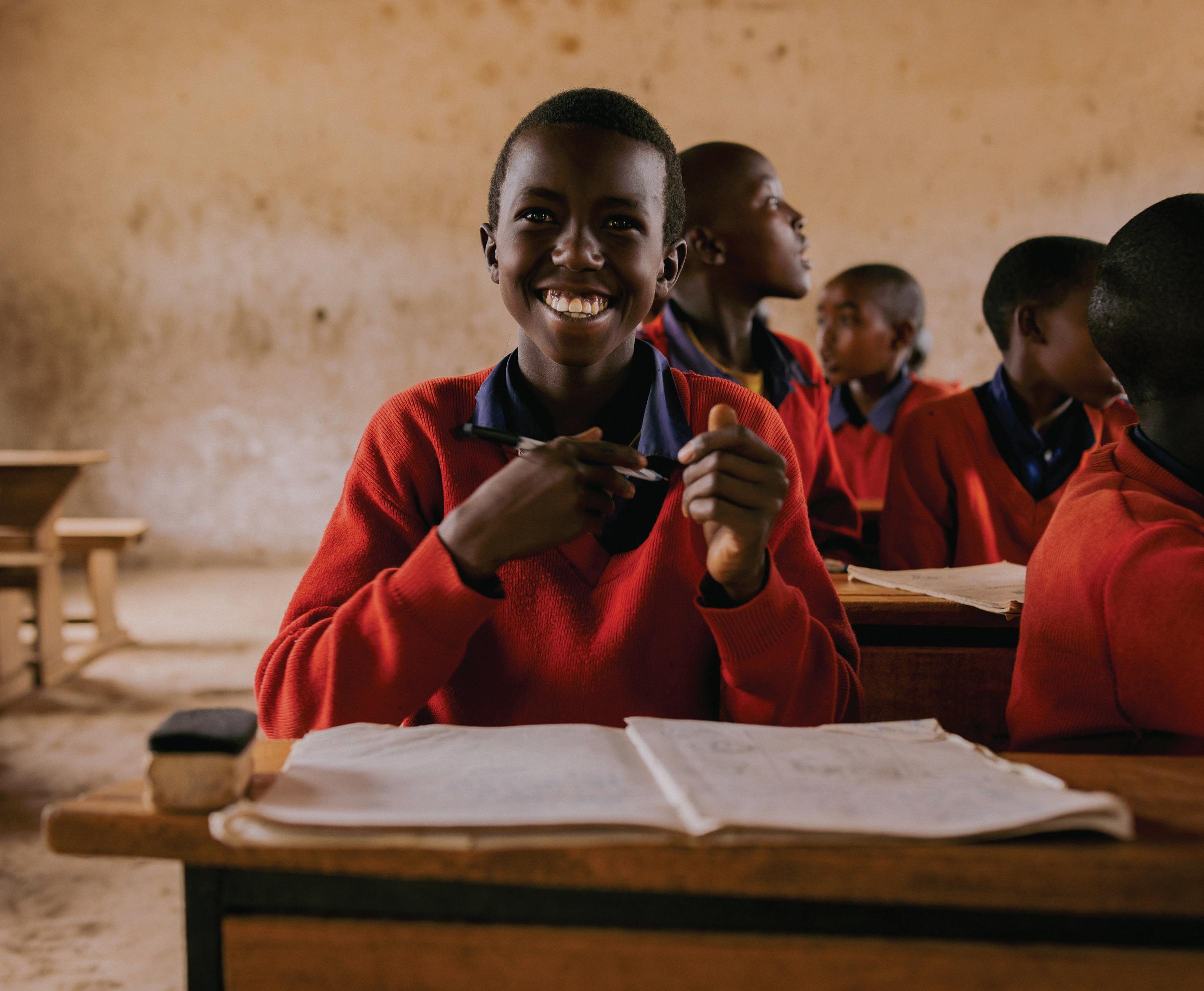
Students in Convoy of Hope’s Children's Feeding program wait for water to be distributed in Tanzania.
But the loss of his friend changed things.
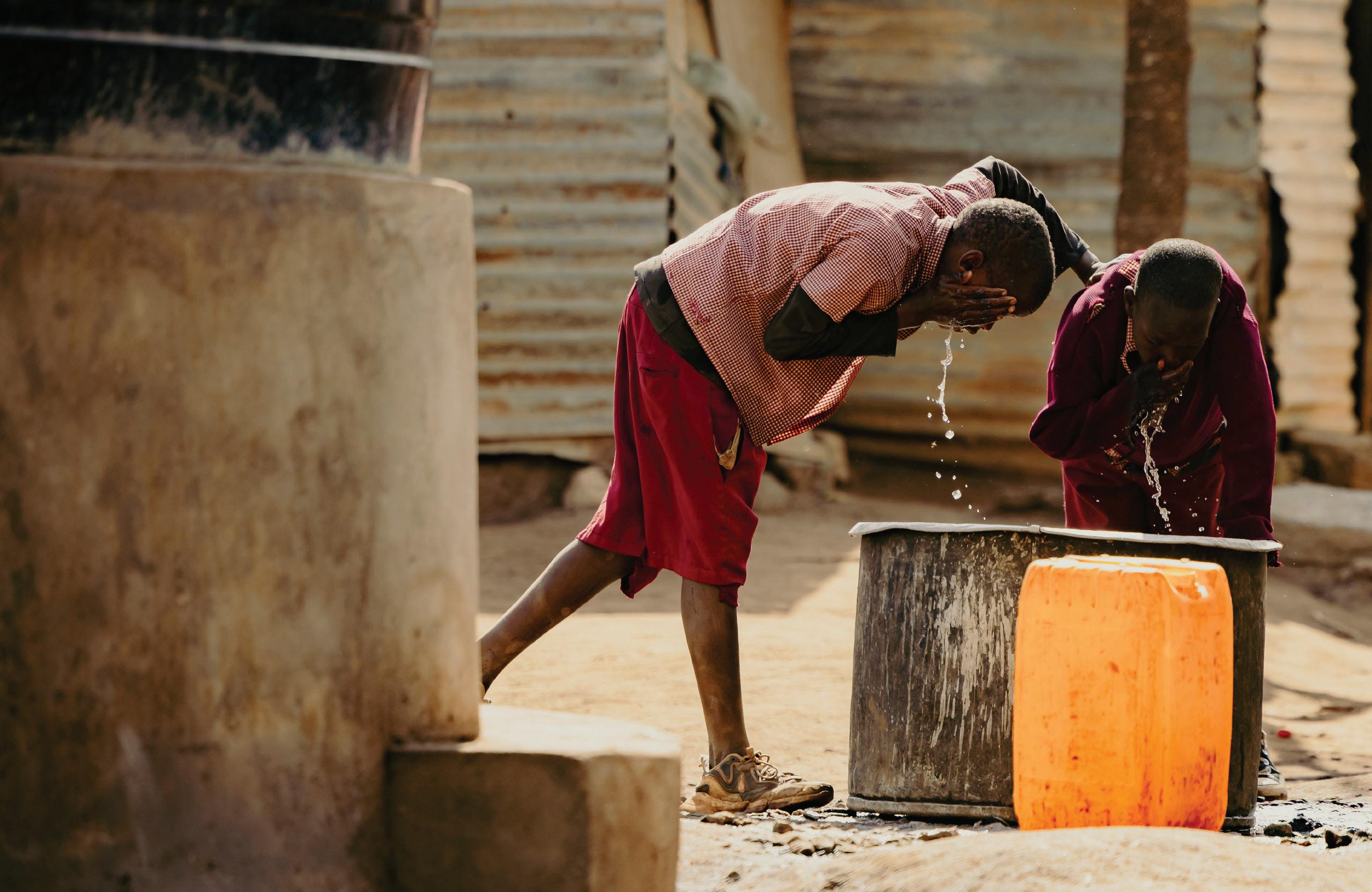
After the accident, families refused to let their children fetch water from the mountains. Juma and his classmates instead turned to stagnant, foul-smelling ponds used by domestic and wild animals.
The children brought 5-gallon buckets that weighed nearly 40 pounds when full. They poured ash into each, hoping the ash would settle the water’s sludge.
Hours later, the water still reeked, ruining the taste of food.
Juma’s father had lost his farm; there was nothing to sustain animals or crops. Some parents took up cutting wood to make charcoal. But no amount of income could solve thirst.
At school, children coped with their hunger and exhaustion in silence.
When Convoy of Hope announced it would help the village obtain a
reliable source of drinking water, a sense of relief and excitement mingled with doubt.
How could fresh water be theirs?
Other villages had seen water efforts left unfinished or come up empty.
As Convoy’s water intervention project began, many parents stayed awake all night, hoping it would bring back their ability to provide. To bathe, wash clothes, and cook safe food. To be healthy again. If it failed, what kind of future awaited them?
The next day’s success wasn’t immediate. At first, spurts of water mixed with sand and dirt.
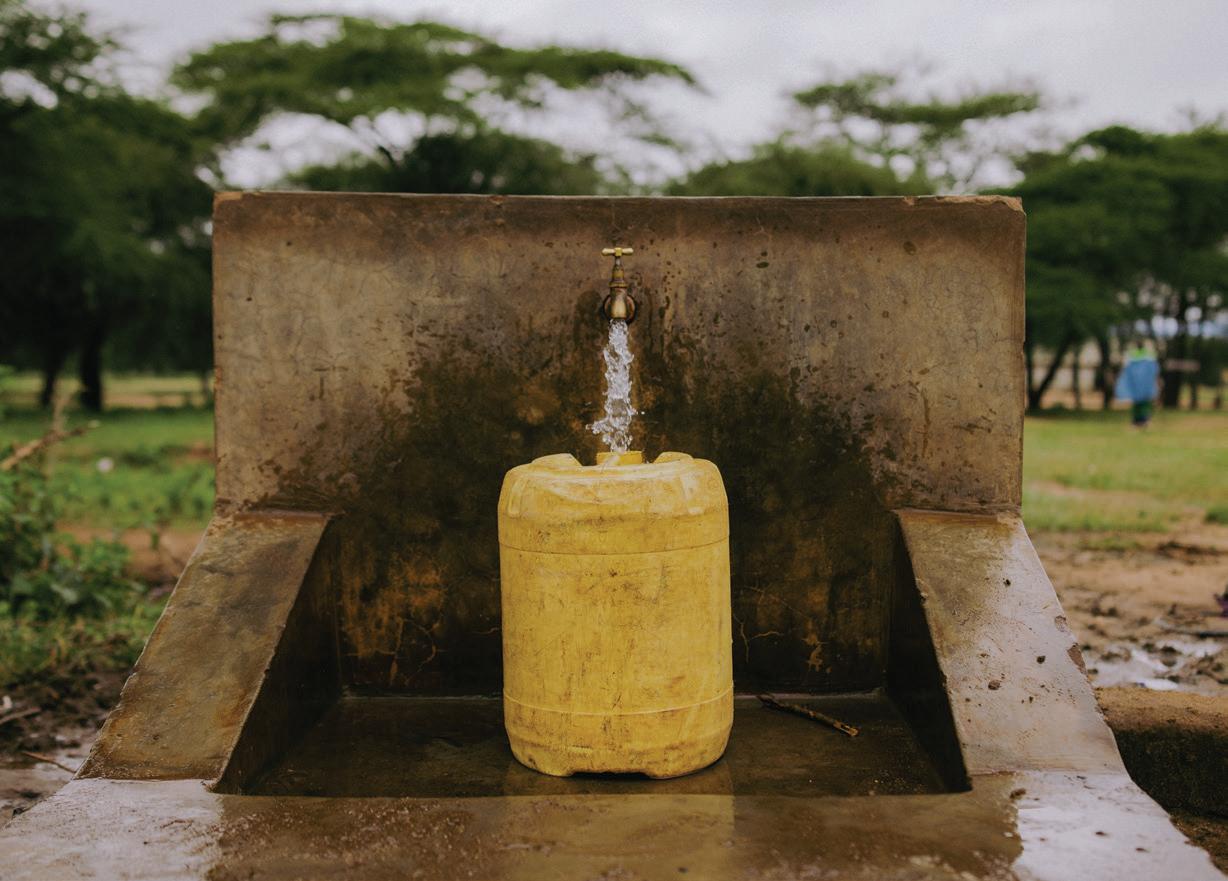
But then — clear water.
Children cackled in unexpected joy. Women rushed home for containers they could fill to the brim.
“We didn’t want even a drop to go to waste,” said Headmaster Masatu.
The hours that followed were filled with hope.
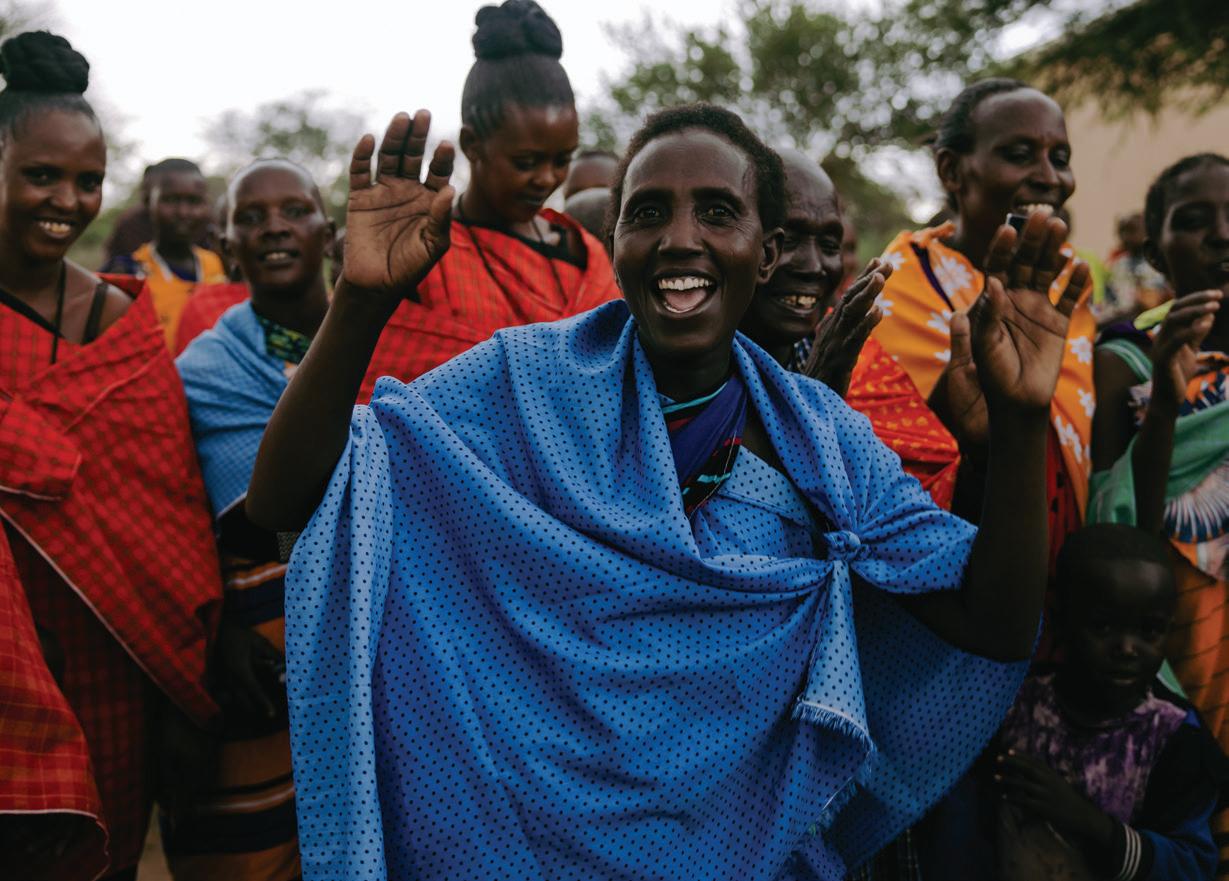
“It was an unforgettable day,” one woman said, “because it was a very joyful day.”
Today in the village, children are laughing. The scent of warm meals floats over a new garden. Since the water solution, lives have transformed through additional Convoy of Hope programming: Agriculture, Children’s Feeding, and Women’s Empowerment.
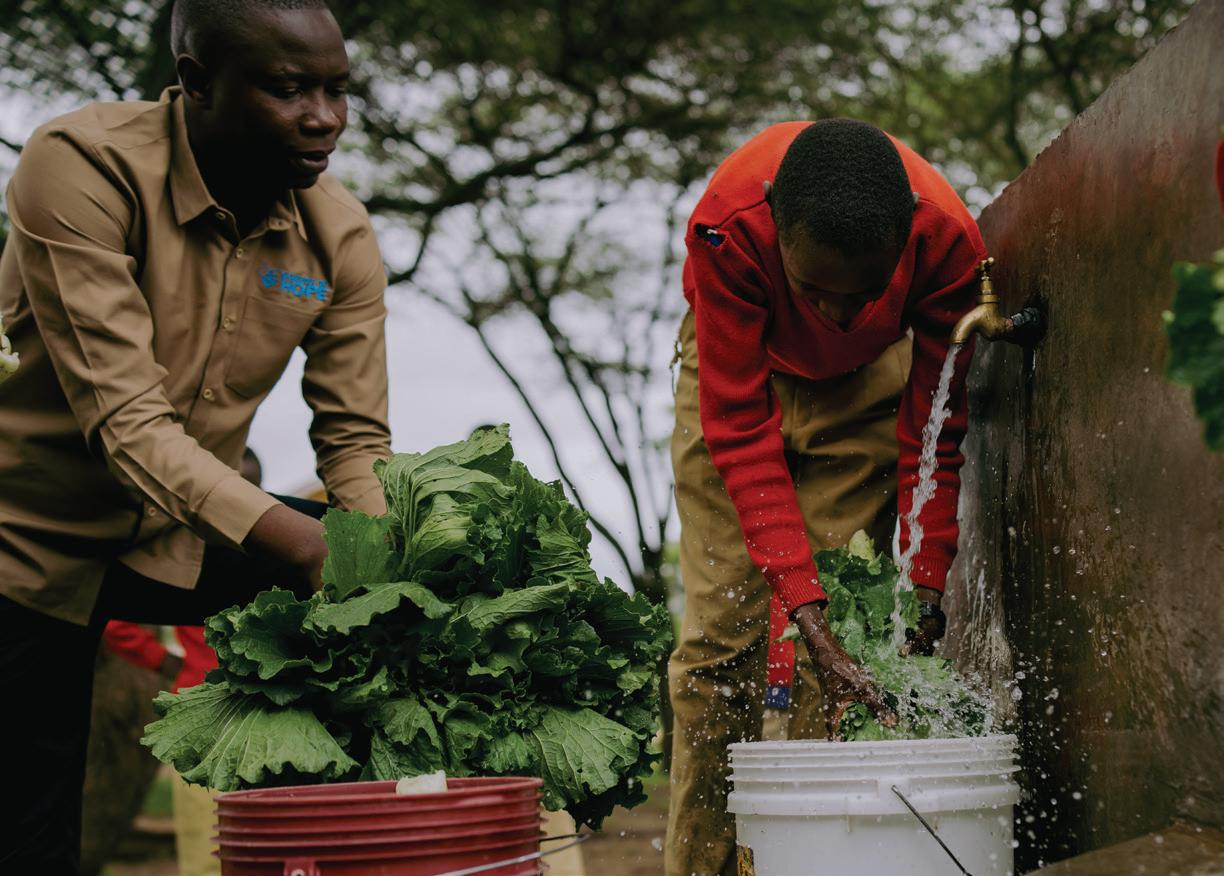
Juma’s village learned practical farming techniques, including greenhouse construction and irrigation. Fruits and vegetables that once felt foreign — like bananas and tomatoes — now grow in the community’s school garden.
Students eat nutritious meals through Children’s Feeding, meals that are improved with the produce they help grow. Their energy has multiplied. They’re learning in the classroom and playing in the schoolyard. Attendance is at a record high, and grades are improving.
Women embraced the strategies of Women’s Empowerment, and they’ve started businesses of their own, running shops, raising animals, or selling clothing while saving for their futures.
Clean water doesn’t just keep people alive; it creates opportunities.
It gave Juma’s village the freedom to focus on what is meaningful.
Work and play. Education and business. Time as a family.
All for a stronger future.
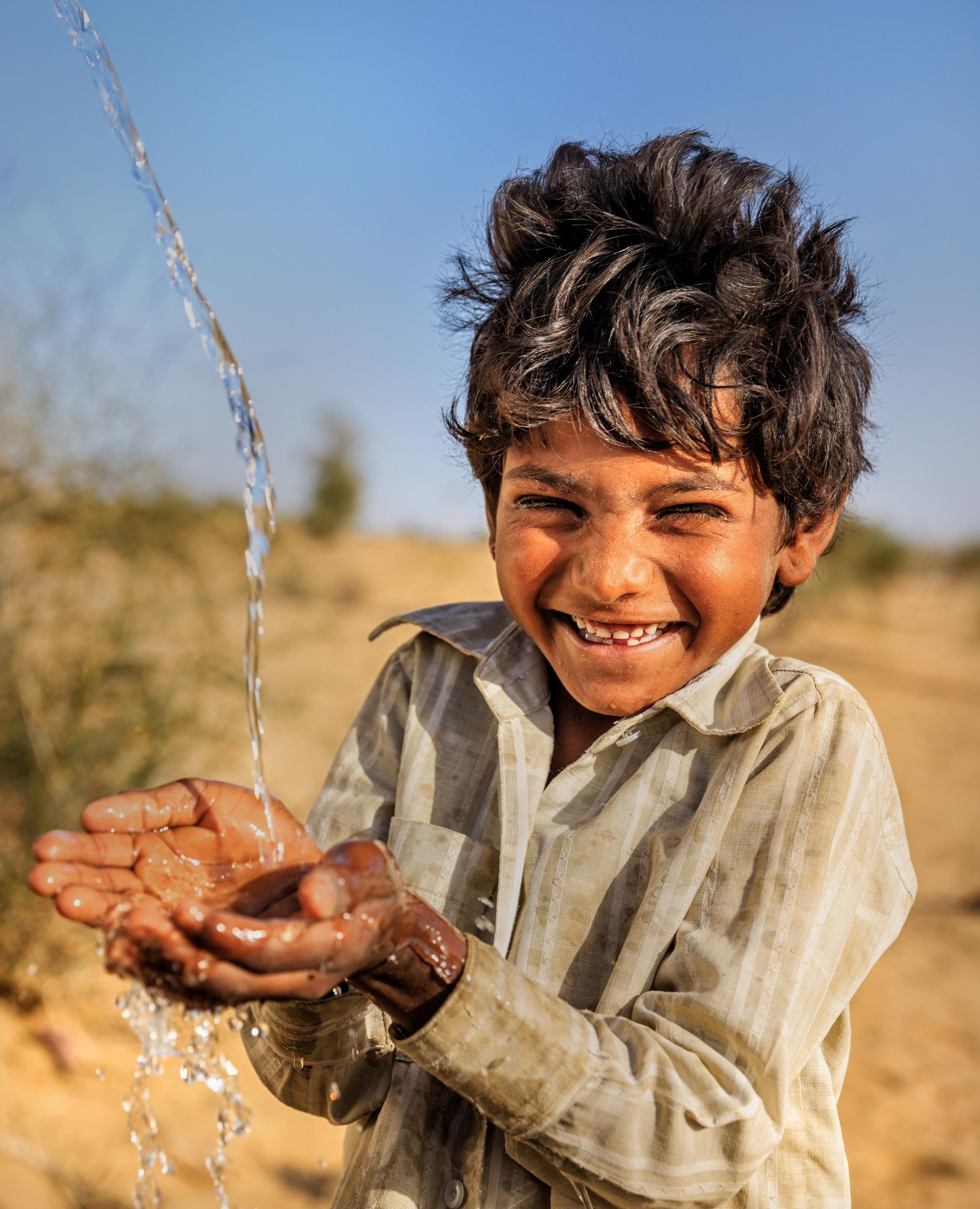
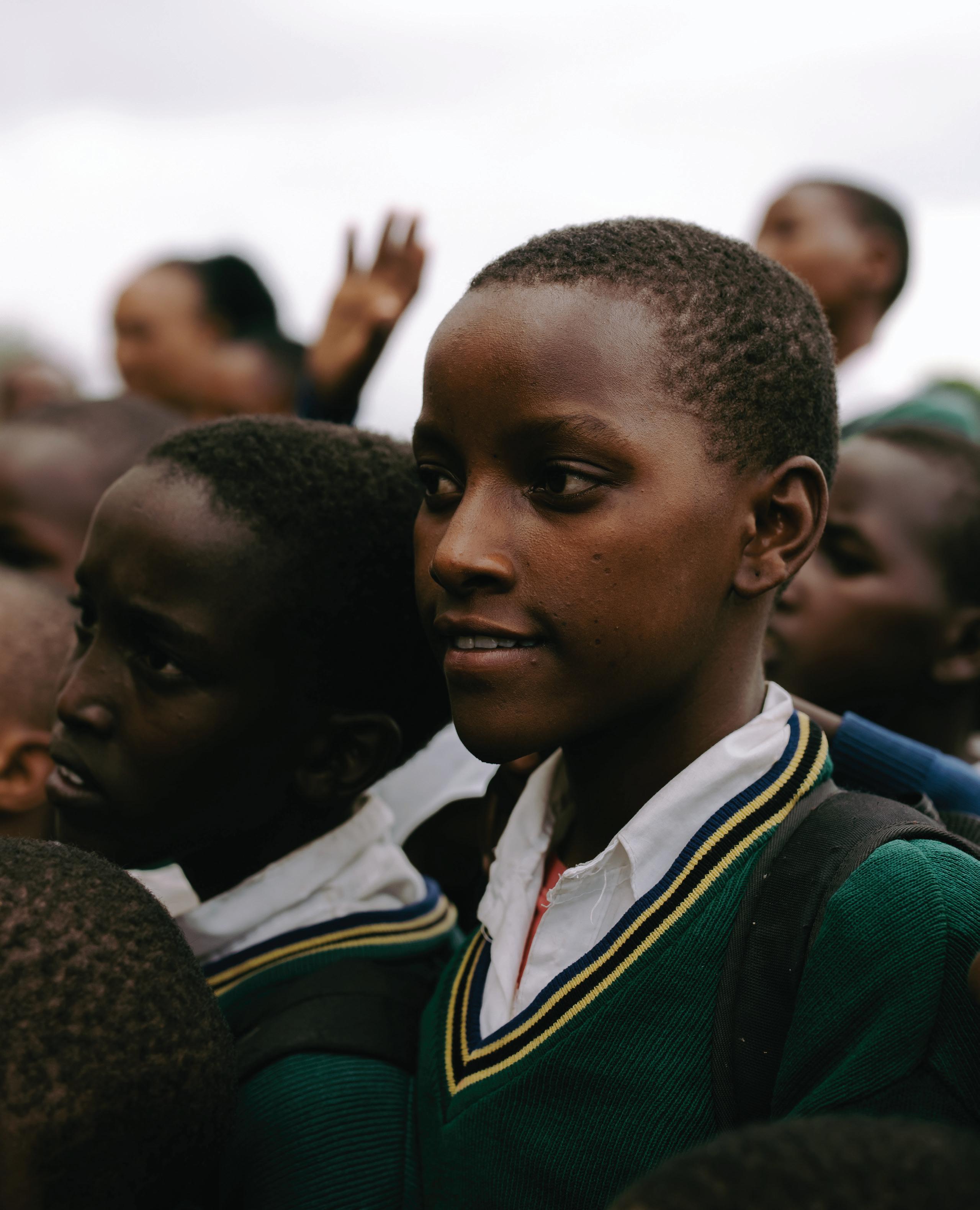
A student in Convoy of Hope’s Children's Feeding program participates in class with his classmates in Tanzania.
WATER STATISTICS
Only 31% of people have access to clean water. Only 23.5% of people have access to basic hygiene facilities with soap and water.
73 million (2026 census)
LANGUAGE Swahili (+ over 120 tribal languages)
Drought
Changing seasonal weather patterns
Lack of education
Extreme poverty
SUMMER HUNGER Confronting
Convoy of Hope Rushes Food & Water to Families in Need
By Hannah Harris
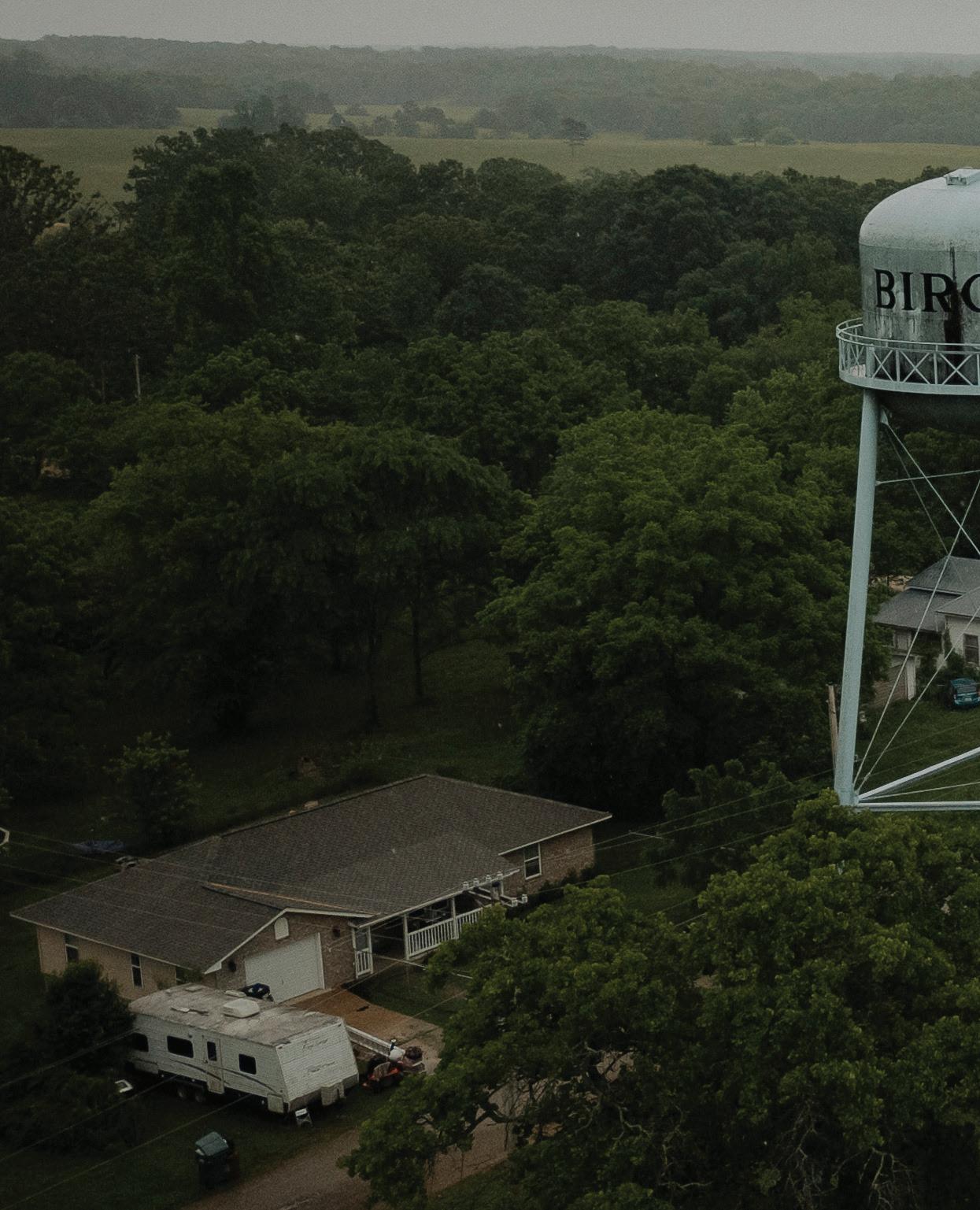
Afamily of eight has no running water in their home — no faucets, no showers, not even a well. But this isn’t in a developing nation — it’s in the United States, in rural Missouri.
Once a week, the family drives their pickup truck into the nearby town of Birch Tree to fill a portable water tank. They collect 225 gallons of water weekly — to use for cooking, drinking, showering, and laundry. The average family of four in the United States uses 400 gallons of water per day.
This family is not the only one in the area without water in their home. The reason? It’s too expensive for many residents. A well can cost upwards of $20,000 to $30,000. Even those with city utilities struggle to pay the monthly bill. Families are resourceful and supplement their water supply with rainwater collected from their gutters, through strict conservation, and by going into Birch Tree for water.
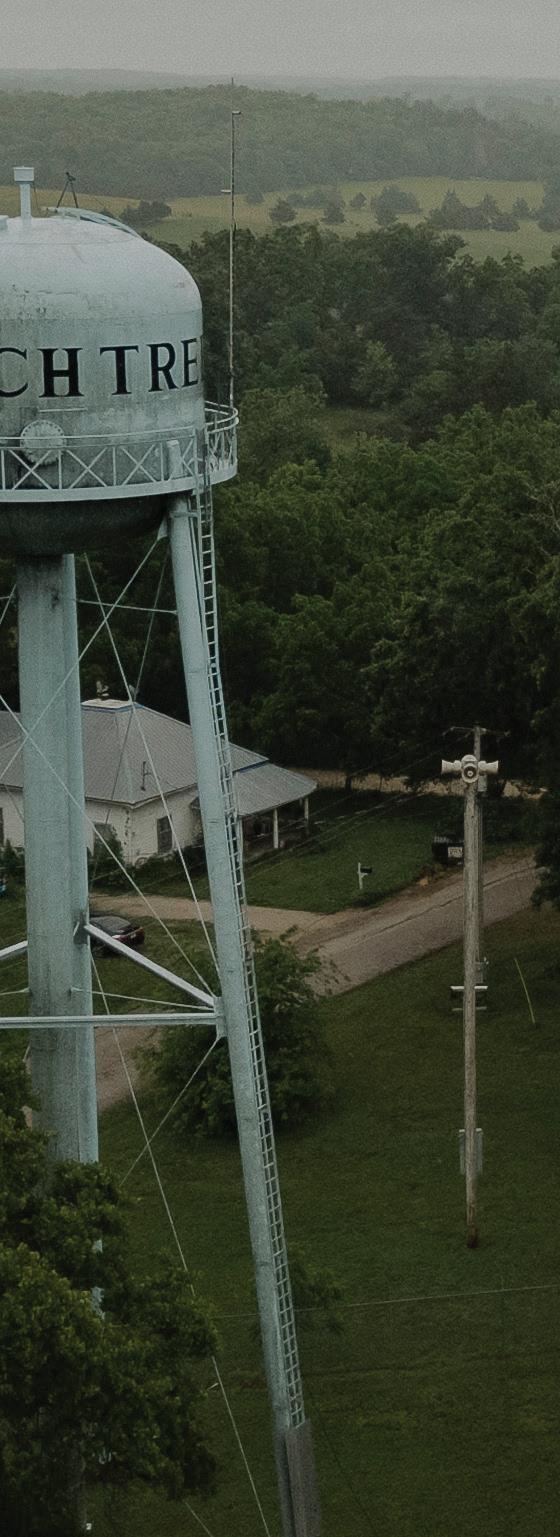
Brandon Tate is the pastor of Cornerstone Church and serves as the mayor of Birch Tree. He moved to the town of 570 with his family five years ago. He says Convoy of Hope’s intervention has helped local residents on several levels. Pallets of bottled water for families have helped address critical shortterm needs. Convoy has also funded showers that were installed at a local shoe factory to help alleviate long-term daily needs.
“We have enough rapport with families and history with Convoy of Hope that people are aware that if there is a need, they can call us [for help],” he says.
Brandon Tate
FAMILIES GENUINELY FELT RELIEF.
THEY FELT THAT THERE WAS HOPE.’
— Brandon Tate
Access to water is not the only challenge facing families in the community. Food insecurity looms large. To ensure children have food, Convoy expanded its U.S. Children’s Summer Feeding program into the area. The response was enthusiastic as families formed long lines to enroll.
“When there’s nothing in the cabinets, what do you resort to?” asks Tate, noting families were deeply grateful for the food they received. “Families genuinely felt relief. They felt that there was hope. They felt that they were going to be able to make it the next day, the next week.”
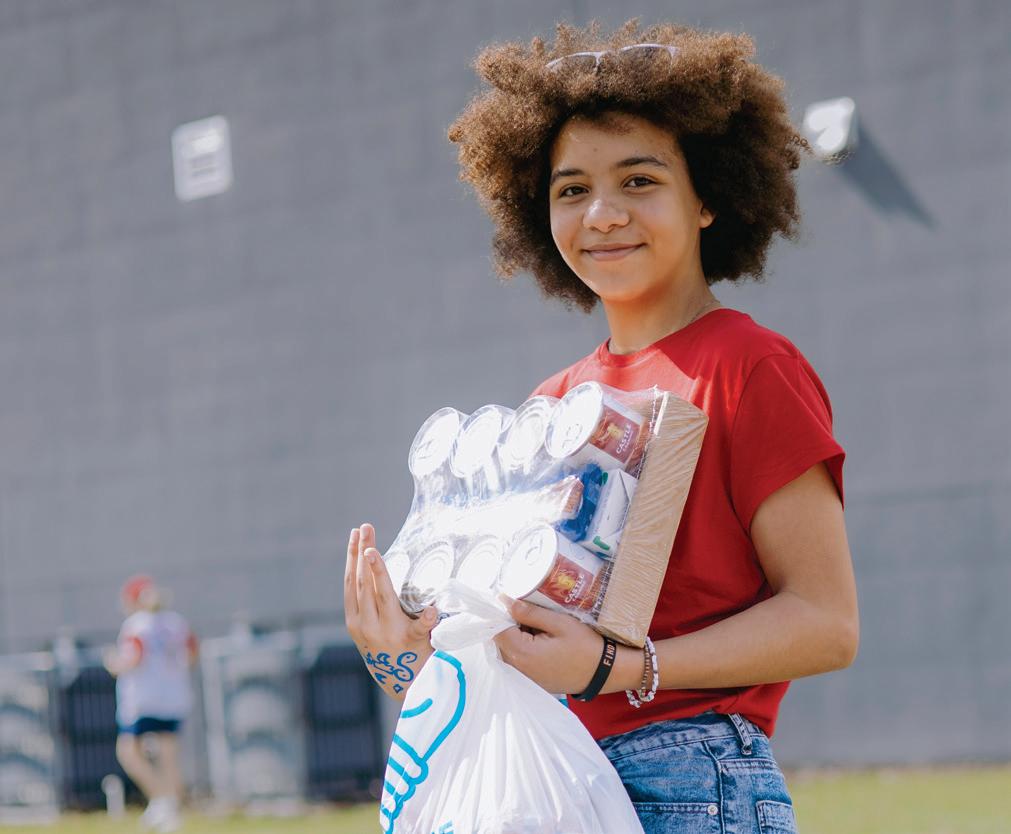
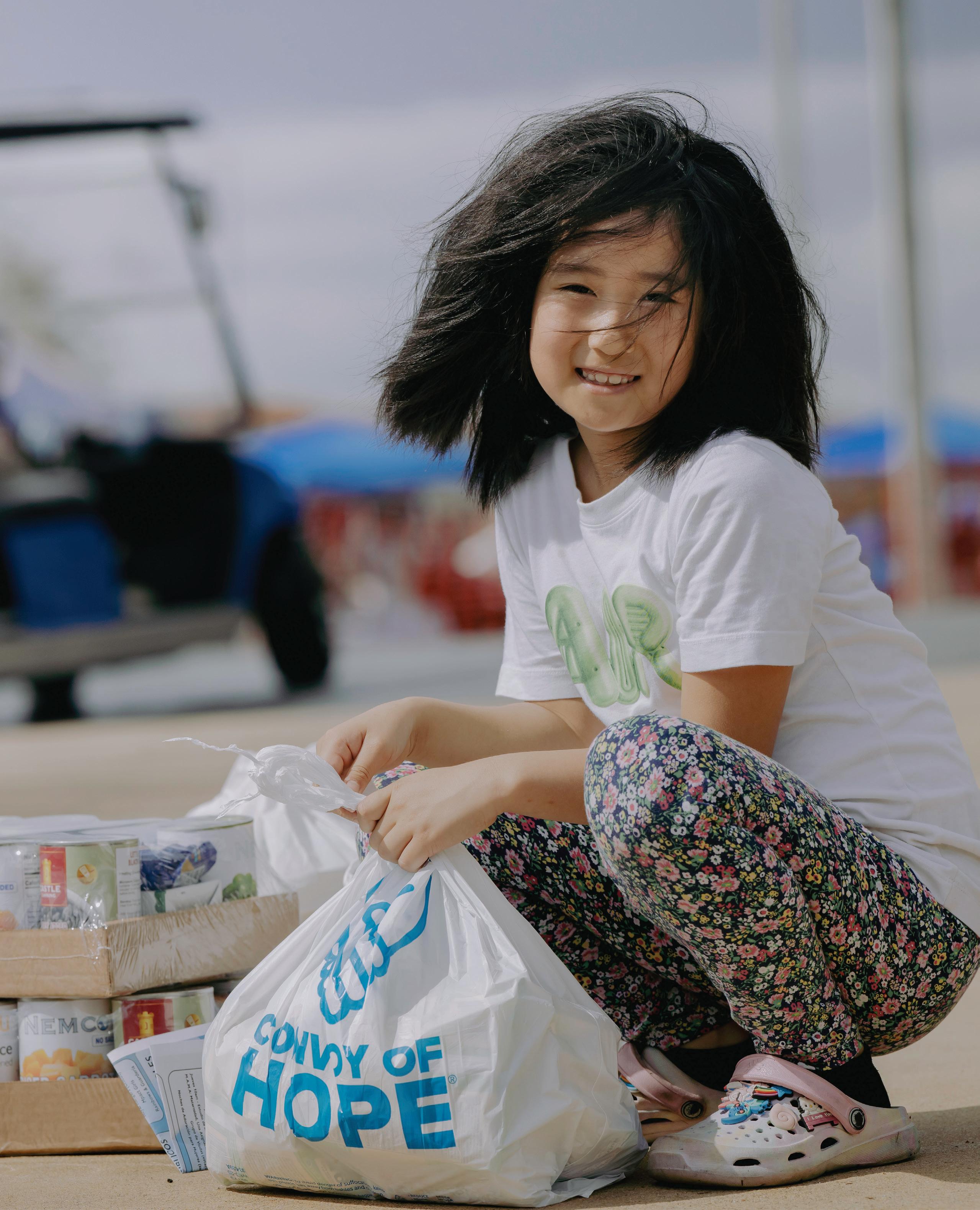
Across the United States, in cities and rural communities alike, Convoy’s U.S. Children’s Summer Feeding program is in full swing helping families put food on the table. The need escalates when the low-cost or free lunches at school disappear with the end of the school year.
One father in Georgia has struggled to afford rent after having his hours cut at his job.
“Because of this,” he says after his family receives groceries from Convoy, “my kids will not starve.” “We were completely out of food. This will save our lives,” says a mother in California.
continued on p. 19
IN 2026, CONVOY’S CHILDREN’S SUMMER FEEDING PROGRAM HAS HELPED FEED MORE THAN
210,000 CHILDREN IN THE UNITED STATES
A mother of three children in Iowa lost her job right as school let out for the summer. She, too, worried how she would feed her family — until she learned of Convoy’s Children’s Summer Feeding program.
In another city, 17-year-old Sierra*, whose father was arrested, took on the role of providing for her younger siblings. “I’ve been trying to find work to help my mom,” she says with groceries in hand. “This means the world to me.”
In 2026, Convoy’s Children’s Summer Feeding program has helped feed more than 210,000 children in the United States.
The innovative program does more than fill hungry stomachs — it serves as an avenue for communities to connect.
*Name changed
Back in Birch Tree, Tate says families who lived in town took groceries to those who lived on the outskirts. “There’s a ripple effect taking place,” he says.
“It’s not just meeting the need of hunger, but it’s also bringing down walls of skepticism, creating a deeper sense of community.”
As the Birch Tree community began to unite in a shared sense of compassion, the specter of hunger began to retreat. That same equation is repeated in regions of need across the U.S. each summer. Bags of groceries find their way into empty cupboards and onto bare tables. Grateful parents and children gather for shared meals. And as their needs are met, many of them look to their neighbors’ needs and ask themselves what they can do to make a difference.
CONVOY RESPONDS TO TORNADO EMERGENCIES
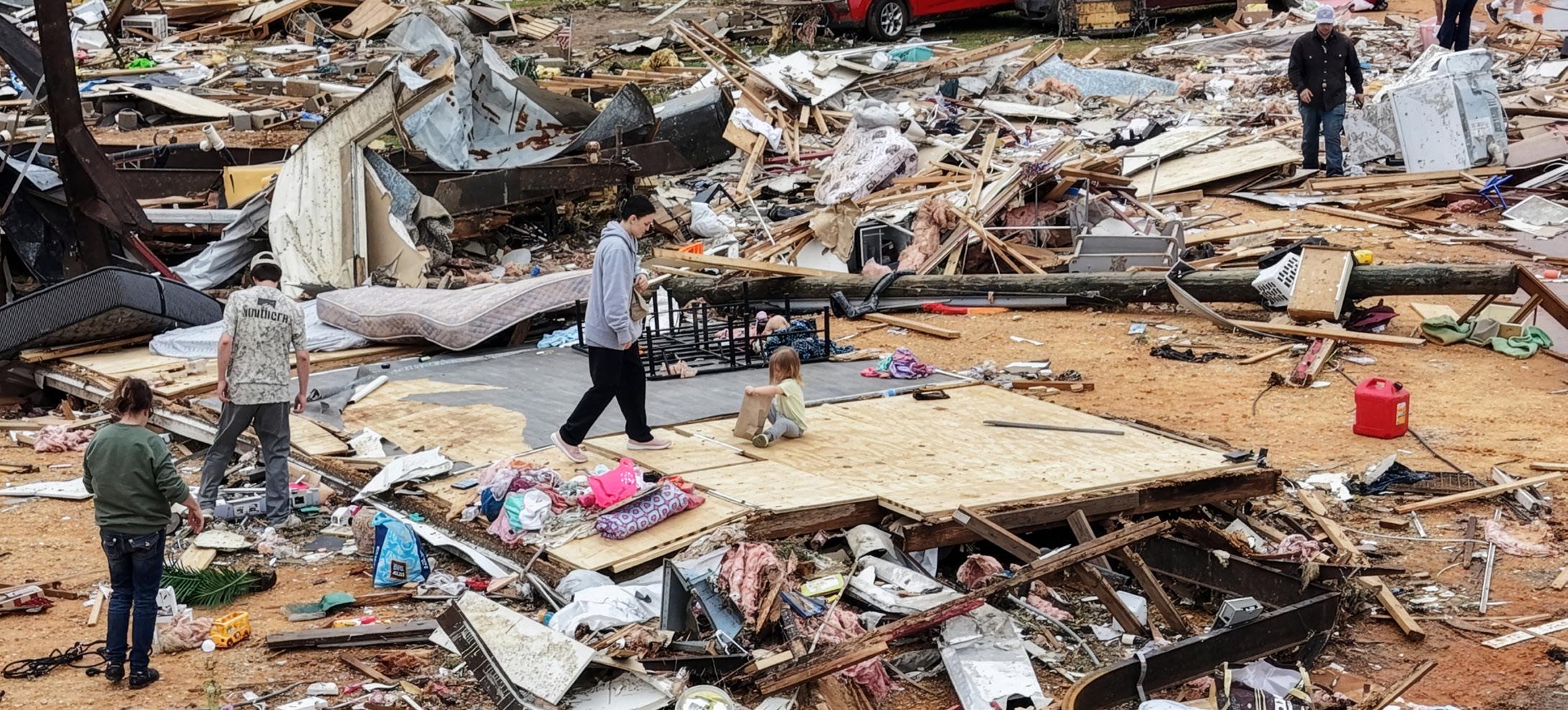
Convoy of Hope sent relief supplies to Michigan, Illinois, Indiana, Oklahoma, and Mississippi after widespread storms spawned tornadoes across the region.
A March storm system, with at least one confirmed tornado, took four lives as it moved along a 50-mile path in Michigan. That month, a group of four tornadoes impacted parts of Illinois and Indiana, killing two people.
An April tornado hit Enid, Oklahoma, destroying between 40 and 50 homes; thankfully, no fatalities were reported. In May, multiple tornadoes damaged about 500 homes in central and southern Mississippi.
June brought a similar emergency to two Illinois towns where tornadoes collapsed homes and damaged others. Power outages impacted hundreds of thousands of residents.
Communities faced difficult recovery journeys. Many survivors initially traveled through unsafe conditions, including downed power lines, to receive help.
Convoy sent rapid shipments of essential supplies in the storms’ immediate aftermath. Where damage was more significant, a long-term response was organized. Convoy is also serving U.S. communities impacted by flooding, wildfires, and water crises.
To date, in 2026, Convoy has responded to more than 60 disasters domestically and internationally.
(AP Photo/Gerald Herbert)
HORMEL
FOODS & SKIPPY® PEANUT BUTTER HELP FEED KIDS
Hormel Foods and SKIPPY® are providing peanut butter for children in El Salvador.
Since 2019, Hormel Foods has donated more than 500,000 pounds of peanut butter to Convoy’s programming, with a portion of that supporting more than 171 program centers and feeding thousands of students in El Salvador.
“The local team reports that the children eagerly enjoy the peanut butter with bread and in culturally familiar foods such as peanut horchata, making it a highly accepted and effective addition to the feeding programs,” says Convoy nutritionist Melanie Morgan.
CONVOY OF HOPE CONTINUES SERVING ON THE GROUND IN VENEZUELA
Two earthquakes, forty seconds apart. Their epicenters separated by only 14 miles.
Both were seismic monsters with magnitudes of 7.2 and 7.5. In comparison, the Loma Prieta earthquake that struck the San Francisco Bay Area in 1989 measured a magnitude of 6.9.
Collectively, the Venezuelan earthquakes on June 24 brought down tall buildings, split roads wide open, killed thousands of people, and left tens of thousands of children and families displaced.
Today, people are still missing, and the death toll is expected to rise.
Experts say it will take months before all of the 50,000 people who remain unaccounted for are located. It will take much longer for families to recover in La Guaira and Caracas, the capital, where the earthquakes hit the hardest.
Though the media has largely moved on from this story, Convoy of Hope remains on the ground delivering help and hope.
HOPE IS BREWING
AT MESERET’S
COFFEE SHOP
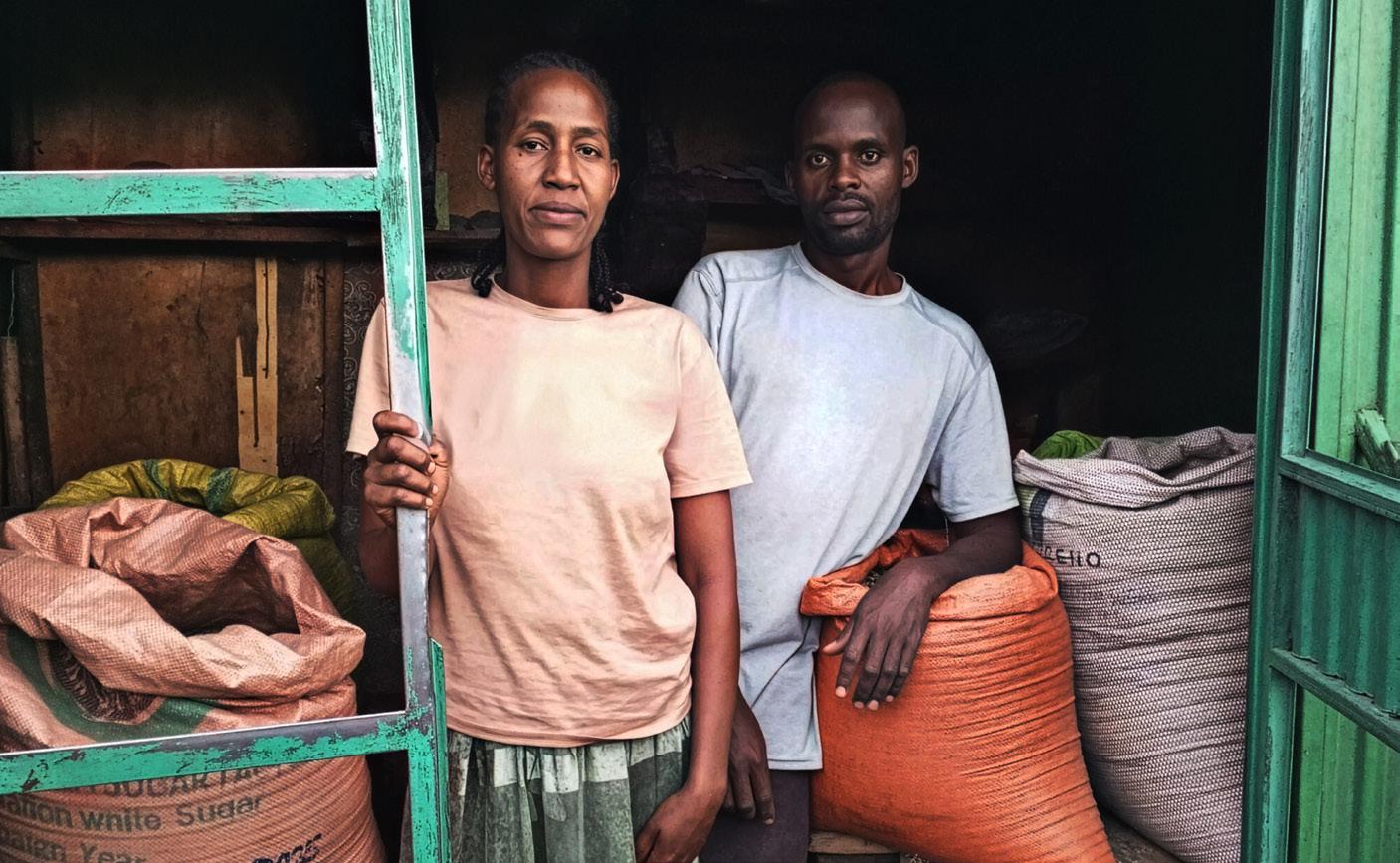
In Ethiopia, Meseret and her husband work together running their coffee shop to provide for their two children, send them to school, and keep them wellfed. But their lives were not always this full of hope.
Meseret’s husband used to work long days away from home doing manual labor, but his earnings were not enough for a stable life. Meseret had no opportunities to help bring in additional income.
“It’s challenging to convey the struggles of my former life,” Meseret said.
Convoy of Hope’s Women’s Empowerment program helped Meseret rebuild her hope and self-confidence — and it gave her family the tools they needed to create a strategic plan for their future. As they studied practical business principles, she and her husband decided their new career would be selling coffee together.
Eventually, Meseret and her husband hope to expand their business into exporting their coffee. But for today, they have found the freedom to dream beyond the present, using their new skills to build a stable, successful future.
PHILIPPINES EARTHQUAKE
Convoy of Hope responds to the strongest earthquake to hit the Philippines this year. On the morning of June 8, a 7.8 magnitude earthquake hit the southern tip of Mindanao.
Buildings and other infrastructure collapsed as tsunami waves hit the coast. At least 35 people died; 13 of the victims were killed in a resulting landslide.
For years, Convoy of Hope has responded to earthquakes and other natural disasters in the region. Because of Convoy’s established work in the area, relief was ready immediately.
Convoy team members began distributing shelf-stable food, hygiene kits, and other essential relief from multiple local warehouses when the community needed them most.
GENERATIONAL GENEROSITY
Passing down a love of giving as ‛ministers of supply’
Greg Horton’s most profound life audit took place inside the wreckage of a small plane crash. Trapped with aviation fuel pouring beneath him and severe injuries making him immobile, his life came into focus. On the brink of eternity, his accomplishments faded; all that mattered was his faith and his loved ones. Though physically trapped, he felt free knowing God was in control.
Greg and his wife, Kim, are no strangers to following God’s leading. Fifteen years earlier, Kim supported Greg’s decision to leave a secure accounting career and launch a home healthcare business with no industry experience. Driven by a desire to serve caregivers, they traded stability for a startup and trusted God with the outcome.
The journey brought challenges, but they remained committed to generosity,
continuing to support causes they loved, including Convoy of Hope.
“Our goal became to be ‘ministers of supply’ to people on the front lines bringing God’s love to the world,” Greg says. “We put everything on the line, and God blessed us,” Kim adds.
As their business grew, they limited personal spending so they could give more. Today, they have extended that generosity through their estate, naming Convoy as a trust beneficiary and donating more than half of their ownership in their business to a Donor-Advised Fund.
Each Thanksgiving, their adult children help decide which humanitarian efforts the family DAF will support next, ensuring the values that mattered most in life are passed to the next generation.