Chief Marketing & Communications Officer | Jeremy Burton
Vice President of Marketing & Communications Operations | Ben Breit
Editor | Scott Harrup
Managing Editor | Haley Powell
Content Editors | Kourtney Christiansen, Carla Counsil, Lindsay Donaldson-Kring, Hannah Harris, Morgan Mills & Ava Staggs
Reporters | India Banks, Kourtney Christiansen & Rhett Noonan
Photography & Videography | Clayton Gilligan, Kirsten Jennings, Jason Ko, Andre Benedict Malabanan, Joe Mason, Simen Reinemo, Stephen Rippee, Dylan Stine & Esy White
Dr. Aaron Cole (Chair), Dr. Brad Trask (Vice Chair), Telvin Jeffries (Treasurer), Dominick Garcia (Executive Member), Dr. Mike Burnette, Larry Henderson, Dr. Sam Huddleston, Lindsay Jacobs, Cheryl Jamison, Klayton Ko, Kay Logsdon, Rich Nathan, Tom Rankin & Hal Donaldson (President)
Feedback | editor@convoyofhope.org
Website | convoyofhope.org
Instagram | @convoyofhope
Facebook | /convoyofhope
LinkedIn | /convoyofhope
Postmaster | Send address changes to: Hope Quarterly 1 Convoy Drive, Springfield, MO 65802
Photographer: Jason Ko
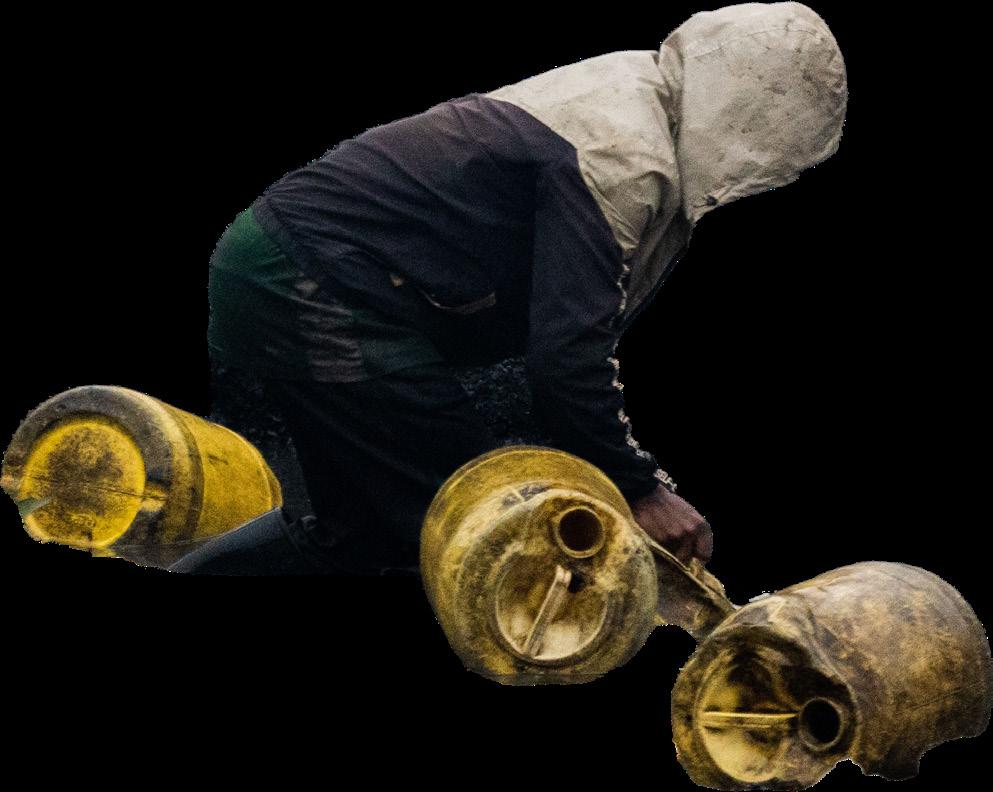
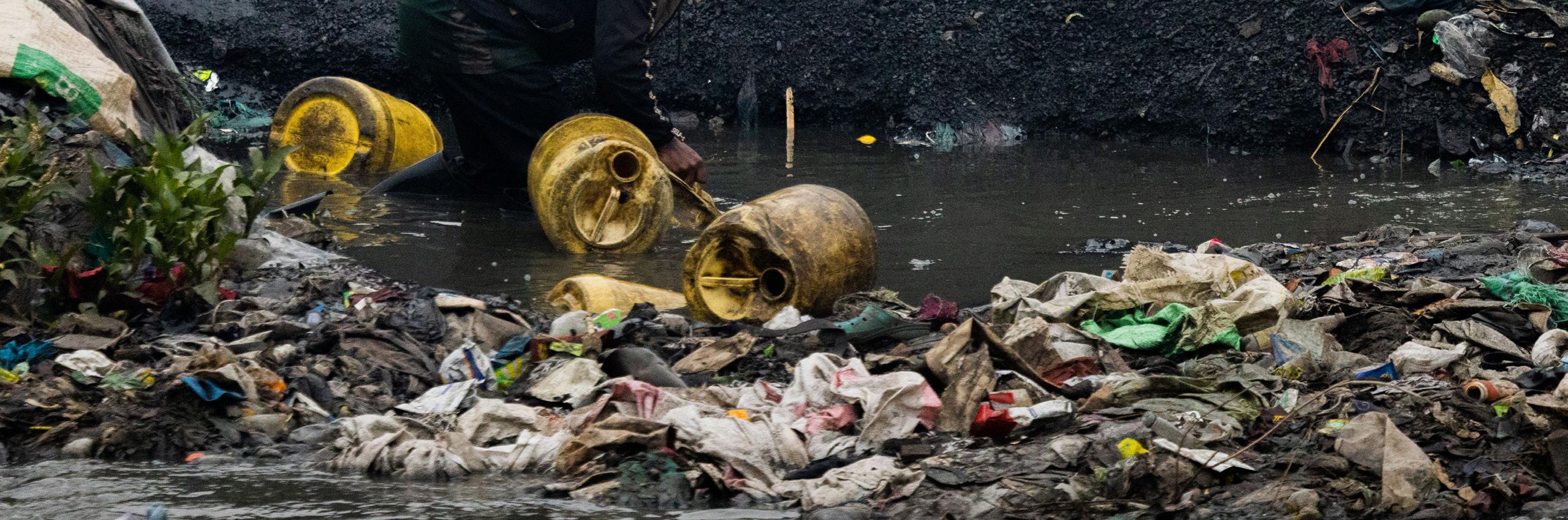
In Kenya’s capital city, Nairobi, just miles from the bustling business district sits one of Africa’s oldest and most densely populated settlements: Mathare Valley.
Here, hundreds of thousands of people live in low-slung wood and tin shacks, without indoor plumbing or reliable access to clean water or electricity. Sidewalks give way to muddy pathways, and jobs are as scarce as hope for better days.
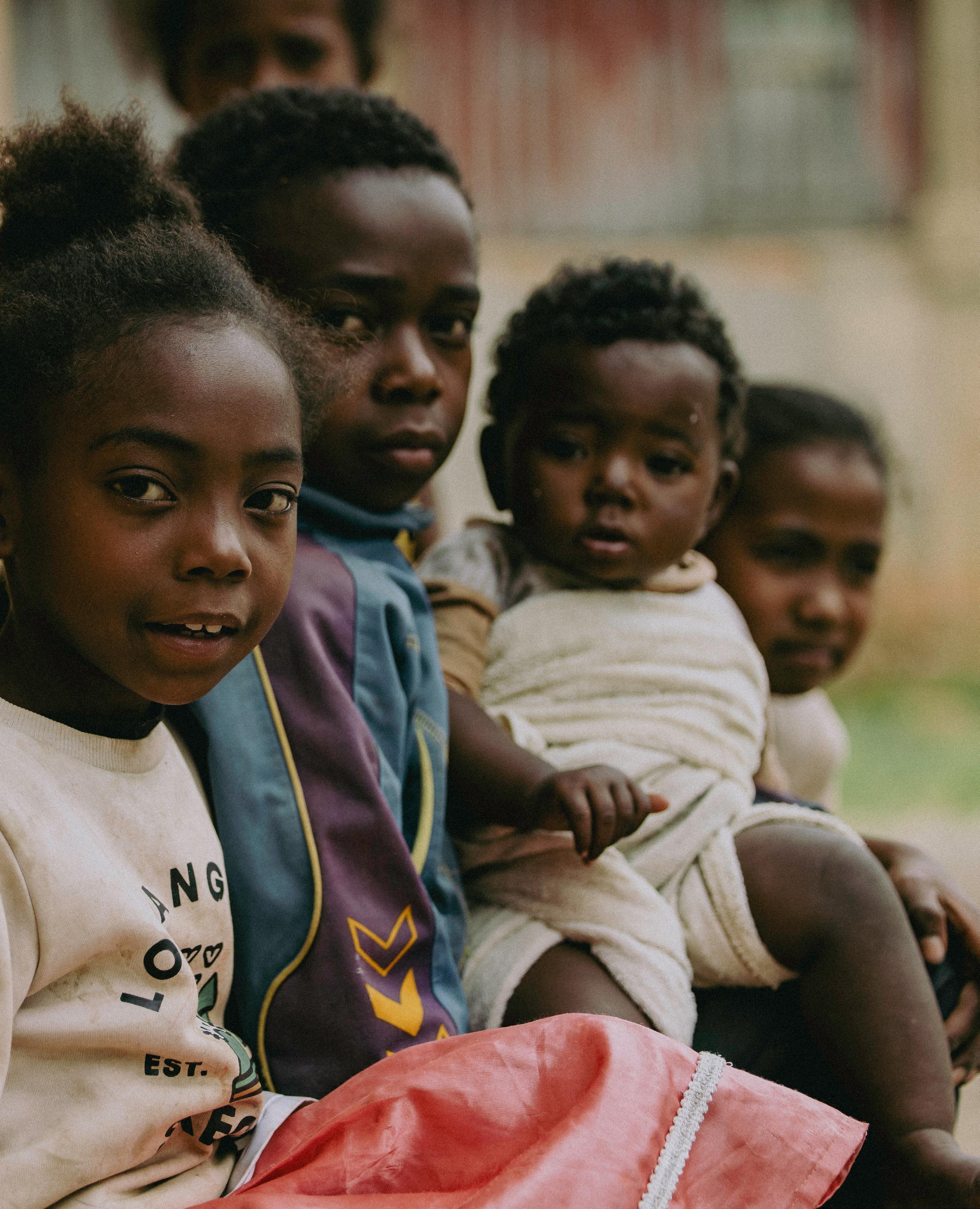
Most families survive through whatever commerce they can find, living on less than a couple of dollars a day. Despite their parents’ best efforts, hunger is a constant companion for many of the nearly 500,000 children who call this place home.
On a recent visit, I witnessed men producing a cheap, yet highly intoxicating drink made from ethanol. In a nearby alley, I found a dozen children sleeping — helped along by toxic glue they sniff to numb the pain of hunger.
This is why we work diligently in communities like these to bring help and hope. Every day, we are on the ground across the continent — in countless communities in nations like Kenya, Tanzania, Madagascar, and others. Our Agriculture, Children’s Feeding, and Women’s and Girls’ Empowerment programs are thriving.
Still, Africa is staring down the barrel of the worst hunger crisis the continent has faced in 50 years. In 2023, we launched an innovative initiative called Africa Waits. It strategically frames everything we do on-site.
Africa Waits’ intensive intervention is designed to scale our life-saving responses farther. We’re seeing similar success around the world — because of friends like you. Friends who give, expecting nothing in return.
We could not be more grateful.
Hal Donaldson President, Convoy of Hope
By Kirk Noonan
In an overcrowded, yet strangely quiet, classroom in a remote village a world away from most every modern convenience, hope echoes like pattering rain on a tin roof.
Tap. Tick. Tick. Tap.
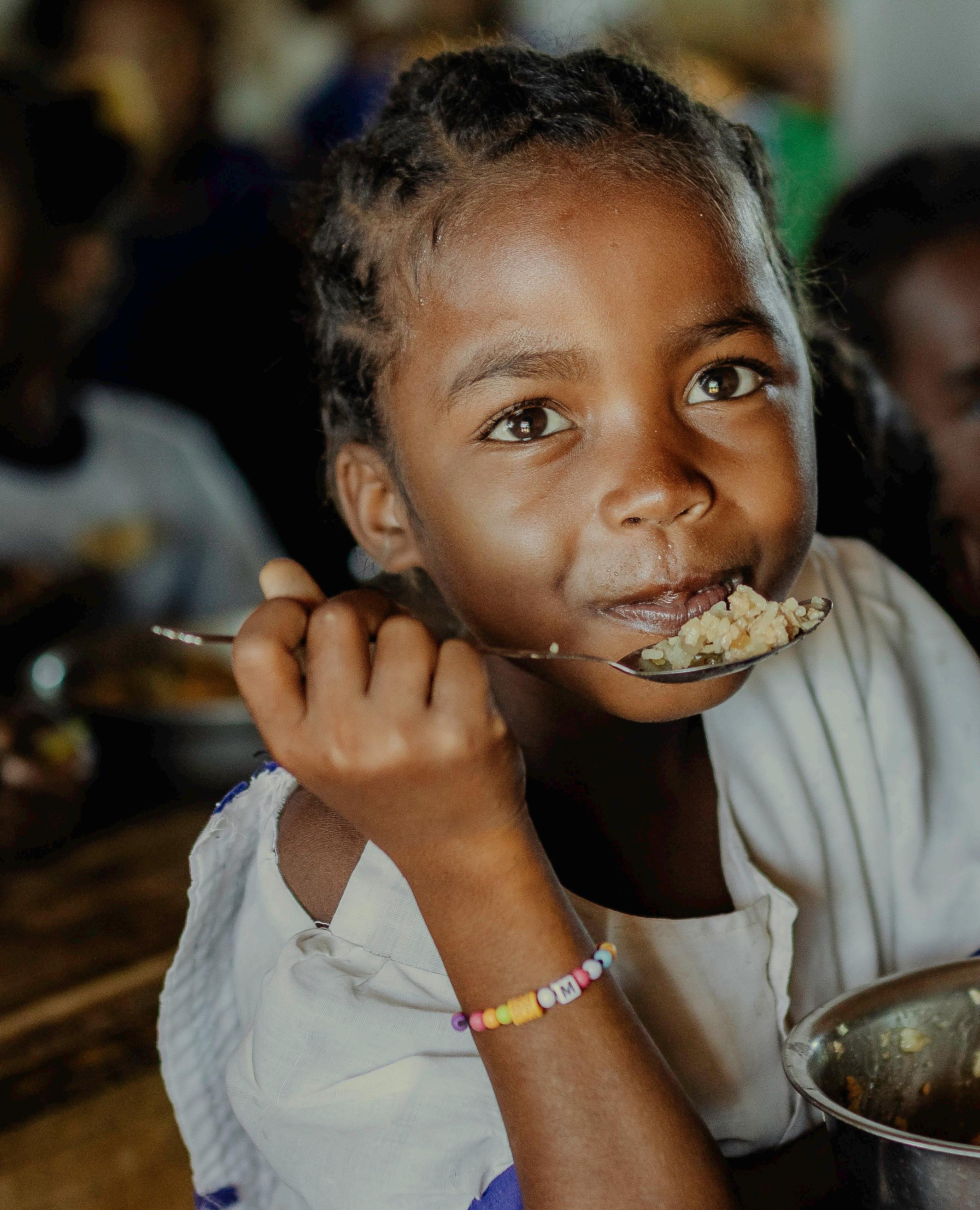
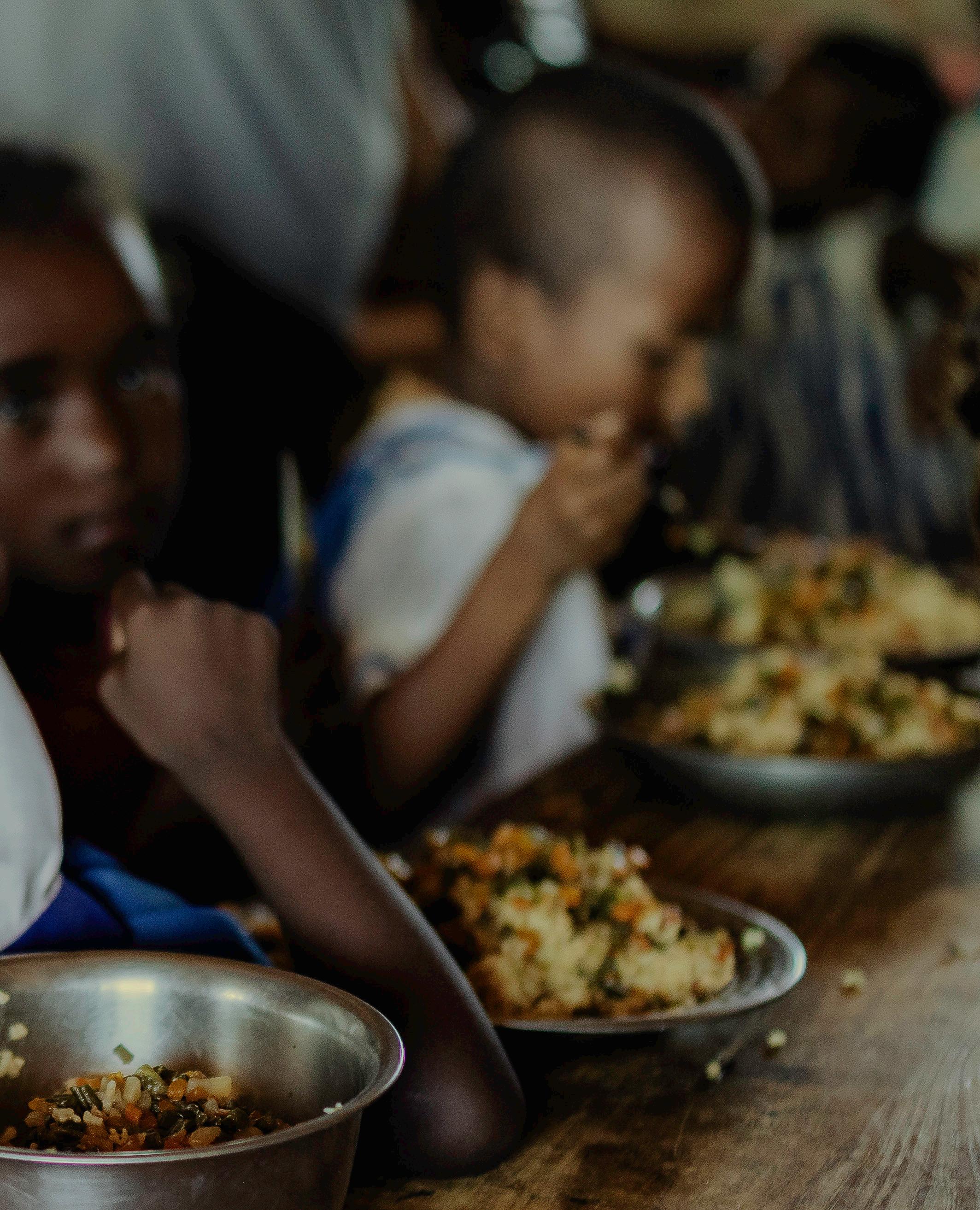
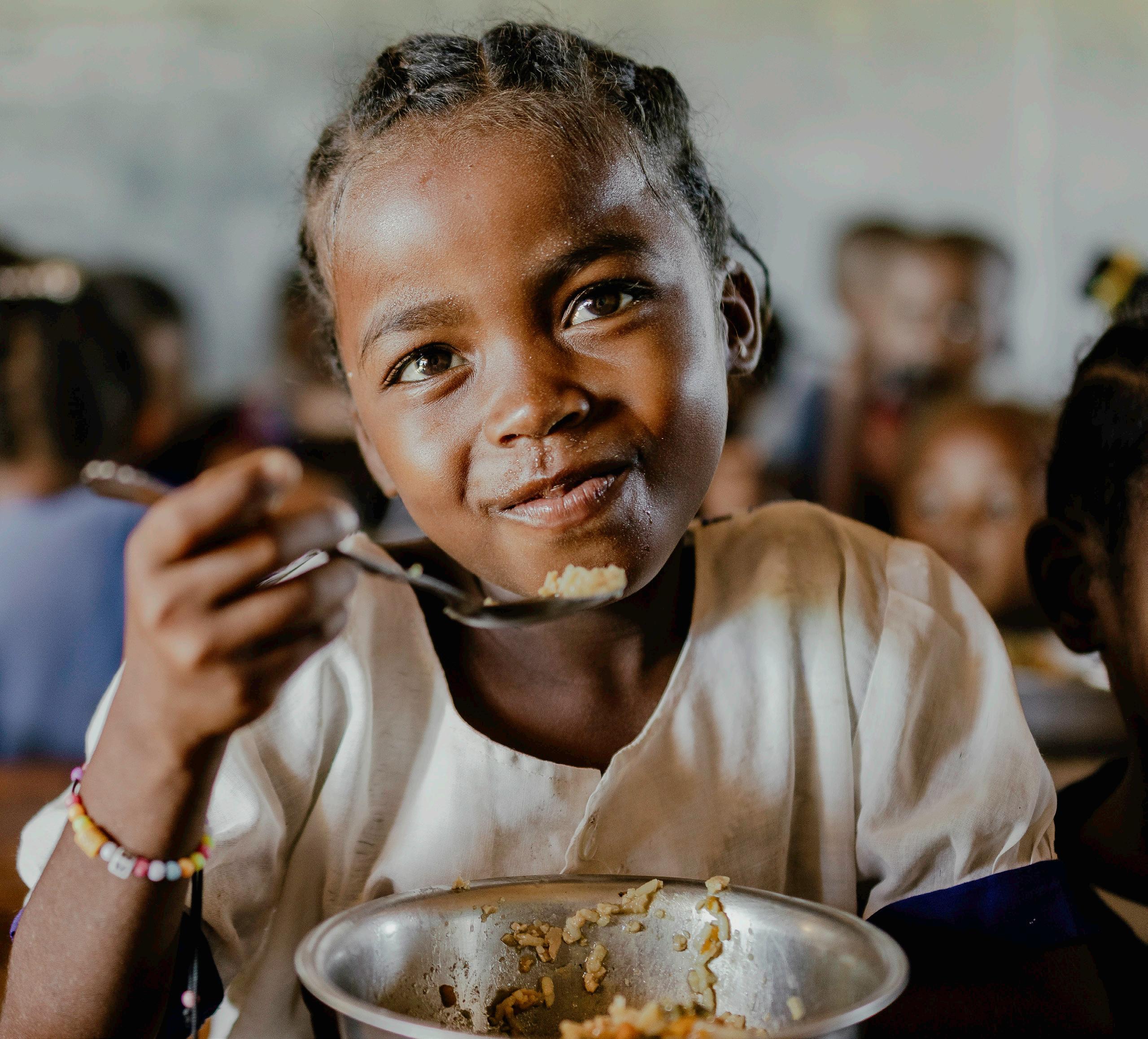
Here, more than 50 first-graders cradle a hardboiled egg in one hand and a spoon in the other. One by one, in a gentle chorus, they crack the coveted appetizer that’s packed with 6 grams of protein. After the eggs are consumed, the children turn their spoons toward overflowing bowls of fortified rice, potatoes, and carrots.
continued on p. 7
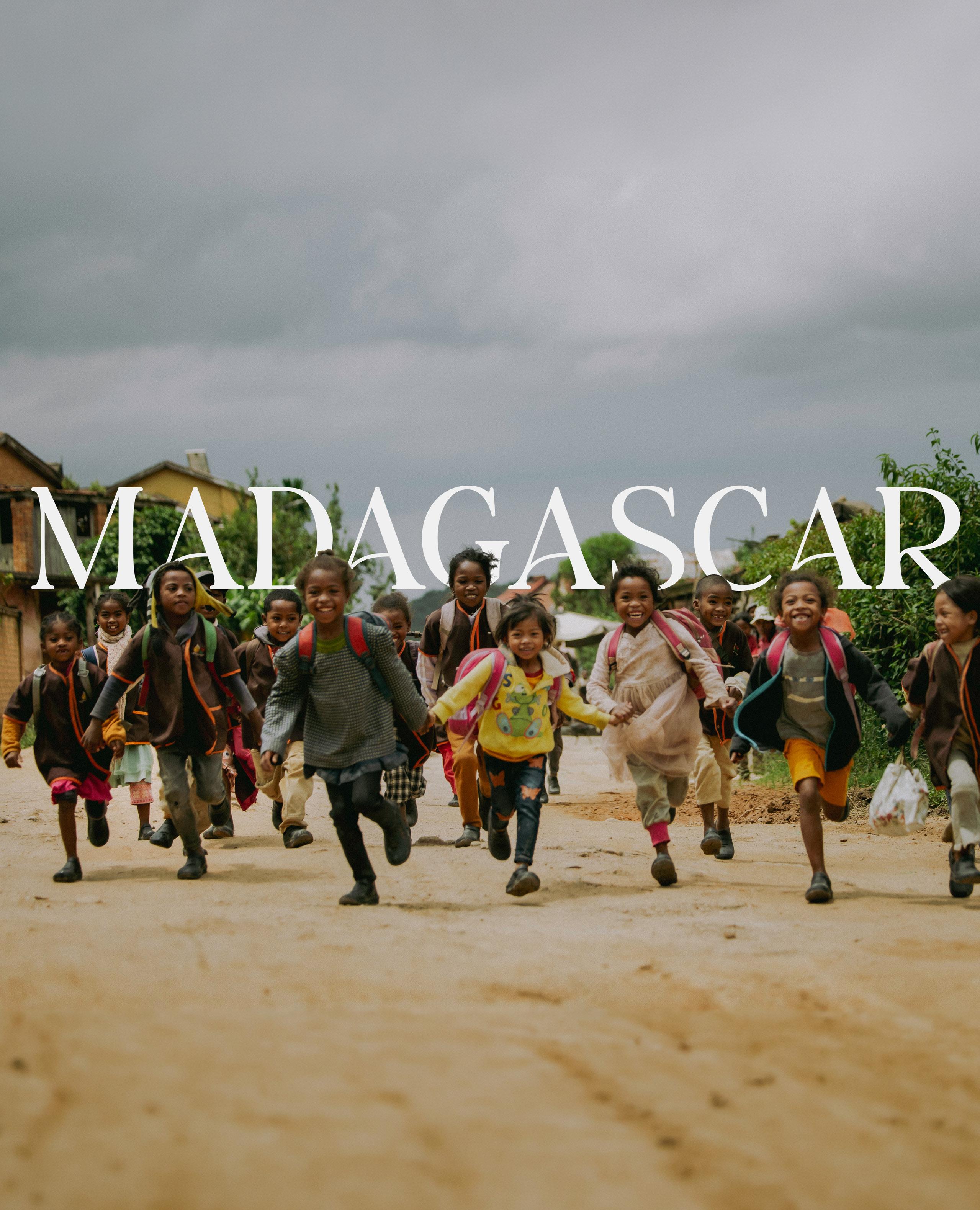
Madagascar
Madagascar
WHERE HOPE REFUSES TO YIELD
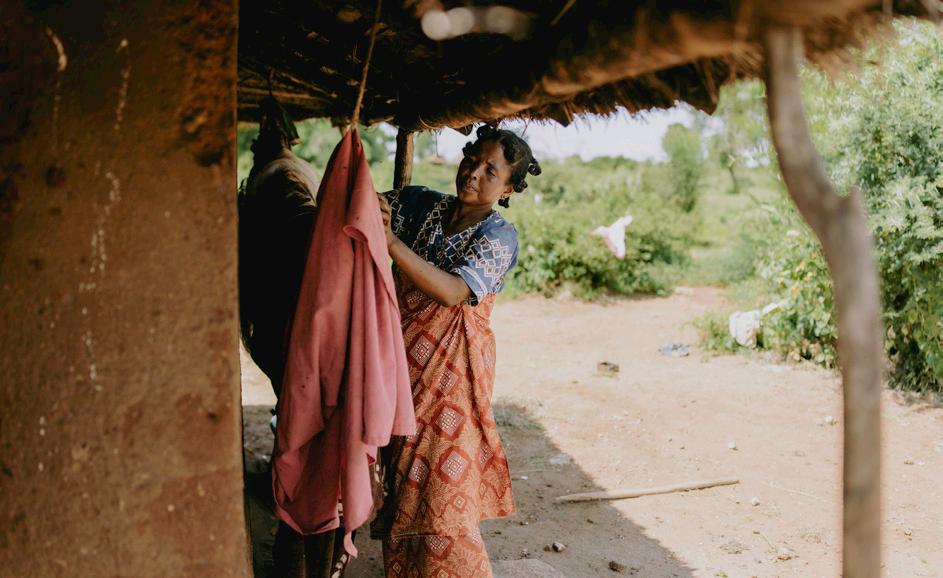
The same gentle ritual takes place in 71 schools throughout Madagascar. Most families here work the land, which gives just enough to survive, but hardly enough to get ahead.
In fact, 70 percent of families in Madagascar live in extreme poverty, and 350,000 children suffer from acute malnourishment — meaning their bodies are dangerously deprived of nutrients in the most critical stages of growth. If untreated, stunting and even death are possible.
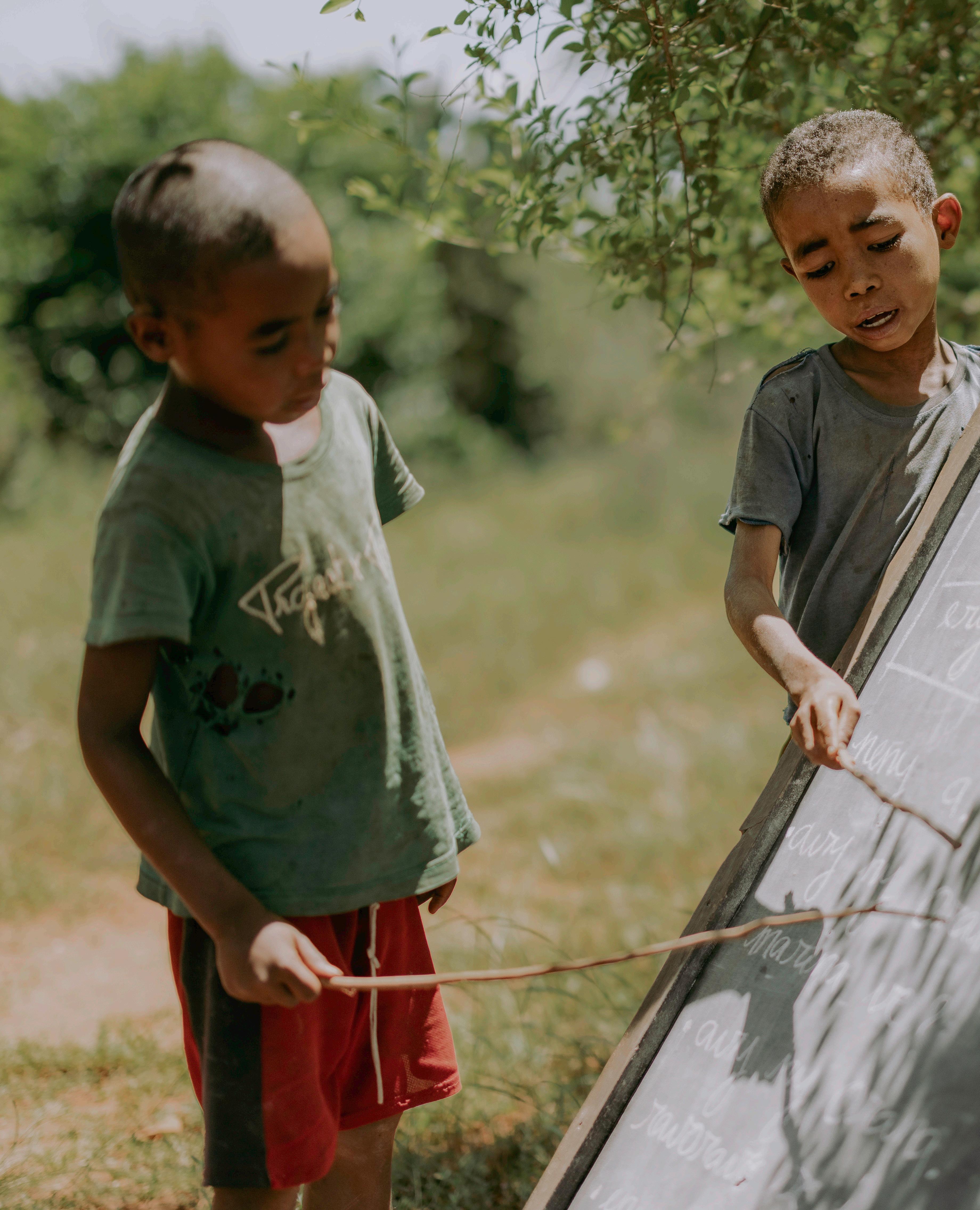
This cruel reality forces parents to ask a difficult question with each rising sun: Send the children to school or to work?
If children go to school, the family’s earning power is drastically diminished. If they work, reading, arithmetic, writing — childhoods, really — go by the wayside. Convoy of Hope is determined to give children their childhoods back.
Today, 10,600 children across the island are fed each school day, and thousands of families are empowered and equipped to transform their communities from the fields up. It’s not easy.
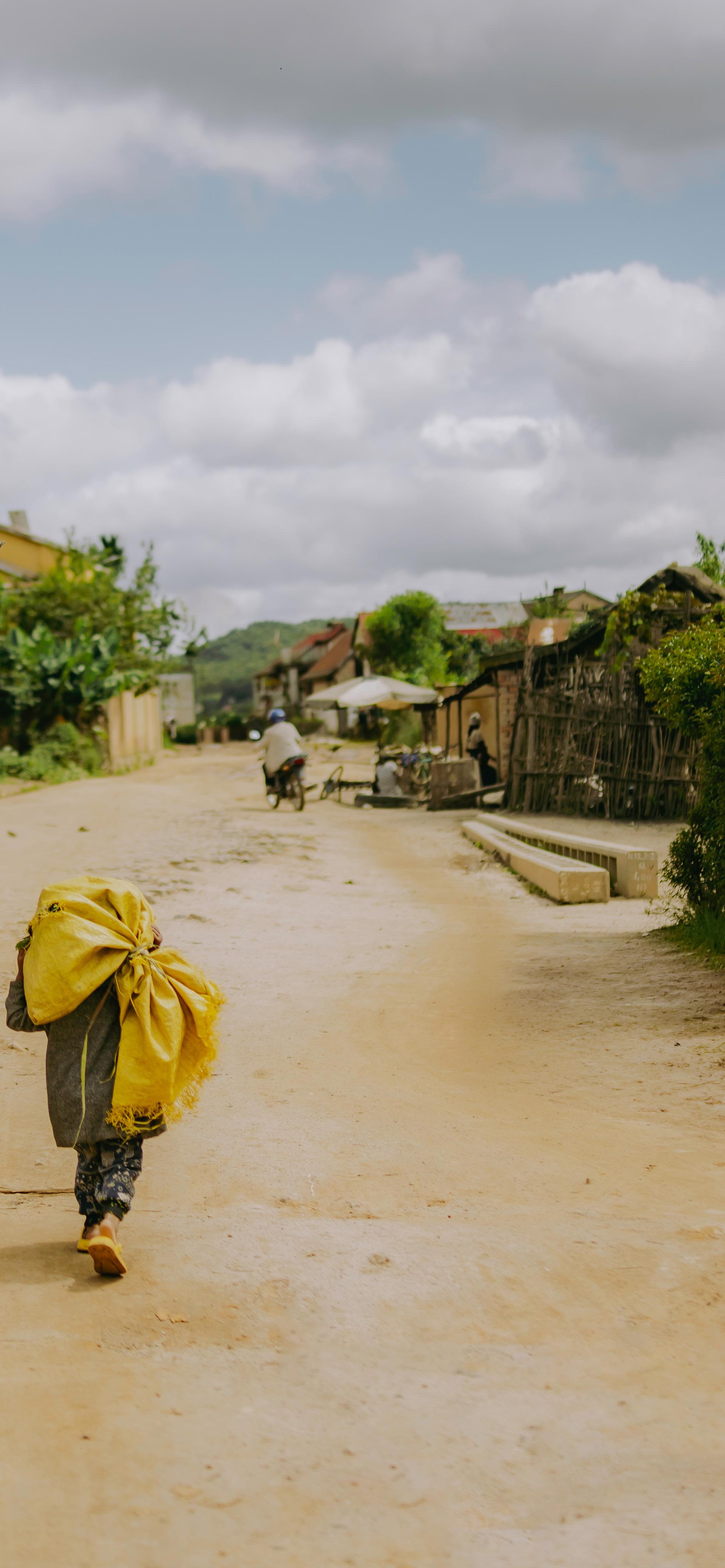
The infrastructure is so poor here that even local tourist companies — who try to coax international travelers to come see the lemurs and baobab trees — issue warnings such as: Avoid Madagascar altogether if you like comfort, predictability, and good roads.
continued on p. 9
OF FAMILIES LIVE IN EXTREME POVERTY 70%
350,000
CHILDREN SUFFER FROM ACUTE MALNOURISHMENT
Alice Rahelimalala, national director of Convoy of Hope in Madagascar, acknowledges the challenges but chooses to be opportunityfocused.
“To help as many people as we do requires us to work in the most remote, and often, most overlooked communities where the poorest of the poor live,” she says.
On this day, she leads a team of volunteers from the U.S. National Football League. A few minutes outside of Antananarivo, the capital, paved roads abruptly turn into dirt tracks filled with a gauntlet of potholes, ruts, and other maladies that could just as easily flatten a tire as they could flip a truck or snap its axle.
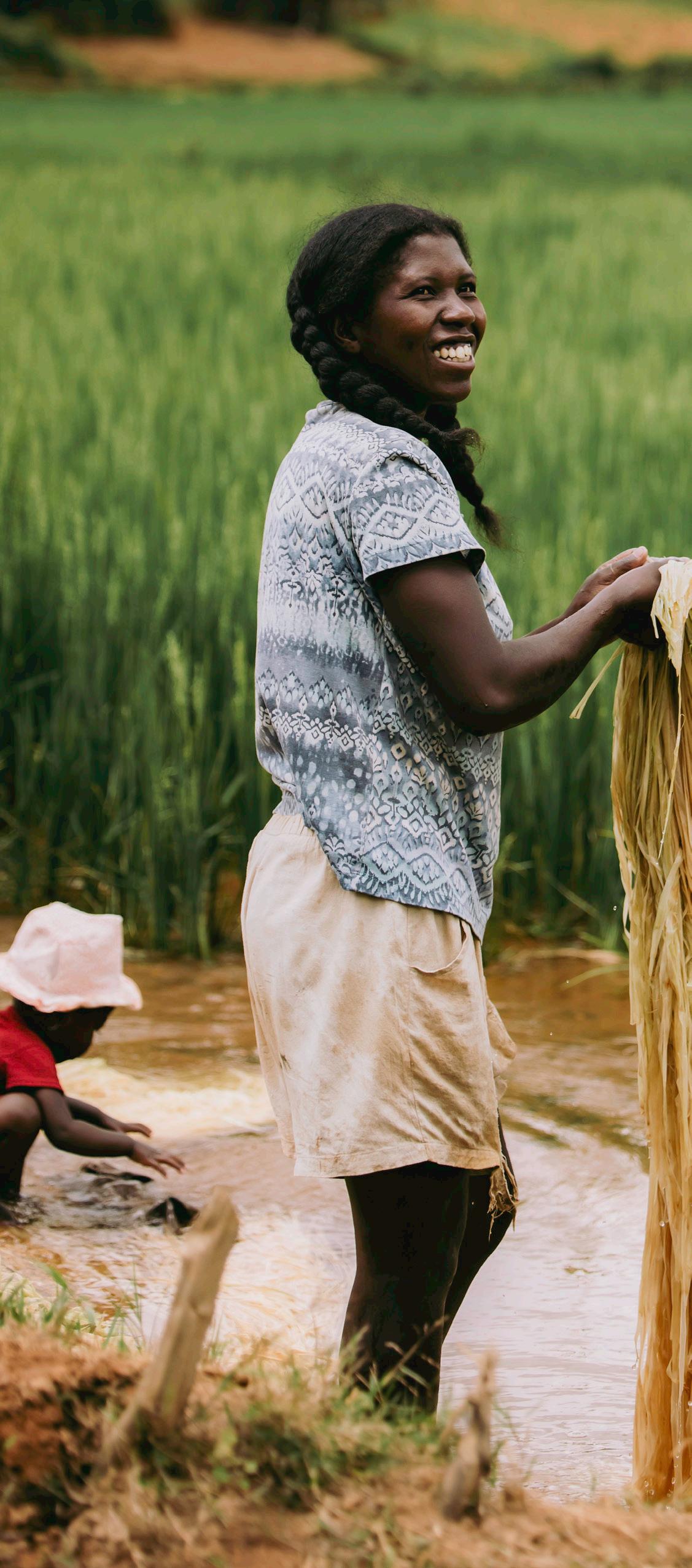
Hours later, the team arrives at a Convoy community garden deep in the mountains. Men and women — all parents of children receiving food through Convoy of Hope — turn rich soil, hoe weeds, tend to plants, and dream big for their families’ futures.
“These gardens feed our children,” says Falimanana, 42, a father of three. “We now have money for other necessities, but more importantly our children see that God loves them. They’re growing independent and are empowered to chase their futures.”
Rahelimalala quickly notes that in schools where continued on p. 10
a livable income for its participants, it provides margin.
Thanks to you, Convoy of
Hope
is bringing help and hope to the Malagasy people.
“This is about networking and learning leadership skills,” says Sarobidy, an ambitious 23-year-old single mom. “We not only get to help ourselves and the children in our community, we get to support families throughout the country.”
The food dried here will be transported by Rahelimalala’s team to the Grand Sud (or deep south) where the climate has wreaked havoc.
Open the aperture wider — to all of Africa — and find nearly as many people living malnourished or hungry as there are people residing in the United States (well over 300 million souls).
Unacceptable.
When a young Malagasy mother is asked what she wants the world to know about her people, she gets serious. “We love God, and we work hard,” she says, “but if all we do is pray — and don’t work hard — we don’t eat!”
Yes, nothing comes easy in Madagascar. But thanks to you, Convoy of Hope is bringing help and hope to the Malagasy people.
That might be an egg in a child’s hand or hours in a 4x4 navigating dangerous terrain. It might also be a seed planted in dry soil or a girl or woman empowered. Or, maybe, it’s just a community inspired to choose hope over despair with each rising sun — day after day — until everyone has hope for the future.
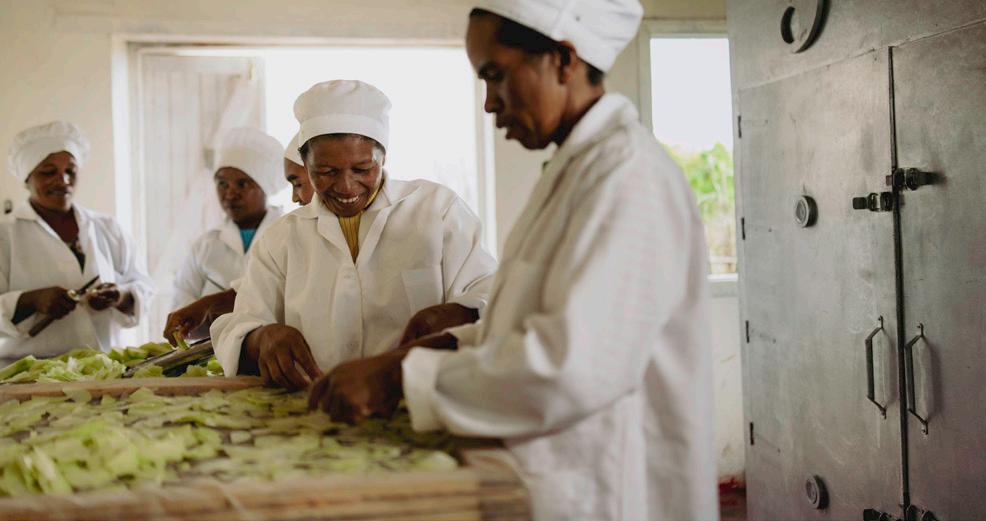
In northern Madagascar (top left), women prepare food for dehydration at an enterprise started with help from Convoy of Hope. The dried food is sent to food-insecure communities in southern Madagascar (above).
Chronic drought, poor soil, scarce water, limited infrastructure, and brutal roads have turned a seasonal hunger problem into years of food insecurity for countless families. It’s to the point, according to some reports, where families have resorted to eating cactus leaves, locusts, and wild roots.
WOMEN’S EMPOWERMENT
When a woman generates an income, it not only benefits her — the entire community profits. Through practical training and encouragement, Convoy equips women to start and successfully operate their own businesses. Convoy encourages women and girls around the world to realize their value and reach their potential. This gives them the opportunity to positively impact the lives of their families and their communities.
AGRICULTURE
Convoy of Hope’s Agriculture program is equipping farmers and families with skills, tools, and seeds to grow life-sustaining crops and increase financial security. Of the meals harvested each year, a portion is used to support Convoy’s Children’s Feeding program. Convoy’s agriculture specialists teach long-term sustainable practices that help break the cycle of poverty and promote communitywide food security.
U.S. PROGRAM
Poverty and hunger have gained a devastating edge in urban neighborhoods and rural communities alike. Through U.S. Program, Convoy resources, empowers, and partners with local leaders and churches through training, mentoring, and coaching. Convoy believes that increased presence and partnership will help strengthen and enrich entire cities, towns, and neighborhoods.
DISASTER SERVICES
Ukrainian war refugees, East African communities on the edge of famine, and U.S. hurricane survivors all have received critical help through Convoy of Hope’s Disaster Services team. Consistently among the first to respond to crises, Convoy’s highly trained team members and volunteers help hurting people get back on their feet. Convoy is committed to helping as much as possible for as long as possible in the most challenging environments.
CHILDREN’S FEEDING
Approximately half of all deaths of children under age 5 can be linked to undernutrition. A nutritious meal coupled with clean drinking water opens doors to better health and consistent physical and mental development. Convoy of Hope provides regular, nutritious meals in schools around the world. Now, more than 677,000 children are discovering renewed hope through this program.
Today’s generation wants to change our world. Convoy of Hope invests in students through partnerships with colleges and universities, internships, and compassion experiences.
By Dr. Heath Adamson
AFRICA WAITS . . . WE DO NOT
IN ONE OF THE POOREST NATIONS IN WEST AFRICA,
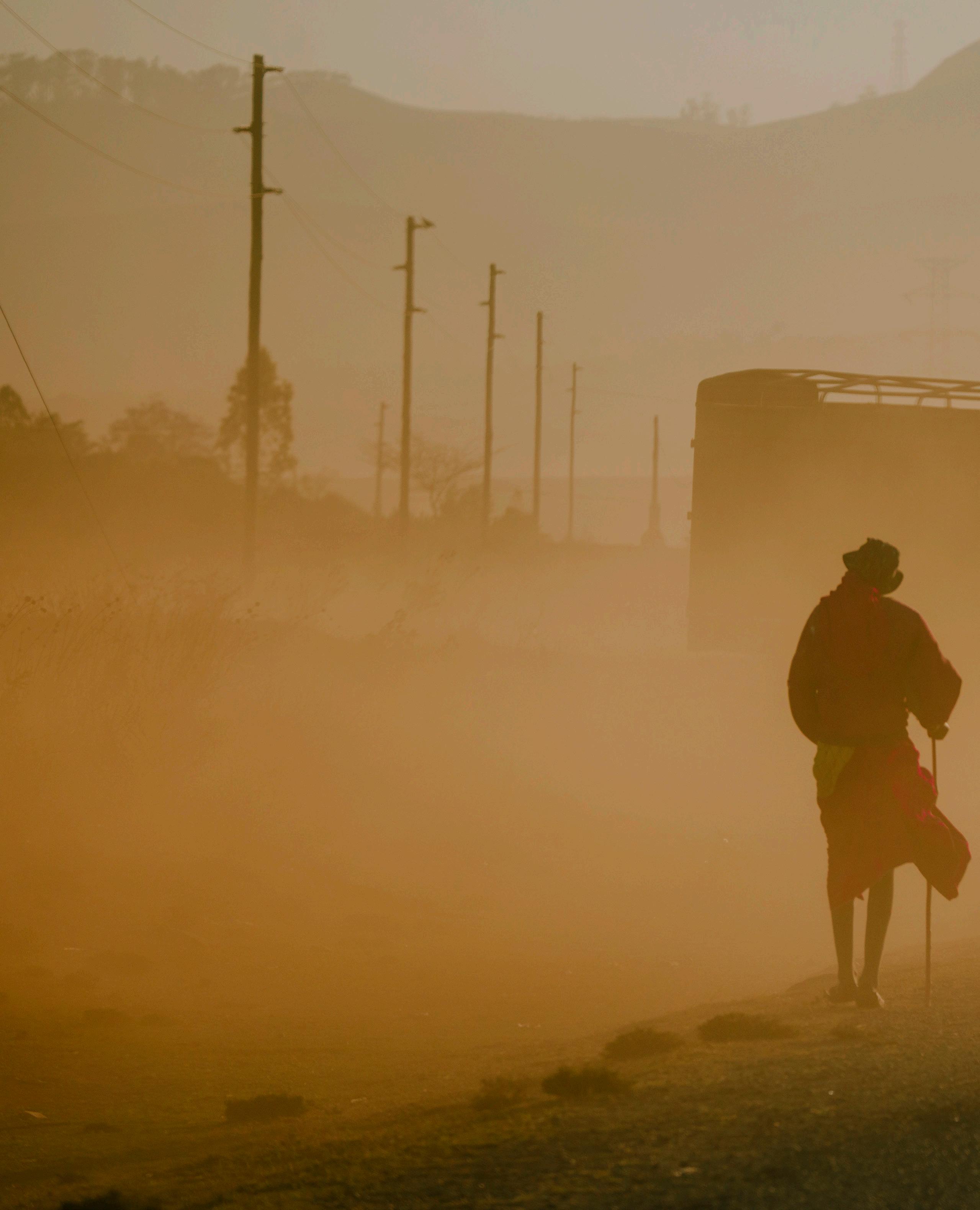
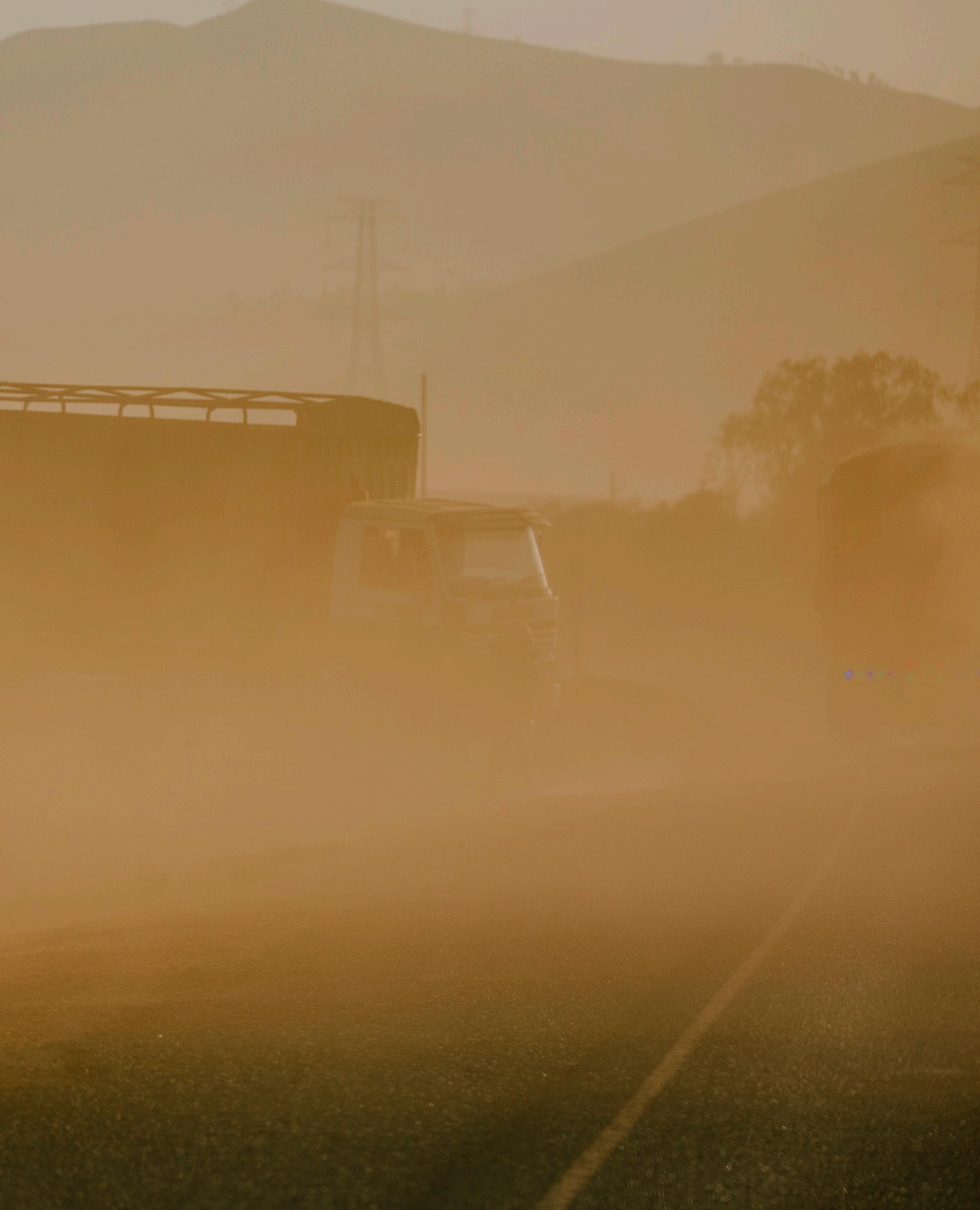
suffering spreads like the wind-whipped walls of dust (known as haboobs) that regularly blast the country and its residents.
continued on p. 18
Here haboobs and suffering go hand in hand. Both are menaces — but where one is mostly a dirty inconvenience, the latter brings malnourishment, malaria, poverty, uncertainty, and hopelessness to good people.
But not on this day in mid-October — celebration day — an annual respite that brings a sense of peace (albeit elusive) and a promise that everyone will get two meals a day, at least for a few months.
By February, the harvest is long-forgotten, storehouses are empty, uncertainty replaces optimism, and hunger pangs return. Hope often fades as malnourishment begins to gnaw its way through the populace. The people, however, remain as resilient as possible.
Ninety days later, malnourished children cry out between an unmistakable — and haunting — wheezing common in those who are approaching a point of no return. It’s as if each inhale is a pain point and each exhale a final surrender.
Beyond this corner of Africa, tonight, 800 million people around the world will go to bed hungry. Tomorrow morning they’ll wake up with one goal — find something to eat. In Africa alone the number of people who are malnourished almost equals the total population of the United States.
The reasons hunger and malnourishment prevail are as numerous as they are complex: geopolitical fractures, destabilized supply chains, drought, and extremism. Today’s hunger crisis is unprecedented and growing. That’s simply unacceptable and the reason why Convoy of Hope is not waiting. We are determined to be feeding 1 million children each school day by 2030.
In doing so, we’ll take on four primary root causes of poverty and suffering: food insecurity, lack of education, vulnerability, and inequality.
Each cause plays off the others. In many instances, food insecurity keeps children from getting an education. When that happens, vulnerable children are taxed with helping support the family by working or begging; or even worse, making sacrifices no child should have to make.
The world has the resources to confront poverty and end hunger and malnutrition. But humanity’s actions are incongruent with its beliefs. The short attention span of human compassion is real. But together we can be agents of good.
Yes, Africa waits. But we shouldn’t. Here are just a couple reasons why:
In Africa alone the number of people who are malnourished almost equals the total population of the United States.
I’ll never forget the mother who gave birth to twins, but because of acute malnutrition, her body could only produce enough milk for one child. She carried one child on her chest and the other on her back — until she buried him.
Gender inequality is also a main cause of and effect of poverty. Convoy strives to ensure that menstruation is not a barrier to health, education, dignity, or access to food for girls.
One: Salome graduated from our Women’s Empowerment program, started a small business and then another — both flourished. She went on to help six other women do the same.
Two: After training 350 farmers in our Agriculture program, they produced 543 tons of maize and beans then donated 53 tons to our Children’s Feeding initiative.
There are countless other outcomes across the continent that point to hope — and stand out as resounding reasons to move forward with purpose, without hesitation.
In Africa we have identified 535 communities in need of our services. With your help, we will reach those communities with help and hope that will defeat hunger and malnutrition.
Africa waits … we do not!
WEST AFRICA
About half of the communities planned for program inclusion are in West Africa in sensitive regions.
75COMMUNITIES
COMMUNITIES
TANZANIA
KENYA
JOPLIN TORNADO
15 YEARS LATER
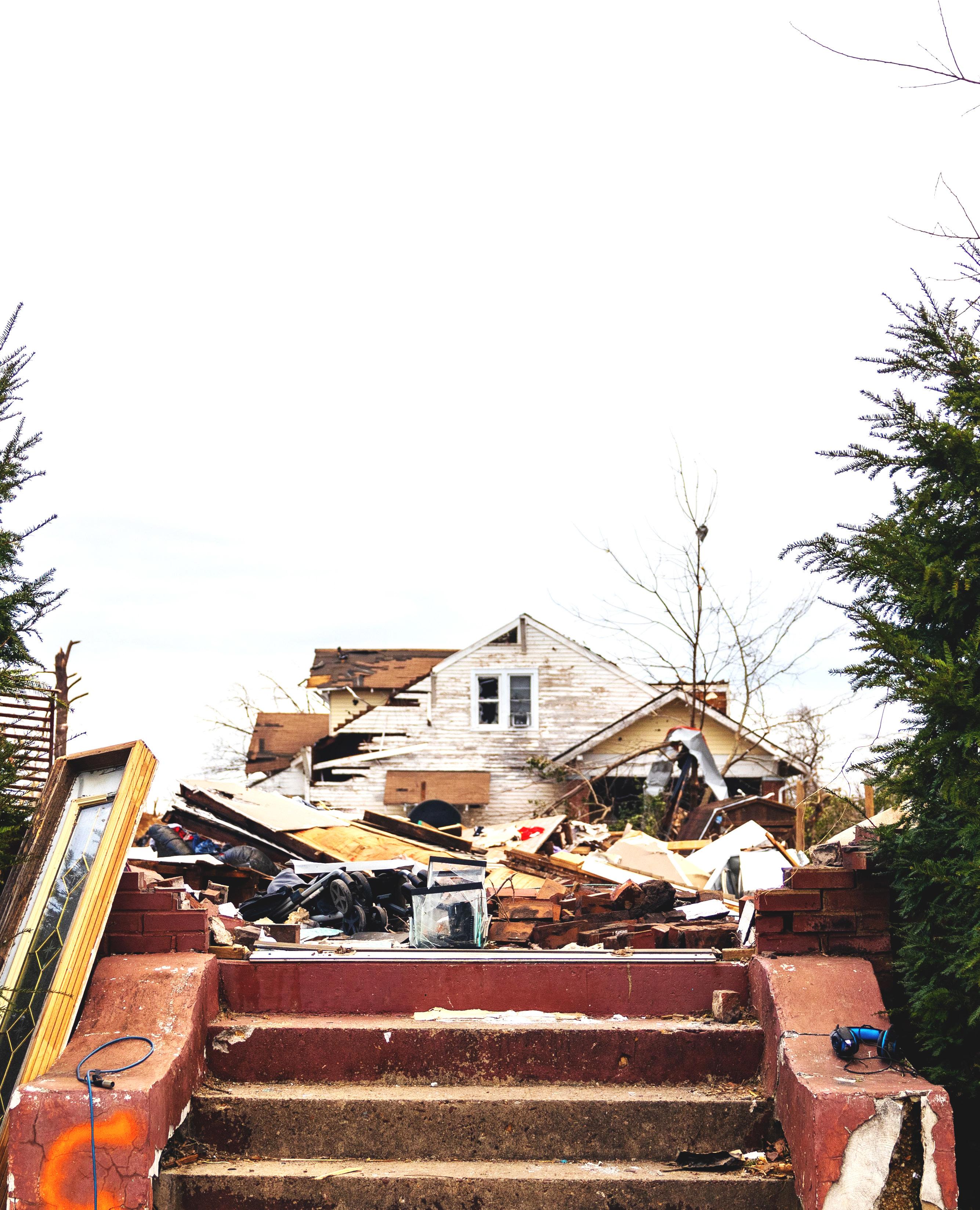
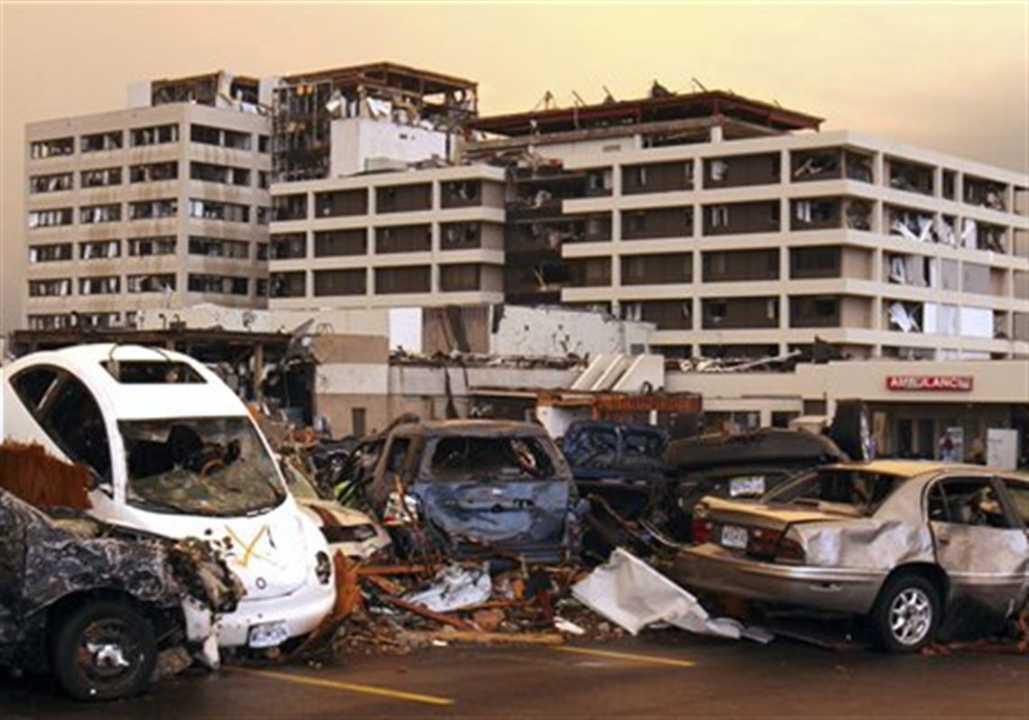
According to the National Weather Service, 2025 was the deadliest year of tornadoes in Missouri since 2011, with 16 fatalities. Their benchmark — the EF5 tornado that tore through Joplin, Missouri, on May 22, 2011, killing more than 160 people, injuring some 1,150 others, and destroying thousands of homes.
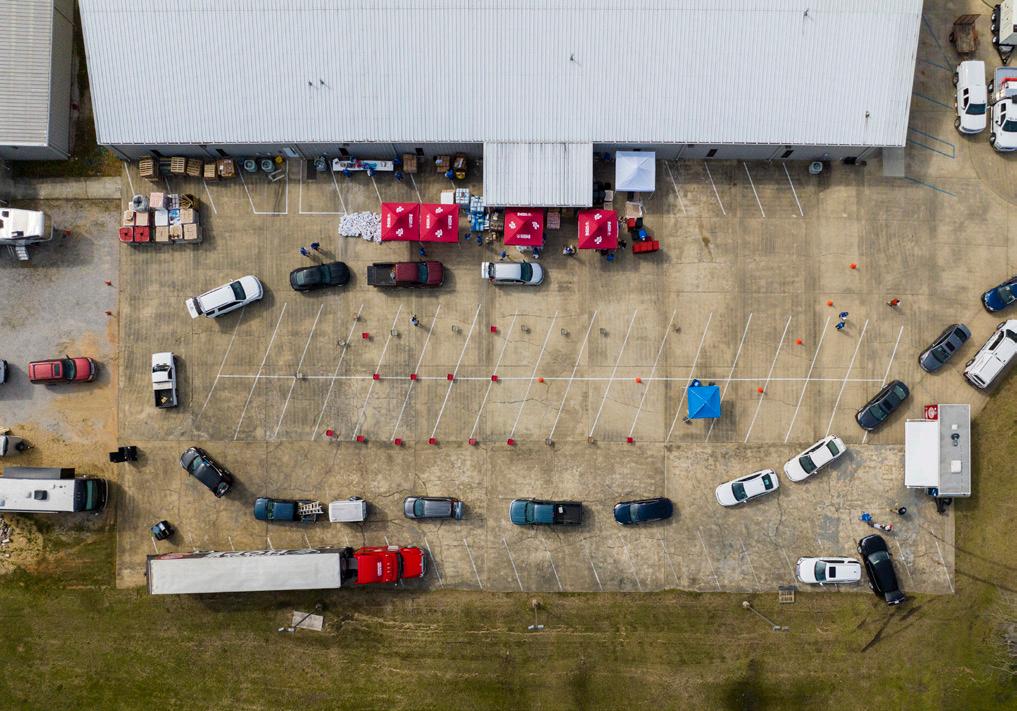
Convoy of Hope mobilized its teams at its headquarters in Springfield, Missouri, an hour from Joplin. Teams and dozens of tractor-trailers loaded with food, water, and emergency supplies were dispatched. Two years later teams were still on the ground serving, and 12 houses had been built.
“It was an honor to stand alongside the survivors, volunteers, local businesses and churches, and emergency responders who all sacrificed and gave to help rebuild their community,” says Convoy President Hal Donaldson.
CONVOY BRINGS RELIEF TO OAHU FLOODING SURVIVORS
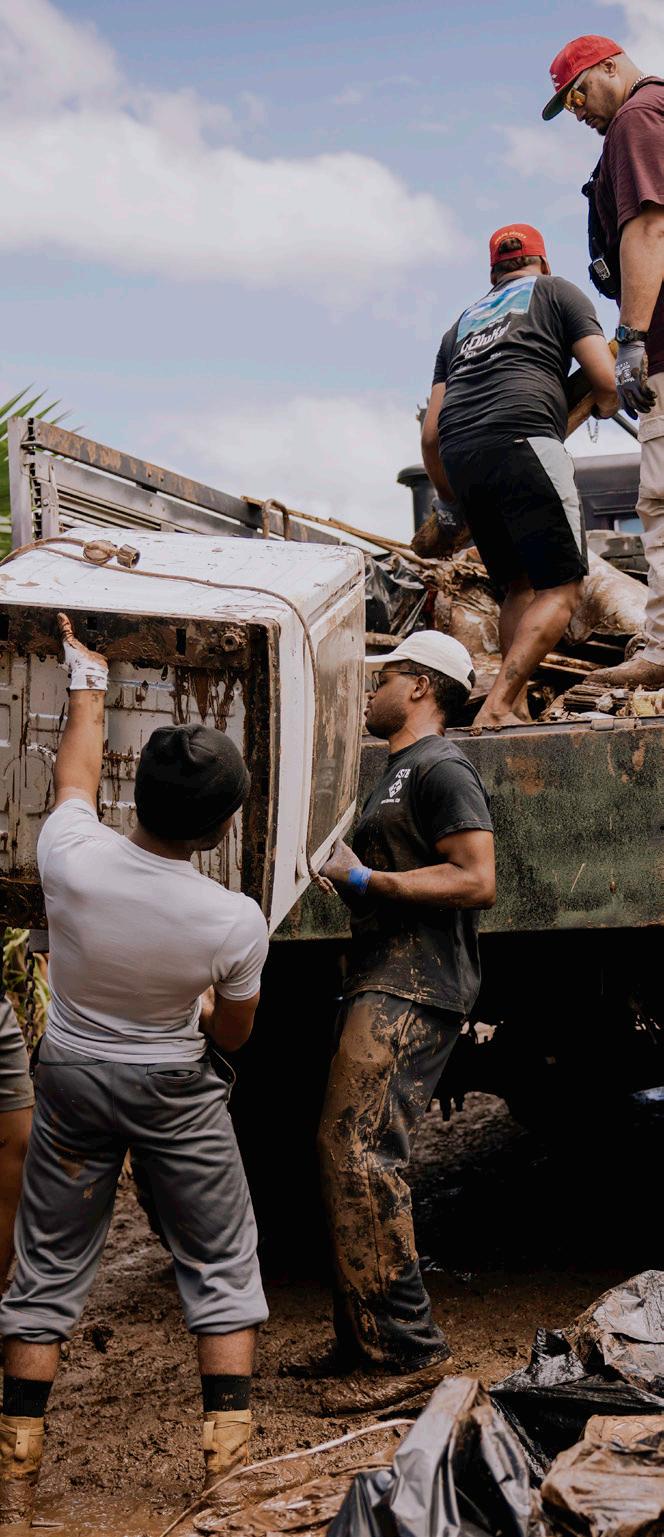
What began as heavy rainfall on March 17 in Oahu, Hawaii, escalated into the worst flooding the state has seen in the past two decades. On March 20, official evacuation orders were given for some 5,500 residents in the affected areas as water levels continued to rise.
The flooding impacted roads, airports, and a hospital — and also destroyed homes and schools. Rescue efforts saved over 230 individuals, including 72 children and adults who were airlifted from a spring break youth camp.
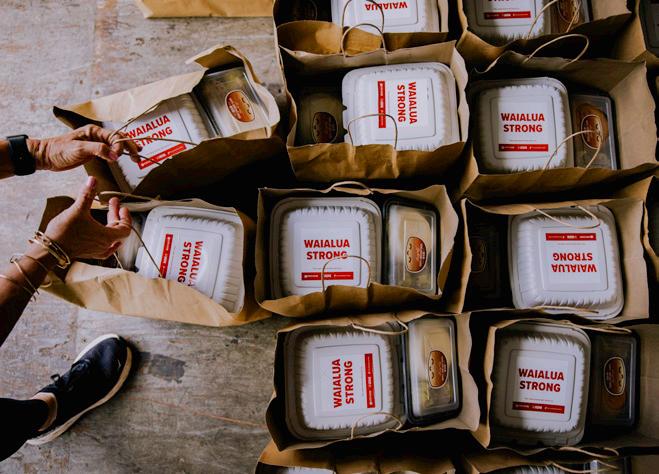
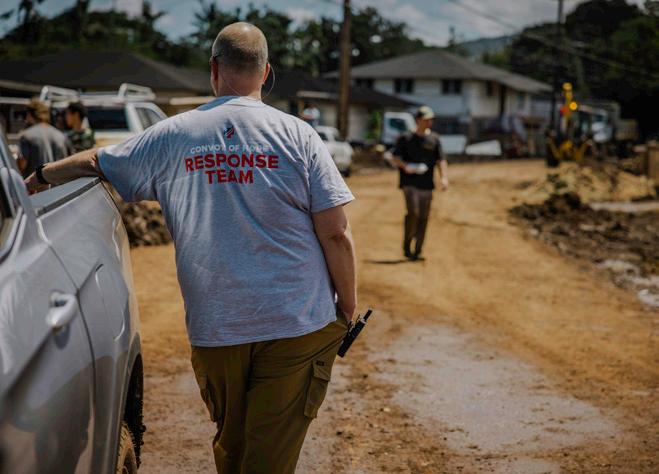
With the help of 185 local volunteers, Convoy of Hope provided more than 2,200 hot meals as well as cleanup supplies, drinking water, and other resources in seven communities. Convoy’s ability to respond in Hawaii continues to accelerate thanks to its Regional Distribution Center West in Sacramento, California.
J.M. SMUCKER CO. RECEIVES 2025 GLOBAL IMPACT REWARD
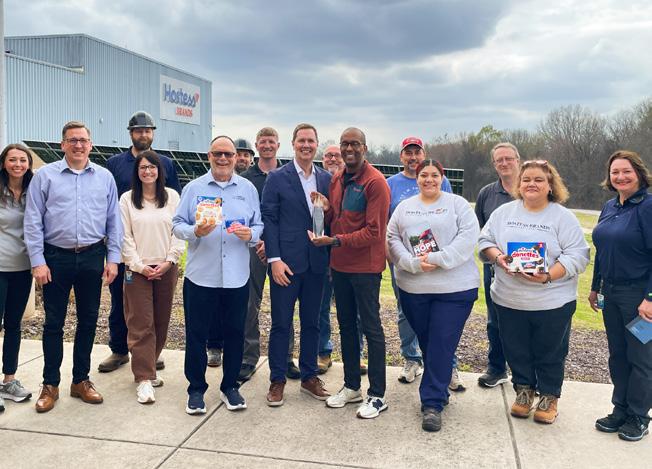
Convoy of Hope honored The J.M. Smucker Co. with the 2025 Global Impact Award for their decade-long partnership and support.
“In 2025 alone, the company (which includes Hostess) donated hundreds of semi-loads of products to our work,” says Erick Meier, Convoy senior vice president of Supply Chain. “They have a true desire to help meet the needs of the hurting. We’re honored to partner with them.”
LAUREN DAIGLE HEADLINES
CONVOY OF HOPE’S
INTERNATIONAL WOMEN’S
DAY CELEBRATION
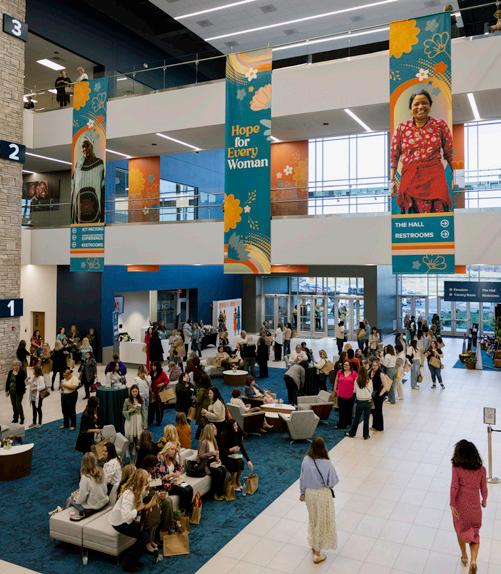
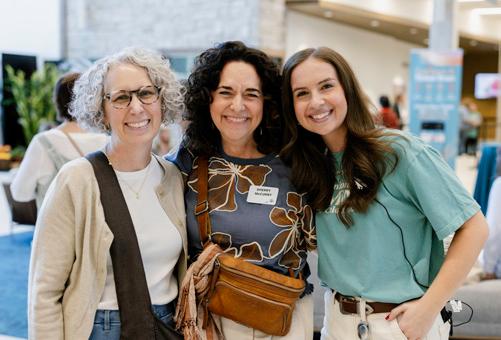
More than 1,500 attendees gathered on March 12 at Convoy of Hope’s Global Headquarters & Training Center in Springfield, Missouri, to celebrate International Women’s Day.
The sold-out event focused on the challenges faced by women and girls around the world, including gender inequality, hunger, poverty, and lack of opportunities.
Attendees learned how Convoy’s Women’s Empowerment program addresses those
challenges through one of the most powerful forces in a community — the women themselves.
Grammy award-winning vocalist Lauren Daigle helped lead the discussion and also performed.
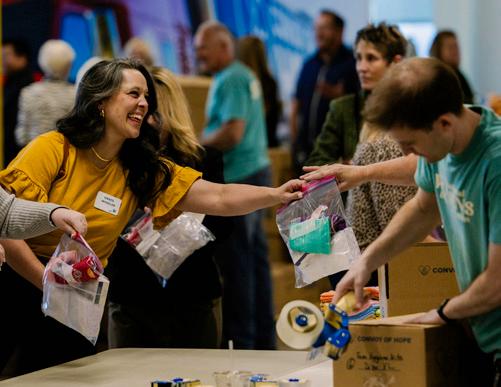
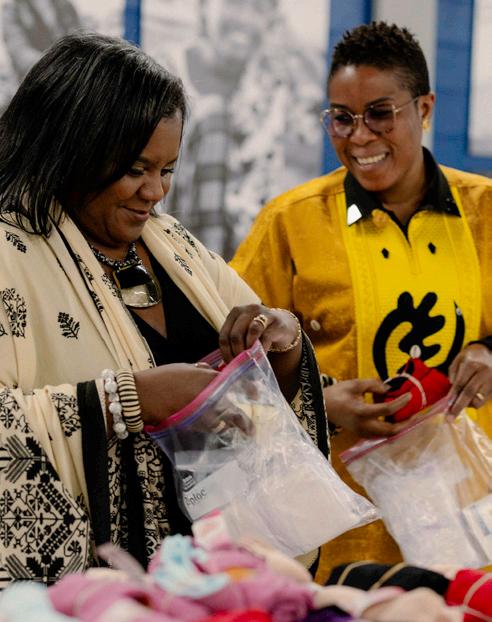
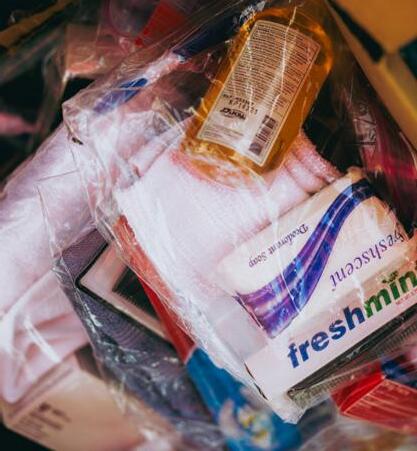
Attendees packed 8,700 feminine hygiene kits and experienced an immersive walk-through exhibit highlighting the struggles and triumphs of women and girls in Convoy’s programs.
Convoy teams from across the globe also celebrated International Women’s Day, including in Australia, Moldova, Slovakia, and Spain.
SERVING U.S. COMMUNITIES
A FACEBOOK PERSPECTIVE
While launching compassion projects around the world, Convoy of Hope also keeps in focus the needs of communities across the United States. Join Convoy’s Facebook page to get more updates like these.
We have been working in communities like Asheville, North Carolina, since Hurricane Helene first made landfall.
Over a year later, we’re still supporting those who were impacted, helping them get one step closer to normalcy. To date, we have distributed over 5 million pounds of resources and served hundreds of thousands of survivors, meeting tangible needs and giving them hope for the future!
#hurricane #ashevillehurricane #hurricanehelene
Convoy of Hope recently partnered with YWAM , Thess Bar, and other key partners to serve people in San Francisco’s Tenderloin district — an area where many are facing homelessness and poverty — to provide groceries, connect them with local resources, and restore dignity in the face of hardship.
“It was a true celebration of compassion,” said Thess Bar founder Jones Chan.
#compassion #community
Hope travels farther when communities work together. Through local partners in Alaska, Convoy of Hope is helping deliver essential items to Native Alaskan villages where resources can be limited. These U.S. Program efforts reflect a commitment to serving neighbors with dignity — no matter how remote the location.
#Alaska #communityevents
To learn more about our latest responses, visit Learn more here:
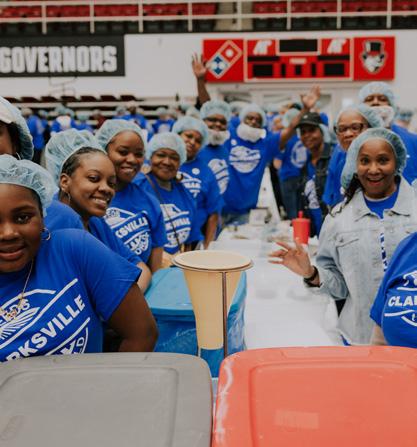
“We’ve never seen this many people show up to help!” says Pastor Mike Burnette of LifePoint Church.
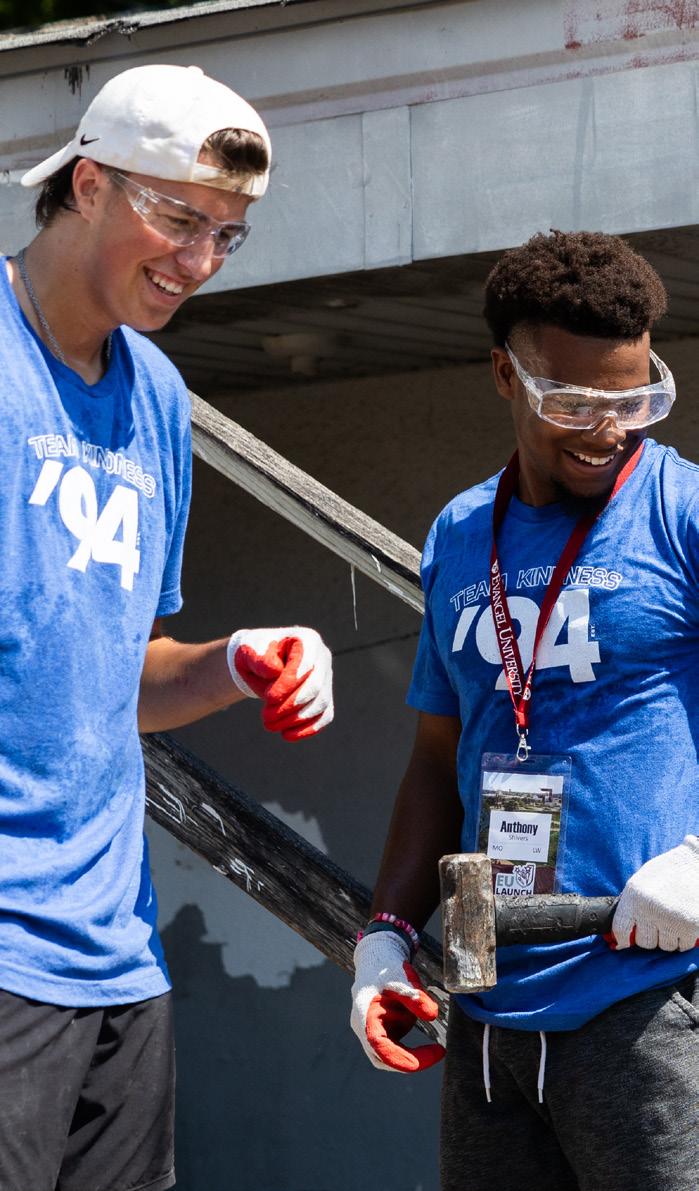
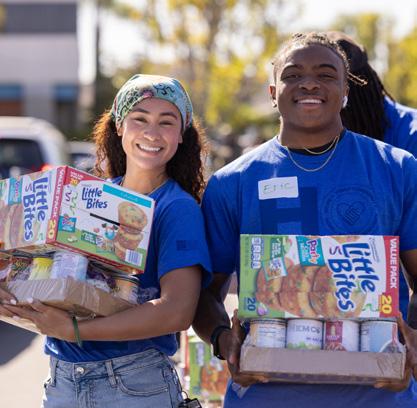
When compassion meets action, there’s no limit to what generosity can accomplish. Recently, more than 3,000 volunteers came together in Clarksville, Tennessee, to help pack over 600,000 meals. These meals will reach families across the U.S. and around the world — bringing hope, fighting hunger, and restoring dignity to those who need a helping hand.
A HOPE A Table of
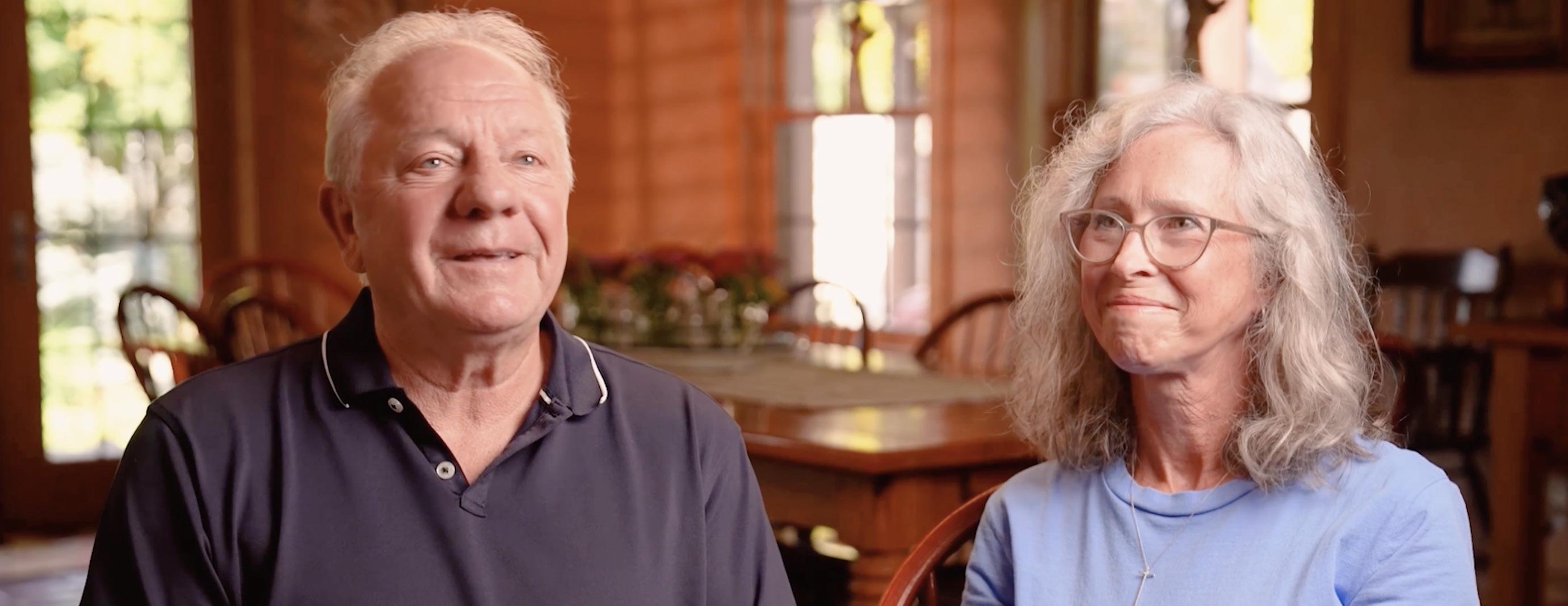
s a young couple, Rick and Cheryl Barsness wanted to establish new traditions of spending time with their five kids around the dinner table — a unifying anchor for years to come. But their hearts were too big for just their table at home.
Rick and Cheryl saw an opportunity to help other families make priceless memories around the dinner table, so they began Incredible Food & Fun, where families could gather for food, games, and a good time.
“The most exciting thing was to see these parents and grandparents getting involved,” Cheryl says. “We’re seeing three generations coming and having a good time with their kids.”
Though they’ve extended their table to thousands of families at many Incredible Food & Fun locations over the past 25 years, Rick and Cheryl saw room to do even more. They partnered with Convoy of Hope, now feeding
over 677,000 children around the world every school day.
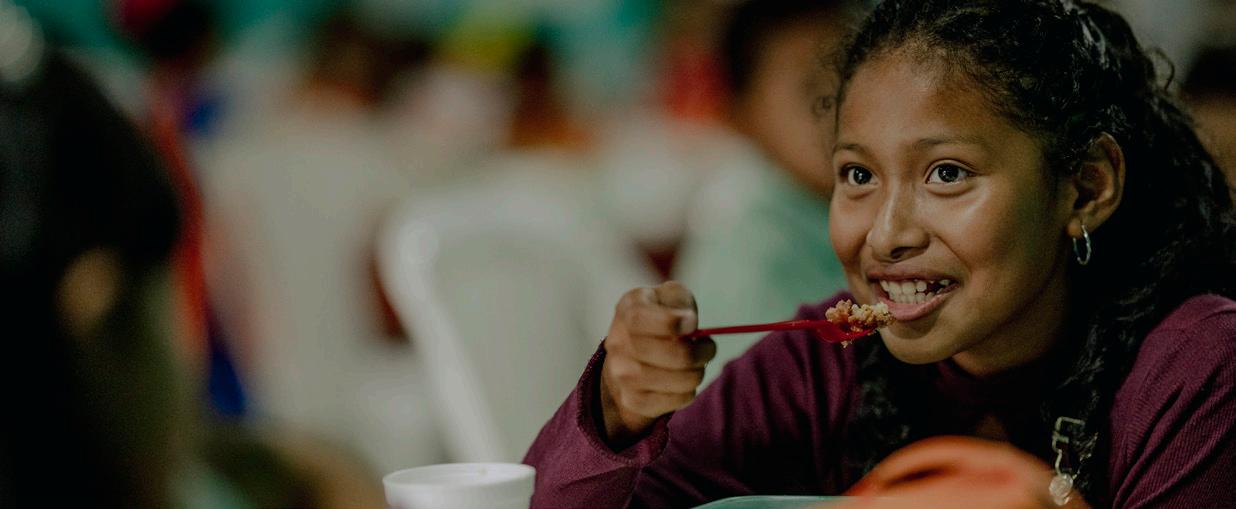
Rick and Cheryl are setting the table for hundreds of thousands of children in Convoy’s school feeding programs. They feel their ultimate vision as a family is realized as Convoy forges ahead, inviting children to a table of hope.
For the Barsness family, talking about communities in Convoy’s programs as family is not just a metaphor. When they put together their legal trust, Rick says, “We came up with a plan where Convoy became like the sixth child.” All their assets will be divided among their five children and Convoy, so Convoy’s 1/6 will perpetuate their generosity.
Now, each new community empowered through Convoy programs is an extension of the Barsness family. A new tradition for a family wanting to forge lasting bonds has become a legacy of hope for many years to come.