Our rich history of producing the best tamper-evident security packaging solutions solidifies us as a true innovator that is willing to create new products to solve our client’s challenges. It is our goal to always stay one step ahead and present new ideas to keep our customers' cash and assets secure both now and in the future.
Through close relationships with our partners and customers, we intimately understand the industry's business challenges and develop purpose-built solutions to solve them.
Table of Contents
CONTROLTEK’s
View of Sustainability
CONTROLTEK’s Corporate Responsibility
We believe it is our duty to maintain strong corporate governance and ethical business practices, make a positive impact on our employees, engage in the communities where we operate and minimize our environmental impact.
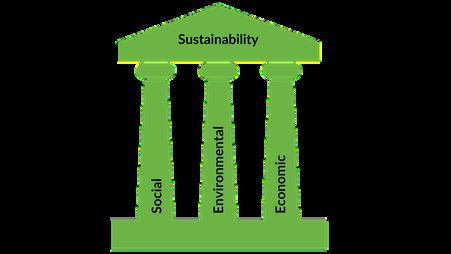
CONTROLTEK has organized our corporate responsibility efforts around three pillars:
Collaboration and dedication drives our success for lasting change both within and outside our organization.
Through our business practices, we create value and reduce risk for our stakeholders and communities.
We take ownership and are intentional about finding ways to minimize our environmental impact.
How Consumer Behavior is Embracing Sustainability
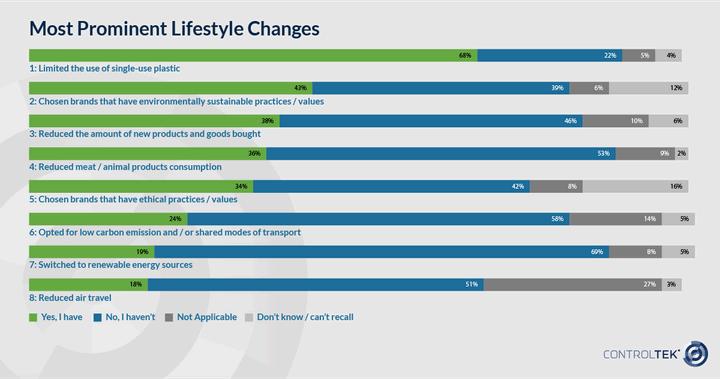
Consumer trends indicate that conscientious shoppers are embracing various methods to shop and live in a more sustainable manner.
Various consumer segments prioritize sustainability when making purchases. However, convenience and cost remain significant factors.
The graph shows the top lifestyle changes for sustainability.
Understanding the Carbon Footprint
The carbon footprint is the total amount of greenhouse gases, particularly carbon dioxide, that are emitted directly or indirectly by human activities. This includes emissions from burning fossil fuels for energy, transportation, and industrial processes, as well as deforestation and various other activities.
The carbon footprint is typically measured in metric tons of CO2 equivalents. Understanding and reducing one's carbon footprint is crucial for mitigating climate change and promoting environmental sustainability.
What are Scope 1, 2, and 3
Greenhouse Gas Emissions?
Scope 1
Scope 2
Scope 3
Direct GHG emissions from sources owned or controlled by a company, including:
Fuels utilized for building heating and process operations
On-site energy generation Company vehicles and equipment
Indirect GHG emissions from a company’s purchase of generated energy, including:
Purchased electricity
Purchased stream
Purchased heating & cooling
Indirect GHG emissions from sources that a company does not own, but relate to company operations, including:
Supplier emissions
Procured goods
Business air travel
Waste disposal
Measuring and managing Scope 3 emissions presents greater challenges than Scope 1 and Scope 2 emissions. For many companies, Scope 3 emissions represent the greatest contribution to their emissions profiles and can be significantly larger than their Scope 1 and Scope 2 emissions.
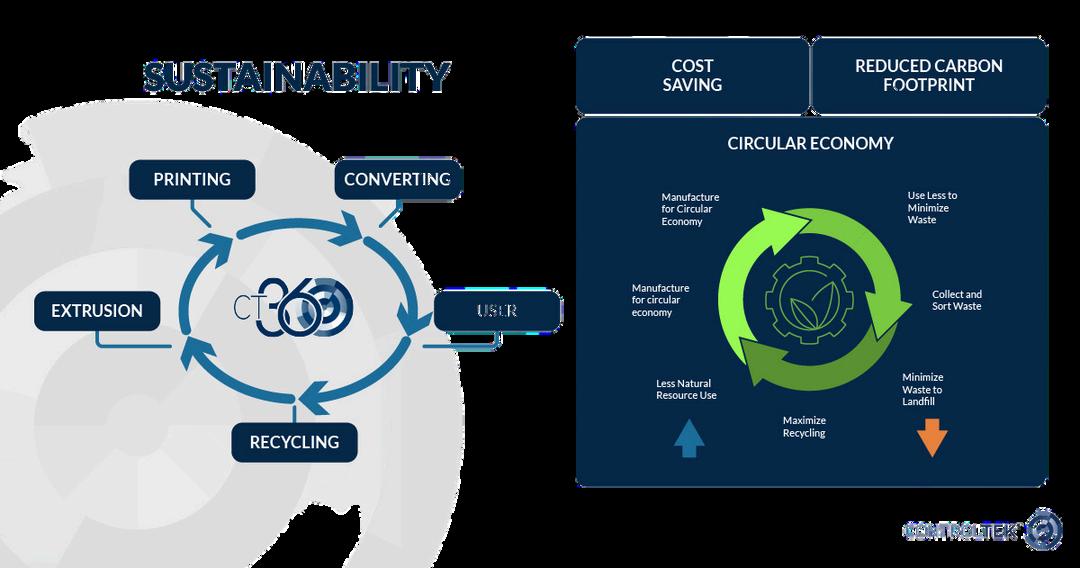
Importance of a Circular Economy
A linear economy follows a 'take, make, dispose' model, where resources are extracted, turned into products, and eventually discarded as waste. This approach leads to resource depletion and environmental degradation.
In contrast, a circular economy aims to minimize waste and make the most of resources by emphasizing reuse, repair, refurbishment, and recycling. Products are designed for durability, and materials are kept in use for as long as possible, creating a closed-loop system that benefits both the economy and the environment. Adopting a circular economy fosters sustainable growth and reduces the ecological footprint.
Plastic Material:
What’s the
Difference?
When choosing plastic matreials, it's essential to understand their differences and environmental impacts.
Virgin materials are made from raw resources that have never been used before, offering high quality but at a significant environmental cost due to the energy and resources required for their production.
In contrast, post-industrial recycled materials come from manufacturing waste, such as scrap or trimmings, that is reprocessed to create new products, helping to reduce industrial waste but still requiring some new raw materials
Post-consumer recycled materials are derived from items that consumers have used and discarded, like plastic bags or paper, which are then collected, processed, and turned into new products.
This type of recycling plays a crucial role in reducing landfill waste and conserving natural resources, making it a more sustainable option that supports the circular economy. By understanding these differences, businesses can make more informed decisions to align their material choices with environmental goals.
Post-Consumer Recycled Plastic
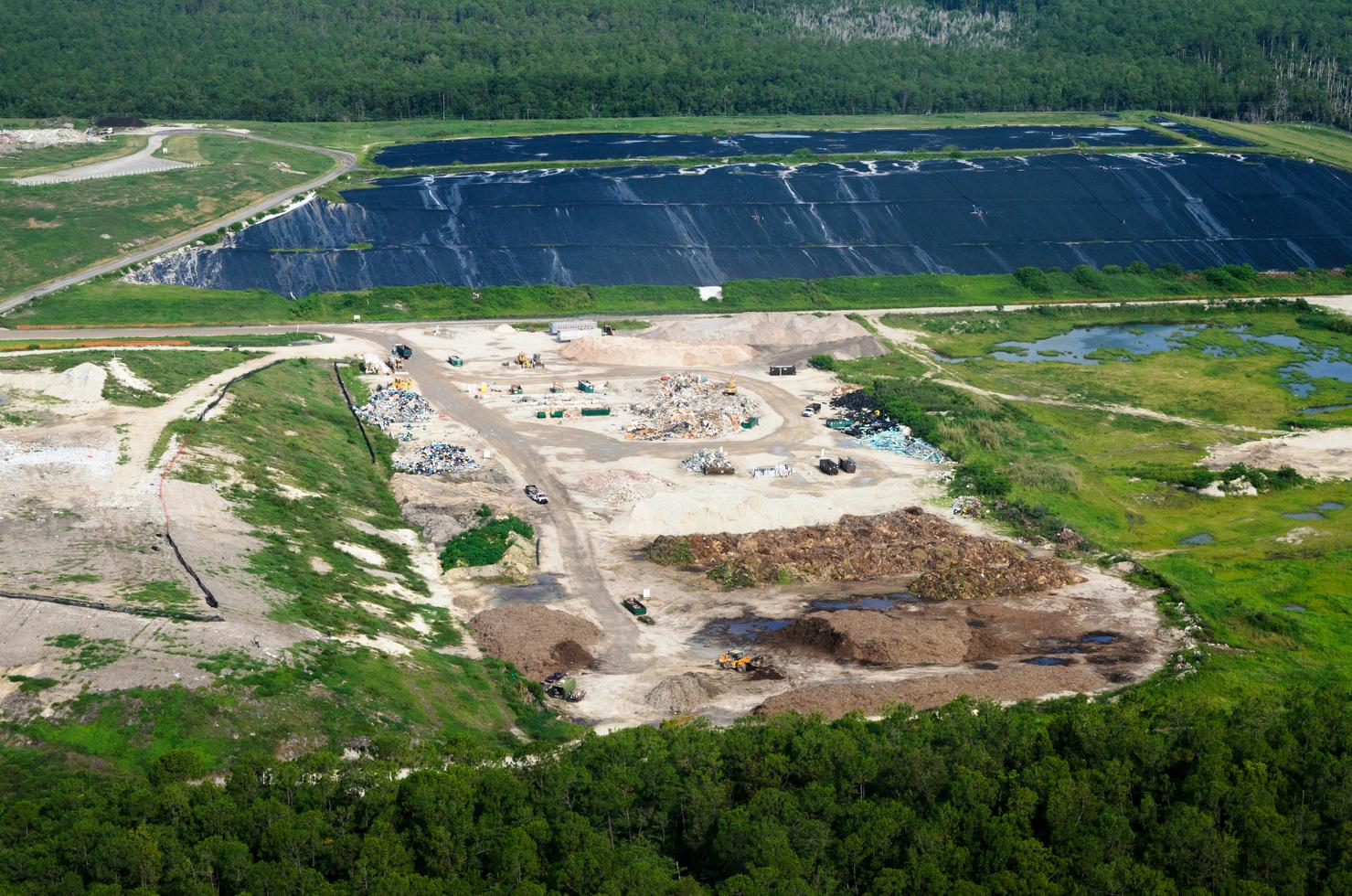
Since post-consumer recycled materials come from items that have already been used and discarded by consumers, using post-consumer recycled materials is an effective way to reduce waste in landfills and lower the demand for virgin resources.
It’s a key component in the circular economy, promoting sustainability and reducing the environmental impact of production and consumption.
How Post-Consumer Recycled Plastic Helps
PCR Impact on Carbon
Footprint
Carbon Footprint is the total amount of greenhouse gases including carbon dioxide and methane that our actions generate.
Post-consumer recycled plastic is reducing Co2 emissions by 70% compared to virgin materials.
Life-cycle analysis and comparison of use of virgin and recycled paper and plastic products.
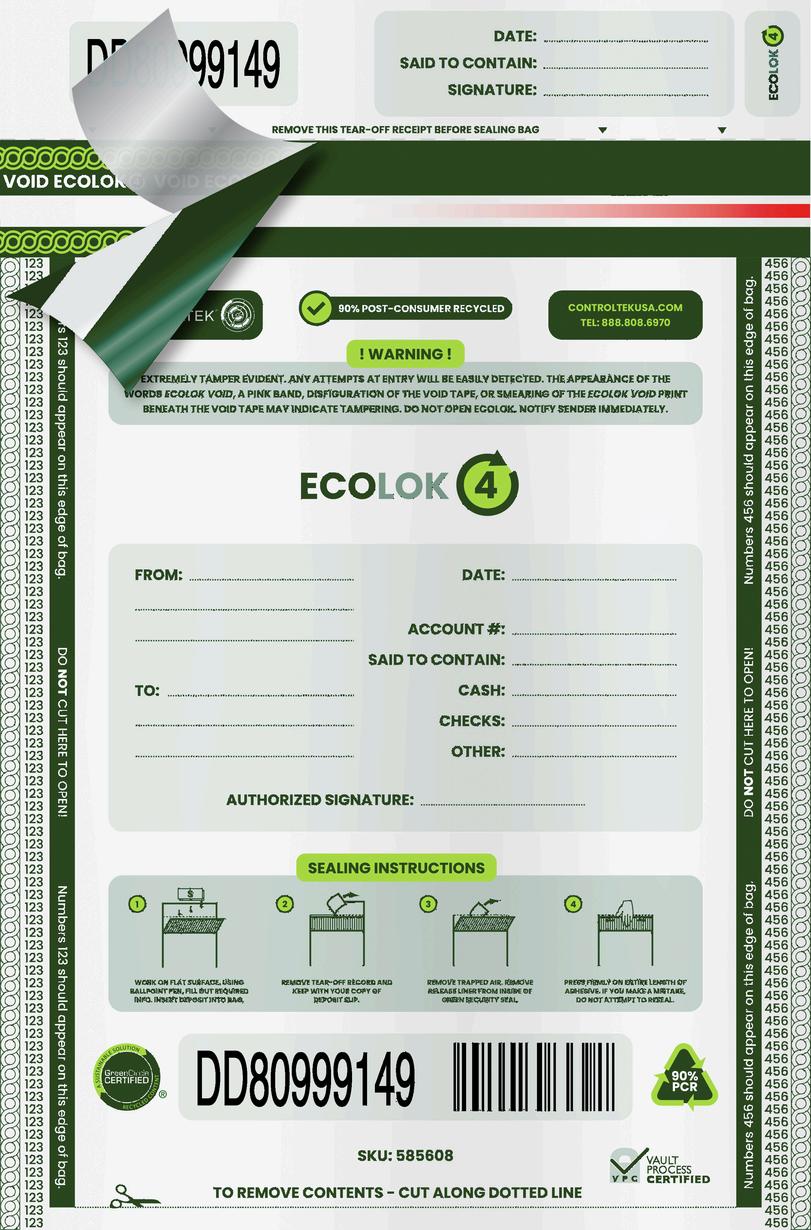
The Solution: EcoLOK4
THE FIRST, THIRD PARTY VERIFIED 90% POST-CONSUMER RECYCLED TAMPER-EVIDENT BAG
Remain confident in the security of your cash-in-transit while reducing the environmental burden of your cash handling operations.
REPURPOSING CONSUMER WASTE TO PROTECT YOUR CASH... AND THE PLANET
Unlike traditional recycled tamper-evident bags which are made from Post-Industrial Recycled (PIR) Plastic that reuses scraps collected during the manufacturing process, EcoLOK4 is made from actual household waste that is destined for a landfill
Don’t Just Take Our Word For It
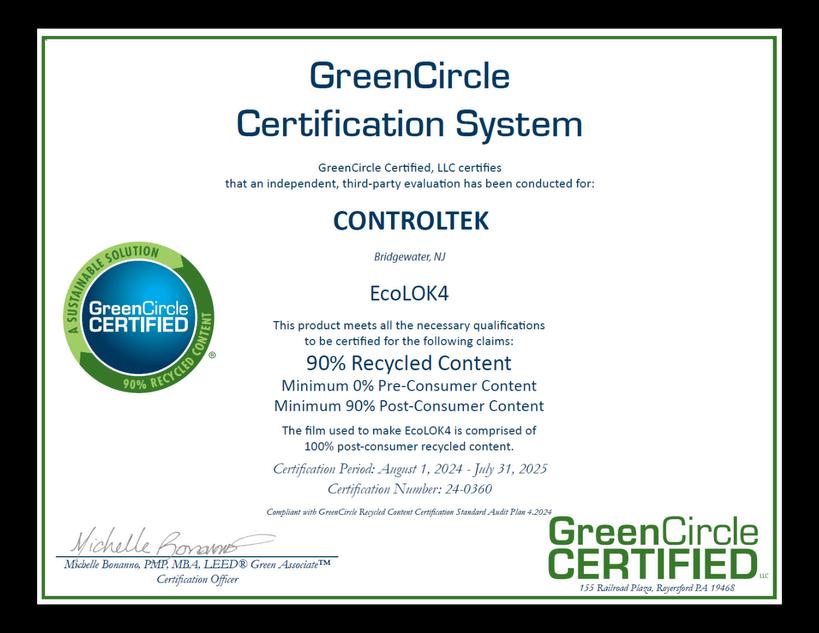
At CONTROLTEK, we understand the importance of third-party verification to ensure our clients remain confident in the integrity and accuracy of our product claims. EcoLOK4 is GreenCircle Certified as 90% Post Consumer Recycled content.
Helping You Reduce Scope 3 Emissions
Imagine the impact your business could have by making a simple switch in your bag usage. By choosing more sustainable materials, you can significantly reduce plastic waste. Scan the QR code below to input your current bag usage below to see the difference you can make and how you can contribute to a greener future.
Scan below to calculate what your impact would be by using EcoLOK4.