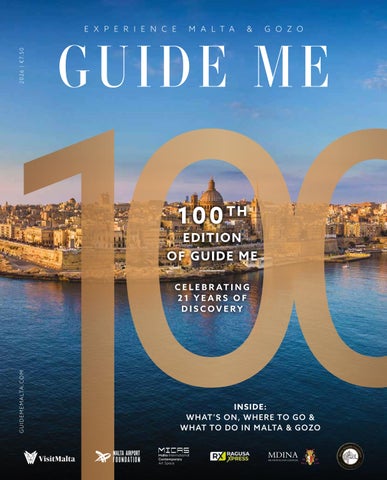
As Guide Me celebrates its 100th edition, the team looks back on the journey from print to digital, reflecting on the milestones, challenges and achievements that have shaped the brand.
31.
Malta Bucket List 2026
From sunrise walks in Valletta to hidden coves, historic landmarks and unforgettable dining experiences, the Guide Me team rounds up 15 experiences every visitor should add to their Malta itinerary.
Tale of Two Capitals: Valletta and Victoria
108
40.
70.
Sarah Muscat Azzopardi speaks to passionate locals from Malta and Gozo’s capitals to uncover the hidden corners, traditions and everyday charm that make these two historic cities so unique.
The Art of Maltese Cheesemaking
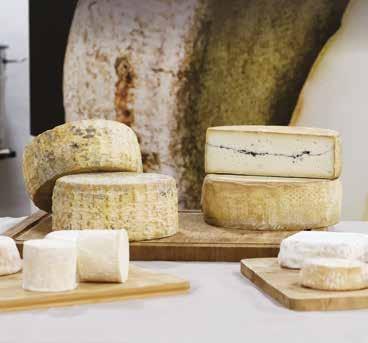
Tim Diacono explores Malta’s growing artisan cheesemaking movement, meeting producers who are upholding traditional methods while creating award-winning cheeses that are finding their way onto the menus of the islands’ leading restaurants.
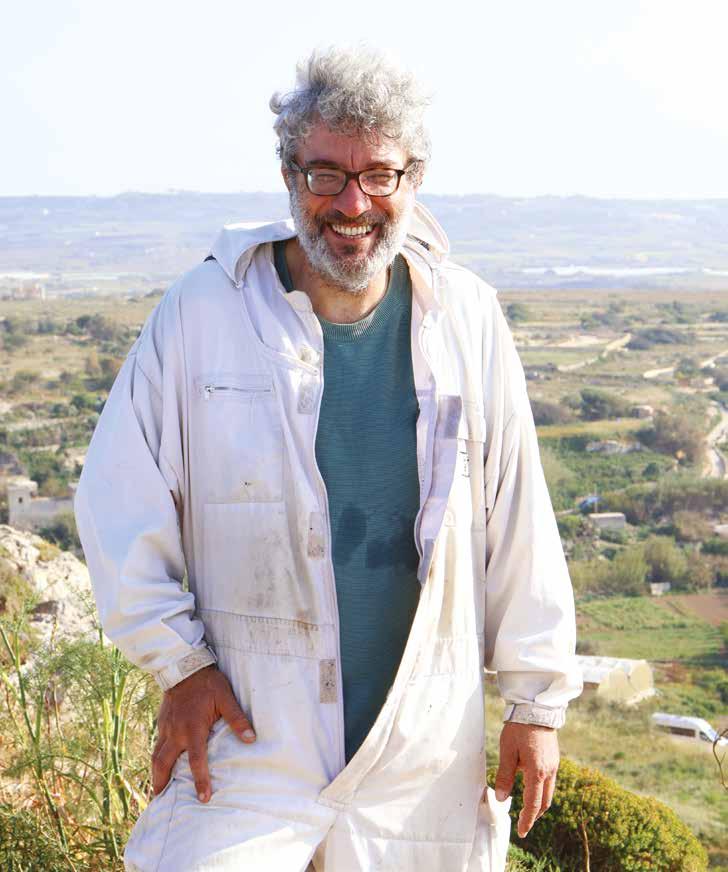
The Sweet Soul of Malta: Preserving a Golden Tradition, Hive by Hive
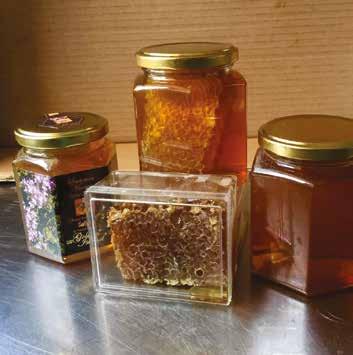
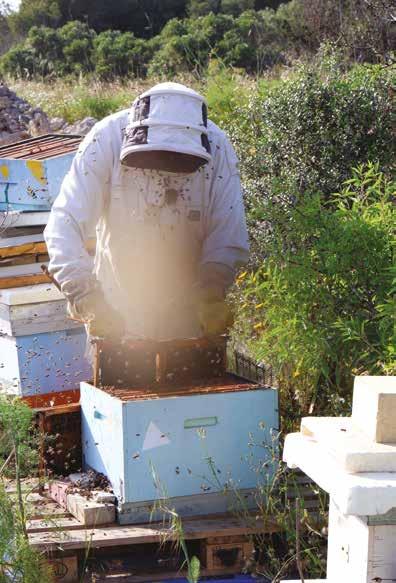
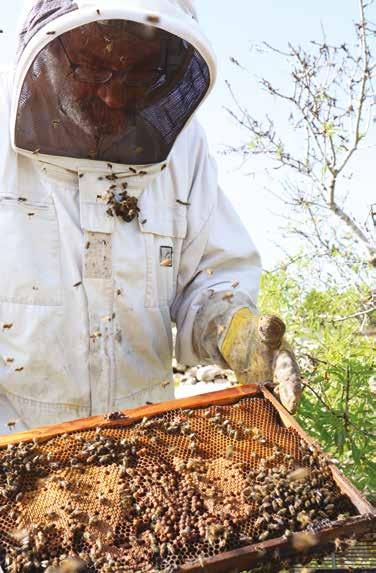
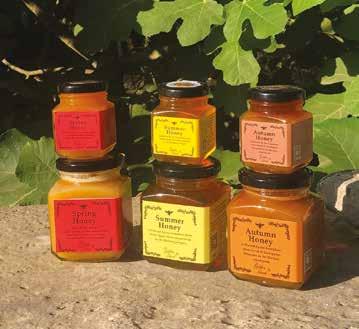
Lyndsey Grima meets beekeeper Ray Sciberras to discuss Malta’s ancient relationship with honey, the unique Maltese honeybee and the challenges facing modern apiculture.
An overview of Malta’s economic success story, examining the sectors driving growth, foreign investment opportunities and the advantages of doing business on the islands. 92.
Discover Malta – A Dynamic European Hub for Business, Finance and Innovation
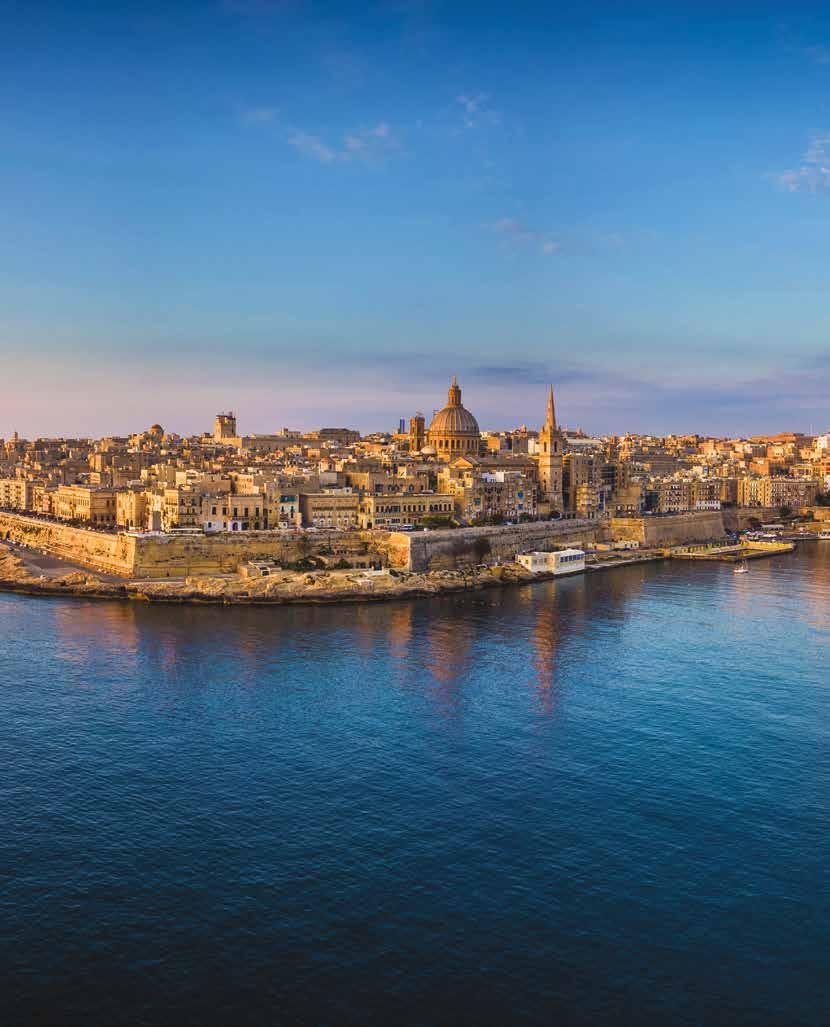
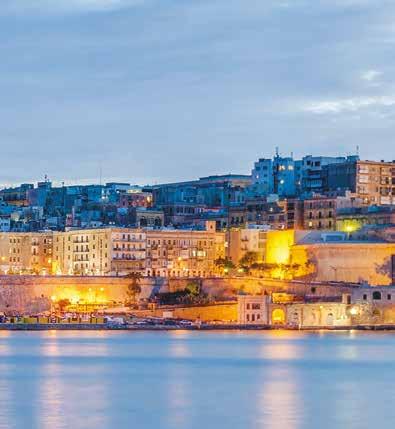
ON THE COVER Valletta. Photo: ZGPhotography –Shutterstock
PUBLISHERS
Content House Group
ADVERTISING
Brand Sales Manager Wanaha Camilleri
Corporate Sales & Business Development Manager
Matthew Mario Borg
Operations & Client Relationship Manager
Sue Ann Pisani
ART DIRECTION & DESIGN
Nicholas Cutajar
EDITORIAL CONTRIBUTORS
Rebecca Anastasi, Edward Bonello, Tim Diacono, Lyndsey Grima, Sarah Muscat Azzopardi
The
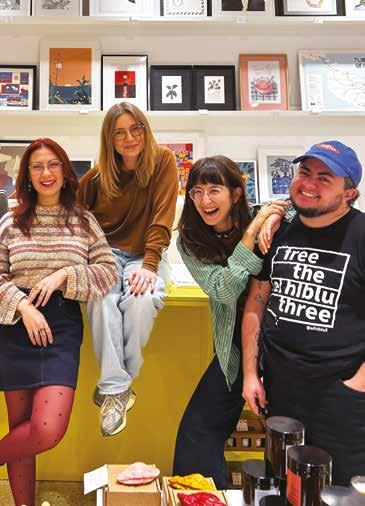
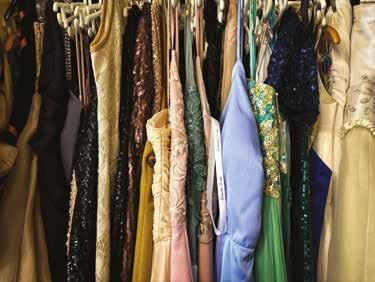
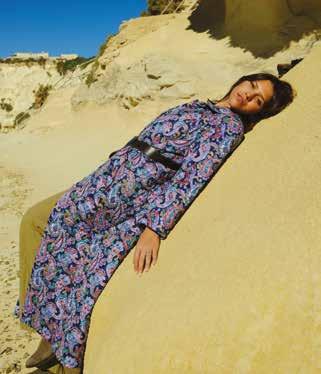
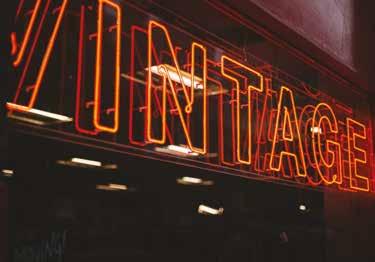
Pre-Loved Revolution: Malta’s New Era of Thrifting
Sarah Muscat Azzopardi sheds light on Malta’s growing second-hand fashion scene, speaking to two young professionals about sustainable style, vintage treasures and the joy of thrifting.
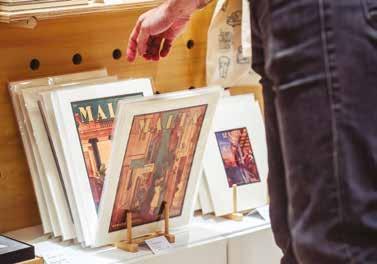
Tracing Malta Through Art
Professor Charlene Vella discusses with Rebecca Anastasi the layers of Medieval and Renaissance Malta hidden beneath the islands’ landscape, and the enduring fascination of uncovering the stories embedded within its cultural palimpsests.
Content House Group, Quad Central, Q2, Level 2, Central Business District
CBD 1040 T: +356 2132 0713
E: info@contenthouse.mt
W: www.contenthouse.mt
Published since 2005, Guide Me is the largest and the leading independent guide for visitors in Malta and Gozo. This 2026 edition is distributed free of charge through leading hotels and from MTA offices across the Maltese Islands. It is also sold at leading newsagents in Malta and Gozo, including those at the MIA and the Gozo Channel ferries.
Editorial opinions expressed in Guide Me are not necessarily those of Content House Group and the company does not accept responsibility for advertising content.
All rights reserved. Reproduction in whole or in part without written permission of the publishers is strictly prohibited.
ONE HUNDRED EDITIONS, COUNTLESS DISCOVERIES
As Guide Me celebrates its landmark 100th edition, we take the opportunity to reflect on the stories, places and people that continue to make Malta and Gozo such captivating destinations. Whether you’re visiting for the first time or rediscovering the islands through fresh eyes, this issue is packed with inspiration to help you make the most of your stay.
Looking for a place to start? Our Malta Bucket List rounds up some of the experiences that no visitor should miss, from iconic landmarks to lesser-known treasures. We also turn our attention to the islands’ two historic capitals, Valletta and Victoria, exploring the character, charm and everyday life that make each city unique.
Elsewhere, we celebrate some of the people helping to preserve and reinvent Malta’s traditions. From artisan cheesemakers and beekeepers who are championing
local produce to craftspeople keeping age-old skills alive, these stories reveal the passion and dedication that underpin the islands’ cultural identity.
Culture takes centre stage throughout this edition. We explore the growing role of contemporary art in Malta and meet individuals who are helping to shape the country’s creative landscape, while Prof. Charlene Vella offers fascinating insights into the layers of history hidden beneath the islands’ surface, revealing how Malta’s past continues to resonate in the present.
And for those seeking a more sustainable approach to style, our fashion feature delves into the rise of secondhand shopping, speaking to two stylish locals about vintage treasures, conscious consumption and why preloved fashion is becoming the ultimate luxury.
As always, we hope this edition of Guide Me inspires you to venture a little further, look a little closer and discover something new about these remarkable islands.
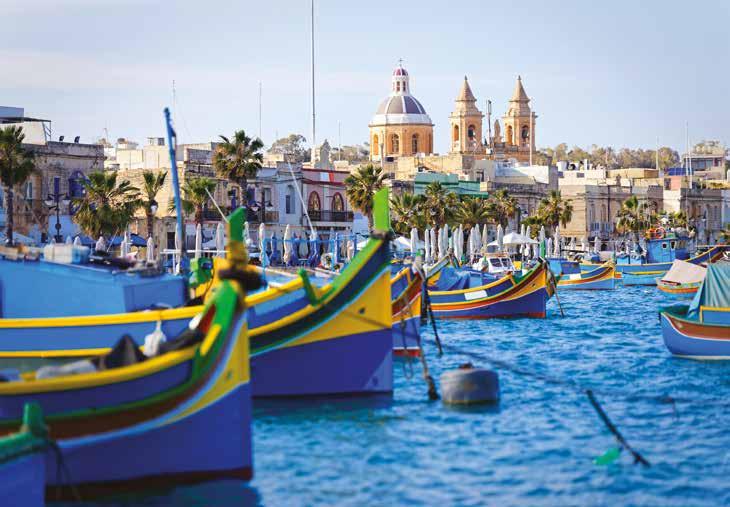
Marsaxlokk.
Photo: Marianna CeccarelliiStock
100 EDITIONS LATER: THE GUIDE ME STORY CONTINUES
From print to digital, Guide Me’s story has evolved alongside Malta itself. Now, as the publication celebrates its 100th edition, the team behind the brand reflects on its legacy, growth and next chapter.
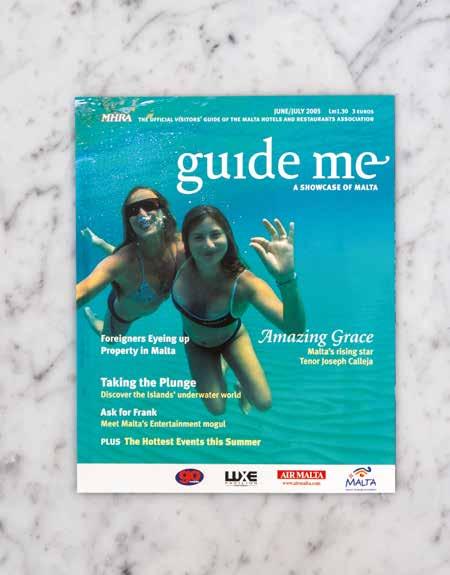
In June 2005, the first edition of Guide Me rolled off the press.
At the time, Malta’s media landscape was very different. Social media had yet to transform how people discovered destinations, restaurants and experiences. Smartphones were still years away from becoming part of everyday life. Visitors arriving in Malta relied heavily on printed guides, recommendations and local knowledge to explore the islands.
It was against this backdrop that Guide Me was born.
From the outset, the objective was clear: create a high-quality publication that would help visitors
discover the very best that Malta and Gozo had to offer, while providing local businesses with a trusted platform to reach new audiences.
Twenty-two years later, Guide Me celebrates its 100th edition.
Guide Me was originally published every two months, but when GuideMeMalta.com was launched and gained serious traction, we decided to preserve the publication by consolidating it into a strong annual edition. Over the years, Guide Me has become a familiar companion for millions of visitors exploring the Maltese Islands. It has documented Malta’s transformation, followed the evolution of its tourism and hospitality sectors, showcased emerging trends and experiences, and
From
a single publication to a multi-platform what’s on and lifestyle brand reaching more than 50 million annual views across the portal and its social media brands, Guide Me’s journey mirrors Malta’s own transformation as a destination.
JESMOND BONELLO, JOINT MANAGING DIRECTOR, CONTENT HOUSE
helped tell the story of a country that has grown into one of the Mediterranean’s most dynamic destinations.
Reaching the 100th edition is a milestone we are incredibly proud of. What makes it particularly special is that every edition represents a snapshot of Malta at a particular moment – capturing the places, people, businesses, and experiences that have shaped the visitor journey over the past two decades.
Since its launch, Guide Me has reached more than 10 million visitors, worked with over 5,000 clients and partners, and established itself as one of Malta’s most recognised lifestyle brands.
Reflecting on the milestone, Jesmond Bonello, Joint Managing Director of Content House, says: “When Guide Me was launched in 2005, our ambition was straightforward: create Malta’s premier visitor guide and help people discover the very best our islands have to offer. Reaching 100 editions is a remarkable achievement, but what makes me most proud is the trust that readers, visitors, businesses, and partners have placed in the brand over the years. From a single publication to a multi-platform what’s on and lifestyle brand reaching more than 50 million annual views across the portal and its social media brands, Guide Me’s journey mirrors Malta’s own transformation as a destination."
Yet despite its growth, the publication’s purpose has remained remarkably consistent. Guide Me continues
to focus on helping people discover Malta’s hidden gems, restaurants, attractions, culture, events, and unique experiences.
Today, GuideMeMalta.com and its associated social media channels generate more than 50 million annual views and have built a community of over 100,000 followers. Its audience spans four distinct groups: visitors planning a trip to Malta, visitors currently on the islands, expats living in Malta, and local residents looking for inspiration on where to go and what to do next.
Importantly, however, the rise of digital has not diminished the role of the publication itself. Distributed through leading hotels across Malta and Gozo and the Malta Tourism Authority’s official tourist information offices, Guide Me continues to enjoy a long shelf life and remains a trusted source of inspiration for visitors seeking authentic experiences during their stay.
Print offers something different. It allows people to slow down, browse, discover, and engage with content in a way that digital platforms often cannot replicate.
For Isabel Depasquale, Joint Managing Director of Content House, the milestone is also a celebration of the people behind the brand. “Guide Me’s success is the result of an incredible team, loyal clients, trusted partners, and thousands of businesses that have chosen to tell their stories through our platforms. Reaching 100 editions is a celebration of everyone who has contributed to the journey. We remain as passionate today as we were in 2005 about creating content that inspires discovery and helps people experience the very best of Malta and Gozo.”
We remain as passionate today as we were in 2005 about creating content that helps people experience the very best of Malta and Gozo.
ISABEL DEPASQUALE, JOINT MANAGING DIRECTOR, CONTENT HOUSE
THE NEXT CHAPTER BEGINS: THE SECOND GENERATION OF GUIDEMEMALTA.COM
Reaching a 100th edition is an opportunity to reflect on the journey so far. But for the Guide Me team, it is equally an opportunity to look ahead.
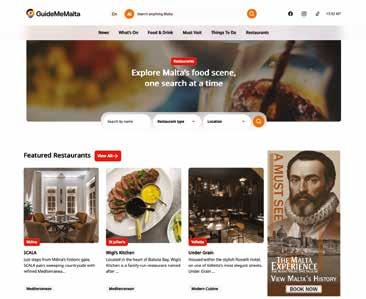
This milestone edition coincides with the launch of a new generation of GuideMeMalta.com, representing the latest evolution of a brand that has spent more than two decades helping people discover the very best of Malta and Gozo.
Since its launch, GuideMeMalta.com has grown into one of Malta’s leading lifestyle, entertainment and what’s on portals. The new platform has been designed to deliver an enhanced user experience, smarter content discovery, improved search functionality, and a stronger connection between Guide Me’s print, digital, social, and video offerings.
The second generation of GuideMeMalta.com represents a significant investment in technology, content and user experience, ensuring that Guide Me continues to innovate while remaining true to
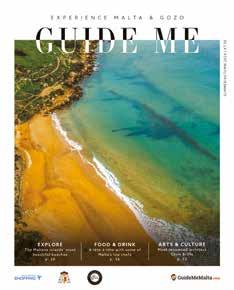
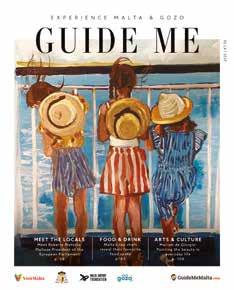
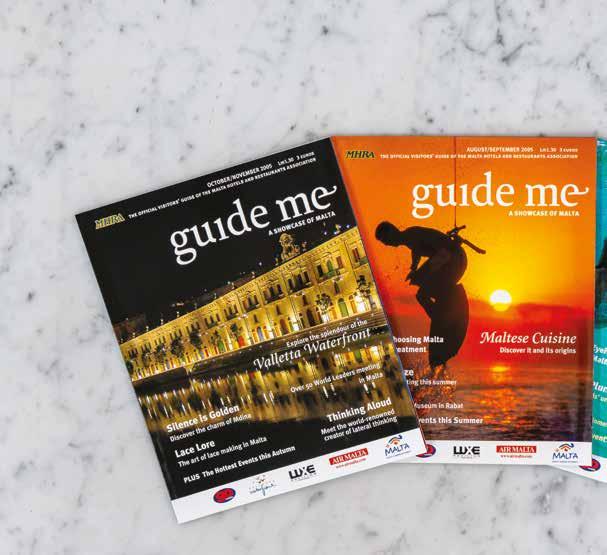
First edition cover
the purpose that inspired its creation more than two decades ago.
Raisa Mazzola, Head of Digital and Marketing at Content House, explains the evolution of GuideMeMalta.com: “The upcoming second generation of GuideMeMalta.com represents far more than a redesign – it is a complete transformation of the platform. Over the past years, GuideMeMalta.com has grown significantly in popularity, audience reach and daily usage, and this evolution reflects the changing needs and expectations of our users. Our focus has been on creating a more intuitive, user-friendly experience, making it easier than ever for visitors and residents alike to discover what Malta has to offer. The new platform introduces enhanced search capabilities, smarter keyword recognition, more advanced filtering options, AI-powered assistance, and a completely revamped restaurant directory designed to help users find exactly what they are looking for in seconds.”
“We have also placed a strong emphasis on mobilefirst design,” she adds, “recognising that the vast majority of our audience now consumes content on their smartphones. In addition, we are integrating social media content more seamlessly into the user experience, allowing reels and short-form video
RAISA MAZZOLA, HEAD OF DIGITAL AND MARKETING, CONTENT HOUSE
content to be enjoyed directly within the portal. GuideMeMalta.com has become one of Malta’s leading lifestyle and discovery platforms, and this new generation is designed to ensure it remains at the forefront of digital innovation, offering a faster, smarter and more engaging experience for our growing audience.”
As Guide Me enters its next chapter, the objective remains clear: to continue celebrating Malta and Gozo, supporting local businesses, inspiring visitors, and creating content that helps people discover memorable experiences.
One hundred editions later, the story is far from over.
In many ways, it is only just beginning.
THINGS TO DO
MALTA BUCKET LIST 2026
Guide Me rounds up the 15 experiences you can’t miss this year.
LOSE YOURSELF IN VALLETTA AT SUNRISE
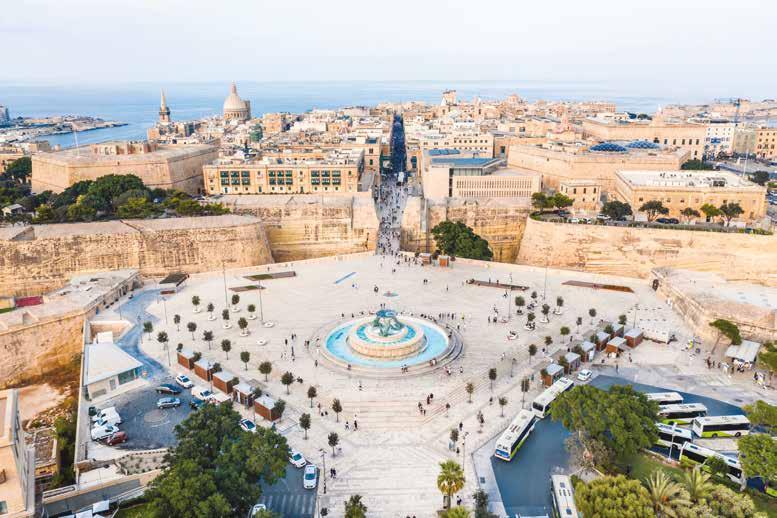
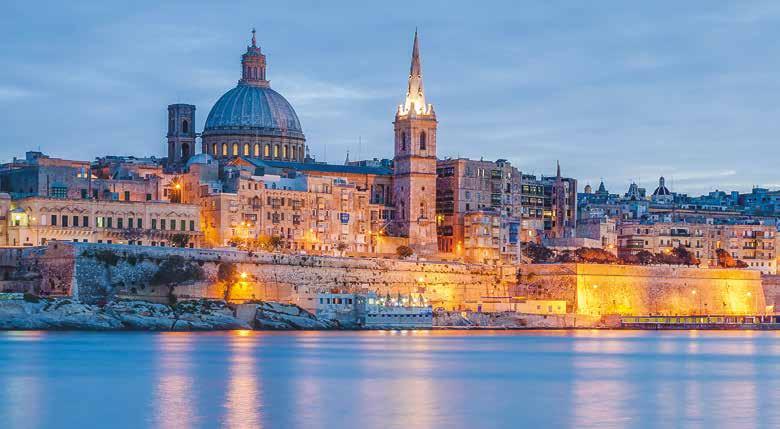
Before the crowds arrive and the city fully wakes, Valletta is at its most magical. Wander through honey-coloured streets as the first light hits the bastions, illuminating balconies and domes in soft gold. Stop for a coffee at a tucked-away café and enjoy the rare stillness of a capital city before the day begins. Early mornings also offer the perfect opportunity to admire the architectural grandeur of landmarks like St John’s Co-Cathedral and the city’s imposing fortifications without distraction.
Beyond the main squares and grand edifices, take time to explore Valletta’s lesser-known streets – from the quiet charm of St Ursula Street to the historic houses that line Old Mint Street. Here, the city reveals its finer details: imposing yet unassuming façades, traditional wooden balconies painted in rich colours, sculpted stone coats of arms, ornate door knockers, and beautifully crafted niches discreetly tucked into centuries-old buildings. 1.
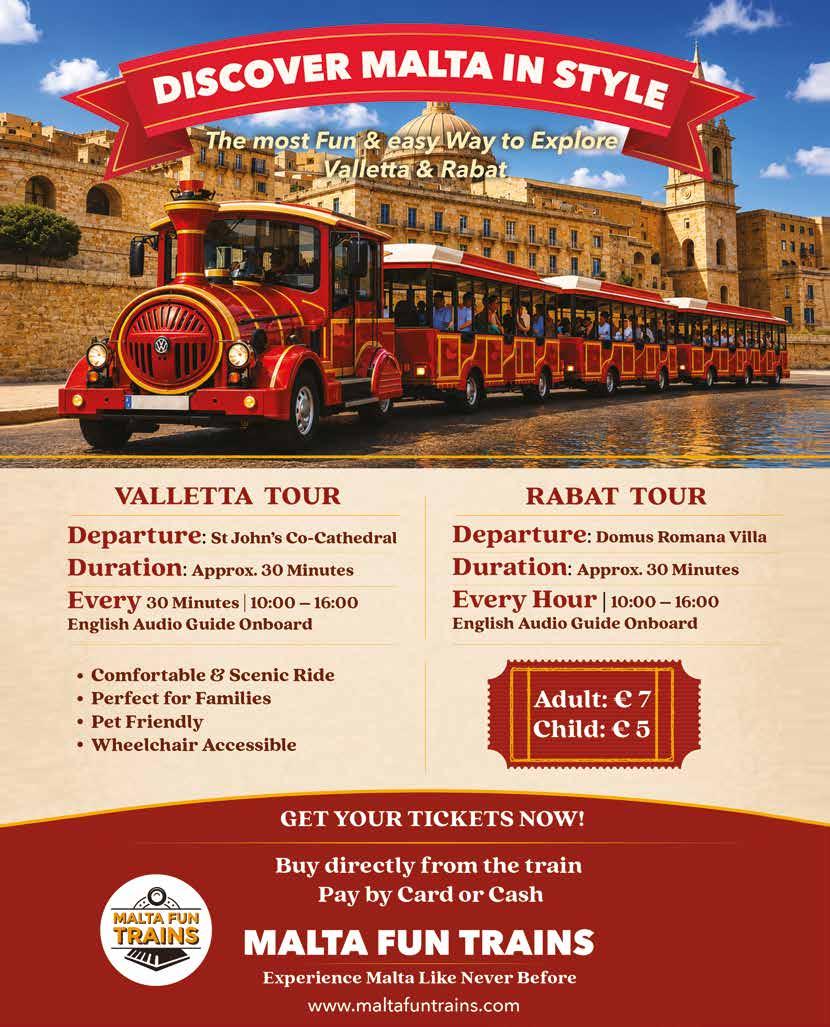
Those who prefer a more leisurely experience can also discover the city aboard the Malta Fun Trains, which offer a guided tour past Valletta’s historic sights and panoramic views.
Valletta.
Photo: viewingmalta.com
2.
DISCOVER 7,000 YEARS OF HISTORY
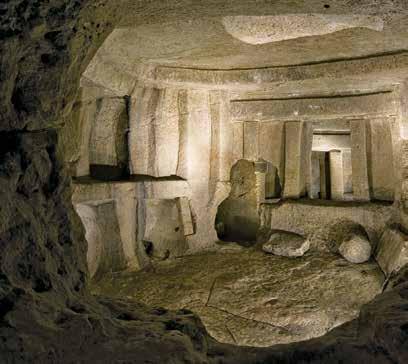
Few destinations pack so much history into such a compact space. Malta’s prehistoric temples, several of which are UNESCO World Heritage Sites, predate both Stonehenge and the pyramids, while the mysterious underground Ħal Saflieni Hypogeum (visits must be pre-booked well in advance as entry is limited) still fascinates archaeologists today. From the fortified cities of the Knights of St John to wartime shelters and ancient catacombs, every corner of the islands reveals another layer of civilisation.
4.
DRIFT THROUGH LIGHT AT THE BLUE GROTTO
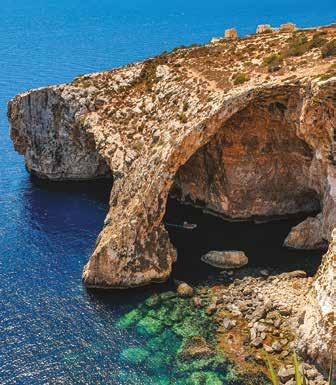
At the Blue Grotto, within the picturesque limits of the village of Żurrieq, a small traditional boat carries visitors into sea caves where sunlight refracts into impossible shades of electric blue. The water shimmers beneath towering limestone formations, creating one of Malta’s most photographed natural spectacles. Early morning offers the calmest conditions and the most vivid colours, making the experience even more unforgettable.
3.
STEP INSIDE A BAROQUE MASTERPIECE
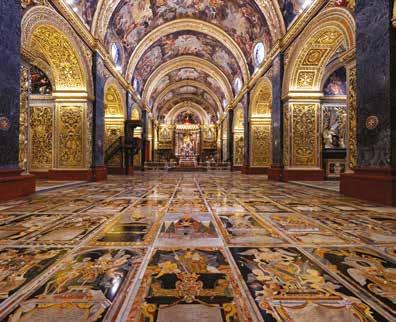
Behind the relatively austere façade of St John’s CoCathedral lies one of the most exuberant expressions of Baroque art and architecture in Malta, dazzling visitors with gilded carvings, intricately inlaid marble floors depicting knights’ tombstones, and Caravaggio’s dramatic masterpiece The Beheading of Saint John the Baptist. Conceived by the Knights of St John as a monumental, fortified city, Valletta itself stands as one of Europe’s great Baroque ensembles. Beyond the capital, the majestic Mdina Metropolitan Cathedral, ornate parish churches, stately palazzos, and monumental city gateways across the islands further reveal the grandeur and artistic exuberance that define Malta’s Baroque heritage.
St John’s Co-Cathedral, Valletta. Photo: Kurt Arrigo. Courtesy of St John's Co-Cathedral ĦalSaflieniHypogeum . Photo:viewingmalta
Blue Grotto. Photo: viewingmalta.com
6.
WANDER THROUGH THE THREE CITIES
Just across the harbour from Valletta, Vittoriosa, Senglea and Cospicua – collectively known as the Three Cities –offer a more intimate encounter with Malta’s maritime and military past. Only a short journey from the capital (the most scenic approach is by ferry), these historic harbour cities reveal a quieter side of the islands, where daily life unfolds among narrow streets, waterfront promenades, hidden chapels and formidable fortifications built by the Knights of St John.
In Vittoriosa, visitors can explore the Collachio – the elegant quarter where the Knights of St John once lived before Valletta was built – offering a fascinating glimpse into the Order’s original base of operations. Elsewhere, the waterfront walkways open up to unforgettable views across the Grand Harbour, where fortifications frame one of the Mediterranean’s most striking natural harbours.
8.
WALK MALTA’S WILD SIDE
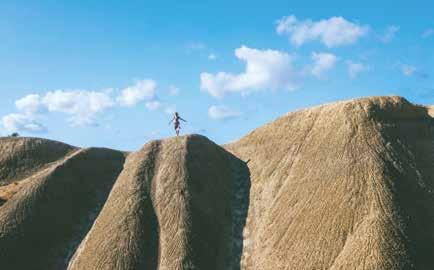
Beyond the fortified cities and coastal resorts, Malta reveals a surprisingly rugged landscape of terraced fields, limestone ridges and countryside trails. Walks through areas such as Dingli Cliffs, Fomm ir-Riħ, Buskett Gardens, the Victoria Lines, Għajn Tuffieħa, and Ta’ Ċenċ in Gozo showcase a quieter, more natural side of the islands. Spring brings wildflowers and green valleys, while autumn offers ideal hiking temperatures and dramatic sunsets over the Mediterranean.
5.
SEE MALTA FROM THE SEA
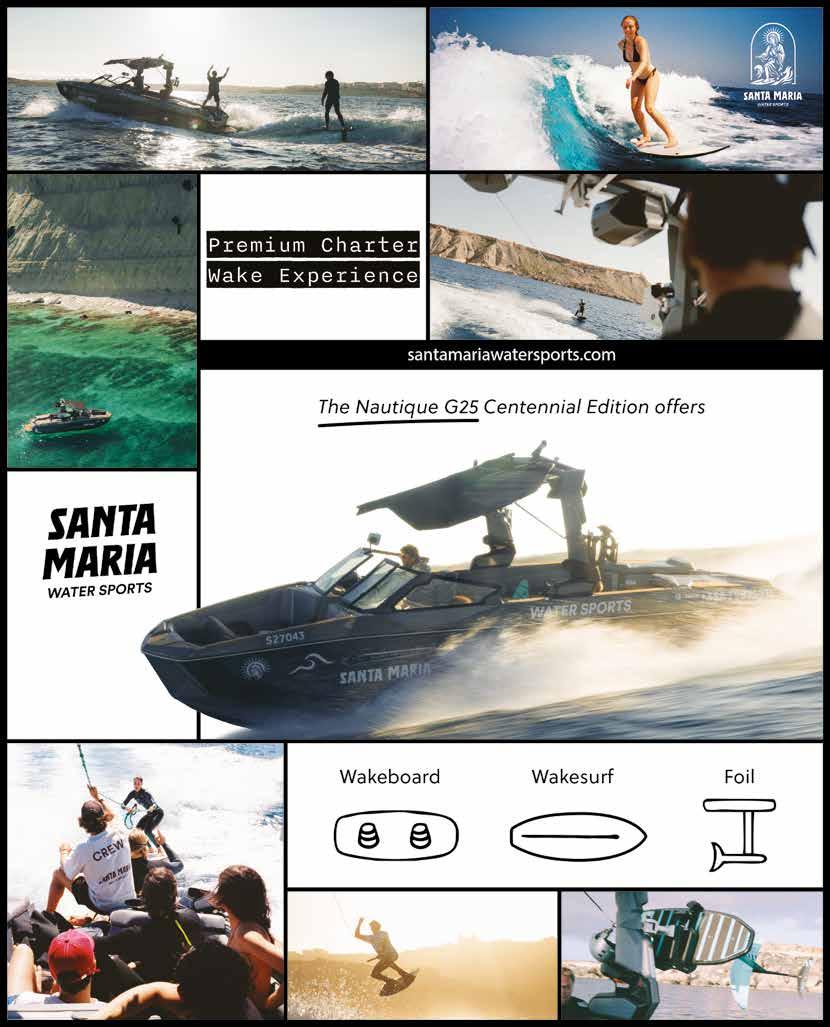
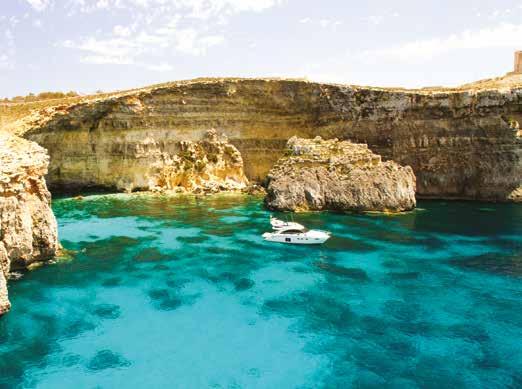
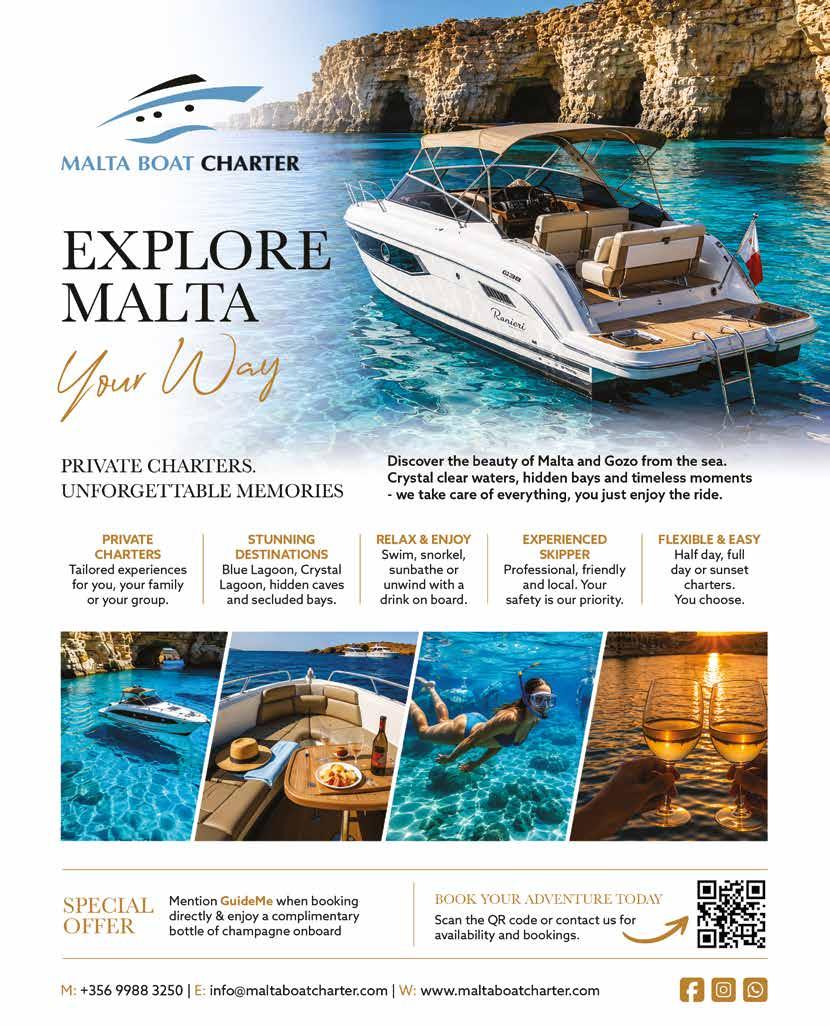
To truly understand Malta, you have to leave the shore. From the water, the islands reveal hidden coves, dramatic cliffs and secluded bays inaccessible by land. For those seeking a luxurious day at sea, private charters with companies like Season Yachts offer the freedom to explore at your own rhythm – dropping anchor in crystal-clear bays for swimming, snorkelling or sunset drinks. Around Gozo and Comino, Xlendi Pleasure Cruises provide a scenic way to discover caves, cliffs and remote coastal scenery, while Santa Maria Water Sports cater to adrenaline seekers with wakeboarding, wake surfing, advanced foil sports, and other unforgettable experiences.
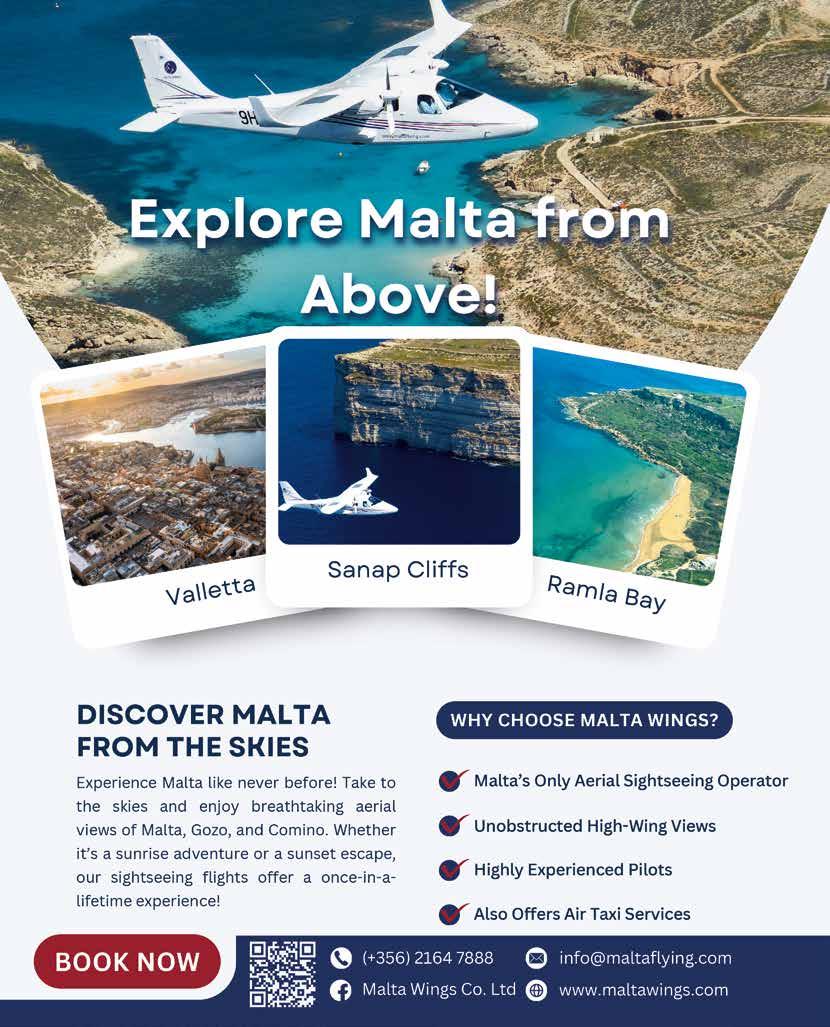
For a completely different perspective, Malta Wings operates scenic flights over the archipelago, revealing the islands’ dramatic coastline and fortified cities from above.
7.
DIVE INTO MALTA’S CRYSTAL WATERS
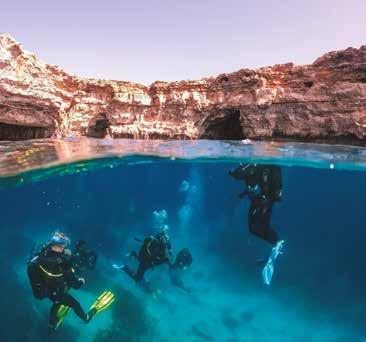
Malta remains one of Europe’s premier diving destinations thanks to its exceptionally clear waters, underwater caves, reefs, and historic wrecks. Its standing within the diving community was highlighted once again in Scuba Diving Magazine’s 2026 Readers’ Choice Awards, where Malta was named the Best Cave/Cavern/Grotto Diving Destination in the World and ranked highly across several other categories. Beginners can discover colourful marine life in shallow bays, while experienced divers explore dramatic dropoffs and sunken ships scattered around the islands.
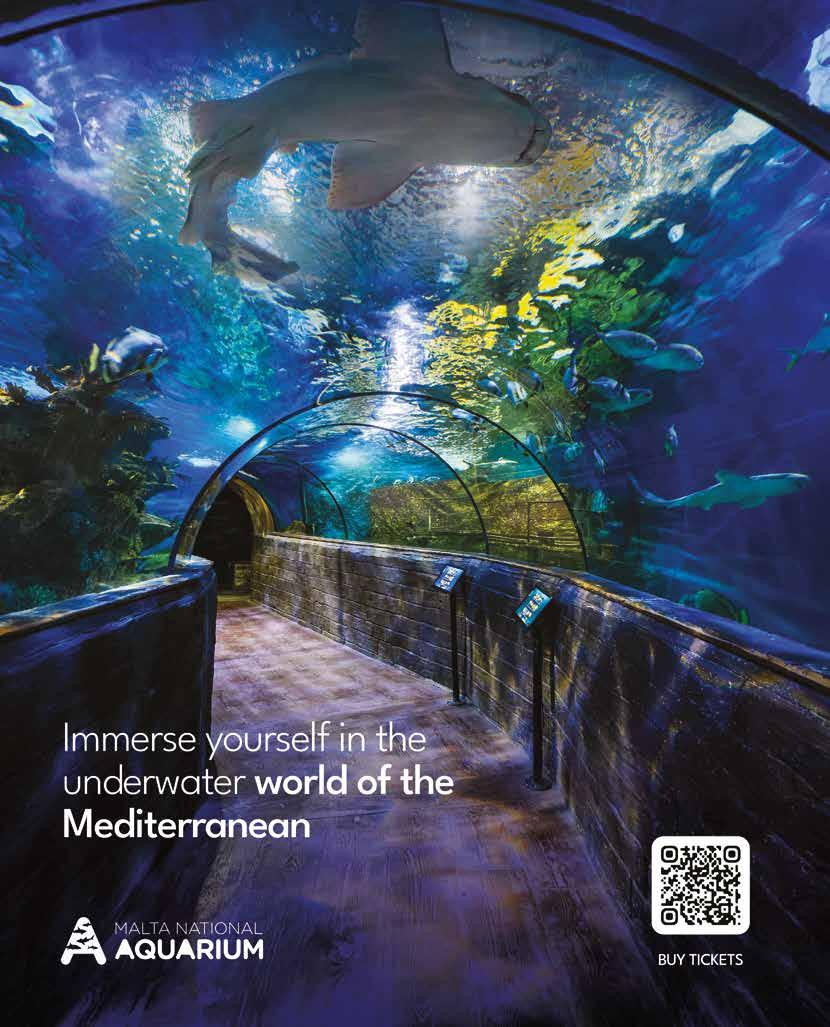
Even for non-divers, a visit to the Malta National Aquarium offers a fascinating introduction to the marine ecosystems that surround the archipelago.
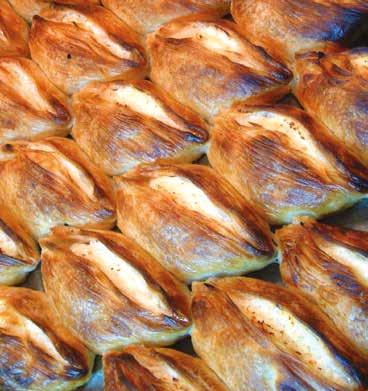
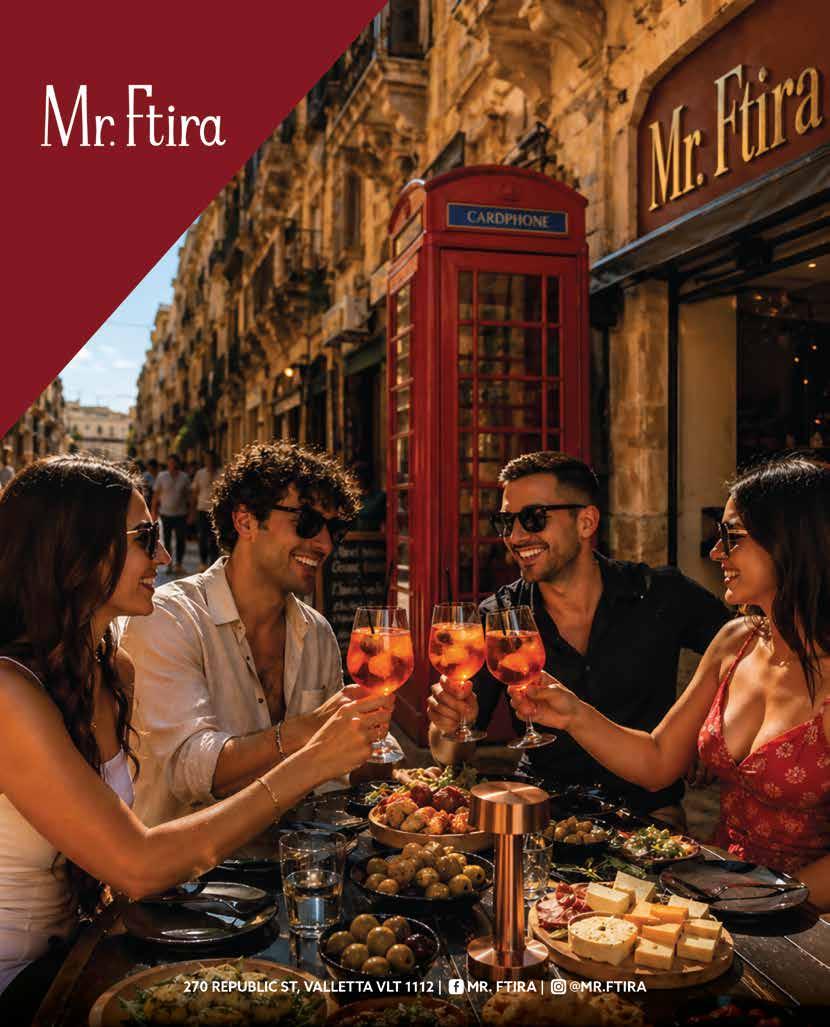
Malta’s most authentic food experiences are often found beyond the formal dining scene, in places where local life still sets the rhythm. Village band clubs, seaside grills, countryside farmhouses, and traditional eateries continue to anchor community dining across the islands. In Valletta, Mr Ftira serves traditional Maltese ftira (local flatbread with a variety of stuffings) alongside other local favourites such as pastizzi (pastry filled with ricotta or peas), offering a relaxed spot to try out some of the island’s most iconic everyday foods. Further afield, visitors can enjoy a classic fenkata (rabbit-based meal) in the north of the island, sample fresh seafood in the seaside villages of Marsaxlokk or Marsaskala, or discover hearty Maltese dishes served in relaxed village settings.
12.TAKE A PRIVATE HARBOUR CRUISE AT SUNSET
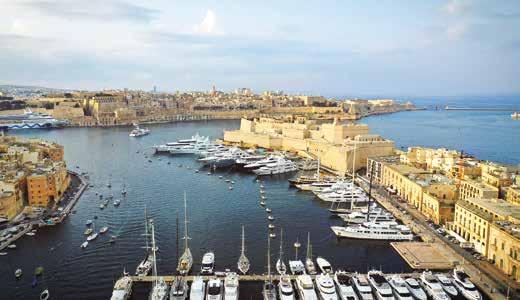
Few places rival the beauty of Malta’s Grand Harbour at golden hour. Cruising past Valletta’s bastions and the historic Three Cities as the skyline glows amber is one of the island’s most memorable experiences. Whether aboard a traditional boat or a private yacht, sunset on the harbour offers a timeless perspective on Malta’s maritime identity.
9.
SLOW DOWN IN GOZO
A short ferry ride away, Gozo moves to a gentler rhythm. Quiet villages, dramatic coastal walks, Baroque churches, stunning beaches, and family-run restaurants define the island’s slower pace of life. Spend afternoons swimming in secluded bays, exploring rural roads, or lingering over long lunches in village squares. Whether for a day trip or a longer stay, Gozo remains one of the Mediterranean’s most relaxing escapes.
11.
DISCOVER MALTA'S UNIQUE WINES
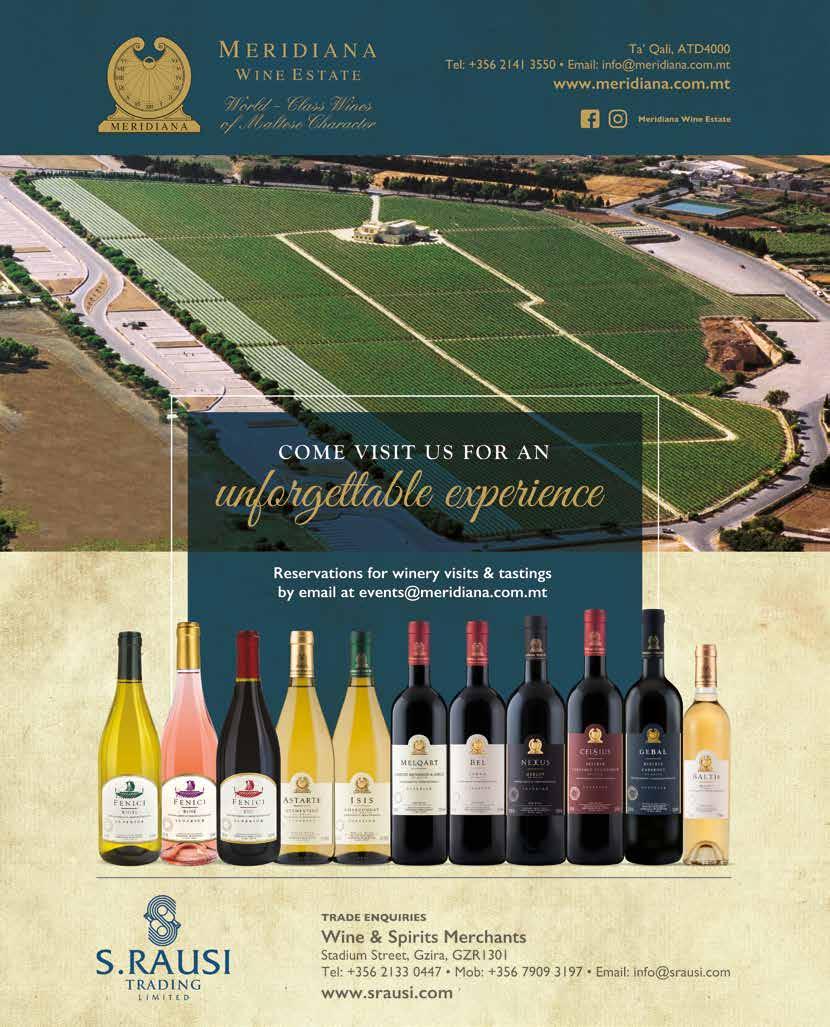
Malta’s wine scene remains one of its best-kept secrets. Indigenous grape varieties such as Girgentina and Ġellewża produce wines that reflect the islands’ limestone-rich soils and Mediterranean climate. Vineyard tours and guided tastings allow visitors to discover boutique producers and unique labels. Wineries like Meridiana Wine Estate continue to elevate Maltese wine internationally while remaining deeply rooted in local terroir. Tours of the estate can be booked online.
Pastizzi. Photo: viewingmalta.com
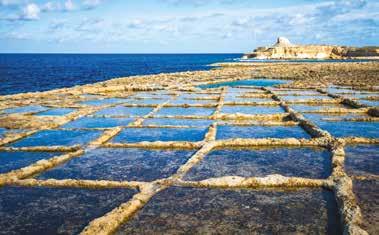
Salt Pans, Gozo. Photo: javarman3 - iStock
Grand Harbour. Photo: viewingmalta.com
13.EXPERIENCE MALTA’S NEW WAVE OF FINE DINING
Malta’s culinary scene has evolved dramatically in recent years. Michelin-starred restaurants, chef-led concepts, and innovative Mediterranean menus have transformed the islands into a serious food destination, with Malta earning its first two-Michelin-star restaurant in 2024. Expect refined local ingredients, exceptional seafood, impressive wine lists, and a growing confidence in contemporary Maltese cuisine.
14.DISCOVER MDINA
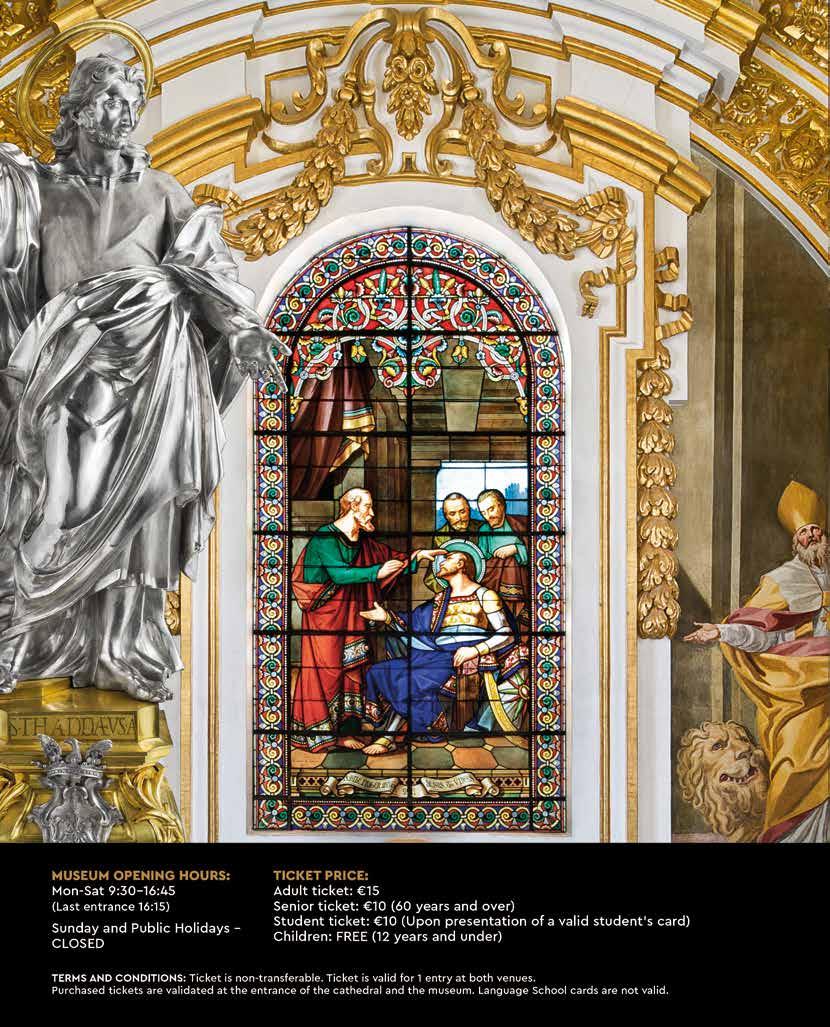
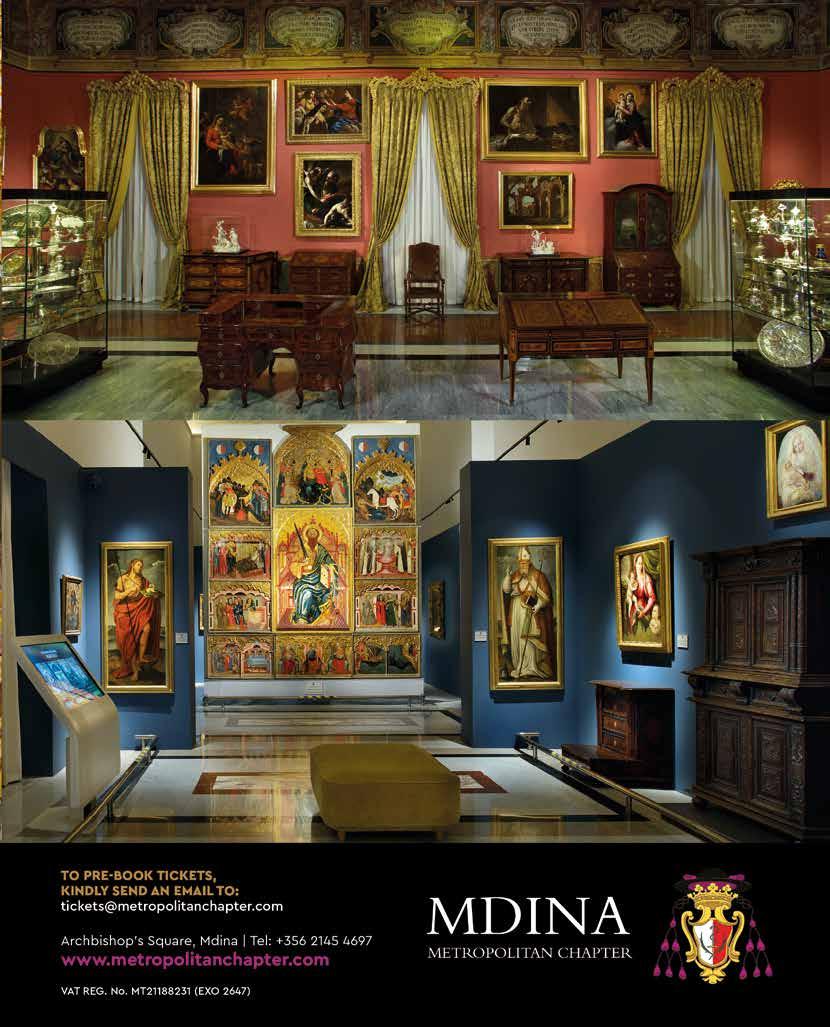
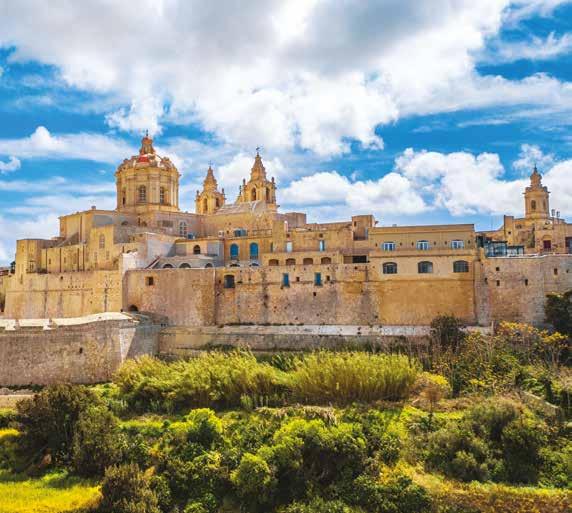
Malta’s former capital remains one of the island’s most captivating destinations. Encircled by fortified walls and characterised by narrow alleys, noble palazzos, hidden courtyards, and sweeping views across the countryside, Mdina offers a glimpse into centuries of Maltese history. At its heart stands the majestic Mdina Metropolitan Cathedral, whose elegant Baroque interior adds another layer of grandeur to the city’s timeless atmosphere.
15.EMBRACE THE ISLAND NIGHTS
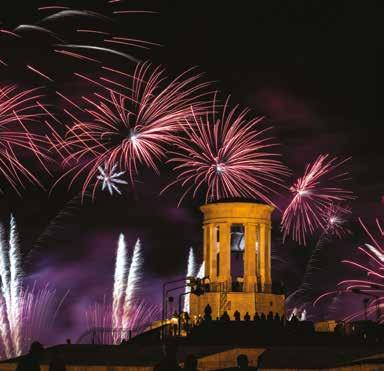
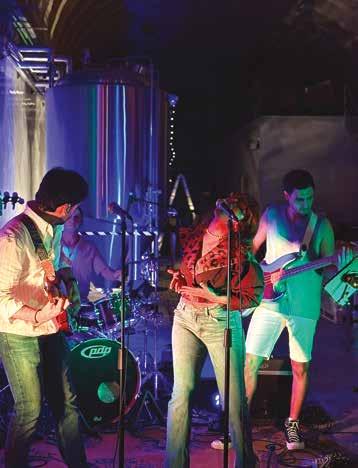
When the sun sets, Malta shifts gears. Summer nights buzz with rooftop bars, open-air concerts, festas, fireworks, and cultural festivals that bring towns and villages to life. From Birgu Fest and the Malta International Fireworks Festival to concerts by the Malta Philharmonic Orchestra, the Valletta Baroque Festival, and productions staged at Teatru Manoel and Pjazza Teatru Rjal, the cultural calendar is packed throughout the year.
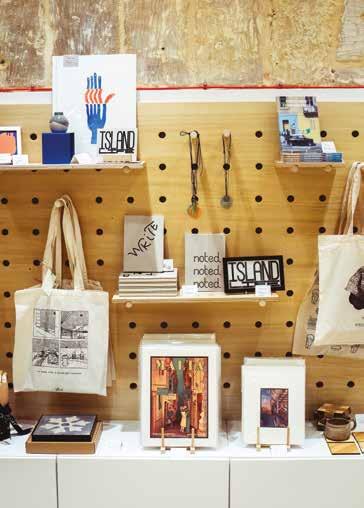
Visitors can explore artisan boutiques, cafés, museums, and quiet passageways that reveal something new around every corner. A stop at Il-Lokal is also worthwhile, showcasing a carefully curated selection of Maltese-made gifts, artisan products, books, gourmet items, and contemporary souvenirs inspired by local culture and craftsmanship.
While Mdina is captivating throughout the day, the city becomes especially atmospheric after sunset. As the crowds begin to fade, the softly lit streets take on an almost cinematic quality, reminding visitors why Mdina remains known as the Silent City.
Mdina Photo:KarinaMovsesyanl-
Malta International Fireworks Festival. Photo: viewingmalta.com
TALE OF TWO CAPITALS: VALLETTA AND VICTORIA
Valletta.
Photo: Anibal TrejoFotolia
Victoria.
Photo: Karina MovsesyanliStock
SARAH MUSCAT AZZOPARDI sits down with four passionate locals who know every limestone corner of their respective hometowns, for the ultimate insider’s guide to Malta and Gozo’s capitals.
The Maltese Islands’ beating heart is split between two distinct yet captivating capitals. On the main island, Valletta, a UNESCO World Heritage Site built by the Knights of St John, is a treasure trove of Baroque architecture, history and modern culture. A wander through the Renzo Piano-designed City Gate leads visitors into a bustling maze of pedestrianised thoroughfares teeming with trendy boutiques, lively cafés and Michelin-starred restaurants. From the awe-inspiring interiors of St John’s Co-Cathedral and Teatru Manoel – to the panoramic Grand Harbour views from the Upper Barrakka Gardens and the striking Malta International Contemporary Art Space (MICAS) just outside its walls, Valletta is a powerhouse that effortlessly bridges the past and the present.
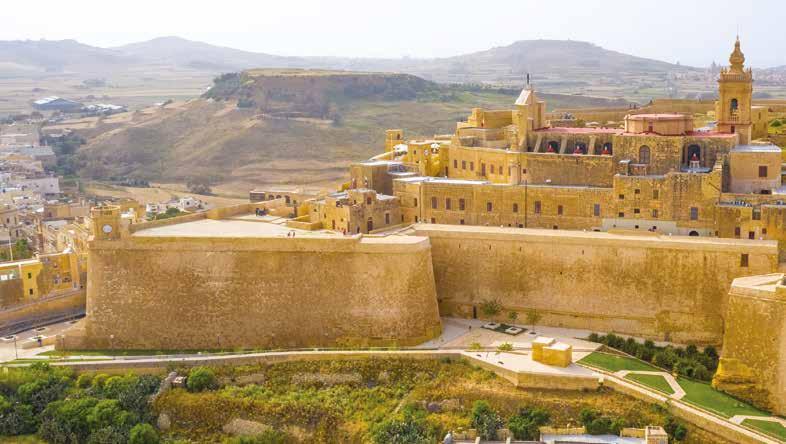
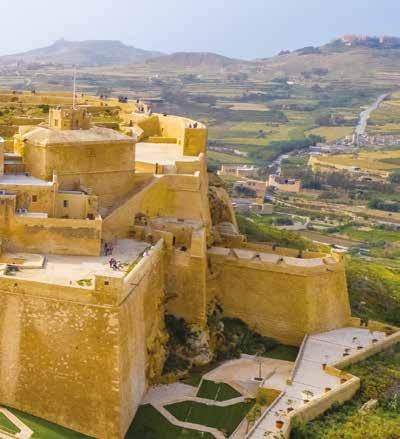
A short ferry ride across the water, Gozo, Malta’s sister island, operates at a slower pace, and its capital, Victoria (known locally as Rabat), reflects this tranquil charm. Compact and steeped in history, the city is crowned by the magnificent Cittadella, a beautifully restored medieval fortress perched high upon a hill overlooking spectacular countryside views. Life here spills out from the bastions down into the vibrant hub of Independence Square, where locals gather amidst a rich tapestry of quaint alleyways and artisan shops.
Yet, while any good guide will rightly point you towards Valletta’s Grand Master’s Palace or Victoria’s towering Cittadella, these historic heavyweights are only half the story. To truly capture the essence of these cities – the hidden gems, quiet rituals and authentic pulse of the streets – you need to look beyond the obvious.
THE INSIDERS: VALLETTA
DR JOANNA DELIA is a medical doctor, aesthetic physician and owner of People&Skin, as well as a contemporary art collector and local patron, whose home-gallery in Valletta speaks to her selfproclaimed advocacy for all things beautiful.
“When I was younger, I used to assume that Valletta, and Malta, was somehow identical in form and spirit to our close Mediterranean neighbours – Sicily, Greece, Tunisia,” Dr Delia shares. “But after deciding to make this fortress my home, and a lot of frequent travel to these neighbours, I realised that although the Baroque architecture at a glance seems to remind one of Italy, that is really where the similarities end.”
So, how would she describe the capital? “Valletta is somehow part Sahara Desert outcrop with our loud Semitic shored greetings echoing its streets, part princely, proud city built by knights from the ten or so kingdoms they came from in the late 16th century, part British with the English language connecting us easily to the world and its vagabonds, and part Italian, because why not?”
Her ultimate advice to visitors is simple: “The trick with Valletta is to not walk down one straight road. It’s better to zigzag, also because of the steep inclines,” she smiles, recommending seeking out the smaller roads like St Nicholas Street, Eagle Street, St Zachary Street, and Strait Street.
“Forget the big, obvious restaurants and cafés,” she continues. “Have a coffee at Lot61, a spritz at Number43, lunch at the Valletta Amateur Football Club near the Lower Barrakka, and dinner at N Bistro in Strait Street. Most importantly, walk down the stairs next to the Mediterranean Conference Centre to the bare rocky shore around the city. The views, and silence, are spectacular. And then, go to Hastings Garden for sunset before hitting the bars.”
To Joanna, Valletta only gets better as the day goes by. “I am a night owl, and although I adore it all times, Valletta is a night owl too.” She suggests viewing the glowing capital in the evening from afar, around the coast in Ta’ Xbiex,
before entering in the middle of the night, or the early hours. “Enter as late as possible... Valletta is safe and hospitable. Zigzag down the roads, look up at the balconies and cornices, the niches with statues in the corners at crossroads, and head to Strait Street, where you will catch a glimpse of the diversity of the Maltese and other residents with whom we share this city.”
For one unmissable experience, she says, “beeline to the Co-Cathedral, see the Caravaggio, then walk down to Gino’s kiosk or Maori by the shore and breathe in the sea. And don’t insult Valletta by thinking you can capture its essence in one afternoon. A solid 500-year-old lady who has been involved in intense moments of human civilisation from before most major world cities existed is not something you dedicate a single afternoon to.”
Photo: Stef Galea
MARAMA CORLETT is an internationally acclaimed actress and dancer best known for her roles in shows like The Watch and Black Mirror. Born and raised in Malta, she maintains a deep personal and creative connection to her hometown, Valletta.
For Marama, the capital’s magic isn’t just architectural. “The soul of Valletta isn’t found in its monuments, but in its people and the small, everyday places that keep the city alive against the odds,” she explains.
“It lives in the families and individuals who treat the city as home in the truest sense: those keeping traditions going, like the best Maltese bread at Borg Bakery at the bottom of Strait Street; the Victor Galea Haberdashery; the goldsmiths on St Lucia Street; and long-standing shops like G Muscat Drapers,” she says, also championing family-run restaurants like Rubino, and the kiosks at the Barrakka Gardens. “These are spaces that feel almost unchanged in a city that is constantly shifting. You might even catch small moments, like a sweet elderly lady called Grace walking her cat through St Dominic Street – scenes that quietly say more about Valletta than anything else ever could.”
While she agrees that St John’s CoCathedral is a must-see, she suggests an alternative starting point. “Most people don’t realise you can actually start exploring the city underground first,” she notes, recommending Heritage Malta’s Underground Valletta tour. “Beneath the streets you’ll find an incredible network of tunnels, reservoirs, grain silos, wells, drainage systems, and passageways carved directly into the rock. Walking through them really makes you appreciate how cleverly the city was planned centuries ago.”
Marama also recommends the Valletta ‘ring road walk’ just before sunset, “when the limestone starts to shift colour and turns that warm golden tone.”
“I’d start at the Upper Barrakka Gardens, take the Grand Harbour lift down, and follow the perimeter along the bastions,” she says. “You really get a sense of the city’s shape and how it was designed to rise from the rock and watch over the water. After that, head back
into the heart of the city and finish the evening with a drink at Ta’ Lonza, or a Maltese-style pizza at San Paolo Naufrago.”
Quintessential Valletta stops for Marama also include “coffee and toasted Maltese bread at Kir Royal Café, or a takeaway traditional pastizz (savoury cheesecake) from Sphinx or Champ’s Pastizzeria.”
Reflecting on her childhood in the city, she recalls how, after office hours, the city would go completely quiet. Today, it is chaotic and full of life, which is why she treasures the early hours. “My favourite time to wander is between 2am and 6am. That’s when the city shows its other side: peaceful streets surrounded by the sound of the sea and church bells. It feels like the Valletta I grew up in, mysterious and beautiful.”
THE INSIDERS: VICTORIA
PROFESSOR MARIA FRENDO is an Associate Professor in the Department of English at the University of Malta, a professional musician, co-organiser of the Victoria International Arts Festival, and curator of the Joseph Vella Archive at Il-Ħaġar Museum.
While Prof. Frendo laments that Victoria’s uniqueness is sometimes diluted by commercialisation in the peak seasons, she believes its true spirit is undeniable. “The original spark that had given Victoria its special quality comes out in the leaner months of the year,” she observes. “There’s a certain quietude that lends a timelessness to the place. Tennyson’s line ‘a land in which it seemed always afternoon’ comes to mind – laidback and at peace with itself and the world, where the pace is slow, inviting, challenging in its ataraxis. That’s the Victoria I was brought up in.”
To find its magic, she points visitors toward the narrow labyrinth surrounding St George’s Basilica. “It’s a warren of streets and alleys a couple of minutes away from the main squares of the city. A network of passageways that take you back in time, full of character with beautifully restored houses and a quiet, unassuming elegance. The city’s heart beats there, and it speaks through its silence.”
As a self-professed night owl who works late into the evening, Maria experiences the city when it is at its most poetic.
“Twilight and late evening are my favourite times to go round. You feel the city heave with relief that a period of rest is beckoning, or perhaps it’s me and I’m projecting that onto the place,” she shares. “This creates a sense of direct contact with a collective legacy and a shared history that we don’t have time for during the day. The place feels in harmony with itself and the world, caressed by gentleness, ‘where the breeze warbles, and the mute still air / Is Music slumbering on her instrument’, as Coleridge puts it.”
For her, this silence is profoundly artistic. “The urban noise is shut out, and one can listen to the silence that floats on the wings of grace. Hedged in by the boundaries of its walls, this silence is the bondage that sets the buildings free in the almost provoking suavity and beauty of the ancient rites of ‘ghosts’ that validate it. That is the Victoria I love.”
Visitors expecting a sleepy rural retreat are often shocked by Victoria’s artistic pedigree. “It’s quite astonishing how much culture goes on in our city, from popular events to more highbrow ones,” she notes proudly, highlighting how the city’s architecture serves as a stage, from “the lovely churches right in the heart of the city” to “rooftop spaces such as that at Il-Ħaġar Museum.”
And if a visitor only had one afternoon? Maria's answer is short and sweet: “Promise themselves to come back.”
ANTHONY GALEA is a graphic designer with a passionate interest in arts, culture and travel. Raised between the village of Sannat and Victoria, his connection to the Gozitan capital is woven with memories of his grandparents’ home in Victoria, and his opera-loving grandfather.
For Anthony, Victoria is defined by its shifting atmospheres. “Victoria thrives on a beautiful contrast,” he explains. “By day, It-Tokk (Independence Square) is the energetic centre of Victoria – loud, warm and social, filled with the clink of coffee cups and chatter. Yet, step just metres away into the old part around San Ġorġ (Il-Mandraġġ), and the volume drops. Here, the city’s soul retreats into a cool labyrinth of limestone alleys, where one delights in the sounds of echoing footsteps and the smells of home-cooked food from open windows.”
“Everyone goes to the Cittadella, but the real magic is right below it in the Mandraġġ (the medieval quarter),” he says. “If you slip into the narrowest alleyways, like Charity Street, you’ll find incredible architectural details. Look out for the ġebel mantiqi (sculpted stone brackets supporting old balconies), ancient stone niches and heavy wooden doors with ornate brass knockers in the shape of hands or dolphins. It’s a literal time capsule.”
He also recommends heading to the rooftop of Il-Ħaġar Museum for an “intimate eye-level view of the basilica’s dome” and hunting for hidden gems at Inspire Charity Shop. “Tucked away on the upper floor is a tiny, hidden second-hand bookshop. It’s delightfully dusty and unpretentious, the kind of place where time slows down.”
Anthony’s perfect day in Victoria begins with an early morning walk. “I love starting in the narrow streets of the Mandraġġ quarter, winding my way up to the Cittadella for a loop along its bastions, taking in the 360-degree views of Gozo waking up,” he shares. After a coffee, he reads in Villa Rundle Gardens, which he calls the “green lung of Victoria”.
However, Anthony’s favourite time of day is just before dusk. “The magic happens in the late afternoon when most daytrippers head back to the ferries, during the golden hour. The low sun hits the limestone of the Cittadella bastions, turning them a glowing golden orange.”
When it comes to culture, Anthony highlights two distinct moments in the city’s calendar. “In October, Victoria hosts the famous Opera Season. On Republic Street, two world-class opera houses – Teatru Aurora and Teatru Astra – sit virtually opposite each other.” He notes that the electric atmosphere – with its international soloists and large choral ensembles – is “fuelled by the fierce, passionate volunteerism of rival local communities.” This high energy finds a beautiful counterpoint in April’s Gaulitana: A Festival of Music, which embeds intimate classical performances directly into the architectural fabric of the city.
For the perfect Gozitan afternoon, Anthony sends visitors straight to the top of the city. “Head to Ta’ Rikardu inside the Cittadella and stop for the traditional Gozo ravjul (ravioli) stuffed with local sheep’s ricotta cheese. You can also try their homemade wine, and finish off with ħelwa tat-Tork (similar to halva) for dessert. It’s a ritual I love to repeat, either alone or with friends.”
Photo: Brian Grech
INSIDE MALTA’S CONTEMPORARY ART AMBITIONS
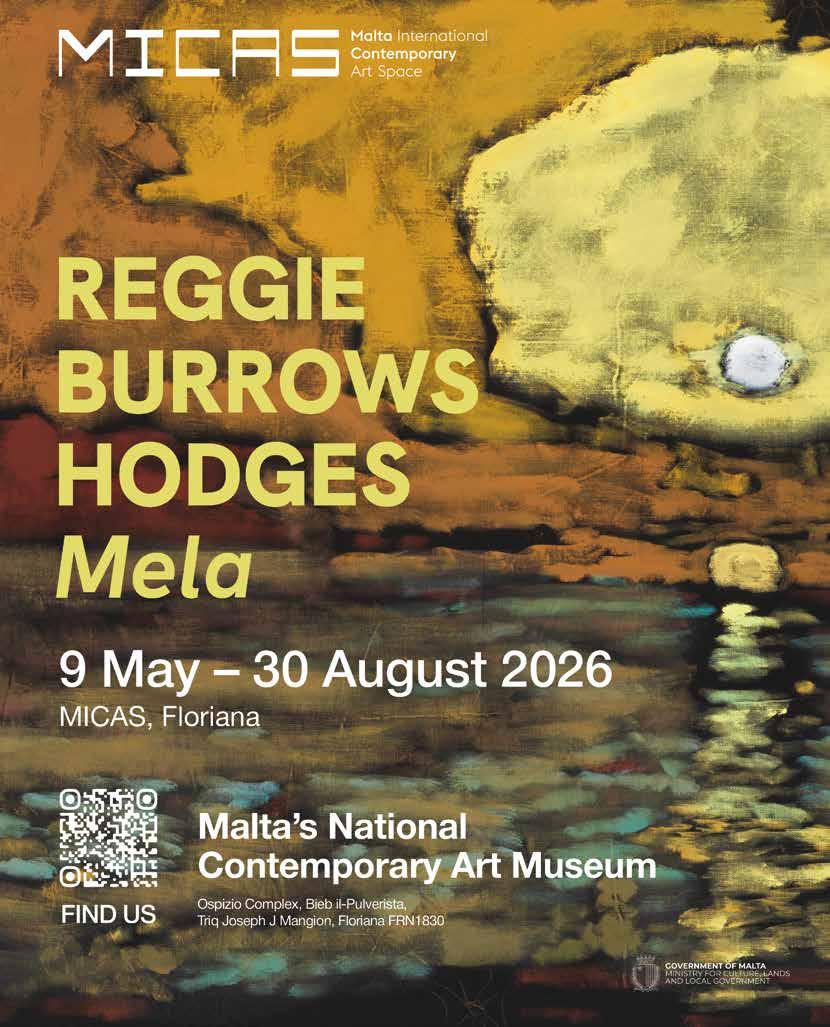
Since its launch at the end of 2024, the Malta International Contemporary Art Space (MICAS) has aimed to foreground Malta’s role in fostering contemporary artistic practice. Indeed, it has since hosted artists of international calibre such as the Portuguese visual artist Joana Vasconcelos as well as the painter Reggie Burrows Hodges, whose work will be exhibited until 30 August. Here, REBECCA ANASTASI speaks to Chairperson, PHYLLIS MUSCAT, as well as Artistic Director, EDITH DEVANEY, about MICAS’s mission to recentre Malta as a “site of contemporary cultural production”.
At the end of 2024, the Malta International Contemporary Art Space (MICAS) opened its doors with a widely-praised inaugural exhibition: that of the work of Portuguese visual artist Joana Vasconcelos, whose large-scale installations have also been hosted within the halls of the Royal Academy of Arts in London, Grassi Palace in Venice, and the Thyssen-Bornemisza National Museum in Madrid. An Officer of the Order of Arts and Letters, granted by the French Ministry of Culture, and founder of Atelier Joana Vasconcelos, the artist was in Malta to introduce her work
to the island, including Tree of Life, a first for the country’s contemporary art scene.
Positioning Malta at the heart of the international artistic zeitgeist, while opening opportunities for engagement with renowned work from across the globe, is central to the mission of MICAS. “Malta is often perceived within dominant cultural narratives as a Baroque island – the architectural legacy of the Knights and Caravaggio’s brief but influential presence are two major reference points,” says Phyllis Muscat, the entity’s Chairperson. However, “this heritage-centric identity has privileged a singular
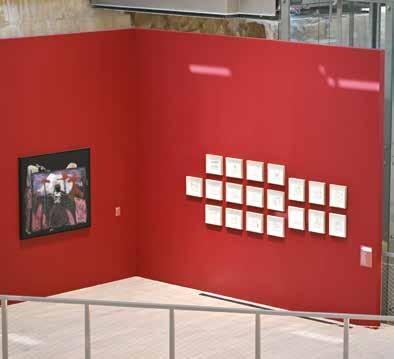
Reggie Burrows Hodges exhibition. Courtesy of MICAS. Photo: Roberto Goodman
epoch at the expense of broader temporal and aesthetic pluralities. As a result, Malta’s evolving role as a site of contemporary cultural production has often been marginalised, while the absence of regular engagement with contemporary international practices weakens the ecosystem for both artists and audiences,” she explains.
To remedy this gap – and concomitant with a “broader state commitment to developing the visual arts within the national framework”, Ms Muscat continues –MICAS aims to engage the public through world-class exhibitions, as well as position Maltese artists at the nexus of global practice.
“MICAS believes that its artistic programme should match high standards and foster international and local collaborations, aiming to be a leading contemporary art institution on the global stage,” says its Artistic Director, Edith Devaney, who for 20 years had occupied the position of Senior Curator at London’s Royal Academy of Arts. “By selecting artists with an established international reputation, MICAS also encourages international artists to engage deeply with Malta’s culture and the specific site where their work will be placed,” she asserts.
Ms Muscat concurs: “We have traced an exciting narrative arc so far: opening with the grandiose, larger-than-life works of the acclaimed artist Joana Vasconcelos, paying tribute to the late Maltese artist Raymond Pitrè, showcasing the works of Vince Briffa, Anton Grech, Joyce Camilleri, Austin Camilleri, Caesar Attard, and Pierre Portelli,” the Chairperson explains. Moreover, MICAS has brought to the island “the secondever European showing of works by the great American
modernist and colourist Milton Avery, together with responses from major contemporary artists Henni Alftan, Harold Ancart, Andrew Cranston, March Avery, Nicolas Party, Gary Hume, and Jonas Wood,” she attests.
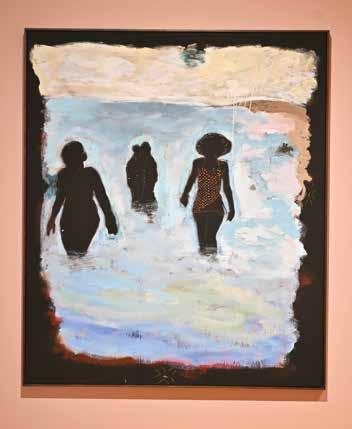
Notably, and until the 30th of August, the space is hosting the work of California-born painter, Reggie Burrows Hodges, who will be showcasing 30 of his works across the four floors of MICAS, in an exhibition entitled Reggie Burrows Hodges: Mela
“Reggie Burrows Hodges visited MICAS back in 2024 when the museum was not even yet complete, and he decided that he would establish a studio here to create work for a solo exhibition,” Ms Devaney explains, stating that the exhibition itself was forged as a result of “institutional trust and personal commitment”.
“When Hodges agreed to work with MICAS, the museum was still under construction. He had not yet seen the finished galleries. Like several other artists who committed to the early programme, his participation required a considerable leap of faith. MICAS’s exhibition team also worked hand-in-hand with Hodges in preparing the galleries for his exhibition and cataloguing the works for the Skira-MICAS publication,” Ms Devaney says.
Burrows Hodges was, indeed, invited to “inhabit the islands and encounter our history and society, and this is what he did,” the Artistic Director continues. In so doing, he has produced a “body of work that is deeply imbued with his experience and discovery of Malta. It is precisely this beauty – the application of pigment, the sensitivity of Reggie’s palette, and the fearless scale of
MICAS Chairperson Phyllis Muscat. Photo: Courtesy of MICAS
MICAS Artistic Director Edith Devaney. Photo: Sean Mallia
the paintings – that envelops the viewer both visually and emotionally.”
Fundamentally, the Artistic Director insists, MICAS’s “exhibitions are ultimately the product of our search for excellence. Our programme should be as strong as any programme that would be delivered in London, Paris or New York. This commitment to excellence applies both to bringing international artists to Malta and to showcasing Maltese artists.”
In addition, says its Chairperson, the entity is committed to fostering a rooted cultural engagement among the Maltese public, taking on a more educational role. “Coupled with these artworks were annual conferences focusing on contemporary art, its role in improving our lives and modern society, and educational activities,” Ms Muscat says.
Indeed, since 2025, MICAS has hosted open weekends to encourage visitors to appreciate the architecture of the space, as well as tailored programmes and outreach with schools and universities, with the first educational symposium set to take place this summer. “These pathways provide layered access to the location’s complex history, and meaningful engagement with contemporary art for wider, more diverse audiences than traditional museum programming typically reaches,” Ms Muscat explains.
“Our experience so far is that we have seen people of all walks of life, both Maltese and non-Maltese, enjoy the space at MICAS. Unlike many museums and their ‘cubelike’ presentations, the spatial layout at MICAS combines
outdoor spaces and its tiered internal galleries to give visitors a way of discovering contemporary art at their own speed and leisure,” the Chairperson says. Elaborating, its Artistic Director also underscores how best to experience the architecture and exhibits of the space.
“Visitors should make a MICAS visit one in which they have time to absorb the architecture, its connection between past and present, the space inside and how the light hits the ground from the window of the Barbara Arch,” she says. Visitors should then “encounter each single work gently, taking time to go over the textures and the subject matter of the paintings before their eyes – maybe even returning to each of them as they make their way back up from the bottom floor,” she highlights, concluding.
For more information on MICAS and its upcoming events, visit https://micas.art. The space offers free admission on Sundays, when visitors can also join a complimentary guided tour of the exhibition at 11.00am.
Reggie Burrows Hodges exhibition. Courtesy of MICAS.
Photo: Roberto Goodman
Reggie Burrows Hodges exhibition. Courtesy of MICAS.
Photo: Roberto Goodman
GOZO: MORE THAN A VISIT, A PLACE TO EXPERIENCE
Small in size yet rich in character, Gozo offers visitors a slower, more immersive Mediterranean experience shaped by history, sea, food and village life.
There are places you visit, and there are places that quietly stay with you. Gozo belongs to the second kind. Just a short ferry crossing from Malta, the island feels close enough to reach with ease, yet distinct enough to offer a complete change of rhythm. The journey across the channel already gives a hint of what lies ahead: open sea, views of Comino, the outline of Mġarr Harbour and, beyond it, an island shaped by history, faith, food, village life, and a natural sense of calm.
Gozo is often referred to as Malta’s sister island, yet anyone who spends time here quickly discovers a destination with an identity,
Għar Mixta. Photo: Charlene Guichard
rhythm and character of its own. It is smaller, quieter and more rural, yet full of life in ways that are not always obvious at first glance. Its charm is found in the contrast between stillness and celebration, between early morning swims and lively village feasts, between silent valleys and squares filled with music under the summer sky. This is why Gozo deserves more than a brief visit. A day trip may offer a glimpse, but a stay of a few nights allows the island to reveal itself properly.
The heart of Gozo beats in Victoria, the island’s capital. Here, narrow streets, shops, churches, cafés, and cultural spaces come together around the historic Cittadella. Rising above the town, the Cittadella remains one of Gozo’s defining landmarks, a fortified city that has watched over the island for centuries. From its bastions, the view opens out in every direction, taking in villages, countryside, church domes, and the sea. It is one of those places where Gozo’s compact size becomes part of its magic, as the whole island seems to gather into one sweeping panorama.
Yet Gozo is not only about its main landmarks. Much of its appeal lies in the way discovery happens naturally. A short drive or walk can lead to a quiet chapel, a valley, a coastal path or a village square where life carries on with its own familiar pace. Lunzjata Valley, for example, offers a rural retreat between Victoria and Kerċem, with fields, old stone walls and a sense of shade and shelter. Ta’ Pinu Sanctuary, standing in the open countryside near Għarb, offers another kind of pause, whether one visits for prayer, architecture, reflection or simply to admire its setting against the landscape.
For many visitors, Gozo’s coastline is one of its
strongest invitations. The island is full of beaches, bays, coves, and cliffs, each with its own mood. Ramla Bay is among the best known, loved for its wide stretch of red sand and open views. San Blas, smaller and more secluded, carries a wilder appeal, reached by a steep path that helps preserve its peaceful atmosphere. Ħondoq ir-Rummien and Daħlet Qorrot offer clear waters and a more local seaside feeling, while Mġarr ix-Xini, tucked at the end of a narrow inlet, has a quiet drama that makes it memorable.
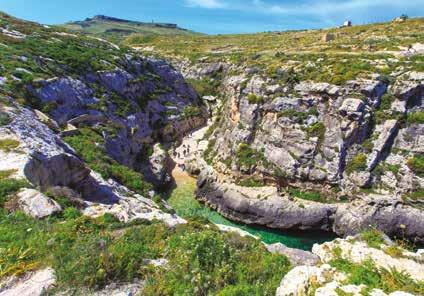
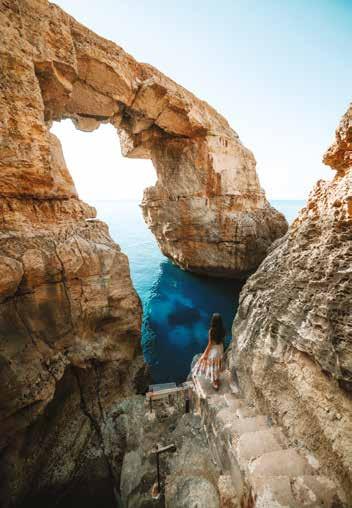
Then there are the rocky places, where Gozo feels carved by sea and time. Dwejra remains one of the island’s most striking coastal areas, with its inland sea, cliffs and sunset views. Wied il-Għasri, a narrow inlet reached by steps cut into the rock, feels almost hidden from the world. Xwejni and Qbajjar bring together coastal swimming spots, traditional salt pans and wide skies, especially beautiful when the light begins to soften. Around Xlendi, rocky ledges, coastal walks and views from the tower create a landscape that can shift from leisurely to dramatic within minutes.
To see Gozo properly, one should also take to the water. A boat trip around the coast opens up a different perspective of the
Festi. Photo: Daniel Cilia
island. From the sea, cliffs rise with greater force, caves and inlets become more visible, and hidden swimming spots feel even more special. Some trips explore Gozo’s own shoreline, while others continue towards Comino, with its luminous lagoons and open waters. Whether it is a short sightseeing tour, a private charter, a family outing or a sunset cruise, time at sea brings a sense of freedom that belongs naturally to a Gozo holiday.
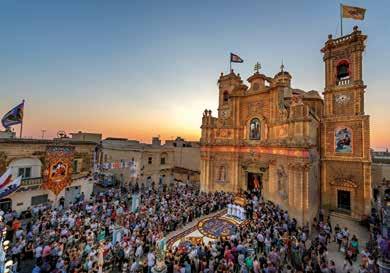
Summer gives the island a particularly vivid energy. Long days are made for swimming, snorkelling, boat trips, kayaking, paddleboarding, and lazy hours by the water. Evenings bring another rhythm altogether. Village feasts fill the season with band marches, decorated streets, church celebrations, fireworks, and a strong sense of community. These are not performances staged only for visitors. They are living traditions, rooted in local devotion and village pride. For those staying on the island, attending a festa is one of the best ways to feel Gozo’s spirit from within.
Beyond the feasts, Gozo’s calendar offers concerts, openair events, food festivals, art exhibitions, theatre, opera, traditional dinners, and family activities throughout the year. Summer nights are especially active, with music in village squares, harbour settings, cultural venues, and historic spaces. Autumn brings opera and a more refined cultural tempo, while winter has its own charm through Christmas events, Carnival and quieter countryside days. Easter, too, has a deep presence on the island, with processions and traditions that reflect Gozo’s religious and cultural identity.
Food is another essential part of the experience. Gozo’s flavours are rooted in the Mediterranean, in seasonality and in the simple pleasure of eating well. A day by the sea may call for ħobż biż-żejt, the much-loved Maltese bread with tomatoes, tuna, olives, capers, and olive oil. A leisurely meal may lead to fresh fish, local cheeselets, sun-dried tomatoes, rabbit, handmade pasta, seafood platters or seasonal fruit. In seaside villages such as Xlendi and Marsalforn, dining close to the water becomes part of the holiday mood, particularly in the evening when lights shimmer across the bay.
Still, Gozo’s greatest luxury may be space. Space to slow down, to wake early for a swim, to follow a country path, to watch the sunset from Dwejra or Ta’ Ċenċ, to sit quietly in a church, or to wander through a village. The island has embraced modern life, yet it has not lost its instinct for pause. Here, the beach, the countryside and the village square are never far away.
This is what makes Gozo more than an excursion. It is a destination for those who want their holiday to have variety without rush. One day may be dedicated to history and culture, another to beaches and boat trips, another to food, villages and coastal walks. Families, couples, solo travellers, divers, hikers, photographers, culture lovers, and those simply seeking rest can all find their own version of the island.
Gozo does not need to be hurried. In fact, it is best understood slowly. Stay long enough to see the morning light over the sea, the afternoon glow on limestone, the evening life of the squares, and the silence that returns after sunset. Stay long enough for the island to become more than simply a place on your itinerary. In Gozo, the real discovery begins when you give yourself time.
Wied il-Għasri. Photo: Anthony Grech
Wied il-Mielaħ. Photo: Nathalie Wanders
EXPLORING MALTA BENEATH THE SURFACE
A new six-part documentary series, Submerged World, showcases the shipwrecks, marine life and hidden heritage that make Malta one of the Mediterranean’s most remarkable diving destinations.
You could probably recognise a picture of Malta easily – the spires and domes of the Valletta skyline, the sun sinking slowly below the horizon in Golden Bay, or even some village feast with exquisite papier-mâché saints and whirring catherine wheels in tow. But some of the islands’ most remarkable treasures remain hidden beneath the surface of the Mediterranean, beckoning visitors to heed their call.
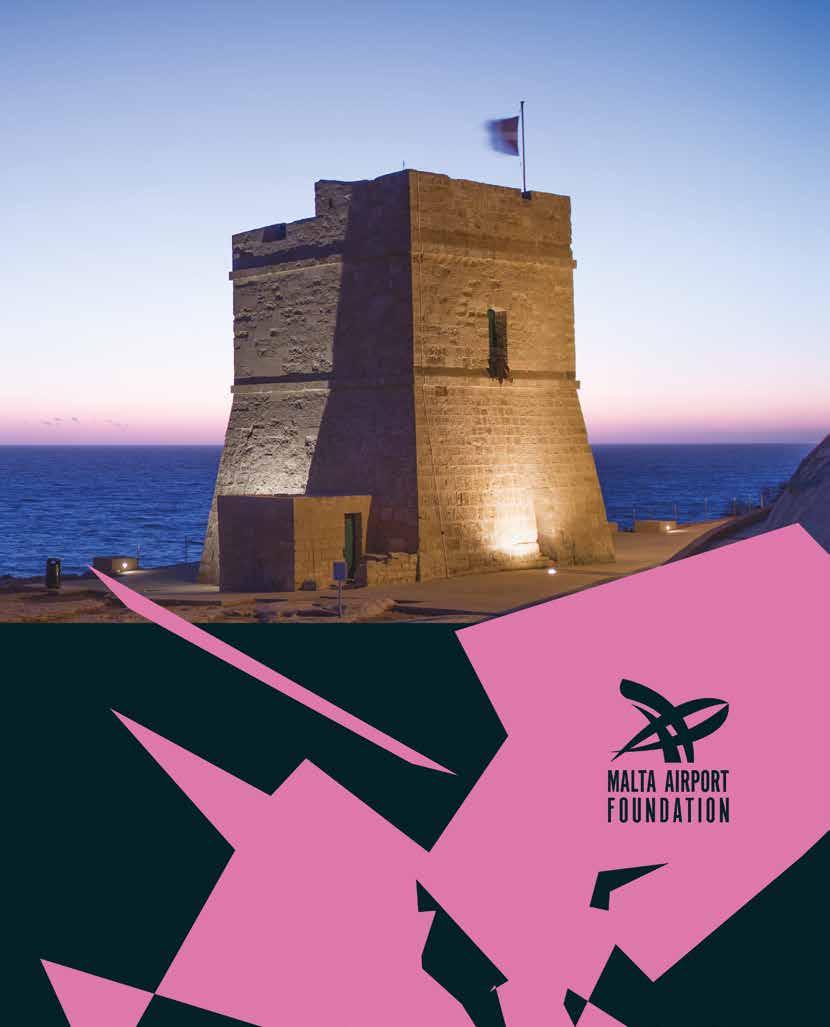
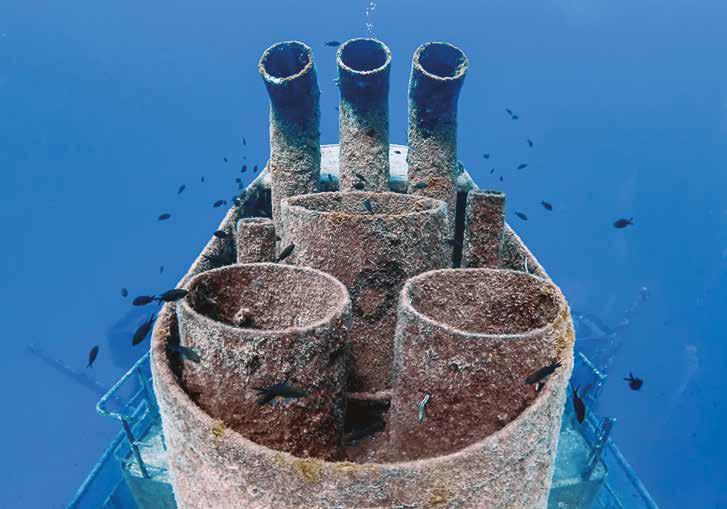
Submerged World, a new six-part documentary series produced by the Malta Airport Foundation, Monolith Productions and marine biologist Professor Alan Deidun, invites viewers to take their seaside adventure beyond the beach and discover a different side of Malta. Combining history, marine life and
Um El Faroud. Photo: Rob Atherton
underwater exploration, the series explores some of the country’s most renowned wreck diving sites, opening them up not just to diving enthusiasts but to those who may never have the opportunity to dive there themselves.
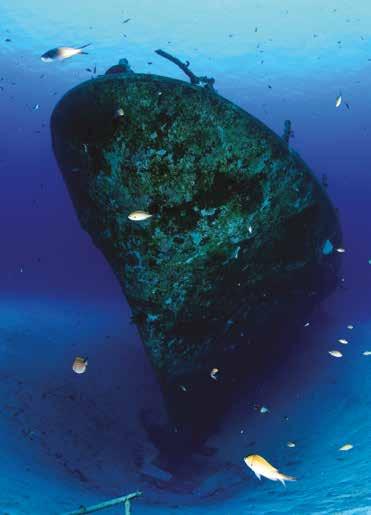
Some of the sites explored in the series include the Um El Faroud – the fuel tanker marked by tragedy that was scuttled in 1998, the HMS Maori – the World War II destroyer involved in the sinking of the Bismarck, and even the humble Rożi – the loyal tugboat now thriving in its second life as an artificial reef. Other episodes cross the channel into waters farther afield, exploring naval vessels later turned ferry boats MV Cominoland and the Imperial Eagle, and the P31 – a former minesweeper scuttled into a shallow wreck for the enjoyment of seasoned divers and professionals alike.
The welfare of Malta’s maritime environment is an area the Malta Airport Foundation has made a concerted effort to address, which is why documenting these unique intricacies of our underwater heritage made the project so dear to the foundation.
The chief guiding principle behind the series is to showcase the depth of the riches Malta has to offer to professional divers and the steadily growing niche that they represent. But a welcome consequence has also been an opportunity to open up a slice of cultural heritage that is not immediately accessible to everyone who may wish to see it.
Despite the sea’s insistence on hiding away these wrecks for itself, these six documentaries take viewers to their decks regardless, exploring their rich histories and how, despite their apparent decay, the husks of these once towering symbols of industry and military prowess have adopted a more peaceful second life as habitat for the lush marine life in the area. Submerged World delves into the eccentricities of some of the underwater wildlife that makes a home among these wrecks, particularly species known for their close interaction with divers.
Wreck diving sites are in and of themselves a relatively modern addition to our marine ecosystem that have the potential to be a force for positive change in our seas. Because of the nature of their structure, scuttled wrecks that are transformed into artificial reefs become a hotbed for marine biodiversity, attracting a variety of aquatic wildlife which ultimately make it their home.
On a barren seafloor, an artificial reef is like an oasis in the desert. And given the extent to which human activity is the cause of so much environmental degradation in the sea, scuttled vessels are one of the few opportunities mankind has to give something back.
The conclusion of the Submerged World project is both satisfactory and somewhat bittersweet, as the documentaries’ producer, Pedja Miletic, unfortunately did not live to see its completion. An award-winning film producer and renowned diving enthusiast, Pedja brought all of his passion and expertise to the project, working hand-in-hand with the foundation to create Submerged World. His commitment to documenting the beauty of Maltese waters will not soon be forgotten.
Submerged World is available in both Maltese and English and includes subtitles in both languages for enhanced accessibility. All of the documentaries are available here: youtube.com/maltaairport
P31. Photo: Toni Palermo
ARTS & CULTURE
A CUSTODIAN OF MALTA’S THEATRICAL SOUL
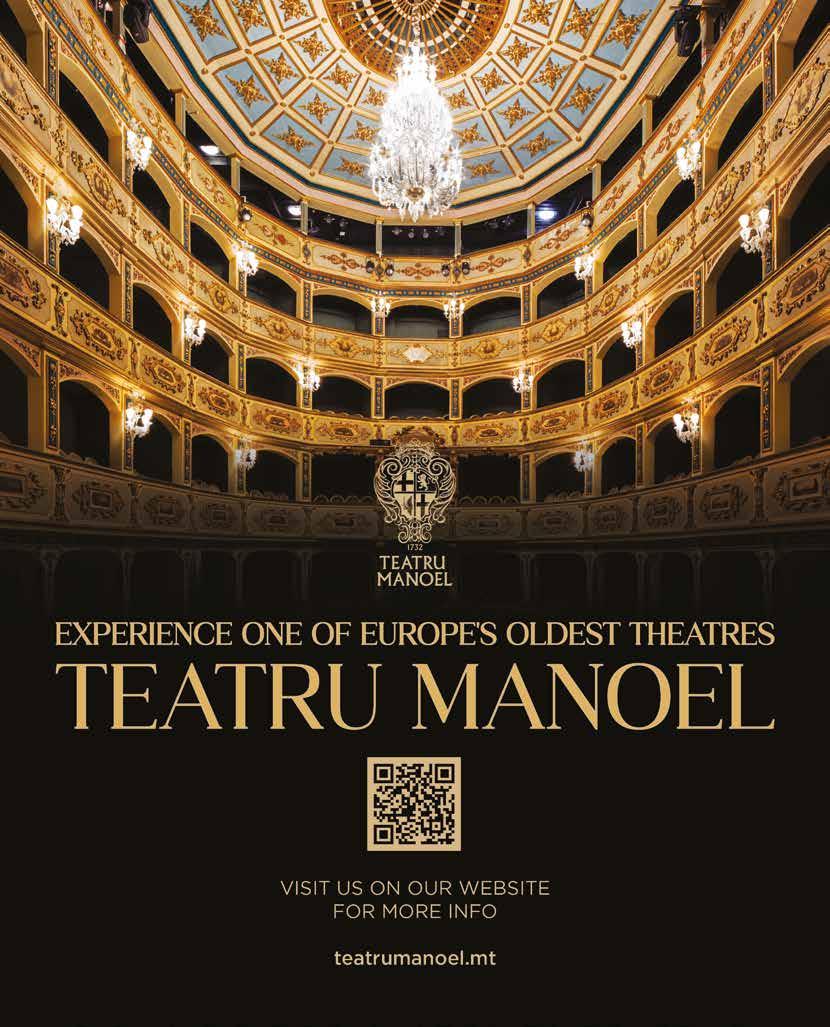
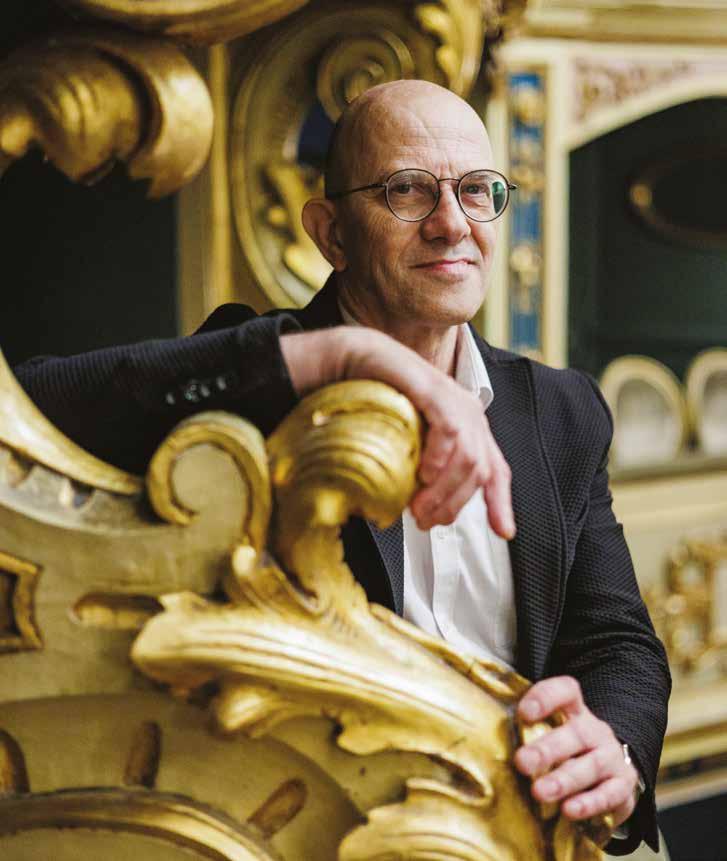
Tucked away in the historic streets of Valletta lies a true jewel: one of the oldest working theatres in Europe, Teatru Manoel. Stepping through the doors of this spectacular Baroque venue is an experience in itself, and there is perhaps no better guide than its Artistic Director, ADRIAN MAMO. Bringing a unique perspective forged by his dual background as an architect and set designer, he speaks to SARAH MUSCAT AZZOPARDI about the vibrant cultural hub, where history and contemporary art come together.
Photos: Inigo Taylor
“What fascinates most people is that Teatru Manoel was born not out of vanity, but out of generosity,” begins Artistic Director Adrian Mamo, referencing the historic theatre’s origins.
Commissioned by Grand Master António Manoel de Vilhena in 1731, it was conceived as a teatro publico for the people of Malta. “Up until the 17th century, theatres were only built within grand palaces and were restricted to royalty and the aristocracy. Therefore, this was one of the first ever theatres built as an independent venue, open to the public. That idea – of theatre as a civic and cultural gift – still feels remarkably modern today,” he maintains.
The Manoel’s survival through centuries of turbulent history, including the heavy bombardment of Valletta during World War II, has given it a poignant place in the hearts of the Maltese people. For Adrian, this connection is deeply personal. “My own grandfather worked at the Royal Opera House, situated near City Gate, as a hair and make-up artist before it was destroyed during the war. I grew up very aware that theatres are not simply buildings; they are repositories of memory. Teatru Manoel survived, and in many ways, it became a custodian of Malta’s theatrical soul.”
Visitors taking their seats in the historic auditorium are immediately struck by its opulence. Given his architectural background, Adrian is acutely aware of how the physical space shapes the experience.
“I think the Manoel teaches you that architecture is never passive,” he notes. “The building itself performs. Unlike many large opera houses, Teatru Manoel creates an extraordinary closeness between performer and audience. The Baroque horseshoe auditorium, the gilded
boxes, the timber structure, the candlelit proportions –all of these elements shape the emotional experience before a single note is played.”
For those taking a tour or attending a show, the Artistic Director suggests paying attention to the venue’s lesserknown quirks. “One of my favourite details is actually the timber itself. So much of the Manoel’s warmth –acoustically and visually – comes from wood, and when you spend enough time here, you begin to understand how alive and welcoming the material still feels after centuries,” he shares.
He also advises visitors to cast their gaze upwards. “Many are understandably captivated by the stage, but the painted ceiling, finished in graded shades of cerulean to give the illusion of a dome, is spectacular. Also notice the rhythm of the boxes – each comes with its own mirror for spying on other boxes! It is an extraordinary example of theatrical architecture designed to heighten anticipation and spectacle,” he smiles.
Certainly, maintaining a nearly 300-year-old building while running a world-class, modern performance programme is no easy feat, he continues, viewing it as a continuous balancing act between conservation and vitality.
“A historic theatre cannot become a museum piece frozen in time; it has to remain alive,” he says. “My architectural background makes me tend to think in layers. You respect the original fabric, but you also acknowledge that every era leaves its mark. The challenge is integrating modern technology –mechanisation, climatisation, lifts, and fire systems – in ways that are sensitive and reversible.”
Ultimately, Adrian believes the best form of preservation is cultural relevance. “If audiences continue to feel
A historic theatre cannot become a museum piece frozen in time; it has to remain alive.
ownership of the Manoel, and if young artists continue to dream of performing here, then the building remains relevant and cared for, not simply admired from a distance.”
When it comes to programming, the Artistic Director’s philosophy is rooted in dialogue: between the past and present, and the local and international. The Manoel serves as a proud platform for local talent – including the Malta Philharmonic Orchestra, ŻfinMalta and Teatru Malta – while regularly welcoming top-tier international productions.
“Malta has always existed at a cultural crossroads in the Mediterranean, so I think the Manoel should reflect that openness,” he says. “Ideally, international visitors discover contemporary Maltese creativity here, while local audiences encounter global artistic perspectives.”
“TOI TOI, the theatre’s dedicated learning and participation programme, is looking firmly to the future with a multi-generational project to celebrate our 300th anniversary, named Vision 2032, led by Kate Fenech Field. Through a holistic, accessible approach to educational theatre programming, TOI TOI helps to develop our audience from babies to senior citizens,” he adds.
“My hope is that the Manoel continues to evolve without losing its soul,” he reflects. “Historic theatres survive not simply because they are beautiful, but because people continue to gather in them to share stories, music and emotion. That human encounter is timeless.”
THE ARTISTIC DIRECTOR’S MUST-SEE PICKS
Planning your visit? These are Adrian’s hand-picked selection of productions from the theatre’s vast calendar of around 50 events.
“What I always encourage visitors to experience is variety, because the Manoel reveals different facets of its personality depending on the performance,” he says.
NIGHT AT THE OPERA: “The theatre’s proportions and acoustics are exceptionally suited to opera – there is something almost transportive about hearing the human voice in that space. In January 2027, Festivals Malta will present Handel’s Giulio Cesare in Egitto, and in March we will be staging Gounod’s Romeo & Juliette in collaboration with Malta National Opera.”
INTIMATE CHAMBER CONCERT OR RECITAL: “We are proud to present four concerts by the De Valette Chamber Orchestra, with musicians hand-picked from Europe’s best orchestras. We also have an evening dedicated to Maria Callas in July 2027.”
A CONTEMPORARY MALTESE PRODUCTION: “We will be staging the winning play of the Studio Francis Ebejer Playwriting competition, Il-Madonna tad-Demm u l-Kartapesta by André Mangion, in March 2027.”
ONE FOR JAZZ LOVERS: “In March 2027, the National Agency for the Performing Arts will present a jazz concert dedicated to the music of Antonio Carlos Jobim.”
ANNUAL FAVOURITES: “I cannot fail to mention annual favourites like the Valletta Baroque Festival in January and the Christmas Pantomime, which this year is Peter Pan presented by the Malta Amateur Dramatic Club (MADC). Also, Moveo’s version of Tchaikovsky’s Nutcracker that opens the Christmas season in early December, the Malta Spring Festival in May, and the International Arts Festival in June. Our annual musical production this season will be Peter Quilter’s End of the Rainbow based on Judy Garland's last days in London.”
CLASSICS: Oscar Wilde’s Salome will be staged in November; H.G. Wells’ The War of the Worlds – part of the TOI TOI Classics series, written by Rhum+Clay with Isley Lynn – and Dostoevsky’s Grand Inquisitor will be staged in April.
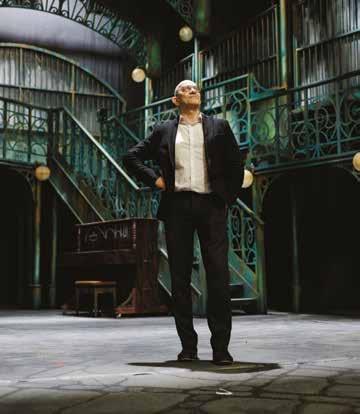
Adrian Mamo stands on the set of the musical Amelie (staged in May 2026), designed by London-based set designer Matthew Cassar.
UNCOVER THE STORY AT THE MALTA BOOK FESTIVAL
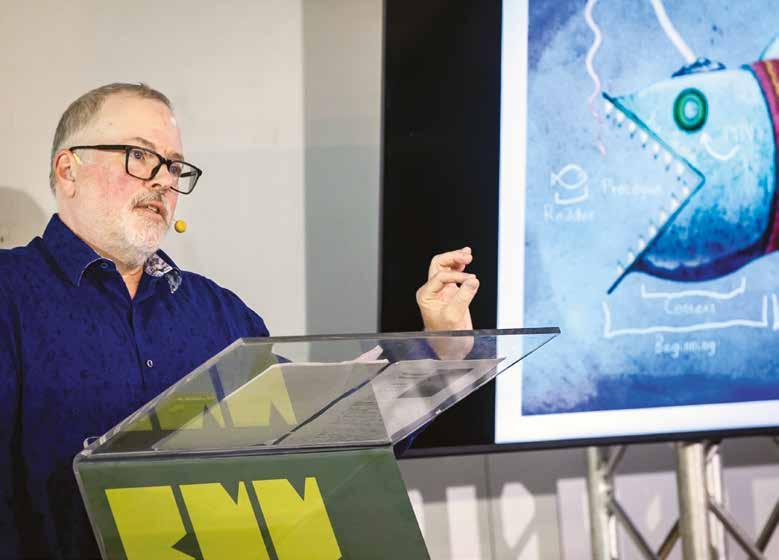
Acclaimed and bestselling US author Jeff VanderMeer – of ‘Annihilation’ fame – delivered an interactive masterclass on creative writing at last year’s edition of the Malta Book Festival
Expecting to attract over 50,000 visitors and featuring a leading literary superstar among its special guests, this year’s edition of the Malta Book Festival invites you to ‘uncover the story’ meant just for you.
The Malta Book Festival, organised by the National Book Council (NBC), is the leading celebration of literary culture on the island, taking place this year between 4 and 8 November at the Malta Fairs and Conventions Centre, Ta’ Qali.
This year, the festival will run under the theme ‘Uncover the Story’, inviting visitors to explore the world of literature and discover the perfect book to fit them like a glove.
Browse the many stalls dedicated to local publishers and booksellers, and you’re likely to emerge clutching a beautifully designed volume on Maltese heritage and
culture, or even a stack of discounted new finds. Whether you’re after unique keepsakes or gifts to take back home, the festival’s varied exhibitors are sure to cater to a wide range of tastes and interests.
Evolving from a more traditional book fair into a bona fide festival over the past decade, this long-running staple of the Maltese cultural calendar is also distinguished by its generous array of events. Featuring talks, discussions, book launches, theatre shows for younger visitors, and much more, the festival also hosts From Illustration to Book – a recurring exhibition celebrating the art of book illustration, organised by NBC in collaboration with Arts Council Malta.
The event also features internationally recognised literary talent, and this year is certainly no exception. For the 2026 edition, the National Book Council will welcome a globally recognised figure in the genre of detective fiction, whose bestselling works have been adapted for film and television over the decades. The NBC will be officially revealing the name of this illustrious guest on 25 June – stay tuned on its online platforms (see below) to find out more in due time. And on 1 September the second special guest will be announced – a rising star of European fiction whose novels have attracted acclaim from the likes of The Guardian, The Observer and the European Literature Network
Both authors will be present at events forming part of the Malta Book Festival’s programme, allowing visitors to interact with leading literary figures in a relaxed and accessible setting.
The festival also caters to individuals and families keen to enjoy a day out at a vibrant cultural event whose ‘big tent’ also happens to be situated within a centrally located national park. With food and drink stalls open throughout the day and plenty of comfortable seating available, the festival offers visitors a space to
meet, relax and cool down after making their purchases or attending the many events that make up its packed programme.
Younger visitors are equally well catered for. With events designed especially for them, along with a Sensory Room for visitors on the spectrum, they can feel safe and comfortable no matter when they attend.
More information on the Malta Book Festival will become available online in the months leading up to opening day. To find out more, visit ktieb.org.mt or search for nationalbookcouncil_malta on Instagram and The Malta Book Festival on Facebook.
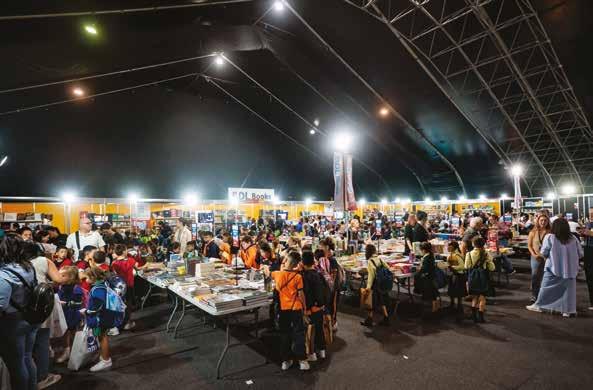
Attracting tens of thousands of visitors from all walks of life, the Malta Book Festival is a crucial part of the island’s annual cultural calendar
WIGNACOURT MUSEUM: A HIDDEN GEM OF HISTORY BENEATH RABAT
Once the Baroque residence of the Knights of St John’s Chaplains, the Wignacourt Museum in Rabat offers a captivating journey through Malta’s religious, artistic and wartime heritage – all built around one of the island’s most sacred Christian sites.
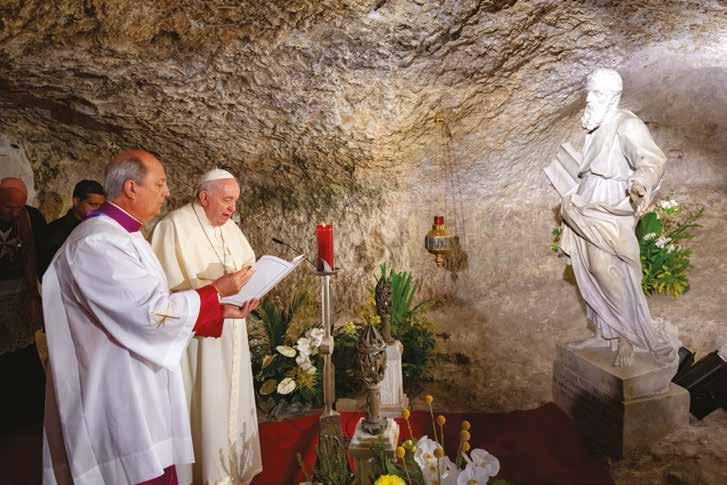
The Wignacourt Museum in Rabat was originally the Baroque residence of the Chaplains of the Knights of St John, built under the reign of Grand Master Aloph de Wignacourt (1601-1622). It forms part of a Pauline complex, as it was designed with a direct passage to St Paul’s Grotto – the cradle of Christianity in Malta. The
is the place where St Paul is believed to
have founded the island’s first Christian community. He was shipwrecked in Malta in 60AD while travelling from Crete to Rome to stand trial before Emperor Nero. During his three-month stay, St Paul is said to have lived in this underground cave, located in the ditch of the Roman city of Melite. It is from here that he preached and spread the word of God, thus introducing Christianity to Malta. As a result, the grotto became an important site of worship and pilgrimage. Over
grotto
Pope Francis in St Paul’s Grotto. Photo: Ian Noel Pace – Papal Media
the centuries, many notable figures visited the site, including Pope John Paul II, Pope Benedict XVI, Pope Francis, Inquisitor Fabio Chigi (later Pope Alexander VII), Lord Admiral Nelson, and several others.
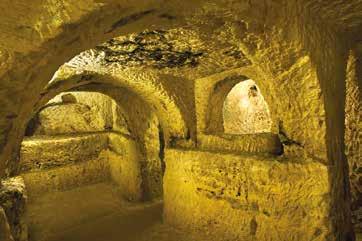
The building, fully completed in 1749, spans three levels. The underground level consists of a labyrinth of Punic, Roman and Christian Hypogea, featuring intriguing architectural elements. As burials were carried out outside city walls for hygienic reasons, this area of catacombs includes a variety of tomb types, such as saddle-backed baldacchino tombs, window tombs, troughless baldacchino tombs, and small loculi. One particularly rare feature is a small agape table, likely positioned near an entrance. These unique tables were used for ritual meals, which resembled celebrations following a burial.
This subterranean complex also includes World War II shelters, comprising two main corridors and around 50 rooms. With the onset of hostilities during World War II, shelters were urgently needed for both Rabat residents and refugees from across the island. The government allocated the main corridors, while families paid to have private rooms dug with pickaxes. These rooms remain numbered, and many still show indentations in the walls where simple oil lamps were placed, as electricity was not yet available.
The museum’s ground floor consists of a corridor with several rooms on one side – used as minor and
service rooms during the time of the Knights of St John. Today, most of these rooms are used as offices, while others house part of the museum’s collections. On the opposite side is a spacious garden, currently home to a restaurant. Nearby is an area that formerly included the refectory of the Chaplains of the Order and an oven, which during World War II provided more than 2,000 loaves of bread for the people of Rabat. The corridor has since been repurposed to host exhibitions, workshops and various artistic events.
The first floor, once the living quarters or piano nobile of the Chaplains, now houses an impressive picture gallery featuring works by Mattia Preti, Antoine Favray, Francesco Zahra, and other Maltese and European artists. The museum also boasts a collection of 17thand 19th-century Spanish, Italian and Maltese silver; a unique wooden altar used for celebrating Mass aboard the galleys of the Order of the Knights of St John; a collection of old relics and reliquaries, sculptures in alabaster and bronze, including a medallion by Alessandro Algardi; as well as maps, coins, prints, and rare books. The centrepiece of the first floor is the Baroque chapel, used in the past for the private devotion of the residing Chaplains.
Whether your interest lies in religion, history, art, architecture, or archaeology, you’ll find something fascinating within the Wignacourt Museum complex.
www.wignacourtmuseum.com
Catacombs
Chapter Hall used by the Chaplains of the Order
FOOD & DRINK
THE ART OF MALTESE CHEESEMAKING
From handcrafted ġbejniet (cheeselets) to distinctive artisan cheeses, Malta’s cheesemakers are bringing fresh energy to one of the island’s oldest culinary traditions, as TIM DIACONO discovers through conversations with the people shaping the sector today.
SIGGIEWI SHEEP PENS TO MICHELIN-STARRED PLATES
Traditional Maltese cheesemaking is reaching new audiences through Ta’ Żeppi Farm, whose products now appear on the menus of Michelin-starred and recommended restaurants across Malta.
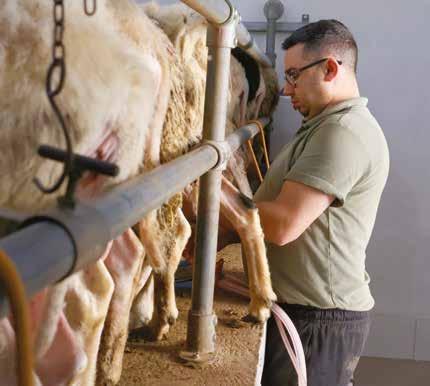
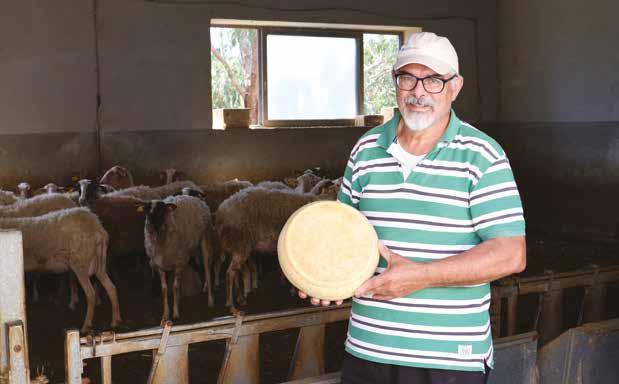
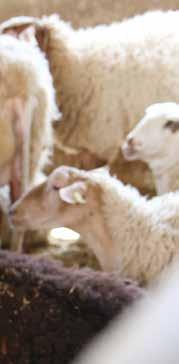
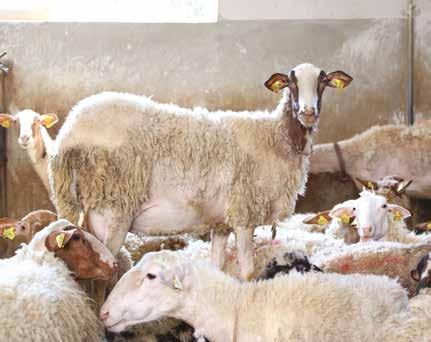
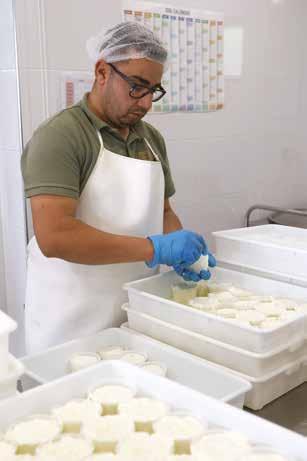
Nestled in the village of Siġġiewi, the sheep farm is run by Joseph Vassallo, who employs a small team of herdsmen to tend a flock of around 250 sheep, milk them and transform the milk into a range of ġbejniet (cheeselets), pecorino and artisanal cheeses.
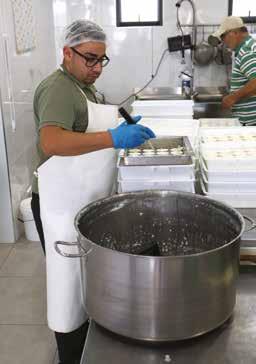
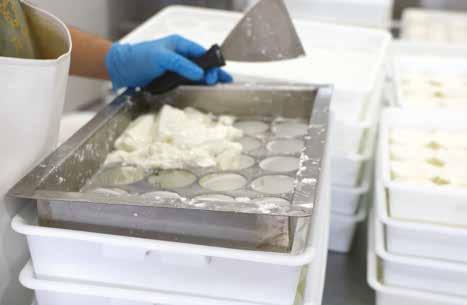
Joseph is very much a hands-on owner and personally crafts many of the cheeses at Ta’ Żeppi, typically using traditional methods. He is assisted by Tony Farrugia, a cheesemaker and retired chef who has been working at the farm for around five years .“From start to finish, everything is done by hand here, and the only machine we use is a small compressor to milk the sheep,” Tony explains.
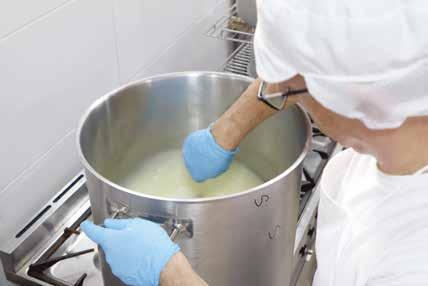
“The milk is filtered and treated with salt and rennet to create cheese, while the leftover whey is used to make ricotta,” he continues.
Managing the flock is a delicate process. The sheep are separated into four groups: those
Joseph Vassallo. Photos: Charles Falzon
From start to finish, everything is done by hand here, and the only machine we use is a small compressor to milk the sheep.
ready for milking, those due to be impregnated by a ram, pregnant ewes, and those that have recently given birth alongside their lambs.
“In the past, people would stop milking sheep at L-Imnarja at the end of June and start again on Victory Day in early September,”
Tony explains. “Sheep aren’t usually milked during the final month of pregnancy or the first two months after giving birth. Although the milk would still be safe for consumption, it contains colostrum, which helps the lamb grow but gives milk an unpleasant yellowish appearance.”
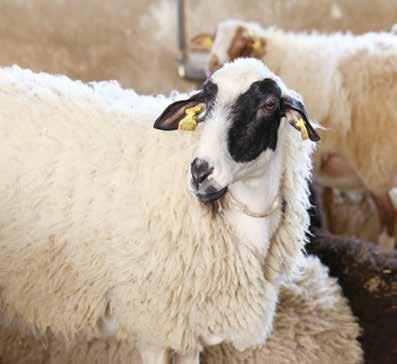
Despite the rustic charm of the work, sheep farming is heavily regulated. Every sheep must be individually tagged for government veterinary inspections and blood tests, while
Tony Farrugia
milk samples are tested every two weeks and even the animals’ drinking water undergoes regular laboratory testing.
Ta’ Żeppi produces everything from traditional ġbejniet and pecorino to more experimental varieties infused with fresh herbs, saffron and paprika. Some cheeses are also aged using the ubriaco method, in which they are soaked in wine for months during the grape harvest season. “We call them ġbejniet fis-sakra – drunk ġbejniet,” Tony laughs.
Nine of the farm’s cheeses won medals at this year’s Agrifair, including four gold awards, a major honour for Joseph and his team.
“Every cheese has its own personality,” he says. “That’s the beauty of artisan cheesemaking. Even if you repeat the exact same process the next day, the cheese will taste
slightly different because the sheep’s diet, the weather and even the season affect the milk.”
The farm’s cheeses now appear on menus at several local Michelin-starred restaurants, something that fills Joseph and Tony with pride.
“You feel a sense of satisfaction that these restaurants are promoting Maltese produce and Maltese herdsmen,” he says. “People see our name on the menu, become curious, and the word spreads.”
For Tony, one particularly memorable dish involved the transformation of a Ta’ Żeppi ġbejna into a delicate sphere paired with ham and served alongside pastizzi pastry. “They’re wizards in the kitchen,” he says.
Ta’ Żeppi’s success is a reminder that traditional Maltese produce still has a vital place in contemporary gastronomy – and can compete at the very highest level.
THE ZEJTUN SCIENTISTS REVIVING MONASTIC CHEESEMAKING .
From parmesan to brie, many of Europe’s bestknown cheeses trace their origins back to medieval monasteries. In a home dairy in the town of Żejtun, two Maltese scientists are drawing inspiration from those centuries-old traditions to create entirely original cheeses of their own.
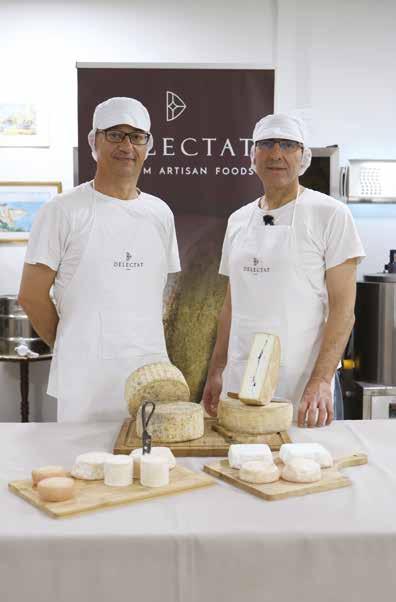
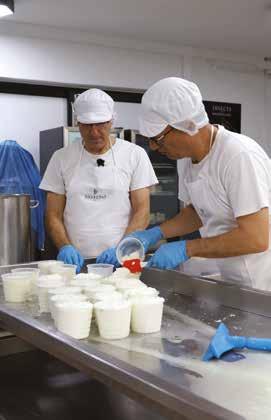
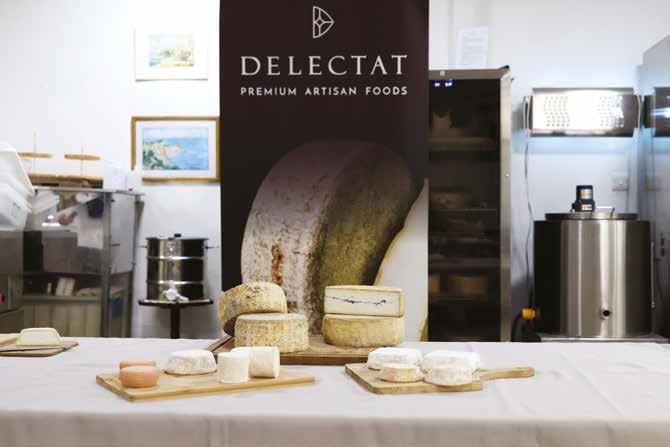
Delectat was founded by food biotechnologist Mark Xerri and rural sciences professor David Mifsud, two childhood friends with a passion for artisan sheep and goat cheeses.
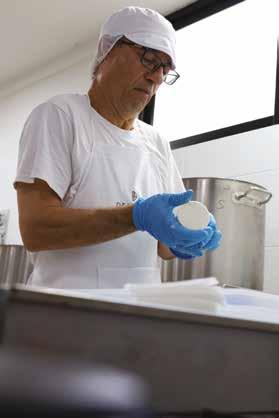
Operating from David’s home dairy, the pair combine local milk, probiotics and scientific research with techniques inspired by medieval monks.
“We researched the methods used in monasteries and the microbes monks unintentionally utilised while fermenting cheese,” Mark explains. “For example, they would dip cheese in whey or wine to remove mould, allowing beneficial microbes to infiltrate and protect the cheese. We’re now applying that process scientifically.”
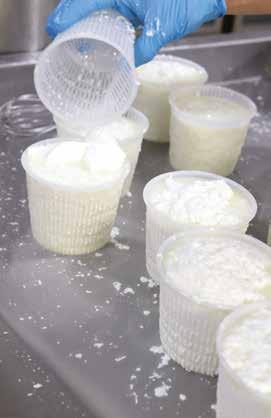
Milk sourced from sheep and goat farms around Żejtun is first tested for dilution, traces of cow’s milk and antibiotics before being pasteurised on site. Rennet is then added to curdle the milk, alongside carefully selected probiotics tailored to each cheese variety.
Selecting these probiotics took years of experimentation. Mark and David isolated microbes from local sheep and goat herds before collaborating with an overseas institute to identify strains best suited for cheesemaking.
The result is a collection of 10 distinctive cheeses named after monastic orders.
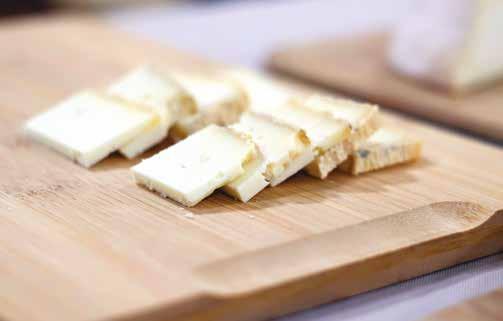
The Franġiskan (Franciscan) is a pecorino-style hard sheep cheese matured for six weeks, while the Benedittin (Benedictine) is a soft sheep cheese with a yoghurt-like flavour.
David Mifsud (L) and Mark Xerri (R). Photos: Charles Falzon
Matured for six weeks, the earthy Ġiżwita (Jesuit) and the Agostinjan (Augustinian) – a hard goat cheese marked by a streak of vegetable ash through its centre – are particularly unusual, since goat milk cheeses are rarely matured for such long periods. “You don’t often come across goat cheese matured for so long because goat milk is usually better suited to fresh cheeses, but we produce two types of hard goat cheese here,” Mark says.
Despite their complex flavours – ranging from truffle notes in the Franġiskan and the Ġizwita’s nutty undertones, Delectat’s cheeses contain no added preservatives or flavourings beyond the probiotic cultures themselves.
After removing the curd to create cheese, Mark and David also heat the remaining whey to produce ricotta using the traditional method from which the product takes its name – literally meaning ‘recooked’. Though labour-intensive and less commercially viable on a large scale, this traditional method produces a ricotta with a richer flavour, prized by food connoisseurs.
We researched the methods used in monasteries and the microbes monks unintentionally utilised while fermenting cheese.
Alongside selling their cheeses and other products through specialised shops and directly to customers, Delectat also hosts cheesemaking workshops and tasting events, allowing visitors to create their own cheese and sample the products together with wine and charcuterie.
The pair also produce sheep butter, sheep yoghurt and the far rarer goat yoghurt. “We don’t add any sweeteners, colours, thickeners, stabilisers or chemical preservatives,” Mark says. “We simply heat the milk, cool it, add probiotics and allow it to ferment naturally.”
Although they continue experimenting with new varieties, Mark and David have little interest in large-scale expansion. Instead, their focus remains on craftsmanship, experimentation and creating cheeses with a distinctly Maltese character – proving that even in one on the world’s oldest culinary traditions, there is still room for invention.
ARTS & CULTURE
FINDING CONTEMPORARY MALTA IN THE STREETS OF MDINA
In the heart of historic Mdina, il-lokal offers a different perspective on Malta – one shaped by contemporary artists, makers and independent creatives.
Most people arrive in Mdina looking for the past.
They come for the silence, the limestone streets polished by centuries of footsteps, the heavy wooden doors and cathedral bells echoing through the old capital’s narrow passageways. Mdina has long existed as one of Malta’s most recognisable postcards: beautiful, cinematic and suspended in time.
Yet tucked quietly among the city’s historic streets is a space focused not on Malta’s past, but on its present. Il-lokal – Maltese for ‘the local’ – is a contemporary shop and creative platform representing over 100 Maltese and Malta-based artists, makers and independent brands. Inside, shelves are lined with handmade ceramics, art prints, jewellery, textiles, and one-of-a-kind objects that feel deeply connected to the island without relying on the usual visual clichés.
The contrast feels intentional. Outside, Mdina tells stories of history and heritage. Inside, il-lokal speaks about the people currently shaping Malta’s cultural identity.
The project was born from a simple but important idea: that local creatives deserved greater visibility and stronger support. In a country where independent artists and makers often work within a small market, il-lokal created a shared space where creativity could be seen, discovered and sustained.
Over time, it has grown into more than a retail concept. For many creatives, it has become a community and a meeting point, somewhere their work can exist alongside others experimenting with craft, design and contemporary Maltese aesthetics.
That sense of care is visible throughout the space. The shop is run by a dedicated team, some of whom are creatives themselves, and conversations tend to flow naturally between products and the stories behind them. Visitors are often introduced not only to what something is, but who made it, how it was created and what inspired it.
There is also something refreshing about the absence of nostalgia.
While many tourist spaces in Malta understandably lean on tradition, il-lokal presents a version of the islands that feels current and evolving. Some pieces subtly reference Mediterranean architecture, folklore or landscape, while others feel minimal, experimental or globally influenced. Together, they reflect a generation of creatives comfortable balancing local identity with contemporary expression.
For travellers, this often comes as a surprise.
Malta’s creative scene tends to exist quietly beneath the surface of its better-known narratives of history, language and tourism. But in recent years, a growing network of designers, illustrators, ceramicists, and makers has been reshaping how local culture is expressed. il-lokal offers a small but meaningful window into that movement.
The experience of visiting also feels different from conventional shopping. People linger. They ask questions. They recognise pieces that remind them of the island’s colours or atmosphere. Sometimes
they leave with something small, a print, a handmade cup, a notebook, but also with a stronger sense of connection to the place they are visiting.
Perhaps that is what makes il-lokal resonate with so many people passing through Mdina.
In a city so closely tied to memory and history, the shop quietly insists that Malta’s contemporary culture matters too. Not only the stories preserved in museums and palaces, but also the ones being created now in studios, workshops and kitchen tables across the islands.
And within Mdina’s ancient walls, that conversation between past and present feels particularly fitting.
il-lokal, Magazine Street, Mdina.
THE SWEET SOUL OF MALTA: PRESERVING A GOLDEN TRADITION, HIVE BY HIVE
LYNDSEY GRIMA speaks to local beekeeper RAY SCIBERRAS about Malta’s deep-rooted relationship with honey, from its ancient heritage to modern sustainable beekeeping.
Photo: Charles Falzon
A chance encounter with a friend’s beehives changed my life completely. From my very first visit, I was bewitched and intrigued by these organised social insects.
Honey is more than a sweet delicacy in Malta, drizzled over breakfast toast or stirred into tea. It is part of the islands’ identity, woven into centuries of history, tradition, medicine, and agriculture.
Before Malta became known for its 300 days of sunshine, crystal-clear beaches and limestone cities, the islands were already famed for their honey production. So much so that the ancient Greeks named the island Melite, which is widely believed to derive from the Greek word meli, meaning honey.
Today, that ancient craft is still alive thanks to passionate beekeepers like Ray Sciberras and his partner Denise Camilleri, who together run Golden Island Ltd. Across Malta, they manage more than 150 beehives, producing award-winning raw Maltese honey alongside beeswax candles, cosmetics and traditional preserves inspired by the islands’ natural landscape.
For Ray, however, the journey into beekeeping began almost by accident. “Back in 2006, the only similarity I had to a bee’s lifestyle was the endless work hours I put into my business as an industrial chemist within the superyacht sector,” he recalls with a laugh. “A chance encounter with a friend’s beehives changed my life completely. From my very first visit, I was bewitched and intrigued by these organised social insects.”
Ray explains that what started as curiosity quickly became his passion. After attending courses both locally and abroad and spending countless hours studying beekeeping books and videos, he realised his growing collection of hives was turning into something much bigger.
“In 2008, I decided to take the plunge and make apiculture my profession,” he says.
Today, sustainability lies at the heart of Golden Island’s philosophy. “The health of the bees always comes before financial gain,” Ray explains. “Without healthy bees, there is no future – not just for honey, but more importantly for biodiversity.”
At the heart of Malta’s beekeeping heritage is the Apis Mellifera Ruttneri; the endemic Maltese honeybee found nowhere else in the world. Adapted over thousands of years to Malta’s hot summers, dry climate and coastal winds, this resilient bee produces honey with a flavour profile unique to the islands.
“The Maltese honeybee is incredibly hardy and perfectly adapted to our environment,” Ray explains. “It can survive extreme heat and forage efficiently even during difficult conditions.”
The bees collect nectar from a rich variety of Mediterranean flora scattered across the islands. Thyme, carob, eucalyptus, citrus blossom, clover, and wildflowers all contribute to the flavour and aroma of Maltese honey.
“You can literally taste the Maltese countryside in every jar,” Ray says. “Each season brings different floral notes depending on what’s blooming.”
Spring is one of the busiest and most rewarding periods for beekeepers. Hive populations expand rapidly as flowers bloom across the countryside. Summer, however, presents its own challenges.
“Malta’s summers are becoming harsher and drier due to climate change,” Ray says. “Longer
You can literally taste the Maltese countryside in every jar. Each season brings different floral notes depending on what’s blooming.
Photo: Charles Falzon
heatwaves and reduced rainfall affect flowering plants, which means bees struggle to find enough forage.”
Climate change has become one of the greatest concerns for beekeepers worldwide, and Malta is no exception. Extreme temperatures, shifting weather patterns and stronger winds all influence honey production and bee health.
“Beekeeping teaches patience and resilience,” Ray notes. “You work with nature, not against it. Every season is different.”
Their hives are strategically placed across various rural areas, such as Mġarr and Xemxija. Archaeological evidence suggests that organised beekeeping on the islands dates back to the Phoenician period between 750 BC and 480 BC, while the Romans and Arabs further developed local honey production techniques.
Several ancient Punic apiaries, known as migbħa, still survive today, while place names such as Imgiebaħ and Wied il-Għasel (loosely translated to Valley of Honey) reflect Malta’s deep connection to honey-making.
“The historical link fascinates people,” Ray says. “When visitors realise Malta’s very name may have originated from honey, they see the islands differently.”
Honey also played an important role during the time of the Knights of St John. Before refined sugar became widely available, honey was used as a natural
sweetener and medicinal remedy. It was commonly given for sore throats, coughs and wound treatment at the Knights’ famed Sacra Infermeria hospital.
Even today, honey remains deeply rooted in Maltese culinary traditions. It is used in classic recipes such as qagħaq tal-għasel, honey rings traditionally enjoyed during festive periods, as well as herbal remedies and homemade infusions.
For Ray, one of the most rewarding aspects of beekeeping is educating people about the importance of bees within the ecosystem.
“Many people fear bees, but once they understand how essential they are for pollination and biodiversity, their perspective changes completely,” he says.
Through agro-tourism experiences, artisan markets and educational initiatives like the Let’s Talk Farming programme for schoolchildren, the couple hopes to inspire greater appreciation for local agriculture and sustainable food production.
Their dedication has not gone unnoticed. In fact, Golden Island has received several prestigious recognitions, including a Gold Medal at the London Honey International Awards and runner-up honours at the Premju Ġieħ l-Artiġjanat Malti (Maltese Artisan Heritage Award).
Yet despite the accolades, Ray insists the real reward comes from the bees themselves. “There’s something magical about opening a hive,” he says. “No matter how many years you’ve worked with bees, they continue to humble and amaze you.”
For consumers wanting to purchase authentic Maltese honey, Ray advises paying close attention to labels and sourcing. “People should look for genuine local producers and raw honey whenever possible,” he explains. “Unfortunately, a lot of imported honey blends are sold cheaply, but authentic Maltese honey has a distinctive flavour, aroma and texture that reflects our islands and nothing beats its taste.”
The work of beekeepers like Ray and Denise shows that traditions are worth preserving – not only for their cultural value, but for the critical role they play in sustaining the natural world.
The quiet hum of bees across the countryside remains a timeless soundtrack to the islands’ history one jar of golden honey at a time.
Photo: Charles Falzon
ARTISAN MALTA
FROM MILITARY CAPTAIN TO MASTER CRAFTSMAN
EDWARD BONELLO meets KEITH JOHN CARUANA, the Maltese artisan reviving a dying craft one stylish leather bag at a time.
What began as a personal passion project has evolved into a distinctive artisanal label, combining heritage craftsmanship, slow fashion and an immersive experience under one roof.
Keith John Caruana, a former military captain whose passion for leatherwork emerged unexpectedly, is the founder of Captain’s Cut – a Maltese atelier offering
visitors a unique opportunity to experience traditional leather craftsmanship firsthand. This interactive approach has become central to the brand’s growing appeal among both locals and international visitors.
The unmistakable scent of leather greets customers the moment they step into one of the Captain’s Cut shops, creating a memorable multisensory experience. Captain’s Cut operates two boutique stores: one in Valletta’s St Mark Street and another
Photos: Inigo Taylor
in Rabat’s St Augustine Street. Both spaces have been carefully restored to honour their historical significance.
Rather than modernising the premises, Keith John and his collaborators restored them as traditional casa bottega environments, inviting visitors into what feels like a living museum of Maltese craftsmanship.
“We want our shops to take visitors on a wonderful journey of authentic craftsmanship and a love for beauty. Every item on display, every last detail, is the product of a passion for the art of leather-making, encapsulating the untold heritage of the millennia-old craft,” Keith John explains.
To the sound of artisanal tools striking brass hardware, customers can craft their own belt while they wait, selecting the leather, hardware, stitching, and personalised engraving themselves. For those seeking a deeper immersion, Captain’s Cut also offers full leatherworking workshops where participants can become “craftsmen for a day”. Guests are guided through the history of leatherworking over a glass of wine before creating and taking home their own handcrafted item.
The workshops can be booked online or directly in-store, transforming the shopping experience into something far more personal and memorable.
“It’s an authentic, multisensory experience built on pride in what we do, and an uncompromising commitment to authenticity and quality,” Keith John affirms.
Keith John’s passion for the craft was born by chance during his previous life training with the Italian Navy in
Tuscany, one of the world’s most renowned leathermaking regions.
“Florence is the leather capital of the world, and one encounter introduced me to the fascinating world of leather-making. One day, while walking through the centre of Florence carrying a trusty leather briefcase inherited from my grandfather, a leather artisan approached me and politely asked to inspect it. His eyes lit up as he informed me that the briefcase was almost certainly the work of his own grandfather, as he recognised the distinct workmanship and his family’s maker’s mark. That moment opened up a completely new world for me and sparked a passion for the craft,” Keith John recounts.
The name Captain’s Cut is a nod to Keith John’s former life in the military. Originally pursued as a hobby, the venture gradually evolved into an obsession. Today, Captain’s Cut has become a proudly Maltese artisanal brand specialising in handcrafted belts, leather straps, handbags, wallets, pet accessories, camera straps, harnesses, and a wide selection of small leather gifts. Every product is handmade using sustainably sourced full-grain vegetable-tanned leather.
“We source our hides from Tuscany, synonymous with outstanding leather craftsmanship. Firstly, because the region offers exceptional-quality leather that gives our products the distinctive quality we are so proud of, but equally importantly because it is our closest source, requiring limited transportation and helping us maintain a low carbon footprint,” he enthuses.
The brand’s philosophy centres on durability and authenticity. In fact, Keith John often asks visitors: “What
do you own that is 20 years old or more?” The cheeky question encourages reflection on the principles of slow fashion, which stand in stark contrast to today’s disposable consumer culture.
Captain’s Cut deliberately moves in the opposite direction. The atelier embraces ancient techniques, hand stitching and carefully selected materials designed to age beautifully over decades. And their approach has not gone unnoticed.
In 2024, Captain’s Cut won the Best Craftsman Award for Endangered Crafts organised by the Malta Crafts Foundation, followed by the Best Maker of the Year award in 2025. The company now employs a team of five local artisans, including two master craftsmen, all working together to preserve and modernise traditional leatherworking techniques.
But Captain’s Cut is no longer just about belts and bags. Beyond his work as a craftsman, Keith John has ventured into fashion design, designing and handcrafting three complete collections for Malta Fashion Week. Keith John has even attracted international attention through collaborations with the wardrobe department of Gladiator II, working alongside Giampaolo Grassi, Head of Leather Costumes, on costume elements for the film’s principal actors.
Keith John’s determination and passion for the craft appear to be resonating far beyond Malta’s shores. Captain’s Cut
We want our shops to take visitors on a wonderful journey of authentic craftsmanship and a love for beauty.
has already been featured on Italian news portals and in prestigious publications such as Monocle magazine, while a third collaborative space has recently opened in Berlin.
Yet despite the international recognition, Captain’s Cut remains driven by a simple mission: proving that traditional Maltese craftsmanship can still thrive in the modern world.
“We are committed to reviving this endangered craft and continuing to create beautifully crafted things, far from the commercially availalbe plastics usually on offer, that will stand the test of time,” Keith John concludes.
Saluting Battery, Valletta, overlooking Grand Harbour. Photo: Inigo Taylor
Over the past two decades, Malta has emerged as one of Europe’s most agile and internationally connected business jurisdictions, combining the advantages of EU membership with a strategic Mediterranean location. Since joining the European Union in 2004 and adopting the euro in 2008, the country has leveraged its strategic location, robust regulatory framework and pro-business environment to attract a diverse range of industries and investors in lucrative high-tech sectors like advanced manufacturing, aviation maintenance, financial services, iGaming, cryptocurrency, and emerging technologies such as artificial intelligence.
ECONOMIC OVERVIEW
Malta’s economy demonstrates resilience and growth. According to the Central Bank of Malta, the country’s gross domestic product (GDP) is expected to grow at a steady rate of 3.7 per cent between 2026 and 2028. The unemployment rate remains low at 3.6 per cent in April 2026, while employment growth is expected to moderate gradually to 2.3 per cent by 2028, reflecting a strong labour market.
Foreign direct investment (FDI) continues to flow into the country, with total FDI reaching €485.1 billion by mid-2025, marking an increase of over €5.6 billion compared with the same period a year earlier. The main contributors to inward FDI were financial and insurance activities, conducted primarily with EU partners.
ABOUT MALTA
Population
574,250 at the end of 2024, according to the latest figures published by the National Statistics Office
Area
316 km2
Currency
Euro
Forecast GDP Growth 3.7 per cent in 2026 compared to 2025, according to the Central Bank of Malta
Unemployment Rate
3.6 per cent as at April 2026, according to the National Statistics Office
SETTING UP A BUSINESS IN MALTA
Malta offers a favourable environment for entrepreneurs and businesses looking to establish a presence in Europe thanks to its well-established regulatory environment based on EU law, advantageous tax regime, attractive Government incentives, and well-educated and highly motivated workforce. Moreover, doing business in Malta does not only mean access to trade in the EU, but also access to Africa and the Middle East, as Malta has developed healthy business ties and beneficial fiscal agreements with various countries in these two regions too. The process of setting up a business involves several key steps:
1.
CHOOSING THE BUSINESS STRUCTURE:
Decide between operating as a self-employed individual or establishing a limited liability company (LTD). An LTD provides limited liability protection and is often preferred for larger operations. On the other hand, there are more bureaucratic steps to follow when setting up such a company (as opposed to starting a business as a selfemployed person), including undergoing an annual audit, so make sure your business is viable before registering it as LTD. You need to be at least two shareholders to register a company.
2.
PREPARING DOCUMENTATION:
Draft the company’s memorandum and articles of association. Engaging legal and accounting professionals can ensure compliance with local regulations. Established firms such as Acumum Legal & Advisory support international investors and entrepreneurs through company formation, corporate governance, financial compliance, estate and wealth planning, and other legal and business advisory services.
3.
OPENING A BANK ACCOUNT:
Deposit the minimum share capital into a bank account opened in the company’s name. The bank will provide a receipt required for company registration.
REGISTERING THE COMPANY:
Submit the necessary documents to the Malta Business Registry. Registration typically takes two to three days, with fees varying based on company size.
OBTAINING LICENCES AND TAX IDENTIFICATION:
Depending on the business activity, specific licences may be required. Additionally, a tax identification number must be obtained for tax purposes and a tax return form will need to be submitted once a year.
REGISTERING FOR VAT AND AS AN EMPLOYER:
You will also need to register with the Value Added Tax (VAT) Department to obtain a VAT number, as well as obtain a PE number if hiring employees. Both steps are free of charge and can be carried out online.
4. 5. 6. 7.
EMPLOYMENT REGISTRATION:
All employees must be registered with Jobsplus, Malta’s public employment service. The process is quick and free of charge.
Government agency Business First provides support and guidance throughout this process. More information can be found on their website: www.businessfirst.com.mt.
REAL ESTATE AND PROPERTY INVESTMENT
Securing the right property is a crucial step for both personal relocation and business operations. Key considerations include:
ENGAGING REAL ESTATE AGENTS:
Numerous agencies specialise in residential and commercial properties. It’s advisable to consult multiple agents to explore a range of options.
LEGAL AGREEMENTS:
Upon selecting a property, a promise of sale agreement (konvenju) is signed, involving a notary public. At this point you are obliged to pay 1 per cent of the 5 per cent provisional stamp duty. The total sum is payable upon completion of the sale. You must also pay a deposit which is usually around 10 per cent of the agreed sale price.
PERMITS FOR NON-EU CITIZENS:
You don’t need a permit to buy a house here unless it’s a secondary residence. Non-EU nationals, however, require an Acquisition of Immovable Property (AIP) permit to purchase property in Malta.
RENTAL CONSIDERATIONS:
f you are considering renting out your property as a holiday home, you must obtain specific permits, and income must be declared for tax purposes.
Malta also remains an attractive destination for high-net-worth individuals seeking a secure European base. The islands combine a Mediterranean lifestyle with political stability, safety, high-quality healthcare, strong connectivity, and an increasingly sophisticated residential market that ranges from contemporary luxury developments to carefully restored heritage properties.
Portomaso. Photo: Inigo Taylor
DRIVING THE NEXT PHASE OF ECONOMIC GROWTH
In recent years, the country has established itself as a prime destination for companies operating across a wide spectrum of innovative sectors, ranging from blockchain, fintech and edtech to artificial intelligence (AI), the Internet of Things (IoT), software development and Esports. This evolution is increasingly being reflected in major investment activity, with sectors such as fintech, renewable energy and telecommunications attracting growing international interest.
In 2025, Goldman Sachs acquired one of Malta’s leading telecommunications providers through its infrastructure alternatives arm in a transaction valuing the company at approximately €750 million, underlining investor confidence in the market. Investment interest is also extending beyond technology, with global hospitality brand Six Senses progressing plans for a landmark luxury resort in Comino, further reinforcing Malta’s appeal as a destination for premium investment.
The nature of the country’s economy has indeed positioned it at the forefront of digital finance innovations, fuelled by proactive responses to emerging needs and supportive governmental policies. Notably, Malta pioneered dedicated frameworks for Distributed Ledger Technology (DLT) and launched its first national strategy for AI in 2023, underlining its commitment to staying ahead in these fields. The Government is also investing €20 million
in initiatives designed to equip startups, researchers and businesses with the skills, infrastructure and resources needed to harness the opportunities presented by AI.
The Malta Financial Services Authority (MFSA) bolsters investor appeal with its regulatory sandbox for testing innovative business models. Malta’s attractiveness as an investment destination is further strengthened by a robust human capital pool, nurtured through strategic investments in specialised education, particularly in machine learning and finance-related disciplines. Malta’s digital infrastructure stands out globally, with ongoing initiatives ensuring top-tier connectivity, offering investors reassurance for their projects’ scalability and sustainability.
The Malta Digital Innovation Authority (MDIA), launched in 2018, pioneered global regulation of blockchain, Initial Coin Offerings (ICOs) and virtual currencies. Tasked with certifying DLT platforms and smart contracts, it collaborates with the MFSA, which licenses and supervises virtual financial assets exchanges, ensuring consumer protection and market integrity.
The MDIA was established when Malta passed the Virtual Financial Assets Act, making it the first jurisdiction to license crypto operators. The EU’s subsequent landmark legislative package for the
Tigné Point, Sliema. Photo: Inigo Taylor
industry, that came into force in mid 2023, draws extensive inspiration from Malta’s framework. This ensured that crypto operators based in Malta faced minimal additional compliance requirements under the bloc’s new rules.
Evolving with global trends, the MDIA now plays a central role in Malta’s broader digital innovation agenda, fostering responsible AI adoption while supporting individuals and organisations in harnessing emerging technologies. The country’s ambitions in advanced technology have also attracted the attention of major industry players. STMicroelectronics, which has maintained a longstanding presence in Malta, recently announced a significant expansion aimed at strengthening the islands’ role within Europe’s semiconductor ecosystem.
Meanwhile, local businesses are increasingly integrating AI solutions into their operations, from customer service automation to process optimisation. As adoption grows, opportunities are emerging for investors, technology providers and early-stage companies seeking to develop AI-driven products and services within Malta’s evolving digital ecosystem. Industry conferences and networking events held throughout the year also provide valuable opportunities to engage with key stakeholders in the sector.
The regulatory push for all-things digital has made Esports, alongside video game development and extended reality, additional niche areas offering interesting investment opportunities. The availability of skilled software developers, graphic designers and technology professionals further enhances Malta’s attractiveness for investors in these sectors. While still a budding industry locally, Government’s commitment through ‘Malta’s Vision for Video Games Development and Esports’, launched in May 2019, will help propel this sector forward, with plans to grow it from 0.1 per cent to 1 per cent of the islands’ GDP in 10 years.
Alongside these sectors, Malta is also strengthening its position as a hub for startups, superyacht services and other high-value industries, broadening the country’s investment landscape beyond its traditional strengths.
Underpinning these developments is the Maltese Government's commitment to digital transformation, with ongoing efforts to strengthen ICT policy, infrastructure and innovation across the economy.
Malta’s strategic location, dynamic economy and supportive business environment continue to make it an attractive destination for investors, entrepreneurs and internationally mobile professionals. With established strengths in financial services, aviation, maritime industries and tourism, alongside growing opportunities in technology, AI, digital finance, and advanced manufacturing, the country offers a compelling platform for long-term growth. Combined with an exceptional quality of life and a strong commitment to innovation, Malta is well positioned to remain one of the Mediterranean's most attractive investment destinations.
Mercury Tower, St Julian’s. Photo: Inigo Taylor
THE PRE-LOVED REVOLUTION: MALTA’S NEW ERA OF THRIFTING
Move over, fast fashion. A new wave of eco-conscious, style-savvy young professionals is redefining how the world – and Malta – shops. SARAH MUSCAT AZZOPARDI speaks to two stylish locals to find out why second-hand is the ultimate luxury, discovering their take on the thrill of the thrift, and how to score the ultimate vintage find in Malta.
Photo: Mia Sarah Baldacchino
Not too long ago, second-hand shopping in Malta meant rummaging through dusty bins at village jumble sales. Today, the landscape is very different, and the fashion-savvy know this all too well.
Driven by a global shift away from fast fashion, young professionals and creatives alike are breathing fresh life into the island’s sartorial scene. Beautiful vintage boutiques and buzzing clothing swap pop-ups are testament to this, sitting alongside traditional charity shops – all catering to a generation that values sustainability, quality and individuality over fleeting high-street trends.
To help navigate this booming subculture, I sit down with two locals who know the scene inside out: Matthias Grech, a 28-year-old corporate lawyer, and Catherine Gatt, a 27-year-old doctor and the lead singer of local rock band OutBound.
For many, the pivot to pre-loved clothing begins with environmental awareness, before evolving into a deep appreciation for style. This was the case for Catherine, for whom the journey began as a conscious lifestyle choice rooted in sustainability and community.
If you’re new to the scene, stepping into a thrift shop can feel overwhelming. Here are some golden rules to keep in mind from the insiders:
1. EMBRACE THE DIG: “My first rule is patience,” Matthias advises. “Finding just one great item in an entire store makes the whole outing worthwhile. Thrifting rewards those who are willing to dig.” Catherine echoes this: “Don’t hesitate to step outside your comfort zone, and give yourself time to explore properly; the best pieces are often found when you’re patient and open-minded.”
2. DON’T FEAR THE WEAR: While newer is better for basic items, Matthias urges shoppers to look for fabrics that age beautifully. “Leather jackets and denim, in particular, tend to improve with age – softening, moulding to your body and developing character.”
3. IT’S ALL IN THE DETAILS: If sifting through racks of clothes feels like too much, look to the smaller items. “Never underestimate accessories,” Catherine suggests. “I always try to leave a thrift shop with at least one accessory because they’re often the most unique and versatile finds. A vintage bag, belt, scarf, or pair of sunglasses can completely transform an outfit and make it feel personal.”
Photo: Magda Ehlers - Pexels
It all started when a friend introduced her to the concept of clothing swaps – a revelation that changed her wardrobe forever. “Through that experience, we reinvented our wardrobes, discovered new fashion perspectives, and embraced different body types in a really empowering way,” she shares. “There was something beautiful about seeing clothes attached to your own memories continue their journey with someone else.”
Matthias, on the other hand, was driven away from modern stores by what he saw as a decline in standards. “I became increasingly aware of how inferior the quality of clothing in modern stores is compared to garments made in the past, which were designed to last,” he explains, noting that fast fashion is economically unsustainable when items wear out after a few washes.
Discovering vintage shops was a game changer. “People who shopped with me often described me as picky, but once I discovered thrift shops and vintage clothing, this problem disappeared entirely. In fact, I often had to stop myself from wanting to buy half the shop,” he jokes.
There was once a stigma attached to buying secondhand clothes, but today, thrifting is a tool for selfexpression – even in the strictest of professional environments. “Much of what I find is in excellent condition and often of significantly higher quality than what is available in mainstream fashion stores today,” Matthias points out. As a lawyer, he uses vintage
to bypass corporate uniformity, sharing, “I like to incorporate thrifted dress shirts featuring subtle but colourful patterns, paired with a suit in a complementary colour. This approach adds character and individuality to the outfit, allowing it to stand out in settings where many people ultimately dress the same, differing only in the colour of their suit.”
Catherine agrees, noting that true style comes from wearing what resonates with you. “Through fashion, I’ve discovered more about myself and built confidence in expressing my individuality,
Photo: Clem Onojeghuo - Unsplash
Photo: Mia Sarah Baldacchino
even within environments that traditionally have stricter dress codes,” the doctor notes. “There’s a timeless quality to the items I’ve carefully handpicked; every piece tells a story and carries a certain legacy with it.”
And as thrifting fans will attest, every vintage lover has a story of that one magical find that validated their obsession, so naturally, I can’t resist asking Matthias and Catherine about theirs.
For Matthias, the ultimate treasure hunt victory happened at a local Happy Paws charity event where every item was priced at €2. There, he unearthed a brown bomber jacket with a leather torso and corduroy sleeves. “I’ve owned it for nearly eight years now and wear it constantly. More than a few people have threatened to steal it off me,” he laughs.
Paired with an original pair of Timberland boots he found at the same sale, he admits: “Honestly, handing over the money at the counter felt borderline illegal!”
Catherine’s greatest find came with a dash of local history attached. At a pop-up, she fell in love with a maroon
MALTA’S TOP THRIFT SPOTS
statement piece featuring a leopardprint neckline and matching belt. “I had a music gig that same week, and the outfit felt absolutely perfect for the occasion,” she recalls. But the real charm was in the details: “What made it even more special was discovering that the tag was still priced in Maltese Lira, Malta’s old currency before the Euro. It felt like owning a little piece of history.”
Planning your own thrift day in Malta? Here are Matthias’s and Catherine’s go-to spots:
CURATED BOUTIQUES: Head to San Ġwann for Flokk, which Matthias praises as his first stop for “unique, limited-edition pieces” in a beautifully curated, cosy space. Catherine also highly recommends CherryStone in Msida for its handpicked, trendy vintage selections.
TREASURE HUNTS: If you love a bargain and are willing to dig, both insiders swear by traditional charity shops like the MSPCA Charity Shops and Happy Paws Charity Shops – island-wide staples that often hide gems at unbeatable prices.
POP-UPS AND ONLINE COMMUNITIES: Malta’s thrift scene thrives on community events. Keep an eye out for seasonal Popp Events, which Catherine loves for their “fun community atmosphere”. Both recommend checking out UnWasted (a local thrift brand offering popups and Instagram finds), while Catherine also highlights online thrift store Trufijiet Bambi.
Photo: cottonbro - Pexels
Photo: Krista Galea
ARTS & CULTURE
TRACING MALTA THROUGH ART
Professor CHARLENE VELLA, Malta’s first female associate professor and full-timer specialising in the History of Art, has dedicated her career to uncovering the hidden traces of Malta’s Medieval and Renaissance past. This is, she explains, an island where Roman catacombs were once used by Greek Basilian monks, where Byzantine influences coexist with Western European styles, and where the ghosts of old churches can be uncovered through scientific scanning techniques. Here, she speaks to REBECCA ANASTASI about the emotional allure of Malta’s palimpsests.
Photos: Inigo Taylor.
Location: The Phoenicia Malta
The Knights of Malta left an extraordinary mark on the island, but our identity was also formed long before their arrival.
The first thing that draws Professor Charlene Vella to a work of art is its affective resonance. “When I walk into an artistic space, I am attracted to a painting or a sculpture by how it makes me feel. I remember visiting the MOMA in New York a few years ago. I had gone with a broken foot, and my sister was wheeling me around. As soon as we entered, I felt the power of Frida Kahlo’s artworks on the walls. It’s that emotion, the discovery of the previously unknown. That is what pulls me in,” she says.
As the country’s first-ever female associate professor lecturing and researching Medieval and Renaissance Art History at the University of Malta, Prof. Vella is intimately familiar with the power of human creativity. She is deeply invested in academic research – teaching and mentoring dozens of students – while also remaining dedicated to outreach in the cultural sector. In this respect, Prof. Vella has curated numerous exhibitions across the country, one of which has recently taken place at The Phoenicia Malta, showcasing the work of two Sicilian artists: Simone Geraci and Federico Severino.
“I was introduced to the gallerist Antonio Sarnari, of Quam Galleria d’Arte, in Scicli by some mutual friends, and we’re collaborating on this exhibition. Geraci is inspired by the Mediterranean light, taking old 1930s photos of women and reworking that original material. Severino creates abstract landscapes in oil, layered with glazes and sometimes with pastel,” she adds.
Prof. Vella grew up in a household that valued literature, painting and music. “My grandfather played all sorts of instruments; he taught many of us, his grandchildren, to play violin, viola, double bass, guitar – and we’re 23 cousins!” she laughs. Her great-uncle was a Monsigneur who boasted a collection of books on art, which had fascinated the young girl. “I used to accompany my mother to his house simply to look at them. He had a poster of the Sistine Chapel and another of the Stanze
di Raffaello (Raphael’s Rooms) in the Vatican – images I remember vividly,” she recalls.
Her fascination with artists and their work stems from this period in her life and from the fact that “there’s always a lot to learn. This is also what keeps us interesting, as people. A painting, or a sculpture, is so much more than what you see on the surface. In studying the history of art, we don’t just learn who the creator was, but we research the subject matter of the work; how something is made; or how the artist’s apprenticeship ultimately informs their oeuvre. I also work in digital art history, collaborating with scientists and restorers to look beyond the surface of the artefacts, to look underneath, at these layers of the past using X-ray and ultraviolet technology,” she explains.
Prof. Vella’s particular area of specialisation is Medieval and Renaissance art, with a specific interest in the work of the Sicilian painter, Antonello da Messina (1430-1479). She has also been recognised for her advocacy in supporting artistic practice and learning and, indeed, just last year, she was awarded the MARA Empowerment through Arts and Culture Award for her efforts.
Moreover, she is committed to furthering an understanding of women’s role in art history. “For instance, I lecture on Artemisia Gentileschi (early 17th century Baroque painter) who is an icon. Artemisia Gentileschi is often considered the earliest protofeminist painter in the Western tradition.” Gentileschi had an inimitable style, Prof. Vella says, pointing to the pigments the artist used, such as a type of yellow that was “particular to her” and which is in fact sometimes referred to as ‘Artemisia gold’ or ‘Artemisia yellow’.
A little bit closer to home, Prof. Vella possesses a keen passion for discovering the invisible and elusive traces of Malta’s pre-Baroque past. “Our history is such a rich mixture of influences and cultures. The Knights of Malta did so much for the island: for instance, they brought
Medieval and Renaissance artworks here when they arrived. In addition, the way that Valletta was conceived, in terms of the ideology which forged it, stems from the Renaissance period. And, we also need to look to before their arrival since that earlier era also shaped our identity,” she asserts.
She points to the Maltese language as being indicative of the island’s early mixed heritage. “Our language was the tongue spoken during the Muslim era in both Sicily and here, locally. It survived in Malta because, when the Normans conquered both islands, they did not impose their traditions on the Maltese. In fact, there are some common elements, even today, between contemporary Maltese and old Sicilian. The Sicilian word meschino is today’s miskin (the Maltese word, in the masculine, to mean ‘poor thing’);
ġiebja is the Sicilian gebbia from Arabic jābiya It was only later on, when the Latin Garrison was brought to Mdina, that re-Christianisation and Latinisation began on the island. I find this extremely fascinating,” she shares.
However, Prof. Vella’s interests go beyond etymology. “Our early Christian and Roman catacombs are unique; there’s a project underway to find commonalities between our catacombs and the ones in Rome, as well as those in Syracuse in Sicily. As a Medievalist, what’s interesting is that many of these catacombs were utilised by Greek Basilian monks in the Middle Ages to form oratories and chapels,” she notes.
“During the Medieval and Renaissance periods in Malta,” she continues, “people were still speaking a Semitic language; women continued to veil themselves well into the 1700s; some even lived in caves. There were also paintings that looked Byzantine yet were also Westernised, while churches were still being built using techniques derived from the Near East. The Basilian Greekrite monks came to Malta to Christianise people who were still Muslim, alongside Latin overlords administering the island. Malta was a melting pot of cultures that is reflected in its art and architecture,” she adds.
For visitors coming to the island in the present day, and keen to discover these lesser-known treasures the country has to offer, Prof. Vella recommends a visit to Rabat and Mdina, with a stop around the Ta’ Gieżu church. The Ta’ Ġieżu
St Agatha’s [Catacombs] offers rich insights into the influences which birthed our culture. There, you will see fossils, Roman lamps that had been found in Christian catacombs and paintings made by those Basilian monks. There are also the earliest Christian paintings to survive on Malta.
complex in Rabat is also closely bound to the memory of Grand Master Philippe Villiers de L’Isle-Adam, whose patronage marked an important chapter in its early modern history. It was there that he died in 1534, and, in accordance with his wishes, his viscera were buried within the church, creating a powerful and unusually intimate link between the site and the first decades of Hospitaller Malta. “This was the area where the Franciscans lived before the Knights’ arrival; it’s known as ir-Rabat tal-Mdina (the Rabat of Mdina) because the Roman city of Mdina once extended all the way to St Paul’s Cathedral. The narrow streets of Rabat reflect this history, with Mdina having reduced in size during the Middle Ages, probably during the Byzantine or Muslim period,” she asserts.
In particular, she recommends visiting the St Agatha Cave Complex in Rabat. “Many tourists go to St Paul’s Catacombs,
Fort St Angelo was known as Castrum Maris, or ‘The Castle On the Sea’. It’s teeming with history, and we suspect that there was something already there, on that site, during Malta’s prehistoric times.
but St Agatha’s offers rich insights into the influences which birthed our culture. The site is extremely well preserved and the museum has on exhibit a multitude of objets d’art – there you will see fossils, Roman lamps that had been found in Christian catacombs and paintings made by those Basilian monks in the reutilised catacombs. There are also the earliest Christian paintings to survive on Malta, which many people don’t even know exist. The site really straddles the diverse influences which left a lasting heritage in this country,” she says.
Another one of her favourite spots in Malta is Fort St Angelo, which she describes as the “most
important castle on the island” during the Middle Ages. “Fort St Angelo was known as Castrum Maris, or ‘The Castle On the Sea’. It’s teeming with history, and we suspect that there was something already there, on that site, during Malta’s prehistoric times. You can also still see Roman stones in the fort and in the Church of St Anne. I feel that the way the site juts out onto the Mediterranean Sea really represents our island.” Notably, Prof. Vella describes a recent collaboration with Heritage Malta and the Order of St John on a project which utilised Ground-Penetrating Radar (GPR) to trace the original size of the Medieval church. “We now know it also had a different orientation, and we found a passageway which went down to a crypt. This had all been hidden before,” she continues.
In terms of more recent artistic offerings, she recommends a visit to Malta International Contemporary Art Space (MICAS), a “beautiful space with natural light”, which has hosted some of the “superstars” of the art world, including the Portuguese artist, Joana Vasconcelos. “Vasconcelos is a huge name in the art world, and they managed to bring her and her works to our island. It’s extremely commendable,” she says. She also advises keeping an eye out for the works of Maltese artists such as Tina Mifsud, Kane Cali, Claire Farrugia, Ryan Falzon, Marlene Gouder, Jade Zammit, Yana Fenech, and Aaron Bezzina, who, at times, showcase their works in galleries across the country.
“Art needs to be accessible. It cannot be elitist,” Prof. Vella stresses, explaining that she feels a responsibility to ensure that people can see and feel works of art. After all, she concludes, when you travel, and experience that connection to the artist or the artefact, you start to discover “something special about the place” you’re in, forging a memory that lingers long after you’ve returned home.