
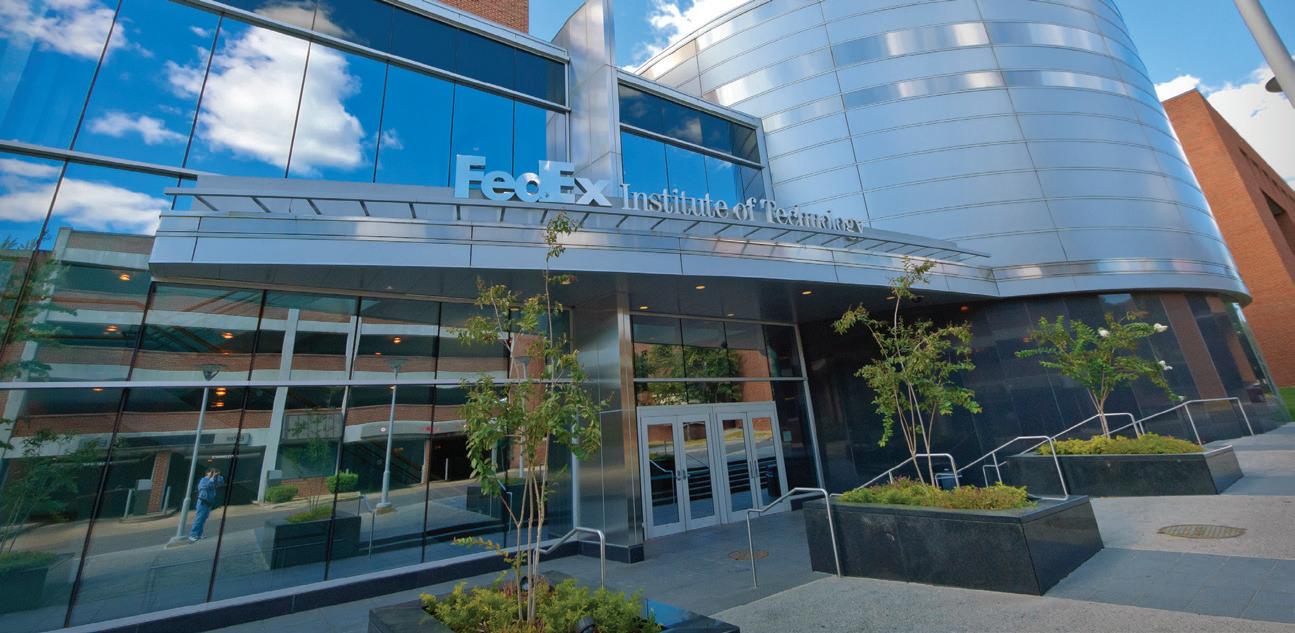
At the FedEx Institute of Technology, we believe innovation doesn’t happen in isolation — it happens in community.
That’s why we’re proud to partner with organizations like Tech901 to strengthen Memphis’ tech ecosystem, grow local talent, and connect bold ideas with real-world impact.
From AI and cybersecurity to workforce development and entrepreneurship, FIT serves as a hub where researchers, industry leaders, students, and community partners collaborate to shape what’s next.
Building Memphis. Together.















A Letter From Aaron Lamey
Impact Timeline About Us
Why This Matters to Employers
Community Collaboration
Course Offerings
Who is Tech901 Built For Student Stories
Employee Stories
Thank You
pg. 4
pg. 6
pg. 9
pg. 10
pg. 13
pg. 15
pg. 17
pg. 18
pg. 21
pg. 23
Tech901 was founded in 2015 with a mission to accelerate the growth of the technology workforce in the Mid-South community. From humble beginnings as an after-school program, over the last decade this organization has grown into a trusted training organization with over 2,500 alumni. This report sets out to explore our motivations, methods, and results with all of our regional stakeholders.
Every person experiences points in their professional life where they consider the possibilities for the next chapter. Whether a new entrant into the tech workforce looking to create a solid foundation or an experienced tech professional looking to add skills and credentials, Tech901 is ready to equip you with the knowledge and skills necessary to thrive as technology evolves.
Trust is one of the social currencies that Memphians value the most. In our business community, a warm introduction and a shared connection are the keys to building lasting partnerships. Especially when it comes to offering employment to a new entrant to the field, employers want not only certifications and certificates, but also to see applicants have joined the technology community and have started building relationships that drive our community.
Tech901 builds more trust in this local technology workforce.
As the way businesses use technology changes, training organizations like Tech901 must rapidly evolve curriculum to empower our participants with the most relevant skills. While the last decade’s focus might have centered around moving information services to the cloud, the current moment requires Tech901 to equip participants with skills related to integrating artificial intelligence tools into organizational technology stacks.
On behalf of the entire staff of Tech901, I want to thank our entire Memphis community for being partners in our mission to create a more robust technology workforce in our region. From the family members of Tech901 students giving up free time with loved ones to the employer partners who seek out Tech901 talent, it has been our honor to serve you. We hope you enjoy this opportunity to explore our impact!
With gratitude,



Aaron Lamey Executive Director Tech901







Congratulations to Tech901 and the Class of 2026.
Over the past decade, Tech901 has trained, certified, and launched thousands of Memphians into meaningful careers in IT, cybersecurity, data, and emerging technology fields.
That kind of commitment changes lives.
At MyCityRides, we believe mobility should never be the barrier between talent and opportunity.
You’ve earned the credentials.
You’ve put in the hours.
You’re ready for your next chapter. We’re here to help you reach it.
MyCityRides provides affordable, reliable transportation solutions designed for individuals who are building financial stability and stepping into new careers.
We partner with local nonprofits and workforce training organizations to serve as the last mile solution for graduates ready to capture new opportunities across the city
Because economic mobility requires physical mobility.








We are proud to support veterans transitioning into civilian careers by providing accessible transportation pathways that help translate discipline, skill, and service into economic independence.
The mission continues. So does the support.
When motivated individuals gain skills, earn certifications, and pursue growth, our city moves forward.
MyCityRides exists to remove the final barrier so that talent can thrive
If you’re ready to take the next step, we’re ready to ride with you.
By Toby Sells
Tech901 was born from a simple but urgent question: How can Memphis grow its own IT workforce?
Community development and business leaders Steve Denegri and Robert Montague saw a disconnect. Employers were struggling to find certified entry-level IT talent. Many had stopped requiring credentials like CompTIA A+ simply because they could not find qualified candidates locally.
“Back in 2015, we had an idea to try to improve the base of IT employment in Memphis,” Denegri said. “A baseline curriculum that most Memphians could go through in a short period of time to get credentialed — to make them entry-level IT ready.”
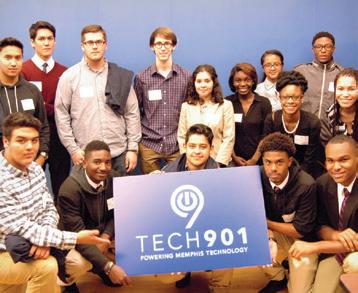











Early experiments included credentialing high school students through a Boys & Girls Club partnership. Some students succeeded, but leaders soon realized the model resonated more strongly with adults ready for a career pivot.
A 2016 summer class at the University of Memphis revealed Tech901’s core audience.
“That was the career changer,” Tech901 executive director Aaron Lamey said. “Average age of 30 — someone who was kind of hitting the ceiling, not really doing what they wanted. They always liked technology and thought, I’d like to be on that side of the interaction.”
The focus shifted toward adults and career changers — and traction followed.
Demand grew. Tech901 refined its curriculum and stacked certification pathways. The organization centered its model around CompTIA certifications, positioning them as a substitute for experience for newcomers.
The Tech Essentials (which leads to a new CompTIA credential called
the Tech+) four-week entry course became the front door — a lower-risk entry point before advancing to A+, Network+, and Security+ certifications. Leadership continuity strengthened the mission. Executive Director Aaron Lamey joined after teaching within the program. Chief Experience Officer Jenny Carmichael, who began as Marketing Director in 2016, transitioned into the CXO role as demand grew—helping scale outreach, enrollment, and student support. Stability became part of the story.


Like many training programs, Tech901 faced headwinds during COVID-19. Recruitment slowed. Certification completion rates dipped as courses moved to Zoom and students navigated unprecedented disruption.
Rather than retreat, leadership iterated. Curriculum was refined. Pathways were clarified. The organization doubled down on affordability and structure, reinforcing a stair-step model that required students to build foundational skills before advancing.
Post-pandemic workforce investment from the State of Tennessee and corporate funders helped fuel renewed growth.
The results were measurable. Last year marked Tech901’s strongest year yet for both CompTIA A+ and Security+ certifications. More than 500 A+ certifications have now been earned through the program over the past decade.
Employer relationships deepened as well. Nearly 500 unique employers have hired at least one Tech901 graduate. In some Memphis organizations, entire entry-level IT teams are composed of Tech901 alumni — with those employees now advancing into middle management and hiring from the same pipeline.
To strengthen that connection, Tech901 launched its Career Hub platform, encouraging alumni to maintain current employment information while giving employers direct access to qualified candidates.
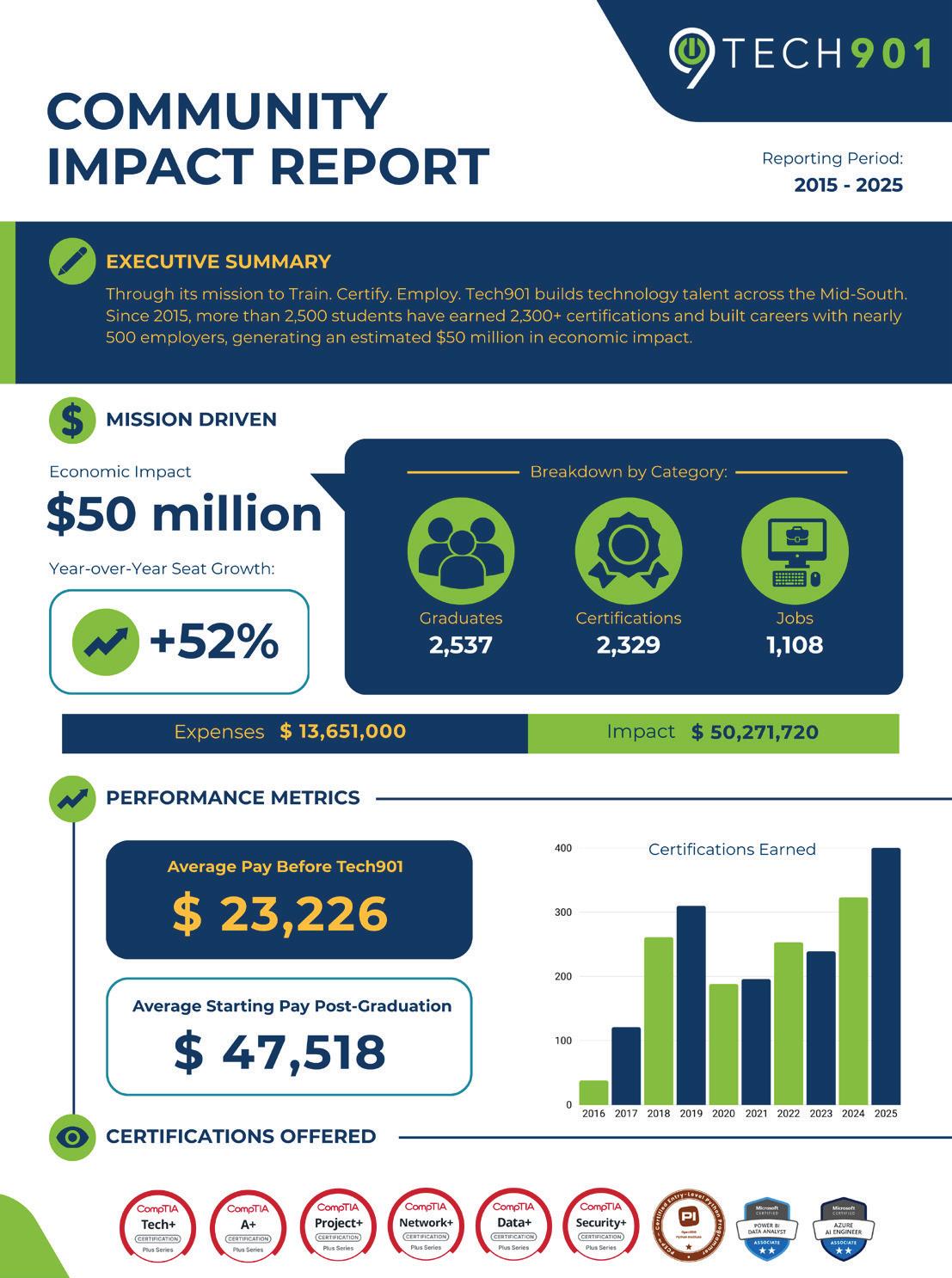
Ten years in, Tech901 estimates it has generated approximately $50 million in economic impact across the Memphis region — compared with roughly $12 million in total program costs. That impact continues to compound as graduates earn promotions, transition into higher-paying roles, and build long-term careers in technology. What began as a response to a local hiring gap has become a workforce engine designed to grow Memphis talent from within. A decade after its founding, Tech901 is no longer proving a concept. It is scaling a proven model.
Tech901 set out to strengthen Memphis’ technology workforce 10 years ago. They did. The impact results are undeniable, measurable, and multiplying.
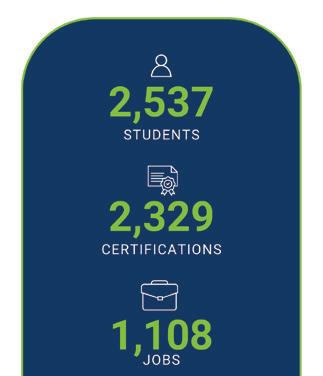
Since its founding in 2015, Tech901 has trained more than 2,500 students. Of those, more than 1,200 have received a CompTIA certification. The group has produced more than 500 CompTIA A+ certified professionals, one of the most widely recognized entry-level IT credentials in the industry.
“Memphis has always struggled with workforce development,” Tech901 co-founder Steve Denegri said. “We kept asking: What if we could bring the support and structure of a traditional classroom to people who never thought tech could be for them?”
Now, more than 580 graduates have launched into IT careers across diverse business sectors. So far, nearly 500 unique employers have hired at least one Tech901 graduate, establishing a hiring network that spans logistics, distribution, healthcare, device repair, managed IT services, and corporate technology teams across the region.
But credentials are only part of the story.
“We don’t necessarily measure success on certifications,” said executive director Aaron Lamey. “We measure success on career launches and career promotions.”
To do that, Tech901 tracks employment status and salary data when students enter the program — and follows up in the years after graduation. That tracking plainly shows sustained wage growth and upward mobility across cohorts.
For graduates, that means more money. Certified alumni earn about $10,000 more every year than their uncertified peers. For Memphis, that means real economic growth and success.
ed in 2016 and they made $5,000 more in the next year and, then, $10,000 more in the fifth year…I can add all of those up and calculate a $50 million impact on the economy.”
During that same period, the organization’s total program costs were roughly $12 million.
Tech901’s impact is apparent on the campus of LeMoyne-Owen College. Brittany Morrow, a former Tech901 student, is now the director of the Technology Innovation and Research Center. She can easily name five department colleagues who have trained with Tech901. Over 25 LeMoyne-Owen students have trained there, too, she said, and that gives them a strategic advantage.
“They can go to an employer and say, ‘Not only did I get an A in the class, I have mastered the material by getting the certification,’” Morrow said.
A decade in, Tech901 is not simply training students. It is building a workforce asset for Memphis and adding real dollars to the city’s bottom line.

“I can count exact dollars,” Lamey said. “If you had someone who start-
2,329








Earned 544 CompTIA A+
Earned 199 CompTIA Network+




Earned 152 CompTIA Security+
Earned
125 CompTIA Project+




Earned
43 CompTIA Data+
Earned


Vaco connects businesses with skilled professionals who help you innovate and scale. We specialize in customized talent solutions across high-demand fields including AI, cloud architecture, and data analytics—ensuring your business is always future-ready with the right people to power the technology of today and tomorrow
Build your technology team with confidence. Let’s connect.




Tech901 unlocks a reliable source of opportunity in a city hungry for it.
By Toby Sells
“ I owe my career to Tech901! It’s no exaggeration to say enrolling with them changed my life.”
— Kristie Lofton
Tech901 founders saw early on that IT is a powerful engine for job growth. It’s also one of the clearest ways for Memphis to grow its talent base from within. So, when locals want a better job and local companies want ready, local employees, Tech901 bridges that gap.
The nonprofit Tech901 was founded in 2015 by community development and business leaders Steve Denegri and Robert Montague. They had one straightforward goal: to improve the base of IT employment in Memphis. To get there, they would offer a curriculum most Memphians could finish in a short period of time and leave entry-level IT ready.
“We measure success on career launches and career promotions,” said Aaron Lamey, Tech901’s executive director.
So far, that success totals $50 million in the Memphis-area economy. How do they know? They ask students to keep in touch and share salary growth data. That economic impact compounds, too, as Tech901 students continue to launch careers and move up the career ladder.
“We have some organizations here in town where the whole entry-level IT
layer is all Tech901 grads,” Lamey said. “Those people are starting to matriculate up into middle management and they are wanting to backfill those entrylevel jobs with Tech901 graduates.”
Affordability is core to the strategy — but so is student commitment. Tech901 fundraises to keep tuition accessible, while still requiring learners to pay earnest money. One class seat would cost around $4,000, Denegri said. But the cost of the entry-level class to the Tech901 student is $100. Maximum out-ofpocket costs on other classes top out at around $250.
“We want some buy-in,” Denegri said. “If they’ll put something on the table, they’ll show up to class.”
Tech901’s model is built around the idea that certifications and hands-on training can substitute for experience, especially for people trying to break into the field. Course tracks include an IT professional pathway with tech essentials, IT foundations, help desk, repair, networking, and security. The group also offers a software development pathway which includes database fundamentals, data analytics, and introductory coding. New courses in AI are currently being piloted.
Tech901 designs its training pathways to align with the hiring needs of Memphis employers. To date, graduates have reported more than 1,100 technology jobs across over 500 unique employers, ranging from global logistics and healthcare organizations to regional businesses expanding their IT infrastructure.
Over the past 10 years, employers have relied on the Tech901 pipeline to hire local talent.
“We’ve had employers reach out and say, ‘We’ve got 10 positions. We’ll come out and do interviews,” said Steve Denegri. “Give us as many students as you can.’”
Tech901 has continued to build and improve this pipeline, too. Its new Career Hub platform is like a local LinkedIn that allows students to keep resumes current and for employers to post roles directly to the network. The goal is to ensure that when opportunities open, qualified candidates are already at the front of the line.
In Memphis, where access and opportunity do not always align, Tech901 is building a bridge between ambition and employment — one credential, one hire, and one promotion at a time.
Jobs Reported: 1,108
Launched Tech Careers: 581
Employers: 480
By Toby Sells
Demand for technology talent has been rising faster than nearly any other employment sector in the United States.
National statistics show employment in computer and information technology occupations is projected to grow much faster than the average for all occupations over the next decade, with tens of thousands of openings each year driven by both growth and the need to replace workers exiting the field.
That trend plays locally, too. In the Greater Memphis area — now home to more than 1,400 technology companies with growth in software, data, networking, and systems roles — employers are posting dozens of information technology positions across industries, from help desk support to network engineering and data services.
Here, the job growth for software developers is up 28 percent, according to the Greater Memphis Chamber. The increase in computer science and IT grads was 194 percent









between 2018 and 2023. Greater Memphis’s workforce is now has the highest concentration of Black IT and computer talent of all major metro areas with populations over 1 million, according to Chamber data.
But one consistent reality behind these numbers remains: there are more tech jobs than trained workers to fill them. Data from CompTIA suggests the tech workforce nationwide will need to replace roughly 350,000 workers annually due to growth and attrition. For employers — especially in Memphis with its entrenched economic challenges — this creates both a pressing need and a competitive disadvantage.
Tech employers, healthcare systems, and institutions like ALSAC/St. Jude Children’s Research Hospital, Regional One Health, and LeMoyneOwen College all face the same structural issue: the pipeline of jobready talent does not match the pace of demand.
This is where Tech901’s mission meets employer realities.
When Dennis Champion, director of IT Infrastructure at Regional One Health, described the hospital’s experience with Tech901, his emphasis was on access to local talent. He said it has been historically hard here to attract and train technology professionals.
“I’ve been here since the early 1980s and one of the challenges was being able to find local talent,” Champion said. “(Memphis) was not one of the places you could really recruit local talent unless you were a FedEx or one of the big players in town. There has always been a need in Memphis to find a way to cultivate and grow local talent.”
Tech901 changed that. Champion said the organization has used Tech901 as “an incubator… to reach out, find talent,” hiring multiple graduates into roles and watching many of them get promoted, often from end-user support into more advanced technical positions.
Regional One’s experience illus-
trates a broader employer solution: finding candidates with foundationlevel skills — troubleshooting, support, networking basics — and growing them from there lowers turnover risk and builds institutional knowledge.
“We’ve brought several on board,” Champion said, and noted that he could count multiple Tech901 graduates now progressing into higher technical roles within the organization. That’s the kind of internal talent mobility many employers seek — and one that becomes harder to achieve when entry-level talent simply isn’t available locally.
Part of Tech901’s solution is not just training but credentialing. The group’s model emphasizes industryrecognized certifications like CompTIA’s A+ and Network+, credentials that employers consistently include on job descriptions. These certifications provide a proxy for skills when experi-
ence is limited, signaling to an employer that a candidate has both the discipline and the technical foundation required for on-the-job success.
One of the most important lessons came from observing students who knew the material but hesitated at the final step: the certification exam.
“We had experienced professionals — people who had worked help desk roles for years — who had never taken a CompTIA certification exam,” Carmichael said. “They understood the content, but the testing environment itself was unfamiliar.”
That insight shifted Tech901’s approach.
“We realized certification success isn’t only about technical knowledge,” Carmichael added. “It’s also about preparing students for the pressure and format of the exam. When we began guiding them through that process — setting clearer expectations and building confidence — we saw measurable improvement.”
Today, the step-by-step model reflects both technical progression
and confidence building. Students without certifications begin in Tech Essentials and advance deliberately. Others may earn the Tech+ directly through CompTIA and bring proof before enrolling in the next course. Tech901’s leaders have been tracking the outcomes since the beginning and can show receipts on its success. More than 480 unique employers have now hired at least one Tech901 graduate, with many becoming repeat hirers. Data show rising certification counts year over year. This evidence is especially important for employers weighing the return on investment in graduates with certifications, not degrees.
Beyond enrollment and certification metrics, Tech901 also clocks long-term economic impact. Over a decade, wage increases among program participants have translated into tens of millions of dollars flowing into the local economy — a powerful measure of value for employers who depend on community stability and economic growth.














employed or in grad school













Tech901 training is designed to prepare students for entry-level, career-launching roles in information technology and software development, including:
IT Support:
• IT Hardware Technician
• IT Support Technician
• Help Desk Representative
• Computer User Support Specialist
• IT Administrator
• Desktop Support Technician
Networking and Security:
• Network Support Specialist
• Junior Network Administrator
• NOC/SOC Technician
• Cybersecurity Support Specialist
Data and Software:
• Junior Data Analyst
• Database Support Specialist
• Entry-Level Programmer
• AI Analyst
• Software Support Specialist
Tech901 teaches what employers say they want. The organization structures its education from the foundation up, ensuring graduates leave with a holistic understanding of technology systems.
For example, many newcomers want to jump straight into cybersecurity or cloud roles. Tech901 requires students to build from the ground up.
“We have a lot of students that — day one — say, ‘I wanna take your cybersecurity class,’” said Tech901 co-founder Steve Denegri. “We have to tell them, well, it’s one of those you-have-to-walkbefore-you-run kind of things.”
Students begin with Tech Essentials (CompTIA Tech+), then progress through A+, then Network+, before advancing into specialized certifications like Security+. This produces entry-level hires who understand how systems actually function — hardware, troubleshooting, and networking fundamentals — before layering on specialization. Instead of narrowly trained technicians, employers gain candidates who understand issues broadly.
The curriculum has evolved over the past decade.
“Our pathway is intentional,” said Jenny Carmichael, Chief Experience Officer. “We’ve shaped it by watching
what leads to certifications, careers, and long-term success — not just course completion.”
The model is market-driven.
“When we first started talking to employers, a lot of them had given up on requiring an A+ because they couldn’t find any A+-certified people in Memphis,” Denegri said.
For employers in Memphis, investing in local pipelines through programs like Tech901 is not just philanthropy — it is strategic workforce planning.
This is why leaders from healthcare, higher education, and workforce intermediaries describe Tech901 not as an isolated training program but as infrastructure — a platform that helps employers build the workforce they need.
“If we had any message we’d like to get across to employers is that if they would be willing to make entry-level [education] an investment, we can help them find their initial workforce,” Denegri said. “They can then grow, and train, and let them become the next level of their tech employees.
“We’re trying to grow our technology base in Memphis. We’re trying to seed it. If employers will water it and fertilize it, we can make it grow.”




In Memphis, progress has come from organizations across the Mid-South collaborating to build new pathways into the technology workforce. Each brings a different piece of the puzzle — coaching, mentorship, education, or technical training. From the beginning, Tech901 focused on one role: providing the industry certifications and hands-on technology training that turn interest into opportunity.
“Tech901 has been our longeststanding partner,” said Anna Snickenberger, Vice President of Programs, Pathways & Support at The Collective Blueprint (TCB). “We’ve worked closely with them since 2018. They were part of our very first cohort.”
TCB supports young adults ages 18–30 through coaching and professional development. When participants discover an interest in technology, Tech901 becomes the next step.
“When it’s time to build the hard skills, that’s where Tech901 steps in,” said Justin Hash, TCB’s Vice President of Corporate Strategy & Recruiting. “They’re very well known in the tech


community, and employers recognize the training their students receive.”
Partnership also extends into higher education. Through collaboration with LeMoyne-Owen College — Memphis’s historic HBCU — Tech901 has explored ways for students to earn both academic and industry credentials through dual enrollment and shared programming.
“I see the impact of the partnership every day,” said Brittany Morrow, director of the Technology Innovation and Research Center at LeMoyneOwen College. “Our students are talented and driven. Collaborations like this connect them to industry certifications and real-world experience that strengthen their path into the technology workforce.”
These partnerships allow each organization to focus on what it does best. Community partners provide coaching and mentorship. Tech901 delivers the technical training and certification pathways that turn opportunity into careers.
The collaboration extends well
A stronger workforce doesn’t come from one program. It comes from a community working together.
By
Toby Sells
beyond the organizations highlighted here. Across the Mid-South, programs working to expand career opportunity have partnered with Tech901 to add technology training to the work they already lead. Many send participants through Tech901 programs, and some invest in their own teams by sending staff for technical training. Partners have included AFIRM Families, Agape Child & Family Services, American Job Center, Career Team, GROWWTH Academy, HopeWorks, More for Memphis, Omega Psi Phi, Progeny Place, Seeding Success, United Way’s Driving the Dream initiative, and UMRF Ventures.
For Tech901 Executive Director Aaron Lamey, those relationships ultimately lead to the outcome that matters most: careers.
“We want employers to see the full picture,” Lamey said. “Certifications matter. But just as important are the networks, mentorship, and professional skills students build here.
When employers see that, they want to hire Tech901 graduates.”

Tech901 does not promise shortcuts. It promises a pathway.
Over more than a decade, the organization has refined what leaders describe as a stair-step approach to workforce training — one designed to build confidence, competence, and credentials in the right order.
Students do not begin with cybersecurity. They begin with fundamentals.
Every student starts with the fourweek Tech Essentials (CompTIA Tech+) course, a survey of core concepts designed to assess readiness and establish baseline knowledge. From there, students advance to A+ certification. Only after mastering those fundamentals do they move toward Network+ and, ultimately, Security+.
“It’s not about slowing anyone down,” said Trey McGinnis, Chief Technology Officer at Tech901. “It’s about setting them up to succeed. When students build a strong technical foundation first, everything that follows becomes more attainable — and more sustainable.”
That sequencing was not accidental; it was learned through experience.
“Over the years, we’ve refined this model based on what we see in the classroom and what employers tell us,” McGinnis said. “We’ve built a structure that works — one that prepares students step by step for real career progression.”
By requiring students to build skills intentionally and sequentially, Tech901 reduces early failure, improves completion rates, and ensures that every seat in advanced courses is filled by someone prepared to succeed.
Tech901’s approach reflects years of iteration, employer feedback, and classroom refinement. It is not simply training. It is a tested model for moving Memphians from entry point to career launch.
Each course has defined prerequisites, and certifications are intentionally stacked — from Tech+ to A+, Network+, and Security+ — so that students build layered technical capability rather than isolated skills. Employers benefit from graduates who understand not just tasks, but systems.
Designed to prepare students for entry-level careers in information technology through hands-on instruction and industry-recognized certifications.
Tech Essentials
4 weeks | $100
An introductory course covering the basics of computer systems, operating systems, and fundamental IT concepts. Students build foundational knowledge necessary for more advanced technical training.
IT Foundations
11 weeks | $250
IT Foundations covers a wide range of IT subject areas including hardware, software, networking, mobile devices, and security.
IT Networking
9 weeks | $250
Focuses on networking concepts including infrastructure, protocols, and troubleshooting. Students gain practical knowledge of how systems communicate and how to maintain secure, reliable networks.
IT Security
9 weeks | $250
Introduces cybersecurity principles including risk management, threat mitigation, and system protection. Students learn foundational strategies for protecting organizational data and infrastructure.
By Toby Sells
Built for analytical thinkers who want to design and build technical solutions using modern programming and data tools.
Tech Essentials
4 weeks | $100
Introduces students to core computing principles and prepares them for deeper study in software and database systems.
Database Fundamentals
6 weeks | $250
Students learn the structure and management of databases, including data modeling, querying, and best practices for maintaining organized and secure data systems.
Data Analytics
10 weeks | $250
Focuses on analyzing, interpreting, and visualizing data to support decision-making. Students gain practical skills in handling real-world data sets.
Code 1.0
16 weeks | $250
A comprehensive introduction to computer programming and frontend development. Students learn foundational coding principles and project management practices used in real-world software development environments.
AI Engineering
10 weeks | $250
Builds on foundational AI knowledge and prepares students to design, develop, and deploy AI solutions using cloud-based tools. Students gain hands-on experience with machine learning models, cognitive services, and real-world AI applications in enterprise environments.
























For Memphis employers, Tech901 isn’t just supporting the community. It’s practical and powerful.
At LeMoyne-Owen College, the impact is visible inside one department. Brittany Morrow, director of the Technology Innovation and Research Center (TIRC Center), said Tech901 has completely reshaped her IT team.
“We’ve had five of our employees go through the Tech901 pipeline,” she said. “Everyone who has gone through the pipeline in our specific department has taken on greater responsibility.”
In effect, the college has built much of its internal IT capacity through Tech901 graduates. Instead of outsourcing skills or searching nationally, LeMoyne-Owen has leaned into a local pipeline.
“We’ve been able to up-skill our whole entire department,” Morrow said.
At ALSAC/St. Jude Children’s Research Hospital one Tech901 graduate has a high seat in the tech department focused specifically on the agency’s talent pipeline. Tecia Marshall is the organization’s Talent Development Advisor in the Information Technology Services department.
Marshall found Tech901 through a Facebook ad in 2016, and was part of its first graduating class. She now develops IT talent for ALSAC/St. Jude after serving in a number of roles, including managing IT for the C-Suite starting in 2019. She regularly checks in with Tech901 to find talent for ALSAC/St. Jude.
“From where I sit now, I absolutely believe in reaching back [to Tech901] because they were such a big part of me finding my way back to one of my first loves [technology],” Marshal said.
For her employer, Marshal’s training over the years, including her time at Tech901, gives her a broad understanding of the technology landscape. This is important, especially to the Human Resources department, as she’ll know specific programming languages that are important, for example, for a software engineering role.
Tech901 remains a solid talent pipeline for Regional One Health. Dennis Champion, director of IT infrastructure, has hired multiple Tech901 graduates over the years. Many have served as contractors, especially during the Windows 10 integration, he said. Several Tech901 hires have advanced in the medical center’s
By Toby Sells
IT department. The reliable pool of talent has Champion recommending Tech901 graduates to IT peers in other businesses and agencies.
“One day that might come back and bite me,” Champion joked. “Because everybody will take all these resources! Seriously, Tech901 is a plus for Memphis. As they are better known and as the students become known in the marketplace, it’ll only get better.”
In Memphis, where attracting outside technical talent can be difficult, employers are increasingly turning inward — growing their own workforce through Tech901’s credential process, rather than a four-year program.
When Tech901 leaders talk about “seeding” the workforce, this is what they mean. Employers like LeMoyneOwen, ALSAC/St. Jude, and Regional One prove those seeds take root.
For LeMoyne Owen, it means stronger institutional capacity. For ALSAC, it means a trusted pool of talent. For Regional One, it means local resources plentiful enough to joke about keeping it all for yourself.
The story is the same: hire local, grow local. And for employers in Memphis, that’s not just good community engagement. It’s smart business.













Tech901 student stories rarely start from the same place, but they routinely follow the same trajectory after graduation: up.
By Toby Sells


Before enrolling at Tech901, Rekia Kelly-Hughes was working in healthcare, handling pharmaceuticals for workers’ compensation claims. The work was steady, but something was missing.
“I started to feel a little bored,” she said. “It just felt like I was waking up every day and just going to work and nothing really felt…like I connected with anything there.”
She began exploring options in technology and considered going back to college. The cost of one program — quoted to her at around $50,000 — quickly changed her mind.
While scrolling online, however, she came across Tech901.
“I saw that the classes were just extremely cheap,” Kelly-Hughes said. “I believe it was like $250 at the time. I was like, ‘well, I don’t have $50,000, but you know, I think I could come up with $250.’”
She enrolled in the summer of 2017 and it’s “just a beautiful story from there.”
Kelly-Hughes began her IT career as a junior systems administrator
and advanced within a few years, now managing a global team as a senior system administrator. The shift changed more than her resume.
“I don’t feel like I just have a job,” she said. “When I took the class and I got into this field, it took me from just having a job to now I feel like I have an actual career that I’m connected to.”
Tony Smith’s transition started in a middle school orchestra classroom.
“Actually I was in my 13th year of teaching orchestra at a middle school,” he said.
He was looking for a job change. But did not want to start over academically, especially through a four-year program. After completing Tech901’s entry exam, he began stacking certifications: “I went, I got the A+, Net+, Security+ consecutively.”
He finished his final year of teaching while job hunting and secured a help desk role at Orion Federal Credit Union.
“This perfect job for a help desk position opened up,” Smith said. “I started the week after my last day of school.”
His salary dipped initially, and ex-
pectedly after more than a decade in the same job. But tech job advancement followed. He was promoted to junior systems administrator and more recently to help desk manager.
When asked if Tech901 had a net positive influence on his career, Smith said, “absolutely.”
For Brittany Morrow, Tech901 took her from the help desk to the director role at Le Moyne Owen College’s (LOC) Technology Innovation and Research Center, known as The TIRC Center.
Morrow already had several tech certifications by the time she got to the LOC. But Tech901’s data analytics courses appeal to her. With those certifications in hand she guided LOC through the process of building a data repository. Promotions came, leading to her new role at The TIRC, maybe the highest-profile tech job at LOC.
While the stories start differently, the outcomes for dedicated students are consistent: affordable access, accelerated credentials, and measurable advancement — built directly from the Tech901 classroom into the workforce.
“Tech901 gave me the skills to find work and quickly advance in a new career in Information Technology. I would recommend Tech901 to anyone!”
— Patrick Reynolds, Regional One Health
By Toby Sells
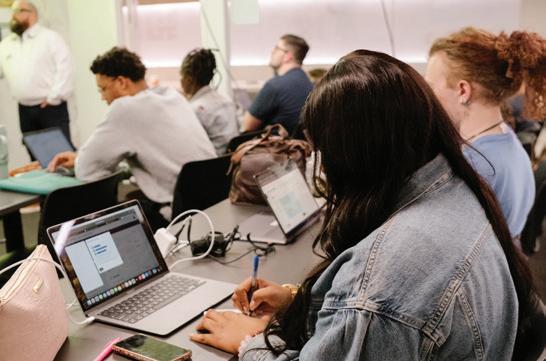

It was built for the warehouse worker — making decent money — but realizing there is no next rung on the ladder. It is built for anyone who has been frustrated at work and, then, wondered and, maybe, worried, about what the next 20 years look like.
But it was also built for the IT support specialist who learned what their employer needed them to know — and learned it well. For the technician who has grown inside one system, one environment, one set of tools — only to discover that technology has moved quickly, and opportunity often requires broader knowledge and recognized credentials.
“You can make good money driving forklifts,” Tech901 executive director Aaron Lamey said. “The problem is you’ll be driving that forklift for the rest of your life.”
In Tech901’s experience, many feel this turning point at around age 30. Responsibilities grow. The physical work gets harder. The ceiling becomes visible.




“Tech901 fills a critical need in our community to rapidly upskill and train students to help fill the technology skills set gap in south west Tennessee.”
— Joel Tracy, CIO - IMC
For some, that ceiling is physical. For others, it’s professional — appearing in job descriptions that list certifications they don’t have, in roles outside their current company that feel just out of reach, or in the realization that the skills that served them well in one organization may not translate beyond it.
“You’re sitting around thinking, ‘my back…some days it hurts,’” Lamey said. “‘Do I really want to be cutting these boxes?’ Those are good jobs. But some people get that call at that time of their life to say they want to make a change.”
Tech901 was designed for that moment — whether it’s stepping into technology for the first time or expanding beyond the limits of a current role. It offers a structured, stair-step pathway into technology — one that allows working adults to substitute certification for experience and demonstrate competency that travels with them.
For individuals who don’t have the time, resources, or support to selfstudy in a rapidly evolving industry, Tech901 provides instruction grounded in real-world application, preparation for industry-recognized certifications, and direct connection to employers seeking validated talent. Students don’t just learn the material — they prove it. And that proof opens doors.
Just as importantly, Tech901 teaches students to use technology as a tool — to solve problems, to improve systems, to strengthen organizations, and to build careers with upward mobility rather than static roles.
Tech901 was built for employers, too. Nearly 500 employers have hired at least one Tech901 graduate. Some companies now rely heavily on that pipeline. In certain Memphis organizations, entry-level IT teams are composed almost entirely of Tech901 alumni.
“If we had any message we’d like to get across to employers, it’s that if they would be willing to make entrylevel training an investment, we can help them find their initial workforce that they can grow and train,” Tech901’s Steve Denegri said. “Employers can let them become nextlevel employees and we can grow our technology base in Memphis.
“We’re trying to seed it. If they’ll water it and fertilize it, we can make it grow.”
Ultimately, Tech901 was built for Memphis — a city where access and opportunity do not always match up. It was built for people who cannot afford four-year detours but can commit to focused, industry-aligned training. It was built for professionals who need portable credentials in a field that refuses to stand still. It was built for organizations that need talent now. And it was built to turn potential into success.
By Toby Sells
Adecade of growth does not happen by accident.
It happens because students show up. Because instructors refine. Because funders believe. Because partners collaborate. And because employers are willing to move beyond recruitment — toward shared investment in the talent pipeline.
From the beginning, Tech901 has asked every student a simple question: Where did you hear about us? The question is intentional. It tells us who to thank.
Behind nearly every enrollment is a referral — a manager who encouraged a team member to apply, a graduate who shared their story, a
community partner who opened their doors, a funder who made tuition possible. Progress rarely happens alone. In Memphis — as in any community — it happens through networks of trust.
That trust runs deeper than referrals. Students allow us to share their personal stories — their setbacks, their risks, their promotions, their persistence. It is a responsibility we do not take lightly.
Support from the Assisi Foundation of Memphis, the Community Foundation of Greater Memphis, the Crawford Howard Private Foundation, FedEx Cares, the Kimmons Wilson Family Foundation, the NBA Founda-

tion, Orgill, the Power & Tel Family Foundation, the Regions Foundation, Slingshot Memphis, the State of Tennessee, Technology Happens LLC, the Truist Foundation, the Turley Foundation, and the generosity of Mr. and Mrs. William Thompson and a number of individual donors has helped expand access and protect affordability.
Corporate partners including mStreet Fiber, Orion Financial, and Ting Internet have strengthened both training capacity and employment pathways — reinforcing the connection between preparation and opportunity. Because of that collective commitment, the impact is measurable.