











2026 Faces of the Mid-South Memphis Magazine
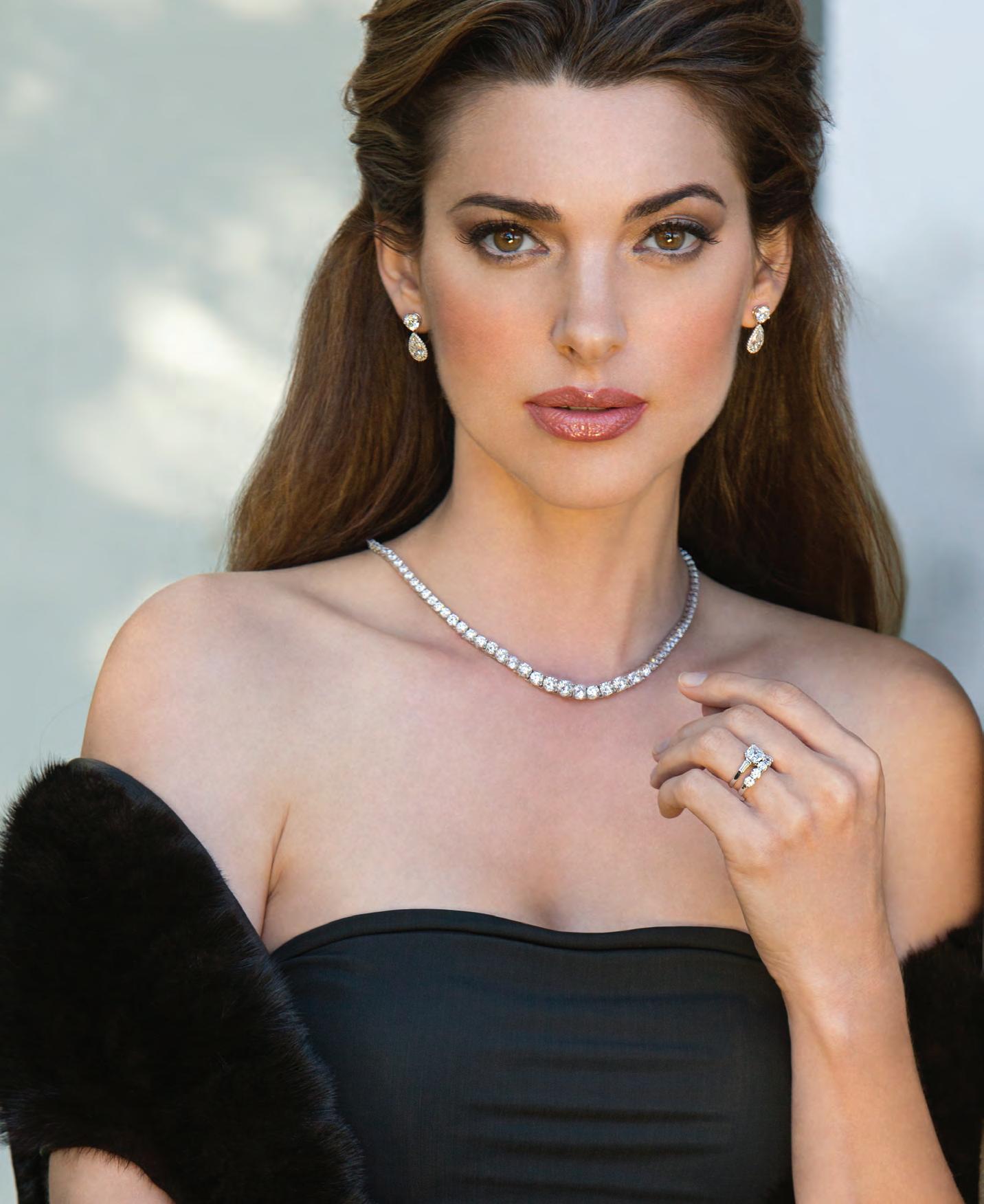
David Yurman
John Hardy Gurhan
Roberto Coin
Elizabeth Locke
Penny Preville
Hulchi Belluni
Raymond Yard
Antique Jewelry



















*Terms and conditions apply.























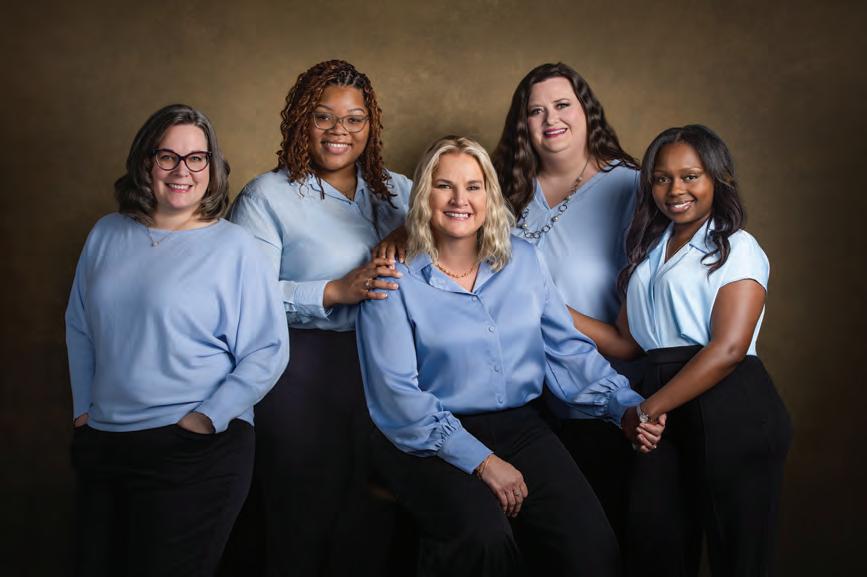



































































Ranked #49 in the U.S. Accounting Today’s 2025 Wealth Magnets List
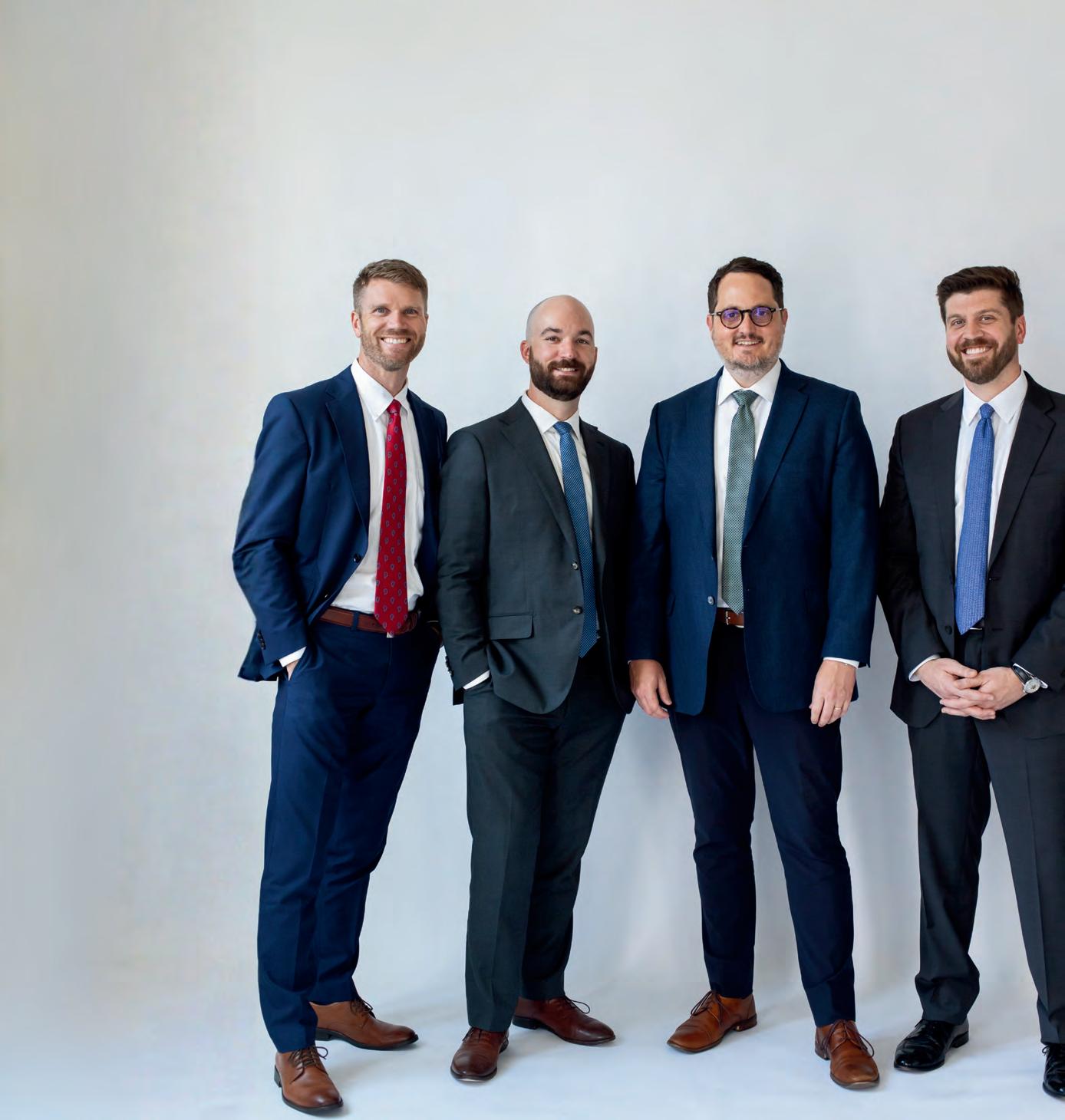
HHM Wealth Advisors has long partnered with HHM CPAs to provide integrated financial strategies that help protect and grow wealth.



simple. They often stop you from doing the things that make your life happy and complete—like running your family farm.



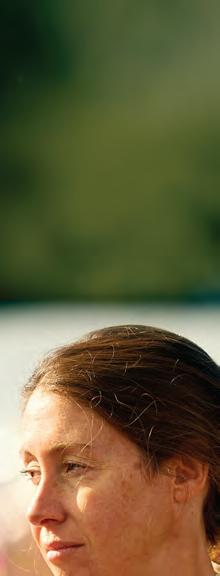
Seasonal harvest made possible by Whole Spine Care™
Spine problems can be big or small, complicated or simple. They often stop you from doing the things that make your life happy and complete—like running your family farm.
These conditions can lead to unexpected symptoms, such as tingling and numbness in your hands, legs, or feet, shooting pains in your arms or legs, or a loss of strength and stability. The right approach is the whole approach. At Semmes Murphey, Whole Spine Care is our patientcentered approach for pain-free living. It starts with an environment where you are heard, supported, and empowered—and extends across the widest range of treatments available in the Mid-South. From conservative care to the most advanced surgical techniques, each step along your journey will be thoughtful, personalized, and rooted in more than a century of experience.

These conditions can lead to unexpected symptoms, such as tingling and numbness in your hands, legs, or feet, shooting pains in your arms or legs, or a loss of strength and stability.

We have been focused on spine care since our founding in 1912, constantly developing treatments that are faster and better, and deliver complete, lasting outcomes.
WholeSpineCare.com
The right approach is the whole approach. At Semmes Murphey, Whole Spine Care is our patientcentered approach for pain-free living. It starts with an environment where you are heard, supported, and empowered—and extends across the widest range of treatments available in the Mid-South. From conservative care to the most advanced surgical techniques, each step along your journey will be thoughtful, personalized, and rooted in more than a century of experience.
We have been focused on spine care since our founding in 1912, constantly developing treatments that are faster and better, and deliver complete, lasting outcomes.


WholeSpineCare.com







Jon
From garage bands to the Recording Academy, he’s embodied six decades of
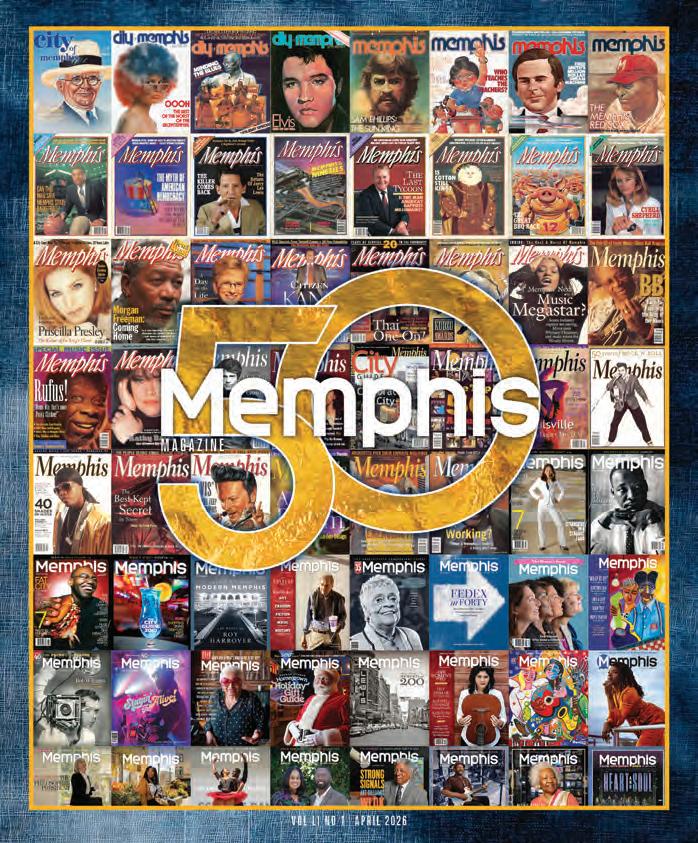
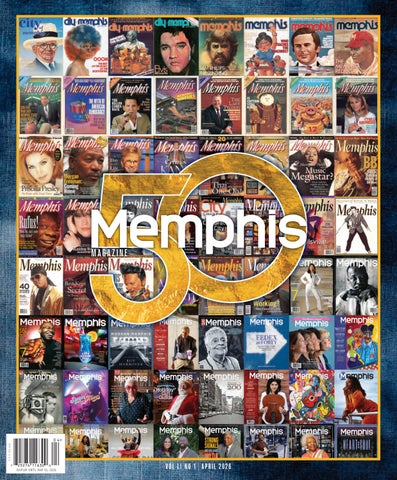
The 50-year history of Memphis Magazine — both on and off the page. ~ by michael finger


Reflections on a magazine’s half-century from a few friends who helped it happen.
A look at 50 years of Memphis history through the lenses of music, business, entertainment, art, and sports.








CEO AND EDITOR-IN-CHIEF anna traverse
EXECUTIVE EDITOR michael finger
MANAGING EDITOR frank murtaugh
SENIOR EDITORS jon w. sparks, bruce vanwyngarden
STAFF WRITERS michael donahue, alex greene, chris mccoy
EDITORIAL INTERN sey neuringer
CONTRIBUTORS richard banks, larry conley, jesse davis, ken decell, tom jones, leanne kleinmann, vance lauderdale, mary helen randall, tim sampson, j. robert towery, ed weathers
4
CREATIVE DIRECTOR brian groppe
ADVERTISING ART DIRECTOR christopher myers
GRAPHIC DESIGNER neil williams
PHOTOGRAPHERS
ralph acosta, justin fox burks, greg campbell, william deshazer, michael donahue, maike schulz, jon w. sparks, steve roberts, bruce vanwyngarden, reid wick
ILLUSTRATOR dudley condren
4
SENIOR ACCOUNT EXECUTIVE shaune mcghee
ACCOUNT EXECUTIVES kelli dewitt, chip googe
4 published by contemporary media, inc. memphis, tennessee 901-521-9000
subscriptions: 901-575-9470
4
CONTROLLER lynn sparagowski
CHIEF REVENUE OFFICER jeffrey a. goldberg
CHIEF OPERATING OFFICER margie neal
DIGITAL SERVICES DIRECTOR kristin pawlowski
WAREHOUSE MANAGER chet hastings
NEWSSTAND CONSULTANT joe luca
SPECIAL EVENTS DIRECTOR molly willmott
4
PUBLISHER EMERITUS kenneth neill
april 2026










Pulse-pounding performance is at the core of the all-electric Taycan Turbo S. A staggering 938 hp unlocked with Launch Control. Your heart will beat as fast as the 21”Taycan Exclusive Design wheels can take you.


BY ANNA TRAVERSE
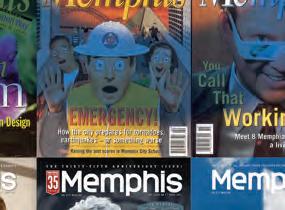
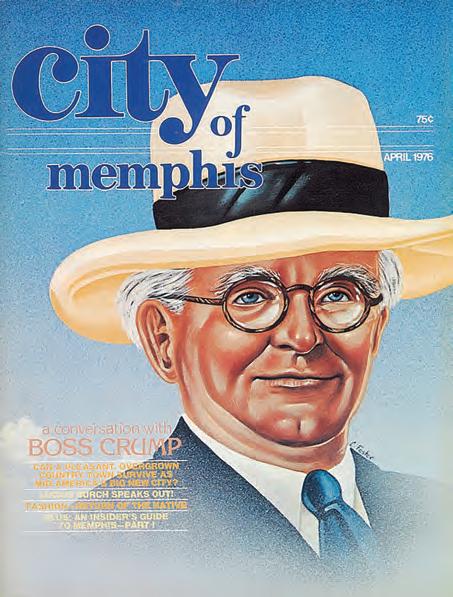
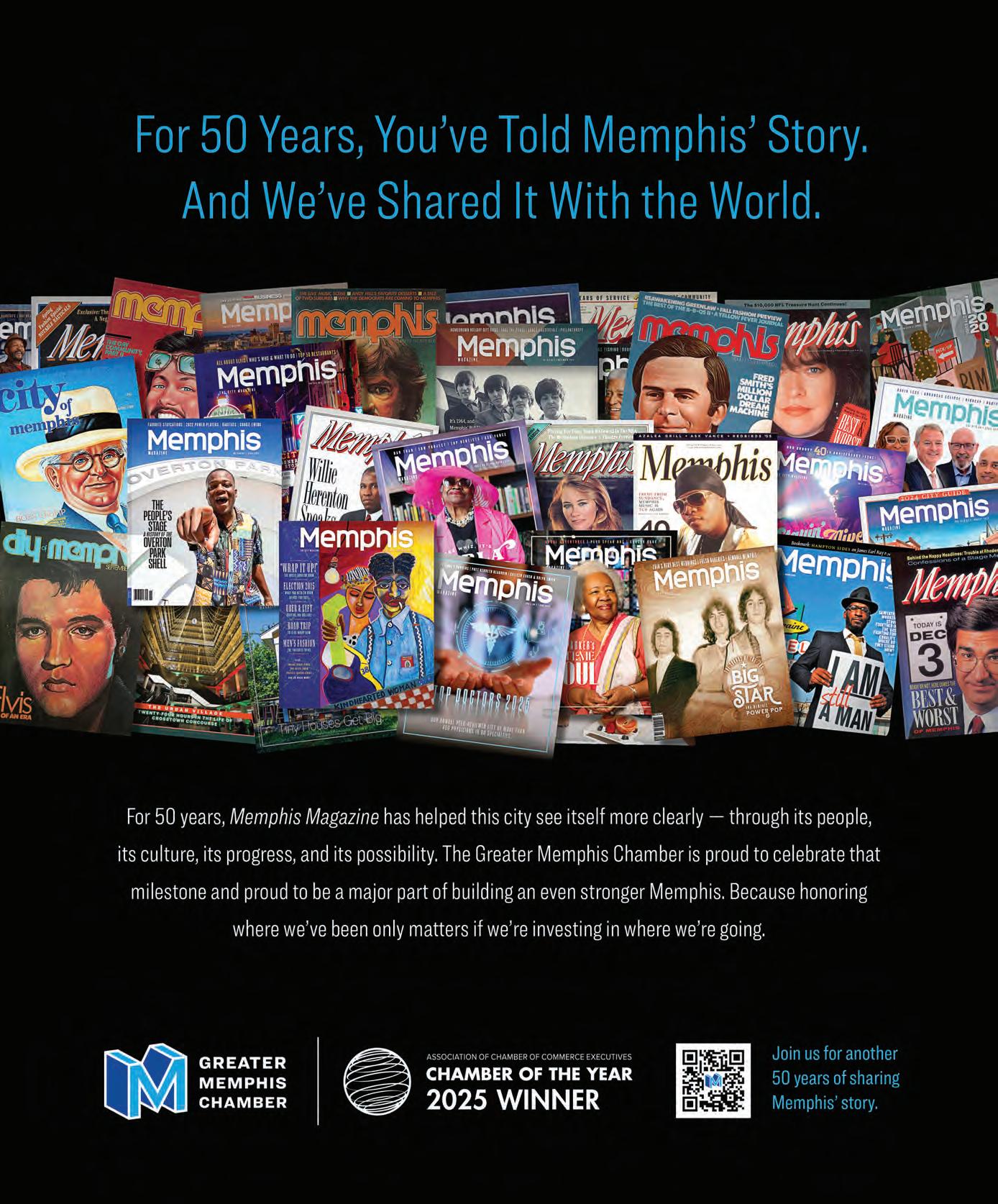
Fifty years ago this month, when the very first copies of what’s now Memphis Magazine landed with a flutter on magazine racks around the city, one imagines the upstart publication prompted at least a few brows to furrow. e cover story presented an imagined conversation with political heavyweight Boss Crump — dead, by then, for over 20 years. I wouldn’t describe it as a particularly inspiring start — perplexing, more like. Inspiration, ambition, reflection, revelation: ese were to come, but not all at once.
at we’ve stayed in continuous publication for 50 years is less a tribute to a solid and consistent plan, and more a testament to the people who’ve dedicated their time and talents to this magazine — and to their willingness to continue growing and changing along the way.
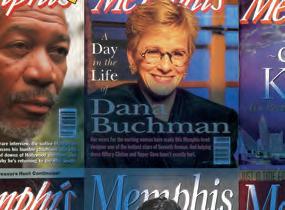
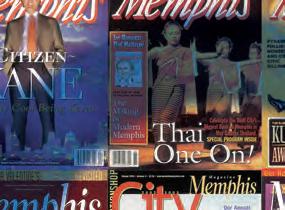
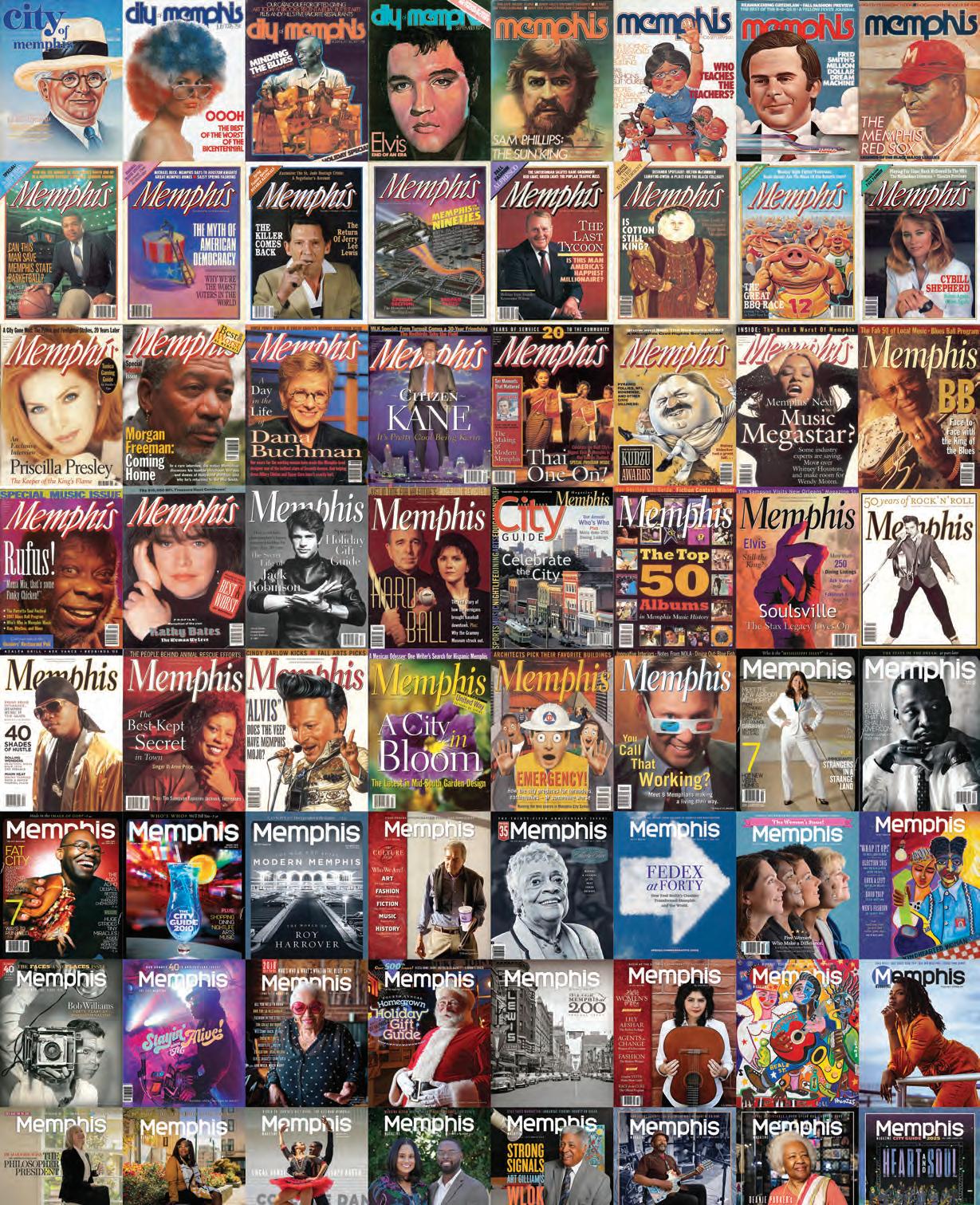
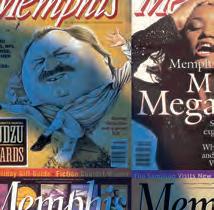
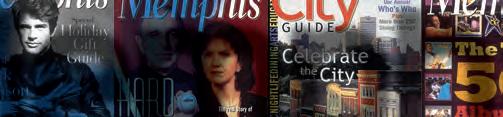
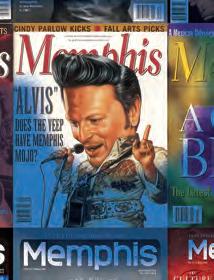
In this 50th anniversary edition, you’ll read several past editors’ reflections on their time at the magazine. You’ll also find a definitive history of … us, researched and written by the best in the local history business: Michael Finger. We also tasked our contributors with a fairly diabolical feat: tell a half-century’s worth of history about a particular cultural category, from visual art to music, business and politics to sports. To illustrate each piece, we selected emblematic covers from our own archives. is magazine has long attracted writers with both creative flair and genuine subject-matter expertise, and I am so proud of the work that our editorial staff contributed to this issue. Frank Murtaugh, our multitalented managing editor (and resident sports authority), provided invaluable context and guidance. Our creative director, Brian Groppe, has crafted a visual rubric that fits the theme beautifully — like it was meant to be.
Margie Neal, who keeps us operating effectively, is the company’s longest-serving employee. I am convinced she worked here while in kindergarten — it’s the only logical explanation. Margie started with us as a typesetter and has spent time in about every area of the company over her tenure. She is the keeper of the flame.
Jeff rey Goldberg has been selling advertising and dreaming up new business ideas for Contemporary Media since 1990. He seems to know just about everyone in town — and has made deals with most of them. He’s a bulldog, and we’re lucky he left New York (and Condé Nast) for Memphis all those years ago.
You’re probably familiar with the names of our writers — those mentioned above and those bylined in the pages to come — from seeing their articles month after month, year after year. But we wouldn’t have pages on which to print were it not for the efforts of people whose names rarely make it into large type. I think it would be fair to say that no enterprise reaches a 50th anniversary without strong, stalwart behind-the-scenes diligence.
I won’t attempt to name every account executive, circulation specialist, and graphic designer ever to have contributed to this magazine. e list sprawls, and each person deserves our thanks. But I do want to acknowledge several people who have dedicated significant time to this magazine:
Lynn Sparagowski manages our accounting department and is the expert on all things circulation-related, too. We would be lost without her.
Working with Lynn on circulation, along with managing our digital presence, is the adroitly gifted Kristin Pawlowski.
Our sales team — Kelli de Witt, Chip Googe, and Shaune McGhee — handle our relationships with other local businesses. Each page of advertising you see reflects thoughtful cultivation by this group of extremely determined extroverts. e people I’ve named here started working with Contemporary Media in years like 1982, 1990, 1991, 1995, 1997, 1999. Added together, my colleagues have amassed several hundred years of experience. In an age when so much feels flimsy or disposable, this magazine has endured because of the people who have granted it so many thousands of their days. To them, I say thank you, thank you, thank you.
And to you, our community of readers, advocates, fellow local businesses, artists, curmudgeons: ank you for spending the past 50 years with us. is magazine exists in symbiosis with everyone who’s connected to it, very much including you — so thank you. We hope you continue to find inspiration, information, intrigue, and delight in these pages for years to come.

COMPILED BY SEY NEURINGER
MEMPHIS COLLEGE OF ART, 1936–2020: AN ENDURING LEGACY Featuring the works of 90 artists and former MCA teachers, and the impact they’ve had on our city. MEMPHIS BROOKS MUSEUM OF ART, THROUGH SEPTEMBER 2026.
ROGER ALLAN CLEAVES: A WORLD ON FIRE The work of native Memphian Cleaves features the “Forget Me Nots Land,” a multiverse of his own creation. DIXON GALLERY AND GARDENS, THROUGH APRIL 12.
SEUSSICAL This musical captures the essence of the characters of Dr. Seuss. CIRCUIT PLAYHOUSE, THROUGH APRIL 12.
HUSTLE & FLOW PILATES Move, sweat, step — enjoy a workout on the riverfront for the entire family. TOM LEE PARK, APRIL 1, 6, 13, 15, 20, 27, 6–7 P.M.
ORFF ALL CITY: TAKE TIME IN LIFE CONCERT Tune into musical, dance, and instrumental performances presented by students from 65 elementary schools across the district. CANNON CENTER FOR THE PERFORMING ARTS, APRIL 1, 6:30 P.M.
MEMPHIS GRIZZLIES
with lighting, sound, costume, and tech elements. UNIVERSITY OF MEMPHIS MAINSTAGE, APRIL 3–4, 7:30 P.M.
ANDY JAMES AND JON COWHERD ALL-STARS
Jazz artists Andy James and Jon Cowherd come together to blend jazz, soul, flamenco rhythms, country, and blues. CROSSTOWN ARTS GREEN ROOM, APRIL 3, 7 P.M.
MEMPHIS WOMEN IN JAZZ Joyce Cobb and celebrated vocalists and native Memphians Deborah Swiney and Patrice Williamson combine their different jazz influences to bring audiences the full spectrum of jazz styles. CROSSTOWN ARTS GREEN ROOM, APRIL 4, 7 P.M.
OLIVER! Th celebrated Broadway classic puts its own twist on Charles Dickens’ novel Oliver Twist in this musical about a pickpocketing orphan in Victorian London. BARTLETT PERFORMING ARTS CENTER, APRIL 10–12.

BASKETBALL April 1 vs. New York, April 3 vs. Toronto, April 6 vs. Cleveland. FEDEXFORUM. MEMPHIS REDBIRDS BASEBALL March 31–April 5 vs. Norfolk, April 14–19 vs. Gwinnett, April 28–May 3 vs. Indianapolis. AUTOZONE PARK.
EMERGE: NEW STUDENT DANCE WORKS Student choreographers from the University of Memphis showcase their original choreography, complete

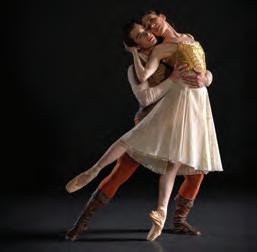
ROMEO AND JULIET Returning for the first time in seven years to the GPAC stage, graceful choreography by Ballet Memphis choreographer Steven McMahon and music by Prokofiev unite to bring audiences an unforgettable ballet rendition of Romeo and Juliet GERMANTOWN PERFORMING ARTS CENTER, APRIL 10–12. MEMPHIS FLOWER SHOW:
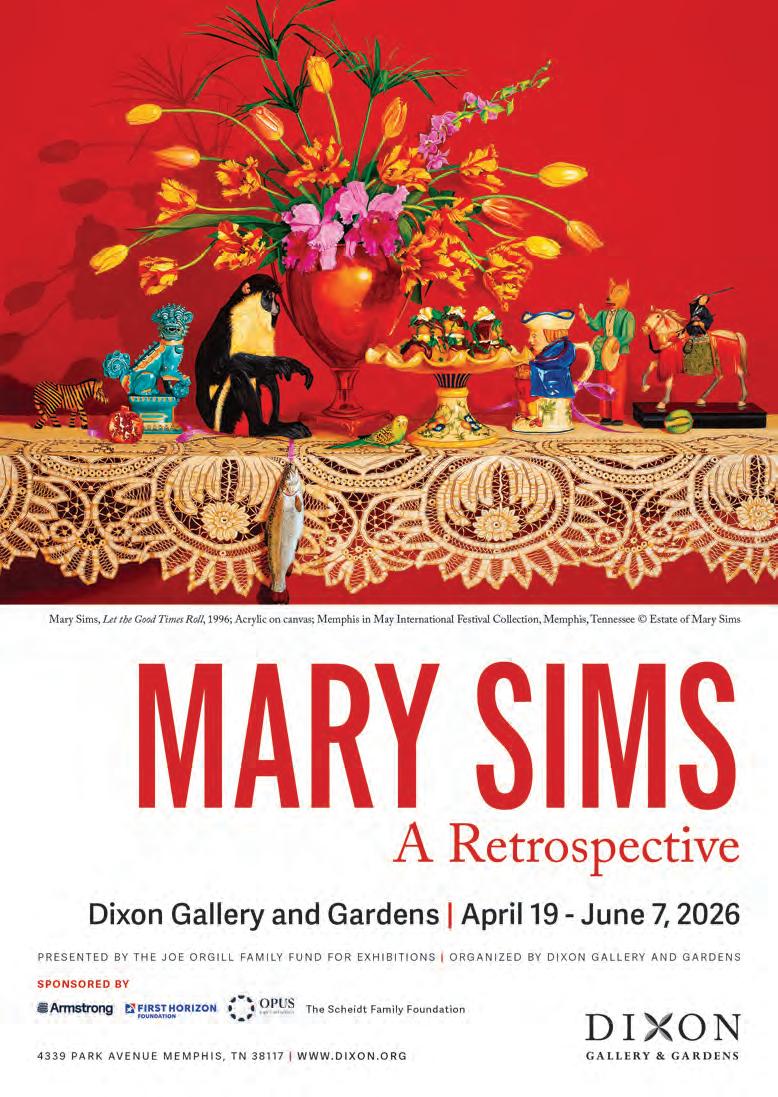
MASQUERADE Admire a colorful display of horticultural talent, botanical beauty, and artful craftsmanship in this annual showcase featuring arrangements inspired by the late artist Mary Sims. DIXON GALLERY AND GARDENS, APRIL 10, 9 A.M.
SCIPLAY Kids can unleash their inner scientist while exploring an interactive Mississippi River watershed model. TOM LEE PARK, APRIL 11, 10–11:30 A.M.
BROWN SUGAR DINER: THE LAST SLICE: A 50’S SOULFUL MURDER MYSTERY Step back in time into a 1950s diner and help solve the disappearance of the diner’s last slice amidst a performance that blends music and mystery. ORPHEUM THEATER, APRIL 12, 3 P.M.
BEYOND CHIC FASHION SHOW Breakout designers and models showcase a stunning runway of bold new fashions, designs, and styles. THE VILLAGE (7818 E. HOLMES), APRIL 12, 4 P.M.
UNCLE CHARLIE’S R&B COOKOUT R&B artist Uncle Charlie joins Babyface, K-Ci Hailey, and El DeBarge in a musical callback to classic soul and R&B hits. FEDEXFORUM, APRIL 12, 7 P.M.
UNIVERSITY OF MEMPHIS BLUFF CITY FEST Watch nine student ensembles from the University of Memphis take the stage in a genre-blending night of performances. CROSSTOWN ARTS GREEN ROOM, APRIL 14, 7 P.M.
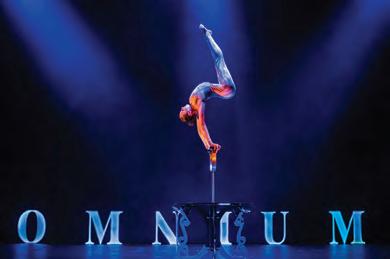
All-inclusive circus
brings a show packed with acrobatic, balancing, and aerial tricks, energetic dance, and other brilliant stunts. BUCKMAN PERFORMING ARTS CENTER, APRIL 14, 7 P.M.
JULIUS CAESAR In this unique take on Shakespeare’s classic, an all-female cast performs the story of the last days of Julius Caesar’s reign and the web
of conspiracy woven around him. GERMANTOWN COMMUNITY THEATER, APRIL 17–MAY 3.
ADAM LARSON QUARTET FEATURING KORTLAND WHALUM Saxophonist Adam Larson’s quartet and vocalist Kortland Whalum join together to perform a mix of R&B, rap, classical music, and jazz. CROSSTOWN ARTS GREEN ROOM, APRIL 17, 7:30 P.M.
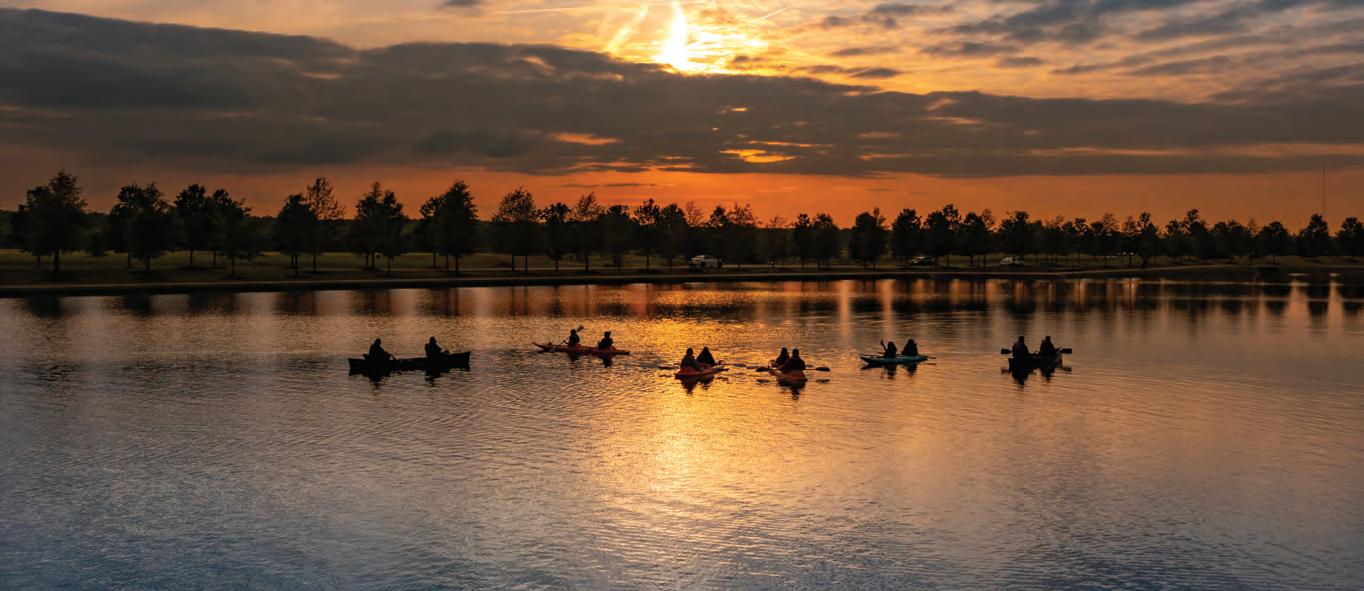
CANOES & COCKTAILS Rent a canoe or kayak, or bring your own and enjoy views of the sunset, music, games, and more from Hyde Lake. SHELBY FARMS PARK, APRIL 17 & 24.
EARTH DAY FESTIVAL AND FUN RUN Kick off the day with a fun run, then explore and experience ways to go green. SHELBY FARMS PARK, APRIL 18. THE PHIL COLLINS EXPERIENCE Frontman Terry Adams Jr. and his 12-piece band deliver a rousing tribute to the legendary Genesis drummer Phil Collins. BARTLETT PERFORMING ARTS CENTER, APRIL 18, 2 P.M.
SIX: THE MUSICAL SIX gives a fresh voice — and a microphone — to King Henry VIII’s six wives in this pop reimagining of the Tudor queens’ lives. ORPHEUM THEATER, APRIL 21-26.
AN EVENING WITH DAVID SEDARIS Come listen to bestselling author David Sedaris as he reads from his new books, A Carnival of Snackery and Pretty Ugly, followed by a Q&A and book signing. GERMANTOWN PERFORMING ARTS CENTER, APRIL 22, 7:30 P.M.
JOCELYN GOULD Jazz guitarist Jocelyn Gould brings her spirited performances and personal style to the stage in promotion of her first solo album. CROSSTOWN ARTS GREEN ROOM, APRIL 22, 7 P.M.
AWADAGIN PRATT Celebrated pianist Awadagin Pratt shares a number of solo and chamber music classics, including works by Brahms, Couperin, and Schubert. GERMANTOWN PERFORMING ARTS CENTER, APRIL 23, 7 P.M. THE NIGHT WITCHES Soar above Europe with the all-female Soviet 588th Night Bomber Regiment in this historical reimagining of the regiment’s highly successful combat missions against the Nazis during WWII. UNIVERSITY OF MEMPHIS MAINSTAGE, APRIL 23, 7:30 P.M.
JESUS CHRIST SUPERSTAR Featuring music by Andrew Lloyd Weber, this tells the story of the last days of Jesus, as seen from the perspective of Judas. PLAYHOUSE ON THE SQUARE, APRIL 24-MAY 17. EAST BUNTYN ART WALK Stroll through the East Buntyn neighborhood, peruse artwork for sale, and chat with local residents and artists. EAST BUNTYN NEIGHBORHOOD (461 S. PRESCOTT), APRIL 25, 11 A.M.
LINE AND SHADOW: BURTON CALLICOTT Lithographs, charcoal, and graphite works from one of Memphis’ best-known artists. DAVID LUSK GALLERY, APRIL 25–MAY 19.
ECHO PARTY Led by saxophonist Art Edmaiston and multi-instrumentalist Chad Fowler, this jazz collective gets experimental while drawing in influences of rock and soul. CROSSTOWN ARTS GREEN ROOM, APRIL 30, 7 P.M.

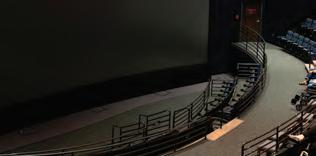
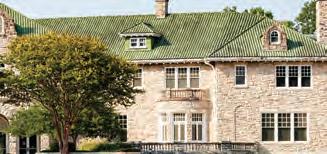













From theme parties to milestone events, seated dinners to standing room only, seminars to celebrations, we have the spaces that are as flexible as your imagination.


In 1977, Humphrey Folk Jr. turned a former home into much more than a steakhouse.
BY MICHAEL DONAHUE
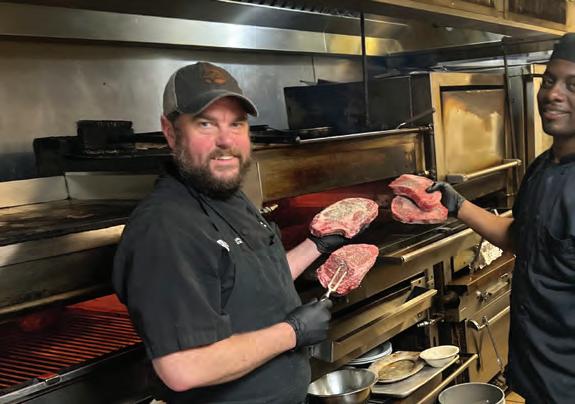

Thouse where anyone could feel welcome — where they would come in straight from a job, even with dirty boots, and have a great steak and strong drink.”

Now, “seven renovations later,” the restaurant that opened in 1977 with just 81 seats now has “300 plus” seats. Diners sit at the tables and bar to celebrate anniversaries, birthdays, and “deals that shape the city,” Chris says. “Dad used to say success came down to one thing. It’s all about the people that gather around the table, and Folk’s Folly is still popular with generations of families.”
In addition to Chris, the owners now include his brothers, Tripp, Michael, and Carey Folk, and operating partners Lauren Robinson, Ashley Robilio, and Samantha Dean. With its subdued lighting, black walls dotted with memorabilia, white tablecloths, and a Steinway grand piano in the bar, Folk’s Folly has that perfect steakhouse decor and ambience. e restaurant includes several dining rooms as well as individual rooms with curtains that can be closed for privacy.






His father got to
work transforming


he late Humphrey Folk Jr.’s “folly turned out to be the opposite.It turned out to be Folk’s wisdom. Folk was the founder of Folk’s Folly Prime Steakhouse, an iconic East Memphis restaurant. Asked where “folly” came from, his son, Chris Folk, says, “His friends told him if it didn’t work, it’s going to be a folly.”
It turned out to be the building into an inviting restaurant. “With no restaurant experience and plenty of friends telling him not to do it, Dad went all in with the idea.”


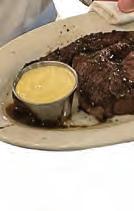
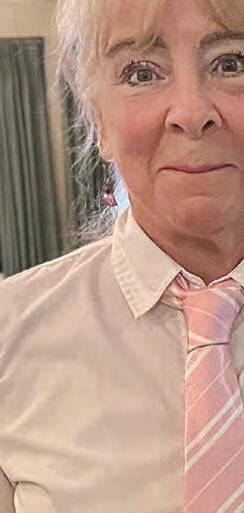
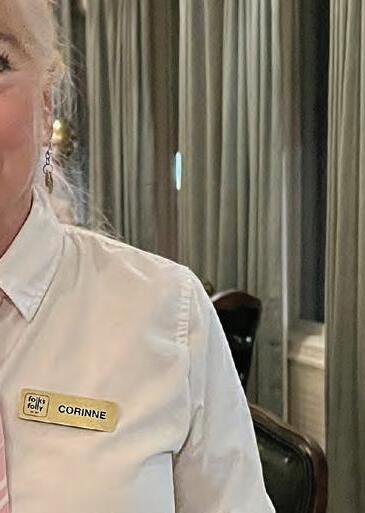
Framed autographs from notable customers hang on the walls. ese include Robert Duvall, Charlie Rich, Sam Phillips, Priscilla Presley, and Archie Manning, says general manager Diane Kauker, who began working at the restaurant in 1984.
“Dad was in the heavy construction business through Memphis and Arkansas all the way down to Louisiana,” Chris says, “and wherever he worked, he was always in search of a good steak. So he had this idea to open a great steakhouse in Memphis.”
What Humphrey desired was “a place where family and friends could feel at home. His dream began to shape when he was driving home one night and noticed this small house on South Mendenhall. at’s where it all started.” e house had been the home of a seamstress, Chris recalls. “Dad talked to her and got her to sell it.”
It was exactly what he wanted. “Dad always imagined a small
“Success grew as the restaurant grew,” Chris says.Folk’s Folly added their Prime Cut Shoppe in 1989, allowing customers to buy meat and cook their own dinners at home. is began with the “prime packs” of steaks Humphrey sent as gifts to his clients in the construction industry, Kauker says.
Humphrey, who died in 2006, ran Folk’s Folly until 2003 when he brought in omas Boggs — well-known here as co-founder of the Huey’s restaurants and drummer for the 1960s Box Tops band — as his operating partner.










“We put systems in place that we were already using at our other restaurants,” says Robinson, who, along with Robilio and Dean, are Boggs’ daughters. “We started working on what we could do to elevate the service. It was already good, but we wanted better communication with the staff about how we could best serve the guests and provide outstanding food at the same time.”







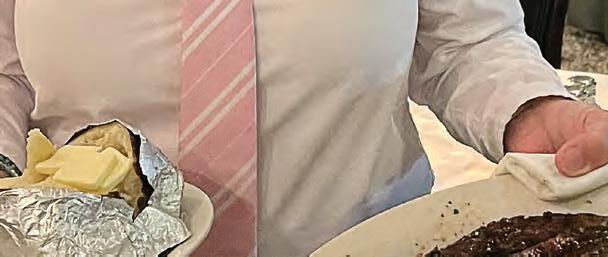
It’s no surprise that steaks are still the star at Folk’s Folly.In a 2025 interview in the Memphis Flyer, Folk’s Folly executive chef Tom Hughes said, “ ere are four ingredients to our steaks: salt, pepper, the steak, and then clarified butter that we squirt on the hot plates.” Over the years, the restaurant has offered several types of steaks, including bison, wild boar, and elk, Hughes said.
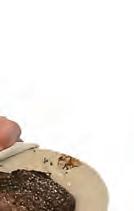

His personal touches have endured. Humphrey put in the fish tanks. Paintings by the artist LeRoy Neiman still hang on walls. He went to Ruth Fertel, the owner of Chris’ Steakhouse in New Orleans, for advice, “and they hit it off,” Kauker says.Humphrey even brought some of Fertel’s chefs to Memphis to teach his staff how to broil the steaks.
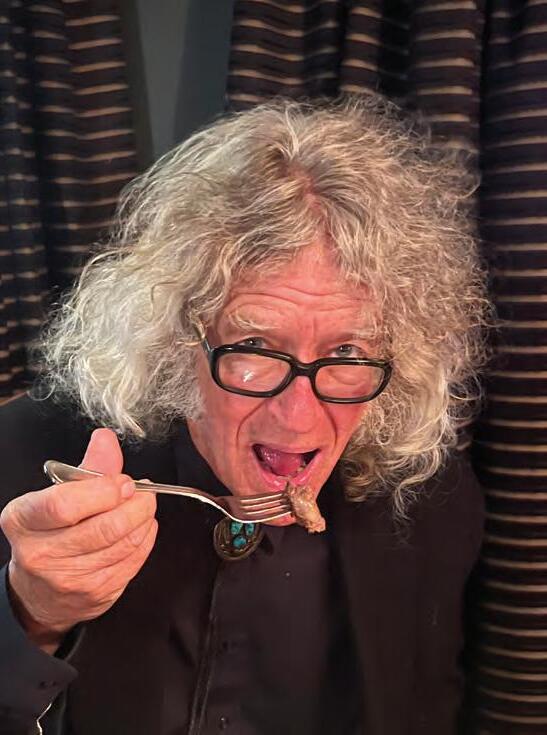
Regardless of what’s ordered, “We like the plates to come out sizzling hot,” Chris adds. “We hand-cut our filet mignons, New York strips, and rib-eyes six days a week. Every day that beef is ground fresh. at’s also what we use to form our half-pound burgers,” which are served in the bar on weekends.
Folk’s Folly has evolved into more than a place to get great prime beef. “Dad built more than just a restaurant,” Chris says. “He built a place where stories are told one table at a time.”
And, he says, “It’s familiar. It’s comfortable. And it’s home.”
Folk’s Folly Prime Steak House, 551 S. Mendenhall Road

Owners:
Angie Ware & Sean Blankenship

Laura Clark (901) 483-2117

Robin Fauser (901) 494-0355

Holly James (901) 734-4411

Tracie Stephens (901) 494-7201

Teresa Coop (901) 605-8978

Ashley Gillihan (901) 626-9740

Lexie Johnston (901) 489-1604

Diane Stribling (901) 831-1755

Jennifer Arendale (901) 218-5781

Tammy Davis (901) 626-6674

Charles Harris (901) 229-2604
Bill Maury (901) 870-3771

Barbara Weir (901) 412-7489

Jeanne Billings (901) 493-0100

Maury Dicken (901) 870-5035

Huddleston (901) 484-9494

Kristi Ryan (901) 826-5309

Mary Williams (901) 283-7795

Grayson Caradine (901) 652-2900

Everitt (901) 487-7709

Sally Isom (901) 219-8882

Marty Smith (901) 674-1031

Patricia Young (901) 485-2559
Our history expert solves local mysteries: who, what, when, where, why, and why not. Well, sometimes.
BY VANCE LAUDERDALE
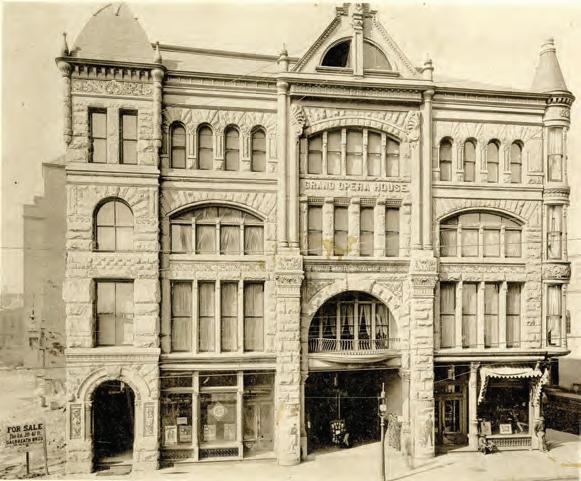
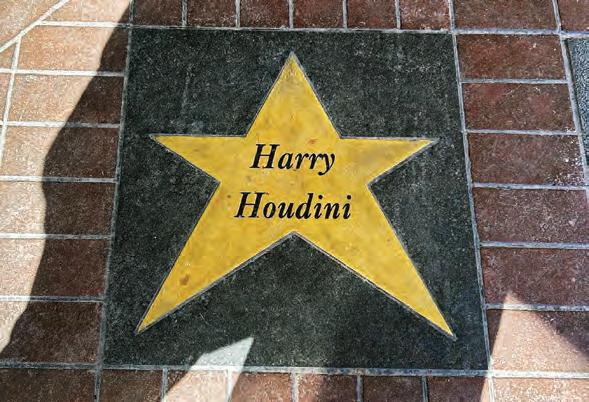
DEAR B.B.: Look around, and you’ll find the names of other celebrities set into stars around this historic theater at Main and Beale. In 1995, longtime Orpheum president Pat Halloran created the “Sidewalk of Stars” as a tribute to the world-famous performers who have graced the Orpheum stage. At present,
88 names have made this rather exclusive list. I’m ashamed that no Lauderdale is among them. Surely, an oversight.
But that explains the WHY: Harry Houdini, probably the most famous magician in the world, performed here. But I presume readers want to know WHEN, so I turned
to John Case. A professional magician, historian, and writer based in Los Angeles, in 2000 Case created the website wildaboutharry.com, the most comprehensive guide to anything and everything concerning Harry Houdini.
“He was at the Grand Opera House from October 23 to November 5, 1899,” Case told me. What’s more, he confirmed that Houdini came back to Memphis twice, performing at the Orpheum on February 16-18, 1916, and again during the week of September 10, 1923. He knows this because he is the author of The Travel Diary of Harry Houdini: 1897-1899, and “I am currently compiling a complete list of every engagement he ever played,” he says. “It is a massive undertaking. This year, I will release the first volume covering the years 1900-1906. It’s over 600 pages!”
Let me pause to clarify something: The Grand Opera House (shown here) opened at Main and Beale in 1890. Around 1907, it was renamed the Orpheum Theatre. So we’re not talking about two separate buildings — not yet, anyway.
I hope readers know that Houdini was the stage name of Erik (or Ehrich) Weisz, born in 1874 in Austria. His family sailed to America when he was 4 years old, settling in Appleton, Wisconsin, where his father served as a rabbi. As a teenager, he taught himself card tricks, performing at sideshows as “The King of Cards.” But then he became interested in escape illusions that would draw larger crowds. In 1899, a manager booked him as a vaudeville act, where he displayed his uncanny ability to escape chains, ropes, handcuffs, and other constraints. In 1894, he married Wilhelmina
“Bess” Rahner, who assisted him with his act, and Weisz became Harry Houdini, after the famous French magician, Robert Houdin (1805-1871).
His 1899 appearance here was one of his early performances as Houdini, and reporters weren’t sure what to call him. Promoters billed him as “The Handcuff King,” “The Genius of Escape,” “The Elusive American,” and even “The World Champion Self-Liberator.” I ran into a hurdle searching old Commercial Appeal files for a review of Houdini’s 1899 act, and Case explained why: “In October 1899, Houdini was still largely unknown. He had some success in the West on the Orpheum circuit, but now he was off the circuit and working his way back east, playing independent theaters.”
However, Case sent a faded scrapbook clipping from the Memphis Evening Scimitar. Headlined “ CHAINS WILL NOT HOLD HIM ,” the article offers a fascinating glimpse of an early Houdini performance. He was so little known that the reporter identified him not as an Austrian, but as “an Australian, and from that great island far away has brought tricks that rival those performed by the Hindus.”
At this time, “the magician is only 27 years old, but he has been following his business for 14 years, and the development of his hands and muscles is truly remarkable. Houdini delights in his work. He does not care whose handcuffs or chains are used, the end is the same. He always releases himself.”
After his stage show at the Opera House, Houdini visited the police department here, where “he disrobed completely, so it was not possible for him to conceal a key. A dozen pairs of handcuffs were placed on his wrists — some of the double-lock kind which cannot
be removed without a key or cold chisel. A locksmith would have given up in disgust the job of removing them. Adhesive plaster was fastened over his mouth, making it impossible for him to conceal keys there.”
At the magician’s request, “the spectators left Houdini in the room alone. Returning ten minutes later, they found him entirely free of the bracelets.”
The consummate showman provided another surprise. On a table, “all the cuffs were locked and interlocked precisely as they had been placed on his wrists.”
After other performances that year in America, in 1900 Houdini embarked on a long tour of Europe, where he became an international sensation. Taking advantage of the newfangled “moving pictures,” he performed his stage act before an audience, interspersed with filmed scenes of other adventures, such as leaping in mid-air from a biplane and landing in the cockpit of another flying below. By the early 1900s, he was earning $300 a week ($12,000 today).
In 1916, he returned to Memphis, this time as one of the most famous entertainers in the world. As a thrilling preview of his Orpheum show, on February 17, 1916, he was strapped into a straightjacket, a cable hooked around his ankles, and hauled high into the air by a crane mounted on the roof of the four-story Commercial Appeal building at Second and Court. The newspaper reported that “a committee of businessmen will see that the buckling of the straitjacket is done in a thorough manner.”
With “more than a thousand pairs of eyes looking on, Houdini took only five minutes to free himself,” casting the straitjacket
into the cheering crowds below. That evening, on the Orpheum stage, in addition to escaping from various chains and handcuffs, he performed his famous “Chinese Water Torture” trick. Handcuffed, with his feet bolted securely into wooden stocks, he was lowered head-first into a massive glass case filled with water. The challenge, of course, was to escape before he drowned.
Assistants placed a curtain around the “torture chamber,” and the crowd held their breath and nervously checked their watches. Minutes ticked by. The audience grew nervous. Invariably came shouts of “Let him out!” Stagehands rushed forward and pulled away the screen — only to reveal the water chamber empty, and Houdini sitting calmly in a chair.
He wasn’t quite done with Memphis, though. That week, Goldsmith’s Department Store published a challenge to Houdini in the local newspapers: “As expert packers and shippers, we challenge you to escape from a case of heavy lumber, in which we believe we can so nail and rope you that you will be unable to make your escape.”
On February 18, 1916, Houdini published his response: “Houdini Accepts the Challenge,” with a reasonable request: “Under the condition that the box must not be air-tight.”
That Friday night at the Orpheum, Houdini invited audience members to come on-stage and use their own hammers and nails to seal him even more securely. Or so they thought.
Once again, assistants placed a screen around the box. The audience waited; not a sound was heard. After perhaps 10 minutes, the screen was pulled down with a flourish, and
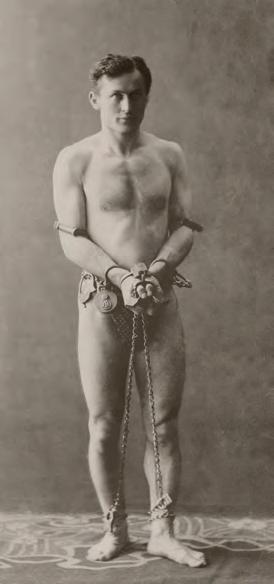
Houdini came back to Memphis twice, performing at the Orpheum February 16-18, 1916, and again during the week of September 10, 1923.
there was the great magician standing beside the wooden crate — still nailed shut!
In the 1920s, Houdini embellished his fame by starring in a series of short films designed to showcase his skills: The Grim Game (1919), Terror Island (1920), and The Man From Beyond (1922). By this time, he had become so famous that his name became a verb. The Chicago Tribune , reporting on a political scandal, observed that the parties involved would have to “houdini” themselves out of the predicament.
On September 10, 1923, Houdini returned to Memphis for his third and final time. He repeated the outdoor straitjacket
stunt, again dangling from the Commercial Appeal roof. At the Orpheum later, he “introduced new tricks” — such as escaping from a steel milk can latched on the outside — and closed the show with another heart-stopping performance of the Chinese Water Torture, which never failed to bring a standing ovation. It remains, to this day, one of the most sensational — and difficult — magic acts in history.
Memphians were lucky to catch this engagement. Just weeks later, on the night of October 16, 1923, the Orpheum burned to the ground. The blaze apparently started on the third floor, which had been leased to various businesses. It wouldn’t be until 1928 that the “new” Orpheum — the majestic structure standing on the same site today — would rise from the ashes.
Houdini passed away two years after the Memphis performance, at age 52. A man who could have died in so many ways while performing death-defying stunts was felled by peritonitis from a ruptured appendix. Many fans thought his Halloween death on October 31, 1925, was fitting for a man who made it his life’s work to debunk spiritualists, clairvoyants, and fortune-tellers. If there really was life after death, he proclaimed, he would send a secret coded message to his wife. Bess, who passed away in 1943, waited for it until the end of her life.
Got a question for Vance?
EMAIL: askvance@memphismagazine.com
MAIL: Vance Lauderdale, Memphis Magazine, P.O. Box 1738, Memphis, TN 38101
ONLINE: memphismagazine.com/ask-vance Or visit him on Facebook.
Siblings Margaret and Billy Renkl take young readers on a tour of The Weedy Garden.
BY JESSE DAVIS
“Civilized yards are all alike. Every wild yard is wild in its own way.”
— RICHARD POWERS, THE OVERSTORY
TSuch is the subject of The Weedy Garden (HarperCollins), a brand-new picture book from the brother-and-sister duo of painter Billy Renkl and writer Margaret Renkl, the Nashville-based author of Graceland, At Last and the 2024 Southern Book Prize-winning The Comfort of Crows: A Backyard Year In their newest collaboration, Billy’s brushes and Margaret’s words lead the reader through a small, slightly unkempt garden, delighting in the natural world right outside the backdoor.
Nature — its proximity, healing powers, and ability to transport — is a steady theme in Margaret’s published work, whether in her columns for e New York Times, her essay collections, or her newest solo book. It’s no surprise that nature found its way, too, into her first foray into the world of children’s literature.

he snow and ice melt; the cold recedes. Songbirds wake early, singing to greet the gradually lengthening days. Green shoots appear, muscling their way past last year’s dry remains. Bare and scrubby beds wake as living gardens, calling birds to build nests and children to play outside, making memories and mud pies.


ough e Weedy Garden is Margaret’s first book for children, the author has been dreaming of writing such a book since before she could read.



“When my boys were little, my favorite times of day were story-time: books fi rst thing in the morning, books before naptime, books when a kiss on a boo-boo didn’t quite cut it, book after book after book before bed,” Margaret says. “I can’t remember a time when I haven’t been reading and collecting and studying picture books. To have this dream come true at age 64 feels exactly like a miracle.”
Like any good effort of landscaping, e Weedy Garden builds on layers of earlier growth. Billy’s appreciation for the unprepossessing flowers that bloom in the pages of his and his sister’s new book harkens back to his childhood.
“I helped my mom in our yard a lot when I was a kid. Although we grew up in Birmingham, she grew up on a peanut farm in south Alabama. Many of the flowers she grew came from our grandmother’s yard,” Billy says, remembering the hardy, easily divided “passalong plants” grown by his mother and grandmother. e siblings have collaborated on artistic projects like e Weedy Garden since they were both old enough to pick up a pencil, Margaret recalls, with her brother adding his drawings to her poems and stories. “Billy has made artworks for all of my earlier books — internal images, cover images, or both — so in many ways this was just a new manifestation of a longstanding collaboration. And whatever the nature of the artworks he’s making, Billy somehow always manages to take my breath away,” Margaret says.
ough Margaret’s high praise for her brother is not the usual commentary one hears from siblings, it’s clear, both from speaking to the pair and from reading their excellent new book, that the Renkl siblings’ working relationship is characterized more by collaboration
than competition. It has served the pair well, as has their shared interest in the natural world, and their childhood experiences playing and helping in gardens.
“For this book, as for our earlier books, I wrote the text fi rst, and then Billy began to work on the images,” she continues, “but he’s not simply ‘illustrating’ my words. He’s responding to the same internal prompt, and in that sense his work is uniquely his own. In e Weedy Garden , I was prompted to write about the wild world I loved as a child. Billy was making art in response to that prompt, too.”
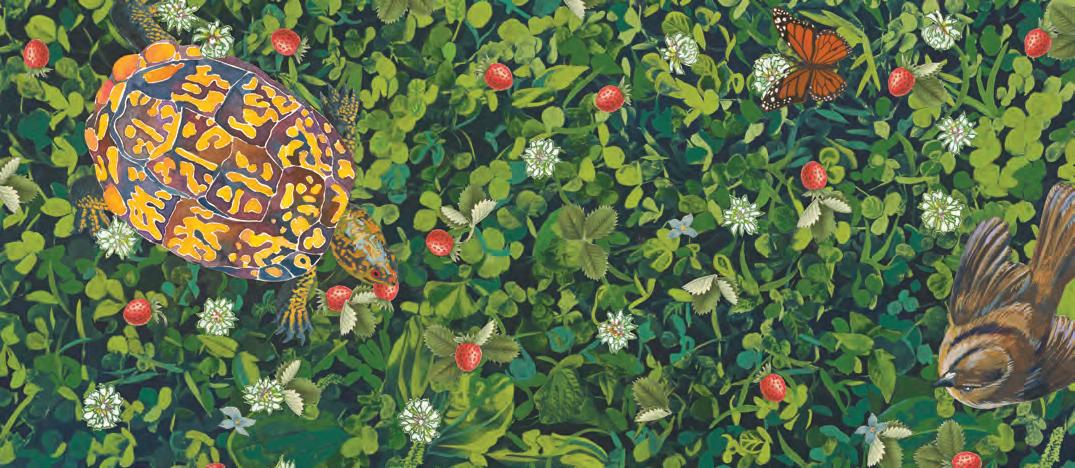
Billy’s illustrations are a riot of colors, from the vibrant hues of purple coneflowers, black-eyed Susans, and zinnias, to the more subdued tones of last year’s fallen leaves, a brown wren scratching in the dirt, and a fuzzy pile of sleeping rabbit kits.
e artist’s brushstrokes complement his sibling’s words with a seeming ease that hints at their long creative collaboration, Billy’s paintings are gallery-quality work. No surprise, then, that the artist’s e Weedy Garden paintings are on view at the David Lusk Gallery’s Nashville location through April 11th. e paintings are lush, as alive with childlike wonder as the next-door nature scenes they depict are alive with the springtime plenty of a thriving ecosystem in a Southern suburban home.
“If you’re a speckled toad, you crouch in stippled soil and dappled leaves,” Margaret writes. “If you’re a green hummingbird, glinting and gleaming in the weedy garden, you dance at the first glad glimpse of trumpet vine. A whirring, twittering dance, right in the glittering air.”
Margaret’s prose begs to be read in a hushed tone, as though the animals she writes about were

nearby, and easily spooked. Wonder and whimsy make up the tone of the book, in equal parts, capturing the essence of a childhood spent amid leaves and soil, picking insects off the plants.
A terrapin’s jaws sink into a wild strawberry. A robin perches on a blue bicycle left canted over in the clover and grass. Sunflowers bloom in an explosion of brilliant yellow. Fireflies illuminate the weedy garden at night; by day, goldfinches play hide-and-seek in the black-eyed Susans.
“If you’re a robin, you tilt your head, listening this way, listening that way,” Margaret writes. “Do you hear the earthworm deep in the dark earth, tunneling beneath the weedy roots?”
A reverence for nature is present on every page, as is the conviction that the natural world is accessible all around the reader, wherever they may find themselves.
One might wonder, though, why the Renkl siblings’ gardens are so weedy, and indeed this intrepid book reviewer did broach that topic.
“Many of my favorite wildflowers have ‘weed’ built right into their names: ironweed, milkweed, Joe Pye weed, frostweed, and pokeweed, just for starters,” Margaret says. “A garden filled with native wildflowers like these is more than just a source of beauty. It is also a source of sustenance for our wild neighbors.
“In our yard, native plants are eager to help,” Billy says. “ eir seeds come in on the wind, or in bird droppings, or on my shoes if I’ve been out walking. e perennials put themselves to bed in the fall and wake up in the spring in time to feed the pollinators. I think of ‘weedy’ as naming an aesthetic — along the lines of ‘comfortable’ or ‘honest.’”
“No matter how big or how small our garden plots,” Margaret adds, “we can use the soil in our care for good by recognizing it as crucial habitat for the creatures who share our ecosystem.”
e trees overhanging North Parkway offer more than shade to drivers; they’re the homes and foraging grounds of birds and squirrels and insects. A tangle of wildflowers may look cluttered to a human eye, but it’s an oasis to a pollinator flying through a desert of concrete, steel, and asphalt.
“We were both committed to suggesting that nature is right nearby, that we are a part of it. You don’t need to go to a National Park to be fi lled with wonder,” Billy says. “ e backyard will do, or a park, or the edges of the parking lot behind your apartment. Native wildflowers will poke up through the cracks in the sidewalk if you let them.”


THIS IS A STORY ABOUT a name that refused to fade away. Like so many great Memphis stories, Old Dominick’s is one of grit and spirit, built on generations of ideas and change.
In the late 1800s, Domenico Canale immigrated from Italy to Memphis and began building a business importing fine goods for the growing city along the Mississippi River. Among those goods was whiskey-bottled under the Old Dominick name and distributed throughout the region. For decades, the Canale family’s spirits business thrived, becoming part of Memphis’s commercial fabric until Prohibition forced it to close its doors.
More than a century and a successful beverage distribution company later, the Canale family rediscovered the brand. Rather than letting the past remain a footnote, they decided to bring it back to life. In 2017, Old Dominick Distillery opened its doors in downtown Memphis, restoring the family’s legacy and introducing a new era of Memphismade spirits.
“We have spent the better part of the last decade building a solid foundation and positioning Old Dominick to grown
into a nationally acclaimed brand,” says Chris Canale, founder of Old Dominick. And that acclaim continues to gain momentum. In 2025, Old Dominick’s Bonded Tennessee Whiskey brought home a Best-in-Class award from the San Francisco World Spirits Competition. Not only does Old Dominick craft world-class spirits, it continues to bring compelling sips of Memphis to a large stage. From the distillery’s location on the bluffs of the Mississippi and the unparalleled quality of Memphis water, to the undeniable community and energy of the city, Memphis is the key. “The Old Dominick brand story is the story of Memphis. Old Dominick will always call Memphis home,” says Canale.
Visitors to the downtown distillery can experience that story firsthand. Old Dominick offers guided tours and tastings that take guests from grain to glass, along with a lively bar and event spaces that showcase the spirit of Memphis hospitality. Whether you’re planning a visit to the distillery or looking for a bottle at a nearby retailer, Old Dominick invites you to raise a glass to a legacy that continues to grow-one Memphis-made pour at a time.
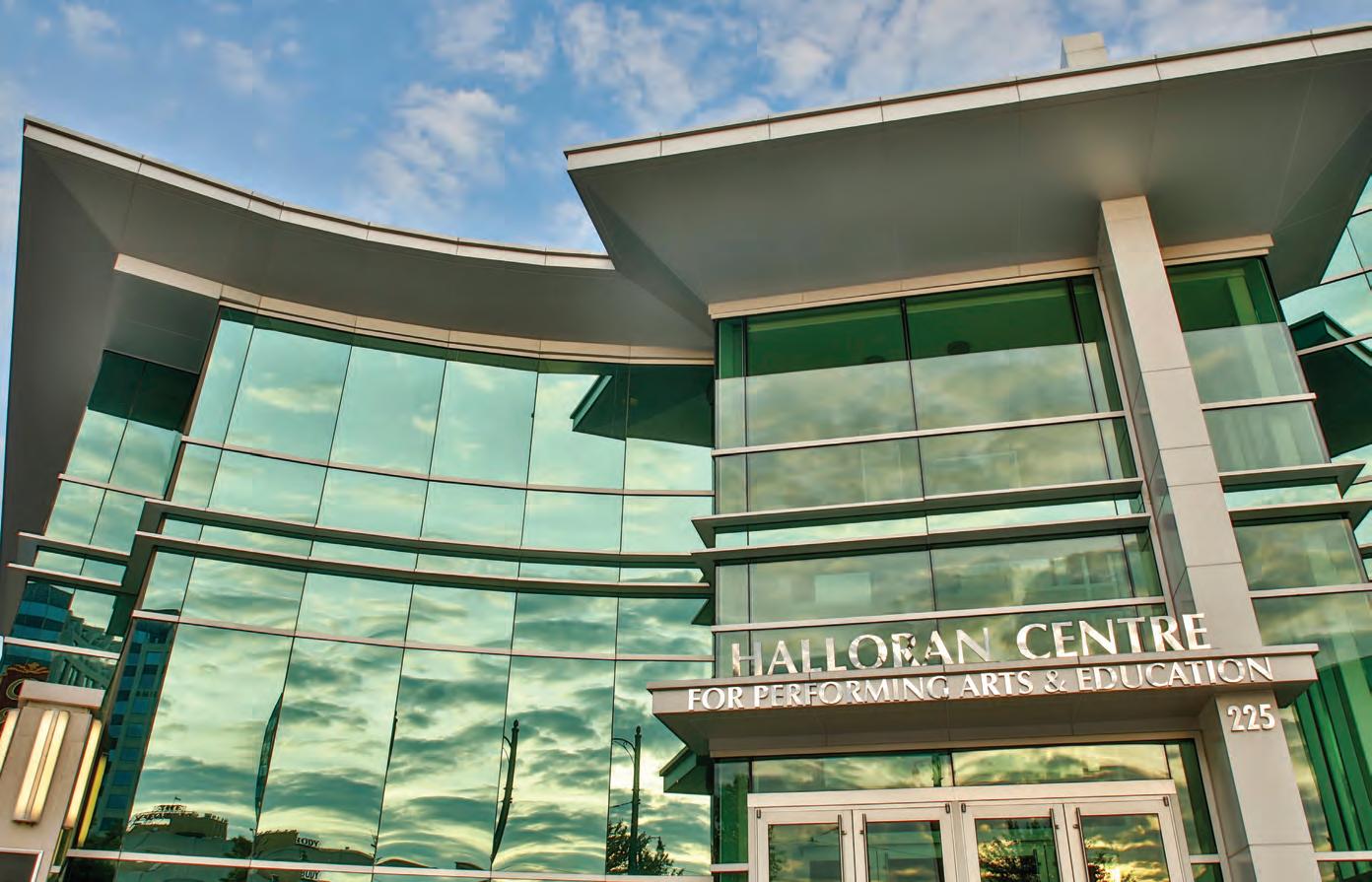
THE ORPHEUM THEATRE GROUP is a cultural catalyst where international renown and homegrown talent intersect. Touring performances introduce the Mid-South to globally celebrated entertainment while year-round programs nurture a creative landscape that is distinctly Memphis, inspiring communities and creating lifelong memories through shared experiences. At the heart of its mission to entertain, educate, and enlighten is the Halloran Centre for Performing Arts & Education. Since opening its doors just over 10 years ago in September 2015, the Halloran Centre has housed the Orpheum Theatre Group’s growing education and community engagement initiatives while expanding opportunities for live performance in Downtown Memphis. Over the past decade, the Halloran Centre
has become a vibrant hub for creativity and learning, welcoming thousands of students, teachers, and families each year through a wide range of arts education programs, student matinees, workshops, and community partnerships. At the same time, the venue remains a dynamic performance space, hosting concerts, comedy, film, speaker events, and emerging artists from Memphis and beyond. Together, the historic Orpheum Theatre and the Halloran Centre create a unique cultural campus, one that honors the city’s artistic heritage while investing in the next generation of storytellers and audiences. Ten years after opening its doors, the Halloran Centre stands as a testament to the belief that the arts are not entertainment alone but also a powerful force for connection and community.
AN ACTIVE LIFESTYLE CAN LEAD TO AILMENTS, BUT THERE ARE METHODS TO PREVENT (OR AT LEAST REDUCE) THEM.
BY FRANK MURTAUGH
HEAD , SHOULDERS , KNEES , AND TOES If you’ve been anywhere near a young child, you’ve certainly seen a version of the body-parts dance. It may as well be a performative guide for those who enter the world of sports medicine. Be it basketball season, the heat of a baseball summer, or — deep breaths — football in the fall, sports bring injuries. Yes, to heads, shoulders, knees, and toes.
We asked Dr. Wesley Owen, a sports-medicine physician with Campbell Clinic, about the most common injuries he sees, and what athletes — from park-walkers to marathon-runners — can do to avoid them.
Whether you roll it while scoring a game-winning touchdown or simply misjudging a curb on a dog walk, the ankle is a joint that almost begs for mistreatment. Small bones connected to small muscles by small tendons. And an ankle can rotate only so far.
“Ankle injuries affect everyone from weekend warriors to professional athletes,” emphasizes Owen. “Treatment will vary based on the severity of an ankle sprain, from a wrap to help with compression and swelling, to a period of time immobilized in a boot, maybe with crutches.”
Consider the weight our ankles must support (virtually our entire body). And the range of motion we demand, especially when running, jumping, pivoting, even stopping. “People can have ankle weaknesses that predispose them to injury,” explains Owen. “People don’t put a lot of emphasis on conditioning the ankle with specific exercises to decrease the chances of an injury. Now, after an injury, they’re very mindful about it.”
☛ One easy-to-practice ankle exercise: Pretend you’re writing the alphabet with your front toe. Balance is also critical to ankle strength. Standing atop an exercise ball, or even a pillow, will force your ankles to flex in healthy places. “Small movements will help strengthen ligaments that are stretched,” says Owen. “Unfortunately there’s a rubber-band factor. Once you sprain your ankle — and stretch those ligaments — you may be predisposed for more sprains.”
The lumbar spine is made up of five vertebrae. If you’re active and of a certain age, you’ve likely heard from all five. It could be a sprain, a slipped disk, or a spasm that locks your body into a position not conducive to an active lifestyle. “We don’t think of degenerative disk disease with younger patients,” says Owen. “ ey typically have more of an acute injury, whether it be a lifting motion, or a jerky, twisting motion. And this could lead to a strain or bulging disk. If it’s large enough, it could cause issues with nerve or cord compression.”
While a weight room sees its share of back trauma, the lower back can be victimized by overuse, and nowhere near a barbell. “Athletes that do a lot of repetitive motions — gymnasts doing back handsprings or pitchers leaning back to throw a baseball — can develop issues of stress fractures that cause lower back pain. It’s a buildup.”
☛ How to avoid lower-back trauma? It’s not all that different from conditioning ankles: stretches and range-of-motion exercises. And no, hundreds of sit-ups to strengthen your core aren’t the answer. Owen suggests static holds like planks and bridges (there are numerous positions for these). “Rotational movements with a medicine ball or resistance band are proper core exercises,” he adds.









Cardiologist in Memphis Voted Top Doctor by Castle Connolly
• In practice for 20+ years
• Same-day appointments are welcome
• Rapid pre-surgical assessment
• All patients seen by MD Cardiologist
• All Insurances accepted
Hospital A liations: Baptist, St. Francis, Methodist Memphis, and Highland Hills Senatobia

Have you heard of lateral epicondylitis? You’ve more than likely felt it. As Owen describes the stress: “Inflammation of the common extensor muscles of the forearm where they attach to the lateral epicondyle of the elbow.” We call this tennis elbow in polite company. And you don’t even need to own a tennis racket for the discomfort to change the way you pick up a coffee mug or turn the steering wheel of your car.
“This isn’t necessarily an injury,” notes Owen. “It’s in the realm of repetitive overuse for any type of swinging or lifting. The pain tends to generate on the thumb side of the bone. But there’s also a lot of dysfunction with gripping of the wrist and lifting of the wrist in certain movements.” ☛ Strengthening the forearm, often with resistance exercises, goes a long way toward preventing recurrences of tennis elbow. “A lot of it comes down to proper mechanics with swinging or lifting,” says Owen. Campbell Clinic has technology — as does the University of Memphis — that can evaluate, measure, and quantify an athlete’s mechanics in a performance lab.
Next time you hear a baseball analyst talk about a pitcher’s “mechanics” being awry, know that there’s more at stake than a ball or strike. “Mechanics are often thrown out the window,” adds Owen. “People simply want to lift as much as they can or throw as hard as they can, and that usually leads to issues.” (YouTube offers a plethora of videos on mechanics in several sports. Keep in mind, though, that techniques will vary based on your body type.) Warming up before activity and cooling down afterwards are additional ways to keep the “tennis” out of the elbow.
Campbell Clinic offers the region’s most advanced spine care to help you get back to doing what you love.



•Board-certified orthopaedic spine specialists
•Innovative treatments backed by years of research
•Ultra minimally invasive endoscopic spine surgery
•Physiatry specialists that provide minor interventions, such as spinal cord stimulation and biologics
•State-of-the-art rehabilitation for fractures and trauma


•Complex and deformity spine surgery, including fusions

•Center for Bone Health and outpatient kyphoplasty



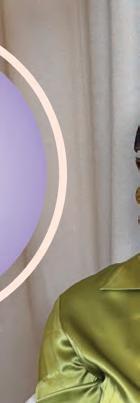
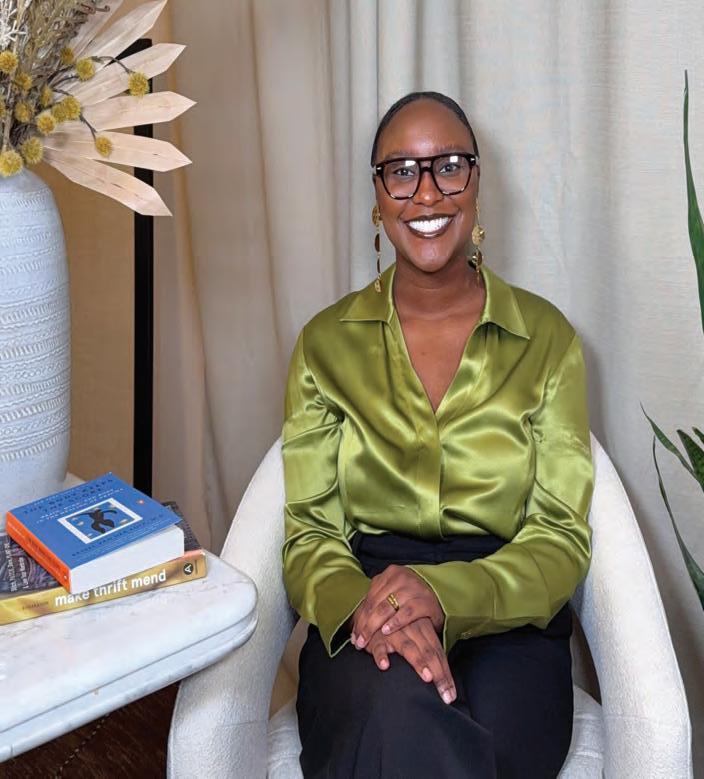

Combining mental health with a love of fashion, creativity, and sustainability, Mended Therapy was born. Ashley wants to show that although things may seem like they cannot get better, there is hope. Just like a mended piece of clothing is brought new life, the same can be said of us. She is here to walk with you through this journey with laughter, creativity, and challenging your beliefs about yourself. She is MENDED (and constantly mending). She hopes you will let her join you as you MEND.


Ashley specializes in working with LGBTQ+ populations and mood disorders.
For more information or to book an appointment, visit mendedtherapypllc.com.
She currently accepts Aetna, BCBS, Cigna, Quest Behavioral Health, All Savers (UHC), Health Plans Inc, Optum, Oscar, Oxford, Surest (Formerly Bind), UHC Student Resources, UMR, UnitedHealthcare, UnitedHealthcare Shared Services (UHSS), UnitedHealthcare Global, and UnitedHealthcare Exchange Plans (ONEX) insurance plans. She does provide a superbill for out-of-network clients if they want to submit to their insurance. Self-pay is $125 for individual sessions.

There’s a fourth area of the body where Owen emphasizes special care and attention for athletes of any age: the brain. A concussion — fundamentally a bruise on your brain — is not strictly a football injury. Owen sees these in athletes from any sport with any degree of impact. (They’re a big problem in women’s soccer.) He and a team of colleagues manage and treat concussions, and Owen notes that every brain injury is like a snowflake: unique unto itself. Treatment varies. Recovery time varies. But let it be said from the mountaintop: There’s more at stake with a brain injury than those to an ankle or elbow.
“The biggest thing is getting a quick evaluation,” says Owen. “Whether that be on the sideline with a licensed medical trainer or getting in to see a doctor as soon as possible. We can work on cultivating the right treatment for the individual athlete. We want to decrease the likelihood that they’ll try and self-return to the sport too soon, risking re-injury or a more catastrophic outcome.”
There’s an added layer Owen sees to the challenge of addressing concussions, particularly in young patients. “We’re often dealing with student-athletes,” he notes. “We talk about rest, both cognitively with school and also the rest from sport. Some activity level will be tolerated. But there are some activities they simply won’t be allowed to do. We treat symptoms and we track progress. There could be worsening anxiety or worsening depression. We aim to manage all those symptoms, with medications if indicated, but also from a psychological standpoint.”
Ankle, back, elbow, and brain. They don’t lend themselves to a performative dance in quite the way other body parts have. But they’re worth the extra care and attention. Be ready for your next game.









































































BY MICHAEL FINGER
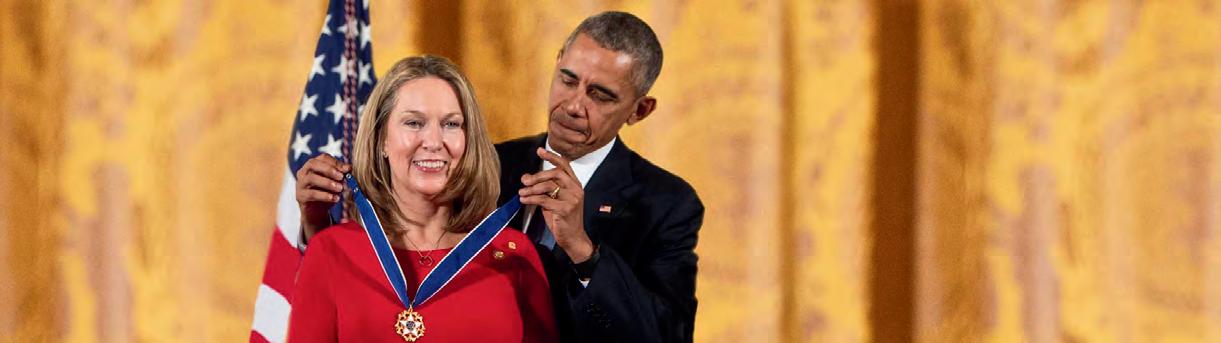
On the afternoon of August 16, 1977, Memphians learned the tragic news that the reign of the King of Rock-and-Roll had come to a sudden end. A heart attack had felled Elvis Presley at his Graceland estate; he was pronounced dead at Baptist Hospital at 3:30 p.m. After recovering from the initial shock, J. Robert “Bob” Towery found himself in quite a dilemma. e publisher of City of Memphis magazine realized that the September issue had been written, designed, and readied for the printer, with a cover story focusing on — of all things — the Dutch elm blight. What would readers think in just two weeks when they picked up his magazine and concluded that, instead of a tribute to Elvis — not even a mention — the staff was more concerned with the fate of our area’s ... trees ?
Since we don’t cover breaking news, monthly magazines rarely have dramatic “Stop the presses!” moments. But this was such a moment. Towery gathered his production team and quickly came up with an alternative plan. Scrapping the original cover story, he contracted freelance contributor Jackson Baker to write a feature on the life and death of Elvis. He also asked local illustrator Calvin Foster to create a new cover image — a somber portrait of Elvis — with Frank Morris providing inside artwork.
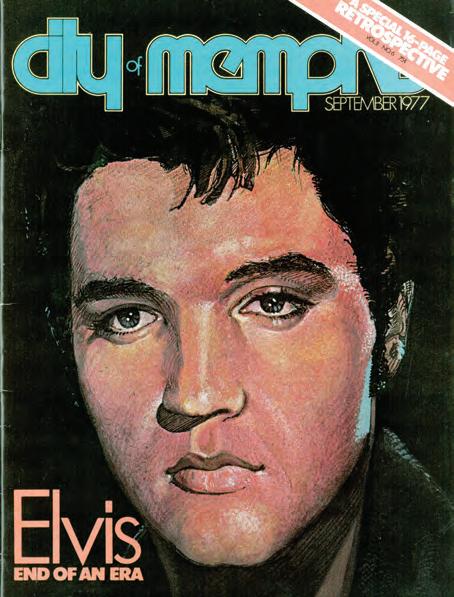
Somehow, in those pre-computer days, we pulled it off. e drastically revised September issue included “A Special 16-Page Retrospective,” complete with a four-page pullout illustrated by Frank Morris and Ed Hirth and an early photo by William Speer. e cover story, “Elvis: End of an Era,” was an instant classic, one of the best tributes to the King ever written — anywhere. It has been reprinted three times in these pages over the years, and original copies of the September 1977 issue, now an antique, remain steady sellers in our online archival shop.
It must also be said that this accomplishment helped cement the reputation of City of Memphis — then just over a year old — as a serious and professional journalistic enterprise.
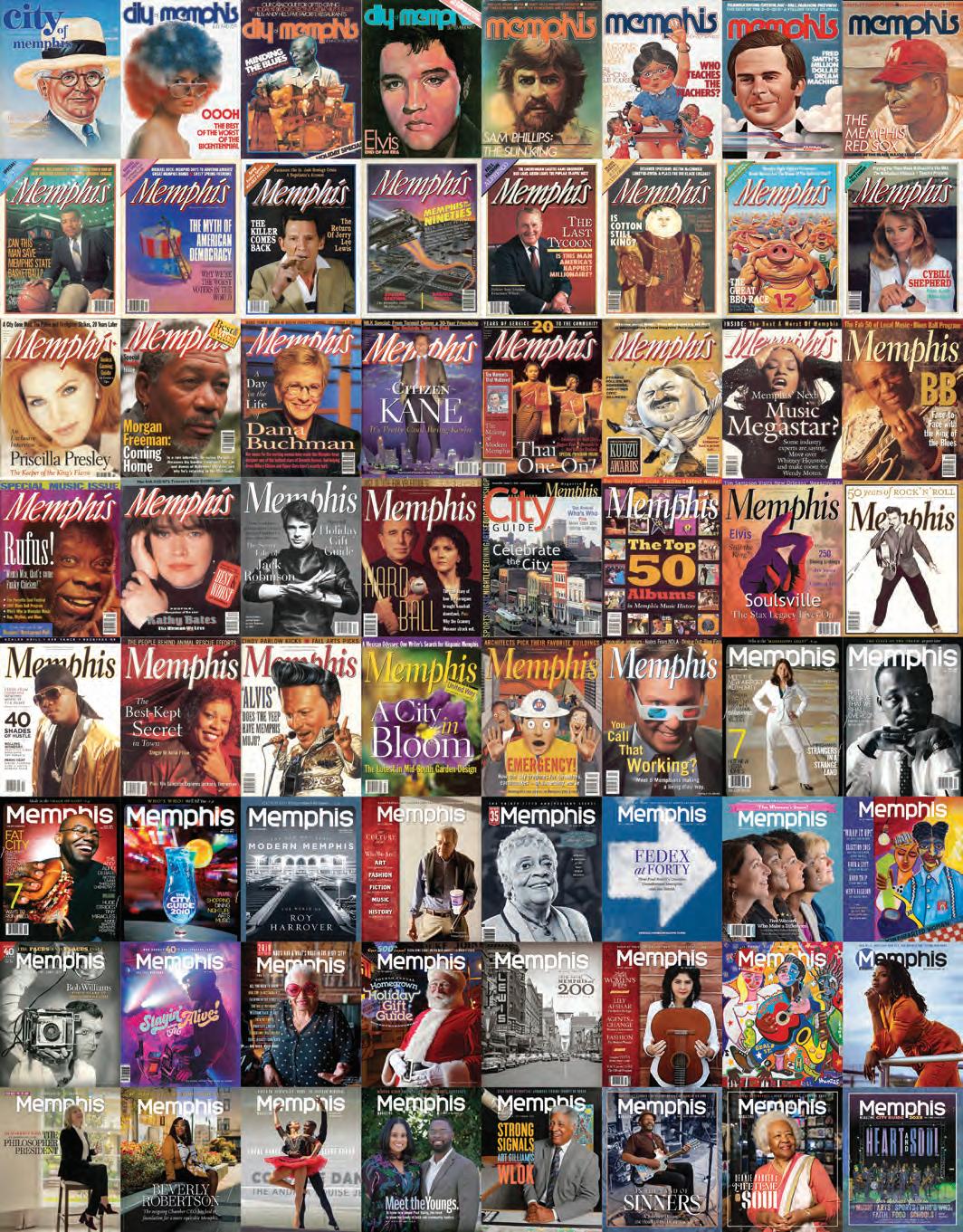
In April 1976, Memphians discovered a brandnew publication on the newsstands (as did a few farsighted charter subscribers, who found it in their mailboxes). If anyone was puzzled by the editorial mission of the 44-page magazine called City of Memphis (a Chamber of Commerce publication had already nabbed the simpler title of Memphis), they probably weren’t any more enlightened after reading the cover story, “A Conversation with Boss Crump.” Since the former mayor had died 22 years earlier, publishing an imaginary “conversation” may not have been the best way to introduce Volume One, Number One to a new audience. Other stories, though, hinted at the magazine’s potential, including a “Speakout” essay by acclaimed attorney Lucius Burch, a profile of 80-year-old obstetrician Dr. Phil Schreier (a precursor to our present-
day “Local Treasures” columns), a four-page spread on what we called “natural” fashions, a short dining review, and a monthly calendar — content readers still expect to find in city magazines.
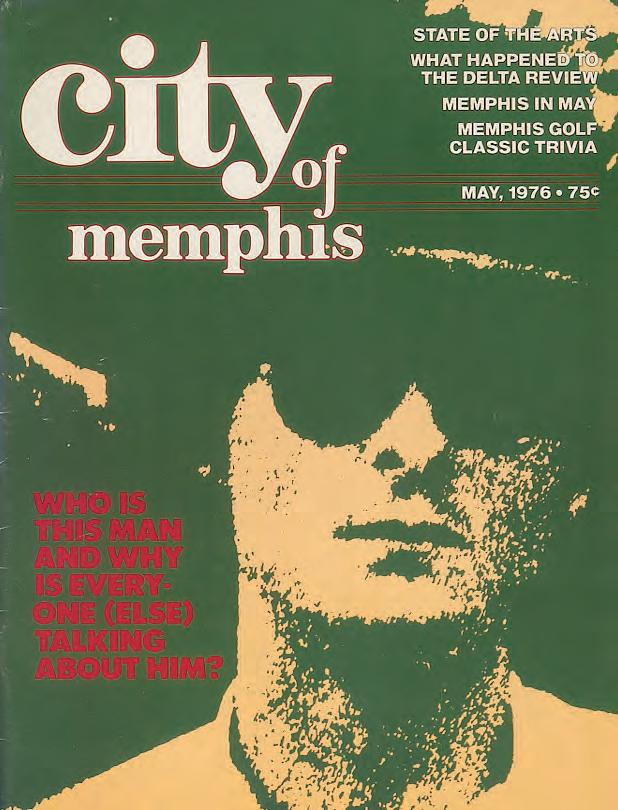
e second issue was, quite possibly, as intriguing as the first, with a grainy cover shot showing a gentleman wearing shades and a hat, alongside the title: “Who is this man, and why is everyone (else) talking about him”? Well, that man was photographer William Eggleston, right on the brink of international fame, and this was “his first hometown showing.” Also inside, acclaimed local author John Fergus Ryan penned a tribute to another writer of considerable fame: “ e William Faulkner I Knew.” A third feature pondered the demise of the much-loved regional magazine, e Delta Review. All in all, a solid issue, to be followed by others that first year.
Towery, owner of a weekly newspaper called the Whitehaven Press , had a keen eye for talent. In those early years, it was a small team, but a good one. Ken DeCell, who got started in journalism working for his parents’ tiny newspaper in Rolling Fork, Mississippi, was editor. He would later enjoy a long career as senior editor of Washingtonian . The art director, for the first two issues, was Jack Atkinson, but then a Memphis State University graphic design student from Noxapater, Mississippi, named Fred Woodward took over. He would hold that post until 1980. Woodward went on to helm the art departments of D magazine, Texas Monthly, and even Rolling Stone Named to the Art Directors Hall of Fame, that organization observed, “Woodward redefined the possibilities of editorial design.”
e new magazine was something of a family affair; Ken DeCell’s wife, Florri, was the editorial assistant, and Bob’s wife, Patty (known only to readers as “Lola,” no last name) was calendar editor and circulation manager. e magazine’s promising start was a magnet to freelance writers, artists, and photographers who didn’t mind hard work at low pay. Space prevents us from listing everyone, but by 1978, when the magazine finally shortened its name to Memphis , it had attracted Ed Weathers, Kenneth Neill, Susan Turley (now Dynerman), and David Dawson, the core team who would play key roles as the magazine developed. Surrounded by Ivy League graduates (Neill: Yale, Weathers: Columbia, Turley: Barnard), Dawson, a Memphis State grad, used to say, “I was the only one with a decent education.” Our crudely effective index-card system is jammed
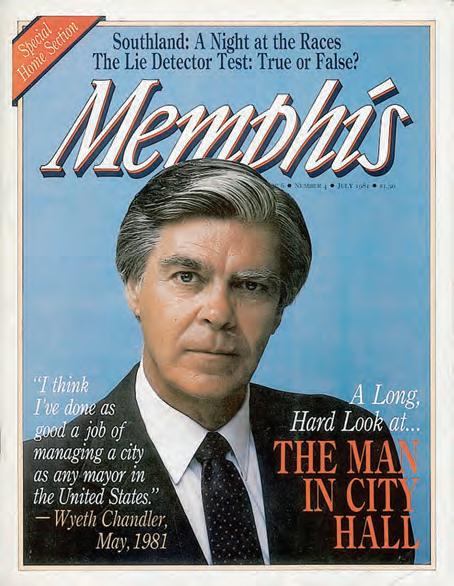
with stories from these four. Among our favorites: Neill’s “Fred Smith’s Million-Dollar Dream Machine” (August 1978 and reprinted several times since), Turley’s “Billy Dunavant: e King of Cotton” (September 1979), Dawson’s “ e Ghost in Seat C-3” (October 1979), and Weathers’ “Wyeth Chandler: e Man in City Hall” (July 1981).
Other contributors appeared in print for the fi rst time in these pages. For example, W. Hampton Sides began as an intern after graduating from Yale. His sympathetic profile of “Boxcar Eddie: e Nocturnal Scavenger of the Highland Strip” (November 1982) showed his reporting skills. en he headed south to Falkner, Mississippi, to write about a love triangle gone horribly wrong. e result was “Sad Song from the Hills” (December 1985) still considered by many the
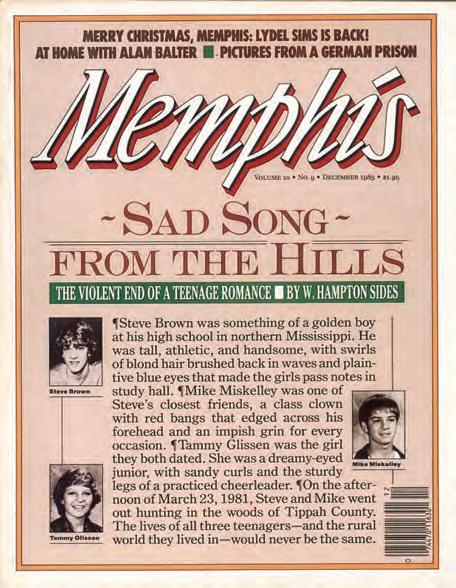
finest piece of investigative journalism ever published in our magazine. It certainly made readers sit up and think, “ is young man could amount to something someday.” You be the judge: In 2001, his World War II saga Ghost Soldiers was a New York Times bestseller. Sides’ other books, all bestsellers, include Hellhound on His Trail (the pursuit of James Earl Ray), In the Kingdom of Ice , and The Wide Wide Sea
An early slogan for our magazine was “We Show You the Town,” and John Branston did that as well as anybody, when he joined our company after a long career as a reporter for The Commercial Appeal. In 1996, our twentieth anniversary year, he began an ambitious 10-part monthly series, later compiled into a book, The Making of Modern Memphis . As he described it, the package “takes readers on a journey through our city’s
vibrant music and entertainment scenes; goes behind the scenes with the U.S. Attorney’s office and judges who first ordered school desegregation here; and introduces some of our city’s leading developers, business owners, and politicians (including rare interviews with our three living mayors).”
en there was Barry Willis, longtime managing editor and king of headline writing. Anybody struggling for a headline only had to consult Barry. He also wrote feature stories, as well as witty columns for the magazine’s last-page essay. is started out as “Back Porch” and went though many incarnations, until becoming “Last Stand”; the back page still serves as a space for any topic at all. We’ve never taken the time to list the various authors who contributed to this page (Ed Weathers and our advertising director, Mark Seitman,
often rotated in that capacity), but in recent years, no one comes close to managing editor Frank Murtaugh, a poignant and efficient writer, who has penned more than 60 “Last Stands.”
I t must be said, if you’ll pardon the bragging, that while many other city magazines devoted their pages to fashion, food, and other “fluff y” topics, Memphis never shied away from careful treatments of complicated topics.
Just a few examples: “ e Night Martin Luther King Was Killed” by Joan Beifuss (July 1977) was later incorporated into her acclaimed book on the Civil Rights Movement, At the River I Stand. “ e Voices of Fourth and Vance” by Perry Hall, subtitled “Singing in a Dark




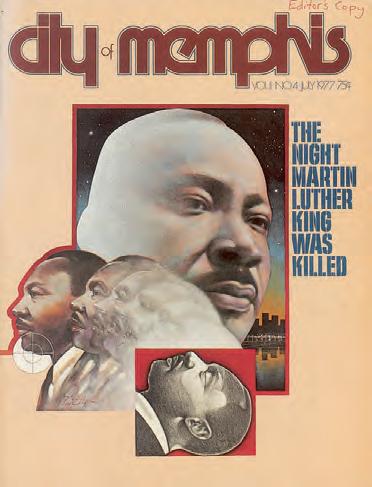


Place,” required true “boots on the ground” interviews with residents of one of this city’s most impoverished areas, with stunning photographs by Erik Calonius (July 1978). And “Adoption for Profit” (October and November 1978), a two-part series by Kenneth Neill on the scandal that rocked the Tennessee Children’s Home and provoked national outrage, served as a primary source for books and even a made-for-TV movie starring Mary Tyler Moore as the sinister Georgia Tann.




And those were our early years. Similar long-form stories — the ones that consumed weeks, if not months, of the writer’s time, and the articles many readers still remember to this day — include: “Breaking Down the Wall: Race Relations in Memphis” (October 1983); “A Life on the Edge, ” by Ed Weathers, about a good guy gone very bad (November 1991); “ e Hand at Feeds Us,” the plight of American farmers told by Mack Ray, a farmer himself (September 1992); “ e Realm of the Blue Children,” Jacqueline Marino’s heartbreaking account of American medical aid for children in war-torn Yugoslavia (June 1998); “A Sailor’s Story,” a disturbing tale of discrimination in the U.S. Navy by Tim Sampson (October 1993); “Anatomy of an Inferno,” Preston Lauterbach’s in-depth look at the devastating blaze that destroyed downtown landmarks (February 2007); and “Murder in Central Gardens,” Marilyn Sadler’s two-part investigation into the murder of Emily Fisher (October/November 2007). e list goes on and on, but you get the idea.
We didn’t always depress readers with dark topics. From the very beginning, we partnered with Memphis in May to produce cover stories and detailed guides that would introduce readers to the past, present, and future of each year’s honored country. We followed





























community to power the GOOD. Each year, cityCURRENT hosts more than 150 free community events in the Mid-South, including our signature speaker series featuring national guest speakers, workshops, executive lunches, nonprofit tours, volunteer experiences, and more. These events, along with our media and philanthropy, spark collaboration, enrich lives,
and strengthen our community. Join us for an upcoming event or be inspired by GOOD news with our media, including tv and radio shows, by subscribing to our newsletter or scanning the QR code.
www.cityCURRENT.com
that same approach years later, with the Wonders Series, devoting cover stories to the full-scale exhibitions of everything from “Titanic!” to “ e Treasures of the Ottoman Empire.” In those pre-internet days, these projects often meant writers joined press junkets that would take them to such locales as ailand, Kenya, Russia, and Peru. And we worked with the local theater community to sponsor the annual Memphis eatre Awards (today called the Ostranders).
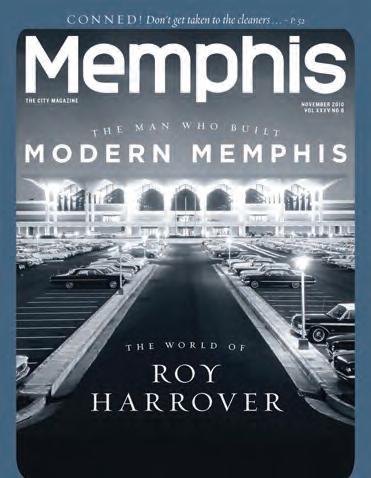
It’s clear from any perusal of our 50-year archive that we made a special effort to showcase the people, places, and events that shaped our city. Over the years, in addition to more than a dozen cover stories devoted to Elvis Presley, we profiled such luminaries as actress Cybill Shepherd (three times), artist Carroll Cloar (twice), cotton magnate Julien Hohenberg, defense attorney Marvin Ballin, Holiday Inns founder Kemmons Wilson, longtime Memphis College of Art director Ted Rust, acclaimed architect Roy Harrover, legendary Memphis Tigers’ basketball player and coach Larry Finch, tourism leader Kevin Kane, opera star Kallen Esperian, Memphis Symphony music director Robert Moody, and musical legends B.B. King, Jerry Lee Lewis, Rufus omas, Carla omas, and — yes — even Led Zeppelin.
We have also celebrated local institutions on the occasions of their own milestones, with cover packages devoted to FedEx, St. Jude Children’s Research Hospital, The Peabody, and Burke’s Book Store.
urveys and focus groups have told us our readers especially enjoy features on homes, dining, and local history. e “Great Memphis Homes” series evolved into


























Only First Horizon brings together the best of big and small. Like a powerful network of banking centers, ATMs and online tools local banks can’t match. With local decisionmakers big banks overlook. When the best of big meets the best of small, you get it all. Proud to support Memphis Magazine.










April 18, 2026
6PM • SUNSET AT 7:35PM
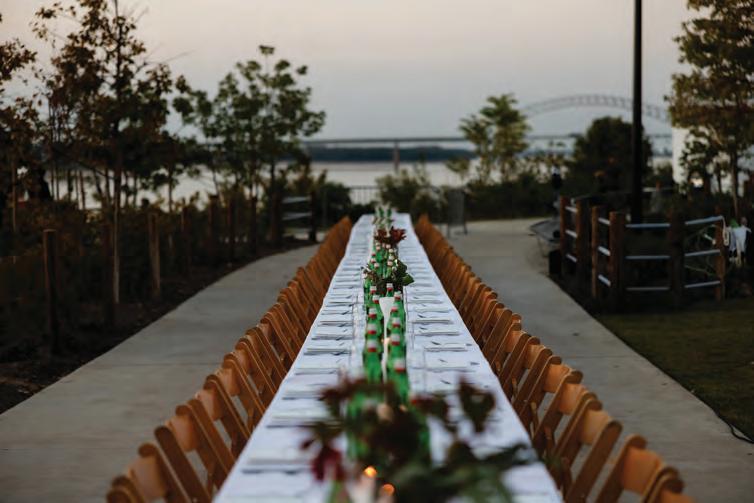
Experience an unparalleled, intimate night on the riverfront to celebrate all that it stewards for our community. From a sunset welcome to a coursed culinary masterpiece under the stars, this Memphis River Parks fundraiser will gather guests for an unforgettable dinner party in Tom Lee Park.
JENNIFER CHANDLER • GINA NEELY • DENI REILLY
JIMMY GENTRY The Lobbyist & Paradox Catering
PATRICK AND DENI REILLY The Majestic Grille
NATE HENSSLER Amelia Gene’s
SPONSORS
BJ CHESTER-TAMAYO Alcenia's
FRANCK OYSEL Flight Restaurant Group
FELICIA SUZANNE
WILLETT-SCHUCHARDT
Felicia Suzanne's
MICHAEL HATCHER & ASSOCIATES HAUBER FOUNDATION
ROBIN AND BILLY ORGEL
Contact Kate Hackett for tickets khackett@memphisriverparks.org Director of Development
today’s “Habitats” series — places that maybe weren’t giant mansions but were fascinating residences. We have never published a magazine without visiting a restaurant, and readers learned they could trust the refined tastes of Andy Hill, Tom Martin, Kay Womack, Mary Ann Eagle, Nicky Robertshaw, Pam Denney, Sam Cicci, and others.
Recent years have even offered a doubletreat, with man-about-town Michael Donahue’s “Classic Dining” column about older establishments that have stood the test of time. Bruce VanWyngarden’s popular “Sips” column appeals to those who prefer more liquid refreshment. Beginning in 1983, we have also presented this city’s most defi nitive restaurant poll, inviting readers to vote on their favorite establishments. If anyone needs proof of the honor of being named a winner, just visit those places and notice the certificates proudly displayed on their walls.
We engaged readers in other ways, too. In the 1980s, we held photography contests (a treat for the winner and a way to include more photos in that issue) and introduced the first Fiction Contest, working in conjunction with local bookstores. Winners not only received a rather generous check, but their story was published in the magazine — the first time in print for many of these authors. e first contest took place in 1989, when judges gave first-place to “Games of Chance,” a short story by local writer Joy Tremeyan.
A sure-fire way to get readers involved was by offering them money. In December 1980, Dr. Lancelot Bueno made his fi rst appearance in these pages, spinning complicated yarns about his family and tales of lost fortunes. ese served as the impetus for popular treasure hunts, the first titled “ e Lost



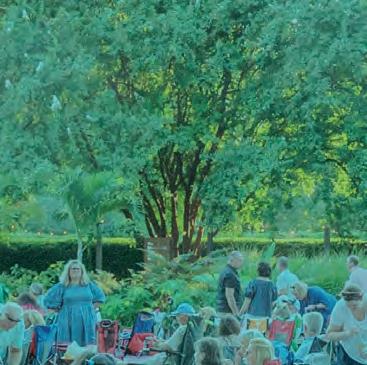



THERE IS A RHYTHM TO A MEMPHIS SUMMER. Southern nights.
Music under open sky. Friends gathered on the lawn.


Live at the Garden is where the summer unfolds at Radians Amphitheater in the heart of the Memphis Botanic Garden.

Season Lawn Subscriptions are available now.















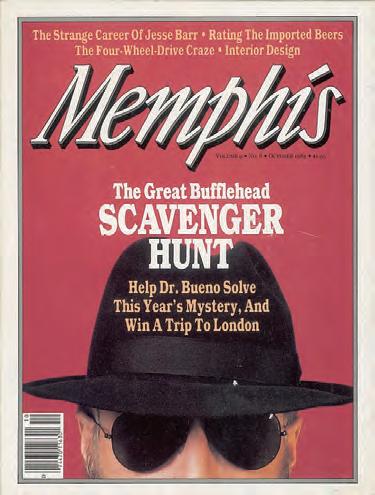
Ring of Ichabod Bueno,” modestly subtitled “ e Greatest Scavenger Hunt in Memphis History” (August 1982). Readers scrutinized every word of Dr. Bueno, even studying the photographs he provided, because — sure enough — they offered clues.

10% discount through April when you mention this ad!
More than a thousand people took part in these escapades, though the owners of Galloway Golf Course (known today as the Links at Galloway) may still be sore about the time misguided readers, armed with shovels, dug up one of their greens in a futile search for that ring. Needless to say, not only did we encourage Dr. Bueno to provide better clues, but — and this is true — our editorial staff later spent an afternoon at Galloway, repairing the damage.
Now that we think of it, it was always a mystery who, exactly, Dr. Bueno was, or where he came from. Someone noted they had never seen Lancelot and David Dawson together at the same time. No ... it’s just too fantastic to consider.
Beyond the written word, we’ve always tried to make Memphis Magazine a highly visual publication. Obviously, we accomplish this with photographs and artwork that enhance the stories. But we credit Richard Alley, editor of our adjunct publication, Inside Memphis Business , for conceiving “ e Mind’s Eye” series — a salute to the extraordinary vision of this region’s best shutterbugs. e first installment, in March 2021, featured former Commercial Appeal photographer Bob Williams. Over the years, we’ve showcased the life’s work of Saj Crone, Andrea Morales, Willy Bearden, Ziggy Mack, Murray Riss, and Huger Foote — 13 profiles in all, so far.
Photographers who have squinted
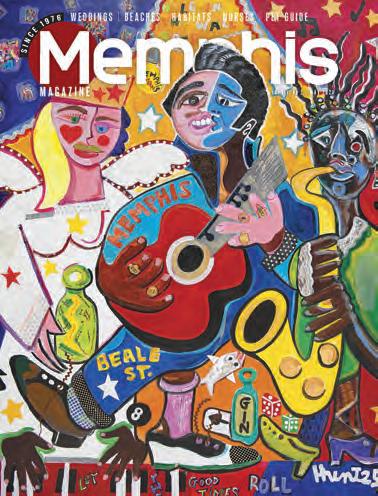
through viewfinders to provide us with perfect images include Larry Kuzniewski, Clay Tomas, Karen Pulfer Focht, Gary Witt, Justin Fox Burks, Ben Fink, Brandon Dill, and many others. We’re also grateful to truly fantastic illustrators, especially Calvin Foster and John Robinette in the early days, who created most of our eyecatching covers, and more recently Martha Kelly, Martha Park, and Carolyn Pollan.
Writing a history of our own publication — even an abbreviated one like this — is an obvious reminder that Memphis has been a reliable source for stories about how this city came to be. Over the years, we’ve presented such wide-ranging historical topics as East End Park, the Spanish Flu of 1918, Riverside Drive, the Frisco Bridge, the Sterick Building, the Ford Motor Company payroll robbery, the birth of Overton Square, and the arrest of Machine Gun Kelly.
Sometime around 1991, we managed to lure away from the MemphisFlyer, where he first found employment, an eccentric writer going by the name of Vance Lauderdale. Now appearing every month in these pages, his “Ask Vance” column tackles readers’ questions about our city’s past. These tend to be topics that fall between the cracks of more formal history books, and if anyone wants details about the Civil War or the birthplace of Mayor Watkins Overton, they can just Google that. But for readers hoping to relive fond memories of watching Looney Zoo , slurping ice cream at the Tropical Freeze, or enjoying a shrimp platter at the Luau, Vance has written about these in his “mysteries of history.”
Over the years, Memphis Magazine has earned its fair share of journalism awards from such groups as the City and Regional

























Magazine Association and the Society of Professional Journalists. Some awards had nothing to do with the written word but saluted excellence in design. We were lucky, from the very beginning, to hire a truly great designer (Fred Woodward). But much of our visual impact is the direct result of the continuity of the design crew. In 50 years, in an industry known for high turnover, it’s truly remarkable how few art directors have worked here. If readers admire the way this magazine has looked, year after year, it’s due to the talents of art directors like Murry Keith, Risë Nathan, Marcus Villaca, Hudd Byard, Hannah Johnson, and our current design director, Brian Groppe.
Fifty years works out to 600 magazines. We don’t want to think how many stories we’ve written, how many pages fi ll the bound volumes in our archives, how many words have fi lled these pages. But we know that, even after a half-century, we’ve barely scratched the surface of all the stories this city can tell us. So we will continue pressing forward, as long as you keep reading.
In that first issue, way back in April 1976, Boss Crump — or at least the spiritual manifestation we “discovered” — concluded his thoughts on the Bluff City in this way: “Memphis hasn’t gotten into a rut like many cities. And it must not, for the only difference between a rut and a grave is the dimensions. ere might be a better place to live than Memphis, but as far as I’m concerned, no such place exists.”
Memphis Magazine wouldn’t have survived all these years — and we wouldn’t be looking forward to the next 50 — if our staff, advertisers, and most importantly our readers didn’t agree. Stick around for the 100th anniversary, will you?


Ahalf-century: long enough to be distinctive, but short enough to fit within the span of retrievable human memory. In compiling this 50th-anniversary edition, we consulted with several past leaders of our publication. Each past editor left his or her impression on our pages, and we are grateful to them for carrying Memphis Magazine forward. Like most human endeavors that endure, this one has been a relay race, with each editor carrying the baton for a few miles, a few laps around the sun, before handing it over to the person waiting around the bend. Here, then, are reflections from a few of the relay-runners from years gone by — presented with our thanks to all those involved in creating and maintaining this enterprise. — Anna Traverse
1976–1978
Fifty years! Wow! Though in some ways it does seem like yesterday. In early 1976, Bob Towery suggested that rather than starting a weekly newspaper ( ePinch , it was to be called), what about a magazine printed on his new, state-of-theart five-color press? Young and fearless — some surely thought foolish — we were all in. e first issue of City of Memphis magazine came out that April, a remarkable feat in itself, and the beginning of a great adventure.
As they say, timing is everything, and Memphis in 1976 had plenty of things to celebrate and commemorate. No longer an “overgrown country town,” as it had been referred to, Memphis was brimming with an arts community of painters and photographers, designers and craftspeople. Across the city, the restaurant scene was burgeoning, with familiar old favorites (remember Justine’s
and Pappy’s?) along with new venues popping up in Overton Square, East Memphis, and beyond. And of course, Memphis barbecue was and still is the best!
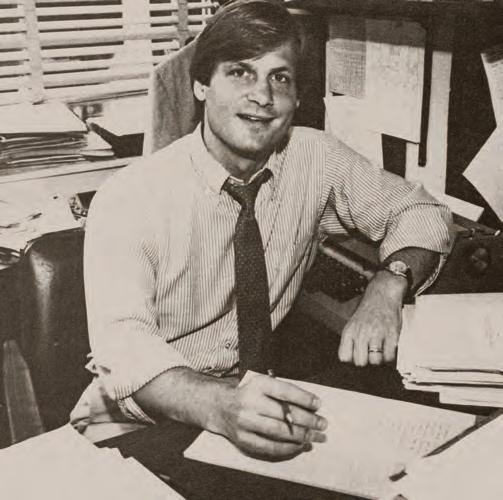
Fortunately, there also were writers and illustrators and photographers and art directors eager to share stories about the people, the accomplishments, the missteps, the food, the fun, and the fabulous — and the future of the city of Memphis.
For my wife Florri and me personally, it was also the forging of lasting friendships. For two years, we were constantly with Bob and Patty Towery — long hours at work, frequent dinners together, even a few vacations. Though we haven’t seen them in person often enough, they remain among our closest friends.
Congratulations on 50 years, MemphisMagazine ! And thank you for some of the best times of our lives.
Having retired after three decades as senior editor of Washingtonian magazine, Ken DeCell is still doing occasional writing and editing of articles and books by friends and former colleagues.
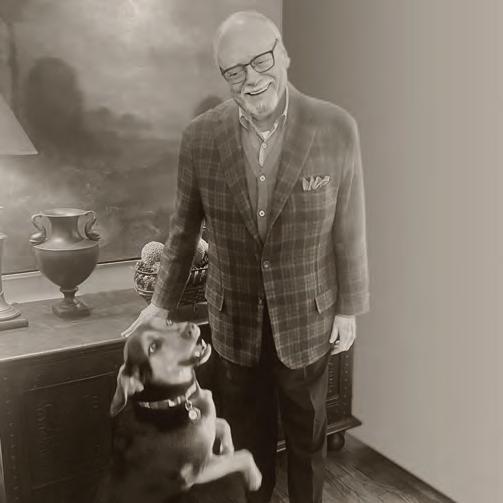
J. ROBERT “BOB” TOWERY FOUNDER / PUBLISHER / EDITOR (1976-1981)
By age 12, I was operating a hot-metal press for my family’s weekly newspaper in Whitehaven. Once a week, I descended into deadline purgatory, the air thick with ink and molten lead. I swore I would never submit to the rigors of journalism.
Never say never.
After graduating from Rhodes College with a degree in English and the vague notion that I was destined to write about what I imagined would be my sports-car-racing career, I detoured into the culture wars of the late Sixties. A stint on a commune in northwest Arkansas preceded my reluctant return to Memphis. My father’s health was failing. e family enterprise needed tending. at enterprise was more than a small weekly. We published the Whitehaven Press , the Whitehaven Press Shopper, and the Southaven Press . We were also a commercial printer and one of the few owners of a newspaper printing press in the Mid-South, printing more than a dozen weekly newspapers for publishers across Arkansas, Mississippi, and West Tennessee.
Shortly before I was called home, my father purchased a new Goss Community press. A large one. I took over as it was being delivered in early 1973, the building still raw steel and concrete. My first challenge was constructing a temporary wall, hammer in hand, to protect the press during installation.
prototype for them. In the process, we discovered shared instincts about what a city magazine might aspire to be.
We printed the first issue of City of Memphis in April 1976. Ken did the heavy lifting, shaping the editorial voice and direction. I focused on commercial support and the mechanics of publishing. Two years later, Ken and Florri moved on to pursue other goals, but their imprint endured. Over its first decade, the magazine won more illustration and journalism awards than any other city magazine in the country.
After Ken’s departure, I assumed the role of editor, though most day-to-day responsibility rested with a remarkable team.
By fall, the Arab oil embargo triggered a gas crisis that rippled through the economy. Newsprint became nearly impossible to obtain. I scrambled to secure enough paper to keep our client newspapers alive. We managed to stretch supply to meet the need — barely — carving deeply into already-thin margins.
For reasons that still defy tidy explanation — equal parts optimism, audacity, and ignorance — I doubled down. I purchased a magazine printing press. e paper it required was at least obtainable, if hardly affordable.
Not yet 30 and nowhere near ready for prime time, I began preparing to launch City of Memphis magazine. My private expectations were restrained; my public expressions were not.
Fortune intervened in the form of Ken DeCell and his luminous wife, Florri. Without their ambition and editorial clarity, the blueprint would have been far less daring. In the fall of 1975, they were attempting to launch a weekly newspaper called The Pinch. I printed an early
Ed Weathers became our chief wordsmith and resident guardian of common sense. Fred Woodward, our art director, was primarily responsible for the cascade of Society of Illustrators Awards that followed. And my wife, Patty, as managing editor, kept the entire contraption in motion, ensuring deadlines were met and spirits high.
After a few years, I persuaded our ace reporter, Kenneth Neill, to assume full responsibility for the editorship. Creatively, we thrived. Financially, we hemorrhaged money faster than a dog can swallow bacon.
By 1986, with the help of my teenage mentor, Lucius Burch, we assembled a balanced group of civic-minded investors who formed a new corporate vehicle to carry the enterprise forward.
My own ambitions made me ill-suited to run the new, board-directed entity. I left that capable ensemble after a year to launch another venture.
e magazine, of course, evolved. Some changes I welcomed; others I accepted less enthusiastically. In the early years, we embraced longform journalism — stories exceeding 10,000 words that wrestled with the city’s most complex questions.
More than any stylistic shift, I regret the gradual disappearance of those ambitious explorations. ey demanded patience — from writers and readers alike — but they rewarded it with gravitas.
Today, the magazine endures. Its current formula appears commercially sound — a goal that eluded me — and its continued relevance is no small achievement.
I once swore I would never submit to the rigors of journalism.
Fifty years later, here we are. Another 50 years? Experience has taught me not to make predictions.
Never say never.
1978-1980, 1992
Ijoined the editorial staff of City of Me Mphis magazine, as it was then called, in the spring of 1977.
I was hired by the magazine’s founder and publisher, Bob Towery. The editor, the magazine’s first, was Ken DeCell. Bob ran his family’s printing company on East Brooks Road in Whitehaven, where the magazine’s offices were. The rumble of printing presses was our background music. Bob knew everyone in the lively Memphis literary world. Ken, a Princeton graduate, had roots in Mississippi. Ken’s wife, Florri, and Bob’s wife, Patty, filled out the editorial staff. All of them were smart and sophisticated and knew Memphis.
Then there was me. I was from New York, had been teaching English at Memphis State for six years, and still had much to learn about the city I would come to love.
Also on staff then, working in the basement, was this undergraduate kid who had been pressed into service as our art director. The kid’s name was Fred Woodward. Under Fred, the magazine was to win scores of national awards for illustration and design. He later became art director of Rolling Stone and is now in the Art Directors Hall of Fame. Fred was the magazine’s one true genius.
My job as associate editor was to write articles and edit submissions from freelancers. In some issues I wrote as many as three articles. The job was hard. Ken, the editor, was a perfectionist. Deadlines were suffocating. Once, a writer bailed on an assignment, leaving a last-minute hole in the magazine. I had 24 hours to fill that hole. I did interviews with teachers and principals all over the city and in one day managed to scratch out a 2,000-word article called “How to Read a Report Card.” It almost killed me.
me big money to reprint parts of that Cybill profile. Out of respect for our hometown gal, I turned them down.
I profiled many Memphians — among them Kemmons Wilson, who founded Holiday Inns, and then-mayor Wyeth Chandler. Wilson’s wife cooked me a nice spaghetti supper at their surprisingly modest home in East Memphis. Chandler, reputed to be just a good ol’ boy, had the Complete Works of Charles Dickens behind his desk in City Hall and had read them all. There is always more to Memphis — and Memphians — than meets the eye.
For many years I wrote the “Backporch” column on the last page of the magazine. “Backporch” columns were supposed to be funny. The magazine ran my columns even when they bombed — that’s how kind everybody was.
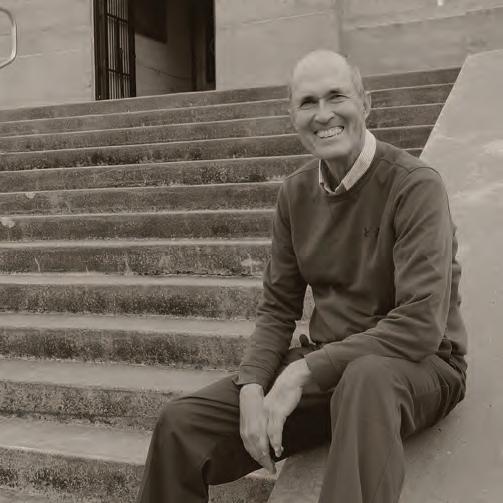
In those days many articles came from freelancers. To name all the fine writers whose work crossed my desk would fill this page. Many of them later joined the magazine’s staff and became beloved colleagues. Over the years, I wrote about all kinds of things. Each article revealed something about the many worlds of Memphis. In 1979 I wrote what I believe was the first full-length look at the gay community in the city. That article ran to about 10,000 words over two issues. Back then, not many magazines would have given that much space to that subject.
I wrote two profiles of Cybill Shepherd, one before her TV show Moonlighting and one after. In the second profile, Cybill dished about her co-star on the show, Bruce Willis. The National Enquirer offered
In 1987, the magazine received the Silver Gavel Award from the American Bar Association for the best article in the nation on a legal subject. The award was for a 6,000-word article I’d written about the Memphis public defender’s office and the obstacles public defenders face. I was proud of that. Still am. It proved Memphis had subjects that could engage the world.
I wasn’t so proud of a “Backporch” column I wrote in 1988. In it I suggested that Wyoming, a large square state with no population, should be turned into a penal colony. Ha ha. Three weeks after the article appeared, I received a manila envelope from Casper, Wyoming. It contained hate mail from a fourth-grade class there. “We all hate you here,” wrote one student. “What you said was stupid.” The kid was right. He was also a better writer than me.
The last article I wrote for Memphis , in 1991, was called “A Life on the Edge.” It told the story of “W.C.,” a man from a wealthy Memphis family who had lived a more or less low-down life. The story described rich gamblers at the Memphis Country Club, bottle-drunk touts at the West Memphis dog track, organized crime at Memphis strip clubs. In the end, W.C., dying of Lou Gehrig’s Disease, went undercover in his wheelchair, helping the FBI catch drug dealers. He was as complex as the city itself.
I moved north in 1992 to take a job with the New York Times Magazine Group. The Times hired excellent writers, but I have never worked with nicer, more talented people than I did at Memphis magazine.
I live in Virginia now, but know this: Memphis the city and Memphis the magazine are forever imprinted on my heart.
Ed Weathers finished his career teaching writing at Virginia Tech. Today, he lives in happy retirement in Blacksburg, Virginia.
Decaying Mississippi River town,” a “Southern backwater.” That was how Time magazine described Memphis in an April 12, 1968, article published shortly after the assassination of Dr. Martin Luther King Jr.
It was a grossly unfair slur, and of course, untrue. That wasn’t all Memphis was. Those of us living in Memphis then, like me, knew that. But the insult stung anyway.
For decades afterward Memphians tried to live down that backwater label, to disprove it. To prove we deserved professional sports teams. To demonstrate we could revive a dying downtown. To show our capacity to improve race relations. Backwater — we were more than that, dammit!
Then, in April 1976, came another sign of Memphis’ defiance. A magazine, City of Memphis , appeared on newsstands. It was perhaps telling that the magazine’s publishers included the word “city” in the title. Yes, we were a city, just like Nashville or even Atlanta. We deserved a magazine by us, for us, about us, to tell our story.
For me, seeing that first issue of the magazine was like watching a sunburst, or the birth of a new planet. I immediately approached the magazine’s editor about writing for them (confidence or naivete of youth?). My first small, published freelance item appeared in 1977. Things gradually progressed then to my writing major features and cover stories, getting my name on the masthead as a contributing editor, writing a monthly column, and finally, in 1986, being appointed editor.
Office Have Something to Hide?”). We covered people famous (music legend Al Green, baseball broadcasting Hall of Famer Tim McCarver) and personal (“My Battle With Aids: One Memphian’s Story”).
Those stories wouldn’t have happened without the contributions of an array of talented people. I was always amazed at the magazine’s good fortune in continuing to attract such talent, from an early succession of Ivy League-educated editors to extraordinary writers, artists, designers, and photographers who could have worked for any publication in America.
That’s borne out by the boatload of awards Memphis Magazine has garnered. I still have a framed photo on my wall of the magazine’s staff accepting a Distinguished Service Award from the Society of Professional Journalists.
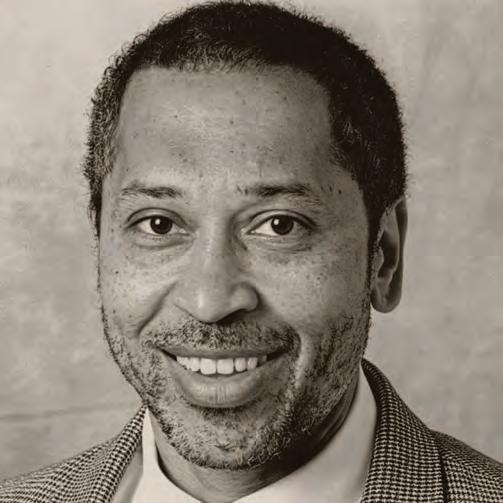
For the next five years, I had the tremendous professional and personal joy of helping to chronicle life in my hometown. We covered it all, from the fun (“Harambee! Memphis in May’s Salute to Kenya”) to the fatal (“Dead Reckoning: Does the County Medical Examiner’s
As Memphis Magazine progressed, so too did Memphis itself. We got professional sports teams, reopening The Peabody kicked off a downtown revival, the city saw its first Black mayor, and coincidentally, a Black city magazine editor, me, believed to be the first in the country.
Yet, even through it all, I still heard the questions, the doubts. I tried addressing it in one column, “Why I Stay Here: A Special Message for My OutOf-Town Friends.” “I believe in Memphis,” I wrote. “I think this city has the potential, at least, to be one of the best cities in America.” I still believe that.
The folks at Time magazine were wrong, and we were right. Right about our faith in our city’s capacity to grow, mature, be better. Right about our confidence that the city could support and sustain a magazine devoted to it.
Now, 50 years on, I’m proud of this magazine and my hometown. No, it isn’t perfect; no city is. No, it isn’t Atlanta; it doesn’t have to be. Memphis is Memphis — and that’s enough.
Larry Conley later served as an editor for the Detroit Free Press (three years) and the Atlanta Journal-Constitution (16 years), ending his journalism career as the DeKalb County Bureau Chief. He’s now “semi-retired” and living in Atlanta, where he has taught English and volunteers for food relief agencies.
Memphis? We’re moving to M e M phis ?”
I couldn’t believe what my husband was telling me on that snowy Chicago night in late 1989. A job that looked too good to pass up had come his way. I didn’t want to go. I said I’d stay for one year.
But once we arrived, it didn’t take long for me to change my mind.
The reason? Memphis Magazine .
I had been a magazine editor before, in New York in the 1980s, during the last golden age of women’s consumer magazines. I’d loved every minute of it. Have you watched the movie The Devil Wears Prada ? That was my New York magazine editing life, minus the clothes and trips to Paris. (I did go to L.A. often, though.)
Of course I knew that editing Memphis Magazine would be different, but I didn’t really understand how different until I got the job.
My first clue? The Commercial Appeal did a story about my hiring; apparently it was news that I was the first woman to be the magazine’s editor. Until that moment, I hadn’t known many magazine editors who weren’t female.
It didn’t take me long to realize how lucky I was to have gotten the job. The staff of the magazine then (and, probably, now) was small and quirky, as eager to help me understand my new city as they were to find a great new writer or come up with a cool cover idea.
make it into a story for at least a couple of months (we were print-only; remember that?). Which meant that people would generally tell us all kinds of fascinating things, mostly because they knew that whatever we wrote about them would have time, context, and additional reporting added down the road. (Which, come to think of it, is what makes good magazine writing so compelling.)
We also didn’t wield the kind of make-or-break power that The Commercial Appeal did at that time. Which is why I was invited to climb to the top of the still-open-to-the-sky Pyramid with then-Mayor Dick Hackett and his chief aide, Ray Pohlman, asking whatever questions I wanted. It’s also why I learned the words to the Black National Anthem so I wouldn’t stand out quite so much in crowds around Willie Herenton, the first Black elected mayor of Memphis. It’s why I could get almost anyone I wanted to interview on the phone, eventually.
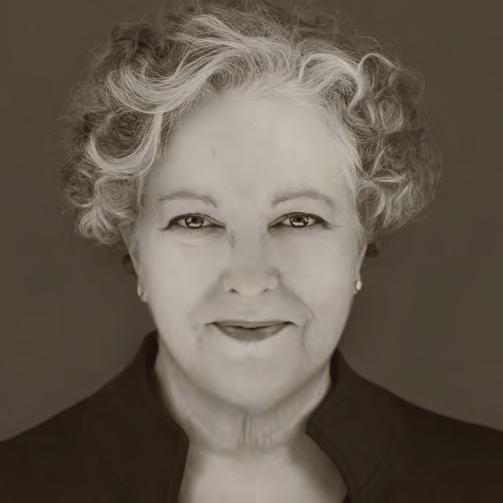
In that pre-email/Zoom meeting age, we spent all day long hanging out together, talking about stories and art and deadlines and whatever the news of the day might be. We all read the newspaper closely and had plenty of opinions, connections, and ideas. We went out to lunch almost every day; I learned all about barbecue and pig’s ears and bottomless glasses of sweet tea. We lived and breathed MEMPHIS.
It was perhaps the best way ever to learn a new city.
Memphis Magazine was far enough off the radar that whatever we learned over lunch or on the corner or from our sources wouldn’t
Sure, there were the boring “10 Best” lists (breakfasts, margaritas, you name it) — food stories and home décor and automotive features that were how most city magazines paid the bills, restaurants and car dealerships being particularly good advertisers. But even that, for someone new to town, meant the chance to find something amazing and unique to Memphis.
I’ll still never forget my first visit to the Waffle Shop at Calvary Episcopal Church, a temporary restaurant that sets up in the church basement during Lent. Former Mayor Wyeth Chandler was holding forth in one corner, a table of federal judges was talking about the latest news across the room, and faces I saw every day in the paper were chowing down on chicken salad and tomato aspic. It was incredible.
While my first love is news — I eventually ended up as a senior editor at The Commercial Appeal — I learned back in my Memphis Magazine editor days that a city magazine is an essential voice in the journalism mix. At its best, it reflects the unique ways a place talks about itself and how we see each other. Long may it publish.
Leanne Kleinmann served as director of advancement at St. Mary’s Episcopal School and is the founder of Leanne Kleinmann Communications.
1992-1998
Way back in 1988, before many of you were even born, I began working for Contemporary Media, Inc. I was the first editor of the Memphis Flyer and then editor of Memphis Magazine , roughly 10 years in the mix — or a decade of my life.
I spent four long years at the Flyer, hired for that position with practically no editorial experience, save what you might get from proofreading a publication called the Auto Exchange for the past few years. It was hard work, but our columnists regularly turned in their rough draft version with joints, which made me very happy.
After a while, though, the powersthat-be thought I had been doing that job far too long. When the editor’s job opened at Memphis magazine, they gave me that job. It was, almost literally, a lateral move: I just moved from a cluttered desk on one side of the building to a larger desk on the other.
I remember my first issue — a photo shoot we staged to illustrate all the women who ran the high-fashion stores on Union Avenue — Helen of Memphis, LeClede’s, Trousseau, and others. I worked on that piece with Mary Ann Eagle, who would later write our dining column and other stories.
While I was editor, I remember writing on quite a variety of topics, from the allergy season, to the “Pie Lady,” to the first Baptist church in Memphis with a woman as the minister.
For another cover story, I traveled alone in Holland with singer Wendy Moten, then in her twenties. In one of her first out-of-thecountry trips, she ate potato chips on the train all the way between Rotterdam and Amsterdam, saying all the things she had done wrong with her life. She was planning an entire next day of things she would do right, including getting hair extensions and buying new shoes, purchased at a Rotterdam mall.
In another cover story that year (1994), I interviewed Hard Rock Cafe founder Isaac Tigrett, who was working on his House of Blues chain. A 16-year-old Kerr Tigrett gave me a tour of the place. Just before leaving the grand opening a man spilled a drink on me; it was Geraldo Rivera.

We had good writers — on staff and freelancers — but apparently I took it upon myself to write many of our cover stories.
They were memorable. In one, a photographer by the name of William Eggleston had a vintage Gatling gun aimed at his front door. While interviewing him, he was looking around for another loaded gun, at which point I said, “Oh, I’m sitting on it!”
That same issue included a fashion layout by Huger Foote (historian Shelby Foote’s son) and a restaurant review of Maxwell’s. A few months later, what was supposed to have been a short profile evolved into a cover story on the late O’Landa Draper. These were followed by a lengthy feature (and yes, another cover story) on opera diva Kallen Esperian, who was as nice to the Starbucks guy as she was to the interviewer. I also remember a story about the Junior League being the first place in Memphis to start an AIDS baby crisis center. For some reason, we photographed them in an English tufted sofa dragged into an alley covered with garbage.
It was quite a career. After I left Contemporary Media, I worked for years with the Carpenter Sullivan advertising agency, and then with the Soulsville Foundation, which was very rewarding.
Now that I’m retired, I have forgotten how to spell-check, how to word-count, how to save a photograph, how to send someone an email, how to save anything, and how to convert a story from various files, formats, and versions.
And I don’t miss that part at all.
These days, Tim Sampson is enjoying his time in retirement.
1998–2000
One could, if one were so inclined, say I grew up at Memphis Magazine . I was still in college, when this 8.5 x 11-inch stack of glossy paper first captured my interest and imagination. It was 1983 and the magazine ran what would become a national-award-winning series of stories on race.
The staff, the writers, the photographers took on what was — and still is — one of the city’s and country’s biggest issues. It was thoughtful, provocative, even brave. The series didn’t just state the problem. Those stories also offered potential solutions, some outright, others hinted at.
Just a couple of years later, I showed up on the publication’s doorstep, practically begging for a job, any job. It was an ironic career choice for a kid who couldn’t write himself out of a paper bag, but fortunately, at least for me, then-publisher Kenneth Neill, a mark for a good con, took me under his wing.
At first, he had me dig holes around town — literally — and hide little clues and trinkets, during the old Lancelot Bueno Bufflehead scavenger hunts. For that privilege, Ken made sure I got a paycheck and some needed direction. Sometimes, he made me wear a tie. But he didn’t make me cut my hair, just my teeth on journalism’s basics.
Cybill Shepherd — and everyday warriors fighting to make my city a better place. My head spun with all those new sights, sounds, tastes, smells, thoughts, and many things pleasurable, some painful.
And the things I got to do, like drink what was then a new thing called craft beer, and eat my weight in barbecue, as well as chef Raji Jallepalli’s duck with tamarind sauce (my wife would always ask for extra sauce, so she could basically drink it).
I got to canoe and kayak the Mississippi. In one masterful moment, I even convinced the City of Memphis to let me climb the Hernando de Soto Bridge, with the man who changed the light bulbs on the “Big M” truss. Photographer Steve Davis and I were there to get photos for the magazine. It seemed a great idea, until I got about halfway up the ladder and felt that structure shake with every passing 18-wheeler and saw the Big Muddy a few hundred feet below ready to swallow me, with only a splash to mark my last known location.
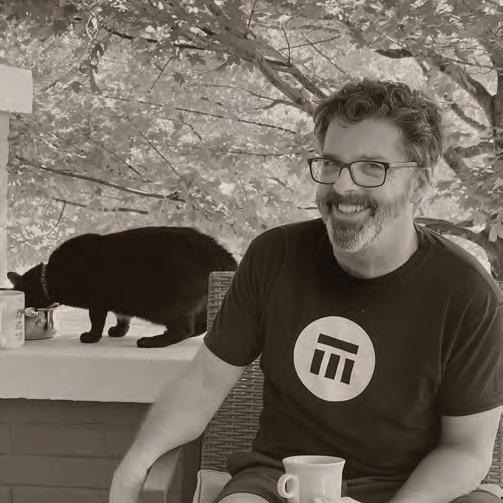
I worked my way up and around at the publication, as public relations specialist, errand boy, assistant editor, marketing manager, managing editor, and eventually The Editor. The day I got that gig was one of the headiest moments of my young life.
My life revolved around Memphis the city, as it was. It now centered on Memphis the magazine, as well as the merry-go-round of its monthly routine. The world that was my hometown opened up in whole new ways.
Take, for instance, the people I got to interview: mayors, Elvis impersonators, musicians of all stripes, chefs, farmers, saints, sinners, all manner of shady characters, civil rights leaders, actors — the bumptious agents for stars like Priscilla Presley, Marlo Thomas, and
Then, there were the staff, people I’ve been honored to call my colleagues, who taught me more than how to put together a magazine. They encouraged my feral side, while helping me understand to think before I spoke.
They were, and still are, the reasons why Memphis Magazine is a terrific publication, not to mention still in print and online, in this age of the all-powerful anconglomerates. The point is, like many of you reading this remembrance, the magazine has taught me so much about the city. In the 50 years — some 600 monthly issues — this publication has been a thing, it’s been a helluva teacher, highlighting the best of this region and spotlighting that which could use some improvement.
Its stories and pics, illustrations and voices are all what still capture my interest today. If we’re lucky, we’ll celebrate another 50 years of Memphis Memphis , and I, as a 112-year-old, will still be around, ready to read and learn from it.
In 2000, Richard Banks moved to Birmingham, Alabama, to work for Southern Progress, publisher of Southern Living magazine. He is now the senior reporter and Morning Edition host for WHBM radio.
It was 2006, and I was returning to my alma mater, Memphis Magazine , after an ill-advised move to Los Angeles and two jobs since I’d left, this time as editor. Luckily, I was rejoining an incredible editorial staff (with a core editorial team of Michael Finger, Frank Murtaugh, Marilyn Sadler, and John Branston) who knew their way around a magazine. And for the looming 30th anniversary, we were launching a full redesign. New logo. Custom fonts, even a new art director in the form of Hudd Byard.
Hudd and I had similar ideas about what the magazine could be, and we spent months holed up in the conference room with ripped-out pages from publications we admired, handdrawn sketches, and a list of fresh editorial ideas that would create a new front-of-the-magazine experience for readers. We added civic and service journalism, a sleek Style section, and bite-size pieces including “Point/Counterpoint,” where the staff argued the merits of some of the most critical issues of our time, including the beach vs. the pool, Spider-Man vs. Batman, and Grease vs. Saturday Night Fever. On and on.
In April 2006, we launched the reimagined 30th anniversary issue of Memphis . And while we got a lot of positive feedback, I knew that the next issue would be the one to set the tone, to reinforce that this was not a one-off for the anniversary and not your grandfather’s Memphis
magazine at Davis-Kidd Bookstore (now Novel). Our subscriber base grew. We were selling copies at select retailers across the city, and people were flocking to the website to check out the offerings. But most importantly, we got reader feedback thanking us for making the magazine a mirror of the city: good, bad, and yes, sometimes ugly.
I can only speak for myself, but I had the time of my life curating issues and penning thousands of words — working with our tireless team to ensure each issue was better than the last.
In 2007, Memphis hosted the City & Regional Magazine Association (CRMA) annual meeting, and I was the chairman, charged with getting two days’ worth of experts and journalism pros here for a series of panel discussions and events. Showing off our city to other editors, publishers, and staffers from New York to Los Angeles and dozens of cities in between — there were about 80 or so member publications at the time — was a thrill.

The May 2006 issue featured a messy barbecue sandwich from the Bar-B-Q Shop — the winner in our blind tasting competition judged by the staff at Contemporary Media — with the words “BITE ME. THE BEST DAMN BBQ SANDWICH. PERIOD.” on the cover.
Was there some internal concern from the top that this might ruffle some feathers? Scare away some advertisers? Offend subscribers? Of course. But thankfully, when the dust settled, it was approved. And yes, we got a few pearl-clutching letters about it, but it worked. People were talking about it. Later that year, Memphis was the best-selling
Also thrilling? We were notified that Memphis Magazine had placed in the General Excellence category — the coveted top honor and literally the gold standard for city magazines. And we won.
For the first time in the magazine’s history, we won Gold. The room was a blur and my adrenaline on fire as I walked from our table in the Peabody ballroom to the podium to pick up the award. We knew we were doing good work, but to be honored by some of the best minds in journalism is a unique validation. We went on to win Gold again in 2008 and 2010, my last year as editor. Memphis won again in 2015 and has been a finalist in the General Excellence category several times since.
It was powerful, and inspirational. And as a pile of rowdy staffers headed to an after party to celebrate, I remembered the too-oftenheard voices of skeptics in my head who said we’d never be able to maintain the stamina year after year, and print would be dead in a decade. I had two words for them: Bite me.
Happy 50th, Memphis Magazine.
Mary Helen Randall is now the principal, crisis communications for St. Jude Children’s Research Hospital.
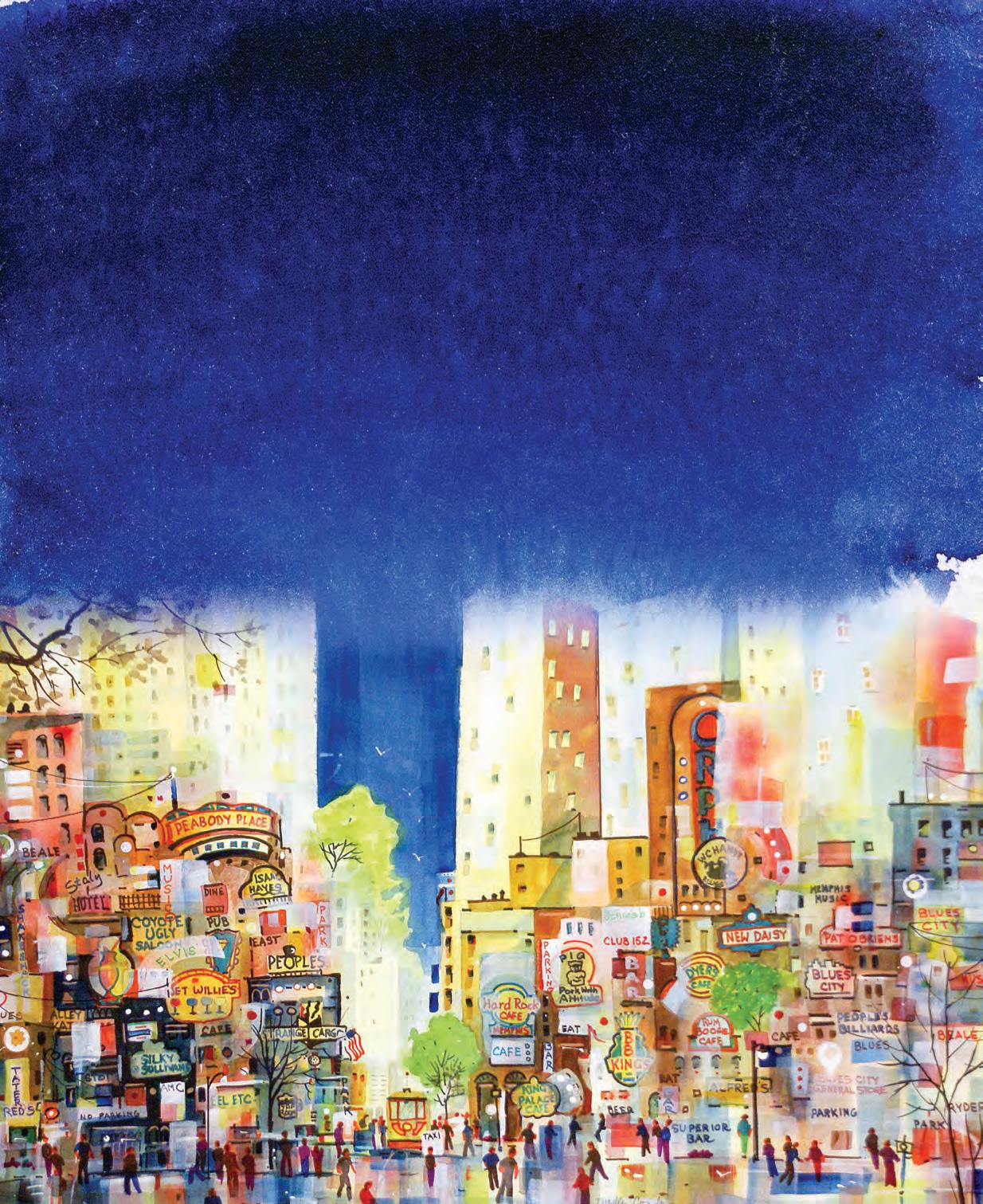
What’s a half-century in the life of a city? As measured by a monthly magazine, it’s 600 issues. Especially from the vantage point of 2026 — remember when they said “print is dead” oh, about 1999? — that’s a lot of magazines. And each one of them is as different from its predecessor as the birdsong you hear from one day to the next. Subtract any single writer, graphic designer, photographer, or advertiser from any single issue, and the history of Memphis Magazine would be different. Few industries are more “of the people” than publishing, and we’re grateful for every last contributor to every last one of those 600 issues.
But this month’s celebration isn’t so much about us — past and present — but about the

city that gives us our name, and the remarkable half-century Memphis has presented us as subject matter. And again, “Memphis” is a representative title, but it’s the people who shape the city and make it hum who have graced our pages and inspired readers (and advertisers, bless them) for 50 years now.
Whether you read your first issue in April 1976 or are starting with this one, what follows are five reflections we hope emphasize how truly distinctive the Bluff City has been and will always be. Music. Business. Entertainment. Art. Sports. ese are, shall we say, the breaths that give life to a city. And Memphis Magazine has been here to share the oxygen for — it requires a pause — a half-century. Salute to the grand city we call home, and here’s to the next 50 years. May they be as golden. — Frank Murtaugh
BY ALEX GREENE
On December 19, 1975, a federal marshal barged into the offices of Stax Records, jumped onto the receptionist’s desk, and announced, “You’ve got 15 minutes to get out of the building!” Stax had been forced into involuntary bankruptcy. By January 1976, the independent label that had done so much to make Memphis a music industry town was no more. us, just months before a new magazine called City of Memphis debuted, a stark dividing line was drawn across Memphis music history: the before, and now the after. American Sound Studio, another hit factory, had closed in 1972, and by 1976 even Willie Mitchell of Hi Records, the game-changing label of Al Green, Ann Peebles, and others, was saying, “It’s time for a change.” By the following year he had sold the label, but prudently retained Royal Studios, where he’d cut those hits.
Yet we Memphis musicians (and I’ve been one since 1988) drove on into the future — I’m picturing a metallic blue ’76 Chrysler Cordoba — our eyes firmly locked on the rear-view mirror. It was a cracked mirror at that, each facet of the looking glass refracting different elements of the blues, rock-and-roll, and soul that had put Memphis on the map.
GHOSTS IN THE MACHINE
As it turned out, all was not lost in the Memphis music industry, thanks to one refracted shard of that old Stax magic, dressed up in a costume that quacked. “Disco Duck” was the brainchild of WMPS DJ Rick Dees, produced by Stax alum Bobby Manuel, and recorded at Shoe Productions. A smaller studio founded in 1971, Shoe had connections to both of Stax’s founders, Jim Stewart and Estelle Axton. e Memphis Horns so vital to Stax’s sound played on it, and Axton’s label, Fretone Records, released it before RSO Records picked it up. With lyrics like “Flappin’ my arms, I began to cluck ( Quack-quack) / Look at me, I’m the disco duck!” it could have been a Rufus omas track on Stax/Volt, albeit one with a disco beat, squelchy synth-guitar, and strings. e single quacked its way to #1 on the Billboard Hot 100 for a week — the last Memphis-recorded track to reach such heights for nearly 40 years.
ose wacky, quacky highs were soon undercut in the summer of ’77, when Elvis Presley’s death shook the pop world to its core. By then, Presley wasn’t the commercial juggernaut of his earlier years, but was of course beloved in his adopted hometown. He had played the Mid-South Coliseum in July of ’76, and, as with any true celebrity, the simple pleasures of taking in a movie or show were still denied him. “ e man who had entertained tens of millions in countless auditoriums and theaters could not himself enter such a
place,” wrote Jackson Baker in these pages then, for Elvis was a giant here.
Nationally speaking, he was still a force. e year prior to his death delivered two respectable Top 40 singles, “Hurt” and “Moody Blue,” but those were soon eclipsed by “Way Down,” which made the Top 20 within weeks of his death in August, and “My Way,” which did nearly as well that autumn.
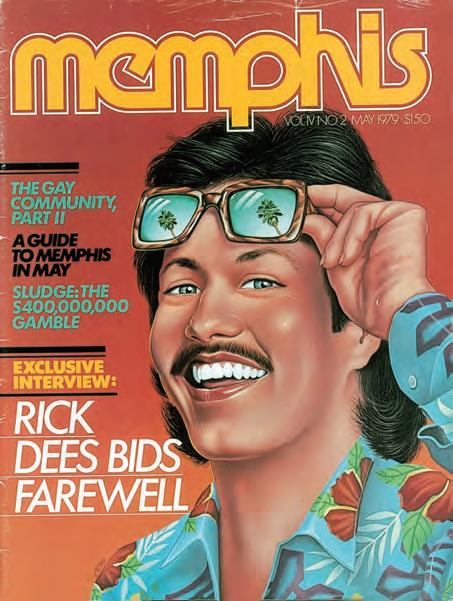
If marking the death of The King in terms of his record sales seems crass, that calculus nevertheless figured into the post rex future of Memphis, and as the late-twentieth century roared on, the city still simmered with ties to radio, labels, and promotional machines, not to mention the sheer talent and lore driving the music business. A half-century later, when RCA-Legacy sought remixes of tracks Presley had cut in Memphis, it was a Memphian, Matt Ross-Spang, who produced them at his thriving studio here. Meanwhile, the carefully curated success of Elvis Presley Enterprises, which first opened Graceland to the public in 1982, created a new model for music tourism and an annual beacon for the tribute act industry.
at would blossom into other reliquaries of the city’s past, as museums fitted to every musical niche opened, including Sun Studio (celebrating much more than just Elvis), the Center for Southern Folklore, the Smithsonian’s Rock ’n’ Soul Museum, the Memphis Music Hall of Fame, and the Stax Museum of American Soul Music.
e latter was especially notable for literally rising out of the ruins. A decade after being padlocked by the Feds, the old Stax building was abandoned, set to be razed. Writer Robert Gordon jumped the chain-link fence around the demolition site in the late ’80s and made off with some moldering reels of tape (later included in the 2023 Grammy-winning collection, Written in their Soul: The Stax Songwriter Demos) before the final bulldozing began. People in town even collected Stax bricks.
Onetime Stax publicist and songwriter Deanie Parker wanted to do more than save the building: She wanted to save the label’s spirit. “Why are we trying to save a run-down building that was already run-down when we converted the theater into a studio?” she thought.
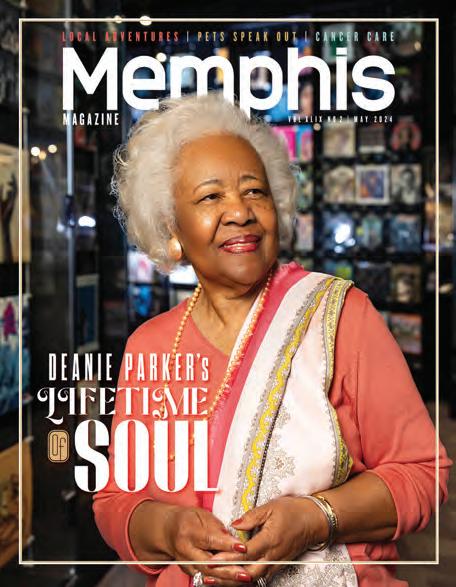
“Let ’em tear it down!” And with her trademark gumption, aided and abetted by Shangri-La Records owner Sherman Willmott, she rallied supporters of the old Stax sound to create a new building and the Soulsville Foundation at the dawn of this century, with one eye on the road ahead. Tellingly, it was Soulsville’s Stax Music Academy, rather than the museum, that opened first, and both are thriving to this day.
e rearview mirror was only reinforced when Congress officially declared Beale Street, which had fallen into neglect and disrepair, the “Home of the Blues,” indicative of a broader embrace (and institutionalization) of the city’s musical past, and by 1982 the Beale Street Development Corporation began revitalizing the strip. New clubs celebrated blues dating from the early part of the century, but the music venues catering to tourists did more than look backward; they supplied work to musicians. When Hi records fizzled out, for example, the Hi Rhythm Section players plied their craft on Beale. By 1991, the district had revived to such a degree that B.B. King, by then a blues icon, opened the first club bearing his name there.
ROCK AND SOUL GO GLOBAL
Meanwhile, our ’76 Chrysler Cordoba rolled on. Local players, producers, and songsmiths had not given up their ambitions: Songwriting and the ears for a pop gem were still valued here, and although the city was no longer an industry hub, it was a player in the world of major record labels and radio. Ardent Studios (founded by John King, Fred Smith, and John Fry), which had initially thrived by booking sessions Stax couldn’t accommodate, became a force in its own right after Stax’s demise. Ardent’s commitment to the latest technology helped onetime blues purists ZZ Top to reimagine themselves with drum machines and
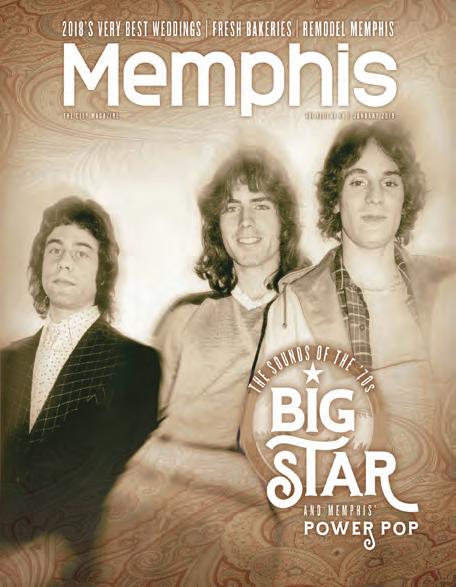
synths, leading to their domination of the global music charts through the ’80s.
Ardent had also pioneered what came to be known as power pop, starting with the radio-friendly sounds of Big Star. While that band’s 1972 debut, #1 Record, had flopped upon release, the half century that followed saw a slow but steady ascent in the record’s popularity. Indeed, their combination of hard-rock guitar and soaring pop melodies became a defining sound of the ’70s and ’80s.
Other groups had quicker success, such as Southernfl avored Cobra and lead singer Jimi Jamison, who later went on to front Survivor. R.E.M. — the band’s members all diehard Big Star fans — visited Ardent to record their 1988 album Green , which went on to sell four million copies Still more artists, like Van Duren (and, later, his band Good Question), Robert A. Johnson, and Richard Orange’s Zuider Zee would make power pop with a more upbeat energy in the late ’70s. ough radio success eluded them, their work has been revisited and re-released in this century to much greater acclaim. at’s been especially true of Big Star founder Chris Bell’s work, with his “I Am the Cosmos,” widely ignored on its release in 1978, now internationally celebrated.
When it comes to international celebration, few Memphians fared as well as Rufus omas, who has a park named after him in Porretta, Italy. at’s where an annual festival of soul music has been held every year since 1987, helping ensure that soul, too, has only risen in stature since the original Stax ended prematurely.
e festival has hosted many Memphis artists, including both Rufus and Carla omas, Isaac Hayes, and other Stax greats, plus those contemporary champions of old school soul, the Bo-Keys, who have backed local talents under-recognized in their day, like Don Bryant
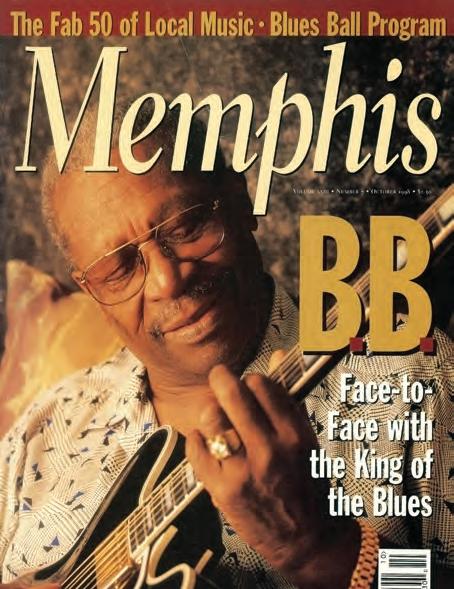
and Percy Wiggins. e whole world, it seems, was looking in the rearview mirror — and listening to what they had missed the first time around.
But soul music’s continued success was more than retro. In 1993, Wendy Moten, then a young unknown, had a minor hit with “Come In Out of the Rain,” which captured that era’s version of soul, imbued with contemporary gospel’s jazzier chords and very fluid vocal stylings. It also marked the rise of the city’s smaller studios, having been recorded at Cotton Row, a relative newcomer. Meanwhile, former Stax hitmakers the Bar-Kays, who had always stayed contemporary into the disco and funk era under the leadership of James Alexander, rode that wave through the 1980s with a string of successful singles, and even re-entered the charts in 2012 with their Grown Folks EP. at twenty-first-century volley into the pop charts was not recorded in Memphis; nor were the many contemporary hits by former NSYNC singer and Memphis-area native Justin Timberlake. e city was still a crucible of talent; it just didn’t have the infrastructure to capitalize in a big way, as in the “before times.” Even Wendy Moten recorded most of her work in Detroit after her first success.
It would take a producer from the U.K., Mark Ronson, to turn a locally recorded track into a massive global success when he cut the Bruno Mars single “Uptown Funk” at Royal Studios, where Willie Mitchell’s son, Boo, carried on after his father’s 2010 death. Released late in 2014, “Uptown Funk” occupied the number-one spot in the U.S. charts for more than three months, ultimately being certified 11-times platinum. It was the city’s greatest commercial success since “Disco Duck.” And, combining classic Memphis horn blasts with juicy ’80s synthesizer squalls, it was unmistakably a product of Royal.
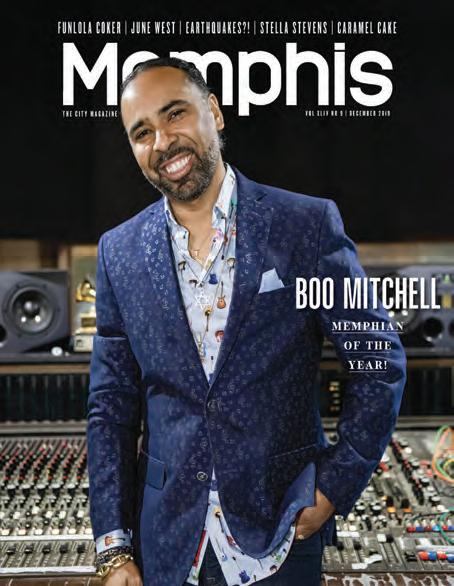
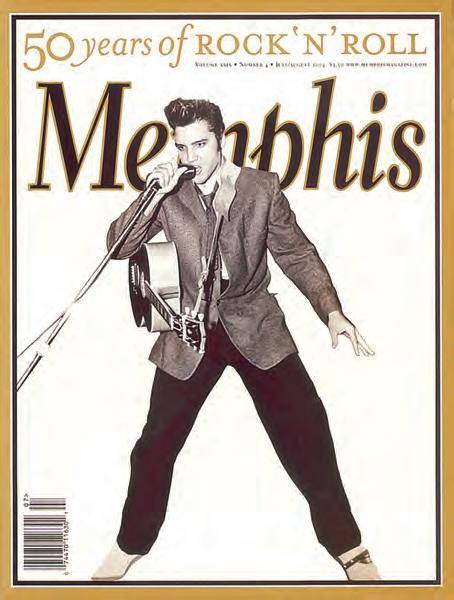
JULY/AUGUST 2004
at marked a turning point for Royal, and the studio has emerged as a go-to destination for anyone looking to capture a certain vintage sound (and a feeling for the blues, as Grammys for Cedric Burnside and the Sinners soundtrack attest). But Royal’s not alone. Sam Phillips Recording Service kept doing business right through the doldrums of the ’70s and beyond, with Phillips himself assisting on Pink Cadillac, the classic 1979 album by John Prine, produced by Sam’s sons, Knox and Jerry. Today, that studio also preserves “the Memphis sound,” under the guidance of Jerry and his daughter, Halley, combining older recording gear with state-of-the-art technology. More recently, newer studios like Memphis Magnetic and Southern Grooves have emulated this combination, tipping their hats to vintage analog gear.
In the post-Stax, post-Elvis world, artists emerged who forswore mainstream music. 1976 marked an aesthetic shift, with debut releases by both e Ramones and Richard Hell & the Voidoids. e new sound would soon be called punk rock: short, choppy, and rude in a way that commercial music of the era never was. Memphis was on the cutting edge of this new, doit-yourself approach. Alex Chilton, having tasted his greatest success as the voice of the Box Tops, American Sound Studio’s hitmakers of the ’60s, joined Big Star and embraced more experimental, idiosyncratic music in the last days of the latter band. Big Star’s Third/ Sister Lovers was produced by Jim Dickinson in 1974, yet was so hard to sell that it wasn’t released until 1978. Embracing chaos, dissolute and dissonant in places, ethereal and orchestral in others, that album marked Chilton’s shift toward edgier sounds, and by 1976 he was
spending a lot of time in New York. Playing his newer, ragged-but-right material there, he also became enamored with e Cramps, bringing them to Memphis to record their debut at Ardent.
Chilton and e Cramps also gazed into the rearview mirror, and it was defi nitely cracked. at was just how they liked it, regularly putting their punkish spin on obscure B-sides and rarities from the ’50s and ’60s. And they weren’t alone. e disparate crew of Jim Dickinson, Sid Selvidge, Lee Baker, and Jimmy Crosthwait formed Mudboy & the Neutrons, putting a hard-rock spin on classics like “Land of 1,000 Dances” and “Shotgun,” as with their signature tune, “Land of 1,000 Shotguns.”
Inspired by Mudboy & the Neutrons, photographer and videographer Gus Nelson reinvented himself as Tav Falco, taking a circular saw to his guitar while playing Leadbelly’s “Bourgeois Blues” in his first performance. Soon, Chilton had formed a band with Falco, the Panther Burns, and to this day Falco makes internationally celebrated records. Also inspired by Chilton and Dickinson, one of the first “all girl” punk groups, The KLiTZ, also appeared on the Memphis scene in the late ’70s, and still make music in various configurations.
Other raucous women followed, including The Marilyns and e Hellcats, the latter spawning the solo career of Lorette Velvette. (Full disclosure: Lorette and I were married for a time.) And for all these groups, the backward-looking gesture was key, as they made a point of reinterpreting classic blues and rock-and-roll, even while penning original music.
ey were “punk” chiefly in being anti-commercial, though they were often celebrated in Europe. In part, they were driven by the artistic, chaotic deconstruction of the past. Chilton himself epitomized this approach, known for his covers of material by artists from Furry Lewis to Michael Jackson to Chet Baker. And they heralded a D.I.Y. aesthetic in Memphis, centered for decades on the legendary Antenna Club. at club also spawned Lucero and the Grifters. And among dozens of hardcore punk groups, the 1990s also brought the bluesier and wittier Oblivians, a trio of visionary songwriters who carry on as solo artists or entrepreneurs today: Greg Cartwright formed Reigning Sound, and more recently e Hypos; Jack Oblivian became a mainstay of the live scene both here and in Europe; and Eric Friedl co-founded the venerable Goner Records, a store and label that draws fans from across the globe for its annual Gonerfest. e label, for its part, has brought many celebrated artists to light, most notably the late Jay Reatard, highly regarded in his late-2000s heyday. For many thousands of fans, this brand of garage/punk is the Memphis sound.
Yet another D.I.Y. aesthetic was also brewing in the Bluff City starting in the ’80s, one that would prove to be the basis for an entirely different “Memphis sound.” For much of the world, that began in 1991 with the debut of M-Team, a group Boo Mitchell formed with his brother, and the first rap group from
Memphis to release a full-length album and have a video played on MTV. But it was brewing years before that. As DJ Paul recalls, “1986 was the year that me and Lord Infamous, may he rest in peace, told ourselves on Halloween night that we wanted to be rappers … I didn’t take piano lessons, I went straight to the organ. at’s what helped me create ree 6 Mafia’s sound. at’s why we always had an eerie, underground, spooky feel.”
That creepy, cinematic sound, sometimes dubbed “horrorcore,” became a Memphis trademark, along with the heavy use of the Roland TR-808 drum machine. Beginning with homemade, lo-fi mixtapes, then building from that underground notoriety into popular success as hip hop established itself as the commercial sound of our age, Memphis has been a hub for hip hop innovation for over three decades.
DJ Squeeky was producing it from the beginning. “I was probably about 15 [or] 16 years old,” he told the Memphis Flyer in 2018. “I did some work with 8 Ball & MJG, Criminal Manne, Project Playaz, and Tom Skimask. We all kinda grew up together in the same neighborhood.” By the twenty-teens, Squeeky was making gold records with the now-deceased Young Dolph, born about the time Squeeky got started. Today, Dolph’s cousin, Key Glock, carries on his legacy.
With groups like ree 6 Mafia and artists like Yo Gotti leading the way commercially, Memphis has come to dominate the airwaves yet again, as underscored when ree 6 received an Academy Award for a song they contributed to Craig Brewer’s Hustle & Flow — the fi rst such award for a hip hop track. Al Kapone, whose career began in the ’90s, also contributed to
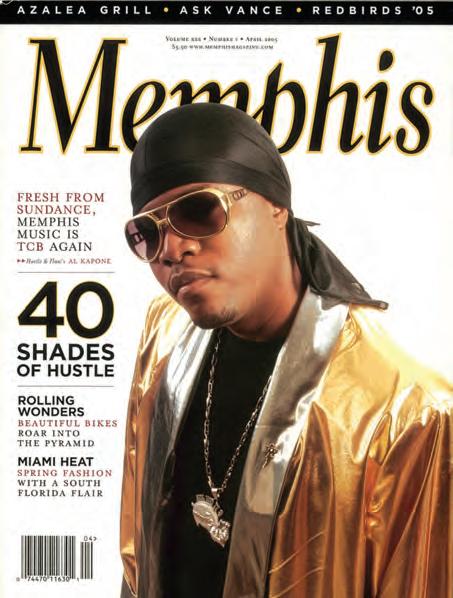
that soundtrack, most notably “Whoop at Trick,” eventually adopted by Memphis Grizzlies fans as a victory chant. As he told Memphis Magazine in 2022, “Most people know that Hustle & Flow is what brought that song to the masses, but ‘Whoop at Trick’ was actually my original song. I didn’t write that song for the movie. I wrote that song for me to perform in the hood clubs.”
While hip hop may seem like a rejection of past forms, these artists are looking through the rearview mirror as well: Most Memphis rappers and producers freely acknowledge the appeal of classic Stax and Hi tracks as sources for their samples. Nowadays, Kapone has embraced mixing live blues guitar with his hip hop, and Lawrence Matthews samples North Mississippi blues from the Fat Possum Records catalog.
And so our trusty ’76 Chrysler Cordoba rolls on, its drivers caught between the rearview mirror and the road ahead. On the one hand, the Unapologetic collective’s artists, helmed by producer IMAKEMADBEATS, eschew hip hop’s reliance on old soul and funk samples, creating entirely original tracks that only sound like vintage records. On the other hand, we have the Central High School Jazz Band, winners of Jazz at Lincoln Center’s 2025 Essentially Ellington competition, whose young players have fully internalized music created nearly a century ago. As band director Ollie Liddell tells his alto saxophonist, “Man, you’ve got to be Johnny Hodges.” Yet they too are looking ahead, mastering the art of the now: improvisation. Indeed, that may be how the city’s players have so deftly balanced the past and future. How else to keep an old Cordoba rolling except to improvise?
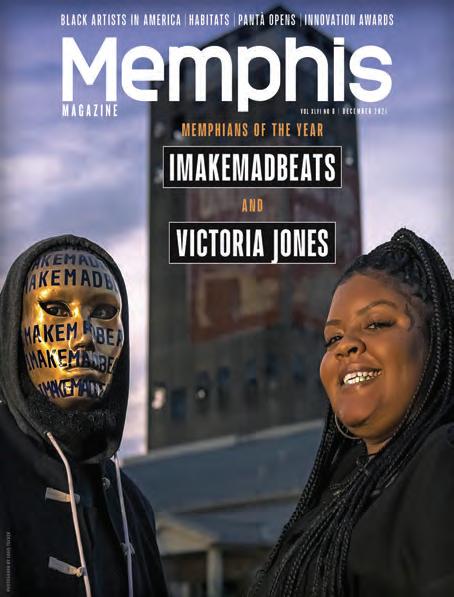
BY JON W. SPARKS
In hindsight, 1976 — the year MEMPHIS MAGAZINE launched — looks almost auspicious. It was a moment of transition, and not just because an upstart magazine entered the fray. We asked three longtime experts to comment on how the city has made its mark in business and politics since then. ey’ve been part of Memphis for decades, working in journalism and in the political spheres.
Tom Jones is the principal of Smart City Consulting, an urban expert, and worked as a reporter at the Memphis Press-Scimitar back in the day. Susan Adler Thorp is a consultant who was also a reporter at the Press-Scimitar as well as a political columnist for The Commercial Appeal. Otis Sanford is an author, columnist, professor, and political commentator, who was a journalist at several newspapers, including a stint as managing editor of The Commercial Appeal. He wrote From Boss Crump to King Willie: How Race Changed Memphis Politics , and his new book, Newsman: The Road from Route 2, Box 9, comes out in June.
As veteran journalists often are, the three share something of the sardonic in their world views. As Jones put it: “In 1976, the decline of Memphis had ended. Unfortunately, it was because it hit rock bottom.”
It wasn’t just a punch line — he followed with examples: “ e Peabody was closed, the Chamber was going
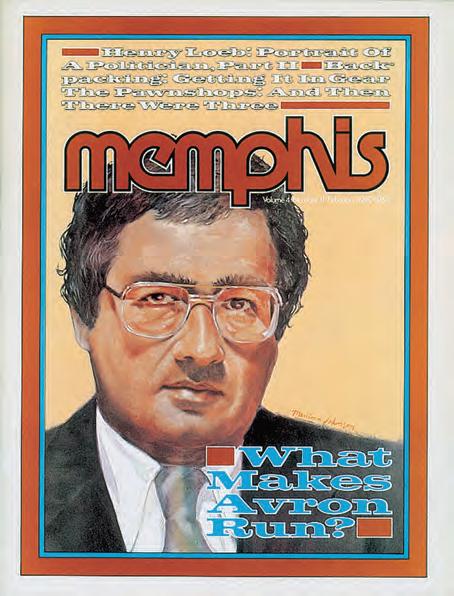
bankrupt.” Beale Street was deserted. orp chimes in: “Mud Island was supposed to cost $23 million and it wound up costing $62 million.” Plenty of low points came about after the 1968 assassination of Dr. Martin Luther King Jr. Downtown businesses were fleeing. Time magazine infamously described us as a “decaying backwater river town.” In other words: rock bottom.
But 1976 also saw stirrings of revival. Jones says, “Leadership Memphis got formed. e Center City Commission got formed. Memphis Magazine got formed. Memphis in May got formed.” Beale Street was coming back to life. And Federal Express was absolutely, positively making an impact.
e business climate in the area was both reacting to population and politics, while also advancing its own version of the city’s potential.
orp says that from a business and economic development perspective, the banks in Memphis in those
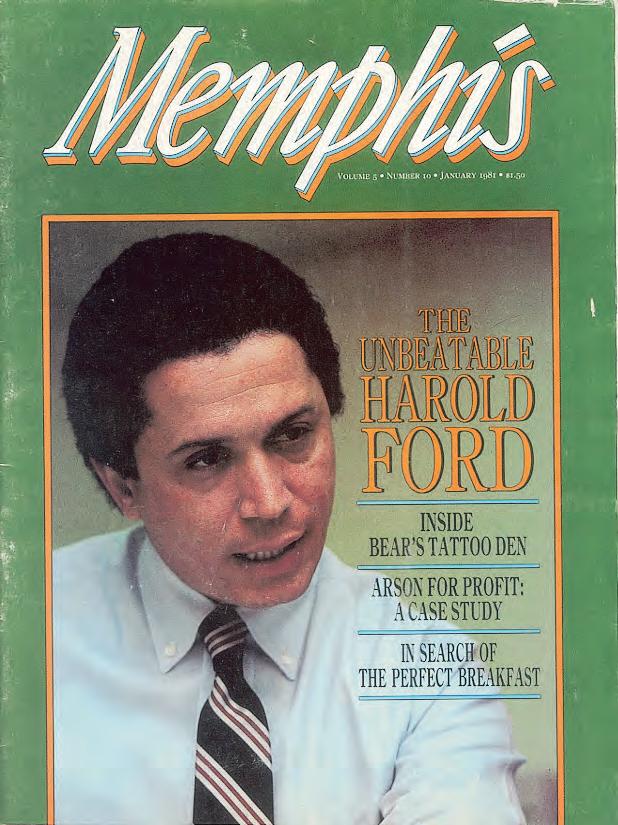
earlier days were locked into the cotton industry mentality, and unwilling to lend money to entrepreneurs. “ ey had to go to New York or other cities to borrow money,” she says. But change was afoot. She noted that the Memphis Business Journal (originally called Mid-South Business) was started by Ward Archer Sr. in 1979. “And you had the rise of that group of Fred Smith, Mike Rose, Ron Terry, Pitt Hyde, and Avron Fogelman,” she says. “ ey got together and said, ‘We’re going to move the city forward.’”
orp also says that in 1979, “We had the Memphis Jobs Conference that came from Governor Lamar Alexander.” The conference rebranded the city’s economic focus as a global distribution center. And Jones adds that in 1981, Ron Terry organized a similar conference with additional emphasis on tourism and agriculture. e vision of business in Memphis was coalescing to build on strengths such as Agricenter International and Graceland.
But, Jones points out, those were lower-skill, lowerwage industries. While the city took control of the economy and did smart things that took advantage of its strengths, “it didn’t make the transition like other cities to knowledge-based jobs. And so incomes here stayed depressed compared to other cities.”
Other changes were going on that presaged how the city would evolve. Sanford notes that Harold Ford was elected to Congress in 1974, firmly establishing the Ford family political machine. “He was the first African-American elected to Congress in the state of Tennessee,” Sanford says, “so that was a watershed moment.”
At the time, Wyeth Chandler was mayor of Memphis, but Ford was on the ascendant, and more Black
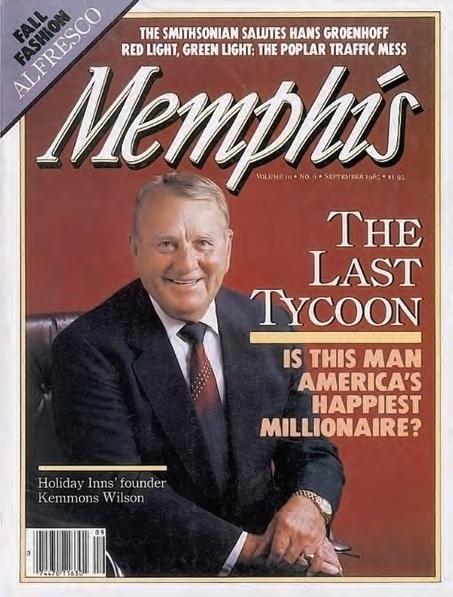
politicians were getting elected to Tennessee’s General Assembly even as the Ford machine was a center of political dominance in Memphis.
Crucial to what was going on in the region was the population shift after the murder of Dr. King. Sanford says, “Memphis got hollowed out at that point. Mostly white people wouldn’t live in the city, so it was an exodus to the suburbs. What used to be agricultural fields are now residence developments out there.” at move went in all directions, but particularly east and south into Mississippi. “Memphis was still predominantly white until the 1990 census,” Sanford says, “and in that census for the first time, the Black population outnumbered the white population. Not by a lot, but by just enough.”
Thorp says that, in her view, “Memphis has never had really strong political leadership. I came on the scene covering City Hall when Wyeth Chandler was mayor. If I look back at all the mayors in the last 50 years, he probably ranks as one of the smartest, if not the smartest. He was a skilled lawyer.” Sanford says Chandler never got an appreciable number of votes from Black residents, “but it still was enough because he got almost every white vote in town. And back then, the white population still was dominant.”
Dick Hackett was elected after Chandler resigned in 1982 to take a judgeship. “Hackett didn’t have the intellectual swagger that Chandler had,” orp says. “He was the kind of mayor that fixed a lot of potholes and he carried the suitcases. I remember when he got off the plane with the International Paper executives,
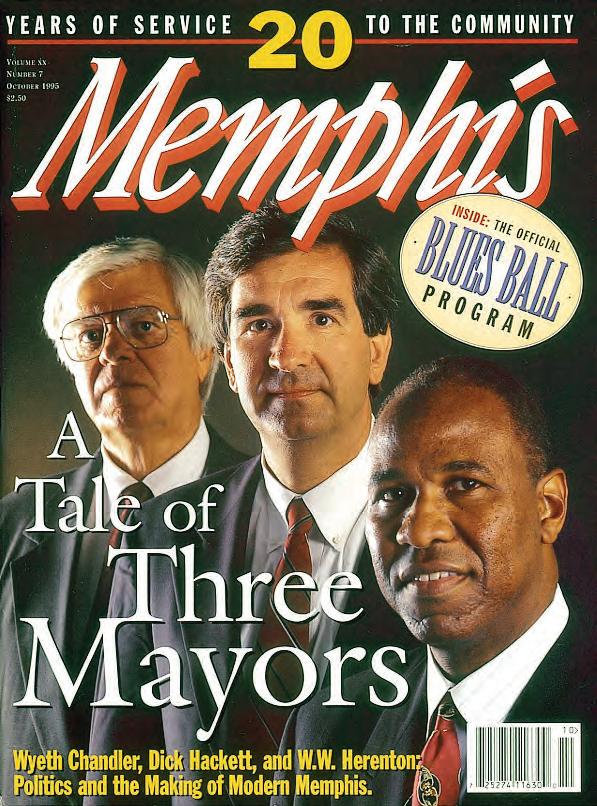
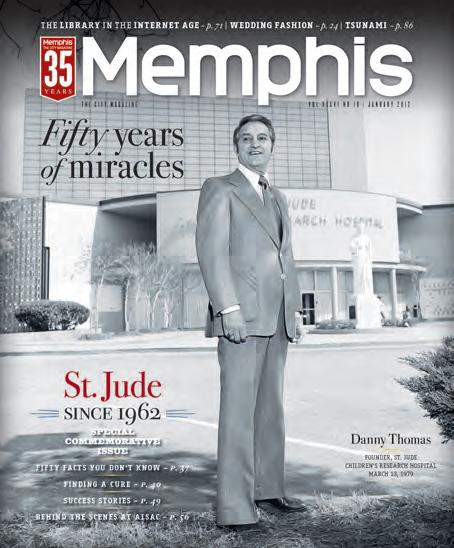
JANUARY 2012
when they came to town, he was carrying their luggage for them. And then there’s Willie Herenton, elected in 1991, who I think was really the first time we had a mayor who said, ‘I’m going to run this thing.’”
Jones says, “For the first eight years Herenton was a great mayor, but then he got to be a caricature of himself. He told people to leave Memphis if they didn’t like it, and they did.”
But orp believes that “Willie was the first one who really forged partnerships with the business community. He’s the one who relaxed a lot of the zoning rules and would work with businesses that wanted to develop downtown. at was a positive thing.”
Sanford notes that Herenton was always visible in the community and never shied from controversy: “In 1978, he became the superintendent of Memphis City Schools, and that was a very contentious thing.” He was not the fi rst choice of the school board but the community reacted strongly against a white out-oftown candidate. “Herenton was superintendent for quite a while, and there were some scandals there, but he weathered them all. And then in 1991, he ran against an incumbent Dick Hackett for city mayor. And once he got Harold Ford’s support, whether it was reluctant or not, he was on his way.”
Herenton and Ford had, Sanford says, a strained relationship. “But they respected each other’s political power. Herenton never got in the way of Ford’s congressional work and Harold never got in the way of the mayoral stuff.”
When asked who was the most dominant political figure of the past 50 years, whether you liked them or not, all three agreed that it’s Willie Herenton. orp says, “I think it leans really more towards the good. His attitude was, ‘I’m not going to mess with your nonsense — this is what’s right for the city, and this is what I’m going to do.’ And he did it, especially in those first eight years. And then he got bored. I think he got tired of being mayor.”
Jones says, “Willie wasn’t uncomfortable in board rooms. He had been on the Holiday Inns board, and First Tennessee. He wasn’t reticent about telling people what he thought, but he knew how to push the dominoes and get what he wanted. I thought he really kind of got it for the first eight years, before he became the worst part of himself.”
As Sanford notes: “When Herenton was the mayor, people in the business community understood he was a political force, so they did everything they could to work with him. He could be egotistical, but he was probably one of the best politicians that the city has had because he knew how to navigate in every area.”
Sanford says Herenton could go into the most impoverished community in the city and talk their language. “But then he could also go to board meetings and have a discussion and get them on board with what he was trying to do, because he supported downtown development. He was the catalyst to bring the Grizzlies here and build FedExForum when some people in the community didn’t want that done. He may have stayed maybe one term too long, but in terms of his impact over that period of time, you can’t overestimate how important he was.”
One of the other important politicians was Bill Morris, who was sheriff when Dr. King was killed and later won several terms as Shelby County mayor. Sanford says he came along when “we really were in dire straits from a city-county perspective. When he got elected in 1978, he had a string of election wins. He had a powerful political influence in this community. And he was well liked by everyone.”
After Herenton came A C Wharton, who had served as Shelby County mayor from 2002 to 2009. As Jones notes, “On both sides of the street, in those 50 years, you had the longest-serving Memphis mayor and you had the longest-serving county mayor, and both generated term limits after they left. In fact, 1976 was the year that voters elected to change county government and elect a mayor.”
orp points out that politics was long impacted by press coverage, which changed in 1983 when the Memphis Press-Scimitar shut down. “With all due respect to my former employer, The Commercial Appeal got lazy with nobody to compete with, and that made a big difference in what government did — because nobody was watching.”
In the last decade, Memphis has brought in a new generation of leaders. Sanford says, “In 2015, the relatively young city councilman Jim Strickland ran a fairly masterful campaign focusing on crime. It was at that time that people started to say that we weren’t doing a good job fighting crime. We’ve always had crime problems in Memphis — even Boss Crump got criticized for that. But Strickland played on the issue very well, and Wharton didn’t have an answer for that.”
Strickland won that year with most of the white vote and an appreciable amount of the Black vote. And he did so again in 2019, even with Herenton giving it another try.
In 2023, with Strickland term limited, there were 17 candidates going for the job. Paul Young was the beneficiary of that crowded contest in which he won with only 28 percent of those voting. e city stopped having runoffs in 1991 and ranked-choice voting isn’t an option, but Young had the advantage of strong support from the business community.
Frederick W. Smith had faith that his Federal Express delivery service would succeed, but there weren’t a whole lot of other believers in the early 1970s. But the year before Memphis Magazine came into being, the company that would become FedEx installed its first iconic purple-and-orange drop-box. at same year, 1975, was when the company reached profitability.
Another significant event was when International Paper moved its operational headquarters to Memphis in 1987. “It was a huge deal, and Dick Hackett did that,” orp says. “He gets the credit as the city mayor, because it fell under his watch.”
Jones adds, “Hackett and Morris,” referring to county Mayor Bill Morris. “Morris was the one that sold it. Dick never had the ability to be warm enough to sell something — he was too busy counting the paperclips. He and Morris were an interesting team though, because they would play off each other.” en in 2005, IP moved its global headquarters to Memphis when Herenton was city mayor and Wharton was county mayor.
Thorp points out that grocery wholesaler Malone and Hyde, under J.R. “Pitt” Hyde’s leadership, was here and it spun off AutoZone. And, as Jones notes, that auto-supply company has been a money-maker, especially during times like Covid when people were working on their own cars. “And I’ll bet you even today it’s going up,” Thorp says, “because people can’t afford a new car.”
orp notes the history of local banks in the past 50 years. “We had three major headquartered banks here: Union Planters, First Tennessee [now First Horizon], and National Bank of Commerce. When you lose the headquarters of a bank, it’s a big hit to a community because the banks were not only lending money here,
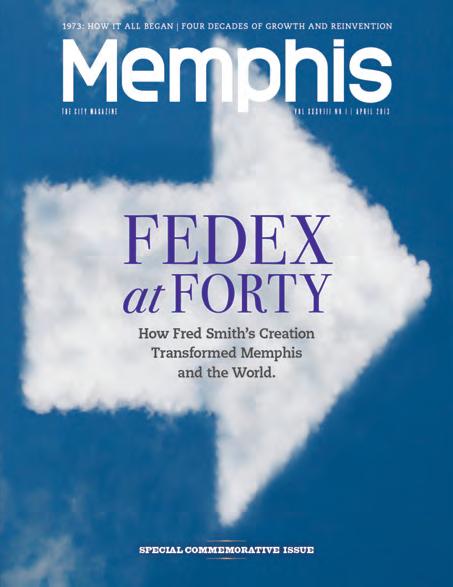
but they were big supporters of nonprofits and community events. All we have right now is First Horizon, and last year we almost lost it. We do have some strong community banks, small banks, but those big banks, they’re really critical.”
In addition, orp says, “Morgan Keegan was a real player in the growth of wealth. And First Tennessee was probably one of the top bond houses in the country.”
e Greater Memphis Chamber has figured into how the city has developed as well and is positioned to influence where it goes from here. More than just a merchants’ association, it has focused on economic development. In 1983, the city lost two big manufacturers, Firestone and International Harvester.
e Chamber has since sought to cultivate the city’s persona as America’s Distribution Center. Now, under the leadership of Ted Townsend, it’s pushing advanced manufacturing and technology in its Digital Delta initiative, which was happening even before xAI built its supercomputer in 2024.
e future of Memphis, at least in the near term, is likely to be shaped by the collaboration between the business and political communities. Prior to becoming mayor, Paul Young led the Downtown Memphis Commission and has collaborated closely with the Greater Memphis Chamber — Townsend served on his mayoral transition team. e arrival of xAI has brought controversy to the region, but the powers that be see it as crucial to what comes next in Memphis and the Mid-South.
BY CHRIS MCCOY
You can’t very well write about the city of Memphis and not devote many, many column inches to arts and entertainment. Over the past 50 years, Memphis Magazine has published stories about the pivotal moments in our city’s cultural goings-on. Here we present a timeline of some of the major events in film, television, and live theater — all of which have appeared in our pages.
From the beginning, Memphis Magazine covered our city’s vibrant live theater scene. In a roundup of 1976 theater, our writers praised Bill Baker’s performance in The Ruling Class at Circuit Playhouse, Once Upon A Mattress at then-new Playhouse on the Square, and said the production of Tartuffe at Southwestern at Memphis (now Rhodes College) “could not be matched.”
In our second year, Memphis Magazine reported on the city’s five(!) drive-in movie theaters, including the historic Southland, which opened on Lamar in 1940 under the less-than-creative name “Drive-In Movie.” Malco eaters district manager “Dub” McKinney said in that ’77 article, “Business has never been better” at the Summer Twin Drive-In. When that theater closed in 2025, it marked the end of the drive-in era.
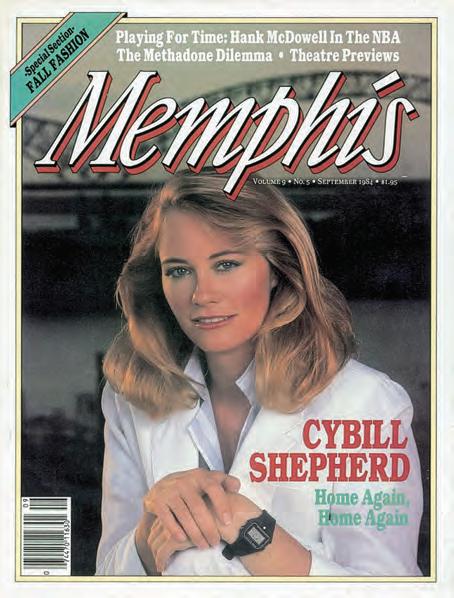
In “Programming Memphis,” Ed Weathers reported that WHBQ-TV refused to air the ABC show Soap , a comedy which parodied the daytime TV soap operas of the day. “We thought it went one step beyond anything we’d transmitted before,” said program director Bob Lewis. e series launched the career of Billy Crystal, who played one of the first openly gay characters on American television, and Soap was eventually named one of the 100 best television series ever by Time magazine.
With the death of Elvis Presley still fresh in the minds of the public, ABC-TV produced the first biopic of the King of Rock-and-Roll. Directed by John Carpenter and starring Kurt Russell as Elvis, the film became a ratings sensation, and served to cement many of the stories and images of Elvis which still endure to this
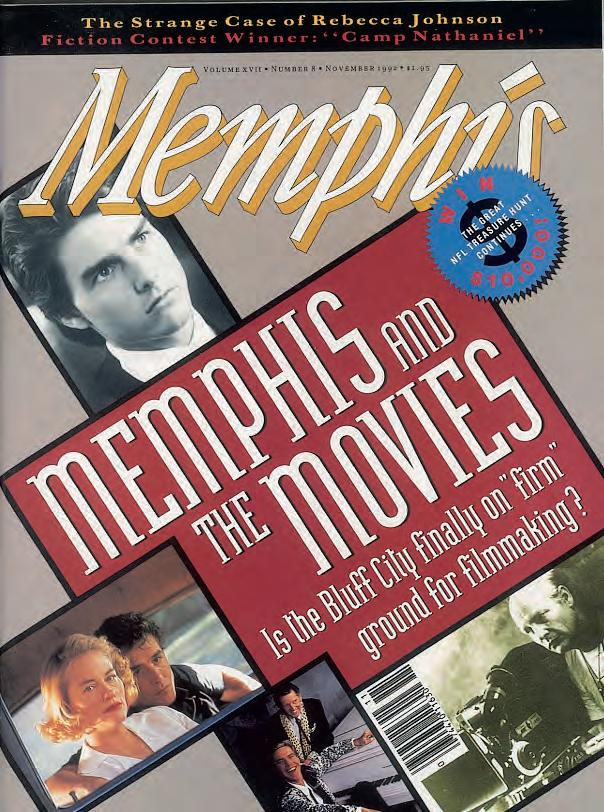
day. Carpenter, fresh off revolutionizing horror with Halloween, shot mostly in California, with a few exteriors shot here in the Bluff City. He and Russell would go on to collaborate on a series of horror and sci-fi classics including The Thing and Escape From New York.
(1981)
e history of modern Memphis theater began in 1969 when Jackie Nichols founded Circuit Playhouse. In 1975, the year before Memphis Magazine started publishing, the organization expanded with Playhouse on the Square. In 1981, the company gained its first permanent home when it bought the former Ritz-GuildEvergreen movie house at 1705 Poplar for $65,000.
JERRY LAWLER VS. ANDY KAUFMAN (1982)
Memphis’ wrestling king had his first appearance in Memphis Magazine in a 1977 cover story. In the early 1980s, legendary comedian Andy Kaufman was the breakout star of Taxi when he suddenly decided to be a wrestler. His career in the squared circle reached its apex when he wrestled Lawler in the Mid-South Coliseum. After e King showed him how it’s done in the 901, with a head-slam to the canvas, the two master showmen had a final confrontation on Late Night with David Letterman. e question remains: Was their nationally televised fight real, or was it all just kayfabe (wrestling jargon for staged matches)?
I WAS A ZOMBIE FOR THE FBI (1982)
e modern era of film production in Memphis began with director Marius Penczner’s bizzaro hybrid of 1950s monster movies and hardboiled film noir. Aliens invaded Pleasantville, hypnotizing the wholesome
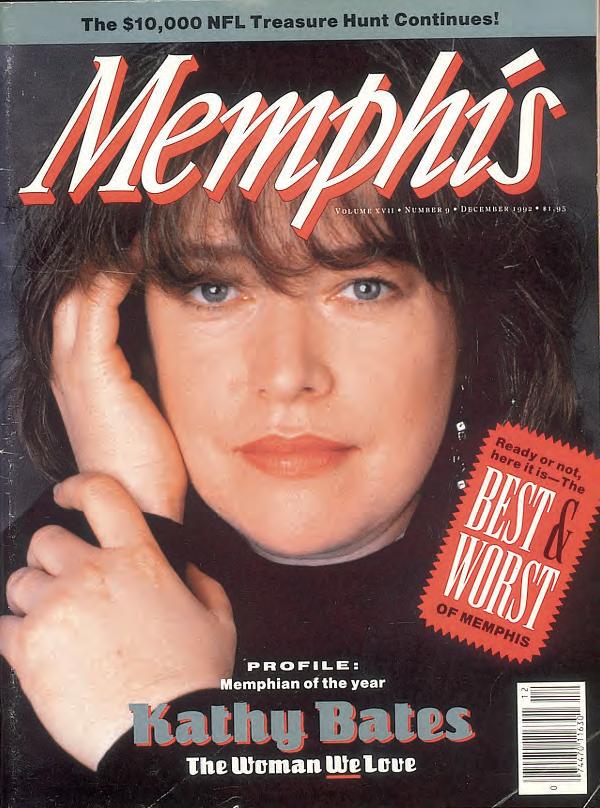
residents and unleashing a reptilian monster. e creature was created with an innovative stop-motion video technique, and later starred in a ZZ Top music video. By the end of the decade, I Was a Zombie for the FBI had become a cult classic, thanks to late-night cable television. Bob Dylan called it his favorite film of the 1980s.
Steve Ross, a Memphis State University film professor, gathered a crew of students and $100,000 to shoot an adaptation of author Peter Taylor’s short story “ e Old Forest,” about a fateful car wreck in Overton Park. It was a coming-out party for the university’s film program. “We’ve been doing this for some time,” Richard Ranta, dean of communications and fine arts, told Memphis Magazine “It’s just that the scale of this one is rather on a cosmic level.” e film would go on to air nationally on PBS.
In the 1970s, the Memphis-born actress had memorable roles in The Last Picture Show and Taxi Driver. In 1985, she was cast as Maddie Hayes, a former model who finds herself running the City of Angels detective agency opposite newcomer Bruce Willis. e show’s mixture of comedy and drama is still influential on television today. Shepherd won two Golden Globe Awards and went on to star in her own sitcom, Cybill
e Memphian was Elvis Presley’s favorite movie theater. He would frequently rent it out for private showings of films with his friends. In 1986, Circuit Playhouse bought the Memphian and converted it into the new Playhouse on the Square.
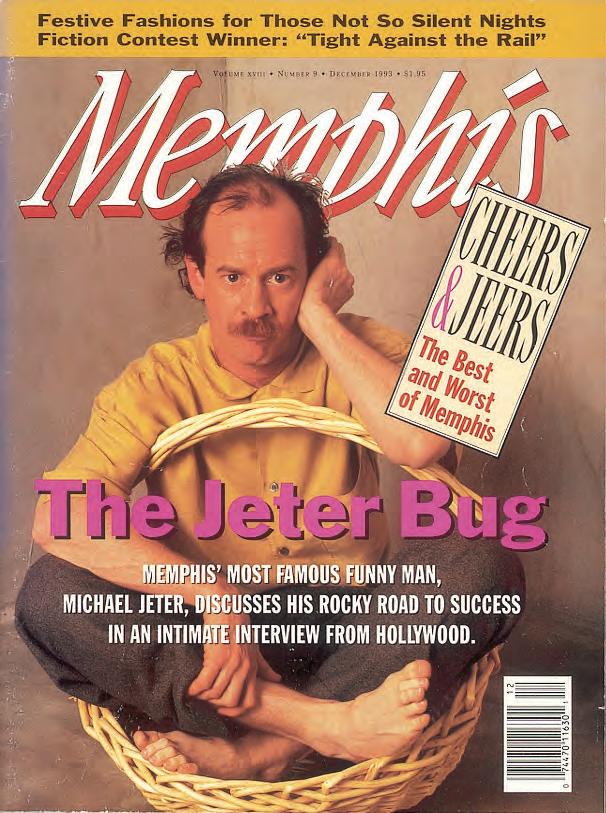
Dennis Quaid portrayed Jerry Lee Lewis in this biopic, which was shot in and around Memphis in the late 1980s. Director Jim McBride based his film on a memoir by e Killer’s second wife, Myra Gale Brown, who was portrayed by Winona Ryder, fresh off her breakout role in Beetlejuice . Brown would later call the film “phony” for taking liberties with her story.
(1989)
Memphis has never looked cooler than it did through the eyes of director Jim Jarmusch. Inspired by Chaucer’s Canterbury Tales, it told the story of a pair of Japanese pilgrims visiting the holy city of rock-and-roll. ey become entangled with the down-on-their-luck denizens of the Arcade Hotel on South Main, including characters played by Rufus omas, Screamin’ Jay Hawkins, and e Clash frontman Joe Strummer. Today, Mystery Train is considered one of the founding documents of the independent film movement.
KATHY BATES WINS ACADEMY AWARD FOR MISERY (1990)
e Memphis-born actress and White Station High School graduate was already well established through her work on the stage and extensive character experience on television. en she wowed audiences as the crazed fan who kidnaps the author she idolizes in the adaptation of Stephen King’s novel. After winning the Best Actress Oscar for the role, she went on to add two Emmys and two BAFTAs to her awards shelf.
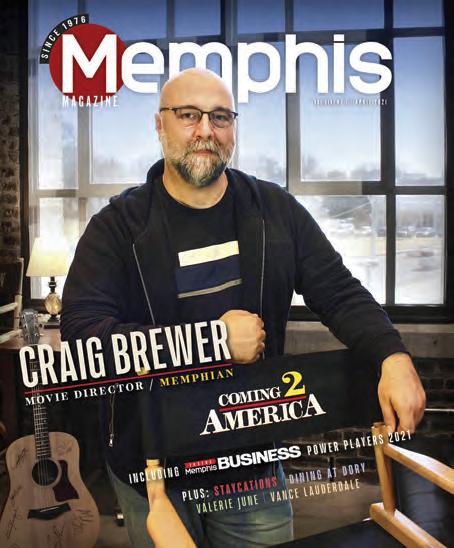
(1992)
During the 1990s, several big-budget Hollywood productions were filmed in Memphis. Robert Zemeckis and Bob Gale, the creative team behind Back to the Future , brought director Walter Hill to the Bluff City to film this gritty crime drama co-starring Ice Cube and Ice-T.
THE FIRM (1993) AND THE RAINMAKER (1997)
Several high-profile Hollywood productions came to the Bluff City during the 1990s. Memphis attorney turned author John Grisham was one of the biggest literary sensations of the 1990s. Sydney Pollack directed the film adaptation of his debut novel, The Firm , in 1993, which brought Tom Cruise, Gene Hackman, Jeanne Tripplehorn, Holly Hunter, Hal Holbrook, and David Straithairn to Memphis, and grossed $270 million at the box office. Four years later, The Godfather director Francis Ford Coppola followed suit with The Rainmaker, starring Matt Damon and Claire Danes. Coppola’s film is now considered one of the greatest courtroom dramas ever made.
THE PEOPLE VS. LARRY FLYNT (1996)
Screenwriting duo Larry Karaszewski and Scott Alexander penned this story of the Hustler publisher’s feud with the conservative reverend Jerry Falwell, which culminated in a landmark Supreme Court free speech case. Miloš Foreman and Woody Harrelson won Golden Globes for Best Director and Best Actor for the film.
While Hollywood was using Memphis as a setting for mid-budget dramas, Memphians were brewing up a film scene of their own. Tupelo native Mike McCarthy, a graduate of Memphis College of Art, was prominent in the punk rock underground when he took up a camera to film a series of no-budget mini-masterpieces. Teenage Tupelo is steeped in personalized Elvis mythology, while Superstarlet AD uses the ruins of post-industrial Memphis as a stand-in for a dystopian far future.
University of Memphis film student Kelly Chandler gathered a few of her friends in the Edge coffee shop to show their films which could not find an audience elsewhere. e next year, arts nonprofit Delta Axis took over, and the festival evolved into one of the city’s premier cultural institutions.
As the digital age of filmmaking dawned, Memphis director Craig Brewer used a $20,000 inheritance from his father to make a drama of sin and redemption on the mean streets of Memphis. Eric Tate and Lindsey Roberts star as a car thief and street hustler whose fates become fatally intertwined. Brewer’s win at the Hollywood Film Festival — over films with budgets in the millions — announced the arrival of the digital age.
Director Robert Zemeckis had filmed his 1990 crime thriller Trespass in Memphis. In 2000, he brought Tom Hanks to the FedEx hub, where he filmed scenes as a pilot later stranded on a remote island when his plane goes down in the Pacific. The rest of the movie, which earned $429 million at the box office, was filmed in Fiji.
Brewer spent the next few years in Hollywood trying to make his story of a street pimp with a dream. After dozens of rejections, producer John Singleton took Brewer under his wing, and this film caused a bidding war at the 2005 Sundance Film Festival. Terrence Howard would earn a Best Actor Academy Award nomination, and Memphis rap legends Three 6 Mafia became the first Memphis musical artists to win an Academy Award since Isaac Hayes in 1971.
Playwright and producer Ekundayo Bandele founded the Hattiloo Theatre to fill a major gap in Black representation on the stage in Memphis. In 2014, the company moved to a new $4.3 million facility, added the Hattiloo Technical Theatre Center in a converted school in 2016, and a residential space for artists, HattiHouse, in 2017. The Hattiloo is now the only freestanding Black repertory theater company in five surrounding states.
For almost two decades now, Tennessee Shakespeare Company has brought live theater to Memphians in a variety of styles and venues that would make the Bard swell with pride. Juliet has pined for Romeo from a rooftop(!) at the Dixon Gallery & Gardens. The Tempest has come to stormy life at Shelby Farms. The Taming of the Shrew from a 1940s radio station in New York City? Yep, just last winter, from TSC’s home stage on Trinity Road. Turns out the play is, indeed, the thing.
The Circuit Playhouse organization spent much of the decade fundraising for a new, $12.5 million facility at 66 S. Cooper St. The new Playhouse on the Square became the company’s flagship theater, while the former Memphian movie house across the street became Circuit Playhouse. The Poplar theater became TheatreWorks @ The Evergreen.
Morgan Jon Fox emerged from Midtown’s Digital Co-Op filmmaking collective to become the most decorated director in Indie Memphis history. In the mid 2000s, he documented a series of protests against Love In Action, a gay conversion therapy center in East Memphis, which resulted when a teenager named Zack Stark was committed by his parents against his will. After Stark was released and the protests ended, Fox continued filming, eventually documenting Love In Action’s founder John Smid’s own coming-out story.
As Hollywood feature film production in Memphis began to wane in 2010, thanks to changing tax incentive laws, some network TV series stepped into the void. In 2017, the CMT network came to Memphis for a series based on the early days of rock-and-roll. Sam Phillips, Johnny Cash, Jerry Lee Lewis, Carl Perkins, Ike Turner, Dewey Phillips, and Col. Tom Parker became characters in a weekly drama, which lasted one season on the Nashville-based network.
Jimmy Smits gained fame in the late 1980s in LA Law. He came to the Bluff City to get back to those roots. Memphis’ history as the setting for John Grisham legal dramas attracted this series, which ran for one season on NBC.
The Little Theatre of Memphis was founded in 1920 and held their first performance in 1921. For 46 years, the company had their productions in an unlikely location, the east wing of the Pink Palace, before moving to their current home at Southern and Perkins Extended in 1975. In 2020, the company completed a major expansion and renovation, but the Covid-19 pandemic delayed the official celebration in 2021.
Before Dwayne Johnson emerged as one of Hollywood’s biggest box office draws, he was a struggling professional wrestler based out of Memphis. For the third season of the sitcom based on his life, Johnson returned to Memphis to re-create his adventures in the squared circle.
Australian director Baz Luhrmann had long been obsessed with Elvis when he directed this sweeping biopic, which became one of the first big hits of the post-pandemic era. Austin Butler starred as the King of Rock-and-Roll opposite Tom Hanks as the scheming Col. Tom Parker. The film, which was shot in Australia and held its premiere at Graceland, earned eight Academy Award nominations. During the production, Luhrmann came across never-before-seen performance footage of Elvis which served as the basis for his 2026 documentary EPIC: Elvis Presley in Concert
Between the opening of the Stax Museum of American Soul Music and Robert Gordon’s book and film Respect Yourself, the revival of the Stax Records legacy is one of the great Memphis stories of the twenty-first century. In 2024, HBO went deeper into the story with a six-part docuseries, directed by Jamila Wignot, which traces the origins and ultimate influence of the music that expressed the soul of Memphis.
BY ABIGAIL MORICI
When our magazine first hit newsstands in April 1976, a brand-new museum placed an advertisement in our pages, welcoming Memphians to the estate of the late Margaret and Hugo Dixon, who had bequeathed their home and 17 acres of gardens to the community. “ e intention always was for it to be an art museum,” says Julie Pierotti, curator at what is now the Dixon Gallery & Gardens.
At the start, the collection held just over 30 pieces — 27 paintings, two paper works, and six sculptures, to be exact, with a focus on late nineteeth- and early twentieth-century European art. “It wasn’t a huge collection,” Pierotti says, “but the Dixons knew it was special. ey loved it dearly.”
At the time, Memphis had only one other art museum: Memphis Brooks Museum of Art, founded in 1916 as a gift to the city from Bessie Vance Brooks in honor of her late husband. It remains the oldest and largest art museum in Tennessee.
By 1979, a third local art museum would join the Dixon and the Brooks: the Metal Museum, or as it was then called, the National Ornamental Metal Museum. e three didn’t compete with one another, even as the arts scene ebbed and flowed, as galleries opened and closed, as artists moved in and back out. ey, too, changed and continue to change, expanding their reach and access as much as they expand their collections.
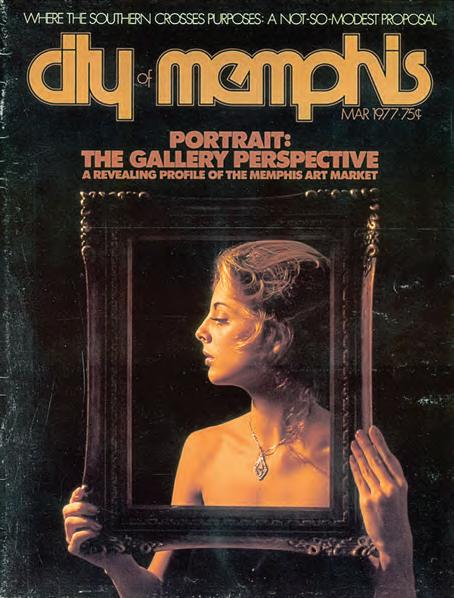
“Every kind of institution morphs over time,” says Patricia Daigle, today’s chief curator at the Brooks. “ at should be expected and welcomed.”
Ten years ago, Patricia Daigle moved to Memphis when her husband accepted a tenured position in the biology department at the University of Memphis. Fortunately, she came across a job description for a visiting professor and director of the Fogelman Gallery at the university. A few years later, Daigle started at the Brooks as associate curator of modern and contemporary art, before becoming chief curator in 2025. In that time, a sliver of the over 100 years of the Brooks’ existence, she’s been able to acquaint herself with the Memphis arts community — and become a part of it. “It’s a very tight-knit community and I find people to be very supportive of one another,” she says. “One of the things that struck me was just how active
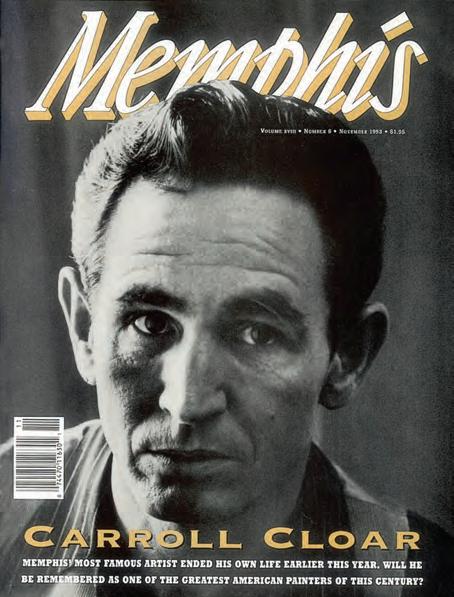
many people are, and the diversity in terms of medium as well, whether it’s ceramics or painting or public art.”
e Brooks, Daigle says, has always sought to serve this community, though the way it has done so has evolved. is has meant expanded programming and new partnerships with nonprofits and makers. When Arrow Creative, a nonprofit founded in 2012 to make art more accessible, closed in 2024, the Brooks absorbed the majority of its programming. “ ere are really a variety of ways that we try to connect and support,” Daigle says.
Once the Brooks makes its move to the riverfront — expected later this year — and takes on the new name of Memphis Art Museum, these opportunities, Daigle predicts, will grow. With 50 percent more gallery space downtown, the museum will not only have the chance to exhibit more of its permanent collection but also to reimagine it — “not just in terms of adding new things but also pointing to the power of interpretation,” she says. “With the new museum, we’re really looking forward to reinstalling our collection and telling new stories, involving community voices and using a collection that might be familiar.”
To mark the move, the museum has acquired 80 new works by local, national, and international contemporary Black artists through the museum’s Blackmon Perry Initiative. at initiative began as an effort for the Brooks to become a hub for Black art, first funding a fellowship in 2021 to prepare and grow curators of color, an underrepresented group in the museum world. e fellowship was the first position of the Brooks to be endowed in perpetuity.
“[ e initiative] is a major step towards making sure we have a collection that best represents the Memphis
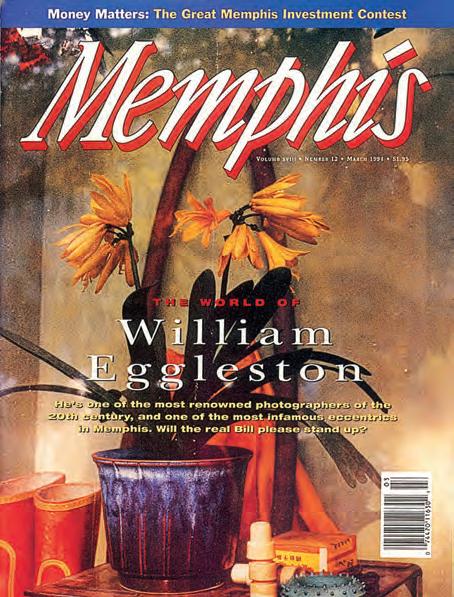
community,” Daigle says. “We hope our collection continues to diversify, and in terms of historical works, too, make sure that we keep looking towards and understanding the past, seeing how those works can help us understand our present and our future as well.”
is applies to works by local artists, too — especially so. Memphis artists, Daigle says, have formed a considerable portion of the Brooks’ collection for decades. “It resonates not only with people who are from Memphis, but also situates Memphis and the creative work that’s being done here within a broader national and international context.”
Now the Martha R. Robinson curator at the Dixon, Julie Pierotti has worked at the Dixon for nearly 20 years — not including her time as an intern between her undergraduate and graduate studies. Fittingly, it was at the Dixon that Pierotti became inspired to embark on her career: A tour guide on a high school field trip mentioned the internship program after a young Pierotti showed interest in the porcelain collection. “It changed my life,” she says.
Her earliest impressions of the Dixon were that the museum was a sort of silo in the Memphis arts community. But once Kevin Sharp became director in 2007, that began to change.
In 2008, the museum introduced its Mallory and Wurtzburger series, which dedicated gallery space to regional contemporary artists. “We had never really shown Memphis artists until 2008,” Pierotti says. “Once we did, that was a real turning point; it’s been instrumental in connecting us to our own arts
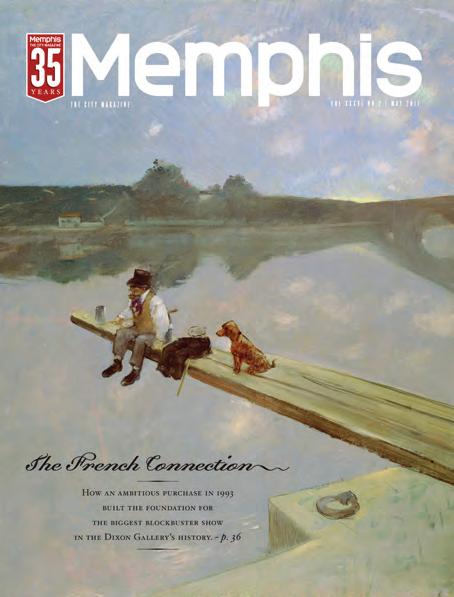
community, one that is so incredibly supportive of our homegrown talent.”
Even looking at its other gallery spaces, the Dixon has expanded in terms of its variety and diversity. In 2013, the museum acquired its fi rst work by a Black artist: Gamin , a sculpture by Augusta Savage. “We’re very proud of our Augusta Savage,” Pierotti says. “But American art in general wasn’t a huge focus of collecting at the Dixon until the [most recent decade].”
After all, at the heart of the Dixon’s permanent collection is late-nineteenth- and twentieth-century European art, but since 2013, the museum has added more works by Black artists to the collection to, as Pierotti says, “integrate their stories and demonstrate how Black American artists’ stories are part of the fabric of American art. We’re connecting those works of art to those by French Impressionists in our collection and show how these artists were in conversation with each other.”
In the past few years, the Dixon has presented its “Black Artists in America” series, a three-part survey from the Great Depression to September 11, 2001.
“ e great thing about all three of those shows,” Pierotti says, “is that we have reinserted Memphis into the larger story of Black art history and shown how these really important artists were working in Memphis.”
Two of the shows have also traveled elsewhere and had internationally distributed catalogues, bringing this story of Memphis outside the city limits.
“In the last 15 years or so, we’ve tried hard to make sure that in a calendar year there’s something for
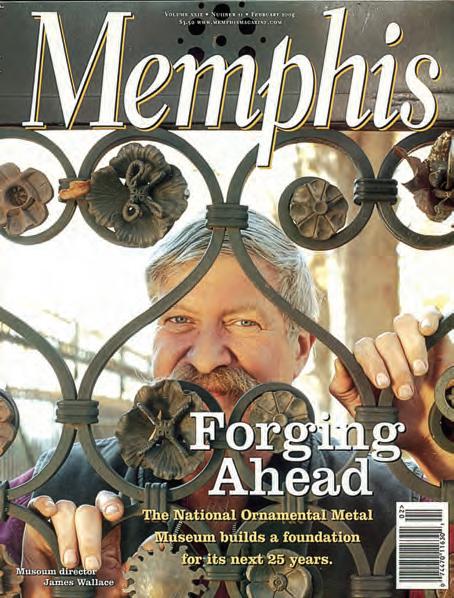
everyone,” Pierotti says. “Museums have become more open, less stuff y, and more intent on educating the public on the artists on view in a way that meets the public where they are.”
Not even 20 years ago, the Dixon still had titles of works in French, without any information on the label about the artist. “It’s an easy fix,” Pierotti says. “So we of course translated the titles of the works in our collection and then tried to provide some interesting and accessible information.”
ough this urge for accessibility and inclusivity feels relatively new, at least in a broad scope, the Dixon has always sought to be a place of welcome. It was first a private home, after all, a place where Margaret and Hugo Dixon welcomed guests and hosted parties. “ at mindset of ‘welcome to our home’ has carried through today,” Pierotti says. “We are grateful for everybody who steps foot on our property or who wants to see the works of art we have on our walls or see the flowers in our garden.
“And now that our admission is free [an initiative begun after the pandemic], it’s even more important, and we’re even more welcoming to our entire community. Whether you’re a first-time museum visitor or a seasoned gardener that comes all the time, our attitude is, ‘Welcome.’”
As the Dixon was opening in 1976, the National Ornamental and Miscellaneous Metals Association (NOMMA) was looking to found an industry museum in Memphis. ree years later, the Metal Museum would open in the former, century-old Marine Hospital overlooking the Mississippi River, with a show called simply, “House Jewelry.”
For the fi rst 30 years or so, founding director Jim “Wally” Wallace, himself a practicing blacksmith, made sure the Metal Museum survived. Wallace died in late 2025, but he is quoted as saying: “ e Metal Museum was built on a whole lot of luck, some larceny, and a lot of dedicated people who gave an incredible amount of time, energy, money, and stuff. e museum’s roots were based on a can-do approach because we didn’t have any other options.”
And he added this: “You could say the early days of the museum were characterized by being miserably poor and learning how to get by with nothing.”
On the last day of 2007, Wallace retired and handed over the executive directorship to Carissa Hussong. Only 10 years before, Hussong had moved to Memphis, partially for love (she and her now-husband David Lusk had been dating long-distance) and partially for work (she took a job at the Dixon). Soon, though, in 1997, she founded the UrbanArt Commission, a nonprofit dedicated to funding public art.
“I was careful about not having lofty goals when I started [at the Metal Museum],” Hussong says. “ e Metal Museum is a very special place, and it didn’t really need new goals — it just needed a little polishing and formality. Every program that exists today has its origins in the organization I inherited — even the need
for a capital campaign.”
As the only institution of its kind in America, the museum’s core mission — “to celebrate and advance the art and craft of fine metalwork” — hasn’t changed. “What has evolved,” Hussong says, “is the scale and scope of how we pursue that mission. Over the years, the museum has grown from a small, specialized institution into an internationally recognized center for the field.”
Over time, the museum would introduce its apprenticeship program, launching and shaping the careers of many metal artists, some of whom have stayed in Memphis. In 2008, it introduced its Tributaries series, which features emerging metal artists.
“Many of the emerging to mid-career artists in our Tributaries series have gone on to have prominent exhibitions and commissions throughout the country,” Hussong says. “At the same time, we’ve continued to deepen our commitment to the local community by supporting artists, creating opportunities for learning, and making inclusivity a large part of our goal within our institution and the community. We’re still a specialized museum, but we’re also increasingly a cultural gathering place, one that can connect art, craft, and community in ways that feel very much rooted in this city.”
Now, the museum looks to grow its reach even further with more gallery space, more exhibitions, and more educational programming with its expansion to Overton Park, when it moves into the former Memphis College of Art campus. “We want the museum to be a place where art thrives, and new conversations continue to evolve.”
Even as the future holds new possibilities, losses incurred by the visual arts in Memphis linger. Chief among them: the Memphis College of Art.
A nexus for arts education for nearly 85 years, the Memphis College of Art closed in 2020, unable to overcome declines in funding and enrollment. Yet its legacy remains. In March, the Brooks even presented “Memphis College of Art, 1936-2020: An Enduring Legacy” as a farewell exhibition and an homage to the school. (Jon W. Sparks covered the exhibit in detail in our March cover story.)
“Memphis has a strong culture of supporting living artists — and this is due in large part to MCA’s artists, both faculty and students,” Hussong says. “You can see the impact in private and corporate collections throughout Memphis. We often compare ourselves to Nashville, which despite having more wealth does not have the same commitment to supporting its visual artists.”
Still, arts education in Memphis hasn’t gone away entirely. Pierotti points to LeMoyne-Owen College as just one example. In the early-twentieth century, before MCA was open to Black students, LeMoyneOwen attracted artists with national reputations to join its faculty.
And opportunities to engage with art continue to
grow in the form of smaller venues, even as some, like the artist-run Plan B or the nonprofit contemporary arts space Delta Axis, fade away. Marshall Arts has been around since the ’90s, and so has Urevbu Contemporary, whose founder, Ephraim Urevbu, began Trolley Night on South Main in 2000, a tradition that continues. Last year, David Lusk Gallery celebrated 30 years, and Crosstown Arts, founded in 2010, has expanded into Crosstown Concourse. TOPS Gallery, which opened in 2012, continues to host shows in its main gallery and its satellite window gallery, while Jay Etkin runs his Cooper-Young gallery and the Flow Museum of Art and Culture.
In the past few years, Memphians have also seen the Edge District burst with new spaces, such as Sheet Cake Gallery (2023) and Ugly Art Co. (2024), while ShapeShifter Art School and Gallery opened in East Memphis last year.
“We love it,” Pierotti says. “ e more the merrier, and I think all of the Memphis arts community is like that. It’s a whole ‘we’re all in this together’ mentality. It’s been fun and gratifying and warm to see it continue that way even after MCA closed.”
“I hope that we see continued, additional resources for artists here, spaces for making art, and support for arts education,” Daigle adds. “ e arts allow people to reflect their realities in a way that not many things do, and when people feel stable in other aspects of their life, they’re able to have the room and space to create. ere’s always movement and development and I think people are still figuring out what folks need and want in the community. But we mutually support one another, and we all share the same mission.”
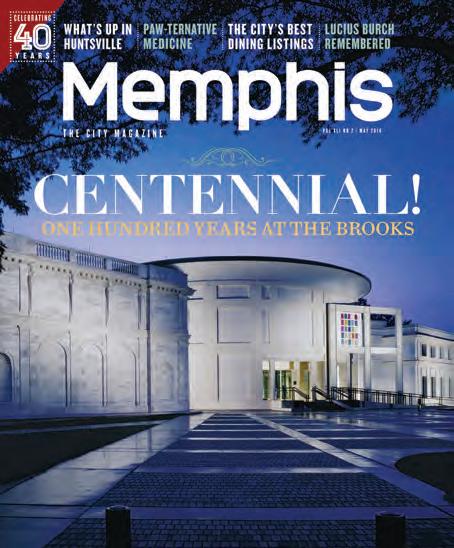
BY FRANK MURTAUGH
When C ITY OF M EMPHIS magazine
fi rst hit mailboxes in April 1976, this town’s sports scene might best have been described as “transitional.”
Memphis was a basketball town, no doubt, but this was three years after Larry Finch played his last game as a Memphis State Tiger, and five years before a gangly kid from West Memphis by the name of Keith Lee arrived in blue and gray. is was the year the American Basketball Association disbanded, and a year after our Memphis Sounds played their fi nal game at the Mid-South Coliseum. e four ABA teams that joined the NBA gave the more-established league 22 franchises. e notion of an NBA team in Memphis? Yeah, right. We’re more likely to see a pyramid on the banks of the Mississippi.
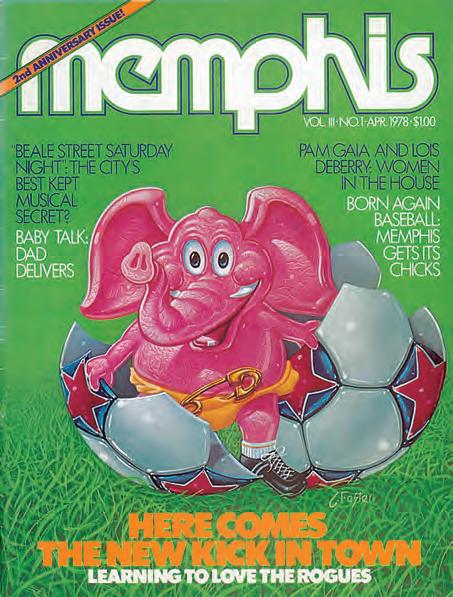
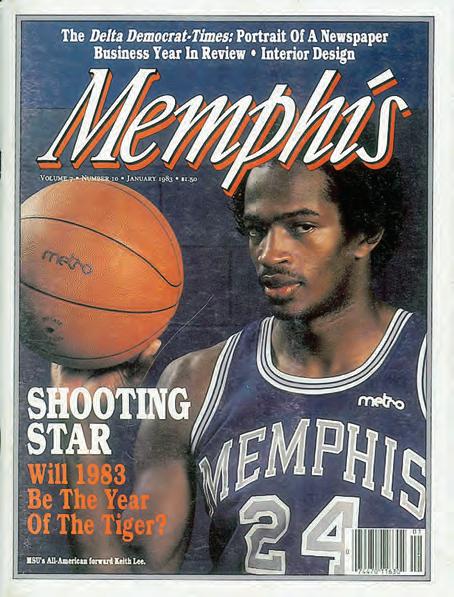
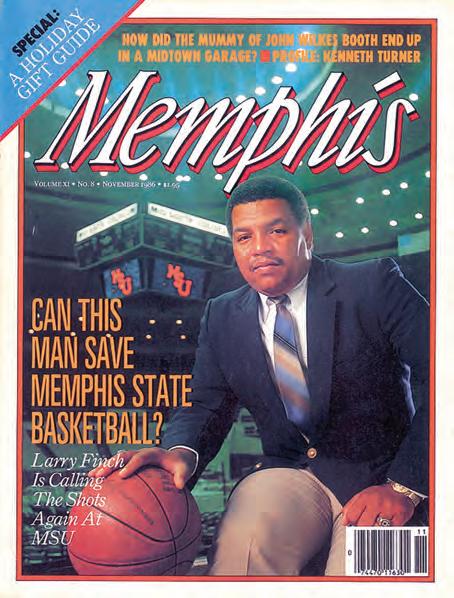
But we do have a Pyramid on the banks of the Mighty Miss! We also have an NBA team — the Memphis Grizzlies — that has established the Bluff City as unequivocally big-league for a quarter-century now. Between 1976 and 2026? Well, arguably the greatest pure athlete of the 20th century called Memphis home for much of the summer in 1986. A football player recently ranked as the fifth-best in the sport’s history — fifth-best — played two seasons in the Liberty Bowl. And how about this: e one and only player to win a professional baseball championship in Memphis with a home run went on to become only the fourth player to hit 700 homers in the major leagues. Reasons to cheer? Memphis has had countless over the last 50 years.
There are local sporting events that are actually older than Memphis Magazine . The PGA tournament today known as the FedEx St. Jude Championship was first played in 1958 as the Memphis Open. Among the champions crowned here: Jack Nicklaus, Lee Trevino, Gary Player, and Greg Norman. In 1977, Al Geiberger shot the first 59 in PGA history in the second round of the Danny omas Memphis Classic at Colonial Country Club.
Bud Dudley brought the Liberty Bowl to Memphis in 1965, making it the seventh-oldest bowl game in college football. You’ve heard of Bear Bryant? The Alabama icon coached his final game in Memphis, a Tide victory in the 1982 Liberty Bowl. Two years later, Auburn running back Bo Jackson earned MVP honors in helping his Tigers beat Arkansas. Two years after that, Jackson made the cover of Sports Illustrated in a Memphis Chicks(!) uniform, the Heisman Trophy winner having chosen a professional baseball
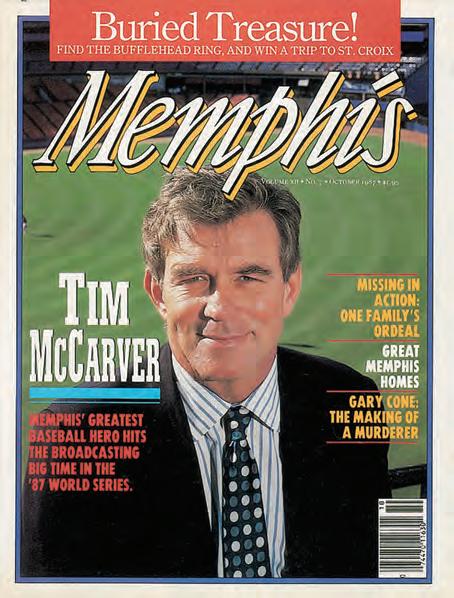
career — at the time — over football. Baseball has been good to Memphis, and that goes for players who didn’t spend their offseasons in NFL stadiums. As the Double-A affi liate of the Montreal Expos, the Memphis Chicks launched the likes of Charlie Lea, Tim Wallach, and future Hall of Famer Tim Raines toward big-league stardom. e Chicks won a Southern League title in 1990, but the game changed in 1998 with the arrival of the Memphis Redbirds. Not only were the Redbirds the Triple-A affi liate of the St. Louis Cardinals — a regional favorite for generations — but the franchise delivered construction of AutoZone Park at Union Avenue and ird Street, the largest sports investment in the city’s history at that time and a minor-league stadium built with big-league ambition under the watch of Dean and Kristi Jernigan. And the inaugural season (2000) at AutoZone Park was grand. e Redbirds reached the Pacific Coast League championship series and on September 15th, provided one of the greatest single moments in Memphis sports history. Tied with Salt Lake in the 13th inning, the Redbirds sent a 20-year-old outfielder by the name of Albert Pujols to the plate. Promoted from Class-A just a few weeks earlier, Pujols slammed a home run just inside the rightfield foul pole to clinch the PCL title in walk-off fashion. Fast forward 22 years later, and Pujols retired as a three-time MVP and two-time world champion with St. Louis, having hit 703 home runs and accumulated 6,211 total bases (second only to Hank Aaron).
David Freese and Allen Craig starred for another Redbirds championship team in 2009 before helping the Cardinals win the 2011 World Series. en in 2017, Stubby Clapp — a backflipping second-baseman for the
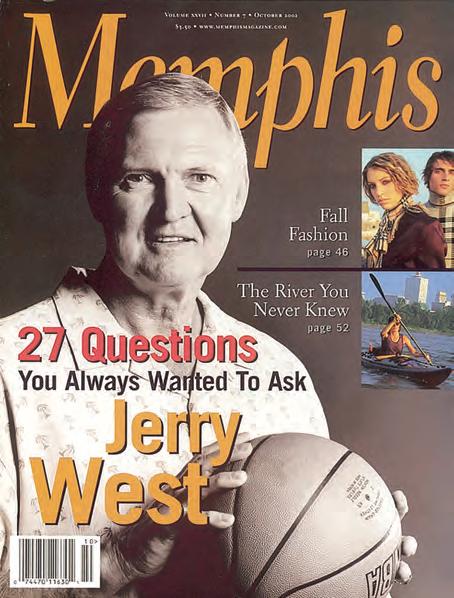
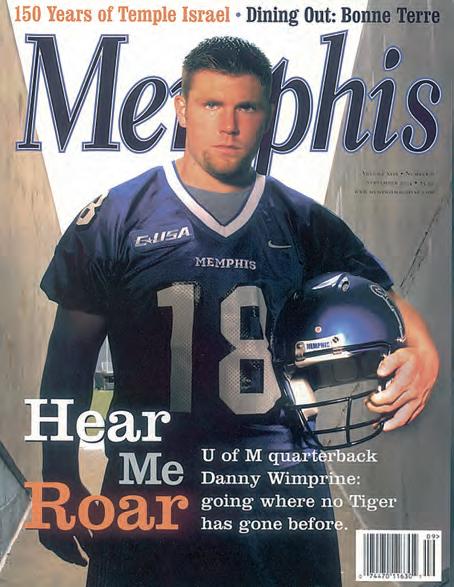
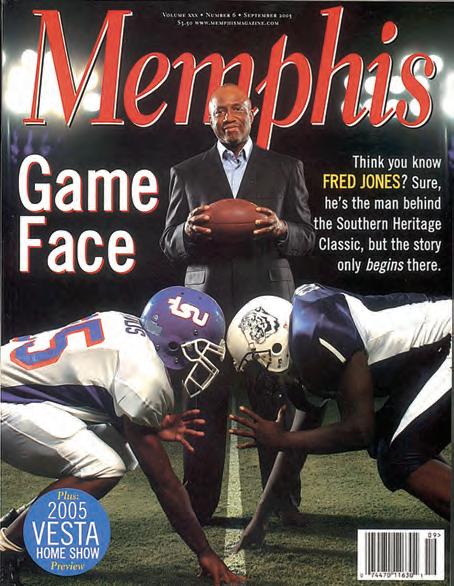
2000 champs and the only player in Redbirds history to have his number (10) retired — returned to Memphis to manage the club. Clapp led the Redbirds to 91 wins (the most by a Memphis team since 1948) and the first of two consecutive PCL titles on his way to Minor League Manager of the Year honors from Baseball America. Baseball isn’t the only “minor league” to impact the Mid-South. e Memphis Rogues of the North American Soccer League played three seasons in the Liberty Bowl, then two more as an indoor team in the MidSouth Coliseum. ( is franchise somehow called an elephant its mascot and made the cover of our April 1978 issue. e baby elephant was pink.) e Memphis Americans picked up where the Rogues left off and played four seasons in the Major Indoor Soccer League, also earning one of our covers (November 1983). e Showboats of the United States Football League stole Memphis hearts for two spring seasons (1984-85) and suited up sackmaster Reggie White, considered by many the greatest defensive lineman in football history. Concerted efforts to attract the NFL — first the relocation of the Baltimore Colts in 1983, then for an expansion team in 1992 — fell short, though Memphis was home to the NFL for one forgettable season (1997), when the “Tennessee Oilers” played home games in the Liberty Bowl before settling a year later in Nashville as the Tennessee Titans.
e University of Memphis has been the city’s flagship team on the gridiron for more than a century now. ere weren’t many memorable seasons in the latter part of the 20th century, though coach Rex Dockery oversaw a 6-4-1 turnaround in 1983 after a pair of 1-10 campaigns. Dockery was tragically killed in a plane crash on a recruiting trip on December 12, 1983.
The arrival of quarterback Danny Wimprine in 2001 and running back DeAngelo Williams a year later changed Tiger football. ey led Memphis to its fi rst bowl game in three decades after the 2003 season (a victory in the New Orleans Bowl) and Williams rushed for more than 1,900 yards in both his junior and senior seasons, becoming only the fourth player in FBS history to rush for 6,000 yards in his career. e program seemed to bottom out with only three wins over two years (2010-11), but the arrival of coach Justin Fuente in 2012 fueled a renaissance that has yielded, to date, twelve consecutive seasons of bowl eligibility. One record-setting quarterback after another has suited up in blue and gray under Fuente, his successor Mike Norvell, and then Ryan Silverfield: Paxton Lynch, Riley Ferguson, Brady White, and Seth Henigan. Receiver Anthony Miller (2017) and running back Darrell Henderson (2018) each earned first-team All-America honors.
In October 2019, ESPN’s GameDay crew came to Memphis and showed the college football universe what Beale Street could become with bigtime football in the air. e Tigers beat SMU in front of a packed Liberty Bowl and, two months later, played Penn State in the Cotton Bowl. e Tigers lost to the Nittany Lions but it remains the greatest stage a once-derided program has ever seen.
Memphis was a basketball town in 1976, and it’s a basketball town today. When this magazine celebrates its centennial in 2076, basketball will dominate the podcasts and “socials” (however these are defined 50 years from now). Keith Lee scored more than 2,000 points and led the Memphis State Tigers to the
NCAA tournament’s Sweet 16 four consecutive years (1982-85) and the 1985 Final Four, and it’s not even the best era of the last half-century. Under coach John Calipari, the Tigers put up a four-year record of 137-14 from the 2005-06 season through 2008-09. (Look at that record again.) Fueled by All-American Chris Douglas-Roberts and future NBA MVP Derrick Rose, the Tigers reached the 2008 championship game, only to fall to Kansas, dammit, in overtime.
Seventeen years after Calipari’s departure for Kentucky, the Tigers have not returned to the Sweet 16, even with local legend Penny Hardaway coaching the program since 2018. ( e greatest Tiger of them all, Larry Finch, coached the Tigers for 11 years — 1986 to 1997 — and won more than 200 games but didn’t reach the Final Four.) On the subject of Hardaway, if we were to name an Athlete of the Half-Century, it would be the 1990 graduate of Treadwell High School. e national player of the year as a high school senior, Hardaway went on to earn All-America honors at Memphis State (1993), then was twice named first-team All-NBA with the Orlando Magic. Hardaway is the only member of the gold medal-winning 1996 U.S. Olympic team not in the Naismith Memorial Basketball Hall of Fame.
What kind of impact did the Memphis Grizzlies make after first tipping off against the Detroit Pistons in that Pyramid(!) on November 1, 2001? How about featuring the NBA’s Rookie of the Year (Pau Gasol) their inaugural season? How about landing Hall of Famer Jerry West in their front office for year two and Hubie Brown raising the league’s Coach of the Year trophy in 2004?
When FedExForum opened for the 2004-05 season, the Mid-South finally had a true basketball palace and by the end of the decade, a “core four” that would lead the Grizzlies to seven consecutive playoff appearances and the 2013 Western Conference finals. Today, Zach
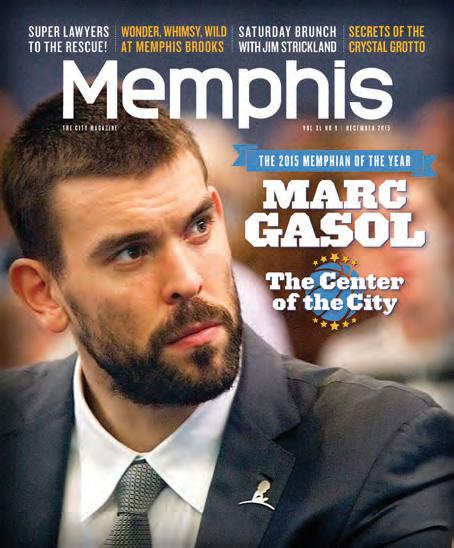
Randolph, Marc Gasol (the 2015 Defensive Player of the Year and the Grizzlies’ only fi rst-team All-NBA selection), and Tony Allen have their retired numbers displayed on banners in the FedExForum rafters. When Mike Conley’s playing days fi nally end, we’ll see a fourth banner raised. e electrifying Ja Morant arrived in 2019, earned the 2020 Rookie of the Year award, and helped Memphis to its first two Southwest Division titles. But offcourt troubles for Morant and the recent trades of Desmond Bane and Jaren Jackson Jr. suggest the “Ja Era” of Grizzlies glory may be all too brief. When might Memphis reach its first NBA Finals? Merely asking the question is a statement on Bluff City sports today as compared with 1976.
Fifty years in, we find ourselves missing a few friends. e Racquet Club of Memphis hosted a professional tennis tournament for 40 years. Bjorn Borg won a title here. So did Jimmy Connors, John McEnroe, Andre Agassi, and Pete Sampras. e Memphis RiverKings made hockey a fun night out for almost two decades (1992-2011), winning a pair of Central Hockey League championships. And how about 901 FC making AutoZone Park a cozy home for professional soccer (2019-24)?
It’s been five decades of cheering, jeering, and, now and then, tearing up when a moment is recognized for the memory it will become. Consider the Southern Heritage Classic, the brainchild of Fred Jones and for almost 40 years now, an annual weeklong party centered on a football game between HBCU programs. Does the winner of the game matter? e final score? On the surface, sure. For the record books. But the togetherness we see — the togetherness we feel — every September around the SHC? at’s Memphis sports. Here’s to the next five decades.
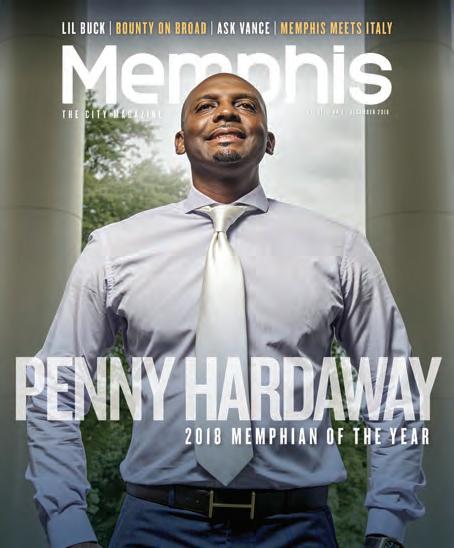


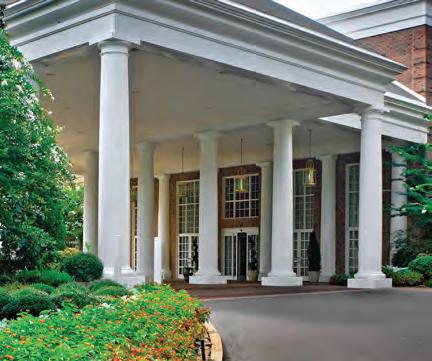
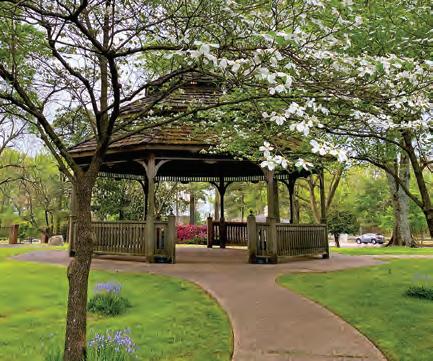





TBY ALEX GREENE
hough he’s not a household name, you can’t really say Jon Hornyak has never been recognized. After all, a photo of his band appeared in the pages of Life magazine nearly 60 years ago, before he’d moved to Memphis from Caruthersville, Missouri. “Nineteen sixty-seven was when we won the Missouri State Battle of the Bands and got to go to Boston for the national finals. We’d never been on a plane before,” he says. “ e Chamber of Commerce gave us travel bags! It was really a big deal. We won the local competition, then the state, and Les Paul was one of the judges [at the national level].


“We were called the Nite Raiders at that point,” he continues. “Because we were almost like a Paul Revere & the Raiders tribute band, right? We had the high boots and did the steps. And we also did a lot of Young Rascals, and R&B covers and stuff. I was the oldest guy in the band at 17. e other guys were from 13 to 15. We weren’t the winners, but our picture ended up being in Life magazine for some reason, which was a cool thing.” rough the years, Hornyak has enjoyed many cool things, largely due to his own gumption. But he’s also brought cool things to others, and not just during his 30 years as the senior executive director of the Recording Academy’s Memphis chapter. It seems Hornyak has been in the thick of the Memphis music scene since he first arrived, and along the way he’s naturally been someone who makes things happen, to the great benefit of his fellow Bluff City musos.



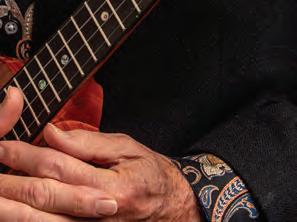



Jon Hornyak’s first band, the Nite Raiders, in the outfits they wore to the national Battle of the Bands in 1967.
L–R: Steve McKaskle, Jerry Stanfill, Hornyak, Don Smith, Danny Howell, and Wendell Stanfill.


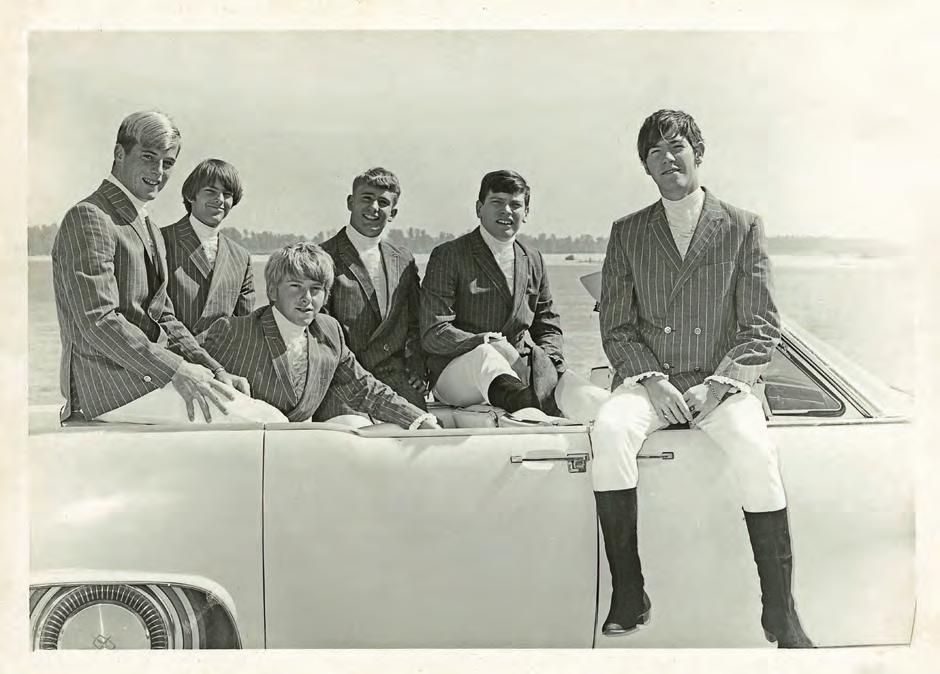

Hornyak got used to being a team player at an early age. His mother, Elma, a teacher raising him on her own, got him involved in school talent shows with older students, first in Bragg City, Missouri, before they moved to Caruthersville. He was living in Bragg City when he did what you might call his first cool thing.
“I was in A Face in the Crowd, the 1957 Andy Griffith movie,” he recalls. “That film starts out in Pigott, Arkansas, and my aunt was in the marching band there, so she took me to the filming of the scene where Andy and Lee Remick leave on a train from Piggott to Memphis as his career starts to take off. I was on one of the railway carts. When I worked with Andy [later in life], we had a 30-minute conversation about A Face in the Crowd.”
Did being a literal face in the crowd in that film, or in the various school talent shows, give Hornyak a taste for show business? Even he is not sure, but he can trace his enthusiasm for music to a precise date: February 9, 1964. “I was, like, marginally interested in music,” he says. “ en the Beatles. It was just such a thing. ere’s no way you can understand the magnitude of it unless you were there. ere we were at my grandmother’s in rural Arkansas, watching The Ed Sullivan Show. I guess I was in ninth grade at the time. It
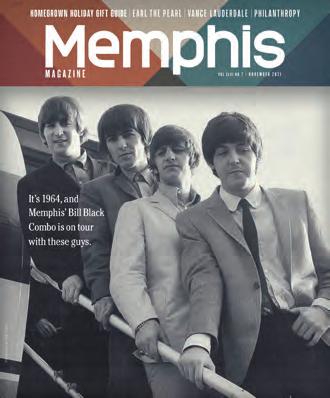
was the defining moment for a whole generation. After that, I worked a summer job to get my first guitar.” e Beatles’ live appearance at the Mid-South Coliseum in 1966 was also pivotal, but not because Hornyak saw them play. “I didn’t go, but I filled in with the local cool band for one of the guys who was going to see e Beatles. at was just for one night at the Batman A-Go-Go in Sikeston, Missouri. But that led to me starting the Nite Raiders with those guys.”
When the keyboard player left, Hornyak taught himself to play organ and stuck with that for years to come. Sometime after they attended the national Battle of the Bands, their band became the Collection, and then Interstate 55. “We were always looking for a new band name,” he says, “and were always on Interstate 55, either going south to Memphis or Jackson, Mississippi, or north to St. Louis.” Along the way, playing music was teaching Hornyak how to make things happen on a larger scale.
“Being entrepreneurs, we would rent buildings like the American Legion building in Caruthersville, or some building in Hayti, or some building in New Madrid,” he says. “We would go to these different places, rent a building, and put up a couple posters at the local drive-in or whatever.”
ey would also play Memphis, where he was further

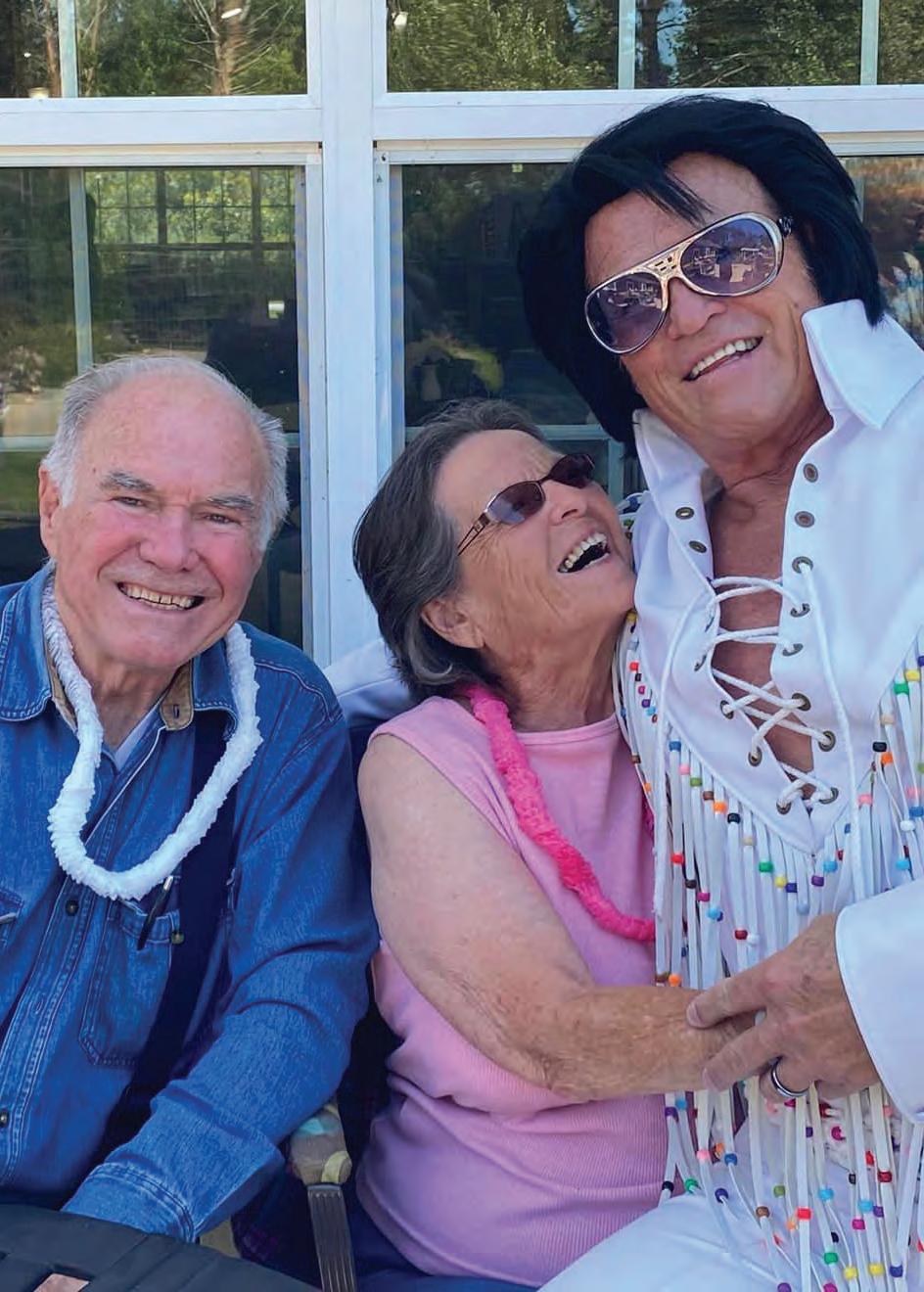
StoryPoint Collierville 901-295-6144 691 S. Byhalia Road Collierville, TN 38017
Cordova 901-899-1166 1600 Appling Road Cordova, TN 38016
Germantown 901-627-1319 6300 Briarcrest Ave. Memphis, TN 38120

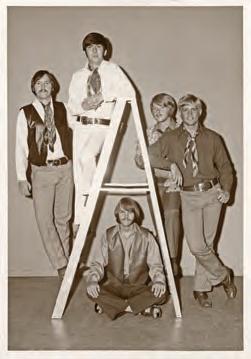
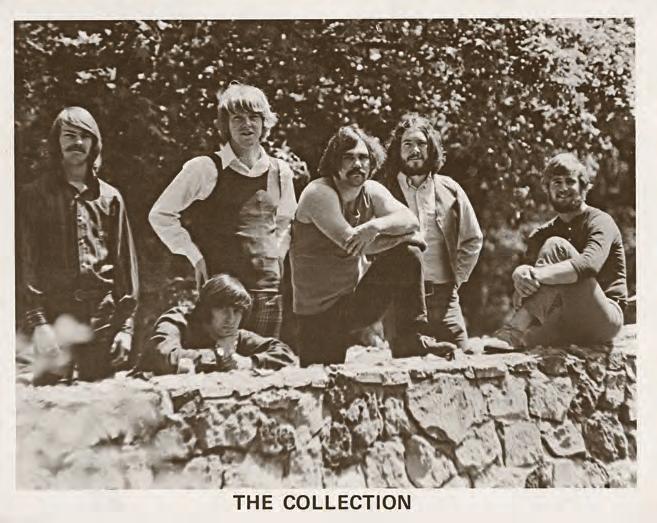





educated in the ways of the music industry by way of WHBQ’s Talent Party, a local television hit hosted by the Elvis-affi liated DJ George Klein. “When you got on Talent Party, you would go and make a tape with Roland,” says Hornyak. at would be Roland Janes, Sun Record’s secret weapon on guitar in the early days. By 1967 he ran Sonic Recording Service, where he was cranking out recordings of local bands for Klein’s show.
“If George Klein liked Roland’s recording, you could then go on the show and lip-sync to it, right? We did the tape, and George liked it.” e Collection was thus broadcast to anywhere receiving signals from WHBQ.

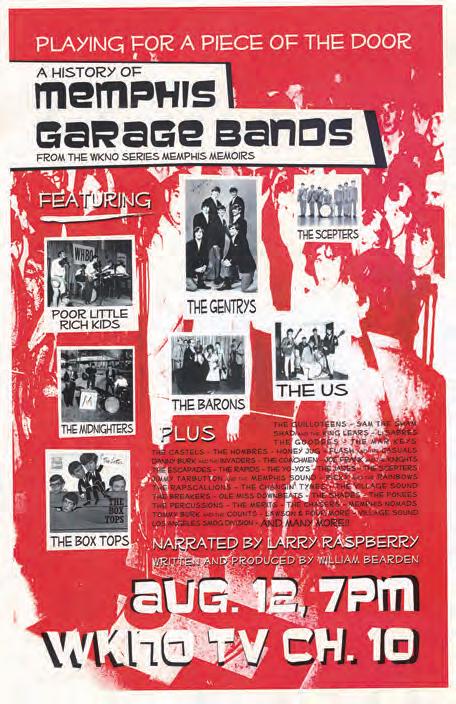

The Nite Raiders loosened up and became The Collection, seen here in two promotional shots. The singles they cut under that name, and later under Interstate 55, were later celebrated in Ron Hall’s book, Playing for a Piece of the Door: A History of Garage and Frat Bands in Memphis, and in a WKNO-TV special produced by Willy Bearden (upper right).
“We drove up, did the show, and then hopped in the car and drove to Kennett, Missouri, to play a gig that night. And it was like a lightbulb going off, because we had the biggest crowd we’d ever drawn at that point.”
The best bands recording with Roland Janes could wind up with a release on his Rolando label, and that happened with Hornyak’s group. “We did one single for Roland as e Collection,” he says. “And the next one we did as Interstate 55.” e band name certainly applied to Hornyak, attending Memphis State University by then, and driving to Missouri to play with the band on weekends. Eventually all of them made their way to Memphis.
By the time the band broke up in 1972, Hornyak was deeply immersed in working with Janes. “You know, working with Roland …” he says with a pause. “Look at my mentors. I would consider George [Klein] first, because he introduced me to Roland, right? But Roland was really … we really connected. In a big brother/kid brother kind of way.” Or, as he told author Ron Hall for Playing for a Piece of the Door: A History of Garage & Frat Bands in Memphis , “I think we might have been the first long hairs he could relate to as human beings.”
Another mentor was his band’s booking agent. “In my senior year [at Memphis State], Frank Turner hired me to be a booking agent for his agency called Celeb-
rity Sounds. He’d already been booking my band, and he had been the tour manager for Paul Revere & the Raiders. So I got a priceless education. You were seeing first-hand the entrepreneurial spirit. And I remember vividly, I was doing a session at Roland’s, about to graduate from college, and I go, ‘I’m going to try music for a while.’”
Paradoxically, Hornyak’s decision to stick with the music industry would gradually give him less time to play in bands, as the subsequent years saw him gravitating more toward backstage operations. Indeed, working with Turner marked the maiden voyage of the work that would define him.
“If it had been any place other than Memphis, I would never have pursued music as a career,” he says now. As it was, he thrived here. “When I arrived, from ’67 till ’74 or ’75, Memphis was really hopping as a music industry town. And so I started my own agency with a partner. We made a decision: We could work for Frank and give him half the money, or we could just go do it ourselves. en we had the opportunity to buy this sound system that had been built for Isaac Hayes, and we thought we could book that just like we could book a band.”
Born of his own touring experience, Hornyak’s instincts were right. e music industry was not only thriving in Memphis, it was growing, and the bigger bands were in need of louder, more highend live sound, which Hornyak was happy to supply. “ e Beatles in ’66 were just singing through the PA system, right? It was incredibly primitive,” Hornyak notes. “So when we came along in ’72 or ’73 and started a
A Memphis Light, Gas and Water alternative to traditional monthly billing, allowing you to purchase utilities in advance and monitor your usage in real time.
No deposits
No late fees
No reconnection fees























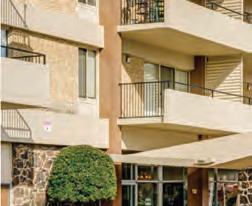


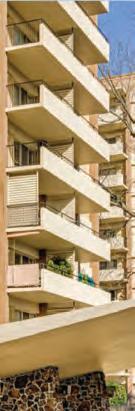













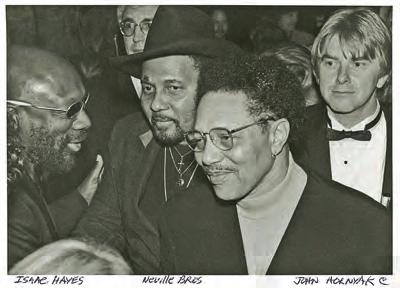
company, the idea of sound reinforcement for concerts was still pretty new. We were in the right place at the right time. We connected with the Southern rock scene, first with Wet Willie, and then the Marshall Tucker band, and then Lynyrd Skynyrd, and we put all our chips on Lynyrd Skynyrd. We just thought they were going to be the biggest, and we were right.”
He would also help the band 38 Special before they were hitmakers. For the bigger acts like Lynyrd Skynyrd, Hornyak and company “flew [the sound system] into whatever city they were playing. We were plugging it all up as the band walked in for sound check.”
During this time, Hornyak still dabbled in live performance. “I played weekends in what




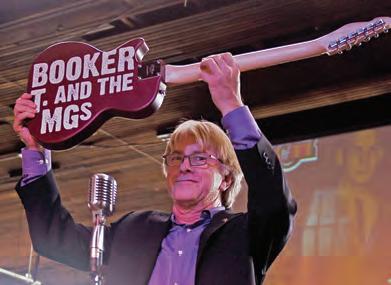
I would call rock and soul cover bands,” he says, “and kept playing until like ’86 when I moved into the studio world, and it got to be just too much. I knew I needed to really focus on what was going on there.”
By that time, the bigger studios of Memphis had either vanished, like Stax, or were experiencing a lull — an opportune moment for Hornyak to help launch a studio known as Sounds Unreel. Producer Niko Lyras, co-owner of the like-minded Cotton Row Recording Studios, recalls that “we were getting little record deals. And so was Sounds Unreel. e little places were actually doing more.”
Empower
Empower

















With fifty years in financial and estate planning, I’ve seen firsthand how important it is to prepare for the future. After helping many families navigate late-life care, I knew that planning would be one of the greatest gifts I could give my own children. When my wife, Cathy, passed in 2023, I chose to downsize and move to The Farms as a thoughtful and intentional next step.

Even with long-term care coverage, I wanted more than insurance—I wanted quality, security, and true peace of mind. My garden home allows me to continue living independently while knowing my future needs are well supported.
Today, I enjoy a spacious four-bedroom, three-and-a-half-bath home with a garden courtyard and a beautiful canal view, but the real highlight is the people. I’ve formed wonderful friendships and feel part of a warm, welcoming community. I stay active in Memphis and travel often, and it’s a comfort knowing I can come and go freely with complete confidence that everything is taken care of.
I look forward to many more years of independence and to enjoying all The Farms has to offer.




With spring season just around the corner, residents gather at the outdoor grilling station for relaxed evenings and conversation in the fresh air. Inside, distinctive venues offer something for every taste—from the refined cuisine of Salt & Season to the lively atmosphere of LaGrange Grille, global flavors at the Passport club, casual favorites at The Daily Bread Bistro, and the classic steakhouse experience of Charlie T’s.

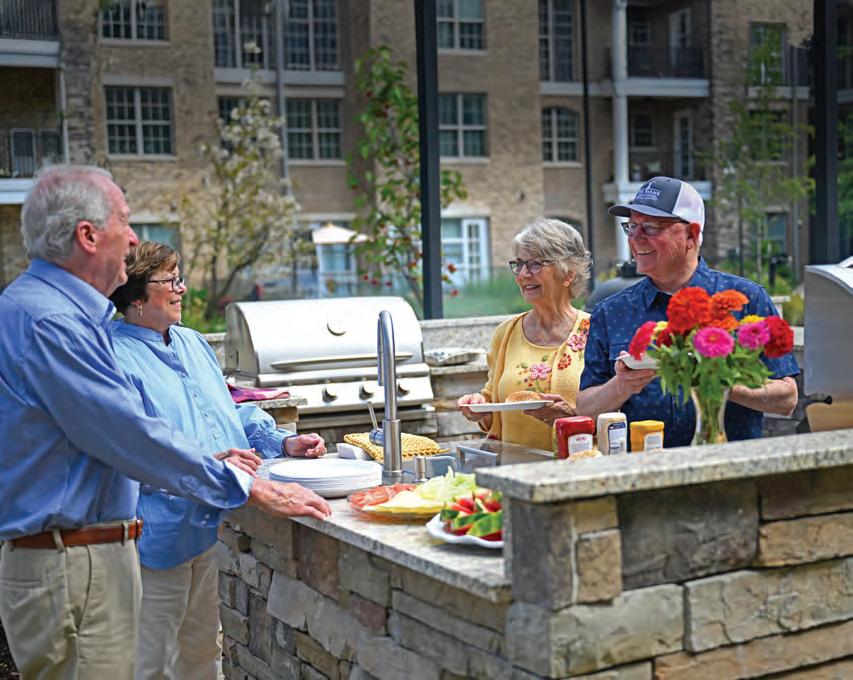


The Locomotion Fitness Center at The Farms supports strength, mobility, and overall wellness. The center features state-of-the-art fitness equipment tailored for safe, effective workouts at every fitness level.
A dedicated Fitness Coordinator offers group classes and personal training to help members build strength, enhance balance, and maintain flexibility, with a sauna and on-site massage therapy for recovery and relaxation.
At Locomotion, fitness is about feeling strong, confident, and supported— every day.
The Farms at Bailey Station is set on 36 beautiful acres just outside Memphis and Germantown, offering an exceptional independent living lifestyle, complemented by the unmatched care and support of the Jordan River Healthcare Campus, which provides assisted living, memory support, and skilled nursing.
Schedule your personal tour TODAY! Call 901.328.4850


3300 S. Houston Levee Rd. Collierville, TN 38017
thefarmsatbaileystation.com



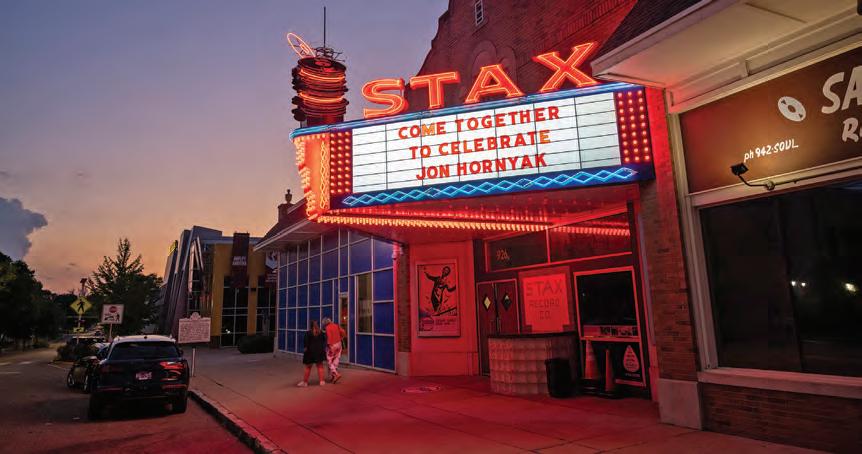







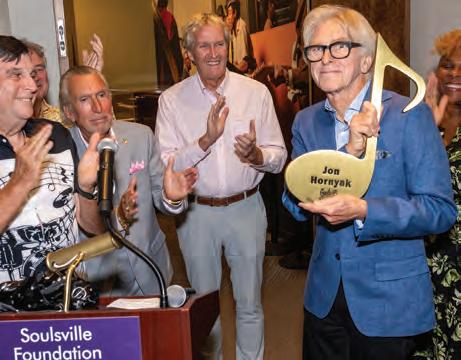


Lyras would co-write and record Wendy Moten’s first hit, while Sounds Unreel scored record deals for local singer-songwriters like Rob Jungklas, Jimmy Davis, and Richard Orange. “And Xavion was kind of my discovery,” Hornyak adds. “ ey were like Living Color before Living Color, you know? With keyboards and rock guitar, somewhat like Prince. ey got a major label deal, and Tommy Mottola was their manager, but they ended up being too rock for Black radio and too Black for rock radio.”
ings were evolving on a personal level for Hornyak as well. “I got married to my first wife in ’81,” he says, “during the period where we were recording all this stuff in our house. She was into all that up to a certain point. But in ’86 we split up, and I got with Ellen, and we didn’t get married until ’94. Ellen and I are still together. She was always very supportive of my musical endeavors.” From then on, Hornyak also helped raise her son, Ethan, who’s also making a name for himself as a music producer.
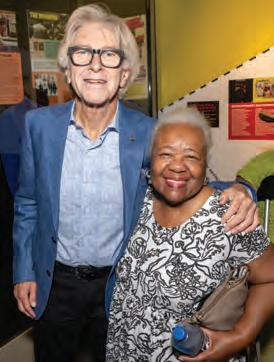

After that, it wasn’t long before Hornyak left promotion and production to become the senior executive director of the Recording Academy’s Memphis chapter, where he arguably made his most indelible mark on Memphis — and Southern — music history.
“When I was hired for this position,” he says, “there were only seven chapters, with Memphis being the sixth chapter, starting back in 1973, thanks to Knox Phillips. We had already started envisioning some sort of programming in New Orleans, and my first year as executive director, we honored the Neville Brothers at the Premier Player Awards, if you remember those. What made sense to me was expanding [the chapter] regionally.” at’s exactly what he did, growing the chapter’s reach from just Memphis and Jackson, Mississippi, to all of Louisiana, Mississippi, Arkansas, Missouri, and West Tennessee over the course of his career. As Recording Academy Board of Trustees

member Gebre Waddell puts it, “Jon was the longest-serving employee of the Recording Academy, from my personal knowledge, at least at the time where he retired.” at was just last year, celebrated with much fanfare last August at the Stax Museum of American Soul Music, though Hornyak is still involved with both the Memphis chapter and the Grammy Museum in Cleveland, Mississippi.
Indeed, for Waddell, it’s hard to imagine the Recording Academy here without Hornyak. “He embodies the culture of the academy to me, like no one else,” he says. “ e Memphis chapter, they often say, is the coolest. ere’s something special about it. Jon fully understood this entire region and connected people with countless opportunities, helping them develop as people, producers, artists, engineers. And when [Hurricane] Katrina happened, Jon was even more intentional about connecting with New Orleans. He engaged
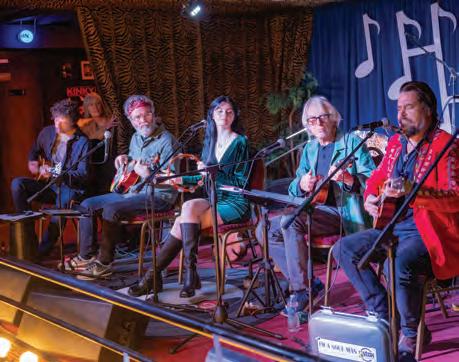

The Memphis Ukulele Band’s 2025 Holiday Show at Hernando’s Hide-a-Way.
with Reid Wick in New Orleans and that was the genesis of the connection between the Memphis chapter and Louisiana.”
Better yet, Hornyak has begun to perform again — this time on the ukulele. Having helped found the Memphis Ukulele Band ten years ago, he’s their most enthusiastic spokesperson and a tireless promoter of their two albums. (Ukulele-curious readers can hear them live in the Green Room at Crosstown Arts on June 5th.) Meanwhile, all Life magazine photo spreads aside, the acknowledgments of his contributions are piling up, from being awarded a Beale Street Brass Note last year to receiving the keys to Cleveland, Mississippi, this March at the tenth anniversary of the Grammy Museum there.
rough it all, he’s championed Memphis and its music like no other, and doesn’t plan to stop anytime soon. As he’s fond of saying, “I wasn’t born in Memphis, but I got here as soon as I could.”












Lily
Schaeffer
hosts a tropical hideaway in Midtown.
BY BRUCE VANWYNGARDEN









Cast your mind back, if you will, to the Memphis of late January, 2026. A thick layer of what had been dubbed “sleet-crete” made the streets near-impassable for days. But I had a “Sips” column to write, dammit, and I was not going to be deterred. Lily Schaeffer, the bartender I was scheduled to interview, had called and said she couldn’t get her car out of her driveway but she was still game if I was, so I picked her up and we crunched our way to Mary’s B.O.T.E., aka, Mary’s Bar of Tropical Escapism.
Inside, it was blessedly cozy — alive with tropical colors and artifacts from the islands. e warm tiki vibe proved the absolutely perfect antidote to what was going on outside. Schaeffer is an eff usive and vibrant host, as colorful as her workplace. She started working at Mary’s two years ago, when it first opened. “I’ve
been bartending since college,” she said. “I was an art major at UT-Knoxville, and through the years, I’ve periodically gotten away from bartending to do art things — graphic design and so forth — but I always seem to come back to bartending. I enjoy it.”
Born and raised in Memphis, Schaeffer graduated from St.
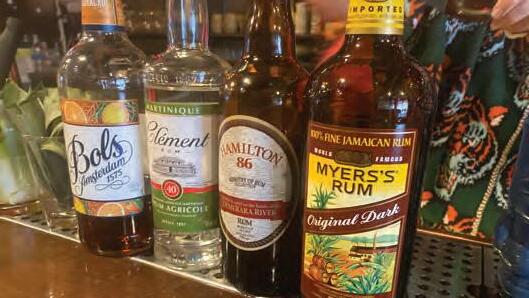

After her stint in Knoxville, she moved to Nashville, and after two years there, she relocated to Los Angeles, where she tended bar for a couple of years before reuniting with — and marrying — her college boyfriend.
“We had a ‘situationship’ in college,” Schaeffer said, smiling. “We rekindled things on the phone a bit, then Covid hit and I moved back to Memphis, and so did Kegan. He even drove out to L.A. to get me and my three pets. We were driving back across the country, masked and gloved and not sure what was going to happen next. I figured he was in it to win it, at that point.”
“I’d say you were right. ... So, what’s the difference between working at a tropical tiki bar like this and a regular bar?” I asked.
“Rum,” she said. “I was never into rum until I started working here. But Mary [co-owner Mary Oglesby] told me the best way to taste a new rum is to make a traditional lime daiquiri with it. She’s not wrong. A lot of people are a little reluctant to try rum, but that’s usually because they’ve never had really good rum. And rum drinks tend to be a little boozy, so you have to be careful or it will come get you.
“ is is the only rum bar in Memphis and it’s been fun to see how invested people get with it. I’ve had couples come in here and show me their home tiki bars because they’ve gotten so into the culture. Lots of people say this place and our drinks remind them of their vacations, which is great. We even do a rum class called Tiki Tales, where we teach you how to make your own rum drinks.”
“So I’m guessing I’m going to be served a rum drink,” I said.
“Yes, I was a little anxious
about it,” she said, “then decided, ‘Why make this hard?’ I’m going to serve you our house Mai-Tai.” “ at sounds like the perfect getaway from this weather.”
“Our Mai-Tai has Myers’s Original Dark Rum, Hamilton 86 Rum, and Clément Rhum Agricole,” she said. “We add Orange curaçao and turbinado, which is like simple syrup but with raw sugar, which gives it a more molasses taste. en we add an almond simple syrup, made in-house with a little orange blossom water.”
A few minutes later the mighty house Mai-Tai was sitting on the bar in front of me in a blue ceramic glass with a party on top: mint leaves, an orchid, and a slice of lime with a maraschino cherry.
“One thing about tiki drinks,” Schaeffer said with a laugh. “ ere are a lot of garnishes.” I took a vacation-size swig. is Mai-Tai is a complex drink, not like the pre-fab ones served in so many places. Flavors hit my taste buds from several directions. It’s delicious and boozy and just, well, perfect. Winter begone!
“I also make a pretty sick NA Mai-Tai,” Schaeffer said, with a grin.
“ is one will do me nicely, today,” I said. “And I really like this place.”
“Memphis deserves to have these kinds of bars,” Schaeffer said. “Bars that want to be part of the community, and that create a community. I’m grateful I work at a place like this.”
I am grateful she does, also. And if you want to escape to the tropics — any day of the year — now you know where to go and who to see.
Mary’s B.O.T.E., 588 S. Cooper


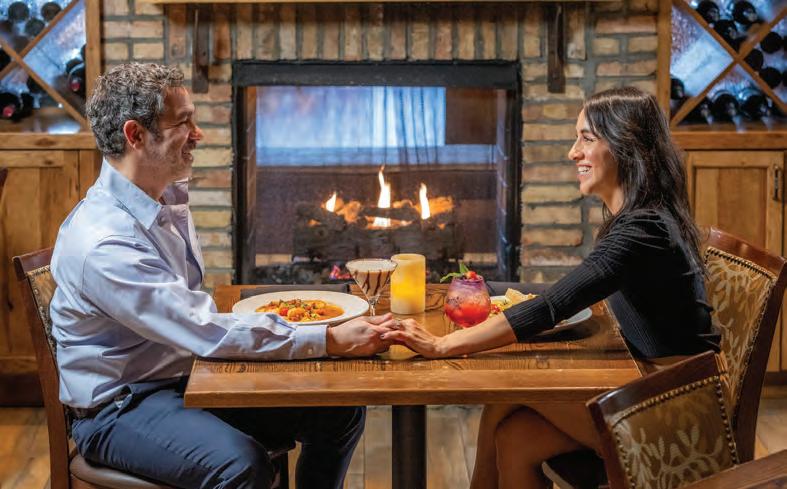

COCOZZA AMERICAN ITALIAN—”The red sauce joint of your dreams” serves up classic Italian-American fare from the owners of Majestic Grille. Closed Sun. 110 Harbor Town Sq., 609-1111. D, $-$$
COZY CORNER—Serving up ribs, pork sandwiches, chicken, spaghetti, and more; also homemade banana pudding. Closed Mon. 735 N. Parkway, 527-9158. L, D, $
CURFEW—An elevated sports bar/American tavern concept by Top Chef contestant Fabio Viviani at the Canopy Memphis Downtown hotel. 164 Union, 467-0308. B, L, D, $-$$
DOCKS OFF FIFTH—Fine dining and special plates, including mango habanero-glazed salmon, seafood linguini, glazed lamb “lollipops,“ lobster rolls, plus wings and sliders. 310 Beale, 423-3765264. D, $$$
ESCO RESTAURANT AND TAPAS—Shareable dishes, turkey ribs, and seafood mac’n’cheese at this 2 Chainz franchise. 156 Lt. George W. Lee, 808-3726. L, D, $$-$$$
FELICIA SUZANNE’S—Elevated down-home farmhouse food, using locally sourced ingredients, served in an atmoshere of classic Southern charm. 383 S. Main, 623-7883. L, D, $$$-$$$$.
FERRARO’S CHEESY CORNER & PIZZERIA—Plenty of pizzas, along with a whole new cheese-inspired menu (fancy grilled cheeses and build-your-own mac and cheese bowls). 111 Jackson, 522-2033. L, D, $
FISHBOWL AT THE PYRAMID—Burgers, fish dishes, sandwiches, and more served in a unique “underwater” setting. Bass Pro, 1 Bass Pro Drive, 291-8000. B, L, D, $-$$
Memphis Magazine offers this curated restaurant listing as a service to our readers. Broken down alphabetically by neighborhoods, this directory does not list every restaurant in town. It does, however, include the magazine’s “Top 50” choices of must-try restaurants in Memphis, a group that is updated yearly. Establishments open less than a year are not eligible for “Top 50” but are noted as “New.” is guide also includes a representative sampling of other Bluff City eating establishments. No fast-food facilities or cafeterias are listed. Restaurants are included regardless of whether they advertise in Memphis Magazine; those that operate in multiple locations are listed under the neighborhood of their original location. is guide is updated regularly, but we recommend that you call ahead to check on hours, prices, or other details. Suggestions from readers are welcome: dining@memphismagazine.com.
ALDO’S PIZZA PIES—Serving gourmet pizzas — including Mr. T Rex — salads, and more. Also 30 beers, bottled or on tap. 100 S. Main, 577-7743; 752 S. Cooper, 725-7437. L, D, $-$$
AMELIA GENE’S—Globally inspired fine-dining cuisine at the One Beale project, including Rohan duck, Wagyu filet, and an extensive cheese cart. 255 S. Front, 730-7650. D, $$-$$$ THE ARCADE—Memphis’ oldest cafe. Specialties include sweet potato pancakes, a fried peanut butter and banana sandwich, and breakfast served all day. 540 S. Main, 526-5757. B, L, MRA, $ ARNOLD’S SMOKEHOUSE—A classic smokehouse with vegan and nonvegan options seasoned to perfection. Closed Mon. 2019 E. Person, 922-5950. L, D, SB, $-$$$
AUTOMATIC SLIM’S—Longtime downtown favorite specializes in contemporary American cuisine emphasizing local ingredients; also extensive martini list. 83 S. Second, 525-7948. L, D, WB, MRA, $-$$$
BARDOG TAVERN—Classic American grill with Italian influence, Bardog offers pasta specialties such as Grandma’s NJ Meatballs, as well as salads, sliders, sandwiches, and daily specials. 73 Monroe, 275-8752. B (Mon.-Fri.), L, D, WB, MRA, $-$$
BELLE TAVERN—Serving elevated bar food, including a butcher board with a variety of meats and cheeses, as well as daily specials. 117 Barboro Alley, 249-6580. L (Sun.), D, MRA, $ BEN YAY’S GUMBO SHOP—Spiritual successor to DejaVu, offering fresh and authentic Creole staples. 150 Peabody Place, Suite 111, 779-4125. L, D, $-$$
BISCUITS & JAMS—Offering sweet and savory brunch with a Cajun flare. Specialties include smoked sausage or spicy fried chicken on biscuits, lemon blueberry waffles, and rum custard French toast. No walk-ins on weekends. 24 N. B.B. King Blvd., 672-7905. B, L, WB, $-$$
BRASS DOOR IRISH PUB—Irish and New-American cuisine includes such entrees as fish and chips, burgers, shepherd’s pie, all-day Irish breakfast, and more. 152 Madison, 572-1813. L, D, SB, $-$$ BY THE BREWERY—Breakfast and lunch café, with a focus on Southern-style biscuits, salads, and soups. 496 Tennessee, 310-4341. B, L, $
CAPRICCIO GRILL ITALIAN STEAKHOUSE—Offers prime steaks, fresh seafood (lobster tails, grouper, mahi mahi), pasta, and several Northern Italian specialties. 149 Union, The Peabody, 529-4199. B, L, D, SB, MRA, $-$$$$
CAROLINA WATERSHED—This indoor/outdoor eatery, set around silos, features reimagined down-home classics, including fried green tomatoes with smoked catfish, a buttermilk fried chicken sandwich, burgers, and more. Closed Mon.-Thurs. 141 E. Carolina, 321-5553. L, D, WB, $-$$
CATHERINE & MARY’S—A variety of pastas, grilled quail, pâté, razor clams, and monkfish are among the dishes served at this Italian restaurant in the Chisca. 272 S. Main, 254-8600. D, SB, MRA, $-$$$
CHEZ PHILIPPE—Classical/contemporary French cuisine with Asian and Nordic influences, presented in a luxurious atmosphere with seasonal tasting menus from chef Keith Clinton. Afternoon tea served Thu.-Sun., noon-3:30 p.m. (reservations required). Closed Sun.-Tues. The Peabody, 149 Union, 529-4188. D, MRA, $$$$
CIMAS—It’s breakfast tacos, shrimp and grits, chilaquiles verdes, and plenty of other Southern and Latin-American twists at the Hyatt Centric. 33 Beale, 444-3232. B, L, D, $-$$$
B — breakfast
L — lunch
D — dinner
SB —Sunday brunch
FLAME RAMEN—Traditional Japanese ramen restaurant serving up bowls of noodles. 61 S. Second, 441-6686. L, D, wheelchair accessible, $-$$
FLIGHT RESTAURANT & WINE BAR—Steaks and seafood, with such specialties as bison ribeye and Muscovy duck, all matched with appropriate wines. 39 S. Main, 521-8005. D, SB, MRA, $-$$$
GARDEN BRUNCH CAFÉ—Fish and grits, steak and eggs, and other upscale takes on Southern brunch classics. 492 S. Main, 249-7450. B, L, $$
THE GENRE—Burgers, tenders, catfish, and plenty of vegan options made to order at this music-themed restaurant/lounge. 200 Poplar, Suite 105, 410-8169. B, L, D, $-$$
GOOD FORTUNE CO.—Authentic handcrafted noodles, ramen, and dumplings. 361 S. Main, 561-306-4711. L, D, $-$$
THE GOURMET GALLERY—A variety of elevated comfort dishes, like fried ribs and waffles, shrimp and grits, grilled salmon, and more. Closed Mon. 412 S. Main, 848-4691. L, D, $-$$$
GROOVY GRATITUDE—Offers a vibrant selection of cold-pressed juices, handcrafted smoothies, and healthy eats like paninis and acai bowls. Closed Sun. 605 N. Second, 417-8007. B, L, WB, $
GUS’S WORLD FAMOUS FRIED CHICKEN—Serves chicken with signature spicy batter, along with homemade beans, slaw, and pies. 310 S. Front, 527-4877; 3100 Forest Hill Irene (Germantown), 853-6005; 2965 N. Germantown Pkwy. (Cordova), 373-9111; 730 S. Mendenhall, 767-2323; 505 Highway 70 W., Mason, TN, 901-294-2028. L, D, MRA, $
HIVE BAGEL & DELI Bagels, bagels, and more bagels at this new downtown deli offering baked goods, sandwiches, and salads. Closed Mon./Tue. 276 S. Front, 509-2946. B, L, $ HU. ROOF—Rooftop cocktail bar serves toasts with a variety of toppings including beef tartare with cured egg, cognac, and capers or riced cauliflower with yellow curry, currants, and almonds. Also salads, fish tacos, and boiled peanut hummus. 79 Madison, 333-1229. D, $ HUSTLE & DOUGH BAKERY & CAFE Flaky, baked breakfast goodness every day with fresh pastries, sandwiches, and more at Arrive Hotel. 477 S. Main, 701-7577. B, L, $
WB —weekend brunch
MRA — member, Memphis Restaurant Association
$ — under $15 per person without drinks or desserts
$$ — under $25
$$$ — $26-$50
$$$$ — over $50
ITTA BENA—Southern and Cajun-American cuisine served here, located above B.B. King’s Blues Club on Beale St.; specialties are duck and waffles and shrimp and grits, along with steaks, chops, seafood, and pasta. 145 Beale, 578-3031. D, MRA, $$-$$$
JEM DINING—Chef Josh Mutchnick offers a dining experience that’s memorable, refined, unpretentious, and welcoming with dishes from around the world. Closed Sun./Mon./Tue. 644 Madison, 2861635. D, $$-$$$
(This guide, compiled by our editors, includes editorial picks and advertisers.)
KING & UNION BAR GROCERY—Classic Southern favorites including catfish plate, pimento cheese, po-boys, chicken & waffles. Open for breakfast, lunch, and dinner with cocktails served with flair and favorite Memphis beers. Locally made confections available in the grocery. 185 Union, 523-8500. B, L, D, $-$$
KOOKY CANUCK—Home of the four-pound Kookamonga Burger (no charge to anyone who can eat it in less than 60 minutes), plus other (smaller) burgers, sandwiches, wings, soups, and salads. 57 S. Second, 901-578-9800. L,D, MRA, $-$$
LITTLE BETTIE—New Haven-style pizzas and snacks from the Andrew-Michael team at Wiseacre’s Downtown location. 398 S. B.B. King Blvd, 334-9411. L, D, $-$$
THE LOBBYIST AT THE CHISCA—Chef Jimmy Gentry brings his farm-to-table ideas downtown, with seasonal, and sometimes weekly, new menus, and an emphasis on creative vegetable dishes. Closed Sun. 272 S. Main St., Suite 101, 249-2170. D, $$-$$$$
LOFLIN YARD—Beer garden and restaurant serves vegetarian fare and smoked-meat dishes, including beef brisket and pork tenderloin, cooked on a custom-made grill. Closed Mon.-Tues. 7 W. Carolina, 249-3046. L (Sat. and Sun.), D, MRA, $-$$
THE LOOKOUT AT THE PYRAMID—Serves seafood and Southern fare, including cornmeal-fried oysters, sweet tea brined chicken, and elk chops. 1 Bass Pro Dr, 620-4600/291-8200. L, D, $-$$$
LUNA RESTAURANT & LOUNGE—Serving a limited menu of breakfast and lunch items. Dinner entrees include citrus glaze salmon and Cajun stuffed chicken. 179 Madison (Hotel Napoleon), 526-0002. B, D (Mon.-Sat.), $-$$$
MACIEL’S—Entrees include tortas, fried taco plates, quesadillas, chorizo and pastor soft tacos, salads, and more. Closed Sun. 45 S. Main, 526-0037; 820 S. Cooper, 443-4356. MRA, $
MAHOGANY RIVER TERRACE—Upscale Southern restaurant offers such dishes as coffee-rubbed lamb chops and baked Cajun Cornish hen. Closed for dinner Sun. and all day Mon.-Tues. 280 Island Drive, 249-9774. L, D, SB, $-$$$
THE MAJESTIC GRILLE—Features aged steaks, fresh seafood, and such specialties as roasted chicken and grilled pork tenderloin; offers a pre-theater menu and classic cocktails. Well-stocked bar. 145 S. Main, 522-8555. L, D, WB, MRA, $-$$$
McEWEN’S—Southern/American cuisine with international flavors; specialties include steak and seafood, sweet potato-crusted catfish with macaroni and cheese, and more. Closed Sun., Monroe location. 120 Monroe, 527-7085; 1110 Van Buren (Oxford), 662-234-7003. L, D, SB (Oxford only), MRA, $$-$$$
MESQUITE CHOP HOUSE—The focus here is on steaks, including prime fillet, rib-eyes, and prime-aged New York strip; also, some seafood options. 88 Union, 527-5337; 5960 Getwell (Southaven), 662-8902467. D, SB, $$-$$$
MOLLIE FONTAINE LOUNGE—Specializes in tapas (small plates) featuring global cuisine. Closed Sun.-Tues. 679 Adams, 524-1886. D, MRA, $
MOMMA’S ROADHOUSE—This diner and dive at Highway 55 serves up smoked wings, burgers, and beer, among other solid bar-food options 855 Kentucky, 207-5111. L, D, MRA, $
PAULETTE’S—Presents fine dining with a Continental flair, including such entrees as filet Paulette with butter cream sauce and crabmeat and spinach crepes; also changing daily specials and great views. River Inn, 50 Harbor Town Square, 260-3300. B, L, D, WB, MRA, $-$$$
RENDEZVOUS, CHARLES VERGOS’—Menu items include barbecued ribs, cheese plates, skillet shrimp, red beans and rice, and Greek salads. Closed Sun.-Mon. 52 S. Second, 523-2746. L (Fri.Sat.), D, $-$$
ROCK’N DOUGH—A blend of Italian and American foods like artisan pizza, salads, pasta, burgers, and house-brewed beers. 704 Madison, 587-6256. L, D, $-$$
SABOR CARIBE—Serving up “Caribbean flavors” with dishes from Colombia, Venezuela, Puerto Rico, and Cuba. Closed Sunday. 662 Madison, 949-8100. L, D, $
SAGE—Restaurant and lounge features daily lunch specials and tapas with such dishes as braised short ribs, teriyaki pulled pork, and the Sage burger made with Angus beef, avocado mash, fried egg, and flash-fried sage. 94 S. Main, 672-7902. L, D, WB, $-$$
SILLY GOOSE LOUNGE—Gourmet, wood-fired pizzas and handcrafted cocktails at this downtown restaurant and lounge. 150 Peabody Place, Suite 111, 435-6915. L, D, $
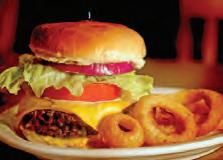
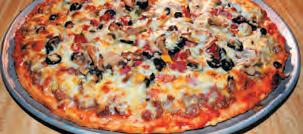
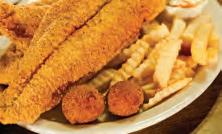
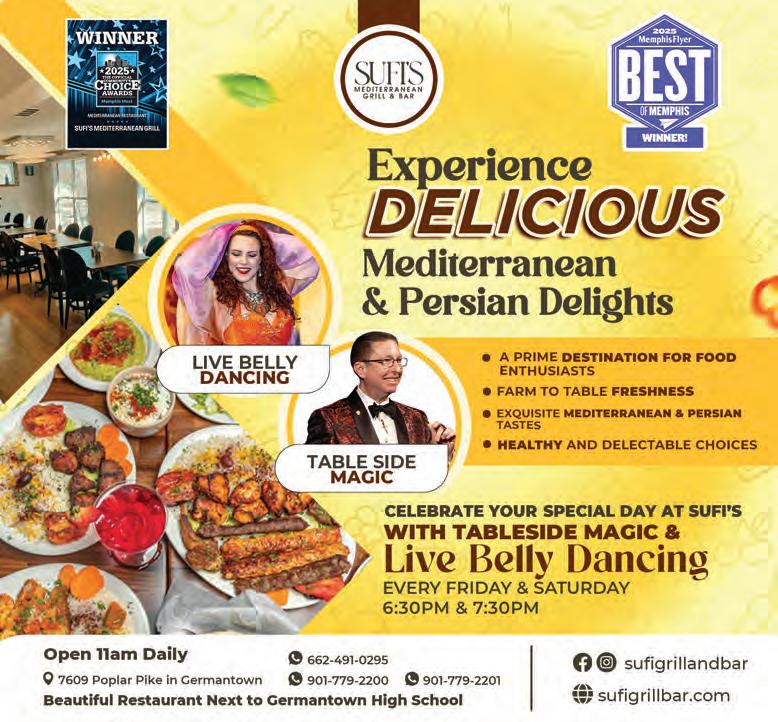
SOUTH MAIN SUSHI & GRILL—Serving sushi, nigiri, and more. 520 S. Main, 249-2194. L, D, $
SOB—Elevated gastropub that serves favorites like general Tso’s cauliflower or duck fried rice. 345 S. Main, 526-0388; 5040 Sanderlin (East Memphis), 818-0821; 1329 W. Poplar, 286-1360. L, D, WB, $-$$
SOUTH POINT GROCERY—Fresh and delicious sandwiches made to order at Downtown’s new grocery market. 136 Webster. B, L, D, $
SUGAR GRITS—Who said breakfast has to be in the morning? The Westmorelands offer grits and other breakfast goodness all day long, in addition to other Southern-style lunch and dinner options. 150 Peabody Place, Suite 111, 249-5206. B, L, D, $-$$
SUNRISE MEMPHIS—Serves breakfast all day, including house-made biscuits, frittatas, kielbasa or boudin plates, and breakfast platters. 670 Jefferson, 552-3144; 5469 Poplar Ave. (East Memphis), 844-6117. B, L, MRA, $
TERRACE—Creative American and Continental cuisine includes such dishes as filet mignon, beef or lamb sliders, chicken satay, and mushroom pizzetta. Rooftop, River Inn of Harbor Town, 50 Harbor Town Square, 260-3366. D, MRA, $$
TEXAS DE BRAZIL—Serves beef, pork, lamb, and chicken dishes, and Brazilian sausage; also a salad bar with extensive toppings. 150 Peabody Place, Suite 103, 526-7600. L (Wed.-Fri.), D, WB, $$-$$$
TUG’S—Famous for New Orleans gumbo, fabulous burgers, fried thin catfish, and specialty pancakes. Now serving Grisanti Crafted Pizza. 51 Harbor Town Square, 260-3344. B, L, D, WB, $$-$$$ WAHLBURGERS WILD—Wahlburgers brings its classic menu, but with a few gamey twists at the Bass Pro Pyramid. 1 Bass Pro Drive, 291-8000. B, L, D, $-$$
WESTY’S—Extensive menu includes a variety of wild rice dishes, sandwiches, plate lunches, and hot fudge pie. 346 N. Main, 543-3278. L, D, $ WINGMAN—Downtown lounge and hookah bar offering wings galore with ten signature sauces, and plenty of other goodies. 143 Madison, 907-0586. D, WB, $-$$
MIDTOWN (INCLUDES THE MEDICAL CENTER)
ABNER’S FAMOUS CHICKEN—Fried chicken tenders and dipping sauces galore at this Mid-South staple. 1350 Concourse Ave., Suite 137, 425-2597; 1100 N. Germantown Pkwy., 754-5355 (Cordova). L, D, $-$$
ABYSSINIA RESTAURANT—Ethiopian/Mediterranean menu includes beef, chicken, lamb, fish entrees, and vegetarian dishes; also a lunch buffet. 2600 Poplar, 321-0082. L, D, $-$$
ART BAR—Inventive cocktails feature locally foraged ingredients; snacks include house-cured salt & vinegar potato chips and herb-roasted olives. Closed Mon. 1350 Concourse Ave., Suite 280, 507-8030. D, $ ASHTAR GARDEN—Southern twists on classic brunch dishes, and plenty of cocktails. Closed Mon.-Wed. 898 S. Cooper, 4431514. L, D, $-$$
BABALU TACOS & TAPAS—Spanish-style tapas with Southern flair; also taco and enchilada of the day; specials change daily. 2115 Madison, 274-0100; 6450 Poplar, 410-8909. L, D, SB, MRA, $-$$
BAIN BARBECUE & BAKERY—Brian Bain’s popular Texas-style barbecue is back, alongside an assortment of baked goods. 993 S. Cooper, 310-4141. B, L, $-$$
BAO TOAN—Traditional Vietnamese restaurant offering small bites and home-style plates, plus creative versions of street-food favorites. 1350 Concourse Avenue. 695-1265. L, D, WB. Closed Tues. $-$$
BAR DKDC—Features an ever-changing menu of international “street food,” from Thai to Mexican, Israeli to Indian, along with specialty cocktails. 964 S. Cooper, 272-0830. D, MRA, $
BAR KEOUGH—It’s old-school eats and cocktails at the new Cooper-Young neighborhood corner bar by Kevin Keough. 247 S. Cooper, 654-3851. D, $
BAR-B-Q SHOP—Dishes up barbecued ribs, spaghetti, bologna, other classics. Closed Sun. 1782 Madison, 272-1277. L, D, MRA, $-$$
BARI RISTORANTE ENOTECA—Authentic Southeastern Italian cuisine (Puglia) emphasizes lighter entrees. Serves fresh fish and beef dishes and a homemade soup of the day. 524 S. Cooper, 722-2244. D, SB, MRA, $-$$$
BARKSDALE RESTAURANT—Old-school diner serving breakfast and Southern plate lunches. 237 S. Cooper, 722-2193. B, L, D, $
BAYOU BAR & GRILL—New Orleans fare at this Overton Square eatery includes jambalaya, gumbo, catfish Acadian, shrimp dishes, red beans and rice, and muffalettas. 2094 Madison, 278-8626. L, D, WB, MRA, $-$$
BEAUTY SHOP—Modern American cuisine with international flair served in a former beauty shop. Serves steaks, salads, pasta, and seafood, including pecan-crusted golden sea bass. Perennial “Best Brunch” winner. Closed for dinner Sunday. 966 S. Cooper, 272-7111. L, D, SB, MRA, $-$$$
BOSCOS—Tennessee’s first craft brewery serves a variety of freshly brewed beers as well as wood-fired oven pizzas, pasta, seafood, steaks, and sandwiches. 2120 Madison, 432-2222. L, D, SB (with live jazz), MRA, $-$$
BROADWAY PIZZA—Serving a variety of pizzas, including the Broadway Special, as well as sandwiches, salads, wings, and soul-food specials. 2581 Broad, 454-7930; 627 S. Mendenhall, 207-1546. L, D, $-$$
BRIZA—Featuring specialties from the chef Moisés Hernandez’s native El Salvador, around the theme “Land–Sushi–Sea.” 1350 Concourse Avenue, Suite 181, 585-0553. L, D, $$-$$$
CAFE 1912—French/American bistro owned by culinary pioneer Glenn Hays serving such seafood entrees as seared sea scallops with charred cauliflower purée and chorizo cumin sauce; also crepes, salads, and onion soup gratinée. 243 S. Cooper, 722-2700. D, SB, MRA, $-$$$
CAFE ECLECTIC—Omelets and chicken and waffles are among menu items, along with quesadillas, sandwiches, wraps, and burgers. Menu varies by location. 603 N. McLean, 725-1718; 111 Harbor Town Square, 590-4645. B, L, D, SB, MRA, $
CAMEO—Three longtime Memphis bartenders join forces for creative cocktails, cheese boards, snacks, and Sunday brunch. 1835 Union, Suite 3. 305-6511. D, SB, $-$$
CELTIC CROSSING—Specializes in Irish and American pub fare. Entrees include shepherd’s pie, shrimp and sausage coddle, and fish and chips. 903 S. Cooper, 274-5151. L, D, WB, MRA, $-$$
CENTRAL BBQ—Serves ribs, smoked hot wings, pulled pork sandwiches, chicken, turkey, nachos, and portobello sandwiches. Offers both pork and beef barbecue. 2249 Central, 272-9377; 4375 Summer, 767-4672; 147 E. Butler, 672-7760 ; 6201 Poplar, 417-7962. L, D, MRA, $-$$
COMPLICATED PILGRIM—Quick-serve coffee shop, bar, and restaurant all in one at The Memphian hotel. 21 S. Cooper, 538-7309. B, L, D, $-$$
COOPER’S—“A charming experience for all ages,“ with po-boys, wraps, wings, fettucini. 959 S. Cooper, 343-0103. L, D, $-$$
THE COVE—Nautical-themed restaurant and bar serving oysters, pizzas, and more. The Stoner Pie, with tamales and fritos, is a popular dish. 2559 Broad, 730-0719. L, D, $ THE CRAZY NOODLE—Korean noodle dishes range from bibam beef noodle with cabbage, carrots, and other vegetables, to curry chicken noodle; also rice cakes served in a flavorful sauce. Closed for lunch Sat.-Sun. 2015 Madison, 272-0928. L, D, $ ECCO—Mediterranean-inspired specialties range from rib-eye steak to seared scallops to housemade pastas and a grilled vegetable plate; also a Saturday brunch. Closed Sun.-Mon. 1585 Overton Park, 410-8200. B, L, D, $-$$
EVERGREEN GRILL—Serving classic American cuisine like patty melts, burgers, phillies, and more to bring you the comforting taste of home. Closed Mon./Tue. 212 N. Evergreen, 779-7065. L, D, X,$$-$$$ FARM BURGER—Serves grass-fed, freshly ground, locally sourced burgers; also available with chicken, pork, or veggie quinoa patties, with such toppings as aged white cheddar, kale coleslaw, and roasted beets. 1350 Concourse Avenue, Suite 175, 800-1851. L, D, $
FAWN—Seasonal, tapas-style dishes (don’t miss the sourdough bread and butter) in a chic setting. Closed Mon. 937 S. Cooper, 310-4890. D, SB, $$
FEAST & GRAZE—Whipped goat toast, open-faced grilled cheese, and other local pantry snacks and charcuterie boards. Closed Sun./Mon. Inside Brooks Museum of Art, 1934 Poplar, 654-5926. L, $
FINO’S FROM THE HILL—Italian deli offers old favorites such as the Acquisto as well as a new breakfast menu. Germantown location paired with Happy Glaze Donuts. 1853 Madison, 272-FINO; 7781 Farmington (Germantown), B, L, D, $
FLAME RAMEN—Traditional Japanese ramen restaurant serving up bowls of noodles in Midtown. 1838 Union Ave. 779-8666, 61 S. Second St., Suite 160 (downtown). D, $-$$
FLIP SIDE—Pinball meets pub in the Crosstown neighborhood, with plenty of games alongside a Caribbean- and Latin-inspired menu. Closed Mon. 1349 Autumn, 207-6193. L, D, $ -$$
FRIDA’S—Mexican cuisine and Tex-Mex standards, including chimichangas, enchiladas, and fajitas; seafood includes shrimp and tilapia. 1718 Madison, 244-6196. L, D, $-$$
GLOBAL CAFÉ—This international food hall hosts three immigrant/refugee food entrepreneurs serving Venezuelan, Sudanese, and Syrian cuisines. Samosas, shawarma, and kabobs are among the menu items. Closed Mon. 1350 Concourse Avenue, Suite 157. L, D, MRA, $ GOLDEN INDIA—Northern Indian specialties include tandoori chicken as well as lamb, beef, shrimp, and vegetarian dishes. 2097 Madison, 728-5111. L, D, $-$$
GOOD GROCERIES MARKET & CAFÉ—Providing fresh, healthy, cruelty-free meals, Good Groceries offers a classic American menu with a twist: instead of pork, they use duck for their BBQ. They also sell quesadillas, mac-and-cheese, sandwiches, and more. Closed Sun. 585 S. Cooper, 325-1269. B, L, D, $
GROWLERS—Sports bar and eatery serves standard bar fare in addition to pasta, tacos, chicken and waffles, and light options. 1911 Poplar, 244-7904. L, D, $-$$
GUAC FRESH MEX—Authentic Mexican cuisine and four types of guacamole. Closed Sun. 782 Washington, 587-4100. L, D, $
HATTIE B’S—Fried chicken spot features “hot chicken” with a variety of heat levels; from no heat to “shut the cluck up” sauce. Sides include greens, pimento mac-and-cheese, and black-eyed pea salad. 596 S. Cooper, 424-5900. L, D, $
HUEY’S—This family-friendly restaurant offers 13 different burgers, a variety of sandwiches, and delicious soups and salads. 1927 Madison, 726-4372; 1771 N. Germantown Pkwy. (Cordova), 754-3885; 77 S. Second (downtown), 527-2700; 2130 W. Poplar (Collierville), 8544455; 7090 Malco Blvd. (Southaven), 662-349-7097; 7825 Winchester, 624-8911; 4872 Poplar, 682-7729; 7677 Farmington Blvd. (Germantown), 318-3030; 8570 Highway 51 N. (Millington), 873-5025. L, D, MRA, $ IMAGINE VEGAN CAFE—Dishes at this fully vegan restaurant range from salads and sandwiches to full dinners, including eggplant parmesan and “beef” tips and rice; breakfast all day Sat. and Sun. 2158 Young, 654-3455. L, D, WB, $
INDIA PALACE—Tandoori chicken, lamb shish kabobs, and chicken tikka masala are among the entrees; also, vegetarian options and a daily all-you-can-eat lunch buffet. 1720 Poplar. 278-1199. L, D, $-$$
INSPIRE COMMUNITY CAFE—Serving breakfast all day, in addition to quesadillas, rice bowls, and more for lunch and dinner. 510 Tillman, Suite 110, 509-8640. B, L, D, $
JACK BROWN’S BEER AND BURGER JOINT—Another spot to satisfy your burger craving, this time with 100% American Wagyu beef. 2197 Central, 512-6957. L, D, $-$$$
THE JUICE JOINT—Locally owned purveyor of cold-pressed juices, smoothies, açai bowls, and snacks. 1350 Concourse Ave., 572-1127; 3139 Poplar Ave. (East Memphis), 207-2535. B, L, $-$$
LAFAYETTE’S MUSIC ROOM—Serves such Southern cuisine as po’boys, shrimp and grits, and wood-fired pizzas. 2119 Madison, 2075097. L, D, WB, MRA, $-$$
LOS COMALES—Authentic Mexican cuisine, daily specials, and strong margaritas. 1322 Madison, 440-8393; 345 Madison Ave. (downtown), 590-4524; 2860 S. Perkins (East Memphis), 369-0528. L, D, $-$$
LOUIS CONNELLY’S BAR FOR FUN TIMES & FRIENDSHIP—An upgraded dive bar with a neighborhood feel and a rockin’ SMASH burger. Closed Sun. and Mon. 322 S. Cleveland, 4339582. L, D, $-$$
MADISON TAVERN—Indoor and outdoor seating available, plus a full menu with a range of comfort foods and drinks on tap. 2126 Madison, 417-8029. L, D, $-$$$
MARY’S B.O.T.E.—This bar of tropical escapism offers over 30 specialty drinks, pizzas, bar snacks, and a cozy interior that transports customers to the beach. 21+ only. Closed Mon. 588 S. Cooper. D, $
MEMPHIS JAMAICAN KITCHEN—Authentic Jamaican specialties, including jerk chicken and oxtails. 1354 Madison, L, D, $$
MEMPHIS PIZZA CAFE—Homemade pizzas are specialties; also serves sandwiches, calzones, and salads. 2087 Madison, 726-5343; 5061 Park, 684-1306; 7604 W. Farmington (Germantown), 753-2218; 797 W. Poplar (Collierville), 861-7800; 5627 Getwell (Southaven), 662-5361364. L, D, $-$$
MEMPHIS TOAST—Provides authentic Memphian breakfast cuisine and features themed rooms to honor iconic Memphis figures. Specialties include French toast, shrimp and grits, and their little Lucille breakfast burrito. 954 Jackson, 417-7817. B, L, WB, $-$$
MEMPHIS WHISTLE—Cocktails, cocktails, and even more delicious cocktails alongside burgers, sandwiches, and other tasty snacks. 2299 Young, 236-7136. Closed Mon.-Tue. D, $-$$
MOLLY’S LA CASITA—Homemade tamales, fish tacos, a vegetarian combo, and bacon-wrapped shrimp are a few of the specialties. 2006 Madison, 726-1873. L, D, MRA, $-$$
PAYNE’S BAR-B-QUE—Opened in 1972, this family-owned barbecue joint serves ribs, smoked sausage, and chopped pork sandwiches with a standout mustard slaw and homemade sauce. About as down-to-earth as it gets. 1762 Lamar, 272-1523. L, D, $-$$
PETALS OF A PEONY—Authentic Chinese restaurant serving chicken, fish, tofu, and more, smothered in spicy sauces. 2110 Madison, 207-6680. L, D, $-$$$
SALTWATER CRAB—Offers an array of seafood dishes including boils with blue crab, crab legs, lobster tails, and more, and specialty sushi like the Dynamite or Royal King rolls, in addition to signature sangrias and cocktails. 2059 Madison, 922-5202. L, D, $$
THE SECOND LINE—Kelly English brings “relaxed Creole cuisine” to his newest eatery; serves a variety of po’boys and such specialties as barbecue shrimp, andouille shrimp, and pimento cheese fries. 2144 Monroe, 590-2829. L, D, WB, $-$$
SEKISUI—Japanese fusion cuisine, fresh sushi bar, grilled meats and seafood, California rolls, and vegetarian entrees. Poplar/Perkins location’s emphasis is on Pacific Rim cuisine. Menu and hours vary at each location. 25 Belvedere, 725-0005; 1884 N. Germantown Pkwy. (Cordova), 309-8800; 4724 Poplar, 767-7770; 2130 W. Poplar (Collierville), 854-0622; 2990 Kirby-Whitten (Bartlett), 377-2727; 6696 Poplar, 747-0001. L, D, $-$$$
SEN TRANG—Serving a wide variety of Chinese and Vietnamese soups, stir-fries, and noodles. 1615 Madison, 276-0006. L, D, $-$$
SLICE MIDTOWN—Serving New York-style pizza as well as subs and pasta dishes (formerly known as Little Italy). 1495 Union 7250280; L, D, $-$$
SMOKY CITY BBQ—Serving authentic Memphis barbeque, including burgers, ribs, wings, and daily specials. Closed Sun. 1023 Jackson, 4253115. L, D, $-$$$
SOUL FISH CAFE—Serving Southern-style soul food, tacos, and po’boys, including catfish, crawfish, oyster, shrimp, chicken, and smoked pork tenderloin. 862 S. Cooper, 725-0722; 3160 Village Shops Dr. (Germantown), 755-6988; 4720 Poplar, 590-0323. L, D, MRA, $-$$
STICKEM—Brick-and-mortar location for the popular food truck, which offers grilled meat on a stick. 1788 Madison, 474-7214. Closed Sunday. L, D, $
TEKILA MEXICAN CUISINE—Mexican cuisine with a modern twist. Specialties include chicken mole, enchiladas verde, and the trio special. 1433 Union, 510-5734. L, D, WB, $-$$$
TAMBOLI’S PASTA & PIZZA—Pasta-maker Miles Tamboli whips up Italian soul food with seasonal menus featuring dishes like crispy fried chicken or creamy bucatini with pecorino cheese. Serves dinner Tues.-Sat. 1761 Madison, 410-8866. D, $-$$
TAKASHI BISTRO—Fusion restaurant with an open kitchen that lets customers watch chefs prepare a variety of Japanese and Thai cuisine. 1680 Union, Suite 109, 800-2936. L, D, $-$$
TONICA—Paella and other Spanish-inspired dishes with an Italian touch, alongside an extensive list of gin and tonics. 1545 Overton Park, 474-7693; 265 S. Front, 949-7693. Closed Mon.-Wed. D, $-$$
TUYEN’S ASIAN BISTRO—A variety of Asian dishes from the minds and chefs behind Saigon Le. Closed Sun. 288 N. Cleveland, L, D, $-$$
ZINNIE’S—Dive bar classic reopens with a makeover and signature Zinnaloni sandwich. 1688 Madison, 726-5004. L, D, $
SOUTH MEMPHIS (INCLUDES PARKWAY VILLAGE, FOX MEADOWS, SOUTH MEMPHIS, WINCHESTER, AND WHITEHAVEN)
BALA’S BISTRO—Authentic West African cuisine available to order or by the pound, alongside traditional American dishes and an extensive vegan menu. 4571 Elvis Presley, 509-3024. L, D, $-$$
CACHE 42 KITCHEN & COCKTAILS—Elevated fine dining (think golden rack of lamb or lobster queso) and cocktail lounge at MoneyBagg Yo’s restaurant; menu by chef Daris Leatherwood. Brunch and lunch options. 4202 Hacks Cross, Suite 121. 494-5458. D, $-$$
COLETTA’S—Longtime eatery serves such specialties as homemade ravioli, lasagna, and pizza with barbecue or traditional toppings. 1063 S. Parkway E., 948-7652; 2850 Appling Rd. (Bartlett), 383-1122. L, D, $-$$
CURRY BOWL—Specializes in Southern Indian cuisine, serving Tandoori chicken, biryani, tikka masala, and more. Weekend buffet. 4141 Hacks Cross, 207-6051. L, D, $
DELTA’S KITCHEN—The premier restaurant at The Guest House at Graceland serves Elvis-inspired dishes — like Nutella and Peanut Butter Crepes for breakfast — and upscale Southern cuisine — including lamb chops and shrimp and grits — for dinner. 3600 Elvis Presley, 443-3000. B, D, $-$$$
DWJ KOREAN BARBECUE—This authentic Korean eatery serves kimbap, barbecued beef short ribs, rice and noodles dishes, and hot pots and stews. 3750 Hacks Cross, Suite 101. 746-8057; 2156 Young. 207-6204. L, D, $-$$
FABULOUS FLAVORS & FRIENDS ”The Candy Lady” Precious Thompson Jones comes up with a little bit of everything: omelettes, quesadillas, t-bones and waffles, and plenty of soul food. 2063 E. Brooks, 314-0735. L, D, $
THE FOUR WAY—Legendary soul-food establishment dishing up such entrees as fried and baked catfish, chicken, and turkey and dressing, along with a host of vegetables and desserts. Around the corner from the legendary Stax Studio. Closed Mon. 998 Mississippi, 507-1519. L, D, $
HERNANDO’S HIDEAWAY No one cares how late it gets; not at Hernando’s Hideaway. Live music, killer happy hour, and plenty of bar fare at this South Memphis hang. 3210 Old Hernando, 917-982-1829. L, D, $
INTERSTATE BAR-B-Q—Specialties include chopped pork-shoulder sandwiches, ribs, hot wings, spaghetti, chicken, and turkey. 2265 S. Third, 775-2304; 150 W. Stateline (Southaven), 662-393-5699. L, D, $-$$
JIM & SAMELLA’S—It’s a revolving menu of soul food delight from Chef Talbert Fleming, with anything from Southern ribs to fried tamales. 841 Bullington, 265-8761. L, D, $
LEONARD’S—Serves wet and dry ribs, barbecue sandwiches, spaghetti, catfish, homemade onion rings, and lemon icebox pie; also a lunch buffet. 5465 Fox Plaza, 360-1963. L, $-$$
MARLOWE’S—In addition to its signature barbecue and ribs, Marlowe’s serves Southern-style steaks, chops, lasagna, and more. 4381 Elvis Presley, 332-4159. D, MRA, $-$$
UNCLE LOU’S FRIED CHICKEN—Featured on Diners, Drive-Ins and Dives for good reason: fried chicken (mild, hot, or home-style); jumbo burgers four patties high; strawberry shortcake, and assorted fruit pies. 3633 Millbranch, 332-2367. L, D, MRA, $ SUMMER / BERCLAIR / RALEIGH / BARTLETT
901 HOT POT & KOREAN BBQ—All-you-can-eat hot pot and Korean BBQ, from short ribs to garlic shrimp. 2965 N. Germantown Pkwy., 512-4963. L, D, $$-$$$
BISCUITS & JAMS—Biscuits, waffles, French toast, and plenty of sharables at this Bartlett breakfast spot. Closed Mon./Tue. 5806 Stage, 672-7905. B, L, $
BRYANT’S BREAKFAST—Three-egg omelets, pancakes, and The Sampler Platter are among the popular entrees here. Possibly the best biscuits in town. Closed Mon. and Tues. 3965 Summer, 324-7494. B, L, $ CEVICHERIA AND GRILL CHILEMON—Ceviche, of course, but also plenty of other postres, aperitivos, and mixed grilled meat and seafood feasts. Closed Sun. 4509 Summer, 672-7905. L, D, $
CHEF FLAVAS AND BARTLETT BREAKFAST FACTORY ”Flavaful” sandwiches, soups, pastas, and more from the makers of the popular local spinach artichoke dip. Traditional breakfast options served by Bartlett Breakfast Factory. Closed Sun./Mon. 6301 Stage, 779-2200. B, L, D, $-$$
DIM SUM KING—All the best from a selection of authentic Chinese dishes: roasted duck, sizzling hot plate, Cantonese BBQ, and plenty more. 5266 Summer, Suite 65, 766-0831. L, D, $-$$
ELWOOD’S SHACK—Casual comfort food includes tacos, pizza, and sandwiches. Specialties include meats smoked in-house (chicken, turkey, brisket, pork), barbecue pizza, and steelhead trout tacos. 4523 Summer, 761-9898. B, L, D, $
EXLINES’ BEST PIZZA—Serves pizza, Italian dinners, sandwiches, and salads. 6250 Stage, 382-3433; 2935 Austin Peay, 388-4711; 2801 Kirby Parkway, 754-0202; 7730 Wolf River Blvd. (Germantown), 753-4545; 531 W. Stateline, 662-342-4544. L, D, M RA, $
HABANA CLUB RESTAURANT, BAR & GRILLE—Offering authentic Cuban fare. 6110 Macon, 480-8173. L, D, $-$$
LA TAQUERIA GUADALUPANA—Fajitas and quesadillas are just a few of the authentic Mexican entrees offered here. A bonafide Memphis institution. 4818 Summer, 685-6857; 5848 Winchester, 365-4992. L, D, $
LOTUS—Authentic Vietnamese-Asian fare, including lemon-grass chicken and shrimp, egg rolls, Pho soup, and spicy Vietnamese vermicelli. 4970 Summer, 682-1151. D, $
MORTIMER’S—Contemporary American entrees include trout almondine, chicken dishes, and hand-cut steaks; also sandwiches, salads, and daily/nightly specials. A Memphis landmark since the Knickerbocker closed. Closed for lunch Sat.-Sun. 590 N. Perkins, 7619321. L, D, $-$$
NAGASAKI INN—Chicken, steak, and lobster are among the main courses; meal is cooked at your table. 3951 Summer, 454-0320. D, $$
NAM KING—General Tso’s chicken, hot and sour soup, and homemade chicken wings are back at the longtime Raleigh Chinese eatery. 3624 Austin Peay, Suite 3, 373-4411. L, D, $-$$
PANCAKE SHOP—Classic breakfast items plus meat-and-three lunches, sandwiches, soups, salads. Open 6 a.m. to 1:30 p.m. every day except Wednesday. 4838 Summer, 767-0206. B, L, $
ÓRALE TACOS & BAKERY—Tacos, enchiladas, and other traditional Southern Mexican dishes alongside baked pan dulces. 2204 Whitten, 571-1786. B, L, D, $-$$
PANDA GARDEN—Sesame chicken and broccoli beef are among the Mandarin and Cantonese entrees; also seafood specials and fried rice. Closed for lunch Saturday. 3735 Summer, 323-4819. L, D, $-$$
QUEEN OF SHEBA—Featuring Middle Eastern favorites and Yemeni dishes such as lamb haneeth and saltah. 4792 Summer, 207-4174. L, D, $
SIDE PORCH STEAK HOUSE—In addition to steak, the menu includes chicken, pork chops, and fish entrees; homemade rolls are a specialty. Closed Sun./Mon. 5689 Stage, 377-2484. D, $-$$
TACO PRIME—Modern taqueria where bold Mexican dishes meet Southern hospitality. 8222 U.S. 64, 585-0858. Closed Sunday. L,D, $-$$
TORTILLERIA LA UNICA—Individual helping of Mexican street food, including hefty tamales, burritos, tortas, and sopes. 5015 Summer, 685-0097. B, L, D, $
UNIVERSITY NEIGHBORHOOD DISTRICT (INCLUDES CHICKASAW GARDENS AND HIGHLAND STRIP)
A-TAN—Serves Chinese and Japanese hibachi cuisine, complete with sushi bar. A specialty is Four Treasures with garlic sauce. 3445 Poplar, Suite 17, University Center, 452-4477. L, D, $-$$$
BROTHER JUNIPER’S—This little cottage is a breakfast mecca, offering specialty omelets, including the open-faced San Diegan omelet; also daily specials, and homemade breads and pastries. Closed Mon. 3519 Walker, 324-0144. B, $
CHAR RESTAURANT—Specializing in modern Southern cuisine, this eatery offers homestyle sides, charbroiled steaks, and fresh seafood. 431 S. Highland, Suite 120, 249-3533. L, D, WB, MRA, $-$$$
EL PORTON—Fajitas, quesadillas, and steak ranchero are just a few of the menu items. 2095 Merchants Row (Germantown), 754-4268; 8361 Highway 64, 380-7877; 3448 Poplar (Poplar Plaza), 452-7330; 1805 N. Germantown Parkway (Cordova), 624-9358; 1016 W. Poplar (Collierville), 854-5770. L, D, MRA, $-$$
PLANT BASED HEAT All of your favorite Southern-style recipes, but deliciously transformed into a vegan format. Specialties include the spicy fye junt burger, or the chopped ‘n’ smoked BBQ jackfruit sandwich. Closed Sun. 669 S. Highland St.; 363 S. Front St. (downtown). L, D, $
EAST MEMPHIS (INCLUDES POPLAR / I-240)
ACRE—Features seasonal modern American cuisine in an avantegarde setting using locally sourced products; also small plates and enclosed garden patio. Closed for lunch Sat. and all day Sun. 690 S. Perkins, 818-2273. L, D, $$-$$$
AGAVOS COCINA & TEQUILA—Camaron de Tequila, tamales, kabobs, and burgers made with a blend of beef and chorizo are among the offerings at this tequila-centric restaurant and bar. 2924 Walnut Grove, 433-9345. L, D, $-$$
AMERIGO—Traditional and contemporary Italian cuisine includes pasta, wood-fired pizza, steaks, and cedarwood-roasted fish. 1239 Ridgeway, Park Place Mall, 761-4000. L, D, SB, MRA, $-$$$
ANDALUSIA— Authentic Moroccan cuisine, including tagines, brochettes, and briouates. 5101 Sanderlin Ave., Suite 103, 236-7784. L, D, $-$$
ANDREW MICHAEL ITALIAN KITCHEN—Traditional Italian cuisine with a menu from two of the city’s top chefs that changes seasonally with such entrees as Maw Maw’s ravioli. Closed Sun.-Mon. 712 W. Brookhaven Circle, 347-3569. D, MRA, $$-$$$
ANOTHER BROKEN EGG CAFE—Offering several varieties of eggs Benedict, waffles, omelets, pancakes, beignets, and other breakfast fare; also burgers, sandwiches, and salads. 6063 Park, 729-7020; 65 S. Highland, 623-7122. B, L, WB, $
BANGKOK ALLEY—Thai fusion cuisine includes noodle and curry dishes, chef-specialty sushi rolls, coconut soup, and duck and seafood entrees. Closed for lunch Sat. and all day Sun. at Brookhaven location; call for hours. 715 W. Brookhaven Circle, 590-2585; 2150 W. Poplar at Houston Levee (Collierville), 854-8748. L, D, $-$$
BELLE MEADE SOCIAL—Upscale Americana cuisine including lamb lollipops, spicy tuna stack, and steak & noodle salad. 518 Perkins Extd., 480-7054. L, D, $-$$$
BELMONT GRILL—Burgers, steak sandwiches, and other classic American fare at one of Memphis’ longstanding bars. 4970 Poplar, 767-0305. L, D, $-$$
BENIHANA—This Japanese steakhouse serves beef, chicken, and seafood grilled at the table; some menu items change monthly; sushi bar also featured. 912 Ridge Lake Blvd., 767-8980. L, D, $$-$$$
BIG BAD BREAKFAST—Fresh biscuits, house-made cured meats, jams, jellies, and more for the most important meal of the day. 6450 Poplar, 881-3346. B, L, $-$$
BOG & BARLEY—An all-Irish fine dining experience by the owners of Celtic Crossing, and a full bar with plenty of beer and 25-year-old Macallan. 6150 Poplar, Suite 124, 805-2262. L, D, WB, $-$$
BROOKLYN BRIDGE ITALIAN RESTAURANT—Specializing in such homemade entrees as spinach lasagna and lobster ravioli; a seafood specialty is horseradish-crusted salmon. Closed Sun. 1779 Kirby Pkwy., 755-7413. D, $-$$$
CAPITAL GRILLE—Known for its dry-aged, hand-carved steaks; among the specialties are bone-in sirloin and porcini-rubbed Delmonico; also seafood entrees and seasonal lunch plates. Closed for lunch Sat.Sun. Crescent Center, 6065 Poplar, 683-9291. L, D, $$$-$$$$
CASABLANCA—Lamb shawarma is one of the fresh, homemade specialties served at this Mediterranean/Moroccan restaurant; fish entrees and vegetarian options also available. 5030 Poplar, 725-8557; 1707 Madison, 421-6949. L, D, $-$$
CHIPOTLE MEXICAN GRILL—Burritos, quesadillas, tacos, salads, and bowls made to order while customers watch. 5865 Poplar, 416-1944; 2046 Union, 729-2640; 4726 Summer, 590-1839; 2110 West St., 2566202; 695 N. Germantown Parkway (Germantown), 416-1944. L, D, $-$$
CHUKIS TACOS 2—Traditional homestyle Mexican recipes. 3445 Poplar Ave., Suite 1, 888-4139. B, L, D, $-$$
CIAO BELLA—Among the Italian and Greek specialties are lasagna, seafood pasta, gourmet pizzas, and vegetarian options. 5101 Sanderlin, 205-2500. D, MRA, $-$$$
CITY SILO TABLE + PANTRY—With a focus on clean eating, this establishment offers fresh juices, as well as comfort foods re-imagined with wholesome ingredients. 5101 Sanderlin, 729-7687; 7605 W. Farmington, Suite 2, 236-7223 (Germantown). B, L, D, $
COASTAL FISH COMPANY—Upscale offerings of international fish varieties utilizing styles ranging from the Carribbean, East Coast, West Coast, China, Philippines, and more. 415 Great View Dr. E., Suite 101, 266-9000 (Shelby Farms Park). D, $$-$$$
CORKY’S—Popular barbecue emporium offers both wet and dry ribs, plus a full menu of other barbecue entrees. Wed. lunch buffets, Cordova and Collierville. 5259 Poplar, 685-9744; 1740 N. Germantown Pkwy. (Cordova), 737-1911; 743 W. Poplar (Collierville), 405-4999; 6434 Goodman Rd., (Olive Branch), 662-893-3663. L, D, MRA, $-$$ THE CRAZY COOP—Plenty of hot wings and sauces, plus sandwiches and other dinner plates. 1315 Ridgeway, 748-5325; 7199 Stage (Bartlett), 433-9212. L, D, $-$$
DAN MCGUINNESS PUB—Serves fish and chips, shepherd’s pie, burgers, and other Irish and American fare; also lunch and dinner specials. 4694 Spottswood, 761-3711; 3964 Goodman (Southaven), 662-890-7611. L, D, $
ERLING JENSEN—For decades, Chef Erling has presented “globally inspired” cuisine to die for. Specialties are rack of lamb, big-game entrees, and fresh fish dishes. 1044 S. Yates, 763-3700. D, MRA, $$-$$$
ERLING JENSEN SMALL BITES—Enjoy Erling Jensen’s specialty dishes in a sharable, small-plate format alongside TopGolf Swing suites. 5069 Sanderlin, 587-9464. L, D, $-$$$
FLEMING’S PRIME STEAKHOUSE—Serves wet-aged and dry-aged steaks, prime beef, chops, and seafood, including salmon, Australian lobster tails, and a catch of the day. 6245 Poplar, 761-6200. D, MRA, $$$-$$$$
FOLK’S FOLLY ORIGINAL PRIME STEAK HOUSE
Specializes in prime steaks, as well as lobster, grilled Scottish salmon, Alaskan king crab legs, rack of lamb, and weekly specials. 551 S. Mendenhall, 762-8200. D, MRA, $$$-$$$$
FORMOSA—Offers Mandarin cuisine, including broccoli beef, hotand-sour soup, and spring rolls. Closed Mon. 6685 Quince, 753-9898. L, D, $-$$
FOX RIDGE PIZZA & GRILL—Pizzas, calzones, sub sandwiches, burgers, and meat-and-two plate lunches are among the dishes served at this eatery, which opened in 1979. 711 W. Brookhaven Circle, 758-6500. L, D, $
FRATELLI’S—Serves hot and cold sandwiches, salads, soups, and desserts, all with an Italian/Mediterranean flair. Closed Sun. 750 Cherry Rd., Memphis Botanic Garden, 766-9900. L, $
HALF SHELL—Specializes in seafood, such as king crab legs; also serves steaks, chicken, pastas, salads, sandwiches, and a ”voodoo menu.” 688 S. Mendenhall, 682-3966; 9091 Poplar (Germantown), 590-4304. L, D, WB, MRA, $-$$$
HEN HOUSE—Hybrid wine/cocktail bar and tasting room with plenty of cosmopolitan eats. 679 S. Mendenhall, 499-5436. D, SB, $-$$$
HIGH POINT PIZZA—Serves a variety of pizzas, subs, salads, and sides. Closed Mon. A neighborhood fixture. 477 High Point Terrace, 452-3339. L, D, $-$$
HOG & HOMINY—The casual sister to Andrew Michael Italian Kitchen serves brick-oven-baked pizzas, including the Red-Eye with pork belly, and small plates with everything from meatballs to beef and cheddar hot dogs; and local veggies. Closed for lunch Mon. 707 W. Brookhaven Circle, 207-7396. L, D, SB, MRA. $-$$$
LA BAGUETTE—An almond croissant and chicken salad are among specialties at this French-style bistro. Closed for dinner Sun. 3088 Poplar, 458-0900. B, L, D (closes at 7), MRA, $
LAS DELICIAS—Popular for its guacamole, house-made tortilla chips, and margaritas, this restaurant draws diners with its chicken enchiladas, meat-stuffed flautas, and Cuban torta with spicy pork. Closed Sun. 4002 Park, 458-9264; 5689 Quince, 800-2873. L, D, $
LIBRO AT LAURELWOOD—Bookstore eatery features a variety of sandwiches, salads, and homemade pasta dishes, with Italian-inspired options such as carbonara and potato gnocchi. Closed for dinner Sun. 387 Perkins Ext. (inside Novel), 800-2656. B, L, D, SB, $-$$
THE LIQUOR STORE—All-day breakfast, sandwiches, and entrees such as Salisbury steak and smothered pork chops. 669 S. Mendenhall, B, L, D, $-$$
LITTLE ITALY EAST—New York-style pizzas galore and homemade pasta. Closed Sun. 6300 Poplar, Suite 113. 729-7432. L, $-$$
MAGNOLIA & MAY—Southern-inspired, family-owned, casual dining restaurant serving up a variety of sandwiches, chef-inspired dishes, and craft cocktails. Popular items include shrimp and grits and the double cheeseburger. Closed Mon. 718 Mt. Moriah, 676-8100. L, D, WB, MRA. $$-$$$
MANDE DIBI WEST AFRICAN BBQ GRILL—Pairs traditional West African BBQ with Memphis BBQ for a menu that offers a wide variety of flavors, including daily specials and vegan-friendly options. 6825 Winchester, 672-8995. L, D, $-$$$
MARCIANO MEDITERRANEAN AND ITALIAN CUISINE—Veal Saltimbocca with angel-hair pasta and white wine sauce is among the entrees; also steaks, seafood, and gourmet pizza. 780 E. Brookhaven Circle, 682-1660. D, $-$$
MAYURI INDIAN CUISINE—Serves tandoori chicken, masala dosa, tikka masala, as well as lamb and shrimp entrees; also a daily lunch buffet, and dinner buffet on Fri.-Sat. 6524 Quince, 753-8755. L, D, $-$$
MOSA ASIAN BISTRO—Specialties include sesame chicken, Thai calamari, rainbow panang curry with grouper fish, and other Pan Asian/ fusion entrees. Closed Mon. 850 S. White Station, 683-8889. L, D, MRA, $
MULAN ASIAN BISTRO—Pan-Asian fare includes sushi and Sichuan dishes. 4598 Spottwood, 347-3965. L, D, $-$$
NAM KING—Offers luncheon and dinner buffets, dim sum, and such specialties as fried dumplings, pepper steak, and orange chicken. 4594 Yale, 373-4411. L, D, $
NAPA CAFE—Among the specialties are miso-marinated salmon over black rice with garlic spinach and shiitake mushrooms. Closed Sun. 5101 Sanderlin, Suite 122, 683-0441. L, D, MRA, $$-$$$
ONE & ONLY BBQ—On the menu are pork barbecue sandwiches, platters, wet and dry ribs, smoked chicken and turkey platters, a smoked meat salad, barbecue quesadillas, Brunswick Stew, and Millie’s homemade desserts. 1779 Kirby Pkwy., 751-3615; 567 Perkins Extd., 249-4227. L, D, $
ONO POKÉ—This eatery specializes in poké — a Hawaiian dish of fresh fish salad served over rice. Menu includes a variety of poké bowls, like the Kimchi Tuna bowl, or customers can build their own by choosing a base, protein, veggies, and toppings. 3145 Poplar, 618-2955. L, D, $
OWEN BRENNAN’S—New Orleans-style menu of beef, chicken, pasta, and seafood; jambalaya, shrimp and grits, and crawfish etouffee are specialties. Closed for dinner Sun. The Regalia, 6150 Poplar, 761-0990. L, D, SB, MRA, $-$$$
PARK + CHERRY—The Dixon offers casual dining within the museum. Seasonal menu features sandwiches, like rustic chicken salad on croissant, as well as salads, snacks, and sweets. Closed for breakfast Sun. and all day Mon. 4339 Park (Dixon Gallery and Gardens), 761-5250. L, $
PATRICK’S—Serves barbecue nachos, burgers, and entrees such as fish and chips; also plate lunches and daily specials. 4972 Park, 682-2852. L, D, MRA, $
PETE & SAM’S—Serving Memphis for 60-plus years; offers steaks, seafood, and traditional Italian dishes, including homemade ravioli, lasagna, and chicken marsala. 3886 Park, 458-0694. D, $-$$$
PF CHANG’S CHINA BISTRO—Specialties are orange peel shrimp, Mongolian beef, and chicken in lettuce wraps; also vegetarian dishes, including spicy eggplant. 1181 Ridgeway, Park Place Mall, 818-3889. L, D, $-$$
PHO SAIGON—Vietnamese fare includes beef teriyaki, roasted quail, curry ginger chicken, vegetarian options, and a variety of soups. 2946 Poplar, 458-1644. L, D, $
PYRO’S FIRE-FRESH PIZZA—Serving gourmet pizzas cooked in an open-fire oven, wide choice of toppings, and large local and craft beer selection. 1199 Ridgeway, 379-8294; 2035 Union, 208-8857; 2286 N. Germantown Pkwy. (Cordova), 207-1198; 3592 S. Houston Levee (Collierville), 221-8109. L, D, MRA, $
RED HOOK CAJUN SEAFOOD & BAR—Cajun-style array of seafood including shrimp, mussels, clams, crawfish, and oysters. 3295 Poplar, 207-1960. L, D, $-$$
RED KOI—Classic Japanese cuisine offered at this family-run restaurant; hibachi steaks, sushi, seafood, chicken, and vegetables. 5847 Poplar, 767-3456. L, D, $-$$
RED PIER CAJUN SEAFOOD & BAR—Owners of Red Hook bring more Cajun-style seafood dishes. 5901 Poplar, 512-5923. L, D, $-$$$ RESTAURANT IRIS—French Creole-inspired classics, such as Gulf shrimp and rice grits congee served with lap chong sausage and boiled peanuts, are served at this newly remodeled restaurant owned by Chef Kelly English, a Food and Wine “Top Ten.” 4550 Poplar, 590-2828. L, D, $$-$$$
RIVER OAKS—Chef Jose Gutierrez’s French-style bistro serves seafood and steaks, with an emphasis on fresh local ingredients. Closed for lunch Sat. and all day Sun. 5871 Poplar, 6839305. L, D, $$$
RONNIE GRISANTI’S ITALIAN RESTAURANT—This Memphis institution serves family classics such as Elfo’s Special and handmade ravioli, along with house-made pizza and fresh oysters. Closed Sun. 6150 Poplar, Suite 122, 850-0191. D, $-$$$
ROTOLO’S CRAFT & CRUST—Louisiana-based pizza company’s first Memphis location, whipping up pizza pies with homemade sauces and fresh ingredients, pasta, wings, and other shareables. 681 S. White Station, 454-3352. L, D, $-$$
RUTH’S CHRIS STEAK HOUSE—Offers prime steaks cut and aged in-house, as well as lamb, chicken, and fresh seafood, including lobster. 6120 Poplar, 761-0055. D, $$$-$$$$
SALSA COCINA MEXICANA—Mexican-Southern California specialties include carnitas, enchiladas verde, and fajitas; also Southwestern seafood dishes such as snapper verde. Closed Sun. Regalia Shopping Center, 6150 Poplar, Suite 129, 683-6325. L, D, $-$$
SEASONS 52—This elegant fresh grill and wine bar offers a seasonally changing menu using fresh ingredients, wood-fire grilling, and brick-oven cooking; also a large international wine list and nightly piano bar. Crescent Center, 6085 Poplar, 682-9952. L, D, $$-$$$
STAKS—Offering pancakes, including birthday cake and lemon ricotta. Menu includes other breakfast items such as beignets and French toast, as well as soups and sandwiches for lunch. 4615 Poplar, 509-2367; 3660 S. Houston Levee Road, Suite 104 (Collierville), 286-4335; 7704 Poplar (Germantown), 800-1951; 2902 May, (Southaven). B, L, WB, $
SWANKY’S TACO SHOP—Taco-centric eatery offers tortas, flatbreads, quesadillas, chimichangas, burgers, and more. 4770 Poplar, 730-0763; 6641 Poplar (Germantown), 737-2088; 272 S. Main. 779-3499. L, D, $
THREE LITTLE PIGS—Pork-shoulder-style barbecue with tangy mild or hot sauce, freshly made coleslaw, and baked beans. 5145 Quince, 685-7094. B, L, D, $
TJ MULLIGAN’S—Cold drinks, comfort food, and plenty of live entertainment. 1817 Kirby Pkwy. (East Memphis), 755-2481; 8070 Trinity, Suite 1 (Cordova), 756-4480; 2821 N. Houston Levee, (Lakeland), 377-9997. L, D, $-$$
TOPS BAR-B-Q—Specializes in pork barbecue sandwiches and sandwich plates with beans and slaw; also serves ribs, beef brisket, and burgers. 1286 Union.,725-7527; 4183 Summer, 324-4325; 5391 Winchester.,794-7936; 3970 Rhodes, 323-9865; 6130 Macon, 371-0580. For more locations, go online. L, D, $ TORCHY’S TACOS—Plenty of Tex-Mex variety, with creative monthly special tacos. 719 S. Mendenhall, 343-8880. B, L, D, $ VENICE KITCHEN—Specializes in “eclectic Italian” and Southern Creole, from pastas, including the “Godfather,” to hand-tossed pizzas, including the “John Wayne”; choose from 50 toppings. 368 Perkins Ext., 767-6872. L, D, SB, $-$$
WANG’S MANDARIN HOUSE—Offers Mandarin, Cantonese, Szechuan, and spicy Hunan entrees, including the golden-sesame chicken; next door is East Tapas, serving small plates with an Asian twist. 6065 Park Ave., Park Place Mall, 763-0676. L, D, $-$$
WASABI—Serving traditional Japanese offerings, hibachi, sashimi, and sushi. The Sweet Heart roll, wrapped — in the shape of a heart — with tuna and filled with spicy salmon, yellowtail, and avocado, is a specialty. 5101 Sanderlin Rd., Suite 105, 421-6399. L, D, $-$$
THE WING GURU—A staple of the Memphis wing scene, featuring everything from classic buffalo to exquisite lemon pepper. 5699 Mt. Moriah, 509-2405; 875 W. Poplar, Suite 6 (Collierville), 221-7488; 8253 Highway 51 North, Suite 103 (Millington), 8720849; 4130 Elvis Presley (Whitehaven), 791-4726; 5224 Airline, Suite 107 (Arlington), 209-0349. L, D, $-$$
WOMAN’S EXCHANGE TEA ROOM
beef tenderloin, soups-and-sandwiches, vegetable plates, and homemade desserts are specialties. Closed Sat.-Sun. 88 Racine, 327-5681. L, $
CORDOVA
THE BLUE ROOM RESTAURANT
traditional Southern recipes, located in the U of M Kemmons Wilson Culinary Institute. Closed Mon. 1245 N. Germantown Pkwy., Suite 101, 249-7512. D, SB, $$-$$$
BOMBAY HOUSE—Indian fare includes lamb korma and chicken tikka; also, a daily luncheon buffet. 1727 N. Germantown Pkwy., 755-4114. L, D, $-$$
THE BUTCHER SHOP—Serves steaks ranging from 8-oz. filets to a 20-oz. porterhouse; also chicken, pork chops, fresh seafood. 107 S. Germantown, 757-4244. L (Fri. and Sun.), D, $$-$$$ GREEN BAMBOO—Pineapple tilapia, pork vermicelli, and the soft egg noodle combo are Vietnamese specialties here. 990 N. Germantown Pkwy., Suite 104, 753-5488. L, D, $-$$
JIM ’N NICK’S BAR-B-Q—Serves barbecued pork, ribs, chicken, brisket, and fish, along with other homemade Southern specialties. 2359 N. Germantown Pkwy., 388-0998. L, D, $-$$ EL MERO TACO—This food truck turned restaurant serves up Mexican and Southern-style fusion dishes, including fried chicken tacos, chorizo con papas tacos, and brisket quesadillas. 8100 Macon Station, Suite 102, 308-1661. Closed Sun.-Mon. L, D, WB, $ POKÉ WORLD—Serves up Hawaiian poké bowls filled with rice and diced, raw fish. Also offers Taiwanese bubble tea and rolled ice cream for dessert. 1605 N. Germantown Pkwy., Suite 111, 623-7986. East Memphis: 575 Erin, 779-4971. L, D, $ PETALS OF A PEONY—Authentic Sichuan cuisine, from crispy duck to peony fried chicken. Be prepared for spice! 1250 N. Germantown Pkwy., 787-8886. L, D, $-$$













































SHOGUN JAPANESE RESTAURANT—Entrees include tempura, teriyaki, and sushi, as well as grilled fish and chicken entrees. 2324 N. Germantown Pkwy., 384-4122. L, D, $-$$ TANNOOR GRILL—Brazilian-style steakhouse with skewers served tableside, along with Middle Eastern specialties; vegetarian options also available. 830 N. Germantown Pkwy., 443-5222. L, D, $-$$$
VILLA CASTRIOTI—From traditional pasta dishes and family concoctions to hand-tossed brick oven NY pizza. 714 N. Germantown Pkwy., 753-3894. L, D, MRA, $$$












BLUE HONEY BISTRO—Entrees at this upscale eatery include brown butter scallops served with Mississippi blue rice and herbcrusted beef tenderloin with vegetables and truffle butter. Closed Sun. 9155 Poplar, Suite 17, 552-3041. D, $-$$$
FIRST WATCH—Fresh, made-to-order breakfast, brunch, and lunch creations. 7810 Poplar, 665-5590. B, WB, L, $-$$
GERMANTOWN COMMISSARY—Serves barbecue sandwiches, sliders, ribs, shrimp, and nachos, as well as smoked barbecued bologna sandwiches; Mon.-night all-you-can-eat ribs. 2290 S. Germantown Rd., 754-5540. L, D, MRA, $-$$
LAS TORTUGAS DELI MEXICANA—Authentic Mexican food prepared from local food sources; specializes in tortugas — grilled bread scooped out to hold such powerfully popular fillings as brisket, pork, and shrimp; also tingas, tostados. Closed Sun. 1215 S. Germantown Rd., 751-1200; 6300 Poplar. 623-3882. L, D, $-$$
LIMELIGHT—Wolf River Hospitality Group brings Wagyu beef, duck gnocchi, and other fine dining dishes on a rotating seasonal menu. Closed Mon./Tue. 7724 Poplar Pike, 791-2328. D, $-$$$
LOCAL LIME—Tacos and margaritas in a casual environment, plus other goodies like the Mexican caramel apple crisp skillet. Closed Mon. 7605 W. Farmington, Suite 1, 224-2204. L, D, $-$$$
MELLOW MUSHROOM—Large menu includes assortment of pizzas, salads, calzones, hoagies, vegetarian options, and 50 beers on tap. 9155 Poplar, Shops of Forest Hill (Germantown), 907-0243. L, D, $-$$
MOONDANCE GRILL—From the owners of Itta Bena and Lafayette’s. Serves steak cooked sous vide and seafood dishes including Abita-barbecued shrimp and pan-seared sand dab, in addition to an extensive wine and cocktail list. 1730 S. Germantown Road, Suite 117, 755-1471. L, D, $$-$$$
MR. P’S WINGS—Casual eatery featuring hot wings, burgers, fried fish, and other American food. 2075 Exeter, Suite 35, 587-6777. L, D, $$
NOODLES ASIAN BISTRO—Serves a variety of traditional Asian cuisine, with emphasis on noodle dishes, such as Singapore Street Noodles and Hong Kong Chow Fun. 7850 Poplar, Suite 12, 755-1117. L, D, $ RIO LOBO CANTINA—Mexican and Latin-American cuisine. 3165 Forest Hill Irene Rd., 310-3432. L,D, $-$$
ROCK’N DOUGH PIZZA CO.—Specialty and custom pizzas made from fresh ingredients; wide variety of toppings. 7850 Poplar, Suite 6, 779-2008. L, D, SB, MRA, $$
ROYAL PANDA—Hunan fish, Peking duck, Royal Panda chicken and shrimp, and a seafood combo are among the specialties. 3120 Village Shops, 756-9697. L, D, $-$$
SAKURA—Sushi, tempura, and teriyaki are Japanese specialties here. 2060 West, 758-8181; 4840 Poplar (Memphis), 572-1002; 255 New Byhalia (Collierville), 316-5638. L, D, $-$$
SOUTHERN SOCIAL—Shrimp and grits, stuffed quail, and Aunt Thelma’s Fried Chicken are among the dishes served at this upscale Southern establishment. 2285 S. Germantown Rd., 754-5555. D, SB, MRA, $-$$$
STONEY RIVER STEAKHOUSE AND GRILL—Specializes in handcut steaks, a fresh seafood selection, and plenty of house specials. 7515 Poplar, Suite 101, 207-1100. L, D, $$-$$$$
SUFI’S MEDITERRANEAN GRILL & BAR—Offers authentic Mediterranean and Persian cuisine, from hummus shawarma to traditional moussaka. Closed Mon. 7609 Poplar Pike, 779-2200. L, D, $-$$$ TAZIKI’S—Mediterranean-inspired dishes all made from scratch. 7850 Poplar, Suite 26, 612-2713; 540 S. Mendenhall Rd. (Memphis), 290-1091; 7974 U.S. 64 (Bartlett), 203-0083. L, D, $
THE TOASTED YOLK CAFE—Churro donuts, signature Eggs Benedict, and plenty other boozy brunch options at this franchise’s first Tennessee location. 9087 Poplar, Suite 11. B, L, $-$$
UNCLE GOYO’S—More than 30 dishes with a focus on authentic Mexican cuisine, from the brains behind TacoNganas. 1730 S. Germantown Rd., 310-4855. L, D, $-$$
WEST STREET DINER—This home-style eatery offers breakfast, burgers, po’boys, and more. 2076 West, 757-2191. B, L, D (Mon.-Fri.), $ ZEN JAPANESE FINE CUISINE—A full sushi bar and plenty of authentic Japanese dishes, like Hibachi or Wagyu beef. 1730 S. Germantown Rd., 779-2796. L, D, $-$$$
COLLIERVILLE
BELLY ACRES—Upscale burger restaurant, featuring creative combos such as the Cowboy (fried onion strings, pickled jalapeños, and BBQ saucer, or the Hot Pow with pepper jack and spinach. 3660 S. Houston Levee, 209-0168; 6130 Poplar (Memphis), 707-7638. L, D, $-$$
CAFE PIAZZA BY PAT LUCCHESI—Specializes in gourmet pizzas (including create-your-own), panini sandwiches, and pasta. Closed Sun. 139 S. Rowlett, 861-1999. L, D, $-$$
CIAO BABY—Specializing in Neapolitan-style pizza made in a woodfired oven. Also serves house-made mozzarella, pasta, appetizers, and salads. 890 W. Poplar, Suite 1, 457-7457. L, D, $
COLLIERVILLE COMMISSARY—Serves barbecue sandwiches, sliders, ribs, shrimp, and nachos, as well as smoked barbecued bologna sandwiches. 3573 S. Houston Levee, 979-5540. L, D, MRA, $-$$
DAVID GRISANTI’S ON MAIN—Serving Northern Italian cuisine and traditional Grisanti family recipes. Closed Sun./Mon. 148 N. Main, 861-1777. L, D, $-$$$
DYER’S CAFE—Juicy hamburgers, split dogs, and milkshakes at the historic Collierville restaurant. 101 N. Center, 850-7750. L, D, $-$$
EL MEZCAL—Serves burritos, chimichangas, fajitas, and other Mexican cuisine, as well as shrimp dinners and steak. 9947 Wolf River Pkwy., 853-7922; 402 Perkins Extd., 761-7710; 694 N. Germantown Pkwy. (Cordova), 755-1447; 1492 Union, 274-4264; 11615 Airline (Arlington), 867-1883; 9045 Highway 64 (Lakeland), 383-4219; 7164 Hacks Cross, (Olive Branch). 662-890-3337; 8834 Highway 51 N. (Millington), 8723220; 7424 Highway 64 (Bartlett), 417-6026. L, D, $
CHICAGO STEAKHOUSE AT THE GOLDSTRIKE—1010 Casino Center, Robinsonville, MS, 1-888-24KSTAY / 662-357-1225
FAIRBANKS AT THE HOLLYWOOD—1150 Casino Strip, Robinsonville, MS, 1-800-871-0711
IGNITE STEAKHOUSE AT SOUTHLAND CASINO HOTEL—1550 N. Ingram, West Memphis, AR, 1-800-467-6182
JACK BINION’S STEAK HOUSE AT HORSESHOE—1021 Casino Center, Robinsonville, MS, 1-800-303-SHOE
LUCKY 8 ASIAN BISTRO AT HORSESHOE—1021 Casino Center, Robinsonville, MS, 1-800-303-SHOE
SOUTHLAND CASINO HOTEL’S THE KITCHENS—1550 N. Ingram, West Memphis, AR, 1-800-467-6182
THE STEAKHOUSE AT THE FITZ—711 Lucky Lane, Robinsonville, MS, 1-888-766-LUCK, Ext. 8213
TWAIN’S STEAKHOUSE AT SAM’S TOWN TUNICA—1477 Casino Strip Resorts, Robinsonville, MS, 1-800-456-0711
EMERALD THAI RESTAURANT—Spicy shrimp, pad khing, lemongrass chicken, and several noodle, rice, and vegetarian dishes are offered at this family restaurant. Closed Sunday. 8950 Highway 64 (Lakeland), 384-0540. L, D, $-$$
FIREBIRDS—Specialties are hand-cut steaks, slow-roasted prime rib, and wood-grilled salmon and other seafood, as well as seasonal entrees. 4600 Merchants Circle, Carriage Crossing, 850-1637; 8470 Highway 64 (Bartlett), 379-1300. L, D, $-$$$
JIM’S PLACE GRILLE—Features American, Greek, and Continental cuisine. Closed for lunch Sat. and all day Sun. 3660 Houston Levee, 861-5000. L, D, MRA, $-$$$
MAEVE’S TAVERN—An Irish-themed eatery with elevated tavern classics, from signature burgers to hearty entrees featuring locally sourced ingredients. 78 N. Main on the Town Square, 403-5100. L, D, SB, $-$$$
MAROON BREW CO.—Family-friendly restaurant serving up gourmet hot dogs, smash burgers, chicken, and shareables, all made to pair with beers brewed on-site. Closed Mon. 642 W. Poplar, 799-0354. L, D, $-$$
MULAN ASIAN BISTRO—Hunan Chicken, tofu dishes, and orange beef served here; sushi and Thai food, too. 2059 Houston Levee, 8505288; 2149 Young, 347-3965; 4698 Spottswood, 609-8680. L, D, $-$$
NASHOBA—Offers live music, sports games, and pub classics. Specialties are hot honey flatbread pizza, brisket fried rice, and the Nashoba burger. 4600 Merchants Park Circle, Suite 111, 630-4683. L, D, $-$$
OSAKA JAPANESE CUISINE—Featuring an extensive sushi menu as well as traditional Japanese and hibachi dining. Hours vary for lunch; call. 3670 Houston Levee, 861-4309; 3402 Poplar (Memphis), 249-4690; 7164 Hacks Cross (Olive Branch), 662-890-9312; 2200 N. Germantown Pkwy. (Cordova), 425-4901. L, D, $-$$$
RAVEN & LILY—Eatery offers innovative Southern-inspired cuisine with such dishes as crispy shrimp and cauliflower salad, spiced lamb sausage and parmesan risotto, and bananas foster pain perdu. Closed Mon. 120 E. Mulberry, 286-4575. L, D, SB, $-$$
STIX—Hibachi steakhouse with Asian cuisine features steak, chicken, and a fillet and lobster combination, also sushi. A specialty is Dynamite Chicken with fried rice. 4680 Merchants Park Circle, Avenue Carriage Crossing; 854-3399; 150 Peabody Place, Suite 115 (Downtown Memphis), 207-7638 L, D, $-$$
WOLF RIVER BRISKET CO.—From the owners of Pyro’s Fire Fresh Pizza, highlights include house-smoked meats: prime beef brisket, chicken, and salmon. Closed Sun. 9947 Wolf River, Suite 101, 316-5590; 1350 Concourse Ave., Suite 165, 791-4389. L, D, $-$$
ZOPITA’S ON THE SQUARE—Cafe offers sandwiches, including smoked salmon and pork tenderloin, as well as salads and desserts. Closed Sun. 114 N. Main, 457-7526. L, D, $
ARLINGTON / LAKELAND
BRENDALAY GRILLE—Wide variety of steaks, flatbreads, pasta, soups, sandwiches. Favorites: Brendalay BBQ Shrimp and Cajun Rosemary Shrimp. 6259 Quintard (Arlington), 317-6998. L, D, SB, $$$$
KITCHEN TABLE—“Crafted comfort food that makes you feel right at home.” Steaks, seafood, catfish, chicken, chops, soups, salad, even handspun cotton candy. 12062 Forrest (Arlington), 317-6402. L,D, SB. $-$$
VILLA CASTRIOTI—From traditional family dishes and pasta concoctions to hand-tossed brick-oven NY pizza. 9861 W. Lake District Dr., (Lakeland), 466-8288. L,D, MRA, $$$
BOZO’S HOT PIT BAR-B-Q—Barbecue, burgers, sandwiches, and subs. 342 Highway 70 (Mason, TN).,901-294-3400. L, D, $-$$
CITY GROCERY—Southern eclectic cuisine; shrimp and grits is a specialty. Closed for dinner Sun. 152 Courthouse Square (Oxford, MS), 662-232-8080. L, D, SB, $$-$$$
COMO STEAKHOUSE—Steaks cooked on a hickory charcoal grill are a specialty here. Upstairs is an oyster bar. Closed Sun. 203 Main, (Como, MS). 662-526-9529. D, $-$$$
ELFO GRISANTI’S NORTHERN ITALIAN CUISINE—Grisanti family classics like lasagna, homemade ravioli, garlic bread, and Northern Italian pizza. Closed Sun. 5627 Getwell (Southaven, MS), 662-470-4497. L, D, $-$$
HARRY’S ITALIAN—Authentic Italian dishes using traditional recipes made from scratch, plus steaks and other entrees. 8472 U.S. Highway 51, (Millington, TN), 872-0056. L, D, $-$$$
MANILA FILIPINO RESTAURANT—Entrees include pork belly cutlet with lechon sauce, and shrimp and vegetables in tamarind broth; also daily combos, rice dishes, and chef specials. Closed Sun.-Mon. 7849 Rockford (Millington, TN), 209-8525. L, D, $
MARSHALL STEAKHOUSE—Rustic steakhouse serves premium Angus beef steaks, seafood dishes, rack of lamb, and more. 2379 Highway 178 (Holly Springs, MS), 628-3556. B, L, D, $-$$$
MEMPHIS BARBECUE COMPANY—Offers spare ribs, baby backs, and pulled pork and brisket. 709 Desoto Cove (Horn Lake, MS), 662-5363762. L, D, $-$$
PIG-N-WHISTLE—Offers pork shoulder sandwiches, wet and dry ribs, catfish, nachos, and stuffed barbecue potatoes. 6084 Kerr-Rosemark Rd. (Millington, TN). 872-2455. L, D, $
SAINT LEO—Offering sophisticated pizzas, pastas, sandwiches, and salads. A James Beard nominee for Best New Restaurant in 2017. 1101 Jackson (Oxford, MS), 662-234-4555. D, L, WB, $-$$
SIMON’S—A unique dining experience situated on Court Square in a charming small town, offering Angus steaks, catfish, BBQ brisket. Closed Mon./Tue. 201 N. Main (Bolivar, TN), 731-403-3474. L, D, $$-$$$
SNACKBAR—An intriguing mix of “French Bistro with North Mississippi Cafe.” Serving a confit duck Croque Monsieur, watermelon-cucumber chaat, pan-fried quail, plus a daily plate special and a raw bar. 721 N. Lamar (Oxford, MS), 662-236-6363. D, $-$$$
TEKILA MODERN MEXICAN—Modern interpretations of classic dishes from all over Mexico. 6343 Getwell, (Southaven, MS), 662510-5734. B, L, D, $-$$
WALK-ON’S SPORTS BISTREAUX. Cajun classics: fried alligator, pepperjack boudin, shrimp, gumbo, along with unique specialties. 2715 Snowden Lane (Southaven, MS), 662-870-8379. L, D, $$
WILSON CAFE—An impressive culinary destination in the heart of the Arkansas Delta. Serving jambalaya, Waygu flatiron, butternut ravioli, swordfish & shrimp kabobs, burgers. 2 N. Jefferson (Wilson, AR), 870655-0222. L, D, WB, $-$$$






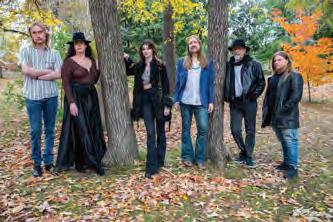
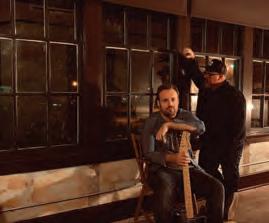


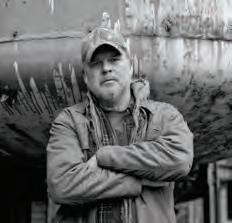



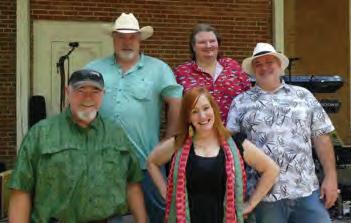



A
look back at key events from the year our magazine began.
◗ America celebrated its bicentennial anniversary from April to July 4th with a series of ceremonial events, festivals, and commemorative memorabilia.
◗ Memphis celebrated the American bicentennial with performances by Lynyrd Skynyrd, ZZ Top, Blue Oyster Club, and Outlaws
◗ The president of the United States was Gerald Ford, with Nelson Rockefeller serving as vice president. Ford later lost to Jimmy Carter in the November presidential election.
◗ Memphis’ mayor was J. Wyeth Chandler, who served from 1972 to 1982.
◗ FedEx, founded in 1971, achieved sustained profitability for the first time in 1976.
◗ The world population was 4.14 billion. Today’s world population is north of 8 billion.
◗ The U.S. population was estimated to be 212,851,000 as of June 1, 1976. Today, it’s north of 342 million.
◗ Memphis’ metropolitan area population was estimated to be 961,700; that number today is more than 1.3 million.
◗ The most populated state was California, with a population of 21,522,419.
◗ The most populated city was New York City, with a population of 7,615,000.
◗ A dollar in 1976 would be worth $5.72 today.
◗ The average price of a new home was between $45,000-50,000.
◗ Started in the 1960s, second-wave feminism carried into the Seventies as more women entered the workforce.
◗ Also emerging at the tail end of the Sixties with Stonewall, the gay liberation movement grew exponentially in size and began making strides with LGBTQ+ rights.
◗ After the Civil Rights Movement, legal rights improved for African Americans, yet many still faced struggles with housing, education, and health discrimination.
◗ In Memphis, the Dixon Gallery and Gardens opened in January.
◗ Born in grungy music venues, the punk movement surged to popularity throughout the Seventies.
◗ The Cold War remained a background source of tension and anxiety.
◗ Soft, loose clothing, polyester, and denim dominated fashion trends of the decade, with a slide toward stretchy fabrics and punk aesthetics towards the latter half.
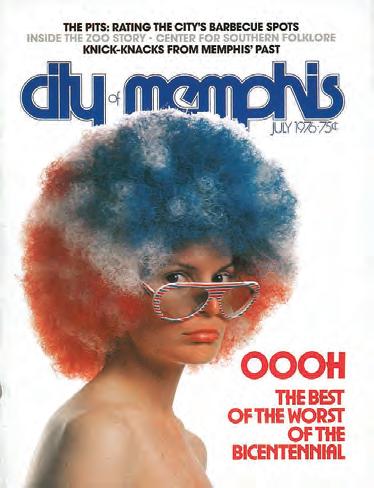
◗ Exxon was ranked in the Fortune 500 as the largest industrial company, pulling in $44.8B in sales.
◗ The best-selling car was the Oldsmobile Cutlass, selling more than 500,000 units by 1977.
◗ The price of gas was 57¢, or about 10¢ when adjusted for inflation.
◗ The Pittsburgh Steelers beat the Dallas Cowboys in Super Bowl X (January 1976).
◗ The Cincinnati Reds won the 1976 World Series against the New York Yankees.
◗ The Indiana Hoosiers won college basketball’s national championship and remain the last team in the sport to go undefeated.
◗ The Philadelphia Flyers lost to the Montreal Canadiens in the Stanley Cup Final.
◗ The NBA and ABA merged.
◗ The Summer Olympics were hosted in Montreal; the US brought home 94 medals in total, 34 of them gold.
◗ The highest-grossing movie was Rocky, raking in $117,235,147 from 55,039,975 tickets.
◗ Other popular movies released include A Star Is Born, King Kong, All the President’s Men, The Omen, and Midway.
◗ Actors Al Pacino, Jack Nicholson, Dustin Hoffman, and Robert de Niro enjoyed significant acclaim.
◗ Actresses Faye Dunaway, Barbara Streisand, Jodie Foster, and Jane Fonda also received notable popularity.
◗ The highest-rated TV show was Happy Days, which aired on ABC from 1974 to 1984.
◗ One Flew Over the Cuckoo’s Nest (directed by Miloš Forman) won Best Picture at the Oscars. It also won in four other categories, including Best Actor for Nicholson.
◗ A Chorus Line swept the Tonys, winning nine categories.
◗ The Mary Tyler Moore Show brought home the most Emmy awards, at five awards.
◗ “This Masquerade” by George Benson, Songs in the Key of Life by Stevie Wonder, and “I Write the Songs” by Barry Manilow won Record of the Year, Album of the Year, and Song of the Year respectively at the Grammys.
◗ The best-selling record was Peter Frampton’s Frampton Comes Alive!, selling over 8 million copies and hitting No. 1 on the Billboard Hot 100 for a total of 10 weeks that year.
◗ “Silly Love Songs” by Wings, “Don’t Go Breaking My Heart” by Elton John and Kiki Dee, and “Disco Lady” by Johnnie Taylor topped the Billboard YearEnd Hot 100 chart
◗ The Eagles released their Hotel California album, which would go on to become the second-best-selling record of all time (outsold only by Michael Jackson’s Thriller).
◗ Elvis Presley performed his last show in Memphis on July 5, 1976, before his death in 1977.
◗ Curtain by Agatha Christie, Trinity by Leon Uris, and The Final Days by Bob Woodward and Carl Bernstein rode the top of the New York Times bestseller list.
◗ Betty Williams and Mairead Corrigan won the Nobel Peace Prize for their work to end conflict in Northern Ireland.
◗ The tallest building in the world was Willis Tower/ Sears Tower in Chicago, standing at 1,451 feet.
◗ Fast-food restaurants,such as McDonald’s, Pizza Hut, Burger King, and Taco Bell, grew in popularity over the decade.
◗ Foods like cheese balls, fondue, pasta primavera, Jell-O, and quiche were popular on tables.
◗ Several important inventions were introduced, including the Cray-1, a pioneer of supercomputers; the IBM 6640, one of the first inkjet printers; and Steadicam.
◗ JVC introduced VHS, which would go on to be a pioneer of home video technology.
◗ The Copyright Act of 1976 was passed and endures largely as-is today.
◗ Apple Computer Company was founded, and launched the Apple I — without a monitor.

























The 2026 BMW 8 Series Coupe is defined by its intense power and remarkable agility – delivering incredible performance at every turn while raising the bar for design and engineering. In an 8 Series Coupe, the world is yours.
Contact a Client Advisor at Roadshow BMW to schedule a test drive today. BMW. The Ultimate Driving Machine®.
Roadshow BMW
405 N. Germantown Parkway Memphis Cordova, TN 38018
901-365-2584
www.ROADSHOWBMW.com