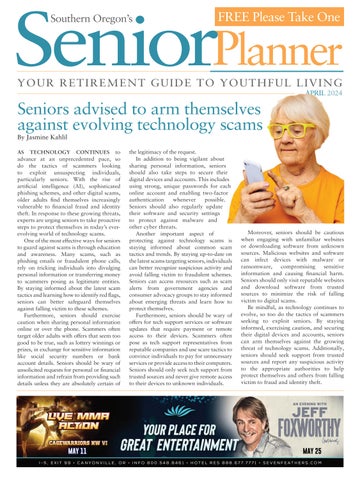
Seniors advised to arm themselves against evolving technology scams
By Jasmine KahlilAS TECHNOLOGY CONTINUES to advance at an unprecedented pace, so do the tactics of scammers looking to exploit unsuspecting individuals, particularly seniors. With the rise of artificial intelligence (AI), sophisticated phishing schemes, and other digital scams, older adults find themselves increasingly vulnerable to financial fraud and identity theft. In response to these growing threats, experts are urging seniors to take proactive steps to protect themselves in today’s everevolving world of technology scams.
One of the most effective ways for seniors to guard against scams is through education and awareness. Many scams, such as phishing emails or fraudulent phone calls, rely on tricking individuals into divulging personal information or transferring money to scammers posing as legitimate entities. By staying informed about the latest scam tactics and learning how to identify red flags, seniors can better safeguard themselves against falling victim to these schemes.
Furthermore, seniors should exercise caution when sharing personal information online or over the phone. Scammers often target older adults with offers that seem too good to be true, such as lottery winnings or prizes, in exchange for sensitive information like social security numbers or bank account details. Seniors should be wary of unsolicited requests for personal or financial information and refrain from providing such details unless they are absolutely certain of
the legitimacy of the request.
In addition to being vigilant about sharing personal information, seniors should also take steps to secure their digital devices and accounts. This includes using strong, unique passwords for each online account and enabling two-factor authentication whenever possible. Seniors should also regularly update their software and security settings to protect against malware and other cyber threats.

Another important aspect of protecting against technology scams is staying informed about common scam tactics and trends. By staying up-to-date on the latest scams targeting seniors, individuals can better recognize suspicious activity and avoid falling victim to fraudulent schemes. Seniors can access resources such as scam alerts from government agencies and consumer advocacy groups to stay informed about emerging threats and learn how to protect themselves.
Furthermore, seniors should be wary of offers for tech support services or software updates that require payment or remote access to their devices. Scammers often pose as tech support representatives from reputable companies and use scare tactics to convince individuals to pay for unnecessary services or provide access to their computers. Seniors should only seek tech support from trusted sources and never give remote access to their devices to unknown individuals.
Moreover, seniors should be cautious when engaging with unfamiliar websites or downloading software from unknown sources. Malicious websites and software can infect devices with malware or ransomware, compromising sensitive information and causing financial harm. Seniors should only visit reputable websites and download software from trusted sources to minimize the risk of falling victim to digital scams.
Be mindful, as technology continues to evolve, so too do the tactics of scammers seeking to exploit seniors. By staying informed, exercising caution, and securing their digital devices and accounts, seniors can arm themselves against the growing threat of technology scams. Additionally, seniors should seek support from trusted sources and report any suspicious activity to the appropriate authorities to help protect themselves and others from falling victim to fraud and identity theft.

SeniorPlanner
Southern Oregon’s APRIL 2024
FREE Please Take One


To buy or rent, that is the question Navigating housing decisions in today’s economy
By Mark TreagerOK, YOU SOLD YOUR HOUSE and thinned your load, now what?


For many seniors, the decision to buy or rent property in the current economic climate can be daunting, especially amidst rising inflation and the highest interest rates in decades. While both options have their pros and cons, several factors should be considered before making a decision that best suits individual financial circumstances and lifestyle preferences.
Buying property can offer seniors a sense of stability and security, especially if they plan to stay in the same location for an extended period. With fixed mortgage rates, homeowners can lock in their monthly housing costs, providing a measure of predictability in an uncertain economic environment. Additionally, owning property allows seniors to build equity over time, which can serve as a valuable asset for retirement planning or inheritance purposes.
However, in today’s economy with inflation on the rise and interest rates climbing, purchasing property may come with higher upfront costs and long-term financial commitments. Higher interest rates mean larger mortgage payments, which can strain budgets, particularly for seniors on fixed incomes. Moreover, rising inflation can erode the purchasing power of savings and investments, making it more challenging to afford homeownershiprelated expenses such as property taxes, insurance, and maintenance.
On the other hand, renting can offer
seniors greater flexibility and freedom from the responsibilities of homeownership. Renters are not responsible for property maintenance or repairs, which can save time and money, especially for those with limited mobility or health concerns. Renting also provides the flexibility to relocate more easily in response to changing financial or personal circumstances, without the constraints of selling a property.
In addition, renting may be a more affordable option for seniors in the current economic climate, as rental prices tend to be less affected by fluctuations in interest rates and housing market trends. While rents may increase over time, they generally do so at a slower pace compared to property values and mortgage rates. Renting can also offer seniors access to amenities and services that may be costprohibitive for homeowners, such as onsite maintenance, recreational facilities, and community activities.
Ultimately, the decision to buy or rent property as a senior citizen depends on individual financial goals, lifestyle preferences, and risk tolerance. Seniors should carefully weigh the costs and benefits of each option, considering factors such as long-term affordability, asset diversification, and personal preferences for homeownership versus rental living. Consulting with a financial advisor or real estate professional can provide valuable insight and guidance in making an informed decision that aligns with one’s unique circumstances and objectives.
2
955-0480
New Hope Road Grants Pass, OR 97527 FOR THE PEOPLE, BY THE PEOPLE. Subscribe FREE online GRANTSPASSTRIBUNE.COM
www.applegategolf.com (541)
proshop@applegategolf.com 7350
No nonsense! Non biased!

Caring for senior pets
By Milly BearAS SENIORS ENTER their golden years, their furry companions often become cherished members of the family, providing companionship, joy, and a sense of purpose. However, as pets age alongside their owners, they may require specialized care and attention to ensure their health and well-being. Just like their human counterparts, senior pets owned by senior citizens need regular check-ups, proper nutrition, and sometimes even special diets to thrive in their later years.
Regular veterinary check-ups are essential for senior pets to monitor their overall health and detect any age-related issues early on. Senior pets may be more susceptible to conditions such as arthritis, dental problems, and kidney disease, which can impact their quality of life if left untreated. Routine examinations allow veterinarians to assess a pet’s physical condition, recommend preventive measures, and provide tailored care to address any health concerns.
In addition to regular check-ups, senior pets may benefit from special diets designed to meet their changing nutritional needs. As pets age, their metabolism slows down, and they may require fewer calories to maintain a healthy weight. Moreover, senior pets may have specific dietary requirements to



manage conditions such as obesity, diabetes, or kidney disease. Transitioning to a seniorspecific or prescription diet can help senior pets maintain optimal health and vitality as they age.
Notably senior pets may require additional support and accommodations to maintain their comfort and mobility. Providing soft bedding, ramps or steps for easy access to elevated surfaces, and regular exercise tailored to their abilities can help senior pets stay active and engaged in daily activities. Additionally, senior pets may benefit from supplements or medications to manage chronic pain or age-related ailments, improving their overall quality of life.
Ultimately, caring for a senior pet requires patience, compassion, and a willingness to adapt to their changing needs. Just like their human counterparts, senior pets deserve the same level of care and attention to ensure they can enjoy their golden years to the fullest. By prioritizing regular veterinary care, proper nutrition, and supportive measures, senior citizens can continue to enjoy the companionship and unconditional love of their furry friends for years to come. After all, furry friends are family too, and they deserve nothing less than the best care possible.



APRIL 2024 ALSO READ US ONLINE AT www.Seniorplanner.net www.grantspassmag.com CULTURE ∙ DINING ∙ LIFESTYLE 3

4

Seniors gearing up for pickleball fever at Club Northwest
A remodeled haven for active living
By Julie FavricAS THE SUMMER SUN CASTS ITS golden glow over Grants Pass, Oregon, seniors in the community are gearing up for an exhilarating season of pickleball at Club Northwest.
Club Northwest stands as a beacon of health and vitality, offering a newly designed and recently remodeled facility tailored to provide the ultimate pickleball experience. With nine meticulously maintained courts, including one indoor and eight outdoor, seniors are eagerly embracing this beloved sport as a cornerstone of their active lifestyle.
For the uninitiated, pickleball combines elements of tennis, badminton, and pingpong, creating a fast-paced and engaging game suitable for players of all ages and skill levels. What sets Club Northwest apart is not only its state-of-the-art facilities but also its unwavering commitment to fostering a sense of community and camaraderie among its members. As seniors lace up their sneakers and grab their paddles, they find themselves immersed in a vibrant social scene where friendships are forged and memories are made.
The recent renovations at Club Northwest have elevated the pickleball experience to new heights, drawing seniors from far and wide to partake in the excitement. With permanent court lines and top-of-the-line playing surfaces, players can focus on perfecting their serves and volleys without the hassle of makeshift setups. While players are required to bring their
own nets, the investment is a small price to pay for the unparalleled enjoyment and sense of belonging that pickleball at Club Northwest provides.
Membership at Club Northwest is the gateway to endless hours of pickleball bliss, offering access to exclusive amenities and events tailored to the needs of active seniors. Whether it’s participating in friendly tournaments, attending skill-building clinics, or simply enjoying a leisurely match with friends, members of Club Northwest are spoiled for choice when it comes to recreational opportunities.
Indeed, the allure of pickleball extends far beyond the confines of the court, offering seniors a myriad of physical, mental, and social benefits. From improving cardiovascular health and agility to boosting cognitive function and reducing stress, pickleball is a holistic form of exercise that promotes overall well-being.
As the summer months unfold, Club Northwest emerges as a beacon of hope and vitality for seniors in Grants Pass and beyond. With its newly remodeled facilities and unwavering commitment to fostering a vibrant pickleball community, Club Northwest stands as a testament to the power of sport in enriching the lives of seniors and promoting active aging. So, grab your paddle, join the fun, and let the pickleball fever sweep you away on a journey of health, happiness, and camaraderie at Club Northwest.

“At the Grants Pass Gospel Rescue Mission, we are bound to proclaim Jesus Christ to the homeless and needy of Josephine County in a spirit of care by assisting with clothing, spiritual counseling, education, food, healthcare and shelter. We accomplish all this with an attitude of commitment.”
gospel rescuemission gp.org
540 SW Foundry St. Grants Pass, OR 97526

APRIL 2024
5

6
We’ll simplify your search with one quick phone call!

• In Home Care
• Medicaid Spend Down Annuity
• Home Health
• Veteran’a Aid & Assistance
• Memory Care
• Adult Foster Homes
Being locally owned means no franchise dollars leave Southern Oregon — We reinvest in our community!
• Hospital & Rehab Discharges NEVER A CHARGE TO THE FAMILY! We can help you make educated decisions without having to make hours of calls yourself regarding costs, quality of care, vacancies, reputation and more. Contact Jamie Callahan, CEO for more information (541) 295-8230

APRIL 2024 7
PROVIDING FREE GUIDANCE FOR SENIORS AND THEIR FAMILIES SINCE 2016 CALL US FIRST We can help with:
FREE Senior Living Guidance
www.teamsenior.org | 541.295.8230

8