
WEDNESDAY, FEBRUARY 4, 2026

WEDNESDAY, FEBRUARY 4, 2026
By John Oliver
A new bill introduced in the Oregon House seeks to reinforce privacy protections for patients and medical providers at a time when health care policy remains sharply divided across state lines.
Rep. Lisa Fragala, a Democrat from Eugene, has filed House Bill 4088, titled the Strengthening Patient and Provider Privacy Act. The proposal is designed to shield individuals who seek or provide lawful reproductive and gender-affirming health care in Oregon from what supporters describe as increasing federal and out-of-state scrutiny.
The measure comes nearly four years after the U.S. Supreme Court overturned Roe v. Wade, a decision that shifted primary authority over abortion laws back to individual states. Since then, a growing number of states have enacted stricter limits on abortion and gender-affirming care, while others, including Oregon, have moved to codify and expand access. The resulting patchwork of laws has created new legal and political tensions, particularly between neighboring states with differing policies.
Fragala said the legislation is intended to reinforce Oregon’s existing legal framework by limiting cooperation with investigations that target health care services that are lawful within the state. “Oregonians believe that personal decisions about healthcare and private information should be made by individuals and their healthcare providers — not

by politicians and the government,” Fragala said in a statement announcing the bill. She described the proposal as a way to uphold Oregon’s approach to personal medical decision-making amid what she characterized as growing federal pressure and out-of-state interference.
House Bill 4088 would prohibit Oregon public agencies from assisting federal or outof-state authorities in investigating or prosecuting individuals for receiving or providing health care services that are legal in Oregon. The measure would also bar the extradition of patients or providers who are not considered fugitives but are sought by other states
for actions that are lawful under Oregon law.
In addition, the bill would restrict the Oregon Health Authority from disclosing individually identifiable information about patients seeking reproductive or gender-affirming care. It proposes expanding certain professional licensing protections to include midwives and strengthening privacy safeguards for providers and patients by protecting images, phone numbers, and other personal details connected to legally provided services. Another provision would treat simultaneous name and sex marker changes as confidential records, a step supporters say is aimed at enhancing personal safety.
Rep. Willy Chotzen, a Democrat from Portland, said the bill would make constituents “more likely to have their privacy respected” and less vulnerable to harassment for lawful medical decisions.
The legislation has drawn support from a broad coalition of medical, civil rights, labor, and advocacy organizations. Among those backing the measure are the Oregon Medical Association, the ACLU of Oregon, Planned Parenthood Action Oregon, Basic Rights Oregon, the Oregon Nurses Association, and the Oregon AFL-CIO, along with several community-based health and equity groups.
Supporters argue that the bill positions Oregon as part of a broader group of states strengthening in-state protections for providers and patients in response to shifting federal policy and cross-border enforcement efforts. Critics of similar measures in other states have contended that such laws could complicate interstate legal disputes and deepen national divisions over health care regulation.
House Bill 4088 will be assigned to a legislative committee for further review, where lawmakers are expected to debate its legal implications, scope, and potential fiscal impact. If approved by the Legislature and signed into law, the measure would further solidify Oregon’s role as a state committed to maintaining broad access to reproductive and gender-affirming health services while emphasizing privacy and noncooperation with out-of-state enforcement efforts.
By John Oliver
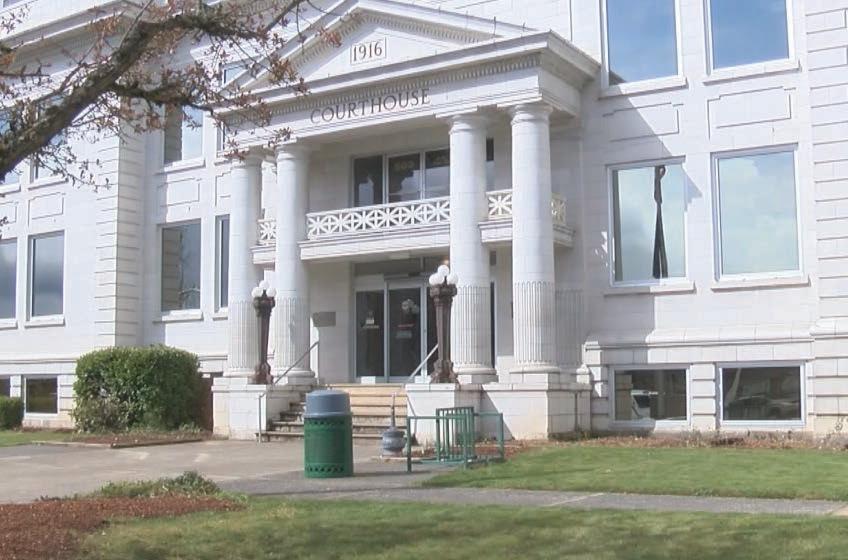
Josephine County offices inside the county courthouse were forced to close Monday, February 2, 2026, after an ongoing power outage left the building without electricity and no estimated timeline for restoration. The unexpected shutdown marks the second major service disruption for residents in less than a week, following widespread issues with credit card processing systems that affected both city and county offices.
According to county officials, the outage impacted offices located at the courthouse at 500 NW 6th Street in Grants Pass. Departments closed for the day include Human Resources, Finance, the Board of Commissioners, the Clerk’s Office, Treasury, Veteran Services, Legal Counsel, and the Assessor’s Office. While the courthouse was the primary site affected, the Corrections Department, though housed at a separate location, also closed due to complications related to the outage. Other county offices remained open and operational, but officials encouraged residents to call ahead before visiting in person, noting that conditions could change quickly depending on the status of power restoration and related infrastructure.

The closure comes on the heels of processing system failures last week that left many city and county credit card machines offline. Residents attempting to pay fees, fines, permits, or other government-related expenses encountered delays when electronic payment systems temporarily went down. For individuals without cash or checks readily available, routine transactions became difficult
or impossible to complete.
Between last week’s payment processing disruptions and this week’s power outage, many residents and county employees have faced an unusually turbulent stretch of service interruptions. While the causes of the separate incidents differ, the combined impact has underscored the degree to which modern government operations rely heavily on stable utilities and digital infrastructure. When electronic systems fail, even briefly, the ripple effects can be felt quickly. In public offices, routine tasks such as recording documents, issuing licenses, processing property records, and handling court-related filings depend on consistent electricity and secure digital connectivity. Without power, not only are computer systems rendered unusable, but access to phones, security systems, and internal communications can also be disrupted.
For county workers, the closure means an unexpected pause in services that are often time-sensitive. For residents, it adds another layer of inconvenience in a week already marked by uncertainty. Businesses that rely on government filings, contractors seeking permits, veterans accessing support services, and residents paying
property or court-related obligations have all been encouraged to monitor county updates as the situation develops.
Service interruptions, whether caused by power failures or processing outages, highlight the fragile balance between infrastructure and the day-today functioning of local government. For Josephine County residents, the past week has served as a reminder that even routine civic transactions depend on systems that can occasionally falter.
For many in Josephine County, it has been a rocky week shaped by utility disruptions and processing setbacks. Officials say they remain focused on restoring normal operations as quickly and safely as possible.

By John Oliver
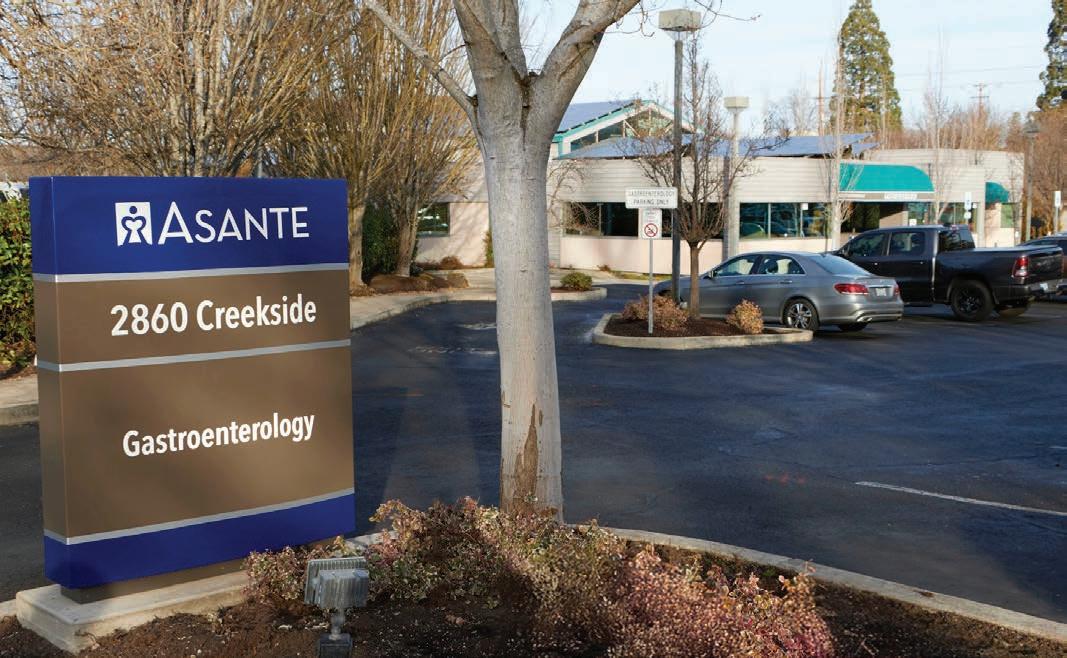
A new chapter in digestive health care began Monday in Medford as Asante officially opened its Gastroenterology clinic, marking the completion of a long-anticipated acquisition designed to strengthen and expand gastrointestinal services across Southern Oregon.
The clinic, now operating as Asante Gastroenterology, is the result of Asante’s acquisition of Gastroenterology Consultants, PC, a long-established local practice. After years of collaboration between the two organizations, the transition brings the former private practice under the umbrella of Asante Physician Partners, the health system’s medical group. The move is intended to ensure long-term stability, recruitment growth, and sustained access to specialized GI care in a region where demand for services continues to rise.
The three physicians and five advanced practice providers who previously practiced with Gastroenterology Consultants will continue caring for patients at the same Medford location. They are now employees of Asante, a transition leaders say will enhance operational support while maintaining continuity for patients.
Dr. Adam Mougey of Asante Gastroenterology described the opening as a significant milestone for the Rogue Valley. “We are excited about what today represents for patients in the Rogue Valley. By joining a local, well-respected organization, we are expanding access for care and improving resources for recruitment, to sup-
port the needs of patients,” he said.
Gastroenterology services are considered a critical component of regional health care systems, particularly as populations age and rates of chronic digestive conditions increase. Procedures such as colonoscopies remain essential tools in the early detection and prevention of colorectal cancer, one of the most common cancers in the United States. Beyond preventive screenings, the clinic provides diagnosis and treatment for a broad range of digestive and liver disorders, as well as long-term management of chronic gastrointestinal diseases.
In addition to outpatient services, physicians affiliated with Asante Gastroenterology provide inpatient care at Rogue Regional Medical Center. They also assist with
coordinating patient transfers throughout Asante’s nine-county service area, a geographic footprint that spans much of Southern Oregon and Northern California. Health system officials say integrating the clinic more fully into Asante’s network will improve coordination between hospital and outpatient care settings.
Angie Simonson, Senior Vice President and Chief Operating Officer for Asante, emphasized the broader implications of the acquisition. “This new Asante Physician Partners clinic represents strong collaboration and partnership to ensure sustainable local health care. We are excited that this service will not only stay, but grow in our community,” she said.
Recruitment is expected to play a central role in that growth. Southern Oregon,
By John Oliver (Source - OSP)
A quiet stretch of Interstate 5 just north of Exit 24 became the scene of a fatal investigation early Saturday morning after a pedestrian was found deceased along the northbound shoulder.
According to the Oregon State Police, troopers were dispatched at approximately 7:20 a.m. on January 31, 2026, following a report of a person down near the on-ramp area. Upon arrival, first responders located 34-year-old Anthony Jonathan Byam of Phoenix, Oregon. Preliminary findings indicate that Byam had been struck by a vehicle traveling northbound. The driver involved did not remain at the scene.
Byam was pronounced deceased at the location.
Authorities have not yet released details about the suspect vehicle, and investigators continue working to determine the circumstances surrounding the
crash. Officials have not indicated how long Byam may have been on the roadway prior to being discovered or whether weather, visibility, or other contributing factors played a role.
Despite the seriousness of the incident, traffic along Interstate 5 was not significantly impacted during the onscene investigation. Law enforcement managed the response in a way that allowed vehicles to continue moving through the area without extended closures.
Oregon State Police are leading the investigation and were assisted at the scene by Jackson County Fire District personnel and the Oregon Department of Transportation. Emergency responders secured the area, documented evidence, and began gathering information that could help identify the vehicle involved.
Hit-and-run crashes remain a serious concern across Oregon and nationwide,
particularly in cases involving pedestrians. Law enforcement agencies routinely urge drivers to remain at the scene of any collision and to immediately report incidents involving injuries. Leaving the scene of a crash resulting in death is considered a felony offense under Oregon law.
Officials have not yet announced whether they have identified any persons of interest. Anyone with information related to the incident, including motorists who may have been traveling in the area around the time of the crash, is encouraged to contact the Oregon State Police.
As the investigation continues, family members and the Phoenix community are left grieving the sudden loss of a local resident. Further updates are expected as authorities gather additional evidence and pursue leads in the case.
like many rural and semi-rural regions, faces persistent challenges in attracting and retaining specialty physicians. By bringing the gastroenterology practice into the larger health system structure, Asante leaders say they can leverage expanded resources, competitive benefits, and system-wide support to draw additional providers to the region in the coming years. The clinic is located at 2860 Creekside Circle, just off Barnett Road and directly across from Rogue Regional Medical Center. Its proximity to the hospital is designed to facilitate streamlined referrals and convenient access for patients requiring both outpatient consultations and hospital-based procedures.
For residents of Medford and surrounding communities, the transition may appear seamless on the surface, with the same providers practicing in the same building. Behind the scenes, however, health care leaders describe the shift as a strategic investment in specialty care that they believe will help safeguard access to digestive health services for years to come.
Asante Gastroenterology now operates as part of Asante Physician Partners, reinforcing the health system’s integrated model of care. With patient demand for gastrointestinal services continuing to grow, health officials say the clinic’s opening signals not just continuity, but a commitment to expansion and long-term sustainability in Southern Oregon’s evolving health care landscape.



By Nik Martin Local Food Critic
Tucked along Old Redwood Highway in Wilderville sits a place that feels less like a quick pizza stop and more like a small Southern Oregon escape located at 7841 Old Redwood Hwy, Wilderville, OR 97543, delivers more than just a meal. It offers a setting and experience that make the drive worthwhile.
On my recent visit, I ordered the all-meat pizza and added pineapple, a choice that sometimes divides a table but, in this case, brought everything together beautifully. The pizza arrived hot and evenly baked, with a fresh, hand-spun crust that struck the ideal balance between crunch and chew. The outer edge had just enough crispness to give way to a soft, airy interior. It is clear this dough is handled with care rather than rushed through a production line.
The sauce carried a bold tomato presence without overwhelming the toppings. It was seasoned well, allowing the layers of meat to shine while still providing a cohesive base. The sausage, pepperoni, and other meats were generously portioned and evenly distributed, ensuring every slice delivered a balanced bite. The pineapple addition introduced a subtle sweetness that contrasted nicely with the savory elements. Rather than dominating the flavor profile, it lifted it, adding brightness and depth.
Consistency matters in a pizza, and Creekside gets it right. There were no soggy centers or overloaded sections. Each slice held together, and each ingredient felt inten-

tional. It is the kind of pizza that invites you to slow down and enjoy, rather than fold and rush through.
Dessert sealed the experience. The house-made Oreo cheesecake stood out immediately, not just for presentation but for texture. It was creamy and smooth, rich without becoming heavy. The Oreo flavor came through clearly in both the filling and crust, offering that familiar chocolate cookie note without excessive sweetness. A good cheesecake should feel indulgent yet balanced, and this one accomplished exactly that.
Beyond the food, the setting deserves attention. The restaurant overlooks a creek, and the outdoor seating area takes full advantage

of it. On a mild afternoon, the sound of water moving through the trees creates a relaxed backdrop that feels distinctly Southern Oregon. It is the kind of place where families gather after a Little League game, couples linger over a second slice, and friends meet up to unwind. The atmosphere is casual, welcoming, and unpretentious.
Service during my visit was attentive and efficient, with staff members checking in without hovering. The environment felt community-driven, the sort of establishment that knows its regulars but still welcomes newcomers warmly.
Overall, Creekside Pizza & Pastaria delivers a well-rounded dining experience. The food is thoughtfully prepared, the desserts feel genuinely homemade, and the location offers a scenic charm that enhances the meal. For those traveling through Wilderville or locals looking for a reliable favorite, this is a spot worth adding to your rotation.















By Ellen Ward
The United States is moving to secure a stronger foothold in the global competition for critical minerals with the announcement of a $12 billion federal initiative aimed at building a national stockpile of rare earth elements and other strategically vital materials. President Donald Trump unveiled the plan this week, describing it as a long term investment designed to reduce dependence on foreign suppliers and shield American industry from geopolitical disruptions.
Rare earth elements are a group of minerals essential to modern technology. They are used in electric vehicle batteries, advanced defense systems, smartphones, wind turbines, medical imaging equipment, and semiconductor manufacturing. Although the United States has some domestic mining capacity, the global supply chain remains heavily concentrated overseas, particularly in China, which dominates both mining output and processing capability. That concentration has raised concerns among policymakers in both political parties for years, especially during periods of heightened trade tensions.
The new initiative, informally referred to by administration officials as a strategic minerals reserve, would function in a manner similar to the Strategic Petroleum Reserve. Instead of crude oil, however, the federal government would purchase and store critical minerals to ensure availability during supply disruptions or sudden price spikes. The reserve is intended to support civilian industries as well as defense manufacturing, providing a buffer against export restrictions or market instability.

According to administration officials, the $12 billion funding structure combines public financing and private sector participation. A significant portion of the financing is expected to come through the Export Import Bank of the United States, which would provide large scale lending support. Additional capital is anticipated from private companies that rely heavily on rare earth materials for manufacturing. Several major corporations in the automotive, aerospace, and technology sectors have reportedly expressed interest in participating.
The announcement comes amid ongoing global competition for control of critical mineral supply chains. China currently accounts for a substantial share of global rare earth processing capacity, giving it leverage in international trade disputes. In recent years, Chinese export restrictions and shifting trade
policies have intensified concerns in Washington about supply vulnerability. The administration framed the stockpile initiative as a defensive economic measure rather than a trade escalation, emphasizing resilience and domestic security.
Market reaction to the announcement was immediate. Shares of several U.S. mining and materials companies rose following the news, reflecting investor optimism about potential federal demand and long-term support for domestic production. Analysts noted that a guaranteed federal buyer could provide greater stability for companies considering expansion of U.S. based extraction and processing facilities.
Beyond the stockpile itself, administration officials signaled that the plan is part of a broader strategy to accelerate domestic
mining permits, encourage private investment in processing facilities, and strengthen partnerships with allied nations rich in mineral resources. Countries such as Australia, Canada, and several Asian partners have been engaged in ongoing discussions about diversifying global supply chains away from concentrated sources.
Critics of previous federal mineral initiatives have often pointed to environmental concerns and the lengthy permitting process associated with new mining projects. The administration has indicated that it intends to streamline regulatory pathways while maintaining environmental oversight, though specific legislative proposals have not yet been detailed.
Economists note that building a stockpile alone will not eliminate foreign reliance, as processing capacity and refining technology are equally critical components of the supply chain. However, they acknowledge that maintaining a reserve could help cushion U.S. manufacturers during periods of market volatility or diplomatic strain.
The rare earth stockpile initiative represents one of the largest federal investments in critical mineral security to date. As global demand for advanced technologies continues to expand, access to these materials is increasingly viewed not only as an economic issue but as a matter of national security. Whether the program succeeds in reshaping supply dynamics will depend on implementation, private sector participation, and the pace at which domestic production can expand in the years ahead.


Advertise with The Grants Pass Tribune!
Show
By: Jay Meredith, CPA Investigative Journalist
It was announced last week during the first meeting of the temporary board of six County elected officials that this temporary Board will be selecting both Commissioners to fill the two current vacancies. This is because the 30 days to appoint per the Charter has already passed for position #1 and there is no quorum of the BCC to appoint position #2.
The County has opened up a new round of Commissioner applications for a period of about 10 days and has asked applicants to submit details about their skills and experience in a variety of areas. Predictably recalled Commissioner Chris Barnett and some political allies of the recently recalled Commissioners were out objecting to both the plan and process.
In my opinion, because of Josephine County’s form of government, the Commissioners effectively act as CEOs of Josephine County. They have oversight over almost all policy and administrative areas of the County, including budget, personnel, law changes, and so much more. Why certain politically active residents would object to asking Commissioner candidates about their skills and experience in these areas is bizarre to me. These folks “doth protest too much, methinks.”
The two Commissioners that will be appointed later this month will end up serving as Commissioner for approximately 10 months until January 2027 when the newly elected commissioners will take office. In my opinion, given all the messes certain previous Commissioners made over the last two years, I say kudos to all those applying to fill this role. There is a long list of actions that may need to be taken in 2026 to right the BCC ship as well as some extraordinary circumstances that will end up circling back in front of the BCC during 2026.
Even some of the chaos that began 2-3 years ago while former Commissioner Herman Baertschiger and recalled Commissioner John West were in office still needs to be addressed. As an example, right at the end of 2024, an attorney that used to work in the County’s legal department sent out a memo saying that a third-party internal investigation that took place during 2024 upheld allegations that Commissioners Baertschiger and West retaliated and bullied two department directors. Those two department directors were fired a few months later by former Commissioner Andreas Blech and Michael Sellers who briefly held the title of Interim Director of Operations after being promoted by Blech. This has resulted in BOLI claims and the former directors hiring attorneys to go after the County for wrongful terminations, given these two directors were fired right after an internal investigation found that previous commissioners retaliated against them and bullied them. And then of course around the same time (March 2025), former Commissioner Andreas Blech promoted Michael Sellers to Director of Operations for a total compensation package cost of about $388,000 per year. Two inside whistleblowers confirmed this through both providing public budget documents showing

the projected cost of this new position as well as testifying to have signed the personnel action form which authorized this promotion.
And then public records requests relating to these topics submitted by yours truly were illegally denied, and the records that were eventually provided after an appeal to the DA were incomplete, according to the two inside whistleblowers. A state DOJ investigation into Commissioner Andreas Blech and Michael Sellers ensued about destroying public documents and other matters (because County law enforcement can’t investigate their own).
Even if DOJ declines to bring criminal charges, the 2026 BCC will likely need to do an internal investigation at some level to determine what administrative policies or county code provisions were broken during various hirings, firings, and promotions that took place in 2025. Readers may recall that elected legal counsel Wally Hicks was forced to send out a memo in October 2025, warning the BCC and department heads about the consequences of not following law and policies in hiring and firing actions.
If you’ve been following along, you know there were other layoffs that happened in 2025 without explanation. The entire code enforcement staff were let go, director positions overseeing Public Health, Public Works, Community Development and Juvenile Justice were eliminated without public explanation. The staff manager currently overseeing planning and code enforcement has confirmed that while he is still taking code enforcement complaints, there are no staff that have the capacity to go out in the field to investigate and there are hundreds of complaints outstanding.
And code enforcement often works with law enforcement on certain problem properties. Law enforcement has not had this support over the last year and has had to decline to investigate code enforcement issues because law enforcement doesn’t even have the capacity to investigate all the criminal incidents that it should be pursuing.
Sheriff’s office staffing levels are still far
below what was promised when voters approved the new Law Enforcement Services District in November 2023, despite the County’s budget having more than enough financial surpluses to meet these promises. The majority of the BCC, in my opinion, didn’t understand the County’s true financial position in each of the last two annual budget processes because they claimed to support law enforcement but didn’t do so when it came time to vote on the budgets.
And on the normal schedule, the County would be going out for a renewal vote for the Josephine County Jail and Juvenile Justice levy in November of 2026. This 93-cent temporary 5-year levy expires at the end of next fiscal year. This means that during the annual budget process this summer, Commissioners will need to decide the term of the next levy measure to be placed before voters and decided by voters in November 2026. Levies can be anywhere from one to five years in term, and the property tax levy rate can be adjusted during each renewal process. I tend to think the County has the financial flexibility to renew the levy without an increase to the levy rate, but we’ll see how this critical discussion
goes this summer.
An issue that was instigated largely from Commissioner West’s time in office during 2023-2024, two lawsuits were brought against Josephine County last year alleging that the BCC didn’t follow the County Code in relation to a mining lease application on one of the County’s Forestry properties. In full disclosure, I’m the CFO of the company that brought these lawsuits. The first lawsuit was settled with the County effectively admitting that it erred and didn’t follow the code when it denied giving the applicant a public hearing and making a decision on the application. And in the second lawsuit that is outstanding today, the company has claimed millions of damages by the unnecessary 2-year delay in acting on the application and by the Commissioners not following the County Code when they finally made the initial decision on the lease application. The 2026 Commissioners will eventually need to decide how to proceed on this newest lawsuit. As the company claimed before the Commissioners original 2025 decision, millions and millions of royalty revenues are on the line by granting the lease and these revenues could help support County Law Enforcement. In my opinion, it really is as simple as deciding between millions of revenue for the county or millions in costs for not following the County Code.
And let’s not forget that around March of 2025, the County suspended its media policy because the 2025 Commissioners did not want to allow the Grants Pass Tribune staff to be able to sit in executive sessions of the BCC like various other local media outlets get to do. The media policy should be reinstated immediately by the 2026 BCC so they can have sensitive legal, property, and personnel discussions in private executive sessions. Not having these discussions in executive sessions unnecessarily increases the risk to the County when dealing with these matters. There will be many such sensitive legal matters to discuss throughout 2026.
Former Commissioner Chris Barnett had 17 internal investigations outstanding at the time he left office last week. Most of these related to allegations of improper social media activity, including but not limited to def-
By Ellen Ward
In Southern Oregon’s evolving housing market, selecting a real estate agent is one of the most consequential financial decisions a buyer or seller can make. A home purchase is not a casual transaction. It represents a long-term investment, often the largest asset a household will ever acquire. Yet many consumers devote more time to researching a vehicle or appliance than they do to vetting the professional guiding them through a six or seven figure property deal.
Over the past several years, market volatility, shifting interest rates, wildfire impacts, and rapid migration into the Rogue Valley have reshaped the regional housing landscape. In this environment, the role of a real estate agent or broker extends well beyond unlocking doors and drafting contracts. Agents interpret market data, navigate inspections and disclosures, coordinate with lenders and title companies, and help clients assess risk. Their guidance can influence not only the purchase price but also long-term equity and financial stability.
That reality places a significant responsibility on consumers to conduct their own due diligence before signing a representation agreement.
Publicly available information offers a starting point. Online review platforms such as Google and Yelp provide insight into client experiences. While no professional is immune from an occasional negative review, patterns matter. Consistent feedback about communication issues, missed deadlines, or ethical concerns should not be ignored. Likewise, a complete absence of reviews for someone

who has held a license for decades may warrant further inquiry. Longevity in the industry typically leaves a visible trail of transactions and testimonials. Conversely, a newly licensed agent with minimal public presence may simply lack experience. In either case, buyers and sellers should ask direct questions about transaction history, specialties, and references.
Word of mouth remains one of the most reliable indicators of performance.
Friends, family members, colleagues, and neighbors who have recently completed a transaction can provide candid feedback
about responsiveness, negotiation skills, and professionalism. In smaller communities across Josephine and Jackson counties, reputation travels quickly. An agent known for transparency and follow through will generally have a network willing to vouch for their work.
Consumers should also verify licensing status and any disciplinary history through the state’s regulatory system.
The Oregon Real Estate Agency maintains public records regarding active licenses and enforcement actions. Reviewing this information adds another layer of protec-
amation, bullying, retaliation, and doxing of citizens. Barnett even participated in the BCC discussion of how to investigate these allegations, which seemed inappropriate at the time and the 2026 BCC may want to have a third party brought in to help wrap up these investigations since a couple of them deal with complicated laws related to social media use by public officials. The status of these investigations is uncertain, and the only apparent action taken by the County was to temporarily suspect Barnett’s access to official County social media accounts in November 2025 while the investigations were going on.
The County’s Finance Director has confirmed to the media that any questionable personnel actions that took place in
2025 will be reported to the County’s auditors. Last fiscal year’s financial audit is not yet complete, largely due to the treasurer’s office falling behind on their workload during the first 6 months of 2025. The newly elected Treasurer in November 2024 stepped down from the job last year after only about 6 months on the job.
And the 2026 BCC would be wise to revisit a few other policy decisions made by the BCC in the last few years. The airports manager was given unilateral authority to execute leases at the airports without needing BCC approval. While records requests are outstanding, from what we’ve seen so far there are a huge number of airports leases that have expired years ago without being timely renewed. And in some cases, the properties
have been used without even having a signed lease in place. Two former Commissioners, Blech and Baertschiger, had expired airports leases or held leases with “no lease on file” as of July 2024 according to a records request recently fulfilled.
Previous Boards have also given the Forestry Director the unilateral right to purchase forestry properties without any decision or oversight by the BCC. Last year the Forestry Director made a $6 million purchase of forestry properties on the opposite end of Oregon in the Astoria area without any discussion by the BCC. During recalled Commissioner John West’s time in the BCC office, he helped spearhead a plan to sell all of Josephine County’s timber properties owned in Josephine County and replace them with
tion and helps confirm that a professional is in good standing.
Beyond credentials and reviews, trust is central. A buyer often relies on an agent’s assessment of property condition, market value, and neighborhood trends. While inspectors and appraisers play formal roles, the agent’s interpretation can shape expectations and decisions. Buyers should feel comfortable asking detailed questions about comparable sales, zoning considerations, insurance implications in fire prone areas, and long-term resale potential. An agent unwilling to provide data-driven answers may not be the right fit for a transaction of this magnitude.
Southern Oregon’s market includes a mix of rural properties, water rights considerations, manufactured homes, and urban developments. Each category carries distinct regulatory and financial complexities. Selecting an agent familiar with the specific property type and region can reduce surprises later in escrow.
Ultimately, the responsibility rests with the consumer. Conducting research, observing patterns in reviews, verifying credentials, and seeking trusted referrals are not optional steps. They are prudent financial safeguards. In a market where inventory levels, interest rates, and economic conditions continue to shift, choosing an honest and competent real estate professional is not merely convenient. It is foundational to protecting one’s investment and future financial security.
The process may require additional time on the front end, but in real estate, informed decisions today can prevent costly consequences tomorrow.
forestry properties closer to the coast. No financial plan has ever been presented as to why and how this pencils out as an advantage for Josephine County. And as advised by the County’s Mining Advisory Committee, a review of the potential of mineral deposits should be done before selling any County owned forestry property. Because Josephine County is literally rich in mineral values, ignoring those values when selling a property is like ignoring the value of a building on a property when selling a property.
There are several other controversial issues that will need to be tackled by the 2026 BCC. Kudos to all those applying to fill the two interim Commissioner positions and stepping forward to help tackle these issues in 2026.

By John Oliver
Local nonprofit organizations and government agencies will soon have an opportunity to compete for federal funding aimed at addressing critical community needs, as the City prepares to open its application process for the 2027 Community Development Block Grant public service awards.
Each year, the City receives notice in late spring from the U.S. Department of Housing and Urban Development regarding its annual Community Development Block Grant entitlement. For Program Year 2027, the City estimates it will receive approximately 300,000 dollars in total funding. Federal guidelines allow up to 15 percent of that amount to be allocated toward public service programs, placing the estimated pool for those services at roughly 45,000 dollars.
Eligible applicants must be either a nonprofit charitable organization recog-

nized as a 501(c)(3) or a unit of government. The funding is intended to support programs that address priority needs identified in the City’s federally required Consolidated Plan, which outlines local strategies for housing stability, public services, and community development.
While the final award amount from HUD will not be confirmed until later in the spring, the City has provided the projected figures to help applicants gauge the scale of available funding. Historically, the City has divided the public service portion evenly among the selected recipients. Officials indicate that a similar approach is anticipated for this funding cycle. However, the City has reserved the right to adjust allocations based on the number of applicants and the overall quality, scope, and impact of the proposals submitted.
Organizations seeking funding must submit their responses to the City’s request for proposals no later than 5:00
p.m. on Monday, March 2, 2026. Late submissions will not be considered.
Following the deadline, a Review Committee will be appointed to evaluate applications. The committee will assess how well each proposal aligns with documented community needs and the priorities established in the Consolidated Plan. In some cases, applicants may be asked to provide testimony or additional clarification to demonstrate how their proposed programs will effectively serve residents.
The committee’s recommendations will be forwarded to the City Council, which is scheduled to hold a public hearing on Wednesday, April 15, 2026. Final funding decisions will be made following that public review process.
For local service providers and public agencies, the annual grant cycle represents an important opportunity to secure federal support for programs designed to strengthen neighborhoods
SOURCE: WEATHER.COM





Posting February 2, 2026