WEDNESDAY, MAY 6, 2026
WEDNESDAY, MAY 6, 2026
By John Oliver
A routine state agenda released this week is now drawing focused attention in Josephine County after identifying a developing ethics case tied to former County Commissioner Andreas Blech, placing the matter on a path toward further review by Oregon’s Government Ethics Commission.
Buried among dozens of enforcement entries, advisory listings, and procedural updates, the item stands out for one reason: it is not being dismissed. Instead, state investigators have recommended that the commission move forward with preliminary findings involving potential violations of Oregon ethics law, specifically under ORS 244.060(4), which governs the use of public office for financial gain or to avoid financial detriment.
The listing appears within the commission’s “Reports of Investigation” section, a portion of the agenda reserved for cases that have progressed beyond initial complaint review and into formal staff evaluation. According to records, the matter involving Blech has already undergone investigative review, with a state-appointed investigator assigned and findings developed at the staff level.
At this stage, the recommendation does not represent a final ruling. Preliminary findings signal that investigators believe there is enough evidence to support continued proceedings, but the commission itself must still
evaluate the case before any formal determination is made. That process can include additional documentation, legal review, and potential hearings depending on how the case advances.
That level of detail is typically reserved for expanded staff reports or future commission proceedings if the case continues forward. For now, the entry serves as a formal indication that the investigation has cleared an initial threshold and is advancing through the state’s ethics enforcement process.
The timing of May 1, 2026, aligns with the commission’s regular review cycle, during which a wide range of ethics matters are evaluated. These agendas often pass with limited
public notice unless they involve high-profile individuals or jurisdictions with heightened public interest.
In Josephine County, where recent years have brought ongoing scrutiny of public decision-making, contract awards, and administrative oversight, the appearance of a former commissioner in a state ethics report adds to an already active conversation surrounding accountability in local government. While the current listing stops short of any formal finding of wrongdoing, it establishes that the matter has progressed beyond a preliminary complaint and remains under active consideration. Under Oregon law, individuals named in ethics investigations retain full due process rights throughout the proceedings. The commission must review the staff recommendation before determining whether to adopt the findings, pursue penalties, or take alternative action. Until that process is complete, no violation has been formally established.
What comes next will depend on how the commission responds to the recommendation in the coming review cycle. If the case advances, additional records and findings are expected to be released, offering a clearer picture of the facts under examination. For now, the state’s own documentation confirms only one point with certainty: the case involving former Commissioner Andreas Blech is not closed, and the review is moving forward.
By John Oliver
Across Oregon, from the neighborhoods of southern Oregon to the population centers of the Willamette Valley, the 2026 primary election has entered the phase that ultimately determines outcomes. Ballots are no longer a future event. They are already in homes, on countertops, and in the hands of voters who now carry the responsibility of returning them on time.
Unlike many states, Oregon’s election system does not revolve around long lines at polling stations. The state conducts elections entirely by mail under the direction of the Oregon Secretary of State, a system that shifts the burden of participation from a single day to a multi-week window. That window is now narrowing.
Ballots must be received by county election offices or official drop sites no later than 8 p.m. on May 19. Postmarks do not count. This distinction has become one of the most important factual realities shaping the final days of the primary. Voters who delay mailing their ballots risk missing the deadline, making secure drop boxes an increasingly critical part of the process as Election Day approaches.
The structure of Oregon’s vote-by-mail system has created a different kind of election

timeline. Campaign activity does not build toward a single day but instead follows the pace of ballot returns. Early in the cycle, campaigns focus on visibility and identification. As ballots arrive, messaging shifts toward urgency and completion. In the final stretch, the emphasis is no longer persuasion alone, but participation. Throughout the Willamette Valley, including cities such as Salem, Eugene, and Portland, local races are drawing heightened attention. Municipal contests, county positions, and judicial seats often take shape during the primary rather than the general election. In many nonpartisan races, the outcome is effectively decided in May if a candidate secures a majority of the vote.
This dynamic has intensified political activ-

By Ellen Ward
As Oregon’s rivers begin to swell with spring runoff and early summer traffic, state officials are moving quickly to get ahead of a pattern that repeats itself every year: more people on the water, followed by preventable emergencies that strain local responders and end lives that did not need to be lost.
The Oregon State Marine Board has rolled out its “Fit to Float” campaign statewide, aligning the effort with National Safe Boating Week in mid-May. The timing is deliberate. Warmer weather is already drawing residents back onto rivers, lakes, and reservoirs from Southern Oregon to the Portland metro area, and agencies know the first weeks of the season are often the most dangerous.
This campaign is not built around slogans. It is built around a problem the data has made impossible to ignore.
Federal boating safety statistics consistently show that drowning remains the leading cause of death in recreational boating incidents. In the vast majority of those cases, the victim was not wearing a life jacket. Oregon’s waterways add another layer of risk, with cold water temperatures, unpredictable currents, and snowmelt conditions that can change a calm stretch of river into something far less forgiving within hours.
State officials are focusing on a simple correction to that pattern: getting people into properly fitted life jackets before they ever push off from shore.
ity at the local level. Campaign signs have multiplied along roadways and residential streets. Candidate forums and community events have increased in frequency. Digital outreach has expanded across social media platforms, where campaigns attempt to reach voters directly as ballots are being filled out.
Turnout patterns continue to play a defining role. Historical data from Oregon primaries shows participation typically falls below general election levels. Early returns often come from older voters, while younger and less frequent voters tend to submit ballots closer to the deadline. These patterns influence how campaigns allocate time and resources, particularly in the final days.
• see OREGON’S,
Across Oregon, the Marine Board is coordinating in-person “Fit to Float” events designed to do more than hand out advice. The events are being staged in locations where boaters actually launch, including river access points and community gathering areas in regions such as Southern Oregon, the Willamette Valley, and along the Interstate 5
• see BOATING, page 13

By John Oliver
A dispute over transparency has entered the final stretch of Oregon’s primary election season, as the re-election campaign for Multnomah County Circuit Court Judge Adrian L. Brown seeks the release of internal communications from the office of District Attorney Nathan Vasquez.
Attorneys representing Brown’s campaign filed a formal public records request in Multnomah County this week, asking the district attorney’s office to produce a wide range of communications referencing the sitting judge. The request, submitted in early May, calls for emails, text messages, and internal messaging records exchanged between Vasquez, members of his executive leadership team, members of the media, and senior members of the judiciary.
According to the filing, the request extends to communications dating back to June 2024 and includes correspondence conducted on personal devices when used for official business. The scope also covers interactions involving reporters from The Oregonian and internal communications conducted through platforms such as Microsoft Teams.
The timing of the request places it squarely within the final weeks leading up to Oregon’s May 19 primary election, in which Brown is seeking another term on the bench. Her campaign has framed the records request as an effort to clarify the

nature and extent of the district attorney’s attention toward her role as a judge.
The request arrives amid heightened visibility surrounding Brown’s candidacy and public commentary from within Oregon’s legal community. Recent media coverage and editorial commentary have drawn attention to what some observers describe as an unusually direct focus by the district attorney on a sitting member of the judiciary during an election cycle.
Legal professionals familiar with judicial conduct and prosecutorial authority have pointed to the broader implications of such interactions, particularly when they involve communication between elected officials whose responsibilities intersect
within the justice system. Concerns raised in recent weeks have centered on whether such exchanges could influence public perception of judicial independence or the internal dynamics of court administration.
Brown, who was first elected to the bench in 2020, has served in Multnomah County Circuit Court for more than five years, presiding over both criminal and civil matters. Her professional background includes military service in the United States Air Force, and her campaign has emphasized her experience as an elected judge operating independently within Oregon’s judicial system.
The public records request seeks to identify any communications that may
From page 1
Oregon’s closed primary system for major political parties means that voters registered as nonaffiliated may not receive partisan ballots unless a party has opened its primary to them. This reduces participation in certain contests and places additional importance on understanding ballot contents before submission.
Key issues circulating throughout this election cycle remain consistent across regions. Housing affordability and homelessness continue to dominate discussions in both urban and rural communities. Public safety, including law enforcement staffing and prosecution practices, is central in races for district attorney and local leadership. Economic pressures, including rising costs tied to housing, utilities, and fuel, are appearing frequently in campaign messaging. At the same time, election administration itself remains under scrutiny. Oregon’s system includes multiple verification steps designed to ensure accuracy and security. Every returned ballot undergoes signature verification. Voters have access to tracking
systems that confirm whether their ballot has been received and accepted. Counties maintain secure drop box networks to facilitate timely returns.
Administrative challenges persist, particularly in smaller jurisdictions where staffing levels are limited and public records requests have increased. These pressures have not altered the core timeline, but they underscore the importance of voters completing their role within the established framework.
The role of information distribution has also shifted. Campaigns increasingly rely on direct communication channels such as email, text messaging, and social media platforms. This decentralized flow of information means voters may encounter a wide range of claims and messaging depending on where they engage. The responsibility to verify information and review official sources has become a practical part of the voting process.
As ballot return rates begin to rise, election officials track participation trends that can signal overall
turnout levels. While results are not released until after the deadline, the pace of ballot returns often reflects engagement across different regions and demographics.
What remains constant is the timeline. The primary election is not approaching. It is already underway. The final outcome depends not on future participation, but on whether completed ballots are returned before the deadline.
For Oregon residents, the process is straightforward but time-sensitive. Ballots must be completed accurately, signatures must match registration records, and delivery must occur before the cutoff. With mailing time becoming a factor in the closing days, the use of official drop boxes offers a reliable method to ensure ballots are counted.
From southern Oregon communities to the Willamette Valley’s largest cities, the same condition applies statewide. The election system is in motion, and its conclusion is determined not by intent, but by action taken within the remaining time.
reference Brown directly or indirectly, including discussions related to judicial assignments, internal evaluations, or broader election-related considerations. The inclusion of correspondence with media outlets signals an effort to capture the full scope of external and internal messaging tied to the issue.
The Multnomah County District Attorney’s Office has not publicly released the requested materials as of early May. Under Oregon public records law, government agencies are generally required to respond to such requests within a reasonable timeframe, though fulfillment may vary depending on the scope and complexity of the records involved.
The situation highlights the intersection of election-year politics and institutional transparency within one of Oregon’s largest judicial districts. As voters prepare to cast ballots, the outcome of the records request could influence how information about internal government communications becomes available to the public.
The May 19 primary election will determine whether Brown retains her judicial seat or faces a transition on the Multnomah County bench. Until then, the unfolding records dispute adds another layer to an already closely watched local race, underscoring the role of public access to information in shaping voter awareness during Oregon’s election cycle.



By Ellen Ward
A sudden wave of missiles and drones over the United Arab Emirates has disrupted a tenuous ceasefire and exposed how quickly the balance of calm in the Persian Gulf can unravel when regional tensions resurface.
Authorities in the UAE confirmed that air defense systems were activated after a coordinated launch from Iran involving ballistic missiles, cruise missiles, and unmanned aerial vehicles. The volume and variety of the incoming projectiles pointed to a complex strike designed to test multiple layers of defense at once. Interceptions were reported across several emirates, including Dubai and Abu Dhabi, where emergency alerts were pushed directly to mobile phones, warning residents to move to secure areas as a precaution.
The attack marked the first large-scale Iranian strike on the UAE in nearly a month, breaking a pause that had followed a broader ceasefire arrangement involving Iran and a U.S.-aligned coalition that includes Israel. That pause had reduced direct exchanges but had not resolved underlying disputes over military presence, maritime security, and regional influence. The renewed strike demonstrated that the ceasefire had functioned more as a temporary restraint than a durable settlement.
Impacts from the barrage were reported in parts of the country, including areas tied to energy infrastructure along the eastern coast. Emergency crews responded to fires and damage at facilities
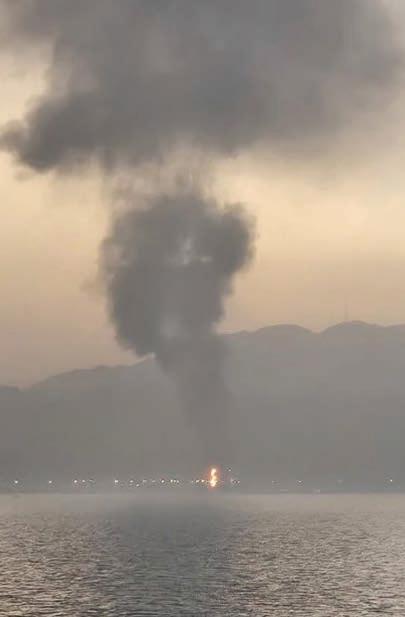
connected to fuel storage and shipping activity. While officials indicated that many incoming threats were intercepted, the presence of damage suggested that at least some projectiles reached their intended vicinity. Injuries were reported, though the full extent of casualties remained limited compared to the scale of the attack.
The choice of targets underscored the strategic dimension of the strike. Facilities near Fujairah
hold particular importance because they sit outside the Strait of Hormuz, offering an alternative route for oil exports that avoids the narrow chokepoint long associated with regional risk. Disruption at or near that corridor carries implications not only for the UAE but for global energy markets that rely on stable flows through the Gulf.
Air traffic in and out of major UAE airports experienced interruptions as authorities prioritized safety during the period of heightened alert. Flights were delayed or diverted, reflecting the broader operational impact that even a short-lived exchange can impose on a country positioned as a major international transit hub. Financial markets across the Gulf also reacted, with declines tied to concerns that renewed conflict could expand beyond isolated incidents.
The timing of the strike aligned with increased efforts by the United States and its partners to reinforce maritime security and maintain open shipping lanes through regional waters. Iran has previously signaled opposition to such operations, particularly those involving escorted tanker movements and expanded naval coordination. The latest exchange reflects that tension, with military activity at sea and on land feeding into a cycle of action and response that extends across multiple fronts.
Since the beginning of the year, the region has seen repeated launches of missiles and drones tied to the broader confrontation involving Iran and its adversaries. Interception systems in Gulf states
have been tested frequently, with hundreds of projectiles reportedly engaged over the course of the conflict. Earlier incidents have affected airports, industrial zones, and commercial sites, reinforcing the pattern of strikes aimed at both strategic and symbolic targets.
Despite the latest escalation, officials have not formally declared the ceasefire void, leaving the situation in a state of uncertainty rather than outright collapse. That ambiguity reflects the competing pressures at play. Maintaining a ceasefire framework offers a path to de-escalation, yet continued strikes erode confidence in its effectiveness and raise the likelihood of further retaliation.
The events in the UAE illustrate how quickly localized actions can ripple outward in a region where military, economic, and logistical networks are tightly interconnected. Energy infrastructure, international aviation, and maritime trade routes all intersect within a relatively narrow geographic space. When conflict reaches that space, even briefly, the consequences extend far beyond the immediate area of impact.
As the situation develops, attention remains focused on whether this exchange represents a temporary flare-up or the beginning of a broader shift back toward sustained confrontation. The answer will shape not only regional stability but also the reliability of global systems that depend on the uninterrupted movement of energy and commerce through the Gulf.
By Bryce Robinson
A remote stretch of the Atlantic Ocean has become an unexpected quarantine zone after a deadly outbreak of hantavirus aboard the expedition cruise vessel MV Hondius left multiple passengers dead and more than one hundred others confined at sea under strict health controls.
The ship, carrying a mix of international passengers and crew, was in-route north after departing South America when a cluster of severe illnesses emerged. What initially appeared to be isolated flu-like symptoms quickly escalated into a medical emergency as several individuals developed acute respiratory distress consistent with hantavirus pulmonary syndrome. By the time the vessel sought assistance, at least three deaths had been confirmed, and additional passengers were showing signs of infection.
Authorities in Cape Verde denied the ship permission to dock, citing the need to prevent potential spread while the nature of the outbreak was still being assessed. The decision effectively left the vessel offshore, with passengers largely restricted to their cabins as medical teams coordinated a controlled response involving international health agencies.
According to updates from the World Health Organization, a limited number of confirmed and suspected cases have been identified, though the confined environment of the ship has raised concern about further transmission. Medical evacuations have been carried out in stages, prioritizing

the most severe cases. At least one patient has been transferred to a hospital in southern Africa for intensive care, while others remain under observation onboard.
Investigators believe the outbreak did not originate on the ship itself but was likely linked to earlier exposure during the voyage’s South American segment. Attention has focused on regions of Argentina, where certain strains of hantavirus are known to circulate in rural and wilderness areas. Passengers may have encountered the virus during shore excursions or environmental exposure prior to re-embarkation, though the exact point of infection remains under review.
Hantavirus is a rare but potentially fatal disease most commonly transmitted to humans
through contact with infected rodents or their droppings. The form suspected in this outbreak has drawn particular scrutiny because it may involve the Andes strain, a variant documented in South America that carries a limited but notable capacity for person-to-person transmission under close-contact conditions. This possibility has shaped containment decisions and slowed efforts to disembark passengers in a conventional manner.
Health guidance from the Centers for Disease Control and Prevention indicates that while hantavirus infections are serious, they are uncommon and do not typically spread easily in general population settings. Even so, the unique conditions aboard a cruise ship, where individ-
uals share enclosed spaces over extended periods, present a higher-risk environment once a case is introduced.
Logistical challenges have compounded the situation. With docking restricted and evacuation requiring coordination across multiple jurisdictions, authorities have had to balance urgency with containment. Aircraft and specialized medical teams have been deployed to extract critical patients, while diplomatic channels continue to work toward a broader resolution for those still onboard.
Despite the severity of the outbreak within the vessel, global health officials have emphasized that the broader public risk remains low. There have been no indications of widespread transmission beyond those directly connected to the voyage, and no travel advisories or restrictions have been issued for the general public related to this incident.
For those still aboard the Hondius, however, the situation remains uncertain. Confined to quarters, monitored for symptoms, and awaiting clearance to disembark, passengers are experiencing the prolonged aftermath of an outbreak that transformed a remote expedition into an international public health response. As testing continues and investigators work to confirm the exact transmission pathway, the ship remains a focal point in understanding how a rare virus moved through a closed environment with deadly consequences.
John Oliver
A warning is not a threat. It is a line drawn before damage is done. If that distinction is lost on people, then the problem is not the message. The problem is the refusal to face what is right in front of them.
This newspaper was never built to be comfortable. It was built to be useful. It exists as a conduit for the community, a place where information, evidence, and lived experiences come together to expose what others done, and that some would rather ignore. That mission is not based on guesswork. It comes from years of investigative work rooted in knowing what to look for, how to verify it, and how to follow it through when doors start closing.
Josephine County has reached a point where denial is no longer credible. Patterns are visible. Complaints are consistent. The same themes keep surfacing from different corners of the community. Residents who question authority describe being pushed back, dismissed, or intimidated. That response does not build trust. It erodes it.
The list of concerns is not theoretical. It includes allegations of misconduct within institutions that are supposed to be safe, decisions involving land and money that lack transparency, and actions taken by individuals in po-

sitions of authority that raise legitimate questions about ethics and accountability. These are not isolated incidents. They are signals. When cases involving abuse or misconduct surface in schools or public institutions, the community reacts. Parents pay attention. They demand answers. They push until something moves. That same level of urgency is missing in other areas where decisions are being made with long-term consequences. When land is transferred
without clear benefit, when funds are allocated without a solid foundation, or when financial relationships intersect with public authority, those actions deserve the same level of scrutiny. Ignoring them does not make them disappear. It normalizes them.
The truth is simple. If no one pushes back, nothing changes. If no one asks questions, no one is required to answer. Silence is not neutrality. It is permission.
This newspaper can investigate. It
Dear Editor,
Primary ballots are already arriving in homes across Oregon, and before voters begin marking their choices, there is one simple step that deserves attention. Take the time to watch the debates.
Too often, candidates are selected the same way trends rise and fall online, driven by social media, popularity, and surface level appeal. Elections are not meant to function that way. They are intended to reflect careful consideration of a candidate’s record, their consistency, their integrity, and whether their actions align with what they claim to stand for.
When a campaign leans heavily on image rather than substance, voters should take notice. If a candidate builds part of their identity around fictional or theatrical branding, it raises a reasonable question about whether the campaign is rooted in reality or performance. Campaigning can begin to resemble advertising rather than public service, relying on attention grabbing tactics instead of meaningful discussion.
There is a term that captures this approach. Pulp fiction. It is commonly used to describe stories or claims that are exaggerated, sensational, and more focused on entertainment than truth. In a political context, it reflects messaging designed to stir emotion and generate attention without fully grounding itself in fact. Voters have
likely heard speeches that sound compelling at first, but upon closer review, seem disconnected from reality.
This concern becomes more significant when campaign messaging does not match a candidate’s record. For example, a candidate who promotes accountability while holding a poor attendance record during a legislative session presents a contradiction that deserves scrutiny. Participation in the legislative process is a fundamental responsibility, and repeated absences should not be overlooked.
Campaign slogans should also be examined with care. A label or nickname may sound appealing, but it does not replace a consistent and verifiable record of action. When messaging highlights a single accomplishment while avoiding broader questions about positions or past decisions, voters are left to determine whether the campaign reflects principle or presentation.
Oregon voters are capable of making informed decisions, but that requires effort beyond headlines and social media posts. Watching debates, reviewing voting records, and comparing statements with documented actions provides a clearer picture of who candidates truly are.
Confidence should not be mistaken for competence. Branding should not be confused with integrity. Popularity does not equal leadership.
This election offers an opportunity to focus
on facts rather than appearances. By setting aside hype and taking a closer look at each candidate’s record, voters can make decisions based on substance instead of perception.
The responsibility ultimately rests with each individual voter. Thoughtful consideration, not impulse, should guide the process.
Sincerely,
William Minnix – Oregon
Dear Editor,
As the City Council takes up the Visit Grants Pass tourism contract renewal, at the Workshop on Monday, 5/4, and the Meeting on Wednesday, 5/6, one fact demands attention before a vote: Council received zero reports from VGP in 2025, despite a current contract that explicitly requires quarterly reporting. That is not a technicality — it is a fundamental breakdown of accountability.
Visit Grants Pass is requesting $4 million over five years, a figure tied to projected Transient Lodging Tax revenue. Some Councilors appear ready to approve this without audited financials, without a paper trail, and without ever having enforced the reporting requirements. That should concern every taxpayer in this city.
The City Council owns this problem. It may be tempting to point fingers at the City Manag-
can publish. It can bring information into the open. What it cannot do is replace the role of the community. Accountability does not come from a single voice. It comes from numbers, from persistence, and from people willing to stand behind what they know and what they have seen.
There are residents in this county who have already come forward. They have shared experiences of intimidation, of being treated differently for speaking up, of being discouraged from asking questions. Those stories matter because they point to a broader issue that extends beyond any single incident. When people feel pressure to stay quiet, the system stops correcting itself. This is not about creating conflict. It is about ending complacency. A functioning community does not rely on blind trust. It relies on informed participation. It requires people to pay attention to how decisions are made, who is making them, and whether those decisions hold up under scrutiny.
Josephine County is not waiting for a future problem. It is dealing with present realities. The direction forward will not be decided by what is uncovered. It will be decided by how people respond to it.
Speak up, get involved, or accept the outcome. Those are the choices.
er or the Community Development Director, but elected officials are responsible for oversight. Council failed to demand the reports it was owed in 2025, and it risks compounding that failure now by committing five more years of funding before accounting for the money already spent. $4 million over five years is an excessive ask for a city of Grants Pass’s size. Oregon has more than 120 transient lodging tax jurisdictions. The rough statewide average for tourism promotion spending is approximately $400,000 per year — a figure that is itself skewed upward by Portland, Bend, and other major destinations. Smaller Oregon cities spend considerably less.
Oregon Legislature passed House Bill 4148, reducing the required share for tourism promotion from 70% to 50%, giving cities more flexibility to spend on local services. I’m sure that you all can think of other services that need funding. Councilor Seth Benham has been receiving compensation from Visit Grants Pass since 2021; he needs to step down from the Dias during discussion and voting.
My recommendation is straightforward: Fund Visit Grants Pass at $500,000 for one year. Before any multi-year renewal is considered, require a full independent audit of 2025 and 2026 expenditures. Accountability first, then commitment.
Toni Webb – Grants Pass, OR

By John Oliver
A spring afternoon at Rogue Community College’s Redwood Campus will offer a closer look at the region’s diverse plant life as Oregon State University Extension Service in Josephine County prepares to host a hands-on educational event for the public.
Scheduled for May 9, 2026, the Master Gardener Speaker Series will feature an Arboretum Walking Tour designed to highlight plant species that thrive in Southern Oregon’s unique environmental conditions. The event will run from 1:00 p.m. to 3:00 p.m. and will begin in Room J-1 at Rogue Community College, located at 3345 Redwood Highway in Grants Pass.
The walking tour will be led by Ted Smith, head landscaper and groundskeeper at Rogue Community College, who will guide participants through the campus arboretum. Along the way, attendees will be introduced to a variety of native and non-native plant materials adapted to the Klamath-Siskiyou eco-region, an area known for its rich biodiversity and complex terrain.
Organizers say the event is intended to provide practical insight into plant selection and landscape design that aligns with the local climate and soil conditions. The Klamath-Siskiyou region, which spans parts of Southern Oregon and Northern California, is recognized for supporting one of the most botanically diverse temperate ecosystems in North America. The arboretum tour offers a localized look at how that diversity

translates into real-world landscaping and gardening practices.
The Master Gardener Speaker Series is part of a broader educational effort by OSU Extension to connect community members with research-based knowledge on gardening, horticulture, and sustainable land use. Events like the arboretum tour are designed to make that information accessible through direct, in-person experiences, allowing participants to observe plant characteristics, placement, and maintenance considerations firsthand.
Community members attending the tour can expect a structured walk through the grounds, with opportunities to learn about plant identification, seasonal growth patterns, and how both native and adapted species perform in Southern Oregon’s climate. The setting at Rogue Community College provides a curated landscape where educational elements are integrated into the campus environment.
The event is open to the public, and no prior gardening experience is required to attend. Individuals with an interest in landscaping, native plants, or regional ecology may find the tour particularly useful as it connects academic knowledge with practical application.
Additional details about the event are available through OSU Extension in Josephine County. Those planning to attend are encouraged to review information ahead of time or reach out directly with any questions. Accommodation requests related to disabilities can be arranged by contacting the OSU Extension office in advance to ensure accessibility for all participants.
As the growing season gets underway in Southern Oregon, the May 9 arboretum tour provides an opportunity for residents to step outside, explore a living collection of plant life, and gain a clearer understanding of what thrives in the region’s distinct ecological landscape.




















City of Grants Pass
Midland Avenue in Grants Pass is scheduled for a temporary closure this week as crews move forward with a key infrastructure project aimed at maintaining and improving the city’s sewer system.
According to an official notice issued May 4, Midland Avenue will be closed to through traffic between 6th Street and Washington Boulevard beginning Tuesday, May 5 at 7 a.m. The closure is expected to remain in place through Wednesday, May 6 at 5 p.m. During that time, work crews will be installing a new sewer manhole along with necessary system connections beneath the roadway.
The project will require a full closure of this stretch of Midland Avenue to ensure worker safety and allow equipment access for excavation and installation. While the roadway will be shut down to general traffic, residents and businesses within the closure zone will still be able to access their properties. Drivers should expect limited entry points and are encouraged to proceed with caution when navigating the area.
Detours will be clearly marked to help
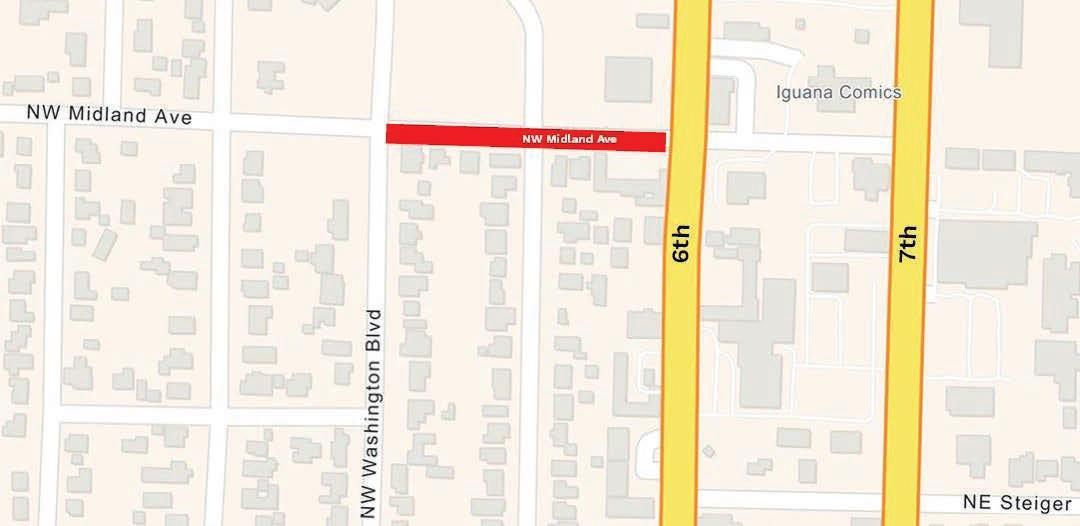
redirect traffic around the construction zone. Motorists traveling through this part of the city are being asked to plan ahead, allow for extra travel time, and consider alternate routes to avoid delays. The closure is expected to impact regular traffic flow, particularly during peak travel hours.
Emergency response access will also be affected during the closure period. Officials confirmed that emergency vehicles will not be permitted to pass through the work zone while construction is underway. Coordination with local emergency services is typically part of projects like this, though
the restriction highlights the importance of avoiding the area whenever possible.
City officials emphasize that while short-term disruptions can be inconvenient, projects like this are essential to maintaining reliable infrastructure and preventing larger issues in the future. Sewer system upgrades and repairs are often scheduled in concentrated timeframes to minimize long-term impact on the community.
Anyone seeking additional information about the closure or the scope of the project can contact Robco at 541-4762132.



SOURCE: WEATHER.COM







A direct line between local government and the people it serves will take center stage this week as the Grants Pass City Council prepares to host a Community Connection event designed to bring residents and officials together in a more relaxed and accessible setting.
Scheduled for Friday, May 8, 2026, the gathering will take place from 9:00 a.m. to 11:00 a.m. at Taste & See, located at 239 SE G Street in downtown Grants Pass. The event arrives at a time when community engagement continues to play a critical role in shaping local priorities, offering residents an opportunity to connect face to face with council members outside the formal structure of city meetings.
Unlike traditional council sessions held in chambers, this setting encourages open conversation and informal dialogue. Residents can expect a welcoming environment where questions, concerns, and ideas can be shared directly with elected officials. The goal is simple but important: to strengthen communication, build trust, and ensure

that community voices remain part of the decision making process.
City leaders have increasingly recognized the value of meeting people where they are, both physically and conversation-
ally. Events like this provide a space where discussions about infrastructure, public safety, housing, economic development, and everyday quality of life issues can unfold in a more personal way. For many, it
also removes the barriers that sometimes come with formal public comment periods.
The choice of Taste & See as the venue reflects a continued effort to support local businesses while creating a comfortable setting for civic engagement. Positioned in the heart of the city, the location makes it convenient for residents, business owners, and community members to stop in, even briefly, and take part in the conversation.
With the event just days away, city officials are encouraging participation from across the community. Whether someone has a specific concern, a broader idea, or simply wants to stay informed about the direction of Grants Pass, this gathering offers a meaningful chance to be heard.
As the city continues to navigate growth, challenges, and opportunity, moments like this serve as a reminder that local government works best when it remains connected to the people it represents. Friday morning’s event is expected to draw a diverse mix of voices, each contributing to the ongoing conversation about the future of Grants Pass.
From page 1
corridor. Residents can bring their own equipment or try on gear provided at the site, with trained staff and volunteers adjusting fit and explaining how life jackets are meant to function in real conditions.
The approach reflects a shift away from passive safety messaging. Officials are targeting behavior at the exact moment it matters, when boaters are preparing to enter the water and decisions are still being made.
Southern Oregon plays a central role in this year’s rollout. Communities along the Rogue River, including Merlin and Gold Hill, are among the areas hosting events, drawing on partnerships with local outfitters and paddling groups that see firsthand how quickly conditions can change. The Rogue, like many Oregon rivers, is fed by mountain snowpack, meaning water levels and temperatures can remain volatile well into early summer even as air temperatures climb.
Those conditions are part of what makes the state’s waterways both attractive and dangerous.
Cold water shock can incapacitate even experienced swimmers within minutes. Strong currents can pin or overturn small craft. Debris carried by runoff can create hazards that are not visible from the surface. These are not rare scenarios. They are routine conditions that rescue crews respond to every season.
The state’s safety push is unfolding alongside broader changes in how Oregon manages water recreation. Expanded requirements under the Waterway Access Permit program now apply to a wider range of boaters, including many using non-motorized craft. The program is designed to support enforcement, education, and infrastructure maintenance as usage continues to climb.
Officials are not treating these efforts as separate tracks. Education, enforcement, and access are being addressed together, with the goal of reducing incidents before they happen rather than responding after the fact.
The “Fit to Float” campaign also connects Oregon to a larger national framework. National Safe Boating Week, coordinated by the National Safe Boating Council and supported by the U.S. Coast Guard, has long focused on increasing life jacket use across the country. Oregon’s contribution this year stands out for how directly it engages the public at the local level, replacing
broad messaging with direct interaction.
For residents, the shift may feel subtle at first. It shows up as a staffed table near a boat ramp, a volunteer offering to check a life jacket, or a quick adjustment that turns loose, ineffective gear into something that could actually keep a person afloat.
But those small interventions are exactly where officials believe change happens.
Oregon does not lack for water, and it does not lack for people willing to use it. What the state has lacked, according to safety officials, is consistency in how people prepare before they get on the water. The early weeks of the season tend to expose that gap, as occasional boaters return without checking
equipment or accounting for changing conditions.
The state’s message this year is direct, and it is being delivered without much room for interpretation. Most boating deaths are preventable. The conditions are known. The risks are understood. The difference is preparation.
As river traffic builds in the coming weeks, the success of the campaign will not be measured by attendance at events or visibility across the state. It will be measured by what does not happen, fewer emergency calls, fewer recoveries, and fewer names added to a list that repeats itself too often.
Oregon’s waterways will remain as unpredictable as ever.
The state is trying to make the people on them less so.
Posting Date May 4, 2026

THIS WEEK’S SOUTHERN OREGON GOVERNMENT WATCH contains both facts and opinions. In full disclosure the author is a defendant against a lawsuit filed against him by John West, one of a few subjects of this article. But like all the author’s articles over the last two years in the Grants Pass Tribune, the author stands by all statements which are presented as fact. John West, recalled by 62% of voters that cast a ballot in December 2024, has brought a lawsuit against four different individuals that supported his recall campaign. In our opinion, these are frivolous lawsuits that are trying to take away our constitutional rights to free speech. As of today’s publication date, no court of law has ever reviewed a claim made against a writer or article in the Grants Pass Tribune based on the merit of the claim and judged any such writing was false or defamatory.
Because we’ve been paying very close attention to the activities of Josephine County government for many years, it’s easy to spot candidates for Josephine County elected positions that make statements during their campaigns that are false, misleading, or just make little sense given the realities faced by County government. Not surprisingly, given the public recalled him from his commissioner seat only 18 months ago, candidate for commissioner position #1 John West tops the list for candidates in the May 2026 primary election that has by far made the most false and outlandish statements.
John West has done some videos during his recent campaign, the latest being released by the Josephine County Republican Party’s media pages on May 3rd. This latest video repeats many of the “whoppers” West has told throughout his recent campaign but introduced many new statements that in our opinion are false or misleading.
John West statement #1: “One of the main jobs the County Commissioners have is to cut waste, abuse, and fraud… and we have all three…this County wastes a ton of money.” Many would agree that commissioners should be on the watch for these things, but the job of commissioner in JoCo’s form of government is to oversee the County from an administrative, budget, and legislative perspective. In many ways, the three commissioners are co-CEOs with each other. But the biggest problem with this statement are the examples that West provided right after making this statement.
John West statement #2 – West tried to make the case that County employees get four months of leave time per year. The problem is he included in his “calculation” any and all state and federal leave opportunities such as leave programs that only apply if you have a very sick family member or have a new baby in the family. This leave isn’t available to most employees
By Jay Meredith, CPA Investigative Journalist
most years and is generally only available for serious medical conditions. And County Commissioners can’t change these state and federal employment laws.
John West statement #3 – Mr. West estimated that the total cost of all County staff is close to $70 million per year and stated the average county employee cost the County around $140k to $150k per year including all benefit costs. False – according to the current fiscal year budget book if the County was fully staffed for the whole year, the total cost would be approximately $53.1 million per year and the average employee cost including all payroll taxes and benefits is $120,975. Generally speaking, PERS, health insurance, payroll taxes and all other benefits add another 40-50% on top of a County employee’s gross wages. Benefits and salary rates are not easily changed as most County employees are part of a union and often Josephine County’s salary rates are slightly less than our peer counties.
John West statement #4 – He said people ask him why he didn’t implement his self-proclaimed needed cost cutting when he was previously commissioner. He said I was getting ready to implement many of these things before I left office and now I’m trying to come back to do this. Funny, this is in direct opposition to statements made on his Facebook campaign page and various advertisements about “saving taxpayers over $2 million” when he was last in office (this is incorrect in my
opinion as explained in detail here in the April 22, 2026 edition of the S.O. Government Watch titled John West and Josephine County’s $2 million problem).
John West statement #5 – In providing supposed examples of abuse and waste, West stated that the last time the County changed its logo several years ago it cost Josephine County $1 million. According to a staff member who was working with the County at the time, the logo design cost closer to $20k and the cost of swapping out the logo on all the County vehicles would have been about $40k if they did them all at the same time (which they didn’t, they phased them in over time). And surely changes made to County stationary didn’t cost that much…so it would appear the total cost was likely well under $100k in total, far from the $1 million figure quoted by West.
John West statement #6 – West tried to make the case that the County has a bunch of underutilized vehicles and that employees should not be allowed to take vehicles home or use county vehicles for personal trips. Misleading – the County’s personnel policy and administrative policies already prevent employees from taking County vehicles home and using them for personal use with the exception of getting special approval when an employee has responsibilities to respond to certain emergencies. And the current policies already require justification for any vehicle not getting at least a certain amount of mileage
per year.
John West statement #7 – West says he wants to create policy that Commissioners only get two weeks paid vacation per year because after getting elected a commissioner could “get paid for 4 years and never show up to work” and there’s nothing you could do about that unless the commissioner gets recalled from office. It’s a great talking point that makes sense. Except the County Charter is the originating authority for salary terms for County Commissioners. It’s very likely that that Commissioners can’t change this policy, because only voters can change the Charter not the County Commissioners. For John West to have served two years as a County Commissioner before being recalled from office by voters and not know this, this should be a huge red flag as West seeks a second term in office.
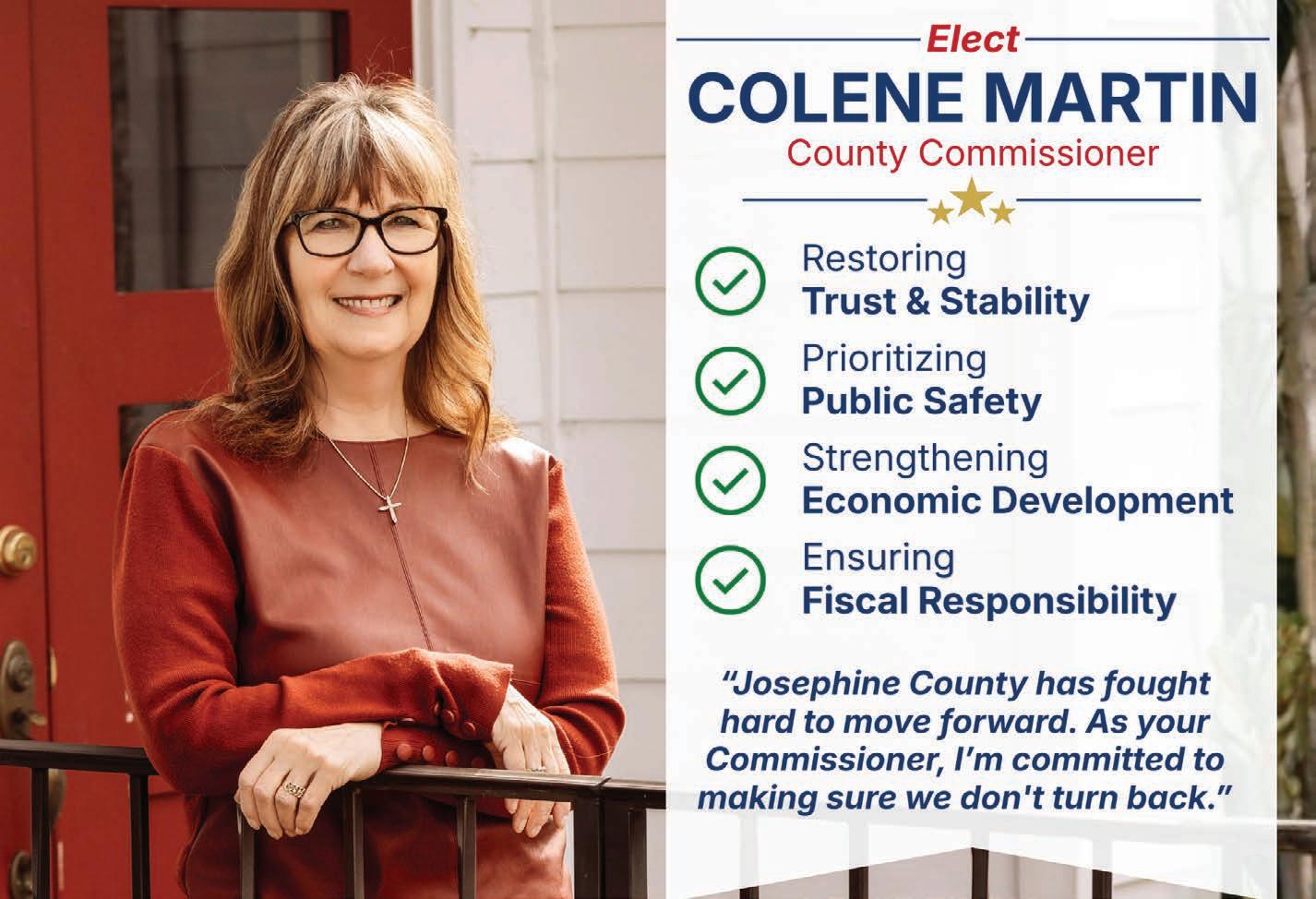
John West statement #8 - John West has also been blasting Colene Martin, who he clearly sees as his main competition for Commissioner position #1. West, on his Facebook campaign page last weekend, blasted the current Board of Commissioners for “proposing a budget of over $180 million, loaded with unnecessary spending and government expansion.” And yet, the recommended budget for next year has not even been released as of today and the Budget Committee hasn’t even had its first meeting of the budget season. The last budget John West himself approved before being recalled by voters was approximately $179 million in total for the 2024-2025 fiscal year.
John West statement #9 - On Facebook John West also blasted the current commissioners for “asking for higher property taxes-for the animal shelter, 4-H, and an upcoming jail levy.” Based on public discussions of the animal shelter and animal control levy, the 5-cent rate increase is a critical need and only represents a total tax increase of about 2% to total county rates and around $1 per month increase for the average single family house owner. Current commissioners have made no specific public tax proposals this year related to either 4-H or the jail levy, so this comment by West is a bit bizarre. And last but not least, while West is throwing stones in a glass house it should be noted that West conveniently doesn’t discuss is that County property tax rates for all County areas outside the City of Grants Pass increased by about 56% during the two years West was in office before being recalled due to a tax increase West voted to put on the ballot in November 2023.
Tracy Thompson – Candidate for Josephine County Commissioner position #1, Tracy has made one of the most unique statements or proposals during recent campaigning. Tracy Thompson has proposed a “net energy production plan”
which he claims would use biomass and solar out at the old Rough & Ready site out in Cave Junction. Thompson claims this operation would provide net revenue to Josephine County of $10-$15 million per year and create many jobs in the process. Thompson’s website didn’t have any details about the plan, leaving this investigator with a too good to be true type feeling. Josephine County and other timber counties in Oregon have been feeling the financial pressure for decades due to environmental regulations that nearly wiped out the timber industry. Biomass energy generation has been proposed many times over the years, but very little has been accomplished in this arena. Also, it sounds like this plan would be best carried out in the private sector, with potential economic development subsidies by state and local governments. If the plan is as promising as Thompson says, we hope that this will be pursued regardless of what happens in elections this year.
Simon Hare (running for Josephine County Treasurer) and Chad Hansen (running for Josephine County Commissioner position #2) both made candidate presentations at a conservative group early last month. The entire presentations were captured on video and some of the following statements came from this group meeting.
Simon Hare spent much of his presentation time seemingly bragging about the 8 years he was commissioner, as well as trying to make the case the Treasurer’s office is not transparent just because he knows very little of what goes in in the Treasurer’s office. Most may not recall that Simon Hare came into office for the first time about 15 years ago saying that the County didn’t need a new levy to be able to take care of the County’s law enforcement needs. Then he changed his mind and supported a levy effort but by then it was too late and the County had to lay off close to half of the employees that work in the Sheriff’s office and certain justice programs in 2012. It took approximately 12 years to recover most of the
law enforcement and justice service levels that were lost in 2012 during Hare’s first term as County Commissioner.
Simon Hare also did another interview recently saying the County should invest some of its cash reserves in precious metals. This is illegal under state law, and a treasurer candidate should know this. Josephine County also appears poised to bring a lawsuit against Simon Hare for not fulfilling his contract to be Budget Officer in 2025. From what was stated in a recent meeting of the commissioners, Simon Hare has refused to reimburse the County for payments made to him for the unfulfilled contract and he might owe as much as $25,000 to the County. Commissioners are also considering barring Simon Hare from doing any sort of contract service for the County for a period of time. This is awkward for a candidate trying to get elected to County Treasurer.
Chad Hansen said at the beginning of his presentation last month that he has become good friends with Simon Hare over the last few years. At the end of 2025, Chad Hansen applied for a $125,000 economic development grant with Josephine County under the relatively newly formed entity Patriot Solutions LLC. Commissioners made a temporary award decision of a $62,500 grant for a six-month trial period. This award was cancelled fairly quickly after the decision, when at least one commissioner discovered that the two owners of Patriot Solutions were Chad Hansen and Simon Hare.
Why was it not disclosed that Simon Hare was an owner of Patriot Solutions during the grant application process? Perhaps because Simon Hare owes money to Josephine County for an unfulfilled contract? As the economic development program of the county has recently been revamped, Patriot Solutions was contacted by the County to see if they wanted to participate in the next round of grant applications. According to a recent commissioner meeting about the economic development grant program, Patriot Solu-
tions was unresponsive when given the opportunity to apply again.
Chad Hansen also made a few claims during recent presentations that are significant red flags due to their accuracy. In recent years, Chad Hansen has been the most well-known for his role in a nonprofit org he created a few years ago called Home Bridging GP. Home Bridging GP has built quite a few “workforce” homes in Grants Pass and Cave Junction in recent years.
Chad Hansen statement #1 - The one claim from Chad’s recent presentations that caught my attention is Mr. Hansen’s claim that no government grants have been used to build any of the Home Bridging homes. And yet, Home Bridging GP has literally been the recipient of millions of dollars of government grants in recent years between grants/subsidies for the subdivision developments and for the housing rehab grant programs that have been overseen by Home Bridging. And the subdivision land in Cave Junction that is being developed by Home Bridging was provided to the organization by Josephine County at a price far under fair market value for the property which is effectively another government grant or government subsidy. In Grants Pass, Home Bridging was the recipient of a significant amount of federal grant awards passed through by the City of Grants Pass. Mr. Hansen claims the federal grants are for infrastructure to serve new subdivisions on the outskirts of Grants Pass and not for building the homes themselves and claimed that the homes are entirely funded by private funds. However, infrastructure to serve homes is normally viewed as part of the cost of building a home so this claim is misleading at best.
Chad Hansen statement #2 – Mr. Hansen also seems to go out of his way to say all of his service leading Home Bridging GP has been with zero pay or compensation to himself as the president of the nonprofit org. While this is likely true, and confirmed in recent nonprofit tax returns, it should be noted that Chad Hansen’s son
Austin Hansen works for Home Bridging and doing/overseeing the house developments and home projects. Also Chad claims that for all three subdivisions they have built or are in process of building (one in Cave Junction and two in Grants Pass) they have been given the property to build on without having to pay for the bare land itself. For one subdivision in Grants Pass that has been mostly built out, the land appears to have been given to Home Bridging by Grants Pass Area Habitat for Humanity. After Home Bridging subdivided and built homes on this property, one of the homes was purchased by Austin Hansen (2685 Estates Lane).
Chad Hansen statement #3 – Another interesting statement Mr. Hansen made in a presentation last month was the following: “The last thing I want to do is sit in an office and be your County Commissioner, but I have to do it. And I’m not going to actually sit in the office, I can’t do that… trust me, I’m going to be on the tailgate of everybody.” I perceived that statement to mean Chad doesn’t do administrative type office work. In my opinion, should Chad be elected, he will be shocked at how much administrative work needs to be done to be an effective commissioner. Josephine County has no County manager; therefore, Commissioners serve as the chief administrative officers of the County among other duties. Chad seems to be very busy and successful in the nonprofit arena, and my gut sense is he would be miserable in the administrative role of County Commissioner.
Thankfully, based on other statements made by Chad Hansen, he seems to be completely at peace if he’s not elected. But his close relationships with other candidates like Simon Hare and John West along with his high level of motivation to get elected are significant red flags. The Grants Pass Tribune has reached out to Chad Hansen many times this year by text and email. Chad refuses to respond to our media requests so readers can draw your own conclusions regarding these red flags.