
WEDNESDAY, MAY 20, 2026
WEDNESDAY, MAY 20, 2026
By John Oliver
John West does not need a courtroom, a campaign consultant, a political committee, or another week of silence to end the questions surrounding his education claims. He needs one document. One authorization. One clear answer.
That is what makes this issue so difficult to dismiss.
The Grants Pass Tribune has been examining questions surrounding West’s educational background after concerns were brought forward regarding information reportedly listed on his Oregon SEL 101 candidate filing form. The issue is not whether every candidate for Josephine County commissioner must hold a college degree. That is for voters to decide. The issue is whether a candidate seeking control of county government told the truth on official election paperwork.
That is not a minor distinction.
West, a former Josephine County commissioner who was later recalled from office, is now asking voters to return him to public authority. With that request comes a basic obligation: prove that the information presented to the public and filed with the state is accurate.
So far, West has not done that.
The Tribune contacted the high school connected to West’s educational history in an effort to verify whether he graduated. School officials properly declined to release educational records without West’s permission, citing privacy restrictions. That left the matter exactly where it belongs: with West.
He could authorize the school to verify his graduation. He could provide a diploma. He could provide a transcript. He could provide documenta-

tion of a GED. He could provide proof of the forestry-related college credential associated with his public background.
Instead, according to the Tribune, repeated requests have gone unanswered.
The newspaper also contacted other Josephine County commissioner candidates and asked them to voluntarily verify the education information they placed before voters. Nearly every candidate responded or cooperated in some form. West did not. Candidates, Rafferty, Seligman, and Hansen also did not respond, but West remains the central focus because the questions surrounding his public record, prior office, recall history, and repeated silence have grown more serious.
This is no longer just about education. It is
about judgment.
A candidate who has the documentation could end the story immediately. A candidate who respects voters would understand why the question matters. A candidate prepared to manage county business would not force the public, the press, and potentially state agencies to chase down records he could clear up himself.
Instead, Josephine County is left watching an unnecessary political sideshow over a question that should have been answered the first time it was asked.
The Tribune’s additional research has not resolved the matter. Searches through publicly available alumni resources, including Classmates.com,
• see WEST, page 7
By John Oliver
By Friday afternoon, the sound of engines will begin echoing across Grants Pass once again. Riverside Park will fill with families, lawn chairs, carnival lights, laughter, and the unmistakable energy that comes with another year of Boatnik. Boats will roar across the Rogue River, children will carry armfuls of fair food, old friends will reconnect, and for a few days the community will come together in the way Southern Oregon communities always seem to do best.
For many residents, Boatnik is tradition. It marks the unofficial beginning of summer. It is one of those rare local events where generations overlap naturally. Grandparents who attended decades ago now watch their grandchildren experience the same excitement along the riverbanks. Local businesses prepare for one of the busiest weekends of the year. Hotels fill up. Restaurants stay packed. The city comes alive. But woven quietly into all of that celebration is the true reason this weekend exists in the first place.
Memorial Day was never created to be just
another holiday. It was created to remember the men and women who never came home.
That meaning still matters deeply here in Southern Oregon.
This region has long carried a strong military backbone. Veterans live throughout Josephine County, Jackson County, and the surrounding rural communities. Some served in Vietnam. Some fought in Iraq and Afghanistan. Others stood watch during the Cold War or answered the call in places most Americans will never hear about. Many returned carrying memories they rarely speak about publicly. Some came home changed forever. Others never had the opportunity to return home at all.
For veterans, Memorial Day is not simply symbolic. It is personal.
It is the memory of a face that still appears decades later without warning. It is remembering the empty seat at a reunion that never gets filled again. It is hearing a helicopter overhead and briefly being transported backward in time. It is understanding that freedom has always carried a cost paid mostly

by young men and women who often never got the chance to grow old.
As a veteran myself, Memorial Day has always carried a complicated feeling. There is pride in having served beside incredible people. There is gratitude for those who stepped forward willingly when their country asked them to. But there is also reflection. Silence. Memory. Some names never leave you.
That is why this weekend matters beyond the carnival rides and river races.
• see MEMORIAL, page 3
By Ellen Ward
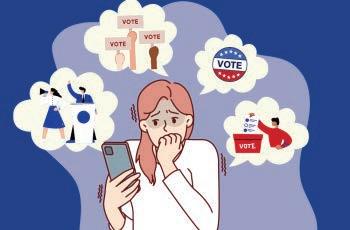
For many people across Southern Oregon, election season no longer feels like a routine civic process every few years. It feels exhausting. Conversations become tense, social media becomes overwhelming, and for some residents, the stress can begin affecting sleep, relationships, concentration, and even physical health. Mental health professionals say the experience has become so common that it now has a name widely recognized in behavioral health circles: election anxiety.
While election anxiety is not classified as a standalone medical diagnosis, doctors and mental health experts increasingly acknowledge it as a legitimate stress response tied to political uncertainty, nonstop media exposure, and emotional fear surrounding the future. The condition affects people from every political background, regardless of party affiliation, and experts say it has become more noticeable during modern election cycles fueled by social media, breaking news alerts, online arguments, and highly emotional political messaging.
In Southern Oregon communities where politics are often discussed openly and passionately, election anxiety can become especially amplified. Residents may worry about the economy, public safety, taxes, healthcare access, constitutional rights, inflation, housing costs, immigration, veterans’ services, education, or the overall direction of the country. For many voters, elections no longer feel distant or abstract. They feel personal.
Psychologists say one of the primary causes of election anxiety is uncertainty. Human beings naturally seek stability and predictability, especially during periods of financial pressure or social division. Elections introduce variables people cannot control, and when individuals believe the outcome could dramatically affect their lives, stress levels often rise.
Another major factor is constant exposure to political content. Smartphones and social media platforms now deliver political arguments, headlines, videos, and commentary around the clock. Unlike previous generations that consumed news during limited windows of time, modern audiences can remain connected
• see ELECTION, page 7

By John Oliver
For many Americans, inflation is no longer something discussed only in economic reports or political speeches. It is waiting at the gas pump, printed at the bottom of grocery receipts, and quietly climbing through utility bills, insurance premiums, and monthly housing costs. Two years after inflation appeared to be cooling from the record highs that dominated the Biden administration, many families across the nation are once again feeling the pressure of a rising cost of living, including thousands of households here in Southern Oregon.
According to the latest data released by the U.S. Bureau of Labor Statistics, inflation in April 2026 stood at approximately 3.8 percent year over year, slightly higher than the roughly 3.4 percent recorded during the same period in 2024. While those numbers may appear modest compared to the inflation spike that rattled the economy in 2022, the reality for consumers has become more complicated because some of the most essential day-to-day expenses have risen sharply once again.
Energy costs have become one of the clearest examples. National gasoline prices have climbed significantly over the past year, with AAA reporting the national average for regular gasoline exceeding $4.50 per gallon in mid-May 2026. In Oregon, drivers are paying even more, with statewide averages moving above $5.30 per gallon. For many residents in Josephine, Jackson, and Douglas counties, those prices are impossible to ignore in a region where long commutes, rural travel, and limited public transportation make driving a necessity rather than a luxury.
The increase has sparked renewed frus-

tration among voters who remember repeated promises during the 2024 presidential campaign that energy prices would quickly decline under President Donald Trump’s administration. While oil production in parts of the United States has remained active, global market instability, refinery constraints, transportation costs, and continuing geopolitical tensions have continued to influence fuel prices nationwide. Consumers ultimately judge economic conditions less by political messaging and more by what it costs to fill a pickup truck, heat a home, or buy groceries for a family of four.
Food prices have also continued their gradual climb. Although grocery inflation is lower than the dramatic surges seen several years ago, Americans are still paying noticeably
more for basic household necessities than they were before the pandemic-era inflation cycle began. Across Oregon, many residents say they have adapted by purchasing fewer nonessential items, delaying travel plans, or reducing restaurant visits in order to manage higher monthly expenses.
Housing and utility costs remain another major burden. Electricity prices nationwide have continued to rise, while insurance rates have increased sharply in many western states due to wildfire risk, rebuilding costs, and broader economic uncertainty. Southern Oregon residents are feeling those pressures especially hard as utility companies continue warning about infrastructure upgrades, wildfire mitigation expenses, and increasing seasonal
From page 1
Somewhere during the noise and excitement of Boatnik, there should still be a moment where the community pauses. Maybe it happens quietly at a cemetery. Maybe it happens during a flag ceremony. Maybe it is simply a family standing together for a brief second of gratitude before continuing their day. However it happens, remembrance deserves space.
Southern Oregon understands sacrifice better than many people realize. This is a region filled with working-class families, veterans, first responders, loggers, truck drivers, mechanics, nurses, and people who understand service in many different forms. The culture here still values patriotism without needing to put on a performance about it. Around here, support for veterans often shows up quietly. A handshake. A coffee paid for anonymously. A flag displayed outside a modest home. Respect does not always need to be loud to be genuine.
Boatnik itself reflects part of that same spirit. It is community-driven. Imperfect at times, noisy at times, but authentically local. It brings people together from every walk of life for something positive. In a world that often feels divided, there is still something refreshing about watching thousands of
people line the river simply to enjoy a weekend together.
That sense of togetherness is worth protecting. As Memorial Day weekend arrives, Southern Oregon will celebrate once again. Families will gather. Children will laugh. The Rogue River will once again become the center of attention in Grants Pass. There is nothing wrong with enjoying that. In many ways, the freedoms Americans celebrate during weekends like this exist because others were willing to sacrifice everything for them.
Enjoy the weekend. Support local businesses. Attend Boatnik. Cheer loudly. Spend time with family and friends.
But somewhere in the middle of all of it, take a moment of silence.
Remember the Americans who never made it home.
Remember the families who still carry that loss. And remember that Memorial Day was never about politics, division, or slogans. It has always been about honoring sacrifice, preserving memory, and recognizing that freedom has never been free. Write that down.
demand during extreme weather months. At the same time, wages have struggled to keep pace with renewed inflation pressures. Federal labor data indicates that real average hourly earnings have slightly declined over the past year when adjusted for inflation, meaning many workers are technically earning less purchasing power despite receiving higher paychecks on paper. That disconnect has contributed to growing economic fatigue among middle-income Americans who report working just as hard while feeling financially further behind.
Economists remain divided about where inflation is headed next. Some analysts believe rising energy costs and international instability could continue pushing prices upward through the remainder of 2026, while others argue the Federal Reserve may eventually regain control through continued interest rate policies and slower consumer spending. What remains clear is that inflation today feels different than the crisis peak of 2022. Instead of sudden sticker shock, Americans are now facing something quieter and more persistent: the steady realization that many everyday expenses simply never returned to where they once were.
In Southern Oregon, where working-class families, retirees, veterans, and small business owners often operate on tighter margins than larger metropolitan areas, the economic conversation has become deeply personal. Residents may disagree politically about who deserves blame or credit, but across the region there is growing agreement on one thing: the cost of living remains one of the defining issues shaping daily life in America today.

By Ellen Ward
The Arctic is once again becoming the center of a growing global power struggle, and Greenland now sits at the heart of it. New reports emerging from international diplomatic and defense circles indicate the Trump administration is seeking expanded authority to block or veto major Chinese and Russian business deals involving Greenland, a move that reflects the increasing strategic importance of the remote Arctic territory to the United States and its allies.
What once sounded like an unconventional political idea during Donald Trump’s first term has evolved into a far more serious geopolitical effort. Rather than attempting to purchase Greenland outright, current negotiations reportedly focus on long-term American military access, resource security, and limiting foreign influence over the island’s future economic development.
The discussions involve Greenland, Denmark, and the United States, with the White House emphasizing national security concerns tied to China’s expanding presence across the Arctic and Russia’s growing military activity in the region. According to multiple international reports, the Trump administration wants the ability to intervene if Chinese or Russian companies attempt to secure major mining, infrastructure, shipping, or energy agreements within Greenland.
American officials have argued that Greenland’s geographic position makes it one of the most strategically valuable territories in the world. Located between North America and Europe, Greenland sits along critical Arctic shipping corridors that are becoming increasingly
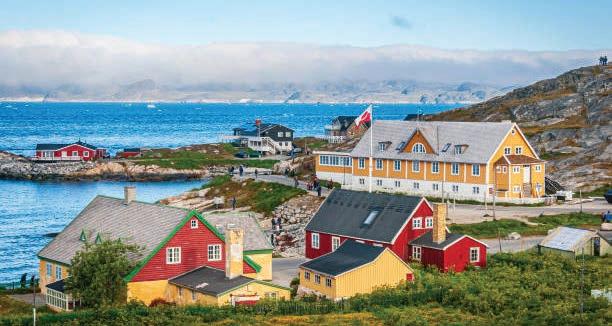
accessible as polar ice continues to melt. The island is also believed to contain vast reserves of rare earth minerals, uranium, oil, and natural gas, resources viewed as essential to the future of defense systems, electronics manufacturing, renewable energy technology, and advanced military equipment.
Concerns surrounding China’s involvement are tied largely to fears that Beijing could gain control over strategic mineral supply chains or develop long-term economic leverage in the Arctic through state-backed investments. Washington has spent several years attempting to reduce American dependence on Chinese rare earth production, making Greenland’s untapped mineral reserves particularly attractive to U.S. policymakers.
At the same time, Russia’s military expansion across the Arctic has intensified pressure on the Pentagon to strengthen northern defense

operations. Greenland already hosts Pituffik Space Base, formerly known as Thule Air Base, one of the United States military’s most important Arctic installations. The base plays a major role in missile warning systems, space surveillance, and North American defense coordination.
Recent reports suggest the Trump administration is seeking what some observers have described as a permanent security framework that would guarantee long-term U.S. military access to Greenland regardless of future political changes involving Denmark or Greenlandic independence. Some foreign policy analysts have referred to the proposal as a “forever clause,” though no finalized agreement has been publicly released.
Greenland’s government has acknowledged ongoing negotiations with the United States but continues to publicly insist that Greenland is not
for sale and that its sovereignty remains intact. Greenlandic officials have repeatedly stated that while they welcome economic partnerships and investment opportunities, decisions regarding the island’s future will remain under Greenlandic control.
Denmark has also pushed back against suggestions of American ownership or excessive influence over Greenland’s affairs. Relations between Copenhagen and Washington became strained earlier this year after renewed comments from Trump regarding Greenland’s strategic importance and the possibility of expanding American authority in the region.
The situation highlights how rapidly the Arctic has transformed from a remote frontier into one of the world’s most competitive geopolitical arenas. Melting ice has opened new maritime routes, expanded access to natural resources, and increased military interest from major global powers. Nations including China, Russia, the United States, Canada, and several European countries are all positioning themselves for greater influence across the region.
For the Trump administration, Greenland appears to represent far more than a territorial curiosity. It has become part of a broader strategy centered on Arctic dominance, resource security, and preventing rival nations from gaining footholds near North America. Whether the negotiations ultimately lead to a formal agreement remains unclear, but the developments signal that Greenland’s role in global politics is growing rapidly as competition for control of the Arctic intensifies.













By Ellen Ward
A marketing campaign that lasted only hours has triggered one of the most damaging public relations crises Starbucks has faced in Asia in years, exposing the economic risks global corporations encounter when branding collides with national trauma.
The controversy erupted in South Korea after Starbucks Korea launched a promotional campaign for a reusable tumbler collection branded around the word “Tank” on May 18, the anniversary of the 1980 Gwangju Democratic Uprising. The date holds profound significance across South Korea, marking the deadly military crackdown in which armed troops and armored vehicles were deployed against civilians protesting authoritarian rule.
What may have begun inside a corporate conference room as a routine product rollout rapidly transformed into a national flashpoint. Critics accused the company of failing to recognize the historical symbolism tied to tanks and military violence associated with the Gwangju massacre, where hundreds of civilians were killed during the suppression of pro-democracy demonstrations.
The backlash intensified further because promotional language tied to the campaign referenced a “Tak” sound made when placing the tumbler down. For many South Koreans, the wording evoked another painful chapter in the country’s democratic struggle. In 1987, government officials falsely claimed student activist Park Jong-chul died after a desk was struck with a “tak” sound during questioning, before the nation later learned he had been tortured to death by authorities. The incident helped ignite a broader dem-
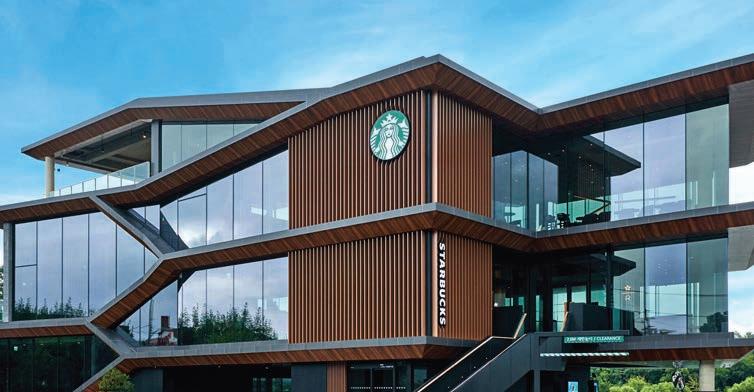
ocratic movement that reshaped South Korea’s political future.
Within hours of the campaign appearing online and in stores, social media platforms erupted with criticism, boycott demands, and accusations of corporate ignorance. Videos circulated showing customers discarding Starbucks merchandise while others called for accountability from executives overseeing the campaign. The speed of the outrage reflected not only the sensitivity of the historical references, but also the increasingly fragile relationship between multinational corporations and consumers operating inside politically and culturally divided societies.
The corporate response was swift and severe. Starbucks Korea removed the promotion and issued a public apology, while Shinsegae Group, the South Korean retail giant overseeing Starbucks operations in the country, moved to dismiss Starbucks Korea CEO Sohn Jeong-hyun amid mounting public pressure. The decision under-
scored how quickly consumer outrage can evolve into financial and leadership consequences in one of Asia’s most digitally connected economies.
International business analysts have pointed to the controversy as another example of how companies now face heightened scrutiny over messaging, symbolism, and timing. In South Korea especially, major historical events tied to military rule, democratization, and civil resistance remain deeply emotional and politically relevant decades later. Corporate campaigns perceived as insensitive are increasingly met with immediate public backlash capable of damaging both reputation and shareholder confidence.
The economic implications extended beyond Starbucks storefronts. Financial markets reacted to the controversy as investors weighed potential reputational damage to Shinsegae-linked holdings. Reports indicated shares connected to the retail group fell following the public uproar, adding another layer of pressure on corporate leadership
already managing a difficult consumer environment shaped by inflation, political polarization, and slowing retail growth across parts of Asia.
The incident also arrives during a politically tense period in South Korea, where businesses have struggled to avoid becoming entangled in national political divisions ahead of upcoming elections. Starbucks Korea had previously attempted to prevent political messaging inside its ordering system after customers began using candidate names and slogans as drink order nicknames. That effort alone reflected how deeply politics and consumer culture have become intertwined in modern South Korean society.
For international corporations, the Starbucks Korea controversy is likely to become a case study in cultural risk management. Global branding strategies that succeed in one market can collapse instantly in another when local history, political memory, and national identity are not fully understood.
The crisis also highlights a broader economic reality facing multinational brands in 2026. Consumers increasingly expect corporations to demonstrate cultural awareness, historical literacy, and social sensitivity alongside product quality and customer service. Mistakes that once may have produced temporary criticism can now trigger executive dismissals, shareholder concern, and international headlines within a single news cycle.
In South Korea, where the memory of authoritarian violence remains closely tied to the nation’s democratic identity, the reaction to Starbucks Korea’s campaign served as a reminder that history is never entirely separated from commerce.


ON MONDAY, MAY 18TH the Josephine County Board of Commissioners hosted a presentation from the Grants Pass & Josephine County Chamber of Commerce about the results of the most recent BR&E Survey (Business Retention & Expansion Survey). A collaborative effort between the Chamber, the City of Grants Pass, and Josephine County, the BR&E Survey has generally been done every three years since the year 1999. A total of 77 local businesses participated in this survey over the last year.
This award-winning program heavily uses volunteers, and they generally go out in pairs of 2 and discuss an extensive questionnaire with businesses. The survey takes 45 minutes to an hour to complete and covers wide-ranging topics like concerns, opportunities, how well are the city and county departments doing in the provision of the various services from each department, actual and expected sales/revenue growth, and much more. The general philosophy behind the survey is that the best way to improve the economic vitality of a community is to help the businesses already in that community to grow and expand and the survey should help identify ways we can do that.
In this year’s survey, three of the four top “concerns” of businesses were things largely out of our control at the local level such as worries about a recession, decreasing consumer confidence, and inflation. Availability of qualified workers was the number three concern, and that is somewhat in our control at the local level.
Only 43 percent of companies surveyed said their industry sales/production levels were increasing as compared to 61 percent when the last survey was done a few years ago. This percentage was as high as 78% back in 2017.
In various questions about innovations and changes made by businesses, “expanded use of technology” saw the highest percentage of businesses doing this or expecting to do this. Local resident Chuck Rund, Consultant with Long Research Consultants, LLC who made the BR&E survey presentation, remarked that technology and AI are the biggest trends affecting businesses
By Jay Meredith, CPA Investigative Journalist
nationwide today.
Mr. Rund then remarked about how few of the businesses surveyed have internet sales making up a larger percentage of their business sales. Only 14% of businesses surveyed had over 50% of their sales internet-based and only 9% had 2550% of their sales from the internet. And 42% of businesses surveyed had zero internet sales. The tone implied local businesses may not be leveraging technology enough compared to our peers across the nation.
The top three workforce issues were problems recruiting employees, availability of childcare, and availability of workforce housing. In the Community Disadvantages category, “Housing/ Homelessness” was number one and “Governance/Leadership” made the top four of local community disadvantages.
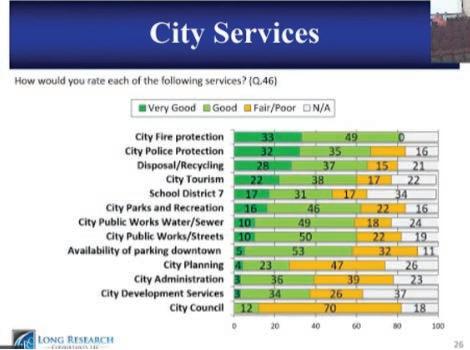
One standout was how well businesses rated services from the various Grants Pass and Josephine County departments. While not pictured on the slides here, the best ranked county depart-


ment was the Sheriff, followed by the Fairgrounds and the County Clerk’s office. For the City, Police and Fire services topped the best ranked departments. At the very bottom for the County was the Board of County Commissioners, with only 20% giving good ratings and for the City the City Council only received 12% good ratings.
Budgets and Urban Renewal Agencies
Speaking of economic development, which this survey was all about, budgets and urban renewal agencies (for cities in Oregon) play a big role how well services and infrastructure can be delivered and what incentives can be made at the city level to help with business developments.
The City of Grants Pass budget committee recently reviewed and approved the City’s budget in near record time, with only one notable adjustment related to the City’s urban renewal agency. More money was directed from the urban renewal agency to help pay for bond payments related to the City’s wastewater treatment plant upgrade which was done several years ago. This is good because it follows the plan for what the City’s urban renewal agency was supposed to do when it was created nearly 10 years ago and frees up a little more money for the City’s Wastewater utility to tackle a very long list of needed wastewater infrastructure projects.
Urban renewal agencies (URAs) are allowed to cover no more than 25% of the acreage inside a city, and the basic way they work is all the growth in assessed value on properties within the urban renewal zones go to the URA and then the URA funds projects that over time should help incentivize developments and increase property values even more than if those incentives didn’t exist.
URAs are hard to explain, but here’s one way to look at how they work for cities in Oregon and why EVERY city of any size in Oregon should have one. The growth in assessed values takes a little tax money away from the other taxing districts while the URA is in place. So it does slightly impact the City and all other taxing districts. But the portion of the tax coming from the local school district permanent tax rate doesn’t directly take tax revenue away from the school district.
Allow me to explain as simply as possible. The state has a school funding formula that essentially backfills the local tax amounts so that
all districts get the proper amount of funding per student. And due to the unique state constitutional laws about how property taxes work, all school districts have different local tax rates. So anything a city URA would take away from the school district’s property tax revenues essentially gets backfilled from state tax dollars.
From the City’s perspective, a URA is almost the equivalent of free grant money, due to how the state school district property taxes work. And it’s like having local control of some of our state tax dollars with limited strings. The main limitation is the URA funds have to be spent on the type of projects in the approved URA plan.
In the case of the Grants Pass URA, the Wastewater Plant expansion project and the new Water Treatment Plant being built today were both significant projects within the URA plan. The City’s URA boundaries were largely drawn around many of the main commercial corridors of Grants Pass and when formed was intended to benefit mainly economic development and business developments. This was and still is a business-centric URA. But the project list and boundaries of the URA have been adjusted slightly over time to include housing development incentives and a couple new projects.
Grants Pass, during the life of its URA, will receive the equivalent of tens of millions of increment tax revenues, much of which are the nearly “free” grant money from state tax dollars that can be controlled at the local level. Of course, it’s all our tax money so nothing is free, but there is big value to getting local control of some of our state tax dollars.
And on the flipside, if a city chooses not to use an urban renewal agency, it will essentially be allowing some of our tax dollars to be used somewhere else in the state. That is of course the hook with all state and federal grant or tax dollars…if we don’t use them someone else will.
This brings us to Cave Junction, the only other incorporated city in all of Josephine County. I recently learned that the City of Cave Junction was considering forming an urban renewal agency recently and in the end the city council chose not to form it. I highly recommend reconsideration of forming a URA in the City of Cave Junction as it could make a huge positive difference over a 20-30 year lifetime of the average URA.
As for budget matters of Josephine County, while the City of Grants Pass budget process is just about done, Josephine County only had its first budget committee meeting on Tuesday, May 19th. As opposed to some of the false and misleading campaign rhetoric coming from the commissioner candidate John West, according to this year’s budget officer Arthur O’Hare, the operating expense portion of the recommended budget for next fiscal year is over $2 million less than the current fiscal year. And there are about 20 less staff positions in this recommended budget as compared to the approved staffing positions in the current year’s budget. In my opinion, this is pretty much the opposite of John West’s recent accusations that the current commissioners growing government and growing the budget.
So once again, I recommend not believing anything coming from the John West commissioner campaign without doing your own research. In my opinion, the false and misleading statements from John West are just as prevalent as they were before Josephine County voters recalled him from office 18 months ago.
By John Oliver
A recent business survey presented through the Grants Pass and Josephine County Chamber of Commerce painted a revealing picture of how many local businesses viewed county government during one of the most politically turbulent periods in recent Josephine County history. While several county departments earned strong support from respondents, the Josephine County Board of Commissioners finished dead last among every service and agency included in the survey.
The study, conducted by Long Research Consultants, LLC, surveyed 77 businesses from throughout Josephine County and asked participants to rate county and community services as “Very Good,” “Good,” “Fair/Poor,” or “N/A.” The final chart showed a county government sharply divided in the eyes of the business community, where frontline services often received respectable approval while political leadership absorbed the harshest criticism.
At the top of the rankings sat the Josephine County Fairgrounds, which drew some of the strongest positive responses in the survey. Disposal and recycling services also performed well, alongside fire protection services, the Josephine County Clerk’s Office, county parks, and the Assessor’s Office. Those departments consistently received higher “Good” and “Very Good” ratings, suggesting that many businesses viewed day-to-day county operations far differently than the political body overseeing them.
Even departments that landed in the middle of the rankings reflected a more balanced public perception than the commissioners themselves. Public transportation services, public works, treasury and tax services, emergency preparedness, legal counsel, public health, and county planning all received
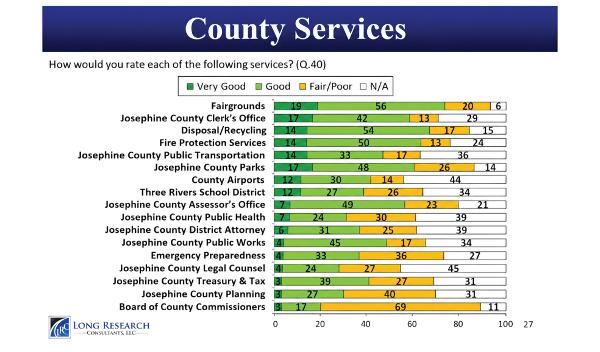
mixed reactions, but none approached the level of dissatisfaction attached to the Board of Commissioners.
Then came the final line on the chart. (Please see survey above)
The Board of County Commissioners not only ranked last overall, but by a margin difficult to ignore. Roughly 69 percent of surveyed businesses rated the Board as “Fair/Poor,” while only a small percentage selected either “Good” or “Very Good.” No other agency or department in the survey came close to matching that level of negative sentiment. The results arrive against the backdrop of years of political infighting, public controversy, recalls, budget disputes, administrative turnover, and growing frustration surrounding county leadership. Importantly, the survey reflected business opinions gathered during the tenure of the county’s previous board structure, which included recently recalled commissioners. Since the survey was conducted,
have not conclusively confirmed West’s high school diploma. Questions also remain regarding the claimed forestry-related education connected to Umpqua Community College, including whether the program existed during the timeframe associated with West’s claims.
None of that proves wrongdoing by itself. But silence does not help West. Refusal does not help West. Playing coy with basic verification does not help West. It only raises the stakes.
The SEL 101 form is an official election document. Oregon law treats false statements on election filings seriously, with potential penalties that may include significant fines and criminal consequences if a candidate knowingly provides false information. That makes this more than a campaign dispute. It makes verification a matter of public importance.
West could embarrass his critics today by producing the records. He could prove the Tribune wrong. He could show voters that the questions were unfounded. He could put the entire issue to rest before breakfast.
But he has not.
problem.
two newly appointed commissioners have entered office, and no updated survey has yet been released measuring whether business confidence has shifted under the county’s new political makeup.
That distinction matters.
The survey was not a referendum on the newly appointed commissioners now serving Josephine County. Instead, it serves as a numerical snapshot of how portions of the local business community viewed the county’s former leadership during a period marked by political instability and constant public conflict.
What makes the survey especially notable is the contrast it revealed between county leadership and many county employees themselves. Businesses responding to the survey appeared willing to give credit to departments they believed were functioning effectively, even while expressing deep dissatisfaction with the board directing county pol-
icy and governance.
That separation between operations and politics became one of the clearest takeaways from the data.
The Fairgrounds, parks, fire services, and clerk’s office all demonstrated that county services were still capable of earning public trust and positive feedback despite the increasingly tense political climate surrounding county government. Meanwhile, the commissioners’ results suggested many businesses felt disconnected from the county’s broader leadership direction.
Although the survey does not explain why respondents selected their answers, the timing alone speaks volumes. During the period covered by the survey, Josephine County government faced repeated controversies involving transparency disputes, public records issues, internal political battles, economic concerns, staffing conflicts, and public criticism that frequently spilled beyond commission chambers and into the wider community.
Business confidence surveys in smaller counties often carry more weight than simple customer satisfaction polls. In communities like Josephine County, where county decisions directly affect permitting, development, commerce, infrastructure, and investment, the opinions of local businesses can become an early warning sign for broader public frustration.
Whether the county’s newly reshaped Board of Commissioners can repair that confidence remains unanswered. What is clear, however, is that the survey presented by Long Research Consultants, LLC delivered one unmistakable message from a portion of Josephine County’s business community: many respondents believed county leadership had fallen badly out of step with the people doing business in the county they govern.
From page 1
Neither possibility reflects well on a candidate seeking the keys to Josephine County government.
The Grants Pass Tribune has stated it is escalating the matter to the Oregon Government Ethics Commission and the Oregon Secretary of State for review. If necessary, the newspaper may also seek court intervention to obtain records that West could voluntarily authorize at any time.
For Josephine County voters, the question is now painfully simple.
If John West wants to be taken seriously as a candidate for county commissioner, he should stop treating transparency like a game and produce the documentation. Education may not be the only measure of leadership, but honesty is.
to political conflict every minute of the day. Experts say the brain is not designed to remain in a prolonged state of emotional alertness for months at a time.
For some residents, election anxiety may appear mild. They may become irritated more easily, lose sleep, or feel emotionally drained after consuming too much political news. Others experience more severe symptoms, including headaches, muscle tension, elevated heart rate, stomach problems, panic attacks, fatigue, racing thoughts, or trouble concentrating. Mental health providers also report that election-related stress can worsen preexisting conditions such as depression, generalized anxiety disorder, or post-traumatic stress disorder.
Another growing concern involves what specialists often describe as “doomscrolling.” This occurs when people compulsively consume negative political news and online debates despite knowing it increases stress and emotional fatigue. The behavior creates a cycle where individuals continue searching for reassurance or certainty while exposing themselves to increasingly emotional and divisive content.
Health experts emphasize that people experiencing election anxiety are not “crazy,” weak, or irrational. The body often responds to prolonged political stress similarly to how it responds to other forms of chronic stress. Elevated cortisol and adrenaline levels over extended periods can affect mood, sleep quality, blood pressure, immune function, and overall emotional well-being.
Mental health professionals recommend several practical ways to reduce election-related stress while remaining informed. Limiting nonstop political exposure, taking breaks from social media, maintaining regular sleep schedules, exercising, spending time outdoors, and focusing on family or community activities can help regulate emotional balance. Experts also encourage people to separate constant political commentary from everyday reality, reminding residents that social media algorithms are often designed to amplify outrage and fear because emotional content generates attention.
That leaves only two reasonable possibilities for voters to consider. Either West has the records and is choosing to turn a simple request into a political game, or he does not have the records and has a much larger
The question still stands, and with each passing day without a direct answer, the silence surrounding it only grows louder. Does John West possess the high school diploma and educational credentials he claimed on his SEL filing form, or did he submit false information while seeking public office? These are not petty political attacks or manufactured controversy. They are straightforward questions tied directly to transparency, honesty, and the integrity expected of anyone asking the citizens of Josephine County to hand them authority over public affairs. From page 1
Relationships can also suffer during election seasons. Families, coworkers, neighbors, and longtime friends may begin avoiding discussions altogether out of fear that political disagreements could turn hostile. In smaller communities where residents interact regularly, tension can quietly build beneath the surface, leaving some individuals feeling isolated or emotionally exhausted.
Southern Oregon has weathered difficult years marked by economic strain, wildfires, healthcare shortages, and political division. Election anxiety is increasingly becoming another challenge many residents quietly carry. Mental health advocates say acknowledging the issue openly may help reduce stigma for people struggling with stress during politically charged times.
As another election season approaches, experts say one of the most important reminders for voters may also be the simplest: staying informed is healthy, but living in a permanent state of political fear is not.

By John Oliver
As this Memorial Day weekend approaches in Grants Pass, one of Boatnik’s most recognizable traditions is preparing to return to the banks of the Rogue River. The Dutch Bros Golf Shoot-Out is set to begin Friday evening and continue through the weekend, bringing golfers, spectators, and festival crowds together for three days of competition centered around one of the most unusual golf challenges in Southern Oregon.
The annual event combines precision golf with the fast-moving waters of the Rogue River, creating a tournament unlike a traditional round on a golf course. Competitors stand on land near the river and attempt to hit golf balls toward a floating target positioned approximately 130 to 140 yards away on a barge in the middle of the water. The final championship round is scheduled for Sunday following several days of elimination play.
Tournament organizers say only 11 openings remain for Friday’s competition and another 11 spots are still available for Saturday, leaving limited time for golfers hoping to secure a position in the bracket-style tournament. Entry into the event costs $100 per participant, per bracket.
Contestants compete head-to-head in single-elimination match play. Each golfer is given two shots toward the floating target while judg-

es stationed on the 7th Street Bridge determine which player lands closest. The closest competitor advances to the next round until only four finalists remain.
Those final competitors will then attempt the tournament’s most difficult challenge: landing a golf ball directly into a basket mounted above the floating platform for a chance at the event’s top grand prize. Organizers advertise a potential
payout of up to $50,000 during the competition weekend, adding to the excitement surrounding the event each year.
In addition to the grand prize opportunity, cash awards will also be distributed to top finishers in the tournament standings. First place is scheduled to receive $1,000, while second through fourth place winners will also earn prize money.
Friday participants are being asked to arrive by 3:30 p.m. ahead of the official 4 p.m. start time. Practice balls will also be available for purchase during the event for $2 each.
The competition has become one of the more recognizable attractions connected to Boatnik festivities, drawing both experienced golfers and first-time participants looking to test their accuracy under pressure. Spectators often line portions of the riverfront and nearby bridges to watch players attempt shots over the Rogue River while tournament officials track distances and determine advancing competitors.
Event rules prohibit current or former professional golfers and recent collegiate players from participating, helping keep the field centered around amateur competition. Participants are allowed to bring their own clubs and golf balls, although no practice or warm-up shots are permitted once tournament play begins.
The Boatnik Golf Shoot-Out arrives as Grants Pass prepares for one of its busiest weekends of the year. Memorial Day weekend traditionally brings thousands of visitors into the region for Boatnik races, parades, festivals, concerts, and river activities, creating a major tourism and economic boost for local businesses, hotels, restaurants, and shops throughout Josephine County.
City of Grants Pass
As Grants Pass prepares for another Boatnik weekend, city officials are warning residents and visitors to expect significant traffic disruptions, bridge closures, parking restrictions, and limited river access beginning Thursday and continuing through Memorial Day Monday.
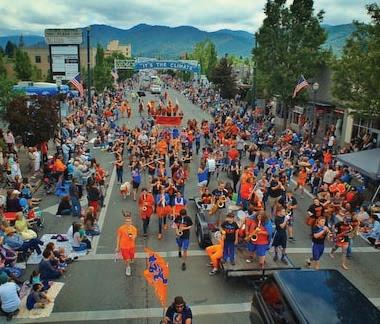
The annual Boatnik festival officially opens Thursday at 2 p.m. inside Riverside Park and is expected to draw large crowds throughout the holiday weekend. With thousands of attendees anticipated for races, concerts, vendors, and the annual parade, city officials are encouraging travelers to plan routes early and allow additional travel time around downtown Grants Pass and the Rogue River corridor.
Parking and vehicle congestion are expected to increase substantially near Riverside Park, East Park Street, Sixth Street, and the Caveman Bridge area. Officials are encouraging festivalgoers to utilize the Frog Parking lot at 160 Redwood Highway near the corner of West Park and Sixth streets, where parking remains free during the event.
One of the largest impacts to traffic will occur on Saturday during the Boatnik Parade. Sixth Street will close to all regular vehicle traffic between “A” Street and the Rogue River beginning at 8 a.m. and is expected to remain closed until approximately 1 p.m. Only authorized parade participants will be allowed access during the closure period.
Traffic traveling southbound toward the river during parade hours will be rerouted from
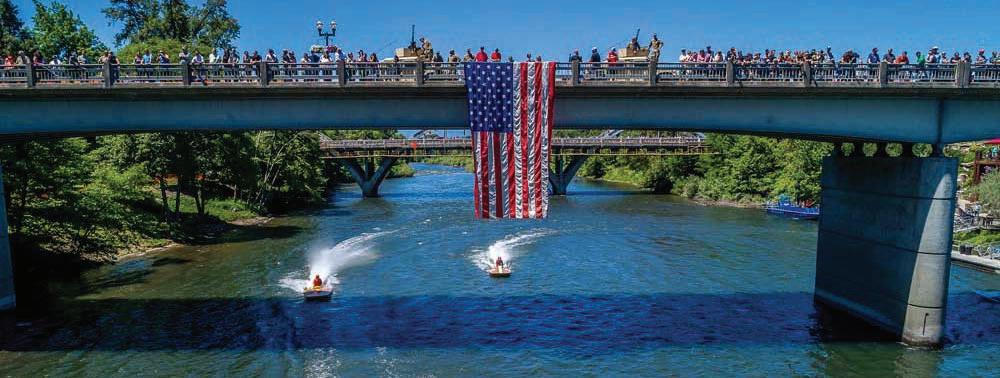
Sixth Street at “A” Street toward Beacon Drive and then onto the Grants Pass Parkway. Drivers attempting to cross the Rogue River are being advised to use the Grants Pass Parkway Bridge or the Seventh Street Bridge, which will operate northbound only during portions of the closure.
The Sixth Street Bridge, commonly known as the Caveman Bridge, will also close to all vehicle traffic during parade operations from 8 a.m. to approximately 1 p.m. Saturday. Residents living south of the river or travelers heading toward Redwood Highway and nearby communities are being encouraged to leave earlier than normal due to anticipated delays and congestion.
Additional parking restrictions will begin late Friday night. No parking will be permitted on Sixth Street between “A” Street and the Caveman Bridge, or along Voorhies Way between Sixth and Seventh streets, beginning at midnight Friday and continuing until after the parade concludes Saturday afternoon.
City officials are also asking parade spectators to remain immediately adjacent to curbside
parking stalls along the route in order to maintain safe viewing conditions and keep pedestrian traffic out of the roadway. Organizers are discouraging residents from bringing dogs along the parade route due to crowd size, loud noise, and heavy activity levels.
Beyond the downtown corridor, several changes will affect park and river access throughout the weekend. East Park Street will close to most vehicle traffic beginning Friday at 7 a.m. and will remain restricted through Monday evening at 9 p.m. Only vehicles displaying authorized Boatnik parking permits or disabled parking placards will be allowed entry through the Parkway entrance. Baker Park will also close to general vehicle traffic and boat launching activities beginning Friday at 5 p.m. The closure will remain in place until Monday at 3 p.m.
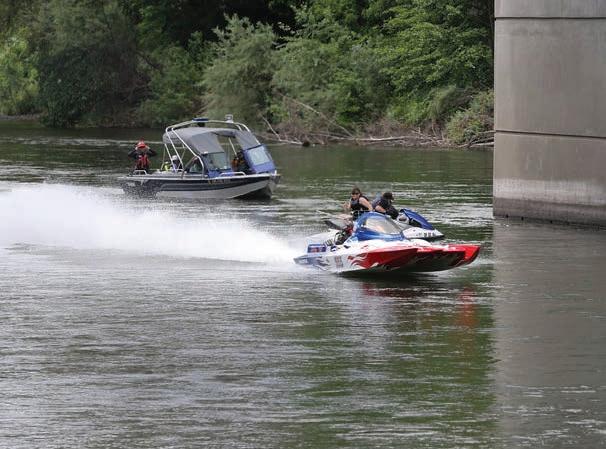
River restrictions connected to the Boatnik races are expected to impact recreational users throughout the weekend as well. During official race periods, sections of the Rogue River will close entirely to public watercraft between Baker Park
and the Sixth Street Bridge, with an expanded closure area extending to Robertson Bridge on Monday afternoon.
Law enforcement, rescue personnel, and authorized race officials will be the only vessels permitted on the water during active closures. Officials say private boaters are prohibited from assisting with rescue operations for safety reasons and that unauthorized activity on the water could result in citations for reckless or unsafe boating operations carrying fines up to $440 under Oregon boating laws.
Spectators are also being instructed to remain at least 50 feet from the active waterway during race operations. Boats may only anchor along shorelines in approved locations determined safe by race officials and law enforcement personnel.
The scheduled river closures are as follows:
Friday, May 22: 6 p.m. to 10:15 p.m. from Baker Park to the Sixth Street Bridge.
Saturday, May 23: 11 a.m. to 8 p.m. from Baker Park to the Sixth Street Bridge.
Sunday, May 24: 11 a.m. to 10:15 p.m. from Baker Park to the Sixth Street Bridge.
Monday, May 25: 9 a.m. to noon from Baker Park to the Sixth Street Bridge, followed by noon to 3 p.m. from Baker Park to Robertson Bridge.
City officials are encouraging residents and travelers to prepare ahead, remain patient during periods of congestion, and follow posted detours and public safety instructions throughout the holiday weekend.




By John Oliver
For decades, international travel for most Americans revolved around a simple checklist consisting of a valid passport, airline ticket, and luggage packed for departure. That routine is rapidly changing as governments around the world introduce a growing network of digital entry systems, electronic authorizations, biometric screening measures, and stricter immigration verification policies that are quietly transforming the modern travel experience before passengers even step onto an aircraft.
As summer travel demand surges across the United States, federal agencies and international aviation authorities are warning travelers to prepare for increasingly complex entry requirements that extend well beyond traditional passport inspections. Many countries now require electronic pre-approvals, digital customs registrations, proof of onward travel, accommodation confirmations, or additional documentation tied directly to airline boarding systems. Travelers who fail to complete those steps in advance are increasingly finding themselves denied boarding at U.S. airports despite holding valid passports and purchased tickets.
The shift reflects a broader global restructuring of border management that accelerated following the COVID-19 pandemic and has since evolved into a permanent layer of digital immigration screening. Nations across Europe, Asia, Oceania, the Middle East, and parts of Latin America have expanded the use of Electronic Travel Authorizations, commonly referred to as ETAs, which function as advance permission systems for visitors arriving from visa-exempt countries such as the United States.
Unlike traditional visas issued through embassies or consulates, these systems are typically completed online and connected electronically to a traveler’s passport. Applications often require passport scans, personal information, travel itineraries, criminal history disclosures, and processing fees before approval is granted. In some destinations, approvals may arrive within minutes, while others can take several days, creating complications for travelers booking last-minute
international flights.
The United Kingdom has already implemented its ETA program for many incoming foreign travelers, while Europe continues preparing for the launch of the ETIAS screening system covering much of the Schengen travel region. Australia and New Zealand have operated similar systems for years, and additional countries continue moving toward digital pre-clearance programs as governments attempt to tighten border monitoring while streamlining airport processing.
Airlines themselves have become frontline enforcement agencies in this new system. International carriers now rely heavily on global immigration databases that instantly verify whether passengers possess the proper travel approvals before boarding passes are issued. Travelers missing required documentation may never reach customs overseas because airline systems can automatically block boarding during check-in procedures.
Another growing issue affecting American travelers involves proof of onward travel requirements, which are being enforced more aggressively in multiple countries this year.
Travelers entering foreign nations on one-way tickets may be required to provide evidence that they intend to leave the country before their authorized stay expires. Return airline tickets, cruise reservations, or confirmed departure itineraries are increasingly requested by both airlines and immigration officials.
The trend is especially noticeable in tourism-heavy regions where governments are attempting to reduce visa overstays and undocumented residency. Travelers visiting parts of Southeast Asia, Central America, and South America have reported heightened scrutiny surrounding onward travel documentation, particularly among budget travelers, digital nomads, and passengers using flexible oneway itineraries.
Passport validity rules are also emerging as a major source of confusion for travelers. Many Americans remain unaware that several countries require passports to remain valid for at least six months beyond the date of entry. A passport that appears valid to the traveler may still fail to meet entry standards abroad, creating situations where passengers
are turned away before departure.
Federal officials are also encouraging travelers to prepare for increased use of biometric identity systems and digital customs processing at airports worldwide. Facial recognition checkpoints, automated passport gates, and electronic arrival declarations are becoming standard infrastructure at major international hubs as governments continue modernizing border security operations.
The result is a travel environment where preparation increasingly determines whether a trip begins smoothly or ends at the departure gate. International travel now involves layers of digital verification that did not exist for previous generations of travelers, placing greater responsibility on passengers to understand the rules of each destination long before leaving home.
For millions of Americans planning vacations, cruises, business travel, or international family visits this summer, the changing landscape serves as a reminder that modern travel documents now extend far beyond the passport itself.

5 DAY OUTLOOK
SOURCE: WEATHER.COM
WEDNESDAY





Posting May 18, 2026