
WEDNESDAY, MAY 13, 2026
WEDNESDAY, MAY 13, 2026
By John Oliver
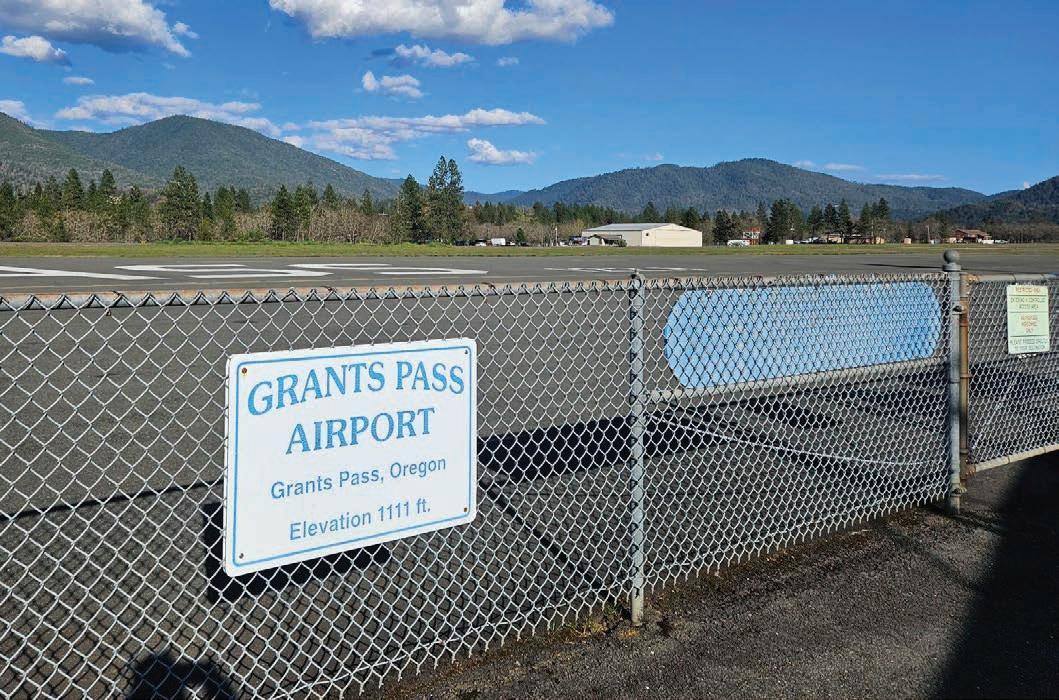
The investigation and public scrutiny surrounding operations at the Merlin, Grants Pass airport did not end when Airports Manager Michael Crisafulli walked back into his office this week after months on paid administrative leave. Instead, the situation surrounding the airport appears to be widening into something much larger, with new questions now emerging about airport leases, financial oversight, internal controls, and whether Josephine County has properly monitored one of its most politically sensitive departments for years.
What initially began as concerns tied to administrative policies and internal county investigations is now evolving into a broader examination of how airport property has allegedly been managed behind the scenes, who benefited from longstanding lease arrangements, and whether adequate safeguards were ever in place to protect public assets.
New information recently submitted directly to the Josephine County Board of Commissioners points to Board Order 2025-049, included in the county’s July 3 board packet. The order appears to place broad authority over airport leases into the hands of the Airports Manager, allowing lease agreements tied to airport property at both the Grants Pass and Illinois Valley airports to move forward without direct approval from the Board of Commissioners.
That authority is now drawing renewed at-
tention as additional records and allegations continue surfacing through what has become an ongoing investigation into airport operations.
According to information provided to commissioners, concerns surrounding airport leases first intensified during the summer of 2025 after a public records request was submitted seeking a master list of airport leases reportedly maintained by previous airport employees. The requestor states they were informed that no compiled list existed and were instead quoted what they described as an excessive cost to manually
reproduce lease records individually.
Months later, however, a lease spreadsheet updated through July 2024 was reportedly obtained through another county process, immediately raising questions about why the records were not originally disclosed.
The contents of that lease list reportedly opened the door to even more concerns.
According to the information submitted to commissioners, some leases appeared outdated or expired while some airport users may

Josephine County Waste Rates Increase June 1 •
Questions of Property Law and Disclosure Rules Ends Investigation
By John Oliver
A state ethics investigation centered on former Josephine County Commissioner Andreas Blech ended not with sanctions or penalties, but with a unanimous dismissal after Oregon Government Ethics Commissioners openly questioned whether the alleged violation was even clearly defined under existing law.
The case, argued before the Oregon Government Ethics Commission during a public meeting, focused on whether Blech failed to properly disclose ownership interests tied to aircraft hangars at the Grants Pass Airport while serving as a county commissioner. Investigators also examined whether Blech should have declared a conflict of interest during public discussions involving airport infrastructure improvements in 2025.
At the center of the dispute was a complicated question that repeatedly surfaced throughout the hearing: Are privately owned aircraft hangars sitting on leased county airport
property considered “real property” under Oregon ethics law?
State investigators argued they were.
According to the investigative report presented during the hearing, Blech owned seven aircraft hangars located at the Merlin, Grants Pass Airport while leasing the land beneath them from Josephine County. Investigators concluded that the hangars constituted “real property improvements” and therefore created a “beneficial interest” in airport property that should have been listed on Blech’s Statement of Economic Interest filings.
The complaint also alleged that Blech failed to properly disclose conflicts tied to airport matters discussed during a July 17, 2025 Board of Commissioners meeting. Investigators ultimately acknowledged, however, that Blech publicly identified himself during that meeting as both a tenant and user of the airport facility before discussions took place. The commission’s investigator stated that disclosure appeared sufficient to satisfy conflict-of-interest requirements under Oregon law.
That left the debate focused almost entirely on the definition of the hangars themselves.
During testimony, Blech forcefully rejected
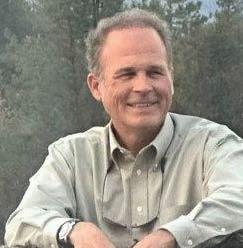
the idea that the hangars should legally be classified as real estate. Speaking directly to the commission, he described the structures as movable personal property sitting on federally regulated airport land that private individuals cannot own outright.
“The law specifically requires the disclosure of real property, but the aircraft hangars in question are legally and functionally personal property,” Blech told commissioners during the hearing.
Blech argued that some hangars were built
• see ETHICS, page 3
By John Oliver
For many residents across Josephine County, the new monthly statement arriving in the mailbox this spring carried a reminder that another everyday cost of living is about to climb. Beginning June 1, waste disposal rates for Josephine County customers will increase by 4.80 percent, marking the latest adjustment tied to the growing costs of maintaining Southern Oregon’s waste management infrastructure, including operations connected to the Kerby Transfer Station in the Illinois Valley.
While garbage collection and transfer services rarely dominate public conversation, local officials and waste service providers say the increase reflects the economic reality of operating a rural disposal system during a period of continued inflation, rising fuel prices, equipment expenses, insurance costs, and labor demands. The adjustment impacts customers countywide and is being presented as part of an ongoing effort to maintain stable and reliable waste services throughout Josephine County.
The Kerby Transfer Station, located along Kerby Mainline Road in the Illinois Valley, remains one of the most important pieces of waste infrastructure serving the southern end of the county. The facility acts as a central collection and transfer hub where household garbage, recyclables, and refuse from surrounding communities are consolidated before being transported to larger disposal facilities outside the region.
For rural residents living throughout Cave Junction, Kerby, Selma, O’Brien, and surrounding areas, the station provides a practical and accessible option for handling household waste in a geographically isolated part of the county where alternatives are limited. Without the transfer station, many residents would face significantly longer travel distances for disposal services, while county leaders warn the region could also see an increase in illegal dumping along roadsides,
• see JOSEPHINE, page 9

By Ellen Ward
As Oregon’s political season accelerates and economic concerns continue weighing heavily on households across the state, one state representative is drawing an unusually broad coalition of support from labor organizations, business groups, community advocates, and local elected leaders.
State Rep. Daniel Nguyen announced this week that he has received an endorsement from Oregon SEIU, one of the state’s largest labor unions, adding to a growing list of organizations and public officials supporting his re-election campaign. The endorsement places Nguyen among a small group of Oregon lawmakers currently receiving backing from organizations that often represent a wide range of interests across labor, housing, public safety, education, and economic development sectors.
The latest announcement arrives during a period when many Oregon voters remain focused on rising living costs, public safety concerns, housing shortages, and uncertainty surrounding the national economy. Political observers across the state have increasingly noted that candidates capable of building support across multiple industries and constituencies may hold a stronger advantage heading deeper into the election cycle.
Nguyen, whose district includes parts of Southwest Portland and Lake Oswego, has spent much of his recent legislative messaging centered on economic stability, workforce development, infrastructure investment, and protections for working families. Supporters say his ability to engage

with both labor organizations and business groups reflects a practical approach to governance at a time when many voters appear frustrated by political division.
Among the organizations publicly backing Nguyen are labor unions representing construction trades, firefighters, electrical workers, grocery employees, public employees, and transportation workers. Those endorsements include Oregon AFSCME Council 75, the Oregon State Firefighters Council, the Oregon State Building Trades Council, Teamsters Joint Council No. 37, UFCW Local 555, Iron Workers Local 29, and several other statewide organizations representing thousands of workers across Oregon.
Robert Camarillo of the Oregon Building Trades Council praised Nguyen’s focus on workforce development and skilled trades training, describing him as “the leader we need to navigate our changing economy
and the state’s budget as we work to create family-sustaining middle-class jobs.”
Support for Nguyen has also extended beyond labor groups into organizations tied to housing, education, business development, and community advocacy. Endorsements from Stand for Children, Multifamily Housing NW, the Portland Metro Chamber, Humane Voters Oregon, and Oregon Business & Industry highlight the range of interests now aligning behind the incumbent lawmaker.
Political analysts often view that type of crossover support as notable in Oregon politics, where coalitions can sometimes fracture between labor, business, housing, and activist interests. In Nguyen’s case, supporters argue his legislative priorities have managed to bridge several of those divides.
State House Majority Leader Ben Bowman described Nguyen’s support base as “big and broad,” while emphasizing that many Oregon residents remain deeply concerned about affordability and economic pressure. Bowman also pointed to Nguyen’s work surrounding utility relief efforts, immigration protections, and access to healthcare services as reasons for his continued support among voters and advocacy groups.
Nguyen’s campaign also highlighted endorsements from statewide and regional leaders, including Oregon’s congressional delegation representing the Portland metro area, local mayors, city councilors, and state officials. Those endorsements signal growing institutional support at a
From page 1
with hitches designed specifically to move them and noted that lease agreements did not transfer ownership of the structures to the county once leases expired. He also pointed to how the Josephine County Tax Assessor’s Office categorized the hangars separately from land ownership.
The hearing took a notable turn when commissioners themselves began expressing uncertainty about whether the ethics complaint rested on solid legal ground.
One commissioner openly stated that expecting an elected official to interpret the issue differently than the county tax assessor would be “a big reach,” particularly after investigators admitted the assessor’s office could not provide a definitive answer on whether the hangars legally qualified as real property.
Other commissioners questioned whether the case exposed broader ambiguity inside Oregon’s ethics reporting requirements rather than intentional misconduct by a public official.
Commission Chair Shenoa Payne acknowledged the issue appeared “thorny” and suggested the com-
mission itself may need to develop clearer legal guidance for future elected officials facing similar disclosure questions.
Blech also defended his participation in airport infrastructure discussions, arguing the projects had been underway for years before his tenure and benefited far more than just airport tenants. He described the improvements as community-wide infrastructure investments tied to public safety, firefighting operations, medevac services, and general aviation activity throughout Josephine County.
After discussion among commissioners, the commission voted unanimously, 6-0, to dismiss the complaint entirely. No violations were sustained against the former commissioner.
The dismissal closes the state ethics case against Blech, but the hearing exposed a deeper issue that may continue to shadow local government in Josephine County: where the line exists between private financial interests and public infrastructure policy when elected officials themselves are part of the industries affected by county decisions.
time when campaigns throughout Oregon are increasingly focused on turnout and coalition-building ahead of competitive races.
Portland City Councilor Olivia Clark credited Nguyen with supporting several high-profile Portland-area projects and cultural institutions, including investments connected to the Moda Center, the James Beard Public Market, and several longstanding community festivals. Clark said future collaboration between state and local governments will remain essential as Portland and surrounding communities continue navigating economic recovery and redevelopment efforts.
For many Oregon voters, however, the broader question may center less on endorsements themselves and more on what those endorsements reveal about the current political climate. Rising costs, workforce shortages, public infrastructure concerns, and economic uncertainty continue dominating conversations from Portland to Southern Oregon.
As campaigns intensify statewide, candidates able to unite labor organizations, business leaders, educators, public safety advocates, and local officials may increasingly stand out in a political environment where voters often say they are looking for stability, measurable results, and less ideological conflict.
With months still remaining before ballots are cast, Nguyen’s expanding coalition may offer one early indication of how Oregon’s political landscape is beginning to take shape in 2026.


John Oliver
A sweeping federal decision affecting millions of acres of public land across the American West is already triggering political backlash and renewed environmental debate in Oregon, where public forests, high desert landscapes, rivers, and recreation areas play a major role in the state’s economy and identity.
The Trump administration this week finalized its repeal of the Bureau of Land Management’s Public Lands Rule, reversing a policy that conservation advocates viewed as one of the most significant shifts in federal land management in decades. The rule had expanded the federal government’s ability to weigh wildlife protection, watershed health, tribal cultural concerns, and long-term ecological preservation alongside traditional commercial uses such as logging, mining, grazing, and energy development.
The reversal now reopens a fierce national argument over how America’s public lands should be managed and who ultimately benefits from them.
In Oregon, where the federal government oversees nearly half the state’s landmass, the change could carry lasting implications for rural economies, recreation industries, conservation efforts, and future development projects. Approximately 16 million acres in Oregon fall under Bureau of Land Management oversight, ranging from timberlands in western Oregon to vast stretches of high desert terrain east of the Cascades.
Environmental groups argue the now-rescinded rule represented a long overdue modernization of land management policy, particularly as drought conditions, wildfire intensity, habitat loss, and climate pressures continue to reshape the West. Opponents of the rule, however, had argued it granted federal agencies too much authority to restrict industrial access and economic activity on public land.

The administration’s action drew immediate criticism from conservation organizations across the country, including the Oregon chapter of the Sierra Club, which said the rollback favors extractive industries over public access and environmental stability.
“The people of Oregon could never put a price tag on our public lands, but that’s exactly what the Trump administration has set out to do,” said Alice Weston, Central and Eastern State Organizer for the Sierra Club Oregon Chapter. “After decades of prioritizing extraction, the Public Lands Rule was a major milestone in protecting wildlife habitat, cultural resources, and access to nature.”
Weston also warned that the repeal could weaken safeguards tied to water quality and long-term land health while increasing pressure on landscapes already strained by repeated wildfire seasons and ecological disruption.
Federal officials supporting the rollback have argued the previous rule placed unnecessary limitations on industries tied to resource production and rural employment. The administration has continued advancing policies designed to increase domestic energy production, mineral extraction, timber access, and commercial use of federal lands as part of a broader economic strategy centered on resource independence and industrial expansion.
The repeal arrives after a public comment process that generated more than 130,000 submissions nationwide. According to an analysis cited by conservation groups, roughly 98 percent of commenters supported keeping the Public Lands Rule in place. Those comments reportedly included feedback from tribal governments, former BLM officials, scientists, local elected leaders, outdoor recreation advocates, and members of Congress.
Critics of the administration’s action also
contend the rescission process itself narrowed opportunities for public participation compared to the original rulemaking process that created the protections.
For Oregon communities, the stakes stretch beyond environmental politics. Outdoor recreation contributes billions of dollars annually to the state economy through tourism, hunting, fishing, rafting, camping, hiking, and related industries that depend heavily on healthy public landscapes and reliable access to federal lands.
In Southern Oregon and other rural parts of the state, public lands also remain deeply tied to local identity and long-running tensions over logging, wildfire management, grazing rights, and federal oversight. Those competing interests have historically divided communities between conservation priorities and economic concerns tied to natural resource industries.
The Bureau of Land Management oversees more public land than any other federal agency, managing approximately 250 million acres nationwide. Oregon contains some of the agency’s most diverse terrain, including forests, rangelands, recreation corridors, and ecologically sensitive habitat areas.
The Sierra Club indicated it plans to continue organizing opposition efforts alongside tribal leaders, scientists, elected officials, hunters, anglers, and conservation advocates seeking to preserve protections for federal lands.
“We will keep fighting for open, wild lands for everyone to enjoy,” Weston said.
The administration’s repeal is expected to face continued political scrutiny and could eventually become part of future legal and legislative battles over the direction of federal land policy in the West, where public land management remains one of the region’s most emotional and economically significant issues.
From page 1
have continued occupying county airport property without finalized lease agreements entirely. Other leases allegedly reflected inconsistent terms between tenants, including variations in lease lengths and rates. Concerns were also raised that some lease prices may not have been adjusted over time to reflect inflation, current market value, or equal treatment among airport tenants.
The situation becomes even more significant because the Grants Pass airport operates largely as its own business enterprise inside county government. Revenue tied to airport leases, hangars, fuel operations, and airport property directly affects the airport’s financial structure.
That financial structure came under increased scrutiny after Josephine County approved a $3 million interest-free loan or line
of credit from the county’s General Fund to support the airport runway extension project last year.
The runway project itself became controversial after questions surfaced involving potential conflicts of interest connected to airport tenants and political decision-makers. According to the concerns submitted to commissioners, current and former county commissioners reportedly held airport leases themselves during the same time major airport funding decisions were being approved.
The larger issue now being examined is whether county-backed financial assistance allowed airport lease rates or airport user costs to remain artificially low while shifting longterm financial exposure onto county taxpayers.
Those concerns are now feeding into broader questions involving airport governance
and oversight.
Additional allegations submitted to commissioners point to longstanding business and personal relationships between airport leadership and several major airport tenants. Critics argue that even the appearance of those relationships requires stronger internal controls and additional layers of oversight involving public lease agreements tied to county-owned property.
As part of the continuing investigation, growing calls are now emerging for Josephine County to place airport lease approvals under secondary review by either county legal counsel or direct commissioner oversight rather than allowing leases to move through a single department unchecked.
The renewed scrutiny arrives only days after commissioners publicly announced Crisafulli’s
return to work following months of investigation behind closed doors. Despite the public attention surrounding the matter, county officials have still not released detailed findings explaining whether allegations connected to the internal investigation were sustained, unresolved, or dismissed.
That lack of transparency continues fueling public concern.
Now, with additional records requests, lease concerns, financial questions, and oversight issues continuing to emerge, the investigation surrounding the Merlin, Grants Pass airport appears far from over.
Instead, what is unfolding may ultimately become a much broader examination of how public property, public money, and public trust have been managed inside Josephine County’s airport system for years.
By Ellen Ward
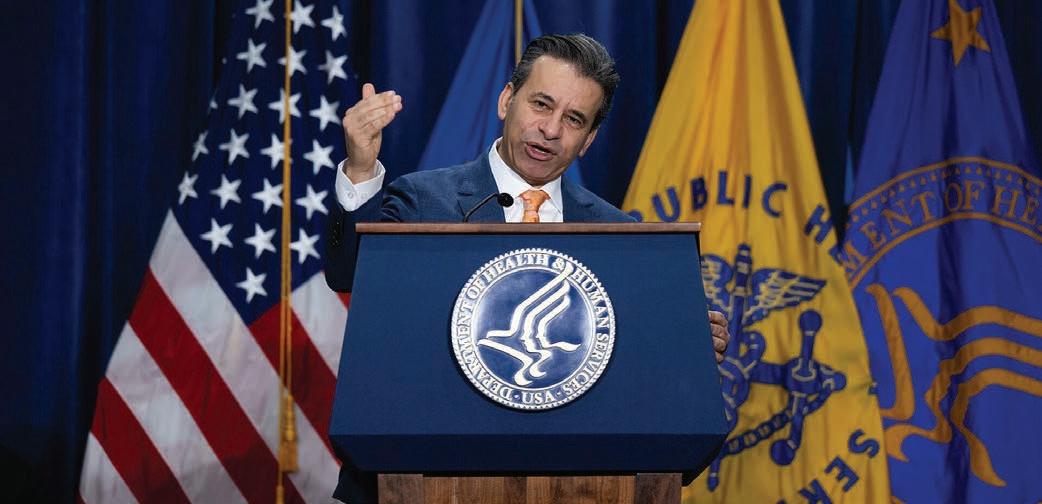
The nation’s top food and drug regulator appears headed for the exit door, adding another layer of uncertainty to an already turbulent period inside the federal government’s public health system.
Multiple national news organizations reported this week that FDA Commissioner Marty Makary is preparing to resign amid ongoing internal instability at the U.S. Department of Health and Human Services under Secretary Robert F. Kennedy Jr. While federal officials had not publicly confirmed the move through formal White House briefing channels as of Tuesday afternoon, reports from Reuters, The Washington Post, STAT, and other Washington-based outlets painted a consistent picture of a federal agency struggling to maintain stability during one of the most politically charged health policy periods in recent memory.
Makary entered the position carrying a reputation far different from many traditional Washington appointees. A Johns Hopkins surgeon and author known nationally for his criticism of parts of the medical establishment, he arrived at the FDA with support from both conservatives and moderates who viewed him as a physician willing to challenge institutional norms while still maintaining scientific credibility. That balance, however, appears to have become increasingly difficult to maintain inside an administration reshaping the direction of federal health agencies at a rapid pace.
Over the last year, leadership turnover inside the FDA and HHS has accelerated. Senior officials connected to vaccine oversight, biologics regulation, and pharmaceutical review divisions have either resigned, been reassigned, or quietly exited the agencies altogether. Several federal health policy publications have described morale inside
portions of the FDA as increasingly strained as internal disagreements intensified over approval standards, regulatory authority, and the role politics should play in scientific decision-making.
At the center of the latest tensions were disputes surrounding flavored vaping products, vaccine policy oversight, and broader efforts to redirect federal health priorities toward Kennedy’s “Make America Healthy Again” agenda. Reports from Washington indicated that Makary had faced pressure from multiple directions simultaneously, including criticism from conservative political allies frustrated by regulatory delays as well as backlash from career scientists concerned about political interference in public health decisions.
The White House itself has reportedly become more directly involved in health agency operations in recent months. Several Washington insiders and federal health reporters have pointed to increasing influence from senior Kennedy advisers who have sought tighter control over messaging, staffing, and policy direction throughout HHS. The

result has been a steady reshuffling of personnel as the administration attempts to recalibrate agencies that oversee everything from vaccines and prescription drugs to food recalls and medical device approvals.
Recent federal pressroom announcements reflect that changing focus. Instead of concentrating primarily on pandemic preparedness or traditional pharmaceutical policy, recent FDA and HHS messaging has emphasized food additives, chronic illness prevention, psychiatric medication oversight, infant formula safety, and alternative health initiatives. Supporters inside the administration argue the shift represents a long-overdue challenge to entrenched federal health systems. Critics, however, warn that the rapid changes risk destabilizing agencies responsible for some of the nation’s most sensitive public health responsibilities.
The uncertainty surrounding Makary’s reported resignation also arrives at a politically sensitive time. With the 2026 midterm elections
approaching, healthcare policy once again sits near the center of national political debate. Rising prescription drug costs, vaccine policy disputes, chronic disease rates, and growing distrust in federal institutions have all become major issues shaping voter sentiment across the country.
Inside Washington, the FDA has historically functioned as one of the federal government’s more insulated scientific agencies, often operating somewhat independently from shifting political winds. That perception has changed dramatically over the last several years as debates over public health authority became deeply intertwined with national politics. The reported departure of another high-profile agency leader is likely to intensify concerns among healthcare providers, pharmaceutical manufacturers, and state public health officials looking for consistency from federal regulators.
The implications stretch far beyond the nation’s capital. FDA decisions directly influence hospital systems, pharmacies, medical research institutions, and healthcare providers in every state, including rural regions already facing staffing shortages and financial strain. Delays or uncertainty within federal regulatory agencies can ripple outward into drug availability, clinical trial approvals, food safety enforcement, and longterm public health planning.
For now, the White House has remained publicly cautious about confirming the reports. But across Washington, the growing expectation of Makary’s departure has become the latest sign that one of the federal government’s most powerful health agencies remains caught in a period of political and institutional turbulence with no clear endpoint yet in sight.














By John Oliver
A story buried beneath the rubble of war and silence will take center stage in Grants Pass this month as Josephine Community Library partners with the Oregon Jewish Museum and Center for Holocaust Education to present a two-part public program focused on preserving Holocaust history through firsthand testimony, hidden archives, and personal memory.
Titled “The Holocaust Remembered: ‘Who Will Write Our History,’” the educational series brings together film, historical analysis, and community discussion in an effort to examine one of history’s darkest chapters through the voices of those who lived it. The program is designed not only to revisit the horrors of the Holocaust itself, but also to explore the risks taken by ordinary people who worked to preserve evidence of what was happening around them while much of the world remained unaware.
The first event in the series will take place Thursday evening, May 14, from 5:30 to 7 p.m. at the Performing Arts Center at Grants Pass High School. Community members will gather for a screening of the documentary “Who Will Write Our History,” directed by filmmaker Roberta Grossman and inspired by historian Samuel Kassow’s acclaimed book examining the hidden archive created inside the Warsaw Ghetto during World War II.
The documentary tells the story of a clandestine group of Jewish scholars, writers, and

citizens who secretly documented life inside the Warsaw Ghetto as Nazi occupation tightened its grip across Poland. Rather than allowing their experiences to disappear into mass graves and destroyed neighborhoods, members of the underground archive worked to preserve diaries, photographs, letters, essays, newspapers, and personal observations. Many of those records were hidden in metal boxes and milk cans beneath the streets before thousands of residents were deported or killed.
The archive, later recovered after the war, became one of the most significant collections of firsthand Holocaust documentation ever discovered.
Organizers say the program offers audiences an opportunity to understand the Holocaust not only through statistics and timelines, but through individual human experiences recorded in real time by people who understood that future generations might one day need proof of
what had happened.
josephinelibrary.org
A second event will follow one week later on Thursday, May 21, from 5:30 to 6:30 p.m. at the Josephine Community Library branch in Grants Pass. The discussion session will feature former Oregon History Teacher of the Year Lois MacMillan alongside Regional Museum Educator Heidi Kaufman, Ph.D., from the Oregon Jewish Museum and Center for Holocaust Education. Together, they will lead a community conversation examining the importance of primary sources, historical accountability, and the responsibility of preserving difficult truths across generations.
Library officials say attendees are welcome to participate in either event independently or attend both programs as a complete educational experience. Admission is free, and no library card is required.
The timing of the series arrives amid growing national conversations surrounding histori-
From page 1
forestlands, and waterways.
County officials have acknowledged that the increase comes at a difficult time for many households already dealing with rising utility bills, food costs, insurance premiums, and transportation expenses. Still, they argue that maintaining the waste system now is far less costly than allowing it to deteriorate later.
The economic pressures affecting waste disposal operations are not unique to Josephine County. Across Oregon and much of the nation, sanitation providers are facing mounting operational costs tied to inflation and supply chain increases that continue to impact nearly every service industry. Waste hauling operations rely heavily on fuel, heavy equipment, specialized vehicles, maintenance parts, and regulatory compliance measures that have all become more expensive over the past several years.
Those costs become even more significant in rural counties where hauling distances are greater and population density is lower than in larger metropolitan areas. In Josephine County, waste collected from remote communities often travels long distances before reaching final disposal destinations, increasing trans-
portation costs and wear on equipment.
Local waste operators say the goal is not expansion, but sustainability. Maintaining transfer stations, hauling routes, staffing levels, and disposal access points requires a stable funding structure capable of absorbing annual increases that continue to affect operations behind the scenes.
Officials connected to the waste system also continue to stress the environmental side of the issue. Rural counties that lose access to affordable and accessible waste disposal services often experience increases in unauthorized dumping on public lands, abandoned garbage sites near waterways, and illegal burn piles that can create additional environmental and fire concerns during Southern Oregon’s increasingly dangerous wildfire seasons.
Residents and others that support the rate increase argue that keeping the Kerby Transfer Station operational ultimately protects both public health and the natural environment surrounding the Illinois Valley. They point to the region’s forests, rivers, and public lands as areas that become vulnerable when proper disposal infrastructure is neglected or underfunded.
Alongside the rate adjustment, county residents are also being reminded about an upcoming Household Hazardous Waste Event scheduled for June 6, 2026, at 1381 Redwood Avenue in Grants Pass from 9 a.m. to 3 p.m. During the event, residents may dispose of up to one cubic yard of household hazardous waste at no charge, providing an opportunity to safely remove materials that should not enter standard landfills or illegal dumping sites.
For many Josephine County residents, the June rate increase may feel like another addition to an already growing list of unavoidable expenses. Yet county leaders and sanitation providers continue to frame the increase as part of preserving an essential public service that often goes unnoticed until it stops working.
In communities spread across rugged rural terrain, the systems responsible for handling garbage, recyclables, and waste disposal rarely attract much attention during normal operations. But as costs rise and infrastructure ages, the economic realities behind those services are becoming increasingly difficult to ignore.
The new rates officially take effect June 1.
cal literacy, the preservation of archival records, and the increasing concern among educators and historians over the fading availability of firsthand Holocaust testimony as survivor populations continue to age.
For Josephine County residents, the series also reflects a broader effort by local libraries to expand programming beyond traditional book lending by offering public forums centered on education, civic awareness, and cultural understanding.
In addition to the live events, both Kassow’s book and the documentary DVD are currently available for checkout through Josephine Community Library for patrons wishing to continue exploring the subject after the presentations conclude.
The program series received support in part through the 2026 Oregon Humanities Mini Grant for Libraries, helping make the events accessible to the broader public without admission fees.
Additional information about the upcoming Holocaust education series, library services, and future community programming can be found through Josephine Community Library or by contacting the library directly at 541-4760571.





By John Oliver
Families across Josephine County will soon have a new reason to gather along the Rogue River this summer as Tom Pearce Park prepares to host a brand-new weekly event series designed to bring entertainment, community spirit, and family activities together in one place.
Beginning Thursday, June 11, Josephine County Parks will launch “Family Night Live,” a three-week concert and activity series taking place each Thursday evening through June 25 from 6:30 p.m. to 8:30 p.m. at Tom Pearce Park. Organizers say the goal is to create a welcoming environment where families of all ages can spend time together while enjoying live music, themed entertainment, food vendors, and outdoor recreation.
Each week of the series will feature a different theme paired with live performances and attractions tailored to the evening’s atmosphere. The opening night on June 11 will celebrate Country Night with a live performance from Cody Ponder. The following week, June 18, will shift into Hero Night featuring Trevor Hanks. The series will conclude June 25 with Dino-Might Night and live music from the Lack Family.
County officials say the event was created to offer something unique for local residents looking for affordable family entertainment during the summer season. The park’s riverfront setting, playground areas, and open outdoor space are expected to provide a relaxed backdrop for the weekly gatherings.
In addition to live music, organizers say families can expect children’s attractions, in-
teractive activities connected to each weekly theme, and a variety of local food vendors serving throughout the evening. Adults 21 and older will also have access to beverages provided by Weekend Beer Company during the events.
The series is being supported in part through sponsorship from Evergreen Federal Bank, whose involvement helped make the program possible. Organizers say community partnerships played an important role in launching the new event concept and helping provide expanded entertainment opportunities for local families.
“We wanted to create something special that offers great entertainment for the kids and their parents,” said Recreation Director Tamra Martin. “A well-rounded event that everyone in the family can be excited about, that hopefully will become a new summertime tradition.”
The launch of Family Night Live comes as parks and recreation departments throughout Southern Oregon continue expanding
outdoor community programming during the warmer months. Seasonal concerts, outdoor movie nights, festivals, and family-centered gatherings have become increasingly popular across the region as communities look for ways to encourage local participation and outdoor recreation.
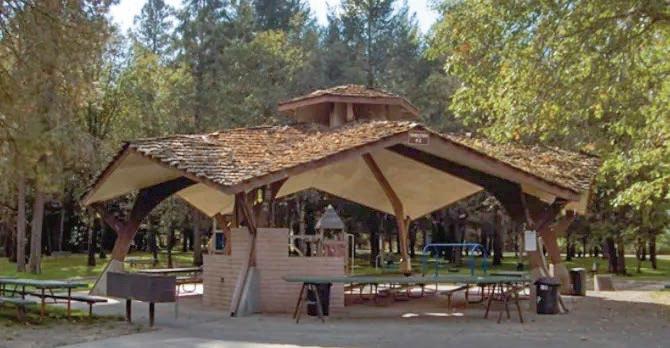
Tom Pearce Park, located along the Rogue River in Josephine County, has long served as a gathering place for sporting events, camping, boating, and summer recreation. Officials believe the new concert series could further establish the park as a seasonal destination for local residents and visiting families alike.
With school letting out for summer and warmer weather arriving across Southern Oregon, organizers are encouraging residents to bring lawn chairs, enjoy the outdoor setting, and take part in the new weekly tradition.
Additional event updates and announcements are expected to be shared through social media and Josephine County Parks communications leading up to the June kickoff.
5 DAY OUTLOOK
SOURCE: WEATHER.COM WEDNESDAY









By Bryce Robinson
Community leaders, service organizations, and residents focused on addressing homelessness in Josephine County will gather later this month for the next public meeting hosted by PATH, a local coalition working to strengthen support systems and expand collaboration throughout the region.
The upcoming PATH General Meeting is scheduled for Tuesday, May 26, from 3 p.m. to 5 p.m. inside the Grants Pass City Council Chambers at Grants Pass City Council Chambers. Organizers say the formal meeting agenda will run through 4:30 p.m., followed by a half-hour networking session designed to encourage community partnerships and conversation among attendees.
This month’s featured speaker will be Matthew Buchanan, a case manager with The Hub, a program operated through Options for Southern Oregon. The Hub serves as a community resource center that focuses on providing support, connection, and recovery-oriented assistance for individuals facing hardship or instability.
According to information released ahead of the meeting, The Hub offers a welcoming environment where community members seeking assistance can access resources, spend time in a safe space, and connect with others. The program has become part of a broader regional effort aimed at reducing barriers for people struggling with homelessness, mental health challenges, addiction recovery, and economic hardship.
Meeting organizers say Buchanan’s presentation will provide attendees with
a closer look at how The Hub operates, the types of services available through the program, and the ongoing challenges many vulnerable residents continue to face across Southern Oregon.
In addition to the featured presentation, PATH representatives are expected to provide updates on current projects and community outreach efforts underway throughout Josephine County. Several local partner organizations are also anticipated to participate in the discussion, sharing information about their own programs and exploring opportunities for increased cooperation between agencies and volunteers.
Organizers describe the gathering as both an informational meeting and a community-building opportunity. The networking portion scheduled after the formal agenda is intended to help nonprofit groups, advocates, local residents, and service providers connect directly with one another while discussing ways to strengthen support efforts across the region.
The meeting will also include a donation drive benefiting the Josephine County Food
Bank. Attendees are encouraged to bring non-perishable food items, which will be collected during the event. Organizers said all donations will be appreciated as food assistance programs continue to experience growing demand from local families and individuals facing financial strain.
PATH leaders are encouraging residents to invite friends, family members, coworkers, and others interested in learning more about homelessness response efforts in Josephine County. Organizers say community partici-
pation remains one of the most important components in building long-term solutions and increasing awareness surrounding local needs.
The event is open to the public, and organizers say the goal is to create an environment where people can learn more about available services, hear directly from community partners, and discover practical ways to become involved in efforts to support vulnerable residents throughout the Grants Pass area.



Posting Date May 11, 2026
THIS WEEK’S SOUTHERN OREGON GOVERNMENT WATCH contains both facts and opinions but overall should be considered an opinion column this week. In full disclosure the author is a defendant against a lawsuit filed against him by John West, the main subject of this article. But like all the author’s articles over the last two years in the Grants Pass Tribune, the author stands by all statements which are presented as fact. John West, recalled by 62% of voters that cast a ballot in December 2024, has brought a lawsuit against four different individuals that supported his recall campaign. In our opinion, these are frivolous lawsuits that are trying to take away our constitutional rights to free speech. As of today’s publication date, no court of law has ever reviewed a claim made against a writer or article in the Grants Pass Tribune based on the merit of the claim and judged any such writing was false or defamatory.
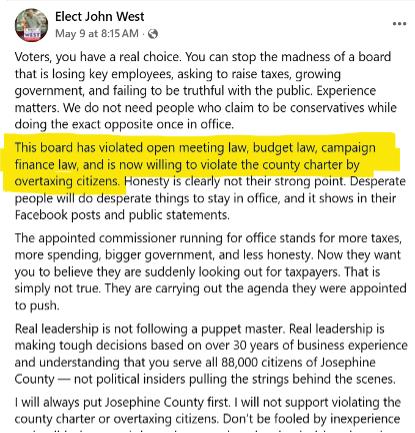
John West’s campaign for Josephine County commissioner made a very costly mistake on Saturday, May 9th and Sunday May 10th in our opinion. Saturday morning, May 9th, the “Elect John West” Facebook page released the following statement, accusing the current Board of Commissioners of violating law in three different ways and stating that they are “willing to violate the county charter.” No evidence was provided to support these serious allegations.
The Grants Pass Tribune reached out to John West by email on Saturday May 9th seeking clarification regarding these serious allegations. John West chose not to answer or provide any proof of these serious allegations, the same behavior John West exhibited during the two years he was in office before being recalled by voters.
This author sent many emails to John West during his two years in office, some requesting a meeting to discuss ways to
increase revenues for the Sheriff’s office without increasing taxes. Mr. West never responded to any of those emails while in office.
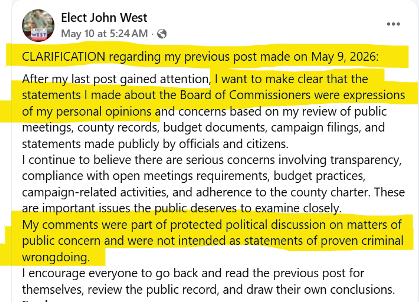
But the John West commissioner campaign did release another statement the next morning on May 10th, clearly in response to our email request. The clarifying statement was released on Facebook as follows:
And now at least one current county commissioner is now evaluating legal options due to John West making this statement accusing the Board of breaking the law without providing any proof. John West’s clarifying statement saying “not intended as statements of proven criminal wrongdoing” is also an interesting statement given his law-breaking allegations of the current Board would be civil and not criminal in nature.
But what is most interesting of all is the statement by West saying, “My comments were part of protected political discussion.”
Because the May 9th statement by West accusing the current Board of Commissioners of violating laws in three different ways is significantly worse than public statements made by local citizens who have been political critics of John West and John West is suing these critics for millions of dollars for false statements and defamation.
If these comments made by John West on May 9th are protected political speech, then the many lawsuits John West has filed against his local citizen critics should also be considered protected political speech, just as has been argued in court but not yet fully decided by court in most of these cases filed by John West.
Last weekend’s statement and clarifying statement by the John West campaign will likely prove to be very costly for West, as West has multiple frivolous (in our opinion) defamation lawsuits outstanding against citizen political critics. No court of law has yet proven that any of West’s critics have made
By Jay Meredith, CPA Investigative Journalist
defamatory statements based on the merits of such claims, and most cases are still in the Oregon anti-SLAPP dismissal argument stage, with defendants claiming protected political speech.
The only anti-SLAPP case that has been decided at the lower court level is the case against the chief petitioner for the John West recall petition. Five of six major parts of that case were dismissed at the lower court level, with the judge not receiving enough information to rule definitively on the 6th claim. Both sides are appealing the portions that they lost, and at present John West owes the defendant almost $30k in legal fees because of the lower court decision.
If what John West stated on Facebook last weekend is indeed protected political speech, every lawsuit John West has filed against his political critics should indeed be dropped immediately for the same reason. This is especially true for the most recent lawsuit filed by John West against a political critic just a few months ago in early 2026.
In January of this year, John West sued a local citizen and political critic JJ Scofield for $2 million for alleged defamation due to Facebook comments made by Scofield that hardly anyone even saw. The Facebook comments by Scofield were so obscure that we couldn’t even find them at the time that West brought this latest frivolous (in our opinion) lawsuit.
The $2 million lawsuit against Scofield, dated January 14, 2026, stated that in December “Scofield stated in a Facebook post that: “[Herman Baertschiger] and [John] West had illegal meetings every week.” It’s unclear whether Scofield made a post saying this or whether this was just a reply comment on Facebook because despite being active on Facebook we never even saw this comment on Facebook by Scofield.
The question now worth millions is…How can John West can be suing Scofield and others for public statements made about poor behavior by West while he was a commissioner, when West himself prominently made a statement on Facebook last weekend which he calls protected political speech saying the current Board of Commissioners
has broken several laws?
In another lawsuit by John West against another political critic (the author of this article), JJ Scofield stated the following in a sworn declaration submitted to the court in that case: “While I was at the Grower's Market last year spring or early summer, West approached me. He told me he intended to hurt me financially. He then said he was going to sue me for lying about him. I stated that I was not impressed by his threats and would get 15 people to all testify that I was telling the truth. He said it didn't matter as I would spend so much on attorneys, I’d end up homeless. In my opinion West has followed up on that threat. He has sued anyone he blames for his recall ballot measure loss.”
That pretty much says it all, doesn’t it? If John West’s statements last weekend on Facebook are in fact protected political speech as West claims, West should immediately drop his many frivolous lawsuits against local journalists and local citizen political critics.
And as for West’s empty claims that the current Board has broken the law in various ways, West should remove that post immediately unless he can back up those claims with proof. But we won’t hold our breath because West doesn’t have a stellar history of being able to back up his campaign statements with proof.
The bottom line of what is going on with commissioner candidate John West is his critics and the defendants in his many frivolous lawsuits have backed up all their claims and opinions with proof, but John West doesn’t like those opinions and so he pretends they are defamatory false statements. John West’s legal arguments are littered with reasons he made the decisions he made rather than reasons the statements are false. And that, my friends, means West is suing people over protected political speech.
The First Amendment guarantees the right to petition the government (or our politicians) for a redress of grievances, allowing citizens to ask for changes to policies, laws, or actions without fear of punishment. But John West seeks to punish anyone locally that doesn’t agree with his votes and actions.
Should the current Board of Commissioners take legal action against John West for his statements on Facebook last weekend, similar to the legal actions John West has taken against local citizen critics?
It would be best for all parties concerned if we simply dropped all this silly lawfare and restored our First Amendment rights in Josephine County politics. We’ll never be able to work most effectively together to make Josephine County a better place if we can’t even offer constructive criticism without the fear of retaliation by our local politicians and local governments.