
By: John Oliver
In today’s America, a disturbing trend is emerging—one that echoes the tactics of authoritarian regimes from history. Local politicians and their networks of power are increasingly exerting influence over media, suppressing dissenting voices, and shaping public perception through censorship and control. While we are far from the days of Nazi Germany, the fundamental principle remains the same: those in power seek to dictate the narrative, not through open debate or factual discourse, but through suppression, manipulation, and self-serving propaganda.
History teaches us that one of the first steps toward authoritarian control is the suppression
of free press. In Nazi Germany, Joseph Goebbels, Hitler’s propaganda minister, transformed media into a mouthpiece for the regime, silencing opposition and ensuring that only state-approved information reached the public. In modern America, this kind of direct state-run propaganda is not as blatant, but a subtler, equally dangerous form of suppression is taking place—one that stems from ignorance, greed, and an insatiable thirst for power.
Local politicians and their allies are using their influence to pressure media outlets, intimidate journalists, and choke off independent reporting by controlling advertising revenue. Those who dare to challenge these power structures find themselves financially suffocated, legally harassed, or publicly discredited. This isn’t happening in a foreign dictatorship; it’s happening in small towns and counties across the country, where political figures believe they can rewrite
reality to serve their own interests.
Much like historical propaganda efforts, modern-day political censorship operates on a set of principles designed to manipulate public perception while maintaining a façade of democracy. Critical voices are silenced through economic pressure, legal threats, or outright media blackouts. Local politicians leverage their influence over business leaders and advertisers to defund independent publications that challenge their authority. A well-known Nazi strategy was to repeat blatant falsehoods until the public accepted them as truth. Today, politicians and their media allies flood the public with misinformation, attacking credible journalists while promoting narratives that serve their agenda. Instead of directly shutting down newspapers or radio stations, modern political operatives work to discredit independent media by labeling them as "biased," "fake news," or "radical."
This erodes public trust in factual reporting while making people more susceptible to controlled narratives. Through the strategic use of social media and politically aligned local media, politicians create a reality where their failures are ignored, their enemies are vilified, and their supporters are fed a steady diet of emotionally charged propaganda.
The erosion of journalistic integrity and media freedom isn’t just a result of political ambition—it’s a byproduct of a society that has prioritized ignorance over education. When people lack the ability to critically evaluate information, they become easy targets for manipulation. Decades of underfunding public education, discouraging independent thought, and fostering an environment of political tribalism have left many Americans unable—or unwilling—to question the narratives fed to them. Instead of seek-
By: John Oliver
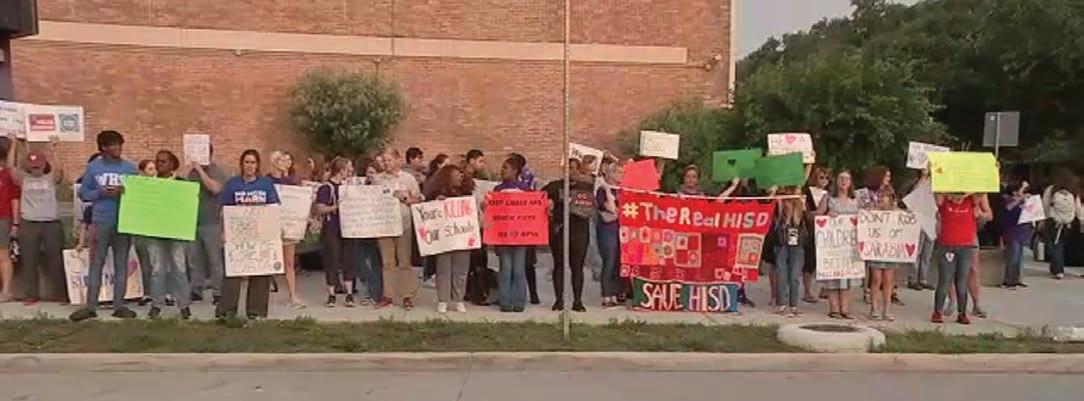
President Donald Trump has once again ignited controversy with his latest remarks on student protests, vowing to take strong action against what he deems “illegal” demonstrations on college campuses and in schools. In a post on his social media platform, Truth Social, Trump warned that students participating in unlawful protests could face severe consequences, including permanent expulsion and, in some cases, arrest.
“All federal funding will stop for colleges and schools that allow ‘illegal’ protests,” Trump stated on Tuesday, adding that agitators would be imprisoned or, if they are foreign nationals, deported.
Trump’s stance aligns with his broader efforts to address political activism on college campuses, particularly in response to movements that he and his supporters view as disruptive. While he has not specified which types of protests would be deemed illegal, his position suggests a more aggressive approach to handling demonstrations that challenge institutional policies or social issues.
This strategy is consistent with his long-standing emphasis on law and order, especially regarding public institutions. His proposal seeks to hold colleges accountable for the actions of their students, with financial consequences for those
that do not comply. The potential impact could be significant, as many universities depend on federal funding for research, scholarships, and operational support.
The proposal raises serious legal and constitutional concerns, particularly in relation to First Amendment rights. The U.S. Constitution protects freedom of speech and peaceful assembly, including on college campuses. Any attempt to criminalize or punish students for exercising these rights would likely lead to legal battles, with opponents arguing that the move infringes on fundamental civil liberties.
Cutting federal funding based on a school’s handling of protests would also require legislative approval and could face pushback from lawmakers, educators, and civil rights organizations. Legal experts point to the difficulty in defining what constitutes an illegal protest, noting that
universities already have policies in place to address disruptions while still protecting students’ rights to express their views.
The reaction to Trump’s stance has been mixed. Some conservative groups and political allies have supported the idea, viewing it as a necessary step to curb what they see as growing radicalism on college campuses. They argue that universities have allowed protests to become increasingly disruptive, sometimes silencing opposing viewpoints or interfering with academic operations.
On the other side, educators, civil rights organizations, and student advocacy groups have strongly criticized the proposal. Many view it as an authoritarian measure that could have a chilling effect on free speech. Academic institutions have expressed concerns that such policies would undermine their commitment to fostering
open debate and diverse perspectives among students.
If implemented, Trump’s plan to cut federal funding from non-compliant institutions could create financial strain, particularly for public colleges and universities that rely on government grants and student aid programs. These institutions play a critical role in providing affordable education, and a loss of funding could force them to raise tuition, reduce programs, or limit research opportunities.
Additionally, the uncertainty surrounding enforcement could lead to administrative challenges for schools trying to balance campus safety with students’ rights to engage in peaceful activism. University leaders would face pressure to navigate legal risks while maintaining their academic missions.
Trump’s comments are expected to be a key talking point in the upcoming presidential
• see PROTESTS, page 3

















By: Leaf Barret
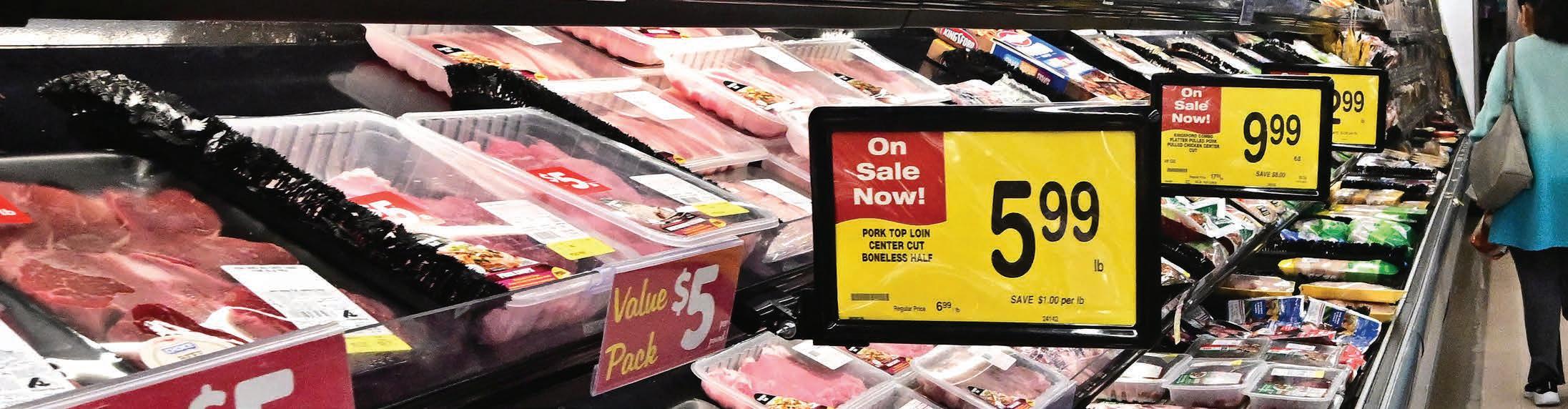
Shoppers across the United States may soon feel the impact of newly imposed tariffs on imports from Mexico and Canada, with price increases expected on a range of everyday essentials. The federal government has announced a 25% tariff on select imported goods, a move designed to bolster domestic production. However, the financial burden of these trade measures will likely fall on consumers, as higher import costs are passed down to grocery store shelves and restaurant menus.
The affected items include staples such as fresh produce, alcoholic beverages, and maple syrup—products that millions of Americans rely on for daily meals and entertainment. Economists warn that
these price hikes won’t be marginal. The additional costs will extend beyond supermarkets, affecting dining establishments, bars, and coffee shops, with ripple effects on everything from breakfast specials to happy hour discounts.
The rationale behind the policy is to incentivize American farmers and producers by making foreign imports less competitive. The administration argues that increasing domestic agricultural and manufacturing output will reduce reliance on international supply chains, ultimately strengthening the U.S. economy.
While this approach has supporters in domestic industry sectors, critics argue that tariffs function as hidden taxes on consumers. By limiting access to lower-cost goods from neighboring countries, the measures may contribute to inflationary pressures already affecting household budgets nationwide.
The impact of these tariffs will vary
From page 1
ing diverse perspectives, people consume only what reinforces their existing beliefs, allowing self-serving politicians to maintain control without accountability.
If left unchecked, this growing trend of media suppression will have devastating consequences for democracy. Without access to accurate information, citizens are unable to make informed decisions, whether at the ballot box or in their daily lives. When the press is silenced, corruption flourishes. Politicians and their allies can abuse power without fear of exposure or consequences. Independent local news outlets are shutting down at an alarming rate due to economic pressures and targeted suppression. With them goes vital reporting on city councils, law enforcement, and local government actions. A free press is one of the pillars of democracy. Without it, society slides toward authoritarianism, where those in power dictate the truth rather than being held accountable by it.
The fight against political censorship must be waged on multiple fronts. Citizens must actively support independent newspapers, journalists, and online platforms that challenge political narratives and report the
truth, even when it's uncomfortable. Holding elected officials accountable requires more than just voting—it requires constant vigilance, public scrutiny, and demanding answers when they attempt to suppress dissenting voices. A well-educated population is harder to manipulate. Schools must emphasize critical thinking and media literacy, equipping people with the skills to distinguish fact from propaganda. Those within political systems who witness corruption and media suppression must be empowered to speak out, with legal protections and public support.
The modern attack on independent media is not just a battle over newspapers, radio stations, or online outlets—it’s a battle for truth itself. As local politicians and their cronies work to control narratives and silence opposition, it is up to the public to resist, to demand transparency, and to safeguard the fundamental right to a free press. History has shown us what happens when propaganda and media suppression go unchecked. We must not allow ignorance and self-serving ambition to erode the freedoms that define us. The cost of silence is too high.
depending on the product category. Items like avocados and tomatoes—heavily imported from Mexico—could see significant price jumps, making fresh guacamole or homemade salsa a more expensive indulgence. Beer lovers might also see higher prices at bars and liquor stores, as many imported brands face increased costs.
Even maple syrup, a staple of breakfast tables and bakeries, could see noticeable markups due to Canada’s major role in global production.
Industry analysts warn that these rising costs could hit restaurants especially hard, forcing businesses to adjust menu prices to maintain profitability. This could lead to higher dining costs for consumers, as well as potential changes in portion sizes or ingredient sourcing.
Some American farmers and brewers stand to benefit from reduced competition, but whether domestic production can meet demand at reasonable prices
From page 1
election, appealing to voters who support a crackdown on campus activism. His strong position on student protests aligns with his broader campaign messaging, which emphasizes restoring order and challenging progressive policies in education.
However, this approach could also energize opposition from young voters, civil liberties advocates, and academic institutions that view it as an attack on democratic freedoms. The ongoing debate highlights a larger national discussion about the role of political activism in schools and how educational institutions should respond to student-led movements.
While it remains unclear how these policies would be implemented, Trump’s remarks have reignited a longstanding controversy over free speech, student activism, and government intervention in higher education. As the election season progresses, this issue is likely to remain a focal point in the broader debate over the future of American colleges and universities.
remains uncertain. Meanwhile, retailers and restaurant owners may be forced to absorb some of the cost increases to avoid losing customers.
Consumers, on the other hand, may respond by adjusting their shopping habits— opting for alternative products, seeking out sales, or reducing discretionary spending. While these tariffs are intended to support U.S. businesses, their immediate effect will be felt in higher grocery bills and increased dining costs. As the policy takes hold, consumers and industry stakeholders alike will be watching closely to see how markets react and whether domestic production can fill the gap left by pricier imports.
For now, shoppers should brace for rising costs and consider budget-friendly adjustments to their purchasing habits. The coming months will reveal just how deeply these trade measures impact everyday life at the checkout counter.



GPT News Desk
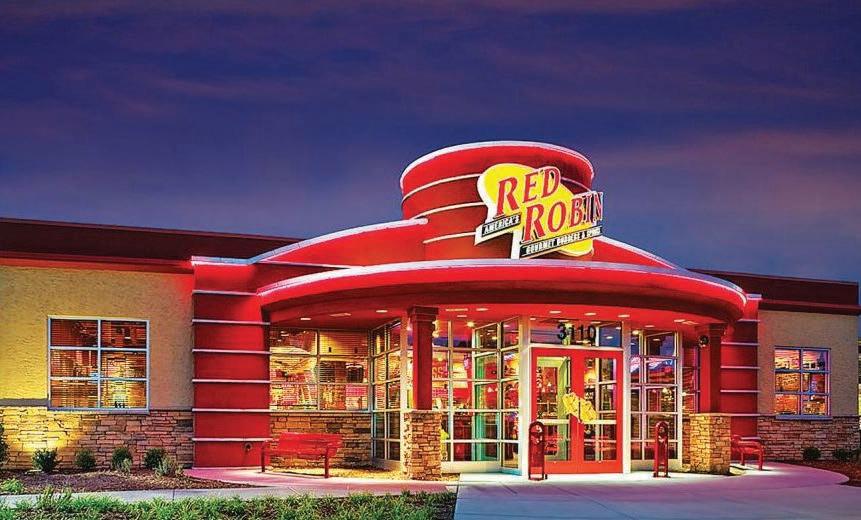
Red Robin, the popular casual dining chain known for its gourmet burgers and bottomless fries, is facing significant financial challenges stemming from 2024. Company executives recently announced that as many as 70 locations across the country could be closing in the near future due to underperformance. While specific locations have not yet been confirmed, this decision raises concerns for employees and customers in many communities, including those in Grants Pass, Oregon.
Red Robin has faced a difficult financial landscape in recent years, with rising operational costs, changes in consumer spending habits, and increased competition in the casual dining sector. Like many restaurants, the chain struggled during the pandemic and has continued to deal with lingering economic challenges. High food and labor costs, combined with shifting dining trends favoring fast-casual and takeout options, have placed pressure on the company’s bottom line.
In response to declining profits, executives have undertaken a strategic review of underperforming locations. According to company statements, around 70 restaurants may close as part of a broader effort to stabilize operations and improve overall profitability. This decision follows a nationwide trend in the restaurant industry, where many chains have been forced to downsize due to high rent costs and declining foot traffic.
Executives have not yet released a full list of locations that will be affected by the closures. However, several factors are likely being considered in the decision-making
process, including sales performance, lease agreements, customer traffic, and local market conditions.
Restaurants in smaller cities or areas with declining revenue could be at higher risk. Grants Pass, Oregon, home to a Red Robin location, could potentially be among those impacted. While there is no official confirmation, local customers and employees may be watching closely for updates as the company finalizes its closure plans.
If closures move forward as planned, they could lead to job losses for restaurant staff across multiple locations. Red Robin employs thousands of workers nationwide, including cooks, servers, and managers, all of whom may be affected by potential store shutdowns.
Customers in affected areas may also feel the impact, especially those who con-
sider Red Robin a go-to dining option. Communities with limited restaurant choices may see a reduction in casual dining offerings if their local Red Robin closes. For loyal patrons, the loss of a familiar neighborhood restaurant can be disappointing. To ease the transition, the company may offer relocation opportunities for employees in stores that remain open. Additionally, Red Robin has been working on revamping its business model, exploring new ways to drive customer engagement, including digital ordering, delivery partnerships, and menu changes.
The Red Robin location in Grants Pass, Oregon, remains open for now, but its future is uncertain. While no official list of closures has been released, industry trends and financial considerations could play a role in whether the restaurant stays operational.
Local businesses have faced increasing economic pressures, and if sales at the Grants Pass Red Robin have not met expectations, it could be at risk of closure. However, factors such as strong local customer support and manageable operational costs could improve its chances of remaining open.
Despite the challenges, Red Robin is not shutting down entirely. Instead, the company is restructuring in an effort to remain competitive in an evolving restaurant industry. By closing underperforming locations, Red Robin hopes to strengthen its financial standing and focus on markets where it can be more profitable.
The company has also been investing in improving the customer experience, testing new menu options, and enhancing digital services to attract a broader audience. While these efforts may not prevent all closures, they indicate that Red Robin is looking for long-term solutions rather than simply cutting costs.
For now, Red Robin customers in Grants Pass and across the country will have to wait for further announcements regarding store closures. The decision to shutter locations will be based on financial data and market conditions, with only time revealing which restaurants will be affected.
As the company works through its financial challenges, affected employees and customers will be looking for answers on how these changes will impact them. In the meantime, Red Robin continues to operate its restaurants, serving customers while evaluating its long-term business strategy.














Advertise with The Grants Pass Tribune!
Stand with us in defending freedom of the press and the 1st Amendment! The Grants Pass Tribune is facing political persecution, with lawsuits aimed at silencing our bold investigative journalism. We remain committed to uncovering the truth and keeping our community informed like never before.
Show
By: Leaf Barret
Carl Dean, the devoted and reclusive husband of country music icon Dolly Parton, passed away on March 3, 2025, at the age of 82 in Nashville, Tennessee. His death marks the end of one of the most enduring and private marriages in the entertainment industry, spanning nearly six decades. Despite being married to one of the most recognizable faces in music, Dean lived his life largely out of the public eye, content to support his wife’s career from behind the scenes.
A Love Story That Defied the Spotlight, Dolly Parton and Carl Dean first met in 1964 when Parton was just 18 years old and had recently moved to Nashville to pursue her music career. Their chance encounter outside the Wishy-Washy Laundromat sparked an immediate connection. Parton later recalled being charmed by Dean’s sincerity and the fact that he looked directly at her when he spoke, a rarity among men who were often mesmerized by her appearance. Dean, who was 21 at the time, felt equally drawn to Parton and later admitted that his first thought upon meeting her was that he was going to marry her.
True to his word, Dean and Parton tied the knot on May 30, 1966, in a private ceremony in Ringgold, Georgia. The wedding was an intimate affair attended only by Parton's mother, the pastor, and the pastor’s wife. The decision to elope was partly influenced by her record
label’s concerns that marriage might hinder her rising career. However, Parton and Dean remained devoted to each other, building a life together that balanced fame and privacy in an extraordinary way.
Parton skyrocketed to international fame; Dean remained steadfastly out of the public spotlight. He operated a successful asphalt-paving business in Nashville and avoided the media, rarely making public appearances with his wife. Parton often joked that Dean had only seen her perform once, underscoring his preference for a quiet, private life.
Over the years, Dean’s aversion to public attention led to rumors that he didn’t exist. Some even speculated that he was a figment of Parton’s imagination or a publicity stunt. Parton, always one to take things in stride, laughed off the rumors, remarking, “A lot of people say there’s no Carl Dean. Well, they just don’t know him like I do.”
Though Dean remained largely unseen, his influence on Parton’s career was undeniable. He was the inspiration behind several of her songs, most notably the 1973 hit “Jolene.” The song, based on a real-life encounter, told the story of a bank teller who flirted with Dean, prompting Parton to turn the experience into one of country music’s most beloved tracks.
Parton has often spoken about Dean’s unwavering support throughout her career. While he was never interested in attending red carpet

events or basking in her fame, he was always her biggest cheerleader, offering encouragement from home. Despite their different lifestyles, the couple’s relationship thrived on mutual respect, humor, and a deep emotional bond.
Dean and Parton chose not to have children, a decision that Parton has openly discussed over the years. She has stated that their child-free life allowed them to focus on each other and on her career. Their love was evident in the many stories Parton shared about their marriage, often highlighting Dean’s sharp wit and the practical jokes they played on each other.
In 2016, to celebrate their 50th wedding anniversary, the couple renewed their vows in a private ceremony at their Nashville home. Parton described the moment as one of the most
special of their lives, saying Dean looked like a “handsome Hollywood star.”
Following Dean’s passing, Parton released a heartfelt statement expressing her grief and gratitude for their years together. She described him as her “greatest love” and the “anchor” of her life. The family has requested privacy during this difficult time, and a private ceremony is expected to be held to honor Dean’s memory.
Carl Dean may not have sought the spotlight, but his presence in Dolly Parton’s life was profound. Their love story, built on devotion and unwavering support, remains one of the most cherished in the music industry. As fans mourn alongside Parton, they also celebrate the quiet strength and enduring love that defined Carl Dean’s life.
In an age where misinformation spreads like wildfire, where headlines scream for attention with all the grace of a reality TV meltdown, it’s time to call it what it is: Fake news is real, but not in the way the fraudsters in our community want you to believe.
The most absurd part of this whole phenomenon is that the very people screaming about fake news are often the ones manufacturing it. These are not seasoned journalists. They are not truth-seekers, nor are they fact-checkers. They are keyboard warriors and now elected politicians who figured out that outrage sells. Some of them might have a high school diploma; some of them might not. What they definitely don’t have is an understanding of journalistic integrity, ethics, or the difference between factual reporting and manipulation. Their only concern is getting attention, stirring the pot, and feeding the public half-truths dressed up as an AI generated investigative reporting.
The game is simple. Some amateur with a blog or a cheap website decides they’ve “exposed” fake news. They write a dramatic takedown of a mainstream news outlet, spinning a web of misleading claims, exaggerations, and outright lies. And then, without a shred of irony, they declare themselves the saviors of truth.
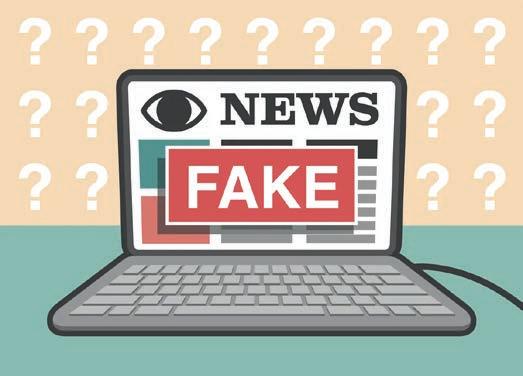
What they fail to realize—or perhaps, what they don’t care about—is that they themselves are spreading fake news about fake news. It’s a never-ending cycle of self-important nonsense, and the hypocrisy is beyond comprehension. The problem isn’t just misinformation; it’s the deliberate blurring of lines between fake news and propaganda. There is fake news in its purest form—stories that are completely fabricated for clicks and profit. Then there’s propaganda, which is slightly more insidious. It often contains just enough truth to seem credible, but it twists, distorts, and manipulates information to serve an agenda. And the worst offenders are the ones who have mastered the art of combining both. They’ll take a real event, slap on a misleading headline, misquote a few sources, inject their own opin-
ions as facts, and suddenly, they’ve created an alternate reality where their version of the truth is the only one that exists.
What makes this whole charade even more laughable is the blatant hypocrisy of these so-called “fake news exposers.” They rail against mainstream media for being biased while spewing their own slanted narratives. They demand rigorous fact-checking from journalists but refuse to hold themselves to the same standard. They claim to be truth-tellers but peddle conspiracy theories and unverified nonsense, all while accusing legitimate news sources of deception. Their goal isn’t to inform the public; it’s to manipulate them. And the worst part? People fall for it.
This isn’t just about bad journalism or misleading headlines. The damage caused by fake news and propaganda runs deep. The more misinformation spreads, the harder it becomes for people to distinguish fact from fiction. Trust in legitimate journalism erodes, leaving a void where manipulation thrives. People become disillusioned, skeptical of everything, and more susceptible to actual propaganda—both foreign and domestic. Those who profit from this confusion know exactly what they’re doing. They don’t want an informed public; they want a misinformed, an-
gry, and divided one.
If people truly want to separate real news from propaganda, they need to start thinking critically. The first step is questioning the source. If a story comes from an unknown website or a social media post riddled with spelling errors and hysteria, chances are it’s not credible. Checking multiple sources is essential—if only one outlet is reporting something scandalous, it’s likely exaggerated or outright false. Headlines are designed to provoke emotion, but they rarely tell the full story, so reading beyond them is crucial. Another important factor is following the money. If a story exists solely to push a product, a political agenda, or a conspiracy theory, then its credibility is questionable. Lastly, a simple question can cut through a lot of the noise: Who benefits? If a story is designed to enrage, divide, or reinforce a narrow worldview, then its purpose is manipulation, not truth.
At the end of the day, fake news and propaganda only exist because people consume them. If people stopped clicking, stopped sharing, and stopped believing everything that confirms their personal biases, the grifters would lose their power. But as long as people allow themselves to be manipulated, the idiots win. And honestly, they’ve had their time.
Posting Date March 3, 2025 March 3, 2025
GPT News Desk
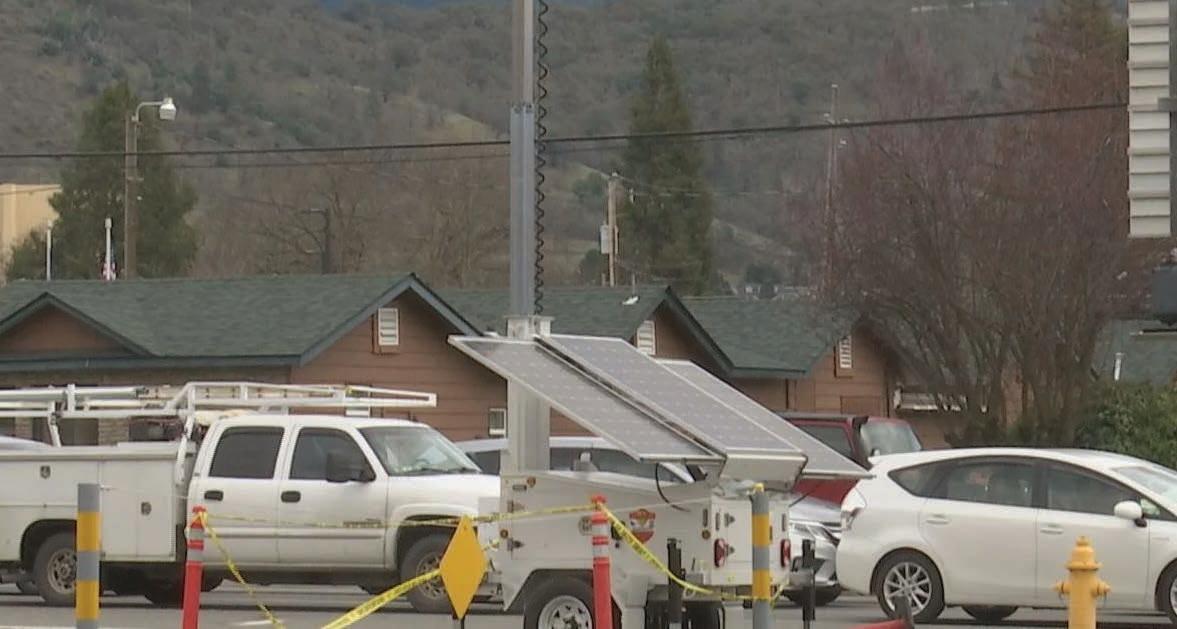
Grants Pass has recently deployed a mobile surveillance trailer at the intersection of NW 6th and A Street, directly across from City Hall. The unit, equipped with multiple cameras and a loudspeaker, is intended to enhance security and provide real-time monitoring of public areas. City officials have described the deployment as part of an effort to address ongoing concerns about safety and public behavior in the downtown area, particularly in relation to the city’s unhoused population.
The surveillance trailer, often referred to as an "eye in the sky," is designed to provide law enforcement with a broader view of high-traffic areas. Its cameras allow authorities to monitor activity remotely, while the loudspeaker system can be used to broadcast messages or instructions. According to city representatives, the system is not solely focused on any one group but is intended to deter criminal activity, ensure public safety, and provide an additional tool for law enforcement response.
The installation of the surveillance system comes amid ongoing debates over how the city should manage concerns related to homelessness, law enforcement, and public space use. Some residents and business owners have voiced support for the initiative, arguing that increased monitoring can help prevent vandalism, drug activity, and other
forms of misconduct. Others, however, have raised concerns about privacy, civil liberties, and the broader implications of expanded surveillance in public areas.
Local advocates for the homeless community have expressed particular concern over the use of loudspeakers and remote monitoring to interact with individuals in need. Some worry that such measures could contribute to the criminalization of homelessness or create an environment of intimidation rather than support.
While the city has not detailed specific guidelines for how the system will be used, officials have stated that its primary purpose is to provide oversight and improve response times to potential incidents. Similar surveil-
lance technology has been deployed in other cities, often as a way to deter crime and improve law enforcement coordination.
As Grants Pass continues to navigate the challenges of balancing public safety, civil liberties, and social issues, the deployment of the surveillance trailer is likely to remain a topic of discussion. The city has not indicated whether the unit will be a permanent fixture or if additional surveillance measures will be introduced in the future.
For now, the presence of the mobile surveillance trailer serves as a visible reminder of the evolving approaches cities are taking to address urban challenges, sparking ongoing debate about the role of technology in public safety and community relations.
5 DAY OUTLOOK
SOURCE: WEATHER.COM