
WEDNESDAY, MARCH 25, 2026

WEDNESDAY, MARCH 25, 2026
By John Oliver
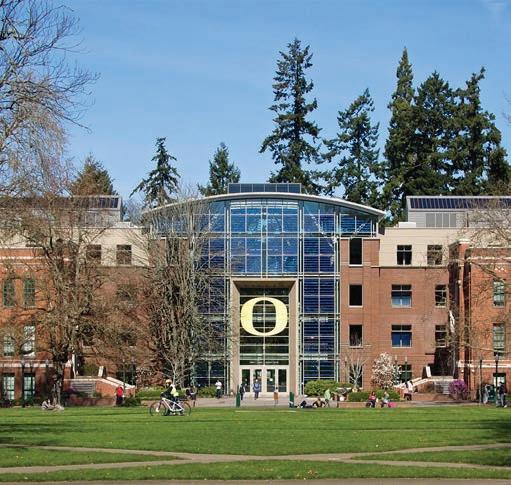
The next major economic shift for Southern Oregon may not arrive with the opening of a new business or the closure of a major employer, but through a pen stroke in Salem. A bill now awaiting the signature of Governor Tina Kotek could set in motion a sweeping evaluation of Oregon’s higher education system, one that carries significant financial implications for communities far beyond campus boundaries.
At the center of the legislation is the Oregon Higher Education Coordinating Commission, which would be tasked with conducting a comprehensive review of how the state’s colleges and universities operate, how they are funded, and whether the current structure is sustainable. While the measure itself does not immediately raise tuition or cut programs, it opens the door to decisions that could reshape the economic landscape of regions like Southern Oregon.
For residents in Josephine and Jackson counties, the conversation is not abstract. Institutions such as Southern Oregon University are already navigating financial strain, with recent state intervention required to stabilize operations. That reality reflects a broader pattern across Oregon, where declining enrollment, rising operational costs, and fragmented institutional roles have
begun to erode financial stability.
Higher education functions as more than a pathway for students; it is a regional economic engine. Universities and community colleges support jobs, attract outside dollars, and feed skilled workers into local industries. When those institutions struggle, the effects ripple outward. Landlords feel it through reduced student housing demand. Small businesses feel it through fewer customers. Local governments feel it through a narrower tax base tied to reduced economic activity.
The proposed evaluation would examine whether Oregon’s current system duplicates programs across multiple campuses, whether resources are being used efficiently, and whether institutions are aligned with workforce demands. On paper, that may sound like administrative housekeeping. In practice, it raises the possibility of consolidation, program reductions, or shifts in
funding priorities.
For Southern Oregon, those possibilities carry weight. Rural regions already operate with thinner economic margins than larger metropolitan areas. If the review results in program cuts or reduced investment at smaller institutions, the consequences could include fewer educational opportunities close to home, forcing students to relocate and take their spending power with them. That outward migration would further strain local economies that depend on keeping young residents in the region.
At the same time, supporters of the bill argue that doing nothing presents a greater risk. Without intervention, ongoing deficits and inefficiencies could force sudden, unplanned cuts that would be even more disruptive. A structured evaluation, they contend, offers a chance to stabilize the system before it reaches a breaking point. From an economic standpoint, predictability carries value. Businesses and communities can adapt to gradual change far more effectively than to abrupt collapse.
There is also the question of workforce alignment. Southern Oregon’s economy relies heavily on healthcare, trades, small business development, and tourism. If the review leads to stronger alignment between education programs and local industry needs, it could help address persistent labor shortages and improve long-term economic resilience. In that scenario, the region could benefit from a more targeted and efficient education pipeline.
• see EVALUATION, page 3
By Ellen Ward
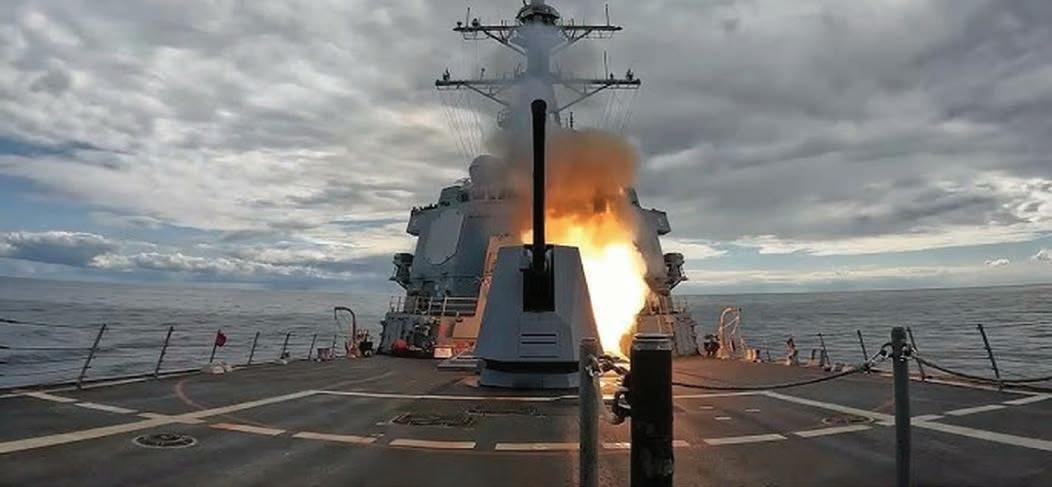
The operational footprint of what has been identified as Operation Epic Fury expanded noticeably over the past 24 to 48 hours, with new developments signaling a broader regional impact and a more calibrated U.S. military strategy moving forward.
Recent activity indicates that the United States has continued its campaign against Iranian military capabilities while deliberately avoiding strikes on key elements of Iran’s energy infrastructure. Military targets, including missile systems, naval assets, and defense-related facilities, remain the primary focus. The absence of attacks on oil production and power systems reflects a strategic decision rather than a reduction in force, as U.S. operations remain active and ongoing across multiple sectors.
At the same time, Iran’s response has shifted toward expanded regional engagement. Missile strikes reported within Israel over the past two days have caused damage to civilian infrastructure and resulted in injuries, marking a continuation of direct retaliation efforts. These strikes demonstrate an increased reliance on longer-range capabilities capable of reaching population centers, rather than isolated or symbolic actions.
Beyond direct engagement, activity tied
to Iranian-aligned groups has increased. Hezbollah forces have launched additional rocket fire into northern Israel, while heightened tensions and reported incidents have surfaced across several countries in the region, including Iraq, Bahrain, Saudi Arabia, Kuwait, and the United Arab Emirates. This pattern reflects a widening operational environment in which multiple areas are experiencing elevated security concerns tied to the broader conflict.
One of the most closely watched developments is the growing focus on the Strait of Hormuz. The waterway remains one of the most critical global transit routes for oil shipments, and recent threats to maritime move-

By John Oliver
The line at the airport is no longer just a line. This week, it is the first signal of how tight the nation’s travel system has become as spring break traffic collides with a strained security workforce and a schedule that leaves little room for error.
Across the country, flights are still taking off and landing, but the conditions surrounding those departures have shifted. The Transportation Security Administration is operating with fewer available officers than planned, the result of ongoing federal funding issues that have forced tens of thousands of screeners to work without pay. Some have continued to report for duty. Others have not. The result is uneven staffing at security checkpoints, where wait times can change quickly depending on the hour, the airport, and how many officers are on the floor.
For travelers in Southern Oregon, that reality may not be immediately visible when stepping into Rogue Valley International–Medford Airport. On most days, Medford still moves at a manageable pace. The problem is not always at the point of departure. It is what happens after the first flight leaves the ground.
ment have raised concerns among international partners. In response, allied nations are preparing for potential naval operations aimed at maintaining open shipping lanes and preventing disruption to global energy transport.
Market reactions to these developments have already emerged. Oil prices have risen above the $100 per barrel level, reflecting increased uncertainty surrounding supply stability and transport security. Several countries dependent on imported energy have begun assessing contingency measures as the situ ation continues to evolve.
From a military standpoint, U.S. officials
• see GLOBAL, page 5
Nearly every outbound trip from Medford depends on a connection through a larger airport. Portland, Seattle, San Francisco, Phoenix, and Denver all serve as gateways, and each of those airports is feeling the weight of heavier passenger traffic combined with thinner security staffing. When lines slow down at those hubs, the effects move outward. A traveler who clears security quickly in Medford can still find themselves racing a clock at their connection, where longer lines, tighter boarding windows, and delayed inbound aircraft begin to stack against them.
Spring break is amplifying the pressure. Passenger volumes have climbed, especially during early morning and mid-day departure windows, when families and students are moving through
• see SPRING, page 9

By John Oliver
What began as a routine traffic stop in the Illinois Valley developed into an eight-day search involving repeated pursuits, a cross-state flight, and a coordinated arrest that ended without injury but underscored the challenges of policing in Josephine County’s rural terrain.
The sequence started on March 12 near the O’Brien area, where deputies with the Josephine County Sheriff's Office attempted to stop a vehicle occupied by James Patterson, 39, and Breanna Vineyard, 29. Both individuals were already wanted on felony warrants at the time of the encounter. Instead of stopping, the vehicle accelerated away, initiating a pursuit that quickly moved off main roads and into a network of Forest Service routes.
As the vehicle slowed in a remote wooded area, Vineyard exited and fled into the surrounding forest. Patterson continued driving deeper into the backcountry before abandoning the vehicle and escaping on foot. Deputies initiated a search that included K-9 tracking and aerial assistance from the Oregon State Police. Despite those efforts, Patterson was not

located that day, and both suspects remained at large.
Five days later, on March 17, deputies again encountered the same individuals during another attempted traffic stop. The situation escalated more rapidly the second time. Patterson, again driving with Vineyard as a passenger, fled at a high rate of speed onto Highway 199. The pursuit moved south toward the California border, entering the narrow and winding stretch of the Smith River Canyon. With increasing risk to other motorists and limited safe maneuvering space, deputies made the decision to ter-
minate the chase as it crossed into California. That second encounter marked a turning point. Rather than continuing high-risk pursuits, law enforcement shifted toward a more deliberate approach focused on locating the suspects through information gathering and coordination with other agencies.
On March 20, deputies received information regarding the whereabouts of Patterson and Vineyard. Acting on that intelligence, officers from the Sheriff’s Office, working alongside Parole and Probation personnel and supported again by a K-9 unit, established a perimeter
There’s a pattern in Josephine County that doesn’t show up in press releases or campaign flyers. It shows up in what’s missing.
Every election cycle brings noise. Accusations start flying, narratives get twisted, and familiar tactics resurface. This year is no different. As the political season takes shape, the attacks against this newspaper have already begun, predictable in both timing and tone. What is being pushed publicly, however, is not the full story. Ongoing legal matters involving the Tribune remain unresolved, yet they are being framed by some as guilty judgments. They are not. A default judgment is not a trial on the merits, and it is not a declaration of truth. It is a procedural outcome, often reached without a full presentation of facts. That distinction matters, whether people choose to acknowledge it or not.
The details behind those cases have not yet been fully aired. When they are, the public will have the opportunity to evaluate the circumstances in their entirety, including the barriers that prevented a complete defense from being heard. Until then, reducing complex legal proceedings to simple accusations serves one purpose: to shape perception before the facts are fully known.
But this moment is not just about legal disputes. It is about something more telling, and far more relevant to voters.
Over the past several weeks, the Tribune sent the same set of questions to every candidate running for office in Josephine County. No tricks, no loaded phrasing, no selective targeting. Just straightforward questions designed to give the public a clear understanding of who these candidates are and how they
think. Some responded. Others did not.
That silence is not random. It is consistent, and it is revealing.
Several candidates who declined to participate have chosen instead to communicate through controlled channels, where messaging is curated, responses are optional, and difficult questions can be ignored. That is not engagement. That is broadcasting. There is a difference, and voters should recognize it. When a candidate refuses to answer direct questions before an election, it raises a simple issue. If they will not engage when they are asking for your vote, what will that look like after they have your authority?
This is not speculation. Josephine County has seen what happens when leadership operates without meaningful accountability. Residents know what it feels like to be talked at instead of listened to, to be dismissed instead of heard. That history is not abstract. It is recent.
The Tribune’s role in all of this is not to be liked. It is not to be convenient. It is to ask questions that others may avoid and to press for answers that matter. That work will continue, regardless of who is comfortable with it.
The reality is simple. Credibility is not determined by who shouts the loudest or who repeats a claim often enough. It is built over time through consistency, transparency, and a willingness to stand behind what is published. That record exists, and it speaks for itself. What should concern voters right now is not the noise. It is the absence.
Because in this election, the loudest statement may be coming from those who chose not to say anything at all.
around the location. Commands were issued for those inside to surrender.
At approximately 11:38 a.m., both Patterson and Vineyard exited and complied without incident. A third individual, Aaron Geiger, 54, was also taken into custody at the same location on an unrelated felony warrant. All three were lodged at the Josephine County Jail, facing their existing warrants along with additional charges stemming from the incidents earlier in the week.
The case illustrates how quickly routine enforcement can evolve when individuals with outstanding warrants choose to evade contact. It also reflects the operational realities of law enforcement in Southern Oregon, where dense forests, limited access routes, and proximity to another state can complicate immediate apprehension.
In the end, what unfolded over several days concluded without injuries, property damage, or a public confrontation. Instead, it resolved through coordination, persistence, and a shift away from pursuit toward containment—bringing a volatile situation to a controlled close.
From page 1
Yet uncertainty remains the dominant theme. The bill requires preliminary findings by late 2026 and a final report by 2027, meaning the most consequential decisions are still ahead. For now, communities are left to consider what a restructured higher education system might look like and how it might reshape local economies.
What is clear is that higher education policy is no longer confined to classrooms and administrative offices. It has become a central economic issue, one that touches employment, population stability, and regional growth. For Southern Oregon, the outcome of this evaluation will not simply determine how colleges operate. It will help define whether the region can sustain its workforce, support its businesses, and remain economically competitive in the years to come.


By Ellen Ward
An industrial explosion at one of the nation’s largest oil refining centers on the Texas Gulf Coast briefly jolted Port Arthur this week, but the shockwaves may extend well beyond the refinery’s perimeter. By the time the fire was brought under control and evacuation orders were lifted, attention had already begun to shift from the immediate emergency to a broader question with national implications: what happens next to fuel supply and pricing in the United States.
The explosion occurred at a major refinery complex operated by Valero, a facility capable of processing hundreds of thousands of barrels of crude oil per day. Thick plumes of smoke rose over the industrial corridor, and a shelter-in-place order was issued for nearby neighborhoods as emergency crews worked to contain the blaze.
Within hours, local officials reported that the situation had stabilized, and, notably, there were no confirmed fatalities or injuries among workers or residents.
Even so, the scale of the incident has placed a spotlight on the critical role refineries like the one in Port Arthur play in the nation’s energy infrastructure. Facilities along the Gulf Coast are responsible for a substantial share of U.S. gasoline, diesel, and jet fuel production. When one of them experiences a disruption, even temporarily, it can introduce uncertainty into an already sensitive supply chain.
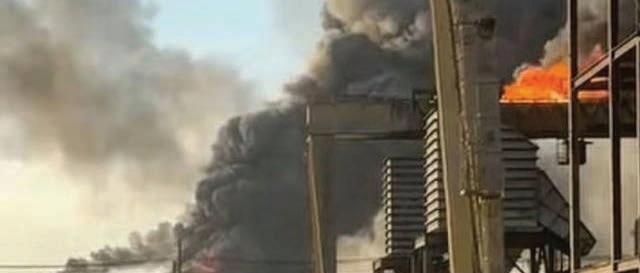
Early indications suggest the explosion may have originated from an equipment malfunction within the refinery’s processing systems, though investigations remain ongoing. State environmental officials quickly deployed air monitoring teams to assess potential health risks, while federal oversight agencies are expected to review the incident in the coming weeks to determine whether further investigation or enforcement action is warranted.
From an economic standpoint, the immediate impact on fuel markets often hinges less on the dramatic visuals of an explosion and more on the duration and severity of any operational shutdown. If production resumes quickly, the national market may absorb the disruption with little noticeable change. However, if repairs extend over days or weeks, even a single refinery outage can tighten supply enough to influence wholesale fuel prices.
From page 1
report continued progress in degrading Iranian capabilities. Thousands of targets have been struck since the start of operations, with particular emphasis on reducing naval capacity and limiting the effectiveness of drone-based attacks. Reports indicate a significant decline in drone activity, suggesting that portions of Iran’s aerial capabilities have been disrupted.
Despite these developments, the conflict shows no indication of slowing. Instead, the pattern over the past 48 hours suggests a transition in how the conflict is being conducted. Iran appears to be relying more heavily on indirect engagement, including missile strikes and coordination with regional allies, rather than direct large-scale confrontation with U.S. forces.
Diplomatic conditions remain uncertain. While there have been indications of communication between parties through indirect channels, no formal negotiations have been confirmed. Public statements from Iranian leadership continue to reject the presence of active talks, leaving the situation without a clearly defined diplomatic pathway at this stage.
The cumulative effect of these developments is a conflict that is no longer
confined to a single area of engagement. Military activity, regional involvement, and economic impact are now interconnected, with each influencing the direction and intensity of the others.
For the United States, the current approach reflects an effort to balance sustained military pressure with broader economic considerations. Avoiding strikes on energy infrastructure reduces the likelihood of immediate global supply disruption, while continued targeting of military assets maintains operational momentum.
However, the expansion of activity across multiple countries and the increased focus on strategic waterways indicate that the risks associated with the conflict are growing rather than stabilizing. The potential for further escalation remains present, particularly if maritime routes or additional regional actors become directly involved.
As of March 25, Operation Epic Fury remains active, with no confirmed timeline for de-escalation. The developments of the past two days point to a conflict that is evolving in scope and complexity, with implications extending beyond the immediate region and into global economic and security considerations.
Port Arthur’s refinery capacity makes it particularly significant. Large Gulf Coast refineries serve as a backbone for fuel distribution across much of the country, feeding pipelines that reach into the Midwest and beyond. Any interruption in that flow can create localized shortages or force distributors to source fuel from alternative locations, often at higher cost.
For residents of the Pacific Northwest, including southern Oregon, the connection may seem distant but is nonetheless real. West Coast fuel markets operate somewhat independently due to limited pipeline connectivity with the Gulf Coast, relying more heavily on regional refining and imports. That separation can act as a buffer in the short term. However, national pricing trends are still influenced by broader supply dynamics. If Gulf Coast disruptions contribute to rising crude or re-
fined product prices nationwide, those increases can eventually be reflected at the pump in states like Oregon.
Seasonal timing also adds another layer of complexity. With spring break travel underway and the transition to summer fuel blends approaching, demand for gasoline is already beginning to climb. Any unexpected disruption during this period can amplify market sensitivity, even if the physical supply impact is limited.
For now, analysts are watching closely for confirmation on how long the Port Arthur facility will remain offline and whether any additional infrastructure was affected. Early reports suggest the fire was contained before it could spread extensively, a factor that could limit long-term damage and help stabilize production more quickly.
In the absence of injuries and with the fire contained, the immediate crisis has passed. What remains is a reminder of how tightly interconnected the nation’s energy systems have become. A single incident along the Gulf Coast can prompt concerns from Texas to Oregon, not because of direct supply lines, but because of the delicate balance that governs fuel production, distribution, and pricing across the country.
Whether this particular explosion leaves a lasting mark on gas prices will depend largely on the speed of recovery. For now, the market response remains cautious, with the full economic impact still unfolding in the days ahead.


By Ellen Ward
A homicide investigation unfolding in southern Maryland is drawing national attention not only for the loss of life, but for the difficult and often uncomfortable questions surrounding how the crime was physically carried out. At the center of the case is Dayton James Webber, a 27-yearold quadruple amputee known in competitive circles as a skilled cornhole player who had built a reputation around adapting to life without arms or legs. Authorities now say that same adaptability is central to understanding what happened inside a vehicle on March 22.
According to investigators, Webber was driving a car with multiple passengers when an argument broke out. Seated in the front passenger position was Bradrick Michael Wells, also 27. What began as a verbal dispute escalated rapidly. Law enforcement officials allege that during the confrontation, Webber produced a firearm and shot Wells at close range while both men were inside the vehicle.
Witness accounts from individuals in the back seat have become a key part of the case. Those passengers told investigators they refused to assist in moving the victim after the shooting and instead exited the vehicle to contact authorities. Their statements helped establish a timeline

that places the shooting squarely within the confines of the car, leaving investigators to reconstruct not just the sequence of events, but the mechanics of how the act itself was carried out.
After the shooting, authorities allege Webber drove away from the scene with Wells still inside the vehicle. The victim’s body was later discovered in a residential yard in Charlotte Hall, Maryland. Law enforcement tracked Webber to a hospital in Virginia, where he was taken into custody. He now faces charges that include firstand second-degree murder.
As the case has unfolded, one question has dominated public attention: how could
someone without arms or legs operate both a firearm and a vehicle? Investigators have acknowledged the question but have not publicly detailed the precise mechanics of how the weapon was fired during the incident. However, elements of Webber’s past provide important context that law enforcement appears to be weighing.
Webber’s life story has long been defined by adaptation. After losing all four limbs as an infant due to a severe infection, he learned to navigate daily life through alternative physical techniques. Over time, he demonstrated the ability to perform tasks that many would assume impossible, including driving. Reports indicate that he operated vehicles using modified methods tailored to his physical condition, underscoring a level of independence that had become part of his public identity.
That same adaptability extended to firearm use. Prior to the incident, video evidence had surfaced showing Webber handling and discharging firearms. While authorities have not confirmed whether similar techniques were used in this case, those recordings establish that he had previously developed a method to manipulate and fire a weapon despite his physical limitations. For investigators, that history is likely a critical piece of understanding capability, even as they continue to deter-
mine exactly what occurred inside the vehicle.
The case sits at an unusual intersection of physical limitation and demonstrated ability. Experts in adaptive technology and rehabilitation have long documented how individuals with significant disabilities can develop highly specialized techniques to perform complex tasks. In this instance, that broader understanding is now being examined through the lens of a criminal investigation.
For the public, the facts present a stark contrast between perception and reality. The idea that someone without arms or legs could drive a car, handle a firearm, and carry out a violent act challenges basic assumptions about physical capability. Yet investigators emphasize that the focus remains on evidence, witness statements, and established behaviors rather than speculation.
As the legal process moves forward, additional details are expected to emerge regarding both the sequence of events and the methods involved. For now, authorities are working to build a case grounded in what can be proven, while a wider audience continues to grapple with the unsettling realization that what seems impossible at first glance may, under certain conditions, be entirely within reach.



By John Oliver
There is a certain moment each year in Grants Pass when the season quietly shifts. The river becomes the center of attention, the parks begin to fill, and a familiar energy settles into the community. That moment is arriving once again as Boatnik prepares to return, signaling not just the start of summer, but the continuation of one of Southern Oregon’s most enduring traditions.
Held annually at Riverside Park over Memorial Day Weekend, Boatnik has been a cornerstone of Grants Pass life for more than six decades. What began as a local celebration has grown into a regional draw, bringing thousands of visitors into Josephine County while still holding tightly to its small-town roots. For longtime residents, it is a tradition measured in memories. For those discovering it for the first time, it offers a full introduction to the character, hospitality, and energy of the Rogue Valley.
This year carries an added sense of excitement, as the Grants Pass Tribune reestablishes its relationship with the event, reconnecting with a festival that has long reflected the spirit of the community it serves. With summer approaching, organizers and residents alike are already looking ahead, preparing for a weekend that blends entertainment, tradition, and purpose.
Boatnik’s appeal lies in its ability to offer something for everyone. The event is free to attend, making it accessible to families, visitors, and residents alike, while additional attractions such as the Davis Shows Carnival,
live concerts, and the Boatnik Brewfest provide expanded experiences for those looking to take part in everything the weekend has to offer. This year’s entertainment lineup includes musical guest Sebastian Bach, adding another layer of excitement to an already packed schedule.
Festivities begin Thursday evening as the carnival opens, bringing with it the unmistakable sights and sounds of rides, games, and classic fair food. By Friday, the pace quickens with live music, vendors lining the park, and a fireworks display over the Rogue River that has become one of the signature moments of the weekend. The glow over the water, paired with the hum of a full crowd, creates a scene that feels both celebratory and uniquely local.
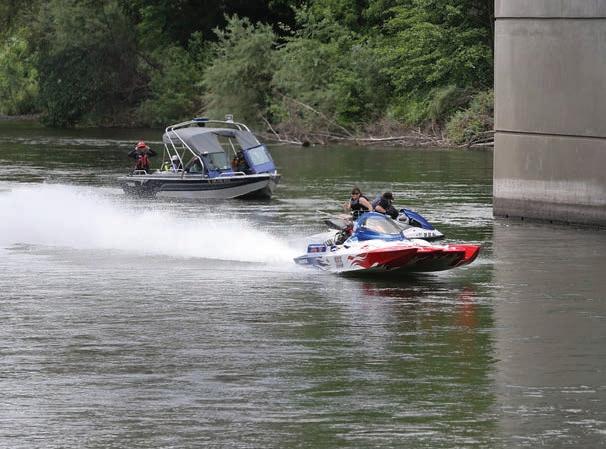
Saturday morning shifts the focus to downtown Grants Pass, where the Boatnik parade winds its way through the city before arriving at Riverside Park. It is here that the scale of the event becomes fully visible, with thousands lining the streets in support of participants and community groups. The parade remains one of the most anticipated elements of the weekend, a visual reminder of the pride and unity that define the region. Throughout the weekend, the park becomes a hub of activity. Boat races roar across the Rogue River, including sprint and drag competitions that draw dedicated fans year after year. Families move between carnival rides, craft vendors, and children’s activities, while others gather for traditions like bingo, food booths, and community events scattered throughout the grounds. The rhythm of Boat-
nik is constant, offering something new at every turn while maintaining the familiarity that keeps people coming back.
Monday serves as both a highlight and a moment of reflection. The Tom Rice Memorial White Water Hydroplane Race brings high-speed excitement to the river, while the Memorial Day service, often accompanied by a jet flyover, grounds the celebration in its deeper purpose. It is a reminder that Boatnik is not only about entertainment, but also about honoring those who have served and sacrificed.
What truly sets Boatnik apart, however, is what happens beyond the weekend itself. Every dollar raised through the event is reinvested into children and youth-based organizations throughout Josephine County. That mission has quietly shaped the festival for generations, turning a community gathering into a year-round source of support for local families and programs.
With just over two months to go, preparations are already underway, including opportunities for community members to participate in the parade and other events. For those outside the area who may be encountering Boatnik for the first time, the invitation is simple. Come experience it. Walk the park, watch the river, meet the people, and see firsthand why this tradition continues to thrive after more than 60 years.
In Grants Pass, Boatnik is more than a weekend. It is the unofficial start of summer, a celebration of community, and a reminder that some traditions are worth holding onto.
From page 1
airports in large numbers. Security checkpoints that might normally absorb that traffic with ease are now operating with less flexibility. A short delay can grow into a longer one. A longer one can begin to affect departure times.
Weather is adding to the strain in quieter ways. Storm systems along the West Coast have slowed arrivals into major airports, forcing planes to space out more than usual. That spacing reduces how many flights can land in a given period, and once delays begin to build, they rarely stay in one place. Aircraft arrive late, crews fall behind schedule, and departures begin to slip. The chain reaction can travel hundreds of miles, reaching passengers
who may never see the weather that caused it.
For those choosing to drive north and fly out of Portland instead of Medford, the experience shifts but does not necessarily improve. Portland International Airport is absorbing a larger share of regional travel, and with that comes heavier congestion at nearly every stage of the process. Parking takes longer. Security lines stretch further. Boarding areas fill more quickly. The margin for arriving just in time has narrowed to the point where it is no longer a reliable strategy.
This week demands a different approach. Arriving early is not about convenience. It is about protecting the rest of the trip from a system that is still functioning,
5 DAY OUTLOOK
SOURCE: WEATHER.COM



but operating under pressure. Checking flight status before leaving home is no longer optional. Staying connected to airline updates can provide the kind of warning that allows travelers to adjust before a delay turns into a missed connection.
There is no nationwide collapse underway. Flights are still moving. Airports are still open. But the system is tighter than it appears, and the weak points are no longer hidden. For Southern Oregon travelers, the safest assumption this week is that every step of the journey may take a little longer than expected.
And in a system like this, a little extra time is the one thing that can still make everything else work.




By John Oliver
A growing number of people living with chronic joint pain are quietly shifting their attention away from prescriptions and injections, looking instead toward alternatives that promise relief without the burden of side effects. Among those options, supplements derived from chicken cartilage have carved out a notable place in the health and wellness conversation, particularly for individuals managing arthritis and long-term joint discomfort.
Often misunderstood or mislabeled as “chicken beak” supplements, these products are typically sourced from chicken cartilage or connective tissue. What they deliver is not novelty, but biology. These supplements contain compounds the human body already relies on to maintain joint integrity, including type II collagen, chondroitin, glucosamine, and, in some cases, hyaluronic acid. Each of these plays a distinct role in how joints function, age, and respond to stress.
Type II collagen, the primary structural protein found in cartilage, is central to these formulations. In supplemental form, it is believed to support joint health not only by contributing building material, but also by interacting with the immune system. Research suggests that certain forms of collagen may help regulate immune responses that contribute to joint inflammation, particularly in conditions where the body mistakenly targets its own cartilage. This mechanism has drawn attention among those seeking to manage inflammatory joint conditions with-

out relying solely on pharmaceutical intervention.
Chondroitin and glucosamine, also commonly present in chicken-derived cartilage extracts, serve as foundational components of cartilage itself. These compounds are involved in maintaining the elasticity and resilience of joint tissue, helping it withstand daily wear and tear. Over time, as natural production declines with age or injury, supplementation may help slow the breakdown of cartilage and support its ongoing maintenance. While these effects are not immediate, they are part of a longer-term strategy aimed at preserving joint function.
acid, another component sometimes associated with these supplements, plays a different but equally important role. Found naturally in joint fluid, it acts as a lubricant, allowing bones to glide smoothly against one another. In clinical settings, it is often administered through injections, but oral supplementation has gained attention as a less invasive way to support joint comfort and mobility. Though absorption and effectiveness can vary, its presence adds another layer of support in reducing friction within the joint.
For individuals dealing with chronic pain, particularly those with mild to moder-

ate osteoarthritis, these supplements offer a pathway that aligns with a more natural approach to care. They are not designed to replace medical treatment in severe cases, nor do they reverse advanced joint damage. Instead, their value lies in gradual support. Over weeks or months, some users report reduced stiffness, improved flexibility, and a general easing of discomfort that allows for more consistent daily movement.
The appeal is not rooted in dramatic results, but in sustainability. Unlike many pharmaceutical options, these supplements are generally well tolerated, with fewer reported side effects. That alone makes them an attractive option for those who have grown cautious of long-term medication use or who are seeking to avoid invasive procedures.
Still, expectations must remain grounded. Scientific findings on their effectiveness are mixed, and outcomes can differ widely from person to person. Factors such as the severity of joint damage, overall health, and consistency of use all influence results. What remains consistent is their role as a supportive measure rather than a cure.
As interest in alternative approaches to chronic pain continues to grow, chicken-derived joint supplements represent a convergence of traditional biology and modern wellness trends. For those navigating the daily reality of joint discomfort, they offer a measured, patient-centered option—one that prioritizes support over suppression, and long-term care over quick fixes.
















Posting March 23, 2026

Advertise with The Grants Pass Tribune!
Stand with us in defending freedom of the press and the 1st Amendment! The Grants Pass Tribune is facing political persecution, with lawsuits aimed at silencing our bold investigative journalism. We remain committed to uncovering the truth and keeping our community informed like never before.
Show your support for independent journalism and the fight against political tyranny. Place your ad with us and align your business with the values of free speech and transparency.
GET STARTED
Contact John Oliver john@grantspassmag.com