WEDNESDAY, JUNE 3, 2026
WEDNESDAY, JUNE 3, 2026
By John Oliver
Josephine County has always been more than timber, rivers, farms, back roads, and smalltown politics. Beneath the feet of residents from Grants Pass to Sunny Valley, from Grave Creek to the Illinois Valley, from old placer beds to rural rock deposits, sits a complicated inheritance of minerals, aggregate, gold, chrome, nickel, copper, platinum, gravel, and stone. It is not a fairy tale treasure map. It is not a simple promise of instant prosperity. But it is real, it is valuable, and it has helped shape generations of political fights, landuse battles, backroom suspicions, environmental conflicts, and public distrust.
Josephine County may be one of Oregon’s clearest examples of a place that can be resource-rich and cash-poor at the same time. The county has mineral history under nearly every layer of its identity. Gold brought miners into the region. Chromite brought strategic interest. Gravel and crushed rock continue to carry economic importance because modern communities cannot build roads, subdivisions, bridges, drainage systems, public works projects, or wildfire access routes without aggregate. The public often hears the word mining and thinks only of gold pans and old claims. The more practical truth is that the county’s modern mineral value is tied as much to rock as it is to precious metal.
That is where the politics begins.
Josephine County’s mining history is not speculation. Public records and geological surveys document a long record of mineral activity across the county, including gold, chromium, sil-

ver, copper, platinum, nickel-related minerals, limestone, marble, sand, gravel, and crushed stone. Historic districts around Galice, Waldo, Althouse, Josephine Creek, Grave Creek, and the Illinois Valley helped write the county’s early economy. The old miners were not imagining value. They were following geology that remains part of the county’s physical reality today.
But buried value is not the same as usable wealth. A mineral deposit only becomes money when it can be lawfully accessed, profitably extracted, transported, processed, sold, and defended through permitting, litigation, environmental review, public opposition, and political pressure. That is where Josephine County’s promise turns into conflict. The land may contain value, but the power to unlock that value does not belong equally to every resident.
For ordinary citizens, minerals beneath the ground are mostly an abstract fact. A homeowner cannot simply dig up a hillside, mine a creek, crush rock, move gravel, or open a commercial
below the
Mining requires land ownership, zoning, permits, equipment, capital, haul routes, water rights, reclamation plans, agency approvals, lawyers, consultants, and political patience. In many cases, it also requires influence. That influence may be perfectly legal, but it still raises legitimate public concern when land-use decisions, zoning changes, private profit, public roads, rural neighborhoods, and natural resources collide.
Sunny Valley and Grave Creek show why this issue matters. The area is not just another rural patch of land. It sits near a historically and environmentally sensitive corridor tied to Grave Creek and the Rogue River system. When land connected to aggregate extraction becomes the subject of rezoning, appeals, neighborhood resistance, and environmental scrutiny, the fight is no longer only about gravel. It becomes a question of who gets to profit from the land, who bears the damage, who makes the decision, and whether the
• see WHAT, page 5
Budget Decisions, Ordinance Changes, and Community Projects Move Forward
By John Oliver
The City of Grants Pass enters the first week of June with a full slate of government business, policy decisions, budget approvals, and community initiatives that will shape municipal operations for the coming fiscal year. City leaders are scheduled to convene today at 6pm, June 3 for a City Council meeting followed by a meeting of the Grants Pass Urban Renewal Agency, addressing everything from the city budget and state revenue sharing to park regulations, public infrastructure financing, and upcoming community events.
At the center of the meeting is the adoption of the Fiscal Year 2027 budget. Council members will hold a public hearing regarding the approved budget and the city's use of state-shared revenue funds before considering several resolutions necessary to formally implement the spending plan. Those actions include declaring the city's election to receive state-shared revenues, imposing and categorizing taxes for the upcoming fiscal year,
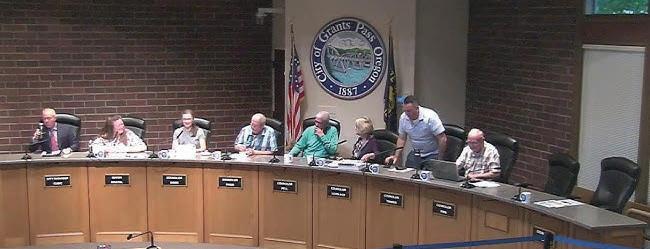
and officially adopting the budget and appropriations that will fund city services during the next fiscal cycle.
Budget adoption marks one of the most significant responsibilities of local government each year, establishing funding levels for public safety, parks, infrastructure maintenance, administration, community development, and other essential city operations. The decisions made during this meeting will guide spending priorities throughout the next fiscal year while also determining how stateshared revenue funds are incorporated into city finances.
In addition to financial matters, council members are expected to consider a substantial ordinance updating several sections of the Grants
Pass Municipal Code. The proposed amendments address regulations involving obstructing traffic, objects or materials placed in public rights-ofway, public trash receptacles, water pollution violations, public urination and defecation offenses, public indecency violations, sleeping on sidewalks and within doorways, and regulations governing the use of city parks and temporary exclusions from park properties.
The ordinance package represents one of the more extensive policy discussions on the agenda and continues the city's ongoing effort to refine regulations governing public spaces, community conduct, and park management. Because the proposal includes an emergency declaration, any
• see CITY, page 3
By John Oliver
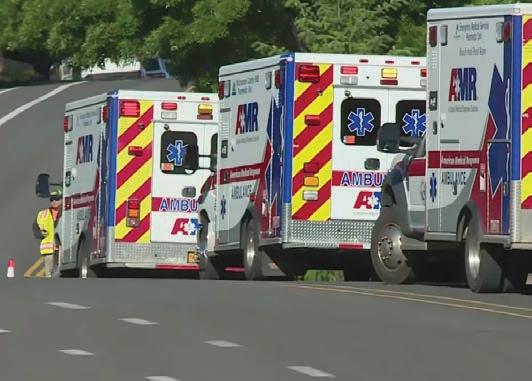
A domestic violence incident in the Oregon community of Sandy escalated into a deadly shooting and prolonged law enforcement standoff, leaving three people dead and a police officer seriously injured in an event that has drawn attention across the state and the nation. The violence unfolded on the afternoon of May 31 in the city of Sandy, located approximately 30 miles east of Portland in Clackamas County. According to law enforcement officials, officers were dispatched to a residence after reports of a domestic disturbance involving gunfire. What began as a response to a local emergency quickly transformed into a major law enforcement operation involving multiple agencies and specialized tactical units.
Authorities reported that officers arriving at the scene encountered immediate gunfire. During the exchange, a Sandy police officer was struck multiple times. Emergency medical personnel transported the wounded officer to a nearby hospital for treatment. Officials later confirmed that the officer survived the shooting and is expected to recover, although the extent of the injuries has not been fully disclosed.
As the situation intensified, investigators determined that multiple victims had been killed at the residence. Law enforcement agencies secured the surrounding neighborhood while attempting to gain control of the rapidly developing incident. Residents in nearby homes were advised to remain indoors as officers established a safety perimeter around the property.
The suspect subsequently barricaded himself inside the residence, creating a tense standoff that lasted several hours. Tactical teams, crisis negotiators, sheriff’s deputies, and additional law enforcement personnel responded to assist Sandy Police in managing the situation. Roads in the immediate area were closed, and emergency response resources were concentrated around the neighborhood while authorities worked to prevent further loss of life. The standoff continued into the evening before
• see DOMESTIC, page 9

By Ellen Ward
A growing debate over the future of Oregon’s transportation system has placed Governor Tina Kotek at the center of a complex financial challenge that could affect residents in every corner of the state. As lawmakers, transportation officials, and local communities grapple with longterm funding concerns, questions are emerging about the future of road maintenance, infrastructure investments, and the availability of services provided through the Oregon Department of Motor Vehicles.
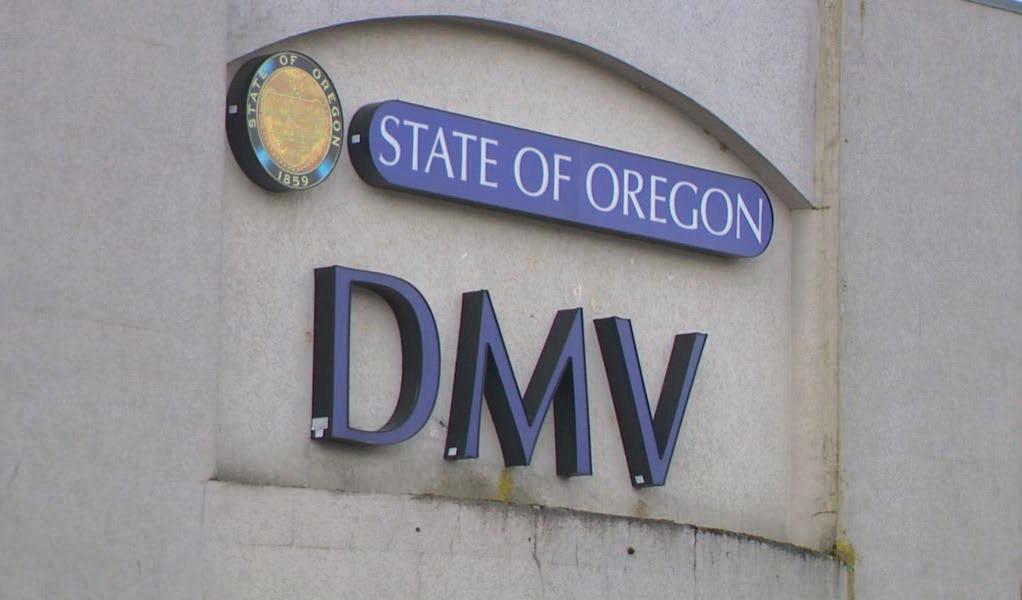
The issue gained renewed attention following warnings from transportation officials that Oregon may eventually be forced to reduce services and close DMV offices if lawmakers fail to identify sustainable funding sources in the coming years. While no statewide closures have been announced, projections presented to state leaders indicate that as many as 15 to 20 DMV offices could face closure under certain budget scenarios if funding challenges continue to grow.
Governor Tina Kotek has acknowledged the seriousness of the situation while emphasizing that state leaders have worked to avoid immediate disruptions. Legislative actions taken during the 2026 session provided short-term financial stability for key transportation programs, allowing Oregon to maintain existing operations through at least the next budget cycle. However, state officials continue to caution that the underlying financial issues remain unresolved.
At the heart of the debate is a transportation funding model that has increasingly come under pressure from changing driving habits and technological advancements. For decades, fuel taxes
have served as one of the primary sources of revenue supporting Oregon’s transportation infrastructure. As vehicles become more fuel efficient and electric vehicles account for a growing share of traffic on Oregon roads, fuel tax revenues have failed to keep pace with rising operational and construction costs.
Transportation planners argue that the result is a widening gap between available funding and the resources needed to maintain highways, bridges, roadways, and public services. Inflation, labor expenses, material costs, and equipment prices have all increased substantially, placing additional strain on state transportation budgets.
Governor Kotek has responded by assembling transportation funding discussions aimed at identifying long-term solutions. The effort seeks to evaluate how Oregon can continue maintaining critical services while adapting to changes
in vehicle technology and travel patterns. State officials have indicated that future recommendations may include alternative funding mechanisms, operational reforms, or adjustments to existing transportation revenue structures.
For many Oregonians, the potential impact extends beyond transportation projects and highway improvements. The DMV serves as a vital point of contact for residents seeking driver licenses, vehicle registrations, title transfers, identification cards, and commercial licensing services. Any reduction in office availability could create significant challenges for communities that already face long travel distances to reach government services.
The concern is particularly relevant in rural regions of Oregon, where residents often rely on smaller DMV offices that serve large geographic areas. Southern Oregon communities could be
From page 1
approved changes could take effect immediately following council action.
Council members will also consider a resolution approving commercial activity at Riverside Park and authorizing a fee waiver connected to the 2026 Cruise the Rogue event. The annual gathering has become one of the region's recognizable community attractions and brings visitors into the city while showcasing local businesses and recreational opportunities.
Several financial and administrative items are also scheduled for approval through the consent agenda process. Among them is a resolution reaffirming an inter-fund loan involving the Bancroft Fund and the Solid Waste Capital Projects Fund for interim financing purposes. Additional actions include authorizing delinquent sewer charges to be placed on county tax rolls for collection, permitting city property tax receipts to be included in Josephine County's investment program, and amending
portions of the city's procedural rules governing council business and public comment.
The council will also review and acknowledge minutes from recent meetings involving the Small Business Taskforce, Bikeways and Walkways Committee, and the Committee on Public Art. These advisory groups continue to provide recommendations and guidance on issues ranging from economic development and transportation planning to public art and community enhancement projects.
Following the City Council meeting, elected officials will transition into a meeting of the Grants Pass Urban Renewal Agency. There, board members will conduct a public hearing on the agency's Fiscal Year 2027 budget before considering formal adoption of the spending plan. The agency will also review a resolution authorizing Josephine County to include urban renewal property tax receipts within its investment program. The meeting comes during an active
period across Grants Pass. Public works crews continue seasonal street sweeping operations, city parks are entering their busiest summer months, splash pads have reopened, and wildfire preparedness remains a growing concern throughout Southern Oregon as temperatures begin to rise. City officials are simultaneously managing ongoing infrastructure projects, staffing initiatives, economic development efforts, and preparations for a busy summer tourism season. With budget approvals, ordinance revisions, financial resolutions, community event considerations, and urban renewal decisions all appearing on a single agenda, the June 3 meeting represents one of the more consequential sessions of the year for Grants Pass municipal government. The actions taken by council members and urban renewal officials will help establish the framework for city operations, public services, and community development efforts throughout the coming fiscal year.
disproportionately affected if future reductions occur, potentially requiring residents to travel farther for routine transactions and appointments.
The discussion also arrives at a time when transportation infrastructure remains a major concern throughout the state. Oregon continues to experience population shifts, increasing traffic demands in some regions, and growing maintenance needs across aging transportation networks. State leaders have repeatedly stressed that maintaining safe roads and reliable transportation services will require ongoing investment regardless of how revenue is ultimately generated.
For Governor Kotek, the challenge represents one of the most significant policy issues facing state government. Transportation funding affects economic development, public safety, emergency response capabilities, commerce, and daily life for millions of residents. Decisions made during the next several legislative sessions could determine how Oregon balances those responsibilities while adapting to a rapidly changing transportation landscape.
Although immediate DMV closures are not expected, the warnings issued by transportation officials have elevated the urgency of the conversation. As state leaders continue evaluating options, Oregon residents are likely to hear increasing discussion about transportation funding, infrastructure priorities, and the future of public services that many have long taken for granted.
The outcome of those discussions may ultimately shape not only how Oregonians travel, but how they access essential government services for years to come.

By John Oliver
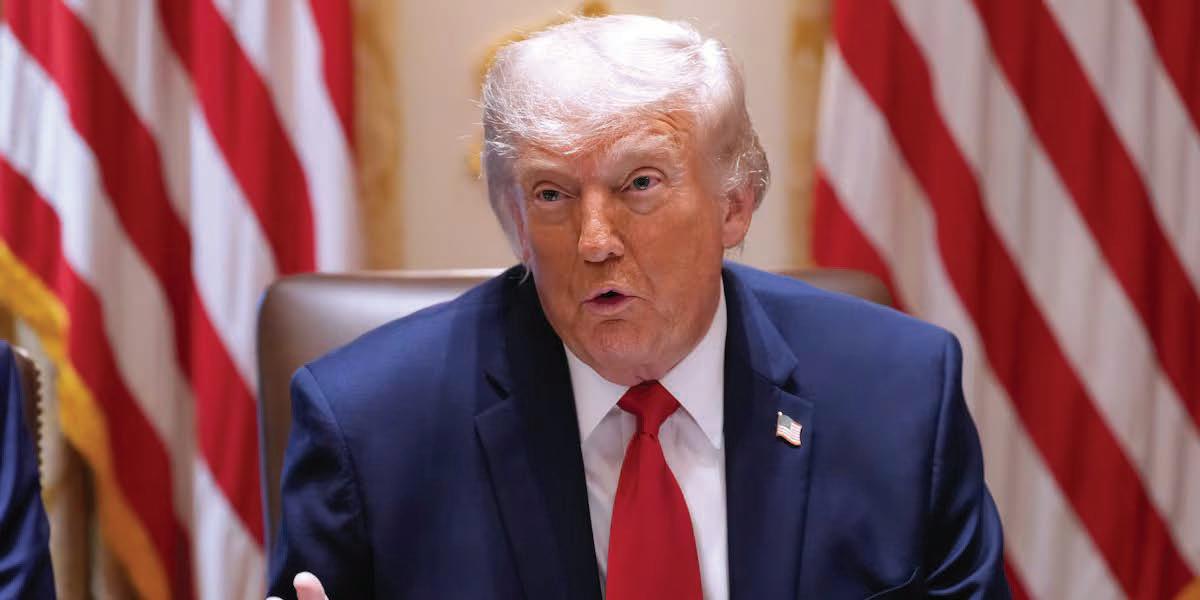
A sweeping federal initiative intended to compensate individuals who claim they were harmed by politically motivated government actions has been placed on hold, marking a significant shift in one of the Trump administration’s most closely watched legal and political undertakings.
The proposed $1.8 billion Anti-Weaponization Fund emerged from a settlement involving President Donald Trump, members of his family, and the Trump Organization concerning the unauthorized disclosure of tax information that became public during previous federal investigations. While the settlement did not provide direct financial compensation to Trump or his businesses, it included provisions establishing a substantial fund designed to address claims from individuals who allege they were targeted by government agencies for political reasons.
The program was envisioned as a nationwide compensation mechanism that would allow applicants to seek financial relief if they believed they had suffered damages resulting from alleged government misconduct. Under the framework announced by the U.S. Department of Justice, an independent review process would have evaluated claims involving federal investigations, prosecutions, regulatory actions, and other government activities that applicants argued were politically motivated or improperly influenced.
However, plans to launch the program have
now been suspended following mounting legal scrutiny and growing questions regarding the fund’s authority, oversight, and implementation. Reports from multiple national news organizations indicate that senior administration officials privately signaled that the project would not move forward as originally planned while federal litigation remains ongoing.
The pause follows a series of legal challenges filed in federal court. Opponents of the program argued that the executive branch may have exceeded its authority by establishing such a large compensation structure without specific congressional approval. Legal filings also raised concerns about how eligibility would be determined, who would oversee awards, and whether taxpayer funds could be distributed under the proposed arrangement.

Federal courts responded by temporarily blocking implementation of the fund while legal arguments continue to be examined. Judges reviewing the matter expressed concerns that once payments were issued, recovering funds could become difficult if the program were ultimately found to be unlawful. As a result, federal authorities have been prevented from moving forward with key administrative steps necessary to activate the compensation system.
The controversy has drawn attention from lawmakers across the political spectrum. Some members of Congress questioned whether the federal government possesses the legal authority to establish a compensation fund of this magnitude through settlement agreements. Others focused on the broader
implications of creating a process designed to evaluate claims involving alleged political targeting by federal agencies.
Supporters of the concept have argued that Americans who experienced government misconduct deserve a pathway to seek restitution. Critics, meanwhile, contend that any such compensation system should be created through congressional legislation rather than executive action. The debate has intensified broader national discussions about accountability within federal institutions and the role of government agencies in politically sensitive investigations.
Despite the pause, portions of the broader settlement agreement that gave rise to the proposal reportedly remain intact. Federal officials have indicated that they will continue complying with existing court orders while litigation proceeds through the judicial system.
For now, no compensation has been distributed, no claims process has opened, and no payments have been approved. The future of the proposed fund remains uncertain as courts evaluate the legal foundations of the initiative and determine whether it can move forward in any form.
The outcome could ultimately influence not only the fate of the $1.8 billion program itself, but also future questions surrounding executive authority, federal settlements, government accountability, and the limits of administrative power in the United States.













By Bryce Robinson
The motorsports community is mourning the loss of former Indianapolis 500 driver and aviation professional Rick Treadway, who died following a motorcycle accident on May 30. He was 56 years old.
News of Treadway’s death was confirmed on June 1, prompting an outpouring of remembrance from racing organizations, former competitors, and fans who followed his career during a notable era of American open-wheel racing. While his time at the highest levels of the sport was relatively brief, his connection to one of Indianapolis racing’s most recognizable families ensured that his name remained woven into the history of the Indianapolis Motor Speedway.
Born into a family deeply involved in motorsports, Treadway was the son of Fred Treadway, founder of Treadway Racing. The family-owned team earned a lasting place in Indianapolis 500 history when driver Arie Luyendyk captured victory in the 1997 Indianapolis 500, one of the most celebrated wins in the event’s long and storied tradition. The success of Treadway Racing reflected a period when independent teams and family operations continued to play a significant role in shaping American open-wheel competition.
Rick Treadway followed his own path behind the wheel, spending years competing in a variety of racing disciplines before reaching the Indy Racing League. His racing journey included participation in Formula 2000 competition, USAC Silver Crown events, National Midget racing, and Sports Car Club of America competition. Those experiences helped establish him as a versatile driver capable of adapting to different forms of motorsports while steadily building his credentials within the racing world.

Treadway made 11 starts in the Indy Racing League during the 2001 and 2002 seasons. His strongest performance came at Texas Motor Speedway in 2001, where he recorded a fifth-place finish against some of the most accomplished drivers in the series. The result demonstrated his ability to compete at a high level and remains one of the highlights of his professional racing career.
His most prominent appearance came in the 2002 Indianapolis 500, a race that represents the pinnacle of American open-wheel competition. Qualifying seven-
teenth for the event, Treadway earned his place among a field of elite drivers competing before one of the largest audiences in motorsports. Although his race ended prematurely following an accident on Lap 90, his participation secured a permanent place in Indianapolis 500 history.
Beyond racing, Treadway developed a respected career in aviation. He worked as a commercial pilot and certified flight instructor, dedicating much of his professional life to aviation after his years behind the wheel. Those who knew him often recognized his passion for both racing and flying, pursuits that demanded discipline, precision, and technical skill.
As news of his death spread throughout the racing world, organizations and individuals connected to the sport reflected on his contributions and the legacy of the Treadway family within American motorsports. His passing arrives during a period in which the racing community has experienced several notable losses, adding to a sense of reflection across the sport.
Authorities have released limited information regarding the motorcycle accident that led to Treadway’s death, and no extensive details have been publicly disclosed. What remains clear is that his life touched two worlds that often share a common spirit: racing and aviation.
For many fans, Rick Treadway will be remembered not only as an Indianapolis 500 competitor, but also as part of a generation that helped carry forward the traditions of family-owned racing teams and the enduring legacy of the Indianapolis Motor Speedway. His name now joins the long history of individuals whose contributions helped shape one of America’s most celebrated sporting institutions.


By Ellen Ward
The White House has launched a new federal framework governing the review of advanced artificial intelligence systems, marking one of the most consequential technology policy actions of President Donald Trump’s second term as the United States seeks to balance innovation, national security, and economic competitiveness in an increasingly AI-driven world.
The executive order, signed Tuesday, establishes a process allowing the federal government to evaluate potential national security risks associated with the most advanced artificial intelligence models before they are released publicly. The action comes amid growing concern among policymakers, cybersecurity experts, military officials, and technology leaders that rapidly advancing AI capabilities could introduce new vulnerabilities affecting critical infrastructure, financial systems, communications networks, and national defense operations.
The order creates a structure through which developers of powerful frontier AI models may provide those systems to designated federal agencies for review prior to public deployment. The review period can extend for up to 30 days and involves coordination among national security, intelligence, cybersecurity, defense, commerce, and homeland security officials. The purpose of the evaluations is to identify vulnerabilities, assess potential misuse risks, and strengthen defensive measures before advanced systems become widely available.
The administration’s approach reflects a broader effort to address emerging security concerns without imposing sweeping regulatory mandates on one of the nation’s fastest-growing industries. Federal officials have increasingly warned that sophisticated artificial intelligence tools may be capable of identifying software weaknesses, accelerating cyberattacks, generat-

ing advanced malicious code, and assisting hostile actors seeking to exploit weaknesses within public and private infrastructure networks.
The executive order also formalizes cooperation between the federal government and selected private-sector partners. Under the framework, trusted organizations may receive early access to covered frontier models to help evaluate cybersecurity implications and strengthen defensive protections for critical infrastructure systems. Administration officials have described the initiative as part of a larger strategy designed to ensure that technological advancement occurs alongside robust security planning.
The action follows several weeks of discussion within the White House regarding the appropriate balance between oversight and innovation. Reports from national media outlets indicate that President Trump postponed an earlier signing ceremony after expressing concerns that a previous version of the policy could have created unnecessary obstacles for American technology companies. The revised order ulti-
mately adopted a more limited review structure intended to preserve the competitive position of U.S. developers while still addressing national security considerations.
The decision arrives as artificial intelligence increasingly becomes a focal point of international competition. Federal officials have repeatedly emphasized that maintaining American leadership in AI development remains a strategic priority, particularly as nations including China continue investing heavily in advanced computing, machine learning, and next-generation technology platforms.
Artificial intelligence has rapidly evolved from a specialized research field into a technology with broad implications across nearly every sector of the economy. AI systems are now being deployed in healthcare, manufacturing, transportation, financial services, education, defense, communications, and government operations. As capabilities have expanded, policymakers have faced growing pressure to develop safeguards addressing potential risks without
slowing innovation.
The Trump administration has generally favored policies encouraging technological growth while reducing regulatory burdens on emerging industries. Since returning to office, administration officials have pursued initiatives aimed at expanding AI infrastructure, increasing domestic technological investment, and streamlining policies viewed as barriers to innovation.
The latest executive order represents a continuation of that philosophy while acknowledging mounting concerns surrounding the security implications of increasingly capable AI systems. Federal agencies have expressed particular interest in evaluating how advanced models might be used to identify weaknesses in digital infrastructure or enhance the sophistication of cyber threats targeting government institutions and private industry.
Technology companies, meanwhile, continue to navigate a rapidly changing regulatory landscape as governments around the world debate how artificial intelligence should be governed. While some nations have adopted more comprehensive regulatory structures, the United States has largely pursued a strategy emphasizing innovation, voluntary cooperation, and targeted oversight.
As artificial intelligence continues to reshape the global economy and national security environment, the new executive order places the federal government in a more active role evaluating potential risks associated with the most advanced systems. The policy reflects Washington’s growing recognition that artificial intelligence is no longer simply a technological development but a strategic issue with implications extending far beyond the technology sector itself, influencing economic competitiveness, cybersecurity readiness, and the future balance of global power.
public process is truly serving the public.
Aggregate mining is not glamorous, but it is powerful. Gravel is the skeleton of growth. Road base, concrete, crushed rock, and construction stone are the materials that make development possible. Control the aggregate, and you hold a piece of the future cost of building. That does not mean every gravel operator is corrupt or every mining proposal is improper. It does mean the public has every right to watch these decisions closely, especially in a county where land-use politics and personal relationships have long overlapped.
The harder question is why Josephine County has not converted more of its resource base into broad public prosperity. The answer is uncomfortable because it has several layers. Some deposits are no longer economically practical. Some were heavily worked generations ago. Some sit beneath land where extraction would create serious damage to water, wildlife, roads, or nearby homes. Some are located on public lands governed by federal rules. Some would require expensive permitting and reclamation. Some are more valuable on paper than they are in real recoverable profit.
Yet that does not fully explain the frustration residents feel. People see a county with gold history, mineral records, timber history, river corridors, rock resources, and development pressure, and they ask a fair question: why are public services still strained, roads still underfunded, law enforcement still debated, housing still unaffordable, and working families still struggling? That question deserves more than a shrug. It deserves public reporting.
Josephine County’s resource fights are political because land is political. Zoning is political. Roads are political. Water is political. Permits are political. Who sits on a commission matters. Who appoints planning officials matters. Who owns property before a zoning change matters. Who buys land cheaply before its future value is widely understood matters. Who donates, who networks, who pressures, who sues, who appeals, and who benefits all matter.
This is why local journalism cannot treat every political story as a personality dispute. Sometimes the argument on the surface is only the smoke. The fire is underneath. A commission vote may look routine until it affects land value. A zoning change may look technical until it opens the
door to decades of extraction. A public records fight may look procedural until it reveals who knew what, and when. A land-use appeal may look like bureaucracy until residents realize the decision could shape their roads, wells, creeks, property values, and quality of life for years.
Josephine County residents do not need conspiracy theories. They need records. They need maps. They need meeting minutes. They need agency files. They need campaign finance reports. They need land histories. They need to know when a public decision creates private value. They need to understand that mineral and aggregate policy is not some dusty subject for geologists and miners. It is one of the hidden engines of local power.
The phrase richest poor county in Oregon may sound harsh, but it captures a real contradiction. Josephine County has natural wealth, beauty, minerals, timber history, water corridors, and land value, yet many residents live with economic insecurity and public systems that often appear stretched thin. That contradiction does not prove wrongdoing by itself. But it does demand scrutiny. When a county with deep resources remains financially fragile, the public has a right to ask who benefits from the resourc-
es, who pays the costs, and who keeps showing up near the levers of government when valuable land decisions are made.
The Grants Pass Tribune reports political stories because politics is not separate from daily life in Josephine County. It decides roads, taxes, public safety, emergency access, housing, land use, economic development, environmental protection, and the future of rural communities. It decides whether public resources are managed transparently or quietly redirected through influence and access. It decides whether newcomers understand the county they moved into, and whether longtime residents finally see familiar patterns explained in plain language.
What lies beneath Josephine County is more than gold, gravel, chrome, nickel, copper, and stone. Beneath this county is a long-running struggle over value, access, land, power, and public trust. The resources are real. The conflicts are real. The questions are fair. And until those questions are answered openly, thoroughly, and without fear, Josephine County will remain what it has too often been: a place sitting on wealth while ordinary residents are left wondering why so little of it ever seems to rise to the surface.
By John Oliver
A growing dispute between Oregon and the federal government entered a new phase on June 1 when Governor Tina Kotek directed the Oregon Department of Motor Vehicles to stop issuing undercover Oregon license plates to U.S. Immigration and Customs Enforcement vehicles, a decision that has drawn national attention and intensified an ongoing legal battle over immigration enforcement authority.
The directive followed a review by state officials regarding the use of confidential Oregon-issued license plates by federal immigration agents operating within the state. According to the Governor's Office, the decision was made after concerns were raised about the role of state resources in supporting federal immigration enforcement activities. The order effectively ends the practice of issuing new undercover Oregon plates to ICE vehicles while legal and policy questions surrounding the program continue to be examined.
The announcement came only days after the U.S. Department of Justice filed lawsuits against Oregon and several other states, arguing that restrictions on undercover license plates interfere with federal law enforcement operations. Federal officials contend that undercover plates are an important investigative tool used by agencies conducting sensitive operations and surveillance activities. The lawsuits seek to challenge state policies that limit access to those plates for federal agencies.
Oregon officials have maintained that state law does not require the DMV to provide undercover registration services to federal im-
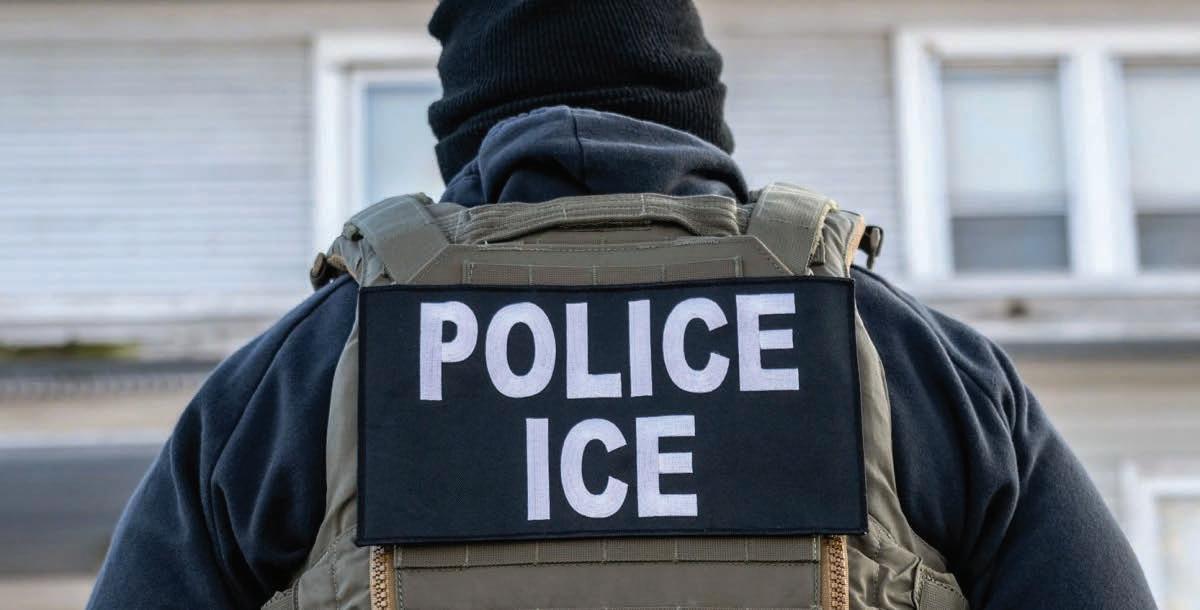
migration authorities. State leaders have also emphasized that federal agencies remain free to operate within Oregon using federal government-issued license plates and vehicles. The dispute centers not on whether ICE can conduct enforcement activities, but on whether Oregon must provide specialized state-issued license plates designed to conceal law enforcement vehicle identities.
For residents across Oregon, the immediate impact of the governor's directive is expected to be limited. The decision does not change federal immigration law, alter ICE authority, or prevent federal agents from conducting operations throughout the state. Immigration enforcement activities may continue in Oregon regardless of the outcome of the dispute. However, the controversy has brought increased attention to how federal agencies identify vehicles during operations and the extent to which
state governments can restrict access to state resources.
The issue has particular relevance in Southern Oregon, where immigration enforcement activity has become increasingly visible in recent months. Reports of ICE operations have surfaced in several communities throughout Jackson County, including areas near businesses, transportation corridors, and public facilities. While confirmed enforcement actions have been documented in portions of Southern Oregon, local officials have generally not played a direct role in federal immigration operations.
Residents in Jackson, Josephine, and Klamath counties are unlikely to notice immediate operational changes resulting from the governor's order. Federal agencies possess their own vehicle fleets and registration systems and can continue utilizing federal license plates. What may change, however, is the use
ultimately ending when the suspect surrendered to law enforcement officers. The individual was taken into custody without additional injuries being reported during the arrest.
Investigators later identified the suspect as Bryan Andrew Moore. Following his arrest, Moore was booked into the Clackamas County Jail. Court records indicate that he faces multiple serious criminal charges, including three counts of second-degree murder, two counts of first-degree kidnapping, and a firearms-related offense. Additional charges may be considered as investigators continue reviewing evidence and witness statements.
Authorities have confirmed that three individuals died during the incident. The identities of the victims were initially withheld while officials worked to notify family members and next of kin. Investigators have not released extensive details regarding the relationships between the victims and the suspect, citing the ongoing nature of the investigation.
Law enforcement officials have classified the case as a domestic violence-related homicide investigation. Domestic violence incidents remain among the most dangerous and unpredictable situations encountered by police officers. Such cases often involve
heightened emotional tensions, rapidly changing circumstances, and an increased likelihood of firearms being present. National law enforcement organizations have long identified domestic disturbance calls as some of the highest-risk responses for first responders.
The incident has renewed attention on the broader impact of domestic violence throughout Oregon and across the United States. According to national crime data and domestic violence advocacy organizations, domestic violence incidents account for a significant percentage of violent crimes annually and frequently place victims, family members, neighbors, and responding officers at risk.
For residents of Oregon, the Sandy tragedy serves as another reminder of the challenges facing law enforcement agencies responding to violent domestic situations. Communities throughout the state have increasingly focused on domestic violence prevention programs, victim assistance services, crisis intervention resources, and public awareness campaigns designed to reduce the risk of deadly outcomes.
In the days following the shooting, investigators continued processing evidence at
the scene and reconstructing the sequence of events that led to the deaths. Detectives are conducting interviews with witnesses, reviewing physical evidence, and analyzing forensic information to establish a complete timeline.
Community members in Sandy and surrounding areas have gathered to mourn the victims and support the injured officer, while local leaders have acknowledged the profound impact the tragedy has had on families, first responders, and residents. The incident has generated widespread attention throughout Oregon and has been reported by national media outlets due to the combination of multiple fatalities, an injured police officer, and the lengthy standoff that followed.
As the criminal case moves forward through Oregon’s court system, investigators are expected to release additional information regarding the victims, the circumstances surrounding the domestic violence incident, and the events that preceded the deadly confrontation.
For now, authorities continue to focus on completing a thorough investigation while a grieving community seeks answers following one of the most significant acts of violence to strike the Sandy area in recent memory.
of Oregon-issued undercover plates that previously allowed certain federal vehicles to blend more easily with other vehicles traveling on Oregon roads.
The legal challenge now moving through the federal court system could have broader implications beyond Oregon. The case raises questions about the relationship between state governments and federal law enforcement agencies, particularly when states choose not to provide resources or administrative support for federal operations. Legal experts expect the courts will ultimately determine whether federal agencies can compel states to provide specialized services such as undercover vehicle registrations.
The dispute also arrives at a time when immigration policy remains one of the most debated issues in American politics. Oregon has frequently found itself at the center of national discussions involving immigration enforcement, state authority, and federal policy implementation. The latest disagreement adds another chapter to that ongoing debate and places Oregon among several states now facing federal legal action over immigration-related policies.
As the lawsuit proceeds, both state and federal officials are expected to continue defending their respective positions. For now, Governor Kotek's June 1 directive remains in effect, and the future of undercover Oregon license plates for ICE vehicles will likely be decided through the federal court system, where the outcome could influence similar policies across the country.






By John Oliver
As the nation begins gearing up for the 250th anniversary of American independence, one of Southern Oregon’s most recognizable destinations is preparing a celebration on a scale that is difficult to miss.
Later this summer, visitors walking into Seven Feathers Casino Resort in Canyonville will be greeted by a structure that stands nearly as tall as a two-story building. Rising 24 feet into the air and stretching 16 feet across, the Stars & Stripes Mega-Drop has been designed to become the centerpiece of a summer-long promotion that blends patriotic celebration with the excitement of prize giveaways and community entertainment.
The oversized pachinko-style game arrives as communities throughout Oregon and across the country begin finding their own ways to recognize America’s upcoming semiquincentennial, the 250-year anniversary of the signing of the Declaration of Independence. While cities and organizations are planning parades, historical exhibits, and public celebrations, Seven Feathers is taking a different approach by creating an attraction intended to bring people together through a shared experience of fun, anticipation, and friendly competition.
Beginning June 22, guests will have opportunities to earn entries into the promotion. Weekly drawings are scheduled to begin July 11, with selected participants stepping up to the towering game board to watch an oversized puck make its unpredictable journey through the maze of pegs and obstacles below.
The concept is simple. The experience is anything but.
From the casino floor, the massive board is expected to dominate the room, turning each weekly drawing into a spectator event as guests gather to watch the outcome. Winners will have opportunities to claim cash prizes and free slot play throughout the summer, while anticipation builds toward the promotion’s final drawing on August 29.
That grand finale will offer participants a chance to win one of three new vehicles, including a GMC Sierra 2500 pickup, a GMC Acadia, and a Chevrolet Trax. Additional cash and free slot play prizes will also be awarded.
“This is one of the most ambitious and visually exciting promotions we’ve ever created,” said Harold Phillips, Director of Marketing at Seven Feathers. “The Stars & Stripes Mega-Drop combines the thrill of gaming promotions with a larger-than-life experience guests will remember all summer long. We wanted to celebrate America’s 250th anniversary with something truly unique and entertaining.”
For many Southern Oregon residents, Seven Feathers has become more than a casino over the years. It has evolved into a regional gathering place where concerts, sporting events, community fundraisers, dining experiences, and entertainment regularly bring together visitors from Josephine, Jackson, Douglas, and surrounding counties.
The Mega-Drop promotion is expected to draw visitors from throughout the Pacific Northwest, but it is likely local residents who will see the attraction most often during its seven-week run. Resort officials anticipate the towering installation becoming one of the most photographed and talked-about
features of the summer season.
As Oregon moves through another summer of festivals, fairs, and community celebrations, the Stars & Stripes Mega-Drop will add another stop to the calendar for those looking to participate in the excitement surrounding America’s historic birthday.
And while only a handful of participants will ultimately drive away with a new vehicle, thousands of visitors will have the opportunity to take part in a uniquely American summer tradition: gathering together, trying their luck, and enjoying the simple thrill of wondering what might happen next.

5 DAY OUTLOOK
SOURCE: WEATHER.COM
WEDNESDAY



June 1, 2026
Posting June 1, 2026
By Bryce Robinson
For one Saturday each year, a town of fewer than 1,500 residents suddenly becomes one of the busiest places in Jackson County.
Pickup trucks fill side streets. Lawn chairs appear along parade routes before breakfast. The smell of barbecue and kettle corn drifts through downtown. Children race between vendor booths clutching snow cones while longtime residents swap stories with people they haven't seen since the previous summer.
By mid-morning, Gold Hill is no longer just another small community along Interstate 5. It becomes the center of attention.
Gold Dust Day returns June 6, bringing with it one of Southern Oregon's oldest and most recognizable hometown celebrations. The annual event has survived changing generations, economic downturns, shifting demographics, and the disappearance of many similar rural festivals. Yet each year it continues to draw visitors from across Jackson County and beyond, transforming the historic city into a gathering place where history, entertainment, and community pride share the same streets.
The celebration traces its roots to the community's connection with gold mining, the industry that helped establish Gold Hill during Oregon's earliest years of settlement. Long before modern highways crossed the Rogue Valley, prospectors arrived in the area searching for wealth hidden beneath river gravel and canyon soil. Their discoveries helped shape the region's economy and laid the foundation for a town whose very name serves as a reminder of that era.
More than a century later, the gold may be

harder to find, but the stories remain.
Those stories are woven throughout Gold Dust Day. Historical exhibits, mining demonstrations, and educational displays offer visitors an opportunity to connect with a chapter of Southern Oregon history that helped build communities throughout the Rogue Valley. Rather than existing behind museum glass, that history comes alive in the streets where residents continue to celebrate the town's origins.
At the center of the day's activities is the community parade, a tradition that remains one of the event's biggest draws. Local organizations, businesses, classic vehicles, civic groups, and community members will make their way through downtown as spectators line the route. For many families, watching the parade remains a yearly ritual that marks the unofficial arrival of summer.
Beyond the parade, nearly every corner of downtown becomes part of the festival experience. Vendors offering handcrafted goods, local products, artwork, and specialty items will fill the streets alongside food booths serving everything from traditional fair favorites to regional specialties. Live entertainment will provide a soundtrack throughout the day while families explore activities designed for visitors of every age.
Children can expect a day built around discovery and adventure. Games, hands-on activities, treasure hunts, and interactive exhibits help keep younger visitors engaged while introducing them to local history in a way that feels more like exploration than education.
For adults, the event provides something increasingly rare in modern life: a chance to
slow down and spend a day in a community where neighbors still recognize one another and conversations happen face-to-face rather than through screens.
That atmosphere may be one of Gold Dust Day's greatest attractions.
Southern Oregon offers no shortage of large events and regional festivals, but Gold Dust Day occupies a different space. It is neither a commercial spectacle nor a major tourist production. Its appeal comes from authenticity. The festival reflects the character of the community itself—unpretentious, welcoming, and proud of its history without being trapped by it. Visitors arriving from Medford, Central Point, Ashland, Eagle Point, Grants Pass, and communities farther away often discover that the event offers something difficult to replicate elsewhere. It provides a glimpse of the Southern Oregon many residents remember growing up with, where community celebrations were less about entertainment schedules and more about gathering together.
As thousands prepare to descend on Gold Hill this weekend, organizers are once again preparing for a tradition that has become woven into the fabric of the region. For returning visitors, Gold Dust Day represents a familiar summer ritual. For first-time guests, it offers an opportunity to experience a piece of Southern Oregon history still very much alive.
For one day, at least, Gold Hill becomes exactly what its founders envisioned more than a century ago—a place people travel to in search of something valuable. The difference today is that what they find has far less to do with gold and far more to do with community.
By John Oliver
A pair of brand-new musicals developed by local playwrights will take the stage in Grants Pass this October, giving Southern Oregon audiences the opportunity to experience original productions created and refined within their own community.
Clarion Theatre Company will present In Time, written by Maxwell Bruhn, alongside Fairhaven, written by John Sleadd, during a limited engagement at the Grants Pass Performing Arts Center from Oct. 16 through Oct. 24. The productions will be performed together as a single evening of live theater, offering audiences two distinct stories in one performance.
The upcoming productions trace their roots back to last fall, when Clarion Theatre Company showcased excerpts from six original musicals during a special fundraising event titled Let’s Make a Scene. The presentation offered audiences an early look at works still in development, with a small cast shifting between characters, costumes and storylines to bring multiple creative visions to life over the course of a single evening.
Audience response helped shape what happened next.
Following the performances, theatergoers were invited to share which productions they most wanted to see developed beyond the workshop stage. Several productions generated strong interest, ultimately leading Clarion’s leadership to pursue an ambitious approach rather than selecting a single winner.
Instead, two of the most popular projects

were chosen for further development.
Both playwrights were tasked with expanding their concepts into complete one-act musicals, each running approximately one hour or less. The result is a unique double-feature production that will allow audiences to experience two entirely original works during the same performance.
For local theater supporters, the project represents more than a typical stage production. It also highlights the growing role original storytelling continues to play within Southern Oregon’s performing arts community. While many theater companies focus primarily on established pro-
ductions with long histories and recognizable titles, Clarion’s upcoming season places new creative work at the forefront.
That approach not only provides opportunities for local writers but also allows audiences to participate in the development of productions from their earliest stages through opening night.
Preparations are already underway as Clarion assembles the production team responsible for bringing both musicals to life. Directors, designers, technicians and performers will spend the coming months transforming scripts and concepts into fully staged productions ready for public performance.
The October performances arrive during a significant year for the organization. Clarion Theatre Company is now celebrating its 10th year of serving the region through live theater, music and storytelling. Throughout the past decade, the organization has built a reputation for producing faith-centered productions while creating opportunities for local performers and artists to share their talents with the community.
As work continues behind the scenes, anticipation is beginning to build for what promises to be one of the more distinctive theatrical offerings of the fall season.
When the curtain rises in October, audiences will not be watching productions imported from another city or adapted from long-established Broadway catalogs. Instead, they will be witnessing two original musicals born from local imagination, shaped through community support and
brought to life on a Grants Pass stage.
For theater lovers throughout Southern Oregon, the performances will offer a rare chance to experience new works at the very beginning of their journey, while celebrating a decade of community theater that continues to invest in local creativity.