
WEDNESDAY, JUNE 25, 2025

WEDNESDAY, JUNE 25, 2025
By E. Ward
A sweeping proposal to reshape Oregon’s transportation infrastructure financing has cleared a major hurdle, as the state’s Joint Committee on Transportation Reinvestment advanced House Bill 2025. The legislation, if fully enacted, would authorize a staggering $14.6 billion in tax increases, fee hikes, and new revenue mechanisms over the coming years—marking what could become the largest tax package in Oregon’s history.
The measure, aimed at overhauling the state’s aging transportation systems and meeting future infrastructure demands, introduces an estimated 35 separate increases and additions to existing taxes and fees. These include increases in vehicle registration costs, fuel taxes, driver’s license fees, and new charges on electric vehicle ownership, among others. The bill also outlines future escalators tied to inflation, meaning many of the fees could rise automatically over time.
The proposal’s sponsors say the funding is necessary to maintain and expand critical roads, bridges, and public transit networks, especially as Oregon faces long-deferred maintenance, population growth, and shifting transportation needs. With federal infrastructure dollars already allocated and state revenues stretched, lawmakers argue that a significant infusion of state-level investment is the only viable path forward to address Oregon’s backlog of transportation projects.
However, the advancement of the bill comes
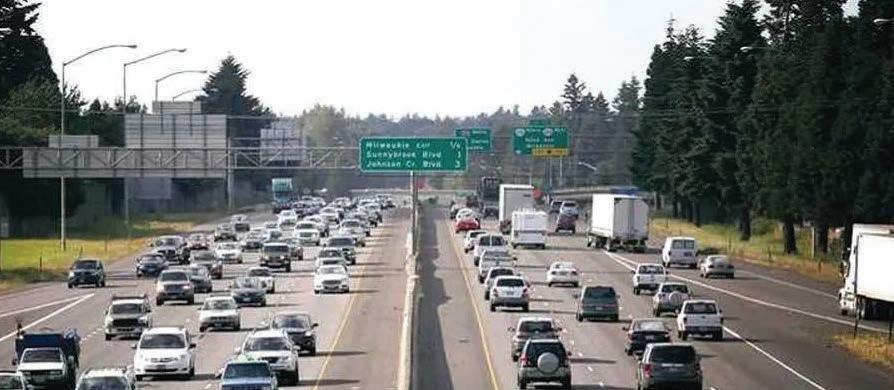
despite considerable public opposition. According to recent polling, 61% of Oregon residents surveyed said they disapprove of the proposed tax increases and question the state's management of large infrastructure projects. Concerns range from the bill’s potential impact on working families and small businesses to the lack of clear accountability mechanisms for how funds will be spent. Critics also argue that the package unfairly burdens rural communities that already struggle with long commutes, limited public transit, and rising living costs.
Public testimony during committee hearings reflected these sentiments, with dozens of residents voicing opposition and urging lawmakers to scale back the plan or find alternative solutions that don’t rely so heavily on tax hikes. Many suggested the state should first audit existing transportation spending before layering on addi-
tional revenue demands.
Supporters of the bill, including some labor organizations, transportation advocates, and city governments, counter that inaction will ultimately cost more. They point to deteriorating infrastructure, safety concerns, and growing traffic congestion as indicators that Oregon can no longer afford to delay investment. They also highlight that portions of the bill are designed to fund projects in under-resourced areas, create construction jobs, and support long-term economic growth through improved mobility and freight routes.
The legislation includes funding provisions for a wide range of projects, from highway expansions and bridge replacements to pedestrian safety improvements and climate-resilient infrastructure. A significant portion is also earmarked for public transit development and initiatives to accommodate the state's goal of reducing car-
bon emissions by encouraging alternatives to car travel.
Another controversial component of the bill is its approach to electric vehicles. While many Oregonians have embraced EVs as a cleaner transportation option, the legislation imposes new registration fees on electric vehicle owners to compensate for declining gas tax revenues. Some EV drivers see this as a punitive move that undermines the state’s climate commitments, while others argue it’s a reasonable way to ensure all road users contribute to maintenance costs.
The bill still faces a long road before becoming law. It must pass both chambers of the Oregon Legislature and secure the governor’s signature. Given the scale of the proposed tax increases and the depth of public concern, it is expected to face further debate, amendments, and potential legal challenges.
Lawmakers say they are prepared for pushback but remain committed to seeing the bill through in some form. With Oregon’s infrastructure needs becoming more urgent and limited federal funds remaining, many in Salem believe the state has no choice but to take bold action— even if it proves unpopular.
As the legislative session progresses, Oregonians across the state are watching closely, balancing the promise of modernized transportation with the costs of paying for it. The outcome of House Bill 2025 may ultimately shape not only how people get around—but who can afford to do so.
The United States launched a sweeping military strike Sunday targeting three of Iran’s primary nuclear enrichment facilities, marking the most direct and forceful American intervention in the region in more than a decade. Dubbed Operation Midnight Hammer, the coordinated air and sea assault struck the Fordow, Natanz, and Isfahan nuclear sites in central Iran, signaling a major shift in U.S. engagement in the ongoing conflict between Iran and Israel.
The mission deployed B-2 stealth bombers and Tomahawk cruise missiles launched from U.S. Navy submarines. Military officials described the operation as a targeted effort to degrade Iran’s nuclear capabilities while avoiding broader civilian infrastructure. Damage assessments from both U.S. intelligence and commercial satellite imagery confirmed significant structural destruction, particu-
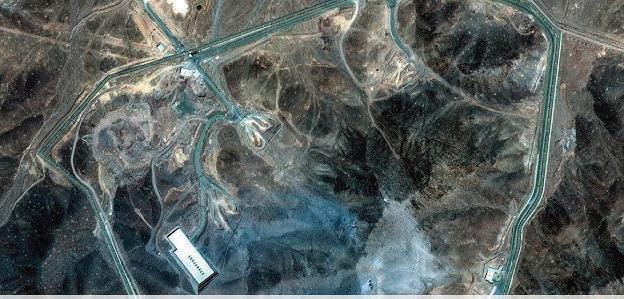
larly at Fordow and Natanz, with collapsed entrances, craters, and disrupted centrifuge arrays. Iranian officials confirmed explosions but claimed that nuclear materials had been relocated prior to the attacks, minimizing potential radioactive exposure. No offsite radiation has been detected according to international monitoring agencies, and Iran has vowed to continue its nuclear program while accusing the U.S. of violating international norms.
Shortly after the strikes, Iran retaliated by launching missiles at Israeli military installations. While the response caused some
damage and triggered alerts across Israel, broader regional escalation did not immediately follow. However, Iranian lawmakers began advancing a proposal to close the Strait of Hormuz, a narrow and vital shipping route through which roughly one-quarter of the world’s seaborne oil travels. Although any decision to close the strait would require approval from Iran’s Supreme National Security Council, even the threat has already caused turbulence in global energy markets.
The United States, anticipating potential reprisals, has raised the alert level for American forces stationed in the Middle East. U.S. military installations in Bahrain, Qatar, Kuwait,
and the United Arab Emirates have enacted additional security measures, and further reinforcements, including missile defense systems, are being deployed. Roughly 40,000 U.S. troops are now operating under heightened protective conditions across the region.
At the diplomatic level, an emergency session of the United Nations Security Council was convened at Iran’s request. While some global powers called for restraint and a return to negotiations, others criticized the United States for escalating the conflict. The European Union is expected to convene later this week to discuss mediation options, though no formal framework has been announced.
The operation has also reignited domestic debate within the United States over presidential war powers. While administra-
• see U.S., page 5




By John Oliver
A new report by journalist John Solomon, founder of the online news outlet Just The News, has reignited debate over foreign interference in the 2020 U.S. presidential election. The report, released this week, alleges that China attempted to influence the outcome of the election in favor of then-candidate Joe Biden — and that senior officials within the Federal Bureau of Investigation were aware of the interference, but chose to conceal the information from both the public and Congress.
According to Solomon’s reporting, the claims stem from declassified intelligence documents and whistleblower accounts provided to congressional investigators. The report outlines alleged efforts by the Chinese government to manipulate public sentiment through disinformation campaigns, cyber activities, and covert influence operations aimed at undermining former President Donald Trump’s reelection bid. These activities were allegedly known to U.S. intelligence agencies in real time, yet were reportedly downplayed or ignored by top law enforcement and intelligence officials.
The Just The News report also states that senior FBI officials failed to disclose the full scope of China's efforts to the American people, and that internal communications from within the Bureau reflect a deliberate choice to suppress or delay the dissemination of intelligence that could have impacted the national conversation leading up to the 2020 election.
The FBI has not publicly commented on the specifics of Solomon’s latest claims, but in the past, the Bureau has consistently stated that while foreign governments, including China, Russia, and Iran, have attempted to interfere in U.S. elections, no credible evidence has emerged to suggest that any foreign actor successfully altered vote tallies or the overall outcome of the 2020 race.
Solomon’s report, however, does not allege direct tampering with vote counts or machines, but rather points to a broader pattern of influence operations — such as the suppression of news stories damaging to the Biden campaign, manipulation of online narratives, and potential leveraging of U.S.-based intermediaries — that he claims were both coordinated by China
and shielded from scrutiny by elements within the federal government.
The allegations are fueling new calls among conservative lawmakers for further investigation. Some members of Congress have already begun requesting additional documents from the FBI and intelligence agencies, particularly as the country approaches another presidential election in November 2024. Calls for transparency are mounting as lawmakers seek to determine whether intelligence about Chinese influence was intentionally withheld, mischaracterized, or buried by senior officials.
The timing of the report also comes amid ongoing scrutiny over the role of big tech platforms, media outlets, and intelligence veterans in downplaying or discrediting news reports ahead of the 2020 election — most notably regarding the Hunter Biden laptop story, which several media organizations later confirmed as authentic.
It is not the first time Solomon has published reports challenging the federal government’s handling of politically sensitive information. A former investigative reporter for major networks including The Associated Press and The Washington Times, Solo-
mon has become a frequent contributor to conservative news circles, often breaking stories based on leaked documents, insider memos, and whistleblower testimony.
As of now, no formal response has been issued by the FBI or the Department of Justice regarding the new allegations. Additionally, mainstream media outlets have yet to confirm or independently verify the details of the Just The News report.
Whether or not these allegations result in congressional hearings or further action from oversight bodies remains to be seen. However, the story continues to stir partisan divisions and raises new concerns about the role of federal agencies in shaping public perception during critical election cycles.
As always, further developments are expected, and a clearer picture may emerge if more documentation is released or corroborating testimony is brought forward. For now, the report stands as another chapter in the continuing conversation about election integrity, foreign interference, and the trustworthiness of U.S. institutions.

At Elysian Women's Wellness, we specialize in helping women 35–55 balance their hormones, heal their metabolism, and lose stubborn weight without crash diets or two-hour workouts.

In the wake of coordinated U.S. airstrikes on nuclear facilities inside Iran on Saturday night, major cities across the United States have elevated their security postures, bracing for the possibility of retaliatory attacks or unrest. From New York to Los Angeles, law enforcement agencies have deployed additional officers and ramped up surveillance at key infrastructure sites, transportation hubs, and areas deemed high-risk.
The airstrikes, which reportedly struck three nuclear facilities within Iranian territory, marked a significant escalation in tensions between the two countries. While no immediate retaliation has been confirmed, intelligence officials have issued warnings to local governments and police departments to remain vigilant. The heightened alert is not limited to federal assets but includes urban centers that could be viewed as symbolic or strategic targets.
Federal officials have not publicly disclosed specific threats but noted that historical precedent and geopolitical dynamics suggest that Iranian-linked actors or sympathizers could seek to exploit domestic vulnerabilities. As a precaution, agencies under the Department of Homeland Security umbrella are working in coordination with local police to monitor potential threats. In many cities, emergency operations centers have been activated to ensure rapid response capabilities should any incidents occur.
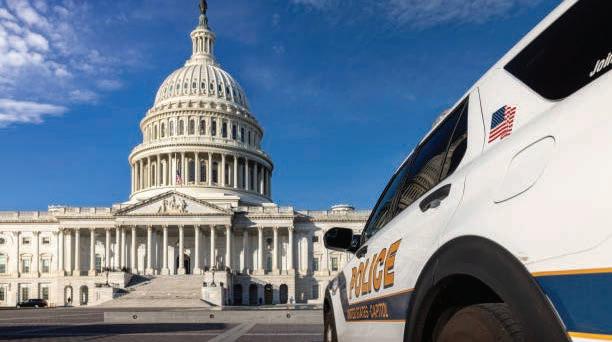
In Washington D.C., Capitol Police and Secret Service increased patrols near federal buildings and monuments. The National Guard has also been placed on standby in select jurisdictions. Meanwhile, New York City police officials confirmed they have stationed additional officers at landmarks, bridges, subways, and cultural institutions. Los Angeles officials have taken similar steps, including visible increases in airport security and monitoring of ports.
While no specific attacks have been reported or foiled as of Monday evening, law enforcement agencies have urged the public to remain aware of their surroundings and report any suspicious activity. Intelligence analysts are also paying close attention to online
platforms, monitoring extremist chatter that could hint at coordinated action or lone-wolf operations.
Transportation authorities in major cities are also playing a role in precautionary planning. Transit systems, including subways, rail stations, and bus terminals, have seen an increase in uniformed officers and K9 units. In some cities, additional screening protocols have been introduced on a temporary basis. Airports nationwide remain on high alert, with the Transportation Security Administration reviewing security protocols and reevaluating risk assessments in light of the latest military developments abroad.
Retail centers, houses of worship, and government buildings are among the civilian areas receiving particular attention. Some religious institutions, particularly those of Jewish, Christian, and Muslim faiths, have contacted local authorities to request additional security presence during services and gatherings, out of an abundance of caution.
The heightened security measures come as foreign policy experts continue to assess the long-term ramifications of the U.S. strikes. The strikes themselves are part of a broader strategic effort aimed at curbing Iran’s nuclear capabilities, which the U.S. government has stated present a growing threat to regional stability and global security. However, many analysts warn that such actions could provoke retaliatory moves from Iran’s Islamic Revolutionary Guard Corps (IRGC) or proxy militias operating in other parts of the world.
In a sign of broader international concern, several U.S. embassies in the Middle East and Europe have also increased their security postures. American citizens abroad have been advised to avoid large gatherings and maintain a high level of situational awareness, according to travel advisories updated over the weekend by the U.S. State Department.
In the private sector, major corporations and financial institutions have been briefed by federal agencies about possible cyberattacks. Past incidents involving Iranian-linked hacking groups targeting U.S. infrastructure have prompted cybersecurity teams to bolster firewalls and monitor unusual activity more aggressively.
Despite the widespread concern, officials across multiple agencies have emphasized that the increased security presence is precautionary in nature and not based on any verified imminent threat. Nonetheless, the sudden geopolitical escalation has placed the country on edge, reinforcing the ever-present challenges of maintaining national security in a rapidly changing global landscape.
As the situation continues to develop overseas, American cities remain on alert. Whether this will be a short-term response or the beginning of a prolonged period of increased domestic readiness will depend on the next moves by Iran and its allies. In the meantime, public safety officials are urging calm while preparing for a wide range of possible contingencies.




From page 1
tion officials briefed congressional leaders in advance of the attack, they did not seek new authorization for the use of military force. Lawmakers are divided on the legality and necessity of the operation, and the issue is expected to feature prominently in upcoming hearings.
Iran is widely expected to continue responding through unconventional channels. Analysts warn of potential proxy attacks,
maritime harassment, and cyber operations targeting Western infrastructure. U.S. cybersecurity agencies have already issued alerts to financial institutions, energy grids, and public utilities about the increased likelihood of retaliation in the digital space. Meanwhile, global energy markets reacted sharply to the unfolding events. Oil prices spiked to over $95 per barrel on Monday following the parliamentary motion
in Tehran to restrict traffic through the Strait of Hormuz. Naval operations in the Gulf have since intensified, with the U.S. Fifth Fleet resuming convoy escorts for allied-flagged oil tankers to deter any further disruption.
As of Wednesday, no additional American military action has been reported, and no casualties have been confirmed. Yet the situation remains tense, with U.S. officials balancing the need for deterrence with an
effort to prevent a prolonged and uncontrollable regional war. The next steps from Tehran will likely determine the trajectory of the crisis—whether it moves toward diplomacy or slides further into conflict.
The global community now waits to see whether the strikes serve as a decisive warning or the opening chapter of a larger geopolitical confrontation in the heart of the Middle East.

Advertise with The Grants Pass Tribune!
Stand with us in defending freedom of the press and the 1st Amendment! The Grants Pass Tribune is facing political persecution, with lawsuits aimed at silencing our bold investigative journalism. We remain committed to uncovering the truth and keeping our community informed like never before.
Show
BCC Weekly - Taking the “Blind” out of the BCC
By: Jay Meredith, CPA Investigative Journalist
I’ve talked a lot about this in recent weeks leading up to last week’s Josephine County budget adoption hearings. However, at the local government level there are not many things that are more important than honoring voters’ decisions when developing and approving strategic plans or budgets for future years.
Grants Pass and Josephine County voters have said over and over and over again for decades that they want a reasonable level of law enforcement and public safety services as their top priority, and our elected officials usually echo that sentiment in at least their words. Josephine County Commissioners have started diverting from this sentiment in their actions in the last two years. This year’s BCC was rather bold in departing from this sentiment in last week’s budget votes, given this was one of the many reasons a county commissioner was recalled from office by voters last year.
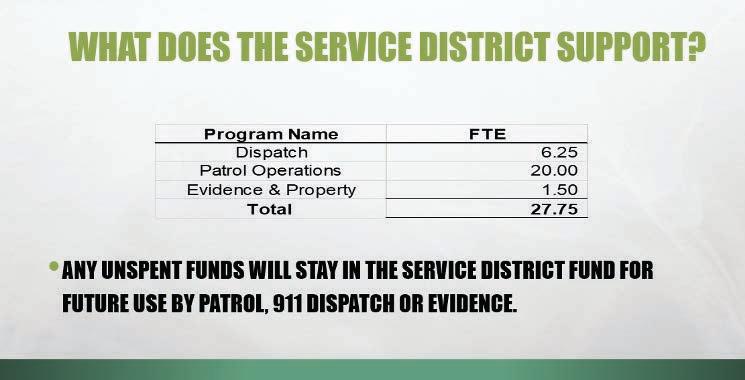
Let’s go back to the promises made by the Sheriff when campaigning for the Law Enforcement Services District in 2023 before the majority of voters said YES to this district measure in November 2023. Pictured here is a slide taken directly from the Sheriff’s PowerPoint presentation that he was giving when he went all over the County in 2023 to discuss the district measure and answer questions from citizens.
Simply stated, the new district was to add nearly 28 more staff members to the Sheriff’s office with the approximately $5.6 million in annual revenues that the 99-cent property tax rate would bring into the district each year. But in last year’s budget process, two out of three members of the Board of County Commissioners (BCC) arranged and adopted the budget in a way that took General Fund revenues away from the Sheriff as compared to what was typically given to the Sheriff’s office each year.
In last year’s budget process, the BCC only granted the Sheriff five new positions, with recalled Commissioner John West advocating for only three new positions. In the end, they only approved the equivalent of five new FTE (Full Time Equivalent) positions in the Sheriff’s office in what was the first year of the new district levy being in place. Voters are now paying for 100% of the tax levy, but this year only got 18% of the additional Sheriff staff that was promised. This is not due to the Sheriff, but to the BCC which holds the purse strings for all County departments.
In this year’s budget process, it felt like pulling teeth just to get six more Sheriff FTE. Three more positions were approved at the budget committee level while three additional positions were added during last week’s budget adoption process by the BCC. This was less than what the Sheriff requested, but a small amount of positive progress.
Only Commissioner Ron Smith advocated for fulfilling the Sheriff’s entire staffing request during this year’s budget process. Commissioner Chris Barnett came prepared
with a prearranged slick political compromise of giving the Sheriff three more staff but not honoring the full request so he could, in my opinion, try to make everyone happy including political influences that don’t care about anything except cutting budgets. Commissioner Andreas Blech, this year’s BCC Chair, only wanted to see budget cuts and tax rates cut, regardless of what voters wanted and regardless of the testimony of many that took the time to speak to the Commissioners in last week’s budget adoption hearings.
In the end, Commissioner Ron Smith realized he was not going to get approval from the other two commissioners to fully honor the Sheriff’s request and so he ended up siding with Barnett’s “compromise.” So now two years after voters approved the new District, we now have 11 new staff members in the Sheriff’s office versus the promise and tax payments made for 28 new staff members. As a former Sheriff candidate testified at last week’s hearing, we will now have two years in a row of paying for something we’re not fully receiving.
The former Sheriff candidate in the budget hearings proclaimed that the BCC should refund part of the district taxes we’ve paid since we haven’t received the promised services. I say we need to keep pressing for the BCC to honor what the Sheriff promised with the Law Enforcement Services District, and the budget can be adjusted anytime during the year to do just that. I also say this very concerning infringement of voter’s wishes will also be brought in front of the Sheriff’s advisory committee which was created as a term of the voters’ passage of the District in November 2023.
Many distinguished community members showed up to last week’s budget hearing to encourage the BCC to honor promises made to the voters who passed the Sheriff’s Law Enforcement Services District. Among them was a former undersheriff, a past commissioner candidate, a member of the Sheriff’s advisory committee, a past sheriff candidate, the former Juvenile Justice director, and many other citizens that seem to under-
stand the County’s budget better than the BCC does this year. And I wasn’t the only one that reminded the BCC that cuts are not necessarily this year due to the surpluses in recent years, extremely healthy general fund carryover balance, and the significant General Fund surplus projected in the next year.
None of the public comment mattered to Commissioner Chris Barnett; he had a plan. None of it mattered to BCC Chair Andreas Blech who proclaimed after the budget public comment period, “I will bring this back to the board for deliberation. And before we do that, I want to point out a few things. I don't encourage that we respond to the people that spoke here unless you think it is important. I want to remind my colleagues here that we do have an impact sheet that was presented to us by finance that shows the impact of different cuts to departments and a very good summary. And I appreciate that a lot. And with that, I will like to start a discussion on what this board may want to do moving forward with the budget.”
Funny, I thought the point of a public hearing was so the public could be heard, and the governing body would take public comment into account during deliberations (including responding to public comment). And apparently the BCC felt the budget cut impact statement was only for the Commissioners to know, not the public, as the public never heard the impact of the proposed budget cuts.
The public only heard the impact of budget cuts on one department, and that’s because the department director got up and spoke to it during the budget hearing. The cuts proposed for the Juvenile Justice Department would have increased the case load for Juvenile Justice POs by about 50% and they would no longer be able to timely respond to the schools or to “community safety direct threat issues.” Thankfully, in the end the Juvenile Justice department was excluded from the additional general fund budget cuts approved by the budget committee.
There were several other significant changes and cuts made before the budget
committee even started meeting this year. None of the significant changes were discussed in detail at the budget committee level or in the BCC budget hearings last week. Those included removing a department director from the Public Works budget, eliminating all of code enforcement, combining the Juvenile Justice department with the Community Corrections department, eliminating 0.5 FTE from the Veterans Service Office, and more. The Sheriff mentioned to me recently that his office has already been asked to follow up on several code enforcement complaints, and the Sheriff’s office cannot respond to these types of issues. The Sheriff used to work closely with code enforcement on certain types of property issues, but there are no longer any county code enforcement staff as of today nor are there any in next year’s budget.
In the BCC’s main County budget deliberations, BCC Chair Andreas Blech commented that he feels the County should ALWAYS grow its general fund balance to save for a rainy day. Or to say this another way, rather than honor the Sheriff’s promises made to voters back in 2023 when they approved the Law Enforcement Services District, Commissioner Blech feels the County should instead grow its General Fund balance even more.
The County’s General Fund balance is projected to be well in excess of $18 million next year, millions in excess of what even the most conservative fund balance policy would normally recommend for a General Fund with the amount of activity as Josephine County. At this point, in my opinion we’ve not only saved for a rainy day, but we’re nearly prepared for 40 days and 40 nights of flooding. But God promised that would never happen again so I think we can stop growing the General Fund balance for now.
Another promise broken, this one for the third year in a row, was the approval to levy the small approximately 4-cent tax rate of the 4H/Extension Service District. While • Continued on page 8
this tax rate was approved at the budget committee level, Commissioner Chris Barnett changed his vote in last week’s BCC hearing to a no on the tax rate and to only allow the Extension Service District to use reserves saved from previous years to fund a restart of this program.
In opposition to Barnett’s “the budget should be in the green” comments made during the main County budget discussions, Barnett is forcing the 4H/Extension Service District to rely on the use of the operating reserves that have been saved up over the
years (making the Extension Service District operate in a deficit position for the next year). This essentially drains the majority of the operational reserve fund balance in this service district. The BCC could have, and should have, restarted the 4-cent permanent rate levy that this service district has had since voter approval in the 1990s. At a minimum, the BCC should have approved enough of a tax rate to cover the smaller amount of costs that OSU projected it would have over the next year in restarting service operations.
One of the best public comments made in budget hearings last week came from Jim Goodwin, the former County Juvenile Justice director. And that is, the County should have continued to levy the 4-cent tax for the Extension Service District unless and until County voters approve a measure that would repeal the district. Voters soundly approved this tax and related services in the 1990s, and only voters should have the power to repeal it. This is a service district, which means it’s in control of our County Commissioners rather than being its own

independently managed district.
The BCC may not have a strict legal mandate to fulfill what was promised to voters in the 1990s when they approved the 4H/ Extension Service District or what was promised to voters when they approved the Law Enforcement Services District in 2023. However, they have a political and civic duty to honor voters’ wishes. While a small amount of positive forward progress was made in this year’s budget season towards these two specific voter promises, voter promises only partially kept are promises not kept, again.














By Jamie Callahan, Founder, Team Senior Referral Services, Inc.
In Southern Oregon, we cherish our elders. We imagine that when the time comes for care, the support systems in place—assisted living communities, home health agencies, caregiving services, and hospice providers— will be there with compassion, professionalism, and respect. We expect the best for our parents and grandparents, just as we hope one day for ourselves.
But as the founder of Team Senior Referral Services, I’ve seen a much different reality unfold. Every week, we hear from distressed family members—sons, daughters, spouses, and neighbors—who are overwhelmed and heartbroken by the shortcomings of our care systems.
Medications don’t arrive on time. Hospital beds show up days late. Hospice teams make promises they don’t keep. Caregivers fail to show up. Facilities are so understaffed that residents are left without help for even their most basic needs. In some of the worst cases, families have even been discouraged from calling 911 when emergency care was obviously needed—leading to devastating, irreversible outcomes.
These are not isolated events. They are part of a larger pattern: a care system under pressure, often leaving good people—both providers and families—struggling without proper guidance. In one recent case, the accumulation of system failures led directly to a client’s death. It wasn’t the illness that claimed them—it was the breakdown of the support they were promised.
These failures should not be brushed aside as mere mistakes. They are warnings. Warnings that families need more than advice from well-meaning online strangers in Facebook groups or local scanner pages. Though intentions may be good, the recommendations shared in these spaces can be

inaccurate or outdated—sometimes even dangerous when a specific level of care is required.
A facility someone’s grandmother once loved may not be suited for a parent with late-stage Alzheimer’s. Conversely, a negative story about neglect may no longer apply if the facility has since changed leadership or improved its standards. This is where Team Senior steps in—not to criticize providers, but to make sure the right match is made for each individual situation.
We advocate for nearly every care facility and organization in our region. Our role is to ensure that your loved one is placed where their unique medical, emotional, and financial needs will be met. We’re not a call center. We’re not a caregiving agency. We’re a team of local professionals who know the current state of care in Southern Oregon.
We track staff turnover, licensing compliance, administrator changes, and caregiver ratios. We stay informed so you don’t have to. And when we meet with your family, we apply that knowledge to help you make informed, compassionate decisions—at no cost to you. Our services are always 100% free for families.
We also go beyond placement. We assist with Medicaid planning, veterans’ benefits,
powers of attorney, dementia care guidance, downsizing, and more. Most importantly, we serve as your advocate during one of life’s most emotionally difficult transitions.
Unfortunately, many families don’t discover our services until a crisis hits—after a fall, after a hospital discharge, after panic sets in. By then, decisions are rushed, and options are limited.
We want to change that. You don’t have to wait until something goes wrong. You’re not a burden for asking for help. You are the reason we exist.
At Team Senior, we answer the phone. We show up. We care. So before you commit to a facility, hire a caregiver, or sign on with a hospice agency, call us. Let us guide you through the process, ask the right questions, and avoid the painful lessons others have already learned the hard way.
Because in senior care, the learning curve should never come at your loved one’s expense.
Team Senior Referral Services, Inc. Serving Jackson, Josephine, Douglas, and Klamath Counties www.teamsenior.org jamie@teamsenior.org | (541) 295-8230
5 DAY OUTLOOK
SOURCE: WEATHER.COM
WEDNESDAY THURSDAY FRIDAY SATURDAY
Mostly sunny 85/54 Mostly sunny 86/56 Sunny 90/58 Mostly sunny 87/56 Mostly sunny 96/62








June 23, 2025
Posting Date
June 23, 2025
Posting June 23, 2025
By John Oliver
When it comes to giving back, most Americans reach for the usual suspects: the Red Cross, big-name hospital foundations, religious organizations, or sprawling nationwide charities that run glossy TV commercials and boast multi-million-dollar annual budgets. But for all their visibility, donating to these organizations may not be the most impactful — especially if your goal is to support the people, places, and causes right in your own backyard.
In fact, if you’re going to give this year — whether it’s $25 or $25,000 — there’s a compelling case to keep it local. Local nonprofits, often overlooked in the shadow of their national counterparts, not only provide vital services to the community around you, but they also offer the same tax benefits, higher impact-per-dollar value, and long-term dividends for your own hometown’s health and growth.
Let’s break that down.
First, local nonprofits tend to operate on leaner budgets, which means your donation usually goes straight into programs, not bureaucracy. Unlike national organizations with expensive administrative overhead and marketing departments the size of small corporations, most local nonprofits operate with skeleton crews, volunteers, and pure grit. Every dollar matters more. Whether it’s a food pantry serving low-income families, a youth program helping kids stay in school, or an animal rescue saving abandoned pets, your donation is likely to make a visible, tangible difference — and fast.
Second, keeping your donations local helps

strengthen the economic and social fabric of your community. It’s the same philosophy behind shopping local, but with broader and more sustainable outcomes. When a local nonprofit thrives, it creates jobs, hosts events, supports families, and solves problems in real-time — the kind of problems that don’t make national headlines but matter deeply to your neighbors.
Think about a rural mental health clinic fighting to stay open. Or a domestic violence shelter struggling to expand. Or a veterans’ group that needs a new van to transport aging soldiers to their appointments. These aren’t just tax writeoffs — they’re lifelines.
And speaking of taxes: yes, donating to local nonprofits is just as tax-deductible as giving to the Red Cross or a megachurch. If a local nonprofit is a registered 501(c)(3), your donation can be written off come tax season. You get to do some good and deduct some income. It's a win-win. And if you’re a business owner, the benefits expand — not just in tax savings, but
also in community goodwill, branding, and even local partnerships. Supporting a nonprofit that serves your customer base can pay back in visibility, loyalty, and engagement that no paid ad can match.
But perhaps the most important argument for giving local is one of accountability and transparency. When you donate to a national organization, it can be hard to track where your money goes — or how much of it is actually reaching the people in need. With a local nonprofit, it’s different. You can walk in the door, meet the people running the programs, see the work being done, and understand exactly how your support is helping. You’re not just writing a check into the void. You’re investing in something you can see, touch, and even be part of.
There’s also a community spirit to local giving that’s hard to replicate. National charities may tug at the heartstrings, but local nonprofits build relationships. Many offer volunteer opportunities, sponsor neighborhood events, and
Some folks in Josephine County politics have apparently mistaken the Grants Pass Tribune for a flea-market booth where influence can be haggled for spare change or a cheap threat. They keep arriving with the same dusty toolbox—intimidate, bully, ostracize, starve the ad revenue—and every time the hinges squeak open, I hear the faint jingle of desperation. If they read this paper as closely as they monitor their own polling numbers, they would already know it takes more than playground tactics to rattle us. This newsroom is built on stubborn Midwestern bedrock, not papier-mâché patronage.
I am not claiming to be the brightest bulb in the chandelier, but I do know how to keep the lights on when someone in public office attempts to turn them off. That means having the awkward questions asked at budget meetings, filing the tedious public-records requests, and publishing what we find—whether it flatters or flays the people in charge. We do it because the First Amendment is not a courtesy extended by politicians;
it is a leash placed upon them by the rest of us. When elected officials yank on that leash trying to drag the press into submission, they only tighten the collar around their own credibility.
Lately the tug-of-war has escalated. We have seen meetings moved behind closed doors, “official statements” drip-fed to friendlier outlets, and thin-skinned threats aimed straight at our advertisers. It is a sad little circus, and the ringleaders keep forgetting the audience owns more seats than they do. The math is simple: there are three commissioners, a handful of state representatives, and tens of thousands of citizens who expect transparency. If you are in office, you are already outnumbered—no matter how loudly you stomp or how many cronies you invite into the center ring.
So, let us settle it right here. You cannot buy favorable coverage, because we are not for sale. You cannot scare us silent, because a free press either speaks freely or it is not free at all. You cannot bully us into retractions that are not warrant-
ed, because we publish corrections when we are wrong, not when you are embarrassed. And you absolutely cannot guilt-trip us into “going along to get along,” because journalism that goes along ceases to go anywhere worth following.
What you can do is your job: conduct public business in public, disclose conflicts instead of hiding them, and remember that criticism is not treason. If a headline stings, check the facts; if they are accurate, adjust your behavior, not our coverage. Our reporters are not looking for vendettas—the corruption and incompetence come to us uninvited like dandelions through sidewalk cracks. Pull the weed, pave the fissure, and the story disappears on its own.
Understand, too, that for every exposé we run, there are notebooks full of leads still marinating. We do not publish rumors; we verify them. That takes time, and sometimes what we hold back says more about our standards than what we print. If that unsettles a few county officials at night, perhaps it will inspire the transparency they
connect donors directly to the work being done. You’re not just giving; you’re engaging. And in a world that often feels too big, too fast, and too disconnected, that kind of close-knit impact is rare and powerful.
If you’re someone who donates regularly to a religious organization or national nonprofit, this isn’t about guilt-tripping or shifting all your giving. It’s about reconsidering how you can diversify your charitable efforts to include grassroots groups doing unsung but vital work close to home. A portion of what you give nationally could have a much deeper, longer-lasting effect if redirected locally.
And here’s the kicker: once you start giving locally, you tend to pay more attention to the needs of your community. You show up more. You listen closer. You care deeper. Giving becomes less of a transaction and more of a relationship.
So, this year, before you write another check to a nationwide name or auto-renew your annual church tithe, take a moment to explore your local nonprofit landscape. Look for the unsung heroes. The small operations making big changes. The groups you’ve never heard of but whose work changes lives every day. They’re out there — often right down the street.
Giving back doesn’t have to mean giving away. Sometimes it means investing where it counts — in your people, your place, and your future.
Because keeping it local doesn’t just apply to where you shop — it’s also where your heart (and your money) can do the most good.

keep promising on campaign flyers.
In the meantime, spare us the theatrics. The Tribune is not your enemy; secrecy, apathy, and unchecked power are. If you want less critical coverage, cultivate fewer scandals. If you want more applause, try governing in a manner that earns it. We are perfectly willing to report good news when it exists, but we are even more willing to create some by shining daylight on the bad.
To my fellow citizens: remember that the bully pulpit is still just a pulpit. We, the pews, decide whether to sit in silence or stand up and be counted. Keep showing up at meetings, keep asking for documents, keep voting like it matters—because it does. There are more of us than there are of them, and arithmetic never lies. And to those public servants who think the press ought to kneel: you have mistaken watchdogs for lapdogs. We are here, we are loud, and we bite only when provoked—so stop waving red flags unless you are ready to run the full-grown bull.