
WEDNESDAY, JUNE 18, 2025

WEDNESDAY, JUNE 18, 2025
By: John Oliver
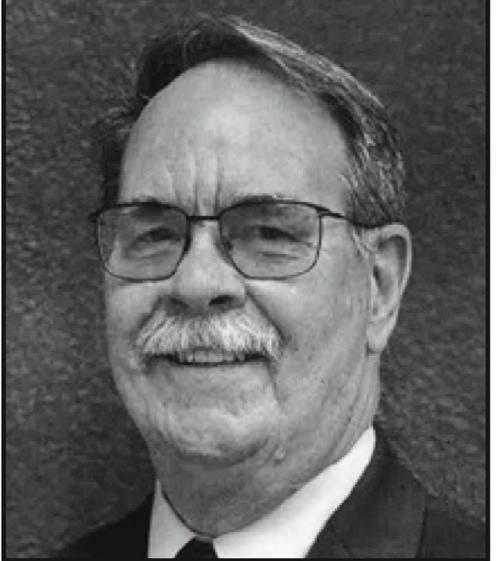
Josephine County may be facing a growing financial and ethical storm tied directly to its elected Treasurer, Mark DeYoung. Numerous internal sources and county whistleblowers are sounding the alarm, alleging that DeYoung is fundamentally incapable of performing the duties he was elected to fulfill—and the consequences are now becoming dangerously clear.
According to documents and statements circulating among concerned employees, the situation is far more serious than just bureaucratic hiccups. Reports indicate that DeYoung has allegedly failed to carry out even the core responsibilities of the Treasurer’s Office. Despite drawing a full taxpayer-funded salary, he has reportedly handed off virtually all job functions to the Chief Deputy Treasurer, appointed quietly and without public transparency. Many within the courthouse, and now the wider community, are beginning to ask a fundamental question: If Mark DeYoung isn't doing the job, why is he still in office?
Several county employees have come forward, some speaking under condition of anonymity for fear of retaliation, claiming DeYoung openly admitted he was unqualified for the position. His candidacy, according to these sources, was orchestrated by former county Human Resources Director Sandy Novak and members of the Josephine County Republican Central Committee. The plan allegedly involved discrediting the former Treasurer and manipulating public perception to ensure DeYoung’s victory. One of the more alarm-
ing accusations is that DeYoung took part in an unauthorized audit targeting former County Treasurer, Eve Arce, a move that may have skirted legal and ethical lines in an effort to politically eliminate competition.
Since taking office, DeYoung’s tenure has been marked by ongoing operational dysfunction, financial errors, and significant gaps in oversight. Reports suggest critical financial filings have been missed, investments have either been made improperly or not made at all, and money has been lost due to mismanagement and inaction. These aren’t clerical issues—they’re systemic failures that directly impact the county’s ability to function and its financial future.
The bulk of DeYoung’s responsibilities have reportedly been delegated to a newly hired Chief Deputy Treasurer. While the deputy has allegedly stepped up to maintain continuity and avoid a full-blown collapse of financial operations, this transfer of authority was never formally disclosed to the public or approved through a transparent process. The result? Taxpayers have been kept in the dark while the elected Treasurer collects a paycheck without doing the work.
Adding to the concern is the rumor that DeYoung has failed to secure a surety bond—a statutory requirement under Oregon law for public treasurers. If true, this means DeYoung is serving without the legal financial protections required to handle public money, further exposing the county to risk and potential liability. Operating without a bond is not only unethical—it could be illegal and
All of this is unfolding amid a countywide 12% general fund budget cut, adopted recently by the Budget Committee. Public employees, including union-represented staff who have reliably served the county for years, now fear for their jobs. While these workers face the threat of layoffs, the Treasurer continues to collect a full salary despite reportedly offloading all meaningful work.
County insiders are calling this a gross misuse of public funds and a severe breach of public trust. At a time when fiscal responsibility is more critical than ever, allowing an unqualified and allegedly inactive elected official to remain in power with no corrective action is seen by many as a moral failure of oversight.
Despite mounting concerns, the issue ap-
By E. Ward
Oregonians have long counted on the "kicker" tax rebate as a unique return on their personal income taxes—an unusual policy that sends surplus state revenues back to taxpayers when revenue exceeds projections by more than 2%. But a new proposal moving through the Oregon Legislature could fundamentally reshape that dynamic. And for Southern Oregon, where fire season has become less of a season and more of a year-round crisis, the shift could mean more firefighting power—and less cash in pocket.
Senate Bill 1177, introduced in the 2025 legislative session by Senator Jeff Golden of Ashland, aims to reroute a significant portion of the expected kicker rebate to a new Oregon Wildfire Mitigation and Adaptation Fund. In essence, it would take money traditionally returned to taxpayers and instead invest it in fire prevention, suppression, forest management, and community resiliency efforts. With wildfires increasingly threatening the Rogue Valley, the Applegate, and surrounding areas, the move has drawn both praise and pushback.
The bill would revise the official general fund revenue estimate for the 2023–2025 budget cycle. Any funds collected beyond that newly adjusted threshold—usually earmarked for taxpayer refunds—would instead go to wildfire programs. Only if the surplus exceeds the needs of that wildfire fund would remaining money be distributed as partial kicker refunds. That’s a marked departure from past practice and would require a two-thirds supermajority vote in the Legislature to become law.
Proponents argue that the bill addresses one of the most urgent and costly threats facing Oregon: catastrophic wildfire. With fire seasons growing longer and more destructive, Southern Oregon communities like Talent, Phoenix, and Cave Junction have borne the brunt of devastation in recent years. Supporters say that investing in mitigation now could save lives, property, and millions in future emergency response spending.
Senator Golden has emphasized that the change is not permanent. It would apply to this particular kicker cycle and direct roughly 60% of the expected surplus—estimated at $1.64
pears to be stuck in bureaucratic limbo. County Commissioners and Legal Counsel Wally Hicks have been made aware of the allegations and complaints, yet no action has been taken. There has been no formal acknowledgment, no investigation launched, and certainly no transparency afforded to the public. The silence is deafening— and for many, deeply frustrating.
Whistleblowers and concerned staff believe this is no longer a personnel issue but a fullblown governance crisis. The failure to act is being interpreted as complicity or, at minimum, willful negligence.
On behalf of Josephine County employees and taxpayers, a growing chorus is demanding action. The message is simple: Either Mark DeYoung steps up and begins performing the job he was elected to do, or he should resign. If neither happens, county employees and citizens alike are now openly discussing recall procedures.
What began as whispered concerns behind courthouse walls has now escalated into a countywide scandal. The stakes are high—not just for Mark DeYoung’s political future, but for the financial stability of Josephine County itself. With each passing day, without transparency or action, the damage only deepens.
The residents of Josephine County deserve leadership that is both competent and accountable. As the Treasurer’s office spirals under mismanagement and secrecy, the county edges closer to a tipping point. The time for excuses has long passed. It’s time for answers.

billion—toward fire resilience projects. The remaining 40% would still go back to taxpayers, with an income cap ensuring lower- and middle-income residents benefit most. Under the plan, individuals making under $95,000 and households under $190,000 would receive a rebate, while higher earners would see their kicker repurposed entirely.
For residents of Southern Oregon, this proposal comes with mixed feelings. On one hand, it’s hard to overstate the impact wildfires have had in the region. Entire communities have been leveled, insurance costs are climbing, and the stress of evacuations and hazardous smoke has become an annual ordeal. Redirecting funds toward proactive fire reduction—controlled burns, thinning, defensi-
ble space programs, and emergency response upgrades—could directly benefit local households in ways more lasting than a one-time refund.
On the other hand, the kicker has become something of a psychological cushion for Oregon taxpayers, especially those living
• see BILL, page 3




By John Oliver
In Josephine County, the line between public service and personal politics continues to erode—and Representative Dwayne Yunker’s latest social media tirade has made that line even harder to see. Rather than rising to meet the expectations of ethical leadership, Yunker took to Facebook this week to lash out at critics, belittle journalists, and inflame partisan tensions. What should have been a thoughtful response to legitimate public scrutiny instead became a declaration of war against basic civility, responsible journalism, and the very notion of nonpartisan representation.
At the center of the controversy is an article published by the Grants Pass Tribune examining how local officials, including Yunker, increasingly blur the lines between public duty and personal agendas. Rather than address the article’s points—or better yet, engage in meaningful discourse— Yunker chose to dismiss the piece as “fake news,” accusing the newspaper of being a liberal mouthpiece known for “losing lawsuits” and running “tired hit pieces.”
Ironically, the Grants Pass Tribune is owned and operated by a registered independent who, in fact, voted for Donald Trump. Political affiliation aside, the paper’s commitment has always been to objective, factual reporting. The goal is to inform the community, not to cater to one side or the other. Unlike Yunker’s combative tone, real journalism holds itself to a standard of truth, regardless of how uncomfortable that truth might be for those in power.
Yunker’s reaction to criticism is not just disproportionate—it’s irresponsible. Rather than acting like a public servant entrusted with the job of representing everyone in House District 3, Yunker lashed out at what he labeled the “radical left,” accused constituents of mob behavior, and effectively told anyone who disagrees with him to go find someone “weaker” to deal with. This is not leadership. It’s not maturity. And it’s certainly not the example anyone should want a sitting lawmaker to set for the people of Josephine County or the state of Oregon.
This isn’t the first time Yunker has wea-

ponized his social media platform. Just this week, prompting his continued news coverage, he publicly mocked a peaceful demonstration at the Josephine County Courthouse known as the “No Kings” rally—an event focused on promoting balance in governance and calling out perceived abuses of power. Instead of respecting the constitutional right to free assembly, Yunker derided the protesters and even took personal swipes at the photographer covering the event, calling them an “abortion cheerleader.” It’s one thing to have opinions; it’s another to smear constituents with degrading personal attacks.
But Yunker’s behavior is emblematic of a larger issue infecting politics across Southern Oregon—and, increasingly, the nation. Public office is no longer just a place for service. For some, it’s a personal brand-building exercise, a stage to score points with partisan followers instead of solving real problems or bridging ideological divides.
The role of an elected official is to be
the adult in the room. Not the loudest, not the most combative, but the most responsible. Yunker’s job is not to stand on Facebook with a digital bullhorn, shouting down newspapers and name-calling those who disagree with him. His job is to represent all of Josephine County—not just those who shout the loudest in the comment section.
This is especially important as Josephine County faces ongoing questions about transparency, ethical accountability, and the proper role of elected officials in civic life. Residents here deserve leadership that respects the diversity of thought and the dignity of debate—not leaders who throw rhetorical bombs and then walk away smirking.
Yunker’s behavior also raises broader questions about whether Oregon’s existing systems for ethical oversight are adequate.
The Oregon Government Ethics Commission has a checkered track record when it comes to enforcement, often dismissing complaints despite overwhelming public concern. This growing lack of accountability has emboldened some officials to act without fear of consequence, knowing full well that public outrage often fades faster than headlines.
But something is changing in Josephine County. Constituents are more engaged than ever before. They’re attending meetings, filing complaints, asking tough questions—and they’re watching what their leaders say, not just on the record but on social media. The days of shrugging off bad behavior with a partisan wink and nod are ending.
So let the record show: when a legislator chooses to respond to public scrutiny with insults, division, and inflammatory rhetoric, that tells us more about their character than any political biography ever could. And when a legislator refuses to take responsibility, or even acknowledge the importance of balanced journalism, that’s not a sign of strength—it’s a red flag.
Representative Yunker may believe he’s standing his ground, but it’s not the kind of ground that builds community or earns respect. Josephine County residents deserve
From page 1 paycheck to paycheck. In a region where incomes often lag behind the state average and inflation continues to drive up housing, food, and fuel costs, even a few hundred dollars in the form of a tax rebate can make a meaningful difference. Critics of SB 1177 worry that removing or reducing that refund sets a dangerous precedent, and argue that fire mitigation should be funded from existing state resources, not taxpayer overpayments.
Some conservative groups have questioned the legality of the proposal, noting that Oregon’s Constitution enshrines the kicker mechanism. They argue that using
an emergency clause to bypass public process could invite legal challenges. Others counter that the emergency is real—wildfire is not just an environmental threat but a public health and economic one—and that the Legislature is within its rights to reprioritize funds if done transparently and with the required supermajority.
Governor Tina Kotek has signaled cautious support, saying that establishing a dedicated fund for wildfire preparedness is “a good thing to do,” but stressing the need for bipartisan agreement to make it happen. Meanwhile, public input is heating up, with residents of fire-prone areas—espe-
cially in Southern Oregon—split on whether they’d rather have cash in hand or less smoke in the air.
The future of SB 1177 remains uncertain. The bill has passed initial committee review and awaits further amendments and votes. But as lawmakers debate its merits, one thing is clear: the residents of Southern Oregon are already living with the consequences of underfunded fire prevention. Whether they’ll also be asked to give up part of their tax rebate to fix it remains a question for Salem—and for the voters who’ll remember what gets prioritized when the next fire season arrives.
leaders who can handle criticism, engage in thoughtful dialogue, and uphold the dignity of their office—not keyboard warriors looking to pick a fight.
Let this moment be a reminder: integrity isn’t defined by how you treat your allies. It’s defined by how you handle your critics. And right now, Representative Yunker is failing that test.





News Desk
President Donald Trump abruptly ended his visit to Canada late Monday, departing earlier than expected from a scheduled summit with international leaders to return to Washington, D.C. The sudden change in schedule came amid rapidly evolving developments in the Middle East, prompting a swift return to the U.S. capital.
Trump’s plane touched down at Joint Base Andrews shortly before 5 a.m. Tuesday morning, signaling a significant shift in presidential priorities as regional tensions abroad appear to intensify. While the Canadian summit had been viewed as an important opportunity for diplomatic engagement with global partners on issues ranging from trade to international security, the early departure indicates that matters overseas—particularly those unfolding in the Middle East—are taking precedence.
Though no official agenda was released for the president’s activities upon return, the timing of the move suggests growing concern over a rapidly changing geopolitical landscape in the region. In recent days, various reports have emerged of heightened military activity,

diplomatic maneuvering, and regional instability involving key U.S. allies and adversaries.
Trump's presence at the international summit in Canada was initially intended to reaffirm American commitments to its allies and strengthen multilateral ties amid global economic and security concerns. However, with this early departure, U.S. leadership has redirected its focus to addressing what is being characterized as an urgent situation involving American interests in the Middle East.
While previous administrations have
also had to recalibrate international commitments due to unforeseen global events, the timing and nature of Trump's return suggest the unfolding developments may demand immediate attention at the highest levels of government. Officials in Washington are reportedly preparing for briefings and possible strategic responses, though no formal announcements have yet been made detailing the nature or scope of any planned actions.
Observers note that the Middle East has remained a central focus of U.S. foreign policy for decades, often requiring
sudden pivots due to its complex and volatile nature. The current situation, though still emerging, appears to be serious enough to warrant a break in what would typically be a tightly controlled and diplomatically significant foreign visit.
Though the full extent of U.S. involvement or future decisions remains unclear, the administration's decision to recall the president from an ongoing summit indicates a high level of concern and the possibility of swift policy developments in the coming days. With several key partners and adversaries in the region already involved in escalating conflicts or diplomatic standoffs, further instability could lead to significant global repercussions.
As more information becomes available, attention is now turning to Washington for insight into how the administration will address the situation and whether further moves—diplomatic, economic, or military—are on the horizon. For now, the president’s unexpected return serves as a stark reminder of the fluidity of global affairs and the need for rapid decision-making in moments of international uncertainty.

Tired of doing everything "right" and still feeling exhausted, bloated, and stuck?
At Elysian Women's Wellness, we specialize in helping women 35–55 balance their hormones, heal their metabolism, and lose stubborn weight without crash diets or two-hour workouts.
We use our Metabolic Optimization Method to help you feel like you again.
• Functional & traditional lab work
• Sustainable weight loss
• Hormone-friendly exercise & nutrition
• Expert support & accountability

Advertise with The Grants Pass Tribune!
Stand with us in defending freedom of the press and the 1st Amendment! The Grants Pass Tribune is facing political persecution, with lawsuits aimed at silencing our bold investigative journalism. We remain committed to uncovering the truth and keeping our community informed like never before.
Show
The BCC Weekly - Taking the “Blind” out of the BCC
By: Jay Meredith, CPA Investigative Journalist
In a typical year, budget committee and BCC-level budget hearings like the one happening today are usually non-events that are just the final steps in a planning process that takes about 5 months from the very start to the very end. Last year’s budget process, and especially this year’s process has been anything but typical.
Public comment can make an impact this year, just like it did last year. As we mentioned in our budget hearing news alert on Monday this week, your opportunity to speak to the Commissioners about County budgets is in a series of budget hearings that have been scheduled and noticed for 10am today, Wednesday, June 18th in the Anne Basker Auditorium.
Despite the County General Fund budget showing a healthy carryover fund balance of over $18 million this year and a projected $1.2 million surplus for next fiscal year, for some yet to be revealed reason the County Commissioners and Budget Committee felt the need to make additional cuts to various non-law enforcement programs that rely on General Fund revenues. And the Budget Committee did not grant the Sheriff’s request for 5 more staff positions on top of the 3 additional positions in the budget even though funds are more than available to meet this request. This is thanks to the passage of the County’s new Law Enforcement Service District in November of 2023.
Next fiscal year’s surplus will very likely be well in excess of $1.2 million in the General Fund because departments never

spend 100% of budgets. But none of that seemed to matter to the Budget Committee, who made 12% general fund revenue allocation cuts on top of various cuts that were made before the recommended budget was even presented. And they made the 12% cuts without even knowing the impact on the various departments.
Community Development lost several positions at the recommended budget stage, including all of code enforcement.
Juvenile Justice lost a department director. The Veterans Service Office lost half of a staffing position and would lose another $37,000 in their budget on top of that cut if the budget committee cut is not reversed. The Budget Committee’s

random cut impact on the Treasurer/Tax department is extremely severe, given the challenges that already exist in this department today due to the newly elected Treasurer’s lack of experience working in this area.
The Sheriff was supposed to get approximately 28 additional staff positions with the passage of the Law Enforcement Service District. Last year the Sheriff was only granted 5 new positions and so far this year has only been granted 3 new positions. The Sheriff is only asking for 5 more, a very responsible ask.
For the financial impact on the rest of the general fund departments with the random 12% cut, please see the chart be-
low which came from an internal County memo. Keep in mind the General Fund has a surplus and these cuts are completely unnecessary from a financial perspective. At least two commissioners have told me they will be considering budget changes today and I hope County department heads have been able to explain the impact of these proposed random cuts. Now we’re on the edge of our seats waiting to see if the BCC considers the impacts of these cuts before adopting the budget or if they are just making decisions in line with what seems to be politically fashionable on the federal stage this year. Let’s see if they recognize that local and federal budgets are like night and day.

By Brandace Rojo
A library card may be the hottest accessory of the season, at least if you plan to eat on wheels this summer. Beginning this week, anyone who flashes a Josephine Community Library card at one of nine participating food trucks will receive ten percent off their order and a limited-edition “Food for Thought” sticker while supplies last. The promotion, which runs through August, links two local passions— good books and good food—in a campaign designed to boost library-card registrations and remind residents that their card connects them to far more than shelves of paperbacks.
Library Director Kate Lasky describes the partnership as a celebration of community spirit and the role of the public library as a gathering place for ideas. “Food for Thought is such a fun way to bring the community together,” Lasky said in announcing the initiative. “It’s a great reminder that your library card connects you to more than just books.” Patrons can visit any branch in Grants Pass, Illinois Valley, Williams, or Wolf Creek during open hours to sign up for a card; those who live outside the library district’s boundaries can receive an annual sponsorship thanks to the Josephine Community Library Foundation, ensuring cost is never a barrier to borrowing.
The roster of meal-mobiles is as varied as the county’s terrain. Diners craving island flavors can head to My Island Kitchen, while

Soulwise Coffee offers cold brews and pastries perfect for an afternoon reading session. For those after savory plates, 541 Fusion serves up Asian-inspired dishes; Blaze-N-Monkeys fires classic American comfort fare; Chunna’s Food Stop fills orders with homestyle favorites; Grip-N-Grub turns out handhelds built for the park; Mad Dawgs keeps hot-dog traditionalists happy; Scoop-N-Sips handles dessert duty with ice-cream concoctions; and The Food Lab rounds out the list with inventive chef specials. Each vendor will display promotional decals noting the discount, creating a county-wide treasure hunt for hungry book lovers.
This summer’s reading theme, “Level Up at Your Library,” taps into the energy of video games and puzzles to encourage children,
teens, and adults to push their personal reading goals to the next stage. Participants track minutes read, collect virtual badges, and unlock real-world prizes donated by local businesses. Evergreen Federal Bank, Josephine Community Library Foundation, Oregon Pacific Financial Advisors, and the State Library of Oregon have stepped in as major sponsors. According to library staff, their financial support allows the purchase of thousands of age-appropriate books and activity kits, bolstering youth literacy and offering families cost-free entertainment throughout the break. Research shows that students who keep reading over the summer maintain or even improve their academic skills, while those who do not risk falling behind once school resumes. By attaching tangible rewards to li-
brary engagement—everything from stickers to discounted tacos—the “Food for Thought” partnership adds an immediate incentive. Yet organizers say its deeper value lies in forging new habits; a youngster who shows a library card for a snow-cone today may think to check out a graphic novel tomorrow.
Local food-truck owners are equally enthusiastic. Many operate at popular parks and community events where families already congregate, making the promotion a natural fit. Several vendors plan to decorate their serving windows with book-themed artwork or display recommended-reading lists next to their menus. The library, for its part, will host “popup check-out stations” at selected food-truck rallies, allowing visitors to sign up for cards onsite and borrow beach-reads without leaving the picnic table.
As temperatures climb and lunch lines lengthen, library officials hope the discount will travel by word of mouth—one burrito, burger, or bubble tea at a time—drawing fresh faces into branch buildings once school is back in session. Between now and then, residents have ample opportunities to combine a bite to eat with a literary boost. Whether you are a first-time cardholder or a daily visitor who devours novels like street tacos, your next meal could come with a side of stories—and a reminder that in Josephine County, reading is always on the menu.
By Leaf Barret
In a free society, the lines between government, media, and the public must remain clearly defined. When those lines blur—especially when an elected official also owns and operates a media outlet—the risk of misinformation, bias, and ethical violations grows exponentially. Such is the case in Josephine County, where County Commissioner Chris Barnett also wears the hat of newspaper publisher. The problem? He doesn’t seem to understand that these roles are supposed to function independently—and transparently. Commissioners in Oregon, and especially in counties like Josephine, are required by law and ethics standards to remain non-partisan in both conduct and policy. The public entrusts commissioners to make decisions in the best interest of the entire county, regardless of personal views or party affiliations. That trust depends on transparency, fairness, and accountability. Similarly, when someone assumes the role of a journalist or publisher, the public expects the same level of neutrality in reporting. A journalist doesn't get to invent the news or suppress inconvenient facts. The news is not a curated playlist—it is a real-time, often uncomfortable reflection of what’s happen-
ing in the community, warts and all.
So, when Barnett’s Josephine County Tribune recently published a headline about a dismissed city employee facing allegations of sexual misconduct involving a juvenile, it raised eyebrows—not because the story lacked merit, but because of the glaring hypocrisy. Just weeks earlier, Barnett himself was on the receiving end of a second guilty verdict in a $3.2 million elder abuse judgment stemming from his personal business dealings. And yet, that news—unlike the misconduct allegation against a city staffer—was nowhere to be found in his newspaper. For someone who claims to be a watchdog, Barnett sure seems allergic to the idea of turning the spotlight on himself.
This isn't just about bad optics. It’s about ethics and responsibility. If a sitting commissioner wants to run a media outlet, they must abide by the same journalistic standards as every other credible news organization. That means full disclosure, balanced reporting, and publishing facts—even when those facts paint the publisher in a less-than-flattering light. Omitting news about one’s own misconduct while highlighting the alleged wrongdoings of others is the defini-
tion of bias. It violates the spirit of non-partisanship and journalistic integrity alike.
The issue here isn't just that Barnett is biased—it’s that he’s pretending not to be. He cloaks himself in the garb of a newsman while wielding his position of power to craft a narrative that shields his own image and vilifies others. When a commissioner uses his platform to deflect criticism while controlling the public’s access to facts, he undermines both democracy and journalism in one stroke.
Understanding the difference between partisan and non-partisan roles is essential for any elected official. Partisan means serving a political agenda—choosing sides. Non-partisan means representing all constituents fairly, without personal bias or manipulation. Commissioners are expected to operate from a non-partisan framework. That doesn’t just mean staying quiet about politics—it means acting in the public’s interest, including being transparent about your own legal or ethical problems.
The same logic applies in journalism. A newspaper must serve the community with truth and accountability. That means you don’t just cover the scandal down the street—you cover the scan-
dal in your own office too. Otherwise, you’re not reporting news. You’re publishing propaganda. In Josephine County, this dual-role scenario is more than just a conflict of interest—it’s a threat to public trust. If Commissioner Barnett wants to be taken seriously as a publisher, then he needs to follow the same code of ethics that journalists everywhere are held to. If he wants to keep serving as an elected official, then he must remember that public service demands transparency—even when it’s personally inconvenient.
The residents of Josephine County deserve better. They deserve honest journalism and impartial leadership. And they certainly deserve to know when one of their elected officials is found guilty—again—in a multimillion-dollar civil case. If Barnett won’t report on that, then maybe it’s time voters ask why. Or better yet, ask whether someone with such a casual relationship to ethics and truth should be holding public office—or a press pass—in the first place.
Because here’s the thing about news: you don’t get to cherry-pick it. It happens whether you like it or not. And when you are the news, Commissioner Barnett, you don’t get to bury the headline.
By Mollie Smith
In an exciting mid-season development for the Britt Festival Orchestra, violinist Blake Pouliot has been announced as the new featured soloist for the upcoming concert Lin Conducts Brahms & Korngold, scheduled for Wednesday, June 18 at 8 p.m. at the Britt Pavilion in Jacksonville. Pouliot replaces William Hagen, who is unable to perform due to unforeseen circumstances.
Rather than disrupt the momentum of the summer’s programming, this change has generated fresh excitement among fans and musicians alike. Pouliot, widely regarded as one of the most electrifying young talents in classical music today, will perform Erich Korngold’s Violin Concerto in D Major. Known for its lush romanticism and cinematic grandeur, the piece is a perfect match for Pouliot’s commanding presence and emotive artistry.
Also on the evening’s program are Johannes Brahms’ Symphony No. 1 in C Minor and Ke-Chia Chen’s A Lasting Bond. Brahms’ symphony, with its thunderous opening and triumphant finale, remains a cornerstone of the orchestral repertoire and a showcase for the ensemble’s range and power under conductor Teddy Abrams. Chen’s contemporary work provides a modern voice in the program, exploring themes of connection and shared experience, rounding out what promises to be a rich, emotionally resonant evening under the stars.
Britt Festival Orchestra President and CEO Abby McKee praised the updated lineup and Pouliot’s involvement, stating that the audience is in for an unforgettable performance. Despite the necessary artist

substitution, no changes have been made to the event schedule, and ticket holders do not need to take any further action.
In addition to the main concert, the community masterclass originally scheduled to be led by William Hagen on Tuesday, June 17 at the Jacksonville Library will now be hosted by Britt Festival Orchestra’s Concertmaster, Iggy Jang. Jang, known for his thoughtful musicianship and inspiring leadership, brings a wealth of knowledge and warmth to his educational engagements. The masterclass remains free and open to the public at its originally scheduled time and location.
As for Blake Pouliot, his star continues to rise. A Canadian-American violinist celebrated for his “immaculate” playing and “impassioned” performances, Pouliot is quickly becoming a fixture in major concert halls. His current season includes de-
buts with the Los Angeles Philharmonic at the Hollywood Bowl, the San Diego Symphony, the Houston Symphony, and multiple prominent orchestras across North America and Europe. This year also marks his recital debuts at Carnegie Hall and the La Jolla Music Society alongside pianist Henry Kremer, as well as returns to several esteemed chamber festivals.
His recent collaborations include performances with Yannick Nézet-Séguin and the Orchestre Métropolitain, leading to a debut with the Philadelphia Orchestra. He has played works by composers ranging from Mozart and Piazzolla to Corigliano, Mendelssohn, and Paganini, and has shared the stage with conductors such as Sir Neville Marriner, JoAnn Falletta, and Vasily Petrenko. His debut album, featuring works by Ravel and Debussy, received a five-star review from BBC Music Magazine and earned a Juno Award nomination.
Pouliot performs on a 1729 Guarneri del Gesù violin, an extraordinary instrument on generous loan from an anonymous donor. Since his orchestral debut at age 11, he has built a reputation as a passionate and captivating performer whose musical voice resonates deeply with audiences around the world.
As the Britt Festival Orchestra continues its 2025 season, this performance marks a high point of the summer’s offerings, blending timeless masterpieces, contemporary composition, and a soloist poised to leave a lasting impression. For more information or to purchase tickets, visit britt.org, email the Britt Box Office at boxoffice@brittfest.org, or call 541-773-6077.
5 DAY OUTLOOK
SOURCE: WEATHER.COM
WEDNESDAY


THURSDAY
FRIDAY
SATURDAY
Mostly sunny 79/50 Mostly cloudy 63/47 Mostly cloudy 64/49 Mostly sunny 84/49 Mostly sunny 81/51





Posting Date June 16, 2025
June 16, 2025