
WEDNESDAY, JUNE 11, 2025

WEDNESDAY, JUNE 11, 2025
By: John Oliver
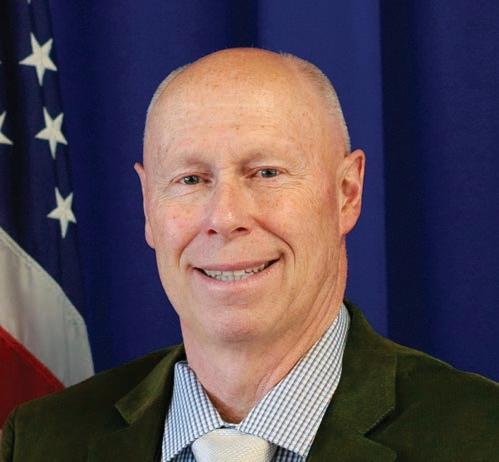
John West may have been voted out of office, but the shadow of controversy continues to follow the former Josephine County Commissioner. Even as the dust settles from his high-profile recall earlier this year, West remains at the center of ongoing investigations by the Oregon Government Ethics Commission (OGEC)—and the latest findings suggest that his battles are far from over.
At issue is a preliminary report by OGEC that has now recommended formal findings of ethics violations against West tied to his conduct while in public office. According to the commission’s initial review, West allegedly violated multiple provisions of Oregon Government Ethics Law, including misuse of office for personal gain and failure to properly manage conflicts of interest.
Specifically, the report recommends that the commission make a preliminary finding that West violated the state’s prohibition on using one’s elected office for personal benefit, in violation of ORS 244.040(1). In addition, unless the commission determines that a particular exemption applies, West is also facing a preliminary finding of having breached Oregon’s conflict of interest requirements, under ORS 244.120(2)(a).
The commission’s staff has further recommended that the case advance either to a contested case hearing—a formal legal proceeding where evidence is presented and testimony heard—or toward a negotiated settlement if West chooses that route. Either way, the legal and political fallout from his short and stormy
time in office is likely to stretch well beyond his removal.
The findings stem from one of several ethics complaints lodged against West during his tenure as commissioner, which began with his election in 2022. While the details of this particular complaint remain partially confidential pending the outcome of the case, sources familiar with the matter indicate it relates to decisions West made while serving on the Board of Commissioners that may have benefited his personal or business interests.
In plain terms, the OGEC staff is asserting that West used the authority and resources of his elected office in ways prohibited under state ethics laws. This could include, for example, influencing county decisions that intersected with his private ventures, failing to disclose conflicts, or acting in an official capacity where impartiality was compromised.
Under Oregon law, ORS 244.040(1) clearly states that public officials are prohibited from using their positions to obtain financial gain or avoid financial detriment for themselves, their relatives, or businesses with which they are associated. The conflict of interest provision, ORS 244.120(2)(a), further requires public officials to publicly announce any potential conflicts and, in most cases, refrain from participating in official actions related to those conflicts.
The OGEC’s recommendation is not yet a final ruling—West will have an opportunity to contest the findings or negotiate a resolution. Howev-
er, even at this early stage, the ethics watchdog’s conclusions send a strong signal about the seriousness of the alleged violations.
For West, the timing could hardly be worse. Just months ago, he became the first Josephine County commissioner in modern memory to be recalled by voters, after a turbulent term marked by controversy, legal wrangling, and accusations of poor governance. The recall campaign cited, among other grievances, ethical concerns about West’s conduct and decision-making on the board.
Now, with the ethics commission preparing to move forward, West faces the prospect of potential civil penalties or further legal consequences, even though he no longer holds public office. Oregon’s ethics laws make clear that officials can still be held accountable for violations committed during their term, regardless of whether they are subsequently removed or resign.
The broader implications of the case also loom large for Josephine County politics. West’s recall and ongoing legal troubles have deepened community divisions and intensified scrutiny of local government practices. They have also reinforced calls for greater transparency, ethics training, and public accountability in county leadership.
The OGEC’s actions underscore a broader principle: holding public office is a public trust, and abuses of that trust are subject to accountability—even after an official leaves office. At the same time, the process itself is not without controversy, as questions have arisen over whether the pursuit of post-recall penalties risks appearing politically motivated.
For now, the matter rests with the commission. If the case proceeds to a contested hearing, the public may learn more about the specifics of West’s alleged misconduct as evidence is presented. A negotiated settlement, if reached, could result in stipulated findings and possible fines, but without the full public airing of a contested case. Either way, the controversy that toppled John West’s political career is far from over. As the ethics investigation moves forward, Josephine County residents will be watching closely to see whether Oregon’s ethics watchdog delivers true accountability—or simply adds another chapter to one of the county’s most polarizing political sagas. And with County Commissioner Chris Barnett showing troubling signs of following in his predecessor’s footsteps, he too may soon find himself in the hot seat.
By E. Ward
The ongoing legal battle between the City of Grants Pass and civil rights advocates has become a flashpoint in the city’s efforts to address homelessness. A recently filed lawsuit and resulting court injunction are forcing city leaders—and the public—to reckon with the consequences of a series of decisions made earlier this year.
The legal action, brought by Disability Rights Oregon and the Oregon Law Center, challenges the city’s handling of homeless policies following a January 7, 2025, City Council meeting. The complaint alleges that the city’s moves to restrict camping options for homeless residents—many of whom live with disabilities—violated both state law and constitutional protections.
At a recent town hall meeting, Councilor Erich Schloegl sought to explain the city’s position, attributing the current lawsuit in part to Oregon House Bill 3115, which requires cities to adopt “time, place, and manner” restrictions on public camping that are objectively reasonable. Schloegl labeled the legislation an “unfunded mandate” and described the former J Street campsite as a “massive crime

haven.” He also suggested that the origins of the lawsuit predate the Council’s January decisions.
However, court records paint a different picture. According to the lawsuit, the City Council’s January 7 actions are central to the legal challenge. On that date, the Council voted to close the J Street campsite, which at the time hosted approximately 120 tents. Simultaneously, the Council imposed new restrictions on the hours of operation at the only remaining sanctioned campsite at 7th Street—mandating that it be closed daily between 7:00 a.m. and 5:00 p.m.
Critics argue that these moves left hun-
dreds of homeless residents with no legal or safe alternatives, particularly during the harsh winter months. The smaller 7th Street site could accommodate only a fraction of those displaced from J Street and lacked accessible infrastructure to meet the needs of individuals with disabilities. The lawsuit contends that these actions created life-threatening conditions for vulnerable residents.
Specifically, the complaint asserts that the city’s policies violate ORS 195.530(2), which requires that restrictions on camping in public spaces be objectively reasonable. It further claims that the daily requirement to dismantle and move campsites dispro-
portionately harms people with disabilities who are unable to comply. The lawsuit also accuses the city of effectively criminalizing homelessness under the pretense of public safety and of eliminating viable, safe options for unsheltered residents.
Adding to the controversy was the Council’s decision—made the same day it voted to close J Street and limit hours at 7th Street— to rescind $660,000 in funding for a proposed low-barrier shelter. The funding, part of the MINT (Managed, Integrated Navigation & Transition) grant, would have helped establish a facility aimed at providing more stable accommodations for homeless individuals.
According to the lawsuit and advocates familiar with the case, the loss of this funding further undermined the city’s ability to comply with HB 3115. While the state law allows for reasonable restrictions on public
• see LAWSUIT, page 3


















By John Oliver
The Josephine County Budget Committee wrapped up a tense series of deliberations this week, approving a $182 million budget for the coming fiscal year that promises fewer services for county residents across nearly every department. But instead of trimming expenses, the committee's cuts will come in the form of reduced revenue expectations—leading to an across-theboard 12% cut in service levels for most county operations.
The decision came after hours of discussion in which committee members wrestled with the county’s ongoing structural budget problems, stubborn revenue limitations, and difficult spending priorities. The approved budget reflects a sobering financial reality: unless new revenue sources materialize, residents should expect less from nearly every corner of county government.
To make matters more contentious, Josephine County Sheriff Dave Daniel had asked the committee to approve a substantial additional allocation to bolster law enforcement services. Daniel sought $774,000 in additional funding beyond the budget officer’s initial recommendation, arguing that the sheriff’s office needed a total of $2.8 million from the general fund this year to maintain and expand core services.
The sheriff’s request would have funded an additional school resource officer, two major crimes detectives, and two new patrol deputies. Daniel argued these positions were necessary to keep pace with community needs and make around-the-clock patrol coverage a reality—a goal that has remained elusive in the face of past budget constraints.
Ultimately, however, the committee declined the request, voting to forward the $182 million budget without the extra law enforcement funding and with the 12% reductions applied to most departments sup-

ported by the general fund.
Throughout the meeting, budget committee members and county officials acknowledged the difficult balancing act they faced this year. Josephine County relies heavily on property taxes and a shrinking pool of discretionary funding, a dynamic that has left local government with little flexibility to absorb rising costs or expand services.
Compounding the challenge is the fact that several departments had already been operating on lean budgets following years of limited funding growth. The approved 12% service reduction is not simply a trimming of fat; for some departments, it will likely result in noticeable impacts to operations and public-facing services.
Officials stressed that the budget does not rely on new taxes or debt and is intended to preserve the county’s financial stability in the short term. But they also acknowledged that the long-term picture remains bleak without additional revenue streams—a persistent issue that Josephine County voters have repeatedly rejected in past levy and tax measures.
Sheriff Daniel’s proposal to add staffing and improve patrol coverage struck a chord with many in the community who continue to voice concerns about crime and public
safety. The county’s ongoing struggle to provide 24-7 patrols has been a source of frustration for both law enforcement leadership and residents.
The requested funding would have represented a significant boost to the sheriff’s office budget, enabling new hires and increased capacity in key areas. However, faced with the need to reduce general fund spending overall, the committee ultimately opted to maintain the original recommended funding level and prioritize fiscal caution.
While the sheriff’s office did not receive the additional $774,000, it will continue to receive its base level of funding under the approved budget. Department leaders will now have to determine how to manage operations under that constraint, and whether to revisit funding requests in future budget cycles.
The budget committee’s recommendation now moves to the Board of County Commissioners for final approval later this month. While commissioners have the authority to make further adjustments, they are unlikely to deviate significantly from the committee’s work given the fragile budget environment.
Residents should expect to see more details in the coming weeks about how
From page 1
camping, it assumes that municipalities will provide sufficient shelter alternatives. In the absence of expanded shelter capacity, Grants Pass faces legal scrutiny for enforcing restrictions that leave homeless residents with nowhere to go.
Advocates point to other Oregon cities that have responded to HB 3115 by increasing shelter options before implementing camping restrictions. By contrast, Grants Pass’ approach—closing campsites without providing alternatives—has drawn sharp criticism.
Schloegl and other council members argue that liability concerns and public safety motivated their decisions. Yet the lawsuit highlights how the Council’s ac-
tions have resulted in the opposite: a court injunction that now limits the city’s ability to enforce its own camping ordinances and has led to months of legal uncertainty.
The debate has become a political flashpoint, with some local leaders blaming past councils, state lawmakers, or unhoused residents themselves. But the central issue remains the choices made on January 7, which legal experts say directly triggered the current injunction.
Looking ahead, advocates are urging the Council to adopt a more constructive approach—one that prioritizes legal compliance and the well-being of all residents. Restoring MINT funding, expanding shelter capacity, and developing a compre-
the 12% general fund reductions will be implemented across individual departments. Some impacts may be immediate, while others could evolve as departments adjust staffing levels and service offerings. For Josephine County as a whole, the approved budget underscores a persistent challenge: continuing to operate a full-service county government without sustainable revenue growth. As one official noted during deliberations, this year’s budget is another reminder that while the county can balance its books for now, the long-term financial picture remains uncertain—and the tough choices aren’t going away.


hensive, accessible strategy for managing homelessness are viewed as necessary first steps.
The city’s leadership now faces a critical juncture. Continued legal battles and deflection of responsibility may further erode public trust and delay solutions. Many residents are calling for a cleareyed acknowledgment of past missteps and a renewed commitment to crafting policies that uphold both the law and human dignity.
As the court case progresses, the future of Grants Pass’ homeless policies—and the city’s broader approach to governance—remains very much in the balance.




By John Oliver
Oregon is advancing a major initiative to expand homeownership opportunities for low-income residents and historically underserved communities through a new round of state funding aimed at supporting affordable housing development.
Under the leadership of Governor Tina Kotek and Oregon Housing and Community Services (OHCS), the state is providing significant financial backing to a new series of housing projects. The goal is to help close long-standing ownership gaps and make homeownership more accessible to households that have traditionally faced economic and systemic barriers.
Oregon continues to grapple with a well-documented housing crisis, driven by years of housing underproduction, population growth, and increasing construction costs. These factors have combined to push homeownership further out of reach for many working families. The challenge is especially acute for first-time buyers, lower-income residents, and communities of color, where the
opportunity to purchase a home has often remained elusive.
The state’s latest investment reflects an effort to create a more equitable housing landscape. Through this initiative, Oregon will fund multiple new housing developments designed to offer homes that are affordable to buyers earning below median income levels. The funding will support a diverse range of projects across the state, helping to ensure that affordable homeownership opportunities reach both urban and rural communities.
A key element of this strategy involves working with nonprofit housing organizations and community land trusts. These groups are central to preserving long-term affordability by removing speculative pressures from the housing market. By using models such as community land trusts, the state aims to ensure that the homes built through this program will remain accessible to lower-income buyers for generations to come.
The effort is part of Oregon’s broader housing production framework, which tar-
gets not only an increase in housing supply but also a more equitable distribution of housing opportunities. Over the past several years, the state has enacted legislation and directed funding toward initiatives that expand affordable mortgage access, provide down payment assistance to first-time buyers, and promote inclusive housing markets. The current round of construction funding complements these programs by adding new inventory of affordable homes.
Oregon’s homeownership rate remains below the national average, with notable disparities across racial and ethnic groups. Data consistently shows that Black, Latino, and Indigenous Oregonians experience significantly lower rates of homeownership compared to the overall population. Addressing this inequity is a priority for state housing policy, and the latest investments are intended to directly support more inclusive outcomes.
OHCS, which administers the state’s housing programs, will oversee the distribution of funds and monitor the progress of each development. The agency is tasked
with ensuring that the projects meet required standards of affordability and quality, and that they are completed on schedule.
The homes created through this initiative will be distributed throughout the state to reflect the broad-based nature of Oregon’s housing needs. Rural and small communities, which are increasingly affected by housing shortages and rising costs, are expected to benefit alongside larger urban areas.
As these projects advance, the state will continue to evaluate their impact as part of its overall effort to meet housing production and equity goals. The ultimate aim is to offer more Oregon families the chance to achieve the stability and wealth-building potential that homeownership provides.
This new wave of investment signals Oregon’s ongoing commitment to building a more inclusive housing market. By supporting the development of affordable homes and partnering with community-based organizations, the state hopes to foster greater opportunity and economic resilience for all of its residents.




Advertise with The Grants Pass Tribune!
Stand with us in defending freedom of the press and the 1st Amendment! The Grants Pass Tribune is facing political persecution, with lawsuits aimed at silencing our bold investigative journalism. We remain committed to uncovering the truth and keeping our community informed like never before.
Show your support for independent journalism and the fight against political tyranny. Place your ad with us and align your business with the values of free speech and transparency.
By: Jay Meredith, CPA Investigative Journalist
After watching Josephine County’s final Budget Committee meeting on June 9th I felt like I had just watched an episode of the Twilight Zone. It was more of a horror-type episode of the Twilight Zone, mixed with some whacky up is down and down is up comments by certain members of the Board of County Commissioners (BCC) and members of the Budget Committee. The Budget Committee is made up of the three County Commissioners plus three members of the public that are Josephine County residents.
June 9th started by granting 3% raises to the salaries of all County elected officials, including the Commissioners. BCC Chair Andreas Blech was the only Budget Committee member to vote no on 3% raises to salaries for all elected officials. Then the Budget Committee approved property tax rates as previously authorized by County voters and state law limitations. Then came the Twilight Zone portion of the meeting where the Budget Committee slashed and burned budgets without any discussion of the service impact to budgets being cut, made countless false statements about the financial position of the County and the role of the Budget Committee, failed to grant the Sheriff the staffing additions that were promised when voters passed the Law Enforcement Service District in November of 2023, and made random cuts to various department budgets without any logical financial reason for doing so.
Budget Committee Member Joseph Rice and BCC Chair Andreas Blech led the charge to slash and burn certain department budgets and to keep the Sheriff from getting the staffing additions that were promised to Josephine County voters. Both Rice and Blech harkened back to times 10-12 years ago when the County had significantly fewer total staff members and implied we should be reducing total County staff significantly to get back closer to those times or at least a middle ground between those times and where we sit today.
Rice and Blech failed to mention that 10-12 years ago the County was in the middle of a financial crisis as it relates to law enforcement funding, right after the loss of the majority of federal timber dollars we used to receive which supported our County law enforcement programs. Rice and Blech either chose not to acknowledge the financial crisis we were in at the time or are playing politics with our County budget to achieve an outcome that is contrary to what County voters have voted for in recent years.
I think we should remember the problems that happened back when our County law enforcement and justice programs were in the middle of that financial crisis.

Let’s never forget the woman who in 2013 called 9-1-1 to urgently get help because her ex-boyfriend was trying to break into her house. Nobody from the Sheriff’s office was available to respond and he broke in and assaulted her. When State police finally tracked the guy down, he pleaded guilty to sexual assault and sodomy, among other charges.
Let’s not forget the double murder that happened in broad daylight about 10 years ago in Colonial Valley by a guy who law enforcement professionals said should have been in jail, but the County jail had limited budget and limited capacity at the time.
Let’s not forget times in 2013 when City of Grants Pass police officers would have to issue tickets to criminals for even some of the more serious of crimes, because there was no room or budget for the appropriate County jail capacity. Criminals would tear up those tickets right in front of the officers, because there was no consequence for bad behavior.
Rice and Blech for some reason think our total County staff numbers should go back closer to that time because the County was still “functioning” back then. Perhaps the County as a whole was functioning, but our law enforcement and justice programs were not. And we were all less safe as a result.
Rice, Blech, and other members at times talked budget deficits and the “need” to cut the amount of general fund revenues that are given to the various departments that share in General Fund revenues. This was absolutely bizarre given the County’s general fund has a huge
amount of projected surpluses both this fiscal year and projected for next fiscal year. A series of motions were made to cut the amount of general fund revenues given to most departments of the general fund that use these revenues, with the exception of law enforcement and justice programs along with a couple other small departments.
Excluding law enforcement and justice program budgets, cut motions ranged from 30% across the board general fund cuts (suggested by Rice) to 5% across the board cuts (suggested by Barnett). A variety of across-the-board percentage cuts were motioned and voted down. The only Budget Committee members that made common sense comments about how silly these random proposed cuts were and how crazy it was to implement these cuts without even hearing about the impact by department on these cuts were Commissioner Ron Smith and Budget Committee member Chad Hansen. Commissioner Ron Smith made some very wise comments about how we should not be making these random cuts without checking on the impact on each department affected.
Rice kept commenting on how the General Fund balance would be drawn down and the need to cut, when the truth of the County’s General Fund financial condition was precisely the opposite. The County’s General Fund balance started this fiscal year at close to $15.5 million. It’s projected to end this fiscal year on June 30th, 2025, with a balance of close to $18.3 million. That’s a one-year SUR-
PLUS of almost $3 million in the County General Fund. That General Fund balance is projected to end next fiscal year at an even higher amount of $19.5 million, and that’s if all General Fund departments spent 100% of their budgets (which they never do, there are always some amount of budget savings). So next budget year the General Fund is projected to increase by at least $1.2 million, but will probably increase closer to $2 million or more once average savings are factored in. Yet Rice, Blech, and even Commissioner Barnett proposed cuts as if the County is about to fall off another fiscal cliff. There would be a budget surplus even if the Budget Committee had granted all the staffing requests of the Sheriff.
At one point in the meeting, Commissioner Blech stated, “Anyone that doesn’t realize that cuts are going to have to be made in the near future is not paying attention to politics,” as if Josephine County is facing the exact same scenarios facing our state and federal budgets. That simply isn’t the case if you look at how Josephine County’s law enforcement, justice programs, and General Fund programs are funded today. The emergency budget cuts and staffing cuts randomly implemented by the BCC so far throughout 2025 are almost entirely fabricated emergencies, in my personal opinion.
Let’s be clear, there is no fiscal cliff looming, there is no financial reason to be slashing County general fund budgets, and if you read the published budget numbers in the recommended budget the truth is
• Continued on page 10




By Leaf Barret
A 77-year-old woman was fatally struck by a vehicle driven by country music performer Conner Smith in downtown Nashville on Sunday evening, according to the Metropolitan Nashville Police Department.
The crash occurred as the victim, identified as Dorothy Dobbins, was crossing the street at a designated crosswalk. Police reported that the incident took place on 3rd Avenue North, a busy roadway in Nashville’s city center.
According to the police department’s preliminary investigation, Smith, 24, was driving a Chevrolet Silverado pickup truck northbound on 3rd Avenue North when the collision occurred. Dobbins was attempting to cross the street at that time. Emergency responders were dispatched to the scene immediately following the report of the incident.
Upon arrival, first responders located Dobbins with severe injuries resulting from the impact. Despite efforts to provide emergency medical care, she was pronounced dead at the scene.
The Metropolitan Nashville Police Department conducted an initial examination of the scene and began a formal investigation into the circumstances surrounding the crash. Officials temporarily closed a portion of 3rd Avenue North to vehicle traffic while officers and investi-

gators processed the area for evidence.
Authorities did not release additional information regarding the speed of the vehicle at the time of the collision or any contributing environmental factors such as weather or lighting conditions. It is also not yet known whether charges or citations will be issued in connection with the incident.
Toxicology testing, which is standard procedure following fatal crashes in Nashville, will be conducted on Smith. Results of those tests are pending, and no further statements regarding impairment or contributing factors have been released.
The incident occurred during the evening hours, a time when pedestrian activity in downtown Nashville can be high, particularly near crosswalks and intersections. The location of
Tired of doing everything "right" and still feeling exhausted, bloated, and stuck?
At Elysian Women's Wellness, we specialize in helping women 35–55 balance their hormones, heal their metabolism, and lose stubborn weight without crash diets or two-hour workouts.
We use our Metabolic Optimization Method to help you feel like you again.
• Functional & traditional lab work
• Sustainable weight loss
• Hormone-friendly exercise & nutrition
• Expert support & accountability
the crash is situated within an area of the city that draws a mix of vehicle and foot traffic due to its proximity to local businesses, entertainment venues, and residential properties.
Investigators with the police department’s Fatal Crash Team are continuing to gather evidence and review surveillance footage from nearby buildings in an effort to determine the full sequence of events that led to the fatal collision. Witness statements are also being collected as part of the ongoing investigation.
Conner Smith, the driver involved in the crash, is a 24-year-old country music performer based in Nashville. No further personal details or statements regarding Smith’s involvement have been provided by authorities at this time.

Officials have not indicated when a final report on the investigation will be released, but stated that it will include findings from the crash reconstruction analysis and toxicology tests.
The death of Dobbins marks another tragic pedestrian fatality in Nashville, where city officials have been working in recent years to implement additional pedestrian safety measures. Nashville, like many metropolitan areas, has seen an increase in pedestrian-related traffic incidents amid growing vehicle and foot traffic downtown.
No additional updates were available as of Tuesday morning. The Metropolitan Nashville Police Department will release further information as the investigation progresses.

precisely the opposite. BCC members even made false statements about the role of the Budget Committee being an “advisory” committee type role and the Commissioners could amend anything the Budget Committee voted on when they go to adopt the budget later this month. This is also false, as the Budget Committee has rules and regulations laid out in State Law and there are limitations on how the Commissioners could amend budgets approved by the Budget Committee during the process of adopting the budget. If I took the time to count all the false statements made in this Budget Committee meeting, the number would be in the dozens.
Prior to the last few years, Josephine County had struggled so long to recover from the loss of federal timber dollars in 2012 that apparently most of this year’s Budget Committee members think we’re still broke and digging our way out of this hole. Except again, the truth is precisely the opposite, thanks to voters approving a Jail/Juvenile Justice Levy in 2017 (which has already been renewed one time by voters) along with the voter approval of a permanent Law Enforcement Services District for Sheriff patrols in November 2023.
We now have the sustainable revenues to finally return the Sheriff to 24/7 patrol services like most major communities in the modern United States have today. Except the BCC and Budget Committee Members voted down the Sheriff’s staffing requests despite having at least twice the amount of General Fund surplus to accommodate the request. This means they voted down 24/7 Sheriff patrol services. Then at the end of the meeting they voted unanimously to cut most of the non-law enforcement general fund budgets by 12%
Continued from page 7
across the board, another random cut and decision made without even knowing the consequences of that decision and without a financial reason to make those cuts.
Even the Veterans Service Office (VSO) had significant cuts implemented at the budget committee level and was included in the 12% across the board cuts. The budget officer’s recommended budget included a reduction of 0.5 FTE (Full-Time Equivalent) staffing positions in the VSO budget and the Budget Committee approved an additional 12% general fund cut on top of that. This means that the VSO will have to cut about $35,000 more from its budget for next fiscal year, meaning the VSO office will likely have to cut staffing even further.
If these budget committee approved cuts are not reversed by the BCC when adopting the budget later this month, the VSO office will have LESS staffing than it had 10 years ago. BCC Members and Budget Committee members must not have watched budget meetings one year ago, when a VSO Office budget cut of even less than this amount was proposed. Older veterans came about by the dozens to attend County budget meetings and protest these cuts that were being proposed to the VSO.
Last year’s budget committee gladly approved an increase to the VSO funding to avoid significant (and unneeded cuts) to the VSO, in response to the significant number of veterans that showed up in protest. Based on what happened last year, I predict dozens of veterans will show up to the BCC meeting again later this month to protest when the BCC is scheduled to adopt the budget. This will likely be the last weekly business session
meeting in June.
If you’re not familiar, according to the County website the “VSO Veteran Service Officers counsel, advise and assist veterans and their dependents in obtaining benefits provided for them by county, state and federal law. These representatives act as advocates and case managers for veterans in need of such services.” Having less funding and staff than the VSO had 10 years ago will likely put a very big and negative dent in being able to provide all of Josephine County’s veterans with the service that they need in a timely fashion. This year’s budget committee didn’t even hear a budget presentation from the VSO department head and didn’t even once discuss the cuts that were voted on in this department.
After several failed motions to approve the County budget with a certain % of across-the-board cuts to non-law enforcement programs that rely on General Fund revenues, the Budget Committee finally unanimously approved a 12% across the board cut. Budget Committee members such as Ron Smith and Chad Hansen who had at various times been the voice of reason in this chaotic meeting seemed to give up the fight for what was right. Based on some questions asked by Ron Smith about whether the budget could be adjusted by the BCC later on, it seemed like he may have given up to pursue budget changes or restoring funding to departments at a later date by the BCC directly.
The tricky part that the BCC needs to know is that these cuts will go into effect right at the start of the fiscal year on July 1st if they don’t adjust the cuts when they adopt the budget later this month. County department heads and budget managers
can’t spend money with an informal intention of the BCC potentially adjusting the budgets later in the year, even if more than one Commissioner informally promises to adjust the budget later in the year. Public officials in Oregon can be held civilly liable and sued to return public funds if they spend money in excess of authorized amounts or for purposes not allowed by law, particularly when it constitutes malfeasance in office or willful neglect of duty. Lawsuits for civil liability can be initiated by the district attorney or any taxpayer in the district where the offense occurred. In other words, County budget managers can not spend money that is not in their budget until the BCC approves and official budget adjustment.
My personal prediction is that if the BCC does not restore these random and rash budget cuts when they adopt the budget later this month, and if they don’t grant the Sheriff the staffing that he asked for and that voters were promised in November of 2023, this years BCC members will have a legacy of not honoring voters, not honoring veterans, and not supporting law enforcement. That could make for a shortened time in the BCC office, just like it did when former Commissioner John West advocated for similar budget cuts at this time last year.
I also predict that in the budget adoption meeting later this month will be a very long meeting. Dozens of veterans and law enforcement advocates will likely show up at the meeting to protest the Budget Committee’s approved cuts. Prepare for a BCC meeting later this month that will probably be 3-5 hours in length once everyone uses their 3 minutes of public input time during the budget hearings by the BCC.


By E. ward
A long-dormant piece of Grants Pass history is set to come back to life, thanks to a $400,000 grant from the State of Oregon aimed at revitalizing historic downtown buildings.
The Schallhorn-Harmon Building, a two-story brick structure at 221 SE Sixth Street that has sat partially vacant for decades, will soon undergo major rehabilitation. The funding comes from the Oregon Main Street Revitalization Grant program, which is supported by state lottery bonds and managed by Oregon Heritage, a division of the Oregon Parks and Recreation Department.
The project, dubbed the Partake Project, will turn the ground floor of the building into Partake Wine & Cheese, a new retail destination. More significantly, it will bring the second floor—unused since the 1960s—back into service as a restaurant and lounge. In addition to providing new spaces for dining and entertainment, the project is expected to create between 15 and 20 permanent jobs, as well as temporary construction employment.
Local nonprofit Main Street Grants Pass applied for the grant on behalf of the project and is coordinating the rehabilitation effort in partnership with building owners Patty and Scott Hillier, who are providing matching funds required by the state.

The project includes restoring the building’s original façade, rebuilding the historic stairway leading to the second floor from Sixth Street, and modernizing the long-shuttered upstairs space. Organizers say the project represents an opportunity to strengthen downtown’s economic vitality while also preserving a piece of the community’s architectural heritage.
This year’s grant cycle was highly compet-
itive. Of 76 applications statewide, only 35 projects received funding, with the Schallhorn-Harmon Building recognized for its potential economic impact and preservation value.
Construction is slated to begin this summer. If all goes according to plan, the new businesses will open in 2026, adding to the momentum of ongoing revitalization efforts in downtown Grants Pass.
5 DAY OUTLOOK SOURCE: WEATHER.COM



Let’s have a little honest talk about something that’s been causing a lot of shouting at City Council meetings and more than a few panicked Facebook posts. I’m talking about HB 3115, the state law that deals with how cities like Grants Pass can enforce rules about sleeping on public property.
Now, if you listen to certain voices around town, you might think this law forces cities to let people camp anywhere, anytime, forever. Not true. On the flip side, if you think it magically solves homelessness and protects everyone, that’s not quite right either. The truth, like most things, is somewhere in the middle — and it helps if we all understand what this law actually says.
Here’s the heart of it. HB 3115 says that if a city doesn’t have enough shelter space for all of its homeless residents, it can’t punish them just for sleeping or resting in public. It’s a recognition of a simple reality: you can’t make homelessness illegal when there’s nowhere for a homeless person to legally sleep. If there’s no room at the shelter, the sidewalk shouldn’t become a jail sentence.
But—and this is important—HB 3115 doesn’t strip cities of their power to keep public spaces safe and orderly. The law al-
lows cities to set reasonable rules about when and where sleeping in public can happen. For example, a city can say that people can’t camp in certain spots like playgrounds or in front of businesses. It can say that no one can sleep in public during certain hours, like in the middle of the day when the parks are full of kids. What cities can’t do is make blanket rules that say “you can’t sleep anywhere in town, ever” if there isn’t a shelter bed available for everyone.
In other words, this is not a license for free-for-all camping on every inch of public property. It’s a check against cruel and unusual punishment for people stuck in desperate situations.
Now, is this a perfect law? Of course not. It doesn’t build more shelters or create more affordable housing. It’s simply a floor, not a ceiling. It tells cities, “You can enforce your rules, but you can’t criminalize being poor and homeless when there are no real options.” Frankly, it forces cities to think carefully about the line between managing public space and protecting human dignity.
In Grants Pass, we’re in the thick of this conversation right now. We want clean parks and safe streets. We also know that

our shelter space is limited and the cost of housing keeps climbing. That means we need real solutions — not slogans, not scapegoats. Understanding HB 3115 is one small step toward having a smarter, more humane community discussion.
So next time someone tells you that this
law means we’re about to be overrun with tents from one end of town to the other, remember this: HB 3115 is about fairness, not chaos. And if we all take the time to understand it, maybe we can spend less energy on fear and more on finding actual ways to help.
June 9, 2025
Posting Date
June 9, 2025
Posting June 9, 2025