
WEDNESDAY, JULY 8, 2026
WEDNESDAY, JULY 8, 2026
By John Oliver
The Josephine County Board of Commissioners continued its administrative oversight responsibilities Monday by conducting a public due process hearing involving Human Resources Director Michelle Shaw, marking another example of the Board's ongoing work addressing county administration and personnel matters since the current commission took office.
The hearing followed a brief executive session held earlier in the day. Commissioner Ron Smith did not participate in the proceedings because of a previously scheduled appointment.
The public hearing was conducted at Shaw's request, allowing the matter to be discussed in an open meeting. During the proceedings, Vice Chair Colene Martin and Commissioner Gary Richardson presented a series of concerns related to Shaw's job performance and administration of the Human Resources Department.
The discussion centered on multiple areas of county operations and personnel management. Among the topics reviewed were workplace investigation procedures, the administration of employee investigations, the preparation and management of investigative reports, the timely completion of assigned responsibilities, communication involving personnel policies and employee compensation information, delegation of departmental responsibilities, and the handling of confidential medical information.
Each of the identified issues was presented as part of the Board's review process. The hearing

provided an opportunity for the commissioners to publicly outline the concerns that had been raised regarding the operation of the Human Resources Department while allowing Shaw to respond directly to those issues.
During the proceedings, Shaw addressed the matters presented by the commissioners and answered questions regarding the concerns discussed during the hearing. The due process hearing served as the formal opportunity for both the Board and the employee to place information on the public record before any final employment decision is made.
Shaw is currently on paid administrative leave while the matter remains under review. Monday's hearing represented one step in the county's established personnel process rather than a final determination regarding her employment status. County policy provides the Board with a designated period to deliberate following a due process hearing. Under those procedures, commissioners may issue a final disciplinary decision no sooner
than two hours after the conclusion of the hearing and no later than 21 days following the meeting. That timeframe allows the Board to consider the information presented before reaching a final determination.
Personnel hearings of this nature are conducted under county employment policies designed to provide employees with an opportunity to respond to performance-related concerns before disciplinary action is considered. The process also establishes a public record when an employee requests an open hearing instead of keeping the proceedings confidential.
This meeting illustrates the continued administrative responsibilities being carried out by the current Josephine County Board of Commissioners as it oversees county departments and evaluates management practices within county government. Personnel oversight, departmental accountability, and review of administrative performance remain among the Board's statutory responsibilities as it manages county operations.
As State Sanctuary Laws Continue to Shape Response
By Ellen Ward
A significant increase in communications between federal immigration authorities and Oregon public agencies is drawing attention to the state's long-standing sanctuary policies and the evolving relationship between state and federal governments on immigration enforcement. According to Oregon's latest annual reporting data, public agencies across the state documented a 246 percent increase in immigration enforcement requests from federal authorities during the most recent reporting period, reflecting a notable shift in the volume of interactions while underscoring the legal framework that continues to govern how those requests are handled.
The figures come from the Oregon Criminal Justice Commission's annual report tracking communications between federal immigration agencies and Oregon public bodies. The report covers activity between June 1, 2025, and May 31, 2026, and provides one of the most compre-

hensive statewide snapshots of how federal immigration enforcement intersects with state and local government operations.
During the reporting period, Oregon public agencies logged 329 communications or requests from federal immigration authorities, a substantial increase compared with the previous year. Those reports were submitted by 37 public bodies representing at least 14 counties throughout Oregon. While the increase has generated considerable attention, the report makes an important distinction: the statistic reflects communications and requests from federal agencies rather than an equivalent increase in immigration arrests, detentions or deportations within the state.
Most of the reported contacts involved county correctional facilities and local jails, which frequently serve as the primary point of communication between Immigration and Customs Enforcement and local governments. These requests commonly involve inquiries regarding an individual's custody status, notifications before an inmate is released, requests to transfer custody, or immigration detainers asking local facilities to continue holding an individual after they would otherwise be released. Oregon law limits how public agencies may respond to many of those requests, but state law also requires that the communications themselves be documented and reported.
Washington County Jail recorded the largest number of communications during the reporting period, while county correctional facilities collectively accounted for the overwhelming majority of reported interactions statewide. The Oregon Department of Corrections also documented a small number of communications as part of the annual reporting process.
Oregon's legal approach to immigration enforcement remains rooted in the Sanctuary Promise Act, legislation that reinforces restrictions on the use of state and local resources for the pur-
• see SHARP, page 5

By John Oliver
As preparations continue for the fall theater season in Grants Pass, Clarion Theatre has begun development of its 2026 production, Two Great Musicals, One Great Show, a unique performance that will bring two original one-act musicals to the stage during a single evening of live theater.
The production combines two distinctly different stories designed to offer audiences contrasting theatrical experiences while celebrating original musical storytelling. One production explores themes of humor and lighthearted entertainment, while the other presents a thoughtful drama centered on faith, hope and perseverance. Together, the performances are intended to showcase the creative range of local theater while highlighting the work of original playwrights and composers.
Behind the scenes, members of the production team are already immersed in planning every aspect of the performances, including music, choreography, costumes, staging and set construction. During a recent readthrough, directors and crew members collaborated on creative concepts that will give each musical its own visual identity, allowing audiences to experience two separate artistic worlds within one production.
The evening will feature In Time, written by Maxwell Bruhn, alongside Fairhaven, written by Clarion founder John Sleadd. Although both productions share themes rooted in enduring values and faith, each tells its story in a distinctly different way, creating an evening that moves between comedy and drama while exploring the human experience from different perspectives. For Sleadd, this year's production also represents a personal milestone. Having previously written and composed several original musicals, he will direct one of his own works for the first time as he leads Fairhaven to the stage. His
• see CLARION, page 9

By Ellen Ward
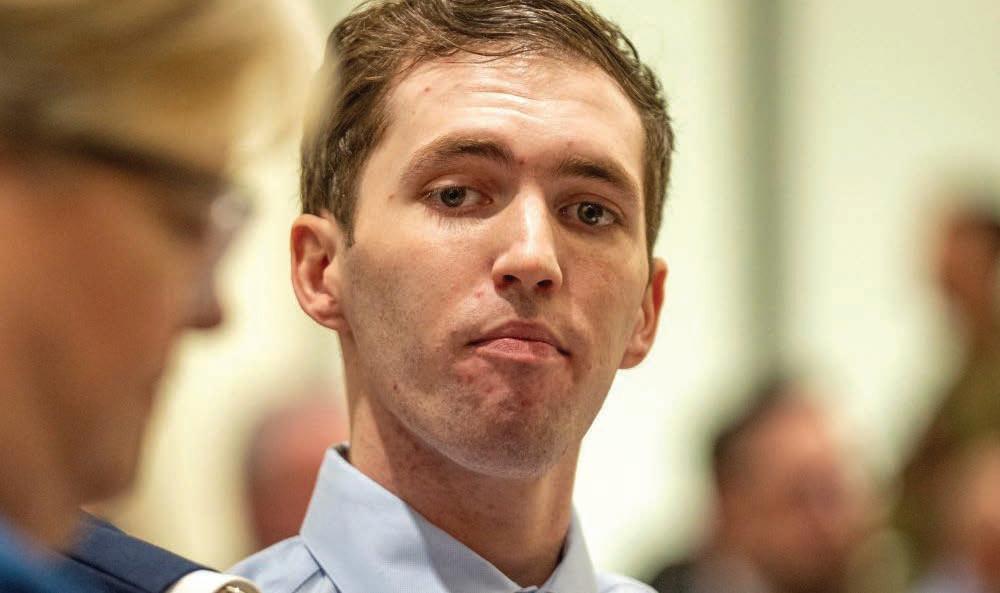
The criminal case surrounding the fatal shooting of conservative political commentator Charlie Kirk entered a pivotal phase this week as a fiveday preliminary hearing began in Utah, offering the public its first detailed look at the evidence prosecutors say supports one of the country's most closely watched homicide prosecutions. While the proceedings are not a trial and will not determine guilt or innocence, they represent a significant milestone in the American justice system and provide an early examination of the investigative work that followed the high-profile killing.
A preliminary hearing serves a specific legal purpose. Rather than asking whether a defendant is guilty beyond a reasonable doubt, the court must determine whether prosecutors have established probable cause to continue the case toward trial. The threshold is considerably lower than that required for a conviction, but the hearing allows both prosecutors and defense attorneys to begin publicly testing the strength of the evidence before a judge.
Throughout the opening days of testimony, prosecutors have presented an overview of the investigation conducted by local, state and federal authorities following the September 2025 shooting. Witnesses have described the initial emergency response, the preservation of the crime scene and the extensive effort to collect physical, digital and forensic evidence. Law enforcement officials have testified about the methods investigators used to reconstruct the events leading up to the shooting and to identify the individual charged in the case.
Among the evidence discussed during the hearing are surveillance recordings, forensic examinations, DNA evidence and other materials prosecutors contend establish a timeline of events before and after the shooting. Investigators have also described reviewing hundreds of hours of surveillance footage from the university
campus and surrounding areas as they pieced together the movements of the suspect. Additional testimony has focused on physical evidence recovered during the investigation, as well as digital communications and other investigative findings that prosecutors believe strengthen their case.
The defense has begun challenging portions of that evidence, questioning both its reliability and its admissibility. That process is an essential part of the judicial system, allowing both sides to argue legal issues before the case advances. Many of those disputes may continue through future pretrial proceedings even if the judge ultimately determines there is sufficient evidence to move the case toward trial.
The proceedings have also highlighted the emotional impact such cases have on victims' families. Family members have attended portions of the hearing while avoiding some of the more graphic testimony and evidence presented in court. Their presence serves as a reminder that behind every major criminal case are indi-
viduals whose lives have been permanently altered by violence and whose pursuit of justice often extends through months or even years of legal proceedings.
Beyond the courtroom, the hearing has renewed national attention on the security challenges surrounding political figures and public events. Although investigators continue focusing on the facts specific to this case, the killing has prompted broader discussions across the country about protective measures for speakers, campaign events and public gatherings where elected officials, activists and media personalities regularly interact with large crowds. Security experts have increasingly noted that modern threat assessments require planning for a wide range of potential risks, particularly as political tensions continue to shape public discourse across the United States.
The case also underscores the increasingly complex nature of modern criminal investigations. Today's homicide investigations frequently rely on an extensive combination of surveillance
technology, digital evidence, forensic science, DNA analysis, electronic communications and coordinated investigative work among multiple law enforcement agencies. Jurors in future criminal trials are often presented with far more technical evidence than in previous decades, making expert testimony an increasingly important component of courtroom proceedings.
Because prosecutors are seeking the death penalty, the legal process is expected to receive even greater scrutiny as the case moves forward. Capital cases typically involve extensive pretrial litigation, numerous evidentiary hearings and additional appellate safeguards designed to ensure that constitutional standards are met throughout every stage of the proceedings. Those additional legal requirements often lengthen the timeline before a case reaches a jury.
For the broader public, the preliminary hearing offers an important reminder of how the American criminal justice system is designed to function. High-profile cases often generate significant public interest and widespread media coverage, but the courts remain focused on established legal standards rather than public opinion. Every defendant is presumed innocent unless proven guilty in court, and prosecutors bear the burden of presenting sufficient evidence to support each charge before a case can proceed.
As testimony continues throughout the week, additional investigators, forensic specialists and other witnesses are expected to provide further details about the investigation. Once the hearing concludes, the judge will determine whether prosecutors have met the legal standard necessary for the case to proceed to trial. Regardless of that decision, the proceedings have already become an important example of how the judicial system balances public accountability, constitutional protections and the careful examination of evidence in one of the nation's most closely followed criminal cases.
By Bryce Robinson
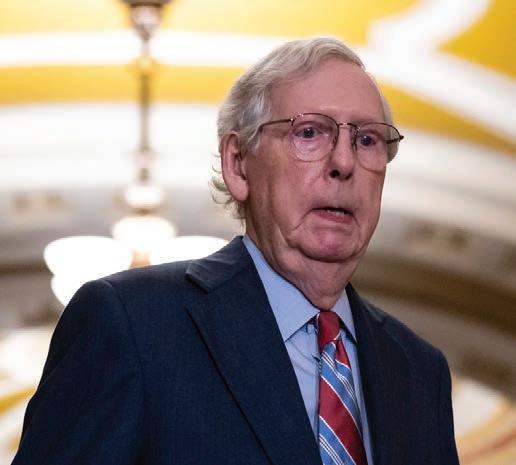
More than three weeks after U.S. Senator Mitch McConnell was admitted to a Washington, D.C., hospital following a medical emergency, uncertainty continues to surround the veteran lawmaker's condition. Although his office has confirmed that he remains hospitalized and is recovering, few details have been released about the medical circumstances that led to his admission or when he may be able to return to the United States Senate.
McConnell, 84, was hospitalized on June 14 after emergency responders were called to his Washington residence. Public reports indicate that first responders were dispatched after he was found unconscious, but his office has not publicly confirmed the specific nature of the medical event or identified an official diagnosis. Since his hospitalization, updates have remained brief, stating only that he continues to receive medical treatment while recovering under the care of his physicians.
The limited information has left many questions unanswered, prompting widespread public interest and considerable speculation. While rumors regarding McConnell's health have circulated across social media and other online platforms, no official statements have confirmed many of the
claims being shared. As a result, the verified facts remain limited to his continued hospitalization and the updates released by his office indicating that he is recovering.
McConnell's absence has drawn national attention because of his longstanding role in American politics and his influence within the United States Senate. Having served in the Senate since 1985, he has been one of the chamber's most recognizable and influential members, shaping federal legislation, judicial confirmations, tax policy, defense spending, and numerous other issues over the course of four decades.
His current hospitalization also follows several well-publicized health challenges over the past few years. In 2023, McConnell sustained a concussion and fractured ribs after suffering a fall that required hospitalization and rehabilitation. Later that year, he experienced two separate episodes during public appearances in which he briefly froze while speaking, raising additional questions about his health. More recently, he was hospitalized earlier this year after experiencing flu-like symptoms before returning to Senate duties. Throughout the past year, he has also relied at times on a wheelchair because of mobility limitations associated with previous injuries and the lasting effects of childhood polio.
Earlier this year, McConnell announced that he would not seek another term in the United States Senate. His current term is scheduled to conclude in January 2027, marking the end of a congressional career spanning more than 40 years. Despite that announcement, he has continued serving as Kentucky's senior senator while participating in Senate business whenever his health has permitted.
His continued hospitalization raises important practical questions for Congress. Senators play a direct role in voting on legislation, con-
firming federal judicial nominees, approving executive appointments, and participating in committee work. A prolonged absence by any senator can affect legislative scheduling and vote margins, particularly when Congress is considering closely divided legislation.
At the same time, federal law recognizes the privacy of elected officials regarding their medical information. Members of Congress are not required to publicly disclose diagnoses, treatment plans, or prognoses, leaving those decisions largely to the individual and their family. That balance between personal medical privacy and public accountability often becomes the subject of increased attention whenever a senior elected official experiences a significant health event. For now, the facts remain straightforward. Mitch McConnell entered the hospital on June 14 following a medical emergency at his Washington residence and remains under medical care. His office continues to report that he is recovering and receiving treatment, but it has not announced when he may return to the Senate or released additional details regarding his condition. Until further official information becomes available, the senator's recovery and the timing of his return to public service remain uncertain.




By John Oliver
A formal public records appeal filed with the Josephine County District Attorney is bringing questions surrounding government transparency, public access to official records, and the legal responsibilities of local government back into public view as officials are asked to review whether county records were improperly withheld from disclosure.
The appeal, prepared by Stephen E. Fitch and intended for delivery before the stated July 8, 2026, deadline, asks the District Attorney to review Josephine County's handling of a public records request involving a series of incidents at county facilities and public meetings. The filing requests an order directing the county to release records that Fitch contends have been improperly withheld and to reconsider the denial of any associated fee waiver.
According to the appeal, the requested records concern government actions involving public meetings, courthouse facilities, public forums, security responses, trespass-related actions, cease-and-desist notices, communications involving county employees, and documentation surrounding incidents in which Fitch alleges he was removed, excluded, or otherwise restricted while participating in public affairs.
The filing argues that the requested records are directly tied to the conduct of public officials and public employees rather than private individuals, making their disclosure a matter of public interest. Fitch contends that government accountability requires public access to records documenting how public authority was exercised and whether those actions complied with the law.
In the appeal, Fitch states that he attended public meetings as a member of the public, waited to be recognized, was selected to speak during the designated public comment period, completed his remarks within the allotted time, and departed after speaking. He maintains that he did not disrupt the proceedings and characterizes his participation as lawful public engagement.
"I was a member of the public exercising my rights," the appeal states. "I peacefully waited my

turn. I was selected to speak. I spoke during my allotted public-comment time. I left."
The appeal challenges what it describes as the county's reliance on employee protection, security, or safety exemptions as the basis for withholding records. Fitch argues that such exemptions should not be broadly applied to prevent public review of government conduct, particularly when the records involve decisions made by public officials while carrying out official duties.
Among the issues raised in the filing are questions surrounding who authorized security actions, removals, exclusions, trespass notices, or other restrictions, what legal justification was cited for those decisions, whether county employees acted within the scope of their lawful authority, and whether any records were created, altered, withheld, deleted, or selectively disclosed.
The appeal further requests a review of whether any exemptions cited by the county are being used to shield employee conduct from public oversight rather than to protect legitimate security interests.
Fitch also asks the District Attorney to determine whether actions taken against him occurred after he exercised what he describes as protected speech through public comment, criminal complaint activity, requests for governmental redress, or other forms of public participation.
Rather than seeking unrestricted disclosure of every document, the appeal acknowledges that certain records may legitimately contain sen-
sitive security information. However, it argues that any exempt material should be narrowly redacted while the remaining portions are released to the public.
"I am not requesting hidden security vulnerabilities for an improper purpose," the appeal states. "I am requesting records necessary to review government conduct directed at me as a member of the public."
In addition to challenging the withholding of records, the filing disputes any denial of a fee waiver associated with the public records request. Fitch argues that the subject matter extends beyond a private dispute because it involves public employee conduct, public meeting access, governmental authority, alleged retaliation, and the public's ability to evaluate how local government exercises its powers.
According to the appeal, disclosure of the requested records would allow the public to better understand what occurred during the reported incidents, identify who authorized official actions, and determine whether county authority was exercised appropriately.
The filing asks the District Attorney to order Josephine County to produce the requested records, disclose all reasonably segregable non-exempt information where limited redactions are justified, identify each withheld record or category of records, specify the exemption claimed for every withheld document or portion of a document, explain why disclosure would not serve the public
interest, and review the county's denial of any fee waiver or fee reduction.
The appeal also seeks an order directing the county to preserve all potentially responsive evidence while the matter is under review. That preservation request includes surveillance video, elevator footage, emails, incident reports, security communications, public meeting records, trespass documentation, cease-and-desist records, and communications relating to Fitch's reported removal or exclusion from public forums.
Another section of the filing addresses what Fitch describes as earlier confusion involving the proper avenue for appealing a county records denial. He states that the appeal is being submitted directly to the Josephine County District Attorney because the records dispute involves a county government body, and he identifies the District Attorney as the appropriate authority to review the matter under Oregon's public records process.
To support the appeal, Fitch includes an exhibit list identifying the original records requests, county responses, correspondence regarding claimed exemptions, fee waiver documents, evidence establishing filing deadlines, supporting communications, proof of delivery, and materials documenting the sequence of events surrounding the underlying incidents.
The filing concludes with a request for the District Attorney's Office to acknowledge receipt of the appeal by providing a date-and-time stamp confirming that the documents were received before the July 8 deadline. The requested acknowledgment is intended to establish that the appeal was timely filed and formally submitted for review.
If accepted for review, the appeal will require the District Attorney to examine the county's handling of the records request, evaluate the legal basis for any claimed exemptions, and determine whether additional disclosure is required under Oregon's public records laws. The outcome could influence not only the disposition of the records sought in this case but also how future requests involving government accountability and public oversight are evaluated at the local level.
From page 1
pose of enforcing federal immigration law. Under the law, state and local law enforcement agencies generally may not detain or arrest individuals solely because of an administrative immigration request issued by federal authorities. The law also establishes reporting requirements that require public agencies to document many contacts they receive from federal immigration agencies, creating a public record of those interactions each year.
Because of those reporting requirements, Oregon maintains one of the nation's more detailed statewide accounting systems for federal immigration requests directed toward public agencies. The annual report serves as both a transparency measure and a tool for lawmakers, researchers and the public to better understand the frequency and nature of those communications.
Although the 246 percent increase represents one of the largest year-over-year changes since reporting began, the Criminal Justice Commission does not attribute the increase to a single cause. Instead, the agency notes that several factors may have contributed, including changes in federal im-
migration enforcement priorities, increased communication between federal officials and local correctional facilities, broader enforcement efforts nationwide, and improved compliance by public agencies with Oregon's reporting requirements. The report does not conclude that any one factor is solely responsible for the increase.
At the federal level, Immigration and Customs Enforcement remains the primary agency responsible for enforcing immigration laws within the United States. Its responsibilities include locating individuals believed to be in violation of federal immigration law, conducting investigations, operating detention facilities, carrying out removal orders issued under federal law and requesting assistance from state and local agencies when permitted. Because immigration enforcement is a federal responsibility, ICE regularly communicates with correctional facilities throughout the country regarding individuals who may be in local custody.
The U.S. Department of Justice also plays a separate role by representing the federal gov-
ernment in litigation involving immigration policy, prosecuting criminal immigration-related offenses and defending federal enforcement actions in court. Routine immigration enforcement operations, however, are generally carried out through the Department of Homeland Security and its agencies, including ICE.
Within Oregon, the Oregon Department of Justice is responsible for overseeing enforcement of state sanctuary laws and responding to complaints alleging violations of the Sanctuary Promise Act. The department provides legal guidance to public agencies, reviews complaints concerning possible violations of state law and, when appropriate, participates in litigation involving immigration-related legal issues affecting Oregon.
For Oregon residents, the latest report provides insight into how frequently federal immigration authorities communicate with state and local agencies without indicating that every request results in enforcement action. A request from a federal agency does not automatically lead to continued detention, transfer of custody
or deportation. Instead, each communication is subject to Oregon law, federal law and the specific circumstances surrounding an individual case.
The report also illustrates the continuing balance between federal authority over immigration enforcement and Oregon's statutory limitations on state and local participation in those efforts. As federal immigration priorities continue to evolve, annual reporting is expected to remain an important measure of how those policies translate into day-to-day interactions between federal agencies and Oregon's public institutions.
While immigration policy continues to generate legal and political debate across the country, Oregon's annual reporting process provides a factual record of federal enforcement requests made to public agencies throughout the state. The latest findings document a significant increase in those requests over the past year while reaffirming that Oregon's sanctuary laws continue to define how state and local governments respond within the boundaries established by state and federal law.


GRANTS PASS CITY COUNCILOR Victoria Marshall wants the city to study how many nonprofits are operating in Grants Pass, what services they provide, and what their service capacity or budgets look like. The request for this workshop agenda item was made a few weeks ago, and the Mayor and City Manager rightfully turned down the request because the city does not directly govern or retain information about nonprofits and has no jurisdiction over nonprofit organizations.
Grants Pass Mayor Clint Scherf properly explained in the Council workshop of June 29th why this request was turned down and why such a broad request would be an inappropriate project for the city to take on. Not to be deterred, Councilor Marshall made the request yet again in the City Council meeting of July 1, where it nearly turned into a full “spirited” debate and at least two other Council members seem to be in favor of launching this massive project in some form.
The term massive could perhaps be in the eye of the beholder, but I tend to agree with the city staff who estimated that Councilor Marshall’s specific request would take hundreds of hours of staff time. The average fully loaded cost per hour of having staff take on a project like this is probably $75 to $100 per hour, making the likely effective project cost potentially well in excess of $20,000. The City Manager stated that there would likely be a recommendation that the city hire an outside consultant to do this project because of the size of the project.
The specific request from Councilor Marshall was for City staff to provide in a workshop the following information about nonprofits in Grants Pass:
• List of all nonprofits in Grants Pass
• What services they provide
• Are there any duplications of services or gaps?
• Whether nonprofit organizations have the capacity to perform contracts
• Whether these organizations get funding from the City, the State, or the Federal Government
• Whether multiple nonprofits are working together or competing for the same grants
This is indeed a massive project, depending on how detailed this information needs to be. Certain other Council members appropriately questioned the value of this project. Councilor Marshall stated several times that this is not her request, but that local citizens are asking for this detailed information.
As this debate dragged on, making a fairly long July 1st Council meeting even longer, Councilor Joel King stated from a simple Google search: “There are 500-630 nonprofits in the Grants Pass Metro area including 92 churches, 12 mental health organizations, 12 youth development organizations, 18 foundations in grant making,” and he went on with some other info that came from a simple google or AI search.
By Jay Meredith, CPA Investigative Journalist

This was such a large request, the City Manager suggested he needed to put together a Council memo just to estimate the time and cost for the city doing this project. And it took close to 23 minutes of Council discussion just to get to the point of agreeing to start with a preliminary memo from the City Manager to help scope out the project and provide some preliminary information about this request.
Allow me to add my two cents to this discussion, in hopes that it might save the city a little money and/or save the city some staff time. I’ve served on nonprofits boards, I’ve served as the treasurer for two separate nonprofits at different times over the years, and I’ve done a little research into nonprofits at different times in the past.
1) List of all nonprofits in Grants Pass – even this part of the request is not simple or easy. Would national nonprofits need to be listed here? Would nonprofits based elsewhere in Oregon but sometimes provide services in Grants Pass be listed here? As the City Manager stated in that last Council meeting, AI is not a reliable source for accurate information here (AI is generally limited to what information is made publicly available online).
2) What services nonprofits provide – I’m not aware of any central public database that provides this information, especially not one specific to Grants Pass. Even 501(c)(3) nonprofits don’t have to disclose all services they provide in annual tax filings and only have to generally list information about what they do in
annual filings. Unless the nonprofit provides a comprehensive list of services on their website, each nonprofit would have to be contacted and would have to voluntarily comply with information requests. And many religious or church organizations are not even required to make any annual tax and other government disclosures. Some religious or faith-based nonprofits prefer not to have any contact with government.
3) Are there any duplications of services or gaps? This is an extremely subjective question that could vary a great deal depending on who is answering the questions. And what specific services are the “citizens” making this request interested in studying? Nonprofits provide a very wide range of services, especially when medical-related nonprofits are added to the equation.
4) Whether nonprofit organizations have the capacity to perform contracts – this is nearly impossible to answer unless all the nonprofits out there voluntarily comply with information requests or the City narrows what sort of service contracts would be involved.
5) Whether these organizations get funding from the city, the State, or the Federal Government – This information may or may not be detailed in annual tax filings, and again not all “nonprofits” are required to do detailed tax filings that are eventually disclosed to the public. Again, knowing this would be somewhat dependent on the nonprofits voluntarily disclosing this information when requested. You can find
annual tax filings for all 501(c)(3) nonprofit organizations, but they are usually at least a year or two old and nonprofits are not required to disclose their budgets unless they apply for a grant that requires such a disclosure.
6) Whether multiple nonprofits are working together or competing for the same grants –the quick and dirty answer here is nonprofits are always competing with each other for various grant opportunities – both in government grants and private foundation grants. And there are thousands of privately run foundations that give out grants to nonprofits and others.
The bottom line is that to have accurate information, each nonprofit that operates in Grants Pass would have to voluntarily provide the information to the city that Councilor Marshall says that “citizens” are requesting. This is a nearly impossible task, and certainly an extremely costly project just to gather as much information as can possibly be collected.
In my opinion, this is a waste of staff time and waste of public money to move forward with this project unless the request is significantly narrowed. Citizens or Council members interested in moving forward with this project need to come forward and answer why they need this information in order to appropriately narrow the scope of the project.
But even if the project scope was significantly narrowed, it’s still not clear why the city should spend any amount of money or staff time on this project. The City of Grants Pass has not historically been the provider of any “social” services, with a few minor exceptions. So why should the city spend a significant amount of time and money studying the organizations that do provide social services of different kinds?
There are nonprofits out there that provide an extremely wide range of services. Some are social services, some are the provision of fine arts or performing arts, some provide medical services, some are faith-based services, and so on. The City is not in the business of providing these types of services, generally speaking.
So, what is the true agenda behind this costly project request? If this request could be narrowed down to something like providing details on all nonprofits that provide services directly to the local homeless population, that might be feasible and perhaps even valuable. But at the end of the day, the organization that is currently building out our new homeless services site wasn’t even providing any “local” services until they competed in a city grant proposal process.
Therefore, knowing the intricate details of all nonprofits operating in Grants Pass today isn’t the answer to everything, because nonprofits could expand what they do in Grants Pass tomorrow. Ultimately, this is a massive market study that belongs in the private sector and isn’t a project that should be paid for by Grants Pass taxpayers.
By Rachel Burke
Compatibility is often easier to recognize from the outside than it is to admit from within. Friends, relatives and even strangers may look at a couple and wonder how two people with different values, communication styles, temperaments or life goals ended up building a life together. From a distance, the mismatch may appear obvious. Inside the relationship, however, the reasons people stay are usually more complicated than love alone.
Across the United States, many relationships are not built on perfect emotional alignment. Some are built on timing. Some are built on comfort. Some are built on shared bills, children, fear of starting over, social pressure, family expectations or the need for stability. In many cases, people are not necessarily choosing the partner who best understands them. They are choosing the life that feels safest, most practical or least disruptive.
That distinction matters because love and stability are not the same thing. Love may draw two people together, but stability often keeps them there. A relationship can lack deep compatibility and still provide housing, routine, financial security, companionship or a sense of belonging. For some people, those needs outweigh romance. They may not be chasing the ideal partner. They may be trying to avoid loneliness, uncertainty or emotional and financial upheaval.
This is one reason incompatible couples continue dating, marry and remain together long after the relationship stops functioning well. The arrangement may not be emotionally fulfilling, but it may still meet a practical need. One person may provide financial support. Another may provide domestic structure. Both may share parenting responsibilities. The relationship may become less about connection and more about survival, routine or mutual dependence.
Compatibility is not simply about liking the same music, enjoying the same restaurants or sharing a few hobbies. Long-term compatibility reaches deeper. It involves values, communication, emotional maturity, conflict resolution, financial expectations, intimacy, family goals and the ability

to move through stress together without destroying the relationship. Two people can have strong physical chemistry and still be poorly matched for marriage. They can care about each other and still want entirely different lives.
Many couples ignore those differences early because the beginning of a relationship is often driven by emotion. Attraction can make serious warning signs seem manageable. People believe they can adjust later. They assume marriage, children, age or responsibility will change the other person. They fall in love with potential rather than reality. Over time, the same issues that were minimized in the beginning often become the center of daily conflict.
Once a relationship becomes part of a person’s identity, leaving becomes harder. People do not only lose a partner when they separate. They may lose a home, social circle, financial structure, family routine and the future they imagined. That is why many remain in relationships that no longer make them happy. The fear of disruption can be-



come stronger than the desire for fulfillment.
Children often deepen that conflict. Parents may stay together because they believe separation would harm the family. Others remain because shared custody, legal costs, housing expenses or the emotional weight of divorce feels overwhelming. In those cases, the relationship may continue not because it is healthy, but because the alternative feels too costly.
Financial pressure is another powerful force. In an economy where housing, childcare, food, health care and transportation are expensive, leaving a relationship can mean losing stability overnight. For some people, a partner is also a safety net. That reality can make compatibility feel like a luxury. Emotional dissatisfaction may be tolerated because the household still functions.
There is also the fear of being alone. Many people would rather live inside a familiar disappointment than face an uncertain future. Loneliness can be frightening, especially for people who have spent years defining themselves through a

relationship. The idea of starting over, dating again, rebuilding finances and explaining the separation to family can make even a troubled partnership feel easier to endure.
This is where communication often breaks down. Many couples talk every day but do not truly communicate. They discuss schedules, bills, children and chores, but avoid the deeper conversations that reveal resentment, unmet needs or emotional distance. Over time, silence becomes a survival tool. People stop trying to be understood because past attempts led to arguments, defensiveness or indifference.
A relationship can survive many disagreements if both people know how to repair conflict. Problems become more serious when disagreement turns into contempt, avoidance or emotional withdrawal. When partners stop respecting each other’s experience, the home can become a place of quiet tension rather than safety. The couple may still function publicly, but privately they may live like two people sharing space rather than building a life.
Family history also plays a role. People often repeat the relationship patterns they witnessed growing up. If conflict, distance, control, emotional absence or constant sacrifice seemed normal in childhood, those patterns may feel familiar in adulthood. Familiar does not always mean healthy. Many people choose what they recognize before they choose what is good for them.
This does not mean every mismatched couple is doomed. Some people are content with arrangements others would not choose. Not everyone defines love the same way. Some value loyalty over passion. Some value stability over emotional depth. Some prefer predictable companionship to romantic intensity. From the outside, the relationship may appear incompatible. Inside it, the couple may have accepted a trade-off that meets their most important needs.
The problem begins when people deny the trade-off. A person who wants emotional intimacy but stays only for security may eventually feel trapped. A person who wants independence but marries for comfort may become resentful. A person who expects marriage to fix incompatibility may find that marriage only magnifies it. Stability can support a healthy relationship, but it cannot replace respect, honesty or emotional connection forever.
The lesson is not that people should leave every imperfect relationship. Every long-term partnership requires compromise. No couple is compatible in every area. The real question is whether the compromises are conscious, mutual and healthy. A workable relationship allows both people to keep their dignity. An unhealthy relationship requires one or both people to disappear emotionally in order to keep the peace.
In the end, people settle for many reasons, and not all of them are foolish. Sometimes they are afraid. Sometimes they are practical. Sometimes they are exhausted. Sometimes they choose security because life has taught them that security matters more than romance. The cost is that a relationship built mainly on convenience can become a quiet form of emotional debt.
Love may begin the story, but compatibility determines how that story is lived day after day. When values, communication and respect are missing, stability can hold two people in place, but it cannot make them whole. The healthiest relationships are not perfect. They are honest. They are built by people who know what they are choosing, what they are sacrificing and whether the life they are building together is truly worth the price.
From page 1
experience as a playwright, composer and set designer will shape the creative vision for the production while guiding the performance from script to opening night.
Director Sharon Giddings will oversee In Time, bringing her own perspective to a story that explores loss, healing and finding hope through faith. According to Clarion, the musical presents "a modern-day narrative about hope, grief and moving forward in faith," offering audiences a thoughtful and emotionally driven performance.
The organization has assembled an experienced production team to support the project. Jacquelyn Cease will serve as producer with Steve Roby as assistant producer. Ron Strom has been named music director, while Sheree Mathews will oversee stage management. Erin Law will direct choreography, Michelle Spohn will lead costume design, and Zymri Anderson will coordinate props. Together, the team will spend the coming months transforming the scripts into fully staged productions ahead of their October debut.
Clarion is also inviting members of the community to become part of the production. Auditions will be held on July 31 from 6 to 9 p.m. and Aug. 1 from 2 to 5 p.m. at The Hivve, located at 164 SE G Street in Grants Pass. Individuals interested in performing on stage, regardless of previous experience, are encouraged to learn more about audition opportunities through the organization.
Community members who prefer to

work behind the scenes are also being welcomed. Volunteers play an important role in nearly every aspect of a theater production, from building sets and managing props to assisting with costumes, technical operations and stage support. Clarion is encouraging longtime audience members to consider becoming directly involved by joining the production crew.
"If you've been a Clarion supporter from the audience side, consider delving into the performance element, by either auditioning or volunteering for our crew!" the organization said in its announcement.
Performances of Two Great Musicals, One Great Show are scheduled for the evenings of Oct. 16, 17 and 23, with matinee performances planned for Oct. 18 and 24 at the Grants Pass Performing Arts Center. Ticket information will be announced at a later date.
In addition to seeking performers and
volunteers, Clarion is asking residents who wish to help sustain local community theater to consider making financial contributions toward the production. Donations assist with expenses ranging from costumes and scenery to music, lighting and other production costs that make original live theater possible.
As rehearsals begin and creative work continues throughout the summer, the production represents another opportunity for Southern Oregon artists, musicians, technicians and volunteers to collaborate on an original performance while giving local audiences the chance to experience two new musicals created by independent playwrights. With months of preparation still ahead before opening night, Clarion's latest production reflects the continuing role that community theater plays in bringing together creativity, volunteerism and live entertainment in Grants Pass.

5 DAY OUTLOOK
SOURCE: WEATHER.COM




July 6, 2026
Wednesday, July 1, 2026
Posting July 6, 2026