Concerns Over Shadow Governance in Josephine County
Simon Hare and John West Both Influence Commissioner Barnett
By: John Oliver
Recent developments in Josephine County have sparked questions about the influence of former County Commissioner Simon Hare on current Commissioner Chris Barnett. Despite not holding office, Hare has reportedly been playing an influential role behind the scenes, calling into question who is truly in charge of county decisions. Barnett, who has acknowledged Hare as his personal mentor, seems to be heavily guided by Hare’s advice, which raises concerns given the former commissioner’s controversial history. The situation came back to light through public records requests regarding Hare’s frequent appearances at the county commissioner's office. These records suggest that Hare has been more involved in county affairs than the public might realize, despite not holding an official position. In one recent discovery, it was revealed that on January 31st, 2024, Hare was paid $3,200 for his services, though there is no approved contract or clear scope of work attached to this payment. The invoice states that Hare attended several meetings, including a "BAT" meeting on January 9th, 2024, followed by "Leadership" meetings on January 16th and
26th. However, questions have arisen about the legitimacy of these meetings and the accuracy of the billing, particularly with reference to the acronym “BAT,” which may have been a mix-up with the Broadband Technical Assistance Program (BTAP). If Hare was indeed attending the wrong meetings, questions about his qualifications for the role he was paid for only deepen.
Adding to the controversy, Barnett has publicly stated that Hare serves as his personal mentor in his role as commissioner. This relationship has raised eyebrows, especially considering Barnett's early election, which many viewed as the result of a lack of experience for such a crucial leadership position. Barnett's admission of relying on a former commissioner with a controversial past only intensifies concerns about his independence in office.
Hare’s history is riddled with scandals, including ethical violations, allegations of misconduct, and a DUI incident that involved a strip club in 2018. He also faced accusations of attempting to leverage his position for personal gain, including reporting his car as stolen after allegedly being too intoxicated to remember where he parked. These issues led to his ousting from office in 2018, yet now, with Barnett at the helm, Hare seems to have found a way to continue influencing county politics without facing voters.
Sources also suggest that Hare has been involved in writing grant requests for certain
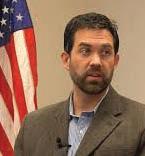

businesses in Josephine County, which raises further questions about who authorized this role and whether it constitutes a conflict of interest. Given his tarnished reputation, some worry that his influence may be benefiting select individuals rather than serving the broader needs of the county.
Furthermore, Hare’s close ties to former Commissioner John West only add fuel to the fire. The connections between Hare, Barnett, and West have led some observers to question whether the county’s leadership is being manipulated by figures who were rejected by voters in the past. Given Hare’s past unethical behavior, his continued involvement in county affairs raises serious concerns about the integrity of local governance.
With Barnett’s alignment with Hare, the key question is whether he is an independent leader or simply a puppet for figures who lost the public's trust long ago. The people of Josephine
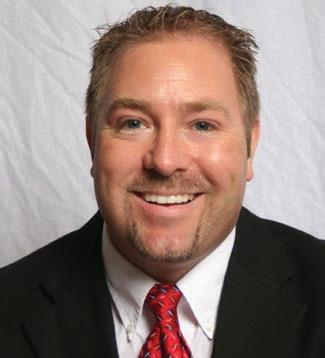
County deserve leadership that is both competent and accountable, not one influenced by individuals with questionable pasts.
This situation underscores the urgent need for greater transparency and accountability within Josephine County’s government. If a former commissioner with such a controversial history continues to exert influence over policy decisions, it calls into question the integrity of the county's leadership. Residents deserve leadership that prioritizes their best interests, not the agendas of individuals who were previously rejected by voters. With growing concerns about the influence of past officials, it's time for the community to demand a government that is both transparent and accountable. As this investigation progresses and more records are uncovered, the truth behind these actions will continue to emerge, and the people of Josephine County deserve to know the full extent of what is happening behind the scenes.
Oregon Lawmakers Evaluate $217.9 Million Shelter Funding Proposal
GPT News Desk
Oregon lawmakers are currently deliberating a significant funding proposal aimed at addressing homelessness in the state. The legislation, which has garnered attention in both local and state-level discussions, calls for the allocation of $217.9 million from the general fund over the next biennium to support shelter programs across Oregon. The funding is part of Governor Tina Kotek’s 2025 biennium budget and is seen as a critical step in combating homelessness while ensuring shelter systems are more accessible and effective.
A key component of the bill mandates that at least 70% of the funds be directed to low-barrier shelters. These shelters are designed to serve individuals who face multiple barriers to housing, such as those with criminal records, substance abuse issues, or mental health conditions. The goal is to provide immediate, safe shelter to people in need, without the stringent entry requirements that can often exclude some of the most vulnerable individuals.
The remaining portion of the funding, approximately 30%, would be dedicated to recovery-based shelters. These facilities are tailored to individuals who are working toward recovery from addiction, offering a more supportive environment that focuses on long-term well-being. Recovery-based shelters provide not only housing but also resources and programs aimed at

helping individuals stabilize their lives and transition toward self-sufficiency.
In addition to the funding breakdown, the bill includes provisions for transparency and accountability. The Oregon Housing and Community Services (OHCS) agency would be responsible for reporting annually to the state legislature on the outcomes of the program. This annual reporting requirement aims to ensure that the funding is used effectively and that progress is tracked, allowing lawmakers to assess the impact of the initiative and make adjustments as necessary.
The proposal is part of a broader effort by the state to address the growing homelessness crisis, which has become an increasing concern in Oregon in recent years. With housing shortages, rising rent prices, and economic challenges exacerbated by the pandemic, the state has seen a significant rise in homelessness. The $217.9 million appropriation is viewed as a much-needed
investment to bolster the existing infrastructure of shelters and provide immediate relief to those most in need.
Supporters of the bill argue that the initiative is a crucial step toward ensuring that all Oregonians have access to safe and supportive shelter, regardless of their personal circumstances. They emphasize that low-barrier shelters are essential for meeting the needs of individuals who are often excluded from other programs due to past experiences or current challenges. Recovery-based shelters are also seen as a necessary addition, offering individuals the opportunity to rebuild their lives with the support of a community-focused, long-term approach.
Critics of the proposal, however, have raised concerns about the effectiveness of the approach and whether it will result in long-term solutions to homelessness. Some argue that simply providing temporary shelter may not be enough to address
the root causes of homelessness, such as the lack of affordable housing or access to mental health services. Others have questioned whether the program’s funding will be sufficient to meet the growing demand for shelter and support services.
As lawmakers continue to review the proposal, they will weigh the benefits of investing in shelter infrastructure against the broader challenges of addressing homelessness in Oregon. The outcome of this debate will have significant implications for the future of homelessness policy in the state, as well as for the many individuals who are currently living without stable housing. With the increasing urgency of the homelessness crisis, this funding proposal represents a pivotal moment in Oregon’s efforts to tackle one of the state’s most pressing issues. The discussions surrounding this bill will likely continue in the coming months, as lawmakers consider the best path forward to support those in need and create a more sustainable solution for the future.


















Governor Tina Kotek Responds to President Trump’s Threats to Cut Federal Funding for States with Dissenting Policies
By: John Oliver
Oregon Governor Tina Kotek has expressed concern over the escalating tensions between state leaders and President Donald Trump, particularly in light of the president's recent threats to withhold federal funding from states that do not align with his policies. Kotek’s remarks followed a tense confrontation at the National Governors Association meeting in Washington, D.C., where President Trump directly confronted Maine Governor Janet Mills over her state's law permitting transgender athletes to compete in women’s sports.
At the meeting, President Trump warned Governor Mills that Maine would face consequences, including the potential loss of federal funding, unless the state reversed its position on the inclusion of transgender women in female sports categories. This was in direct response to an Executive Order issued by Trump banning transgender women from competing in women’s sports at the federal level.
In a show of defiance, Governor Mills told the president that she would take the matter to court, signaling a willingness to challenge the federal executive order legally. Governor Kotek, who was present during the exchange, voiced her disappointment over the president’s
stance. She expressed solidarity with Governor Mills, emphasizing the importance of respecting state autonomy in making their own laws and decisions.
Kotek’s comments reflect growing concerns among state leaders about the potential consequences of the president's recent threats. While the president’s comments were aimed specifically at Maine, the broader implications for states with policies that contradict the federal government’s stance are clear. Oregon, which has its own sanctuary laws in place, could face similar challenges. These laws protect undocumented immigrants from certain federal immigration enforcement actions, a policy that directly conflicts with Trump’s administration’s hardline stance on immigration. Oregon, like many other states, has long upheld its right to pass laws based on local values and needs, even when those laws diverge from federal priorities. However, the threat of federal funding cuts for policies deemed to be in conflict with the president’s agenda has added a new layer of uncertainty to these ongoing legal battles.
Governor Kotek, while expressing her support for Governor Mills, also made it clear that she stands firmly behind Oregon’s sanctuary

laws. She emphasized that the state’s autonomy in determining its policies should be respected, regardless of federal opposition. Kotek’s remarks come at a time when the nation’s political landscape remains deeply divided, and the role of the federal government in influencing state-level decisions continues to be a point of contention.
The question of federal funding cuts has been a recurring theme in recent years, as states with differing political ideologies from the federal government have increasingly found themselves at odds with Washington. The prospect of losing critical funding for state
programs, including education, healthcare, and infrastructure, has fueled debates about the extent to which the federal government can— and should—penalize states that diverge from its policies.
The confrontation between President Trump and Governor Mills is just one example of the growing tension between state governments and the federal administration. As legal challenges to executive orders, such as the one banning transgender athletes, continue to mount, the conflict over state rights and federal power is likely to intensify. Governor Kotek’s response to the situation highlights the broader concern that states must be able to govern without fear of losing essential federal support for standing up to federal mandates.
As Oregon and other states prepare for potential legal battles over their respective laws, the question remains: how much power should the federal government have in dictating state policies, and what consequences will states face if they refuse to comply? With the situation continuing to evolve, the stakes for both state and federal authorities are higher than ever, and the outcome of these legal and political battles could have lasting implications for the future of state-federal relations.
Who Will Succeed Pope Francis?
Mykola Bychok Emerges as a Contender in the Future Papal Election
By: Leaf Barret
Mykola Bychok, a 44-year-old Ukrainian, made history by becoming the world’s youngest cardinal. His appointment in 2024, which saw him leapfrogging over several high-profile Catholic leaders, has turned heads in the Vatican and beyond. Bychok, who has spent much of his life advocating for legislation to support migrants, now holds a crucial role in the College of Cardinals. This body will eventually be responsible for selecting the next pontiff once Pope Francis passes.
Bychok’s rise through the ranks of the Church has been swift and remarkable. The appointment to cardinal, a title given to senior Catholic clergy who are tasked with electing the pope, places him in a unique position to influence the future of the Catholic Church. As a staunch advocate for migration rights and social justice, Bychok has become a prominent figure in global discussions about the role of the Catholic Church in supporting displaced people worldwide. His inclusion in the College of Cardinals signals a broader shift within the Vatican toward addressing modern humanitarian issues.
The current pope, Francis, who has been in office since 2013, is a polarizing figure. While praised by many for his progressive stance on topics such as the environment, same-sex unions, and, notably, migration, he has also faced criticism from conservative factions

within the Church. Some detractors have even branded him the “woke pope” for his advocacy of what they see as liberal causes. Pope Francis has worked to reshape the Church, focusing on outreach to marginalized communities and pushing for broader acceptance of diverse social issues. However, this vision has not been universally embraced, particularly in regions where traditional Catholic teachings hold more sway.
Despite these controversies, Pope Francis has undeniably had a significant impact on the direction of the Church. One of his most lasting legacies may be his influence in reshaping the College of Cardinals. In recent years, the pope has appointed a diverse group of cardinals, many of whom share his progressive views. This has led to concerns that the next papal election could see a continuation of his vision. Some have argued that the next pope may need to carry forward Francis’s commitment to
social justice and inclusivity, while others call for a return to more traditional Catholic values.
Pope Francis, now 88 years old, has been in declining health. Recently, he was hospitalized in Rome, suffering from double pneumonia, acute respiratory difficulties, and partial kidney failure. While the pope’s condition has stabilized, his health remains a concern for the Vatican. These medical issues have raised questions about how soon the College of Cardinals will have to undertake the responsibility of electing a new pope. Although Francis has not publicly addressed his retirement plans, the realities of his health suggest that the papacy may soon be up for succession.
The timing of the upcoming papal election could not be more critical, as the world grapples with complex global challenges. The resurgence of far-right politics in Europe, the return of former U.S. President Donald Trump to the political stage, and a growing backlash against migration are all factors that will influence the next papacy. These issues could play a significant role in shaping the direction of the Church and its global influence. A new pope may need to navigate these challenges while maintaining the Church’s core teachings on faith and morality.
As the world waits to see who will succeed Pope Francis, the appointment of Mykola Bychok as a cardinal has sparked speculation about the future of the papacy. His advocacy for migrants and his progressive views could position him as a leading figure in the next papal election. Whether or not he will become the next pope remains uncertain, but his rise to prominence is a clear indication that the Catholic Church is preparing for a future that reflects the changing dynamics of the world.
In the coming years, the College of Cardinals will face a monumental task as it selects a new pope. The future of the Catholic Church, its stance on global issues, and its relationship with an increasingly polarized world will be at the forefront of this decision. Mykola Bychok, with his progressive outlook and commitment to social justice, is one of the many cardinals who may play a key role in shaping this future.



POLITICS
International Criminal Court Faces New Request to Investigate U.S. Leaders Over Gaza War
By: John Oliver
The International Criminal Court (ICC) has received a formal request to investigate U.S. President Joe Biden, former Secretary of State Antony Blinken, and former Secretary of Defense Lloyd Austin for their alleged roles in facilitating Israeli actions in Gaza, which some groups claim amount to war crimes and crimes against humanity. This move has sparked significant international attention as the ICC continues its scrutiny of individuals connected to the Gaza conflict, including figures from both Israel and Palestinian factions.
The request, filed by a group of human rights advocates, accuses the three U.S. leaders of “aiding and abetting” war crimes and intentionally contributing to crimes against humanity during the ongoing conflict between Israel and Hamas. Specifically, the complaint focuses on U.S. support for Israel, including military aid, which the petitioners argue has played a direct role in the escalation of violence and the reported suffering of civilians in Gaza. The complainants are calling for an investigation into whether these actions constitute complicity in war crimes as defined under international law.
The request follows a series of high-profile actions by the ICC, which has already issued arrest warrants for key figures involved in the Gaza war. In 2023, the court announced arrest warrants for Israeli Prime Minister Benjamin Netanyahu, former Defense Minister Yoav Gallant, and Hamas military leader Mohammed Deif, all of whom are accused of being involved in war crimes during the conflict. The warrant for Deif, however, became a moot point following confirmation from Hamas that he had been killed.
The ICC, which is tasked with investigating the most serious offenses of international

concern, has been under scrutiny for its handling of cases related to the Israeli-Palestinian conflict. While the court has made significant steps toward holding individuals accountable for actions on both sides of the conflict, including those from Hamas, calls for accountability have intensified regarding the involvement of other nations, such as the U.S., in the provision of military aid and strategic support.
The request for an investigation into Biden, Blinken, and Austin is part of a broader effort by some human rights organizations to hold all parties accountable for the impact of the conflict on civilian populations. Advocates argue that the U.S.’s military and political backing of Israel, especially during critical moments of escalation, has enabled actions that they contend violate international humanitarian law. These actions include airstrikes on densely populated areas in Gaza, resulting in significant civilian casualties and widespread destruction of infrastructure.
In their defense, U.S. officials argue that their support for Israel is part of a long-standing alliance based on shared security interests and the right of Israel to defend itself from terrorist attacks, particularly from Hamas, which is rec-
ognized by both Israel and the U.S. as a terrorist organization. U.S. leaders have repeatedly stated that their support is aimed at ensuring Israel’s right to self-defense, while also advocating for
efforts to protect civilian lives and seek a longterm resolution to the Israeli-Palestinian conflict.
The ICC has yet to indicate whether it will move forward with the investigation into the U.S. leaders, but the request marks a significant moment in the ongoing international dialogue about the responsibilities of countries and leaders in conflict zones. As the situation in Gaza remains volatile, the role of external actors like the U.S. continues to be a point of contention in debates over accountability and justice.
As calls for international justice grow, the ICC’s decisions on these matters could set important precedents for how complicity in conflicts involving non-state actors and state-sponsored military actions is addressed under international law.
















SUPPORT FREE SPEECH
Advertise with The Grants Pass Tribune!
Stand with us in defending freedom of the press and the 1st Amendment! The Grants Pass Tribune is facing political persecution, with lawsuits aimed at silencing our bold investigative journalism. We remain committed to uncovering the truth and keeping our community informed like never before.
Show
COMMUNITY
Celebrating Women’s Impact
International Women’s Day Fair in Grants Pass
GPT News Desk – Tianna Eddy
In celebration of International Women’s Day, Soroptimist International River Valley and the Grants Pass High School Theatre Department are coming together to host a special event aimed at honoring the contributions of women in the local community. This unique event will take place on Saturday, March 8th, at the Grants Pass Performing Arts Center (PAC), located at 313 NE Olive St. The event is designed to highlight the achievements of women changemakers in the valley, coinciding with the theatre department’s performance of the Spring Musical, The Unsinkable Molly Brown.
The focus of the event is to pay tribute to the legacy of Molly Brown, a renowned philanthropist, entrepreneur, and advocate for her community. Often remembered for her resilience and determination, Brown became known as the "unsinkable" woman after surviving the Titanic disaster. Her story is one of empowerment and social impact, and the event will seek to spotlight local women who have made similar strides in their own communities.
The afternoon will kick off with a free Resource Fair in the lobby of the PAC from 4:30 to 5:30 p.m. The fair will feature a range of women-owned and women-led businesses,
Letter from the Editor

as well as programs and resources dedicated to supporting women and girls in the Grants Pass area. This event is not a traditional vendor fair, but rather a space to learn about and connect with local businesses and initiatives that empower women.
From 5:30 to 6:15 p.m., the event will transition into a discussion panel moderated by Julia Cuppy. The panel will bring together local women changemakers who have had a significant impact on the community. These women will share their experiences and insights on the challenges and rewards of being a female leader in various sectors, from business to advocacy. The discussion aims to inspire and encourage others to make positive changes in their own communities.
After the panel, attendees will have the opportunity to enjoy a performance of The Unsinkable Molly Brown from 7:00 to 9:30 p.m. The performance, which is a ticketed event, will bring the incredible story of Molly Brown to life on stage, adding an artistic touch to the day’s celebrations of women’s empowerment and resilience.
The event is free and open to the public, making it accessible to all who wish to attend. However, those interested in hosting a booth at the Resource Fair must meet specific criteria: they must be a women-owned, women-led, or women-founded business or organization in the Grants Pass area. This event is an opportunity for these businesses to showcase the work they do, offering information, resources, and support to others in the community. Those interested in hosting a booth or joining the panel can apply through the event’s online form.
Organizers hope this event will not only honor women changemakers but also create lasting connections and provide valuable resources for women and girls in the region. By celebrating the legacy of Molly Brown and other women who continue to shape our world, the International Women’s Day Fair is sure to inspire future generations of female leaders.
For more information or to get involved, please contact Tianna Eddy at 541-2440033 or via email at gphstheatre@gmail.com.
The Resilience Born from Life’s Chaos
There’s a unique kind of strength that comes from navigating life under a constant barrage of what I like to call "inconveniences." You know the kind—the constant noise, demands, and obstacles thrown at you from a dozen different directions, from people who think their issue is your problem to solve. The average person might buckle under such pressure, but there’s something about surviving years of this kind of chaos that sets certain individuals apart—what we might call the men from the boys.
For me, resilience wasn’t just something I learned; it was something I earned. I’ve lived a life full of ups, downs, and a whole lot of in-betweens. I’ve raised seven children, each with their own set of challenges and their own mothers, while juggling multiple businesses and homes. The constant travel, the shifting priorities, and the whirlwind of responsibilities all shaped the person I’ve become today. I didn’t just survive it—I learned how to thrive in it.
Many people talk about pressure as if it’s something they have to avoid, but the reality is that it’s the ones who learn how to perform under pressure who rise above the rest. My chaotic past prepared me for the challenges I face now and will face in the future. There’s nothing in my path today that I haven’t already weathered in some form or another. My ability to handle life’s inconveniences with a calm focus comes from

a long history of making tough decisions, putting others before myself, and, above all, taking responsibility for my own actions.
I’ve learned to control myself—my actions, my emotions, and my reactions. When life throws curveballs at me, I don’t let them define me. I prioritize what matters, filter out what doesn’t, and keep moving forward. It’s the kind of resilience that isn’t born overnight. It’s a slow, steady build that’s come from years of experience, from living in the chaos and learning to find order within it.
And let’s be clear—those who keep trying to throw shit my way? They’re just another set of obstacles in a long line. It’s almost like a test. Every time someone tries to knock me off course, I become more focused, more determined to succeed. I don’t run from challenges, and I won’t allow anyone or anything to slow me down. I’ve earned the right to control how I respond,
and I choose to meet each challenge with the confidence that comes from having already faced far worse.
The truth is, the ones who try to knock me down won’t like it when they realize that every obstacle they throw my way only serves to strengthen my resolve. They may not see it now, but the pressure they try to put on me? It’s only going to come back to them tenfold. I’ve learned how to handle it, and if they’re not careful, they’ll find themselves overwhelmed by the very thing they tried to use against me.
So, to those who think they can test me, I say this: keep coming. But understand this — what you throw at me won’t stop me, won’t slow me down, and certainly won’t make me back down. I’ve lived through far worse, and I’m more prepared than most to handle whatever comes next. The question is — are you?
GRANTS PASS WEATHER
5 DAY OUTLOOK
SOURCE: WEATHER.COM