WEDNESDAY, FEBRUARY 18, 2026
WEDNESDAY, FEBRUARY 18, 2026
By John Oliver
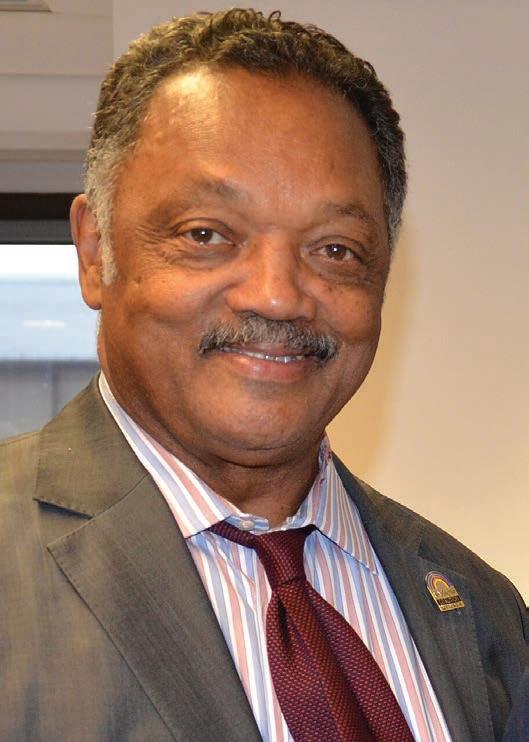
The Rev. Jesse Jackson, the longtime civil rights leader who carried the movement forward after the assassination of Martin Luther King Jr. and reshaped American political life in the decades that followed, has died at the age of 84. For more than half a century, Jackson stood at the intersection of protest and politics, faith and public policy, pushing the nation to confront inequality while building coalitions that expanded the reach of American democracy.
Born in Greenville, South Carolina, in 1941, Jackson rose from the segregated South to become one of the most recognizable figures in American public life. As a young minister and activist, he joined King’s Southern Christian Leadership Conference and quickly became part of the inner circle of the modern Civil Rights Movement. He was present in Memphis in 1968 when King was assassinated, a moment that would mark the end of one era and the beginning of another. In the years that followed, Jackson emerged as one of the most visible heirs to King’s unfinished work.
Unlike many leaders who focused solely on protest, Jackson combined street-level activism with direct engagement in corporate boardrooms and electoral politics. Through Operation Breadbasket and later the Rainbow PUSH Coalition, he pressed major corporations to hire more Black executives, contract
with minority-owned businesses, and invest in underserved communities. These campaigns expanded the concept of civil rights beyond voting access and public accommodations to include economic participation and corporate accountability.
Jackson’s influence extended beyond advocacy into national politics. In 1984 and again in 1988, he sought the presidential nomination of the Democratic Party. His campaigns broke barriers, mobilized millions of
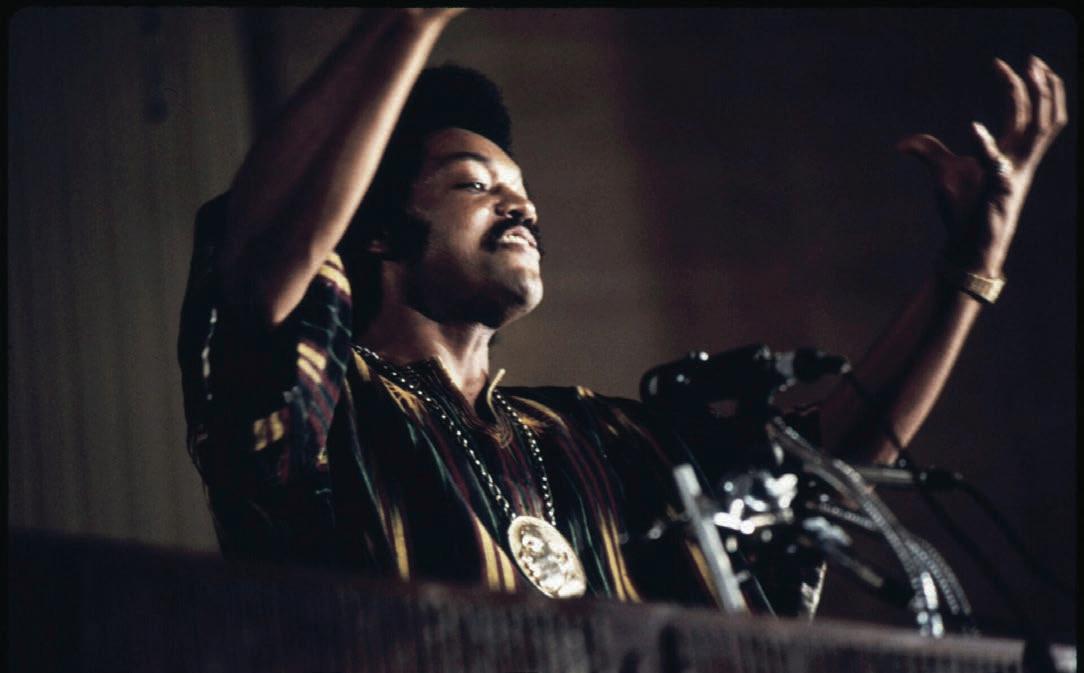
new voters, and demonstrated that a Black candidate could build a broad, multiracial coalition on a national stage. In 1988, he won several state primaries and caucuses and finished second in the delegate count. Although he did not secure the nomination, his campaigns altered the trajectory of American politics, laying groundwork for future candidates and expanding participation within the party. Jackson’s political activism was rooted in a theology that blended faith with social action.
As a Baptist minister, he framed civil rights not merely as a policy debate but as a moral imperative. His speeches, often delivered with rhythmic cadence and repetition, became a defining feature of rallies and conventions. He called for economic justice, expanded voting rights, educational opportunity, and an end to racial discrimination, while also addressing poverty and international human rights issues. Over time, Jackson became a diplomatic fig-
By John Oliver
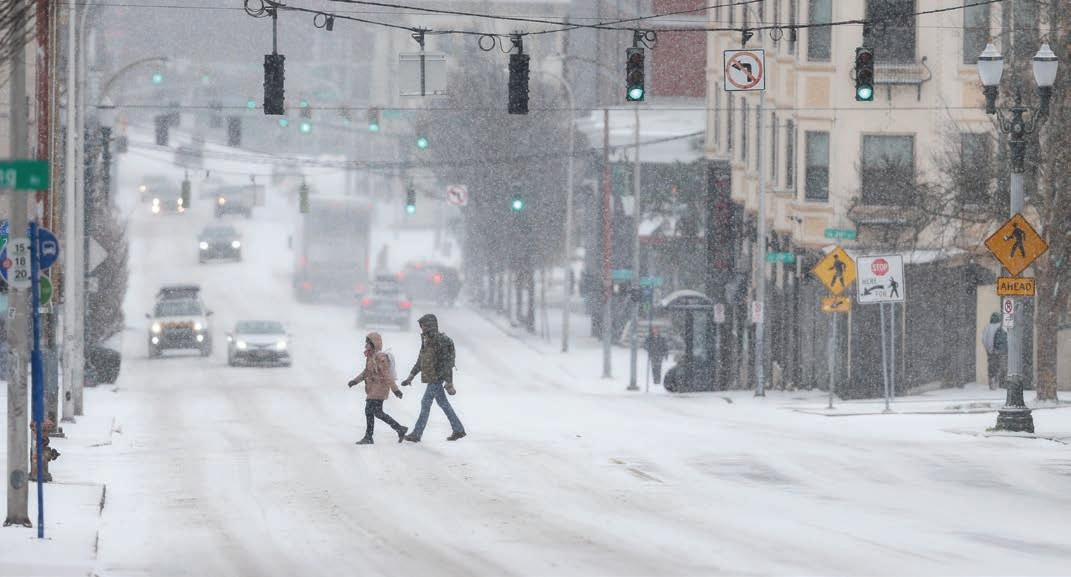
Southern Oregon residents are being urged to remain alert this week as a Winter Storm Warning and Winter Weather Advisory remain in effect across portions of Josephine and eastern Curry counties. The current alert, issued by the National Weather Service, runs through 10:00 a.m. Thursday and covers both lower elevations and higher terrain, with varying impacts depending on elevation.
Communities below 1,500 feet, including Grants Pass, Wilderville, Merlin, Galice and Agness, are under a Winter Weather Advisory. Forecasters are calling for wet snow accumulations ranging from two to four inches in these lower elevations. While that amount may not seem extreme, even a few inches of snow in the Rogue and Illinois valleys can create hazardous road conditions, particularly during overnight and early morning hours when temperatures dip to or below freezing.
Above 1,500 feet, a Winter Storm Warning is in place, signaling more significant impacts. Mountain communities such as Cave Junction, O’Brien, Selma and Wolf Creek are
expected to see heavier snowfall totals ranging from four to eight inches in some passes, and between six and twelve inches in parts of the southern Illinois Valley. The Kalmiopsis Wilderness region could receive up to two feet of snow. Mountain passes including Sexton Pass, Smith Hill and Stage Pass on Interstate 5, along with Hayes Hill on Highway 199 and Bear Camp Road, are expected to be especially difficult, and at times dangerous, for travel.
Forecasters indicate that occasional snow showers will continue through Wednesday, with additional accumulations possible Wednesday night into Thursday morning. Trav-
el conditions may deteriorate rapidly in heavier bursts of snowfall, especially during the evening commute and early morning hours. Drivers are advised to allow extra travel time, carry chains where required, and prepare for sudden changes in visibility and traction. T emperatures throughout the week are expected to remain chilly, with daytime highs generally in the mid to upper 40s and nighttime lows hovering near or below freezing. That combination increases the likelihood of refreezing overnight, creating slick spots even after precipitation tapers off.
While valley residents may see a transition between snow and rain at times, higher
elevations are likely to remain predominantly snow. This elevation-dependent pattern is typical for southern Oregon storms but can catch motorists off guard when traveling between communities at different altitudes within a short distance.
Officials recommend that residents monitor local forecasts closely and check road conditions before traveling. Those who must drive in affected areas should keep emergency supplies in their vehicles, including extra food, water, blankets and a flashlight. Updated road information is available through Oregon’s 511 system and TripCheck.
Southern Oregon is no stranger to winter weather, but this system carries the potential for disruptive travel and localized impacts. With snow forecast in both valley floors and mountain corridors, residents are encouraged to stay informed and remain prepared as the storm progresses through midweek.

By John Oliver
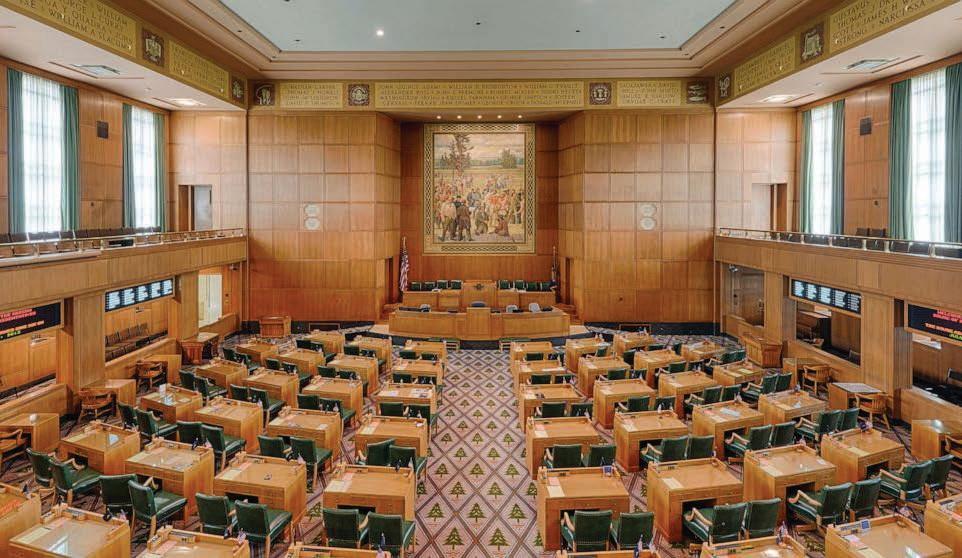
Lawmakers gathered at the Oregon State Capitol on Tuesday for a full slate of committee hearings, budget discussions and floor sessions, marking another active day in the 2026 regular session of the Oregon Legislative Assembly. According to the Legislature’s official calendar, activity stretched from early morning committee meetings to late-afternoon oversight hearings, reflecting the breadth of policy issues currently under consideration.
The day began with simultaneous committee meetings at 8 a.m., a common scheduling approach during peak legislative periods. The House Committee on Rules convened to address procedural matters, including bill referrals and potential adjustments to chamber operations. The Rules Committee often plays a pivotal role in shaping how legislation moves through the process, determining which measures are sent to specific policy committees and how certain parliamentary questions are resolved.
At the same hour, the Joint Subcommittee on Public Safety met to examine budget and policy issues affecting Oregon’s justice system. Joint subcommittees include members from both chambers and are typically tasked with reviewing agency budgets and program performance. Public safety discussions this session have centered on funding allocations, correctional system oversight, and community-based prevention strategies, areas that frequently draw attention from both state officials and local governments.
The Senate Committee on Early Childhood and Behavioral Health also convened in the morning. That committee has been reviewing proposals aimed at strengthening early learning systems and addressing ongoing behavioral health challenges across the state. Oregon continues to face workforce shortages in mental health services, as well as increasing demand for early intervention programs. Legislative proposals in this are-
na often involve coordination between state agencies, school districts and regional health providers.
Shortly thereafter, the Senate Committee on Education opened its hearing schedule. Education remains one of the Legislature’s largest budget categories and most closely watched policy areas. Committee members are reviewing bills tied to K-12 funding formulas, higher education affordability and accountability standards. In recent sessions, lawmakers have grappled with balancing state education investments against broader economic pressures, including inflation and revenue projections.
By late morning, both chambers moved into floor sessions. The Oregon House of Representatives and the Oregon Senate convened at 11 a.m. for debate and votes on measures that had advanced through committee. Floor sessions represent the most visible phase of the legislative process, where members publicly discuss bills, propose amendments and cast recorded votes. Measures approved in one chamber must pass the other before being sent to the governor for consideration.
The afternoon calendar continued with additional joint and standing committee hearings. A Joint Subcommittee on Education
reviewed budgetary considerations affecting schools and higher education institutions. Budget subcommittees are responsible for recommending funding levels for state agencies and programs before those recommendations move to the full Ways and Means Committee.
The Senate Committee on Natural Resources and Wildfire also met, addressing matters that remain critical to Oregon communities, particularly in rural and forested regions. Wildfire preparedness, forest management and water policy have become recurring themes in legislative debates following consecutive severe fire seasons and ongoing drought conditions. Lawmakers are examining funding for mitigation efforts, community resilience programs and interagency coordination.
Later in the day, the Joint Subcommittee on Transportation and Economic Development considered issues related to infrastructure investment and economic growth strategies. Transportation funding, including maintenance of state highways and support for local projects, has been a subject of continued discussion as Oregon weighs long-term revenue mechanisms. Economic development proposals often intersect with workforce training
initiatives and regional investment strategies.
Housing policy was also on the agenda as the Senate Committee on Housing and Development met to review proposals addressing affordability and supply constraints. Housing costs remain a central concern in many parts of the state, including both metropolitan areas and smaller communities. Legislative proposals this session include discussions about zoning flexibility, incentives for new construction and support for transitional housing programs.
The day concluded with a meeting of the Joint Committee on Legislative Audits. This oversight body reviews audits of state agencies to ensure compliance with financial standards and performance expectations. Audit findings can lead to recommendations for administrative reform or statutory changes, depending on the scope of identified issues.
The 2026 regular session, which began earlier this month, allows lawmakers to introduce and deliberate on a wide range of policy measures across fiscal, social and environmental domains. Committee hearings provide opportunities for testimony and detailed review, while floor sessions determine whether legislation advances through the final stages of the process.
As the session progresses, lawmakers face statutory deadlines that will narrow the field of viable proposals. Bills must move through committee within designated timeframes or risk being set aside. The coming weeks are expected to bring increased negotiation and consolidation as leaders in both chambers prioritize measures with sufficient support to pass.
Tuesday’s full schedule underscores the complexity and pace of Oregon’s legislative process. With policy debates unfolding simultaneously across committees and chambers, the work conducted inside hearing rooms and on the House and Senate floors will continue to shape state governance in the months ahead.
ure as well, traveling abroad to advocate for the release of political prisoners and to engage in unofficial diplomacy in conflict zones. Supporters saw these efforts as evidence of his global moral authority. Critics sometimes questioned the effectiveness or optics of such interventions, yet even detractors acknowledged his willingness to step into complex and politically sensitive situations.
In 2000, Jackson received the Presidential Medal of Freedom, the nation’s highest civilian honor, recognizing his decades of activism and leadership. The award symbolized his evolution from protest leader to institutional figure whose imprint on American civic life was undeniable.
In his later years, Jackson faced serious health challenges. He had previously been diagnosed with Parkinson’s disease and later
disclosed that he was living with progressive supranuclear palsy, a rare neurological disorder affecting movement and cognition. Despite declining health, he remained an influential voice, appearing at public events when possible and continuing to advocate for voting rights and social equity.
Following news of his death, tributes poured in from across the political spectrum. President Joe Biden recognized Jackson’s decades of advocacy and described his contributions to the nation’s moral and civic life.
President Donald Trump also acknowledged Jackson’s long public career and enduring presence in American discourse. Civil rights leaders, clergy, and elected officials reflected on his role as a bridge between the era of King and the political transformations that followed. Jackson’s legacy is complex and expan-
sive. He was a relentless advocate who understood the power of both confrontation and negotiation. He pressed corporations to diversify, encouraged marginalized communities to register and vote, and insisted that civil rights encompassed economic access as well as legal equality. His presidential campaigns expanded the electorate and demonstrated the viability of multiracial political coalitions long before such coalitions became central to national campaigns.
At the same time, Jackson’s career unfolded amid shifting political currents. The civil rights victories of the 1960s gave way to debates over affirmative action, urban policy, and economic restructuring. Through it all, he remained a visible presence, adapting his message while holding fast to core principles of dignity and opportunity.
Rev. Jesse Jackson’s death marks the passing of one of the last towering figures directly connected to the movement that transformed the United States in the mid-twentieth century. His life traced the arc of modern American civil rights history, from segregated lunch counters to presidential primary ballots. Whether speaking from a church pulpit, a convention stage, or a corporate headquarters, he sought to widen the circle of participation in American life.
As the nation reflects on his career, it does so with an understanding that many of the debates he engaged in remain unresolved. Questions of racial equity, economic fairness, and political representation continue to shape public discourse. Jackson’s enduring impact lies in his insistence that these issues belong at the center of the national conversation.
By Ellen Ward
As lawmakers in Florida weigh whether to rename a major transportation hub after President Donald J. Trump, a parallel move by the president’s family business has quietly introduced a legal dimension that extends well beyond signage at a terminal entrance.
The company that manages and protects the Trump brand has filed federal trademark applications seeking rights to variations of the name Donald J. Trump International Airport and similar titles. The filings were submitted by DTTM Operations LLC, the entity responsible for overseeing intellectual property tied to the Trump name. The applications were made on what is known as an intent to use basis, a standard procedure that allows a business to reserve rights to a name before it is actively used in commerce, provided it can later demonstrate actual use.
The timing of the filings coincides with a bill moving through the Florida Legislature that would authorize renaming Palm Beach International Airport in honor of the president. That airport serves the region near Trump’s Mar a Lago residence and is a key commercial gateway for South Florida. The proposal remains subject to additional approvals, including coordination with federal aviation authorities and local government entities that manage the airport.
According to multiple national news outlets, the trademark applications extend beyond the physical naming of an airport. They cover a range of goods and services often associated with air travel, including merchandise and branded items that could be

sold in airport settings. Legal analysts note that while it is common for private companies to secure trademarks for hotels, golf courses, and other commercial properties, it is far less typical for a private entity to file for trademark protection tied to a publicly owned airport before any official renaming has occurred.
Under United States trademark law, ownership of a name used in commerce can provide the holder with exclusive rights to control its commercial use in specific categories. Public infrastructure such as airports is typically owned and operated by governmental authorities, and their names are usually established through legislative or administrative action rather than through private trademark claims. If a public airport were to adopt a name protected by a private trademark, questions could arise about licensing agreements, control over branded
merchandise, and the scope of commercial rights connected to that name.
Representatives of the Trump Organization have indicated in various reports that no licensing fee would be charged if the Florida airport were renamed after the president. However, trademark protection could allow the company to control how the name is used in connection with goods and services, including souvenirs and related branding opportunities. Intellectual property attorneys interviewed by national media outlets described the filings as unusual in the context of public facilities, noting that similar preemptive trademark claims have not historically accompanied the naming of airports after public figures.
The broader debate surrounding the proposed renaming touches on political symbolism as well as practical considerations. Supporters of the bill argue that naming the

airport after the president would recognize his connection to the state and his national prominence. Critics question the appropriateness of renaming a major public facility after a sitting president and raise concerns about potential commercial entanglements between public infrastructure and private business interests.
Airport renaming efforts can involve significant logistical and financial steps, including changes to signage, branding materials, digital systems, and regulatory documentation. Federal agencies such as the Federal Aviation Administration must be notified of name changes to ensure consistency in aviation databases and navigation systems. Local governments typically bear the responsibility for implementation costs unless alternative arrangements are made.
For now, the trademark applications remain pending review by the United States Patent and Trademark Office, and the Florida bill continues through the legislative process. Whether Palm Beach International Airport ultimately adopts a new name remains uncertain. What is clear is that the intersection of public commemoration, private branding, and intellectual property law has introduced a new layer to a debate that might otherwise have centered solely on politics and public sentiment.
In an era when personal brands and public offices often intersect, the question is no longer simply who an airport should be named after. It is also who controls the commercial value of that name once it appears above the runway.















By Ellen Ward
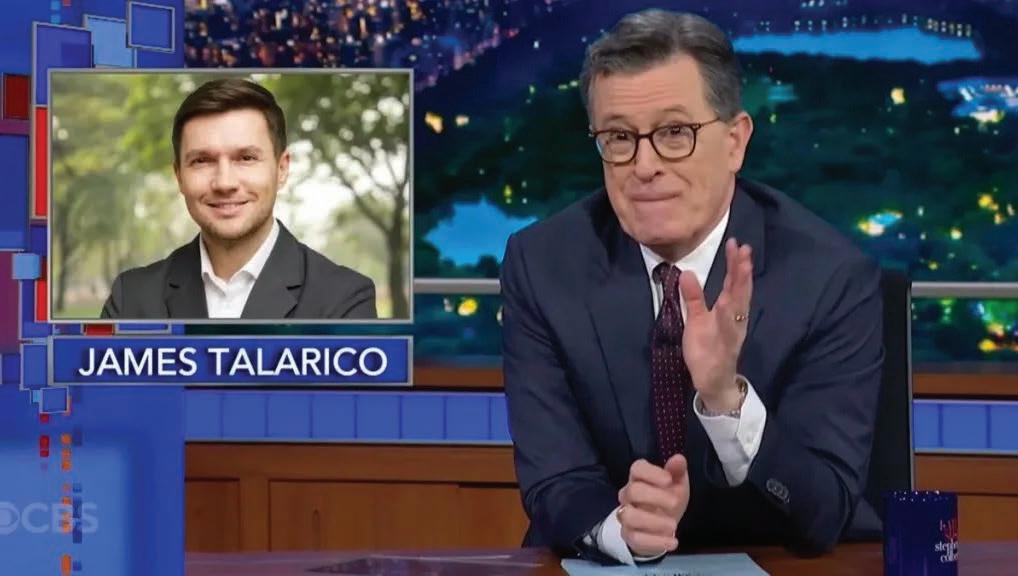
A decision to remove a political interview from a nationally televised late-night program has ignited discussion about federal broadcast regulations, editorial discretion, and the evolving boundaries between entertainment and political coverage. The controversy centers on The Late Show with Stephen Colbert and a planned interview with Texas state representative and U.S. Senate candidate James Talarico that did not air as originally scheduled.
According to statements made during the program, host Stephen Colbert said the interview with Talarico was recorded but pulled from the Monday night broadcast following internal legal review by CBS. The concern, Colbert indicated, was that airing the interview could potentially trigger equal-time obligations under federal communications law, particularly in light of recent guidance issued by the Federal Communications Commission under Chairman Brendan Carr.
The equal-time rule, established under Section 315 of the Communications Act of 1934, requires broadcast stations that give airtime to one legally qualified political candidate to offer comparable opportunities to opposing candidates. Historically, the rule has included exemptions for bona fide news programming, including regularly scheduled news interviews, documentaries, and on-thespot news events. For decades, late-night talk shows that featured candidates in interview settings have generally fallen within the news interview exemption, allowing networks to air such segments without extending equal airtime to every opponent in a race.
Recent commentary from FCC leadership, however, has signaled a closer review of how that exemption is applied. Chairman Carr has publicly suggested that some entertainment-based programs may not automatically qualify for the news exemption if their content is viewed as overtly partisan. While no formal rule change rescinding the exemption for talk shows has been finalized, the public discussion appears to have prompted caution within broadcast networks.
CBS reportedly made the decision to withhold the segment from its over-the-air broadcast after consulting legal counsel. The interview was not discarded entirely. Instead, it was made available online through The Late Show’s digital platforms, including YouTube, where equal-time rules governing broadcast licenses do not apply in the same way as they do to terrestrial television stations. Cable and streaming platforms operate under different regulatory frameworks and are not bound by the same statutory equal-time provisions.
The situation unfolds during an active election cycle in Texas, where Talarico is seeking a U.S. Senate seat. The timing heightened sensitivity around compliance. If a broadcast network were found to have provided airtime to one candidate outside of a qualifying exemption, it could theoretically face complaints from opposing campaigns seeking comparable airtime. While such disputes are
not uncommon during campaign seasons, the prospect of regulatory scrutiny can influence programming decisions before any formal complaint is filed.
Colbert addressed the removal on-air, describing the internal decision and the legal reasoning behind it. His remarks brought broader public attention to the intersection of entertainment programming and campaign law. The episode also prompted discussion across political and media circles about whether reinterpretations of existing FCC guidance could reshape how candidates appear on traditional broadcast television during election years.
The broader context includes heightened debate over media regulation and political speech. The FCC, as an independent federal agency, oversees broadcast licensing and enforces rules designed to ensure fairness in the use of publicly owned airwaves. The equal-time provision has long been viewed as a safeguard to prevent broadcasters from favoring one candidate over another. At the same time, critics of expansive interpretations argue that overly cautious enforcement could discourage legitimate journalistic interviews or limit the ability of programs to engage with political figures.
This incident underscores a distinction that has become increasingly relevant in modern media. Broadcast networks that transmit over public airwaves remain subject to federal oversight in ways that digital-first platforms do not. As audiences fragment across cable, streaming, and social media, regulatory frameworks written nearly a century ago continue to shape decision-making within legacy television outlets.
For CBS, the choice appears rooted in risk management rather than a directive from regulators. There is no indication that the FCC issued a formal order regarding the specific segment. Instead, the network’s legal team
appears to have acted preemptively based on public regulatory guidance and the active status of the Texas Senate race.
Whether this episode marks an isolated instance of caution or signals a broader shift in how broadcast networks approach candidate interviews remains to be seen. What is clear is that longstanding rules governing
political access to public airwaves continue to carry weight, even as media consumption habits evolve. As election season intensifies, similar questions about equal access, editorial discretion, and regulatory interpretation are likely to surface again, placing broadcast outlets at the center of a complex balance between compliance and conversation.



Advertise with The Grants Pass Tribune!
Show
By: Jay Meredith, CPA Investigative Journalist
For more than three years, Josephine County has been gripped by a cycle of allegations, resignations, lawsuits and political upheaval that continues to divide public opinion. At the center of some of the controversies are repeated claims that accusations of sexual harassment and misconduct have been used strategically in high-stakes political and personal disputes.
Grants Pass Tribune publisher John Oliver Riccio traces the beginning of what he describes as a recurring political “playbook” back to January 2022. According to Riccio, on January 12 of that year an eviction notice was served to Kristina Marie Stickler, Riccio’s previous “significant other” who was living in his house after they just broke up. The following day, sheriff’s deputies arrived at the residence to serve a restraining order against Riccio that included serious felony allegations, including sexual misconduct and abuse.
Riccio maintains the accusations were false and that he was immediately removed from his own home. He states that he went directly to the courts and secured a hearing within 14 days. During the two weeks between his removal and the court hearing, Riccio alleges that his property was taken or discarded, including the title to a 1967 classic car, more than $4,000 in cash from a biometric safe accessible only to two individuals, and numerous personal belongings that he says were thrown over a fence.
When the hearing occurred, Riccio states he had retained legal counsel. According to his account, the presiding judge dismissed the case within approximately ten minutes, citing a lack of evidence and testimony insufficient to support the allegations. No criminal conviction resulted from the accusations.
Riccio further alleges that former County Commissioner Simon Hare was socially involved with Kristina Stickler at the time, a connection he believes was relevant to the broader political tensions that followed. No court has made a finding that Hare participated in criminal wrongdoing in connection with that dispute.
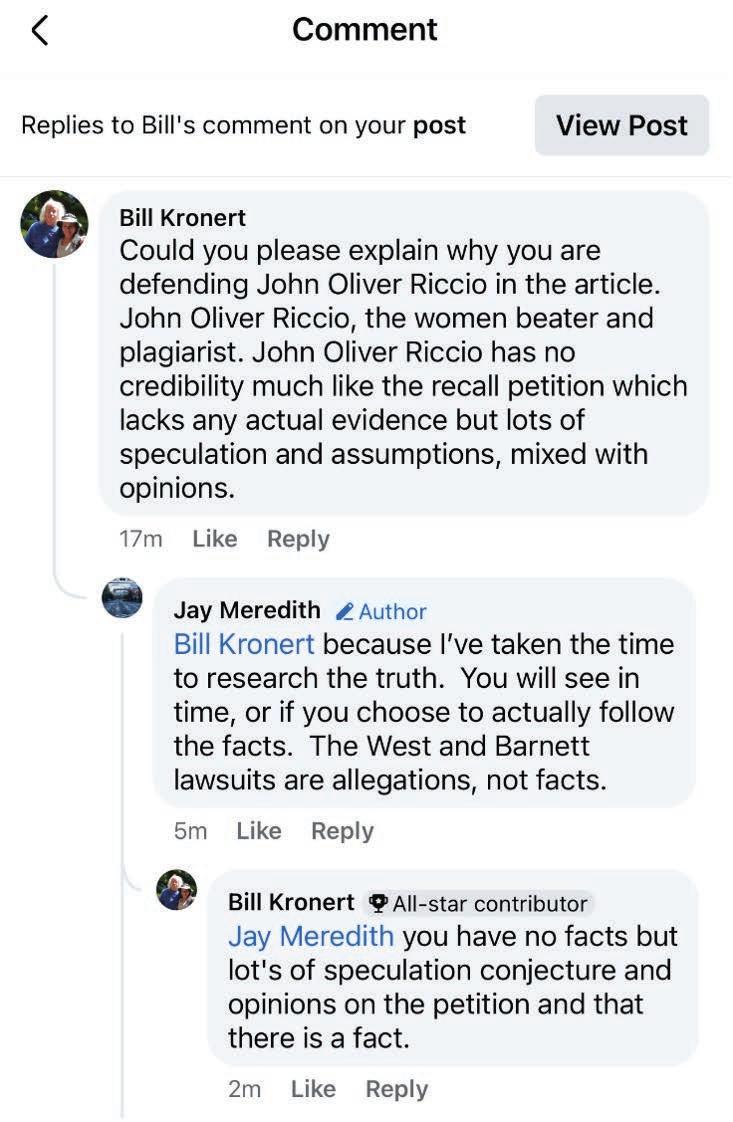
In the years since, several additional controversies have unfolded involving county officials and claims of sexual harassment. And political allies of former Commissioners John West and Chris Barnett referenced the 2022 incident several times in the years that followed as they were trying to discredit John Oliver Riccio, seemingly without knowing the charge against Riccio was dismissed. Attached here is a screenshot of Bill Kronert’s comments on Facebook, who worked to support John West during his recall campaign, calling John Oliver Riccio a “women beater” in December 2024.
And as recently reported, disclosures in the December 24, 2025 court filing by John Oliver Riccio revealed that former Commissioner
Chris Barnett was facing a criminal investigation in what was titled a “Pattern of Coercion and Harassment.” A sworn affidavit by someone that used to temporarily live with John Oliver Riccio stated that in May of 2025 Chris Barnett allegedly bribed her to make false sexual abuse allegations against John Oliver Riccio and in return Barnett promised many financial gifts and even a job for this person to work for Josephine County.
More specifically, the sworn affidavit states “Coercion and Intended PurposeIn exchange for the offers described above, Commissioner Barnett attempted to:
• Pressure me into making defamatory statements about John Oliver Riccio
• Persuade me to claim that John had been physically or sexually abusive
• Provide statements or documentation that could be used to damage John’s reputation”
The sworn affidavit also mentions that Kristina Stickler (alleged “significant other” of former Commissioner Simon Hare at present) and her friend Ron Lee sent text messages to and had meetings with the person who authored the affidavit claiming that John Oliver Riccio was a violent stalker, dangerous, and intended to harm her and her daughter. Both her and her daughter briefly lived with Riccio previously and so they knew this was
not true.
In May 2025, Riccio says additional allegations were brought against him by individuals he connects to former Commissioner Chris Barnett. Court records show that efforts to obtain a restraining order in that instance were not ultimately sustained. Riccio characterizes the attempt as part of the same pattern he first experienced in 2022.
In July 2024, then Commissioner Dan DeYoung resigned following a complaint from Finance Director Sandy Novak stemming from an incident during a public televised meeting. Several County employees and former County employees have alleged that Novak was very politically loyal to former Commissioner John West. And had you watched BCC meetings in 2023 and 2024, you know that West and DeYoung rarely saw eye to eye on anything controversial or politically heated.
Then in early 2025, Commissioner Ron Smith faced a similar sexual harassment complaint filed by Novak involving an interaction in his office. Smith has denied wrongdoing. This was right around the same time that Novak accepted a buyout and resigned from her county employment. Then a year later in February 2026, Novak filed a $1 million defamation lawsuit against Smith and Josephine County for recent public comments about that incident, further intensifying polit-
ical tensions. This newest lawsuit came just about a month after recalled Commissioner John West was on the Bill Meyer radio show “guaranteeing” that Ron Smith would be out of office by the end of 2026 (Ron Smith’s current term goes through 2028).
And then last week on Friday, February 13th, political ally of West, former Commissioner Herman Baertschiger, stated the following on the Bill Meyer radio show:
“Ron Smith’s darkest days are ahead of him, not behind him, trust me…there are a few more shoes that are going to drop. We’ve just seen in the Courier the sexual harassment lawsuit filed…I think some other things will be coming over the next month or so.”
Riccio asserts that these repeated disputes reflect a coordinated strategy in which sexual harassment allegations are used to pressure, intimidate or remove political opponents. He points to overlapping relationships and the fact that multiple individuals involved in separate disputes have retained the same attorney, Steven Joncus, as circumstantial evidence of coordination. The attorney has not been found to have engaged in misconduct and represents clients as permitted under law.
It is important to distinguish between allegation and adjudication. Sexual harassment complaints are serious matters that must be investigated carefully and fairly. Those who bring such claims are entitled to have them evaluated without intimidation. At the same time, individuals accused of misconduct are entitled to due process and the presumption of innocence.
What fuels ongoing public debate in Josephine County is not only the existence of individual complaints, but the recurring appearance of the same political figures across multiple disputes. Some residents see coincidence. Others perceive a deeper pattern of factional maneuvering.
Riccio has publicly alleged that former commissioner Chris Barnett is under Department of Justice investigation related to coercion and related to the above allegations, though no charges have been made at this time. The only related sexual harassment or abuse related allegation discussed here that has been fully adjudicated is the 2022 issue where Riccio claims the judge threw out the case after just 10 minutes in the courtroom for lack of any evidence of wrongdoing.
For voters, the broader issue is governance. Josephine County has endured recalls, resignations, lawsuits and administrative instability in rapid succession. Whether these events represent independent conflicts or a coordinated political strategy remains a matter for courts, investigators and ultimately the electorate to determine.
As campaigns approach and litigation continues, residents are left to weigh the evidence, examine court records and decide whom they trust to lead. In a political climate
Continued on page 10 >>>
By John Oliver
Let me begin with complete transparency. This is not a paid endorsement. I am not an influencer. No company has asked me to write this, and no one is compensating me for sharing these thoughts. In fact, the manufacturer of the product I am about to discuss may not even agree with how I am presenting it. This is simply a personal account from someone who believes that when you find something that genuinely works for you, whether for health, performance, or even vanity, it is worth sharing.
The product is Celsius Heat, a high-caffeine sports energy drink that has been on the market since 2019.
For context, I am 54 years old and have been working out consistently since I was 16. Fitness has never been a phase for me. It has been a lifelong discipline. Over the years, my weight has fluctuated, at one point reaching 185 pounds. For someone of shorter stature, that weight was not ideal and certainly did not feel healthy. Like many people searching for effective tools, I experimented with a range of products. I used ephedra when it was legal decades ago. I tried Hydroxycut and other popular supplements, including brands such as Ghost. Some worked temporarily. Others did not work at all.
About six years ago, Celsius Heat became part of my routine. At the time, the company also offered Celsius Heat powder sticks, which I used regularly, though they are no longer readily available in Oregon. The canned version, however, remained accessible and eventually became a daily staple.
I am not a physician, nutritionist, or medical professional. I can only speak from lived experience. For me, consuming one Celsius Heat per day has coincided with sustained weight loss and maintenance. It provides a noticeable energy boost that carries me through workouts

and long days. More than that, it creates a consistent feeling of metabolic momentum, as though my body continues working efficiently even outside the gym. When I have taken breaks from it, sometimes for two weeks at a time to test whether the effect was psychological, I have consistently noticed changes in energy levels and body composition. Each time, returning to the product brought back the results I value: a leaner midsection, steady energy, and a sense of physical sharpness.
That said, this is not a universal recommendation. Celsius Heat contains a high level of caffeine, 300 milligrams. For some individuals, that can trigger jitters, elevated heart rate, anxiety, or sleep dis-
ruption. Energy drinks in general remain a subject of debate within the health community, particularly when consumed daily. Moderation is essential. Overuse of stimulants can carry risks.
I have also experienced kidney stones at times, and while I cannot definitively attribute them to any one factor, hydration and stimulant intake are always considerations worth evaluating. Risk versus reward is a personal calculation. For me, the overall benefits, combined with disciplined hydration and an otherwise clean lifestyle, have made it worthwhile.
It is important to emphasize that I do not drink alcohol, I do not use recreational drugs, and I train six to seven days per week. No supplement replaces consistent
exercise, balanced nutrition, and healthy habits. An energy drink alone will not create fitness. It can, however, serve as a tool within a broader lifestyle framework.
Ultimately, this is not about promoting a brand. It is about sharing what has worked for one person committed to staying fit well into his fifties. Feeling lean, energetic, and capable matters, whether the motivation is health, confidence, or both. If something helps you feel your best and you approach it responsibly, that is worth acknowledging.
For me, Celsius Heat has been that product. It may not be right for everyone. But in my own experience, it has been a consistent and effective part of maintaining the best shape of my life.
marked by repeated allegations and legal battles, transparency and documented fact will carry more weight than rhetoric.
In my opinion, we are well past the point of coincidence and there’s a clear pattern that ties back to John West and to a lesser extent Simon Hare, who are longtime political allies. A little over 10 years ago, West ended up having a mining application essentially fast tracked while Simon Hare was Commissioner. Hare and others who were
in charge of the planning application let too much time go by and West as the applicant was approved just because too much time went by without the proper actions on his application. West then hired Hare to do some contract work for the County when he became Commissioner several years later. Perhaps the older planning issue was a coincidence, but in my opinion there is a clear pattern behind all the related issues from 2022 to the present.
West and Barnett didn’t like the truth telling that was being done by the new Grants Pass Tribune after the Tribune launched in early 2024. “Coincidentally” they dug up past court allegations by Riccio’s previous girlfriend, now Simon Hare’s girlfriend, and seemed to have failed to mention that those allegations were quickly thrown out by the court. West has filed court cases against several people who helped lead his recall campaign, and now Commissioner Ron
Smith has become a political enemy of recalled Commissioners John West and Chris Barnett and now faces a lawsuit of his own. Every one of these lawsuits was brought by John West’s attorney, Steven Joncus. There is a clear pattern, indeed, one that in my opinion should concern all voters in Josephine County given that both John West and Simon Hare are running for Commissioner again in 2026.
By John Oliver
Audiences in Grants Pass will soon have the opportunity to step into a sweeping story of history, mystery, and self-discovery as One Eleven Theatre Company presents Anastasia the Musical at the Grants Pass High School Performing Arts Center from March 26 through April 4, 2026.
Inspired by the 1997 animated motion picture and reimagined for the stage in 2016, Anastasia brings to life the enduring legend of the lost Romanov princess. The story follows Anya, a young woman struggling with fragmented memories after her family is executed during the Russian Revolution. As she searches for answers about her past, she becomes entangled with Dmitry, a charismatic con artist who sees in her the opportunity for a daring scheme. His plan is simple in concept but monumental in risk: present Anya as the long-lost Grand Duchess Anastasia to the Dowager Empress in Paris in hopes of claiming a reward.
Complicating the journey is Gleb, a determined Soviet official who pursues Anya from Russia to France, intent on completing the task his father once began. The musical balances intrigue and romance with questions of identity and destiny, asking whether Anya will uncover the truth of who she is and whether deception can survive in the face of genuine connection.
The stage adaptation features 16 new songs by the original creative team of Stephen Flaherty and Lynn Ahrens, while retaining several beloved numbers from the film, including Journey to the Past, Paris Holds the Key, A Rumor in St. Petersburg, and Once Upon A December. These musical elements provide both emotional depth and energetic spectacle throughout the production.
Directed and choreographed by Erica Bury, with music direction by Kristin Ryerson and produced by Tianna Eddy, the Grants Pass production emphasizes visual richness and dynamic performance. Audiences can expect opulent scenery that transitions from the grandeur of the Romanov Palace to the vibrant atmosphere of a Parisian speakeasy. The show features elaborate costumes, layered vocal harmonies, and high-energy dance sequences, including an excerpt from Swan Lake performed during a ballet scene in which Anya hopes to reconnect with her grandmother.
The production brings together more than 40 local actors, singers, and dancers of all ages, supported by a live on-stage orchestra conducted by Ron Strom. Behind the scenes, a team of experienced designers contributes to the immersive experience. Set design is led by father-daughter duo John and Alexa Sleadd. Costume design is overseen by Brandon McCowan, lighting design by Connor Pylant, sound design by Stephanie Bruhn, and prop design

by
Emily Ward. Rachel Kostrna serves as stage manager.
Performances are scheduled for March 26 at 7:00 p.m.; March 27 at 7:00 p.m.; March 28 at 2:00 p.m.; March 29 at 2:00 p.m.; April 2 at 7:00 p.m.; April 3 at 7:00 p.m.; and April 4 at 2:00 p.m. and 7:00 p.m. All performances will take place at the Grants Pass High School Performing Arts Center, located at 313 NE Olive Street in Grants Pass. General admission ticket prices are $18 for adults, $16 for seniors, and $12 for students 18 and under. Tickets are available online at www.OneElevenTheatreCompany.com and will also be sold at the door one hour prior to each performance.
In addition to the mainstage production, the company will host a special “Passport to Paris” Anastasia Tea on March 21 from 11:00 a.m. to 1:00 p.m. at the GPHS Commons. The family-friendly event includes a themed luncheon, Storytime with Anastasia, face painting, crafts, photographs, and a preview performance from the musical. Tickets for the tea are $25 for children and $18 for adults, with limited seating available.
With its blend of historical legend, theatrical spectacle, and community talent, Anastasia promises to be a highlight of the local arts season.
5 DAY OUTLOOK
SOURCE: WEATHER.COM WEDNESDAY





By Gabriella Connor
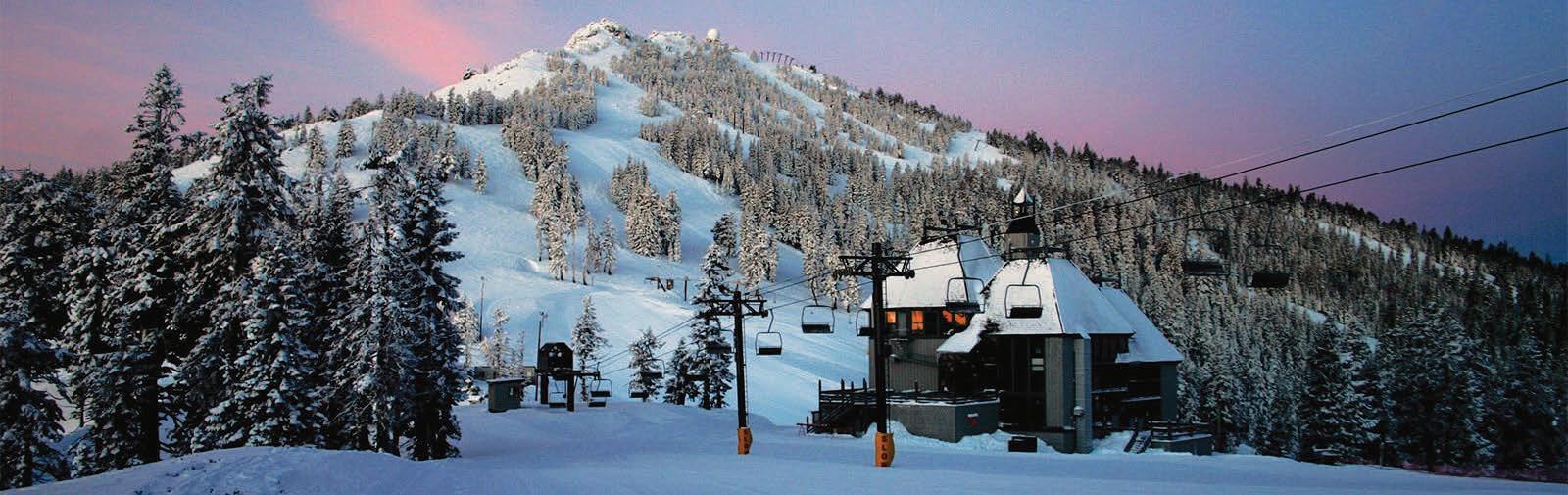
After a stretch of variable winter weather in Southern Oregon, Mt. Ashland Ski Area is set to reopen Thursday, February 19, 2026, with limited terrain and a phased return of mountain operations. Resort officials confirmed that a selection of chairlifts and beginner facilities will resume service as crews continue to monitor incoming weather systems and evaluate additional terrain for opening.
Beginning Thursday morning, the Sonnet, Lithia, and Comer chairlifts, along with the First Act Learning Carpet, will operate daily from 9:00 a.m. to 9:00 p.m. The reopening marks a measured step forward for the community ski area, which relies heavily on natural snowfall and has faced inconsistent storm patterns this season. Resort management indicated that additional terrain tied to the Windsor and Ariel chairlifts will remain closed pending further snowfall and safety assessments. A new storm system is expected
to influence decisions in the coming days, with an updated mountain report scheduled for release at 7:00 a.m. on reopening day.
Lift ticket options reflect the scaled-back terrain while still offering a range of price points for visitors. The Sonnet lift ticket is available for eighteen dollars, while Lower Lift weekday tickets are priced at thirty dollars. Twilight tickets, which provide access during extended afternoon and evening hours, are available for twenty-nine dollars. All tickets are being sold through the resort’s website as part of ongoing efforts to streamline access and manage on-mountain capacity.
Twilight skiing and riding will officially resume Thursday from 3:00 p.m. to 9:00 p.m., utilizing the same operating lifts open during the day. Twilight sessions have become a popular option for local residents seeking after-work access to the slopes, particularly during seasons when daylight hours are limited and snow windows can be unpredictable.
Mountain operations teams are also working toward constructing a smaller terrain park build on the Lupine run. While it will not reflect the full-scale park features typically available during peak winter months, the scaled-down setup is intended to provide freestyle opportunities for riders eager to return to park conditions.
Core guest services will largely be in place for reopening day. Private ski and snowboard lessons will be available, along with equipment rentals. The Siskiyou Mountain retail shop will reopen to provide apparel and gear, while on-site dining options will include the T-Bar Lounge and the Gemütlichkeit Grill. The Bold Line Bistro will remain closed during the initial reopening phase, and group lessons are scheduled to resume Saturday, February 21, as staffing and terrain availability expand.
Some facilities will stay offline until additional portions of the mountain are operation-
al. The Locker Lodge and locker services will remain closed for now, with reopening tied to broader terrain access later in the season.
For Southern Oregon’s winter sports community, the reopening represents both a return to routine and a reminder of the region’s reliance on natural snowfall. Unlike larger destination resorts with extensive snowmaking infrastructure, Mt. Ashland’s operations are closely linked to real-time weather developments. Resort officials emphasize that conditions may shift quickly depending on incoming storms and temperature fluctuations.
As crews continue preparing the slopes and monitoring forecasts, skiers and snowboarders are encouraged to review the latest mountain updates before heading up. With limited terrain but extended hours and core services restored, Thursday’s reopening signals a cautious yet welcome return to winter recreation on the Siskiyou summit.