WEDNESDAY, FEBRUARY 11, 2026
WEDNESDAY, FEBRUARY 11, 2026
By John Oliver
The rising price tag of wildfire seasons, washed-out roads, smoke-choked summers and emergency response budgets has become a defining feature of Oregon’s modern climate reality. Now, a Southern Oregon lawmaker wants to change who pays for it.
State Sen. Jeff Golden of Ashland has introduced legislation that would require major fossil fuel companies to contribute to a state-managed fund intended to offset the growing public cost of climate-related disasters. The proposal, Senate Bill 1541, lays out a framework for calculating Oregon’s climate damages and seeking financial recovery from corporations whose historic greenhouse gas emissions exceed a defined threshold.
At its core, the bill directs state agencies to quantify the economic burden climate change has imposed on Oregon. That includes wildfire suppression and recovery, flood control, infrastructure repairs, public health impacts and long-term resilience planning. The Department of Land Conservation and Development would coordinate the analysis, working alongside other agencies to establish a formal cost assessment. Once that determination is made, the Department of Environmental Quality would issue demand notices to companies meeting the bill’s emissions criteria.
The threshold written into the legislation focuses on large-scale producers responsible for more than one billion metric tons of greenhouse gas emissions during a covered period

stretching from 1995 through late 2024. The intent is to target multinational oil and gas corporations rather than smaller regional businesses or consumers.
Money recovered under the proposal would be deposited into a dedicated Climate Superfund account. The bill outlines how those funds could be distributed, including a portion directed to wildfire mitigation and response efforts through the State Fire Marshal’s office. Additional funding would support resilience projects and infrastructure improvements, with emphasis on communities identified as particularly vulnerable to environmental and climate-related impacts.
Supporters argue that Oregon taxpayers are already paying the bill for climate damage through rising insurance premiums, emergency spending and infrastructure costs. They view the legislation as a mechanism to shift some of that financial responsibility to companies whose products contributed significantly to global emissions. In their view, the approach parallels long-standing environmental cleanup policies that hold polluters financially accountable for remediation.
Opposition voices, including business associations and industry representatives, see the proposal differently. Critics question whether the state can impose financial lia-
bility tied to decades of lawful activity. They also warn that corporations subject to assessments may pass costs down the supply chain, potentially affecting fuel prices and transportation expenses. Legal challenges are widely anticipated if the measure advances.
The debate unfolding in Salem reflects a broader national movement. Several states have explored similar climate cost-recovery models, with varying degrees of legislative success and courtroom resistance. The concept borrows from the structure of environmental superfund laws but applies it to greenhouse gas emissions and climate impacts rather than toxic waste sites.
In Oregon, the proposal arrives against the backdrop of repeated wildfire emergencies that have strained local budgets, particularly in Southern Oregon. Jackson and Josephine counties have endured evacuation orders, smoke events and property damage in recent years. Statewide, suppression costs have climbed into the hundreds of millions during severe fire seasons. Insurance markets have tightened, and some homeowners face non-renewals or steep premium increases in high-risk areas.
Senate Bill 1541 has been assigned to the Senate Committee on Natural Resources and Wildfire and is expected to face extensive scrutiny before any floor vote. If it advances, the legislation would also require review by
• see CLIMATE, page 3
By Ellen Ward
Federal authorities have released surveillance images of a masked individual seen outside the Arizona home of 84-year-old Nancy Guthrie, marking a significant development in the ongoing disappearance that has drawn national attention. The images were made public by the Federal Bureau of Investigation as investigators continue efforts to determine what happened in the early morning hours of January 31, when Guthrie vanished from her residence in the Catalina Foothills area north of Tucson.
Nancy Guthrie is the mother of Savannah Guthrie, co-anchor of NBC’s Today. While her daughter’s public profile has brought heightened media scrutiny, law enforcement officials have emphasized that the case is being handled as a serious missing persons and potential criminal investigation, independent of media attention.
According to authorities, security footage captured an individual wearing a mask, gloves, and a backpack approaching Nancy Guthrie’s home shortly before her disappear-

ance. The person appears to have tampered with or disabled the home’s doorbell camera system. Investigators believe the individual may have been armed, although specific details about the weapon have not been publicly confirmed. The footage, recovered through backend data after the camera was
disrupted, shows the individual lingering on the porch and near the front entrance before moving out of frame.
The Pima County Sheriff's Office is working in coordination with federal agents in what has become a multi-agency investigation. Authorities have not formally identified
the masked individual as a suspect but have described the person as someone they urgently want to identify and question. No arrests have been made, and no suspects have been publicly named.
Nancy Guthrie was last seen at her home in Catalina Foothills. Family members reported her missing after she failed to attend church services and could not be reached. Investigators have stated that personal belongings, including her phone and medications, were left behind inside the residence. The presence of those items has contributed to law enforcement’s belief that she did not leave voluntarily.
• see SEARCH, page 3

By John Oliver
A long-simmering legal battle over salmon recov ery in the Columbia River Basin has returned to federal court, placing Oregon, Washington, and several Native American tribes once again at the center of a dispute that blends environmental law, treaty rights, hydropower operations, and the future of the Pacific Northwest’s energy system.
The renewed litigation follows the feder al government’s withdrawal from a sweeping agreement that had temporarily eased tensions in one of the nation’s most complex environ mental conflicts. That agreement, negotiated in 2023 and commonly referred to as the Resilient Columbia Basin Agreement, outlined a collab orative framework among federal agencies, the two states, and tribal governments aimed at re storing endangered salmon and steelhead runs while maintaining reliable energy production from the region’s dam system.
Under that framework, the federal govern ment had committed long-term funding for hab itat restoration, fish passage improvements, and clean energy development in tribal communities. In exchange, certain parties agreed to pause active litigation challenging federal dam operations while agencies evaluated structural and operational changes to the Columbia and Snake River hydropower system.

support irrigation, enable barge transportation, and provide flood control. At the same time, they have long been linked to declining salmon populations, particularly in the Snake River system, where multiple runs are listed under federal endangered species protections.
voir levels and flow patterns to speed migration. Supporters argue that such measures are scientifically grounded and urgently needed to prevent further declines in already fragile fish populations.
beyond ecological policy. Salmon are central to cultural identity, subsistence practices, and treaty-protected fishing rights. Treaties signed in the 19th century guarantee tribes the right to fish at usual and accustomed places, and courts have repeatedly affirmed that those rights carry with them an expectation that fish populations will be preserved at sustainable levels. Tribal leaders have argued that declining salmon runs represent not only an environmental crisis but a failure to uphold federal trust and treaty obligations.
Oregon and Washington officials have framed their return to court as an effort to secure enforceable protections for fish while seeking a durable regional solution. Both states continue to balance environmental commitments with economic considerations, including the need for affordable electricity and stable agricultural production.
When the federal government withdrew from the agreement in mid-2025, that pause effectively ended. Oregon, Washington, and tribal governments subsequently returned to federal court in Portland, asking a judge to resume proceedings related to the operation of federal dams and compliance with the Endangered Species Act. The case focuses on whether current river management practices sufficiently protect threatened and endangered salmon and steelhead species that migrate through the Columbia Basin.
For decades, courts have reviewed a series of federal biological opinions outlining how dam operations would avoid jeopardizing fish survival. Several of those plans have been invalidated by federal judges, who found them inadequate under environmental law. The recent agreement was viewed by some as an opportunity to move beyond litigation and toward a negotiated long-term solution. Its collapse has returned the matter to a more adversarial posture.
In the current phase of litigation, plaintiffs are seeking interim operational changes designed to
Federal officials have raised concerns about the reliability and cost implications of altering dam operations. Hydropower from the Columbia River Basin supplies a substantial portion of the Northwest’s electricity, particularly during periods of high demand. Changes to water storage and spill levels could affect power generation, potentially increasing reliance on alternative energy sources or impacting wholesale electricity rates. The river system also supports agricultural irrigation and commercial navigation, and adjustments to flows can influence those sectors as well.
For tribal governments, the stakes extend
Forensic evidence collected at the scene includes blood found near the front entryway, which authorities have confirmed matches Nancy Guthrie’s DNA. Officials have not disclosed the extent of the blood evidence but have acknowledged that its discovery elevated concerns about foul play. Detectives have conducted extensive neighborhood canvassing, reviewed additional surveillance footage from nearby properties, and analyzed digital and telecommunications data in an effort to trace movements connected to the residence during the critical time window.
Reports have also surfaced regarding ransom communications demanding payment in cryptocurrency. Law enforcement has indicated that they are evaluating those communications but have not verified their authenticity. Authorities have not confirmed any di-
rect contact with an alleged abductor, nor have they publicly characterized the disappearance as a confirmed kidnapping. Investigators continue to assess whether the ransom messages are credible leads or opportunistic attempts to exploit the situation.
The family has maintained that they believe Nancy Guthrie is still alive and have encouraged anyone with information to come forward. A monetary reward has been offered for credible information leading to her recovery. Law enforcement officials have reiterated that even seemingly minor details could prove essential to advancing the case. The release of the masked individual’s image represents a strategic step intended to generate public assistance.
In cases where investigative avenues narrow, public tips often play a critical role in identifying persons captured on surveillance. Authorities are asking res-
idents in the area to review personal security footage from late January and report any unusual activity.
As the investigation moves beyond its first week, the case remains active and evolving. The combination of forensic findings, technological evidence, and now publicly released images suggests that investigators are pursuing multiple investigative paths simultaneously. While the circumstances surrounding Nancy Guthrie’s disappearance remain unclear, the case has entered a phase in which public awareness may significantly influence its outcome.
Law enforcement agencies continue to emphasize that time is a critical factor. The search for answers remains ongoing, with federal and local authorities working around the clock to determine who the masked individual is and whether that person holds the key to locating Nancy Guthrie.
The federal judge overseeing the case is now tasked with determining whether interim changes to dam operations are warranted while the broader legal questions proceed. The outcome could shape river management policies for years to come and influence future discussions about structural changes to certain dams, an issue that has remained politically sensitive across the region.
For Oregonians, the continued court battle underscores the interconnected nature of the Columbia River system. Decisions made in federal courtrooms reverberate through rural farming communities, urban electric grids, tribal fisheries, and coastal ecosystems where salmon ultimately return to spawn. As litigation moves forward, the region once again faces the challenge of reconciling environmental recovery with economic stability in one of the Northwest’s defining public policy debates.
From page 1
the Joint Committee on Ways and Means due to its fiscal implications. Analysts have flagged potential administrative costs associated with implementing the program and conducting emissions assessments.
The proposal does not immediately impose fees. Instead, it establishes a process for determining responsibility and calculating financial recovery based on emissions history and state-defined climate damages. The complexity of that process, including how damages are measured and attributed, will likely be central to both legislative negotiations and any subsequent legal battles.
As lawmakers move through the short session calendar, the measure stands as one of the most consequential environmental policy discussions of the year. Beyond partisan lines, it forces a larger policy question into focus: when climate disasters generate mounting public costs, should the burden remain with taxpayers, or should major fossil fuel producers contribute to the bill?

By Ellen Ward
A pivotal decision by the board of Oregon Health & Science University has placed the future of one of Oregon’s most scrutinized research facilities under renewed examination. In a unanimous vote this week, the university’s governing board authorized leadership to begin formal discussions with the National Institutes of Health about potentially transitioning the Oregon National Primate Research Center away from biomedical experimentation and toward becoming a sanctuary for its thousands of monkeys.
The vote does not immediately end research at the Hillsboro-based center. Instead, it initiates a structured negotiation period, expected to last approximately six months, during which OHSU and federal officials will assess whether a shift in mission is financially, logistically, and scientifically feasible. The primate center is one of seven federally funded National Primate Research Centers in the United States and has operated in Oregon since 1962. Over the decades, it has played a role in infectious disease research, neuroscience, reproductive biology, and vaccine development.
University officials describe the action as part of a broader reassessment of long-term strategy amid evolving federal priorities. The National Institutes of Health, which provides substantial funding for primate research nationwide, has increasingly emphasized the development of alternative research methods, including advanced computer modeling and human cell–based systems. While

primate research remains a component of certain biomedical studies, national conversations about cost, ethics, and scientific direction have intensified.
As negotiations move forward, OHSU has agreed to pause most breeding at the facility, except where necessary to complete ongoing federally supported studies. The breeding pause signals a willingness to explore change while ensuring that current research obligations are met. Final decisions regarding closure or conversion would require additional approvals and a detailed transition framework.
The Oregon National Primate Research Center houses several thousand nonhuman primates and employs hundreds of researchers, veterinary professionals, and support staff. For decades, it has contributed to federally funded studies that supporters say have

advanced understanding of HIV/AIDS, maternal health, and neurological disorders. Advocates for maintaining the research mission argue that primate models remain critical in certain areas where alternative technologies have not yet fully replaced animal-based systems.
At the same time, the facility has long been a focal point for animal welfare activism. National organizations, including People for the Ethical Treatment of Animals, have campaigned for years to end primate experimentation in Oregon. Critics contend that modern science should accelerate the transition away from animal models and toward non-animal research tools. Public records disputes, federal inspections, and protest campaigns have periodically brought the center into the spotlight, adding to community debate.
The possibility of converting the site into
a sanctuary raises complex operational questions. A sanctuary model would require long-term funding for animal care, veterinary services, habitat improvements, and staffing without the revenue stream associated with research grants. Federal cooperation would be essential, as NIH currently supports the center’s infrastructure and operations. Any shift would need to account for workforce impacts, animal welfare standards, and regulatory compliance.
For Oregon residents, the issue touches on both ethical considerations and economic realities. The center contributes to regional employment and scientific prestige, particularly in Washington County’s life sciences sector. At the same time, shifting public sentiment around animal research reflects broader cultural and scientific changes nationwide.
University leadership has emphasized that the board’s vote is exploratory rather than final. Over the coming months, administrators will evaluate cost projections, potential federal partnerships, and operational pathways. Community members, researchers, and advocacy groups are expected to follow the process closely as discussions unfold. The outcome could reshape not only the future of the Hillsboro campus but also Oregon’s place within the national biomedical research network. Whether the Oregon National Primate Research Center continues as a research institution or transitions into a sanctuary, the decision will mark a defining moment in the state’s scientific and ethical landscape.














By John Oliver
Oregon lawmakers are advancing legislation that would elevate certain threats against public officials to the level of a felony, marking one of the strongest state responses yet to growing concerns about intimidation in the political arena. Senate Bills 1530 and 1516, currently under consideration in Oregon Legislature, seek to expand existing aggravated harassment statutes to include intentional threats directed at public officials and, in some cases, their family members.
If enacted, the proposals would classify qualifying conduct as a Class C felony, punishable by up to five years in prison and fines that could reach $125,000. The measures are designed to address threats made through written, electronic, or telephonic communication that are reasonably likely to cause alarm and that are connected to an individual’s official duties. The scope of protection would apply broadly to elected and appointed officials at the state and local level, prosecutors, certain members of the judiciary, and other designated public servants.
Supporters of the legislation argue that the political climate has grown increasingly volatile. Lawmakers and public officials across the country have reported rising incidents of threatening messages, harassment, and intimidation, particularly through digital platforms. Oregon has not been immune to that trend. The bills’ sponsors contend that existing misdemeanor-level penalties do not adequately deter severe or targeted threats and that clearer statutory authority is necessary to protect those serving in public office.
The proposals arrive amid a broader nation-

al conversation about safeguarding democratic institutions while preserving constitutional free speech protections. Legislators have emphasized that the bills are aimed at true threats and conduct intended to instill fear, not at legitimate criticism or political dissent. The distinction between protected speech and criminal intimidation remains central to ongoing committee discussions.
Yet as these measures move through the legislative process, a pressing question has begun to surface beyond the marble halls of the Capitol. Should heightened protections apply exclusively in one direction? If the state is prepared to impose felony consequences on citizens who threaten or intimidate public officials, should similar protections exist for citizens who face harassment, retaliation, or intimidation from those in positions of power?
In Josephine County and other parts of Or-
Allegations have surfaced in recent years that elected officials or political actors have used influence, public statements, or regulatory authority in ways critics describe as intimidating or retaliatory toward private citizens, journalists, or business owners. Whether those claims rise to criminal conduct is a matter for evidence and due process, but the perception of imbalance fuels skepticism.
The principle underlying the pending legislation is straightforward: intimidation that interferes with civic function and public safety should carry serious consequences. However, a functioning democracy depends not only on protecting officeholders but also on safeguarding the rights of the governed. If citizens fear reprisal for speaking out,
By John Oliver
Josephine County’s Temporary Board of Other Elective Administrative Officers will gather Thursday, February 12, 2026, at 1:30 p.m. for a special public meeting as the county continues the process of selecting two new county commissioners. The meeting will be held in the BCC Conference Room and will be livestreamed through the county’s official website and YouTube channel, allowing residents to follow the proceedings in real time.
The temporary board, composed of Sheriff Dave Daniel, Surveyor Peter Allen, Clerk Rhiannon Henkels, Treasurer Dustin Calvo, Legal Counsel Wally Hicks, and Assessor Chris Parton, was convened to oversee the structured review and interview process for the vacant commissioner positions. While the board has not yet selected the two individuals who will fill Positions 1 and 2, Thursday’s agenda signals continued
forward movement in what has become one of the most closely watched local government processes in recent months.
According to the posted agenda, board members will begin by declaring any potential conflicts of interest before turning to eligibility standards and background checks for applicants. The meeting will also address interview protocols and the development of standardized questions, along with the scoring criteria that will be used to evaluate candidates. Additional discussion points include tie breaker procedures, clarification of human resources authority, and the formal selection of applicants who will advance to the interview phase.
County officials have emphasized the importance of conducting the process in a clear and methodical manner. By livestreaming the meeting and publicly outlining the evaluation framework, the board is providing residents with direct access to
the mechanics of local governance. Transparency in commissioner appointments is particularly significant given the scope of authority commissioners hold over county budgeting, policy decisions, and administrative oversight.
All meeting attendees will be required to comply with the county’s clear bag policy as outlined in Board Order 2025-075. Community members who are unable to attend in person may view the proceedings online through the county’s official livestream portal.
As Josephine County awaits the final selection of its next two commissioners, Thursday’s meeting represents another step in an unfolding civic process. For residents invested in the future direction of county leadership, the open format offers an opportunity to observe how decisions are shaped, evaluated, and ultimately made in the public eye.
criticizing policy, or engaging in public discourse, the chilling effect can be just as corrosive as threats directed at officials.
Oregon law already prohibits coercion, harassment, and certain forms of official misconduct, but the debate surrounding Senate Bills 1530 and 1516 highlights a deeper tension. When power is concentrated in elected office, the potential for abuse—real or perceived—carries significant weight. Accountability mechanisms exist, including ethics investigations, civil litigation, and criminal statutes addressing official misconduct. Still, critics argue that enforcement can be uneven and that ordinary residents often lack the resources to challenge powerful figures.
As lawmakers deliberate the creation of felony penalties to protect public officials, the broader question remains whether equal application of the law demands symmetrical protections. Should intimidation, when perpetrated by an elected official against a constituent, be treated with the same gravity as intimidation directed toward that official? Is justice best served when safeguards flow in only one direction?
The Legislature’s decisions in the coming weeks will shape not only the legal framework for addressing threats but also public confidence in the fai0rness of that framework. In a time marked by political polarization and heightened rhetoric, Oregon faces the delicate task of reinforcing civil order without deepening divisions. Protecting public servants from genuine threats is a legitimate state interest. Ensuring that citizens receive equal protection under the law may be an equally vital one.


Advertise with The Grants Pass Tribune!
Show
BCC Weekly - Taking the “Blind” out of the BCC
By: Jay Meredith, CPA Investigative Journalist
If you’ve been following along over the last two years, you know a recall petition was filed against Commissioner John West in August 2024. The recall petition listed several concerns about West’s actions while in office with a theme of “ignoring the will of the people.” Recall volunteers gathered enough petition signatures to force a vote and in December 2024 about 62% of Josephine County voters who voted in the special recall election said they wanted West out of office.
And now in 2026 West appears to be continuing to ignore the will of the people as he has filed to run in the 2026 elections for the same county commissioner position that he was recalled from just 14 months ago. Please consider this entire article an opinion article, as I was personally one of the leaders of the West recall committee and I am one of several people that John West has brought what I would call a frivolous lawsuit against because of my role volunteering for the West recall committee.
I was once asked on a podcast, how do you quantify “ignoring the will of the people?” The easiest way to scientifically measure this is if an elected official takes actions or votes that are contrary to what voters have approved on an official ballot. During his first 19 months in office, recalled commissioner John West voted to defund the voter-approved 4H/ OSU Extension Service District two years in a row, attacked the voter-approved Josephine Community Library District in a variety of ways in my opinion, and voted on budget issues in a manner that ignored promises made to voters when voters approved the new Law Enforcement Services District in November 2023.
And it was West’s budget votes and actions in May and June of 2024 (along with former Commissioner Baertschiger) which effectively took general fund revenue away from the Sheriff’s office right after voters approved the new Law Enforcement Services District in November 2023. As a long-term advocate for local public safety and justice programs, this is what drove me to volunteering for the West recall committee.
West then brought what in my opinion were frivolous lawsuits against many people he perceived to be the leaders of the recall effort, saying the recall petition had false statements in it. West first sued the owner of the Grants Pass Tribune and then chief petitioner Lily Morgan in two separate suits. Then West sued the County Clerk for the lawful method she used to verify recall petition signatures. Then 7 months after the recall vote West brought yet another lawsuit against JJ Scofield and I, asking for $2 million in damages. Then in November 2025 West dropped JJ Scofield from the lawsuit and added additional charges against me for articles I wrote in the Grants Pass Tribune. Then West brought a new $2 million lawsuit against JJ Scofield in January 2026 for a Facebook post.
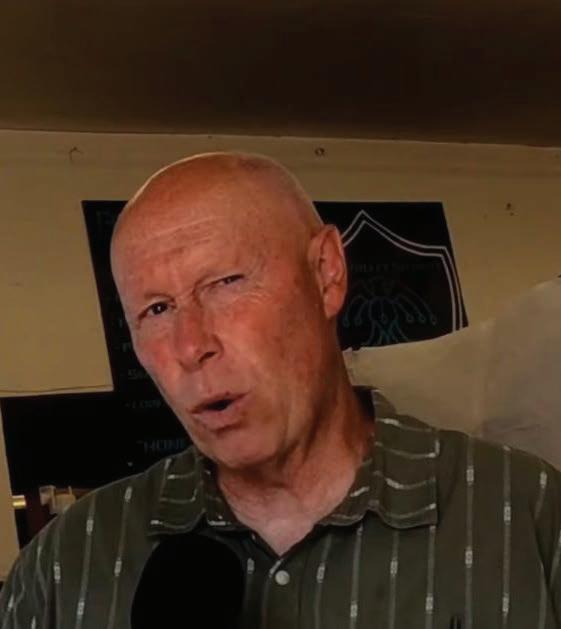
While West has so far effectively lost every one of these cases that came before the Circuit Court and was actually judged based on merit, he continues to appeal his losses and file what in my view are new frivolous lawsuits. Citizens and media do of course have 1st Amendment rights and in my opinion John West is trying to deprive his political detractors of their 1st Amendment rights by bullying anyone with a lawsuit that speaks against him. We also all have Oregon constitutional rights as citizens to advance a recall petition against any elected official.
But, what about a $2 million lawsuit for a Facebook post which didn’t even reach many people…a Facebook post which happened to be true in my opinion? This has been ridiculous for a long time and now West’s lawsuit-happy behavior is unhinged. Oregon’s Anti-SLAPP statutes were made for guys like John West. Oregon’s Anti-SLAPP statutes (ORS 31.150–31.155) provide what is supposed to be a quick robust mechanism to dismiss meritless, retaliatory lawsuits ("Strategic Lawsuits Against Public Participation") designed to silence free speech.
As West seems to be determined to ignore the will of the voters yet again and run for his old commissioner seat, West appeared on the Bill Meyer radio show last week on Wednesday, February 4th as he begins campaigning for the May 2026 primary. The first question asked by Bill Meyer was, “Why the heck would you get involved in getting back into Josephine County government at this point in time? It just seems to be one drama story to another
drama story.” West answered this by claiming that he was elected by 57% of the voters when he first ran for office in 2022 “but only 19% of voters recalled me.”
You don’t have to be a CPA or a statistician to see the math and other flaws in that statement. Yes, when West won his seat in November 2022 he won 57% of those that voted in that election. But 62% of those that voted recalled him from office after watching his performance on the job. It is of course misleading to use a smaller total voter turnout in the special recall election to try to make the case that he still has voter support. Those were two different votes, one before citizens got to see him on the job and one after seeing how West performed on the job. A higher percentage of those that voted said they wanted him out of office after seeing his on-the-job performance, and while perhaps a smaller number of voters voted in the special election, this is still more than statistically significant.
West has a history of playing games with the “numbers” as he did in that radio statement. I observed several statements that West made while he was campaigning against his recall in 2024 that in my opinion shows that West doesn’t do well with numbers, particularly budget numbers. And as his frivolous court cases proceed, I predict the games he plays with the numbers will be made even more clear.
Bill Meyer asked another good question of West, “What would be different in a second John West term, what would you do differently from what you did last time that caused so
much turmoil?” West answered, “I believe that after 2 years of service….I understand policy, I understand everything in the County way more than I did when I first started and I think I have a better understanding of how to communicate it to the people…”
Essentially, what I heard in West’s answer to that question is that he won’t change a thing, he will just try to communicate better. In fact, shortly after this answer West stated, “I will not change my principles of what I believe in…I will not sell out just to keep my job as commissioner…”
Another great question from Bill Meyer was, “There seems to be times when the Board steps on their own feet when it comes to certain procedures…do you think the County should have an administrator in addition to the three commissioners to make sure things get enacted properly?” West stated, “I have a solution to that problem. I don’t like the idea of three commissioners hiring a manager that would get paid $300k to $500k per year. I think we should bring forward a [charter change] petition where voters would decide on hiring a County Manager. Where can you go wrong by letting the people make that decision versus three bureaucrats?”
There was then a discussion about the recent federal agreement to boost timber harvesting revenue sharing to the 18 O&C (Timber) Counties in Oregon from 50% to 75%. West said he was happy about this but stated that 75% of nothing is still nothing. This was another misleading statement from West considering Josephine has still been getting a few million dollars of O&C timber revenue per year on average in recent years. West then advocated for saving as much of those timber dollars as possible (not spending them) because they might go away at some point in the future. This is an important distinction given one of West’s new campaign promises to lower property taxes, which will be briefly discussed in this article.
West then stated without offering many specifics, “I know how to lower your property taxes in Josephine County on certain things…I know how to create ordinances and initiatives…I want to reign in the County Commissioners’ responsibilities that they have….you know right now County Commissioners can be sworn in and unless they are recalled they can never show up to a meeting for 4 years…it’s unlimited vacation if they choose. I want to change things so if you don’t work you don’t get paid.” Meyer then asked if anything like this had happened before and West didn’t know and didn’t offer any examples of this happening.
But it’s the repeated campaign promises in West’s new commissioner campaign to “lower property taxes” that deserves some attention, because West and other Commissioners have promised this before in their campaigns and then failed to deliver once they learned the realities of Josephine County’s financial position.
Continued on page 10 >>>
By Ellen Ward
Oregon’s wine industry is entering a period of recalibration as producers confront shifting consumer habits, rising production costs, and intensifying competition across the broader beverage market. Conversations emerging from the recent Oregon Wine Symposium in Portland reflect a clear message from growers, vintners, and distributors: adaptation is no longer optional. For wine consumers across the state and beyond, these industry adjustments may gradually reshape what is available on shelves, how wine is packaged, and what they can expect to pay.
For more than two decades, Oregon built its global reputation largely on premium Pinot Noir from the Willamette Valley. That foundation remains strong, but demand patterns are evolving. National consumption data shows wine sales growth slowing compared with previous years, particularly among younger adults who are dividing their spending among craft beer, spirits, ready-to-drink cocktails, and nonalcoholic beverages. At the same time, inflationary pressures have increased the cost of labor, glass, transportation, and agricultural inputs, compressing margins for wineries of all sizes.
From an economic standpoint, wineries are responding on several fronts. One of the most visible changes may be product diversification. While Pinot Noir continues to anchor Oregon’s brand identity, producers are expanding offerings that include sparkling wines, rosé, lighter whites, and alternative blends that align with shifting taste preferences. This diversification is not simply stylistic experimentation; it is a revenue strategy aimed at broadening market reach and stabilizing cash flow.
Packaging is another area undergoing financial scrutiny. Traditional glass bottles remain dominant, but rising glass costs and environmental considerations are

prompting more discussion about lighter-weight bottles and alternative formats. For consumers, this could mean more wine appearing in cans, kegs, or boxed formats designed to reduce shipping weight and lower carbon footprints. While such formats were once viewed as lower-tier, industry leaders increasingly see them as cost-efficient and environmentally practical. If implemented successfully, these changes could help stabilize retail pricing by reducing supply chain expenses.
Tasting rooms, long considered a cornerstone of Oregon’s direct-to-consumer sales model, are also being reevaluated. Tourism remains important, but wineries report that visitors are more selective with discretionary spending. Rather than relying solely on scenic appeal, businesses are investing in curated experiences, membership programs, and event-based programming to maintain loyalty and increase per-visit revenue. For consumers, this may translate into more structured tasting experiences, higher hospitality
standards, and potentially revised tasting fees designed to offset rising operational costs.
Distribution strategies are evolving as well. Larger Oregon producers are refining relationships with national distributors to secure shelf space in competitive markets, while smaller wineries are focusing on direct online sales and wine club subscriptions. Greater emphasis on direct-to-consumer channels can help wineries retain a larger share of revenue per bottle, which may mitigate upward pricing pressure in retail outlets.
The broader financial climate also plays a role. Interest rates, labor shortages, and agricultural risks such as wildfire smoke exposure have added layers of uncertainty. Although recent vintages have demonstrated resilience against smoke-related concerns, climate variability remains an economic factor that producers must manage through vineyard practices and insurance planning. These risk management costs are typically embedded in long-term pricing structures.
For consumers, the near-term impact is unlikely to be dramatic price spikes solely attributable to industry restructuring. However, incremental adjustments are possible. Premium labels may hold firm or edge upward in price as producers protect margins, while diversified offerings could introduce more mid-range options aimed at value-conscious buyers. Shoppers may also notice expanded selections of sparkling and white wines, reflecting demand trends rather than a departure from Oregon’s core identity. Ultimately, the Oregon wine industry’s call for change represents a strategic effort to maintain competitiveness in a dynamic marketplace. For wine drinkers, the transition may offer broader choice and more accessible formats, even as wineries navigate tighter margins and evolving consumer expectations. The state’s reputation for quality remains intact, but sustaining that reputation will require financial discipline, innovation, and responsiveness to the realities of a changing beverage economy.
Meyer pressed West for examples of cutbacks that would allow property tax reductions. One suggestion West offered was to complain about the $650k per year the County pays for Court Security in the County Courthouse. West suggested the Court increase user fees on the court system users rather than having the County pay for Court Security.
Near the end of the radio segment West stated, “My campaign is going to roll out…I think we can save roughly $3 to $4 million per year and possibly pay for close to 40%
to 50% of the jail levy so we can reduce the property tax rate…” Meyer remarked, “That’s a big claim and look forward to seeing the numbers.”
I look forward to seeing the numbers too. Because in my view, this is not possible without the County securing some new non-tax revenue sources such as royalty revenues from mineral development projects on County timber properties. But West illegally stopped one of those projects that my company American Mineral Research proposed in
2023-2024 (as was proven by a 2025 lawsuit against the County) and then along with other Commissioners voted for a moratorium on all new mineral exploration permits or mining lease applications on County owned land. So we can’t hold our breath on that topic. If recent history repeats itself, in my opinion West will once again show that he doesn’t understand the true budget flexibility of Josephine County. The Sheriff has recently stated to the media that the Jail levy “may” need to increase. John West thinks it can be reduced
by 40% to 50%. Just like happened in 2024 when West was in office, the Sheriff may again need to warn of a “Dog Fight” in upcoming budget processes next year if voters change their mind yet again and give West another chance.
The upcoming May primary vote for Josephine County Commissioners will be interesting indeed. We will soon see how well voters remember the chaos in the BCC office during the two years John West was a commissioner.

By Nik Martin Local Food Critic
If you haven’t checked out The Depot Eatery at 577 NE F Street in Grants Pass, you are seriously missing out. I have eaten here several times now, and every visit has been consistently impressive. The service is always excellent, friendly, attentive, and welcoming from the moment you walk through the door. Let’s start with the food. One of my regular orders is the Turkey Basil Sandwich, and it never disappoints. It is served on perfectly grilled sourdough and loaded with turkey breast, grilled onions, havarti cheese, basil pesto, and crispy bacon. The sandwich comes with their housemade potato chips, which are simple, flavorful, and done right. It is one of those meals that keeps you coming back.
For those looking for something a little more special, The Depot is open Friday and Saturday evenings with a dedicated dinner menu that is absolutely worth planning around. My wife and I recently visited on a Friday night and ordered the Prime Rib and the Fish and Chips.
The Prime Rib was cooked to perfection, tender and full of flavor, paired with a rich au jus dipping sauce that complemented the meat beautifully. It was served with a baked potato loaded with all the traditional toppings. It is the kind of dish you immediately start think-

ing about ordering again before you have even finished your plate.
The Fish and Chips were equally impressive. The fish was fried perfectly, light and crispy without being greasy. It tasted fresh and well-prepared. They even make their own tartar sauce, which adds another layer of flavor to the dish. Once again, the house-made chips stood out. They have a crisp texture and just the right amount of seasoning. I would honestly buy them by the bag if they offered them that way.
Beyond the food, the recently remod-
eled interior gives The Depot Eatery a cool, comfortable vibe that makes you want to stay awhile. Whether you are stopping in for lunch or planning a relaxed date night, this local favorite delivers a consistently enjoyable experience.
If you are in Grants Pass and looking for a dependable place with great food and welcoming service, The Depot Eatery deserves a spot on your list.
To see video reviews and more local food features, follow and subscribe on Facebook at Nik’s Food Reviews and on YouTube at Nik’s Food Reviews.
By Ellen Ward
Community members, service providers, and local leaders will gather later this month as PATH hosts its next general meeting at the Grants Pass City Council Chambers. Scheduled for Tuesday, February 24, from 3:00 to 5:00 p.m., the meeting will center on open dialogue and collaborative planning aimed at strengthening efforts to address homelessness in Josephine County.
The formal meeting will run from 3:00 to 4:30 p.m., followed by a networking session from 4:30 to 5:00 p.m., offering attendees an opportunity to connect directly with fellow advocates, nonprofit representatives, and community partners. Organizers say the format will differ from previous meetings, as there will be no featured speaker this month. Instead, the time will be dedicated to a structured brainstorming session designed to identify service gaps and determine where PATH can most effectively
focus its resources in 2026.
The upcoming discussion comes at a time when communities across Southern Oregon continue to grapple with housing instability, rising costs, and increased demand for support services. By shifting the spotlight from a keynote presentation to community input, PATH aims to encourage broader participation and gather practical ideas from those working on the front lines, as well as residents who want to be part of long-term solutions.
Organizers emphasize that the session will be interactive and solution-oriented. Participants will be encouraged to share insights about unmet needs, emerging challenges, and opportunities for collaboration among agencies, faithbased groups, local government, and volunteers. The goal is to refine PATH’s priorities for the coming year and ensure that efforts remain aligned with the evolving needs of the community.
In addition to strategic planning, the
5 DAY OUTLOOK
SOURCE: WEATHER.COM



meeting will include a community service component. A donation box will be available for attendees who wish to contribute non-perishable food items to the Josephine County Food Bank. With food insecurity often intersecting with housing instability, organizers note that even small contributions can make a meaningful difference for families and individuals facing hardship.
PATH representatives encourage broad community attendance, particularly from individuals who have not previously participated in meetings. By welcoming new voices and perspectives, organizers hope to build stronger partnerships and develop more comprehensive responses to homelessness in Grants Pass and throughout the county.
The February 24 gathering offers residents an opportunity not only to stay informed but also to help shape the direction of local homelessness initiatives in the year ahead.


By Charles Power
For many people, the word jejunum sounds unfamiliar, almost mysterious. It is not a trend, a supplement, or a newly discovered organ. It is a vital and well-established part of human anatomy that quietly performs one of the most important functions in the body every single day.
The jejunum is the middle section of the small intestine, positioned between the duodenum and the ileum. Located primarily in the upper left and central region of the abdomen, it measures roughly eight feet in length in the average adult. Though hidden from view, it plays a central role in transforming the food we eat into the nutrients our bodies rely on for survival.
After food leaves the stomach, it enters the duodenum where digestive enzymes and bile begin breaking it down chemically. From there, the partially digested material moves into the jejunum. This is where absorption becomes the priority. The inner lining of the jejunum contains circular folds, along with millions of microscopic finger-like projections called villi and even smaller microvilli. These structures dramatically increase surface area,
allowing the body to efficiently absorb carbohydrates, proteins, fats, vitamins, minerals, and water into the bloodstream.
Without a properly functioning jejunum, the body cannot adequately extract nutrients. Even if someone eats a balanced diet, damage or disease affecting this section of the intestine can lead to malnutrition, fatigue, unintended weight loss, anemia, and vitamin deficiencies. The jejunum is particularly important for absorbing sugars and amino acids, the building blocks of energy and muscle repair.
Although the jejunum does not require maintenance in the mechanical sense, its health is closely tied to lifestyle and overall digestive wellness. A balanced diet rich in fiber, adequate hydration, and a diverse gut microbiome support intestinal function. Blood supply to the small intestine must remain intact, as reduced circulation can lead to tissue injury. Chronic inflammation, excessive alcohol use, certain medications, and autoimmune disorders can impair the jejunum’s ability to absorb nutrients effectively.
Medical conditions that commonly involve the jejunum in-
clude celiac disease, Crohn’s disease, intestinal obstruction, and ischemia. In some cases, surgical removal of portions of the small intestine may be necessary, which can significantly affect nutrient absorption depending on how much tissue is lost. Fortunately, the intestinal lining regenerates rapidly, renewing itself every few days under normal conditions. This constant renewal is one of the body’s most impressive protective mechanisms.
Ignoring symptoms related to malabsorption can lead to long-term complications. Persistent digestive discomfort, unexplained weight changes, chronic diarrhea, or signs of vitamin deficiency warrant medical evaluation. Imaging studies and endoscopic procedures allow physicians to assess the small intestine directly when needed.
The jejunum is neither mystical nor insignificant. It is a highly specialized organ segment that sustains human health by ensuring that nutrients from food are properly absorbed and delivered throughout the body. Understanding its role provides clarity about how digestion truly supports energy, immunity, and overall well-being.