WEDNESDAY, AUGUST 27, 2025
WEDNESDAY, AUGUST 27, 2025
By John Oliver Riccio
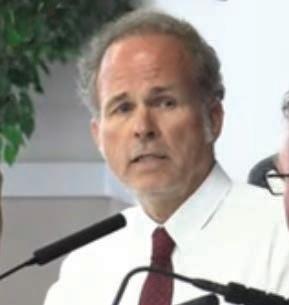
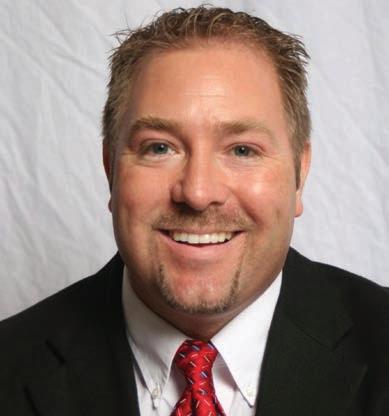
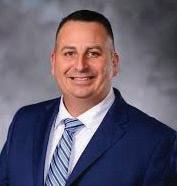
On August 25, 2025, a formal request for a criminal investigation was filed with Josephine County District Attorney Josh Eastman alleging serious misconduct by four public officials: County Commission Chair Andreas Blech, Commissioner Chris Barnett, State Representative Dwayne Yunker, and Grants Pass City Councilor Erich Schloegl. The complaint outlines how these officials allegedly misused Oregon’s public records system, retaliated against a private citizen, and published defamatory information for political purposes.
District Attorney Eastman acknowledged receipt of the complaint and confirmed that the matter was also forwarded to the Josephine County Sheriff’s Department and the Oregon State Police Special Investigations Division. Copies were additionally sent to the FBI. DOJ, and the Oregon Government Ethics Commission for review. The move underscores the gravity of the allegations, which reach beyond routine politics into criminal violations of state and federal law.
The controversy began on August 5, when the Josephine County Board of Commissioners abruptly took control of the county’s public records process away from IT Manager Michael Sellers. Chair Blech announced that the commissioners themselves would now oversee and fulfill all requests. Since
then, however, not one request submitted by this newspaper has been processed or completed, aside from limited assistance by the District Attorney’s office. The request that triggered this conflict, filed on August 8, was instead routed internally and exposed to the very individuals named in it—an act that directly contradicted Oregon’s public records law, which requires timely and impartial compliance under ORS 192.329.
Rather than fulfill their legal duty, Blech, Barnett, Yunker, and Schloegl allegedly chose to weaponize the request. What followed was a coordinated campaign of retaliation. Representative Yunker published false statements about my personal history without any factual basis or verification. Commissioner Blech, who as custodian of records had the authority to stop this misconduct, instead allowed it to proceed. Commissioner Barnett and Councilor Schloegl then amplified the attacks through social media, escalating the campaign. The intent was unmistakable: to
silence dissent, intimidate critics, and damage the reputation of the Grants Pass Tribune within the community.
The complaint argues these actions amount to clear violations of Oregon law, including official misconduct, misuse of confidential information, coercion, and retaliation against a complainant. More importantly, the filing insists that the conduct reveals a disturbing pattern of abuse: elected officials, entrusted to serve the public, using the power of their offices to retaliate against the very residents and voters who placed them there.
This is not merely about one newspaper or one citizen. If public officials can weaponize the records process to attack those who request transparency, then no one in Josephine County is safe from harassment. Instead of responding to lawful records requests, these men used their positions to illegally access and disclose sensitive information, to create division, and to retaliate against residents. The message their actions send is chilling—
that they consider themselves above the law, unbound by ethics, and free to punish any citizen who dares to question them.
Unchecked, this behavior sets a precedent that corrodes democracy itself. If officials are using their office resources to investigate private residents, build “huge files” on individuals, and retaliate with public attacks simply because they do not like the questions being asked, then the concept of open government in Josephine County collapses. Such actions strike at the heart of both state law and constitutional protections. They create an environment where people are too afraid to exercise their rights, where asking for accountability means risking personal attacks, and where public records—the cornerstone of transparency—become a tool for political revenge.
These actions cannot go unanswered. To ignore them is to accept governance by intimidation, where commissioners and
• see CRIMINAL, page 5
By E. Ward
Oregon Governor Tina Kotek signed a package of energy affordability measures into law on Monday, marking a significant step in the state’s ongoing effort to address rising utility costs for households and to ensure corporate responsibility in energy consumption. The ceremony took place in Hillsboro, where the governor underscored the role of the new policies in shaping both consumer protections and the state’s broader energy strategy.
Following the event, Kotek addressed questions on other pressing issues facing the state, including Oregon’s sanctuary laws and the special legislative session scheduled to determine whether hundreds of millions of dollars will be directed toward the Oregon Department of Transportation. But the primary focus of the day was on the four new energy laws, each designed to strengthen affordability and accountability across Oregon’s energy landscape.

At the heart of the legislative package is House Bill 3546, widely referred to as the POWER Act. The measure establishes clear requirements for companies that operate high-energy facilities, such as data centers and cryptocurrency operations. Under the new law, these businesses will now bear direct responsibility for their utility expenses, preventing costs from shifting onto other ratepayers. Supporters of the act argue that it ensures fairness in an industry where electricity demands are especially high, while critics have raised concerns about the po-
tential impact on economic development.
Another cornerstone of the package is House Bill 3179, known as the FAIR Energy Act. This law sets limits on proposed rate hikes from utility providers, with the aim of curbing steep increases that have become a growing concern for residents across the state. In recent years, energy bills have risen
sharply, creating financial strain for households already contending with inflation in housing, food, and transportation. The FAIR Energy Act establishes a framework for greater oversight of utility proposals, with the intent of balancing company operations with consumer affordability.
House Bill 3792 also carries broad implications for low-income households. The law doubles the funding for the Oregon Energy Assistance Program, increasing its annual allocation from $20 million to $40 million. By expanding financial support for vulnerable families, state leaders hope to reduce the number of residents forced to choose between paying for energy and meeting other essential needs. The expanded program is expected to provide relief during periods
• see ENERGY, page 7


PRESENTS ITS 12TH ANNUAL RELENTLESS DEVASTATIONAL GOLF TOURNAMENT @ Grants Pass Golf Club September 20th | Tee Time @ 9:00 AM
2-man scramble
18 holes with cart
$250 per Team Lunch, Driving Range, & Contest Entries Included
For early registration or Sponsorship Information contact Eric Hennings 541-659-6136 Or Chris Hennings 541-601-0750 www.relentlessheroes.org
Raffle, Silent Auction, Prizes & Games ALL PROCEEDS GO TO LOCAL VETS


By John Oliver
President Donald Trump’s effort to remove Federal Reserve Governor Lisa Cook has triggered a constitutional and economic clash that could reshape the boundaries of executive power and central bank independence in the United States. The unprecedented decision, announced late last week, has already unsettled financial markets and set the stage for a likely Supreme Court battle.
Trump said he dismissed Cook over what he described as “cause,” citing allegations of mortgage fraud connected to past real estate transactions. In a post on his social media platform, the president accused her of misrepresenting property information to secure favorable terms and claimed her actions undermined public trust. Cook has rejected these claims outright, calling them politically motivated and legally unfounded.
Cook, a distinguished economist and the first Black woman appointed to the Federal Reserve’s Board of Governors, has made clear she will not resign. In a public statement, she asserted that the president lacks the authority to remove her and vowed to continue carrying out her duties. Her legal team, led by veteran attorney Abbe Lowell, has indicated they are preparing immediate challenges in federal court.
At the heart of the controversy is the Federal Reserve Act, which states that governors may only be removed “for cause.” The law is designed to safeguard the central bank from political pressure and to ensure monetary policy remains insulated from partisan disputes. Historically, presidents have appointed members to the
Fed’s board but have not tested the limits of their removal powers. Trump’s move marks the first time in modern history that a sitting president has attempted to fire a governor.
Legal scholars note that the statute’s use of “for cause” has never been fully defined by the courts. Trump’s team argues that the allegations against Cook constitute misconduct sufficient to meet that standard. Critics counter that the allegations involve personal matters, not her performance in office, and that the timing of the dismiss al suggests political motivation rather than genuine concern over impropriety.
The stakes extend beyond one individ ual’s position. If Trump’s action is upheld, it could set a precedent granting presidents greater control over the central bank, a shift that analysts warn could undermine inves tor confidence and weaken the Fed’s cred ibility. Markets have already shown signs of unease. Bond yields climbed following the announcement, the U.S. dollar slipped modestly, and equities experienced volatili ty as investors weighed the implications for
The Supreme Court may ultimately decide the issue. In recent rulings involving other independent agencies, justices have limited certain removal protections but have also recognized the unique role of the Federal Reserve in the nation’s economic stability. Any decision in this case would carry sweeping consequences for the balance of power between the executive branch and independent financial institutions.
For now, Cook continues to report to work, insisting she remains a lawful member of the

board. The White House maintains she is no longer in office. The dispute places the Federal Reserve, a body intended to operate outside of daily politics, at the center of an intensifying constitutional showdown.
As legal proceedings move forward, the outcome will determine not only Lisa Cook’s future but also the degree to which the nation’s central bank can withstand direct political interference. The result may set a defining precedent for the independence of U.S. monetary policy in the years ahead.
























Advertise with The Grants Pass Tribune!
Stand with us in defending freedom of the press and the 1st Amendment! The Grants Pass Tribune is facing political persecution, with lawsuits aimed at silencing our bold investigative journalism. We remain committed to uncovering the truth and keeping our community informed like never before.
Show
By John Oliver
A federal judge has dismissed a high-profile lawsuit filed by the U.S. Department of Justice against all 15 federal district judges in Maryland, siding with the judiciary’s authority to temporarily delay deportations in order to review migrant claims.
The lawsuit was triggered by a standing order issued by Maryland’s federal bench during the Trump administration, which required that deportations be paused for two business days before removal proceedings were finalized. The measure was introduced as the administration pursued an aggressive schedule of removals, a pace that left many migrants with little or no opportunity to present their cases before being deported.
The Justice Department argued that the order unlawfully interfered with federal immigration enforcement and undermined executive authority to carry out removals. Government attorneys claimed that immigration law grants the executive branch broad discretion to determine the timing and process of deportations, and that the Maryland order effectively created a roadblock to those powers.
In Tuesday’s ruling, the court found that the district judges acted within their authority to ensure due process for individuals facing removal. The decision emphasized that the standing order was not a blanket prohibition on
deportations but a limited safeguard designed to allow judicial review. The pause, lasting only two business days, was described as a reasonable step to make sure deportation cases did not bypass the courts without scrutiny.
The ruling marks another instance of judicial intervention during the Trump-era immigration crackdown, where federal courts across the country at times imposed limits on enforcement policies they determined risked violating constitutional rights. In Maryland, the measure was framed narrowly to balance the executive branch’s authority over
immigration with the courts’ duty to protect access to fair legal proceedings.
For migrants in Maryland, the decision means they are guaranteed at least a short window in which their claims can be evaluated before removal. Advocates for immigrants have long argued that such safeguards are necessary to prevent individuals from being deported before legitimate asylum, humanitarian, or procedural claims can be heard. The court agreed that the limited delay was a lawful means to preserve fairness in the process.
While the dismissal of the Justice Department’s lawsuit settles the issue in Maryland, the ruling does not set a nationwide precedent. Federal district courts in other states are not bound by this decision, leaving open the possibility of differing approaches across jurisdictions. Still, the outcome underscores how federal judges can use their authority to intervene when they believe government policies are moving too quickly for individuals to exercise their rights.
The Justice Department has not announced whether it will appeal the dismissal. For now, the Maryland standing order remains intact, signaling that judges in the state retain the ability to impose brief delays when necessary to evaluate the claims of migrants caught up in deportation proceedings.
From page 1
councilors wield their offices as weapons instead of serving the public. If law enforcement fails to intervene now, Josephine County will descend into a climate of fear, where no resident in their right mind will dare question the government again. Requests for transparency will go unfulfilled, and retaliation will become the standard response to criticism.
What is at stake is larger than one investigation. It is whether the principles of
law, fairness, and accountability still apply to those in power. If those entrusted with public office are allowed to flout the law, retaliate against citizens, and divide the community without consequence, then the system of governance itself is broken. The residents of Josephine County deserve better. They deserve a government that answers records requests with honesty, not attacks; that respects the law rather than manipulates it; and that values the peo-
ple’s right to know above personal grudges.
For context, the Grants Pass Tribune never requested military records, never asked for DD214s, and never wrote or published anything about this request. It was simply an inquiry to determine whether any fraud might be occurring. The officials themselves chose to make the request public, twisting it into a narrative for their own purposes. Their decision to spin and weaponize a lawful request underscores
the severity of the misconduct. For these reasons, the call for a criminal investigation is not merely justified—it is urgent. No public servant is above the law, and no citizen should ever fear retaliation for exercising their legal right to transparency. The question now is whether Josephine County will uphold accountability or slide further into unchecked abuse of power. The answer will depend on whether these allegations are fully and swiftly investigated.








Tired of doing everything "right" and still feeling exhausted, bloated, and stuck?
At Elysian Women's Wellness, we specialize in helping women 35–55 balance their hormones, heal their metabolism, and lose stubborn weight without crash diets or two-hour workouts.
We use our Metabolic Optimization Method to help you feel like you again.
• Functional & traditional lab work
• Sustainable weight loss
• Hormone-friendly exercise & nutrition
• Expert support & accountability
By E. Ward
Josephine County is once again in the spotlight for reasons that go beyond its efforts to fill vacant jobs. In recent weeks, county leaders have advertised for new employees and volunteers, urging the public to consider careers in local government. Yet these appeals are clouded by mounting reports of a toxic workplace environment stretching from the courthouse to the airport. Employees and former staff describe a culture of intimidation and retaliation, where speaking to the press can bring the threat of termination and where nondisclosure agreements have been used to silence concerns about internal practices.
The timing has fueled skepticism. Just weeks ago, Josephine County laid off staff and cut back departments in a highly publicized round of budget measures that made headlines across the region. Department heads were dismissed, operations were disrupted, and the county’s ability to manage its own workforce was called into question. Against that backdrop, the push to hire new employees seems out of step

still festering within the organization.
The reports echo larger patterns of workplace hostility being documented across Oregon. Discrimination and retaliation complaints have steadily risen over the past five years, leaving state agencies struggling to keep pace.
The Oregon Bureau of Labor and Industries, which oversees employment discrimination claims, saw its back-
From page 1
of extreme weather, when heating and cooling bills often climb.
Together, the bills represent one of the most comprehensive energy affordability initiatives Oregon has undertaken in recent years. State officials have long debated how best to balance the competing interests of consumers, utility providers, and high-energy industries. The new laws attempt to address each of these concerns by introducing stricter accountability for corporations, establishing guardrails for rate hikes, and delivering direct assistance to residents in need.
While the legislation was celebrated in Hillsboro, broader conversations about Oregon’s financial priorities remain unresolved. During the press conference, Governor Kotek acknowledged the upcoming special session that will consider additional transportation funding. The Oregon Department of Transportation has warned of budget shortfalls that could impact road maintenance, construction, and safety projects if lawmakers do not act. Kotek’s comments suggested that while the state’s energy challenges were addressed in this package, significant financial decisions still lie ahead for the legislature.
The signing of the bills also comes at a time when Oregon is grappling with its status as a sanctuary state, a longstanding policy that continues to spark debate. Although the governor did not expand on that topic during the event, the question underscored the wide range of political challenges facing her administration as it seeks to balance economic, social, and infrastructure priorities.
For many Oregonians, the immediate impact of Monday’s legislation will be felt in their utility bills. With stricter oversight of rate hikes and expanded assistance for those most in need, households across the state may find some relief in the months ahead. For businesses, particularly those in energy-intensive industries, the new requirements mark a shift in accountability that could reshape how such operations weigh the costs of doing business in Oregon.
The passage of these laws highlights the state’s dual commitment to affordability and fairness in the energy sector. Whether they succeed in delivering long-term stability for residents and businesses alike will depend on how the policies are implemented and how effectively regulators enforce the provisions.
log of civil rights cases nearly double from 667 in 2018 to more than 1,200 in 2023. This surge reflects both a rise in allegations and a system under strain, with employees waiting longer for investigations and resolutions. Studies show that a majority of older Oregonians report experiencing or witnessing age discrimination at work, with many saying they were denied jobs because of their age. Yet very few file formal complaints, suggesting the problem is more widespread than official numbers capture.
For Josephine County workers, the broader trends appear to intersect with local frustrations. Accounts of retaliation for speaking out, along with claims of bullying and gag orders, have surfaced from multiple offices. While county officials have not publicly confirmed the complaints, the consistency of the allegations has heightened concerns that the problems are systemic rather than isolated. Legal protections in Oregon prohibit discrimination and retaliation, and while nondisclosure agreements may be used in some circumstances, they cannot override the right of employees to report misconduct. Still, workers often fear losing their liveli-
hoods if they step forward, which helps explain why complaints are frequently kept in the shadows.
The question for prospective employees is whether the promise of steady public employment outweighs the risks of walking into what some describe as a hostile environment. Recruitment materials may highlight benefits and stability, but a culture of intimidation can undermine even the most attractive job posting. Residents and community advocates are beginning to question whether Josephine County’s problems lie not in staffing shortages, but in leadership itself. Without addressing management practices that have reportedly fostered toxicity, the county may struggle to convince new hires to stay for the long term.
As Oregon struggles with rising workplace discrimination complaints, Josephine County serves as a reminder that recruitment drives cannot succeed without trust. Until leadership takes steps to resolve the cultural problems now casting a shadow over its operations, the county’s ability to attract and retain dedicated employees remains uncertain.


By: Jay Meredith, CPA Investigative Journalist
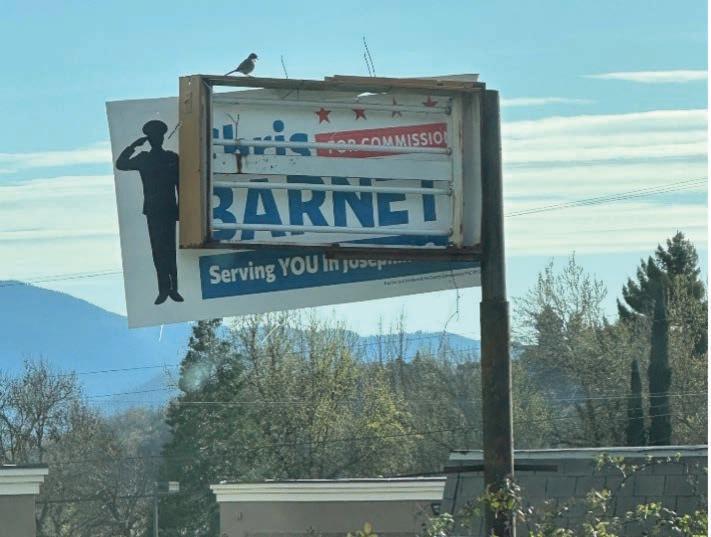
Pictured here is a photo from near the north I-5 exit in Grants Pass in early April 2025, nearly six months after Chris Barnett was elected as a Josephine County Commissioner. The sign, falling apart and an eyesore for the north I-5 entrance to Grants Pass, was an appropriate representation of how many in the public felt his performance was going in his first three months as a County Commissioner.
The sign fell down completely not too long after this photo was taken, as did Barnett’s performance as Commissioner according to a new Political Action Committee called Restore Josephine County that launched two recall petitions this week against Commissioners Chris Barnett and Andreas Blech. If you read the recall petition language that this new committee posted on their website at www.restorejoco.com, most of the grievances listed on the recall petitions are from actions that occurred in the first four months of 2025.
Restore Josephine County announced their plans to file recall petitions this week on Saturday, August 23rd. Almost immediately after this announcement, Commissioner Chris Barnett announced on one of his personal Facebook pages a new initiative (complete with a new custom logo) called Uniting Josephine County. Without providing any details, Barnett commented “Who’s onboard??? I encourage everyone to participate in this constructive initiative. It is imperative that we come together to foster positive change within our county. Let us embrace positive-driven leadership to restore respect, character, and ethical conduct, prioritizing integrity even amidst disagreements.”
That would all be fantastic, if it was genuine. Those that followed county commissioner campaigns in 2024 will recall that Chris Barnett used the phrase “Unity in the Community” more times than anyone can count while out on the campaign trail. And his performance to date in 2025 while commissioner has been nearly the polar opposite, in my opinion.
Then on Sunday last weekend Barnett posted a few more details about the initiative on his various “news” Facebook pages, most of which he created in early 2025 to try and compete with the Grants Pass Tribune. Barnett’s personally owned Facebook “news” pages such as the Josephine County Tribune, Josephine County News, Grants

Pass News, and Real Live New Southern Oregon posted a short article penned by Barnett himself about the new initiative. And Barnett listed his county email address and encouraged people to reach out if they were interested, implying that this is an official Josephine County government initiative.
And then on Sunday last weekend Barnett did the same thing with two official Josephine County Facebook pages by posting the new initiative logo and article on the page titled “Josephine County Board of Commissioners” and the main Facebook page for Josephine County called “Josephine County – Government.” This was all done without a public discussion with the other two County Commissioners, so it appears Barnett launched a major new County initiative without even having a public discussion about it with the other two Commissioners.
And no details were provided about what it really is. Is this a new Committee the County will be forming? How exactly does this relate to the governance of Josephine County?
Unfortunately, on Monday of this week Commissioner Barnett wasted no time with actions and behaviors that are completely contrary to the vision Barnett just laid out regarding this new initiative over the weekend. Restore Josephine County announced that they would be filing the recall petitions Monday morning at 9am in the
missioners.
Barnett himself was there Monday morning to greet his supporters and apparently to confront those who supported the new recall effort. In a video posted on Facebook Monday, which interviewed Chris Barnett as well as other members of the crowd, Barnett called all supporters of the recall “Bad Actors.” The term Bad Actor usually means a person or group that engages in unethical, criminal, or malicious behavior and implies individuals that have a history of dishonesty or misconduct. Barnett just flung this insult out at all the supporters of this new recall committee who were just engaging in their state constitutional right to bring forward this petition.
I also interviewed a woman who was there in support of the recall petition who said Commissioner Chris Barnett threatened and bullied her personally as she arrived at the event. Barnett allegedly said to her something to the effect of “I know you and what group you are representing, and we are coming after you and are going to out you and your group…” The woman felt extremely threatened and bullied by Barnett and was still clearly shaken up by the incident even about eight hours later when I interviewed her.
Barnett’s insults continued, as later in the day
on Monday many of his personally owned “news” Facebook pages posted signs that said, “Stand with Commissioners Barnett & Blech, Don’t Sign Another Lie.” And another sign that said, “Don’t Sign Another Lie, No To Commissioner Recall.” So, in reference to last year’s Recall John West campaign, where West claimed all petition points were false statements, Barnett is already implying that the petition points are lies.
A few Barnett supporters at the Monday morning event who were interviewed implied that last year’s John West recall had false statements in the recall petition, which echoed West’s entire campaign strategy during the recall campaign and even afterward, as West has filed several of what I would call frivolous lawsuits against those that led last year’s recall effort. The big problem there is that most of the fact-based petition statements in last year’s recall have actually been proven true, in a court of law.
Barnett, on a radio show on Tuesday morning August 26th, when asked about thoughts on the recall, claimed it’s all the same people that did the John West recall last year. This is yet another false statement from Barnett. The Chief Petitioner, Jim Goodwin, the former Juvenile Justice Director of the County and well-respected leader in our local criminal justice system, wasn’t at all involved in leading last year’s recall effort. There were not any County employees involved in leading last year’s recall effort.
Later in the radio show, Barnett was asked about his new “Uniting Josephine County” initiative. The radio host asked, “What is this, a new logo for Josephine County?” Barnett answered, “No, that’s my own thing.” Barnett went on to talk about how he promoted Unity in the Community throughout his personal commissioner campaign last year.
And so there it is. Commissioner Chris Barnett just admitted he used Josephine County government resources to promote a personal campaign initiative. By posting this personal initiative on the official Facebook pages of Josephine County, Barnett crossed an important legal line.
And by insulting several of Barnett’s constituents right after the recall petition was launched, calling them Bad Actors and implying petition points are lies as well as insulting the radio show host several times on the Tuesday morning talk show, Barnett’s “Uniting Josephine County” initiative is off to a very rocky start.

Posting Date August 25, 2025
By Kelly J Gonzales
Rogue Community College is expanding its ceramics offerings this fall, giving both college students and community members more opportunities to take part in one of the school’s most popular hands-on programs. Beginning September 29, the RCC Redwood Campus in Grants Pass will host a wider schedule of ceramics classes, running through December 12, and available to students of all experience levels.
The expansion reflects the strong demand for ceramics instruction in Josephine County. RCC has long attracted students with its art and design programs, and ceramics has consistently been among the most requested courses. This fall, the college is responding by opening additional sections in both the morning and afternoon, accommodating busy schedules for traditional college students as well as adults in the community who want to take classes for personal enrichment.
Participants may enroll either for college credit or through the college’s Community Education program. Students seeking elective credit can register for three-credit courses that meet twice weekly and count toward their degree requirements. For community members, the same classes are available at a lower cost, offering a chance to pursue ceramics as a hobby or creative outlet without committing to a degree program.

The classes will be led by instructors Debra Abarca and Juan Santiago, both experienced in guiding students through the technical and artistic aspects of ceramics. The curriculum includes foundational skills such as hand-building and wheel-throwing, while also giving students the chance to explore advanced glazing and firing methods. Techniques such as horsehair firing, Raku, mid-fire electric, and stoneware will be introduced, offering a range of approaches that highlight the versatility and creativity of ceramics.
While the emphasis is on creativity, the program also keeps affordability in mind. Community Education participants can expect to pay $149 per term, with materials estimated at an additional $50. For college students enrolling for credit, in-state tuition and fees total $444 for the three-credit course. Both options give students access
to professional-level equipment and instruction, making the classes a practical entry point into the world of ceramics.
For years, RCC’s ceramics classes were held in a downtown location. The move to the Z Building at the Redwood Campus has allowed for a dedicated and better-equipped studio space, bringing the program closer to the heart of campus activity and making it easier for students to access facilities alongside their other classes. The shift has also helped integrate the program more fully into RCC’s broader arts curriculum.
Enrollment is now open, and the college encourages those interested to register soon, as ceramics classes traditionally fill quickly. Community members may sign up through RCC’s Community Education website, while students pursuing college credit can register directly through their myRogue accounts. Staff in Admissions and Recruitment are available to answer questions and help students with the process.
By expanding class offerings and providing flexible registration options, RCC is aiming to meet the growing demand for creative outlets in Southern Oregon. Whether students are seeking academic credit, professional instruction, or simply the joy of working with clay, this fall’s ceramics courses promise to deliver a hands-on experience that connects the community to both art and education.
Every community has its share of characters, and Josephine County is no different. Over the past several months, I’ve used a certain term that may have raised a few eyebrows for those unfamiliar with Marine Corps culture: “shit bird.” While blunt and maybe even jarring to hear in print, the phrase carries a weight that deserves a little explanation, especially since I use it not loosely, but with the lived understanding of a United States Marine.
For Marines, the term “shit bird” is not just another insult. It is one of the lowest designations you can earn among your brothers and sisters in uniform. A “shit bird” is the Marine who doesn’t carry their weight, who cuts corners, who dodges responsibility while others are sweating it out. It’s the one who always shows up late, fails inspections, or can’t be trusted to handle the simplest task without dragging the whole team down.
It’s important to understand that this isn’t about skill or ability. Marines respect effort. A Marine who struggles but shows grit, who pushes through despite difficulties, earns respect, not ridicule. But the one who shrugs off the standards, who shows no pride in themselves or their unit—that’s who gets labeled a “shit bird.” And once that reputation sticks, it’s nearly impossible to shake.
In the Corps, the difference between being “squared away” and being a “shit bird” is night

and day. A squared-away Marine sharpens those around them. A “shit bird” does the opposite, and the unit feels the weight of it. That’s why the word exists—it’s not about name-calling, it’s about identifying the kind of person who weakens the fabric of something bigger than themselves.
So why do I use the term here at home in Josephine County? Because the same logic applies. In this community, most of us work hard, care for our families, and try to uphold a sense of integrity and responsibility. But there are some who choose the opposite path. They put their personal ambitions above the common good, abuse positions of trust, or drag others down rather than lifting them up.
As a Marine, I learned that words like
“shit bird” are not thrown around without meaning. They’re a way of holding people accountable when their actions show they don’t deserve respect. And when I call someone a “shit bird” today, I’m not doing it for shock value—I’m doing it because they’ve earned it by their behavior.
Josephine County deserves leaders and neighbors who are squared away, not those who shirk, hide, or scheme. I use the term because I know what it means. It applies to those who are not like me, those who have chosen the easy road of dishonesty, laziness, or betrayal of trust. If that shoe fits, then so be it.
The truth is simple: Marines don’t tolerate “shit birds” in the ranks, and neither should we in our community.
5 DAY OUTLOOK
SOURCE: WEATHER.COM WEDNESDAY THURSDAY FRIDAY
sunny 91/58 Sunny 97/60