
APRIL 8, 2026
APRIL 8, 2026
John West Seeks Return to Office While Avoiding
By John Oliver
A year after voters in Josephine County removed him from office through a recall, former County Commissioner John West is once again seeking a return to public office. His campaign arrives with familiar messaging, and with a pattern that has not changed. The continued absence of direct, transparent engagement with the public raises questions that remain unresolved.
This is no longer a matter of interpretation. It is a matter of record.
During the current election cycle, West was provided multiple structured opportunities to communicate directly with voters. The Grants Pass Tribune distributed a standardized eleven-question candidate questionnaire to every individual running for county commissioner. The questions were consistent for all candidates and addressed core responsibilities of the office, including budgeting, leadership, ethics, land use policy, public trust, and administrative oversight.
West did not respond.
A second outreach effort followed regarding issues tied to Graves Creek, again offering West the opportunity to provide written responses in his own words. The purpose was straightforward. It was designed to allow voters to hear directly from him without interpretation or filtering. He did not respond again.
A third opportunity extended further. West was

offered a recorded, in-person interview in a controlled and non-confrontational setting. He would have received all questions in advance and been allowed to respond fully without interruption. The entire exchange would have been recorded and made publicly available to ensure complete transparency.
That opportunity was also declined.
Instead of participating in any of the offered formats, West chose to issue a statement through his own social media channels, where he labeled the Grants Pass Tribune as “fake news” and attempted to justify his refusal to engage. In that same statement, he asserted, “I previously sued them over false statements made about me and was awarded approximately $457,000 by the court,” presenting the matter as settled in his favor. However, that characterization omits critical context. The underlying court proceedings remain
subject to appeal, and no final determination on the merits has been fully adjudicated through that process. West also claimed that the publication required a disclaimer allowing his responses to be edited in a way that could alter their substance. That assertion, as presented, does not accurately reflect the circumstances surrounding the Tribune’s outreach or the options that were made available for a transparent, unaltered public exchange, and as such, the statement by West itself is demonstrably false.
The Grants Pass Tribune disputes John West’s characterization of the legal proceedings he references, noting that the matter has not been adjudicated on its merits by a judge or jury. The outcome cited by West was a procedural default, not a substantive ruling based on evidence, testimony, or legal findings. That distinction is critical. A default does not constitute a determination that the claims are true or that damages are warranted based on the facts of the case. The Tribune has taken steps to challenge that outcome and intends to pursue an appeal, where the case can be properly examined. Should the matter proceed to a full hearing, with evidence presented and subject to scrutiny, the current narrative is expected to be tested in a court of law rather than asserted through incomplete or misleading claims.
At no point did the Tribune state or imply that responses would be altered in substance. The communication clearly indicated that answers would be presented as written, with only standard corrections for grammar and punctuation. A fully transparent public interview format was also of-
• see WEST, page 3
By John Oliver
For generations of Grants Pass students, running track didn’t just mean competing against the clock. It meant navigating mud, uneven footing, and fields that turned unusable the moment the rain rolled in. That reality is now on its way out.
Grants Pass School District 7 is moving forward with a long-overdue overhaul of its middle school athletic facilities, bringing modern, all-weather tracks to both North and South Middle Schools for the first time in district history.
The upgrade replaces aging decomposed granite tracks that have limited use, created safety concerns, and forced students to work around conditions instead of focusing on performance. When the weather turned, those surfaces often became unreliable, cutting into physical education time and sidelining opportunities for athletics.
That’s about to change.
Each campus will receive a six-lane, regulation-size track designed for consistent, yearround use. The new surfaces are built to handle Southern Oregon’s wet seasons without breaking down, giving students a dependable
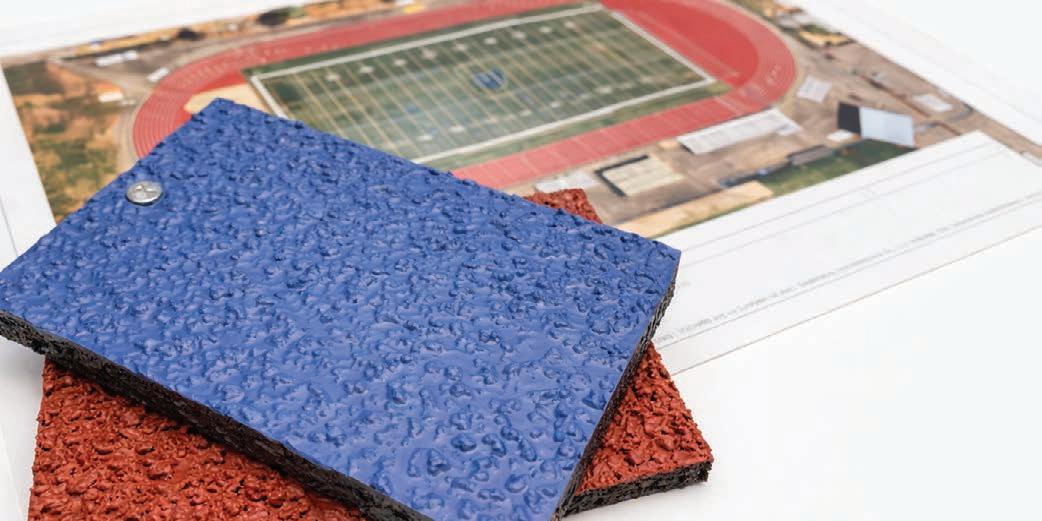
place to train, compete, and stay active regardless of conditions.
At North Middle School, the improvements go further. The football field, long impacted by drainage problems, will also be upgraded to address standing water issues that have made it difficult to use after rainfall.
The project isn’t just about replacing what’s worn out. It’s about correcting a gap that has quietly affected students for years.
Until now, middle school teams have had to travel to Grants Pass High School for track meets, creating scheduling challenges, add-
ing transportation costs, and pulling students out of class time just to compete.
Bringing those events back to campus changes that equation. It keeps students closer to their schools, reduces disruptions, and gives middle school programs a stronger sense of identity.
The upgrades will also include improved accessibility and expanded space for future spectator seating, signaling that the district is planning for growth rather than simply catching up.
• see YEAR, page 5
City of Grants Pass
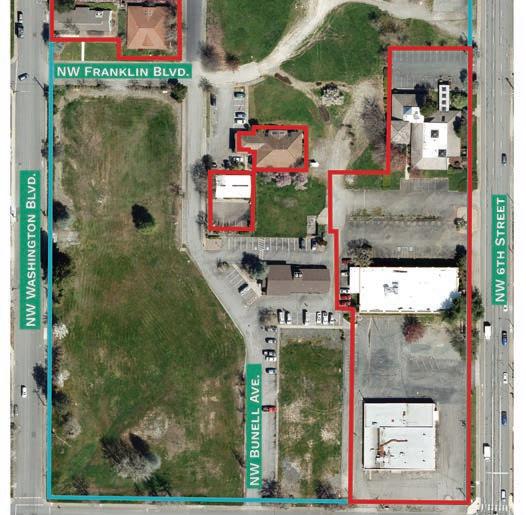
A key piece of property in northwest Grants Pass is moving one step closer to a potential transformation, and city officials are inviting the public to take part in the conversation. Later this month, the Grants Pass Urban Renewal Agency will host a community forum focused on the future of an eight-plus-acre site located near the intersection of Washington Boulevard and Midland Avenue, an area positioned between 6th Street and Washington Boulevard.
The meeting is scheduled for Thursday, April 16, 2026, from 5:30 p.m. to 7:00 p.m. at the Fireside Event Center in the Ember Room, located at 940 SE 8th Street. The forum is designed to give residents, business owners, and stakeholders an opportunity to learn more about the proposed redevelopment efforts while also offering input on what the future of the site could look like.
The Washington–Midland property has long been viewed as a location with significant potential due to its size and proximity to existing transportation routes and commercial corridors. City planners and redevelopment officials are now working to shape a long-term vision that could bring new economic activity, improved infrastructure, and expanded opportunities for community use.
Urban renewal agencies typically focus on revitalizing underutilized or aging areas through strategic investment, planning, and partnerships. In this case, the effort centers on evaluating how the Washington–Midland site could be redeveloped in a way that aligns with broader community goals while supporting sustainable growth in Grants Pass. The
• see WASHINGTON, page 11

By John Oliver
There are not many opportunities in a lifetime to leave something behind that will outlast you. In downtown Grants Pass, one of those opportunities is now taking shape—literally—brick by brick.
Construction of the new Owl Plaza is underway near the intersection of 5th and H streets, and alongside the physical progress of the site, the City has launched a community-centered initiative that gives residents a chance to become part of the project itself. Through the “Buy-a-Brick” campaign, individuals, families, civic organizations, and local businesses can purchase engraved brick pavers that will be permanently installed as part of the plaza’s foundation.
The concept is straightforward, but the longterm impact is anything but ordinary. Each brick, priced at $250, will include a brass plaque engraved with up to three lines of text. Those bricks will form part of the patio base, meaning every person who walks through Owl Plaza in the years ahead will be walking across a physical record of the community that helped bring it to life.
The City estimates that approximately 470 bricks will be available for purchase. That number provides a wide opportunity for participation while still maintaining a sense of exclusivity for those who choose to take part.
To preserve the tone and purpose of the pla-
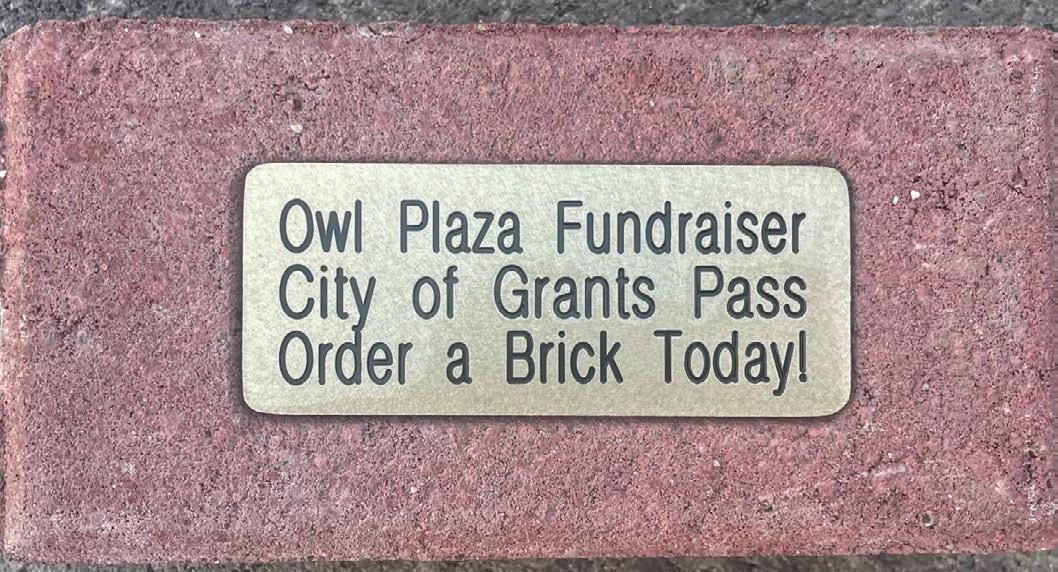
za, the City has established clear guidelines for engraving. Each brick is limited to three lines of text, with no more than 18 characters per line, including spaces. Submissions are restricted to names only. Slogans, quotes, promotional language, or messages of any kind are not permitted.
Examples provided by the City reflect the intended simplicity and personal nature of the project. Submissions such as “The Smith Family” or “Bob and Mary Smith” are encouraged, while longer name groupings may also be accommodated within the character limits. The focus remains on
identity, recognition, and legacy rather than messaging.
The City retains final approval over all submissions. If a proposed engraving is deemed inappropriate, the applicant will be notified and given the opportunity to revise the text. If a suitable revision cannot be agreed upon, a full refund will be issued. This process ensures consistency across the plaza while maintaining fairness for participants.
Beyond the technical details, the Owl Plaza project represents something larger for Grants Pass. Public spaces often serve as gathering
page 1
fered to eliminate any possibility of misrepresentation. That offer was declined.
This discrepancy raises legitimate concerns regarding accuracy and credibility.
The issue extends beyond participation. It reaches into specific questions tied to decisions made during West’s time in office. Among them are actions involving county-owned properties processed through tax foreclosure and subsequent sale.
County records show that on April 24, 2024, West voted in favor of Orders 2024-025, 2024-026, and 2024-027, authorizing the designation and sale of certain properties. On July 31, 2024, he again voted under Order 2024-046 to confirm those transactions. One property, approximately 100 acres in the Graves Creek corridor, has drawn particular attention due to the sequence of its transfer.
Available information indicates the parcel was sold through the foreclosure process for approximately $214,000 to a private intermediary and later resold for approximately $235,400 to a sitting county commissioner operating within the same regional area.
That sequence raises clear and reasonable questions. How was the property valued at the time of sale. Were independent appraisals conducted. Was fair market value achieved. Were appropriate safeguards in place to protect public assets. These are questions tied directly to public accountability and stewardship.
West has not addressed them.
What has emerged instead is a consistent pattern. Multiple opportunities were provided. Each was structured to ensure fairness, clarity, and transparency. Written responses were offered. Advance notice was given. Public formats were made available. The conditions were equal to those extended to all other candidates to include, Dwayne Yunker,
Chad Hansen, and Simon Hare.
Each opportunity was declined.
If John West is willing to engage in a thorough and transparent discussion regarding the matters that have been reported over the past several years, there is a clear path available to do so. I would welcome the opportunity to facilitate that conversation in a formal setting with appropriate federal authorities, including representatives from the Federal Bureau of Investigation, the Department of Justice, and the Internal Revenue Service. A setting of that nature would allow for a structured and verifiable review of the facts and provide an opportunity for any outstanding questions to be addressed directly and on the record.
At this point, there remain significant unresolved issues that warrant clarification. These are not only matters of public interest but also concerns that merit serious attention. The public deserves clear and complete answers, and accountability should not be avoided or deferred. Whether or not Mr. West chooses to participate in such a process, the expectation remains that these questions be addressed in a credible, transparent, and responsible manner.
What is already clear is the message being conveyed to voters. A candidate seeking public office is being presented with direct and repeated opportunities to explain his record and articulate his positions.
Those opportunities have not been accepted.
In the absence of answers, the pattern itself becomes the most telling response.
A campaign built on public trust cannot avoid the questions that define accountability. Silence does not resolve uncertainty. It reinforces it. As voters once again consider the direction of county leadership, the absence of engagement may carry as much weight as any statement that could have been made.
points, but only a few become meaningful landmarks tied directly to the people who live there. By incorporating engraved bricks into the plaza’s design, the City is intentionally creating a space that reflects the community in a lasting and visible way.
Owl Plaza is expected to become a central destination within downtown, a place where residents and visitors can gather, pause, and connect. The addition of personalized bricks transforms the space from a simple public project into something more enduring—an archive of names that represent families, businesses, and organizations that chose to invest in the city’s future.
For those interested in participating, the process has been made accessible. Residents may complete the purchase online or visit City Hall, located at 101 NW A Street, Suite 202, to fill out a form and submit payment in person. Payment options include cash, check, or credit card.
As construction continues and Owl Plaza begins to take its final shape, the opportunity to participate remains open, but not indefinitely. Once the available bricks are claimed, the foundation will be set, both physically and symbolically.
In a city built on community and connection, this project offers something rare: a chance to become part of the ground people will stand on for generations to come.



By John Oliver
Josephine County residents will have an opportunity to clean up their homes and properties at no cost later this month as Southern Oregon Sanitation Inc. hosts its annual Free Trash Day event in recognition of Earth Day. Scheduled for Saturday, April 18, 2026, the event will run from 9:00 a.m. to 3:00 p.m. and will be held at two convenient locations serving both Grants Pass and the Illinois Valley.
The event will take place at the Redwood Avenue Transfer Station and Recycle Center, located at 1381 Redwood Avenue in Grants Pass, as well as the Kerby Transfer Station and Recycle Center at 905 Kerby Mainline Road in Kerby. By offering two sites, organizers aim to improve accessibility for residents across the county while encouraging broader participation in spring cleanup efforts.
Southern Oregon Sanitation officials say the event is designed to help residents responsibly dispose of household waste while also reducing illegal dumping and supporting overall community cleanliness. As part of the program, households are allowed to bring in up to one cubic yard of loose household trash at no charge. This allowance is intended to provide meaningful relief for residents who may have accumulated waste but face barriers in disposing of it through regular services.
For those who may not have traditional household trash to discard, the event also includes an option to drop off a single qualifying item at no cost. Accepted items under this portion of the program include yard debris, limited to one cubic yard, one large household appliance, or one piece of furniture. Organizers note that appliances must have any Freon properly removed in advance to qualify for discounted or free
disposal.
Event organizers emphasize that materials must meet standard disposal guidelines. Yard debris that is contaminated with non-organic materials may be subject to regular disposal fees, reinforcing the importance of proper sorting before arrival.
The effort is part of a broader mission by Southern Oregon Sanitation to promote sustainable waste practices throughout the year. The company continues to offer recycling services for a wide range of materials, including items that are not typically accepted in standard curbside collection programs. Residents are encouraged to learn more about these ongoing services by visiting the company’s website.
Community leaders and sanitation officials view the Free Trash Day event as more than just a disposal opportunity. It also serves as a reminder of the shared responsibility residents have in maintaining the cleanliness and environmental health of Josephine County. By aligning the event with Earth Day, organizers hope to inspire greater awareness about waste management and encourage long-term habits that benefit both neighborhoods and natural spaces.
With rising disposal costs and increased awareness of environmental impact, events like this continue to play an important role in supporting local residents. The combination of accessibility, cost savings, and environmental stewardship makes the annual Free Trash Day a practical and meaningful opportunity for households across the region.
Residents planning to participate are encouraged to arrive early and ensure materials are properly prepared to help the event run smoothly and efficiently throughout the day.
From page 1
Construction is expected to begin in May, with completion projected for September, positioning the new facilities to be ready for the next school year.
The multi-million dollar investment is being funded through the district’s 2023 debt restructuring plan, which redirected existing resources toward long-term improvements without introducing new financial burdens.
District officials say the impact will extend beyond school hours. The new tracks will be open for community use, giving Grants Pass residents a reliable place to walk, run, and stay active even during the wetter months.
“This is an investment in our students and our community,” said Tommy Blanchard, Operations Manager for Grants Pass School District 7. “These new tracks and field improvements will provide safe spaces for students to learn, compete, and stay active throughout the year.”
For a town that values both athletics and access to the outdoors, the change is more than cosmetic. It removes a long-standing limitation and replaces it with something simple but important: a surface that works when students need it to.
After years of working around the problem, Grants Pass students are finally getting facilities built for how they actually live, train, and compete.

By Ellen Ward
As reports circulate about a newly identified COVID-19 variant in the United States, questions have emerged about whether this latest mutation poses a greater threat to children. Health experts continue to monitor the variant, known as BA.3.2, which has drawn attention for its number of mutations. Despite growing public concern, current data suggests that the overall risk profile, particularly for children, has not significantly changed.
Viruses naturally evolve over time, and SARSCoV-2, the virus responsible for COVID-19, is no exception. The BA.3.2 subvariant is part of the Omicron lineage and contains multiple changes to the spike protein, the portion of the virus that allows it to enter human cells. While mutations can sometimes alter how easily a virus spreads or how the immune system responds, not every mutation leads to more severe illness. At this stage, health authorities have not found evidence that this variant causes more serious disease in the general population or in children specifically.
Some early observations have noted that the variant appears more frequently in pediatric testing samples. However, experts caution against drawing conclusions from that data alone. Testing patterns, seasonal illness trends, and exposure differences can all influence which groups appear most affected. There is currently no confirmed indication that children are more susceptible to this variant or that it produces more severe symptoms in younger age groups.

In terms of symptoms, the illness caused by this variant remains consistent with what has been seen in recent years. Children who contract COVID-19 may experience fever, cough, sore throat, nasal congestion, fatigue, and headaches. In some cases, gastrointestinal symptoms such as nausea, vomiting, or diarrhea may also occur. A particularly sore throat has been reported in some newer cases, but this symptom is not unique to one variant and can overlap with other common respiratory illnesses.
For most children, COVID-19 continues to present as a mild, short-term illness that resolves at home with rest and supportive care. Recovery typically occurs within one to two weeks. Severe outcomes remain uncommon, especially among otherwise healthy children. However, certain groups continue to face higher risks, including
children with underlying medical conditions such as asthma, obesity, or compromised immune systems.
Parents and caregivers are encouraged to remain attentive to symptoms while maintaining perspective. The presence of a new variant does not automatically signal a more dangerous situation, but it does reinforce the importance of basic health awareness. Monitoring symptoms, ensuring children stay hydrated, and allowing adequate rest remain key components of care during any viral illness.
Medical attention should be sought if a child develops more serious warning signs. Difficulty breathing, persistent chest pain, unusual confusion, bluish discoloration of the lips or face, or signs of dehydration require prompt evaluation. These symptoms are not specific to one variant
but are recognized indicators of more severe illness and should be taken seriously regardless of the cause.
One rare but notable complication associated with COVID-19 in children is multisystem inflammatory syndrome, often referred to as MIS-C. This condition typically occurs after infection and involves inflammation affecting multiple organ systems. Although cases remain uncommon, awareness of prolonged fever, abdominal pain, rash, or unusual fatigue following a COVID-19 infection is important.
As respiratory illnesses continue to circulate, including influenza and RSV, distinguishing between them can be challenging without testing. Many of these viruses share overlapping symptoms, particularly in children. This overlap contributes to confusion and, at times, unnecessary concern when new variants are identified.
The current situation reflects an ongoing phase of the pandemic in which COVID-19 continues to evolve but is increasingly understood within the broader context of seasonal respiratory illnesses. Health officials continue to track emerging variants closely, but at this time, there is no indication that BA.3.2 represents a significant shift in severity, particularly for children.
Staying informed through reliable health sources and focusing on practical, symptom-based care remains the most effective approach. While vigilance is warranted, the available evidence supports a measured response grounded in current data rather than speculation.
By Ellen Ward
There is a moment every Oregon summer when the color changes. Deep purple, almost black, tucked into vines and piled into baskets at roadside stands, the marionberry arrives without much noise but with a reputation that has only grown stronger over time. It is widely known as the king of blackberries, and not by accident.
Developed in Oregon through agricultural research, the marionberry was never meant to be average. It was bred for better flavor, better texture, and better performance in the field. What came out of that effort was something distinctly different from the standard blackberry. The marionberry carries a layered taste that leans sweet at first, then shifts into a mild tartness with a deeper, almost wine-like finish. It is the kind of fruit that does not need sugar to prove its value.
That flavor alone would be enough to secure its place in Oregon kitchens, but what makes the marionberry stand out even more is what it delivers beyond taste. This is a fruit that fits squarely into the category of nutrient-dense foods, and it does so without any marketing gimmicks attached.
Marionberries are naturally rich in antioxidants, particularly anthocyanins. These compounds are responsible for the berry’s dark color, but more importantly, they play a critical role in protecting the body from oxidative stress. That process, which occurs at the cellular level, is tied to

aging and a range of chronic health conditions. Foods high in anthocyanins are associated with supporting heart health, reducing inflammation, and helping maintain cognitive function as people age.
The marionberry does not stop there. It also delivers a meaningful amount of dietary fiber, which supports digestion and helps regulate blood sugar levels. In a time when processed foods dominate much of the average diet, a naturally high-fiber fruit offers a simple and effective way to rebalance nutrition without complication. Fiber also contributes to cardiovascular health by helping manage cholesterol levels, adding another layer of benefit to a single serving.
Vitamin content is another piece of the equation. Marionberries provide vitamin C, an essential nutrient that supports immune function and assists the body in repairing tissue. Combined with naturally occurring polyphenols, the berry offers a combination of compounds that work together rather than in isolation. That synergy is part of what makes whole foods like this more effective than heavily processed alternatives. What truly separates the marionberry from many other so-called superfoods is proximity. This is not something shipped in from overseas or grown under artificial conditions. It is produced here in Oregon, largely within a relatively tight geographic region that provides the climate needed for its
success. For residents across Southern Oregon, that means access to a high-quality, nutrient-rich food that is often harvested and sold within the same community.
That local connection matters. Freshness directly impacts both flavor and nutritional value, and marionberries are often consumed at their peak. Whether picked up at a farmers market, purchased from a local grower, or grown in a backyard garden, the berry retains more of what makes it beneficial.
There is also a practical side to its appeal. Marionberries can be worked into daily routines without effort. They can be added to breakfast, incorporated into baking, or eaten fresh without preparation. Unlike many health-focused foods that require a shift in habit or taste, this one fits easily into what people already enjoy.
The marionberry does not rely on trends or labels to define its place. It has earned its standing through consistency, quality, and measurable nutritional value. It is a product of Oregon soil, shaped by local agriculture, and supported by communities that continue to grow and consume it year after year.
For those looking to make better food choices without overthinking the process, the answer may already be growing nearby. The king of blackberries is not just a title. It is a reflection of what this fruit delivers, both on the plate and in long-term health.

By Nik Martin, Local Foodie
The first hint is the aroma. Before you even reach the counter, the scent of fresh bread and warm cinnamon drifts through the air, the kind that makes you slow down without realizing it. On a recent early morning stop in Grants Pass, that familiar pull led straight into The Cozy Crumb, a small neighborhood bakery that is steadily earning its place among Southern Oregon’s must-visit food spots.
Served warmly, the cinnamon roll delivered exactly what most people hope for but rarely get. Every bite carried the soft, gooey texture usually reserved for the center of the roll. Instead of tapering off into dry edges, the consistency held from start to finish. The flavor struck a careful balance, rich with cinnamon and sweetness but never crossing into overpowering. It felt indulgent without being heavy, the kind of pastry that invites you to slow down and actually enjoy it.
What sets it apart is the sourdough base. That subtle tang works in the background, cutting through the sweetness just enough to give the roll a more layered, developed flavor. It is a small detail, but one that elevates the entire experience beyond a typical bakery offering.
The visit did not end there. Alongside the cinnamon roll, Martin picked up a loaf of the bakery’s sourdough bread, and it proved just as noteworthy. The crust carried a deep golden finish with a satisfying crispness, while the interior remained soft, airy, and
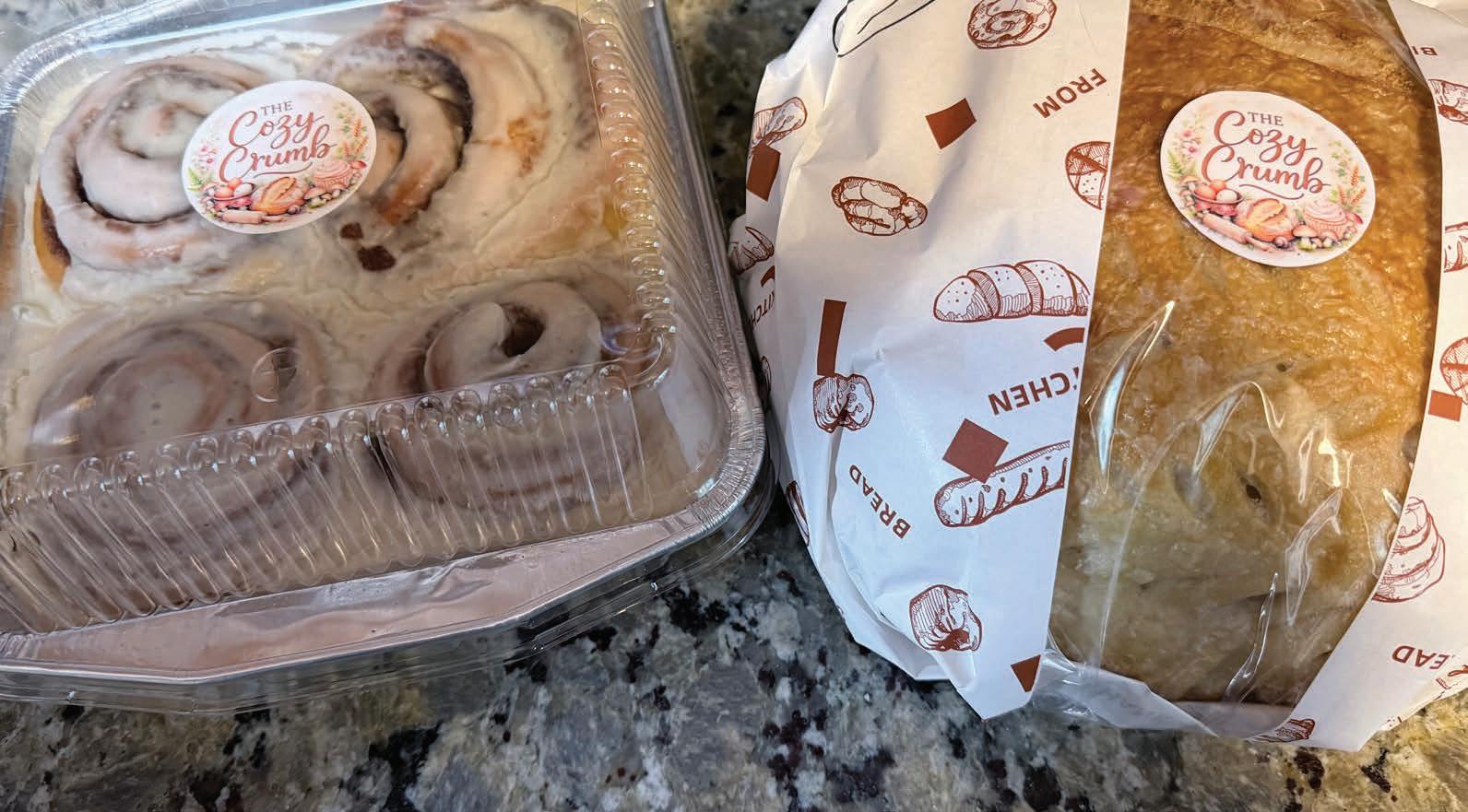
slightly chewy. Each slice reflected the kind of patience and attention that sourdough requires, from fermentation to final bake. The flavor was mild but distinct, with that familiar tang that bread enthusiasts look for and appreciate.
There is something increasingly important about places like The Cozy Crumb. In a time when convenience often replaces craftsmanship, small bakeries continue to hold the line on quality and care. Ingredi-
ents are handled with intention. Recipes are shaped by experience rather than shortcuts. The result is food that feels personal, even in its simplicity.
In Grants Pass, where the local food scene continues to evolve, it is these smaller establishments that often leave the strongest impression. A well-made loaf of bread or a thoughtfully prepared pastry does more than satisfy a craving. It creates a moment, something memorable in the middle of an

otherwise ordinary morning.
For anyone who appreciates fresh baked goods done right, The Cozy Crumb is worth making part of the routine. Whether it is a quick stop on the way to work or a slower start to the day, the experience delivers more than just breakfast.
And as for the cinnamon roll, there is still one debate left unsettled.
Are you reaching for the edge, or going straight for the center?














By John Oliver
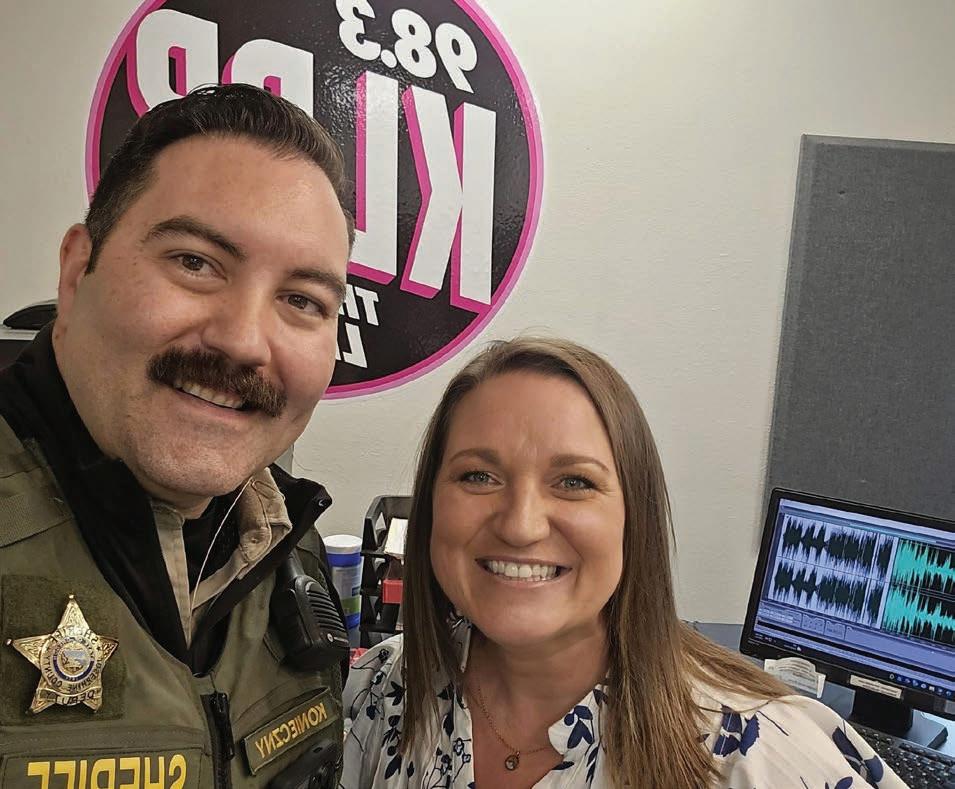
A new voice is joining the morning lineup on KLDR 98.3 FM, and it comes with a mission rooted in community awareness and student safety. Beginning this month, listeners can tune in every other Thursday for a new segment titled On Duty and On Air with D.K. and Cassy, airing from 8:40 a.m. to 9:00 a.m.
The segment is hosted by School Resource Officer Robby Koniezny of the Josephine County Sheriff's Office, alongside DJ Cassy, bringing together law enforcement insight and local radio familiarity in a format designed to connect directly with families, students, and residents across the region.
The program is built around a straightforward goal: keeping kids safe by keeping the public informed. Through regular conversations, the segment is expected to address a wide range of topics that impact youth both inside and outside the classroom. These may include school safety practices, digital awareness, bullying prevention, and real-world situations that students and parents may encounter in Josephine County.
By placing a School Resource Officer behind the microphone, the segment offers something that is often missing from public safety discussions: direct access. Rather than relying on secondhand information or occasional updates, listeners will hear directly from someone working within the school system and law enforcement community. That perspective is intended to provide clarity, answer common questions, and help bridge the gap between public safety officials and the families they serve.
For KLDR, the addition reflects a continued effort to keep local programming relevant and community-focused. Morning radio has
long been a gathering place for information, and this segment adds a practical layer to that tradition by focusing on issues that affect households across Southern Oregon on a daily basis.
For the Josephine County Sheriff’s Office, the segment represents an opportunity to extend its presence beyond school campuses and into the broader community. School Resource Officers already serve as a visible point of contact for students, often acting as both safety personnel and mentors. This radio platform expands that role, allowing important conversations to reach parents, guardians, and residents who may not otherwise have direct interaction with an S.R.O.
The timing of the segment, positioned during morning routines, is intentional. As families prepare for the day, the program aims
From page 1
forum will serve as an early step in that process, providing insight into current planning considerations and allowing the public to engage directly with those leading the project.
Attendees can expect an overview of the site, background on the redevelopment initiative, and information about how the planning process will unfold in the months ahead. Just as importantly, the event is intended to be a two-way conversation. Community feedback gathered during the forum may help shape priorities, influence design concepts, and guide decision-making as the project develops.
5 DAY OUTLOOK
SOURCE: WEATHER.COM
WEDNESDAY

to deliver concise, useful information that can be easily understood and applied. Whether it is a reminder about online safety, an explanation of school procedures, or insight into current concerns affecting youth, the segment is designed to be both accessible and actionable.
As it rolls out, On Duty and On Air with D.K. and Cassy is expected to become a consistent touchpoint for community engagement. In a region where local connection still matters, the combination of radio and real-world experience offers a simple but effective way to keep important conversations front and center.
Listeners across Josephine County can catch the segment every other Thursday on KLDR 98.3 FM, adding a new layer of local insight to the morning airwaves.

Residents who are interested in the future of Grants Pass, particularly in how growth and redevelopment are managed, are encouraged to attend. Participation in forums like this offers a direct way to stay informed and contribute to decisions that can shape the city for years to come.
Additional details about the project, including background materials and updates, can be found by visiting the official project page for the Washington–Midland redevelopment.
City officials have emphasized the importance of public participation in projects of this scale. Redevelopment efforts often carry long-term impacts on traffic patterns, housing, business development, and neighborhood character. By opening the discussion early, the agency is seeking to ensure that the outcome reflects the needs and expectations of the community it will serve.



April 6, 2026
Posting April 6, 2026

Advertise with The Grants Pass Tribune!
Stand with us in defending freedom of the press and the 1st Amendment! The Grants Pass Tribune is facing political persecution, with lawsuits aimed at silencing our bold investigative journalism. We remain committed to uncovering the truth and keeping our community informed like never before.
Show your support for independent journalism and the fight against political tyranny. Place your ad with us and align your business with the values of free speech and transparency.
GET STARTED
Contact John Oliver john@grantspassmag.com