WEDNESDAY, APRIL 2, 2025

WEDNESDAY, APRIL 2, 2025
Finally, an inside look at political betrayal, personal resilience, and the unexpected consequences of deceit.
By: John Oliver
Karma has a way of arriving right on time— even when no one’s watching. It doesn’t care about titles, reputations, or the political games people play. It doesn’t wear a suit, carry a gavel, or attend ribbon-cutting ceremonies. It simply waits—until the right moment to deliver what’s earned.
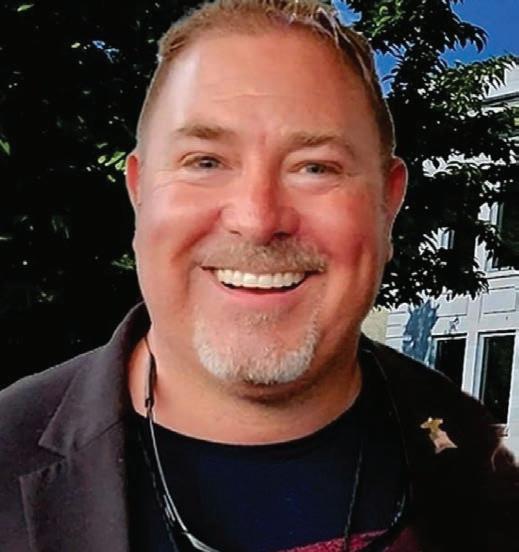
Lately, I’ve had more than a few people ask me: “John, why do you keep going after Commissioner Chris Barnett?”
It’s a fair question—at least on the surface. But to truly understand the answer, you have to look beyond the headlines and into the history that created them—many of which were written not by commentary, but by Chris Barnett’s own actions. This story goes far deeper than politics. It’s a story of betrayal, manipulation, and a troubling pattern of deception. But more than anything, it’s a story about accountability—and what happens when those in power believe they’re above it.
Let’s start at the beginning—because this story didn’t begin with Chris Barnett. It began with a name many in Josephine County already know all too well: Simon Hare, former county commissioner.
Years ago, Simon Hare didn’t just interfere in my life, he detonated a bomb in it.
Hare made headlines in my personal world through an affair with my former partner. But it didn’t stop there. What followed was an eight-month period that I can only describe as a home invasion in slow motion. He and my ex-partner squatted in my home, destroyed property, stole personal belongings, and turned the space I once called home into a wasteland.
When the damage was done, they dumped the debris—literal trash and wreckage—onto my neighbor’s yard. And not just any neighbor: Jerry Wilder, a respected band teacher and beloved member of our Grants Pass community. This wasn’t just a crime of theft or destruction. It was an act of cruelty and total disregard for human decency.
For those who doubt the legitimacy of this story—don’t. Police reports exist. Case numbers exist. These are not tabloid rumors or speculative gossip. This is documented truth. Just truth that I had placed in my rearview mirror. Until now.
In response to the chaos, I took the legal route and filed a formal eviction notice. What followed, however, felt like something out of a Kafka novel. The very next morning, two sheriff’s deputies showed up at my door with a restraining order—fabricated, mali-
cious, and entirely unfounded. It accused me of actions that, if true, would amount to felonies in any state—yet there was no evidence, no 911 calls, no complaints on record. Just lies, signed off by a judge who, conveniently, happened to be a personal acquaintance of Mr. Hare. And for a time, the scheme worked. I was removed from my own home—stripped of my rights by a system twisted to serve political friendships over justice.
I spent 90 days in legal and emotional purgatory, followed by another eight months clawing my way back from the brink. But I rebuilt. I healed. I forgave—not for their sake, but for my own peace of mind. I started fresh. And that’s when karma decided it wasn’t finished yet.
Chris Barnett wasn’t always an adversary. In fact, I once considered him a friend. I endorsed his candidacy, wrote supportive stories, donated over $2,000 worth of sport coats, and provided thousands more in discounted advertising through my paper, The Grants Pass Tribune—all of which was documented and personally signed off by Barnett himself, for the skeptics out there. I genuinely believed in his potential and wanted to support someone I thought could make a positive difference in our community.
But then came the lies.
Before journalism, I spent more than a decade working as an interview and interrogation specialist, trained by the same profes-
• see BARNETT, page 3
By: John Oliver Hooters,
the iconic restaurant chain famous for its “chicken wings” and casual atmosphere, has filed for bankruptcy protection, the company confirmed in a statement on Monday. Despite this significant financial setback, the company reassured customers and employees that it has no intention of disappearing from the restaurant scene.
Founded in 1983, Hooters became known not just for its food, but also for its distinctive brand, characterized by waitstaff dressed in tank tops and orange shorts. The brand’s combination of casual dining and sports-bar style has made it a cultural touchstone for decades. However, in recent years, the chain has faced financial difficulties, struggling to maintain its competitive edge in an increasingly crowded dining market.
In filing for Chapter 11 bankruptcy, the company is taking proactive steps to restructure its operations. As part of the process, Hooters plans to sell all 100 of its company-owned restaurants to two separate franchisee groups. These groups are already responsible for running Hooters locations in Tampa, Florida, and Chicago, respectively. Combined, these groups operate approximately a third of the chain’s franchised locations across the United States.

The decision to sell company-owned locations is part of a broader effort to streamline operations and refocus on the more successful aspects of the Hooters brand. By selling off these restaurants to franchisees, the company hopes to reduce its operating costs and allow the new owners to implement strategies that may better reflect the needs of their local markets.
Despite the bankruptcy filing, Hooters is not planning to close its doors permanently. The restaurant chain has made it clear that it will continue to operate its remaining locations, and the sale to franchisees is expected to preserve jobs and maintain the brand’s presence in communities across the country. The compa-
ny’s bankruptcy filing and restructuring plans are intended to stabilize the business and position it for long-term success.
In the announcement, Hooters also emphasized that the franchisees who will take over the company-owned locations have a long history with the brand. Their experience running Hooters franchises in key markets, such as Tampa and Chicago, is seen as a key factor in ensuring a smooth transition and the continued success of the brand post-bankruptcy.
Hooters has been facing increased competition from a range of other dining options in recent years, including fast-casual chains and delivery-focused food services. In addition, the company has faced challenges in adapting its
model to shifting consumer preferences, particularly in light of the COVID-19 pandemic, which led to a downturn in foot traffic to many restaurant locations.
The bankruptcy filing is seen as a way for Hooters to reorganize and reduce its debt load, allowing the company to focus on profitability and long-term sustainability. It’s a necessary step, given the changes in the broader restaurant industry and the pressures that have come from changing consumer habits.
In conclusion, while Hooters is undergoing significant changes through its bankruptcy filing, the company remains committed to maintaining its brand and presence in the restaurant industry. The sale of company-owned locations to experienced franchisees represents an effort to stabilize and refocus on the brand, ensuring that it continues to be a familiar part of the dining landscape for years to come.


















By: John Oliver
In America, those who step into public office do so with a clear understanding—or at least they should—that their role comes with both privilege and sacrifice. One of the sacrifices that comes with being an elected official is the loss of personal privacy when it involves public business. Once a private citizen accepts the responsibility of representing the people, every action they take in that capacity becomes subject to public scrutiny. Emails, text messages, even those sent from personal devices—are considered public records when they pertain to government matters.
These are not just ethical expectations. They are enforceable under law. Transparency laws exist to ensure that elected officials are acting in the public's interest, not in pursuit of personal agendas. They are meant to build trust between citizens and government by allowing people to see how decisions are made, how public funds are spent, and whether those in power are acting with integrity.
Yet in Josephine County, Oregon, this legal and ethical framework seems to have been tossed aside. What remains is a local political culture riddled with dysfunction, secrecy, and self-serving behavior. Here, the laws that are supposed to guide elected officials are routinely ignored, and professionalism has been replaced by petty games and personal vendettas. Instead of working for the public good, some officials

appear more focused on undermining each other behind closed doors.
Residents of Josephine County have watched as transparency has eroded and ethics have been treated as optional. Requests for public information are often delayed, denied, or dodged altogether. Officials use private channels to conduct public business, seemingly in hopes of avoiding accountability. It’s as if the rules simply don’t apply to them—at least, not until the public demands they do.
But accountability is not just the responsibility of the government; it’s also the responsibility of the people. Every citizen has the right to request access to public records. If a public official is discussing county business over text message, even on a personal phone, those messages are fair game under Oregon law. The same goes for emails sent from private accounts. The
law is clear: if it pertains to public work, it is subject to public review.
The process to request records isn’t complicated. It begins with identifying which agency or official holds the information. A written request, specifying what documents or communications you’re seeking, should be submitted via email, mail, or in person. Under Oregon law, the agency must acknowledge your request within five business days and must provide the records— or explain the delay—within ten. Fees can be charged for labor and materials, but they must be reasonable, and citizens can request fee waivers when the information being sought is in the public interest.
If your request is improperly denied or delayed without explanation, there are avenues for appeal. The District Attorney or Oregon’s Attorney General can be contacted, and various nonprofit organizations offer
From page 1
sionals who trained the FBI and CIA. It’s not arrogance, it’s experience. When someone lies to me, I know it. And when Barnett began to lie, I recognized it immediately.
I gave him the benefit of the doubt. I even warned him: step away from the race—you don’t know what you’re walking into. But the truth is, he knew exactly what he was doing. He was just the next player in the same old “Good Ol’ Boy” network—one I’ve spent the last year exposing. At the time, I was the one who didn’t know. But now I do.
It didn’t take long before the betrayal hit full force. During the height of his campaign for commissioner, Barnett filed a lawsuit against me—not for slander or libel—but for publishing uncomfortable truths. This wasn’t about justice. It was about silencing the press. Silencing me.
And who was quietly pulling the strings behind the scenes? None other than Simon Hare—and, unsurprisingly, John West. Coincidence? Not even close. You don’t need to be a political analyst to connect the dots. When Hare’s public reputation became too toxic to rehabilitate, Chris Barnett conveniently stepped in as the new face of the same old machine. He wasn’t just running for office— he was run for office, handpicked to carry the torch Hare could no longer hold. And
once again, karma took notes.
In February 2024, I received the same whistleblower letter as The Daily Courier—a request to look into suspected corruption involving John West and Simon Hare. But while the Courier stayed silent, likely out of fear, The Grants Pass Tribune began to dig into the story. We were the only outlet to speak up. And now, the public is witnessing exactly why the others stayed quiet: political retaliation. Coordinated suppression. The criminalization of truth.
But I don’t scare, at all!
I didn’t write those stories for vengeance. I wrote them out of a sense of duty—to this community, to the truth, and to myself. All backed with evidence and testimony! Because, when public officials abuse their power and attempt to bury those who speak up, someone has to stand in the gap.
This is not about politics. It’s about patterns. Patterns of abuse, deceit, and cover-ups. And Barnett and Hare are both following that pattern to the letter—until it catches up with them.
So, when people accuse me of “picking on” these individuals, I ask: First, consider that I own and operate a newspaper—this paper—which was founded before any of this began. Second, ask yourself: what would you
do if someone stole your home, destroyed your relationship, actively tried to destroy your business, and attempted to erase your voice from the very community you’ve dedicated your life to serving? What do you call it when elected officials weaponize their positions to silence those they disagree with? For me, this isn’t just a personal battle—it’s my life’s work. I’ve been a journalist and publisher for over 25 years. This isn’t a hobby or a side project—it’s my livelihood, my career, and my passion. Telling the truth, holding power to account, and reporting the news is what I do.
So, is it wrong to do my job? I don’t think so. Maybe what they didn’t expect was that the underdog wouldn’t fold—that I’d stand my ground, alone if I had to. And that’s what they fail to understand: with little to no support from anyone, I’m still here. Still standing. Still publishing. Still reporting the news every single day. And if they happened to cross paths with that truth—well, that’s not my fault. That’s just karma.
Let me be clear: Barnett and Hare were never victims of media bias. They were victims of their own behavior. They didn’t fall— they jumped. I just happened to be the one holding the pen that is willing to tell the truth.
resources and guidance to citizens seeking government accountability.
Now more than ever, it’s time for the people of Josephine County to take a stand. It’s no longer enough to be frustrated or disillusioned by local leadership. It’s time to get involved—to dig deeper, to ask hard questions, and to demand real answers. Attend meetings, speak out, file requests, and hold these officials to the standards they swore to uphold. The public’s right to know is not a nuisance, it’s the foundation of a functioning democracy.
Elected officials are not royalty. They are not above the law. They are public servants, and it is time they act like it. Otherwise, the circus of Josephine County politics will continue—and the people will be left picking up the tab for the mess their leaders make in the shadows.




By: Leaf Barret
Tanning beds and red light therapy have become widely discussed in the world of skincare and wellness, with both promising changes in skin appearance through exposure to artificial light. However, while these treatments may seem similar on the surface, their health effects and safety profiles differ dramatically. As more people seek effective ways to improve their skin, it’s important to understand the science behind these popular technologies, their potential risks, and what moderation really means.
Tanning beds work by emitting ultraviolet (UV) radiation to darken the skin, simulating the effect of sun exposure. For years, tanning salons have marketed these beds as a controlled and even healthy way to achieve a golden glow, often suggesting that moderate use poses
little risk. But major health organizations disagree. The American Academy of Dermatology has reported that indoor tanning increases the risk of skin cancers, including a 58% higher chance of squamous cell carcinoma and a 24% increase in basal cell carcinoma. The numbers become more alarming for young people, with melanoma risk rising by 47% for those who use tanning beds before the age of 20.
Even minimal or occasional use of tanning beds carries danger. The Skin Cancer Foundation has stated that a single tanning session can significantly raise the chances of developing skin cancer. Moreover, the widely believed idea that a "base tan" can protect against sunburn or further skin damage is a myth. According to the U.S. Food and Drug Administration, no level of tanning—indoor or otherwise— offers a protective benefit. In addition to cancer risk, frequent users of tanning beds may also experience premature aging, skin discoloration, and eye damage, including an increased risk of cataracts


and ocular melanoma.
In contrast, red light therapy (RLT) is often seen as a gentler, non-invasive option in the skincare world. RLT involves exposing the skin to low-wavelength red light, which is believed to penetrate the skin at a cellular level. This process stimulates collagen production, reduces inflammation, and promotes healing. Unlike UV light, red light does not damage DNA, making it significantly safer when used properly. Studies have shown positive results for conditions such as acne, rosacea, fine lines, and even wound healing.
One of the main benefits of red light therapy is its safety profile. Most treatments are painless, and side effects are typically minimal. However, overuse or improper use—especially with at-home devices—can lead to skin irritation or burns. Individuals who are sensitive to light or are on medications that increase light sensitivity should consult a healthcare provider before starting treatment. Overall, when used according to manufacturer guidelines or under professional supervision, red light therapy is considered a low-risk treatment.
Comparing the two technologies highlights the stark difference in their long-term effects. Tanning beds offer no proven health benefits and carry serious, well-documented risks. Their link to skin cancer, premature aging, and eye damage makes them a poor choice for anyone concerned with overall wellness. On the other hand, red light therapy, while still being studied for its full potential, offers a promising alternative for those looking to enhance skin appearance or address certain dermatological issues without the threat of harmful radiation.
As skin care trends continue to evolve, the key to choosing the right treatment lies in understanding both the benefits and the potential dangers. Avoiding tanning beds altogether is strongly recommended by health professionals. For those curious about red light therapy, it may offer a safer and more science-supported option—especially when practiced in moderation and with proper oversight. In the pursuit of healthier, more radiant skin, the best approach is always grounded in safety, science, and informed decision-making.




Advertise with The Grants Pass Tribune!
Stand with us in defending freedom of the press and the 1st Amendment! The Grants Pass Tribune is facing political persecution, with lawsuits aimed at silencing our bold investigative journalism. We remain committed to uncovering the truth and keeping our community informed like never before.
Show
The BCC Weekly - Taking the “Blind” out of the BCC
By: Jay Meredith, CPA Investigative Journalist
Historically the annual budget seasons and annual budget committee meetings for local governments have been relatively uneventful. But last year the Sheriff was quoted as “preparing for a dog fight” going into last year’s budget committee meetings. Based on a Board of County Commissioners (BCC) meeting last week and other general budget discussions and comments made in recent weeks, this year’s budget process may be a much larger dog fight that spills over into a budget war.
Decisions and budget votes Commissioners made last year turned into a few of many reasons listed on the petition to recall Commissioner John West. Two of the three commissioners voted to defund the 4H Extension Service District. The Budget Officer and Commissioners took away some General Fund revenues that have historically been used to support the Sheriff’s operations, right after County voters approved a new law enforcement services district to support the Sheriff. Veterans packed the Anne Basker budget meeting and felt compelled to plead with the committee to restore unnecessary cuts to the Veterans Service Office.
Last year’s budget sessions also saw Commissioner Baertschiger (and West) spearheading a random $162,500 cut to the Public Health Department budget without stating any logical reasons for the cut. Not coincidentally, an internal investigation by an outside legal firm later in the year confirmed and upheld allegations of retaliation and bullying of the Public Health Director by former Josephine County Commissioners West and Baertschiger.
Former Finance/HR Director Sandy Novak took what is likely a large severance payment under the County’s recent voluntary resignation program and reportedly quickly moved to take a finance job over on the other side of the Country. In comes the political ally and friend of recalled County Commissioner John West, former Commissioner Simon Hare to save the day. Hare was appointed this year’s budget officer almost immediately upon Novak’s resignation announcement without the County Commissioners even considering the qualifications of any other non-County employee.
This is eerily familiar to when former Commissioner John West put his friend Simon Hare to work as a County broadband grant consultant early last year and had the County start paying Hare before the County even had a signed contract with Hare for the consulting work. Also not coincidentally, reliable sources tell us that John West spent as much or more time in the County Courthouse meeting privately with the new 2025 commissioners in the weeks to follow his recall from office than the time he usually spent in the courthouse when he had the title of commissioner.
And in a trio of “coincidences,” new contract budget officer Simon Hare attacked the Public Health Department budget (and by extension the Public Health Director) in his first two budget overview meetings with the BCC. Both budget discussions by Hare, including the one last week on Wednesday March 26th, Hare suggested the Public Health Department budget is running at a significant deficit this year of potentially as much as about $450,000. How-

ever, Hare also suggested he has heard anecdotal comments from staff that Public Health is actually running in the black.
So, which is it? Concrete details regarding the Public Health budget status were few from Simon Hare, likely leading the new commissioners to be very concerned about the budget and overall management of Public Health. As someone who spent 10 years as the finance director of the City of Grants Pass (which has a budget comparable to Josephine County), I found it appalling that Budget Officer Hare threw Public Health under the budget bus in front of the BCC (twice!) without having details to back up the allegations and concerns.
It was almost as if this was an arranged attack on Public Health by a new contract budget officer Simon Hare, who just so happens to be good pals with recalled commissioner John West…who was just found guilty of retaliation and bullying of the Public Health Director. New Commissioners this year better be very careful about decisions made about the Public Health budget and better work in a very collaborative manner to solve any deficit that actually exists.
Despite uninformed comments to the contrary last week by new budget officer Simon Hare, the County’s General Fund can easily absorb a one-time cash infusion to the Public Health budget to shore it up, if needed (see HERE for a positive report on the County’s financial health). Even if proven not to be needed, I’d suggest a one-time cash infusion of at least the amount of last budget season’s random budget cut of $162,500 as the Public Health fund does have a very tight and complex budget and a relatively complex series of cash flows and medical billings necessary to support operations.
New budget officer Simon Hare seems to be learning the hard way the County budget of today is not the county budget back when he was commissioner. The biggest difference is the voters have actually approved a series of funding measures for the Sheriff’s office. This is why so many of us were upset when last year Commissioners West and Baertschiger made a series of budget votes that essentially took some money away from the Sheriff’s office and didn’t allow the Sheriff to properly access all the new revenues from the 2023 voter-approved law enforcement service district.
The law enforcement service district should have been enough to add approximately 20 new fully loaded positions to the Sheriff’s office (primarily patrol but also dispatch and support functions). Last year’s original recommended
budget had zero new positions in the sheriff’s budgets rather than the nearly 20 that was possible, and it was indeed a dog fight just to get 5 new positions added to the Sheriff’s budget. Former Commissioner West tried to lobby to add only 3 new positions to the Sheriff’s budget rather than 5, and both proposals were a far cry from what was easily financially sustainable (the equivalent of a Sheriff budget cut).
The new Sheriff Law Enforcement (LE) Services District will bring in brand new revenues this fiscal year of approximately $5.4 million and next budget year the LE Services District will bring in about $5.7 million in property tax revenue. And all we got this year for our $5.4 million was five newly budgeted staff members in the Sheriff’s office. To say voters and taxpayers are upset about not getting what we voted and paid for is…well, an understatement in my opinion. Last budget season one of the three County Budget Committee members stated clearly in a budget meeting that he was similarly upset about this.
There was a moment in another BCC meeting last week that really made the hair stand up on this budget dog’s back. The Sheriff approached the BCC with a request to purchase five replacement patrol vehicles. These were regular and routine vehicle replacements when a patrol vehicle reaches the end of its useful life and money had already been set aside to replace these vehicles. The BCC delayed the decision to approve the vehicle purchases, citing budget uncertainties. The Sheriff has a brand-new annual revenue source that brings in about $5.7 million more per year in funding to patrol going forward. And routine patrol vehicle replacements that have already been essentially paid for are being delayed due to “budget uncertainties.” I hope, for the new commissioners’ sake, that they are only gun shy due to not having been through a county budget season before.
In that same BCC meeting last week another costly casualty of the misguided voluntary resignation program was discussed. The Juvenile Justice Department lost one of its key shift supervisors of the residential division to the recently BCC-approved voluntary resignation program. Juvenile Justice requested an expedited process to recruit and hire a replacement for this position due to having minimum staffing standards to meet. Not only did the County have to pay a costly severance for this voluntary resignation program participant, but now Juvenile Justice will incur costly overtime meeting minimum staffing levels in the Juvenile Justice
residential program until they hire and train a replacement staff member for this lost employee. In this instance, the voluntary resignation program seems to have caused nothing but extra costs for Juvenile Justice and no benefits.
Commissioners also asked the newly appointed budget officer Simon Hare last week for advice on how much carryover fund balance should be ideally maintained in the General Fund each year to be set aside as a reserve fund of sorts. Hare advised that one year’s worth of General Fund expenses, or $12 million should be the eventual target and that the General Fund was sitting at about $8 million in fund balance now. Every part of that advice from Hare was either wrong or misguided, if you view the County’s budget as I do.
You see, the General Fund ended last fiscal year with a fund balance of $15.5 million due to the practice of draining the Law Enforcement Fund back into the General Fund at the end of each fiscal year. The General Fund has traditionally supported the Law Enforcement Fund and takes back whatever goes unspent. This leads to the actual fund balance of $15.5 million in the General Fund, which was a whopping $3 million higher than the previous year’s General Fund balance. And this fund balance is millions higher than it needs to be, given the General Fund programs only spend about $10 million per year.
A better fund balance target would be 40% of annual expenditures for the General Fund and any program fund that relies primarily on property taxes to fund operations (such as the Law Enforcement Fund). Property taxes are the most reliable and predictable form of revenue that local governments in Oregon have, and typically even recessions don’t cause reductions to annual property tax revenues due to nuances on state laws regarding assessed value calculations. 40% is not too much and not too little, covering operating costs until property taxes start arriving in November each fiscal year. Bond rating agencies rate the City of Grants Pass very high due in part to a history of maintaining 40% or more of annual expenditures in the City’s General Fund balance.
Why does all this matter to the citizens and taxpayers of Josephine County? Because our new budget officer and new county commissioners seem to be posturing to repeat what many considered to be major mistakes made in last year’s budget process. And we taxpayers want to get the law enforcement services that we voted for and are currently paying for! We’ve saved more than enough for a rainy day, and now it’s time that the Sheriff gets the funding and new staffing that voters just approved less than two years ago.
And the District Attorney’s office also desperately needs BCC’s approval of at least a couple new Deputy DA positions to help balance local law enforcement and justice programs. The County’s Law Enforcement and General Fund budgets can accommodate two additional DA positions to help keep up with the local crime caseloads.
As far as I’m concerned, the only County budget uncertainty in the short-term is whether the new commissioners will honor voters’ wishes. Last year the BCC did not respect voters, and there were no winners in that dog fight.
Posting Date March 31, 2025

GPT News Desk
The City of Grants Pass continues its commitment to fostering public art by honoring a new standout work: the vibrant “Wings” mural, selected as April’s Public Art of the Month by the Committee on Public Art (CoPA).
Located on the side of Oregon Pizza and Pour Authority (OPPA), the mural faces H Street just off the bustling corner of 7th Street in downtown Grants Pass. Bold, colorful, and uplifting, the piece is impossible to miss, catching the eye of locals and visitors alike with its dynamic depiction of dragonflies mid-flight.
The mural was completed in 2024 by
lead artist Crystal Pyren, a well-known local muralist and community art advocate, in collaboration with several talented student artists from local high schools. The project reflects a broader initiative to involve youth in public art and give emerging artists a platform to express their creativity on a meaningful scale.
The theme of dragonflies was chosen for its symbolic meaning—often associated with transformation, adaptability, and self-realization. The mural features large, iridescent dragonflies in motion, set against a sweeping, sky-toned backdrop with elements of movement and light. The mural’s name, “Wings,”
reflects both the imagery and the deeper message of hope and forward momentum.
Grants Pass continues to expand its downtown art scene, with several other public art pieces already featured throughout the city, from sculpture installations to painted utility boxes and community-led mural projects.
For Pyren and the student artists, Wings represents not only a completed work of art but a lasting connection to the community.
To view the mural in person, visit the east-facing wall of Oregon Pizza and Pour Authority at H Street and 7th in downtown Grants Pass. Click to view all artwork.

5 DAY OUTLOOK
SOURCE: WEATHER.COM
Partly cloudy, some rain 54/37

Partly cloudy 60/32
Sunny 69/36
Mostly sunny 73/42



Partly cloudy, some rain 65/46








By: John Oliver
I recently had the opportunity to tour the impressive new home of Ace Force One in Grants Pass—their largest and most dynamic location in Southern Oregon to date. Known for shaking up the fitness scene with its high-energy, results-focused approach, Ace Force One has returned stronger than ever, now with an even greater emphasis on group training, personalized coaching, and wholebody wellness tailored to the Grants Pass community.
Re-established as the city’s only dedicated transformation gym, Ace Force One is far more than a traditional fitness center. It’s a lifestyle destination built for people who are ready to take control of their body, mind, and health. Whether you’re stepping into a gym for the first time or getting back into the groove af-



ter a long break, this place welcomes all fitness levels with open arms and a proven system that delivers results.
What truly sets Ace Force One apart is its hands-on, coach-led approach. In contrast to standard gyms where you’re often left to navigate your fitness journey alone, here every session is led by experienced trainers who ensure that exercises are tailored to your current ability. This not only boosts safety but also maximizes progress. According to Thomas, one of the lead coaches, “We’re not a one-size-fits-all gym. We customize every workout, so you’re always improving at a pace that’s right for you.”
Built on an athletic-based training philosophy, Ace Force One offers structured programs designed to build strength, increase endurance, improve mobility, and help individuals completely transform their bodies. The program blends expert coaching with community support and real accountability to ensure that progress isn’t just a goal—it’s the expectation.

To cater to different needs and goals, Ace Force One offers a variety of specialized training camps. Spin Force is their high-energy indoor cycling class that helps torch calories while building stamina. Ace Force Bootcamp delivers their signature transformation experience, focused on strength, conditioning, and fat loss. Ace Athletic Training is geared toward youth, teens, and adults looking for performance-based fitness, while Recover Force emphasizes mobility, injury prevention, and recovery—ideal for anyone overcoming physical challenges or aiming for long-term wellness. Workouts are designed to stay engaging and purposeful, with themed training days each week. Mondays are for glute-focused training, while Tuesdays hone in on upper body strength. Wednesdays emphasize full athletic performance, followed by targeted core and glute work on Thursdays. Fridays deliver a full-body burn, and weekends feature special events and recovery sessions. Each class is a fast-paced, 50-minute
workout available at convenient times throughout the day, including early mornings, midday options for members aged 50 and over, and evening sessions for those with busy schedules.
The impact of Ace Force One can be seen in the success stories of its members. Hundreds of individuals throughout the Rogue Valley have built strength, lost weight, and improved their overall well-being through the gym’s proven method. But beyond the physical transformation, many also speak to the mental and emotional benefits—clearer minds, boosted confidence, and a true sense of community formed through shared goals and support.
To make fitness as accessible as possible, the gym includes thoughtful amenities like personal showers, private bathrooms, cutting-edge equipment, and complimentary child watch—making it easier for parents and busy professionals to prioritize their health.
If you’re still unsure whether Ace Force One is the right fit for you, there’s no risk in giving it a try. Your first class is absolutely free. Simply text (541) 2917249 to claim your spot and experience the difference for yourself.
With its return to Grants Pass, Ace Force One has once again positioned itself as the ultimate destination for total transformation. Whether you want to lose weight, gain strength, or simply feel better inside and out, this gym is ready to guide you every step of the way—one workout at a time.