
WEDNESDAY, APRIL 1, 2026
WEDNESDAY, APRIL 1, 2026
By Leaf Barret
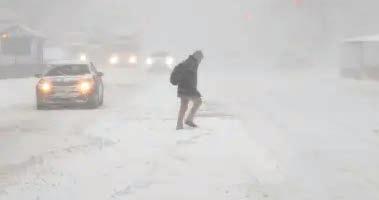
Residents across Southern Oregon are waking up early this morning to urgent overnight weather alerts warning that a rare Arctic system could arrive later today, bringing heavy snow, freezing rain, and the possibility of widespread disruption across the Rogue Valley.
Forecasters tracking the system say a surge of cold air dropped south overnight faster than expected, colliding with Pacific moisture and creating the conditions for what could become a fast-moving winter storm.
“This is not something we typically see this time of year,” said meteorologist Jackson Hail during an early morning update. “If this system develops the way models suggested overnight, snowfall could begin quickly and intensify within hours.”
Early projections ranged from minor accumulation in the valley to more aggressive scenarios that suggested several feet of snow if the system were to stall. Officials are urging residents to remain alert, monitor changing conditions, and be prepared for slick roads and possible delays.
Despite the warnings, conditions at sunrise across Josephine County appear calm. Skies are mostly clear, temperatures are cool but manageable, and there are no immediate signs of an incoming blizzard.
Even so, some residents say this morning does not feel entirely normal.
In the hills outside Merlin, one resident reported seeing what he described as a large, upright figure moving along the tree line before daylight. “I’m not trying to start anything,” said the man,
who identified himself as Gary, “but it wasn’t a deer, and it wasn’t a person. If that storm is really coming, maybe Bigfoot decided to head for lower ground.”
Local wildlife officials have not confirmed any such sightings, though they acknowledge that animals often shift patterns ahead of major weather changes.
At the same time, several early risers reported strange lights offshore just before sunrise. One witness described them as “hovering and silent,” while another claimed they moved against the wind before disappearing into the cloud cover.
“I’ve lived here a long time,” said a Grants Pass resident named Lena. “Planes don’t move like that. Maybe it’s nothing, but if aliens picked today to show up, I guess they’d have a pretty good cover story with this storm.”
Authorities have not commented on the reports of either Bigfoot or unidentified aerial activity, and there is no official indication that anything unusual is occurring beyond standard
weather monitoring.
Still, the combination of urgent forecasts, quiet skies, and a handful of strange observations has created an uneasy and, for some, oddly entertaining start to the morning.
As of now, no snow has begun to fall in Grants Pass, and updated weather models are beginning to show less severe outcomes than originally reported. Some forecasts now suggest little more than cold rain with possible snow at higher elevations.
For residents who rushed to prepare for a major blizzard, the lack of visible change may feel confusing. For others, it may be a reminder to take a second look at the situation.
If the skies stay clear, the roads remain dry, Bigfoot stays hidden, and any visiting aliens decide to turn around before making contact, there may be one final detail worth checking before sounding the alarm.
Look at the calendar.
April Fools.
By John Oliver
Public records rarely raise their voices, but they have a way of refusing to go away. In Josephine County, a set of land transactions tied to tax foreclosure proceedings is doing exactly that, resurfacing at a moment when voters are once again being asked to weigh the credibility, judgment, and transparency of former county commissioner John West, who is now seeking a return to office after his 2025 recall.
At the center of the issue is a paper trail that begins with routine government action and ends with a series of unresolved questions. On April 24, 2024, the Josephine County Board of Commissioners approved Orders 2024-025, 2024-026, and 2024-027. These orders authorized the designation, alienation, and sale of county-owned properties through the sheriff’s sale process, a mechanism commonly used to dispose of tax-foreclosed land after years of delinquency.
Several months later, on July 31, 2024, the Board adopted Order 2024-046, confirming the sales. At the time, testimony de-

scribed the parcels as having moved through a multi-year statutory process, consistent with Oregon law governing tax foreclosures and county land disposition. On the surface, the process appeared administrative, procedural, and largely unremarkable.
That perception has since shifted.
Attention has increasingly narrowed to a specific parcel located in Section 17 of the Graves Creek corridor, a roughly 100-acre property with a long history of county ownership. According to available transaction records, the land was sold for approximately


$214,000 to a private intermediary. Within a relatively short period, the same parcel was resold for approximately $235,400 to a sitting county commissioner operating within the same regional corridor, now former County Commissioner Andrea Blech.
The sequence itself is not illegal on its face. Oregon law, particularly under ORS Chapter 275, provides counties with authority to dispose of tax-foreclosed properties. However, the manner in which this transaction unfolded has prompted a series of questions that extend well beyond statutory compliance.
One of the primary concerns centers on classification. For a property to be sold through the tax foreclosure pipeline, it must meet specific legal criteria. Whether the Graves Creek parcel was properly categorized under that framework at the time of approval remains a point of interest. The determination is not trivial. Classification dictates not only the process but also the level of scrutiny applied before public land changes hands.
By John Oliver
Let’s just say it plainly, because dancing around it helps no one.
We built the Grants Pass Tribune to bring balance back to local news. Not red. Not blue. Not agendas dressed up as headlines. Just information people can actually read, understand, and decide on for themselves. That was the goal from day one, and it still is.
And yes, there’s another newspaper in town. The Grants Pass Daily Courier. They’ve been here a long time. Over a hundred years. That matters. Whether you agree with them or not, whether you like their coverage or not, that kind of history is part of this town’s backbone.
Now let’s not pretend everything is friendly behind the scenes. It isn’t. There have been moments that were frustrating, moments that felt personal, and moments where it’s clear they don’t exactly root for us. That’s fine. That’s competition. That’s business. Anyone who’s ever built something from scratch knows exactly what that looks like.
But here’s the part people don’t expect me to say.
We don’t want them to go anywhere.
Read that again if you need to.
We don’t want them to disappear. We don’t want to be the only voice in this town. And we sure as hell don’t want the weight of all local news sitting on our shoulders alone. That’s not balance. That’s a monopoly on information, and that’s not good for anybody.
Competition is not the enemy. It’s the pressure that keeps both sides honest. It forces improvement. It forces accountability. It forces all of us to actually earn your attention instead of assuming we deserve it.
The truth is, what we’ve built here at the Tribune is different. It’s faster. It’s easier to read. It’s more direct. And clearly, it’s connecting. Millions of you clicked on our stories last year. Thousands keep coming back every single day. That doesn’t happen by accident, and it doesn’t happen Letter
• see RIVALRY, page 11

By John Oliver
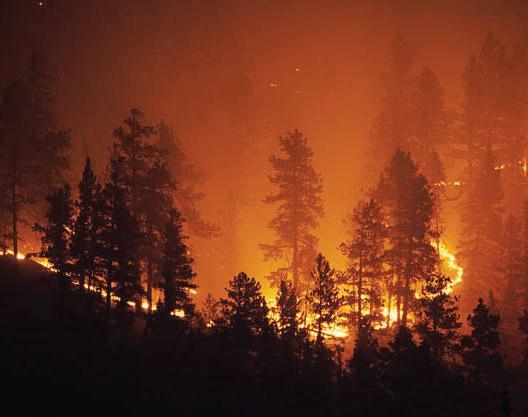
Long before the first plume of smoke lifts over the Rogue Valley, the financial weight of wildfire season is already settling across Southern Oregon. What was once considered a late-summer emergency has evolved into a year-round economic pressure point, shaping how residents spend, insure, build, and prepare.
Across Josephine and Jackson counties, early mitigation efforts are no longer optional exercises driven by caution. They are becoming embedded costs of living in the region. Local agencies have accelerated preparedness campaigns weeks ahead of traditional timelines, urging households to invest in defensible space, emergency supplies, and evacuation readiness. These are not abstract recommendations. They translate directly into out-ofpocket expenses for homeowners who must now factor wildfire resilience into their monthly budgets alongside utilities and housing costs.
At the same time, public investment is flowing into wildfire prevention, though not without complications. Millions of dollars in federal and state funding have been directed toward forest thinning, fuel reduction, and community protection projects throughout Oregon. These programs are intended to reduce long-term risk, but they also highlight a growing reality. Wildfire mitigation is becoming a sustained financial commitment rather than a one-time response. Delays in funding distribution and shifting priorities at higher levels of government have created uncertainty, leaving some projects incomplete as communities head toward peak fire conditions.
For residents, that uncertainty carries real consequences. When mitigation work stalls or remains unfinished, the perceived risk of wildfire increases, and that perception is now directly tied to another major economic pressure: insurance.
Southern Oregon homeowners are increasingly finding themselves at the intersection of wildfire risk and insurance availability. Premiums have risen sharply in recent years, and in some areas, coverage options have narrowed. The emerging policy conversation at the state level reflects this shift, as lawmakers explore ways to connect insurance pricing with individual mitigation efforts. The idea is straightforward. Homeowners who invest in fire-resistant roofing, clear vegetation, and hardened structures may be rewarded with lower premiums. However, the transition toward that model places an immediate financial burden on residents who must pay upfront for improvements before seeing any potential savings.
This dynamic is reshaping how property ownership is evaluated across the region. A
home is no longer judged solely by location or condition, but by its exposure to wildfire risk and the cost required to reduce that risk. For many households, particularly those on fixed incomes or in rural areas, the added expense of compliance may prove difficult to absorb.
Beyond individual properties, entire communities are undergoing a gradual transformation. Rebuilding efforts following past fires have influenced new construction standards and planning decisions, pushing Southern Oregon toward a model of fire-adapted development. Materials, spacing, and infrastructure are increasingly designed with wildfire in mind. While these changes improve long-term resilience, they also raise the upfront cost of development, which can ripple through housing prices and affordability.
Local economies are also feeling the
broader impact. Businesses dependent on tourism, outdoor recreation, and seasonal traffic face increasing uncertainty as wildfire season expands in duration and intensity. Smoke events, evacuation warnings, and shifting visitor patterns can disrupt revenue streams, particularly during what would traditionally be peak months. In response, some businesses are adapting by diversifying services or adjusting operating seasons, but the unpredictability of wildfire conditions remains a persistent challenge.
Meanwhile, public awareness campaigns are evolving into a form of economic signaling. When emergency management agencies encourage residents to prepare early, they are not only addressing safety. They are reinforcing the expectation that individuals must take on a greater share of responsibility, both logistically and financially. Preparedness kits, evacuation planning, and home hardening measures are becoming normalized expenses, similar to insurance or maintenance.
What is unfolding across Southern Oregon is not simply a shift in wildfire behavior, but a restructuring of the regional cost of living. Fire season is no longer confined to a few critical weeks. It is influencing financial decisions throughout the year, from how homes are built to how communities allocate resources.
For residents of Grants Pass, Medford, and the surrounding rural areas, the implications are clear. Wildfire preparation is no longer just about safety. It is about economic survival in a landscape where risk carries a measurable price. As funding debates continue and policies evolve, the burden is increasingly shared between government systems and the individuals who live within them.
The flames may not yet be visible, but the cost of wildfire season has already arrived.
From page 1
Equally significant is the issue of valuation. Public land carries public value, even after foreclosure. The sale price of $214,000 raises questions about how that figure was determined and whether it accurately reflected fair market value. The absence of clear documentation regarding independent appraisals or competitive bidding mechanisms leaves an incomplete picture of how the county ensured taxpayers received appropriate value for the asset.
The role of the intermediary adds another layer of complexity. The existence of a private purchaser who quickly transferred the property to a public official invites scrutiny into what was known, when it was known, and whether that knowledge should have influenced the Board’s decision-making process. Even in the absence of direct coordination, the optics of such a transaction place additional weight on the need for transparency.
Conflict of interest considerations also remain unresolved. Public officials are expect-
ed to operate within clearly defined ethical boundaries, particularly when decisions involve public resources. Whether any disclosures, recusals, or internal reviews were conducted in connection with this transaction has not been clearly established in the public record. Against this backdrop, efforts were made to obtain clarification. The Grants Pass Tribune formally reached out to West, requesting a comprehensive response addressing the classification of the property, the valuation process, the role of the intermediary, and any conflict-of-interest considerations. The request also sought his position, as a current candidate, on whether existing county procedures adequately protect public interest and what reforms, if any, he would support moving forward.
No response was provided.
The lack of engagement is not new. In previous instances, West has declined to respond to direct inquiries from this publication. More recently, he chose instead to characterize the
Tribune as “fake news” during a local radio appearance. That response may resonate in certain political circles, but it does little to address the substance of the questions or the documented sequence of events. Public records are not swayed by rhetoric, and statutory frameworks do not bend to opinion.
The timing of this silence is particularly notable. Campaign seasons are, by definition, moments of accountability. Candidates are afforded an opportunity to explain past decisions, clarify complex issues, and present a forward-looking vision grounded in transparency. When that opportunity is declined, the absence itself becomes part of the story.
For voters in Josephine County, the issue is no longer confined to a single land transaction. It has evolved into a broader question about governance and trust. If a candidate seeking public office chooses not to address documented actions taken while previously in office, and recalled from office, it raises a natural and unavoidable question about what
remains unaddressed.
The Graves Creek parcel may ultimately be one transaction among many, but its trajectory has placed it under a level of scrutiny that extends beyond acreage and dollar amounts. It has become a case study in how public processes intersect with public perception, and how the gap between the two can widen when questions go unanswered.
In the end, this is not a matter of speculation but of record. The votes were cast. The orders were approved. The land was sold. The resale occurred. What remains missing is a clear explanation that connects those facts in a way that satisfies both legal standards and public expectations.
Until that explanation is provided, the silence surrounding the Graves Creek transaction will continue to speak for itself. And as voters consider who should hold office in the next chapter of Josephine County’s leadership, they are left to weigh not only what has been done, but what has yet to be explained.

By Ellen Ward
A decision in Florida to rename Palm Beach International Airport after President Donald Trump is quickly becoming more than a regional change. Signed into law by Governor Ron DeSantis, the measure reflects a broader shift in how public infrastructure is being tied to modern political identity, with implications that extend well beyond state lines.
Under the new law, the airport will be renamed President Donald J. Trump International Airport, with the transition expected to begin later this year. While renaming airports after presidents is not new in the United States, the timing and context surrounding this decision place it in a more politically charged environment than similar moves in the past.
Palm Beach International Airport serves as a key transportation hub in South Florida, handling millions of passengers annually and functioning as a gateway to one of the most economically active regions in the state. Its proximity to Trump’s Mar-a-Lago residence has been cited as a central reason for the renaming, underscoring the former president’s long-standing ties to the area.
The practical effects of the change will unfold in stages. Federal aviation systems must update

navigational databases, airline systems must adjust booking and routing information, and physical infrastructure such as signage, branding, and digital platforms will need to be revised. These changes are expected to cost several million dollars, a figure that has drawn attention amid ongoing national conversations about public spending priorities.
Beyond logistics, the decision raises broader questions about the role of politics in public spaces. Airports, highways, and federal buildings have traditionally been named after historical figures or leaders whose legacies have been widely accepted across party lines. In contrast, this renaming
centers on a contemporary political figure who remains deeply polarizing, making the move as symbolic as it is administrative.
The ripple effects are likely to be felt across the country. Other states may face renewed pressure from political constituencies to rename infrastructure in honor of modern figures, potentially accelerating a trend toward more ideologically driven naming decisions. This could lead to increased debate at the local and state level, where infrastructure naming has historically been less contentious.
There are also economic and branding considerations. Airport names carry weight in tour-
ism, business travel, and international perception. A high-profile name change can reshape how a region is marketed globally, influencing everything from airline partnerships to visitor impressions. Whether the new name enhances or complicates that image will depend largely on public reception and how the transition is managed.
Another layer involves intellectual property and commercial use. Efforts to secure trademarks connected to the airport’s new name suggest that branding may extend beyond signage into broader commercial applications, introducing a dynamic rarely associated with publicly owned transportation hubs.
Nationally, the move highlights a shift in how political legacy is being defined in real time rather than through historical distance. It reflects a growing willingness among elected officials to align public infrastructure with current political figures, a practice that could reshape how future generations encounter and interpret civic spaces.
As the transition unfolds, the renaming of a single airport in Florida is poised to become a case study in the evolving intersection of politics, public identity, and infrastructure across the United States.
By Ellen Ward
A decision handed down by the U.S. Supreme Court this week is poised to ripple far beyond Colorado, altering the legal landscape for how states regulate professional counseling and how constitutional protections apply inside the therapy room. In an 8–1 ruling, the Court rejected Colorado’s ban on certain forms of conversion talk therapy for minors, concluding that the law likely violated the First Amendment by restricting speech based on viewpoint.
The case centers on a conflict that has been building for years across the country, where states have increasingly moved to restrict or ban conversion therapy practices, particularly for minors, citing concerns raised by medical and psychological organizations. At the same time, opponents of those laws have argued that such restrictions cross into the regulation of speech, especially when the therapy consists of conversation rather than physical treatment.
By siding with a licensed counselor who challenged the law, the Court signaled that speech exchanged in a professional setting does not lose its constitutional protection simply because it occurs within a licensed practice. The majority opinion emphasized that governments cannot selectively prohibit certain perspectives while allowing others, even when the setting involves healthcare or counseling.
The immediate effect of the ruling is to send Colorado’s law back for further review under a stricter constitutional standard. The broader consequence, however, is national in scope. Nearly half of U.S. states have enacted some form of restriction on conversion therapy for minors. Those laws are now likely to face renewed legal scrutiny, with courts required to weigh whether they improperly regulate speech rather than conduct.
For lawmakers across the country, the ruling introduces a new level of uncertainty. States that previously relied on professional licensing authority to justify restrictions may now need to reconsider how those laws are written and enforced.
Legal analysts expect a wave of challenges in jurisdictions with similar statutes, potentially leading to a patchwork of outcomes as lower courts interpret the Supreme Court’s guidance.
The decision also underscores a broader shift in how the Court is approaching First Amendment questions. In recent years, the Court has shown increasing willingness to extend strong protections to speech in contexts that were once considered more subject to regulation, including professional and commercial environments. This ruling reinforces that trajectory, placing a higher burden on governments to justify restrictions that involve expression, even when tied to public health concerns.
At the same time, the ruling does not settle the underlying policy debate. Supporters of conversion therapy bans continue to argue that such measures are necessary to protect minors from practices they view as harmful or ineffective. Opponents maintain that individuals and families should have the freedom to seek counseling aligned with their beliefs, and that therapists should not be restricted from discussing certain viewpoints.
The Court’s decision leaves room for states to regulate conduct, but it draws a sharper line when regulation touches on speech. That distinction is likely to become the central battleground in future cases, as lawmakers attempt to craft policies that address public health concerns without running afoul of constitutional protections.
For the United States as a whole, the ruling represents more than a single legal dispute. It reflects an ongoing recalibration of the balance between individual rights and government authority, one that is playing out across multiple areas of law. From healthcare to education to religious expression, the question of how far the state can go in regulating speech is becoming increasingly prominent.
In practical terms, the impact will unfold gradually. Lower courts will revisit existing laws, new cases will test the limits
of the ruling, and states may revise legislation in response. In the meantime, the decision stands as a significant marker in the evolving relationship between free speech and professional regulation, setting the stage for continued legal and political debate nationwide.

By Ellen Ward
A brief statement from Washington this week carried weight far beyond the walls of the Pentagon. When Defense Secretary Pete Hegseth and Joint Chiefs Chairman Dan Caine indicated that the coming days will shape the direction of the conflict with Iran, it marked more than a military update. It signaled that the United States is approaching a turning point with consequences that extend into the daily lives of Americans at home.
After weeks of sustained military operations, U.S. officials believe they have gained strategic leverage. Air campaigns and coordinated strikes have reduced key elements of Iran’s military capability, including missile and drone systems that initially posed a significant threat to regional stability. At the same time, the conflict has not been without cost. American forces have suffered casualties, and the risk of retaliation remains a constant concern as tensions persist across the Middle East.
What makes this moment particularly significant for the United States is not only the battlefield situation, but the narrowing set of outcomes now in play. Washington appears to be balancing two competing objectives. On one side is the pursuit of a negotiated resolution that could de-escalate the conflict before it widens further. On the other is the readiness to intensify military pressure if diplomacy fails to produce results. That dual posture has become a familiar feature of U.S. foreign policy, but in this case, the timeline appears compressed, with

decisions expected to unfold quickly.
For Americans, the most immediate effects are already visible in the economy. Energy markets have reacted sharply to the instability surrounding one of the world’s most critical oil-producing regions. Prices at the pump, which often respond quickly to geopolitical tension, have shown signs of upward pressure. In a country where transportation costs ripple through nearly every sector, even modest increases can translate into higher prices for goods, services, and food. The economic strain is not theoretical. It is already being felt in household budgets across the nation.
The shipping industry is another area where the impact is becoming more pronounced. The Strait of Hormuz remains one of the most important maritime corridors in the world, and any disruption there carries
global consequences. Reports of threats to commercial vessels have raised concerns among insurers, shipping companies, and importers. For the United States, which depends on global supply chains for everything from electronics to raw materials, even limited interruptions can create delays and increase costs that eventually reach consumers.
Beyond economics, the conflict is also shaping domestic political dynamics. Military engagements abroad often bring heightened scrutiny from lawmakers and the public, particularly when the duration and scope of operations remain uncertain. Questions about long-term strategy, financial cost, and potential escalation are likely to intensify as the situation develops. In Washington, where divisions are often sharp, foreign conflicts can either unify or
deepen political fault lines depending on how events unfold.
There is also a broader strategic concern that extends beyond the immediate conflict. The possibility of regional expansion remains a central risk. Iran maintains relationships with allied groups and proxy forces throughout the Middle East, and any escalation could draw additional actors into the conflict. For the United States, that would mean a more complex and potentially prolonged military commitment, with increased risks for service members and greater demands on defense resources. At the same time, the administration is aware that prolonged instability carries its own costs. Economic pressure, global market volatility, and uncertainty among allies all create incentives to seek a resolution sooner rather than later. That urgency helps explain why officials are framing the current moment as decisive. It reflects a recognition that the next steps will likely determine whether the conflict moves toward containment or expands into something more difficult to control.
For the American public, the situation represents a convergence of global events and local consequences. What unfolds overseas will not stay overseas. It will be reflected in fuel prices, supply chains, political debates, and the broader sense of national security. As the coming days take shape, the direction chosen in Washington will help define not only the outcome of the conflict, but its lasting impact on life across the United States.


By John Oliver
A new entry has arrived in the growing market of lighter craft beers, and it carries the unmistakable identity of one of Hawaii’s most recognizable independent breweries. Maui Brewing Company has officially launched Maui Light, a crisp, lower-calorie lager designed to appeal to both longtime craft beer drinkers and those looking for a simpler, more approachable option.
The beer marks a notable shift in style for a brewery long associated with bold island-inspired ales and hop-forward releases. Maui Light is intentionally restrained, built around drinkability rather than intensity. It comes in at 110 calories, with 6 grams of carbohydrates and 4.0 percent alcohol by volume, placing it squarely in competition with the light beer category traditionally dominated by large domestic brands.
Despite its lighter profile, the beer still reflects the brewery’s roots. Maui Brewing Company, founded in 2005 in Maui, built its reputation on producing all of its beer locally in Hawaii, becoming the state’s largest craft brewery over the past two decades. Its emphasis has consistently been on quality ingredients, sustainable practices, and a strong connection to the local community. Maui Light appears to continue that philosophy, offering a straightforward lager that maintains the brand’s island identity while broadening its appeal.
The rollout of Maui Light is currently lim-

ited to Hawaii, where it is being distributed through select retailers, restaurants, and Maui Brewing’s own locations. Early availability has centered around areas such as Kihei, where the company operates one of its primary facilities. The launch is being treated as a localized introduction, allowing the brewery to establish the product in its home market before expanding distribution to the mainland.
For consumers in Oregon and across the West Coast, the beer has not yet reached store shelves or tap lists. However, based on Maui Brewing Company’s existing distribution footprint, which already includes multiple mainland markets, expansion ap-
pears likely. New product releases from the brewery have historically followed a phased rollout, beginning in Hawaii before gradually moving into broader circulation. Industry patterns suggest that a light lager positioned for warm-weather drinking could align with a late spring or summer expansion window.
Until then, Maui Light remains something of a destination beer for mainland drinkers. Travelers heading to Hawaii in the coming months may be among the first outside the islands to experience it firsthand. Its flavor profile, described as clean, crisp, and easy to drink, is clearly designed with that setting in mind, pairing as naturally with beachside afternoons as it does with

casual gatherings.
The introduction of Maui Light also reflects a broader shift within the craft brewing industry. As consumer preferences evolve, many independent breweries are exploring lighter styles that offer lower calories and alcohol while still maintaining brand character. Maui Brewing Company’s entry into this space signals both an acknowledgment of that trend and a strategic effort to remain competitive in a changing market.
For now, Maui Light stands as a new chapter for a brewery rooted in island tradition. While it has yet to arrive in Oregon, its eventual appearance seems less a question of if and more a matter of when. …Garret?















imfullish
Along the rugged Oregon coastline, where cold Pacific waters meet a culture built on working harbors and early mornings, seafood is not just a meal, it is a reflection of place. From the docks in Newport to the fishing fleets off Coos Bay, the region produces some of the cleanest, most flavorful seafood in the country. Dungeness crab pulled from coastal traps, pink shrimp harvested from deep, cold waters, and a variety of wild fish all share one thing in common: they do not need to be masked with heavy ingredients to shine.
This recipe leans into that philosophy. Instead of mayonnaise, which can overpower delicate flavors and add unnecessary fat, this seafood salad is built around brightness, balance, and clean nutrition. Citrus, herbs, and high-quality olive oil take center stage, allowing each ingredient to speak clearly. It is a dish that feels light but satisfying, equally suited for a warm afternoon on the patio or a simple, nourishing dinner.
What makes this salad stand out is its variety. Oregon’s coastal waters offer a wide range of seafood, and combining them creates layers of texture and flavor. The sweetness of shrimp, the richness of crab, and the firm bite of wild-caught fish come together in a way that feels both abundant and refined.
Fresh Oregon Coast Seafood Salad (No Mayo)
Serves: 4 to 6
Style: Light, high-protein, heart-healthy
Ingredients
1 cup Oregon pink shrimp, cooked and chilled
• 1 cup Dungeness crab meat, picked clean
• 1 cup grilled wild salmon, flaked
1 cup albacore tuna, lightly seared and sliced
• ½ cup bay scallops, lightly sautéed or steamed
• 1 cup chopped romaine and butter lettuce mix

• ½ cup cucumber, thinly sliced
½ cup cherry tomatoes, halved ¼ cup red onion, very thinly sliced
• ¼ cup celery, finely chopped
• ¼ cup fresh parsley, chopped
• 2 tablespoons fresh dill, chopped
1 avocado, sliced Citrus Herb Dressing (No Mayo)
• 3 tablespoons extra virgin olive oil
• Juice of 1 lemon
• Juice of ½ orange
1 teaspoon Dijon mustard
1 teaspoon honey or local Oregon honey substitute
• 1 small garlic clove, minced
• Salt and freshly ground black pepper to taste
Instructions
• Prepare all seafood in advance. Ensure shrimp are peeled, crab is fully cleaned, and fish are cooked and cooled. Keep everything chilled until ready to assemble.
• In a large mixing bowl, combine shrimp, crab, salmon, tuna, and scallops. Gently fold to avoid breaking up the more delicate seafood.
Add cucumber, tomatoes, red onion, celery, parsley, and dill. Toss lightly to distribute evenly. In a separate bowl, whisk together olive oil, lemon juice, orange juice, Dijon mustard, honey, garlic, salt, and pepper until fully emulsified. Drizzle the dressing over the seafood mixture and gently toss until everything is lightly coated. Avoid overdressing; the goal is to enhance, not overpower.
• Arrange the lettuce mix on a serving platter or individual plates. Spoon the seafood mixture over the greens.
Top with sliced avocado and an extra sprinkle of fresh herbs.
• Serve immediately, or chill for 15 to 20 minutes to allow flavors to meld.
A Clean Coastal Finish
This salad captures the essence of Oregon’s coastline without weighing it down. It is high in lean protein, rich in omega-3 fatty acids, and full of fresh vegetables and herbs. The absence of mayonnaise keeps the dish light, making it a smart option for those watching calories while still wanting something satisfying.
From page 1
because people are bored. It happens because something about what we’re doing is working.
But success doesn’t mean we should root for someone else to fail.
That mindset is small. It’s short-term. And it’s not how you build something that lasts.
The Daily Courier represents something we don’t and honestly can’t replicate overnight, and that’s deep-rooted history in this community. Generations have grown up reading it. Families have relied on it. That kind of legacy matters, even if you think it needs to evolve.
And let’s be honest about something
else. Without them, there probably wouldn’t be us. Not in the way we exist today. Competition didn’t just challenge us, it sharpened us. It forced us to define who we are and how we do things differently. That’s a good thing. So, here’s where I stand, and I’m not going to sugarcoat it.
Support both.
Support the Tribune if you believe in what we’re building. Support the Courier if you believe in preserving a piece of this town’s history. But understand this, you don’t have to pick one and tear down the other.
That’s not how a strong community works.
A strong community demands more
5 DAY OUTLOOK
SOURCE: WEATHER.COM
WEDNESDAY



than one voice. It demands options. It demands accountability from every direction. It demands balance.
Rumors will fly. Opinions will get loud. People will try to frame this as a fight that has to have a winner and a loser.
It doesn’t.
The real win is a town where multiple newsrooms are still standing, still reporting, still pushing each other, and still giving people the information they need to live their lives and understand what’s happening around them.
That’s the kind of town worth fighting for. And that’s exactly what we intend to protect.





Posting March 30, 2026

Advertise with The Grants Pass Tribune!
Stand with us in defending freedom of the press and the 1st Amendment! The Grants Pass Tribune is facing political persecution, with lawsuits aimed at silencing our bold investigative journalism. We remain committed to uncovering the truth and keeping our community informed like never before.
Show your support for independent journalism and the fight against political tyranny. Place your ad with us and align your business with the values of free speech and transparency.
GET STARTED
Contact John Oliver john@grantspassmag.com