


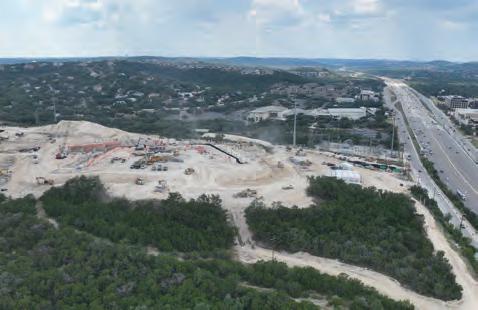
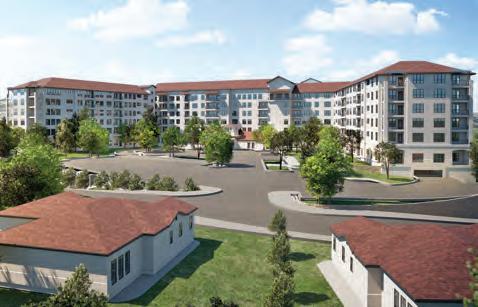
The SpawGlass Austin team was thrilled to officially break ground at the Texas State University (TXST) Hilltop Phase II housing project.
With enrollment on the rise, TXST continues to invest in expanding on-
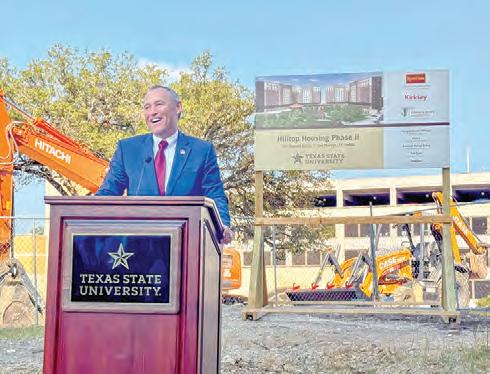
campus student housing to welcome the growing Bobcat community. Hilltop Phase II will add two 10-level residence halls totaling nearly 380,000 square feet along with a new dining facility of about 30,000 square feet integrated into the
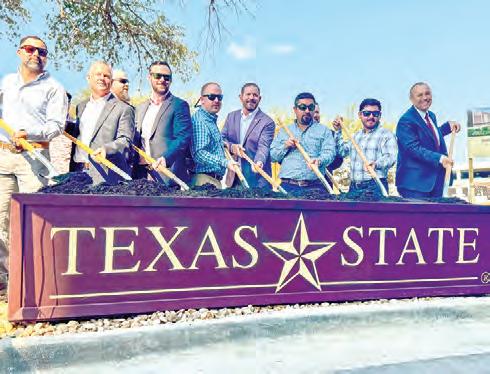
Bfirst level of the West Tower. The project also includes significant site and utility improvements to support campus operations as well as a central bridge connecting the new towers and existing hall to the main campus.
After an incredible finish at the Richard A. Castro Hall complex, their team of proud TXST alumni is excited to dig in and continue to build spaces where the next generation of Bobcats will live and learn!
lair Ortmann , VP of Mission Advancement for Child Advocates San Antonio (CASA) said it best; It all started with a simple request: would the San Antonio construction industry help ensure children in foster care had toys for Christmas? Twenty-six years later, the answer has been a resounding “Yes!” and now the organization Construct A Kid’s Christmas is being honored by CASA for their decades of support.
“It seems just like yesterday that the idea for a toy drive to help the Bexar County foster kids at Christmas started,” said Construct a Kid’s Christmas Founder and President Buddy Doebbler. “But here we are getting ready for the 26th toy drive in December 2025. The one constant through all these years has been the support of the construction industry. Show them a worthy cause and they will make sure it will happen, and the goals are met.”
Each year, Construct A Kid’s Christmas (CAKC) challenges the construction community to give toys, bikes, games, and dollars to support children who have experienced abuse and neglect and are currently in foster care. In Bexar County, there were 3,157
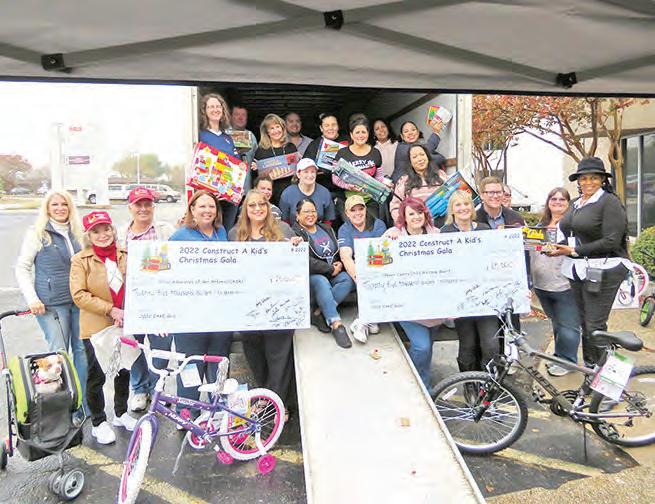
children in foster care in 2023-2024, according to the Texas Child Protective Services Datebook.
In recognition of the thousands of toys and over a million dollars in funding support that CAKC has given to support children in foster care, CASA is honoring the organization at its annual Gallery of Hope gala event on Nov. 7 at the Witte Museum.
“The commitment of the construction industry as a whole to provide gifts year after year is simply
incredible, and I am deeply grateful,” said CASA President & CEO Dr. Angie White. “I still have a special teddy bear I got for Christmas when I was three and lived in a large group foster home. Big Ted was my first Christmas gift. So, I really know you are giving children a sense of being loved and cared for that they don’t always have without a family around, and when in foster care. From the bottom of my heart, I thank you for that.”
Jennifer Swinney, CAKC treasurer, and Sandee Morgan , CAKC vice
president, have been stalwarts for the organization throughout the years, organizing the toy drive as well as the annual fundraising event.
“Each year, my heart is filled with pride and gratitude as I volunteer with Construct A Kids Christmas,” Swinney said. “Too many children in the Bexar County foster care system and with CASA face the holidays without a toy, without love, and without the joy every child deserves to feel at Christmas. What moves me most is how our construction industry comes together year after year to change that story — to bring light, laughter, and love to these children. Our committee of volunteers keeps growing, our sponsors keep stepping up, and together we strive to raise more, give more, and show these kids that they are seen, valued, and cherished.”
Morgan agrees, noting that the “continued partnership reflects a shared commitment to bringing joy and hope to the lives of abused and neglected children in our community.”


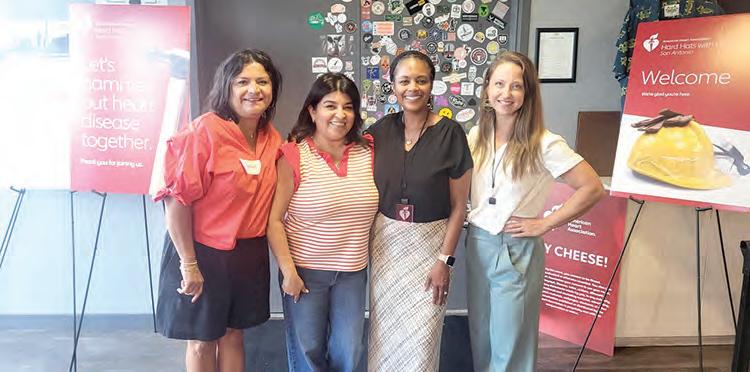
The American Heart Association is seeking companies to participate in Hard Hats with Heart to improve health and well-being of construction workers.
About one in 25 construction workers — roughly 343,000 people — are living with cardiovascular disease, and even more are at risk. The American Heart Association-San Antonio, a relentless force changing the future of health for everyone everywhere, is seeking local construction industry leaders to help improve employee heart health through Hard Hats with Heart.
San Antonio is one of the fastest growing cities in the nation, and construction is a crucial part of the city’s economic development. Hard Hats with Heart is an industry-specific initiative focused on implementing health, wellbeing, and prevention solutions to inspire employees to live longer, healthier lives.
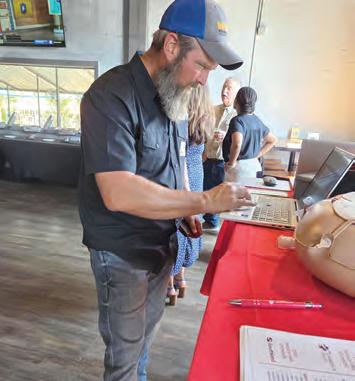
As a part of the initiative, the Heart Association provides heart-healthy education tips and resources designed specifically for the construction industry, and Hands-only CPR demonstrations. Additionally, companies participate in the annual San Antonio Heart and Stroke
Walk, the area’s signature community event to raise awareness of heart disease and stroke, taking place Nov. 8.
“Our goal is to give people the tools to take responsibility for their health. We can do this through providing healthy food options, promoting physical activity during breaks, implementing stressreducing programs, educating employees about the signs of heart disease and teaching employees CPR,” said R.T. Hoog, Hard Hats with Heart chairman. For more information about becoming involved with Hard Hats with Heart, contact Madeleine.Ebeling@heart.org.
The American Subcontractors Association (ASA) San Antonio and the ASA Young Professionals Group (YPG) joined forces to host their annual Backpack to School Drive at Little Woodrow’s Stone Oak. More than 150 attendees came together to connect, network, and support a great cause.
Thanks to the incredible generosity of our members and guests—especially through raffle ticket purchases—they were able to donate 80 backpacks filled with essential school supplies to The
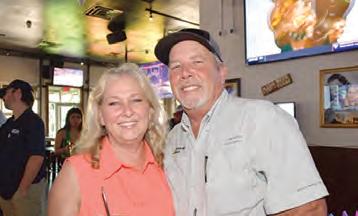


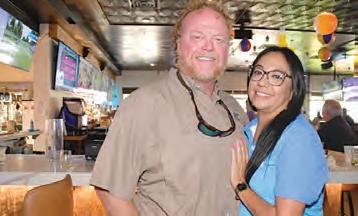

Madonna Neighborhood Center. This contribution will help local students start the school year prepared and confident.
A heartfelt thank you to Robles Demolition for sponsoring the mixer and making this event possible. Your support helped create an evening that was both fun and impactful.
Events like this remind us that when we come together as a community, we can make a real difference—one backpack at a time! Photos courtesy of Mary C. Haskin Photography


Cokinos | Young knows Austin construction and commercial real estate law – it’s what we do. With over 100 of the nation’s most knowledgeable legal professionals, we’ll guide your disputes and transactions and back you every step of the way. We are renowned for our experience and success across commercial, industrial, pipeline, offshore, heavy highway, civil, and residential sectors. For over 30 years, clients have depended on us across Central Texas. Savvy. Tough. Dedicated. And Austin to our core. That’s Cokinos.
COKINOS | YOUNG
Las Cimas IV, 900 S. Capital of Texas Hwy, Suite 425 Austin, Texas 78746
512-476-1080 CokinosLaw.com
COKINOS IS YOUR NATIONALLY RANKED CONSTRUCTION AND COMMERCIAL REAL ESTATE LAW FIRM.
The Texas Aggregates & Concrete Association (TACA) has appointed Andrew S. Pinkerton as its new President & Chief Executive Officer (CEO). Pinkerton brings more than 22 years of experience in the construction materials industry – most recently as Executive Director of the Cement Council of Texas, which represents the state’s cement manufacturers and shippers.
“Andrew’s extensive background in the construction materials industry, combined with his proven association leadership, makes him the ideal person to guide TACA into the future,” said TACA Board of Directors Chair Rich S. Szecsy, PhD, PE, FACI . “His passion for delivering value to member companies – along with his commitment and advocacy for safety, sustainability and the communities where we operate and ultimately build – will strengthen our industry and benefit the great state of Texas.”
Prior to leading the Cement Council of Texas, Pinkerton was Director of Marketing, Communications and Public Affairs at U.S. Concrete, Inc., and earlier served as Manager of Corporate Communications & Government Affairs at Texas Industries, Inc. He holds dual bachelor’s degrees in marketing and management from the University of Oklahoma. In addition, he serves as Vice Chairman of the Board of Directors for
the Clayton Dabney Foundation for Kids with Cancer.
“I have always believed that strong associations are the cornerstone of a strong industry,” Pinkerton said. “As Texas continues to grow each day, our industry plays a critical role in aligning population growth with a sustainably built environment, the conservation of natural resources and continuing to deliver the materials that satisfy the state’s unprecedented demand for aggregates and concrete. I am honored to advocate for the safe, resilient infrastructure and advanced mobility solutions our members provide today –and for generations of Texans to come.”
The Concrete Foundations Association (CFA) has announced the launch of its new YouTube platform for the “Behind the Mic” podcast series, marking a strategic expansion of the organization’s digital presence. This platform enhancement coincides with CFA’s 50th anniversary celebration, featuring eight exclusive interviews with industry leaders who have shaped the residential concrete foundation sector.
Construction , and Amy Woodall from Conscious Habit.
“These industry leaders have been some of the core participants in CFA through the years,” said James Baty, executive director of the Concrete Foundations Association. “We enjoyed the opportunity to chat with them about their experiences and about how in many cases, generations of their family have been active in the industry and in CFA. It really brings more meaning to our 5oth anniversary to hear from our long-time members. We are excited that we can share these conversations on our new YouTube channel.”





The newly launched YouTube channel provides enhanced accessibility and visual engagement for the podcast content, allowing professionals throughout the AEC industry to access valuable insights from experienced contractors and industry pioneers. This digital transformation reflects CFA’s commitment to modernizing communication channels while maintaining its core mission of supporting cast-in-place contractors.


To commemorate its milestone anniversary, CFA has added comprehensive interviews with eight distinguished industry professionals. The featured interviews include Ron Ward from Western Forms, Cole Beaudin of Perma-Structo, Inc. , Mark Irving from Irving Equipment , Russ Talpey of Talpey Construction , Mark Saldana of Saldana Concrete , Jason Ells from Custom Concrete , Dave Martinson of Martinson
These interviews showcase how the diverse expertise and innovative experience of talented individuals have driven the concrete foundations market forward over the past five decades. Each conversation provides a look at how the Concrete Foundations Association has been an integral part of their success. The set of interviews from this year’s event joins an equally strong set from World of Concrete 2021.



The YouTube platform represents a significant step in CFA’s ongoing effort to enhance collaboration and knowledge sharing within the concrete foundation community. This initiative complements the organization’s existing resources, including its quarterly publication Concrete Facts magazine, which continues to deliver essential news and professional guidance to industry practitioners.
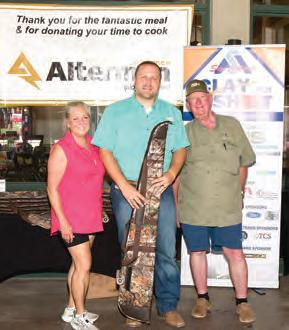
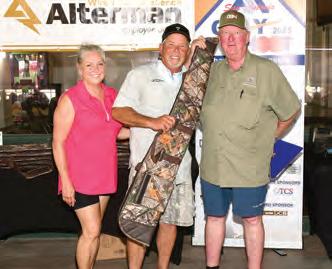
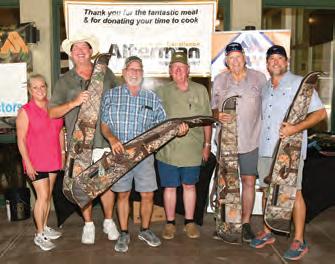
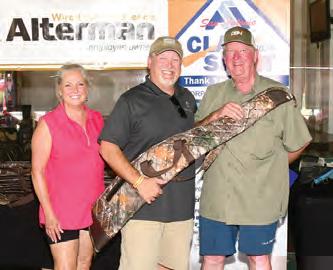
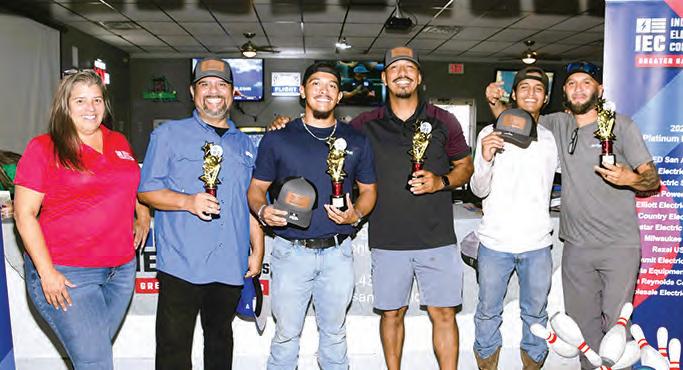
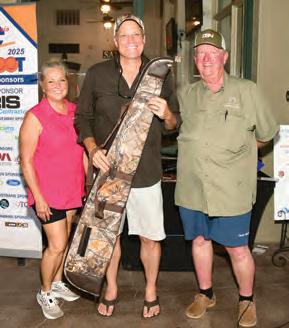
The American Subcontractors Association (ASA) San Antonio Clay Shoot on Aug. 14, at the National Shooting Complex was an incredible success, bringing together more than 275 attendees for a day of camaraderie, fun, and friendly competition. This annual tradition continues to grow in size and spirit, showcasing the strength and unity of our ASA community. We are deeply grateful to our sponsors and volunteers who made this event possible. A special thank you goes to our Title Sponsor, Joeris General Contractors, who has proudly supported the Clay Shoot as our Title Sponsor for nine consecutive years. Their commitment has been instrumental in making this event a highlight of the ASA calendar. We also extend our thanks to Alterman for generously donating their time and talent to prepare a delicious meal for all attendees. Their contribution helped make the day even more enjoyable for everyone. This year’s Clay Shoot was a tremendous reminder of the power of partnership and the value of bringing our members together. We look forward to building on this success and can’t wait to see everyone again next year.

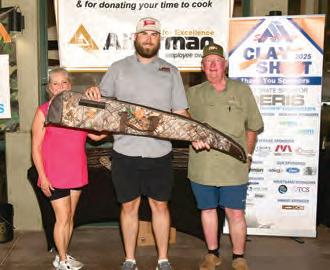
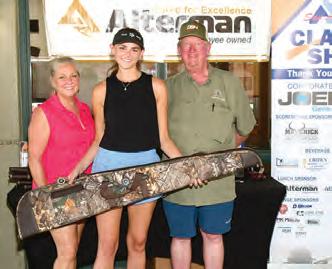
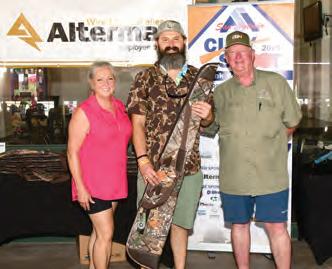
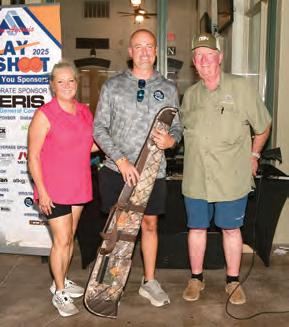
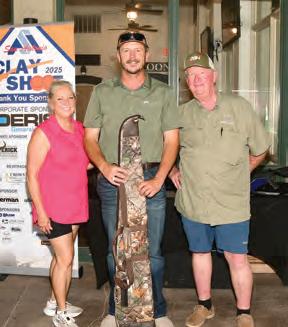
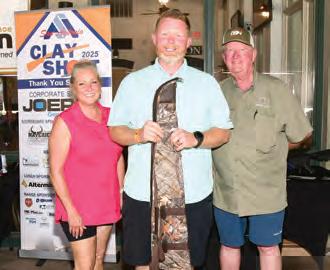
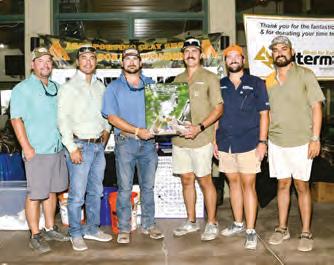


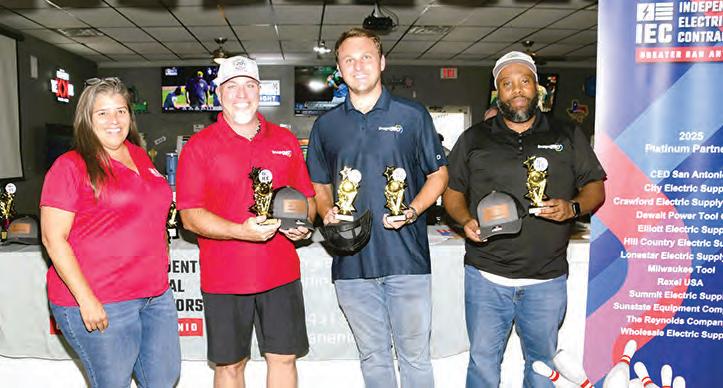
Winners
HOA Lady
Reagan Moon, Alamo Crane
HOA Team
Acrisure
Yellow Course
HOA Team
Rocking M – Team 1
A Division
1st Place: Austin Rentz, The Fetzer Companies
2nd Place: Ross Tisale, Chamberlin Roofing
3rd Place: Mike Welch, San Antonio Masonry
B Division
1st Place: Aaron Drueger, Intertech Flooring
2nd Place: Carter Smith, TNT Crane & Rigging
3rd Place: Stan Rothman, EquipmentShare
Red Course
HOA Team
Merchants Bonding Company
A Division
1st Place: Rudy Bazan, JW Dielmann
2nd Place: Matt Rothe, Big State Electric
3rd Place: Aaron Caldwell, Texas Chiller Systems –Team 1
B Division
1st Place: Ryan Salinas, Cool River Steel
2nd Place: Jim Gunn, Dunnam Safety Management
3rd Place: David Massey, Bee Done Rentals



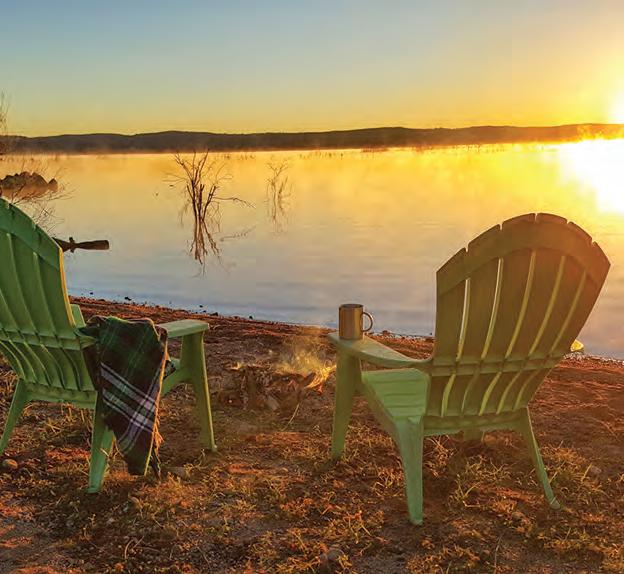
If you are lucky enough to have a day off in the fall in Texas, you are a lucky son of a gun!
The tourist high season is mostly passed so the best places to go and things to do are suddenly easier and less expensive to do. Summer heat is slowly receding, and winter isn’t close enough to hurt anything yet. Sunrises and sunsets get a magical soft red glow that makes you want to stop and stare. So, what can you do with a fall day in Texas?
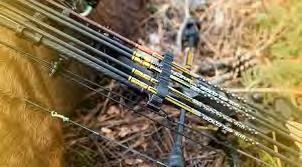
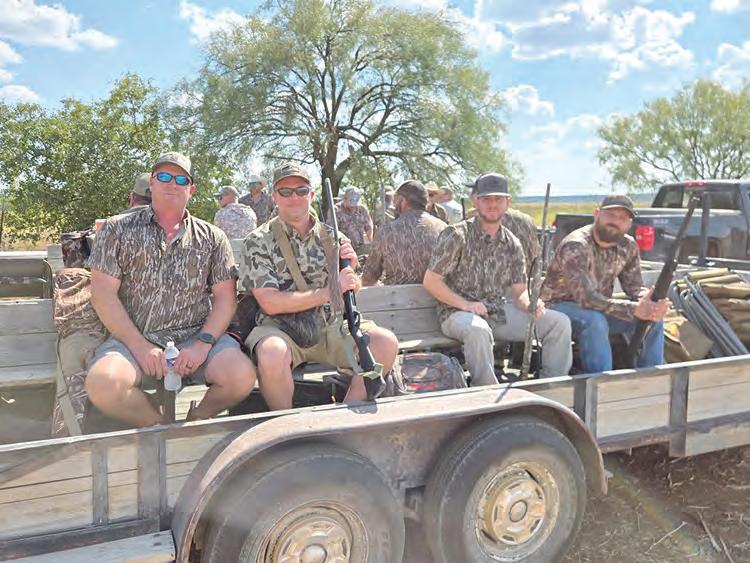
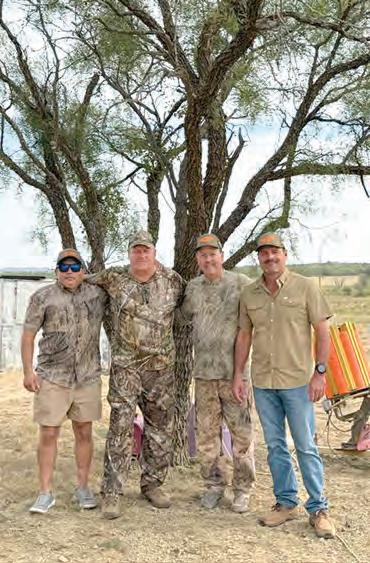
You can hunt! There are several things you can hunt right now, but most people are going after dove and whitetail deer. Bow season starts you out sweating in a T-shirt and ends with you looking for your long-handled underwear. It may be hard to stand hunting in the heat at first, but to get first shot at the new parade of bucks we will have this year, it is so worth it! It just gets better as the fall wears on because rifle season for whitetail isn’t far away and then there is turkey, and the list goes on!
Fall fishing is nice too! Once summer stops baring her fangs we get a lot of nice days on the water. Temperatures are milder as the water starts to cool off which benefits fish and fishermen alike. In fall we usually don’t have the turbulent sort of weather we can get in the spring, just temporary weather changes brought about by the return of cold fronts, but at least you can see them coming on the weather map. Cooler water temperatures are what we are
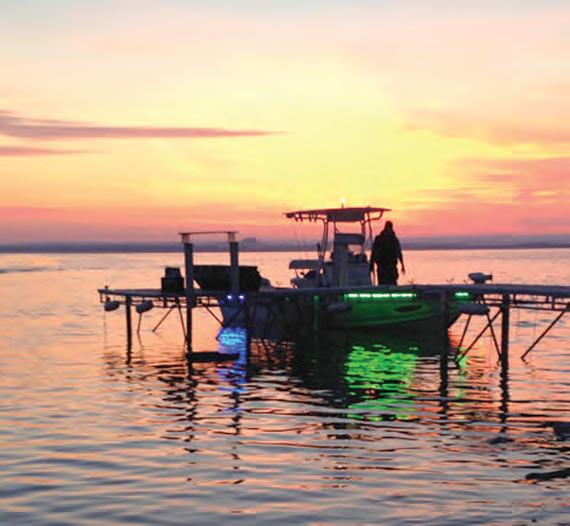
always relieved to see after summer passes. We get tired of the heat and run inside to cool off, but the fish are just stuck with water that is hard to tolerate. Hot summer water doesn’t hold oxygen as well, so they end up mostly just laying low waiting for things to get better, and fall is better. Finally, the fish find it easier to breathe and have energy to chase schools of bait fish and they feed hard to make up for doing without during the last weeks of summer. Fish are driven to feed heavily during fall and winter to prepare for spawning time in the spring. That means all a fisherman needs to do is get to the water with some tempting bait. It doesn’t matter if you bank fish or boat fish, you can probably find some fish that are ready to bite! If you’d like to chase stripers and hybrids with us, call us up at 325-379-2051!
If hunting and fishing aren’t your cup of tea, then how about a road trip, or a visit to some of our amazing parks? Just check out the list of State Parks on the Texas Parks and Wildlife Dept. website and you will find parks you may not even know about. The same goes for National Parks and local parks. If you have some time to get outside, we have the places to go. Fall is a big deal in the parks. The trees are getting their fall colors; the night skies are getting clearer and many of them host holiday events that are worth checking out too!
The only bad thing about a day off this time of year is figuring out which way to go!


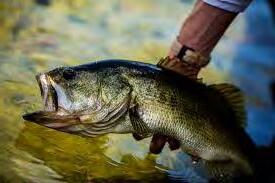

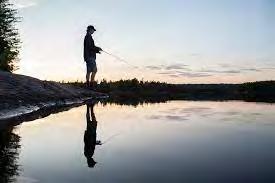

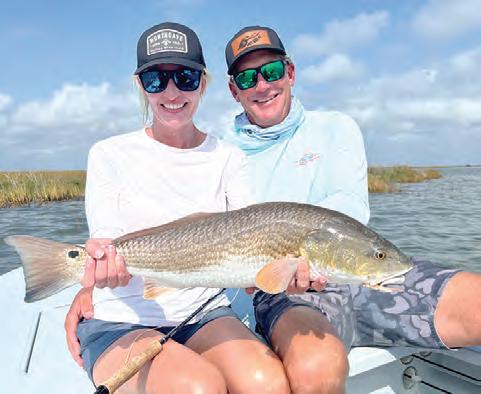
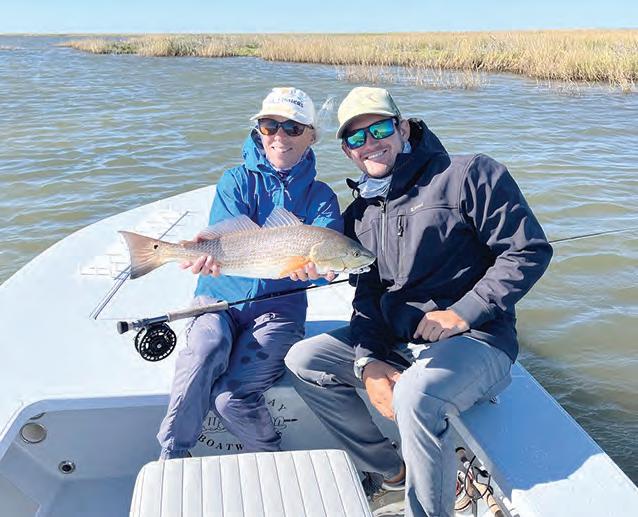


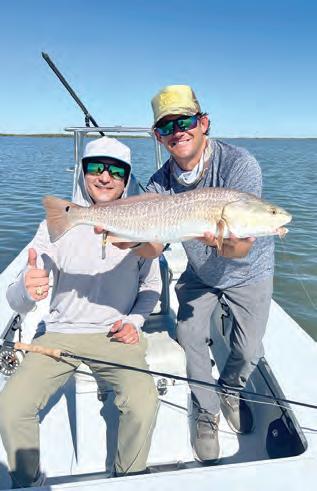
Fall on the Texas coast is a season that every fly angler dreams about. The combination of weather, water conditions, and bait movement creates one of the most exciting windows of the year to chase redfish on the fly. Around Rockport, Aransas Pass, and Port Aransas, this is the time when everything seems to line up—the tides, the wind, and the fish themselves.
What makes fall so special begins with the tides. Higher water floods the back bays and shorelines, pushing bait deeper into the marsh and spreading fish across the flats. Pair that with cooler air and water temperatures, and the entire system comes alive. The dying grass of summer begins to break loose and flush out with these consistent high tides. That flow creates movement and energy throughout the flats, and the redfish are right in the middle of it. With less grass in their way, they have fewer places to hide, making them easier to spot as they slide over sand pockets and mud bottoms.
This cleaner water and reduced vegetation give fly anglers a real advantage. Fewer snags, less grass fouling up your fly, and less chance of losing a fish because it buried itself in thick cover. Instead, you’ll often find redfish cruising openly
October is here and one of the best months around no doubt. Whether you plan to be in the boat or on the wade. The jetties are fired up with red monsters, Bull Reds hungry for shad, big shrimp, even cut mullet will work like a charm. If there’s a group of boats lined up just politely slip in the mix. If there’s no one turn that technology on and start bumping around until you find the big boys on your downscan. If you aren’t a fan of the jetties there’s plenty of other fishing to do. The reefs up north are crawling with life, pick a reef, it almost doesn’t matter which one. Trout are just off the ledge, on the ledge and up on top are black drum, red fish, you’ll find groups of sheepshead moving through. Not just the barely legal sheepshead but the bigger, better fighters. Nothing fancy to gang up on these species, shrimp and popping cork will do the trick well. I like 3/0 kahle hooks and mustad demon 5/0 circle hooks, not too big but plenty of room to grab something hard in the mouth. If the tails are on top of the skinny parts of a reef I like to keep 50-pound braid nearby to swap to on the leader of my popping corks. No rules on leaders when the reef has sharp edges. Speaking of monsters, there’s always bull reds and big uglies roaming around the reefs this time of year as well. So be ready when that pooping cork disappears and you go to set the hook and pull nothing but drag; the fight is on! If you pull up to a reef and have a lot of small fish don’t move far, put that trolling motor to work and move down 50 yards or so, there’s more fish and more sizes around nearby.
For the wading crew, islands off the edges of the shoreline will prove handy, back lakes will be teaming with reds. I like to downsize to a 1/16 oz jig head and 3” lures for less trouble with the grass. Watch out for mud pockets in the back lakes, they can go from sinking to your ankles to sinking to your knees real quick. Move slow and keep an eye out for the large green and blue monster moving through the grass. I don’t know how many big trout I have seen while cruising around a back lake in an airboat this time of year. Once they are spooked your shot at landing that one goes to almost zero. Stay safe and tight lines out there!
across shallow sand and mud. That visibility is a gift for sight fishing— you’ll see tails, backs, and even full groups of fish well before they reach you.
One of the most spectacular sights of fall red fishing is watching schools push down a shoreline, popping shrimp up in the air. It’s not uncommon to have multiple groups coming your way within casting range throughout the day. When the bite is on, it feels like every few minutes has a chance to connect.
At the heart of all this fall action is the shrimp hatch. Each fall, huge waves of juvenile white shrimp move out of the estuaries and back bays, flushing toward the Gulf. On their way, they become the primary food source for nearly everything inshore—redfish, trout, black drum, and flocks of birds diving above. Around Rockport, this hatch usually peaks from late September through November, depending on water temperatures and rainfall. It’s one of the most important seasonal events on the Texas coast, and it drives the entire fall redfish pattern. When the shrimp are thick, redfish feed aggressively, often busting bait right on the surface, and that makes for incredible fly-fishing opportunities.
East and northeast winds also play their role. These winds stack water into our bays and shorelines,
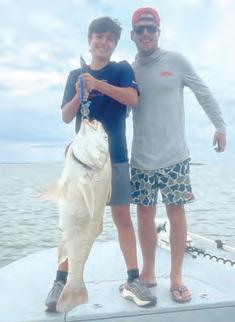
keeping tides higher and consistent. For guides and anglers, that means reliable conditions and predictable fish movements day after day. Whether you’re poling a flat or wading a shoreline, you can expect to find reds where the bait is moving, and the water is flowing.
All of this makes fall arguably the best season to sight fish for redfish on the Texas coast. If you’ve been waiting for the perfect time to book a trip or dust off the fly rod, now’s the window. Cooler mornings, active fish, and some of the most visual eats of the year are waiting on the flats. I have a few dates available listed below:
Open dates: October 14-16, 2122. November 3, 6, 17-21


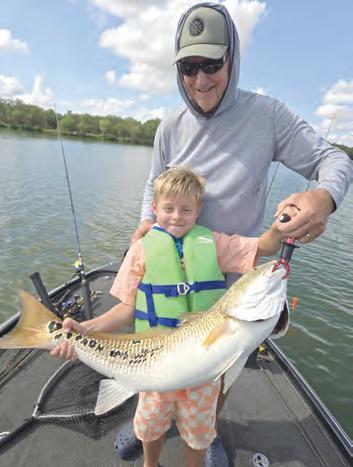
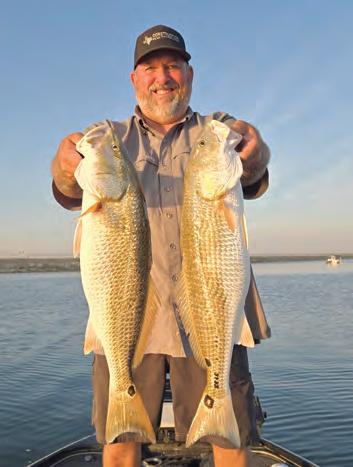
ove season has started, the evening temperatures are starting to get cooler, and deer season is right around the corner. All signs that the fall transition has begun.
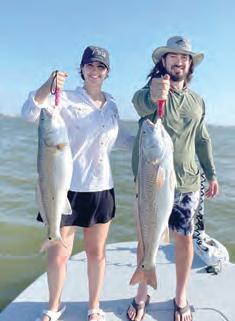
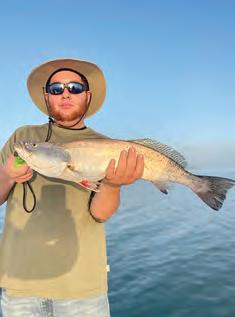
This can be a special time of year if you like catching redfish. Especially freshwater redfish. As the evening water temps drop into the low 80s on Braunig and Calaveras Lake, the reds begin to migrate towards the dam - where they will school up in massive numbers while gorging themselves on bait fish. All in preparation for their spawn.
This is where it gets interesting. You see the freshwater reds will go through all the motions of spawning, just like the saltwater reds, but due to the lake of salinity in the lakes, the eggs aren’t able to become fertilized.
By using my electronics, I’m able to locate these big schools of redfish, and decided on the best approach to target them on that given day and time. My main go to tactic is to “scope” the reds where I’ll use my forwardfacing sonar to see the schools, cast my bait at them, and

watch my bait fall down to them at the perfect depth to begin my retrieve. In turn I can make adjustments to my lure selection, and retrieve based on how the fish react as I bring the bait by them.
My bait selection of choice this time of year for casting artificials is pretty straight forward. Rattle traps in chome/ blue, gold, black/ yellow, and green/ chartreuse. Spoons in gold or silver. Swimbaits in a Shad pattern, white or pearl, black/ gold with a chartreuse tail, and chartreuse.
Most of the time the retrieve speeds are slow and steady. But if the reds drop to the bottom to feed, I will switch to a bottom hopping retrieve.
When we aren’t casting lures to the reds, I’ll switch up to either trolling crank baits, down rigging spoons and soft plastics, or bait fishing with shrimp and live tilapia.
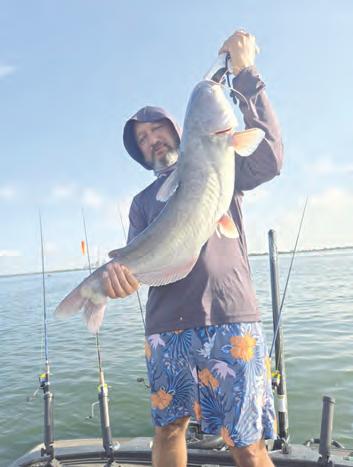
While this is an exciting time of year to target reds, one bite that most people tend to overlook is the catfish bite. The cats start to migrate from their summertime areas to their fall areas.
The channel cats move from shallow flats to channel


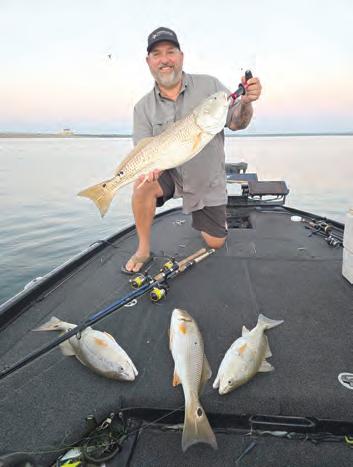
breaks on the edge of the creek channels. The blue cats will follow the creek channels and tend to stay from 16 to 30 foot of water.
Some days I will anchor and cast baits out like shrimp, chicken, or cut bait for the cats. And other days I will drag baits on a controlled drift across flats and in the creek channels.
If you’re interested in getting in on this action or are wanting to learn how to target these species on your own, give me a call.

Captain Clendon Taylor C & C Guide Service 210-831-4679 or find me on my social platforms C&C Guide Service castingandcatchingguideservice Sponsored by:



On Sept. 15–18, American Subcontractors Association (ASA) San Antonio members from across the country gathered in Oklahoma City for SubExcel 2025, hosted by the ASA Oklahoma Chapter. With its Boots and Bling theme, the annual event featured four days of networking, education, outings, new friendships, and plenty of fun. ASA San Antonio embraced the theme and the opportunities, and we’re proud to say we left Oklahoma City with national recognition and new friendships that will last long after the event ended.
ASA San Antonio chapter was honored with not one, not two, but three ASA National Awards—showcasing the innovation, leadership, and energy that make ASA San Antonio shine:
ASA National Event of the Year: The Subfest & BBQ Cook-Off was recognized as the nation’s standout event, applauded for its creativity, community impact, and ability to bring members together.
ASA National Innovation Award: Our Gun Raffle Calendar earned
recognition for thinking outside the box and creating a fresh, successful way to support chapter initiatives.
ASA Executive Director of the Year: Jennifer Swinney received this prestigious honor, acknowledging her exceptional leadership and tireless commitment to advancing ASA San Antonio and the subcontracting industry as a whole.
These achievements not only highlight the chapter’s hard work and creativity but also place ASA San Antonio in the national spotlight as a model for excellence.
A heartfelt thank-you goes to the members who traveled to Oklahoma City to represent ASA San Antonio: Bethany Beck (Sanderford & Carroll), Tom Freund (Comfort-Air Engineering), Kenneth Moore (KCM Cabinets), Ted Dunnam (Dunnam Safety Management), and Nick Flory (Chamberlin Roofing & Waterproofing). Their participation ensured the chapter’s strong presence at the conference and added to the camaraderie that defines SubExcel.
ASA San Antonio is proud to celebrate these accomplishments, and we are grateful to our members for their continued support, energy, and enthusiasm. Together, we are building something truly extraordinary—one event, one innovation, and one award at a time.

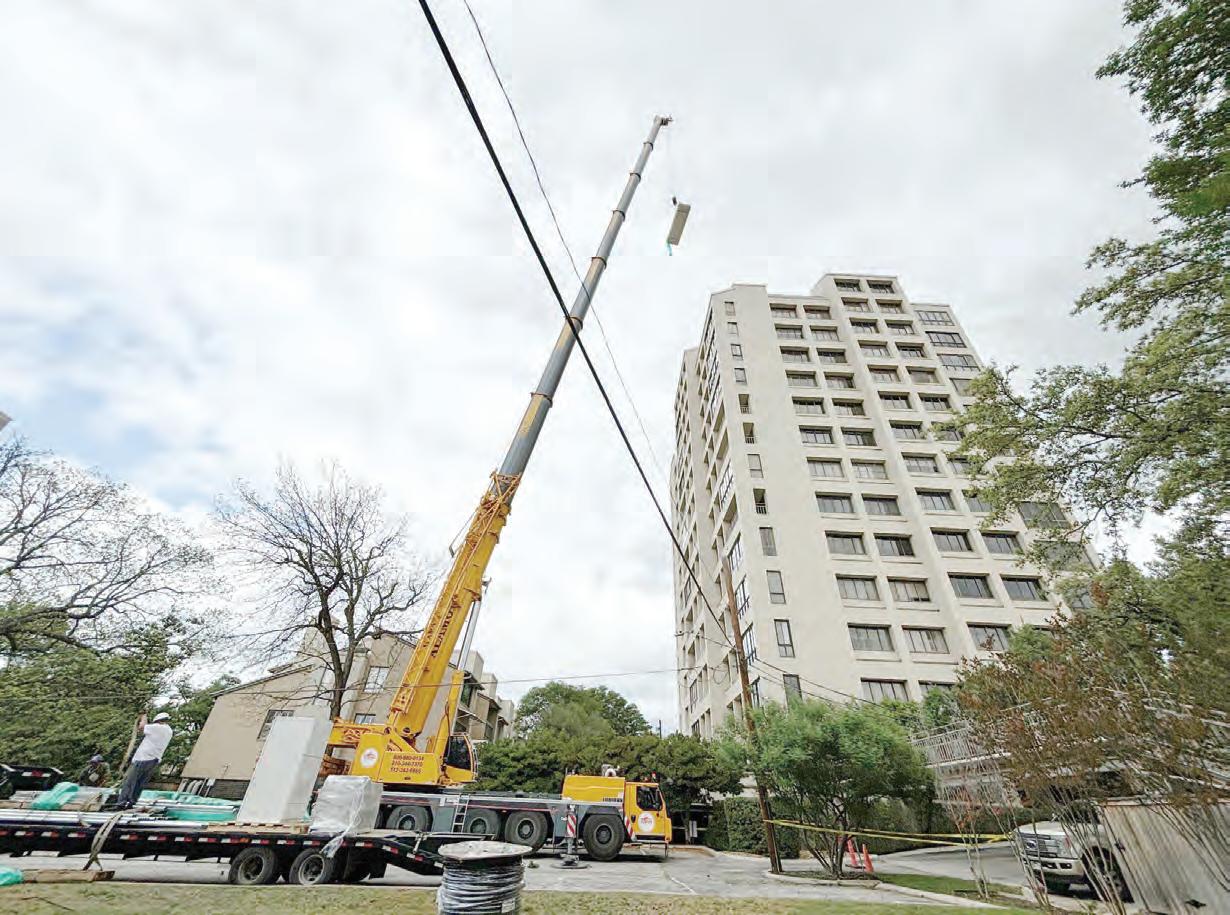
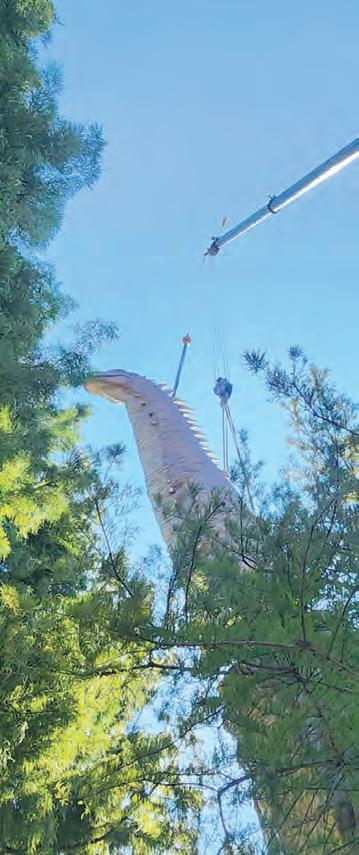
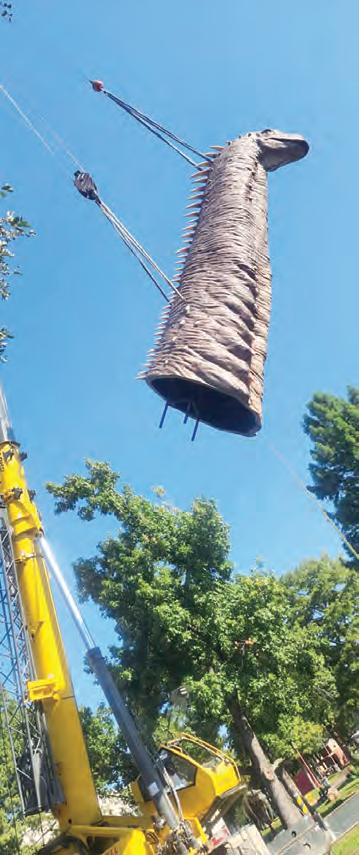
Each year, the Texas State Fair transforms Dallas into a vibrant epicenter of tradition, spectacle, and wonder. Among the most anticipated attractions, a towering dinosaur display captures the imaginations of visitors young and old. Behind this engineering marvel stands Howell Crane & Rigging, a company whose expertise and dedication have become as integral to the fair as the iconic fried foods and dazzling midway lights. Their recent work setting up the dinosaur not only showcased technical expertise but also highlighted the value of enduring customer relationships.

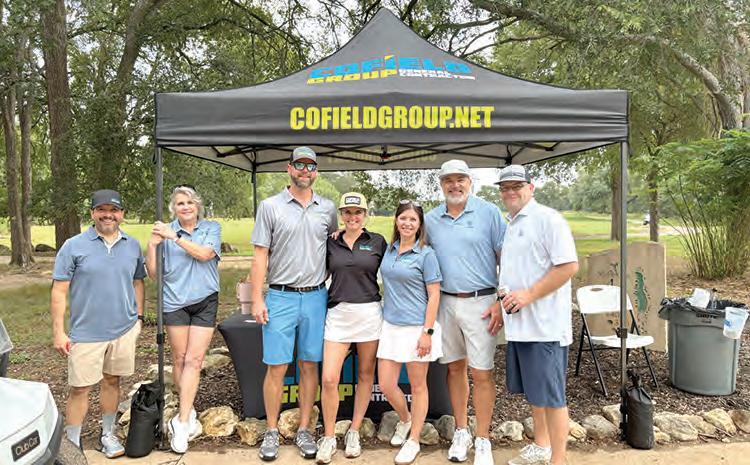
On Sept. 5, Cofield General Contractors enjoyed a meaningful day on the course connecting with colleagues, community partners, and friends at Silverhorn Golf Club where they contributed a hole sponsorship for Collier’s Engineering benefitting Morgan’s Wonderland.

Guy Malcolm Kitchen, loving husband, father, Grandpa and Pee-Paw, passed away at his home in San Antonio, Texas, on September 12, 2025, surrounded by family, after a courageous battle with FTD/ALS. He faced this cruel disease with the same grit, humor, and determination that defined every part of his life—living fully, loving deeply, and giving 100% until the very end.
Guy was born October 9, 1957, in San Antonio, Texas, to Leo and Doris (Thompson) Kitchen. He grew up in Bulverde and attended Canyon High School, where he ran track and played football. A talented athlete, he became the starting quarterback as a sophomore and later made history as the first quarterback at Smithson Valley High School when it opened in 1976—scoring the school’s very first touchdown. Though a knee injury cut short his playing career, he remained a proud Canyon Cougar and SV Ranger throughout his life. In 2002, he was honored as an
Outstanding Comal ISD Graduate.
On February 5, 1983, Guy married the love of his life, Sheri Livingston. Together they built a life rooted in faith, family, and service. They raised three sons—Malcolm, Dustin, and Beau—at their homestead, the K5 Ranch, in Bulverde. Guy took pride in raising his boys to be good men, grounded in kindness, integrity, and hard work. He taught them to give a firm handshake, be men of their word, and to always give 100%. Those same lessons are now carried forward by his grandchildren.
Guy’s work ethic was unmatched. After founding Hill Country Construction, he joined Arnold Refrigeration, Inc. (ARI) in 1987, where he worked in the field, transitioned into sales, and eventually joined the ownership team in 2017. His entrepreneurial spirit also led him to found K5 Ranch whitetail deer breeding in 2006, which he operated until 2021.
Faith, family, friendships, and community defined Guy’s life. He and Sheri devoted countless hours to church
youth programs, coaching sports, 4H and Ag programs, booster clubs, and more. Always the first to show up and the last to leave, Guy had a smile, a helping hand, and a kind word for everyone. His good looks, dimples, humor, and presence could light up a room. He was remembered not only as a loyal friend, but also as a mentor and a positive influence in the lives of so many, always encouraging others to do their best and believe in themselves.
His proudest moments were the simple ones: his marriage of 42 years to Sheri, the births of his three sons, and the joy of his grandchildren. He cherished hunting and fishing trips, snow skiing, lake days, and, of course, Ranger Football. Even during his illness, he celebrated one of his greatest joys on December 21, 2024, when Smithson Valley Rangers finally captured the State Championship title—a bucket-list moment that filled his heart.
Diagnosed with Frontotemporal Dementia with Motor Neuron Disease
(ALS) on August 13, 2024, Guy accepted this challenge as he did all things—in faith and with strength. The Kitchen family is deeply grateful for the unwavering support of friends, family, ARI, the Canyon Cougar and SV Ranger communities, Senior Buddies, Trinity Hospice, Team Gleason, The Biggs Institute and TRIBU.
Through faith we fight, and through love we endure. #K5Strong






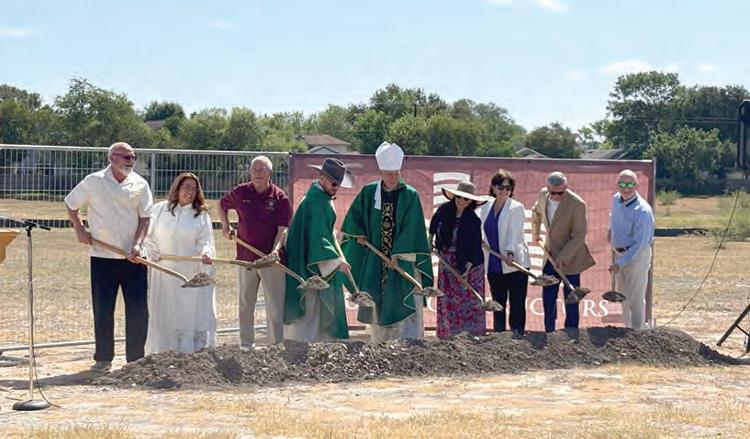
Apassion for historic restoration is the driving force behind Pugh Constructors. Founded by William and Micha Pugh in 2001, Pugh Constructors has completed a multitude of projects that include the Alamo and the San Antonio missions. Its desire to produce quality work and develop longterm relationships has enabled Pugh Constructors to maintain its vast portfolio with multiple architects, engineers and owners throughout the San Antonio metroplex. It is through those relationships that invited Pugh Constructors to build a new education center for St. Helena’s Catholic Church.
On Aug. 17, immediately following its Sunday morning mass, a groundbreaking ceremony was held at St. Helena’s Catholic Church where over 200 parishioners and special guests were in attendance. The Most Rev. Gary Janak,
Auxiliary Bishop of San Antonio; St. Helena’s Pastor Rev. Marcin Czyz, former St. Helena’s Pastor Lenin Naffate who initiated the project, committee members Ralph Yzaguiree and Roland Castro were among those in attendance.
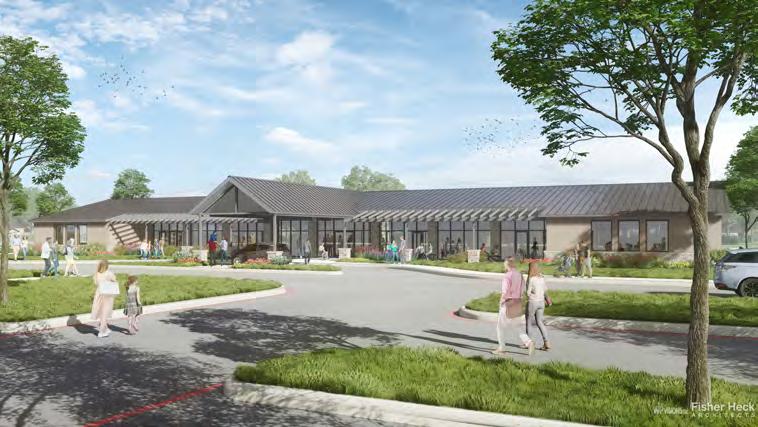
The eight-classroom, 9,000-sf education center is scheduled to be completed in Aug. 2026 at a cost of $4 million.
The project’s exterior is 50 percent CMU and 50 percent stucco. The interior will be of structural steel/wood frame construction. The eight multi-use classrooms will consist of folding wall partitions and kitchenettes.
Pugh Constructors Project Manager Whit Brackett and Superintendent Raul Juarez will be working closely with the project’s design team of Fisher Heck Architects and the Archdiocese of San Antonio. -cwr
ongratulations to the ELECTRI Council Representatives who were just elected to the National Electrical Contractors Association (NECA) Executive Committee and inducted into the Academy of Electrical Contracting.
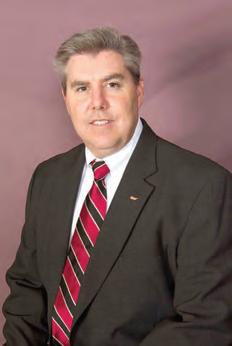
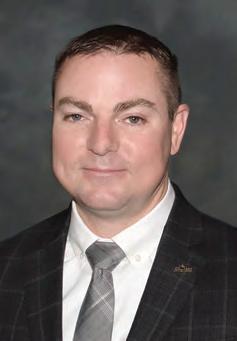
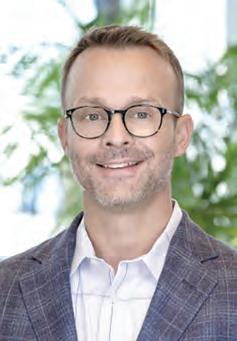
Christopher M. Foster, Whitehead Electric – District 3 Vice President Gregory Padalecki, Alterman, Inc. – District 5 Vice President
Steven Stone, ArchKey Solutions – Vice President at Large
We’re proud to see ELECTRI leaders helping shape the future of the industry through their service to NECA and the Academy.
fter 56 years of delivering construction excellence across Texas and beyond, Alpha Building Corporation is entering a new chapter. We are sunsetting our services as a general contractor and pausing operations in their current form.
This decision comes with both pride and reflection. For nearly six decades, you’ve trusted Alpha to help bring your visions to life – from complex renovations to new ground-up construction. We’re honored to have played a role in shaping the spaces that support your mission. It’s especially meaningful when we visit your facilities – whether personally or professionally – and see the lasting impact of our collaboration.
Over the past year and a half, Alpha has navigated one of the most challenging chapters in our history – a complex and costly legal dispute. While such challenges are never easy, we approached it with the same integrity, diligence, and resolve that have guided us for nearly six decades. The outcome was a success for Alpha, reaffirming our commitment to doing the right thing and standing by our principles. This resolution allows us to close this chapter
of our operations on our own terms, with our reputation intact and our legacy strengthened.
As we take this intentional pause, our goal is not to say goodbye, but to make way for what’s next. Alpha’s legacy, reputation, and long-standing relationships remain a foundation we will build upon. In the near future, we plan to re-emerge in a renewed and relevant way – still committed to creating environments where great things happen.
If you are currently working with Jonathan Rogero’s separate entity, Omega GC – a general contractor serving public and private clients – we hope to continue supporting your projects through that endeavor. For project opportunities, you can still reach out to Candi Lewis at candi.l@omegagc.com or (210) 850-1054.
Thank you for being a part of Alpha’s journey. We are truly grateful for the opportunity to serve you – and we look forward to crossing paths again in the next chapter.



ERW Site Solutions, a Fort Worth–based integrated construction firm, continues to solidify its reputation across Texas—especially in San Antonio—through a dynamic mix of expert services, strategic acquisitions, and trusted partnerships.
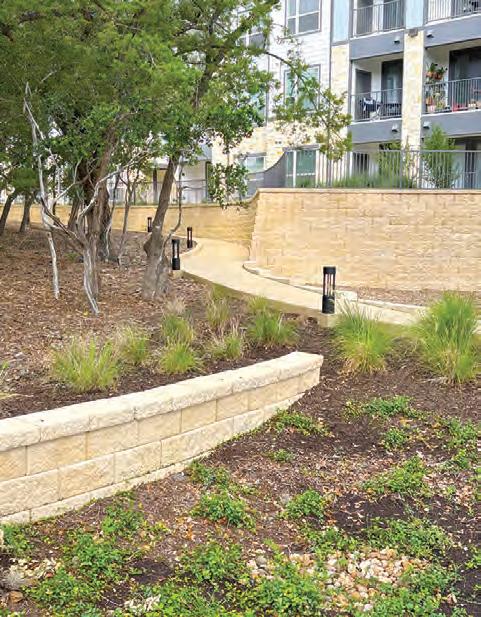
While originally, strictly a retaining wall provider, ERW Site Solutions now offers a broad suite of services including hardscape and amenity center construction, landscape and irrigation design and maintenance, single-family concrete foundations, and valueengineering for site development. This integrated approach streamlines project execution and reduces complexity, allowing customers to work under a single contract and point of contact.
Though headquartered in Fort Worth with a strong presence in Austin, ERW Site Solutions’ projects span across Texas—including Greater San Antonio. Notably, ERW Site Solutions’ reputation for exceptional retaining wall work has been affirmed through multi-family developments such as The Parkway at Stone Oak in San Antonio, completed in collaboration with Rampart San Antonio residents and developers can enjoy ERW Site Solutions’ structural integrity combined with aesthetic excellence.
ERW Site Solutions’ retaining walls division, ERW Retaining Walls, has also completed a couple additional notable wall projects, one being a block wall project for apartments in Westover Hills (pictured). We were honored to partner with Galaxy Builders as the contractor on that project. ERW Retaining Walls has also completed a couple noteworthy commercial walls
Built on Quality, Partnerships, and Employee Ownership
Founded on a commitment to craftsmanship— originating with founder Larry Barnett , and carried forward by stepson, Randy O’Neal —the company has expanded organically and through acquisitions to become a multi-faceted construction provider. Since 2018, ERW Site Solutions has acquired: LandTec (landscape & irrigation, Austin, TX), Ratliff Hardscape (Lewisville, TX)
DesignBuild Consulting (engineering, Ft. Worth), Kaufman Concrete (Austin, TX)
This strategy helped drive organic growth and broaden capability, with revenue target ambitions rising from about $20 million to $400 million by 2025, according to Fort Worth Inc.
A major milestone came in June 2025 when ERW Site Solutions transitioned to a 100% employeeowned structure via an ESOP transaction, according to Fort Worth Inc. This shift reflects a legacy of stewardship, aiming to reward and empower those in the field while fostering longevity and local commitment.
Client Praise: Relationships That Endure
ERW Site Solutions’ ability to deliver high-quality results consistently has earned strong praise from industry leaders. For over a decade, Novak Brothers have relied on ERW Site Solutions’ LandTec division for their landscape and irrigation needs, citing creativity, responsiveness, and seamless collaboration.
Meanwhile, Rampart highlighted ERW Site Solutions’ precision in constructing retaining walls:
“ERW [Site Solutions] consistently delivers on both… structural integrity and aesthetic appeal… You can’t put a price on that.” And further: “We know they will get the job done... every time.”
These personal testimonials reflect not only ERW Site Solutions’ technical excellence—but also its reliability and problem-solving ethos.
ERW Site Solutions continues to flourish across Texas—from Fort Worth and Austin to developments in San Antonio—by delivering integrated, high-quality construction services anchored by client trust and employee ownership. Their success is a testament to strategic growth, commitment to excellence, and strong partnerships built one project at a time.

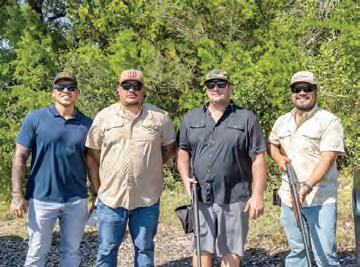
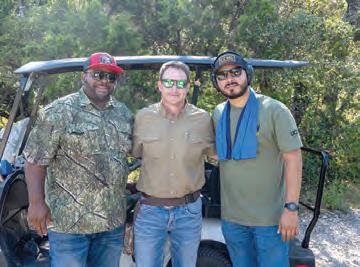
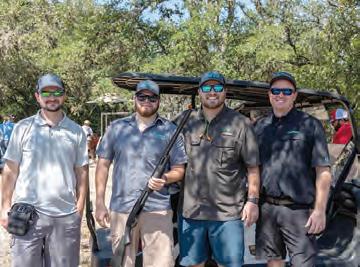
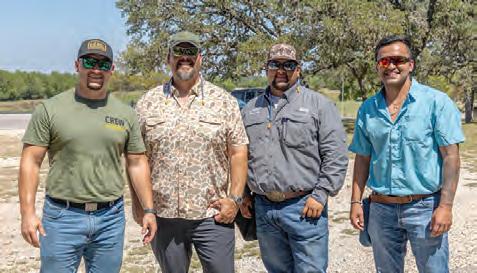
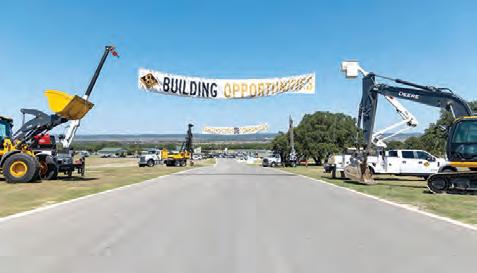
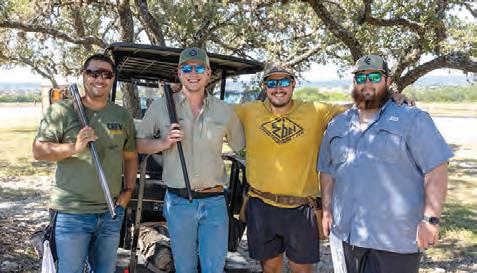
E-Z Bel Construction held its 5th Annual Clay Shoot benefitting the ACE Mentor Program of Greater San Antonio. This program connects high school students with industry professionals to learn about careers in architecture, engineering, and construction through hands-on projects and mentorship. Thank you to the incredible sponsors, together we are shaping the future through workforce development.

Jeffrey Lee Vogt peacefully passed away on September 11, 2025, after an unexpected battle with cancer. During his final days, as during all his days, he was surrounded by his loving family and lifelong friends.
Born on September 1, 1971, in Yoakum, Texas, Jeff grew up with strong values that guided him throughout his life—faith, loyalty, hard work, generosity, and a deep love of the outdoors. At Yoakum High School, he excelled both academically and athletically, serving as Class President, playing Varsity Basketball, graduating as Salutatorian, and earning the title of “Most Likely to Succeed”—a prediction he more than fulfilled.
A proud Aggie, Jeff graduated from Texas A&M University in 1994 with a
degree in Mechanical Engineering. At just 22, he began his lifelong career at Dynamic Systems, Inc., where his determination, humble nature, and brilliance carried him from Project Manager to President. His belief that “a job worth doing is a job worth doing right” was more than a motto—it was the backbone of his professional and personal life.
Jeff found his greatest fulfillment in his family. He was an adoring husband to his wife, Lyn, and they shared a beautiful, laughter-filled life. He was a devoted father to his four children—Harrison, Hannah, Riley, and Maddie—and he found great joy in time spent with each of them. Whether waking them early with his playful clapping, making them smile with his dance moves, cheerfully building

treehouses, patiently teaching archery and hunting, or simply just checking in, Jeff was always present and was incredibly proud of his kids. He provided his entire family with an unwavering sense of safety, encouragement, and togetherness.
A lifelong outdoorsman, Jeff’s love of hunting began as a boy exploring the land in Bellville, Sweet Home, and Plum. That passion grew into a lifetime of teaching others about the outdoors and creating lasting family traditions in Junction, a gathering place he built to ensure that his entire family and friends always had a place to be together.
Though incredibly accomplished, Jeff held humility in equal measure. He brought the same care to mowing his lawn as he brought to leading his
company, and his quick wit, laughter, and silly dance moves will be remembered as fondly as his competitive nature and drive. Jeff Vogt was, above all, a good man.

Austin Lanes Partner
The Landes Group Dallas, TX
business with a physical location needs commercial property insurance, but exactly what your policy covers can vary depending on your specific industry and operations – and your location. Texas has its own unique insurance requirements , as well as topography and weather patterns that differ from other states, which all play into how your policy is written. Commercial property insurance in Texas is different from similar policies in other parts of the country in some specific ways. It’s important for business owners in the state to understand those differences to make sure they are properly covered.
What makes commercial property insurance in Texas unique?
Commercial property insurance is standard everywhere in the sense that it pays to repair or replace your property if it’s damaged by a fire, storm, or other covered event, and can even cover some of your lost income. Asie from that foundation, here’s how this policy is typically tailored for Texas:
Texas is particularly susceptible to various natural disasters. This includes hurricanes along the Gulf Coast, tornadoes in the north and central regions, as well as frequent hailstorms and potential flooding. These weather-related risks significantly impact the insurance landscape. Insurers may charge higher premiums to account for these increased risks, and the policies might include specific conditions or exclusions related to these natural events. Businesses need to ensure they have adequate coverage for the types of events that commonly occur in Texas, and be sure to read the fine print for exclusions.
Texas has a diverse and robust economy that’s known for being business friendly. The state has embraced companies in sectors like oil and gas, technology, and agriculture, which presents unique scenarios in commercial property insurance. If your company sits in a high-risk industry, such as oil and gas, it may require specialized insurance products. Additionally, the economic

growth in Texas can lead to increased property values and construction activity, influencing insurance needs and costs.
The vast size and geographical variety of Texas means that insurance needs and risks can vary greatly across different regions. For instance, a business in a coastal area like Houston would have different insurance considerations (like hurricane and flood risks) compared to a business in a more inland city like Dallas, where tornadoes might be a greater concern. This regional variation requires insurers to offer tailored solutions, and businesses must be aware of their specific local risks when choosing their commercial property insurance in Texas.
Rural areas and lack of local protections
Because a large portion of Texas is rural, some areas lack local protections that are standard in urban regions. For example, the number of fire departments in rural Texas can be limited. This lack of local infrastructure can lead to properties being classified as higher hazard due to longer response times in case of emergencies like fires. Consequently, insurance companies might assess these properties higher risk, leading to higher insurance premiums. If your business is located in a rural area, it’s crucial to be aware of the infrastructure limitations that might put you at additional risk.
Coastal property insurance requirements
Properties locate in counties along the Texas coast often require insurance through specialty carriers that focus on coastal properties. These carriers are more experienced in dealing with the risks associated with coastal areas, such as hurricanes and flooding. However, policies from these specialty carriers often come at higher rates compared to inland insurance options. This is due to the increased risk of significant damage from coastal storms and the higher cost of rebuilding in these areas. Businesses owning properties in these coastal regions need to budget accordingly for higher insurance costs.

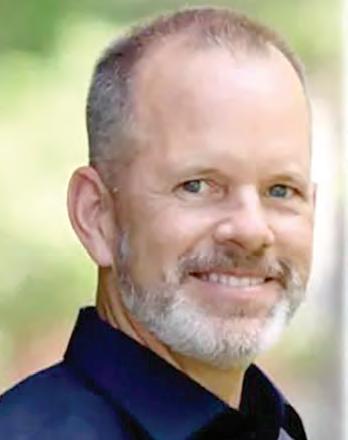
Pat Wielinski
Principal Cokinos Young Dallas, TX
Insurance Programs (“CIPs,” “wrap-ups” or simply “wraps”) are promoted as particularly well-suited for large construction projects where all eligible participants are insured under a single program. Theoretically, a wrap eliminates multiple carriers and duplicated coverages. For successful wrap treatment, the project must be of sufficient dollar value to be eligible, the sponsor must be capable of administering the wrap, and coverages must be adequate to apply to claims for the wrap to be effective. However, depending on the entity sponsoring the owner-controlled insurance program (“OCIP”) or a contractor in a contractorcontrolled insurance program (“CCIP”), it is the insurer that effectively maintains ultimate control of the claims. But the potential for gaps in coverage has emerged as a disadvantage where property damage occurs during construction operations.
While most wrap-up CGL policies utilize similar exclusions to those found in standard CGL forms, they are endorsed to add provisions to adapt the policy to the wrap-up platform, such as by extending the completed operations coverage to the length of the statute of repose, including all tiers on the project as named insureds, limiting the insured location to a specific project or projects, and revising certain exclusions in the policy. Often, standard property damage exclusions may also be deleted altogether, but are usually then replaced with another or others.
One of the most troublesome CIP modifications to the customary CGL property damage exclusions is an endorsement that deletes Exclusions j(5) and j(6), the operations and incorrect work exclusions. Those standard exclusions apply to operations in progress, stating that the insurance does not apply to property damage to “that particular part” of real property on which the named insured or its subcontractors are performing operations, if the property damage arises out of those operations, or if the property must be restored, repaired, or replaced because the named insured’s work was incorrectly performed on it. The “that particular part” formulation is intended to preserve coverage for other property damaged by the excluded particular part.
One might be tempted to believe that deletion of the standard j(5) and(6) exclusions is a win for the insured participants and that coverage would be increased by the deletion of exclusions. Not so fast! While these two provisions are framed as exclusions, many courts have relied on the “that particular part” formulation to narrowly interpret the scope of the exclusion and to uphold coverage.
Unfortunately, the deletion of these property damage exclusions from the CGL form is usually accompanied by attachment of a considerably more onerous and absolute endorsement to the CIP CGL
policy, stating that the insurance does not apply to property damage at or to the insured project during the course of construction or operations (i.e., before the substantial completion of the project). Gone is the “that particular part” limitation, and the modification is often made through a stand-alone endorsement that may be labeled in various ways, such as “Property Damage to Work in Progress,” “Course of Construction Endorsement,” “Property Damage to Contract Works,” or “Exclusion Damage to the Project During the Course of Construction.”
Insurance underwriters often refer to this type of provision as the “builders risk exclusion,” apparently on the assumption that builders risk insurance, rather than liability insurance, should provide coverage for property damage to the work that occurs during the course of construction. This overly simplistic approach ignores the fact that builders risk policies contain many gaps in coverage versus a standard CGL policy, particularly as to defective construction. The exclusion can thus create a significant gap for participants in a wrapup project for property damage occurring during the course of operations, depending on their ability to coordinate and rely upon coverage within their own insurance policies. First and foremost, a builders risk policy is a first-party property policy that does not include a defense obligation for the insurer. Therefore, when the insured looks to the wrap-up CGL policy for defense of a claim involving property damage during construction, it may be excluded, and no defense is available under the CIP. In addition, builders risk coverage may not provide coverage for certain types of risks such as consequential damages, certain soft costs, and faulty workmanship/design (absent an ensuing loss clause that preserves coverage for damage to other non-defective work caused by the defective work). Coverage for such damages may otherwise be covered under a CGL policy but for a course of construction exclusion attached to a wrap-up.
The course of construction exclusion and its deletion of the broader j.(5) and j.(6) exclusions was touched on by the court in the recent case of Liberty Surplus Insurance Corp. v. Kaufman Lynn Construction, Inc., 130 F.4th 903 (11th.Cir. 2025). Though decided under Florida law, the opinion is one of the first do so and is of potential country-wide impact. The AGC and NAHB filed an amici curiae brief in that case in support of the insured contractor, calling the court’s attention to the incongruity of denying course of operations coverage under a wrapup program. Their efforts caught the court’s attention in what it hinted to be an unfair “sleight of hand” by attaching a more onerous course of conduct endorsement to a wrap-up policy intended to provide coverage for everyone on the project.
See LEGAL, page 17

Michael Purser Writer/Editor OSHA Education Center
The Occupational Safety and Health Administration (OSHA) requires employers to provide education that prepares workers to handle machinery correctly. That applies to any large, self-propelled working vehicle, including excavators.
Excavation and trenching hazards are closely regulated by several more standards, including 29 CFR 1926 Subpart P. In addition, the administration expects a designated competent person on site to oversee soil testing, equipment inspections and hazard identification before any digging begins.
This system of related standards includes rules like:
• Protective systems must be used when trenches exceed five feet in depth.
• Workers may install sloping, benching, shoring or trench boxes depending on the soil type.
• Utilities should be located and marked before excavation starts.
• Operators must follow construction safe work practices.
These measures protect both heavy equipment operators and nearby crews. Operators must also comply with general industry standards related to construction site operations. That includes following load charts, maintaining equipment and ensuring safety procedures are used on every shift. Noncompliance can lead to downtime, accidents and fines.
Citations for excavation violations are among the most common in construction. In 2024, OSHA reported millions of dollars in penalties related to trenching hazards. There’s a high cost for cutting corners, both financially and in human lives. For both employers and workers, occupational safety training is the best defense against medical, legal and financial risk.
Training Requirements for Using Excavator Machinery
Excavator operator training must cover both technical skills and awareness of safe operations. At a minimum, programs should include:
• Safety procedures – avoiding rollovers, controlling swing radius and protecting nearby workers.
• Excavation and trenching hazards – recognizing unstable soil, water intrusion and underground utilities.
• Load handling and stability –understanding lifting capacities, proper rigging and ground conditions.
• Emergency response protocols –knowing how to shut down equipment and respond to incidents.
For those seeking long-term career advancement, initial courses and refresher programs will also help build your confidence before moving into complex construction equipment operations while avoiding the hidden dangers of construction sites.
Completing a basic training and safety
awareness course helps you gain an understanding of construction industry standards and prepares you for jobs. You can take the course on your own or through your employer. Many employers enroll crew members in these types of programs to keep everyone safe on the job and qualify for reduced insurance premiums with documented records of safe operations.
How to Become a Heavy Equipment Professional
Moving tons of earth takes more than just sitting in the driver’s seat. Here’s a step-by-step process:
1. Complete Online Courses
Begin with a general safety education, such as OSHA 10-hour construction or OSHA 30-hour training. These cover core topics every worker needs for safe operation on construction sites.
Some jurisdictions may impose additional requirements. In New York City, for example, you’ll also need to complete Site Safety Training (SST), which provides an overview of excavations and underpinning activities. Look for courses approved by the NYC Department of Buildings (DOB).
2. Take Heavy Equipment Operator Training Courses
Specialized courses build the knowledge you need for handling construction-related machinery. Heavy machinery operation courses provide foundational skills. These programs teach operators how to interpret load charts, recognize soil conditions and plan safe construction site operations. Some employers require proof of completion before allowing workers to touch any type of heavy equipment.
With OSHA Education Center’s online Excavations Safety Training course, you get a Certificate of Completion immediately after completing the one-hour program.
3. Practice and Work Under Supervision
Virtual platforms allow learners to experience construction equipment operation in a safe, controlled setting. Simulator training is one method for developing hand-eye coordination for handling construction machines, but it is not the only method.
On-site apprenticeships or supervised sessions provide practical exposure. Trainers can assess whether a worker is ready to operate equipment independently. This step ensures that classroom learning translates into real-world competency. A supervisor can also confirm that safety procedures are being followed consistently.
4. Maintain Your Skills
Skills should be refreshed with ongoing education. Short courses like excavation and trenching awareness help you stay up to date and demonstrate to employers you take safety seriously.
Continuing education is especially important as new technologies and attachments are introduced to modern excavation equipment.

Mac Carroll
Real Estate Industry Senior Analyst
RSM US LLP
Dallas, TX
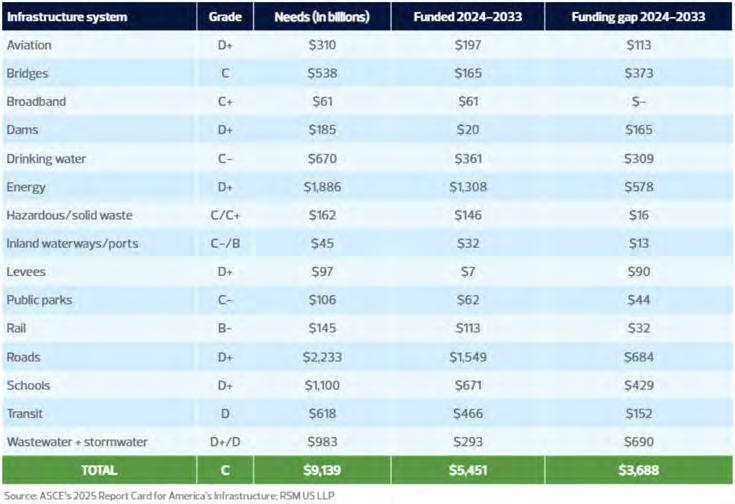
March the American Society of Civil Engineers (ASCE) released its 2025 Report Card for America’s Infrastructure, awarding an overall grade of C—an improvement from a C-minus in 2021, but an indication that the U.S. still has barely scratched the surface of what is needed to effectively maintain and improve the nation’s infrastructure.
ASCE evaluated 18 infrastructure categories based on factors such as current and future capacity, physical condition, funding levels and gaps, regulatory compliance, public safety, resilience, and innovation. The findings paint a picture of strained systems, aging assets and limited investment. The organization estimates a funding gap totaling $3.7 trillion from 2024 to 2033 if federal funding remains flat.
Condition and funding needs of U.S. transportation infrastructure
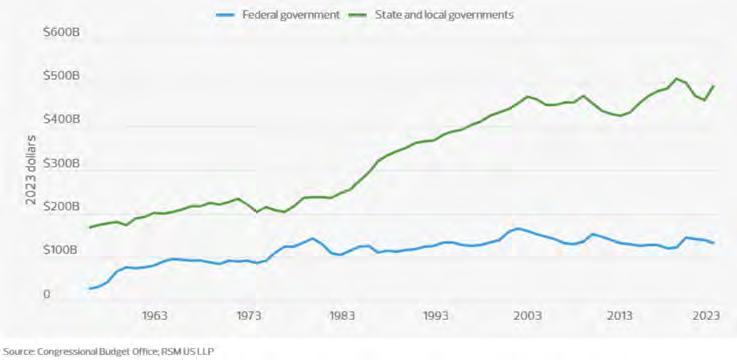
State and local governments accounted for 79% of transportation and water infrastructure spending in 2023, according to the U.S. Congressional Budget Office, yet many are not prepared to meet the challenge of keeping roads and bridges in good repair.
A July 2025 report by The Pew Charitable Trusts found that 33 states expect to miss at least some of their targets for roadway and bridge conditions or maintenance funding over the next decade. Only 11 states are on track to meet both goals. The rest lack sufficient data for a clear outlook, which is an issue in itself. For example, much of the data focuses only on federally funded National Highway System assets, excluding non-NHS infrastructure.
Public spending on transportation and water infrastructure, 1956−2023
Merriam-Webster defines infrastructure as the system of public works of a country, state or region—a definition that speaks directly to its role as the backbone of the economy. That connection has real consequences: U.S. underinvestment in infrastructure will cost the average household $3,300 a year by 2039, according to ASCE.
Poor infrastructure doesn’t just mean potholes and delays. It erodes productivity, restricts the movement of goods and people, increases risk, and limits competitiveness. Aged electrical grids, fragile water systems, and constrained port and transit capacity all hamper economic performance and national security. Infrastructure also affects the pace of artificial intelligence adoption, limiting energy scalability and data center deployment.
The upside is that the scale of these infrastructure challenges presents a massive opportunity for construction contractors that are prepared to meet them. As federal, state and local governments stretch limited resources across mounting needs, successful contractors will be those that bring sophistication, compliance and productivity to the table and excel in a variety of areas.



Unfortunately, the court decided not to address that issue because the builders risk policy was not included in the court record. The result in the Liberty Surplus v. Kaufman case seems somewhat less than ringing, but the court’s observations moved the needle slightly away from the inclusion of course of construction exclusions in wrap-up policies.
Negotiation to remove or limit course of conduct exclusions in CIP CGL policies is not usually a viable option in that underwriters are hesitant to do so. Of course, all terms of an insurance policy, particularly manuscripted provisions, should be carefully reviewed at issuance because departures from standard policy language can create more opportunity for possible denial by insurers in the claims stage. Nevertheless, the following might mitigate the negative effects of an absolute course of conduct exclusion (or prevent other gaps):
Mastering compliance and funding
Contractors that want to bid on government contracts must navigate a maze of evolving regulations and funding requirements. Projects tied to the Infrastructure Investment and Jobs Act require prevailing-wage adherence, workforce development and domestic material sourcing. The U.S. Department of Defense now mandates that certain contractors comply with the Cybersecurity Maturity Model Certification.
And new initiatives such as the White House’s American AI Action Plan signal the availability of more funding, as well as more complexity and urgency. Staying competitive means participating in trade associations that offer up-todate guidance, hiring attorneys and consultants who are familiar with these regulations and developing systems to track regulatory changes.
Closing the labor gap
Associated Builders and Contractors forecasts the need for 439,000 net new construction workers in 2025 and 499,000 in 2026. It warns that failing to meet that need may accelerate already high construction costs and reduce the volume of financially feasible work. Contractors should consider establishing internship programs, workforce development programs, employee ownership models and flexible benefits to attract and retain talent.
• During underwriting, submit a specification of the insured project that closely tracks the contract, particularly as to completion.
• Link or incorporate the definition of “complete” or “completion” in the course of construction exclusion with the standard definition of the “products-completed operations hazard” in the CGL policy that deems completion to occur when the owner occupies a portion of the project.
• Negotiate a provision in the contract specifying that standard unendorsed CGL coverage must be included in the wrap-up and that failure to provide those coverages allows the contractor to purchase it at the owner’s expense or reimbursement by the owner for a denied claim, similar to AIA Document A201, Section 11.2.2, as to builders risk coverage.
• Amend the participant’s own practice CGL policies to include difference in conditions (DIC”) coverage to fill in the gaps in a wrap-up program.
Managing materials and costs
Tariffs and supply chain disruptions have made materials sourcing more critical than ever. Contractors must develop robust procurement strategies and adopt best practices for navigating price and availability fluctuations.
Leveraging data and technology
Data is the engine of effective technology use. When properly accessed, governed and protected, it enables faster, smarter decisions. Technology helps contractors manage compliance, boost labor productivity and safety, and optimize materials and other limited resources. A smart starting point is to evaluate the effectiveness of enterprise resource planning systems and project management software in assessing business planning and profitability.
These systems and software facilitate a more financially healthy and nimble construction firm. With this foundation in place, firms can build a culture of innovation that uses AI, wearables, drones and robotics to solve specific challenges and drive measurable growth.
The outlook
The U.S. infrastructure challenge is as daunting as it is urgent. But for construction firms, it is also a moment of unprecedented opportunity. Prepared and innovative firms that invest in people, process, data and technology can thrive amid continued uncertainty and play a pivotal role in revitalizing the U.S. economy.






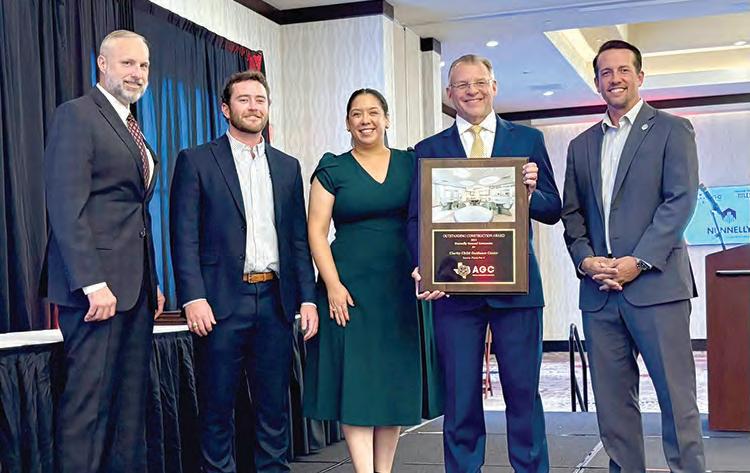
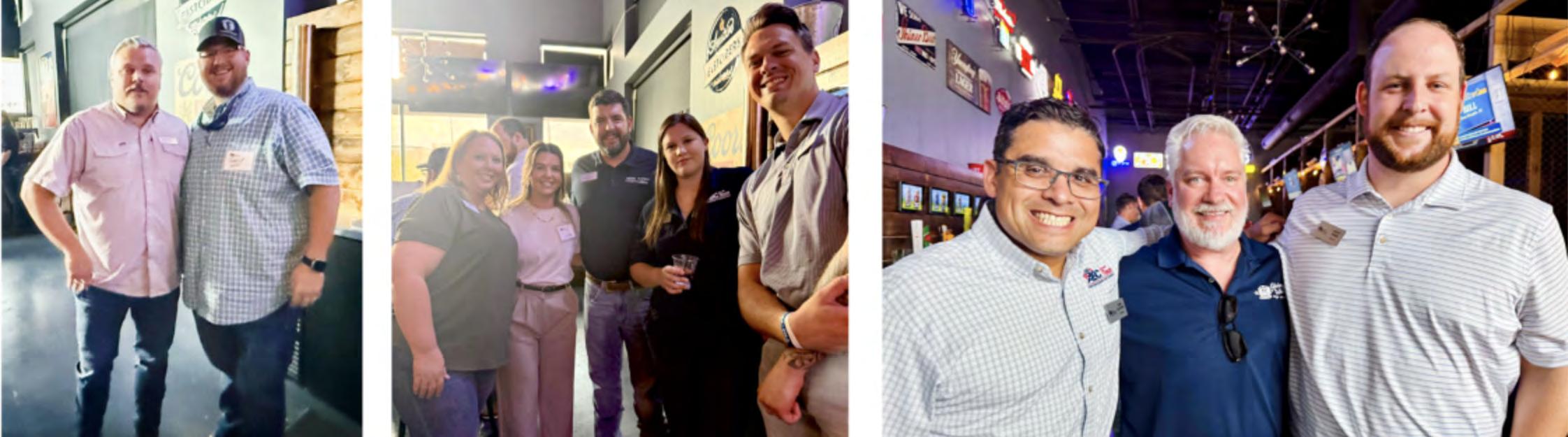
Nunnelly General Contractors are proud to have sponsored the 2024 Associated General ContractorsTexas Building Branch (AGC TBB) Outstanding Construction Awards. These awards acknowledge exceptional construction projects by AGC member firms, in Texas. They were even more excited to take home awards for two amazing projects:
– City of San Antonio Police Substation St. Mary’s
– Clarity Child Guidance Center
Nunnelly would like to extend a huge thank you to their very own Blaine Beckman for presenting the winners and AGC for hosting such a fantastic event to recognize the hard work and dedication of everyone involved.

ABC
Associated Builders & Contractors
South Texas Chapter
Oct. 8: Trades Day
Oct. 9: Lunch & Learn-Polished Concrete 101
Oct. 15: Development Services Update
Oct. 16: Chili Cook-Off
AGC
Associated General Contractors
San Antonio
Oct. 10-11: Safety Fair & BBQ Cook Off, Helotes Festival Grounds
ASA
American Subcontractors Association
San Antonio
Oct. 2: Free Safety Update, 11:30am-1pm, Alterman, Inc., 7805 N. Loop 1604 E., Live Oak, San Antonio
Oct. 3: Two-Steppin’ for Club Kids, 6pm, Shrine Auditorium, 901 N. Loop 1604 W, San Antonio
Oct. 8: Trades Day Event, 9am-12pm, Freeman Expo Hall, 3201 E. Houston St., San Antonio
Oct. 16: Free (for members) Tacos & Training, 8:30am, Aprio’s office, 922 Isom Rd #100, San Antonio
Oct. 21: General Meeting, 5-8pm, The Petroleum Club, 8620 N. New Braunfels, Ste. 700, San Antonio
Oct. 22: Killer Contracts Seminar: 1-4pm, Sanderford & Carroll’s Office, 1100 NE Loop 410, Ste. 610
Oct. 30: Fall Golf Tournament, 8am, Hyatt Hill Country Golf Course, 9800 Hyatt Resort Dr, San Antonio
CTRCA
Central Texas Roofing
Contractors Association
Oct. 21: Lunch & Learn, Speaker: Eric Garcia, Stallion Safety Solutions, 11am-1pm, ABC Supply Co., 6251 Rittiman Rd., San Antonio
GSABA
Greater San Antonio Builders Association
Oct. 3-5: San Antonio Fall Home & Garden Show, Alamodome
Oct. 17: YPLC Chili Cookoff & Cornhole Tournament: Oktoberfest, 5-9pm, GSABA Parking Lot, 3625 Paesanos Pkwy. #100, San Antonio
Oct. 21: Board of Directors Meeting, 11:30am-1pm
Oct. 21: Government Affairs Meeting & New Member Orientation, 1-2pm, GSABA Ballroom, 3625 Paesanos Pkwy. #100, San Antonio
Oct. 30: 2025 3-PAC Fundraiser, 2-6:30pm, 928 San Antonio Gun Club, E. Contour Dr., San Antonio
HCA de SA
Hispanic Contractors Association
Oct. 9: A/E/C Industry Fall Mixer, 4-7pm, Elsewhere Too, 4513 N. Loop 1604 W., San Antonio
Oct. 22: Member Meeting & Mixer hosted by ABC Supply, 5:30-7:30 pm
IEC
Independent Electrical Contractors
Oct. 10: 25th Annual Golf Tournament, 6am-3pm, Hyatt Hill Country Golf Club
Oct. 14: A&T Committee, 11am
Oct. 15: Board of Directors Meeting, 11am
Oct. 18: Electrical Maintenance Technician Clas, 8am-5pm - $150 Per Person
Oct. 21: Continuing Education Class, 5-9pm - $35 Member - $45 Non-Member
MCA-SMACNA INC
Mechanical Contractors Association
Sheet Metal & A/C Nat’l Association
Oct. 8: Regular & Associates Meeting, 11:30am, The Petroleum Club, 8620 N New Braunfels Ave # 700, San Antonio
Oct. 22: Joint Industry Fund Meeting, 11:30am, MCA-SMACNA Office, 206 E. Nakoma, San Antonio
NAWIC
National Association of Women in Construction San Antonio
Oct. 9: A/E/C Industry Fall Mixer, 4-7pm, Elsewhere Too, 4513 N. Loop 1604 W., San Antonio
PHCC
Plumbing Heating Cooling Contractors Association
Oct. 23: Water Heater Showcase & Cornhole Tournament, 2-7pm, Big’z Burger Joint, 5539 UTSA Blvd., San Antonio
TACCA
Texas Air Conditioning Cooling Contractors Association
Oct. 15: Member Meeting, 11:30-1pm, Old San Francisco Steak House, 10223 Sahara Dr., San Antonio
UCATX
Utility Contractors Association of Texas
Oct. 13: Live Trench Training, 7am-1pm, Lennar Homes Development, 10807 Ysasmendi Rdg., San Antonio

By Christopher Tiessen, President/CEO, KLAUS Multiparking America
Across the U.S., the vehicles we drive have fundamentally changed. SUVs, trucks, and crossovers now dominate the market, making up more than 80% of new car sales. These vehicles are larger, longer, and taller than the sedans that once defined parking geometry.
Yet, we’re still designing and building parking structures for the cars of the past.
This disconnect has real consequences, especially for construction cost, land use, and long-term asset value. As developers, architects, and planners respond to market demands, it’s time to rethink how we design for parking in urban settings.
Why Traditional Parking Geometry Falls Short
Most parking facilities in the U.S. were built around stall dimensions of 8 to 8.5 feet wide and 16 to 18 feet deep. These sizes may have worked when sedans dominated, but they’re increasingly misaligned with today’s vehicles. Accommodating SUVs and trucks means expanding stall dimensions to 9 or even 10 feet wide and 20 to 22 feet deep. Drive aisles also need to widen to 24-26 feet, and ceiling clearances may need to rise to 8’6” or more to handle roof racks and tailgates. These changes compound quickly. Widening stalls and aisles alone can reduce total capacity by 15-25%, and increase per-space costs by 10-25%, depending on structure and site
constraints. In today’s environment this trade-off is no longer sustainable.
A Smarter Approach with Mechanical and Automated Systems
Rather than continually scaling up conventional garages, a growing number of developers are turning to automated parking systems to meet modern needs. These systems eliminate the need for circulation aisles and ramps. Vehicles are stored using vertical lifts, lateral shuttles, or stacked platforms, allowing for greater density in smaller footprints. Many of these systems are now engineered to handle larger vehicles, with platform widths, lift capacities, and access heights tailored to today’s car market.
In one recent project, a 12,271-squarefoot site that could support just 41 conventional spaces was reconfigured with a semi-automated puzzle system to fit 135 vehicles, a 229% capacity gain without expanding the footprint. This kind of efficiency matters in high-cost, space-constrained markets.
Cost Considerations and Return on Investment
It’s important to compare complete systems. Traditional above-grade garages typically cost $20,000 to $42,000 per space. Below-grade garages can easily reach $75,000 per space or more.
Mechanical stackers, by contrast, range from $6,000 to $12,000 per space for equipment. Semi-automated systems range from $20,000 to $36,000, and fully
automated solutions can reach $100,000 per space. However, these often yield better ROI by saving space, reducing structural volume, and accelerating timelines. They also eliminate underutilized stalls, reduce vehicle damage from tight spaces, and enhance user satisfaction, especially in luxury residential and mixed-use developments.
Rebuilding vs. Renovating: When to Start Fresh
Retrofitting older parking structures to accommodate larger vehicles is possible, but rarely simple. Many legacy facilities have column spacing, slab thicknesses, and clear heights that don’t align with modern standards. Retrofitting may require seismic upgrades and life safety modernization, all while keeping portions of the structure operational.
In cases where retrofit costs exceed 60-70% of new construction, it often makes more economic sense to demolish and rebuild. New construction allows for optimized layouts, EV readiness, automated system integration, and full code compliance from day one, improving performance and future value.
Technology as a Design Partner Parking technology now goes beyond mechanics. Sensor-based guidance systems, dynamic stall assignment, and turntables all help optimize internal vehicle flow, particularly for oversized vehicles. Automated garages now feature platforms

specifically rated for larger SUVs and trucks, with smart control systems to manage weight distribution and entry orientation. These innovations reduce structural loads and future-proof design. Many systems also support mobile EV charging options, modular power distribution, and smart energy management tools that support LEED and ESG goals.
The Road Ahead
The vehicles are only getting larger, and this isn’t a temporary trend. As we design the parking structures that will serve for decades to come, we need to stop optimizing for the past.
Mechanical and automated systems allow developers to accommodate today’s vehicles without compromising density or financial returns. Deployed thoughtfully, they unlock new value maximizing land use while reducing build time, structure size, and operational inefficiencies. Future-ready parking means anticipating how mobility is evolving and designing spaces that work with the vehicles we’re driving.