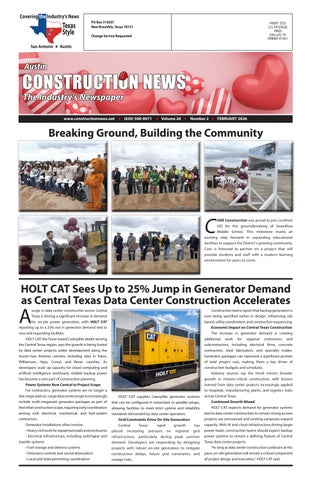
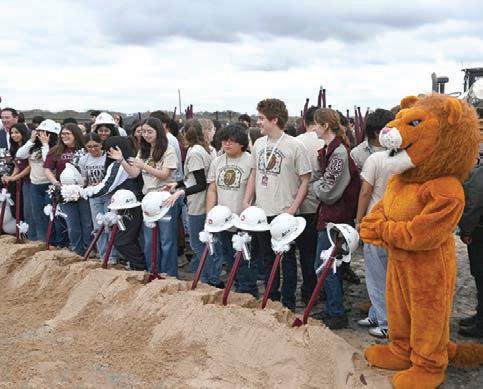
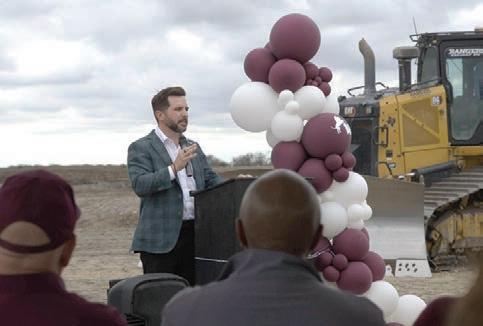
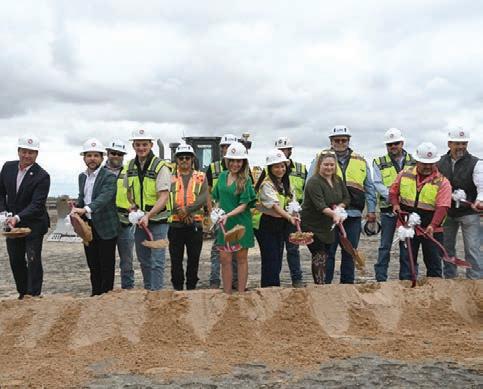
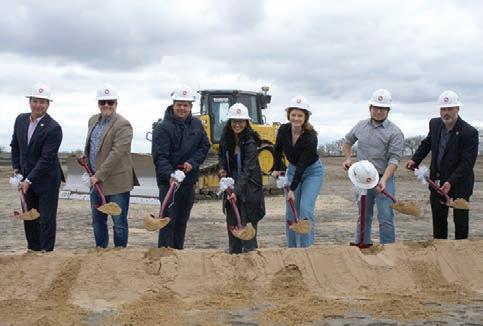
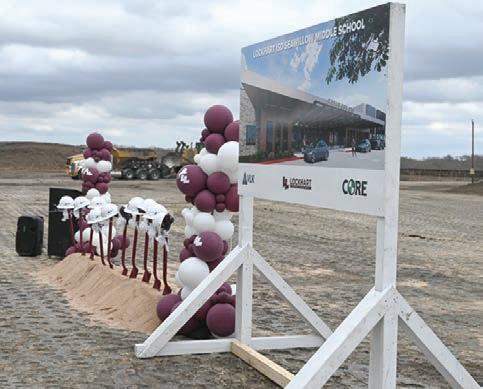
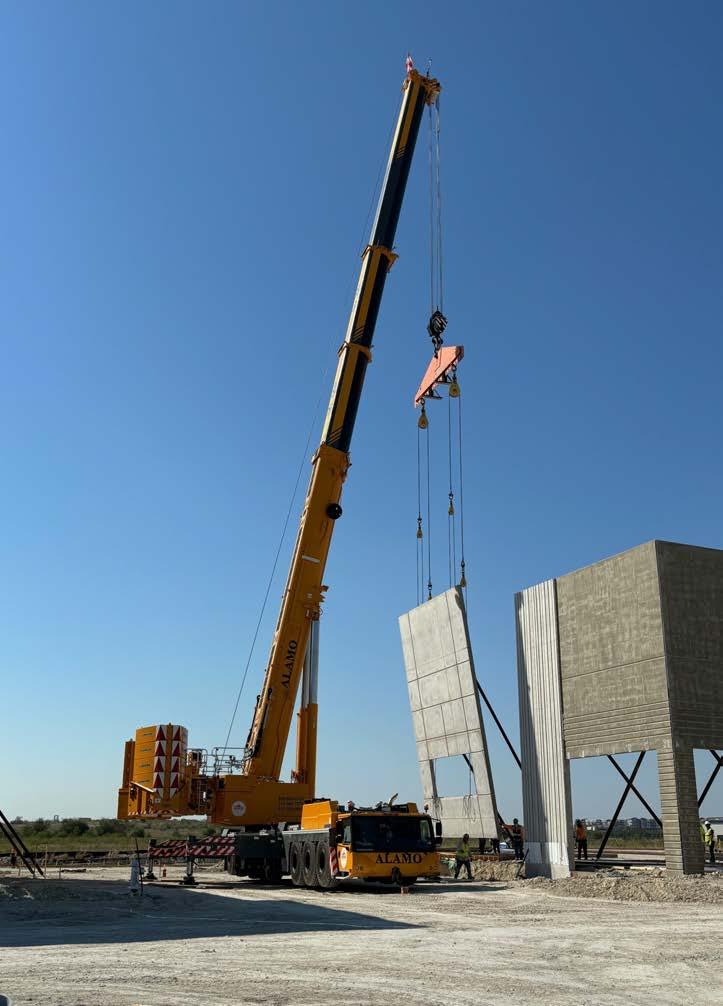
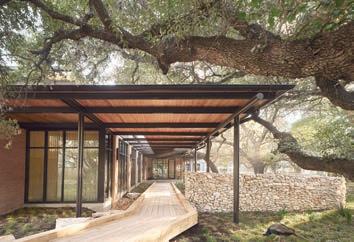
ORE Construction was proud to join Lockhart ISD for the groundbreaking of Seawillow Middle School. This milestone marks an exciting step forward in expanding educational facilities to support the District’s growing community. Core is honored to partner on a project that will provide students and staff with a modern learning environment for years to come.
HOLT CAT Sees Up to 25% Jump in Generator Demand as Central Texas Data Center Construction Accelerates
Asurge in data center construction across Central Texas is driving a significant increase in demand for on-site power generation, with HOLT CAT reporting up to a 25% rise in generator demand tied to new and expanding facilities.
HOLT CAT, the Texas-based Caterpillar dealer serving the Central Texas region, says the growth is being fueled by data center projects under development along the Austin–San Antonio corridor, including sites in Travis, Williamson, Hays, Comal, and Bexar counties. As developers scale up capacity for cloud computing and artificial intelligence workloads, reliable backup power has become a core part of construction planning.
Power Systems Now Central to Project Scope
For contractors, generator systems are no longer a late-stage add-on. Large data center projects increasingly include multi-megawatt generator packages as part of the initial construction scope, requiring early coordination among civil, electrical, mechanical, and fuel-system contractors.
Generator installations often involve:
• Heavy civil work for equipment pads and enclosures
• Electrical infrastructure, including switchgear and transfer systems
• Fuel storage and delivery systems
• Emissions controls and sound attenuation
• Local and state permitting coordination
HOLT CAT supplies Caterpillar generator systems that can be configured in redundant or parallel setups, allowing facilities to meet strict uptime and reliability standards demanded by data center operators.
Grid Constraints Drive On-Site Generation
Central Texas’ rapid growth has placed increasing pressure on regional grid infrastructure, particularly during peak summer demand. Developers are responding by designing projects with robust on-site generation to mitigate construction delays, future grid constraints, and outage risks.
Construction teams report that backup generation is now being specified earlier in design, influencing site layout, utility coordination, and construction sequencing.
Economic Impact on Central Texas Construction
The increase in generator demand is creating additional work for regional contractors and subcontractors, including electrical firms, concrete contractors, steel fabricators, and specialty trades. Generator packages can represent a significant portion of total project cost, making them a key driver of construction budgets and schedules.
Industry sources say the trend mirrors broader growth in mission-critical construction, with lessons learned from data center projects increasingly applied to hospitals, manufacturing plants, and logistics hubs across Central Texas.
Continued Growth Ahead
HOLT CAT expects demand for generator systems tied to data center construction to remain strong as new projects are announced and existing campuses expand capacity. With AI and cloud infrastructure driving larger power loads, construction teams should expect backup power systems to remain a defining feature of Central Texas data center projects.
“As long as data center construction continues at this pace, on-site generation will remain a critical component of project design and execution,” HOLT CAT said.
Ken Bishop: A Career Built on Safety, Integrity, and Experience
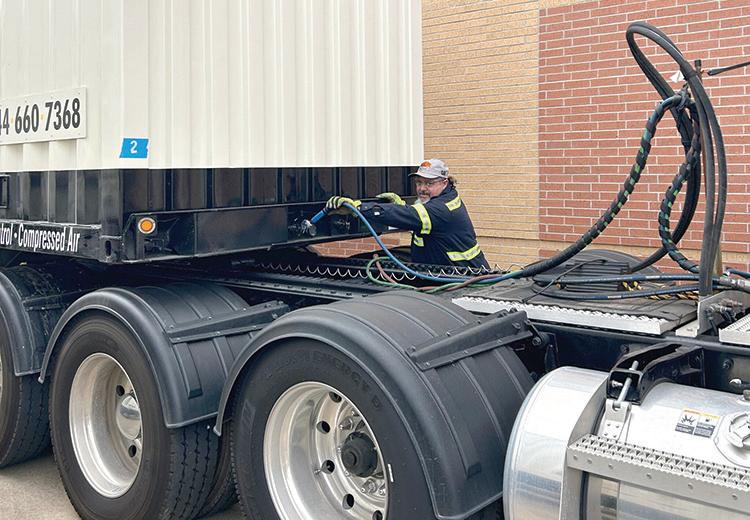
s a haul truck driver at HOLT
AIndustrial Rentals, Ken Bishop has built a career rooted in safe practices, consistency, and trust earned over more than 30 years in the heavy equipment transportation industry.
Safety is the accomplishment Ken is most proud of throughout his career. With more than three decades of experience transporting heavy equipment, he has maintained a flawless safety record without a single incident. That record reflects a disciplined approach to his work, a strong attention to detail, and a commitment to following procedures every time. Ken also values the opportunity to share his knowledge, helping teach others how to perform their work safely and responsibly.
Values-Based Leadership plays an important role in how Ken approaches his job each day. Honesty and integrity guide how he works with coworkers and customers, and he leads by example through safe work habits and respect for those around him. Listening is just as important as leading, whether it involves learning from teammates or understanding customer needs on a jobsite. By demonstrating proper equipment and accessories and assisting with safe delivery and pickup planning, Ken helps create safer job environments
from start to finish.
What Ken enjoys most about his role at HOLT Industrial Rentals is the variety. Travelling to different jobsites, interacting directly with customers, and meeting new people keeps the work engaging and rewarding. Each site brings new challenges and opportunities to build trust through dependable service and a strong commitment to safety.
Outside of work, Ken values time with family. He and his wife, Mary, are enjoying life as empty nesters and cherish time spent with their three children and three granddaughters – Lanie, Riley, and Charlie Grace. His oldest daughter, Jessica, holds a finance degree and is currently focused on being a stay-at-home mom. Frankie owns and operates his own hair studio, and Eddie is actively serving in the U.S. Army on the Operation Lone Star mission, a source of great pride for the entire family. When he’s not working or spending time with family, Ken enjoys fishing on his boat, riding his Harley Road King, and restoring a classic 1965 Ford Mustang.
Ken’s experience, dedication to safety, and values-driven mindset make him a trusted member of the HOLT Industrial Rentals team. His approach to his work reflects the standards the company is built on and the people who help move their customers forward every day.
Always Safe. Never Sorry.
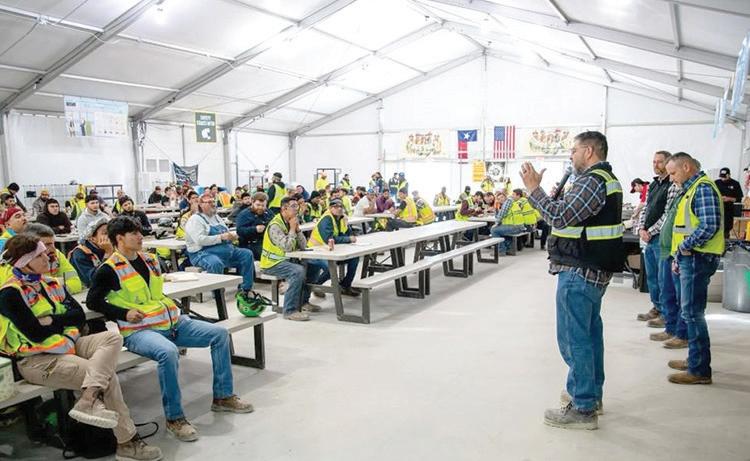
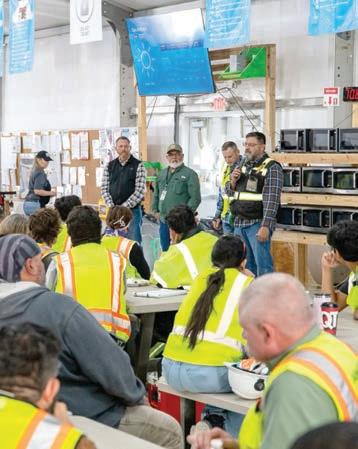
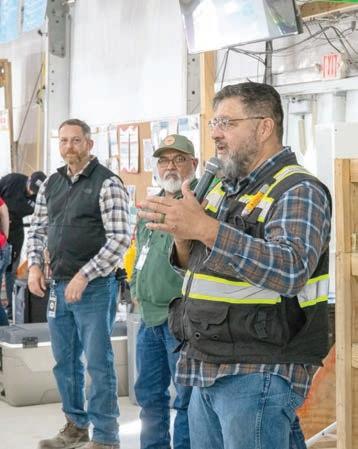
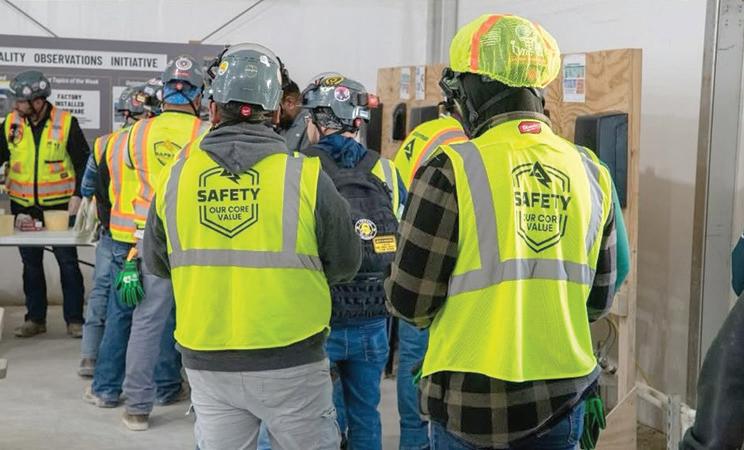
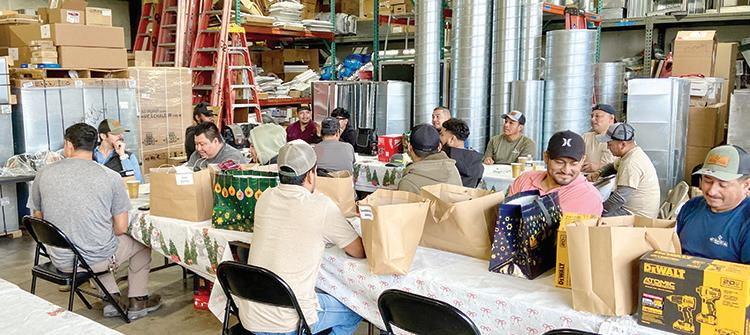
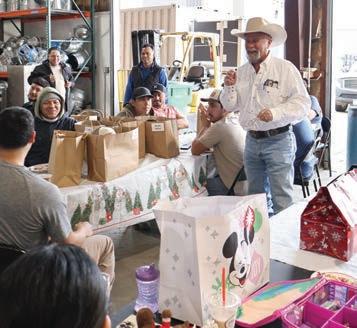
The Alterman Safety Team hosted a lunch to recognize the hard and safe work of their electricians at one of Alterman’s South Texas projects.
Earning Blue Status reflects the highest level of safety excellence — from complete and accessible safety documentation to clean work areas, proper PPE, and crews who look out for one another and speak up when it matters most.
Celebrating a Year of Teamwork and Success
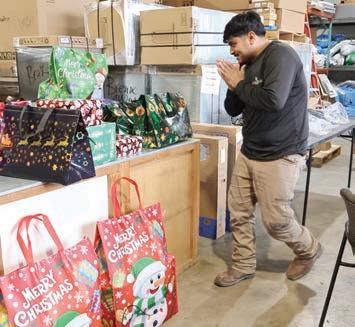
C2 Mechanical Services hosted their annual company Christmas party, providing a wonderful opportunity for team members to come together and celebrate the successes of the past year. The festive event allowed employees to relax and enjoy each other’s company in a setting outside of the jobsite.
A Well Deserved Honor
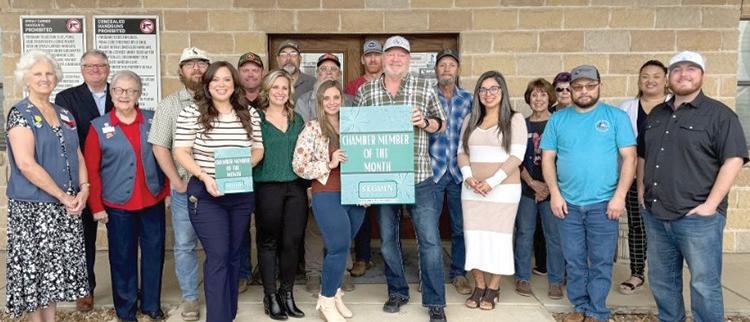
Masters Electrical Services LTD was proud to be named January Member of the Month by the Sequin Area Chamber of Commerce!
Masters Electrical Services is an electrical contractor proudly based in Seguin. While much of their work involves large-scale construction projects throughout the San Antonio & Austin areas, their favorite projects are those right here at home in Seguin.
TMasters is deeply committed to the Seguin community and believe in giving back through local engagement, including volunteering electrical training with Seguin High School construction classes, reserving employment opportunities for graduating seniors, and participating in community traditions such as the annual Christmas parade. Being involved locally is at the heart of who they are, and are honored to serve the community that supports them.
Texas voters pass Prop 1
exans decided the fate of 17 constitutional amendments.
Among the propositions passed is Prop 1, an amendment that will provide the Texas State Technical College System (TSTC) a steady stream of funds that will go towards new buildings, equipment, and repairs.
Prop 1 appears poised to pass by a wide margin, receiving 69% of votes in favor with nearly 70% of votes counted.
Specifically, the proposition will create two state funds, the Permanent Technical Institution Infrastructure Fund, and the Available Workforce Education Fund. Both funds will be separate from the state’s general fund. The funds will be managed by the Texas Comptroller, who will also manage annual distributions.
The allocated funds could be used to purchase land or instructional equipment, construction or repair of classrooms, and paying off bonds for permanent improvements.
TSTC has 11 campuses across Central and North Texas in addition to online courses. It has programs in fields ranging from automotive engineering to HVAC to welding, and enrolled over 16,000 students in 2021, the most recent year
TSTC enrollment data is available.
Supporters of the proposition said it will allow TSTC to expand its operation to help foster a new generation of workers. In a statement, Meagan McCoy Jones, president of McCoy’s Building Supply, said that Prop 1 will allow TSTC to “expand its job training programs.”
“More Texans could earn hands-on, practical education that leads to goodpaying, stable careers. … Unlike other colleges, TSTC’s state funding depends on outcomes — graduates securing good jobs. That ensures accountability to students, taxpayers and employers alike.”
Opponents of the proposition said the funding would exist outside of the state budget and legislative oversight. The True Texas Project, a conservative PAC, posted a statement on its website before the election, claiming that the proposal would create a “perpetual spending scheme with no legislative control.”
“While we support workforce education, this is not the way to expand
Mill Creek Announces Groundbreaking of Amavi Northwest Austin
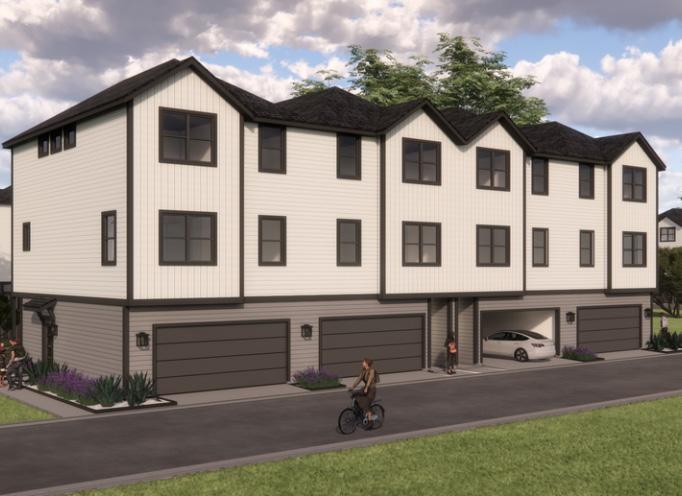
Mill Creek Residential, a leading developer, owneroperator and investment manager specializing in premier rental housing across the U.S., today announced it has broken ground on Amavi Northwest Austin, a singlefamily, build-to-rent community in the Northwest Austin/Round Rock metropolitan area.
The community, which will feature 144 three- and four-bedroom townhomes, is situated less than five minutes from Apple Park—Austin’s new 133-acre Apple campus—and within 20 minutes of Downtown Austin. The community is also immediately adjacent to the 95-acre Town and Country Park. First moveins are anticipated for early 2027.
“Northwest Austin has always stood out to us as an exceptional and highly desirable part of the region,” said Zach Summers , vice president of land acquisition for the Austin division of single-family rentals for Mill Creek.
“Amavi Northwest Austin gives us a unique chance to bring a purposebuilt single-family rental community to a highly sought-after location.
We’re excited to begin this development and introduce a one-of-
a-kind offering to the area.”
Situated at 13220 Morris Road, Amavi Northwest Austin is within a short commute of the key north-south thoroughfare U.S. Route 183, which provides connectivity to many of the area’s primary employment centers. Dell’s corporate headquarters is within 15 minutes of the community, which is home to approximately 13,000 jobs. The community is also conveniently located within a short drive of The Domain and offers numerous retail, grocery and recreational options, including an Anytime Fitness and a Life Time Fitness nearby.
Amavi Northwest Austin’s townhomes will range from 1,457 to 2,060 square feet and offer private garages, select den layouts and live/ work homes. Homes at the gated, petfriendly community will feature ninefoot ceilings, wood-style plank flooring, quartz countertops, stainless steel appliances, in-home washers and dryers, smart thermostats, oversized primary bedrooms with large closets and private patios or balconies. Bathrooms will feature double vanities, granite countertops and tile shower surrounds.
GAF and Mpact Roofing Provide New Roof to Support Training of Texas First Responders
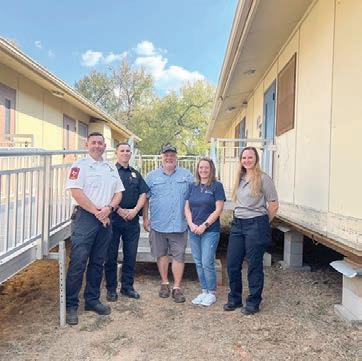
The Texas Public Safety Training Academy (TPSTA) in Bastrop, Texas, is strengthening its ability to train the next generation of first responders thanks to GAF, North America’s largest roofing and waterproofing manufacturer, local contractor Mpact Roofing, and building materials distributor QXO
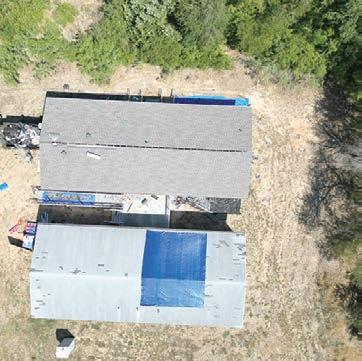
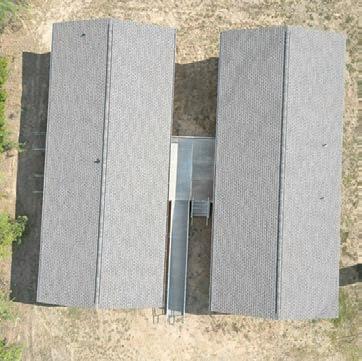
TPSTA, an emergency services training organization preparing emergency medical technicians (EMTs), firefighters, and other first responders in Bastrop, Caldwell, Fayette, and Lee Counties, recently purchased ten acres of land to expand its on-site courses and facilities. As part of this growth, two double-wide classroom trailers used for EMT and firefighter training were in need of new roofs due to years of leaks and wind damage.
The new campus represents a
milestone built on sustained effort and strong community partnership. Earlier in its development, TPSTA experienced a costly setback when the classroom buildings were vandalized, delaying progress and stretching already limited resources. Even with those challenges, the organization has continued to move forward, thanks in part to local partners like Mpact Roofing, GAF, and QXO, who stepped in to help create a safe, functional learning space for first responders.
Mpact Roofing re-roofed both classroom buildings at no cost to TPSTA using GAF materials, including Cobra Ridge Vents, Pro-Start, FeltBuster, StormGuard, and Timberline HDZ shingles in Weatherwood. GAF donated the shingles for the project, while QXO contributed the roofing accessories and delivery needed to complete the system.
This collaboration is part of GAF’s
social impact initiative, GAF Community Matters, which is focused on making a positive difference as neighbors and partners in the community by leveraging roofing expertise, resources and products to help build resilient communities.
“GAF is committed to helping build more resilient communities,” said Jeff Terry, VP of CSR and Sustainability at GAF. “We are proud to collaborate with Mpact Roofing and provide quality, trusted roofing materials to ensure the Texas Public Safety Training Academy has safe, reliable facilities to train the first responders who protect our neighbors in Texas every day.”
The project allowed the Academy to focus resources on continuing development of its new campus and expanding hands-on training opportunities for first responders across Central Texas.
“When we heard that the Texas Public Safety Training Academy had nothing but a tarp protecting one of its roofs, we knew we had to step in,” said Kevin Pakenham, Founder of Mpact Roofing. “This project is much more than a roof. It’s our way of honoring the people who put their lives on the line for our community, an effort we couldn’t complete without the partnership of GAF and QXO.”
“At QXO, safety and customer service are at the heart of everything we do,” said Michael Thomas, Branch Manager at QXO. “We strive to deliver exceptional service at every stage – from sales to delivery – building strong, lasting relationships with our customers. Together with our partners, like Mpact Roofing, we bring these values to life by supporting and giving back to communities in need.”
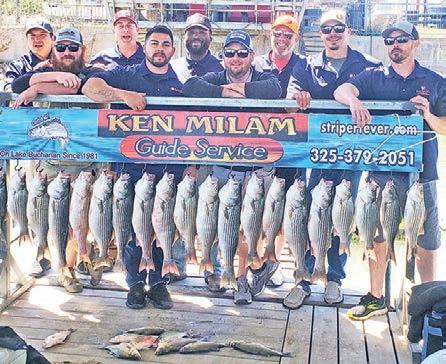
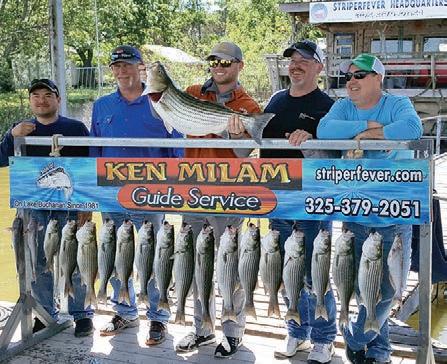
Ken Milam’s Fishing Line
Since 1981, Ken
FThe Great Outdoors
has been
Texas anglers enjoying ‘extremely healthy’ red snapper numbers, officials say
Q1: The Best Time for Construction Crews to Lock In Their Big Fishing Trips
or construction companies, the first quarter of the year is more than planning season — it’s the smartest window to secure the kind of teamteambuilding trip your crew will talk about all year. As workloads ramp up and schedules tighten, getting your people out on the water becomes one of the most effective ways to recharge morale, reward hard work, and strengthen the bond that keeps a jobsite running smoothly.
But here’s the part many companies overlook: Q1 is the best time of year to book those large group fishing trips. Not because it’s trendy, but because it’s the only time you can still grab the prime dates with the right guides before the calendar fills and the good guys get booked solid.
Guide services across Texas see the same pattern every year. As spring approaches, demand spikes. By the time summer hits, the top guides — the ones who know the water, know the fish, and know how to run a smooth, safe, productive day for a big crew — are already locked in by the companies who planned ahead. For construction groups needing multiple boats and coordinated schedules, early booking isn’t just helpful. It’s essential.
Booking in the first quarter gives you:
• First pick of the calendar, including the most
productive fishing windows
• Access to the right guides, not just whoever is left
• Flexibility if your project timelines shift
• A morale boost your crew can look forward to during the toughest stretch of the year.
And when it comes to putting your team on the water with confidence, Ken Milam Guide Service has been the trusted name in the Hill Country for decades. From large corporate groups to hardworking construction crews, we specialize in delivering a smooth, organized, memorable day on the lake — the kind of trip that brings people together and sends them back to the jobsite recharged.
If you want your crew on the best dates, with the right guides, now is the time to move. Q1 is wide open, but it won’t stay that way for long. Once the season kicks in, the prime spots disappear fast.
Make this the year you plan ahead. Get your crew on the water. Lock in your dates before the good guys get booked up.
Book your large group trip with Ken Milam Guide Service today and secure your place on the calendar while the best dates are still available.
Texas anglers’ love affair with red snapper shows no signs of slowing down, but perhaps the better news is that they’re catching the popular fish at more responsible and manageable levels.
Dr. Tiffany Hopper, science and policy resources manager for Texas Parks and Wildlife’s Coastal Fisheries Division, called the snapper population in the state’s offshore fisheries “extremely healthy.”
“The bulk of the red snapper biomass in the Gulf is over here in the western Gulf,” Hopper told Chron Friday. “We hear from our anglers that they are seeing large numbers of this snapper when they are offshore.”
According to Hopper, preliminary data indicate that Texas anglers caught just over 286,000 pounds during the 2025 federal season, or 72 percent of the quota assigned to the state by the National Marine Fisheries Service. (The total includes catches in both state and federal waters.) Although the final totals have yet to be released, Hopper added that early indications are that the official count will be lower than the 2024 total.
But at 173 days, 2025 was the longest season since the state’s agreement with the U.S. Commerce Department (which administers the NMFS) took effect in 2018, Hopper said. The agreement allows Texas Parks and Wildlife to manage the section of federally controlled waters in the Gulf assigned to Texas, which begins about 10 miles offshore. It also permits recreational anglers to fish the state-controlled waters closer to shore year-round.
Hopper admitted she wasn’t quite sure why the season wound up being so long, beginning June 1 and ending just before Thanksgiving, but said a range of factors—including fuel prices and especially the weather—were in play.
“We’ve certainly seen a shift in the mentality, because these seasons have gotten longer,” she said. “We see anglers looking for optimal times to go offshore, so they will wait for the best possible weather.”
All recreational anglers in Texas must have a valid fishing license and saltwater endorsement to land snapper (or any other fish) in state or federal waters. Hopper encouraged them to log their catches using the department’s Texas Hunt and Fish mobile app, which “helps us to monitor those landings and make sure that we’re able to keep those federal waters open as long as we are able to, and manage within that quota,” she said.
The department hasn’t set an opening date for the 2026 federal season, Hopper said, but reiterated that state waters stay open year-round. There, the daily bag limit is four fish of at least 15 inches in length.
“Folks could go out this weekend,” she said. “I don’t know that they want to with the weather, but they could.”
Milam
guiding fishing trips for striped bass on Lake Buchanan in the Texas Hill Country.
Ken Milam
Radiant Plumbing & Air Conditioning
Texas Air Products and 5F Mechanical
The Great Outdoors
Weird waterfowl – Hunters chase hybrids and anomalies each season
While the pinnacle for most waterfowlers is an ancient bird with a leg band, or an exotic species from some far corner of the globe, most agree in having a particular interest in waterfowl anomalies.
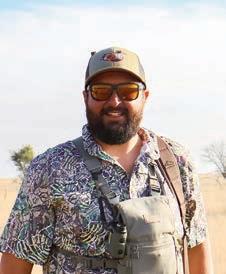
Tanner Neill, Wildlife Manager/Hunting Guide out of Johnson City, struck waterfowl gold this year on a pond in deep south Texas.
“I had a group of hunters coming in soon, so I made the rounds scouting for the coming week. When I found the bird, I could tell he was something special but didn’t know what exactly. I went in the next morning with my shotgun looking for one bird and left with one bird,” Neill said.
Neill’s drake dabbling duck sported a green head, chestnut chest, pointed tail, and blue bill. Seemingly a combination of most every dabbling duck species.
Tanner assumed it was a potential hybrid so sought out the insight of Ben Pierce, an industry leader in hybrid waterfowl with more than 30 years of firsthand experimentation hybridizing captive wild waterfowl in controlled licensed aviaries. Pierce confirmed Neill’s assumption and identified the hybrid as a mallard/ wigeon cross.
Pierce began working with hybrid waterfowl when he was just 12 years old. Now 43, he has worked with at least 47 confirmed hybridized waterfowl combinations in his controlled aviaries. Institutions such as the University of Washington recruited Ben and his work to act as the control for their own hybrid duck study.
“When I first got started, I read Handbook of Waterfowl Identification by Frank S. Todd.’ That book became my holy grail.” said Pierce.
Since 2013 he has become one of, if not, the most respected expert for hybrid waterfowl research and
Hwill be coming out with his own book on the topic soon. Pierce urges anyone with a potential hybrid to send him a photo and he will identify the pairing.
One hybrid is rare, but three blue wing/cinnamon teal hybrids within a span of five years and all within a ten-mile radius is something more than rare.
Devin Cryer is a duck hunting guide, boat captain, ranch manager, and all around avid waterfowler from Southeast Texas. Cryer’s knack for adding an anomaly to the duck strap could be luck, or it could be the result of passion, knowledge and anecdotal experience.
“I have been part of 30-plus bands with 11 being mine personally. In all my hunting I have taken five hybrids, with three of those being blue wing teal/ cinnamon teal. The teal have all come from within 10 miles of one another,” said Cryer
Freezer Burnt Fish
opefully everyone made it out of the snowstorm of 2026 alright.
Fortunately, it did not hang around long enough to wreak havoc like the last one did to the coast. Going into February, I can’t help but think about corky’s, and slow sinkers while we wait on this water to warm back up.
Skinny water on a sunny day will be warming up first and if there’s no bait I
From professional to recreational Cryer’s whole world revolves around habitat, conservation and his love for duck hunting.
“All of those birds came from almost the exact same type of habitat and, as awesome as they are, my favorite duck is the next duck. I stole that saying from Ramsey Russel.” said Cryer with a chuckle.
As fascinating and rare as hybrids are, there is little information about the actual number of hybrid waterfowl compared to the general population. However, some outfitters claim to see and/or harvest about the same number of banded birds per year as hybridized, suggesting comparable frequency within the population. Leucism, on the other hand, is a different story.
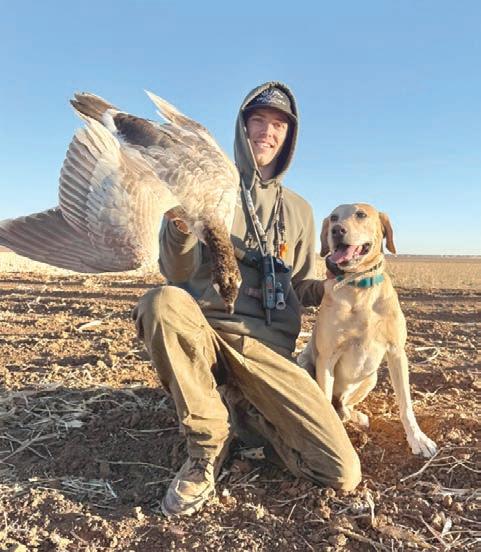
In mid-December of 2025 Will Riddle of Crooked Wing Outfitters out of Lubbock, harvested a leucistic lesser Canada goose — 1 in 30,000 odds, according to biologists.
“It was a bright sunny day, and we had the sun at our backs that really lit up the spin. When the sun hit him, he looked like a ghost among his buddies,” Riddle said. “That’s the first I have ever seen in the field or on the wing. Special bird.”
Leucism is a genetic anomaly resulting in a lighter colored individual than what is typical within the species, similar to albinism. Crooked Wing specializes in goose hunting around Lubbock, and it is no stretch for each of the seven guides to encounter thousands of birds in a day. With the one and only Riddle has seen, to say a leucistic goose is a waterfowl anomaly may not encompass the rarity.
Whether a mallard/wigeon hybrid, blue wing teal/ cinnamon teal hybrid, or leucistic lesser Canada goose they hold a special place in a waterfowler’s heart.
wouldn’t stop. Same goes with grass, no cover, no ambush! This big winter storm had a lot of north wind that will have eaten whatever amount of grass that may be along shorelines that don’t have protection from the wind. So top the boat off and run around to find a new spot. Skinny running boats I would run across thin water with a mud bottom in search of roving schools of reds
that are trying to warm up. Depending on what you like to throw, lures or bait, the classic winter flavors are still in. Shrimp and cut mullet for the bait guys and pinks, bone, chartreuse tails, silver streaks, all should be on the menu for trout and reds. Just slow that retrieve way down and get ready for a take on the drop.
Good luck out there and tight lines!
TThe Great Outdoors
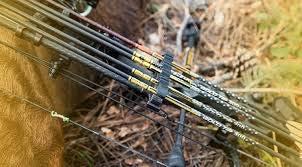
20th Annual Texas-National Archery in the Schools Championship to Draw Thousands of Students to San Antonio March 20–21
exas Parks and Wildlife Department
(TPWD) will celebrate a major milestone in 2026 as it hosts the 20th anniversary of the Texas State National Archery in the Schools Program (NASP) Bullseye & 3D Tournament. The event will take place March 20 –21, at the Freeman Coliseum in San Antonio, bringing together thousands of young archers from across the state for two days of competition, scholarships and state pride.
More than 5,000 students representing nearly 200 schools are expected to participate this year in both the Bullseye and 3D archery disciplines. Students will have the chance to earn scholarships, awards and qualification slots for the NASP National Tournament in Louisville, Kentucky.
“Reaching the 20-year mark is a testament to the dedication of our students, educators, coaches, and partners across Texas,” said Kendrick Gray, Outreach and Recruitment Manager for
TPWD. “We are especially grateful to the Outdoors Tomorrow Foundation and the Texas Wildlife Association- Texas Youth Hunting Program for many years of successful partnership in expanding school-based outdoor education. Together with NASP, these partnerships continue to strengthen pathways for young people to discover archery, outdoor recreation, and conservation.”
The Texas NASP (TX-NASP) program plays a significant role in the state’s hunter and bowhunter education efforts. NASP teams are co-ed and create inclusive opportunities for students of all backgrounds and skill levels. Participating schools represent a wide range of communities and campus types, from small rural districts to large metropolitan campuses, private campuses and homeschools programs – reflecting the broad reach and accessibility of the program.
NASP also serves as an excellent
Wexample of the North American Model of Wildlife Conservation in action. Beyond sportsmanship, archery directly supports conservation in Texas. A federal excise tax placed on archery equipment is returned to TPWD in the form of dedicated federal grants, and these funds help support many of the programs Texans value most – wildlife conservation, habitat management, public access and recreation, law enforcement, outdoor education and more. Through archery, students are not only learning skills and confidence, but they are also helping sustain the natural resources they enjoy.
The TX-NASP will award more than $50,000 in continuing education scholarships at this year’s tournament. Since the inaugural event in 2006, the program has awarded more than $180,000 to top-performing student archers.
Scholarships will be presented to the top five male and top five female high school archers, along with trophies, medals,
and new equipment for top performers in all divisions. First-place male and female archers in each division will receive Genesis bows, and the highest-scoring male and female archers overall will each take home a limited-edition Genesis bow. Prize drawings will be held throughout the tournament.
Students participating in the state finals first qualified during the January statewide virtual qualifying event, which featured thousands of archers from campuses offering TX-NASP as part of their in-school curriculum.
The first-place team in each division automatically advances to the NASP National Tournament. Additional teams may qualify based on score, and the top 1st – 10th place male and female individuals in each division will also earn a spot at nationals.
NASP is a non-profit foundation supported by generous sponsors and partners who help make youth archery programs possible nationwide.
A Mild Winter, Strong Fishing
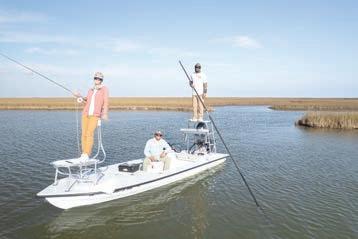
Dylan Mendoza - DM Fly Fishing - Rockport, TX
inter fishing along the Texas coast is often underestimated, but January has once again shown why it can be one of the most productive times of the year. Out of Rockport and Port Aransas, this winter has been relatively mild so far, and the fishing has benefited greatly from it.
Water temperatures throughout the area have generally hovered in the mid to upper 50s, occasionally reaching the low 60s during warming trends. For January, those are favorable conditions. We haven’t experienced prolonged hard freezes or extended cold snaps that typically shut fish down. Instead, we’ve seen manageable cold fronts followed by sunny, stable days that allow fish to recover quickly and resume feeding.
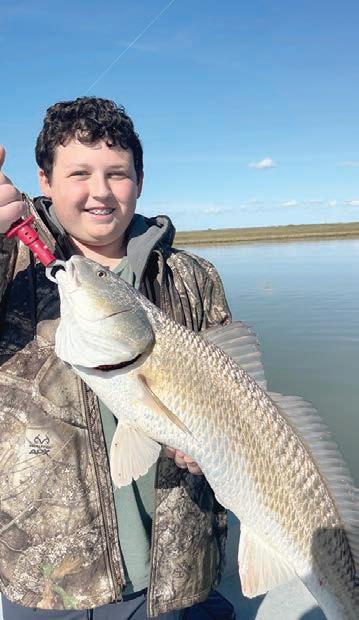
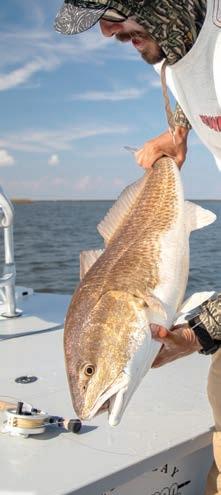
Redfish have been the main highlight. The pattern has been consistent: a front moves through, temperatures dip briefly, and strong north winds blow for a day or two. Once the wind subsides and the sun returns, fish slide shallow to warm up and feed. These post-frontal windows have produced some excellent sight fishing, especially during the late morning and afternoon hours.
Low winter tides have played a major role as well. With water levels drawn down, fish are pushed into predictable areas—edges of flats, shorelines adjacent to deeper water, potholes, and darker bottom that holds heat. This concentration makes fish easier to locate and pattern. Combine low water with hungry fish, and it creates some of the most consistent opportunities of the season.
One of the biggest advantages of winter fishing is the lack of pressure. Fewer boats on the water mean calmer fish and quieter flats. This allows anglers to slow down, focus on presentation, and truly study fish behavior. Winter is also a time when larger-than-average redfish are commonly encountered, adding to the appeal.
The biggest challenge this time of year isn’t finding fish—it’s dealing with the weather. Strong north winds following major fronts can be bonechilling and difficult to fish effectively. Those are the days best avoided. The key to winter success is flexibility. Waiting for sunny days with lighter winds and warming trends is often the difference between a tough outing and an exceptional one.
As we move deeper into winter and toward February, this pattern should continue. As long as we avoid prolonged freezes, fishing should remain productive. Even a single warm afternoon after a cool morning can trigger fish to move shallow and feed aggressively. Watching the forecast and planning trips around these windows is the best strategy.
Other inshore species have remained active as well. Trout, black drum, and flounder are being found around deeper channels, guts, and structure during periods of stable weather. With bait still present for this time of year, predators haven’t completely shut down—a benefit of a mild winter.
January has been a reminder of how good winter fishing on the Texas coast can be. While there may be fewer fishable days compared to spring or fall, the quality of those days is often exceptional. Clear water, cooperative fish, larger average size, and minimal crowds make winter one of the most rewarding seasons for those willing to pick their days.
Jordan Foster Construction has completed the expansion of the historic Green Pastures estate at 811 W. Live Oak Street in South Austin, delivering a new 63-key boutique hotel, 417-person event center, and cottage that augments the landmark property, while preserving its historic character, mature landscape, and long-standing community use. The project adds modern infrastructure to the seven-acre site and marks a key milestone in the estate’s continued evolution.
As a Texas-based construction firm with a local Austin-led expert team experienced in delivering complex, luxury hospitality projects, Jordan Foster Construction approached the expansion with a focus on integrating new development into the property’s existing character. The additions to the historic campus, including the three-story luxury lodging, event space and amenities, and cottage, were designed to sit seamlessly alongside Mattie’s, the 130-year-old Victorian farmhouse that anchors the
The SpawGlass Austin team at The University of Texas at Austin Tower project is making incredible progress restoring this icon to its original glory! Exterior restoration efforts on the main building are already
Preservation-minded planning
estate’s architectural heritage, without diminishing its historic presence.
Construction was carefully planned and executed in a densely vegetated environment, with limited site access for machinery, and a continuously active campus where restaurant operations, events, and daily public use continued throughout the project.
Jordan Foster Construction’s expertise and adaptability ensured the success and completion of the new structures that enhance the campus’ long-term functionality, while preserving the history that makes Green Pastures a defining part of Austin’s architectural landscape.
“It’s especially meaningful for our team of Austin-based experts to contribute to such an iconic project within the community,” said Jack Means, Senior Project Manager at Jordan Foster Construction. “The site presented challenges you don’t see on a typical job, but that’s exactly where our team thrives. A property like this demands precision, respect, and thoughtful craftsmanship, and
our team took immense pride in ensuring every decision and detail supported the integrity of the estate and its long-term vision,” said Means.
Green Pastures has been a fixture of Austin’s cultural and architectural landscape since the late 1800s. Originally built as a family farmhouse in 1895, the property evolved over the decades into a gathering place, a symbol of local values, and one of the region’s most recognizable heritage sites. The expansion honors that legacy by purposefully integrating new construction into the estate’s historic architecture, ensuring it continues to serve the community while adapting to Austin’s ongoing growth.
Executing an expansion of this scale on a historic site required a high level of engineering judgment, planning, and environmental sensitivity. Early in the project, Jordan Foster Construction identified that the existing street utilities, particularly the sanitary and storm systems, were substantially higher than documented, making them incompatible with the city’s
Historic Restoration
updated building codes, requiring the team to lead a complete redesign and replacement of the storm sewer, extending nearly a quarter mile beyond the property. This improvement not only enabled the Green Pastures expansion but also strengthened infrastructure for the surrounding neighborhood, providing long-term community benefits. Jordan Foster Construction’s ability to manage this unexpected challenge, while maintaining alignment with safety standards and project goals, reflects the expertise required on a site of this historical significance.
The completion of the new development reflects the long-standing partnership between Jordan Foster Construction and the property’s ownership group, who have spent nearly a decade planning phased improvements to the Green Pastures campus. With this milestone now in place, planning is underway for future phases, including a forthcoming spa and an additional lodging component expected to begin development in 2026.
visible, with cleaning, repairs and refinishing underway. The tower’s decorative spandrel panels, which display more than 100 letters from Egyptian, Greek, Hebrew, Latin and Phoenician alphabets, are being restored by hand with gold leaf applied by local artisan Nancy Lee Morris
Inside the main building, SpawGlass crews are working on interior renovations, including window replacements and lighting upgrades.
The scaffolding surrounding the bottom portion of the tower will continue to reach new heights as exterior work progresses, eventually providing access for restoration of the observation deck and clock surface.
n
Past, Present and Future
Zachry Construction Corporation Introduces New Branding
Zachry Construction Corporation , a leading heavy civil, roadways, and infrastructure construction company for public and private customers, today introduced a new logo and brand identity. The evolution marks more than a century as a family-owned business delivering complex, largescale infrastructure and ingenuity making communities stronger, and signals the next phase of growth across its markets.
The updated identity underscores Zachry’s leadership in safety and operational excellence while aligning the company’s specialty areas in heavy + highway, underground utilities, water infrastructure, and civil sitework.
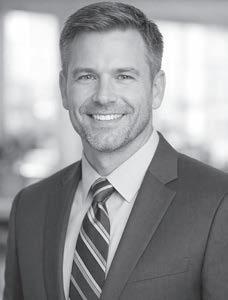
“Zachry Construction has an established reputation for disciplined execution on complex work,” said Travis Mross , executive vice president of Zachry Construction Corporation. “Our new look reflects the momentum and energy our teams bring to every job. It signals how we leverage technical expertise from complex highways and bridges into specialty areas in underground utilities, water infrastructure, and civil sitework. The look is new; our quality, grit, commitment to safety, and our long-term value to our customers remains unchanged.”
Zachry Construction’s parent company, Zachry Corporation, sets a vision to create, build, and reimagine environments that enhance people’s lives and shape tomorrow. These are foundational elements that set the tone for Zachry Construction’s rebrand. Anchored by the tagline, “Unearth Opportunity,” the updated identity reflects Zachry’s continued focus on serving public and private customers with heavy construction, site development, and infrastructure ingenuity, delivering enduring quality.
Zachry Construction has a long, proven history serving both government and private customers. For public customers, the company delivers best-value solutions, not just the lowest cost, through imaginative approaches that simplify complexity and disciplined, datadriven project controls that keep work on track. For private-sector customers, Zachry specialists apply sophisticated,
transparent planning to reduce risk, strengthen original vision, and deliver enduring quality at the lowest total cost.
Zachry is instrumental in the implementation of facilities that serve multiple facets of the water treatment and infrastructure industry and has delivered projects for customers including Guadalupe-Blanco River Authority (GBRA), Lower Colorado River Authority (LCRA), Harris County Flood Control District (HCFCD), and Red Bluff Water Power Control District. In the past year, Zachry Construction expanded its water and wastewater treatment plants expertise, adding extensive water infrastructure capabilities through its acquisition of Crescent Constructors. The company has also advanced its mission-critical and heavy civil across its footprint in South Texas, North Texas, Gulf Coast, and the Southeast, delivering more than 350 bridges in the last ten years and two marquee heavy civil projects totaling $2.1 billion.
The company’s heavy-civil and underground expertise has grown with added talent from Crescent Constructors . Together with Zachry Underground Utilities Services (ZUUS), these strengths extend Zachry’s reach across Texas while maintaining a consistent culture of safety, quality, and schedule discipline.
Since 1924, Zachry Construction has built a reputation for delivering complex infrastructure with predictability, supported by layered scheduling, data-driven project controls and a safety culture that empowers every employee to speak up and stop work when needed. The updated identity brings those strengths forward in a clearer story for customers and partners in public and private sectors.
Reflecting the company’s commitment to being a responsible neighbor, Zachry will continue targeted community engagement around active projects in 2026, including neighborhood touchpoints and workforce development activities in key markets. The rebrand will also extend to a redesigned website launching later this year to showcase project expertise and career opportunities.
Awarding the Blue Meet Stephi Motal, AIA, The 2026 TXA President-Elect
Stephi Motal, AIA , guides Austinbased, Black + Motal Architecture and Urban Design (formerly Black + Vernooy) as managing partner. She began working with long-time University of Texas, School of Architecture professors, Sinclair Black, FAIA , and Andrew Vernooy, FAIA , in 1996, as a sixteen-year-old high-school junior considering a career in architecture. She quickly oriented herself with every aspect of the firm, gaining invaluable knowledge in the business-side of the practice. Through her organizing efforts, she became the institutional memory for all of the firm’s past projects, many of them older than herself. In addition, her high school course work and ULI competition proved beneficial in implementing drafting standards as the firm made the transition to computer aided drafting.
Becoming a mother at just 18, she continued her path, completing the Bachelor of Architecture program at University of Texas at Austin, while continuing to work part-time. She officially joined the firm as a full-time designer after completing her degree in 2004.
Two months after graduation,
Stephi received a client call notifying her of a tragedy at one of their projects and an impending lawsuit. Stephi served as Sinclair’s right-hand during the nine-year process of litigating and appealing the case—all while also taking on an ever-increasing role in the firm’s design projects, implementing lessons learned from the lawsuit, and quickly moving into a leadership role within the firm. The position was codified in 2022 with the renaming of the firm. Stephi frequently makes presentations on lessons learned from the case at UT Austin, various conferences, and firm visits.
Stephi was an active mom while raising her two sons, Trenton (28) and Weston (19), serving frequently as PTA president, homeroom parent, baseball team mom, and a member of the Hays CISD School Board Facilities and Bond Oversight Committee.
Her efforts have been recognized with various honor awards, including AIA Austin’s John Nyfeler Award for Community Service in 2018, and Emerging Professional Award in 2022, as well as TxA’s Award for Early Career Professional Achievement, also in 2022.
Stephi has served the profession through a range of committees and leadership roles at AIA Austin, including AIA Austin’s the Urban Design Committee and Land Development Code Committee, multiple board of director positions, and ultimately as chapter president in 2021.
At TxA, Stephi has served on the board as Austin chapter director and chair of the Government Affairs Steering Committee, which led her to testify at several hearings at the Capitol during the 2025 legislative session. Stephi looks forward to continuing to advocate for architects across the state in her role as 2026 president-elect and 2027 president, during the next legislative session. Story courtesy of Elizabeth Hackler, Texas Society of Architects
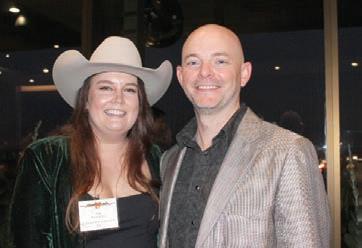
The Nitsche Group Insurance Agency, Matthew Knippa, Agency Partner, enjoyed an unforgettable evening at the 4th Annual Lee County Law Enforcement Support Organization (LCLESO) Gala coming together with clients, community members, and local businesses to show support for the men and women who serve our community every day.
Congratulations to Officer Landis Lehmann this year’s Lee County Law Enforcement Professional of the Year, and Retired Sheriff Rodney Meyer for receiving the Lifetime Award!
Great thanks as always to local law enforcement for ensuring the safety of our community, and to LCLESO for making this event a success!
From Hardhat to Red Cap
Another Texas-sized travel center is rising along Interstate 35 in San Marcos, and the shape of something unmistakable is starting to emerge. The city’s long-awaited Buc-ee’s is no longer just a promise, it’s climbing skyward, drawing the attention of commuters and road-trippers passing between Austin and San Antonio.
The San Marcos site is one of three Buc-ee’s locations officially confirmed to open in 2026, putting it at the center of the company’s next wave of growth, the company confirmed to USA Today. While the massive travel center is already
generating buzz as construction moves into a visible vertical phase, it also signals that Buc-ee’s isn’t slowing down, it’s carefully expanding, one site at a time. The new site will also mark one of the shortest distances between existing stores, with the New Braunfels Buc-ee’s situated just 19 miles south of the upcoming location.
San Marcos will join Huber Heights, Ohio and Goodyear, Arizona as the Bucee’s openings locked in for 2026. The San Marcos store is expected to pull in commuters, tourists and long-distance travelers, reinforcing Central Texas as a cornerstone of Buc-ee’s’ identity.
Pictured (L-R): Rodney Meyer, Retired Sheriff & Lifetime Award Recipient; Matthew Knippa, The Nitsche Group Partner; Garrett Durrenberger, Lee Co. Sheriff; Jim Jaeger, LCLESO Fundraising Director
INSURANCE LEGAL
CentralLEGAL LEGAL
Protecting Prosperity: The Critical Role of Commercial Insurance in Central Texas
Kevin Donnally Freelance Writer Tyler, TX
Texas is booming. From the burgeoning tech corridors of Austin to the dynamic manufacturing hubs around San Antonio and the robust service industries in Waco and New Braunfels, economic growth here isn’t just a story — it’s a movement. Yet with opportunity comes risk, and in a region defined by entrepreneurial spirit and rapid expansion, commercial insurance is more than a line item on a balance sheet — it’s a cornerstone of sustainable success.
Understanding Local Risks in a Rapidly Evolving Market
Central Texas businesses face a unique blend of exposures:
• Property Risks: Severe thunderstorms, hail, occasional tornadoes, and even flooding pose real threats to brick-and-mortar operations. Standard property policies must be tailored to account for these weather dynamics.
• Liability Exposure: As the economy grows, so does interaction with customers, vendors, and the public. General liability, employment practices liability insurance, and umbrella coverage have become essential to protect against lawsuits that can arise from even routine operations.
• Workforce Dynamics: With labor markets tight and talent in high demand, workers’ compensation strategies must evolve — not just to cover injury claims, but to support return-to-work programs and mitigate rising medical costs.
• Cyber & Tech Risks: Central Texas is rapidly becoming a tech hotspot. With innovation comes data — and with data comes vulnerability. Cyber liability insurance is no longer optional; it’s a business safeguard.
Insurance as an Enabler, Not a Cost Center
Too often, commercial insurance is viewed as a regulatory burden or unavoidable expense. But savvy business leaders understand that the right coverage is a strategic asset. In Central Texas, commercial insurance:
• Stabilizes Growth: Lenders and investors routinely require robust insurance portfolios before financing expansion — from real estate development to equipment financing.
• Builds Trust: Clients and partners
feel more secure working with companies that demonstrate financial responsibility and risk preparedness.
• Enhances Workforce Confidence: A comprehensive benefits and safety program decreases turnover and fosters a culture of security.
Tailored Solutions for Diverse Industries
No two Central Texas businesses are the same, and neither should their insurance programs be. Consider how insurance needs differ across sectors:
• Construction & Trades: High liability risk coupled with mobile work sites requires builders’ risk, inland marine, workers’ compensation, and bonded contractor solutions.
• Retail & Hospitality: From slipand-fall exposure to inventory protection, these businesses need a blend of property, liability, and business interruption coverage.
• Manufacturing & Distribution: Equipment breakdown, product liability, and supply chain disruptions highlight the need for comprehensive, integrated risk strategies.
The Human Factor: Agents Who Know Central Texas
One of the region’s greatest advantages is its community-based insurance market. Local agents and brokers understand the nuances of Central Texas risk in ways national call centers never can. They walk job sites, visit facilities, understand zoning, and speak the language of local lenders and regulators — turning abstract policies into practical protection.
Looking Ahead: Resilience Through Preparedness
As Central Texas continues to grow — fueled by innovation, diversity, and entrepreneurial energy — the businesses that thrive won’t be those that ignore risk, but those that manage it intelligently. Commercial insurance should be viewed as a strategic partner in risk management, enabling companies to bounce back from loss faster, secure capital for growth, protect reputation and customer trust, and plan with confidence in uncertain times.
In a region this vibrant, prosperity isn’t accidental — it’s protected.
TThe Future is Now: The AAA AI Arbitrator Arrives
R. Carson Fisk
Construction Attorney Andrews Myers, P.C. Austin,
TX
exas law has some unique statutes that apply to construction. One of those is Chapter 162 of the Texas Property Code, which partly concerns the downstream payment of funds on construction projects. In essence, Chapter 162 imposes criminal penalties if a contractor (or upstream subcontractor) fails to pay downstream parties amounts received by the upstream party.
Under the statute, “[c]onstruction payments are trust funds … if the payments are made to a contractor or subcontractor or to an officer, director, or agent of a contractor or subcontractor, under a construction contract….”
Further, “[a] contractor, subcontractor, or owner or an officer, director, or agent of a contractor, subcontractor, or owner, who receives trust funds or who has control or direction of trust funds, is a trustee of the trust funds,” while “[a] person who is an artisan, laborer, mechanic, contractor, subcontractor, or materialman who labors or who furnishes labor or material for the construction or repair of an improvement … is a beneficiary of any trust funds paid or received in connection with the improvement.”
Regarding the requirement of payment, “[a] trustee who, intentionally or knowingly or with intent to defraud, directly or indirectly retains, uses, disburses, or otherwise diverts trust funds without first fully paying all current or past due obligations incurred by the trustee to the beneficiaries of the trust funds, has misapplied the trust funds.” If a party misapplies the funds, that party may have committed a Class A misdemeanor or a felony of the third degree, depending on the amount involved.
Though a claim for civil relief is not expressly or directly addressed, Texas appellate courts have permitted an implied civil claim, allowing downstream parties another legal avenue to seek payment. Other common claims include breach of contract and equitable claims, along with lien and payment bond claims. But with the claim for misapplication of trust funds, an unpaid party may avoid contractual privity (e.g., a second-tier subcontractor sues a general contractor) or even corporate protections for the upstream party (e.g., suing the individual officers, directors, or agents of an upstream party). This amplifies the risk, and can complicate a case—if the claim can survive legal scrutiny.
There is not an implied claim for civil relief under Chapter 162, is what a county court in Williamson County, Texas recently determined. A secondtier subcontractor had sued a first-tier subcontractor and its owners (effectively trying to make the owners de facto personal guarantors of the alleged debt and dispensing with concepts of contractual privity) in connection with a payment dispute, alleging misapplication of trust funds. The first-tier subcontractor and its owners filed a plea to the jurisdiction, challenging the notion that there was an implied claim for civil relief under Chapter 162.
They argued that Texas law has evolved over the decades, given the Texas Supreme Court’s 2004 decision in Brown v. De La Cruz and, more recently, the Texas Supreme Court’s 2023 decision in Texas Medicine Resources, L.L.P. v. Molina Healthcare of Texas, Inc. In those cases, the Texas Supreme Court rejected an “intended-beneficiaries” analysis for determining whether implied claims exist under statutes in favor of applying the “textual-mandate rule.” In sum, the county court was requested to reconcile the divergent logic presented by these competing lines of cases: (1) those that permitted a civil claim stemming from an intended beneficiaries analysis and (2) those that flatly rejected an intended beneficiaries analysis and embraced the textualmandate rule. The court granted the first-tier subcontractor’s and its owners’ plea to the jurisdiction, finding that the plaintiff lacked standing to assert a civil claim/private cause of action under Chapter 162, because the statute did not provide for one.
For civil case defendants facing a claim of misapplication of trust funds under Chapter 162—particularly those who are not in contractual privity with the plaintiff and those whose potential individual liability arises merely due to their role at the applicable business— the ruling presents an interesting development in supporting a legal defense to the claim. For civil case plaintiffs asserting such a claim, the ruling and underlying logic may add a layer of legal complexity to certain claims, increasing time and adding costs to litigation. In any event, the ruling presents an interesting development to support the harmonization of decisions offering differing views on whether such a claim should still be permitted in Texas.
OSHA INSURANCE ACCOUNTING
I
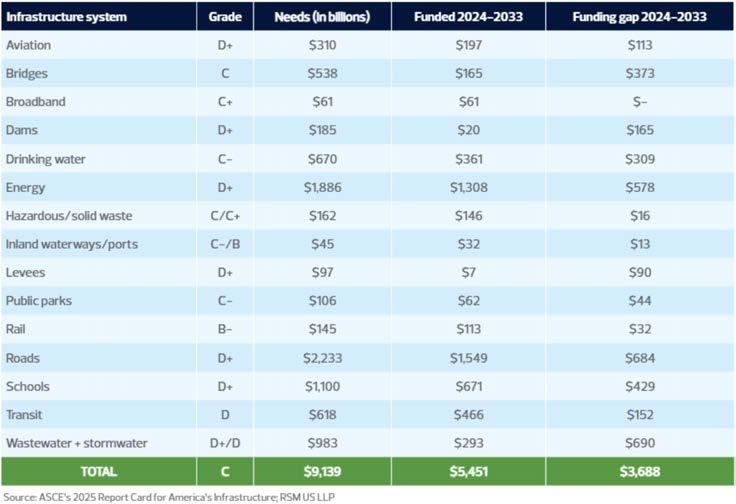
n March the American Society of Civil Engineers (ASCE) released its 2025 Report Card for America’s Infrastructure, awarding an overall grade of C—an improvement from a C-minus in 2021, but an indication that the U.S. still has barely scratched the surface of what is needed to effectively maintain and improve the nation’s infrastructure.
ASCE evaluated 18 infrastructure categories based on factors such as current and future capacity, physical condition, funding levels and gaps, regulatory compliance, public safety, resilience, and innovation. The findings paint a picture of strained systems, aging assets and limited investment. The organization estimates a funding gap totaling $3.7 trillion from 2024 to 2033 if federal funding remains flat.
Condition and funding needs of U.S. transportation infrastructure
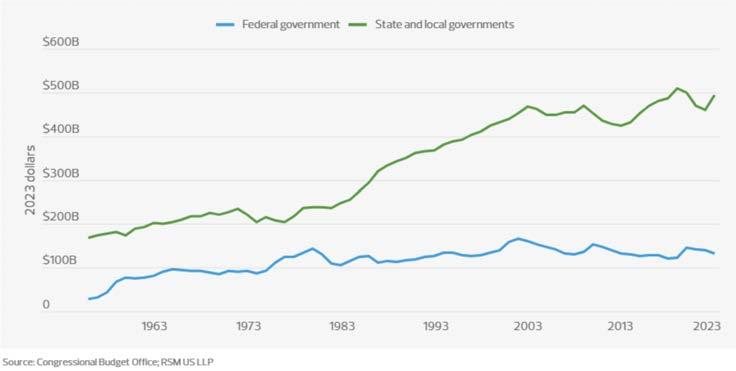
State and local governments accounted for 79% of transportation and water infrastructure spending in 2023, according to the U.S. Congressional Budget Office, yet many are not prepared to meet the challenge of keeping roads and bridges in good repair.
A July 2025 report by The Pew Charitable Trusts found that 33 states expect to miss at least some of their targets for roadway and bridge conditions or maintenance funding over the next decade. Only 11 states are on track to meet both goals. The rest lack sufficient data for a clear outlook, which is an issue in itself. For example, much of the data focuses only on federally funded National Highway System assets, excluding non-NHS infrastructure.
Public spending on transportation and water infrastructure, 1956−2023
Merriam-Webster defines infrastructure as the system of public works of a country, state or region—a definition that speaks directly to its role as the backbone of the economy. That connection has real consequences: U.S. underinvestment in infrastructure will cost the average household $3,300 a year by 2039, according to ASCE.
Poor infrastructure doesn’t just mean potholes and delays. It erodes productivity, restricts the movement of goods and people, increases risk, and limits competitiveness. Aged electrical grids, fragile water systems, and constrained port and transit capacity all hamper economic performance and national security. Infrastructure also affects the pace of artificial intelligence adoption, limiting energy scalability and data center deployment.
The upside is that the scale of these infrastructure challenges presents a massive opportunity for construction contractors that are prepared to meet them. As federal, state and local governments stretch limited resources across mounting needs, successful contractors will be those that bring sophistication, compliance and productivity to the table and excel in a variety of areas.
OSHA strongly encourages employers to investigate all incidents in which a worker was hurt, as well as close calls (sometimes called “near misses”), in which a worker might have been hurt if the circumstances had been slightly different.
In the past, the term “accident” was often used when referring to an unplanned, unwanted event. To many, “accident” suggests an event that was random, and could not have been prevented. Since nearly all worksite fatalities, injuries, and illnesses are preventable, OSHA suggests using the term “incident” investigation.
Investigating a Worksite Incident
Investigating a worksite incident- a fatality, injury, illness, or close callprovides employers and workers the opportunity to identify hazards in their operations and shortcomings in their safety and health programs. Most importantly, it enables employers and workers to identify and implement the corrective actions necessary to prevent future incidents.
Incident investigations that focus on identifying and correcting root causes, not on finding fault or blame, also improve workplace morale and increase productivity, by demonstrating an employer’s commitment to a safe and healthful workplace.
Incident investigations are often conducted by a supervisor, but to be most effective, these investigations should include managers and employees working together, since each bring different knowledge, understanding and
Investigation
perspectives to the investigation. In conducting an incident investigation, the team must look beyond the immediate causes of an incident. It is far too easy, and often misleading, to conclude that carelessness or failure to follow a procedure alone was the cause of an incident. To do so fails to discover the underlying or root causes of the incident, and therefore fails to identify the systemic changes and measures needed to prevent future incidents. When a shortcoming is identified, it is important to ask why it existed and why it was not previously addressed.
For example:
• If a procedure or safety rule was not followed, why was the procedure or rule not followed?
• Did production pressures play a role, and, if so, why were production pressures permitted to jeopardize safety?
• Was the procedure out-of-date or safety training inadequate? If so, why had the problem not been previously identified, or, if it had been identified, why had it not been addressed?
These examples illustrate that it is essential to discover and correct all the factors contributing to an incident, which nearly always involve equipment, procedural, training, and other safety and health program deficiency.
Addressing underlying or root causes is necessary to truly understand why an incident occurred, to develop truly effective corrective actions, and to minimize or eliminate serious consequences from similar future incidents.
Expanding Healthy Spaces
dolfson & Peterson Construction
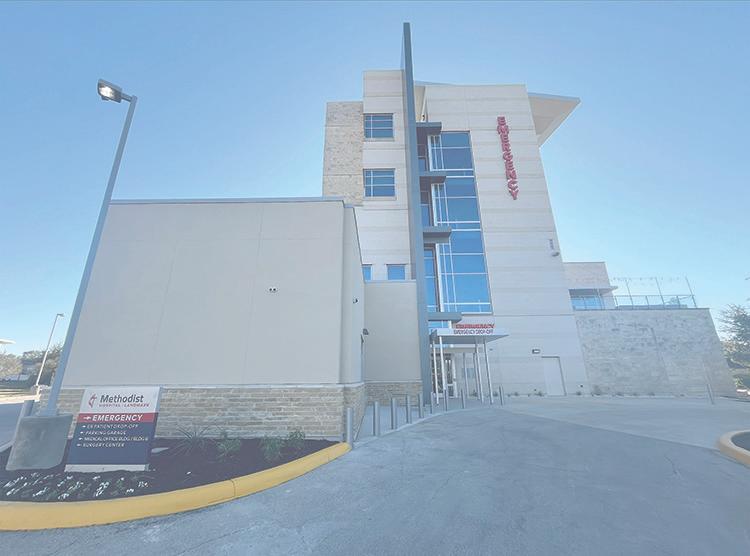
A(AP), a national, family-owned construction management and contracting company, recently completed the expansion of the Emergency Room (ER) at northwest San Antonio’s Methodist Landmark Hospital.
“Expanding the Methodist Landmark Hospital emergency department aligns with our commitment to delivering high-quality healthcare spaces,” said Taylor Starr, Senior Project Manager at AP. “This project enhances the hospital’s ability to respond to a growing community while creating a more efficient, supportive environment for patients and clinical teams.”
AP broke ground on the project in April 2025. Designed by LK Design Group, the expansion adds 1,850 square feet to the existing ER, creating space for six additional patient beds, restrooms and secure holding to support the hospital’s increased demand for emergency care.
Located at 5510 Presidio Parkway, the expanded ER will help Methodist Landmark Hospital manage higher patient volumes, improve flow and reduce overcrowding, enhancing the experience for patients and staff. The $2.3 million project underscores AP’s continued investment in strengthening Texas’ healthcare infrastructure.
Altogether, AP delivered improvements across 3,500 square feet, including interior structural upgrades and the installation of advanced medical
equipment to increase patient capacity. Construction efforts focused on expanding the ER footprint, repurposing underutilized space and upgrading essential systems such as plumbing, electrical and HVAC.
AP brings decades of healthcare construction experience across Texas, including current work on the Heritage Oaks Medical Office in Marble Falls, the Cross Creek Behavioral Health Hospital in Austin and the Cook Children’s clinic in Arlington. Completed projects include multiple Reunion Rehabilitation facilities across the country, including Arlington and Plano, Texas, Phoenix and Peoria, Arizona, and Inverness, Colorado, as well as El Paso’s Rio Vista Behavioral Health Hospital.
Marking 25 years of operations in Texas, AP continues to expand its footprint across Texas with several notable projects. AP’s Central Texas office recently broke ground on two Austin ISD high schools, as well as completed Round Rock’s Sunrise Commerce Center. In the Dallas-Fort Worth area, AP is working on the new KDFW studio and office facility, as well as phase two of the Santander Tower adaptive reuse project in downtown Dallas. Other notable completed projects include the PGA of America headquarters in Frisco, Vari’s global headquarters, with VariSpace Coppell and Buildings 17 and 18 at Billingsley Company’s International Business Park in Plano.
2026 Under New Leadership
METRO, a leading Texas-based commercial construction firm with offices in San Antonio and Austin, today announced that Fernando Diego will assume the role of Chief Executive Officer and Taylor Jordan will become President starting in January 2026, marking a seamless leadership transition that reflects the company’s long-term vision for stability and growth.
The new leadership team follows the retirement of current CEO Jane Feigenbaum, effective December 31, 2025. Feigenbaum will continue serving in a board-level, part-time advisory role, ensuring continuity in leadership and strategy. Founders Tim Swan and Steve Schuetze remain active on the board, continuing to guide METRO’s values and direction.
METRO’s transition is a steady, “business as usual” evolution. Both Diego and Jordan are homegrown leaders who have spent much of their careers at METRO, each beginning as project managers and steadily advancing through the company’s ranks. This approach underscores the company’s commitment to operational continuity, client relationships, and long-term stability.
“This transition ensures no interruption in service or strategy, it’s a natural next step for METRO,” said Jane Feigenbaum. “Fernando and Taylor have been instrumental in driving our success and embody the company’s culture of collaboration and trust.”
“Our founders built a company rooted in integrity and teamwork,” said Fernando Diego. “That foundation remains unchanged as we continue to grow in both San Antonio and Austin. METRO’s strength has always come from its people.”
“METRO’s future is bright because we’ve always looked inward to lead forward,” added Taylor Jordan. “We’re proud to continue serving our clients in the cities we call home, building something better for the next generation.”
The announcement builds on four decades of growth and innovation. Since opening its doors in 1986, METRO has been a cornerstone of the San Antonio construction community and has steadily expanded its operations to Austin, serving the entire region with the same commitment to service and quality that defined its founding vision.
When METRO was established, the founders envisioned a general contracting company with a heart for building strong, lasting relationships with clients and trade-partners. Forty years later, METRO continues to uphold its commitment to clients, employees, and the cities it calls home because, just like its work, METRO is built to last.
Today, METRO’s leadership team represents that same philosophy: a succession plan that ensures continuity, preserves institutional knowledge, and keeps the company focused on delivering quality projects while building long-term partnerships across Central Texas.
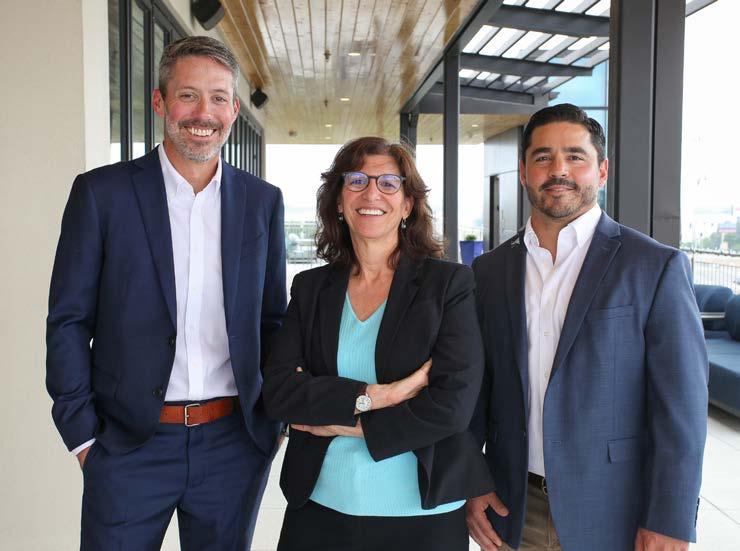
(L-R) Taylor Jordan, Jane Feigenbaum, Fernando Diego
Mastering compliance and funding
Contractors that want to bid on government contracts must navigate a maze of evolving regulations and funding requirements. Projects tied to the Infrastructure Investment and Jobs Act require prevailing-wage adherence, workforce development and domestic material sourcing. The U.S. Department of Defense now mandates that certain contractors comply with the Cybersecurity Maturity Model Certification.
And new initiatives such as the White House’s American AI Action Plan signal the availability of more funding, as well as more complexity and urgency. Staying competitive means participating in trade associations that offer up-to-date guidance, hiring attorneys and consultants who are familiar with these regulations and developing systems to track regulatory changes.
Closing the labor gap
Associated Builders and Contractors forecasts the need for 439,000 net new construction workers in 2025 and 499,000 in 2026. It warns that failing to meet that need may accelerate already high construction costs and reduce the volume of financially feasible work. Contractors should consider establishing internship programs, workforce development programs, employee ownership models and flexible benefits to attract and retain talent.
Managing materials and costs
Tariffs and supply chain disruptions have made materials sourcing more critical than ever. Contractors must develop robust procurement strategies and adopt best practices for navigating price and availability fluctuations.
Leveraging data and technology
Data is the engine of effective technology use. When properly accessed, governed and protected, it enables faster, smarter decisions. Technology helps contractors manage compliance, boost labor productivity and safety, and optimize materials and other limited resources. A smart starting point is to evaluate the effectiveness of enterprise resource planning systems and project management software in assessing business planning and profitability.
These systems and software facilitate a more financially healthy and nimble construction firm. With this foundation in place, firms can build a culture of innovation that uses AI, wearables, drones and robotics to solve specific challenges and drive measurable growth.
The outlook
The U.S. infrastructure challenge is as daunting as it is urgent. But for construction firms, it is also a moment of unprecedented opportunity. Prepared and innovative firms that invest in people, process, data and technology can thrive amid continued uncertainty and play a pivotal role in revitalizing the U.S. economy.
TEasing Congestion
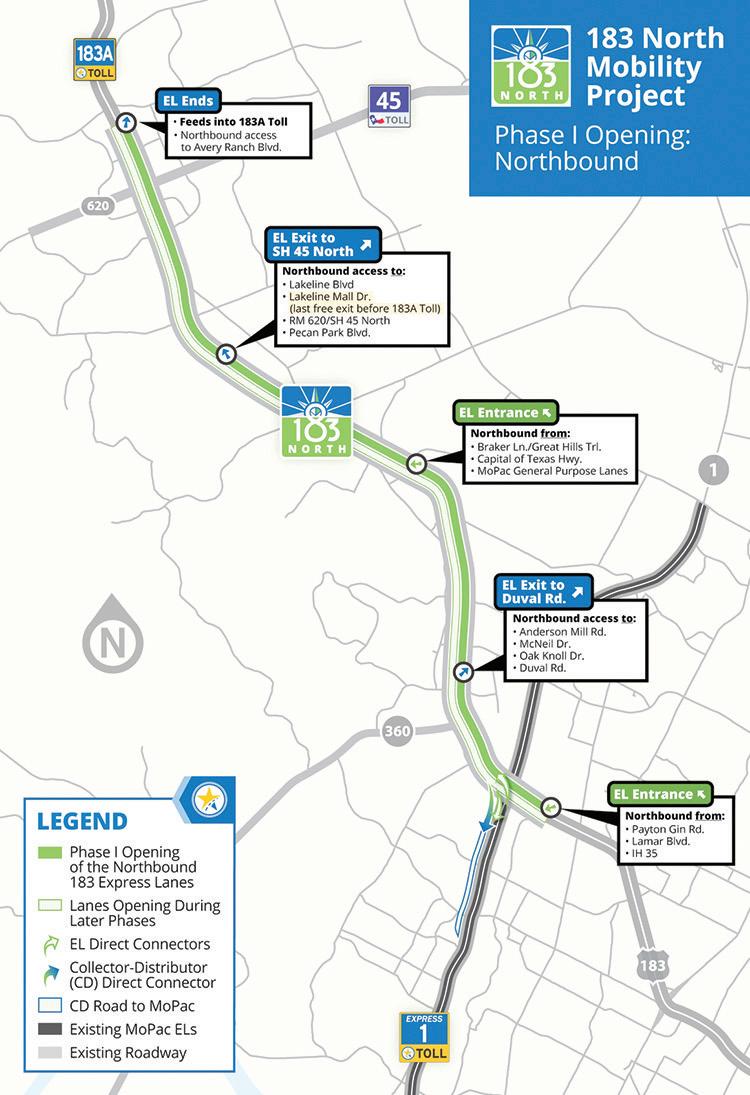
he Central Texas Regional Mobility Authority (Mobility Authority) has confirmed it will open the northbound 183 Express Lanes as Phase 1 of the 183 North Mobility Project the morning of January 2, 2026.
Opening of the northbound 183 Express Lanes, an integral connection between Austin and Cedar Park is a major step toward completion of the 183 North Mobility Project. This milestone offers needed mobility improvements to Central Texans along U.S. 183 between Burnet Road and S.H. 45 North.
The opening of these two express lanes offers a seamless connection northbound to Cedar Park and the 183A Toll Road, with limited entrances and exits to aid drivers in bypassing congestion along the non-tolled generalpurpose lanes.
“Opening this portion of the project means drivers have a reliable travel option heading northbound when they need it most, helping keep Central
Texans moving,” said James Bass, executive director for the Mobility Authority of opening the express lanes in a phased approach.
The Mobility Authority will open the northbound express lanes on U.S. 183 first, followed soon after by the northbound direct connector structure from the MoPac Express Lane to the 183 Express Lanes. The southbound express lanes and southbound connection to the MoPac Express Lane are anticipated to open within a few months, but construction timelines are always subject to change.
Drivers are encouraged to slow down and watch for signage as they familiarize themselves with the new entrance and exit opportunities. Express lanes are meant to bypass certain on and off ramps along the U.S. 183 generalpurpose lanes to allow for more uninterrupted travel along the corridor. As such, there will be limited entrances and exits to the express lanes.
ABC CTX
Associated Builders & Contractors
Central Texas Chapter
Feb. 4: Coffee and Contractors, 7:30-9am, Red Horn Brewery & Roastery, 1615 Scottsdale Dr., Bldg.1, Ste. 110, Leander
Feb. 25: Spelling Bee & Happy Hour hosted by Young Professionals, 4-6:30pm, Red Horn Brewery & Roastery, 1615 Scottsdale Dr., Bldg.1, Ste. 110, Leander
AGC
Associated General Contractors Austin
Feb. 19: CLC Jobsite Walk (locations to be announced)
Feb. 27: Outstanding Construction Awards Banquet, AT&T Conference Center
Feb. 26: Succession Planning Panel, 11:30am-1:30pm, Maggiano’s - The Domain, 10910 Domain Drive, Austin. Register online at www.ctsaonline.org., contact Carrie Buckley for more information at 817.983.6244
HBA
Home Builders Association
Greater Austin
Feb. 18: Learn@Lunch with NATiVE Solar, 11:30am-1pm, Hba Classroom, 7800 Shoal Creek Blvd., Ste 225-E (The Exchange Building, 2nd Floor, East Wing, end of Hallway, Austin
What’s Next for Central Texas Construction: A 2026 Outlook
By Chris Hillyer, Senior Vice President & Regional Director of Pre-Construction Services, Skanska USA Building
As 2025 draws to a close, the construction industry across Central Texas finds itself at an inflection point. In fast-growing markets like San Antonio and Austin, demand for new and modernized facilities remains strong. Still, a complex mix of persistent challenges and emerging opportunities is shaping the path forward.
For owners, developers and public entities planning projects in 2026 and beyond, success will hinge on early planning, realistic budgeting, creative procurement and strategic partnerships.
Challenges Every Owner Should Know
Project delivery in 2026 will continue to be influenced by three interconnected factors – cost volatility, schedule risk and labor shortages.
Getting materials is still a challenge, especially for complex systems and specialized equipment. Supplier capacity has increased since the pandemic, but schedule risk must be embedded into every project’s DNA.
Tariffs may not dominate headlines like they did earlier this year, but their impact is still working its way through complex supply chains, and that means projects could face additional cost increases down the line. One thing we know for certain: construction costs rarely go down. So, plan with that reality in mind.
Don’t be afraid to get creative with your project approach. Potential risksharing options, unique procurement scenarios and flexibility in material sourcing will serve the owner well in
navigating some of today’s market challenges.
Skilled trades such as mechanical, electrical and HVAC remain in short supply nationwide, and Texas is no exception. As experienced workers retire and more people shift to other sectors, attracting talent has become one of our industry’s toughest battles. The solution starts with changing perceptions about construction careers and connecting with future workers early, starting in high school and continuing beyond. That’s how we’ll begin to close the gap.
Here’s Why We’re Optimistic
Despite these headwinds, Central Texas remains a region of tremendous opportunity.
Higher education remains a consistent engine of activity. Institutions in both San Antonio and Austin are expanding labs, classrooms and student life facilities to support research, evolving schools/ trainings and enrollment growth. We’re also seeing design innovations that reflect hybrid learning, collaborative spaces and amenities that attract and retain students in competitive markets.
Similarly, health care development remains strong, driven by aging infrastructure and population growth. We’re seeing significant investment in new hospitals, outpatient campuses and specialized facilities. These projects demand early coordination, thoughtful budgeting and a deep understanding of technical complexity to deliver predictable outcomes.
Beyond traditional sectors, Central
Texas is experiencing strategic growth in life sciences, mission critical and aviation facilities, sectors that bring sophisticated requirements and higher performance expectations. Life sciences, in particular, are gaining momentum as San Antonio positions itself as a hub for research, biotech and innovation. Meanwhile, mission critical work, including data centers and resilient infrastructure, is becoming increasingly prevalent across the state and a staple in a world where speed to market and uptime are everything.
Industrial and Joint Ventures — Strategic Growth Paths
Light industrial remains one of the most resilient sectors regionally. Fueled by e-commerce, distribution and manufacturing growth along major transportation corridors, demand for flex space is high. These facilities often allow for faster delivery and scalable design, helping owners manage risk and time to occupancy.
We’re also seeing more joint ventures on large, complex projects, especially in health care and aviation. As projects grow in scale and technical complexity, joint ventures allow contractors to combine resources, expand capacity and mitigate risk, delivering mega-projects that might otherwise stall in a more traditional delivery model.
How Technology and Data Are Changing Construction
One of the most exciting changes we’ve seen in recent years is the way technology and data are reshaping how
projects are planned and delivered. Digital tools that were once add-ons are now becoming essential. AI, for example, can pull together research in seconds, speed up cost modeling and take routine tasks off the table so teams can focus on solving the big challenges. We’re even starting to see predictive analytics built on historical project data, giving owners more accurate early estimates than ever before.
Tools like laser scanning, drone-based imaging and integrated data platforms enhance our ability to understand existing conditions and risk before breaking ground, which reduces surprises and improves coordination throughout design and construction.
Looking Ahead
As owners and developers step into 2026 with plans for new facilities, success will depend on early collaboration, realistic risk planning, strategic procurement and a willingness to embrace innovation. Central Texas offers tremendous opportunity, but navigating market volatility, workforce challenges and complex sectors requires a thoughtful, data-informed approach.