CONSTRUCTION MANAGERS ON THE CHALLENGES OF DELIVERING SPORTS VENUES
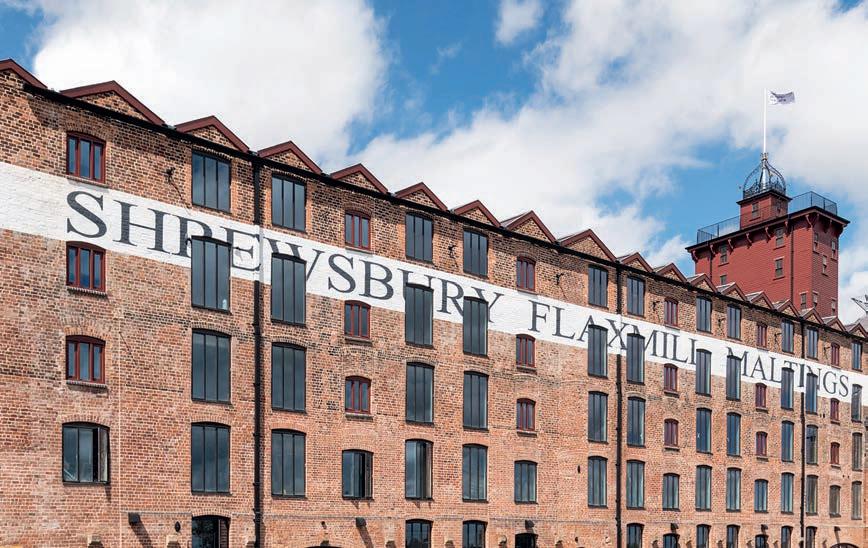
Shrewsbury Flaxmill
Maltings regeneration
Historic England named Capital & Centric as the preferred developer to acquire over 1.2 hectares (3 acres) of brownfield land within the grounds of the historic Shrewsbury Flaxmill Maltings for residential development. Built between 1796 and 1797, the Grade I-listed mill complex is the world’s first iron-framed building and is known as the grandparent of modern skyscrapers.
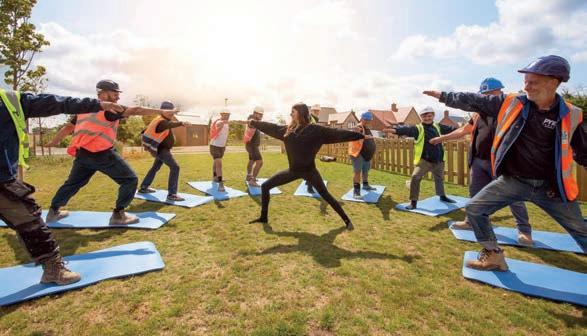
From hard hats to yoga mats
Pye Homes invited construction workers to join a wellness session highlighting the importance of mental health awareness to celebrate International Day of Yoga in June. Through its parent company, Blenheim Palace, the housebuilder has appointed a wellbeing coach and trained psychotherapist to provide support regarding mental health concerns, as well as mentoring, coaching and training.
Ola Obadara, the City of London Corporation’s group director for property projects, has been appointed CIOB’s vice president for 2025/26.
Visit from the past
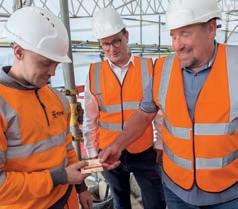
Sixty-two-year-old Mick Colley was presented with a Park Drive cigarette packet, a 10p coin and playing cards that he placed under the lead roofing of York’s Bootham Bar while working as an apprentice for the council in 1979. Colley, who now works for Network Rail, said that he and his colleague Jack Summerville secreted the items as a “nod to the future”.
1 Broadgate completion
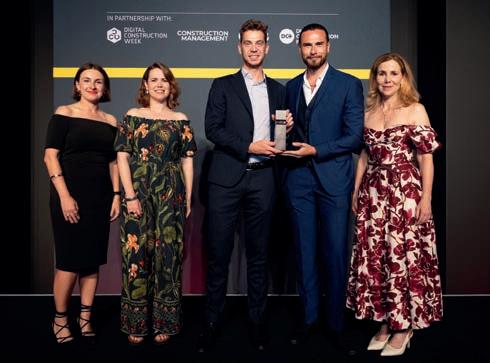
Sir Robert McAlpine achieved practical completion in August of its 56,500 sq metre 1 Broadgate office scheme in the City of London for clients British Land and GIC. The project won the Delivering Sustainability with Digital Innovation category at the Digital Construction Awards 2024 for its use of materials passports.
UK’s youngest digger driver
Schoolboy Finlay Gallagher became the UK’s youngest qualified digger driver at the age of 13. Gallagher spent his school holidays learning how to put a JCB digger through its paces and passed his Construction Plant Competence Scheme exam with flying colours.
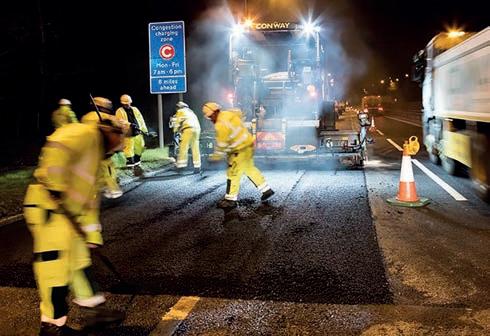
FM Conway and Transport for London have completed a “groundbreaking” trial to mix 50% recycled asphalt product (RAP) into the top layer of road surfaces at the A1 Mill Hill interchange. The test combined both practical and laboratory testing to prove that recycled asphalt material meets the performance and durability level of traditional fresh asphalt mixes.
Small businesses across multiple industries are owed more than £26bn in late payments
Industry welcomes crackdown on late payments
Measures are ‘significant steps forward’ for supply chain stability, says CIOB
The government is set to introduce new legislation that could see big companies fined potentially millions of pounds if they persistently pay their suppliers late.
The reforms announced in the Small Business Plan this summer include specific protections around retention payments – a notorious risk point in construction contracts.
This legislation will give stronger powers to the Small Business Commissioner to impose fines, carry out spot checks and enforce a 30-day invoice
New guide sheds light on Gateway 2 submissions
CLC guidance suite offers practical recommendations
verification period to speed up resolutions to disputes.
It will also introduce maximum payment terms of 60 days, before a reduction after an introductory period to 45 days to give “firms certainty they’ll be paid on time”.
Under the new proposals, audit committees will be legally required to scrutinise payment practices at board level. This will place greater pressure on large firms to show they’re treating small suppliers fairly, backed by mandatory interest charges for those who pay late.
The Construction Leadership Council (CLC) has published a new guide to help the industry with Gateway 2 applications.
The 34-page document is structured around seven guidance notes and provides the baseline principles to help those involved in submitting and assessing
These changes will help create a more stable, fair and resilient construction supply chain
David Barnes, CIOB
‘A fairer supply chain’
The Chartered Institute of Building (CIOB) welcomed the government’s new plan to support SMEs. Research figures quoted by the institute suggest small businesses across multiple industries are owed more than £26bn in late payments.
In 2022, more than half of all the invoices sent to construction firms were paid late, with data suggesting many major contractors were paying 20% of invoices late.
“We have long called for stronger protections for SMEs, which form the backbone of the construction industry,” said David Barnes, CIOB’s head of policy and public affairs.
“Late payments have plagued the sector for too long, causing significant cashflow challenges, hindering growth and, in many cases, forcing businesses to shut up shop. Over the past decade, construction firms have accounted for approximately 18% of total insolvencies in England and Wales, whilst accounting for less than 15% of companies.
“The introduction of tougher payment legislation, greater enforcement powers for the Small Business Commissioner, and mandatory board-level scrutiny of payment practices are significant steps forward. These changes will help create a more stable, fair and resilient construction supply chain.” ●
applications for building control approval of higher-risk buildings. It also includes practical recommendations on submission of relevant information.
Karl Whiteman, Berkeley Group divisional chairman and industry sponsor for the CLC’s building safety workstream, said: “This
[guide] will help to improve the quality of submissions, ensure the regulator can approve them swiftly and consistently and enable the sector to increase the delivery of safe and high-quality homes.”
The guide can be accessed for free at www.construction leadershipcouncil.co.uk.
Achieving net zero requires widespread BREEAM adoption
Construction professionals committed to sustainability must adopt performance benchmarks and set science-based targets, argues Barrett Harris
The UK construction sector has a pivotal role to play in achieving the nation’s net-zero target by 2050. However, a comparison of national and construction-specific greenhouse gas emissions reveals a stark contrast. Between 1990 and 2023, the UK reduced its overall emissions by 43%. In contrast, emissions from the construction sector rose by 37.2%.
Specialist construction activities have been the primary contributors, with emissions increasing by nearly 72%. These activities include piledriving, foundation works, concrete work and demolition, all of which generate significant greenhouse
gases. For example, demolition contributes through vehicle and machinery emissions, while landfill disposal of waste produces methane. These figures highlight a critical truth: the industry must shift its mindset from short-term cost concerns to long-term, value-driven sustainability goals.
Turner & Townsend’s latest Global Construction Market Intelligence (GCMI) report confirms that change is underway. Seven of the eight UK markets included in the study now report that net-zero commitments are of “increasing importance” to clients. In London, this sentiment is especially pronounced, with respondents rating it as “very important”.
In recent years, momentum has grown. The Construction Leadership Council’s CO2nstruct Zero programme provides a strategic framework for decarbonisation, while the UK Green Building Council’s Net Zero Carbon Buildings Framework offers clarity on performance benchmarks.
Major developers, contractors and infrastructure bodies are responding, with many now setting science-based targets or committing to whole-life carbon reporting. To help achieve these targets at best value, Turner & Townsend is embedding carbon as the second currency of construction, alongside cost.
Using our Embodied Carbon Calculator, we are helping clients make smarter, more sustainable decisions from day one. However, gaps still persist between making high-level commitments and their delivery on live projects.
Aiming for BREEAM
One of the key enablers in bridging this gap is by having a project achieve a sustainability certification standard, such as BREEAM (Building Research Establishment Environmental Assessment Method).
As the UK’s leading sustainability assessment method for buildings, BREEAM offers a robust, evidencebased framework for embedding
BREEAM offers a robust, evidence-based framework for embedding sustainable design and practices across all project stages
sustainable design and operational practices across all project stages.
With over 300,000 BREEAMcertified developments in the UK, it has become a recognisable benchmark for environmental performance.
Moreover, clients are increasingly aligning BREEAM certification with broader environmental, social and governance (ESG) strategies. Green certified assets are shown to attract higher rental premiums and deliver better long-term value through reduced operational costs and lower regulatory risk.
In the public sector, BREEAM is often a planning condition or funding requirement, reinforcing its role as a delivery mechanism for net-zero objectives.
Our GCMI data shows strong momentum in Turner & Townsend’s regional markets, where clients are increasingly aiming for BREEAM or equivalent certification. However, these regions still need to catch up with London’s leading position if the 2050 net-zero target is to be met.
Collaboration across clients, design teams, contractors and supply chains will be essential, alongside continued innovation in low-carbon materials, modular methods and digital optimisation tools.
Achieving net zero by 2050 is an immense challenge. BREEAM may not be a silver bullet, but it offers a trusted benchmark for measuring what matters, managing carbon risk and demonstrating environmental performance with credibility.
For every construction professional committed to leading the net-zero transition, achieving certification such as BREEAM is no longer optional: it‘s fundamental. Barrett Harris is a senior economic analyst at Turner & Townsend.
Percentage increase of emissions by specialist construction activities
Breakdown of construction emissions in the UK since 1990
Construction
Total greenhouse gas emissions
Buildings and building construction works
Constructions and construction works for civil engineering
Specialised construction works
SOURCE: ONS
Sustainability
is gaining traction in UK construction
GCMI’s 2025 sustainability survey responses for UK markets
How would you rate the importance of net zero commitment to clients in your local market?
n Importance is increasing n Very important
What proportion of clients are looking to achieve a sustainability certification standard that exceeds local building regulations? (I.e. Greenstar, NABERS, BREEAM, LEED, WELL etc)
n Less than half n More than half n All or nearly all
SOURCE: TURNER & TOWNSEND GCMI 2025
Talking business at the party conferences
Eddie Tuttle shares a sneak preview of CIOB’s busy diary during the annual political party gatherings
CIOB’s policy and public affairs team has been planning for party conference season, which is nearly upon us.
As we do most years, we’re teaming up with some of our sister professional bodies to make the case for construction to policymakers and parliamentarians. With the focus still on how our industry will mobilise to meet the government’s goal to build more homes and infrastructure, our aim this year is to present policy solutions to some of the biggest challenges in delivering this, such as the longstanding skills gap in construction.
The Labour Party Conference will be in Liverpool and we’re planning to host three events there, in collaboration with some of our
sister professional bodies, focusing on the need for a strong performing construction industry and robust policies to enable that.
I can also confirm that Paul Gandy FCIOB, the institute’s president for 2025/26, will be speaking at the Labour Party conference.
At the Conservative Party Conference in Manchester, CIOB will be sponsoring the Enterprise Forum’s business reception. This is another collaborative effort: we will be working alongside nine other organisations from a range of sectors, all significant contributors to the UK economy.
The shadow chancellor of the exchequer, Mel Stride, has been invited to speak, as has the leader of the Conservative Party, Kemi Badenoch.
the case for construction at both main parties’ conferences
Consistent message
The final details of our events are still being confirmed at the time of writing but we will, of course, invite the relevant ministers to participate, including the minister for industry, Sarah Jones, and the minister of state for housing and planning, Matthew Pennycook.
Our talking points will be consistent with the headline themes we’ve been working on in recent years, not least emphasising how we are vital in contributing to the government’s ambitious 1.5 million homes target.
We will also talk about why ensuring quality and safety must be paramount in reaching their targets, how we close the skills gap and bring more people into the sector and key practical matters, such as tackling late payment and other policies that could contribute to improving the performance of the sector.
Our aim this year is to present policy solutions to some of the biggest challenges in delivering homes and infrastructure
I am looking forward to a productive few weeks and to continuing our collaborations with other professional bodies, presenting a solid case to policymakers for the power that can be unlocked across the built environment sector to deliver incredible buildings and infrastructure – and provide benefits for communities and across society in the process. ● Eddie Tuttle is CIOB’s director of policy, research and public affairs.
CIOB will make
Eddie Tuttle CIOB
Paul Gandy CIOB
The power of project data: a contractor boardroom view
Contractors should be collecting data on every site, writes Paul Gandy You can use that information to run your project, and your business, better
Too often, construction projects are managed by gut instinct. Progress reports are full of opinion – they provide snapshots but don't show trends and can’t accurately forecast where the project will be in a few months’ time. But if we’re serious about delivering projects on time, within budget and to the right quality, then we must put data at the heart of our project management.
Here’s an analogy I often use: imagine a pilot who refuses to check the fuel gauge, believing he has enough fuel to finish the flight. When the engines cut out, it’s too late to fix the problem. Construction projects run the same risk when we ignore what the data is telling us.
These days, contractors are –or should be – collecting data with
every project. The tools exist to mine and utilise this data.
Production rates, health and safety stats, quality indicators, even workforce activity – this data can all be captured and monitored using graphs and dashboards. They show direction of travel, not just current position. They help teams respond before a small issue becomes a big problem.
Measuring what matters on site
Let’s take a simple example: cladding a building. Every programme shows when an elevation is due to start and finish. But unless you know the expected output – 20 panels a day, say – and measure what’s actually achieved, you won’t know if you're behind programme till it’s probably too late. Output rates should be
Graphs and dashboards show direction of travel, not just current position
linked to the original logic of the programme. A simple graph can show immediately whether you’re on track or not.
The same applies to overall productivity. You should know what your spend per worker per month should be, and whether you're hitting it.
Whatever your market, learn your productivity. With those benchmarks, you can instantly assess whether your current workforce can realistically deliver the remaining project scope within the required timeline.
Making it business as usual
Bovis introduced this data-led approach in 2007. I’ve seen it at other big contractors, mainly for major schemes. At Tilbury Douglas, we have rolled out this system across a range of projects – schools, hospitals. I suspect many contractors are doing versions of this, but few have made it business as usual across the entire organisation.
Most large sites now use digital access control, so the data is already there. Armed with that sort of information, you can start getting much deeper into productivity. You can measure output from your subcontractors. You’ll know what the earned value was.
This approach is welcomed by project teams that use it. Over the last 20 years, I’ve never seen a site team reject it once they’ve experienced the benefits. It boosts confidence. It makes reporting easier and clearer. It empowers better decisions – whether that’s a supervisor talking to cladders about slow output on Monday morning, or the managing director looking at all live projects.
Using historic project data, AI tools can identify performance trends, predict likely outcomes and flag early warning signs
There are longer-term business benefits. With consistent data across multiple projects, contractors can build a historic dataset which informs future programmes and tenders.
You’ll know what productivity rates are achievable in specific trades, regions or build types. That leads to more accurate planning, pricing and risk management.
Introducing AI
And the next step is to bring in AI. With enough historic project data, AI tools can identify performance trends, predict likely outcomes and flag early warning signs.
Ultimately, this is all about managing risk and opportunity. That’s what project management is. If you understand the risks, spot the opportunities and monitor progress – using your data – then you can manage projects more effectively.
You don’t need major business changes to adopt this data-led approach to project management. Software like Power BI can extract and visualise data from almost any system: quality, safety, finance, programming. You just need someone who knows how to use the tools.
But this isn’t really about software. It’s about understanding what’s happening on your site, then using that knowledge to run your project – and your business – better. ● Paul Gandy is president of CIOB and a board adviser at Tilbury Douglas, where he was previously CEO.
Feedback
A selection of readers’ comments about news and issues in the industry from across the CIOB community and social media
Higher-risk buildings have been facing Gateway 2 delays
CM
Hackitt: ‘Industry is making a big deal of Gateway 2 delays’
Dame Judith Hackitt said during a Lords’ inquiry into the Building Safety Regulator that some of the Gateway 2 applications are being rejected because they lack basic information. She also suggested implementing a ‘Gateway 2.5’ to ease the building control bottleneck.
Email address supplied FCIOB
An HRB application for a hospital project I’ve been working on has taken nine months to approve. Fire evaluation in a managed 24-hour/365-day building is a lot different to a higher-risk residential building, and yet the process is no different.
This one-size-fits-all approach, together with the application delays, is preventing hospitals from improving and saving lives. In this instance, it is a backwards step.
Steve King FCIOB
I have a tiny role in lots of different buildings. On my company’s books at the moment are about 10 higher-risk buildings (HRBs) and each of them is stuck in Gateway 2, some since last summer.
A split review seems like a critical step. Perhaps everything in the ground, then everything else. This is not just down to the submission quality. It is taking months even to hear back the first time with any queries.
CM
MHCLG takes over Building Safety Regulator in major overhaul
Max Muncaster
Very sensible for the Building Safety Regulator to move out of the Health and Safety Executive (HSE). It is an essential step in reducing some of the muddle. May I also suggest that the principal designer (PD) and principal contractor (PC) Building Safety Act dutyholder
roles should be renamed to reduce other muddles, and make them more clearly distinct from the CDM dutyholder roles.
For the PD, I think the industry should take more note of the role of design managers (DM) working within the PC organisations. Thinking of DM competency, they actually take responsibility for most, if not all, of the processes needed for the progression of design information – including getting approvals and making sure the decisions are recorded accurately and appropriately – as now needed for the golden thread of digital information.
Unfortunately, the professional bodies and the universities seem to be slow in recognising the centrality of the DM role. Big opportunity here for CIOB.
CM
In memoriam: Charlotte Neilson MCIOB, a trailblazer in project management
Lisa Anne
I remember the very first time I ever met Charlotte, 29 years ago in the back of a car on the way to a festival somewhere… And I remember the very last time I spoke to her, just outside her house, where we were musing over her campervan and chatting about the love of her life, North Sea Lee.
She seemed happy and content. How wonderful to hear some beautiful words spoken about an amazing woman.
Share your views on the latest industry issues by posting comments online at www.construction management.co.uk or by emailing the editor at construction-management @atompublishing.co.uk
Stadium building: what makes a winning project?
For contractors, a stadium project can be a triumph – or mean a major loss. Kristina Smith asked three experts what the ingredients of a successful stadium project should be
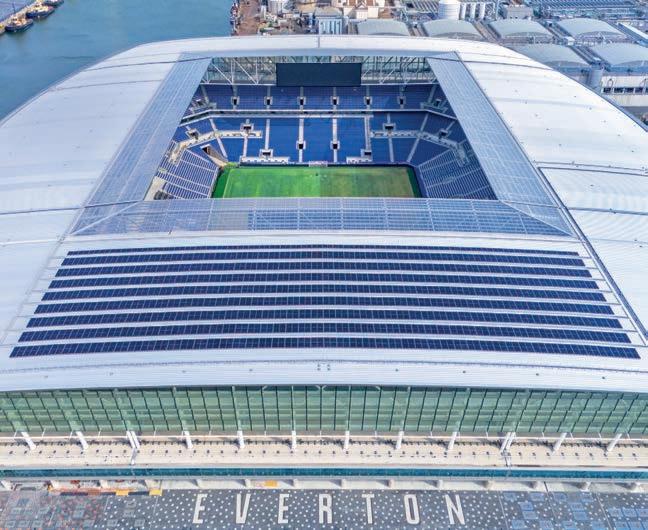
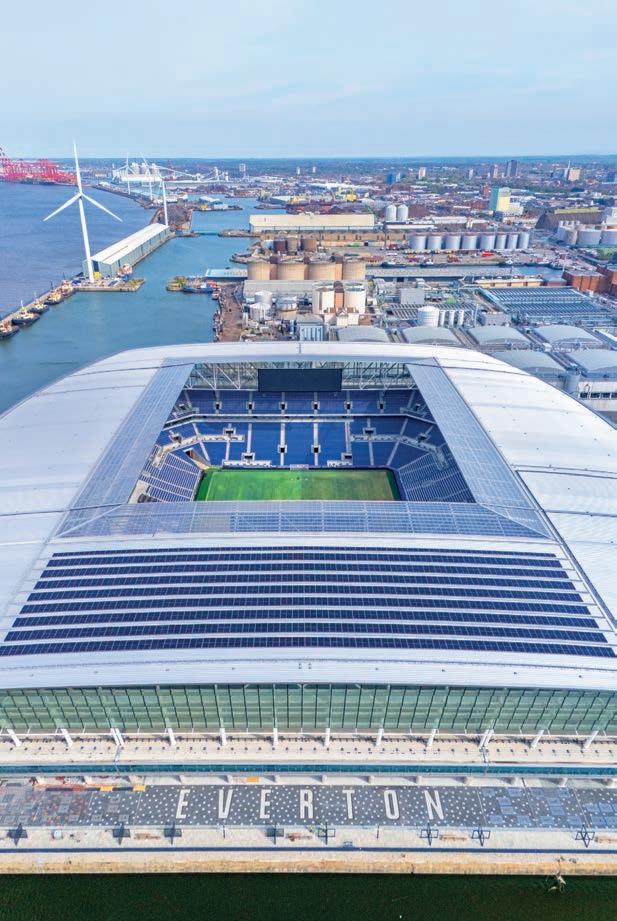
As this issue was going to press, Everton FC was preparing to play its first ever game – a friendly against AS Roma – in its new Hill Dickinson Stadium at BramleyMoore Dock in Liverpool. Delivered by Laing O’Rourke through turbulent times, this is a stadium construction project to be proud of.
Not all such projects end so happily. Stadium builds come with plenty of risks, including tight construction timelines – and associated liquid damages – scope changes and a small pool of suppliers with relevant experience. Add in the complexity of venues designed to host multiple event types and a client’s desire for ‘iconic design’, and what might seem a winning contract can turn into a big loss maker.
“There are a limited number of contractors willing to take on the construction of a stadium in any form in the UK,” warns Rob Sayce, venues lead, UK and Europe, at Mott MacDonald. “Stadium construction has caused a number of construction companies to fail in the modern era.”
At the turn of the century, commercial disaster at Cardiff’s Millennium Stadium was the
downfall of Laing, which went on to be bought by Ray O’Rourke for a token £1 in 2001. More recently Buckingham Group went into administration in 2023, blaming major losses on its projects at Anfield. There was even a casualty on the Everton project: facade contractor Alucraft went into administration in March 2024.
Stadium projects can boost or bruise a contractor’s brand because they will always make the news.
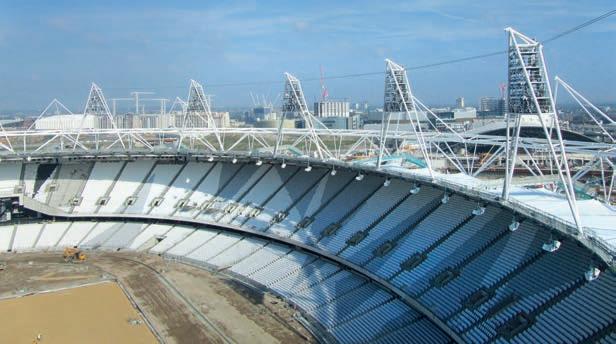
“You know the eyes of the world are watching you,” says Sir Robert McAlpine project director Clare Gallagher, who worked as chief engineer on Arsenal’s Emirates Stadium and construction manager on London’s Olympic Stadium. “Nobody is paying attention if you are building an office building, or even a new infrastructure project, but when you are building a stadium for the Olympics, everybody has questions about it.”
For companies that do have the appetite, there are major developments in the pipeline at Newcastle United, Leeds United and the mother of all stadium jobs, Manchester United’s New Trafford Stadium.
With these projects on the horizon, we asked three industry experts what it takes to get things right. Below we share the thoughts of Sayce, Gallagher and Gareth Jacques, Laing O’Rourke’s project director on Everton’s stadium.
1. Avoid iconic designs
Arsène Wenger asked for a column to be removed from the changing rooms so that he could look every player in the eye
Clare Gallagher, Sir Robert McAlpine
Stadiums could be straightforward, says Sayce. “They should not be particularly complex buildings; they can be delivered in a cost-effective and simple form,” he says. “But when owners and clubs are looking for unique solutions and designs for their stadium, that pushes the complexity.”
He cites the stadiums being built in Saudi Arabia for the 2034 World Cup.
“They could have built 12 identical stadiums but they’re all unique; that was inherent to the brief.”
Generally, the bigger the stadium, the bigger the design challenges – with roofs coming at the top of the list. “There is a point where a cantilevered roof becomes inefficient. Up to 40,000 you can get away with cantilevered roof trusses,” he says. “There comes a point where that’s inefficient and then you’re looking at more complex solutions such as cable-stayed roofs.”
ILLUSTRATION: PHIL CHANDLER
The roof of the planned new Manchester United stadium, designed by Foster + Partners, is a case in point. “What’s fascinating is the way they have extended the roof and wrap into the precinct,” says Sayce. “That means they could engage with more fans, providing it can be done safely. That’s a bit of a nod to the US, where they attract more people to the game outside the stadium.”
With 100,000 seats, the sheer scale of the Manchester venue will make the designers have to work hard to ensure every fan has a good view. “We delivered Wembley at 90,000 and all seats were compliant within the guidelines with respect to spectator viewing,” says Sayce. “Beyond that, it can be a challenge.”
2. Proper preparation
There are very particular time constraints for stadium delivery: they have to be ready for the start of the sporting season or for a particular event. That often leads to overoptimistic timelines.
However, a common theme among successfully delivered stadiums is a long lead time before work starts
on site. “On both the Emirates and the Olympics, we were fortunate to have quite a long preconstruction phase and that was absolutely key to the success of the project,” says Gallagher. “We were engaged early, which meant we were able to integrate ourselves into the design teams and look at things like buildability, procurement strategies and provide planning advice.”
The same was true at Everton, says Jacques: “Sometimes we get
pressured into starting too quickly by the client and that is not always the best solution. At Everton we had a good PCSA [pre construction service agreement period]. The client was very aligned with that which allowed us to iron out a lot of the details and reduce risks.”
A generous preconstruction phase also helps build strong relationships, says Gallagher. “That way you all become part of a project team rather than someone working for Sir Robert McAlpine or for a consultant or someone sitting in a client office far away making decisions.”
3. Trusted supply chain
Both Gallagher and Jacques underline the importance of getting the right supply chain members on board early, particularly the key packages: steel, structural concrete, roof, mechanical and electrical and probably facade too.
“There is a limited pool of contractors who can work on these projects, so we want our project to be in their order book early, so that we have reserved our slots where manufacturing is involved,” says
London’s Olympic Stadium under construction Manchester United’s planned new stadium with extended roof canopy
Gallagher. “There’s also the issue of financial security. In a changing market, that is very important.”
Gallagher says paid PCSAs for key packages is the only reasonable approach. “If you want them on board early and you want their commitment, then they should be paid just as any other consultant is.” There is some risk associated with this form of early engagement, she adds, in that subcontractors could increase their prices above market rates.
On the Everton project, Jacques identified early that the critical path ran through the structural frame and the external envelope and that 80% of the construction cost was in five or six packages. So, he decided not to competitively bid them.
“We did not want to go out to a long tendering process to the supply chain, so I selected supply chain partners that we knew were skilled and had the expertise to deliver to the complexity required and meet the programme,” says Jacques.
“We chose to work with Severfield (steel) and Lindner Prater (roof and envelope), who are really aligned with our way of working.”
When owners and clubs are looking for unique solutions and designs for their stadium, that pushes the complexity Gareth Jacques, Laing O’Rourke
With 100,000 seats, the designers of the Manchester United stadium must work hard to ensure every fan has a good view
Laing O’Rourke had the additional benefit of working with group companies Crown House Technologies for the MEP package, Expanded Piling for the piling and its Centre of Excellence for Modern Construction (CEMC) which provided precast twinwalls, columns, lattice planks and facade panels.
4. Offsite construction
Manchester United has already announced that it plans to deploy offsite construction heavily for its new stadium, planning to ship prefabricated elements along the Manchester Ship Canal. Architect Lord Foster told the Manchester Evening News that this strategy will reduce time on site, allowing the ambitious 2030 deadline to be met. Such a strategy requires a far higher design resource earlier in the programme, says Gallagher. “There are so many interfaces, and the design has to evolve quickly, which means you need early supply chain involvement to make sure the design is programmed correctly.”
Prefabrication elements are already used in most stadium
projects, points out Sayce. However, he adds that the mode of transport dictates the size of the prefabricated units and hence how elements of the stadium are designed.
Laing O’Rourke deployed offsite extensively at Everton, working with architect BDP Pattern which helped translate the concept design by US architect Meis. As well as the precast elements from CEMC, Crown House Technologies prefabricated much of the building’s MEP elements. Laing O’Rourke also employed Banagher to supply bowl units for the terraces – simply because CEMC did not have the capacity to do that as well as its other project commitments.
An additional benefit of offsite is that it reduces the labour resource required on site, says Jacques. At Everton, there were just over 1,250 people at peak.
“If we had not gone with our MMC [modern methods of construction] solutions we would have required nearer 3,000 people,” he says. “That level of resource does not exist; we would have struggled to get that number of people in Liverpool.”
5. Change control
One of the biggest risks to any stadium build programme is the number of changes the client will inevitably require along the way. Owners, managers, sponsors can all change, and accommodating the changes that new stakeholders require can be difficult.
On the Emirates stadium, the sponsors came on board part way through the programme, recalls Gallagher. “You need to have honest conversations about what is achievable during the programme, what will create risk that might manifest itself later in the programme.”
SIR ROBERT MCALPINE
Arsenal’s Emirates Stadium under construction
Laing O’Rourke used offsite construction extensively on Everton’s new stadium
The client’s governance is important, she adds. “We were very lucky at the Emirates. There was a great [client] team that was site based with the right level of experience. The Olympic Stadium was more management by committee, and we did not have access to the decision makers. If certain decisions can only be made by a board that meets every two months… it can be a very long process.”
Adding offsite into the mix makes change even more challenging. “I am always very clear with the client in the early stages: MMC can deliver quicker programmes but if you want an aspirational programme, you also have to understand you cannot also have continuous change,” says Jacques.
The client at Everton was on board with this approach, he says, but a new owner arrived part way through the project and changes to how the hospitality would work led to between £50m and £60m of changes, with the final cost being £610m.
“In overall terms that’s just under 10% of the project cost,” says Jacques. “I’m very proud of the fact we still handed over one day early.”
6. Next-level digital
Working with BIM and 3D models is business as usual on any stadium project, says Gallagher. As well as helping to iron out clashes and interface issues, they are vital for stakeholder communication, she says, recounting a story from the Emirates stadium when Arsène Wenger asked for a column to be removed from the
Changes at Everton added between £50m and £60m, with the final cost being £610m
changing rooms so that he could look every player in the eye.
At Everton, Laing O’Rourke used 4D BIM, looking at how sequencing and temporary works would look during the construction phase.
“We spent up to 16 months in preconstruction developing engineering solutions, planning the works and developing our 4D model which enabled us to build the stadium in a virtual environment before we started on site,” says Jacques. “We used this time to really focus on the logistics planning and developing what we term as engineered safety solutions.”
Laing O’Rourke also used a 3D immersive room at Everton, which allowed the construction team to look ahead using the 4D model and walk through sequences before they happened on site. “Everton was the first project in the UK to use this technology when we commenced in 2021, and the fact that all the contractors input their own schedules into the model made it a truly collaborative team,” says Jacques.
7. Appropriate risk allocation
When selecting the contract form, design and build can look like an attractive option to a client because the contractor is taking on all the risk. But that isn’t necessarily the right option, says Sayce.
“We are still in a position where advisers are advising design and build on future stadiums. This has to change. Major stadiums like Manchester United will not and
cannot be delivered by design and build. There is no appetite. They will move to construction management; they will have to.
“Construction management can be more daunting because of the lack of cost certainty but it leaves clients with more opportunities to make decisions, influence design and ultimately end up with a better stadium.”
Luton’s planned new stadium
Construction management lacks cost certainty but clients can influence design and ultimately end up with a better stadium
Rob Sayce, Mott MacDonald
Mace, which declined to be interviewed for this article, used construction management on the New Tottenham Stadium. The project ran late, but the contractor’s exposure was limited and Spurs ended up with a fine venue.
That said, Laing O’Rourke managed to deliver Everton’s stadium through a fixed-price design-andbuild contract despite building it through the turbulent Covid period.
“It delivered what we hoped it would,” Jacques says, when asked whether it was a commercial success for Laing O’Rourke. “It was not the huge commercial, financial risk that some people feared.” Although he does muse that, in a different market, the margin could have been better.
Jacques puts its commercial success down to working hard upfront to understand and mitigate foreseen risks and then working closely with the client when the unexpected ones came along.
“Credit to the client’s team that we kept working [during Covid] when some projects were paused or stopped altogether,” he says. “We explained why momentum was important, and they understood that.” ●
Who will build the UK’s next stadium projects?
There are plenty of stadium projects in the pipeline, including Newcastle United’s proposed Leazes Park Stadium, Manchester United’s New Trafford Stadium, plus new venues at Oxford, Luton and Peterborough. There are major expansions and redevelopments planned and underway too, such as the addition of 20,000 seats at Leeds United’s Elland Road and an upgrade to the North Stand of Aston Villa’s Villa Park to boost capacity by 50,000.
With a limited number of UK contractors that would take on the risk of a major design-and-build stadium job, and an equally limited number of contractors with the credentials to take the construction management role for such a project, who will build our future stadiums?
Luton Town found the answer overseas. Turkish contractor Limak won the contract to deliver Luton Stadium, reportedly beating off bids from Sir Robert McAlpine and Mace.
“Where the UK’s tier 1 and tier 2 contractors are not willing to take on design and build, others are happy to step in,” says Sayce. “They believe they can provide cost benefits from a different supply chain.”
It remains to be seen whether overseas supply chains can shoulder risks that UK ones can’t. Perhaps the UK industry will be happy to watch them try.
‘Projects will cost more’: building in Trump’s America
Rod Sweet talks to two of Gleeds’ big hitters about the president’s impact on the US construction industry
Whether it’s ordering ICE (Immigration and Customs Enforcement) raids on building sites or slapping huge tariffs on staple imported materials, Donald Trump may be the most interventionist US president in the post-second world war period, and not in a good way for construction.
To gauge the sector’s mood as autumn sets in, we checked in with two people who know the US market
well: Gleeds chair Richard Steer FCIOB and Chris Soffe PPCIOB, vice chair of Gleeds Americas.
Steer sums up the mood starkly: “No one is sure where we’re going or what’s going to be happening in the foreseeable future.
“Donald Trump has changed the concept of the tariffs back and forth two or three times since April. He’s changed his position on the war in Ukraine 180 degrees. He’s attempting to get rid of a
Trump’s interventionist policies make planning difficult
lot of the construction labour force, and contractors are already reporting difficulties in hiring staff, which means labour will become more expensive.
“A lot of the work coming out of the US is infrastructure projects, which are very big-budget events that go on for a long time – and, if their costs go up significantly, that does call into question their viability.”
Steer says data centres are going up everywhere and the defence
Donald
I have to go back to the UK in the 1970s – strikes, the threeday week, OPEC threats and high inflation – to find a period comparably volatile
Chris Soffe PPCIOB, Gleeds Americas
sector is starting to hum, but that isn’t enough to keep a major economy going.
“Commercial projects are being delayed because nobody knows what’s going to happen,” he says. “Interest rates are stubbornly high, which means projects will cost more, if they even happen.
“The trouble is, your two main costs, labour and materials, which tariffs could affect, are not under control at the moment.”
“Trump is targeting steel but while America produces lots of it, it’s not necessarily the specialist kind made in Germany or the UK. That’s fine if you’re just throwing up steel beams and columns, but if you’re trying to build high-tech buildings or architectural masterpieces, you need well honed and worked steel and that will push the price up.”
Steer adds: “We know construction is cyclical. What we don’t know is whether we’re near the bottom of this cycle or if there’s farther to go before the situation rationalises and a new playing field emerges. A major economy like the US can’t just
stop building things, and much of its infrastructure is 70 or more years old.
“However, it could be several months before we have clarity.”
’You just can’t get on with stuff’ For Chris Soffe, the outlook is only “storm clouds and headwinds”.
“We just don’t know what effect tariffs will have on inflation in three, six or nine months’ time because none of these percentages are settled, although some isolated countries like the UK seem to have done some sort of a deal, but otherwise they’re all over the map,” he says.
“It’s making it very difficult for businesses to plan. Inflation’s running at 4-6%, which is lower than during the pandemic, but not the 2-3% which is more manageable. Private equity is sitting on the fence.
Big corporations are in a holding pattern. I read that architecture and engineering billings are down for the third quarter in a row, which doesn’t bode well for the next year or two.
“I see the entire situation right now as a forward-planning impediment. You just can’t get on with stuff.”
Most sectors are affected in one way or another, Soffe says. Commercial is taking the brunt. Residential is flat in part thanks to interest rates. All sectors face
Commercial projects are being delayed because nobody knows what’s going to happen
Richard Steer FCIOB, Gleeds
rising labour costs as the Trump administration adds the fear factor to an existing skills shortage through raids on construction sites and other sectors of the economy by ICE.
Projects are getting cancelled in higher education, too, as the administration withdraws research funding or, in the case of some Ivy League universities, launches what looks to be outright hostile political manipulation.
Even infrastructure, considered a buoyant sector, could face project cancellations if labour shortages and tariff-fuelled inflation pushes costs over budgets, Soffe says.
“Then you’ve got existing fixedprice contracts in any sector, which are under threat because you’re paying more for steel, aluminium, lumber and other imports, so all the contractors are wrestling with rates on labour and materials,” Soffe says. “It’s a strange situation for the US market, which is normally buoyant.”
Soffe says he has to go back to the UK in the 1970s – with strikes, the three-day week, OPEC threats and high inflation – to find a period comparably volatile in his career.
“That’s why we had inflationlinked contracts back then, because there was no way contractors could shoulder inflation running at 15-18%. Whether it will settle down or not, I don’t know. It could, but certainly the first six months of this administration have been very volatile indeed.”
His advice to construction companies?
“Service existing clients with care, and pick sectors that tend to not go away,” Soffe says. “The early 1990s was a very slow period, and we did a lot of work in prisons and churches. They tend to stay around whatever’s happening!” ●
What you will learn in this CPD
Legislation and fire test standards for service penetrations
Key considerations for design and installation
The importance of early engagement and test evidence
CPD: Passive fire protection for service penetrations
In this CPD, Craig Wells explains the role passive fire protection plays in buildings, with a specific focus on service penetrations
Passive fire protection is a key element of a building’s fire strategy, covering areas like intumescent fireproofing, linear gaps and cavity barriers, compartmentation, fire doors and service penetration sealing.
These work alongside active measures, such as fire alarms, extinguishers and sprinklers, to protect people and property from the threat of fire. However, while active systems are visible and ready to use, passive fire elements are often hidden within the walls and floors of a building – but are just as important.
We all walk through fire doors and past fire-rated walls without noticing, yet these are what keep a fire contained to its area of origin.
Breaches in compartmentation are typically caused by mechanical, electrical or plumbing (MEP) services, and can pose a significant risk when not sealed properly with the correct products.
Intumescent basics
Most service penetration sealing products contain an intumescent material. This is a graphite-based material that expands when exposed to heat and seals the opening left behind by the melting service.
This reaction forms a carbonaceous char that prevents the spread of fire and smoke to other areas, commonly known as fire compartmentation.
Passive fire elements are often hidden within the walls and floors of a building
What does the legislation say?
Firestopping is a legal requirement enforced by building regulations and other industry documents and legislation, such as Approved Document B and the Building Safety Act 2022. Building regulation requirements can be found in Approved Document B, which provides guidance on how to meet the regulations.
Requirement B3 focuses on internal fire spread (structure) and states: “The building shall be designed and constructed so that, in the event of a fire, its stability will be maintained for a reasonable period.”
Furthermore, it adds that: “Every joint, imperfect fit and opening for services through a fire-separating element should be sealed with firestopping to ensure the fire resistance of the element is not impaired. Firestopping delays the spread of fire and, generally, the spread of smoke as well.”
The Building Safety Act, as a result of the Grenfell Tower tragedy, reinforces that everyone, not just decision-makers, must follow fire safety regulations and work compliantly.
BS EN 1366-3 fire testing standards
Fires do happen, and that’s why fire testing is crucial to ensure products and systems work as intended.
Service penetrations are tested to BS EN 1366-3, where the system
Product example: fire collar
l Stops the spread of fire where plastic pipes pass through fire compartment walls and floors.
l Consists of a metal shell, generally stainless steel.
l Contains a high-performance intumescent material.
is installed into a replica wall or floor, and then craned onto a furnace, ready to be exposed to fire conditions.
BS EN 1366-3 fire testing is designed to replicate a flashover fire. With actual furnace temperatures capable of exceeding 500°C within five minutes, this method is extremely onerous and aggressive.
Once the test is complete, the UKAS-accredited laboratory will issue a test report. This report presents straightforward observations and includes technical details.
At the second stage, the classification report and European Technical Assessment (ETA) will be created, again, by a third-party UKAS-accredited laboratory. This will define multiple test reports to outline the scope, upper and lower limits, and specifications.
The classification report and ETA are the most useful documents because they show the overall tested scope of application instead of focusing on individual specimens. Finally, the third stage is achieving CE marking, which after Brexit was replaced by UKCA in Great Britain, although the former is still accepted. This requires conducting regular factory audits to verify product quality and confirm that the product performs consistently with the original test specimen.
BS EN 1366-3 performance criteria:
l Integrity (E): No flames or large holes
l Insulation (I): Limits temperature transfer
Lakanal House fire
In 2009, a fire broke out at Lakanal House, a 14-storey residential block in south London. Six people lost their lives, including three children.
The cause of the fire was an electrical fault in a television, which quickly spread through the building.
An investigation into the fire revealed a failure in the building’s compartmentalisation, which allowed the fire and smoke to spread between flats and floors.
Lakanal House is one of many tragedies that raised fire safety concerns in high-rise buildings. It showed why firestopping needs to be taken seriously and emphasised that every detail matters when it comes to fire safety.
Common design and installation challenges
Historically, the construction industry has lacked coordination and communication between various trades and elements of the design team.
When projects focus heavily on the installation phase, the crucial role of thorough design, backed by coordination and communication, is often overlooked.
And when these elements are missing, onsite problems such as oversized holes or incompatible substrates can occur, resulting in delays and additional costs.
For example, using a standard drill bit to create a 132mm hole for a 110mm pipe seems straightforward: install a wrap around the pipe, push it flush with the concrete, backfill and finish.
But oversized holes can complicate the process, requiring additional coordination and tested solutions, such as adding a temporary shutter to wrap and compound.
If the oversized hole isn’t properly shuttered and backfilled, the intumescent wrap could fall out or expand into any gaps in the backfill, instead of sealing the gap in the compartment line created as the pipe melts.
‘Pink foam’ misuse
There are widespread misconceptions in the industry about fire-rated PU foam, due to a poor understanding of its use and suitability.
While it can sometimes be used to effectively seal small linear gaps, for instance, pink foam has a limited tested scope of application. Its material makeup means that it can shrink away from the substrate as it burns, creating unsealed gaps through which fire and smoke can spread. Therefore, at Quelfire, we strongly advise against using it to firestop service penetrations.
An ‘up to’ fire rating refers to the maximum time the product has ever achieved in a fire test, and it may
Fire and smoke spread between flats and floors in the Lakanal House fire in south London
have only achieved that specific fire rating in one application.
That may mean that in another application, it needs to be used in a system with other firestopping products to achieve the ‘up to’ rating.
That’s why it’s imperative to understand, choose and install the correct products following the tested scope of application, as these products are the only barrier between the fire and non-fire side. They save lives.
Complexities of services and substrates
When it comes to firestopping, not all services and substrates behave in the same way. This can consequently affect product selection and installation. Different materials react differently in fire: For example, uPVC and HDPE melt and burn in different ways, which impacts the type of firestop product needed and the fire rating that the product/system achieves. Substrate matters: A flexible plasterboard wall behaves very differently from a rigid concrete floor. The firestop solution must be compatible with the specific wall or floor type it’s being installed into. Spacing guidelines: The tested scope of application defines the minimum distance that is permitted between each service seal. In reality, there is often a tendency to pack as many services as possible into a small opening.
The importance of early engagement
There will always be challenges that arise on site – that’s just the nature of construction. But the complexity of the challenge will be reduced when an early engagement approach is implemented in the project.
Early engagement ensures that a suitably tested firestop solution is chosen to match the service type, substrate, fire rating and installation environment. It also ensures the correct sizing of holes, product selection and adherence to building regulations.
It brings all relevant stakeholders together to discuss key objectives and coordinate the project based on the available test evidence.
The guide Firestopping of Service Penetrations: Best Practices in Design and Installation, published by the ASFP, BESA, BSRIA, FIS and GPDA, has nine golden rules.
Seven of these relate to the building’s design, clearly highlighting where the emphasis needs to be. Ultimately, an accurate design makes a compliant installation much easier to achieve.
The beauty of the ‘design then build’ model is that fully tested solutions are integrated early, allowing for the correct products to be installed in a compliant manner.
As a result, fire will be contained to its compartment of origin for the specified period of time it has been fire tested.
This removes the pressure of retrofitting firestopping solutions post-installation, reducing rework and compromise later in the project. Most importantly, it protects the end user and gives you peace of mind.
Responsibilities in firestopping
Construction is a collaborative effort, yet we often see responsibility passed around, with no party wanting to accept it wholly. However, the truth is that we all share responsibility for the roles we play in projects, no matter how big or small.
Designers are responsible for including compliant solutions from
the early stages of design, while firestop contractors must make sure the solutions are installed as tested. Each trade must understand its impact on the next, and how its work may affect the installation of the firestopping.
Then you have the manufacturers, which have the responsibility to provide accurate test evidence, training and support.
Service penetration sealing is far too important to be an afterthought. Everyone has a part to play in ensuring compliance.
However, with an early engagement approach, tested products and collaboration, the protection of people and property is achievable. ● Craig Wells is sales director at Quelfire.
Useful resources
● Approved Document B: www.gov.uk
● Building Safety Act 2022: www.legislation.gov.uk
● Fire Safety (England) Regulations 2022: www.gov.uk
● BS EN 1366-3: https://knowledge.bsigroup.com
Early engagement ensures that a suitably tested firestop solution is chosen
CPD Questions
1) What is the main function of intumescent material used in firestopping products?
a) It conducts heat away from the service penetration to slow combustion
b) It expands when exposed to heat, sealing gaps left by melting services
c) It reinforces the structure of fire-rated walls and floors
2) Which document provides legal guidance on firestopping requirements for service penetrations in buildings in England?
a) Approved Document B b) Fire Safety (Scotland) Regulations c) BS EN 1366-3
3) What is the primary purpose of BS EN 1366-3 testing?
a) To evaluate the ease of installation of firestopping products
b) To classify the aesthetic finish of fireproofing systems
BS EN 1366-3 fire testing is designed to replicate a flashover fire
c) To assess the fire resistance performance of service penetration seals
4) Who is responsible for firestopping?
a) Designers and contractors
b) Manufacturers
c) All of the above
5) Why is early engagement important when planning passive fire protection?
a) It ensures fire doors are always installed before internal partitions
b) It allows for integration of tested firestopping solutions and reduces costly rework
c) It removes the need for final fire safety inspections
To test yourself on the questions above, go to www.construction management.co.uk/cpd-modules
Hakan Ozsoy Decipher
‘Help! Our employer’s agent is favouring the contractor’
This month’s contract clinic question comes from a construction client worried the employer’s agent is siding with the late-running contractor. Hakan Ozsoy responds
THE QUESTION:
We are the employer on a small residential development. We believe our employer’s agent (EA) is failing to deliver his duties and favouring the views of the contractor, which is in delay, rather than working to ensure the on-time delivery of the project. What are our rights? What would you recommend as a route for remedy?
THE ANSWER
The role of the EA, particularly under contracts like the JCT Design and Build (2016), holds a central role in the smooth execution of a project.
As an employer, you’ve entrusted your EA with critical responsibilities to oversee the contract. When a relationship breaks down due to underperformance or breach of duty, it can jeopardise your entire project.
Understanding your rights and available remedies is essential for swift and effective action.
Understand the EA’s duties
According to RICS Practice
Information, an EA acts on behalf of the employer in all matters while maintaining impartiality in certification and decision-making functions.
To start, you should review your appointment document or consultancy service agreement (assuming you have one). This
will help you understand duties, performance expectations and reporting obligations.
These typically include:
l Administering the contract and ensuring compliance.
l Overseeing the contractor’s performance and reporting progress.
l Managing variations, change control and claims, eg, extension of time, loss/expense and liquidated damages.
l Monitoring commissioning and inspections.
l Issuing instructions and payment certificates.
l Facilitating clear, concise and ongoing communication between stakeholders.
l Acting as main point of contact with the contractor.
l Arranging handovers, practical completion and agreeing the final account.
You have the right to expect the EA to fulfil these duties with fairness and diligence as in your agreement.
Gather evidence
The key to successful resolution lies in thorough documentation, clear communication of expectations and proportionate response.
You should document specific instances of failure such as missed deadlines, poor communication and
You have the right to expect full performance from your EA and should be able to pursue remedies
resulting costs or delays. Collect written correspondence and records demonstrating how the EA’s actions or inaction affect the project. This evidence is crucial for any escalation. Construction projects operate under tight schedules. Delays in addressing EA failures can compound problems and increase eventual costs. Act promptly once issues become apparent.
Attempt resolution
Where possible, attempt resolution through discussion and clear communication before formal action. Resolution without litigation may benefit future working arrangements. If such a resolution is not possible, formally notify the EA in writing, referencing the relevant clauses in your agreement. Clearly state the failures and request immediate rectification within a specified timeframe. Outline the consequences of continued non-performance. This approach may help resolve issues and strengthens your position should legal action follow.
While addressing EA failures, ensure project continuity. Consider appointing interim professional support or temporarily assuming control of critical functions to prevent work stoppages or contractor claims.
Question for contract clinic? Email construction-management@atompublishing.co.uk
Inform the contractor and other stakeholders of the changes, particularly to maintain validity of payment certificates and instructions. If problems persist, follow the termination procedures in your agreement and appoint a new agent. Ensure you comply with notice requirements. Proceed with care: termination can be legally complex with financial consequences.
If the EA's failures have resulted in cost overruns, delays or reputational damage, you have several options:
l Professional indemnity claims. Most EAs carry professional indemnity insurance. Claims can be made for losses resulting from negligent performance or breach of professional duty. Review your own project insurance arrangements as these may offer faster resolution.
Attempt resolution through discussion before formal action
Collect written correspondence and records demonstrating how the EA’s actions or inaction affect the project
l Contract damages. Pursue compensation for additional costs, delays and other quantifiable losses directly attributable to EA’s failures.
l Recovery of fees. In cases of material breach, you may be entitled to recover professional fees paid for inadequate services.
Prevention for future projects
To mitigate risks, implement these measures in your upcoming projects:
l Conduct due diligence on the EA’s competence and track record.
l Define clear performance and reporting requirements and communication protocols.
l Schedule regular review meetings.
l Implement milestone-based performance assessments.
l Include robust termination provisions with clear grounds and procedures.
l Specify sufficient professional indemnity cover.
l Establish dispute resolution mechanisms for performance issues.
l Consider step-in rights for early intervention.
You have the right to expect full performance from your EA and should be able to pursue remedies. Your rights include recovery of damages and additional costs incurred due to their failures.
When an EA fails to deliver, swift and decisive action protects your project interests and minimises potential losses.
Hakan Ozsoy is an associate at Decipher, A DeSimone Company.
Henry Brothers on how its sustainability values set it apart
CIOB chartered company Henry Brothers takes seriously its responsibility to both people and planet.
Nicky Roger talks to CR director Ian Henry MBE about keeping business, sustainability and community at its core
Nearly five decades after it built its foundations in Magherafelt, Northern Ireland, Henry Brothers has grown into one of the UK’s leading construction contractors.
The family-owned business now works from five offices across Northern Ireland, England and Scotland, with a reputation for delivering excellence in controlled operational environments including education, blue light, industrial, government, healthcare and defence industries.
Despite its wide geographic reach, one principle knits the company
together – building together responsibly for people and planet.
“Our ethos has always been to work hard and get the job done, but underneath that determination are our core values, guiding us through every business decision we make,” corporate responsibility (CR) director Ian Henry says.
“Good building shouldn’t come at the expense of the environment, and we’re committed to conducting our business responsibly whilst making a positive impact within our communities.
“Sustainability isn’t just a slogan –it’s a measurable and attainable goal that our projects are founded on.”
The Soldiers’ Centre at Alexander Barracks’ green credentials earned it a DREAM Excellent rating
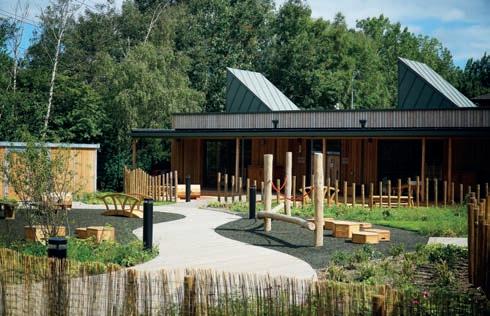
Henry Brothers’ first net zero project in 2022, a £4.4m nursery and forest school at Staffordshire University
This dedication was recognised when Henry Brothers became one of only two companies in Northern Ireland to receive the King’s Award for Enterprise for Sustainable Development in 2024.
“Our sustainable approach to construction sets us apart, acting as a benchmark for how we can create buildings that are future-proofed and suitable for generations to come,” Henry continues.
“Sustainable practices have been at the heart of our operations for nearly three decades now – long before they were a mandatory requirement – and we continue to
make a conscious effort to minimise our environmental impact while maximising positive social and business outcomes.”
The journey to net zero
At the heart of Henry Brothers’ sustainable approach is its Journey to Net Zero strategy, in which it aims to reduce greenhouse gas (GHG) by 2% every year for nine years, effectively halving its GHG emissions by 2030 and eradicating them by 2050.
“Through investment into a number of innovative solutions, such as sourcing 100% renewable energy, utilising LED lighting and upgrading our company car fleet to fully electric or hybrid vehicles, we were able to cut our footprint in 2024 by 85 t CO₂e – 20 tonnes ahead of target,” Henry says.
“Of course, we know we can’t do it alone.
“We have taken a partnership approach that involves working with not only our subcontractors and suppliers but our main competitors in Northern Ireland, putting our company slogan – Altogether Stronger – into practice.”
Building for the future
Henry Brothers delivered its first net zero project in 2022, a £4.4m nursery and forest school at Staffordshire University.
The single-storey timber-frame building is highly energy-efficient and airtight, using REHAU earth tubes – the first of its kind for a Henry Brothers build – and air source heat pumps, in addition to roof-mounted solar PV to offset carbon emissions.
“Our first net-zero project had its challenges, but we were able to overcome them to create a truly spectacular building that combines the very best in innovation, expertise and quality,” Henry adds.
“Building on our learnings and successes, we then achieved Passivhaus Classic accreditation for SportPark Pavilion 4 at Loughborough University, a rare example of this being awarded to a commercial project.”
Perhaps its most technically ambitious project, the four-storey extension demands up to 70% less energy than a conventional equivalent, thanks to a fabric-first approach, meticulous air sealing, triple glazing and a full-roof PV array.
The Loughborough University fourstorey extension demands up to 70% less energy than a conventional equivalent
Sustainability isn’t just a slogan – it’s a measurable and attainable goal that our projects are founded on Ian Henry, Henry Brothers
“Passivhaus forces you to rethink everything,” says Henry. “It’s not about adding on green tech at the end – it’s about designing out waste and inefficiency from the first line of the brief. It took an incredible team effort to hit those standards, and it’s a real blueprint for what net-zeroready buildings should look like.”
Most recently, Henry Brothers completed The Soldiers’ Centre at Alexander Barracks, Pirbright, Surrey – an £11m glulam-framed wellbeing hub built on a live Ministry of Defence (MoD) training base.
The build, which was the first of its kind for the MoD, combines passive solar design with roofmounted PV and enhanced airtightness – all contributing to an Excellent rating under the Defence Related Environmental Assessment Methodology (DREAM).
A safety-first mindset
Alongside its green ambitions, the health, safety, and welfare of Henry Brothers’ people is priority.
Fact file
● Number of employees: Henry Brothers has over 200 direct employees based across Northern Ireland, England and Scotland.
● Turnover: £92.2m
● Date company established: Jim Henry first set up the small construction business in 1976. Later in 1986, it then became known as the Henry Brothers.
“Ongoing training, active engagement in industry safety forums and a culture of shared responsibility underpins our approach,” claims Henry.
Its Health & Safety Committee reports directly to the board, while membership of CIOB, Construction Employers Federation (CEF), Considerate Constructors Scheme and Safety Schemes in Procurement keeps the company aligned with best practice.
It’s this approach that has earned the company 10 consecutive RoSPA Gold Awards. “This is a significant achievement and reflects the continued commitment, diligence and professionalism of our staff and supply chain in maintaining a safe working environment.” ●
Job spotlight: Mark Johnston FCIOB, construction management consultant, Cube
Mark Johnston FCIOB speaks to Nadine Buddoo about his career in the built environment, keeping his construction skills up to date, and what chartered fellowship means to him
Tell us about your current role and day-to-day responsibilities. With a career in construction management spanning 30 years, I’ve progressed from site engineer into operations management and onto independent consultancy, providing valuable strategic support for nationwide projects.
My construction DNA is on the operation and delivery side, driving projects to successful completion.
As co-founder and director of Cube Construction Consultants, my focus is on the implementation of best practice – how does this impact operational process? How are projects actually performing?
We work with a variety of different construction businesses nationwide, from national tier 1 contractors to smaller regional building firms and housing associations, supporting them to build best practice into every element of construction.
This can be through independent project reviews and process improvement planning and, more recently, construction management training.
How do you keep your skills and knowledge up to date?
Implementing change through best practice requires a commitment to updating our own skills, knowledge, experience and behaviours. At Cube we are constantly learning from the businesses we work with every day. Through project reviews, site visits and the training we deliver, we hear about challenges, success stories and the problems people are looking to solve in all areas of the built environment.
We also represent the industry in working groups and are active members of the CIOB Nottingham Hub.
Hundreds of the best jobs in construction. Recruitment news and insight. CIOBJobs.com
My focus is on the implementation of best practice – how does this impact operational process? How are projects actually performing?
Mark Johnston FCIOB, Cube
My recent fellowship award is the latest step in maintaining my commitment to continued professional development, to be in a position to guide others wanting to develop.
You recently became a chartered fellow of CIOB. What does this achievement mean to you? It’s been a longstanding personal and professional ambition to achieve a chartered fellowship at CIOB.
At Cube, we help construction businesses to build best practice and to implement processes that demonstrate competence, compliance and a detailed understanding of the Building Safety Act’s requirements.
What better way to demonstrate a high level of assessed competence than the CIOB fellowship programme?
For our clients, this is a real validation and assurance of our industry expertise – both as a chartered construction management consultancy and me as a fellow. CIOB fellows are expected to adhere to high ethical standards, including honesty, fairness and respect for the public interest, plus acting with dignity and accountability.
These are aligned with my personal values and the values we have always upheld at Cube. ●
My CEnv career: ‘an incredible way’ to protect the planet
The latest in our series on chartered environmentalists features Peter Turner FCIOB, who has seen attitudes to sustainability evolve considerably over the course of his career
Becoming a chartered environmentalist has helped to hone my knowledge, my thinking and my understanding of the discipline
Peter Turner FCIOB
When Peter Turner left school in 1985, he knew university was not for him. But despite rejecting a fully academic route, he was passionate about pursuing a career in construction and engineering.
“I started working on construction sites from the age of 16. My late father was an engineer, and he encouraged me to consider engineering and construction,”
Turner says. “I was very much attracted to the industry.”
That attraction was largely due to the machismo a young Turner associated with working in construction.
“The industry has since changed and evolved, thank goodness, because that certainly wouldn’t be appropriate in this day and age,” he
Peter Turner FCIOB: ‘I have gained so much confidence through chartership’
says. “However, at the time, I saw it as a macho and dynamic environment.”
Turner also knew that a career in construction would offer educational and development opportunities, while he gained practical experience.
Sustainability requirements
At the start of his career, Turner acknowledges that sustainability was not high on the agenda across the industry.
“Back in the 1980s, sustainability requirements were not particularly considered at all,” he says. “Sustainability and environmentalism weren’t really part of my early career, but that grew as our society began to understand the importance of protecting our planet.”
Now, with experience as a project manager, Turner says he has seen the importance of sustainability requirements in construction grow significantly.
When he became a chartered member of CIOB, part of Turner’s application had to demonstrate a clear understanding of environmental requirements in construction and the important role built environment professionals must play.
Turner says his sustainability credentials took another big leap in 2011 when he became a chartered environmentalist through CIOB.
“Becoming a chartered environmentalist has helped to hone my knowledge, my thinking and my understanding of the discipline,” he explains. “It made me look at what I had done previously and consider what I needed to do going forward.
Turner admits that becoming a chartered environmentalist has also helped to assuage any self‑doubt he previously felt about not attending university.
“My educational background might not be as good as some others, but I’ve tried hard ever since,” he says. “I have gained so much confidence through chartership.
“These achievements have helped to bridge the gap – that was, perhaps, only ever in my head – and allow me to feel more confident when I talk about environmental issues.” ●
Bauder accepts keys to its new UK distribution centre at Gateway 14
Bauder marked a major milestone in its UK expansion with the official handover of a brand-new 44,000-square-foot distribution centre at Gateway 14, in Stowmarket, near Ipswich
Located within East Anglia’s largest business, innovation and logistics park, this new facility strengthens its presence in Suffolk and supports its continued growth across the UK. While it continues to operate from its UK headquarters in Ipswich, this new facility becomes its largest distribution hub in the country.
The new building was developed by Jaynic on behalf of Gateway 14 Ltd — a wholly owned subsidiary of Mid Suffolk District Council — and constructed by Wilten Construction. On Tuesday 29th July, they were joined by representatives from its partner
organisations and Freeport East for a special handover ceremony attended by managing directors, Yvonne Higgins and John Llewellyn.
A reflection of our Growth
“The completion of our Gateway 14 distribution centre marks a significant moment for Bauder,” said joint Managing Director, Yvonne Higgins. “It represents both our growth and confidence
in maintaining our high standards while meeting increasing demand in the UK market. We’re thrilled to have achieved this in line with our sustainability programme, and with the employment opportunities it brings to the region.”
John Llewellyn added: “We’re delighted with this new state-ofthe-art facility. It’s a reflection of Bauder’s continued investment in meeting the evolving needs of
"We’re delighted with this new state-of-the-art facility. It’s a reflection of Bauder’s continued investment in meeting the evolving needs of our growing customer base"
our growing customer base. The completion of the Gateway 14 distribution centre coincides with the expansion of our operational base in Ipswich, currently underway.”
We’re grateful to have been welcomed so warmly. Sir Christopher Haworth, Chairman of Gateway 14 Ltd, shared: “I am delighted to welcome Bauder to Gateway 14. Their presence reinforces Gateway 14’s significance for the region as an emerging centre of excellence.”
Sustainability at the heart
The new facility has been designed to BREEAM Excellent standard and boasts sustainable features including an EPC A rating, EV charging points, LED lighting, solar PV, smart energy systems, and rainwater harvesting. The wider Gateway 14 site also includes integrated walking and cycling routes, public transport connections, and biodiverse landscaping with swift nesting boxes to support the local wildlife and promote wellbeing and a healthy work environment for staff.
Cllr. Andy Mellen, Leader of Mid Suffolk District Council, also welcomed the development: “This milestone aligns with our vision to bring more green sector investment to the area. We wish Bauder every success in its future growth.”
Ben Oughton, Development Director at Jaynic, summed up the strategic impact: “Gateway 14 is now firmly established as Suffolk’s leading business and logistics park. It’s fast becoming a vibrant mixed-use scheme focused on sustainable development — exactly the kind of location where a company like Bauder can thrive and contribute to the region’s economy.”
With direct access to the UK’s motorway network via Junction 50 of the A14 and prime position within Freeport East, this new facility gives Bauder a strategic edge as they continue to serve their partners, clients, and customers nationwide.
The Digital Construction Awards recognise the built environment industry’s most innovative companies, projects and people. Organised by the Chartered Institute of Building (CIOB), Digital Construction Week (DCW), Construction Management (CM) and Digital Construction Plus (DC+), and hosted by actor and comedian Sally Phillips at The Brewery in London, this year’s event celebrated the sector’s true champions of innovation and technology. Read on to find out who the winners were – and why they won
Belfast Grand Central Station wins Digital Construction Project of the Year
Belfast Grand Central Station secured the prestigious Digital Construction Project of the Year trophy
Translink, Northern Ireland’s public transport body, faced major challenges with the construction of Belfast Grand Central Station, the island’s largest integrated transport hub with a footprint bigger than London’s King’s Cross station.
With five major contracts running in parallel – enabling works, bridge works, rail, station construction and utilities – the digital challenge included managing vast amounts of data and ensuring real-time collaboration between contractors, the Department for Infrastructure, regulatory bodies and local communities. Each had different priorities, requiring a robust framework to ensure compliance, efficiency and consistency.
ISO 19650 standards for information management were being
integrated into the organisation for the first time. Translink also wanted the seamless transition of asset data into its FM system, for automated maintenance scheduling, asset validation and optimised reporting. Its approach was strategic, research-led and outcome-focused. The project team conducted an early-stage digital audit, identifying that traditional data exchange and manual validation processes would cause delays and compliance risks.
To solve this, Translink adopted a BIM-first strategy, integrating ISO 19650-compliant workflows. Managing the data exchanges across five different contracts and the unavoidable use of four common data environments proved to be challenging, and developments
were made with Python scripting and Power BI dashboards to enable automated review and validation of document registers and data sets, eliminating eight hours of manual review per week.
The majority (93%) of the 13,000plus auditable data exchanges achieved compliance in naming conventions.
Real-time COBie asset data was embedded into Translink’s Property FM system, enabling predictive asset management.
Mark Anderson of Translink said: “It’s a great honour to win. There was a lot of work from the Translink and the wider team. I’m most proud of the fact that the project led the digital transformation within Translink.”
The Translink team collects the trophy from Justin Stanton of DC+ (far left), Digital Construction Champion of 2023 Su Butcher (second left) and Sally Phillips (far right)
A stand-out entry that excels in innovation, scalability and tangible outcomes. The well-executed approach showcases how digital tools can make a tangible impact on both project delivery and long-term operations. This is clearly an exemplar project for the continued adoption of BIM and digital engineering within the Northern Ireland construction industry What the judges said
Digital Construction Project of the Year shortlist l 40 Charter Street, Canary Wharf – KPF/ Canary Wharf Group/Aecom/ Revizto/Dome Group/Disperse l National Rehabilitation Centre – IHP (Vinci Building/Sir Robert McAlpine)/Buildots l Woodham Academy –Department for Education/Galliford Try/Space Group/ RLB Digital/Space Architects
Transforming water infrastructure with 3D printing
The team of United Utilities (UU), ChangeMaker 3D (CM3D), Scottish Water and Manchester Metropolitan University won the Best Application of Technology category for its work on the Water Industry Printfrastructure programme
The UK water industry needs to maintain and improve ageing infrastructure while meeting ambitious regulatory and environmental targets. Construction methods that enhance efficiency and sustainability are necessary.
To address this, UU, CM3D, Scottish Water and Manchester Metropolitan University secured funding from Ofwat’s Innovation Fund Catalyst Stream for the Water Industry Printfrastructure (WIP) programme. This initiative aimed to explore innovative construction
practices to improve and enhance project delivery across the sector.
3D concrete printing technology was identified as a game-changer, offering rapid, flexible and sustainable asset production. By enabling onsite fabrication, this technology helps mitigate supply chain risks, reduces lead times and delivers critical infrastructure faster and more efficiently.
The WIP programme established the UK’s first 3D concrete printing hub at a live wastewater treatment works hosted by UU. The project
The Water Industry Printfrastructure team collect their trophy from Justin Stanton of DC+ (far left), Adam Davis of Foster + Partners (second left) and Sally Phillips (far right)
A great example of industry 4.0. The cross-sector collaboration and the focus on scalability make this a standout example of technology’s potential to transform an entire industry What the judges said
also marked several industry firsts, including the first operationalised 3D-printed assets for the water sector, first patented designs and first in situ printing applications. Implementation involved rigorous planning, research and collaboration. CM3D’s patented designs enabled the production of key assets such as Industrial Emissions Directive (IED) walls, manhole rings and CSO chambers.
Scottish Water installed the UK’s first 3D-printed manhole ring and CSO chamber, demonstrating the technology’s potential for nationwide adoption. Printing infrastructure on site reduced lead times by up to 70% compared to traditional methods. The results of the WIP are scalable across the water sector: 20 water and wastewater companies stand to benefit in the UK, with further industry-wide adoption expected. Richard Clark of UU said:
“We’re very pleased. It’s a complete surprise. It’s really made the last three years of work for ourselves, Manchester Metropolitan University, ChangeMaker 3D and Scottish Water.”
Best Application of Technology shortlist
l Arup Fuse
l Automating Assurance: a data-driven transformation to deliver complex assurance efficiently
– Laminar Projects
l Electricity Transmission
Substation Site
Visits – AtkinsRéalis
l Improving Access to the UK BIM Framework Guidance –nima/Morta
l Improving construction sequencing on infrastructure projects – Skanska and Esri ArcGIS
l Deliverables Review Platform
– Mace
l PVS Data
l Skyline Cockpit
l Transforming information delivery planning – Tilbury Douglas/Asite
l WholeHouse
– Travis Perkins
Mace transforms MoJ information management approach
Mace and the Ministry of Justice (MoJ) won the Information Management Best Practice category
The MoJ faced a formidable information management challenge on its Small Secure Houseblock Programme, comprising more than 200 live projects and involving more than 1,000 stakeholders. The programme required timely validation of project information aligned with stringent UK BIM Framework and ISO 19650 standards – but lacked the digital infrastructure to manage this at scale.
This is a fantastic example of how ISO 19650 should be implemented. A strong submission for a challenging series of projects What the judges said
Mace led a transformative solution using Morta.io, automating validation of more than 13,000 information items across eight prison sites and three tier one contractors. The system integrated familiar tools such as Excel with cloud platforms including Power BI, Viewpoint and Solibri, ensuring seamless IFC and openBIM compliance.
Bespoke templates and dashboards tracked contractor performance, reducing file validation time to under a minute.
The results were impressive: a 99% reduction in information review time, 15% projected cost savings and a 25% increase in compliance with MoJ documentation requirements. Error rates dropped
from 60% to 35%, while automation ensured BREEAM reports and TM54 assessments met environmental targets.
More than 200 stakeholders were onboarded through targeted training and cultural change efforts. Mace’s structured, scalable digital solution now underpins the MoJ’s modular delivery strategy, delivering compliance, clarity and long-term digital resilience across the estate.
Mobeen Minai of Mace said:
“We are very lucky that we have an intelligent client, asking intelligent questions. We have excellent team members who are always looking to respond in innovative and efficient ways. We hope we can really push on from here.”
l Transforming information delivery planning – Tilbury Douglas/Asite
The Mace Consult team collect their trophy from Karolina Orecchini of Digital Construction Week (far left), Dr Bola Abisogun of Digital Twin Skills Academy CIC (second left) and Sally Phillips (far right)
Skyline Cockpit’s tower crane remote control system changes the game
Skyline Cockpit’s remote control system for tower cranes won the Digital Innovation in Productivity category
Skyline Cockpit has done what no other company ever did before: challenge the basic premise of tower crane operators having to sit dozens of metres in the air to perform their job.
In the words of one judge, this is “a game-changing innovation that could redefine crane operations”.
With a multi-angle camera system, Skyline Cockpit allows operators to get a panoramic view from the ground of every essential angle, from the trolley winch to the hook and load line, eliminating the need to squint through a tiny window.
Its cutting-edge software stitches visuals into a single, intuitive display, layering in augmented reality to anticipate exact landing spots in
real time. Real-time alerts, safety warnings and weather-based adjustments turn crane operation from guesswork into precision.
The system can be retrofitted to existing tower cranes. Unlike fully automated solutions that require new machinery, Skyline Cockpit upgrades traditional cranes, making remote operation accessible without massive capital investment. It also allows one operator to manage multiple cranes, addressing the labour shortage without impacting efficiency.
Skyline Cockpit’s first UK deployment took place in partnership with Winvic and Radius Group at the Crown Place Birmingham project, a 33-storey student accommodation development.
Skyline Cockpit is a clear winner due to the nature of its benefits, which were significant and evidenced so well. They have the ability to create a lasting step change within the industry, not only to benefit the programme, but also operators’ wellbeing What the judges said
The process came with challenges, including crane operators being initially sceptical about moving from the cab to the ground and regulatory compliance (remote operation in a live construction site required close collaboration with site safety teams). However, once the crane operators experienced the improved visibility, ergonomic set-up and reduced fatigue, adoption accelerated.
Skyline Cockpit also worked alongside Winvic to ensure seamless integration with existing workflows to ensure regulatory compliance.
After a 12-week trial, Winvic kept the system on site, reporting a 10% increase in crane efficiency.
“It’s really good to win this award and I would like to thank everyone who has worked with us,” said Skyline Cockpit's Meital Sharon.
Meital Sharon (second right) of Skyline Cockpit collects the trophy from Karolina Orecchini at Digital Construction Week (far left), Melissa Zanocco at Accenture (second left) and Sally Phillips (far right)
Innovation in Productivity shortlist
l Electricity Transmission
Substation
Site Visits –AtkinsRéalis
l innDex and FM Conway
l National Rehabilitation Centre – IHP (Vinci Building/Sir Robert McAlpine)/Buildots l Prefabricated partitions on highrise residential projects – KOPE AI/Saint-Gobain Intewall
l Smartwaste
Scan – Cielo Costa/BRE Group
l Willmott Dixon in partnership with Nialli and Ascentae
SMP Alliance won the Digital Collaboration of the Year category, sponsored by Bluebeam
The Smart Motorways Programme Alliance operates on Project 13 principles and comprises: National Highways as the client; Fluor, responsible for production management; Jacobs and WSP handling digitally enabled design; and Balfour Beatty, Costain and the BAM Nuttall-Morgan Sindall JV as onsite assembly partners.
Collectively, they work with more than 100 suppliers, ranging from SMEs to global players.
This is a fantastic example of how digital collaboration is being used to integrate quite a complex collaboration model. There are major tangible gains, which is excellent and demonstrates how such a partnership could be replicated on other largescale infrastructure projects What the judges said
Their challenges included:
l Facilitating secure, collaborative sharing and information management.
l Integrating the UK BIM Framework across the alliance partners and the many programmes.
l Overcoming different legacy systems/corporate policies and levels of digital maturity.
l Fostering a culture of integrated collaboration, communication and transparency, along with enhanced quality and unified governance.
l Encouraging innovation and programmatic approaches for delivery while driving safer, more efficient, greener solutions that maximise road user benefits.
These challenges were addressed by digital engineering, information management and systems specialists drawn from the alliance partners, operating as one team. They developed the Alliance Information Management System, a business management platform
where processes are centrally referenced, with a common coding standard for documents, geometrical and alphanumerical data.
This foundation, along with standardised shared resources and enterprise technology, facilitated seamless collaboration/data management, improving delivery for thousands of deliverables and standardised asset data that facilitates a smoother handover.
Embedded digital engineering specialists manage technology implementation, encouraging resource sharing, tool usage and design automation. They’ve leveraged cloud collaboration, design automation and enterprise technology, including automated design systems, adaptable SaaS solutions and bring-your-ownlicence agreements for software.
Effective communication was achieved through an information execution plan and a technology stack, which guided implementation of current and new technology while ensuring standards compliance..
As of January 2025, SMP Alliance had realised £97.43m assured efficiencies (with a forecast of £144.14m) on programmes totalling £1.2bn. Pre-construction times were reduced by up to 60%.
Balfour Beatty’s Harry Parnell said: “We want to thank everybody in SMP for all the hard effort they’ve put in to implement information management best practices. Well done to all the team!”
l 40 Charter Street, Canary Wharf – KPF/ Canary Wharf Group/Aecom/ Revizto/Dome Group/Disperse
l Heathrow’s When & Where Map – Costain/Heathrow
l Old Newton School Project –GS1 UK/Natural Building Systems/ Circuland/ OrcaScan
l Operational Delivery of a Golden Thread – Bouygues UK/ Westminster City Council
l Scottish Water’s Digital Leadership Hub – Scottish Water/Caledonia Water Alliance/ RSE/ESD/George Leslie/Morrison Water Services/ WGM Engineering/ Galliford Try
The SMP Alliance team collect the trophy from Justin Stanton of DC+ (far left), Sally Phillips (second right) and Chris Curling from Bluebeam (far right) Digital Collaboration shortlist
Sponsored
by
Non-destructive testing of bridges with muon tomography
The AI-enabled muon tomography non-destructive testing system developed by GScan, National Highways and AtkinsRéalis won the Product Innovation of the Year category, sponsored by Digital Construction North
“A truly cutting-edge technology that will transform the industry.”
That’s how one judge described the AI-enabled muon tomography non-destructive testing system developed by GScan, National Highways and AtkinsRéalis.
Until now, there was no technology in the market able to assess internal damage and differentiate safe bridges from those in critical condition. Because of this, 50%
of bridges are decommissioned unnecessarily, wasting significant amounts of money and concrete.
National Highways Structures Moonshot programme sought to apply GScan’s muon tomography and AI technology to demonstrate what internal components and damage could be identified in a representative bridge sample.
GScan developed a novel non-destructive testing (NDT)
This is a critically useful product that can make a huge difference. It’s interesting to see how muon tomography could potentially scale in application and adoption and revolutionise the monitoring and maintenance of bridges while growing across other asset classes What the judges said
technology to enhance bridge inspection, empowering asset owner-operators to make datadriven decisions.
Existing NDT methods are only capable of assessing structural health up to a depth of 40cm in reinforced concrete. This leaves maintenance and decommissioning decisions up to assumptions.
GScan’s AI-enabled muon tomography (muonFlux) can produce a detailed map of chemical and structural components inside a structure. It can penetrate up to 10 metres with an accuracy of 1mm.
Between June 2024 and February 2025, the team demonstrated that muonFlux can identify the internal mechanics of post-tensioning ducts, as well as signs of weakness and deterioration, producing an interactive 3D visualisation.
The next stage of development will assess live bridges managed by National Highways and AtkinsRéalis, as well as starting new projects with ConnectPlus/ ConnectPlus Services at the bridges of the M25 and in the tunnels and retaining wall domains.
“Ageing infrastructure needs forward-looking asset owners and engineering companies like National Highways and AtkinsRéalis,” said Jüri Saarma, COO of GScan. “Thank you for partnering with us.”
Product Innovation shortlist
l AI-powered building analytics solution for all –
Digital Twin in a Box – SmartViz
l ALICE Technologies
l Prefabricated partitions on highrise residential projects – KOPE
AI/Saint-Gobain
InteWall
l RLB Digital Social Value Platform
The GScan team collect their trophy from Justin Stanton of DC+ (far left), Sally Phillips (second right) and Calum Kelly-Campbell of Digital Construction North (far right)
BuildPrompt’s AI revolutionises HS2’s document verification
BuildPrompt and HS2 won the Best Use of AI category for transforming a critical but previously unaddressed challenge
BuildPrompt’s AI solution for HS2 revolutionises infrastructure project documentation verification, transforming a critical but previously unaddressed challenge. By automating the analysis of complex verification and validation matrices (VVM), it has turned a two-week manual process into an operation completed in less than 35 seconds. HS2’s requirements management team faced a huge documentation challenge: 37,983 requirements spanning 19 areas and 89 modules across 34 major contracts; the team received approximately 20 Single Assurance Packs monthly, each containing verification documentation requiring multiple reviews.
The manual review process was unsustainable:
l Each VVM contained 800-plus rows across 12-plus columns.
l Contract guidelines mandated two-week review cycles, consuming 33,860 person-days.
l Documents required multiple iterations between HS2 and contractors, causing delays.
l Technical debt accumulated as SMEs struggled to process files.
l Integration risks emerged when compliance issues compounded.
l Risk acceptance occurred when reviews were incomplete.
l Cumulative compliance assessment became impossible across numerous contracts.
The measurable benefits and scalability make this the strongest entry in terms of both innovation and impact. The focus on digital handover speaks to many pain points within industry, particularly on such a noteworthy project What the judges said
Previous mitigation attempts using PowerBI and external contractors proved inadequate due to data complexity and inconsistency.
BuildPrompt’s solution combines multiple AI approaches:
l Document intelligence to process and understand complex, structured Excel-based VVMs, regardless of formatting inconsistencies.
l Natural language processing analyses evidential citations and descriptive text to extract meaning and verify compliance assertions.
l Knowledge graph integration maps relationships between requirements, assets, evidence documents and compliance status.
l Classification algorithms identify compliance issues and automatically assign appropriate compliance codes.
l Generative AI creates natural language summaries of non-compliance issues and recommended actions.
The system operates through a custom web platform with a specialised AI workflow. The impact is substantial: an estimated £5.6m in efficiency savings while reducing project risks and technical debt.
Harry Yates of BuildPrompt said: “We had a great team, understanding the problems that needed to be solved. We use the most advanced AI models and really focus on being specialists on those problems.”
Best Use of AI shortlist
l BuildAudit –BRE Group/Enable My Team/Imperial College/UNIT9/ Reusefully
l Cost Validation Tool – DMRC
l Sweco AI Ecosystem –Sweco UK & Ireland
l UK BIM Framework: Ask Morta AI – nima/Morta
The BuildPrompt team collect their trophy from Karolina Orecchini of Digital Construction Week (far left), Lilian Ho of Aecom (second right) and Sally Phillips (far right)
BIMBox ensures clinical digital delivery
Consultant BIMBox’s work on Frimley Park Hospital demonstrated its wide-ranging digital expertise, making the company the judges’ choice as Digital Consultancy of the Year for 2025
The Frimley Park Hospital Diagnostics and Imaging Patient Unit project exemplifies how a data-first approach to digital consultancy can unlock measurable benefits in live healthcare construction.
Tasked with delivering a new diagnostics facility on a constrained site between two active hospital blocks, BIMBox was appointed by Frimley Park Hospital NHS Trust to craft a bespoke digital strategy. The Trust aimed to achieve BREEAM excellence, support net zero targets, and prepare for seamless integration with CAFM systems – without disrupting patient care.
The challenge was multifaceted. The site’s proximity to clinical operations required surgical precision. The use of MMC through Ideal Building Systems demanded absolute digital accuracy to avoid costly rework. Simultaneously,
the Trust needed asset data for more than 25,000 components, enriched with sustainability and operational metadata, including lifecycle carbon values.
BIMBox responded with a robust digital delivery framework, built on ISO 19650 standards and a tailored Information Delivery Specification (IDS). A federated CDE enabled collaboration between MMC firm MTX, DAY Architecture, structural engineer Rossi Long and building services engineer DSSR. Advanced clash detection using BIMCollab, Navisworks and Solibri resolved 52,253 issues – including 4,448 grouped clashes – supporting precise offsite fabrication and installation.
BIMBox provided hands-on workshops and technical support to upskill the trust and design team, overcoming challenges such as model coordination and
IFC compliance. Laser scanning mitigated undocumented site risks, while custom clash tests captured modular tolerances, preventing delivery-stage errors. Digital QA dashboards and COBie validation ensured structured handover to CAFM platforms.
The outcome was transformational: a 50% reduction in delivery time (35 weeks vs 70 weeks), 30% cost savings for MTX, and zero clinical disruption. The Trust’s decision to commission BIMBox to develop estate-wide BIM standards confirms the project's long-term value.
Embedding carbon and energy data into the asset model also positioned the trust for predictive maintenance and improved lifecycle performance.
Chris Crookes, managing director, BIMBox, said: “It’s a real surprise and honour after 11 years of growth and hard work from our 22-strong team. This award recognises everything we’ve built with our clients, and it gives us great energy for the future.”
Healthcare construction is notorious for its complexities and stringent regulations; these challenges demand innovative solutions. BIMBox’s digital strategy addressed the client’s challenges through an innovative, information-first approach, aligning the Trust’s undefined digital aspirations with its net zero and operational efficiency goals What the judges said
Digital Consultancy of the Year shortlist
l Mace Consult – Ministry of Justice Small Secure Houseblock Programme l Majenta Solutions –University of St Andrews Strategic Review –Digital Nexus l Okana –BMW Group l ONE Creative Environments – ONE TwinVis l RLB Digital
BIMBox collect their trophy from Justin Stanton of DC+ (far left), Paul Drayton of Laing O'Rourke (second right) and Sally Phillips (far right)
WSP reinvents facade design with GRETA
A parametric tool developed by WSP to streamline facade analysis and optimise energy performance won the Design Innovation category
Facade design plays a pivotal role in both the design and technical performance of a building. Yet as designs become more complex, so too do the challenges associated with their delivery. Recognising this, a team of WSP engineers and designers developed GRETA – a bespoke parametric tool designed to streamline facade analysis, optimise performance and increase flexibility during early-stage design.
Traditionally, facade design relies on static, spreadsheet-based methods that are time-consuming, error-prone and unsuited to rapid iteration. These often force premature decisions based on limited information. Increasingly stringent requirements for energy efficiency
and buildability exacerbate the need for more adaptable, data-rich tools.
After market analysis revealed a lack of supplier-independent, flexible facade tools, the team embarked on building GRETA from the ground up.
Designed to work with parametric geometry and scalable datasets, it provides a way to model and assess facade performance dynamically, supporting better-informed decisions earlier in the design process.
Developed within Grasshopper, a visual programming interface for Rhino3D, GRETA integrates multiple analyses – thermal performance, embodied carbon and structural viability – into one cohesive platform.
The developers incorporated HumanUI, a user-friendly interface
It’s a great example of solving a specific problem well, not trying to do too much. Having a simple UI and taking the power out of the hands of product providers is powerful What the judges said
within Grasshopper, which makes GRETA accessible to non-specialist users, such as architects and engineers unfamiliar with parametric design, encouraging wider adoption.
GRETA is supported by a scalable, validated database of facade archetypes, allowing for robust performance simulations without committing to specific manufacturers. Product selection can be delayed until later stages, reducing procurement risk and enhancing design flexibility.
GRETA’s impact has been demonstrated across multiple projects in central London. It cut the time required for thermal analysis of a typical facade bay by up to 85%, ensuring projects met tight deadlines while delivering high performance. By unifying disparate workflows into one tool, GRETA eliminates the need to switch between software for different types of analysis. Designers can now assess thermal, carbon and geometric performance in one go.
The tool’s flexible database structure and supplier-agnostic logic empower teams to explore a broader range of facade strategies based purely on performance data. GRETA’s intuitive interface has led to daily use by engineers and architects with no prior Grasshopper experience.
Luca Bortolozzo, facade engineer, WSP, said: “It’s great to see our three years of hard work as a team at WSP recognised by the industry. Thanks to this tool we can offer clients a first class optioneering process for facades.”
The WSP team collect their trophy from Karolina Orecchini of Digital Construction Week (far left), Vicki Reynolds of ONE Creative Environments (second left) and Sally Phillips (far right) Design Innovation shortlist l Bridgwater Tidal Barrier –AtkinsRéalis/ Environment Agency l Complex Data Centre Campus – McLaren Construction/ Solibri l Prefabricated partitions on highrise residential projects – KOPE AI/Saint-Gobain Intewall
l RESTOR: Reuse of structural steel in construction – Chetwoods Architects/ University of Cambridge/ University of Birmingham l Transpennine Route Upgrade East – Systra/ Network Rail/TRU East Alliance
Sponsored by
McLaren Construction’s digital team makes the difference
McLaren Construction’s digital information management team emerged victorious from the intensely competitive Digital Team of the Year category, sponsored by Digital Construction Week
Judges commended McLaren Construction’s digital information management team as a “great submission, with a clear and wellplanned stepped process”.
The 22-strong digital information management team was established in-house to implement a five-year digital strategy set by the board in 2022.
Comprising information management, digital construction and specialist system implementation managers, the team is responsible for McLaren’s digital information management standard, ensures compliance with building safety legislation and demonstrates robust digital information management for all aspects of design, procurement, change control, quality control and handover.
The team has demonstrated measurable benefits from overcoming a clearly expressed challenge. It is brilliant to see benefits for the business and people as well as clients – it really demonstrates how digital is creating new opportunities in construction, which in turn will attract new people to the sector.
Impressive
What the judges said
The team has succeeded in delivering user-friendly systems and driving culture change, elevating the status of information management and data across McLaren.
Just three years later, take-up has reached 90% of projects and 84% of employees. More than 1,800 external users, including customers,
designers and subcontractors, engage with McLaren’s digital systems and use its data.
The judges were impressed by the team’s “tangible numbers to demonstrate progress”: benefits achieved include greater profitability and a growing proportion of repeat business delivered in the 2024 end-of-year results.
The judges also praised the “good holistic approach to embedding a digital strategy across the business”.
“It’s been a real success story: we’ve got support from the top down, from the leadership and our projects. I know this is ‘Digital Team of the Year’ but I see it as an award for McLaren Construction as a whole,” said Thomas Flannery, head of digital information management at McLaren Construction.
Digital Team of the year shortlist
l AtkinsRéalis –Digital Centre of Excellence Team Formation
l AtkinsRéalis –Transportation Information Management Network
l BAM UK & Ireland
– Realising the value of a digital team
l Digital transformation within Prism Offsite Manufacturing
l Laing O’Rourke’s digital team
l Translink BIM team on Belfast
Grand Central Station
l WSP on Surface Transport Infrastructure Construction –Brent Cross TfL Structures
McLaren Construction’s digital information management team collect their trophy from Karolina Orecchini of Digital Construction Week (far left), Sally Phillips (second right) and Anna Knight of Digital Construction Week (far right)
Laing O’Rourke leads the way on digital safety
The judges’ unanimous choice of winner in the Digital Innovation in Health, Safety and Wellbeing category was Laing O’Rourke and its innovative approach to managing risk assessment method statements
To tackle the longstanding issues of inefficiency, risk and non-compliance in traditional RAMS (risk assessment method statement) briefings, Laing O’Rourke developed e-RAMS, a custom-built digital RAMS briefing register app.
Created in-house using Microsoft Power Apps, the solution was deployed in partnership with subsidiaries Expanded Structures, Expanded Geotechnical, Crown House Technologies and Vetter.
Traditional RAMS processes were manual, paper-heavy and vulnerable to loss and error. Workers might miss critical safety updates, while site managers had limited visibility of who had been briefed – posing safety and compliance risks, and
making audits laborious. Paper signatures were often outdated, and RAMS matrices could be a week behind.
The e-RAMS solution offers real-time visibility, secure digital sign-offs, and live tracking of worker briefings through seamless integration with Asite, Azure SQL and Power BI. A green/amber traffic light system visually flags outdated or missing sign-offs – an intuitive cue especially useful for non-English speakers. The system connects directly to site turnstiles, automatically populating the RAMS matrix with new personnel for instant compliance tracking.
The app cuts administrative tasks dramatically. Across a project
A powerful tool that provides live visibility across the project, eliminates information silos, and empowers health and safety teams to act proactively. This innovative approach demonstrates how organisations can create scalable, costeffective solutions with tangible health and safety benefits across multiple projects What the judges said
with 800 personnel, e-RAMS cut administrative time for site managers by more than 80%, saving eight hours weekly or 416 hours annually, which equals £16,640 saved per site over a year.
Audit durations dropped from three days to half a day, saving £5,000 per audit. Staffing requirements for compliance monitoring were reduced by 60%. Workforce briefing accuracy rose from 75% to 98%. Safety non-compliance incidents decreased by 30%. Data errors fell by 85%.
In total, Laing O’Rourke estimates that e-RAMS delivers up to £150,000 in annual savings per project. The flexibility and low-code architecture of e-RAMS make it scalable across future projects, enabling continuous improvement without costly redevelopment. Built with end-user input from across the supply chain, the tool is practical, robust and already reshaping safety culture across Laing O’Rourke sites.
Duncan Evans, digital capability lead, Laing O’Rourke, said: “This award reflects our investment in innovation across Laing O’Rourke, especially through teams like Expanded and Crown House, who drive new ways of working in health and safety.”
Week (far left), David Shepherd of the Houses of Parliament Restoration & Renewal (second left) and Sally Phillips (far right)
Digital Innovation in Health, Safety and Wellbeing shortlist
l Countess of Chester Hospital – Dalkia Engineering/Hilti Corporation
l Electricity Transmission Substation
Site Visits –AtkinsRéalis
l T2 Baggage Programme –Heathrow/Aecom
l Moata Safe by Design – Mott MacDonald
l Signal Operator Rostering System – Flannery Plant
The Laing O'Rourke team collect their trophy from Karolina Orecchini of Digital Construction
A solution for structural steel reuse
The RESTOR project excited the judges with its potential for facilitating the reuse of steel sections – and won the Delivering Sustainability with Digital Innovation category
Structural steel is a cornerstone of UK construction, yet only 15% is reused at the end of its lifecycle, with the rest undergoing energy-intensive recycling. The RESTOR project, led by the University of Birmingham and the University of Cambridge, with Chetwoods Architects acting as sector advisor, set out to embed circular economy principles into the construction industry by addressing barriers to large-scale steel reuse.
RESTOR’s challenge was to create a scalable, digital-first framework to overcome technical, logistical and cultural barriers around reused steel – chiefly, a lack of confidence in repurposed material, no standardised data on its properties, and no digital infrastructure to
support its integration into new builds. Collaborators included architecture firm Chetwoods and reused steel supplier Cleveland Steel, ensuring cross-sector input from design through to supply chain.
RESTOR’s core solution is a web-based generative design tool, built using non-destructive testing (NDT), machine learning and BIM. Used steel members are scanned and digitally modelled to create digital twins, which are then assessed for structural integrity. This data feeds a machine-learning algorithm that predicts performance and suitability for reuse.
Engineers can access a digital warehouse of steel elements via a parametric interface, selecting
Delivering Sustainability with Digital Innovation shortlist
l Baytree Nuneaton Digital Strategy – Chetwoods Architects l Bridgwater Tidal Barrier –AtkinsRéalis/ Environment Agency
l Project Costa, Old Paradise Street – SustainiQ/ Gilbert-Ash
l Smart Massing Tool – Eckersley O’Callaghan
materials to fit project requirements from the early design stages.
The RESTOR tool enables structural engineers to embed reused steel into live projects, streamlining procurement and design. It enhances collaboration across stakeholders by unifying data and decisionmaking within a single platform.
RESTOR’s approach avoids the inefficiencies of manual reuse workflows and embeds reuse at the design stage, not post-specification.
The benefits are significant. RESTOR projects a rise in steel reuse from 15% to 50%, dramatically reducing the need for virgin steel and its associated emissions.
The digital approach also lowers procurement costs, accelerates programme timelines and supports UK net zero targets.
Sagal Rooble, digital strategy coordinator, Chetwoods Architects, said: “This is a recognition for all the hard work we’ve put in with the University of Birmingham and University of Cambridge over the past two years.”
A set of tools that are very much needed to ensure the reuse of steel sections. This solution solves two of the core problems with steel sections reuse: one, you don’t know what the reuse structural capacity will be; and two, it’s almost impossible to find a suitable project that would take that exact section at that (or similar) length. A great project What the judges said
The winners collect their trophy from Justin Stanton of DC+ (far left), Henry Fenby-Taylor of Zero (second right) and Sally Phillips (far right)
Sponsored
by
SmartViz takes first class honours at Cardiff Met
The AI and IoT-powered approach of SmartViz on Cardiff Metropolitan University’s estate deservedly won the Asset Management Best Practice category, sponsored by DC+
With rising pressure on space and growing environmental responsibilities, Cardiff Metropolitan University turned to digital innovation to manage its estate more efficiently.
Faced with rising demand for teaching and social space, the university considered a multi-millionpound construction plan. However, aware of the financial risks and environmental costs, it sought a more sustainable, data-driven solution.
The university partnered with SmartViz, a fast-growing tech company, to deploy a digital twin strategy powered by IoT sensors and AI analytics. Low-cost, peel-and-stick sensors were installed across campus to monitor occupancy, temperature, ventilation and air quality in real time.
The data was integrated with the university’s BMS and timetabling tools to create live, interactive dashboards showing exactly how and when spaces were used – and where energy was being wasted.
This solution allowed estates staff and senior leadership to make informed, scenario-based decisions. For example, granular sensor data helped facilities managers optimise heating and lighting usage based on real-time occupancy, while leadership could assess the impact of closing underused spaces without disrupting teaching.
The outcomes were transformational. Cardiff Met avoided £5.1m in capital spending by identifying under-used areas and deferring the need for new
construction. This saved 483 tonnes of embodied CO2.
It also cut direct energy costs by £250,000 a year and avoided an additional £102,000 in operational costs. The improved insight enabled reconfiguration of existing spaces to better suit students and staff, rather than building anew.
The initiative has also supported student wellbeing by improving internal environments. Better air quality, thermal comfort and space availability have contributed to a more supportive learning atmosphere, with benefits for student retention and engagement.
The partnership model and technology stack – using scalable, AI-powered digital tools – has been adopted by other UK universities.
Cardiff Met continues to refine the system, with SmartViz working alongside university teams to transfer knowledge and ensure long-term impact.
Shrikant Sharma, CEO, SmartViz, said: “We’re a small team, but we’re disrupting how buildings are designed and operated using data, AI and digital twins. Winning this with Cardiff Metropolitan University really shows the impact of what we’ve been working so hard on.”
A fantastic and timely solution when university estates departments are struggling with cost savings and space utilisation. The university is clearly delighted that it now has the data to adequately assess and improve its buildings, retain students better and save on unnecessary capital projects. Well done on a great project What the judges said
Asset Management Best Practice shortlist
l De Montfort University – Gleeds l innDex and FM Conway
l Project ALICE for the Defence Infrastructure Organisation –Glider Technology
l Student Roost’s journey towards building safety compliance – Zutec l University of St Andrews Strategic Review – Digital Nexus – Majenta Solutions
The SmartViz team collect their trophy from Karolina Orecchini of Digital Construction Week (far left), Simon Kelly of DC+ (second left) and Sally Phillips (far right)
WSP’s Isabelle Barron is Digital Rising Star of the Year
Isabelle Barron of WSP was named Digital Rising Star of the Year, sponsored by the Chartered Institute of Building
Isabelle Barron joined WSP in January 2024 and quickly proved herself to be an invaluable asset.
In her role as a digital construction consultant, she has been instrumental in implementing innovative digital solutions across various projects, showcasing her ambition and commitment to information management best practices and demonstrating exceptional proficiency in leveraging digital technology to enhance project outcomes and organisational success.
By the summer of 2024, she had already become a critical member of the digital services team, delivering a large defence project and demonstrating her rapid development of skills and competencies in digital construction.
Barron’s dedication and ability to quickly adapt to new challenges were evident as she took on increasingly complex tasks with confidence and precision. After a year at WSP, she was assigned to lead a project, managing a
Digital Rising Star of the Year shortlist
l Giovanni Bortolin
– Cast Consultancy
l Daniel Chesson
– Bond Bryan Architects
l Georgia Eaton –Proicere Digital
l Josephine
McGoldrick – Rider Levett Bucknall UK
Sponsored
by
Isabelle Barron (second right) collects her trophy from Karolina Orecchini of Digital Construction Week (far left) and David Philp for CIOB (second left)
This award means a lot to me. Going into digital construction was quite a career change so it's nice to have the validation that I'm on the right track Isabelle Barron
small team delivering the digital construction requirements for the new Eden Project.
In addition to her regular duties, Barron is also a representative for the WSP Professional Growth Network, a voluntary group of early career professionals who aim to connect, develop and provide a voice for others across the business.
She has also been training with WorldSkills as part of Team GB in the digital construction category. After rounds of examinations, Barron was nominated as the candidate to progress and represent her country.
Having won a gold medal for digital construction in EuroSkills 2023, she secured the Best in the Nation award and a medallion for excellence at WorldSkills 2024.
Barron said: “This award means a lot to me. Going into digital construction was quite a career change so it's nice to have the validation that I’m on the right track.”
She added: “For anyone thinking of coming into the industry, I’ll just say: go for it and take the leap, give it a go. You never know where it might take you.”
Sponsored by CONSTRUCTION MANAGEMENT
Alconex takes utility connections digital with in-house app
Alconex Infrastructure and Solutions scooped the coveted Digital Contractor of the Year title, sponsored by Construction Management
Independent connection provider
Alconex’s UtiliMate app was commended by the judges for its distinct benefits to the industry and its ingenious ability to enhance data integration across teams.
UtiliMate was born from Alconex’s aim to differentiate the company from its competitors and create growth opportunities across the sector. This led to Alconex setting out a plan in July 2024 to transform teams into a digitised mobile-first workforce for greater efficiency.
UtiliMate was developed in-house to overcome the challenges affecting the multi-utilities sector by connecting the Alconex workforce to plan, execute, monitor and report on projects in minutes rather than hours. The app was launched on Android and iOS platforms in January.
Offering unique functionality for multi-utility services, UtiliMate has
transformed traditional business practices and created a paperless workforce, streamlining site documentation, tracking progress and improving client communication in real-time through smartphones.
It is also creating a more environmentally friendly multiutilities delivery model by lowering Alconex’s carbon footprint and positively impacting emerging markets such as solar farms and EV charging stations.
Informed by industry challenges and identifying commercial opportunities to retain clients, as well as creating a point of difference across the sector, UtiliMate is digitising multi-utility contractors by delivering time and money savings to the business and its clients in four ways:
l Increasing internal efficiencies by creating a paperless workforce with digitised paperwork for risk
The Alconex team pick up their trophy from Justin Stanton of DC+ (far left), Will Mann of Construction Management (second left) and Sally Phillips (far right)
The solution benefits are clear: improving communication, streamlining workflows, and enhancing data integration across the team. The delivery and adoption of this tool is fantastic and clearly communicated the strong ROI. The in-house development of this application is commendable. It demonstrates significant utility and appears to be well-received by teams, yielding optimal outcomes
What the judges said
assessments, method statements and environmental reports.
l Improving revenue and cashflow by delivering rapid and reliable information directly to the workforce’s smartphones in real time.
l Creating transparent working practices, establishing ‘client comfort’ with allocated access to review project progress in real time, including photographs, and removing the need for lengthy site visits.
l Securing mandatory health and safety procedures, enabling rapid reporting of on-site issues and non-compliance, in two clicks.
Digital Contractor of the Year shortlist
l BAM UK & Ireland
l McLaren Construction
l MWH Treatment
The benefits of UtiliMate so far include a 433% ROI from improved business efficiency created by fast work-in-progress communication between site and commercial teams, and saving between 20 and 30 hours every week with centralised document management.
“We are absolutely delighted to win Digital Contractor of the Year,” said Dr Steve Farmer, Alconex’s CEO. “The team has put so much effort into this and we are smashing it. This is amazing.”
Dr Melanie Robinson: Digital Construction Champion 2025
Dr
Melanie Robinson was named Digital Construction Champion of the Year
Dr Melanie Robinson is an associate at Okana and specialises in information management and leads the consultancy’s strategic advisory service. She is an active champion for digital transformation across industry, working with clients and industry groups to demonstrate the value of digital innovation.
In June 2024, Okana was launched as the rebrand of BIM Academy. As part of this, Robinson was tasked with developing a new strategic advisory service, Strategy and Intelligence.
She has built the service using digital transformation through change management as the foundation for delivery, promoting the idea that digital innovation is accessible to everyone with the right strategy. She is supporting a growing team to deliver these ambitions and has built a comprehensive delivery toolkit to support clients of all sizes and digital maturity.
Since launch, Robinson has grown an extensive portfolio of work, including supporting Muse Places in specifying a standardised approach to digitalisation across
[Winning] was a shock! Amazing! Phenomenal! I’m not afraid to say that I cried. I just want to make information equitable for everyone. Everyone should have access to it
Dr Melanie Robinson
its entire portfolio, to support its duties to create a golden thread as a developer of higher-risk buildings. She has also led on development of a digital twin strategy for a major automotive plant, a significant digital transformation programme for Northumbrian Water Group and is supporting NHS Trusts with its digital requirements through the New Hospitals Programme. Within Okana, she leads internal efficiency and standardisation projects, making improvements where necessary to maximise efficiency, such as developing sister company Ryder’s capability
Dr Melanie Robinson (second left) collects her trophy from Justin Stanton of DC+ (far left), Digital Construction Champion of 2022 Emma Hooper (second right) and Sally Phillips (far right)
to comply with digital standards. She regularly contributes to internal learning and development sessions, particularly surrounding the Building Safety Act and changes in standards and legislation.
Robinson is a proactive member of the digital community. She is in her third year as a regional lead for Women in BIM, sits on the Building Safety Alliance Special Interest Group for the golden thread, is on the steering group for BIM4Water, and sat on the steering committee for the inaugural Digital Construction North event. As a thought leader, Robinson has spoken at industry events, reaching more than 1,000 audience members since March 2024.
She is keen to support the next generation of built environment professionals and regularly provides guest lectures for Newcastle University, Northumbria University and Edinburgh Napier University.
She also sits on the Industry Advisory Board for the latter and has contributed to accreditation reviews by the Chartered Institute of Architectural Technologists and the Institute of Engineering and Technology. She mentors three Okana colleagues and is co-supervising a PhD student with the University of Strathclyde.
Robinson said: “[Winning] was a shock! Amazing! Phenomenal! I’m not afraid to say that I cried. I just want to make information equitable for everyone. Everyone should have access to it.”
CIOB Community
Raze or retrofit? Experts debate the choice at CIOB Building Brum
CIOB co-hosted an event that explored how Birmingham’s commercial property sector is addressing the hot topic of retrofitting vs redevelopment
Experts came together this summer at Building Brum – an event co-hosted by CIOB – to look at how Birmingham’s commercial property sector is addressing the retrofitting vs redevelopment question.
A panel debated the issue against a backdrop of tightening sustainability regulations and demand for low-carbon buildings. With 80% of office spaces at risk of becoming unlettable by 2030, the panel discussed when retrofitting ageing buildings makes sense. Case studies included Birmingham’s mixed-use Paradise
Sponsors elevate CIOB Members’ Forum dinner
Belfast event is ‘an unforgettable evening’
development, the refurbishment of the Pallasades shopping centre and the prime Centre City office building.
The panel was chaired by Mat Jones of Turley, and speakers included Laura Wardak (Arup), Moe Ali (Bruntwood SciTech), Alex Housden (MEPC), Mark Stenning (Careys) and Steve Townsend (Associated Architects).
Insights were offered on subjects from structural design to early investment decisions, planning engagement and delivery.
Jones said: “This was always going to be an interesting topic
CIOB Northern Ireland Hub played host in June to the Members’ Forum Immediate Past President & Northern Ireland Hub Dinner.
Held at the Culloden Estate & Spa hotel in Belfast, the evening was attended by members from across the globe.
This was always going to be an interesting topic as it relates to many live issues in Birmingham Mat Jones, Turley
as it relates to many live issues in Birmingham at present.”
He added: “I am confident that many conversations will flow from the event, leading to the sharing of ideas and lessons from different projects.”
In closing, the panel were each asked to name one key barrier and one change they would like to see.
Financial incentives such as tax breaks and business rates reform were top of Moe Ali’s list.
Mark Stenning called out cost, complexity and time as major challenges, highlighting the value of involving contractors earlier in projects to improve outcomes.
For Alex Housden, bridging the skills gap and tackling risk and insurance issues were critical to supporting the sector’s growth.
Laura Wardak emphasised the need for better data and documentation, enabling design teams to understand existing buildings earlier and more accurately.
Steve Townsend pointed to transparency – calling on the industry to share performance data openly.
The panel were united on one clear message: a ‘retrofit first’ approach is the right one to take for commercial development – although that doesn’t mean ‘retrofit always’.
The event was sponsored by Solus, ScanTech Digital, Careys, APiC UK Limited, Arup, EH Smith Architectural Solutions and Sunbelt Rentals UK & Ireland. ●
The hub extends its thanks to the platinum sponsors: GEDA, Training LMS, Hays and Tughans.
Hub chair Yvonne Conway said the platinum sponsors made the event “an unforgettable evening”.
“Their partnership played a pivotal role in elevating the evening into a truly prestigious
and memorable occasion,” said Conway. “Their support not only enhanced the event, but also reflected the strength of collaboration within our industry.
“Together, we are building a more inclusive, skilled and forward-thinking built environment in Northern Ireland.”
CIOB apprentice of the month:
Oshia Rahmani
ESG and carbon strategies take centre stage in Ipswich
Event shone a spotlight on the need for environmental accountability across the built environment
Experts including CIOB senior vice-president Professor Saul Humphrey delivered a wake-up call on sustainability at an event in Ipswich this summer.
Sustainable Construction: ESG Implementation & Carbon Strategies was hosted by CIOB’s Ipswich Hub. It spotlighted the urgent need for environmental accountability and actionable strategies across the built environment.
Humphrey opened with a presentation packed with data on the industry’s environmental footprint. He made a clear case for immediate change by highlighting CO₂ emissions and rising global temperatures.
His presentation was structured around three key points: the current
St
New Wren Centre will be world-class training hub
reality, supported by hard-hitting climate statistics; preparation for tomorrow, outlining how the industry can adopt more sustainable practices; and sustainable development, framing it as the essential answer to the challenges at hand.
Sustainability consultant and strategist Amrita Dasgupta-Shekhar and Rosie Bard, associate director at Orms, presented a session focused on carbon assessments.
Bard provided an overview of the UK Net Zero Carbon Buildings Standard, while Dasgupta-Shekhar detailed the timeline of the standard’s development and the data collected so far.
What was your favourite project to work on over the course of your apprenticeship?
During my third placement I was working for Morgan Sindall Infrastructure, based on site at Surrey Quays station. It was my first time on site, and I was really lucky to be working with a female graduate site engineer.
Over the course of four months, she trained me how to use a total station to carry out surveys. That’s something you learn on site, not when you’re studying civil engineering at university.
CIOB senior vice-president Professor Saul Humphrey delivered a wake-up call on sustainability
Together, they offered a roadmap for embedding carbon accountability into every phase of the construction process, with a particular emphasis on embodied carbon.
Matt Robinson, head of sustainability at Workplace Futures Group, focused on circularity. He discussed the potential for achieving real ESG outcomes through smarter, waste-conscious practices. ●
St Paul’s Cathedral has created a new apprenticeship programme for heritage and endangered craft skills.
Launched in early summer 2025 to mark the cathedral’s 350th anniversary, the programme is being delivered through the newly established Wren Centre of Excellence at the cathedral, which will act as a world-class hub for heritage craft training and innovation. Apprenticeships in carpentry and stonemasonry will provide a unique chance to learn endangered craft skills from master craftspeople of St Paul’s Cathedral, working within one of the nation’s iconic buildings. CIOB past president Rebecca Thompson FCIOB,
director of property at St Paul’s Cathedral, said: “Craft skills have always been at the heart of St Paul’s. But these historic skills are at risk, with fewer professionals gaining the expertise needed to maintain them.
“That’s why we’re launching our new Wren Centre of Excellence, so that we can pass the torch to a new generation of skilled craftspeople.
“Our new carpentry and stonemasonry apprenticeships are just the first in a series of apprenticeships we plan to offer from the Wren Centre of Excellence. And this new hub is a tribute to our past but a promise to the future of London’s historic cathedral.”
There was lots of teamwork involved and I had the opportunity to help two trainees. It was nice to have that experience of someone teaching me something and then being able to pass it on. It was really enjoyable, being very hands-on practical experience – I was hardly in the office.
One piece of advice you’d give to someone enrolling onto a construction apprenticeship?
Be open to learn and don’t have tunnel vision on just one thing to go after. At the start of my apprenticeship, I was set on architecture and then, having experienced engineering, site management etc, my ideas of what I wanted to do shifted.
Ask questions: if you need help or if you’re unsure, have the courage to speak up. I was amazed at how much you can learn just from talking to people.
What was your biggest challenge during your apprenticeship?
Juggling the week, coming to the office, going on to site and then one day of study. You have a lot of college work to complete and you’ve got deadlines to meet and you’re also working. I think that that might be a challenge to some people.
But, as time goes on, you learn how to prioritise your tasks and how to become better with the time. Throughout my whole apprenticeship I’ve improved my time management.
UWE Bristol sets new standard for students with UK’s largest Passivhaus development
Stuart Brown FCIOB, director – project management at JLL, shares the challenge of creating Passivhaus-certified student housing at Purdown View in Bristol
Imagine student accommodation that not only provides a comfortable and modern living space, but also champions sustainability and drastically reduces carbon emissions.
This vision became a reality with Purdown View, a pioneering £80m regeneration project at UWE Bristol’s Frenchay campus which is the UK’s largest certified Passivhaus development.
It comprises 900 fossil fuel-free, net-zero student rooms, replacing outdated, carbon-intensive stock while increasing capacity on the same site by 3.5 times.
Purdown View isn’t just another construction project – it’s a game-changer. With market-leading sustainability KPIs, including
modelling an 81% reduction in energy use per bed, a 79% cut in operational carbon emissions per room and a 54% biodiversity net gain – it’s capturing global attention. This project is already redefining the future of purpose-built student accommodation (PBSA), setting a gold standard for sustainable living.
Unprecedented Passivhaus project
One of the most significant hurdles was achieving Passivhaus certification on a scale never before seen for student accommodation.
With few precedents for largescale Passivhaus developments in the UK, the project team collaborated directly with the Passivhaus Institute in Germany
JLL’s
Purdown View accommodation has 900 net-zero student rooms
Airtightness in the building is under 0.6 air changes/hr
to develop bespoke certification criteria specifically for high-density student accommodation.
This includes space heating demand below 15kWh/m²/yr, airtightness under 0.6 air changes/hr and zero fossil fuel systems.
Innovative technologies such as air source heat pumps (ASHPs) are the primary source for domestic hot water, and electric panel heaters have smart Prefect controls for space heating. The buildings feature mechanical ventilation with heat recovery (MVHR) systems and roofmounted photovoltaic (PV) panels.
To ensure the success of this ambitious project, the contractor, Vinci Construction, invested heavily in R&D, conducting extensive mock-up testing at its technology centre.
This rigorous approach validated the high-performance envelope design and airtightness strategies before onsite works even began. The insights gained directly informed its Inspection and Test Plan, ensuring that every detail was meticulously communicated to the supply chain, leaving nothing to chance.
Ensuring the building’s performance mirrored the design intentions was a top priority. This included a structured ‘soft landings’ approach with comprehensive sub-metering throughout the development allowing granular tracking of all energy-consuming systems in use.
This digital infrastructure enables real-time monitoring against design targets, facilitating
Working with Stuart and the JLL team on the Purdown View project at UWE Bristol was an absolute pleasure. The team were hugely experienced and helped the UWE project team deliver a world-class student development
Gary Musson MCIOB, project manager, UWE Bristol
quick identification of operational anomalies and targeted interventions. The team also established a ‘Living Lab’ partnership with PhD researchers at UWE Bristol to monitor long-term performance.
But Purdown View is more than just an exercise in sustainability: it’s a testament to the importance of student wellbeing. Driven by a wellbeing-focused design approach, the project incorporates biophilic principles and maximises natural light, aligning with the University Mental Health Charter guidelines.
Extensive stakeholder sessions captured student feedback, resulting in high-quality finished rooms and flexible social spaces.
JLL’s leadership at Purdown View is shaping university estates strategies across the UK, with investors and developers looking to adopt the model. JLL has made sustainable PBSA scalable and transferable, solidifying its position as a market leader.
Purdown View stands as a compelling proof point – and most importantly, the students love it. ●
Sustainability: Have you explored CIOB’s resources?
CIOB’s technical publications and CPDs are delivered by industry experts and created to support project managers, environmentalists, clients, contractors, academics and more
Embodied Carbon in the Built Environment: CIOB Academy
This guide provides essential insights into reducing embodied carbon as well as the role of emerging technologies, and provides numerous case studies.
Guide to Sustainability in the Built Environment: CIOB Academy
Covering a wide range of topics, standards and metrics, this guide acts as a reference point for clients, contractors, construction managers, designers, facility managers, building owners, tenant groups and others looking for integrated pathways to sustainability.
Building Performance and Evaluation Guide: CIOB Academy
This practical guide demonstrates how building performance and evaluation can be carried out during all stages of the life cycle from design to construction, commissioning and pre- and post-occupancy.
Various tools, methodologies and models are described, as well as the ways that data can be used and compared to inform decisions about interventions to bring about efficiencies in energy usage.
Retrofit of Buildings: CIOB Academy
This technical information sheet focuses on what retrofit is, the approach to be taken and processes to be followed. It also summarises pertinent technical issues, retrofit measures and the roles involved.
The UNSDGs and the Built Environment: An Introduction for SMEs
CIOB’s presidential theme in 2024/25 focused on the United Nations Sustainable Development Goals and the built environment, with president Mike Kagioglou asking the industry not only how it can increase focus on achieving these global goals for the benefit of wider society, but also how they can help the industry become more innovative and sustainable. This webinar looks at the role of SMEs in making a contribution to the global goals.
Built Environment Strategies for a Water-Scarce World
This webinar explores practical strategies for optimising water use on site, with a focus on the role of smart shut-off valves. Expert speakers discuss how these technologies, in line with emerging best practices such as the Joint Code of Practice guidelines, can significantly reduce water waste and prevent costly damage from leaks.
The webinar gives real-world examples of how smart shut-off valves integrate with broader water management systems, enabling real-time monitoring.
Building a Better Tomorrow: Championing Circular Economy in Construction
This webinar provides a clear understanding of what a circular
economy means for construction, how it can be implemented and the changes required.
Industry experts from Morgan Sindall Construction provide insights and key takeaways on sustainable product use and steps to apply these principles in realworld construction practices.
The CobBauge Project: CPD and Site Visit
A traditional building method is being repurposed through an international research project to construct a new generation of energy-efficient homes.
The CobBauge project, which is testing out cob (a mix of earth, fibre and water) as the main building material, is the latest research by the University of Plymouth’s Environmental Building Group. This webinar offers insight into this method of construction and concludes with a tour of the CobBauge building and the project’s testing lab.
CIOB members can access CPD and technical information sheets for FREE and receive a 20% discount on codes and guides. Your discount codes are in the Members’ Portal. If you experience difficulties accessing the portal or have any questions, please contact lis@ciob.org.uk.
CIOB signs up to support new London green skills initiative
CIOB joins Future Skyline Skills Commitment, which promotes inclusion and sustainability in construction
CIOB has added its name to a list of organisations and businesses supporting a new green skills initiative in London.
The Future Skyline Skills Commitment, which will launch in October 2025, aims to encourage built environment employers to offer more employment and training opportunities for new entrants, including young people aged 16-18+.
The Skills for a Sustainable Skyline Taskforce, led by the City of
One of UK’s first PCCCS graduates joins Hamilton as regional director
Martin Walker was one of first six CIOB certified principal contractors
London Corporation, is working to encourage clients and developers to give preferential supplier status to firms who sign up to the new commitment, in recognition of their work to recruit new entrants.
The commitment will be self-monitored, with three levels for businesses to join.
It is free for businesses to become a signatory, and at the time of writing 27 companies have stepped forward, with a target of 50.
Specialist facade contractor
Hamilton (Building Contractors) has appointed Martin Walker MCIOB as regional director for the south, as the company continues a period of exceptional growth.
Walker was one of the first six construction professionals to complete CIOB’s Principal Contractor Competency Certification Scheme (PCCCS) in late 2024. This set a new benchmark for the skills, knowledge, experience and behaviours expected of principal contractors.
He brings over 20 years of experience in delivering
At its heart is the principle that organisations must act as role models
Amanda Williams, CIOB
The commitment will be hosted on the Skyline Skills Hub, a new website resource for industry to showcase green skills best practice from across central London’s commercial built environment –including the attraction, green upskilling/reskilling and retention of skilled workers.
The taskforce and hub view the commercial built environment as a canvas where everyone can shape the future of sustainability and play a vital role in creating low-carbon office spaces across Central London.
Amanda Williams, CIOB’s head of environmental sustainability, said it is delighted to support the commitment.
“At its heart is the principle that construction organisations must embed both inclusion and sustainability, develop their teams so that they have the green and other future skills that they will need to compete as modern professionals, and act as role models in our industry, which is all closely aligned with the focused themes in our own corporate plan.” ●
high-value, complex construction projects across the UK for industry giants including Balfour Beatty and Mulalley.
Walker will be based at the company’s new Dartford office. His appointment comes during a period of growth for Hamilton: 15 new team members joined this year and turnover is set to double to over £50m in 2025.
Walker said: “I’m thrilled to be joining Hamilton at such an important time in the company’s journey. The construction industry on the whole is navigating a challenging landscape at the moment with rising costs,
skill shortages and constantly evolving regulations creating pressures across the sector.
“However, these challenges also present opportunities and Hamilton is perfectly placed to leverage its expertise and collaborative approach to deliver safe, high-quality projects that meet the demands of today’s market and build resilience for the future.”
Hamilton is currently delivering schemes including refurbishment works at Burley Street in Leeds, external upgrades at Lewisham Park Towers in London and a social housing retrofit in Hull.
Using technology to build resilience
A CIOB and Autodesk roundtable event asked how technology can unlock business resilience and deliver quality
In today’s rapidly changing landscape, disruption is coming at you from multiple angles, and visibility is lower than it has been for many years. To mitigate instability, inflation and uncertainty, it is essential to focus on robust cost management, improving efficiency and investing in innovation.
But it’s not all doom and gloom, as disruption brings opportunity – opportunity to re-evaluate, to change what’s not working and to be ready for the next challenge that comes along.
This event explored key resilience trends, what defines a resilient business and how technology can help achieve this.
Unlocking business resilience
Mark Farmer, founder and board executive of Cast Consultancy, set the tone for the morning’s discussions, highlighting some key themes that shaped the roundtable sessions.
l Resiliency: The importance of business model resiliency in the UK construction sector.
l Symptoms of declining structural resiliency: Symptoms indicate a decline in long-term structural resiliency in the industry.
l Sector-level challenges: The sector faces economic volatility, market instability, labour market constraints, broken procurement mechanisms and low productivity.
l Routes to improvement: Opportunities include better-timed
Experts shared insights at the CIOB and Autodesk round table
public spending on housing and infrastructure, and better leadership of public sector procurement.
The discussion reflected on these challenges and how they directly impact business performance depending on differing business models employed across the sector.
Delivering quality using technology
In session two, we heard from our expert panel:
l Cassandra Codling, regional director (southeast), NHBC.
l Stuart Tanfield, senior technical solutions executive, Autodesk.
l Eddie Tuttle, director of policy, external affairs and research, CIOB.
l Usman Yaqub, president elect, CIAT.
The key takeaways from the panel discussion focused on two questions:
1. What persistent quality-related challenges matter most to your business and to your customers or other stakeholders?
l Inconsistent quality standards.
l Collaboration and planning gaps.
l Supply chain variability.
l Cultural and competency shifts.
l Business model influence.
l Government engagement.
Disruption
brings opportunity to change what’s not working and be ready for the next challenge
2. Where does your business need to invest resources to achieve required or improved quality delivery?
l Skills and workforce development.
l Inclusive talent strategies.
l Digital systems and literacy.
l Technology and sustainability. Forward-thinking leaders are always looking for new ways to improve and embrace digital transformation, with the goal of building innovative capabilities that deliver a real competitive advantage. Thank you to the speakers, panellists and attendees for sharing such valuable industry insights and contributing to a dynamic and inspiring conversation. l
In association with
2025
Diary dates
Highlights of the CIOB Calendar for the coming month
CIOB Academic Summit: Creating an inclusive global community 10 September, 8.30am-1pm, Online
The CIOB Academic Summit is a virtual conference enabling cross collaboration, sharing of cutting-edge research, knowledge, education and building a strong sense of community.
The summit brings together academic leaders, researchers, policymakers and professional services staff within the built environment education arena, to share knowledge and to evidence agility, innovation and inclusivity. Register at www.ciob.org/events.
the interface between structural elements and connection techniques.
Contact: skearns@ciob.org
Accelerating Dexterous Robot Innovation
16 September, 6-8.30pm, Reading University
An interactive session and presentation on robotics from Aron Kisdi at Unitree, with robot demonstrations both inside and outside, plus a Q&A session.
Contact: nmartin@ciob.org.uk
Sustainable Construction: Shifting the narrative
18 September, 9am-3.35pm, Online
Site visit: Folkestone Leas Lift 18 September, 4.30-6pm, Folkestone
The Grade II-listed Leas Lift is one of only three water-balanced lifts remaining in the UK. Its restoration by Apex Contractors involves bringing the lift back into operation, developing a new upper station area and extending the former cafe. Once complete, the Leas Lift will become a tourist destination. Contact: blawrence@ciob.org.uk
Site visit: Institute of Global Health project 25 September, 4-5.30pm, Headington
Site visit: Project Fox – Mission Street’s Life Sciences Landmark 9 September, 3-4.45pm, Cambridge 8build hosts a CIOB site tour at Project Fox, Mission Street’s newly completed Life Science’s facility in Foxton, near Cambridge.
Attendees will enjoy a guided walkthrough of the building, with Owers Warwick Architects sharing insights into the design process.
The 8build team will also be on hand to answer constructionrelated questions and discuss the complexities of bringing this cutting-edge facility to life. Contact: skearns@ciob.org
CONSTRUCTION MANAGEMENT
Site visit: Innovative Education Spaces: MMC primary school construction tour 10 September, 4-5.30pm, Northampton
See up close the development of a new primary school being built on a greenfield site in Overstone, near Northampton, by chartered building company Steele & Bray. Explore how modern methods of construction (MMC) are being applied to deliver a low-energy, high-performance educational facility. Depending on construction progress, attendees may witness live installation of wall panels by crawler crane and observe
Switchboard: +44 (0)20 7490 5595
Editor: Will Mann will.mann@atompublishing.co.uk
Deputy editor: Cristina Lago cristina.lago@atompublishing.co.uk
Production editor: Sarah Cutforth
Art editor: Heather Rugeley
Community editor: Nicky Roger nicky.roger@atompublishing.co.uk
Advertising manager: Dave Smith david.smith@atompublishing.co.uk
Key account manager: Tom Peardon tom.peardon@atompublishing.co.uk
Credit control: Eva Rugeley eva@atompublishing.co.uk
Managing director: Stephen Quirke stephen@atompublishing.co.uk
Sustainable construction is increasingly labelled as inadequate, while at the same time there is pressure to build more homes and infrastructure, with sustainability sometimes positioned as a barrier rather than an enabler.
The second CIOB sustainability conference will navigate these mixed messages and demonstrate leadership for sustainability.
Speakers include Amanda Williams, Pooran Desai OBE, Dr Cecilia Wandiga and Gavin Edwards. There will be panel discussions and case studies from Terroir and Barratt Redrow. Register at www.ciob.org/events
Circulation: Net average 30,842
Audit period: July 2022 to June 2023
Subscriptions: To subscribe or for enquiries, please contact: Subscription team: Tel: 01293 312160 Or go online at: https://constructionmanagement. imbmsubscriptions.com
Or write to us at the address below: Construction Management
Published for the Chartered Institute of Building by Atom Media Partners, 26-27 Bedford Square, London United Kingdom. WC1B 3HP construction-management@ atompublishing.co.uk
A site tour of this very complex building process for the Institute of Global Health project. Morgan Sindall will show guests around the new state-of-the-art teaching and research space within the hub of the Old Road Campus.
The Global Health Building is due to complete Q2 of 2026. The £32m project will include 4,700sq metres of high-quality new space, with accommodation for several hundred researchers and other staff across its four floors.
Contact: nmartin@ciob.org.uk
For a full list of events and to register visit www.ciob.org/events.
Construction Management is published monthly by Atom Media Partners. The contents of this magazine are copyright. Reproduction in part or in full is forbidden without permission of the editor. The opinions expressed by writers of signed articles (even with pseudonyms) and letters appearing in the magazine are those of their respective authors, and neither CIOB, Atom Media Partners nor Construction Management is responsible for these opinions or statements. The editor will give careful consideration to material submitted – articles, photographs, drawings and so on – but does not undertake responsibility for damage or their safe return. Printed by Precision Colour Printing. All rights in the magazine, including copyright, content and design, are owned by CIOB and/or Atom Media Partners. ISSN 2755 8649