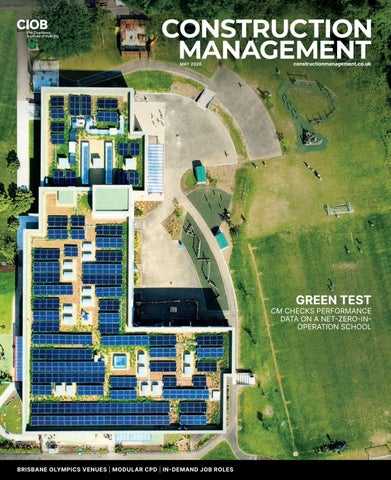
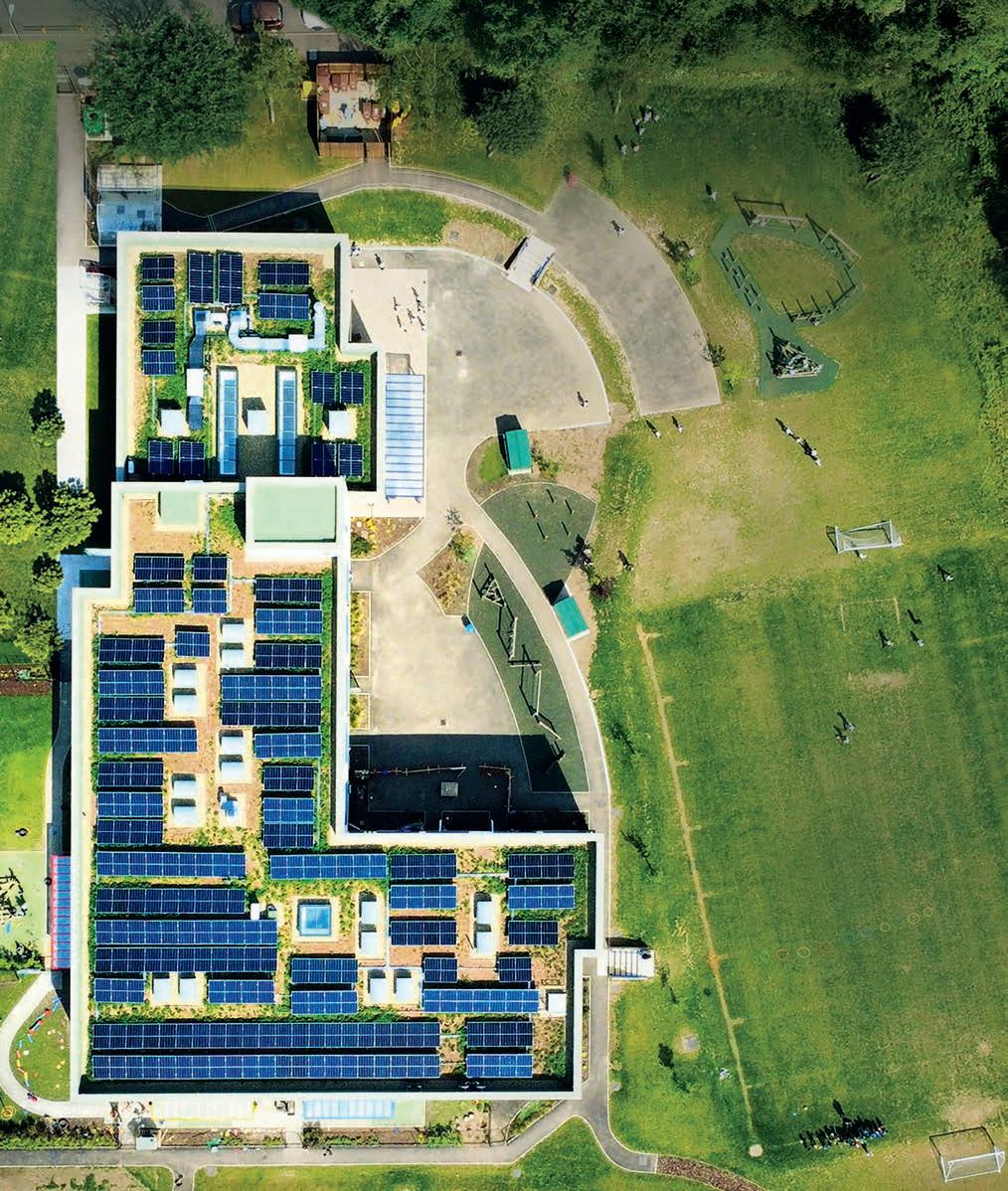
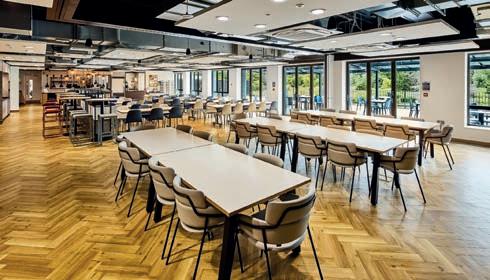
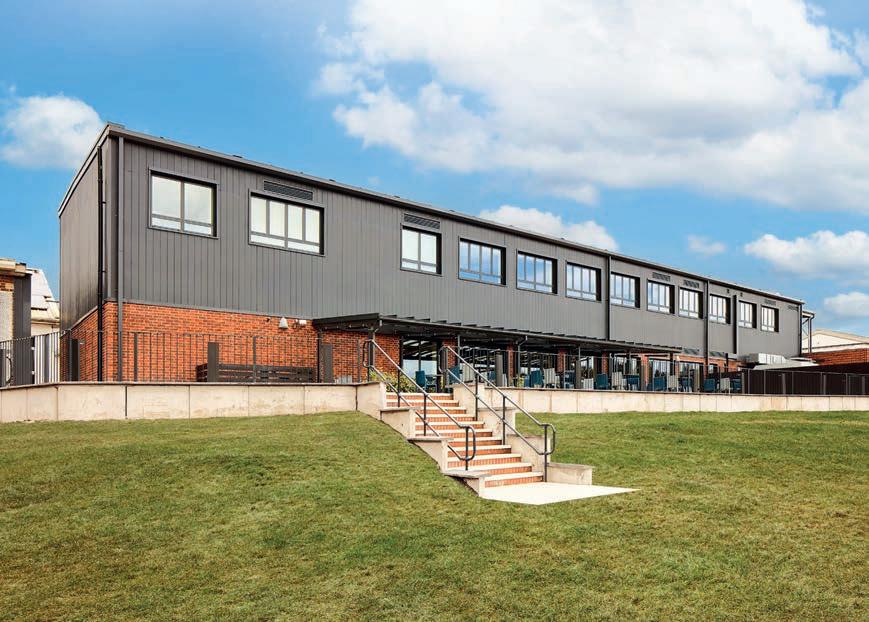
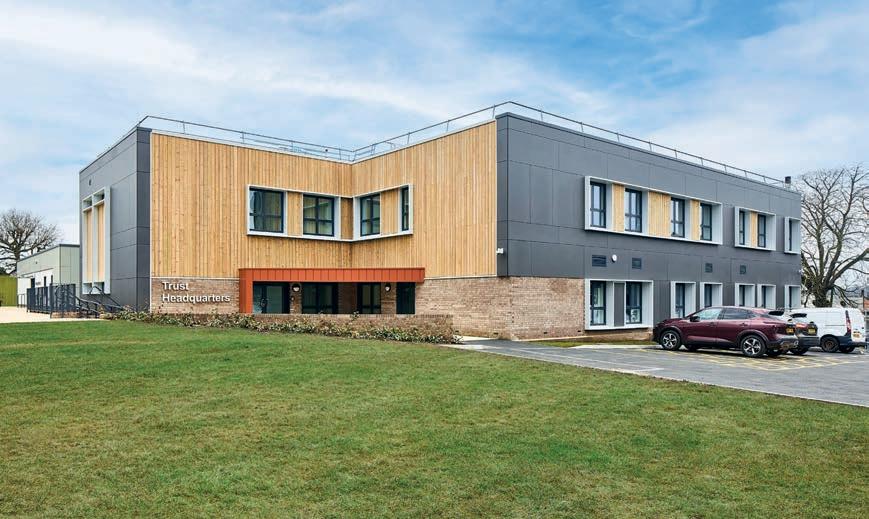
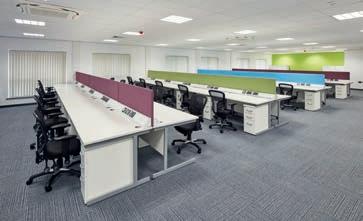
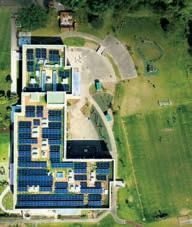
CM CHECKS PERFORMANCE DATA ON A NET-ZERO-INOPERATION SCHOOL
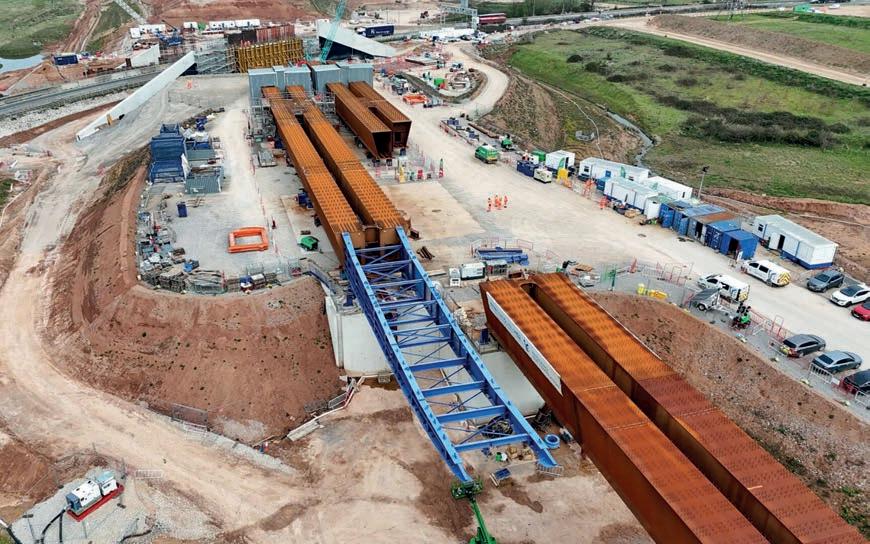
Balfour Beatty VINCI prepares to launch second HS2 viaduct over the M6
Engineers are gearing up to move the west deck of the M6 South viaduct, which is currently being assembled in four sections near Chelmsley Wood.
The first 107-metre section will be slid into position over the M6 junction 4 southbound slip road using a specialist hydraulic jack to manoeuvre the 1,250-tonne weathering steel structure across 102 metres onto its concrete piers.
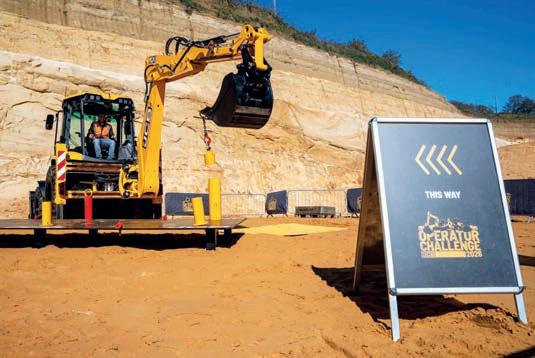
JCB searches for UK’s best operators in 2026 challenge
This year sees the return of the JCB Operator Challenge, which sets out to find the UK’s most skilled tracked excavator and backhoe loader operators. The challenge takes place across seven regional heats between now and June.
Each event will see competitors take on two timed trials designed to test machine operating precision and dexterity, with the top three operators from each heat progressing to the final, held at JCB’s quarry on 14 July.
Client profile: Richard Taylor from the Department for Education talks net zero schools, p12
Topping out celebrated at Cambridge’s Mill Yard development
Mill Yard, when complete, will feature three office buildings and two residential buildings and a nursery situated around a publicly accessible park. The £180m development is being delivered by Railpen, its development partner Socius and lead contractor Morgan Sindall Construction. Mill Yard is targeting completion in 2027 and forms part of Railpen’s Cambridge innovation cluster.
Willmott Dixon completes Seam Digital Campus in Barnsley
Willmott Dixon has completed phase one of The Seam Digital Campus in Barnsley town centre, which includes a 4,700 sq m urban park, three Yorkshire Rose sculptures and landscaped gardens.
Multi-storey car park transformation
Social impact developer Capital&Centric has released a CGI image from its Karparc project, which aims to transform a former multi-storey car park into new homes in Newcastle-under-Lyme.
WILLMOTT
DIXON
BSR unveils plan to speed up remediation approvals
The regulator is aiming to reduce average decision times for remediation applications to under 12 weeks by the end of the year
The Building Safety Regulator (BSR) has launched a wide-ranging plan aimed at accelerating external remediation works on higher-risk buildings (HRBs) and tackling longstanding delays in the approvals process.
Central to the plan is the creation of a dedicated multidisciplinary team (MDT) focused on external remediation, which will mirror the BSR’s Innovation Unit, introduced in September 2025. It will
be supported by account managers to streamline communication with applicants.
In a move to prevent projects from stalling, BSR will make greater use of “approval with requirements”, allowing works to begin safely while outstanding technical issues are resolved.
The regulator is also exploring the use of building control professionals from different classes to support case officers and ease workloads.
CIOB launches industry-wide survey to review CDM regulations
The Chartered Institute of Building (CIOB) is calling on construction professionals to share their experiences of the Construction (Design and Management) Regulations 2015 (CDM 2015).
The initiative seeks to gather
insight into how the regulations are currently interpreted, applied and enforced across projects of all sizes.
The legislation applies to both commercial and domestic construction work, regardless of scale or duration, and is
The plan includes a shift towards more direct engagement with applicants, including early-stage meetings for complex schemes and increased dialogue to resolve technical issues more quickly.
BSR highlighted that incomplete or poor-quality applications remain a major cause of delays, with common issues including insufficient fire performance evidence, missing structural calculations, inadequate thermal data and unclear design information.
To address this, the regulator has issued initial guidance on external remediation applications, with further resources and targeted support set to follow. Improvements to digital systems are also planned, including tools to allow applicants to track progress in real-time.
By December 2026, BSR aims to reduce average decision times for remediation applications to under 12 weeks and increase approval rates to more than 65%. The regulator also plans to bring its caseload down to between 80 and 100 live applications by the end of September 2026.
Charlie Pugsley, acting chief executive of BSR, said the regulator’s focus as it transitions into a standalone body is on “strengthening safety, rebuilding trust and collaborating with industry”.
He added: “Speed cannot come at the cost of safety. These measures will help ensure applications are both processed faster and submitted to a higher standard.” ●
intended to ensure consistent safety standards throughout a project’s lifecycle.
The survey will explore several key areas, including levels of formal training, consistency of interpretation and overall effectiveness of the
regulations in improving safety outcomes. Findings will inform recommendations to the HSE and policymakers on potential reforms to CDM 2015.
The survey is open until 30 April 2026 and can be completed at www.ciob.org.
What will surging copper demand mean for UK construction?
Mechanical, electrical and plumbing systems could be affected as copper’s price is hiked amid the global energy transition. Barrett Harris breaks down the numbers
For decades, copper has followed a cyclical pattern, with prices rising during periods of industrial expansion and falling during economic downturns. Today, however, the forces shaping the market point to a more fundamental shift.
Long term, technology-driven trends, deeply embedded in the global energy transition, are moving copper from a traditional cyclical commodity to a structural necessity for the modern global economy.
Copper demand continues to grow across established sectors such as construction, manufacturing and power
infrastructure, particularly in China and India as both economies urbanise and expand their electricity networks. But the real shift stems from new and rapidly expanding industries that barely existed 20 years ago.
Data centres, driven by AI, cloud computing and high-density digital infrastructure, are emerging as major consumers, with the global energy and data-centre ecosystem expected to require around 500,000 tonnes of copper annually by 2030.
At the same time, electric vehicles (EVs) and other renewable energy systems are embedding copper into every stage of the energy transition. EVs use four times more copper than
traditional vehicles, while wind and solar installations require copper for cabling, transformers and substations.
Total energy transition-related copper demand is expected to rise by 81.4% between 2025 and 2040 (an average of 5.1% per year), reaching 36.9% of global copper demand by 2040 (see figure 1).
Construction will remain a key consumer of copper, accounting for an estimated 22.9% of global demand by 2040. This is driven by copper use in wiring, plumbing, HVAC and sustainability systems such as heat pumps and EV charging. This reinforces the shift toward copper becoming a structural rather than cyclical commodity.
The supply picture for copper is markedly different. Although global mine production has grown over the past three decades, accelerating particularly from the mid-1990s as China’s industrialisation reshaped global markets, supply growth is now struggling to keep pace with rising structural demand.
The International Copper Study Group (ICSG), an intergovernmental organisation dedicated to copper market issues, estimated global copper reserves of 980 million metric tonnes in 2024, suggesting a healthy supply pipeline. However, the practical challenges of bringing new supply to the market are increasing. Ore grades continue to decline, particularly in major producing countries such as Chile and Peru, and the development of new mines typically takes 10 to 20 years.
Rocketing prices
Analysts estimate that meeting future demand may require up to 100 new copper mines worldwide by 2035, a 14.1% increase in global capacity. This represents a significant challenge, particularly given that capital costs can exceed $5bn per mine. Recycling will help with the demand, with the ICSG estimating that around one-third of global supply already comes from recycled copper. However, limited scrap availability and inefficient collection mean that an estimated 40-50% of recyclable copper goes to landfill or gets abandoned, making it harder for recycled supply to close the gap.
The combination of rising demand and constrained supply has already sharply pushed up copper prices, increasing by 93.6% over the past decade. A key driver is the shortage of raw copper available for smelters, which has intensified competition and pushed prices higher.
Companies are also importing copper earlier than usual, ahead of potential US tariffs, adding further pressure. At the same time, miners are increasingly processing lower-grade ores, which are more expensive and less efficient to extract. With the energy transition
Data centres, driven by AI, cloud computing and high-density digital infrastructure, are emerging as major consumers
accelerating, these upward price pressures are unlikely to ease.
In the medium term, copper prices are expected to remain elevated and volatile. The market is structurally tight, and any disruption, whether geological, political, or logistical, can trigger rapid price movements.
For the construction sector, this shift in copper pricing has direct consequences, with mechanical, electrical and plumbing services being impacted the most. Copper is a fundamental component of electrical and public health systems, used extensively in cabling, busbars and certain pipework systems.
Its role goes beyond distribution networks: copper is embedded within major plant and equipment such as transformers, high- and low-voltage switchboards and air-sourced heat pumps. Any sustained increase in copper prices, therefore, has a direct and immediate impact on project costs, tendering risk and supply-chain planning. Contractors may face greater price volatility, longer lead times, and increased pressure to utilise alternative materials, aluminium cabling and busbars or steel pipework.
The broader market signal is clear. The widening gap between supply and demand, driven largely by the global energy transition, suggests that while short-term volatility will continue, the mediumterm trajectory for copper prices is firmly upward. For industries that depend on copper, recognising this structural shift and planning for a sustained period of higher prices is now essential.
Barrett Harris is Senior Economic
Global copper demand by sector 2025-2040
(Million metric tonnes)
Timeline of copper mine production and annual average copper price
Driving modern professionalism with higher CPD standards
CEO Victoria Hills outlines how CIOB’s refreshed CPD framework is raising standards and supporting a more competent, future-ready profession
As you may have seen in the March issue of Construction Management, Rosalind Thorpe’s article reports that CIOB has introduced a new CPD policy for members.
To reiterate the key changes, firstly, we’ve moved to an hours-based model, with a minimum of 25 hours of CPD to be undertaken every year.
Secondly, 12 of those hours need to feature our four key themes, which are: professionalism; quality; sustainability; and health, safety and wellbeing. At least three hours of CPD activity should be recorded for each theme.
Thirdly, we want members to provide a brief reflective statement on their learning for the year. This is something CIOB has encouraged in previous years, but now we are making it a requirement, as it will consolidate the learning undertaken throughout the year and inform your future training and learning needs.
Making changes
Those are the headlines of what our CPD requirements now are –but I would like to cover why we’ve made these changes.
The changes have aligned CIOB’s CPD requirements more closely with chartered membership competencies
One of our broader aims is to promote and support the idea of modern professionalism and help to deliver leadership and positive change across the industry
Victoria Hills, CIOB
The new policy, which applies to all CPD undertaken in 2026, is partly member-driven and brings us closer to the models used by other professional bodies. We know that some of our members belong to more than one professional institute, and recording of the CPD completed should now be easier.
Beyond England and the UK, it makes sense to embed professionalism, quality, sustainability and health, safety and wellbeing into CPD for all our members globally.
It was also a good opportunity to align our CPD requirements more closely with our chartered membership competencies, which is a very practical mechanism to support applicant members working towards those standards.
One of our broader aims is to promote and support the idea of modern professionalism and help to deliver leadership and positive change across the industry. We believe our members are at the forefront of that and do use their CPD to stay ahead of the curve, remaining informed, up-to-date and competent.
It’s also worth reminding readers that much of our CPD is free to members, and examples of content for each of the themes mentioned are available on the CIOB Academy website – and reading Construction Management also counts towards your informal CPD hours! ● Victoria Hills is CEO of CIOB.
Victoria Hills CIOB
Feedback
A selection of readers’ comments about news and issues in the industry from across the CIOB community and social media
CM
Reframing sustainability
Last month’s issue of CM included various nods towards sustainability, including solar PV installations in social housing.
Geoffrey Shaw FCIOB
Reading the April 2026 edition of Construction Management, I was concerned about the emphasis
While we are all concerned about the climate changes occurring, there is very little impact that construction managers can have on this issue
Geoffrey Shaw FCIOB
being placed on sustainability. While we are all concerned about the climate changes occurring, there is very little impact that construction managers can have on this issue.
To secure a contract under the standard forms of contract, the contractor is required to estimate the lowest cost of the build in accordance with the specification, quality and time frame determined by the client and design team.
Sustainability is consequently for the client and design team to consider in light of planning and building regulations requirements.
I strongly believe that CIOB and Construction Management should concentrate more on the role of the construction manager, which is a tough competitive business and have less focus on modern fashionable trends.
CM
‘Transparency is key’
Thames Water’s Roselyn Unegbu shared insight into how the utility company works with contractors who are under budgetary pressure.
Rachael Keeble MCIOB
Projects get complicated all the time. Team dynamics get confusing. Things get political and messy, but as Roselyn says: “Transparency is key. Be clear about the challenges and pragmatic about the options available.”
Roselyn is a true visionary. She leads with integrity, calmness and a level of pragmatism that keeps things grounded in reality.
CM
Learning from the new International Model Building Act
CM spoke to Professor Kim Lovegrove, who is chair of the International Building Quality Centre and led the development of the new International Building Act, which aims to help countries build trust in the built environment.
Stephanie Barwise KC
While the primary relevance of this Act is for emerging economies, which do not yet have a suite of statutes and well-established case law addressing these procedures and remedies (and in the UK, we have various statutes and regulations governing most of these matters), there is much to be said for everything being enshrined in a single statute, and no doubt many countries may wish to fortify their statutes and codes by borrowing parts of this.
The UK government has accepted the Grenfell Tower Inquiry’s recommendation that principal contractors for higher-risk buildings should be licensed. Still, the industry could benefit from more uniform treatment of all building practitioners.
Treating all contractors the same way we treat other professionals, such as architects and engineers, would enhance the perception of and trust in the construction industry as a whole.
Share your views on the latest industry issues by posting comments online at www.constructionmanagement.co.uk or by emailing the editor at constructionmanagement@atompublishing.co.uk
Client direction key with sustainable schools
The Department for Education’s Richard Taylor tells Will Mann about the new design standards for school buildings and why collaboration with contractors is key to delivering net zero
Sustainability is a key priority for the Department for Education (DfE) –and for building contractors, that means the bar for new school construction projects is high.
Richard Taylor, regional head of construction delivery at the DfE, explains: “The department has recently launched new design standards, which set out new and updated requirements for all school buildings delivered by the department. These standards promote a holistic and integrated approach to sustainability, based on three environmental principles: healthy and productive spaces, reducing emissions and naturebased solutions.”
Taylor says the updated standards are built from the evidence gathered through the delivery of previous standards.
“A strong example of a project delivered recently is Little Reddings Primary School in Bushey,” he says (see page 14). “It was built by Morgan Sindall under the DfE’s 2021 Construction Framework and used a timber panelised system. That approach reflects the principles set out in the Government’s Construction Playbook, particularly its emphasis on sustainable materials and modern methods of construction (MMC).
“We do not prescribe construction
methodology but instead encourage sustainable approaches. It was Morgan Sindall who selected the timber panelised system rather than a traditional construction methodology. Their choice aligns strongly with the Playbook’s focus on MMC and low‑carbon solutions.
“The school also uses ground source heat pumps and high performing photovoltaic panels.”
Little Reddings Primary School opened in summer 2024 and has been operating for over a year.
“We now have a year’s worth of evidence that validates how well the building performs,” Taylor says. “That makes it a compelling case study because it demonstrates performance in use.”
Taylor explains that there are systems in place at Little Reddings to monitor the building performance.
“Through our Building Performance Evaluation process, we gather various information, including data on temperature, ventilation and energy,” he says. “Contractors are also required to undertake building performance evaluations at set intervals. At 12 months, we review this data to ensure that buildings are performing as expected.
“Morgan Sindall is very proud of this project,” he continues. “They go beyond our requirements in monitoring embodied carbon and have developed a tool called CarboniCa to track it across their
CV: Richard Taylor
● Nov 2025 – present: Department for Education, regional head of construction delivery
● Jan 2017 – Nov 2025: Department for Education, various construction delivery roles
● Aug 2015 – Jan
2017: General Medical Council
● Feb 2014 – Aug
2015: General Dental Council
● Oct 2008 – Jan
2014: Parliamentary and Health Service Ombudsman
● Mar 2006 – Oct
2008: HM Courts & Tribunals Service
Education
● MS, Construction Management, University College of Estate
● BA, Politics, and Economic and Social History, University of Leicester
projects. They have offered that tool to other contractors on our frameworks, which shows a genuine commitment to collaboration and improving standards across the industry.”
Besides operational performance, the DfE’s new design standards also sets tougher sustainability standards during the construction phase.
“We have always monitored embodied carbon and encouraged delivery partners to consider it when selecting construction methodologies,” says Taylor.
“Our new standards now set requirements for embodied carbon, alongside a clear methodology for how whole life carbon should be reported. These updates bring greater consistency and transparency to how embodied carbon is assessed across projects, and they strengthen the direction we were already moving in.”
Ultimately, Taylor says that sustainability must be client led.
“The department has invested significant funding to ensure that our buildings meet these standards,” he explains.
“That commitment has to be reflected in our specification, budgets and leadership. Contractors need that clarity and funding to deliver sustainable buildings. Without strong client direction, it would be much harder to achieve.”
Our new standards now set requirements for embodied carbon, alongside a clear methodology for how whole life carbon should be reported
Richard Taylor
Taylor adds that a key message from a client perspective is the importance of collaboration.
“The Construction Playbook makes clear that successful projects rely on strong, trust‑based relationships where all partners work towards shared outcomes,” he notes.
“When teams communicate openly, understand each other’s roles, and commit to common objectives, it creates the conditions for better decision‑making, smoother delivery, and improved whole‑life value.
“Collaboration is also essential to achieving our sustainability ambitions. By working as a team, we can embed environmental considerations into every stage of a project.”
Taylor recently became one of CIOB’s Client Champions and sees clear benefits in the institute’s client strategy.
“Client facing professionals like myself are probably underrepresented in industry forums and trade bodies,” he says. “The DfE has in house professionals who fulfil an intelligent client function. So the CIOB Client Champions group can bring all these client professionals together and share good practice to raise quality and standards across the industry.
“I am applying for fellowship with the CIOB, and there is a strong internal drive at the department to increase professional accreditation.” ●
How do net zero schools perform in operation?
New schools are built to rigorous sustainability standards and must be net zero in operation. A year after its completion, CM visited Little Reddings school in Hertfordshire, built by Morgan Sindall, to check its performance data
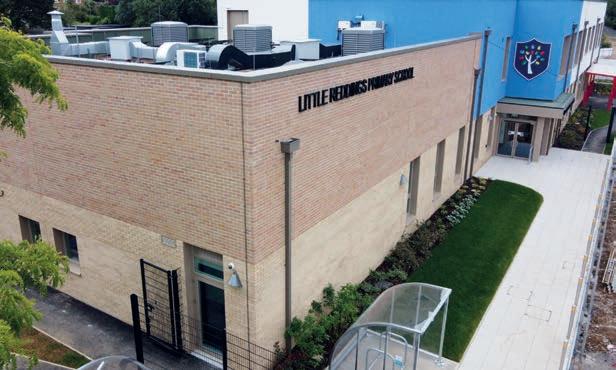
Little Reddings Primary School in Bushey, Hertfordshire, was one of the first 102 schools in England to benefit from the Department for Education’s (DfE) £20bn school rebuilding programme. It was procured though the DfE’s 2021 construction framework, using design and construction standards that aim to ensure new school buildings are net zero in operation and more resilient to the effects of climate change.
The way the system is packaged and transported makes the whole assembly process very streamlined
Robert Addison MCIOB, Morgan Sindall
The Little Reddings project aligned with the programme’s key criteria, as the existing buildings were identified as having significant condition needs. This led to them being demolished and replaced with a new “net zero in operation” school that incorporates a long list of sustainable design choices and renewable technologies, ranging from a fabric first energy efficient closed panel system to hybrid heat pumps solutions.
The project was completed in June 2025. So how is the school now performing?
Operated by The Bushey St James Trust, Little Reddings was a direct replacement for the previous school in terms of pupil numbers. It is a two-form entry primary school, with capacity for 459 students, 420 within the primary school and 39 within a nursery.
Dave Wood MCIOB, DfE Director at Morgan Sindall Construction, says: “Little Reddings represents the culmination of years of collaborative work and development with industry experts and the DfE to ensure that schools delivered under its new programme meet the framework’s ambitious but essential principles for sustainability and building quality.
“This has included refining decarbonisation strategies with regards to pre- and onsite activity as well as ongoing building performance. A lot of these lessons were captured during DfE pilot schemes, which helped to formulate the specification standards for new school buildings.”
These pilot projects included Newhouse Academy in Rochdale and Scunthorpe’s Trent View College, as well as the sharing of lessons learnt from projects procured by other means such as Hertfordshire’s Buntingford First School, also built by Morgan Sindall, which is the country’s first carbon neutral school.
“Pooling this knowledge with the DfE and their technical advisors, the school at Little Reddings has delivered results that are even better than we’d originally hoped for,” says Wood.
Design
and construction
To allow the school to continue operating during the project, it was split into two phases. During the first phase, a new two-storey building was constructed on the site of the school’s playing fields. It consists of 14 classrooms, a hall, studio, practical room, and a dedicated special educational needs space.
The new school has been designed to accommodate the same
Little Reddings Primary School, Bushey
l Client: Department for Education
l Architect: ATPA
l Main contractor: Morgan Sindall
Construction
l Engineer: Couch
Consulting
l MEP subcontractor: Building Services Beds
l Groundworks: Cosman Assist
l Biosolar Bauder Roof: Highview
l Project value: £14m
l Form of contract: JCT Design & Build
l On site: July 2023
– August 2024 (new building)
l Practical completion: June 2025
Little Reddings was procured though the DfE’s 2021 construction framework
number of pupils across a more efficient building footprint, reducing the area of school that would need to be operated and maintained from 2,750m2, to 2,380m2
Once the construction work was complete and the new school building operational, the second phase saw the demolition of the two existing buildings. A multi-use games area (MUGA) and full-sized Sport England sports pitch were created on the land which previously contained the old buildings.
As the school was still operating throughout the development, Morgan Sindall had to keep tight control of all onsite activity. Deliveries were scheduled to minimise disruption and to avoid the period just before the start and after the end of the school day to avoid disrupting parents collecting their children.
Noise levels also had to be tightly controlled. The team had to strike a balance between not disturbing classes in the middle of the day and not undertaking noisier work
early in the morning or late evenings which would disturb residents.
Renewable technologies
The building was created using an offsite-manufactured closed-panel composite timber frame system. Created by Streif and precisionengineered at their manufacturing plant, it has very high levels of pre-manufactured value, so produces zero waste on site.
The system delivers excellent sound insulation (up to 80 dB) reducing the potential for noise disturbance between adjoining classrooms and it also has a fire resistance of REI 60 minutes or longer.
The drawings produced by the project’s architects at ATPA were used to create standardised modules made with recycled and renewably produced materials, minimising the use of carbon-hungry components like steel and cement.
Once produced at the plant, the wall panels and heavy-duty floor cassette system was packaged and arranged for transportation in a specific order. This ensured they would arrive on site pre-organised for assembly, making it as simple as possible and minimising carbon production from vehicles during construction.
Robert Addison MCIOB, senior project manager at Morgan Sindall, says: “We’ve used this type of system for projects in the past and
always been impressed by the accuracy of the panels. The way the system is packaged and transported makes the whole assembly process very streamlined.”
In addition to floor and wall panels, the system also incorporates factory fitted sub-assemblies such as windows and doors, which together build into standardised modules.
The walls of the building, which were clad with traditional brickwork on the ground floor and rendered on the first floor, were designed to deliver an air tightness level of 3 m3/h.m2@50pa to avoid air leakage and reduce uncontrolled air flow. This was delivered by a high performance Isover Vario KM Duplex membrane, which is three times stronger than standard polythene membranes and inherently breathable, so any trapped moisture can escape from the building. Following completion, the building was proven to have beaten its air flow target and achieved a rate of 2.38 m3/h.m2@50pa.
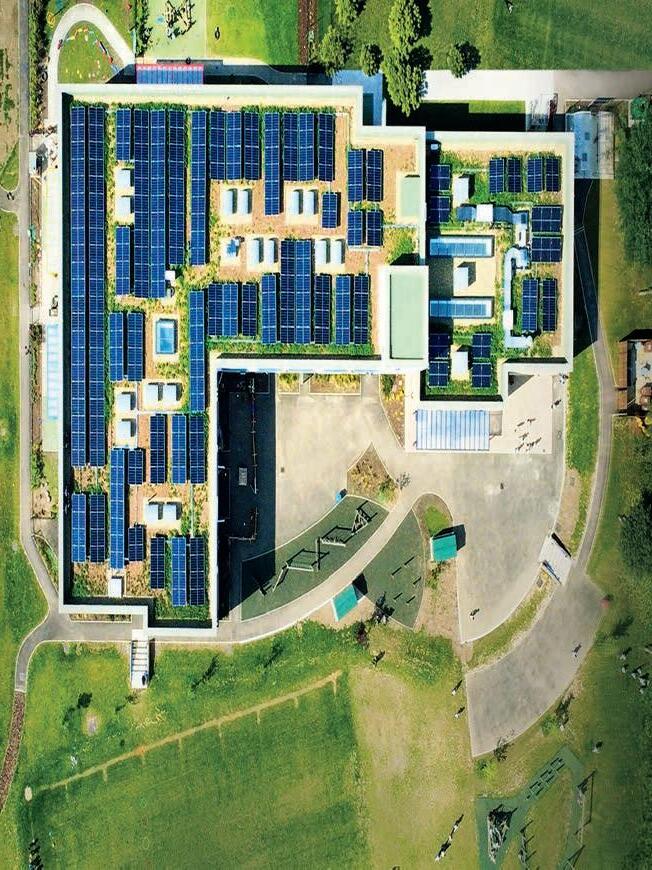
The building was fitted with a bio-solar roof with 270 photovoltaic (PV) panels to reduce the school’s reliance on grid energy whilst also supporting biodiversity.
A hybrid heat pump system was installed, that used ground source heat pumps for the heating and air source heat pumps for the hot water. This combination allows the school to get the best from both
CarboniCa allows stakeholders to have a granular understanding of the carbon created by the building’s construction and ongoing operations
Dave Wood MCIOB, Morgan Sindall
systems while reducing heating costs and the building’s reliance on fossil fuels.
To create this, twelve bore holes for the GSHPs had to be located underneath the new sports pitch at a depth of 150m.
“This required the careful coordination of a number of subcontractors to ensure that the bore holes and the position of other services wouldn’t be at similar depths and inadvertently clash, which would affect the site’s drainage system,” says Addison.
Digital calculations
Wood adds: “Much of the insights that went into planning Little Reddings were powered by new digital capabilities and research.”
A key part of this was circular and regenerative twin research projects that “allowed us to use digital models to compare different approaches in order to identify the most efficient, carbon reduction methods,” explains Wood.
To measure the performance of Little Reddings carbon production,
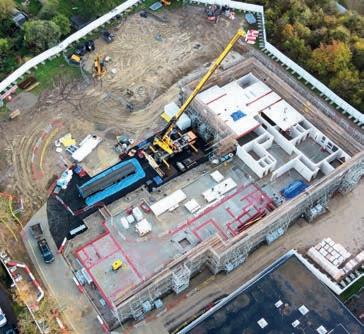
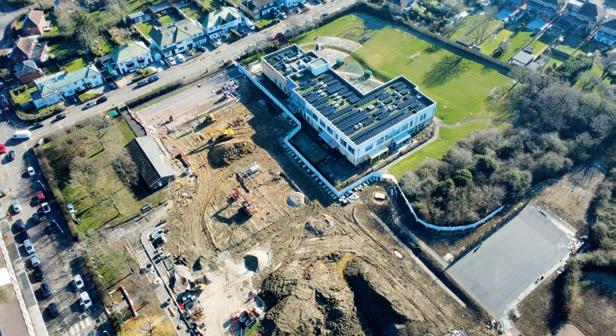
Drone shot of construction progress showing the closed-panel composite timber frame system
Net zero in numbers
41.44
The POE report showed the school is using 41.44 kilowatthours of energy per m², well below the 48.56 target
585.4
Embodied carbon in the school’s construction was just 585.4kg of CO² per m²; the RIBA target is 1,000kg
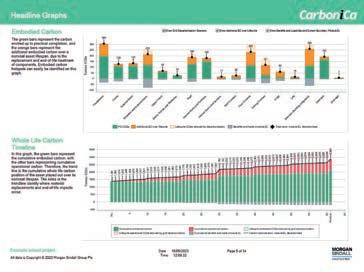
Morgan Sindall used the digital carbon assessment tool CarboniCa, which measures the carbon emissions during a building’s design, construction, and lifecycle. The embodied carbon for the new Little Reddings school was just 585.4kg of CO² per metre square; the RIBA (Royal Institute of British Architects) target is 1,000kg.
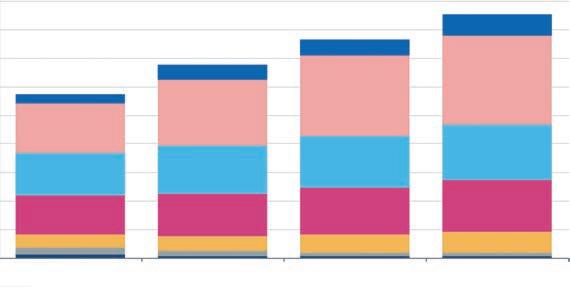
Wood says that “the CarboniCa analysis allows stakeholders to have a really granular understanding of the carbon created by the building’s construction and ongoing operations”. This includes identifying that the building’s foundations were the largest single contributor, accounting for 28.5% of lifecycle embodied carbon. The ceiling and floor finishes were the next highest, representing 17.0% and 14.6%, however the school’s structural frame contributed just 7.3% to the total.
One year on
The school’s performance over the first year of being in operation was tracked using a post occupancy evaluation (POE) reporting process. This measures how the school performs in real
150
Twelve bore holes for ground source heat pumps had to be located underneath the sports pitch at a depth of 150m
270
The building roof was fitted with 270 PV panels to reduce the school’s reliance on grid energy
Ground source heat pumps for the heating have been located in bore holes under the new sports pitch at a depth of 150m
Assessment tool CarboniCa measures the carbon emissions during a building’s design
life with regards to energy consumption throughout the year.
The target for the school’s ongoing energy consumption was 52 kilowatt-hours per square meter, as mandated through the DfE’s design brief and technical annexes, which was reduced to a designed 48.56 kilowatt-hours per square meter during the RIBA stage 4 design process. The POE report showed that the school building is achieving a much lower performance of 41.44 kilowatthours per square meter.
The report also gives recommendations for ongoing improvement. For example, it noted that about 34 MWh of energy usage occurred outside of normal school hours. It also identified specific classrooms that were comparatively underperforming and the human factors as to why that might be.
“This level of information empowers the school with actionable insights that mean Little Reddings could achieve even more impressive levels of efficiency moving forward,” Addison says.
Wood says: “Little Reddings provides a masterclass in how to create a high-end educational environment that goes above and beyond when it comes to quality of delivery, cutting carbon and providing communities with sustainable facilities for the long-term.
“To ensure the lessons learnt from this project are captured and deployed moving forward, we conducted a workshop with the DfE and their technical standards team to inform best practice on future school developments and Spec25, the updated specification requirements.”
Following completion and the new school’s doors opening for the first time, Josh MacAlister, minister for children and families, commented that “it is fantastic to see pupils at Little Reddings Primary School are now learning in a school that is not only fit for the future, but somewhere that they can feel proud of and want to learn in every day”. ●
MORGAN SINDALL
Futurebuild 2026: connecting ideas with delivery
Futurebuild returns to Excel London from 12-14 May, with a programme that leans heavily on a familiar industry challenge: how to translate ambition into delivery
Framed around the theme “Connect”, Futurebuild 2026 sets out to link policy, innovation and on-the-ground practice. Taking place at Excel London from 12-14 May, there will be a particular emphasis on how technology and collaboration can reshape the way projects are designed, built and operated.
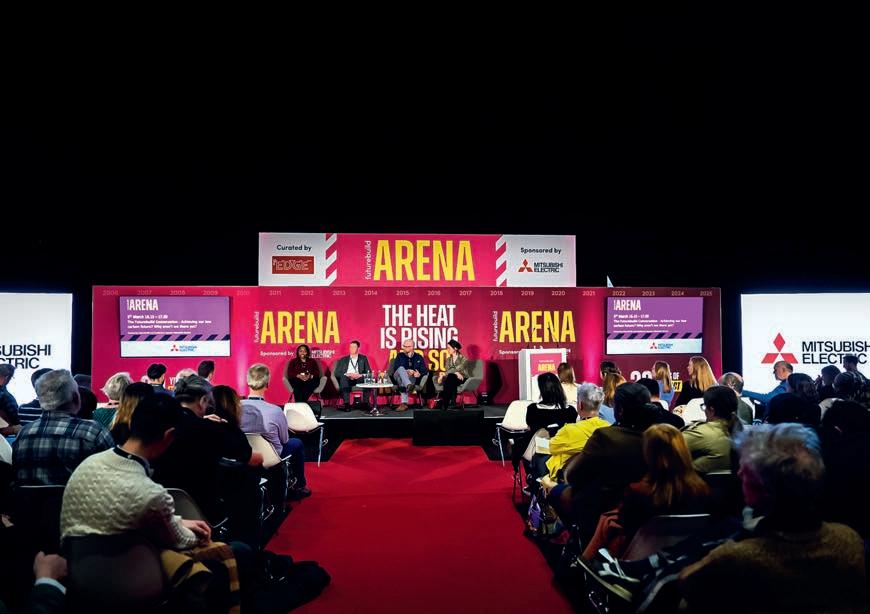
At the centre of the programme sits the Arena Conference, backed by Mitsubishi Electric, which will focus on the “3Rs”: resilience, reuse and regenerative design. These
The three-day conference will bring together leaders and innovators from the built environment sector themes run through the wider programme, reflecting a sector that continues to move beyond net-zero rhetoric towards tangible progress.
Across three core stagesMaterials and Buildings, Energy, and Placemaking - the content largely mirrors the industry’s current pressure points.
The Materials and Buildings stage, sponsored by Holcim, will explore regenerative approaches and the practicalities of scaling up low-impact materials. Contributions from groups such as Architects Declare and Alliance for Sustainable
Building Products will address how niche innovations might move into the mainstream; a transition that has long proved difficult. Meanwhile, the Energy stage, supported by Allume Energy, will look at the infrastructure and policy frameworks underpinning the energy transition. Sessions will cover heat networks, retrofit delivery and rooftop solar, alongside the role of carbon accounting in procurement. There will also be a stronger social angle than in previous years, with discussions around affordability and fuel poverty taking place.
In association with
On the Placemaking stage, attention will turn to how environmental performance aligns with wider questions of social value and resilience. Expect debates on green infrastructure, governance and the growing role of nature-led design, particularly as urban areas grapple with overlapping climate and biodiversity pressures.
Running alongside the main event, the National Retrofit Conference, sponsored by Guildmore, will bring a more explicitly policy-led perspective.
A keynote from the UK’s minister for energy consumers, Martin McCluskey, is likely to draw attention, particularly given the increasing urgency around scaling retrofit programmes and the gap between targets and delivery.
Futurebuild’s co-location with UK Construction Week London and The Stone & Surfaces Show adds to its draw, broadening the audience and reinforcing its position as a meeting point for different parts of the supply chain.
Supported by organisations including data and registration sponsor Barbour ABI, it will bring together more than 700 speakers across 13 stages and, with over 250 hours of CPD content planned, the scale is significant.
The real test, as ever, will be whether the conversations move beyond well-rehearsed themes and into something closer to implementation. ● Futurebuild 2026 will take place from 12-14 May at Excel London.
Secure your free pass to Futurebuild and start connecting today courtesy of registration and data sponsor Barbour ABI.
There will be a particular emphasis on how technology and collaboration can reshape the way projects are designed, built and operated
A platform for the next generation
This year, Futurebuild is putting a spotlight on early-career voices, with content aimed at tackling the construction sector’s green skills gap.
The focus reflects a wider concern that the workforce is not yet equipped to support the pace of the climate transition.
Against that backdrop, the event’s Arena Conference will include a session asking what the sector should look like beyond 2030.
Chaired by Simon Rayner of the Climate Change Committee, the discussion will bring together a group of younger professionals working across planning, engineering, architecture and construction.
Speakers include Munashe Mhemba, winner of the Building the Future Awards’ Young Planner of the Year 2025, Darcy Arnold-Jones of Marks Barfield Architects, Kimberley Ertl of Expedition Engineering, Thomas Yunqing Bai of Ares Landscape Architects, and Ahmed Gilani of the University of Reading.
The emphasis is on practical experience as much as future thinking, from circular design and material reuse to the realities of delivering low-carbon projects.
Beyond the panel, younger professionals will feature across the wider programme, including sessions within the National Retrofit Conference and a new fringe event organised by groups such as Architects Climate Action Network and Architects Declare.
While the industry has long talked about attracting new talent, the question remains whether platforms like this can translate visibility into lasting influence and, ultimately, into the skills needed to deliver change at scale.
What you will learn in this CPD
Reasons for considering modular construction on projects
Key regulations and guidance to follow for modular construction
Sustainability advantages of modular construction
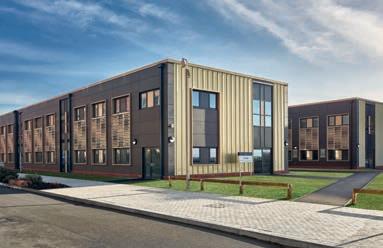
CPD: Delivering projects with modular construction
What are the key drivers for using modular construction on projects and what legislation and regulations should construction managers be aware of?
This CPD, created in association with Wernick, provides the answers
Construction teams across the UK are under increasing pressure to deliver projects faster, manage risk and meet evolving sustainability and compliance requirements. Public-sector estates, infrastructure programmes and commercial developments all face similar constraints, including tight programme timelines, complex live environments, labour shortages and rising expectations around building performance.
In response, modular construction is increasingly being adopted as an alternative delivery method. The approach involves manufacturing building elements in a controlled factory environment before transporting them to site for assembly. This shift in methodology enables significant portions of the construction process to take place off site, fundamentally changing how projects are planned and delivered. For construction professionals, this creates opportunities to improve programme certainty, enhance quality control and reduce disruption, provided the approach is integrated effectively from the outset.
One of the most significant advantages of modular construction is the ability to deliver projects more quickly through parallel working
Understanding modular construction
Modular construction uses pre-engineered structural modules that are manufactured off site before being installed on prepared foundations. These modules can include structural elements, internal finishes and integrated services, depending on the level of completion required.
Once delivered, modules are craned into position and connected to form the final building. This process allows buildings to be assembled rapidly, with installation programmes significantly shorter than traditional construction methods.
Because production takes place in a factory environment, work is less affected by weather conditions and site constraints, helping to improve consistency and reduce delays.
Design for manufacture and assembly
Modular construction relies on design for manufacture and assembly (DfMA), where buildings are designed from the outset to suit offsite production processes. This requires early coordination across the project team to: l align structural grids with module dimensions; l integrate mechanical and electrical
systems during manufacture; l coordinate internal finishes and fittings; l and reduce onsite work.
Digital coordination tools such as building information modelling (BIM) are typically used to ensure all building components are aligned before manufacture begins.
For construction managers, early engagement with the modular manufacturer is critical. Late-stage design changes or attempts to convert traditional designs to modular can reduce efficiency and programme benefits.
and
delivered a new cafeteria facility for Martin Baker Aircraft, comprising 28 modules, in a 35week programme
Programme certainty and delivery efficiency
One of the most significant advantages of modular construction is the ability to deliver projects more quickly through parallel working. Because modules are manufactured off site while groundworks and site preparation are undertaken, multiple phases of construction can occur simultaneously. Industry studies, including research by McKinsey & Company, have indicated that industrialised construction methods can reduce project timelines by up to 30% to 50% in certain applications.
This can mean:
l earlier building occupation; l reduced site overheads; l improved programme predictability;
l and lower exposure to weather-related delays.
In addition, rapid onsite installation allows buildings to reach a watertight stage quickly, enabling internal works to commence sooner.
Quality assurance in factorycontrolled environments
Factory-based production provides opportunities for improved quality
Above
left: Wernick
In association with
50
Industrialised construction methods can reduce project timelines by up to 30% to 50% in certain applications
assurance compared with traditional site-based construction.
Manufacturing processes are typically governed by quality management systems, such as ISO 9001, ensuring consistent inspection, documentation and traceability. Controlled environments allow for precise tolerances, repeatable processes and multiple quality checks throughout production. This approach reduces variability in workmanship and limits the risk of defects. Materials are also protected during manufacture, reducing the likelihood of damage due to weather exposure or site storage conditions.
Health and safety performance can also benefit from modular construction.
A significant proportion of construction activity is transferred from site to factory environments, where common risks such as working at height, manual handling and site congestion, can be more effectively controlled.
Above and below: New office building at Southmead Hospital, delivered by Wernick for North Bristol NHS Trust, comprising 38 modules
Shorter onsite programmes also reduce the duration of exposure to site hazards, supporting safer project delivery overall.
Fire safety and regulatory compliance
Fire safety is a critical consideration in all construction projects and must be fully integrated into modular design and manufacture. Modular buildings are required to comply with the Building Safety Act 2022 and relevant building regulations, including Approved Document B.
Fire performance in modular buildings is addressed through: l fire-resistant wall, floor and roof assemblies;
Fire safety is a critical consideration in all construction projects and must be fully integrated into modular design and manufacture
l compartmentation between modules; l tested fire-stopping systems at junctions; l and appropriate material selection based on combustibility.
Because modules are manufactured in controlled environments, fire-stopping and compartmentation can be installed and inspected prior to delivery, helping to ensure consistent compliance.
Sustainability and resource efficiency
The construction sector is under increasing pressure to reduce carbon emissions and improve resource efficiency.
Modular construction supports these objectives through more efficient material use and reduced waste. Research from organisations such as WRAP has shown that offsite construction can significantly reduce material waste compared with traditional methods.
Factory production enables materials to be optimised, with unused materials more easily reused or recycled. In addition, fewer site deliveries and shorter construction programmes can reduce transport emissions and site-related environmental impacts.
Modular construction can also support circular economy principles. Many modular buildings use structural steel frames that can be
Case study: Swansea University teaching facility
A £4.9m modular building project on the Bay Campus at Swansea University demonstrates how off-site construction can support complex programme requirements within operational environments.
The university required additional teaching and learning space to support growing student demand, with a solution needed that could be delivered within a constrained timeframe and without disrupting ongoing campus activities.
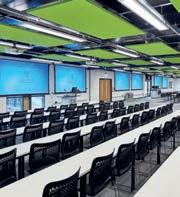
A modular approach provided by Wernick was selected to enable off-site manufacture while site preparation works were undertaken in parallel. The facility, totalling approximately 2,600m² and comprising 60 modular units, was designed to meet the university’s teaching requirements. The building includes lecture suites, PC labs, office space, quiet study areas, welfare facilities and
lift access, providing a flexible and fully accessible learning environment aligned with modern education standards.
Manufacturing was carried out in a controlled factory environment, allowing structural elements, internal finishes and building services to be completed prior to delivery. This approach ensured consistent quality and reduced reliance on site-based construction activities.
Modules were then transported to site and installed over a significantly reduced on-site programme, with careful coordination to minimise disruption within the live campus setting.
The use of modular construction enabled the project to be delivered within an overall programme of approximately 28 weeks, supporting earlier building occupation and reducing site-related risks, including noise, congestion and
health and safety exposure. Installation was carefully sequenced to align with university operations, ensuring continued access and minimal impact on staff and students.
The H-shaped structure offers eight spacious teaching areas for up to 2,000 students, and space for the Student’s Union. The comprehensive interior fit-out includes folding partitions to create flexible spaces, lecture suites, PC labs and quiet zones.
The completed building provides fully compliant, highquality teaching accommodation that supports the university’s growing student population. The project demonstrates how modular construction can deliver programme certainty, maintain operational continuity and provide adaptable, future-ready learning environments within constrained and active sites.
The building, officially named ‘Y Twyni’ (meaning The Burrows), was procured through Fusion 21’s Education and Modular Buildings Framework.
Above and below: The building was delivered in 28 weeks
retained and reused when buildings are refurbished or relocated. This reduces the need for new materials and lowers embodied carbon.
Lifecycle assessments aligned with Royal Institution of Chartered Surveyors guidance indicate that refurbishing modular buildings can reduce embodied carbon emissions by approximately 40% to 50% compared with new build alternatives.
Conclusion
Modular construction is becoming an increasingly important delivery method within the UK construction industry. By shifting significant
elements of the construction process into controlled factory environments, project teams can improve programme certainty, enhance quality and reduce environmental impact.
For construction professionals, the successful delivery of modular projects depends on early collaboration, effective design coordination and a clear understanding of regulatory requirements. When these factors are addressed from the outset, modular construction can provide a reliable and efficient solution for delivering buildings in today’s challenging construction environment. ●
Relevant standards, guidance and accreditation
Key standards, guidance and regulations governing modular construction in the UK include the following:
● Department for Levelling Up, Housing and Communities MMC definitions framework;
● Buildoffsite Property Assurance Scheme for durability assurance;
● Building Safety Act 2022;
● Approved Document B;
● Approved Document L;
● ISO 9001;
● and the Lifting Operations and Lifting Equipment Regulations 1998. These frameworks help ensure modular buildings meet the same performance, safety and compliance requirements as traditionally constructed buildings.
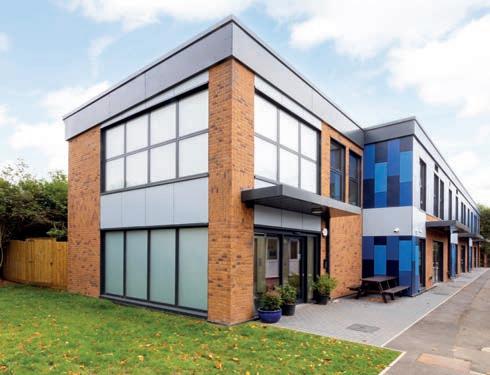
Orchard Hill College Academy Trust appointed Wernick to deliver a two-storey vocational building in St Philip’s School in Chessington, Surrey, which was constructed from 22 modules
CPD Questions
1) What is the defining characteristic of modular construction?
a) Buildings are constructed entirely on site
b) Modules are manufactured off site and assembled on site
c) Modular buildings do not use structural frames
2) Why can modular construction reduce project programme durations?
a) Modules do not require finishing works
b) Manufacturing and site preparation can take place simultaneously
c) Modular buildings require fewer approvals
3) What design approach is commonly used in modular construction?
a) Design for Manufacture and Assembly (DfMA)
b) Passive house design
c) Lean construction
4) Why does modular construction typically produce less waste than traditional construction?
a) Materials are manufactured in factories and used more efficiently
b) Modular buildings do not use concrete
c) Waste is transported off site during construction
5) What sustainability benefit can refurbishment of modular buildings provide?
a) It eliminates the need for planning approval
b) It can reduce embodied carbon compared with new builds
c) It prevents buildings from needing maintenance replacement every two years
To test yourself on the questions, go to www.construction management.co.uk/cpd-modules
Building for Brisbane
With 75 months to get everything built and tested, veteran stadium builder says CIOB’s influence on construction professionalism is profound in Australia. By Rod
Sweet
During their visit to Australia last month, CIOB president Paul Gandy and chief executive Victoria Hills checked in on Brisbane, which is now gearing up for the Brisbane 2032 Summer Olympic and Paralympic Games.
In December, a consortium led by Laing O’Rourke and Aecom was named delivery partner for the A$7.1bn (£3.75bn) Games build-out.
Reviving a partnership formed to deliver the London 2012 Games, their
Artist’s impression of Brisbane Stadium, which is set to host the opening and closing ceremonies
7.1
A consortium led by Laing O’Rourke and Aecom was named delivery partner for the A$7.1bn (£3.75bn) Games build-out
CIOB accredits multiple university degrees in Australia. I’d go so far as to say if they’re not CIOB-accredited, they’re on the light side in terms of their accreditation
Paul Gandy, CIOB president
“Unite32” team will be responsible for 17 new and upgraded venues in the state of Queensland in locations ranging from the Gold Coast south of Brisbane all the way up to Cairns, some 1,760km to the north on Australia’s eastern seaboard.
Centrepiece venues include the brand new, 63,000-seat Brisbane Stadium, set to host the opening and closing ceremonies and athletics, and thereafter to be the city’s main stadium.
It’ll go up in Brisbane’s Victoria Park Precinct, now being masterplanned for the Games by Arup.
Also going up in the park precinct will be the Athlete’s Village, set to be housing after the Games, and the new National Aquatic Centre, which will be Australia’s headquarters for water sports post-Games with a permanent capacity of 8,000 seats (25,000 during the tournament).
‘I can give you the best you can have’ While in Brisbane, Paul Gandy took part in a panel discussion at Victoria Park about delivering the venues and infrastructure for the Games.
He highlighted the need for a clear vision of the long-term legacy and a thorough understanding of what local communities will gain after the Games conclude. Drawing on lessons from London, he noted that transport infrastructure and connectivity are critical for delivering a successful event and ensuring lasting benefits for the region.
Asked what he thought CIOB and its members could bring to make Brisbane 2032 “the best Olympics ever”, Gandy said: “I think what the professions and professional contractors bring is competence. Being a professional is a demonstration that you want to be the best you can be, you want to maintain your social confidence, your professional capability, your technical capability, and it’s a badge that says to customers and the public, ‘I can give you the best you can have’.”
CIOB’s understated influence
The discussion was moderated by Alan Patching, professor of construction management at Queensland’s Bond University, who was project director and owningentity chief executive for the design and construction of the Sydney Olympic Stadium for the Sydney 2000 Games.
At 115,000 capacity, it remains the biggest purpose-built Olympics stadium ever constructed, and it finished on time and budget.
Speaking to GCR after the discussion, Patching said he believed CIOB plays a far bigger role in Australian construction
professional competence “than they would ever imagine they do”.
“This is the academic side of me coming through. It’s a really good question,” he said. “I’ve never been asked that before, but CIOB accredits multiple university degrees in Australia. I’d go so far as to say if they’re not CIOB-accredited, they’re on the light side in terms of their accreditation.
“We’re writing our courses to suit the demands of bodies like CIOB so, in that sense, we’ve been developing over the past 10 years the people who will be on the design teams, the construction management teams, the project management teams who’ve gone through and done our degrees.
“If you did a study on how many people are involved in Olympic projects and find out which universities they went to, I bet well over 70% were educated at a university that was accredited by CIOB, among others.”
Will Brisbane be ready for 2032?
With the Brisbane Games kicking off on 23 July 2032, teams have just over 75 months to get everything built and tested.
Speakers and hosts of the 12 March panel discussion on preparing for the Brisbane 2032 Games. From left, Harvey Lister AM, president and CEO Asia Pacific and Middle East, Legends Global, and former managing director of the operating partner for the Sydney Olympic Stadium; Maricel Cavestany, CIOB Oceania region manager; Dominique Lamb, director of community affairs to the president, Brisbane Organising Committee for the 2032 Olympic and Paralympic Games; CIOB president Paul Gandy FCIOB; Jen Williams, CEO of the Committee for Brisbane; Victoria Hills, CIOB CEO; Alan Patching
I’m optimistic because there will be a preference for most contractors, subcontractors and individuals to get involved in the Olympics. People just want to be able to tell their family they’re involved Professor Alan Patching
Patching was confident the venues would be ready – “Because,” he said, “there’s never been an Olympic Games in history where they didn’t get a finish.”
He went on: “Now, we’ve got six years to go and three months and everybody’s going, wow, wow, wow, wow.
“If you take it back to Australia in 1996 in July, I was engaged as the project director and CEO for the Sydney Olympic Stadium. In 1999, 30 months later to the day, it was done with not one day’s time extension, not one dollar over the original budget, no variations except a couple of internal ones to increase stadium capacity.
“It gave us a full 18 months before the Olympics, which meant two full seasons of football. And you might say, well, so what? It wasn’t about revenue. Well, it was, but it was more about testing security, testing transport, testing volunteer systems, all those sorts of things.
“And Olympic standards are very different. During the Games you’ve got to get everybody emptied and another crowd in and resupply all the stores and booze and food in a two or three-hour period. So that affects the design. We chilled the bottom of a garbage chute down to 13ºC so we could leave the food overnight and take it out the next morning without it smelling.
“We put all the CO2 in the basement and pumped it up because we didn’t have time to haul it up to all the levels. Now, the problem with that is you’ve got six kilometres of lines full of beer at the end of the night, so you better time when you’re going to turn it off or you’re going to have, you know, some very expensive beer being poured out of the lines down the track! That’s not the ideal design, but it’s what we had to do.”
Alan Patching is professor of construction management at Queensland’s Bond University
‘People want to tell their family’ Patching acknowledged the state of Queensland suffers scarcity in skills and labour, but said that wouldn’t affect the Olympics per se.
“I’m optimistic because there will be a preference for most contractors, subcontractors and individuals to get involved in the Olympics,” he said. “People just want to be able to tell their family they’re involved with the Olympics. It’s an amazing phenomenon. We had people coming from the UK just to take any job so they could get on the Olympics. It’s just the way it goes.
Sydney’s Olympic Stadium, reconfigured since the 2000 Games.
Alan Patching was project director
“But can they take it easy? No, they can’t. Because when you’ve got global events like we’ve got at the moment, they could affect it in all sorts of ways. But they should be fine provided they turn soil in June-July, which they’re on target to do.” ●
Rimmer Decipher
‘How do we structure a contract claim?’
Our latest Contract Clinic question comes from a contractor facing mounting delays and costs resulting from unforeseen issues on a hotel refurb. Mark Rimmer looks at how to approach a claim
THE QUESTION
We are working on a live project, a refurbishment of a hotel in Lancashire, and a number of unexpected issues have arisen that were not part of the original plan, resulting in delay and additional cost. How do we protect our contractual position and ensure we can recover loss and time under the contract?
THE ANSWER
Firstly, the term “claim” is often viewed negatively and is something many people prefer to avoid. However, in construction contracts, a claim simply involves exercising a right provided for under the contract. Once proven, it provides legitimate entitlement, therefore a claim should not be viewed negatively.
Claims can be either informal or formal. An informal claim includes matters such as variations, where the contract usually provides a straightforward mechanism for adjusting the contract sum. In these cases, a formal dispute‑resolution process isn’t normally required. A formal claim arises when an issue falls outside the usual procedures for adjusting the
contract sum, such as a breach of contract or delay event that leads to a financial loss. These matters tend to be more complex to resolve and quite often a formal dispute resolution process is required.
What are the procedures?
Firstly, and most importantly, you must follow the procedure as described within the contract. This generally includes issuing a notice that details the particulars of the matter and references the relevant clause or clauses. The notice must comply with any specific requirements set out and agreed in the contract. If you get this step wrong, the rest of the claim process may be undermined.
There are four key elements that must be established to demonstrate entitlement to a claim:
1. The cause. What was the event? This refers to the change or circumstance that gave rise to the loss. This could be employer‑caused delays, variations or changes in legislation. Whatever the situation, there must be a clear link between the cause and the event.
2. The effect. This must be a direct consequence of the event, and it
Clearly explain the cause and the resulting effect and, whatever you do, avoid trying to sound like a lawyer
Mark Rimmer, Decipher
must result in a demonstrable loss. This is often the most challenging aspect for many project teams, as it requires a clear explanation of how the cause led to the effect and proving a direct, evidence‑based link between the two.
3. Entitlement. There must be a contractual basis, or an equivalent statutory right, that gives you entitlement to make the claim.
4. Substantiation. As we all know, records are essential to a successful claim. Ideally, these should be contemporaneous ie created and shared at the time the event occurred to ensure they can be relied upon as credible evidence. Strong, well‑kept records provide a solid base for any claim.
Presenting the claim
Keep it simple. Don’t begin with what you want and then try to justify it. Start with the original plan and set out the sequence of events that led to the claim. Clearly explain the cause and the resulting effect and, whatever you do, avoid trying to sound like a lawyer, there’s no need for overly complex language. Your writing should be concise, clear and to the point.
Mark
Question for contract clinic? Email construction-management@atompublishing.co.uk
Here’s how you should structure the claim: Begin with an executive summary that condenses the dispute into no more than a couple of pages. Provide a statement of claim that expands on the summary and sets out the amounts claimed and other key details.
Identify and explain the relevant contract terms and particulars that underpin the claim. Present the cause‑and‑effect narrative, clearly setting out the sequence of events and demonstrating how the cause led to the effect and created entitlement.
Use appendices for all supporting evidence, including records, analyses, and detailed documentation.
The above should help you put together a strong and well‑structured claim, but don’t hesitate to seek expert support if this isn’t something you handle regularly. ● Mark Rimmer is a director at Decipher.
There are four key elements that must be established to demonstrate entitlement to a claim
Hybrid skills are driving employment demands
As projects grow in scale and complexity, Nicky Roger explores which roles in construction are in demand and why
The UK construction labour market in 2026 presents a paradox. Output has been uneven and, at times, subdued, yet demand for people – particularly in specific roles – has rarely been higher. A shrinking workforce, expanding project pipeline and rapidly evolving skill requirements are combining to reshape which roles are most in demand, and why.
At the macro level, the scale of the challenge is stark. The industry needs an additional 47,000-48,000 workers annually to meet demand through to 2029, equivalent to nearly 240,000 extra people across the period, according to recruitment specialist Caval. Meanwhile, employment has fallen to around 2.05 million – its lowest level in almost 25 years. According to Fusion People, there are still more than 28,000 live vacancies.
The UK alone is estimated to require around 25,000 additional project professionals each year
This imbalance is not evenly distributed. Instead, demand is intensifying around a set of critical roles that reflect how construction itself is changing.
At the top of the demand curve sit project managers, construction managers and planners. These roles are becoming increasingly difficult to fill, not because of a lack of candidates per se, but because of a shortage of experience.
As projects grow in scale and complexity – driven by infrastructure investment, net-zero requirements and large residential schemes – the need for professionals who can coordinate multidisciplinary teams and manage risk has intensified. The UK alone is estimated to require around 25,000 additional
project professionals each year, according to v7 recruitment.
Planners are a particularly acute pinch point. Unlike traditional roles, there has historically been no clear entry pathway, resulting in a thin talent pipeline just as programme certainty becomes more critical.
The result is a candidate-driven market for experienced leadership roles, with employers competing heavily for individuals who can deliver certainty on cost, time and risk.
The rise of the cost specialist
Recruitment specialist v7 reports that quantity surveyors remain one of the most consistently in-demand roles across the sector. In some surveys, over 90% of employers report difficulty recruiting suitably qualified staff. V7 research attributes some of this to an ageing workforce, with up to 30% of workers over 50,
One of the most significant shifts in demand is the rise of hybrid roles that combine traditional construction knowledge with digital or sustainability expertise
and apprenticeship starts still below pre-pandemic levels.
The reason is structural. Projects are becoming more commercially complex, with tighter margins, more sophisticated procurement strategies and increased contractual risk. At the same time, inflationary pressures and volatile material costs have elevated the importance of commercial control.
In this environment, experienced quantity surveyors are no longer simply cost managers – they are strategic advisers. That shift in role has increased both demand and salary pressure.
Digital and green skills surge
One of the most significant shifts in demand is the rise of hybrid roles that combine traditional construction knowledge with digital or sustainability expertise. Employers are increasingly seeking professionals with skills in:
l Building Information Modelling (BIM);
l data and digital construction tools; l low-carbon design and retrofit; l and modern methods of construction (MMC).
This reflects a broader industry transition. Government policy and investment are accelerating activity in clean energy and housebuilding, two of the fastest-growing employment areas through to 2030, according to the government’s Assessment of priority skills to 2030.
In practice, this means that roles such as M&E specialists,
retrofit coordinators and digital engineers are becoming critical. These positions are often harder to fill because they require crossdisciplinary expertise that is still relatively rare in the workforce.
Why the gap persists
The persistence of high demand across these roles is rooted in structural issues rather than shortterm cycles.
First, demographics. Industry figures from BCIS point to the industry losing more than 300,000 workers over the past two decades, and retirement rates remain high. Second, pipeline growth. Major infrastructure investment, housing delivery targets and new sectors such as data centres are expanding the volume and complexity of work. Third, changing skill requirements. The industry no longer needs just more people – it needs different skills. As one recruiter notes in research from v7, the challenge is increasingly about finding individuals with the “technical knowledge and leadership capability required to deliver complex projects”.
Hundreds of the best jobs in construction. Recruitment news and insight. CIOBJobs.com
Research from Linsco recruitment also points to reduced labour mobility post-Brexit and lower apprenticeship uptake have constrained the flow of new entrants, tightening the market further.
A reshaped workforce
The net effect is a reshaping of construction job roles. Demand is no longer evenly spread across the workforce; instead, it is concentrated in: l leadership and project delivery roles; l commercial and cost management specialists; l core skilled trades; and l hybrid technical roles combining digital and sustainability expertise. For employers, this means recruitment strategies must evolve – focusing on skills development, retention and alternative entry pathways. For individuals looking to develop their construction career, the most valuable roles sit at the intersection of traditional expertise and emerging capability. Those who can bridge that gap are likely to remain in high demand for years to come. l
The most posted vacancies on CIOB Jobs in the past 12 months
The Digital Construction Awards recognise the built environment industry’s most innovative companies, projects and people. Organised by the Chartered Institute of Building (CIOB), Digital Construction Week (DCW), Construction Management (CM) and Digital Construction Plus (DC+), and hosted by comedian Ed Byrne at the London Marriott Hotel Grosvenor Square, the event celebrates the sector’s champions of innovation and technology. Read on to find out who the winners were – and why they won
Sponsored by
Laing O’Rourke’s Oxford Uni job wins project award
The Stephen A. Schwarzman Centre for the Humanities was praised as an outstanding submission, earning it the top award on the night
The Stephen A. Schwarzman Centre for the Humanities at Oxford University, built by Laing O’Rourke, won the coveted Digital Construction Project of the Year award, sponsored by Trimble.
The Stephen A. Schwarzman Centre for the Humanities is a transformative project for the University of Oxford and the city of Oxford itself. As
An outstanding submission that sets a benchmark for how digital tools can fundamentally transform compliance processes. It’s a good example of focusing on one particular issue and doing it well and getting the tools to each play their part. Great to to see the trades involved. The 600 hours saved is impressive What the judges said
the university’s largest capital development to date, the centre now houses multiple humanities faculties under one roof for the first time, creating new opportunities for interdisciplinary collaboration.
A key technical challenge involved the management of more than 5,000 Builders Works in Connection (BWIC) penetrations through fire-rated and acoustic floors and walls.
The challenge was further compounded by the need to ensure that what was physically built on site had to be represented in the digital model, requiring precise coordination between multiple stakeholders, including MEP designers, firestopping specialists and suppliers.
Digital-first strategy
To address these challenges, Laing O’Rourke implemented a digital-first
strategy that transformed BWIC verification into a streamlined, automated process. The solution integrated existing software tools such as Solibri, Power BI, Trimble Connect AR and Field View to create a new structured workflow that linked 3D BIM data to onsite inspections and handovers. This digital thread enabled real-time monitoring and decision-making, risk mitigation and quality assurance throughout the project lifecycle. The methodology proved scalable and adaptable; classification systems and dashboard templates have been reused with minimal modification, supporting wider adoption across Laing O’Rourke’s portfolio. Lessons learnt from this project have been shared across the wider business and have helped shape internal standards.
Digital Construction Project of the Year shortlist
l Brook Mead Academy, LSI Architects/Wates Construction
l Meridian Water, Taylor Woodrow
l One Broadgate, Sir Robert McAlpine/British Land/Focchi/ Morrisroe
l University of Birmingham –Molecular Sciences Building, University of Birmingham/ Morgan Sindall Construction/ BakerHick
Dr Melanie Robinson received the trophy on behalf of Dr Anne Kemp OBE from Ed Byrne (right) and Justin Stanton of DC+ (left)
AtkinsRéalis and Sellafield take tech prize
The pair’s Industry X project brought together multiple systems, making potential annual savings of more than £130m
AtkinsRéalis and Sellafield won the Best Application of Technology category.
Sellafield, one of the UK’s most complex nuclear sites, wanted to demonstrate real-time visibility, integrated emergency response and collaborative tools. Strict compliance and security requirements made digital change risky. The site needed to address three issues: how could technology boost safety and response times; could facility data be collected and analysed live; and how could any new solution remain secure and manageable?
AtkinsRéalis, with robotics manufacturer ICE9 and emerging
sensor tech company Createc, built Industry X: a demonstrator that fuses IoT sensors, robotics, AI and cloud services into a single Azurehosted web platform.
The dashboard allows operators to explore site maps, view live temperature, humidity and radiation readings, watch pan-tilt-zoom camera feeds and control robots such as Boston Dynamics’ Spot and CARMA2.
A Raspberry Pi-based telemetry data relay encrypts sensor streams to the cloud, while an Edge PC (Jetson Orin Nano) processes data locally for continuity during network loss. An AI-driven LLM assistant answers procedural queries and
The Industry X project provides a tangible and scalable blueprint that demystifies digital transformation for the hyper-secure nuclear industry, delivering a step-change in safety, operational visibility and efficiency What the judges said
AtkinsRéalis collect their trophy from Ed Byrne (far right), Jordan Smith from Digital Construction North (second right) and Karolina Orecchini from Digital Construction Week (far left)
can trigger alerts or open reports. Emergency-scenario scripts automatically raise alerts, display sensor data, provide checklists and launch Microsoft Teams collaboration – all within the same interface. End-to-end encryption, UK-based Azure hosting and secure edge gateways ensure a stringent security regime.
Advanced technology available to all Industry X delivered a unified, user-friendly control centre that eliminated the need for multiple disconnected systems.
The intuitive interface made advanced technology accessible to all staff, while automated alerts and AI assistance accelerated emergency response. Edge resilience ensured operations continued during internet outages.
A recent Sellafield research, development and innovation review estimated that the potential annual savings could exceed £130m.
The success of Phase 1 has already led to Phase 2, which will introduce AI-driven analytics, XR integration and autonomous data collection.
Other finalists
l Digital estate management platform, Danske Bank/RLB Digital
l Digitising site operations at scale, Hill Group/innDex
l Halve the Half: the no- and lowcost opportunity to reduce cost and carbon, Cardiff Metropolitan University
l Kier Construction’s use of Fuzor 4D construction sequencing on the Haleon Innovation Facility
l Mynydd Isa Campus – delivering net-zero in operation school campus, Arup/ IESVE
l Oxford Science Park, Tarmac/J Coffey Construction/Mace
l Powering safer sites: applying Microsoft Power Platform to transform daily briefings, Laing O’Rourke
l Reality capture at scale in response to the BSA, Morgan Sindall Construction/ Oculo AI
l Transforming workforce management through digital integration, MSite
ONE Creative Environments wins asset management category
The project integrated an education trust’s existing systems, ensuring a raft of quantifiable benefits that judges said is ‘exactly what the industry needs’
ONE Creative Environments won the Asset Management Best Practice category for its work with Plymouth CAST.
Plymouth CAST multi-academy trust manages a dispersed estate of 35 schools across Devon and Cornwall, many of which face the challenges common to older educational buildings, such as ageing infrastructure, escalating energy costs, dispersed data and inconsistent compliance management.
The trust also faced operational inefficiencies and was under pressure to meet net-zero targets, align with the Department for Education’s emerging Estate Management Level 4 standards, and deliver more efficient, transparent and accountable estate management – all within constrained budgets and limited internal technical capacity.
The core challenge lay in connecting fragmented asset data, processes and systems into a single, coherent framework that could support both day-to-day FM and strategic estate planning.
The smart assets team at multidisciplinary consultancy ONE Creative Environments identified that the key to solving these challenges
This is exactly what the industry needs: a scalable, user-focused, data-driven model that works within the budget constraints of the public sector What the judges said
was not simply technology, but a strategic and human-centred approach to digital transformation. By combining digital twin technology with clear information requirements and a co-created delivery model, ONE aimed to redefine how an education trust could manage, maintain and future-proof its estate.
Proving measurable benefits
The project began with a pilot across two representative schools, enabling Plymouth CAST to test real-time monitoring, compliance workflows and asset data integration in live conditions. The model proved measurable benefits, from reduced administrative burden to clearer energy insights, and was approved for roll-out across all 35 schools.
ONE integrated new tools with Plymouth CAST’s existing systems, including CAFM, BMS and energy monitoring platforms. This eliminated vendor lock-in, extended system lifespans and future-proofed the solution for evolving technologies.
The project has delivered many quantifiable benefits, among them reduced reactive maintenance costs thanks to improved visibility, smarter scheduling and proactive asset management; streamlined contractor coordination and automated compliance workflows; and more efficient energy management due to real-time monitoring.
Following successful pilots, the approach is now being scaled across all 35 schools.
Other finalists
l Auro Door, Harmony Fire l Digital enterprise asset management of the MoD Estate, MACS and Defence Infrastructure Organisation l Digital twins for education estate management, ONE Creative Environments/ Plymouth CAST l Halve the Half: the no- and lowcost opportunity to reduce cost and carbon, Cardiff Metropolitan University
Jason Whittall (second left) and Vicki Reynolds (second right) of ONE Creative Environments collect their trophy from Ed Byrne (far right), Justin Kirby of Start with Smart (centre) and Karolina Orecchini from Digital Construction Week
Quin takes HSW award
A new system from the sensor technology company is helping to redefine construction safety
The Quin Pod, App and Tag from Quintessential Design won the Digital Innovation in Health, Safety and Wellbeing category.
Sensor technology company Quintessential Design (Quin) is redefining construction safety in the UK by turning ordinary PPE into an active, data‑driven safety network. The system combines the Quin Pod, Quin Within App, and Quin Tag to capture, analyse and share incident data in real time.
Despite PPE being mandatory on construction sites, the sector still suffers high injury rates. In 2023/24, 31% of non‑fatal injuries were slips, trips and falls, with head injuries remaining a serious concern.
Traditional PPE stops at impact: it cannot log events, trigger rapid
medical response, or satisfy RIDDOR reporting for near‑misses that often go unrecorded. This reactive model leaves patterns hidden and workers exposed to recurring hazards.
Quin embeds motion and impact sensors in the Quin Pod, recording up to 6,600 samples per second to detect slips, trips, falls or collisions. When a significant event occurs, the pod alerts emergency contacts and transmits location, severity and condition data. The Quin Within App logs each event, provides analytics and highlights risk patterns for site‑wide safety improvements.
Essential medical information
The Quin Tag stores essential medical and contact information, readable via NFC even if the
wearer is unconscious. The technology integrates with existing PPE brands without redesign, and its algorithms are trained on construction‑specific motion data to minimise false positives while preserving worker privacy.
Pilot sites report alerts reaching supervisors within seconds, previously unreported near misses now logged, and real time data shaping toolbox talks and risk assessments.
A good example of a network of technology and software showing demonstrable beneficial impact on the reporting of incidents
What the judges said
Other finalists
l Below-ground services digital lifecycle process, Laing O’Rourke
l Beyond the gate: redefining digital safety, Hammertech/BW: Workplace Experts
l Digitising site operations at scale, Hill Group/innDex
l Predictive safe space management in a live airport environment, Wilson James/ Heathrow Airport
l SafetyEngine, Ramboll
Quintessential Design collect the trophy from Ed Byrne (far right), awards judge
Su Butcher (second left) and Karolina Orecchini from Digital Construction Week (far left)
Drone Surveying is top consultancy of 2026
Glowing client feedback and improved data collection gave Drone Surveying the edge
Drone Surveying was named Digital Consultancy of the Year.
Drone Surveying addresses the challenges housebuilders face in maintaining accurate earthworks and materials management.
Traditional, manual surveys provide only a partial picture of onsite materials, making it difficult to implement the materials management plan (MMP) effectively.
Inaccurate volume calculations lead to costly over- or underordering of aggregates, inefficient reuse of materials, and compliance challenges with environmental regulations. These risks are exacerbated on large developments, which often
comprise hundreds of plots. Drone Surveying – as the name suggests – provides a digital, drone-based survey and consultancy service that uses photogrammetry and a secure online portal to capture, analyse and manage earthworks data.
Each drone flight collects highdensity survey data across the whole site. This is processed into an accurate digital terrain model and orthomosaic imagery, then run through a volumetric analysis workflow to calculate the volume of every accessible stockpile.
Drone Surveying’s in-house engineers enrich the dataset, naming and categorising each
The Drone Surveying team collect their trophy from Ed Byrne (far right) and Hadeel Saadoon of the Connected Places Catapult (far left)
Clear problem identification and solution development, with excellent outcomes backed up by glowing client testimonials
What the judges said
stockpile (eg topsoil, subsoil), tagging location and intended use, and aligning outputs with the client’s MMP. This provides a clear, auditable record of materials and supports planning and environmental compliance.
Monitoring progress online
Visual reports and CAD files are generated and shared via an online portal, enabling site, commercial and technical teams to monitor progress, track earth movements and make decisions based on current, measured data rather than estimates.
Among Drone Surveying’s housebuilder clients, stockpile measurements are now accurate to within ±2%, compared with manual survey tolerances of up to ±15%. Survey turnaround has been reduced from several days to under 24 hours, giving near real-time visibility of earthworks progress and enabling faster approvals, valuations and change control.
Other finalists
l Laminar Projects
l Limes Consultancy
l Majenta Solutions
l Teecom
l WiiGroup
Drone Surveying’s customers also report improved confidence in materials quantities, delivering cost savings of up to 20% in aggregate management and haulage. Drone data collection also removes the need for operatives to climb or walk stockpiles, reducing exposure to slips, trips and vehicle movements. Clear records of surveys, volumes and stockpile histories provide robust evidence for CDM duties and planning conditions, supporting both safety governance and regulatory compliance.
BYLOR JV takes productivity prize
Its in-house ‘workpacks’ system improved logistics, helping to cut costs by £30,000
BYLOR JV (Bouygues Travaux Publics and Laing O’Rourke) won Digital Innovation in Productivity, sponsored by Sage.
The heat sink pump house at Hinkley Point C required more than 4,000 concrete pours on each unit and the world’s largest seawater‑pumping system. Its complex geometry, limited access
This addresses a complex material management challenge with a well-designed digital solution. A clear example of digital innovation driving efficiency What the judges said
and the need for strict quality and traceability made traditional material‑tracking methods impractical. Downtime, material loss and poor stock visibility challenged productivity, safety and sustainability.
BYLOR built an in‑house “workpacks” system using Python scripts to combine geometric data, embedded‑item lists, consumable inventories and orientation images into a single, standardised package for each element.
The workpacks were hosted in Trimble Connect and accessed on tablets. A dedicated onsite facility produced lineside stillages that bundled the exact materials and
consumables required for each workpack, delivering them just in time to the crew. The semi‑automated workflow replaced manual paperwork, reduced human error and integrated seamlessly with the existing digital model viewer used onsite.
The approach cut lifting operations from six lifts per wall to one. Recycling of materials and management of consumables resulted in £30,000 cost savings within six months on rebar consumables alone.
The system also improved logistics by reducing incoming trailers, ultimately improving trailer management and carbon footprint.
Sponsored by
Other finalists
l Collins Construction
l Dearne Reach integrated constructed wetland, Mott MacDonald Bentley/ Yorkshire Water
l Digital productivity and change management across live projects, Shape Construction
l Project Control Plan, McLaren Construction
l Sensat deployed advanced helicopter-mounted LiDAR survey for National Grid
The BYLOR JV team collect their trophy from Ed Byrne (far right), Sasha Harden from Sage (second right) and Karolina Orecchini of Digital Construction Week (far left)
Sponsored by
United Utilities and IAND win collaboration award
Their web app unified suppliers and automated onboarding
United Utilities Enterprise and IAND won Digital Collaboration of the Year, sponsored by Bluebeam.
The Digital Collaboration of the Year category was extremely popular, attracting many excellent entries. The combination of United Utilities Enterprise (UUE) and IAND emerged victorious from a nine-strong shortlist. UUE is delivering the £3bn segment of United Utilities’ £13.7bn AMP 8 programme in the north-west of England. To manage the project’s scale, UUE brought together eight delivery partners and more than 300 suppliers into a single digital ecosystem powered by the IAND platform.
Before that, each delivery partner
operated its own procurement and enterprise resource planning (ERP) system, resulting in fragmented supplier data, duplicated onboarding processes and limited visibility of capacity, risk and spend across the alliance. The lack of a common source of truth hindered coordinated decision-making, increased administrative effort and slowed the mobilisation of suppliers, especially SMEs, in the region.
Configurable
web app
UUE selected IAND as its digital partner and co-created a configurable web app that supports the full supplier-relationship-
A truly excellent effort demonstrating a replicable model for accelerated mobilisation, compliance, and engagement
What the judges said
United Utilities Enterprise and IAND collect their trophy from Ed Byrne (far right), Chris Curling from Bluebeam (second right) and Karolina Orecchini from Digital Construction Week (far left)
management lifecycle. Key actions included:
l integrating data connectors to pull supplier information from each partner’s ERP and applying de-duplication tools to create a single supplier record; l automating the onboarding workflow – from registration through insurance verification and ESG data capture – so that registration now takes minutes rather than days; l deploying modular procurement, performance feedback and compliance modules that can be activated in line with programme stages; and l providing a shared dashboard where all eight partners can view supplier approval status, spend, risk scores and performance metrics in real-time.
The platform was launched in January 2025. Within four weeks, the supply chain was onboarded, and within 30 days, more than 300 suppliers were added. Thanks to the IAND platform, 90% of onboarding and compliance tasks are now automated, saving a three-person team roughly 90 days of effort in the first six months. Duplicated documentation has also been eliminated, and real-time visibility of spend and supplier performance has enabled proactive risk management and aligned decision-making.
Other finalists
l AtkinsRéalis/ Buckinghamshire Council/ Balfour Beatty Living Places, Buckinghamshire Highways Alliance Master Programme l Canary Wharf Group/Kadans/ Kohn Pedersen Fox Associates/Revizto/ Buro Happold/ Ramboll, One North Quay l Digital Realty/ RLB Digital, CDE Solution for EMEA Projects l Glider Technology/ MoJ/Kier/Future Decisions, HMP Millsike: a datadriven digital twin for next-generation prison management l iDEA/King’s College London, Vantage for King’s College London l Majenta Solutions/ George Leslie, From objection to acceptance: harnessing the power of 4D and digital collaboration l Morgan Sindall Construction/ Norfolk and Norwich University Hospitals NHS Foundation Trust/Gamma AR, Improving collaboration and engagement using AR l Persimmon Homes/ Construction Skills Certification Scheme, Competent workforce = safer sites
RLB Digital wins information management award
Judges praised RLB Digital for its ‘innovative’ approach
RLB Digital won the Information Management Best Practice category.
RLB Digital’s Project Colin addresses the elephant in the room when adopting a data-driven approach: documents.
Traditionally, documents are created as large, disconnected files, O&M manuals, health and safety files, fire and emergency files (FEF), each authored by different people, in different formats, often with overlapping or conflicting content. This fragmented method leads to duplication, inconsistency and information that’s hard to find, trust, or maintain. Editing one part without affecting others becomes nearly impossible.
Project Colin proposes a shift: instead of starting with whole documents, the process starts with individual pieces of information. These are combined to produce O&M, health and safety and FEF outputs. Each piece of information exists only once, but is reused many times. This eliminates duplication across structured and unstructured formats.
A unified data environment
The process separates purposes, information requirements, task/ master information delivery plans (TIDPs/MIDP) and CDE metadata. These connect directly to the project’s information standard,
This shows the information management practices we should expect on a project. The solution is innovative, forward-thinking and logically rigorous What the judges said
Other finalists
l 10 Dock information management transformation – CDE managed service, Babcock International/ Assystem
where all pick lists are documented. This ensures consistent values across the workflow and aligns the CDE setup with the structure of the requirements and delivery plans, creating a unified data environment.
A key challenge was transferring data from information delivery plans to the CDE. While multi-select lists worked well for building requirements, they complicated data exchange via CSV/XLSX.
To resolve this, the requirements were rebuilt using single-select lists, which was time-consuming but essential for a smoother, integrated process.
This approach enhances how information requirements are defined and tracked, from initial purpose to final delivery. Information is no longer buried in documents, but becomes visible, traceable, checkable and manageable.
It allows handover documentation to begin forming even before information is produced, creating a joined-up process that reduces waste, removes ambiguity and improves the quality of what’s handed over. This connects level of information need (ISO 7817-1) with ISO 19650 processes and aligns with PAS 1958 principles.
l Best practice across the DfE construction framework: the Alliance for Learning case study, Mace Consult l Bridge asset information management system, Laing O’Rourke
l DfE Framework: Information Management Tracking & Validation proof of concept, XD House l Digital building logbook, GS1 UK & GS1 Ireland/ EcoWise l Digital construction and investment, National Gas/ Premtech/ Capgemini
l HS2 Area North BIM team IFC processing, Balfour Beatty Vinci
l Scaling information management in the AI era, Hoppa/ AtkinsRéalis
l Making best practice inevitable in information management, Shape Construction
The RLB Digital team collect their trophy from Ed Byrne (far right) and Sarah Keyte of HKA (third left)
Dr Anne Kemp is digital champion of 2026
Digital professionals hailed the chair of nima’s blue sky thinking, passion and pragmatic approach in her work, securing her the coveted award
Dr Anne Kemp OBE, chair of nima and convenor of the 19650 suite of standards, was named Digital Construction Champion of the Year.
As convenor, Kemp has had oversight of the ISO 19650 standards suite since 2015. She’s been at the helm of nima since the inception of its previous life as the UK BIM Alliance in the summer of 2016.
Kemp is also: l the data and digital lead on the Construction Leadership Council;
l a strategic adviser to BuildingSmart UK & Ireland; and l a director and fellow at AtkinsRéalis.
In 2019, she was awarded an OBE for her significant contribution to the UK’s programme to deliver a smart digital economy for the built environment.
Reading her citation, DC+ editor Justin Stanton said: “Anne’s passion for information management’s ability to empower and drive change in
Dr Melanie Robinson received the trophy on behalf of Dr Anne Kemp OBE from Ed Byrne (right) and Justin Stanton of DC+ (left)
construction feels like a personal –not just professional – mission. She is always direct, always clear and always wants the best for construction.
“Perhaps occasionally glancing at the trophy will be a source of energy and further motivation later this year as she tackles the unenviable task of reaching a consensus output from thousands of comments on the 19650 revisions.”
Passion and pragmatism
One of the professionals who nominated her said: “Anne gets the bigger picture, blue sky thinking around information management, but she’s also a realist and understands that best practice and its value needs to be communicated to – and adopted by – as many players in the built and managed environment as possible, not just major clients and tier one contractors. Her passion and pragmatism are crucial.”
Kemp was unable to attend the event, so she will be presented with her trophy at Digital Construction Week in June.
Anne’s passion for information management’s ability to empower and drive change in construction feels like a personal – not just professional – mission. She is always direct, always clear and always wants the best for construction. What the judges said
Sponsored by
Harmony Fire’s Auro Door wins top product innovation
The company’s world-first fire door system has delivered a product that is ‘raising the bar’, helping social landlords improve compliance and fire safety
The Auro Door from Harmony Fire was named Product Innovation of the Year, sponsored by Digital Construction Week.
Fire safety engineering consultancy Harmony Fire developed a fully integrated, IoT-enabled and certified fire door system that provides real-time, 24/7 compliance monitoring. The “world-first” Auro Door was created in response to the
multiple challenges of compliance, effective asset management and golden thread requirements in the social housing sector.
Launched last year, Auro Door embeds a battery-powered suite of sensors within doors that measure gap, swing and drop to 0.1 mm, and detect slams and abnormal motion. Upon installation, the sensor self-validates the door’s
tolerance. The door cannot be signed off until this check passes. Continuous data is streamed via LoRaWAN to Auro Door’s dashboard, triggering instant alerts for deviations, prolonged inactivity or forced entry.
Harmony Fire spent around £4m in the three-year development of Auro Door, which involved extensive fire testing, new manufacturing processes and upskilling installation teams.
Trials with social landlords have shown compliance data instantly available, eliminating manual inspections and reducing budgeting uncertainty for repairs. Landlords reported predictive maintenance, avoidance of unnecessary door-closer replacements and enhanced resident safety.
Auro Door can also be configured to detect if a door hasn’t been opened for an extended period of time, triggering an alert for a welfare visit, and can detect unauthorised forced access.
Harmony has brought genuine innovation to a longstanding problem. Benefiting from a thorough development process, they have delivered a product that is raising the bar and setting a new benchmark for the fire door sector What the judges said
Other finalists l BidLevel, ProcurePro l Leica TS20, Leica Geosystems l NavLive
l Quin Pod, App and Tag, Quintessential Design l Revizto 5.16 l Schindler R.I.S.E
l SiteView, PlanRadar
l Skills Trawler, AtkinsRéalis
Harmony Fire collect their trophy from Ed Byrne (far right) and Karolina Orecchini of Digital Construction Week
Sponsored by
BBV’s Emine Rachel Taylor-Unlu is digital rising star 2026
The assistant information manager at Balfour Beatty Vinci (BBV) spearheaded the implementation of a digital strategy that streamlined spreadsheet workflows
Emine Rachel Taylor-Unlu was named Digital Rising Star of the Year, sponsored by CIOB.
Emine has successfully led the planning and execution of a critical Business Collaborator server migration for BBV on the HS2 Area North contract – a highly complex task involving the transfer of 10 million uploads across nine delivery teams, impacting 300 organisations and 10,000 users. Her work has set new benchmarks for efficiency and digital excellence in one of the UK’s most complex infrastructure projects.
Meticulous coordination with stakeholders and experts ensured a seamless transition with minimal
downtime. This led to considerable time savings, greater efficiency, better document management and improved collaboration across teams. It also safeguarded business continuity and strengthened trust in digital systems.
Identifying inefficiencies in spreadsheet workflows, Emine spearheaded the implementation of Endev-o, a web-based CDE for client deliverables. Over the course of 18 months, she led concept design and configuration, user acceptance testing and the communication and implementation strategy for 300-plus suppliers and 620 mixed-task teams, managing 200,000-plus deliverables.
Emine Rachel Taylor-Unlu collects her trophy from Ed Byrne (far right), Ola Obadara from the CIOB (second left) and Karolina Orecchini of Digital Construction Week (far left)
Other finalists l Patrick Geragersian, AtkinsRéalis l Mia Macfee, Stantec l Nathan Reid, Morero and Urban & Civic l Olivia Zdzylowski, Laing O’Rourke
Emine is a shining example of the kind of talent this sector needs to attract and retain to deliver its goals. We all need an Emine on our teams What the judges said
The transformation eliminated manual processes, reduced errors and improved transparency. This innovation saved multiple days per deliverable cycle, delivered cleaner data and set new standards. Via agile working, the implementation timeline was shortened by six weeks.
Upgrades to the Esri suite
Emine has been instrumental in delivering three consecutive years of successful upgrades to the Esri suite of products, including Esri Enterprise, Azure Postgres database and FME. These upgrades supported 1,800 monthly enterprise users performing business-critical tasks such as utility spatial analysis and database management. By navigating these changes, she ensured minimal disruption to essential workflows, improved system performance and reliability, and increased stakeholder confidence in enterprise systems.
To support HS2 Area North handover, Emine also managed the redline process for 13 structures across a 25km stretch, overseeing production, quality assurance and delivery of thousands of redline drawings to the client. This work was crucial for compliance and readiness, directly contributing to the successful opening of major infrastructure assets and securing construction compliance certificates.
Arup and IESVE take design innovation trophy
The duo were praised for their ‘outstanding application of technology’
Arup and IESVE won the Design Innovation category.
The Mynydd Isa Campus was commissioned to serve 1,300 pupils while achieving net-zero carbon in operation, a BREEAM Excellent rating and 25-year performance resilience to a +2°C future climate change scenario.
Standard compliance modelling could not reliably predict long-term
An outstanding application of technology to achieve genuine net-zero carbon in operation.
The project sets a benchmark for simulation-led design in education, delivering measurable benefits What the judges said
energy use, unregulated loads or the effectiveness of natural/dualmode ventilation needed to avoid mechanical cooling. Uncertainty around occupant behaviour and build quality variations (airtightness, commissioning) also threatened the ambitious carbon and comfort targets.
Arup’s building physics team selected the software platform IESVE for its dynamic, physics-based simulation capability. IESVE enabled parametric testing of glazing, airtightness, natural/ ventilation strategies, heating/ cooling loads and integration of a 1,080-panel rooftop PV system.
The platform modelled unregulated energy uses, future climate files and
Other finalists
l BIMcollab/Laing O’Rourke
l Precision at scale: applying custom technology for complex data centre coordination, Teecom
l Unsurpassed clarity in hospital design, Laing O’Rourke
occupant behaviour sensitivity in a single environment. Conservative build quality scenarios were run, and close collaboration with the contractor refined onsite targets for airtightness and system commissioning. Results guided the dual-mode ventilation design, heat recovery and electrical control strategy.
The campus opened last year as Flintshire’s first net-zero carbon in operation school and achieved a BREEAM Excellent rating. The rooftop PV installation generates more than 500,000kWh annually, exporting surplus energy during summer and reducing annual CO2 emissions by more than 100 tonnes.
The building operates without mechanical cooling, maintains thermal comfort under future climate conditions, and provides Flintshire County Council with lower operating costs, verified performance and a low-carbon learning environment.
The Arup and IESVE team collect trophy from Ed Byrne (far right), Sagal Rooble of Chetwoods (second right) and Karolina Orecchini of Digital Construction Week (far left)
McLaren wins digital contractor of the year award
The success of its internal project management application means it is expected to make annual savings of around £1m across its portfolio
McLaren Construction emerged victorious from a three-way tussle to be named Digital Contractor of the Year, sponsored by Construction Management McLaren faced the challenge of integrating, standardising and accelerating its approach to delivery for clients in a way that is compliant with building safety regulations, identifying the right skills for a project, and helping to create a golden thread of information that can be tracked from the beginning to the end of the project.
To overcome these challenges, and as part of an upgrade to its business management systems, McLaren’s digital information management team developed an internal project
management application, the Project Control Plan (PCP), to support a drive for improved efficiency via a standardised approach to project delivery.
The PCP acts as the primary application for the project team, providing a baseline for project delivery through activity schedules, acting as a single source of truth for management of risk, and providing an overview of the project team’s competency.
It also integrates with other core platforms through the data lakehouse (Microsoft Fabric), surfacing key reporting metrics to improve decision-making at all levels of the organisation.
The PCP is a digital project
McLaren Construction receive the
Sponsored by
CONSTRUCTION MANAGEMENT
governance system that serves as the principal document for the management of all McLaren projects from tender to handover. It identifies overarching strategies to be adopted and articulated regarding communication, responsibilities, accountability and risk management, ensuring successful and profitable outcomes for McLaren.
Improved project certainty
By deploying the PCP and integrating it with operational software and associated data and insights, McLaren is ultimately looking to deliver improved project certainty – time and cost – and a standardised and digital way of winning new work, including monthly project reporting.
As a result of implementing the PCP, McLaren can now access a group turnover tracker digitally, which includes a live pipeline conversion report. The contractor can also assess skills requirements in a pre-construction workload tracker, minimising disruption or delays due to lack of skills availability.
When fully deployed across McLaren’s project portfolio, the PCP is expected to provide annual savings of around £1m through refined reporting structures, bringing efficiency and productivity gains.
A highly impressive and mature digital transformation. A good overall digital strategy, showcasing tangible benefits to business operation and strong senior level endorsement and buy-in. The benefits are particularly compelling What the judges said
trophy from Ed Byrne (far right), Will Mann of CM (fifth left) and Justin Stanton of DC+ (far left)
Sponsored by
Heathrow Airport takes digital team prize
The digital asset delivery team were praised by judges as providing ‘a strong, targeted programme’
Heathrow Airport’s digital asset delivery team won Digital Team of the Year, sponsored by nima.
Heathrow is one of the world’s most complex infrastructure environments. It has a £4.5bn portfolio, including 450 projects, and 412 project managers, along with thousands of staff from delivery partners.
Capital projects delivery has faced significant risks due to fragmented and poor-quality asset data, causing delays, cost overruns and inefficiencies. Implementing changes was further complicated by the need to operate within Heathrow’s live environment, where disruptions could affect millions of passengers.
Additionally, all digital upgrades require full cyber-safety approval before implementation. Siloed project
work, unclear information needs and use of unmanaged tools meant there was no single source of truth, risking data duplication and loss of value.
Four-phase approach
To address this, the Heathrow team developed a four-phase approach: Discover, Design, Build and Deploy. In the Discover phase, the team engaged across the organisation and with the supply chain. They gathered more than 150 user stories to identify major challenges.
During the Design phase, a small expert team grouped these stories into process, organisation and people, technology and information, and created a roadmap to strengthen foundations for data-driven decisions. The Build phase updated
The Heathrow Airport team receive their trophy from Ed Byrne (far right) and Rachel Heaton of nima (far left)
Other finalists
l AtkinsRéalis, Digital R&D unit
l Balfour Beatty, Copilot transformation team
l Balfour Beatty Vinci, HS2 Area North BIM team IFC processing
l Bowmer + Kirkland, Digital construction team
l LSI Architects, Digital technology team
l Mott MacDonald, Information management team
l SSEN Transmission, Accelerated Strategic Transmission Investment digital team
A strong, targeted programme at scale in a complex environment. The solution exemplifies the massive quantified organisational impact that implementing information management best practices can have from finding information faster to improved onboarding to risk reduction
What the judges said
standards and contracts to industry best practice and ISO 19650. A CDE was implemented across Heathrow SharePoint, Autodesk Construction Cloud and M-Files. Templates and centralised dashboards were introduced, and health and safety design risks were managed according to 19650‐6. Automated asset assurance processes were established, while the team explored AI use for document search and standards mapping.
The Deploy phase rolled out pilots across key projects. Feedback from these was used to create minimum viable products for wider adoption. These initiatives improved progress tracking through systematic reporting and digital workflows, with change management guided by the Prosci ADKAR model with super-users, tailored training and stakeholder engagement. Behavioural resistance was addressed through simplified messaging and benefits‐led demonstrations.
Around 90 projects have adopted the new approach, with a total of £6.7m in productivity benefits, achieving a return of £2.10 for every £1 invested. Project managers save around one hour daily on locating information, while 85% of high-level health and safety design risks have been reduced to medium or low.
Sponsored by
NavLive wins best use of AI award
Its handheld scanner is already delivering measurable improvements for early adopters
NavLive won Best Use of AI, sponsored by DC+.
NavLive set out to develop a handheld, AI-powered scanner to generate usable building data –including 2D floorplans, elevations and 3D point cloud models – in minutes, directly on site.
The goal was to democratise high-quality spatial data capture, giving architects, surveyors and construction professionals the ability to verify as-built conditions instantly, without manual processing or cloud dependency. Early research involved testing sensor fusion methods and edge AI models using the NVIDIA Jetson platform.
NavLive’s innovation lies in the
seamless integration of AI, LiDAR and high-resolution photography, processed on-device through a proprietary algorithm. The system recognises and aligns spatial features, automatically reconstructing outputs such as point clouds, floorplans and elevations. The handheld scanner precisely tracks its position while mapping the surrounding environment as the user walks. Using edge computing, the system processes camera imagery in real-time to detect and classify objects such as walls, windows and doors. These objects are then integrated into an AI-generated floorplan. Deep learning is applied to the point cloud data, segmenting
David Wisth of NavLive collects the trophy from Ed Byrne (far right), Justin Stanton of DC+ (second left) and Karolina Orecchini from Digital Construction Week (far left)
Other finalists
l BidLevel, ProcurePro
l District One, Ramboll
l Hoppa/ AtkinsRéalis
l Tribus Digital/ Willmott Dixon
l Taylor Woodrow
This delivers exceptional, practical AI innovation. This is a well-executed example of integrated technology delivering measurable value to BIM processes and project delivery
What the judges said
up to 20 object classes to enhance understanding. The resulting floorplan can be exported directly in DXF format for compatibility with Autodesk, Revit and other CAD applications. It also produces LOD 300 3D models that can be used in SketchUp and Revit to support the creation of BIM models.
Object recognition is performed directly on the device, eliminating the need for internet connectivity. The model was trained on hundreds of real-world building datasets. It enables real-time, in-field validation.
Measurable improvements
During development, NavLive upskilled its engineering team in deep learning optimisation, AI model compression and sensor fusion.
NavLive’s AI-driven scanner has already delivered measurable improvements for early adopters in the UK, including AWW Architects and BW: Workplace Experts. Projects that once required days of surveying and manual data processing can now be completed in under an hour. For example, using NavLive’s scanner and AI software, BW scanned an eight-storey bank in London in less than 30 minutes, generated floorplans instantly and produced a BIM model within hours. Previously, this process required multiple surveyors and a two-week turnaround. The project alone saved BW around £50,000 in time and cost.
Cardiff Met takes green gong
The initiative’s success has sparked a sector-wide pilot across 12 other UK universities
Cardiff Metropolitan University won the Delivering Sustainability with Digital Innovation category.
Cardiff Metropolitan University’s estate relied on standard automated meter reading (AMR) data, which showed a large amount of energy was being consumed when buildings were virtually empty. With mounting financial and net‑zero pressures, the university needed an immediate, low‑cost way to cut out‑of‑hours energy use without impacting comfort, teaching, research or residential life.
Existing BMS controls were in place, but underused. On top of that, estate teams had been conditioned to avoid criticism, making organisational culture the biggest challenge.
The team adopted a “see‑act‑prove” cycle, using only the data and controls already available. AMR data was analysed in lightweight Excel models to rank buildings by total and out‑of‑hours consumption. Visualisations highlighted the worst
The team has taken fragmented operational data and transformed it into meaningful insights that directly improve campus performance. Their approach shows a clear understanding of the opportunity to enhance asset management using evidence-based monitoring and data-driven decision-making What the judges said
performers. An energy manager then reset BMS schedules, fixed rogue timers, recalibrated setpoints, recommissioned drifted plant, cleaned filters and tightened domestic hot‑water regimes – all low‑ or no‑cost measures.
Changes were verified instantly against the same AMR feed, allowing rapid iteration and ensuring daytime comfort remained unchanged. The approach avoided any capital‑intensive upgrades, relying solely on existing meters, BMS and simple analytics.
Energy and water savings
During the academic year to 31 July 2025, gas use fell by 22.3%, electricity by 7.5% and water by 11.3% compared to the previous year. In absolute terms, the university saved 2.GWh of energy and approximately 10,000 cu m of water.
The initiative resulted in around £700,000 in year savings (adjusted for tariff reductions) and delivered immediate opex payback, freed budget for core missions and sparked a sector‑wide pilot across 12 universities to replicate the methodology.
Other finalists
l Emidat EPD Search Tool, Emidat
l Mynydd
Isa Campus –delivering net-zero in operation school campus, Arup/ IESVE
l Oxford Science Park, Tarmac/J Coffey Construction/ Mace
l Vantage for University of Greenwich, iDEA
l WASTEie: a new language for smarter waste management, Morgan Sindall/ BIMBox/University of Salford
Cardiff Metropolitan University collect their trophy from Ed Byrne (far right) and Saul Humphrey of the CIOB (second right)
CIOB Community
CIOB seeks to fill vacancies on Professional Standards Committee
Call for education practitioners and industry members to apply to uphold quality assurance procedures
CIOB is seeking to fill various roles on its Professional Standards Committee (PSC).
Expressions of interest are being invited from suitably qualified educationalists for the role of vice chair of the PSC from September 2026. Applicants must be current education practitioners holding either MCIOB or FCIOB and based anywhere in CIOB’s global membership.
The successful appointee will go on to assume the chair role of the PSC from September 2027.
London residential specialist clocks 20 years as chartered company
AML’s CIOB status ‘certifies drive towards excellence’
To apply for the position, you will need to be a practising education professional. You should have a strong interest in professional standards, education and vocational training. Applications are welcome from those working in further education, higher education or training companies.
Education professional vacancy
CIOB is also looking for one committee member for the education community. Applicants
The PSC comprises a balance of industrybased and educator members
must be current education practitioners holding either MCIOB or FCIOB and based anywhere in CIOB’s global membership.
You should have a strong interest in professional standards, education and vocational training. Applications are welcome from those working in further education, higher education or training companies.
Two industry members are also needed for the committee. You should have a strong interest in professional standards, education and vocational training. Applicants must be current industry practitioners holding either MCIOB or FCIOB and based anywhere in CIOB’s global membership.
The PSC comprises a balance of industry-based and educator members with the chairship alternating between industry and education. It oversees all the CIOB professional and education standards, providing oversight of CIOB qualifications and apprenticeships and for setting and maintaining the standards and quality assurance procedures for all levels of membership.
The committee meets three to four times a year in a hybrid fashion, both remotely and at CIOB’s London Office. ●
To apply for any of the roles, please email Lyndsey Montgomery to request the application form, lmontgomery@ciob.org.uk
Alexander Maltby (AML) is marking 20 years as a chartered construction company this year.
A specialist in residential refurbishment within central London and home counties, AML’s work covers heritage, new build, large-scale engineering to bespoke fixtures and finishes, from pre-construction to post-contract maintenance.
Stuart Rowland, managing director, says being a CIOB Company Member for over 20 years shows its commitment to meeting the highest possible standards in training and supporting the experts of the future.
“Our CIOB status certifies our drive towards excellence, with the majority of the board of directors coming through trade apprenticeships and having passed strict professional qualifications.”
Kick-starting conversations about mental health
New
charter from mental wellbeing charity Mindflow focuses on system change
A new initiative designed to improve mental health practice across construction will be the focus of a CIOB-hosted event in May.
Held in Manchester, the session will introduce the Mindlfow Charter from Mindflow, a charity dedicated to improving mental wellbeing across the construction sector through football, community engagement and workplace initiatives. Led by CEO Trevor Steven – former Everton and England footballer – Mindflow uses the power of football to break down the stigma, spark open and honest conversations and build a culture of openness and early intervention.
The Mindflow Charter aims to improve mental health practices across the industry. The charter is supported by leading figures and has been developed in collaboration with both industry leaders and frontline construction workers.
Unlike short-term awareness campaigns, the Mindflow Charter focuses on long-term systemic change, helping organisations embed mental health best practice into leadership and management approaches, site operations, workforce training and workplace culture.
The goal is to make mental wellbeing as visible and prioritised as physical safety on construction sites.
Mindflow’s mission is to reduce suicide rates and improve mental health outcomes in the construction industry by connecting construction, mental health support and football
to encourage open conversations and shared experiences. Through partnerships with construction companies, football clubs and mental health organisations, Mindflow is working to establish new industry standards for mental health support, including a tiered compliance framework that encourages continuous improvement and recognition of positive initiatives. ● The event takes place on 12 May at WSP Manchester from 9-11am. Email byounis@ciob.org.uk for more details.
https://mindflow.charity
The goal is to make mental wellbeing as visible and prioritised as physical safety on construction sites
From student to Fellow in 15 years
International member marks career milestone
A construction professional and academic has achieved Fellow status just 15 years after joining CIOB as a student member.
Hamza Momade FCIOB is director of special projects at the Roni Group in Ontario, Canada, where he leads complex projects, prepares expert reports related to construction delays and claims, negotiates settlements, and supports strategic business growth initiatives.
His is also a part time Professor at Northeastern University, teaching construction management at master’s level. He holds a PhD in civil engineering and an MBA in construction delay analysis.
Momade, a keen mentor of young professionals, is heavily involved with CIOB Toronto Hub. He has lived and worked internationally across Mozambique, Qatar, Malaysia, Singapore and Canada.
Momade achieved MCIOB status in 2018 and secured his fellowship this year.
“This recognition represents a significant milestone and reflects the contributions I have made to the profession over the years,” Momade said. “I was particularly appreciative of the message shared by the review panel in their congratulatory note, which called me a ‘changemaker’, saying I ‘seek to bring about change for the betterment of the industry’”.
Mindflow CEO Trevor Steven
Hamza Momade FCIOB
Student challenge inspires new wave of Irish professionals
A team from the Technological University Dublin came out on top
Eager built environment students from across Ireland put their skills to the test during the CIOB Ireland Student Challenge, which took place at South East Technological University (SETU) in Waterford in March. Technological University Dublin came away victorious against eight other teams, each comprising four students,
(Clockwise from back left)
Donnacha Gibbons, Ciara Collins, Saoirse Gilbert and Matthew Eaton form the winning team from TU Dublin
A celebration of excellence
Members enjoy CIOB Maidstone Dinner
Emerging Talent Award winner and Highly Commended with Matt Clark (GVE) and Lindsey Platt, CIOB Maidstone
Hub vice chair
in a fast-paced construction challenge designed to test their problem-solving, teamwork and presentation skills.
Teams were handed a secret task shortly before the competition began and were given just a few hours to develop a solution. They then presented their ideas to a panel of built environment judges and industry professionals.
Sarah Hallinan, regional manager at CIOB, was impressed by the high standard of ideas presented by the students.
“Every team brought a unique perspective to the challenge, which was particularly impressive given the time constraints they were working under,” she said.
“It was fantastic to see how confidently the students communicated their ideas and the excellent teamwork on display to bring those solutions to life.”
Around 100 attendees were present at the event, including students, lecturers, committee members, sponsors, Tomorrow’s Leaders champions and CIOB staff.
As part of the day’s programme, Faye Kennedy, one of CIOB’s Tomorrow’s Leaders Champions, gave a presentation encouraging the students to become Champions or to get involved with the Tomorrow’s Leaders community – helping to
The CIOB Maidstone Construction Professionals’ Dinner brought together leading companies and professionals from across Kent and the Southeast for an evening of celebration and networking. The event was hosted by Maidstone Hub chair Adam Mitchell FCIOB, who welcomed guests including CIOB vice president Ola Obadara FCIOB.
Guests were entertained by magicians, followed by a lively after-dinner performance from comedian Jo Caulfield. The evening also highlighted industry
Every team brought a unique perspective to the challenge, which was particularly impressive given the time constraints they were working under
shape the future leaders of the construction industry.
The challenge concluded with the announcement of Technological University Dublin as the winning team. ATU Donegal finished as runners up and University of Limerick came in third place.
Speaking on behalf of the winning team, Saoirse Gilbert said: “Winning this year’s CIOB Ireland Student Challenge was a very proud moment for our team and will be the highlight of our university year.”
Hallinan added: “Events like this are a great opportunity to not only put students’ minds to the test, but also give them the opportunity to engage with industry professionals and gain valuable insights into what a career in construction really looks like.”
The event was sponsored by Ganson Construction with support also from CIAT and Walls Construction. ●
For more on Tomorrow’s Leaders, see www.ciob.org/ tomorrows-leaders
excellence, with the CIOB Maidstone Emerging Talent Award presented to Luke Hall of Willmott Dixon. Highly commended recognitions went to Harry Alexander of Invvu and Matt Lilley of Morgan Sindall. Sponsors included AD Bly, BAM Construct UK, BJF Group, and Chartway Civil Engineering, with award sponsorship from GVE Commercial Solutions. The evening also supported PAPYRUS, the UK charity dedicated to the prevention of young suicide, raising more than £4,700 through a raffle and auction.
CIOB heritage funding accreditation opens opportunities in Northern Ireland
Members holding Proficient or Certified status now eligible for public grants
CIOB has become officially recognised as a conservation accreditation body in Northern Ireland for both the Historic Environment Fund (HEF) application guidance and The Village Catalyst funding programme.
The HEF provides financial support for projects involving the repair, conservation, research, regeneration, or public engagement with historic buildings, monuments and heritage sites.
The Village Catalyst programme is a heritage-led regeneration fund focused specifically on rural villages. Its core purpose is to bring disused or at-risk historic buildings back into use, support community-led projects, and tackle rural poverty and social isolation through regeneration.
“This move means CIOB members holding Proficient or Certified status are now formally recognised as suitably qualified to lead on these
heritage and capital works projects, and crucially, are eligible for public grants,” explains Joseph Kilroy, head of policy and public affairs at CIOB Ireland. “It’s another step forward in ensuring our members’ expertise is acknowledged at the highest policy levels and opens up significant opportunities for the sector in NI.”
Colin Logan FCIOB, consultant and design director at 9yards Property, worked with Kilroy to secure the accreditation.
“The Department for Communities recognition of CIOB as an accredited conservation body is very welcome news for all conservation professionals within our Institution,” he said. “It consolidates the status of our Building Conservation Register and gives funding bodies the confidence to have our Certified Conservation Specialists leading on Heritage projects. This recognition is the result of great work by the Policy & Public Affairs Unit.” ●
CIOB Apprentice of the Month
Katrina Moffatt, Benchmarx Kitchen & Joinery
What skills do you feel you’ve developed the most during your apprenticeship?
I’ve become a lot better at managing multiple projects at one time and refining my skills within estimation. My attention to detail has improved and I navigate problems within projects a lot smoother. I also have way more confidence to deal with project holders. Through research and learning how to resolve disputes, I’ve built a lot more confidence in dealing with those situations rather than just referring it to managers.
How has the apprenticeship changed your confidence or your mindset?
I studied architecture at uni, but I lost confidence as it was during Covid. We graduated during 2020, so we were the first year to experience learning online at home. I lost a lot of confidence in my ability, and I doubted the career path that I’d chosen within construction. So being able to achieve a distinction on the apprenticeship course has given me the confidence to repursue a career in construction.
How did you come to switching from an architecture to a surveying route?
After Covid, I started a kitchen design apprenticeship that was local to me. Kitchen design
felt somewhat close to what I’d been doing: it had the spatial planning, it had the involvement with clients or retail customers, and it gave me the freedom to design, which was the bit that I really enjoyed. The more I was around it, the more I realised being on site and in the actual construction process is what I want to do more, rather than being sat in the office.
How do you think technology is changing the construction industry?
I think it’s certainly benefiting construction in terms of being able to make projects safer and more efficient. We can predict problems a lot more with the likes of CAD and BIM, and it offers really great collaboration. I think the danger is that we may lose some of our individual creativity. By asking a programme, “output me a house that suits a three-person family”, an automatic output is not necessarily going to be the most functional or the most coherent.
What does success in construction look like to you?
Success to me is creating something that’s both beautiful and functional, but also doing so in a manner that is efficient and collaborative. Bringing the vision of the client to life, but making sure that every member of the building process is safe while doing so is the most successful that a project can be. Creating timeless designs that serve the user and community is the best way to get back to the spaces that we’re essentially taking up.
Rural village in the Antrim Glens region of Northern Ireland
One to Watch: Isabel Armer, AstraZeneca
The apprentice project manager on her career ambitions
What led you to choose a career in construction?
What else might you have done?
I was drawn to the construction sector because it’s constantly evolving and gives me the chance to keep learning while contributing to work that genuinely benefits people. I’ve always been motivated by the idea of creating something that improves lives, and construction offers a meaningful way to do that through the environments and infrastructure we help bring to life.
What are your career ambitions?
My ambition is to continue learning, growing and developing so I can take on increasingly meaningful responsibilities within the construction sector.
I’m motivated by the opportunity to influence how projects are delivered and to help drive the industry toward a more sustainable future. I want to be someone who consistently pushes for high standards – ensuring that quality, integrity and long-term value are at the heart of every project I’m involved in.
I’m also committed to mentoring colleagues, sharing knowledge and supporting others to develop their skills so teams can perform at their best. Looking ahead, I plan to pursue chartership with CIOB to formalise my professional standing
and further strengthen my contribution to the industry. Over time, I hope to play a role in shaping how teams think about sustainability, efficiency, and excellence across the full project lifecycle.
In your experience so far, what frustrates you about the industry? And what delights you?
One thing that can be frustrating about the industry is how slowly new ideas, technologies and ways of working are sometimes adopted. There’s huge potential for innovation in construction, but change can take time. At the same time, that’s exactly what excites me about being in the industry right now.
I feel part of a generation that’s pushing for smarter, more efficient and more sustainable approaches, and I’m motivated by the chance to help drive that shift and show the value that modern tools and methods – particularly the thoughtful use of AI for planning, risk analysis and productivity –can bring.
I’m also keen to help teams adopt AI responsibly to enhance decision-making, strengthen safety and quality, and free up time for higher-value work without losing the professional judgement that underpins successful delivery.
How do you spend your free time?
I spend much of my free time training for and competing in triathlons. It gives me a chance to switch off whilst allowing me to push myself in a different way outside of work. I also love travelling and exploring new places and cultures.
‘One team’ culture crucial to improving quality
West Midlands cross-body event focuses on collaboration
In March, the cross-institute Collaborative Conversations series returned to the West Midlands, focusing on how effective collaboration underpins successful project delivery and helps meet commitments to clients, stakeholders and communities.
In his keynote, ICE President David Porter reflected on experience from Northern Ireland, highlighting the importance of engaging end users early and throughout projects.
He emphasised that collaboration across institutions, through shared challenges, knowledge and networks, strengthens both individual professionals and the wider industry, noting: “The more you put into your institution and your networks, the more you get out, and that ultimately strengthens the profession as a whole.”
Chaired by Dr Rebecca McElliott of Bromsgrove District Council, the session brought together speakers from the West Midlands Combined Authority, AtkinsRéalis, MEPC and BM3 Architecture, who shared
practical insights from major regional schemes.
Craig Wakeman, of the West Midlands Combined Authority, highlighted how UK Mayoral Combined Authorities are increasingly aligning through a shared delivery partnership, creating a more unified approach to infrastructure. This shift is aimed at accelerating delivery, improving outcomes for communities and driving regional and national growth through stronger, more cohesive leadership.
A consistent message was the growing shift towards a partnership-led approach to delivery.
Early and sustained collaboration – embedding a “one team” culture across clients, designers and contractors – is improving quality and reducing risk.
Equally, meaningful and ongoing community engagement is proving critical to building trust and maintaining support over long project timelines. ●
This event was delivered by CIOB, RICS, ICE, RIBA, LI and RTPI.
CIOB Student Festival inspires professionals around the world
The two-day programme covered topics including sustainability and AI
CIOB’s 2026 Student Festival welcomed nearly 100 students from across the globe, who actively engaged with a series of live panel discussions and presentations over the course of the two-day programme.
The festival is an annual, virtual event designed for all student members of CIOB. This year attendees from beyond the UK joined
‘Apprenticeships need better promotion’
CIOB’s David Parry shared views at roundtable discussion
from South Africa, United States, Australia, Ghana, Nigeria, Malaysia, Germany, Ireland, Canada and Congo, among others.
The event began with a welcome address delivered by CIOB CEO Victoria Hills, which set a professional and engaging tone for the diverse programme of presentations and panel discussions that followed.
CIOB’s senior parliamentary and public affairs officer David Parry joined the roundtable discussion on apprenticeships held by Group Metropolitan as part of National Apprenticeship Week. Parry shared views on the lack of meaningful apprenticeship information in schools. He pointed to CIOB research showing that nearly half of young people receive little careers advice about the construction industry.
The opening session featured Benjamin Lunn, project manager at SQ Projects Pty Limited, an International Tomorrow’s Leaders representative, who delivered an insightful presentation on residential construction.
The final session of Day One brought together CIOB sustainability ambassadors Titus Akpan MCIOB, assistant project manager, Colemans and Mania Alabadla CEnv, associate sustainability consultant with AtkinsRéalis in conversation with Amanda Williams CEnv, CIOB head of environmental sustainability. This session explored both the opportunities and challenges associated with transitioning towards a circular economy.
Day Two commenced with a session highlighting the achievements of the 2025 CIOB Rising Star, Rohit Malhotra MCIOB project manager at AtkinsRéalis. He reflected on his career journey, emphasising the importance of visibility, networking and continuous professional development beyond formal education and current roles.
The festival concluded with a session focused on AI, delivered by Phil Jackson of Hays. This presentation provided practical guidance on the responsible and effective use of AI within the job search and application process. ●
“We surveyed 16- to 24-yearolds and nearly 50% said that they’d received no careers advice on construction at school,” he said, a finding that was backed by the apprentices at the discussion who all reported having no career information available about construction at school.
The debate also included a discussion about the need for a coordinated, modern communication strategy. Parry
suggested the industry could learn from the armed forces’ recruitment campaigns: “We need something like ‘I was made in the Royal Navy’, but for construction.”
Support for apprenticeships, was shared by Sarah Maclean, CEO at Skills England, which was followed by Parry emphasising the ongoing struggle to turn policy into action. “The government can set the policy, but we’ve got to be the ones who take the action.”
In association with
Tracking trends
What does the second half of 2026 have in store for construction?
Premierline shares its forecasts for the rest of the year
As the professional body representing construction management and leadership, CIOB continues to highlight the critical issues shaping construction. This next half of the year sees the sector forecast to experience modest growth, but ongoing challenges mean organisations must take a proactive, risk-aware approach. Five key trends stand out.
1. Labour shortages
Skills shortages remain a major constraint, driving wage inflation and programme delays. An ageing workforce, reduced new entrants and evolving technologies continue to widen the gap. Employers should prioritise workforce planning through skills gap analysis, invest in upskilling and expand recruitment pipelines to attract new and more diverse talent.
2. Modern methods of construction (MMC)
Modular construction and Design for Manufacture and Assembly (DfMA) are gaining traction across the UK. These approaches can reduce timelines, improve quality and minimise onsite labour demands. However, they require early design certainty, robust quality assurance and sufficient factory capacity. Targeted training is also essential to ensure safe and effective onsite assembly.
3. Digitisation and technology
Digital tools such as Building Information Modelling (BIM), digital twins, artificial intelligence and drones are now mainstream. They enhance collaboration, improve efficiency and enable earlier problem-solving. However, risks remain around data quality and digital skills gaps. Strong data governance and
Employers should prioritise workforce planning through skills gap analysis, invest in upskilling and expand recruitment pipelines to attract new and more diverse talent
focused implementation strategies are essential to maximise benefits.
4. Sustainability and retrofit demand
Sustainability is now central to construction, driven by regulation and net-zero commitments. Demand for low-carbon materials and energy-efficient buildings is rising, alongside growth in retrofit projects. While this creates opportunity, it also introduces supply chain volatility and technical complexity. Early planning and specialist expertise are key to managing these risks.
5. Increased regulatory scrutiny
The Building Safety Act 2022 continues to drive stricter requirements, with greater emphasis on early design resolution, accountability and “golden thread” documentation. Engaging specialists early and adopting structured procurement approaches will help reduce delays and ensure compliance.
Act now to protect your business
In an evolving risk landscape, having the right protection in place is essential. Premierline Business Insurance works closely with construction professionals to provide tailored insurance solutions that reflect today’s challenges. ●
Contact Premierline today for a no-obligation insurance review and ensure your business is prepared for whatever the year brings. Call 0330 102 6171 or email CIOB@premierline.co.uk
2026
Diary dates
Highlights of the CIOB Calendar for the coming month
Delivering Net Zero in Practice:
Lakenheath School Site Visit
7 May, 1pm-3pm, Suffolk
Join Concertus – Building Design + Property Consultants and Pentaco Construction for an exclusive site visit to Suffolk County Council’s first net zero school in Lakenheath.
This is a unique opportunity to experience the building firsthand and explore how net zero principles have been delivered in practice.
The project team will share insights into the challenges encountered on site, how they were addressed during construction and the practical realities of delivering a net zero public-sector building.
The visit will offer valuable, real-world learning for anyone involved in sustainable design,
construction or education projects and provide inspiration for future net zero developments.
Contact: scatherall@ciob.org
Blending Heritage and Sustainability at Causeway Barns
14 May, 5pm-6pm, Felsted
Join us for a site visit to explore a development that combines the character of an ancient settlement with contemporary sustainable design.
The scheme presents a strong architectural identity rooted in traditional forms, while delivering modern environmental performance. This visit has been arranged with Rooff.
This visit offers an opportunity to examine the construction approach in detail, discuss key design decisions on site and gain practical insight into material performance and detailing. Contact: scatherall@ciob.org.uk
Northern Ireland Hub Annual Dinner 2026
15 May, 7pm-11.30pm, Hilton Hotel Belfast, Belfast
The CIOB Northern Ireland Hub is delighted to announce the 2026 Annual Dinner, taking place on Friday 15 May at the luxurious Hilton Hotel Belfast.
This prestigious event is widely
Switchboard: +44 (0)20 7490 5595
Editor: Will Mann
will.mann@atompublishing.co.uk
Managing editor: Mark Glover
mark.glover@atompublishing.co.uk
Production editor: Mary Ann Haslam
Art editor: Heather Rugeley
Community editor: Nicky Roger
nicky.roger@atompublishing.co.uk
Advertising manager: Dave Smith
david.smith@atompublishing.co.uk
Credit control: Eva Rugeley
eva@atompublishing.co.uk
Managing director: Stephen Quirke
stephen@atompublishing.co.uk
Circulation: Net average 30,842
regarded as the premier social and networking occasion in the Belfast construction industry calendar, attracting over 200 professionals for an evening of exceptional dining, fine wine, and great company.
The event will once again take place at Hilton Belfast, with Mark Simpson, BBC News presenter and correspondent, as our Master of Ceremonies, entertainment from comic performer May McFettridge and funds being raised for CIOB Assist.
Table of 10 costs £995, individual £100pp and concessions £65pp (retired and student members). Sponsorship packages comprise Gold £1,950 (inc table of 10) and Silver £850 (inc two tickets). Contact: jfitzsimmons @ciob.org.uk
CIOB Talent Pipeline: Navigating the Student to Professional Transition
18 May, 2pm-4pm, Broadcasting Place Arts Building, G02, Leeds This event will explore the studentto-professional journey particularly on how students and graduates transition into professional practice and progress toward chartership.
The senior leadership team from CIOB will be present, including CEO Victoria Hills, president Paul Gandy
Audit period: July 2022 to June 2023
Subscriptions: To subscribe or for enquiries, please contact: Subscription team: Tel: 01293 312160 Or go online at: https://constructionmanagement. imbmsubscriptions.com
Or write to us at the address below: Construction Management
Published for the Chartered Institute of Building by Atom Media Partners, 26-27 Bedford Square, London United Kingdom. WC1B 3HP construction-management@ atompublishing.co.uk
FCIOB, and senior vice president Saul Humphries FCIOB CEnv. They will be joined by Dean of School of Built Environment, Professor Akintola Akintoye.
The sessions will bring together students, educators, industry representatives, and professional body leaders to examine both the opportunities and barriers that exist in the pathway from education to professional recognition. Overall, the event aims to strengthen collaboration between education and industry and inform future initiatives that support the next generation of construction professionals. Register online at CIOB Events
Rise of the Robots in Construction 21 May, 6pm-8.30pm, Chancellors Building, Reading University, Reading
An interactive session including refreshments on arrival, a presentation focused on robotics from guest speaker Aron Kisdi at Unitree with demonstrations both inside and outside, along with a Q&A session. An event not to be missed.
Contact: nmartin@ciob.org.uk
For a full list of events and to register visit www.ciob.org/events.
Construction Management is published monthly by Atom Media Partners. The contents of this magazine are copyright. Reproduction in part or in full is forbidden without permission of the editor. The opinions expressed by writers of signed articles (even with pseudonyms) and letters appearing in the magazine are those of their respective authors, and neither CIOB, Atom Media Partners nor Construction Management is responsible for these opinions or statements. The editor will give careful consideration to material submitted – articles, photographs, drawings and so on – but does not undertake responsibility for damage or their safe return. Printed by Precision Colour Printing. All rights in the magazine, including copyright, content and design, are owned by CIOB and/or Atom Media Partners. ISSN 2755 8649