G.W. Van Keppel Company:
One Hundred Years ‘In the Middle’


By Giles Lambertson CEG CORRESPONDENT
Company founder G.W. Van Keppel often said that the company bearing his name was “in the middle,” meaning it was positioned to help heavy equipment users get machinery from heavy equipment manufacturers. He believed success came from understanding both sides and helping them meet in a way that benefited everyone.
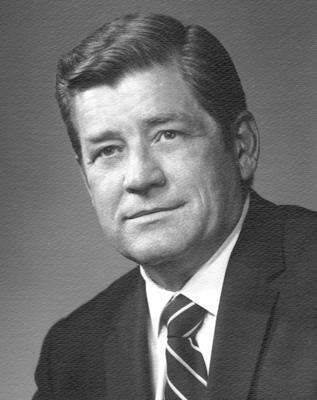
CEO Tom Walker
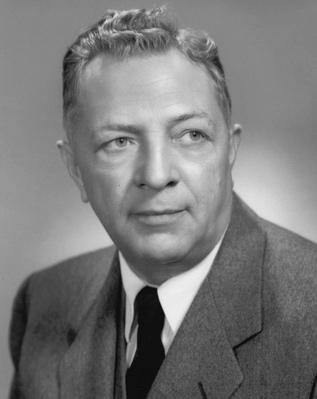
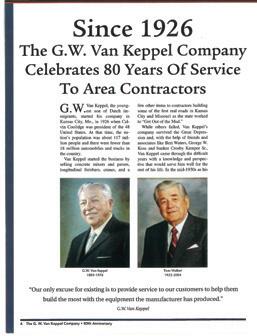
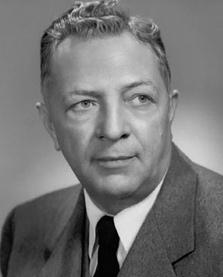
Founder and chairman G.W. Van Keppel
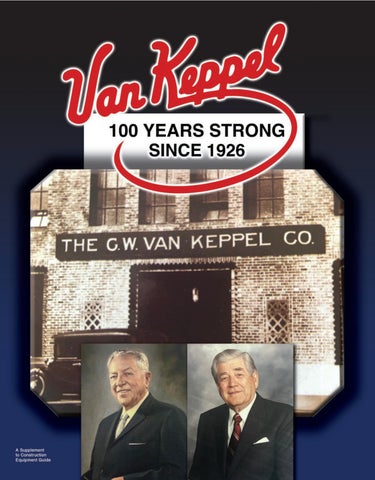
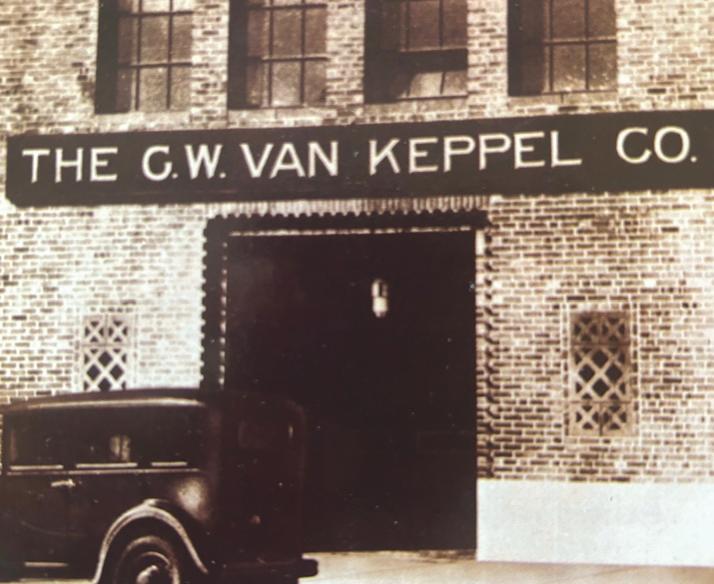
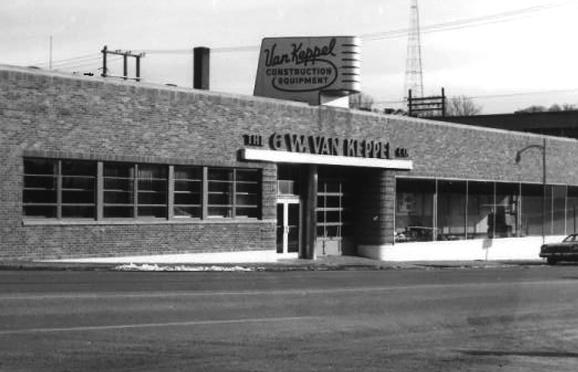
G.W. Van Keppel’s original location was at 2435 Pennway in Kansas City, Mo. The original office was in the basement of this building in 1926.
One hundred years later, G.W. Van Keppel Company remains very much in the middle. The company continues to play a central role in the success of construction contractors, aggregate producers and a wide range of heavy equipment users throughout the Midwest. Its century-long presence in the marketplace is a testament not only to longevity, but to effectiveness — doing what customers need, year after year, generation after generation.
Dynamics of Growth
Van Keppel CEO Bill Walker traces the staying power of the family-owned company back to the personal values of its founder: independence, self-reliance and a willingness to work hard for opportunity. Gerhardus Wilhelm Van Keppel came to the United States from the Netherlands with little to his name. Orphaned at a young age, he immigrated to live with an aunt, bringing with him determination shaped by necessity.
“Out of poverty, he developed a drive to be successful,” said Walker. “He was gregarious, disciplined and smart. Like a lot of people of that era, G.W. got his feet under him and decided to make something of himself.”
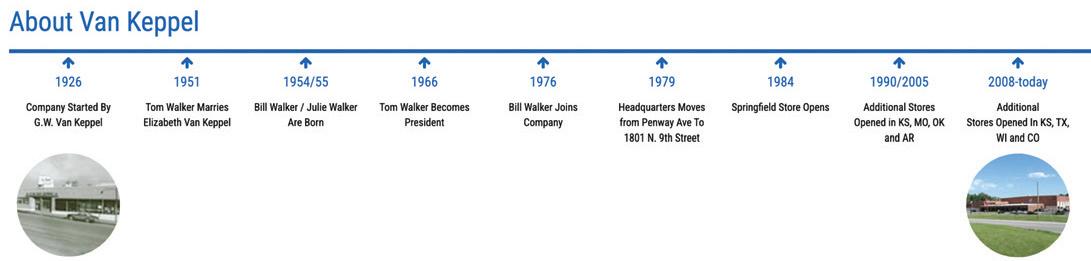
G.W. Van Keppel eventually became a manufacturer’s representative of the Koehring Company, which introduced a line of heavy cranes in the early 1920s. He moved with Koehring from Atlanta to Kansas City in the mid-1920s, a period of transition in the equipment business. At that time, many manufacturer representatives were evolving to become equipment dealers. In 1926, Van Keppel added several other equipment brands to his crane offering, officially establishing the G.W. Van Keppel Company.
To say “the rest is history” would be an oversimplification. Running an equipment dealership — especially over multiple generations — is anything but static. It requires constant adjustment, thoughtful risk-taking and an understanding that the ground can shift beneath you at any time.
Outside of a handful of dominant brands over time, equipment dealers were required to continually reshape their product lines in response to forces beyond their control. Manufacturers merge, are acquired or exit markets entirely. Sales territories change. Product lines are stripped away or reassigned. Some manufacturers fail altogether. Not a gamble, but constant change. Van Keppel continually survived these challenges by following the core values that were passed down by previous generations.
“A company must be willing to adapt as necessary,” said Walker, who has served as chief executive officer for more than three decades. “That was true at the beginning of the company and it’s still the mindset today. You don’t want to be afraid of opportunities, but you must be both aggressive and cautious. Opportunities arise completely unexpectedly. When they do, you have to be able to say yes — and to have the resources to say yes.”
see page 6
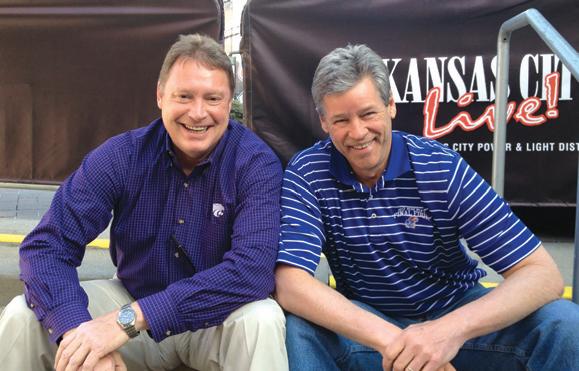





Kevin Kientz (L), COO and Bill Walker, CEO
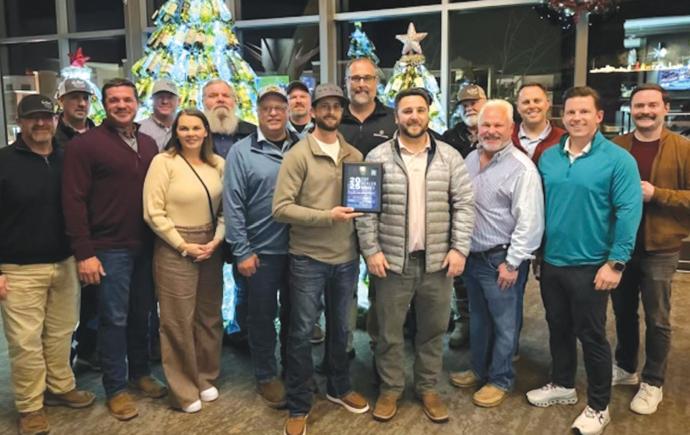
Van Keppel Sales group wins another award at its annual sales meeting.
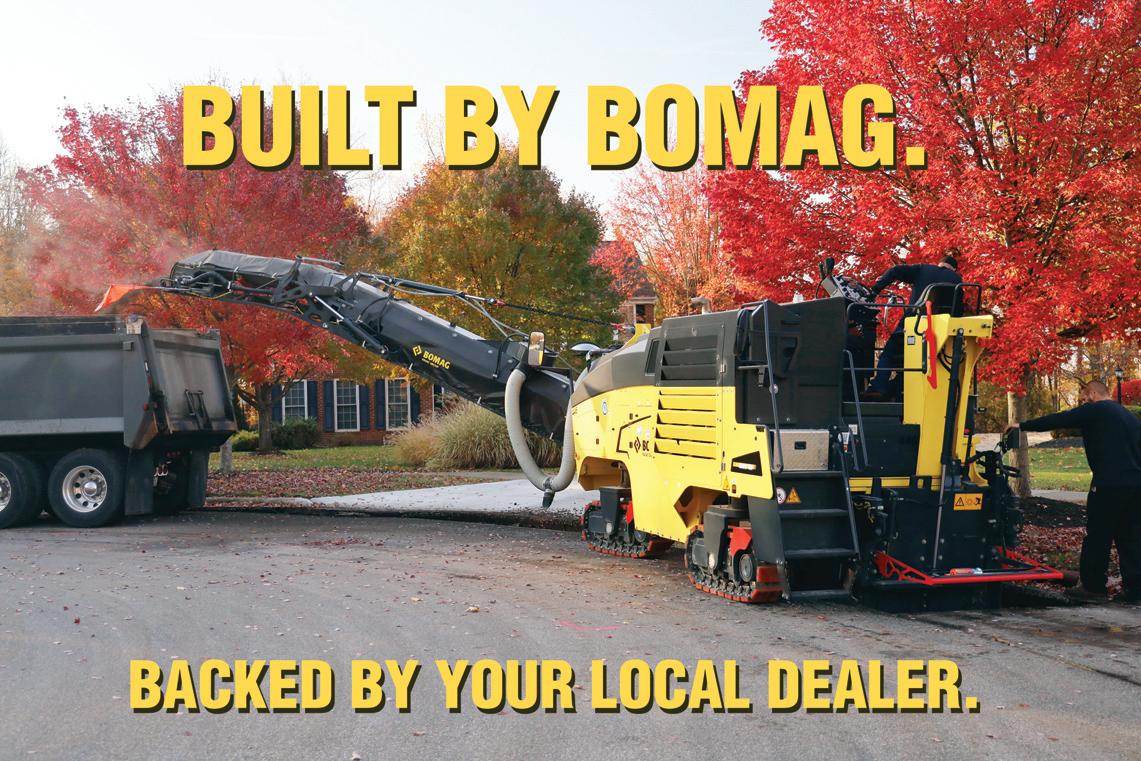
www.bomag.com/us-en






















from page 3
One such opportunity emerged recently when Van Keppel was able to re-enter the drilling market after a 15year absence. Following a series of buyouts in 2010, the company lost its long-held product line. For years afterward, leadership searched for the right successor — something that fit both the company and its customers. In 2025, Van Keppel acquired distribution of a 150-year-old Swedish manufacturer of drilling equipment, Epiroc.
“You have to be open-minded when an opportunity comes along,” Walker conceded, “but there’s also some luck involved.”
Today, G.W. Van Keppel Company organizes its equipment, sales and services into seven general categories:
• Construction
• Aggregate and quarry
• Material handling
• Road and asphalt
• Drilling
• Aftermarket and used equipment
• Underground and trench safety
While there is overlap between these categories depending on customer application, the structure brings order, expertise and clarity to the company’s sales and service operations.
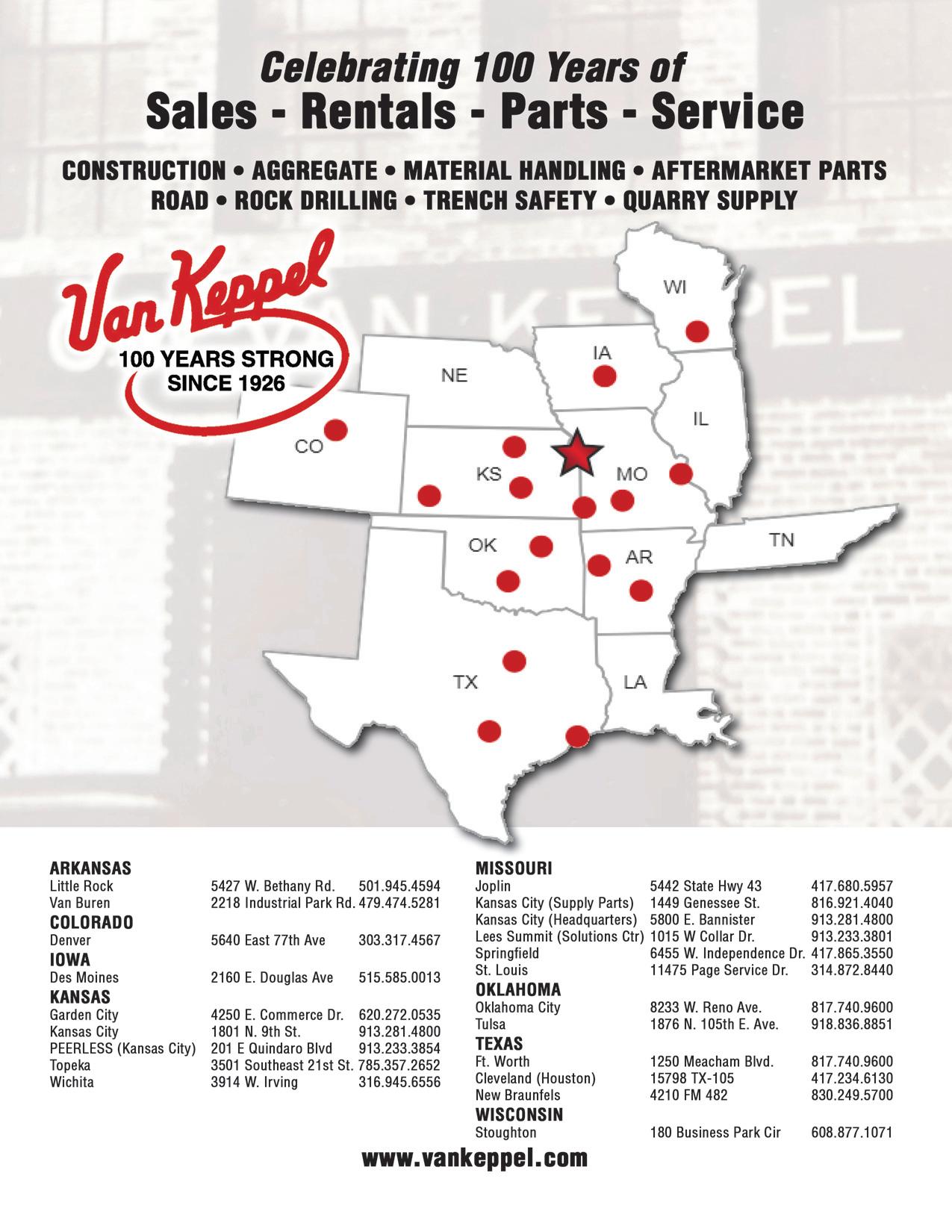
From its beginnings in Missouri, Van Keppel has grown into a regional company serving 10 Midwestern states, stretching from Wisconsin south to Texas and from Colorado eastward into parts of Illinois. The company presently operates 18 full-service or supply locations.
Company locations range in size from 20,000 to 50,000 sq. ft., situated on properties of eight to 20 acres. In recent years, several locations have expanded to accommodate newer generations of equipment. Simply put, machines keep getting larger, and facilities must grow to accommodate them.


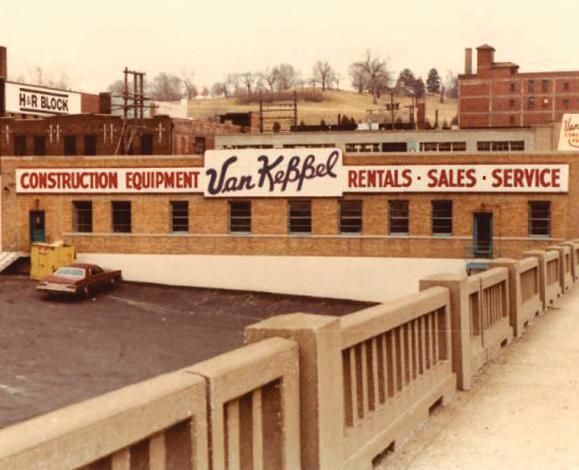
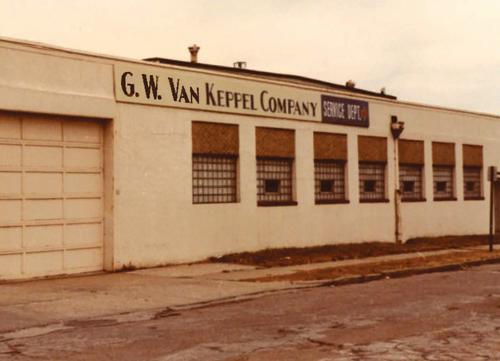
Van Keppel — office and parts at 2461 Pennway in 1972
Van Keppel — 2461 Pennway warehouse, 1976
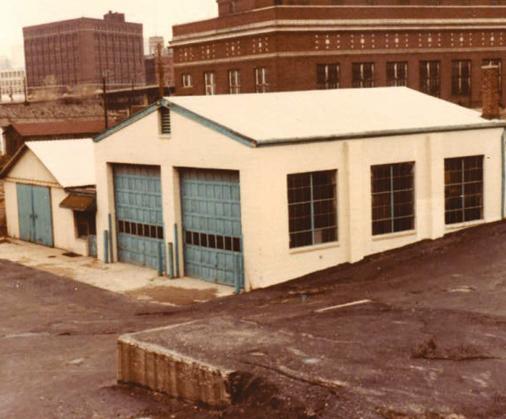
The original shop behind the 2461 Pennway office.
Van Keppel — 2461 Pennway, Kansas City, Mo., in 1960.
More than 300 employees work across the organization, including at the headquarters complex on Bannister Road in Kansas City, Mo., and a 65,000-sq.-ft. facility in Kansas City, Kan. In addition to executive leadership, the workforce includes inside and outside sales teams, equipment rental personnel, parts professionals and support staff, along with 95 service technicians.
Many technicians operate from a fleet of 75 field service trucks, while quarry supply personnel run an additional 20 trucks dedicated to delivering supplies and materials directly to job sites. It is a broad, mobile operation designed to meet customers where their work happens.
Strength of Diversity
G. W. Van Keppel Company offers a wide range of equipment brands — from massive machines that dig and move earth to units that build roads and pave, from lifting machinery to deep-drilling rigs. That diversity extends beyond equipment into the services the company provides.
see page 12





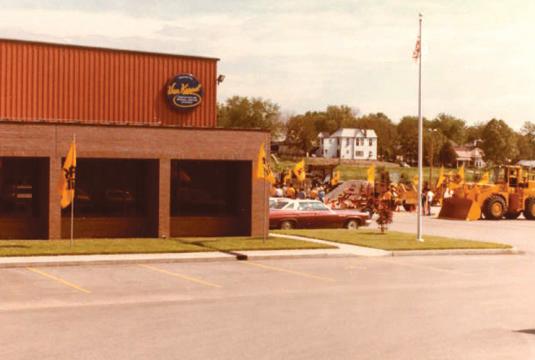


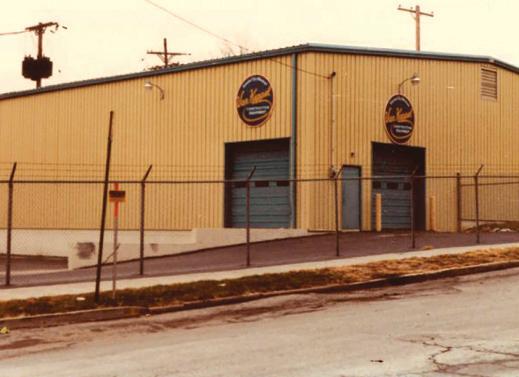
Van Keppel — 1801 N. 9th St., Kansas City, Kan., in the 1980s.
Van Keppel — Springfield branch in 1985.
Van Keppel - shop location at 1722 Tracy in Kansas City, Mo.
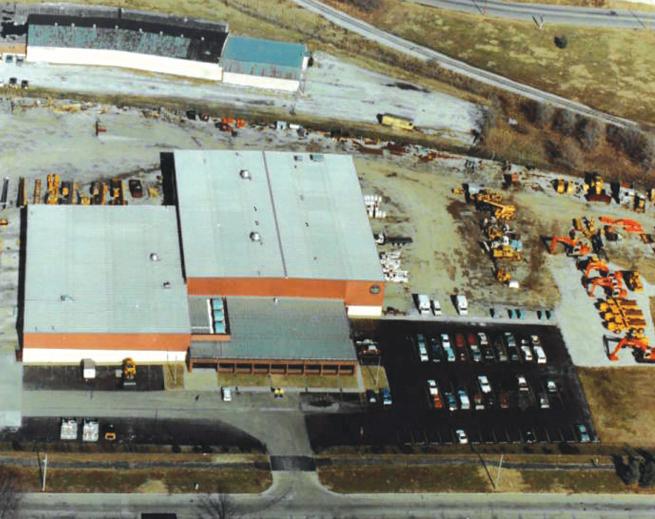
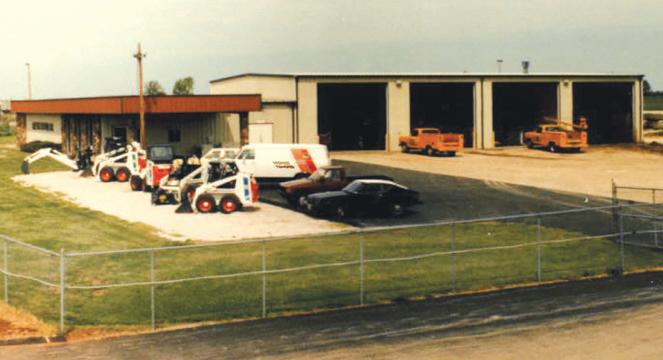
Aerial view of G.W. Van Keppel’s Kansas City, Kan., location in the 1980s.
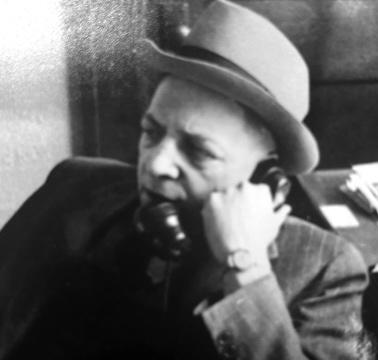
G.W. Van Keppel at work in the office circa 1950
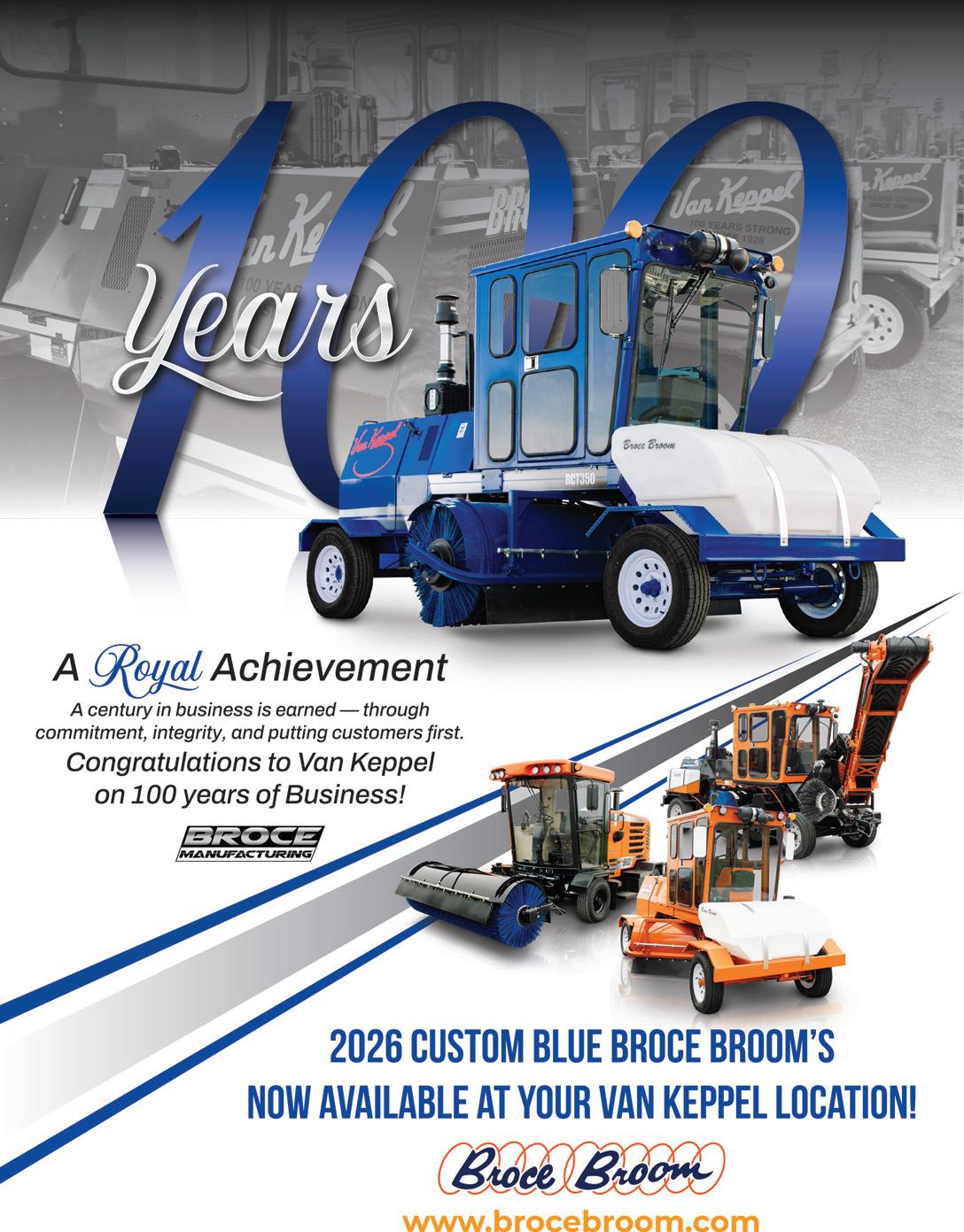
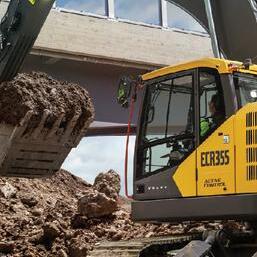

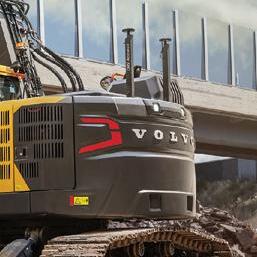



10 YEA 00 ST ARS TRON G
1 ancial
oud to be a part of you e pr Services ar
olvo Fin Vo anniversary! Reaching this milestone i an Keppel, on your Va Congratulations, V achievement, and all of us at V . W
This anniversary is a testament to you and the amazing collaboration we sha d work, d eciate your har e appr We story
d to continuing our success tog forwar commitment to your customers — we
an Keppel Va rn Learn how VFS and V
s a massive 100th ether for look r enduring re. edication r continuing many years to come. can support your business:



































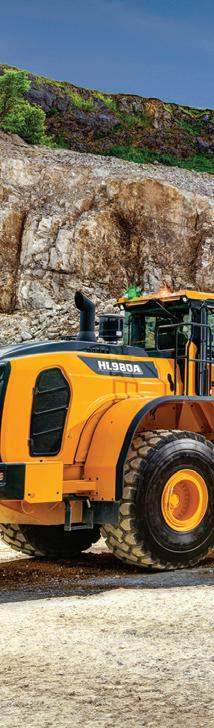






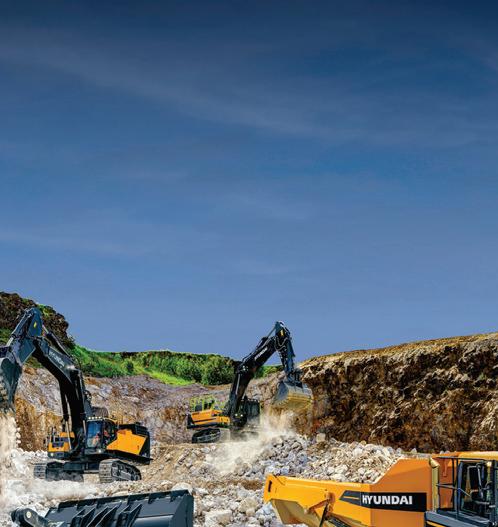
Hyundai proudly celebrates Van Keppel's 100 years of leadership in the construction industry.
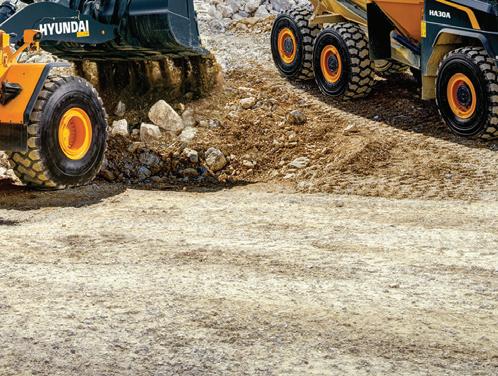
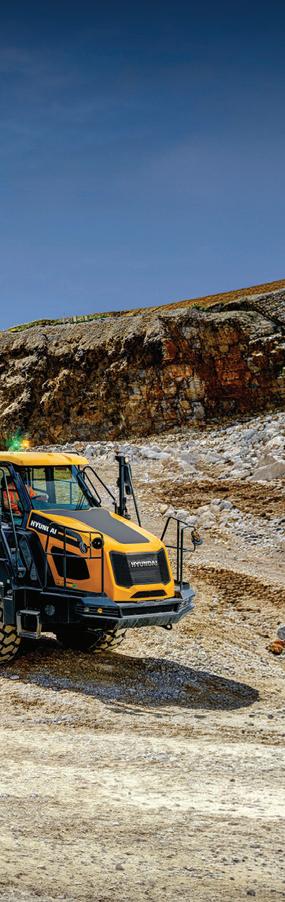
For a century, Van Keppel has stood as a benchmark of service, expertise, and unwavering dedication – supporting contractors with quality equipment, reliable parts and repairs, and the financial solutions that keep jobs moving. Their commitment to helping customers gain a true competitive edge has shaped growth across every market they serve.
We are proud to have Van Keppel as a valued Hyundai dealer.
Congratulations on 100 years of success -- and the many milestones ahead. na.hd-hyundaice.com







“We believe the more diversified we are, the stronger we’ll be,” said Kevin Kientz, executive vice president and chief operating officer. “Bill believes, as did Tom before him, that diversification helps us weather whatever storm may come.”
Accordingly, alongside its core construction and aggregate equipment businesses, Van Keppel has bolted on complementary operations over the years to strengthen the company.
One of those additions was Peerless Engineering and Manufacturing, a Kansas City, Kan.-based fabrication and engineering company acquired in the late 1990s. Van Keppel product lines — particularly the quarry group — benefit from the ability to draw on Peerless for new ideas or engineered solutions.
“The purchase of Peerless made our aggregate group stronger,” said Doug Wilson, manager of the manufacturing operation. “It gave the company the ability to build unique solutions and tailor equipment for the Van Keppel customers. Anyone who makes a living crushing rock will tell you that every quarry is different — the rock formation and how material must be processed. We talk with each customer, identify their specific needs, and show how our quarry equipment, combined with Peerless engineering, helps them operate more efficiently.”
Another important addition is the company’s quarry supply division, which is far more expansive than its name implies. The division provides aftermarket solutions to a broad range of equipment users. While it serves quarries, it also supplies mining operations, industrial plants, coalfired power plants, ready-mix concrete facilities, poultry processing plants and more — diversity layered upon diversity.
“Bill Walker has been great about bringing in new ideas — new divisions and new options,” said Michael Murray, quarry supply division manager. “He has great vision and keeps the company moving and evolving.”
Construction Leads Way
The construction group represents the largest segment of Van Keppel’s equipment sales and rentals, accounting for slightly more than one-third of overall business activity. Overseeing the construction equipment line is Taylor


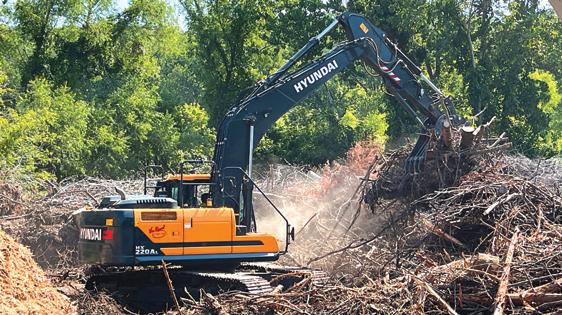
This Hyundai HX220A excavator with a thumb attachment clears brush.
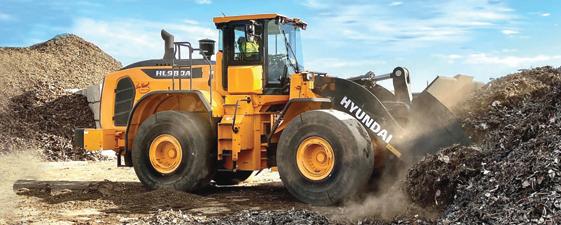
A Hyundai HL980A wheel loader is at work in a recycling operation.
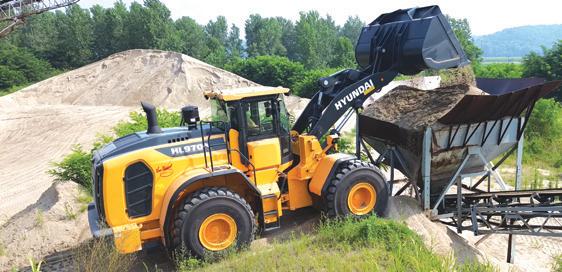
This Hyundai HL9701 wheel loader is hard at work
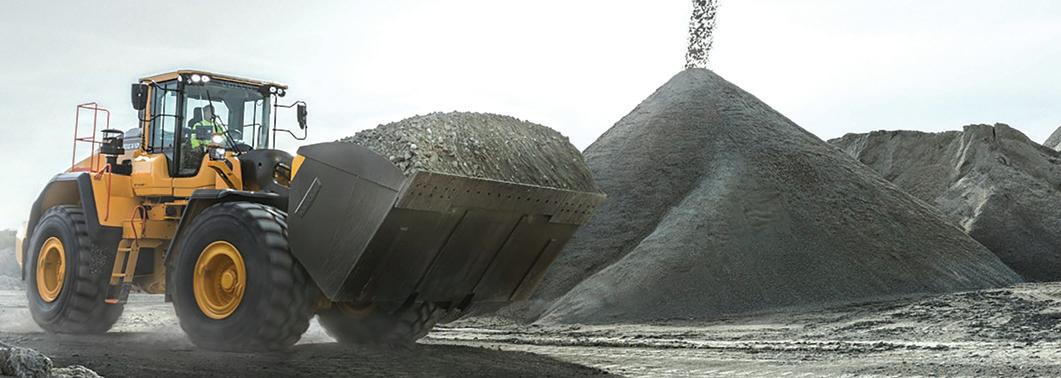
A Volvo L260H wheel loader on the job.
Killion, a fourth-generation family member and vice president.
Killion notes that the top-selling product in the construction group changes year to year.
“Last year it was excavators. This year it’s articulated trucks.”
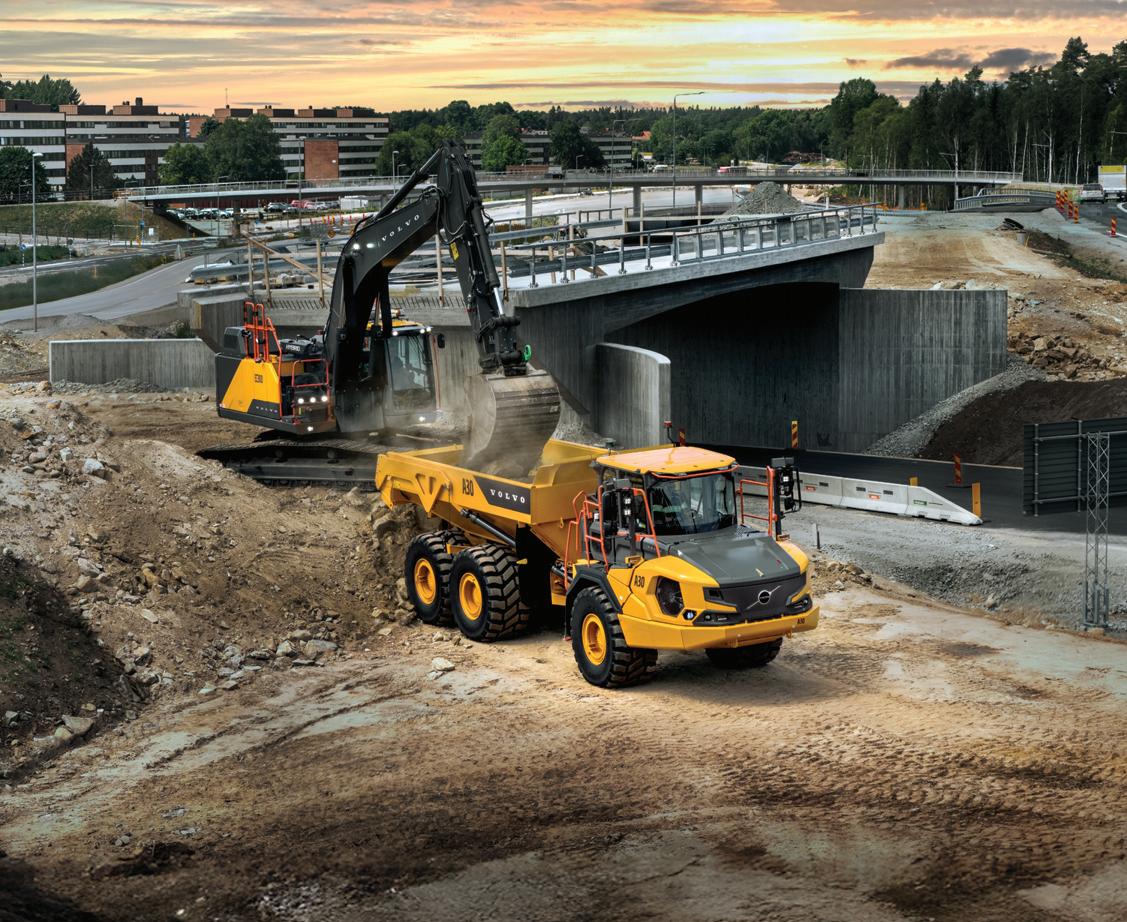
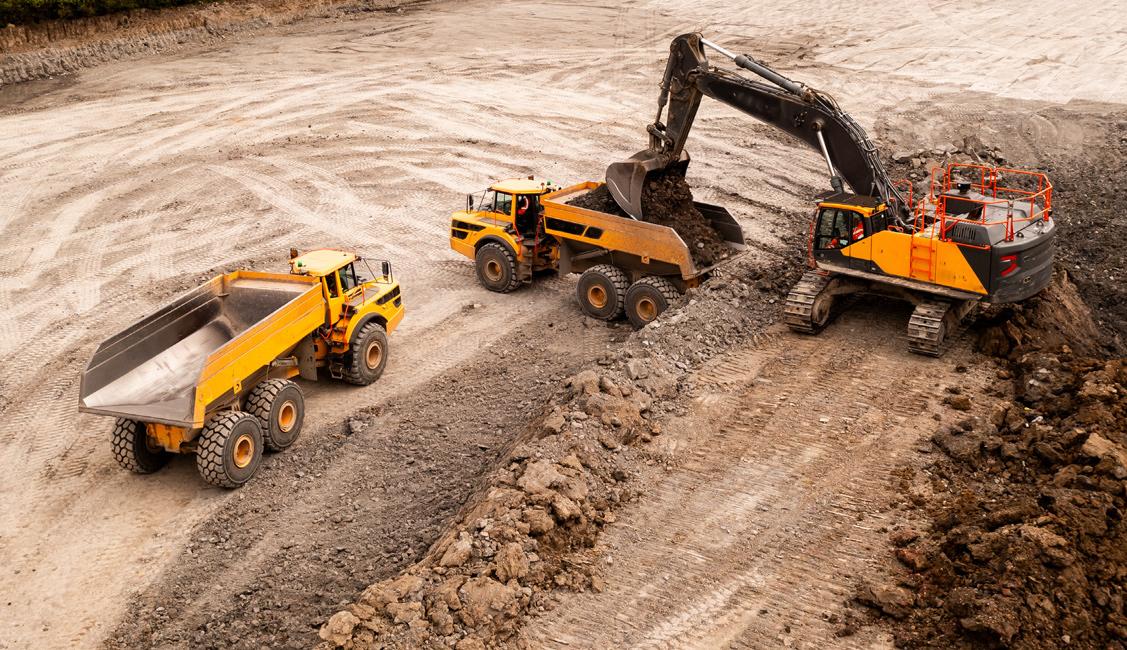
These off-road haulers are essential on job sites where scrapers and rigid haul trucks are impractical. Popular models include Hyundai’s HA30 and HA45 and Volvo’s J Series trucks.
Still, hydraulic excavators stand out to Killion. He calls them the “Swiss Army knife” of heavy equipment. With attachments such as hammers, thumbs, mulchers and demolition tools, excavators are among the most versatile machines on a job site.
Close relationships with manufacturers keep Van Keppel leaders informed about next-generation equipment entering the market. Technology is constantly changing and working closely with manufacturers is important. The company often tests pre-production prototype models for the manufacturer and reports customer feedback, a working relationship that keeps the sales group on the leading edge. The result is better equipment and better outcomes for customers.
Sales are supported by strong rental and leasing programs. Because some leases run for years, contractors with short-term needs often prefer rentals. Van Keppel maintains dealer-serviced, low-hour machines for those customers.
“We don’t like to rent a machine for more than two or three years before selling them,” Killion said. “Some competitors rent much older equipment, but that’s not our approach.”
Killion joined Van Keppel 20 years ago as the rental check-in, check-out person at the company’s store in Springfield, Mo. As product lines changed, he moved into rentals and sales of compact and larger construction equipment. Today, the company offers several compact equipment brands, including Hyundai and Volvo, with machines such as track loaders and compact excavators.
“The compact equipment business is still growing,” Killion said. “Small machines on small jobs save time and money.” Even so, scale matters and the sale of a single articulated truck or large excavator remains a significant transaction.
see page 16


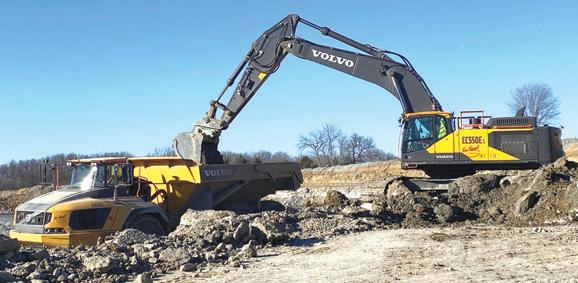



A Volvo EC550EL excavator loads up a Volvo A60H artic truck.
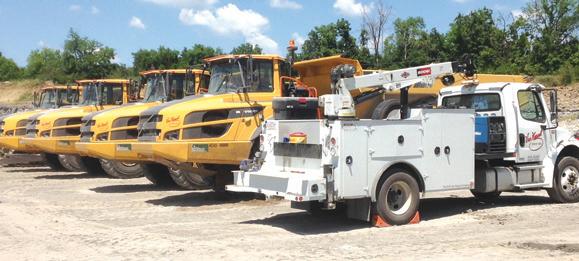
Van Keppel is servicing a fleet of Volvo artic trucks.
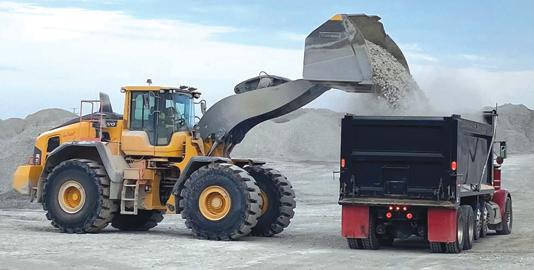
A Volvo L260H wheel loader working in the quarry.
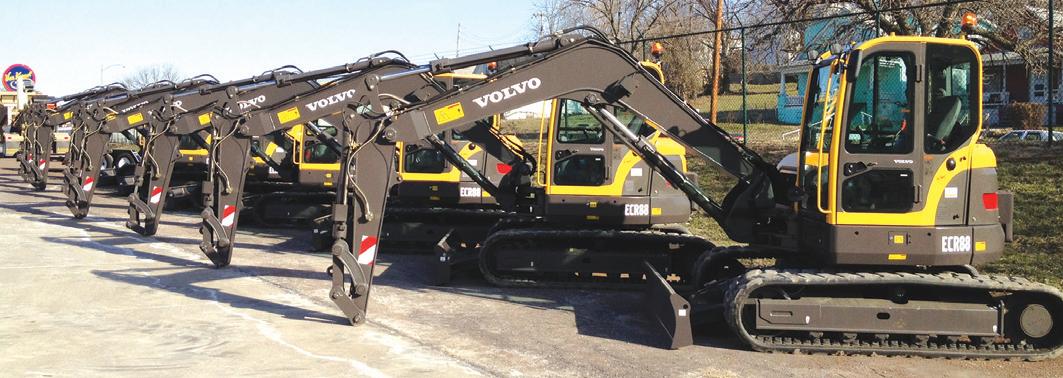
Volvo mini-excavators are ready for sale in Kansas City.
CHEERSTO 100YEARS!!!
Supporting Products
Thirty-four years ago, Brian Loderhose joined Van Keppel. Today, he serves as vice president of product support, overseeing parts, service and manufacturer relationships across the company’s territory.
His role includes oversight of parts sales and service management operations and maintaining relationships with support-side manufacturers. On any given day, Loderhose may help resolve a customer issue at a service facility and work through a challenge with a manufacturer.


“Our operations group works hard to avoid surprises and has a whatever-it-takes attitude,” said Loderhose. “Locating hard-tofind parts, solving tough technical problems, accessing software and developing our technicians all fall under the job and help keep our customers up and running.”
Unlike many of the executive team, Loderhose does not work from the Kansas City area. Twenty-five years ago, he was asked to relocate to Tulsa, Okla., to manage a company store. He later ran the Oklahoma City location and helped open the Fort Worth, Texas, branch. In 2005, he moved into his present job.
With locations across a 10-state area, Van Keppel maintains approximately $45 million in parts inventory supporting more than 30 manufacturers. Training technicians is a major focus, particularly given the technology embedded in modern equipment. Expertise in diagnosis and installation is also important, so the company is heavily involved in training its service technicians. That training has become increasingly more difficult as today’s machinery has become more technical and the product lines have become more diverse.
Back in the early 2000s, technical communicators were added to the staff.
“There was a need to add people who understood the software and machine complexity and could translate it to our technicians. Constant training and upgrades are part of this,” said Loderhose.
This training continues today, with many in-house classes taught each year. Loderhose also credits manufacturers with delivering effective online training.
“Their classes are short and direct, and, in many cases, a tech can go back and find a piece of information he remembers without having to watch an hour-long class all over again.”
Midwest Growth
G.W. Van Keppel Company might be 100 years old, but Loderhose compares it to a teenager.
“The company has grown substantially over the last 25 years, yet I believe we are on the verge of a growth spurt — like a teen about to grow four inches,” he said. “What really helps us keep moving forward as a team are the operations managers and lineof-business managers. They are all on the same page and pulling in the same direction.”
That doesn’t mean the company is projecting nationwide

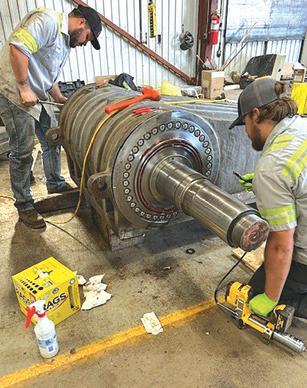

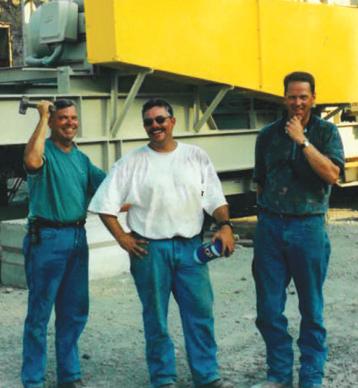

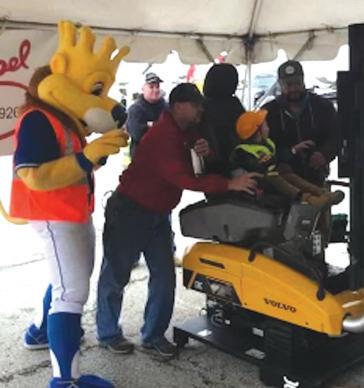
Technicians at work. Kansas City Royals Mascot “Slugger” tries the Volvo excavator simulator.
Customers are all smiles taking delivery of a new crushing plant.
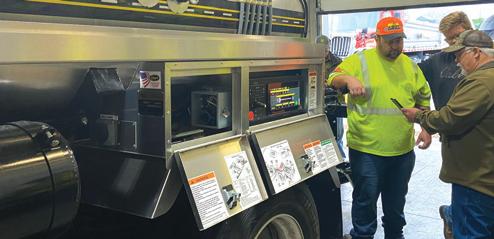
The crew reviews the control system on this Etnyre oil distributor.
Van Keppel service technicians on the job.
expansion, CEO Bill Walker said. While Van Keppel Company has sold machines to customers in Alaska, Canada and Central America — due largely to the internet — it remains a Midwestern dealer and plans to stay that way.
“We are comfortable here. There is plenty of business for us across the Midwest,” Walker said. “We understand the type of customer we do business with, and they understand us. In all the states where we operate, we have good people with rural qualities.”
Additionally, there are advantages to being in the middle of the country, where business cycles are less extreme than on the coasts. Kientz agrees.
“Our customers are great people,” he said. “They work with their hands and the earth. I’m proud after joining the company on a handshake 36 years ago, that a handshake still means something in our industry.”
He added that Van Keppel employees are cut from the same cloth.
“They are strong, savvy, good people — easy to manage and easy to partner with. We’ve always had employees who make decisions day in and day out as though they were key stakeholders. They act as though it’s their business, driven by a deep desire to take care of customers. We have a great team, and we’ve had generations of those kinds of people leading the charge.”
Indeed, some staff members have been around for the equivalent of a second generation: 26 employees have worked at Van Keppel for more than 20 years, and nine employees have worked faithfully for 30 years or more.
Fourth-generation executive Taylor Killion isn’t satisfied with longevity alone, either in the company or the marketplace. He brings a hungry approach to business.
“New customers are the bread and butter of our business,” Killion said. “We are always pushing to get new accounts — to earn that first-time buyer.”
Killion echoed the company’s founder in saying that “the only reason for a dealership’s existence is to serve the customer. If you’re not doing something for your customer, there’s no point in being around. The only reason we are turning 100 is that contractors have decided we’ve done good things
for them repeatedly, and that’s why they keep coming back.”
Kientz described the same win-win relationship.
“Our customers say we always have their best interests at heart — whether that’s financing a piece of equipment, stocking parts or carrying specialty items needed on a job. We try to partner with our customers, and they see that.”
He recounts many times over the years when customers said they purchased from Van Keppel because they remember when the company sold equipment to them when others would not. Many of them became large contractors and still buy from Van Keppel today.
CEO Bill Walker expressed confidence in the company’s future.
“If we mind our P’s and Q’s, take care of our customers and do our part, our company can grow — sensibly and within the structure that the business will allow. I wouldn’t expect it to grow outside its current footprint but there is plenty of business for us here.”
Said Walker: “Our business is a personal business with great people — in the Van Keppel Company itself, the manufacturers we represent, and the customers we serve.”
He likened running a successful business to living a good life, where priorities and sound decisions shape meaningful outcomes. Walker closes with a straightforward truth:
“People buy from people they know, like and trust. That hasn’t changed in a hundred years. Our business is personal — and that is why we have lasted.” CEG
see page 22



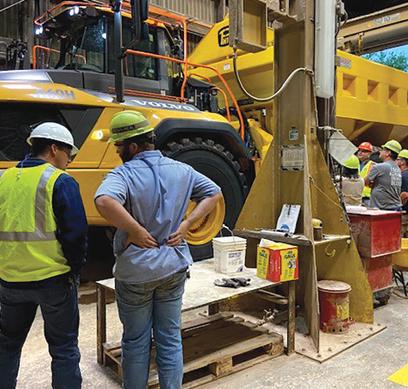

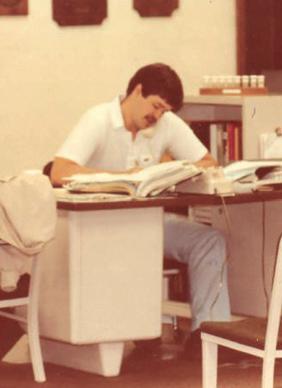
Bill Walker takes a call from a customer in 1976.
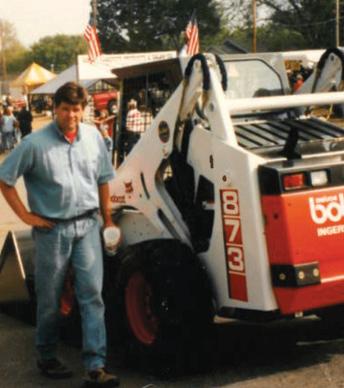
Bill Walker with a Bobcat 873 skid steer in 1978. Customer support
PROUDLY PARTNERING WITH VAN KEPPEL
Congratulations to Van Keppel on its 100-year milestone. We’re proud to celebrate and partner with a dealer whose legacy is built on strength, reliability, and forward thinking.
Working together, we’ll continue to provide earthmoving solutions that help customers move millions.
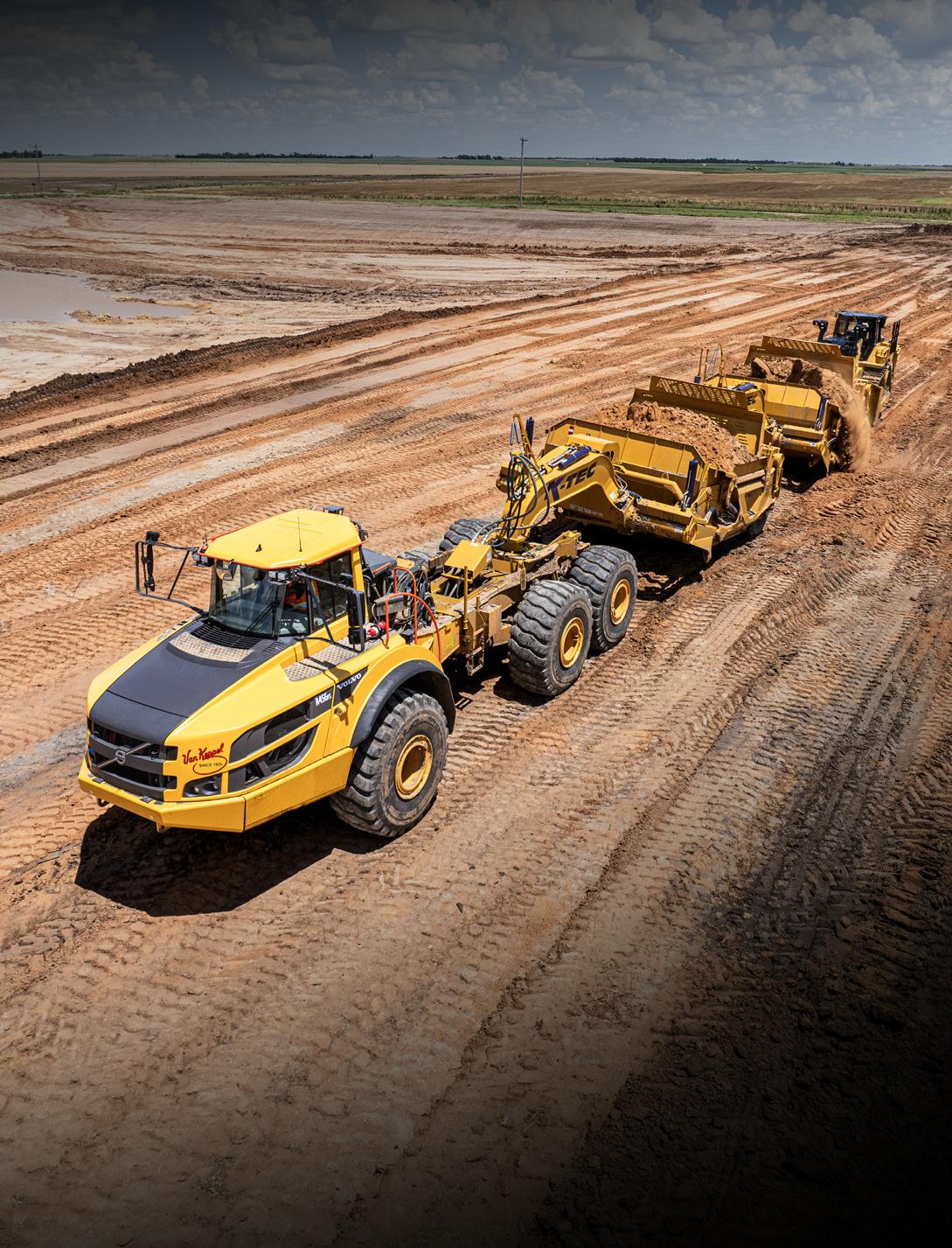
Authorized K-Tec dealer serving
Missouri | Kansas | Oklahoma


Making tomorrow better than today. Celebrating 100 years of G.W. Van Keppel’s dedication to service excellence!
Construction, Earthmoving Equipment


By Giles Lambertson CEG CORRESPONDENT
From a young age, Kristen “Krissy” Lund worked at a small family equipment dealership. She became a fan of the machinery world.
“I liked the industry, the equipment, the customers,” she recalled.
She still does. Thirteen years after joining G.W. Van Keppel Company, she is the company’s construction equipment product line manager and continues to offer innovative machinery and solve problems.
The company’s construction equipment line-up is headlined by Volvo and Hyundai, two heavyweight brands. Wheel loaders, hydraulic excavators and articulated off-road haulers are mainstay sales leaders. Other machinery of various leading brands includes wheeled excavators and compact machines such as mini-wheel loaders and excavators. The company also sells compact articulated Bergmann dump trucks, skid steers and some all-electric pieces of equipment.
“We are so diverse in our offerings that we can cater to a wide base of customers,” said Lund. “Not only contractors, but also aggregate operations, county and municipalities, and other market segments benefit from our diverse equipment and attachment offerings.”
Rentals and leases are popular options for these customers.
“Seventy percent of our construction equipment fleet is rented prior to being sold,” Lund said, a fleet comprised of several hundred machines. “Renting the equipment is one half of the sales process.”
That is, rent the machines for a few years and then sell them — two separate revenue streams from each piece of equipment.
Working with Lund is a support group of more than 20 used equipment and rental personnel and more than 25 outside equipment salespeople.
see page 26
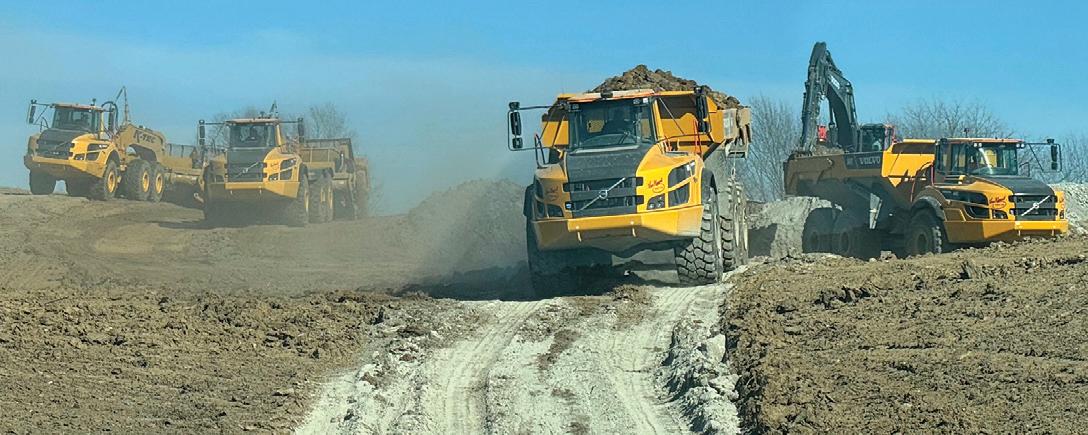
Volvo equipment at work
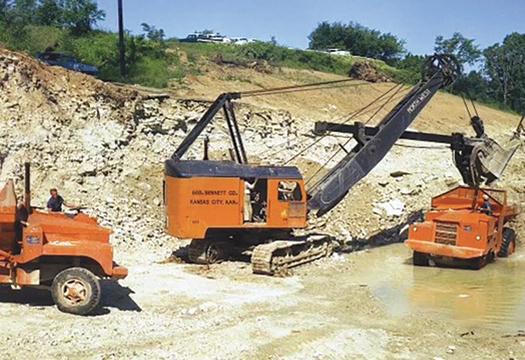
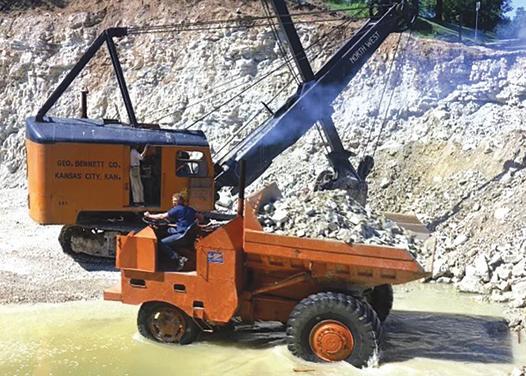
Shovel Loading Truck in June 1960 US 50 HWY in Jefferson City, MO
Trucks and Shovel building Highway in MO












Thank You!



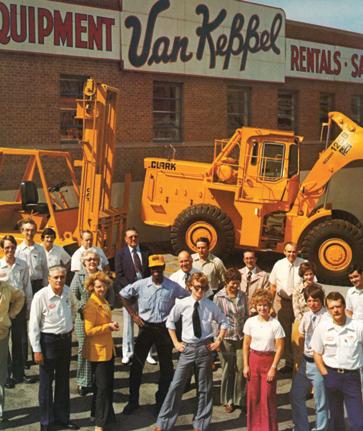




For more than 100 years, G.W. Van Keppel Co. has built a legacy of strength and stability. We are deeply grateful to our customers for their loyalty and trust, which have fueled our growth across generations. We are equally thankful to our valued vendors, whose shared commitment enables us to deliver meaningful solutions that meet our customers’ needs. Finally, we extend our heartfelt appreciation to our employees — past and present — whose dedication and hard work have ensured that our customers are always well served. It is through these enduring relationships that we celebrate more than a century of success and look to the future with confidence and gratitude.
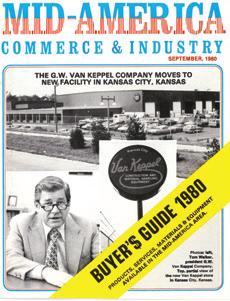





G.W. Van Keppel
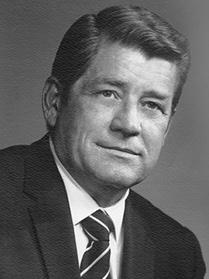
Tom Walker, president of the G.W. Van Keppel Co.


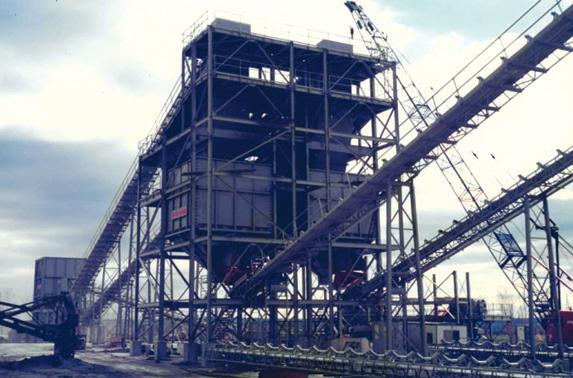


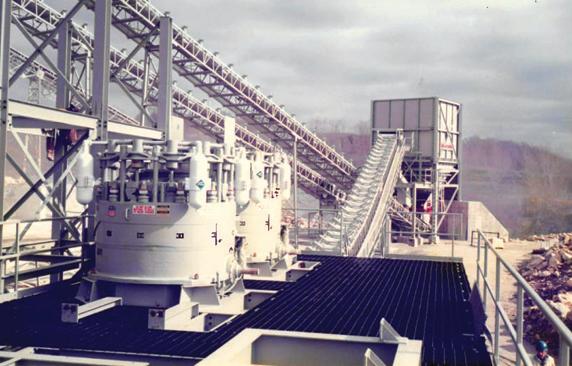

from page 23
“We have a strong and experienced sales team and they along with management groups in our stores have helped us obtain several years of strong sales growth,” she said. Relationships with our customers have and continue to grow, for which we are very thankful.”
Van Keppel Company sells construction equipment in 18 locations across 10 Midwestern states with service technicians in each of these full-service locations. The company also has 75 field service trucks hauling techs and tools to the field to service machines.
Being a woman in the heavy equipment workplace has been interesting, Lund said. “In the beginning, the industry was not as openminded about females. I’m really blessed with management that encourages opportunities for all of the workforce. What I would tell other women is, learn your material, invest in your customers and it will pay off.”

Aggregate Machinery
Sam Hayes is a familiar name in the industry and at G.W. Van Keppel Company. Hayes first joined the company 40 years ago, leaving for a few years and then returning. Today, he manages the aggregate equipment and rock processing line of business.
The aggregate machinery comes in all sizes.
“We have a large portable impact crusher, our largest portable piece, that weighs 155,000 pounds,” he said.
The nearly 77-ton Astec machine has a 500-hp electric motor. Impact crushers are a key part of Van Keppel’s aggregate business, with jaw crushers almost as popular. Cone crushers, screen, and conveyor products sold by the Aggregate group fill out the product line. Manufacturers represented include Astec, KPI-JCI, Astec Mobile Screen and Peerless. Additional support is provided by several
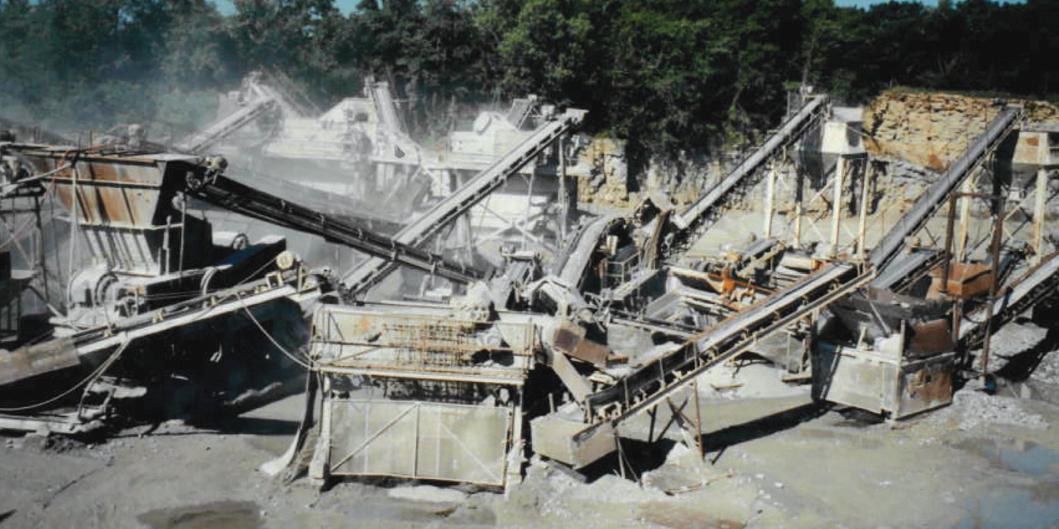

Crushing plant in the 1980s
New crushing plant in Randolph, Mo., in the 1980s.
New crushing plant in Randolph, Mo., in the 1980s.
other smaller manufacturers.
An aggregate processing operation might have four crushers working in sequence — primary, secondary, tertiary and quaternary — as the material is reduced to an optimum size, then screened and processed some more, sometimes washed and finally stockpiled. Little of the rock is wasted.
Hayes likes to point out that most of the work in an aggregate operation is done inside a crusher and the material being crushed tells a story.
“My first question when a guy calls me is, what can you tell me about your rock? I have to know that before we can have any meaningful conversation,” he said. “The inside liner in a crusher used near Kansas City may last five years. That same crusher in southeast Missouri might last three weeks. The silica content can vary tremendously just five miles apart.”
Other crushers are used in recycling operations where shards of concrete and asphalt are re-crushed, resized and repurposed. Crushers must be set up to accommodate stone and rebar in the pavement.
“It’s very violent inside a crusher. Wear parts on crushers are a huge part of our business,” Hayes said, adding that Van Keppel “has aftermarket techs that specialize in this technology, parts people that specialize in this equipment and more aftermarket parts than anyone else in the Midwest.”
Big aggregate machines are cumbersome to transport so 80 percent of maintenance work is on site. Furthermore, 60 percent of the expensive machines sold are first rented and a sale usually follows within a few months. Offerings include track-mounted units, stationary crushers and portable mounted equipment. Each of these products has a place in the market.
see page 34
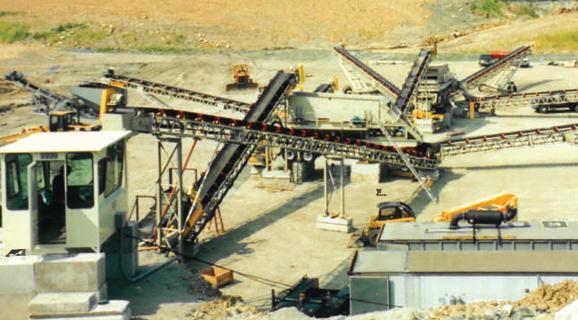

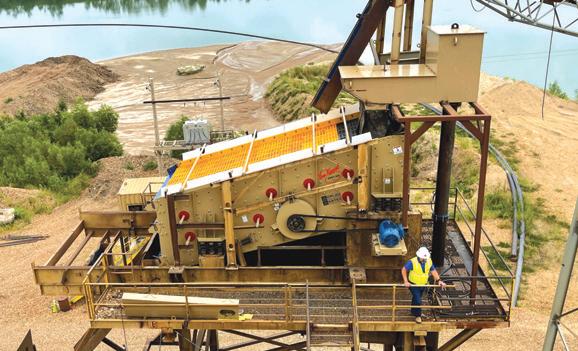

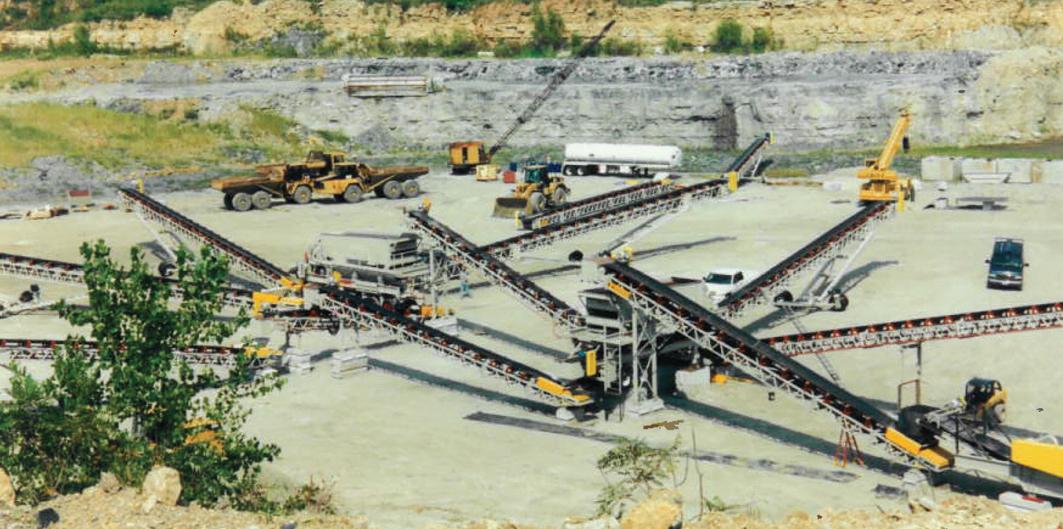


New crushing plant set up in Kansas City in the 1990s
A KPI-JCI Astec 8243-38LP screening plant
New plant start up in the 1990s


Douglas Rulmeca proudly congratulates GW Van Keppel on celebrating 100 years of business. Reaching a century in operation is a remarkable milestone that reflects enduring leadership, integrity, and a steadfast commitment to serving customers and the industry with excellence.
We are honored to partner with such a respected organization and commend the entire GW Van Keppel team for their dedication, innovation, and continued success. We look forward to supporting your next century of growth and achievement.
Congratulations to everyone at GW Van Keppel on this outstanding accomplishment!
The Douglas Rulmeca Team










www hundred years of success!
V 0th10 an
Keppel On Your



Anniversary

s to celebrating the past and lay Here’ aggregate, road building, material han Yo milestone of 100 years in business! an Keppel C Va Congratulations to G.W V Y ing the foundation for the next dling has built a lasting legacy our century of construction, Co. on reaching the incredible

































from page 27
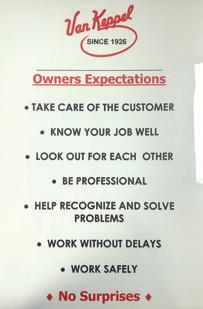
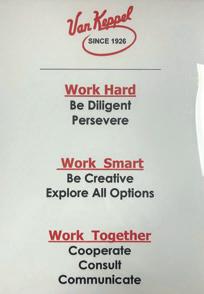
Hayes carries a Van Keppel laminated card in his wallet that reminds him of fundamental principles such as Work Hard. Work Smart. Work Together. Another card shares seven “expectations” of ownership, including Look Out for Each Other, Help Recognize and Solve Problems and Work Safely.
“I live by those, and many others do, too,” said Hayes. “I am quite proud of my affiliation with this company. It’s been rock solid.”
Asphalt Machinery
It is appropriate that Matt Pettit, G.W. Keppel Company road equipment product line manager, is on the road a lot. His office is in the company’s Springfield, Mo., location but Pettit spends only about 20 days a year there.
“The majority of the time I’m visiting our locations or I am on site with one customer or another,” he said. He fell into this routine eight years ago when he was promoted from asphalt specialist to road division manager. He joined the company 12 years ago after a career of managing and maintaining a contractor’s fleet of road paving machinery.
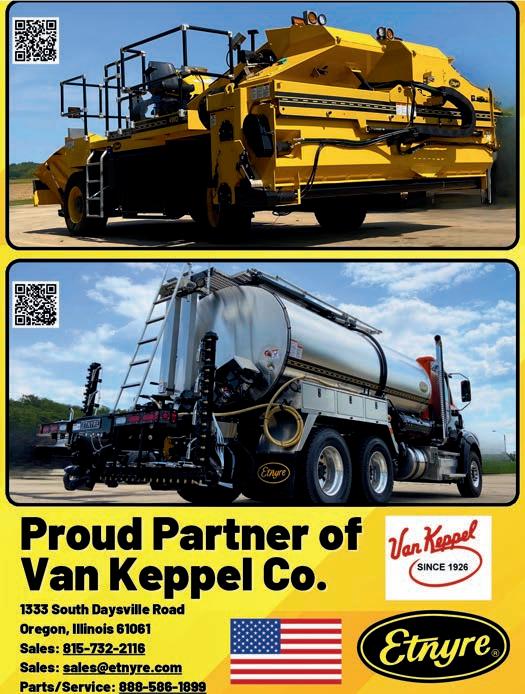
Van Keppel’s asphalt product line includes asphalt paving machines, asphalt transfer vehicles, rotary broomsweepers, double and single-drum rollers and similar equipment. Among the popular manufacturers are Astec, BOMAG, Etnyre, Broce Broom, Volvo and Midland Manufacturing.
Pettit sings the praises of all the equipment he represents but singles out Etnyre for its steadfast appeal.
“Etnyre is what gets us in the door with many road contractors. We have been an Etnyre dealer and represented their products for 98 years.”
One reason for his extensive travel is that training on the equipment is part of the sales package. Pavers, oil distributors, chip spreaders, milling machines and others fall into this category. Pettit and his team have extensive knowledge of operating the machinery with one goal: customer satisfaction.
“Etnyre has a simple set up, but confidence is key,” he said. “We sell about 50 of those units a year and train on about half of them, so about 25 weeks a year we’re

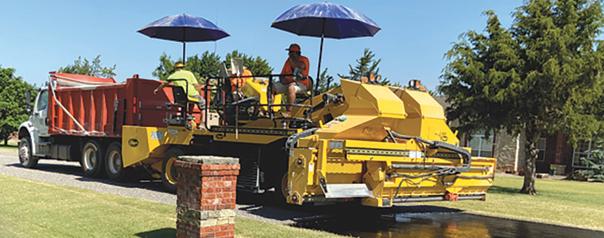
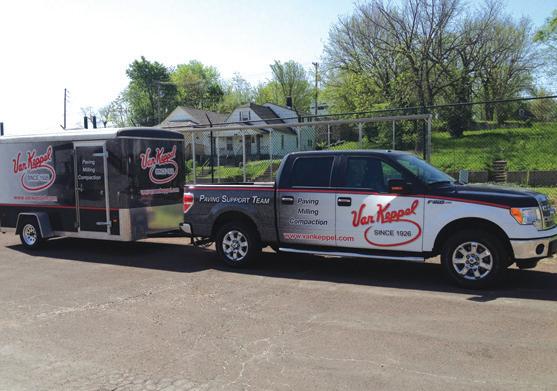
The Van Keppel paving group takes to the road.
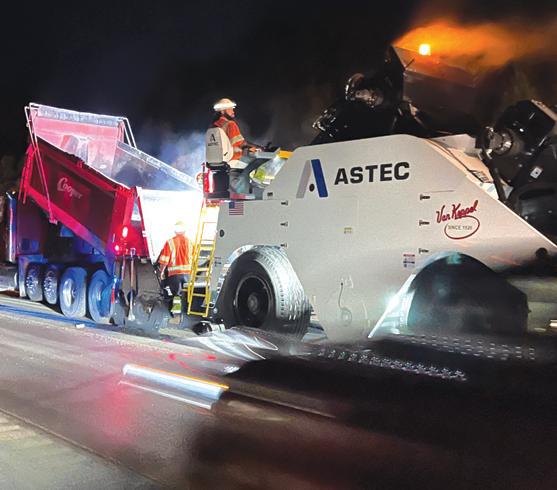
An Astec SB3000 shuttle buggy on a night paving project.
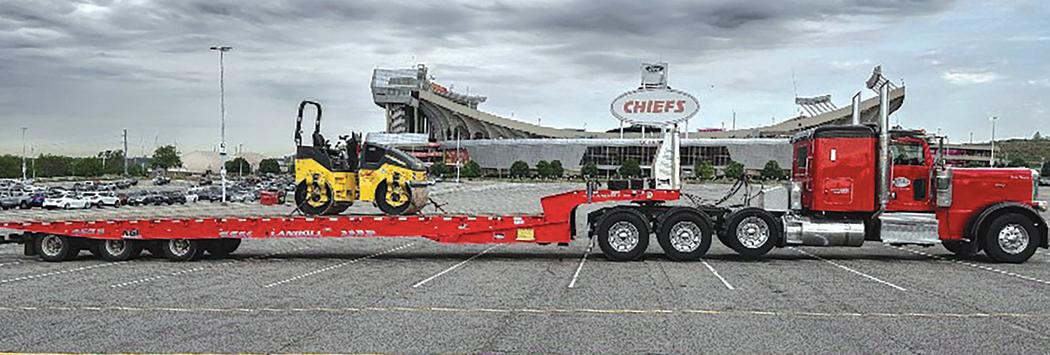
A BOMAG BW138 tandem roller being delivered to the Kansas City Chiefs.
training those customers. Sometimes we go back three or four times until a buyer is confident his operator knows the machine.”
During road-building season, the machines are serviced on site, but when winter temperatures halt asphalt activity, the company rebuild center in Joplin, Mo., becomes the maintenance focus. For full or partial machine rebuilds, Joplin is set up to handle the work.
It is staffed with five technicians and parts people, all trained in the rebuild and repair of road units. For lesser repairs, the machines go to a Van Keppel full-service shop.
Colder months don’t mean a lighter travel schedule for the asphalt manager and his team.
“Winter is one of the busiest times of the year — training, classroom work, asphalt conferences. We’re already scheduled for nearly every day in January,” he said in December. “You’d think we would be busier in the summer months.”
Experience, knowledge and hard work are drivers for the road group. Those traits and strong manufacturers see page 38
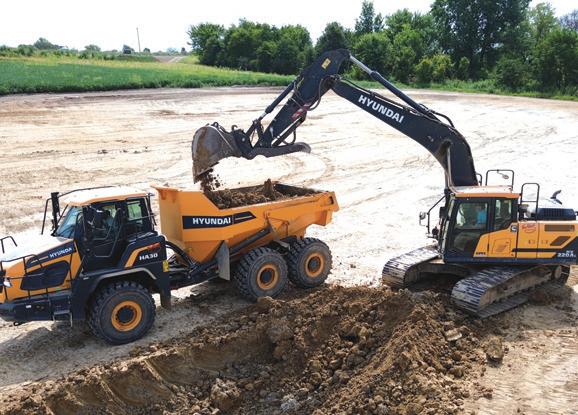





Earthwork operations are under way with a Hyundai HX220A excavator and a Hyundai HA30 artic truck.
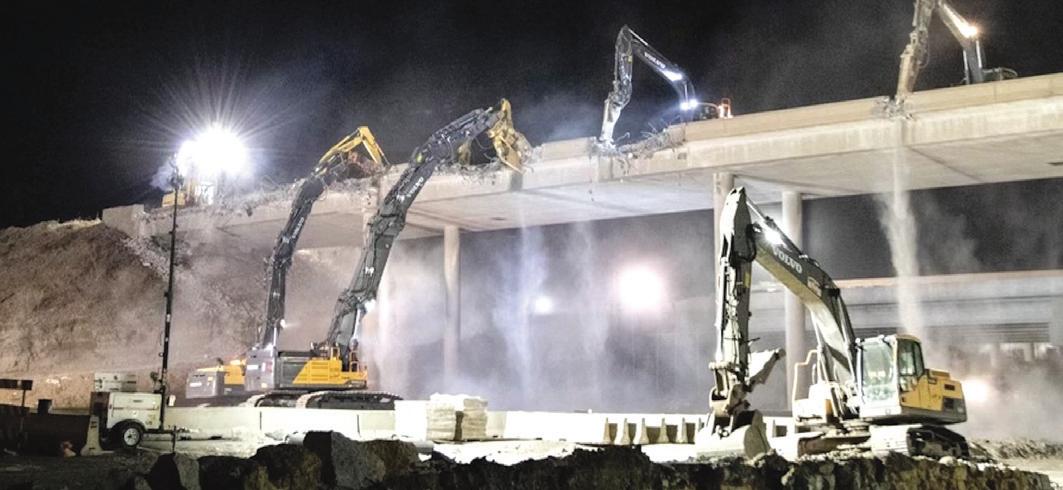
Volvo machines are at work on a bridge demolition in Kansas City.
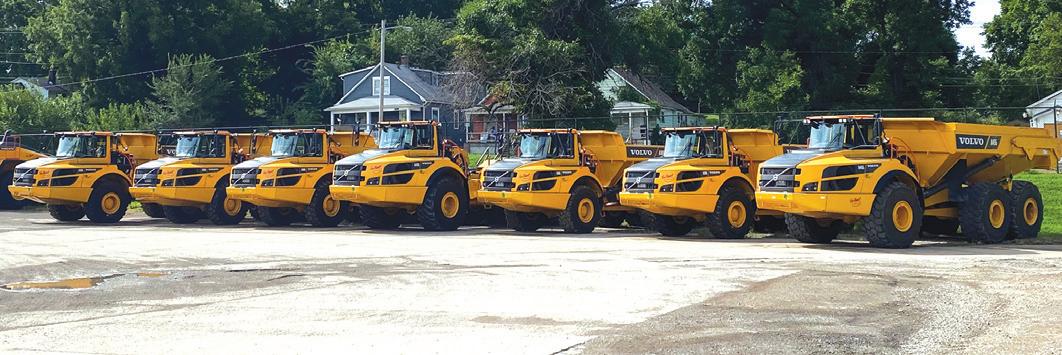
Volvo artic trucks are lined up at the Kansas City yard.



















































stand their business, and have people trained to help them when they need a hand. That’s why we’re still around after a hundred years.”

hired Murray to lead that effort.
Unlike other divisions in the company, the quarry group doesn’t focus solely on manufacturers the company represents. Rather, it offers aftermarket supplies for a wide variety of manufacturers.
“The other divisions are working with 25 or 30 manufacturers,” he said. “We deal with more than 700 vendors.”
His aftermarket supply portfolio ranges from “water bottles and first-aid kits to thousand-foot rolls of belting,” he said, making it a generalist supply house with boundless markets.
For instance, some of the machinery required in quarrying work also is compatible with other industrial and mining operations. Murray takes advantage of those similarities by also being an aftermarket source for ready-mix concrete plants, chicken parts processors and other operations.
“A lot of the products we sell have that crossover.”
This strategy has been very successful for the company with year-over-year growth for many years. The Genessee Street office in Kansas City, Mo., is group headquarters and a large stocking branch. Murray and his group of experienced inside salespeople and 20-some outside salespeople are one of the fastest growing groups within Van Keppel. Murray added that “our growth continues and we expect to double in size in the next 10 years.”
The growth feeds upon itself, he added.
“The larger we get, the more we can leverage our spend with manufacturers and get the best pricing for our customers.”
In addition, he said the company has the advantage of getting some of the best quality products produced, products that provide wear life and great value once they have been put in operation.
“This division tries hard to give our customers great value and to keep them productive and happy.”
Because the division has locations across the company’s full
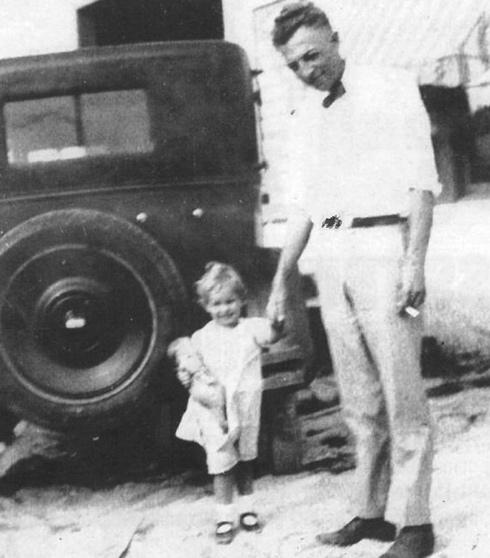
G.W. Van Keppel with his daughter, Elizabeth.
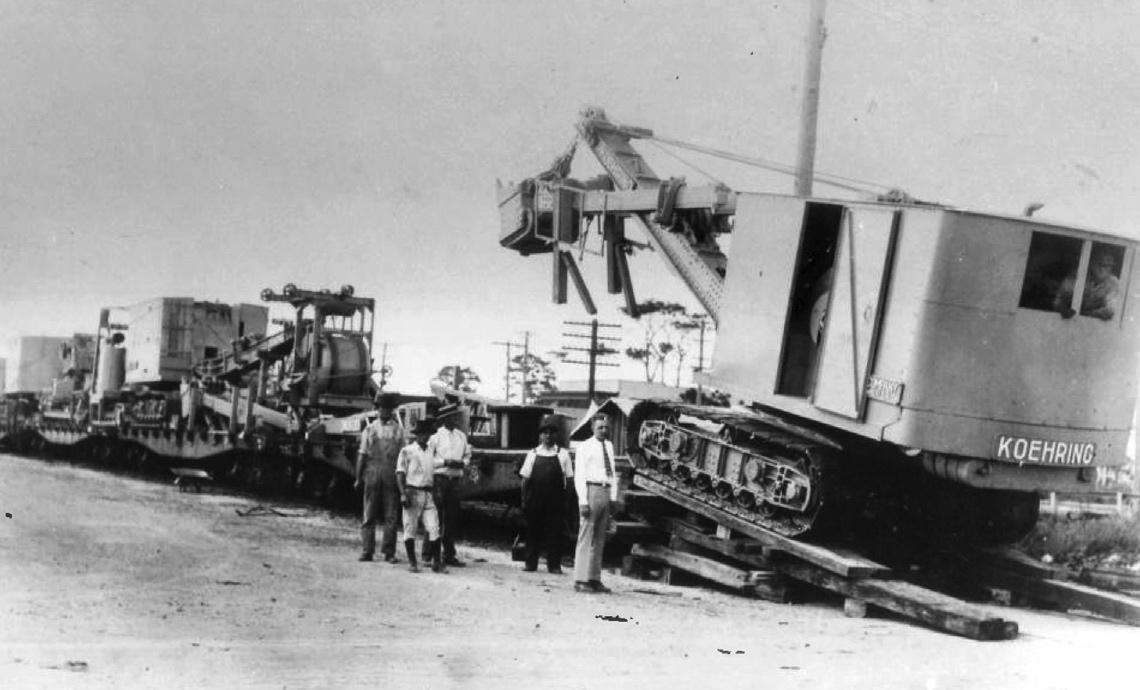
G.W. Van Keppel takes delivery by rail of a Koehring shovel in the 1950s.
from page 35
10-state market area, Murray’s team stays busy.
“When Wisconsin is covered in snow and companies are rebuilding equipment there, Texas is always going strong. The division is pretty much an all-year-round business.” He added that the division is still building its customer base with plenty of room to grow within the existing market.
The division has what Murray calls “a healthy inventory” of products to meet customer demand.
“We try not to say no to our customers.”
Material-Handling
After four years as a G.W. Van Keppel Company territory manager in Oklahoma, Ryan Buntin received a promotion at an inopportune time.
“I was given this role as material handling product line manager in 2019 and Covid came along in 2020,” Buntin recalled. “There was a lot of uncertainty.”
Bad things pass, though, and success came on pretty quickly thereafter.
“It was crazy busy for two years after that, a very prosperous couple of years once we got our inventory levels back.”
Van Keppel represents Konecranes, SENNEBOGEN cranes, and Hyundai lifts — machines that can pick up items weighing from 3,000 lbs. to more than a 100,000 lbs. The lifting machines might be employed in a factory or warehouse in Kansas City, at a wellhead in Oklahoma, a timber site in Arkansas or a scrap yard in Kansas, where magnets grip and sort materials or on a riverfront where material is offloaded.
Top sellers are a couple of Hyundai products, the 70D9 and 160D9. The former is a diesel forklift capable of 15,000-lb. lifts. The 160D9 has a capacity of 35,000 lbs. Hyundai is moving toward production of a lithium ion battery-powered electric lift with 60,000 lbs. of lifting power, according to Buntin. Forklifts are relatively simple machines, but that doesn’t mean they aren’t high-tech, said Buntin.
“They are highly technical. Sitting in the enclosed cab of higher capacity lifts is like sitting in the cockpit of an F16 fighter plane. A full array of gauges, rear view mirrors — it is pretty incredible.”
On a practical side, the entire cab lifts up and out of the way to give maintenance crews uncrowded access.
So how do you tout a forklift to a customer — by its lifting strength and manpower-saving utility?
“The first thing is, we are not order-takers. We are the experts. We always go on site and do a survey of conditions before making a determination of what the customer needs,” he said. “We always establish a relationship with a customer and cultivate it over time. We really value that. That’s the difference between us and our competitors.”
Aftermarket Solutions
Equipment aftermarket solutions is the division where equipment and components go for a second chance. It is a place where faltering or worn out parts can tighten their belts, regain their bearings and come roaring back into service.
Tashia McEldery presides over G.W. Van Keppel Company’s aftermarket solutions. She manages a new-andused parts business that Van Keppel acquired by purchasing the inventory of a closed Caterpillar dealership. Six years later, company executives decided to start a complete aftermarket division selling used and aftermarket parts for several popular
manufacturers.
Both wholesale and retail customers benefit from the division’s search and restoration work.
“We do extensive searches for customers in the market for refurbished machinery components or for new parts, said McEldery. “Many times we find them in our own inventory or discover them on a shelf in someone else’s inventory.”
Sometimes a coveted part has been rebuilt. Sometimes it’s been removed from a machine and cleaned up for resale. Sometimes it’s a brand-new surplus part acquired by McEldery.
“The majority of our parts come from vendors and from the network of manufacturers that we use, but we also do complete certified machine rebuilds” she said.
Parts for quarry machines, including high-wear crusher parts, screens and sheet metal, also are sourced through the division.
The frames and undercarriages of heavy machinery sometimes falter. Not to worry: Those components are available, too. The company also does a lot of undercarriages and works to provide a convenient source with competitively priced solutions.
It is a division with lots of moving parts, literally, and McEldery is in the thick of it. Each of the Van Keppel service locations have an affiliated aftermarket solutions person.
see page 40


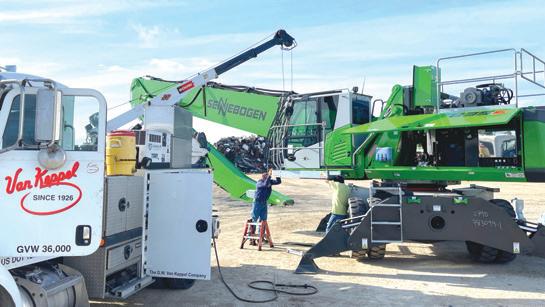

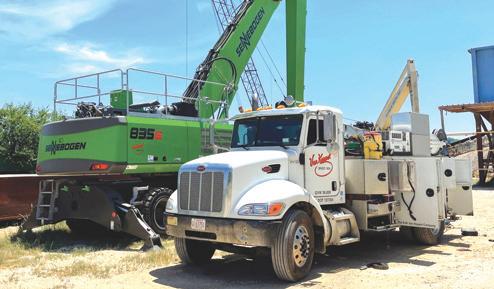
Van Keppel services a SENNEBOGEN 835E material handler on the job site.
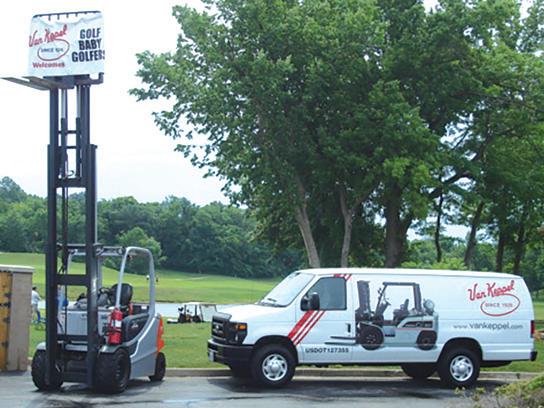
A Van Keppel liftruck sponsors the GBG Golf Tournament.
“If a service center can’t find a part, they come to us and we try to find the solution. On a typical day, the members of our team are on the phone, using our networks to fill needs, taking calls from manufacturers and our own service centers. Parts we can’t use, we’re on the phones reselling.”
They are in constant touch with the division’s warehouse in Belton, Mo., of course, and with the shop in Lone Jack, Mo., where old parts are made almost new again through a certified rebuilding process.
Peerless Engineering, Manufacturing
In the late 1990s, G.W. Van Keppel Company fully acquired Peerless Engineering and Manufacturing. Peerless was a wellestablished 40-year-old Kansas City steel fabricating company primarily serving aggregate and mining operations.
Today, Peerless is all that and more as a vital component of the Van Keppel Company.
“I think it was a good decision for Van Keppel to acquire Peerless. The company has grown and developed, and we are proud of that,” said Doug Wilson, Peerless plant manager.
Peerless products come in many forms. Some are produced for OEMs and adorned with the OEM label. Other products are custom-built and fitted into place without any decal at all. Still others are openly sold as Peerless products, and built to customers specific needs. Through all this work, Peerless uses about 1 million lbs. of steel annually.
“Our highest volume product is a screen line, from our small to our medium sized crushing screens that we’ve been building for the last 50 years,” said Wilson. “We sell from 30 to 50



screens a year.”
Even though Peerless has a sales base with Van Keppel’s aggregate, quarry and construction divisions, 60 percent of its products are sold to outside customers.
Peerless is known as a problem-solving company. The reputation comes from engineering success time and again.
“I’m not aware of any project that we’ve undertaken while I’ve been here that didn’t accomplish the goal of the customer,” said Wilson.
Some 10 to 20 percent of engineering and manufacturing projects are unique rather than fabrication of a stock item.
“Our reputation is that people primarily come to us for specialty engineering and fabrication in the Midwest. Most manufacturers want to build repetitive products rather than a one-off item. That’s why we are often called upon when a company has a unique need and a short deadline. We are very nimble” he added.
Peerless has more than 100 years of experience in its engineering and steel fabrication ranks, totaling some 20 people. Wilson cites the rise of Angelo Chiaverini, a 43-year-old employee who was invited into the office of engineering, earned a degree at night and on weekends and is an integral part of the engineering staff.
Wilson said the company is forward-thinking and credits its customers for that.
“We are passionate about taking care of customers. If you spend most of the time thinking about them, your customers, you have a tendency not to fall behind because the customers are always pulling you forward. CEG


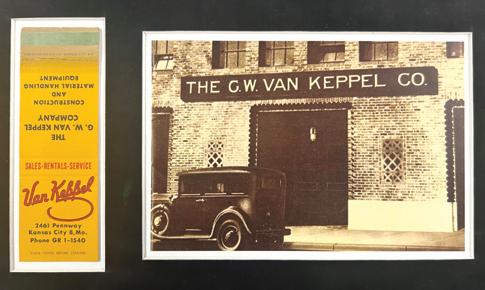
Van Keppel historic matchbook framed — an advertising piece in the 1960s.
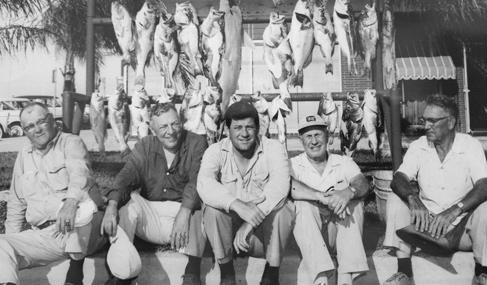
G.W. Van Keppel (2nd from L) and Tom Walker (C), with customers on a company fishing trip to the Florida Keys in the late 1940s.
We measure our success by your success
Wells Fargo places special emphasis on relationships. We take the time to listen and learn about your business and its operations, growth opportunities, and challenges. Our aim is to be a valued resource no matter where you are in your busines life cycle, forging a relationship that will last.
Wells Fargo would like to congratulate G.W. Van Keppel business, legacy, and excellence.
Here’s to a century of progress and the road ahead.