


By Irwin Rapoport
CEG CORRESPONDENT
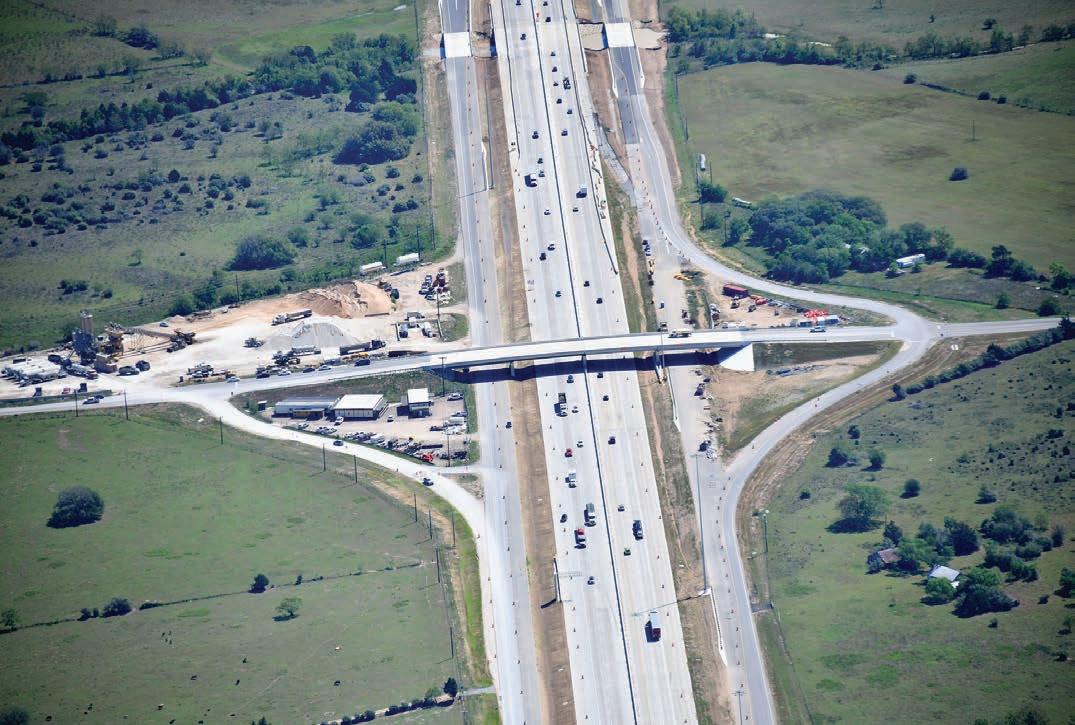
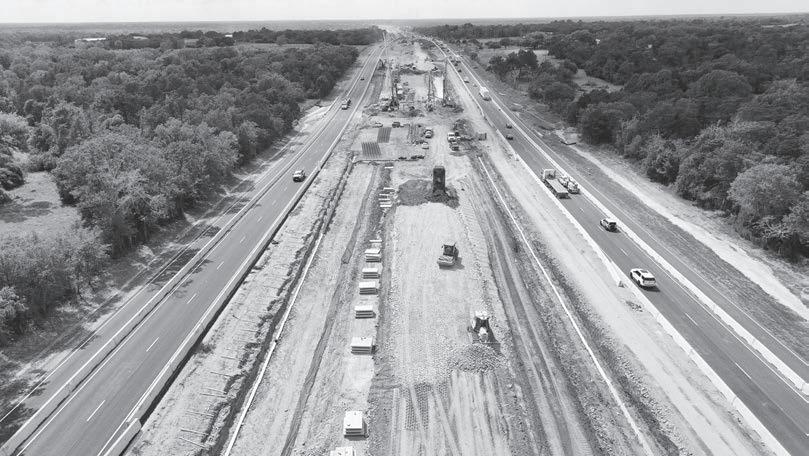
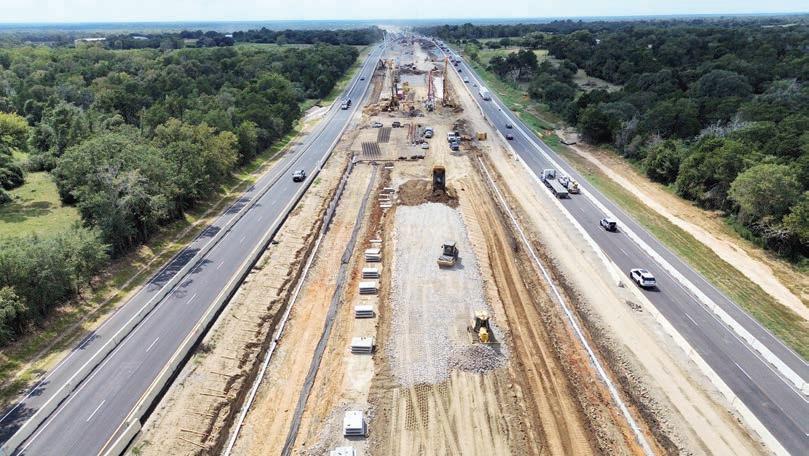
Ferrovial’s Webber is entering the final year of construction on the Texas Department of Transportation’s (TxDOT) $365 million Interstate 10 widening project in Colorado County, a major effort designed to improve one of the state’s busiest transportation corridors.
Construction began in March 2024 on the 12-mi. stretch of I-10 from U.S. 90 (Alleyton Road) to Farmto-Market 2761, with completion scheduled for July 2027.
The project is widening the interstate from two to three 12-ft. concrete lanes in each direction, adding 12-ft. inside and outside shoulders, reconstructing the existing roadway, replacing 18 bridges, rebuilding
frontage roads and improving drainage, communica tions and safety infrastructure.
Approximately 70,000 vehicles travel the corridor daily.
“This project is needed to address the significant growth and development occurring in the area and the increasing traffic demand along a corridor that serves as a critical connection between Houston, Austin and San Antonio — three of the four largest cities in Texas,” Guillermo Fernandez, Webber’s project man ager, told Construction Equipment Guide.
He added that the westbound outside shoulder is being designed to serve as a hurricane evacuation lane.
“It will be part of a safe and reliable hurricane evacuation route for the region,” TxDOT spokesman Lucea’n Kuykendall told Construction Equipment Guide.
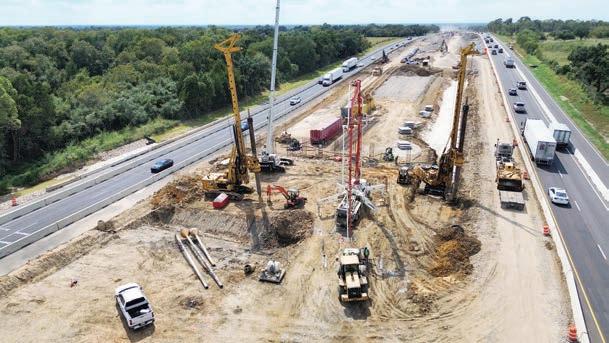
The project, located in TxDOT’s Yoakum District and funded through the state’s highway program, re places infrastructure dating to the original construction I-10 in 1938.
Work includes rebuilding both main lanes and frontage roads, converting the frontage roads from two-way to one-way operation, replacing a grassy ca ble-barrier median with a concrete barrier and recon structing the Colorado River bridge and 17 additional bridges.
“The existing frontage roads were in poorer condi tion than the main lanes,” Fernandez said. “However, had reached a point where replacement was necessary to improve safety, address increasing traffic demand and reduce congestion along the corridor.”



Agricultural Tractors
2023 JOHN DEERE 6R165

Crawler Carriers (2) 2019-2020 MOROOKA MST4000VD
$219,500 2018 MOROOKA MST3000VD ................. $159,500 (2) 2018-2019 MOROOKA MST2200 . From $119,500
Dozers - Crawler (3) 2023-2024 CATERPILLAR D10 From $1,695,000
(2) 2023 CATERPILLAR D9 From $1,295,000 (6) 2019-2026 CATERPILLAR D8 From $635,000 (2) 2023-2026 2023 CATERPILLAR D7 ......... $CALL (3) 2020-2025 CATERPILLAR D6 ..... From $259,500 (12) 2020-2026 CATERPILLAR D6 LGPFrom $369,500 2020 CATERPILLAR D6 XL.....................$255,000
(3) 2023-2025 CATERPILLAR D5 From $399,500
CATERPILLAR D4.........................$209,500 (2) 2022-2023 CATERPILLAR D3 ..... From $149,500
CATERPILLAR D2.........................$157,500
Excavators - Crawlers (2) 2022 CATERPILLAR 395-07 From $945,000 (3) 2020-2026 CATERPILLAR 374 From $595,000 (8) 2021-2026 CATERPILLAR 352 From $427,500 (2) 2026 CATERPILLAR 350 ...................... $CALL
2019 CATERPILLAR 349FL $379,000
2022 CATERPILLAR 349 $409,500
2022 CATERPILLAR 340 $379,500 (4) 2025-2026 CATERPILLAR 336 .... From $425,000 2026 CATERPILLAR 335 .......................... $CALL (2) 2023 CATERPILLAR 330-07 From $295,000
2020 CATERPILLAR 326-07 $249,500
2020 CATERPILLAR 320 $189,500 2017 CATERPILLAR 316FL .................... $139,500 (2) 2023 CATERPILLAR 306CR From $75,000 2021 CATERPILAR 305E2 $65,000 2023 HITACHI ZX690LC-7......................$659,500
Rigid Frame Trucks (2) 2017 CATERPILLAR 772G $295,500 Ea.
Skid Steers - Track (2) 2021-2024 CATERPILLAR 299D3 XEFrom $62,500
2022 CATERPILLAR 299D3 XPS $72,500 2022 CATERPILLAR 299D3 $72,500
2025 CATERPILLAR
Motor Graders




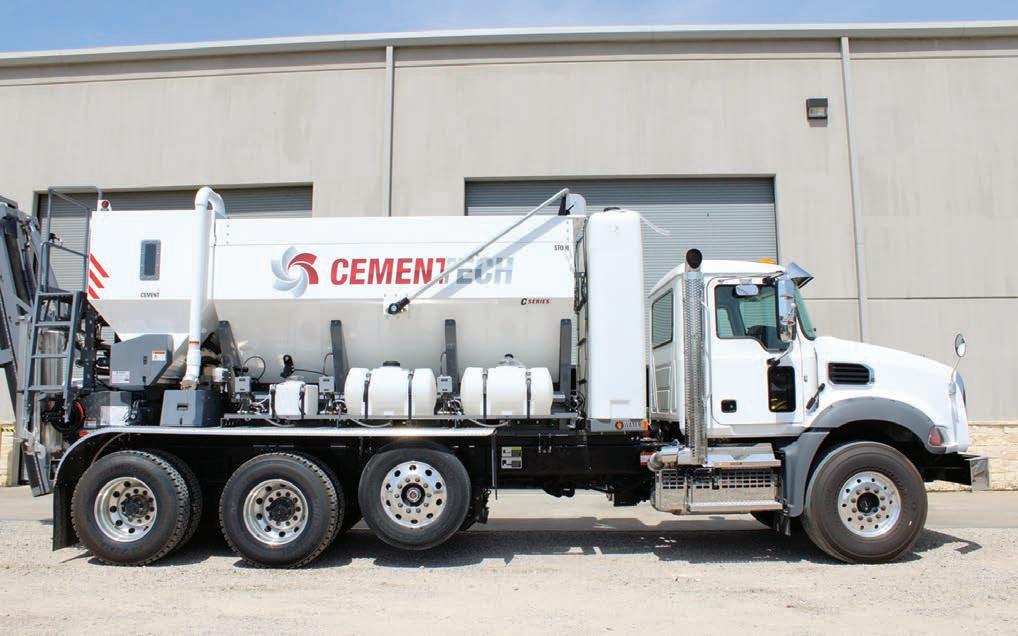
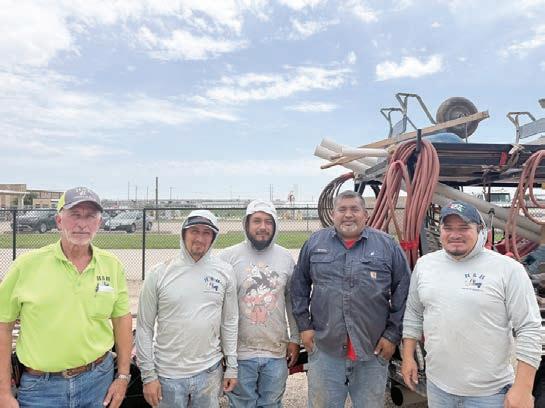
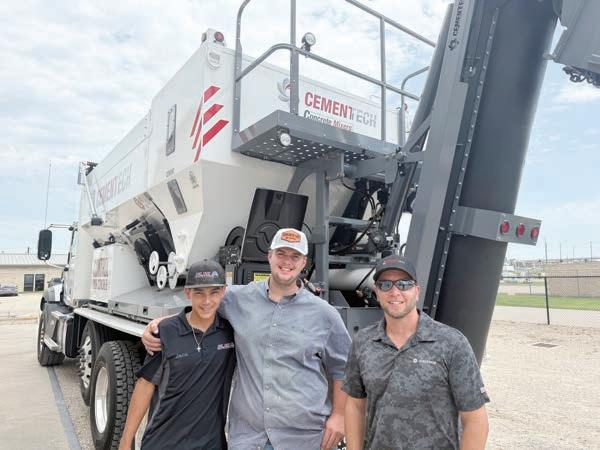
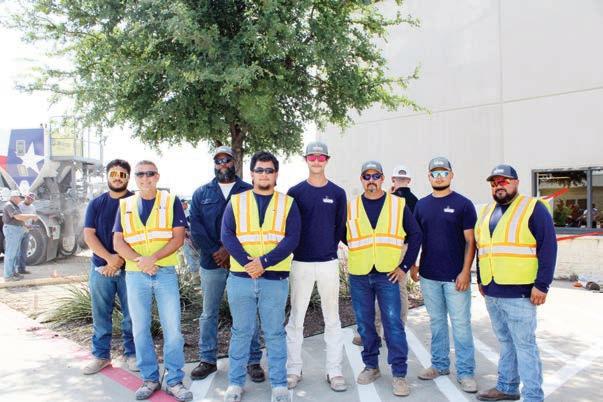
Contractors from across the Dallas-Fort Worth area gathered at ROMCO Equipment’s Carrollton facility on June 25, 2026, for a hands-on demonstration of Cemen Tech’s volumetric concrete technology.
Hosted by ROMCO, the exclusive Cemen Tech dealer for Texas, the event gave attendees an opportunity to watch live concrete pours, inspect two C Series volumetric mixers and see how the equipment helps improve jobsite efficiency while giving contractors greater control over concrete production.
Throughout the day, ROMCO and Cemen Tech representatives walked attendees through the mixers’ features before conducting two live concrete pours that demonstrated the equipment’s ability to produce fresh concrete on demand. Contractors observed the process firsthand while discussing applications with product specialists and learning how the mixers can support everything from curb and gutter work to rapid-set repairs and high-production concrete projects.
“One of the biggest advantages is control,” said Zach Deason, Southwest regional sales manager of Cemen Tech. “If you want to pour at four in the morning, you’re pouring at four in the morning. If you need to change a mix design on the job, you can do it. You’re not waiting on someone else. You know exactly what’s coming out of the back of the mixer.”
Unlike traditional drum mixers, volumetric mixers carry the individual concrete ingredients separately and combine them only as concrete is discharged. Because water is introduced at the point of mixing, operators can produce only the amount of concrete needed, helping reduce waste while providing fresh concrete throughout the day.
Deason highlighted several features designed to simplify concrete production in the field. Mix designs are stored in the onboard computer, allowing operators to select a programmed mix with the push of a button. The system automatically meters aggregate, cement and water while remote controls allow operators to manage concrete production from outside the truck during a pour.
Accuracy was a key topic during the demonstrations. Deason explained that the mixers are designed to maintain cement accuracy within plus or minus 1 percent, helping contractors avoid both excess material costs and out-ofspecification concrete. He noted that onboard pressure washers and an automatic washout system help simplify cleanup between jobs, reducing downtime and preparing the







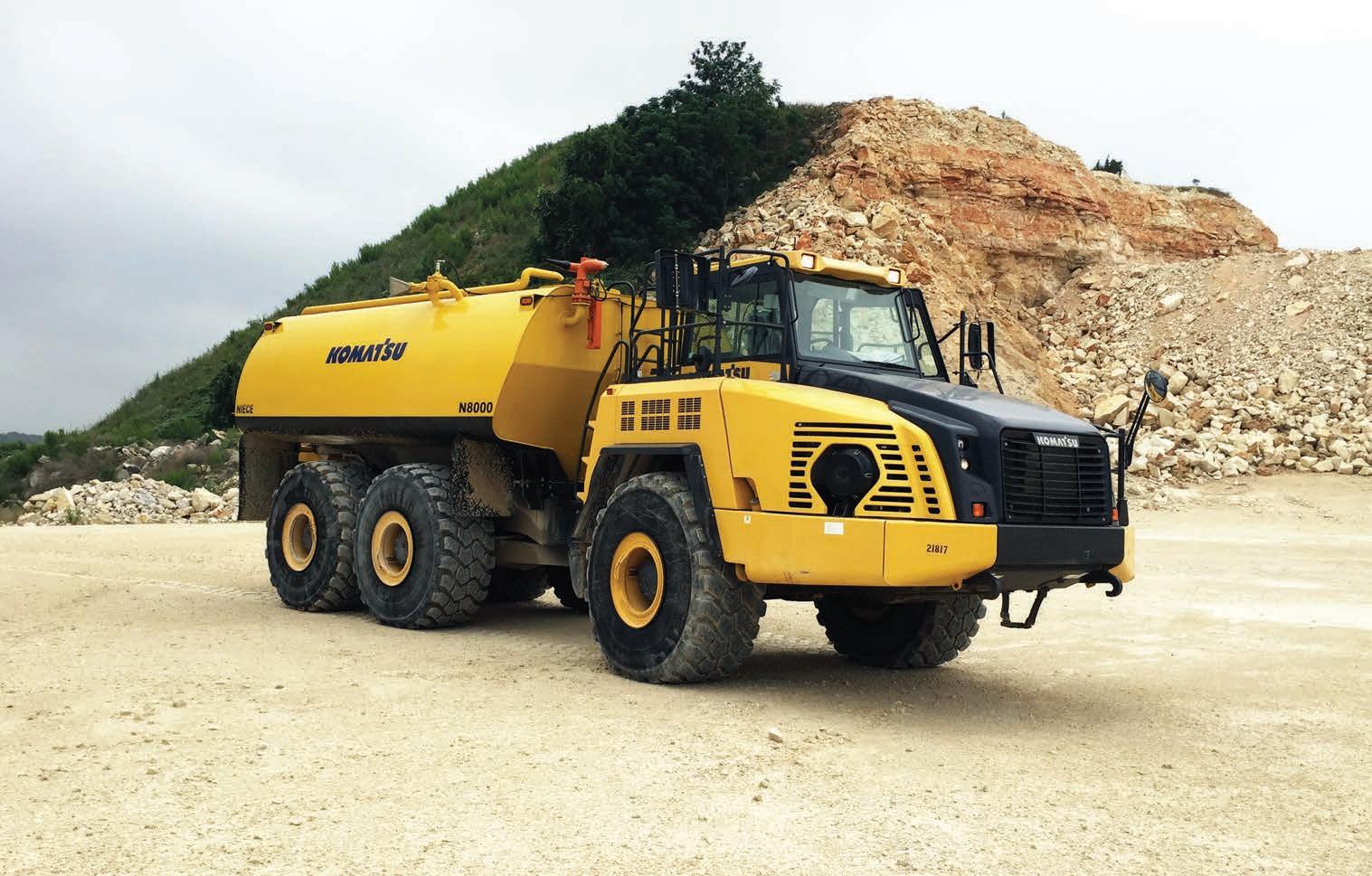
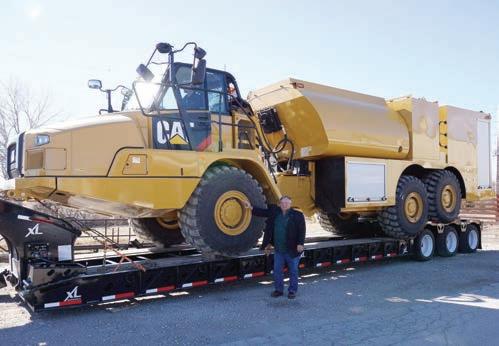
Niece 8,000 gallon water tanks
installed on 40 ton Articulated Off Highway chassis. This combination is the workhorse of the dust control and water needs for quarries and large construction sites
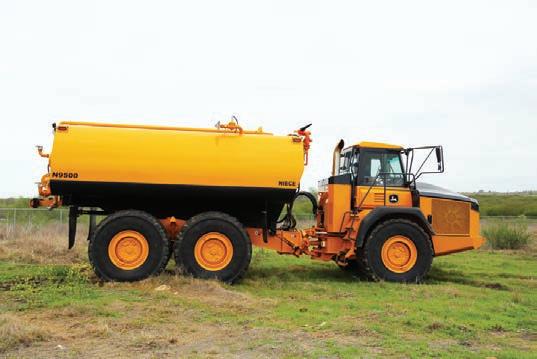
The NWT9500 9500 Gallon water tank mounted on articulated truck. Pictured: Deere 460E with 9,500 gallon tank. Tanks come with 6X5 pumps.
The NFL3000 Off Road, Fuel and Lube Bed offers 3,000 gallons of diesel fuel.

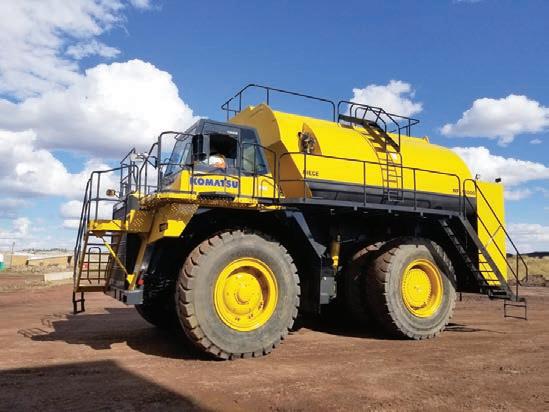
The NFL10000 Fuel & Lube Can be mounted on any 100,000 lb rigid frame truck. Holds 10,000 gallons of diesel. 5 additional fluid tanks. Holds up to 3,000 gallons of oil.
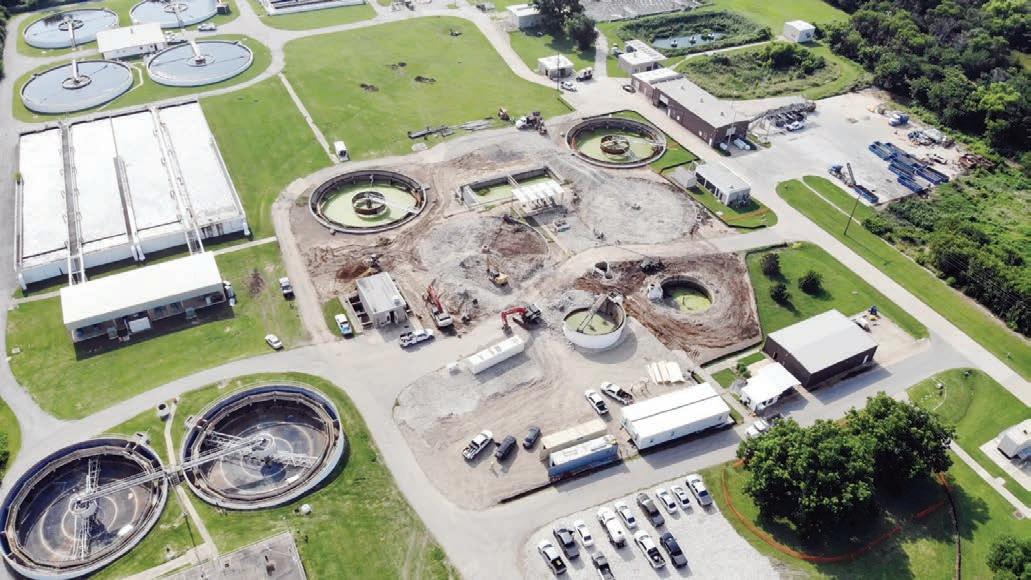
Crescent Constructors, an affiliate of Zachry Construction Corp., was awarded the $89 million Prairie Creek Wastewater Treatment Plant Aeration Basin Expansion project for the city of Lewisville, Texas.
The project is a major investment in wastewater infrastructure designed to support the community’s continued growth and long-term service needs.
The project will increase the plant’s operating capacity from 12 million gal. per day to 16 million gal. per day through aeration basin expansion, rehabilitation and system upgrades. The improvements are the first phase of a broader plan to help the facility meet future treatment demands and move toward a long-term capacity goal of 20 million gal. per day.
“Reliable wastewater infrastructure is essential to how growing communities plan for the future,” said Ryan Glanz, vice president of Crescent Constructors. “We appreciate the opportunity to support the city of Lewisville as it invests in dependable service for residents, businesses and future development.”
The project scope includes the removal of an older portion of the wastewater treatment plant to make room for expansion of the existing aeration basin and construction of a new blower building. The work also includes rehabilitation of the existing headworks, aeration basins and return activated sludge/waste activated sludge (RAW/WAS) building, along with related piping, electrical, controls and site improvements.
“As Lewisville continues to grow, investing in critical infrastructure is essential to maintaining the high level of service our residents and businesses depend on,” said Aaron
Russell, director of public works for the city of Lewisville.
“The Prairie Creek Wastewater Treatment Plant expansion is a strategic investment in our community’s future, increasing system capacity, enhancing reliability, and ensuring we are prepared to meet the needs of a growing city for decades to come.”
The work will take place within an active wastewater treatment plant. Because the facility will remain operational during construction, Crescent’s team will coordinate phased construction activities, electrical and controls integration,
supplier representatives and planned shutdowns to help minimize disruption to plant operations.
Completion is scheduled for Nov. 28, 2028.
The award reflects the continued expansion of Zachry Construction’s water infrastructure capabilities following Crescent’s affiliation with the company in 2025. Together, the teams bring specialized water and wastewater construction experience, regional relationships and broader construction resources to support public-sector infrastructure needs across North Texas and other growing markets.
Construction of UTA West is under way and progressing on schedule toward a planned fall 2028 opening.
Work is focused on foundational construction, parking infrastructure and entry signage at the site near the intersection of Interstate 20 and Interstate 30 in the Aledo and Willow Park area of Parker County.
Much of the onsite work is being completed by local contractors, supporting economic activity and job creation in the surrounding community.
General contractor Hensel Phelps is leading construction in close coordination with UTA’s Facilities Management team. The project is managed by Josh Barth, project manager for Hensel Phelps, who brings extensive experience working with UT System institutions on major capital projects.
The project is being delivered through a design-build model, pairing Hensel Phelps with design partner HKS. The integrated approach allows design and construction activities to progress simultaneously.
“Being a part of the first building on the new campus is an exciting opportunity,” Barth said. “As this project is design-build, working through the design process with our design partner HKS and the UTA team has
been a great experience and provided the opportunity to assist in setting this project up for success.”
Earthwork and site preparation are ongoing, with the building foundation and
Construction began in December 2025 with the north parking lot, an entryway off Interstate 30 and bringing infrastructure up to near the building, according to The Shorthorn.
for residents in the region.
The University of Texas at Arlington is a growing public research university in the heart of Dallas-Fort Worth. With a student body of more than 42,700, UTA is the second-largest













Every year, the Texas Department of Transportation’s (TxDOT) Pavement Management and Inspection (PMI) team hits the road — literally — to take a close, data‑driven look at the condition of pavements across Texas.
The PMI team is a small, highly specialized group whose work plays a critical role in statewide transportation planning.
Using advanced technology and a limited fleet of specialized equipment, the team collects pavement data across thousands of miles of roadway to support decisions about maintenance, rehabilitation and future construction.
This information directly influences planning and funding decisions, so accuracy, consistency and safety are essential.
“Most drivers probably do not think about what goes into maintaining a smooth roadway, but these inspections are an important part of that process,” said Miles Hicks, a TxDOT transportation specialist.
“They help us track pavement conditions and make informed decisions that support safer, more reliable travel.”
Over the years, TxDOT has modernized how pavement data is collected. Automated pavement data collection has significantly improved safety by reducing the need for workers to be physically present in active traffic lanes during inspections.
In addition, the collection process now includes right‑of‑way and pavement surface imagery, providing visual confirmation of measurement locations and areas of concern. These images allow engineers and analysts

to validate findings and better understand roadway conditions.
To evaluate pavement conditions, PMI relies on several specialized tools, each designed to measure a different aspect of roadway performance.
Ground‑penetrating radar allows the team to see below the pavement surface and identify structural concerns. GPS technology
ensures every data point is precisely located and consistently mapped.
Profilers measure ride quality and smoothness from the driver’s perspective, while skid trucks evaluate surface friction — especially under wet conditions. The falling weight deflectometer (FWD) measures pavement strength and structural capacity.
Together, these tools provide a detailed picture of how Texas roads are performing by delivering information more quickly, safely and accurately than ever before.
Once data collection is complete, the PMI team analyzes a wide range of pavement distress indicators, including ride quality, rutting, cracking, corner breaks, punch‑outs, and patching on both asphalt and concrete pavements.
These measurements are combined into a single, standardized pavement condition score. Using one consistent score allows TxDOT to compare roadway conditions across the state and prioritize projects where improvements are most needed.
Statewide pavement data collection usually wraps up in the spring. From there, the information undergoes a thorough review and validation process.
This quality control step is critical to making sure the information used in planning decisions is accurate, reliable and consistent statewide.
PMI’s work forms the foundation of TxDOT’s pavement planning efforts. Last year, TxDOT received a score of 90. A pavement condition score of 90 or above reflects excellent roadway conditions, smooth ride quality, minimal distress and little to no rutting, an important benchmark TxDOT works to maintain across Texas.
If scores begin to decline, the data helps guide proactive solutions through TxDOT’s four‑year plan, including maintenance contracts, overlays and rehabilitation projects.
(This article is reprinted courtesy of the Texas Department of Transportation.)
From cutting-edge technology deployments in Central Texas to major highway expansions in South Texas, May brought significant progress on transportation projects designed to improve safety, reduce congestion and support Texas’ continued growth, according to the Texas Department of Transportation (TxDOT).
Central Texas: Smart Tech, Congestion Relief
In the Austin area, TxDOT launched operations of the new State Highway 130 Smart Corridor, one of the most advanced smart highway corridors in the country.
The 4 mi. pilot segment along SH 130 uses cameras, fiber optic communications, sensors and artificial intelligence to provide real time incident detection, hazard alerts and traffic monitoring.
The technology gives TxDOT operators immediate awareness of crashes, stalled vehicles, debris and other roadway hazards, allowing for faster emergency response and traffic management. Officials say lessons learned from the pilot could eventually be applied to major corridors across Texas.
Also in Austin, TxDOT broke ground on the $68.4 million Loop 360 at Courtyard Drive and
Ranch to Market 2222 project. The project will remove traffic signals from the main lanes of Loop 360, add an overpass at Courtyard Drive and construct a new interchange at RM 2222. The improvements are part of the Texas Clear Lanes initiative and are expected to improve traffic flow and safety along one of Austin’s busiest corridors.

In San Antonio, TxDOT continued making progress on the $1.4 billion expansion of Loop 1604 between Interstate 10 and State Highway 16. The project is widening the corridor from four lanes to 10 lanes and creating a unique frontage road configuration featuring four partial roundabouts beneath the interchange at I 10. The innovative design is intended to improve traffic flow.
Rio Grande Valley: Major Roadway Expansion Begins
In the Rio Grande Valley, TxDOT announced the start of a $76 million expansion of Ware Road (Farm-to-Market 2220). The project will widen the roadway from two lanes to six lanes between Monte Cristo Road (Farm-toMarket 1925) and Mile 5 Road (Farm-to-Marlet 676) while adding drainage improvements, sidewalks and bicycle accommodations. The project is intended to improve both safety and mobility for the growing McAllen area. (This article is reprinted courtesy of the Texas Department of Transportation.)

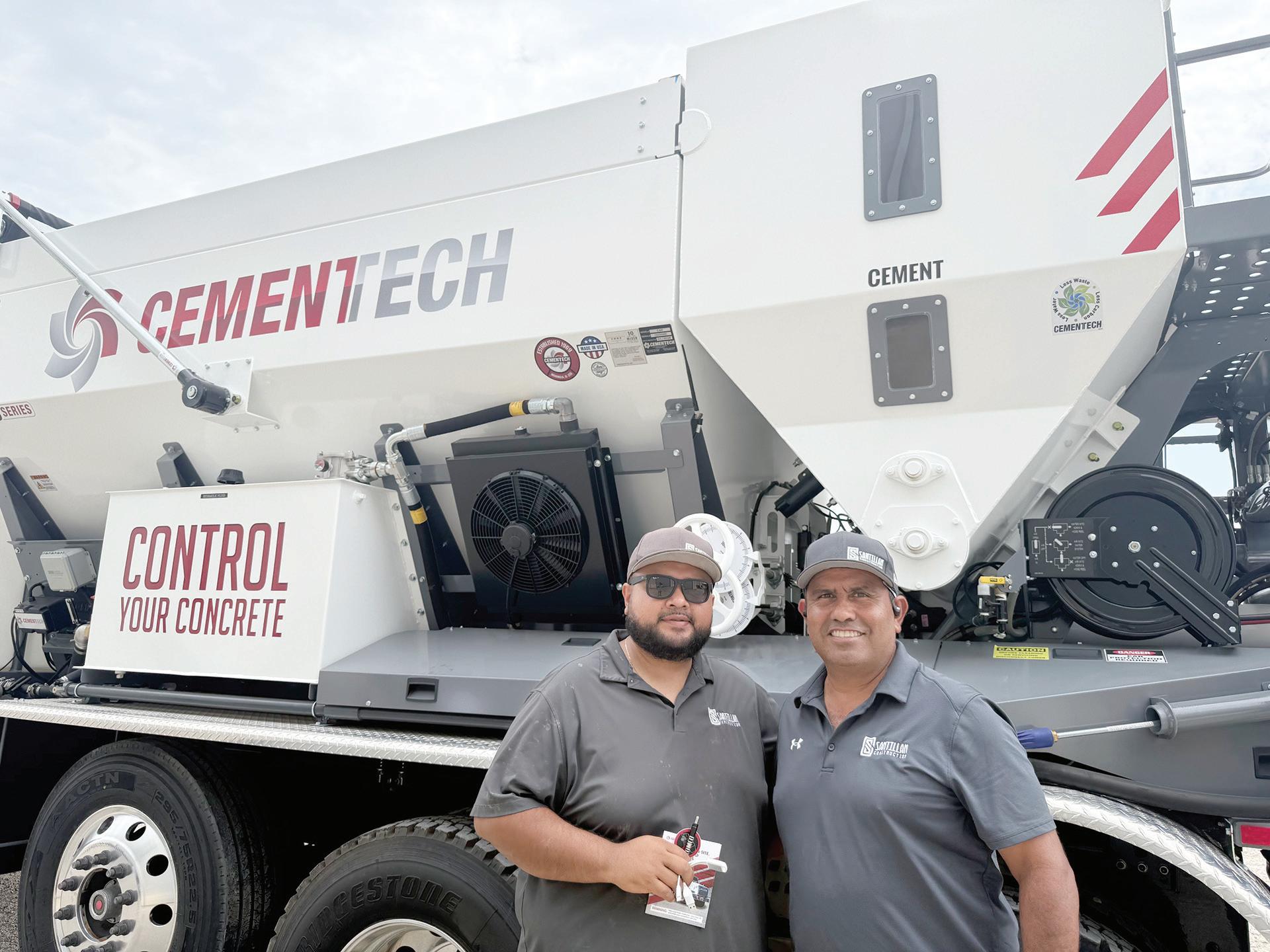
about volumetric concrete technology.
(All photos courtesy of ROMCO Equipment.)
Link-Belt Cranes announced the expansion of Doggett’s authorized distribution territory to include southeast Texas, with a primary focus on the greater Houston metropolitan area.
Doggett has represented Link-Belt Cranes in Louisiana since mid-2016, building a strong reputation for customer support, product expertise and aftermarket service. The territory expansion reflects the success of that longstanding partnership and positions Doggett to deliver the same level of support to customers throughout

southeast Texas.
“The Houston metroplex remains one of the nation’s most important markets for construction, petrochemical, infrastructure, port, and energyrelated projects,” said Gary Lane, Link-Belt Cranes vice president of marketing, sales and customer support. “With an established regional presence and extensive equipment support capabilities, Doggett is well-positioned to provide local sales, service, parts and technical support to crane owners and contractors across the region.”
Through this territory expansion, Doggett will offer the full line of Link-Belt rough terrain, hydraulic truck, all terrain and lattice and telescopic crawler cranes, supported by comprehensive aftermarket services, including parts availability, maintenance, inspections and field service support.
“Doggett is thrilled to expand its partnership with Link-Belt Cranes into southeast Texas,” said Doggett Executive Vice President Mike Ortiz. “Since becoming a Link-Belt distributor in 2016, we have seen the strength of the product and the value it brings to customers. We look forward to bringing that same experience and support to customers throughout the Houston area and all southeast Texas.”
Caterpillar Inc. announced on July 2, 2026, the launch of its workforce commitment in Texas, marking another step in its five-year, $100 million Building the Future Workforce Initiative.
With an initial allocation of up to $5 million, the funding aims to prepare current and future workers across Texas for advanced manufacturing and industry technician jobs of tomorrow.
“Caterpillar believes building a strong workforce starts with investing in people and helping them develop the skills needed to be successful,” said Christy Pambianchi, Caterpillar’s chief human resources officer. “Texas is a manufacturing powerhouse and a vital hub for innovation. Through this pledge, we’re capitalizing on those strengths and preparing Texans for the jobs of today and the advanced technology and manufacturing careers of tomorrow.”
Why Texas?
Texas, a recognized leader in American manufacturing, was selected for the workforce commitment because
of Caterpillar’s deep roots in the state.
Texas is home to 6,630 Caterpillar employees spanning from the company’s Irving headquarters to 17 facilities across the state, including the 1.7 million-sq.-ft., high-tech engine facility in Seguin, where the announcement took place. Texas also boasts the infrastructure, expertise and strong educational institutions needed to develop innovative training models that could serve as a national example.
Caterpillar’s initial investment will explore reducing financial barriers to training, developing a skills framework and strengthening pathways that connect students to careers in advanced manufacturing and industrial skills.
To advance these efforts across the state, Caterpillar is collaborating with leading organizations, including Texas State Technical College, the Manufacturing Institute and local stakeholders such as the Seguin Economic Development Corp. For more information, visit caterpillar.com.









frontage roads while crews rebuilt the main lanes.
The concrete pavement is expected to last approximately 50 years, while the bridges have an anticipated 80-year service life. Kuykendall noted that only minor maintenance
Fernandez said the project incorporates several innovations, including precast bridge overhangs in place of conventional cast-in-place construction and a pilot use of recycled aggregates in reinforced concrete pavement developed in partnership with TxDOT and the University of Texas.
Most major work already has been completed, including subgrade stabilization, drainage installation, bridge construc-
the remaining year, crews will finish paving the main lanes and frontage roads, install permanent striping and signage, paint structures and complete erosion control
One of the project’s greatest challenges has been the area’s
“Subgrade conditions have been a major challenge,” Fernandez said. “These challenges are being addressed through detailed phasing, traffic control planning and extensive subgrade stabilization efforts to support the long-term
Drainage also has required continual attention across the
The project uses conventional Grade 60 reinforcing steel rather than epoxy-coated rebar because of local environmen-
Fernandez estimated that reconstructing a typical 1- to 2-mi. roadway section — from demolition through paving readiness — requires approximately three to four months.
High-early-strength concrete is being used where traffic
Replacing all 18 bridges has been one of the project’s largest undertakings.
The new structures include six main-lane bridges carrying six traffic lanes, eight frontage-road bridges and four underpasses. Bridge lengths range from approximately 80 ft. to 540 ft.
“Two separate drilling crews worked on site at the same time, which helped accelerate bridge foundation operations, and all bridge work was completed in 25 months,” Fernandez said.
The bridges required approximately 33,024 linear ft. of drilled shafts measuring up to 78 in. in diameter and nearly 100 ft. deep.
Construction begins by preparing a stable drilling platform after demolition. Because sandy soils dominate the region, bentonite slurry is used to prevent shaft walls from collapsing during drilling. After drilling, reinforcing cages are installed and concrete is placed through tremie pipes from the bottom upward to ensure structural integrity.
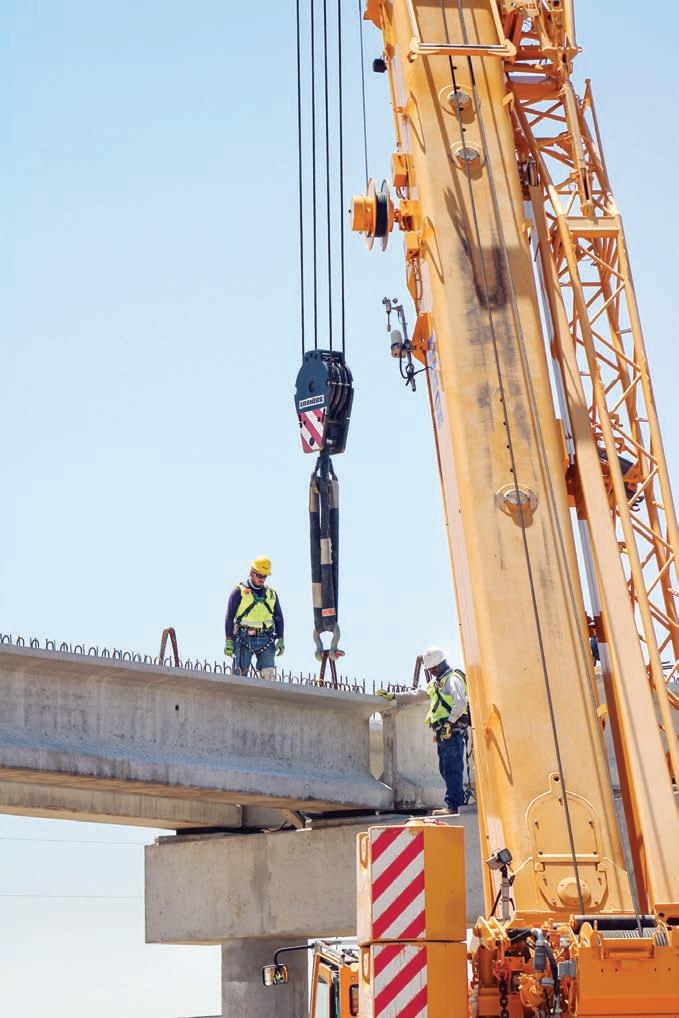
Once foundations cure, crews construct columns and caps before erecting precast bridge beams measuring up to 150 ft. long. Precast deck panels are then installed between beams, followed by reinforcing steel, expansion joints and deck concrete.
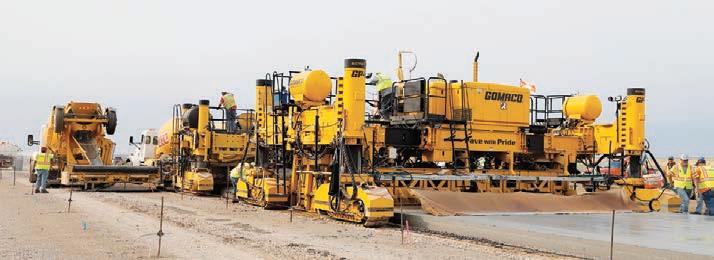
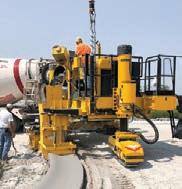
Bridge decks cure for 10 days before crews remove temporary formwork and install concrete traffic barriers using slipform paving equipment.
The entire roadway structure is being rebuilt.
The pavement section consists of cement-treated subbase, road base and either asphalt or reinforced concrete pavement, depending on location.
Earthwork crews remove existing pavement, excavate unsuitable materials and transport surplus soil to fill areas



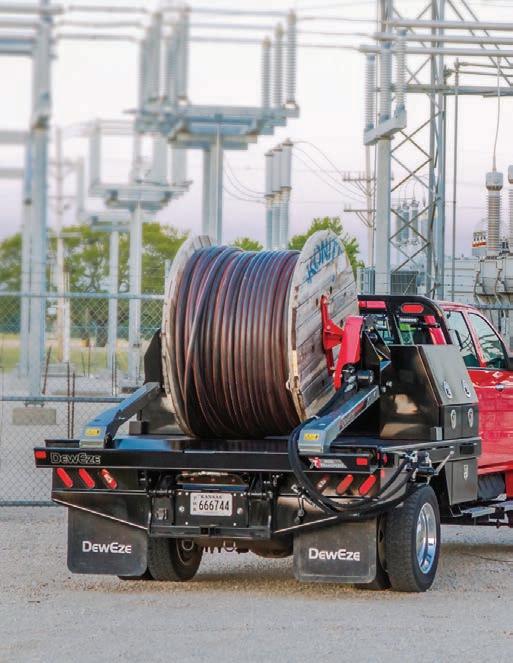
Risers & Reel Bar
A pair of risers, dual lift cylinders and an arbor allows the XRT Bed to easily load reels.
Spindle System
The hydraulically controlled arms, reaching from 26 to 55 inches, eliminate the need for an arbor to get a grip on a range of spools.
Overspin Brake
(Available with Spindle System Only)
An integrated brake with up to 500 pounds of drag helps prevent backslashing while pulling.
Hydraulic Controls
(Available with Spindle System Only) Reduce manpower to safely take up or payout cable or fiber hydraulically with this variable speed, removable accessory.
Go Wireless
Hydraulic power at the touch of a button. The DewEze wireless remote gives you untethered control within a twenty foot radius of your bed.






April (issue 7) Paving, Compaction and Milling
May (issue 9) Skid Steers, CTLs, Mini & Compact Equipment
June (issue 11) Attachments
July (issue 13) Electric Equipment
August (issue 15) Wheel Loaders, Tool Carriers & Attachments
August (issue 17) Backhoes and Attachments
September (issue 19) Utilities: Trenching, Compressors, Generators and Light Towers
October (issue 21) Off-Road Trucks, Dumpers & Mining Equipment
November (issue 23) Dozers, Crawler Loaders
December (issue 25) Trailers

Crusoe, a vertically integrated AI infrastructure provider, and Lancium, an energy technology and infrastructure company, announced on July 15, 2026, a 1.0 gigawatt (GW) AI data center campus in Childress, Texas.
The grid-connected campus spans 270 acres owned by Lancium, which also will develop and manage the site’s energy infrastructure. The data center will be purpose-built to support the advanced AI computational requirements of a leading hyperscale technology company.
Construction is expected to begin in the third quarter of 2026, creating thousands of local construction jobs, more than 100 long-term positions, and a significant long-term economic investment for Childress County.
A general contractor wasn’t named.
Childress marks the second site where Crusoe and Lancium are executing this same partnership structure: Lancium acquires and owns the land, secures the power interconnect and manages energy orchestration for the campus, while Crusoe designs, builds and operates the AI data center itself.
It’s a division of labor that the two companies said has proven out at scale in Abilene, and Childress extends that playbook to a new market.
Lancium and Crusoe said they are committed to bringing the highest standard in data center campus development to Childress, where the companies will also directly invest in local water and other civil infrastructure, and directly support the community across the areas of housing,
education and emergency and other public services. Both organizations said they are deeply committed to ensuring the development will benefit all stakeholders in the community.
“This campus represents a major milestone in Crusoe’s deep commitment to the state of Texas,” said Chase Lochmiller, co-founder and CEO of Crusoe. “Working with Lancium again, in the same partnership model we built together in Abilene, made Childress an easy choice for our next site. This is more than a data center to us — it’s our longterm commitment to this community, and we’re proud to be building that future here in Childress.”
“Childress is a natural next step in our partnership with Crusoe,” said Michael McNamara, CEO of Lancium. “Crusoe has been a great partner to build alongside in Abilene, and we’re glad to bring that same model — and the jobs and investment that come with it — to the community of Childress. We are deeply committed to working with local stakeholders to advance a model of development that addresses the broader needs of the community we will share for a very long time.”
Childress Campus highlights include:
• a 1 GW grid-connected capacity that, at full scale, will support the deployment of hundreds of thousands of the industry’s most advanced AI accelerators for training or inference;
• behind-the-meter solar and energy storage resources that will enhance grid reliability, energy efficiency and sustainability;
• water-efficient cooling featuring a closed-loop,
nonevaporative liquid cooling system to optimize water efficiency; and
• the expected creation of thousands of construction jobs and more than 100 longterm permanent positions in Childress County.
The Childress development is the latest chapter in Crusoe’s Texas history.
The company broke ground in Abilene in June 2024 on the Lancium-owned campus, energizing its first two buildings within one year before expanding that campus to 1.2 GW. Crusoe recently announced it is building a second 900 MW data center on adjacent Lancium-owned land in Abilene.



Flexible pavement is constructed using a base course followed by two asphalt surface courses. Concrete pavement begins with a 1-in. asphalt bond breaker that allows the concrete slab to expand and contract without cracking.
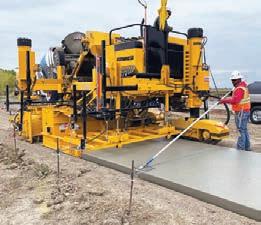
After reinforcing steel is placed, concrete is paved, finished and cured. Relief joints are saw-cut into the slab to control cracking caused by curing and temperature changes.
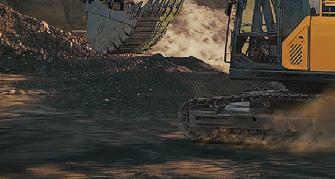
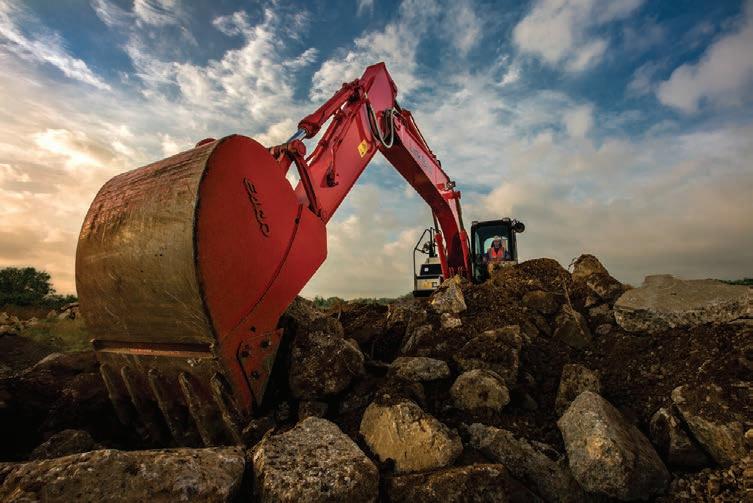
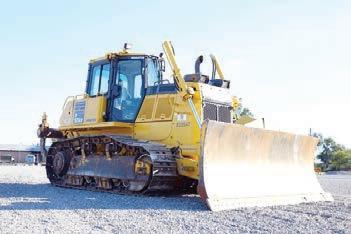
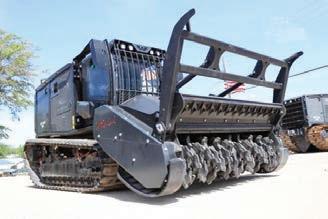
Road construction relies on a large fleet that includes excavators, bulldozers, backhoes, reclaimers, compactors, motor graders, asphalt pavers and GOMACO concrete paving equipment.
Bridge construction used Tadano rough-terrain cranes, Link-Belt crawler cranes, Liebherr cranes, concrete pump trucks, telehandlers and aerial lifts.
Webber demolished four bridges during overnight closures lasting between 12 and 15 hours.
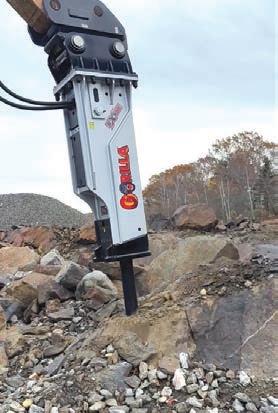
Demolition crews first protected the roadway below with a 12-in. sand cushion before using excavators equipped with hydraulic hammers to remove the bridge decks.
During peak activity, approximately 180200 Webber employees and subcontractors work on the project.
Major subcontractors include Durwood Greene Construction for asphalt paving, AH Beck for drilled foundations and Allstate Signal for electrical, communications and overhead signing.
Large quantities of existing materials are
being recycled.
Project crews have generated approximately 150,000 cu. yds. of demolished concrete, 200,000 cu. yds. of asphalt millings, 160,000 cu. yds. of flexible base milling and 575,000 cu. yds. of excavated material.
Much of the reclaimed asphalt and flexible base is being incorporated into new cement-treated road base in accordance with TxDOT specifications.
New materials include approximately 955,000 cu. yds. of embankment, 148,000 cu. yds. of flexible road base, 400,000 cu. yds. of concrete and 450,000 tons of asphalt.
Maintaining such a large fleet has required constant attention.
“The main issues are hydraulic lines busting, tires leaking or going flat and blade cutting edges needing periodic replacement,” Fernandez said. “Most repairs can be taken care of within the same day, assuming no specific parts need to be shipped.”
With major bridge work complete and paving well underway, the project has entered its final construction phase. Over the next year, crews will focus on completing pavement, traffic control devices, landscaping and finishing work before opening the fully reconstructed six-lane corridor in July 2027.
The completed project is expected to improve traffic flow, enhance safety and provide a more resilient transportation link connecting Houston, Austin and San Antonio while serving as a key hurricane evacuation route for southeast Texas. CEG
(All photos courtesy of Ferrovial Webber LLC.)

PIRTEK Riverside
15301 N Interstate Hwy 35 Unit G Pflugerville, TX 78660 (512) 448-0800
PIRTEK Waco
125 Topeka Dr, Suite D Woodway, TX 76712 (254) 294-8508
PIRTEK Brownsville
Mobile Service Only Brownsville, TX 78521 (956) 346-2582

PIRTEK Brushy Creek Mobile Service Only Brushy Creek, TX 78681 (512) 363-5973
PIRTEK College Station Mobile Service Only (979) 789-4673
PIRTEK Tomball
26010 State Hwy 249 Suite B Tomball, TX 77375 (281) 741-8090
PIRTEK Baytown
4308 Garth Rd. Suite A Baytown, TX 77521 (281) 837-7203
PIRTEK Angleton Mobile Service Only (979) 404-4673
PIRTEK Beltway North 1920 Rankin Rd. Suite 170 Houston, TX 77073 (713) 649-3801
PIRTEK Conroe
1775 N Loop 336 E, STE13 Conroe, TX 77301 (346) 406-4122
PIRTEK Gulfgate 6205 Brookhill Dr. Suite 1 Houston, TX (713) 649-3800
PIRTEK Katy 1920 Primewest Pkwy. Suite 500 Katy, TX 77449 (832) 737-4673
PIRTEK Northwest Crossing 13230 Hempstead Rd. Suite 306 Houston, TX 77040 (281) 741-2979
PIRTEK Pearland
2201 Hwy. 35 Bypass N Suite D Alvin, TX 77511 (713) 572-5439
PIRTEK Rosenberg Mobile Service Only Rosenberg, TX 77471 (346) 576-4673
PIRTEK Stafford 3744 Greenbiar St. Stafford, TX 77477 (281) 417-5137
PIRTEK Plano South 811 E Plano Parkway, Suite 121 Plano, TX 75074 (972) 423-1111
PIRTEK Sherman Mobile Service Only Sherman, TX 75090 (903) 487-4750
PIRTEK Temple
Mobile Service Only Temple, TX 76501 (254) 299-5751


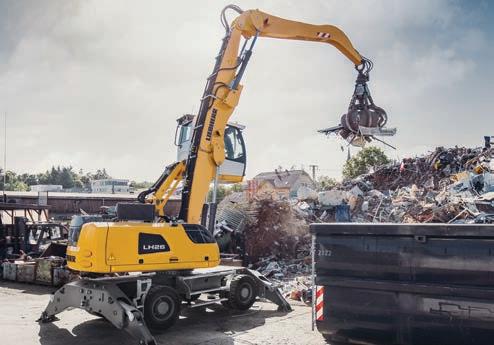


Bane Machinery is a family owned and operated business that offers heavy machinery sales, rentals, parts, and service. We are proud to offer Liebherr equipment with full service including preventative maintenance and warranty up to OEM standards.
Liebherr machines are custom-engineered to perform efficiently. From material handling to waste management, these machines showcase a range of what’s possible.
Contact us today to find the right solution for your project application.