


disinvestment and population migration to outlying neighborhoods. By the late 1900s and early 2000s, the area faced deep socioeconomic challenges. The neighborhood had largely fallen into disrepair.”
The southern portion of OTR is recognized for its growing small businesses, strong arts and cultural footprint and ongoing efforts to maintain equity and diversity. Now, the non-profit 3CDC is focused on the northern portion of OTR, where the Findlay Community Center is under construction.
The $46 million project includes an 8,400-sq.-ft. early learning childcare center, a public outdoor space and a playground.
“North OTR has been identified as an area with incidents tied to chronic vacancy, open-air drug activity and blight,” said Hassan. “As a result, it’s faced issues with public safety and sanitation in recent years. Despite these challenges, North OTR is entering a historic redevelopment phase, with several large projects planned and underway that are intended to catalyze neighborhoodwide change.”
Prior to redevelopment, the site was home to the former Findlay Playground, which had served the neighborhood for years, but had become increasingly underused and in need of
CENTER page 8
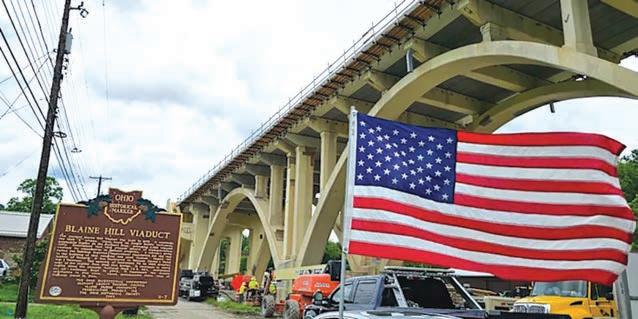
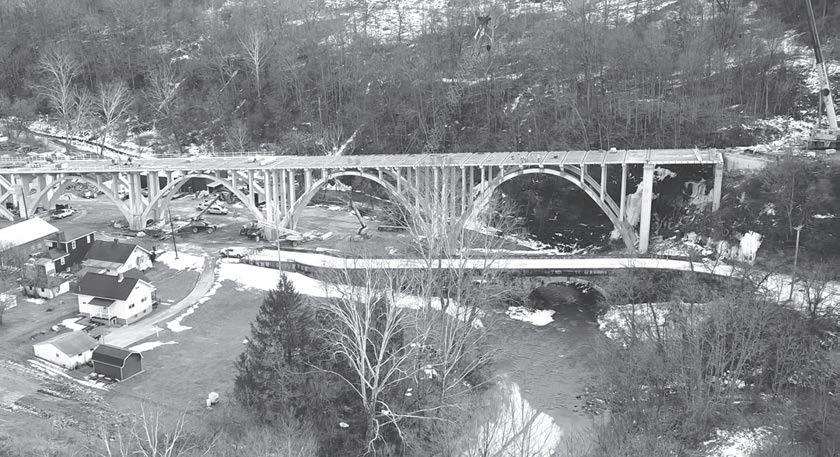
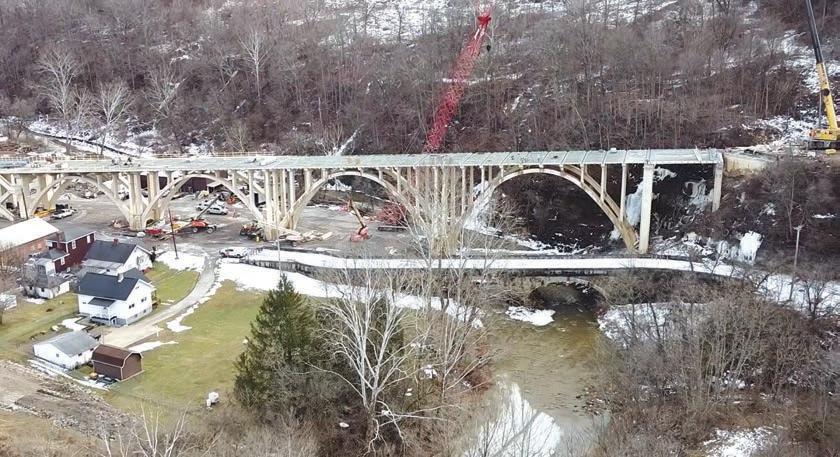
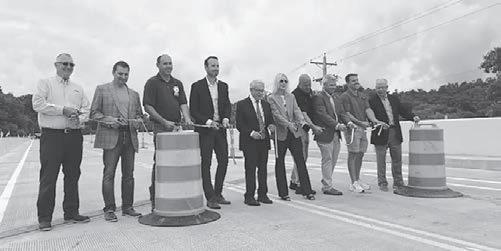
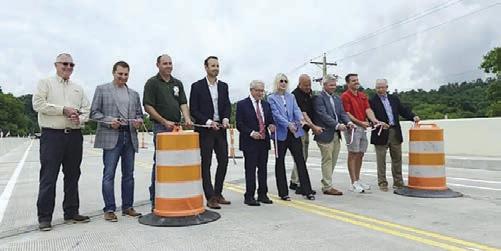
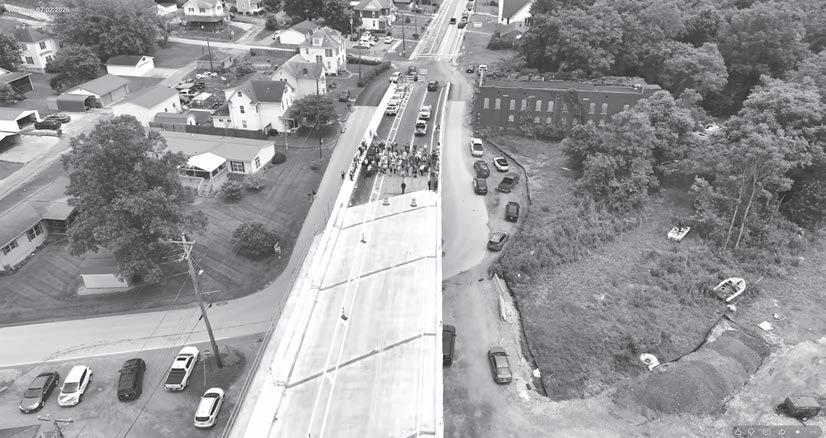
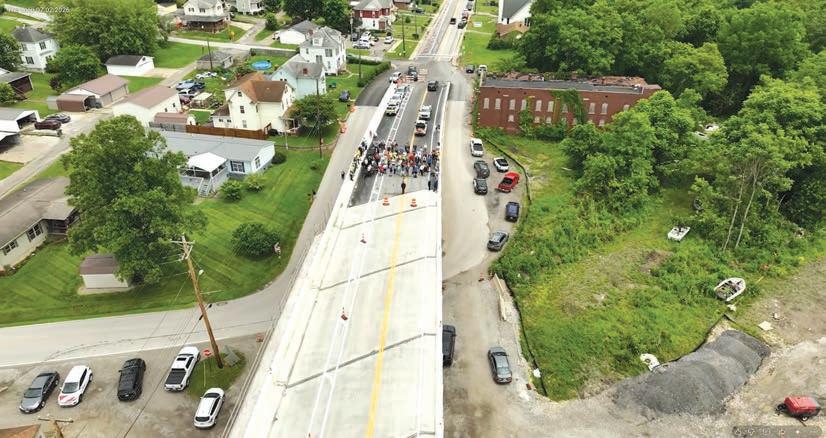
Ohio Gov. Mike DeWine joined the Ohio Department of Transportation (ODOT) and Belmont County community leaders to celebrate the re-opening of the U.S. Route 40 Blaine Hill Bridge two years ahead of the original project completion date.
“I am proud of the teamwork that brought this project to completion significantly ahead of schedule,” said DeWine. “This new bridge restores a vital connection between neighboring communities and delivers the safe, dependable roadway that Belmont County drivers expect and deserve.”
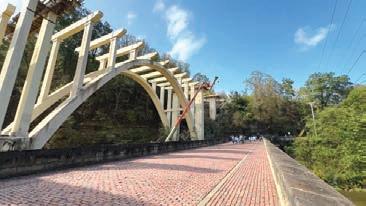
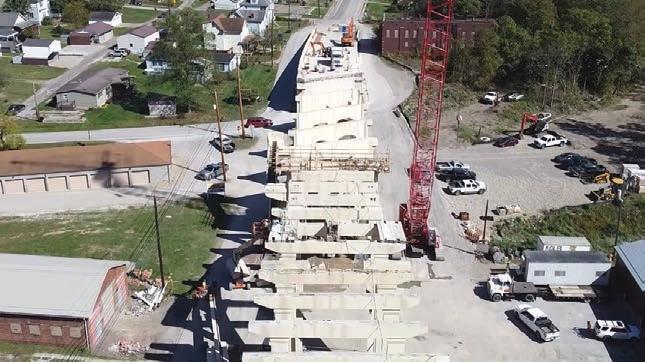
ODOT closed the Blaine Hill Bridge, also known as the Arches of Memory Bridge, in August 2024
after a routine bridge inspection revealed significant deterioration, including cracking on the deck and damage to the columns and concrete structure.
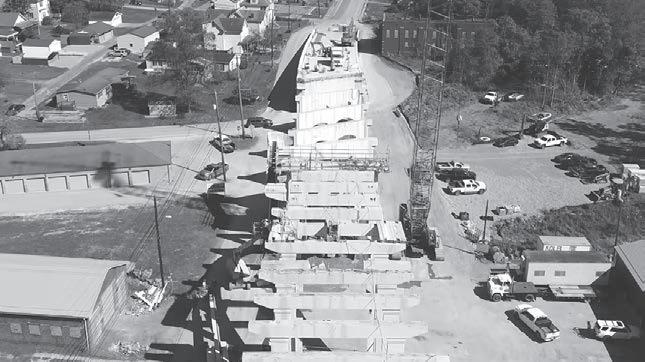
Construction to overhaul the bridge deck was originally expected to begin in 2027, but ODOT accelerated the project’s timeline to begin work in 2025.
“Safety dictates every decision we make at ODOT, which is why the closure in 2024 was absolutely necessary,” said ODOT Director Pamela Boratyn.
“However, thanks to the relentless dedication of ODOT engineers and design partners, we fast-tracked this project. We appreciate the patience of Belmont
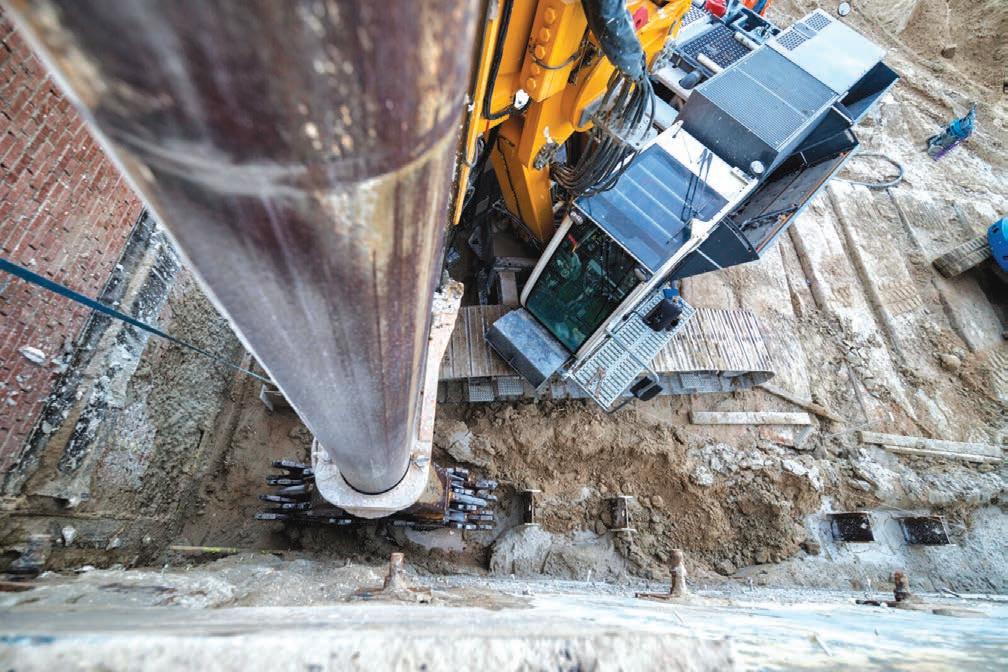
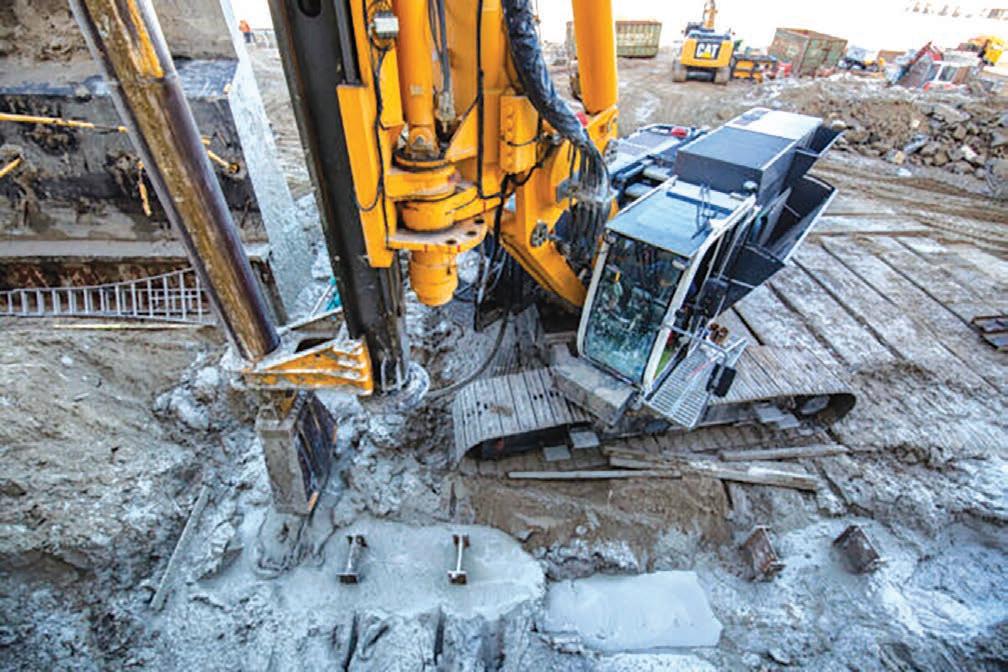
As foundation construction projects across North America grow more complex, contractors are increasingly looking for equipment that can adapt across multiple applications without sacrificing performance. The RTG RG 22 S drill rig enters the market as a response to that need, combining multi-function capability with the power and stability required for today’s demanding job site conditions, according to the company.

Designed as a true multi-application platform, the RG 22 S supports Kelly drilling, high-production single-pass methods, as well as pile driving. For contractors working across varying soil conditions and project types, this flexibility allows a single rig to take on multiple roles, reducing fleet redundancy and improving overall utilization. In North American markets, where mobilization costs and job site logistics can significantly impact project profitability, that adaptability is especially valuable.
A key feature of the RG 22 S is its newly-developed kinematic system, engineered to provide a wide range of motion for the leader. This system allows operators to work efficiently in challenging positions, including restricted access sites and projects requiring precise mast positioning. Complementing this is RTG’s FreeLock system, which enables continuous mast adjustment between −90 degrees and +90 degrees. This level of control enhances accuracy and expands the range of applications the rig can handle without additional setup complexity.
Performance remains central to the RG 22 S design. The rig delivers a permissible torque of up to 240 kNm, providing the power needed for demanding drilling operations. For single-pass applications such as full displacement drilling, pulling forces reach up to 600 kN, supporting efficient, high-production installation. An integrated Kelly mast head allows contractors to transition between Kelly drilling and single-pass methods with minimal reconfiguration, helping crews maintain productivity throughout changing phases of a project.
Stability and lifting capability are also key considerations, particularly on North American job sites where larger tooling and deeper installations are common. The RG 22 S is designed to handle a free-hanging load of up to 30 tons with the mast unsupported, while an increased counterweight system of up to 17.2 tons provides additional stability during operation. These features allow the rig to operate confidently under demanding conditions, improving both safety margins and overall performance.
Beyond its core applications, the RG 22 S is built to support next-generation foundation techniques. The platform is compatible with advanced soil mixing systems, including multi-shaft configurations and newer mixing technologies designed to improve material flow, increase production speed, and reduce cutting resistance. This positions the rig as a forward-looking solution for contractors expanding into ground improvement and specialty foundation methods.
The RG 22 S aligns closely with the needs of contractors across the United States and Canada. Projects in these markets often require equipment that can handle varied geology, tight urban job sites and evolving construction methods. The ability to deploy a single rig across multiple applications not only simplifies fleet management but also reduces downtime associated with mobilization and equipment changeovers.
As the industry continues to push toward greater efficiency and versatility, machines like the RG 22 S represent a shift in how contractors approach equipment selection. Rather than relying on multiple specialized rigs, there is increasing value in platforms that can deliver consistent performance across a range of applications.
With its combination of advanced kinematics, strong
torque and pulling capacity and compatibility with emerging foundation technologies, the RG 22 S sets a new benchmark for multi-purpose foundation equipment. For North American contractors focused on maximizing productivity while maintaining flexibility, it offers a practical and forwardthinking solution. For more information, visit ecanet.com.





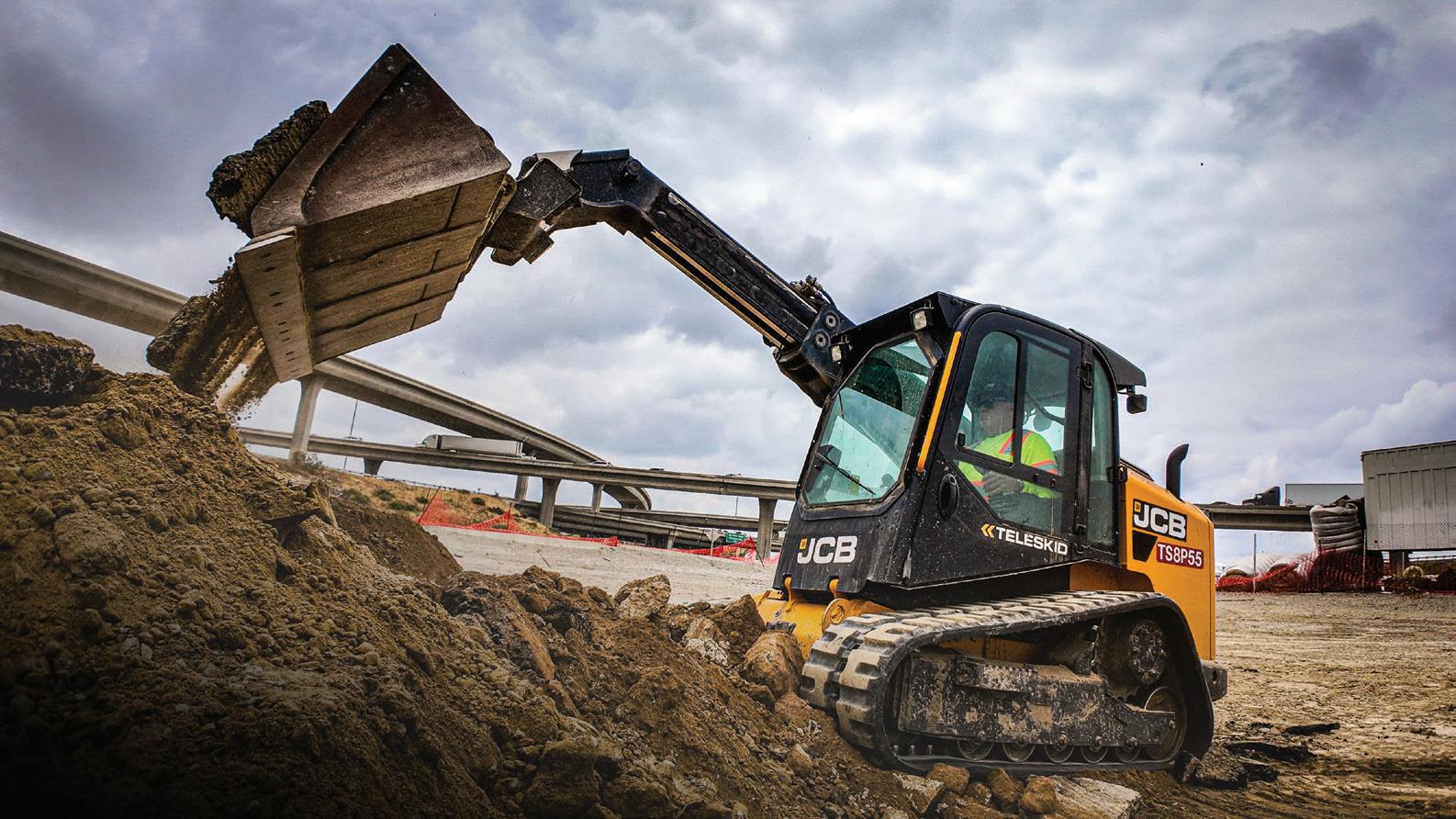
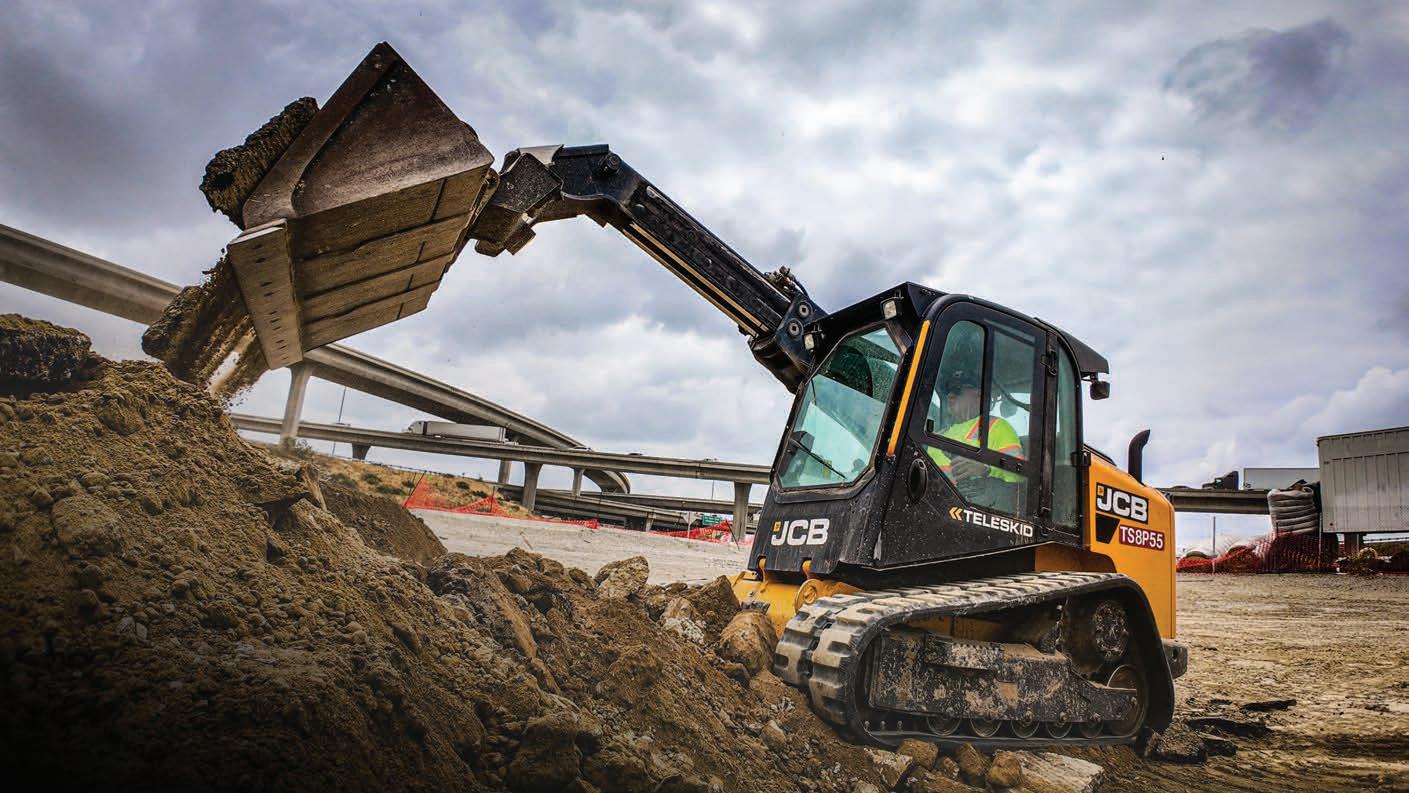
The JCB Teleskid is four machines in one and the world’s only skid steer with a telescopic boom. Imagine what that does for efficiency. Actually, don’t imagine it. Instead, give the Teleskid a try and see how much more you can accomplish. Visit JCB.com to learn more.
Covering Northwest Ohio 9127 Airport Highway Holland, OH 43528 419-491-2362 www.buckandknobbyjcb.com
www.burnsjcb.com
Skanska photo
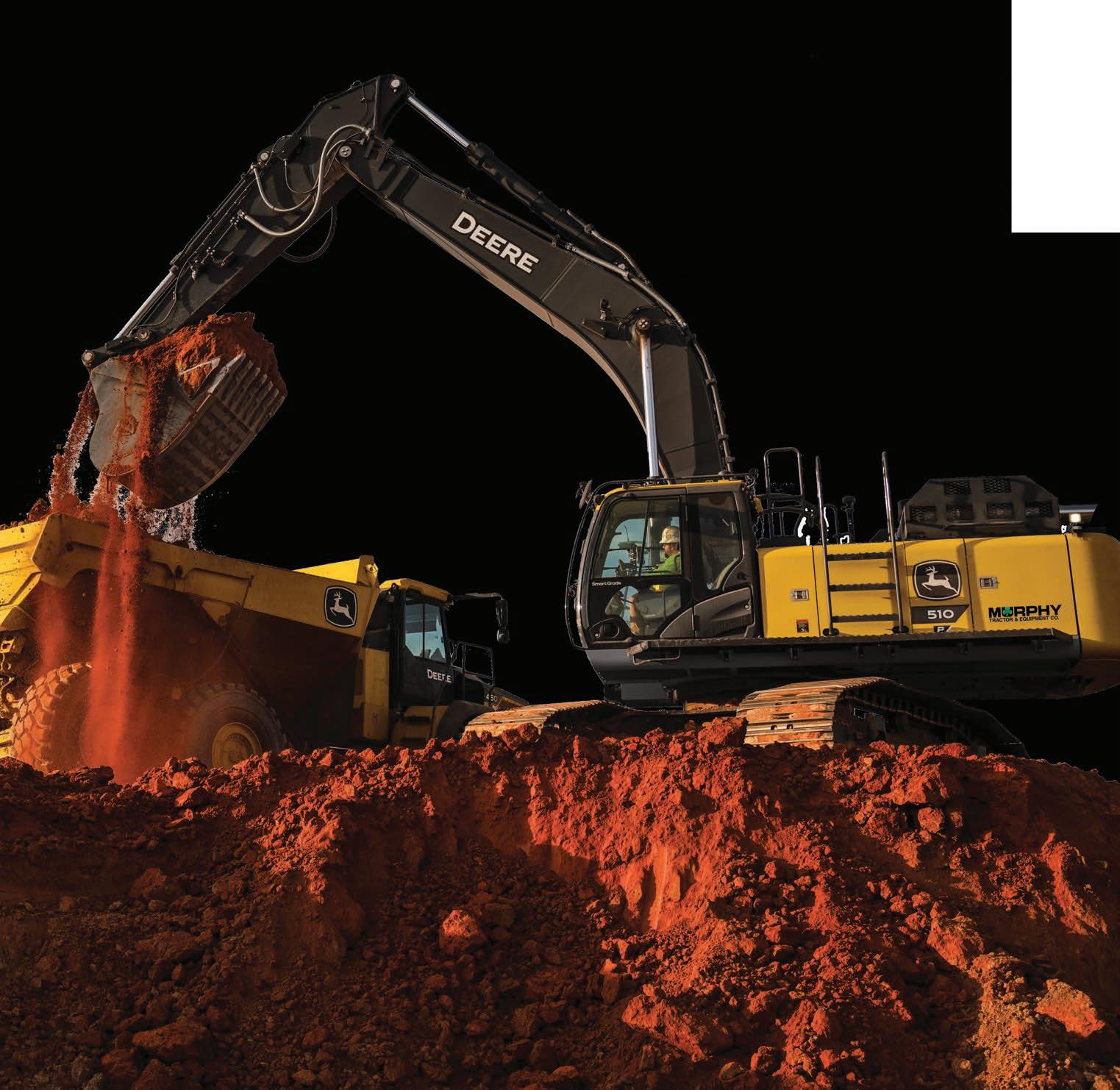
Heavy machinery on the job includes excavators, backhoe loaders, dump trucks, bulldozers, compactors, skid steers, auger drill rig/crane, pile driver rig/crane, telebelt conveyor trucks, concrete truck mixers, concrete pump trucks, crawler cranes, aerial lifts, rough-terrain forklifts and rough-terrain scissor lifts.
CENTER from page 1
“Much of the existing infrastructure and play equipment was outdated, and the space lacked the programming, lighting and amenities needed to support consistent positive activity throughout the day.”
Hassan underscored the importance of engaging underprivileged youth in positive programming, calling it essential for the long-term health and productivity of a community.
“These programs provide safe, reliable spaces where young people can spend their time, while building critical social and emotional skills, confidence, leadership, communication and problem-solving abilities. Such skills directly support academic success, future employability and personal resilience, especially for youth who may lack access to other enrichment opportunities.”
Adults also will be able to use these spaces to stay active and engaged in the community, regardless of social or financial status. Memberships will be offered on a sliding scale based on income.
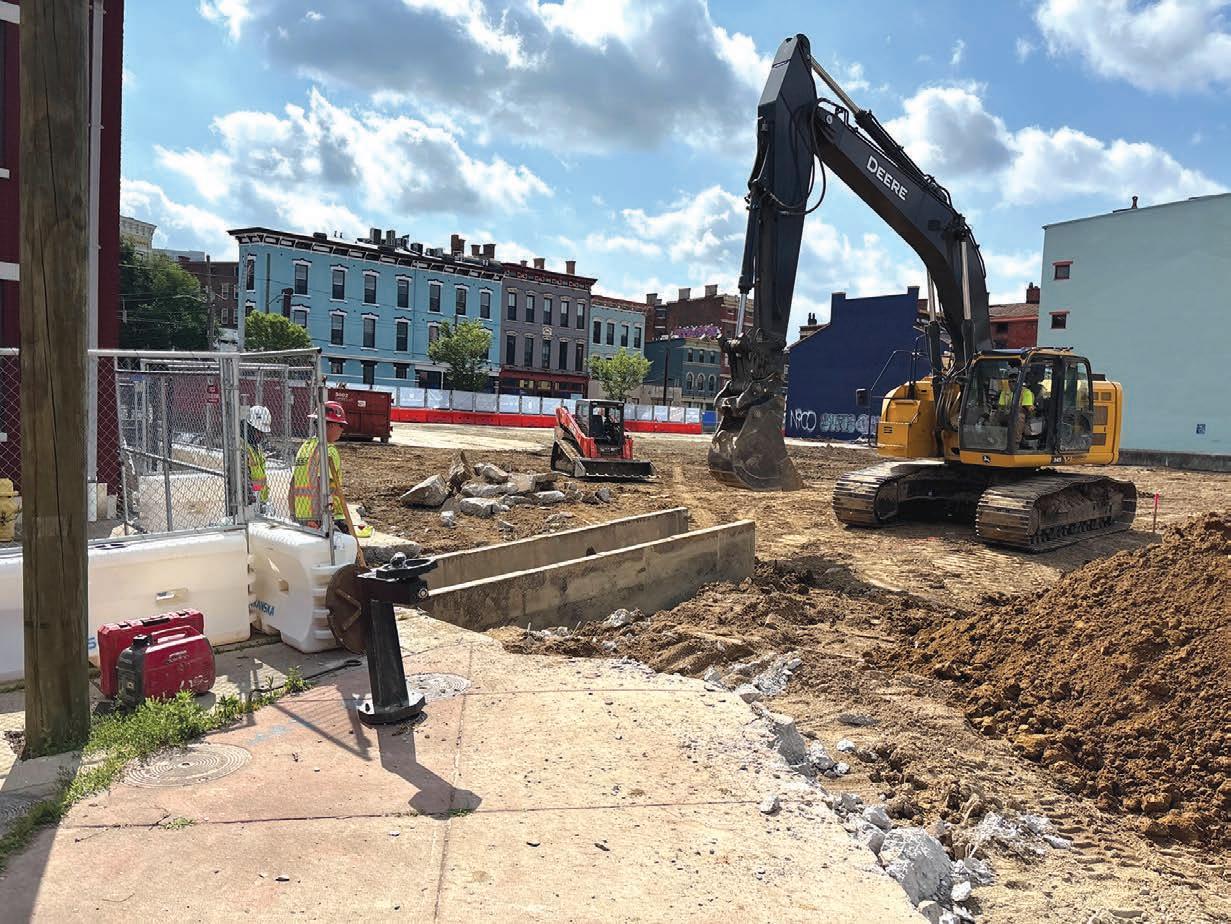
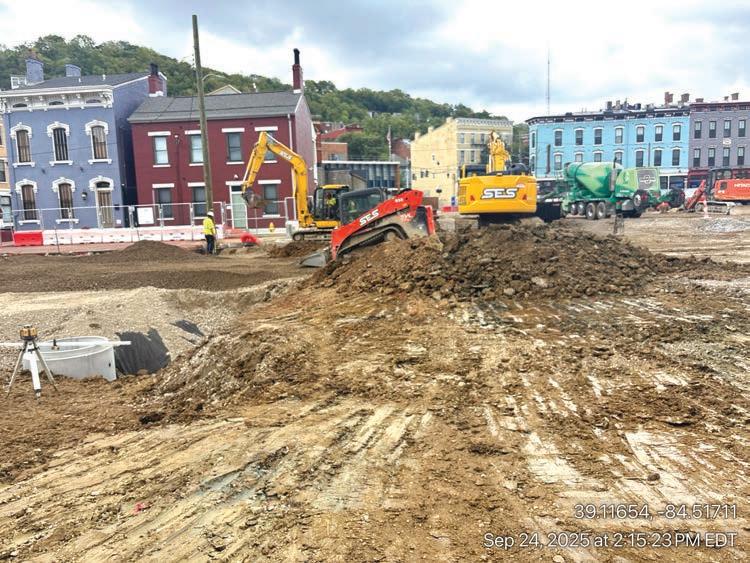
Work on the project began in May of 2025 and is expected to be completed this November. When asked by Construction Equipment Guide about the main concerns for crews on the job, Sam Fintel, Skanska USA Building project manager, said, “It’s a tight job site, which creates logistical difficulties related to access, phasing, trade coordination and the installation of exterior details and finishes. It’s also challenging dealing with auger cast piles across the entire building footprint, complicated by unknown subsurface obstructions such as remnants of an abandoned house and school foundations, cisterns, boulders and brick debris.”
In addition, pool construction requires excavation and installation through the
city’s Goose Alley. Workers must tie-in to the existing building, while also working in close proximity to neighboring structures.
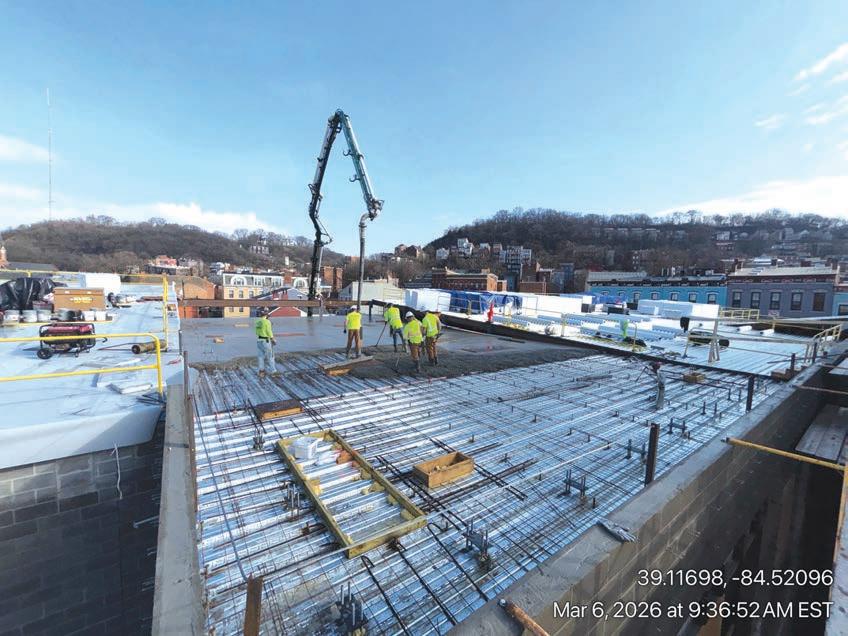
Site demolitions and building pad prep are complete, along with foundations, the underground storm detention system, load bearing masonry for the structure, interior masonry walls for the locker rooms and structural steel installation in the pool, gym, locker area, roller rink and part of the lobby. Other finished tasks include roof decking at the pool, gym, locker area and roller rink, installation of the TPO roofing membrane at the pool and underground utility work across the entire site.
Steel work in the lobby and childcare areas, including trusses and detailing, is ongoing, along with roof work for the gym, installation of hangers and supports for building systems in the pool, gym and track areas, MEP installation, ductwork, piping and conduit in the pool area.
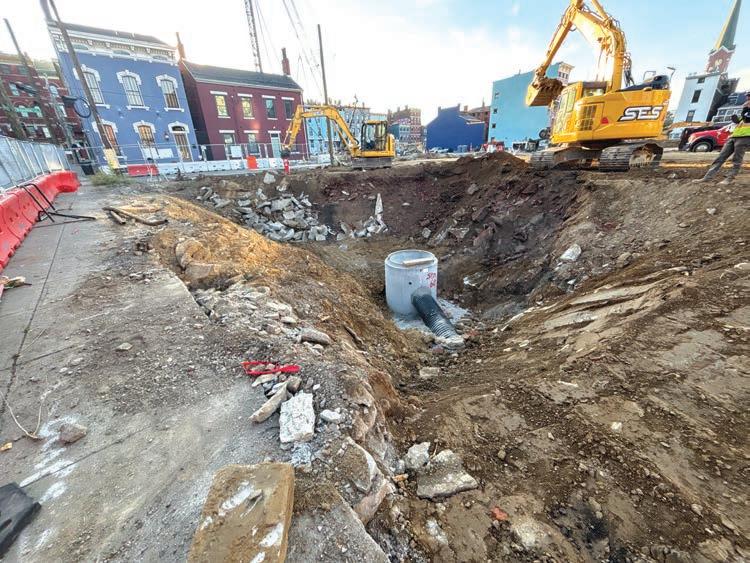
With site work is complete, crews were working on construction of the Findlay retaining wall, playground preparation, utility tie-ins, site concrete, fencing, landscaping and installation of site furnishings.
Fintel explained pool excavation will be particularly complex because it must be completed through an opening on the west side of the building via Goose Alley.
“In addition, the project site housed several residential buildings and a school, resulting in unsuitable soils throughout the area. This created challenges during excavation, foundation work and underground utility installation. Fortunately, most of these unsuitable soils were identified in the project’s geotechnical report and were accounted for in both the structural design and the construction plan.”
Roughly 6,250 cu. yds. of dirt will be moved during construction. Heavy machinery on the job includes excavators,
compactors, skid steers, auger drill rig/ crane, pile driver rig/crane, telebelt conveyor trucks, concrete truck mixers, concrete pump trucks, crawler cranes, aerial lifts, roughterrain forklifts and rough-terrain scissor lifts.
Among the main materials needed are auger cast piles, concrete foundations, CMU load-bearing walls, structural steel, concrete slabs and composite roofs, concrete and stainless steel pool structure, cold-formed metal framing and sheathing, brick, metal panels, TPO roofing, storefront windows and glazing, athletic flooring, wood sports flooring, tile and paint.
Fintel said because of strong planning and close coordination with the on-site contractors, weather has not significantly affected project progress.
“Cold temperatures were managed with temporary heating to keep load-bearing CMU block installation on schedule through the winter. The late-January winter storm only halted work for one day, which
impacted several activities, such as roofing, but all critical path work remained on schedule.”
Despite the unforgiving schedule, Fintel said it’s extremely satisfying to be part of such a meaningful project.
“It’s an honor to help deliver a hub for the Cincinnati community and the neighboring residents in OTR, supporting healthier lifestyles at the recreation center and providing children with a safe, comfortable and inspiring environment to learn and grow in the childcare and early learning center.”
Said Hassan, “It’s incredibly rewarding to see the Findlay Community Center project coming to life. This has been a vision shaped by years of hard work, collaboration and community input. Watching construction move forward is a powerful reminder of what’s possible when we invest in our neighborhoods. It’s more than a project — it’s a symbol of opportunity, connection, and hope for everyone who calls this area home.”
CEG
ODOT photo
photo
Construction to overhaul the bridge deck was originally expected to begin in 2027, but ODOT accelerated the project’s timeline to begin work in 2025.
Ohio Gov. Mike DeWine joined the Ohio Department of Transportation and Belmont County community leaders to celebrate the re-opening of the U.S. Route 40 Blaine Hill Bridge.
BLAINE from page 1
County drivers and are proud to safely open the Blaine Hill Bridge while preserving its historical significance.”
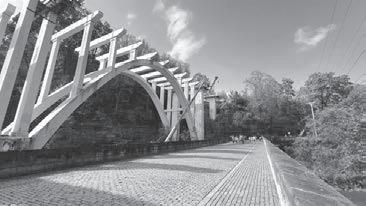
Built in the 1930s, the reinforced concrete bridge consists of four iconic arch spans and connects the local communities of Blaine, Boydsville, Lansing, Brookside and St. Clairsville. To enhance safety and accommodate both bicycle and pedestrian traffic, the new bridge configuration has one lane in each direction and features a 12-ft. shoulder on the westbound side of the bridge, along with a 3-ft. sidewalk and a 4-ft. shoulder on the eastbound side.
ODOT photo ODOT closed the Blaine Hill Bridge, also known as the Arches of Memory Bridge, in August 2024 after a routine bridge inspection revealed significant deterioration.
The bridge overlooks the original 1828 Blaine Hill “S” Bridge, which was part of the historic National Road project. The “S” Bridge was saved from demolition in 1999 and designated Ohio’s official Bicentennial Bridge in 2001.
The project was designed by Michael Baker International and Beaver Excavating, Inc. led the construction team. The project required 1,600 cu. yds. of concrete (enough to cover two football fields at a depth of 4.5 in.) and included the removal and replacement of 440 box beams.
For more information, visit transportation. ohio.gov/BlaineHillBridge.


Since 1963, Takeuchi innovation has transformed the North American equipment market. More than sixty years later, the recent release of the TB335R, TB350R, TB370W, TB395W, TB320 and TB20e compact excavators continues the tradition. Complemented by a full range of rugged, versatile track loaders—TL6R through TL12R2/TL12V2—Takeuchi delivers the most advanced and dependable range of compact equipment available.
Peace of mind is further prioritized for 2025 as Takeuchi equipment is now backed by a 3-Year/3,000-Hour Premier Warranty. In addition, Takeuchi Fleet Management has been extended from two years to five, free of charge. Visit or call one of our nine, statewide branches today for more information.