
Sharon Swanson
1-760-518-4336 • sswanson@cegltd.com
Your Four Corners Connection
Jacob Estrello 1-210-878-5650 • jestrello@cegltd.com
Sharon Swanson
1-760-518-4336 • sswanson@cegltd.com
Your Four Corners Connection
Jacob Estrello 1-210-878-5650 • jestrello@cegltd.com
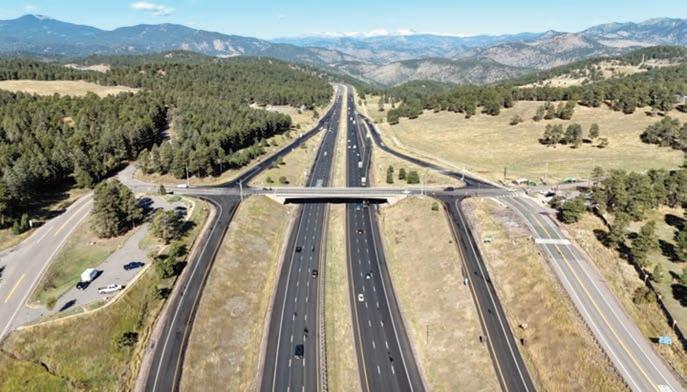
Colorado Department of Transportation photo
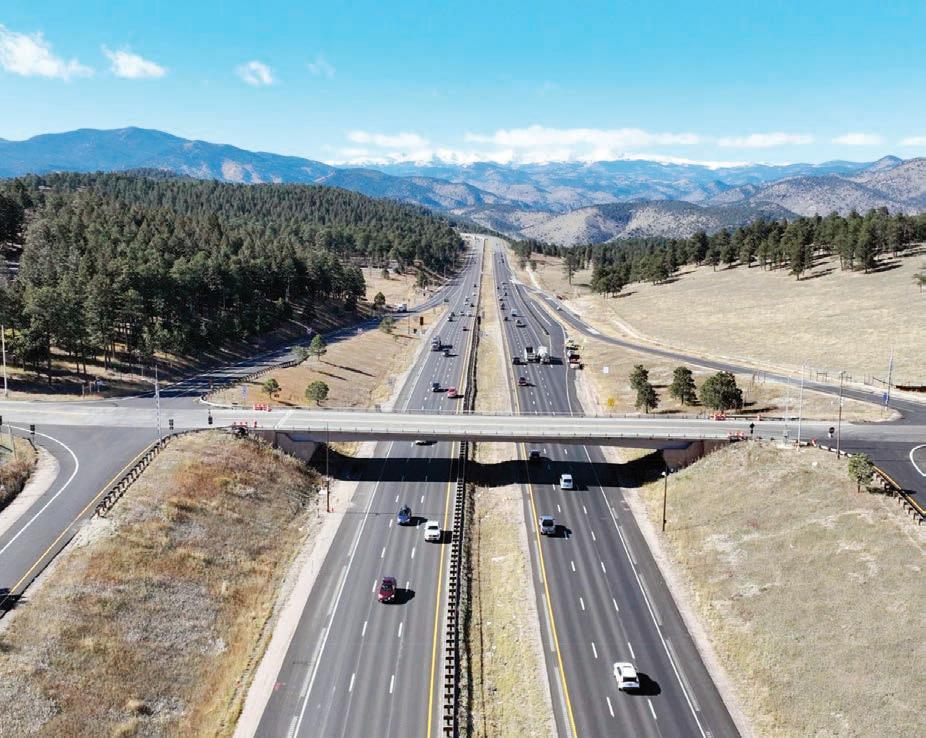
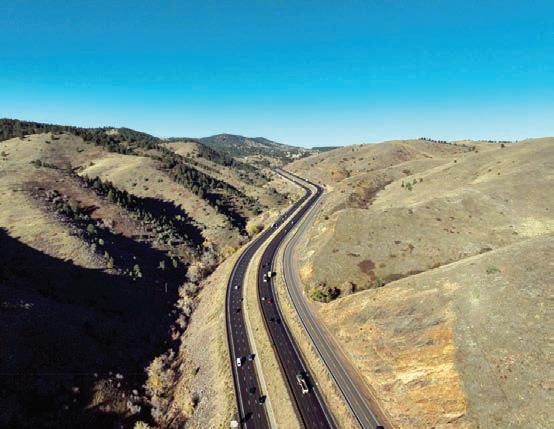
The Colorado Department of Transportation (CDOT) and its contractor, Martin Marietta, achieved substantial completion of the $34.7 million Interstate 70 resurfacing project from Chief Hosa to Colfax in December 2025.
By Irwin Rapoport CEG CORRESPONDENT
The Colorado Department of Transportation (CDOT) and its contractor, Martin Marietta, achieved substantial completion of the $34.7 million Interstate 70 resurfacing project from Chief Hosa to Colfax in December 2025.
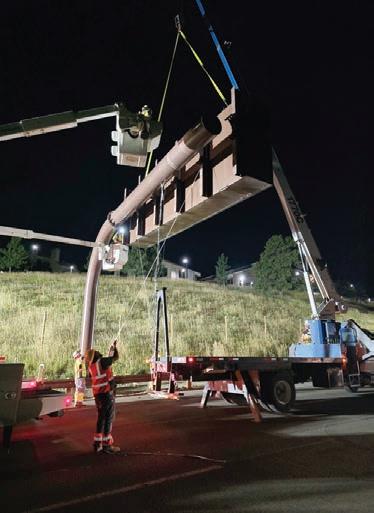
The initiative to improve safety, mobility and travel time reliability along a 10-mi. stretch of the mountain corridor is expected to conclude in 2026 when Lighthouse Transportation Group and Xcel Energy install an intelligent transportation system (ITS) that establishes variable speed limits.
Financed by state and federal funds, work began in August 2024.
‘‘We have improved safety by replacing deteriorating pavement for a smoother driving experience and installed new safety guardrail,” Cody Daigneault, resident engineer with CDOT’s Region 1 West Program, told Construction Equipment Guide. ‘‘The project repaired both bridge decks at the Morrison exit, increasing the structures’ lifespan. We will also improve travel time reliability and mobility by installing dynamic speed limit signs and message boards on eastbound I-70 from Genesee Park to Colfax.’’
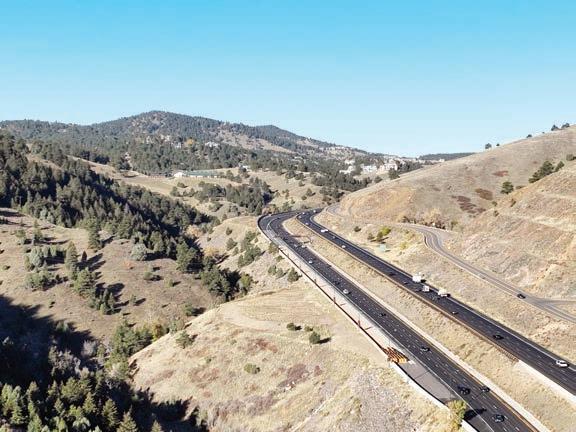
Colorado Department of Transportation photo
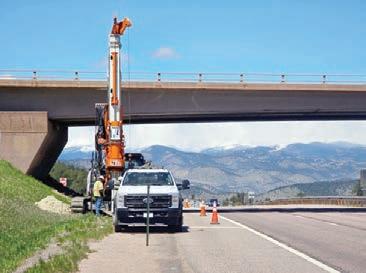
The initiative to improve safety, mobility and travel time reliability along a 10mi. stretch of the mountain corridor is expected to conclude in 2026.
‘‘This stretch of I-70 is heavily traveled, serving as the gateway to the Rocky Mountains for tourists and is a critical link for freight trucks and local and regional traffic as well,’’ he added. ‘‘Due to heavy wear and tear from freight and vehicle traffic, in combination with harsh winters, the pavement, bridges and other roadway
The Genessee Bridge overlook
assets were in need of repair to prevent potholes and other pavement damage.’’
The initiative milled and paved the existing lanes, repaired two bridge decks at the Morrison/Colorado 93 exit, installed storm drainage improvements, replaced guardrails and added variable speed limit signs and message boards on eastbound I-70 from Genesee Park (Exit 254) to Colfax (Exit 262/U.S. 6).
I-70 was built along with much of the mountain corridor in the 1960s through
the 1970s. An average of 121,000 vehicles travel this stretch of I-70 each day. The construction zone falls within the jurisdiction of the municipalities of Genesee and Golden in Jefferson County. This section of I-70 has three lanes in each direction.
Bill Oetken, Martin Marietta’s West Division construction manager, praised Lead Project Manager Zach Schmidt and Project Managers Ryan Peters and Logan Baker for their effort and dedication.
see RESURFACING page 6

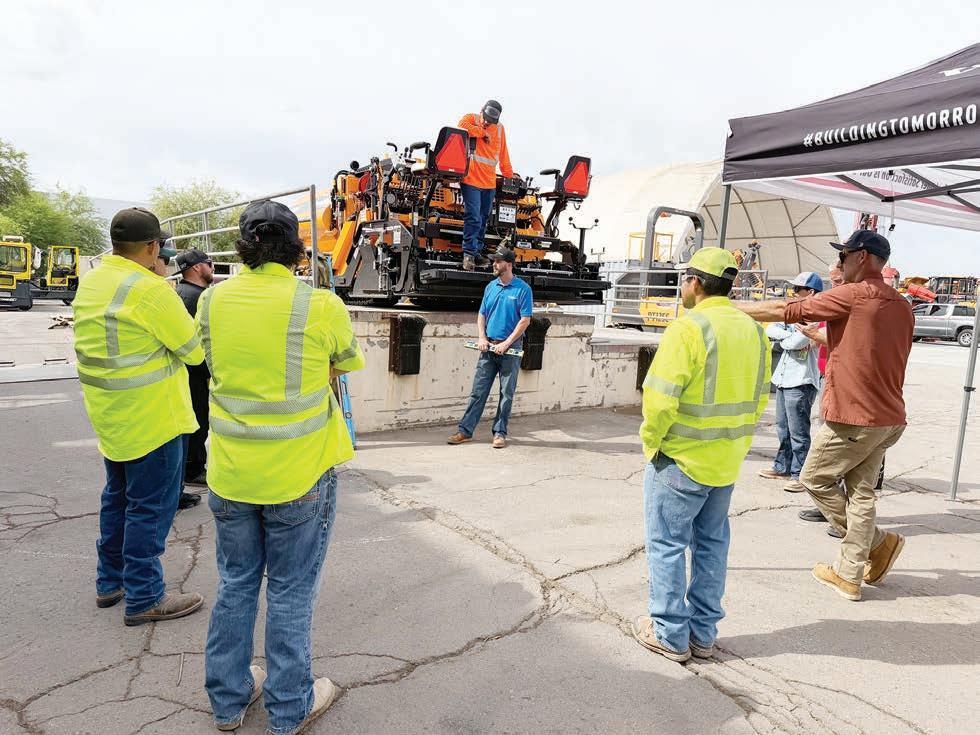
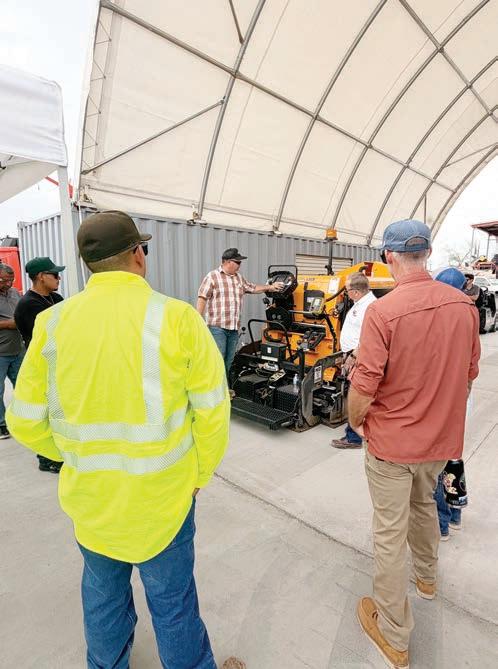
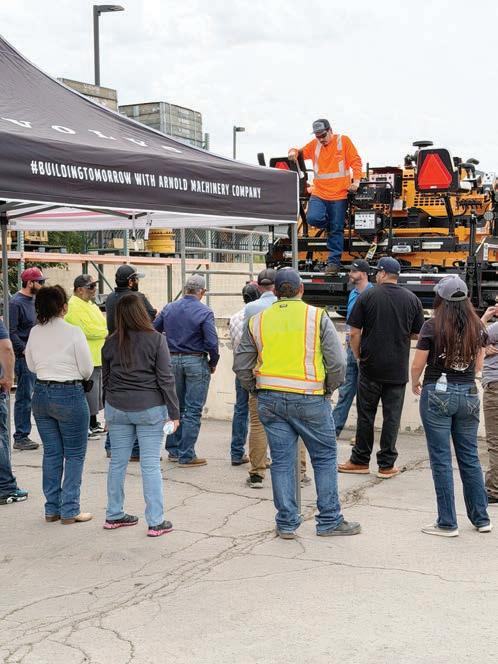
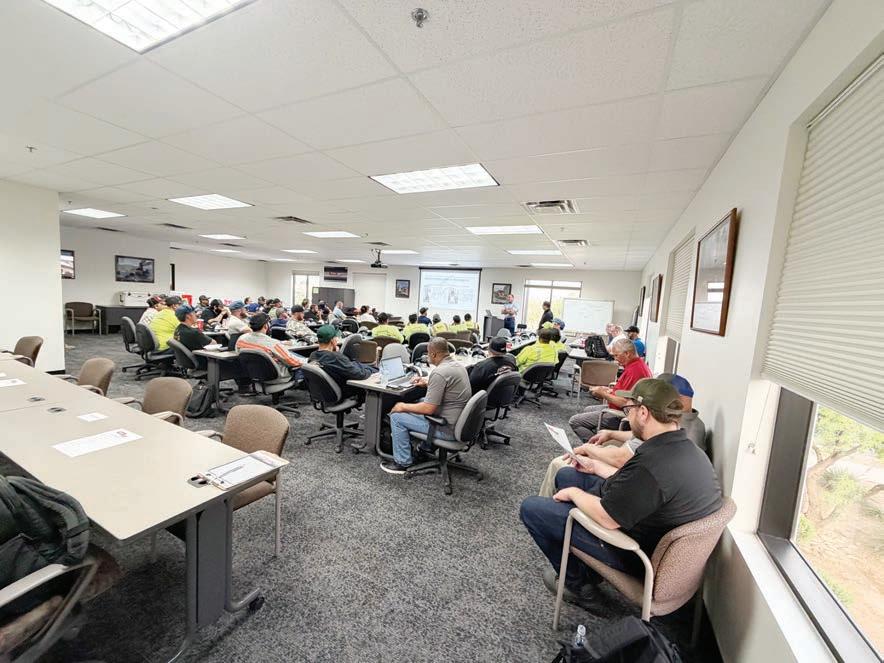
Arnold Machinery brought together local contractors for a full day of education and hands-on training during a paving seminar held March 31, 2026, at its Phoenix, Ariz., facility.
The event welcomed civil and private contractors from across the region, offering a comprehensive look at paving and compaction best practices, emerging technologies and the latest equipment innovations.
The day began with an in-depth asphalt mix training session led by representatives from Fisher Asphalt. Drawing on its field experience, the team discussed common paving challenges and shared practical strategies tailored to the unique demands of the Phoenix climate.
Following the session, John Greaney, LeeBoy’s Southwest territory manager, provided insight into the critical roles each crew member plays on a paving job, emphasizing coordination and communication as key drivers of a successful operation.
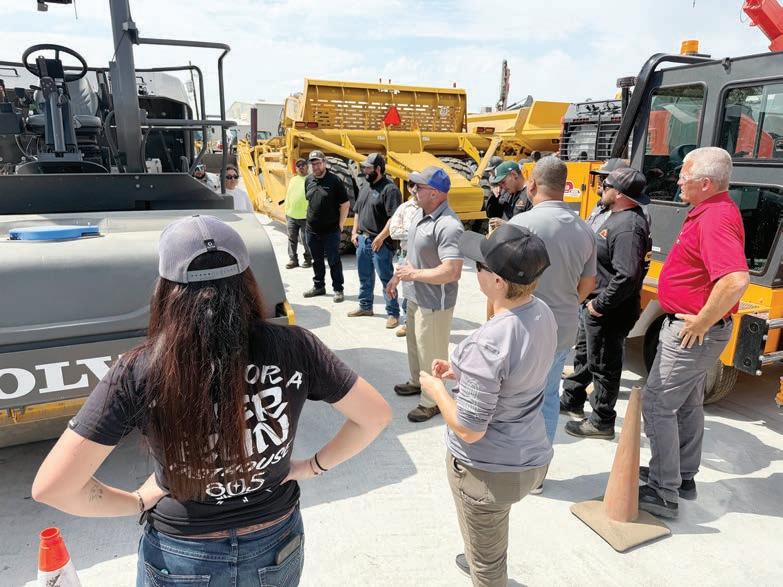
Attendees then transitioned outdoors for hands-on training, where they rotated through four stations focused on different machines and applications. The interactive format gave participants the opportunity to work directly with equipment and gain practical, jobsite-ready knowledge.
After a provided lunch, the seminar resumed with Peter Fredrickson, asphalt product application specialist of Dynapac. Fredrickson explored the evolution of paving technology and offered a detailed look at screed fundamentals, helping attendees better understand how to optimize performance and achieve quality results.
The day concluded with a presentation from John Rossi and Joseph Hawkins of Volvo, who underscored the importance of proper compaction and its direct impact on pavement longevity and overall project success.
The seminar drew strong attendance and engagement from the local contracting community, reflecting continued demand for education and training opportunities in the paving sector.
Arnold Machinery plans to continue hosting similar events across its service regions, reinforcing its commitment to supporting contractors with knowledge, training and access to the latest industry advancements. CEG
construction contractor based in American Fork, Utah. Founded in 2003, the company has grown from a small startup into an organization of approximately 180 people with three divisions across Utah and work that extends into southern Nevada.
Landmark work spans utilities and pipe work, road and bridge construction and large-scale earthmoving in a region where schedules are tight, equipment is heavily used and job sites are constantly changing.
For Mike Brown, equipment director of Landmark Excavating, the pace of the work shows up every day. Brown oversees equipment, facilities and the shop organization that keep crews moving from job site to job site.
“The biggest challenge that I have in my role is making sure that the crews have everything that they need to keep moving,” Brown said. “If we need a certain machine, I’ve got to source that … getting everything fueled, keeping everything running.” In his words, “everything that comes in is either broken or needed really fast.” Downtime, he added, “is a killer” that can quickly impact both cost and schedule.
That coordination becomes more complex as the business grows. Landmark frequently manages multiple active job sites at once, each with its own access constraints, timeline and equipment demands.
When equipment goes down, the impact is rarely limited to a single machine or crew. Delays compound quickly across schedules and sites, especially when fueling and daily service are not aligned with where work is
“There’s a lot of controlled chaos,” Brown said.
Despite that pressure, Brown said the work itself is what keeps people invested.
“My favorite part is the people and the equipment working together and what we build,” he said. “You can drive by years later







‘‘My project team gave it their all to make this project a success and a final product that the traveling public could enjoy driving for trips across the country and to the mountains,’’ Oetken told Construction Equipment Guide.
The project faced its share of challenges.
‘‘Construction challenges included the fact that this project consisted of four smaller projects wrapped into a single project,’’ Schmidt told Construction Equipment Guide. ‘‘We had an ITS project, a drainage project, a structures project and an overlay project all tied into one large project, all of which required quick troubleshooting and critical thinking throughout the twoyear-long project. The work progressed in a slower manner, as it was just starting up during the fall/winter months of 2024-2025.
“Once the weather cleared last spring, work was accelerated, and there were up to eight to 10 trades working at any given time. Multiple milling/paving crews were utilized to complete the paving in our short paving window due to the SMA [stone mastic asphalt] being an extremely volatile product that is weather dependent, and the nature of the paving taking place in the mountains, where our paving window was shrunk down to three to four months.’’
The only utility issue that crews encountered was the installation of new power lines from a third-party utility that were needed for activating the ITS system.
The work site was confined to the shoulders of the current interstate, with most of the work taking place overnight with single and double lane closures needed to perform work.
‘‘All day work was performed behind a shoulder closure, as the roadway was wide enough’’ Peters said. ‘‘Working with CDOT
proved to be a challenge due to the work schedule of all parties involved with day and night work progressing and trying to line up everyone’s schedules to get the proper answers and challenges resolved in a timely manner.’’
The resurfacing began on the eastbound (downhill) side, starting at the Chief Hosa exit. Once it reached Morrison, crews switched to the westbound (uphill) side.
‘‘Work was planned to install the new barrier/drainage runs in three phases along the westbound lanes,’’ Baker said. ‘‘This work was anticipated to take approximately 10 months to complete. Once completed, milling and resurfacing were to begin after the Fourth of July holiday and take approximately 3-4 months to complete. All the while this work was ongoing, ITS work was taking place during the daytime hours and was anticipated to take the entire 320 working days to complete.
“Bridge deck rehab took place with the westbound bridge deck being completed in the fall of 2024, but the eastbound bridge deck would have to wait until the 2025 construction season due to the extensive amount of work that was required on the westbound deck.”
Baker said multiple lanes were milled/ paved at once, which required two milling crews and two paving crews due to the short paving window in the mountains.
No repairs were made to the road’s subbase or base. The new SMA lift thickness was 2.5 in.
Approximately 6,000 linear ft. of traffic lanes (2.27 lane mi.) was resurfaced on a typical shift.
Operators used Wirtgen milling machines — a W 250 XF and three W 220 Fis — two Weiler E1650 asphalt shuttle buggies, two Cat 1055F pavers and Cat asphalt rollers
— two CB13s, two CB64s and two CB 16s — to repair the two bridge decks at the Morrison/CO 93 exit
Both bridge decks at the Morrison/ Colorado 93 exit were scheduled for Oct. 31, 2024, completion, but that was pushed back until Memorial Day 2025.
‘‘The intent was to have both bridge decks being rehabilitated at the same time, but due to resources and logistical reasons, it was agreed upon by both parties that repairing the WB deck first, due to it being in the worst shape, was the best course of action and that the EB deck could wait until the following construction season,” Schmidt said.
Each deck was approximately 200 linear ft. long and 50 linear ft. wide, with an additional 72 linear ft. of abutment.
‘‘The deck was to remain intact, and we fixed the potholed concrete through a process called sounding the deck,’’ Schmidt said. ‘‘This process identifies degraded concrete by creating a hollow sound. Once an area for rehab was identified, it was jackhammered out, new rebar was installed and new Class DR concrete, batched on site, was poured into the void.’’
The bridge decks were constructed as a steel girder-concrete slab, allowing for containment within the girders so debris wouldn’t fall to the roadway below.
Class DR concrete was used for the pour back of the deck rehab, and basic No. 4 black rebar was used.
‘‘On average, each deck required 17 pours to complete,” Schmidt said. “Being that the Class DR concrete is a rapid-set concrete, the concrete was usually cured out and able to have traffic on it within 90 minutes of it being poured. Usually, in those 90 minutes, the concrete was achieving a strength of 2,500 psi.’’
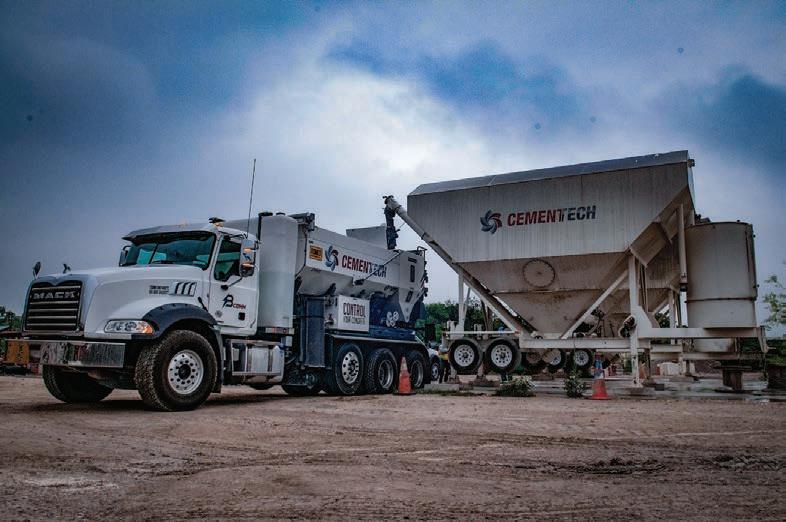
Crews used jackhammers and an onsite
portable concrete mixer for the process.
The installation of the storm drainage improvements was completed in three phases and concurrently with the barrier work.
‘‘The area for the new drainage was cut to grade, new inlets were installed and the new barrier was then poured in two sections — bottom half, and then top half),’’ Baker said. ‘‘Once the barrier was poured, new drainage line was placed. While the barrier was being poured in the previous phase, crews would move up to the next phase and begin digging out for the new barrier/drainage line in Phase II. Crews would then alternate between phases to make sure there were no breaks in either trade until the work was completed in all three phases.’’
An additional 41 inlets were installed along the three phases of the new drainage. The only prefabricated elements were the 18-in.’ RCP that was installed. All inlets were cast-in-place throughout the corridor.
The existing guardrail was replaced with a 31-in. Midwest Guardrail system by Cruz Construction between March and August 2025.
‘‘Crews were to begin installing new guardrail prior to new pavement being put down due to the short paving window that we would have and the longer duration to install the guardrail prior to achieving substantial completion,’’ Baker said.
Subcontractors included ABCO Contracting Inc., A-Core Concrete Specialists, Alpha Milling, American West Construction, B Jackson Construction and Engineering LLC, Colorado Barricade, Cruz Construction, Ellisco Profiling, Estate Media, H2 Enterprises, Lighthouse Transportation Group, Lobato Construction, Nelson Industrial Services Inc., Powell Restoration Inc., Prep-Rite Coatings and Contracting, PWSI Land Surveyors, Roadsafe Traffic Systems, Sam Rhoades Inc. and Workzone Traffic Control. CEG



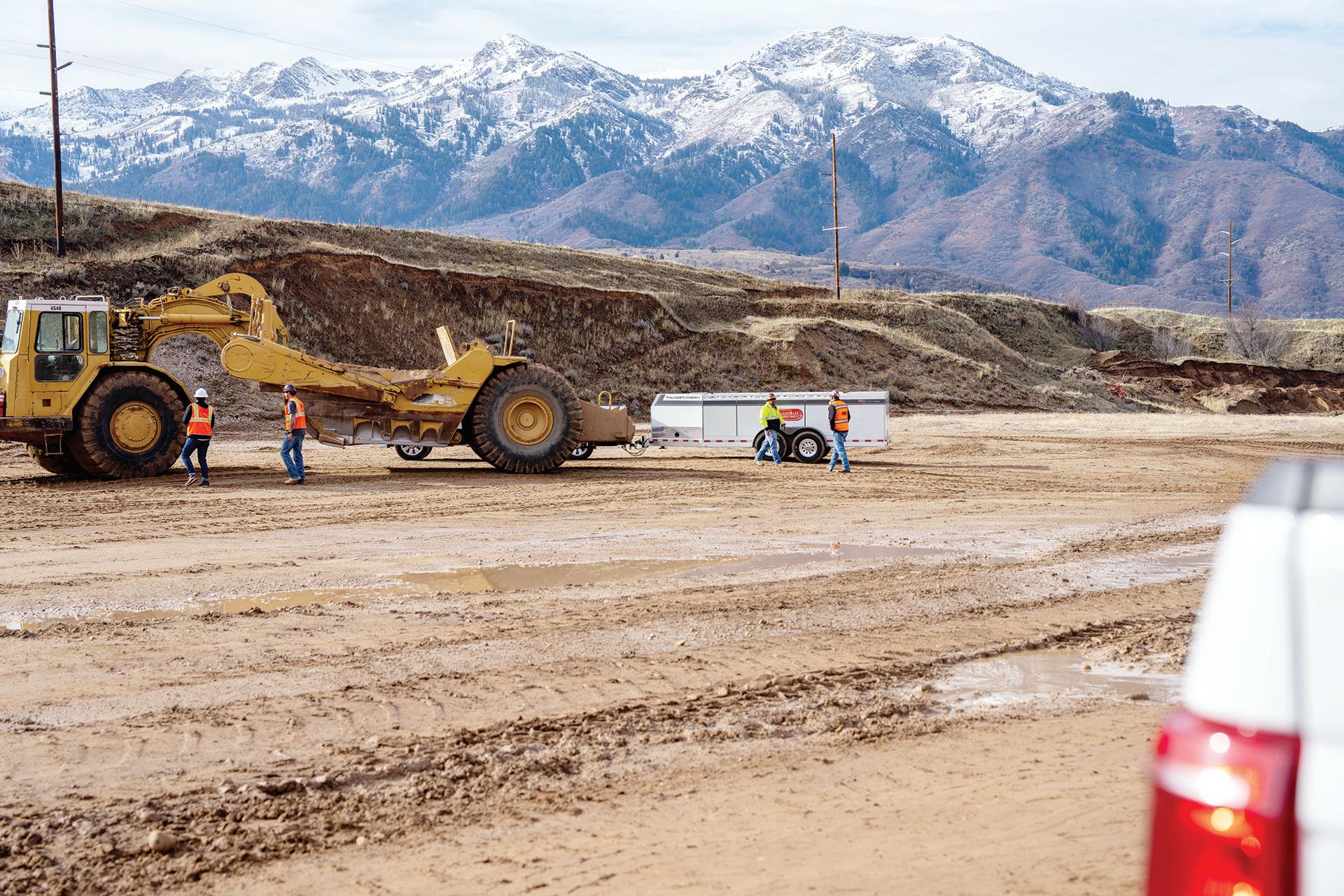
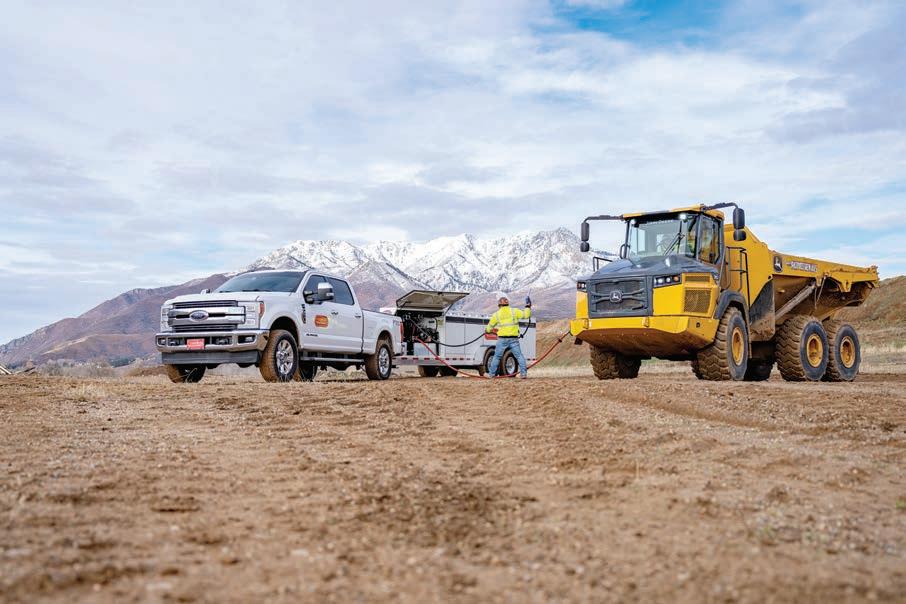
Before the trailers, Landmark used pickup trucks with transfer tanks and made multiple trips per day between where it bought fuel add the job site. “It just wasn’t
115-gal. tanks joined by a common manifold. This approach, when paired with the right tow vehicle configuration, reduces reliance on specialized CDL and HAZMAT drivers and makes the unit
loop, greasing, fueling and handling daily service tasks like blowing out air filters, with the tools and onboard air needed to keep crews moving. “It’s been a game changer,” Brown said.
around everywhere in the backs of trucks. Making a mess,” Brown said. “DEF … crystallizes. It makes a mess.” With the trailer, DEF is kept contained and dispensed directly from a tote to the machine without