

By Chuck MacDonald CEG CORRESPONDENT
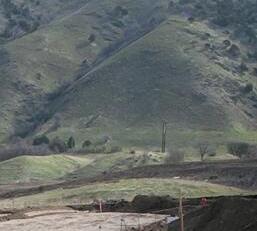
State Route 79 snakes along southern Riverside County, carrying motorists through a highdesert region.
The two-lane highway connects to Temecula and Interstate 15 in the north and to State Route 76 in the south, passing through the small community of Aguanga on the way. Over the past few years, the population growth and increased traffic have led to congestion and safety concerns.
Caltrans commissioned Ortiz Enterprises to widen the shoulders by 8 ft., both northbound and southbound, for 6.5 mi. Begun in March 2025, the project is expected to be completed by summer 2027. The job is now 45 percent finished and will cost $61 million.
John Britt is the project manager for Ortiz.
He told Construction Equipment Guide that the job is more than just a simple road widening. Traffic has been rapidly increasing both from the commuters during the week and from the RVs and loaded pickups with bikes and motorcycles for desert
recreation during the weekend. In addition, many motorists use the route as a back door to Palm Springs and Hemet, while avoiding Interstates.
Managing traffic is always a concern for highway projects. To mitigate disruption to the travelling public, the Ortiz team came up with an idea to eliminate one stage of construction. They decided that rather than build a temporary surface during construction, the workers would make that pavement permanent, eliminating a stage.
“Having a 2-foot-wide shoulder is no longer an option,” Britt told Construction Equipment Guide. “When there is a breakdown or accident, the traffic stops because there is nowhere for the disabled vehicles to go. The wider shoulders will be a place to move accidents. It would also provide space for traffic when future road repairs are done.”
Workers performed the grading operation during the day and then paved the 6 mi. of northbound widening in less than three weeks of night work. This enabled the construction team to work when traffic was light and also avoided the searing summer
desert temperatures.
Handling traffic and paving were only part of the project.
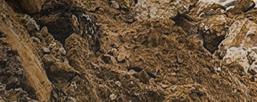
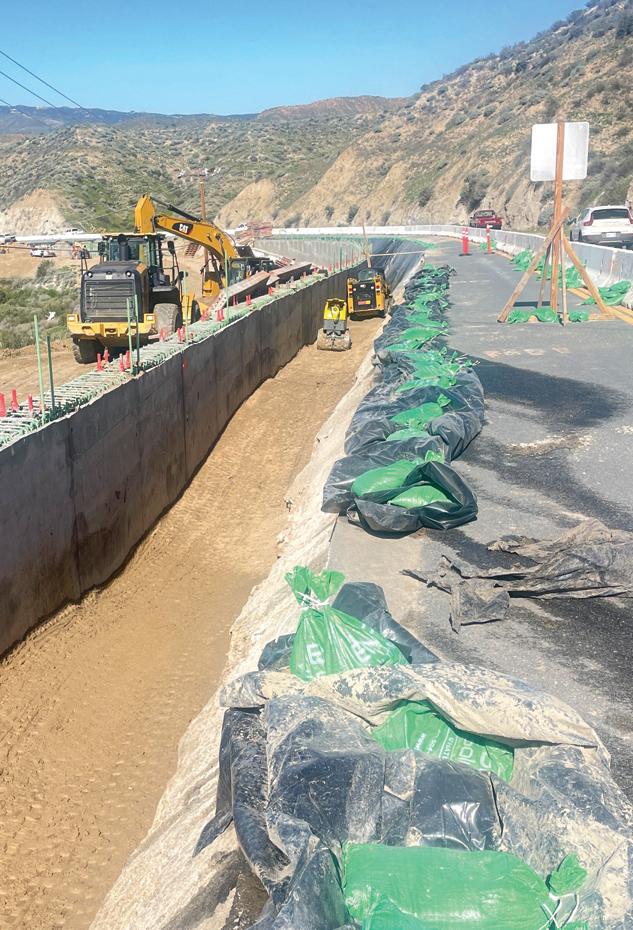
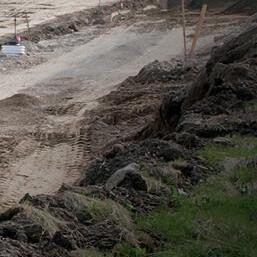
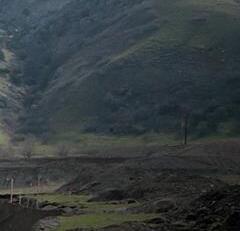
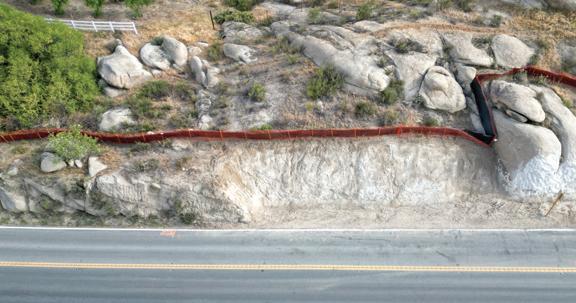
The Ortiz team provided protection for the road from rockslides on one side and steep dropoffs on the other. It also had to build fills in areas of steep dropoffs and excavate into solid rock in areas of steep embankment to widen the roadway.
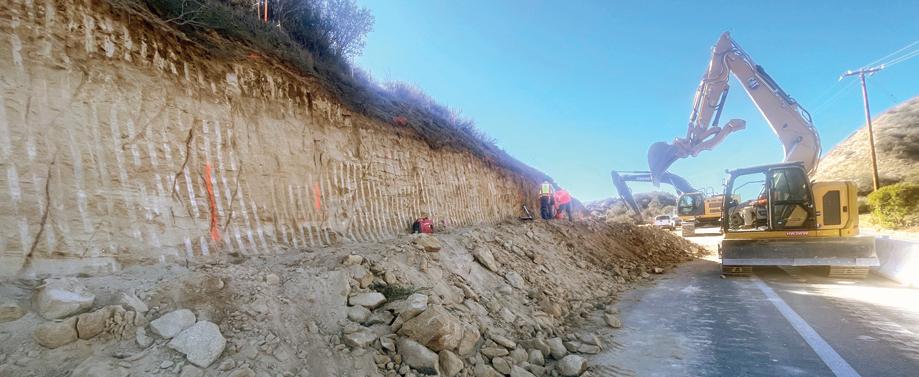
“With some of the steep areas, we stabilized the hills by drilling into them and creating soil nail walls. We then injected grout and finalized it with a rebar mat,” Britt said. “Once the top part of the hill was stabilized, we brought in an excavator and removed more dirt and rock. Again, we secured the ground with nail walls and the rebar mat.”
Nail wall techniques call for the contractor to drive nails as long as 20 ft. into the hillside to stabilize the dirt and rock.
The soil nail walls are constructed from the top down, excavating in increments of 5 to 10 ft. a time, depending on slope stability. Each layer receives several soil nails drilled, grouted and















































The Associated General Contractors of California (AGC of California) recently held its 2026 Installation & Awards gala in San Francisco and marked the installation of the organization’s 2026 state board leadership, including Ryan Aukerman, president of Griffith Co., as its incoming president.
The event also recognized award-winning construction projects and industry leaders from across the state.
More than 800 contractors, owners, service providers and professional firms attended the annual event, which recognizes standout projects and leadership shaping California’s construction industry.
“Our members are building the projects Californians rely on every day,” said Peter Tateishi, CEO of AGC of California. “This night is about recognizing the teams and individuals behind that work and the partnerships that make complex projects possible.”
The gala featured AGC of California’s Constructor Awards and Achievement Awards. The 2026 Constructor Awards program recognized 41 projects across 14 categories.
Finalists were selected by the AGC of California Awards Committee, with winners chosen by a final judging panel made up of awards committee members, AGC of California division representatives, a specialty contractor representative and a public or private sector expert appointed by the committee.
Achievement Awards honored individuals who made significant contributions to the construction industry. Honors included the Construction Education Friend Achievement Award, recognizing leadership in construction education and workforce development, and the Owner of the Year

Associated General Contractors of California photo
The Associated General Contractors of California held its 2026 Installation & Awards gala in San Francisco, marking the installation of the organization’s 2026 state board leadership and recognizing award-winning construction projects and industry leaders from across the state.
Award, recognizing an organization for strong collaboration and partnership with contractors.
AGC of California congratulated the following award recipients:
Constructor Awards
Community Service
Teichert Construction – Rebuilding
Together Day
Specialty Less Than $10 Million
Caliagua — Disney’s Cotino Lagoon
Specialty More Than $10 Million
Royal Electric Co. — LAX RWY 6L24R North Airfield Exit Taxiway
Utility Infrastructure
Walsh Group — Hyperion Advanced Water Purification facility
Builder Less Than $10 Million
Oltmans Construction — Rancho
Dominguez Electric Vehicle Charging Site
Heavy Civil Less Than $15 Million
Granite Construction Co. — Bethany
Curve Culvert — West Cliff Drive Storm Damage Repair
Builder $10 Million to $50 Million
Turner Construction Co. — The San Francisco International Airport (SFO)
Terminal 3 West Interim Corridors Project
Heavy Civil $15 Million to $50 Million
Skanska — North First Avenue Bridge -0Barstow
Builder $50 Million to $100 Million
McCarthy Building Cos. — University of California, Riverside School of Business
Heavy Civil $50 Million to $100 Million
Shimmick Construction — 301 Mission Perimeter Pile Upgrade
Builder $100 Million to $300 Million
Hensel Phelps — Caltech Resnick
Sustainability Center
Heavy Civil More Than $100 Million
Balfour Beatty US — Caltrain Peninsula Corridor Electrification project
Builder More Than $300 Million
Turner Construction Co. — IQHQ Research and Development District (RaDD) Excellence in Partnering
Balfour Beatty US — Caltrain Peninsula Corridor Electrification project
Achievement Award Recipients
Harry Eckstein Safety Professional Achievement Award
Melvina Stacey, director of health and safety, FlatironDragados
S.I.R. (Skill, Integrity, Responsibility) Achievement Award
Tim Lindholm, chief program management officer, Los Angeles County Metropolitan Transportation Authority (Metro)
Construction Education Friend Achievement Award
Bianca Flores Johnson, community and citizenship senior director, Turner Construction
Specialty Contractor Achievement Award
David A. Jaeger, (retired) CEO, Nor-Cal Pipeline Services
Contractor Achievement Award
Ken Strosnider, president/CEO, W. M. Lyles Co.
Owner of the Year Award
Caltrain
The Sites Project Authority (Authority) announced that Barnard Construction Co. Inc. was selected for the Reservoir Package Construction Manager at Risk (CMAR) contract to construct the up to $3 billion reservoir and roads package of the Sites Reservoir Project (Project).
This initial award is for pre-construction planning, so the contractor can provide collaborative input as the project moves from 30 percent design to construction.
This contract package includes the construction of two large dams and nine smaller embankments that will create Sites Reservoir, the .75-mi. Sites-Lodoga Bridge and an inlet/outlet structure that will manage water imports and exports from the reservoir and other key facilities. The contract value is expected to be approximately $3 billion.
Sites Reservoir would increase water supply throughout California and provide, for the first time, environmental benefits by storing water specifically for the environment to support native wildlife and their habitat during drought periods. The 1.5 million acre-ft. off-stream water storage
project is being advanced to increase California’s water and climate resiliency while also protecting and enhancing the environment.
“Selecting a CMAR contractor is a major milestone for reaching construction of Sites Reservoir and ensures we can advance a project that is constructable, cost-effective, and designed to serve California for generations,” said Fritz Durst, chair of the Sites Project Authority board of directors.
“With the board’s decision to bring the CMAR team on board, we can move efficiently toward breaking ground; take the immediate and necessary next steps in finalizing labor agreements with the construction trades, while maintaining transparency and accountability; and upholding the high standards expected of a project of this magnitude.”
The authority plans to carry out preconstruction in two phases.
In the first phase, the authority will work with the contractor to advance select preconstruction work under a lump sum arrangement; the second phase will begin once all project
funding is secured and all guaranteed maximum price (GMP) construction packages are developed and awarded.
While construction will not begin until late 2026, early engagement with the CMAR team allows the Authority to leverage the contractor’s large-scale infrastructure experience and technical strengths to position the Project for a smooth transition into construction. The CMAR delivery method was selected to optimize project delivery, manage risks, encourage local community collaboration and provide the best value for Project participants.
“Barnard Construction would like to express its sincere appreciation for being selected as the CMAR contractor for the authority’s reservoir project,” said Mike Fuller, vice president of Barnard Construction. “We recognize all the efforts to date by the authority and its member organizations. We are proud to be part of this historic endeavor and look forward to working with all the stakeholders and the local communities to successfully deliver this important infrastructure project.”











COLUSA
1960 Highway y 20 Colusa, CA 95932
Phone: (530) 458-216
DIXON
793 N First Street Dixon A95620
2535 Ellis Street
Redding, C 96001
Phone: (530) 245-9000 STOCKTON
827 Nort Teehama St Willows, CA 95988 Phone: (530) 934-3382
YUBA CITY
1340 W. Charter Way y Stockton,C 95206 ,C






HARRISBURG 230 Sommerville Avvenue Harrisburg, O 974446 Phone: (541) 995-2262
HILLSBORO
Rickreall Road reall, OR 97371 ne: (503) 363-2332
( , CA 9
Phone: (9916) 649-00
PALOS 2173 Blossom Street Dos Palos, CA 93620
Phone: (209) 392-216
S. State Highway
(209) 383-58
Stockton, C 9 Phone: (209) 944-5500 STRATTFORD
20280 Main St. Stratford, CA 93266
Phone: (559) 947-3301 TURLOCK
1215 West Glenwoo Avve Tuurlock, C 95380-5703
Phone: (209) 634-1777
3056 Colusa Highway y YubaCity CA95993
185 W Main St. Ext. Hillsboro,O 97123
36 NW A Street Madras, OR 977441 Phone: (541) 475-2253 Pho odburn, O one: (503) 981-0151
stressed followed by a mat of rebar and initial shotcrete. This continues to the bottom with some walls as tall as 30 ft.
Once that is done, the contractor covered the entire area with a second mat of rebar and a thicker layer of shotcrete, which is “sculpted” into the shape of a rock embankment.
In areas where the roadway was widened but still had steep slopes adjacent to the shoulder, metal beam guard railing was installed as a safety measure.
The construction team used 38,000 tons of asphalt for the project and removed 80,000 cu. yds. of dirt and 2,000 cu. yds. of rock. A contractor in Corona produced the asphalt.
The project was delayed for more than six months due to environmental issues, so Caltrans eliminated the widening of the Temecula Creek Bridge and used normal asphalt instead of rubber-
treated asphalt as a cost-savings measure to shore up the funds available for the project.
The project kept a biologist on staff and planned for the care of arroyo toads that frequent the area and for bats that sometimes make their home under highway overpasses.
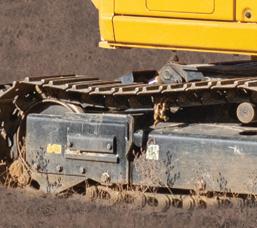
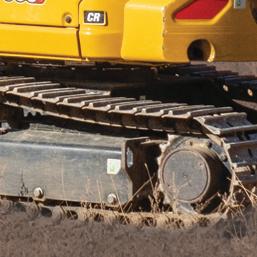
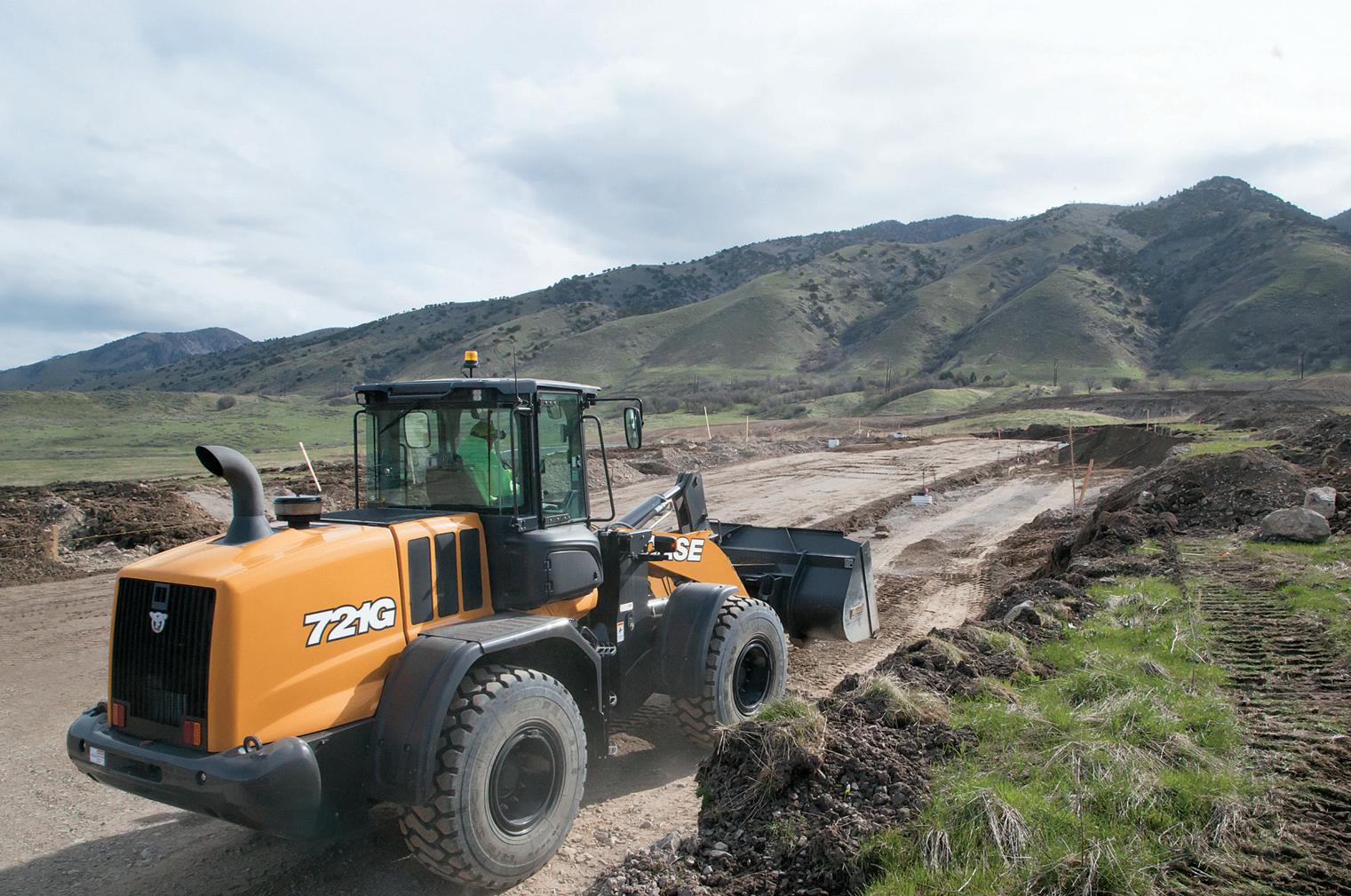
The construction team used an armada of equipment for the project, including excavators, bulldozers, a paver, a shuttle buggy and rollers. Wheel loaders and articulated trucks were kept busy hauling dirt during the demolition phase.
Much of the roadway widening involves work that cannot be opened to traffic at the end of the shift, so Ortiz uses portable signals. These signals were programmed to aid in the directional flow of traffic, optimized during peak traffic volume for each direction of travel and operate without any use of flagmen, 24 hours per day, seven days a week.
Signals have performed without any glitches, and delays to traffic have been minimal.
Ortiz equipment used GPS, which enabled workers to place material precisely where needed. The GPS readings also were used by Caltrans to verify that the material was properly placed.
Ortiz also installed cameras on the project, so when motorists call, the team can respond quickly to address any problems.
“Most of the time it is simply congestion,” Britt said.
The cameras also help guard against vandalism.
Britt is pleased with how the S.R. 79 job is progressing. The new shoulders and rockslide protection will provide additional safety for a rapidly growing area.
(All photos courtesy of Caltrans.)
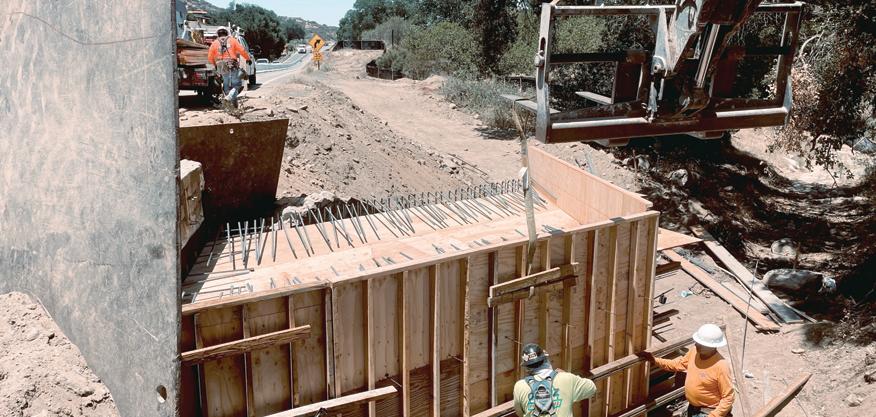
Ortiz Enterprises equipment on the State Route 79 project includes:
• Custom, in-house built drill rigs, including:
• Two on excavator bases (Hyundai 140 and Hyundai 210) for high-reach work.
• One on rough-terrain forklift.
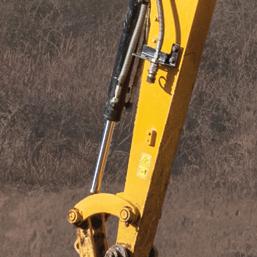
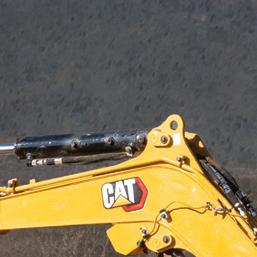
• One on mini-excavator for limited access.
• Tooling on drill equipment is “drag bit.”
• A variety of air compressors, ranging from 185–1,170 cfm and up to “XHP” (extra-high pressure) used for placement of shotcrete, flushing out of holes while drilling, various other operations.
• Custom-built anchor testing frame, made from double-wide flange beams.
• A variety of hydraulic testing rams for anchor testing, with capacities ranging from 50-100 tons.
• A variety of rough-terrain forklifts.
• A variety of straight-boom aerial lifts.
• A variety of concrete trailer pumps, used for grouting and shotcrete.
• A two-pot grout plant, used for grouting.
• Side-by-side, used for crew and material transport.
• Water trailers (“water buffalos”) for onsite water supply.
• In-house trucking for moving equipment between work locations and the company’s yard in Corona.
Upcoming equipment will include:
• Foundation-type drill rigs (likely a Geax EK30 and Bauer BG 11 / 15 / 24) for the installation of the soldier piles. Tooling will include augers, core barrels and buckets.
• Concrete hoppers for pouring soldier piles.
• Small crane (anticipated to be 4-65 ton, and either rough-terrain or tracked hydraulic) will be used for setting some of the soldier beams.
• Timber lagging will use mini-excavators and chipping guns.
• Studs will be welded to soldier piles with a stud-welding gun.