Mobile, Ala.’s new public arena. Replacing the former Mobile Civic Center, the new 10,000-seat Mobile Arena is expected to
The project offers a dynamic juxtaposition of old and new along Alabama’s Gulf Coast, as two time-tested Manitowoc 999 lattice boom crawler cranes are helping to construct the new arena. The heavy lift equipment is supplied to Garrison Steel Erectors by ALL Crane Rental of Georgia, a member of the ALL Family of Companies.
The 275-ton capacity Manitowoc 999 is a quarter-century workhorse. Making its debut at the turn of the last millennium, the machine is no longer in production. It was replaced in Manitowoc’s portfolio by the MLC300 (of which ALL also has dozens in the fleet that stay busy on bridge projects and
ALL has earned a reputation for keeping cranes of all vintages in like-new condition, extending the service lives of its equipment. A dedicated maintenance staff housed across the national footprint adheres to strict maintenance intervals, maintains meticulous digital records of all service performed and has access to more than 100,000 parts — including backup engines for every model
It’s all in service of the mission of maintaining a rent-ready fleet. In fact, another ALL Manitowoc unit, the 21000, a model that debuted the year before the Triple 9, was just decommissioned late last year — and headed for a second life in the construction markets of Peru.
The 999 remains a versatile tool for mid-size commercial construction projects like the arena, with its 360-degree rotating 290-ft. main boom. The machine offers a combination of high performance, easy mobilization and versatility, including a small footprint. When combined with its high capacity, fast self-assembly and
Triple 9 on construction sites.
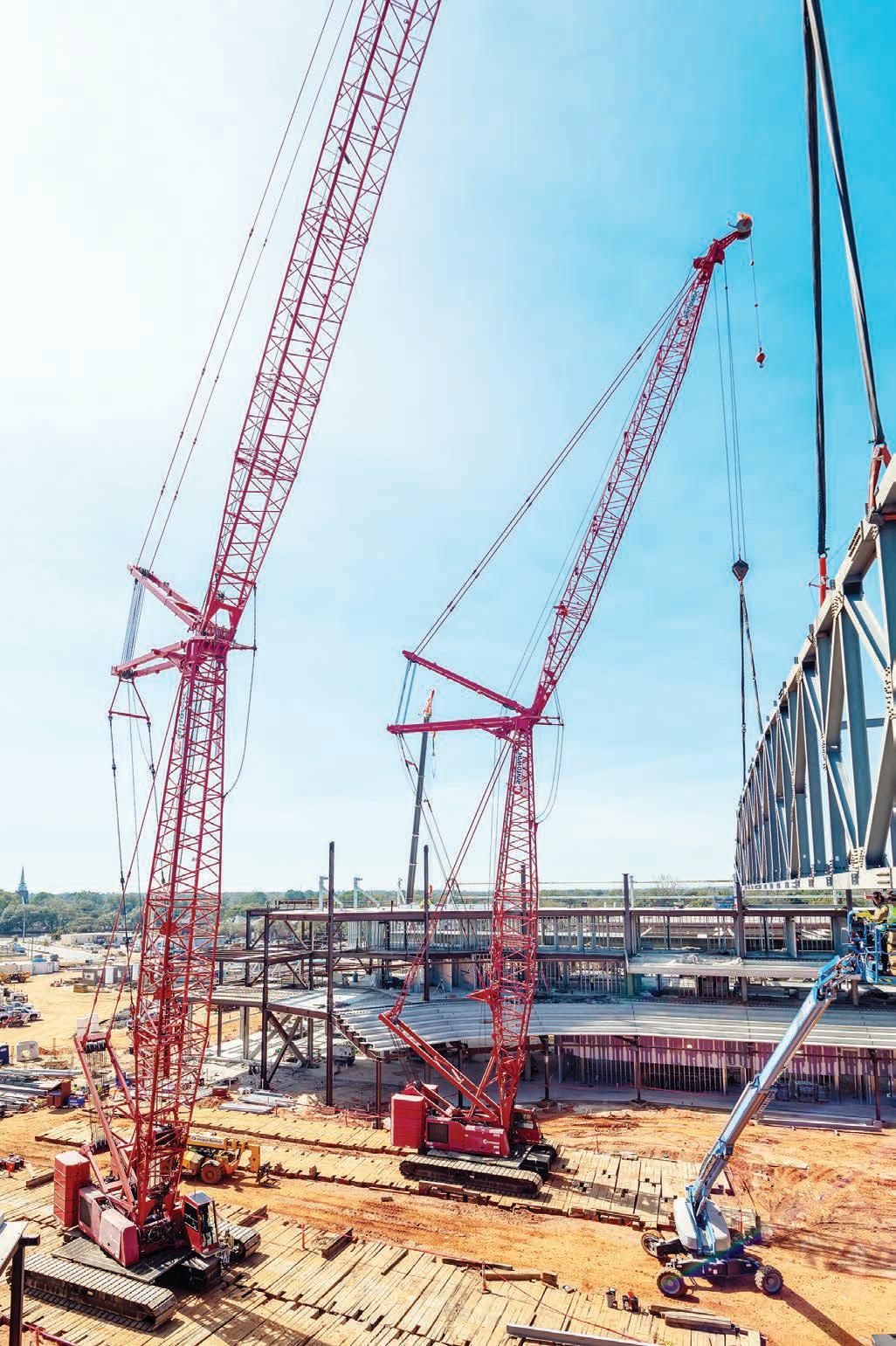
The two 999s in Mobile are both configured with 90 ft. of main boom; one adds 110-ft. of luffing jib, the other has 170ft. of luffing jib.
“They are single-picking all the structural steel that forms the body of the arena,” said Justin Thacker, sales representative of ALL Crane Rental of Georgia. “In addition to the two crawlers, we have an 85-ton LinkBelt RT85 rough terrain crane on the site to handle smaller steel sections.”
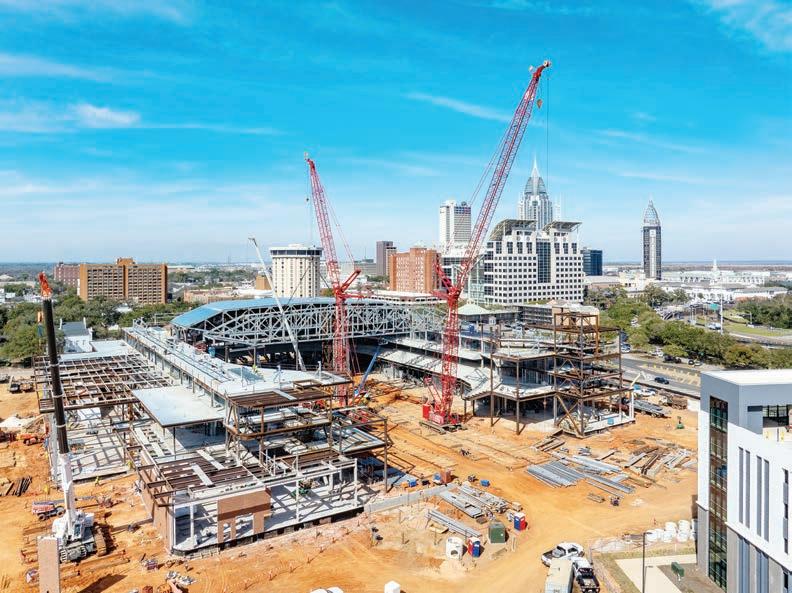
Construction is moving along quickly, with the Triple 9s currently setting the roof trusses for the arena’s main bowl. Each truss is 90 ft. long and weighs 70 tons. Each crawler will literally be building the new arena up around itself, which is typical in this type of construction. As a result, each move is carefully plotted out so the equipment has room to exit the structure before the final pieces are set.
As the steel structure takes final form, the exit strategy for the cranes is executed just as carefully as the lifts.
“Before the cranes even arrived on site, we already knew exactly how they were getting out,” said Thacker. “We determined the dimensions we’ll have to work with, came up with a plan, and based on that, know precisely where we’re going to tear down. We coordinate regularly with the general contractor to make sure everybody’s on the same page.”
The Mobile Arena project demonstrates what thoughtful planning and proven equipment can accomplish. The marriage of modern construction and the enduring capability of the Manitowoc 999 underscores how experience, maintenance, and knowhow can keep even legacy machines relevant on today’s job sites. When the right tools and expertise come together, good things happen.
For more information, visit allcrane.com.
ALL Crane photo
Construction is moving along quickly, with the Triple 9s currently setting the roof trusses for the arena’s main bowl.
ALL Crane photo
The two 999s in Mobile are both configured with 90 ft. of main boom; one adds 110-ft. of luffing jib, the other has 170-ft. of luffing jib.
ALDOT Preparing for Record Year of Airport Investment
The Alabama Department of Transportation’s (ALDOT) Aeronautics Bureau is preparing for another record year of investment in Alabama’s airport system. Recently, ALDOT met with the Federal Aviation Administration’s Airports District Office in Jackson, Miss., to begin coordinating fiscal year 2027 airport projects and funding priorities between the two agencies.
FY2027 Planning Process Under Way
Alabama airports received ALDOT’s annual “call for projects” letter last month. Updated five-year Airport Capital Improvement Plans (ACIPs) and project pre-applications will be due to the Aeronautics Bureau by late September as part of the annual planning process.
Additional Funding Expands Airport Opportunities
The Alabama Legislature’s appropriation of an additional $15 million annually during the past two legislative sessions reflects a strong and sustained commitment to strengthening the state’s aviation system. These additional resources significantly enhance ALDOT’s ability to provide matching funds for federal grants, expand the statewide airport pavement
maintenance program and address critical infrastructure needs at airports across Alabama.
Federal airport grants are being issued earlier in the fiscal year, allowing projects to move forward more efficiently. Combined with increased state funding, ALDOT is now in a much stronger position to support both federally funded projects and initiatives that fall outside traditional federal grant eligibility.
This flexibility allows the Aeronautics Bureau to assist local airports with important development and infrastructure improvements that might otherwise go unfunded, ensuring continued progress throughout Alabama’s airport system.
Infrastructure Investments Con tinue Across Alabama
Recent airport improvements completed across the state continue to demonstrate the impact of these investments. Projects have focused on runway rehabilitation, apron expansions, lighting upgrades and other infrastructure enhancements that improve safety, operational reliability and economic opportunity for local communities. For more information, visit dot.state. al.us/programs/Aeronautics.html.
More Than 500 Attend Alabama AGC’s 2026 Convention
More than 500 construction industry leaders, contractors, suppliers and guests gathered June 18-21, 2026, at the Hilton Sandestin Beach Golf Resort and Spa in Destin, Fla., for the Associated General Contractors of Alabama’s (Alabama AGC) annual convention.
The four-day event, Alabama AGC’s 42nd convention at the Sandestin property, included industry education, legislative updates, networking opportunities and family-friendly activities. Alabama AGC said the convention has become “one of the premier gatherings for Alabama’s commercial construction industry.”
The convention’s business session featured presentations from several industry and association leaders, including attorneys from Baker Donelson, representatives of the Auburn University McWhorter School of Building Science AGC Student Chapter, Trace Zarr, Alabama AGC director of governmental relations, and Byron McCain, Alabama AGC workforce
development director.
Attendees also heard from AGC of America National President Rick Andritsch of VJS Construction Services in Milwaukee, Wis. United States senator Tommy Tuberville, R-Alabama, delivered the keynote address. Alabama AGC has endorsed Tuberville in his
issues important to Alabama’s construction industry.”
Attendees also participated in networking and recreational activities, including the annual golf tournament, beach activities, a crab hunt for children and a casino night that brought together members and guests from across the state.
unity of Alabama’s construction industry,” Mike Scarborough, Alabama AGC president, said.
“From the outstanding educational sessions and legislative discussions to the networking opportunities and family activities, this year’s convention provided exceptional value for our members while reinforcing the relationships that
Billy Norrell, Alabama AGC chief executive officer, said the event continues to serve as an important opportunity for members to connect, learn and engage on issues affecting the industry.
Scarborough is vice president of
“The Sandestin convention has been one of the most anticipated events on our calendar,” Norrell said. “This event provides a unique opportunity for contractors, suppliers, industry partners and their families to come together while staying informed about workforce development, legislative priorities and the future of construction in Alabama.
The outstanding attendance this year reflects the commitment our members have to both their businesses and the association.”
The Associated General Contractors of Alabama is the state’s leading commercial construction trade association, representing hundreds of general contractors, specialty contractors, suppliers and service providers. For more information, visit alagc.org.
ALDOT photo
ALDOT’s Aeronautics Bureau works with local airports to support infrastructure improvements that strengthen aviation services and economic development.
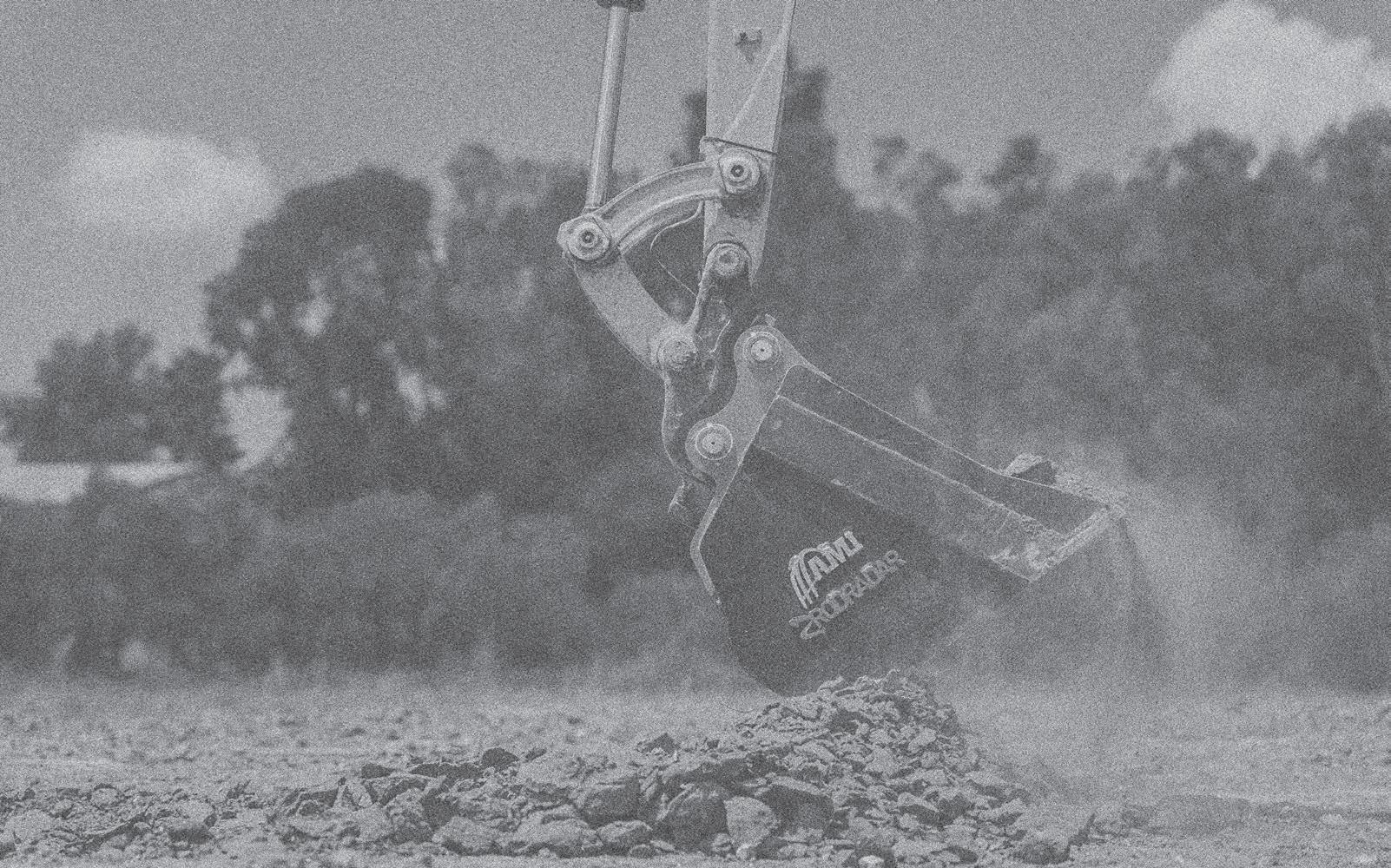
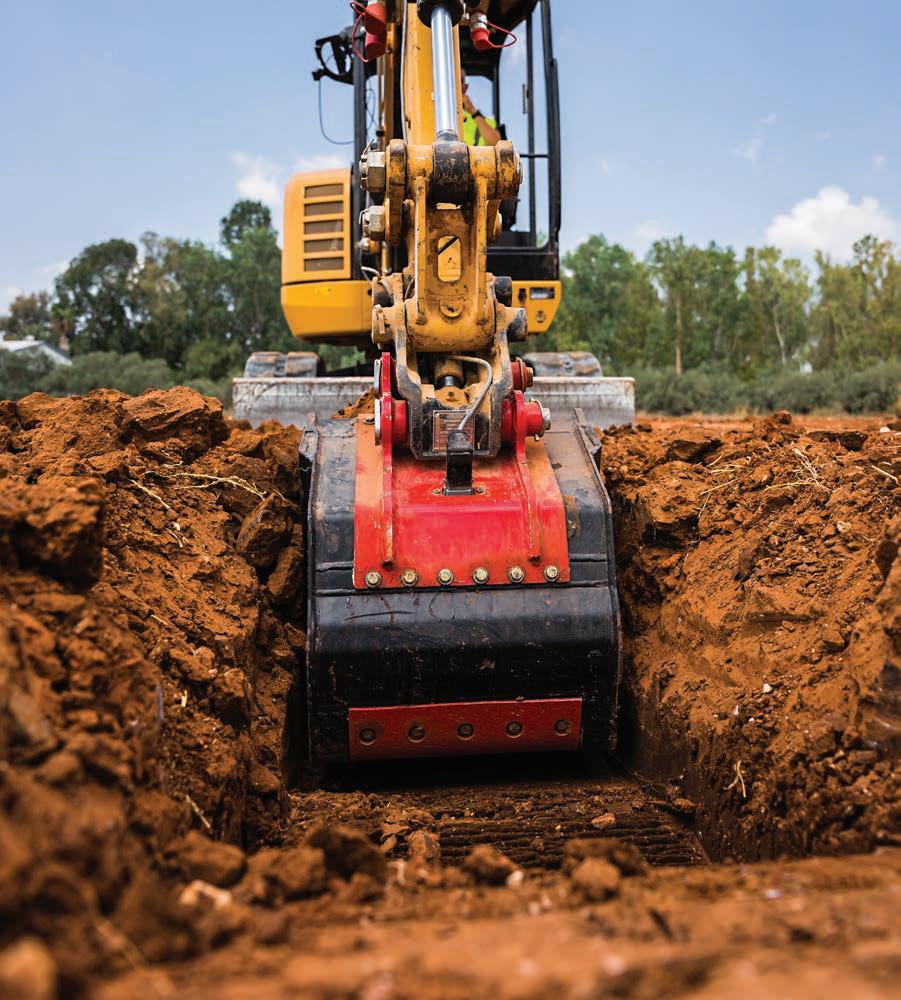
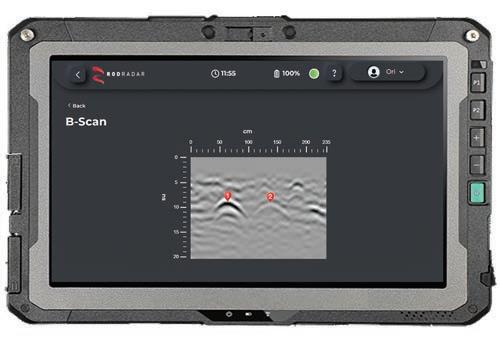
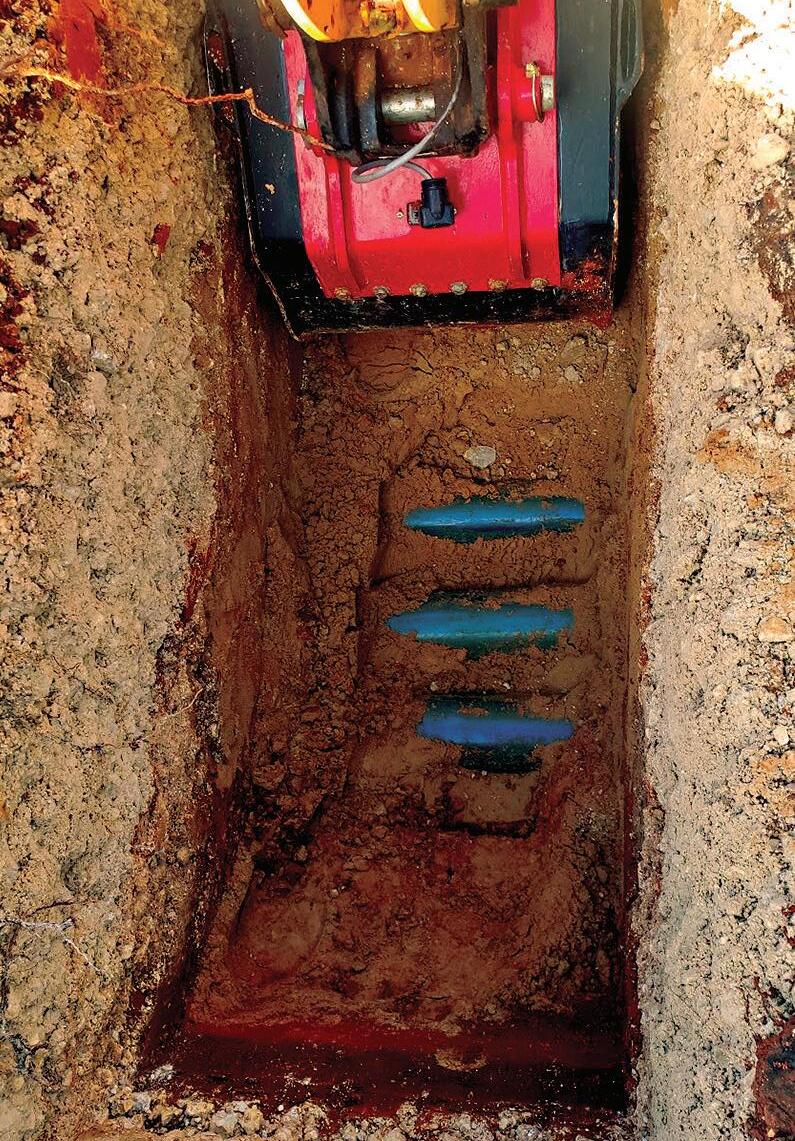
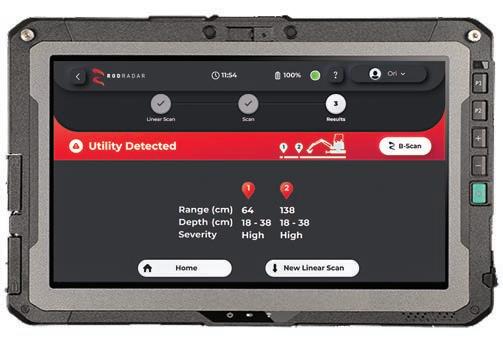
SEE WHAT’S BELOW. DIG WITH CONFIDENCE.
Striking underground utilities can cost time, money, and safety. Rod Radar technology helps operators detect and avoid buried hazards in real time – before they become a problem. This advanced system provides added visibility below the surface, helping you work smarter, reduce risk, and keep your job moving.
TRUST THOMPSON TRACTOR
WHERE YOUR SUCCESS IS OUR PRIORITY.
APA Project Creates 1,200 Acres of Wetlands, Wildlife Habitat
An Alabama Port Authority (APA) project designed to create new wetlands and restore critical wildlife habitat is moving forward due to $24 million in RESTORE Act funding.
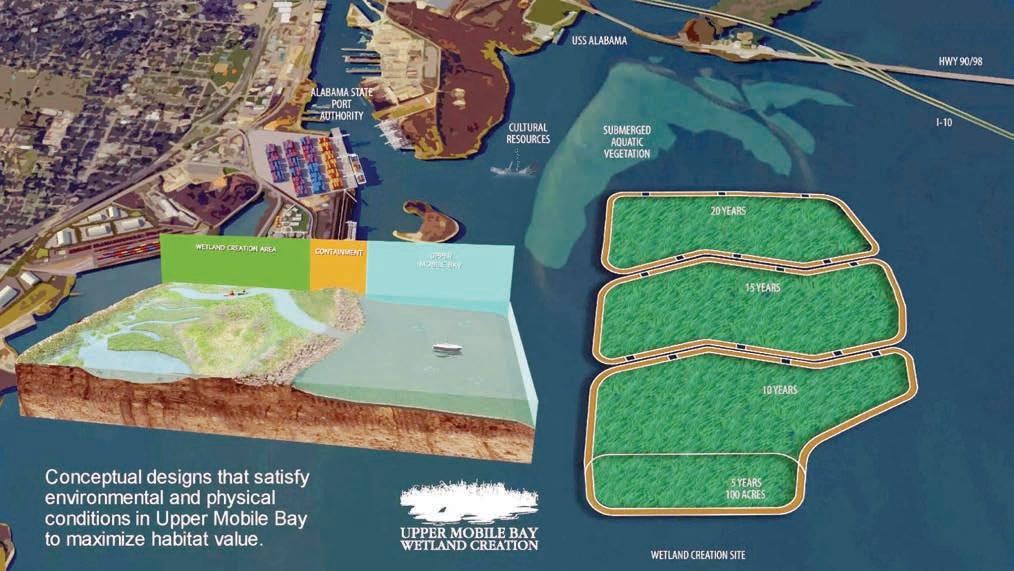
The Gulf Coast Ecosystem Restoration Council (RESTORE Council) approved $403 million dollars in funding for coastal restoration efforts across the Gulf. Among several projects approved in Alabama was a $24 million allocation to APA’s Upper Mobile Bay Wetland Creation Project, which has been in the works since 2016.
Using suitable material from routine berth maintenance dredging operations at the Port of Mobile, the project will construct the first 100 acres of a planned 1,200-acre restoration site just south of the Causeway in Mobile Bay. Designed to strengthen coastal resilience and support the long-term health of the bay, the project will keep valuable sediment in Mobile Bay by using it to create new wetlands and restore critical wildlife habitat.
Once complete, the Upper Mobile Bay Wetland Restoration Project will be one of the largest coastal restoration efforts in Alabama history — building on years of planning, engineering, environmental review and collaboration among local, state and federal partners.
“Berth dredging at the Port of Mobile is critical to supporting Alabama’s economic growth, and this project will transform that routine task into an opportunity to restore and strengthen one of our most important natural resources,” said Doug Otto, Alabama Port Authority director and CEO. “We’re proud to be part of this effort and grateful to our state leaders, the RESTORE Council and the
many partners who have helped advance this project over the years.”
With RESTORE Act funding approved and a construction permit from the U.S. Army Corps of Engineers (USACE) in place, work on the first phase of the Upper Mobile Bay Wetland Creation Project is expected to begin in early 2027. Strategically located along the central Gulf Coast, the Port of Mobile continues to emerge as a major logistics hub
by connecting Alabama businesses and inland markets to international trade lanes.
As one of Alabama’s most important economic engines, the Port of Mobile supports one in seven jobs statewide and has generated more than $415 billion in statewide economic impact since 2019. To learn more, visit
For more information, visit alports.com and uppermobaywetlands.com.
Wiregrass Construction Completes Section of Work Early
ALDOT from page 1
Another significant element of the project is ALDOT’s use of rubblization, a process that fractures the existing concrete pavement into a stable base before new asphalt pavement is placed. The method allows contractors to recycle the existing roadway structure while reducing demolition and disposal costs and accelerating construction.
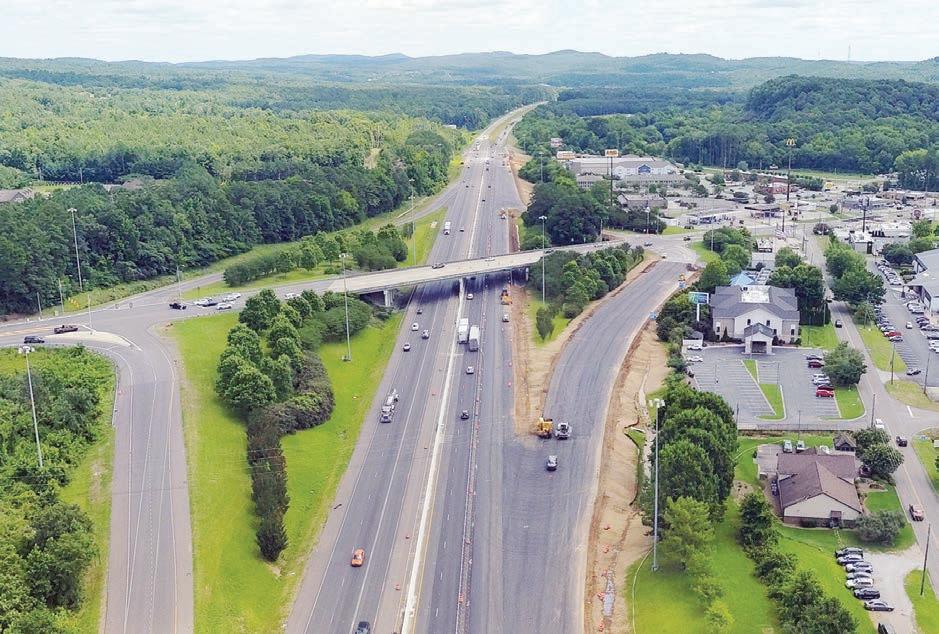
Throughout construction, ALDOT has maintained traffic by completing the work in phases. Two lanes generally remain open in each direction during daytime hours, with overnight lane closures used when necessary. Traffic has periodically shifted as crews reconstruct one side of the interstate before moving operations to the
With the northbound ramps now reopened, Wiregrass Construction is focused on completing work needed to shift traffic onto the newly constructed northbound roadway. ALDOT said the contractor has approximately three months to reach that milestone, which carries a $1 million incentive payment for on-time completion.
The overall project remains on schedule for completion in early 2027. Once finished, the reconstructed corridor is expected to improve traffic flow, reduce congestion and provide a safer, longer-lasting interstate connection for commuters and commercial traffic traveling through northeast Jefferson County. CEG
ALDOT photo
Wiregrass Construction completed the work before the end of the 40-day incentive period established by ALDOT.
ALDOT photo
The overall project remains on schedule for completion in early 2027.
Next Issue Closes August 6th
Bridge Project Will Increase Capacity, Improve Mobility
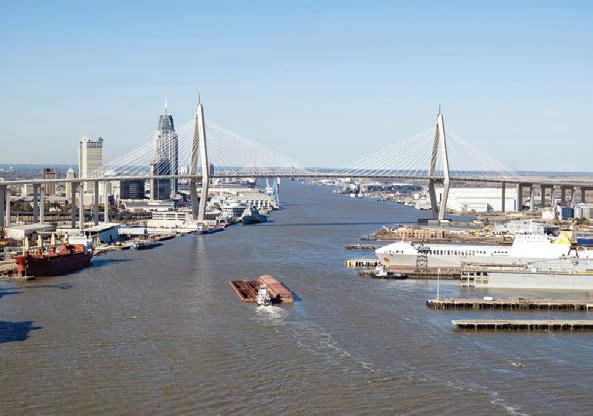
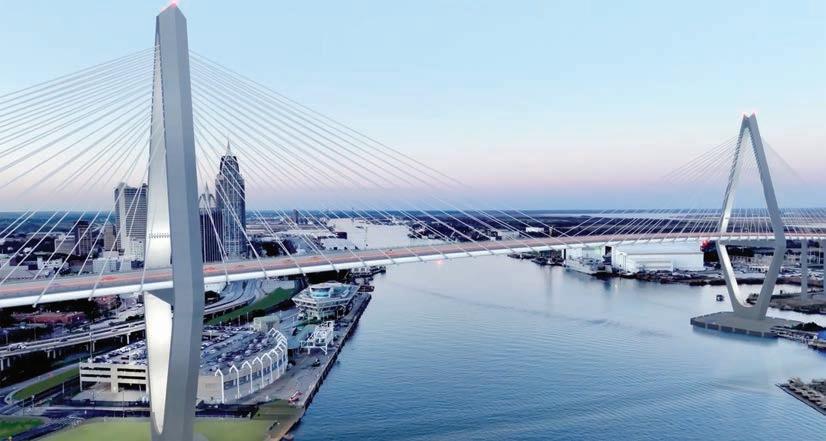
After decades of planning and multiple funding challenges, Alabama officials said construction of the long-awaited Mobile River Bridge and Bayway Project is expected to begin before the end of 2026 under a revised phased approach designed to control costs while expanding Interstate 10 capacity across Mobile Bay.
Gov. Kay Ivey called the project one of Alabama’s most significant infrastructure investments.
“This project is essential to Alabama’s future and represents one of the most important infrastructure investments in our state’s history,” Ivey said. “This transformative project will strengthen our economy, improve safety and ensure we are better prepared in times of emergency.”
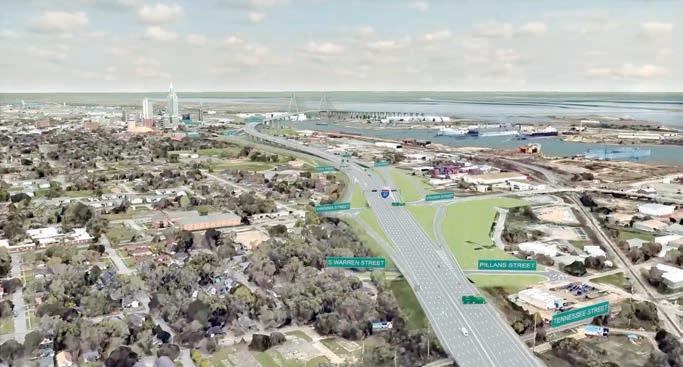
The Mobile River Bridge and Bayway Project is intended to relieve chronic congestion along I-10, improve freight movement serving the Port of Mobile and strengthen hurricane evacuation routes linking Alabama with neighboring Gulf Coast states.
Rising Costs Prompt Phased Construction
Officials said the project team revised the construction strategy after updated engineering and financial analyses showed that building both the new bridge and a completely new Bayway simultaneously would exceed financially sustainable limits.
Once completed, the Mobile River Bridge and Bayway Project will increase capacity across Mobile Bay, improve regional mobility and enhance freight access to the Port of Mobile while strengthening one of the nation’s most important east-west interstate corridors.
Several factors contributed to escalating costs, including nationwide construction inflation, higher labor and material prices, additional engineering and geotechnical challenges associated with the Bayway and evolving federal regulatory requirements.
Rather than delaying the entire project while additional funding is secured, ALDOT elected to divide construction into two phases, allowing work on the bridge and corridor improvements to begin while preserving plans for the future Bayway expansion.
The agency said the phased approach will provide meaningful congestion relief sooner while keeping the overall program financially viable.
Partnership Helps Advance Project
State officials credited cooperation among federal, state and local agencies with helping move the project toward construction.
According to ALDOT, months of coordination involving the White House, U.S. Department of Transportation, Federal Highway Administration, Gov. Ivey, Alabama’s congressional delegation and local
officials helped create a financing strategy capable of advancing the project.
Officials said recent federal actions provided additional flexibility for project funding, addressed regulatory requirements and supported financing mechanisms necessary to proceed.
The anticipated TIFIA loan remains a key component of the project’s financial package.
Toll Collection to Begin After Bridge Opens
Officials emphasized that motorists will not pay tolls until the new Mobile River Bridge opens, which is currently projected for approximately 2031.
Existing routes, including the Wallace Tunnel, Bankhead Tunnel, Causeway and Africatown Bridge, will remain toll free.
Current toll proposals for passenger vehicles include a $60 unlimited monthly commuter pass, a $3 pertrip rate for motorists using an ALGO Pass and a $7.70 rate for drivers using compatible interoperable transponders. Drivers without a transponder would be billed through a pay-by-plate system.
ALDOT said ALGO transponders are expected to be distributed at no cost during the initial rollout.
Major Transportation Investment
Once completed, the Mobile River Bridge and Bayway Project will increase capacity across Mobile Bay, improve regional mobility and enhance freight access to the Port of Mobile while strengthening one of the nation’s most important east-west interstate corridors.
The project also is expected to improve hurricane evacuation capabilities for Alabama’s Gulf Coast while supporting continued economic growth throughout Mobile and Baldwin counties.
If construction begins as anticipated later this year, the project will represent the largest transportation infrastructure investment in Alabama history and one of the most significant highway construction projects currently under way in the Southeast.
For more information, visit mobileriverbridge.com.
BRIDGE from page 1
ALDOT rendering
ALDOT rendering
State officials credited cooperation among federal, state and local agencies with helping move the project toward construction.
ALDOT rendering
The project is expected to improve hurricane evacuation capabilities for Alabama’s Gulf Coast while supporting continued economic growth throughout Mobile and Baldwin counties.
ALDOT rendering
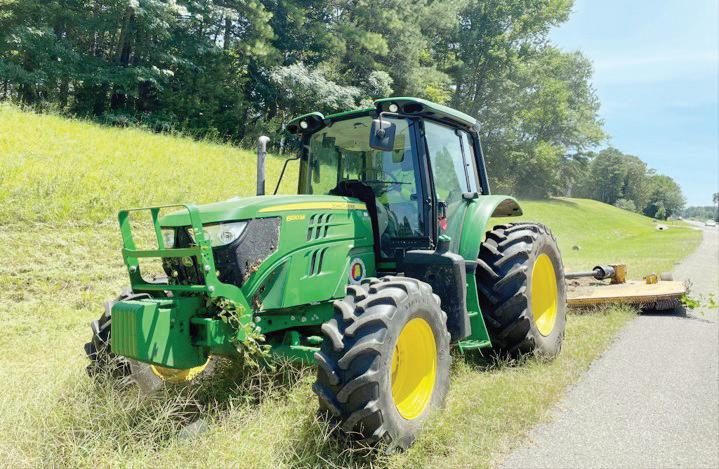
Mowing is an expensive, one-size-fits-all approach — costing by some estimates $50 per acre several times each year.
Research Project Helping ALDOT Maintain Roadsides
A four-year research project at Auburn University is helping the Alabama Department of Transportation (ALDOT) improve management of nearly 30,000 lanemiles of public roadside in more efficient, cost-effective ways by incorporating herbicide as part of an integrated weed management practice.
ALDOT is responsible for an estimated 243,000 acres of roadside area and the traditional means of weed control for that land is mowing.
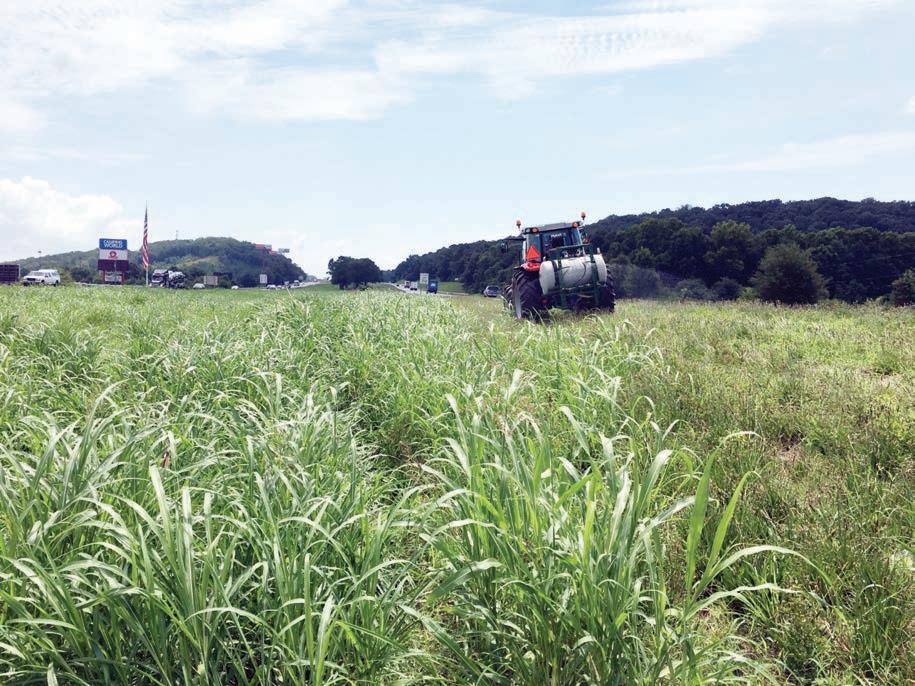
However, mowing is an expensive, onesize-fits-all approach — costing by some estimates $50 per acre several times each year, Auburn’s team said. Mowing also exposes road workers to risk by placing them near traffic, and it often is simply ineffective against invasive grasses that regrow quicker than native species, researchers found.
“Our goal was to create practical, research-based recommendations that ALDOT managers can use immediately across Alabama’s highway system,” said David Russell, associate extension professor of weed science at Auburn, in a school news article.
He stressed that this research project “is about safety first and foremost [as] clear views, stable shoulders, and consistent vegetation are critical for drivers and maintenance crews.”
That is why this Auburn-led research sought to determine if targeted herbicide programs, applied at specific times, could outperform traditional methods to provide
longer-lasting control, reduce the need for repeated mowing and improve roadside conditions.
Russell conducted field trials at multiple locations alongside Alabama’s highways, targeting particularly problematic species in common management scenarios. Russell tested herbicide combinations, rates, timing and environmental conditions to identify treatments that delivered consistent control. He discovered that controlling weeds is as much about the right time as it is the right
been notoriously difficult to manage, can be controlled for up to two months with the right combination of herbicides, if applied in late summer.
In designated “bareground areas” where vegetation must be removed completely to allow drainage to make roads safely passable, several herbicides were found to render 80 percent of the ground free of vegetation for up to 132 days, Russell’s research team found.
In one case, the team found that fire –
invasive species foxtail by stimulating its dormant seeds to germinate in the absence of a thick, healthy forage stand. The invasive often regrows faster than desirable grasses, choking them out after a fire clears an area.
The strategic application of herbicides also led to better habitats for pollinators like butterflies, Auburn’s team found. Through field-applied research trials, the school’s researchers proved that some native milkweed plant species are tolerant to many commonly-used herbicides along highway rights-of-way.
Furthermore, when not mowed repeatedly, native wildflowers like Rudbeckia were also able to emerge. In addition to protecting against erosion and preventing invasive species from getting a foothold, the flowers are also just nice for motorists to see along the roadside, Russell noted.
Ultimately, while Auburn’s study primarily focused on how to improve roadside weed control, it uncovered other benefits as well, for reducing the frequency of mowing and retreatment of herbicides can potentially lower long-term maintenance costs, decrease fuel use and reduce the amount of time highway workers are exposed to dangerous traffic.
“This work shows that vegetation management doesn’t have to be a onesize-fits-all approach,” he said. “When we understand how different species behave and how treatments interact with the environment, we can manage roadsides in ways that are safer, more economical and more environmentally responsible.”
ALDOT photo
ALDOT photo
The team found that fire – often touted as a “natural” management tool – actually caused the spread of the invasive species foxtail.