INTERVIEW
From Apps to Infrastructure

CONNECTING TRADE PROFESSIONALS WITH INDUSTRY INTELLIGENCE
INTERVIEW
From Apps to Infrastructure
CONNECTING TRADE PROFESSIONALS WITH INDUSTRY INTELLIGENCE
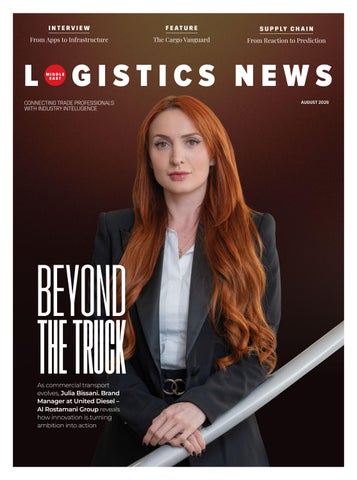
As commercial transport evolves, Julia Bissani. Brand Manager at United Diesel –Al Rostamani Group reveals how innovation is turning ambition into action
FEATURE
The Cargo Vanguard
SUPPLY CHAIN
From Reaction to Prediction
AUGUST 2026
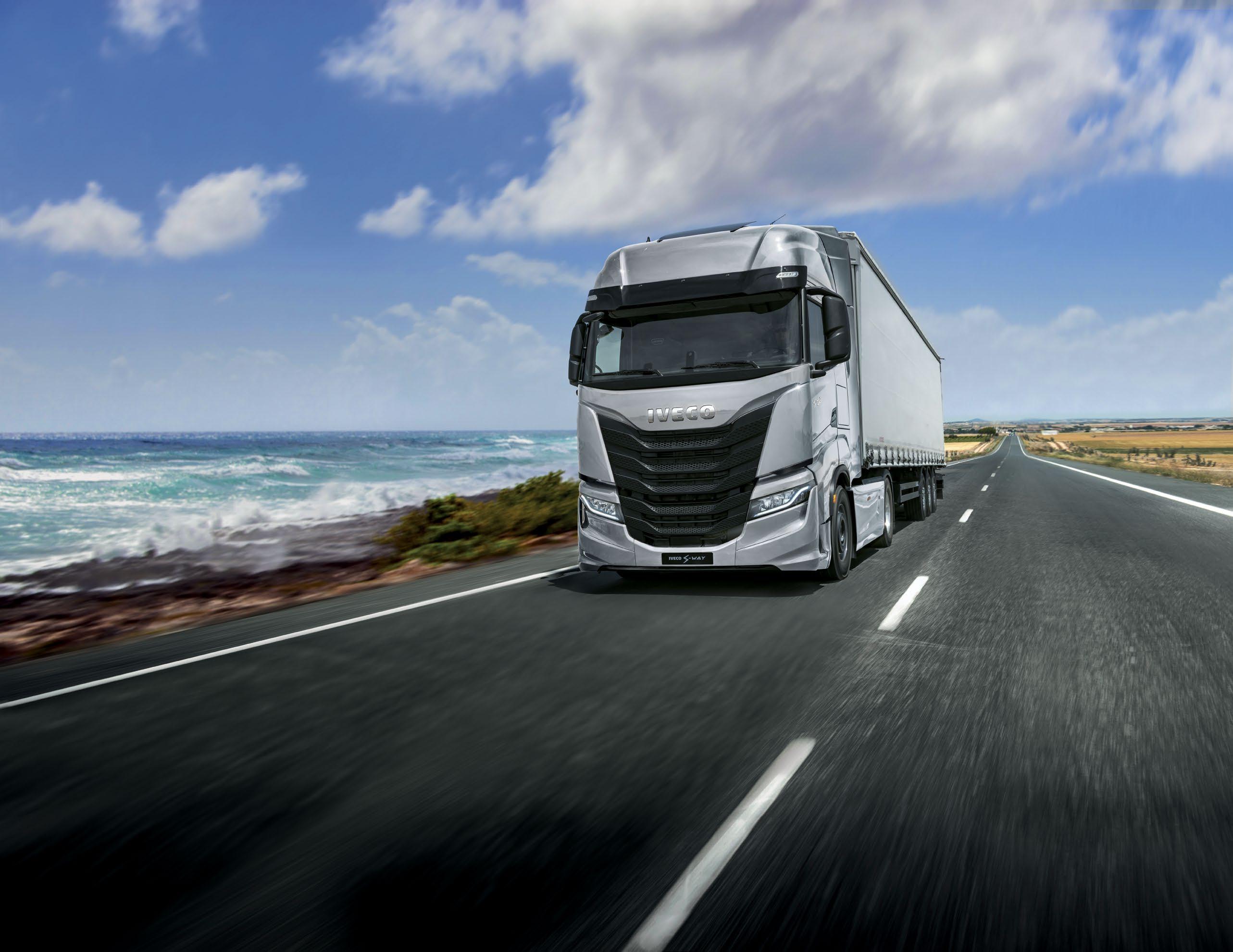
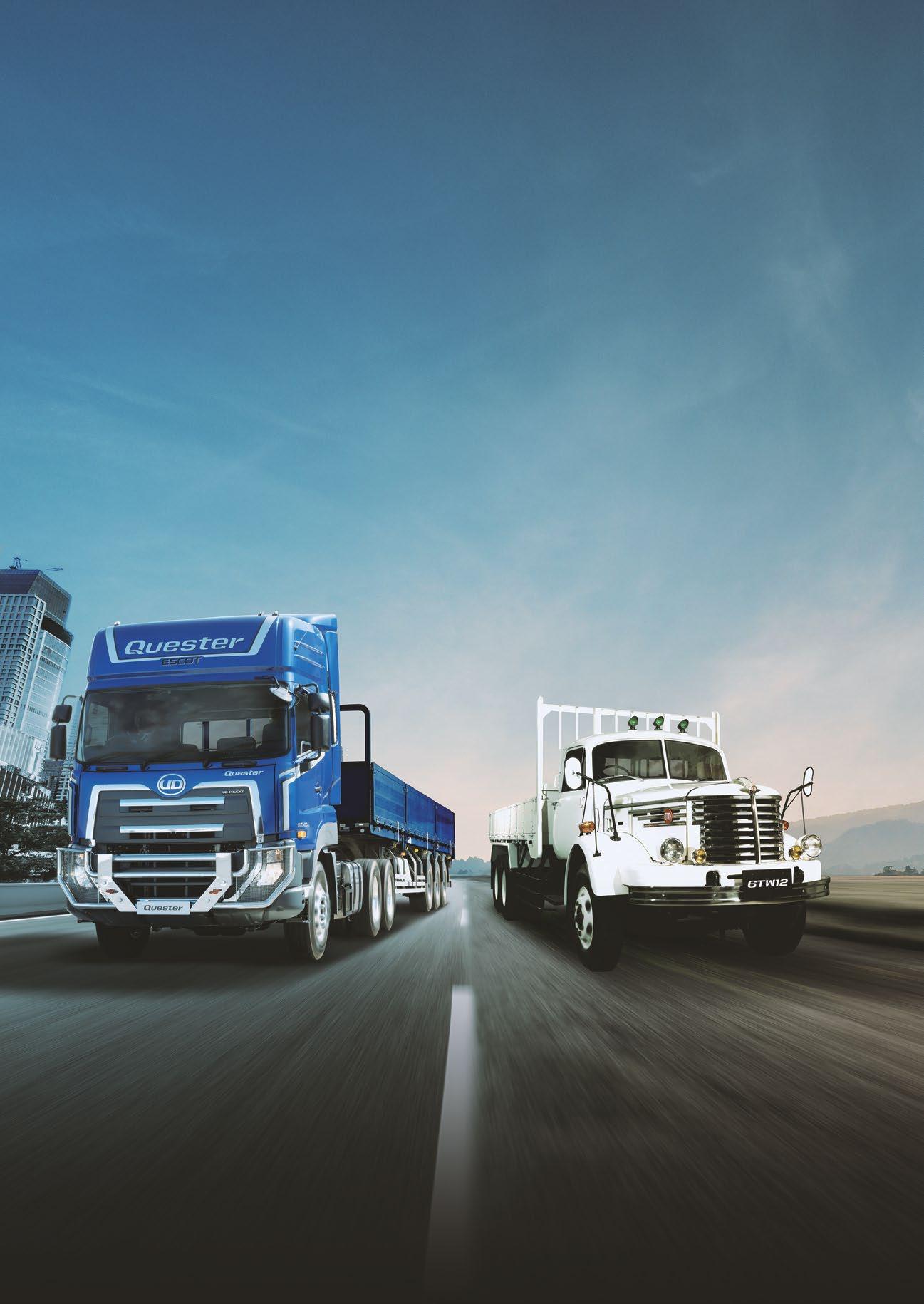
New IVECO S-Way: high technology and effciency on all missions
A wide choice of Euro III / V diesel engines, delivering class-leading power from 360 hp to 560 hp Euro III / 570 hp Euro V and superior fuel economy. 12-speed HI-TRONIX automated transmission with the most advanced technology in its category, electronic clutch and best-in-class torque-to-weight ratio. Full range of fuel-saving devices, such as anti-idling feature, EcoSwitch, Ecoroll and Smart Alternator. Top levels of comfort and safety, with a completely redesigned and reinforced cab, featuring enhanced direct visibility and enlarged cab livability.

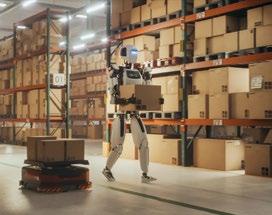

AI The Discipline Behind the Persona
Interview
to
Smart Logistics From Chatbots to Autonomous Operations
Supply Chain From Reaction to Prediction Port
DP World’s Bold Bet on a New Gulf Gateway

CONNECTING TRADE PROFESSIONALS WITH INDUSTRY INTELLIGENCE
CEO
Wissam Younane wissam@bncpublishing.net
Managing Director
CEO
Rabih Najm rabih@bncpublishing.net
Wissam Younane wissam@bncpublishing.net
Group Publishing Director
Director
Joaquim D’Costa jo@bncpublishing.net
Rabih Najm rabih@bncpublishing.net
Editor
Group Publishing Director
Reeba Asghar reeba@bncpublishing.net
Joaquim D'Costa jo@bncpublishing.net
Commercial Director
Editor-in-Chief
Andrea Mocay andrea@bncpublishing.net
Vibha Mehta vibha@bncpublishing.net
Country Manager
Managing Editor
Amjad Fakhouri amjad@bncpublishing.net
Kasun Illankoon kasun@bncpublishing.net
Creative Lead
SUBSCRIBE
subscriptions@bncpublishing.net
subscriptions@bncpublishing.net
PO Box 502511 Dubai, United Arab Emirates P +971 4 4200 506 | F +971 4 4200 196
For all commercial enquiries, contact jo@bncpublishing.net T +971 50 440 2706
PO Box 502511 Dubai, United Arab Emirates P +971 4 4200 506 | F +971 4 4200 196
Christian Harb chriss@bncpublishing.net
Design Christian Harb
Junior Art Director
Marketing Executive
All rights reserved © 2026. Opinions expressed are solely those of the contributors. Logistics News ME and all subsidiary publications in the MENA region are ofcially licensed exclusively to BNC Publishing in the MENA region by Logistics News ME.
For all commercial enquiries, contact jo@bncpublishing.net T +971 50 440 2706
All rights reserved © 2023. Opinions expressed are solely those of the contributors.
Rizaldi Febrian Ika Wahyuni
Aaron Joshua Sinanbam aj@bncpublishing.net
Digital Media Producer
Marketing Executive
Alexander Bungas
Aaron Joshua Sinanbam aj@bncpublishing.net
Videographer
Eduardo Buenagua
No part of this magazine may be reproduced or transmitted in any form or by any means without written permission of the publisher.
Logistics News ME and all subsidiary publications in the MENA region are ofcially licensed exclusively to BNC Publishing in the MENA region by Logistics News ME.
Printed by United Printing and Publishing | upp.ae
No part of this magazine may be reproduced or transmitted in any form or by any means without written permission of the publisher.
Printed by United Printing and Publishing | upp.ae
Images used in Logistics News ME are credited when necessary. Attributed use of copyrighted images with permission. All images not credited courtesy Shutterstock.
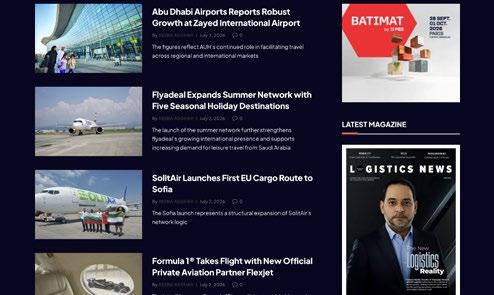
In addition to our print edition, we’re bringing you all sorts of industry news on our web mediums. We’re looking forward to interacting with our readers on all of our social media and web platforms. See you on the web!
addition to our we’re bringing you all sorts of industry news on our web mediums. We’re looking forward to interacting with our readers on all of our social media and web platforms. See you on the web!
There is something about summer in the UAE that I have come to genuinely appreciate. As temperatures climb and many residents head off on their holidays, the country seems to exhale. The roads are a little quieter, favourite cafés are less crowded, and there is a calmness that feels almost unfamiliar in cities that usually move at full speed. I have always enjoyed this time of year. It offers a rare chance to slow down, catch up on a book that's been sitting on the shelf, linger over a coffee, or simply enjoy the quieter rhythm of everyday life.
For me, these past few months have also been a period of learning. As I continue settling into my role and getting to know the logistics industry, every conversation and story has revealed just how vast and interconnected this sector truly is. There is still so much left to discover, and that sense of curiosity makes the journey all the more rewarding.
Of course, while the rest of us embrace a slower pace, logistics never really takes a holiday. Behind the scenes, cargo ships continue their journeys, aircraft keep to demanding schedules, warehouses remain busy, and trucks travel thousands of kilometres to keep businesses supplied and communities connected. Even during the quietest weeks of summer, the industry continues to move with remarkable precision.
Every shipment delivered, every feet on the road, and every innovation introduced is a testament to an industry that never stands still. As the industry gears up for a dynamic fnal quarter, we look forward to bringing you the stories, innovations, and leaders shaping the future of logistics across the Middle East. Until next month, I hope you fnd a moment to enjoy the slower pace of summer. Safe travels, and happy reading.

Reeba Asghar Editor
Logistics News ME reeba@bncpublishing.net
reebaasghar
reeba.asgharx






























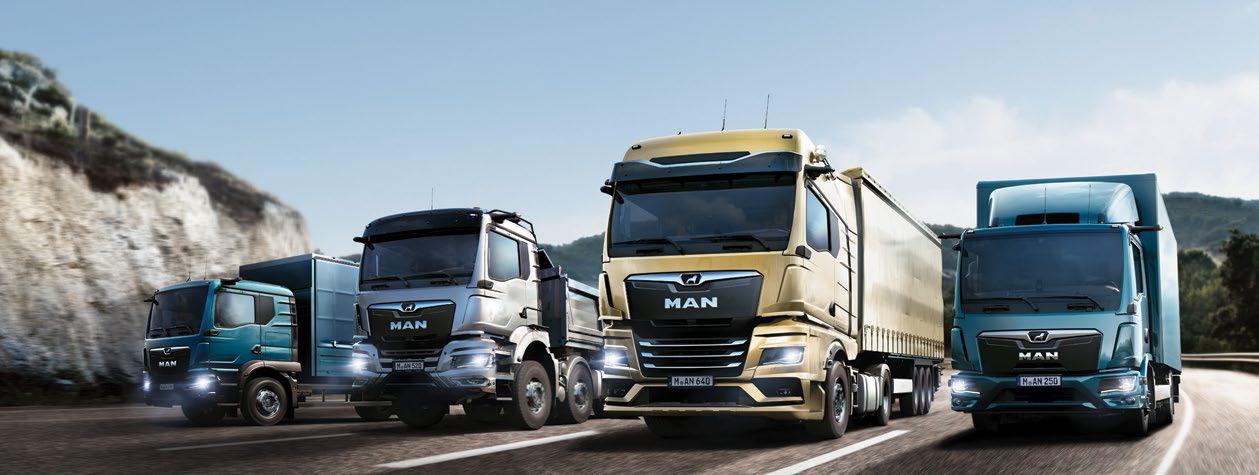











































Bahri continues its long-term commitment to strengthening its feet capabilities while advancing more effcient and lower-emission shipping solutions
Demonstrating the accelerating shift towards sustainability in the maritime logistics sector, Bahri, the National Shipping Company of the Kingdom of Saudi Arabia, has announced, through Bahri Line, its dedicated arm for scheduled shipping and cargo services, the launch of a newbuild programme for two dual-fuel LNGpowered Roll-on/Roll-off Container (RoCon) vessels, with an option for an additional two units. The vessels will be constructed at Jingling hipyard, marking a signifcant step in the company s ongoing feet modernisation.
Through this initiative, Bahri continues its long-term commitment to strengthening its feet capa ilities while advancing more effcient, lower emission shipping solutions. Building on the success of its proven RoCon concept, the next-generation vessels will introduce a range of design
enhancements aimed at maximising cargo intake, fexi ility and overall operational performance.
he vessels will deliver signifcantly increased cargo capacity and greater cargo fexi ility, alongside higher container stack capacity, enabling the transportation of larger and more diverse cargo volumes. Additional hoistable decks will further enhance vehicle and rolling cargo capacity, providing greater adaptability to accommodate a wide range of cargo types.
The initiative will also enhance operational performance through the integration of dual-fuel LNGpowered engines, providing greater operational fexi ility and delivering an estimated 10% improvement in effciency compared with the current feet, supported y advanced energy saving technologies.
In addition, the vessels will be equipped with Alternative Marine
Power (AMP), enabling zero emissions during port stays. This reinforces Bahri Line’s commitment to environmental sustainability, in line with the company’s strategy and the objectives of Saudi Vision 2030
Complementing these technical advancements, the vessel design will feature enhanced accommodation standards focused on crew comfort and well eing. his refects ahri Line’s continued commitment to supporting its seafarers while maintaining the highest standards of safety, reliability and performance for its customers.
This investment represents a strategic milestone in Bahri Line’s growth trajectory, aligning with the company’s broader objectives of delivering innovative, sustainable and high-performance maritime solutions while contributing to the development of a more efficient global shipping industry.
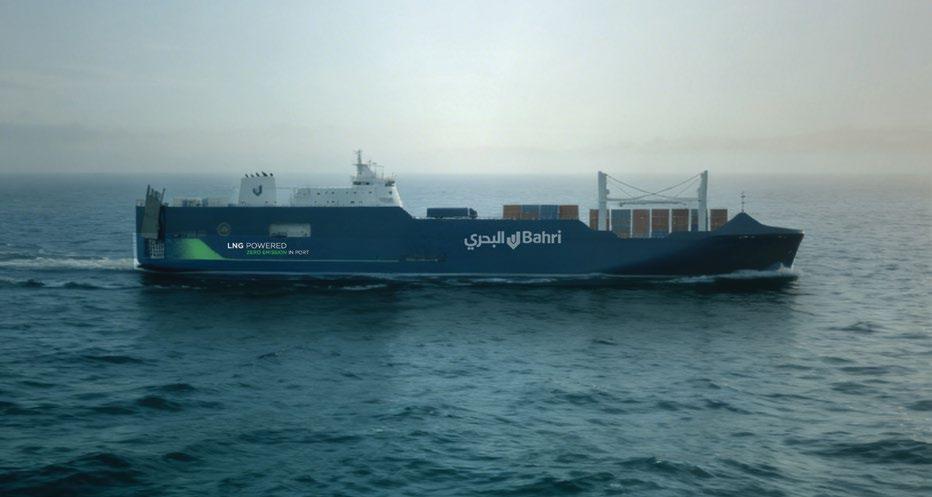
The MoU brings together SAL’s expertise in cargo handling and integrated logistics services with SPARK’s advanced industrial and logistics ecosystem
SAL Logistics Services, a national leader in cargo handling, logistics solutions and supply chain management, has signed a Memorandum of Understanding (MoU) with King Salman Energy City Dry Port (SPARK Logistics), contributing to the development of the Kingdom’s logistics ecosystem.
The MoU establishes a general framework for cooperation between the two parties to explore joint opportunities across logistics services, supply chains and industrial sectors. It refects their shared commitment to enhancing operational
integration, supporting industrial and logistics development, and contributing to the objectives of Saudi Vision 2030
SPARK is one of the leading integrated industrial cities in the Eastern Province, featuring a logistics zone and dry port that connects its industrial community to regional and global trade networks. The MoU brings together SAL’s expertise in cargo handling and integrated logistics services with SPARK’s advanced industrial and logistics ecosystem, creating shared value and supporting the Kingdom’s economic development goals. Under the MoU, both parties will
explore opportunities for collaboration in logistics services, supply chain solutions and integrated services, while identifying areas for operational integration to support industrial and logistics projects. The scope of the cooperation also includes exploring opportunities to provide warehousing and transportation services.
It also supports the expanding role of logistics services as an enabler of industrial and commercial growth, further reinforcing the Kingdom’s position as a global hub for trade, transport and logistics under Saudi Vision 2030
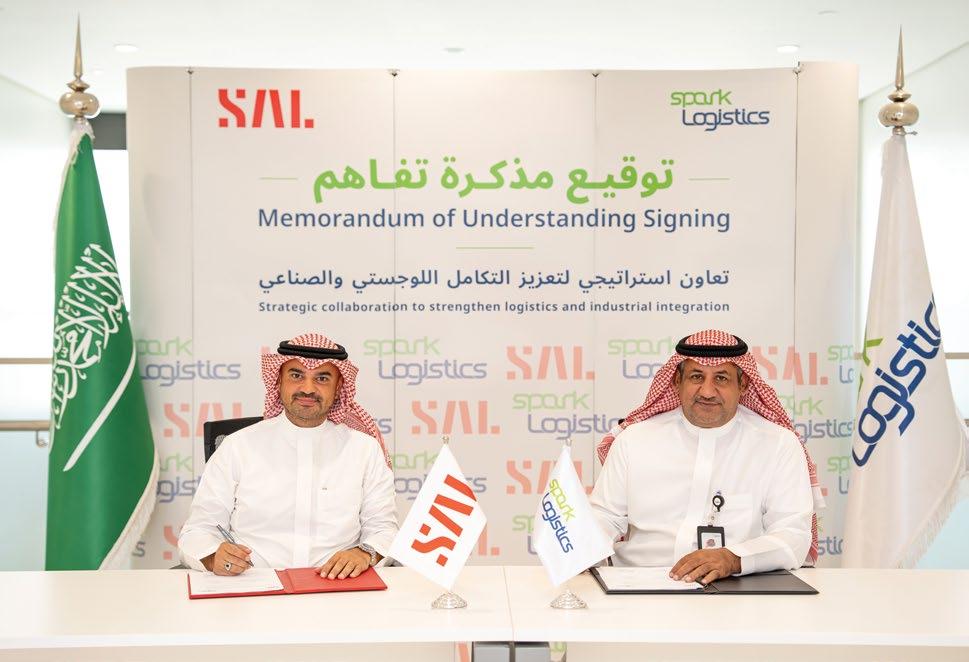
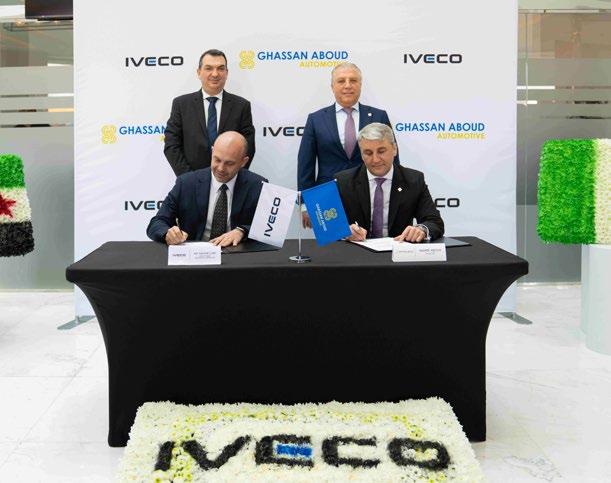
The new partnership will see GAMCO introduce IVECO’s comprehensive range of commercial vehicles to the Syrian market
Ghassan Aboud Automotive, a subsidiary of Ghassan Aboud Holding, has signed a strategic distribution agreement with IVECO, a global leader in commercial vehicle manufacturing. The partnership marks an important milestone in supporting Syria’s reconstruction and development efforts while strengthening IVECO’s presence in the Syrian market.
Through its subsidiary, Grand Auto & Machinery Co. (GAMCO), Ghassan Aboud Automotive will oversee IVECO’s sales, service and aftersales operations across Syria. As the Group’s specialist company for commercial vehicles, construction machinery and industrial solutions, GAMCO will serve as the offcial distri utor of I E commercial vehicles in the country.
The new partnership will see GAMCO introduce IVECO’s comprehensive range of commercial vehicles to the Syrian market, delivering worldclass transport solutions and leading aftersales services that strengthen key industries and create long-term value for customers across Syria.
The agreement establishes a longterm collaboration to support the evolving mobility needs of customers throughout Syria.
Maher Aboud, Group CEO of Ghassan Aboud Holding, said: “We are delighted to partner with IVECO and add one of the world’s leading commercial vehicle manufacturers to GAMCO’s growing portfolio. This partnership refects our commitment to supporting Syria’s reconstruction by delivering world-class commercial vehicles and leading aftersales solutions that strengthen industries, improve operational effciency and create long-term value for our customers and partners. Together with
IVECO, we look forward to delivering exceptional products and services that contribute to Syria’s long-term development.”
Shahram Falati, IVECO Country Manager for Africa & the Middle East, said: “We are pleased to partner with Ghassan Aboud Automotive and GAMCO to bring IVECO’s worldclass commercial vehicles to Syria. By combining IVECO’s global expertise with GAMCO’s growing local capabilities and customer-focused approach, we aim to provide reliable, effcient and sustaina le transport solutions that enhance productivity, strengthen businesses and contribute to Syria’s long-term economic recovery.”
Operated by GAMCO, the dealership will offer IVECO’s comprehensive range of light-, medium- and heavy-duty commercial vehicles, providing relia le, effcient and high performance transport solutions tailored to the evolving needs of
customers across Syria.
Beyond vehicle sales, GAMCO will provide customers with a complete ownership experience through modern service facilities, manufacturer-trained technicians, mobile service vans and a dedicated nationwide parts distribution network. These capabilities are designed to maximise feet uptime, improve operational effciency and deliver long-term value to customers across Syria.
The addition of IVECO further strengthens GAMCO’s growing portfolio of global mobility and industrial brands, reinforcing its position as a trusted partner in Syria’s reconstruction and long-term development.
The partnership supports GAMCO’s commitment to ‘Rebuilding Syria Together’ by combining global expertise, advanced technologies and local capabilities to contribute to Syria’s long-term reconstruction and economic development.
MAN is focusing on new battery-electric vehicle models from the second half of the year
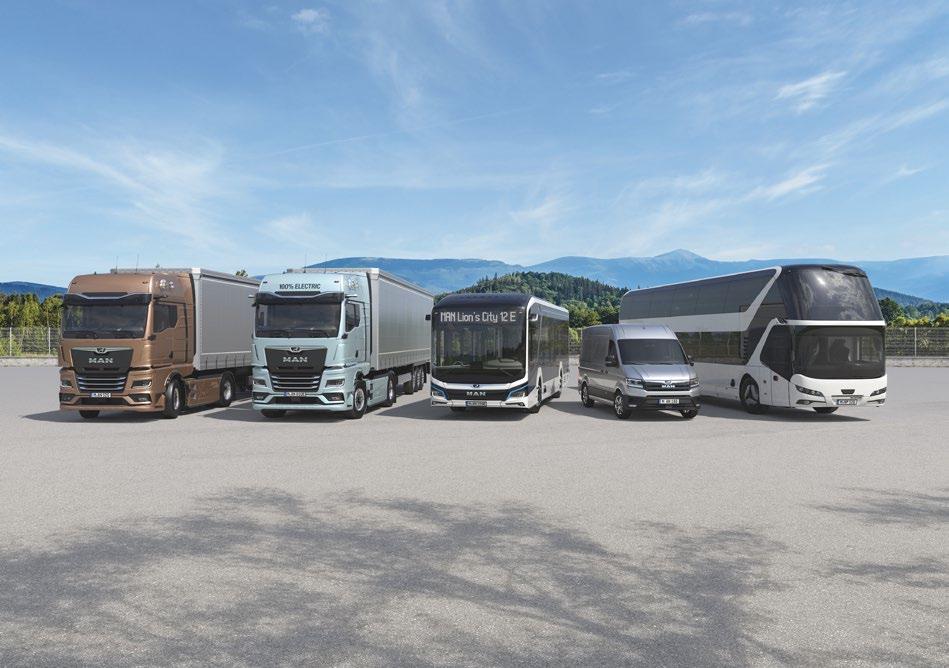
MAN Truck & Bus increased global unit sales y in the frst half of 2026 compared with the same period last year. A total of around 51,000 units were sold, including around 32,000 trucks (+10%), approximately 3,300 buses (+2%) and just under 16,000 vans (+6%). The engine business also grew by 17%, with almost 6,000 units sold. While demand developed positively across many European markets, the traditionally important German market lagged behind this trend. Business in fully electric vehicles performed particularly strongly, with unit sales rising by 37% to around 1,100
units, including around 600 eTrucks and more than 500 eBuses.
“The sales trend shows that our broad product range is holding its own in a challenging market environment. At the same time, battery-electric vehicles are becoming increasingly important to our customers,” said Friedrich Baumann, Executive Board Member for Sales & Customer Solutions at MAN
From the second half of the year, MAN will focus on new batteryelectric vehicle models for urban
delivery traffc, regional transport and coach travel. Its electric truck portfolio will then span everything from light-duty distribution trucks to heavy-duty long-haul tractor units. epending on the operating profle, the fully electric heavy-duty models (eTGX and eTGS) offer ranges of up to 820 kilometres, while the new eTGM provides a range of up to 500 kilometres for urban and regional distribution transport. With customer deliveries of the MAN Lion’s Coach E scheduled to begin at the end of the year, the company is also expanding its range with a fully electric coach offering a range of up to 650 kilometres.
Dr Lijo John unpacks why the future of AI in supply chains may belong to smaller, sharper models
The debate over Small Language Models (SLMs) versus Large Language Models (LLMs) in logistics is usually framed as a hardware story: less compute, lower cost, offline capability. That framing misses the real argument, and it leaves practitioners with a checklist of features rather than a rule for deciding. The case for SLMs rests on a sixty-yearold idea from cybernetics: W. Ross Ashby’s (1956) Law of Requisite Variety, which holds that a regulator can control a system only if it carries at least as much variety, as many distinct states and responses, as the disturbances that system produces. Supply chains are precisely the kind of high-variety system Ashby had in mind, and that single idea answers most of the practical questions operators are now asking about which model belongs where.
What is SLM, and how does it differ from LLM?
An LLM (GPT, Claude, or Gemini) is trained on internet-scale, largely undifferentiated text, typically runs to hundreds of billions of parameters, and is designed to be broadly competent across an enormous range of unrelated tasks. An SLM is not simply a smaller version of the same thing; it is a fundamentally different design choice. Built with anywhere from a few hundred million to around ten illion parameters, it is fne tuned on a narrow, domain-specific dataset, a company’s shipping manifests, maintenance logs, or customs flings and optimised to perform one task extremely well rather

than many tasks adequately. That narrower training scope is what lets it run on a laptop, a warehouse edge server, or a vessel’s onboard system rather than a hyperscale cloud cluster, and respond in milliseconds rather than seconds. In Ashby’s terms, the LLM carries generic variety sufficient for almost any conversation, while the M carries specifc variety sized precisely to one bounded task. The difference is architectural intent, not merely scale.
Are SLMs actually better than LLMs –and why?
The honest answer is: better for matched tasks, not better in general, and the

distinction matters. Where a task’s variety is bounded and well understood, an SLM routinely beats an LLM on both accuracy and speed, simply because it isn’t spending capacity on irrelevant variety the task never presents. Microsoft Research’s 2024 case study on Azure’s own cloud supply chain found that small models outperformed far larger general-purpose models on both accuracy and running time for that specifc application-interaction task. Gartner has reached the same conclusion at the enterprise strategy level, projecting that by 2027 organisations will deploy small, task specifc models at roughly three times the volume of general-purpose LLMs. None of this renders
LLMs obsolete; it simply makes them the wrong default for narrow, repeatable, high-volume work.
Does This Logic Hold Specifcally for Supply Chain Management?
Yes, more cleanly than in most industries, with one notable exception. Jay Galbraith’s organisational information-processing theory holds that firms facing high task uncertainty must either reduce the informationprocessing burden on any single decisionmaker or expand capacity to match it. A supply chain looks, at frst glance, like one enormous, high-variety system, but it is really a federation of narrower, locally bounded subsystems. Customs clearance follows a fixed regulatory schema; predictive maintenance follows known sensor signatures; warehouse slotting follows repeatable demand patterns. Each is a low-variety problem wearing a highvariety system’s reputation, precisely the profle an M is uilt for. he exception is strategic sensing: synthesising heterogeneous, unstructured external signals such as geopolitical news, social sentiment, and macroeconomic indicators into a demand or risk forecast, a task where LLMs still have the edge. The practical rule for supply chain leaders is to push SLMs into the execution layer and reserve LLMs or a hybrid of the two for the strategic sensing layer above it.
Where Should SLMs Be Deployed in Supply Chain Operations?
Four scenarios consistently favour SLMs over general-purpose models, each

because the task’s variety is narrow, repeatable, and often privacy- or latency-sensitive.
• Customs and trade documentation: extracting and validating data from ills of lading, certifcates of origin, and HS code classifications is a rules-governed task; document-AI systems uilt on smaller, fne tuned models already reduce border delays and manual rework by catching errors before submission.
• P redictive maintenance on fixed assets: factories and fleets increasingly run SLMs on edge hardware to read vibration, thermal,
and acoustic sensor streams and flag failures before they happen, with reported reductions in unplanned downtime of around 25 per cent in deployed cases.
• Offine and disconnected operations: vessels mid-transit, oilfield technicians, and remote distribution hubs cannot guarantee cloud connectivity; an SLM running locally on an iPhone or a laptop keeps troubleshooting and routing decisions live when the network is not.
• Transaction-level anomaly detection: reading procurement, trade-
Dr Lijo John, Assistant Professor in Logistics and Supply Chain Management at Edinburgh Business School, Heriot-Watt University Dubai
fnance, or invoicing logs for fraud or compliance flags is the same narrow pattern-matching task banks already run SLMs against, and it transfers directly to supplier and customs fraud detection.
The Practitioner’s Decision Rule Model size should be the last decision a supply chain leader makes, not the frst. The sequence that actually works starts with the task: if its variety is bounded, repeatable, and known in advance, customs codes, sensor signatures, transaction patterns, fine-tune an SLM and run it close to where the data is generated. If the task requires synthesising unstructured signals nobody has fully catalogued geopolitical risk, demand shocks, supplier sentiment, keep an LLM, or a hybrid architecture, in the loop. Either way, the investment that actually determines success lies in the orchestration layer: clear decision rights between models, shared state management, and audit trails robust enough to satisfy scrutiny. Get that governance layer right, and small models deliver exactly the precision Ashby’s sixty-year-old theorem predicted. Skip it, and a fleet of specialists becomes just another name for fragmented control.

BEGA pole-top luminaires with Dark Sky technology direct the light in a highly efficient manner only where it is required. Light pollution of the night sky is avoided. bega.com/darksky
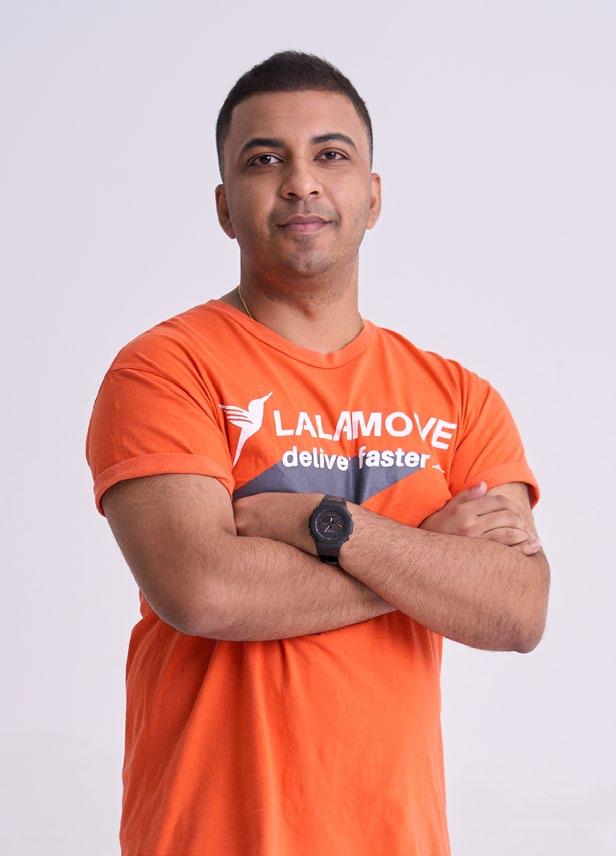
In an exclusive interview, Ashvin Nair, Managing Director of Lalamove UAE, discusses scaling across the Gulf without losing sight of the driver network that makes it all work
Ashvin Nair, Managing Director of Lalamove UAE
Lalamove has grown rapidly across multiple markets. In the UAE, what have been the biggest challenges in balancing rapid user acquisition with maintaining service quality and driver satisfaction and how have you addressed them?
The honest answer is that growth and quality pull in different directions if you let them. More orders mean more pressure on driver partners, more edge cases in operations, and more points where the experience can break down. The way we have managed that tension is by treating supply-side health, the driver partner network as the foundation of everything else.
We do not simply bring driver partners onto the platform and leave them to figure things out for themselves. We have a dedicated support team that assists partners on the go, alongside an ordermonitoring system that proactively flags issues rather than waiting for a driver partner or customer to report a problem. That shift from reactive to proactive is what keeps quality from slipping as volume increases. When driver partners feel supported and see consistent demand, they stay. When they stay, the platform becomes more reliable

for customers. That is the cycle we have been focused on building.
The other piece is team synergy internally.
THE UAE MARKET HAS HIGH EXPECTATIONS, AND MEETING THEM REQUIRES EVERY DEPARTMENT; OPERATIONS, TECHNOLOGY, CUSTOMER SUPPORT, MARKETING TO FUNCTION AS A SINGLE UNIT.
No one function can compensate for a gap in another.
As customer expectations continue to shift towards faster and more fe i le deli ery hat a or trends do you believe will reshape lastmile logistics in the GCC over the ne t f e years
Same-day delivery will become the baseline expectation across the GCC well before 2030. That is not so much a prediction as an observation of the direction the market is already moving. I
believe the conversation about “speed” is too narrow. What businesses and consumers actually want is certainty: they want to know exactly when their delivery will arrive, have visibility on where it is in real time, and know that if something goes wrong, there’s a human response available.
That means the real competitive differentiator in this market won’t just be the speed of the vehicle, it will be the quality of the interface, the accuracy of the tracking, and the reliability of afterdelivery support. Platforms that invest in those layers will pull ahead of those that focus solely on cutting transit times.
Greater GCC integration is also going to e signifcant. s regional connectivity strengthens, inter-city and inter-emirate logistics will become a bigger part of how businesses plan their supply chains. The platforms best positioned for that are the ones building those corridors now.
The UAE continues to strengthen its position as a global trade and logistics
h Ho does Lala o e ft into this vision, and what role do you see the company playing in supporting the country’s economic growth?
Logistics contributes meaningfully to the UAE’s GDP, and on-demand logistics specifically plays a role that tends to be underestimated. We are not just moving parcels, we are enabling the businesses that form the backbone of the local economy to operate at a level they couldn’t otherwise afford. A small business in Dubai should not need a logistics department to compete. They should be able to open an app, book a van or a lorry, and know it will show up.
The UAE government has created a regulatory environment that supports innovation in this space. Clear rules, a strong ease-of-doing-business framework, and real openness to technology-driven solutions have made it possible for platforms like ours to scale quickly and responsibly. We see Lalamove as an infrastructure layer for the SME economy, one that helps local businesses grow, fleet
operators earn more efficiently, and the broader ecosystem moves faster.
We also operate across 17 markets globally, and that gives us something most local players do not have: crossmarket insight. We know what works in dense urban environments, what drives driver retention in different cultures, and how businesses in comparable markets have adapted their logistics as they have scaled. We bring those learnings to the UAE and apply them with local context.
Lalamove’s success depends on a strong driver-partner network. What initiatives are in place to support drivers, improve retention, and ensure a positive experience for partners on the platform?
Retention starts with one thing: consistent, meaningful income. If a driver partner joins our platform and finds regular demand, good earnings, and a support system that actually responds when there is a problem, they stay. If any of those elements are missing, they leave. It’s that straightforward.
On the income side, we focus on generating the volume of orders that makes driving with Lalamove
worth a driver’s while. We are not interested in having a large number of registered driver partners who rarely get bookings, we want active partners who are earning. On the support side, we have a team available specifically to assist driver partners during active routes, not just a helpdesk that operates office hours. Additionally, our order-monitoring system means we are often aware of a delivery issue before the driver partner has even had a chance to report it.
Beyond day-to-day operations, we provide route-planning tools and earnings tracking, so driver partners have visibility into their own performance and income. The goal is to make driving with Lalamove feel like a legitimate business decision, not st an occasional gig
Lalamove has established a strong presence in the UAE’s on-demand delivery market. What key factors have driven this growth, and what opportunities do you see for the next phase of expansion?
The foundation of our growth is platform versatility. Lalamove is not built around a single use case: we serve first-mile, mid-mile, last-mile, and inter-business deliveries, and that breadth means we can meet
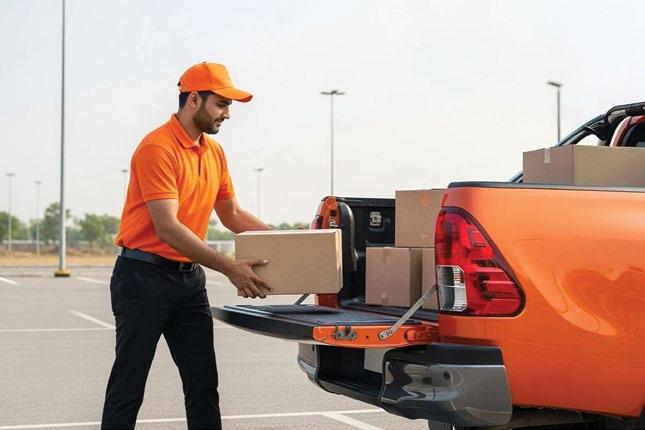

businesses wherever they are in their supply chain. That alone sets us apart in a market where most operators are built for one thing.
The second factor is how we have approached SMEs specifically. These businesses face a real squeeze; rising fuel costs, higher living expenses, expensive asset procurement, and shipping costs that eat into margins. Most logistics providers respond to that by asking for deposits, minimum commitments, or locked-in contracts. We have done the opposite. No commitments, no deposits, transparent pricing upfront, and the ability to schedule bookings up to 30 days ahead. That removes the friction that was keeping SMEs away from professional logistics solutions altogether.
On the supply side, we have created a model that works for fleet operators too. Driver partners and fleet owners often have vehicles sitting idle during slack periods, while still carrying insurance, fuel, and labour costs. Lalamove generates incremental demand during those windows, meaning their assets earn when they otherwise would not. That is what has

driven our driver-partner network growth, and a strong driver network is what makes the customer experience reliable.
SAME-DAY INTER-CITY AND LARGEVEHICLE DELIVERIES ARE THE NEXT MAJOR GROWTH DRIVER.
Moving goods between emirates, daily necessities, raw food, bulk commercial stock, is a critical part of how this country functions. Platforms that can do that reliably and at scale will be essential infrastructure,
not merely a convenience. We are building towards that, and we are bringing learnings from our operations across 17 global markets to shape how we do it here.
If we were having this conversation three years from now, what milestones or achievements would defne s ccess for Lala o e
There is a version of this answer that talks about order volumes and market share, and those matter.
HOWEVER, THE MILESTONE THAT WOULD REALLY TELL ME WE HAVE MADE IT, THE ONE I ACTUALLY THINK ABOUT IS SEEING LALAMOVE’S NAME ON A DUBAI METRO STATION.
That is not as abstract as it sounds. In this city, the brands on metro stations are the brands embedded in daily life. They are not just companies people use, they are part of the infrastructure of how the city moves. For a logistics platform, there is no more ftting expression of success than being literally built into the way the city functions.
To get there, we need to have earned it operationally. That means a driverpartner ecosystem in which our partners have built real, sustained income on the platform. It means eing the frst name UAE businesses think of when they need to move anything, not because we advertised well, but because we delivered, consistently, across hundreds of thousands of orders. It also means having built supply chain connectivity across all seven emirates, so that goods move between Sharjah, Dubai, Abu Dhabi, and beyond without friction or delay.
The UAE government has made it clear that logistics is central to the country’s economic vision. We want Lalamove to be part of delivering that vision, not as a vendor on the periphery, but as infrastructure. The metro station is the symbol. The work to earn it starts now.
Belal Zahran, Chief Revenue Offcer at Foodics, shares how technology is helping hospitality operators turn operational complexity into a competitive advantage

Restaurants are increasingly judged not only on the quality of their food but also on the speed and reliability of their operations. How is Foodics helping hospitality businesses optimise logistics?
The dining experience is not restricted with what is on the plate.
A guest who waits too long for a delivery order is just as likely to judge a brand harshly as someone served a disappointing meal. That’s why we’ve always believed operational excellence is one of the hospitality industry’s strongest competitive advantages. Yet restaurants are also expected to shoulder the consequences of challenges beyond their direct control, particularly supply chain disruptions, making resilience and operational agility more critical than ever.
Foodics addresses this by bringing every aspect of a restaurant’s operation onto a single cloud-based platform. Orders from every sales channel, including dine-in, drive-through, our online ordering solution and
third party delivery aggregators, fow seamlessly into one system, eliminating the ‘tablet chaos’ that slows kitchens, creates ineffciencies and increases the risk of errors.
Our kitchen display system intelligently sequences and prioritises orders, ensuring, for example, that a delivery order is ready just as the driver arrives, rather than sitting under a heat lamp and compromising food quality.
Beyond the kitchen, our inventory management platform provides operators with real-time visibility of stock across every branch and warehouse. Automated purchasing, supplier management and stock transfers are all managed within the same ecosystem. Multi-site operators can rebalance inventory between locations instead of over-ordering, while supplier performance can be monitored using real operational data rather than assumptions.
The result is that speed, consistency and reliability no longer depend on exceptional individual effort, they become embedded within the operation itself. That is
what enables an independent restaurant to grow into a multi-site brand without operational complexity becoming a barrier to expansion.
The hospitality sector relies on seamless coordination across suppliers, kitchens, delivery partners and front-of-house teams. What are the biggest operational challenges facing restaurant operators today, and how can digital platforms improve isi ility and effciency across the s pply chain
The biggest challenge I see across our markets is fragmentation.
Many restaurant operators are still managing a patchwork of disconnected systems, a point-of-sale platform from one provider, multiple delivery tablets from different aggregators, spreadsheets for inventory, supplier communications via WhatsApp, and separate payroll software. Every disconnect between those systems creates opportunities for information to be lost, inefficiencies to emerge and profit margins to erode. Decisions are often made days later using incomplete or outdated information rather than live operational data.
These challenges are compounded by broader industry pressures, including rising food costs, labour shortages, high employee turnover and the rapid expansion of food delivery. elivery, in particular, has signifcantly reduced the margin for error. A mistake that could once be resolved by attentive service in the dining room can now result in a one-star review before the restaurant has a chance to respond.
Digital platforms address these challenges by replacing fragmented processes with a single operational ecosystem. When point-of-sale, kitchen operations, inventory management, supplier ordering and delivery
integrations all communicate seamlessly, visibility becomes a natural outcome rather than a separate reporting exercise.
Restaurant owners can monitor live sales across every branch, analyse item-level profitability, identify stock variances and track delivery performance from every aggregator through a single dashboard, even from their mobile phone.
That level of transparency transforms decision-making across the business. Kitchens prepare food based on accurate demand forecasts, procurement teams negotiate with suppliers using real data, and staffng levels are aligned with actual customer demand rather than intuition. Ultimately, connected data creates a more resilient, effcient and profta le operation.
How is Foodics using data, automation and predictive analytics to help businesses manage stock more effecti ely red ce aste and i pro e profta ility
Food cost is typically a restaurant’s largest controllable expense, and waste is where profta ility quietly dies.
Our approach begins by connecting sales data directly to inventory at ingredient level. Every recipe is mapped to its individual components, meaning that every transaction processed through the point-of-sale system automatically updates stock levels in real time. This gives operators a clear view of theoretical versus actual consumption, allowing them to identify variances immediately, whether they stem from overportioning, spoilage, waste or stock shrinkage.
Automation then removes much of the manual workload. Reorder thresholds generate purchase recommendations before products run out, eliminating last-minute supplier calls or the disappointment of

removing best-selling dishes from the menu during peak trading hours. Inventory counts that once required an entire day using paper-based processes can now be completed quickly on a mobile device, making regular stock checks practical rather than burdensome.
The real opportunity lies in predictive analytics. By analysing historical sales trends, including day of the week, time of day, seasonal fluctuations and branchspecific demand, the platform helps restaurants forecast purchasing and food preparation with far greater accuracy.
Preparing the correct quantity of perishable ingredients remains one of the most effective ways to reduce food waste, and ultimately this is a forecasting challenge.
We have consistently found that operators moving from manual inventory processes to data-driven inventory management recover several percentage points of food cost. In an industry where net proft margins are often measured in single digits, that improvement can be the difference between an underperforming outlet and a consistently profta le usiness.
Where do you see the greatest opportunities for AI to transform restaurant operations, demand forecasting and supply chain management over the next f e years
Demand forecasting is the most immediate and highest-value application.
Demand forecasting is likely to deliver the most immediate commercial impact. While today’s forecasts rely primarily on historical performance, AI can incorporate a far broader range of variables, including weather conditions, local events, religious holidays such as Ramadan, marketing campaigns and delivery platform promotions to predict demand at branch, product and even hourly level.
That level of precision has a ripple effect across the entire operation, improving

purchasing decisions, kitchen preparation, labour scheduling and waste reduction.
The next major development will be autonomous supply chain execution. Rather than simply recommending purchase orders, future systems will determine optimal order quantities, delivery schedules and supplier allocations automatically, within rules defned by the operator.
Combined with dynamic menu engineering, where AI recommends pricing adjustments or menu positioning based on changing ingredient costs and customer demand, restaurants will be able to optimise profta ility continuously instead of reviewing

performance retrospectively at the end of each month.
Another significant opportunity lies in democratising operational expertise. A frst time restaurateur in iyadh or airo should be able to ask their platform, in natural language, why food costs increased last week and receive the same level of analysis an experienced operations director would provide. AI copilots will increasingly make that level of insight accessible to every operator, regardless of their experience.
Ultimately, the businesses that succeed won’t necessarily be those with the
volumes of data, but those with the cleanest, most connected data that AI can interpret and act upon. Building that foundation is where Foodics continues to focus its investment.
As Foodics continues to expand across the GCC, how are you adapting your logistics and operational strategy to meet differing regulatory environments, consumer behaviours and infrastructure capabilities, while maintaining a consistent customer experience?
Our philosophy is: one platform, deeply localised. The core experience;
reliability, simplicity and an integrated operational platform , should feel consistent whether a customer operates in Jeddah, Dubai or Cairo. However, everything surrounding that core must refect the realities of each individual market.
From a regulatory perspective, that means embedding compliance directly into the platform. Requirements such as Saudi Arabia’s ZATCA e-invoicing regulations, country-specific tax frameworks and local fiscal and data regulations are built into the product rather than added as afterthoughts. Restaurant operators should be able to focus on running their businesses, not navigating changing compliance requirements.
Consumer behaviour also varies considerably across the region. Every market has its own preferred delivery aggregators, payment methods and dining habits, so we prioritise local integrations and payment ecosystems rather than applying a one si e fts all approach.
Infrastructure is equally important. Our cloud architecture is designed to maintain business continuity even where internet connectivity is less consistent, ensuring restaurants can continue operating without interruption regardless of local conditions.
Finally, we continue investing in local sales, onboarding and customer support teams who understand each market’s language, culture and operating environment.
IN HOSPITALITY, TRUST IS BUILT THROUGH RELATIONSHIPS.
For us, consistency doesn’t mean making every market identical. It means giving customers confidence that wherever they choose to expand, Foodics is already designed to work the way that market operates.
In an exclusive interview, Julia Bissani, Brand Manager at United Diesel - Al Rostamani Group, discusses the technologies, partnerships and practical strategies that will defne the next generation of commercial mobility
Edited by Reeba Asghar
From United Diesel’s perspective, what are the biggest misconceptions feet operators still have about electrifcation, and what practical steps are helping businesses confdently make the transition?
“The most common misconception is that electrifcation begins with selecting a truck. Reality is, it begins with selecting the right application for an electric truck.”
Electric commercial vehicles are already a credible solution for the right duty cycles. Global electric truck sales more than doubled in 2026, demonstrating that the technology has moved well beyond the experimental stage. That does not
mean every operation is ready to electrify, but it does mean businesses can now make informed, commercially viable decisions.
We continue to see two common misconceptions. Some feet operators dismiss EVs because they compare them with diesel solely on driving range. Others assume they are a straightforward one-for-one replacement without considering route length, payload, dwell time, ambient conditions, charging windows or available grid capacity. Both approaches overlook the real business case.
At United Diesel, we qualify the operation before recommending the powertrain. We begin by analysing daily mileage, route variability, payload, stop density, return-to-base behaviour, available charging opportunities and the operational cost of unexpected downtime. Predictable urban logistics, last-mile distribution, municipal services and temperature-controlled transport are

often ideal starting points because energy demand is measurable and charging can be integrated into normal operating schedules.
The most effective way to remove uncertainty is through a properly structured pilot programme, not a symbolic vehicle demonstration, but a controlled operational trial with clearly defined KPIs. These include energy consumption per kilometre, usable range under load, charging performance, route completion rates, driver feedback, vehicle uptime and cost per shift. Once discussions move beyond brochure specifications and focus on a customer’s own operational data, confdence becomes grounded in evidence rather than assumption.
Our philosophy is straightforward: feets should not electrify the vehicles that are easiest to announce. They should electrify the routes that are easiest to control, then scale deployment based on proven operational performance.

The success of commercial electric mobility depends on much more than the vehicles themselves. How is United Diesel working with government entities, charging infrastructure providers and feet customers to build an ecosystem that makes large-scale fleet electrifcation commercially viable?
“A vehicle can be
delivered
in weeks. The energy system around it may take months. That is why commercial EV adoption is fundamentally an infrastructure and operating-design programme.”
For fleet operators, the key considerations extend far beyond the number of vehicles required. They
must understand how much electrical capacity is available at the depot, when vehicles can realistically be charged, how charging demand should be staggered across the feet, and what contingency plans exist if a charger or power supply becomes unavailable. These factors ultimately determine whether electrification improves operational efficiency or creates an entirely new bottleneck.
Our role is to bring every stakeholder into the conversation from the outset. That means working closely with customers’ operations and facilities teams, vehicle manufacturers, charging specialists, utility providers and relevant government authorities. Together, we translate transport requirements into practical energy strategies, covering vehicle numbers, battery capacity, daily energy demand, charger configuration, charging schedules, grid requirements and future expansion plans.
One of the industry’s least discussed, but most significant, variables is charger utilisation. According to the
International Energy Agency (IEA), increasing charger utilisation from 5% to 30% can reduce the levelised infrastructure cost per kilowatt-hour by approximately 80%. In practical terms, an oversized charging installation that is poorly utilised can undermine the business case just as quickly as an undersized system can disrupt fleet operations. Charging infrastructure should therefore be designed around operational shift patterns rather than the maximum connector rating listed on a specifcation sheet.
This is also where phased deployment delivers signifcant value. Customers can begin with a carefully selected group of vehicles, validate routes, understand actual energy demand, train drivers and technicians, and expand charging infrastructure using real operational data rather than assumptions. This approach reduces capital risk while providing greater fexibility as the feet grows.
Ultimately, a successful ecosystem depends on clearly defined

responsibilities. Utilities provide network capacity, charging partners deliver resilient energy infrastructure, OEMs supply the appropriate vehicles, feet operators adapt their operations, and distributors such as United Diesel ensure these elements work together as one integrated system.
Our value lies not simply in supplying vehicles, but in making every part of that ecosystem operate seamlessly.
Over the next fve years, how do you see the role of United Diesel evolving as commercial mobility shifts towards electrifcation, and what strategic priorities will defne that journey?
“The distributor of the future will be judged less by how many vehicles it can quote and more by how much operating risk it can remove.”
Commercial vehicle customers are already looking beyond product comparisons. Today, they want to know whether a route is suitable for electrification, whether their depot has suffcient electrical capacity, how charging will affect dispatch schedules, what residual value risks may exist, who is qualifed to service high-voltage vehicles, and how quickly a truck can be returned to operation if something goes wrong. That fundamentally changes our role in three important ways.
First, we need to strengthen our expertise in fleet and energy diagnostics, including route analysis, duty-cycle modelling, total cost of ownership assessments and infrastructure planning. Customers increasingly expect informed guidance, not simply a product recommendation. Second, we must
continue investing in an EV-ready aftermarket. That means developing high-voltage technical capability, expanding diagnostic expertise, improving parts planning, implementing battery health monitoring and ensuring workshops are equipped with the right safety procedures and service protocols. The quality of aftersales support will be just as important as the vehicle itself. Third, connected vehicle technology will allow the industry to move beyond scheduled maintenance towards condition-based uptime management. By analysing real-time operational data, feets will be able to predict maintenance requirements, reduce unexpected downtime and optimise vehicle performance throughout the asset lifecycle.
The economics of electrifcation will also continue to evolve, although not uniformly across every market. Electric trucks still carry a signifcantly higher upfront purchase price than conventional diesel vehicles, even as total cost of ownership becomes increasingly competitive in many applications and is expected to approach parity across more operating segments by 2030. As a result, financing structures, vehicle utilisation, energy costs and asset life will become just as important as the purchase price itself.
For United Diesel, the priority is not to steer every customer towards the same solution. Our strategy is to build the capabilities, expertise and portfolio required to support diesel, electric and mixed feets responsibly, while providing customers with a practical pathway to scale electrification where it delivers genuine commercial value.
In fve years’ time, the most successful distributors will look less like traditional dealers and more like integrated mobility partners, combining vehicle expertise with energy planning, digital intelligence and feet performance optimisation.
The vehicle will remain central to the conversation, but it will no longer be the entire solution.
Commercial vehicle customers today expect more than just a product; they’re looking for end-toend mobility solutions. How is United Diesel evolving its approach to support customers throughout their electrifcation journey?
“The sale of the truck is a transaction.
Electrifcation is a lifecycle commitment.”
We approach every electrification project through four stages: qualify, design, deploy and optimise. The frst stage is qualifcation, where we determine whether a fleet’s operating profle is genuinely suited to electrification. That means analysing daily mileage, payload, route variability, ambient temperatures, idle time, depot return patterns, charging opportunities and the customer’s uptime requirements. A route may be technically possible for an electric vehicle, but that does not automatically make it commercially viable.
The second stage is design. Here, we align the vehicle specifcation with the body application, charging solution, grid capacity, operating schedule and service strategy. We also develop multiple total cost of ownership scenarios rather than relying on a single optimistic projection. Variables such as electricity tariffs, charger utilisation, annual mileage, fnancing arrangements, battery warranties and potential downtime can all have a significant impact on long-term economics.
Deployment is where planning becomes reality. This includes preparing sites, commissioning charging infrastructure, training drivers, ensuring workshop readiness
for high-voltage vehicles, validating routes and establishing clear escalation procedures. The first few weeks of operation are particularly important because many early challenges are linked to implementation rather than the technology itself. Driver behaviour, charging practices and operational processes all infuence performance and must be managed carefully.
The fnal stage is optimisation, and this is an ongoing process rather than a one-off exercise. Connected vehicle data enables fleets to monitor energy consumption, charging effciency, battery health, route performance, driver behaviour and maintenance trends. The objective is not simply to generate more reports, but to use that information to improve productivity, maximise uptime and reduce operating costs over time.
Our role extends across every stage of that journey. Customers are not looking for a supplier that disappears once the vehicle has been delivered. They need an accountable partner capable of connecting the vehicle, the energy infrastructure, the workshop and the wider operation into one integrated solution.
What has been the most surprising lesson you’ve learned while working with customers on their electrifcation journey?
“The biggest lesson has been that electrifcation doesn’t just change the powertrain, it transforms the way feets operate.”
One of the most rewarding observations has been seeing how quickly fleet operators become more data-driven once they begin their electrifcation journey. Electric vehicles naturally encourage greater operational visibility, giving businesses a clearer understanding of route efficiency, vehicle utilisation,

charging behaviour, energy consumption, payload planning and maintenance scheduling.
That level of insight often reveals opportunities to improve productivity and reduce operating costs that were previously hidden within day-to-day operations.
We have also learned that successful electrifcation depends just as much on people and processes as it does on technology. Driver behaviour, charging strategies and operational planning all have a measurable impact on energy effciency, vehicle utilisation and total cost of ownership. The organisations achieving the strongest results are those that approach electrifcation as a broader operational transformation rather than simply replacing diesel vehicles with electric ones.
Perhaps the most encouraging shift is how quickly customer conversations evolve once electric vehicles enter real-world service. Initial discussions are typically centred on range, charging infrastructure and battery performance. Before long, however, those conversations moved towards feet utilisation, charging optimisation, energy management and maximising vehicle uptime.
At that stage, the debate is no longer about whether electric vehicles work. It becomes about how businesses can extract even greater value from them. To me, that has been the biggest lesson.
ELECTRIFICATION IS NOT ONLY HELPING ORGANISATIONS REDUCE EMISSIONS; IT IS ENCOURAGING THEM TO BUILD SMARTER, MORE EFFICIENT AND MORE RESILIENT FLEET OPERATIONS.
Commercial mobility is evolving rapidly. Which emerging
technologies do you believe will have the greatest impact over the next decade?
“The next decade will not be won by one breakthrough. It will be won by the integration of batteries, software, charging and operational intelligence.”
Battery technology will remain the foundation of commercial electrifcation. Continued advances in cell chemistry, battery pack design, thermal management and manufacturing scale will reduce costs and expand the number of applications where electric vehicles are commercially viable. However, range alone is becoming an increasingly outdated measure of progress. For feet operators, usable energy under load, charging speed, battery degradation, safety, warranty coverage and cost per kilometre are ultimately far more meaningful performance indicators.
The second major development will be intelligent energy management. Smart charging systems will increasingly determine which vehicles charge, when they charge and at what power levels, based on dispatch priorities, electricity tariffs, depot capacity, charger availability and battery state of charge. As fleets expand, unmanaged charging will become both financially inefficient and operationally unsustainable.
Equally important will be predictive feet intelligence. Connected vehicles already generate vast amounts of operational data, but the real value lies in converting that information into actionable insights. Artificial
intelligence can help predict component failures, identify abnormal energy consumption, recommend route and charging adjustments, and prioritise maintenance before vehicles miss scheduled operations. The objective is not simply to introduce AI into the vehicle, but to reduce disruptions across the customer’s entire operation.
Battery health analytics will also become increasingly sophisticated. As fleet operators, financiers and insurers gain greater experience with electric vehicles, battery state of health will play a much larger role in determining residual values, warranty decisions, vehicle redeployment and replacement planning throughout the asset lifecycle.
Hydrogen and renewable fuels will continue to play an important role in sectors that remain difficult to electrify, particularly heavy-duty and long-haul applications. However, their success will depend on the development of complete ecosystems encompassing production, distribution, refuelling infrastructure, vehicle availability and commercial viability. In the near term, batteryelectric vehicles have the strongest momentum for predictable urban and regional transport operations.
Ultimately, the fleets that gain the greatest competitive advantage will not necessarily be those with the most advanced technology. They will be the ones that integrate technology most effectively into a reliable, effcient and resilient operating model.

Words by Reeba Asghar

The cargo industry has long been the backbone of global trade, quietly keeping the world connected. Over the past year, amid geopolitical uncertainty, airspace closures and shifting trade routes, its leaders have once again demonstrated that true resilience lies in the ability to adapt.
When supply chains came under pressure, the industry found new routes, created new solutions and continued to deliver the goods that keep economies moving, from lifesaving pharmaceuticals to high-value manufacturing components.
The leaders featured in this edition have done more than overcome
disruption. Through operational agility, digital innovation, strategic partnerships and a relentless customer focus, they have turned challenges into opportunities while strengthening global supply chains.
Looking ahead, the focus is no longer simply on moving freight faster, but on building smarter, more connected and more sustainable logistics networks.
ith I, automation and signifcant infrastructure investment reshaping the sector, the future belongs to those driving transformation. The cargo leaders featured are setting that standard, redefning resilience and shaping the next chapter of global logistics.
In a year marked by both exceptional achievements and significant challenges, Qatar Airways Cargo played a pivotal role in supporting the Group’s mission of connecting the world through global trade. Despite the impact of regional geopolitical disruption, our cargo division demonstrated remarkable resilience by maintaining critical supply chain connectivity and steadily restoring operations across our network of more than 60 freighter destinations and over 160 bellyhold destinations. This resilience is underpinned y our diversifed freighter and bellyhold capacity, a robust road feeder services network, and the strength of strategic partnerships and alliances, including IAG Cargo, MASkargo, Virgin Australia and Cainiao. Leveraging Doha’s position at the crossroads of global trade, these capabilities enabled us to respond with agility, adjust capacity where required, and continue serving customers during critical periods. The key lesson is that resilience must be built before disruption through sustained investment in infrastructure, partnerships and operational fexi ility. e remain focused on strengthening these foundations to support global supply chains, regardless of external challenges.
What we are most proud of is our ability to keep global trade moving despite geopolitical and operational disruption. At a time when supply chains faced unprecedented challenges, Qatar Airways Cargo remained a trusted and reliable partner, maintaining critical connectivity while delivering the agility, resilience and operational excellence our customers rely on. We focused on finding solutions, developing new routings and strengthening partnerships to continue delivering for our customers. This was made possible by three key strengths: the dedication and

expertise of our people, the reach and fe i ility of o r glo al net or and o r ability to adapt rapidly to changing circumstances. Together, these enabled us to continue supporting businesses, industries and communities around the world, even in the most challenging operating environments.
The trust our customers place in us is reflected in our results. In FY2025/26, Qatar Airways Cargo transported more than 1.43 million tonnes of chargeable freight and maintained its position as the world’s leading air cargo carrier, with a 12% share of the global air freight market. More than the figures alone, these achievements reflect our unwavering commitment to keeping supply chains moving and delivering reliability when it matters most.
In an industry shaped by uncertainty, evolving trade flows and geopolitical developments, Qatar Airways Cargo remains a people-driven business. Our diverse international workforce is the foundation of our success. While responding to day-to-day challenges is essential e ens re o r tea s re ain aligned ith a long ter ision centred on innovation and operational excellence. By investing in our people, recognising achievement and empowering decision-making, we have fostered a culture that balances immediate operational demands with broader strategic priorities. The adaptability, commitment and professionalism demonstrated by our teams throughout FY2025/26 played a vital role in maintaining global connectivity and supporting customers around the world.
The next chapter will be shaped by digitalisation, data-driven decisionmaking and greater supply chain visibility.
Customers increasingly expect real-time information, operational efficiency and reliability. Airlines and logistics providers that successfully combine advanced technology with strong physical networks will be best positioned to support the region’s growing role as a global trade and logistics hub.Meeting customer needs remains at the heart of this transformation, from digital innovation to specialised products such as our recently launched EnergyLift solution, which supports the entire energy ecosystem, from oil and gas and LNG to renewable energy and infrastructure projects.
Air cargo is a strategic enabler ofmglobal commerce, supporting everything from healthcare and semiconductors to perishables, vehicles and animals, including those under our WeQare programme and other critical supply chains. Unlocking the sector’s full potential will require deeper collaboration across the logistics value chain to strengthen resilience and sustainable growth.
The future of cargo and logistics globally and the pace of transformation is exciting. The Middle East has become a global crossroads for trade, connecting East and West through world-class infrastructure, technology, strategic geographic positioning, and a strong commitment to innovation. We are seeing rapid advances in digitalisation, automation, data-driven decision-making, and sustainability, all of which are reshaping how we support our customers and connect global markets, building more resilient global supply chains. The future of cargo is no longer just about moving goods from one place to another, but rather creating connected, intelligent, and resilient supply chains, and we believe our region and Qatar Airways Cargo is uniquely positioned to lead that transformation.

Stanislas Brun hief argo Offcer
Building Resilient Supply Chains
Through Uncertainty Recent disruptions have reinforced that resilience is no longer about simply responding to change, it is about building the capa ility to operate confdently through uncertainty. Our priority has been maintaining safe business continuity while supporting the wider supply chain in an environment where disruption is becoming the norm rather than the exception.
ollowing the initial disruption, the frst fight to depart the U E was an Etihad Cargo freighter to Hong Kong. We quickly adapted our network strategy to restore connectivity, supported by disciplined planning, close collaboration with customers and partners, and the ability to dynamically adjust capacity as market conditions evolved.
Today, Etihad Cargo operates with greater capacity and enhanced network fexi ility than before, demonstrating the strength of our operations and our continued
commitment to supporting customers when reliability matters most.
Safety remains our highest priority, and our proudest achievement has been maintaining operational continuity through a combination of network fexi ility, alternative routing solutions, robust planning and close coordination with customers and partners.
From Abu Dhabi, Etihad Cargo has continued to support the movement of critical shipments, including pharmaceuticals, perishables and essential goods, by ensuring customers had access to reliable global connections. Our role extended beyond transporting cargo, we worked closely with customers to redesign supply chains, identify alternative routes and maintain access to key markets.
A strong example is our food programme, which has supported hundreds of fights carrying more than 15,000 tonnes of fresh food into and through the UAE, helping maintain essential supply chains during periods of disruption.
po ering Tea s
The key to maintaining focus during periods of uncertainty is ensuring teams are prepared, empowered and connected to a clear long-term vision. When people understand the purpose behind their work, challenges become opportunities to solve rather than crises to manage.
At Etihad Cargo, we believe resilience starts with our people. As our global network continues to expand and the logistics landscape becomes increasingly complex, investing in our employees and partner ecosystem is just as important as investing in technology and infrastructure.
A key example of this commitment is the Etihad Cargo Excellence Hub , the air cargo industry s frst airline led training community. Designed for employees, partners, customers and the wider logistics community, the hub provides accredited learning pathways, executive education, AI-enabled personalised learning and industry certifed training to
strengthen operational excellence, safety and compliance. The Excellence Hub is more than a training platform, it is an investment in the future capabilities of our industry. By fostering a culture of continuous learning, we enable our teams to remain agile, confdent and focused on delivering long-term value, regardless of the challenges ahead.
Emerging Trends & Technologies
echnology will play a defning role, particularly through enhanced data visibility, automation and AI-enabled decision-making. However, innovation is equally driven by collaboration and understanding customer needs.
Our SmartTrack solution is a strong example of this approach. Rather than offering a one si e fts all product, we work closely with customers to develop solutions tailored to their specifc requirements and supply chain challenges.
The future of air cargo will belong to organisations that combine operational excellence with digital intelligence, enabling customers to make faster, smarter and more informed supply chain decisions.
What excites me most is the transformation of air cargo from a transport function into a strategic enabler of global trade. The Middle East is at the heart of this evolution, with continued investment in infrastructure, digitalisation and connectivity creating signifcant opportunities for usinesses and supply chains.
We are entering an exciting period of growth, supported by major investments in feet, infrastructure and digital capabilities that will further strengthen Abu Dhabi’s position as a global logistics hub. Combined with our specialised products, strategic partnerships and customer frst approach, these investments will allow us to deliver even greater value to our customers while supporting the continued growth and resilience of global trade.
The biggest lesson has been that resilience depends as much on communication as it does on operations. We believe in keeping our customers informed about their shipments every step of the way, providing timely updates as situations evolve so they always know where their cargo stands and can plan accordingly. For our customers, resilience is not measured by how many disruptions occur, it is measured by whether their cargo still arrives on time. That mindset continues to shape our strategy as global supply chains become increasingly dynamic and interconnected.
I am most proud of how our teams have responded under pressure while maintaining strong operational reliability. Despite regional challenges, o r foc s has al ays een to protect our on-time performance and minimise disruption for our customers . When challenges arise, we do not accept delays as the only outcome. We immediately explore alternative routing, capacity and operational solutions to keep cargo moving as effciently as possi le. hat resilience comes from preparation. We regularly conduct crisis simulations and contingency planning so our teams can respond with confdence. uccess also comes from collaboration. I have always believed we do not have competitors, we have partners, and it is those trusted relationships that keep supply chains moving when they are needed most.
po ering Tea s
Purpose is our strongest motivator, especially during times of disruption. I remind our teams that we are not simply moving cargo, we are helping keep food on tables, ensuring medicines reach patients, supporting businesses and delivering humanitarian aid when

Hamdi Osman Founder & CEO of SolitAir
communities need it most. When people understand the real-world impact behind every shipment, they stay focused on the mission. hile e cannot control e ery disr ption e can control ho e prepare communicate and deliver.
AI, automation and advanced digital capabilities are already reshaping how our industry plans, operates and serves customers. Over the longer term, technologies such as quantum
computing have the potential to unlock greater optimisation across complex logistics networks. However, technology alone will not defne the future. he continued rise of the Global South, with the UAE uniquely positioned to connect these growing trade fows, will also play a signifcant role. he organisations that succeed will be those that combine technological innovation with operational excellence, trusted partnerships and a strong focus on customer needs.
Too often, logistics is viewed as a cost centre when, in reality, it is a strategic enabler of growth, resilience and competitive advantage. I also believe our industry needs to place greater value on relationships. Transactions may win business today, but trust is what sustains it over the long term. I ha e al ays li ed y the philosophy “lose the sale, make a friend,” because lasting partnerships create stronger, more resilient supply chains than short ter co ercial gains e er ill When disruption occurs, it is those trusted relationships that make the difference.
The opportunity has never been greater. Governments are making bold investments in logistics infrastructure, from the UAE strengthening its position as a global trade gateway, to Saudi Arabia’s Vision 2030 transforming the Kingdom into a logistics hub, and India’s continued investment in multimodal connectivity and supply chain infrastructure. Across the Middle East, China, the Indian subcontinent and beyond, we are witnessing a fundamental shift in how trade moves and supply chains connect.
What excites me most is helping build those connections. Cargo is ultimately about connecting people, businesses and economies, and that mission has never been more important.

Peter Mukanyima, Assistant Director of Marketing & E-Commerce at Grand Millennium Dubai, explains why authenticity is not a look, it’s a newsroom-style pipeline of verifcation, sign offs, and operational truth
Hotels have long relied on complex operational logistics that guests rarely see. How does an AI inf encer li e aya ridge the gap et een the hotel s ac of ho se operations and the g est experience without compromising authenticity?
Every hotel runs on logistics the guest never has to think about: the timing of a kitchen pass, the choreography of a turndown service, the coordination between F&B, housekeeping and events that makes a stay feel effortless. Zaya’s role is not to expose
that machinery, it is to translate the result of it into a story worth watching.
WE BUILT HER TO BE AN INSIDER, NOT A NARRATOR STANDING OUTSIDE THE PROPERTY LOOKING IN.
She moves through the same spaces our guests do, Toshi, Lucky Voice, Belgian Beer Café, Crystal Bar, and she only shows what is actually happening on any given day: a new menu item that has just gone live, a DJ set that is booked, an offer that is running. Authenticity, for us, is not about pretending Zaya is human. It is about making sure everything she shows is operationally true. If the content does not match the reality a guest fnds when they arrive, we have broken the one thing that makes any hotel storytelling work: trust. The “bridge” is not really a creative trick, it is a discipline to keep Zaya’s world perfectly synced to the property’s

actual operating rhythm, and let her personality do the rest.
Launching a digital personality is one thing t eeping it relevant is another. What operational processes and cross departmental coordination are re ired to ens re aya refects what is happening across your resta rants ars e ents and guest experiences in real time? This is where the logistics really live, and it is heavier than people assume. Zaya is fed by a weekly content pipeline that pulls directly from operations: F&B shares menu changes and promotions, events shares the calendar of what is confirmed versus tentative, and guest experience fags anything new in the wellness or leisure offering. Marketing sits at the centre of that pipeline, fltering and sequencing it into Zaya’s content calendar.
Nothing gets published without a sign-off loop that includes the relevant outlet manager, because they know their floor better than anyone. If Crystal Bar changes its live music schedule or Toshi rotates a seasonal menu, that has to reach us before it reaches Zaya’s feed, not after. We have essentially had to build a mini newsroom process inside the marketing function, intake, verification, production, publish, running on a weekly cadence with room for same-day updates when something timesensitive comes up, like a lastminute event or a flash promotion. Keeping Zaya relevant is less about the AI and more about whether our internal information flow is fast and accurate enough to keep up with her.
Hospitality is increasingly driven y data fro occ pancy le els to resta rant oo ings and g est
preferences Ho does aya fit into that wider ecosystem, and can AI help improve operational effciency as ell as ar eting performance?
Right now Zaya sits primarily on the marketing and storytelling side of the business, but she does not exist in isolation from the data ecosystem, she is downstream of it. What she chooses to feature is informed by the same signals that drive our operational decisions: which outlets are trending with guests, what is driving repeat bookings, where engagement on social media is translating into actual covers or room nights. That feedback loop matters. If a piece of Zaya content around, say, weekend brunch drives a spike in bookings, that’s a useful data point for both marketing and the outlet team planning covers and staffng for the following weekend.
So while her direct function today is guest-facing storytelling, the broader opportunity and one we are actively exploring is using AI to close the loop between content performance and operational planning: demand forecasting, staffing, procurement timing, all informed by the same real-time signals that shape what aya talks a out. he effciency gain is not automatic just because there is an AI persona involved; it comes from deliberately wiring marketing data back into operational decisionmaking, and that’s the direction we are building towards.
With multiple venues operating under one roof, each with its o n identity and c sto er ase ho do yo se to alance consistency across the Grand illenni rand hile allo ing each outlet to maintain its individual voice and appeal?
Every outlet under our roof has its own personality by design: Toshi’s
Pan-Asian energy is a completely different guest mood from the latenight sing-alongs at Lucky Voice, or the relaxed European feel of Belgian Beer Café, or the intimacy of Crystal Bar. Zaya’s job is to hold the throughline between them without flattening what makes each one distinct.
We do that by keeping her core identity, tone, values, the “insider who never leaves” premise, fixed at the brand level, while letting the content itself flex to match each venue’s register. Her energy at a Lucky Voice night out reads differently from her tone describing a quiet evening at rystal ar, ut it is still recognisably her. Think of it like a single narrator with a consistent voice, moving through different rooms of the same house: the house does not change, but she describes each room in the way that room deserves. That balance is set editorially, not left to chance; every piece of content is checked against both the outlet’s own brand guidelines and Zaya’s overarching persona before it goes out.
D ai is positioning itself as a glo al leader in oth to ris and digital innovation. Do you see inf encers eco ing part of the operational infrastructure of hotels alongside concierge services, reservations, and guest communications, or will they re ain pri arily a ar eting tool?
Today, Zaya is deliberately a marketing and storytelling function, not an operational one: she does not take bookings, resolve guest requests, or replace concierge and reservations teams, and that distinction matters to us. But Dubai’s hospitality market moves fast, and I think it would be short-sighted to

Director of Marketing & E-Commerce, Grand illennium u ai
say AI personas stay confined to marketing forever.
What is more likely, in my view, is convergence rather than replacement: the operational AI tools hotels already use for reservations, guest messaging and personalisation will keep maturing, and creative AI personas like Zaya will keep maturing on the storytelling side, and at some point those lanes will start to overlap, a guest discovering the hotel through Zaya’s content,
then that same journey feeding into a more personalised, AI-assisted booking or pre-arrival experience.
I WOULD FRAME IT LESS AS “WILL SHE BECOME OPERATIONAL INFRASTRUCTURE” AND MORE AS “WILL THE WALLS BETWEEN MARKETING AI AND OPERATIONAL AI IN HOTELS START TO COME DOWN.”
I think they will, gradually, and Dubai, given how aggressively it invests in

both tourism and tech, is a natural place for that to happen frst.
s eco es ore e edded in hospitality, where should the industry dra the line et een a to ation and human interaction? In your view, what aspects of the guest journey should always remain distinctly human, regardless of how advanced the technology eco es I would draw the line at anything involving genuine care, judgement, or emotional nuance: a guest celebrating an anniversary, someone travelling for a diffcult reason, a complaint that needs empathy rather than a script, a concierge reading a situation and improvising something no system prompted them to do. Those moments are the actual soul of hospitality, and no amount of AI sophistication should be aimed at replacing them.
Where automation earns its place is in everything that removes friction around those moments: check-in efficiency, personalised recommendations,
consistent brand storytelling, faster response times on routine requests, so that our people have more time and headspace for the interactions that matter. Zaya is a good example of where we have deliberately kept AI in its lane: she inspires and informs the decision to visit, but the moment a guest walks through our doors, every interaction from there is human. That is not a limitation of the technology, it’s a choice about what hospitality should always be built around.
How can AI strengthen the logistics that underpin that experience, from proc re ent and stoc anage ent to service delivery, while ensuring the human touch remains at the heart of hospitality?
The logistics side of hospitality is enormous and largely invisible to guests: forecasting covers, managing stock levels across multiple F&B outlets, scheduling staff against fluctuating occupancy, coordinating events with kitchen and service capacity. AI’s real value here is in prediction and pattern
recognition: spotting demand trends earlier, fagging stock levels efore they become a problem, helping teams plan more precisely instead of reactively. Done well, that reduces waste, tightens procurement cycles, and takes pressure off staff so they re not frefghting.
The principle we hold onto is that AI should absorb complexity, not personality. It should make the planning invisible so that the delivery feels effortless and personal, the same philosophy behind Zaya on the guestfacing side.
WHETHER IT IS A BARTENDER AT CRYSTAL BAR OR A SERVER AT TOSHI, THE GUEST SHOULD NEVER FEEL THE MACHINERY BEHIND THE MOMENT; THEY SHOULD JUST FEEL LOOKED AFTER
That is the standard we hold both our operational AI and our creative AI, like Zaya, to: technology in service of the human experience, never in place of it.
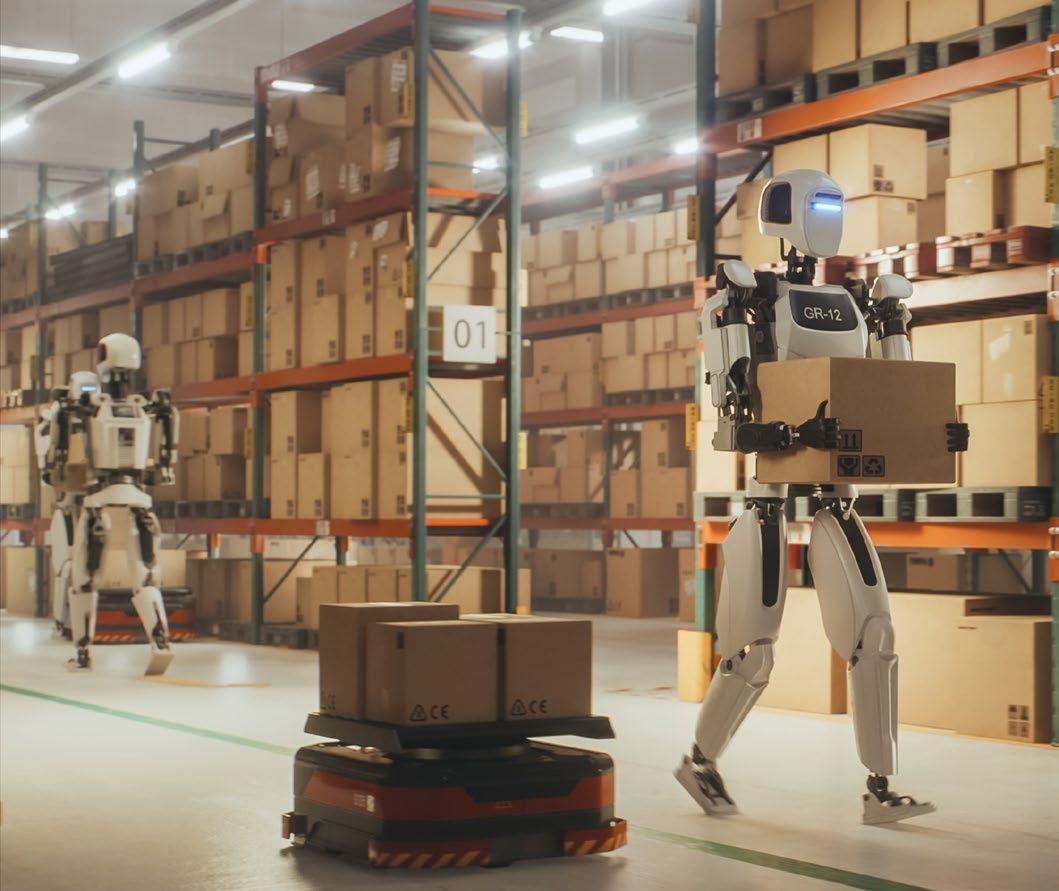
Emir Kalem, Head of Customer Success, EMEA at Infobip, explains how businesses can move beyond AI pilots to unlock scalable operational effciencies while maintaining trust, accounta ility and human oversight
Agentic AI is rapidly moving beyond chatbots into autonomous decisionmaking. How do you see it transforming logistics operations, from dispatch and last-mile delivery to customer s pport o er the ne t f e years
The way I explain it to customers is quite simple: we are moving from AI that answers questions to AI that takes action.
Today, a chatbot might tell a customer that their parcel has been delayed. An AI agent, however, can identify the delay itself, understand the customer’s delivery preferences, offer realistic alternatives,
reschedule the delivery, update the route and notify the driver automatically, all without requiring human intervention.
This shift will fundamentally change dispatch operations. Rather than relying on a delivery plan created early each morning, logistics providers will have dynamic operations that continuously adapt throughout the day, responding in real time to traffc conditions, weather disruptions, vehicle breakdowns or restricted site access.
In the last mile, the greatest opportunity lies in resolving exceptions. A relatively small percentage of deliveries account for a disproportionate share of operational costs because something unexpected happens. In many cases, these issues can be resolved through a timely, intelligent conversation with the customer before they escalate. This is exactly where autonomous AI agents can deliver signifcant value.
Customer support will also evolve from simply responding to enquiries to proactively resolving issues. Within the next fve years, I expect the ma ority of routine delivery enquiries to be handled autonomously, allowing customer service teams to focus on complex claims, strategic accounts and the relationshipdriven conversations where human expertise remains essential.
With supply chains becoming increasingly complex, where do you see the greatest opportunity for AI-powered communications to improve collaboration between logistics providers, drivers, warehouse tea s and end c sto ers Ho is Infobip driving innovation in this space
The biggest opportunity isn’t replacing existing logistics systems, it’s connecting the people who rely on them.
Most logistics organisations already have transport management systems, warehouse management systems and telematics generating a constant stream of operational data. The real challenge lies in ensuring that information reaches drivers, warehouse teams, supervisors
and customers quickly enough for them to act on it.
Today, that communication often depends on phone calls, informal WhatsApp groups or even paper-based processes. While these methods may work, they also create delays, reduce visibility and introduce unnecessary costs.
Our vision is to transform these interactions into structured, two-way conversations on the channels people already use. Drivers are unlikely to adopt another application, customers increasingly expect WhatsApp, while business partners often prefer email or API integrations. Effective communication should adapt to users rather than asking them to change established habits.
That thinking underpins AgentOS , Infobip’s agentic AI platform. By combining omnichannel communications across WhatsApp, RCS, SMS, voice and email with orchestration, customer data and AI agents grounded in an organisation’s own operational systems, gent creates a unifed conversational layer across the entire logistics ecosystem.
THE AMBITION IS NOT SIMPLY TO BUILD A BETTER CHATBOT, BUT TO ENABLE INTELLIGENT, ACTION-ORIENTED COMMUNICATION THROUGHOUT EVERY STAGE OF THE DELIVERY JOURNEY.
What separates organisations that successfully integrate AI into their delivery operations from those that str ggle to o e eyond pilot pro ects The organisations that succeed tend to share a number of common characteristics.
irstly, they start with a clearly defned use case. Rather than attempting to automate every interaction, they focus on a single, high-volume process, such as delivery rescheduling or driver check-ins, and execute it exceptionally well. By contrast, organisations that attempt to
solve everything at once often struggle to deliver meaningful outcomes.
Secondly, they prioritise integration from the outset. An AI agent that can retrieve information but cannot update operational systems is little more than a sophisticated search tool. While system integration may not e the most visi le part of the pro ect, it is often where the greatest operational value is created.
Successful organisations also measure outcomes using operational metrics that matter to the business, such as cost per delivery, frst time delivery success rates, failed delivery attempts and driver productivity, rather than purely technical AI metrics. When operations teams own these outcomes, AI initiatives are far more likely to scale beyond pilot programmes.
Finally, they recognise that successful AI adoption is as much about people as technology. Drivers, dispatchers and contact centre teams need to understand what AI can do, where human oversight remains essential and how they can
intervene when necessary. In my experience, adoption challenges are far more likely to limit success than the technology itself.
As AI agents become capable of handling increasingly complex or fo s hich operational decisions should remain human-led, and where can autonomous AI deliver the greatest al e
I tend to assess this through two principles: reversibility and risk
If a decision can be easily reversed and carries minimal operational, legal or financial consequences, it is a strong candidate for automation. However, where decisions have signifcant safety, regulatory or commercial implications, human udgement should remain central. Areas such as driver safety, working hours, dangerous goods, security incidents, high-value claims, liability decisions and commercial negotiations all require human oversight. The same applies to situations involving vulnerable customers or regulatory


interpretation, where accountability must always rest with people.
The greatest opportunity for autonomous AI lies in the high-volume operational decisions that occur every day. These include proactive delay notifications, delivery window ad ustments within defned policies, address verifcation, E updates, routine customer enquiries and modest goodwill gestures that fall within agreed parameters. These processes are repetitive, predictable and highly scalable.
Ultimately, trust is built not by limiting AI, but by establishing robust governance. Clear operating policies, defined escalation thresholds, comprehensive audit trails and explicit human ownership ensure that organisations can embrace

automation without compromising accountability.
Customer expectations around delivery transparency continue to rise. How can logistics companies leverage Infobip’s omnichannel communications platform to create more proactive, personalised and relia le deli ery e periences
Customer expectations have changed signifcantly. he moment someone has to search for information about a delivery, the experience has already fallen short. Today’s customers expect businesses to communicate proactively, on their preferred channel and in their preferred language.
The first is proactive communication. Rather than directing customers to a tracking page, organisations should create event-driven conversations that keep
customers informed at every stage, from dispatch and out for delivery notifcations to delays or driver arrival. Crucially, customers should be able to respond immediately, whether that’s requesting a different delivery day or asking for the parcel to be left with a neighbour.
Secondly, personalisation should be based on information companies already possess. Preferred communication channels, languages, successful delivery windows and delivery preferences can all be used to create more convenient experiences while reducing failed firsttime deliveries.
Finally, reliability depends on the quality of the communications platform itself. Messages need to be delivered consistently, with intelligent fallback across channels, while maintaining a
single, continuous conversation. erifed sender identities are becoming increasingly important, not only to improve engagement but also to protect customers from the growing threat of delivery-related fraud.
Looking ahead, what is Infobip’s vision for the future of AI in logistics, and how is the company investing in innovations that will help logistics providers deliver smarter, more connected customer and operational e periences
Our vision is that communication becomes the operating layer of logistics rather than a notifcation service added at the end of the process.
Every shipment generates countless small decisions, each requiring the right person to be informed, consulted or prompted to act at precisely the right moment. Solving that challenge requires intelligent orchestration, and that is exactly where we are investing.
Our strategy centres on three key areas. he frst is expanding the capa ilities of AgentOS, enabling AI agents that are securely grounded in customers’ operational systems and capable of taking meaningful action rather than simply answering questions. The second is continued innovation across communication channels such as WhatsApp, RCS and conversational voice, ensuring businesses can engage customers and drivers through the channels they use most. Finally, we continue to invest heavily in the foundations that underpin trusted communications, including security, verifed identities, regulatory compliance, deliverability and operational observability, giving organisations complete visibility into every decision AI agents make.
Equally important is maintaining close collaboration with our customers. Many of the innovations we develop for this region are shaped directly by conversations with logistics operators facing real operational challenges. That proximity ensures we build solutions that deliver measurable business outcomes rather than simply showcasing new technology. .
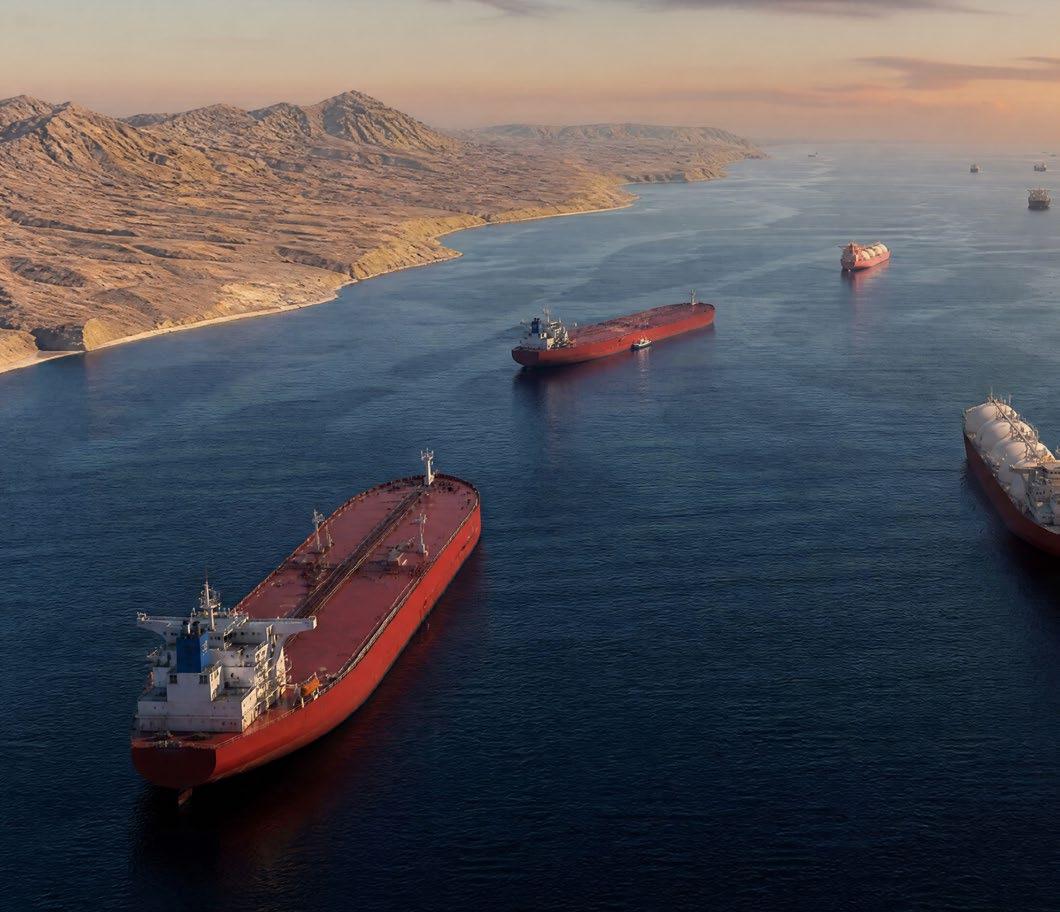
Yahyah Pandor of Blue Yonder explores how organisations can move from responding to disruption to anticipating it.
One day the Strait of Hormuz is open. Next, it is constrained. Then, suddenly, it is closed. The only certainty is uncertainty itself. Conflicting signals, shifting policies, and rapidly changing conditions have made it increasingly diffcult for usinesses to understand what comes next. Yet the stakes could hardly e higher. he trait of ormu remains one of the world’s most critical energy corridors, handling around one fifth of glo al sea orne oil fows. ince late e ruary , heightened regional insta ility has contri uted to a dramatic decline in traffc through the strait, with volumes reportedly falling y and creating a daily shortfall of approximately million arrels.
How long this disruption will continue is impossi le to predict. owever, one thing is clear

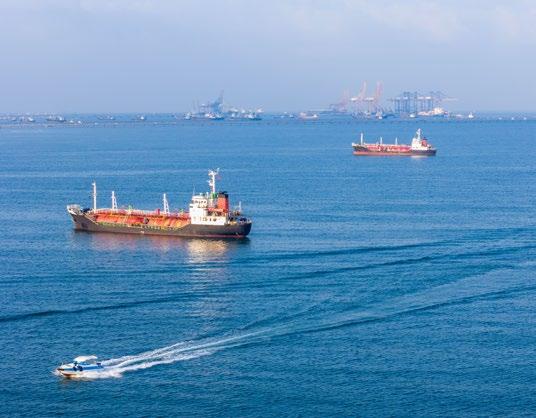
waiting for certainty is no longer an option. Solutions are urgently needed.
he past few months have rought unprecedented tur ulence to the region, with consequences eing felt far eyond its orders. or supply chain leaders, the impact has een immediate and particularly severe.
Unlike many other parts of the economy, supply chains are physical, interconnected, and inherently slower to adapt. A policy decision, geopolitical shift, or sudden market change in one part of the world can quickly ecome an operational challenge somewhere else.
Across the region, and particularly in the UAE, many supply chain executives we speak with share a common view
It has ecome the operating environment. he response, therefore, must e equally dynamic. rganisations are redesigning their supply chains to ecome more agile, more transparent, and etter equipped to respond in real time. Encouragingly, the UAE is supporting this transformation through forward-thinking initiatives designed to strengthen national resilience.
The recently announced National Programme to Strengthen Supply Chain Resilience represents a significant step in this direction. Its am ition is to transform how supply chains are managed y encouraging organisations to map critical goods, understand multi-tier supplier dependencies, and

identify vulnera ilities efore they ecome costly disruptions.
he technology required to support this shift already exists. Modern supply chain control towers, predictive analytics, and AI-powered planning platforms are ena ling organisations to gain deeper visi ility and make faster, more informed decisions. The challenge now is not invention. It is adoption, at the pace required to protect oth national
infrastructure and the organisations operating within it.
UMBRELLAS ARE BOUGHT BEFORE IT RAINS
o put it simply reacting to disruption and anticipating it are two very different capa ilities.
reactive supply chain can e highly efficient at managing pro lems once they appear. trong teams, ro ust processes, and years of experience can certainly reduce the impact. However, the organisation still experiences the disruption. It simply a sor s the consequences more effectively than others.
ANTICIPATION CHANGES THE EQUATION. It egins efore a crisis ecomes visi le, using early warning signals such as changing commodity prices, shifting demand patterns, supplier delays, geopolitical developments, or emerging capacity constraints.
onsider a retailer monitoring glo al logistics conditions. If shipping times egin increasing while energy prices rise, an organisation with the right systems in place can respond efore shelves are affected, y ad usting inventory positions, diversifying suppliers, or redirecting shipments efore disruption ecomes reality.
hat is the difference etween managing uncertainty and preparing for it.
Having an anticipatory supply chain requires more than data. It requires a continuously connected, end-toend visi ility layer capa le of turning thousands of signals into meaningful action.
The challenge is that these signals are growing faster than any individual or team can process. This is where many



traditional supply chains lose their advantage. They are not lacking information; they are overwhelmed y it.
A planner reviewing forecasts manually may identify a handful of potential risks. n I ena led system monitoring thousands of products, suppliers, routes, and locations can identify patterns and vulnera ilities at a scale that humans simply cannot match.
The 2026 Supply Chain Compass report , which surveyed more than supply chain leaders on how they are navigating disruption, artificial intelligence, and rising expectations, reinforces this reality. The findings show that organisations with fully deployed AI capa ilities are signifcantly etter positioned to manage geopolitical uncertainty ecause they have greater visi ility into emerging risks and can act earlier.
EMBRACING THE UNPREDICTABLE rom the oil shocks of the s to today’s geopolitical tensions, shifting trade policies, digital
transformation, and increasingly fragmented supplier networks, one lesson has remained consistent
UNCERTAINTY IS NOT A TEMPORARY CONDITION. IT IS A PERMANENT FEATURE OF GLOBAL COMMERCE.
No single organisation, technology platform, or government initiative can eliminate the forces reshaping international trade. Businesses can choose how prepared they are when those forces arrive.
The Strait of Hormuz may reopen fully tomorrow. It may remain constrained for much longer. The next disruption, whatever form it takes, will not arrive with a warning announcement. That is the reality supply chain leaders are facing across our region.
The organisations that succeed will not necessarily e those with the largest udgets or the iggest teams. hey will e the ones willing to invest efore certainty returns,
ecause waiting for clarity often means waiting until it is too late.
ARE NO LONGER FUTURISTIC INVESTMENTS. THEY ARE BECOMING THE FOUNDATION OF MODERN SUPPLY CHAIN OPERATIONS.
The UAE has repeatedly demonstrated its a ility to turn uncertainty into opportunity. The same mindset must now shape the future of supply chains.
ou do not uy an um rella in the middle of the storm. ou uy it efore the clouds gather.
The organisations investing in resilience today are already preparing for tomorrow’s challenges uilding the capa ility, confdence, and agility needed to navigate what comes next.
hile the next disruption may e unpredicta le, readiness does not have to e.
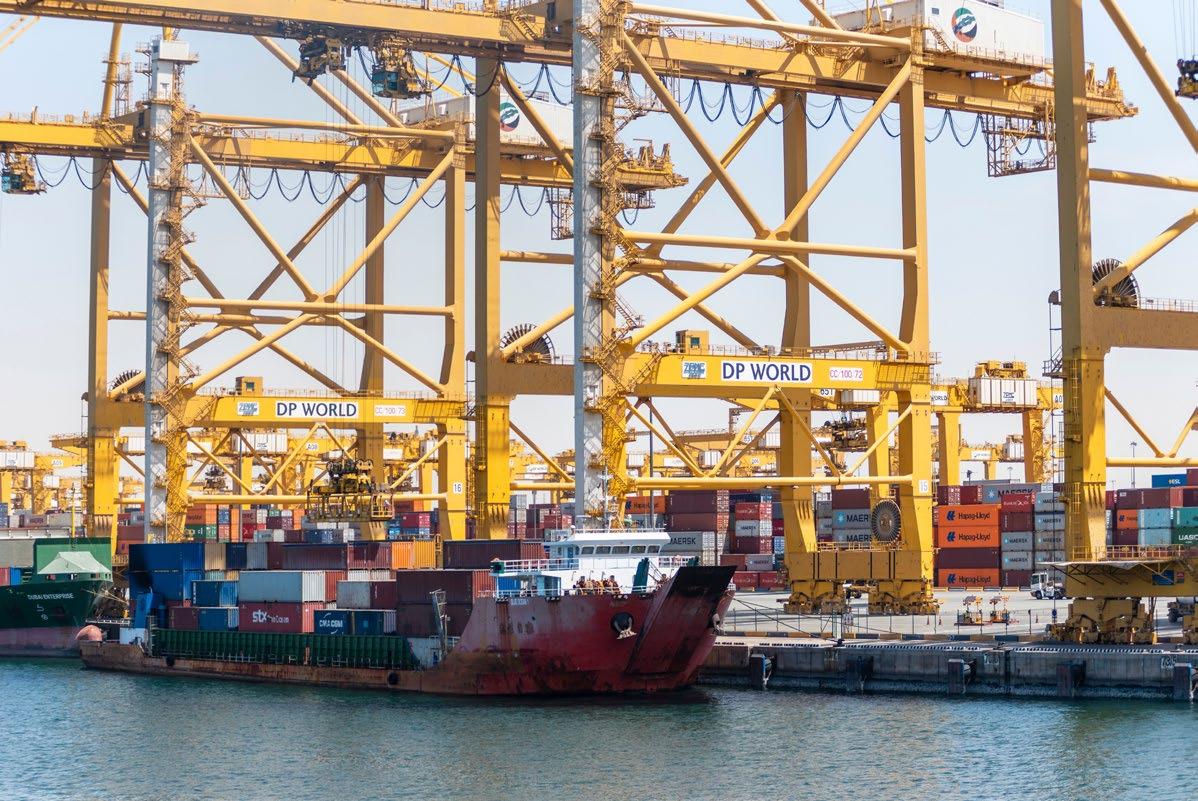
As the Strait of Hormuz turns from artery to liability, Dubai is quietly building its way around it
Words by Reeba Asghar
THE GULF’S NEXT GREAT HEDGE
or half a century, u ai s rise as a glo al trade capital has rested on a simple et that goods could always move freely through the Strait of Hormuz into e el li, the usiest container port in the Middle East. hat et is now eing quietly, urgently rewritten. orld is in talks to uild a new port on the U E s east coast, one designed so cargo never has to pass through the strait at all. It’s a striking pivot for an emirate that uilt its identity on open water and freeflowing trade, and it says as much a out
the region’s current moment as it does a out shipping logistics.
A HEDGE BORN OF NECESSITY, NOT JUST STRATEGY he trigger for this move is lunt
CONTAINER TRAFFIC AT JEBEL ALI HAS COLLAPSED BY ROUGHLY 95% SINCE THE STRAIT OF HORMUZ WAS CLOSED EARLIER THIS YEAR AMID REGIONAL TENSIONS.
That’s not a hypothetical risk scenario, it s happened, and it s why orld has
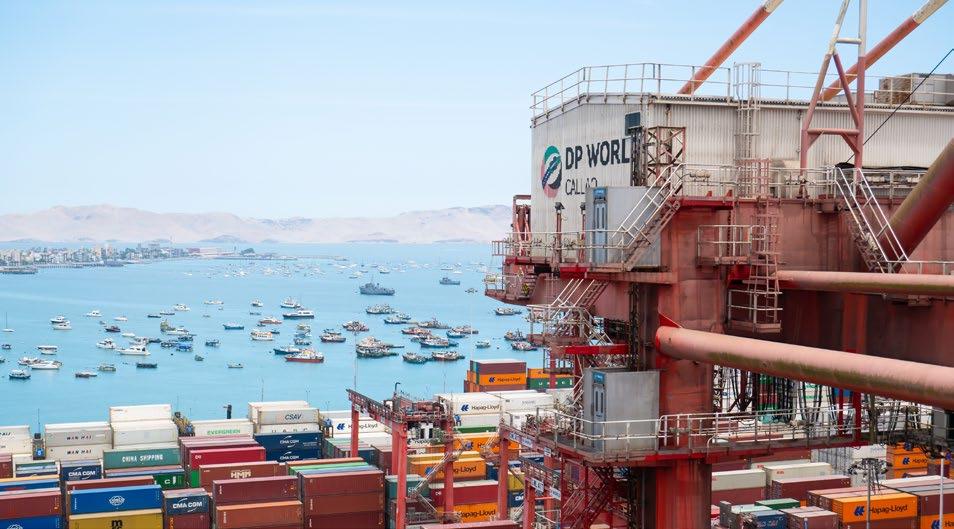
moved from contingency planning to term sheets.
he num ers ehind that collapse are striking. u airah sits a out nautical miles south of the Strait of Hormuz along the Gulf of Oman, and daily vessel transits through the strait have fallen sharply, from roughly a day efore tensions escalated to fewer than . hips that would normally queue into the ulf towards e el li are now eing rerouted to the east coast, and oth u airah and hor akkan are reportedly uckling under the extra volume as a result.
The geography is the whole pitch. Sitting outside the strait on the Gulf of Oman, cargo landing there can reach u ai, u ha i, and the rest of the ulf entirely y road, without a ship ever needing to pass through Hormuz. It’s not a new idea for the emirate, u airah has long punched a ove its weight as a regional unkering hu , and u ha i already exports crude oil through it via a cross-country pipeline specifically to avoid the strait, with plans reportedly in motion to expand those volumes further.
What’s new is the scale of am ition.
THE PRICE TAG AND THE TIMELINE inancing and ownership structure reportedly haven t een finalised
yet, orld is said to e working through a term sheet with UAE government officials. However, the am ition on timing is aggressive a senior company official indicated the port could e completed in as little as months, contingent on approvals and financing closing on schedule. Initial investment is pegged in the hundreds of millions of dollars, with room to scale up depending on demand.
JEBEL ALI IS NOT BEING ABANDONED
,
CLEAR THIS ISN’T A RETREAT FROM JEBEL ALI.
The port’s ecosystem, free zone, warehousing, heavy industry uilt up over decades, can t simply e replicated on the east coast. e el li handled . million containers last year and remains central to u ai s role as a re export hu etween sia and Africa.
THE BIGGER REGIONAL PICTURE
orld isn t moving alone. har ah s ulftainer is separately pursuing a illion expansion of its hor akkan terminal on the same coastline, suggesting the whole east-coast corridor, not ust one port, is eing
repositioned as the UAE’s structural answer to chokepoint risk. There’s also a financial toll already visi le on paper, Moody’s reportedly expects the disruption to push orld s earnings down to around . illion, from . illion the year efore.
TAKEAWAY
What started as Gulf infrastructure planning has ecome something closer to economic wartime logistics. he U E spent decades uilding its identity around the free flow of goods through one of the world s usiest waterways;
THIS PROJECT SIGNALS ,
BECOMING THE LINCHPIN OF THE COUNTRY’S STRATEGY FOR OPERATING ECONOMICALLY INDEPENDENT OF THE STRAIT NEXT DOOR.