Press pause on the busy office
Bay Work Pod is Herman Miller’s solution for hybrid and open floor plans. An office booth that does it all – privacy for phone calls, flattering aesthetics during video meetings and a space for focus – all within an already established floorplate.
Scan to get in touch
hermanmiller.com
© 2025 Herman Miller
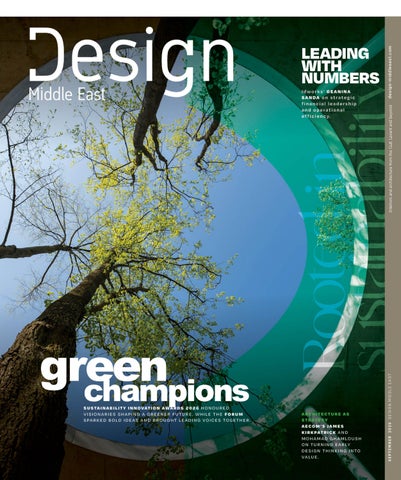
L eaders from design, construction, hospitality, energy and entrepreneurship came together to explore how industries can drive meaningful sustainability. The discussions focused on innovation, collaboration and practical solutions, highlighting the importance of shared responsibility in creating resilient businesses, future-ready spaces and a more sustainable built environment for generations to come.
OP-ED Myth of the ‘local’ customer NITIKA KAPOOR, Assistant Professor at Heriot-Watt University Dubai, explores why designing for the GCC’s diverse audiences requires more than surfacelevel cultural references—and calls for spaces built around the real habits, needs, and experiences of multiple users.
Al Barsha and ADAGIO PREMIUM Dubai Al Barsha, as she shares how people-first leadership, storytelling and multisensory design are shaping memorable hospitality experiences.
54 40
THE VIEWPOINT AECOM: Concept Architecture as a Strategic Catalyst JAMES KIRKPATRICK and MOHAMAD GHAMLOUSH
20
INTERVIEW Designing a World Beyond Space RAHIM ASAD LATIF, Founder of House
of Revan Luay, on building a designled luxury house where architecture, hospitality, wellness and sensory experiences come together to create meaningful, lasting experiences. 24
BUSINESS Leading with Numbers GEANINA SANDA, Managing Director and
Acting CFO at IDworks, shares how strategic financial leadership, operational efficiency and commercial insight are driving growth and resilience in the design and fit-out sector. 36
IN CONVERSATION The Experience Edge In Conversation with JULIA SCHAMNE, Cluster General Manager of NOVOTEL Dubai
how extraordinary design elements and technology translate the family’s personality and lifestyle into the design and build.
of AECOM VISION ARCHITECTURE explore how early-stage design thinking is helping developers, investors, and public-sector clients unlock value, reduce risk, and accelerate decision-making across the Middle East. 44
DÉCOR REVIEW The Art of the Experience JULIEN PILARD, Vice President of Operations at CAPRICE HOLDINGS MIDDLE EAST, shares his ap-proach to building successful hospitality concepts, creating distinctive guest experiences and keeping Sexy Fish Dubai globally relevant while deeply connected to its local market.
48
VILLA PROJECT A Bespoke Vision of Luxury Living The design lead at OLSENS & PARTNERS discusses the Meydan District One – Private Villa project, exploring
DESIGN IN DUBAI The Art of Pausing at Discovery Dunes DISCOVERY DUNES reimagines the golf
community as a place to slow down, bringing together landscape, architecture and moments of connection.
|
Driving Sustainable Change
18
DESIGN MIDDLE EAST
26
SEPTEMBER 2026
1
58
TECHNOLOGY How AI is fuelling a more humancentric approach to design From sustainability-first principles to dynamic digital modelling, AI is revolutionising design and construction and empowering architects with a more human-centric approach. 60
PICK OF THE MONTH Sculptural Sophistication Designed to anchor contemporary interiors, the Alto Green Marble Finish Concrete Coffee Table by HomeKode combines sculptural form, rich colour and everyday functionality. Its perfectly rounded silhouette lends a sense of softness and balance, while the deep green marble-inspired finish introduces depth and character through organic white veining.
design-middleeast.com
SUITE TREAT Step into a world of opulence when you book a Suite at Raffles Doha. Experience the added luxury of QAR 750 credit to spend on dining in the hotel, and QAR 500 towards any Spa treatment. Children aged 12 and below are welcome to indulge in the enchantment of complimentary dining. Rates starting from QAR 3,500 per night
For reservations, please call +974 4030 7100 or email reservations.doha@raffles.com
Raffles Doha, Iconic Towers, Marina District, PO BOX 4747, Lusail, Qatar
EXTRAO R D I NARY PRIVATE POOLS | 30 + AME N ITIES | PR IME LOCATION S
Escape to a home where urban sophistication meets resort tranquility.
BU ILT FO R M O MENTS THAT MAT TER 800-SAMANA | WWW.SAMANADEVELOPERS.COM
DIS COVER REFI N ED
living
*Ranking as per the H2025 1 sales volume data of property monitor for Dubai
6
Editor's note “I love seeing sustainability move from conversation to action.”
DESIGN MIDDLE EAST
|
SEPTEMBER 2026
A
nd this is exactly what happened as we started September with one of our most anticipated events of the year — the Sustainability Innovation Awards 2026 and Forum at Sofitel Dubai The Palm. The day brought together inspiring conversations, thoughtful talks and fresh ideas, with voices from across the industry sharing perspectives on how we can move toward a more sustainable future. There was plenty to take away from the Forum, but for me, the most rewarding part was seeing those conversations continue into the evening as we celebrated the people turning ideas into action. The Sustainability Innovation Awards put the spotlight on our green champions, recognising the visionaries, projects and solutions making a difference. We’re proud to dedicate this cover to them. If you’re wondering, what’s next? — we’re already moving at full speed. For our October edition, we’re curating our biggest Creative 30 Powerlist of the year, bringing together designers and architects whose creativity, influence and work continue to shape the region. And then there’s November. We’re looking for a bigger, bolder ballroom for the Design Middle East Awards 2026, because we cannot wait to see you all again — and welcome even more friends from across the industry — for what promises to be our biggest celebration yet. Nominations are open, so if you haven’t entered, now is the time to join us and take your place in the celebration. This edition is packed with great interviews, insightful columns, standout projects, industry news and plenty of ideas worth pausing over. I hope you
CEO WISSAM YOUNANE
wissam@bncpublishing.net MANAGING DIRECTOR RABIH NAJM
rabih@bncpublishing.net GROUP PUBLISHING DIRECTOR JOAQUIM D’COSTA
jo@bncpublishing.net +971 50 440 2706 COMMERCIAL DIRECTOR ANDREA MOCAY andrea@bncpublishing.net COUNTRY MANAGER KSA AMJAD FAKHOURI
amjad@bncpublishing.net +966 54935 4430
enjoy discovering them as much as we enjoyed bringing them together. And finally, my Pick of the Month is the Alto Green Marble Finish Concrete Coffee Table by Homekode. I love its soft, wavy green pattern — it instantly gives me a beachy feeling. Perhaps it’s exactly the change of pace I need—slowing down, switching off and being closer to the sea—all of which I’m hoping for after November. But before that, we have a ballroom to fill. See you there.
EDITOR ROMA ARORA roma@bncpublishing.net ART DIRECTOR SIMONA EL KHOURY MARKETING EXECUTIVE AARON JOSHUA
aj@bncpublishing.net
DIGITAL REPORTER REEBA ASGHAR reeba@bncpublishing.net DIGITAL MEDIA PRODUCER EDUARDO BUENAGUA
Roma Arora Editor roma@bncpublishing.net @romaarora_
Eduardo@bncpublishing.net
SUBSCRIBE subscriptions@bncpublishing.net PO Box 502511 Dubai, United Arab Emirates T +971 4 420 0506 | F +971 4 420 0196
For all commercial enquiries related to Design Middle East, contact our Group Publishing Director JOAQUIM D’COSTA jo@bncpublishing.net | T +971 504402706
FOLLOW US ON /designmideast
/designmiddleeast
/designmiddleeast
@designmiddleeast
All rights reserved © 2026. Opinions expressed are solely those of the contributors. Design Middle East is exclusively licensed to BNC Publishing. No part of this magazine may be reproduced or transmitted in any form or by any means without written permission of the publisher. Images used in Design Middle East are credited when necessary. Attributed use of copyrighted images with permission. Printed by UPP
design-middleeast.com
8
News
DESIGN MIDDLE EAST
|
SEPTEMBER 2026
Cosentino Appoints Kinan Khouri as Regional Manager for the Middle East & India
KINAN KHOURI, Regional Manager for the Middle East & India, Cosentino
T
he appointment marks a new chapter for one of the company's strongest regional operations, built over more than a decade of sustained growth. Cosentino, the global leader in innovative and sustainable architectural surfaces, has announced the appointment of Kinan Khouri as Regional Manager for the Middle East & India. Khouri
design-middleeast.com
succeeds Eddy Abou Khalil, following close to a decade of working alongside him to establish and grow Cosentino’s presence across the region. Having joined Cosentino in 2013 as the company’s second employee in the Middle East, Khouri has played an instrumental role in building the regional business into one of Cosentino’s strongest operations, with flagship showrooms in Dubai and Riyadh and a growing team serving architects, designers, developers and industry partners across the Middle East and India. Throughout his tenure, Khouri has progressed through leadership roles spanning retail, export and project sales before being appointed UAE General Manager in 2021. He has also led the development of strategic partnerships with some of the region's leading developers and contributed to the delivery of landmark projects, including the awardwinning Alef Residences on Palm Jumeirah, the luxury waterfront residential development Qaryat Al Hidd in Abu Dhabi, and the Jacob & Co. Residences by Binghatti, the world’s tallest residential tower. In his new role, Khouri will lead Cosentino’s commercial strategy and operations across the Middle East and India, driving the company’s
continued growth while strengthening relationships with the architecture and design community. “When I joined Cosentino 13 years ago, we were a team of just two people with a shared ambition to build something meaningful in the region. It has been incredibly rewarding to see that vision become reality. I am honoured to take on this new role and look forward to building on the strong foundations established over the years, working alongside our talented team and trusted partners to continue delivering value, innovation and exceptional service across the Middle East and India,” said Kinan Khouri, Regional Manager, Middle East & India, Cosentino. Commenting on the appointment, Pedro Parra, Global Vice President of Sales for EMEA (Europe, Middle East, and Africa), said: “We thank Eddy Abou Khalil for his leadership and contribution over the past decade. As Kinan steps into this role, we are confident he will build on this strong foundation and lead the business through its next phase of growth. Having helped build our Middle East operations from the ground up, Kinan combines deep market knowledge with a proven track record of leadership, making him the ideal person to take the business forward.”
10
Nikki Bisiker Crafts an Eclectic Elysian Mansion in Tilal Al Ghaf
DESIGN MIDDLE EAST
|
SEPTEMBER 2026
N
ikki Bisiker Design Studio has completed the design of a new Elysian Mansion villa in Tilal Al Ghaf, and the project is now in the interior execution phase. The milestone project reflects the studio’s expanded scope across architecture, interiors, landscaping, FF&E, procurement and bespoke detailing. Set within the exclusive Elysian Mansions community, the villa spans the basement, ground floor, first floor and rooftop, bringing together a calm, serene atmosphere with an eclectic design language shaped by travel, craftsmanship and nature. The residence is defined by rich layers of natural wood, organic textures and a soft, composed material palette that creates a sense of quiet sophistication. Throughout the villa, Nikki Bisiker Design Studio has translated the owners lifestyle and memories into a highly personal environment, including black and white photographic elements captured by the homeowners themselves and integrated into the wider interior story. Among the standout features are a dramatic seven-foot chandelier made in Paris, a Venetian glass dining table inspired by the composition of olive tree leaves and custom joinery detailing that reinforces the home’s artisanal character. Outside,
The design unfolds as a personal expression of the family’s lifestyle, bringing together refined detailing, understated luxury and a strong sense of harmony with the natural surroundings.
design-middleeast.com
the landscaping draws on African influences, while the villa’s pool, waterways, fire pit, rooftop spaces and private gym complete a residence designed for both retreat and entertaining. “The beauty of this project was balancing creativity with complexity. It was both fun and challenging to bring together architecture, interiors, landscaping and bespoke details into one cohesive story. Every space was approached as an opportunity to reflect the family’s personality while maintaining an atmosphere that feels calm, elegant and deeply connected to nature,” said Nikki Bisiker, Founder of Nikki Bisiker Design Studio. Personalisation runs through the entire home, from black-and-white photographic elements captured during the owners’ African travels to children’s bedrooms shaped around individual interests and fashion sense. With vintage, bohemian and artistic themes, these spaces feel both functional and deeply personal, rounding out a home that celebrates identity, storytelling and a considered connection to nature. Elysian Mansions is a premium villa development in Tilal Al Ghaf by Majid Al Futtaim, known for its ultra luxury residential positioning, while the Dubai based studio recently rebranded from Nikki Bisiker Interior Design to Nikki Bisiker Design Studio to reflect its broader, end-to-end approach.
Inspiring Solutions For Tomorrow
IDEAL STANDARD MENA T + 97148042400 | E idealstandardgulf@idealstandard.com IDEAL STANDARD DESIGN & SPECIFICATION CENTRE Building 7, Happiness Street, City Walk, Dubai, UAE | T + 97143096000 www.idealstandardgulf.com
12 News
AECOM appointed as Lead Consultant for Al Dhaher development in Al Ain
DESIGN MIDDLE EAST
|
SEPTEMBER 2026
A
ECOM has been appointed as the Lead Consultant for infrastructure design peer review and construction supervision for phase one of the Al Dhaher Development in Al Ain, a major citizen housing project that will create an integrated residential community comprising 2,394 villas alongside schools, community facilities, retail, sports and religious facilities, public spaces and supporting infrastructure. Located about 15 km south of Al Ain City Centre and close to the UAE-Oman border, the development spans about 528 hectares. Covering the first phase, AECOM’s role will cover the design peer review and construction supervision of key infrastructure and associated works across the development. This includes around 1,000 villas spanning 198 hectares, infrastructure and utility networks, roads and associated infrastructure, landscaping and public realm works, utility and service buildings, community facilities and flood mitigation and drainage infrastructure. “The Al Dhaher Development reflects the kind of investment that can make a lasting difference to the communities in which
design-middleeast.com
It is designed to provide a high-quality, sustainable and culturally rooted community for UAE nationals while supporting Al Ain's continued growth.
we operate,” says Asif Shafi, Managing Director, Civil Infrastructure and Program Management at AECOM. “We are proud to support our valued client on a project that will contribute to the continued development of Al Ain and provide a high-quality, sustainable environment for local families.” A connected community Resilience is a key consideration throughout the development, with flood mitigation measures, drainage infrastructure, stormwater ponds and hydraulic systems incorporated to support the community’s longterm safety and reliability. “Al Dhaher is an ambitious development that brings together residential, community and infrastructure
elements at significant scale,” says Adeeb Sami, Vice President – Al Ain at AECOM. From roads and utilities to drainage, flood mitigation, public realm and community facilities, the infrastructure will provide the foundation for the development’s longterm performance. “We look forward to applying our multidisciplinary expertise, local knowledge and global best practice to help deliver infrastructure that supports the needs of the community today while contributing to Al Ain’s resilience and continued growth,” says Sami. Supporting the future of Al Ain AECOM’s appointment builds on its longstanding presence and track record in Al Ain and across
the UAE. The company will bring together its multidisciplinary engineering, infrastructure, construction management and project delivery expertise to support the successful delivery of the development. Its local knowledge will be complemented by global technical expertise and international best practice in infrastructure, sustainability, resilience and digital delivery. The Al Dhaher Development will be developed in three phases and represents another contribution to the continued development of Al Ain as a sustainable, connected and high-quality place to live, while supporting the UAE’s broader vision for vibrant communities and high-quality housing for families.
13
ZHA to Design Baku Expo City Masterplan
Z
HA has been selected to design the Baku Expo City masterplan. Guided by its tree preservation strategy for the 198-hectare site adjacent to the existing Baku Expo Centre, the masterplan addresses the city’s population growth over the past decade by providing a wide variety of residences within its community. Incorporating one-bedroom apartments to large family homes within a walkable urban district, the masterplan integrates essential civic institutions that serve as the foundation of every vibrant community—including kindergartens, schools, local shops and markets, entertainment and cultural venues, public parks, sports clubs and medical clinics. The masterplan is arranged as a series of interconnected neighbourhoods within preserved pine forests, integrating tree-lined boulevards and landscaped nature corridors to create a sustainable and resilient community linked together by pedestrian pathways and cycle routes. At the heart of the new community lies a public square featuring cultural venues, cafés, restaurants and leisure facilities. This central hub serves both residents and delegates attending events at the new Baku Expo Center extension and Congress Hall which are incorporated within the masterplan. Designed to support this expansion of the exhibition and conference centre, a new hotel will cater to event delegates as well as passengers using the nearby international airport. Aligned with Baku’s 2030 transport strategy, the masterplan will have direct connections to the city centre, airport and the metropolitan region via Baku’s expanding public transport network, which includes the upgrade of the Bakikhanov–Bina–Gala rail line. Known as the ‘City of Winds’ for the prevailing Khazri wind blowing inland from the Caspian Sea throughout winter, Baku also experiences the humid Gilavar wind that brings warm air from the Iranian plateau during the summer months. The Baku Expo City masterplan addresses these specific climatic conditions. Defined by detailed pedestrian wind comfort analysis, the masterplan arranges buildings within each neighbourhood to serve as protective barriers that deflect prevailing winds, reducing their speed at ground level and creating sheltered public spaces for outdoor leisure and recreation. This environmental strategy also ensures the
year-round usability of the community plazas, pedestrian walkways and cycle routes throughout the masterplan. Complementing this strategy, the design preserves 92% of the site’s 18,000 existing trees, which aid natural cooling, wind buffering and microclimate regulation, while also incorporating comprehensive forestry management to ensure the district’s natural canopy continues to mature over time. A further programme of replanting will support and enhance the sheltering properties provided by the site’s existing and new vegetation. All new buildings within the masterplan will incorporate a green roof system to enhance thermal insulation and reduce cooling energy demand. This system is integral to the district’s stormwater management, collecting and naturally filtering rainwater for reuse while mitigating the urban heat island effect. The masterplan prioritises a sustainable, peoplecentred environment by integrating renewable solar and wind energy, passive design strategies, effective water management and low-carbon material choices. These measures create highly efficient residential and civic infrastructure along with comfortable outdoor spaces within a vibrant, resilient community that supports the city's longterm ecological health.
The masterplan creates interconnected neighbourhoods within preserved pine forests, linked by landscaped boulevards, nature corridors, pedestrian paths and cycle routes.
design-middleeast.com
14 News
Ithra Opens Registration for 2026 Design Challenges
DESIGN MIDDLE EAST
|
SEPTEMBER 2026
I
thra Design Week will host its 8th edition of the Ithra Design Challenges from November 16–21 at the King Abdulaziz Center for World Culture (Ithra) in Dhahran, Saudi Arabia. The six-day design challenge will bring together 90 shortlisted participants from around the world across four specialised tracks: Urban Spaces, Product Design, Visual Communication and Global Impact. The Urban Spaces challenge will explore lightweight, openended playgrounds that encourage curiosity and spontaneous play in cities, while Product Design will focus on reimagining classroom seating as flexible tools that enhance student engagement and wellbeing. The Visual Communication track will challenge participants to create a modern visual language that improves the accessibility and experience of electric mobility in Saudi Arabia, while Global Impact will explore multidisciplinary solutions to help communities adapt and thrive amid extreme heat. Participants will take part in an intensive programme of workshops and talks, applying design thinking to develop practical solutions within tight deadlines. One winning project from each track will be recognised at the closing
Ithra Design Week 2026 will bring together 90 shortlisted participants from around the world.
design-middleeast.com
ceremony and progress to a development phase with a production partner. All winning projects will also be featured in a curated Ithra exhibition in 2027. Ithra Design Week will be spread across four thematic districts. The Scene will serve as the hub for workshops and the venue for the Design Challenges, while The Agora will feature an openair setting with art installations and interactive experiences centred on inclusivity. The Hype will present a large-scale exhibition showcasing work by design graduates, while The Canvas will explore large-scale architectural design installations within the Desert Garden. This year's theme, “What is the Next Norm?”, encourages participants to question existing assumptions and develop adaptive, forwardthinking solutions rather than simply replacing what already exists. Registration for the Design Challenges is open until October 24 via the official Ithra website.
67 OCT2026 A D N EC C E N T R E
WHERE THE WORLD CONVENES IN
NEW INTELLIGENCE 350+
WORLD'S LEADING AI SHOW UNITING INFLUENTIAL GOVERNMENTS, ENTERPRISES, INVESTORS & STARTUPS CATEGORY SPONSOR
SILVER SPONSOR
Meet the leaders building the next generation of intelligent economies. From breakthrough research to nation-scale deployments and outcomes-led talks, experience the AI applications reshaping industries.
AI BIG TECH & AWARD-WINNING STARTUPS
100+
WORLD- RENOWNED SPEAKERS
80+
COUNTRIES
200+
CAPITAL PARTNERS
GET INVOLVED
aieverythingabudhabi.com sales@aieverythingabudhabi.com
#AiEverythingAbuDhabi
Rediscover Inspiration at Le Méridien Dubai Hotel & Conference Centre A serene sanctuary at the heart of the city’s dynamic landscape, Le Méridien Dubai Hotel & Conference Centre redefines the art of urban hospitality. Set across 15 acres of immaculately landscaped gardens, the hotel offers an elegant retreat just moments from Dubai International Airport, placing guests within effortless reach of the city’s most iconic districts, from Dubai Mall and Burj Khalifa to the storied charm of the Gold Souk and Dubai Creek. With 580 beautifully appointed rooms and suites, the property invites travellers into a world where contemporary design meets the timeless sophistication of the Le Méridien brand. The distinguished 196 rooms in the Le Royal Club wing elevate the experience with spacious, light-filled rooms, and refined club privileges, while select ground-floor accommodations in the main building open directly onto lush gardens and tranquil pools, offering a resort-like ambience rarely found in the city. C
M
Y
CM
Well-being is woven into the hotel’s DNA. Guests may indulge in five swimming pools, unwind in serene outdoor enclaves, or train at one of Dubai’s most expansive and advanced fitness facilities, staffed by expert coaches and equipped with cutting-edge technology to nourish mind, body, and spirit.
MY
CY
CMY
K
At the heart of the property lies an extraordinary culinary journey. Housing 18 acclaimed restaurants and bars, Le Méridien Dubai is home to some of the city’s most storied dining institutions. From the ever-legendary Seafood Market, celebrated for its market-style freshness, to Casa Mia, Dubai’s pioneering Italian restaurant, each venue reflects a passion for authenticity, craftsmanship, and memorable dining artistry. A beacon for global meetings and events, the hotel features more than 44,000 sq. ft. of versatile event spaces, comprising 24 impeccably designed venues outfitted with modern audiovisual capabilities. Whether orchestrating a grand celebration for 1,750 guests, hosting an international exhibition, or curating an intimate executive gathering, the hotel’s specialist events team and award-winning culinary experts bring each vision to life with impeccable precision and creative flair. From inspired dining to world-class event facilities, and from resort-style relaxation to unmatched convenience, Le Méridien Dubai Hotel & Conference Centre stands as a destination where cosmopolitan energy and cultivated luxury converge, inviting every guest to unlock a stay that is truly memorable.
DESIGN MIDDLE EAST
|
SEPTEMBER 2026
18 OP-ED
Myth of the ‘local’ customer Nitika Kapoor, Assistant Professor at Heriot-Watt University Dubai, explores why designing for the GCC’s diverse audiences requires more than surface-level cultural references—and calls for spaces built around the real habits, needs, and experiences of multiple users.
Nitika Kapoor, Assistant Professor at Heriot-Watt University Dubai
design-middleeast.com
19
W
alk into most retail and hospitality briefs in the GCC, and you'll find a "local customer" described somewhere on the deck. The problem is, in this region, there isn't one. A single mall on a Friday evening might serve a Gulf national family, a South Asian household that has been in the city for two generations, a European expatriate on a two-year contract, and a tourist passing through for the weekend – all of them moving through the same space, at the same time, all expected to feel it was designed for them. Design well for one of them, and you probably designed against the other three without realising it. Most efforts towards cultural responsiveness remain surface-level, and this becomes evident when space is evaluated through lived experience rather than photographs. Arabic calligraphy on a feature wall, majlis-style seating in a lobby, a colour palette tweaked to feel "regional" – these are often visual gestures layered onto an experience that remains fundamentally unchanged. The real test lies in how people move through and use space. Follow a family from entrance to purchase, or watch a guest look for somewhere to pray, and the gap is still there: the same assumptions about who comes alone and who comes as a group, the same afterthought treatment of prayer and ablution space, tucked wherever there was room left once the “real” design was finished. A space can look authentic and still fail the people it is meant to serve. Before the signage, there’s material that tells this story. A fabric, a finish, a fold can be perceived as warm, formal or indifferent before a logo or a language on a wall is even processed. Interiors that get multicultural design right tend to treat this sensory register with the same level of attention as the floor plan. One of Dubai's most successful mixeduse precincts pairs a heritage quarter with a contemporary retail destination. Its strength lies not in the contrast
between old and new, but in the fact that both were conceived as parts of a single experience. Rather than treating heritage as a themed backdrop or retail as the main attraction, the development allows visitors to move naturally between the two. Whether arriving as a tourist seeking cultural discovery or a resident running weekly errands, the journey feels cohesive. That sense of continuity was designed into the experience from the start, rather than assembled after the fact. Here's what most briefs still get wrong, though: even when a brand makes a conscious effort to design across cultures, it tends to assume that every visitor reads the same cue the same way. They do not. Minimalism is restrained luxury for one guest, cold indifference for another. Some regional hospitality groups try to account for this by varying the tone of each property in a portfolio – a livelier, artwork-led identity in one location, a quieter one in another. But look a little more closely, and you'll find that adaptation is often in the art and signage, a piece commissioned from a local artist here, an illuminated greeting there – while the underlying sequence a guest actually moves through, from arrival to check-in to room, is largely the same, regardless of who's arriving. It’s an easy trap- brands try to fix the tone when the real gap is the experience itself. For designers and brand teams, the practical implication is straightforward: stop designing for an average user who doesn't exist. Instead, design for the actual range of habits in the room, not an averaged-out version of them. Inclusivity needs to be treated the same way as materials and lighting – early, structural, and tested against more than one kind of visitor. A true "multicultural" space is really several distinct experiences layered together, and most design processes aren't set up to handle more than one at a time. As the region's retail and hospitality sector continues to evolve, the future lies not in promoting multiculturalism as a narrative, but in designing experiences that work seamlessly across cultures. After all, there was never just one customer to design for.
design-middleeast.com
20 Interview
Designing a World
BEYOND SPACE
Rahim Asad Latif,
DESIGN MIDDLE EAST
|
SEPTEMBER 2026
FOUNDER OF HOUSE OF REVAN LUAY, ON BUILDING A DESIGN-LED LUXURY HOUSE WHERE ARCHITECTURE, HOSPITALITY, WELLNESS AND SENSORY EXPERIENCES COME TOGETHER TO CREATE MEANINGFUL, LASTING EXPERIENCES.
C
ongratulations on being Highly Commended at the Architecture Leaders Awards 2026. What does this recognition mean to you and House of Revan Luay? The recognition is particularly meaningful because House of Revan Luay is evolving into
design-middleeast.com
a broader design-led luxury house. It acknowledges not only the work we have created, but also the wider vision behind the House. I’ve always believed that true luxury isn’t defined by scale or extravagance; it is defined by purpose, craftsmanship and lasting value. Whether we are designing a residence, developing a fragrance or creating a new experience, the intention remains the same: to create something
21
considered, emotionally resonant and enduring. For House of Revan Luay, this is another milestone in a much longer journey. Architecture and spatial thinking remain fundamental to our design language, while our vision extends into hospitality, furniture, fragrance, wellness and the wider experience of living.
What inspired you to create House of Revan Luay as a design-led luxury house rather than a traditional hospitality brand? The inspiration came from a simple observation: people rarely remember luxury because of how expensive something was; they remember how it made them feel. From an early age, I became fascinated by the emotional impact of environments and experiences. Thoughtful details, intuitive design and genuine care can completely change the way someone experiences a place. That shaped my belief that luxury is not defined solely by objects or status, but by the emotions and memories it creates. As I explored hospitality and lifestyle more deeply, I also saw expectations changing. Today’s luxury consumer increasingly values experiences that feel personal, effortless and meaningful rather than simply exclusive. There is a greater appreciation for authenticity, craftsmanship and brands with a genuine point of view. That is why I chose to build House of Revan Luay as a design-led luxury house. Architecture provides the foundation for how we think about proportion, materiality, function and human behaviour, but the vision extends beyond buildings. Spaces, objects, fragrance, service and sensory details can all contribute to one coherent experience. You describe luxury as “the freedom to feel completely at ease.” How does this philosophy shape your approach to design and hospitality? For me, that phrase defines the purpose behind House of Revan Luay. True luxury isn’t about excess or display; it is about creating an environment where people feel comfortable, understood and completely themselves. Rather than asking, “How can we impress people?” I prefer to ask, “How can we make this feel effortless?” It is about anticipating needs, removing unnecessary complexity and designing spaces that naturally support wellbeing, privacy and belonging. Materiality, lighting, acoustics, spatial sequencing and hospitality should work together design-middleeast.com
22 Interview
Architecture provides the foundation for how we think about proportion, materiality, function and human behaviour, but the vision extends beyond buildings.
DESIGN MIDDLE EAST
|
SEPTEMBER 2026
quietly, allowing people to relax and be present. Success isn’t measured solely by how extraordinary a space photographs, but by how naturally it supports the person experiencing it.
How do you bring together architecture, wellness, hospitality and sensory design to create emotionally intelligent experiences? For me, these disciplines have never existed in isolation; they are different ways of shaping human experience. Architecture creates the framework, hospitality introduces warmth and generosity, wellness brings balance, and sensory design creates layers of memory and atmosphere. Studying architecture at Parsons taught me that great design goes beyond aesthetics. It should respond to context, solve problems and improve the way people experience everyday life. It also taught me to consider scale, proportion, material and movement rather than treating a space as a static image. Travel has been another important teacher. Growing up between New York, Hyderabad and Dubai, and later travelling extensively, particularly across Asia, exposed me to different cultures and interpretations of hospitality and luxury. It reinforced my belief that while design languages differ, the desire to feel welcomed, understood and comfortable is universal. House of Revan Luay brings those lessons together. We consider not only what a space looks like, but its rhythm, atmosphere, scent, tactile qualities and the interactions that take place within it. How have your background in architecture and editorial storytelling influenced your creative vision? Architecture and editorial storytelling have shaped the way I see the world in complementary ways. Architecture taught me to think structurally — to understand proportion, context, function and how spaces influence human behaviour. It instilled a discipline of designing with purpose. My years at You & I Magazine added another dimension. Nearly a decade of researching leading hotels, restaurants, designers and fashion houses taught me to look beyond aesthetics and understand what makes an experience memorable and enduring.
design-middleeast.com
Interviewing designers, hoteliers and creatives further shaped my interest in the thinking and storytelling behind successful brands. Bringing those perspectives together has shaped House of Revan Luay. Every project begins with questions of intent: How should someone feel? How should they move through the experience? What should remain in their memory afterwards?
23
to create a place that felt like an immediate exhale — somewhere guests could disconnect from the pace of the city and feel completely at ease from the moment they arrived. Every decision was considered from the guest’s perspective, with the layout, materials, lighting and proportions creating warmth and calm. The
|
How do you see evolving traveller expectations shaping the future of luxury hospitality and branded living? I believe the next generation of luxury will be rooted in authenticity, personalisation and thoughtful design. Branded living is no longer simply about attaching a name to a residence; it is about creating a complete ecosystem where architecture, hospitality, service, wellness and community work seamlessly together. Residents and travellers increasingly expect brands to understand their lifestyles and deliver experiences that feel personal rather than standardised. There is also a growing desire for places with character — spaces that respond to their location, culture and community rather than reproducing the same luxury formula around the world. Exceptional service will remain fundamental, but wellbeing, cultural relevance, privacy, flexibility and a genuine sense of place will become increasingly important. The future of luxury hospitality and branded living will ultimately be shaped by a shift from possession towards experience. The brands that endure will understand that luxury is less about what is offered and more about how intelligently and meaningfully it is experienced.
SEPTEMBER 2026
interior complements Dubai’s skyline without competing with it, balancing the energy of the city with the tranquillity of a private retreat. Hospitality and design were conceived together, with the ultimate goal of making guests feel relaxed, cared for and genuinely at home.
DESIGN MIDDLE EAST
Your award-winning holiday home at Downtown Views I reflects your design philosophy. What experience did you want to create for guests? With Downtown Views I, the objective was never simply to create a beautiful holiday home. I wanted
What’s next for House of Revan Luay, and what legacy do you hope to create in the luxury design and hospitality space? The vision for Revan Luay has always been to create a world, not simply a collection of products. Fragrance, furniture, hospitality and wellness each offer different ways to shape how people live, feel and connect. The next chapter will bring these disciplines together under one design philosophy, extending the Revan Luay language beyond individual spaces into a wider way of living. As we grow internationally, the ambition is not to become the largest luxury brand, but to create something people genuinely connect with — defined by thoughtful design, understated elegance, warmth and craftsmanship. If, twenty years from now, people enter a Revan Luay space and instinctively recognise that sense of calm, beauty and belonging, then we will have created something truly enduring.
design-middleeast.com
24 The Business Side
Leading with
DESIGN MIDDLE EAST
|
SEPTEMBER 2026
Numbers G E A N I N A S A N D A , MANAGING DIRECTOR AND ACTING CFO A T I D W O R K S , S H A R E S H O W S T R A T E G I C F I N A N C I A L L E A D E R S H I P, O P E R AT I O N A L E F F I C I E N C Y A N D CO M M E R C I A L I N S I G H T A R E D R I V I N G G R O W T H A N D R E S I L I E N C E I N T H E D E S I G N A N D F I TOUT SECTOR.
W ith over 20 years of international experience, what have been the most defining moments in your career journey? Over my extensive career, the defining milestones have centred on transforming the finance function from a traditional back-office operation into an active business growth engine. Managing diverse teams across multicultural markets has taught me that success relies on adaptive communication and, most importantly, strong cultural and emotional intelligence, while maintaining a focus on transparent,
design-middleeast.com
performance-driven metrics. How has your international experience influenced your ability to manage multicultural teams and business environments? My international experience has reinforced the importance of adapting my leadership approach to different cultural and business environments. Effective communication, cultural awareness and emotional intelligence are essential to building trust, aligning diverse teams and achieving common goals. How has your role as CFO at IDworks shaped your approach to financial strategy and operational efficiency? At IDworks, my approach
balances rigorous fiscal discipline with commercial growth. During my tenure in Muscat, I successfully integrated financial controls directly into the sales pipeline and project management processes. Rather than acting as a bottleneck, the finance team collaborates actively with the Commercial, Procurement and Operations departments. This integration ensures that project workflows are optimised, material wastage is minimised and costs are closely controlled, with a strong focus on protecting profit margins throughout contract implementation. During your time at IDworks Interiors in Muscat, how did you successfully integrate financial
control with sales and client relationship management? The key was to position finance as a business partner rather than simply a control function. By integrating financial oversight into the sales pipeline and project management process, we were able to identify commercial risks early, support informed decision-making and maintain greater control over project profitability. Having worked across diverse sectors such as interior design, banking, retail and education, how do you adapt your financial leadership style to different industries? Every industry demands unique financial levers. In banking, my leadership focused on regulatory compliance
25
GEANINA SANDA, Managing Director and Acting CFO at IDworks
and risk-mitigation frameworks. In retail, the priority shifted to improving cash-flow velocity and accelerating inventory turnover. In the education sector, the focus was on long-term capital budgeting and strategic resource allocation. In design and fit-out, the critical focus is on precise project-based costing, milestone billing and tight supply-chain risk management. What key financial systems or processes have you implemented that have significantly improved business performance? I upgraded the financial infrastructure to support rapid corporate decision-making and rolled out reporting systems that provide executive teams with real-time visibility into project profitability. By introducing automated KPI trackers, we established real-time variance analysis and cost-control tools that enable better supply-chain decisions. We also established benchmark pricing to support IDworks’ competitive positioning in the market from the early tender stages.
What are the biggest financial challenges companies in the design and fit-out sector face today, particularly in the Middle East? How do you see the role of CFOs evolving over the next 5–10 years? The Middle East’s construction, design and fit-out sectors face significant cash-flow constraints due to extended project life cycles and delayed client payment structures, alongside highly volatile material costs, particularly amid the current geopolitical environment. To counter this, the modern CFO role must evolve beyond historical reporting and a background presence to become actively involved in Operations and Procurement. Over the next five to 10 years, CFOs must act as strategic co-pilots to the CEO. This requires taking advantage of predictive analytics and routine accounting automation, while building flexible and resilient cost structures that can withstand economic shifts. What financial strategies will be critical for companies to remain resilient in uncertain markets? Companies should build strong buffers for slower economic cycles, keep overheads low and variable where possible, ensure general and administrative costs are commensurate with business volumes, and actively review supply chains to maximise profitability.
design-middleeast.com
26
SUSTAINABILITY Innovation Forum& Awards
2026
Driving Sustainable Change
L
DESIGN MIDDLE EAST
|
SEPTEMBER 2026
eaders from design, construction, hospitality, energy and entrepreneurship came together to explore how industries can drive meaningful sustainability. The discussions focused on innovation, collaboration and practical solutions, highlighting the importance of shared responsibility in creating resilient businesses, future-ready spaces and a more sustainable built environment for generations to come.
PANEL 1: Power Before Concrete: Why Energy Now Sets the Pace of Construction As power networks face mounting pressure from AI-driven demand, access to reliable electricity is emerging as a critical factor shaping the Gulf’s construction pace—potentially more decisive than the availability of steel, cement or labour. This panel discussion explored how the region’s rapidly evolving energy landscape is influencing the way buildings, infrastructure and large-scale developments are planned and delivered. Speakers highlighted the growing need to treat power availability as a strategic consideration from the earliest stages of development, rather than as an infrastructure requirement addressed later in the process. The conversation also examined the impact of data centres, AI technologies and rising energy consumption on existing grids, while emphasising the importance of smarter planning, renewable energy integration and resilient power infrastructure. The panel underlined that the Gulf’s ability to sustain its ambitious development pipeline will increasingly depend on how effectively it can secure, manage and future-proof its energy supply.
design-middleeast.com
SPEAKERS VINEET KUMAR SHARMA
Head of Sustainability & ESG Arabian Gulf Steel Industries LLC
MODERATOR
DR. MUHAMMAD TAYAB Sustainability Director NMDC Group
KASUN ILLANKOON
Editor - Special Projects BNC Media Group
LAURENT LONGUET
Chief Operations Officer Positive Zero
YOUSEF ALAAALDEEN
Energy Manager ENGIE Solutions
MR. VIPULKUMAR SHANTILAL MEHTA Cement Operations Director Cemex UAE Moderator
SUSTAINABILITY Innovation Forum& Awards
27
2026
PANEL 2: Can Businesses Achieve Sustainability Goals Without Investing in People? SPEAKERS Chief Sustainability Officer and Group Head of ESG Emirates NBD
EVGENY GARANIN
Associate Director of Sustainability DMCC
MODERATOR
AALIA MEHREEN AHMED
Senior Features Editor Entrepreneur Middle East
SEPTEMBER 2026
Vice President – Sustainability Expo City Dubai
VIJAY BAINS
|
DR. IOANNIS SPANOS
DESIGN MIDDLE EAST
This discussion highlighted how people are becoming central to the success of sustainability strategies. While the business case for sustainability is now well established, speakers explored how meaningful progress increasingly depends on the people driving these ambitions forward. The conversation examined the growing relationship between sustainability, human capital and business growth, emphasising that technology, policy and investment alone cannot deliver lasting change. Speakers discussed the importance of building the right skills, engaging employees and creating a culture where sustainability becomes part of everyday decision-making. They also explored how organisations can empower their people to innovate, challenge conventional practices and turn sustainability commitments into measurable outcomes. As businesses move from setting targets to delivering tangible results, the panel underlined the need to place people at the heart of this transition. Ultimately, sustainable growth will depend not only on what organisations invest in, but also on how effectively they engage and empower their people.
design-middleeast.com
28
The hospitality industry is increasingly challenged to create spaces that deliver memorable guest experiences while responding to the demands of sustainability and future-ready design. This discussion brought together leaders from design, architecture and hospitality to explore how hotels can balance experience, environmental responsibility and long-term performance. Speakers highlighted the need to move beyond sustainability as an added feature and instead embed it into the core of hospitality design. The conversation explored how thoughtful material choices, energy efficiency, adaptive design and innovative technologies can contribute to spaces that are both distinctive and resilient. The panel also examined the importance of designing hotels for longevity, ensuring that properties can evolve with changing guest expectations and environmental priorities. The discussion reinforced that the future of hospitality lies in creating spaces that are not only beautiful and functional, but also responsible, adaptable and built to perform for generations to come.
DESIGN MIDDLE EAST
|
SEPTEMBER 2026
PANEL 3: Built for Guests, Designed for Good
design-middleeast.com
SPEAKERS MARISKA STOFFEL
RACHID BAKAS
Director of Design & Development R.Evolution
General Manager Anantara Retreat Santorini Abu Dhabi
MODERATOR
DR. NAIM MAADAD CEO and Founder Gates Hospitality
SEJAL PATEL Senior Design Director Kristina Zanic Consultants
HENRIQUE DIAS Principal & Middle East Hospitality & Mixed-Use Director DLR Group
MAIKEL COOKE
Commercial Manager JM Foods LLC Moderator
29
SUSTAINABILITY Innovation
S
ustainability Innovation Awards 2026, held on September 1 at Sofitel Dubai The Palm, saw the region’s green champions stand tall, celebrating visionary leaders, groundbreaking projects and innovative solutions making a lasting impact and driving sustainability forward.
|
Standing Tall for Sustainability
SEPTEMBER 2026
2026 DESIGN MIDDLE EAST
Forum& Awards
PHOTOS: FAROOQ SALIK & JOEL AMPARO
design-middleeast.com
30 SUSTAINABLE HOTEL GROUP OF THE YEAR/ RADISSON HOTEL GROUP SUSTAINABLE FUTURE PROJECT OF THE YEAR /AL AIN OASIS PRESERVATION PROJECT BY AL AIN CITY MUNICIPALITY CORPORATE EXCELLENCE AWARD/NMDC GROUP SUSTAINABLE MANUFACTURING EXCELLENCE AWARD/ARAB BASALT FIBER COMPANY SUSTAINABLE START-UP OF THE YEAR/SUREFLOW SUSTAINABLE COMMERCIAL PROJECT OF THE YEAR/ACROSS H BY HUNA BY A.R.M. HOLDING SUSTAINABLE FIT-OUT FIRM OF THE YEAR/SUMMERTOWN INTERIORS SUSTAINABLE CONTRACTOR OF THE YEAR/DOUGLAS OHI SUSTAINABLE INITIATIVE OF THE YEAR/ERTQAA ( )ارتقاءINITIATIVE BY THE MINISTRY OF CLIMATE CHANGE AND ENVIRONMENT, UNITED ARAB EMIRATES EV CHARGING STATION PROVIDER OF THE YEAR/EMARAT EV CHARGING STATIONS COMPANY P.J.S.C. (UAEV) SUSTAINABLE WATER SOLUTION OF THE YEAR/CLOSED-LOOP BOTTLING SYSTEM BY SPRUDEL EXCELLENCE IN WORKFORCE SOLUTIONS AWARD/TALENTONE SUSTAINABLE HOTEL OF THE YEAR/MÖVENPICK HOTEL JUMEIRAH BEACH SUSTAINABLE BATHROOM BRAND OF THE YEAR/HANSGROHE GROUP SUSTAINABLE INNOVATION OF THE YEAR/PALM STRAND BOARD (PSB®) BY DESERTBOARD SUSTAINABLE TECHNOLOGY OF THE YEAR/AUTONOMOUS DISTRICT COOLING OPERATIONS SEPTEMBER 2026
PLATFORM BY TABREED SUSTAINABLE HOMEGROWN BRAND OF THE YEAR/CANAMA ENTREPRENEUR OF THE YEAR/MOHAMMED BADER FROM DIVISION INTERNATIONAL ENGINEERING CONSULTANTS ENERGY TRANSITION LEADER OF THE YEAR – EMERGING MARKETS/ALI ALSHIMMARI FROM BNC PUBLISHING CEO Wissam Younane
GLOBAL SOUTH UTILITIES (GSU) SUSTAINABILITY INNOVATION LEADER OF THE YEAR AWARD/DR. ABDULAZIZ ALJODAI FROM
DESIGN MIDDLE EAST
|
SAUDI RESEARCH DEVELOPMENT AND INNOVATION AUTHORITY
WINNERS of the Sustainability Innovation Awards 2026
design-middleeast.com
SUSTAINABILITY Innovation Forum& Awards
2026
31
SUSTAINABLE HOTEL GROUP OF THE YEAR
SUSTAINABLE MANUFACTURING EXCELLENCE AWARD SUSTAINABLE START-UP OF THE YEAR
Arab Basalt Fiber Company
SureFlow
DESIGN MIDDLE EAST
|
SEPTEMBER 2026
Radisson Hotel Group
CORPORATE EXCELLENCE AWARD SUSTAINABLE FUTURE PROJECT OF THE YEAR
Al Ain Oasis Preservation Project by Al Ain City Municipality
NMDC Group
design-middleeast.com
SUSTAINABILITY Innovation
32
Forum& Awards
2026
SUSTAINABILITY INNOVATION LEADER OF THE YEAR AWARD
SUSTAINABLE CONTRACTOR OF THE YEAR
DESIGN MIDDLE EAST
|
SEPTEMBER 2026
Douglas OHI
SUSTAINABLE FIT-OUT FIRM OF THE YEAR
Summertown Interiors
SUSTAINABLE COMMERCIAL PROJECT OF THE YEAR
Across H by Huna by A.R.M. Holding
design-middleeast.com
Dr. Abdulaziz Aljodai from Saudi Research Development and Innovation Authority
SUSTAINABILITY Innovation Forum& Awards
2026
33
SUSTAINABLE WATER SOLUTION OF THE YEAR
ERTQAA ( )ارتقــاءInitiative by the Ministry of Climate Change and Environment, United Arab Emirates
TalentOne
DESIGN MIDDLE EAST
SUSTAINABLE INITIATIVE OF THE YEAR
EXCELLENCE IN WORKFORCE SOLUTIONS AWARD
|
SEPTEMBER 2026
Closed-loop bottling system by Sprudel
EV CHARGING STATION PROVIDER OF THE YEAR
Emarat EV Charging Stations Company P.J.S.C. (UAEV)
design-middleeast.com
SUSTAINABILITY Innovation
34
Forum& Awards
2026
ENERGY TRANSITION LEADER OF THE YEAR – EMERGING MARKETS SUSTAINABLE HOTEL OF THE YEAR
Mövenpick Hotel Jumeirah Beach
DESIGN MIDDLE EAST
|
SEPTEMBER 2026
Ali Alshimmari from Global South Utilities (GSU)
SUSTAINABLE BATHROOM BRAND OF THE YEAR
SUSTAINABLE TECHNOLOGY OF THE YEAR
Hansgrohe Group
Autonomous District Cooling Operations Platform by Tabreed)
SUSTAINABLE INNOVATION OF THE YEAR
Palm Strand Board (PSB®) by Desertboard
design-middleeast.com
SUSTAINABILITY Innovation Forum& Awards
2026
35
SUSTAINABLE HOMEGROWN BRAND OF THE YEAR
DESIGN MIDDLE EAST
|
SEPTEMBER 2026
Canama
ENTREPRENEUR OF THE YEAR
Mohammed Bader from Division International Engineering Consultants
design-middleeast.com
DESIGN MIDDLE EAST
|
SEPTEMBER 2026
36 In Conversation
design-middleeast.com
THE EXPERIENCE
EDGE
37
Julia Schamne,
IN CONVERSATION WITH CLUSTER GENERAL MANAGER OF NOVOTEL DUBAI AL BARSHA AND ADAGIO PREMIUM DUBAI AL BARSHA, AS SHE SHARES HOW PEOPLE-FIRST LEADERSHIP, STORYTELLING AND MULTISENSORY DESIGN ARE SHAPING MEMORABLE HOSPITALITY EXPERIENCES.
design-middleeast.com
38 In Conversation
T
How do you build a culture that inspires both your team and your guests? It starts with showing up the way I ask others to show up. Communication has to be honest and clear; performance has to be taken seriously, and people need to see a real path for their own growth. Beyond that, it's about the small things: caring about detail, treating people with respect, and making sure the team feels safe enough to speak up and be themselves. When that foundation is in place,
DESIGN MIDDLE EAST
|
SEPTEMBER 2026
ell us about your hospitality journey and your current role at Novotel & Adagio Premium Dubai Al Barsha. My career has taken me through city hotels, resorts, ultra-luxury properties, and midscale and economy brands, across several continents. Each move taught me something different: how to read a market, how luxury is felt versus how it's marketed, how to run an operation efficiently without losing its soul. I've opened two hotels from the ground up, and today I lead a cluster with 13 years of history behind it, Novotel Dubai Al Barsha and Adagio Premium Dubai Al Barsha. Every stop along the way sharpened how I lead now.
JULIA SCHAMNE, Cluster General Manager Of Novotel Dubai Al Barsha And Adagio Premium Dubai Al Barsha
the energy carries straight through to the guest experience. You can't fake a culture like that, guests feel it the second they walk in. Flying Elephant's design is one of its defining features. What was the vision behind the concept, and how has it contributed to the bar's success? Flying Elephant is our mystical mixology concept, built around Indian-inspired flavours and storytelling, but told through the lens of prohibition-era secrecy. The idea was to imagine a hidden gathering place from that era, one run quietly by the 'aunties', the women who guarded the culture, the recipes, and the gossip behind closed doors. That's the character we built the entire room around. We wanted the space to feel like a secret that had been kept for decades, not something unveiled last year. So nothing was designed to look new. The lighting stays low and warm, the textures are layered rather than uniform, and the scent in the air was chosen as deliberately as anything on the menu. Even the cocktails carry that same instinct: Indian spices and techniques reimagined through a mixologist's eye, so the drink itself tells part of the story before a guest has even asked about it. That sense of discovery, of feeling like you've stumbled into something that existed long before you arrived, is exactly what keeps people coming back and talking about it. In a city filled with bars and nightlife destinations, what truly sets Flying Elephant apart from the competition? Most nightlife venues chase spectacle. We chase intrigue. There's always something slightly hidden, a detail you only notice on your third visit, an activation that changes how the room feels that night. Our focus stays on the ritual of the cocktail and the theatre of the table, not just the drink itself. In a city this saturated with options, it's that layer of mystery that gives guests a reason to return. How does experiential zoning and space design shape guest behaviour, encourage social interaction, and influence the overall hospitality experience? The room is built like a set of different moods, not one single layout. Tucked-away nooks for couples who want privacy, darker corners for guests who want to disappear into the atmosphere, and larger communal tables for groups who came to be loud together. That mix naturally sorts people into the kind of night they're looking for. And none of it works without the team, our mixologists bring flair, storytelling, and their own personalities to the floor, which is really what turns a well-designed room into a memorable night. In today's saturated hospitality market, how has design become a true competitive advantage for brands looking to stand out? Design today isn't about how a space looks in a photo, it's about how it makes you feel once you're standing in it. The industry spent years chasing the Instagram moment, a striking wall, a statement ceiling. Guests have seen every version of that by now, and it's stopped surprising anyone. What actually differentiates a brand happens below
design-middleeast.com
39
Flying Elephant brings together Indian-inspired flavours, prohibition-era storytelling and theatrical mixology.
From intimate corners to communal tables, every zone is designed around a different kind of social experience.
D ES IG N TODAY IS N' T A BOUT HOW A S PACE LOOKS IN A P HOTO—IT 'S A BOUT HOW IT M AKES YOU FEEL ONCE YOU'RE S TAN D IN G IN IT.” JULI A SC H AM N E
the surface, scent, sound, texture, pacing, all working on a guest before conscious thought kicks in. Get that combination right and you've created something closer to a memory than a menu, the kind of feeling a guest goes looking for again without knowing why. That's the real competitive edge now.
Low lighting, layered textures and carefully curated details create an atmosphere that feels rich in history and mystery.
Looking ahead, what trends do you believe will shape the future of hospitality design, and how should brands evolve to stay relevant? I think the next wave of hospitality design will move away from anything that
reads as brand-new or manufactured. Guests are drawn to spaces that feel like they've earned their character over time, with a story behind every corner. Multisensory design will keep growing in importance, scent and sound doing as much work as the visuals. And I expect more brands to soften the line between indoors and outdoors, bringing in greenery and natural texture so spaces feel like they're breathing rather than built. The brands that lean into that sense of history and intention, real or crafted, are the ones that will stay relevant.
design-middleeast.com
40 The Viewpoint
AECOM:
Concept Architecture as a Strategic Catalyst OF AECOM VISION ARCHITECTURE EXPLORE HOW EARLY-STAGE DESIGN THINKING IS HELPING DEVELOPERS, INVESTORS, AND PUBLIC-SECTOR CLIENTS UNLOCK VALUE, REDUCE RISK, AND ACCELERATE DECISIONMAKING ACROSS THE MIDDLE EAST.
DESIGN MIDDLE EAST
|
SEPTEMBER 2026
JAMES KIRKPATRICK AND MOHAMAD
T
he Middle East continues to reshape the built environment through ambitious mixed-use destinations, transformative urban districts and major infrastructure programmes aligned with national development agendas. As projects grow in scale, complexity and investment value, developers, investors, landowners and public-sector stakeholders face increasing pressure to make informed decisions at speed. Many of the decisions that have the greatest impact on a project’s commercial success are made long before detailed design begins. This has elevated the importance of concept architecture,
design-middleeast.com
Mohamad Ghamloush
which is emerging as a critical tool for shaping investment strategies, reducing risk and unlocking project value at the earliest stages of development. AECOM Vision Architecture (AVA), part of the company’s Urbanism + Planning team led by James Kirkpatrick, Vice President, Urbanism + Planning, Buildings + Places, Middle East, provides early-stage design services that transform ideas into investment-ready opportunities. The team develops architectural visions, building concepts, district strategies
James Kirkpatrick
Under the leadership of Associate Director Mohamad Ghamloush, the concept architecture team is strengthening AECOM’s ability to support clients from the earliest phases
Transforming ideas into investment-ready opportunities
The concept architecture team also builds on AECOM’s well-established master planning capability across the Middle East.
SEPTEMBER 2026
“Our role is not simply to design buildings,” says Kirkpatrick. “It is to help clients answer the questions that determine
whom? At what scale? How can it create the greatest value?”
By testing masterplans in greater architectural detail at an earlier stage, the team provides clients with a clearer understanding of how projects can evolve from strategic vision into deliverable built outcomes. This creates a smoother transition from master planning to the design and construction of initial development phases while strengthening design quality and reducing uncertainty. “Clients increasingly want to understand what a masterplan will feel like and how it can perform commercially before mov-
|
and architectural masterplans that help clients define the right brief before significant design costs or capital are committed.
of project development. “Concept architecture sits at the intersection of strategy, design and commercial decision-making,” says Ghamlouch. “Unlike traditional architectural services, which often focus on delivering a defined brief, concept architecture helps shape the brief itself.”
DESIGN MIDDLE EAST
whether a project succeeds commercially and operationally. What should be built? Why here? For
41
design-middleeast.com
DESIGN MIDDLE EAST
|
SEPTEMBER 2026
42 The Viewpoint
ing into detailed design,” says Ghamloush. “By exploring architectural scenarios earlier, we can help them validate opportunities, identify challenges and make more confident investment decisions.” “Our role is not simply to design buildings,” stresses Kirkpatrick. “It is to help clients answer the critical questions that determine whether a project succeeds commercially and operationally long before detailed design begins.” The importance of a structured early-stage process
Without a structured early-stage process, projects can suffer from unrealistic expectations, stakeholder misalignment, scope changes and investment decisions based on incomplete information.”The biggest challenge is translating ambition into a commercially viable proposition,” notes Kirkpatrick. “Our role is to bring clarity to complexity by creating a coordinated vision that aligns market opportunities, planning requirements, technical feasibility and commercial objectives.” With many clients already having strong visions, the support needed is turning that vision into a clear development strategy requires a structured process. “Our role is to bring together design, market intelligence and technical expertise to create a roadmap that supports informed decision-making from day one,” says Ghamloush. This has become particularly important in a region
design-middleeast.com
characterised by rapid growth and transformation. “The Middle East is delivering projects at an unprecedented scale and pace,” says Kirkpatrick. “Clients are expected to make major investment decisions quickly, often within evolving market conditions, regulatory frameworks and ambitious national agendas. In this environment, the cost of making the wrong decision early can be substantial.” AECOM’s multidisciplinary approach is critical to unlock the full commercial potential of a site. Rather than simply maximising density, the objective is to identify the optimal balance of uses, experiences, development phasing and commercial performance that will generate sustainable long-term value. Digital tools, including advanced analytics, scenario modelling and AI-enabled design capabilities, are also enabling AECOM to evaluate options faster and provide clients with clearer evidence for decision-making. Technology complements rather than replaces professional expertise, allowing designers to test scenarios more efficiently while maintaining a strong focus on commercial outcomes. “Technology allows us to evaluate a wider range of possibilities in a much shorter timeframe, but insight remains the critical ingredient,” says Ghamloush. “The real value comes from combining data, design thinking and market understanding to create solutions that are both visionary and deliverable.
DESIGN MIDDLE EAST
|
SEPTEMBER 2026
43
design-middleeast.com
44 Décor Review
The Art of the Experience
DESIGN MIDDLE EAST
|
SEPTEMBER 2026
Julien Pilard, VICE
PRESIDENT OF OPERATIONS AT CAPRICE HOLDINGS MIDDLE EAST, SHARES HIS APPROACH TO BUILDING SUCCESSFUL HOSPITALITY CONCEPTS, CREATING DISTINCTIVE GUEST EXPERIENCES AND KEEPING SEXY FISH DUBAI GLOBALLY RELEVANT WHILE DEEPLY CONNECTED TO ITS LOCAL MARKET.
T
ell us about your hospitality journey and what continues to excite you most about the industry today. My hospitality journey has been built over more than 20 years, with the last 14 spent in Dubai, a market that has given me the opportunity to experience hospitality at an incredible pace. I started very much as an operator, learning the business from the ground up, before progressing into senior leadership roles overseeing multiple venues, new openings and large F&B operations. Over the years, my role naturally evolved beyond day-to-day operations into business development, financial planning, concept development, partnerships and creating new hospitality projects. What continues to excite me most is exactly that: building. I love taking an idea or an empty space and turning it into a successful business – developing the concept, understanding the numbers, putting the right people together and ultimately seeing guests walk through the doors.
design-middleeast.com
Sexy Fish has quickly become one of Dubai’s most talked-about dining destinations. What has driven its popularity, and what differentiates it within DIFC’s highly competitive luxury dining market? Dubai is one of the most competitive restaurant markets in the world, so being successful here requires much more than simply having a great name or a
What would you say is the greatest strength of Sexy Fish Dubai as a hospitality destination? Without hesitation, I would say our people. You can have an incredible location, beautiful design, great food and a strong brand, but ultimately hospitality is delivered by people. Our team is what gives Sexy Fish Dubai its personality, energy and consistency every day. We have built a strong culture where people genuinely care about the guest experience and take
|
pride in what they do. For me, that human connection is what turns a beautiful restaurant into a hospitality destination.
A bold visual language of art, lighting and marine-inspired details creates the theatrical world that defines the Sexy Fish experience.
The TEMAKI experience brings interactive Japanese-inspired dining to the table, pairing delicate hand rolls with sake and sophisticated nonalcoholic kombucha.
DESIGN MIDDLE EAST
beautiful venue, even if it helps. I believe Sexy Fish has been successful because it brings together all the elements of a great dining experience. We have a very strong food and beverage offering, incredible design, great music and energy, but most importantly, a fantastic team that brings the restaurant to life every day. Consistency has also been key. Dubai guests have an enormous amount of choice and are constantly looking for new experiences, so creating a beautiful restaurant may bring people through the door once, but delivering consistently is what makes them come back. I think that balance between high-end dining and high energy, without becoming a nightclub, is where Sexy Fish has created its own space in the market.
SEPTEMBER 2026
45
How does the restaurant’s design contribute to the guest experience and reinforce the Sexy Fish brand identity? Design is a huge part of the Sexy Fish experience. From the moment guests arrive, we want them to feel that they have stepped into a completely different world. Every element has been designed to create that sense of theatre, from the colours and lighting to the incredible artwork, marine-inspired details and statement pieces throughout the restaurant. It is bold, glamorous and sometimes unexpected, which design-middleeast.com
46 Décor Review
DESIGN MIDDLE EAST
|
SEPTEMBER 2026
perfectly reflects the personality of Sexy Fish. At the same time, design is not there simply to look beautiful. It works together with the music, food, service and energy of the room to create the overall experience. How do you maintain Sexy Fish’s global identity while catering to Dubai’s diverse international clientele? For me, it is about protecting the DNA of Sexy Fish while allowing the restaurant to have its own Dubai personality. There are certain elements that should never change: the quality of the food and service, the bold design, the energy and the music. These are what make Sexy Fish recognisable globally. At the same time, Dubai is an incredibly diverse and fast-moving market, and you have to listen to your guests. We adapt certain elements of the menu, activations, entertainment and overall experience to remain relevant to the local audience, without ever compromising the core identity of the brand. I believe the right balance is to be globally consistent but locally relevant. Guests should immediately recognise Sexy Fish, but they should also feel that Sexy Fish Dubai belongs in Dubai. We always work on the 70/30 principle – 70% global and 30% local. How does the new TEMAKI experience strengthen guest engagement, and what role do the sake and kombucha pairings play in that journey? TEMAKI is about creating a more interactive and engaging way of dining. Rather than simply presenting another menu, we wanted to create an experience that encourages guests to discover different flavours,
Glamour meets high-energy dining, with statement interiors designed to make Sexy Fish instantly recognisable while giving its Dubai identity a distinct personality.
design-middleeast.com
textures and combinations throughout their time with us. The sake and kombucha pairings are an important part of that. Each pairing has been selected to complement the different temaki while giving guests two very different ways to experience the menu. Sake brings the traditional Japanese connection, while kombucha offers a fresh and sophisticated non-alcoholic alternative. TEMAKI reflects how we see modern hospitality, as guests are increasingly looking for experiences they can participate in and remember, rather than simply a meal. It creates conversation, discovery and a stronger connection between the guest, the product and our team. Looking ahead, what are your key priorities for the next phase of Sexy Fish Dubai’s growth and evolution? Our priority is to continue evolving without losing what made Sexy Fish Dubai successful in the first place. During the last few months, we also had an amazing opportunity to build an even stronger relationship with our local clientele, and we were impressed by the support that Dubai residents are giving to Sexy Fish. “We Dubai-it.” This was already a priority before but, I must say, this will now become a top priority, our motto, our goal, our daily energy. Dubai moves incredibly fast, and standing still is simply not an option. We need to continue creating reasons for our guests to come back through new experiences, menu evolution, partnerships and activations, while maintaining consistency in the fundamentals of great food, service and hospitality. Ultimately, the next phase is about keeping Sexy Fish relevant, exciting and commercially strong, while continuing to deliver the level of experience our guests expect from us.
@AEDLERLogistikSolutions WWW.ALS.AERO info@als.aero
INNOVATIVE CAR PARK SOLUTIONS
DESIGN MIDDLE EAST
|
SEPTEMBER 2026
48 Villa Project
design-middleeast.com
49
A Bespoke Vision
of Luxury Living
The design lead at Olsens & Partners discusses the Meydan District One – Private Villa project, exploring how extraordinary design elements and technology translate the family’s personality and lifestyle into the design and build.
W
hat was your first thought when you were given the brief for this extraordinary private residence? What struck us immediately was the ambition of the brief. This wasn't simply about creating a beautiful residence; it was about understanding how the family wanted to live, entertain and experience their home. There needed to be a genuine sense of privacy and sanctuary, while at the same time creating spaces capable of transforming for very different social occasions. At Olsen & Partners, we naturally approach projects with a design-and-build mindset. From the outset, we consider both the creative vision and how that vision can ultimately be realised. That combination of imagination and technical understanding shaped our approach to the residence.
design-middleeast.com
50 Villa Project
DESIGN MIDDLE EAST
|
SEPTEMBER 2026
A luxurious private villa designed around family life, entertaining, beautiful materials and thoughtful details.
How did the design concept evolve as you began translating the family's personality and lifestyle into the architecture and interiors? The concept evolved organically from the family's lifestyle. Rather than starting with a particular aesthetic and applying it throughout, we considered how each space should be experienced. We wanted movement through the residence to feel like a journey, with moments of discovery and shifts in atmosphere, scale, materiality and light. As the project developed, this became a layered spatial narrative. Some spaces are intentionally calm and restrained, while others are immersive and expressive. What connects them is the attention to detail and a consistent sense of sophistication. How did you balance the family's everyday life with their love for entertaining? That duality was one of the most important aspects of the project.
design-middleeast.com
The home needed to work just as successfully on a quiet family day as it would when hosting guests. We approached this by creating layers of privacy and designing spaces that could adapt without compromising the family's everyday environment. Rather than separating family life and entertaining into two completely different worlds, we allowed them to coexist. The result is a residence that can transition naturally from private sanctuary to social setting while always retaining a sense of intimacy and comfort. Was there one space or design element you particularly enjoyed creating? It is difficult to choose one because so much of the residence was bespoke, but the pool is certainly one of the most memorable elements. At three metres deep, with an acrylic viewing façade, it becomes much more than an outdoor amenity; it forms part of the architectural experience.
What we particularly enjoyed was exploring how statement elements like this could interact with the spaces around them. Throughout the residence, the intention was never to create something bold simply for visual impact. Each feature needed to contribute meaningfully to the experience of the home. The villa features some extraordinary elements, the double high volumes and highly specialised entertainment spaces. What was the most challenging element to bring to life? The greatest challenge was coordinating the extraordinary technical requirements while protecting the purity of the design. Spaces involving specialist acoustics, complex lighting, largescale bespoke installations and unusual structural requirements demand enormous precision. The entertainment areas, for example, required very high levels of acoustic isolation, including 105dB airport-grade glass,
51
“ W E C O N S I D E R E D N OT O N LY A P P E A R A N C E , B U T A L S O H O W M AT E R I A L S R E S P O N D TO L I G H T A N D TO U C H, H O W T H E Y C A N B E FA B R I C AT E D A N D I N S TA L L E D, A N D H O W O N E F I N I S H MEETS ANOTHER."
A stunning MEYDAN VILLA where elegant interiors, dramatic spaces and bespoke details come together.
while more than 5,000 fibre optics were incorporated across three areas. This is where a design-and-build mindset becomes particularly valuable. We understand that an ambitious concept is only successful when it can be translated into an equally exceptional built result. Design intent, technical development, specialist coordination and craftsmanship therefore need to work
together rather than exist as separate conversations. With 31 types of marble and precious stone, 29 bespoke crystal chandeliers and intricate detailing throughout, what guided your material and craftsmanship choices? Material selection was driven by experience rather than quantity. With
design-middleeast.com
52 Villa Project
DESIGN MIDDLE EAST
|
SEPTEMBER 2026
Designed for family and entertaining, this villa combines comfort, luxury and impressive architectural details.
such an extensive palette, every stone, metal, textile and bespoke piece needed to have a reason for being there. We considered not only appearance, but also how materials respond to light and touch, how they can be fabricated and installed, and how one finish meets another. The residence incorporates 31 types of marble and precious stone alongside 29 bespoke crystal chandeliers, some reaching up to nine metres. That attention to execution is fundamental to Olsen & Partners. Design and build inform one another from the outset, allowing ambitious ideas to be developed with craftsmanship, technical precision and the finished
design-middleeast.com
quality always in mind. How did you integrate technology, acoustics and sustainability into the villa while ensuring they remained almost invisible within the overall design? Our approach was that technology should enhance the experience without announcing itself. Smart systems were discreetly integrated to manage comfort, ambience, lighting and performance without disrupting the architecture or interiors. The same thinking applied to acoustics. Highly technical solutions were required, particularly within the entertainment spaces, but they needed
to become part of the design rather than appear as technical interventions. Sustainability was considered through material choices, systems and the landscape strategy. Ultimately, successful integration means these elements improve how the home performs and feels without competing with its character. Looking back at the finished project, what makes this residence particularly special to you and the Olsen & Partners team? For us, what makes the project special is the balance it achieves. It is undeniably ambitious, but its success isn't defined
simply by scale, materials or individual statement features. It can be intimate and theatrical, calm and energetic, private and incredibly social. It also reflects something fundamental to Olsen & Partners: we believe exceptional design and exceptional delivery should be inseparable. Our design-and-build approach brings creativity, technical understanding, craftsmanship and attention to detail into one conversation. Ultimately, the achievement is not simply creating an impressive residence, but creating something deeply personal that works beautifully for the people who call it home.
Your light, your choice BEGA QuickFit ® transforms standard luminaires into custom-made solutions – from bespoke finishes to tailored light temperatures and everything in between. Fast. Precise. Effortless. bega.com/quickfit
BEGA QuickFit ®
SEPTEMBER 2026
54 Design in Detail
DESIGN MIDDLE EAST
|
Mohammed Alawadhi, CEO of Discovery Dunes
Michael S. Meldman Founder & Chairman of Discovery Land Company
THE ART
O F PA U S I N G AT
D I S C O V E R Y DISCOVERY DUNES DUNES
reimagines the golf community as a place to slow down, bringing together landscape, architecture and moments of connection.
design-middleeast.com
Thoughtfully designed spaces across Discovery Dunes invite members to slow down, connect and enjoy the landscape.
L
iving in a city as dynamic as Dubai, the rhythm is constant, yet at Discovery Dunes the idea of pausing is intentionally woven into both its design and overall experience. At the region’s first membersonly golf residential community by Discovery Land Company, balance is not an afterthought but a defining principle. Along the fairways of the Tom Faziodesigned course, a series of comfort stations and “Hangs” are seamlessly embedded into the landscape, forming moments of quiet interruption within the round, where the pace softens and presence takes over.
55
Comfort stations and relaxed social spaces bring moments of pause to the golf experience at Discovery Dunes.
gradually rather than announced. This architectural subtlety continues through the choice of materials and construction approach. Natural stone, timber-lined soffits, and deep roof overhangs provide shade and thermal comfort, while interiors are intentionally familiar—more akin to a home kitchen than a traditional hospitality setting. At the fifth hole comfort station, Tee Top, the landscape extends over the structure itself, allowing players to tee off from a grass-covered canopy before stepping inside for breakfast
classics and fresh coffee, and a selection of juices and smoothies. On the 13th hole, Tap Room opens out toward the lake in a cooler palette, serving barbecue favourites and handcrafted drinks. The Hangs follow the same approach, extending the language of an embedded landscape, while shifting the idea of pause from the individual to the collective. Named after the American pastime of simply “hanging out,” they are open, unprogrammed environments where gathering is shaped by both atmosphere and function.
The Lake House, overlooking the 11th hole, was the first of these destinations, designed as a low, open structure that dissolves the boundary between interior and landscape, creating a social setting framed by water and fairway. The SHK Shack sits between the 9th and 10th holes, with majlis-style seating and panoramic sunset views,
Blending architecture and landscape, Discovery Dunes creates quiet spaces designed for comfort, connection and discovery.
As a defining feature across Discovery developments, the comfort stations are rooted in the early vision of founder and chairman Mike Meldman. What began as a simple gesture to keep his children engaged during long rounds of golf has since evolved into a signature experience across Discovery communities worldwide. Rather than being designed as standalone buildings, the comfort stations are conceived as natural extensions of the terrain. They sit low within landscaped mounds, their horizontal profiles blending effortlessly into the course, so that they are discovered
design-middleeast.com
56 Design in Detail
DESIGN MIDDLE EAST
|
SEPTEMBER 2026
From the fairways to the Hangs, every space is designed to make slowing down part of the experience.
The Lake House, overlooking the 11th hole, was the first of these destinations, designed as a low, open structure that dissolves the boundary between interior and landscape, creating a social setting framed by water and fairway. serving shawarma and TukTuk coffee within a more relaxed and atmospheric expression of pause and connection. Crucially, these structures are designated intermissions within the state of play. Proportion, shade and tonal palettes allow them to feel intuitive and durable, with materials that settle naturally into the desert landscape rather than resist it.
design-middleeast.com
At Discovery Dunes, pause is a deliberate architectural and lifestyle gesture. The 5th, the 11th or the 13th holes present a subtle shift in tempo, where landscape, structure and behaviour align. Together, the comfort stations and Hangs establish moments of pause alternating between play and everyday life. In a world defined by constant movement, Discovery Dunes offers a space to slow down, reconnect, and focus on creating meaningful memories.
WHERE PROJECTS MEET CAPITAL AND BUYERS
58 Technology
How AI is fuelling a more human-centric approach to design BY M A S S I M O I M PA R ATO
FROM SUSTAINABILITY-FIRST PRINCIPLES TO DYNAMIC DIGITAL MODELLING, AI IS REVOLUTIONISING DESIGN AND CONSTRUCTION AND EMPOWERING ARCHITECTS WITH A MORE HUMAN-CENTRIC APPROACH.
DESIGN MIDDLE EAST
|
SEPTEMBER 2026
interest to delegate data-intensive tasks to intelligent systems. The designer's role is evolving from that of an art director into the orchestrator of a continuous negotiation among these intelligent agents. Since their recommendations will often conflict, for example, between construction costs, operational efficiency, or user experience, the designer will remain responsible for making ethical, cultural, and human-centred decisions in the best interests of both society and the environment.
A
rtificial intelligence has become a defining force in reshaping architecture, design and construction. Like every technological revolution, its earliest impact has been measured by speed and efficiency. Clients expect projects to be delivered faster, while designers increasingly turn to AI-powered tools to remain competitive in a rapidly evolving marketplace. However, the true transformation goes far beyond speed. AI is reshaping decisionmaking, collaboration, and creativity, enabling designers to explore larger solution spaces, integrate complex data, and make more informed decisions throughout the design process. A new role for designers AI excels at analysing, processing, and connecting large volumes of data with remarkable speed and accuracy. It is therefore in our
design-middleeast.com
Balancing style and efficiency Faster project delivery is usually the first benefit organisations recognise, but it should not be the ultimate goal. Focusing solely on productivity means overlooking AI's greatest contribution: creating projects that are more responsive to users' needs, more energy efficient, better integrated into their urban context, more accessible, and ultimately more beautiful. In the same way, AI enables the construction industry to become more efficient, resilient, sustainable, and profitable while improving quality control and reducing waste throughout the project life cycle. Applications range from predictive analysis of supply chains and procurement – particularly valuable during periods of geopolitical or economic instability – to site logistics, construction sequencing, digital twins, urban mining, reverse logistics, and performance simulations.
Massimo Imparato is Dean of the School of Architecture and Interior Design at Canadian University Dubai and Founder and Curator of UAE Modern, a non-profit platform fostering dialogue between academia, industry, and the wider public through exhibitions and design research. Canadian University Dubai (CUD) has recently launched a new Bachelor of Science in Design and Artificial Intelligence (BScDAI) to prepare graduates for careers at the intersection of design, AI, and emerging digital technologies.
A transformation in sustainable design Sustainability is fundamentally a data-driven challenge, making it an ideal domain for artificial intelligence. AI can simultaneously analyse environmental performance, energy consumption, carbon emissions, material life cycles, biodiversity impacts, construction logistics, and operational efficiency, helping designers make betterinformed decisions from the earliest stages of a project. Beyond optimisation, AI enables continuous feedback throughout a building's life cycle through digital twins and predictive maintenance, supporting the transition from linear design approaches to regenerative and circular design systems. As we move from Generative AI towards Agentic AI, multiple specialised agents will independently analyse structural performance, energy efficiency, circulation, material life cycles, costs, regulations, and user behaviour. The role of education Education has a vital role to play in leading the evolution of AI in the context of ensuring socially meaningful design. While the initial focus was around clarity in authorship, this had evolved to recognise a broader shift in the designer's role from sole creator to curator and orchestrator of intelligent systems. Looking ahead, future designers require more than isolated AI courses, they need a fully integrated curriculum where design and AI evolve together. CUD’s Bachelor of Science in Design and Artificial Intelligence, one of the first designled AI programs in the region, was born out of this vision.
PHOTO: SHUTTERSTOCK
59
Consumer impact With the integration of AI, consumers will benefit not only from better-quality buildings but also from greater transparency throughout a building's life cycle. There is a long-standing paradox in the real estate sector: when purchasing a car, buyers receive extensive documentation explaining how it works and how to maintain it. Yet when purchasing a home – often a far greater financial investment – they frequently receive little more than a floor plan. AI and digital twins can fundamentally change this by providing property owners with comprehensive digital records, operational data, maintenance guidance, and performance information, enabling better-informed decisions throughout the building's lifetime. Keeping design human Every technological revolution brings predictions about the disappearance of professions. Architecture has survived industrialisation, computer-aided design, digital fabrication and computational modelling by redefining its purpose in the process. Designers can now explore hundreds of alternatives in minutes, using their knowledge, critical judgement, and aesthetic sensitivity to identify those worth pursuing. AI can dramatically expand creative exploration, but it will not replace the designer's expertise. Without design knowledge, cultural awareness, and the ability to critically evaluate outcomes, AI-generated proposals remain little more than attractive images.
design-middleeast.com
DESIGN MIDDLE EAST
|
SEPTEMBER 2026
Sculptural Sophistication
60 Pick of the Month
Designed to anchor contemporary interiors, the Alto Green Marble Finish Concrete Coffee Table by HomeKode combines sculptural form, rich colour and everyday functionality. Its perfectly rounded silhouette lends a sense of softness and balance, while the deep green marble-inspired finish introduces depth and character through organic white veining. Crafted from durable Fiber Reinforced Concrete, the table offers a substantial, tactile presence while maintaining a refined, minimalist aesthetic. Its smooth surface provides a practical platform for books, decorative
design-middleeast.com
objects or serving essentials, making it as functional as it is visually striking. Ideal for modern living spaces, hospitality settings or design-led lounges, Alto works effortlessly as a standalone centrepiece or alongside complementary furniture. With its bold material expression and timeless form, the table demonstrates how a single, well-considered piece can transform a room, adding an element of understated luxury without overwhelming the overall design. homekode.com
SILVER DOUBLE WATCH WINDER www.wolf1834.com
ELEGANCE.
BUILT INTO EVERY CORNER. At IDWORKS, your dream space becomes a reality you can live in every day.We blend comfort, style, and thoughtful design to create interiors that feel personal and timeless. Choose IDWORKS for interiors that don’t just look good, but truly work for your lifestyle.
www.idworkglobal.com