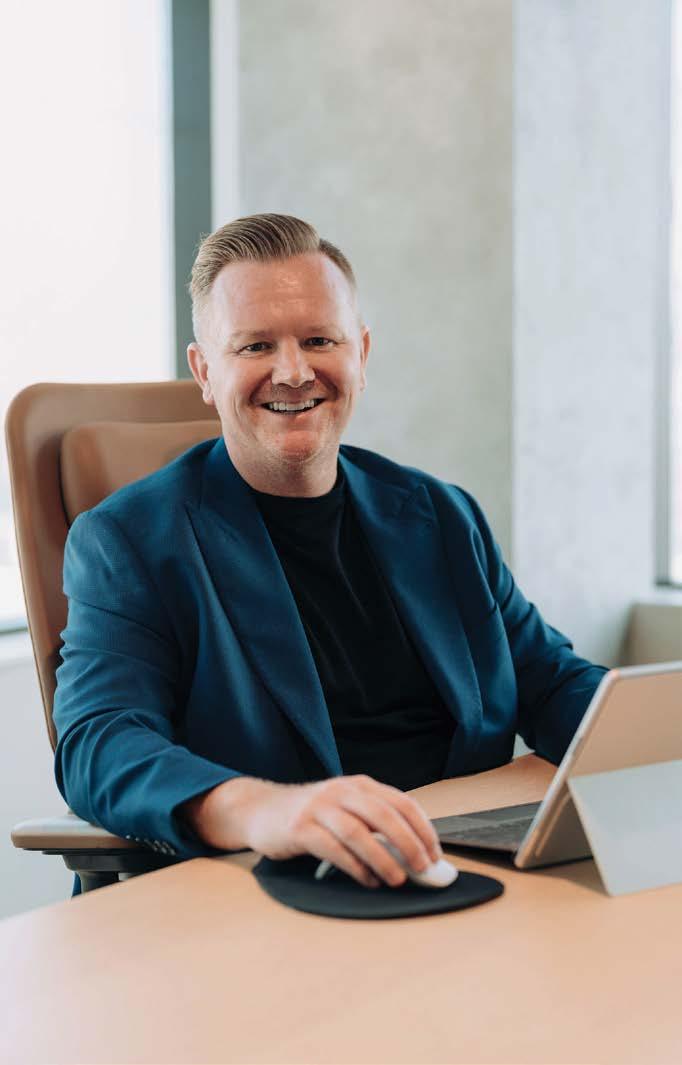
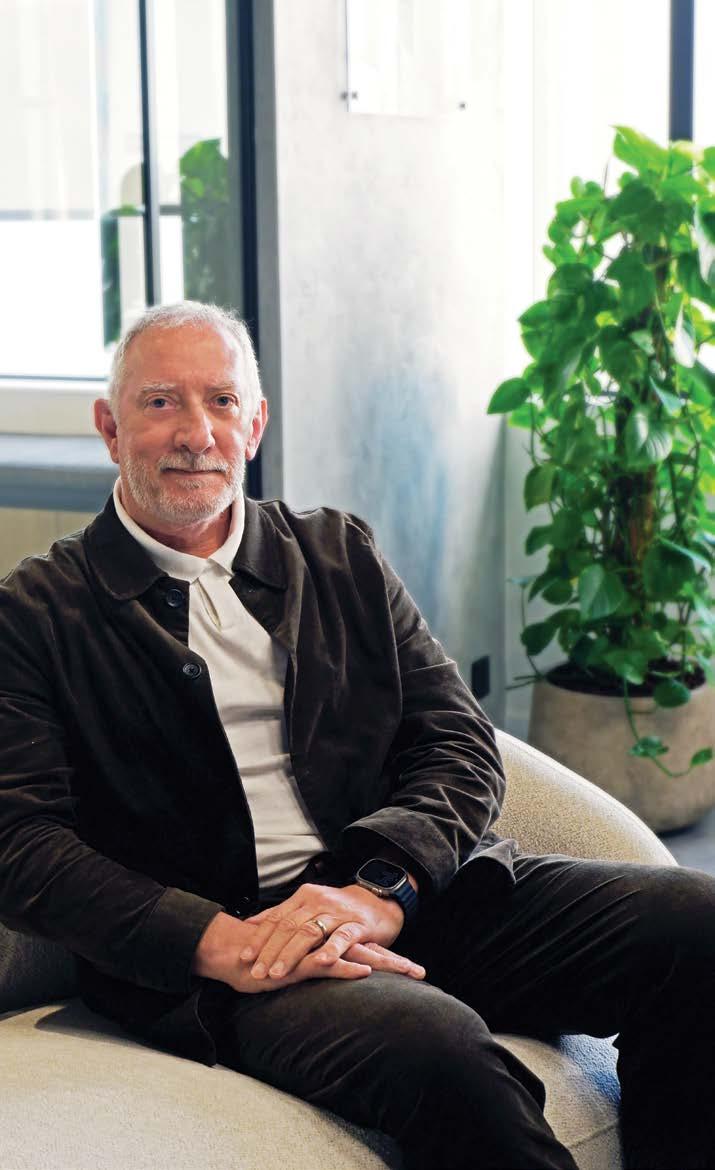
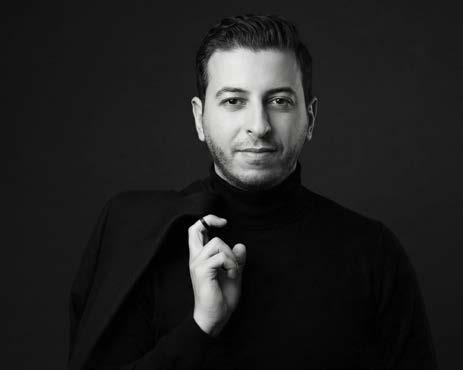
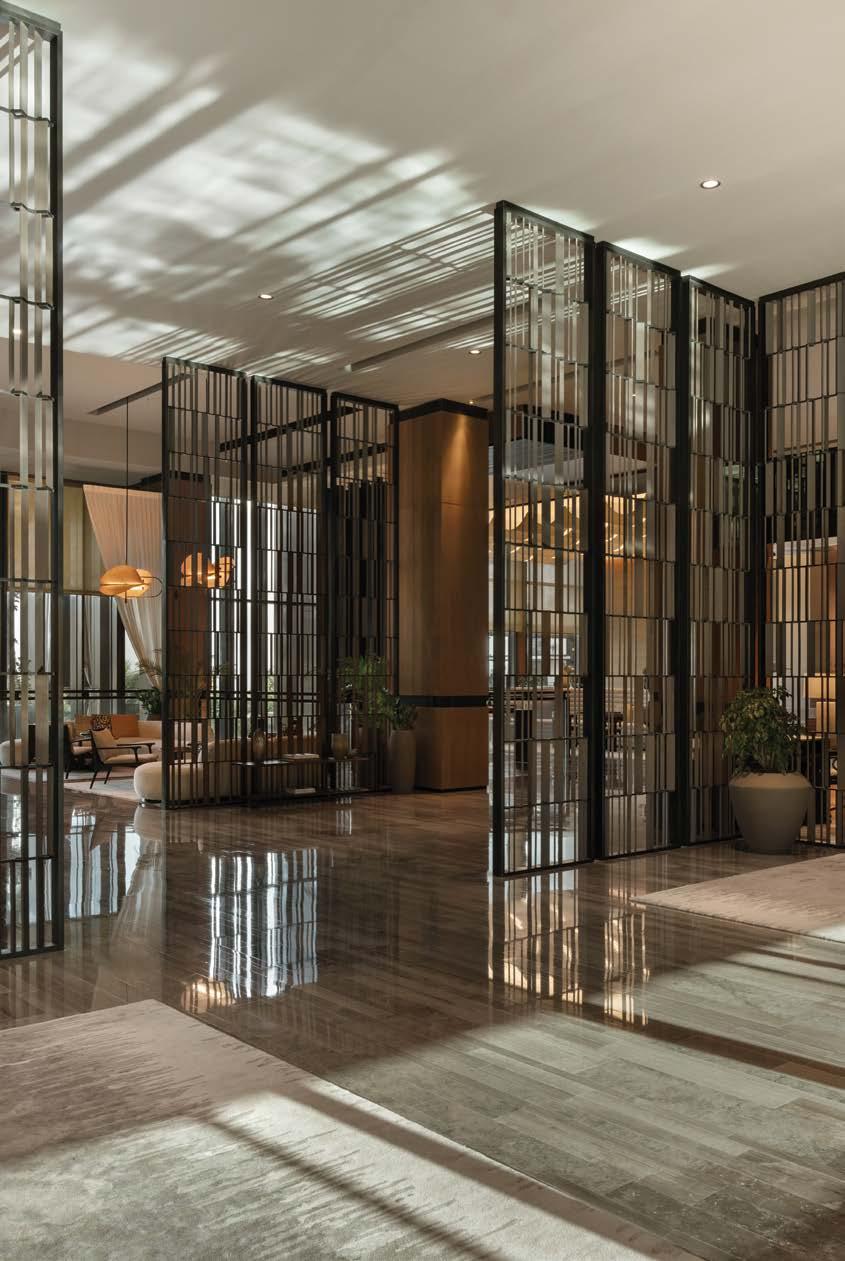
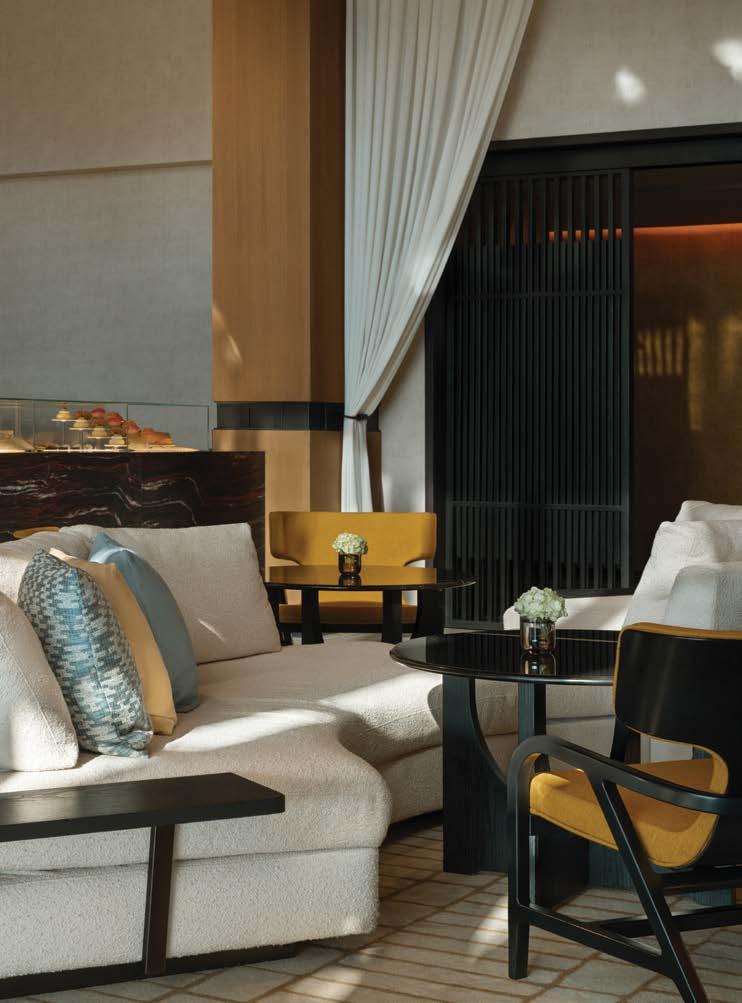
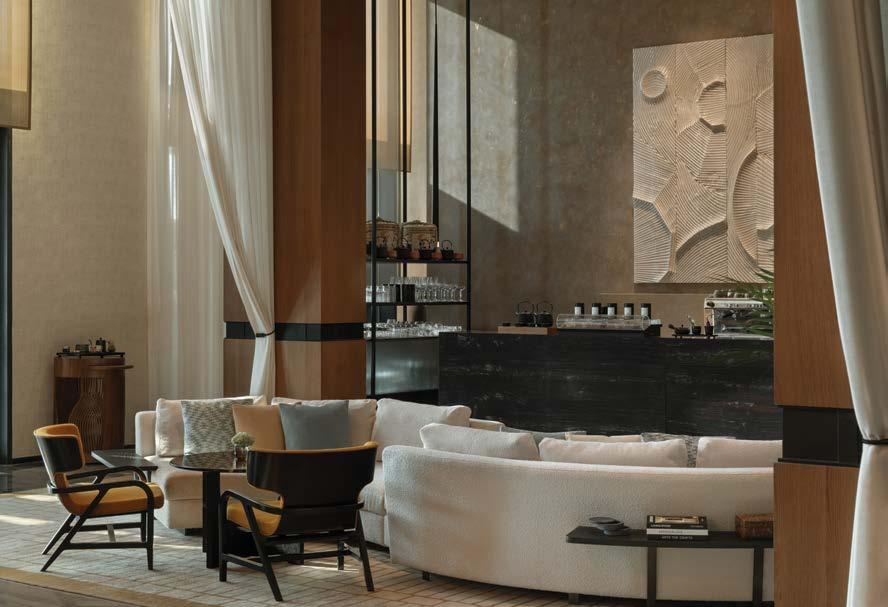
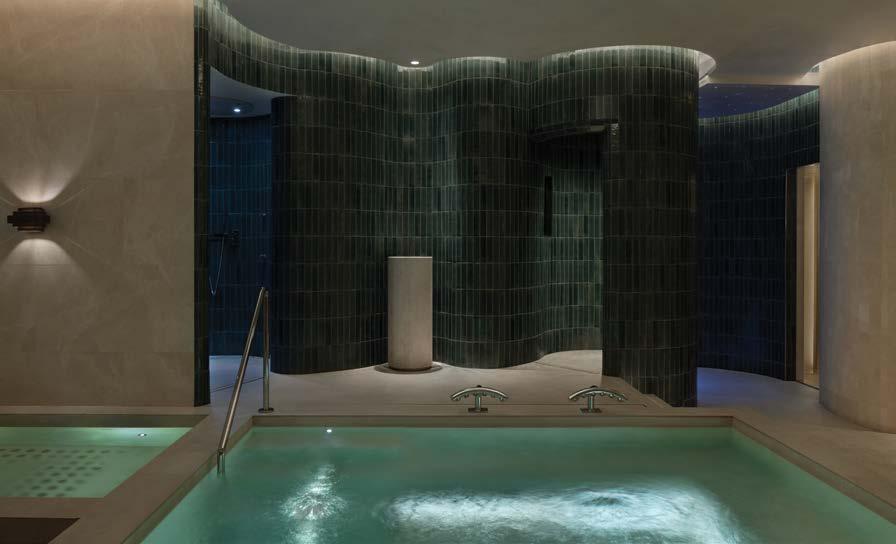
Journey of Sustained Regional Growth/ DSA Middle East’s Managing Directors PETER DAVISON and TIM GOODALL reflect on 25 years of design excellence.
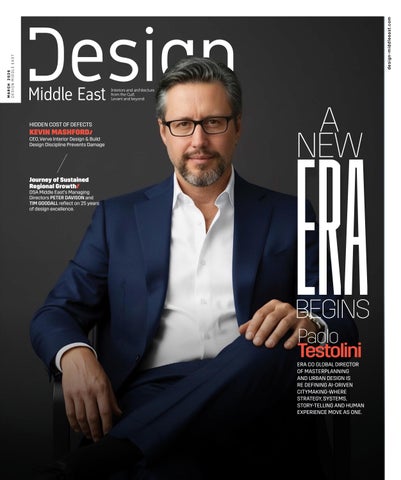
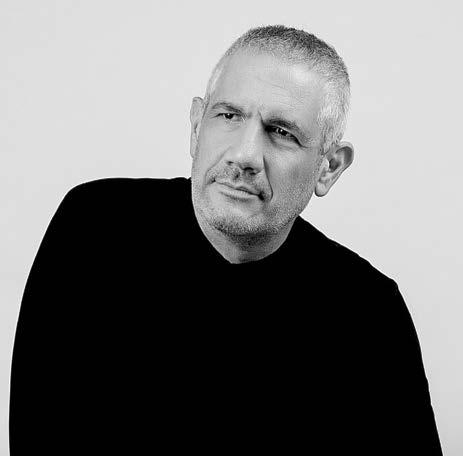
Paolo Testolini
ERA CO GLOBAL DIRECTOR OF MASTERPLANNING AND URBAN DESIGN IS RE DEFINING AI-DRIVEN CITYMAKING-WHERE STRATEGY, SYSTEMS, STORY-TELLING AND HUMAN EXPERIENCE MOVE AS ONE.
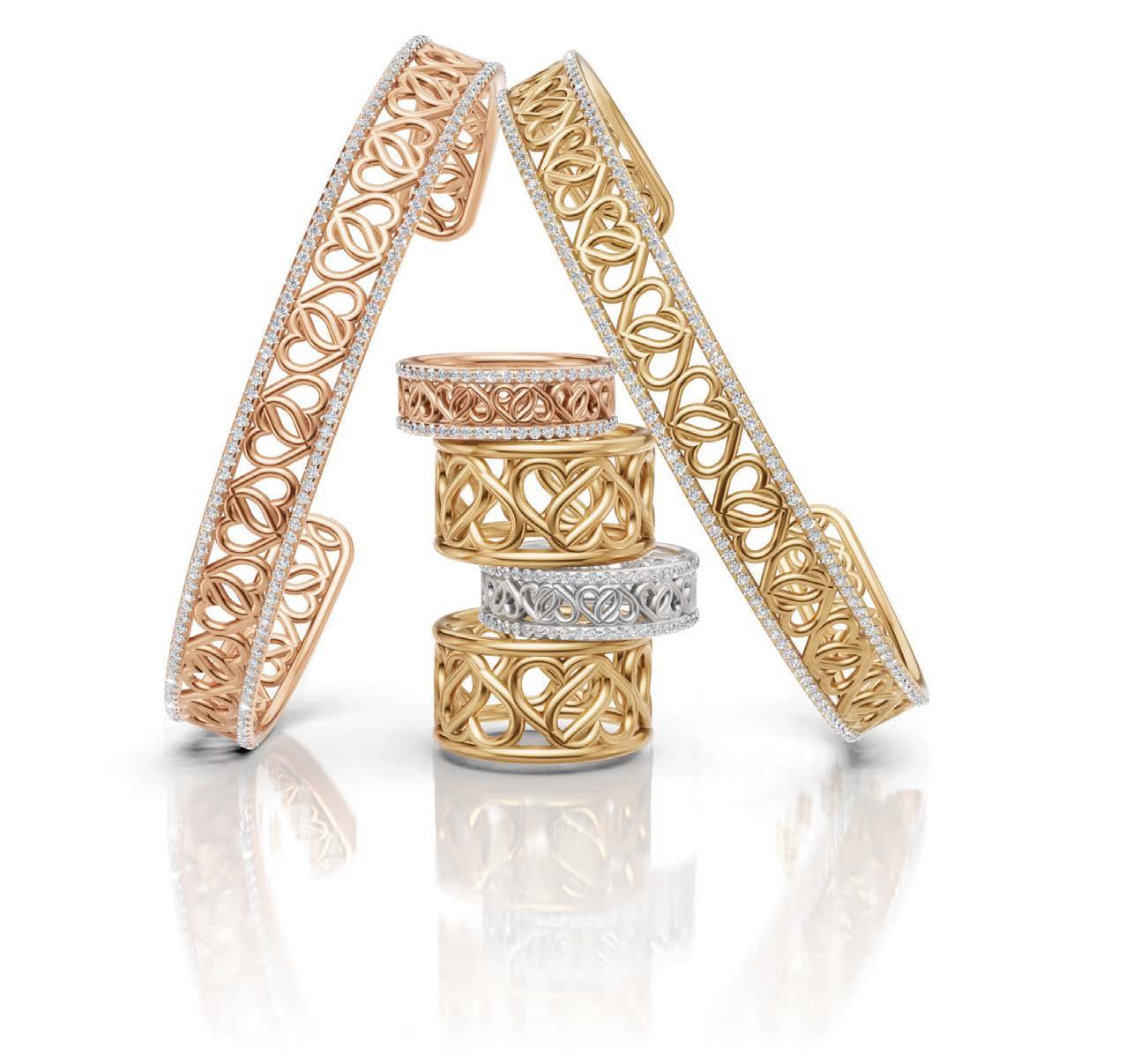
Enlighten Your Eternal Beauty, Inside and Out!
@muarjewels www.muarjewels.com
info@muarjewels.com
"Advancing humanity through place"
A New Era Begins
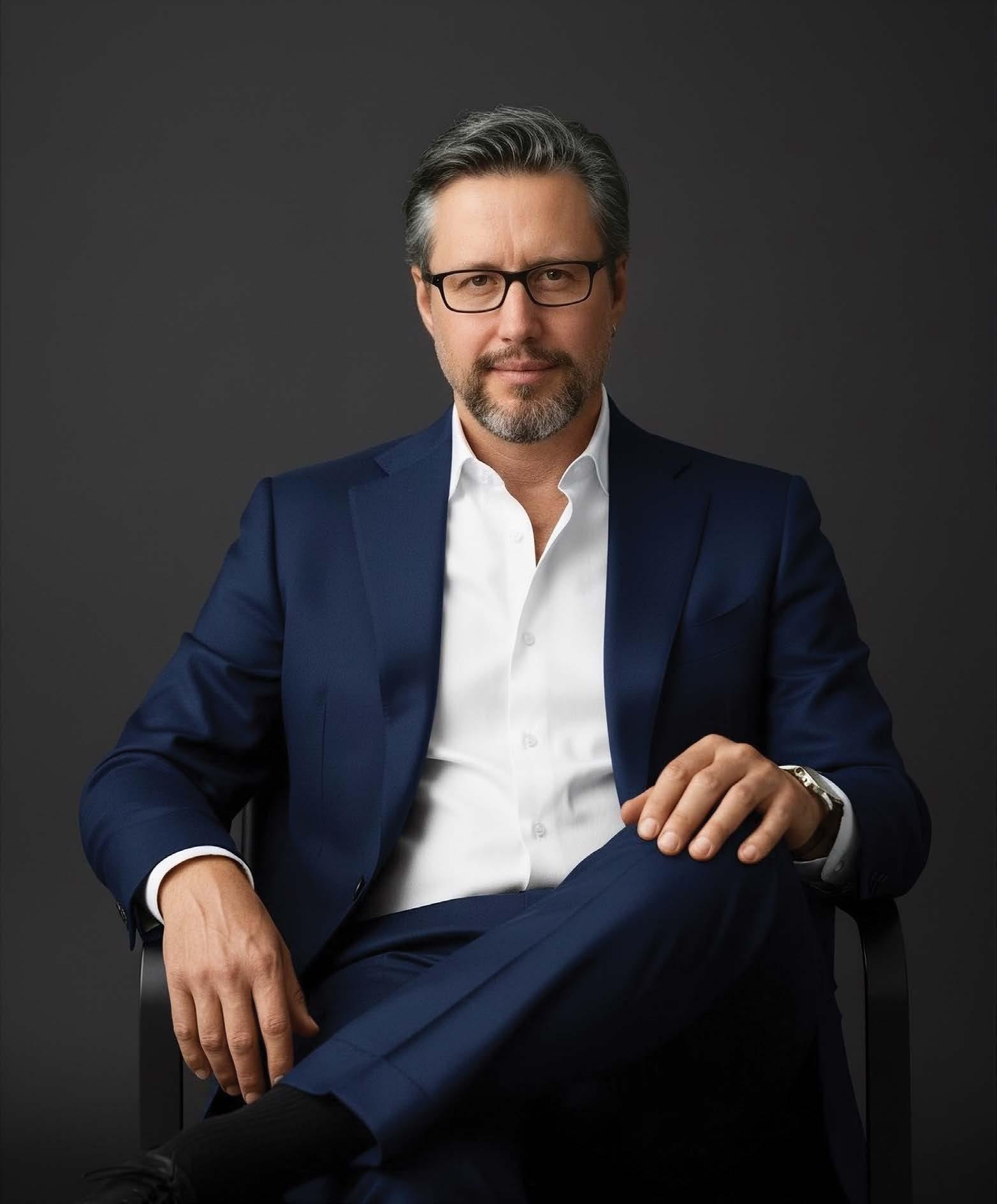
Paolo Testolini joins ERA-co as Global Director of Urban Design and Masterplanning, bringing over 25 years of experience shaping major urban projects across the world. His work emphasises sustainability, placemaking, and storytelling, applying evidence-based methodologies to shape thriving, future-ready cities. ERA co forms part of the 7C network along with Woods Bagot, Customs Bureau and Impact futures.
18 OP-ED
Empowering and Supporting Women in Design
VRUSHALI MHATRE, Assistant Professor of Interior Architecture & Design at HeriotWatt University Dubai, explores how mentorship, education, and inclusive workplace cultures can empower women in design—driving stronger leadership, creativity, and lasting impact across the industry.
20 IN CONVERSATION
25 Years of Shaping Skylines
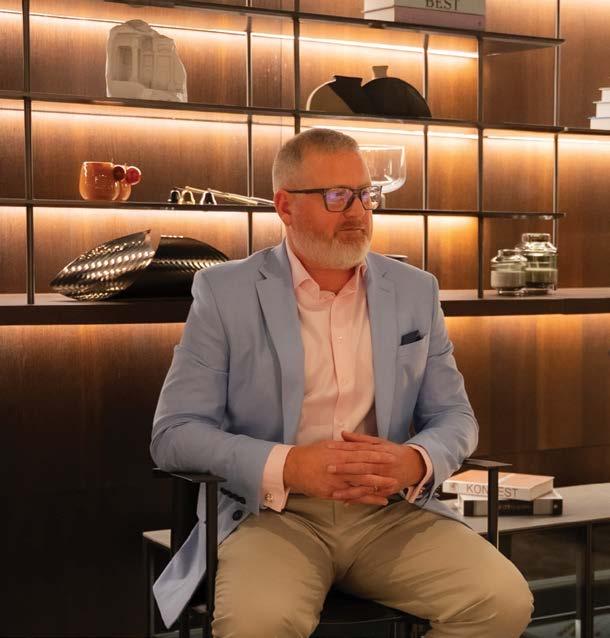
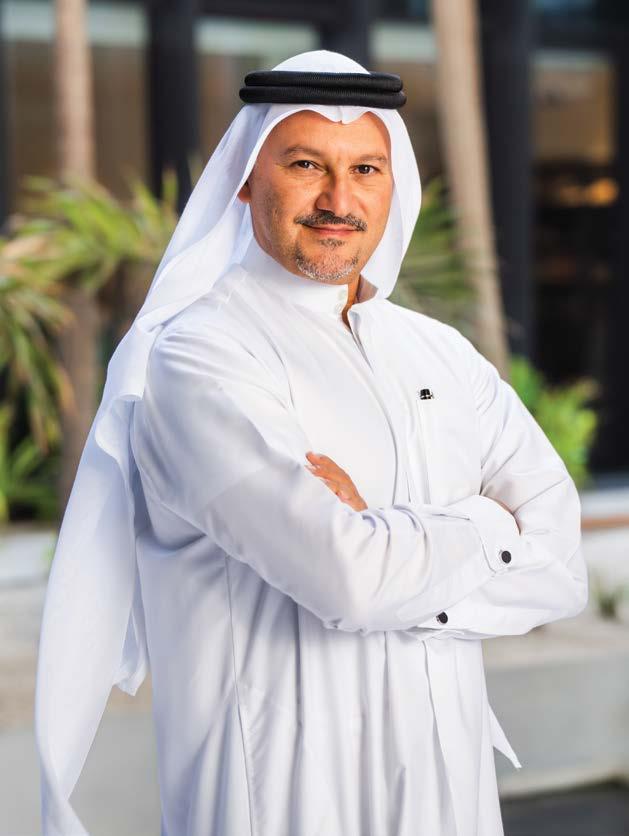
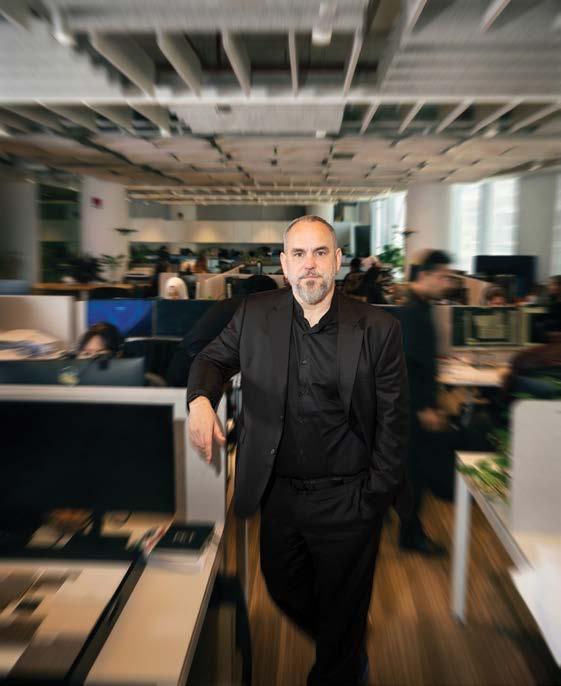
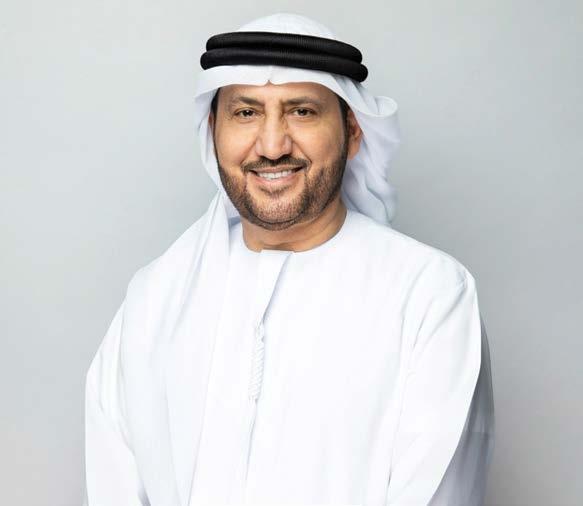
Marking 25 years in the region, DSA Middle East’s Managing Director PETER DAVISON and Managing Director TIM GOODALL reflect on a journey of sustained regional growth.
34 DESIGN & BUILD
The Hidden Cost of Defects
KEVIN MASHFORD, CEO of Verve Interior Design & Build, explains how defects start early, and why planning, design coordination, and clear communication prevent rework, delays, and reputational damage.
36 INTERVIEW
Lifestyle Before Luxury
SHAHAB LUTFI, Chairman of H&H, shares how a lifestyle-led philosophy shapes
Dubai’s evolving real estate landscape — and why Eden House represents a new, deeply personal model of resi-dential living.
40 HERITAGE REIMAGINED
The City of Earth Reimagined
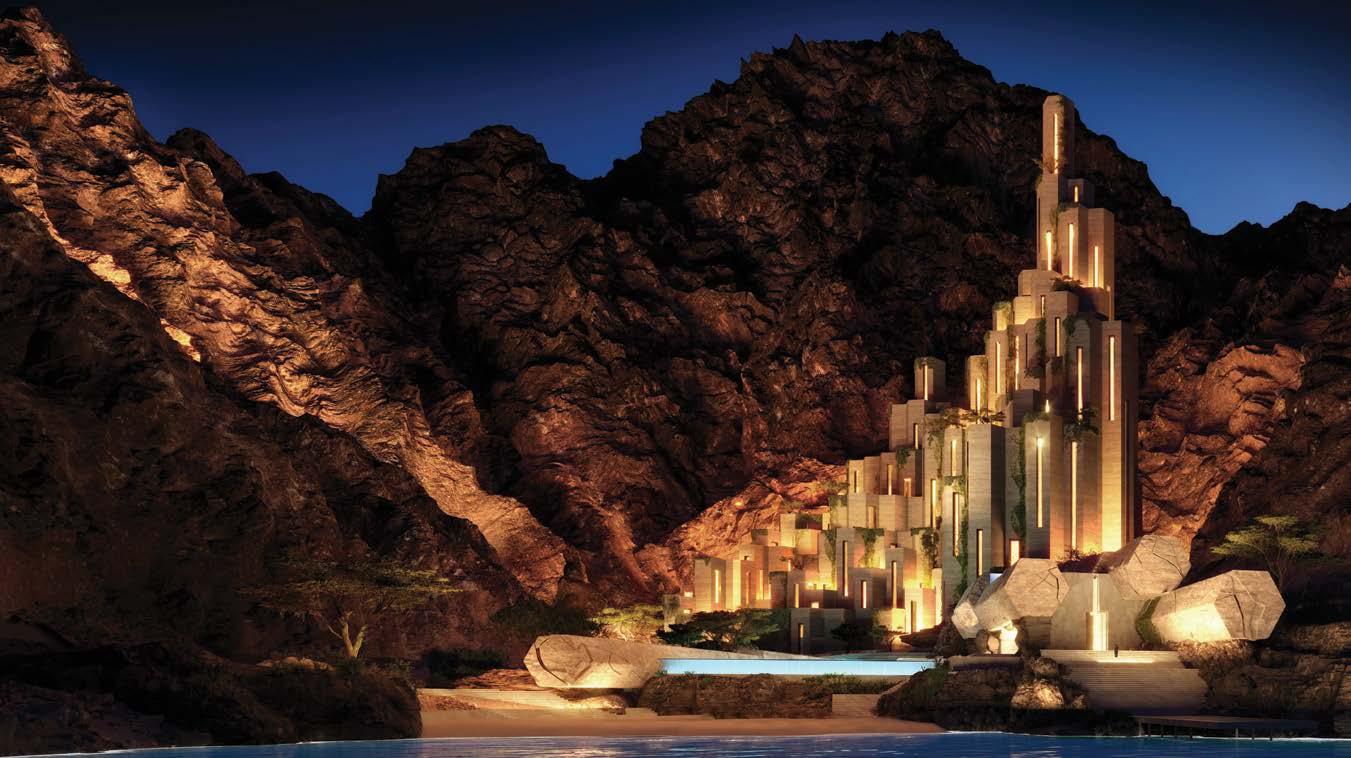
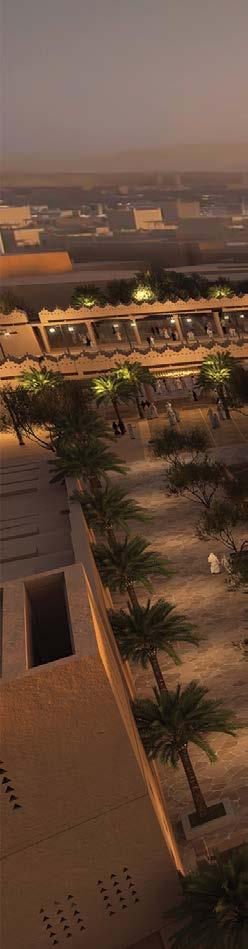
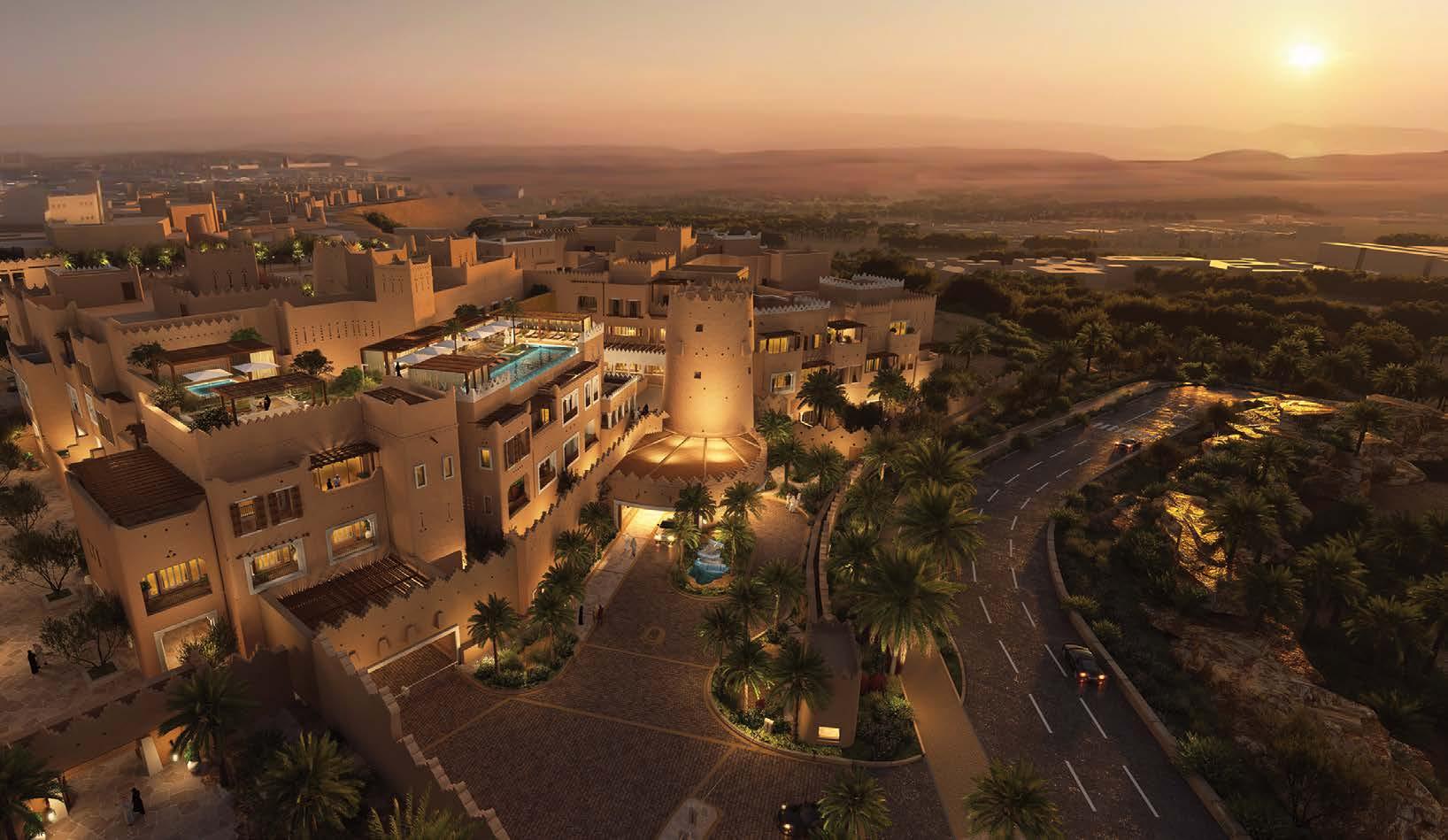
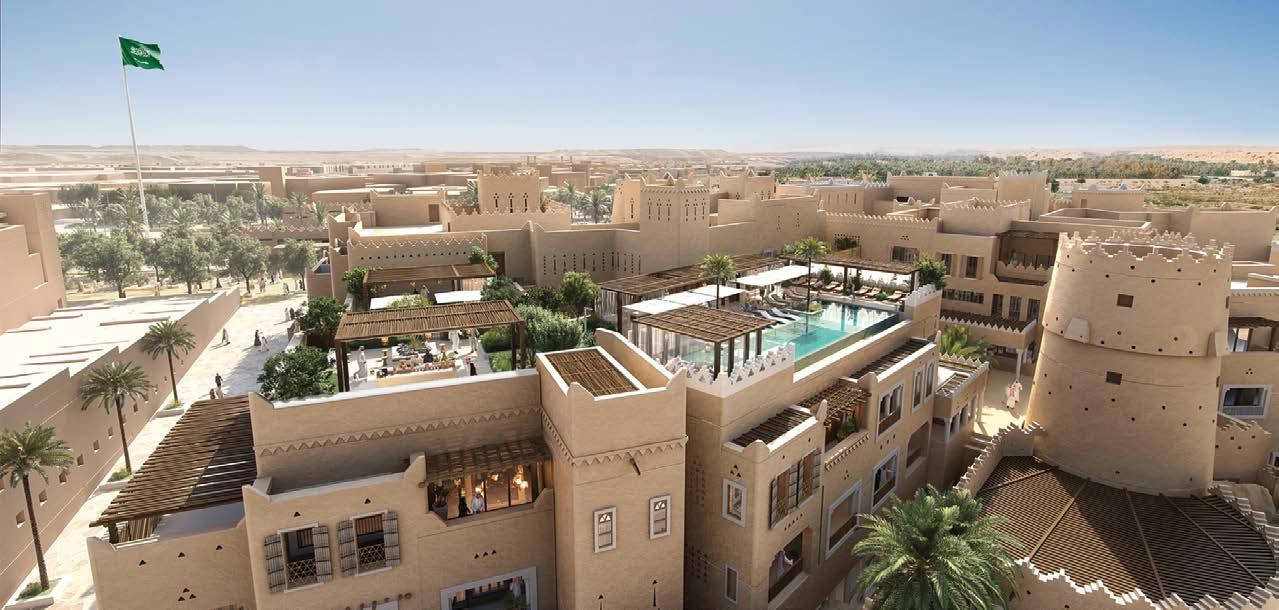
Designed by Aedas for Diriyah Company, the 100-KEY CAPELLA DIRIYAH HOTEL Is a contemporary interpretation of Najdi heritage. Rooted in history yet shaped for modern luxury, the project weaves architecture, landscape, light, and craftsmanship into an immersive hospitality experience in the birthplace of the Kingdom.
44 LAUNCH
Kinetic, Branded, Unmissable
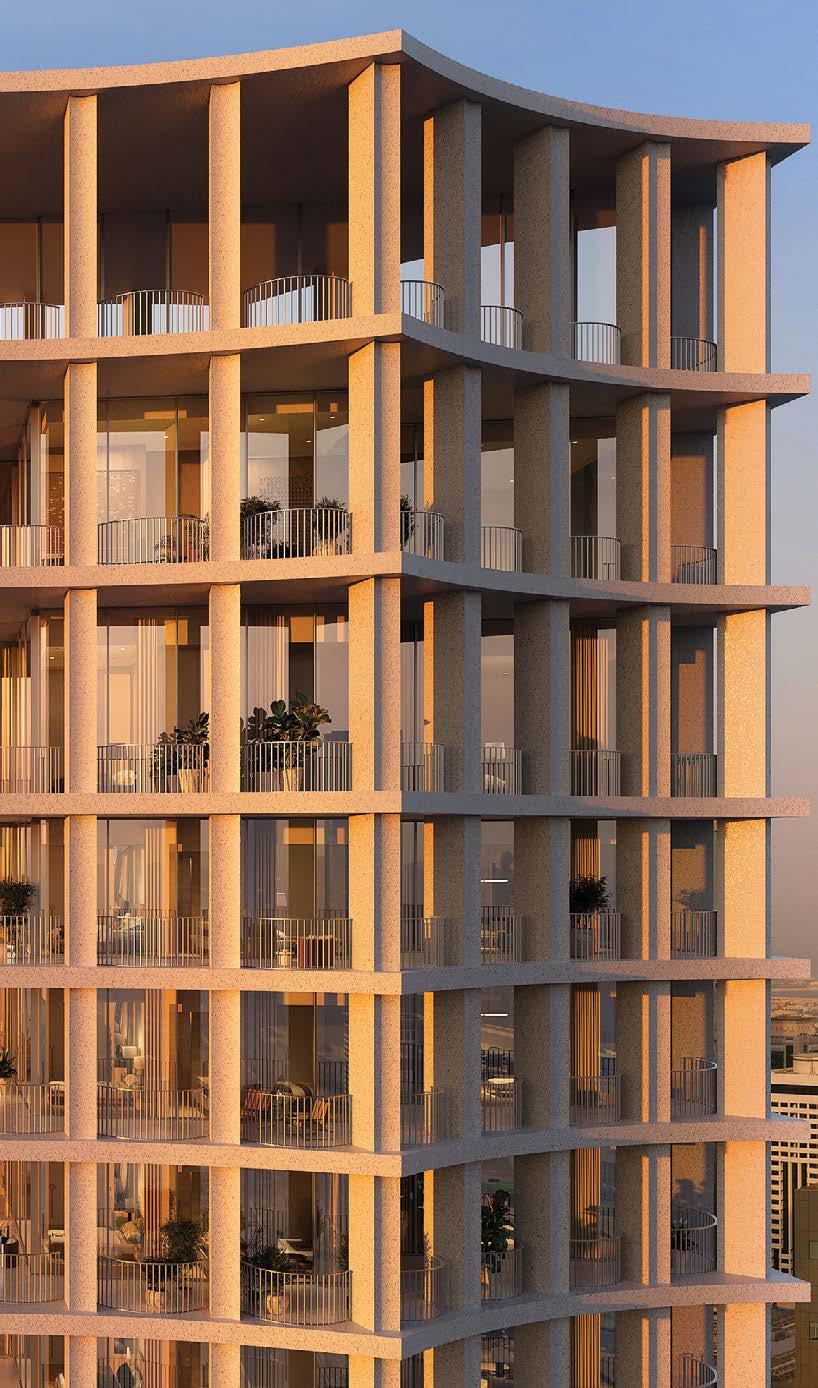
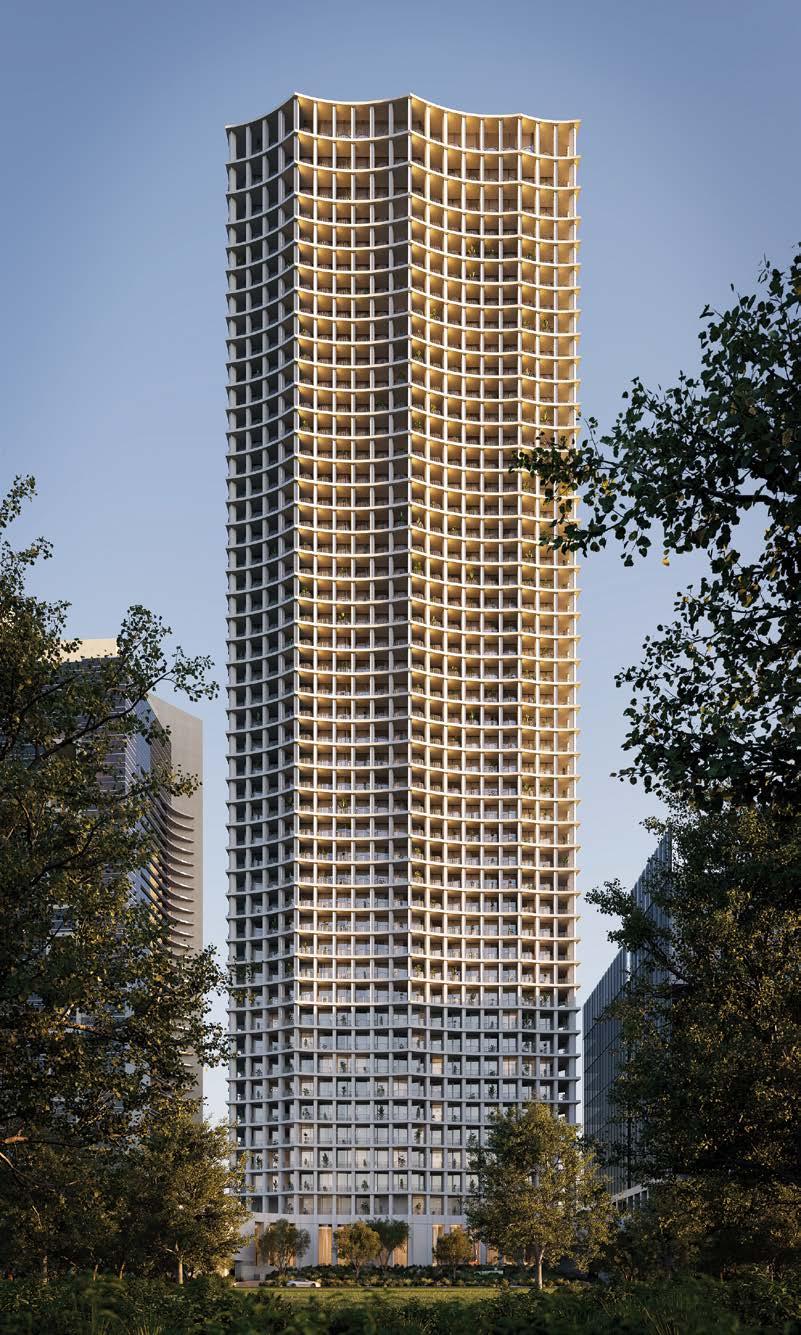
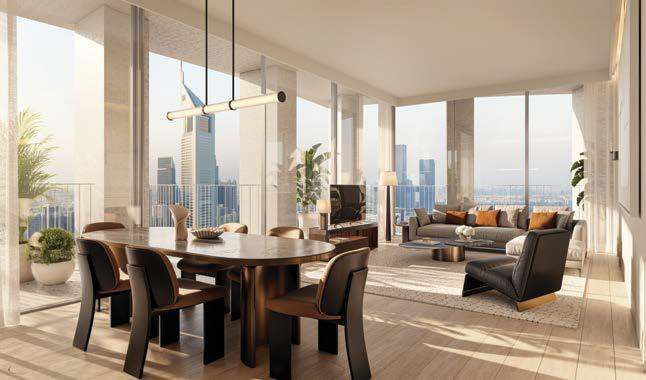
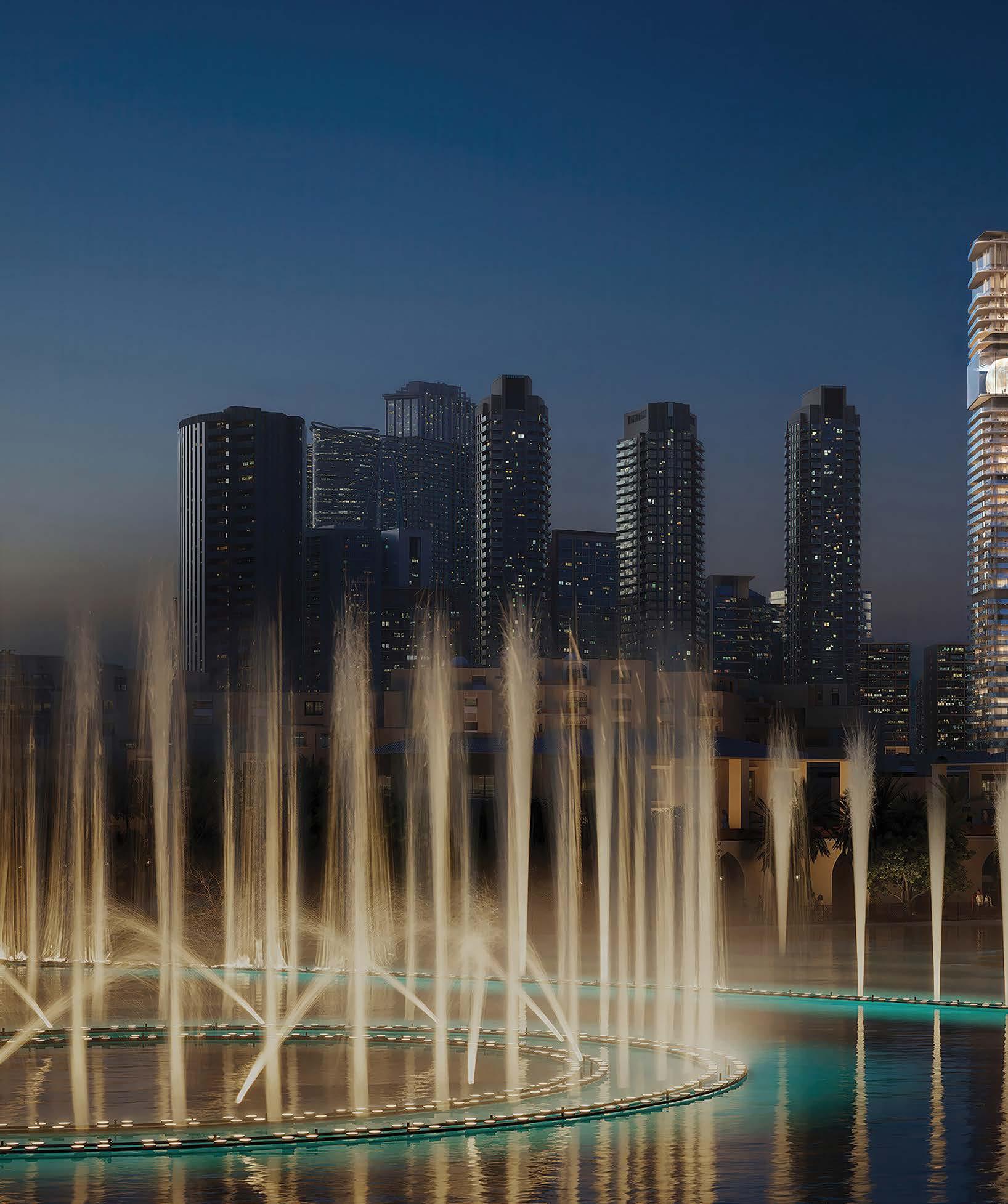
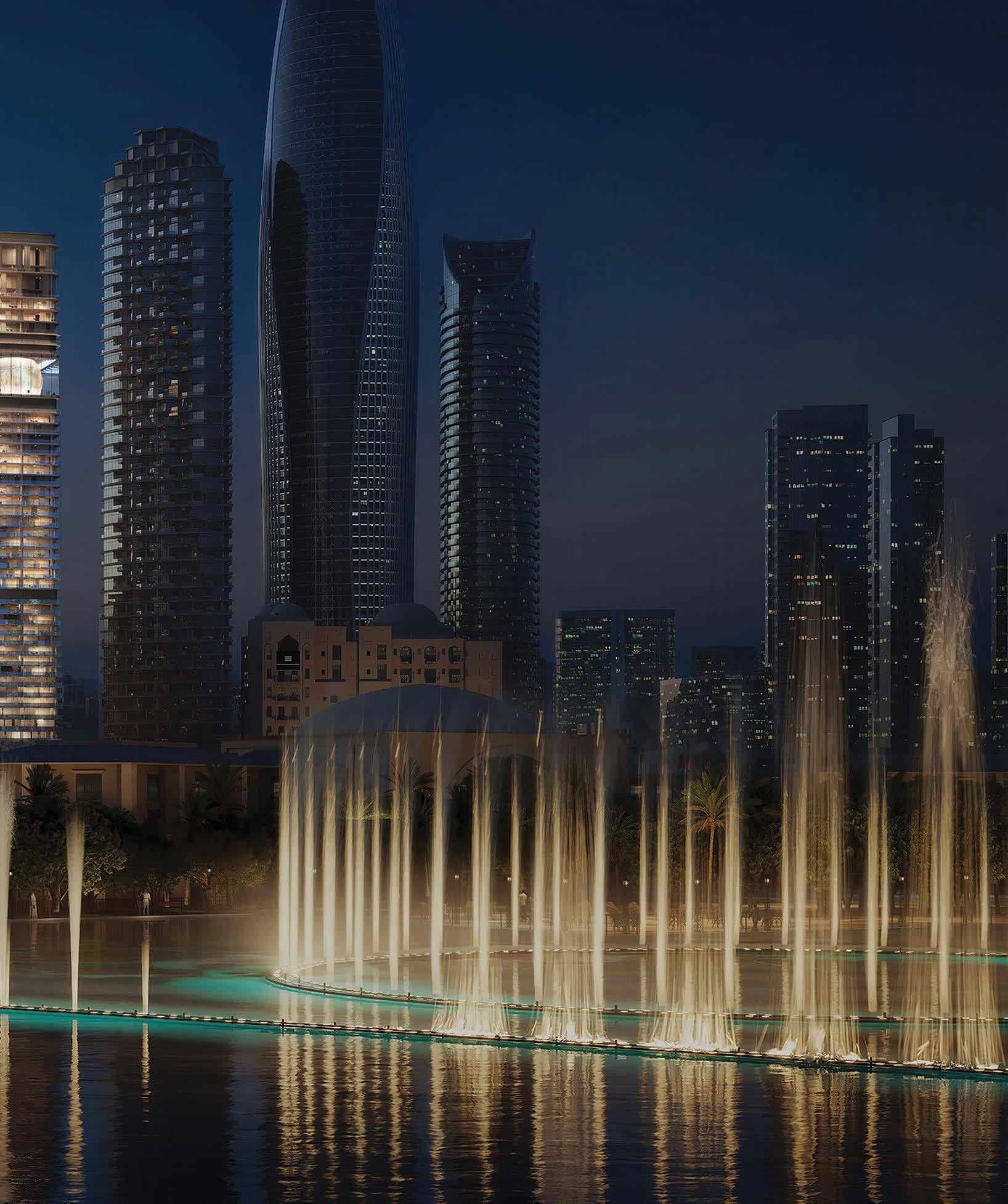
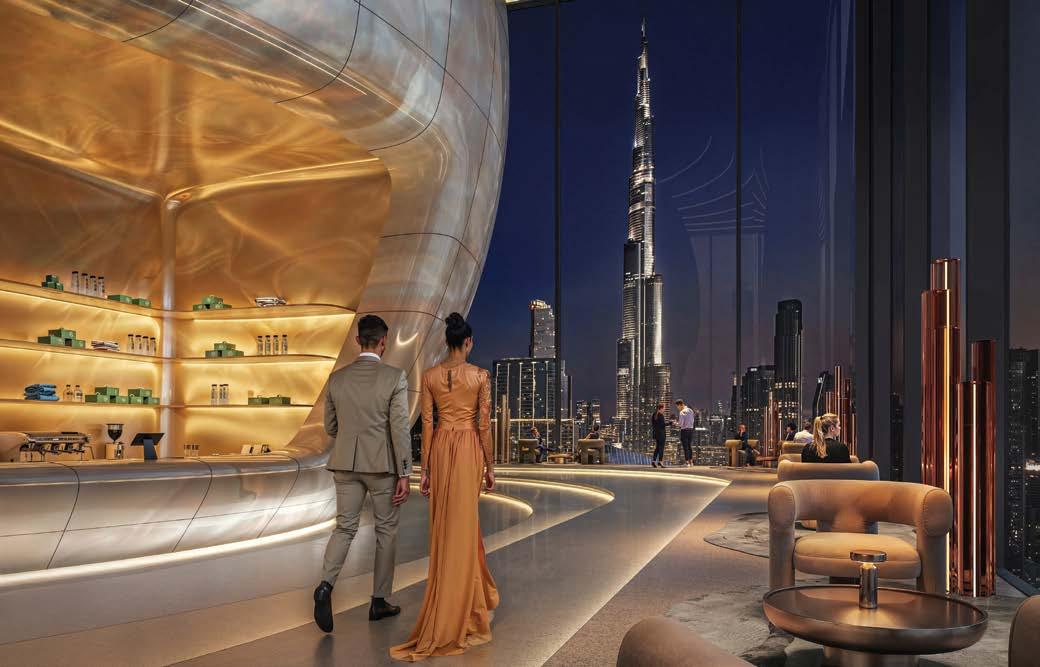
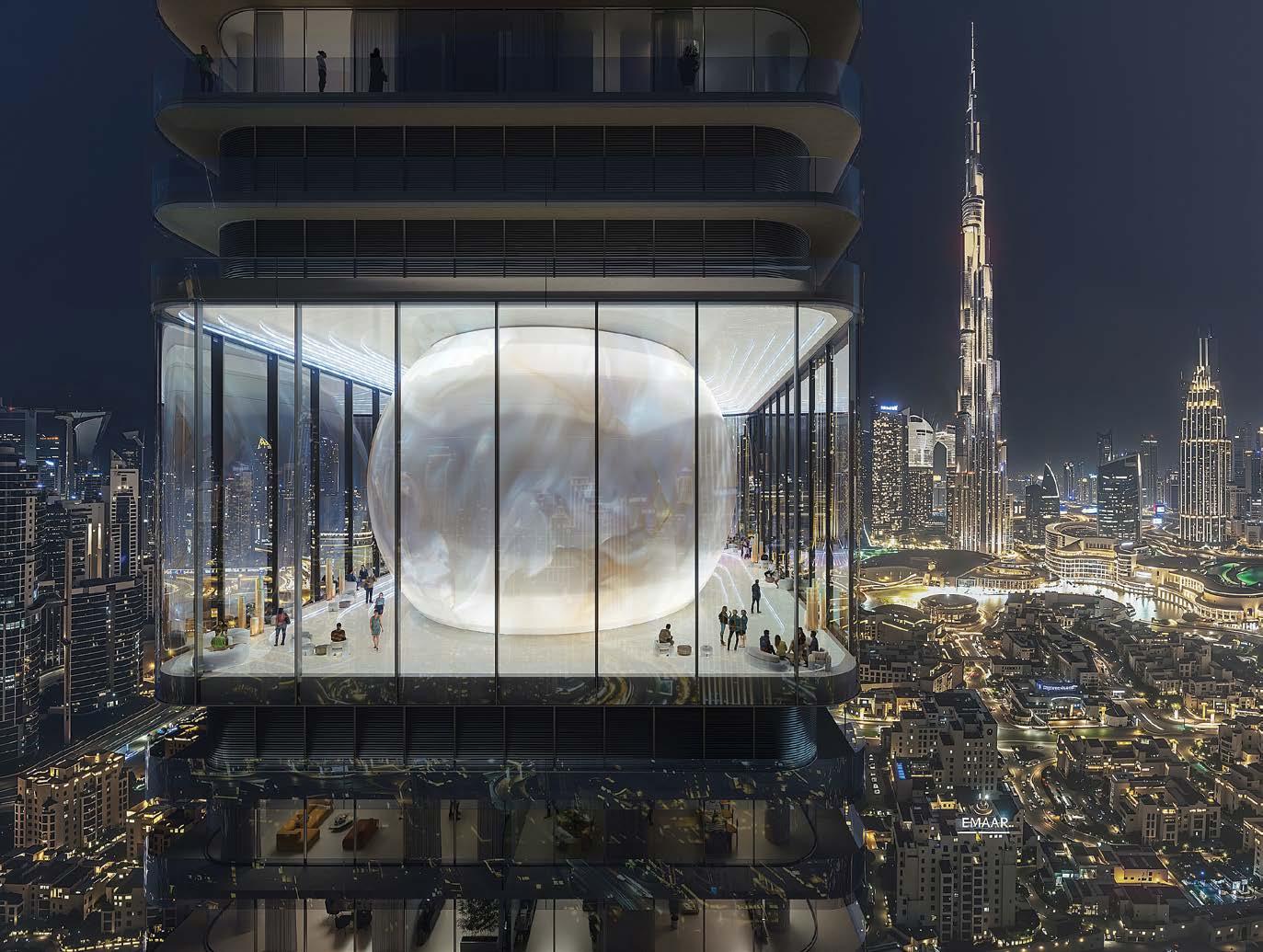
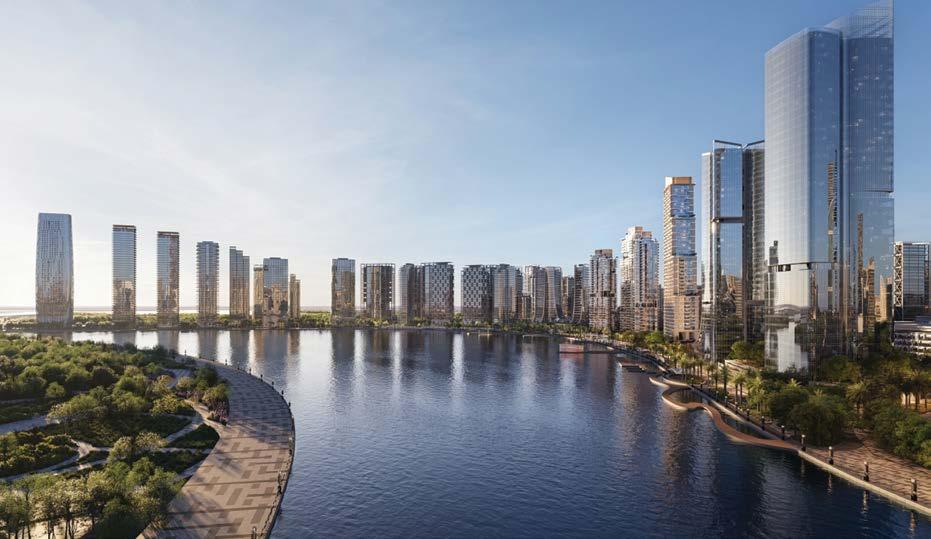
ARADA’S NEW INAURA CONCEPT lands in Downtown Dubai with a bold promise: a fitness-led hotel and branded residences designed around movement, ritual, and everyday performance, not just aesthetics
50 EXPANSION
d3’s Next Canvas
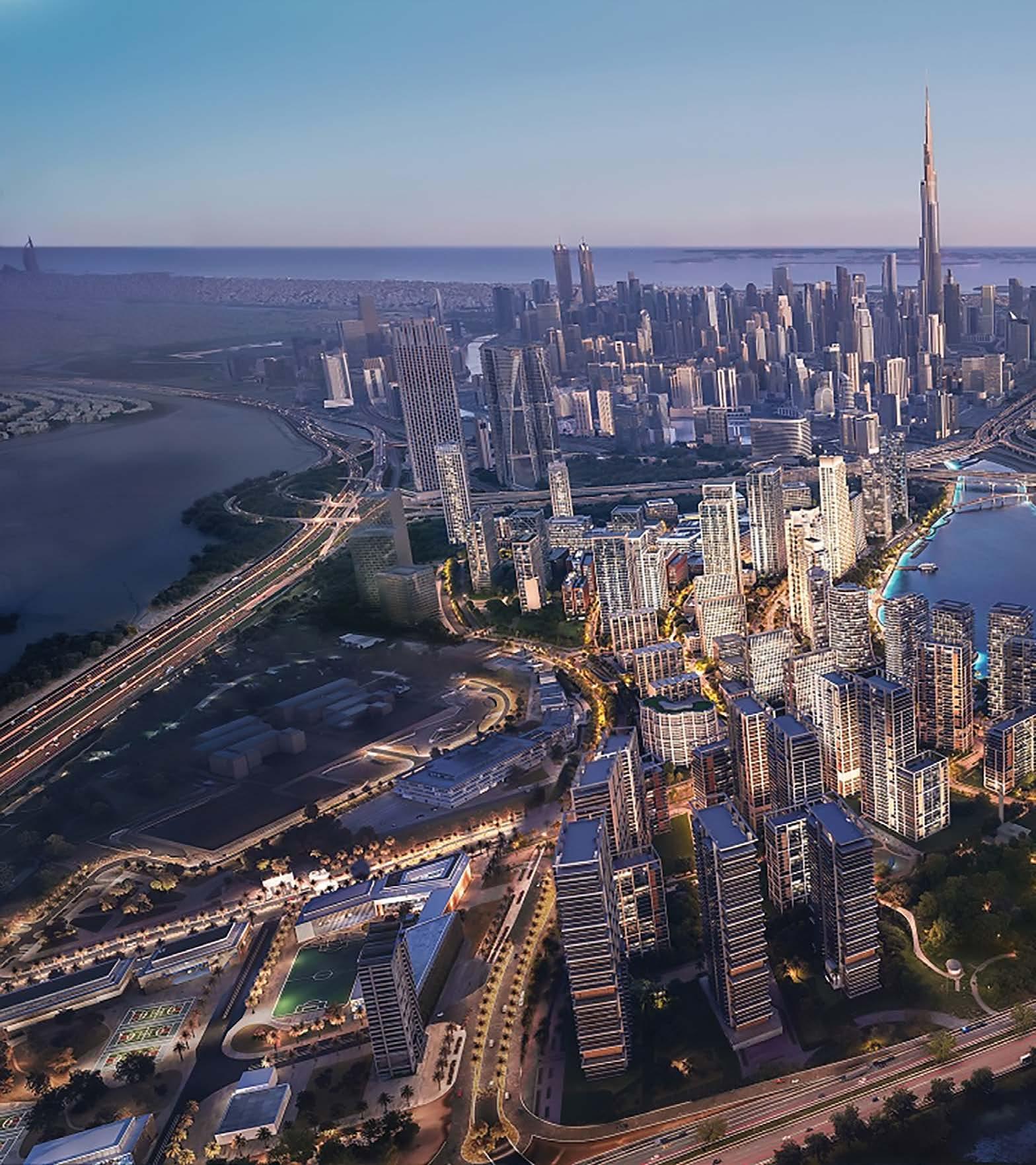
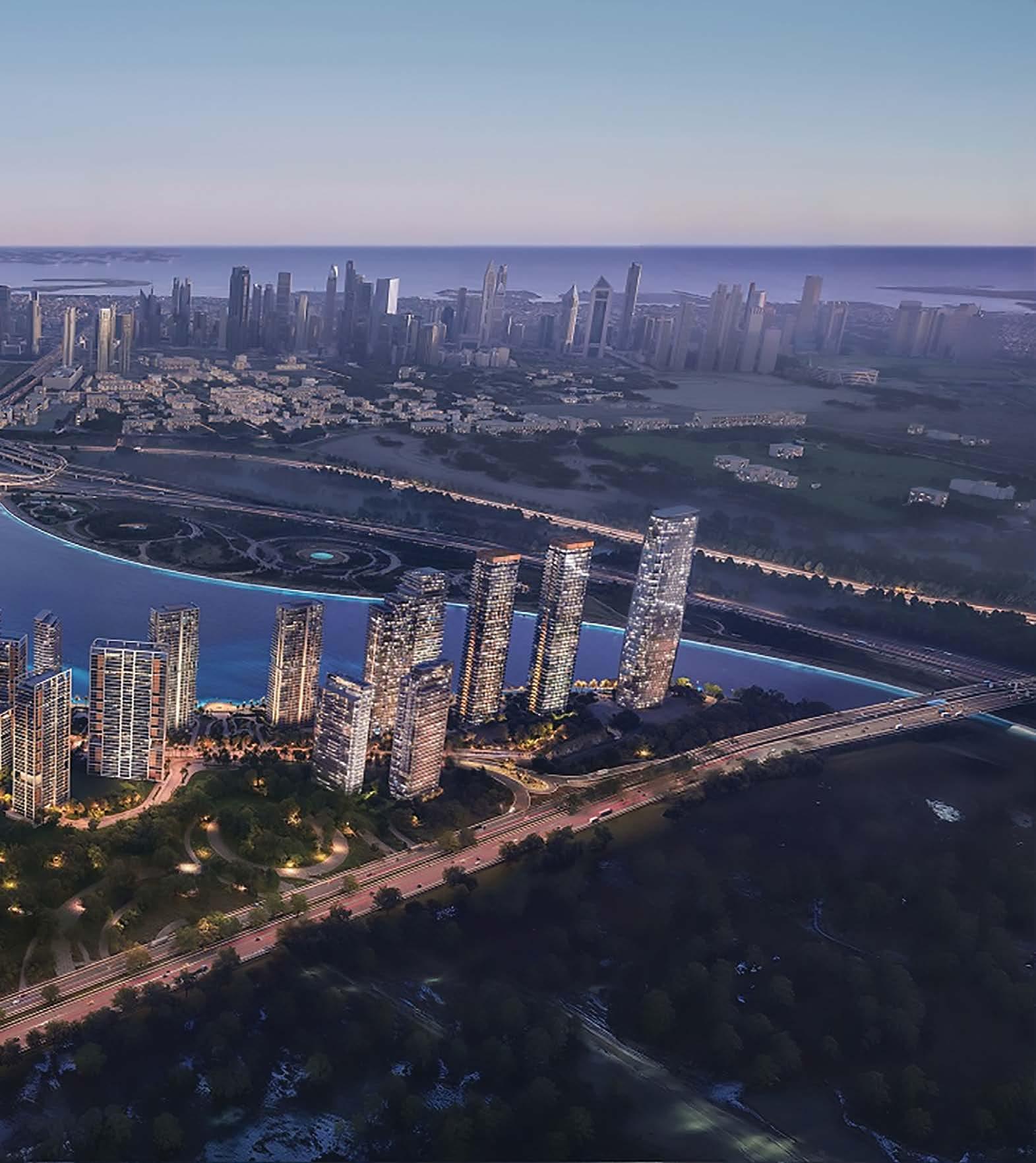
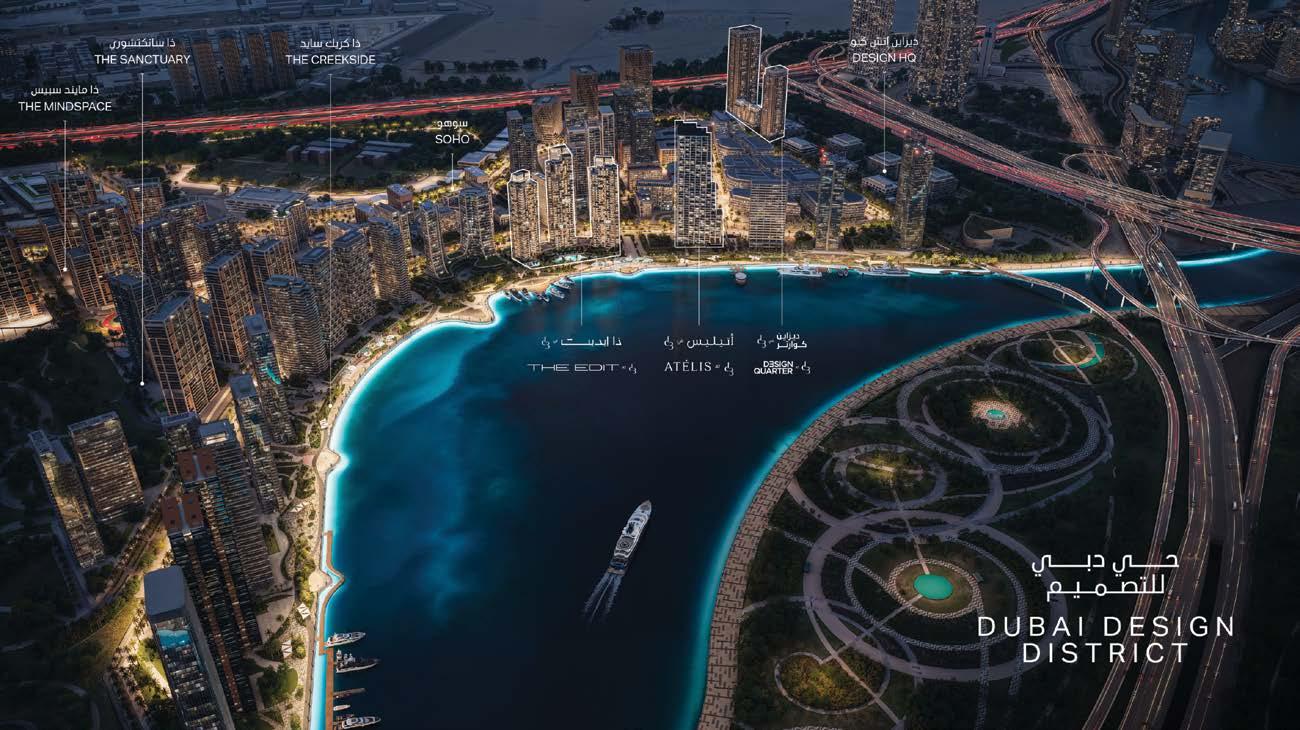
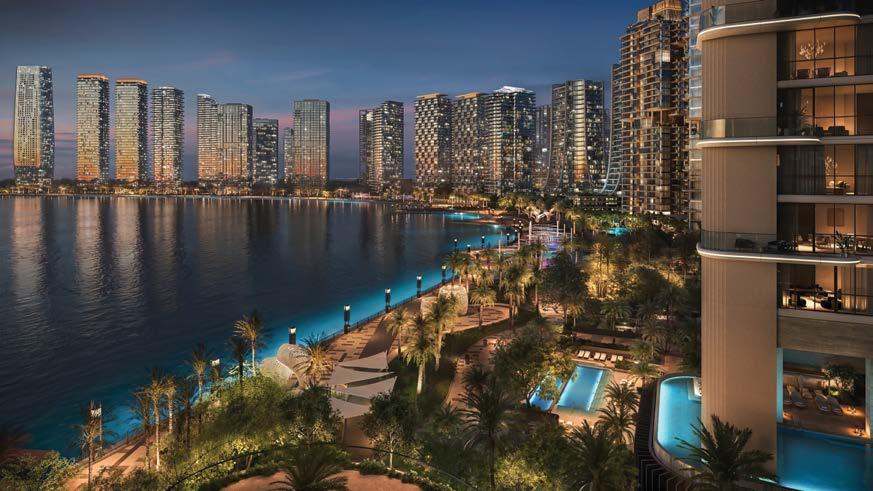
KHALID AL MALIK, CEO of Dubai Holding Real Estate, on turning Dubai Design District into a waterfront neighbourhood that protects creative culture, widens opportunity, and raises the bar on sustainability and liveability
54
FLAVOURS & FLAIR
Parisian Elegance Arrives in Doha
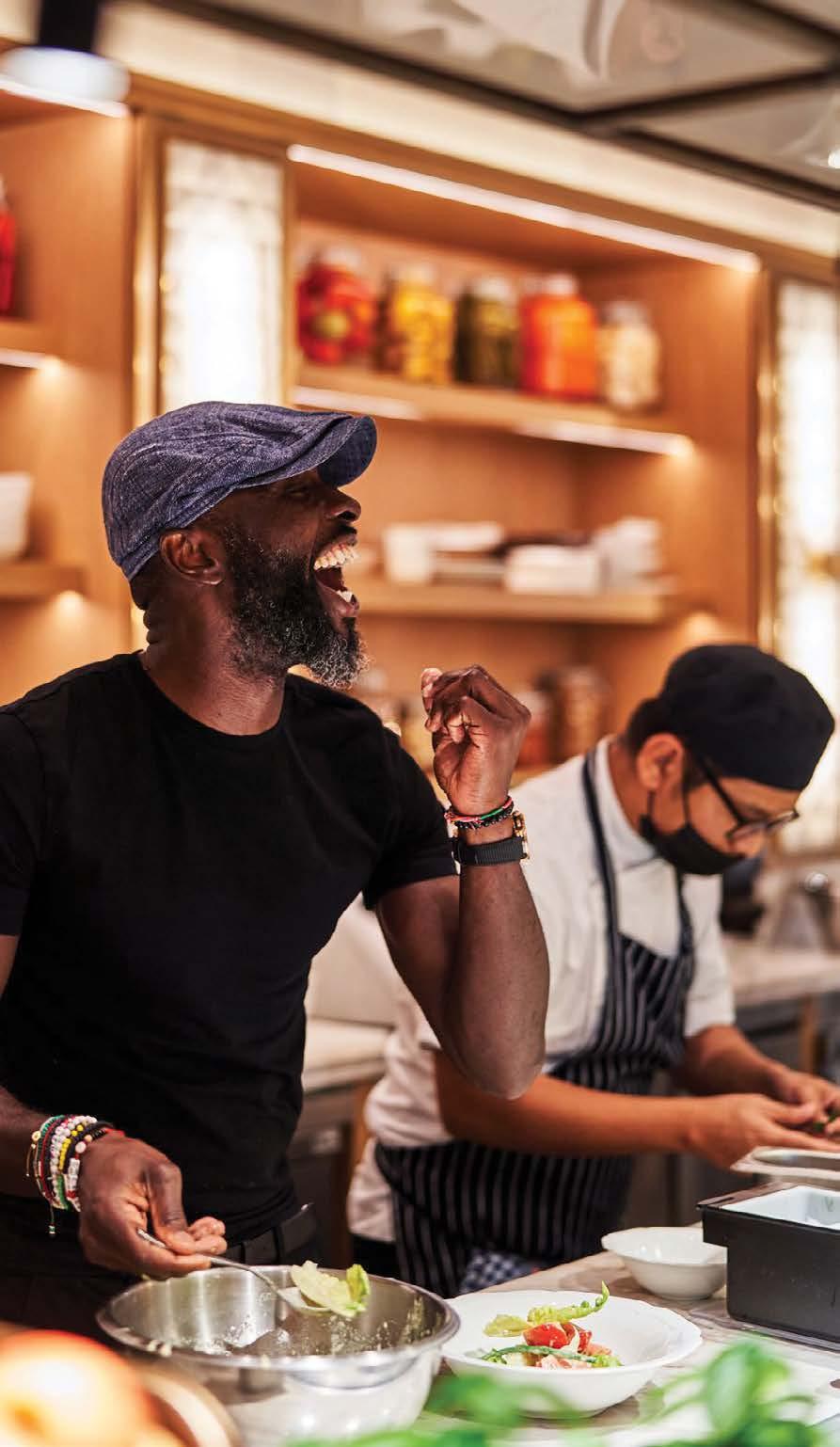
With a passion for hospitality and a flair for international flavours, Chef Izu brings the refined charm of La Maison Ani to Doha. From Parisianinspired design to signature dishes like the Izu Burger, he creates a dining experience that celebrates culture, storytelling, and shared moments in the heart of Qatar’s thriving culinary scene.
56 PROJECT
From Opulence to Oasis
BLINK DESIGN GROUP reimagines the former Caesars Palace Dubai as BANYAN TREE DUBAI — a serene, nature-inspired retreat that replaces bold opulence with calm, refined luxury and a stronger sense of place.
60
PICK OF THE MONTH
Sculpted in Colour
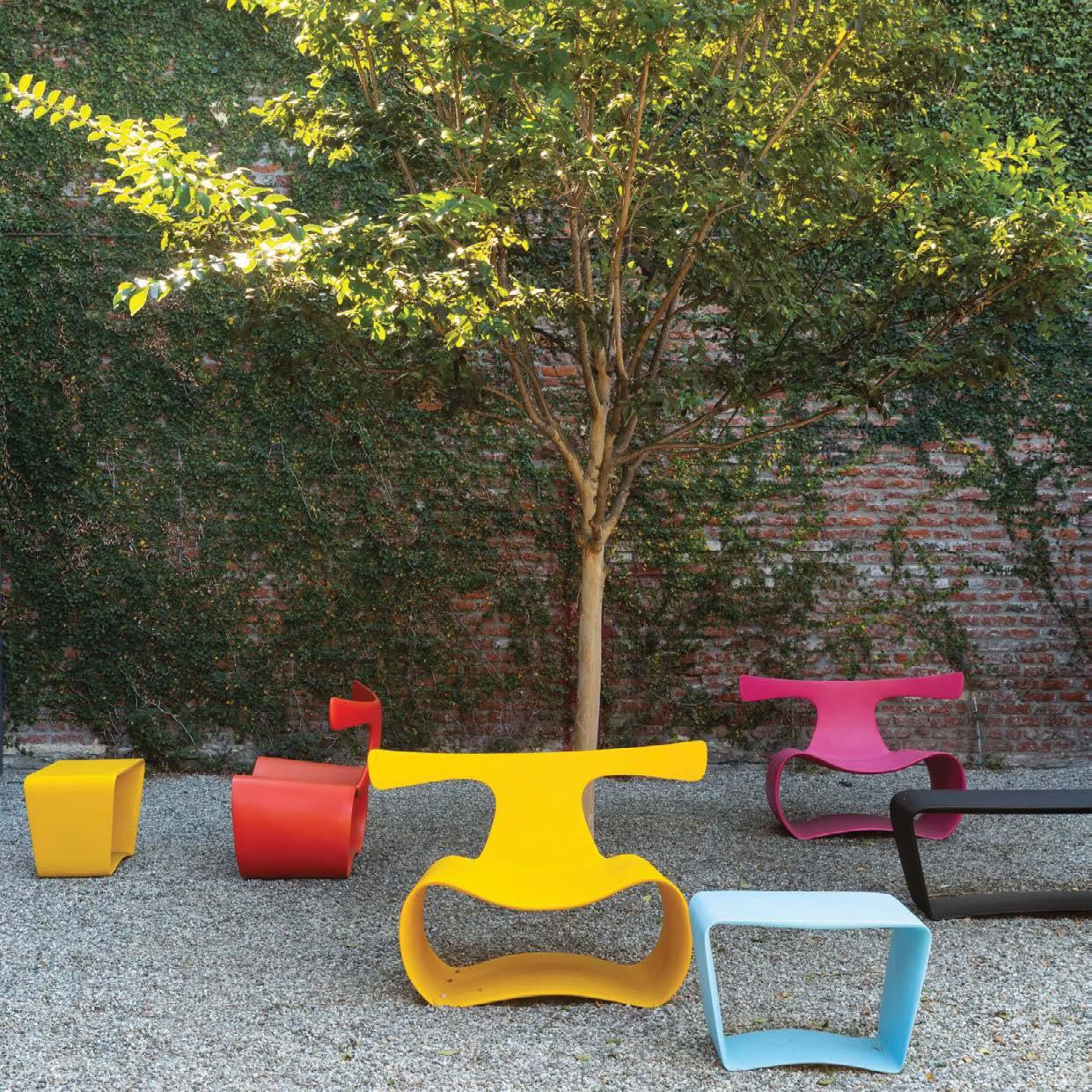
RALPH PUCCI International brings its signature sculptural language outdoors with a collection that blends art, craftsmanship, and durability. Crafted in the brand’s proprietary Plasterglass material, the pieces have the soft, tactile look of plaster while being strong enough for terraces, gardens, and open-air living in suitable climates.
SUITE TREAT
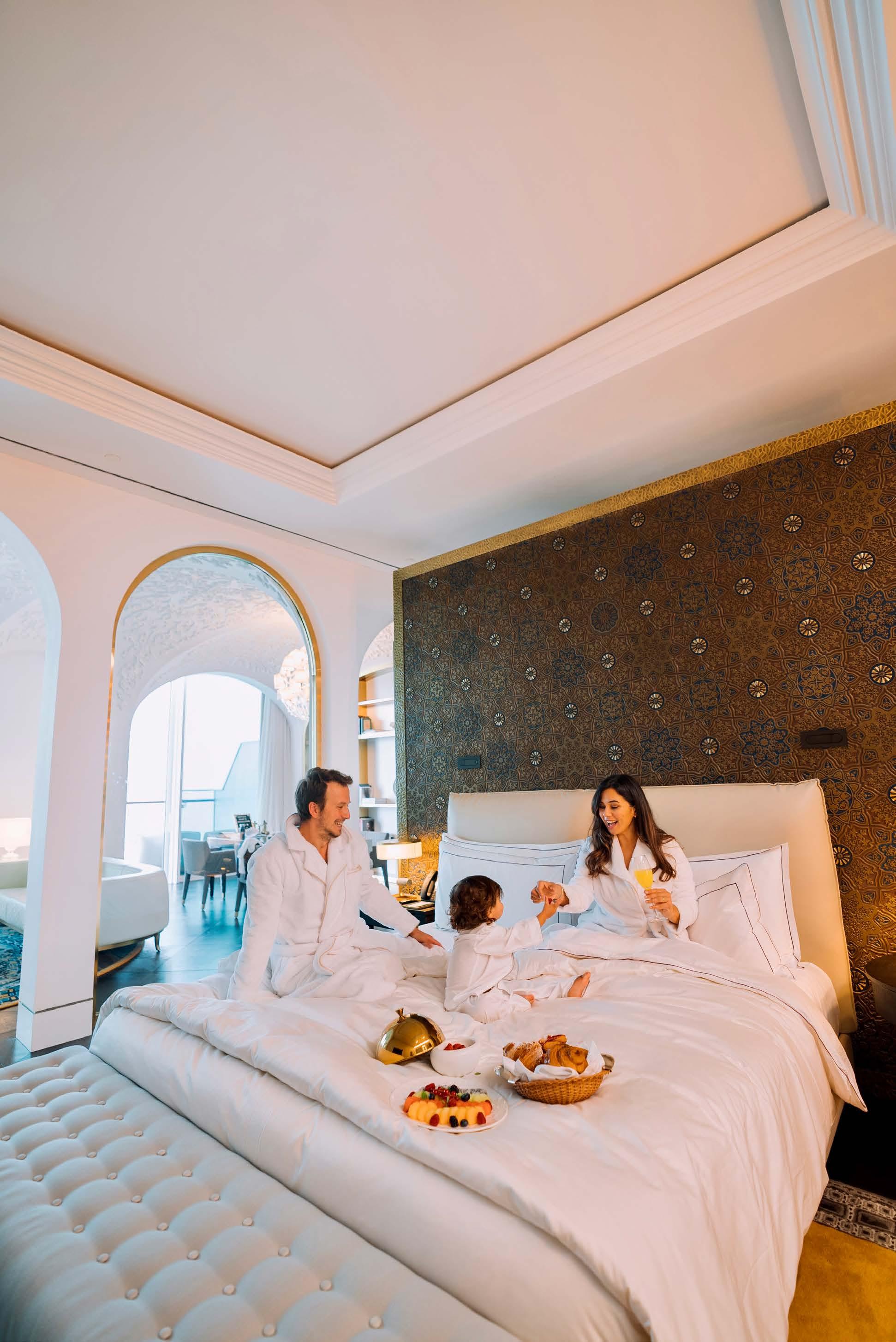
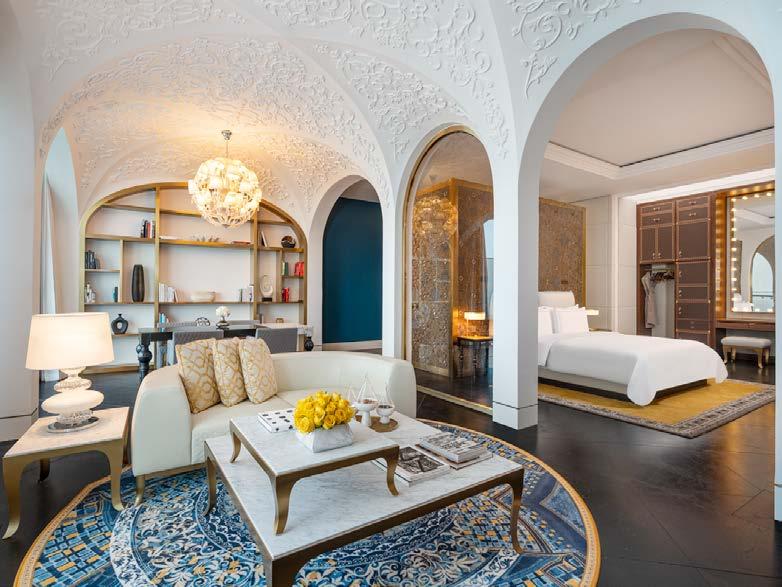
Step into a world of opulence when you book a Suite at Raffles Doha.
Experience the added luxury of QAR 750 credit to spend on dining in the hotel, and QAR 500 towards any Spa treatment.
Children aged 12 and below are welcome to indulge in the enchantment of complimentary dining.
Rates starting from QAR 3,500 per night
For reservations, please call +974 4030 7100 or email reservations.doha@raffles.com
EXTRAORDINARY
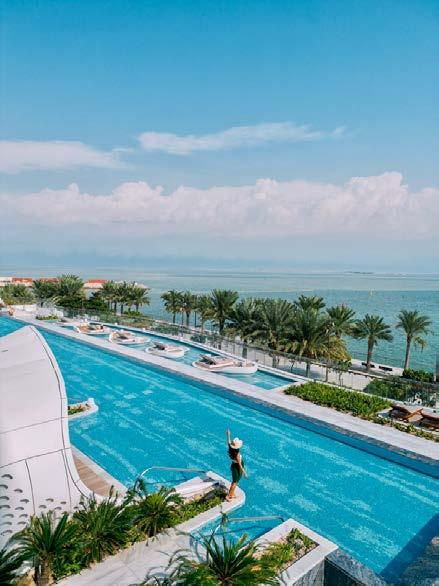
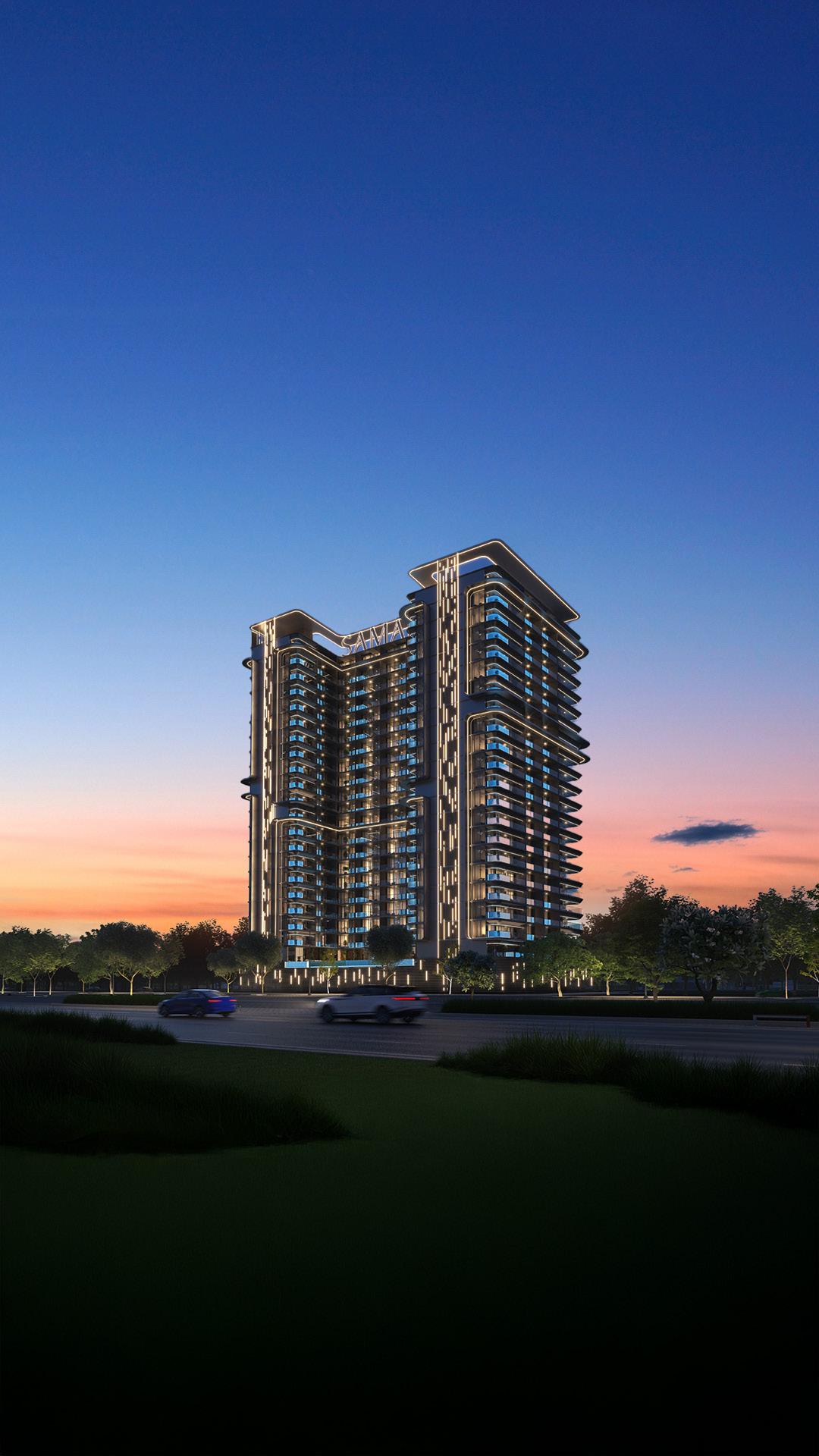
Escape to a home where urban sophistication meets resort tranquility. PRIVATE POOLS | 30+
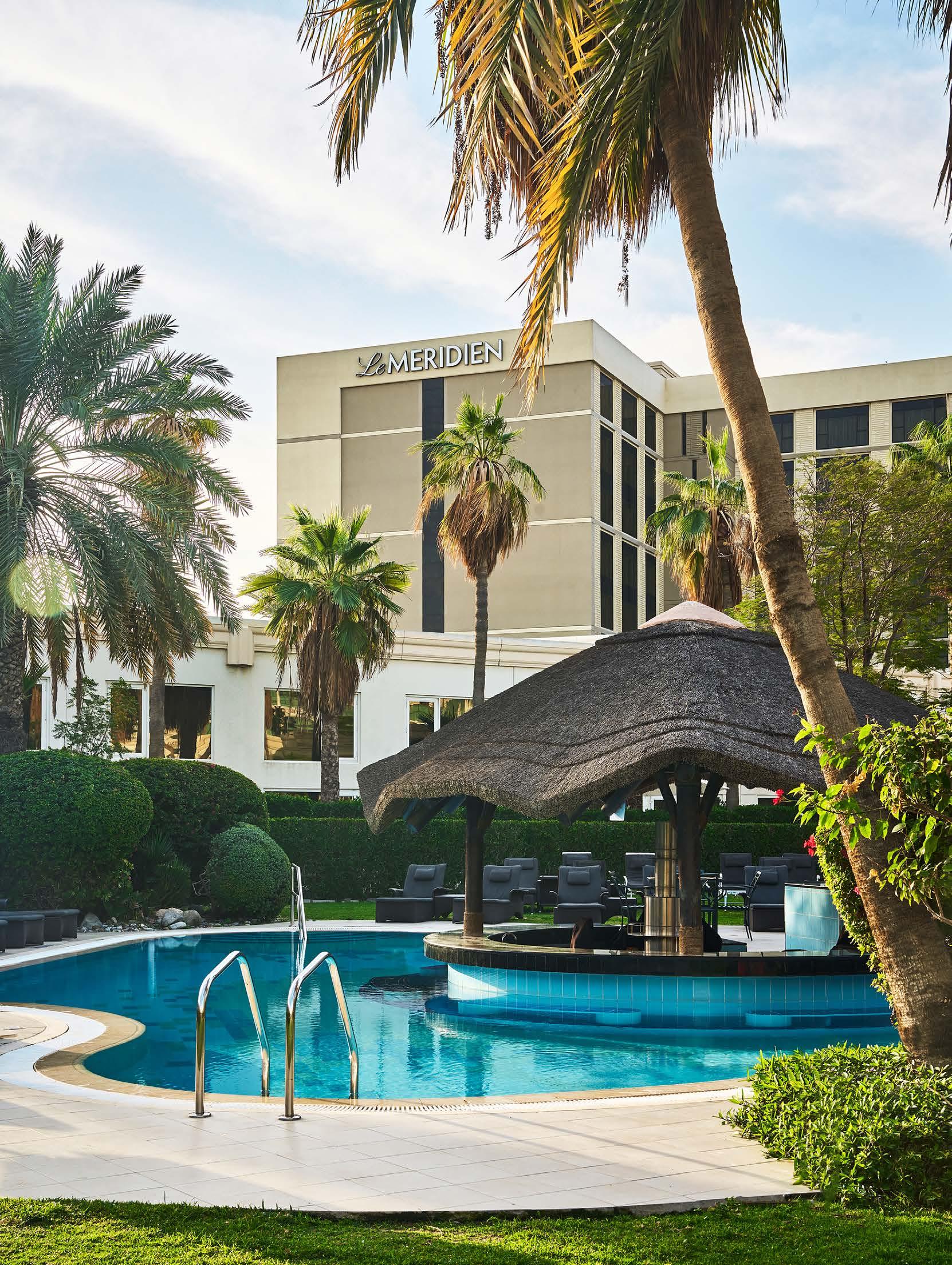
Rediscover Inspiration at Le Méridien Dubai Hotel & Conference Centre
A serene sanctuary at the heart of the city’s dynamic landscape, Le Méridien Dubai Hotel & Conference Centre redefines the art of urban hospitality. Set across 15 acres of immaculately landscaped gardens, the hotel o ers an elegant retreat just moments from Dubai International Airport, placing guests within e ortless reach of the city’s most iconic districts, from Dubai Mall and Burj Khalifa to the storied charm of the Gold Souk and Dubai Creek.
With 580 beautifully appointed rooms and suites, the property invites travellers into a world where contemporary design meets the timeless sophistication of the Le Méridien brand. The distinguished 196 rooms in the Le Royal Club wing elevate the experience with spacious, light-filled rooms, and refined club privileges, while select ground-floor accommodations in the main building open directly onto lush gardens and tranquil pools, o ering a resort-like ambience rarely found in the city.
Well-being is woven into the hotel’s DNA. Guests may indulge in five swimming pools, unwind in serene outdoor enclaves, or train at one of Dubai’s most expansive and advanced fitness facilities, sta ed by expert coaches and equipped with cutting-edge technology to nourish mind, body, and spirit.
At the heart of the property lies an extraordinary culinary journey. Housing 18 acclaimed restaurants and bars, Le Méridien Dubai is home to some of the city’s most storied dining institutions. From the ever-legendary Seafood Market, celebrated for its market-style freshness, to Casa Mia, Dubai’s pioneering Italian restaurant, each venue reflects a passion for authenticity, craftsmanship, and memorable dining artistry.
A beacon for global meetings and events, the hotel features more than 44,000 sq. ft. of versatile event spaces, comprising 24 impeccably designed venues outfitted with modern audiovisual capabilities. Whether orchestrating a grand celebration for 1,750 guests, hosting an international exhibition, or curating an intimate executive gathering, the hotel’s specialist events team and award-winning culinary experts bring each vision to life with impeccable precision and creative flair.
From inspired dining to world-class event facilities, and from resort-style relaxation to unmatched convenience, Le Méridien Dubai Hotel & Conference Centre stands as a destination where cosmopolitan energy and cultivated luxury converge, inviting every guest to unlock a stay that is truly memorable.
“In
moments of uncertainty, resilience becomes our greatest design tool — shaping not only stronger cities, but stronger spirits.”
The current situation places a renewed spotlight on resilience— not only of the human spirit, but of the environments we inhabit. In challenging times, both people and buildings are tested, and it is thoughtful, future-focussed design that enables them to adapt and endure. Resilient beginnings often lead to the most meaningful transformations.
Our cover story reflects this ethos through the appointment of Paolo Testolini as Global Director of Urban Design and Masterplanning at ERA-co. Bringing over 25 years of international experience, Paolo has quietly shaped major urban projects across diverse geographies, always with a focus on sustainability, placemaking, and long-term social value. His approach is rooted in evidence-based methodologies, but equally in listening — to context, to communities, and to the layered narratives that define a place.
At ERA-co, and as part of the wider 7C network alongside Woods Bagot, Customs Bureau, and Impact Futures, Paolo’s leadership signals a continued commitment to collaborative urban thinking. His work does not seek spectacle, but substance — cities designed not only for today’s demands, but for future generations.
Across this edition, we explore stories that demonstrate how design remains steady, responsive, and purposeful — rising to meet change with clarity.
Our Pick of the Month features a vibrant range of outdoor collection from RALPH PUCCI. Crafted to withstand the elements while preserving a soft, hand-finished plaster aesthetic, the collection adds colour, texture, and sculptural elegance to terraces and gardens with refined, design-led appeal.
Roma Arora Editor
roma@bncpublishing.net @romaarora_
CEO WISSAM YOUNANE wissam@bncpublishing.net
MANAGING DIRECTOR RABIH NAJM rabih@bncpublishing.net
GROUP PUBLISHING DIRECTOR JOAQUIM D’COSTA jo@bncpublishing.net +971 50 440 2706
COMMERCIAL DIRECTOR ANDREA MOCAY andrea@bncpublishing.net
DIGITAL REPORTER REEBA ASGHAR reeba@bncpublishing.net
DIGITAL MEDIA PRODUCER EDUARDO BUENAGUA Eduardo@bncpublishing.net
SUBSCRIBE subscriptions@bncpublishing.net
PO Box 502511 Dubai, United Arab Emirates T +971 4 420 0506 | F +971 4 420 0196
For all commercial enquiries related to Design Middle East, contact our Group Publishing Director JOAQUIM D’COSTA jo@bncpublishing.net | T +971 504402706
Design Middle East is exclusively licensed to BNC Publishing. No part of this magazine may be reproduced or transmitted in any form or by any means without written permission of the publisher. Images used in Design Middle East are credited when necessary. Attributed use of copyrighted images with permission.
Printed by UPP
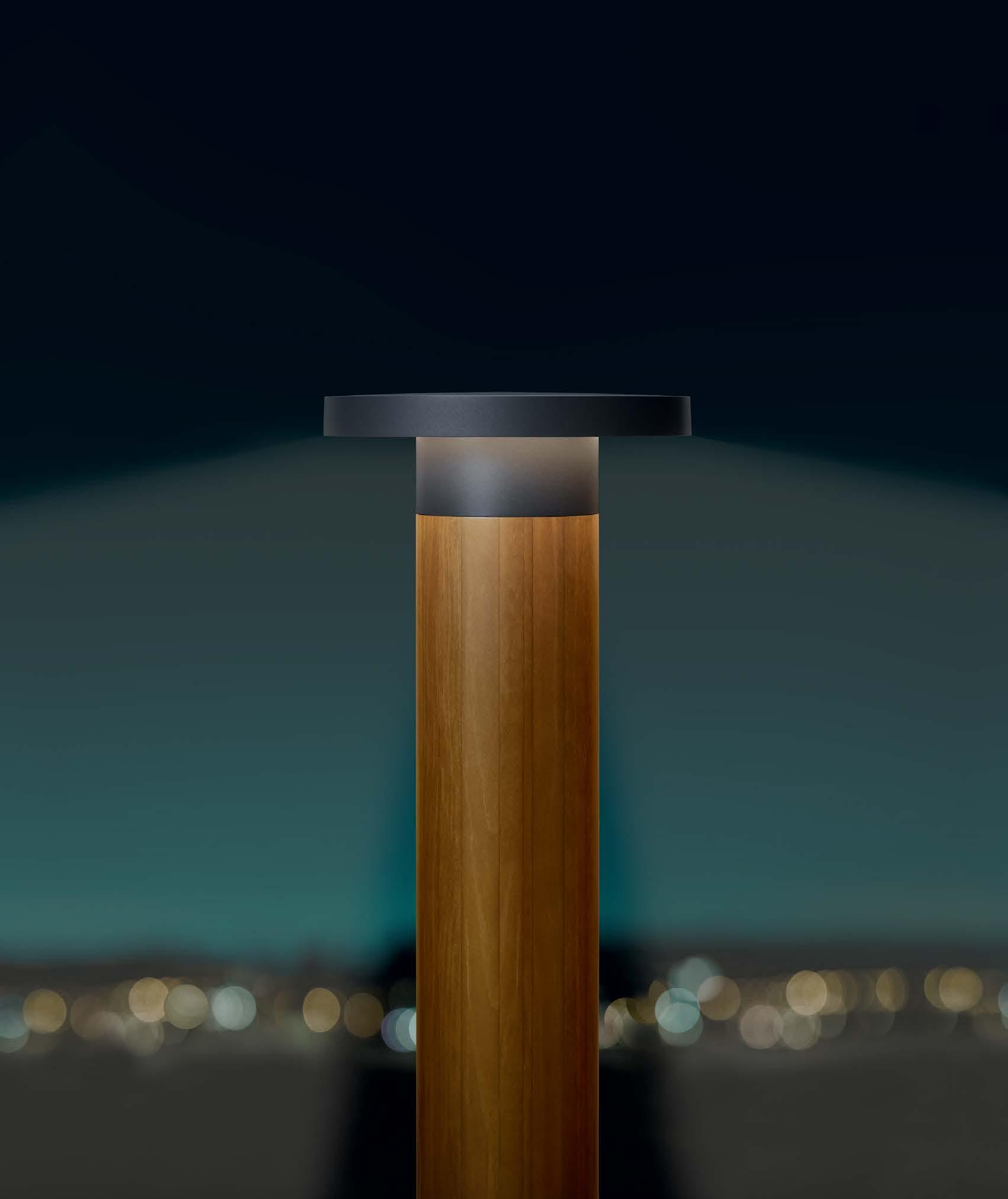
Lights the way, not the sky
The Dark Sky luminaire head for the modular system bollard luminaires protects the night sky and nocturnal wildlife. Optionally available with BEGA BugSaver® technology to switch the colour temperature to an amber tone. Bollard tubes optionally available in sustainable Accoya® wood. bega.com/systembollards
Chattels & More Celebrates the Spirit of Ramadan with “Around Each Other”
Chattels & More shines a spotlight on the warmth of the season with “Around Each Other,” a thoughtfully curated campaign celebrating deeper connection. Reflecting the spirit of the Holy Month, the concept celebrates the home as a space where families and friends gather, reconnect, and create meaningful moments together.
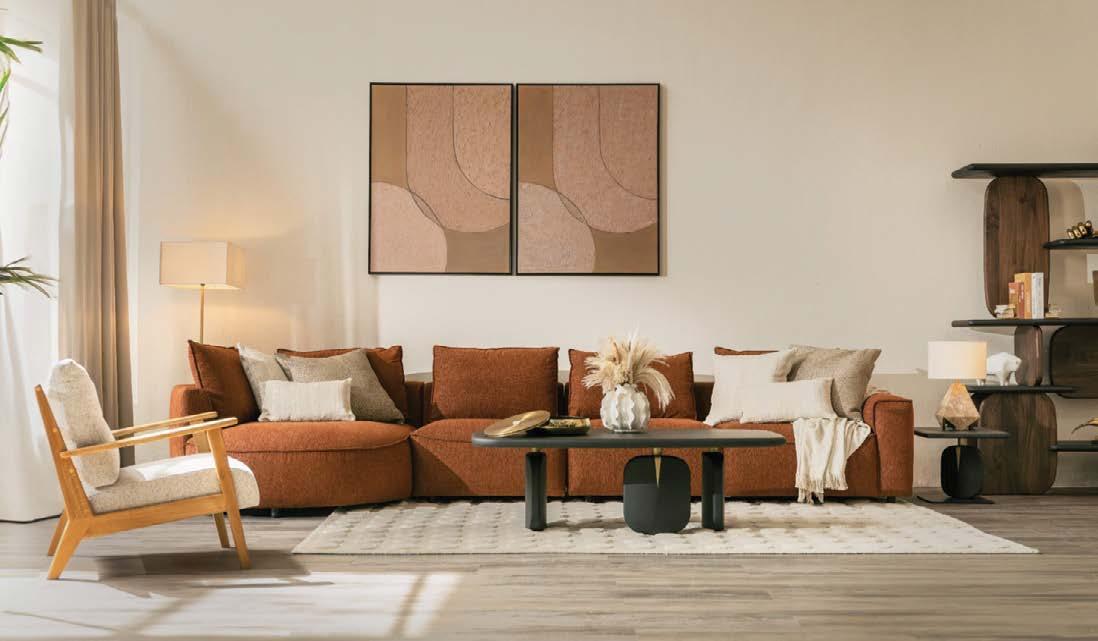
With curved design emerging as a defining global interior trend for 2026, the campaign champions soft silhouettes and rounded forms, shaping spaces that feel natural, welcoming, and inclusive. “Around Each Other” demonstrates how considered forms influence how people experience and interact within their homes.
At the heart of the campaign are new additions to the Eclipse collection, a refined range characterized by soft structured forms and carefully balanced material contrasts. Embracing rounded edges, calm silhouettes, and harmonious proportions, the collection brings
warmth and ease to shared spaces.
Each piece within the Eclipse collection is precisely crafted, with thoughtful detailing and lasting construction. The collection includes a dining table, console, coffee table, side table, and bookshelf, each
resistant finish. The interplay of tones and textures creates a sophisticated yet understated aesthetic. The rounded forms encourage gathering, enhancing the sense of togetherness that defines the season.
Complementing the collection is
depth and character. Through “Around Each Other,” Chattels & More brings together meaningful design and seasonal intention, offering pieces that not only elevate interiors but also celebrate the shared experiences that make a house feel like home.
designed to support Ramadan hosting while transitioning seamlessly into elevated everyday living.
Key design features include muted dull gold metal brackets that add subtle character and contrast against black stained wood with an anti-
the Samone Sofa, designed for extended lounge seating and contemporary comfort. Designed with an extended chaise configuration, it offers ample seating for hosting or relaxation. Upholstered in a warm rust hue, the sofa anchors contemporary living spaces with
The campaign champions soft silhouettes and rounded forms
Havelock One Brings SOCO to Life at City Centre Mirdif
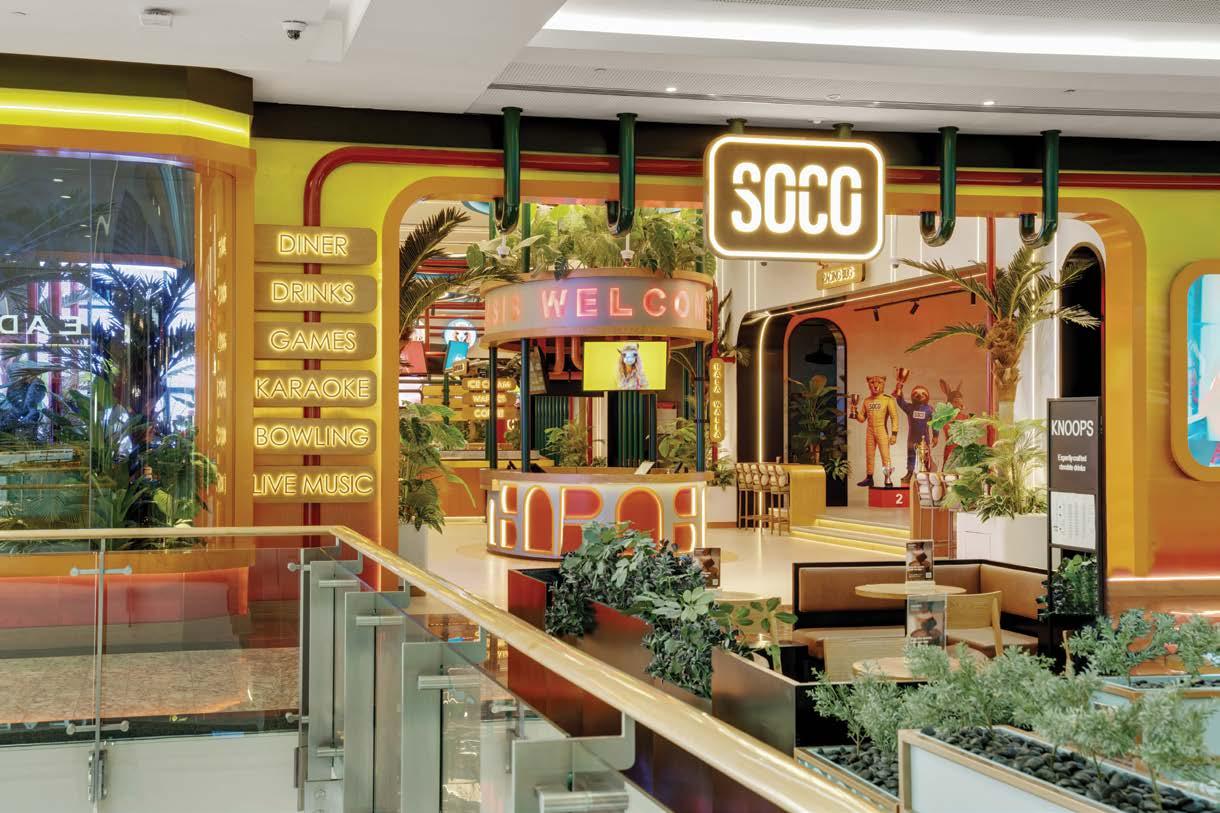
Havelock One completed the full fit-out of SOCO, the newest family entertainment destination by Majid Al Futtaim Entertainment, now open at City Centre Mirdif in Dubai. Spanning 2,677 sqm (23,000 sq. ft.), the ‘social jungle’ concept brings together gaming, bowling, dining, and immersive themed zones under one vibrant roof, setting a new benchmark for Social Entertainment in the region.
Designed by Prospect Design International and executed by Havelock One, the project involved base-build modifications and a complete interior fit-out. The result is a high-energy, colour-driven environment crafted for friends and families, aligning with Majid Al Futtaim’s vision for next-generation entertainment experiences across their venues.
“SOCO challenged us to deliver multiple high energy zones with significant technical
complexity,” said Vaisakh Hariharan, Projects Manager at Havelock One. “The outcome reflects our commitment to meeting client expectations across every stage of delivery.”
The scope included the execution of gaming zones, bowling alleys, F&B areas and themed interiors. Havelock One worked closely with Majid Al Futtaim Entertainment throughout the process, ensuring alignment with mall operational guidelines, health and safety standards, and the client’s expectations for durability, innovation, and high footfall performance.
“We’re proud to have partnered with Majid Al Futtaim Entertainment on this new family entertainment centre concept,” said Adrian Sellar, Division Director UAE at Havelock One.
“Their trust and collaboration, along with the creative direction from Prospect Design International, enabled us to bring this passiondriven, high impact project to life.
Havelock One worked closely with Majid Al Futtaim Entertainment throughout the process
Miki Ferrari Brings Italian Craftsmanship And Design to the UAE
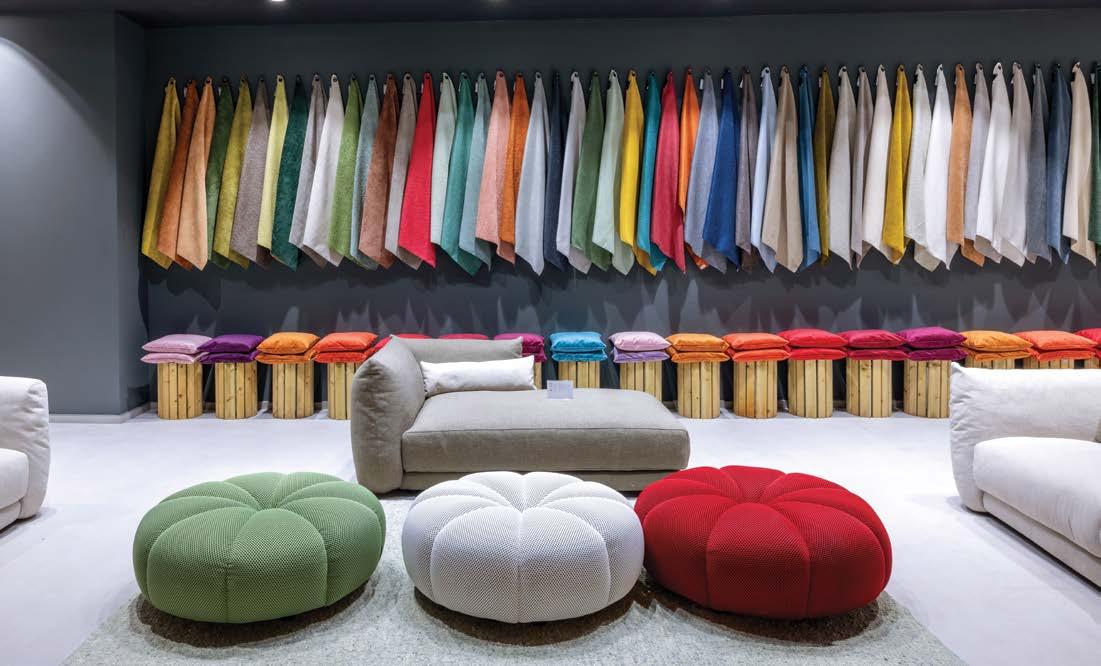
Miki Ferrari – Italian Lifestyle has entered the Middle East market with the opening of its first regional showroom. The impressive 600 sqm store, located within the new Kreate My Space furniture centre, showcases the brand’s contemporary Italian furniture in a warm and welcoming space reflective of its
innovative approach to design and craftsmanship.
Miki Ferrari presents a sophisticated vision of Made in Italy, blending contemporary aesthetics with comfort and the ultimate in artistry. Founded in 2016 by Italian architect and designer Michaela (Miki) Ferrari, the brand creates limited, exclusive furniture collections focusing on sofas and statement armchairs. All pieces are designed and crafted in Parma – a region renowned for its rich design heritage – using premium
materials, meticulous attention to detail, and a commitment to timeless elegance.
Miki was inspired to build her own design house, one that fully reflects her vision and passion for modern Italian living. “For me, designing furniture is in my blood, and with Miki Ferrari –Italian Lifestyle, I can express my personal design philosophy and create pieces that balance beauty with functionality. Coming from a family of craftsmen, I appreciate designs that are visually
captivating, enduring in form, stylish, and most importantly, that add warmth and bring character to our everyday living spaces.”
“I am proud to bring Miki Ferrari to the UAE and to share our approach with a new and hugely savvy audience here,” she commented on the launch. “The UAE has quickly become a major design hub in the Middle East, and there is huge appreciation for interior quality and details. It is an exciting time to become part of the vibrant creative scene and contribute to a market that truly values innovation in design.”
The Miki Ferrari showroom brings a novel Italian design language to the region. It features a curated selection of upholstered furniture from brand signatures to the latest innovations. Highlights include the Ambrè sofa, a natural and harmonious piece that envelops you in relaxation, the Cassandra seating collection with softcore elements and adaptive armrests and backrests that invite the body and mind to rest, and the Altea armchair – elegant, discreet, and exceptionally comfortable.
Miki Ferrari presents a sophisticated vision of Made in Italy
MOMA International Launches SkyTellers Collection
MOMA International, the multidisciplinary architecture and design studio renowned for creating emotionally resonant spaces, announces the public release of its
acclaimed SkyTellers furniture collection. For the first time, a series previously reserved for bespoke commissions and private clients will be available to a wider global audience of design enthusiasts, collectors, and industry professionals.
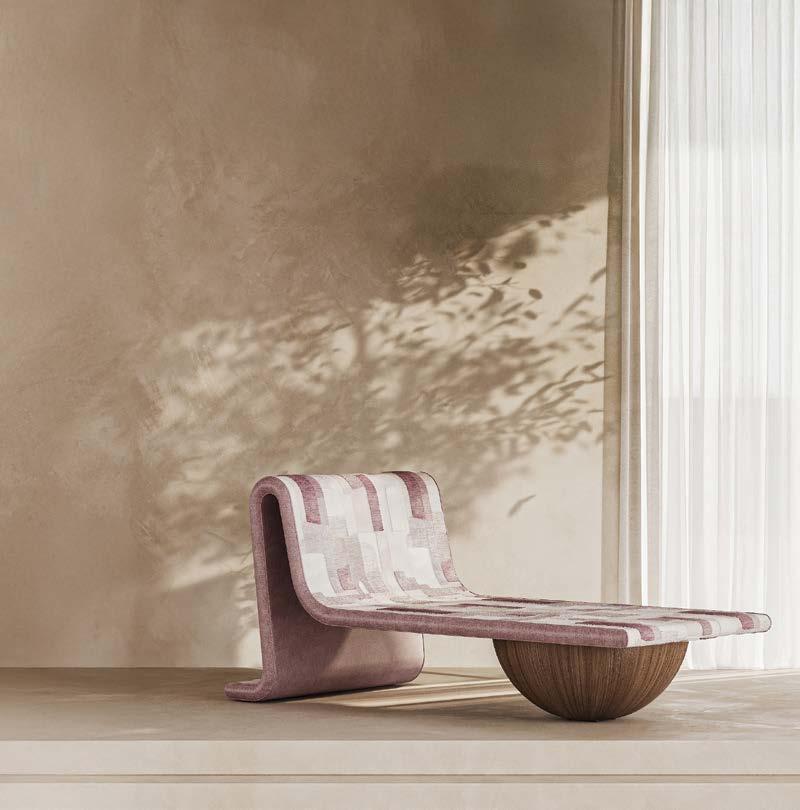
Originally unveiled by MAUVE by MOMA as an immersive installation at Dubai Design Week, SkyTellers drew attention for its sculptural presence and celestial narrative. Rooted in cosmic geometry and storytelling, the collection explores the relationship between light, volume, and balance, transforming furniture into expressive design statements rather than purely functional objects. Conceived for hospitality environments and refined luxury residences, each piece reflects a deliberate balance between form, emotion, and use.
Alongside the public release of SkyTellers, MAUVE by MOMA is also introducing its MAUVE Classics collection, an ongoing series of bespoke and timeless furniture designs that reflect the studio’s foundational design language. Developed through years of private commissions, MAUVE Classics offers clients access to enduring silhouettes, refined material palettes, and architecturally grounded pieces that prioritize longevity and versatility. Together, SkyTellers and MAUVE Classics present a complete design offering, bridging expressive collectible design with understated, classic forms.
Commenting on the public launch, Monica Merhebi and Maha Albwardy, Co-Founders of MOMA Design, said: “SkyTellers was born from our belief that design should communicate emotion
and meaning while still serving a function. Opening this collection to the public allows us to extend that dialogue beyond private commissions. With MAUVE Classics, we are equally proud to offer a more timeless expression of our work, one rooted in bespoke craftsmanship and enduring design values.”
MAUVE by MOMA operates its production facility in Jebel Ali, Dubai, sourcing select materials globally from Italy, France, Greece, and India. This blend of local craftsmanship and international materiality supports the studio’s evolving design language, bridging architecture, furniture, and lifestyle collections. Each piece is thoughtfully designed to elevate everyday living while remaining grounded in architectural integrity.
The public availability of both SkyTellers and MAUVE Classics marks a strategic evolution of MOMA Design’s creative practice, translating its architectural vision into curated, collectible, and classic furniture pieces for contemporary living.
SkyTellers drew attention for its sculptural presence and celestial narrative
NKEY Architects Relocates Global Headquarters to Dubai
NKEY Architects, an international full-cycle architecture and design company behind more than 500 residential and commercial projects across over 45 countries, has announced the relocation of its global headquarters to Dubai, marking a significant milestone in the firm’s next phase of growth. The move reflects the company’s expanding footprint across international markets and reinforces the UAE’s role as a strategic hub for global design, development, and innovation, at a time when the global architecture services market is projected to exceed $605 billion by 2033.
Founded in 2018, NKEY Architects provides architecture, interior design, and turnkey solutions across residential and commercial sectors. The company operates from offices in Dubai, the United States, Canada, and
Ukraine, with projects spanning more than 45 countries.
The decision to establish Dubai as the company’s global headquarters follows sustained growth in the Middle East, which now accounts for approximately 80% of NKEY’s active client portfolio. Since 2022, the company has strategically shifted its development focus toward international markets, beginning with the UAE, Saudi Arabia, Qatar, and Oman, before expanding into the United States with projects delivered in Beverly Hills and Miami. This accelerated geographic growth, combined with more than 500 active projects globally, including over 300 in the UAE, underscored the need for a centralized headquarters capable of managing an increasingly complex, cross-border portfolio.
The firm’s portfolio is centered on premium and ultraluxury residential projects, large residential communities, and apartments, alongside select commercial developments across retail, hospitality, business centres, and mixed-use concepts. One of NKEY’s most ambitious current projects is the development of a large-scale shopping mall in Marrakech, Morocco, conceived as a landmark retail destination and involving parallel work across architecture, interiors, branding, and marketing strategy.
NKEY’s management structure is led by three partners, all members of the same family, reflecting the stability and long-term vision of a family-run business. Natalia Melnyk leads creative direction and brand development; Olexander Melnyk oversees operations, sales, and financial strategy; and Sergii Zholob manages engineering, architecture, procurement, and construction teams across international offices. This familyled structure enables NKEY Architects to maintain consistent standards while confidently expanding across regions.
NKEY Architects provides architecture, interior design, and turnkey solutions across residential and commercial sectors
Riyadh Air Launches Hafawa Lounge,
Riyadh Air has launched the Hafawa Lounge, its first premium airport lounge at King Khalid International Airport, designed in collaboration with the internationally acclaimed multidisciplinary studio Yabu Pushelberg. Located between Terminals 1 and 2, the Hafawa Lounge spans nearly 2,000 square meters and capable of comfortably welcoming approximately 370 Business Elite and Business Class guests.
Departing from the conventions of traditional airline lounges, Yabu Pushelberg conceived the project as an immersive, residentialinspired setting – balancing a sense of monumentality with moments of intimacy. Inspired by the Saudi desert landscape, where earth meets sky, the interiors explore
a series of intentional contrasts: grounded yet ethereal, tactile yet technologically advanced.
The Hafawa Lounge is composed as a sequence of interconnected rooms, each supporting different moods and offering guests to tailor their ways of traveling. A sculptural arrival zone signals a clear transition from terminal to sanctuary, leading into the central Pantry designed for informal dining and interaction. Along expansive runway-facing windows, the Balcony Café offers a more social atmosphere, while quieter spaces such as The Study and The Parlor evoke the intimacy of private living rooms, encouraging guests to linger.
Social energy gathers around the Cabinet and the more intimate Cellar, conceived as layered destinations, while spa-like bathrooms, garden-facing seating areas, and private sleeping pods – designed to accommodate both individual travelers and families
– offer moments for retreat and restoration. Together, these spaces create a natural rhythm, allowing guests to move intuitively through the lounge and shape their own experience – whether social, reflective, or restorative.
Guided by Riyadh Air’s digitalnative philosophy, innovation is seamlessly integrated throughout the lounge. Intuitive wayfinding, immersive media installations, and discreet, technology-enabled service touchpoints enhance ease and flow without compromising warmth or human connection.
Guests are welcomed with traditional Saudi coffee and premium dates – a simple yet meaningful gesture that grounds the experience in the spirit of Hafawa.
Through this collaboration, Riyadh Air and Yabu Pushelberg present a new vision for refined premium travel- one in which design, technology, and emotion are key elements of the Riyadh Air journey.
Designed by Yabu Pushelberg
The Hafawa Lounge sets a new benchmark for airport lounges
Empowering and Supporting Women in Design
Vrushali Mhatre, Assistant Professor of Interior Architecture & Design at Heriot-Watt University Dubai, explores how mentorship, education, and inclusive workplace cultures can empower women in design—driving stronger leadership, creativity, and lasting impact across the industry.
Vrushali Mhatre, Assistant Professor of Interior Architecture & Design at Heriot-Watt University Dubai, explores how
mentorship, education, and inclusive workplace cultures can empower women in design—driving stronger leadership, creativity, and lasting impact across the industry.
The design industry is evolving rapidly. Advances in technology, shifting social values, and growing demands for sustainability and inclusivity are redefining how we design spaces, products, and experiences. Within this transformation, women continue to play a vital role not only as contributors but as leaders shaping the direction of design itself. Yet, while representation has improved over the years, true empowerment requires deeper, more intentional support to prepare women for the realities of the future workforce.
Empowerment in design is not about visibility alone. It is about equipping women with confidence, agency, and the ability to adapt in an industry that is constantly changing. The future designer must be agile, collaborative, digitally fluent, and emotionally intelligent. Supporting women to grow into these roles requires a holistic approach that blends mentorship, skills development, advocacy, and a culture that encourages experimentation and growth.
One of the most effective ways to prepare women for long-term success is through strong mentorship. Mentorship should not be viewed as a short-term intervention or a box to tick, but as an ongoing relationship that evolves alongside a designer’s career. Access to mentors both within and beyond one’s immediate workplace provides guidance during transitions, periods of uncertainty, and periods of growth. Importantly, mentorship should
extend across borders. Design is inherently global, and international perspectives expose women to different working styles, cultural contexts, and career possibilities. These networks help designers think beyond their immediate environment and prepare for leadership roles in a global workforce.
Beyond mentorship, women in design must be encouraged to move past self-imposed limitations. Many talented designers hesitate to step forward unless they feel fully prepared, often waiting for validation before taking on new challenges. However, the future of work demands curiosity, adaptability, and a willingness to learn on the job. Creating environments where women are encouraged to try, fail, and learn without fear of judgment is essential. Growth rarely happens within comfort zones, and confidence is built through experience, not perfection.
Equally important is the role of honest feedback. Constructive, transparent conversations help designers understand their strengths and areas for improvement, allowing them to grow with clarity rather than confusion. Empowerment does not come from constant reassurance but from trust, accountability, and realistic guidance. Open dialogue about challenges, whether related to skills, leadership readiness, or workplace dynamics, prepares women to navigate the complexities of professional life with resilience.
As the design industry becomes more collaborative and interdisciplinary, communication skills are increasingly critical. Women must feel confident and supported using their voice in meetings, client discussions, and industry forums. Encouraging participation, leadership training, and public speaking opportunities helps designers articulate their ideas and advocate for their work. The ability to communicate clearly and assertively is not just a soft skill; it is a fundamental requirement for influence and career progression in the future workforce.
Visible advocacy also plays a crucial role. Supporting women privately is important, but championing their work publicly has a lasting impact. Recognition, nominations for leadership roles, and recommendations for projects or speaking opportunities help women gain credibility and momentum. Advocacy must be consistent and genuine, rooted in respect for talent rather than performative gestures. When women see their contributions acknowledged and valued, it reinforces their confidence and sense of belonging within the industry.
Another critical aspect of empowerment is redefining strength. The future workforce values collaboration, emotional intelligence, and continuous learning. Encouraging women to ask for help, seek feedback, and share knowledge fosters healthier work cultures and stronger teams. Asking for support should be viewed as a professional skill, not a weakness. Organisations that create clear support structures and safe spaces for dialogue are better positioned to retain and grow female talent.
Finally, preparing women for the future of design means nurturing both intuition and lifelong learning. Design is as much about insight and empathy as it is about technical expertise. Encouraging women to trust their instincts, while staying curious and open to learning, helps them navigate uncertainty with confidence. Continuous learning through courses, workshops, reading, and peer exchange ensures designers remain relevant and fulfilled in an ever-evolving industry.
Empowering women in design is not a one-off initiative tied to a specific moment or campaign. It is an ongoing commitment that requires intention, consistency, and collective responsibility. By investing in mentorship, encouraging growth beyond comfort zones, fostering honest communication, amplifying women’s voices, and supporting continuous learning, we can prepare women not just to participate in the future workforce but to lead it.
Years of Shaping Skylines
Marking 25 years in the region, DSA Middle East’s Managing Director Peter Davison and Managing Director Tim Goodall reflect on a journey of sustained regional growth. From landmark hospitality and mixed-use developments to complex mega-projects, their story mirrors the region’s rapid transformation. They share insights on leadership, integrated delivery, and evolving client expectations. Together, they outline a future shaped by innovation, sustainability, and long-term partnerships.
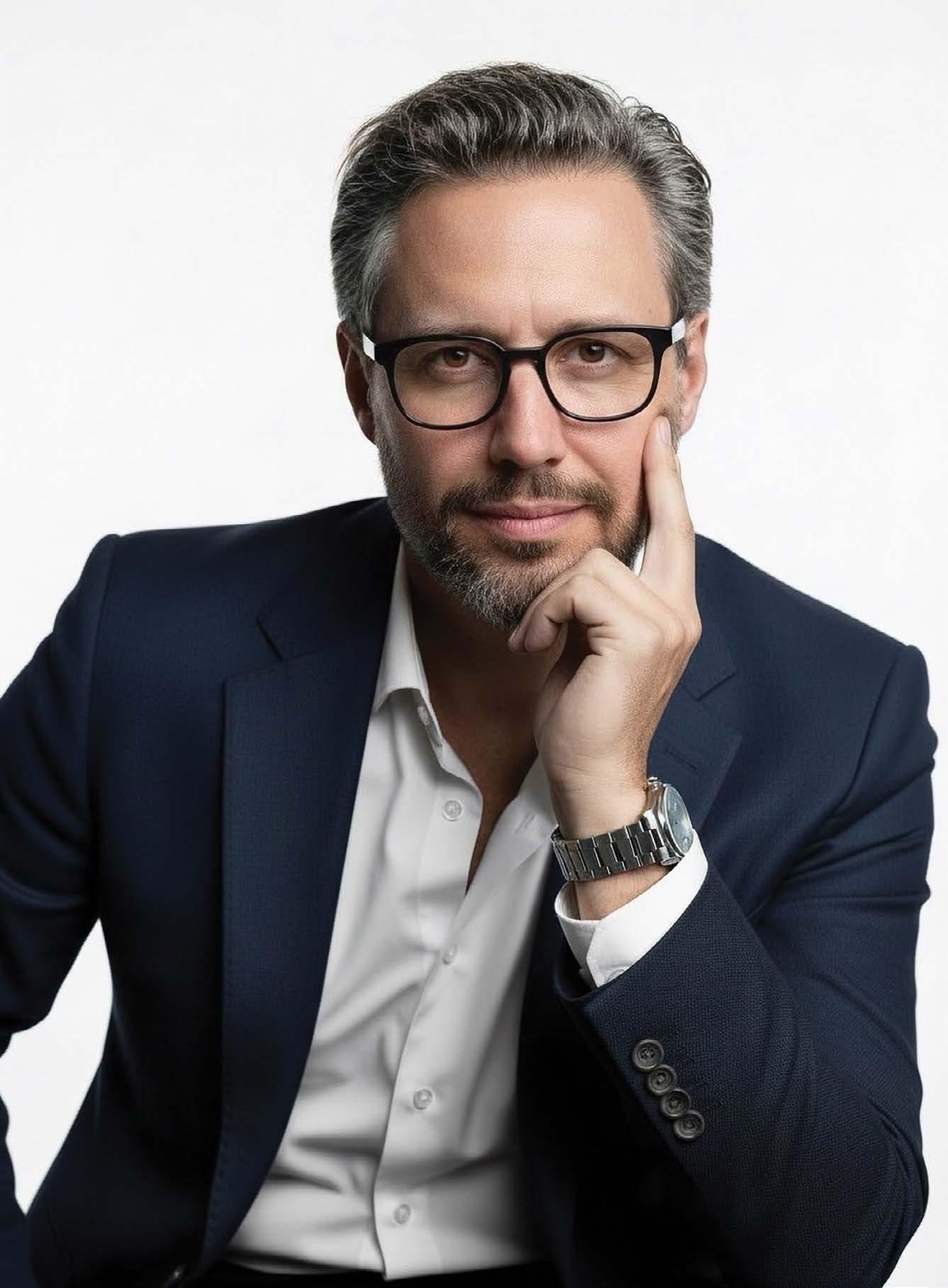
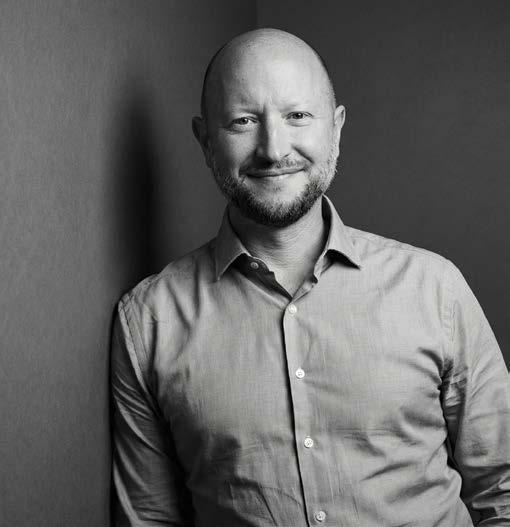
PETER DAVISON MANAGING DIRECTOR DSA MIDDLE EAST
DSA has completed 25 years in the Middle East. What were the biggest milestones that shaped the practice’s regional identity?
Reaching 25 years in the Middle East represents a journey built on long-term partnerships, consistent delivery, and an ability to evolve alongside the region’s ambitions. Having worked here for over two decades, I have witnessed the pace of transformation, with DSA growing in parallel.
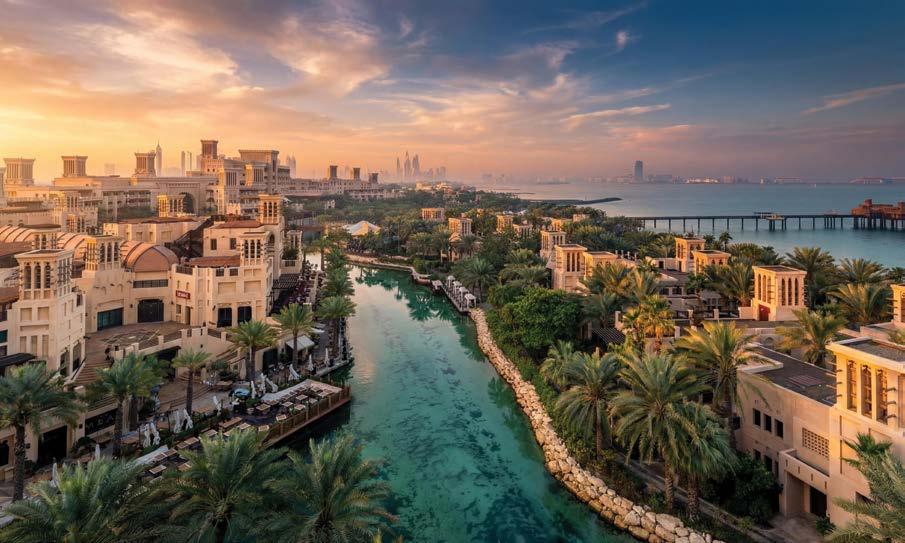
Our early foothold projects in the UAE, including the Madinat Jumeirah and the Old Town Downtown developments, were defining milestones. Both remain celebrated destinations and helped establish our reputation for delivering high-quality, experience-led environments that balance design excellence with technical robustness.
From there, we expanded across sectors within the region and evolved into a fully integrated practice, supporting clients as Lead Design Consultants from feasibility and concept through to documentation, site supervision, and handover.
We have also placed strategic focus on expanding our footprint within KSA and developing new relationships whilst continuing to strengthen our long-standing
partnerships. At the same time, we continue to grow our presence in Oman and Egypt, in particular and other MENA markets, demonstrating our commitment to supporting the region’s evolving development priorities.
How has the region’s rapid urban growth influenced the way DSA approaches design, delivery, and client expectations today?
The pace of development across the Middle East has significantly reshaped how projects are delivered.
Clients today expect partners who combine strong design thinking with technical certainty, speed of delivery, and commercial awareness.
Having led complex projects from early feasibility through to site delivery, I’ve seen how critical it is to integrate design and technical thinking from day one. This has driven DSA to strengthen our integrated delivery model, supported by investment in digital design platforms, BIM, and data-informed workflows that allow teams to make more efficient, evidencebased decisions.
There is also a much stronger emphasis on sustainability, user experience, and long-term operational value.
You’ve led complex megaprojects across multiple sectors. Which project typologies do you feel have most defined your leadership journey?
Large-scale mixed-use developments, particularly involving luxury hospitality assets, have probably been the most defining. These projects require coordination across multiple disciplines, stakeholders, and delivery phases, which aligns closely with my leadership approach, empowering teams while maintaining clarity of vision and delivery focus.
Mega-projects demand balance between design creativity, brand experience, and operational
performance, which requires strong collaboration across design, technical, and commercial to be successful. A pro-active team approach, and also where we have the opportunity to support clients and partners from early vision stages through to successful on-site delivery, help to ensure such successful outcomes.
DSA has undergone organisational updates recently. What was the strategic thinking behind this and what changes does it enable?
Recent organisational updates at DSA reflect our forward-looking strategy, ensuring we are structured to support our next phase of regional growth while remaining agile to market shifts. This strengthens leadership accountability and enables innovation, technical excellence, people development, and service diversification.
Some key aspects in this have been the appointment of a new HR Director to support our talent development strategy, and a Work Winning Director who will further strengthen our business development focus and strategic pipeline management. In parallel, we are in the process of building a strong Interior Design department to deliver a more integrated service, particularly in technical documentation and delivery stages.
Alongside this, we continue to invest in our technology and infrastructure, particularly in the utilisation of AI systems for increased automation and simplification. Integrating this with our current collaboration and workflow
Madinat Jumeirah DSA’s first project in the Middle East
systems supports our goal if increased crossfunctional delivery, project tracking and knowledge sharing.
We have recently achieved ISO 9001 & 14001 accreditation, reinforcing our commitment to international quality standards and delivery excellence. Our overarching objective is to ensure ongoing evolution, building a futureready practice that can scale efficiently while maintaining a collaborative and empowering culture.
What are your key priorities for the next 6–12 months and which sectors do you see driving DSA’s next growth phase?
DSA’s immediate priorities are centred around strengthening delivery across our active portfolio, supporting our teams as we grow, and continuing to deepen client relationships across the region so that we firmly position ourselves as the architect of choice in an increasingly competitive market.
The region is entering a new phase - more diversified, more sustainability driven, and more technologically ambitious. Design firms need to align with this and we must continue innovating, improving design to construction coordination with seamless, BIM-driven workflows and embracing smart building technologies.
In terms of sectors, we are seeing strong momentum in luxury hospitality and branded residential destinations across the region. As well as this, an increasing population is driving lifestyle residential products where developers are looking for unique selling points that distinguish themselves from the rest and where end-user experience is key.
DSA is known for delivering sustainable and innovative solutions. How do you ensure creativity remains strong while meeting tight timelines and budgets?
At DSA, creativity drives everything we do, but we ensure projects remain commercially sustainable. By embedding design quality into our processes, we protect creativity even when timelines and budgets tighten. The strongest projects combine design ambition with technical clarity, early collaboration, and alignment with the client’s vision.
We actively involve our clients in the creative journey, building confidence and mutual understanding of the overall creative vision. We place strong emphasis on knowledge sharing across teams and disciplines, allowing innovation to develop quickly while remaining grounded in deliverability. Just as importantly, we focus on empowering our teams because when people feel trusted and supported, creativity naturally strengthens.
Furthermore, design reviews at fixed milestones facilitate design integrity being maintained through every stage. Guaranteeing that this is balanced with commercial realities is achieved through clarity, structure, early alignment on budgets and high-performance delivery systems.
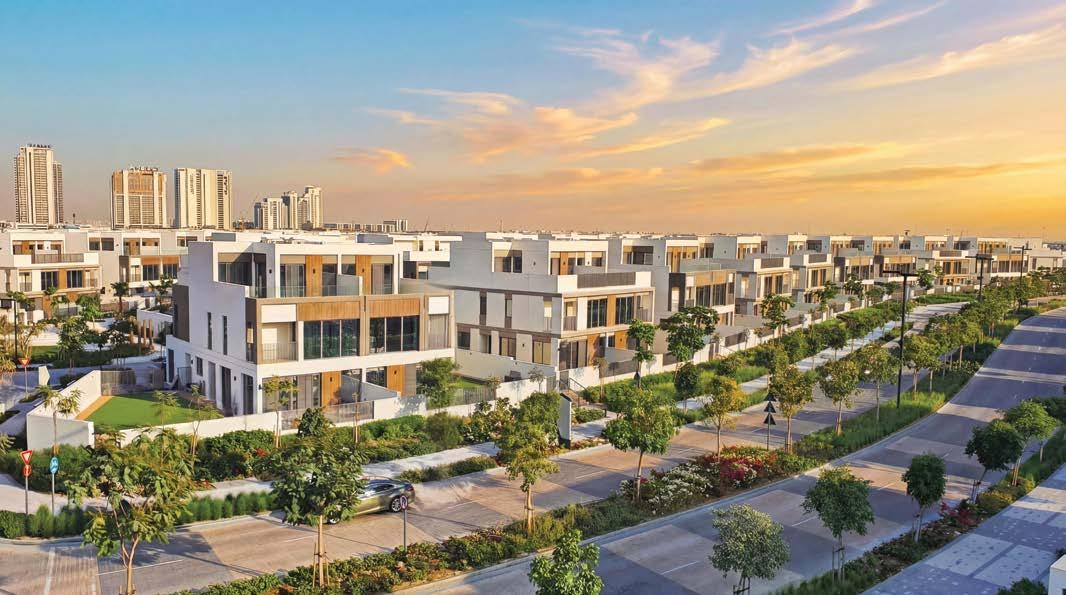
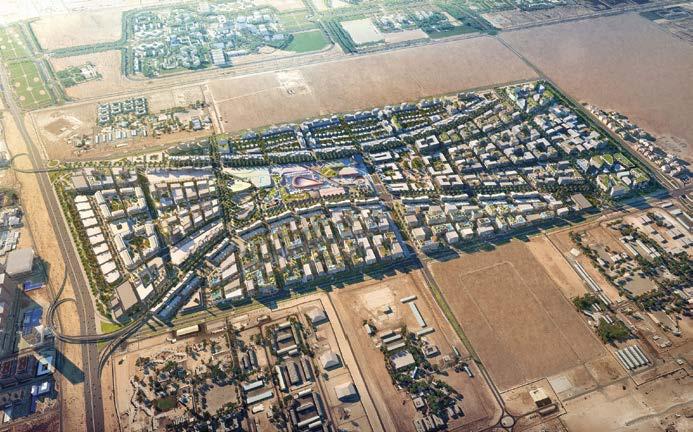
Tilal Al Ghaf, Aura Design Enhancements and Site Supervision
TIM GOODALL MANAGING DIRECTOR DSA
MIDDLE EAST
Over your 20-year journey with DSA, what would you describe as the most defining achievements that shaped the firm’s reputation?
One of our most defining achievements has been expanding our regional footprint while maintaining consistent quality and delivery. Over my 20 years with DSA and experiences across the Middle East and North Africa, I’ve seen how critical it is not only to design ambitious projects, but to have the operational strength to deliver them.
For 25 years, our presence in the Middle East has reflected this commitment. Our first regional office in the UAE enabled us to contribute meaningfully to the built environment, and we continue to strengthen our footprint across the emirates. In KSA, active since 2009, we have built strong relationships with major PIF entities and private developers, supported by our licensed AOR and engineering capabilities.
DSA’s reputation is shaped by being both design-led and delivery-driven. We are a full multi-disciplinary practice, and more recently, we have integrated a dedicated Interior Design service, providing clients with a cohesive design solution under one roof. This combination of international collaboration and strong local execution has defined our growth and built longterm trust across the region.
DSA has built a portfolio of 500+ projects. What do you think has been the biggest driver behind this consistent growth?
Our biggest driver has been our ability to combine international design standards with strong local execution, supported by long-term partnerships. When clients know they can rely on our team to deliver consistently, individual projects naturally evolve into long-term programmes of work.
As a multi-disciplinary practice, we provide Architectural Design, Lead Consultancy, Design Management, AOR, Interior Design, and Site Supervision within an integrated framework. This enables continuity and accountability from inception to completion. We can also step in at any stage of the project lifecycle, particularly during transitions and ownership handovers, where we have extensive experience.
Digital capability has also been key. Since 2009, we have delivered over 120 BIM projects and continue integrating AI-supported coordination tools to enhance efficiency, reduce risk, and improve decision-making
across complex developments. This blend of technology, regional expertise, and in-house teams has allowed us to scale while remaining locally embedded.
In the UAE, we have recently secured hospitality refurbishment and new mixed-use development project, while continuing to deliver construction site supervision across active projects. Demand is growing for both renovations and new-build developments, areas where DSA has strong expertise. In KSA, active site works continue at Qiddiya City, and we are also expanding into the Egyptian market, responding to rising hospitality demand.
DSA has strengthened its regional presence. What has been the key driver behind this expansion strategy across the Middle East?
The key driver has been aligning closely with national transformation agendas while building strong local partnerships. We have established operations with teams on the ground across key markets, supported by in-house design professionals, enabling us to tailor team structures to suit project scale and typology.
Our regional expertise includes a deep understanding of Middle Eastern vernacular
typologies, authority frameworks, procurement routes, and local supply chains. Our strategy remains focused on strengthening our presence across the MENA region in a balanced and sustainable way.
We position ourselves as the architects and delivery partner international firms need on the ground, combining collaboration with local operational strength.
Across the wider Middle East, what shifts are you seeing in client expectations and project delivery requirements compared to previous years?
Clients are increasingly seeking partners who can do more than design, they need firms that can lead, coordinate, and deliver with certainty. Demand is growing for integrated multi-disciplinary consultancy, where architecture, engineering coordination, design management, digital modelling, and site supervision operate within one cohesive structure. At DSA, we are proud to have strengthened our position as a fullservice delivery partner.
There is also greater emphasis on speed to market, long-term performance, and adaptability. Many
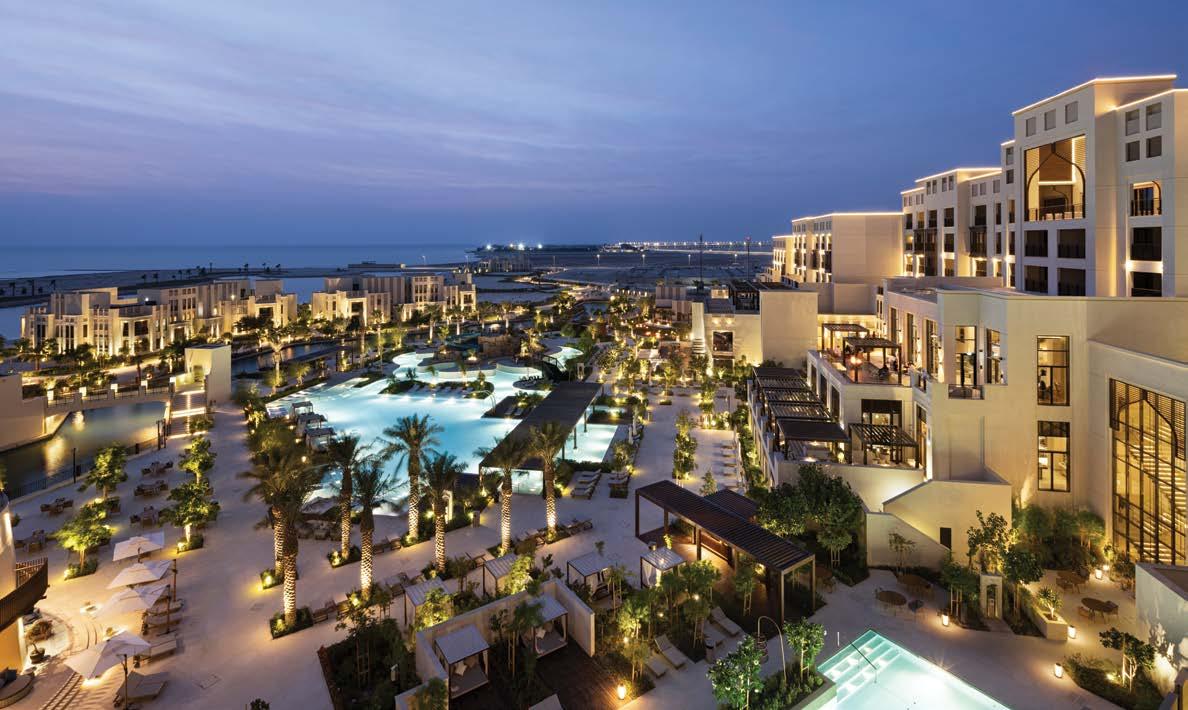
Jumeirah Gulf of Bahrain Multi-Disciplinary Lead Design Consultancy Services & Site Supervision
developments now form part of broader national or city-scale strategies rather than standalone projects, requiring deeper collaboration and structured delivery. Mature markets continue to prioritise quality and operational performance, creating a strong pipeline of opportunities.
You strongly emphasise relationships as the foundation of success. How does DSA maintain long-term client trust from design through delivery?
Successful relationships are built on transparency, professionalism, and shared goals. From the outset, we position ourselves as part of the client’s team, working collaboratively to align programme, cost, quality, and delivery expectations. We prioritise clear
communication and structured reporting throughout the project lifecycle, giving clients visibility on progress, risk, and decision-making. Our BIM coordination processes and digital tools further strengthen collaboration, while continuity in leadership and project teams reinforces trust and accountability.
In a region where projects often form part of long-term transformation programmes, this partnership mindset is essential. We remain proactive and solutionoriented, supporting clients through challenges and strengthening trust over time.
DSA often collaborates with international design practices and specialist partners. How
has this collaborative delivery model strengthened your competitive advantage in the Middle East?
Relationships are a key strength for us, allowing us to combine international design thinking with strong local delivery expertise and regulatory knowledge in fast-evolving markets. DSA is a leading design and delivery Architect and Lead Design Consultant in the region. We have successfully partnered with internationally reputed design practices across complex developments through varying collaboration models. The challenges of working in the Middle East are rarely about design quality; they are more often about alignment in delivery
expectations, programme timelines, operational dynamics, cashflow cycles, and establishing genuine long-term local engagement. DSA’s added value lies in deep local knowledge, onthe-ground presence, cultural understanding, and proven capability to navigate the realities of delivering projects in the Middle East.
Our multi-disciplinary structure, licensed AOR capability, and sitebased delivery teams ensure smooth stage transitions, technical compliance, and design ownership handovers. By combining international collaboration with regional execution strength, we remain the trusted delivery partner of choice across the Middle East.
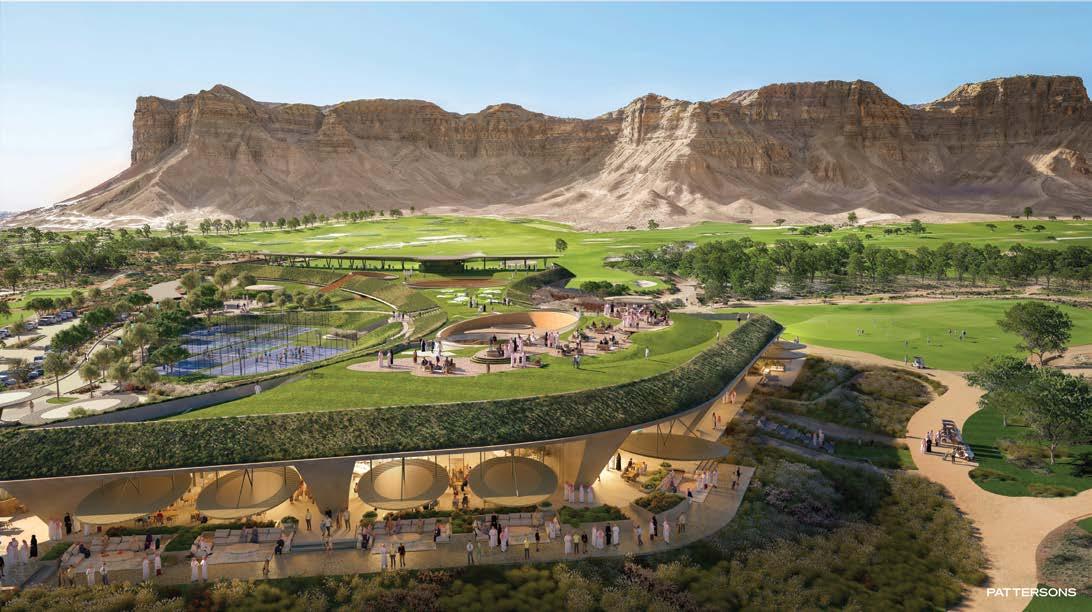
Golf Club & Academy, Qiddiya City Multi-Disciplinary Lead Design Consultancy Services In conjunction with Pattersons
A New Era Begins "Advancing humanity through place"
BY ROMA ARORA
Paolo Testolini joins ERA-co as Global Director of Urban Design and Masterplanning, bringing over 25 years of experience shaping major urban projects across the world. His work emphasises sustainability, placemaking, and storytelling, applying evidence-based methodologies to shape thriving, future-ready cities. ERA co forms part of the 7C network along with Woods Bagot, Customs Bureau and Impact futures.
Long before enterprise structures and global masterplanning portfolios, Paolo Testolini was preoccupied with something far simpler — and far more difficult to answer. Why do some cities feel instinctively alive, while others, despite their scale and spectacle, feel disconnected from the people who inhabit them?
As a student at the Welsh School of Architecture, he found himself less fascinated by buildings as singular objects and more drawn to the invisible forces shaping them — climate, governance, infrastructure, economics and the subtle choreography of human behaviour. It was there that architecture ceased to be an aesthetic exercise and became a civic responsibility.
“I have long been interested in the demonstrable influence that architecture, urban design and masterplanning can have on the advancement of humanity. My deep commitment to design — and to the tangible value it can generate — has consistently been central to my approach. I view design not only as a creative act, but as a strategic instrument capable of aligning commercial viability with social, cultural and environmental benefit,” Paolo says. That early clarity did not remain theoretical. Over the next two decades, living and working across three continents and seven countries sharpened his understanding of what enables cities to endure. Historic European centres layered in memory offered one model. Rapidly transforming Middle Eastern metropolises offered another. Through contrast came perspective.
“Exposure to different scales of development and governance models has given me a distinct strategic advantage. Meaningful urban impact occurs where economic viability and human experience intersect. That intersection — where systems thinking meets spatial intelligence — is where design becomes transformative.”
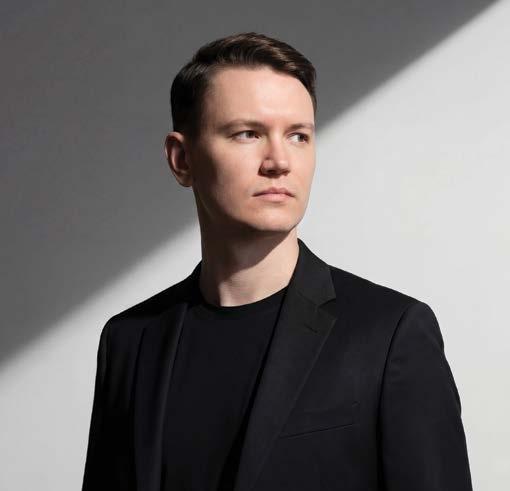
Director of Urban Design and Masterplanning ERA co >>>
His inspirations reveal a similar sensibility — thinkers grounded in human scale rather than spectacle.
Paolo Testolini, Global
ERA-CO IS A RELATIVELY NEW CONCEPT, AND THE OPPORTUNITY TO HELP SHAPE THE BUSINESS IN THIS REGION WAS ONE I COULD NOT OVERLOOK. THE BRAND IS AT THE OUTSET OF WHAT IS ALREADY AN ACCELERATED PHASE OF GLOBAL EXPANSION. WORKING CLOSELY WITH THE GLOBAL LEADERSHIP TEAM, I AM COMMITTED TO BROADENING THE BRAND’S REPUTATION IN THE REGION TO ENCOMPASS URBAN DESIGN AND MASTERPLANNING, ALONGSIDE ITS ALREADY WELL-ESTABLISHED PLACEMAKING AND DESTINATION BRAND EXPERTISE
“Jan Gehl reminds us that successful urban design begins at eye level — walking, meeting, everyday rhythms. Carlo Scarpa teaches sensitivity to context and material. Giambattista Nolli demonstrates that the true structure of a city lies in its shared public spaces.” Even in conversations dominated by systems and strategy, Paolo returns to something fundamentally human: experience.
ACCOUNTABILITY OVER AESTHETICS
If curiosity shaped his philosophy, accountability defined his professional compass. For Paolo, sustainability is not an overlay — it is the baseline against which design legitimacy must be measured. He speaks of environmental responsibility not as aspiration, but as obligation.
“Nothing in the work we create is merely ‘nice to
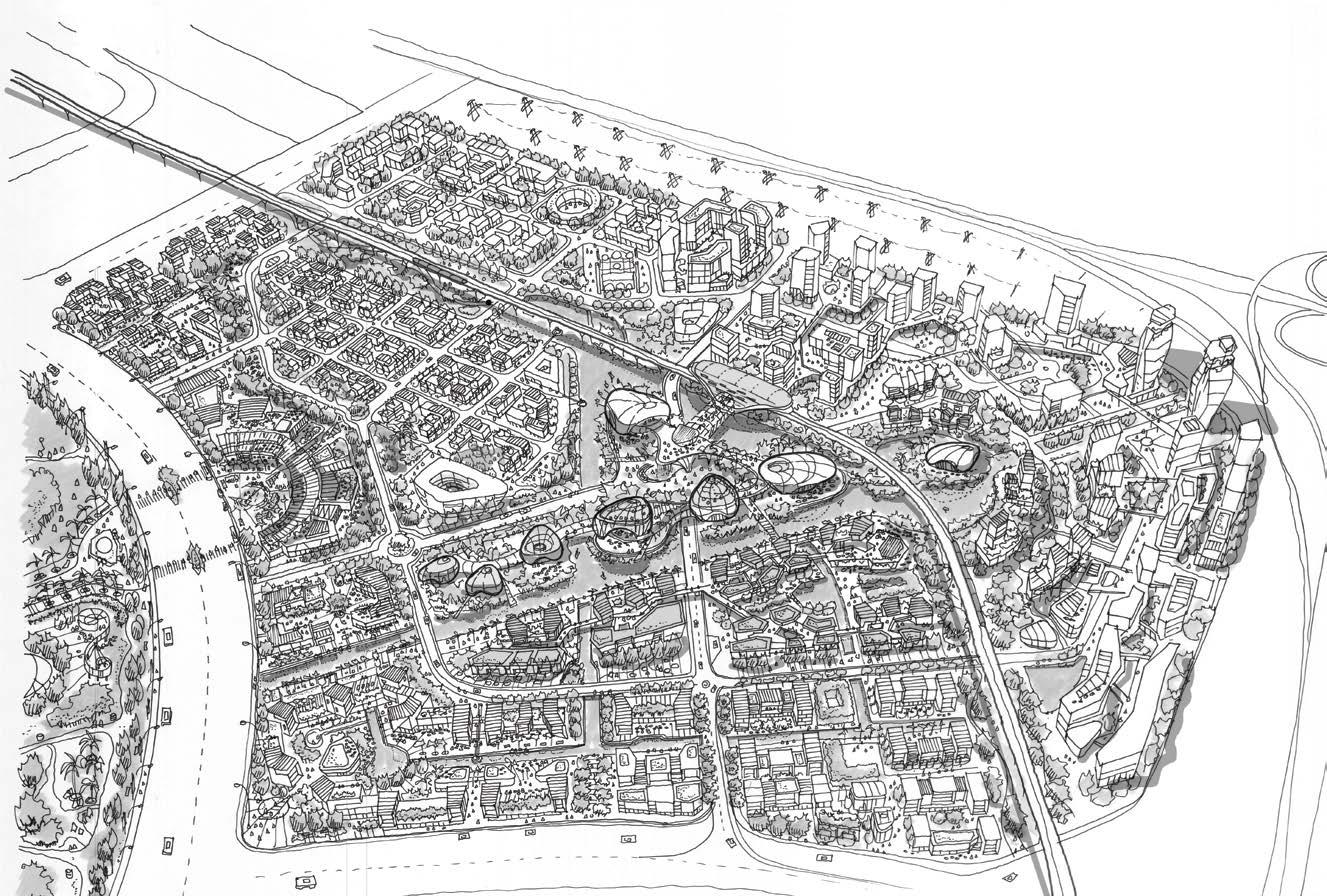
Aljada masterplan, Sharjah Masterplanned by Woods Bagot, Sharjah’s largest mixed-use city with homes, parks, retail, culture, all in a walkable urban ecosystem.
have’. We cannot operate in a paradigm where design simply consumes planetary resources without accountability. The responsibility of designers today extends beyond aesthetics or commercial return; it demands measurable environmental stewardship and long-term value creation.”
This conviction led him towards biomimicry — not as stylistic metaphor, but as systemic methodology.
“Learning from the natural world has always been a passion of mine. With 3.8 billion years of evolution, nature knows what works — and what does not — in every environment on Earth. Through biomimicry, we can study and emulate these time-tested strategies to design systems, products and communities that are resilient, efficient and regenerative.”
Nature wastes nothing. It designs in loops, not lines. Translating that intelligence into urban frameworks is no longer optional — particularly in climates where environmental stress is acute.
“Sustainability must be embedded structurally, not symbolically. Retrofitting responsibility is expensive. Integrating it from the beginning is strategic.”
In the Middle East, where development velocity meets climate intensity, shading systems, passive cooling, water-sensitive planning and biodiversity integration must be foundational decisions — not decorative gestures.
Stewardship extends beyond environmental metrics. Social cohesion, affordability, accessibility and proximity to nature are equally structural components of resilience. >>>
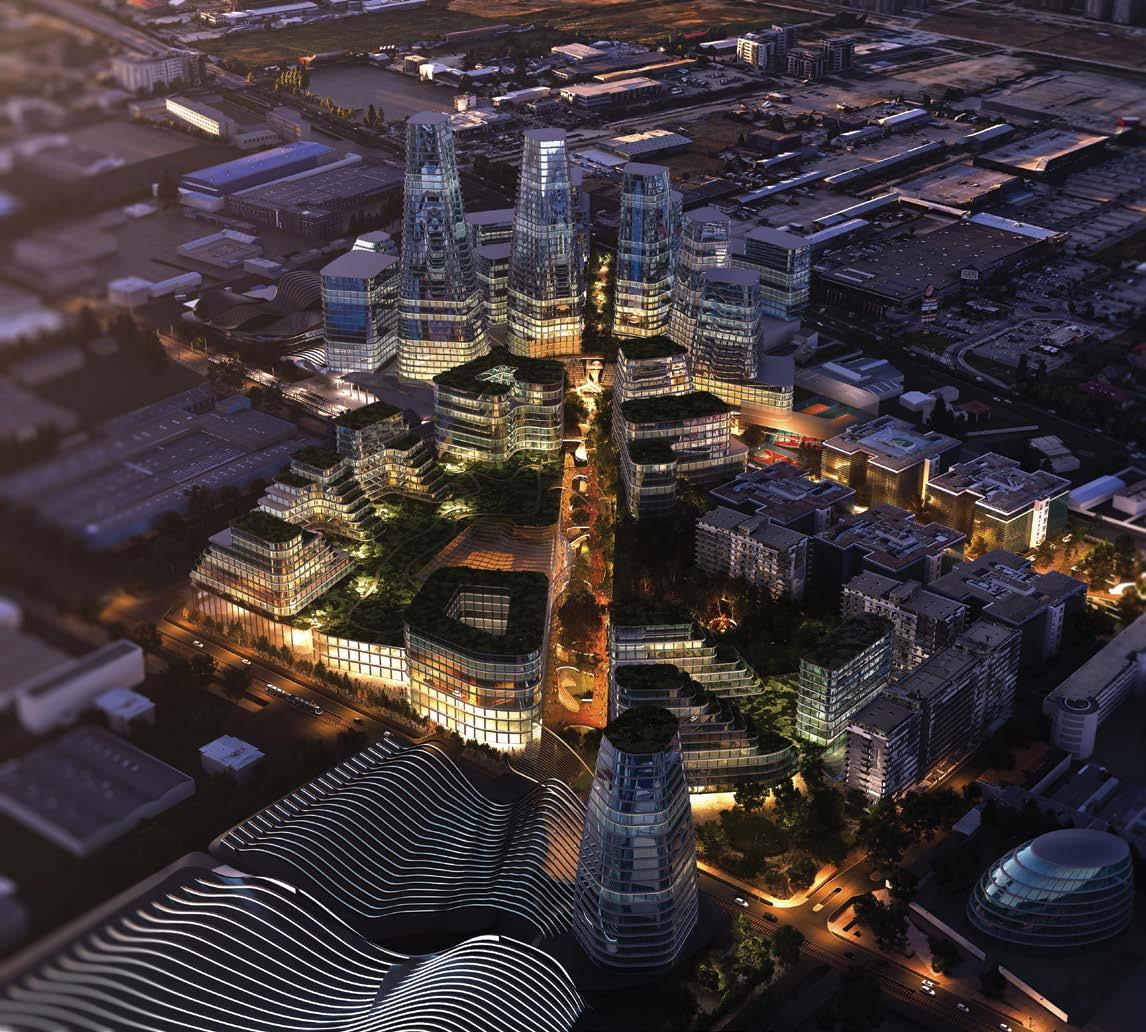
YUNITY Park, Bucharest Green centric urban campus redefining workplace lifestyle integration with co working, public spaces, urban forest and sustainable design.
“Urban life thrives on connectivity. When people can live, work and gather within cohesive environments, cities become more sustainable by default. Resilience is not only environmental — it is social and economic.”
STRUCTURING FOR SCALE: THE 7C NETWORK
As cities grow more complex, so too must the structures that design them. Paolo recognised that delivering systemic urban impact required not just project excellence, but enterprise alignment.
The recent restructuring under the holding entity 7C reflects that shift. For him, this moment marks more than a structural adjustment — it represents a strategic inflection point in how urban impact is delivered at scale.
“We recently restructured our business by introducing a holding company called 7C. The intention was to create a stronger enterprise framework where specialist brands operate with clarity of purpose while collaborating seamlessly. Woods Bagot, ERA-co, Impact Futures and Customs Bureau each bring distinct expertise; together we can offer integrated advisory services across the entire urban lifecycle and at the same time we can be fiercely independent.”
ERA-CO DESIGNING TOMORROW’S CITIES
Within this ecosystem, ERA-co occupies a distinct strategic role.
“ERA-co is the larg-
est placemaking brand globally, with offices across Australia, North America, Europe and the Middle East. That footprint allows us to draw from diverse urban contexts. Locally, our ambition is to expand beyond placemaking into comprehensive urban design and masterplanning — embedding systems thinking, analytics and long-term governance into early-stage frameworks.”
plinary fluency and strong alignment.”
Through 7C, the ambition is to move upstream — influencing frameworks before drawings are drafted.
“The future of our enterprise lies at the intersection of strategy, design and data. By aligning our sister companies under 7C, we are better positioned to deliver holistic, evidence-based urban
science, GIS and predictive modelling to test scenarios, evaluate trade-offs and connect land use, mobility, climate and infrastructure into unified planning frameworks.
“AI enables us to understand interdependencies at a scale that was previously difficult to model. It strengthens evidence-based decision-making and reveals system-level consequences early in the process.”
MICROMOBILITY, INNOVATIONS IN TOD, AND THE ADVENT OF AI ARE RESHAPING HOW WE MOVE THROUGH AND INHABIT CITIES. AT ERACO, WE POSITION OURSELVES WITH ONE FOOT IN THE FUTURE AND ONE GROUNDED IN PRESENT REALITIES. MAJOR CULTURAL SHIFTS, EVOLVING GENERATIONAL BEHAVIOURS, AND ADVANCES IN ROBOTICS AND HUMANOID TECHNOLOGIES ARE RAPIDLY TRANSFORMING THE WAY WE LIVE.
His move into enterprise leadership was deliberate.
“Stepping into a broader leadership role allowed me to help shape how our brands collaborate and where we position ourselves in an AI-accelerated world. It is less about overseeing projects and more about curating capability — ensuring we have the right expertise, technology and advisory depth to address the complexity of future cities.”
The team he has assembled reflects that philosophy.
“The team around me is intentionally hybrid. We bring together urbanists, strategists, data scientists, economists, technologists and narrative thinkers. The quality of our work depends on integration.
The complexity of future cities demands cross-disci-
solutions both locally and globally.”
DESIGNING WITH INTELLIGENCE
Artificial intelligence is no longer experimental within ERA-co — it is embedded in how the practice designs and evaluates cities. For Paolo, AI is not about automation, but about expanding intelligence across the urban lifecycle.
“AI is already reshaping how we design and think about cities. We use generative AI to enhance spatial storytelling and visualisation, accelerating concept development while grounding ideas in first-party data and measurable performance benchmarks.”
Beyond visualisation, ERA-co integrates data
Looking ahead, he anticipates masterplanning evolving from static documents into adaptive systems.
“Over the next decade, masterplanning will shift from fixed plans to living, data-informed models. As rapid option generation becomes commonplace, the masterplanner’s role will move from author to curator — setting parameters, validating assumptions and guiding informed decisions.”
Far from diminishing creativity, AI expands it.
“When precedent analysis and performance testing become instantaneous, designers can explore broader solution spaces. Creativity shifts from producing a single ‘best’ scheme to comparing multiple plausible futures.”
As AI embeds deeper into
PAOLO TESTOLINI'S EXECUTIVE GLOBAL TEAM
ERA-co operates from five offices across three regions: APAC, North America, and EME (Europe and the Middle East). "We have established integrated systems and fostered a culture of continuous learning that enables meaningful global collaboration across the practice. Our teams mobilise to be physically present where the work is located, ensuring contextual understanding and strong client engagement. As an evidence-based practice, we invest significantly in data, analytics, and research to build robust place intelligence and deep local knowledge,” shares Paolo. This foundation generates powerful insights that respond authentically to local culture while, in many instances, setting new global benchmarks.
DUBAI
GLOBAL & REGIONAL LEADERSHIP TARAS KASHKO
Head of Dubai studio
Taras Kashko leads ERAco’s masterplanning practice across Europe and the Middle East. He brings extensive experience in large scale urban and mixed-use developments, with a strong foundation in design excellence and systems thinking from his time as a Senior Designer at Zaha Hadid Architects.
URBAN ANALYTICS
DIRECTOR OF URBAN ANALYTICS
ATAKAN GUVEN
Group Director of Urban Analytics
Atakan leads ERA co’s Urban Analytics group, which brings together spatial and temporal data and applies data science and AI processes to buildan evidence base. These rigorous outputs provide forecast insights that inform work from initial, broad urban strategies through to end user-behaviour—how people move through and engage with urban environments and activations. Drawing on over 20 years of experience working across global studios including Foster and Partners, Heatherwick Studio, and multi-disciplinary practices such as AECOM and Atkins Realis.
LONDON
STRATEGIC & URBAN INTELLIGENCE HUB JOHN SALAMA
Head of London Studio
John Salama leads ERA co’s London studio, focusing on complex masterplans, regeneration frameworks, and policy rich urban strategies. He brings experience from his tenure as a Senior Designer at BIG (Bjarke Ingels Group), where he contributed to internationally recognized, concept-driven urban design work blending architecture, landscape, and infrastructure thinking.
OPERATIONS & MANAGEMENT
GLOBAL LEADER PROJECT MANAGEMENT CARLOS HADDAD
Carlos Haddad brings nearly a decade of experience in architecture, project management, and design operations across complex built environments. He ensures ERA -co’s masterplanning enterprise scales coherently, aligning teams across London and Dubai while embedding ERA-co’s strategy-First, analytics driven, placemaking, and end user ethos into delivery. He is fluent in Arabic and English, with working proficiency in Dutch, and brings a strong foundation in design thinking paired with operational excellence, making him a natural fit to lead ERA co’s operational expansion global. >>>
practice, distinctly human skills become even more valuable — judgement, systems thinking, ethical discernment and narrative intelligence.
“Technology can optimise infrastructure, but designers must safeguard context, culture and the human pulse. Our role is to align intelligence with aspiration.”
SCALING INFLUENCE IN AN AI-ACCELERATED WORLD
Looking ahead, Paolo’s ambition for ERA-co is clear — and measured.
“Our long-term ambition for ERA-co is to become a globally recognised leader in next-generation masterplanning — where strategy, design, data and narrative operate as one integrated discipline. We want to shape not just projects, but the frameworks through which cities are conceived: adaptive, systems-driven
and deeply human.”
Scaling will be multidimensional.
“First, through talent — hybrid thinkers comfortable operating across disciplines. Second, through technology integration — embedding AI, analytics and simulation so our masterplans function as living, testable models. Third, through selective global expansion in markets where rapid urbanisation and climate pressures create opportunities for systemic impact. Fourth, through advisory services that sit upstream — urban intelligence, infrastructure strategy, digital-physical integration and governance frameworks.”
Ultimately, scale is not about size.
“Our ambition is not just to grow in scale, but in influence — helping redefine how cities balance performance, resilience and experience in an AI-accelerated world.”
CITIES THAT BREATHE, LISTEN, REMEMBER
Despite the sophistication of systems and data, Paolo’s vision resolves into something unexpectedly poetic.
He believes the Middle East now stands at a maturity threshold — one where refinement must complement ambition.
“Dubai’s evolution may depend less on iconic megaprojects and more on urban continuity — integrated, human-scaled neighbourhoods with enduring civic character. Mobility integration, environmental resilience, affordability and access to nature will define its next chapter.”
Projects in the region stand out not because of spectacle, but because of the foundational questions they demanded.
“They required systems thinking where urban design, policy, technology and environmental per-
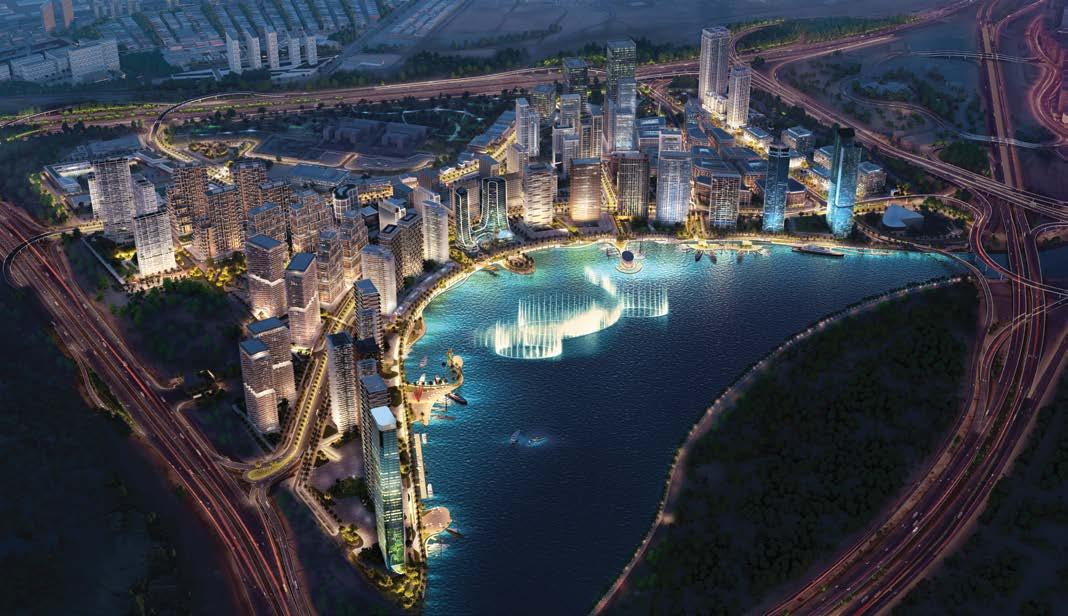
D3 masterplan, Dubai
Designed by Woods Bagot, a creative waterfront district blending live, work, culture, and walkable shaded public spaces
formance were inseparable. They operated at the intersection of ambition and accountability.”
And then, as the conversation closes, he returns to what matters most.
“In every street, every plaza, every horizon we shape, we seek to leave a trace of poetry — a city that breathes, listens, and remembers. Where the pulse of human life meets the logic of systems; where tomorrow is imagined not only with precision, but with care, curiosity, and wonder.”
In an age defined by acceleration, Paolo Testolini’s work insists on equilibrium — intelligence grounded in empathy, systems guided by stewardship, technology shaped by human judgement.
The cities of the future, in his vision, will not simply be smarter. They will be wiser.
A new era begins—advancing humanity through place. Not just by building spaces, but by shaping possibilities. Not just by designing structures, but by designing futures. The foundations we lay today become the communities, innovations, and stories of tomorrow. This is more than progress—it’s purpose in motion.
of DefectsThe Hidden Cost
KEVIN MASHFORD, CEO OF
VERVE INTERIOR DESIGN & BUILD, EXPLAINS HOW DEFECTS START EARLY, AND WHY PLANNING, DESIGN COORDINATION, AND CLEAR COMMUNICATION PREVENT REWORK, DELAYS, AND REPUTATIONAL DAMAGE.
KEVIN MASHFORD, Chief Executive Officer, Verve
Interior Design & Build
Defects are more than an inconvenience for design and build firms. In the UAE’s competitive market, every
post-handover call-back can erode margins, delay payments, and damage trust. Unfortunately, these oversights are often treated as an inevitable part of project delivery, and their impact gets underestimated.
Issues can range from small joinery imperfections to major things like the incorrect materials being specified, installed and ultimately failing. In the latter case, you could be looking at a full-scale rework, programme overruns, and spiralling costs.
Global industry analysis suggests that rework efforts can consume around 5-12% of the total project cost. And, while the challenges are universal, the UAE faces some unique pressures that intensify the problem. High-rise towers and commercial spaces are built extremely fast, squeezing the window for design, procurement, and execution. When projects move at such speed, small oversights can creep in and soon snowball. Add communication gaps and varying international standards into the mix, and the risk multiplies.
Crucially, defects aren’t limited to the completion stage. They usually begin
upstream, often long before a contractor ever steps on site. If we want to improve quality, clarity and effective communication are critical, especially during the pre-construction phase. This becomes even more important in a market like the UAE, where project teams are often made up of multiple nationalities, working cultures, and communication styles. Misunderstandings can easily arise when instructions are interpreted differently, technical language doesn’t translate clearly, or quality expectations aren’t aligned. Defect prevention depends on seamless collaboration and miscommunication is a significant barrier to success. When teams work in silos, defects multiply. When they communicate clearly, problems are designed out before the effects can be felt. By acknowledging the importance of good communication then
adopting tools and processes that bridge any gaps, you create a shared understanding from the outset, dramatically reducing the likelihood of defects later on.
The true financial cost of defects is vast and notoriously difficult to calculate. A seemingly minor issue can trigger a chain reaction if it isn’t rectified quickly - the handover is delayed, the client may need to extend their lease, penalties are passed down to contractors and subcontractors, and resources are pulled away from active projects to address problems that persist on completed ones. What’s more, the reputational damage can be even more severe, affecting every stakeholder involved, from the PMC and consultant to the designer and contractor. While financial losses eventually settle, a bad reputation can linger long after the project is over.
In my experience, the biggest cause of defects is a lack of design coordination, and as cliché as it sounds, the saying ‘proper planning prevents poor performance’ is spot on. If the design phase is rushed or fragmented, site teams are forced to make judgement calls in real-time when they should have been resolved on paper. Detailed junctions cannot rely on improvisation; they must result from a wellthought-out, collaborative design process. That’s why,
designing out defects early is the most cost-effective strategy you can adopt. Ideally, defect mitigation should happen during the Employer’s Requirements (ERs) stage. When the fundamentals of the project are clearly defined, nothing gets left to chance. Some best practices include:
• Investing sufficient time in properly detailed and coordinated drawings.
• Workshopping design details with qualified vendors, contractors, and suppliers during the design phase.
• Establishing
accountability early across the different stakeholders. Today, there are excellent tech tools firms can harness to iron out issues and prevent problems from arising. BIM modelling is a great starting point, enabling early coordination, clash detection, and the creation of accurate 3D building models that allow multiple specialists to work within the same model. Alongside this, video-based snagging tools and AIpowered defect detectors can now capture, document, and assign issues in real time, significantly reducing human error.
That said, these tools do not replace good design coordination; they can only enhance it. The sector still needs clear processes, disciplined workflows, and well-trained teams who understand how to use technology effectively. When tools are integrated into a robust QA/QC framework, rather than relied on as shortcuts, they improve decisionmaking and support a culture of accountability. We all share a responsibility to push for flawless project handovers and prove that they’re not only possible, but also profitable. They protect margins, strengthen connections, and reinforce reputations in an industry where long-term trust matters more than a single project. As the UAE continues to build at pace, zero-defect delivery will be a defining feature of firms whose projects consistently perform as well as they look.
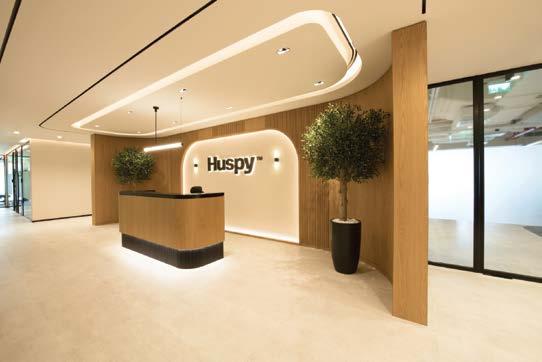
Design and fit-out for Huspy’s Marina Plaza office was carried out by Verve Interior Design & Build.
Verve is the Build partner for Sitecore's Innovation Hub Building.
LIFESTYLE LUXURY BEFORE
Shahab Lutfi, CHAIRMAN OF H&H, SHARES
HOW A LIFESTYLE-LED PHILOSOPHY SHAPES
DUBAI’S EVOLVING REAL ESTATE LANDSCAPE — AND WHY EDEN HOUSE REPRESENTS A NEW, DEEPLY PERSONAL MODEL OF RESIDENTIAL LIVING.
Eden House redefines luxury living through personal service, human connection, and thoughtful residential experiences beyond traditional hospitality.
Shahab Lutfi, Chairman, H&H
What inspired H&H’s holistic approach?
Our holistic approach began with a very clear ambition: to bring a level of quality, sophistication and depth to the Dubai market that did not previously exist.
When H&H was established in 2008, the market was largely transactional. Very few developers focused on detail, lifestyle or the expectations of a high-end, discerning client. We believe that if you are developing for a luxury audience — whether in five-star hospitality or premium residential — you must deeply understand how the client lives.
That means understanding daily rhythms and habits: how they start their day, when they train, how they relax, the level of service they expect, and the details that make them feel comfortable in a space. Design, service and management must all stem from that understanding of lifestyle. >>>
EDEN
HOUSE CREATES EMOTIONALLY CONNECTED COMMUNITIES, WHERE RESIDENTS ARE KNOWN BY NAME AND EVERY DETAIL IS CAREFULLY ANTICIPATED.
As client expectations evolve, the model must evolve too. We have seen a shift from homes designed to feel like hotels to hotels designed to feel like homes. Today, many luxury hotels want their suites to feel residential, while some residents want hotel-style services. Our role is to recognise these shifts and respond thoughtfully.
In essence, this lifestyle-led mindset defines H&H’s holistic philosophy. Whether we are designing and developing an asset, managing it or delivering a service, everything begins with the client’s needs.
How has your experience shaped your leadership style?
I have been in real estate for over two decades, working on master-planned communities, project launches, sales strategies and investment-led developments before founding H&H. At the time, everything was driven by fundamentals: pricing, returns, target clientele, unit sizing, quality and brand alignment.
However, we identified a gap in the market — the opportunity to combine commercial discipline with a more considered, lifestyle-driven approach to development. That is where H&H was born.
Investment discipline remains central to how we operate today. We do not pursue projects for recognition alone; we focus on developments that are commercially sound and thoughtfully designed. Every project must make financial sense while delivering exceptional quality — in the buildings we create, the materials we use and the services we provide.
To achieve this, we examine everything at both macro and micro levels. I would describe my leadership style as strategic in vision and hands-on in execution.
We begin with the big picture — vision, positioning and long-term intent. But true differentiation lies in the details: the materials in a lobby, the finish of a surface, the level of service and the operational experience.
Moving from macro thinking to micro execution is not easy, but it is precisely what creates distinction. My role is to guide our teams and embed that mindset across the organisation. Our objective is always to exceed expectations. If something looks good in a rendering, the finished product should look even better.
What major shifts are shaping Dubai’s real estate market today?
Dubai has evolved significantly, but the real shift began post-COVID. While many global cities struggled, Dubai demonstrated exceptional governance — from health and safety management to overall quality of life.
Today, Dubai is not merely a regional hub. It is a true global city competing directly with major capitals and attracting talent, capital and businesses from across Europe, the United States and beyond.
Where the city was once largely transient, residents are now purchasing homes with permanence in mind. Many who lived here for 10 or 15 years without buying are now committing to ownership. Initiatives such as the Golden Visa have created security and confidence.
Families see Dubai as a place where their children can grow up — and eventually return.
This shift from temporary residence to long-term homeownership has transformed the market. Dubai now offers everything from master-planned communities to premium branded residences.
Branded residences provide familiarity, trust and service consistency. Buyers understand that established global brands protect their reputation and enforce standards. Whether it is Four Seasons or Rosewood, there is reassurance in knowing what to expect.
Eden House, our flagship homegrown residential brand, represents something different. It is not a hotel, nor a conventional luxury residence. It is deeply personal.
Eden House is defined by human connection and thoughtful gestures — knowing residents by name,
A homegrown brand by H&H, Eden House blends privacy, familiarity, and intuitive service within refined, design-led environments.
creating meaningful experiences for children, anticipating needs before they are expressed. It is assistance offered before it is requested, or security staff who genuinely care as a child heads to school.
These moments create emotional connection. Eden House is about being one step ahead of expectations without
overcomplicating the experience. It is residential living with intuitive service at its core. As more Eden House developments open and residents experience them first-hand, word of mouth becomes powerful. The brand is understood through lived experience — because we are focused on residential life, not simply hotel operations.
How do you maintain consistency across H&H’s diverse portfolio?
The answer is simple: the devil is in the detail.
We constantly assess where we can improve — whether in service, product quality or asset management. Consistency is not accidental; it is maintained daily.
I communicate directly with teams at all levels, from senior leadership to on-site maintenance staff, because everyone must understand that small details matter. Often, these are things the client may not consciously notice — but they will feel the difference. And we must see them before the client does.
What core principles guide H&H’s growth today?
Passion is fundamental. If
you are genuinely passionate about what you do — whether designing a home, managing a building or delivering a service — excellence becomes instinctive. You think about it constantly and care deeply about the outcome.
What is your long-term vision for H&H in the region?
We have delivered projects outside the UAE — in Qatar and Saudi Arabia — but our core business remains here. Real estate is inherently local. You must understand market dynamics, pricing, regulations, contractors and authorities. For that reason, our primary development focus will remain within the UAE.
That said, some of our brands have regional and international potential. Eden House, as a hospitality-led residential concept, has the ability to expand globally.
Development, however, will remain largely local. We anticipate introducing more projects across the UAE — from standalone developments and branded residences to master-planned communities and mixed-use destinations incorporating residential, commercial, retail and F&B components.
The CITY OF EARTH Reimagined
DESIGNED BY AEDAS FOR DIRIYAH COMPANY, THE 100-KEY CAPELLA DIRIYAH HOTEL IS A CONTEMPORARY INTERPRETATION OF NAJDI HERITAGE. ROOTED IN HISTORY YET SHAPED FOR MODERN LUXURY, THE PROJECT WEAVES ARCHITECTURE, LANDSCAPE, LIGHT, AND CRAFTSMANSHIP INTO AN IMMERSIVE HOSPITALITY EXPERIENCE IN THE BIRTHPLACE OF THE KINGDOM.
Located in the Northern District of Diriyah, Capella Diriyah redefines the dialogue between heritage and contemporary hospitality. Designed by Aedas as Design and Project Architect for Diriyah Company, the 14,168sqm, 100-key ultra-luxury hotel draws deeply from the architectural language of Najd while translating it into a refined modern experience.
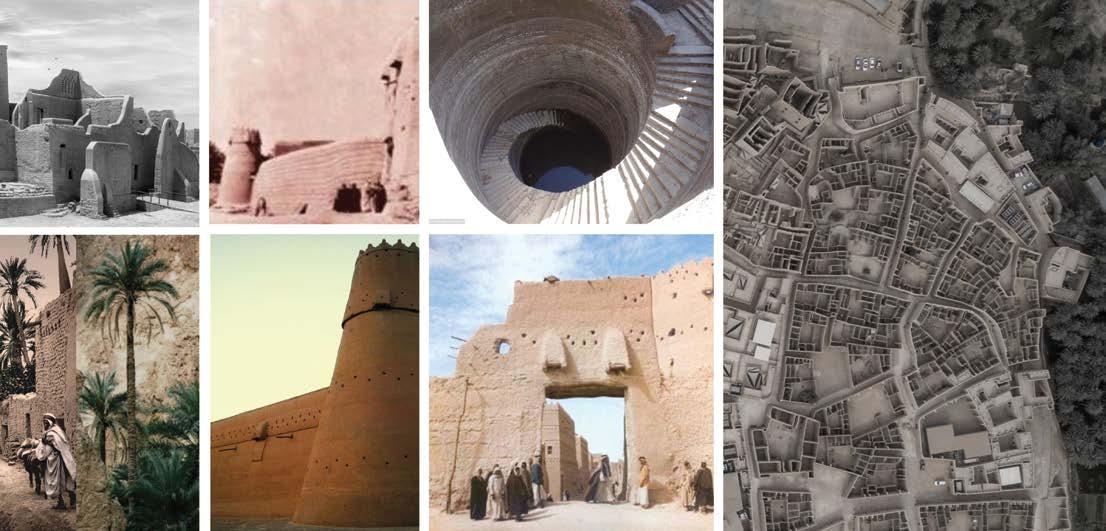
Diriyah — often described as “The City of Earth” — is home to the UNESCO World Heritage Site of At-Turaif, the birthplace of the Kingdom and the foundation of its architectural identity. Rather than replicate historic forms, the design team, led by Global Design Principal Ignacio Gomez, distilled the essence of Najdi architecture: protection, continuity, material honesty, and spatial hierarchy.
Najdi traditions carry a powerful narrative of enclosure and community. Solid earthen walls historically offered protection from climate and ensured privacy, while courtyards became centres of social interaction. Capella Diriyah reinterprets this solid-void rhythm through a contemporary lens. Organised around a careful-
ly sequenced series of courtyards, the hotel transitions from vibrant public areas to intimate, private retreats, reflecting the layered social fabric of the region. The architecture embraces the desert rather than creating a boundary from it. Framed views guide guests from calm interiors toward expansive horizons, reinforcing a continuous dialogue with the land. The patterns embedded within the stone façades interact dynamically with sunlight, casting shifting shadows that animate the building throughout the day.
Light plays a central architectural role. The design follows the natural rhythm of the desert, from the intensity of midday sun to the soft glow of evening. Courtyards,
architectural screens, and layered façades allow this transition to occur naturally, enriching the spatial experience. Geometric motifs inspired by Najdi craftsmanship introduce movement and intricacy, remaining faithful to heritage while maintaining contemporary clarity. Recognising the exceptional clarity of the Saudi night sky, the hotel integrates dedicated stargazing spaces. Open-air terraces, balconies, and select suites with retractable roofs offer
guests the opportunity to connect with the stars from the privacy of their rooms — an experience rooted in landscape and memory as much as luxury. The landscape strategy is equally contextual. Inspired by the wadi and its natural contours, water features create a sensory journey through the grounds. A grid of date palms provides dappled shade, while locally sourced stone reinforces authenticity. Native planting shapes a sanctuary-like oasis
— calm, restorative, and ecologically responsive. Sustainability is embedded in the project’s vision, with Capella Diriyah targeting LEED Gold and Mostadam Gold certification. This commitment underscores Aedas’ broader philosophy of balancing cultural continuity with environmental responsibility, ensuring that architectural legacy aligns with long-term stewardship.
As part of a global practice driven by local knowledge and international col-
LEFT PAGE
Ignacio Gomez, Global Design Principal, Aedas
RIGHT PAGE
The project transforms this legacy into a contemporary gesture that connects the timeless essence of Diriyah, “The City of Earth,” with the elegance of modern luxury.
laboration, Aedas brings together research, cultural understanding, and technical precision. At Capella Diriyah, this approach results in a hospitality destination that is immersive rather than iconic — defined not by spectacle, but by depth, craft, and connection.
Capella Diriyah ultimately becomes more than a hotel. It is an architectural narrative shaped by earth, light, and memory — a contemporary sanctuary rooted in heritage and designed for the future of Saudi luxury travel.
FACT SHEET
PROJECT: Capella Diriyah Hotel
LOCATION: Diriyah, SA
CLIENT: Diriyah Company
DESIGN AND PROJECT ARCHITECT: Aedas
GROSS FLOOR AREA: 100 Keys; 14,168 sqm
DESIGN DIRECTORS: Ignacio Gomez, Global
DESIGN PRINCIPAL
LEAD CONSULTANT: WME
Inspired by the spirit of ancient Diriyah, this design feels deeply rooted in the land. Rather than creating a boundary, the architecture embraces the desert, framing the horizon and guiding you from the quiet, calm interiors out into the vast landscape.
DESIGN, BUILD, FURNISH
THE 11th INTERNATIONAL INTERIOR, EXTERIOR, FURNISHING & FIT-OUT EXHIBITION
EGYPT’S INTERNATIONAL EXHIBITION CENTER, NEW CAIRO - EGYPT 14 - 16 MAY 2026
Branded Unmissable Kinetic
Arada’s new Inaura concept lands in Downtown Dubai with a bold promise: a fitness-led hotel and branded residences designed around movement, ritual, and everyday performance, not just aesthetics
An immersive experience shaped by culture, sustainability, and serenity.
In a significant move refArada has unveiled Inaura, a new hospitality and branded living concept shaped around kinetic wellness, a philosophy that brings movement, balance, and everyday wellbeing into the rhythm of city life. The debut location, Inaura Downtown, is set to launch sales by the end of January, positioned as a luxury hotel and 114 branded residences in one vertical statement.
For HRH Prince Khaled bin Alwaleed bin Talal Al Saud, Executive Vice Chairman of Arada, the shift is deeply human.
“Wellbeing today is defined by energy, movement and how we live day-to-day. Inaura brings this to life by creating places where physical vitality and urban experience meet. This brand reflects how people now want to live: connected to their environment and supported by spaces that foster momentum.”
Designed by Dutch architecture studio MVRDV, the tower is over 200 metres tall and rises 42 floors, with its defining signature
being a central orb that hosts a social and dining space offering 360-degree views across Burj Khalifa, Business Bay, and Dubai Mall. More than a visual centrepiece, the building is planned as a curated journey, with active, city-facing energy at street level that gradually transitions into quieter, more private environments as the tower rises.
That sense of place is amplified by a rare location advantage.
Inaura Downtown sits on a permanent Burj Khalifa view corridor, a positioning that is increasingly difficult to secure in the district.
The AED 1.7 billion project is set at the edge of Downtown Dubai, with easy connectivity to Dubai Mall, Business Bay, DIFC, and major transport routes, placing it at a crossover of the city’s cultural, commercial, and lifestyle hubs.
Designed by Dutch architecture studio MVRDV, the 42-storey, 200m-plus tower is defined by a central orb housing a social and dining venue with 360° views of Burj Khalifa, Business Bay, and Dubai Mall
Ahmed Alkhoshaibi, Group CEO of Arada
INAURA DOWNTOWN SITS ON A PERMANENT BURJ KHALIFA VIEW CORRIDOR, A POSITIONING THAT IS INCREASINGLY DIFFICULT TO SECURE IN THE DISTRICT.
Inside the tower, the residential mix is deliberately top-heavy. Inaura Downtown comprises a luxury hotel tower and 114 branded residences, including The Sky Penthouse, a threestorey, six-bedroom home, two duplex five-bedroom Sky Villas, and apartments ranging from one to four bedrooms.
Ahmed Alkhoshaibi, Group CEO of Arada, positions Inaura as a concept built to travel. “With Inaura, we’re bringing
together design, fitness and ritual to build spaces where energy flows through every element and cultivates belonging. This is the first in a series of kinetic wellness destinations designed to scale globally, combining rhythm, function and purpose to meet a growing demand for homes and hotels that prioritise movement, balance and everyday performance.”
He goes further in defining what makes Inaura Downtown distinct in an
Exterior view of the Sky Lounge at Inaura Downtown
BEYOND WELLNESS AND DINING, THE DEVELOPMENT INCLUDES THE PRACTICAL SPACES THAT INCREASINGLY DEFINE PREMIUM LIVING. THERE WILL BE CO-WORKING AREAS, MEETING ROOMS, A CINEMA, A LIBRARY, AND A CHILDREN’S PLAY AREA, POSITIONING INAURA AS AN ECOSYSTEM RATHER THAN A STANDALONE ADDRESS.
increasingly crowded luxury landscape. “Inaura Downtown combines wellness, location, and long-term value in a single, high-performing asset. Its distinctive central orb structure and permanent Burj Khalifa view establish a strong architectural and investment position. Backed by Arada’s wellness and fitness operating system and resources, Inaura Downtown sets a new benchmark for fitnessled hospitality and branded residences. We’re pleased that this launch marks our first project of 2026, a year where we continue to scale with intention and focus.”
The operating system is not a throwaway line here.
Inaura’s amenities are designed to make wellness feel frictionless, anchored by a 3,000 sqm multi-level Formative fitness centre and gym, with dedicated yoga, Pilates, dance, and boxing studios, plus luxury changing rooms for both men and
women.
The spa layer is equally ambitious. A fully fledged spa is planned with treatment rooms, immersive sound therapy, a bathhouse, cryotherapy, a multitemperature mineral pool, sauna, and steam room, reflecting a hospitality-grade approach to recovery and routine.
Dining is distributed throughout the building to match the tower’s movement narrative, rather than being confined to one podium zone. Food and beverage will span multiple levels, including the ground floors, the third and fourth levels, and levels 32 to 33, where an exclusive Sky Lounge sits inside the tower’s orb feature, turning the building’s most distinctive design gesture into a lived experience.
Beyond wellness and dining, the development includes the practical spaces that increasingly define premium living. There will be co-working areas, meeting rooms, a cinema, a library, and a children’s play area,
positioning Inaura as an ecosystem rather than a standalone address.
Residential design is described as movement-led, with layouts, materials, and planning focused on comfort, functionality, and long-term liveability. Homes will feature generous proportions, floor-to-ceiling glazing, and clear separation between living, private, and service areas, maximising natural light, alongside balconies with panoramic views across Downtown Dubai.
The hotel occupies the tower’s ten lower floors, framed as a contemporary hospitality experience rooted in movement, recovery, and connection, designed for guests who treat fitness and wellness as part of daily life. Crucially, it ties back into the same shared facilities, reinforcing the concept that residents and guests are buying into a lifestyle logic, not a oneoff amenity list.
Inaura Downtown is also LEED Gold precertified, signalling a performance lens alongside its lifestyle
positioning. And it arrives with context. Arada frames Inaura as the next chapter in its wellness journey, following branded and wellness-led developments such as Armani Beach Residences at Palm Jumeirah, W Residences at Dubai Harbour, and Akala, described as the world’s first precision wellness destination.
Arada’s Formative platform, which the company says manages the UAE’s largest group of gyms by revenue, adds a delivery backbone to the concept, making Inaura less about wellness as a theme and more about wellness as an operational reality.
For Arada, the intention is clear: Inaura is not selling stillness. It is selling momentum. In a city where luxury is fluent, the next competitive edge is not another finish, another view, another headline. It is a living system that performs every day, and a residence that feels built around the way people actually move through their lives.
DATE: APRIL 21st
Vibha Mehta
+971 58 6314145 vibha@bncpublishing.net FOR SPONSORSHIP OPPORTUNITIES
Joaquim D’Costa
+971 50 440 2706 jo@bncpublishing.net
Andrea Mocay
+971 54 502 7927 andrea@bncpublishing.net
Next Canvas d3’s
Khalid Al Malik, CEO of Dubai Holding Real Estate, on turning Dubai Design District into a waterfront neighbourhood that protects creative culture, widens opportunity, and raises the bar on sustainability and liveability
Dubai Design District, better known as d3, is stepping into a bigger role in the city’s story: not as a standalone creative hub, but as a fully integrated waterfront neighbourhood where ideas, enterprise, and everyday life share the same streets. In this feature interview, Khalid Al Malik outlines what is driving the expansion, how d3’s creative identity will stay intact as it scales, and why the next phase is being planned as an ecosystem, not a collection of buildings. >>>
Waterfront Vision
For Khalid, the ambition is not simply growth. It is evolution. “The expansion of Dubai Design District is driven by a clear ambition: to evolve d3 from a successful creative hub into a globally competitive, creative led waterfront neighbourhood where people can live, work, and create within a fully integrated environment,” he says.
The masterplan, he adds, is built
to match the direction of the Dubai 2040 Urban Master Plan and the D33 agenda, responding to what talent and businesses increasingly seek: quality, connectivity, and a place that feels human in how it operates.
Creative First
Khalid is direct on this point: creativity is not decoration. It is structured.
“Preserving d3’s creative first identity
is fundamental to the masterplan,” he says, stressing that it is embedded into how the district is organised, zoned, and activated, rather than added as a branding layer later.
The expansion reinforces d3 through distinct clusters that serve different parts of creative life, from production and studios to performance and year round cultural programming. Khalid describes the intent in plain terms: “This approach ensures creativity is lived and sustained.”
The Right Mix
The defining idea is integration. Not adjacent uses, but interwoven ones. “The expanded d3 masterplan is defined by integration,” Khalid says, pointing to a mix that brings residential, commercial, cultural, retail, hospitality, and wellness into one balanced framework.
Different zones play different roles, from culture and community to nature led living and wellness. The goal is a district that
Dubai Design District Updated Visual Masterplan
Khalid Al Malik, CEO of Dubai Holding Real Estate
behaves like a complete place, not a single purpose destination. “Together, these components deliver a true live work environment,” he adds, designed around flexibility, proximity, and a strong sense of place.
Space to Start
Khalid frames affordability as non-negotiable if the creative economy is the point of the district in the first place. “A successful creative district must remain accessible to emerging talent,” he says.
The strategy is to reduce friction for young businesses through purpose built creative infrastructure, shared amenities, and flexible spaces that lower barriers to entry. The intent is not a short cycle of hype, but retention and growth: an environment where early stage brands can begin small, collaborate, and still find room to scale without having to leave the district.
Waterfront at Work
In Khalid’s view, the water’s edge is not a separate
chapter. It is part of the same creative narrative.
“The waterfront at d3 is conceived as an extension of the creative district, not a separate leisure destination,” he says.
The plan is to activate the waterfront with galleries, cafés, ateliers, and cultural programming that keeps daily engagement high, while public realm spaces host exhibitions, installations, and events. The design is also connectivity led, with pedestrian first movement intended to stitch the district together
so the waterfront functions as a working community asset, not a backdrop.
Proof, Not Promises
Khalid positions sustainability as a core delivery requirement. “Sustainability and resilience are integral to the d3 masterplan,” he says, linking the strategy to Dubai Holding Real Estate’s wider commitments.
The district is targeting LEED Silver community certification, supported by measurable benchmarks across energy efficiency, water conservation, waste management, and sustainable construction practices, with walkability designed to reduce reliance on private vehicles.
Green spaces, including mangrove and sports parks, are planned to strengthen biodiversity and promote healthy lifestyles. “Progress will be monitored through certification frameworks and internal sustainability metrics,” Khalid adds, tying delivery back to measurable accountability rather than headline statements.
Dubai Design District
PARISIAN Elegance Arrives in Doha
WITH A PASSION FOR HOSPITALITY AND A FLAIR FOR INTERNATIONAL FLAVOURS, CHEF IZU BRINGS THE REFINED CHARM OF LA MAISON ANI TO DOHA. FROM PARISIAN-INSPIRED DESIGN TO SIGNATURE DISHES LIKE THE IZU BURGER, HE CREATES A DINING EXPERIENCE THAT CELEBRATES CULTURE, STORYTELLING, AND SHARED MOMENTS IN THE HEART OF QATAR’S THRIVING CULINARY SCENE.
What inspired you to introduce La Maison Ani to Doha’s evolving dining landscape?
We have worked in Qatar for a number of years now, and every time I visit, I feel inspired by the hospitality and culture of the people. Opening La Maison Ani in Doha just made sense; I wanted to share our cuisine with our guests in an elegant, idyllic setting— somewhere they can feel relaxed and taken care of, so that they can focus on enjoying their experience.
How does the Doha outpost reinterpret the original La Maison Ani concept?
La Maison Ani Doha builds upon the essence of the original concept by translating its Parisian identity into a context that feels both natural and distinctive. The location within the Katara development provides an ideal architectural setting, with its grand arcades and classical colonnades echoing the proportions and elegance of traditional Parisian streetscapes. Rather
than imposing a new identity, the design responds to this environment, enhancing it with carefully considered interventions. Curved fabric canopies have been introduced along the colonnade to emphasise the refined character of the concept and to create a graceful transition between interior and exterior spaces. These elements subtly reinforce the Parisian roots of La Maison Ani while adding rhythm and intimacy to the façade. The surrounding wrought-iron architecture of Katara acts as a theatrical backdrop to the terrace, transporting guests to an authentic contemporary Parisian bistro setting in the heart of Doha.
The Doha design represents the result of years of evolution and refinement of the La Maison Ani brand language. Every detail—from materials and finishes to spatial planning and guest experience—has been carefully developed as part of a considered strategy to position the restaurant within Doha’s competitive fine-dining landscape. The project is not a replica of the original but a confident progression of it: more contextual, more sophisticated, and tailored to its audience, while remaining faithful to the timeless elegance and hospitality at the heart of La Maison Ani.
Chef Izu blends Parisian flavours with Doha hospitality for unforgettable dining.
In what ways have you adapted the menu to reflect local tastes and culture?
The menu takes flavours and inspiration from every country I have lived in and travelled through on my journey so far. It is truly international in that sense. I wanted to create something that speaks to every culture and taste. My time in Qatar has influenced the way I view hospitality and generosity—the way we come together and share meals—and this is reflected throughout the restaurant.
Which signature dish best captures the spirit of La Maison Ani in Doha?
The Izu Burger is our best-seller in Doha, and I think it perfectly captures the essence of La Maison Ani. A dish you can enjoy and indulge in, it’s light and tasty, made with incredible quality ingredients. I like to order a few to share between the table, alongside our hand-cut fries and a few salads, and make sure I leave space for desserts.
How important is storytelling in shaping the guest experience at this new restaurant?
When I start working on something, I always begin by asking myself why. Finding the reason behind each project, understanding who it is for and what it is at its core, enables us to build something that matters and that lasts. The story behind every restaurant is so important to its success, and to how people feel when they visit us. Everything is intentional.
What excites you most about being part of Doha’s fast-growing culinary scene?
In Doha, there is a high level of quality—both in product and service—that encourages us to think creatively and expand to exceed the expectations of our guests. My aim is for people to leave our restaurant and think “wow,” for them all to have smiles on their faces and to have really enjoyed their meal and their time with us.
How do you envision La Maison Ani evolving within Qatar’s hospitality landscape over time?
With La Maison Ani, we wanted to create a concept with longevity, a restaurant that blends effortlessly into the lifestyle of our guests, whether it is for breakfast, lunch, afternoon coffee and desserts, or dinner. We are looking at ways of evolving the brand to suit the preferences and needs of our guests, and aim to expand when the time is right.
OPULENCE OASIS
BLINK DESIGN GROUP reimagines the former Caesars Palace Dubai as Banyan Tree Dubai — a serene, nature-inspired retreat that replaces bold opulence with calm, refined luxury and a stronger sense of place.
The former Caesars Palace Dubai reimagined as Banyan Tree Dubai, where organic textures and tonal restraint define a new era of conscious luxury.
The redesigned lobby layers sheer drapery, soft lighting and natural materials to create a tranquil arrival experience.
On the tranquil shores of Bluewaters Island, a quiet design evolution has taken place. What was once the exuberant, decorative glamour of Caesars Palace Dubai has been reinterpreted into the calm, textural sophistication of Banyan Tree Dubai. At the helm of this transformation is BLINK Design Group, whose twophase redesign carefully balances sustainability, placemaking and brand philosophy.
The transformation unfolded in two distinct chapters. The first phase, completed in just one month, delivered a subtle yet strategic refresh of key public spaces. From the arrival experience and lobby lounge to the all-day dining destination, BLINK infused each area with a refined sense of place while maintaining operational continuity.
The second phase, which took a year to complete, marked a deeper metamorphosis. Here, the wellness offering was entirely reimagined. The Banyan Tree Spa, gym and salon were meticulously redesigned, reinforcing the property’s shift from urban opulence to serene sanctuary.
“We began by peeling back the more ornamental and overtly decorative
features of the previous brand to reveal a calmer architectural language,” explained Clint Nagata, Co-Founder and Creative Partner of BLINK Design Group. “Retaining some of the existing floor and wall finishes, we layered in materials that speak to Banyan Tree’s brand ethos — organic, tactile and nature-inspired.”
A design philosophy of less, made more Rather than demolishing and rebuilding, BLINK adopted a philosophy of refinement through subtraction. By retaining key structural elements and integrating new
materials aligned with Banyan Tree’s natureinspired DNA, the team achieved a balance between sustainability and elevated design.
“We focussed on highimpact yet minimally invasive interventions,” Nagata said. “We prioritised a thoughtful facelift — refinishing existing elements and introducing materials that embody the Banyan Tree ethos.”
In the restaurant Alizée, for example, the original kitchen stations were retained but re-clad in more refined, natureinspired finishes. The result elevated the dining experience
without requiring major construction — a testament to intelligent, resource-conscious design. One of the project’s most complex challenges was executing the first phase while the hotel remained fully operational. Offsite fabrication for millwork and screening elements allowed installations to happen overnight, minimising disruption.
Desert-inspired hues, handcrafted details and sustainable materials shape a timeless sense of place on Bluewaters Island.
Equally challenging was the task of reinterpreting a space originally conceived for decorative luxury into one defined by tonal restraint and organic calm.
The outcome is not a dramatic reinvention, but a quiet recalibration.
Of dunes and drapery — distinctly Dubai
BLINK’s approach is grounded in placemaking, and at Banyan Tree Dubai this philosophy is expressed through atmosphere rather than ornament. Inspired by desert landscapes, the lobby becomes a modern mirage. Soft lighting filters through sheer drapery and ceiling coves, while layered materials create depth without heaviness.
“There’s an immediate sense of calm and retreat,” Nagata noted. “The arrival experience creates a gentle transition from the fast-paced city outside to a tranquil sanctuary within.”
Screened partitions define the space without enclosing it, guiding guests through a journey that feels fluid and intentional. The design language is subtle but
deliberate — less about spectacle, more about sensation.
Beyond the lobby, Tocha, the Japanese tea house-inspired lounge, unfolds as a sanctuary of stillness. Measured proportions, muted tones and hushed elegance reflect Banyan Tree’s interpretation of luxury: quiet confidence rather than ostentation.
Timeless design, rooted in nature
Across its 178 rooms — including expansive suites and a secluded four-bedroom villa with a private beach and infinity pool — Banyan Tree Dubai extends this philosophy into the private realm.
Neutral tones inspired by the Arabian oryx enhance the restful atmosphere. Soft whites, creams and earth hues create visual harmony, while vertical architectural gestures reference the Ghaf tree, the region’s enduring symbol of resilience.
Transitions between spaces are seamless. Screened thresholds and varied ceiling treatments define zones while maintaining openness. Subtle shifts in lighting and materiality guide the guest journey, ensuring that
The Banyan Tree Spa blends tactile finishes, warm timber and immersive hydrotherapy rituals in a sanctuary of calm.
BLINK’s approach is grounded in placemaking, and at Banyan Tree Dubai this philosophy is expressed through atmosphere rather than ornament. Inspired by desert landscapes, the lobby becomes a modern mirage.
each area feels distinct yet interconnected.
The design does not shout; it unfolds gradually.
Materials that speak softly
Materiality lies at the heart of the interior scheme. Throughout the property, raw timber, handwoven textiles and matte stone establish an atmosphere of quiet luxury. Every element is selected for both tactile beauty and environmental integrity.
In the spa, warm timber flooring introduces softness underfoot, grounding the light-filled interiors. Dark wood accents add depth and contrast, while artisanal banana leaf wallcoverings — handcrafted from natural fibres — infuse the space with organic texture and human artistry.
Intricate veneer marquetry, sustainably sourced and finished with water-based polishes, reflects refined craftsmanship aligned with eco-conscious principles. Even the gym flooring contributes to the sustainability narrative, incorporating recycled chalk and bio-based PVC.
Light-hued natural stone echoes the surrounding desert landscape, reinforcing a sense of place. The palette is consciously curated, anchored in tonal restraint and sensory depth.
Nowhere is this sensory language more immersive than in the spa. Here, design and wellness intertwine seamlessly. A rainforest tunnel and barefoot hydrotherapy journey draw on cultural symbolism and contemporary healing rituals. Mist, heat and water become design elements, dissolving the weight of the outside world. The spa’s lighter tonal palette
acts as a counterpoint to the richer public areas. “Each space is distinct in its expression yet unified in its commitment to understated luxury and wellbeing,” Nagata explained.
A sanctuary of design
Set against Dubai’s rapid development, Banyan Tree Dubai emerges as a beacon of conscious luxury. It is a place where design, nature and wellbeing intersect without excess.
BLINK’s transformation speaks softly, but with assurance. It respects the original architecture while reshaping its identity through texture, tone and tactility. It demonstrates that luxury need not be loud; it can be grounded, refined and deeply contextual.
From opulence to oasis, the journey is less about subtraction and more about intention. By peeling back ornamentation and embracing organic materiality, BLINK has crafted a sanctuary that feels timeless yet contemporary — distinctly Dubai, yet unmistakably Banyan Tree.
The result does not attempt to impress through grandeur. Instead, it belongs. As though it has always stood there, quietly rooted in its landscape, offering modern nomads a place to pause, reflect and reconnect.
Colour Sculpted in
RALPH PUCCI International brings its signature sculptural language outdoors with a collection that blends art, craftsmanship, and durability. Crafted in the brand’s proprietary Plasterglass material, the pieces have the soft, tactile look of plaster while being strong enough for terraces, gardens, and open-air living in suitable climates.
Standout designs include Ilkka Suppanen’s Stereo Bloom collection, defined by trumpet-shaped forms that add move-
ment and personality to any setting. New colour editions introduce a fresh seasonal energy, ideal for spring and summer spaces. Patrick Naggar’s Amalfi, Ischia, and Positano pieces offer a clean, architectural aesthetic, with thoughtful details such as discreet drainage gaps that enhance functionality. Balancing expressive texture with outdoor performance, the collection proves that exterior furniture can be just as refined and design-led as interior pieces — transforming outdoor spaces into sculptural environments. www.ralphpucci.com