Interiors and architecture from the Gulf, Levant and beyond
Designing the Future
OUTSTANDING STUDENT
PROJECTS FROM
DUBAI’S SCHOOL OF TEXTILES AND DESIGN GLOBAL DEGREE SHOW 2026.
Creating Atmosphere Through Light
A REFINED LIGHTING
CONCEPT BY HERIOT-WATT UNIVERSITY
ALUZO LIGHTING DESIGN TRANSFORMS
The Next Chapter
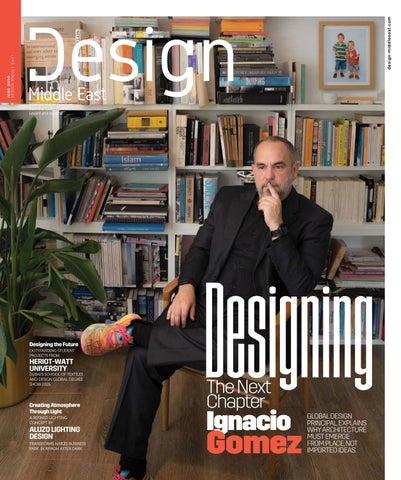
Ignacio Gomez Designing
GLOBAL DESIGN PRINCIPAL, EXPLAINS WHY ARCHITECTURE MUST EMERGE FROM PLACE, NOT IMPORTED IDEAS.
Enlighten Your Eternal Beauty, Inside and Out!
@muarjewels www.muarjewels.com
info@muarjewels.com
28
NEXT MADE FOR WHAT’S
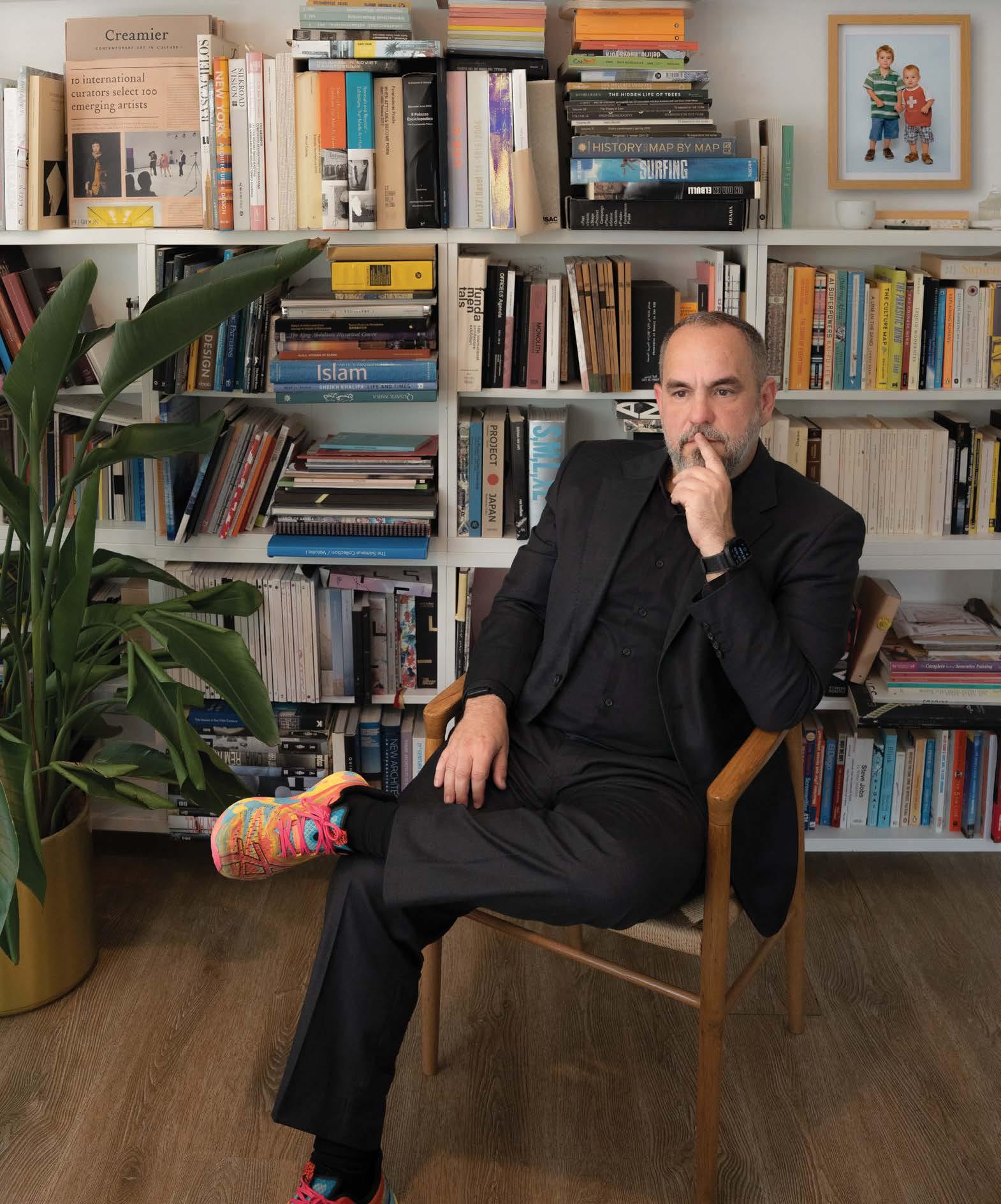
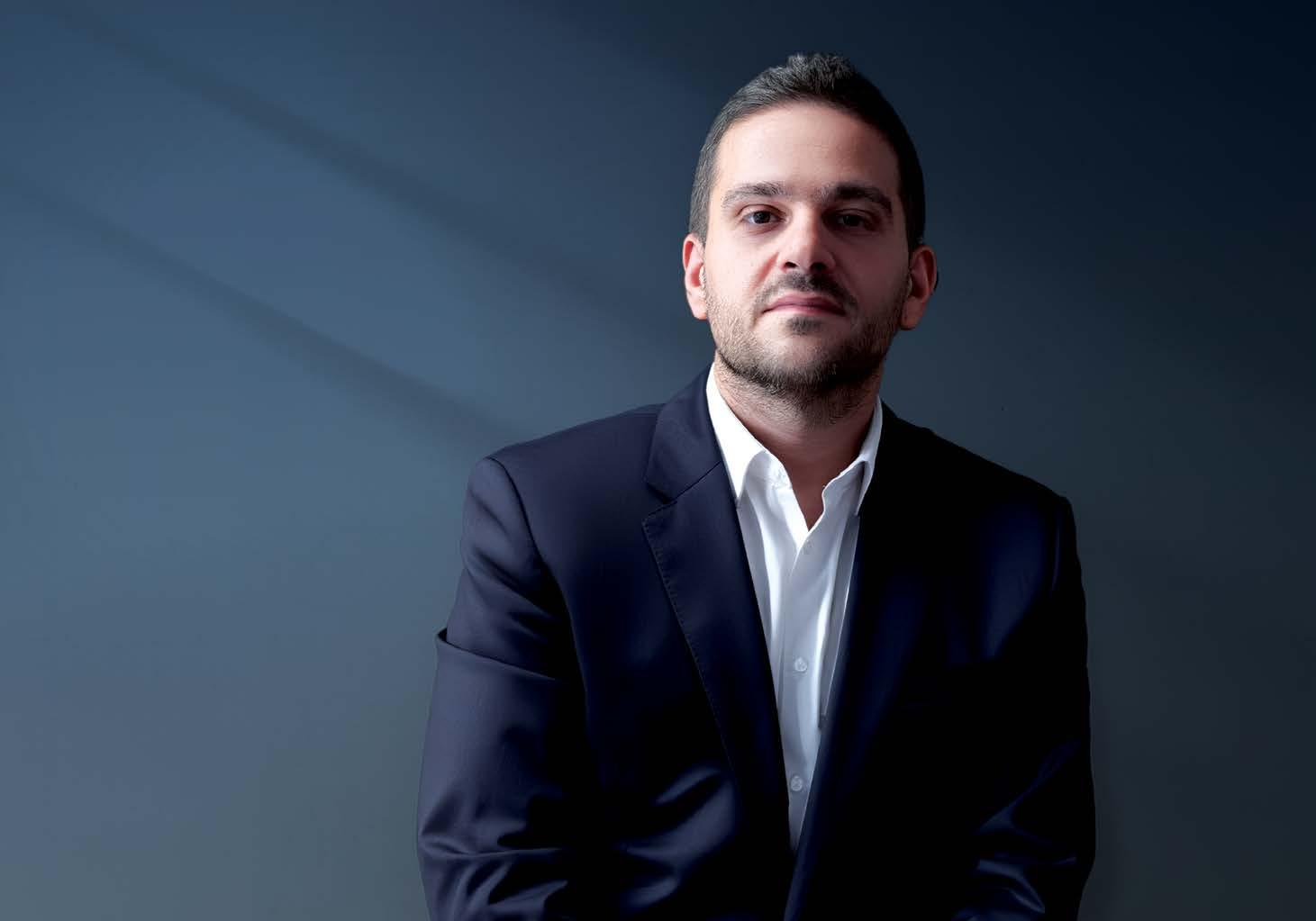
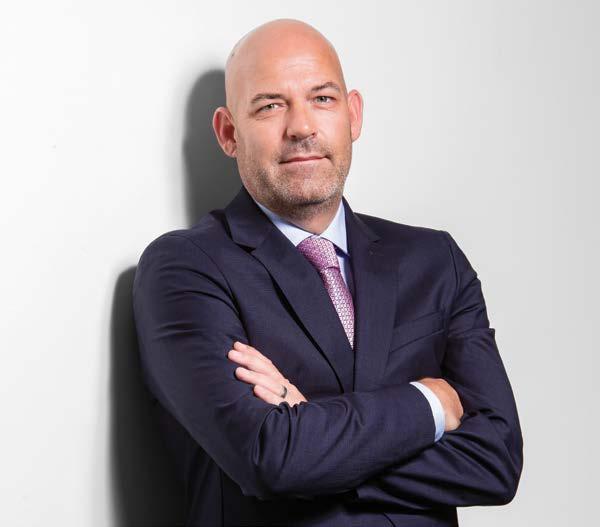
Ignacio Gomez, Global Design Principal at Aedas, believes architecture should be shaped by what comes next—emerging from culture, context and human experience rather than trends or imported formulas.
16 BRANDED RESIDENCES
Well-Being Within Walls
XU MA, Founder & Chairman, Tomorrow World Real Estate, explores why branded residences are emerging as a powerful symbol of trust, quality, and long-term value in Dubai’s evolving property market.
ALUZO LIGHTING DESIGN unveils a refined lighting concept in Riyadh, using the interplay of warm and cool tones to enhance architectural elements and create an inviting nighttime experience.
22 EMERGING TALENT
Celebrating Tomorrow’s Design Talent
School of Textiles and Design, HERIOT-WATT UNIVERSITY DUBAI Global Degree Show 2026- Students' Projects
34 OP-ED
AI Is Giving Architects More Time to Create
SERHII ZHOLOB Owner of NKEY ARCHITECTS, explains how artificial intelligence is transforming architecture by streamlining workflows, enhancing analysis, and allowing designers to focus on creativity, human experience, and design excellence.
38 TALKING POINT
Smart Cities: Why Technology Isn’t The Hard Part
There has never been a shortage of smart city or proptech solutions. Sensors, platforms, digital twins, dashboards… if a city wants technology, the market is more than happy to provide it.
40 DESIGN
Past the Drawing Board Embedding Sustainability through Project Delivery, Not Just Design!
A True sustainable project Is not defined by a single feature or certification, but by a balanced approach that integrates environmental responsibility, social impact, and economic performance from the beginning to the end.
44 INTERVIEW Design That Delivers Experience
GERRIT SCHMITT, General Manager of Marriott Resort Palm Jumeirah, discusses how modern hospitality leadership is redefining the GM role.
48 IN CONVERSATION
Mastering Meydan: Khansaheb
Delivers Fast-Track Refurbishment Triumph
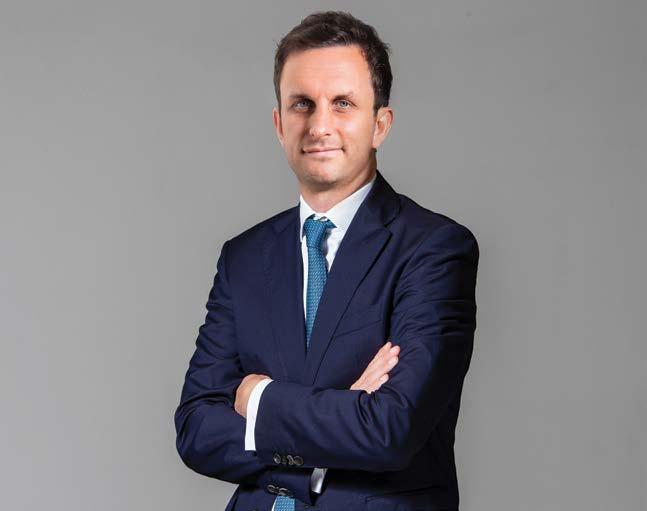
ROSS TRIVETT, GM – Khansaheb Interiors, and RYAN EMSLEY, GM – Khansaheb MEP, reflect on the planning, coordination and delivery behind the fast-track refurbishment of MEYDAN HOTEL
54 IN CONVERSATION
A New Era of Customer Expectations
In conversation with RAMI SELO, CEO of Sedar Global, on how more than 130 years of heritage has shaped the company’s understanding of evolving customer expectations and consumer behaviour across the Middle East.
57
SUPPLIER FOCUS
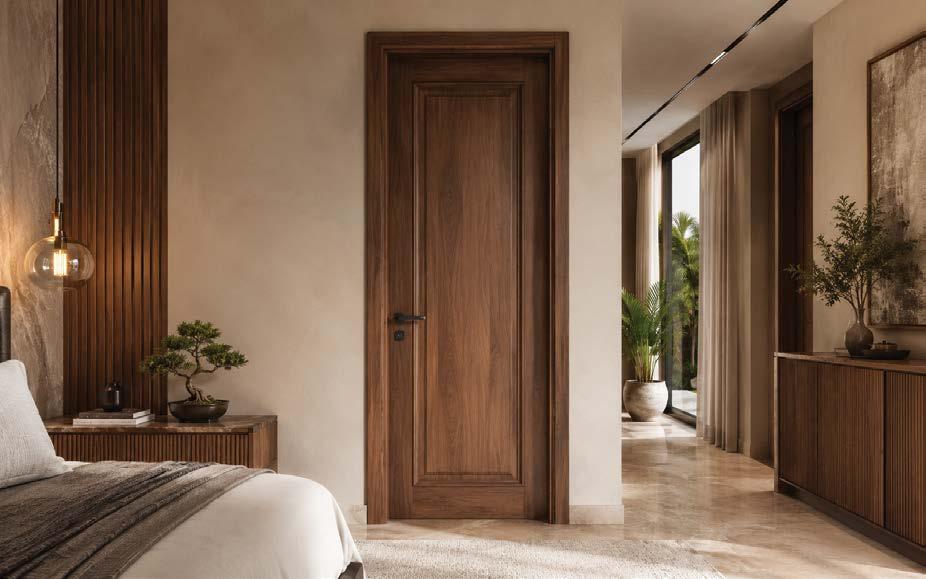
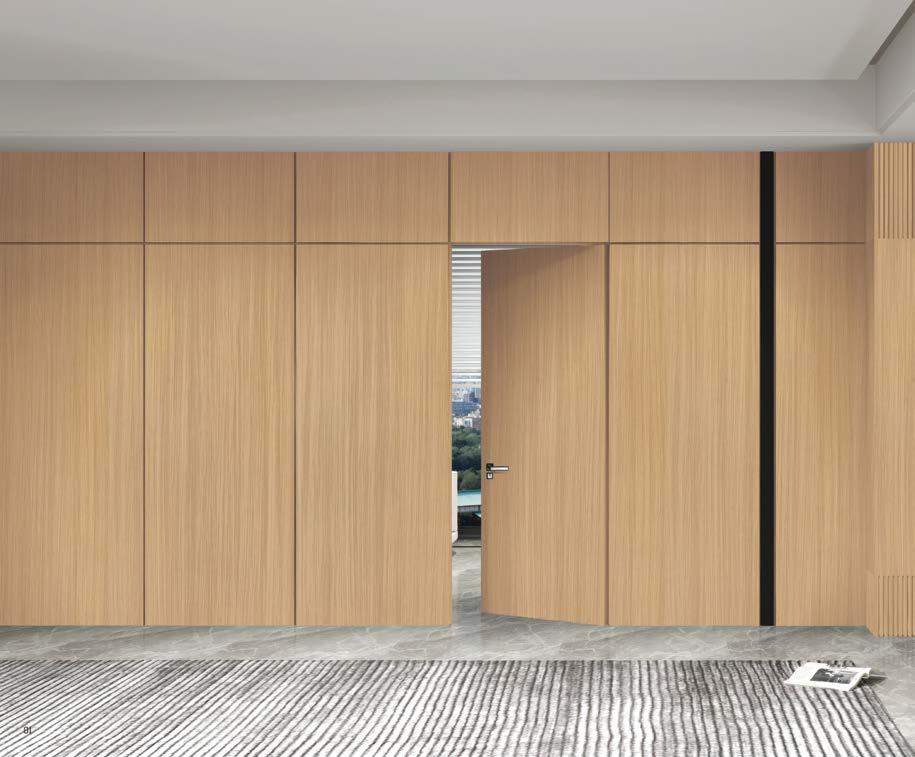
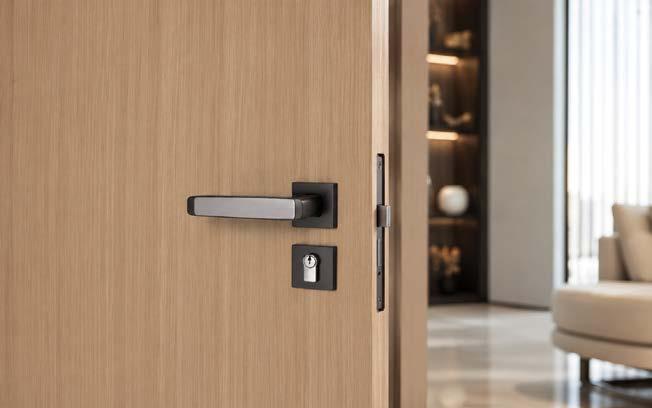
Beyond Appearance: Choosing the Right Door for UAE Homes
SAMANTHA WG, Co-Founder of ZEVLANO®, explains why material selection matters just as much as design when choosing interior doors for villas and residential projects in the UAE.
60 HOSPITALITY
Where Style Meets Substance
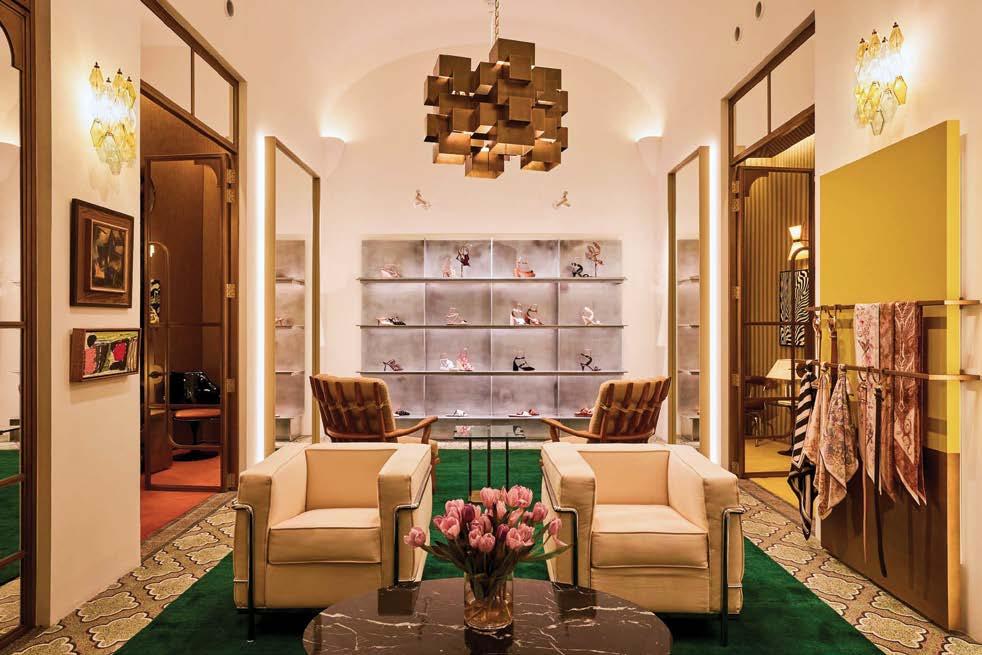
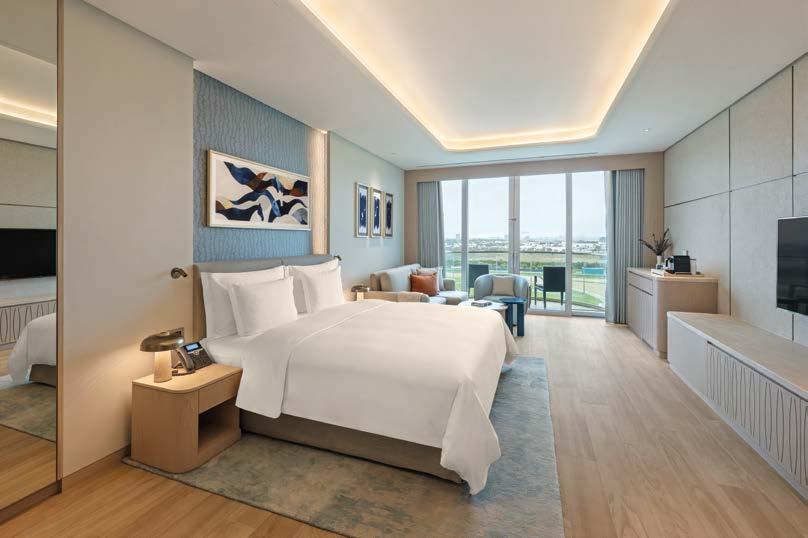
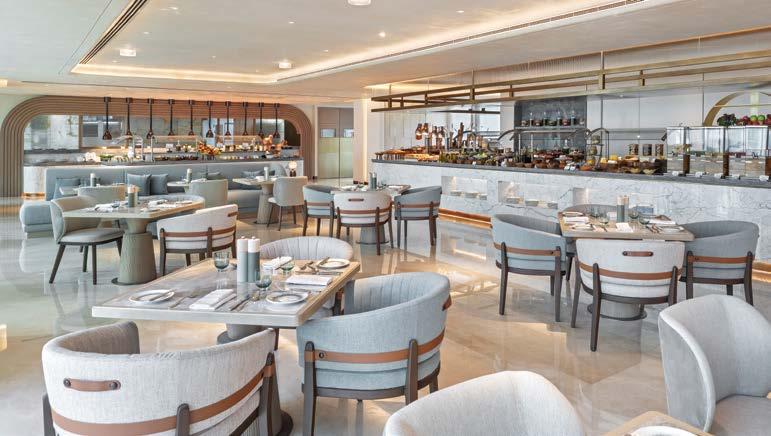
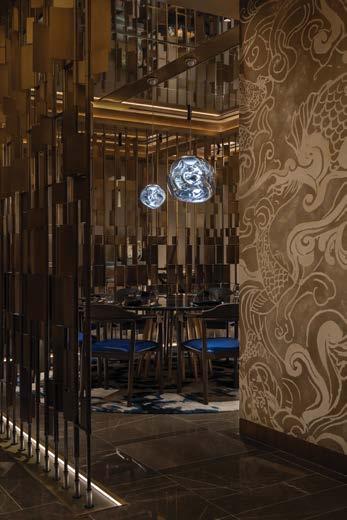
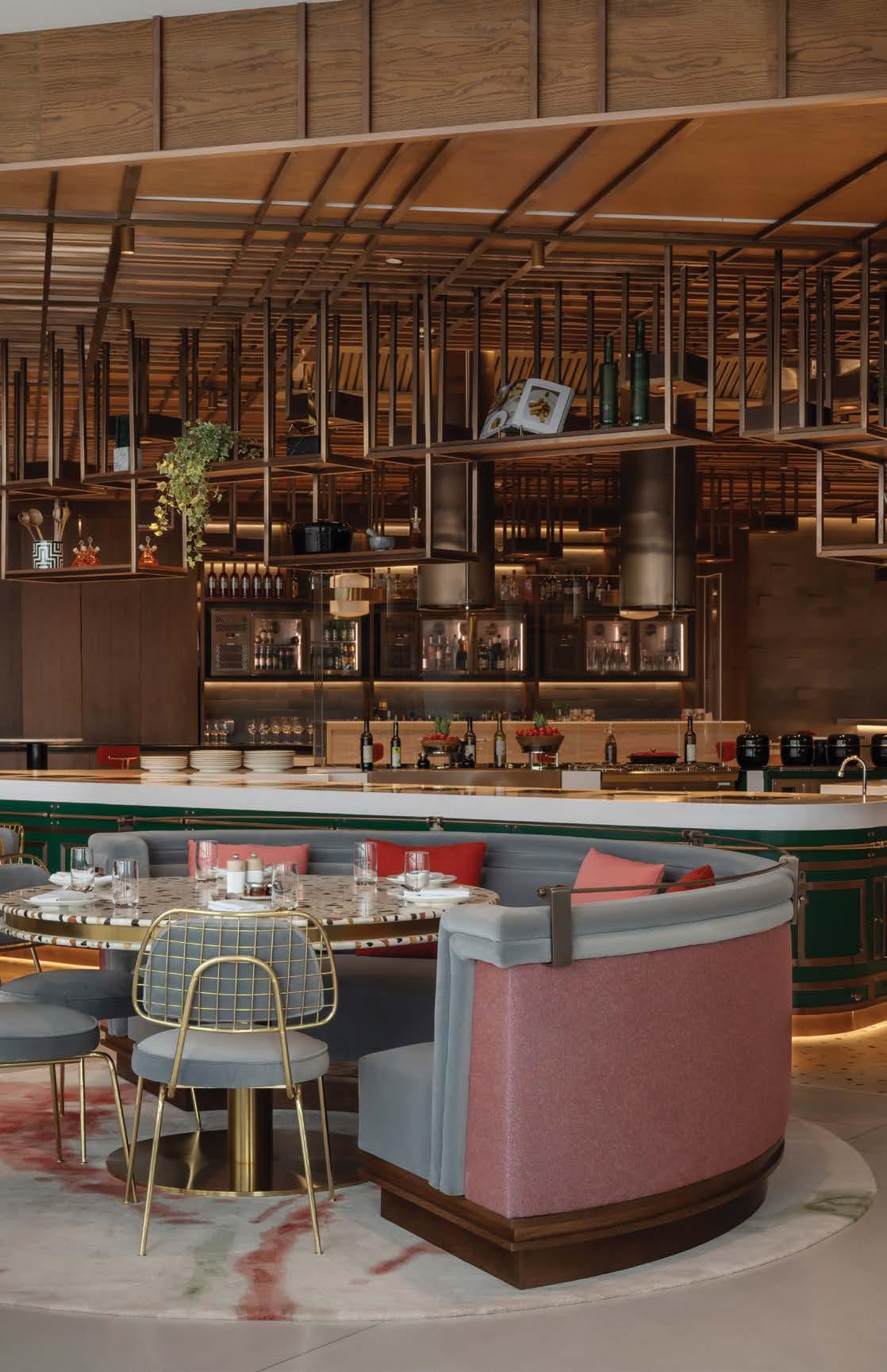
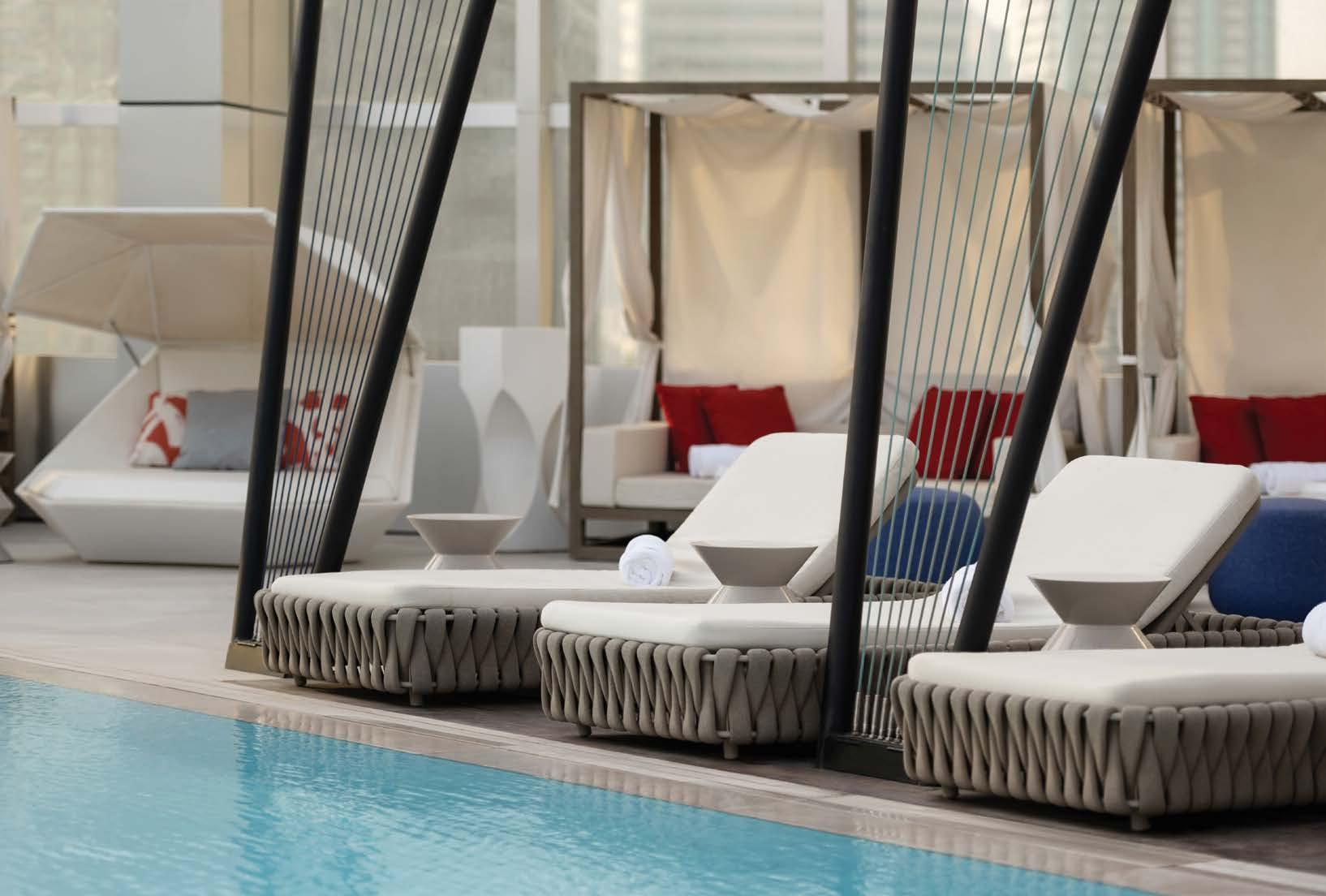
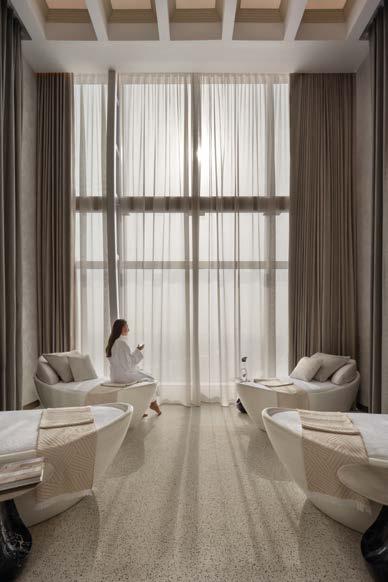
Fashion-forward interiors, vibrant social spaces, and standout dining make SO/ UPTOWN DUBAI a fresh addition to the city’s luxury hospitality scene.
SUITE TREAT
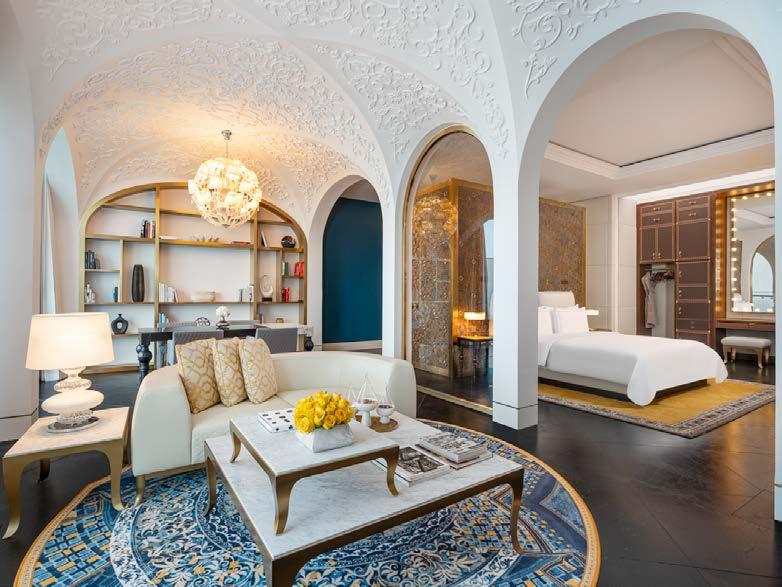
Step into a world of opulence when you book a Suite at Raffles Doha.
Experience the added luxury of QAR 750 credit to spend on dining in the hotel, and QAR 500 towards any Spa treatment.
Children aged 12 and below are welcome to indulge in the enchantment of complimentary dining.
Rates starting from QAR 3,500 per night
For reservations, please call +974 4030 7100 or email reservations.doha@raffles.com
EXTRAORDINARY
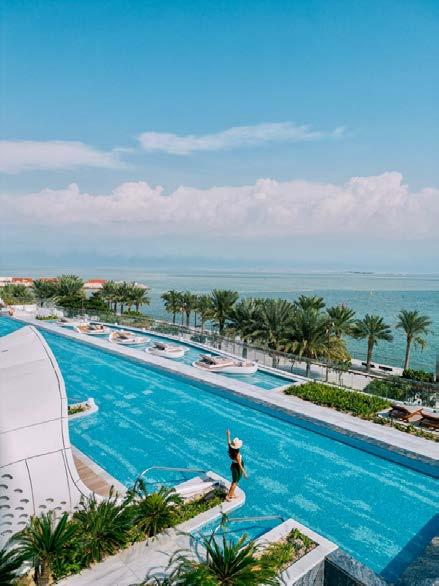
Escape to a home where urban sophistication meets resort tranquility. PRIVATE POOLS | 30+
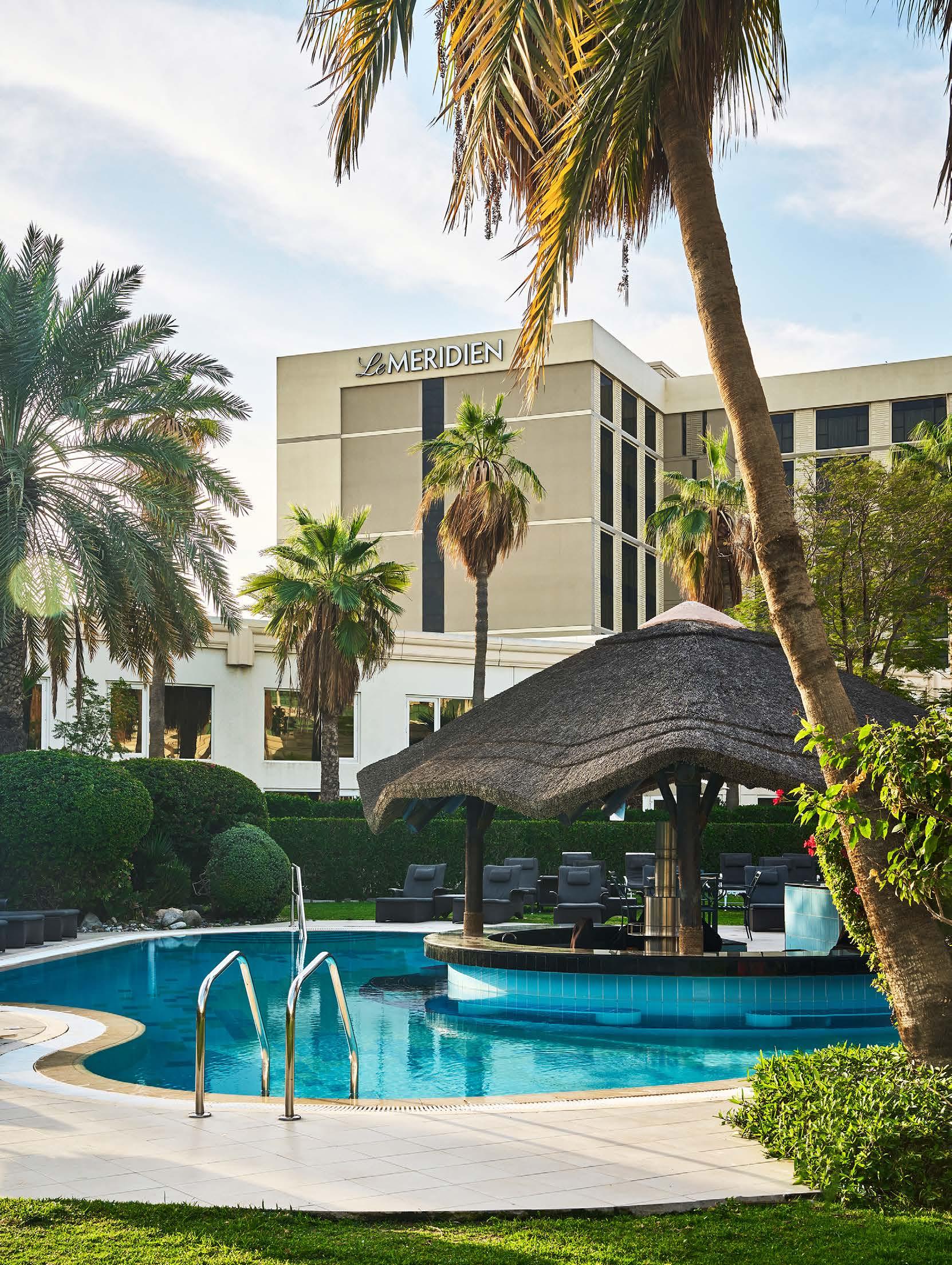
Rediscover Inspiration at Le Méridien Dubai Hotel & Conference Centre
A serene sanctuary at the heart of the city’s dynamic landscape, Le Méridien Dubai Hotel & Conference Centre redefines the art of urban hospitality. Set across 15 acres of immaculately landscaped gardens, the hotel o ers an elegant retreat just moments from Dubai International Airport, placing guests within e ortless reach of the city’s most iconic districts, from Dubai Mall and Burj Khalifa to the storied charm of the Gold Souk and Dubai Creek.
With 580 beautifully appointed rooms and suites, the property invites travellers into a world where contemporary design meets the timeless sophistication of the Le Méridien brand. The distinguished 196 rooms in the Le Royal Club wing elevate the experience with spacious, light-filled rooms, and refined club privileges, while select ground-floor accommodations in the main building open directly onto lush gardens and tranquil pools, o ering a resort-like ambience rarely found in the city.
Well-being is woven into the hotel’s DNA. Guests may indulge in five swimming pools, unwind in serene outdoor enclaves, or train at one of Dubai’s most expansive and advanced fitness facilities, sta ed by expert coaches and equipped with cutting-edge technology to nourish mind, body, and spirit.
At the heart of the property lies an extraordinary culinary journey. Housing 18 acclaimed restaurants and bars, Le Méridien Dubai is home to some of the city’s most storied dining institutions. From the ever-legendary Seafood Market, celebrated for its market-style freshness, to Casa Mia, Dubai’s pioneering Italian restaurant, each venue reflects a passion for authenticity, craftsmanship, and memorable dining artistry.
A beacon for global meetings and events, the hotel features more than 44,000 sq. ft. of versatile event spaces, comprising 24 impeccably designed venues outfitted with modern audiovisual capabilities. Whether orchestrating a grand celebration for 1,750 guests, hosting an international exhibition, or curating an intimate executive gathering, the hotel’s specialist events team and award-winning culinary experts bring each vision to life with impeccable precision and creative flair.
From inspired dining to world-class event facilities, and from resort-style relaxation to unmatched convenience, Le Méridien Dubai Hotel & Conference Centre stands as a destination where cosmopolitan energy and cultivated luxury converge, inviting every guest to unlock a stay that is truly memorable.
"There is always a special energy around awards s eason."
As we prepare for the Architecture Leaders Awards, there is a genuine sense of excitement across the team. It is one of the biggest nights on our calendar and a celebration of the architects, designers, developers, consultants, and visionaries who continue to redefine the built environment across the Middle East.
The beauty of the Architecture Leaders Awards goes beyond recognising excellence. It is one of those rare evenings when the industry comes together to celebrate, reconnect, and simply enjoy the moment. There are inspiring conversations, familiar faces, new friendships, plenty of laughter, music, dancing, and a chance to let your hair down after months of hard work. Above all, it is a celebration of the people whose creativity, passion, and dedication continue to shape the region's built environment.
That same spirit is reflected throughout this issue.
Our cover story features Ignacio Gomez, Global Design Principal at Aedas, whose perspective on architecture goes far beyond buildings and skylines. Having spent more than two decades helping shape the Middle East's architectural landscape, Ignacio believes architecture should emerge from culture, context, and human experience rather than trends or imported formulas. What resonated most with me, however, was his commitment to nurturing the next generation of architects.
In an industry often focussed on what we build, Ignacio reminds us of the importance of investing in who will build next. His passion for supporting young talent, creating opportunities, and ensuring knowledge is passed on is a powerful reminder that true legacy is not only measured by projects completed, but by the people inspired and empowered along the way. As leaders, we all have a responsibility to create pathways for fresh thinking, new perspectives, and the future voices of our profession.
Elsewhere in this issue, we take readers inside one of the region's most impressive fast-track hospitality transformations. Ross Trivett, General Manager
share the story behind the remarkable refurbishment of The Meydan Hotel. Delivered within an ambitious 38-week programme, the project demonstrates the precision, teamwork, and leadership required to transform a landmark hospitality destination against the clock. We also spotlight exciting projects, innovative products, industry insights, and the personalities shaping the future of architecture and design across the region. Our Pick of the Month comes from IDA Homes, whose Kaya & Kyna Rattan Collection brings natural texture, artisanal charm, and breezy elegance to contemporary interiors—perfect for the summer months ahead.
I hope you enjoy the issue, and if you're joining us at the Architecture Leaders Awards, I look forward to celebrating with you in Dubai.
Roma
Arora Editor
roma@bncpublishing.net @romaarora_
CEO WISSAM YOUNANE wissam@bncpublishing.net
MANAGING DIRECTOR RABIH NAJM rabih@bncpublishing.net
GROUP PUBLISHING DIRECTOR JOAQUIM D’COSTA jo@bncpublishing.net +971 50 440 2706
COMMERCIAL DIRECTOR ANDREA MOCAY andrea@bncpublishing.net
COUNTRY MANAGER KSA AMJAD FAKHOURI amjad@bncpublishing.net +966 54935 4430
DIGITAL REPORTER REEBA ASGHAR reeba@bncpublishing.net
DIGITAL MEDIA PRODUCER EDUARDO BUENAGUA Eduardo@bncpublishing.net
SUBSCRIBE subscriptions@bncpublishing.net
PO Box 502511 Dubai, United Arab Emirates T +971 4 420 0506 | F +971 4 420 0196
For all commercial enquiries related to Design Middle East, contact our Group Publishing Director JOAQUIM D’COSTA jo@bncpublishing.net | T +971 504402706
of Khansaheb Interiors, and Ryan Emsley, General Manager of Khansaheb MEP,
Returns darkness to
bega.com/darksky
INC Appoints Ahmed Al Amleh as Senior Client Development Manager
After six and a half years delivering landmark projects across the Kingdom, Ahmed Al Amleh moves into a new role, one built on the relationships he has spent his career quietly forging.
When INC first opened its doors in the Kingdom of Saudi Arabia in 2019, Ahmed Al Amleh was there. Not just as an employee, but as a cornerstone, helping the company navigate the complex bureaucracy of setting up a business in a new market, and quietly building the client relationships that would become pillars of INC’s regional identity. Since then, Ahmed has served as a Project Manager, leading the delivery of over 18 major client engagements with a track record that speaks for itself. Six and a half
years on, he steps into an exciting new chapter. Effective 1 June, Ahmed takes on the role of Senior Client Development Manager.
“My journey has always been about delivering projects, but this role is about building the relationships that drive them. I’m excited to work more closely with clients, understand their ambitions, and bring together the right people to turn those ambitions into meaningful, longterm outcomes.”
Ahmed Al Amleh, Sr. Client Development Manager · INC KSA The move is a natural evolution. Before joining INC in February 2020, Ahmed spent two and a half years at Optima, complementing a Bachelor’s Degree in Civil and Infrastructure Engineering from Al Zaytoonah University of Jordan, earned in 2016. He is also a registered member of the Saudi Council of Engineers, a credential that has underpinned his credibility on some of the region’s most prominent projects.
His project portfolio at INC reads like a who’s who of global enterprise, and consistently praised by the clients he has served. Engagements include Amazon, Standard Chartered, Navantia, Ashurst, DLA Piper, AbbVie, KornFerry, BNP Paribas, and Vertex, alongside landmark Public Investment Fund initiatives including PIF Shareek and PIF sarcc. Across each, Ahmed’s ability to deliver on time and on brief has been a defining constant, earning glowing feedback from clients time and again.
In his new role, Ahmed’s focus will centre on nurturing those longstanding client relationships while actively identifying and pursuing new market opportunities, a dual mandate that plays directly to his strengths.
“Ahmed has been an integral part of INC’s growth from day one in the Kingdom. He has forged many client relations in the early years
which remain key clients of ours six years later. Therefore, it’s very fitting that he will pivot internally to help ensure those relationships are nurtured, whilst also searching out new market opportunities.”
Andrew Mulligan, Managing Director · INC KSA
Mulligan also highlighted the significance of Ahmed’s delivery track record to the new chapter ahead. INC’s Raqim Wahed, meaning number one, status in KSA, a distinction built on a philosophy of consistent, on-time delivery, has been a cornerstone of the company’s regional reputation, and one that Ahmed has helped shape through his project work. That discipline, Mulligan notes, will be a valuable asset as Ahmed steps into client development.
“Ahmed has demonstrated unwavering loyalty to INC,” Mulligan added, “and his successful delivery experience on multiple projects over recent years can only strengthen his skills in his new role.”
For a company that opened in KSA just six years ago and has since built an enviable client roster, having someone of Ahmed’s institutional knowledge and relational depth in this role is both a strategic move and a reflection of the culture INC has worked to build. One where loyalty, expertise, and long-term thinking are recognised and rewarded. It is a culture that has earned INC its standing as the region’s leading fit-out firm, a position most recently affirmed by being named Fit-Out Firm of the Year 2026 at the Design Middle East Awards, for the third consecutive year. Ahmed’s new role is both a personal milestone and a clear signal of the ambition that continues to drive INC forward.
Doing our part for a better world
Follow our progress
that go into it, and what happens to it at the end of a long, useful life.
MMAC Design Unveils New Identity and Leadership Structure
MMAC Design is turning a page.
The Dubaibased hospitality interior design studio, founded in 2013 and ranked 4th in the GCC by hotel project volume among mid-size UAE studios, today announces a refreshed brand identity and a forward-looking leadership structure as it enters its next decade.
Anil Mangalat steps into the role of managing director, taking the lead on a transformative business strategy. Christian Merieau, as creative director, focuses on what he has always done best: shaping the creative output of the studio. It’s a shift that will usher MMAC into a new era, defined by stronger stewardship, sharper creative ambition, and a dynamic collective culture.
“This isn’t merely a new visual identity. It reflects a deeper clarity of purpose. We know who we are, the caliber of work we wish to pursue, and the value we bring to it. We are intentionally focused on projects where our
thinking, experience, and creative direction can have a meaningful impact,” says Anil Mangalat, managing director and cofounder at MMAC Design.
Designed for a region in motion
The GCC hospitality pipeline remains one of the most significant in the world. Saudi Arabia alone has 68,000 new hotel keys in development ahead of Expo 2030 and the FIFA World Cup 2034, skewed heavily toward lifestyle, precisely where MMAC has built its deepest expertise. The studio is also expanding into airport lounge design, with a growing portfolio of Emirates Airlines lounges globally, in a market forecast to grow over $31 billion by 2031.
Both founders are clear-eyed about the current regional climate. The new year has brought uncertainty, rising construction costs, slashed project budgets, and understandable caution across the industry. But for a studio that has navigated two major financial downturns in its twelve-year history, the response
is measured rather than reactive.
“We’ve navigated major global disruptions before, and each time Dubai has emerged stronger, more ambitious, and more resilient. That same mindset defines our approach. We remain agile, decisive, and deeply attuned to the market – qualities that allow us not only to adapt, but to evolve with conviction,” explains Christian Merieau, creative director and co-founder leading commercial development at MMAC Design.
Mangalat is equally direct: the studio’s strategy through 2032 centers on deepening its position in lifestyle hospitality across the MEA region, growing its airport lounge portfolio, and selectively exploring adjacent verticals.
“Our strategy is well-defined: to specialise further within design-led hospitality, expressed through a distinct MMAC creative sensibility. This is the direction I am committed to advancing Our strategy is firmly defined: to deepen our specialisation within design-led hospitality and express it through a creative sensibility that is distinctly MMAC. This is the direction I am committed to advancing , one that reinforces our identity, sharpens our focus, and deepens the value we bring,” says Anil.
Hospitality design is being redefined by experience led, narrative driven thinking where storytelling, space, and operational intelligence are inseparable. The design industry continues to rely on trustworthy and transparent relationships, bridging all stakeholders from client to supplier. Owners and operators today want a solid design partner who understands the entire ecosystem. That’s the conversation MMAC has been built for and Merieau will continue to cultivate client relationships in this new corporate arrangement.
At the heart of mmac’s next chapter is its team.
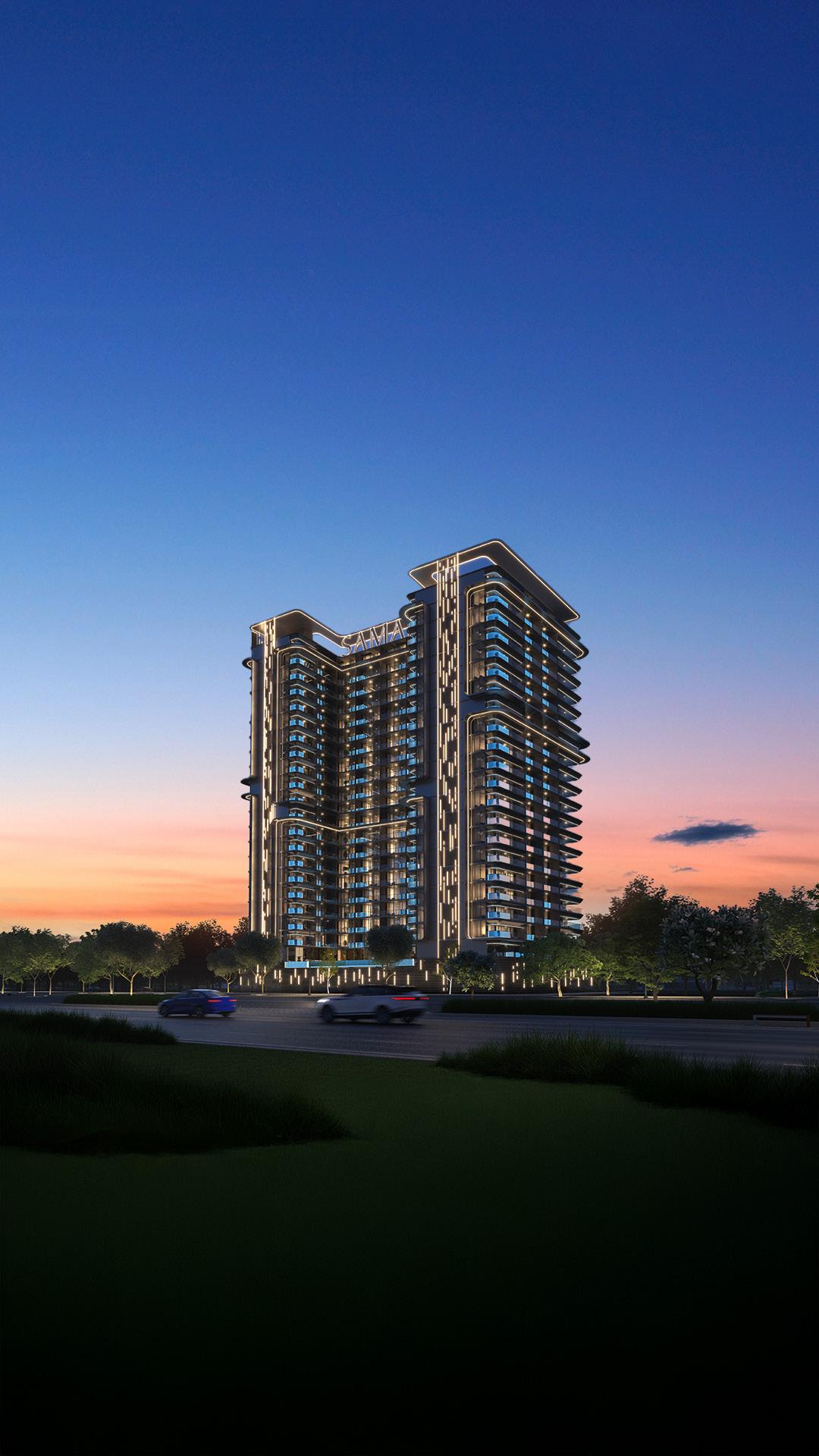
ANANTARA SHARJAH RESIDENCES
ANANTARA SHARJAH RESIDENCES
A NEW CHAPTER OF LUXURY EXPERIENCES BY THE SEA
A NEW CHAPTER OF LUXURY EXPERIENCES BY THE
SEA
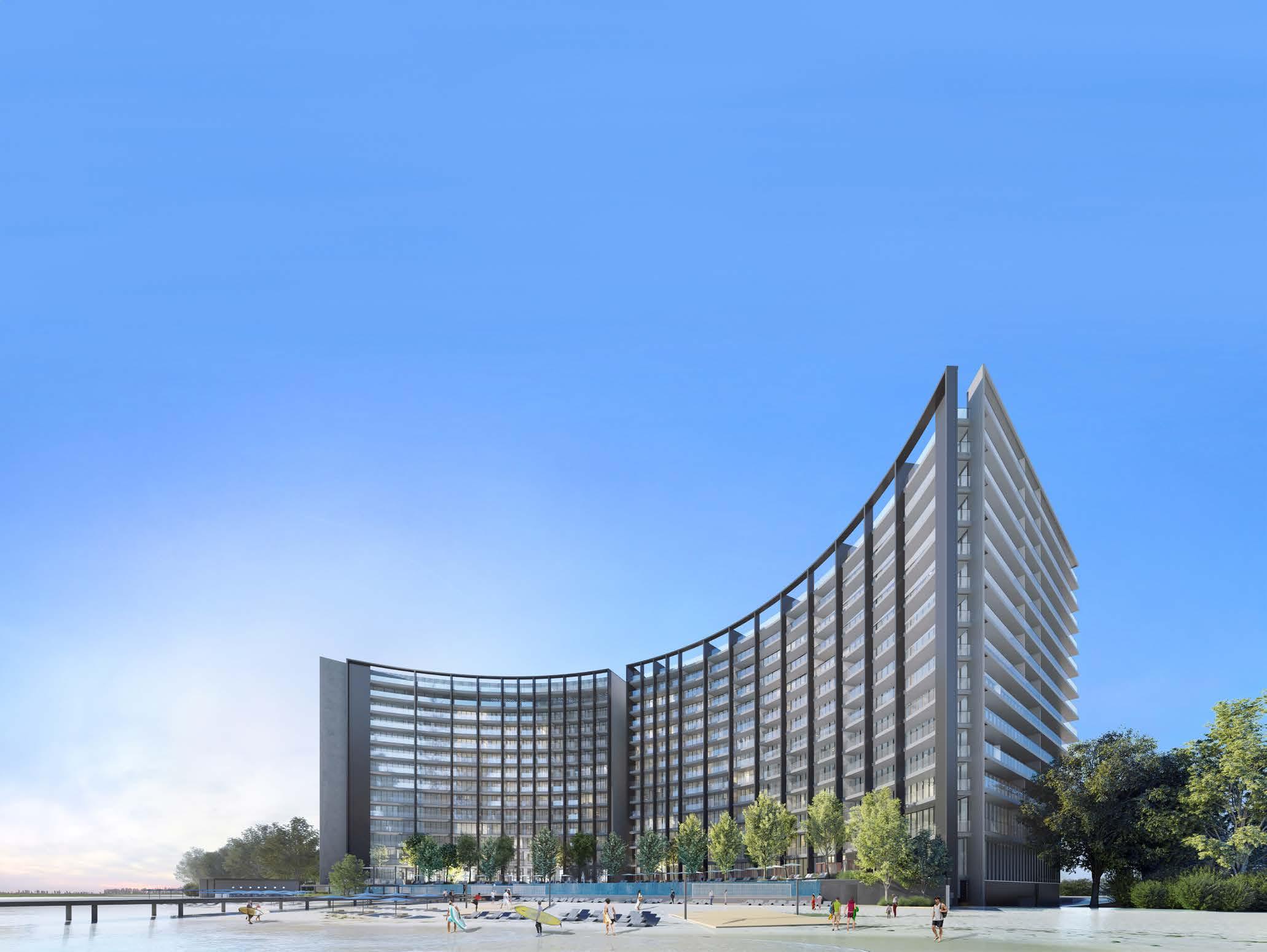
Bringing luxury seaside living to Sharjah for the first time, owners at the Anantara Sharjah Residences enjoy access to the Anantara Sharjah Resort’s world-class amenities, including an infinity pool, five distinctive restaurants, an Anantara Spa and a state-of-the-art gym.
Bringing luxury seaside living to Sharjah for the first time, owners at the Anantara Sharjah
As an investment, owners can enjoy the benefits of a rental management scheme operated by Anantara Hotels, Resorts & Spas, allowing them to maximize their returns when they are not resident in the property.
Residences enjoy access to the Anantara Sharjah Resort’s world-class amenities, including an infinity pool, five distinctive restaurants, an Anantara Spa and a state-of-the-art gym.
As an investment, owners can enjoy the benefits of a rental management scheme operated by Anantara Hotels, Resorts & Spas, allowing them to maximize their returns when they are not resident in the property.
To register your interest, visit arada.com
LIFE IS A JOURNEY.
To register your interest, visit arada.com
LIFE IS A JOURNEY.
Herman
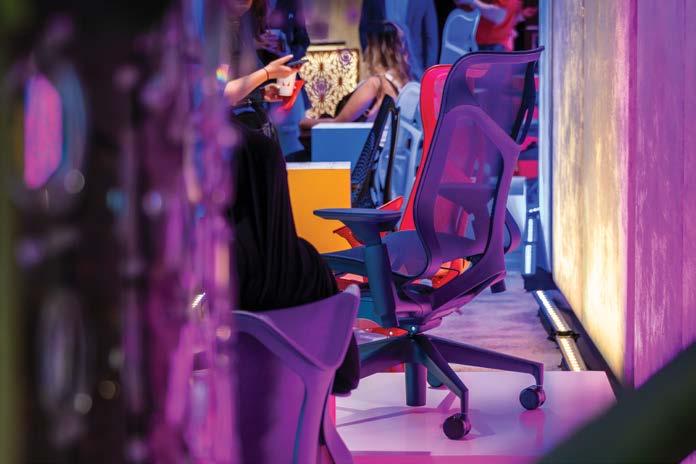
Miller Explores What It Means to “Sit Your Best” at Cinema-Themed Event
Recently, Herman Miller
welcomed clients and members of the design community to a unique cinemathemed morning experience exploring what it truly means to “sit your best.” The event brought
together design, ergonomics, and workplace wellbeing in an engaging and interactive setting.
Designed to showcase the impact of performance seating on the modern workplace, the experience invited guests to discover how thoughtful seating design can support comfort, movement,
focus, and productivity throughout the day.
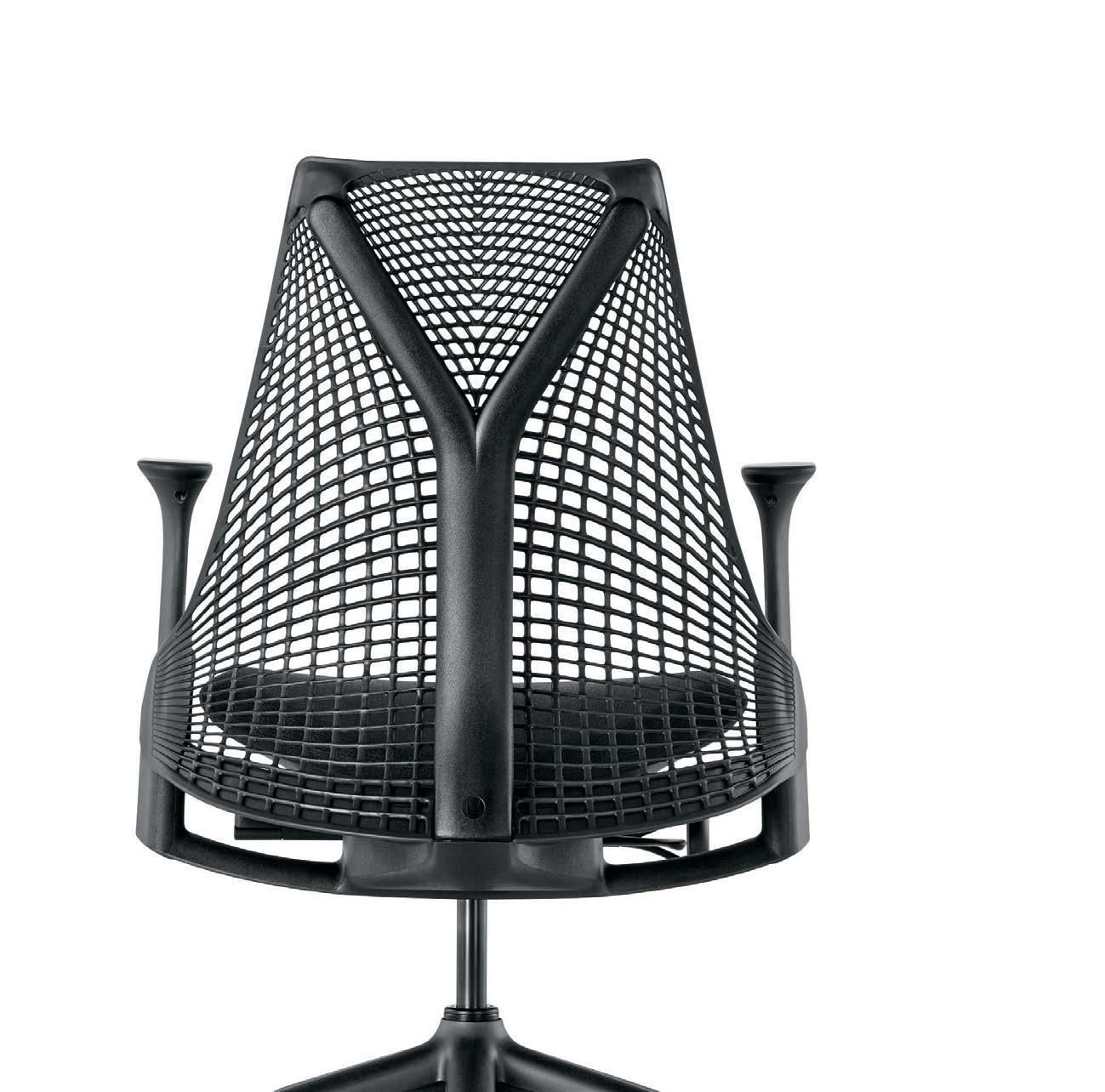
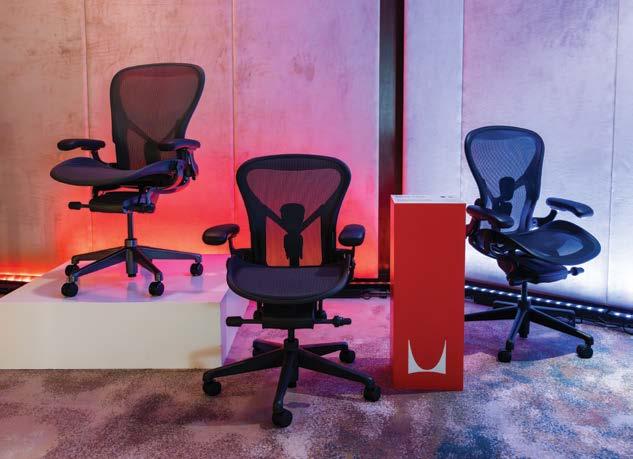
At the heart of the event was a curated display of Herman Miller’s highperformance seating collection, including the iconic Aeron, Embody, Cosm, Mirra 2, and Sayl chairs. Guests were encouraged to test the chairs firsthand and participate in a personalised Herman Miller chair assessment, helping them identify the best seating solution based on the way they work, move, and collaborate within their own environments.
The morning continued with an insightful panel discussion moderated by Siddarth Peters, Co-Founder of Love That Design. Bringing together perspectives
from behavioural science, workplace strategy, and interior design, the panel featured Pallavi Dean, Founder & CEO of ROAR, Sana Joudeh, Neuro Change and Behavioural Scientist, and Stacy Stewart, MillerKnoll Senior Regional Director.
Together, the speakers explored how the way we sit can influence posture, wellbeing, health, and performance, while highlighting the growing importance of human-centred workplace design. The discussion offered guests science-backed insights into how seating plays a critical role in shaping better experiences for people at work, learning, and collaboration spaces.
Adding to the fun cinema-inspired concept, the event concluded with a special prize draw, where two lucky guests won Herman Miller chairs selected through a cinema ticket raffle.
Blending education, experience, and community, the event created an inspiring platform for meaningful conversations around design and wellbeing, while giving guests the opportunity to truly experience what it means to sit their best.
Herman Miller’s cinemathemed event explored how performance seating shapes comfort, focus, and wellbeing at work.
Hansgrohe Celebrates 125 Years Of Innovation In Premium Bathroom And Kitchen Design
What defines a truly good shower
experience while also requiring as little hot water consumption and cleaning effort as possible.
What Lies Behind Modern Nozzles
The latest innovation from the spray lab is a new generation of nozzles featuring FlexPower technology. These nozzles are used, among other applications, in the hansgrohe Avalegra AquaUnit—a novel combination of washbasin and faucet with an integrated spray function.
“For us, every development begins with the question of how water should feel in everyday
experience? For hansgrohe, the answer lies in the spray pattern. For decades, the brand has been dedicated to making water an experience that appeals to both body and senses. This philosophy is reflected in recent innovations such as the Avalegra AquaUnit and Raindance Alive. Now, hansgrohe is offering insights into the development approaches behind its spray technologies.
In the company’s dedicated Spray Research Lab, technologies are created that decisively influence how water feels on the skin. Under realistic conditions, concepts are tested, simulated, and refined. The goal is to develop products that deliver a pleasant water
use. Our ambition for this nozzle was a permanently stable spray pattern with minimal maintenance effort,” explains Jochen Armbruster, Research and Development at hansgrohe.
The result is a cloverleaf-shaped nozzle outlet. Thanks to the elastic geometry of the silicone
nozzle, it adapts to changing water pressure and ensures a uniform, consistent spray pattern. This dynamic movement helps reduce limescale deposits at an early stage. As the nozzle expands and contracts, deposits lose their adhesion and simply flake off. The technical concept follows a familiar everyday principle: honey bottles that open and close their outlet when pressure is applied. The development team transferred this principle to the spray nozzle, creating a precisely calculated geometry that flexibly expands with water flow while remaining shape-stable.
Spray Expertise Beyond the Nozzle
At the heart of the hansgrohe Raindance Alive shower line is also the spray pattern. However, hansgrohe’s spray expertise extends far beyond nozzle development alone. Newly designed spray modes are specifically tailored to different usage scenarios. hansgrohe differentiates between Comfort, Performance, and Focus spray types.
For Raindance Alive showers, hansgrohe combines two Comfort spray types: RainAir and PowderRain. RainAir creates a dense shower spray with airenriched droplets, delivering a full-bodied shower sensation inspired by invigorating tropical rainfall. PowderRain, by contrast, is reminiscent of a gentle summer rain. Ultra-fine droplets form a soft spray that envelops the body. Achieving this precise balance requires meticulous attention to detail—but the result speaks for itself. An independent consumer study* found that 9 out of 10 test users love the feeling of Raindance Alive.
Building Trust Through Brands
XU MA, Founder & Chairman, Tomorrow World Real Estate, explores why branded residences are emerging as a powerful symbol of trust, quality, and longterm value in Dubai’s evolving property market.
A PARTNERSHIP WITH A GLOBALLY RESPECTED LUXURY BRAND ACTS AS AN INSURANCE POLICY FOR QUALITY. BUYERS KNOW THAT A WORLD CLASS BRAND WILL NOT RISK ITS CENTURY-OLD REPUTATION ON A SUBSTANDARD BUILD OR A MISMANAGED PROPERTY.
The ultimate luxury is no longer just a designer name above the door, it’s the peace of mind that comes from living in a highly optimised, futureproofed ecosystem.
Take a drive through the region’s most exclusive communities and you will notice a fascinating evolution in the skyline. From supercar manufacturers to high end fashion houses, luxury logos are becoming as foundational to new developments as the concrete and steel themselves.
But to consider this trend an aesthetic indulgence is to misunderstand the psychology of today’s buyer. In the highly competitive property market, luxury branding
has evolved beyond a status symbol. It has become the ultimate currency of trust.
Why are the world’s most exclusive lifestyle, automotive, and fashion brands turning to real estate? Simply because they desire total immersion. A handbag or a sports car offers a fleeting interaction with a brand – a residence offers a permanent one. These companies are looking to monetise their exclusive status by translating it into living experiences. It’s worth noting that they do not hand their naming rights over to just anyone. Global brands are ruthlessly protective of their equity. When they enter the real estate space, they seek out visionary developers who can execute complex, uncompromising visions without diluting the brand’s core identity. They demand operational excellence, financial stability, and a shared alignment with the finer details.
For buyers and investors, buying off plan can sometimes feel like a leap of faith. This is exactly where the branded residence becomes a psychological safety net.
A partnership with a globally respected luxury brand acts as an insurance policy for quality. Buyers know that a world class brand will not risk its century-old reputation on a substandard build or a mismanaged property. This trust directly influences asset performance. Branded residences consistently command premium yields and showcase remarkable
resale value. For the international investor, the brand acts as a universal translator, a recognisable quality that requires no market knowledge to understand. It turns a local property into a globally recognised asset class.
But as the market matures, the modern investor’s eye is getting even sharper.
We are rapidly moving past the era where slapping a famous logo on the podium and putting designer cushions in the lobby was enough to command a premium.
Today’s buyers can spot the difference between surface-level licensing and a deeply integrated collaboration. Meaningful branding requires embedding the partner’s DNA into the very architecture, the service culture, and the lifestyle curation of the building. This is the difference between living in a building named after a brand, and living in an environment designed by one. So, where does branded living go from here? I believe the next chapter of this sector will move beyond pure luxury positioning and shift heavily toward holistic performance. The discerning buyers of tomorrow will expect their branded environments to deliver more than visual opulence – they will demand uncompromising structural integrity and operational excellence.
The ultimate luxury is no longer just a designer name above the door, it’s the peace of mind that comes from living in a highly optimised, futureproofed ecosystem.
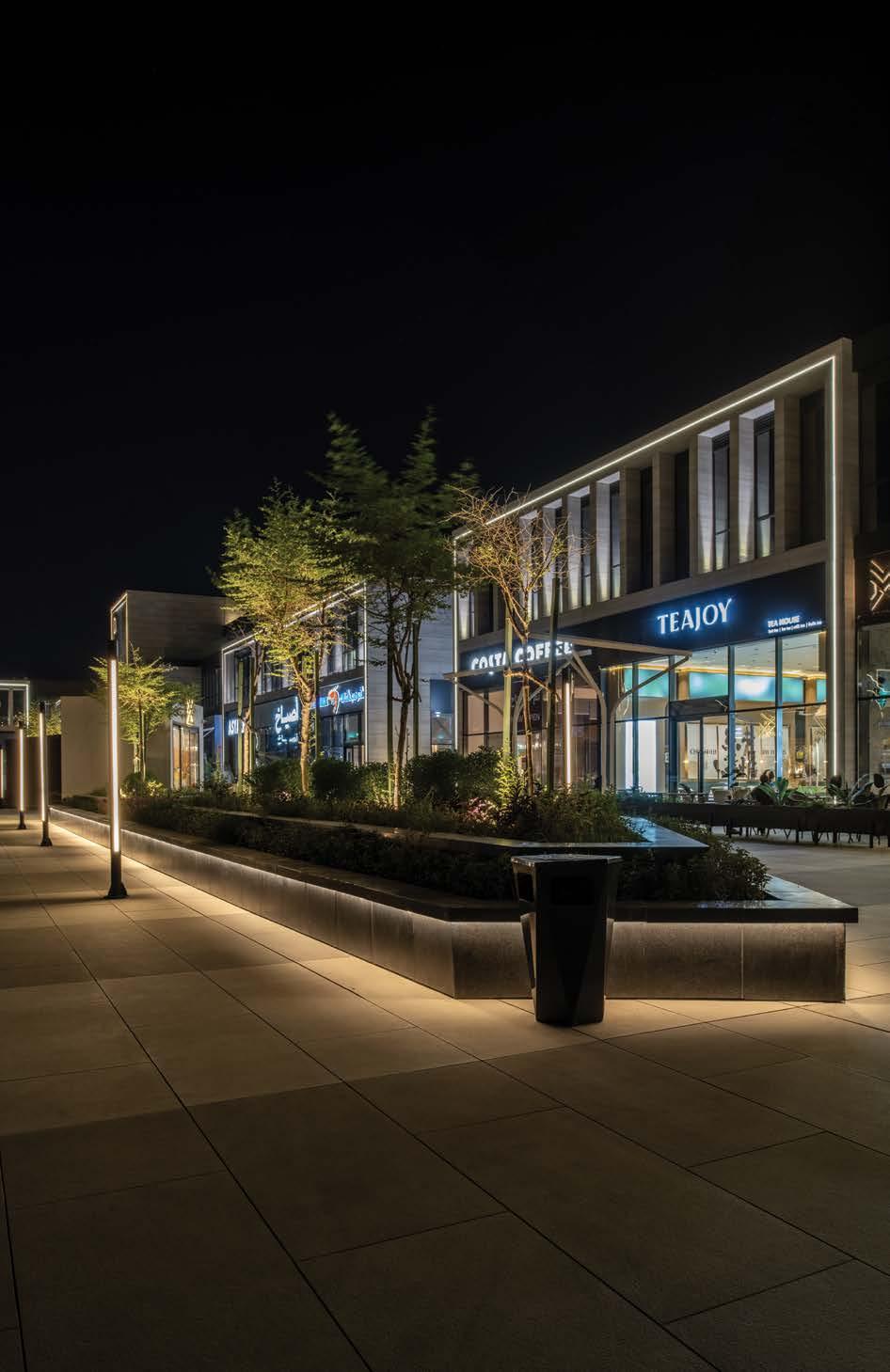
unveils a refined lighting concept in Riyadh, using the interplay of warm and cool tones to enhance architectural elements and create an inviting nighttime experience.
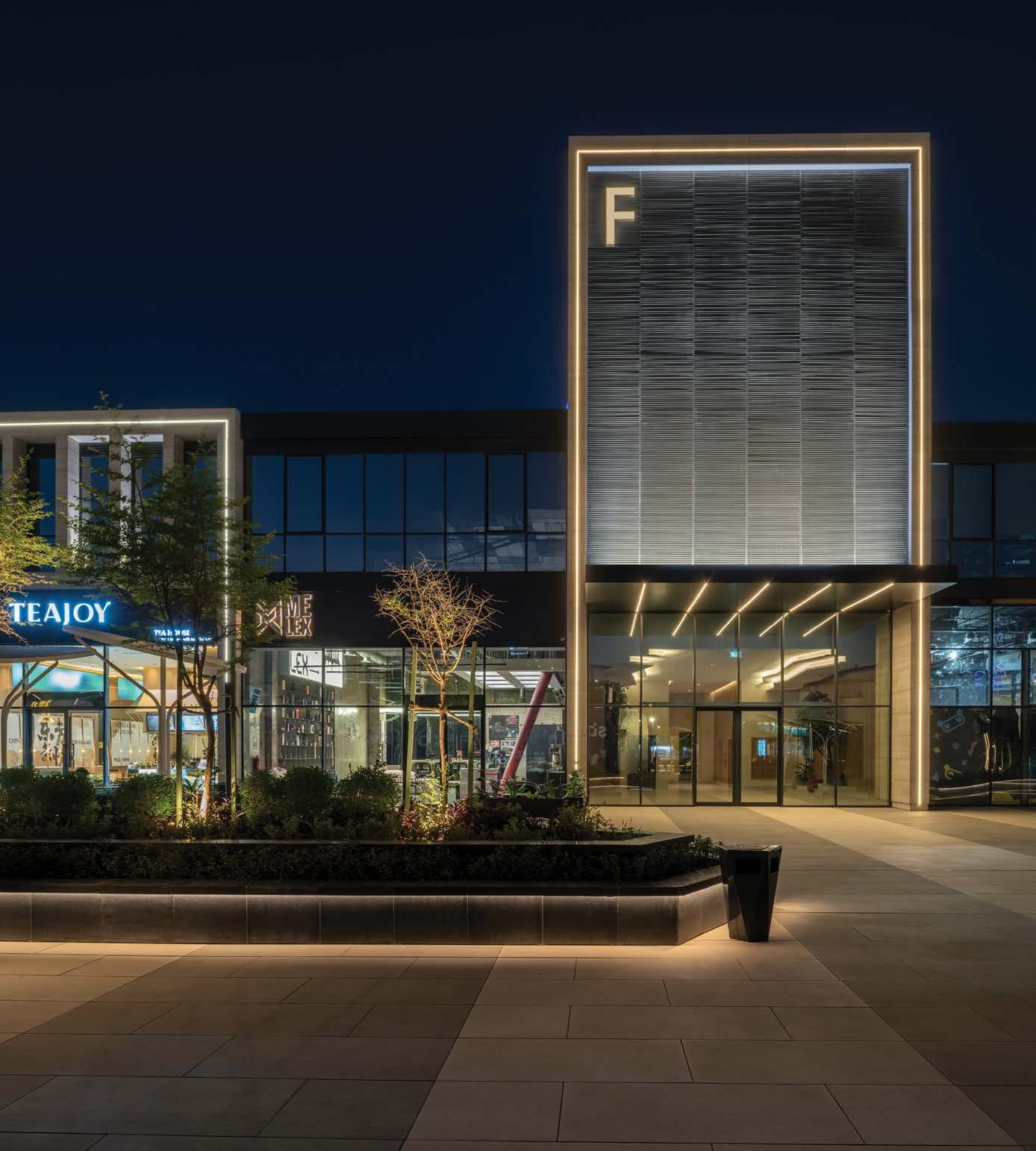
Aluzo Lighting Design has crafted a sophisticated lighting concept for Narjis Business Park, a major commercial development currently under construction in the Al-Narjis district of Riyadh. Envisioned as a contemporary business and lifestyle destination, the project reflects an architectural identity rooted in simplicity, modernity, and contrast. Aluzo’s lighting approach has been carefully developed to enhance these defining characteristics while creating a welcoming and memorable nighttime experience.
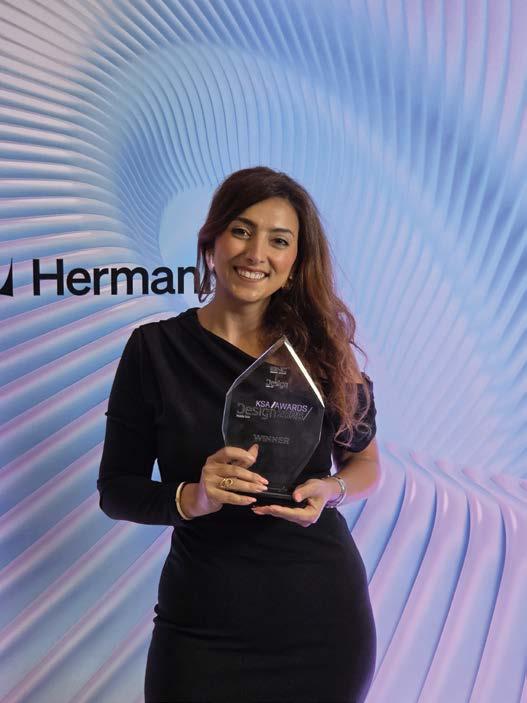
Jinane Abi Khalil, Managing Partner at Aluzo Lighting Design, collected the award for Qiddiya Welcome Center at the Design Middle East Awards KSA 2026 in April, where the project won Lighting Project of the Year.
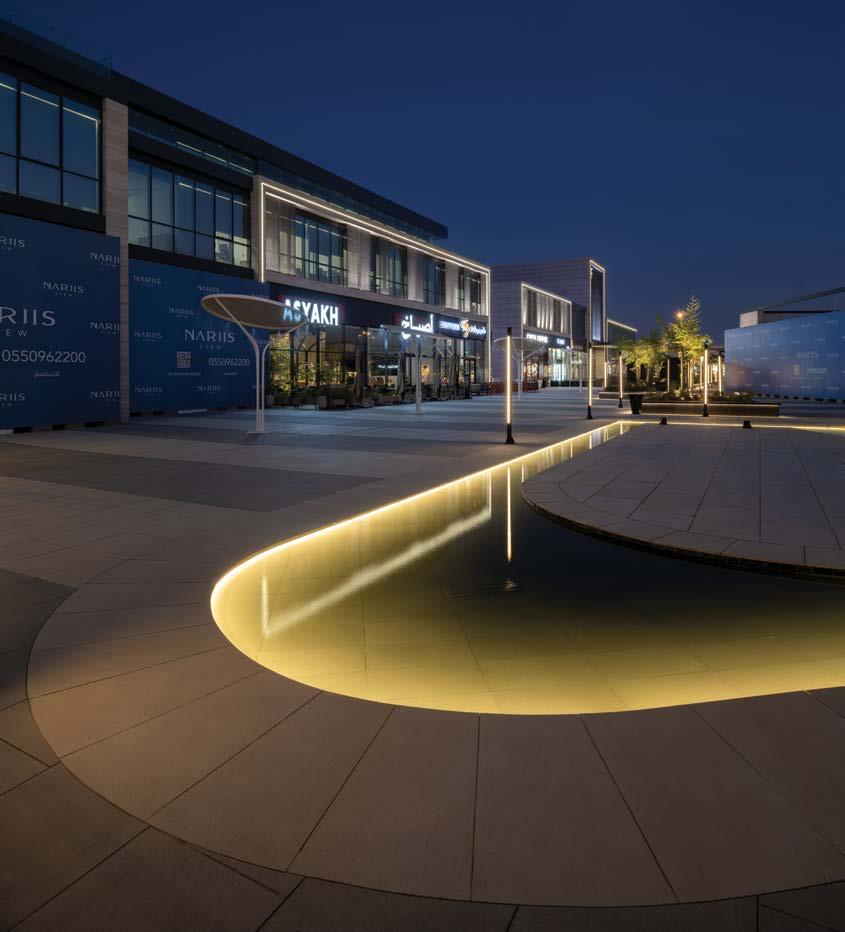
Warm and cool tones come together to elevate contemporary architecture after dark.g Project of
Jinane Abi Khalil, Managing Partner at Aluzo Lighting Design, says: “Our vision for the landscape and facade is to create a captivating illumination that artfully accentuates the architectural elements in a minimal way. The interplay of warm and cold lighting will lend a dynamic ambiance to the surroundings, creating an inviting atmosphere for all to enjoy.”
The lighting design focuses on creating subtle yet impactful illumination that works in harmony with the architecture. The architecture of Narjis View embodies the essence of simplicity, modernity, and contrast, and the lighting concept has been designed to complement this vision. Through a contrast-focused lighting approach, the building’s architectural elements are carefully highlighted, creating an alluring environment that enhances the structure’s visual identity after sunset.
Skillfully positioned light sources emphasize unique features, textures, and architectural lines, adding depth through the dynamic interplay of warm and cool color temperatures. This layered lighting strategy introduces rhythm, dimension, and visual movement across the façade, allowing the building to stand out while maintaining a refined and timeless aesthetic.
To accentuate these defining characteristics, the proposed façade lighting design focuses on establishing contrasting layers that distinguish the commercial building in an elegant and understated way. Every lighting element has been thoughtfully integrated to reinforce the project’s minimalist architectural language without overpowering it.
Beyond the façade, the landscape
lighting has been envisioned to create an engaging and interactive visual experience. Certain areas within the landscape are dynamically illuminated to establish focal points and enhance the visitor journey throughout the development. By strategically highlighting pathways, gathering spaces, and landscaped zones, the general lighting creates a cohesive visual connection between the exterior architecture and the surrounding environment.
“A refined interplay of light and shadow transforms Narjis Business Park into a contemporary and inviting nighttime destination.”
The result is a carefully curated lighting experience that balances atmosphere, functionality, and architectural expression, positioning Narjis Business Park as a distinctive commercial landmark within Riyadh’s evolving urban landscape.
Thoughtfully layered lighting creates an inviting atmosphere across architecture and landscape.
Celebrating Tomorrow’s Design Talent
School of Textiles and Design, Heriot-Watt University Dubai Global Degree Show 2026 - Students' Projects
PROJECT NAME |
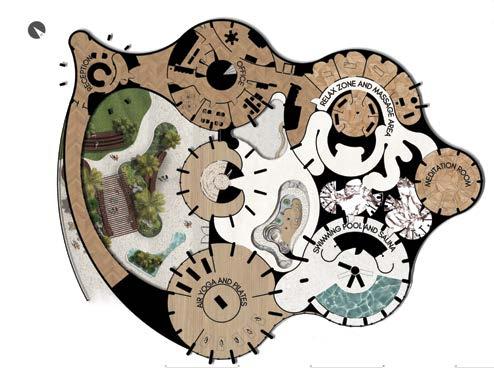
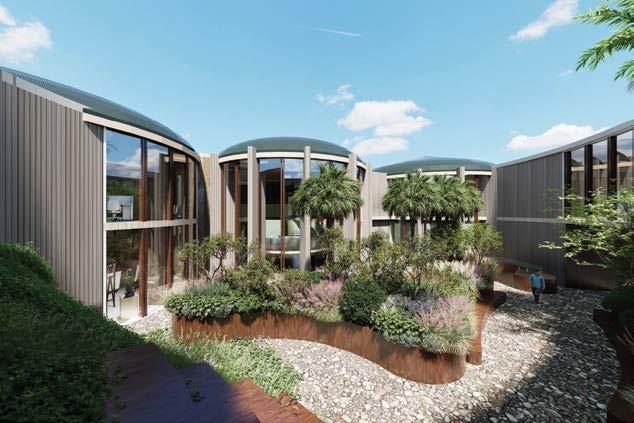
THE OFFLINE CLUB
A Digital-free Retreat Centre And Nature Reserve Ability.
THE CONCEPT |
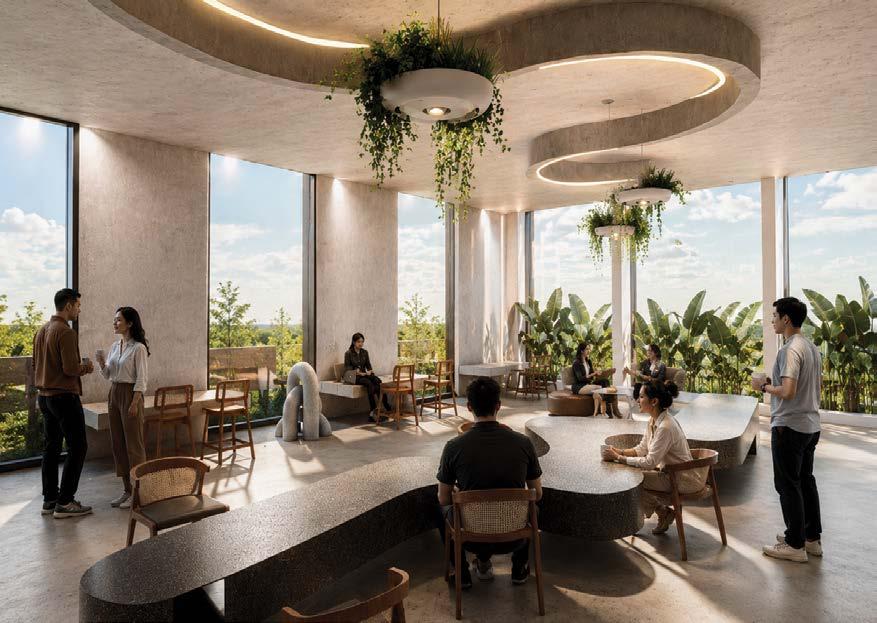
The Offline Club is a digital-free retreat centre designed to support reconnection with the self through nature, silence, and sensory experience. Responding to the psychological impact of prolonged crises and digital overload, the project redefines retreat as a spatial journey from tension and mental fatigue toward release, stabilisation, and healing. Through carefully designed spatial sequencing, the use of natural materials, and immersive landscapes, the environment encourages users to slow down, restore cognitive clarity, and reconnect with both natural surroundings and human presence. The Offline Club positions space as an active agent in recovery - supporting reflection, grounding, and emotional restoration within an increasingly overstimulated world.
DESIGN STATEMENT |
Interior architecture shapes more than movement through space; it influences how people feel, recover, and reconnect with themselves. I view spatial design as a psychological and sensory tool—one that can reduce tension, restore balance, and support emotional well being. My design approach focuses on creating environments that guide users through emotional and sensory transitions. Through The Offline Club, the aim is to use spatial sequencing, materiality, silence, and landscape intentionally to support clarity, calm, and reconnection. I am particularly interested in how spaces can respond to states of overload by encouraging users to slow down, regain rhythm, and emotionally recharge.
STUDENT NAME|
Mariam Najem
BA COMMUNICATIONS DESIGN
Year 4 | SCHOOL OF TEXTILES AND DESIGN, HERIOT-WATT UNIVERSITY DUBAI
PROJECT NAME |
BAYT
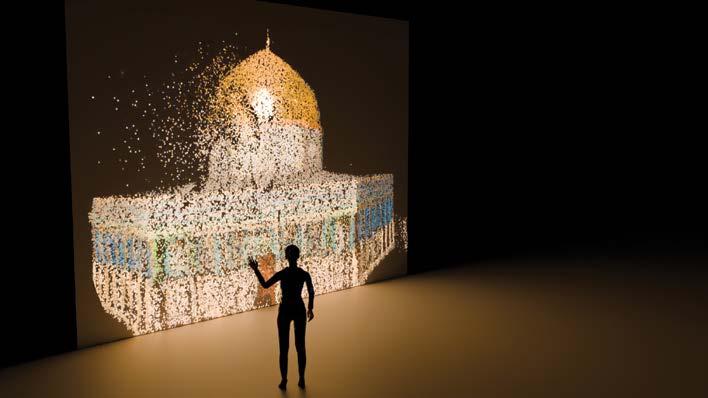
An Immersive Palestinian Experience
THE CONCEPT |
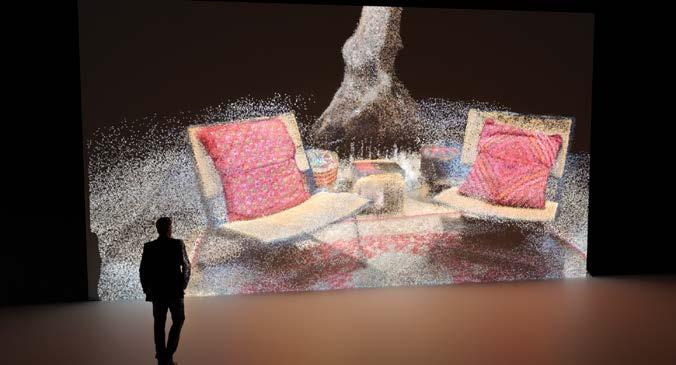
Bayt is an immersive, cultural experience that reconnects people with Palestine through memory, atmosphere, and storytelling. Designed for those unable to visit physically, the project recreates that emotional feeling of home through projection, virtual environments, sound, and interaction. Rather than presenting heritage as static information, Bayt focuses on feeling, presence, and cultural connection. The experience invites users to explore spaces inspired by Palestinian architecture, traditions, and everyday life, transforming remembrance into something interactive and personal. By blending technology with cultural identity, Bayt becomes both a digital archive and an emotional journey through belonging, nostalgia, and home.
PROJECT OVERVIEW |
Bayt is an immersive heritage experience designed to reconnect audiences with Palestine through digital interaction and storytelling. Using virtual environments, projection mapping, and atmospheric design, the project recreates moments inspired by Palestinian culture, architecture, and daily life. The experience encourages users to navigate and emotionally connect with spaces that reflect memory, identity, and belonging. Developed through tools such as Blender and TouchDesigner, Bayt combines technology with cultural preservation to create a contemporary interpretation of heritage. Rather than functioning as a traditional museum experience, the project focuses on immersion, allowing audiences to experience Palestine through exploration, atmosphere, and sensory engagement.
DESIGN STATEMENT |
As a designer, I am interested in creating experiences that feel emotionally immersive and culturally meaningful. My work explores how digital media and spatial storytelling can preserve identity, memory, and connection in contemporary ways. I am particularly drawn to blending technology with cultural narratives, using tools such as projection, virtual environments, and interaction design to transform heritage into something living and experiential. My approach focuses on atmosphere, emotion, and participation, allowing audiences to engage with culture beyond observation. I aim to design spaces that encourage reflection, empathy, and personal connection through immersive storytelling. Through Bayt, I wanted to create more than a visual representation of Palestine. My goal was to recreate a feeling of presence, belonging, and familiarity for people who may feel disconnected from it physically.
Emerging Talent
STUDENT NAME|
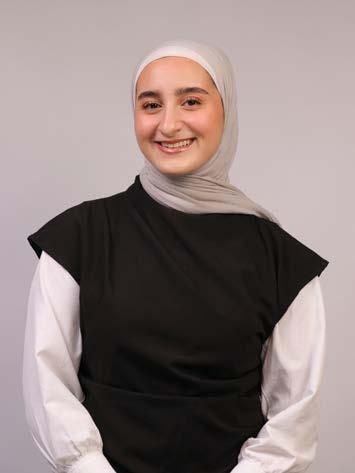
Aya El Bawab BA- FASHION BRANDING AND PROMOTION
Year 4 | SCHOOL OF TEXTILES AND DESIGN, HERIOT-WATT UNIVERSITY DUBAI
PROJECT NAME |
NAVVI
Independent Fashion Navigation Through Inclusive Design
THE CONCEPT |
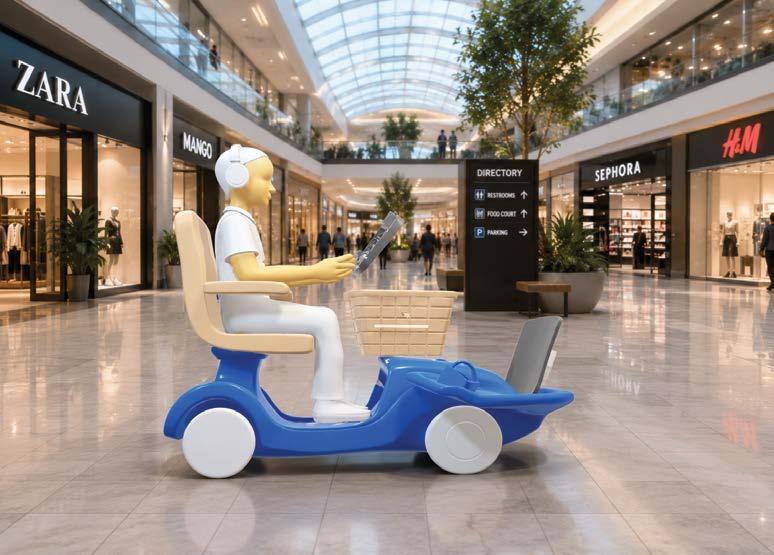
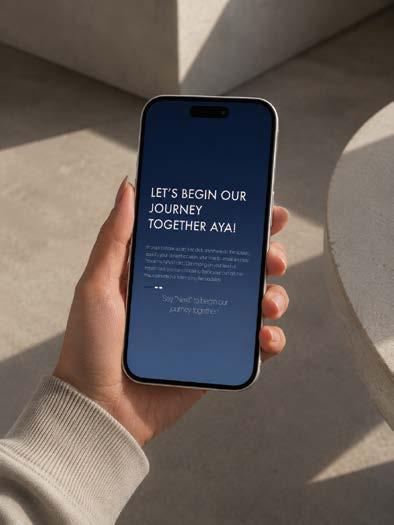
Fashion shopping can be enjoyable, expressive, and empowering. However, for visually impaired individuals, the same experience can often become stressful, dependent, and inaccessible. Challenges such as navigating retail spaces, identifying products, comparing options, and making style decisions can require constant external assistance, limiting independence, and reducing emotional comfort. Navvi responds to this gap through inclusive design, multisensory guidance, intelligent navigation, and human-centred service thinking. It is an AI-powered assistive smart cart paired with a personalised application, designed to guide users through voice cues, scent markers, adaptive routing, and optional human support.
By combining technology with empathy, Navvi aims to make fashion retail more accessible and dignified. It supports independent movement, confident decision-making, and a more inclusive shopping experience, allowing visually impaired users to explore, choose, and engage with fashion on their own terms.
DESIGN STATEMENT |
As a designer, I want my work to add meaning beyond aesthetics. This project challenged me to look beyond traditional fashion design and consider who is often excluded from the retail experience. That reflection led me to focus on accessibility and the experiences of visually impaired users. Through Navvi, I explored how design can become a tool for confidence, independence, and inclusion. The process of research, empathy-building, testing, and problem-solving helped me understand the importance of designing with people, rather than only for them. This project has shaped my identity as a designer committed to thoughtful, functional, and human-centred design that responds to real needs and makes everyday experiences more inclusive.
ENARA HELPS REDUCE CONFUSION DURING DAILY ROUTINES SUCH AS NAVIGATING SPACES,PREPARING MEALS, OR COMPLETING SELF-CARE TASKS.
STUDENT NAME|
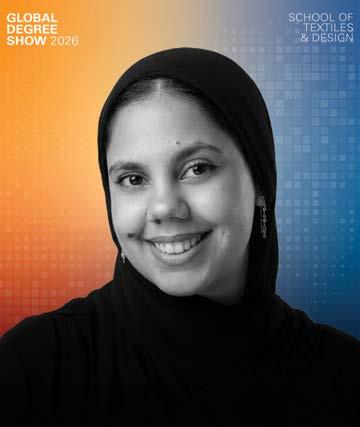
Ghazel Awienat
BA COMMUNICATIONS DESIGN
Year 4 | SCHOOL OF TEXTILES AND DESIGN, HERIOT-WATT UNIVERSITY DUBAI
PROJECT NAME |
ENARA
PROJECT BRIEF |
Enara is a dementia-focused pictogram system designed to support autonomy, dignity, and independence within the home. The project explores how isotype-based visual communication can assist individuals experiencing cognitive decline by guiding navigation, routine, and everyday actions through clear and consistent environmental cues. Informed by research into Alzheimer’s care, cognitive ageing, and healthcare communication, the system responds to the limitations of traditional signage by focusing on sequential guidance, familiarity, and behavioural support rather than simple room identification.
THE CONCEPT |
Enara is a pictogram-based environmental communication system designed to support the autonomy, dignity, and independence of individuals living with dementia. The project responds to the gradual breakdown of language, memory, and procedural recall by introducing a connected visual system that guides everyday actions within the home. Using isotype principles and consistent iconography, Enara helps reduce confusion during daily routines such as navigating spaces, preparing meals, or completing self-care tasks. Grounded in research on cognitive ageing and dementia care, the system aims to create a more supportive and understandable environment that allows patients to engage with familiar routines more confidently and independently.
DESIGN STATEMENT |
I believe communication design should do more than inform. It should support people in moments where communication itself becomes difficult. Through Enara, I wanted to explore how visual systems can create reassurance, familiarity, and independence for individuals living with dementia. My approach focuses on simplifying without reducing dignity, using structured pictograms and environmental cues to make everyday routines feel more accessible and less overwhelming. As a designer, I am interested in how visual language can move beyond aesthetics and function as a form of care, especially within spaces tied to memory, emotion, and daily life.
Emerging Talent
DESIGN IS NOT SIMPLY ABOUT MAKING AN ENVIRONMENT LOOK VISUALLY APPEALING; IT IS ABOUT CREATING EXPERIENCES THAT EVOLVE WITH THEIR USERS.
STUDENT NAME|
Tamira Noor Mohamed
BA (HONS) INTERIOR ARCHITECTURE AND DESIGN
Year 4 | SCHOOL OF TEXTILES AND DESIGN, HERIOT-WATT UNIVERSITY DUBAI
PROJECT NAME |
IDENTITY IN MOTION
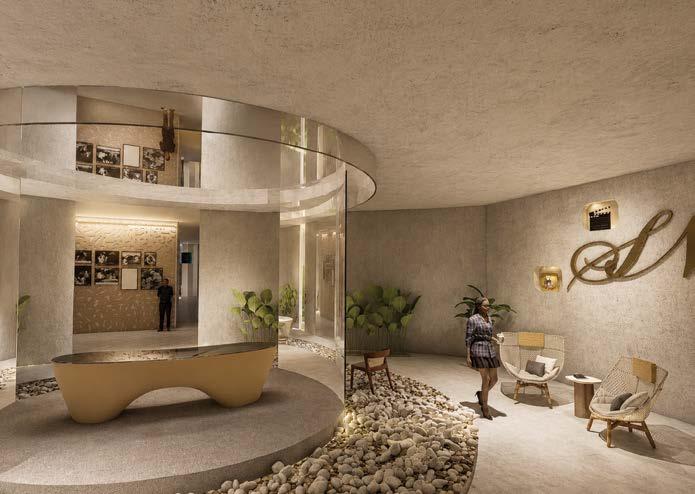
SNC studios
THE CONCEPT |
This project explores the dynamic nature of identity through the design of a film and music agency that reflects cultural modernity in the UAE. The building is imagined as a stage where filmmakers, musicians, and creative professionals can construct, communicate, and present their narratives. The concept is shaped by the tension between tradition and modernisation, creating a balance between public engagement and personal creative expression. Through flexible zoning, layered spatial experiences, holograms, digital media, and organic forms, the design highlights identity as something fluid, evolving, and continuously shaped by culture, creativity, and technology.
DESIGN STATEMENT |
Interior architecture can be understood as a form of storytelling. Spaces should not only inspire, but also surprise, question, and excite. Design is not simply about making an environment look visually appealing; it is about creating experiences that evolve with their users. Abstract ideas such as identity, well-being, sustainability, and cultural expression can be brought to life and made visible through spatial design. This approach focuses on creating spaces that feel meaningful, dynamic, and responsive to human experience. Through this lens, design becomes a way to communicate ideas, encourage curiosity, and allow users to experience stories through space.
THOUGHTFUL HOSPITALITY IS
Uncover the vibrant energy of Dubai while enjoying the signature warmth and sophistication of Marriott Resort Palm Jumeirah. Whether you’re relaxing by the pool, exploring the city, or discovering our destination dining experiences, your comfort and experience remain our highest priority. Reconnect and recharge at Saray Spa, enjoy beachfront leisure and wellness facilities, or simply unwind in beautifully designed surroundings. Whatever brings you here, we are committed to making every stay truly exceptional.
NEXT MADE FOR WHAT’S
IGNACIO GOMEZ, GLOBAL DESIGN PRINCIPAL AT AEDAS, BELIEVES ARCHITECTURE SHOULD BE SHAPED BY WHAT COMES NEXT—EMERGING FROM CULTURE, CONTEXT AND HUMAN EXPERIENCE RATHER THAN TRENDS OR IMPORTED FORMULAS.
BY ROMA ARORA
For Ignacio Gomez, architecture has never been about creating objects. It has always been about understanding people, places, and the invisible forces that shape the way we live. Over two decades in the Middle East, he has witnessed one of the most remarkable urban transformations in modern history, helping shape cities while simultaneously questioning what gives architecture lasting meaning—an inquiry that continues to define his work today.
Today, as Global Design Principal at Aedas, he continues to advocate for an approach rooted in culture, climate, and human behaviour. At a time when cities
are growing faster than ever and global influences are reshaping skylines across the world, Ignacio remains convinced that architecture works best when it feels like it belongs, and is ready for what comes next.
Shaped by Place, Guided by Purpose
For Ignacio, architecture has always been about more than buildings. It is about understanding the forces that shape a place—its culture, climate, history, and the people who call it home. Over the past two decades, that belief has guided his work across the Middle East, a region he has watched transform
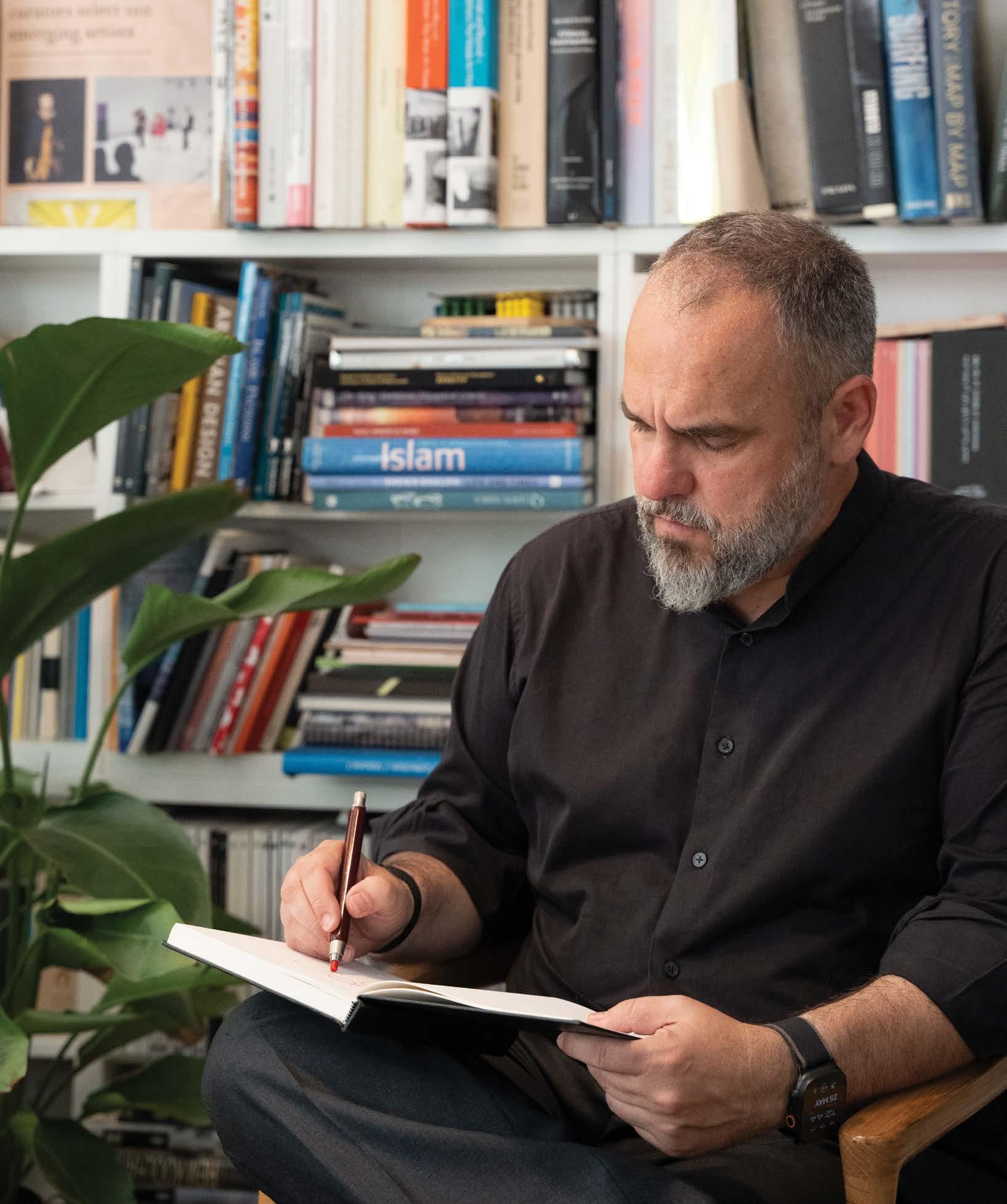
Ignacio Gomez, Global Design Principal at Aedas, believes meaningful architecture begins with understanding the habits, rituals, and behaviours that shape everyday life.
at an extraordinary pace. When Ignacio first began working in the region, the Middle East was already ambitious, but the confidence and global influence it commands today were still emerging. Cities have expanded, skylines have evolved, and architecture has become a powerful tool for shaping not only urban environments, but national identity itself.
“If you picture the Middle East of the mid-2000s, it was almost another era, not only physically, but psychologically. The region looked different, and the world looked at it differently. What many once dismissed as extravagance is now understood, in many respects, as strategic ambition: a way of building cities, brands and even national identity at speed,” Ignacio says.
For Aedas, that transformation
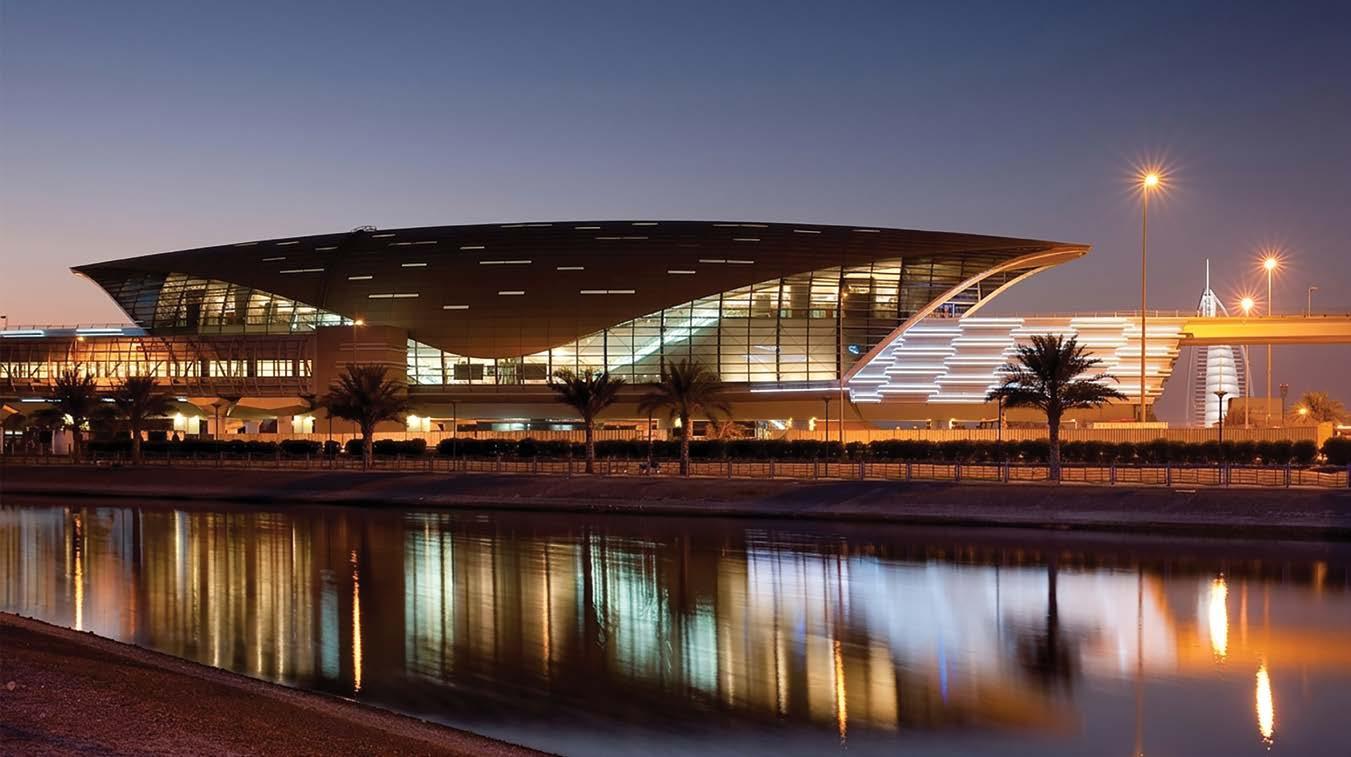
has been equally significant. From early landmark projects such as the Dubai Metro to major hospitality, residential, cultural and transport developments across the region, the practice has grown alongside the cities it helped shape.
“Aedas has evolved with that transformation. One of our early defining commissions in the region was the Dubai Metro, and later Route 2020 and Metro Enhancement work continued that relationship with the city's growth,” he recalls.
Yet despite the growth, one principle has remained constant.
“What has never changed is our belief that architecture must arise from place, not be imported into it,” Ignacio shares with pride.
The Architecture You Don't See Matters Most
Ask Ignacio what contextual
architecture means and he is quick to move the conversation away from façades, decorative motifs, and visual references. For him, the real answers are found in how people live.
“Context is often misunderstood because people treat it as a single thing. It is not. There is urban context, climatic context, cultural context, social context, domestic context, and each operates at a different scale,” he explains.
Rather than looking at architecture through a stylistic lens, he believes designers need to understand the habits, rituals, and behaviours that shape daily life.
Ignacio feels: “Too often, the conversation is reduced to visual borrowing: mashrabiya, patterns, motifs, the decorative shorthand of the region. That is not what interests us. We are far more interested in the invisible context,
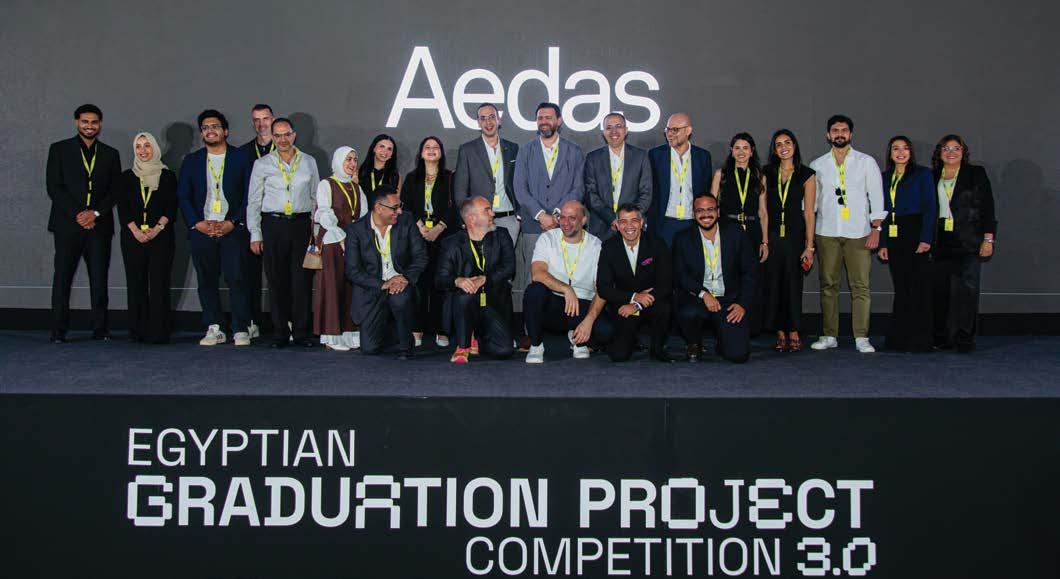
More than 800 architecture graduates from across Egypt in the Aedas Graduates Awards showcasing the country's emerging design talent.
“IF
WE HAVE HELPED MORE YOUNG ARCHITECTS, MORE WOMEN, AND MORE PEOPLE WITH REAL LIVES AND RESPONSIBILITIES OUTSIDE THE OFFICE SEE A LONG-TERM FUTURE FOR THEMSELVES IN THIS PROFESSION, THAT MATTERS DEEPLY.”
the untold rules of everyday life.”
Questions about privacy, family dynamics, hospitality, and social interaction often reveal more than any design reference ever could. “For me, contextual architecture is not about copying the past; it is about understanding the intelligence behind a place so deeply that the project feels effortless, almost inevitable,” he says.
Why Sameness Is Architecture's Biggest Threat
In an increasingly connected world, architecture has access to ideas, technologies, and influences from every corner of the globe. While Ignacio values that exchange, he believes it also comes with a risk.
“Globalisation becomes dangerous when architecture turns into a travelling
commodity, something that can be inserted into different places and different decades with almost no loss of meaning. Access to global ideas, technologies and expertise is valuable. Sameness is not,” he stresses.
For Ignacio, identity cannot be added at the end of a project—it must be embedded from the beginning. That understanding comes not from research alone, but from immersion. “You have to walk the city in summer, live its winter, feel the climate on your body, listen to how people speak about comfort, dignity, privacy and public life,” he says.
It is this deeper engagement with a place that creates architecture with emotional resonance. “There is always an element of craft in this process, something intuitive, almost artisanal, that cannot be fully reduced to method. The strongest projects carry emotional layers that can only be read in the place where they belong,” Ignacio reflects.
Shaping the Next Generation
For Ignacio, architecture that genuinely belongs to a place begins with the people who design it. While international expertise remains valuable, he holds a firm belief that local talent—those who understand culture, lived realities, and context—is essential to shaping the future of architecture in the Middle East.
He sees architecture not only in the buildings it produces, but in the people it empowers. At Aedas, supporting young architects, nurturing locally rooted teams, and actively promoting women in architecture have become central to the practice’s philosophy.
For him, this also means rethinking who gets to shape the built environment. “The future will be stronger when international practices in the region are increasingly led by extraordinary architects who were
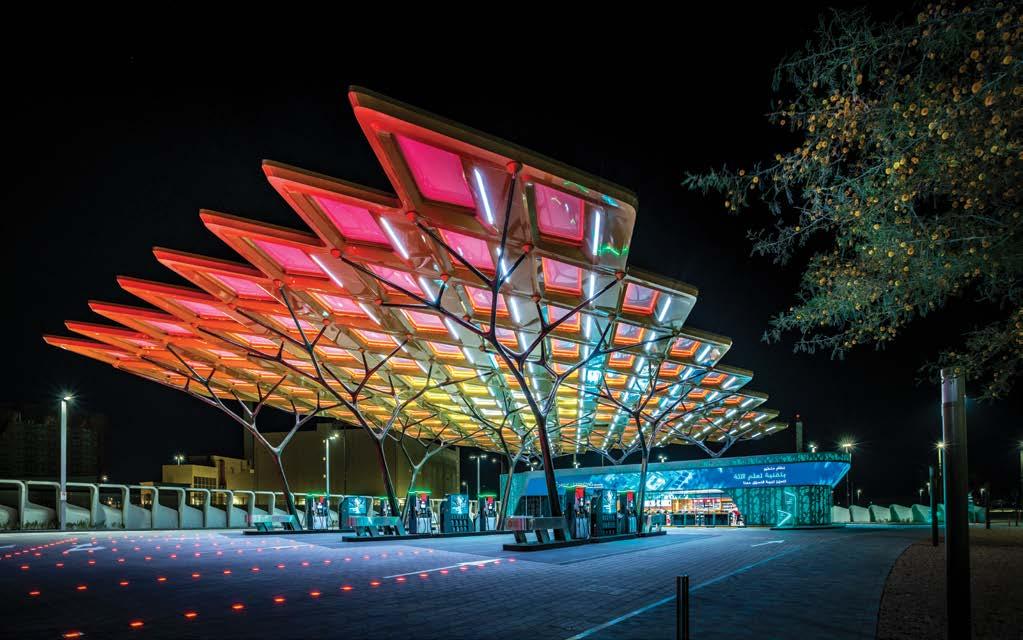
The ENOC Future Service Station by Aedas showcases a forward-thinking vision for sustainable and intelligent mobility infrastructure.
born here, educated here, or deeply formed by the realities of this part of the world— and, importantly, by more women,” he explains.
Beyond buildings, he adds, the aim is to strengthen confidence in the region’s own architectural voice. “If we have helped more young architects, more women, and more people with real lives and responsibilities outside the office see a long-term future for themselves in this profession, that matters deeply,” he says.
Egypt, he believes, represents one of the region’s most promising emerging talent landscapes. Recognising this potential, Aedas fully sponsored the awards, providing young architects with a platform to be challenged, recognised, and supported in shaping the future of the built environment.
“Egypt has an extraordinary architectural legacy and a remarkable depth of emerging talent. Investing in that talent is not simply support; it is an investment in the future quality of the built environment,” he strongly feels.
Three Projects, Three Lessons
Ask Ignacio to choose a favourite project and he pauses. After more than two decades in the region, selecting one is not easy. Instead, he points to three projects that represent different dimensions of architecture and its impact.
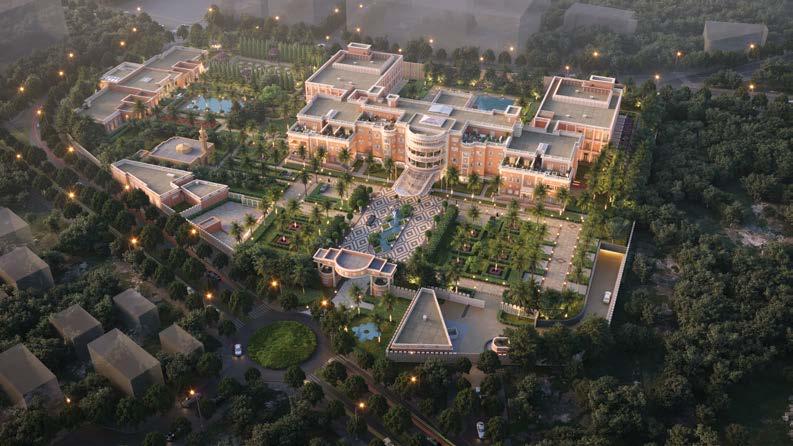
“If I had to name one, the Red Palace holds a very particular significance for me,” he says, describing it as architecture at its most delicate—balancing preservation with reinvention while respecting a site of deep cultural significance. “It represents architecture as stewardship. You are working with memory and symbolism while also creating a new future for the site as a contemporary hospitality destination,” he explains.
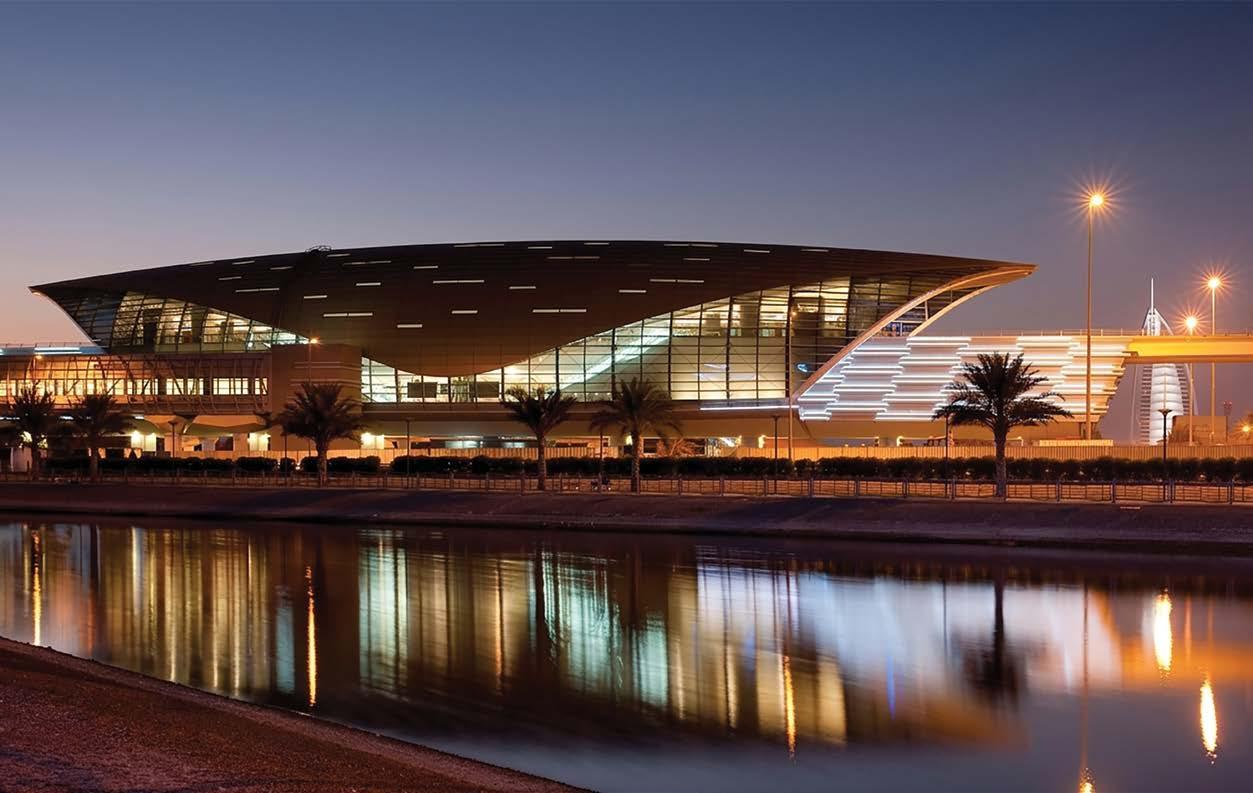
A landmark project by Aedas, the Dubai Metro transformed urban mobility with one of the world’s largest and most advanced automated transit systems.
“MY
CONCERN IS NOT AMBITION. THE REGION HAS NEVER LACKED AMBITION. MY CONCERN IS WHETHER THE LIVED EXPERIENCE OF THE CITY IS KEEPING PACE WITH THE SPEED OF DEVELOPMENT.”
“At the same time, the Dubai Metro, especially the Route 2020 and Metro Enhancement work, represents another kind of meaning for me,” he continues, where architecture becomes infrastructure—shaping how people move through and experience a growing city.
“Then there is the ENOC Future Station,” he adds, “which captures a third dimension entirely—the ability to rethink even everyday infrastructure through innovation, sustainability and experience.”
Together, he reflects, the three projects distil a broader philosophy: honour the past, enable the present, and anticipate the future.
The Next Chapter Belongs to the Region
After more than two decades in the region, Ignacio Gomez believes the Middle East is entering a defining phase—one where it is no longer following global architectural conversations, but actively shaping them. For years, the region looked outward for architectural reference. Today, it is generating its own ideas, typologies, and models of urban expression.
He sees technology as an enabler of this shift, with AI, automation, and digital tools expanding what is possible. Yet he is clear that progress cannot be understood through technology alone.
“My concern is not ambition. The region has never lacked ambition. My concern is whether the lived experience of the city is keeping pace with the speed of development,” he says.
For him, the next chapter will be defined by that balance—between ambition and lived reality, scale and experience, speed and meaning.
Looking back on his journey, he reflects on what ultimately endures beyond individual projects.
“If our legacy is that we helped create a stronger, more generous and more confident design culture, then that would matter far more than any single project, the most meaningful legacy is not only what we built, but what we made possible,” Ignacio signs off.
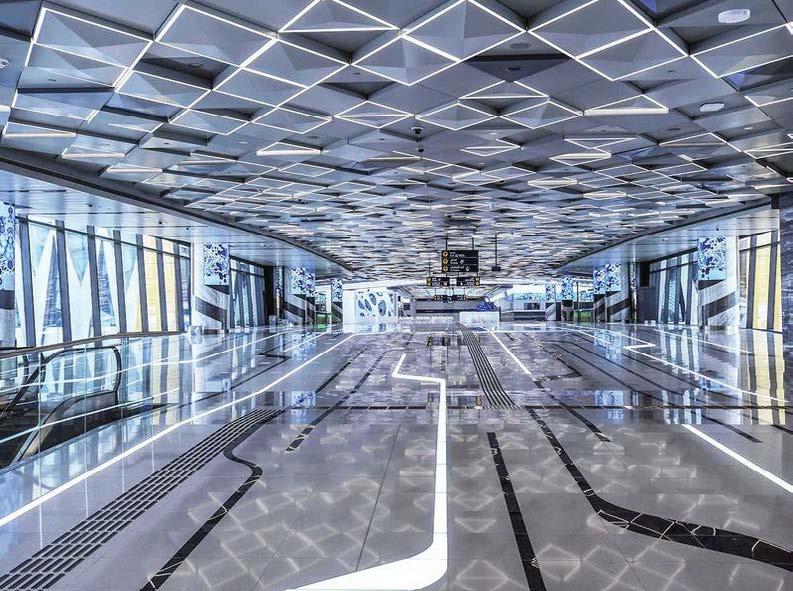
Aedas designed the Dubai Expo 2020 Metro Station interiors, creating a world-class passenger experience through thoughtful and future-ready design.
The Red Palace Boutique Hotel by Aedas celebrates cultural heritage through thoughtful restoration and contemporary design.
AI
IS GIVING ARCHITECTS MORE TIME TO CREATE
Serhii Zholob Owner of NKEY Architects, explains how artificial intelligence is transforming architecture by streamlining workflows, enhancing analysis, and allowing designers to focus on creativity, human experience, and design excellence.
According to a report by McKinsey & Company, 84% of organizations in the GCC have adopted AI in at least one business function, reflecting the technology’s growing role across the region, and architecture is no exception.
In architecture and interior design, AI is increasingly being used as a supporting tool that enhances efficiency, streamlines workflows, and strengthens areas such as research, analytics, documentation, and data processing. This empowers architects by allowing them to move away from routine tasks and focus more on
conceptualisation, creative thinking, and the overall vision of the projects they work on.
AI as an Operational Tool
AI is proving particularly valuable in operational and support functions. It is being used across architecture and design firms to support market research, analyse project data, streamline internal processes, assist with presentations, improve communication workflows, and manage documentation more efficiently.
The GCC construction market is expected to reach USD 226.2 billion by 2033, driven by large-scale
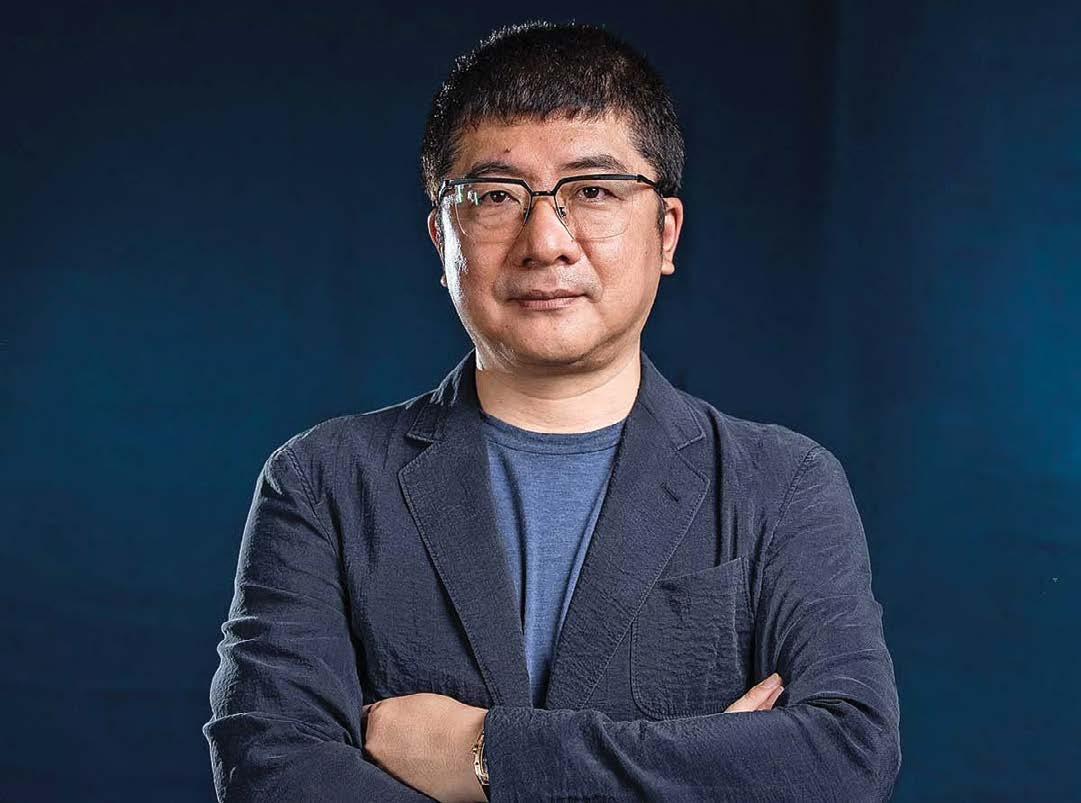
Serhii Zholob Owner of NKEY Architects
developments involving multiple stakeholders, including architects, interior designers, engineers, contractors, suppliers, consultants, authorities, and clients, all operating within tightly coordinated timelines. In this environment, AI helps ease operational pressure by processing large volumes of information, identifying patterns, structuring data, and supporting faster decision-making. This allows teams to dedicate more time and focus to strategic thinking, design direction, and the creative process that ultimately defines the quality of architectural and interior design work.
Ultimately, AI is best understood as a tool that supports the process; while the vision, creativity, and design intelligence behind truly distinctive projects remain rooted in human expertise.
Empowering the Creative Process
Good architecture is not only about visuals or technical outputs. It is about human behavior, cultural context, emotional experience, functionality, and long-term vision. What AI does is give architects more time and mental space to engage with exactly these questions. When generative tools handle early-stage massing studies, or platforms like Autodesk Forma run environmental and daylight analyses in real time, architects are freed from the mechanics of iteration and returned to the meaning behind it.
In the GCC specifically, this human creative layer carries particular weight. The region's architectural identity is shaped by a distinct set of cultural, climatic, and civic values, from the relationship between indoor and outdoor space in a desert climate, to the integration of design principles that reflect national identity on a global stage. Saudi Arabia's Vision 2030 and the UAE's
urban masterplans place enormous emphasis on design excellence and place-making that resonates locally while competing internationally. AI supports architects in delivering at that scale and ambition, without diluting the thinking that makes it meaningful.
Human Expertise at the Centre of Design
AI tools are powerful in the hands of someone who understands the full complexity of what a project demands. Tools can rapidly produce layout options based on given parameters, but it is the architect who determines which parameters matter, which tradeoffs are acceptable, and which solution genuinely serves the brief.
This is especially relevant in the GCC, where regulatory frameworks are becoming increasingly sophisticated. Dubai's Building Information Modelling mandate and Abu Dhabi's Estidama Pearl Rating System require a level of technical compliance and environmental accountability that goes well beyond visual output. The most effective firms are those treating AI outputs as informed raw material
to accelerate exploration and stress-test ideas early. They then apply their expertise to refine the work into something that is not only striking but structurally built to last.
The Next Chapter of AI in Architecture
Architecture firms should embrace technological progress in a way that strengthens creative authorship and design quality. Guided by government blueprints like the UAE National Strategy for Artificial Intelligence 2031, AI will continue to evolve in the region, and its role in architecture will certainly grow. It may become more advanced in design analysis, visualisation, sustainability modelling, workflow automation, and project coordination. Architecture has always been shaped by tools, from hand drawings to computer-aided design, 3D modelling, BIM, and now AI. Each new tool changes how architects work, but it does not change the purpose of architecture itself. At its best, architecture is still about people, place, emotion, function, originality, and experience.
At NKEY Architects AI and creativity come together to redefine how spaces are designed, experienced, and delivered.
Owen Murphy is an experienced Smart Cities leader specialising in digital strategy, design, and transformation across both organisations and the built environment. He has contributed to some of the world’s leading smart building and smart city programmes, working across the full project lifecycle, from developing strategies through to the design and delivery of smart city systems. With a Master’s degree in Mechanical Engineering, he combines strategic thinking with strong technical delivery expertise to ensure smart city programmes are practical, deliverable, and capable of generating real value in operation
Smart Cities:
WHY TECHNOLOGY ISN’T THE HARD PART
WORDS BY: OWEN MURPHY
There has never been a shortage of smart city or proptech solutions. Sensors, platforms, digital twins, dashboards… if a city wants technology, the market is more than happy to provide it. And yet, despite billions invested and no shortage of innovation, many smart city ambitions still struggle to translate into real operational outcomes. So if the technology exists, why do results often lag?
Because smart cities rarely fail due to technology alone, they fail when people, governance, and decision-making aren’t set up to succeed.
This becomes obvious as soon as a city transitions from delivery to operations. On paper, the systems are all there, but in practice, most issues can be traced back to less visible but far more impactful challenges: lack of capability, unclear ownership, broken processes, or governance structures that were never properly set up. Even challenges often framed as technical, such as data interoperability, are usually governance issues in disguise. Who owns the data? Who is accountable for it? And, most importantly, how is it actually meant to inform decisions?
We see these challenges play out first-hand across operational cities. Overlapping teams performing similar roles with limited coordination and multiple systems delivering the same capabilities, quietly driving up software license costs year after year. Assets are handed over with digital solutions that no one is clearly mandated or equipped to operate effectively. In more extreme cases, operational requirements were misunderstood or insufficiently defined at the design stage, leading to cities ending up with insufficient operational facilities, inadequate redundancy where it matters, or back-of-house functions that add little value. Unfortunately, these issues rarely surface at the design stage. They only become visible
once the city is live, budgets are committed, and teams are left trying to make sense of what they’ve inherited.
Some may argue that this will change as AI adoption matures, automating decisions, optimising workflows, and removing some of the friction that people inevitably introduce. I’m sure it will. There is undoubtedly potential for automation to absorb inefficiencies that currently sit between stakeholders across a city, but that’s a conversation for another day.
What makes this discussion particularly relevant in the Middle East is that the region has a genuine opportunity to get this right. Many cities here are still relatively young or are being built entirely from scratch.
They are not burdened by decades of legacy infrastructure, inherited systems, or entrenched ways of working. That is a huge advantage, if it’s recognised and acted on early.
So how do we solve the problem that sits at the heart of most smart city failures?
The biggest piece of advice for city leaders, developers, and the construction industry is simple: think about smart city operations as early as possible in the design process and certainly before technology selection. Doing this helps avoid unnecessary complexity that delivers little or no value. It allows technology to be designed around the outcomes a city actually wants to achieve, rather than forcing operations to adapt to whatever systems were selected during delivery. It creates clarity around roles, responsibilities, decision rights, and operating models before they become embedded in the fabric of the city, and far more expensive to fix.
Smart cities are not about how advanced the technology is. They’re about whether a city can consistently make better decisions, respond faster, and operate more effectively to provide outcomes that people actually feel… collecting waste efficiently, reducing congestion, improving safety and building resilience to disruption, to name a few. Get the people and governance right early, and the technology can do what it does best—enable. Get it wrong, and no amount of tech will save you.
Gilbert Boustany is Vice President of Project Delivery at 3d Consultants, the architecture, design and project delivery practice within Chalhoub Group, where he shapes largescale capital investment strategies across the MENA region. With more than two decades in commercial real estate, he leads regional delivery across flagship malls, department stores, corporate headquarters and logistics hubs, and plays a central role in onboarding international brands into new markets. His sixteen-year journey at Chalhoub has progressed from Head of Projects to General Manager to Vice President. He holds a Master’s in Interior Architecture and is a certified PMP and LEED Green Associate.
Past the
DRAWING BOARD
Embedding Sustainability through Project Delivery, Not Just Design!
A TRUE SUSTAINABLE PROJECT IS NOT DEFINED BY A SINGLE FEATURE OR CERTIFICATION, BUT BY A BALANCED APPROACH THAT INTEGRATES ENVIRONMENTAL RESPONSIBILITY, SOCIAL IMPACT, AND ECONOMIC PERFORMANCE FROM THE BEGINNING TO THE END. ACHIEVING THIS NOWADAYS REQUIRES CLOSE COLLABORATION ACROSS DISCIPLINES, INCLUDING ENGINEERS, ARCHITECTS, PROJECT MANAGERS, URBAN PLANNERS, AND POLICYMAKERS, TO ENSURE THAT SUSTAINABILITY GOALS ALIGN WITH PROJECT OUTCOMES AND BROADER DEVELOPMENT PRIORITIES. MOREOVER, UNDERSTANDING EACH TEAM’S REQUIREMENTS FROM THE START.
WORDS BY: GILBERT BOUSTANY
Ibelieve that sustainability in the built environment is no longer a niche concern but a fundamental business priority, driven by the ongoing pressures of climate change, rapid urbanisation, and resource constraints. These challenges have pushed organisations to rethink how projects are delivered, especially in the GCC, where sustainability was largely confined to the design stage.
This shift marks a significant evolution in how projects are executed in the region. Clients across the board are no longer treating sustainability as a “nice-to-have” feature or a branding exercise; it is increasingly embedded in the initial project brief as a core requirement. From the outset, expectations around energy efficiency, carbon reduction and environmental performance are clearly defined, leaving little room for compromise during execution. For project managers, this means sustainability is not a parallel objective but central to delivery.
Over the past few years, green certification frameworks such as LEED and Estidama have played a strong role in driving this change. These systems do more than validate outcomes; they shape decisions at every stage of a project. Achieving these certifications requires careful alignment of timelines, procurement strategies and construction practices. Materials must meet
specific criteria, processes must be documented, and performance targets must be tracked continuously. As a result, sustainability becomes deeply integrated into how projects are managed, not just how they are envisioned, which is why hiring the right people makes a difference.
One of the most visible changes can also be seen in material selection due to these certifications. In the past, retail fit-outs often relied on short-life materials that were quick to install but generated significant waste over time. But now, there is a clear shift toward more durable, reusable and locally sourced materials. This approach reduces environmental impact while also supporting longer lifecycle planning. Retailers and developers are beginning to think beyond the immediate launch, considering how spaces can evolve without requiring complete reconstruction.
On the other hand, energy efficiency is another area where execution has caught up with design intent. In the GCC, cooling demand accounts for the majority of energy consumption, which is why integrating efficient systems remains critical. Therefore, high-performance HVAC systems, LED lighting, and smart building technologies are now standard considerations during project delivery. These are not late-stage upgrades; they are embedded into construction and commissioning processes to ensure that buildings perform as intended from day one.
Design
Simultaneously, the respon sibility for sustainability no longer sits solely with design ers but also with contractors who are increasingly being held accountable for meeting environmental targets during execution. Hence, sustaina bility metrics are now tied to contractor performance, with project managers tracking factors such as waste gener ation, water usage, and on-site practices in real time, repre senting a shift from focusing only on final outcomes to moni toring how those outcomes are achieved.
Waste management provides a clear example of this evolution. Rather than addressing waste after construction is complete, project teams are planning for it from the beginning. We now have to implement strategies such as modular construction and prefabrication from the beginning to reduce on-site waste. We also include im proved inventory management
DESIGN That Delivers Experience
GERRIT SCHMITT, GENERAL MANAGER OF MARRIOTT RESORT PALM JUMEIRAH, DISCUSSES HOW MODERN HOSPITALITY LEADERSHIP IS REDEFINING THE GM ROLE—BRIDGING DESIGN INTENT, OPERATIONAL EXCELLENCE, AND GUEST EXPERIENCE TO CREATE A VIBRANT, EXPERIENCE-LED BEACHFRONT DESTINATION IN DUBAI.
How do you see the role of a General Manager evolving today in shaping both design and guest experience?
The role of a General Manager today extends far beyond operational oversight. Modern hospitality is increasingly experience-driven, which means a GM must understand how design, atmosphere, service culture, and guest emotion all connect. Design is no longer only about aesthetics; it influences how guests feel, move, interact, and remember a property.
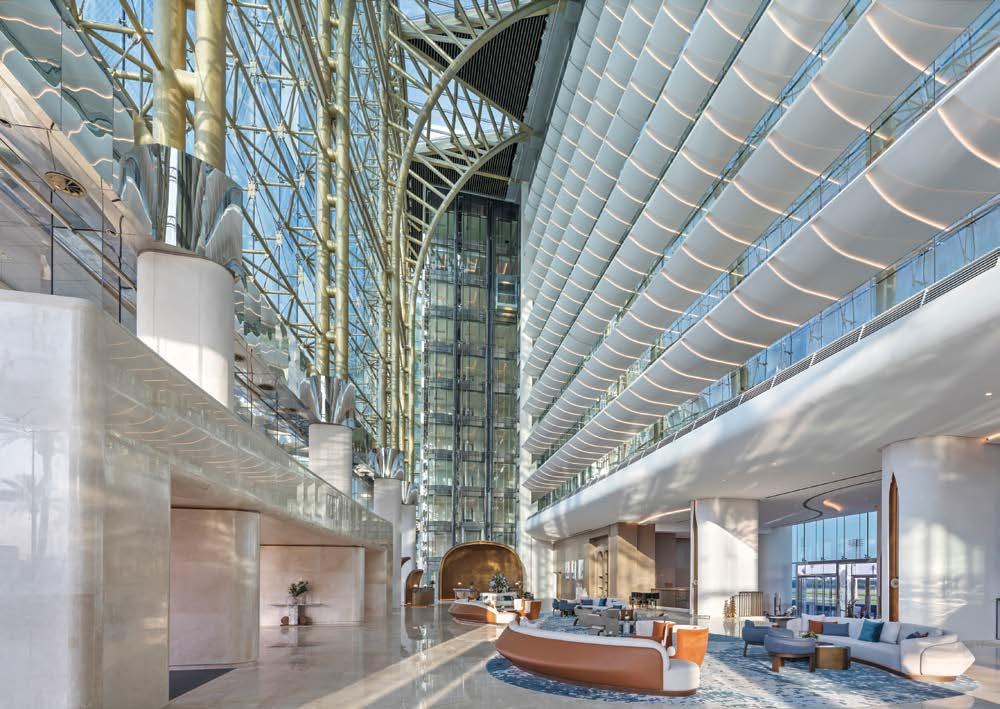
A General Manager plays a key role in ensuring the original vision of the hotel translates into a consistent day-to-day experience. From arrival and public spaces to dining concepts and wellness areas, every touchpoint should feel intentional and aligned with the property's identity. The role has become far more holistic, balancing commercial performance with emotional connection and long-term brand positioning.
RIGHT
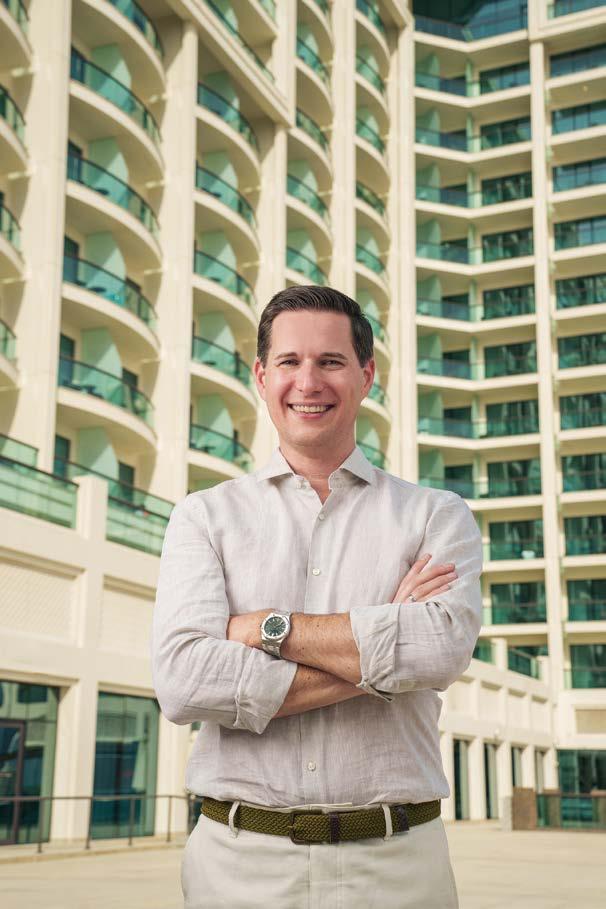
Gerrit Schmitt, General Manager of Marriott Resort Palm Jumeirah
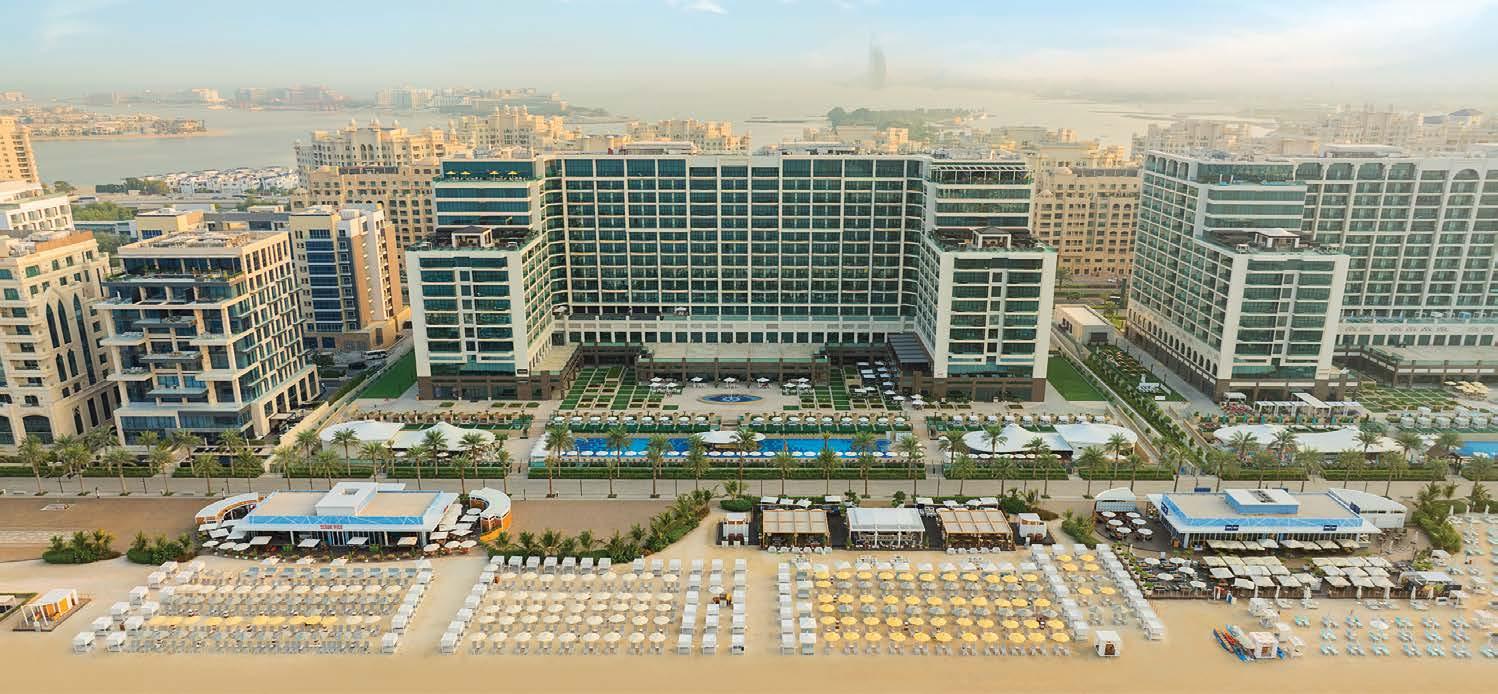
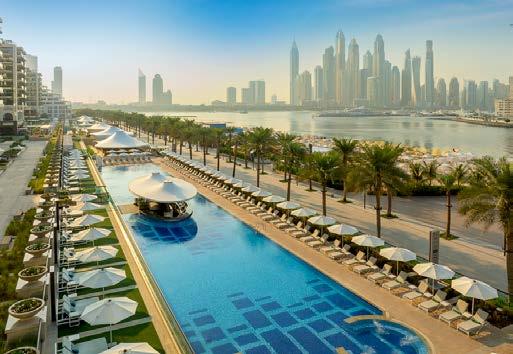
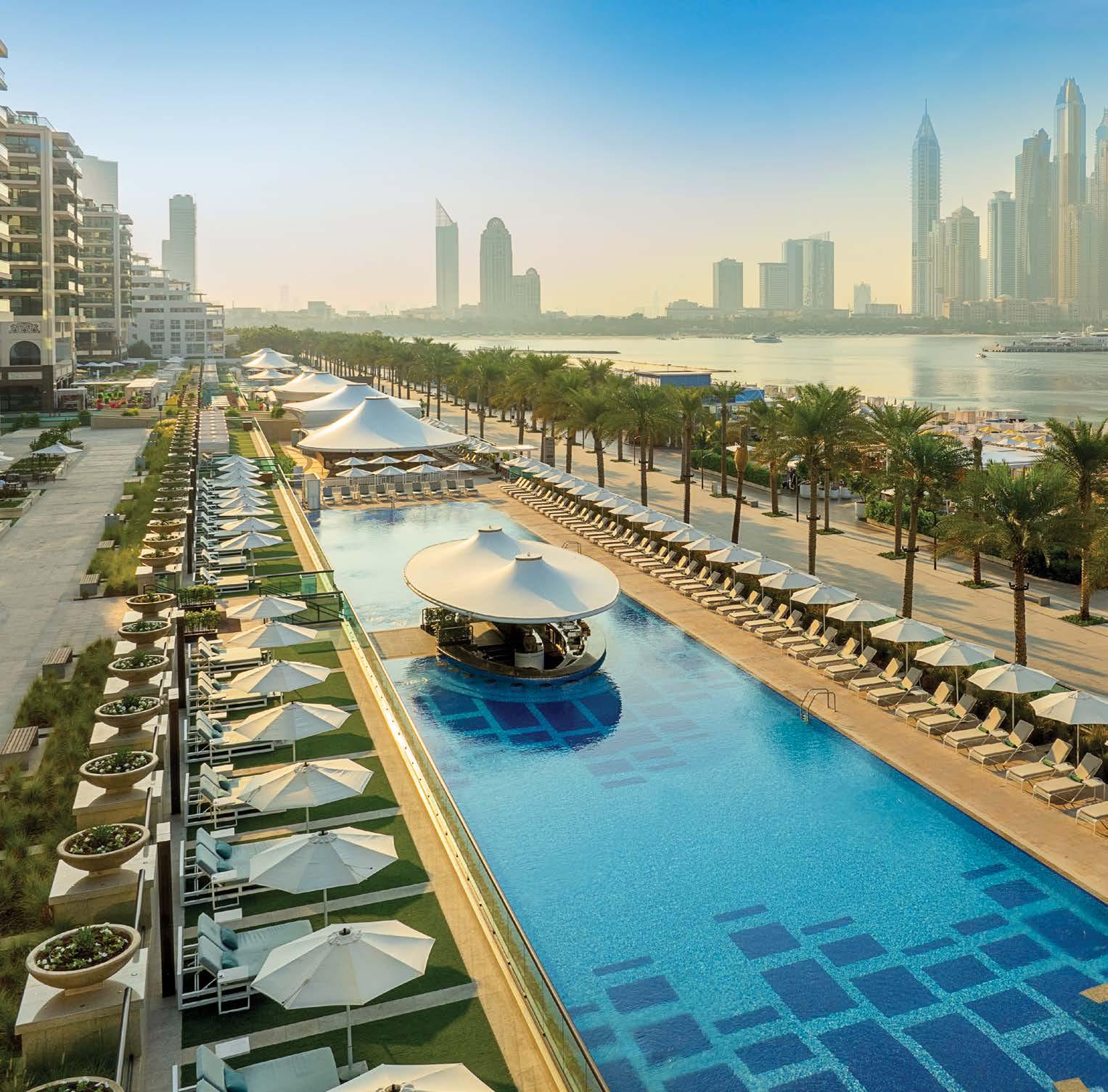
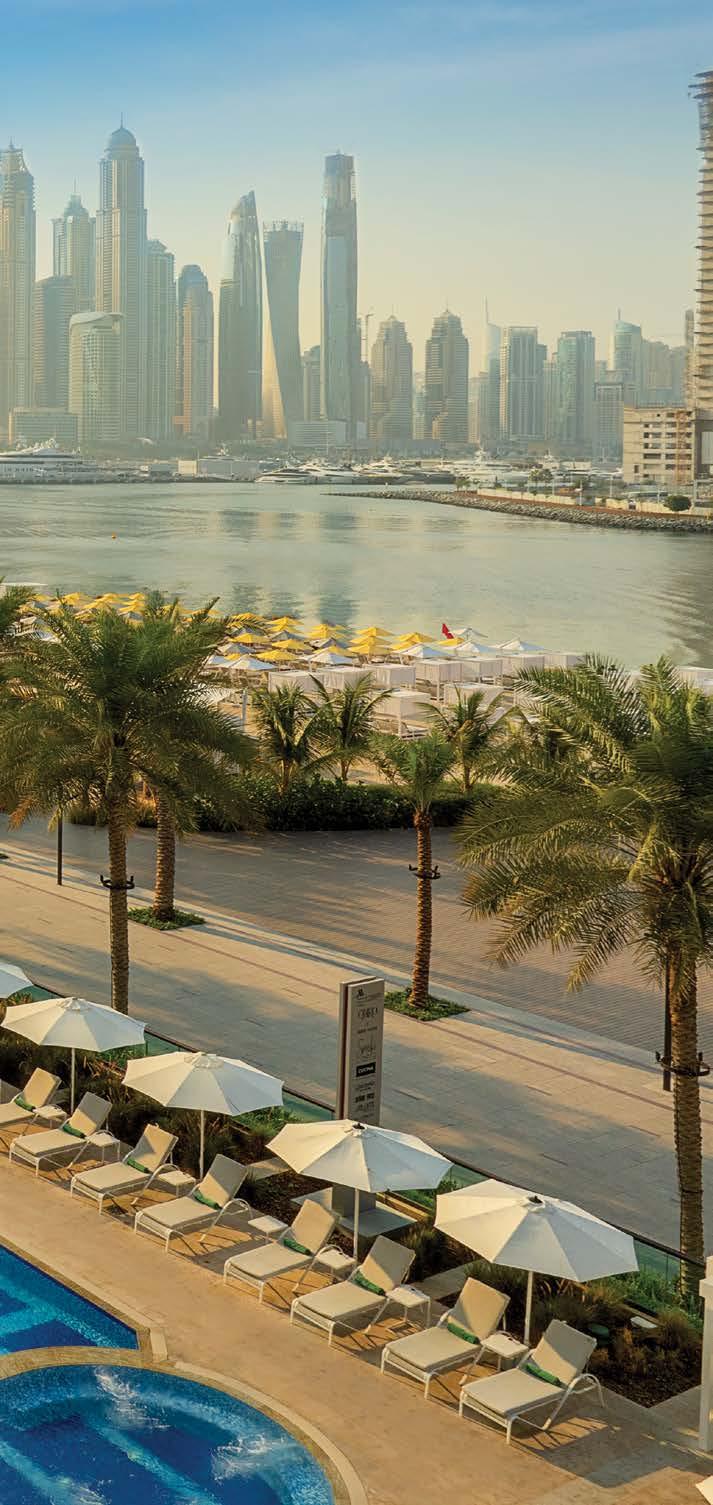
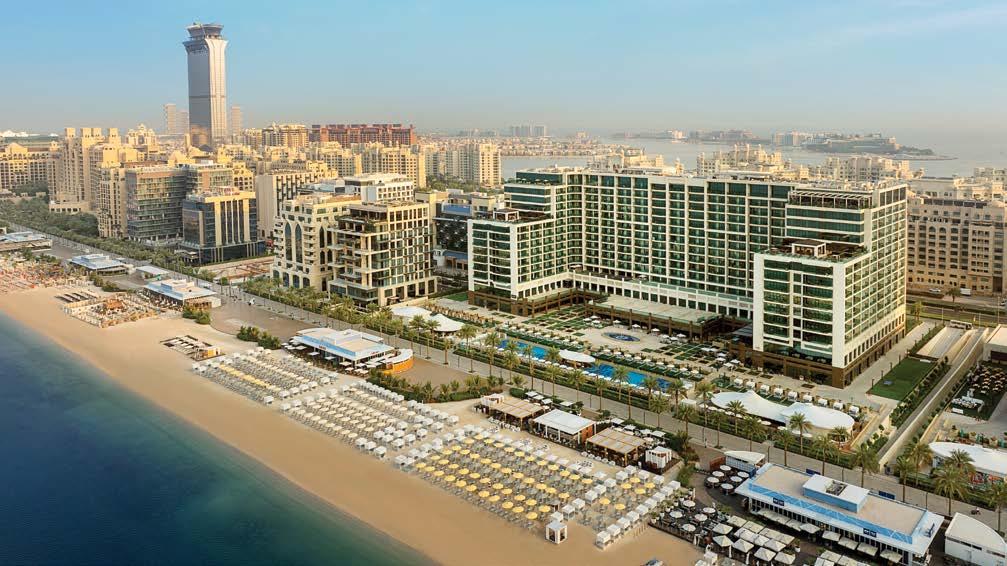
Swimming pool overlooking Palm Jumeirah with serene beachfront views, blending resort luxury, calm waters, and vibrant Dubai energy.
To what extent should General Managers act as custodians of a hotel's design vision once a property is operational?
A General Manager should act as a gatekeeper of the hotel's original design vision, ensuring the integrity of the concept is maintained long after opening. The role is not about changing spaces based on personal preference, but about protecting the identity, standards, and intention behind the original design.
This extends to operational discipline and team culture. Processes, presentation standards, maintenance, and daily operational practices all play an important role in preserving the quality and consistency of the designed environment. Teams must understand that every detail contributes to the guest's perception of the space. At Marriott Resort Palm Jumeirah, there is a strong focus on ensuring all departments operate in alignment with the property's original vision while maintaining the level of consistency expected within a luxury resort environment.
How can operational leadership influence the way guests experience design on a day-to-day basis?
Operational leadership is what transforms design from a physical space into a consistent guest experience. Even the best-designed hotel can lose its impact without the right operational standards, atmosphere, and team culture behind it. We strongly believe that if you take care of the team, the team takes care of everything else. Creating an engaged and well-supported team environment is essential, because associates are ultimately the ones bringing the space and experience to life every day. At Marriott Resort Palm Jumeirah,
this means a strong focus on training and consistency across every department: lighting, music, cleanliness, service rituals, and attention to detail all shape how design is ultimately perceived by the guest.
The resort has quickly positioned itself as a vibrant destination — what defines its identity within Dubai's competitive hospitality landscape?
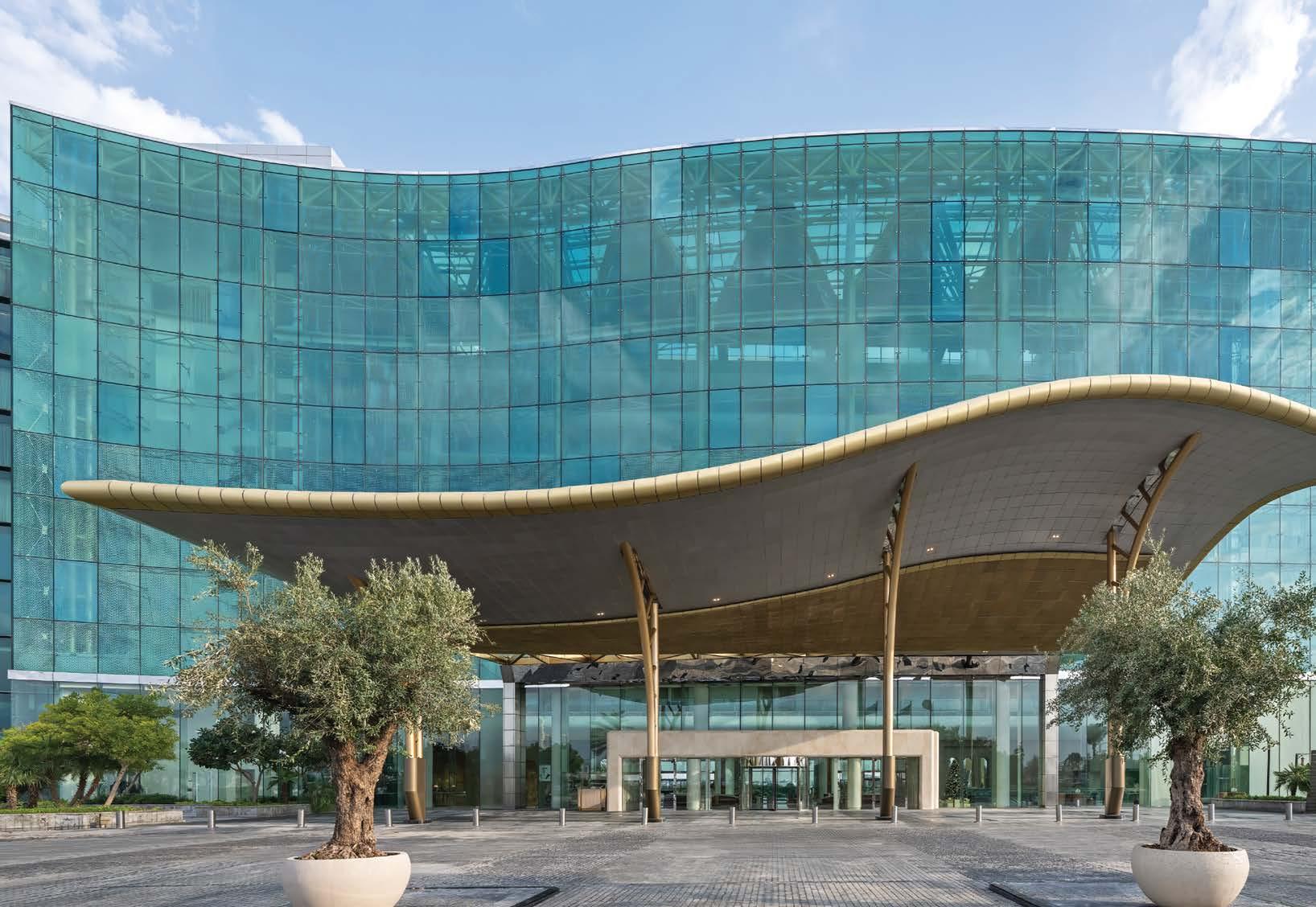
What defines Marriott Resort Palm Jumeirah is the balance between resort relaxation and destination-driven energy. Dubai is an extremely competitive market, so differentiation is essential. The property was designed to deliver memorable experiences throughout the guest journey, from the arrival sequence and panoramic sea views to the beachfront setting, creating a strong sense of escape while remaining connected to the energy of the city.
Our location on Palm West Beach positions us naturally within one of Dubai's most active lifestyle destinations, but what truly sets the resort apart is the variety of experiences on offer. We combine beachfront leisure, destination dining, wellness, family experiences, and social programming in a way that appeals to both international travellers and Dubai residents alike. Positioning our restaurants and venues as standalone destinations (rather than simply hotel outlets) has also helped us become part of the city's wider dining and entertainment scene.
Your dining concepts — from Cucina to Smoki Moto, Above 11, and Levantera — offer distinct experiences. How did you curate this F&B mix, and how does it enhance the overall guest journey?
From the beginning, the vision was to create destination dining concepts rather than traditional hotel restaurants. Each venue was developed with its own identity, atmosphere, audience, and positioning, allowing the outlets to operate as standalone destinations within Dubai's highly competitive F&B market.
Cucina was designed as a warm, family-friendly Italian concept focused on comfort and social dining. Smoki Moto delivers a bold, immersive Korean steakhouse experience with a strong entertainment element. Above 11 brings a rooftop Nikkei concept centred on sunset, music, and social energy. Levantera acts as the resort's international all-day dining hub. The objective was to ensure guests could experience something entirely distinct within each outlet, while collectively strengthening the resort's relevance within Dubai's dining and lifestyle scene, attracting a strong local audience alongside international guests.
Wellness is increasingly central to hospitality. How does the spa experience align with your broader vision of guest wellbeing?
Wellness today is no longer a standalone luxury, it is an essential part of the overall guest journey. At Saray Spa, the experience was designed to reflect the spirit of the destination and the evolving expectations of modern travellers, blending timeless wellness rituals with personalised, contemporary treatments. Guests can enjoy everything from soothing massages and energising facials to hammam experiences, all curated to nourish and restore. The wellness journey begins with a modern welcome ritual and continues through the thermal facilities such as the sauna, steam room, jacuzzi, and ice station, creating a complete sensory experience. Treatments harness natural ingredients and are tailored to each individual guest, supporting physical, mental, and emotional well-being. The goal is a holistic experience that complements the
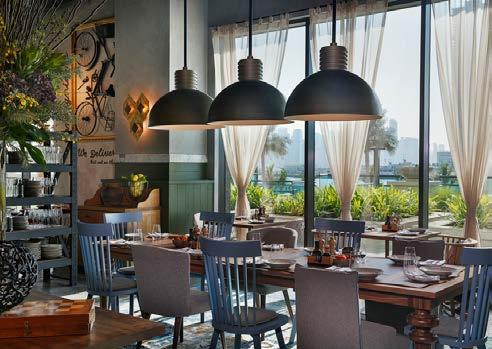
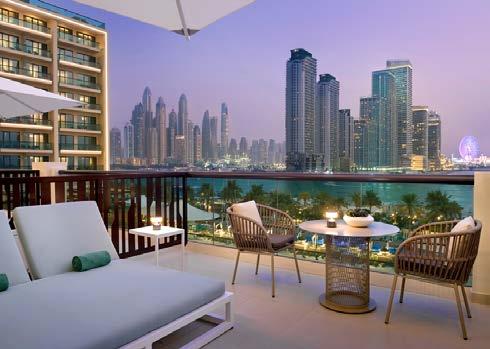
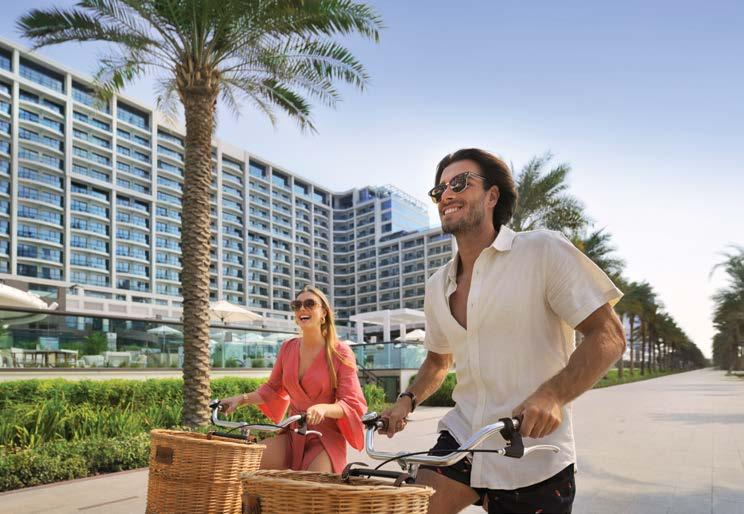
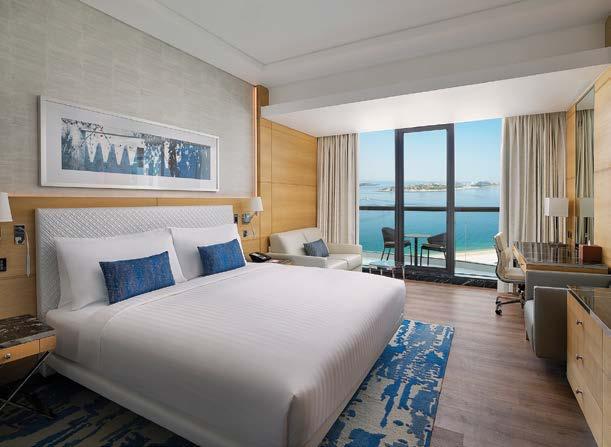
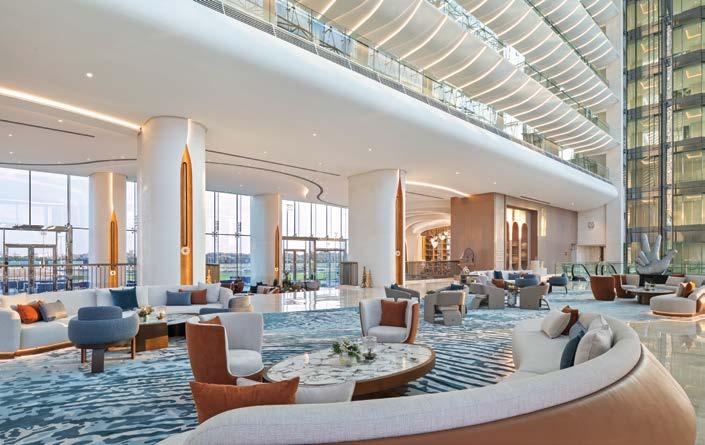
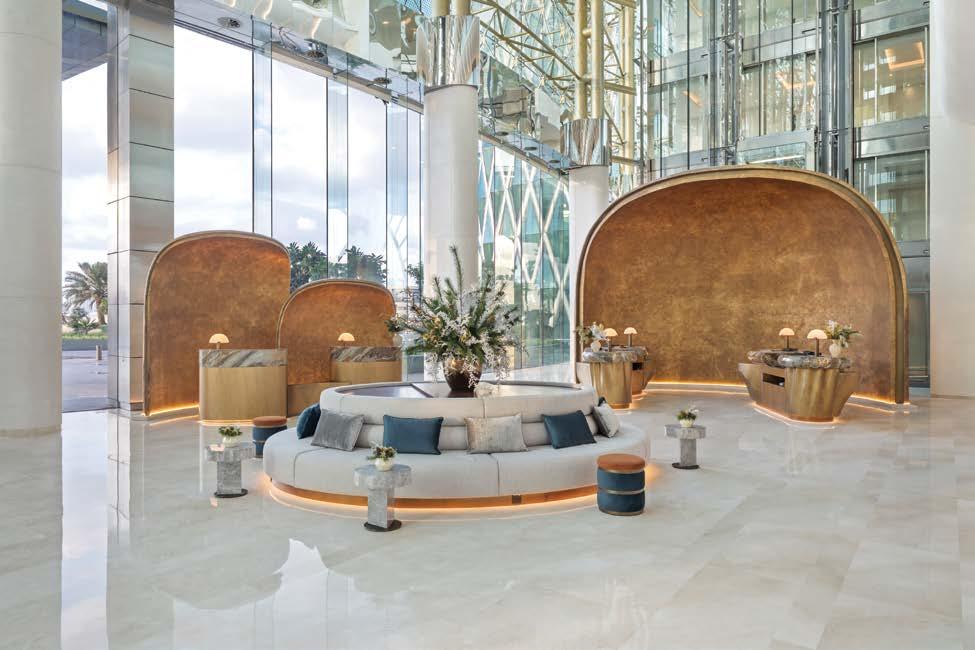
Seamless guest experience defined by thoughtful design, attentive service, and immersive spaces that blend comfort, lifestyle, and coastal luxury.
broader resort environment rather than sitting apart from it.
What role should technology play in shaping modern hospitality design, and how can it be integrated seamlessly into the guest experience?
Technology should enhance convenience and efficiency while remaining secondary to human connection. The best hospitality technology is often invisible, it removes friction without making the experience feel transactional. Whether through booking journeys, guest communication, operational systems, or digital service touchpoints, technology should support a smoother and more personalised experience.
That said, hospitality remains a people-driven industry, particularly within luxury and lifestyle environments where emotional connection matters most. The challenge is finding the right balance between innovation and authenticity; and ensuring technology serves the guest rather than defines the experience.
How can sustainability be embedded into operational decision-making in a way that supports long-term design value?
Sustainability needs to be part of everyday operational decision-making rather than treated
as a separate initiative. At Marriott Resort Palm Jumeirah, it is integrated across both the physical design of the property and daily operations. The resort was built with energy efficiency in mind: solar-protective glass reduces heat exposure and cooling demand, while room layouts and balconies were designed to optimise natural light. Water conservation systems recycle air conditioning condensation and pool backwash water for irrigation.
Operationally, the focus is on responsible sourcing, waste reduction, locally sourced ingredients across our restau-
rants, vertical farming, and EV charging infrastructure. Equally important is ensuring sustainability aligns naturally with the guest journey. Modern travellers value responsible hospitality, but they still expect comfort, quality, and seamless experiences. The objective is to create practices that feel authentic and supportive of the resort's long-term vision.
Looking ahead, how do you see the relationship between design, operations, and evolving guest expectations shaping the future
of hospitality — and what's next for Marriott Resort Palm Jumeirah?
The future of hospitality will continue to become increasingly experience-driven. Travellers today seek emotional connection, flexibility, social interaction, wellness, and memorable experiences that feel authentic to the destination. This means design and operations will become even more interconnected. Spaces need to remain adaptable and capable of evolving throughout the day to meet different guest expectations, while operational consistency ensures those experiences are delivered at the level a luxury resort demands.
For Marriott Resort Palm Jumeirah, the focus is on continuing the path we have built since opening. A new gastropub concept is in development to appeal to a broader market segment, and a new beach club on Palm West Beach will further expand our lifestyle and social offering. The ambition remains consistent: combining strong dining concepts, beachfront experiences, wellness, and social programming to create a dynamic resort destination that resonates with both international travellers and the local community.
Elegant guest room interiors featuring contemporary design, warm textures, and floor-to-ceiling windows framing calming sea and city views.
MASTERING MEYDAN:
The striking façade of The Meydan Hotel creates an unmistakable arrival experience, reflecting the property's scale, sophistication, and architectural presence.
Ross Trivett, GM – Khansaheb Interiors, and Ryan Emsley, GM –Khansaheb MEP, reflect on the planning, coordination and delivery behind the fast-track refurbishment of Meydan Hotel, one of Dubai's most ambitious hospitality transformation projects.
There In the demanding world of luxury hotel refurbishments, few projects test capability like the Meydan Hotel overhaul.
With racing season deadlines looming and a vast scope of works to complete, Khansaheb Interiors was tasked with delivering a comprehensive transformation within a tightly controlled timeframe. Through meticulous planning, early engagement and an integrated delivery approach, the team successfully transformed the hotel while maintaining an unwavering focus on quality, programme and guest experience.
Executed within a 38-week
programme, the project encompassed 253 guest rooms, 19 suites, multiple public areas, F&B outlets, façade modifications and external landscaping works, delivered through Khansaheb's self-delivery model spanning Interiors, MEP and Joinery divisions.
Through the perspectives of Ross Trivett and Ryan Emsley, we explore the challenges, strategies and collaborative approach that enabled the successful delivery of this landmark refurbishment.
The transformed lobby sets the tone for Meydan Hotel’s ambitious refurbishment, elevating the guest arrival experience.
Refurbishment
Ross Trivett | GM – Khansaheb Interiors
Repeat Success: Building on a Trusted Partnership with Dubai Holding
The Meydan Hotel refurbishment was not the beginning of Khansaheb's relationship with Dubai Holding—it was the latest chapter in a partnership built through years of successful project delivery.
invaluable when it came to planning and delivering the project. Having collaborated on multiple hospitality developments, both client and contractor shared a deep understanding of
enabled early engagement, allowing critical decisions around procurement, sequencing and delivery strategy to be addressed well before works commenced.
Champions of Fast-Track Hospitality Refurbishment
BOTTOM
A dramatic sense of space defines the main lobby, where contemporary design and refined finishes set the tone for the guest experience.
Ross commented, "We have worked with Dubai Holding, particularly on hotel refurbishment projects going back over the past 20 years. We delivered a major refurbishment of Jumeirah Beach Hotel in 2017/18, and then more recently a complete refurbishment of Bab Al Shams, followed by the Bluewaters development, including rebranding Caesars Palace and the five star Delanao Hotel, all completed successfully hence our selection for the Meydan Hotel.”
That longstanding relationship proved
Drawing from deep experience, Ross explained their readiness for demanding timelines. “Fast-track refurbishment is what we are set up to do. Our fully integrated in-house capabilities and technical expertise across Interiors, Joinery and MEP have been a huge benefit to the delivery of the Meydan Hotel.
programme demands, operational requirements and project expectations.
The trust built over successive projects
For a fast-track project of Meydan's scale and complexity, this alignment laid the foundation for another successful outcome.
Ross goes on to say; “From the tender stage, we ensured meticulous planning so that when commitments were made, delivery was certain. Dedicated staff were assigned to zones, with precise calculations for labour and material requirements. This preparation allowed the team to manage the
TOP Ross Trivett, GM Khansaheb Interiors
“The level of planning, sequencing and coordination required was immense. You need a dedicated management team committed to working 24x7 and a systematic approach to maintaining the flow and cycle works through a building to ensure successful delivery on time.”
ROSS TRIVETT
immense volume and complexity while staying in control of every detail, turning potential risks into a well-sequenced execution.”
Racing Against Time
For most hotel refurbishments, programmes can be adjusted. At Meydan, the reopening date was tied directly to the racing season, making time the project's most critical constraint. Every decision, from tender planning and procurement to sequencing and manpower allocation, revolved around a single objective: delivering the transformed hotel for the start of the racing season.
“The project was extremely time sensitive, and the programme was the driving factor in terms of this project being a success," says Ross Trivett.
Having worked closely with the Client project team for some time, Khansaheb understood both the operator's requirements and the asset owner's priorities. That insight enabled the team to challenge the original programme and propose a more ambitious delivery strategy from the outset.
“Through early engagement with the client, we were able to put forward a shorter programme than what initially came out in the tender, as we understood the risks inherent in the project.” Ross explains.
With approximately 18,000sqm of fit-out works and public areas extending over 328 linear metres across five blocks, the project demanded meticulous planning, sequencing and coordination. From the complete strip-out and refurbishment of 253 guestrooms to the transformation of extensive public spaces, every stage was carefully planned and orchestrated to maintain momentum and achieve the completion date.
"To complete the scope and volume of work that we delivered within a seven-month project period was a huge undertaking. The level of planning, sequencing and coordination required was immense. You need a dedicated management team committed to working 24x7 and a systematic approach to maintaining the flow and cycle works through a building to ensure successful delivery on time." Ross adds.
The reception area blends functionality with elegance, delivering a seamless welcome through thoughtful design and warm hospitality.
Refurbishment
Strategic Planning and Flexibility
It was important to adhere to the delivery strategy and stick to the plan but at the same time having a flexible approach to absorb the inevitable unforeseen events and the changes to design inherent in refurbishment projects.
A complete strip-out to shell and core was followed by systematic fit-out. Weekly tracking, KPIs, and immediate resource adjustments enabled Khansaheb to maintain momentum. When unexpected challenges arose, which they did on a regular basis, the team rapidly resequenced and recovered time.
One Khansaheb: Delivering as One Team
While the interiors programme sat at the heart of the Meydan Hotel transformation, its success relied on close collaboration across Khansaheb's Interiors, MEP and Joinery divisions from the earliest stages of the project. From tender stage onwards, the teams worked together to align programme sequencing, procurement strategies and deliv-
“When projects have very tight deadlines, our ability to operate as one team allows us to provide the extra support and resources needed to ensure successful delivery for the client.”
RYAN EMSLEY.
ery planning, ensuring that critical engineering activities could progress in parallel with the fast-track interiors programme.
"As soon as the project was awarded, we were able to hit the ground running. We had identified long-lead items, and we progressed the engineering to ensure that procurement was aligned with the programme from day one," explains Ryan Emsley.
The early engagement (Pre-Construction) proved particularly valuable on a project where every day counted. Unlike traditional procurement models, Khansaheb's integrated approach eliminated the delays often associated with engaging external subcontractors, allowing teams to mobilise immediately and maintain momentum throughout the programme.
Ryan Emsley |
GM – Khansaheb MEP
Designed for comfort and relaxation, the room features elegant interiors, generous proportions, and views that reflect the property's distinctive setting.
RYAN EMSLEY, GM – Khansaheb MEP,
"The Khansaheb teams from Interiors, Joinery and MEP worked with each other during the tender process to ensure that the programme, the sequence and method of working was coordinated. The same project teams have worked together
CLIENT Dubai Holding
LEAD CONSULTANT
Dewan Architects
ID DESIGNER H2R Design
START DATE March 2025
COMPLETION DATE Dec 2025
DURATION
Approx. 38 weeks
DIVISION(S) Interiors, MEP and Joinery
on many projects for Dubai Holding particularly specializing in hotel refurbishment, they understand the nature of the work and the need for close co-ordination, and that ultimately delivers a better outcome for the client," Ryan adds.
Critical Systems, Seamlessly Delivered
The MEP team delivered substantial upgrades to the hotel's critical building systems, including guest room management systems, controls infrastructure and extensive improvements to the main services throughout the building.
Careful engineering, early procurement of long-lead items and close coordination with specialists ensured that these upgrades were delivered seamlessly fully integrated into the wider refurbishment programme.
A Proven Delivery Model
The Meydan Hotel refurbishment is another example of the strength of the Khansaheb’s multi – discipline self-delivery business model, one team of professionals working together to deliver all aspects of the project.
“When projects have very tight deadlines, our ability to operate as one team allows us to provide the extra support and resources needed to ensure successful delivery for the client.", says Ryan.
Having delivered numerous complex projects together over the years, Khansaheb's Interiors, MEP and Joinery divisions continue to provide clients with a fully integrated solution built on collaboration, experience and shared accountability.
At Meydan Hotel, that approach once again proved its value, enabling the team to deliver a complex refurbishment within an exceptionally demanding timeframe.
The Meydan Hotel refurbishment is more than a successful project; it is a showcase of what disciplined planning, experienced leadership and integrated delivery can achieve. Under the leadership of the Khansaheb Interiors team, supported by the expertise of the MEP and Joinery divisions, a complex transformation was delivered to very high standards within an exceptionally demanding programme. The result is a revitalised destination that enhances the guest experience while reinforcing Khansaheb's reputation for delivering complex projects with certainty.
Dubai Holding had the courage and foresight to put their trust in Khansaheb and this trust was repaid with another successful project delivered efficiently within a very demanding programme, thanks to the long standing partnership and teamwork.
The hotel's all-day dining restaurant combines contemporary interiors with a welcoming atmosphere, offering guests a versatile culinary experience throughout the day.
A New Era of Customer Expectations
A design approach that blends simplicity, materiality, and proportion to create calm, modern interiors.
In conversation with Rami Selo, CEO of Sedar Global, on how more than 130 years of heritage has shaped the company’s understanding of evolving customer expectations and consumer behaviour across the Middle East.
Understanding customer behaviour is often framed as a response to change, but for businesses with longevity, it becomes something more foundational. At Sedar Global, a company founded in 1892 specialising in window treatments, soft furnishings, and wall décor, observing how customers think, choose, and live has been central to how we evolve. Over time, patterns emerge, not only in how behaviour shifts, but in what remains constant. At its core, design is not static, it responds to how people live, and in turn shapes how they feel within a space.
In periods of uncertainty, one of the most immediate changes is
pace. Customers rarely disengage altogether, but decision-making slows. There is more research, more comparison, and a greater need for reassurance. What becomes clear in these moments is that trust matters more than ever. Consistency, credibility, and a seamless, attentive service are no longer differentiators, they are expectations.
In practice, this places greater emphasis on how services are delivered, not just what is offered. Clients are increasingly looking for convenience alongside reassurance. This has led to a rise in more personalised, at-home services, where consultation, measurement, and design guidance can take place within the space itself. It reflects a broader shift towards flexibility, ensuring the experience remains while adapting to changing expectations.
At the same time, we see a shift from impulsive to intentional behaviour. Spending does not dis-
appear; it becomes more considered. Customers move away from “more” towards “better,” prioritising quality, longevity, and pieces that hold lasting value. The home, in particular, has become more central, somewhere that reflects both comfort and identity. This evolving mindset has redefined how value is perceived. Price alone is no longer the primary driver. Instead, there is a growing emphasis on durability, design integrity, and how a product
performs over time. Customers are increasingly asking: Will this last? Does it integrate within the wider space? Does it justify its place within the home? There is also a growing awareness that design should outlast trend cycles, clients are increasingly drawn to pieces that offer quiet longevity rather than short-term statement.
In this context, certain product categories have seen sustained demand across both private
residences and wider commercial environments. Layered curtains and soft furnishings continue to shape comfort, light, and atmosphere. Smart blinds and home automation solutions reflect a growing desire for intuitive and seamless living, while wallpaper has re-emerged as a medium of personal expression. Folding doors, pergolas, and outdoor shading solutions respond to evolving spatial needs and a stronger connection between indoor and outdoor living. Alongside this, sustainability is becoming more embedded in decision-making. There is a growing awareness, particularly among younger customers, around extending the life of products rather than replacing them. Our expansion into upholstery services reflects this shift, offering customers a way to refresh and adapt existing pieces in a more considered, lower-impact way. Sustainability is no longer a niche conversation, it is becoming part of how value is defined.
Generational change is also influencing expectations. Gen Z and millennial consumers approach interiors differently, they are more visually driven, more digitally engaged, and more attuned to storytelling. For brands, this requires a shift in communication, making offerings more accessible and relatable without diluting quality or positioning. It is less about simplifying the product, and more about translating it into a language that resonates. Digital transformation plays a critical role here. Tools such as VR-enabled platforms allow customers to visualise outcomes in ways that were not previously possible, particularly within bespoke interiors. At the same time, physical retail continues to hold importance, especially in a region where trust and personal interaction remain central. The future is not digital or physical, it is a seamless integration of both.
Another important dimension is the global nature of today’s customer expectations. Through collaborations with international brands such as Armani/Casa, Versace Home, Missoni Home, Roberto Cavalli, Swarovski, and more accessible design-led partners such as H&M HOME, as well as institutions like The Metropolitan Museum of Art, we see a convergence in how customers perceive design and quality. While preferences may vary across markets, the underlying desire for well-crafted, considered environments remains consistent. The role of a regional brand is to interpret these global influences in a way that feels locally relevant.
Across the markets we operate in, from the GCC to North Africa, there are both shared behaviours and local nuances. The core drivers remain the same: comfort, beauty, and trust. What differs is how these are expressed, shaped by cultural context and individual lifestyles. Increasingly, expectations are aligning, particularly in terms of quality, service, and overall experience.
For a business, the challenge is translating these evolving behaviours into strategy without losing focus. This requires staying close to the customer, continuously listening, and adapting where necessary, while maintaining a clear long-term vision. Short-term shifts should inform decisions, but not define them.
Ultimately, what 130 years has shown us is that while behaviours evolve, fundamentals endure. Customers will always seek quality, reliability, and a sense of trust in the brands they choose. The role of a business is not only to respond to change, but to provide consistency within it.
Drawing on more than 130 years of heritage, Sedar Global continues to adapt to changing consumer behaviours while remaining rooted in quality and trust.
From personalised experiences to smart living solutions, Sedar Global examines the trends defining a new era of customer expectations.
WPC interior doors combine modern design, durability, and moisture resistance, making them an ideal choice for contemporary UAE villas.
BEYOND APPEARANCE
Choosing the Right Door for UAE Homes
ISamantha WG, Co-Founder of ZEVLANO®, explains why material selection matters just as much as design when choosing interior doors for villas and residential projects in the UAE.
nterior doors are often treated as a finishing detail, but in the UAE, they play a far more significant role than many homeowners realise. Beyond aesthetics, doors must withstand humidity, temperature fluctuations, daily wear, moisture exposure, and the constant cycle of air conditioning that defines indoor living across the region. For villas, apartments, and fit-out projects, choosing between natural wood, MDF, and WPC (Wood Plastic Composite) has become an increasingly important decision. While natural wood continues to be associated with craftsmanship and timeless appeal, WPC is emerging as a practical solution for homeowners seeking durability, stability, and lower maintenance.
Having lived in Dubai for more than 25 years, I have seen how local climate conditions can affect interior materials over time. Beautiful doors can lose their performance through swelling, warping, surface damage, or moisture-related issues. In a market where longevity matters, selecting the right material is just as important as choosing the right design.
The Timeless Appeal of Natural Wood
Natural wood remains one of the most desirable materials in interior design. Its warmth, texture, and character create a sense of authenticity that many homeowners continue to value, particularly in luxury residences and traditionally inspired interiors. When properly selected, treated, and maintained, natural wood can be an excellent choice. However,
Supplier Focus
it also demands ongoing care. Changes in humidity can cause expansion and contraction, while moisture-prone areas such as bathrooms, kitchens, laundry rooms, and coastal properties may require additional protection and maintenance to preserve both appearance and performance. Natural wood is not the wrong choice—it simply requires the right environment and a long-term commitment to upkeep.
Where MDF Falls Short
MDF doors remain widely used because they are cost-effective and versatile. They can be painted, customised, and finished in a variety of styles, making them popular for budget-conscious projects. However, MDF has limitations, particularly in spaces exposed to moisture. Over time, humidity and water exposure can cause
swelling, softening, or deformation, affecting both functionality and appearance. This is particularly relevant in UAE homes, where kitchens, bathrooms, and service areas often experience higher moisture levels despite modern ventilation systems. For projects focused on long-term durability, MDF may not always be the most practical solution.
Why WPC Is Gaining Momentum
As homeowners and developers look for more resilient interior solutions, WPC doors are becoming increasingly popular across the UAE. Wood Plastic Composite combines the visual flexibility of interior doors with enhanced resistance to moisture, termites, and environmental wear. WPC doors offer several practical advantages for UAE homes. Their strong resistance to moisture helps prevent common issues such as swelling, warping, and surface
“The growth of ORA’s footprint in the UAE marks an important milestone in our continued vision to elevate refined living and create world-class destinations.”
NAGUIB SAWIRIS, CHAIRMAN OF ORA DEVELOPERS
Designed for UAE living, these WPC doors offer long-lasting performance while seamlessly complementing modern villa interiors.
deterioration, while built-in termite resistance adds an extra layer of durability. They also require significantly less maintenance than many traditional alternatives and can be customised in a wide range of finishes, styles, and sizes. This versatility makes them suitable for virtually every area of the home, from bathrooms and kitchens to bedrooms, corridors, and apartment interiors. These qualities make WPC a practical choice for modern villas, rental properties, serviced apartments, hospitality projects, and large-scale developments where consistency and durability are essential.
Performance Without Compromising Design
One of the misconceptions surrounding WPC is that functionality comes at the expense of aesthetics. That perception is rapidly changing.
Today's WPC doors can
incorporate architectural detailing, fluted designs, clean-lined panels, textured finishes, and contemporary proportions that align with modern interior design trends. For homeowners seeking a premium look without ongoing maintenance concerns, WPC offers an increasingly attractive alternative.
At ZEVLANO®, our focus has been on developing WPC interior doors that combine visual sophistication with practical performance. The objective is not simply to create a durable product, but to deliver a design solution that integrates seamlessly into contemporary UAE homes.
The importance of local manufacturing also plays a role. Products developed for other markets do not always perform equally well under UAE conditions. Heat, humidity, dust, coastal air, and dramatic shifts between indoor cooling and outdoor temperatures place unique demands on interior materials.
Because ZEVLANO® doors are manufactured entirely in the UAE, we are able to respond more effectively to local project requirements, custom dimensions, finish preferences, and delivery timelines. For homeowners, designers, and contractors, this means greater flexibility, faster coordination, and products specifically designed for regional conditions.
Making the Right Choice for Your Home
Every project has different priorities, which is why there is no universal answer when selecting an interior door material.
Natural wood remains an excellent option where warmth, craftsmanship, and authentic material character are the primary considerations. MDF can be suitable for cost-sensitive projects and spaces with limited moisture exposure.
For many UAE homes, however, WPC offers a compelling balance of durability, moisture resistance, termite protection, and design flexibility. It is particularly effective in bathrooms, kitchens, bedrooms, apartments, and contemporary villa interiors where long-term performance is a key requirement.
Ultimately, interior doors should be selected with the same attention given to flooring, lighting, joinery, and wall finishes. They are among the most frequently used elements within a home and are expected to perform consistently for years.
The conversation today is no longer simply about how a door looks on installation day. It is about how it performs after years of daily use. In a climate as demanding as the UAE's, choosing the right material can make all the difference between a door that merely looks good and one that continues to perform beautifully over time.
Blending architectural aesthetics with everyday practicality, WPC interior doors are engineered to perform in demanding UAE conditions.
Where Style Meets Substance
Fashion-forward interiors, vibrant social spaces, and standout dining make SO/ Uptown Dubai a fresh addition to the city’s luxury hospitality scene.
SO/ Uptown Dubai blends bold design, vibrant energy, and elevated hospitality in one of the city’s most dynamic lifestyle destinations.
In a city renowned for its ever-evolving luxury hospitality landscape, standing out takes more than exceptional design or a coveted address—it requires a strong sense of identity. SO/ Uptown Dubai achieves exactly that, bringing together fashion-led aesthetics, contemporary design, and experience-driven hospitality to create a destination with a character all its own.
Nestled within the prestigious Uptown Dubai district, the hotel enjoys easy access to key lifestyle hubs including Bluewaters Island, Jumeirah Beach Residence, and Dubai Marina, while maintaining a sense of exclusivity away from the city's busiest areas. The result is a location that feels both connected and refreshingly distinct.
From the moment guests arrive, the atmosphere is unmistakable. Bold interiors, striking architectural details, carefully curated music, and attentive service combine to create an experience that feels less like a conventional hotel stay and more like a dynamic lifestyle destination.
Skyline Stays with Style
Accommodation at SO/ Uptown Dubai ranges from sleek studio rooms to the expansive Cotourre Suite, a luxurious two-bedroom retreat ideal for longer stays or indulgent weekends in the city. Every room is designed with bold contemporary flair, softened by thoughtful comforts and panoramic floor-to-ceiling views overlooking Dubai’s iconic skyline. Whether waking up to golden morning light or watching the city glow after dark, the views alone make staying in feel tempting.
But what truly sets the hotel apart is how seamlessly the culinary experience integrates into the stay.
Where Dining Takes Centre Stage
At SO/ Uptown Dubai, restaurants aren’t simply hotel outlets—they’re destinations in their own right.
CITRONELLE
Modern Asian
Tiger Brunch Turns Weekends into Staycations. As the sun sets, the energy shifts dramatically at Citronelle. Known for its vibrant Southeast Asian flavours and immersive atmosphere, the restaurant comes alive during its now-popular Tiger Brunch, hosted every Friday and Saturday evening.
The brunch is bold, theatrical, and unapologetically social—combining flavour-packed dishes, free-flowing drinks, live entertainment, and a lively crowd that understands Dubai’s brunch culture all too well. But the real headline? The hotel’s Brunch & Bed – Stay for AED1 offer. Book Citronelle’s Tiger Brunch for two and unlock a luxury stay at SO/ Uptown Dubai for just AED 1.
Fridays & Saturdays | 3-hour brunch between 7PM – 12AM
Brunch & Bed - Stay for AED 1 includes: Breakfast for two at Brasserie Uptown
50% off spa treatments
30% off all dining outlets
Early check-in & late check-out, subject to availability
It’s a smart, experience-led concept that perfectly captures Dubai’s appetite for elevated social dining and luxury escapes.
LANA LUSA
Mediterranean Comfort
For something more intimate and relaxed, Lana Lusa offers a completely different rhythm. Rooted in Portuguese flavours and inspired by Mediterranean dining traditions, the restaurant champions sharing plates, easy-going conversation, and comforting coastal cuisine. Menu highlights include Marinated Shrimp, Garlic Prawns, Roasted Octopus, Bife à Portuguesa, and Whole Grilled Seabream, while desserts such as Frozen Lemon and warm Pastel de Nata provide a sweet finish to the experience. The setting feels effortlessly inviting—an open kitchen, cozy corners, and a lively bar creating a warm, homelike atmosphere ideal for date nights, after-work drinks, or long dinners with friends.
Business Lunch
A rotating three-course menu changing monthly offers Uptown professionals a polished midday dining option.
Monday to Saturday | 12PM – 3PM
AED 99
À La Carte Dinner
Relaxed Mediterranean-inspired dining focused on sharing and connection. Monday to Saturday | 6PM – 10PM
Brasserie Uptown
French Mornings & Brasserie Classics
BREAKFAST HERE IS MORE THAN A ROUTINE— IT’S A RITUAL.
Breakfast
Endless Sweet & Savoury
Transforms mornings into a leisurely European affair, featuring unlimited à la carte dishes served fresh to your table. Think buttery viennoiseries, delicate French pastries, perfectly cooked eggs, avocado toast, fresh juices, and expertly brewed coffee— all enjoyed within a bright, welcoming dining room filled with natural light and warm hospitality.
Weekdays: 7AM – 10:30AM |
Weekends: 7AM – 11AM AED 59 per person
Steak & Frites Mondays
For lunch and dinner, the brasserie continues to impress with timeless comfort dishes elevated through quality ingredients and classic execution.
One standout offer is the hotel’s Steak & Frites Mondays, featuring a choice of 200g premium cuts including flank, tenderloin, or striploin, paired with golden fries, signature sauce, and freshly baked bread.
Every Monday | 12PM – 11PM AED 99
It’s refined dining without pretension—the kind of place equally suited for business lunches, casual catch-ups, or lingering weekend breakfasts.
Striking interiors, curated experiences, and a vibrant atmosphere make SO/ Uptown Dubai a standout address in the city.
Poolside Escapes at Lazuli
For slower afternoons and sunset lounging, Lazuli delivers the quintessential Dubai poolside experience.
Relaxed yet polished, the venue blends refreshing drinks, skyline views, and laid-back luxury into a space that effortlessly transitions from daytime retreat to evening social spot.
Beyond the Restaurants
A fully equipped gym and spa complete the hotel’s lifestyle offering, ensuring guests can balance indulgence with wellness throughout their stay. Yet what makes SO/ Uptown Dubai stand out isn’t just its facilities or dining concepts—it’s the atmosphere. The hotel understands today’s luxury traveller wants more than a beautiful room; they want experiences, energy, and spaces that feel connected to the rhythm of the city. And that’s exactly what SO/ Uptown Dubai delivers.
Fashion-led interiors and experience-driven hospitality define the
Stylish without feeling staged, energetic without being overwhelming, and luxurious without sacrificing comfort, SO/ Uptown Dubai has established itself as one of the city’s most distinctive lifestyle destinations.
Whether it's waking up to sweeping skyline views, starting the day with artisanal French pastries, savouring Portuguese-inspired cuisine, unwinding by the pool at Lazuli, or extending
brunch into a weekend escape, the hotel delivers experiences that go beyond the expected.
What sets SO/ Uptown Dubai apart is something increasingly valuable in today’s hospitality landscape: a genuine sense of personality. And in a city defined by memorable destinations, that may be its greatest luxury of all.
distinctive character of SO/ Uptown Dubai.
WORTH DISCOVERING Design
Dubai’s design scene welcomes a fresh addition: a destination dedicated to thoughtfully curated furniture and décor. Bringing together a considered collection of pieces sourced from across India, the concept celebrates craftsmanship, character, and timeless design.
At the heart of the collection is the signature Kaya & Kyna Rattan Collection, showcasing the warmth, texture, and artisanal appeal of natural materials. Inspired by South and South-East Asian design sensibilities, the collection has been carefully selected to complement contemporary lifestyles and globally inspired interiors.
Rather than following trends, the brand focuses on discovering distinctive pieces with enduring appeal, creating a retail experience that feels refined, personal, and design-led. Styled through immersive vignettes, the space allows visitors to envision how each piece can come together within a real home.
For homeowners and design enthusiasts seeking unique, globally curated interiors, this month's pick is well worth exploring.
Availability: INow open in Umm Ramool, Dubai. Explore the collection at idahomes.ae