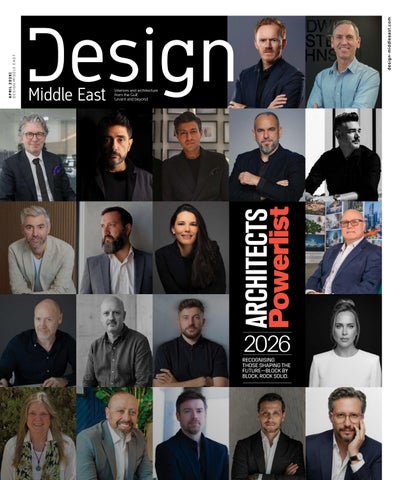
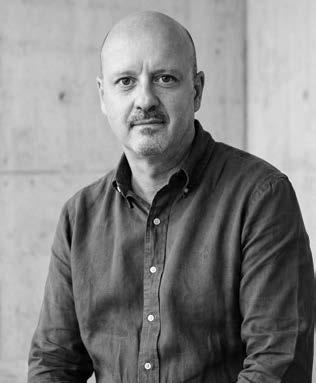
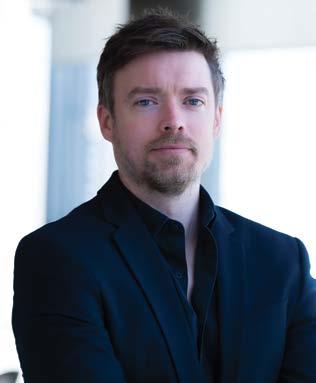
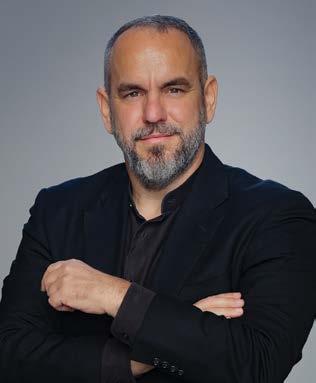
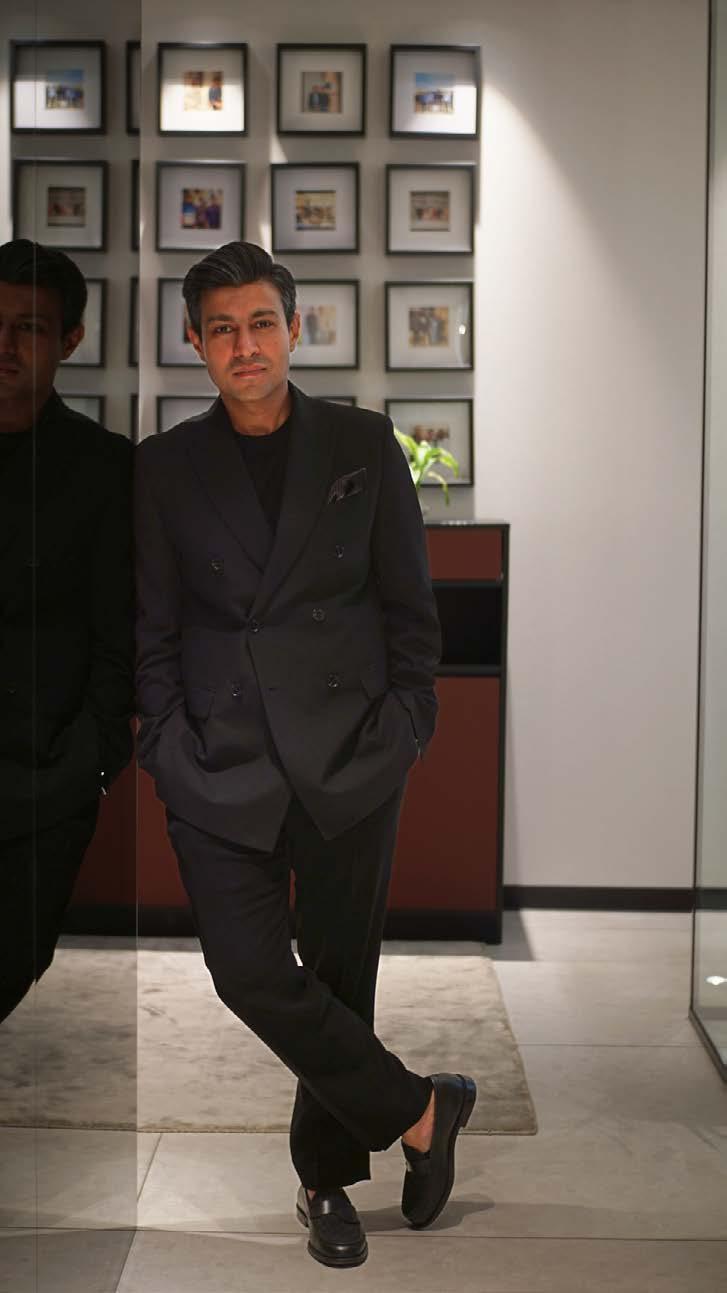
RECOGNISING THOSE SHAPING THE FUTURE—BLOCK BY BLOCK, ROCK SOLID.
Interiors and architecture from the Gulf, Levant and beyond
Enlighten Your Eternal Beauty, Inside and Out!
@muarjewels www.muarjewels.com
info@muarjewels.com
14
OP-ED
Why Design Educators Must Embrace GenAI
As generative AI reshapes creative industries, design education stands at a pivotal crossroads. ALLAN LOUIE T. LOMPOT, Assistant Professor at HERIOT-WATT UNIVERSITY DUBAI, explores why educators must move beyond resistance and embrace a prompt-first mindset to equip the next generation of designers with the skills, adaptability, and critical thinking needed in an AI-driven world.
16
ARTIFICIAL INTELLIGENCE
The Rise of Smart Architecture
MOHAMED SALAH SEGUEN, CEO at EXCELLENCE CONSORTIUM, explores how AI and digital tools are transforming architectural design, coordination, and long-term building performance across the Middle East.
60 DEĆOR REVIEW
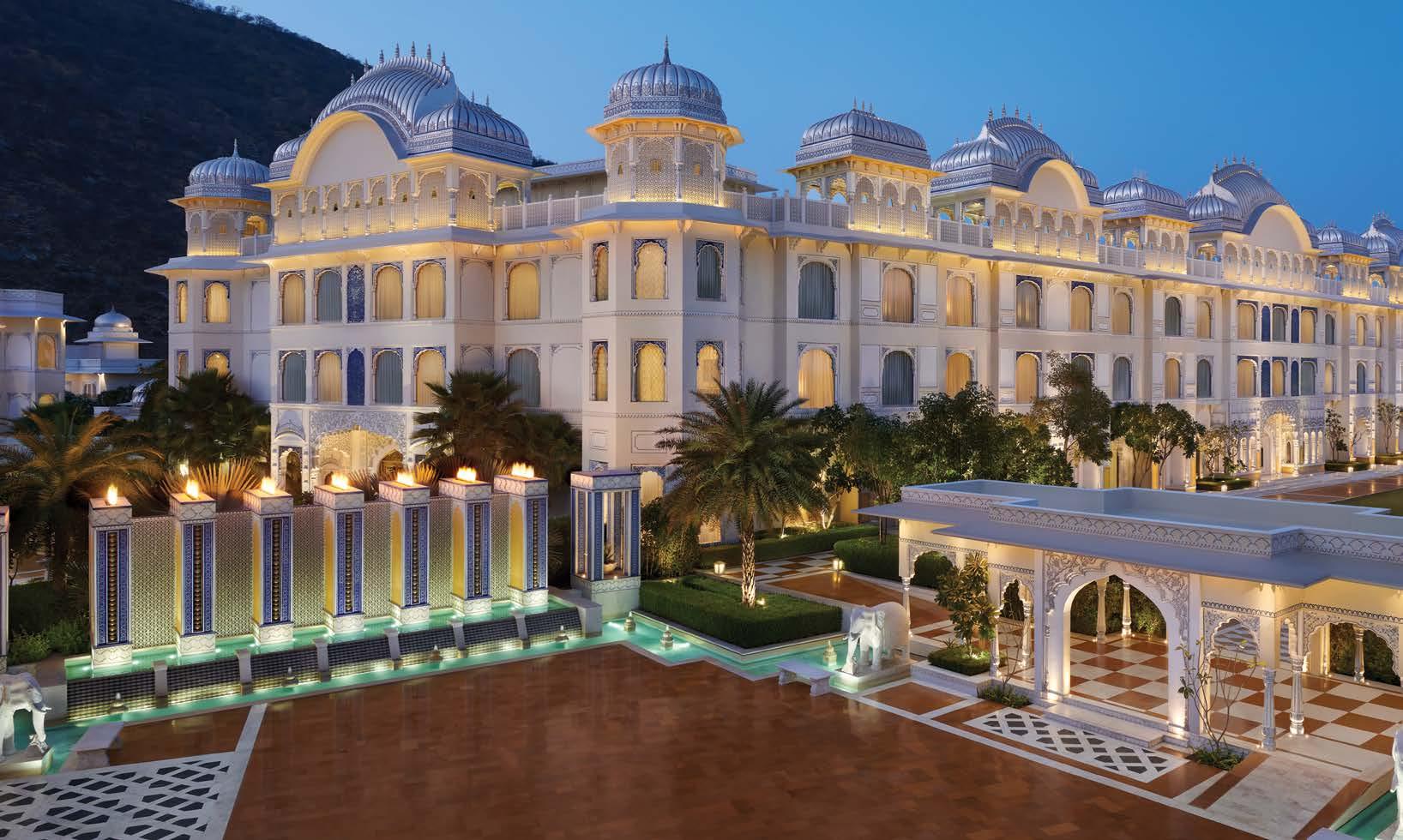
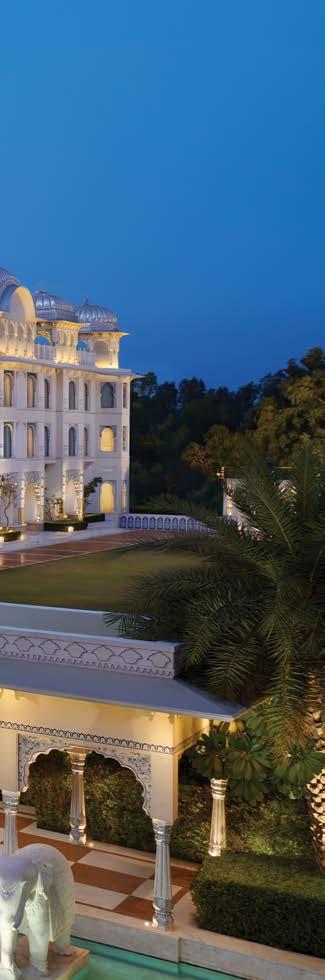
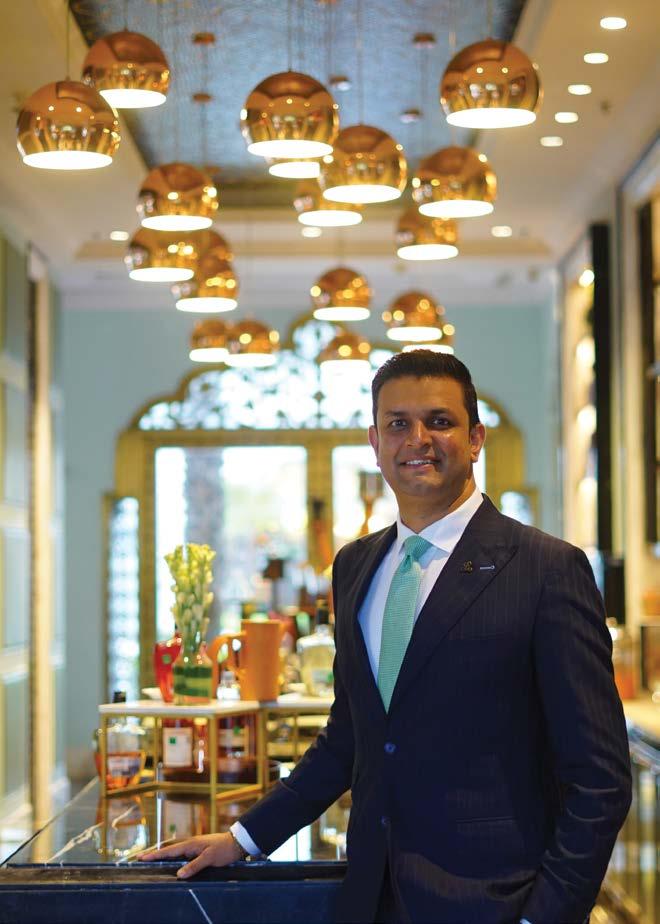
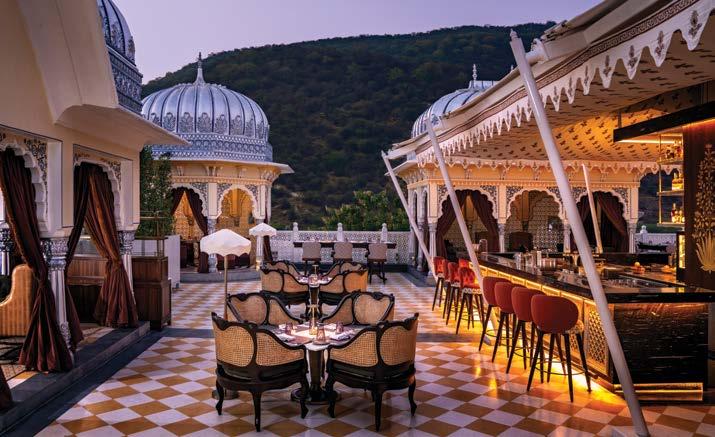
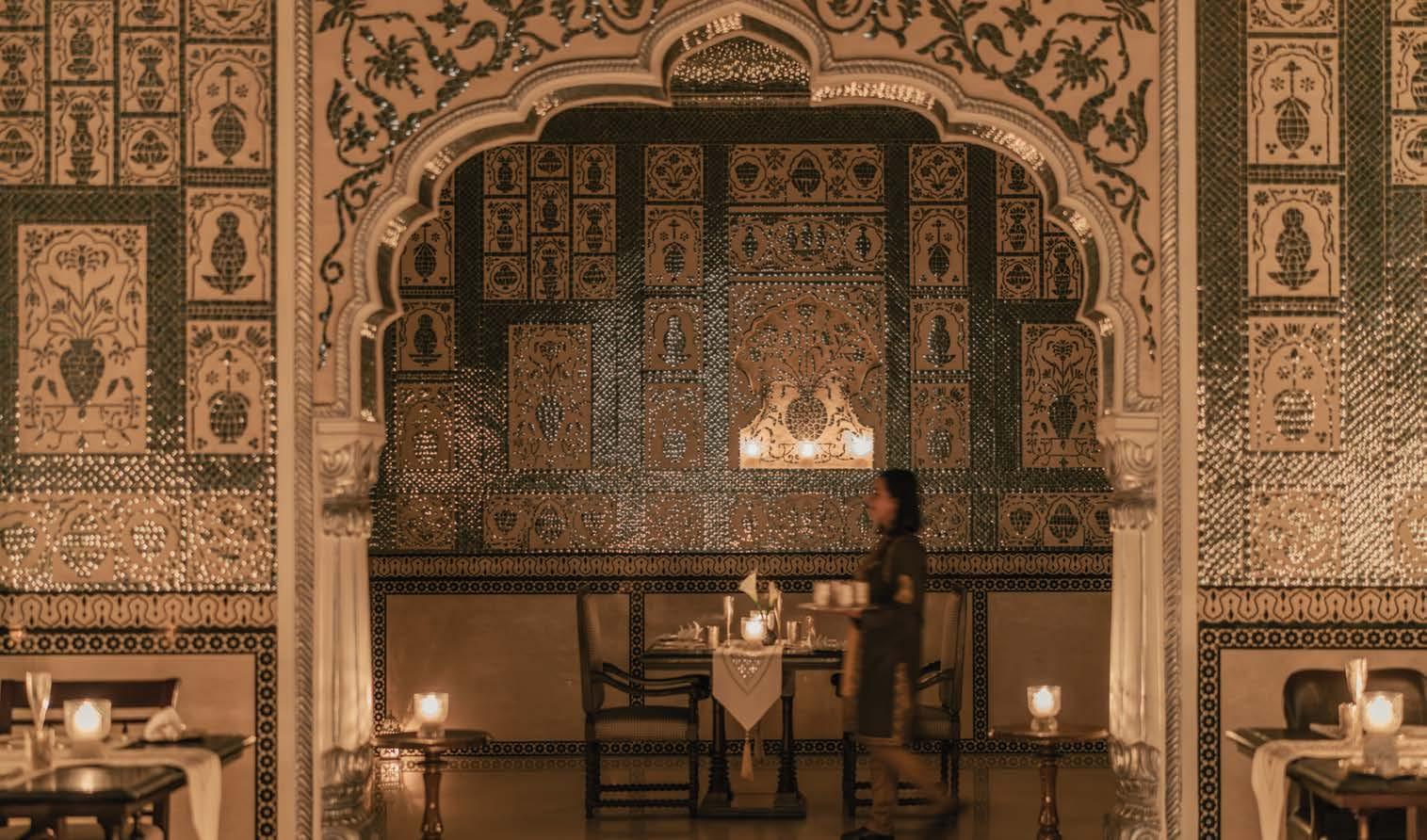
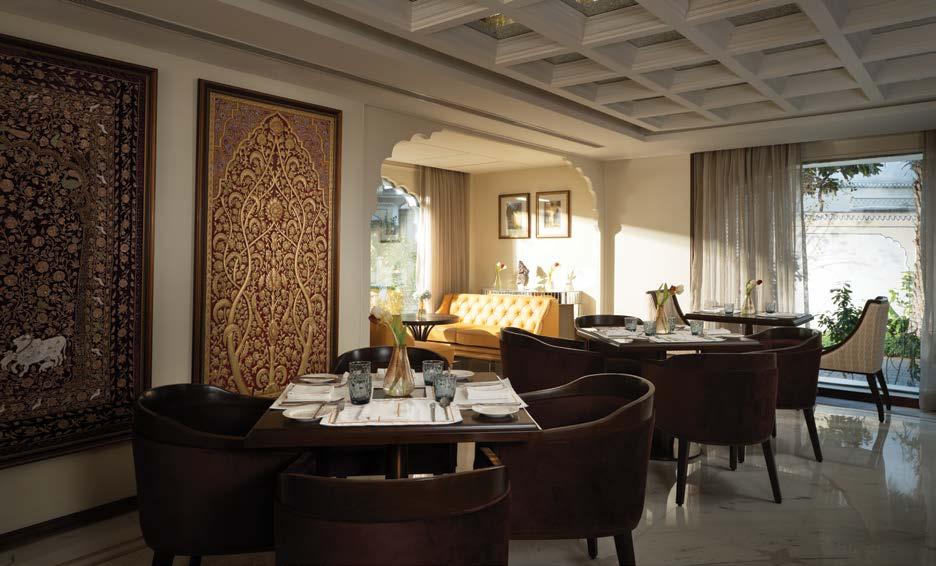
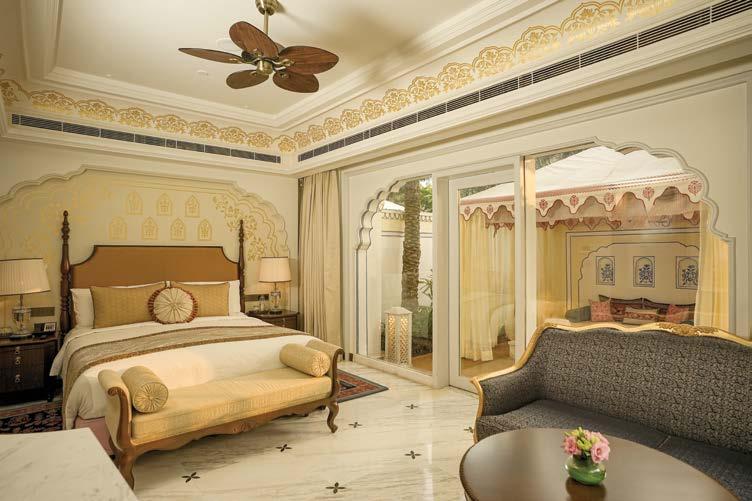
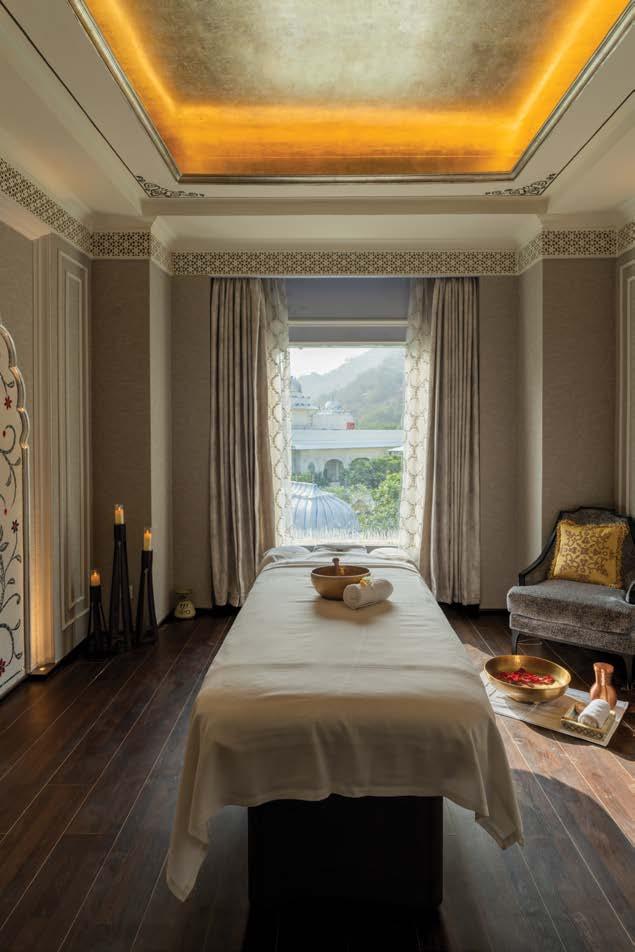
The Palace Life Awaits
ANOOP PANDEY, Vice President & General Manager of The LEELA PALACE JAIPUR, shares how heritage, design,
gastronomy, and wellness come together to create an immersive vision of modern Indian luxury.
66
SENSORY LIVING
Scent as Design: Aroma360 Transforms Modern Living
From subtle home upgrades to luxury environments, scent is redefining design— and AROMA360 is leading the shift at Dubai Hills Mall, driven by the vision of entrepreneur Benzion Aboud.
70 PICK OF THE MONTH
H&M HOME Makes Milan Design Week Debut
If you’re looking for something bold and contemporary, this collaboration delivers. H&M HOME teams up with celebrated designer KELLY WEARSTLER for a standout debut at Milan Design Week 2026.
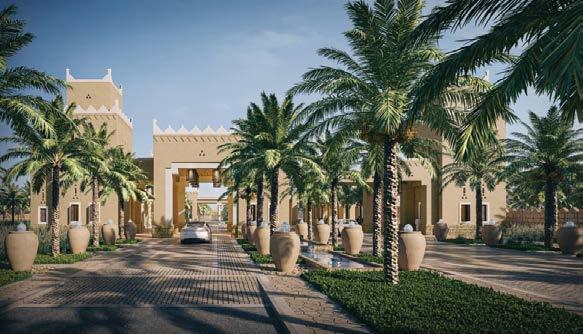
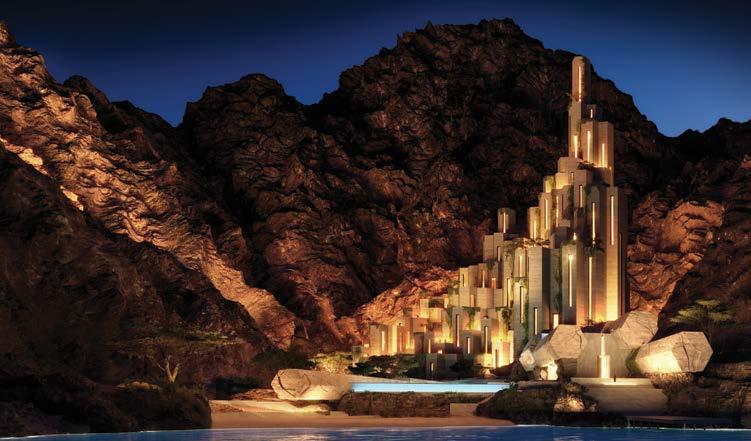
Oberoi Wadi Safar – Diriyah KSA
SUITE TREAT
Step into a world of opulence when you book a Suite at Raffles Doha.
Experience the added luxury of QAR 750 credit to spend on dining in the hotel, and QAR 500 towards any Spa treatment.
Children aged 12 and below are welcome to indulge in the enchantment of complimentary dining.
Rates starting from QAR 3,500 per night
For reservations, please call +974 4030 7100 or email reservations.doha@raffles.com
EXTRAORDINARY
Escape to a home where urban sophistication meets resort tranquility. PRIVATE POOLS | 30+
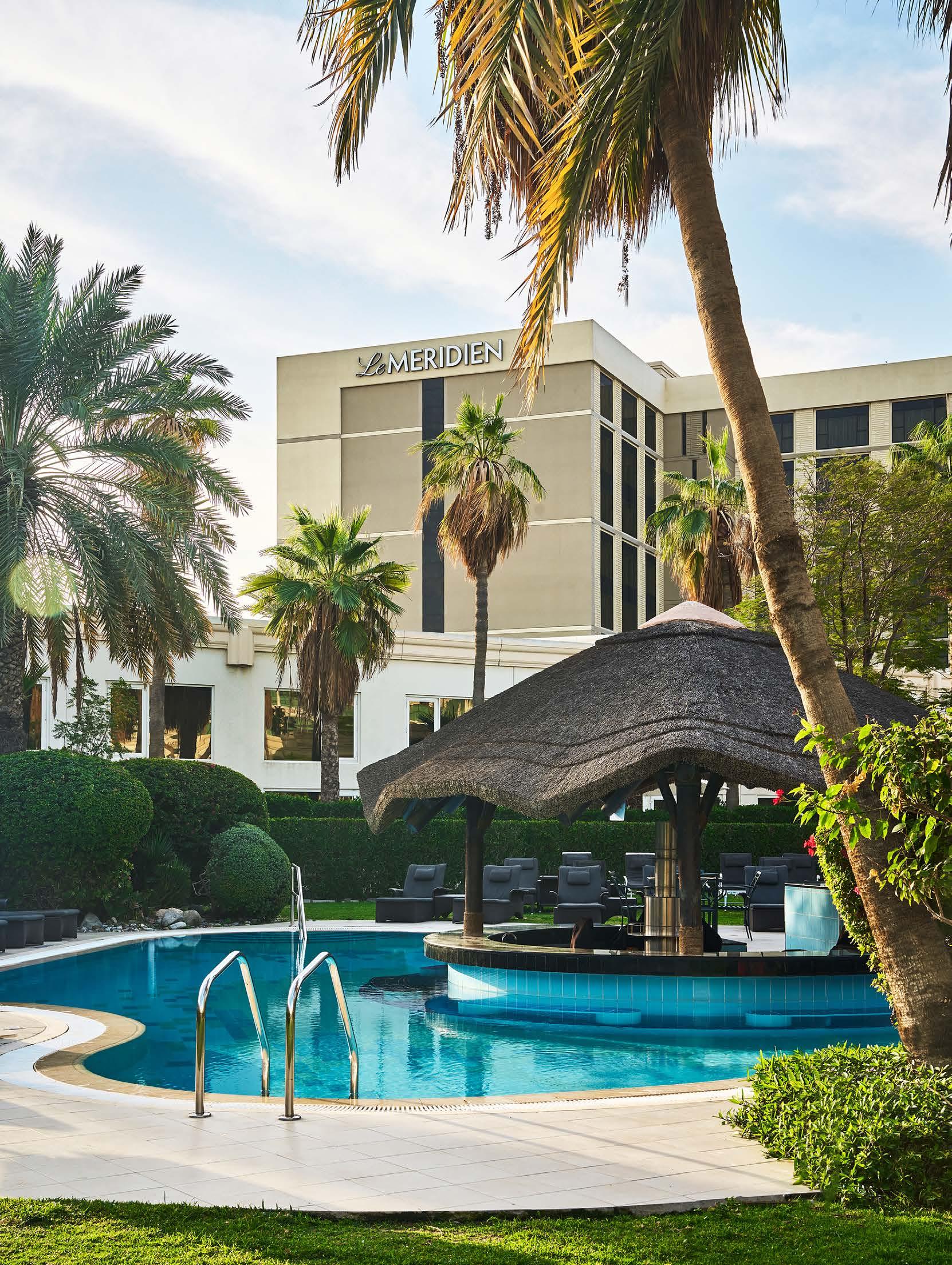
Rediscover Inspiration at Le Méridien Dubai Hotel & Conference Centre
A serene sanctuary at the heart of the city’s dynamic landscape, Le Méridien Dubai Hotel & Conference Centre redefines the art of urban hospitality. Set across 15 acres of immaculately landscaped gardens, the hotel o ers an elegant retreat just moments from Dubai International Airport, placing guests within e ortless reach of the city’s most iconic districts, from Dubai Mall and Burj Khalifa to the storied charm of the Gold Souk and Dubai Creek.
With 580 beautifully appointed rooms and suites, the property invites travellers into a world where contemporary design meets the timeless sophistication of the Le Méridien brand. The distinguished 196 rooms in the Le Royal Club wing elevate the experience with spacious, light-filled rooms, and refined club privileges, while select ground-floor accommodations in the main building open directly onto lush gardens and tranquil pools, o ering a resort-like ambience rarely found in the city.
Well-being is woven into the hotel’s DNA. Guests may indulge in five swimming pools, unwind in serene outdoor enclaves, or train at one of Dubai’s most expansive and advanced fitness facilities, sta ed by expert coaches and equipped with cutting-edge technology to nourish mind, body, and spirit.
At the heart of the property lies an extraordinary culinary journey. Housing 18 acclaimed restaurants and bars, Le Méridien Dubai is home to some of the city’s most storied dining institutions. From the ever-legendary Seafood Market, celebrated for its market-style freshness, to Casa Mia, Dubai’s pioneering Italian restaurant, each venue reflects a passion for authenticity, craftsmanship, and memorable dining artistry.
A beacon for global meetings and events, the hotel features more than 44,000 sq. ft. of versatile event spaces, comprising 24 impeccably designed venues outfitted with modern audiovisual capabilities. Whether orchestrating a grand celebration for 1,750 guests, hosting an international exhibition, or curating an intimate executive gathering, the hotel’s specialist events team and award-winning culinary experts bring each vision to life with impeccable precision and creative flair.
From inspired dining to world-class event facilities, and from resort-style relaxation to unmatched convenience, Le Méridien Dubai Hotel & Conference Centre stands as a destination where cosmopolitan energy and cultivated luxury converge, inviting every guest to unlock a stay that is truly memorable.
“Sometimes, a slowdown is not a setback, but a moment to realign and rise stronger.”
The Middle East stands stronger than ever—resilient, evolving, and steadily shaping its own future. Even in moments of pause, there is progress. Time here moves with purpose: not rushed, but intentional, reflecting a region that continues to give so much to those who live and work within it. It is more than a place; it is a way of life—constantly teaching, constantly transforming. We all move through our own curves of growth, and in many ways, this region mirrors that journey—adapting, enduring, and rising with quiet confidence. This spirit of resilience and forward momentum is reflected in one of our most anticipated editions—the Architects Powerlist. Today, more than ever, there is a deeper sense of respect and admiration for these masters of design. They imagine what most of us cannot, translating vision into reality with precision and purpose. What goes on behind the scenes—the process, the challenges, the relentless pursuit of perfection— is something only they truly understand. We witness the final outcome, we applaud the beauty, but they are the ones shaping the built environment, building experiences, and, in many ways, building the future—one project at a time.
Their work is not just about structures; it is about creating environments that influence how we live, interact, and feel. There is a quiet power in what they do, blending creativity with discipline, and innovation with responsibility. This year’s Powerlist is a testament to that spirit—recognising individuals who
continue to push boundaries while staying rooted in purpose.
Alongside this, the issue brings you our usual mix of insightful articles, thought-provoking op-eds, engaging interviews, and the latest news from across the world. Each piece reflects the dynamic nature of the industry and the conversations shaping it today.
As always, we hope this edition informs, inspires, and offers a moment to pause and appreciate the people and ideas shaping our built world.
Pick of the Month celebrates H&M HOME’s collaboration with acclaimed designer Kelly Wearstler—a must-see.
Roma Arora Editor roma@bncpublishing.net @romaarora_
CEO WISSAM YOUNANE wissam@bncpublishing.net
MANAGING DIRECTOR RABIH NAJM rabih@bncpublishing.net
GROUP PUBLISHING DIRECTOR JOAQUIM D’COSTA jo@bncpublishing.net +971 50 440 2706
COMMERCIAL DIRECTOR ANDREA MOCAY andrea@bncpublishing.net
DIGITAL REPORTER REEBA ASGHAR reeba@bncpublishing.net
DIGITAL MEDIA PRODUCER EDUARDO BUENAGUA Eduardo@bncpublishing.net
SUBSCRIBE subscriptions@bncpublishing.net
PO Box 502511 Dubai, United Arab Emirates T +971 4 420 0506 | F +971 4 420 0196
For all commercial enquiries related to Design Middle East, contact our Group Publishing Director JOAQUIM D’COSTA jo@bncpublishing.net | T +971 504402706
Design Middle East is exclusively licensed to BNC Publishing. No part of this magazine may be reproduced or transmitted in any form or by any means without written permission of the publisher. Images used in Design Middle East are credited when necessary. Attributed use of copyrighted images with permission.
Printed by UPP
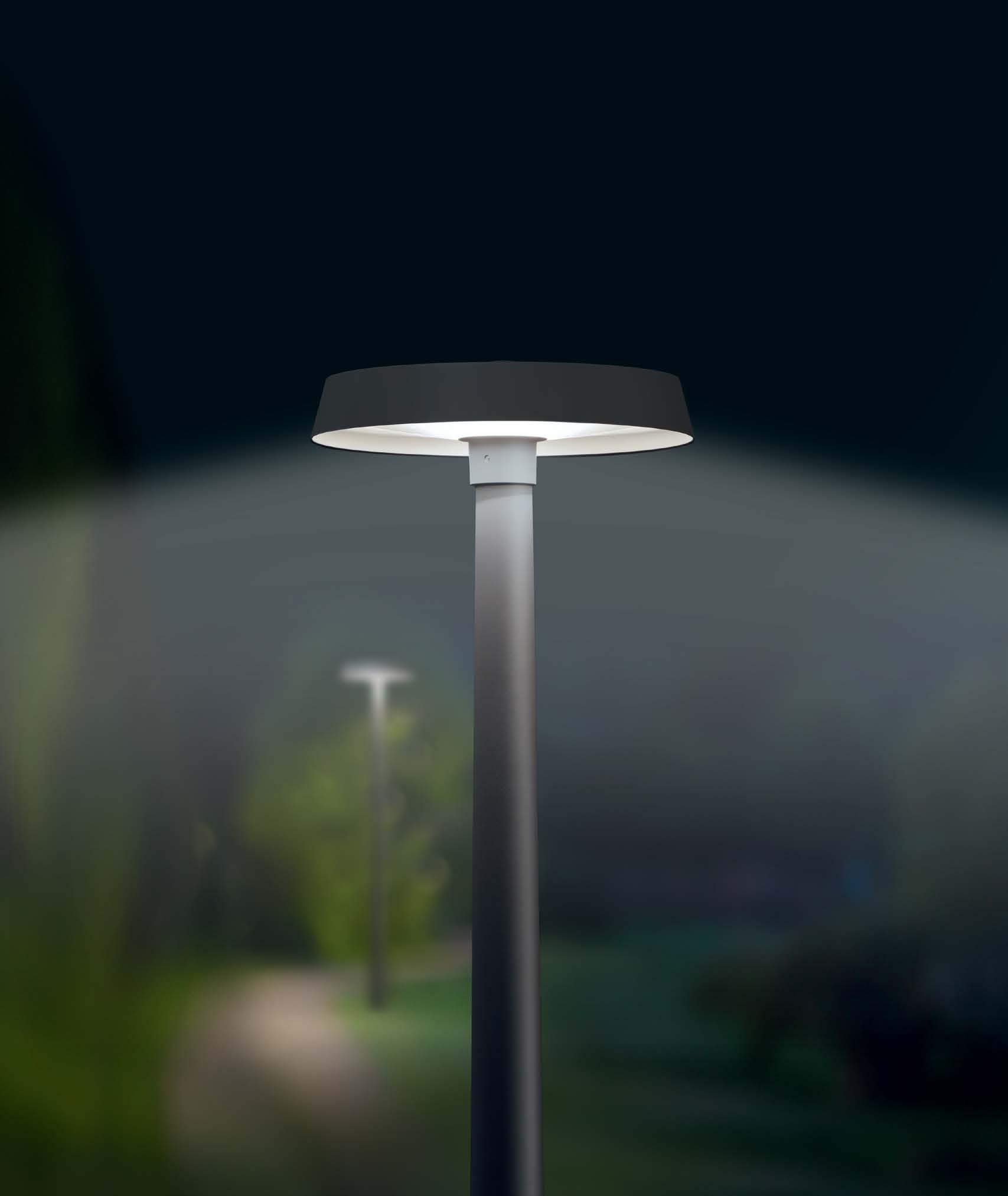
Returns darkness to
bega.com/darksky
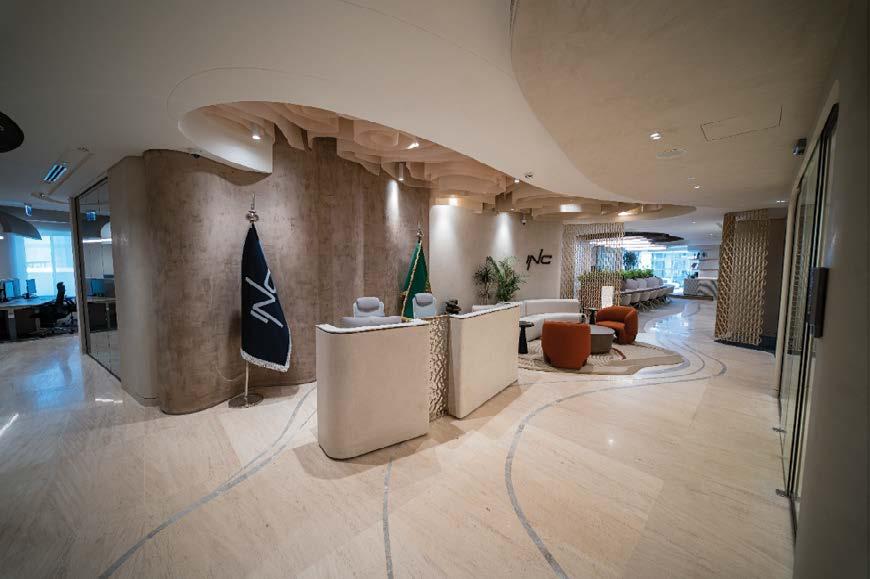
INC KSA’s New Riyadh Office is Inspired by Culture and Context
As one of Riyadh’s leading design and build firms, INC KSA has built its reputation delivering high-performance workplaces for global names including Amazon, EY, BlackRock and Pfizer as well as local clients such as PIF, King Salman International Airport Development Company (KSIADC), and the Ministry of Sport. With 36 projects completed within KAFD alone, its latest move turns inward, creating a workspace that reflects the firm’s own culture, pace and way of thinking.
Designed and delivered entirely in-house, the new 900sqm INC KSA office marks a defining moment for the business.
Having outgrown its previous single-unit space, INC KSA, now the largest team within the wider INC Group, has expanded to occupy an entire floor. After years of focusing outward on client environments, this project brings that same level of attention back to its own people.
The design is anchored by the concept of “Echo”—a simple but layered idea that considers how conversations, decisions and movement leave a lasting imprint on a space. It’s also reflective of INC’s role: taking an initial idea and shaping it into something tangible, with each stage adding depth, buildability and meaning.
This is most evident in the planning. The office is organised into
public, semi-private and private zones, with a layout that flows rather than dictates. Spaces expand and contract as you move through them, creating a natural rhythm across the floorplate. Collaborative areas, quiet work zones and shared moments are connected intuitively, allowing the space to adapt to the day as it unfolds. Materiality reinforces this without overstating it. Layered textures and finishes subtly reference ripple patterns, while glass and reflective surfaces introduce lightness and depth. Softer, organic lines appear through joinery and ceiling details, balancing the structure of the space and adding a sense of movement. A restrained, natural palette grounds
everything, creating an environment that feels calm and considered.
Furniture plays a central role in bringing the concept to life.
Developed by INC’s in-house furniture team in collaboration with manufacturing partners, the package was designed to sit seamlessly within the wider narrative of “Echo”. Many pieces were customised specifically for the project, ensuring alignment not only in aesthetic, but also in performance and user experience. The execution explored innovative approaches to basic materials, allowing the team to experiment with how a single material can be reformed in multiple ways, unlocking so many possibilities. Across the office, bespoke elements include soft seating, task and meeting chairs, and a series of tailored meeting tables, alongside fully customised heightadjustable executive desks that reflect a high level of craftsmanship across both joinery and furniture. Materiality was approached with the same level of intent, finishes, textures and colour palettes were carefully tested and refined to support the design language while ensuring durability and longevity.
Natural materials and carefully placed reflective elements help maintain a sense of openness and ease throughout.
Al Ghurair Appoints Aires Mateus for First UAE Residential Project
Al Ghurair Development, Al Ghurair’s freehold real estate arm, has appointed Aires Mateus as lead architect for its upcoming premium residential development in Dubai South. The appointment marks the Lisbon-based practice’s first project in the UAE and continues
Al Ghurair Development’s approach of working with internationally respected architects to deliver homes designed with purpose and built for generations to come.
Founded in Lisbon in 1988 by brothers Manuel and Francisco Aires Mateus, the practice has spent over three decades developing architecture rooted in the relationship between the physical and cultural worlds. Working across architecture, interior, product, and graphic design, the studio approaches each project through careful research into its context, seeking what it describes as the perennial state of shapes and materiality in the continuity of time.
Sultan Al Ghurair, CEO of Al Ghurair Development, said: “Every architect we work with is chosen because they bring something distinct. With Aires Mateus, what stood out was their discipline. For more than 30 years, they have maintained a singular focus on precision, proportion and the quality of space. That aligns closely with how we approach residential design at Al Ghurair Development, where every decision is guided by quality, practicality and long-term value. We are delighted to bring their work to the UAE for the first time.”
Across cultural, civic, and residential projects throughout Europe, the Aires Mateus studio has consistently demonstrated this commitment to clarity and permanence. Notable projects include the EDP Headquarters in Lisbon, the Museums of L’Élysée and mudac in Lausanne, the Olivier Debré Contemporary Creation Centre in Tours, and the Faculty of Architecture in Tournai. The practice
has been recognised with the Pessoa Prize (2017), Portugal’s most distinguished cultural honour, alongside the Secil Prize, multiple FAD Awards, and several nominations for the Mies van der Rohe Prize.
Sultan Al Ghurair, CEO of Al Ghurair Development, said: “Every architect we work with is chosen because they bring something distinct. With Aires Mateus, what stood out was their discipline. For more than 30 years, they have maintained a singular focus on precision, proportion and the quality of space. That aligns closely with how we approach residential design at Al Ghurair Development, where every decision is guided by quality, practicality and long-term value. We are delighted to bring their work to the UAE for the first time.”
Across cultural, civic, and residential projects throughout Europe, the Aires Mateus studio has consistently demonstrated this commitment to clarity and permanence. Notable projects include the EDP Headquarters in Lisbon, the Museums of L’Élysée and mudac in Lausanne, the Olivier Debré Contemporary Creation Centre in Tours, and the Faculty of Architecture in Tournai. The practice has been recognised with the Pessoa Prize (2017), Portugal’s most distinguished cultural honour, alongside the Secil Prize, multiple FAD Awards, and several nominations for the Mies van der Rohe Prize.
Aires Mateus appointed as lead architect for upcoming premium residential development in Dubai South.
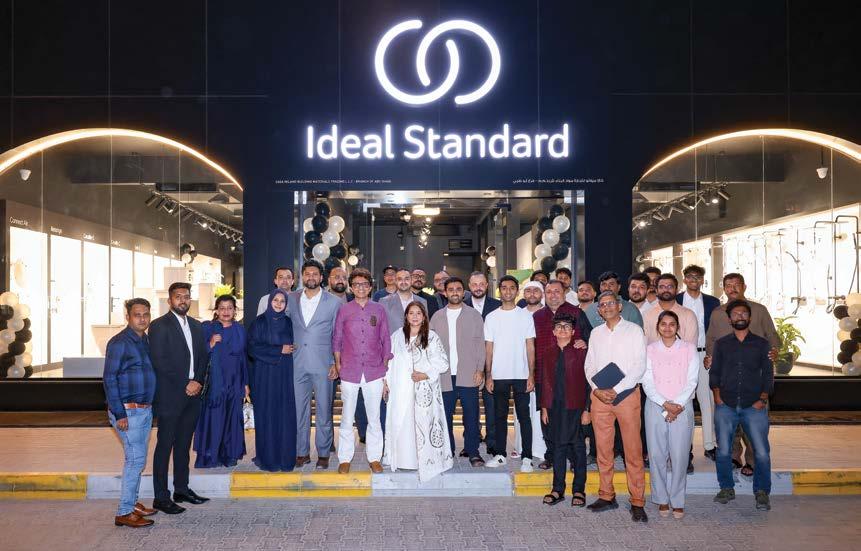
Casa Milano Defies Market Uncertainty with 7th UAE Showroom
At a time when global and regional markets continue to face uncertainty, Casa Milano announced the opening of its 7th showroom in the UAE, marking a significant milestone in the brand’s growth journey and reinforcing its confidence in the country’s long-term outlook.
The new showroom in Al Ain reflects Casa Milano’s continued expansion strategy despite wider industry conversations about slowdowns, caution, and consolidation. The move highlights the brand’s proactive approach, choosing to invest and expand when many businesses are adopting a more conservative stance.
Speaking on the occasion, Azhar Sajan, Founder of Casa Milano, said: “It’s a very special and proud moment for all of us at Casa Milano. In the middle of a difficult and uncertain time, when many choose to pause, we choose to move forward with courage and belief. I am happy
to have launched this during Ramadan. I feel the Al Ain market is buzzing, and this is the right time to enter it.”
The launch sends a strong signal about the resilience of the UAE market, with Casa Milano underscoring its belief that the country’s strong fundamentals continue to create opportunities for sustainable growth. With ongoing infrastructure development and a steady demand for premium living solutions, the UAE remains a key market for long-term investment.
The Al Ain showroom is set to bring Casa Milano’s range of premium improvement solutions closer to homeowners, designers, architects, and developers in the city and surrounding regions. The brand has built its reputation on design-led offerings across sanitaryware, tiles, kitchens, wardrobes, and complete home concepts, serving both residential and hospitality projects. Azhar added that the opening represents more than physical expansion: “This milestone is not just about opening another showroom. It represents the dedication, passion, and hard work of every member of the Casa Milano family. This success belongs to all of us.”
He further noted, “Challenges test our strength, but they also create opportunities. Today, we have shown that even in tough situations, with unity and determination, growth is always possible.”
With the launch of its Al Ain location, Casa Milano is expected to further strengthen its presence in the UAE and support rising demand for high-quality, luxury home improvement solutions in the market. The expansion also aligns with the brand’s broader vision to enhance accessibility and customer experience across key cities. Concluding his remarks, Azhar said, “I would like to sincerely congratulate the entire Casa Milano team for this achievement. Let this be another step toward an even brighter future.”
As businesses navigate an evolving market environment, Casa Milano’s latest expansion highlights its confidence in the UAE’s vision, the resilience of its economy, and the strength of continued forward momentum.
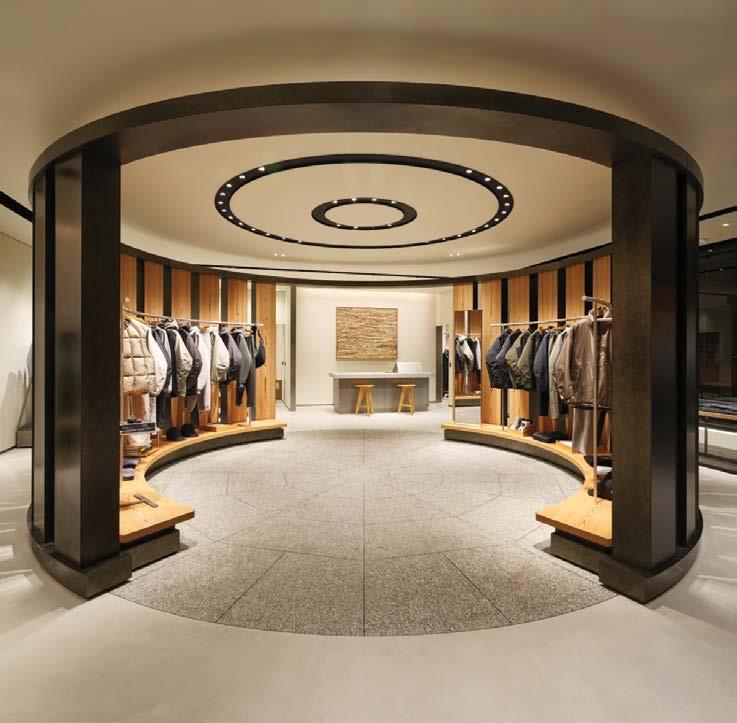
Lucent Lighting enhances Goldwin’s London flagship with discreet architectural illumination
Lucent Lighting supplied architectural lighting solutions to the Goldwin London flagship store on Broadwick Street in Soho, helping to shape a refined retail environment where architecture and light combine to create an immersive customer experience.
Located in the heart of one of London’s most vibrant creative districts, the store blends contemporary retail design with subtle references to Japanese tradition. The lighting design, developed by There’s Light in collaboration with Lucent Lighting, complements this setting through carefully layered illumination that enhances the environment while maintaining a minimal and considered aesthetic.
Lucent Lighting contributed a combination of flexible trackmounted luminaires and discreet recessed fittings to achieve this balance.
The TubeLED Mini Quantum High Output for Mains Voltage Track was specified to deliver high-performance accent lighting throughout the retail space. Installed on Mains Voltage Track, the compact luminaires provide the flexibility needed for a modern retail environment, allowing lighting positions to be easily adjusted as displays and collections evolve.
To create a seamless architectural finish, Oculus Trimless luminaires with LED50 One Quantum High Output modules were installed across the ceiling. Designed to integrate discreetly into the architecture, the trimless fittings sit flush within the ceiling plane, maintaining a clean visual line that supports the minimalist interior design.
Lucent’s Trimless Install Kits were used for both solid ceilings and full skim plasterboard ceilings, ensuring precise integration during installation. These kits allow the luminaire housing to be recessed into the ceiling structure before plastering, resulting in a perfectly flush finish once completed. By eliminating visible trims and shadow gaps, the system preserves the purity of the ceiling plane while delivering a high-quality architectural appearance. In addition to their aesthetic benefits, the installation kits simplify the installation process by providing accurate alignment and a secure fixing point for the luminaire. This reduces installation time for
contractors and helps prevent issues such as plaster cracking around fittings, ensuring a durable and long-lasting finish.
John Carey, Specification Sales at Lucent Lighting, said: “A stunning end result. It was a real pleasure to collaborate with There’s Light and play our part in bringing an inspiring architectural vision to reality. Our flexible track lighting and trimless luminaires combine flexibility with seamless integration, becoming part of a lighting design that elevates the space. This is cutting-edge design, an immersive experience that tells a brand story of history and meticulous craftsmanship, whilst keeping the products centre stage."
The lighting scheme provides a layered balance of accent and ambient illumination that highlights product displays while enhancing the natural textures and materials within the space.
Why Design Educators Must Embrace GenAI
As generative AI reshapes creative industries, design education stands at a pivotal crossroads.
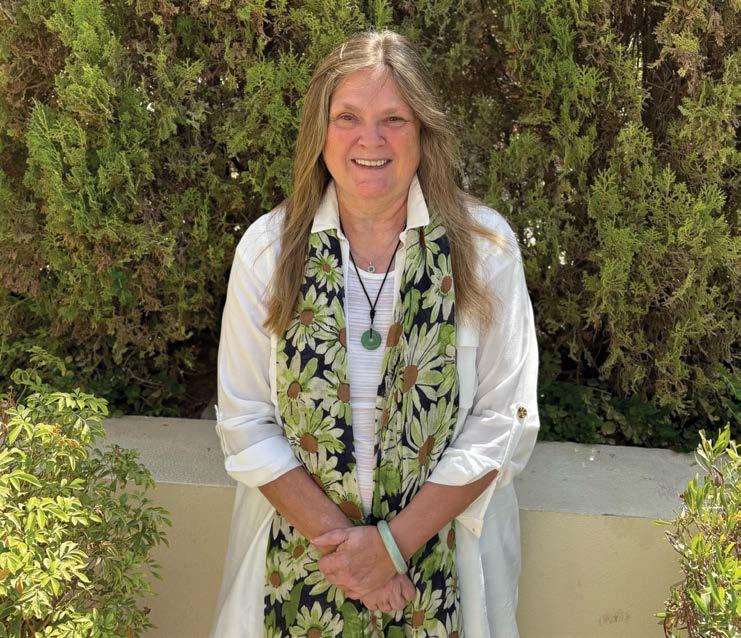
ALLAN LOUIE T. LOMPOT
, Assistant Professor at Heriot-Watt University Dubai, explores why educators must move beyond resistance and embrace a prompt-first mindset to equip the next generation of designers with the skills, adaptability, and critical thinking needed in an AI-driven world.
Have you ever considered the subtle shift in how students approach a scholarly journal analysis?
Today’s learners, particularly those within the "Gen Z" demographic, often begin by calculating the required word count as a functional parameter for the digital tools they use. Since 2023, many students have transitioned to a "prompt-first" mindset. They prioritise how to structure a command based on a given instruction rather than reflecting on why the assignment was given. This represents a silent revolution in design education, unfolding rapidly across
laptop screens and smartphones.
As a design educator, I have observed an increasing reliance on general artificial intelligence (GenAI). During design critiques, some Gen Z students present work that reflects GenAI results verbatim. When asked to elaborate further, these students often struggle to articulate a deep connection to their so-called own work. Furthermore, when an entire cohort receives the same set of instructions, the use of similar prompts can result in strikingly alike submissions. Even a quick glance at their laptop monitors during class often reveals a dedicated window for GenAI, functioning as a constant companion to the creative process. It is important to remember that
the rise of GenAI did not truly begin in 2023. The technologies powering today’s tools have been in development for decades. Advances in machine learning and large language models (LLMs) have steadily built toward systems capable of producing humanlike text and now, images. When platforms like ChatGPT and Google Gemini became publicly accessible, students immediately recognised their value for simplifying complex academic materials.
The future of design pedagogy relies on a fundamental shift in perspective. Rather than attempting to restrict GenAI, universities should empower design students to use it as an ethical partner in learning. By setting detailed parameters for use, universities can
The future of design pedagogy relies on a fundamental shift in perspective. Rather than attempting to restrict GenAI, universities should empower design students to use it as an ethical partner in learning. "
ensure that technology enhances, rather than replaces, the human element of design education.
Design students can theoretically reserve more energy for high-level concept development. Yet this convenience carries a hidden cost. When design students rely too heavily on GenAI, they risk losing key habits like sketching during brainstorming and even sketching from imagination. If students pose as if it were their original idea, they may fundamentally misunderstand the design process they are tasked to experience.
This dilemma is already reshaping design pedagogy. Design educators increasingly recognise that traditional assignments can now be completed by GenAI, given the curation of a good
prompt. As a result, many professors are proactively redesigning coursework around real-world problem-solving and in-person critiques and oral presentations, where human interpretation and interpersonal interaction matter more than automated output. In this sense, GenAI is pushing universities toward more experiential forms of education.
Critics argue that GenAI threatens academic integrity, and some universities have attempted to ban the technology entirely. If a design student can generate an impressive artwork using a few prompts, how can educators be sure the work reflects genuine proficiency? However, prohibition is rarely an effective long-term solution. From search engines to industry-standard software like Adobe Creative Cloud, GenAI tools are already embedded in the digital environments students inhabit. Attempting to eliminate them from the classroom is as impractical as banning calculators from mathematics or the internet from research.
Design educators now hold the responsibility to redesign curricula that integrate GenAI literacy, empowering students to evaluate AI-generated information with a critical and ethical lens. At Heriot-Watt University Dubai campus, our undergraduate programs in Interior Architecture and Design (IAD), Fashion Branding and Promotion (FBP) and Communication Design (CD) have prioritised these considerations to ensure our coursework remains at the speed of relevance. If design education successfully navigates this transition, GenAI will not diminish the learning process; instead, it will stand as one of the most powerful educational milestones of our time.
Allan Louie T. Lompot, Assistant Professor at Heriot-Watt University Dubai
The Rise of Smart Architecture
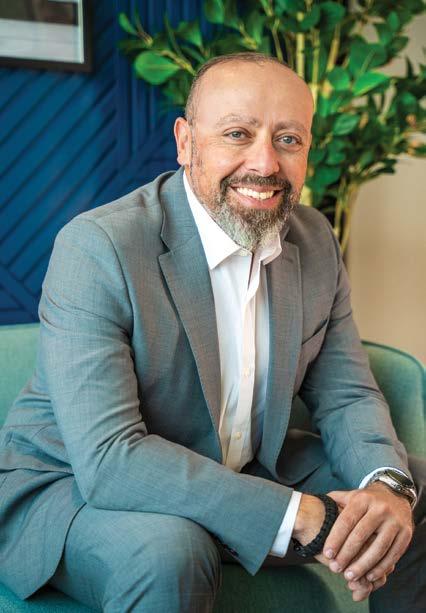
Mohamed Salah Seguen, CEO at Excellence Consortium, explores how AI and digital tools are transforming architectural design, coordination, and longterm building performance across the Middle East.
.
Across the Middle East, construction and real estate development continue to expand in scale and complexity as countries pursue ambitious urban growth strategies. This environment is placing greater demands on architectural and engineering teams to deliver designs that are technically precise and durable in the long term. To achieve this, AI and advanced digital tools are increasingly being used to design, analyse, and manage projects.
These technologies enable teams to test design scenarios earlier, coordinate disciplines more effectively, and understand how buildings will perform before construction begins. Over 72% of global real estate owners and investors plan to invest in AI-enabled solutions such as digital twin analysis and generative design tools. As these technologies become more accessible, they are reshaping how design teams evaluate projects throughout the building lifecycle.
FASTER EVALUATION OF MULTIPLE DESIGN SCENARIOS
One of the most practical advantages of digital design tools is the ability to evaluate multiple design scenarios quickly and accurately. Architectural teams can test different massing options, façade strategies, and spatial arrangements, while engineers assess structural systems and building services in parallel.
Generative design tools support this process by producing multiple design variations based on defined parameters such as site conditions, environmental performance targets, and planning constraints. This enables teams to compare alternatives using performance data rather than relying solely on sequential design exploration. Earlier evaluation leads to stronger design decisions when adjustments are still easier to implement.
BETTER COORDINATION BETWEEN DISCIPLINES
Complex developments require close alignment between architecture, structural engineering, and mechanical, electrical, and plumbing systems. When these disciplines operate within a shared digital environment, coordination becomes more reliable.
Building information modelling and integrated design platforms allow teams to detect conflicts between systems during the design stage. For example, potential clashes between structural components and building
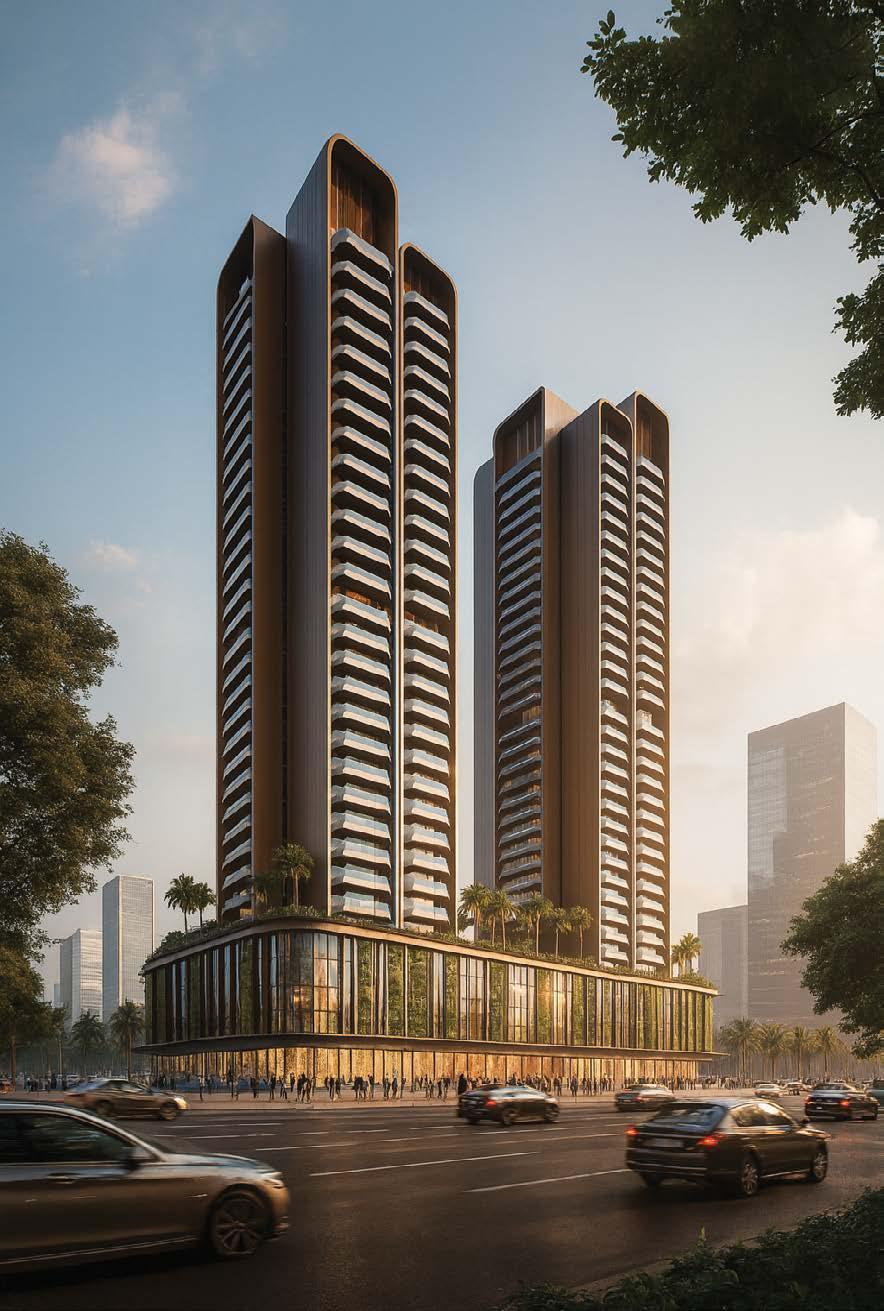
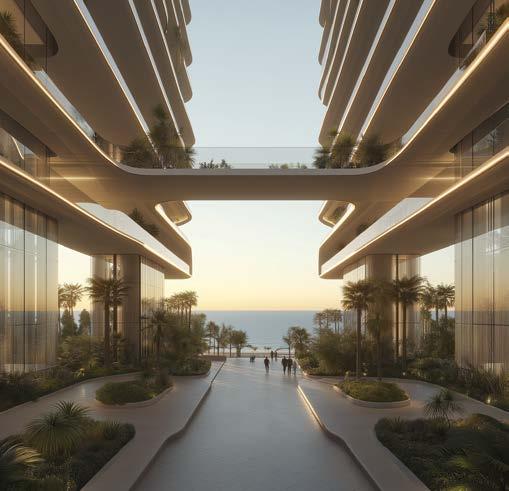
RIGHT IMAGE: Guzel Towers at JVT blends digital innovation with architecture, enhancing visualisation and stakeholder engagement experiences.
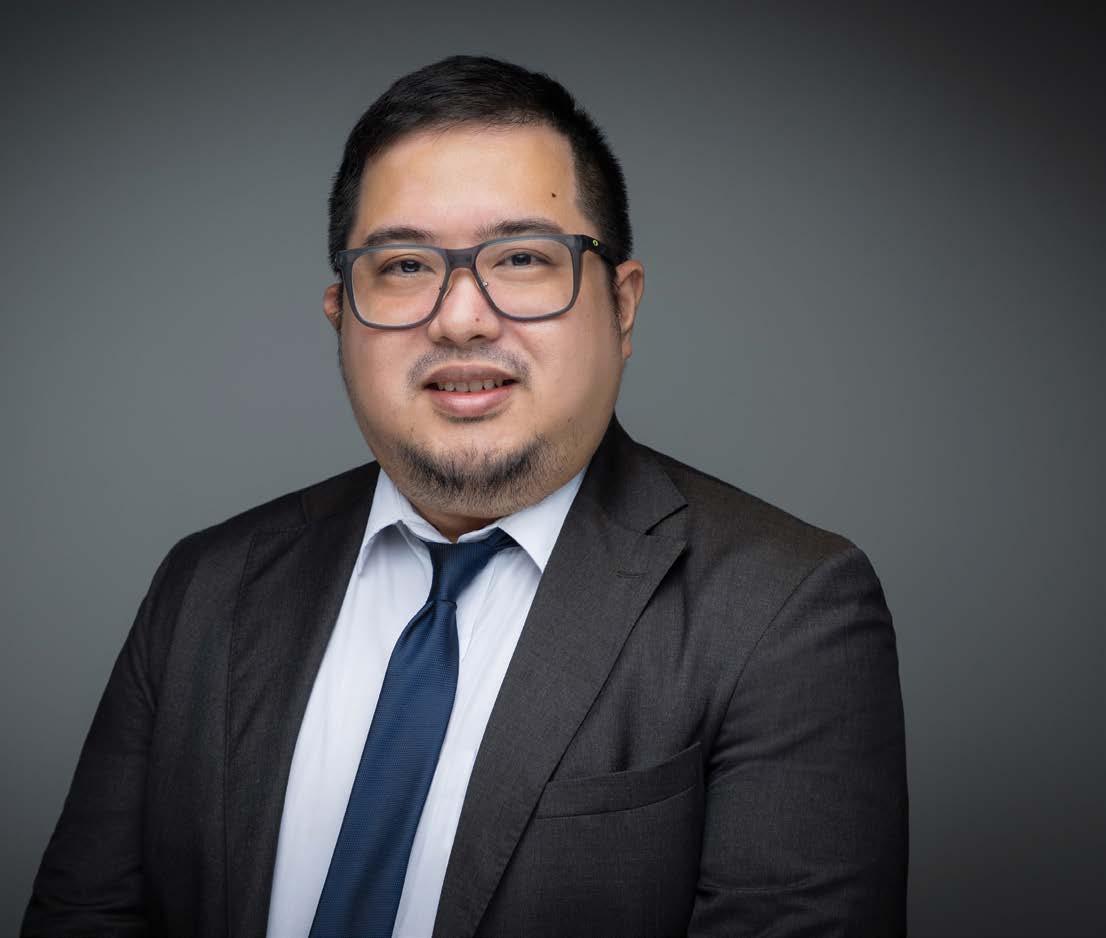
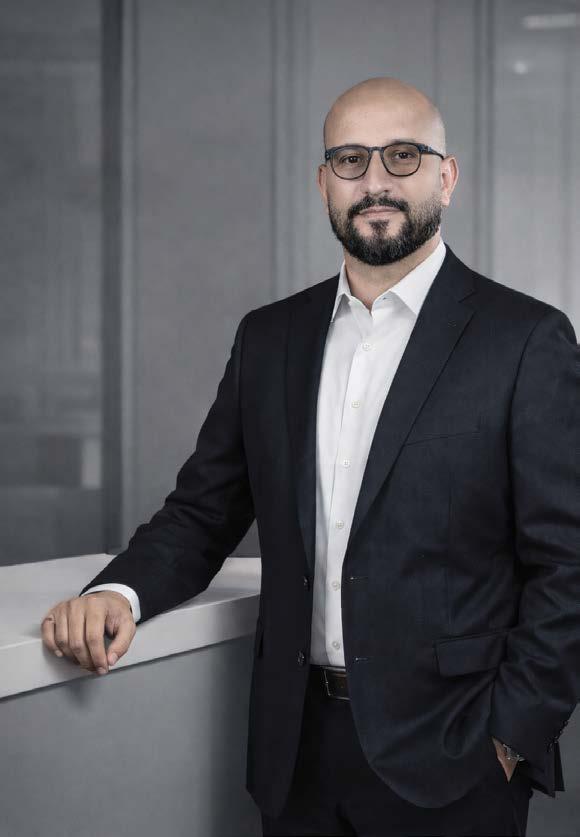
Mohamed Salah Seguen, CEO at Excellence Consortium
services can be identified before construction begins. Early coordination reduces rework, improves clarity during authority submissions, and supports smoother execution on site. Digital models also improve communication between consultants, contractors, and project stakeholders by providing a unified source of design information.
INTELLIGENT PROJECT SIMULATION
A digital twin is a virtual representation of a physical asset that can be used to simulate operational scenarios and evaluate building performance during the design stage. These models allow teams to study energy performance, spatial efficiency, and operational behaviour before construction begins. They also support analysis of construction sequencing and site coordination. In an industry where schedule and cost risks are common, the ability to simulate outcomes before decisions are implemented provides significant advantages.
Digital twins can also evolve into detailed as-built models that support facility management and energy optimisation once a building becomes operational.
GENERATIVE DESIGN AS PRACTICAL TOOLS
Generative and parametric design tools are being used to analyse how building form responds to environmental conditions, planning constraints, and engineering requirements.
Façade performance can be studied in relation to daylight exposure and energy efficiency. Layout configurations can be adjusted to improve circulation and spatial efficiency. Structural systems can be refined to balance architectural intent with construction practicality. These tools support design exploration while maintaining full professional oversight. Architects and
engineers remain responsible for evaluating the results and selecting solutions that align with project objectives and regulatory requirements.
AI AS AN ENHANCEMENT TO PROFESSIONAL EXPERTISE
Architectural and engineering design remains a discipline guided by experience, judgement, and technical expertise. Digital tools strengthen this process by accelerating analysis and providing clearer insights, enabling construction teams to reduce rework and material waste by up to 12% through improved planning during the design stage.
When design alternatives and performance simulations can be evaluated more efficiently, professionals can focus on quality, compliance, and long-term project value. Technology, therefore, supports professional decision-making rather than replacing it.
Artificial Intelligence
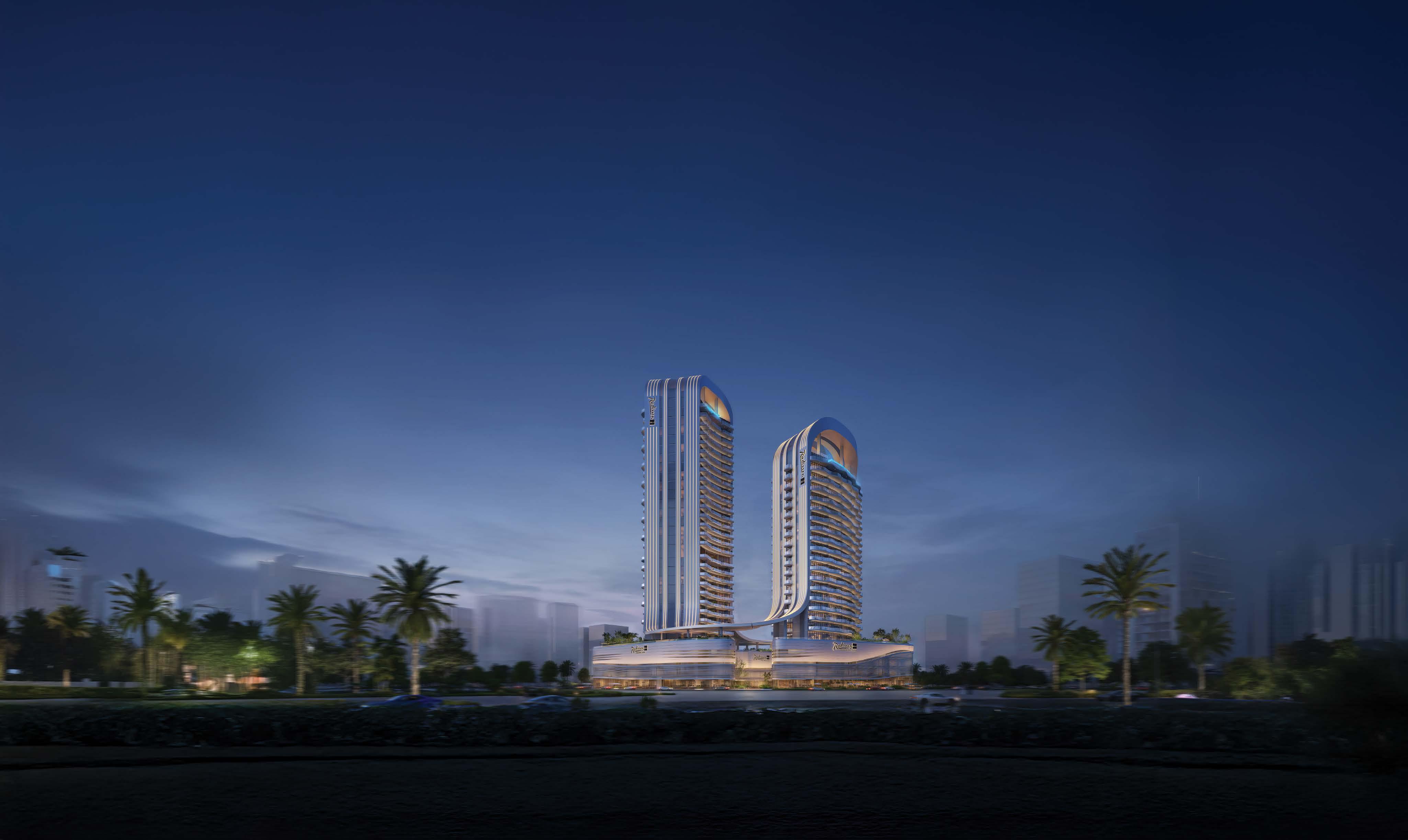
coordinated digital workflows for efficient, integrated hospitality development
AS DIGITAL TOOLS CONTINUE TO EVOLVE, THEY ARE STRENGTHENING HOW ARCHITECTURE AND ENGINEERING TEAMS DESIGN, COORDINATE, AND DELIVER PROJECTS.
FULL DIGITAL LIFECYCLE MANAGEMENT
Digital platforms support the full design lifecycle, from early concept development through detailed coordination, authority approvals, and documentation. These systems also support construction supervision by improving communication, review processes, and project tracking.
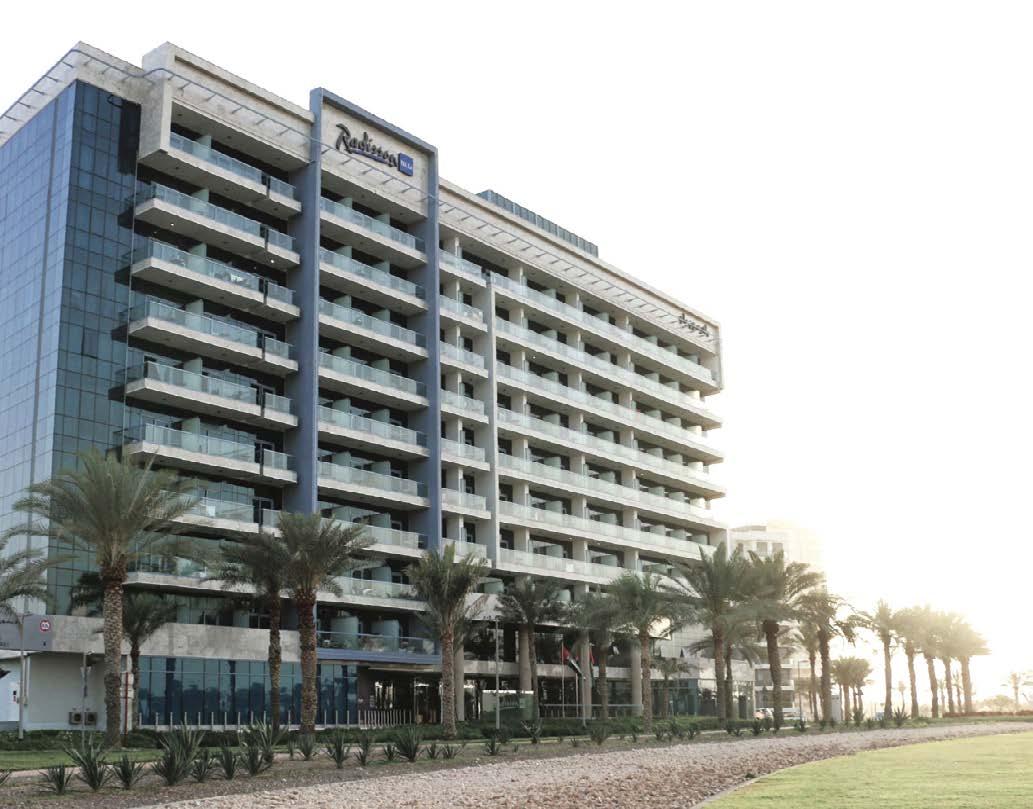
The Radisson Blu Hotel Apartments in Dubai Silicon Oasis, launched in December 2017, illustrates how coordinated digital workflows support hospitality developments that require close alignment between architectural planning, engineering systems, and operational requirements.
CREATING FULL ARCHITECTURAL EXPLORERS FOR PROJECTS
Digital architectural explorers are also becoming valuable tools for presenting complex developments. These platforms allow stake-
holders to experience a project within an integrated digital environment where design, visualisation, and surrounding context can be understood together.
Such platforms can also be linked to CRM systems used by developers and real estate agencies. This supports sales teams by providing accurate visual representations of projects while maintaining alignment with the architectural design. This approach is being applied to developments such as Guzel Towers, a multi-building complex planned for Jumeirah Village Triangle and expected to be completed in December 2027. Integrated digital environments enable stakeholders to understand both the architectural concept and the broader development vision before construction is completed. As digital tools continue to evolve, they are strengthening how architecture and engineering teams design, coordinate, and deliver projects. Their practical application helps produce more informed decisions, stronger project control, and buildings that perform better throughout their lifecycle.
Radisson Blu Dubai Silicon Oasis showcases
Sit your best. Everybody sits.
PRESENTS
POWERLIST 2026 Influential ARCHITECTS
UNVEILING THE ARCHITECTS POWERLIST 2026, RECOGNISING THOSE PRESERVING THE PAST, DEFINING THE PRESENT, AND BUILDING THE FUTURE—BLOCK BY BLOCK, ROCK SOLID.
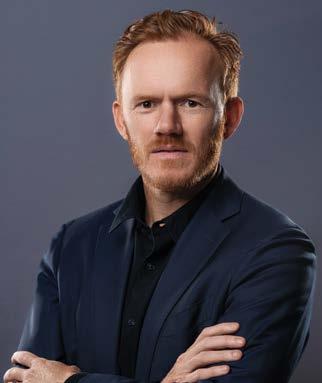
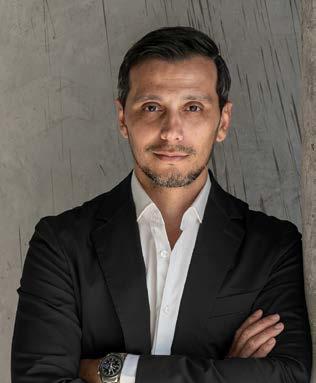
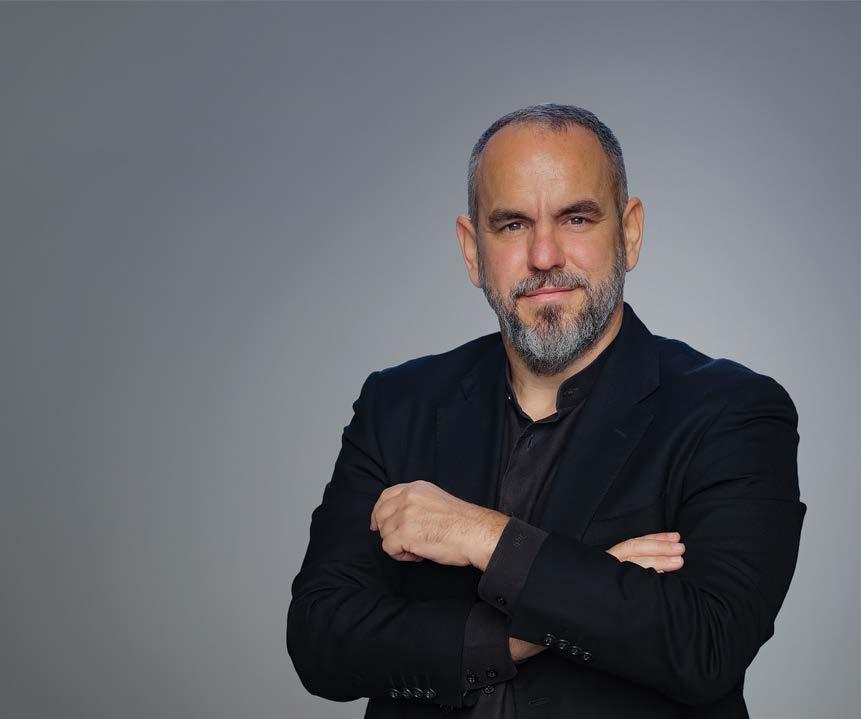
Ignacio Gomez
Global Design Principal AEDAS
Professional Overview
With over 21 years of experience in architecture, Ignacio has played a significant role in shaping the built environment across the Middle East since relocating to the region in 2006. Over the course of his career, he has established himself as a prominent design architect, recognised for his innovative approach and an outstanding portfolio of landmark projects.
His work has received widespread recognition for its design excellence and innovation, earning several prestigious industry awards. These include the Young Architect of the Year title at the Middle East Architect
One of the most important changes I would like to see is a shift in how the industry understands the role of the architect within the wider systems that shape our cities. For much of the twentieth century, architecture was often framed around the idea of the architect as the central author of the built environment. Today, the reality is more complex. Cities are shaped by technology, finance, logistics, energy systems, regulation, and infrastructure, often as much as by architectural form itself. If architects focus only on the visual dimension of buildings, we risk becoming less involved in the broader forces that shape how cities evolve
Awards in 2010 and the Cityscape Global Award in 2011 for the Diplomatic Quarter Celebration Hall. His contribution to the Red Sea Riviera Master Plan was also recognised with the Best Residential Project of the Year at the Middle East Architect Awards in 2010. Further accolades include Best Hospitality Project for The Chedi Khorfakkan at the Middle East Architect Awards in 2012, Architect of the Year at the Design Middle East Awards in 2019, and Architect of the Year at the Architecture Leaders Awards in 2022.
As Global Design Principal at Aedas, and in his previous leadership roles, Ignacio has directed the design vision for a diverse range of projects across the region, including master planning, hospitality, leisure, residential, cultural, and transport developments.
Beyond practice, Ignacio is an active and respected member of the architectural community. He is frequently invited as a guest critic at the School of Architecture & Design at the American University of Sharjah, and regularly participates as a speaker at major industry events across the MENA region, including the World Architecture Congress in Dubai, Architectural Design Days in Riyadh, and the DesignMENA Summit in Dubai.
His work has also been widely published in respected industry journals and platforms, including Fisuras Magazine, Future Architecture Magazine, Via Arquitectura, 2A Magazine, Middle East Architect, and Construction Week. Through his leadership, design excellence, and commitment to innovation, Ignacio continues to make a lasting impact on the architectural landscape of the Middle East and beyond.
Design Ethos & Leadership Approach
Ignacio believes that what the profession needs is a renewed focus on relevance.
Architects must engage more actively with the systems that influence urban life, including mobility, climate response, digital infrastructure, and resource management. Cities today operate as complex ecosystems, and architecture has the potential to act as a coordinating discipline that connects these layers, rather than simply responding to them after key decisions have already been made.
He also believes that another area where the industry can improve is in how projects are delivered. Too often, buildings are still delivered as one-off prototypes. Each project begins almost from zero, even when many of the underlying challenges are shared. This approach consumes enormous time and resources and limits the ability to improve performance across the built environment. As an industry, there is a need to explore more intelligent forms of standardisation, where systems and components can be refined and improved over time while still allowing space for architectural creativity where it truly matters.
Sector Expertise & Signature Projects
He notes that this shift would also help address one of the most pressing challenges facing the industry today: sustainability. Many conversations about sustainability still revolve around certifications, scorecards, and technological add-ons. While these tools can be useful, they often treat sustainability as a layer applied to a finished design rather than as a fundamental principle shaping the entire process. To make a meaningful impact, sustainability must be embedded in the earliest decisions about how buildings are conceived, constructed, and maintained over time.
SUSTAINABILITY, TECHNOLOGY & INNOVATION
At the same time, Ignacio emphasises that the industry must reconsider its relationship with time. In regions such as the Middle East, where cities are evolving at an extraordinary pace, time itself becomes an important design parameter. Projects move quickly, expectations shift rapidly, and architects must respond with clarity and adaptability. This demands practices that are agile, collaborative, and capable of continuous learning, rather than relying on fixed design formulas.
He adds that technology will inevitably play a significant role in this transformation. Artificial intelligence and advanced digital tools are already reshaping how data is analysed, design options are generated, and complex projects are coordinated. However, technology should not replace architectural judgement. Its real value lies in helping architects spend less time on repetitive tasks and more time focusing on the questions that truly matter: how spaces are experienced, how cities function, and how built environments respond to the social and environmental challenges of our time.
Ignacio believes that the future of architecture lies in embracing this complexity rather than resisting it. The profession must expand its role, engage more deeply with the systems shaping cities, and develop processes that allow for the delivery of better buildings more consistently. If this is achieved, architecture will not only remain relevant but will continue to play a meaningful role in shaping the next generation of cities.
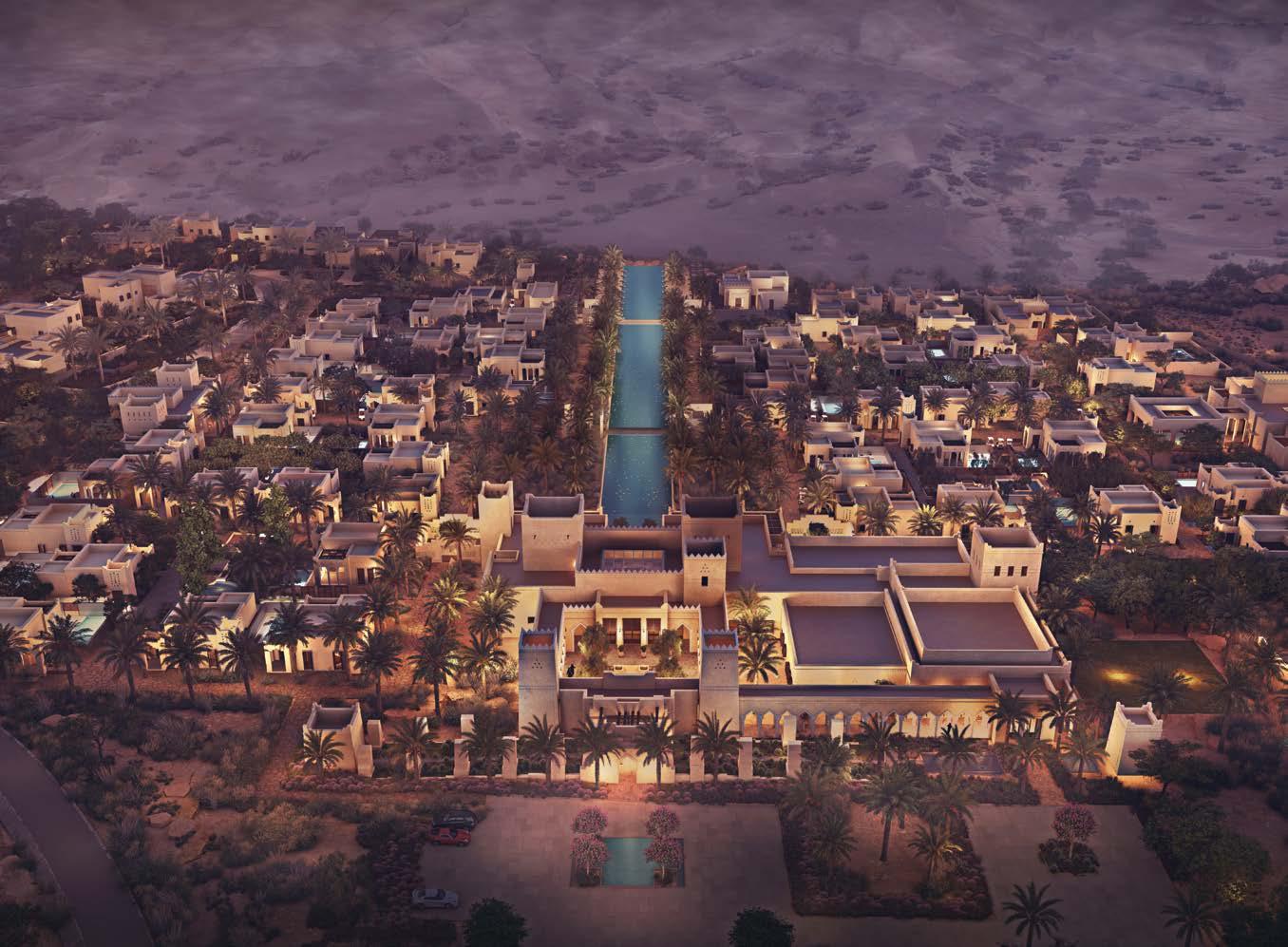
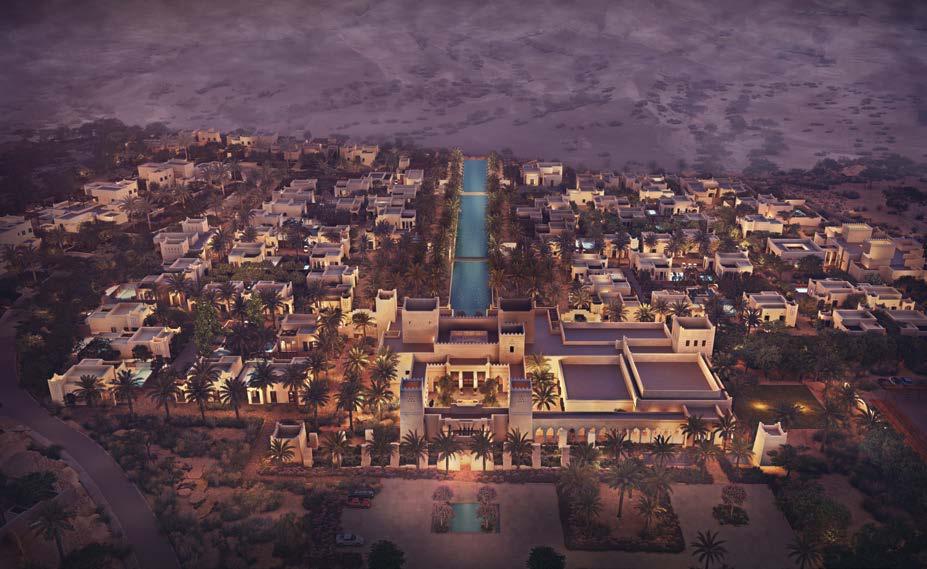
Oberoi Wadi Safar – Diriyah KSA
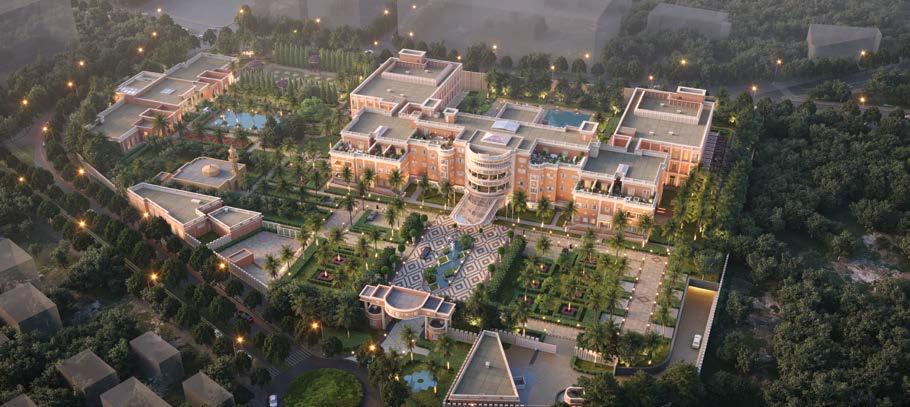
The Red Palace– Riyadh KSA
Professional Overview
Janus Rostock, a leader in architecture, urbanism and integrated design, brings more than two decades of experience to his role as Regional Managing Director of Buildings+Places in the Middle East. His career has been shaped by international experiences and a commitment to impactful design. He began with AECOM in 2018, leading Master Planning, Concept Architecture and Landscape, later returning to Denmark as CEO of a Copenhagen-based consultancy. Driven by a passion for shaping cities, he rejoined the Middle East as Vice President of Urbanism + Planning and Architecture, overseeing multidisciplinary teams on transformative projects across the Middle East, Africa and Europe. Early in his career, he led the design of the award-winning Triangeln Station at KHR Architects, a project recognised for seamlessly merging architecture, urban design and public experience. Throughout his career, he has developed a deep appreciation for co-creation and collaboration, understanding the value of diverse perspectives and interdisciplinary teamwork.
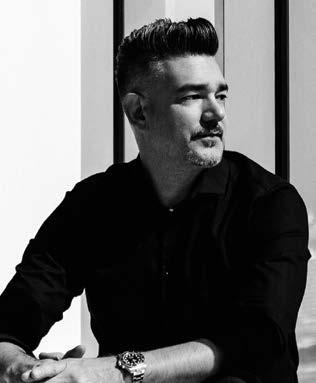
2Janus Rostock
Regional Managing Director, Buildings + Places – Middle East & Africa AECOM
Design Ethos & Leadership Approach
Throughout his career, Janus has championed interdisciplinary collaboration, fostering strong crossfunctional relationships and creating environments where diverse perspectives drive innovation. He is known for his strategic vision, collaborative approach and ability to deliver projects that leave a lasting mark on the region’s urban landscape. Ranked #4 in Design Middle East’s 2026 Creative 30 Powerlist, he inspires teams, peers and the industry to focus on solutions that meet today’s challenges while anticipating tomorrow’s opportunities. As Managing Director, he continues to advance the firm’s mission, nurturing client partnerships, empowering teams and advocating for design that is human-centred, resilient and inclusive. By fostering collaboration and mentorship, he ensures that multidisciplinary teams work together to achieve integrated and holistic solutions across architecture, urbanism and landscape.
Sector Expertise & Signature Projects
Janus’s work has redefined the region’s urban landscape. Early in his career, he contributed to the award-winning Triangeln Station at KHR Architects, recognised for merging architecture, urban design and public experience. At Dubai Opera, he delivered a cultural icon that blends world-class performance facilities with engaging public spaces. In Dubai Harbour, he guided a waterfront development integrating urban, leisure and hospitality components with a focus on sustainability. Dubai Creek Harbour reflects his approach to large-scale urbanism, combining heritage, innovation and climate-responsive design, including smart mobility, green networks and resilient public spaces. On the NEOM Regional Masterplan, Janus led the vision for a future city that integrates naturebased solutions, advanced infrastructure and inclusive urban planning. Across these projects, he demonstrates a commitment to interdisciplinary teamwork, collaboration and delivering long-term value to communities.
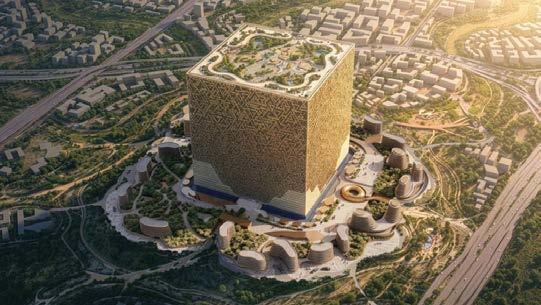
Today, Janus leads AECOM’s 1,500-strong buildings design and supervision business on several of the region’s most strategically significant programmes. These include The Mukaab, supporting national infrastructure and urban transformation, as well as Soudah Development, redefining highaltitude destination design and tourism in Saudi Arabia. In Abu Dhabi, the ROW development focuses on next-generation mixed-use urban living environments.
Janus and his teams are also involved in Diriyah, one of the world’s most significant heritage-led giga-projects that balances culture, identity and contemporary urbanism. Across these, Janus and his teams ensure that design excellence is aligned with delivery certainty, long-term value and human-centred outcomes.
SUSTAINABILITY, TECHNOLOGY & INNOVATION
Throughout his career, Janus has developed a deep appreciation for co-creation and collaboration, recognising the value of diverse perspectives and interdisciplinary teamwork. His work focuses on integrated design across architecture, urbanism and landscape, bringing multiple disciplines together to deliver holistic solutions. He advocates for human-centred environments that
FUTURE OUTLOOK & STRATEGIC VISION
Janus’s long-term vision for the region’s built environment is rooted in embracing innovation, sustainability and inclusivity. He sees cities becoming living laboratories where architecture, urbanism and integrated design harmonise with naturebased solutions and advanced infrastructure. His goal is to ensure that every project reflects interdisciplinary collaboration, humancentred design and longterm resilience. Over the next decade, Janus aims to leave a legacy of built environments that balance heritage, innovation and climate-responsive design. By nurturing teams, strengthening client partnerships and advocating for sustainable urbanism, he seeks to create cities that meet today’s needs while anticipating tomorrow’s challenges. His vision is to deliver lasting impact and enduring value, shaping urban landscapes that are inclusive, adaptable and future-ready.
are resilient, inclusive and responsive to climate and context. Janus has been continuously ranked among the region’s leading architects since 2016 and was ranked #4 in Design Middle East’s 2026 Creative 30 Powerlist, following a #3 ranking in 2025. He is recognised for strategic leadership, collaborative practice and contributions to shaping the region’s urban landscape.
What drives me is the belief that buildings can do far more than we currently allow them to. They can be catalysts for community, engines of sustainability and platforms for human wellbeing if we stop treating them as isolated objects and start designing them as interconnected systems. I’ve seen how siloed processes limit what teams can achieve and I’m convinced our greatest opportunity lies in reimagining how we work together. When we unite disciplines early, embed sustainability as a shared responsibility, and use digital tools to illuminate rather than complicate, we unlock a level of creativity and performance that transforms outcomes. My vision is an industry where collaboration isn’t an aspiration but a default and where every project becomes a chance to elevate the people and places it touches.”
ichael Magill has built a reputation as a design leader who understands that architecture is never just about buildings, it’s about vision, identity, and long-term impact. As Global Design Lead and Managing Director at RSP, he combines international experience, cultural sensitivity, and strategic thinking to deliver projects that resonate well beyond their physical footprint. Educated in the UK, Michael has shaped projects across Europe, the Middle East, and Asia, seamlessly leading work from singular landmarks to large-scale urban frameworks.
Design Ethos & Leadership Approach
At the core of Michael’s design philosophy is a belief that architecture must distill the essence of a brand or place into a clear and powerful narrative. He often speaks about the importance of collaboration, working closely with clients to understand their vision. This approach has enabled RSP to translate global luxury standards into regionally grounded, culturally attuned destinations.
Under his direction, RSP’s Dubai office has evolved into a dynamic design hub within an international network of 12 offices and over 1,200 professionals. Widely recognised across the industry, Michael is a multipletime Architect of the Year in Dubai, and his influence extends far beyond the Middle East. Handpicked for the international jury of the Architizer A+ Awards 2026, he joins some of the world’s most respected architects in evaluating groundbreaking projects, underscoring his global leadership.
SUSTAINABILITY, TECHNOLOGY & INNOVATION
Michael leads with the conviction that sustainability is mandatory, shaping design decisions at every scale. He chooses to work closely with clients who share this commitment, ensuring that environmental responsibility is embedded throughout every project. Many of RSP’s recent developments exemplify this approach: Haven (targeting LEED Gold and Fitwel 3-Star), Athlon (LEED for Communities Platinum), and The Wilds all integrate renewable energy, low-carbon materials, water- and energy-efficient systems, and landscape-led strategies that enhance biodiversity, walkability, and public comfort. Michael sees technology as a collaborator rather than a replacement for human creativity. The goal is not automation for its own sake, but augmentation; freeing designers to focus on higher-level thinking while improving precision and speed.
Malaysian Royal Palace – Terrace View
A refined architectural expression of cultural identity and modern luxury, capturing elevated views from the Malaysian Royal Palace terrace.
Sector Expertise & Signature Projects
Over the past year, Michael’s work led to RSP being commissioned to design a Malaysian royal palace by the Regent of Johor, one of his most high-profile appointments to date. Designing at this level is a rare privilege, and being personally selected reflects exceptional trust and confidence. Such recognition has defined his career. Previously, his work was chosen by Giorgio Armani for the Diriyah project, an honour few designers achieve.
Throughout the year, Michael has led several high-profile commissions that highlight his global expertise. Most notably, he spearheaded The Ritz-Carlton Keturah Reserve. While the design had undergone several iterations prior to RSP’s involvement, Michael and the RSP team were brought on as the lead design consultant to refine and drive the project forward, ensuring the architectural identity met the client’s vision and reinforcing RSP’s reputation as a trusted partner for world-class developments. Additionally, over the last year, Michael and RSP have been commissioned to design a major urban district in Riyadh, a cultural hub for young creatives and entrepreneurs in Abu Dhabi, as well as being shortlisted for an iconic suspended pedestrian and cyclist bridge linking Dubai’s mainland to a resort island.
In parallel, Michael has transformed RSP’s master planning division over the past five years, building it from the ground up into a competitive international force. Under his leadership, the Haven masterplan was shortlisted at the World Architecture Festival 2025, placing RSP alongside the world’s leading design practices. Achieving this with a small, focused team against much larger global studios reflects Michael’s vision for RSP, his belief in the extraordinary capability of the team he has grown, and their ability to deliver work that rivals the very best studios in the world.
Like many international practices, RSP faces economic fluctuations, supply chain pressures, and rapidly evolving client expectations. Through it all, Michael remains a calm and steady force, guiding a studio that is agile, highly skilled, and ready to adapt. Even in a slowing market, RSP continues to grow, delivering work that sets new standards for design, innovation, and excellence across every project.
Technology and AI are also becoming embedded within the studio’s evolving methodology. From leveraging AI-enhanced visual workflows to streamline concept exploration, to using data-driven modelling tools that inform spatial optimisation.
FUTURE OUTLOOK & STRATEGIC VISION
Looking ahead, Michael’s ambition for RSP is clear: to expand its international influence while maintaining uncompromising design integrity. Growth is measured not just by geography, but by the ability to define skylines, shape communities, and contribute to cultural narratives. With a growing portfolio of landmark hospitality, residential, complex mixed-use projects, and transformative master plans, the studio is poised to make an even greater impact globally. Michael’s leadership as Global Design Lead, positions RSP at the intersection of architecture, storytelling, and strategic growth, ensuring every project is not only beautifully executed, but enduring in its relevance.
The Wilds A nature-led residential development blending landscape, biodiversity, and sustainable design to create a balanced and immersive living environment.
Haven Masterplan Shortlisted at World Architecture Festival 2025.
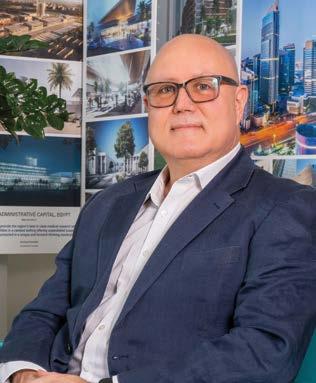
Bruno Guélaff
Design Director + Partner
STUDIO BRUNO GUELAFF + BG GROUP
Design Ethos & Leadership Approach
Yet beyond structure or scale, what defines Bruno’s work is a consistent pursuit of sincerity. In a region often driven by speed and spectacle, his approach remains grounded, prioritising how a space lives over how it looks.
As both a designer and a partner within BG Group, Bruno operates at the intersection of creativity and delivery. Remaining closely involved from concept to execution, he ensures that ideas are not diluted as they move from drawing to reality. This hands-on approach has also shaped the studio culture, fostering teams that value precision, collaboration, and accountability. Growth, for him, is not measured by scale alone, but by the ability to maintain integrity across every project.
For Bruno, the role of technology, including AI, is not to replace creativity but to enhance clarity, allowing architects to focus more deeply on intention, proportion, and human experience.
Professional Overview
For Bruno Guélaff, architecture has never been about objects. It has always been about people. Born in New York to French parents and educated across disciplines, his early studies in sociology laid the foundation for what would later become a defining philosophy: design with empathy. It is a belief that spaces are not simply built, but felt, shaping the way we move, interact, and experience daily life. This perspective was further refined during his time at NYSID, where he was awarded the inaugural B.F.A. Travel Prize, leading him to explore cities across the world and observe how culture, memory, and environment influence the way we inhabit space. Since relocating to Dubai in 2008, Bruno has quietly built a body of work that resists excess and instead focuses on clarity, proportion, and emotional resonance. Through Studio Bruno Guélaff, he established a boutique practice rooted in deeply personal architecture, where each project begins not with a form, but with an understanding of the client’s life. Over time, this evolved into BG Group, co-founded with Khalid Kaluti, creating a rare model in the region that integrates architecture, interiors, landscape, and construction into one cohesive process.
Sector Expertise & Signature Projects
This philosophy is evident in projects such as La Maison Horizontale in Sobha Hartland, where horizontality, light, and material softness create a calm dialogue between architecture and nature. In contrast, E23 in Pearl Jumeirah explores a more monolithic expression, balancing strength with intimacy.
At a larger scale, his role as project designer for The Chedi Private Residences demonstrates an ability to translate this same sensitivity into a vertical context, crafting spaces that retain a sense of privacy, proportion, and human connection within a landmark development.
Across these projects, there is a common thread: architecture that seeks to endure not through statement, but through experience.
SUSTAINABILITY, TECHNOLOGY & INNOVATION
Looking forward, the next phase of his work reflects both expansion and refinement. Upcoming developments, including a slender tower on Sheikh Zayed Road and new residential concepts on Dubai Islands, continue to explore the relationship between architecture, lifestyle, and evolving urban conditions.
At the same time, there is a strong investment in technology, from advanced visualisation tools that allow clients to engage with projects before construction, to the integration of smart systems and adaptive design thinking. Sustainability is approached not as a checkbox, but as a long-term responsibility, embedded in material choices, spatial efficiency, and the lifespan of each project.
There is a need today to slow down and bring more intention into the way we design and build. Too often, projects are driven by speed, by image, or by short-term thinking. What we should be aiming for is architecture that is thoughtful, coordinated, and built to last, where design, engineering, and construction are aligned from the very beginning. The industry can do better by focussing on collaboration, on quality over quantity, and on creating spaces that genuinely improve the way people live.
FUTURE OUTLOOK & STRATEGIC VISION
Being named among the region’s leading architects comes at a moment that is both professionally significant and personally reflective. Having called Dubai home for nearly two decades, Bruno speaks of the city with a sense of belonging and responsibility. In a time where the broader region faces uncertainty, his perspective remains grounded in resilience.
Bruno feels design today needs more intention—slowing down to prioritise quality, collaboration, and lasting value. Architecture should create meaningful, well-crafted spaces that truly elevate everyday living.
At the same time, this region has shown incredible strength and resilience. For many of us, this is home. We have built our lives and our work here, and we continue to believe in its future. Through all challenges, there is a responsibility to remain focused, to support our teams, and to keep building with care and purpose.
This balance between optimism and realism defines Bruno’s outlook. His vision is not about chasing scale or recognition, but about continuing to refine a way of working that is both rigorous and human.
In an evolving architectural landscape, his work stands as a reminder that beyond innovation and ambition, the true measure of design lies in its ability to connect, to endure, and to feel.
La Maison Horizontale Bohemian spirit, modern lines, indoor + outdoor harmony Contemporary calm, earthy tones, fluid indoor + outdoor flow
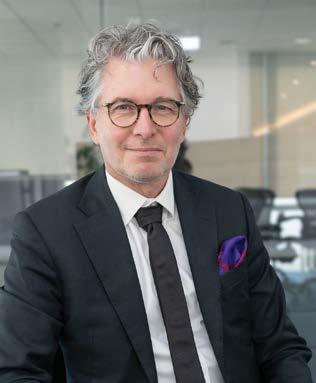
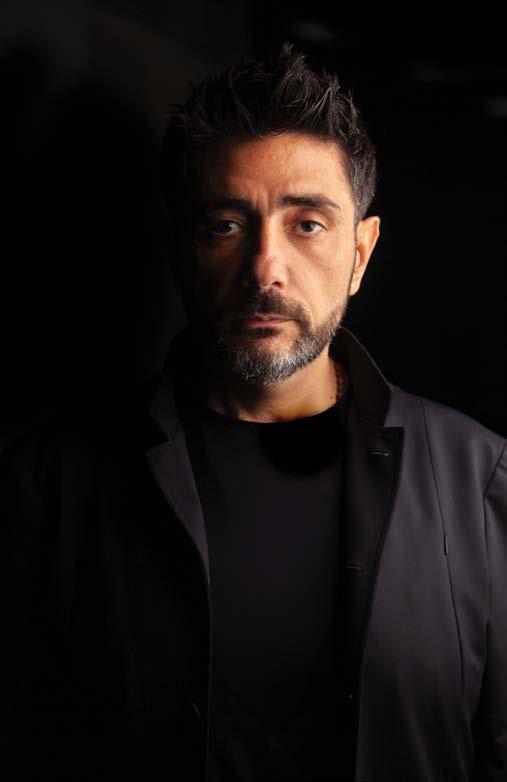
Joe Tabet Founder & Managing Director JT+PARTNERS
Professional Overview
Joe Tabet is the Founder and Managing Director of JT+Partners, an award-winning multidisciplinary consultancy specialising in architecture, masterplanning, and integrated design. With over 20 years of global experience, Tabet has established the firm as a leading design practice across the Middle East, Africa, and international markets. Since founding JT+Partners in 2015, he has grown the company from a small Dubai-based studio into a globally recognised firm delivering projects across hospitality, residential, commercial, and mixed-use sectors.
Design Ethos & Leadership Approach
TSUSTAINABILITY, TECHNOLOGY & INNOVATION
abet’s approach to design is rooted in collaboration, cultural sensitivity, and innovation. He views architecture as a collective effort, emphasising teamwork and shared vision across his diverse, multicultural studio. His leadership style blends creativity with strategic thinking, encouraging experimentation while maintaining a strong focus on delivering practical, client-centric solutions. His philosophy—“Design the Future Now”—reflects a commitment to shaping spaces that are both visionary and responsive to human needs.
SectorExpertise & Signature Projects
Under his leadership, JT+Partners has built a diverse portfolio spanning hospitality, residential, and large-scale masterplanning projects. Notable works include luxury resorts in Seychelles and Egypt, residential developments in the UAE, and mixed-use urban projects in India. Projects such as Mango House Seychelles and Tawila Island Resort highlight the firm’s ability to integrate architecture with landscape and context, creating immersive and destination-driven environments.
Sustainability is central to Tabet’s design philosophy. His projects incorporate climate-responsive strategies, passive design, and responsible material selection, ensuring long-term environmental performance. The firm also embraces emerging technologies such as digital design tools, modular construction, and smart systems to enhance efficiency and precision. This integration of sustainability and innovation enables JT+Partners to deliver forward-thinking solutions aligned with global best practices.
Our aesthetic is refined, our process is collaborative, and our ambition is to positively shape the way people live, work, and interact.
Looking ahead, Tabet envisions expanding JT+Partners’ global footprint while continuing to push boundaries in design and technology. His focus remains on creating iconic, socially responsible developments that respond to evolving urban and environmental challenges. By fostering innovation, investing in talent, and embracing new markets, he aims to position the firm at the forefront of the next generation of architecture—where design not only shapes spaces but enhances how people live, work, and connect. FUTURE OUTLOOK & STRATEGIC VISION
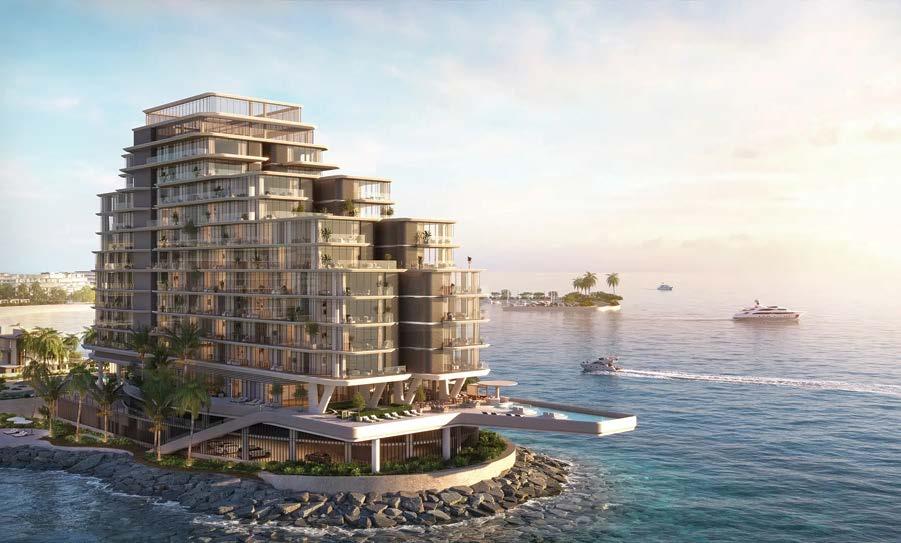
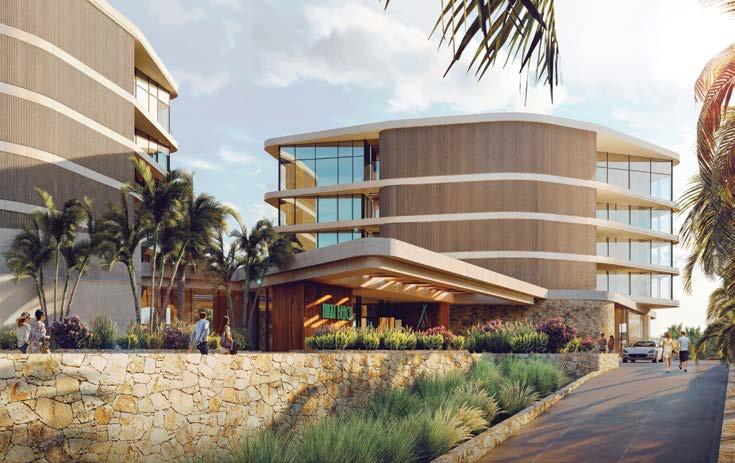
Redefining Coastal Luxury: Anantara Residences – Ras Al Khaimah by JT+Partners
ANANTARA SHARJAH RESIDENCES
ANANTARA SHARJAH RESIDENCES
A NEW CHAPTER OF LUXURY EXPERIENCES BY THE SEA
A NEW CHAPTER OF LUXURY EXPERIENCES BY THE
SEA
Bringing luxury seaside living to Sharjah for the first time, owners at the Anantara Sharjah Residences enjoy access to the Anantara Sharjah Resort’s world-class amenities, including an infinity pool, five distinctive restaurants, an Anantara Spa and a state-of-the-art gym.
Bringing luxury seaside living to Sharjah for the first time, owners at the Anantara Sharjah
As an investment, owners can enjoy the benefits of a rental management scheme operated by Anantara Hotels, Resorts & Spas, allowing them to maximize their returns when they are not resident in the property.
Residences enjoy access to the Anantara Sharjah Resort’s world-class amenities, including an infinity pool, five distinctive restaurants, an Anantara Spa and a state-of-the-art gym.
As an investment, owners can enjoy the benefits of a rental management scheme operated by Anantara Hotels, Resorts & Spas, allowing them to maximize their returns when they are not resident in the property.
To register your interest, visit arada.com
LIFE IS A JOURNEY.
To register your interest, visit arada.com
LIFE IS A JOURNEY.
Professional Overview
Darryl Custer serves as the Managing Director of the Design Division for KEO International Consultants, where he leads a multidisciplinary team delivering visionary architectural solutions. He is also part of KEO’s Executive Leadership Group, carrying out senior duties to manage and shape the overall firm. With 35 years of expertise in architecture, project management and urban development, Darryl is a highly accomplished design leader and strategist, shaping landmark projects around the world. Currently based in the UAE, Darryl’s career has spanned the United States, China, Southeast Asia, the GCC and North Africa, giving him a deep understanding of global markets, design trends and development challenges. His ability to navigate diverse cultural and environmental landscapes has allowed him to successfully lead projects that reflect both local heritage and international best practices.
Design Ethos & Leadership Approach
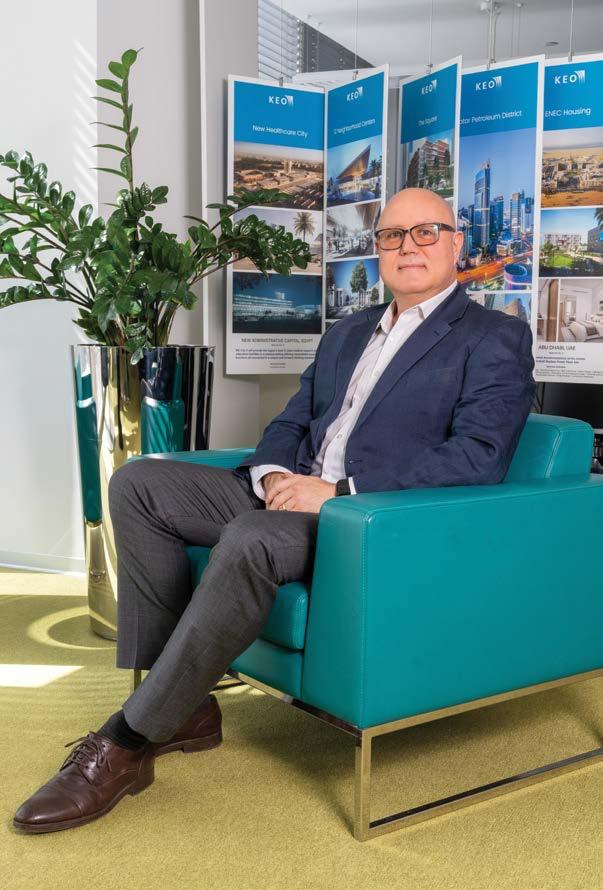
DDarryl Custer Managing Director, Design KEO INTERNATIONAL CONSULTANTS
I have always felt the denser urban mixed-use project typology is the best response to our changing world to address population growth, pollution, and climate change. If done properly in most cases, mixed-use projects create a better community offering, use less ground area, use less infrastructure, comparably reduce the overall carbon footprint, and make better use of the urban context over single-use projects. I believe the industry could do a better job of considering these project types and factors as it may help the overall human condition. One additional area the industry can improve is better use of our digitally designed models. Advancing our 3D model work deeper into the construction process and using them as digital twins post construction would greatly enhance the long-term value of the assets we design. This is the next step in our industries evolution of general practice, and it would be good to see more of it now.
arryl’s passion lies in urban mixed-use projects, and he is dedicated to enhancing communities through sensible, sustainable and creative vertically stacked mixed-use configurations that enhance urban communities and redefine cityscapes. Darryl leads the Design Division, comprising approximately 325 architects and engineers across KEO’s offices. Working closely with his teams, he drives designs that push boundaries while addressing sustainability challenges, using architecture to create community-driven, smart, urban mixed-use environments for today and tomorrow. Beginning at the concept design stage, Darryl and his teams guide clients, making the case that communitydriven design and sustainability are an investment and not a cost.
Darryl is passionate about the architecture profession. In the early days of his career, he was fortunate to be mentored by several first-class architects who introduced him to a broad range of ideas, methodologies, clients and project typologies. This foundation shaped his leadership philosophy, where he sees himself not just as a Managing Director, but as a teacher and mentor. With this pay-it-forward mindset, Darryl creates a culture where young architects, designers and engineers have the platform to grow, succeed and innovate, ensuring that they are equipped with both the technical expertise and creative confidence to drive the industry forward. Darryl’s daily mantra with his team is “the best ideas win, no matter your level on the team”, perfectly summarises his approach to teamwork.
SUSTAINABILITY, TECHNOLOGY & INNOVATION
Darryl sees technology as a significant enabler for a better tomorrow, and investing in digital design is an ongoing focus for KEO Design, as the industry pushes to make a stronger connection between the human and machine, enabling design teams to deliver solutions in a manner that fully leverages all the design technology available. He is also spearheading a strategic focus on computational design using machine learning to push the boundaries of what is possible regarding new techniques of creating designs that are not only beautiful but also thought-provoking and meaningful.
FUTURE OUTLOOK & STRATEGIC VISION
As he grows his team, Darryl is committed to ensuring a broad cross-section of multicultural designers are on the team, with new office locations and new teams being established in and outside the GCC.
Sector Expertise & Signature Projects
Darryl is at the forefront of delivering landmark projects across the region, including a diverse mix of commercial, hospitality and residential developments. Among these are several new Emaar residential developments throughout Dubai, two new Aldar communities in Abu Dhabi, and numerous significant commercial developments in Saudi Arabia. One project of note is a new kidney dialysis hospital under design by Darryl and his team in Saly, Senegal. With construction expected to begin in Q2 2026, the centre aims to be the most advanced hospital of its kind in Senegal, addressing a healthcare need that is currently underserved in the area.
In Kuwait, he is leading the design of a confidential office HQ, set to become the nation’s tallest building at 460 metres and the 18th tallest building in the world. A tribute to Kuwait’s past, present and future—KEO is shaping this visionary skyscraper
as the Concept Design firm, providing architecture and engineering through all pre-tender design phases, with support from its allied practice, InSite, which is delivering the landscape architecture.
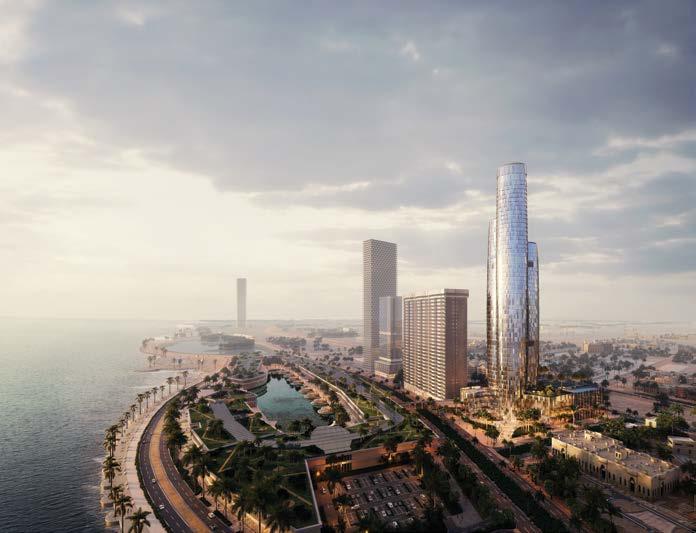
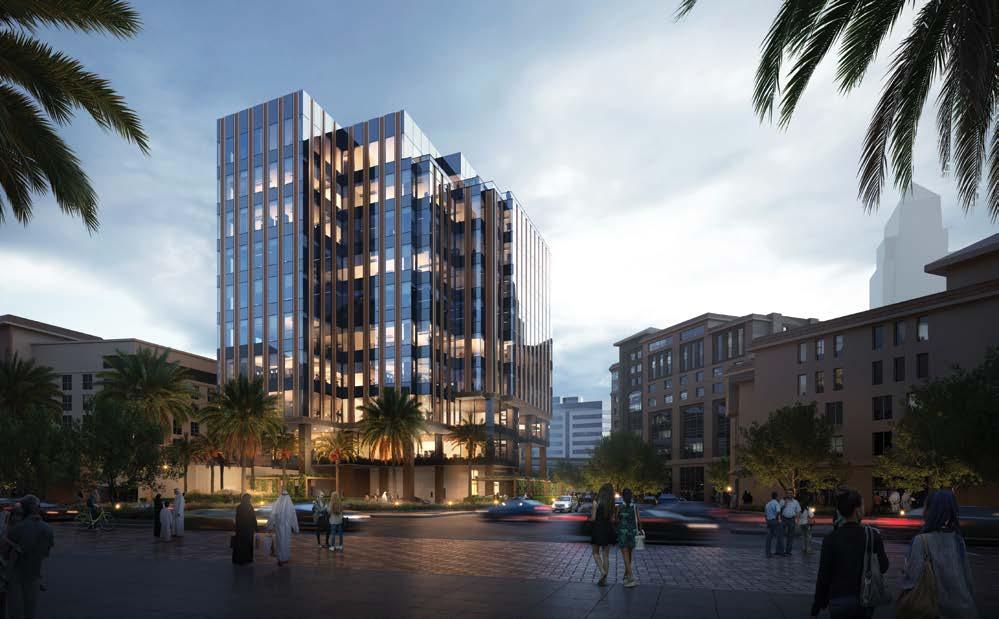
Another standout project is U View Tower Complex in Jeddah, a 260-metre mixed-use development seamlessly blending retail, hospitality, residential and commercial office spaces into a vertically stacked urban mixed-use design. KEO is spearheading the project as the Concept Design firm, providing architecture and engineering through all pre-tender design phases, with InSite delivering the landscape architecture.
Darryl holds a Bachelor of Architecture degree from the US, is a licensed architect and NCARB-certified. He is also a LEED Green Associate and an executive-at-large member of the American Institute of Architects Middle East (AIA ME).
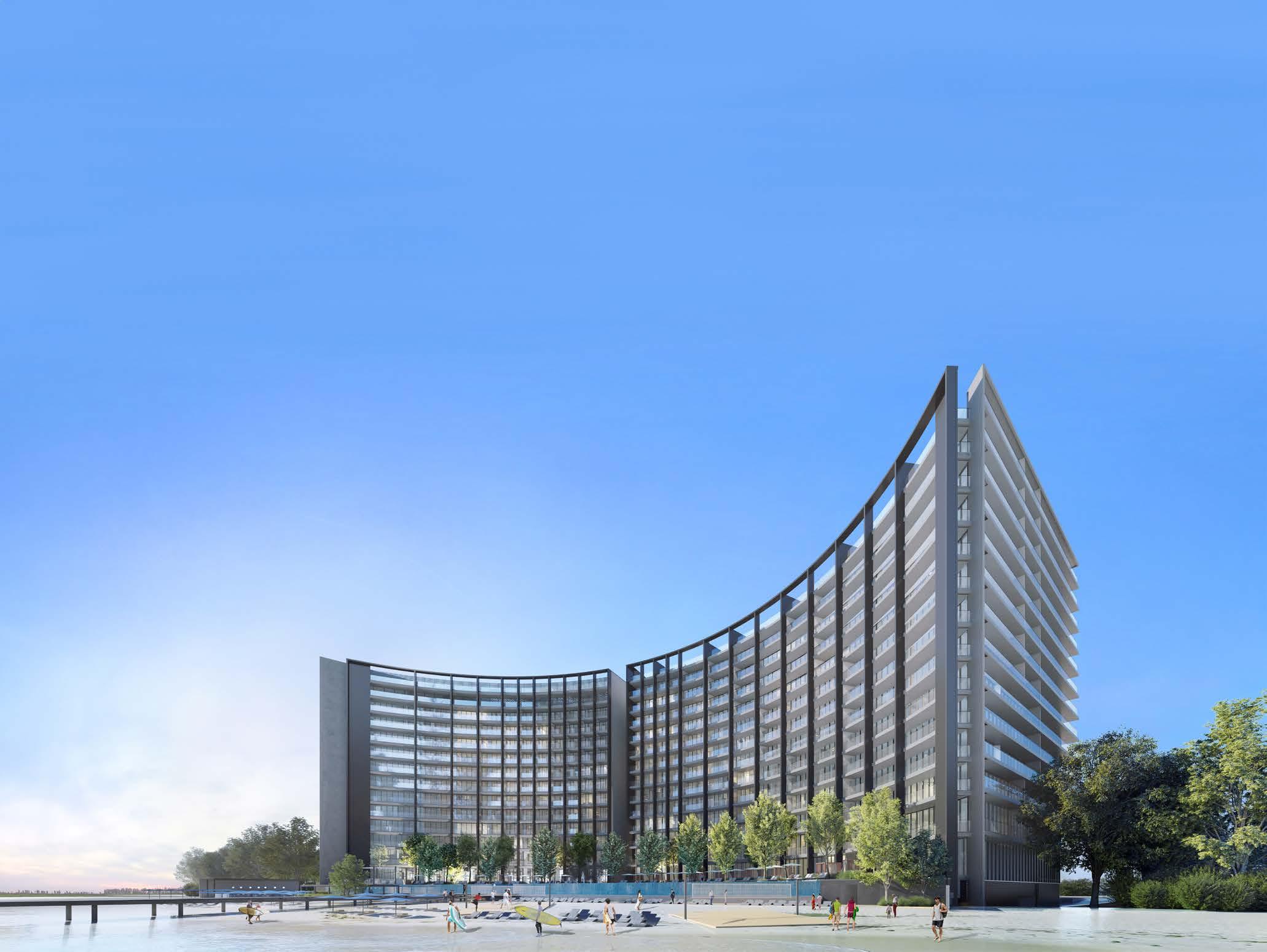
Concept Image for the U View Mixed Use Tower in Jedda, KSA
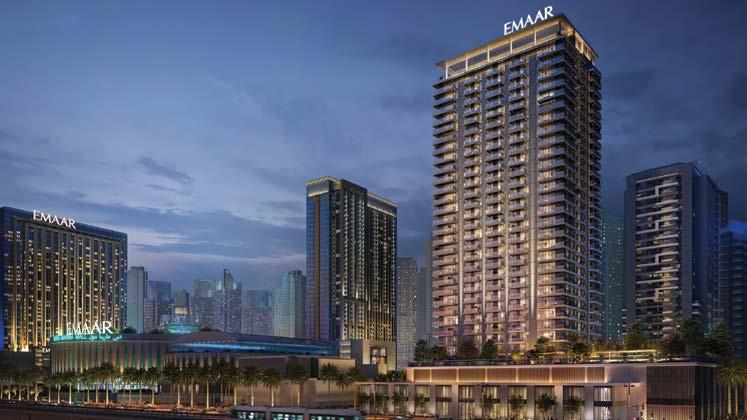
Concept Image for the Marina Cove Emaar building in Dubai, UAE
Henrique Dias
Principal & Middle East
Hospitality & Mixed-Use
Design Director
DLR GROUP
Professional Overview
With over 19 years of international experience, Henrique Dias has built a career defined by range, rigour, and a clear commitment to advancing the human experience through design. From early work on the Vodafone Headquarters in Portugal to leading large-scale developments across the Middle East, his trajectory reflects both geographic breadth and increasing design leadership.
Henrique began his career at BarbosaGuimarães in Portugal, where he developed a foundational design ethos grounded in balancing functionality with a strong architectural language. He later expanded his global perspective in China, leading design teams at Jingseng
Design before relocating to the UAE. Today, as Design Director at DLR Group Middle East, he oversees projects across hospitality, mixed-use, and residential sectors, shaping a portfolio that spans the GCC and beyond.
He holds a Master’s degree in Architecture from the Faculty of Architecture and Arts at Lusíada University in Porto and maintains professional affiliations with the Portuguese Association of Architects and the American Institute of Architects (AIA Middle East). His commitment to continuous learning reflects a belief that architecture must evolve alongside emerging technologies, materials, and environmental demands.
Sector Expertise & Signature Projects
This philosophy is evident across a portfolio that includes high-profile and complex developments. Among his most notable projects are the Jubail Island commercial centre in Abu Dhabi and Madinah Gate in Saudi Arabia, both of which demonstrate a layered approach to urban integration, hospitality experience, and environmental response.
Additional standout projects include Sumou Al Khobar, a mixed-use development designed as a pedestrian-
first urban hub integrating residential, office, and retail programmes; and LIWAN Najd, a culturally anchored community design structured around a “wadi” that prioritises connectivity, walkability, and a sense of place.
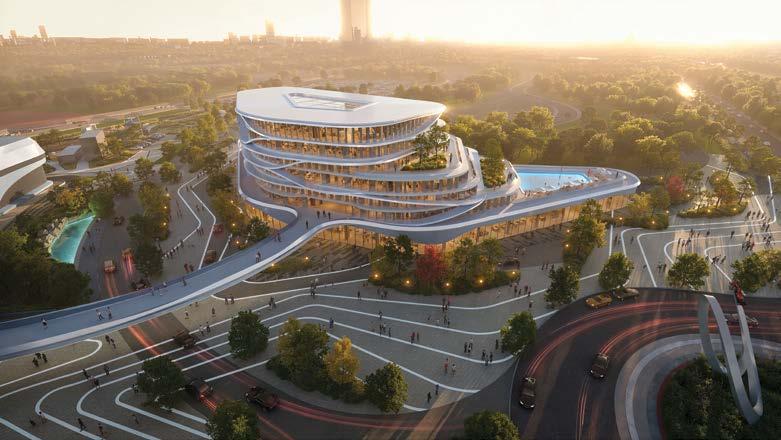
Then there’s the Dubai Autodrome Kartdrome, a different kind of challenge altogether, where the brief demanded movement, energy, and identity rather than urban integration. The same disciplined thinking, applied in a
The industry needs to stop treating design and delivery as separate phases. The biggest gap today is not creativity, it’s alignment. We spend too much time reacting to change instead of setting a clear direction from the start. A betterdefined scope, faster decision-making, and real collaboration across teams would eliminate many inefficiencies. Do that well, and we don’t just deliver faster, we deliver better buildings.
completely different register. Beyond individual projects, Henrique’s impact is reflected in the scale and diversity of his work. His portfolio includes over 100 projects across Europe, the Middle East, Asia, and Africa, ranging from private residences to large-scale urban masterplans. This global exposure has shaped his ability to adapt design strategies to different cultural, climatic, and regulatory environments while maintaining consistent design rigour.
Design Ethos & Leadership Approach
At the core of Dias’s work is a design philosophy rooted in clarity and purpose. His approach begins with what he defines as “ground truth”—a deep understanding of context, constraints, and the intended outcome—before moving into exploration. This method allows him to create architecture that is both performative and experiential. His work consistently balances economic viability, social responsibility, and environmental stewardship, positioning design as a tool for long-term value rather than short-term impact.
His design thinking is structured around six guiding principles: durability, utility, beauty, empathy, iteration, and growth. Drawing from Vitruvian ideals, Henrique prioritises buildings that endure physically and culturally, respond to human needs, and integrate seamlessly within their context. He emphasises collaboration with engineers and consultants to ensure performance aligns with vision, reinforcing his belief that architecture is both a technical and human-centred discipline.
Despite a career marked by global projects and industry recognition, Henrique maintains a forward-looking mindset. He views his work as part of an ongoing trajectory rather than a completed body of achievements, driven by a commitment to create architecture that is enduring, contextually grounded, and meaningful for the communities it serves.
SUSTAINABILITY, TECHNOLOGY & INNOVATION
He is also an active thought leader, regularly speaking at regional platforms such as Cityscape Global, INDEX Design Talks, and the Real Estate Development Summit in Riyadh. His talks focus on the intersection of design, innovation, and hospitality, with a particular emphasis on wellness-driven environments and the future of urban development in the Middle East. Like many architects operating at scale, Dias has navigated the complexities of rapid regional growth, evolving client expectations, and increasing sustainability demands. The challenge lies in maintaining design integrity while delivering commercially viable projects across diverse markets. His response has been to build strong, multidisciplinary teams, invest in design processes, and prioritise collaboration—key factors in the growth of DLR Group’s Middle East studio into a highly capable and competitive design hub.
Looking ahead, Henrique’s work continues to evolve through the integration of technology and advanced design methodologies. He actively incorporates parametric design and computational tools to enhance iteration and performance, enabling more responsive and efficient solutions. Sustainability remains central to his approach, with a focus on climateresponsive design, material efficiency, and long-term building performance. At the same time, emerging technologies, including AI-driven design workflows, are opening new opportunities to refine design processes and unlock greater precision in decision-making.
FUTURE OUTLOOK & STRATEGIC VISION
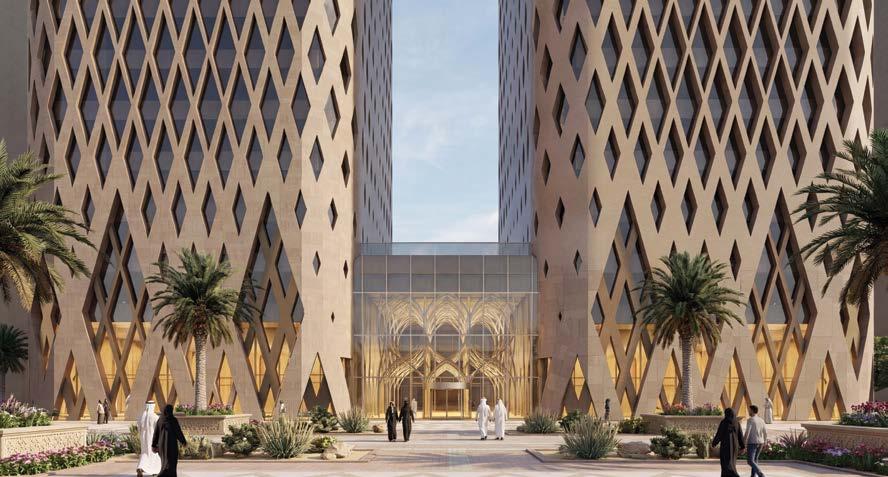
A defined arrival framed by a contemporary interpretation of regional geometry at Liwan Najd
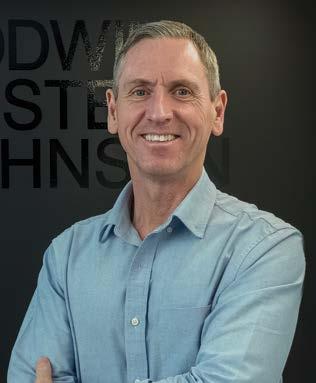
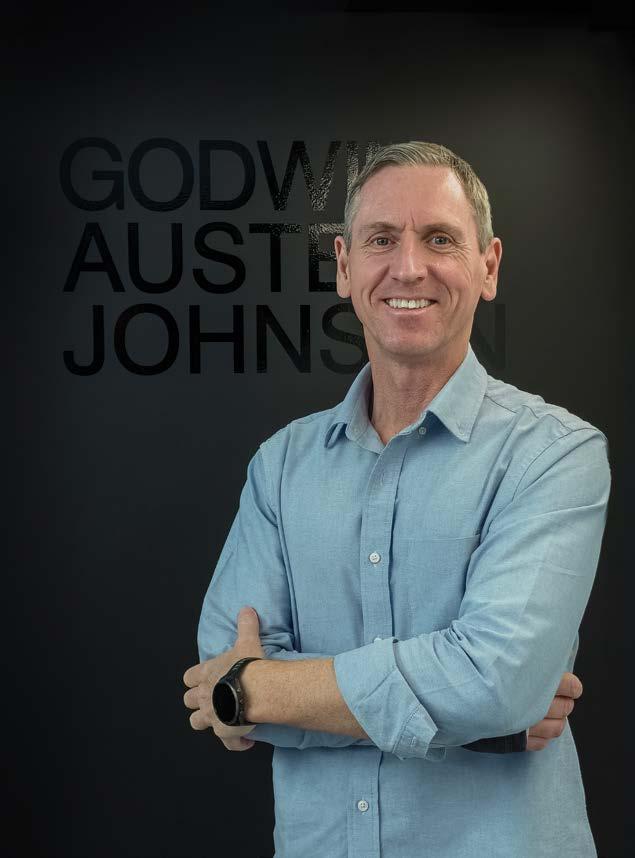
Jason Burnside
Managing Director and Partner
GODWIN AUSTEN
JOHNSON
Jason’s approach is rooted in delivering architecture that is holistic, functional and enduring. He believes buildings must perform as rigorously as they inspire, responding intelligently to climate, context and longterm operational needs. Having worked across all stages of development, from concept design through to handover, he possesses a comprehensive understanding of project delivery. This lifecycle experience enables him to balance ambition with buildability, ensuring that design intent is never compromised during execution.
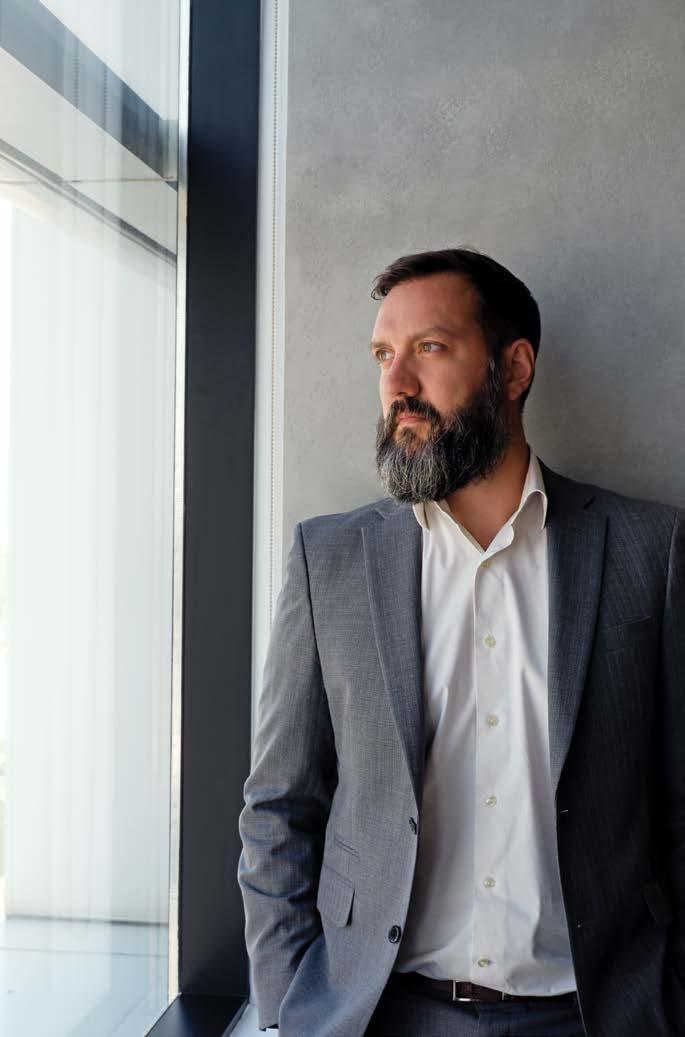
Now operating in a strategic capacity as Managing Director, Jason remains actively involved in design direction while mentoring senior teams and emerging leaders. He has cultivated a collaborative studio culture built on accountability, shared expertise and clarity of communication. His leadership style is measured and pragmatic, encouraging autonomy while maintaining rigorous quality control—a balance essential to sustaining growth without diluting standards.
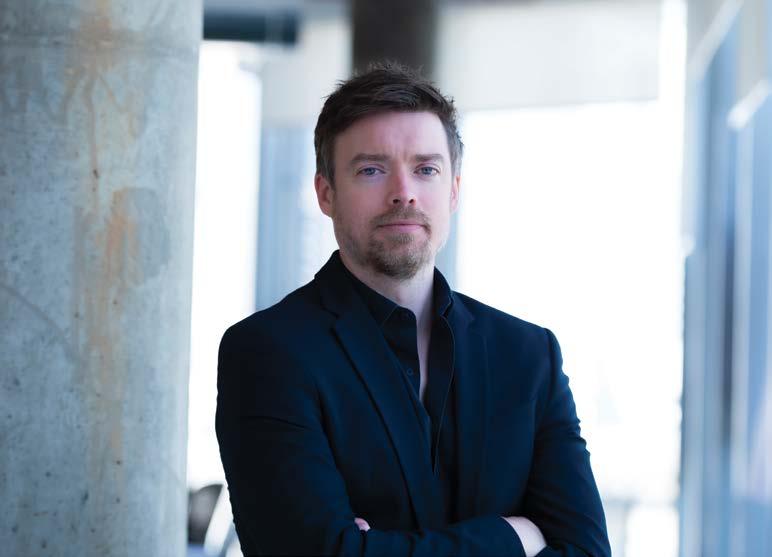
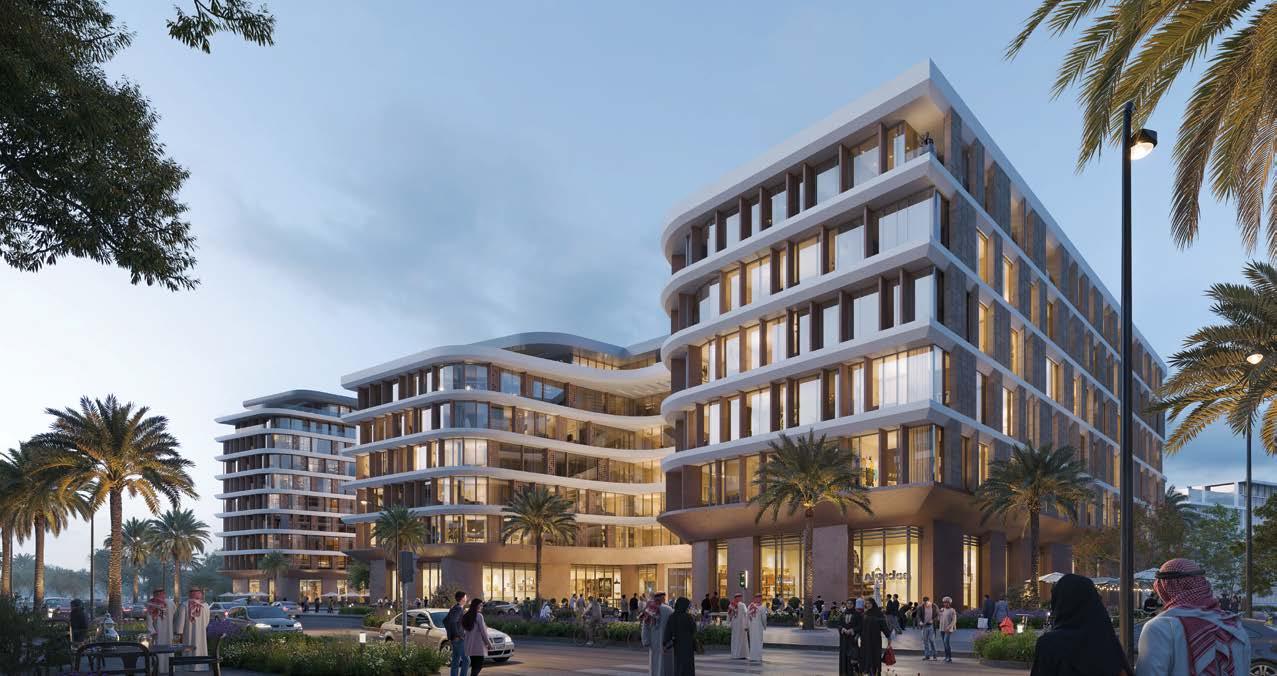
Jason Burnside, Managing Director and Partner at Godwin Austen Johnson (GAJ), is a highly respected architect whose work has significantly shaped the UAE’s built environment over the past two decades. A graduate of the University of Dundee in 1996, Jason began his career at a boutique urban design practice in London, where he spent five formative years immersed in architectural design and urban planning. This early grounding instilled in him a deep understanding of context, spatial hierarchy and long-term civic value—principles that continue to
define his leadership today. In 2001, he relocated to Dubai to join GAJ. Over the past 25 years, he has played a pivotal role in shaping the firm’s architectural direction, evolving alongside the region’s rapid growth while maintaining clarity of vision and disciplined execution. Made Partner in 2008, Jason has since led the studio through sustained expansion, positioning GAJ as one of the Middle East’s most established multidisciplinary consultancies, now approaching four decades of continuous regional presence.
Regardless of industry trends, our commitment remains to deliver high-quality buildings whilst embracing sustainability and respecting local culture and traditions.” “ ”
Sector Expertise & Signature Projects
Jason’s portfolio spans residential, hospitality, leisure and mixed-use developments; however, it is in the education sector where he has established particular distinction. He has designed more than 20 schools across the region, developing expertise in learning environments that support evolving pedagogies, wellbeing and long-term performance.
Jason’s notable education projects include the Jafar Centre at Dubai College, Dubai College C Block, The Arcadia School (Primary and Secondary campuses), Dubai International Academy at Town Square, Ladybird Early Learning Centre, and SPACE (Sports and Performing Arts Centre of Excellence) at Dubai College, as well as the ISG School in Saudi Arabia. His longterm client relationships have resulted in repeat commissions—a testament to trust, performance and consistency. The Arcadia School portfolio expanded from primary to secondary campus following the success of earlier phases.
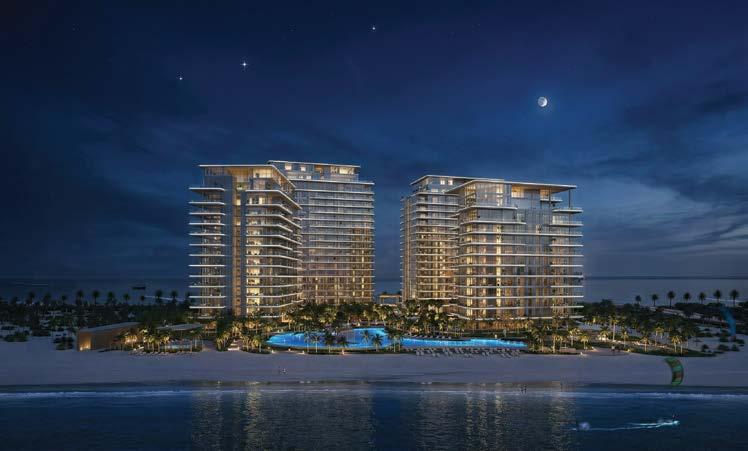
In the hospitality and residential sectors, Jason has led several high-profile developments, including The WB Abu Dhabi – Curio Collection by Hilton, Serenia Residences on Palm Jumeirah, Serenia Living, Address The Bay Beachfront, and Mysk Al Mouj in Muscat.
The recent handover of Serenia Living further reinforces his ability to deliver large-scale luxury developments with architectural integrity and commercial clarity.
SUSTAINABILITY, TECHNOLOGY & INNOVATION
Jason integrates sustainability as a core design responsibility rather than a certification exercise. His projects prioritise passive environmental strategies, climate-responsive massing, energyefficient systems and responsible material selection aligned with regional benchmarks.
Under his leadership, GAJ has delivered four of the seven LEED Goldcertified schools in the UAE—a significant contribution to sustainable educational infrastructure. This reflects not only technical capability but also a deep understanding of how learning environments must perform environmentally, socially and operationally over time.
While GAJ utilises BIM and digital coordination tools where appropriate, Jason’s focus remains firmly on intelligent, buildable solutions rather than technological trend adoption. He views technology as a support mechanism, not the driver of architectural thinking.
More recently, he has shown interest in the emerging potential of AI within practice, particularly in improving efficiency and data analysis. However, he remains analytical about its long-term role, maintaining that architectural judgement, contextual sensitivity and human understanding cannot be automated.
FUTURE
Looking ahead, Jason is focused on strengthening GAJ’s role as a strategic design partner rather than simply a service provider. His ambition is to deepen early-stage advisory involvement, reinforce quality across multidisciplinary integration, and ensure that growth never comes at the expense of architectural integrity. He continues to advocate for architecture that blends heritage
with forward-thinking design, creating spaces that foster interaction, comfort and a sense of belonging. Beyond practice, Jason remains committed to mentoring younger architects and fostering a studio culture where experience and emerging talent work in tandem. His leadership encourages steady professional growth, long-term client relationships, and responsible design delivery.
Jafar Centre Dubai College
OUTLOOK & STRATEGIC VISION
Serenia Living
Professional Overview
Alina Valcarce is the Founder and Design Director of Valcarce Architects, leading an international practice with projects across the UAE, Saudi Arabia, and Asia. Driven by creativity, innovation, and the belief that design should create meaningful experiences, her work is defined by a clear architectural vision that goes beyond the visual to shape how spaces are lived and experienced. Born in Cuba and raised in Spain, with an international career spanning Europe, Asia, and the Middle East, she brings a global perspective shaped by diverse cultures, environments, and ways of living.
As Founder, she has built a dynamic and forward-thinking studio delivering distinctive projects across luxury residential, hospitality, and mixed-use sectors. The practice combines strong design direction with technical precision through a fully integrated, BIMdriven approach, allowing projects to evolve seamlessly from concept to execution. Central to her work is the integration of architecture, interiors, and landscape into one cohesive vision, where materiality, form, and spatial experience are carefully aligned.
9
Alina Valcarce
Founder & Design Director VALCARCE ARCHITECTS
We are at risk of designing buildings for the image rather than for how they are truly experienced. Technology and AI are powerful tools, but they cannot replace the depth of thinking required to design a building properly. A strong concept must be followed by rigorous development through plans, structure, and coordination-that is what transforms an idea into architecture. The industry needs to place more value on this process, ensuring that quality, clarity, and design integrity are not compromised by speed.
Sector
Expertise & Signature Projects
Her portfolio includes a range of signature projects that reflect this approach. Cove Residences draws inspiration from the movement of the ocean, creating a resortstyle living experience within an urban setting, while Beach Walk on Dubai Islands stands as a milestone project recently completed. Vestoria Bay Residence represents a refined architectural expression defined by fluid forms, strong narrative, and a deep connection to its coastal context. Gaia–Luxury Habitat explores prefabrication and sustainable hospitality design, earning international recognition, including being a finalist at the WAN Awards. Under her leadership, Valcarce Architects has received multiple industry recognitions, including Emerging Architecture Firm of the Year 2024 and Architecture Firm of the Year 2025 by Design Middle East, as well as Best Luxury Architecture Company of the Year by the Luxury Lifestyle Awards. Alina has also been named Game Changer of the Year 2025, recognised among the Top 200 Women Power Leaders 2024, and listed as one of the Best Designers in Asia Under 40, reflecting both her design excellence and her role in shaping a progressive and internationally positioned practice.
SUSTAINABILITY, TECHNOLOGY & INNOVATION
Sustainability and technology play a central role in the evolution of the studio. The practice explores advanced construction methods such as prefabrication to reduce environmental impact and improve efficiency, while integrating digital tools and artificial intelligence to enhance creativity and workflow. At the same time, Alina maintains that technology must support design thinking rather than replace it, ensuring that each project is carefully developed and resolved beyond the conceptual stage.
Design Ethos & Leadership Approach
As the studio continues to grow, one of the key challenges has been maintaining a strong design identity while scaling across multiple regions and project typologies. This has been addressed through investment in talent, fostering a collaborative studio culture, and strengthening internal systems that allow creativity and technical quality to evolve in parallel.
She believes that one of the most important shifts needed in the industry today is a move from image-driven design to experience-driven architecture. While powerful tools now allow for the rapid creation of striking visuals, this has led to a tendency to evaluate buildings based on appearance rather than how they are lived in. For Alina, architecture is defined by how people move through space, how light evolves, how materials age, and how a building responds to its environment—qualities that cannot be captured in a single render.
Looking ahead, the practice is focused on expanding its presence in Saudi Arabia and other international markets, while continuing to push the boundaries of design and innovation.
Looking ahead, she advocates for a more rigorous and integrated approach to design and delivery, where greater emphasis is placed on design development, coordination, and the early alignment of disciplines. By prioritising clarity, resolution, and thoughtful execution, she believes the industry can deliver architecture that is not only visually distinctive, but also functional, enduring, and meaningful.
FUTURE OUTLOOK & STRATEGIC VISION
Beach Walk Residences is high-end residential building features 80 exclusive residences, each meticulously crafted to embody a vibrant island lifestyle that promotes wellness.
Breez’s sculptural form and expansive glazed façades maximize natural light while framing sweeping vistas of the Arabian Gulf.
Breez by Danube is a premium waterfront residential tower located in Dubai Maritime City, conceived as a landmark destination that combines contemporary architecture with coastal living.
Professional Overview
Paolo Testolini is a visionary architect and urban designer whose work merges storytelling, technology and city-level impact. He graduated from the Welsh School of Architecture with a master’s degree in Environmental Urban Design and has over 25 years of experience across seven countries and three continents, including more than a decade in the Middle East. Fluent in four languages, Paolo combines global insight with local understanding to create architecture and urban environments that are culturally resonant, socially transformative and future-ready. His design ethos is rooted in advancing humanity through place, ensuring that every project elevates human experience and contributes meaningfully to its urban context.
SectorExpertise & Signature Projects
Central to his philosophy is storytelling as a design tool. In the landmark project Siranna on the Gulf of Aqaba, he imagined a civilisation from millennia past building a monumental sanctuary that time and nature reclaimed, later rediscovered and adapted into an ultraluxury, seven-star destination. Hexagonal pillars and sculpted arrival sequences articulate story, history and imagination, showing how architecture can connect past, present and future.
Paolo Testolini
Global Director- Urban Design & Masterplanning ERA CO
SUSTAINABILITY, TECHNOLOGY & INNOVATION
PDesign Ethos & Leadership Approach
Paolo has been a principal and shareholder at Woods Bagot for 10 years, leading high-profile Middle East projects such as D3 and Al Jada. Over the past year, he took on the challenge of leading ERA Co’s urban design and masterplanning practice, part of the 7C Network. In this role, he has redefined urban design, blending narrative-driven architecture with AI-enhanced flows, data-informed design, branding and experiential placemaking, while also assembling a world-class performance team. His leadership emphasises studio growth, collaboration and delivering transformative, future-ready projects at scale.
aolo also champions sustainability, technology and AI integration, ensuring that his practice is evidencebased, human-centred and environmentally responsible. His work spans luxury hospitality, mixed-use developments and national transformation projects, always through the lens of city-level impact, shaping communities and enhancing urban life.
Buildings must be designed with humanity at their core, using technology and data to inform, not replace, human intuition. The industry should focus on narrativedriven design, sustainable impact, and holistic placemaking — architecture that serves people, culture, and city life simultaneously.
Siranna, NEOM’s exclusive tourism escape, reimagines an ancient civilisation as a reclaimed, ultra-luxury sanctuary by the Gulf of Aqaba.
11
Mahmoud Shahin
P&T Group MEA DESIGN DIRECTOR
Design Ethos & Leadership Approach
His work focusses on shaping human-centred places for a post-carbon future, integrating environmental design, material innovation and advanced sustainability strategies to reduce both embodied and operational carbon.
Sector Expertise & Signature Projects
Mahmoud’s portfolio spans hospitality, residential, commercial, institutional and masterplanning, including major resort and luxury residential projects on Palm Jumeirah, a LEED Platinum office development in Dubai, Burj Rafal Tower in Riyadh, and the Grand Mosque at the Security Forces Medical Centre. He is also leading visionary work in Abu Dhabi, including an Innovation Hub and Business Centre that advance low-carbon performance while strengthening the relationship between architecture and nature.
For Mahmoud, “Beauty in architecture is not cosmetics; it is a discovery shaped through light, spaces and shadow, where complexity becomes clarity.”
I would like to see buildings designed and delivered as structures that stand the test of time and elevate human experience; the industry can do better by setting measurable targets for embodied and operational carbon, comfort, health, and adaptability from day one, keeping them tracked and protected through procurement and construction, embracing innovation through early testing and smarter materials, and making post occupancy learning a standard so every project performs better for people and the planet.
Professional Overview
Mahmoud Shahin is the Design Director at P&T Group MEA, with over 20 years of architectural leadership across the Middle East, Asia and Africa. Based in Dubai, he guides the studio’s creative direction through a design philosophy anchored in human experience, contextual intelligence and measurable sustainability.
FUTURE OUTLOOK
& STRATEGIC VISION
Beyond his project work, Mahmoud is dedicated to mentoring the next generation of architects at P&T, fostering a collaborative studio culture and strengthening relationships with regional stakeholders. His leadership is instrumental in advancing P&T’s legacy of delivering architecture that is globally relevant, regionally rooted and responsive to the challenges of climate change and rapid urban transformation.
The first LEED Platinum designed building within Dubai Healthcare City further strengthening the free zone’s robust health and wellness ecosystem.
Shane Lahiff
Design Director SSH
Sector Expertise & Signature Projects
His work spans a wide range of scales, from large strategic master plans such as Mina Al Arab in Ras Al Khaimah to high-profile hospitality and cultural projects across the region. Notable projects include the award-winning Nikki Beach Resort and Spa in Oman, recipient of the LIV Hospitality Award for Luxury Resorts, the Sheraton Hotel in Madinah, and the Diriyah Experience Center in Saudi Arabia. Each reflects a consistent focus on creating a strong sense of place, carefully shaping user journeys, and responding to both cultural context and environmental conditions.
Professional Overview
Shane Lahiff studied architecture at the Dublin School of Architecture. His professional journey began in Ireland before relocating to the Middle East, where he has spent much of the past decade working across the GCC with SSH. Today, as Design Director, he leads a multidisciplinary team within a practice that integrates master planning, architecture, interior design, landscape design and engineering. This collaborative approach ensures that the design vision is carried consistently across all scales, from large-scale master plans down to the smallest interior details.
Design Ethos & Leadership Approach
Shane’s design philosophy is rooted in clarity, context and collaboration, with close coordination between architecture, interiors, landscape and engineering from the outset. Working within a fully multidisciplinary practice allows the design intent to be carried through all stages of a project, ensuring that ideas are not only conceptually strong but also practical and deliverable.
FUTURE OUTLOOK & STRATEGIC VISION
The region is entering a new phase of development, shifting from rapid expansion towards a greater emphasis on quality, identity and a stronger sense of place. Shane’s work at SSH aligns closely with this transition, particularly across the hospitality, real estate and master planning sectors, where user experience and long-term value sit at the core of the design approach.
I’d like to see greater confidence in the design process, allowing projects to be properly resolved while maintaining efficient delivery. The creative journey isn’t always linear, and embracing that can lead to stronger, more considered outcomes. The best projects evolve through an open and collaborative process, where designers and clients work closely together to shape a clear and meaningful vision. New ways of working are helping to support this. At SSH, we adopt tools and processes where they genuinely add value to the outcome. Digital workflows allow us to test ideas quickly and refine them in real time, helping both designers and clients make more informed decisions. These tools are most effective when they support the design process rather than drive it because the most successful buildings and places come from clarity of thinking and collaboration.
Nikki Beach Resort & Spa
Muscat
Kristina Bråteng
Founder & CEO B8 ARCHITECTURE
SUSTAINABILITY, TECHNOLOGY & INNOVATION
Sustainability and innovation are approached with the same mindset: not as trends, but as embedded decisions. From materiality and environmental response to long-term performance, these considerations are integrated early in the design process. At the same time, Kristina is actively exploring how AI and emerging technologies can enhance efficiency and precision without compromising authorship. She believes that technology and AI will transform how buildings are designed and delivered. However, they should enhance creativity, not replace it. The real risk is not technology itself, but the possibility of lowering standards because more can be produced with less effort.
Professional Overview
Kristina Bråteng is redefining the architecture landscape with a bold, integrated approach. As Founder & CEO of B8 Architecture, she leads a global practice spanning the UAE, Europe, and beyond, delivering architecture, interiors, and full project vision as one seamless system across luxury residential and hospitality sectors.
From globally awarded projects such as the Bvlgari Mansion to the private residence of Real Madrid goalkeeper T.C., recently featured in international media, Bråteng’s work is defined by one key principle: it does not lose its identity from concept to completion.
Sector Expertise & Signature Projects
The practice delivers across ultra-prime residential, private estates, and high-end hospitality, with projects ranging from landmark mansions and private compounds to boutique hospitality developments. Its portfolio spans key luxury destinations in Dubai and international markets including Cyprus and Bodrum, reflecting a consistent focus on high-value, design-led projects executed at the highest level of detail and precision.
Design Ethos & Leadership Approach
Her work Kristina believes that most projects do not fail because of bad ideas, but because too many people are involved without true ownership. This belief has shaped B8 into a studio that does not just design—it leads, directs, and protects the vision. Unlike traditional models where architecture, interiors, and execution are fragmented across multiple parties, B8 operates as a single design authority.
Kristina remains personally involved at the most critical stage: the beginning. She leads the conceptual development of every project, defining layouts, proportions, and spatial logic before the wider team develops it further. It is here, she believes, that 90% of the project’s success is determined.
Today, with a team of over 70 professionals and more than 100 active projects.
“The industry is too comfortable with compromise. We accept fragmented processes. We accept diluted outcomes. We accept buildings that no longer reflect their original vision. And then we call it normal. It shouldn’t be. Today, projects are often driven by multiple consultants, multiple agendas, and no single point of accountability. The result is predictable: design diluted, decisions delayed, and quality compromised. What needs to change is not only the process—but the structure of responsibility. We need fewer layers, not more. Fewer silos, more integration. And above all, one clear vision carried from concept to completion. At the same time, the industry must challenge its obsession with speed. We are delivering faster than ever—but not necessarily better. Speed without clarity only produces more mediocrity, faster.”
Looking ahead, her ambition extends beyond projects. She sees B8 not as a studio, but as a global design platform—one defined by strong creative leadership, operational control, and the ability to deliver complex projects without losing identity.
Kristina believes the future of the industry will be defined by depth, discipline, and authorship, with better buildings driven by strong leadership, clear responsibility, and an uncompromising commitment to quality.
Ultra-luxury residential project by B8 Architecture, blending bespoke design, innovation, and lifestyle seamlessly.
DATE: APRIL 21st
VENUE: FAIRMONT RIYADH
FOR EDITORIAL OPPORTUNITIES
Vibha Mehta
+971 58 6314145 vibha@bncpublishing.net FOR SPONSORSHIP OPPORTUNITIES
Joaquim D’Costa
+971 50 440 2706 jo@bncpublishing.net
Andrea Mocay
+971 54 502 7927 andrea@bncpublishing.net
14
Giorgio Palermo
Founder & CEO NIU
Professional Overview
Italian architect Giorgio Palermo, Founder and CEO of NIU, represents a generation of designers shaping the evolving architectural landscape of the Middle East. Based in Dubai, Palermo leads a practice recognised for its refined approach to architecture and interior design, combining Italian design heritage with a contemporary global perspective. Through NIU, he has established a studio dedicated to creating spaces guided by precision and responsibility, enriching the way people experience and inhabit their environments.
Palermo completed his architectural studies in Italy, graduating with honours. His education was shaped by the traditions of European architecture, emphasising proportion and contextual awareness. He began
Design Ethos & Leadership Approach
Ahis professional career in Paris and Milan, where working on diverse projects expanded his experience across architecture and interior design while exposing him to cultural influences that deepened his understanding of how architecture responds to everyday life.
In 2001, Palermo relocated to Dubai during a period of rapid urban growth, recognising the opportunity to contribute to the region’s emerging architectural landscape. This move led to the establishment of NIU, a Dubai-based architecture and interior design studio rooted in Italian design sensibilities and a global perspective, which has since evolved into a multidisciplinary practice working across luxury residential, commercial, and office projects both regionally and internationally.
t the core of NIU’s work is a philosophy centred on thoughtful design that integrates aesthetics, function, and environmental responsibility. The studio approaches each project with a global outlook while remaining inspired by Italian craftsmanship and design heritage. Highquality materials, refined detailing, and careful planning ensure that every project is visually compelling while supporting the way people live and interact with space.
An important part of NIU’s development has been the contribution of Italian architect Elena Gregorutti, who joined the studio in 2006. Together, Palermo and Gregorutti have developed a portfolio that reflects NIU’s commitment to purposeful design.
While architecture remains central to the studio’s work, NIU operates as a multidisciplinary practice that also engages in interior design, landscape design, and urban planning. This integrated approach allows the studio to shape projects at multiple scales, ensuring coherence between architecture, interiors, and the surrounding environment.
Marina Tower rises from the waterfront with a fluid silhouette that defines a new presence along the skyline.
I believe the industry needs to slow down and rediscover the value of thoughtful design. Buildings today are often driven by timelines and commercial pressures, but architecture should be about creating spaces that improve daily life. If we focus more on quality, craftsmanship, and environmental responsibility, we can deliver projects that last longer and contribute positively to the cities we build.
Sustainability plays a central role in NIU’s practice, with projects integrating green design principles, responsible material selection, and climate-responsive strategies aligned with international standards such as LEED. To further advance this approach, the studio maintains an ongoing collaboration with Politecnico di Milano, supporting research into policlimactic green building strategies that enhance environmental performance and occupant comfort.
Looking ahead, Palermo recognises the growing role of technology in shaping contemporary architectural practice. At NIU, advanced digital tools and AIassisted workflows are integrated into the design process, particularly in architectural modelling and visualisation, supporting design studies, renderings, and spatial analysis that help communicate ideas with greater precision. At the same time, he believes architecture must remain rooted in human understanding and cultural awareness, where creativity, intuition, and empathy continue to guide the creation of meaningful spaces.
Among the studio’s recent notable architectural projects is Marina Tower, a waterfront development characterised by its fluid architectural form and vertical façade rhythm. Rising from a sculpted podium that seamlessly transitions into the tower, the building creates a strong visual presence along the marina skyline while emphasising elegant proportions and expansive glazing.
Beyond residential developments, NIU has also designed a number of luxury private villas across Dubai, including residences in prestigious locations such as Palm Jumeirah, Al Khawaneej, and other established residential communities.
Another project that highlights the studio’s sensitivity to cultural context is Z-Majlis, a contemporary interpretation of the traditional Middle Eastern gathering space. The design respects the cultural significance of the majlis
while introducing a modern architectural expression suited to contemporary lifestyles.
The studio is also developing a resort project in North Africa, featuring a collection of beach villas designed in varying sizes while maintaining a unified architectural language. Defined by a sweeping timber canopy and expansive glazing, the villas are conceived to blur the boundary between interior and exterior spaces while creating shaded outdoor living areas that respond to the surrounding coastal landscape.
The studio’s projects have received international award recognition, with NIU also named among Architectural Digest Middle East’s Top 50. Its work has been featured in leading international design publications, further reinforcing the studio’s presence within the global architecture and design community.
FUTURE OUTLOOK & STRATEGIC VISION
As NIU continues to evolve, Palermo remains guided by a personal vision for architecture. He believes the most meaningful spaces are not those that demand attention, but those that quietly improve the lives of the people who inhabit them.
Destino Five Ibiza, where luxury living embraces the island spirit.
A contemporary beach villa in North Africa, where flowing timber forms and transparent spaces open seamlessly to the landscape and sea.
Oleksandr Melnyk
Co-founder & CEO
NKEY ARCHITECTS
Beyond the Middle East, we are delivering projects across the US, Canada, Brazil, Morocco, and Australia, adapting our design approach to diverse markets and client needs.
International architecture and design studio NKEY Architects is headed by Oleksandr Melnyk, Co-founder and CEO, who leads the company’s business direction, strategy, growth, and international expansion. Founded in 2018, and with its global headquarters in Dubai, the business has developed under his leadership alongside two other cofounders who have helped shape its identity and expansion. Nataliia Melnyk, Co-founder and Creative Director, oversees the studio’s design philosophy and brand expression across its portfolio, while Serhii Zholob, Co-founder, forms part of the wider leadership structure supporting the company’s continued development across markets. Together, they have built a business that combines commercial momentum with a distinct design point of view.
A family-run business, NKEY Architects is positioned as
Design Ethos & Leadership Approach
At the centre of its identity is its philosophy, “Unlock your inner self”, with NKEY positioning architecture and design as a way to unlock the hidden desires of each client through each of its projects. That idea shapes the company’s wider approach to space-making, where design is treated not just as a technical or aesthetic exercise, but as something that reflects identity, lifestyle, aspiration, and personal values.
This emphasis on highly individualised, human-centred design has become one of the firm’s clearest differentiators, particularly in the premium and ultra-luxury residential segment.
Taken together, the company’s philosophy and leadership structure present a clear picture of why NKEY stands out in today’s market. Oleksandr, Nataliia, and Serhii represent a generation of founders building design businesses that combine a strong creative identity with international reach, operational structure, and commercial momentum.
a full-cycle firm, delivering architecture, interior design, detailed drawings, 3D visualisation, supervision, renovation, and turnkey realisation across residential and commercial projects.
Today, NKEY’s portfolio spans more than 500 residential and commercial projects across over 45 countries. The company’s international footprint includes offices in Dubai, Los Angeles, Kyiv, and Montreal, while its active portfolio reflects a particularly strong concentration in the Middle East. Around 80% of NKEY’s active client portfolio is now based in the region, underlining the importance of the UAE and neighbouring markets in the company’s current growth trajectory. From Dubai, the firm coordinates work across the Emirates and wider regional markets while also supporting projects in North America, Europe, and beyond.
Professional Overview
Sector Expertise & Signature Projects
The UAE remains one of NKEY’s most important growth markets. The company has more than 250 active projects across the country and over 60 completed locally to date, spanning Dubai, Abu Dhabi, Ras Al Khaimah, and Fujairah. These include villas, apartments, and larger residential environments. Demand continues to be strongest in established and high-value locations such as Palm Jumeirah, Emirates Hills, Dubai Hills, Al Barari, and La Mer, where clients are placing increasing value on design quality, customisation, and dependable execution. While NKEY has built a strong reputation in premium housing, its portfolio also extends into large residential
communities and selected commercial developments across retail, hospitality, business centres, and mixed-use concepts. One of its most ambitious current assignments is a large-scale commercial project in Marrakech, Morocco, delivered through a broad scope that includes architecture, interiors, branding, and marketing strategy. Beyond the Middle East, the company is also delivering projects in markets including the United States, Canada, Brazil, Morocco, and Australia, demonstrating an ability to adapt its design language and service model to different contexts and client expectations.
SUSTAINABILITY, TECHNOLOGY & INNOVATION
That international reach is supported by an operating platform designed for scale. NKEY now has a team of 150+ professionals and continues to grow from its Dubai headquarters, which was established as the firm’s global base following rapid expansion in the MENA region.
As a full-cycle company, it covers concept development, architecture, interior design, detailed documentation, project coordination, turnkey delivery, and supervision of construction works under one structure. This approach enables the company to work as a single partner across the entire project journey, helping maintain consistency while managing a geographically diverse portfolio and serving clients across both residential and commercial segments.
FUTURE OUTLOOK & STRATEGIC VISION
Under their leadership, the company has established itself as a serious player in premium architecture and interiors, with the scale to grow further and the clarity of vision to remain distinctive. From its Dubai headquarters, NKEY continues to expand across a market where design quality, individuality, client expectations, and delivery standards are all rising.
Velora Residence
Velora Residence
Silterra Villa
Interior Vision
Professional Overview
With more than 19 years of diverse professional experience and a strong educational background, Jon Sander brings extensive expertise gained from leading national and international organisations. He possesses the skills and knowledge to contribute meaningfully to the achievement of organisational goals.
Jon is a confident negotiator with the ability to clearly communicate with stakeholders at all levels, both internal and external. With a collaborative approach and strong interpersonal skills, he consistently prioritises high-quality work, timeliness, and accuracy.
He has a proven ability to analyse, plan strategically, and manage teams to achieve both immediate and long-term objectives. Jon delivers tangible results through creative and effective solutions, applying sound business and design principles while building and leading highperforming teams.
Experienced in managing complex projects, Jon is a results-oriented leader known for his analytical thinking, strategic leadership, and strong ethical standards. He has successfully led multicultural teams, inspired innovation, and demonstrated confident decision-making based on deep industry knowledge.
Jon Sander
Executive Director AEDAS
Design Ethos & Leadership Approach
Jon believes that the way buildings are designed and delivered is evolving rapidly, particularly with the integration of AI and advanced digital tools into the design process. These technologies are undoubtedly enhancing speed, efficiency, and the ability to test multiple design options. However, this acceleration also places greater responsibility on the industry to ensure that technology is supporting the right outcomes, not simply producing faster ones.
Sector Expertise & Signature Projects
Jon emphasises that what is becoming increasingly critical is a deeper and more disciplined understanding of the client’s true objectives. Beyond stated requirements, this means interrogating what the client is actually trying to achieve, commercially, operationally, and experientially, and ensuring that the design response is aligned with those outcomes.
Equally important is a clear understanding of context. Buildings do not exist in isolation; they are shaped by their region, culture, climate, and infrastructure. A successful project must respond appropriately to these factors rather than relying on generic or repeatable solutions.
SUSTAINABILITY, TECHNOLOGY & INNOVATION
Jon notes that as the design process becomes more technologically enhanced, successful delivery will depend less on the tools themselves and more on how well the process is guided. Strong leadership, clear decision making, and early alignment between all stakeholders are essential to ensure that projects remain focused on their intended objectives.
Ultimately, the industry must take greater responsibility for what it delivers. There is a risk of producing work that appears compelling at first glance but lacks depth, rigour, and longterm value. The focus should be on creating architecture that is grounded, appropriate, and resilient, not just visually persuasive, but fundamentally sound.
FUTURE OUTLOOK & STRATEGIC VISION
Jon believes that the continued evolution of technology, combined with a disciplined understanding of client objectives and context, will be essential in ensuring that projects deliver meaningful, high-quality outcomes.
Trojena Ski Village –Neom KSA
Professional Overview
Joining DSA at a time of transformation, Gareth Cain has played a pivotal role in shaping the practice during a period of strategic evolution and organisational refinement. Over the past two years, he has strengthened DSA’s internal structure, sharpened its design direction, and reinforced its market position as the firm celebrates 25 years of operations in the Middle East.
As Studio Design Director, Gareth has led the creation of DSA’s Interior Design service, adding a new dimension to the firm’s integrated approach. Since its inception last year, he has defined the team’s creative vision, recruited key talent, and aligned the division with the firm’s architectural expertise. The team is now entering an exciting growth phase, securing new opportunities across multiple sectors.
Design Ethos & Leadership Approach
Establishing an Interior Design team has, interestingly, been driven by our ID partners and mutual clients,” Gareth shares. “We’ve found that many ID firms, while excellent designers, rely on outsourced companies to meet evolving BIM standards on large and complex projects. It was a natural step for DSA to build this capability in-house. It is already paying dividends through better coordination and greater agility in responding to change.”
Integration lies at the heart of Gareth’s approach. With experience spanning both architecture and interiors, he combines conceptual clarity with technical precision— balancing creativity with commercial reality. Maintaining design integrity throughout project delivery remains nonnegotiable.
DSA’s legacy in the region is built on 25 years of collaboration. “Our early projects continue to be benchmarks for what we deliver today. They remind us that every project has the potential to become a landmark. Our role is to help clients realise that vision while delivering spaces that are functional, inspiring, and enduring.”
Gareth Cain
Studio Design Director DSA MIDDLE EAST
Sector Expertise & Signature Projects
The regional built environment is evolving rapidly. While new developments continue to drive growth, there is an increasing focus on enhancing, repositioning, and optimising existing assets. Clients are seeking design partners who can confidently operate in both areas—creating distinctive new architecture while unlocking value within existing buildings.
“We’re seeing a significant rise in hospitality refurbishment projects across the region,” Gareth notes. “This is something we have long anticipated, often delayed by properties maintaining high occupancy rates. At the same time, strong momentum continues behind new developments shaping the next phase of urban growth.”
DSA’s approach is both rigorous and adaptive—analytical yet creative—ensuring every decision is carefully evaluated to realise a project’s full potential. While traditionally known for luxury resorts and residential architecture, the firm is now diversifying into mixed-use tall buildings, offices, retail centres, and educational facilities.
Too often, buildings are shaped by fragmented processes or driven excessively by digital outputs rather than design intent. The industry needs to better align design and technical thinking from the outset, using technology as an enabler rather than a driver.
SUSTAINABILITY, TECHNOLOGY & INNOVATION
This evolution is supported by targeted investment in advanced digital platforms and AI-driven tools. Gareth emphasises that practices must actively shape how these technologies are used, rather than being led by them, ensuring a continued focus on spatial quality and design intent.
He envisions a hybrid future where human creativity and machine intelligence work together. The priority is to integrate AI into workflows in a way that enhances design thinking without compromising creative control, allowing designers to remain firmly responsible for decision-making.
Sustainability is deeply embedded in DSA’s approach, extending beyond compliance to focus on long-term performance, environmental responsibility, and the creation of enduring assets. The firm’s recent achievement of ISO 9001 and ISO 14001 certifications reinforces its commitment to quality and environmental standards, supporting its ambition to deliver efficient, resilient, and future-ready buildings.
Reflecting on the industry, Gareth advocates for a more integrated approach to design and delivery. “Too often, buildings are shaped by fragmented processes or driven excessively by digital outputs rather than design intent. The industry needs to better align design and technical thinking from the outset, using technology as an enabler rather than a driver.”
As DSA marks 25 years in the Middle East, Gareth remains focussed on shaping the firm’s next chapter. Through strategic leadership, continued investment in technology and sustainability, and a clear creative vision, he is ensuring that both new developments and revitalised environments are crafted with purpose, integrity, and lasting impact.
5-Star Hotel & Branded Residences Marjan Island, RAK, UAE
Mixed-Use Development Riyadh, KSA
FUTURE OUTLOOK & STRATEGIC VISION
Professional Overview
Amir H. Greiss, Founder and CEO of SharpMinds, advocates for a more humancentric approach to architecture, emphasising the impact of the built environment on how people live, work, and connect. Across all sectors, SharpMinds consistently translates complex requirements into spaces that are functional, inspiring, and future-ready, balancing regulatory, technical, and user-driven considerations.
Amir H. Greiss
Founder & CEO
SHARPMINDS CONSULTING ENGINEERS
Sector Expertise & Signature Projects
He has positioned SharpMinds as a trusted partner across healthcare, commercial, residential, and mixed-use developments, with a particular strength in technically demanding environments. The firm is known for delivering projects where operational performance and human experience are equally prioritised. Its healthcare client portfolio includes Abu Dhabi Stem Cells Center, Institute for Healthier Living Abu Dhabi and Emirates International Hospital, which all stand out for integrating clinical workflows, patient dignity, and staff efficiency into cohesive design solutions.
“Architecture has a profound influence on human wellbeing. The spaces we inhabit affect our productivity, our health, our sense of community, and even our emotional state. Yet, these human outcomes can often be treated as secondary considerations rather than fundamental design drivers. I believe the industry must move toward a more humanled approach to design, where the experience of the people who use a space becomes central to every decision made throughout the design and delivery process.”
Looking ahead, Amir and his team are focused on scaling SharpMinds as a leader in integrated, human-centric design and engineering. His strategy centres on expanding the firm’s international footprint while advancing its digital and advisory capabilities. He aims to further embed multidisciplinary collaboration, strengthen lifecycle thinking, and redefine how projects are conceived and delivered.
Design Ethos & Leadership Approach
Amir leads SharpMinds with a clear belief that buildings must be engineered with precision and designed with people in mind. With a background spanning architecture, engineering and project management, he champions a human-centred, multidisciplinary approach where architecture, interiors, and engineering are developed in parallel from day one. His leadership is defined by an advisory mindset, guiding clients through complexity, aligning ambition with realworld constraints, and ensuring every decision supports performance, wellbeing, and long-term value. Under his leadership, SharpMinds has evolved into a practice that prioritises integrated thinking, collaboration, and outcome-driven design.
SUSTAINABILITY, TECHNOLOGY & INNOVATION
Innovation at SharpMinds is driven by design intelligence, which includes leveraging BIM, AI, and environmental modelling to inform better design decisions from the earliest stages to shape better outcomes. Amir has embedded evidence-based, wellness-led design principles into the firm’s approach, integrating daylight optimisation, biophilic strategies, and spatial planning that supports human comfort, health and productivity. By enabling real-time visualisation and simulation, the practice allows clients to test, refine, and de-risk decisions before construction. This ensures outcomes that are not only sustainable and efficient
Abu Dhabi waterfront mixed-use development blending luxury living, retail, leisure experiences.
Sandra Woodall
Design Principal TANGRAMMENA
Professional Overview
As Design Principal of tangramMENA, Sandra Woodall is widely recognised as one of the Gulf’s most thoughtful architectural voices, known for combining strategic design thinking with environmental innovation. A British architect and urbanist who has spent her career shaping the built environment across the Middle East, her work reflects a sustained commitment to architecture that balances creativity, sustainability and measurable social impact. Sandra’s professional journey began in hydro-engineering. Early work in her hometown on the refurbishment and regeneration of Liverpool’s Albert Dock exposed her to the long-term stewardship of infrastructure and heritage. Working from microfiche drawings dating from 1818 sparked a fascination with how built systems evolve over time, and working with globally renowned architects, the scale, history and impact of this work drew her to study architecture and urbanism in Scotland and then London prior to arriving in the Gulf. She first studied architecture at the Scott Sutherland School of Architecture in Aberdeen, a campus that housed Gray’s School of Art within a building modelled on Ludwig Mies van der Rohe’s influential Crown Hall. The clarity and discipline of modernist thinking had a lasting influence on Sandra’s design philosophy.
Design Ethos & Leadership Approach
Her work continues to reflect a belief that architecture should pursue clarity, restraint and purpose, while responding intelligently to climate, culture and context.
I nitially, when she first arrived in the UAE, Sandra lived in a more traditional desert community in Al Ain, reviewing and analysing the city-wide masterplan at the time of urban transformation and expansion. This ignited a lifelong commitment to broadening an understanding of desert urbanism and the delivery of regionally significant schemes that respect and respond to local climatic, environmental and cultural sustainability needs.
Early projects that followed included work on the regeneration of Sharjah’s historic Al Murabba district, where she collaborated with archaeological advisers to ensure traditional construction methods and materials were understood and respected within contemporary development.
Her subsequent move to Dubai coincided with the city’s era of rapid expansion. As Project Architect on the Etisalat Headquarters Tower, she experienced first-hand the scale and pace of Gulf development, building the resilience and technical expertise required to navigate complex projects, shifting regulatory environments and rapidly evolving construction technologies.
Sector Expertise & Signature Projects
Since then, with tangram, she has delivered social, cultural and critical infrastructure projects across more than 25 cities in the region, with a portfolio that spans city-scale masterplans, heritage regeneration strategies and highly specialised facilities, including healthcare, defence, security and nuclear-related projects. Across these varied typologies, the practice is known for integrating climatic responsiveness with passive design strategies through a fabric-first approach, whilst delivering complexity with clarity.
SUSTAINABILITY, TECHNOLOGY & INNOVATION
At the forefront of sustainable design in the Gulf, in 2007 Sandra introduced the first green roof strategies for government buildings in Dubai. This early commitment has been widely recognised, receiving six sustainable design awards for five separate projects in just four years, at a time when environmental design was still emerging in regional practice.
By 2016, Sandra became the first architect based in the GCC to be elected as a Fellow of the Royal Institute of British Architects. In 2019, tangram was named Middle East Architecture Firm of the Year by MEED, and in the past year Sandra has been recognised with multiple regional honours, including "Woman of the Year" at the Construction Week Middle East Awards, the Smart Built Environment Awards and the ME Construction News Awards.
“Architects must move beyond designing objects to designing systems, we need buildings that perform, adapt and contribute positively to the society and environment around them”
Looking forward, Sandra is focused on expanding the role of advanced technologies within architectural practice. Since 2022, tangram’s innovation and technology hub has been exploring the integration of artificial and augmented intelligence, and immersive environments to fundamentally reshape how architecture is conceived and delivered.
This approach is now being applied internationally through tangram’s expansion beyond the region with their Hospital of the Future programme for Africa. The initiative explores a decentralised and dematerialised “hospital without walls” model that sees non-clinical functions relocated into secure digital environments. By dramatically reducing the physical footprint of healthcare infrastructure, the model has the potential to reduce carbon, energy, water and waste footprints of the built environment, while improving accessibility and resilience, utilising AI as an exponent to achieve absolute sustainability.
FUTURE OUTLOOK & STRATEGIC VISION
Beyond practice, Sandra is an active voice within the profession. She regularly speaks at international conferences, contributes to industry publications and collaborates with universities and professional institutions on research and education initiatives. Mentorship also plays a central role in her work, supporting emerging architects and engineers to embed environmental performance and social responsibility into their design thinking.
For Sandra, architecture is not defined by singular landmark moments but by sustained influence. Her career reflects a belief that meaningful architecture operates across multiple scales, from the technical performance of individual buildings to the wider systems that shape communities and cities. It is this combination of strategic vision, environmental responsibility and technological curiosity that continues to define her growing impact on architecture in the Gulf and beyond.
When design aligns climate intelligence, technology, human and ecological need, the built environment becomes part of the solution.
Etisalat Tower, Dubai
Professional Overview
Simplicity is timeless, and for Abdulla Kunhi, it forms the foundation of every project. Having grown up in Dubai, he witnessed the city’s rapid transformation first-hand—from sleek high-rises to traditional residences blending with modernity—sparking an early curiosity for architecture and design. His interest took shape at the age of 13 during visits to his native Kasargod in Kerala, where he actively participated in the construction of his family home. While his family encouraged a conventional path in medicine, he chose instead to pursue architecture, driven by the ambition to build something of his own. After completing his studies at the American University of Sharjah, he founded AKDESIGNO with limited professional experience. What followed was a journey defined by perseverance and continuous experimentation. Today, over two decades later, AKDESIGNO stands as a respected design studio, delivering projects across 14 countries and a wide range of sectors.
FUTURE
OUTLOOK & STRATEGIC VISION
Abdulla Kunhi
Principal Architect AKDESIGNO
Design Ethos & Leadership Approach
Abdulla Kunhi’s philosophy centres on lean architecture—driven by simplicity, proportion, and balance. Inspired by Norman Foster, his work is characterised by clean lines and understated elegance, where each element is carefully considered in relation to the whole, resisting fleeting trends in favour of timeless design.
The studio operates on a core principle: spaces design the architecture. By deeply understanding a client’s lifestyle and functional requirements, the design evolves organically, ensuring that aesthetics follow purpose.
As a leader, Kunhi exemplifies clarity of vision and consistency, fostering a design culture rooted in discipline, creativity, and thoughtful execution.
True sustainability lies in designing beyond trends— creating spaces that endure with purpose, beauty, and timeless function.
AKDESIGNO’s portfolio spans multiple sectors, reflecting both versatility and depth. From residential to commercial and mixed-use developments, each project—regardless of scale or value—is approached with equal importance and attention to detail. Over the years, the studio has navigated the complexities of Dubai’s competitive market, building credibility in a landscape dominated by established firms. Each project has contributed to the studio’s evolution, offering valuable lessons and shaping its distinct architectural language.
While the industry increasingly embraces artificial intelligence, AKDESIGNO maintains a balanced perspective—viewing technology as a partner rather than a replacement. Advanced 3D modelling and ERP workflows are integrated to enhance precision and efficiency, yet human intuition and creativity remain central to the design process.
Looking ahead, AKDESIGNO continues to expand its global footprint, driven by a commitment to thoughtful, human-centric design. By combining technological innovation with its core philosophy of simplicity and balance, the studio aims to deliver meaningful architectural solutions across diverse geographies. Beyond buildings, Abdulla’s journey stands as a testament to resilience, vision, and an unwavering dedication to architecture and design.
Sky Lounge at Marquis One by AKDESIGNO blends elegance, simplicity, and elevated urban ex-perience.
Andrea Mocay +971 54 502 7927 andrea@bncpublishing.net
THE LIFE AWAITS PALACE
BY ROMA ARORA
Anoop Pandey, Vice President & General Manager of The Leela Palace Jaipur shares how heritage, design, gastronomy, and wellness come together to create an immersive vision of modern Indian luxury.
What defines your leadership vision for The Leela Palace Jaipur in today’s evolving global luxury landscape?
Our vision is to position The Leela Palace Jaipur as a destination where the grandeur of Rajasthan seamlessly meets the expectations of the modern global luxury traveller. Today, luxury is not just about opulence — it is about authenticity, curated experiences and cultural immersion.
We embrace what we call “True Indian Luxury”, where guests experience the warmth of Indian hospitality alongside world-class service standards. From architecture inspired by royal palaces to bespoke dining, wellness and cultural offerings, our aim is for every guest to feel they are stepping into the living heritage of Rajasthan, not merely visiting a hotel.
The palace has emerged as a culinary destination. What was your strategy behind elevating dining into a defining pillar of the experience?
Dining is a powerful medium for storytelling. Our strategy has been to create restaurants that are destinations in themselves, celebrating India’s diverse culinary heritage while presenting it with refinement and contemporary flair.
By combining authentic regional recipes, premium ingredients and immersive atmospheres, we have positioned the palace as one of Jaipur’s most distinguished culinary addresses. The goal is for guests to leave with a deep appreciation of India’s gastronomic traditions, beyond just a memorable meal.
Jamavar celebrates India’s royal kitchens in a spectacular setting. How does it reflect your commitment to heritage and refined luxury?
Jamavar is a tribute to India’s royal culinary traditions, inspired by the intricate Kashmiri Jamavar shawls celebrated for their craftsmanship and heritage. The restaurant preserves the grandeur of the former Mohan Mahal, featuring over 350,000 hand-cut Thikri mirrors,
Anoop Pandey, Vice President & General Manager of The Leela Palace Jaipur
LEFT PAGE
The Leela Palace Jaipur evokes royal heritage, offering immersive luxury inspired by Rajasthan’s palatial architecture.
BOTTOM RIGHT
The Amber Terrace offers scenic al fresco dining with sweeping views of the Aravalli hills.
delicate gold-leaf detailing, and regal motifs that evoke the splendour of Rajasthan’s historic Sheesh Mahals.
Drawing inspiration from the iconic Sheesh Mahal at Amer Fort, the interiors use reflective surfaces, warm candlelight, and layered textures to recreate the elegance of royal courts. Mughal-inspired décor, curated music, and ceremonial dining rituals further enrich the ambience, creating a space that feels both historic and contemporary.
The menu showcases royal dishes from across India, presented with modern finesse while maintaining their authenticity. From the ceremonial hand-wash ritual to live instrumental performances, every element contributes to a thoughtfully curated dining experience that celebrates India’s culinary
heritage while reflecting our commitment to refined luxury.'
The design narrative across the palace is deeply rooted in craftsmanship and grandeur. How central is design to shaping guest perception? Design is central to the emotional connection guests have with the palace. From the moment of arrival, guests encounter Rajasthani craftsmanship — marble inlays, handpainted murals, Thikri mirror work, ornate chhatris and grand courtyards. These details are not merely decorative; they tell stories of the region’s artisanal heritage. By blending traditional artistry with modern comforts, we create an environment where guests feel immersed in royal splendour while enjoying contemporary luxury.
With its immersive interiors, how does Jamavar use design and ambience to enhance storytelling?
Jamavar’s design enhances its storytelling through light, texture, and spatial narrative. Candlelight reflects off thousands of mirrors, evoking the grandeur of royal halls. Combined with Mughalinspired décor, curated music, and ceremonial dining rituals, the restaurant delivers a holistic sensory experience. Guests are transported into a historic, yet contemporary, royal dining journey.
“We embrace what we call ‘True Indian Luxury’, where guests experience the warmth of Indian hospitality alongside world-class service standards.”
Jamavar honours India’s royal kitchens through refined flavours and a richly detailed mirror-filled setting.
The new spa marks an important addition to the property. How does wellness complement your overall luxury positioning?
The launch of Aujasya Spa by The Leela, the first of its kind under the Leela portfolio, represents a milestone in our approach to wellness. Guided by the philosophy of “The Radiance Within”, the spa embodies our belief that true well-being comes from returning to a natural, balanced state.
Aujasya Spa focuses on restoring depleted energy, calming an overstimulated mind, nourishing the body at a cellular level, and reconnecting guests with natural rhythms.
Its offerings are organised around three pillars — Shanti (peace and relaxation), Shakti (strength and vitality) and Soumya (beauty & radiance) — ensuring a clear, immersive wellness journey.
By integrating Aujasya Spa into the palace
experience, wellness becomes a seamless extension of luxury, offering personalised, heritage-inspired care that nurtures mind, body and spirit.
Sustainability is becoming essential in hospitality. How are you integrating responsible practices while maintaining opulence?
Responsible luxury is a core focus. We prioritise locally sourced ingredients, seasonal produce and support for regional artisans, ensuring environmental and cultural sustainability without compromising elegance.
Our design, culinary and guest experience strategies all integrate sustainability — celebrating Rajasthan’s >>>
traditions while contributing positively to the local economy and environment.
The palace is increasingly becoming a sought-after wedding destination. What makes it ideal for grand celebrations?
Set against the Aravalli hills and surrounded by expansive gardens, The Leela Palace Jaipur offers the perfect canvas for destination weddings. Majestic courtyards, ornate ballrooms and scenic outdoor venues evoke the grandeur of royal celebrations.
Combined with bespoke culinary experiences, personalised service and immersive cultural touches, the palace allows us to craft weddings that are spectacular, memorable and deeply personal.
How are you tailoring experiences to meet the expectations of discerning international clients?
Today’s international guests seek authenticity
and immersion alongside luxury. We offer curated experiences — from heritage tours and craft workshops to culinary journeys and cultural performances — while ensuring global standards of service, personalised itineraries and attention to detail.
Looking ahead, how do you envision The Leela Palace Jaipur strengthening its position as a global destination for luxury, dining, and celebrations?
We aim to further elevate The Leela Palace Jaipur as a holistic luxury destination. By expanding culinary offerings, integrating immersive cultural and wellness experiences and reinforcing its position as a premier venue for intimate celebrations, the palace will continue to define modern Indian luxury. Our vision is to create a living landmark where heritage, design, gastronomy and wellness converge, ensuring every guest experience is unforgettable.
BOTTOM
Aujasya Spa by The Leela offers a holistic wellness journey inspired by ancient Indian traditions and modern luxury.
TOP
Private villas at The Leela Palace Jaipur offer secluded luxury with courtyards, pools, and palace-inspired design.
SCENT AS DESIGN: Aroma360 Transforms Modern Living
From subtle home upgrades to luxury environments, scent is redefining design—and Aroma360 is leading the shift at Dubai Hills Mall, driven by the vision of entrepreneur Benzion Aboud.
A NEW DIMENSION IN INTERIOR DESIGN
In today’s design landscape, creating a beautiful space is no longer enough. The most compelling interiors are those that engage all the senses—where atmosphere, emotion, and experience come together seamlessly. This is where scent is redefining the conversation. No longer an afterthought, it has become an essential layer of design—one that shapes how a space feels the moment you step into it. From luxury homes to retail and hospitality environments, scent is emerging as a powerful tool to create mood, memory, and identity.
THE RISE OF SCENT AS A DESIGN TOOL
Designers today are thinking beyond the visual. As spaces become more personalised and experience-driven, scent is being used to elevate environments in subtle yet impactful ways. Much like lighting or material finishes, fragrance now plays a role in defining a space. It can make a home feel warm and inviting, a retail store more immersive,
MEET THE VISIONARY BEHIND THE BRAND
AT THE CENTRE OF AROMA360 IS THE VISION OF BENZION ABOUD, WIDELY KNOWN AS BENNY—AN ENTREPRENEUR WHO HAS TRANSFORMED SCENT INTO A POWERFUL DESIGN LANGUAGE. WITH A BACKGROUND IN FINANCE AND A CAREER BUILT ON SCALING BUSINESSES, ABOUD BROUGHT A UNIQUE, SYSTEMS-DRIVEN MINDSET TO THE WORLD OF LUXURY SCENTING. AFTER BUILDING AND EXITING SUCCESSFUL VENTURES, HE FOUNDED AROMA360 IN 2014 WITH A CLEAR IDEA: FRAGRANCE SHOULD NOT BE AN AFTERTHOUGHT, BUT AN INTEGRAL PART OF HOW SPACES ARE EXPERIENCED. UNDER HIS LEADERSHIP, THE BRAND HAS GROWN INTO A GLOBAL NAME, CREATING OVER 90 SIGNATURE SCENTS AND WORKING WITH SOME OF THE WORLD’S MOST RECOGNISABLE HOSPITALITY AND LIFESTYLE BRANDS—FROM LUXURY HOTELS TO HIGH-END RETAIL AND PRIVATE RESIDENCES. HIS APPROACH BLENDS INNOVATION WITH INTUITION, PIONEERING COLD-AIR DIFFUSION TECHNOLOGY WHILE FOCUSING ON THE EMOTIONAL IMPACT OF SCENT. TODAY, WITH A RAPIDLY EXPANDING FOOTPRINT AND A STRONG PRESENCE IN MARKETS LIKE DUBAI, ABOUD CONTINUES TO SHAPE HOW DESIGNERS, HOMEOWNERS, AND BRANDS THINK ABOUT SPACE—TURNING SCENT INTO AN ESSENTIAL LAYER OF MODERN LIVING.
or a workspace calmer and more focused.
This shift reflects a broader trend— one where design is not just seen, but felt.
DESIGNED FOR MODERN LIVING
At the core of Aroma360’s offering is its advanced cold-air diffusion technology. Unlike traditional
methods, it transforms fragrance oils into a dry, residue-free mist, ensuring a clean and consistent scent experience.
The technology is designed to integrate seamlessly into modern lifestyles, offering programmable settings, adjustable intensity, and scalable coverage. Whether for a compact apartment or a large open-
plan villa, it allows complete control over how a space smells and feels throughout the day.
DAVINCI360™: PRECISION MEETS PERFORMANCE
For those looking to elevate larger living areas, the DaVinci360™ delivers a refined and consistent >>>
DaVinci360™ delivers consistent coverage with built-in fan and customisable weekly scheduling.
Sensory Living
scenting experience. Designed to cover up to 1,200 sq. ft., it ensures even distribution while remaining discreet in operation. With programmable scheduling, users can tailor fragrance to different times of the day—creating a space that evolves with their routine. It’s a solution that feels both luxurious and effortless, adding a quiet layer of sophistication to any interior.
MINI PRO: EVERYDAY LUXURY, SIMPLIFIED
Compact yet powerful, the Mini Pro Scent Diffuser™ is ideal for smaller, more intimate spaces. Whether placed in a bedroom, workspace, or dressing area, it introduces a subtle yet noticeable upgrade to everyday living. Its sleek design allows
it to blend seamlessly into any setting, while its performance ensures that even the smallest corners feel curated and complete. It’s proof that luxury can be simple, accessible, and beautifully understated.
VANGOGH360™: SCENTING AT SCALE
For larger homes and open-plan environments, the VanGogh360™ offers a more expansive solution. With the ability to cover up to 1,800 sq. ft., it is designed for seamless, whole-space scenting. Its flexibility—whether wall-mounted, standalone, or integrated into HVAC systems—makes it particularly suited for high-end residential and commercial projects. The result is a continuous, immersive atmosphere that
flows effortlessly across spaces.
A NEW ERA OF SENSORY DESIGN
Beyond the hero trio of DaVinci360™, Mini Pro, and VanGogh360™, Aroma360 offers an expansive portfolio of scenting solutions including the Smart Car Diffuser™, Wireless Pro Diffuser™, SPKR™ and SPKR™ XL Scent Diffusers, The Monet™ Forever Flower Diffuser, Michelangelo360™, and the Museum360™ and Museum360 XL™ systems—each designed to cater to different scales and lifestyles, from personal spaces to large commercial environments. The brand’s signature fragrances are equally iconic, with scents like My Way inspired by 1
VanGogh360™ scent diffuser offers cold-air diffusion with versatile wall, stand-alone, or HVAC installation.
Hotel, Ocean Eyes created for Grace Vanderbilt Hotel, Skyfall designed for Atlantis The Palm, Allure for Meliá Hotels, and Dream On™ inspired by Westin Hotels & Resorts— bringing the essence of world-class hospitality into everyday spaces.
The growing adoption of scenting solutions signals a larger shift in the design industry. As interiors become more experienceled, every element—seen and unseen—plays a role in shaping perception. Scent, in particular, has the power to transform environments in ways that are immediate yet lasting. It adds depth, enhances comfort, and creates a sense of identity that goes beyond visual design. Today’s spaces are expected to do more than look good—they need to feel right. Scent offers a unique way to personalise environments, allowing individuals to create spaces that reflect their mood, lifestyle, and personality. Whether it’s a calming fragrance for relaxation or a vibrant scent for energy, the possibilities are endless. It’s about curating an experience that resonates on a deeper level.
H&M HOME MAKES MILAN DESIGN WEEK DEBUT
If you’re looking for something bold and contemporary, this collaboration delivers. H&M HOME teams up with celebrated designer Kelly Wearstler for a standout debut at Milan Design Week 2026. The collaboration will be showcased through an immersive installation at the historic Palazzo Acerbi from April 21–26, marking a double debut for both the brand and the LA-based design icon. Blending bold contemporary design with a dramatic Baroque setting, the collection features a refined selection of furniture and objects crafted in wood, marble, metal, ceramics, and textiles. Each piece reflects a balance of statement design and functional elegance, bringing together rich materials and intricate detailing. It also marks a significant first for H&M HOME as it steps into furniture within a designer collaboration, expanding its creative and product offering.
The collection will be available from 3 September 2026 at Dubai Mall and online in the UAE.
DESIGN, BUILD, FURNISH
THE 11th INTERNATIONAL INTERIOR, EXTERIOR, FURNISHING & FIT-OUT EXHIBITION
EGYPT’S INTERNATIONAL EXHIBITION CENTER, NEW CAIRO - EGYPT 14 - 16 MAY 2026