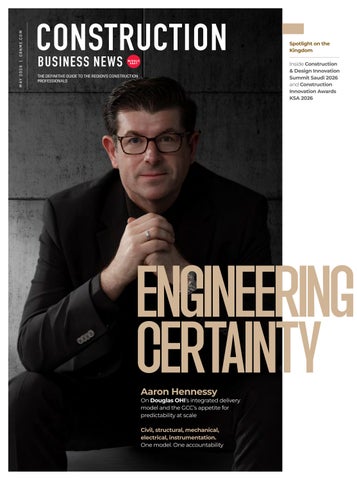
ENGINEERING CERTAINTY
Aaron Hennessy
On Douglas OHI’s integrated delivery model and the GCC’s appetite for predictability at scale Civil, structural, mechanical, electrical, instrumentation. One model. One accountability








































































28 COVER STORY
Scalable Certainty


2026
18 SUPPLY CHAIN
CONSTRUCTING CERTAINTY
Joe Labaky, Chief Operating Officer at Group AMANA, discusses how innovation, supply chain integration, and evolving delivery models are redefining the industry
24 INTERVIEW
BUILDING WITH DISCIPLINE: A COMMERCIAL LENS ON THE UAE’S INFRASTRUCTURE BOOM
Kamal Dubey, Commercial Director at Ellisdon, speaks with Construction Business News ME on the shifting priorities of commercial leadership across UAE infrastructure, from cash flow discipline and risk allocation to digital governance, supplychain resilience and the ESG imperative driving the country’s Net Zero 2050 ambitions
26 TALKING POINT
SMART CITIES: WHY TECHNOLOGY ISN’T THE HARD PART
28 COVER STORY
SCALABLE CERTAINTY
Inside Aaron Hennessy’s Quietly Disciplined Reinvention of Douglas OHI
36 CONSTRUCTION & DESIGN
INNOVATION SUMMIT SAUDI 2026 WHERE TOMORROW TOOK SHAPE
42 CONSTRUCTION INNOVATION AWARDS 2026
TOMORROW, MADE IN KSA
72 TRUCKS THE UPTIME PROMISE
76 DESIGN
PAST THE DRAWING BOARD
Embedding Sustainability through Project Delivery, Not Just Design!
80 TALKING POINT
DESIGNING FOR UNCERTAINTY
What Regional Tensions Mean for Project Pipelines, Costs, and Confidence in the GCC?
82 REAL ESTATE
TWICE THE LAND, ONE BOLD VISION
ORA Developers acquires an additional 4.8 million sqm from Modon Holding, doubling its UAE land bank to 9.6 million sqm and cementing its long-term bet on the DubaiAbu Dhabi corridor.
84 EXPERT INSIGHT THE HUMAN SIDE OF URBAN RESILIENCE
Shameel Muhammed at Heriot-Watt University Dubai highlights the urgent need for cities to evolve from tech-driven ecosystems into people-first environments
86 EDITOR’S CHOICE ONE TO WATCH
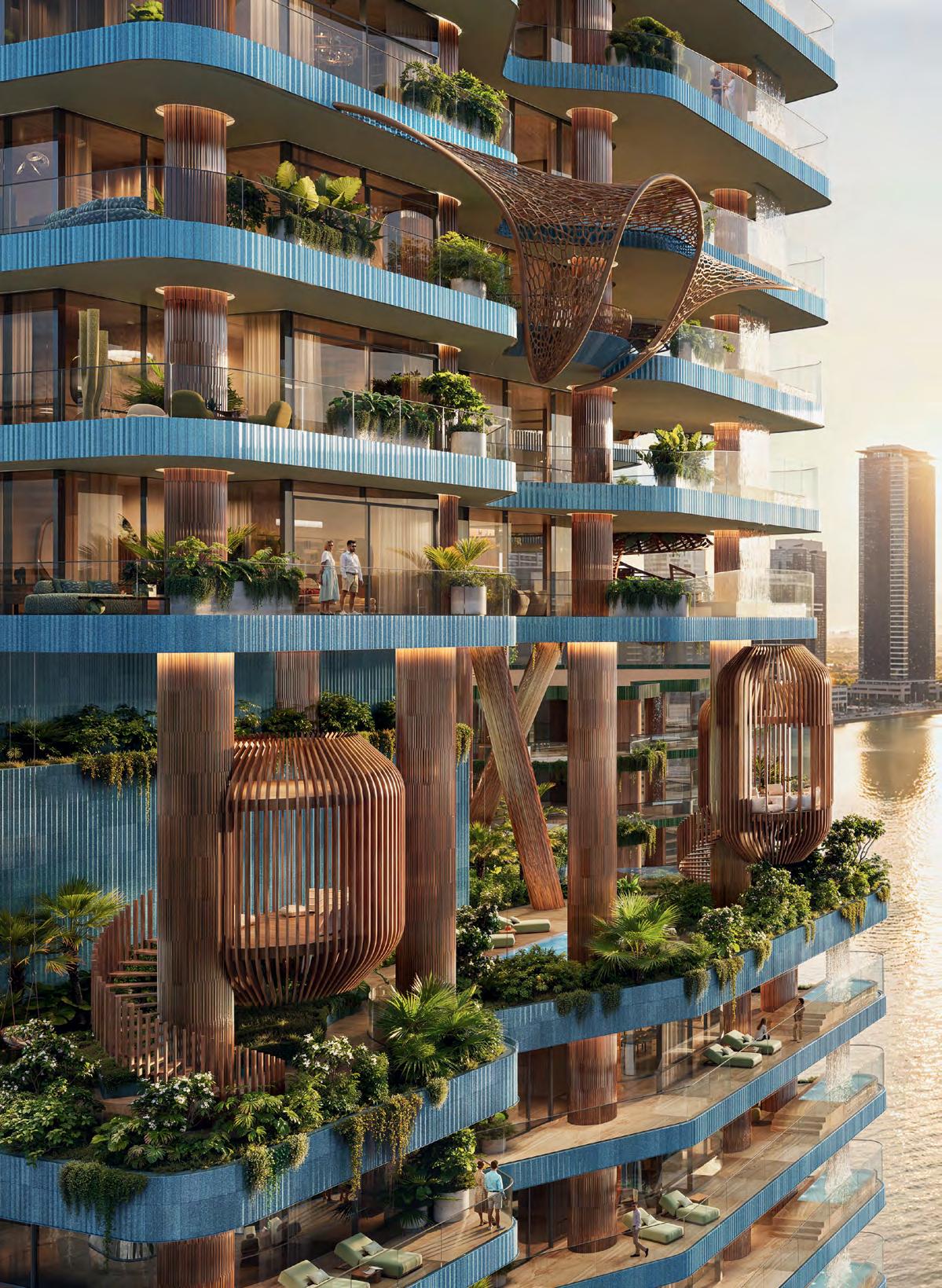
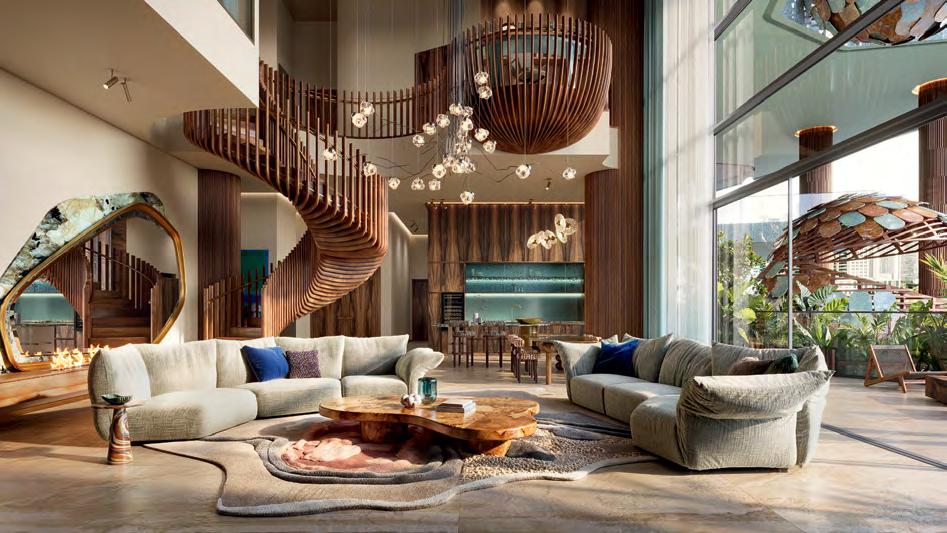
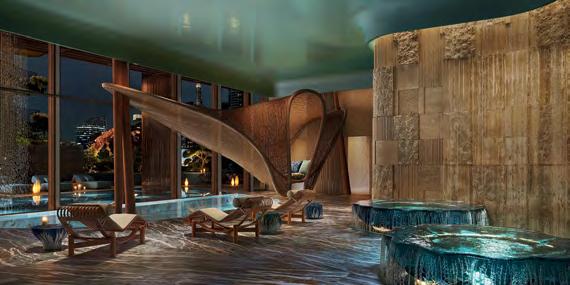
Orvessa Residences by Michel Adam - BNW DEVELOPMENTS

CEO
Wissam Younane wissam@bncpublishing.net
Managing Director
Rabih Najm rabih@bncpublishing.net
Group Publishing Director
Joaquim D'Costa jo@bncpublishing.net
Editor-in-Chief
Vibha Mehta vibha@bncpublishing.net
Commercial Director
Andrea Mocay andrea@bncpublishing.net
Editorial Assistant
Aya Zhang aya@bncpublishing.net
Digital Reporter
Reeba Asghar reeba@bncpublishing.net
Creative Lead
Christian Harb chriss@bncpublishing.net
Junior Art Director
Rizaldi Febrian
Marketing Executive
Aaron Joshua Sinanbam aj@bncpublishing.net
Multimedia
Joel Amparo, Eduardo Buenagua, and Harton Otlang
Contributors
Gilbert Boustany, Ammar Al Assam, and Owen Murphy
PO Box 502511 Dubai, United Arab Emirates P +971 4 4200 506 | F +971 4 4200 196
For all commercial enquiries, contact jo@bncpublishing.net T +971 50 440 2706
All rights reserved © 2025. The opinions expressed are solely those of the contributors. Construction Business News Middle East and its affiliated publications in the MENA region are exclusively licensed to BNC Publishing. No part of this magazine may be copied, reproduced, or transmitted in any form or by any means without prior written consent from the publisher.
Printed by United Printing and Publishing | upp.ae
Images used in Construction Business News Middle East are credited when necessary. Attributed use of copyrighted images with permission. All images not credited courtesy Shutterstock.
Keep up to date with all the latest news, features and much more on our website and social media platforms

Returns darkness to the night
BEGA pole-top luminaires with Dark Sky technology direct the light in a highly efficient manner only where it is required. Light pollution of the night sky is avoided. bega.com/darksky
Shoulder to Shoulder, Eyes on the Horizon
There is a particular kind of warmth that blooms when an industry stands shoulder to shoulder, gazes lifted to a luminous horizon. As I cast my mind back to our recent Construction & Design Innovation Summit Saudi 2026 and the Construction Innovation
Awards KSA 2026, that warmth lingers like the last note of a symphony.
Saudi Arabia’s construction and design community swept into both gatherings not as rivals, but as kindred spirits. The air thrummed with unmistakable energy, a quiet
conviction that resilience has shed its armour and become a forwardleaning philosophy. Conversations cascaded with ambition, panels crackled with insight, and the awards stage shimmered with hard-earned brilliance, honouring the projects, the people and the partnerships sculpting the Kingdom’s built tomorrow.
What lingered most was the mood. Composed, considered, quietly luminous. After seasons of headwinds and dizzying reinvention, the industry has emerged with sharper instincts and a softer ego. Architects, developers, contractors and consultants spoke a shared dialect, one threaded with long-term thinking, sustainability and a deep devotion to the communities they built for.
That collective spirit fills me with a tender sense of satisfaction, and a far deeper sense of hope. Together, the summit and the awards painted a radiant portrait of a year poised to deliver. Bolder ideas, sharper execution, a region moving in graceful steps. If 2026 carried a soundtrack, it would be the steady, hopeful hum of an industry walking forward in unison.
To everyone who joined us, contributed, listened, debated and dreamed aloud, thank you. Your presence transforms this community into something far greater than an industry. It is a family of builders, dreamers and doers, shaping a Kingdom in full bloom.
Here is to a year of resilience worn lightly, ambition carried collectively, and futures built side by side.

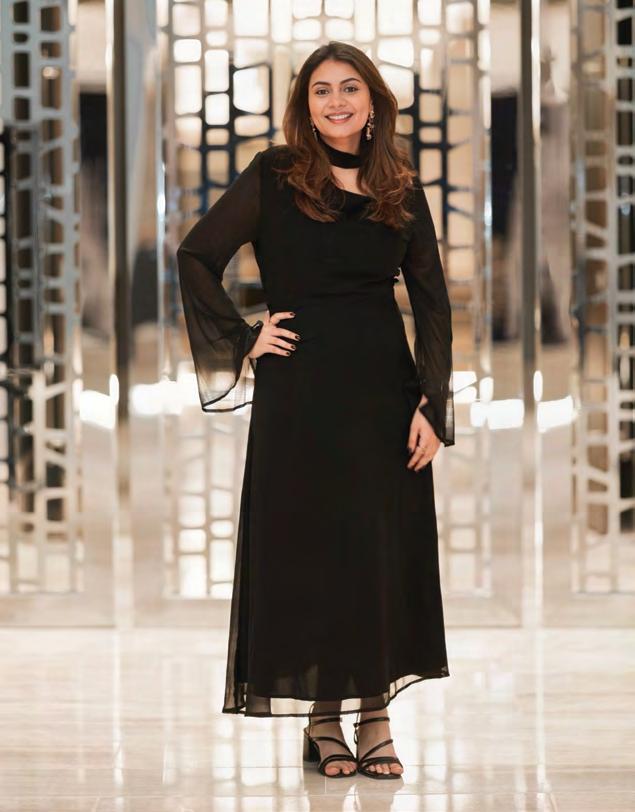
Vibha Mehta Editor-in-Chief vibha@bncpublishing.net
ALI & SONS NAMED MAIN CONTRACTOR FOR DURAR GROUP’S MOONSTONE INTERIORS BY MISSONI ON AL MARJAN ISLAND
This appointment marks a critical milestone in the project’s progression and underscores Durar Group’s disciplined delivery strategy
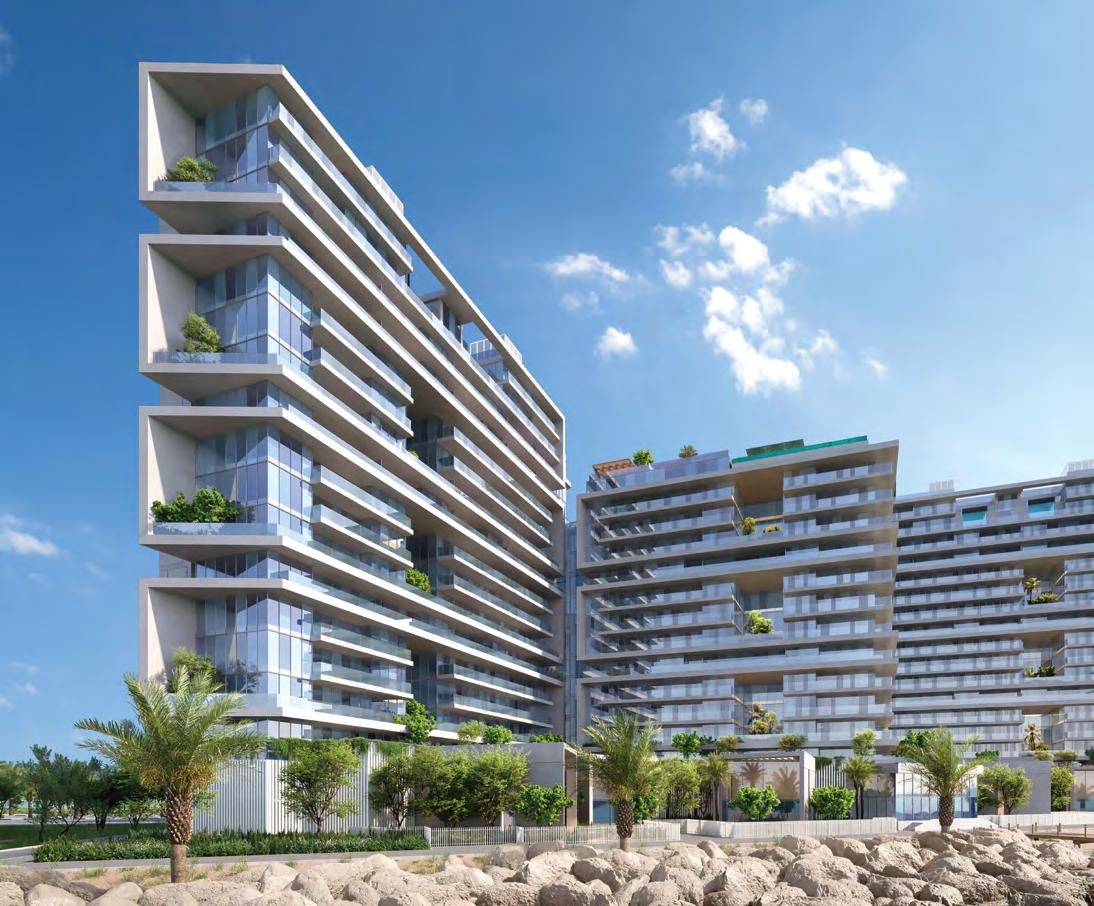
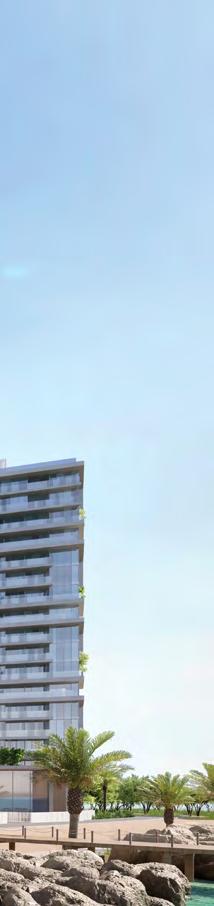
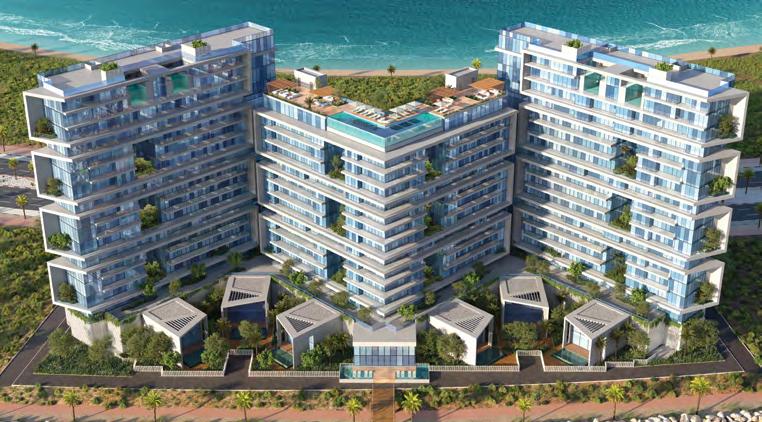
Durar Group has appointed Ali & Sons as the main contractor for Moonstone Interiors by Missoni, its flagship branded residential development on Al Marjan Island.
This appointment marks a critical milestone in the project’s progression and underscores Durar Group’s disciplined delivery strategy, anchored in partnering with contractors that meet the highest standards of quality, precision, and execution.
Moonstone Interiors by Missoni introduces a distinctive proposition to the UAE’s branded residential market, translating Missoni’s design ethos into a fully integrated living environment. Conceived as a holistic lifestyle destination, the development seamlessly integrates architecture, interiors,
and curated experiences to deliver a cohesive, elevated residential offering.
THE PROJECT COMPRISES 226 SEA-FACING RESIDENCES, EACH DESIGNED TO MAXIMISE UNINTERRUPTED VIEWS OF THE ARABIAN GULF WHILE MAINTAINING EXCEPTIONAL STANDARDS OF DETAILING, MATERIALITY, AND SPATIAL EFFICIENCY.
A carefully curated suite of amenities, including infinity pools, refined communal spaces, and bespoke lifestyle programming, supports a living experience defined by privacy, wellness, and design excellence.
Strategically positioned on Al Marjan Island, the development benefits from direct beachfront access and expansive sea views. The island continues to gain prominence as a high-growth investment destination in the Northern Emirates, supported by robust infrastructure, rising tourism demand,
and its proximity to Dubai, approximately 1 hour away.
The selection of Ali & Sons reflects Durar Group’s focus on execution certainty. With a strong track record of delivering complex developments across the UAE, Ali & Sons brings the technical expertise, operational rigour, and delivery discipline required to realise Moonstone Interiors by Missoni’s vision to the highest standards.
Mohammed Miqdadi, CEO of Durar Group, commented: “This marks a defining milestone for Moonstone Interiors by Missoni. At Durar, we place a premium on execution, aligning with partners who can deliver with precision, consistency, and accountability. Ali & Sons embodies these qualities, and we are confident in their ability to bring this development to fruition at the level it demands.”
Moonstone Interiors by Missoni is being developed by DurarF5 FZ LLC, with OCTA Properties appointed as the exclusive sales partner.
HASSAN ALLAM & ALBAWANI LAND $490M DEAL TO BUILD SAUDI MUSEUM OF CONTEMPORARY ART
Backed by Hassan Allam’s 90-year legacy and AlBawani’s 35 years of expertise, the partnership brings deep-rooted experience to Saudi Arabia’s transformative giga-projects
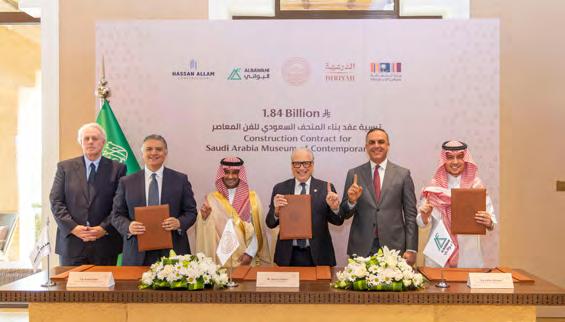
Hassan Allam Holding and AlBawani Holding Company have announced that their joint venture has been awarded a $490 million contract (SAR 1.84 billion) to construct the Saudi Arabia Museum of Contemporary Art (SAMoCA), one of the most prominent cultural and iconic projects within the Diriyah development plan in the Kingdom of Saudi Arabia, for Diriyah Company.
The project will be executed by a joint venture comprising Hassan Allam Construction – Saudi Arabia, a subsidiary of Hassan Allam Holding and one of the largest engineering, construction, investment, and development groups in the Middle East and North Africa, ranked among ENR’s top 50 International Contractors, alongside AlBawani Co. Ltd a subsidiary of AlBawani Holding Company a leading Saudi construction and development company delivering large-scale infrastructure, commercial and cultural projects across the Kingdom.
The official announcement of the project was made during a signing ceremony attended by Jerry Inzerillo, CEO of Diriyah Company Group, Eng. Abdullah bin Abdulaziz AlHammad, Chief Executive Officer of the Museums Commission, alongside Eng. Hassan Allam, CEO of Hassan Allam Holding, and Eng. Fakher AlShawaf, Group Chief Executive Officer of AlBawani Holding Company, where the scope of works and the importance of the project within the Diriyah development plan were presented.
On this occasion, Eng. Hassan Allam, CEO of Hassan Allam Holding, said: “This project represents an important milestone in the Group’s journey within the Kingdom of Saudi Arabia and reaffirms our commitment to delivering world-class cultural projects that respect historical heritage and meet national future ambitions. We are also proud to partner with AlBawani in executing this iconic project, in a collaboration that reflects integrated expertise and strengthens our joint capability to deliver major national projects to the highest standards. Saudi Arabia has been a central market for Hassan Allam Group for over five decades, during which we continue to contribute to the delivery of high-impact, long-lasting projects.”
Eng. Fakher Al Shawaf, Group Chief Executive Officer of AlBawani Holding Company, said: “We are proud to partner with Hassan Allam Construction in delivering this exceptional cultural project, which reflects the integration of our expertise and capabilities in executing complex projects to
the highest quality standards. The Saudi Arabia Museum of Contemporary Art (SAMoCA) demonstrates our commitment to developing national landmarks that highlight the Kingdom’s identity and cultural stature globally.”
The project is located in the heart of Diriyah, one of the Kingdom’s most prominent historical sites, and forms part of ongoing efforts to develop the area as a global cultural and tourism destination, with a total gross floor area of 45,252 sqm and a total built -up area of 77,428 square meters.
The project represents a significant addition to the Kingdom’s cultural infrastructure, combining the requirements of a modern museum experience with respect for Diriyah’s architectural and historical character, thereby enhancing its position as a centre for culture and heritage and supporting the objectives of Saudi Arabia’s Vision 2030.
This project benefits from Hassan Allam Holding’s 90-year legacy, its expanding presence in the Saudi market spanning more than five decades, and its continued commitment to delivering long-term, high-impact projects across the region. In parallel, AlBawani Holding’s three and a half decades of excellence and deep-rooted role in Saudi Arabia’s construction sector continue to position it as a key partner for the Kingdom’s most transformational giga-projects.
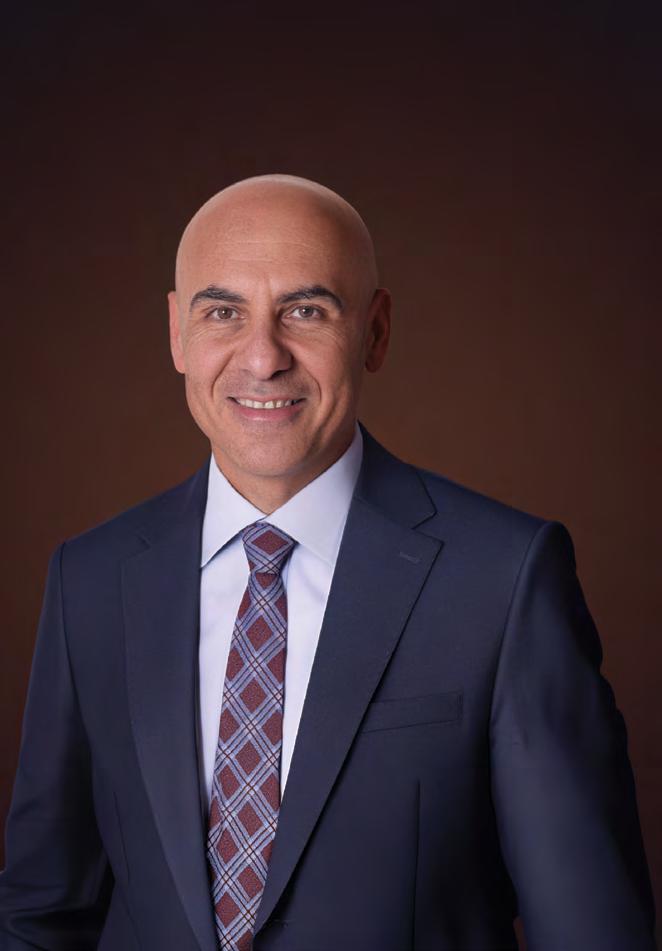
Dany Ghandour, Vice President, K&A
K&A APPOINTS DANY
GHANDOUR TO ACCELERATE PMC & FM STRATEGY
Dany’s return marks a strategic step in strengthening K&A’s regional leadership
Khatib & Alami (K&A) is investing in its project management consultancy (PMC) and facilities management (FM) capabilities following the appointment of Dany Ghandour as Vice President.
Dany brings more than 25 years of experience to the role, including two decades previously spent at K&A. He has held senior leadership positions on complex, multi-billion-dollar programs, predominantly in Saudi Arabia and has led the delivery of major project management and FM services contracts for a wide range of public and private sector clients in the region.
He rejoins K&A following four years at KEO, where he drove strategic growth as General Manager – KSA and Managing Director of the company’s FM practice.
Dr Najib Khatib, chairman and CEO of K&A, said: “Our clients are increasingly focused not just on delivering assets, but on how those assets perform over the long term. Aligning our PMC and FM capabilities allows us to move seamlessly from delivery into operations, preserving design intent, managing risk and protecting value well beyond handover. Dany’s return strengthens our leadership in this area and supports our continued investment in both disciplines.”
DANY ADDED: “K&A HAS SHAPED MUCH OF MY CAREER, SO COMING BACK AFTER FOUR YEARS AWAY FEELS BOTH PERSONAL AND NATURAL.
The industry has evolved, and clients now expect partners who can think beyond handover and focus on how assets perform over time. Bringing PMC and FM under one leadership enables exactly that – a more joined-up way of delivering and sustaining value. I’m pleased to return at a moment when the business is making such a clear and strategic investment in its future.”
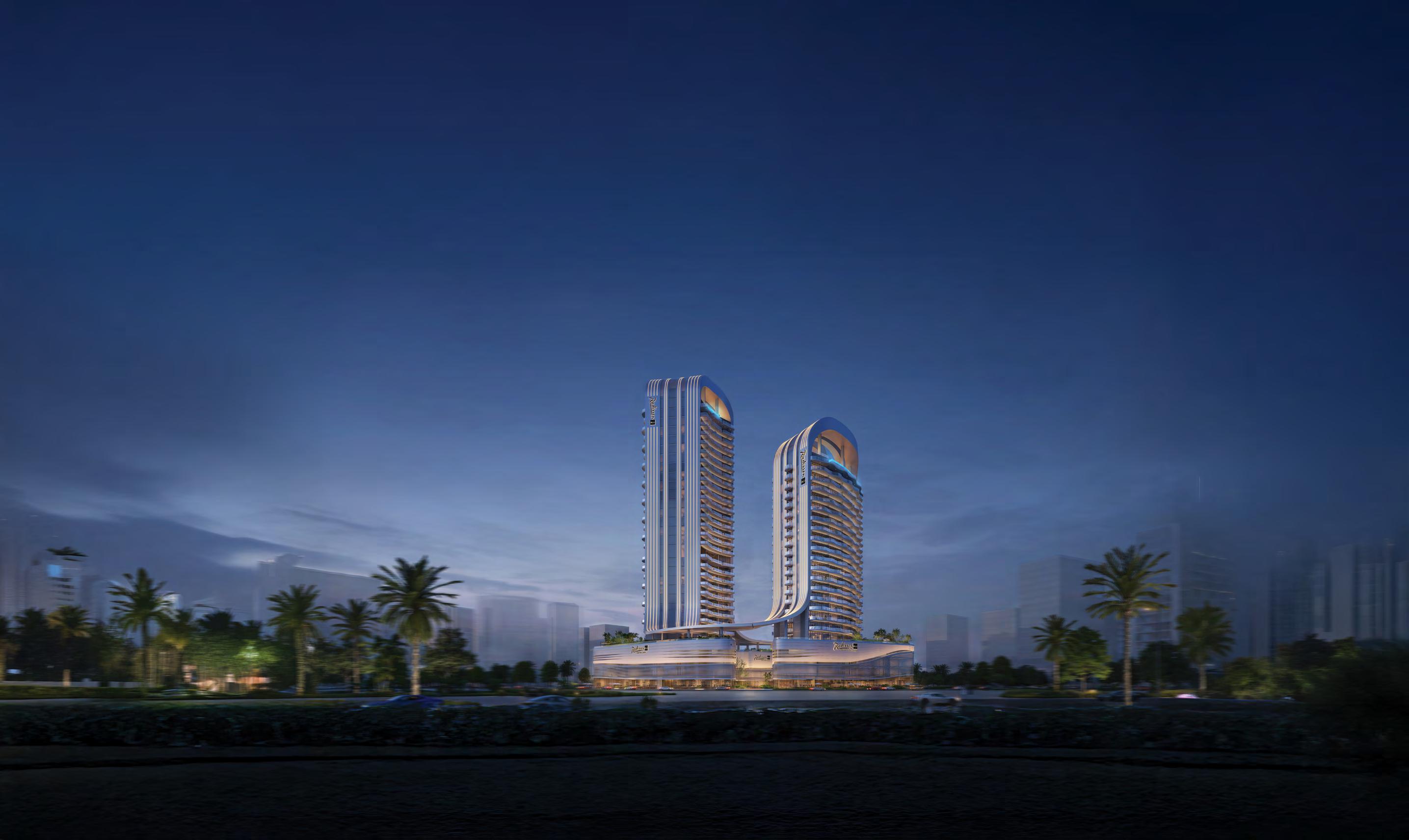
ALULA DEVELOPMENT COMPANY BEGINS CONSTRUCTION ON NUMAJ, AUTOGRAPH COLLECTION
Guests will experience thoughtfully designed spaces that reflect AlUla’s identity
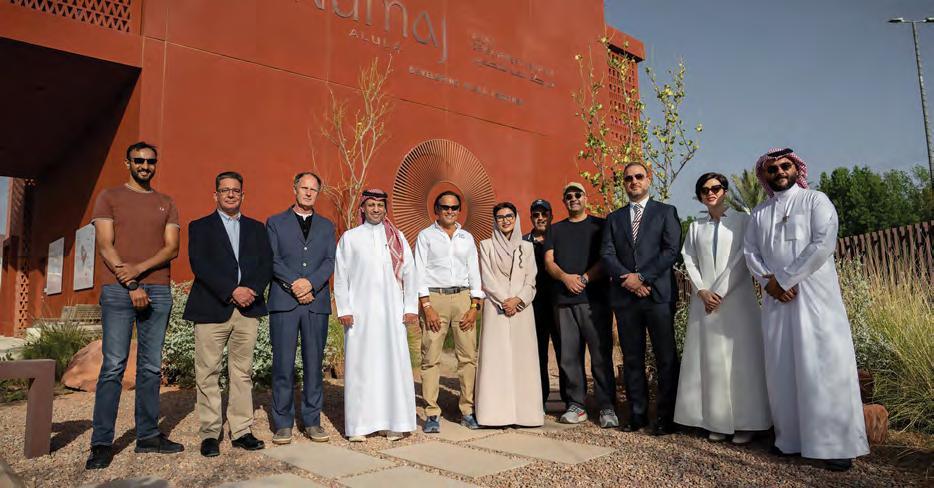
AlUla Development Company (UDC), a Public Investment Fund (PIF) company, today announced the commencement of construction on NUMAJ, Autograph Collection, marking a key milestone in the delivery of its development pipeline and AlUla’s continued transformation.
The milestone was marked during a site visit attended by John Pagano, Managing Director of UDC and Abeer AlAkel, Chief Executive Officer of the Royal Commission for AlUla (RCU), as well as other senior leadership representatives.
JOHN PAGANO, MANAGING DIRECTOR OF UDC, SAID: “NUMAJ MARKS A CLEAR STEP FORWARD IN OUR DELIVERY AGENDA. AS WE MOVE INTO CONSTRUCTION, OUR FOCUS IS ON EXECUTING HIGHQUALITY, INVESTMENT-READY DEVELOPMENTS THAT STRENGTHEN ALULA’S POSITIONING, WHILE SHAPING DISTINCTIVE HOSPITALITY EXPERIENCES THAT ENHANCE ITS LONG-TERM APPEAL AS A GLOBAL DESTINATION AND A VIBRANT COMMUNITY.”
The start of construction signals the transition of NUMAJ from concept to execution, further reinforcing UDC’s role as the development and investment engine driving AlUla’s masterplan into tangible, world-class assets, in close collaboration with RCU.
NUMAJ, a 250-key hotel expected to open in 2027, is being developed by AlUla Development Company and
will be operated by Marriott International under the Autograph Collection Hotels brand. Designed by GioForma, the architects behind the iconic Maraya, the project draws inspiration from AlUla’s natural landscapes, cultural heritage, and celestial history. The name “NUMAJ” is derived from the star system Nu Ursae Majoris, historically associated with AlUla as a guiding reference for ancient travelers. This narrative is reflected in a design concept rooted in discovery, light, and a deep connection to the land.
The development will offer a curated hospitality experience that blends refined resort living with immersive cultural and lifestyle elements. Guests will experience thoughtfully designed spaces that reflect AlUla’s identity, alongside a range of amenities including five dining venues, wellness facilities, and integrated business and leisure offerings.
Designed with sustainability at its core, NUMAJ is targeting LEED Gold certification, incorporating environmentally responsible practices such as greywater reuse for irrigation, locally sourced materials, UV-resistant glazing, water-efficient landscaping, and energy-conscious lighting aligned with AlUla’s Dark Sky policy.
NUMAJ forms part of UDC’s growing portfolio of developments shaping AlUla into a global destination to visit, live, and invest in. Through its projects, UDC contributes to Saudi Arabia’s Vision 2030 by enabling sustainable tourism, unlocking investment opportunities, and supporting economic diversification.
The start of construction signals the transition of NUMAJ from concept to execution
Constructing Certainty
Joe Labaky, Chief Operating Officer at Group AMANA, discusses how innovation, supply chain integration, and evolving delivery models are redefining the industry
Words by: Reeba Asghar
Photographer: Harton Otlang
From your point of view, how has the construction and logistics landscape in the region changed over the years?
Over the past two decades, construction and logistics in the GCC have evolved from oil-driven, cyclical growth into more diversified and resilient sectors. The early expansion of the 2000s was fuelled by high oil prices and large-scale real estate developments. However, the 2008 financial crisis and the 2014 oil price downturn exposed structural weaknesses within the industry. These shocks prompted a shift towards stronger governance, greater cost discipline, value engineering, and more sustainable business models.
On the logistics side, a series of major disruptions from geopolitical tensions in Qatar, the Red Sea, and the Strait of Hormuz to the COVID-19 pandemic have reshaped supply chains, accelerating localisation, alternative sourcing strategies, and digitalisation. At the same time, mega-events like Expo 2020 and the FIFA World Cup demonstrated the region’s delivery and operational capabilities.
Today, initiatives such as Saudi Vision 2030 have positioned the GCC as a global hub for infrastructure and logistics. The clear shift has been from efficiency-driven models to resilience-driven ecosystems, making construction and logistics central to economic diversification and global competitiveness.
What initially drew you to the company, and what has kept you motivated as the business has grown?
My initial attraction to Group AMANA stemmed from my introduction to our Chairman, Mr Chebel Bsaibes.
He is a figure I hold in the highest regard and who has remained a constant source of inspiration. What was immediately apparent was his lucid vision, underpinned by a profound belief in people—prioritising their development, empowerment, and the cultivation of a supportive culture. This resonated deeply with my own principles. I have always maintained that enduring success is rooted in the way you treat your staff, your partners, and your clients. At AMANA, there is a distinct emphasis on reputation, not merely regarding project delivery, but also in how the firm conducts
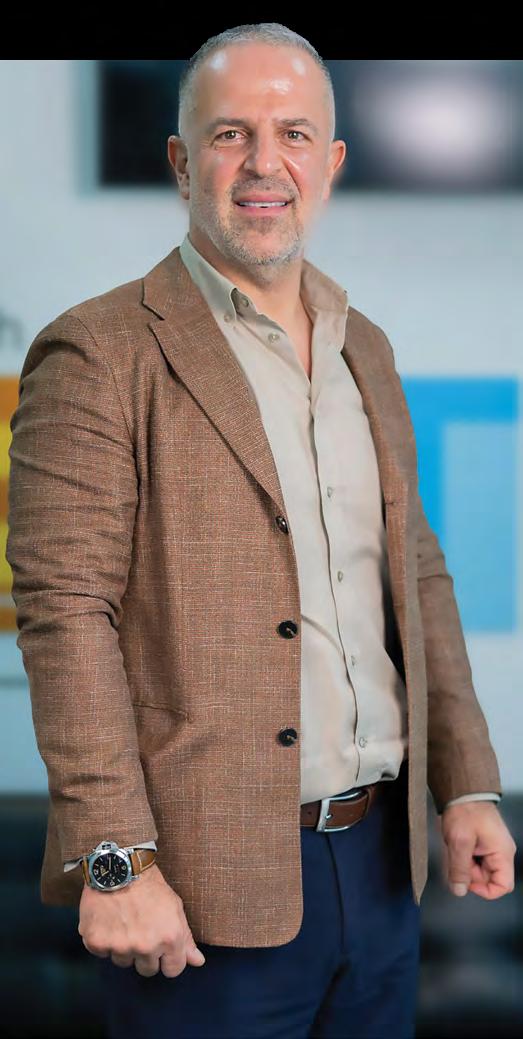
Joe Labaky, Chief Operating Officer, Group AMANA
itself, with unwavering integrity and respect for all stakeholders.
What has kept me motivated over the past 14 years is that AMANA is never static. It is a company that is constantly evolving, driven by continuous improvement, growth, and positive transformation. Innovation is not just a concept; it is embedded in how we think and operate. On a personal level, I thrive on learning and being challenged. At AMANA, I have consistently found opportunities to grow, take on new responsibilities, and explore different aspects of the business. It is an environment that encourages curiosity and development.
Our culture also plays a pivotal role. There is a strong sense of care, respect, and humility across the entire organisation, which makes a profound difference to our daily work.
Reflecting on my trajectory from Project Manager to Chief Operating Officer, it has been an incredibly rewarding journey of constant learning. Each stage presented fresh challenges and insights that have refined my management style.
What excites me today is that we are working on a number of advanced strategic initiatives, whether in technology, new construction methodologies, or continued investment in our people.It feels as though we are building the next chapter of AMANA, and I am highly motivated to be part of that journey.
What are the biggest challenges of managing projects and teams across multiple markets, and how do you keep operations aligned while staying flexible locally?
Managing operations across multiple markets, such as the UAE, Saudi Arabia, and Qatar, presents both complexities and opportunities. Each country possesses its own regulatory framework, client expectations,
supply chain dynamics, and talent landscape; therefore, a “one-sizefits-all” model is simply ineffective. At Group AMANA, we have intentionally structured the business to reflect this reality. Each country operates as an independent business unit, led by empowered teams with deep local market knowledge. They possess the autonomy to make decisions, adapt to local conditions, and respond swiftly to client requirements. This empowerment fosters accountability, agility, and a strong sense of ownership.
Simultaneously, alignment is maintained at a group level. Shared services across key functions help drive efficiency and consistency, while robust governance ensures that we uphold AMANA’s standards, particularly regarding our culture and values.
We are especially proud that, while our operating models may be adapted locally, our culture remains consistent. If you visit any AMANA project across our markets, you will witness the same behaviours, the same commitment to safety, the same respect in how we treat our clients and partners, and the same mindset amongst our people.
To reinforce this, we actively rotate employees across business units, which supports knowledge transfer, builds capability, and helps embed our culture and values consistently across all markets.
Ultimately, it is about striking the right balance: empowering teams to succeed locally while remaining aligned through a shared purpose, governance, and culture.
Logistics and supply chains have been under real pressure in recent years. How has that changed the way AMANA plans and executes large-scale projects today? Logistics and supply chains have fundamentally reshaped how we
plan and execute projects at Group AMANA. In recent years, we have navigated a series of external shocks, from disruptions in the Red Sea corridor to evolving tensions around the Strait of Hormuz, combined with strong demand driven by rapid growth in markets like the UAE and, in particular, Saudi Arabia. The increasing emphasis on local content has added further complexity to procurement strategies. In response, we have taken a deliberate approach to redesigning our sourcing and procurement operating model.
First, we moved away from a transactional approach to a partnership-driven model. Today, we prioritise building long-term relationships with key suppliers and partners, built on trust, transparency, and shared value creation. It is no longer about securing the lowest cost, but about delivering reliability, quality, and certainty to the end customer.
Second, we centralised our supply chain function across the group. This provides stronger control and visibility, while enabling us to leverage economies of scale across multiple markets. At the same time, we retain the flexibility to adapt to local regulations and requirements, particularly around localisation.
Third, where appropriate, we have increased our focus on direct sourcing from origin. This reduces reliance on intermediaries, enhances quality control, and improves predictability of timelines—critical factors in today’s environment.
Ultimately, all these changes are about de-risking project delivery. In a world where supply chains are less predictable, our role is to provide certainty to our clients, which requires a more proactive,
integrated, and strategic approach to logistics and procurement than ever before.
What separates companies that consistently deliver from those that don’t?
What distinguishes consistently high-performing companies is their mindset and priorities, particularly during challenging times.
At Group AMANA, we take a long-term view; we do not manage the business for short-term gains. During periods of growth, such as those currently seen in the UAE and Saudi Arabia, we expand in a measured and responsible way, protecting our reputation, maintaining quality, and staying close
to our customers. In more testing periods, our focus becomes even clearer: we prioritise delivering on our commitments to the highest level of customer satisfaction.
Our priorities have remained consistent throughout various disruptions and challenges. First, we ensure the safety of our people and partners. Second, we deliver on our commitments regardless of the circumstances, while supporting our clients and the wider supply chain ecosystem.
Consistency, however, does not equate to rigidity. Companies that succeed are those that continuously adapt to new technologies, evolving customer
expectations, and changing regulations. At AMANA, we place a strong emphasis on learning and continuous improvement, constantly refining our methods and adopting better tools.
While cost and profitability are important, they are not the primary drivers of our decisions. We believe consistent delivery is built on longterm relationships with employees, partners, and customers, grounded in trust, reliability, and doing the right thing, even when it is not the easiest option.
In short, companies that consistently deliver are those that think beyond the contract, adapt continuously, and act with long-term responsibility.
Looking ahead, what major trends do you believe will have the biggest impact on construction logistics and operations in the Middle East over the next five to ten years?
Looking ahead, four key trends will significantly reshape construction logistics and operations in the Middle East.
Firstly, supply chains will undergo further transformation with a stronger shift towards regionalisation and local production. Governments across the region, particularly in Saudi Arabia and the UAE, are already prioritising local content, and this will only accelerate. For companies like ours, this means rethinking sourcing strategies and building more localised ecosystems.
Secondly, technology will play an increasingly central role. From digital procurement platforms and data-driven planning to automation and artificial intelligence, these tools will enhance visibility, predictability, and efficiency
across the value chain. Organisations that embrace this shift will be better equipped to manage complexity and deliver with certainty.
Thirdly, there will be a continued move towards off-site and modular construction, whether partially or fully industrialised. This will reshape logistics as more of the value chain shifts into controlled manufacturing environments, improving quality, reducing site risks, and accelerating delivery timelines.
Finally, sustainability will become a defining pillar. Green construction, carbon reduction, and the more efficient use of materials will increasingly influence both design and execution. This will also reshape supply chains, encouraging greener materials, shorter transport routes, and more responsible sourcing practices.
Overall, these trends point to a construction industry that is more industrialised, digital, localised, and sustainable. Companies that can anticipate and adapt to these changes, while maintaining strong relationships with customers and partners, will be best positioned to lead and deliver.
Raimondi Debuts First-Ever Telecrawler Crane Line, Powered By
Terex Engineering
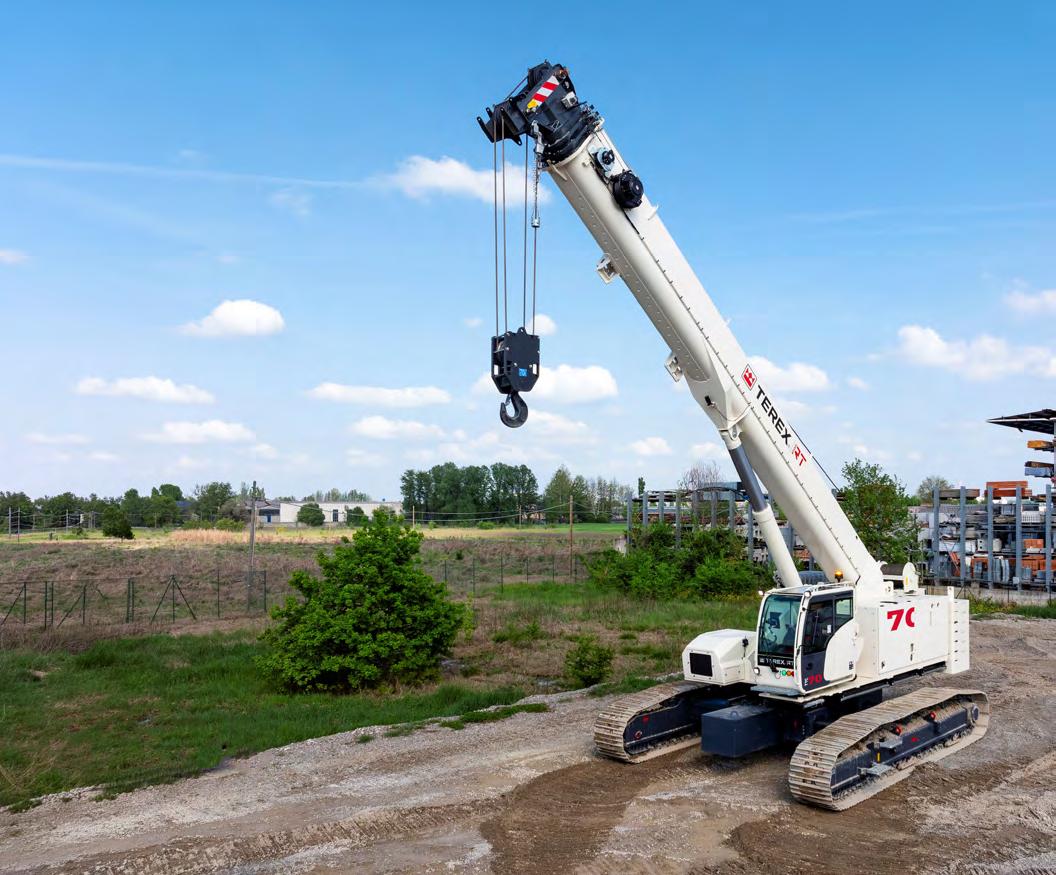
Building on the acquisition of Terex’s key lifting brands, Raimondi Group is strengthening its position as a multi-segment lifting solutions provider with a bold return to a legacy product category. Terex Rough Terrain Cranes, a Raimondi business division, is re-entering the crawler segment with the launch of a new telecrawler crane line, a significant strategic milestone for the Group.
The new line debuts with the TTC 70, designed, engineered, and manufactured at the Group’s rough terrain headquarters in Crespellano, Bologna, Italy. It lays the foundation for a renewed product category, with additional models planned for the near future.
“The expansion into the crawler crane segment reflects our commitment to innovation and diversification, while building on a strong engineering heritage and extending our global footprint,” Luigi continued.
The new telecrawler bridges a key market gap, combining the mobility of crawler cranes with the operational efficiency of rough terrain machines. Mounted on crawler tracks, the TTC 70 eliminates the need for outriggers, operates on slopes of up to 4 degrees, and delivers higher lifting capacities while travelling, making it ideal for compact jobsites, uneven ground, and critical infrastructure or energy applications.
“The decision to re-enter the crawler crane segment reflects shifting industry requirements, particularly in applications where versatility, mobility, and performance in challenging environments are critical,” commented Stefania D’Apoli, Global Sales Director, Terex Rough Terrain division.
The TTC 70 offers a 70-tonne maximum lifting capacity, a 36.8 m boom, and a 215 m drum capacity, powered by Stage V or Stage IIIA engine options. It features the TEOS operating system, T-Link
connectivity, an electronic dynamic management system, a redesigned ergonomic cab, and a latest-generation remote control enabling single-operator setup.
Compliant with EU safety standards and designed for optimised transportability, the TTC 70 targets key markets including the United States, Canada, and Europe, with first deliveries expected within 2026 following extensive testing.
With this launch, Raimondi Group reinforces its commitment to innovation and market responsiveness, setting the path for continued growth across multiple product segments.
“THE UNVEILING OF THE TTC 70 MARKS A PIVOTAL MOMENT FOR RAIMONDI AS WE CONTINUE TO EVOLVE INTO A FULLY INTEGRATED, MULTI-SEGMENT LIFTING SOLUTIONS PROVIDER, MEETING THE EVOLVING NEEDS OF THE GLOBAL LIFTING INDUSTRY,” SAID LUIGI MAGGIONI, CHIEF EXECUTIVE OFFICER, RAIMONDI GROUP.
Building with Discipline: A Commercial Lens on the UAE’s Infrastructure Boom
Kamal Dubey, Commercial Director at Ellisdon, speaks with Construction Business News ME on the shifting priorities of commercial leadership across UAE infrastructure, from cash flow discipline and risk allocation to digital governance, supply-chain resilience and the ESG imperative driving the country’s Net Zero 2050 ambitions
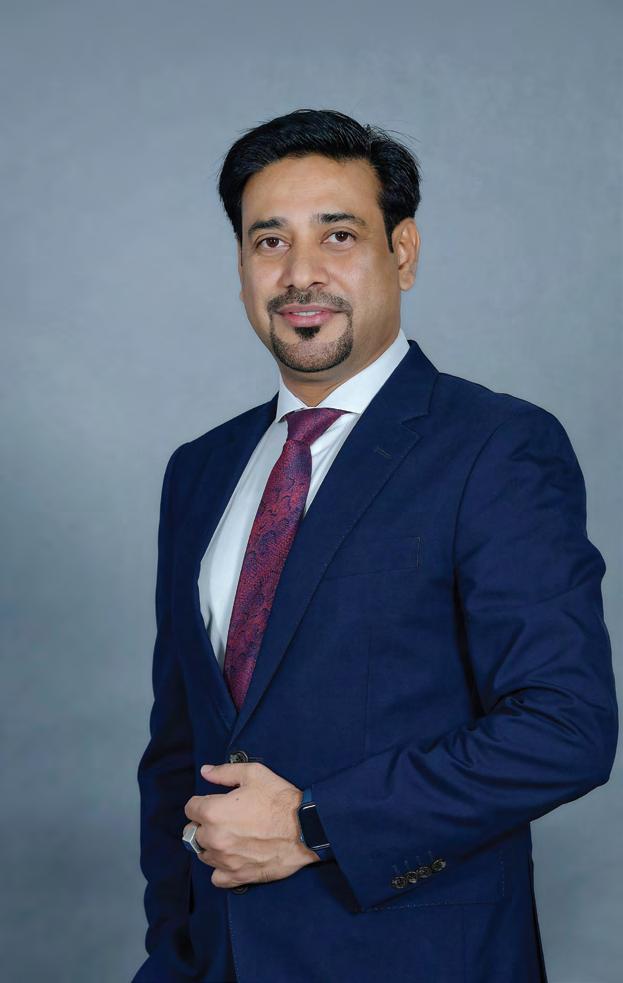
1. What are the current priorities for commercial leaders in ensuring clarity and confidence in large-scale UAE infrastructure projects?
Given the current geopolitical headwinds, the UAE’s infrastructure ecosystem is witnessing a natural shift towards decision-making clarity over process-driven execution. The priority for commercial leaders is to cut through process-heavy approaches and enable timely, informed decisions that keep projects moving.
Misalignment of risk allocation versus delivery is among the biggest causes of friction. Leading teams are also prioritising early risk identification, addressing issues before they escalate into formal claims.
Cash flow is a non-negotiable priority. Confidence across the supply chain depends on predictable payments
and commercial transparency. We’ve seen this work effectively on a UAE infrastructure project where the employer certified a large percentage of materials on site and released a major portion of provisional payments on variations under review. That kind of intervention protects contractor liquidity and avoids disruption.
Finally, strong governance frameworks with clear authority boundaries and decision rights are critical. With projects involving JVs, multiple stakeholders and layered delivery structures, it is important to operate under governance that underpins execution efficiency and confidence.
2. How do you ensure resilience and continuity in projects given fluctuating global supply chains and economic pressures?
Resilience is now driven by proactive planning rather than contingency, with the emphasis on mitigating
Kamal Dubey, Commercial Director at Ellisdon
uncertainty before it develops into a programme-level concern. Early procurement of long-lead items protects project timelines, while contracts are being updated to incorporate price adjustment clauses and provisional sums that reflect real market volatility. Real-time commercial tracking and scenario planning also empower leaders to anticipate challenges and take proactive measures, rather than simply responding to issues after they arise.
3. How is strategic commercial governance evolving in the UAE to support infrastructure growth?
Commercial governance in the UAE is becoming more structured, centralised and programmeled, with a clear evolution from traditional contract administration to strategic commercial leadership. With the complexity and scale of infrastructure programmes, there is a growing need to manage commercial outcomes at the programme level rather than on isolated contracts.
Programme-wide governance frameworks have emerged across multi-package developments such as urban master plans, energy infrastructure and transport networks. These frameworks enable consistency in risk management and decision-making across packages. Clients are also increasingly aware of the shift towards accountability, valueengineering and a disciplined approval process.
On a major UAE programme, for example, variation and claims approvals were centralised under a defined governance matrix. Highvalue decisions were escalated to a programme-level committee,
ensuring consistency and faster turnaround across packages.
4. Are there specific technologies or tools that are redefining contract management, risk assessment, or value creation today?
Digital platforms are streamlining contract management through commercial visibility and control. Commercial dashboards provide real-time insight into cost, risk and performance, enabling faster and better-informed decisions.
Particularly in the UAE, platforms such as Oracle Aconex and Asite are widely used to manage communications and approvals, while Microsoft Power BI is commonly used to build live commercial dashboards. When integrated with Building Information Modelling (BIM), these tools provide a connected view of both design and commercial performance. AI-led tools are increasingly being used to analyse historical data and identify potential risks early.
5. What commercial risks are most significant in the current UAE infrastructure market, and what is your viewpoint on mitigating them?
The most significant commercial risks include:
• Disproportionate or unclear risk allocation: Risk transfer without clarity causes project instability and disputes.
• Design incompleteness: Construction of projects progressing before design maturity increases cost escalation and variation risks.
• Cash flow delays: Supply chain payment issues, especially in multi-tiered projects, impact contractor
performance and project timelines.
• Unrealistic project schedules: Compressed timelines, a feature of ambitious UAE projects, create execution and commercial pressure.
• Fragmented governance: Multiple stakeholders operating under different frameworks compound risks in large developments.
A practical approach to commercial risk mitigation involves allocating risks transparently from the outset, ensuring mature designs before execution, and setting realistic project timelines. Integrated governance structures further streamline decision-making and manage stakeholder complexity.
6. How do you evaluate the commercial viability of projects that include significant ESG or decarbonisation components in line with the UAE Net Zero 2050 goals?
Evaluating ESG-driven components requires a shift from focusing only on upfront cost to assessing lifecycle value. In the UAE, where sustainability is embedded in national vision and strategy, long-term environmental benefits and operational savings are central to investment decisions. Metrics such as internal rate of return (IRR), payback periods and whole-life cost analysis are increasingly used to assess the viability of sustainable design and construction approaches.
ESG also functions as risk mitigation. Projects aligned with sustainability goals reduce carbon exposure, enhance reputational value and stay ahead of future regulatory changes. For the UAE, this aligns directly with its Net Zero 2050 agenda.
Smart Cities: Why Technology Isn’t
the Hard Part
Words by: Owen Murphy
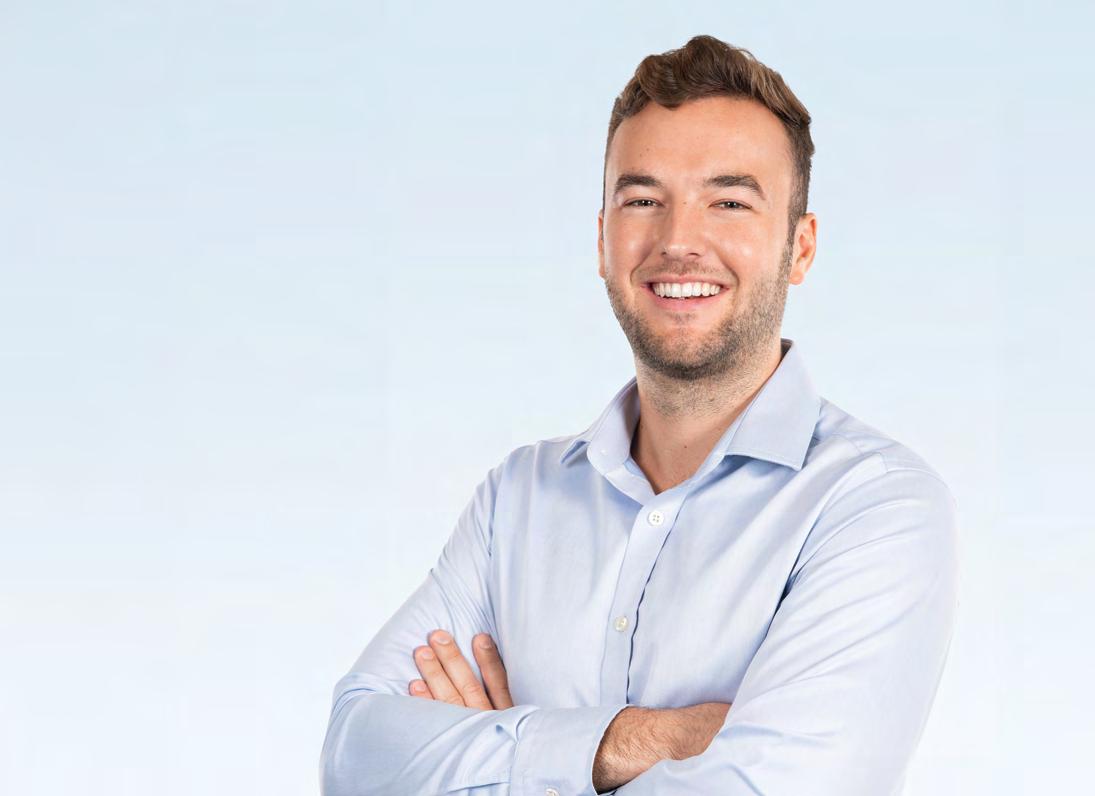
BIO: Owen Murphy is an experienced Smart Cities leader specialising in digital strategy, design, and transformation across both organisations and the built environment. He has contributed to some of the world’s leading smart building and smart city programmes, working across the full project lifecycle, from developing strategies through to the design and delivery of smart city systems. With a Master’s degree in Mechanical Engineering, he combines strategic thinking with strong technical delivery expertise to ensure smart city programmes are practical, deliverable, and capable of generating real value in operation
There has never been a shortage of smart city or proptech solutions. Sensors, platforms, digital twins, dashboards… if a city wants technology, the market is more than happy to provide it. And yet, despite billions invested and no shortage of innovation, many smart city ambitions still struggle to
translate into real operational outcomes. So if the technology exists, why do results often lag?
Because smart cities rarely fail due to technology alone, they fail when people, governance, and decision-making aren’t set up to succeed.
Owen Murphy, Principal Consultant – Digital Advisory, WSP Middle East

This becomes obvious as soon as a city transitions from delivery to operations. On paper, the systems are all there, but in practice, most issues can be traced back to less visible but far more impactful challenges: lack of capability, unclear ownership, broken processes, or governance structures that were never properly set up. Even challenges often framed as technical, such as data interoperability, are usually governance issues in disguise. Who owns the data? Who is accountable for it? And, most importantly, how is it actually meant to inform decisions?
We see these challenges play out first-hand across operational cities. Overlapping teams performing similar roles with limited coordination and multiple systems delivering the same capabilities, quietly driving up software license costs year after year. Assets are handed over with digital solutions that no one is clearly mandated or equipped to operate effectively. In more extreme cases, operational requirements were misunderstood or insufficiently defined at the design stage, leading to cities ending up with insufficient operational facilities, inadequate redundancy where it matters, or backof-house functions that add little value. Unfortunately, these issues rarely surface at the design stage. They only become visible once
the city is live, budgets are committed, and teams are left trying to make sense of what they’ve inherited.
Some may argue that this will change as AI adoption matures, automating decisions, optimising workflows, and removing some of the friction that people inevitably introduce. I’m sure it will. There is undoubtedly potential for automation to absorb inefficiencies that currently sit between stakeholders across a city, but that’s a conversation for another day.
WHAT MAKES THIS DISCUSSION PARTICULARLY RELEVANT IN THE MIDDLE EAST IS THAT THE REGION HAS A GENUINE OPPORTUNITY TO GET THIS RIGHT. MANY CITIES HERE ARE STILL RELATIVELY YOUNG OR ARE BEING BUILT ENTIRELY FROM SCRATCH.
They are not burdened by decades of legacy infrastructure, inherited systems, or entrenched ways of working. That is a huge advantage, if it’s recognised and acted on early.
So how do we solve the problem that sits at the heart of most smart city failures?
The biggest piece of advice for city leaders, developers,
and the construction industry is simple: think about smart city operations as early as possible in the design process and certainly before technology selection. Doing this helps avoid unnecessary complexity that delivers little or no value. It allows technology to be designed around the outcomes a city actually wants to achieve, rather than forcing operations to adapt to whatever systems were selected during delivery. It creates clarity around roles, responsibilities, decision rights, and operating models before they become embedded in the fabric of the city, and far more expensive to fix.
Smart cities are not about how advanced the technology is. They’re about whether a city can consistently make better decisions, respond faster, and operate more effectively to provide outcomes that people actually feel… collecting waste efficiently, reducing congestion, improving safety and building resilience to disruption, to name a few. Get the people and governance right early, and the technology can do what it does best—enable. Get it wrong, and no amount of tech will save you.
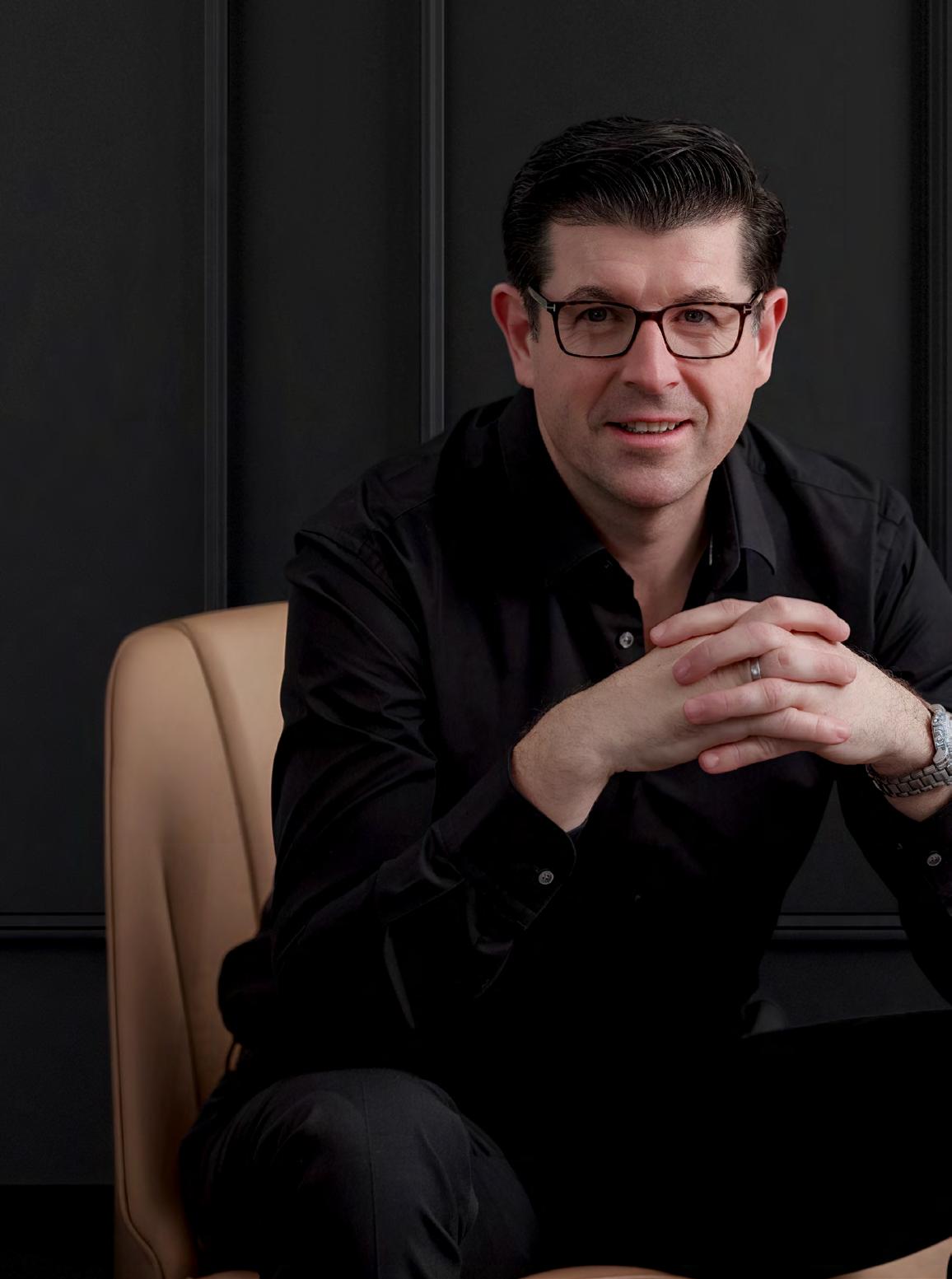
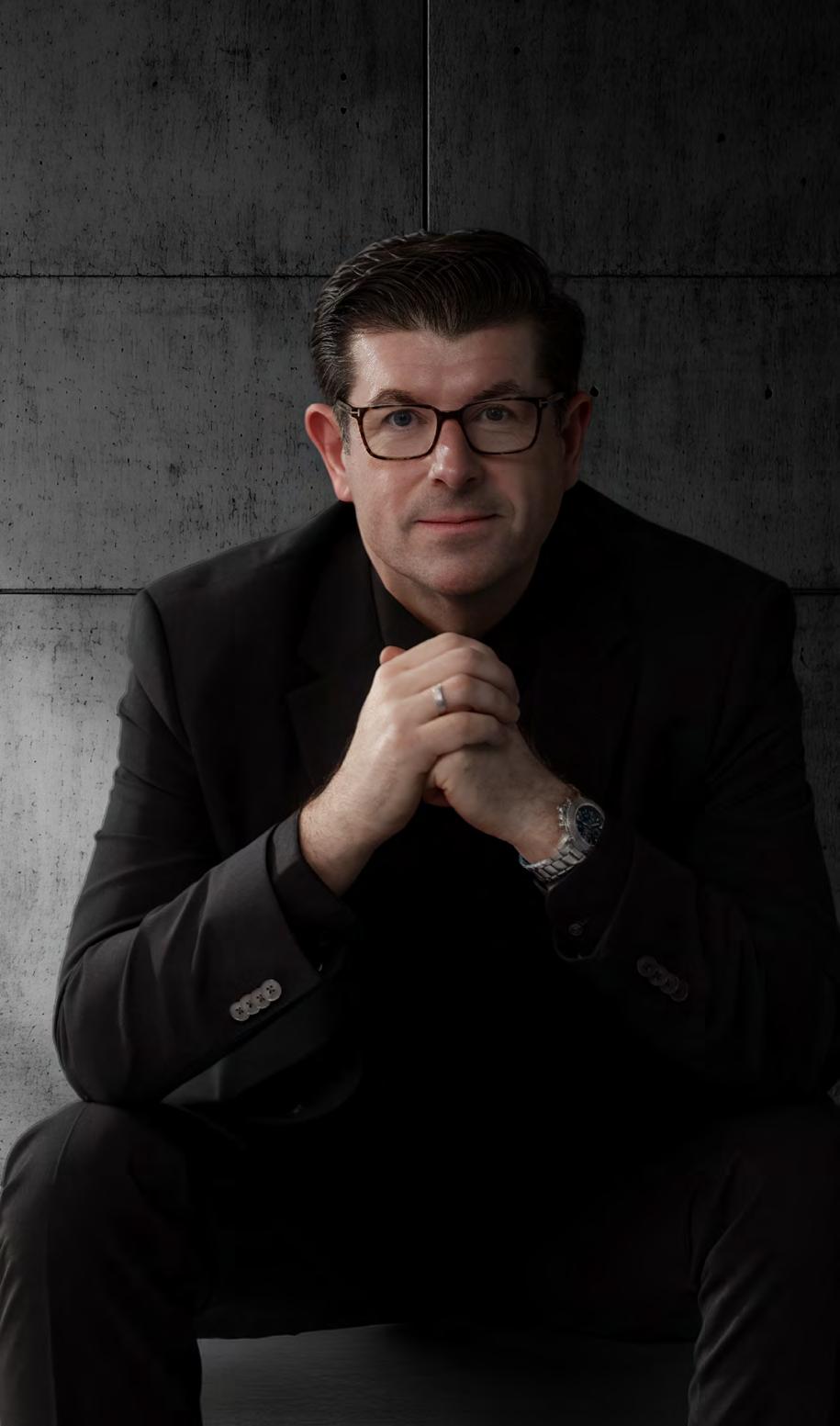
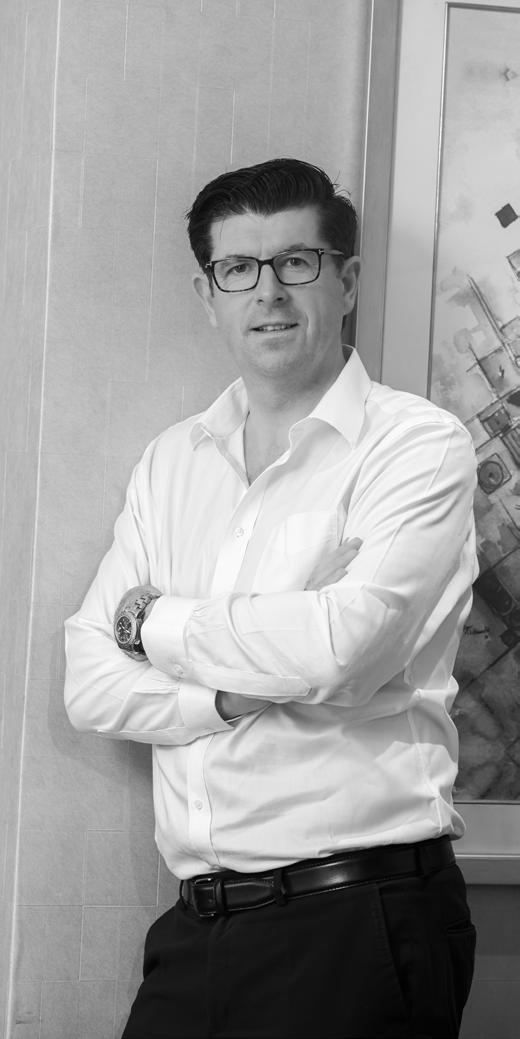
Aaron Hennessy Group Managing Director of Douglas OHI

Scalable Certainty
Inside Aaron Hennessy’s Quietly Disciplined
Reinvention of Douglas OHI
Words
by: Vibha Mehta
From a joint British and Omani venture to a regionally owned engineering force shaping some of the GCC’s most demanding infrastructure and energy programmes, Douglas OHI has spent the last decade rewriting what delivery means in a sector defined by pressure. Group Managing Director Aaron Hennessy speaks about discipline, integration and the quiet decisions that have shaped the company’s most pivotal chapter yet
Some leaders you have to study to understand. Others, you simply recognise. Aaron Hennessy belongs firmly to the second category. There is a particular kind of authority you encounter in people who have led for the right reasons, and for long enough to stop trying to convince anyone of it. You see it in the way they listen rather than perform, in how they answer a difficult question without dressing it up, in the unhurried clarity with which they frame even the most complicated terrain. Having had the chance to meet Aaron on a couple of occasions across the GCC, what stayed with me each time was not the title on his card or the scale of the projects sitting behind his name. It was the shape of the way he thinks. Leadership, in his case, looks less like assertion and more like architecture.
Group Managing Director of Douglas OHI
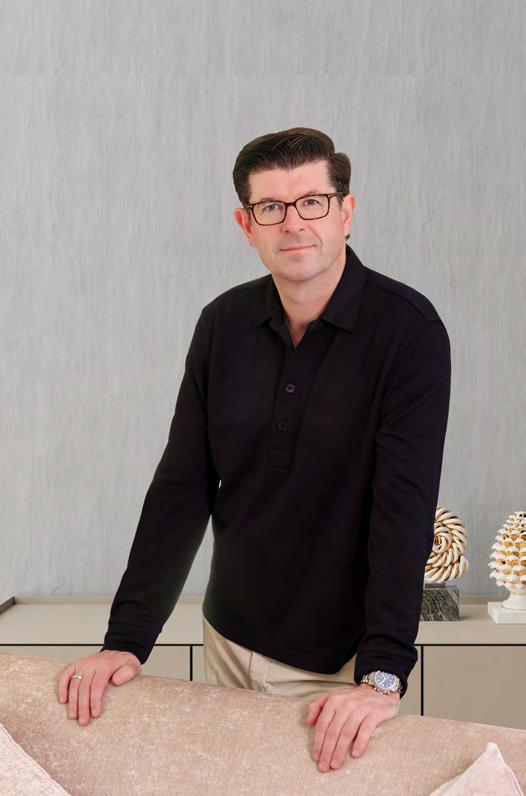
That instinct holds across this conversation as well. The cadence is measured, precise, never reaching for applause, and it suits the business he runs. Douglas OHI, the Group he leads as Managing Director, has been one of the GCC’s most quietly disciplined engineering and construction names for years. The organisation taking shape under his stewardship, however, is something a little different. It is more integrated, more anticipatory, and increasingly confident in its ability to set the terms of its own market.
A FOUNDING PRINCIPLE THAT REFUSED TO DRIFT
Every long-standing business carries a founding instinct that, if it survives long enough, calcifies into culture. For Douglas OHI, that instinct is unfussy and old-fashioned in the best possible sense. “Douglas OHI was founded as a joint British and Omani venture on a clear principle: to deliver complex projects with certainty, integrity and technical discipline,” Aaron tells me. “Today, the company is regionally owned, reflecting the strength of local capability, leadership and long-term national investment in building sustainable engineering excellence.”
What has changed, he is quick to point out, is the world around it. “The scale, pace and complexity of delivery across the GCC now demand a more integrated approach. We have strengthened our model by bringing civil, structural, mechanical, electrical and instrumentation capabilities together in a coordinated way, reducing interface risk and improving execution certainty.” Then, characteristically understated. “The philosophy has not changed. The expectation of how it is delivered has.”
“The philosophy has not changed. The expectation of how it is delivered has.”
BETWEEN THE BOARDROOM AND THE SITE
It would be easy, in his role, to slip permanently into the abstract. Aaron is unmistakably wary of that drift. “My role sits at the intersection of strategy and execution, ensuring the business remains commercially disciplined, operationally aligned and consistently effective across multiple markets,” he says. “A key focus is maintaining a direct connection to delivery. Regular engagement with project teams, clients and leadership across the GCC ensures that strategic direction is continuously informed by operational reality.”
The region’s market, however, is not a stable plane on which to plan. “The role requires a clear strategic lens to navigate market volatility, shifting project pipelines and evolving client expectations,” Aaron says. “This includes anticipating change, stress-testing decisions under pressure, and ensuring the organisation remains resilient, agile and commercially focused.” It is the kind of language people use only when they have done it more than once.
PROJECTS THAT BECAME PROOF
Ask most contractors to name a defining project, and the answer often arrives with a flourish. Aaron’s answer is, instead, a list.
Aaron Hennessy
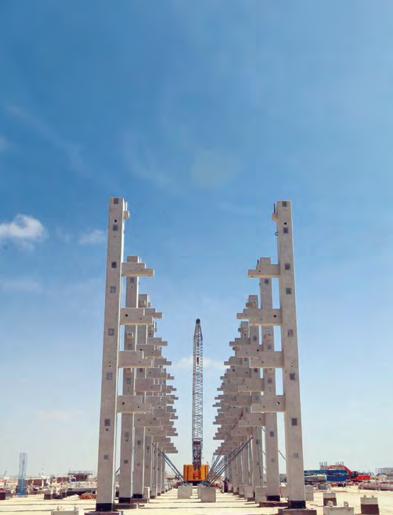
Duqm Refinery
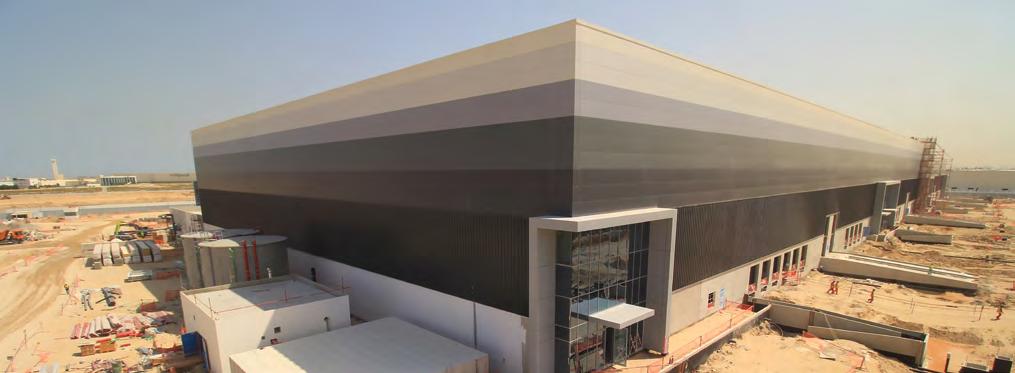
Civil and building works delivered by Douglas OHI, supporting one of Oman’s key strategic energy developments.
“There are several defining projects in our history, particularly within the large-scale infrastructure and energy sectors, where complexity, coordination and interface management are critical to success,” he says. The names read like a regional CV in concrete and steel: Barka IV Independent Water Plant, Duqm Refinery and Liwa Plastics in Oman, and the Habshan Gas Compressor Project in the UAE.
What he is most interested in, though, is what those projects together prove. “These projects demonstrate not only
technical capability, but a repeatable delivery model that manages complexity at scale. Our strength lies in how we coordinate multiple workstreams, manage interfaces and maintain execution certainty in environments where breakdowns in coordination typically drive cost and delay.”
BREAKING THE LINEAR HABIT
Few sectors talk more about transformation than construction, and few are slower to actually transform. The shift Aaron describes is unusually candid. “Clients are no longer assessing execution capability alone, but increasingly seeking partners who can actively
reduce risk, improve predictability and integrate delivery across the full project lifecycle,” he says.
“For Douglas OHI, this has required a fundamental rethink of our traditional delivery approach. Historically, like much of the industry, we operated within a linear model of design, tender and build. That model is no longer sufficient for the scale and complexity of projects we are now delivering.” The change, he says, has been both structural and behavioural. “This transformation is about moving from a sequential delivery model to a more integrated and anticipatory operating model, enabling greater
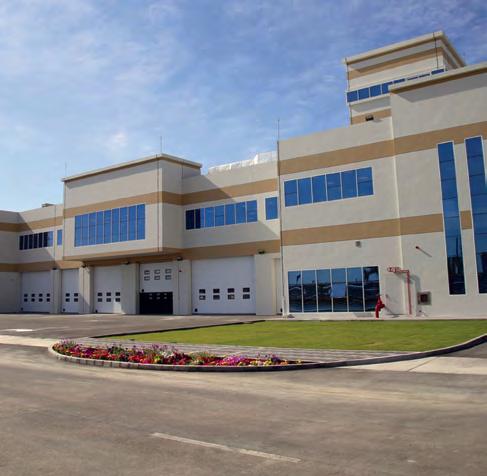
Liwa Plastic Integrated HSE building
certainty, control and resilience in an increasingly complex market.”
THE PIVOT THAT NO ONE WROTE ABOUT
Most companies talk about their growth in the language of momentum. Aaron prefers the language of recalibration. The chapter that does not often get told, in his telling, is the move away from discipline-siloed delivery towards a fully integrated operating model, anchored by a wholly owned capability called Systems Integration & Management (SIM), which delivers the company’s mechanical, electrical and instrumentation scope.
“This was not a straightforward transition,” he says. “It required a deliberate challenge to establish ways of working, alongside structural and cultural alignment internally. There was a natural degree of
resistance, as it meant moving away from familiar, function-led delivery models towards shared ownership of outcomes.” Looking back, he is careful not to lacquer the memory. “It was not the easiest path to take, but it has had a lasting impact on both our delivery performance and the resilience of the organisation.”
THE PROJECTS ON HIS DESK NOW
There is a faint warmth when Aaron speaks of the work currently in motion. The projects he names, including the Zuluf Wastewater Treatment Plant in Saudi Arabia, the Ghubrah III Independent Water Plant in Oman and the Habshan Gas Compressor Project in the UAE, are not chosen for their commercial weight, but for what they represent. “These projects stand out because of their critical national importance and the level of cross-
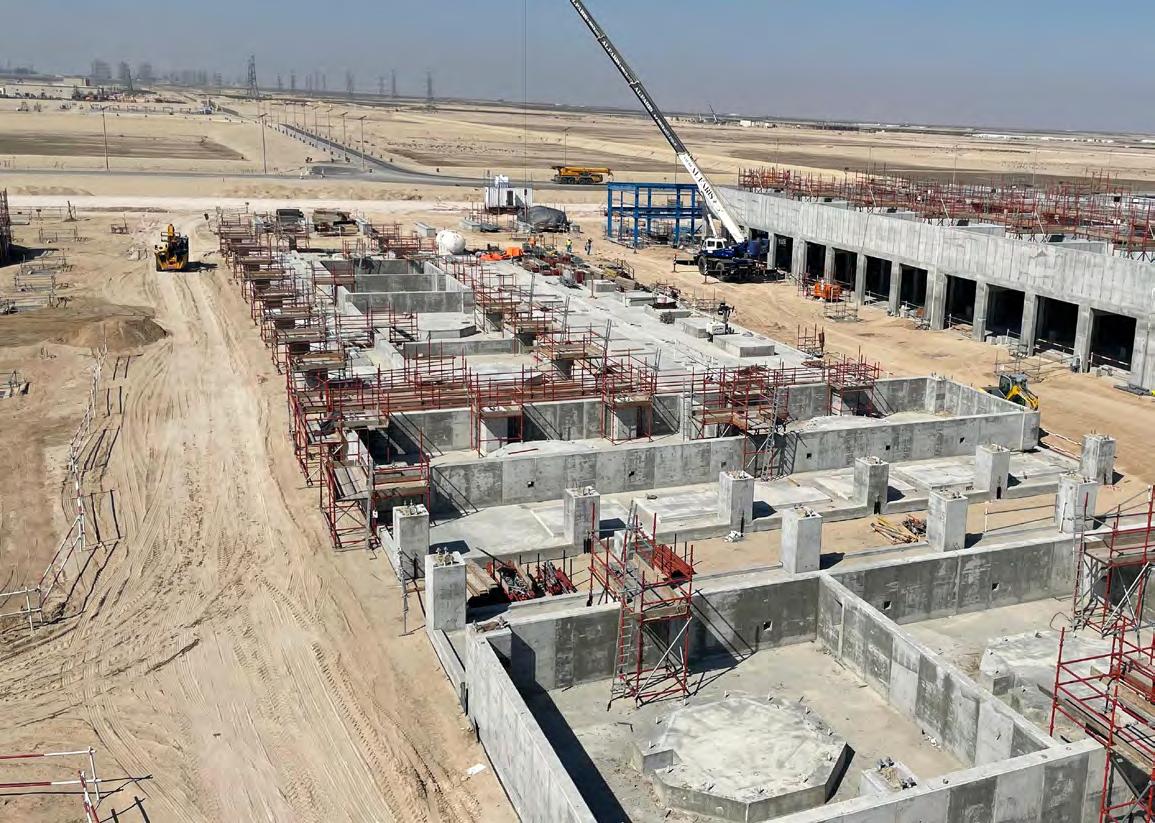
ZULUF Water Treatment Plant
Civil works including excavation, concrete, tank structures, structural steel, coatings and roadworks.
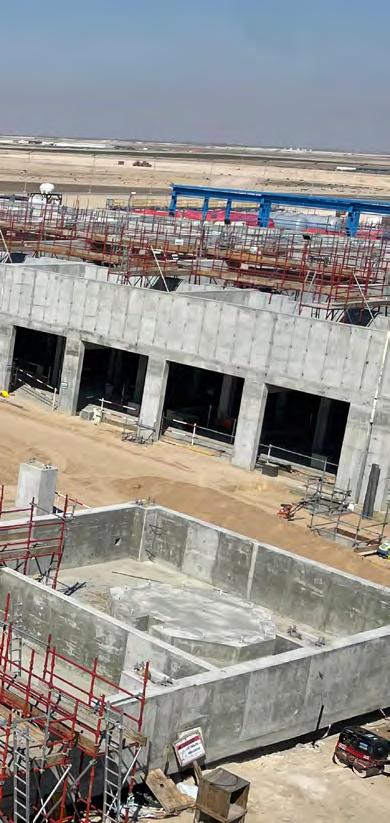
disciplinary integration required to deliver them successfully.”
He returns to Duqm, perhaps the most quietly demanding of them
all. “The complexity lay not only in the scale of the facility, but in the coordination of tightly interdependent engineering, procurement and construction activities across multiple stakeholders. Successful delivery required disciplined sequencing, rigorous interface management and a highly integrated execution model to maintain certainty across all phases.”
AN “IT’S OK” CULTURE
If there is a part of the conversation where Aaron’s voice softens, it is when he talks about culture. He resists the corporate temptation to sloganise it. “I would describe the culture at Douglas OHI as delivery-led, technically disciplined and strongly collaborative, but fundamentally anchored in ownership and accountability. People are trusted to take responsibility for outcomes, not just tasks.”
The example he offers, he has clearly chosen on purpose. “A good example is our ‘It’s OK’ mindset, which reinforces openness and early intervention. It encourages teams to speak up when something is not right, escalate issues early and prevent small issues from becoming larger delivery
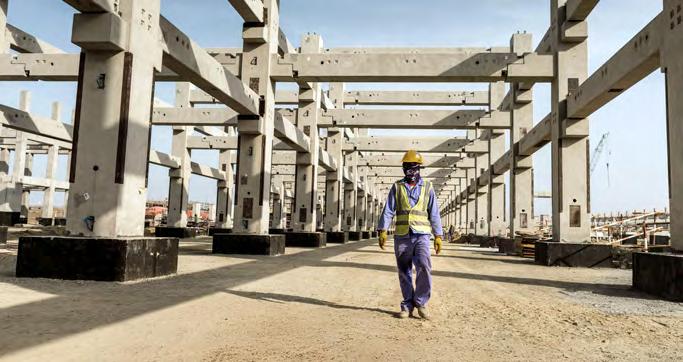
risks. Far from lowering standards, it strengthens accountability by making early action a core part of doing the job properly.”
“Sustaining culture is about maintaining behavioural consistency under changing conditions.”
WHERE THE PRESSURE IS REAL
Asked which of the three forces (sustainability, technology, and supply chain resilience) is having the most immediate impact on how Douglas OHI operates and bids, Aaron answers without hedging. “All three forces are reshaping the sector, but supply chain resilience is having the most immediate and tangible impact. It directly influences how we plan, procure and execute projects, particularly in relation to sequencing, material availability and certainty of delivery in increasingly volatile global supply conditions.”
Technology, in his framing, is the enabler rather than the headline. Sustainability, meanwhile, has crossed the threshold from compliance to design. “These forces are fundamentally reshaping how value is defined in bids. For us, the focus is increasingly on demonstrating delivery certainty, resilience in execution planning and the ability to manage complexity across the full supply chain, rather than simply pricing and technical compliance.”
THE WHITE SPACE
Every Group MD is asked about competitive positioning, and
Liwa Plastic civil work
Barka IV Independent Water Project Oman’s largest desalination plant, completed in a record 23 months, contributing 20% of the nation’s water supply.
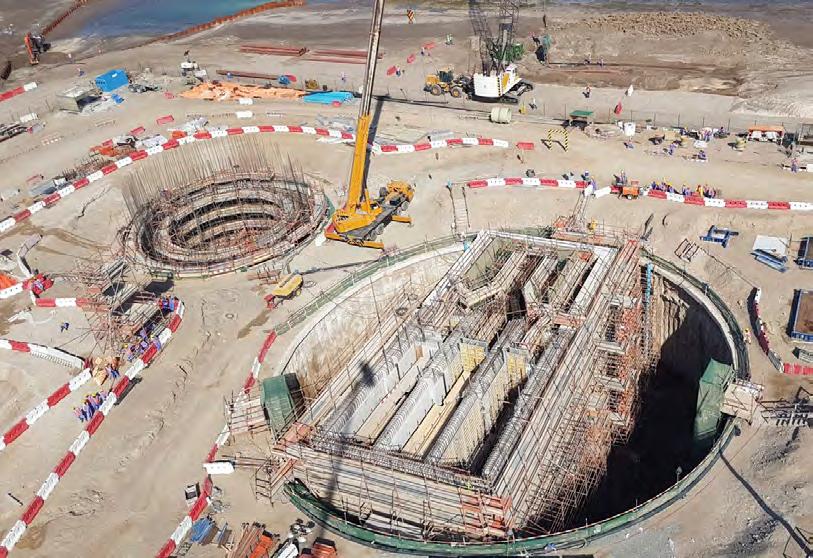
most produce a polished answer. Aaron’s is quieter, and perhaps because of that, more interesting. “The clearest white space for Douglas OHI lies in the delivery of largescale, complex infrastructure and energy projects where integration across disciplines and certainty of execution are critical to success.”
“The advantage in this space is not only technical capability, but the ability to consistently execute at scale with discipline and integration embedded into how we operate. That combination is not easily replicated through incremental change.” He gives the opportunity a name, almost in passing. “The opportunity is therefore not just scale, but scalable certainty. That is the space we are deliberately positioning Douglas OHI to capture.”
WHAT 2031 LOOKS LIKE
When I ask what success looks like five years from now, Aaron does not answer in revenue or rankings. He
answers in reputation, geography and continuity. “In five years, success for Douglas OHI is being consistently recognised as a leading integrated contractor for complex infrastructure and energy projects across the GCC, with a proven ability to deliver at scale with certainty of execution.”
The map he sketches out is precise. With an established presence in Oman, the UAE and Saudi Arabia, the focus is on strengthening the GCC footprint, building momentum in Bahrain and targeting further expansion into Qatar and beyond. “It is about helping to shape an organisation recognised not only for what it delivers, but for how it delivers, with integrity, discipline and accountability,” he says. “If we achieve that balance between growth, capability and leadership continuity, we will have built something meaningful, scalable and enduring.”







Brought to you by
Gold Sponsors
Silver Sponsor
Platinum Sponsor
Where Tomorrow Took Shape
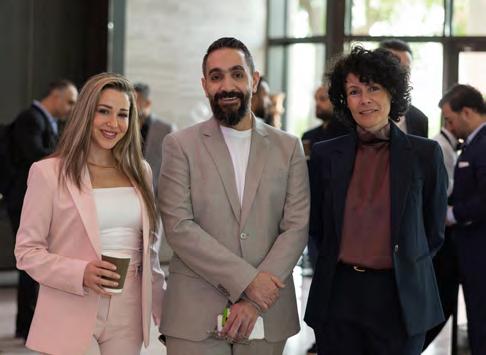
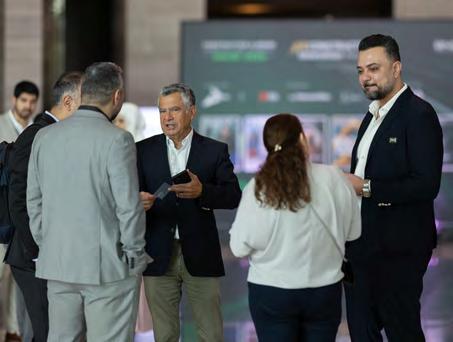
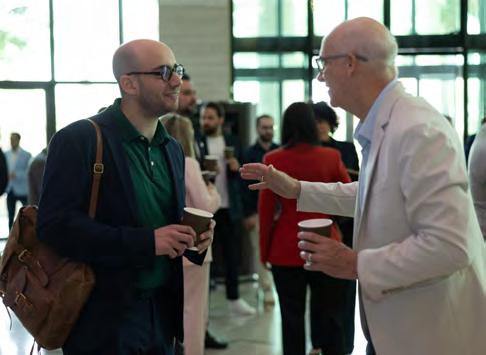
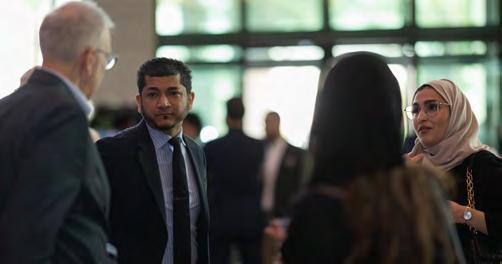
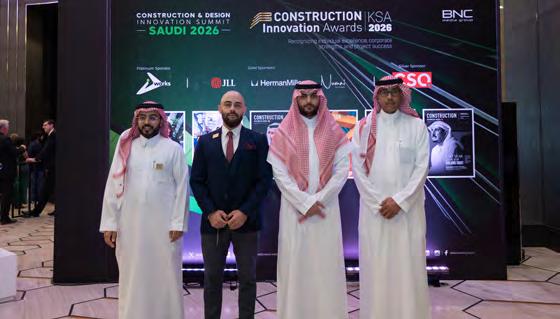
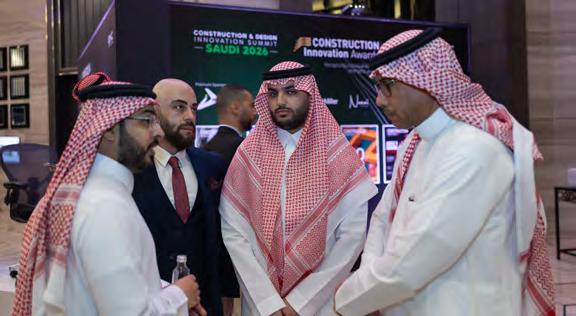
Riyadh shimmered with ambition April 21, as the Construction & Design Innovation Summit Saudi 2026 drew architects, developers, consultants and visionaries into a kaleidoscopic exchange of ideas. Throughout the morning, the Saudi capital became a crucible of dialogue, where the construction and design industry unpacked the forces shaping its future.
Conversations roamed from sustainable materials and innovative fit-outs to digital methodologies, smart project management and the architectural ambitions of Vision

2030. Panels probed the rise of green building, the promise of AI-led design, and the choreography of mega-developments now redefining the Kingdom’s silhouette.
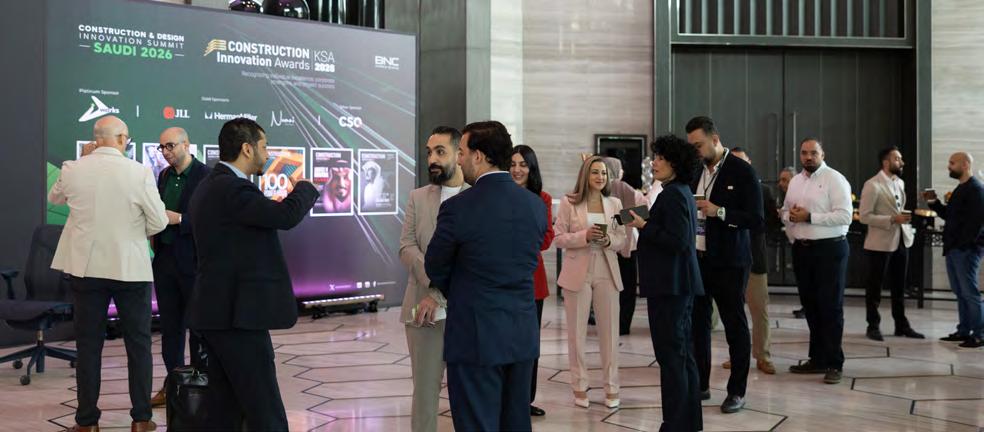
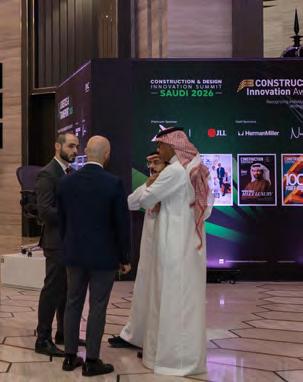
Beyond the stage, corridors hummed with handshakes, fresh alliances and the unmistakable buzz of an industry in bold reinvention. Networking flowed easily, learning landed deeply, and ideas travelled faster than blueprints.
By close of play, Riyadh had delivered far more than a summit. It was a glittering blueprint for the Kingdom’s brave new tomorrow.
PANEL 1
Saudi Vision 2030 Reprioritised: What’s Changing in Design, Delivery, Construction, and Investment
The panel zeroed in on the seismic shifts redrawing construction and design, each speaker bringing a distinct lens. Discussions opened on reprioritisation, where panellists argued that projects must now deliver value, identity and functionality at every stage rather than waiting for final completion. Speakers then turned to delivery, emphasising the rise of disciplined, milestone-driven models, with sharper approvals, stronger governance and phased execution helping to dial down risk. The conversation pivoted to build quality and cost certainty, where one voice spotlighted sustainability and lifecycle efficiency as the new north stars of decision-making. Investment came next, with panellists noting a clear pivot from scale-led ambition to value-led growth, anchored in proven demand and realistic timelines. The session closed on the human dimension, as speakers stressed that projects were increasingly shaped by how people used and experienced spaces from day one. It captured an industry recalibrating with poise.
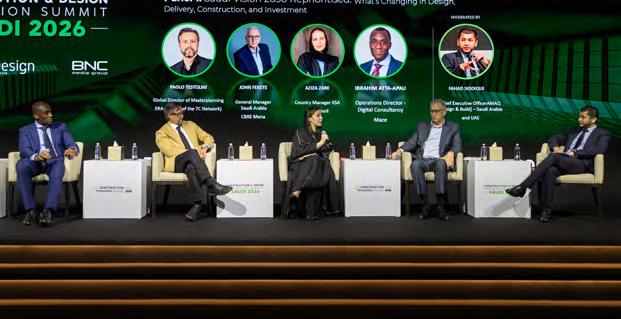
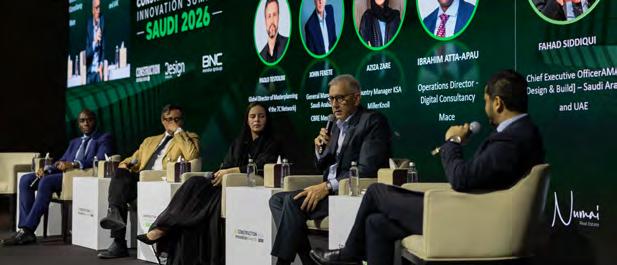
General Manager Saudi Arabia, CBRE Middle East
Country Manager KSA, MillerKnoll
Global Director, Masterplanning | ERA-co (Part of the 7C Network)
Operations DirectorDigital Consultancy, Mace
MODERATED BY John Fekete
Aziza Zare Paolo Testolini Ibrahim Atta-Apau Fahad Siddiqui
Chief Executive Officer, AMAQ Design & Build — Saudi Arabia and UAE
PANEL 2
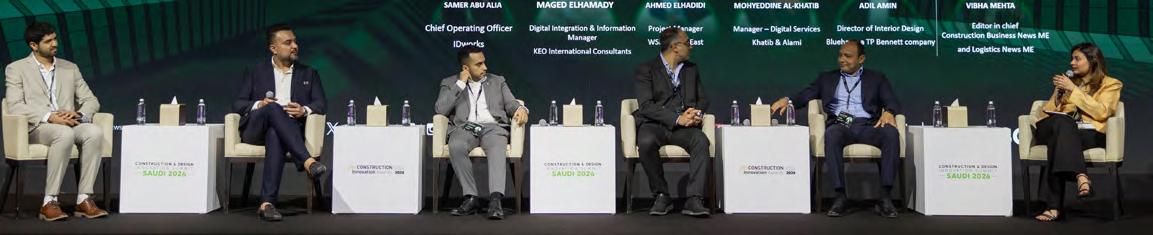
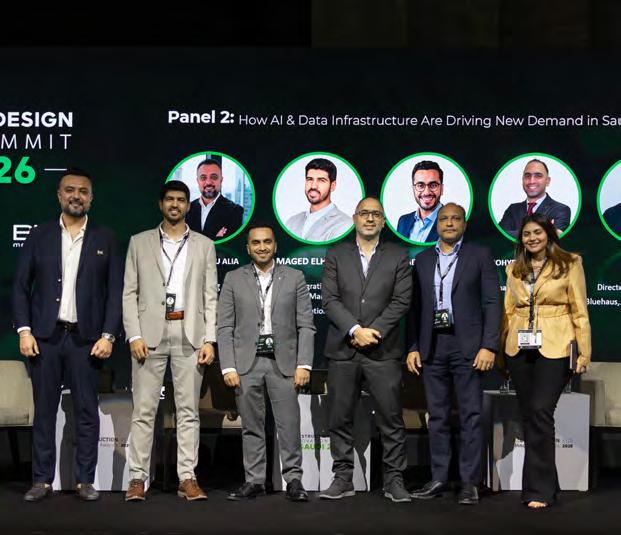
How AI & Data Infrastructure Are Driving New Demand in Saudi Arabia
The panel turned its lens to AI and its sweeping reshaping of Saudi Arabia’s built environment, each speaker offering a distinct angle on the kingdom’s next chapter. Discussions opened on AI adoption, with panellists arguing that the rush of data centres, cloud facilities and digital infrastructure was firmly positioning Saudi Arabia as a regional technology hub. Speakers then turned to design, emphasising how AI-driven infrastructure was nudging architects toward flexibility, resilience, modularity and future scalability in increasingly technical environments. The conversation pivoted to energy, where one voice spotlighted the surge in demand pushing fresh investment into renewables, grid resilience and sustainable cooling, all in lockstep with Vision 2030. Investment came next, with panellists noting how AI-led industries were drawing global talent and lifting demand for premium workplaces, housing and mixed-use destinations. The session closed on government strategy, as speakers stressed that state-backed AI initiatives were unlocking long-term capital across future-ready cities.
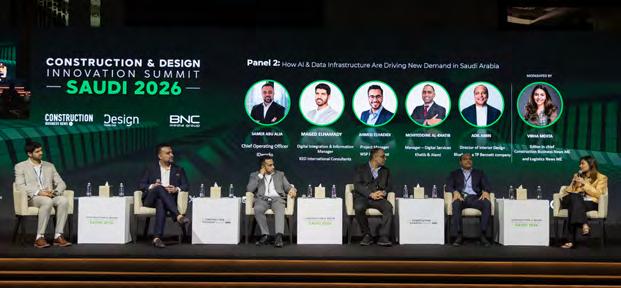
Chief Operating Officer, ID Works
Digital Integration & Information Manager, KEO International Consultants
Project Manager, WSP Middle East
Manager of Digital Services, Khatib & Alami
Director of Interior Design, Bluhaus, a TP Bennett Company
MODERATED BY Samer Abu Alia Maged Elhamady Ahmed ElHadidi Mohyeddine Al-Khatib Adil Amin
Vibha Mehta
Editor in Chief, Construction Business News ME
3
Saudi Arabia’s Leisure and Hospitality Boom: Opportunities, Challenges, and the Visitor Experience
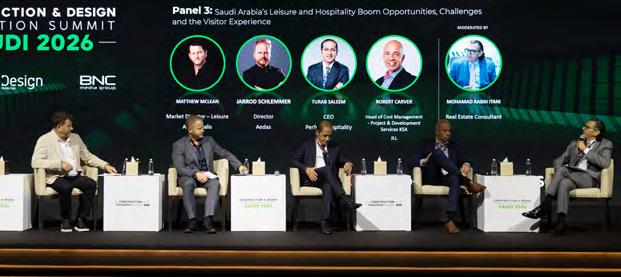
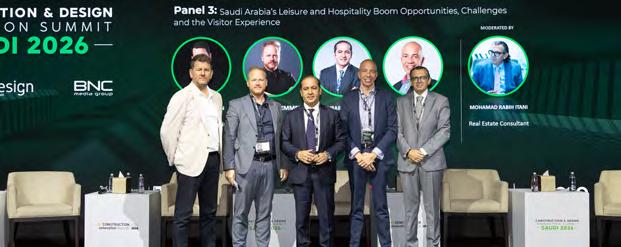
The panel focused its attention to Saudi Arabia’s leisure and hospitality boom, with each speaker tracing how the kingdom’s destinations were being reimagined. Discussions opened on integration, with panellists arguing that projects demanded seamless choreography between architecture, interiors and the visitor experience. Speakers then turned to delivery, emphasising how the scale and speed of development were stretching contractors, with tight timelines, supply-chain pressures and workforce availability testing quality and efficiency. The conversation pivoted to design philosophy, where one voice spotlighted experience-led, culturally rooted spaces engineered to land from day one, since future phases could not be relied upon to deliver the intended impact or ambience. Panellists then noted that disciplined methods were essential to bringing hospitality assets in on time and within budget. The session closed on collaboration, as speakers stressed that success hinged on designers, developers and contractors working in lockstep to deliver projects that were buildable, cost-effective and unforgettable.
Market Director Leisure, AtkinsRealis
Director, Aedas
CEO, Perfetti Hospitality
Head of Cost Management, Project & Development Services KSA, JLL
MODERATED
Real Estate Consultant
2026
Silver Sponsor Gold Sponsors
Tomorrow, Made in KSA
Inside the winning projects and companies redefining Saudi construction
The Kingdom of Saudi Arabia was no longer just rising. It is rewriting what was once thought possible. Skylines are being reimagined, cities reborn, and a nation’s global identity sculpted in steel, stone, and sheer ambition. Powered by Vision 2030, this is a country building not just structures, but an entirely new era. One where cultural heritage breathes again, economies diversify with bold intent, and infrastructure sets benchmarks the world watches in awe.
On April 21, we stepped into that story.
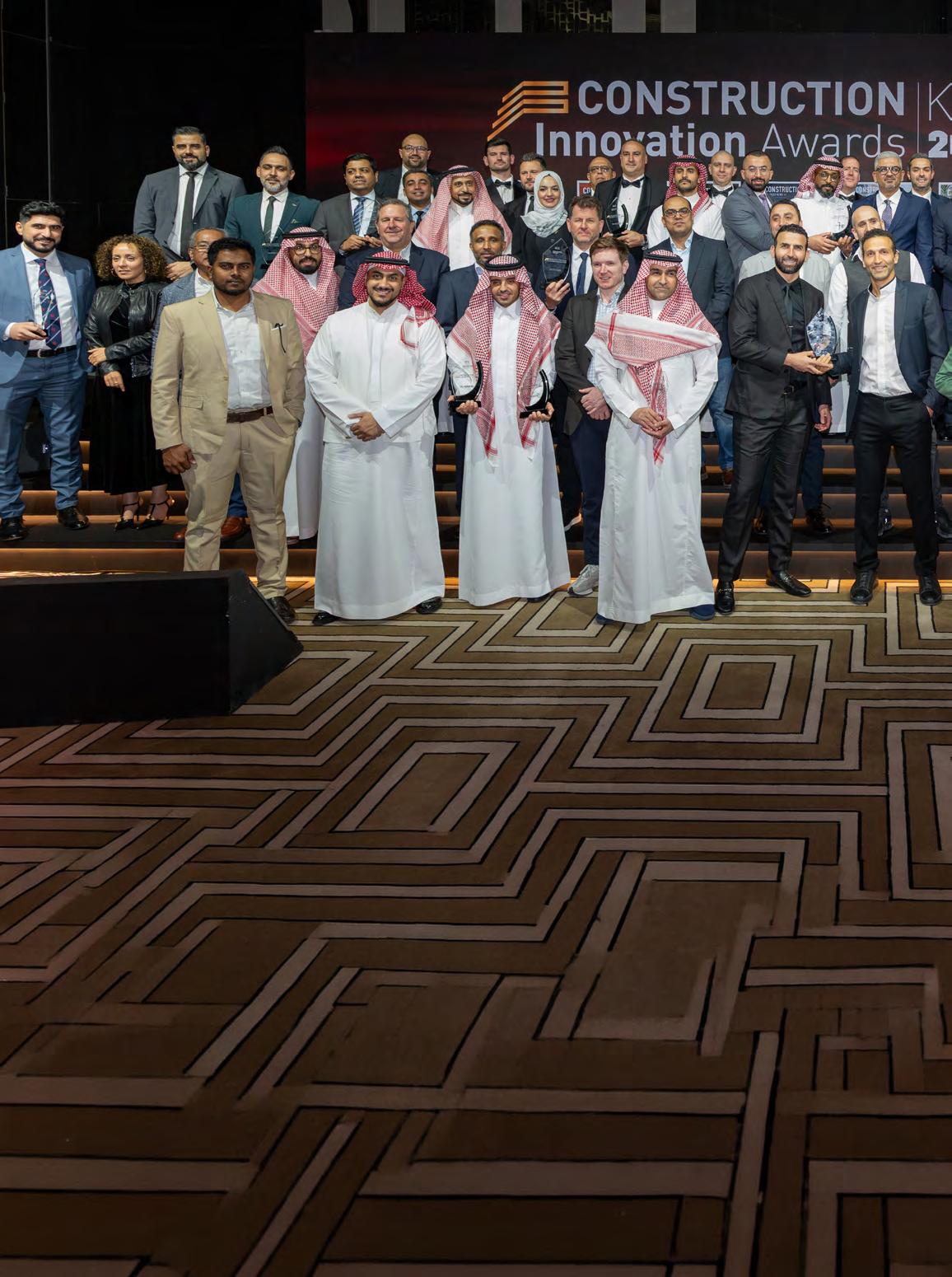
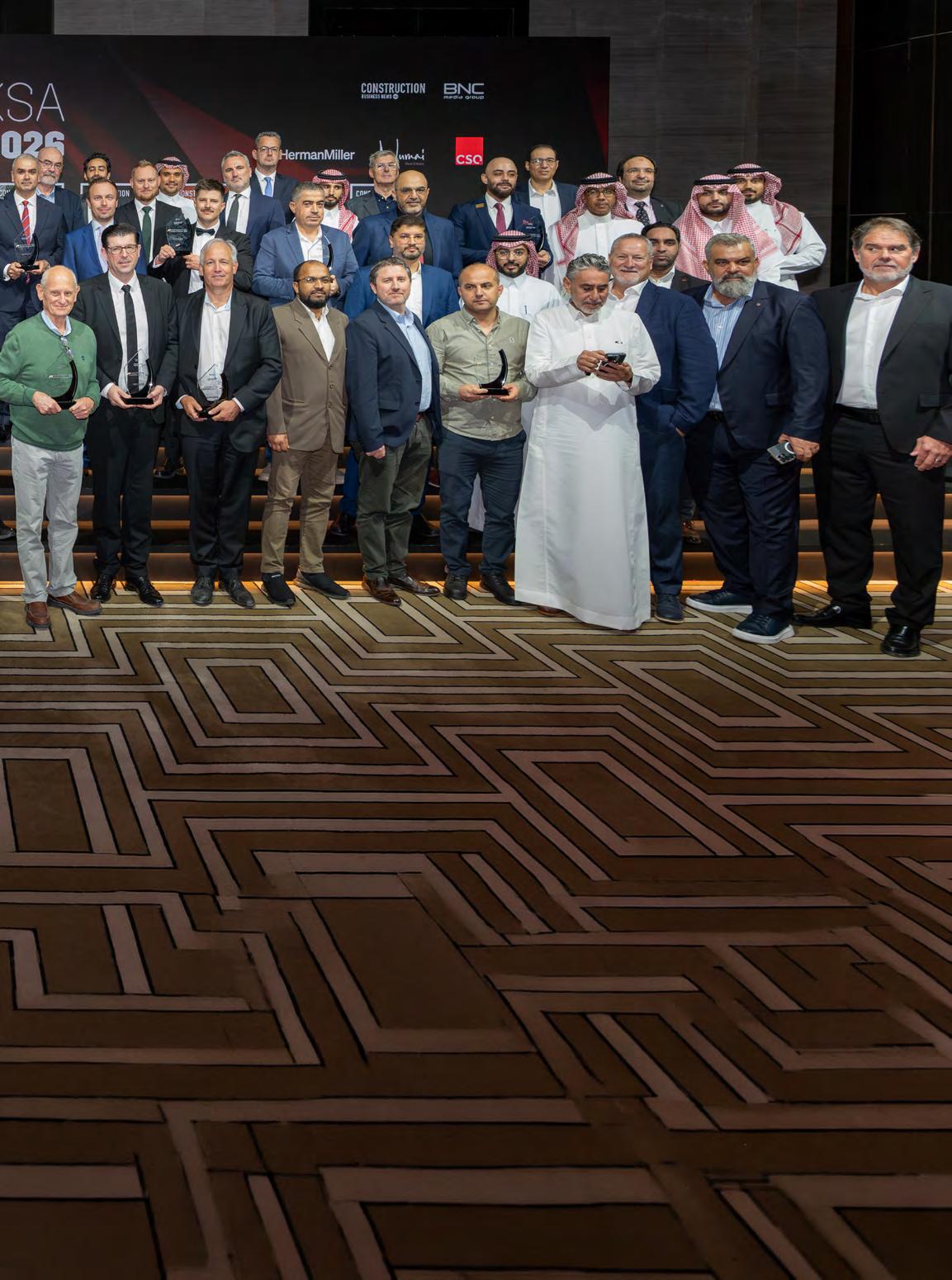
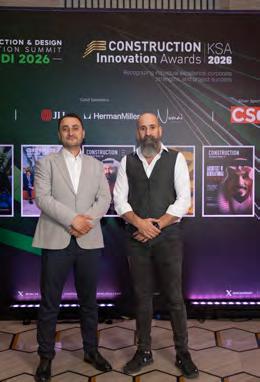
This year’s edition of the Construction Innovation Awards KSA arrived with a force we could not ignore. Nominations
poured in from longtime industry titans and bold new entrants alike, each one a testament to a sector firing on all cylinders. The sheer volume, the calibre, and the ambition behind every entry made one thing abundantly clear: Saudi Arabia’s construction industry was not just thriving. It was defining the future.
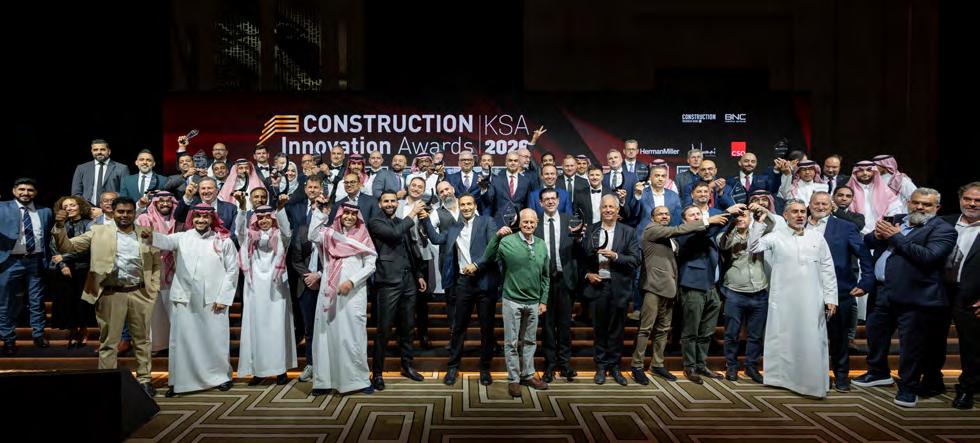
And from that remarkable pool, we turned the spotlight to the very best. The visionaries. The builders. The companies turning blueprints into landmarks and ideas into icons. Because of every face in the room, every leader, every dreamer, every doer, this industry had a story worth telling. And tonight, we told it together.

URBAN DEVELOPMENT PROJECT OF THE YEAR
RIYAMARCHE by Kaden Investment Company KADEN
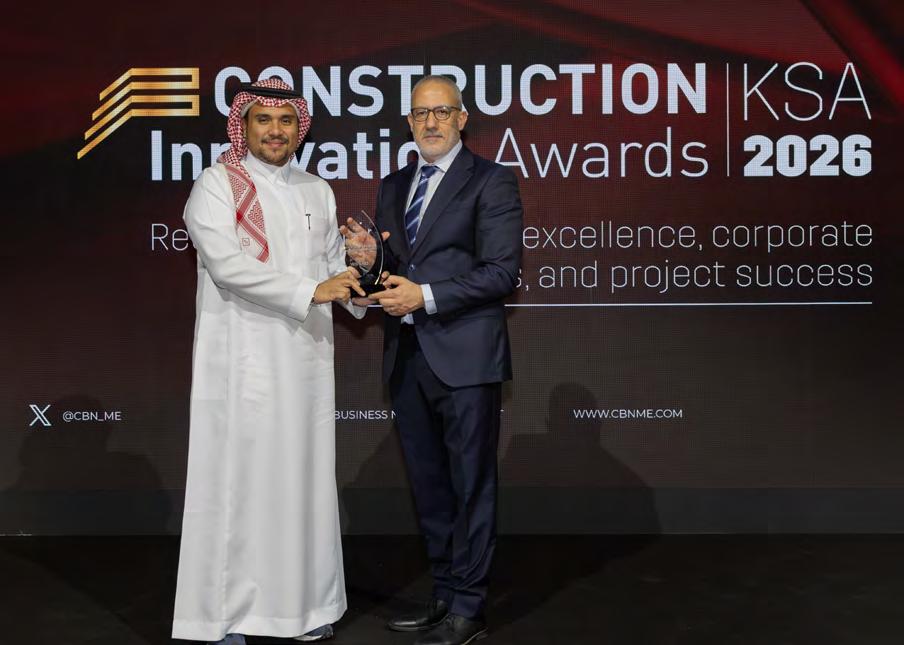
RIYAMARCHE by Kaden Investment Company is a business-driven destination in the heart of Riyadh, where premium office spaces meet vibrant retail and dining experiences crafted for today’s modern professional.
COMMERCIAL PROJECT OF THE YEAR
BNP PARIBAS
JLL KSA
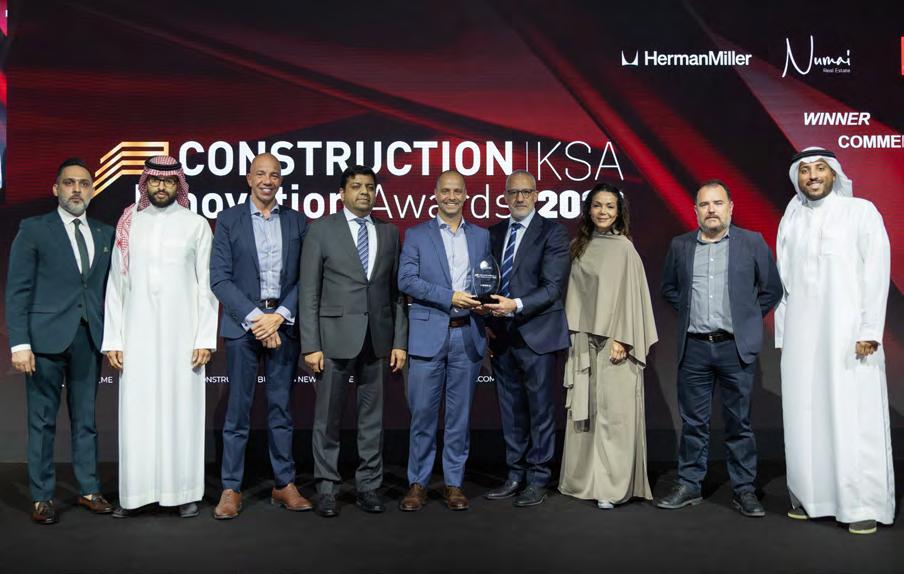
JLL claimed top honours for its standout work with BNP Paribas Group, one of the first international banks licensed by the Saudi Central Bank. Acting as tenant representatives, JLL’s team led a meticulous stay-vs-go analysis to define the bank’s optimal real estate strategy in the Kingdom. The result was a prime office space secured in King Abdullah Financial District (KAFD), perfectly aligned with BNP Paribas’ ambitious Middle East expansion.
FUTURE PROJECT OF THE YEAR
AL ANSAR HOSPITAL PPP
ALGHANIM INTERNATIONAL GENERAL TRADING AND CONTRACTING CO. WLL
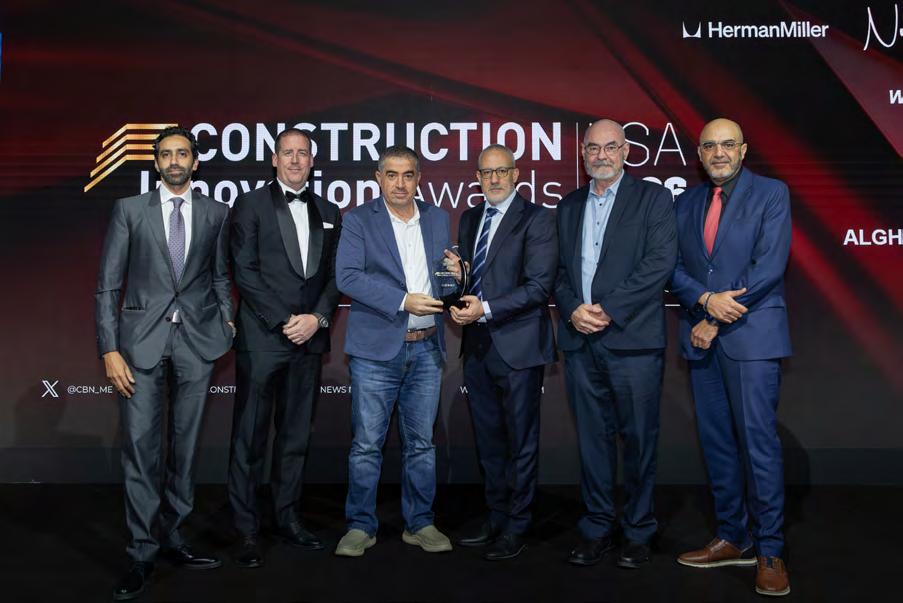
Al Ansar Hospital PPP project marks a transformational milestone in Saudi Arabia’s healthcare infrastructure. Set in the holy city of Madinah, it redefines critical healthcare delivery through strategic collaboration, innovation, and lasting social impact.
BAHRAIN CAUSEWAY PASSENGER EXPANSION PROJECT SHADE CORPORATION LTD. BEST MODULAR PROJECT OF THE YEAR
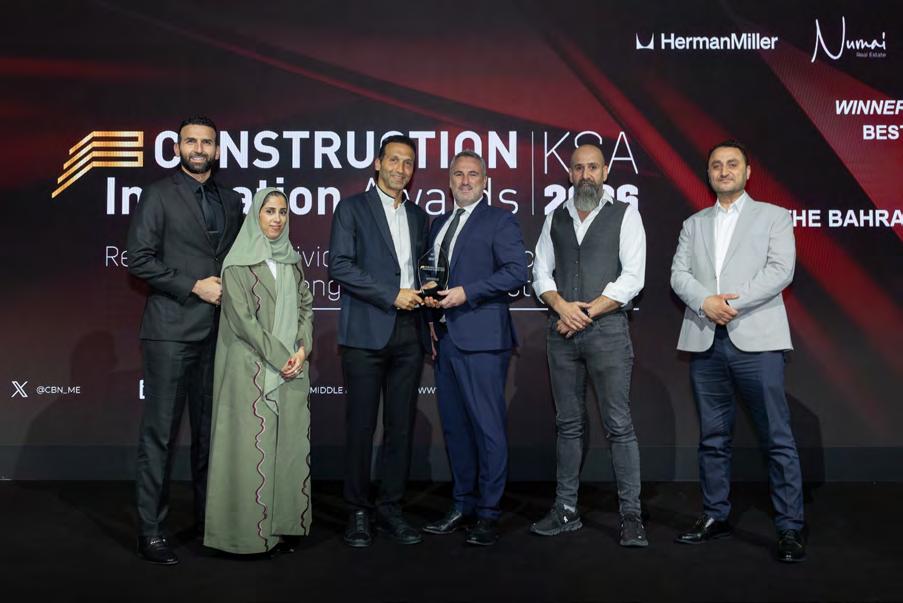
The Bahrain Causeway Passenger Expansion Project stands out as a flagship modular construction project which has enabled border processing capacity from 1800 vehicles to 2500 vehicles per hour, demonstrating advanced modular capability and execution excellence.
RESIDENTIAL PROJECT OF THE YEAR
NC1 EXPANSION
HASSAN ALLAM CONSTRUCTION
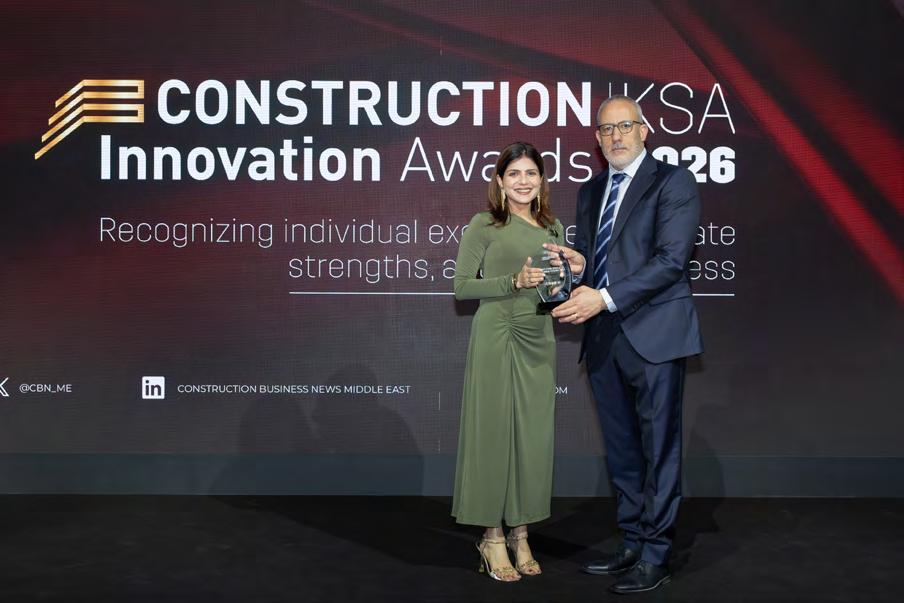
Covering 250,000 square meters in a remote and undeveloped area of northwest Saudi Arabia, this project provided a complete range of essential infrastructure and residential power generation, which was all delivered in just 17 months under fast-track conditions.
SUSTAINABLE PROJECT OF THE YEAR
KING SALMAN ENERGY PARK (SPARK) PROJECTS
SAUDI ARAMCO – COMMUNITY & PUBLIC PROJECTS
DEPARTMENT
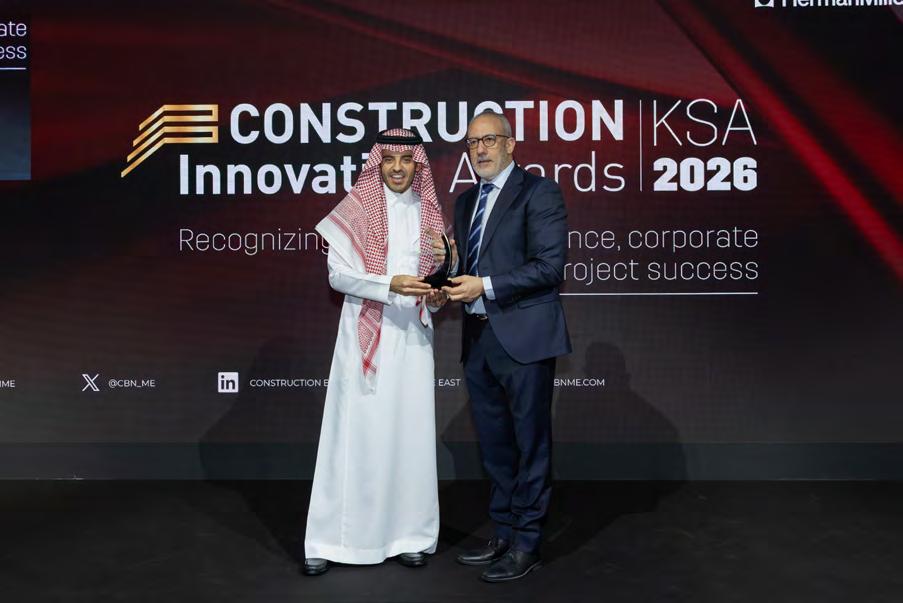
The King Salman Energy Park (SPARK) Projects is designed as a catalyst for economic growth under Saudi Arabia’s Vision 2030, embedding Environmental, Social, and Governance (ESG) principles at the core of its organizational strategy, ensuring sustainability is integral to both decision-making and project delivery.

BEST INFRASTRUCTURE PROJECT OF THE YEAR
RIYADH CITY SOUTHERN RING WATER TRANSMISSION SYSTEM
WTCO AND KHATIB & ALAMI
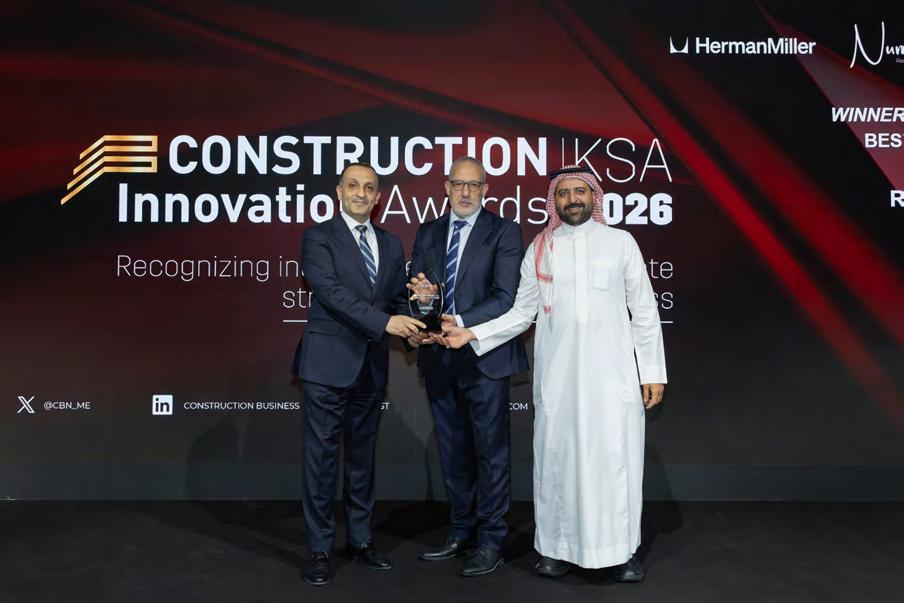
One of Saudi Arabia’s most ambitious and strategically vital infrastructure projects — designed to transport 1.7 million cubic meters of desalinated water daily from East Riyadh to the capital’s Middle East, South, and Middle West regions, strengthening water resilience across one of the Kingdom’s fastest-growing cities.
MEGA PROJECT OF THE YEAR
SIX FLAGS QIDDIYA CITY ATKINSRÉALIS
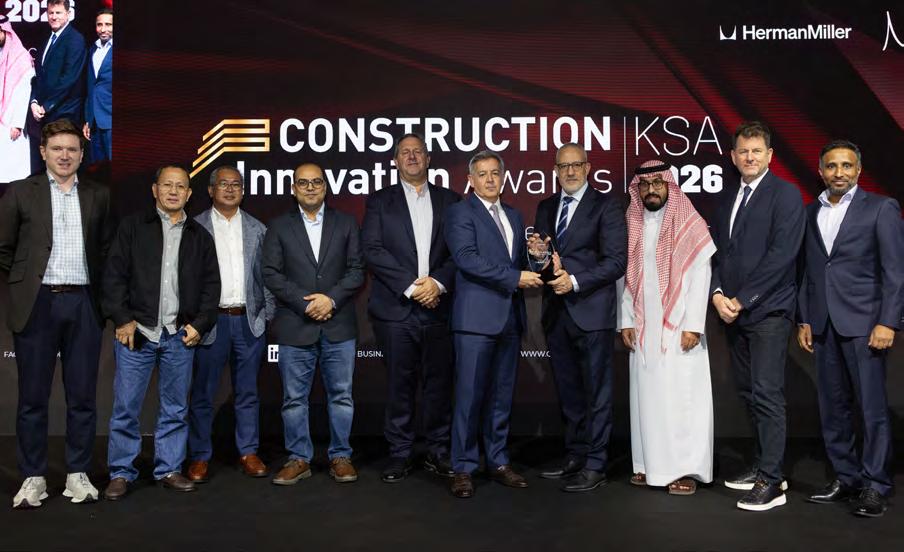
Reinforcing the Kingdom’s push for destination-scale leisure and tourism, the AtkinsRéalis engineered the foundations, interfaces, and site works to safely integrate vendor-defined designs within the escarpment setting.
SUSTAINABLE DESALINATION PROJECT OF THE YEAR
SHUQAIQ 4 SWRO DESALINATION PLANT ACCIONA
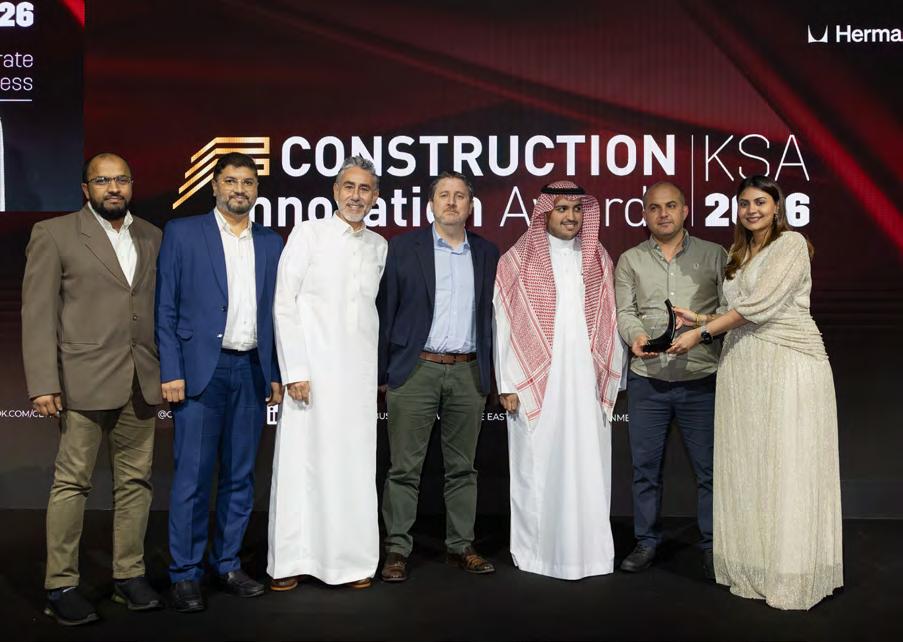
The SHUQAIQ 4 SWRO desalination plant sets a new benchmark for sustainable infrastructure, proving that large-scale water production can be both environmentally responsible and highly efficient. It earns this special recognition for its remarkable ability to bring together advanced technology, resource efficiency, and meaningful climate impact — shaping the future of sustainable water solutions.
DIGITAL INNOVATION AWARD
GAUZILLA PRO – AI-POWERED 4D DIGITAL TWIN PLATFORM
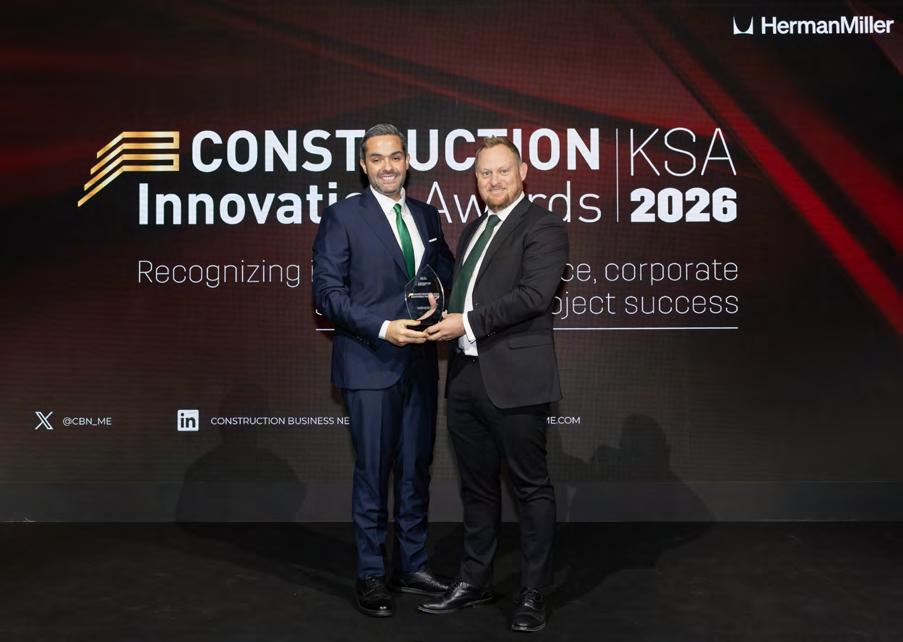
The GAUZILLA PRO – AI-POWERED 4D DIGITAL TWIN PLATFORM is ushering in a new era of construction intelligence — where every project is visualised, verified, and managed in real time through AI-powered 4D digital twins.
FACILITY MANAGEMENT FIRM OF THE YEAR
MUHEEL FACILITIES MANAGEMENT
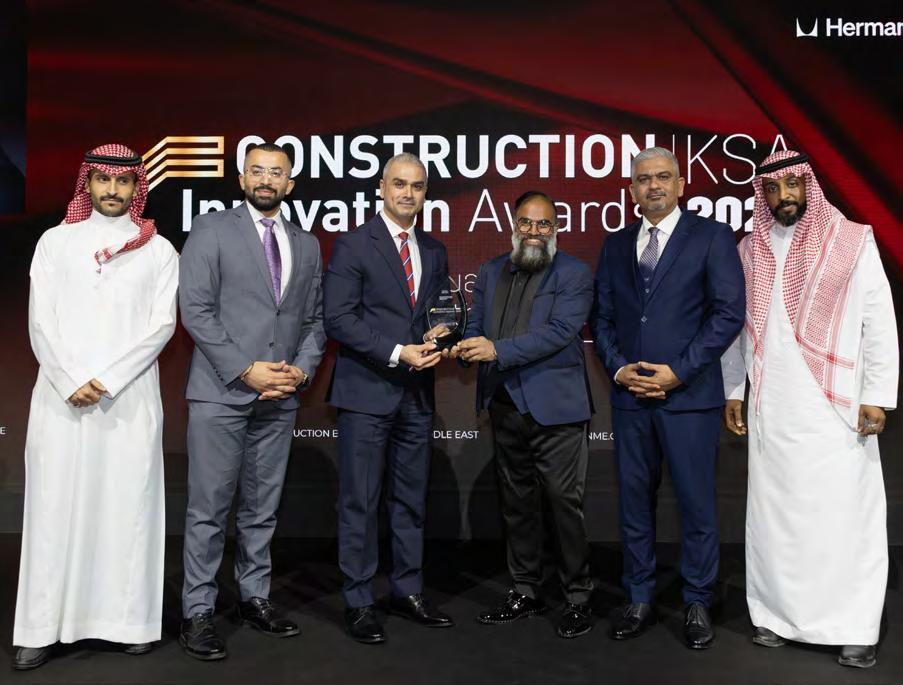
The Muheel Facilities Management takes home FM Company of the Year for its unmatched operational excellence, innovation-driven approach, and consistent delivery of world-class facilities management solutions across the Kingdom.
SUPPLIER OF THE YEAR
RHEEM MANUFACTURING
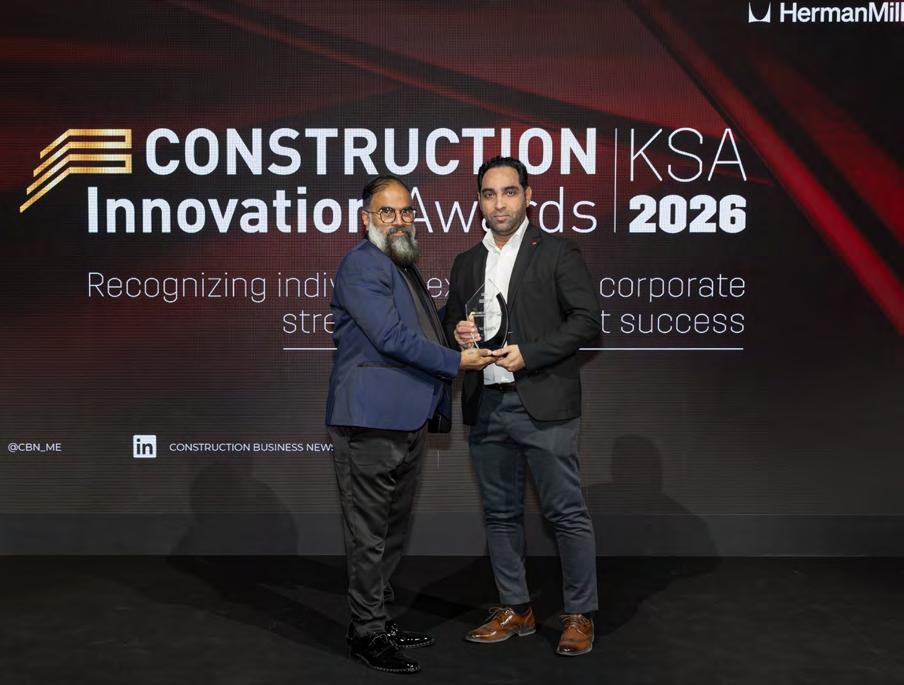
With a 100-year legacy of energy-saving innovation, Rheem Manufacturing has been a trusted presence in the GCC since the 1980s and launched its Dubai HVAC facility in 2021 — standing as a key partner in Saudi Arabia’s construction sector with advanced, sustainable climate control solutions.
SUSTAINABILITY INITIATIVE OF THE YEAR
DOUGLAS OHI SUSTAIN
DOUGLAS OHI
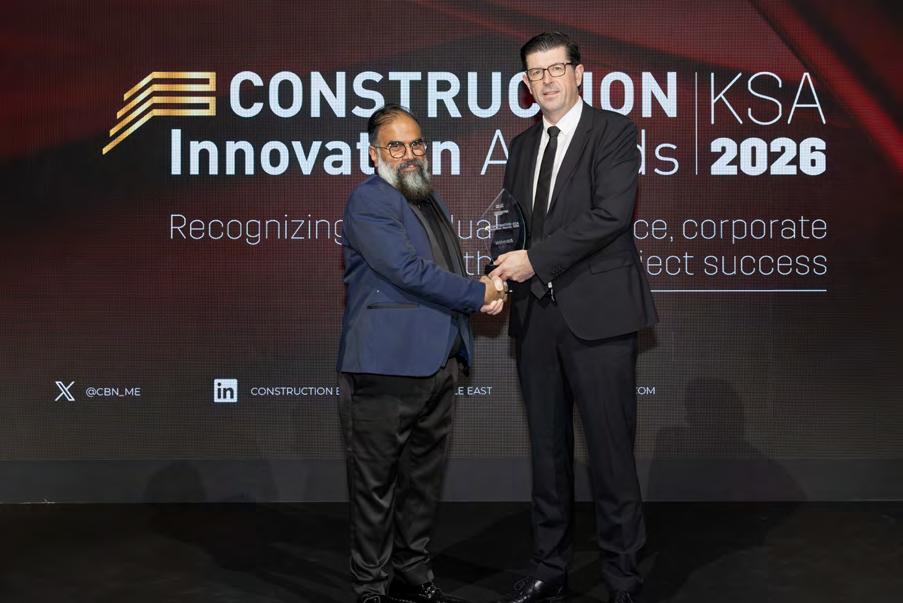
Aligned with the UN Sustainable Development Goals, Douglas OHI Sustain initiative is built on five core principles reshaping construction: leaving sites better than found, reducing impact, prioritising reusability, driving sustainable growth, and championing wellbeing across the workforce.
CORPORATE EXCELLENCE AWARD OF THE YEAR
KADEN
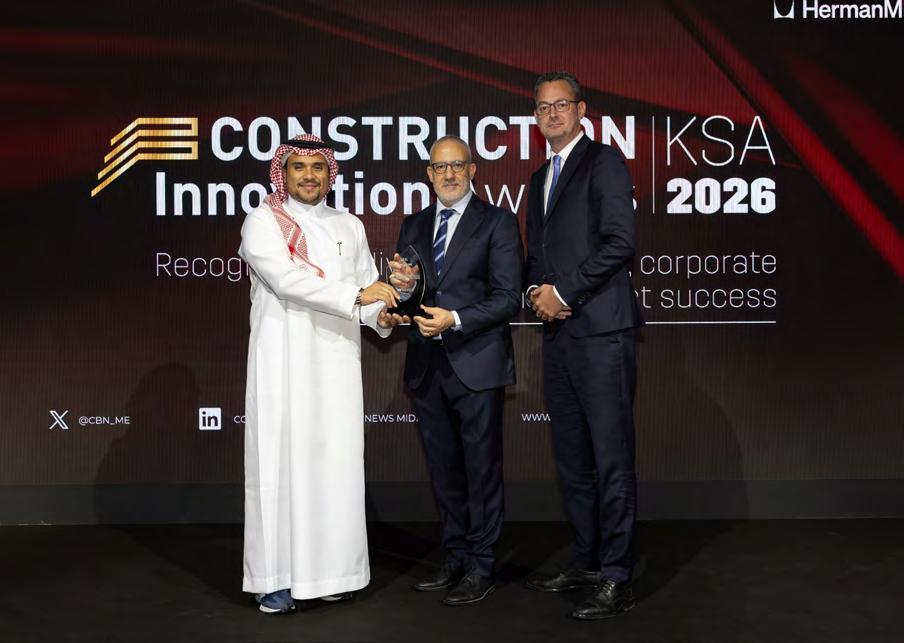
As
a leading Saudi real estate developer and asset manager, Kaden drives sustainable growth and transparency through its Corporate Strategy 2024–2026, which is fully aligned with Vision 2030.
BEST ENGINEERING FIRM OF THE YEAR
HOUSE OF CONSULTING OFFICE
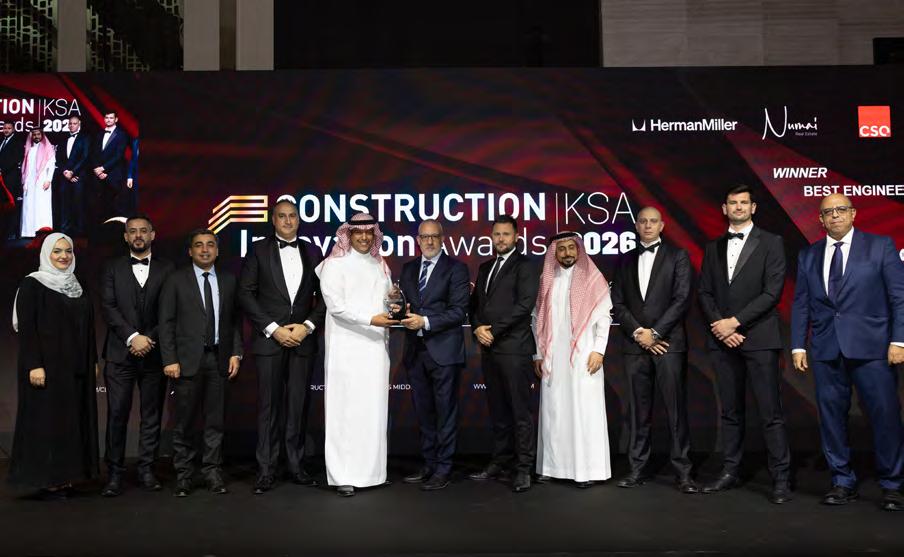
The House Of Consulting Office’s unified delivery model brings together architecture, engineering, and project management — pairing global expertise with local insight for seamless, low-risk execution.
MANAGEMENT COMPANY OF THE YEAR
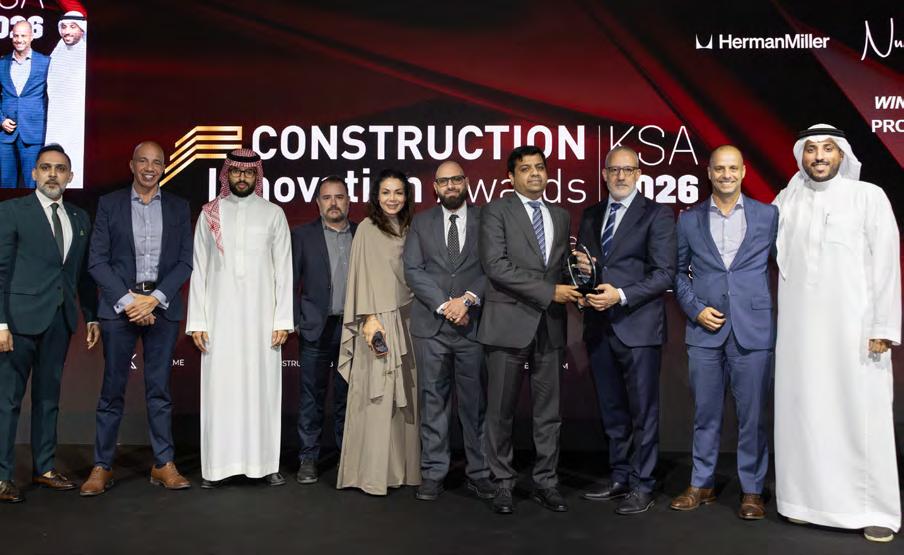
As a leading Saudi real estate developer and asset manager, Kaden drives sustainable growth and transparency through its Corporate Strategy 2024–2026, which is fully aligned with Vision 2030.


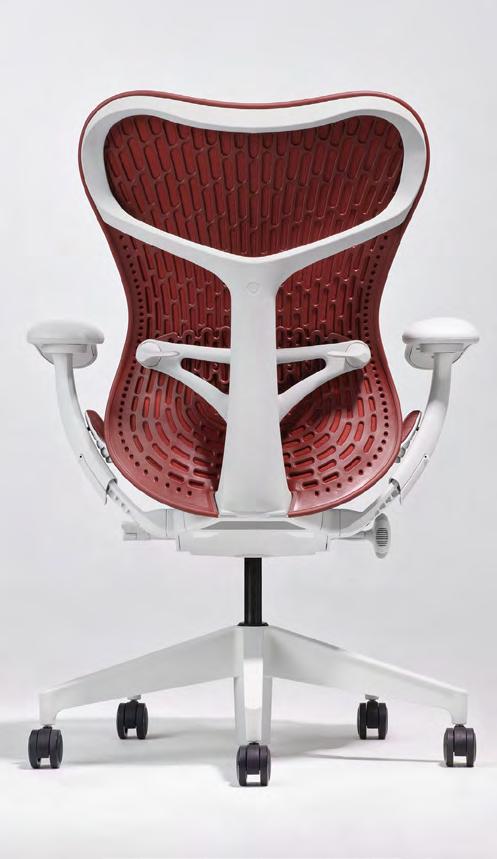
The Mirra 2 Chair just keeps getting better. How? We updated the chair so it’s 30 percent lighter than the original Mirra - and the chair’s nylon base and spine are now 100 percent recycled content. We also gave it a fresh, inspired colour palette so it can look professional, casual, or sporty. One thing that hasn’t changed is the flexible yet supportive design that allows your body to move naturally and freely - the way it was meant to move.
The Mirra® 2 Chair is turning heads again
CONSULTANT OF THE YEAR
CSQ PROJECT DEVELOPMENT CONSULTANTS
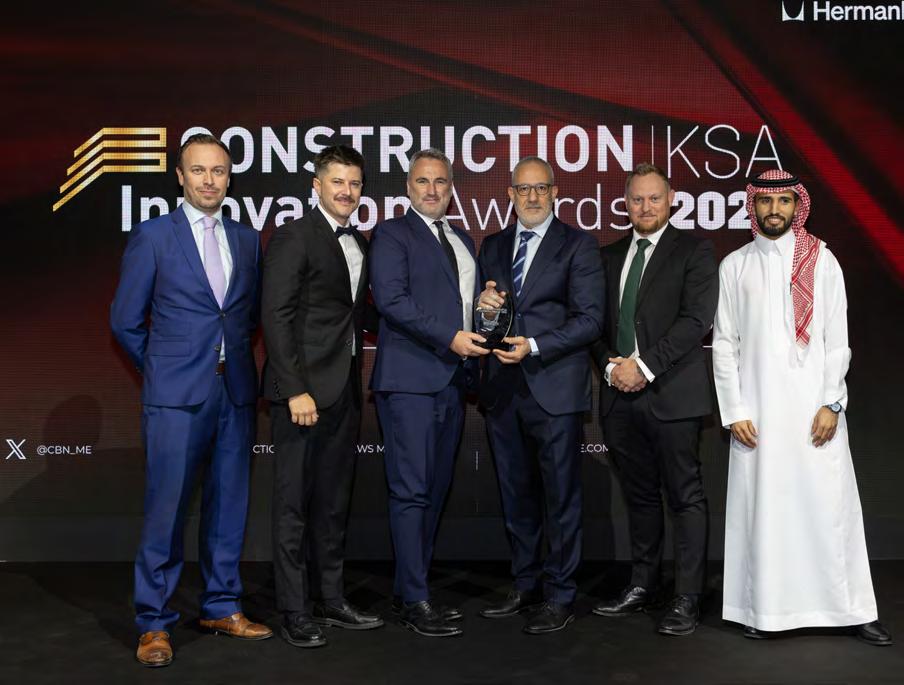
The CSQ Project Development Consultants delivers its strategic insight, technical expertise, and trusted advisory approach, driving smarter decisions and stronger outcomes across the Kingdom.
ALEC CONTRACTOR OF THE YEAR
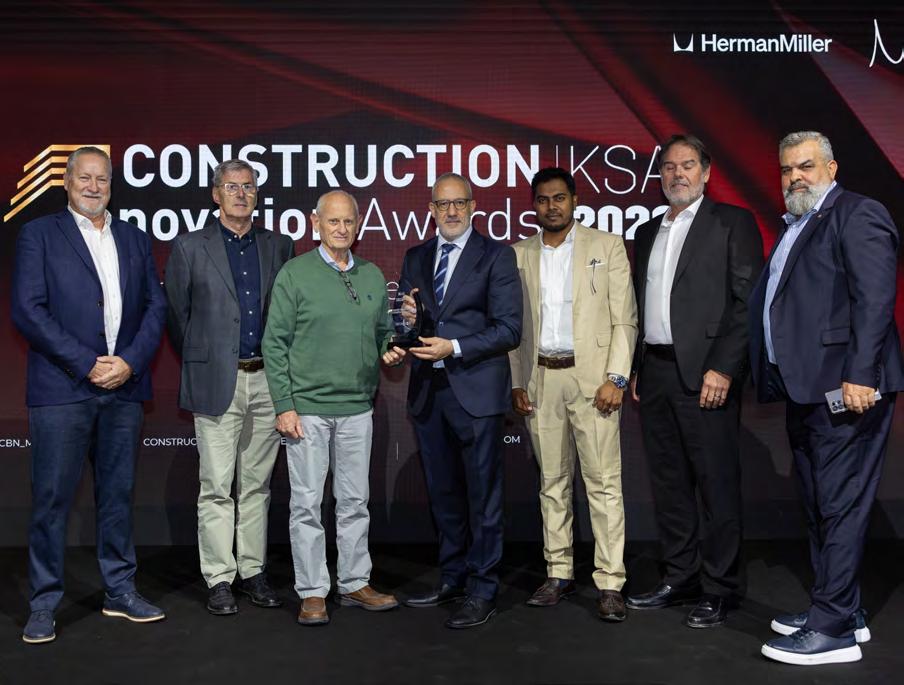
ALEC has emerged as one of the Kingdom’s most trusted construction firms, delivering landmark projects like Aquarabia Qiddiya City and Qiddiya Speed Park — with innovation and digital transformation driving every step forward.
REAL ESTATE DEVELOPER OF THE YEAR
MOHAMMAD AL HABIB REAL ESTATE COMPANY
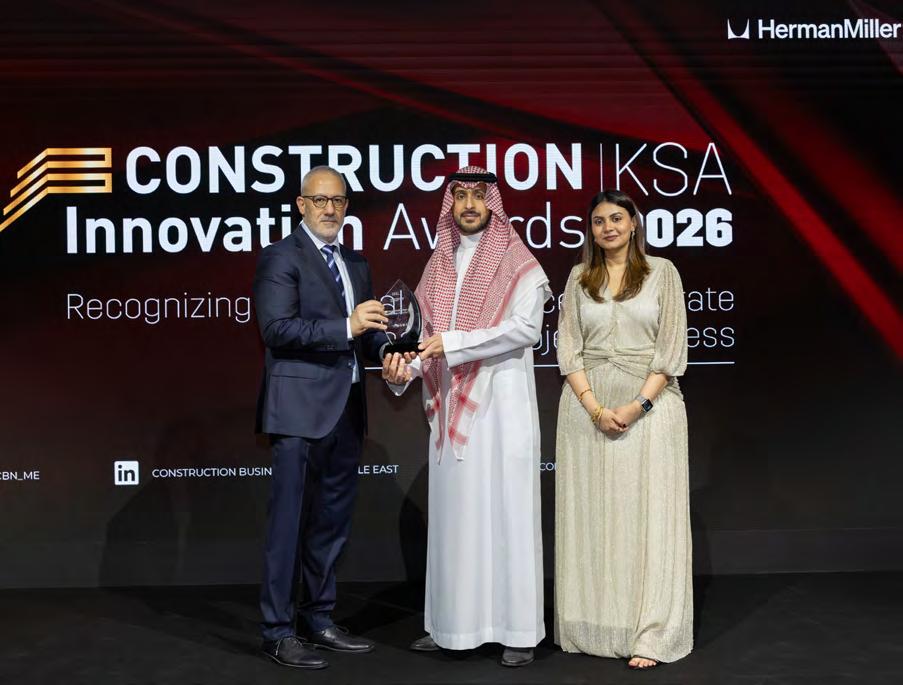
Mohammad Al Habib Real Estate Company takes home Real Estate Developer of the Year for its visionary approach, exceptional project delivery, and unwavering commitment to shaping the Kingdom’s urban landscape with quality, innovation, and lasting value.
FM
LEADER OF THE YEAR
MUHAMMAD IRFAN KHOKHAR
MUHEEL FACILITIES MANAGEMENT
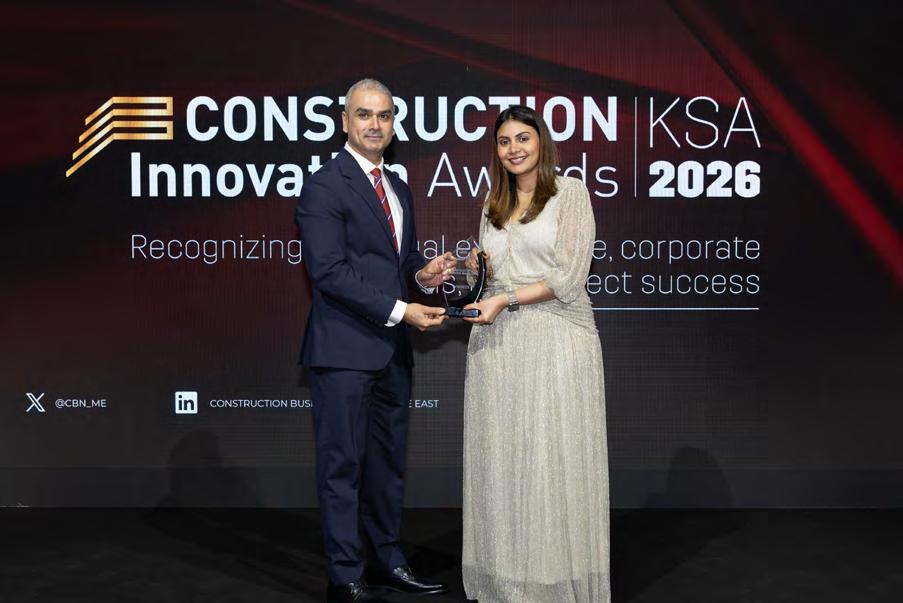
Reinforcing the Kingdom’s push for destination-scale leisure and tourism, the AtkinsRéalis engineered the foundations, interfaces, and site works to safely integrate vendor-defined designs within the escarpment setting.
PROJECT MANAGER OF THE YEAR
ALI K. AL-NUAIMI
SAUDI ARAMCO – COMMUNITY & PUBLIC PROJECTS
DEPARTMENT
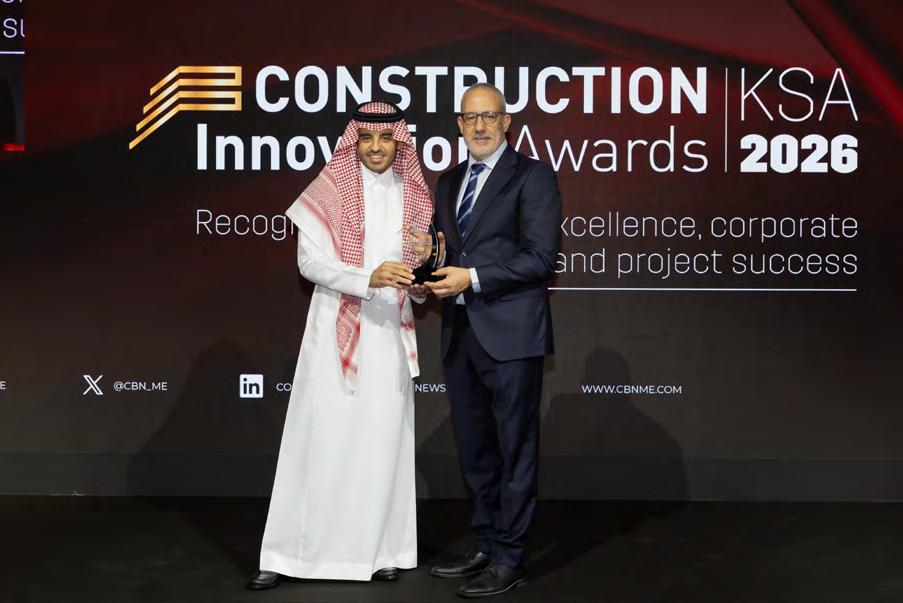
Ali plays a pivotal role in delivering one of the world’s largest integrated energy and industrial developments — embedding ESG into every stage of execution and turning sustainability into a true value accelerator.

Vibha
CEO OF THE YEAR
AARON HENNESSY DOUGLAS
OHI
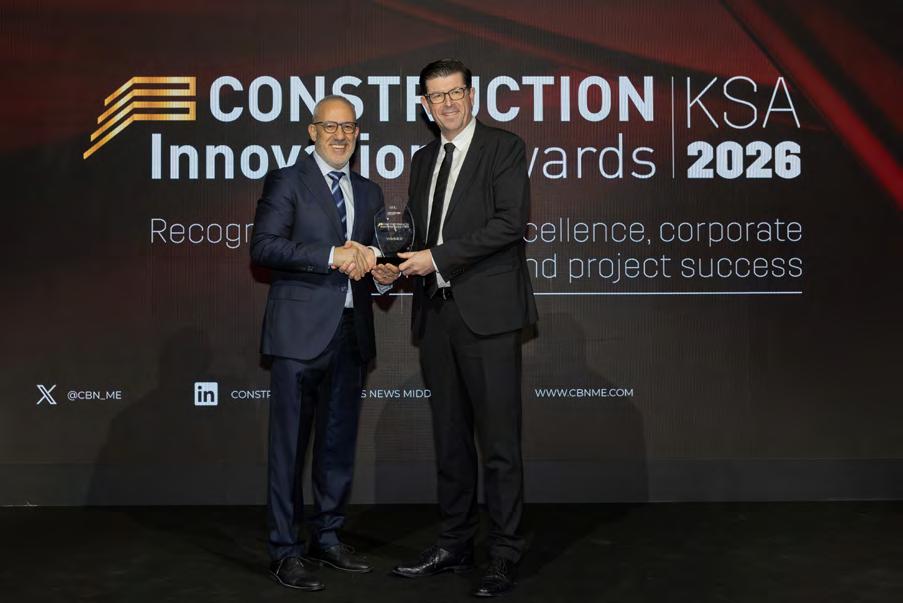
Aaron has transformed the company into a respected multi-market contractor across Oman, Saudi Arabia, and the UAE — driving sustainable growth with strategic clarity, operational discipline, and a people-first ethos, exemplified by flagship projects like the Zuluf Water Treatment Plant.
LIFETIME ACHIEVEMENT AWARD
ENGINEER MOHAMMED AL OTMAN KADEN
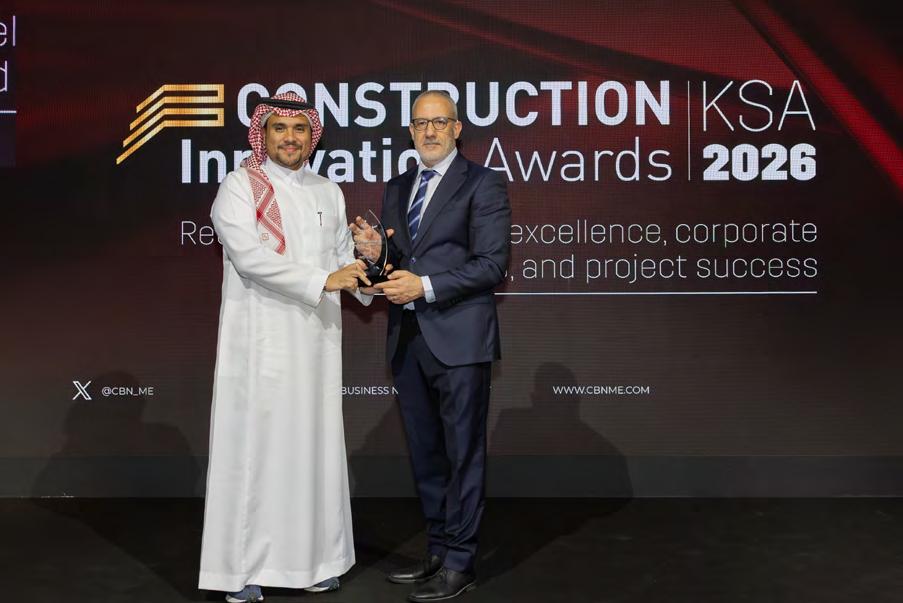
Under the Mohammed’s visionary leadership, Kaden has grown into one of the region’s most dynamic and fastest-growing developers — with a portfolio spanning 11+ mega projects and over 3 million square meters of built-up and planned space, shaping major destinations across the Kingdom and firmly positioning Kaden as a premium developer defining the future of Saudi real estate.
The Uptime Promise
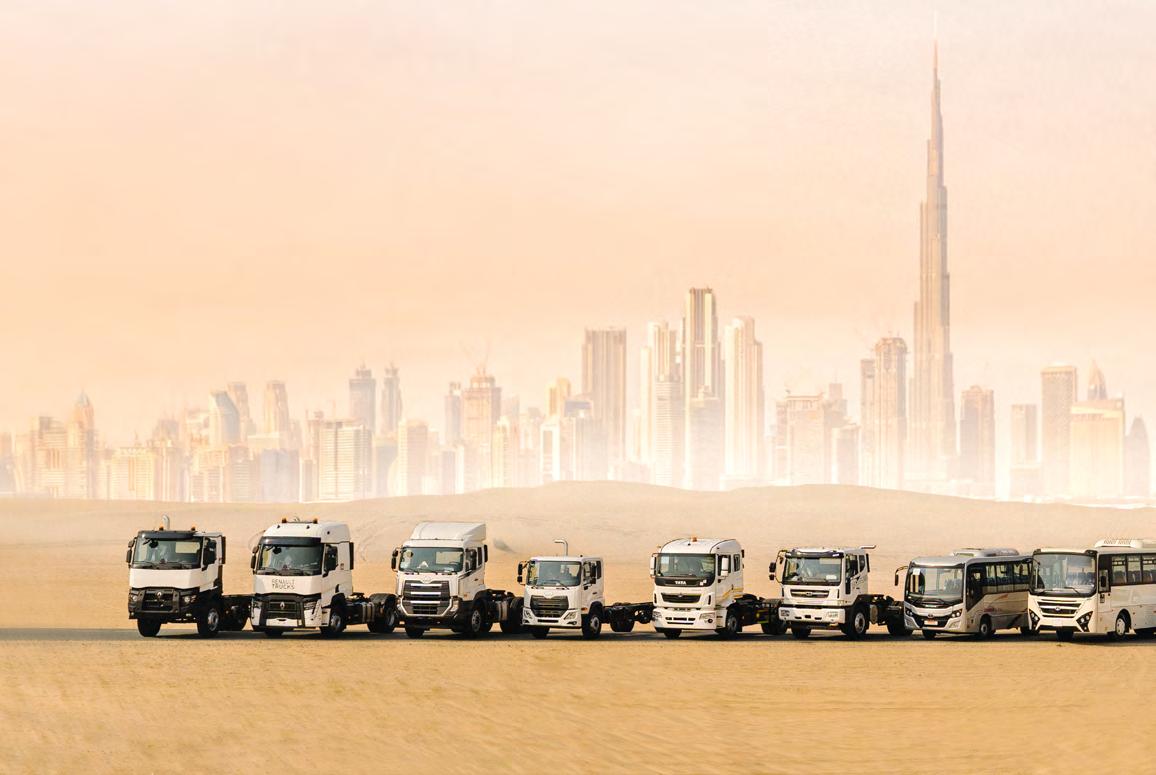
Five decades into its UAE journey, United Diesel is being deliberately repositioned from a trusted distributor of global commercial-vehicle and construction brands into a full-spectrum solutions partner for fleets, contractors and public-sector operators. General Manager David Sawiras speaks to CBNME about uptime as a customer promise, the case for lifecycle partnerships, and the disciplined transformation he is leading into 2030
Q1: You have taken the helm at United Diesel at a pivotal time. How would you describe your mandate as General Manager, and what drew you to the role?
A. My mandate is twofold. The first is to protect and strengthen United Diesel’s legacy, which has been built over five decades of consistent service to the UAE market. The second is to decisively transform the business so that it remains relevant and competitive in a rapidly evolving mobility and construction landscape. United Diesel has deep roots, strong brands and long-standing
customer relationships, but the market today demands more than distribution excellence. It requires agility, solution thinking and long-term partnership with customers.
What drew me to the role was precisely that inflection point. The opportunity to lead a business with such a strong foundation, yet significant headroom for growth and modernisation, was compelling. The UAE market is evolving fast, customer expectations are rising, and there is a clear need for distributors who can bridge global OEM capability with local
execution excellence. My role is to make United Diesel that bridge.
Q2. United Diesel has a 50-year legacy in the UAE. What do you see as the defining milestones in that journey, and how have they shaped the company of today?
A. United Diesel’s journey mirrors the development of the UAE itself. From supporting the country’s early infrastructure and transport needs to enabling today’s sophisticated construction, logistics and municipal operations, the company has consistently
played a role in nationbuilding.
Among the defining milestones are the longstanding representation of leading global OEMs, the steady expansion of our aftersales and service infrastructure across the UAE, and the trust we have built with government entities and major fleet operators. Together, these milestones have shaped United Diesel into a company recognised for reliability, technical depth and operational resilience.
That legacy gives us credibility, but it also
creates responsibility. The next phase of our journey is about building on that trust while modernising how we operate, how we serve customers and how we grow.
Q3. When you look at your current product and brand portfolio, what are the key strengths and differentiators you believe customers value most?
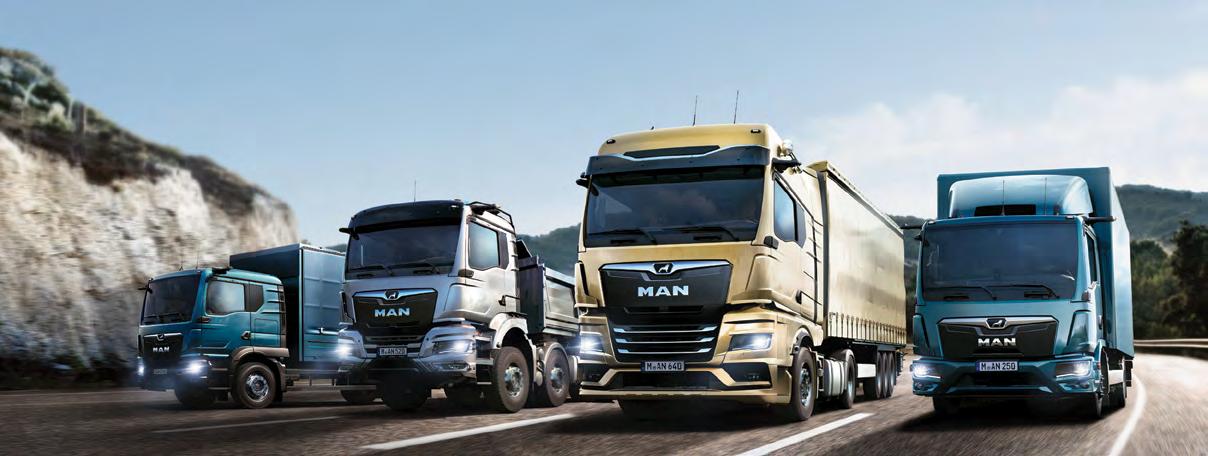
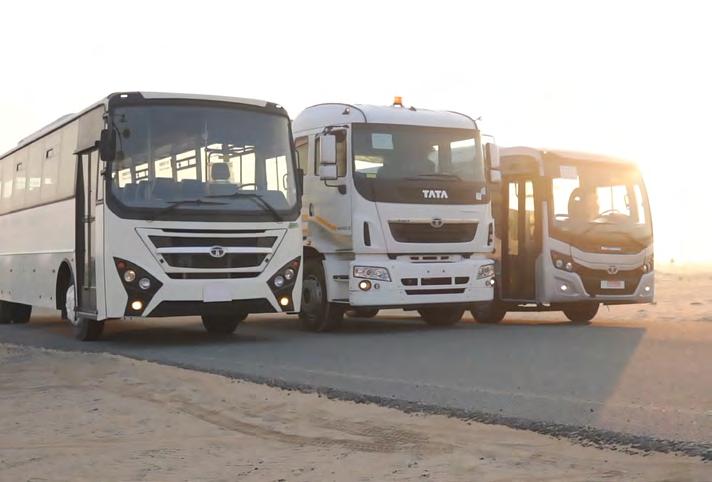
A. Our portfolio is anchored in proven, globally respected brands such as Renault Trucks, UD Trucks, Tata Motors and Daewoo Trucks, all of which remain core to our offering across construction, infrastructure, logistics and vocational applications. These brands are trusted for their durability, operating efficiency and ability to perform reliably in the demanding site and fleet conditions of the UAE.
In parallel, we have deliberately expanded and diversified our portfolio to align with evolving customer needs and the future direction of the market. This includes our entry into electric commercial vehicles with Yutong, the strengthening of our construction equipment offering through LOVOL, and our expansion into material handling and intralogistics solutions with CHL and Mitsubishi Forklift.
The real strength of our portfolio, however, lies in its breadth and its integration. Customers increasingly value the ability to source transport, construction and site-support equipment from a single partner who genuinely understands total cost of ownership, uptime and lifecycle support. Our differentiator is therefore not any one product or brand, but a balanced, future-ready portfolio supported by strong local expertise and aftersales capability. That depth is the foundation of how
we are repositioning United Diesel as a full-spectrum solutions provider for the construction and commercial mobility sectors.
Q4. You are now positioning United Diesel as a comprehensive solutions provider across commercial mobility, construction and allied segments. What does that shift look like in practical terms for your customers?
A. In practical terms, it means moving from transactional sales to lifecycle partnerships. Customers are no longer simply buying a truck or a bus. They are investing in uptime, productivity and predictable operating costs.
For United Diesel, this translates into integrated offerings that go well beyond the vehicle itself: financing support, service contracts, parts availability, technical advisory and, increasingly, digital and telematics-enabled insights. It also means aligning our internal organisation around customer segments rather than product silos, so that the entire business pulls in the same direction for the same customer outcome.
The goal is simple. When a customer thinks about fleet performance or project delivery risk, United Diesel should be their first call.
“UPTIME IS NO LONGER AN AFTERSALES KPI. IT IS A CUSTOMER PROMISE.”
Q5. How are changing customer expectations around total cost of ownership, uptime and aftersales support influencing your strategy and service offering?
A. Total cost of ownership has become the dominant decision driver, particularly in construction and fleet-
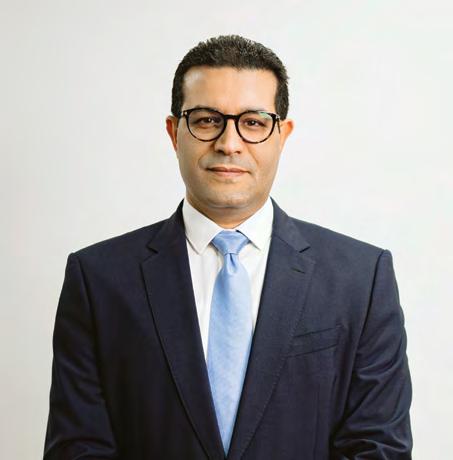
David Sawiras, General Manager
intensive industries. Customers want transparency, predictability and speed of response.
This is reshaping our aftersales strategy significantly. We are strengthening our service network capability, investing in technician training, improving parts availability and standardising service processes across our footprint. Preventive and predictive maintenance are becoming core offerings, not optional add-ons.
Uptime is no longer an aftersales KPI. It is a customer promise. Our strategy is aligned accordingly.
Q6. Partnerships with global OEMs are central to your model. How are you strengthening these relationships to bring new products, technologies and capabilities into the UAE market?
A. Our OEM partnerships are evolving from distributor relationships into strategic collaborations. This involves closer alignment on product planning, regional specifications, market intelligence and long-term investment roadmaps.
We are actively working with our partners to introduce vehicles optimised for UAE operating conditions, as well as new technologies
around safety, fuel efficiency and emissions. Equally important is capability transfer. We are ensuring our teams are trained, certified and equipped to represent these brands at the highest global standards.
Strong OEM relationships, in our view, are not just about access to products. They are about shared accountability for customer success.
Q7. From digital tools to fleet telematics and smarter maintenance, where do you see the biggest opportunities for innovation within United Diesel over the next few years?
A. The biggest opportunity lies in data-driven operations, both for our customers and within our own business. Fleet telematics, remote diagnostics and digital service scheduling will fundamentally change how maintenance is planned and executed.
For customers, this means fewer breakdowns, better utilisation and more informed decision-making. For United Diesel, it enables smarter inventory management, proactive service interventions and improved cost control.
Internally, digitalisation will also play a key role in improving speed
of execution, cross-functional collaboration and consistency of customer experience. Innovation, for us, is not about technology for its own sake. It is about measurable value creation.
“GROWTH IS NOT ABOUT SCALE ALONE. IT IS ABOUT BUILDING A BUSINESS THAT REMAINS RELEVANT, RESILIENT AND FUTUREREADY.”
Q8. Looking ahead, what are your top priorities for United Diesel’s growth trajectory, and what kind of company do you want it to be known as by 2030?
A. Our priorities are clear: disciplined portfolio expansion, uncompromising service excellence, stronger operational efficiency and sustained investment in talent. Growth, for United Diesel, is not about scale alone. It is about building a business that remains relevant, resilient and future-ready.
We will continue to selectively add complementary brands, technologies and solutions that strengthen our value proposition, while deepening our presence in core sectors such as construction, logistics and public transport. In parallel, we are focused on raising execution standards through digitalisation, process maturity and a deeply embedded customer-first culture.
By 2030, I want United Diesel to be recognised as the partner of choice for both customers and global OEMs. For customers, that means a trusted solutions provider delivering uptime, predictable total cost of ownership and long-term operational confidence. For OEMs, it means a strategic partner that consistently represents their brands to the highest global standards while delivering strong local market impact.


Past the Drawing Board
Embedding Sustainability through Project Delivery, Not Just Design!
Words by: Gilbert Boustany
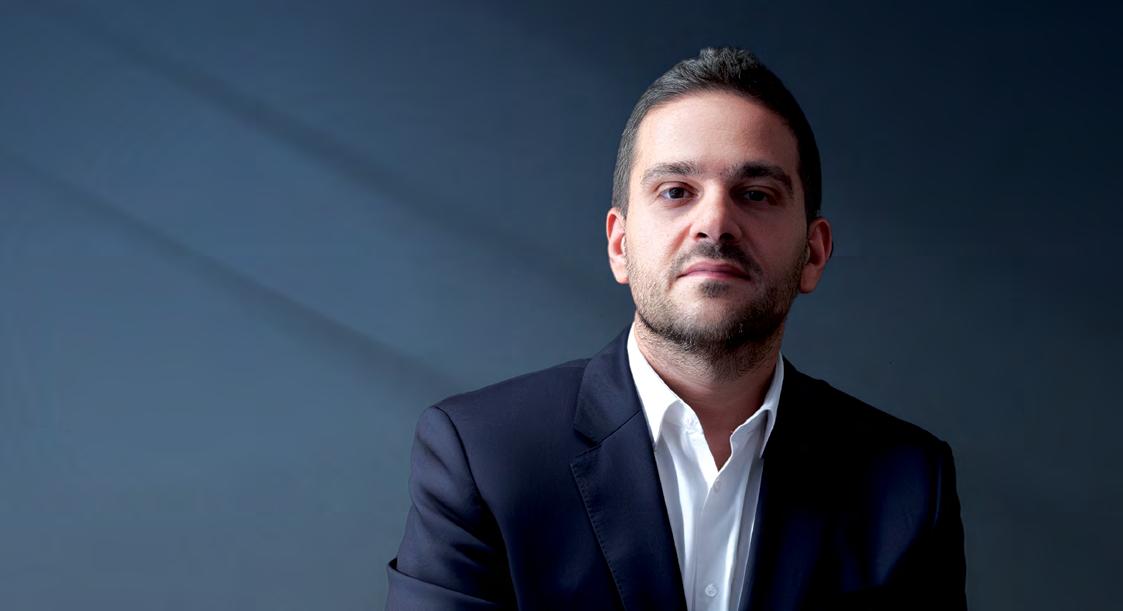
Atrue sustainable project is not defined by a single feature or certification, but by a balanced approach that integrates environmental responsibility, social impact, and economic performance from the beginning to the end. Achieving this nowadays requires close collaboration across disciplines, including engineers, architects, project managers, urban planners, and policymakers, to ensure that sustainability goals align with project outcomes and broader development priorities. Moreover, understanding each team’s requirements from the start.
I believe that sustainability in the built environment is no longer a niche concern but a fundamental business priority, driven by the ongoing pressures of climate change, rapid urbanisation, and resource constraints. These challenges have pushed organisations to rethink how projects are delivered, especially in the
BIO: Gilbert Boustany is Vice President of Project Delivery at 3d Consultants, the architecture, design and project delivery practice within Chalhoub Group, where he shapes large-scale capital investment strategies across the MENA region. With more than two decades in commercial real estate, he leads regional delivery across flagship malls, department stores, corporate headquarters and logistics hubs, and plays a central role in onboarding international brands into new markets. His sixteen-year journey at Chalhoub has progressed from Head of Projects to General Manager to Vice President. He holds a Master’s in Interior Architecture and is a certified PMP and LEED Green Associate.
GCC, where sustainability was largely confined to the design stage.
This shift marks a significant evolution in how projects are executed in the region. Clients across the board are no longer treating sustainability as a “niceto-have” feature or a branding exercise; it is increasingly embedded in the initial project brief as a core requirement. From the outset, expectations around energy efficiency, carbon reduction
and environmental performance are clearly defined, leaving little room for compromise during execution. For project managers, this means sustainability is not a parallel objective but central to delivery.
Over the past few years, green certification frameworks such as LEED and Estidama have played a strong role in driving this change. These systems do more than validate outcomes;
Gilbert Boustany, Vice President, Project Delivery at 3d Consultants, part of Chalhoub Group
they shape decisions at every stage of a project. Achieving these certifications requires careful alignment of timelines, procurement strategies and construction practices. Materials must meet specific criteria, processes must be documented, and performance targets must be tracked continuously. As a result, sustainability becomes deeply integrated into how projects are managed, not just how they are envisioned, which is why hiring the right people makes a difference.
One of the most visible changes can also be seen in material selection due to these certifications. In the past, retail fit-outs often relied on short-life materials that were quick to install but generated significant waste over time. But now, there is a clear shift toward more durable, reusable and locally sourced materials. This approach reduces environmental impact while also supporting longer lifecycle planning. Retailers and developers are beginning to think beyond the immediate launch, considering how spaces can evolve without requiring complete reconstruction.
On the other hand, energy efficiency is another area where execution has caught up with design intent. In the GCC, cooling demand accounts for the majority of energy consumption, which is why integrating efficient systems remains critical. Therefore, high-performance HVAC systems, LED lighting, and smart building technologies are now standard considerations during project delivery. These are not late-stage upgrades; they are embedded into construction and commissioning processes to ensure that buildings perform as intended from day one.
Simultaneously, the responsibility for sustainability no longer sits solely with designers but also with contractors
who are increasingly being held accountable for meeting environmental targets during execution. Hence, sustainability metrics are now tied to contractor performance, with project managers tracking factors such as waste generation, water usage, and on-site practices in real time, representing a shift from focusing only on final outcomes to monitoring how those outcomes are achieved.
Waste management provides a clear example of this evolution. Rather than addressing waste after construction is complete,
project teams are planning for it from the beginning. We now have to implement strategies such as modular construction and prefabrication from the beginning to reduce on-site waste. We also include improved inventory management that helps prevent over-ordering of materials. These practices do more than support sustainability goals; they enhance overall efficiency in terms of materials, time spent, and costs involved.
Let’s not forget that digital tools are also further enabling this integrated approach. Technologies such as Building Information Modelling (BIM) enable teams to simulate energy performance, optimise layouts, and monitor sustainability metrics throughout the project lifecycle. This level of insight empowers project managers to make informed decisions and ensure
that sustainability targets remain on track, even as projects evolve.
Nonetheless, procurement decisions now consider not just cost and availability, but also environmental impact and ethical sourcing. We evaluate suppliers on their carbon footprint and sustainability credentials, particularly in largescale commercial developments where procurement choices can significantly influence overall project impact.
Retail fit-out cycles are also being rethought. Traditionally, frequent refurbishments have led to high levels of waste and resource consumption. In response, companies are designing spaces with adaptability in mind. Modular layouts and reusable components allow stores to be refreshed and reconfigured without complete rebuilds, supporting both
sustainability and operational flexibility.
All this transformation is being accelerated by strong government initiatives across the GCC. National strategies and vision plans are setting ambitious sustainability targets, pushing developers and project teams to adopt greener practices. These policies are not only raising the bar but also creating a sense of urgency around implementation. Sustainability is no longer an operational choice; it is a strategic imperative aligned with broader economic and environmental goals.
Yet we still have challenges; one of the most significant is balancing upfront costs with long-term value. Sustainable materials, technologies, and processes can require higher initial investment, which can be difficult to justify in the short term. However, there is a growing recognition that these choices often lead to reduced operational costs, improved asset performance, and stronger long-term returns.
Hence, embedding sustainability into project delivery requires a high level of collaboration between designers, engineers, contractors and operators who must work in alignment, with clear communication and shared objectives. Meanwhile, we, as project managers, will play a critical role in orchestrating this collaboration, ensuring that sustainability is not diluted as projects move from concept to completion.




DESIGNING FOR UNCERTAINTY
What Regional Tensions Mean for Project Pipelines, Costs, and Confidence in the GCC?
By Ammar Al Assam
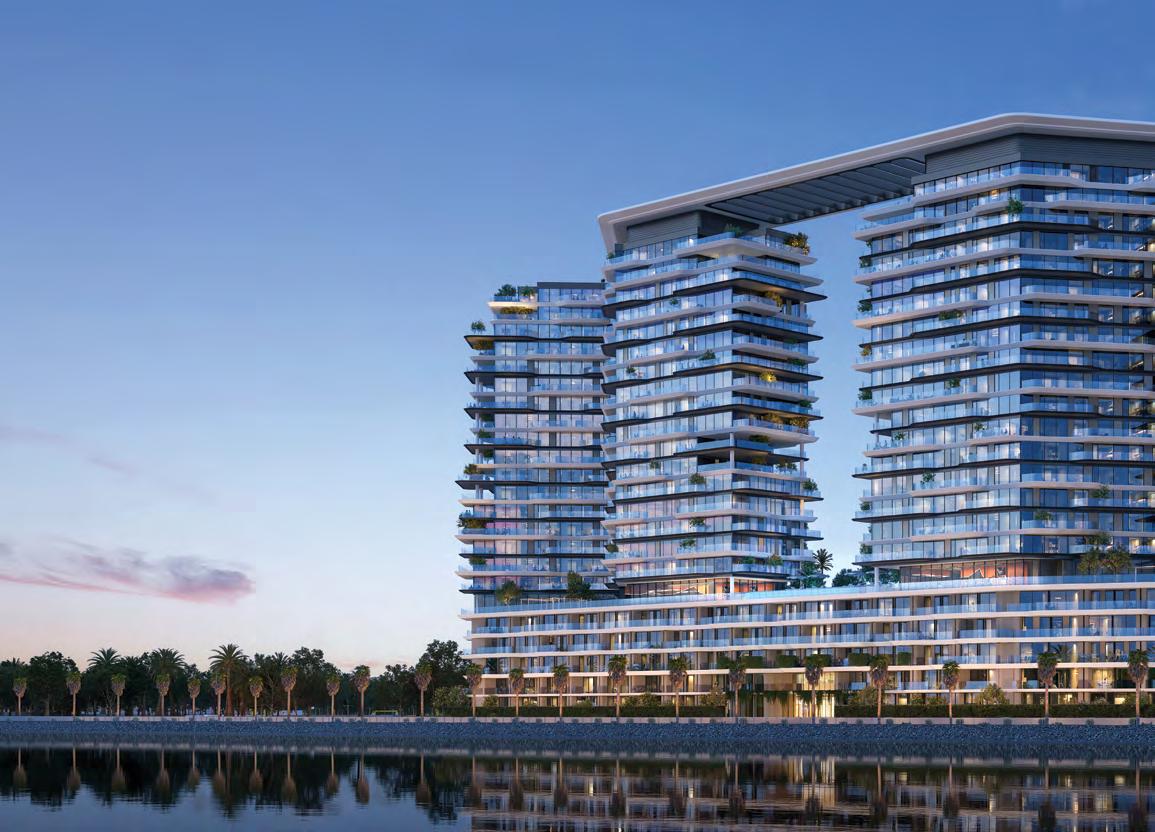
The US- and Israel-led strikes on Iran in February have drawn nearby Gulf states closer to the conflict. Their proximity has exposed them to unprecedented missile and drone threats, ushering in a period of heightened uncertainty as tensions persist.
The region has weathered upheaval before - from the 2008 global financial crisis to the COVID-19 pandemic. From a business perspective, however, the immediacy of the current situation and the speed at which it is reshaping risk calculations make this moment materially different. Businesses are being forced to reassess assumptions in real time - not easy amid mixed and often contradictory signals about how events are unfolding.
For design consultancies like ours, and the AEC industry more broadly, the immediate question is not whether projects will stop, but how they will evolve.
From our vantage point - after 42 years in the UAE - the reality on the ground is more stable than might be expected. Project pipelines in key markets such as the UAE and Saudi Arabia remain intact, and firms are still actively winning work. What we are seeing instead is reprioritisation. New launches are being reassessed, timelines are being adjusted, and capital is being deployed more selectively. However, projects that have
already been sold are still moving forward. Delivery, for now, remains non-negotiable.
THIS IS NOT TO DOWNPLAY THE SITUATION. THE MOST IMMEDIATE IMPACT IS BEING FELT IN COSTS. RISING OIL PRICES ARE FEEDING DIRECTLY INTO CONSTRUCTION INPUTS, WHILE DISRUPTIONS TO REGIONAL SHIPPING ROUTES ARE ADDING FRICTION TO ALREADY COMPLEX SUPPLY CHAINS.
These are not temporary pressures; they are structural and likely to intensify over time. Margins are being tested across the board, from developers to contractors, with an increased risk of delays and contractual disputes. Consultants, typically positioned earlier in the value chain and with a smaller share of overall project cost, are somewhat insulated in the short term, though still exposed to these underlying pressures. In this environment, staying close to both clients and cash flow is critical.
Investor sentiment has shifted, but it has not disappeared. The conflict remains relatively new, and a “wait and see” approach is prevailing for now. Even when a long-term agreement is reached, developers, contractors, consultants,
Set along the shoreline of Shams Abu Dhabi on Reem Island, Seamont Autograph Collection Residences is a waterfront development by Dewan Architects + Engineers, comprising 497 homes and offering views across the water.
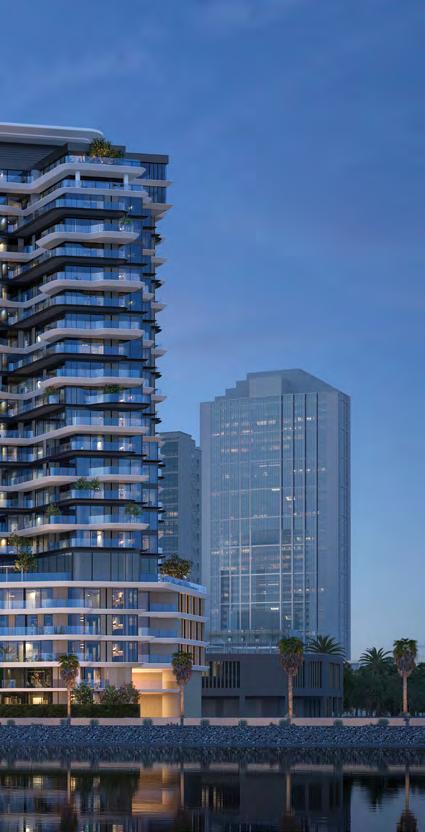
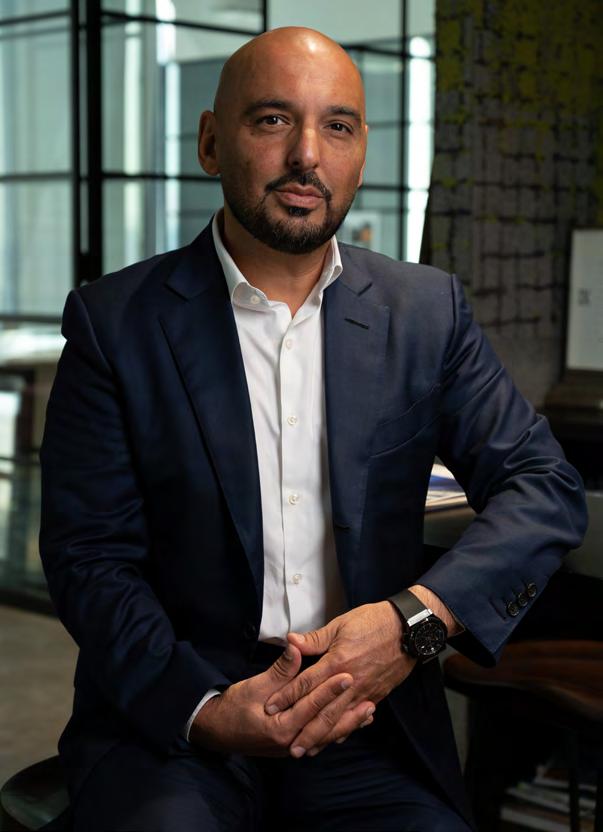
and suppliers are likely to remain cautious until its durability is proven.
THE MORE IMMEDIATE QUESTION FOR THE AEC INDUSTRY IS THE KNOCK-ON EFFECT ON FUTURE PIPELINES - PARTICULARLY IN 2027. WILL PROJECTS EXPECTED TO COME TO MARKET NEXT YEAR PROCEED AS PLANNED, OR WILL THEY BE DELAYED AS CONFIDENCE READJUSTS?
The IMF has already warned of a potential slowdown - or even contraction - in Gulf economies in the near term, reflecting the uneven impact across the region. However, it also points to a rebound as early as 2027 for all but a few countries, assuming a fast de-escalation. In the UAE and Saudi Arabia, for instance, the IMF forecasts growth of 5.3% and 4.5% respectively. Economic
BIO: Ammar Al Assam is CEO of Dewan Architects + Engineers, where he has led the firm’s growth into a global, multidisciplinary consultancy since 2014. Under his leadership, Dewan has expanded across the Middle East, North Africa, and Southeast Asia, acquired Singapore-based DesignLab, and grown to over 1,000 professionals across eight offices.
resilience, however, will depend on several factors, including damage to energy infrastructure, reliance on the Strait of Hormuz, and the availability of alternative export routes.
If there is one constant in the Gulf, it is its ability to absorb shocks and respond decisively. The UAE, in particular, has built a reputation for turning disruption into momentum. The recent AED 1 billion support package for Dubai’s business sector is a clear signal of intent - and more is likely to follow. The Central Bank of the UAE has also moved swiftly, introducing targeted liquidity measures to support the banking sector amid regional volatility.
When stability returns, so too will government-led investment
aimed at restoring confidence and accelerating growth. While the UAE’s image as a safe haven may have been tested, it can be rebuilt over time.
For AEC firms, this is a moment to stay close to clients, not step back. It is a time to understand shifting priorities, share risk intelligently, and adapt delivery models to a more volatile environment. The firms that do this well will not just weather the disruption - they will help define what comes next.
The Gulf’s growth story has never been linear. It is shaped by disruption but driven by resilience. This time will be no different.
Ammar Al Assam, CEO of Dewan Architects + Engineers
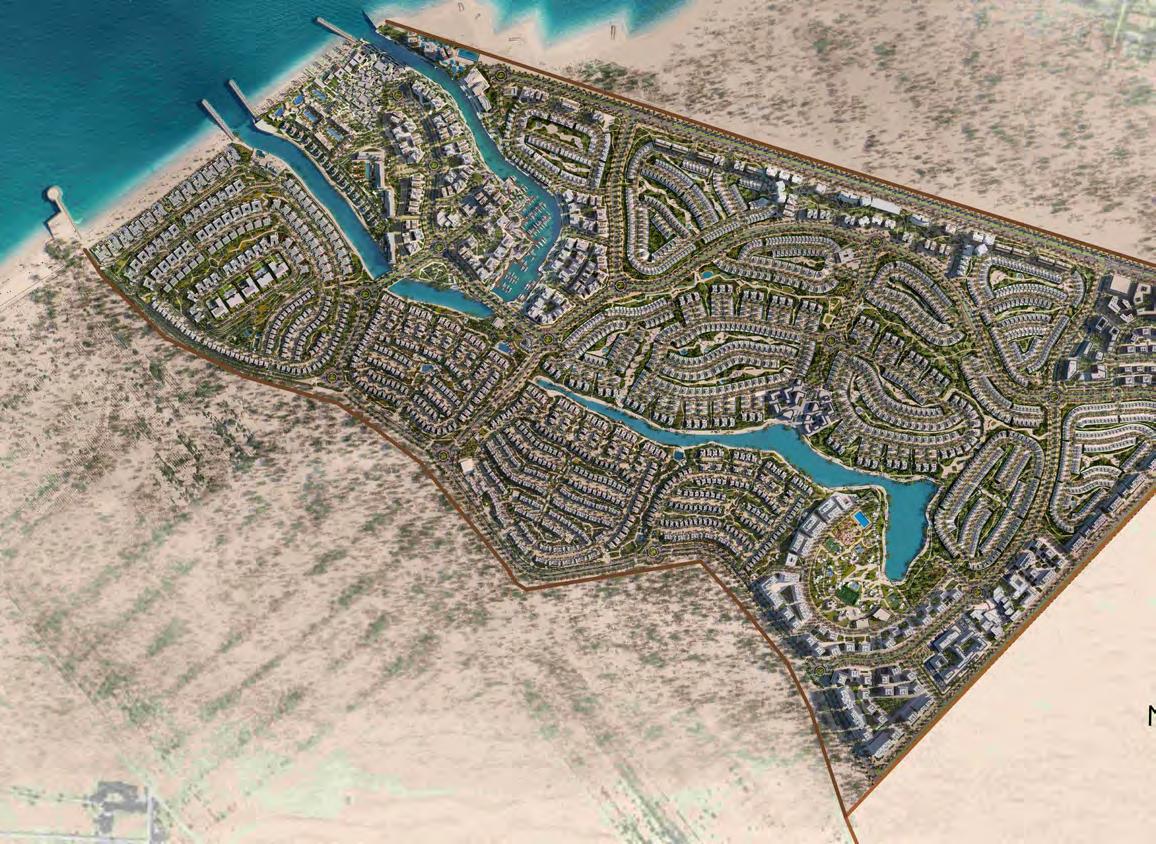
TWICE THE LAND, ONE BOLD VISION
ORA Developers acquires an additional 4.8 million sqm from Modon Holding, doubling its UAE land bank to 9.6 million sqm and cementing its long-term bet on the Dubai-Abu Dhabi corridor.
ORA Developers is expanding its UAE presence through the acquisition of an additional 4.8 million sqm of land from Modon Holding in Ghantoot, increasing its UAE land bank to 9.6 million sqm. This is expected to drive a total project investment of AED 30 billion upon full development.
This reiterates ORA Developers’ longterm confidence in the UAE market and its continued commitment to delivering integrated, world-class, mixed-use communities.
Strategically located between Dubai and Abu Dhabi, with direct access to
Sheikh Maktoum Bin Rashid Road, the site offers seamless connectivity across both emirates. It is also located approximately 25 minutes from Al Maktoum International Airport, further enhancing its accessibility.
The strengthened partnership between ORA and Modon will accelerate development in Ghantoot, where BAYN, ORA’s flagship masterplan is emerging as a fully integrated destination. Conceived as “a community without compromise,” the project brings together city energy and coastal serenity.
Naguib Sawiris, Chairman of ORA Developers, commented: “This move further reinforces our commitment to the UAE and our intention to continue our efforts in the country.
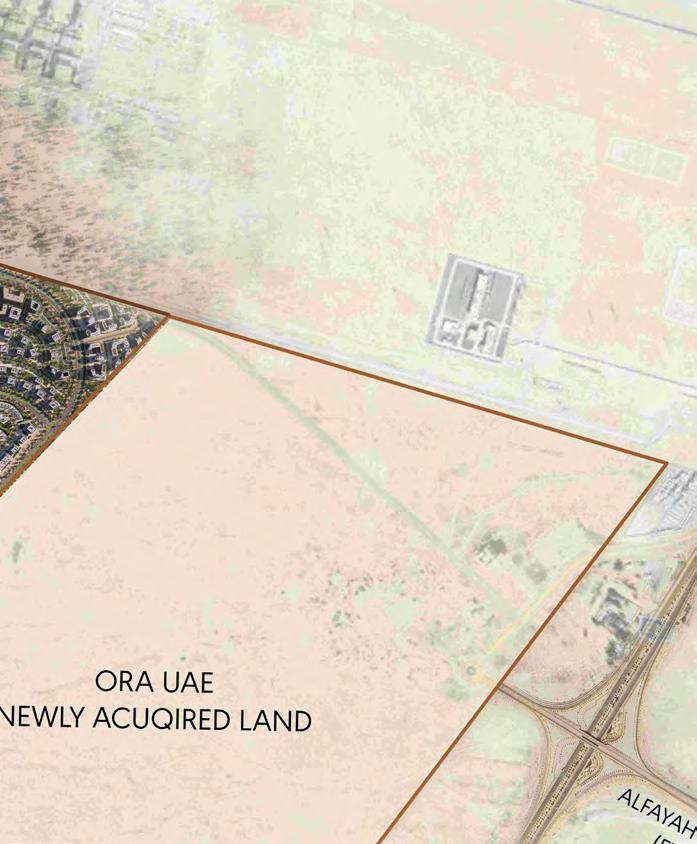
It demonstrates our trust in the resilience of the UAE real estate market, as well as our belief in the nation’s long-term vision for sustainable growth.
The growth of ORA’s footprint in the UAE marks an important milestone in our continued vision to elevate refined living and create world-class destinations.
THIS NEXT STEP, REINFORCED BY THE SUCCESS OF BAYN, OUR FLAGSHIP WATERFRONT DEVELOPMENT, REFLECTS OUR LONG-TERM ASPIRATION TO SHAPE VIBRANT COMMUNITIES THAT SEAMLESSLY BLEND LIFESTYLE, HOSPITALITY, RETAIL, AND RESIDENTIAL OFFERINGS.”
”Bill O’Regan, Group CEO of Modon Holding, added: “With ORA, we have identified a partner that understands the unique value of Ghantoot
and is committed to shaping a destination that is true to its location and enriches the lives of its residents.
BAYN HAS ALREADY ATTRACTED STRONG DEMAND SINCE ITS LAUNCH LAST YEAR, AND WE ARE CONFIDENT THAT THE EXPANSION WILL CONTINUE THAT SUCCESS.”
The agreement for this new site builds on ORA’s compelling market credentials. ORA Developers has been ranked third among Abu Dhabi’s Top 10 Developers in 2025 by the ADREC Abu Dhabi Real Estate Market Report, with BAYN recording AED 2.7 billion in residential sales in 2025 and ranking among the Top 10 projects in the report.
This strategic investment is underpinned by the UAE’s sustained focus on infrastructure and economic progress. The record AED 92.4 billion 2026 UAE Federal Budget, alongside continuous investment in key transport corridors such as Sheikh Maktoum bin Rashid Road, is expected to enhance connectivity and long-term value along the DubaiAbu Dhabi passage. These fundamentals underscore the resilience of the economy, its real estate market, and the strategic timing of ORA’s expansion in this high-growth area.
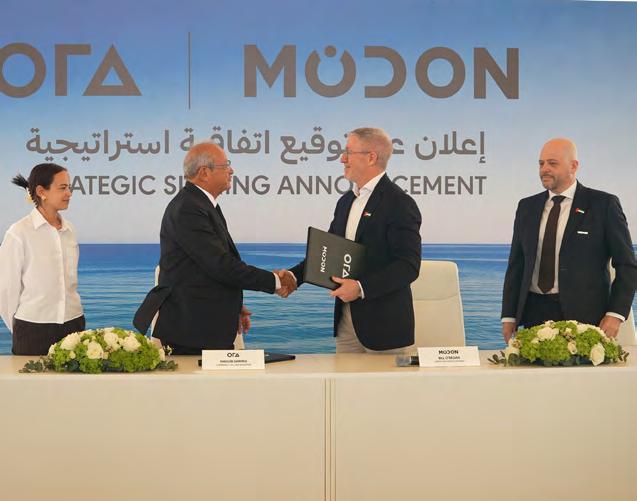
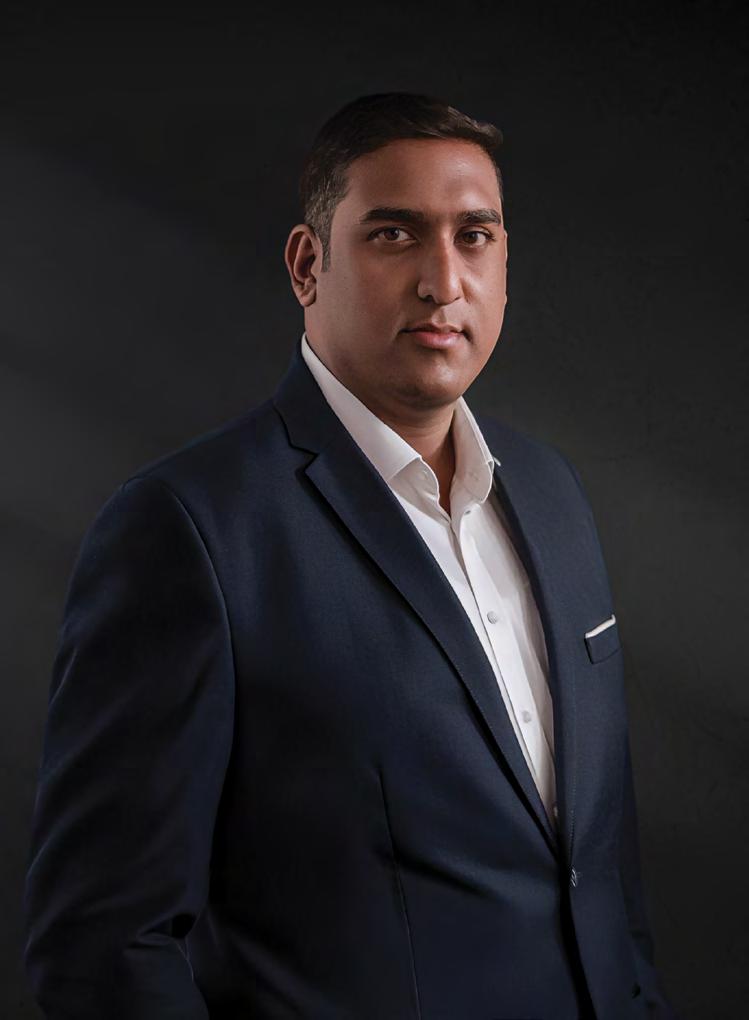
The Human Side of Urban Resilience
Shameel Muhammed at Heriot-Watt University Dubai highlights the urgent need for cities to evolve from tech-driven ecosystems into people-first environments
Dubai and Abu Dhabi persist in fortifying their reputations as pre-eminent global pioneers in urban innovation. Per the recently unveiled IMD Smart City Index 2026, Dubai clinches 6th position, while Abu Dhabi secures 10th among the world’s most sophisticated metropolises. They are positioned alongside European frontrunners such as Zurich, Oslo, and Geneva, which command the premier three rankings. These accolades mirror relentless investment in digital architecture, data-centric governance, and urban utilities; yet, they also prompt a profound inquiry: what truly constitutes a “smart” city in an age defined by volatility and upheaval?
From Smart Infrastructure to Smart Living
The IMD Smart City Index gauges urban centres through two fundamental pillars: Structures and Technology. The Structures pillar encapsulates the calibre and reach of urban infrastructure, whereas the Technology pillar scrutinises the digital provisions available to inhabitants. Collectively, these pillars are dissected across five realms: Health and Safety, Mobility, Activities, Opportunities, and Governance. Crucially, the Index places strong emphasis on the perceptions of residents, marking a departure from purely technocratic appraisals of urban intellect.
THIS TRANSITION REFLECTS A MORE EXPANSIVE METAMORPHOSIS IN SMART CITY DISCOURSE, PIVOTING FROM A TECHNOLOGY-FOCUSED PARADIGM TO ONE THAT IS INHERENTLY PEOPLE-CENTRIC. SMART CITIES ARE NO LONGER PERCEIVED MERELY AS HUBS OF SENSORS, PLATFORMS, AND AUTOMATION.
Instead, citizens are increasingly regarded as pivotal participants and
Shameel Muhammed, Associate Professor at Heriot-Watt University Dubai
co-creators, moulding the landscapes they inhabit rather than simply consuming services.
The Rising Importance of Urban Resilience
Developing in parallel with this shift is a growing concern with urban resilience. The pivotal question has moved beyond a city’s mere intelligence to how robustly it functions under stress. Resilience, in this framework, is typically defined as a metropolis’s aptitude for absorbing shocks, adapting to disturbances, and swiftly reinstating its core operations.
Climate-driven events, geopolitical turbulence, and public health emergencies have highlighted the urgency of this mission. The COVID-19 pandemic of 2019–2020 provided a stark illustration of how susceptible even highly digitised cities can be. Urban frameworks across the globe prolonged disruptions to transport, healthcare, employment, and social existence, demonstrating that technological sophistication alone does not guarantee resilience.
Khatibi et al. (2021) and Almulhim (2025) in their comprehensive review of resilient smart cities, they argue that urban centres must be armed with predetermined resilience strategies that facilitate rapid systemic restoration. Similarly, Bruneau et al. (2003) distinguish four interwoven facets of resilience: Technical, Organisational, Social, and Economic. Whilst the first two have garnered much focus, economic resilience and social resilience, specifically wellbeing, remain relatively neglected within smart city blueprints.
Beyond Functionality: Resilience and Wellbeing
The majority of smart city resilience models, such as the Resilient Smart City (RSC) framework proposed by Khatibi et al. (2021), concentrate predominantly on infrastructure and vital utilities. This prioritisation is logical: amidst a crisis, the most pressing concern is to maintain the city’s pulse, guaranteeing access to medical care, energy, transport, and administration.
However, functional continuity should be viewed as the minimum requirement, not the ultimate goal, of urban resilience. Smart cities must be engineered to uphold and enhance wellbeing, joy, and social bonds, particularly during sustained periods of instability. The COVID-19 pandemic revealed how profoundly wellbeing can be challenged during crises through social seclusion, reduced physical activity, mental health burdens, and limited community engagement. Resilient smart cities should therefore be capable of activating wellbeing-focused protocols alongside their technical recovery efforts.
In the same way that cities invest in stormwater reservoirs and flood mitigation systems based on predictive data, there is a compelling argument for establishing structured wellbeing infrastructures. These could encompass community aid platforms, reachable mental health
provisions, adaptable public spaces, and strategies that reinforce social cohesion under constrained conditions. Designing for Community and Connection
Whilst digital tools play a critical role in maintaining connectivity during disruptions, resilience in wellbeing cannot depend on technology alone. Sustaining physical proximity and a spirit of community remains just as essential. During the pandemic, several cities converted roadways into pedestrian zones, permitting safe physical exercise and casual social interaction. Such actions, though simple, demonstrate how urban planning can champion mental and physical health in times of crisis. These tactics should not be regarded as temporary fixes, but as part of an extensive resilience toolkit integrated into smart city planning.
Another example of wellbeing-centric resilience is the standardisation of remote and hybrid working. Dubai’s RTA recommendation to the private and public sectors to work from home in response to rising traffic congestion in 2024 demonstrated that flexible working arrangements can simultaneously improve mobility efficiency and enhance residents’ quality of life. In times of disruption, remote work also acts as a powerful resilience tool by sustaining economic activity whilst reducing exposure and anxiety.
Rethinking Smart City Benchmarks
IF RESILIENCE, AND SOCIAL RESILIENCE IN PARTICULAR, IS TO BE TREATED WITH GRAVITY, IT MUST BE EXPLICITLY EMBEDDED INTO SMART CITY APPRAISAL FRAMEWORKS.
Current rankings, such as the IMD Index, could be strengthened by introducing a dedicated resilience domain with assessment criteria that reach far beyond infrastructure robustness.
A domain within these benchmarking pillars might evaluate readiness across physical and digital systems, alongside the availability of wellbeing resources, community support structures, and flexible governance practices. Integrating these elements would provide a more comprehensive portrait of urban intelligence, one that captures not just how cities perform under conditions, but how they safeguard and support human wellbeing when those conditions unravel.
In the final analysis, these nuanced metrics would be indispensable not only to legislators but also to individuals and families deciding where to live, work, and invest their futures. A smart city is not merely one that functions with precision, but one that nurtures its inhabitants when they are most in need.
ONE to WATCH
Orvessa Residences by Michel Adam BNW DEVELOPMENTS
A flagship project that captures the very pulse of tomorrow, distilling the market’s direction and the quiet evolution of the built world into a single, resonant expression of vision and craft
BNW Developments, Ras Al Khaimah’s largest private developer, makes its Dubai debut with Orvessa Residences in Al Furjan, a 92-unit collaboration with global lifestyle icon Michel Adam Lisowski. The wave-inspired tower offers one-, two-, and three-bedroom apartments ranging from 727 to 1,608 sq ft, priced from AED 1.27 million, with handover set for Q3 2028.
Designed as a lifestyle sanctuary, Orvessa pairs high-fashion aesthetics with functional precision, featuring a rooftop pool, gym, co-working spaces, steam and sauna, and a kids’ play area. A flexible payment plan with just 10% on booking makes entry accessible.
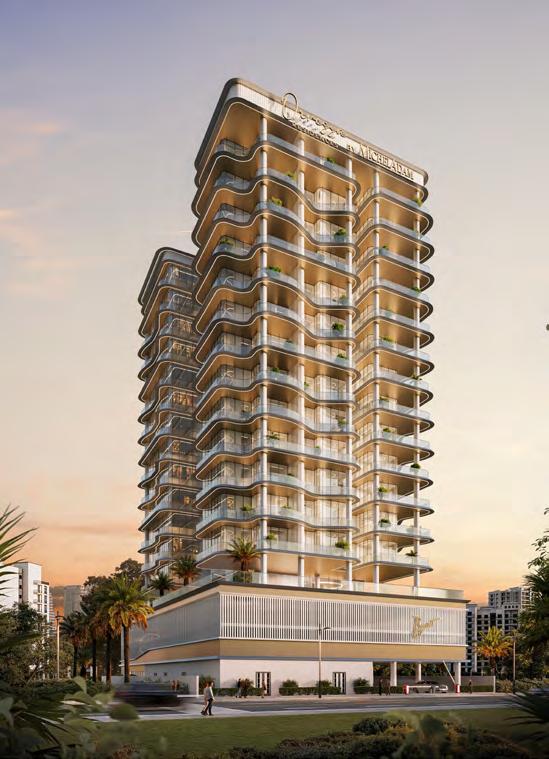
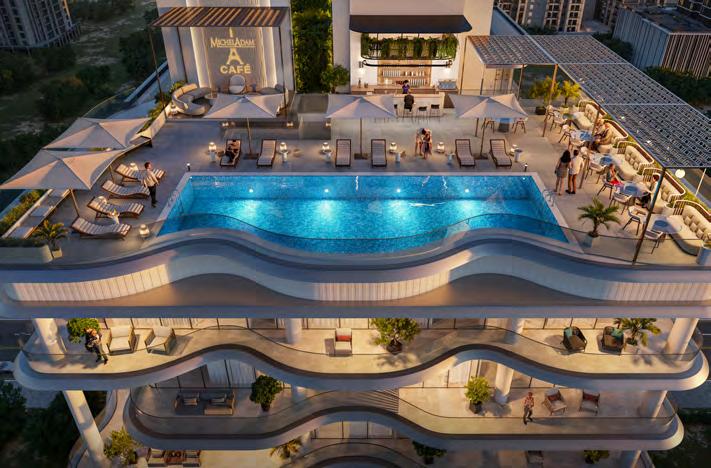
BNW’s sixth branded project, Orvessa marks the first step in a wider Dubai expansion strategy built on premium partnerships and long-term residential value.
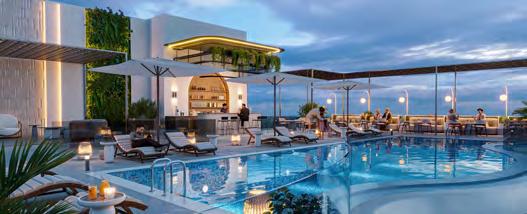
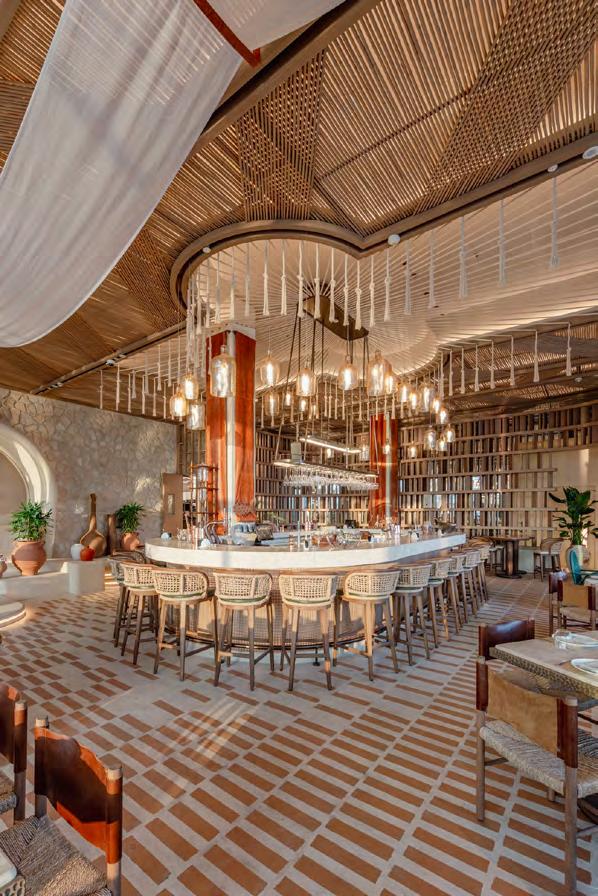
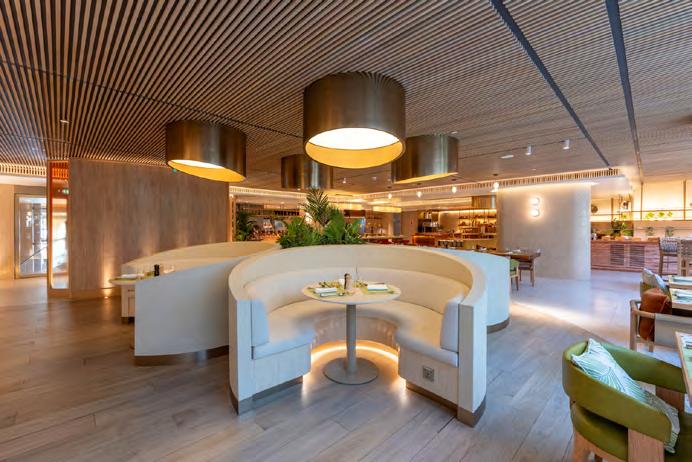
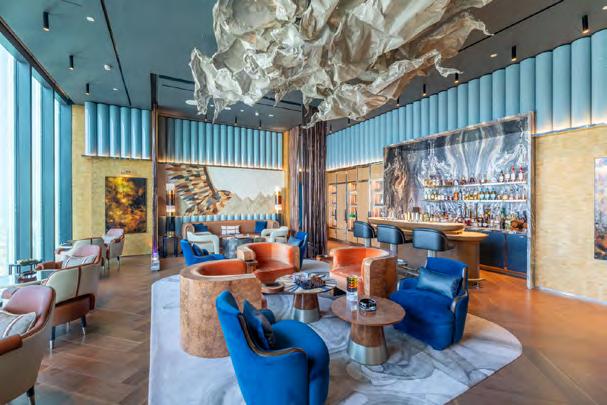
ANANTARA SHARJAH RESIDENCES
A NEW CHAPTER OF LUXURY EXPERIENCES BY THE SEA
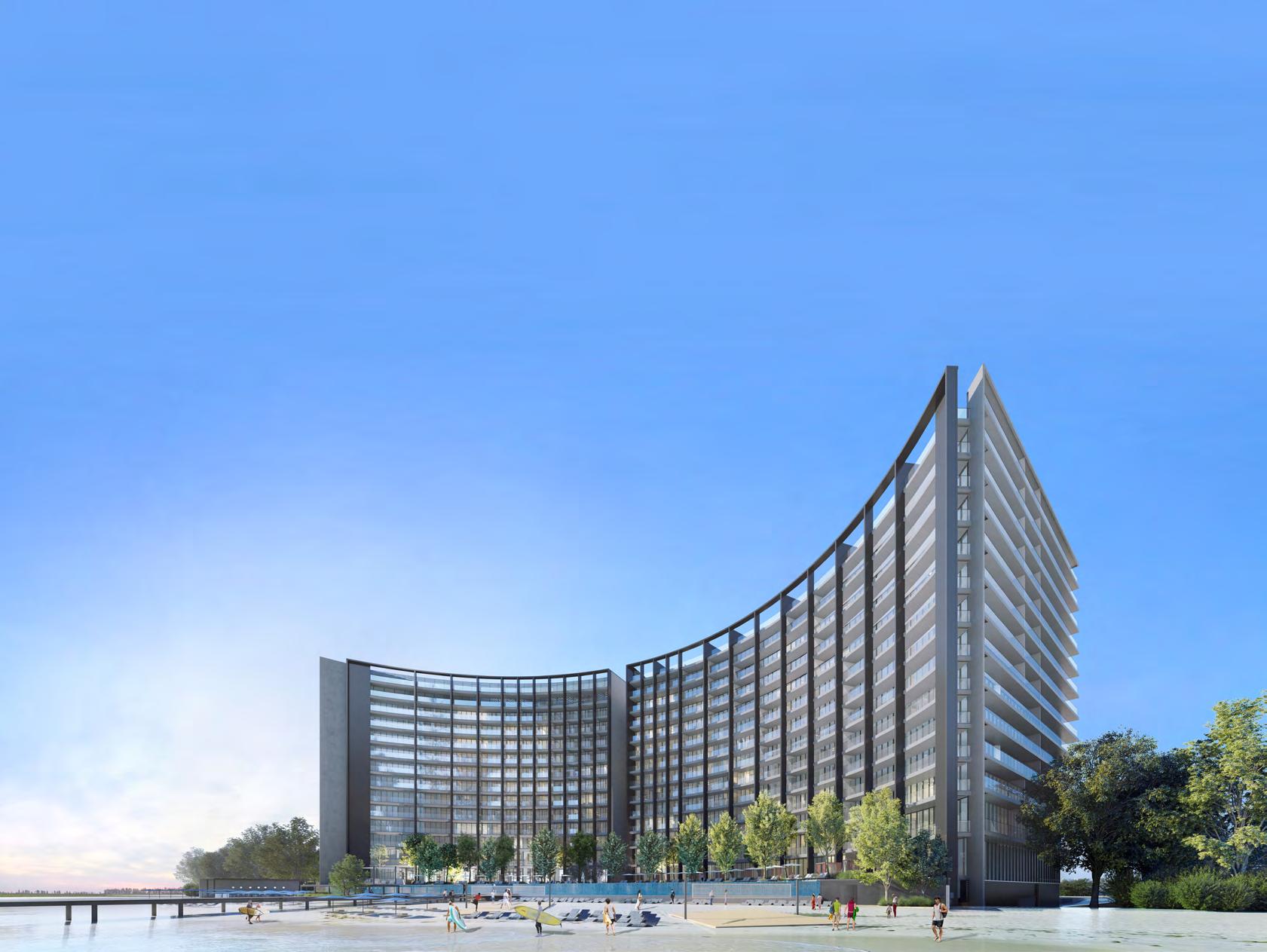
Bringing luxury seaside living to Sharjah for the first time, owners at the Anantara Sharjah Residences enjoy access to the Anantara Sharjah Resort’s world-class amenities, including an infinity pool, five distinctive restaurants, an Anantara Spa and a state-of-the-art gym. As an investment, owners can enjoy the benefits of a rental management scheme operated by Anantara Hotels, Resorts & Spas, allowing them to maximize their returns when they are not resident in the property.
To register your interest, visit arada.com
LIFE IS A JOURNEY.