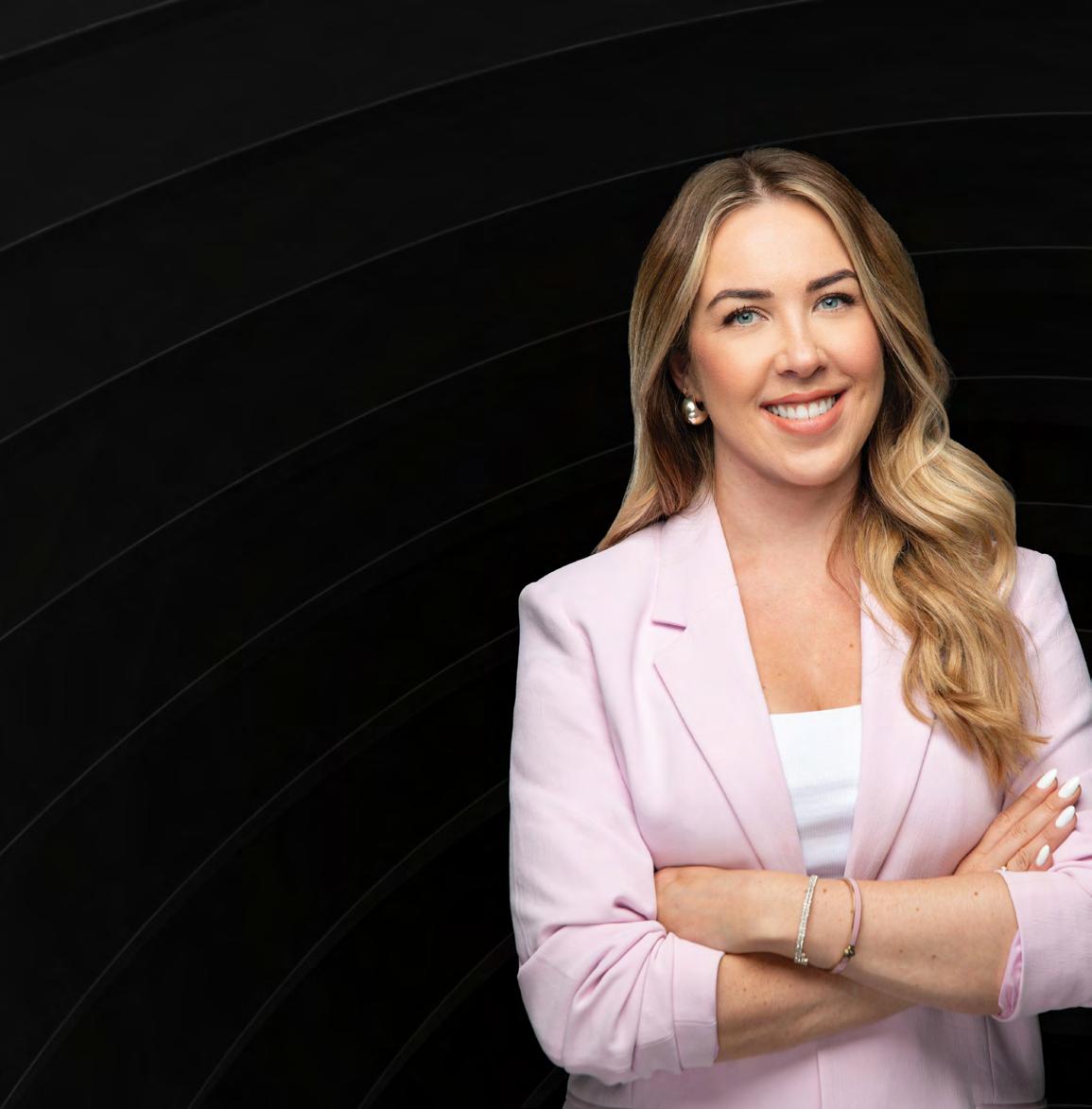
Meet the Stone Consultant Who Changed How the Middle East Builds
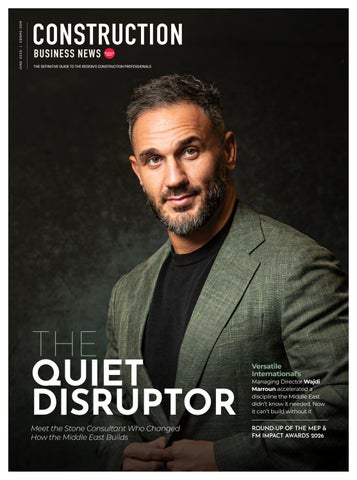
Versatile International’s
Managing Director Wajdi Marroun accelerated a discipline the Middle East didn’t know it needed. Now it can’t build without it
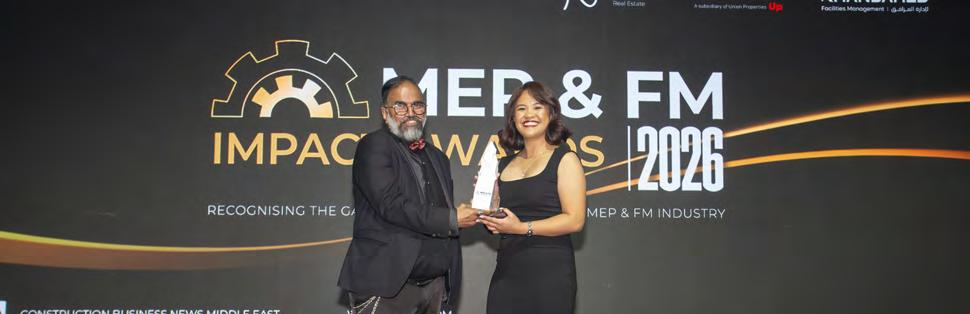
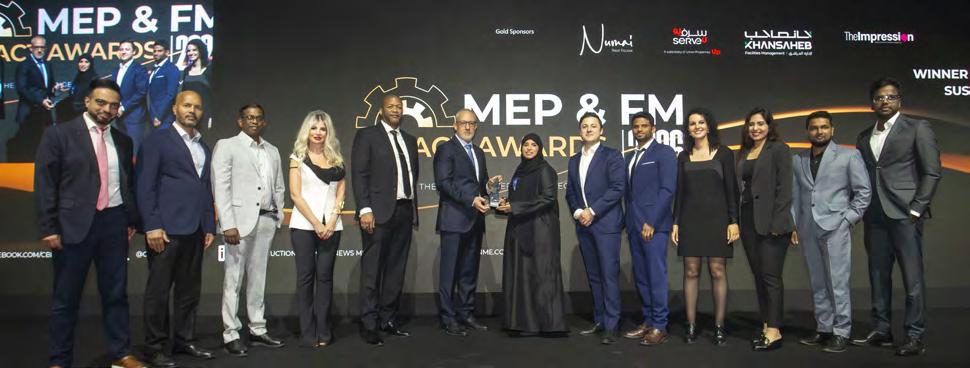
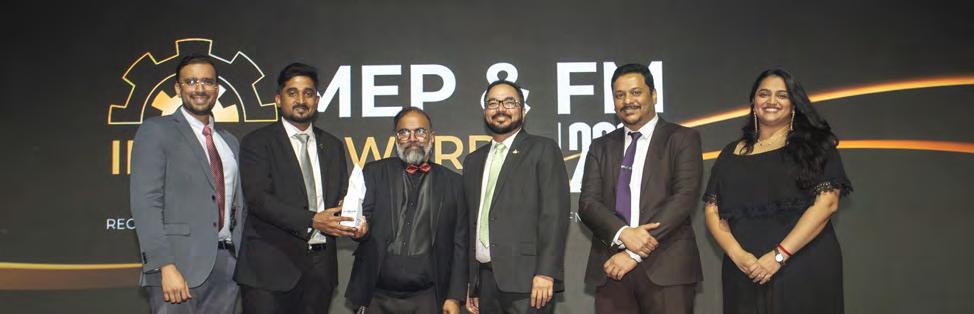
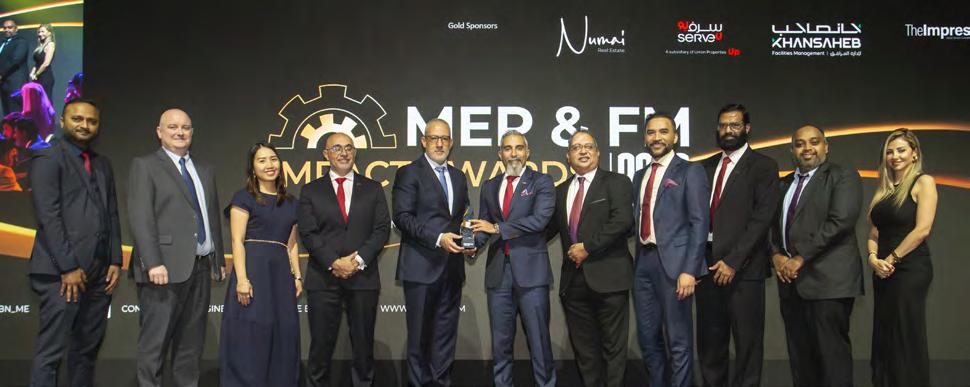
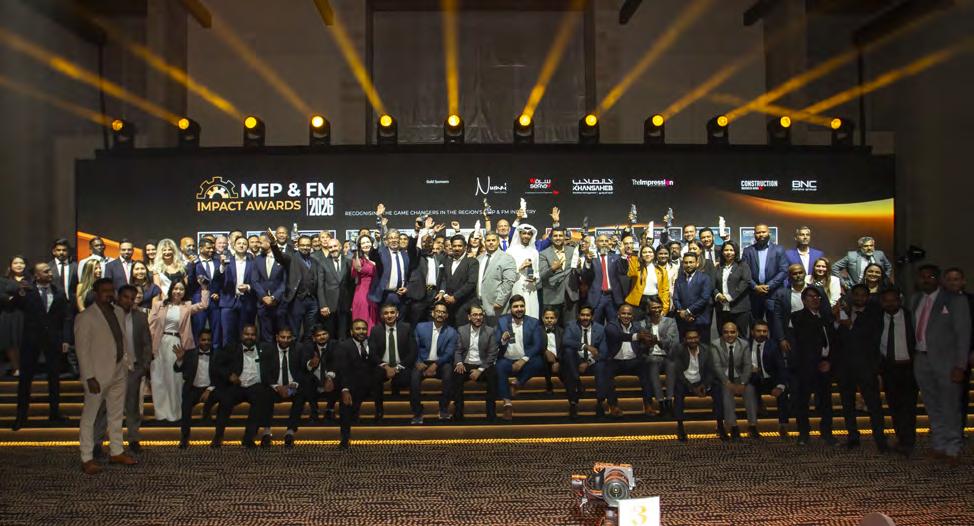
ROUND-UP OF THE MEP & FM IMPACT AWARDS 2026
30 COVER STORY
Cracking The Stone Code
18 REAL ESTATE RETAIL REIMAGINED, RADICALLY
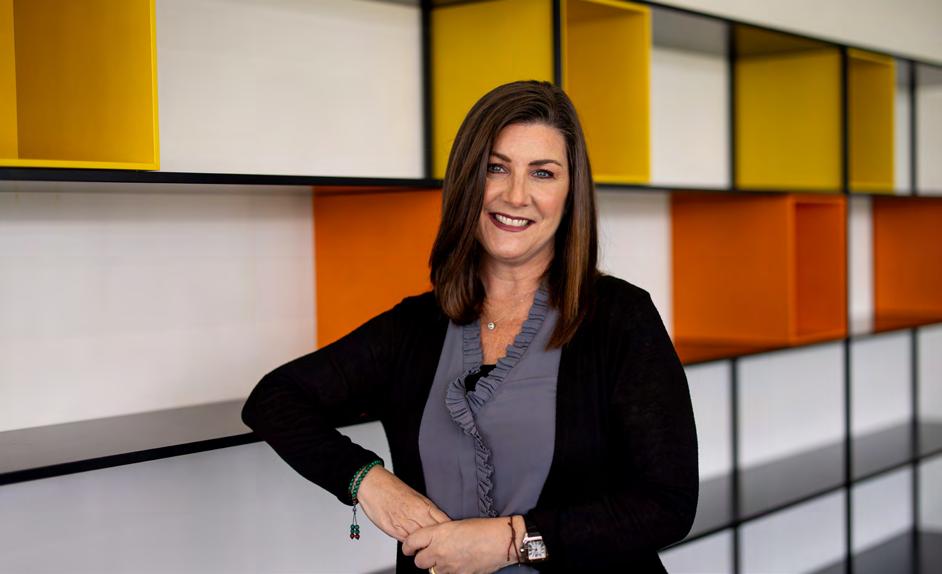
Alison Rehill-Erguven, CEO of Cenomi Centers, draws on decades of leadership across Asia, Europe and Latin America to explain why the future of retail belongs to those who put experience before transaction, and why Saudi Arabia is where that future is being built right now
22 MACHINERY
POTAIN MDT 269 POWERS MAJOR HYDROPOWER PLANT UPGRADE IN NORTHERN ITALY
24 FACILITIES MANAGEMENT
A NECESSARY SHIFT IN FM From Static Contracts to Living Frameworks
26 APPOINTMENT
LMD APPOINTS BEN NITIN EZHIL AS CHIEF DEVELOPMENT OFFICER TO DRIVE STRATEGIC GROWTH
28 MARKET REVIEW SAR 112 BILLION AND COUNTING: INSIDE SAUDI ARABIA’S Q1 REAL ESTATE SURGE
30 COVER STORY CRACKING THE STONE CODE
Across the Middle East’s most ambitious gigaprojects, natural stone is doing the heaviest visual work of all. It is the material that defines a facade, anchors a heritage narrative and tells a visitor, before a single word is spoken, what a place is made of. For the past five years, Wajdi Marroun, Managing Director of Versatile International, has been the man ensuring that work is done with the rigour, expertise and independence it deserves.
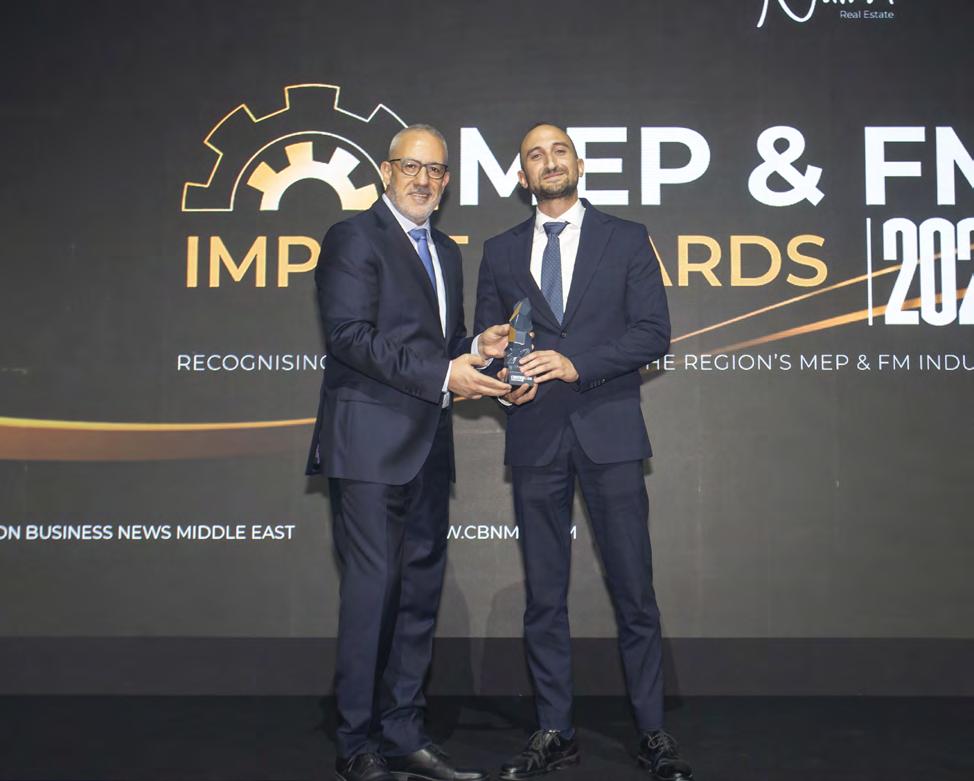
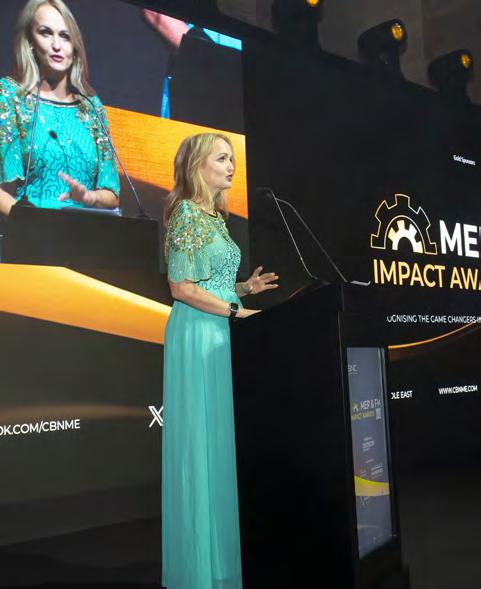
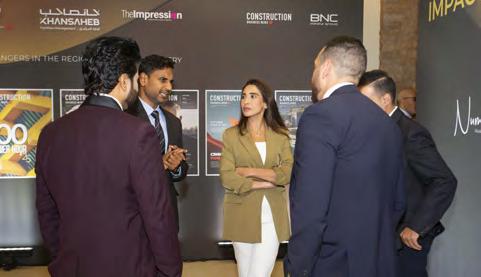
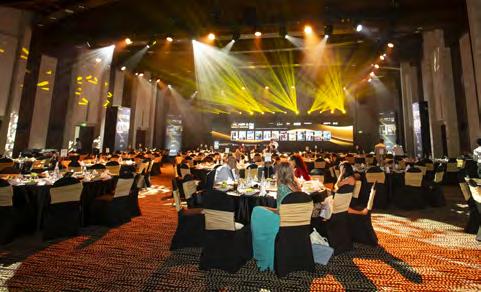
38 MEP & FM IMPACT AWARDS 2026
64 MOBILITY FROM CONGESTION TO COORDINATION
68 PARTNERSHIPS
LIVING BEYOND RETAIL
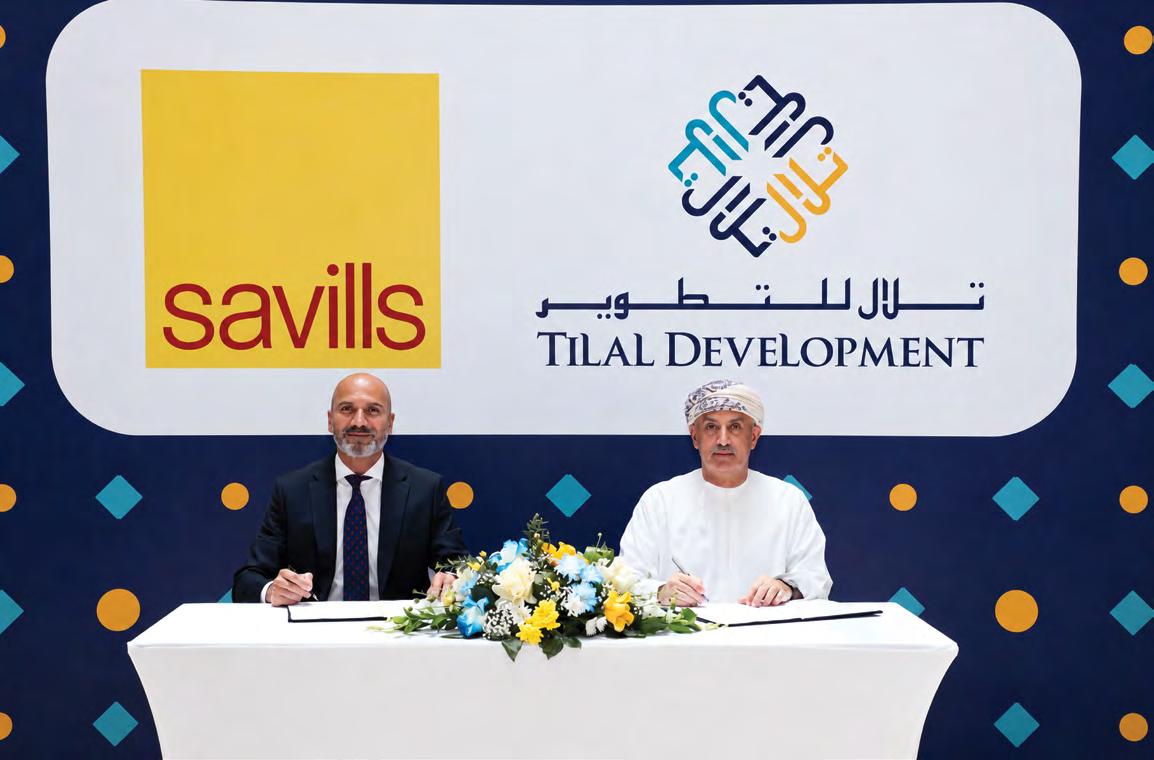
When Tilal Development Company appointed Savills to manage 115 fully furnished Executive Apartments at Muscat Grand Mall, it signalled something larger than a property management deal. It was a statement of intent about what a mixed-use destination in the heart of Muscat can and should deliver, and the kind of partners needed to get there.
70 PROPERTY & INVESTMENT THE GUARANTEE GAP
What Dubai property investors need to understand about guaranteed returns - and what happens when the commitment period expires.
74 OP-ED BUILDING INCLUSIVE INFRASTRUCTURE
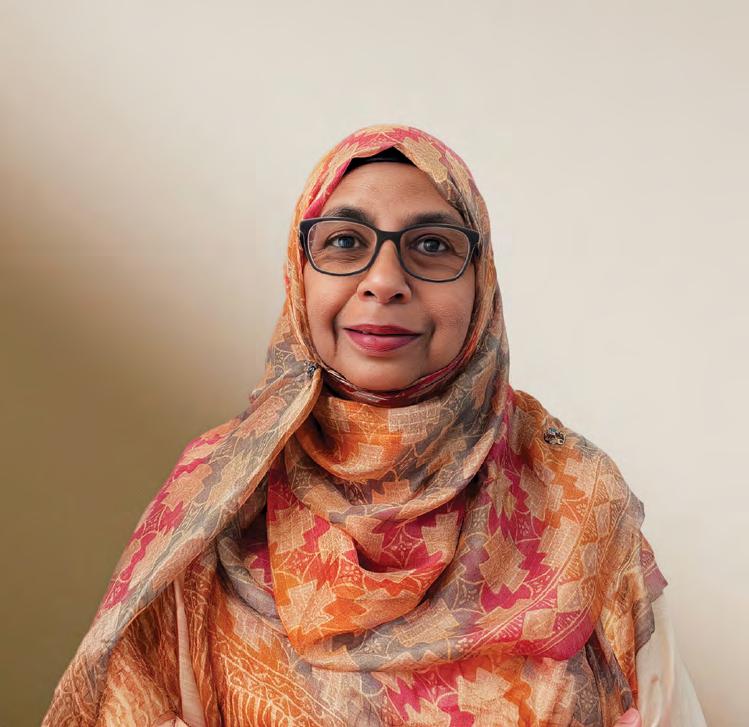
Dr Noor Zainab Habib, Assistant Professor at Heriot-Watt University Dubai, explores why greater inclusion is becoming a strategic priority for the industry’s future growth and success
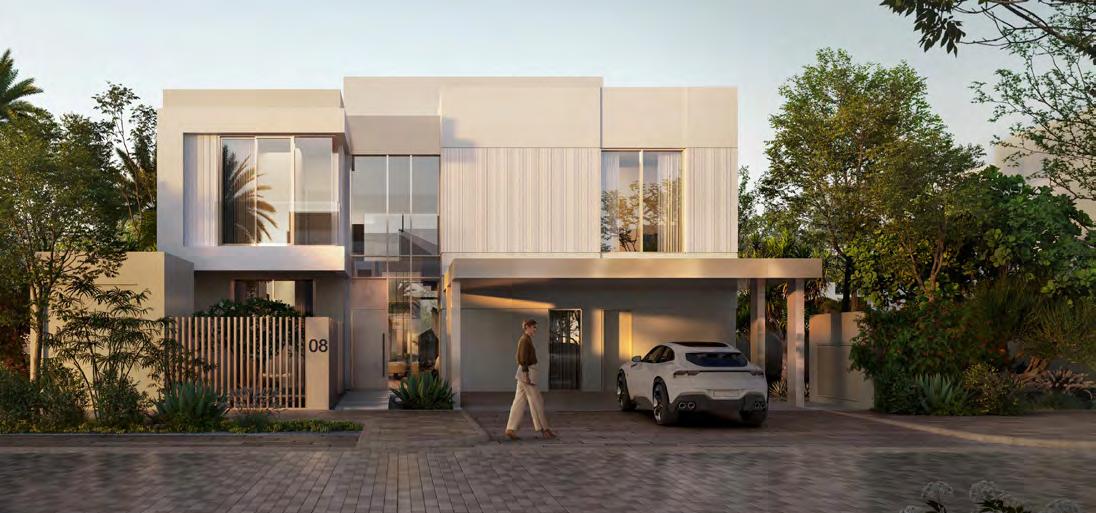
76 EDITOR’S CHOICE ONE TO WATCH Bayn ORA Developers
CEO
Wissam Younane wissam@bncpublishing.net
Managing Director
Rabih Najm rabih@bncpublishing.net
Group Publishing Director
Joaquim D'Costa jo@bncpublishing.net
Editor-in-Chief
Vibha Mehta vibha@bncpublishing.net
Commercial Director
Andrea Mocay andrea@bncpublishing.net
Country Manager
Amjad Fakhouri amjad@bncpublishing.net
Editorial Assistant
Aya Zhang aya@bncpublishing.net
Digital Reporter
Reeba Asghar reeba@bncpublishing.net
Creative Lead
Christian Harb chriss@bncpublishing.net
Junior Art Director
Rizaldi Febrian
Marketing Executive
Aaron Joshua Sinanbam aj@bncpublishing.net
Multimedia
Joel Amparo, Eduardo Buenagua, and Harton Otlang
Contributors
Muhammad Irfan Khokhar and Paulina Schulte
PO Box 502511 Dubai, United Arab Emirates P +971 4 4200 506 | F +971 4 4200 196
For all commercial enquiries, contact jo@bncpublishing.net T +971 50 440 2706
Printed by United Printing and Publishing | upp.ae
Images used in Construction Business News Middle East are credited when necessary. Attributed use of copyrighted images with permission. All images not credited are courtesy of Shutterstock.
Keep up to date with all the latest news, features and much more on our website and social media platforms
Returns darkness to the night
BEGA pole-top luminaires with Dark Sky technology direct the light in a highly efficient manner only where it is required. Light pollution of the night sky is avoided. bega.com/darksky
The Shore, the Silence and the Season Ahead
Idid not plan to think about work at all during the Eid break. And for the first two days, I did not. I sat on the beach, watched the tide come in and go out with a patience I deeply envied, and let the noise of the preceding months dissolve into the salt air. There is something about the sea that makes urgency feel slightly absurd. Deadlines, decisions, the weight of things left unfinished: the ocean has no interest in any of it, and after a while, neither did I.
What I did not expect was what crept in once the noise left. Not more noise, but something quieter and stranger: clarity. Ideas I had been wrestling with for weeks untangled themselves without effort. A conversation over dinner with someone entirely outside our world, who had never heard of half the things we agonise over daily, held up an accidental mirror to questions I had not thought to ask. That is the particular gift of being genuinely off, not just physically away but mentally unmoored from the usual grooves. You stop thinking like an editor and start thinking like a person again. And it turns out
that thinking like a person is often where the best editorial instincts actually live.
There is a version of rest that is just recovery: you arrive exhausted, you leave slightly less so. That is useful but not transformative. What the break gave me this time was something more like renovation. The parts of the mind that generate ideas, that make unexpected connections, that ask why we do things the way we do them, those parts do not function well when they are perpetually occupied. They need idleness. They need a beach, or a long walk, or a meal that goes on far longer than it should, to do their best work quietly in the background. I came back not just rested but genuinely itching to build things. That feeling, I have learned to treat it as a signal worth following.
And the timing could not be better. On the editorial side, we are going into this year with a programme that excites me more than anything we have put together in recent memory. We are commissioning work that takes genuine creative risk, stories told in formats and voices that feel new to us, angles on subjects we have covered before but never quite like this. The ambition is not to be bigger; it is to be sharper, more surprising, more willing to trust our readers with complexity. There are specific features in the pipeline that I am personally impatient to see in print, which is the best possible sign.
The events calendar is equally full of things I believe in. We have spent a great deal of time this year thinking about what it actually means to bring people together around the ideas we care about, rather than simply filling rooms. The result is a programme that spans intimate editorial evenings to larger productions, each one designed around a specific conversation we want to start or continue. Month by month, it builds into something that feels cohesive and considered in a way that I am genuinely proud of. These events are not extensions of the brand; they are the brand, in the room, in real time.
So we step back into it. Rested, yes. But more than that, purposeful. The break gave me the distance to remember why this work matters, and the silence to hear what it ought to be doing next. I hope the pages and the rooms we fill this year reflect that. There is a lot coming, and I cannot wait to share it with you.
DUBAI HEALTHCARE CITY KICKS OFF TWO FLAGSHIP PROJECTS AS ITS AED 1.3B PROGRAMME TAKES SHAPE
The two projects form a key milestone in DHCA’s wider development strategy
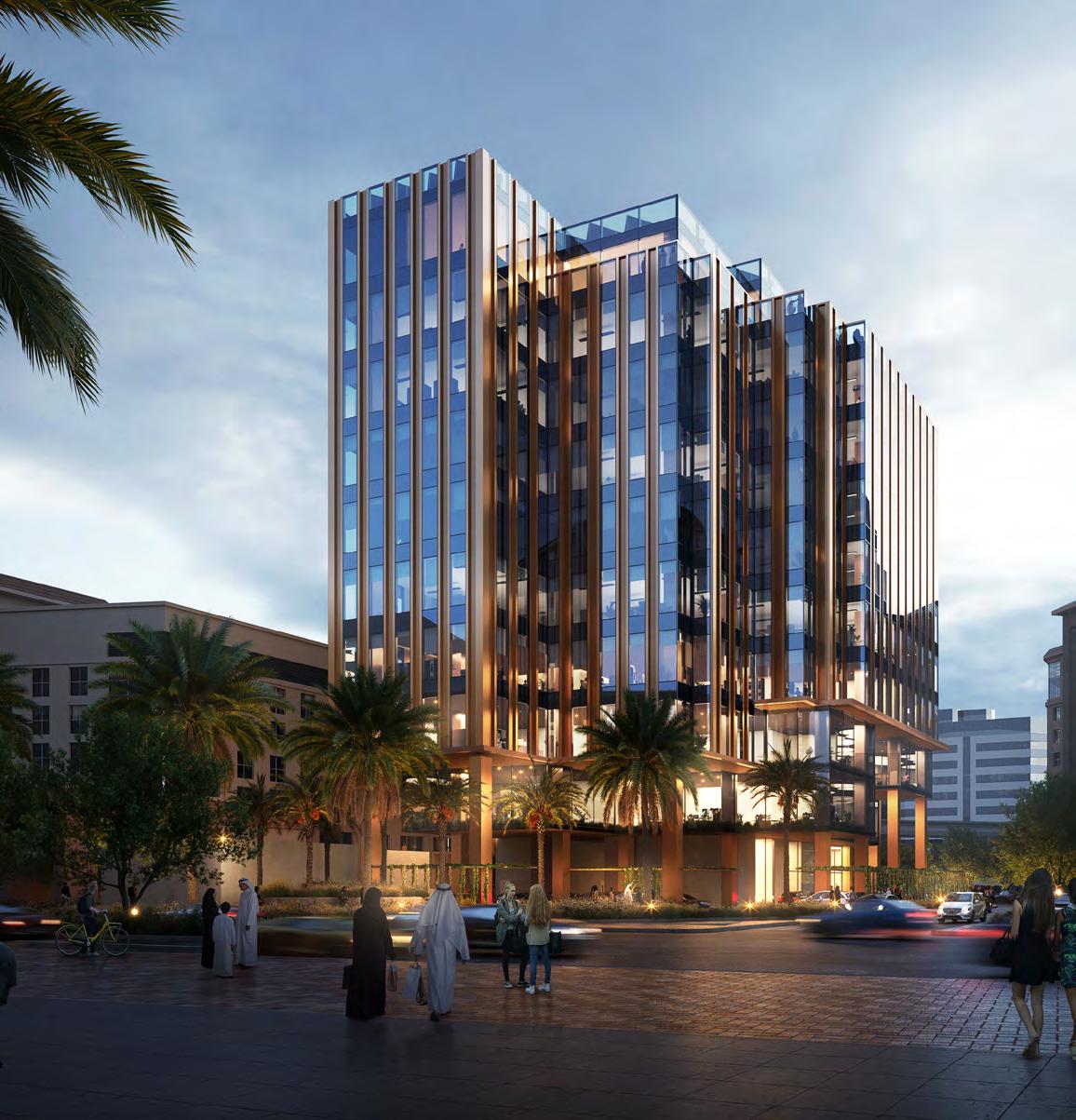
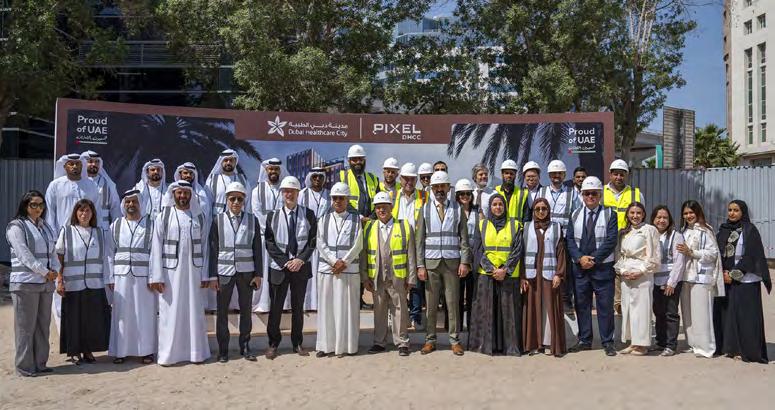
Dubai Healthcare City Authority (DHCA) has broken ground on PIXEL DHCC and IBN SINA+, two flagship developments forming part of the first phase of its AED 1.3 billion development programme. Both projects are scheduled for completion by November 2027 and are designed to reinforce Dubai’s position as a global healthcare investment hub.
The groundbreaking ceremony was attended by Issam Galadari, CEO of DHCA; Dr Khalil Charif, Managing Partner of International Foundation Group LLC (IFG); Roula El Hachem Terrien, CEO of Design and Architecture Bureau (DAR); James Abbott, Group Director at P&T Architects and Engineers Ltd, alongside senior DHCA officials and key stakeholders. Enabling works, including shoring and excavation across both sites, are being led by IFG as the enabling contractor.
Issam Galadari, CEO of Dubai Healthcare City Authority, said: “The groundbreaking of PIXEL DHCC and IBN SINA+ marks an important step in the delivery of our AED 1.3 billion development programme. By providing world-class, sustainable facilities, we continue to strengthen the free zone’s integrated ecosystem and attract investment, including foreign direct investment. This supports the objectives of the Dubai Economic Agenda D33 and the UAE Net Zero 2050 Strategy, while reinforcing DHCC’s position as a global healthcare and wellness destination.”
PIXEL DHCC, designed by P&T Architects and
Engineers Ltd, will be DHCC’s first LEED Platinumcertified office building.
Spanning 13,000 sq m across nine floors, the development features a design inspired by interlocking “pixel” forms and targets a 30% reduction in annual energy consumption, a 71% reduction in indoor water use, and a 26% reduction in global warming potential.
These efficiencies will be achieved through highperformance systems, an optimised façade and on-site solar generation.
IBN SINA+, designed by DAR, is a purpose-built medical complex spanning 5,800 sq m across five floors. As an extension of the existing IBN SINA facility, it will accommodate specialty clinics, outpatient services, medical offices and a radiology centre. The development incorporates smart building systems, flexible layouts and energy-efficient technologies to support longterm operational performance within the wider DHCC ecosystem.
Together, the two projects represent a key milestone in DHCA’s wider development strategy, which also includes supporting infrastructure aimed at enhancing connectivity and accessibility across the district.
The two developments are due for completion by November 2027
ALEC AWARDED US$1.7 BILLION CONTRACT TO DELIVER SPHERE ABU DHABI
This will represent a significant expansion of ALEC’s portfolio in transformational infrastructure
ALEC Engineering and Contracting (ALEC) has received a Letter of Award (LOA) from the Department of Culture and Tourism – Abu Dhabi (DCT Abu Dhabi) to construct Sphere Abu Dhabi. Valued at US$1.7 billion, the project marks a significant expansion of ALEC’s portfolio in transformational infrastructure and reinforces its position as a leading delivery partner for major asset-building initiatives in the emirate.
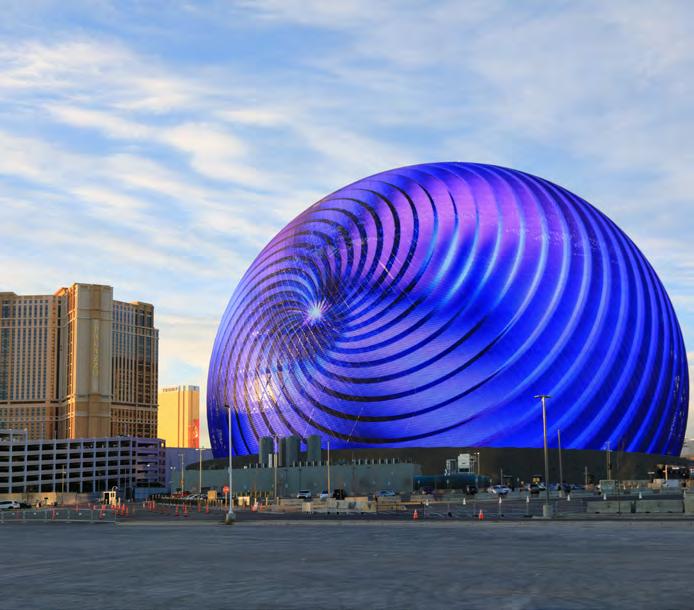
The original Sphere in Las Vegas has been reported as the world’s highest-grossing arena, generating approximately US$379 million from 1.7 million tickets sold last year. Sphere Abu Dhabi is expected to become a comparable global destination, supporting tourism growth, increasing international visitation, and strengthening Abu Dhabi’s position as a hub for nextgeneration immersive entertainment experiences.
The award also highlights ALEC’s capability as a UAE-based contractor delivering complex, large-scale projects to international standards, further strengthening its track record in securing and executing landmark developments. The scope of work includes the full design, procurement and construction of a large-scale, architecturally distinctive venue incorporating advanced immersive technologies, complex structural and mechanical engineering, and integrated sustainable building systems.
Barry Lewis, CEO at ALEC Holdings, said, “Receiving the LOA for The Sphere Abu Dhabi represents a defining moment for us, and is a profound endorsement of our capability as a homegrown UAE company. This Letter of Award represents the trust placed in a local organisation to deliver a globally iconic venue that will attract millions of international visitors and establish Abu Dhabi as a world-leading centre for immersive entertainment and cultural experience.
For our shareholders, this Letter of Award signals ALEC’s continued ability to secure transformational, high-value contracts in strategic growth sectors. For Abu Dhabi, it demonstrates that world-class infrastructure delivery is not dependent on international contractors. It’s a world-class venue that’s rooted here, built here, and managed by a company committed to the emirate’s long-term vision. We will be honoured to take up this landmark project, and are confident in our ability to establish it as a global leader in its category,” added Lewis.
Sean McQue, Managing Director at ALEC Construction, said, “The Sphere Abu Dhabi is both technically complex and architecturally ambitious. It will demand precision at every level, from design integration and supply-chain orchestration to on-site execution and quality assurance. Our integrated structure and digital engineering expertise uniquely position us to manage such complexity whilst maintaining schedule and cost discipline. This is infrastructure that will set a global benchmark, and we are committed to delivering it to those standards.”
The Sphere Abu Dhabi LOA validates ALEC’s position as a homegrown UAE contractor
JLL LAUNCHES DEDICATED SPORTS AND ENTERTAINMENT HUB IN RIYADH
This strategic expansion leverages JLL’s established position as a sports and entertainment real estate leader
JLL, a leading global professional services firm specialising in real estate and investment management, has launched a dedicated Sports and Entertainment (S&E) Hub in Riyadh, Saudi Arabia. While based in the Kingdom, the hub will serve regional and global clients, offering end-to-end advisory and lifecycle services for sports organisations, developers, investors and brands seeking to capitalise on the sector’s rapid growth.
The hub will act as a central platform for specialist real estate services, including leasing, operations management, development consultancy and investment advisory. It reinforces JLL’s position as a leading player in sports and entertainment real estate, with more than US$87 billion of project value managed globally across more than 60 organisations in the sector.
As part of the launch, JLL has appointed Ahmed Abas as Regional Head of Sports & Entertainment for the Middle East & Africa. A certified PPP professional with more than 15 years of regional experience, he will focus on driving sector growth and supporting the delivery of major projects aligned with national diversification strategies across the region.
The launch comes amid strong momentum in the MEA sports and entertainment sector, supported by large-scale infrastructure investment, progressive policy frameworks and growing demand for experience-led destinations. The region’s track record in hosting major global events, including international tournaments and entertainment competitions,
has further strengthened its position on the world stage.
Saudi Arabia, which will host the 2034 FIFA World Cup, is at the forefront of this growth. The Kingdom’s sports market is expected to reach SAR 56.82 billion by 2030 and contribute 3% to non-oil GDP, according to the Ministry of Investment of Saudi Arabia (MISA). Across the wider region, events such as the FIFA World Cup in Qatar and Formula One races in Abu Dhabi and Bahrain have reinforced the Middle East’s position as a global hub for major sporting and entertainment events.
Mireille Azzam Vidjen, Head of Strategic Consulting MEA at JLL, said:
“The new Sports & Entertainment offering within our wider consulting portfolio is unique because it allows us to provide specialist advice on sports and entertainment while integrating such facilities into wider urban communities. This integrated approach delivers stronger financial viability for our clients and enhances quality of life for residents, creating destinations that truly serve their communities.”
Ahmed Abas, Regional Head of Sports & Entertainment, MEA at JLL, said:
“By nurturing creative industries such as sports and entertainment, the MEA region is attracting significant investment, developing local talent and accelerating job creation across the sector. The region’s world-class infrastructure and supportive business environment are laying a strong foundation for long-term growth. The launch of JLL’s new hub will catalyse this dynamic sector and help clients navigate complexity, maximise value and deliver iconic landmarks and integrated entertainment destinations.”
“Our regional and global work on giga projects and sports and entertainment venues positions us as a best-in-class partner, empowering our consulting and capital markets practices with real-time local data and practical experience from our leasing, facilities and property management capabilities. We look forward to deeper collaboration across the ecosystem to support economic diversification and community transformation across the region.”
The JLL Sports and Entertainment Hub will connect global operators with local demand and support clients across the innovation, development and optimisation of assets in this fast-growing sector. Its end-to-end services across the full real estate lifecycle will cover a wide range of assets, including stadiums and arenas, theme and adventure parks, multi-use sports destinations, cinemas and theatres, family entertainment centres, e-gaming and VR hubs, and tourist attractions.
Ahmed Abas, Regional Head of Sports & Entertainment, MEA at JLL
EXPO 2030 RIYADH MARKS DELIVERY MILESTONE WITH STRATEGIC EXECUTIVE SITE WALKTHROUGH
Construction at Expo 2030 Riyadh accelerates as preparations for the landmark event press ahead
Expo 2030 Riyadh hosted a strategic site walkthrough and executive progress review, bringing together senior leadership from key delivery partners involved in the development of the Expo site. Construction activity continues to scale across the project as preparations advance for one of the world’s largest and most ambitious World Expos.
The executive review focused on progress across major infrastructure and civil works currently underway. Discussions covered enabling works, site logistics, utilities infrastructure, internal road networks, and wider civil development packages supporting the next phase of delivery. The walkthrough also served to reinforce coordination and alignment across multiple interconnected workstreams, ensuring efficient delivery across a programme defined by its scale, complexity and accelerated pace of execution.
The review highlighted Expo 2030 Riyadh’s continued focus on operational excellence, site safety and disciplined delivery. A collective achievement of more than 1.5 million man-safe hours across participating contractors reflects the strong emphasis placed on workforce safety and performance standards across the programme.
Murad Al Sayed, Chief Delivery Officer of Expo 2030 Riyadh, said: “Expo 2030 Riyadh is a strategic national milestone that embodies the Kingdom’s ambitious journey to deliver an exceptional and unprecedented edition of the World Expo. The work underway goes far beyond developing a site to host the event; it reflects a collective vision to create a sustainable global
destination that brings together advanced infrastructure, outstanding urban design, and a rich human experience. “Today, we were pleased to witness the remarkable momentum of the ongoing works, which reflects the high level of readiness and coordination across all teams.”
He added: “Significant progress has been achieved across the Expo 2030 Riyadh site, including the completion of approximately 6.2 million cubic metres of earthworks and the handover of 77 per cent of development areas for subsequent phases. Construction of storage tanks and main utilities corridors has also commenced. “Moreover, the permanent 400 MW power connection agreement has been signed, with completion targeted for Q1 2029 through the National Grid. The required Bulk Supply Point and Primary Substation plots have already been handed over to support timely execution. This progress reflects the scale of coordination, expertise and commitment being demonstrated across our delivery ecosystem.”
He continued: “The contribution of national companies is helping advance the Kingdom’s ambition to deliver a world-class World Expo and create a site that will leave a lasting legacy for Riyadh and future generations. As construction activity continues across multiple workstreams, our focus remains on maintaining strong delivery momentum, operational discipline and the highest standards of safety and execution.”
Expo 2030 Riyadh is being developed under the theme “Foresight for Tomorrow” and will serve as a global platform for innovation, sustainability and international collaboration. The event is expected to welcome 42 million visits and participation from 197 countries between October 2030 and March 2031.
Talal Al-Marri, CEO during the Expo 2030
Retail Reimagined, Radically
Alison Rehill-Erguven, CEO of Cenomi Centers, draws on decades of leadership across Asia, Europe and Latin America to explain why the future of retail belongs to those who put experience before transaction, and why Saudi Arabia is where that future is being built right now
You’ve operated across Asia, Europe, and Latin America. Which market surprised you most, and what did it teach you about retail real estate?
Of all the markets I’ve worked in, what has consistently surprised me is how quickly consumer expectations evolve once the conditions are right.
In places like China and Turkey, I saw firsthand how local culture ultimately shapes what success looks like.
THAT EXPERIENCE REINFORCED A SIMPLE PRINCIPLE: THERE IS NO UNIVERSAL RETAIL MODEL. THE MOST SUCCESSFUL DESTINATIONS COMBINE THE BEST OF GLOBAL STANDARDS WITH A DEEP UNDERSTANDING OF LOCAL BEHAVIOUR, CULTURE, AND COMMUNITY.
That’s something I apply very directly in Saudi Arabia today — a market moving at incredible
Alison Rehill-Erguven CEO of Cenomi Centers
speed, but with its own distinct identity and expectations.
What does it actually take to make a joint venture work across cultures and time zones?
Crucially, these partnerships are only successful when both parties understand and appreciate what the other brings to the table, allowing both to maximise synergies.
Across cultures and time zones, the differentiator is not just communication, but a shared understanding of value creation — what success looks like and how it is delivered.
The strongest partnerships invest early in understanding local
context, whilst staying tightly aligned on long-term objectives.
How does leading Cenomi Centers in Saudi Arabia compare to anything you’ve done before?
This is one of the most dynamic environments I’ve had the privilege of working in.
Saudi Arabia is undergoing a level and pace of transformation that is rare to witness in a single market, and Cenomi Centers sits right at the centre of that change.
The expectations are higher, the ambition is clearer, and the impact is more immediate.
What makes it distinct is that we’re not just operating assets —
we’re helping shape how people experience retail, leisure, and community in the Kingdom.
Across my career, I’ve overseen retail platforms in multiple markets, but here the opportunity is broader: to help define what a fully integrated, modern retail ecosystem looks like at a national level.
Emerging markets are high risk, high reward. Where do most executives get it wrong?
In markets such as Saudi Arabia, transformation is happening at extraordinary speed.
Speed, however, must be anchored in a clear, long-term vision. The businesses that succeed are those that move decisively whilst
“Successful joint ventures are built on clarity of intent and alignment from the outset. Trust matters, but it’s trust supported by clear governance and disciplined decisionmaking.”
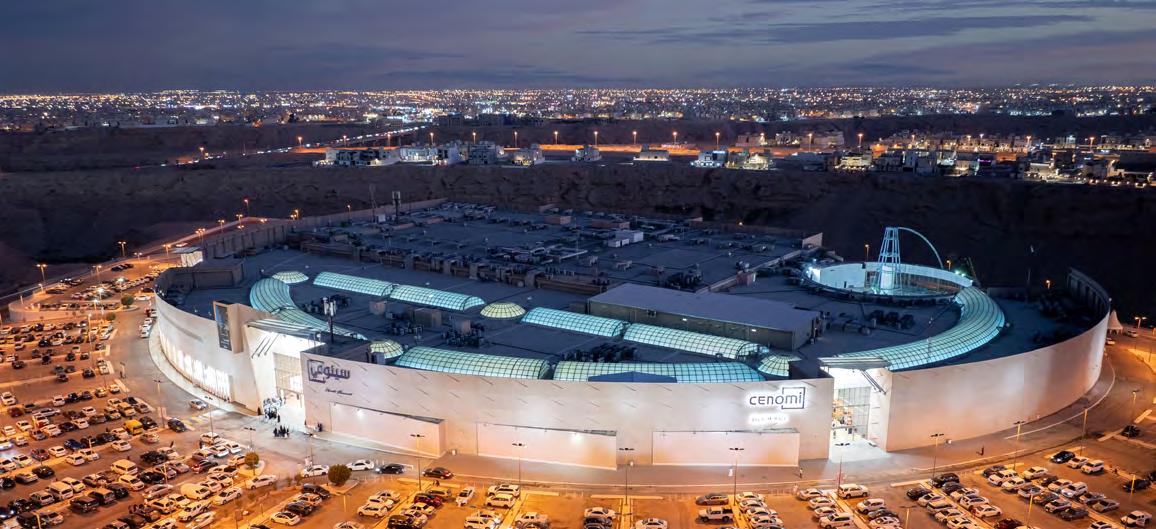
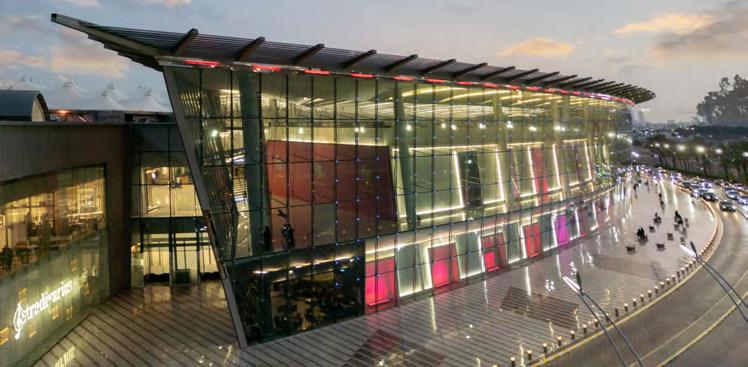
Salaam Mall in Riyadh offers a comprehensive retail and leisure experience, bringing together leading fashion, lifestyle, and dining brands within a welcoming environment designed for families and communities. The destination serves as a vibrant hub where visitors can shop, dine, and socialise, reflecting the Kingdom’s growing focus on integrated lifestyle and retail experiences.
staying deeply connected to local consumers, regulatory realities, and structural shifts in the market.
Some executives make the error of assuming there is a one-size-fits-all model, or that a developing market will readily absorb experiences that were successful elsewhere.
It’s the balance between conviction and adaptability that ultimately defines success.
What’s a belief about shopping centres you held early in your career that you’ve since completely changed your mind on?
Early in my career, shopping centres were viewed primarily as transactional venues — places designed to drive footfall and sales efficiency. Over time, that has fundamentally shifted, just as the reality for brick-and-mortar retail locations everywhere is changing.
Today, the most successful destinations are not built around transactions, but around time, experience, and relevance. People don’t come simply to shop; they come
to spend time, connect, discover, and engage. The digital world is no longer virtual or distant — it must be woven into the consumer experience.
That shift has changed everything: from how you curate tenants, to how you design spaces, to how you measure success.
As a woman leading a major real estate group in the region, what’s the conversation nobody is having that they should be?
I think we’ve made progress talking about representation.
THE REAL CONVERSATION SHOULD BE ABOUT ENSURING THAT DIVERSE PERSPECTIVES SHAPE STRATEGY, NOT JUST PARTICIPATION. THAT’S WHERE MEANINGFUL CHANGE HAPPENS.
In my experience, high-performing organisations always benefit from diversity of thought; it leads to
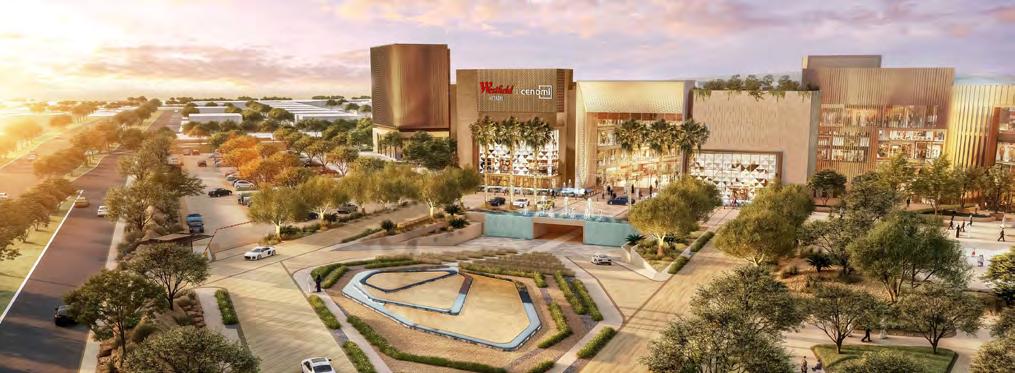
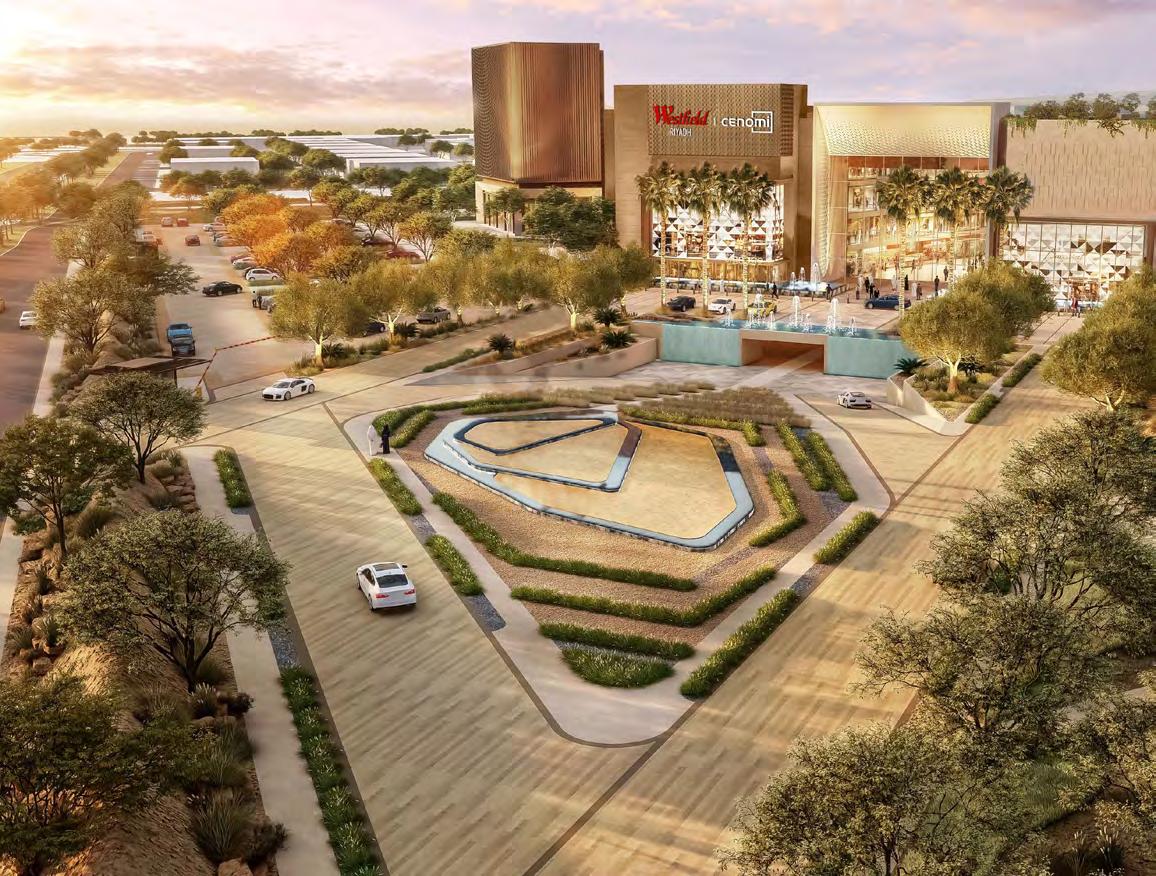
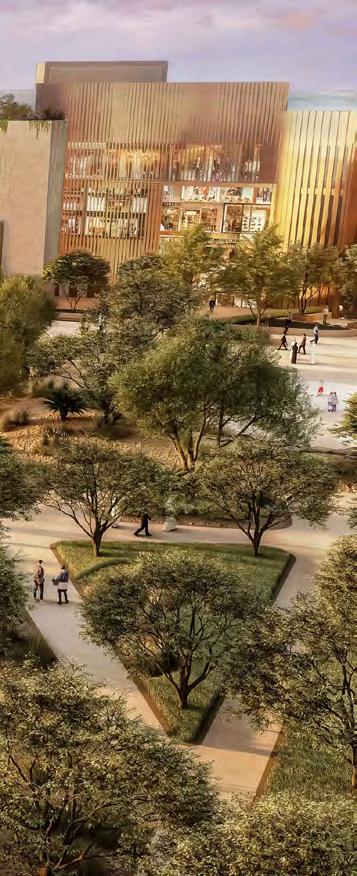
The luxury entrance at Westfield Riyadh offers a glimpse into one of Saudi Arabia’s most anticipated retail and lifestyle destinations. Designed to deliver a premium arrival experience, the space reflects the ambition of bringing world-class retail, luxury brands, hospitality, and entertainment concepts to the Kingdom. As part of the landmark Westfield Riyadh development, the destination is set to redefine the retail landscape in Riyadh and contribute to the goals of Saudi Vision 2030.
“If you focus only on retail, you miss a world of opportunity — for the business and the consumer. If you focus on experience, retail follows.”
better decisions, stronger and more connected teams, and ultimately better outcomes.
This is not purely a gender conversation; it’s about leadership. The most effective organisations are those that reflect the markets and communities they serve. As a sector that must ultimately serve every demographic, it is all the more important that all demographics are represented and celebrated within it.
Retail is being disrupted on every front. What does the shopping centre of 2030 actually look like to you?
The shopping centre of 2030 and beyond will be defined by experience and integration — physical and digital working seamlessly together.
It will function less as a traditional retail space and more as a platform where retail, entertainment, hospitality, media, and culture converge.
Brands will use these environments to create immersive experiences that drive both engagement and cultural relevance.
Ultimately, the role of the shopping centre shifts from facilitating
transactions to shaping how people choose to spend their time in the most meaningful way.
What’s the hardest call you’ve had to make as a CEO, and what did it cost you?
The hardest decisions as a CEO are rarely the most visible ones. They’re the ones that involve the most difficult trade-offs.
At different points in my career, I’ve had to make calls that prioritised multilayered transformation — whether that’s reshaping portfolios, exiting assets, or investing ahead of demand.
Those decisions come with real costs — financial, organisational, and sometimes personal.
But they are also what define the trajectory of a business.
Ultimately, leadership requires conviction.
You have to be willing to make decisions today that position the business for where the market is going, not where it is now.
Mall of Arabia is one of Saudi Arabia’s leading lifestyle and retail destinations, offering a diverse mix of international and regional brands, dining concepts, family entertainment attractions, and community-focused experiences. Strategically located near King Abdulaziz International Airport, the destination serves as a key hub for residents and visitors, bringing together shopping, leisure, and entertainment in a dynamic environment that reflects Jeddah’s evolving urban landscape.
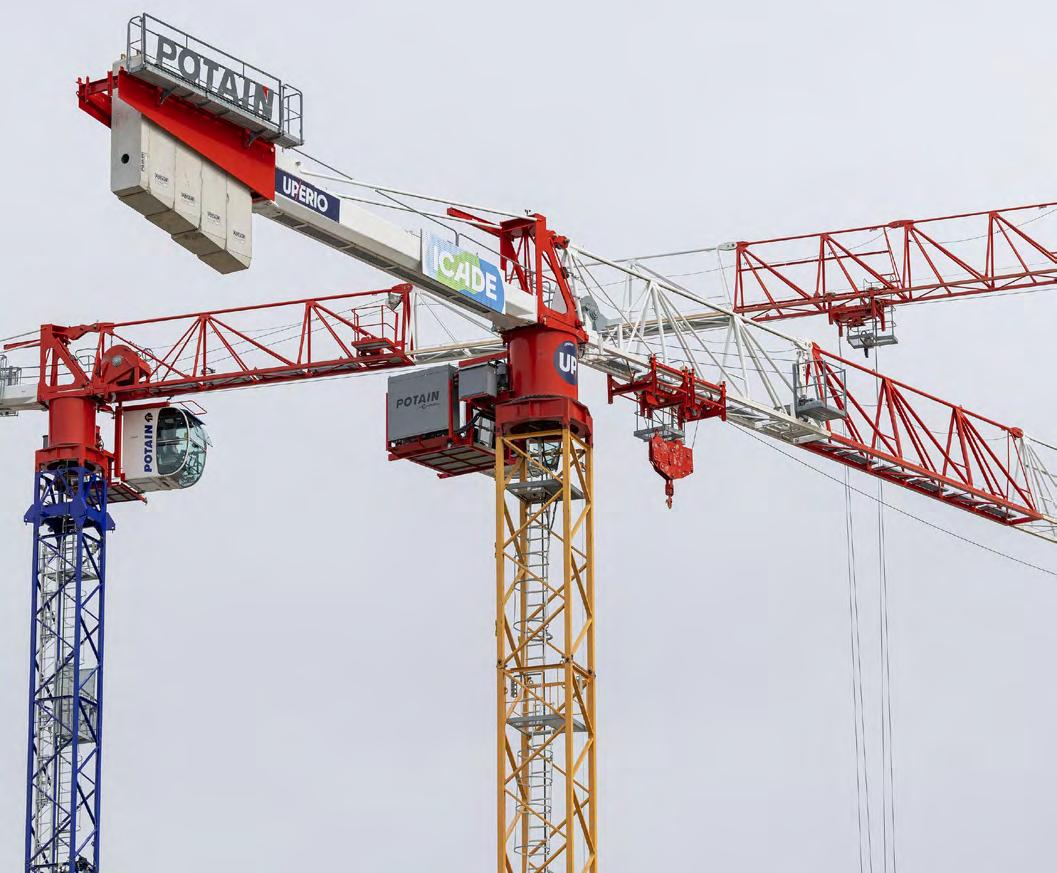
Potain MDT 269 Powers Major Hydropower Plant Upgrade in Northern Italy
Acentury-old hydroelectric plant in the Aosta Valley is undergoing a landmark transformation, and at the heart of the construction effort stands a Potain MDT 269 J12 topless tower crane. When complete, the rebuilt Hone power plant is expected to double its annual energy output from 50 to 100 GWh, making it one of the most significant hydropower upgrades in the region in recent memory.
The project, led by main contractor Cogeis and supported by Italian Potain dealer Fissolo Gru, presents a formidable set of logistical challenges.
OPERATING AT HIGH ALTITUDE IN A CONFINED VALLEY ENVIRONMENT, WITH LIMITED ROAD INFRASTRUCTURE AND EXACTING PRECISION REQUIREMENTS, THE SITE DEMANDS EQUIPMENT THAT IS AS ADAPTABLE AS IT IS CAPABLE.
The MDT 269 has proven equal to the task. Working with a 65 m jib at a 50 m hook height, the crane is handling the installation of a new high-capacity penstock, lifting sections directly from the storage area to the construction
cableway and eliminating several intermediate handling phases in the process. At the end of its jib, it lifts 3.1 t with ease, providing ample capacity throughout.
What sets the crane apart on a project of this complexity is not just its lift capacity but its operational intelligence. The Crane Control System enables configuration in as little as 15 minutes, while advanced load management, flexible control options, and the Ultra View cab combine to support productive and precise operation across demanding shifts.
For Cogeis, the choice has delivered tangible results. As Eng. Gabriele Bertino notes, the crane’s ability to handle penstock sections directly has streamlined the construction sequence and improved overall site efficiency in ways that a less versatile machine simply could not.
Work began in July 2025 and is scheduled for completion in 2028. Once the Hone project wraps, the MDT 269 is already earmarked for redeployment on other highaltitude infrastructure work, including the planned Cervinia 3S ropeway. For a crane built around the principle of longterm return on investment, it is exactly the kind of future its designers had in mind.
Drive the new way.
New IVECO S-Way: high technology and efficiency on all missions
A wide choice of Euro III / V diesel engines, delivering class-leading power from 360 hp to 560 hp Euro III / 570 hp Euro V and superior fuel economy.
12-speed HI-TRONIX automated transmission with the most advanced technology in its category, electronic clutch and best-in-class torque-to-weight ratio.
Full range of fuel-saving devices, such as anti-idling feature, EcoSwitch, Ecoroll and Smart Alternator.
Top levels of comfort and safety, with a completely redesigned and reinforced cab, featuring enhanced direct visibility and enlarged cab livability.
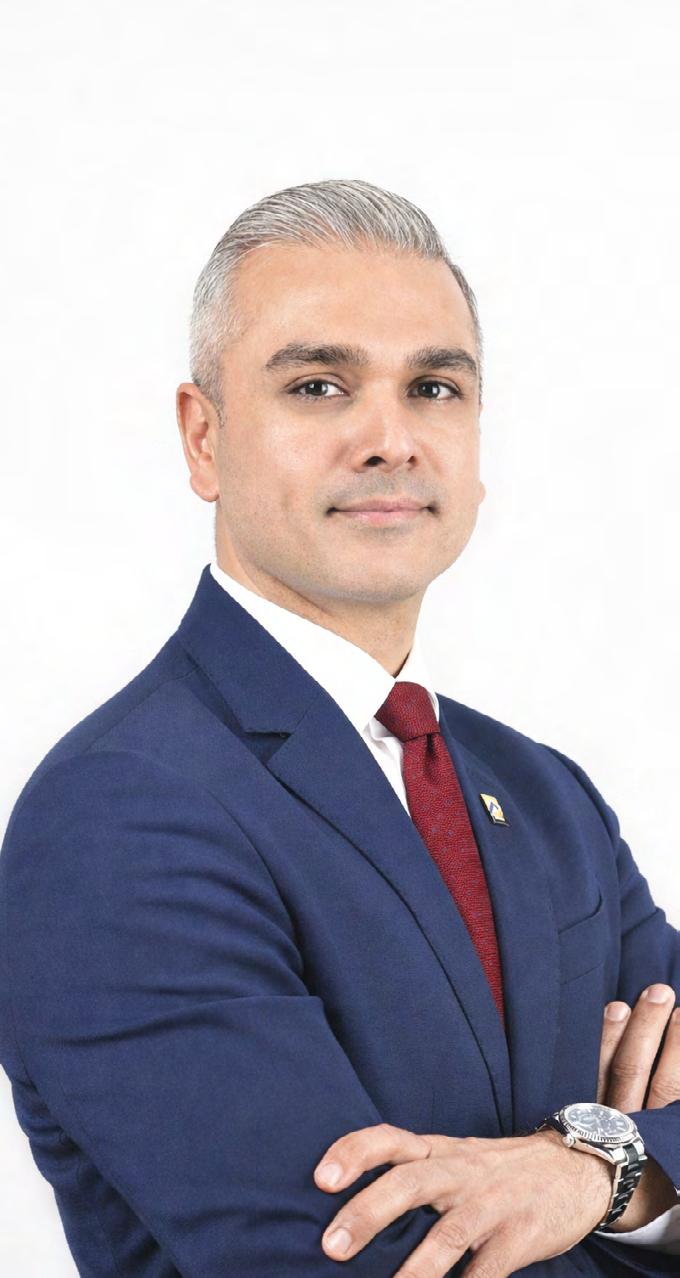
Muhammad Irfan Khokhar, CEO Muheel Facilities Management
A Necessary Shift in FM
From Static Contracts to Living Frameworks
Bio: Muhammad Irfan Khokhar is a driving force behind Muheel’s growth in Saudi Arabia, leading the company’s pursuit of operational excellence, digital transformation, and human capital development. A firm advocate of Saudisation and innovation, he has aligned Muheel’s strategy closely with Vision 2030, elevating the standards of integrated FM across the Kingdom and positioning the company at the forefront of a rapidly evolving industry.
In the facilities management (FM) industry, one persistent contradiction continues to shape project outcomes across the Middle East: while FM operations are inherently dynamic, the contracts that govern them remain largely static. This misalignment is not theoretical; it is a daily operational challenge that affects service delivery, cost management, longterm asset performance, and stakeholder relationships.
At its core, FM is a live, evolving function. Buildings do not operate under fixed conditions. Occupancy levels shift, assets deteriorate, technologies advance, and user expectations change, often faster than anticipated. Yet most FM contracts are structured as fixed, front-loaded documents, attempting to define every possible scenario at the outset. As industry discussions highlight, the more we try to define everything upfront, the less adaptable the contract becomes in a live environment.
This rigidity creates a structural disconnect. Contracts often succeed in defining what needs to be delivered but fall short in addressing how conditions may change over time. For example, a cleaning contract priced on 50% occupancy may quickly become inadequate when a building operates at full capacity and hosts frequent events. The contract has not failed due to lack of clarity; it has failed because it cannot flex with reality.
The cost of this static thinking is increasingly evident, particularly in fastevolving markets like the Middle East, where rapid urban development is the norm.
INDUSTRY ESTIMATES COMMONLY INDICATE THAT A SIGNIFICANT MAJORITY OF A BUILDING’S LIFECYCLE COST IS SPENT DURING OPERATIONS AND MAINTENANCE, COMPARED WITH A MUCH SMALLER PROPORTION DURING DESIGN AND CONSTRUCTION.
This makes FM not just a support function, but the primary driver of long-term asset value.
Despite this, procurement practices often remain cost-driven, especially in mid-
market segments, where contracts are awarded based on lowest-price assumptions that may not hold once mobilisation begins. This is further compounded by a persistent lack of alignment between the intrinsic cost of technical service delivery, client expectations, and the budgets allocated to achieve them. The result is a recurring cycle of scope gaps, variation claims, disputes, and strained relationships, as operational realities begin to diverge from commercial assumptions.
Across the region, many FM disagreements ultimately trace back to how scope is defined at the outset. Whether in soft services such as cleaning and waste management or hard services involving technical maintenance, the pattern is consistent: the contract establishes a baseline, but the operational reality demands more. The issue is not only drafting precision; it is whether the contract contains a disciplined mechanism for recalibration.
Another critical challenge lies in how risk and responsibility are allocated. Many contracts impose strict performance metrics without aligning them to factors within the FM provider’s control. For example, uptime requirements for critical systems may be contractually fixed, yet the assets themselves could be ageing, poorly documented, or lacking sufficient capital investment. In such cases, the provider is held accountable for outcomes but does not control the underlying variables. As noted in industry discussions, the contract measures outcomes, but does not align responsibility with control.
This imbalance creates a defensive operating environment, where service providers focus on managing contractual exposure rather than driving performance
improvements. A more mature model allocates risk to the party best able to control, influence or price that risk.
THE WAY FORWARD IS NOT TO MAKE CONTRACTS LONGER OR MORE DETAILED, BUT FUNDAMENTALLY DIFFERENT.
FM contracts should evolve into living frameworks, structured agreements designed to adapt over time rather than remain fixed.
A living framework does not abandon structure or accountability. Instead, it introduces mechanisms that allow the contract to respond to operational realities. This includes periodic scope reviews, governance structures for decision-making, and clearly defined processes for adjusting service levels as conditions change. In practical terms, this could include regular performance and scope alignment reviews, flexible service bands where delivery scales with occupancy or usage levels, joint governance forums that enable both client and provider to address change collaboratively, and transparent variation mechanisms that reduce friction around additional services.
The emphasis shifts from rigid compliance to continuous alignment. This is not a relaxation of accountability; it is a more disciplined way of maintaining alignment between service expectations, operational reality and commercial sustainability.
Importantly, a living framework also redefines the relationship between client and service provider. Instead of a transactional model, where one party enforces and the other delivers, it becomes a strategic partnership, where both sides share responsibility for outcomes.
The statement ‘FM is dynamic, but contracts are static’ is more than an observation; it is a call to action.
AS THE MIDDLE EAST CONTINUES TO LEAD GLOBAL INFRASTRUCTURE DEVELOPMENT, THE FM INDUSTRY MUST EVOLVE ITS CONTRACTUAL FRAMEWORKS TO MATCH THE COMPLEXITY AND PACE OF THE ENVIRONMENTS IT SUPPORTS.
Static contracts may provide certainty on paper, but in a dynamic world, adaptability is the true measure of success.
LMD Appoints Ben Nitin Ezhil As Chief Development Officer To Drive Strategic Growth
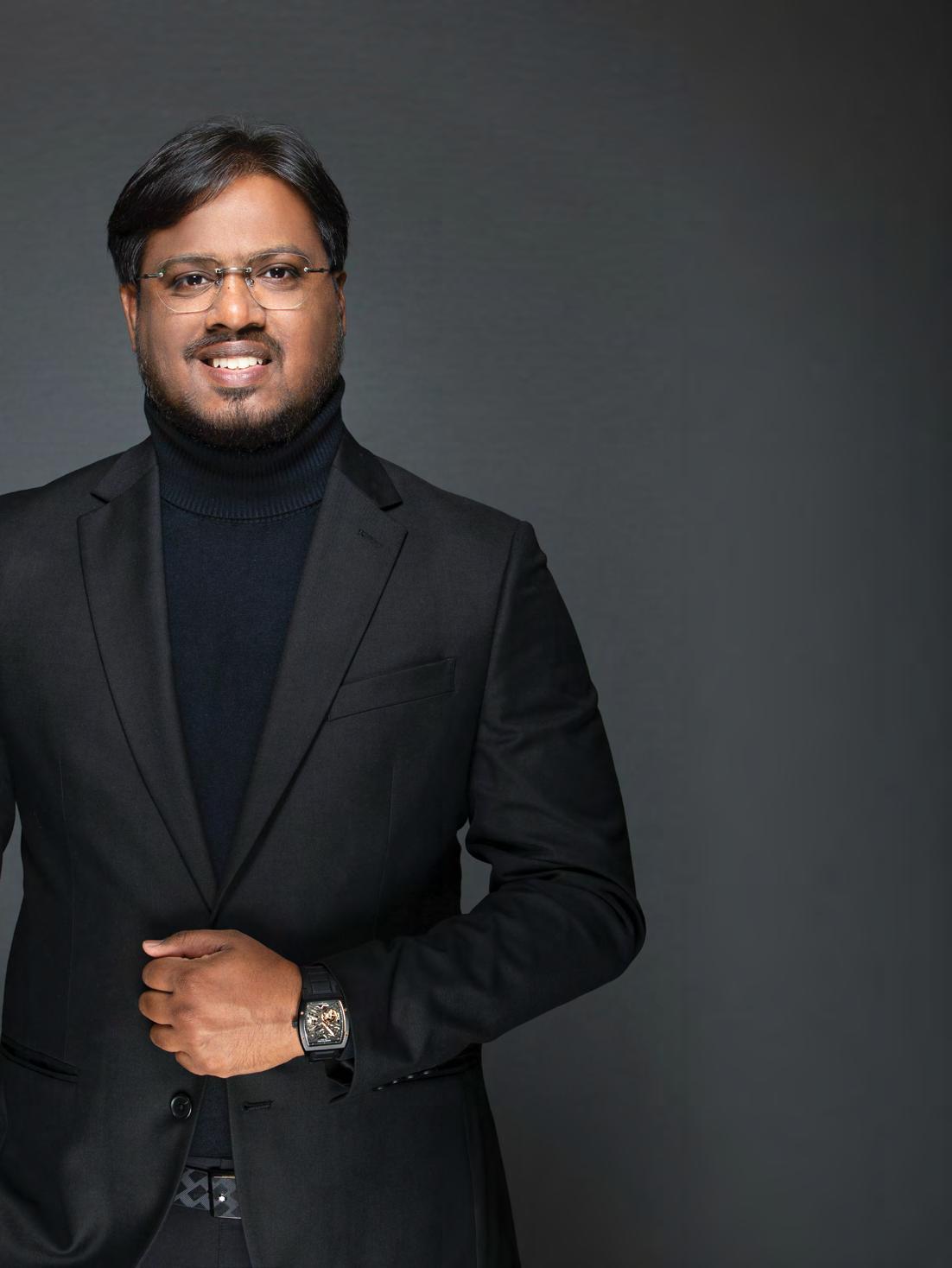
Leading UAE real estate developer LMD has appointed Ben Nitin Ezhil as Chief Development Officer, bringing seasoned leadership to the helm of its expanding development portfolio at a pivotal moment in the company’s growth trajectory.
IN HIS NEW ROLE, BEN WILL TAKE OWNERSHIP OF THE FULL DEVELOPMENT LIFECYCLE ACROSS LMD’S PIPELINE — FROM PROJECT CONCEPTUALISATION AND DESIGN MANAGEMENT THROUGH TO STAKEHOLDER COORDINATION AND EXECUTION STRATEGY.
The appointment signals LMD’s intent to sharpen its operational edge as it pushes forward with a series of high-impact developments across the UAE.
Ben arrives with a formidable track record, having previously served as CEO of both Mulk Properties and Uniqube, where he earned a reputation for delivering forward-thinking projects that balance design ambition with commercial precision. His ability to navigate complex development landscapes while keeping an eye on market relevance makes him a natural fit for LMD’s next chapter.
Hammad AlAbbar, Managing Partner at LMD, said: “We are delighted to welcome Ben to LMD. His depth of experience and strategic mindset align perfectly with our vision for growth. As we continue to expand our footprint, his leadership will play a critical role in shaping and delivering our next generation of developments.”
Ben added: “I am excited to join LMD at such a dynamic stage of its growth journey. LMD has established a strong reputation for quality, ambition, and development excellence, and I look forward to contributing to its continued success by delivering distinctive developments that respond to evolving market demands.”
With its leadership platform now further strengthened, LMD continues to build out a robust development pipeline, staying firmly focused on delivering projects that set new benchmarks for quality and innovation across the UAE’s increasingly competitive real estate market.
LMD
Ben Nitin Ezhil, Chief Development Officer of
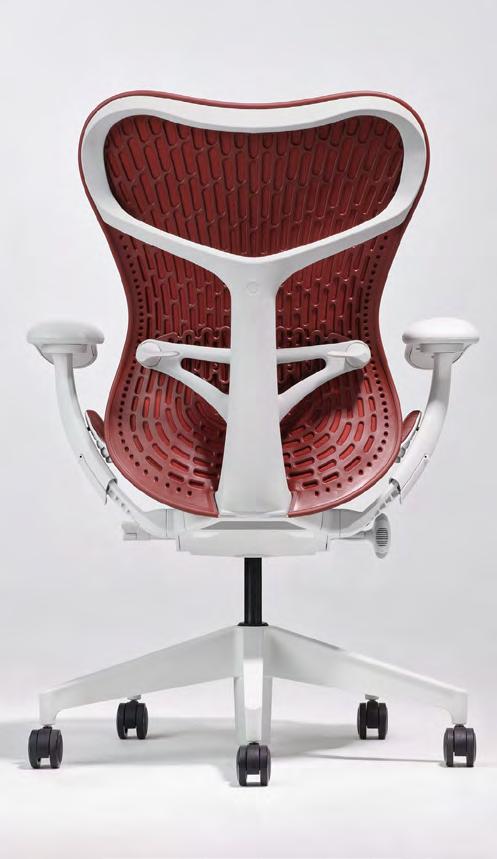
The Mirra 2 Chair just keeps getting better. How? We updated the chair so it’s 30 percent lighter than the original Mirra - and the chair’s nylon base and spine are now 100 percent recycled content. We also gave it a fresh, inspired colour palette so it can look professional, casual, or sporty. One thing that hasn’t changed is the flexible yet supportive design that allows your body to move naturally and freely - the way it was meant to move.
The Mirra® 2 Chair is turning heads again
SAR 112 Billion and Counting: Inside Saudi Arabia’s Q1 Real Estate Surge
According to CBRE, despite moderating GDP growth and a residential rent freeze, Saudi Arabia’s property market opened 2026 with renewed momentum — as FDI soared, office space ran dry, and Vision 2030 pushed forward.
CBRE Middle East, a global leader in commercial real estate, released its Q1 2026 Saudi Arabia Real Estate Market Review, highlighting a market defined by strategic recalibration, steady structural demand drivers, and continued investor confidence despite a more complex regional economic backdrop.
Saudi Arabia’s macroeconomic environment in early 2026 reflects a period of adjustment, shaped by external pressures and evolving domestic policies. Real GDP growth moderated to 2.8% year-on-year in Q1, with full-year forecasts for 2026 revised to 1.9%, due to the significant reduction in oil production and exports and softer non-oil expansion.
Inflation remains stable at 1.8%, while foreign direct investment saw strong momentum, rising 90% year-on-year in Q4 2025, signalling confidence in the Kingdom’s long-term prospects. Fiscal policy remains expansionary, supporting major infrastructure investment alongside ongoing capital market reforms aimed at enhancing liquidity and investor access. Against this backdrop, the real estate sector continues to demonstrate strength. Transaction values reached SAR 112 billion in Q1 2026, up 6.8% year-on-year, supported by improved financing conditions and stronger access to capital. At the same time, regulatory reforms, including foreign ownership measures and increased market transparency are strengthening institutional participation and aligning the sector with global standards.
The development pipeline is also evolving, with a gradual shift from construction-led growth to delivery and long-term asset management. Major projects continue to advance, with Riyadh remaining the focal point of activity. Strategic repositioning is evident across flagship developments, including NEOM’s growing focus on AI and data infrastructure, alongside continued progress in projects such as Diriyah and Jeddah Tower. This sustained pipeline, backed by public and private
investment, reinforces the Kingdom’s long-term Vision 2030 ambitions.
The office market remains fundamentally undersupplied, particularly for prime spaces, with Grade A occupancy levels remaining at close to full capacity. Demand continues to be driven by the Regional Headquarters (RHQ) program, attracting hundreds of international firms to establish a physical office presence in the capital. While new supply is expected to moderate rental growth in the longer term, structural demand continues to exceed availability. Across other markets such as Jeddah and Dammam, office performance remains stable, although a clear divergence is emerging between modern Grade A assets and older stock, with occupiers increasingly prioritizing quality, flexibility, and digital infrastructure.
The residential sector continues to see robust activity, supported by a growing population, government-backed housing initiatives and expanding mortgage penetration. However, ongoing supply deliveries across major cities are contributing to a more balanced market environment. Accordingly, residential rental rates in Riyadh softened by 2.1% year-on-year in March 2026, marking a shift toward more sustainable pricing across the capital. This softening underscores the impact of the September 2025 regulatory reset (5-Year Rent Freeze), which brought the cycle of sustained rental growth to an end. Under REGA’s new mandate, rents for existing leases are fixed at their September 2025 levels, while newto-market inventory must align with the
last recorded value on the Ejar platform. This regulatory shift provides a stabilised baseline for both existing tenancies and new inventory, effectively cooling speculative spikes.
The retail sector continues to demonstrate a marked shift towards digital commerce, a trend further accentuated by recent events, with impacts on consumer movements and spending trends. Electronic payments accounted for 85% of total retail payments in 2025, demonstrating accelerated digital adoption. Domestic consumption, particularly in F&B and fashion, remains strong and helps stabilise the sector, offsetting fluctuations in international tourism. New retail supply is increasingly integrated into mixed-use masterplans, with developers prioritising F&B outlets as key footfall drivers. Major projects like The Avenues Riyadh, Westfield Jeddah, and Westfield Riyadh are set to open soon, adding significant space. Despite market shifts, rents for super regional and
regional malls have remained stable, with landlords generally maintaining rates and not widely offering concessions. The focus for successful retail centers is now on creating walkable, community-centric spaces that prioritise wellness, luxury, and digital features.
Hospitality market performance reflects the impact of restrictions on international leisure movements and regional business travel, with year-to-date (YTD) declines in occupancy and RevPAR versus Q1 last year. The biggest impact has been felt in Riyadh and Dammam, although Jeddah and Mekkah remain in positive territory across all metrics YTD, reflecting the positive impact of religious tourism demand. However, amidst sustained government support, the future supply pipeline continues to grow, with thousands of new keys under development across primary and secondary cities, with the hospitality sector remaining as a central pillar in Saudi Arabia’s ambition to attract 150 million annual visitors by 2030.
Industrial & Logistics continues to emerge as a key pillar of economic diversification. Demand for Grade A warehousing remains strong amidst supply constraints, driving rental growth across major hubs such as Riyadh and Jeddah. Strategic infrastructure projects, including logistics corridors and integrated supply chain developments, are further enhancing the Kingdom’s position as a regional trade and distribution hub. Despite operational challenges linked to global supply chain disruptions, longterm fundamentals remain highly positive, supported by e-commerce growth and industrial expansion.
Matthew Green, Head of Research at CBRE MENA, comments:
“Saudi Arabia’s real estate landscape continues to evolve at pace, responding to recent regulatory changes and shifting demand patterns. This is resulting in a growing divergence in sector-level performance.”
Matthew Green, Head of Research at CBRE MENA
CRACKING STONE CODE THE
Across the Middle East’s most ambitious giga-projects, natural stone is doing the heaviest visual work of all. It is the material that defines a facade, anchors a heritage narrative and tells a visitor, before a single word is spoken, what a place is made of. For the past five years, Wajdi Marroun, Managing Director of Versatile International, has been the man ensuring that work is done with the rigour, expertise and independence it deserves.
Words by: Vibha Mehta
Photography: Farooq Salik
Videography: Joel Amparo and Eduardo Buenagua
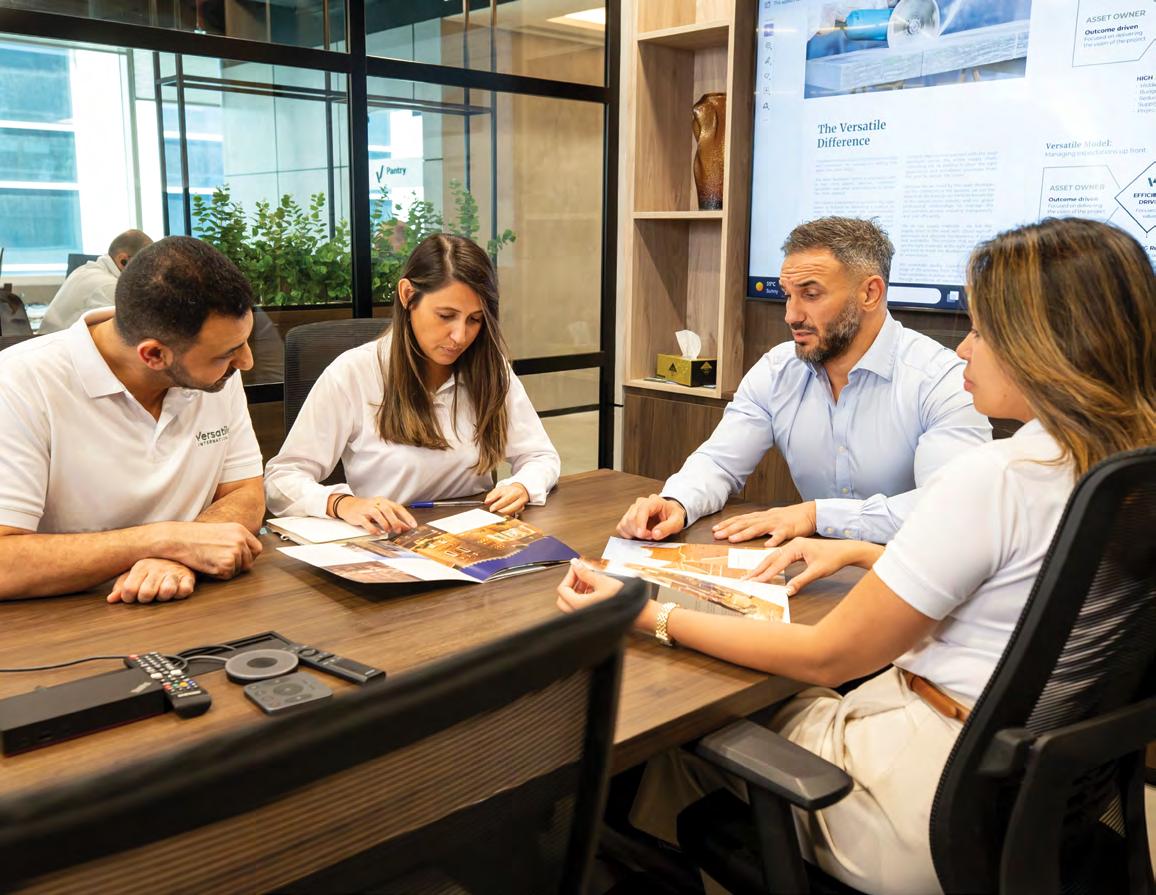
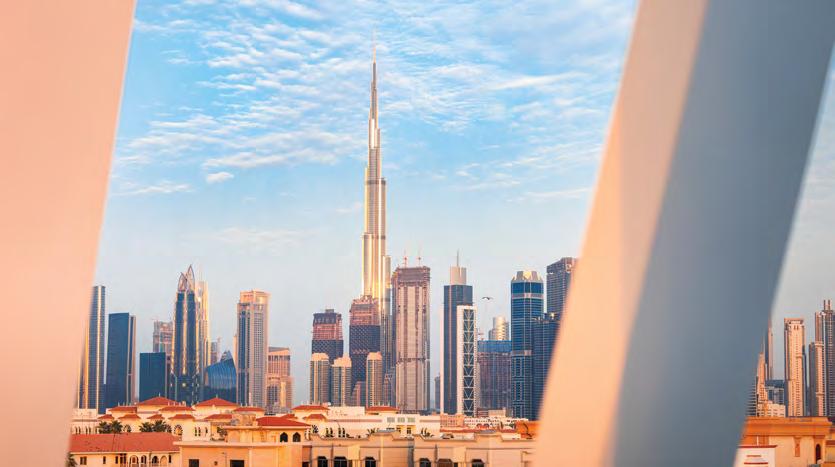
It is one of those blindingly bright Dubai mornings when the city looks like it has been freshly rinsed and set out to dry, all glass and light and the low hum of ambition. The offices of Versatile International sit inside Bay Square with the kind of understatement that, in this city, feels almost radical. No lobby installation of polished marble samples arranged for effect. No backlit logo asserting its own importance. What greets me instead is a working office, mid-morning and already deep in the business of the day, and somewhere near the centre of that motion is Wajdi Marroun. He is leaning across a desk when I arrive, in conversation with two members of my video team, who are walking him through what the shoot requires. Sleeves rolled to the elbows, a coffee
going cold beside him, he listens with the focused patience of someone entirely unbothered by a camera in the room. He does not notice me immediately. He is, I will come to understand, rarely not in the middle of something.
We settle into a sofa outside his office, away from the crew and the equipment, and the conversation finds its own rhythm almost immediately. This is the second time I have sat down with the Managing Director of Versatile International, the Stone Project Management Consultancy, and what registers again, almost immediately, is how thoroughly he resists the theatre of seniority. There is no studied authority in the way he carries himself, no careful performance of executive distance.
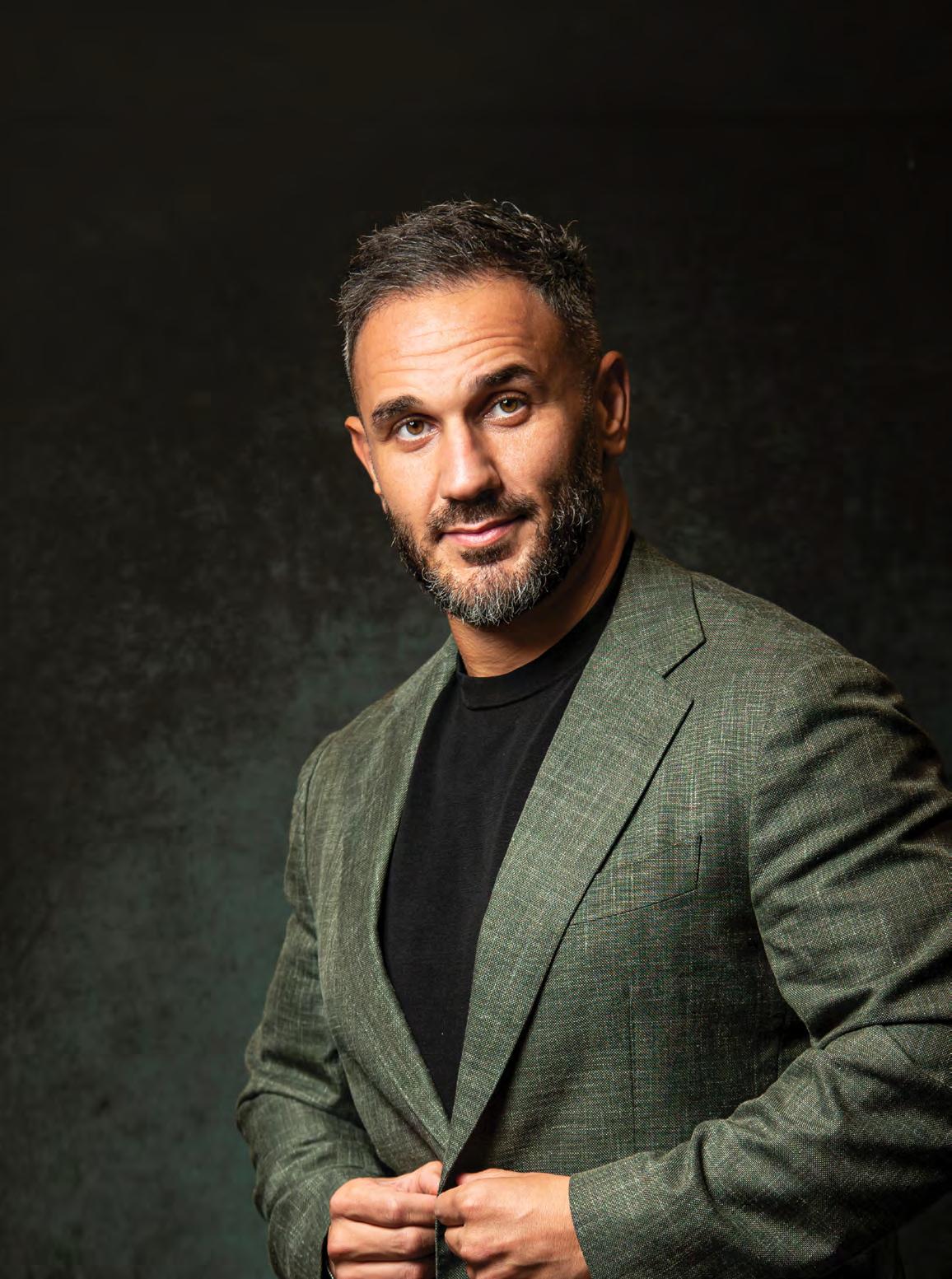
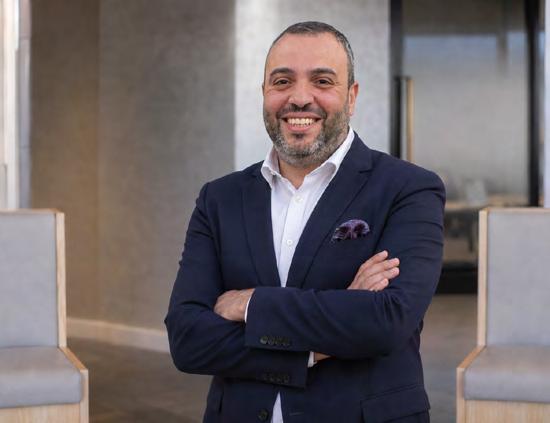
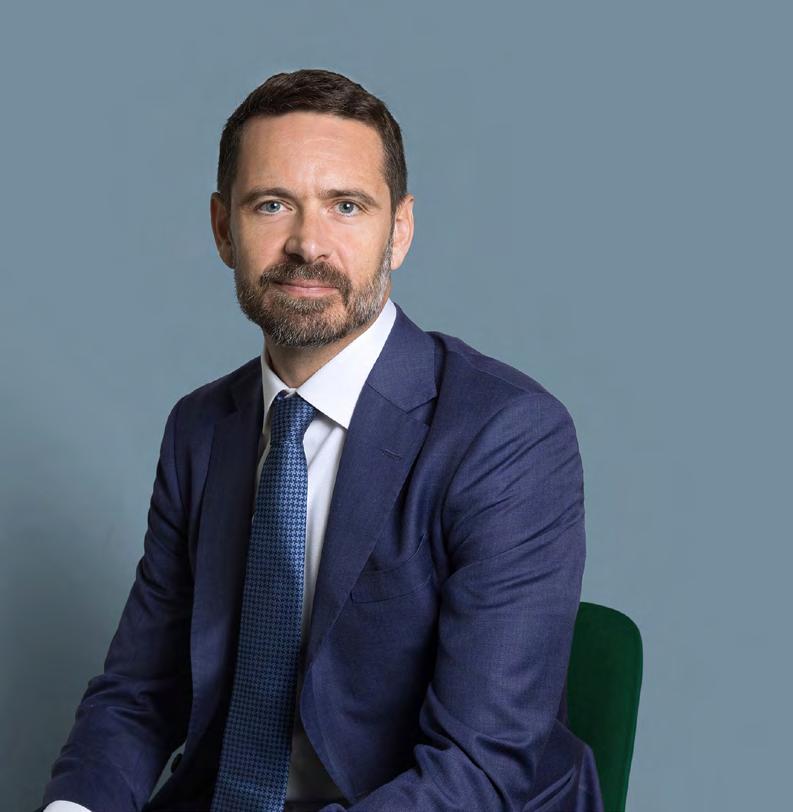
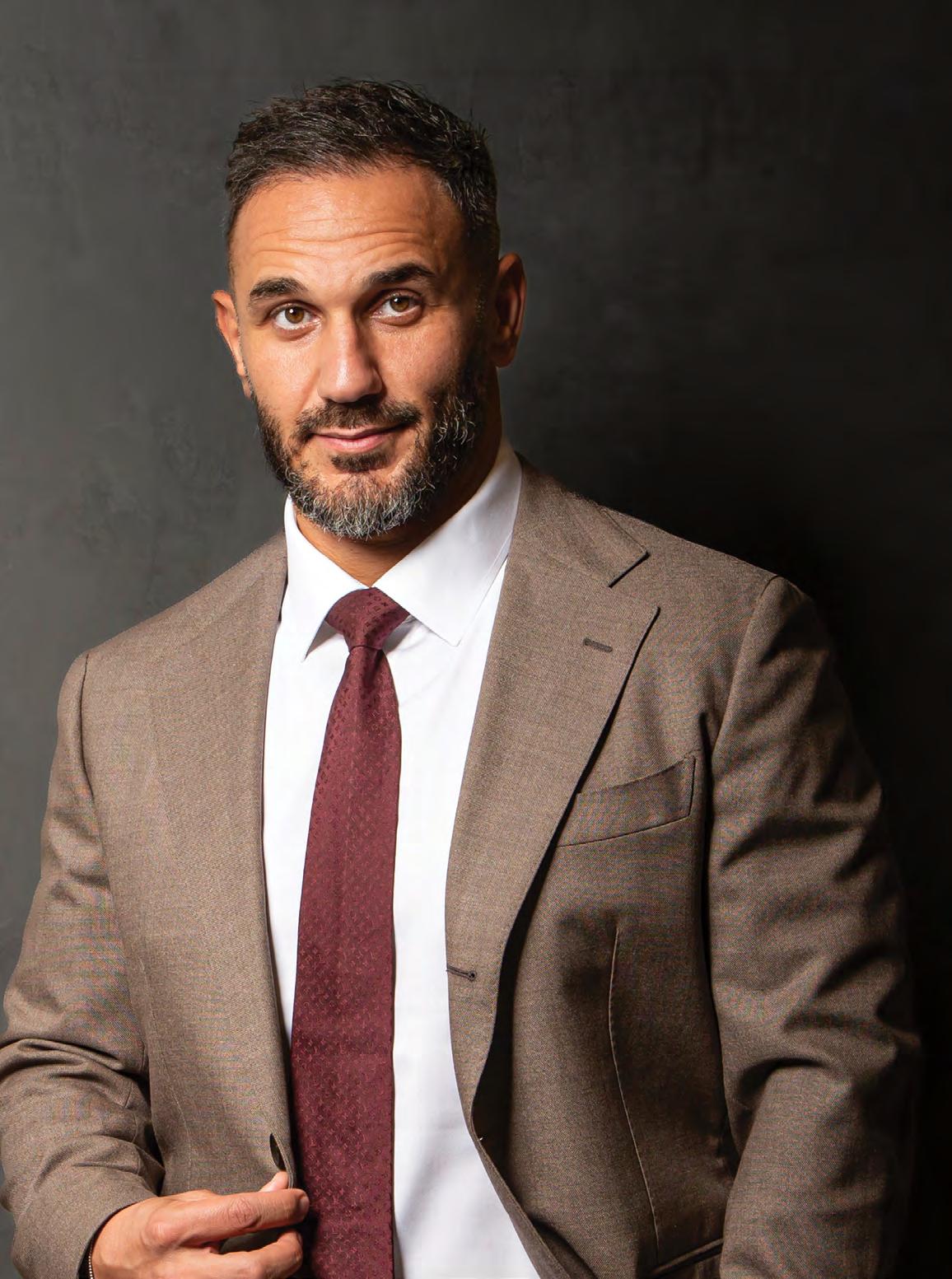
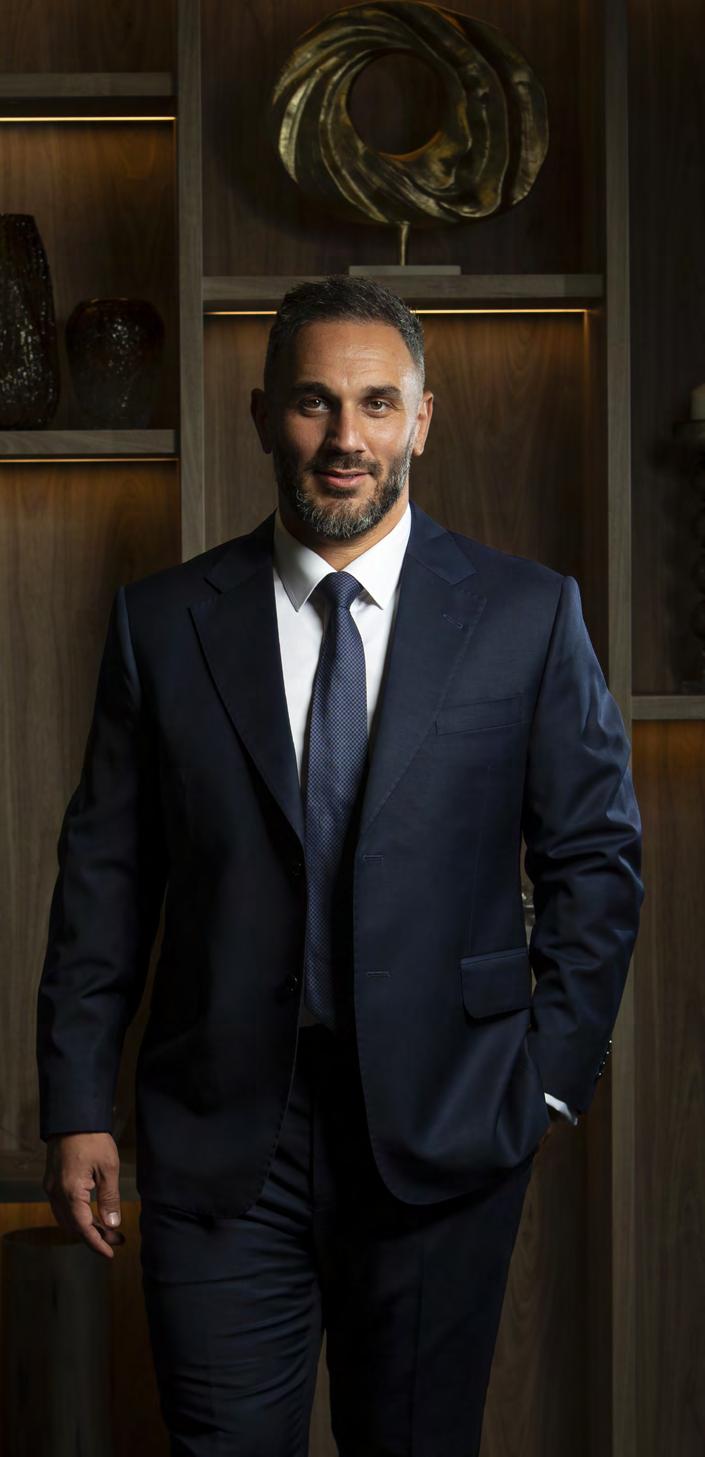
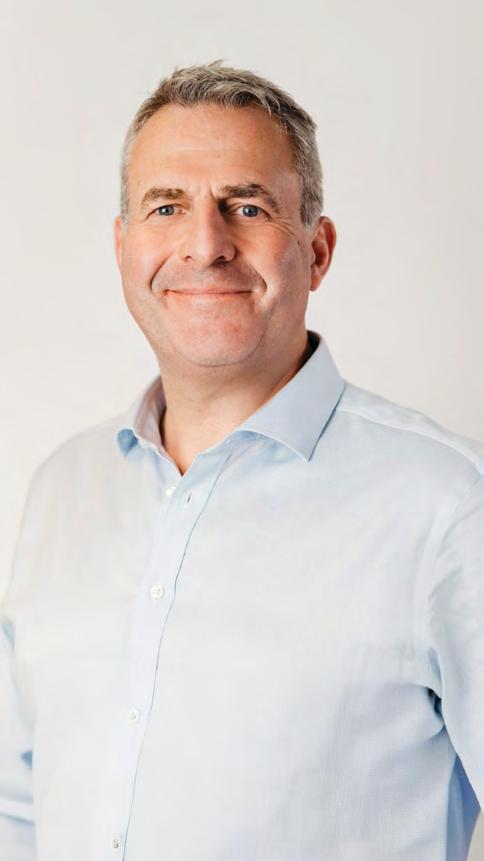
Wajdi Marroun
Managing Director of Versatile International
The greeting is warm and unhurried. He sits with the ease of someone who has long since stopped worrying about how things look and started concentrating entirely on how they work. His calm is not a quality he has cultivated for the room. It is the natural register of a person who has been through enough difficult mornings to know that composure, more than almost anything else, is contagious.
When the subject of what Versatile International actually does comes up, Wajdi is direct. There is no hedging, no corporate preamble. He leans forward slightly, as if the answer matters too much to deliver from a distance.
“We don’t consult by spreadsheet or by PowerPoint. We have very much real-world, hands-on experience. That is what makes us different.” says Wajdi Marroun, Managing Director of Versatile International.
A Discipline Built From Scratch
Versatile International was not imported into the Middle East fully formed. The firm is part of Versatile Group with roots running back to 1974 in Australia, where the
business was established purely in stone: tiles, marble, granite, limestone. Over five decades, Versatile Group has emerged as Australia’s largest fully integrated construction company with more than $4bn in work in hand across five core brands, with Versatile International leading its consultancy arm and expansion in the Middle East. Locally, Versatile International has accumulated the kind of knowledge that cannot be taught in a classroom or distilled into a methodology document. It had to be earned on site, project by project, through supply chains that failed and quality issues that had to be resolved at cost and relationships with quarries that took years to build properly.
When Versatile Group’s CEO and Chairman Marco Fahd identified the opportunity to bring that expertise to the Middle East in 2019, the timing was, in retrospect, almost uncanny. The region was entering a new phase of development at enormous scale, and the traditional model for procuring and managing natural stone was already showing its limits. Quality compromises were accumulating quietly. Hidden costs were embedded in procurement structures that developers rarely had full
visibility into. The gap between a developer’s vision and what was actually arriving on site was, in many projects, measurable and expensive.
Versatile’s SPMC proposition was straightforward in principle and radical in practice: sit entirely on the client side, take no commissions, mark up no materials, and bring the same forensic expertise to stone that architects bring to design and engineers bring to structure. The firm now has access to more than 200 quarries across 15 countries on five continents. Its specialists are embedded not just on project sites but inside quarries and processing plants, helping to develop local supply chains to international standards.
Wajdi is matter-of-fact about the size of that gap when Versatile first arrived. There was no established category for what the firm was offering. No established expectation on the client side. Explaining the value proposition required patience, proof and, occasionally, a willingness to walk away from projects where the model was misunderstood. The analogy he returns to is a simple one.
“No developer would commission a major project without an architect. As natural stone becomes more prominent in ambitious developments, navigating procurement and installation without specialist oversight is equally risky.”
It is a comparison that took time to land. In a market traditionally driven by lowest-cost procurement, reframing stone from a line item into a discipline requiring independent governance was, he acknowledges, an uphill conversation.
700,000 Square Metres Of Living Heritage
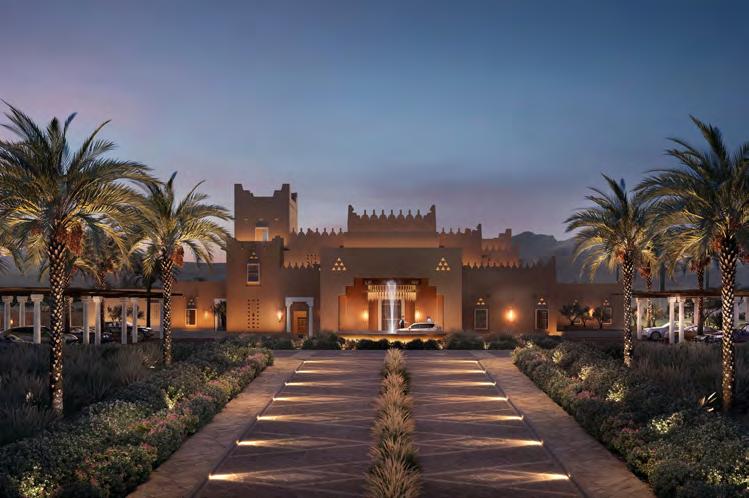
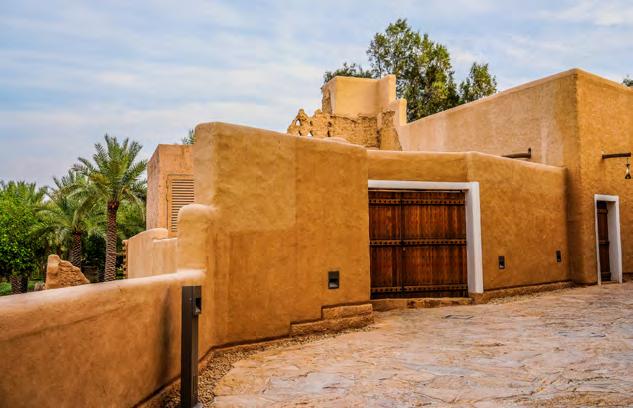
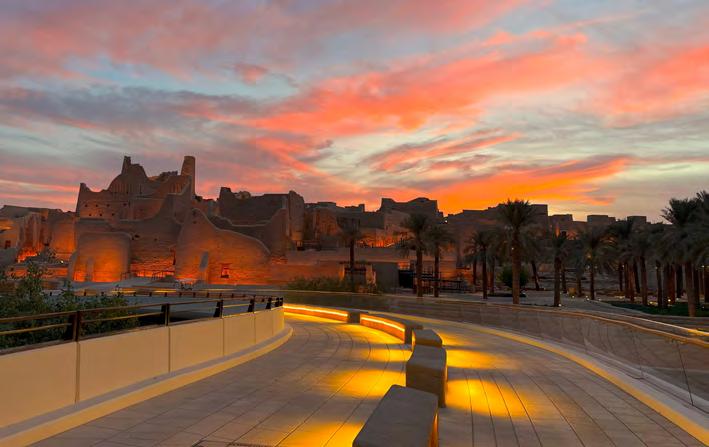
The project that has done more than any other to answer that question is Diriyah. The vast heritage-led development on the outskirts of Riyadh, home to a UNESCO World Heritage site and steeped in the founding history of Saudi Arabia, is arguably the most significant project of its kind anywhere in the world. Versatile’s scope includes overseeing quality control processes and supporting the sourcing and delivery of more than 700,000 square metres of Riyadh limestone, a local material whose warm, sandy character is fundamental to the project’s mandate to honour the architectural identity of the region.
The choice of stone is not incidental. Diriyah represents a deliberate counter-statement to the towers and spectacle of much contemporary Gulf development.
“There was such a big gap. We kept asking ourselves: why has no one done this before? Why has this not been taken seriously?”
There are no high-rises. No glass facades. No concessions to the flashy. The project is, as Wajdi describes it, very much paying homage to the history of the region, and stone, with its natural variation and connection to the earth, is the material best placed to carry that intention faithfully through to the finished surface.
Versatile has also been instrumental in working with key stakeholders in the Kingdom to support the opening of Ministry-approved Riyadh limestone quarries, helping ensure that local supply chains can meet the demands of a project of this complexity and scale. For Wajdi, the significance of that contribution goes beyond the commercial.
“The way Diriyah has changed since my Nrst day on site is just mind-blowing. The scale of what is being done to stay true to that heritage piece is unbelievable.”
He has been watching the project develop for six years, and what strikes him most is not the scale, extraordinary as it is, but the consistency of intent. Projects of this ambition can drift. Commercial pressures accumulate. Shortcuts present
Royal Equestrian and Polo Club - Architectural Excellence in Saudi Arabia’s Premier Equestrian Facility
themselves. The fact that Diriyah has held true to its founding vision is something Wajdi acknowledges with plainly felt pride. Stone, he says, is what makes that truth visible.
The Open Door
Whatever Wajdi is, he is not a Managing Director who runs things from a distance. The open-door policy he describes in conversation is not a figure of speech. During the course of our interview, three separate colleagues knock and enter, each with something that requires a decision or a direction. He handles all of them without breaking eye contact with me, without the studied performance of a man pretending to multitask gracefully. He is simply present for everyone at once, which turns out to be its own kind of discipline.
His educational background, a Bachelor of Marketing and a Master of Accounting, or a master’s degree in accounting, is not the most obvious springboard into specialist stone consultancy. He joined Versatile in 2014 in different capacities within the business, growing into the Managing Director role through years of proximity to the work and the people doing it. He is the first to say he is not a stone expert in the technical sense. What he is, and what he sees as his principal function, is someone who creates the conditions in which stone experts can do their best work.
“I can confidently say we have some of the best people in the stone industry working for us. My job is to make sure they are
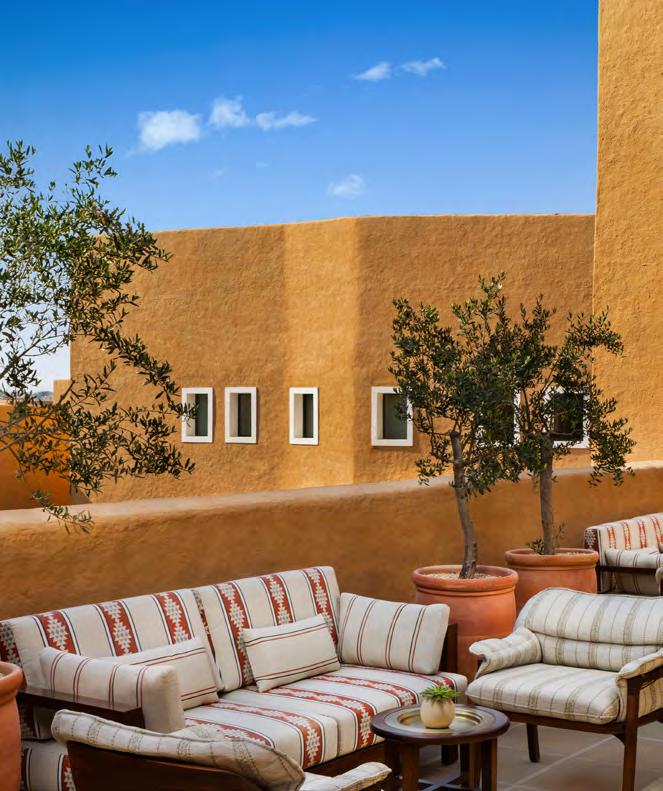
“The yellow limestone being used throughout is a Riyadh limestone. It is local, it is authentic and we have played a significant part in bringing that to life.”
Wajdi Marroun Managing Director of Versatile International
in the right position and that they actually enjoy what they do.”
Leadership, for Wajdi, begins not with authority but with presence. He is at his desk as early as the earliest member of his team and as late as the last one out. He describes the act of physically showing up as non-negotiable, not as a demonstration of dedication but as a simple signal to the
people around him that they are not alone in whatever they are facing.
“You can’t be a leader behind a closed door. You can’t lead with your back to the team. Being physically present, being at the forefront, that is my number one.”
He speaks about giving people opportunity with a particular sincerity, rooted in the fact that someone once extended the same generosity to him. Several members of the Versatile team were not hired for their credentials alone but for what Wajdi describes as a certain spark, an intangible quality that no résumé can capture or interview reveal, yet immediately visible to anyone paying close enough attention.
“We’ve had people join us with diverse experiences. It’s not just their technical expertise that stands out, but a certain spark, the drive and willingness to learn that tells you they are worth investing in.”
The humility in all of this is not false modesty. Wajdi is clear-eyed about what it takes to grow a business, and he is the first to acknowledge that Versatile’s expansion has been built on the collective strengths of its team. There are colleagues who are technically brilliant at stone consulting but would find presenting a strategy more challenging, just as there are those who can command a boardroom
but would defer to others on the finer points of material selection.
When the Market Catches Up
What began as a concept few in the industry understood has evolved into a recognised discipline. The SPMC model that Marco, Wajdi and their colleagues created has come a long way from its early days. Building the discipline required not only developing the methodology itself, but also investing years in educating the market. Today, that effort has paid off. Clients who once needed lengthy presentations to understand the concept now recognise its value almost immediately. In many cases, the most compelling explanation is no longer a slide deck, but a visit to a project where the outcomes can be seen firsthand.
“ Our unique business model is led by our mission of getting it right from the start. That is how we add true
value to our clients’ vision.”
His vision for success extends well beyond Versatile’s own growth. As pioneers of the specialist SPMC model in the region, he sees one of the company’s greatest achievements as helping establish an entirely new
industry vertical. The rewards of being a first mover have been significant, but so too has the responsibility of building market understanding and demonstrating value. Today, with new entrants in the space, he sees it as a positive sign of a healthy and growing sector and evidence that the market is growing, demand is increasing, and the value of stone project management consultants is now widely recognised. For Versatile, helping create a category that others choose to enter is one of the strongest validations of its success.
Being first into a market, he acknowledges, carries its own pressures. There are no benchmarks to reference, no established models to adapt. Every mistake is a first mistake, and every lesson is learned at the firm’s own expense. The model Versatile operates today has adapted and evolved significantly since it launched in 2019. That evolution, shaped by the specific demands of giga-project delivery in this region, is itself one of the firm’s most significant assets.
“When you’re the first into a market, it is a blessing and a curse. You have far more pressure to constantly evolve and change. But that is also what has made us sharper and we’ve been able to carve out a hugely
Your Palace of Experiences
MULTIMEDIA: Farooq Salik, Joel Amparo, Eduardo Buenagua and Harton Otlang Gold Sponsors
The MEP and FM industries are rarely in the spotlight, yet they are the invisible backbone of every building, hospital, airport, and urban development that keeps this region moving.
From the engineers ensuring critical infrastructure runs without failure to the facilities managers maintaining world-class environments around the clock, these are the professionals who make everything else possible.
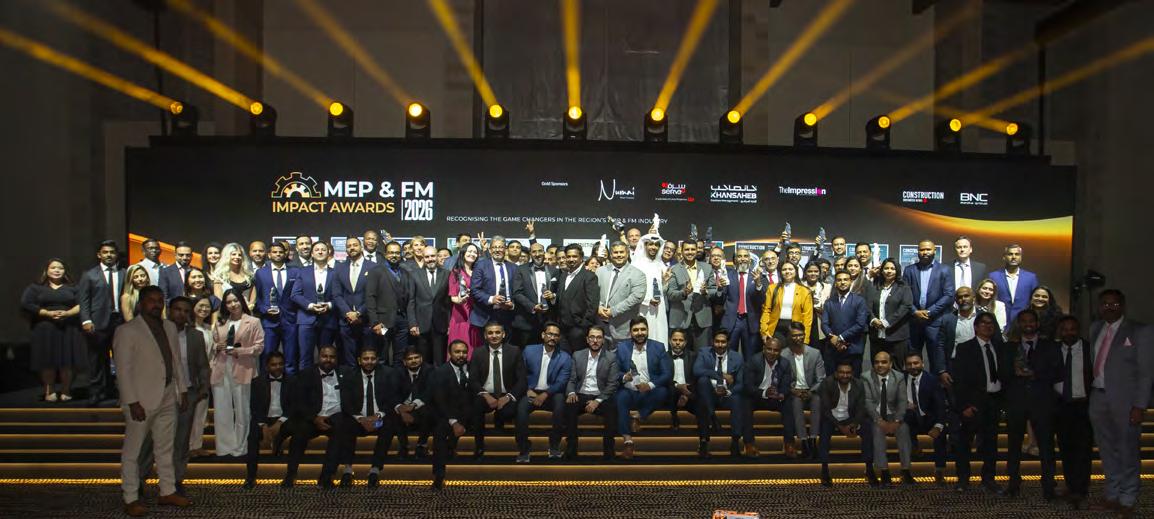
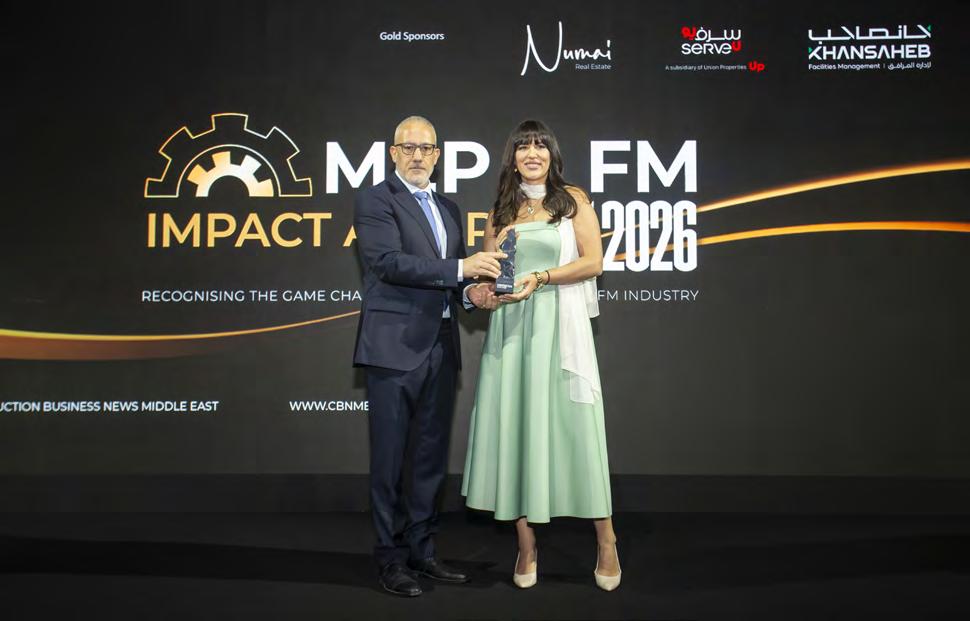
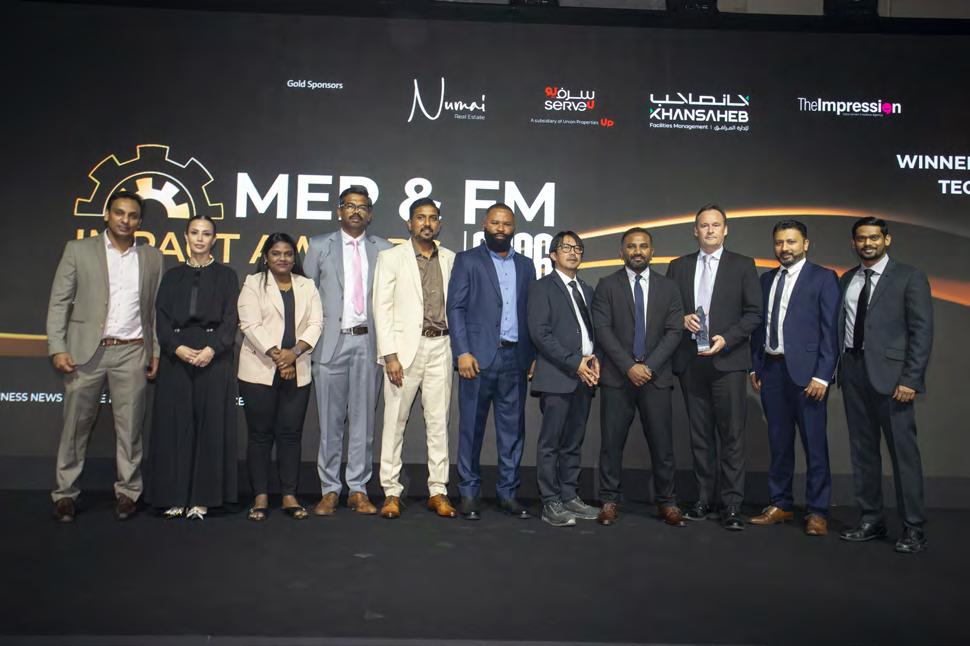
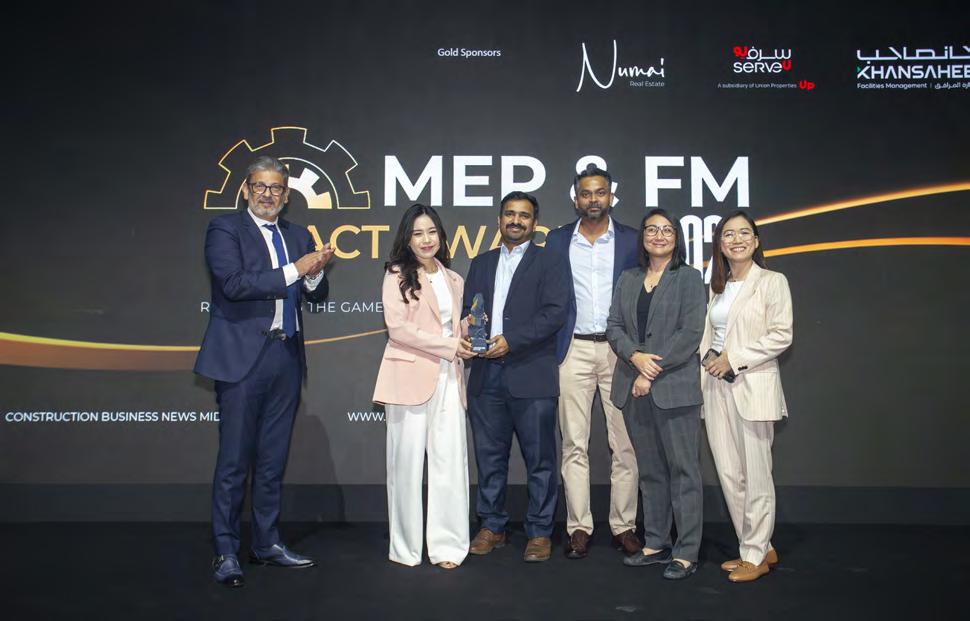
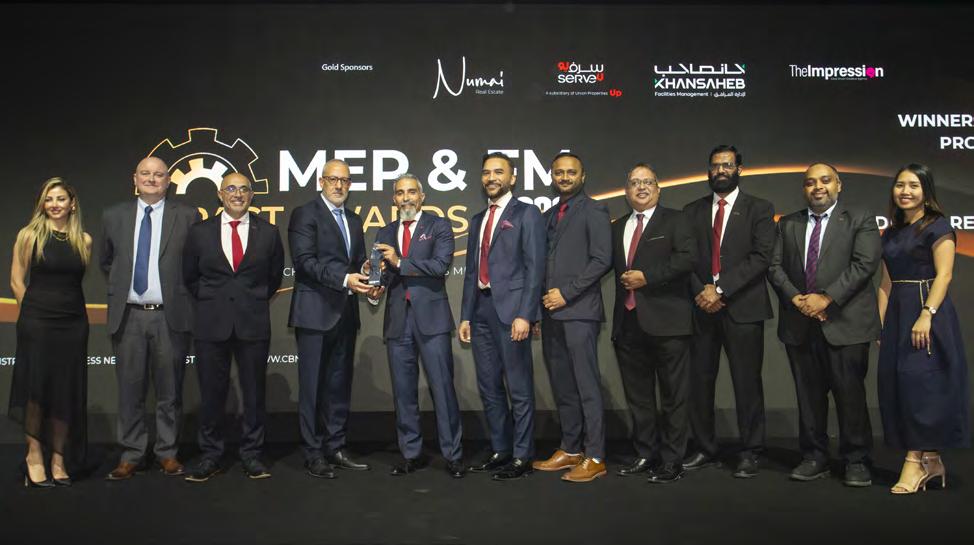
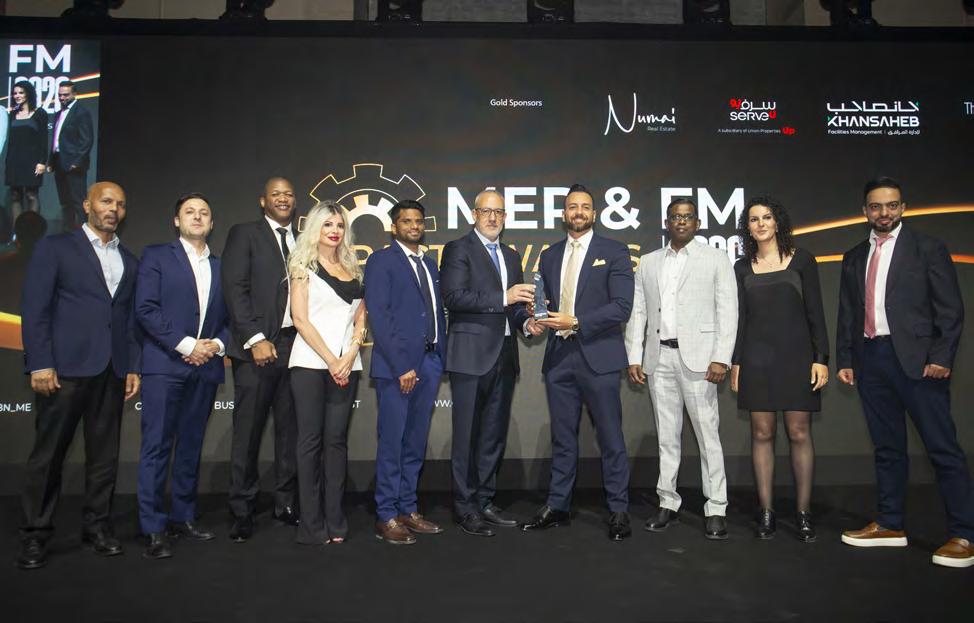
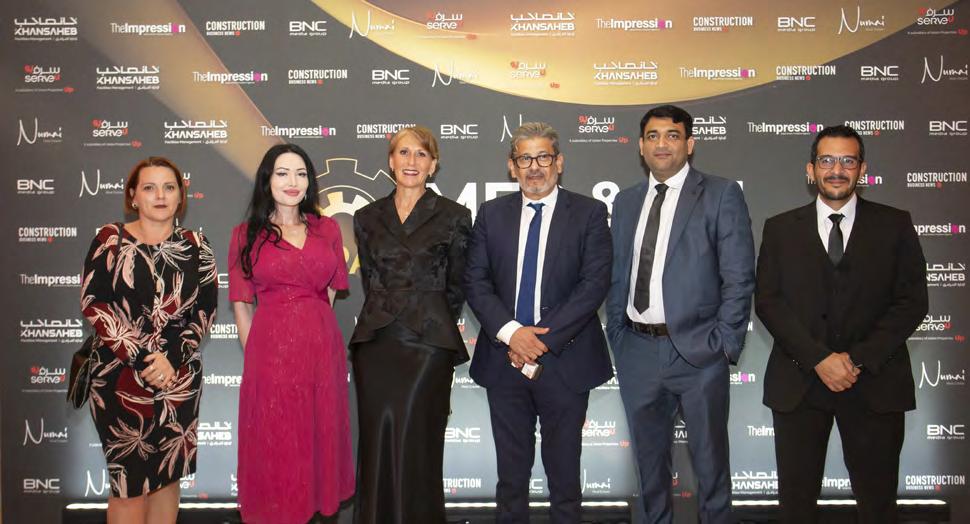
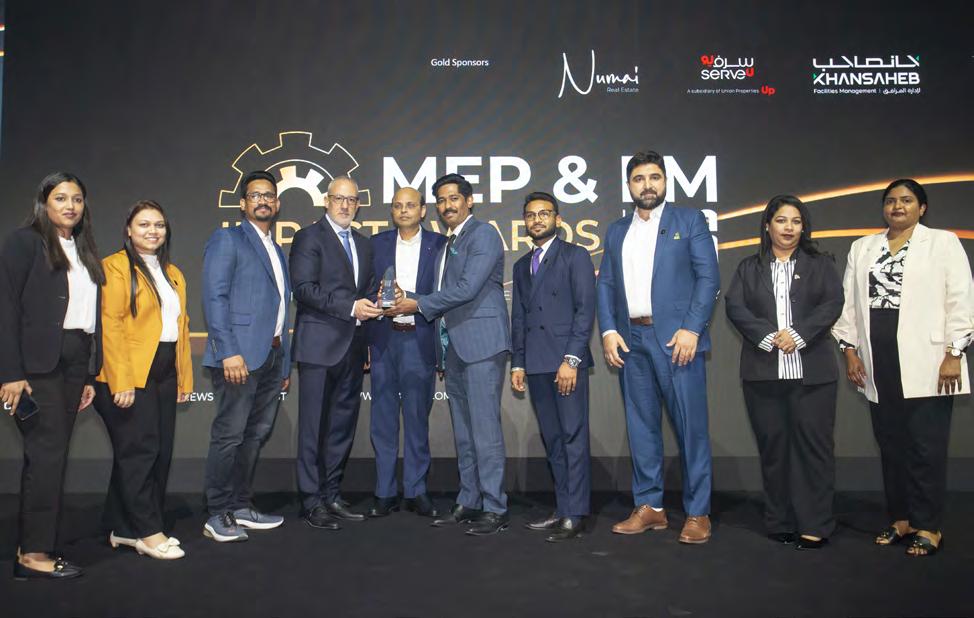
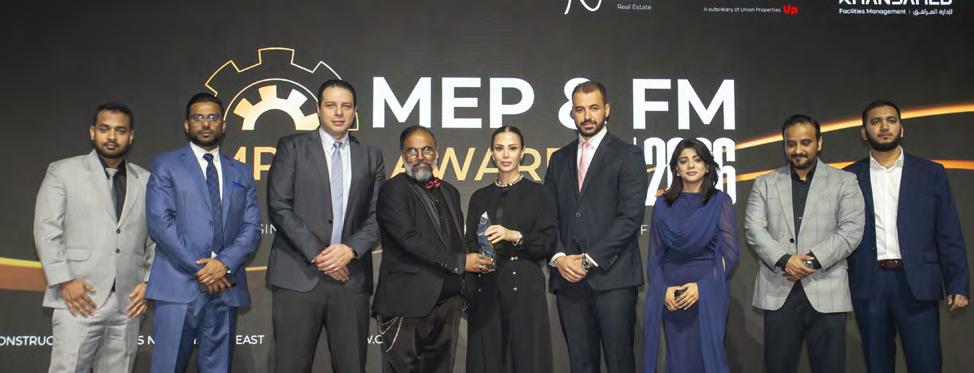
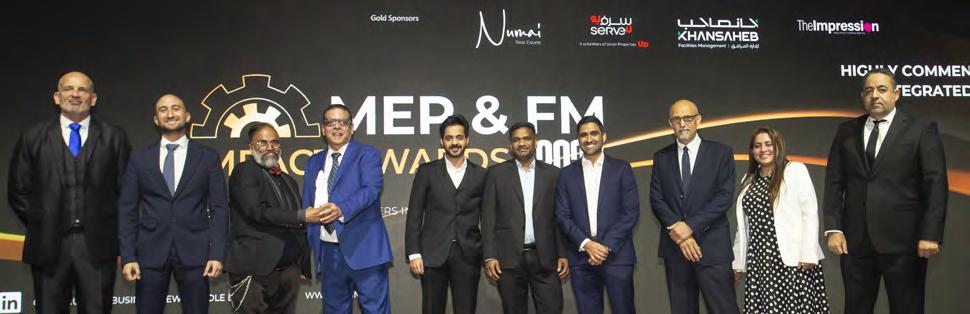
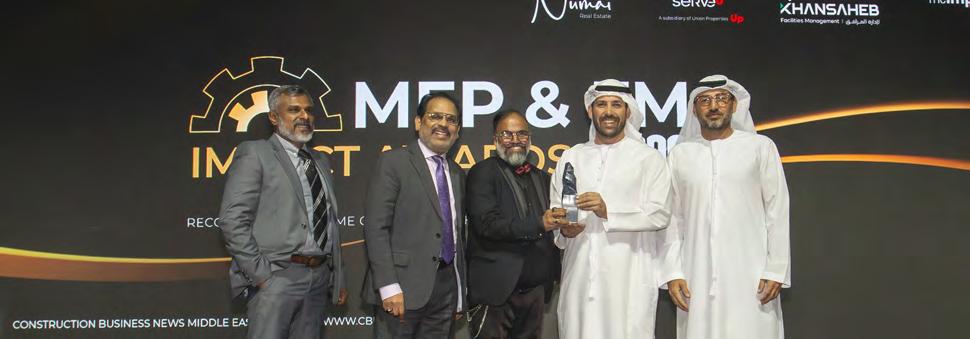
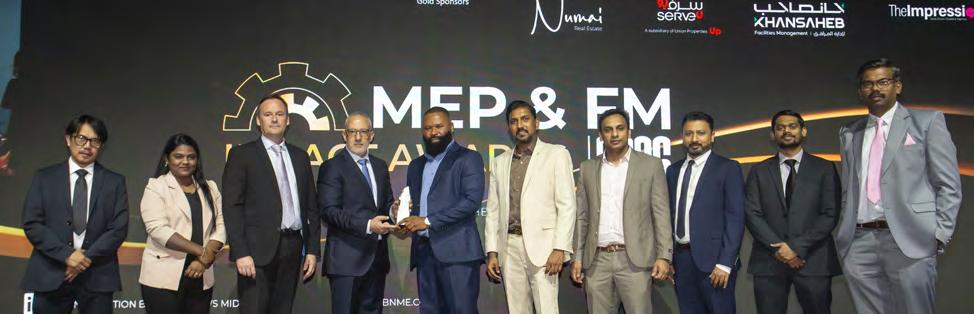
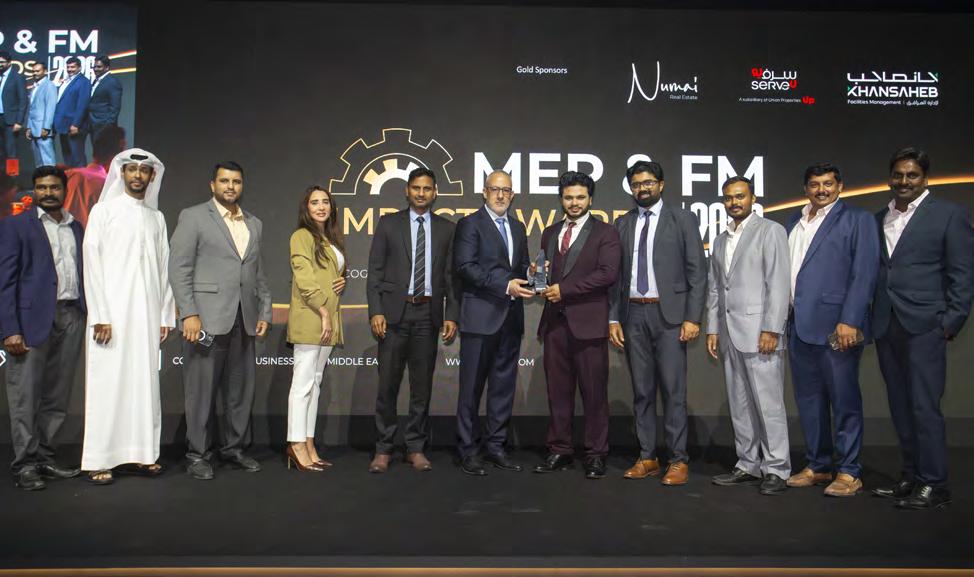
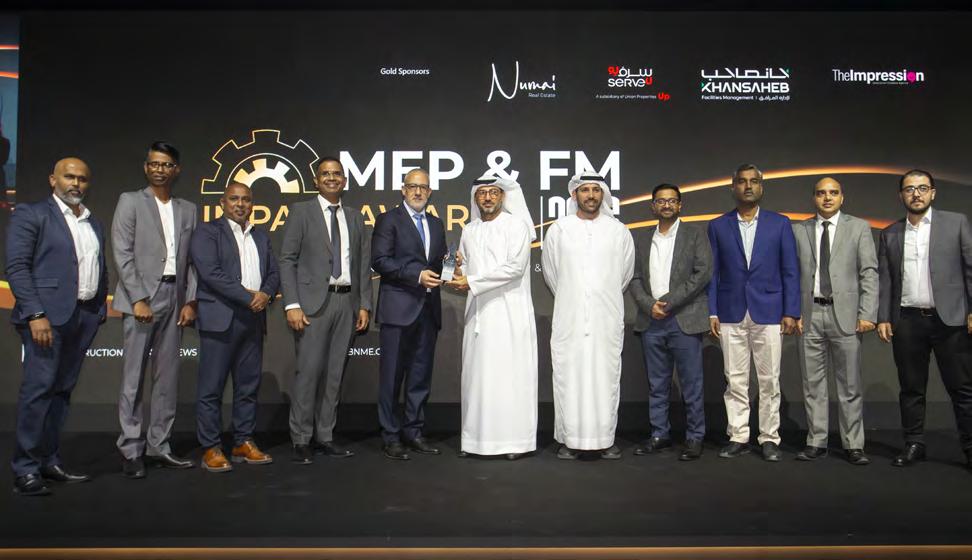
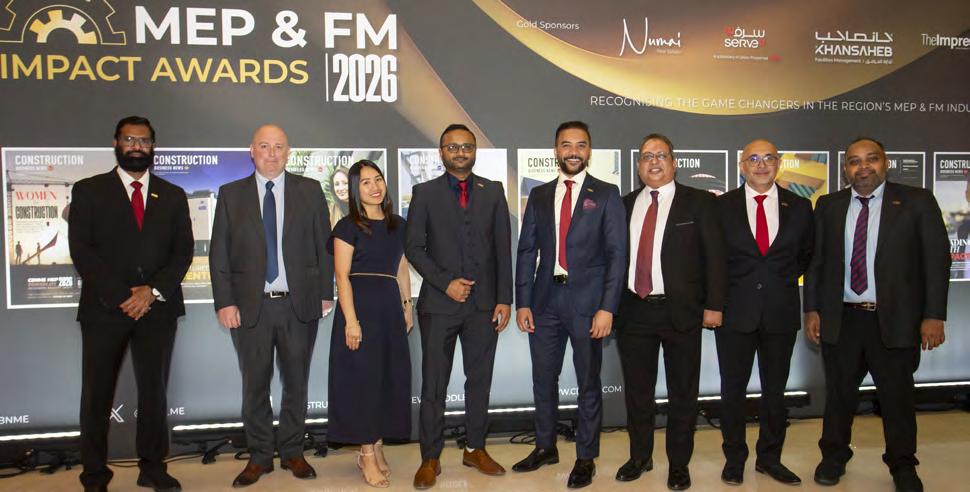
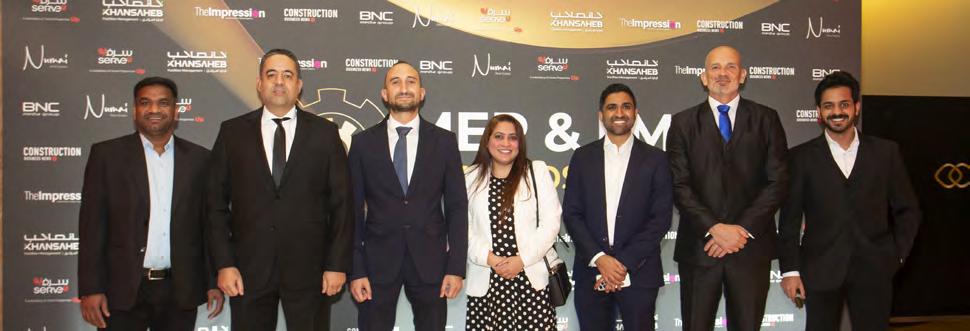
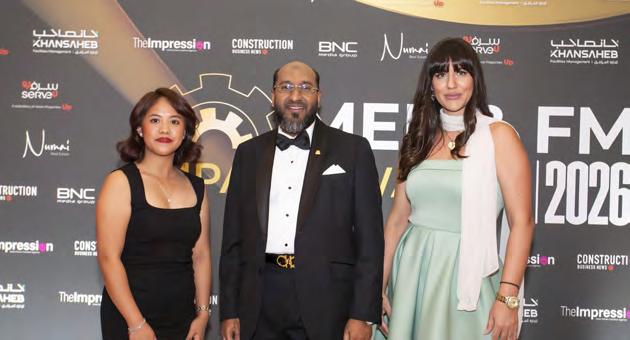
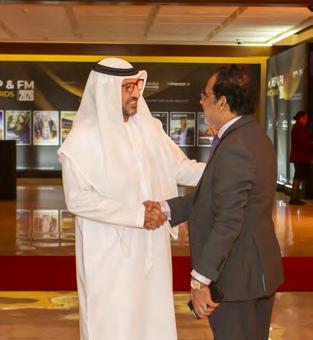
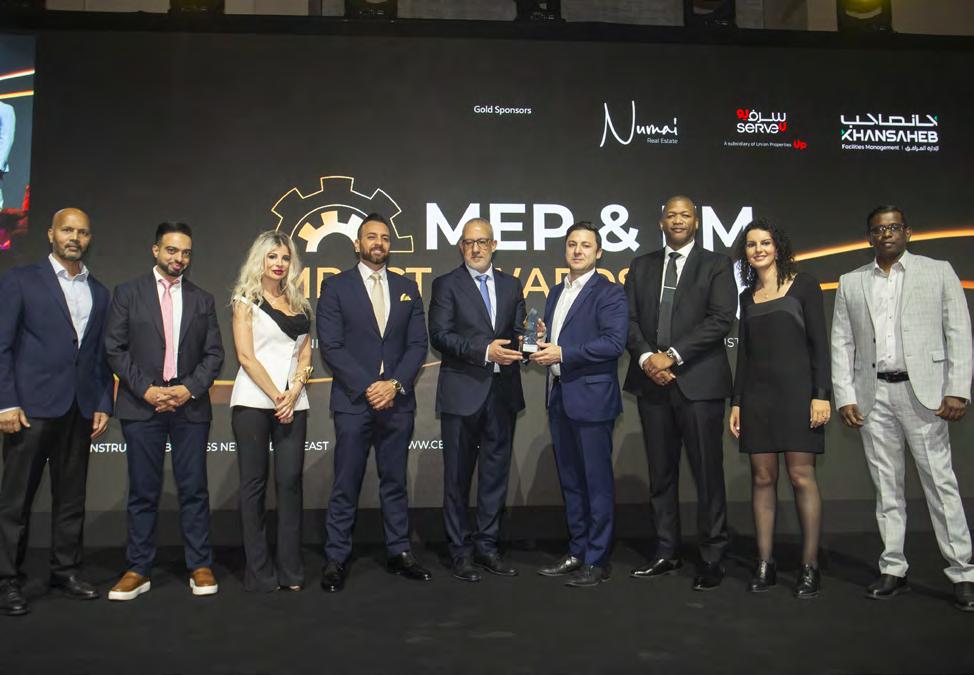
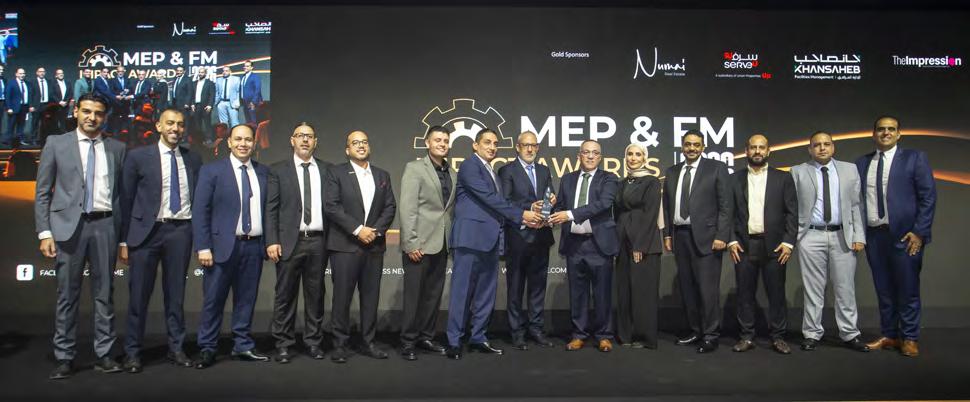
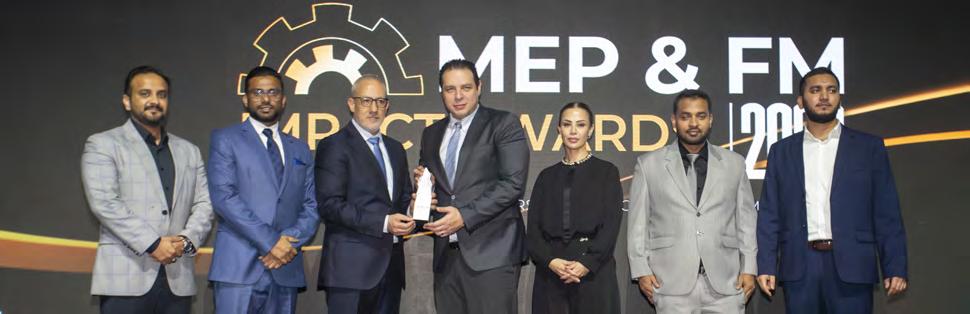
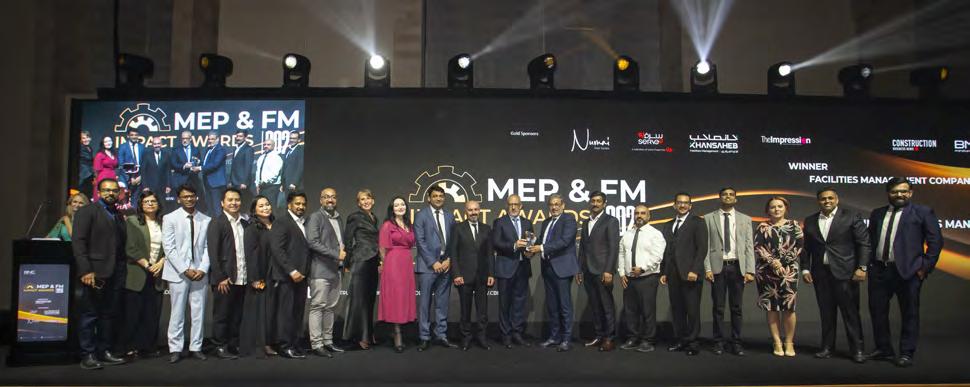
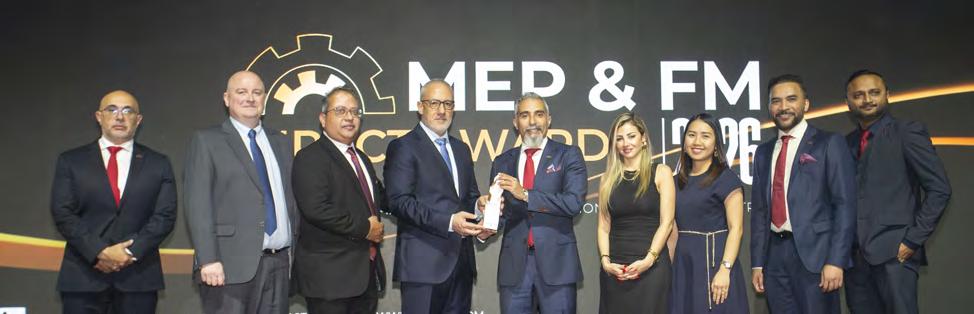
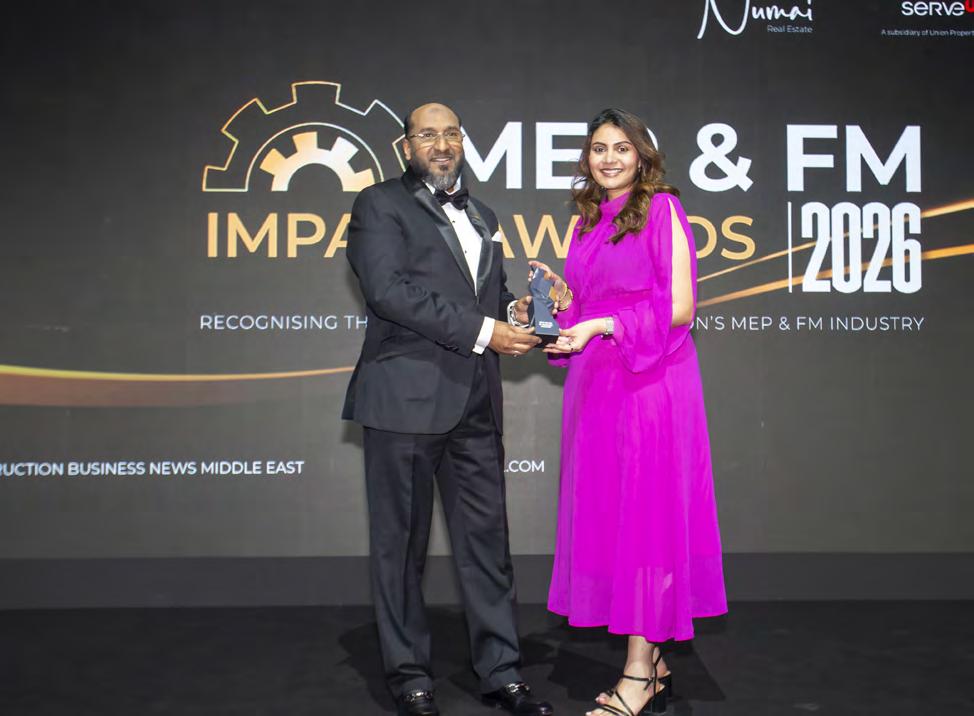
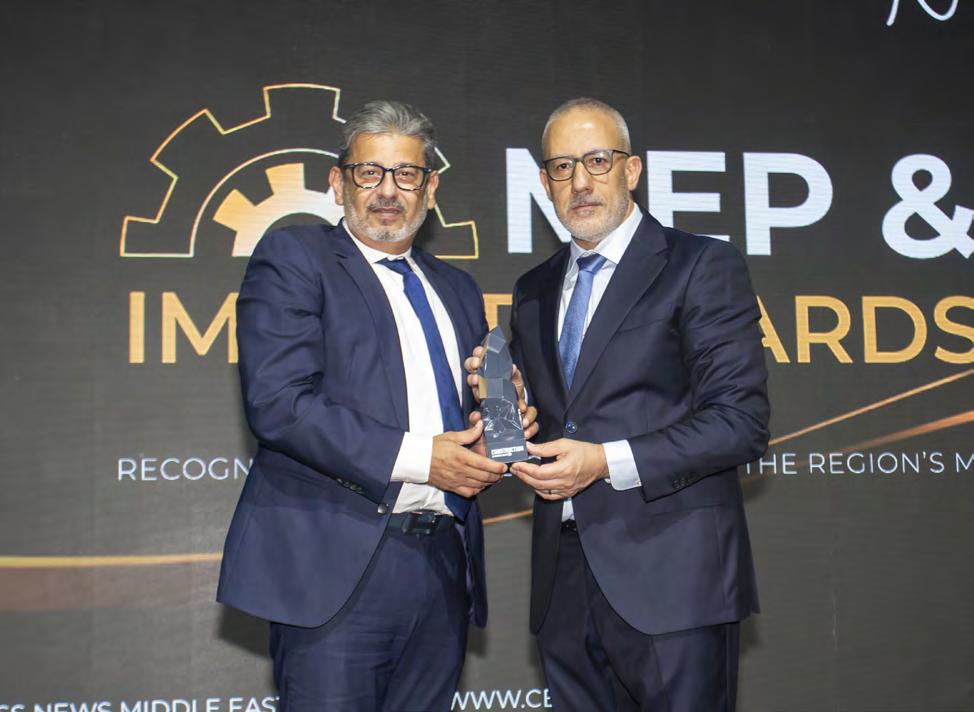
That was exactly what the MEP and FM Impact Awards set out to celebrate.
Bringing together the best of both industries, the evening honoured the innovations, the milestones, and the people who raised the
bar in 2026 and beyond. Across categories spanning sustainability, digital transformation, health and safety, and leadership, the awards shone a light on organisations and individuals who did not just meet the standard but redefined it.
The Middle East has never been a region content with the ordinary. Giga-projects reshaped skylines. Net-zero commitments drove a fundamental rethink of how buildings are designed, operated, and maintained. In this environment, MEP and FM professionals proved they were not just service providers but strategic partners in the region’s most ambitious growth story.
From AI-powered facility management and autonomous robotics to landmark sustainability
programmes and record-breaking safety achievements, the entries reflected an industry evolving at pace and with purpose.
The evening was a celebration of that progress. A moment to recognise the teams behind the numbers, the leaders behind the strategies, and the people behind the results.
The MEP and FM Impact Awards 2026 did not just mark another year. It marked a turning point for two industries finally getting the recognition they have always deserved.
INNOVATION IN WORKER WELFARE
WINNER: ACCIONA
Acciona put its workforce front and centre by deploying QR-enabled job posting across all 17 of its Qatar accommodations, giving every employee around-the-clock access to career opportunities regardless of shift or schedule. The initiative placed career ownership directly in the hands of the workforce, making internal mobility a practical reality rather than a distant prospect. Backed by a unified framework connecting Learning and Development, Recruitment, and Operations, it reflects Acciona’s belief that investing in people and delivering operational excellence go hand in hand.
SERVICE PROVIDER OF THE YEAR
WINNER: ADEEB GROUP
With a workforce of over 3,000 professionals, Adeeb Group has established itself as a formidable force in the industry, delivering complex, large-scale operations with precision and consistency. Strong strategic leadership has driven a culture of accountability across the organisation, while smart technology adoption and a digital-first approach have streamlined operations and elevated service delivery. Performance-driven models are embedded into everything the company does, ensuring that efficiency, reliability, and client satisfaction are not just targets but consistent outcomes.
Nexora unifies distributed teams under one digital command structure, offering real-time visibility across remote sites, mobile workforces, and contract locations throughout the UAE. By centralising data and operations onto a single platform, it eliminates the blind spots that come with managing a dispersed workforce, giving organisations the clarity and control they need to make faster, smarter decisions. One system, complete oversight, across the entire country.
TECHNOLOGY AND INNOVATION IN FM
WINNER: CONCORDIA
Concordia upgraded access control in a live commercial building by installing advanced facial recognition speed gates overnight, with no disruption to daily operations. Working within the constraints of a fully operational environment, the team executed the deployment with surgical precision, ensuring that tenants and staff experienced no inconvenience throughout the process. The result was a seamless integration of cutting-edge security technology that not only modernised access control but set a new benchmark for how smart FM solutions can be delivered without compromising business continuity.
MANUFACTURER OF THE YEAR
WINNER: RHEEM MANUFACTURING
Since 2019, Rheem Manufacturing has prevented more than 60.75 million metric tons of CO2e emissions, kept over 50,000 metric tons of waste out of landfills, and equipped more than 800,000 people with sustainability training. These figures are the result of a deliberate, long-term commitment to embedding sustainability across every dimension of the business, from product development and manufacturing processes to workforce education and supply chain practices. Real numbers, real impact, at scale.
PROJECT OF THE YEAR (OVERALL)
WINNER: ADCOOP RETAIL FM MOBILISATION PROGRAMME
OCS MIDDLE EAST
The Adcoop Retail FM Mobilisation Programme set a new standard for FM excellence. OCS Middle East delivered a full MEP and Civil contract across 55 sites spanning four emirates simultaneously, with zero compliance gaps, complete Civil Defence certification, and every site operational from day one. Backed by AI-driven snagging and a first-ever CAFM deployment, the project impressed the client enough to award an additional 33 locations. A worthy contender for Project of the Year.
INNOVATION-DRIVEN COMPANY OF THE YEAR
WINNER: HITEK
In just one year, HITEK delivered one of the most ambitious FM digitalisation programmes the GCC has ever seen. The Maaden CAFM AI programme went beyond transforming a single company’s operations, setting a new regional benchmark for AI-powered facility management and proving that intelligent, sovereign-compliant digitalisation has moved from concept to reality.
Three initiatives, one site, and results that speak for themselves. Fakhruddin Integrated Services (FIS) by Fakhruddin Properties shifted 400 TR of cooling load off-peak, diverted 90% of waste from landfill, and achieved annual energy savings of 3.81 GWh. LEED Gold certified and MEERA 2026 recognised, this is sustainability in action, not just on paper.
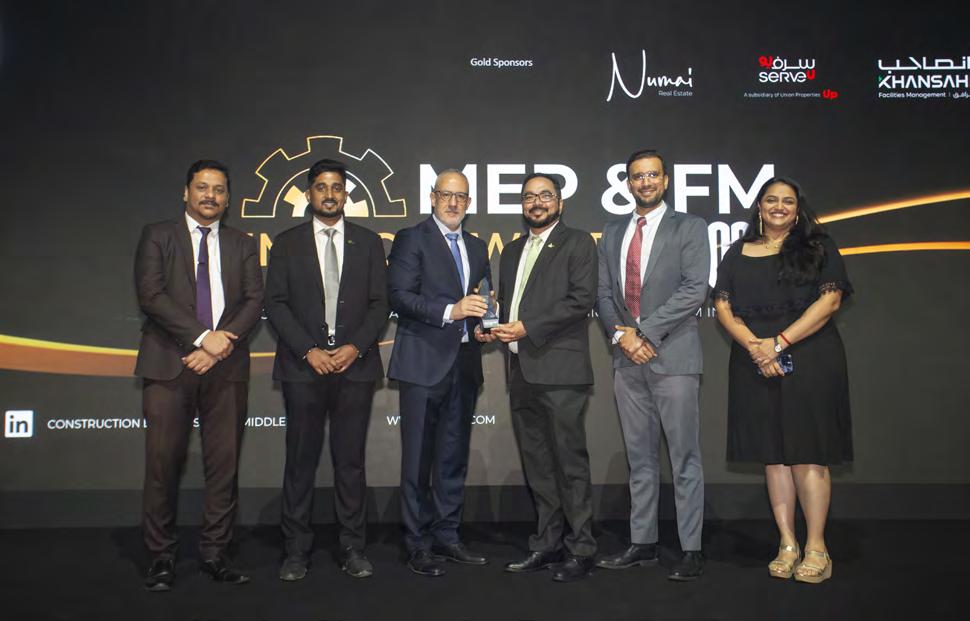
INTEGRATED MEP & FM COMPANY OF THE YEAR
WINNER: SERVEU
ServeU’s single-source model delivers end-to-end FM under one roof, with a unified team handling everything from high-voltage maintenance to soft FM services. With no subcontractors in the mix, there are no gaps in accountability and no room for excuses. MEP engineers and FM operators work side by side, sharing data, aligning on goals, and driving results together. One team, one set of commitments, and a seamless integration that puts performance and reliability at the heart of every contract.
SUSTAINABLE COMPANY OF THE YEAR
WINNER: BIN DASMAL ENGINEERING TECHNOLOGIES & MANAGEMENT CO. LLC
Five decades of engineering excellence have shaped a company where sustainability is not a strategy but a way of doing business. Bin Dasmal Engineering Technologies & Management Co. LLC pioneered vertical farming using just 5% of conventional water and soil, developed proprietary outdoor cooling technology for Dubai’s climate, and embedded circular economy thinking into daily operations. Triple ISO certified and internationally published, this is a sustainability culture built over half a century, not just a programme.
HIGHLY COMMENDED: ACCIONA
SUSTAINABLE PROJECT OF THE YEAR
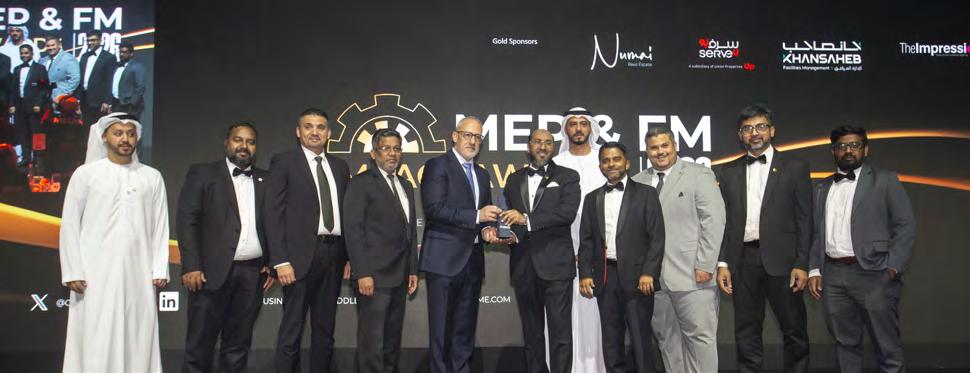
WINNER: COLDPLAY EVENT FARNEK
When Coldplay brought its international concert series to the region over six days, waste management was no small undertaking. Farnek rose to the challenge, managing over 60 tonnes of waste and achieving a 62.8% diversion rate that significantly outpaced the regional industry average. At the heart of the operation was Farnek’s proprietary WASTEK platform, which enabled real-time tracking and precision management that kept 37.7 tonnes of waste out of landfill. It was a high-pressure, high-visibility assignment executed with the kind of operational discipline and technological edge that defines world-class sustainable FM.
HIGHLY COMMENDED: DHL TTE FACILITIES MANAGEMENT
HSE INITIATIVE OF THE YEAR
WINNER: SHEIKH SHAKHBOUT MEDICAL CITY (SSMC) HSE
PROGRAMME
OCS MIDDLE EAST
At Sheikh Shakhbout Medical City (SSMC), OCS Middle East recorded zero non-compliance notices, completed 568 safe site inspections, and VR-certified over 120 staff across 15 hazard scenarios. With the Managing Director leading by example and three consecutive RoSPA Gold Awards to its name, the SSMC HSE Programme sets a clear benchmark for health and safety in high-stakes healthcare environments.
HIGHLY COMMENDED: SAFETY FIRST, FOR EVERYONE
RETROFIT & UPGRADE PROJECT OF THE YEAR
WINNER: MARRIOTT DOWNTOWN ABU DHABI
BFM – BLOOM FACILITIES MANAGEMENT
Bloom Facilities Management demonstrated that innovation does not always require large-scale replacements. Through an AI-driven chiller retrofit at Marriott Downtown Abu Dhabi, the team delivered measurable results without swapping out a single major asset. The project achieved 8.6% energy savings, generated AED 89,594 in direct cost reductions, and cut manual intervention by 70%, proving that intelligent optimisation of existing infrastructure can be just as powerful as a full system overhaul. It is a compelling case for working smarter, not bigger.
SUPPLIER OF THE YEAR
WINNER: TROSTEN
Trosten has built a reputation that goes well beyond supplying HVAC equipment. With solar-powered facilities, Eurovent and AHRI certified products, and endurance testing that exceeds the industry standard by three times, the company has set a bar that few can match. That commitment to quality has earned the trust of some of the region’s most prestigious developments, including Red Sea Development and Wynn Al Marjan. Trosten is not simply keeping pace with industry demands but is actively pushing the boundaries of what HVAC manufacturing looks like in the region.
EXCELLENCE IN MAINTENANCE & OPERATIONS
WINNER: FARNEK
Farnek’s numbers tell a compelling story. AED 690 million in contracts secured, 22% revenue growth, and a 95% client retention rate that reflects the kind of trust that is hard to earn and harder to maintain. On the ground, 80 autonomous robots are deployed across landmark sites, bringing a new level of precision and efficiency to maintenance and operations. The company’s track record with iconic assets speaks for itself, with the Dubai Airports contract renewed early at AED 250 million and a 15-year partnership with the Burj Khalifa that underscores its standing as the go-to operator for the region’s most high-profile locations. This is not just operational excellence on paper. It is excellence delivered consistently, at the highest level, across some of the world’s most recognisable addresses.
MEP CONTRACTOR OF THE YEAR
WINNER: INNOVO MEP
Innovo MEP has carved out a position at the top of the industry, with landmark projects delivered for some of the region’s most prominent developers, including Emaar, Dubai Holding, and Modon. What sets the company apart is its fully integrated model that spans design, in-house manufacturing, facilities management, and modular data centres, giving it end-to-end control over quality and delivery at every stage. That breadth of capability has not gone unnoticed, with Innovo recognised as both Sustainable Contractor of the Year and Digital Transformation Contractor of the Year in 2025. Innovo MEP does not simply build MEP infrastructure. It is actively redefining what the discipline looks like in a region that demands the very best.
HIGHLY COMMENDED: SERVEU
FACILITIES MANAGEMENT COMPANY OF THE YEAR
WINNER: KHANSAHEB FACILITIES MANAGEMENT
The UAE’s first FM company to fully integrate Digital Twin technology into daily operations, Khansaheb Facilities Management manages over 2,000 properties across the UAE with zero KPI penalties across all contracts. They achieved 6 million accident-free man-hours and reduced fuel consumption by 31.8% through EV adoption. With an AED 2 billion tender pipeline and no penalties, this is FM excellence across every measure.
HIGHLY COMMENDED: OCS MIDDLE EAST
YOUNG PROFESSIONAL OF THE YEAR
WINNER: KARIM FAHMY
ENGIE
At a remarkably young age, Karim Fahmy of Engie is already making his mark on FM leadership in a way that goes well beyond his years. Overseeing a 57,744 m² hospital with five operating theatres and a team of 600 staff, Karim spearheaded a landmark transition from diesel to heat pump systems that delivers AED 2.38 million in annual savings and eliminates 2,352 tCO₂e of emissions every year. What makes the achievement even more impressive is that the entire transition was executed without a single disruption to live hospital operations, a testament to both his technical expertise and his operational discipline. The result was a 75% improvement in energy efficiency and a clear demonstration that the next generation of FM leaders is already here, and already raising the bar.
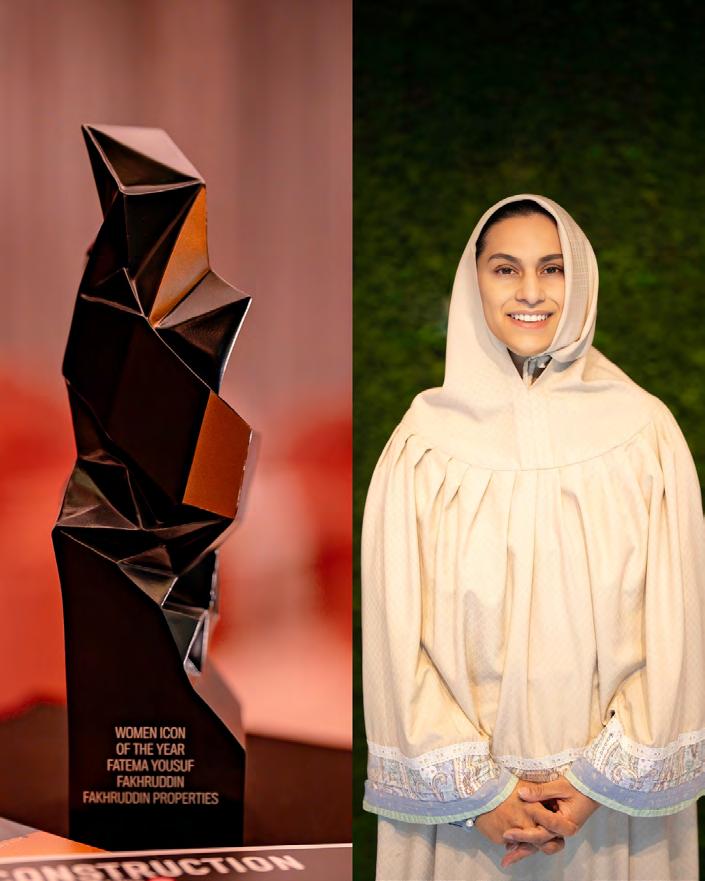
WOMAN ICON OF THE YEAR
WINNER: FATEMA YOUSUF FAKHRUDDIN
FAKHRUDDIN PROPERTIES
Fatema Yousuf Fakhruddin has redefined what leadership at the highest level looks like. Through the Environmental Alchemist Programme and the smart waste management system developed under Tréppan Living, she has shown a rare ability to turn bold ideas into tangible impact. Recognised with the Nexus UAE W Icon Award for Visionary Leadership and celebrated as a trailblazer for women in FM, her influence extends well beyond accolades. She is actively shaping the future of the industry and opening doors for the next generation. She does not simply occupy a seat at the table. She builds a better one.
CEO OF THE YEAR WINNER: DR. ANSARI ADEEB
GROUP
With more than three decades of industry leadership, Dr Ansari has built Adeeb Group into a fully integrated powerhouse, overseeing 3,000 professionals across high-profile portfolios including ADNOC, Abu Dhabi Police, and major infrastructure projects. A champion of smart technology and digital transformation, he has also steered the company to earn the Dubai Chamber ESG Label. As IWFM UAE Chair, Dr Ansari brings the same vision and integrity to the wider industry that he has consistently demonstrated within his own organisation, making him a fitting recipient of this special recognition.
FM LEADER OF THE YEAR
WINNER: JOSEPH ANTHONY
KHANSAHEB FACILITIES MANAGEMENT
With over two decades of experience spanning oil and gas, aviation, and real estate, Joseph Anthony has brought a wealth of crosssector expertise to his role at Khansaheb Facilities Management. Under his leadership, the company has grown to oversee 2,000 properties across the UAE, all while maintaining zero KPI penalties and clocking an impressive six million accident-free manhours. Those results are not the product of luck but of a leadership philosophy grounded in empowerment, smart decision-making, and a genuine commitment to putting people first. Recognised in the FM CXO Power List 2025 and having led the company to the Sustainable FM Company of the Year title, Joseph Anthony has demonstrated that strong values and strong performance go hand in hand. A thoroughly deserving FM Leader of the Year.
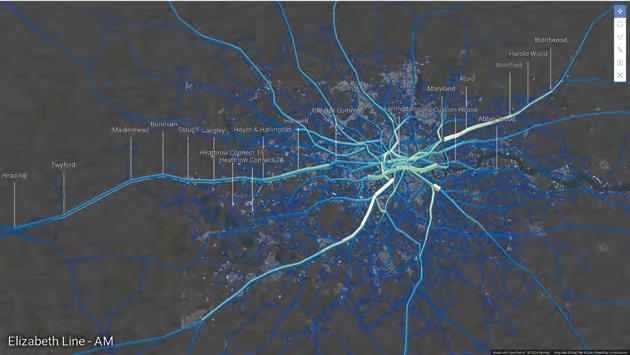
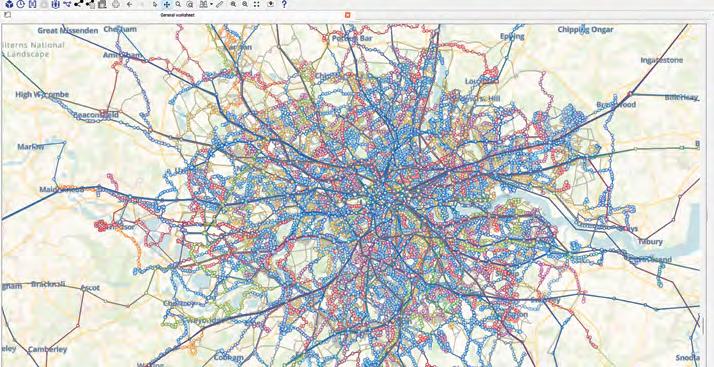
From Congestion to Coordination
Nathan Marsh of Bentley Systems discusses why predictive, data-driven infrastructure is becoming essential to building resilient and future-ready cities.
Dubai’s public transport usage surpassing 802 million journeys is far more than a milestone. It is a clear indicator of a rapidly growing city experiencing a profound increase in mobility demand. Across the world, transport systems are undergoing a fundamental shift, as communities increasingly move away from private vehicle ownership towards on-demand, shared access. This transition is not
merely a product of technological progress, but a reflection of deeper societal change, shaped by sustainability priorities and rising expectations for convenience, reliability, and seamless connectivity.
The global shared mobility market underscores this momentum and is anticipated to grow from USD 96 billion in 2026 to over USD 440 billion by 2034. However, scale introduces complexity, as conventional infrastructure planning is no longer adequate. With cities like Dubai rapidly expanding, the key challenge is shifting from ‘just’ building additional infrastructure to ensuring that mobility systems
Nathan Marsh, Senior Vice President and Regional Executive EMEA
operate intelligently and sustainably across existing and new infrastructure schemes, even amid geopolitical pressures.
At its core, the challenge is no longer about moving vehicles. It is about orchestrating an interconnected ecosystem of people, transport modes, and infrastructure networks. Dubai’s rising ridership reflects a decisive behavioural shift, as residents and visitors increasingly opt for the metro, buses, and shared mobility services to navigate the city more efficiently. This transition is particularly critical in a context where population growth is often outpacing the speed at which infrastructure can be delivered. The result is an urgent need to maintain fluid, uninterrupted mobility across an expanding urban landscape.
As expectations evolve, so does the definition of effective transport. Journeys are now judged not only by distance or speed, but by seamlessness, minimal delays, real-time responsiveness, and integrated connectivity across modes. Meeting these expectations will define the next era of urban mobility, and ultimately determine which cities emerge as global leaders in smart, sustainable transport systems.
Growing Strain on Urban Mobility Systems
The surge in Dubai’s public transport usage highlights both the success of sustained investment and the mounting pressure that comes with rapid urban expansion. Rising demand places
increasing strain on roads, transit networks, and pedestrian infrastructure, particularly during peak hours. However, mobility systems still often operate in silos, limiting their ability to function as a fully optimised network.
Globally, the cost of such inefficiencies is already well documented. In the United States, for instance, drivers lost an average of 43 hours to congestion in 2024 alone, resulting in an estimated USD 74 billion in economic losses. While Dubai’s infrastructure is among the most advanced globally, the speed and scale of its growth make proactive, integrated planning not just beneficial, but essential. Sustainability further intensifies this challenge. As the UAE advances towards its Net Zero 2050 commitments, the transport sector is under increasing pressure to reduce emissions while simultaneously
supporting continued economic expansion and urban development. The equation is clear: more mobility must be delivered, but not necessarily through more vehicles.
From Reactive Systems to Predictive Infrastructure
Addressing this complexity requires a fundamental shift in mindset: from reactive infrastructure development to predictive, data-driven planning. This is where technologies such as digital twins and mobility simulation are becoming increasingly critical. Mobility simulation uses advanced modelling, traffic analytics, and city-scale digital environments to replicate and analyse how people, vehicles, and goods move through transport networks. It enables planners to test realworld scenarios from new road layouts and public transport expansions to EV charging
deployment, construction impacts, and autonomous vehicle integration before any physical changes are implemented.
A digital twin takes this further, providing a continuously updated virtual representation of a physical city or transport system. By integrating live operational data, multimodal mobility patterns, and infrastructure constraints into a unified model, it allows decision-makers to anticipate system behaviour and evaluate outcomes before execution. Together, these tools shift urban planning from assumption to simulation, enabling cities to design with foresight rather than reaction.
Practical Applications Reshaping City Planning
The real-world applications of mobility simulation are already transforming how transport systems are designed and managed. By forecasting the impact of infrastructure changes, whether introducing new bus routes, rerouting traffic during construction, or opening new transit hubs, planners can optimise decisions before implementation, reducing cost, disruption, and inefficiency.
These tools also enhance pedestrian flow management in high-density environments such as airports, stadiums, and major transport
interchanges, improving both safety and operational performance. When combined with big data analytics, they enable more evidence-based investment decisions and more efficient allocation of public resources. Importantly, mobility simulation also provides a controlled environment to stress-test emergency scenarios, including extreme weather events, infrastructure failures, or large-scale disruptions, ensuring cities are better prepared and more resilient in times of crisis.
International examples already demonstrate their value. In London, Bentley OpenPaths, a transport planning and modelling platform, played a key role in the development of the Elizabeth Line, the city’s most significant transport expansion in over half a century, enabling integration across highly complex networks. In Edmonton, similar modelling tools have supported city-wide traffic
simulation, helping planners respond to rapid population growth and optimise infrastructure investment under budget constraints.
These cases underline a clear shift: predictive infrastructure is no longer optional. It is becoming essential for managing complexity, reducing inefficiency, and improving long-term urban performance.
Shaping the Next Phase of Mobility across Fast-Growth Smart Cities
The UAE has long positioned itself at the forefront of smart city development, underpinned by sustained investment in digital transformation, artificial intelligence, and sustainable infrastructure. Within this context, digital twins are emerging as a foundational capability, connecting transport modes, infrastructure systems, and realtime data into a unified operational view of the city. As mobility demand continues to rise, the central question is no longer whether cities will expand their infrastructure, but how effectively that infrastructure will perform under sustained pressure. The defining leaders of the next era will not simply be those that build more, but those that can anticipate more — cities capable of simulating, optimising, and refining mobility systems before challenges emerge. In this future, success will be defined by the ability to transform complex, multi-layered data into actionable intelligence, enabling smarter, more resilient, and more sustainable urban mobility systems designed not just for growth, but for endurance.
Living Beyond Retail
When Tilal Development Company appointed Savills to manage 115 fully furnished Executive Apartments at Muscat Grand Mall, it signalled something larger than a property management deal. It was a statement of intent about what a mixed-use destination in the heart of Muscat can and should deliver, and the kind of partners needed to get there.
Muscat Grand Mall has always been more than a shopping centre. Strategically positioned in the heart of the capital, the development brings together retail, hospitality, commercial offices, and residential living within a single integrated community.
With 131 retail outlets, a hotel, an office complex, and both executive and residential apartments, it is a destination built around the full rhythm of urban life.
The appointment of Savills to oversee the Executive Apartments is the latest step in activating that vision.
The 115 fully furnished residences, available in one-, two-, and threebedroom configurations, are designed to serve a broad range of occupants,
from business travellers and corporate clients to tourists and long-term residents. Landscaped courtyards, a large outdoor swimming pool, elegant shared spaces, and dedicated parking round out an offering pitched firmly at the premium end of Muscat’s serviced accommodation market.
For Tilal Development Company, the logic of the partnership is clear. As Ibrahim Al Qasmi, Chief Executive Officer , explains, activating the Executive Apartments with a worldclass operator creates greater synergy across the destination’s residential, retail, hospitality, and office components, ultimately driving stronger footfall, deeper customer engagement, and long-term value for stakeholders.
For Savills, the appointment extends a growing presence in Oman’s hospitality and serviced accommodation sector.
Earlier in 2026, the firm partnered with Visit Oman to deliver professionally managed, globally benchmarked service solutions in support of Oman Vision 2040’s tourism ambitions. The MGM collaboration builds on that momentum, bringing the Executive Apartments into Savills’ global shortstay portfolio and raising the standard of serviced living in the capital.
Ihsan Kharouf, Head of Oman at Savills Middle East , describes the collaboration as a reflection of a shared commitment to exceptional guest experiences and unlocking value in mixed-use living. It is a partnership, in other words, that works on multiple levels: for the asset, for the occupant, and for a city increasingly confident in its place on the regional hospitality map.
GUARANTEE GAP THE
What Dubai property investors need to understand about guaranteed returnsand what happens when the commitment period expires.
Bio: Paulina Schulte is a Senior Client Advisor with a background spanning Poland, Spain, Gibraltar, and the UAE. She works with entrepreneurs, investors, and international families on cross-border business structuring, strategic planning, and residency and citizenship pathways, helping clients build practical, compliant solutions that work across borders and across their lives.
The guaranteed returns question: What investors actually need to understand
Take a look at developer marketing for Dubai residential property right now, and one phrase appears with striking regularity: guaranteed returns. Eight percent, sometimes ten, fixed and contracted, paid regardless of whether the unit is occupied. For investors looking at Dubai as a destination for a stable yield in an uncertain global environment, that
language is very persuasive. It’s worth pausing to reflect on precisely what those promises mean.
What ‘guaranteed’ actually describes
These structures work in a specific way. A developer commits to paying the investor a fixed annual percentage (typically somewhere between 6% and 10% of the purchase price) for a defined period after handover, usually two to five years. During that window, the income arrives as promised,
funded from the developer’s balance sheet rather than from tenant demand or occupancy.
The regulatory position
RERA, Dubai’s real estate regulatory authority, prohibits developers from marketing guaranteed rental returns. The commitments being offered are structured as fixed-lease arrangements or developer-subsidised income schemes –contractual instruments that fall outside the definition of a true market yield. Developers and their legal teams understand this
distinction well, and the regulatory framework in Dubai has become considerably more robust in recent years. A developer offering a contractual income commitment does so within a defined legal structure.
The word “guaranteed” is nevertheless doing marketing work here. What the investor is evaluating is a time-limited subsidy arrangement, and the analysis needs to treat it as such from the outset.
The
price premium question
One aspect of these structures receives less scrutiny than it deserves. In some cases, the property purchase price sits above its openmarket equivalent, meaning the premium effectively funds the guaranteed return payments over the commitment period. Instead of receiving a genuinely independent yield, the investor is essentially advancing their own income stream through an inflated entry price.
Not every guaranteed return scheme works this way, and reputable developers will not structure it in these terms. But this question is still worth asking directly of any offer: does the unit price reflect open-market comparable transactions registered with the Dubai Land Department (DLD), or does it carry a premium that accounts for the income commitment? Checking current Ejari-registered rental data for comparable units in the same building or community will quickly establish whether the asking price reflects open-market transactions or carries a built-in subsidy loading.
What happens when the commitment period ends
After two, three, or five years, the commitment expires, and the property returns to openmarket performance. Yield from that point depends on prevailing rents, vacancy rates, and the competitive supply environment at the time of reversion.
Those conditions warrant careful modelling in 2026, and the supply picture, in particular, deserves more attention than most guaranteedreturn marketing materials give it.
FORECASTS FOR THE DUBAI APARTMENT SEGMENT POINT TO APPROXIMATELY 99,686 NEW UNITS DELIVERING IN 2026 ALONE. WITH A FURTHER 62,966 EXPECTED IN 2027.
The distribution is not uniform across the city. The largest contributions are expected from Jumeirah Village Circle, Dubai South, Business Bay, Dubai Residence Complex, and Dubai
Paulina Schulte, Senior Client Advisor at the Knightsbridge Group
Islands, which collectively represent nearly a third of projected deliveries through 2028. For an investor holding a unit in or adjacent to one of these communities at the point of commitment expiry, the local rental market at reversion could look materially different from the one that existed at purchase.
Gross rental yield for Dubai apartments currently runs around 6.7% to 6.8% citywide, according to JLL UAE’s Q1 2026 data. Net of service charges, management fees, vacancy allowance, and maintenance reserves, this typically compresses to somewhere between 5% and 6.5%, depending on location and building. An investor purchasing at a price that reflects a guaranteed return premium in a community within the highest-delivery corridors could find post-commitment performance landing well below the figure that made the original case.
Where the structure can make sense
Developer-backed return schemes are not without legitimate merit. For an investor with a shorter time horizon, limited appetite for active property management, and a preference for contracted income over capital growth, the commitment period offers something real: predictable cash flow, low operational burden, and a clear horizon for reviewing the position.
For someone deploying capital from outside the UAE and seeking a defined return while monitoring market developments, that can be a coherent strategy. The question is whether the entry price and the post-commitment yield hold up under conservative assumptions. If the numbers work for both phases (that is, the commitment period and the reversion to market performance), the structure has genuine merit. If the analysis stops at the end of the guarantee period, it is working with half the picture.
What due diligence should cover
Several things need verifying before committing to any guaranteed return offer.
The developer’s financial strength and delivery track record should be the starting point. A contractual income commitment carries only as much weight as the organisation behind it, and a developer with a strong completion history is a materially different counterparty to one without such a track record.
The precise contract terms deserve close reading. When does the commitment period begin - at purchase or at handover? How is the return calculated, and on what base value? What provisions apply if the developer encounters difficulty during the commitment period?
Open-market comparables require independent verification. Current DLD Ejari data for units of equivalent size and
specification in the same community establishes what the property would realistically yield once the developer subsidy falls away.
Service charge exposure is the cost that most consistently erodes yield calculations that appear sound at the headline level. In some premium towers, service charges run to AED 25–35 per square foot annually, a figure that significantly affects net returns, regardless of gross yield performance.
Finally, the post-commitment model should be built on conservative rental assumptions, at or below current openmarket levels rather than above them. An investment case that survives that test has a foundation worth building on.
Reading the market, not the brochure Dubai’s underlying property fundamentals in 2026 remain genuinely competitive: strong gross yields by global standards, no capital gains tax, improving regulatory transparency, and a resident population that continues to grow. None of that requires a guaranteed return structure to make the case for international capital.
The point at which the guaranteed return model becomes a problem is when it substitutes for the analysis rather than supplementing it.
INVESTORS
WHO UNDERSTAND THE MECHANICS OF THE COMMITMENT STRUCTURE, WHO HAVE MODELLED THE POST-GUARANTEE PHASE ON HONEST ASSUMPTIONS, AND WHO HAVE VERIFIED THE ENTRY PRICE AGAINST OPEN-MARKET DATA ARE IN A POSITION TO MAKE A CONSIDERED JUDGEMENT.
Those who treat the headline percentage as the conclusion rather than the starting point are taking on risk they may not have priced.
The number on the brochure opens the conversation. The real work is what follows afterwards.
BUILDING INCLUSIVE INFRASTRUCTURE
Dr Noor Zainab Habib, Assistant Professor at Heriot-Watt University Dubai, explores why greater inclusion is becoming a strategic priority for the industry’s future growth and success
The Middle East and North Africa (MENA) region is undergoing an unprecedented wave of infrastructure development, driven by ambitious national investment programmes, rapid urbanisation, technological advancement, and economic diversification strategies. At the heart of this transformation lies civil engineering, the discipline responsible for planning, designing, constructing, and maintaining the infrastructure that underpins modern society.
According to industry reports, the Middle East civil engineering market is valued at approximately USD 205 billion, with demand for engineering expertise continuing to rise alongside the expansion of transportation networks, residential communities, commercial developments, and smart cities. Countries such as Saudi Arabia, the United Arab Emirates, and Qatar are spearheading this growth through landmark projects including NEOM, the Red Sea Project, Dubai Creek Tower, and major national transport initiatives.
Yet while skylines are transforming across the region, an equally important shift is taking place within the engineering profession itself. Women are increasingly shaping the future of civil engineering throughout MENA, bringing valuable expertise, innovation, and leadership to one of the world’s most dynamic industries.
From Underrepresented to Indispensable
For decades, engineering, particularly within construction and infrastructure, was widely viewed as a male-dominated profession. However, government reforms, economic diversification agendas, and a growing emphasis on science, technology, engineering and mathematics (STEM) education have steadily expanded opportunities for women across the region.
The UAE has emerged as a leading example of this progress. Through initiatives led by the UAE Gender Balance Council and a series of national reforms promoting gender parity, women now account for 56 per cent of STEM graduates from UAE government universities. These efforts are not only encouraging greater participation in engineering
Dr Noor Zainab Habib, Assistant Professor at Heriot-Watt University Dubai
but are also helping women advance into leadership positions within infrastructure, environmental, and urban development projects. The result is a growing generation of female engineers helping redefine the profession and challenging traditional perceptions of who designs and builds the cities of tomorrow.
Engineering for a More Sustainable Future
The rise of women in civil engineering comes at a pivotal moment for the industry. Modern infrastructure projects are no longer measured solely by structural performance or construction efficiency. Increasingly, they must address sustainability, resilience, accessibility, mobility, and quality of life. As infrastructure becomes more people-centric, diverse perspectives are becoming increasingly valuable. Women engineers are making significant contributions across areas such as environmental sustainability, resource management, and urban resilience, helping organisations address complex challenges with broader and more inclusive thinking.
This is particularly relevant in the MENA region, which faces significant pressures from climate change, water scarcity, population growth, and rapid urbanisation. Infrastructure resilience is no longer simply a technical requirement; it is a strategic necessity. Meeting these challenges will require a strong and highly skilled engineering workforce capable of delivering innovative and sustainable solutions.
Encouraging Signs of Progress
Across MENA, progress is becoming increasingly visible. Governments, educational institutions, and professional organisations are investing in initiatives that strengthen talent development and encourage greater inclusion within technical professions.
Women are playing increasingly prominent roles in urban development, transportation infrastructure, renewable energy, environmental consulting, and sustainabilityfocused projects. In the UAE, female engineers are contributing across transportation authorities, municipal engineering departments, and environmental consultancies. Saudi Arabia has also witnessed rising female participation as infrastructure and construction activity accelerates under Vision 2030. Meanwhile, countries such as Qatar and Jordan continue to produce strong cohorts of female STEM graduates, strengthening the regional engineering talent pipeline.
These developments reflect a broader cultural shift towards recognising engineering as a profession where expertise and leadership, rather than gender, define success.
Challenges That Remain
Despite this progress, important challenges remain. While more women are entering engineering education and early-career technical roles, representation at senior leadership levels remains comparatively limited. Site-based
work environments, traditional workplace expectations, and career progression barriers can still affect long-term advancement and retention.
Access to mentorship, sponsorship, leadership development opportunities, and structured career pathways also varies across organisations. Professional institutions, including ICE Middle East, continue to work with universities and industry stakeholders to strengthen support systems, but further investment is needed to ensure women can thrive at every stage of their careers. Retention remains a particular priority. Attracting women into engineering is only part of the solution; creating workplace environments that enable them to develop, lead, and build long-term careers is equally important.
The
UAE’s
Leadership in Inclusion
Among MENA nations, the UAE stands out for its sustained commitment to advancing inclusion within the workforce. Significant progress has been made in promoting gender balance and expanding opportunities for women across both technical and leadership roles. This is reflected in the growing presence of female professionals within major public sector organisations, including DEWA, the RTA, and Dubai Municipality. Such achievements demonstrate a long-term commitment to policies and initiatives that support participation, retention, visibility, and leadership development, helping build a strong pipeline of future engineering leaders.
Shaping the Future of MENA
As the MENA region continues to build for the future, strengthening the role of women in civil engineering is not simply a matter of representation, it is a strategic imperative. Civil engineers shape the environments in which people live, work, travel, and connect. From transportation networks and housing developments to utilities and largescale urban infrastructure, their decisions have a lasting impact on society. Women are already making meaningful contributions to these projects, helping create infrastructure that is more sustainable, resilient, and responsive to the needs of diverse communities.
Greater inclusion within engineering teams leads to broader perspectives, stronger innovation, and better outcomes. As MENA’s infrastructure ambitions continue to grow, harnessing the full spectrum of available talent will be essential to building cities and communities that are not only economically successful but also sustainable, resilient, and inclusive.
The future of the region’s infrastructure will be shaped by those who design it. Ensuring women have equal opportunities to contribute, lead, and innovate will be fundamental to creating a stronger and more prosperous future for MENA.
to ONE TO WATCH
BAYN ORA DEVELOPERS
A flagship project that captures the very pulse of tomorrow, distilling the market’s direction and the quiet evolution of the built world into a single, resonant expression of vision and craft
Bayn, ORA Developers’ landmark coastal community in Ghantoot, is built around the compact-city philosophy, where schools, retail, sports, leisure, and wellness facilities sit within a 15-minute reach. Spanning 4.8 million square metres, more than 55% of the land is dedicated to open space, including one million square metres of public parks, landscaped pathways, and outdoor activity zones.
The waterfront is the community’s defining feature. Over seven kilometres of water-facing living frames 9,000 residences ranging from mansions and villas to townhouses and apartments, anchored by 1.2 kilometres of Arabian Gulf beachfront, a marina, lagoons, and a business park. Multiple promenades and a beach town complete a masterplan designed for seamless movement between land and sea.
The first phase delivers 805 units , with residents benefiting from a clubhouse and a curated selection of dining and retail. Bayn is not simply a residential address. It is a selfsufficient coastal destination designed for those who want the energy of city life and the ease of living by the water.
ANANTARA SHARJAH RESIDENCES
A NEW CHAPTER OF LUXURY EXPERIENCES BY THE SEA
Bringing luxury seaside living to Sharjah for the first time, owners at the Anantara Sharjah Residences enjoy access to the Anantara Sharjah Resort’s world-class amenities, including an infinity pool, five distinctive restaurants, an Anantara Spa and a state-of-the-art gym. As an investment, owners can enjoy the benefits of a rental management scheme operated by Anantara Hotels, Resorts & Spas, allowing them to maximize their returns when they are not resident in the property.