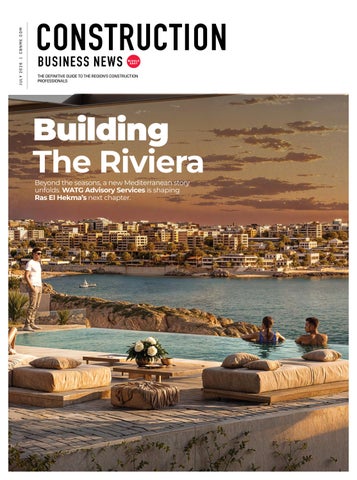

Building The Riviera
Beyond the seasons, a new Mediterranean story unfolds. WATG Advisory Services is shaping Ras El Hekma’s next chapter.








































































32 COVER STORY Building The

18 REAL ESTATE THE LONG GAME
Mohamed Moussa, Manager of Project
Delivery at Masdar City, on what it took to deliver the UAE’s first Estidama 5 Pearl office building, and why he believes the real test for Gulf infrastructure only begins after the ribbon is cut.
22 MACHINERY GHASSAN ABOUD AUTOMOTIVE SYRIA EXPANDS WITH LAUNCH OF GRAND AUTO & MACHINERY CO. (GAMCO)
24 CONSULTANT BUILDING CONFIDENTLY IN A SHIFTING COST ENVIRONMENT
26 APPOINTMENT ARABIAN CONSTRUCTION COMPANY GROUP APPOINTS ERIC SAVAGE AS CHIEF TECHNOLOGY OFFICER
28 INTERVIEW WHY THE GULF IS BEST PLACED TO POWER THE AI REVOLUTION
Bruno Melles, CEO of Hitachi Energy’s Transformers Business Unit, on why electricity — not silicon — has become AI’s real bottleneck, and why the GCC may be the one region built to scale fast enough to keep up
32 COVER STORY READING THE COAST
Rob Sykes, Associate Principal at WATG’s Advisory Services, has spent the past several years shaping the strategy behind Ras El Hekma, Egypt’s ambitious new Mediterranean destination. He talks through the decisions, the risks, and the long game required to turn a seasonal coastline into a year-round draw.
36 RAILWAY TRACKING PROGRESS: OHL ARABIA AND HASSAN ALLAM JOIN FORCES ON A VITAL SAUDI RAIL LINK
38 CONTRACT FOUNDATIONS OF FAIRWAY
40 ASSET MANAGEMENT
THE RETENTION ECONOMY
Christopher Knable, Chief Executive Officer of Districts & Community Services at Asteco, on why resident retention has become a measure of asset value in its own right, and what still gets lost in the handover between developers and the people who actually live there.
44 TALKING POINT
THE SURPRISING CHANGE IN THE UAE’S MANUFACTURING WORKFORCE EVOLUTION
As the UAE’s manufacturing base expands, the conversation is shifting from output and automation to people. Claudius Fernandes of Dulsco People explains how the aluminium sector’s drive for inclusion, marked by a sharp rise in female participation, is reshaping what an industrial workforce looks like.
48 EXPERT INSIGHT
ABU DHABI’S ASCENT
How has Abu Dhabi evolved into a central real estate force over the past 10 years?
50 OP-ED BEYOND COMMISSION
Dr Michael Waters, Associate Professor in Real Estate at Heriot-Watt University Dubai, is challenging one of the industry’s most enduring misconceptions: that a successful property career begins and ends with brokerage
52 INDUSTRY VIEWPOINT RUNWAY TO RESILIENCE
With global passenger traffic on track to hit a record 10.2 billion in 2026, Alex Cowen of Honeywell Building Automation argues that ageing infrastructure and rising operational pressure are leaving airports with little margin for error, and that connected, intelligent technology, from docking precision to power management, may be the only way to keep pace.
54 TECHNOLOGY
WHY AI IS A CO-PILOT, NOT AN AUTOPILOT
Simon Ulmann, Vice President Operations & Supply Chain, IMEA, at Henkel Adhesive Technologies, shares how Henkel is leveraging technology, talent and strategic investment to stay ahead of the curve
58 ENGINEERING
DESIGNING NEW GROUND: ENGINEERING INTELLIGENCE IN ACTION AS WOMEN SHAPE THE FUTURE OF THE MIDDLE EAST International Women in Engineering Day 2026, some of AECOM’s women professionals reflect on innovation, sustainability, leadership and the skills that will define the next generation of engineering excellence
62 EDITOR’S CHOICE THE YARDS BEYOND DEVELOPMENTS


CEO
Wissam Younane wissam@bncpublishing.net
Managing Director
Rabih Najm rabih@bncpublishing.net
Group Publishing Director
Joaquim D'Costa jo@bncpublishing.net
Editor-in-Chief
Vibha Mehta vibha@bncpublishing.net
Commercial Director
Andrea Mocay andrea@bncpublishing.net
Country Manager
Amjad Fakhouri amjad@bncpublishing.net
Editorial Assistant
Aya Zhang aya@bncpublishing.net
Digital Reporter
Reeba Asghar reeba@bncpublishing.net
Creative Lead
Christian Harb chriss@bncpublishing.net
Junior Art Director
Rizaldi Febrian
Marketing Executive
Aaron Joshua Sinanbam aj@bncpublishing.net
Multimedia
Joel Amparo, Eduardo Buenagua, and Harton Otlang
Contributor
Daniel King
PO Box 502511 Dubai, United Arab Emirates P +971 4 4200 506 | F +971 4 4200 196
For all commercial enquiries, contact jo@bncpublishing.net T +971 50 440 2706
All rights reserved © 2026. The opinions expressed are solely those of the contributors. Construction Business News Middle East and its affiliated publications in the MENA region are exclusively licensed to BNC Publishing. No part of this magazine may be copied, reproduced, or transmitted in any form or by any means without prior written consent from the publisher.
Printed by United Printing and Publishing | upp.ae
Images used in Construction Business News Middle East are credited when necessary. Attributed use of copyrighted images with permission. All images not credited are courtesy of Shutterstock.
Keep up to date with all the latest news, features and much more on our website and social media platforms


Returns darkness to the night
BEGA pole-top luminaires with Dark Sky technology direct the light in a highly efficient manner only where it is required. Light pollution of the night sky is avoided. bega.com/darksky

The Shore, the Silence and the Season Ahead
Idid not plan to think about work at all during the Eid break. And for the first two days, I did not. I sat on the beach, watched the tide come in and go out with a patience I deeply envied, and let the noise of the preceding months dissolve into the salt air. There is something about the sea that makes urgency feel slightly absurd. Deadlines, decisions, the weight of things left unfinished: the ocean has no interest in any of it, and after a while, neither did I.
What I did not expect was what crept in once the noise left. Not more noise, but something quieter and stranger: clarity. Ideas I had been wrestling with for weeks untangled themselves without effort. A conversation over dinner with someone entirely outside our world, who had never heard of half the things we agonise over daily, held up an accidental mirror to questions I had not thought to ask. That is the particular gift of being genuinely off, not just physically away but mentally unmoored from the usual grooves. You stop thinking like an editor and start thinking like a person again. And it turns out
that thinking like a person is often where the best editorial instincts actually live.
There is a version of rest that is just recovery: you arrive exhausted, you leave slightly less so. That is useful but not transformative. What the break gave me this time was something more like renovation. The parts of the mind that generate ideas, that make unexpected connections, that ask why we do things the way we do them, those parts do not function well when they are perpetually occupied. They need idleness. They need a beach, or a long walk, or a meal that goes on far longer than it should, to do their best work quietly in the background. I came back not just rested but genuinely itching to build things. That feeling, I have learned to treat it as a signal worth following.
And the timing could not be better. On the editorial side, we are going into this year with a programme that excites me more than anything we have put together in recent memory. We are commissioning work that takes genuine creative risk, stories told in formats and voices that feel new to us, angles on subjects we have covered before but never quite like this. The ambition is not to be bigger; it is to be sharper, more surprising, more willing to trust our readers with complexity. There are specific features in the pipeline that I am personally impatient to see in print, which is the best possible sign.
The events calendar is equally full of things I believe in. We have spent a great deal of time this year thinking about what it actually means to bring people together around the ideas we care about, rather than simply filling rooms. The result is a programme that spans intimate editorial evenings to larger productions, each one designed around a specific conversation we want to start or continue. Month by month, it builds into something that feels cohesive and considered in a way that I am genuinely proud of. These events are not extensions of the brand; they are the brand, in the room, in real time.
So we step back into it. Rested, yes. But more than that, purposeful. The break gave me the distance to remember why this work matters, and the silence to hear what it ought to be doing next. I hope the pages and the rooms we fill this year reflect that. There is a lot coming, and I cannot wait to share it with you.
With real excitement for what lies ahead,

Vibha Mehta Editor-in-Chief vibha@bncpublishing.net

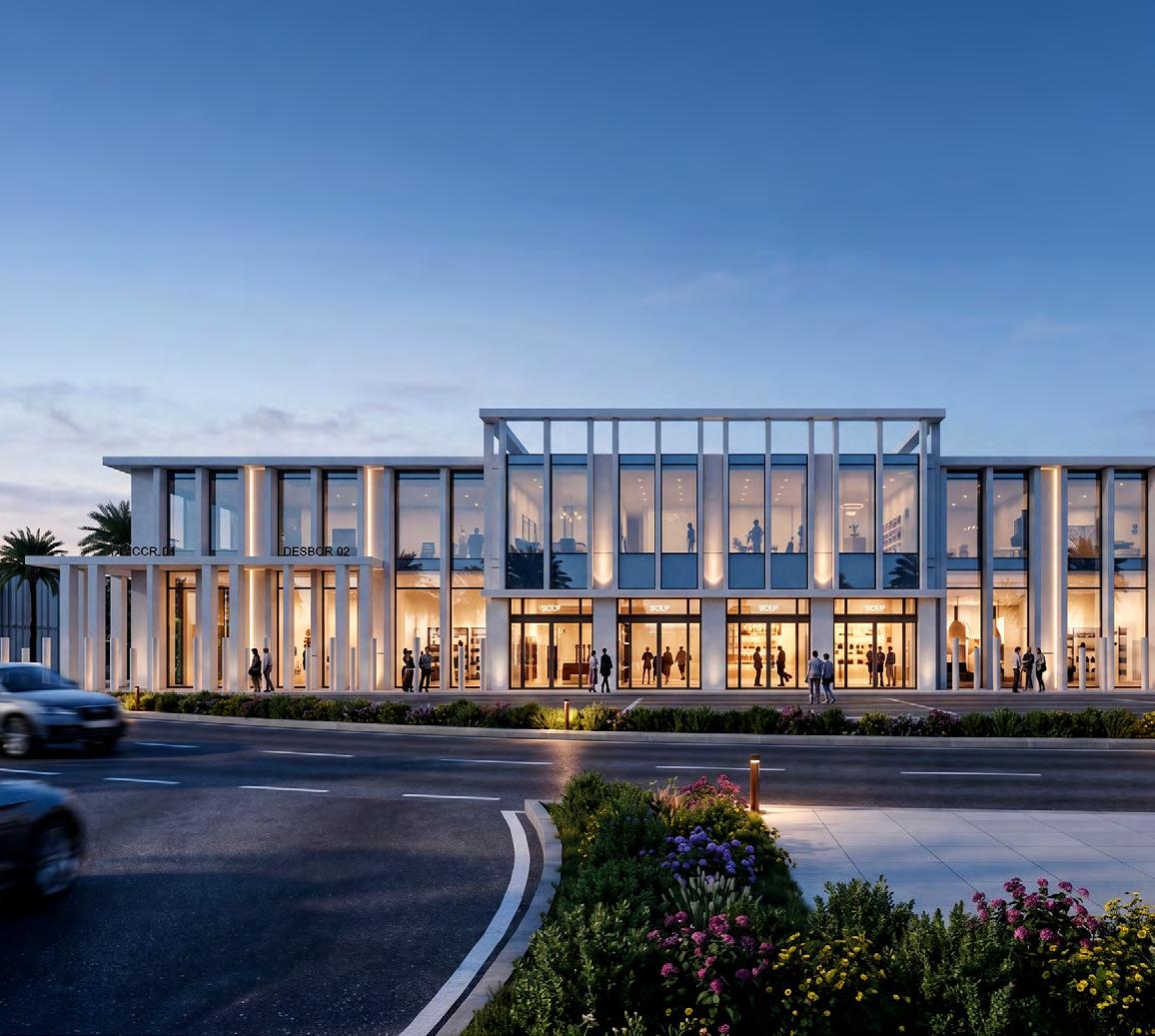
FROM COMMERCIAL COMPLEX TO COMMUNITY DESTINATION
Ain Lanes represents a new approach to commercial development in Al Ain, where success is defined not only by the spaces created but by the experiences they deliver
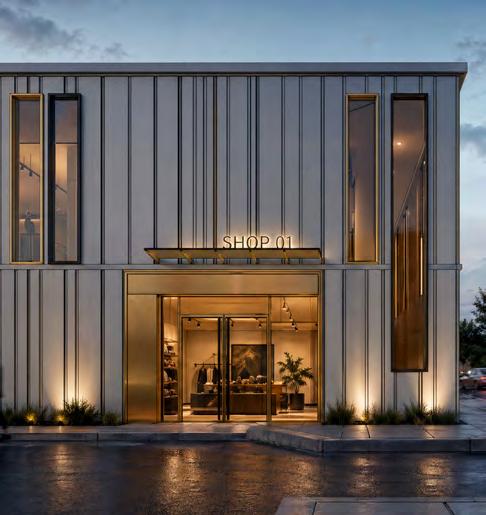
Ain Lanes has been conceived as more than a commercial development

As Al Ain continues to evolve as one of the UAE’s key commercial centres, a new destination is taking shape within the city’s growing Wadi Alain corridor. Ain Lanes, a mixed-use retail, dining and business development by Imperium Group, is transforming an existing commercial complex into a pedestrian-focused destination designed to bring renewed energy and vibrancy to the area’s commercial landscape.
Representing a multi-million-dirham investment in Al Ain’s expanding commercial corridor, the project spans approximately 11,000 sqm of retail, office and workshop spaces. Ain Lanes has been conceived as more than a traditional commercial development, with the ambition of creating a destination where businesses, visitors and the wider community can connect through a more engaging, accessible and experience-led environment.
Situated within a 31,766.50 sqm site, the development brings together ground-floor retail and F&B offerings with first-floor offices and contemporary workshop facilities, creating a diverse commercial ecosystem under one unified identity. At its core is a continuous walkable environment designed to encourage movement, improve business visibility and establish a stronger sense of place.
“The era of simply building commercial space is over” said Karim Karam, Founder of Imperium Group. “Today’s developments compete on experience, identity and community. Ain Lanes was conceived to prove that even an existing asset can become a destination people actively choose to visit.”
Unlike many commercial projects that begin with a blank canvas, Ain Lanes has been shaped around the structure already in place. The existing building framework became the foundation for the project’s architectural language, influencing elements ranging from façade rhythm to the overall visual identity. This approach enabled the design team to create a distinctive destination while unlocking new value from the existing site.
The development also introduces a carefully integrated lighting strategy designed to transform the destination after dark, alongside a contemporary material palette inspired by the surrounding landscape. Together, these elements create a recognisable identity aimed at attracting a diverse mix of retail operators, F&B concepts, professional offices and commercial tenants.
For Imperium Group, Ain Lanes reflects a broader shift in the way commercial destinations are being created across the region. As consumer expectations continue to evolve, successful developments are increasingly defined not only by the spaces they provide, but by the experiences they create.
As Abu Dhabi continues to invest in the growth of its regional economic centres, Al Ain is experiencing increasing demand for high-quality commercial environments that combine retail, dining and workplace experiences. Against this backdrop, Ain Lanes aims to introduce a new model for commercial development in the city, transforming an existing asset into a destination designed to support businesses, attract visitors and contribute to Al Ain’s evolving urban landscape.
“Commercial developments today have to work harder to stand out,” said Gehad Amin, Co Founder of Imperium Group. “People are looking for environments that feel connected, easy to navigate and memorable. Ain Lanes was designed around that principle, creating a destination that supports businesses while enhancing the experience of the people who use it.”
SPARK PARTNERS WITH PAN KINGDOM REAL ESTATE ON ENERGY INDUSTRIAL DEVELOPMENT
King Salman Energy Park (SPARK) is one of the world’s leading industrial cities dedicated to the energy sector
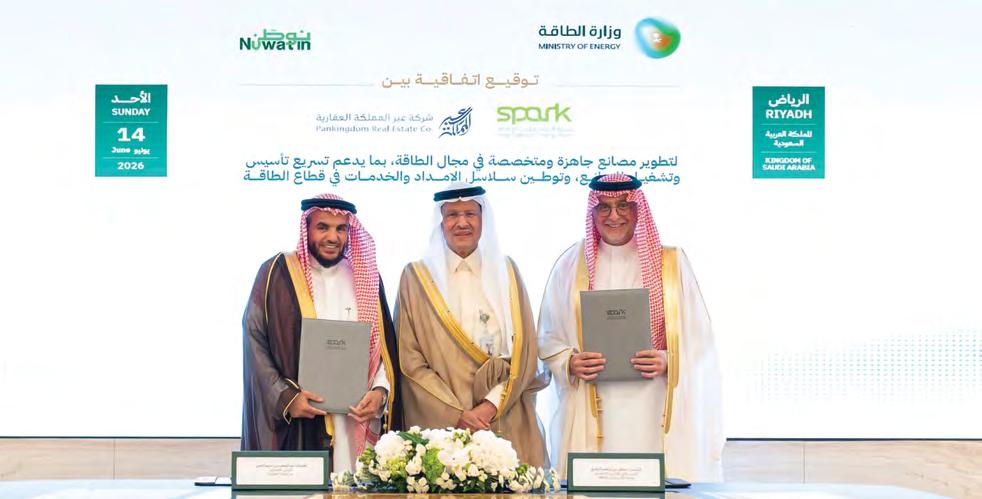
Under the patronage of Minister of Energy Prince Abdulaziz bin Salman bin Abdulaziz, King Salman Energy Park (SPARK) signed an agreement with Pan Kingdom Real Estate to develop a ready-built industrial complex for the energy sector. The project will strengthen the localisation of products and services, support supply chain development, and advance the objectives of Saudi Vision 2030 by attracting global manufacturers and suppliers and enabling them to establish and operate efficiently and cost-effectively.
Under the agreement, Pan Kingdom Real Estate will develop an integrated industrial complex comprising 168 ready-built units across 214,000 square metres. Designed to meet the needs of energy-sector companies and supporting supply chains, the complex will feature advanced industrial facilities alongside high-quality infrastructure and support services. The development is expected to enhance SPARK’s investment environment and improve operational efficiency across the energy ecosystem.
SPARK is one of the world’s leading industrial cities dedicated to the energy sector, providing an integrated ecosystem of infrastructure, logistics services and investment solutions that support business growth and the localisation of high-value industries. Strategically located near major ports, airports and transport networks, the development will strengthen supply chain performance, enhance logistics capabilities and improve access to energy markets across Saudi Arabia and the wider region for both local and international companies.
The project also supports the objectives of the Ministry of Energy’s Nuwatin Initiative, which aims to increase local content by enabling local and international companies through integrated industrial infrastructure. The initiative promotes the growth of energy-related industries, expands the domestic supplier base, creates investment opportunities and increases the contribution of national enterprises to the economy, further advancing the sector’s strategic objectives.
Under the agreement, Pan Kingdom Real Estate will develop an integrated industrial complex comprising 168 ready-built industrial units
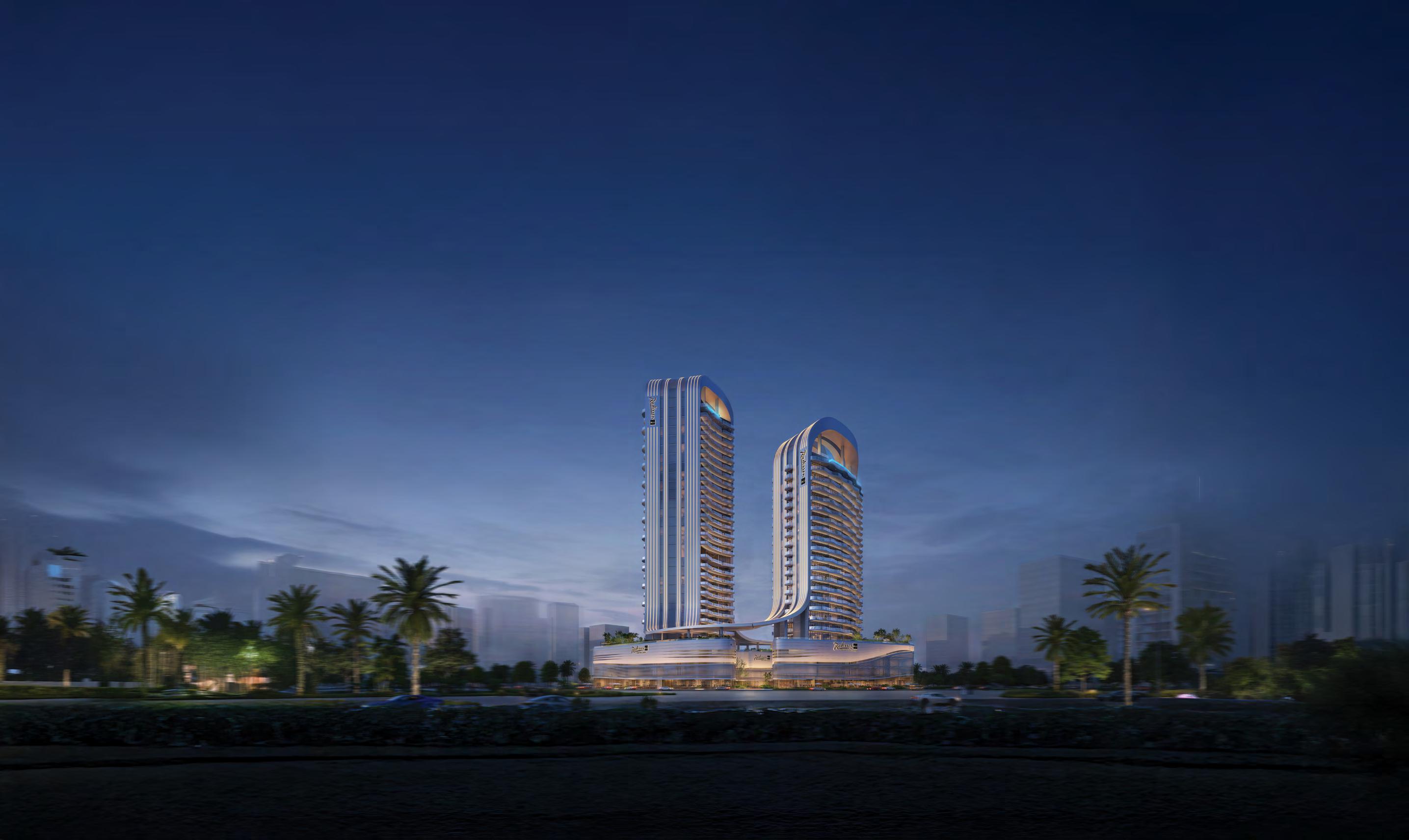
MAKKAH REDEVELOPMENT PROJECT AWARDED TO SAUDI LADUN CONSORTIUM IN $1.6 BILLION DEAL
Ladun and Al-Ayuni have secured a $1.6 billion contract to redevelop one of Makkah’s largest informal settlements
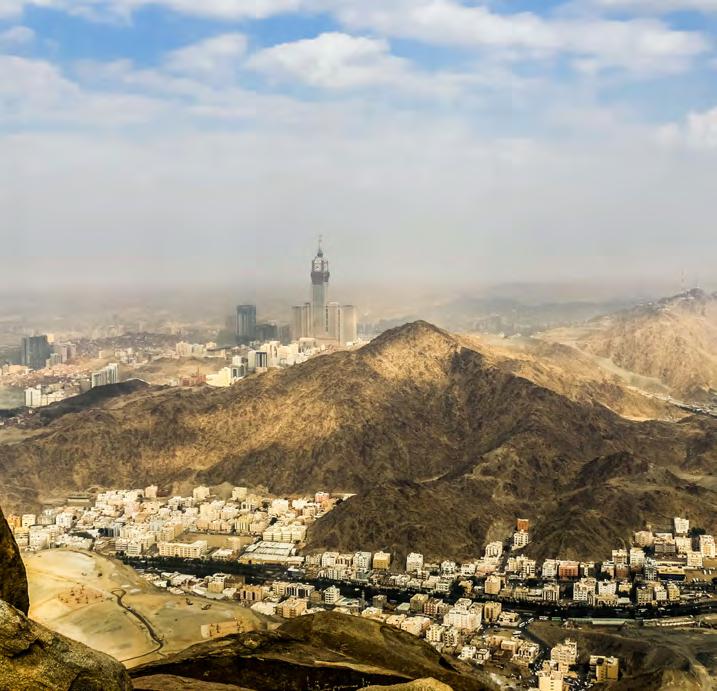
The Khalidiyah informal settlement in Makkah is set to undergo a comprehensive redevelopment, with a consortium comprising Ladun Investment Company and Al-Ayuni Investment and Contracting Company appointed to deliver the project.
Awarded by the Royal Commission for Makkah City and Holy Sites, the development will be implemented through a closed-ended private real estate investment fund established in accordance with Capital Market Authority (CMA) regulations.
The fund will oversee all aspects of the project, including infrastructure development, land subdivision, plot sales and the overall exit strategy.
The scope of works includes the delivery of essential infrastructure such as road networks, water and sewage systems, electricity and telecommunications services, as well as public parks and open spaces. All plots will be delivered fully serviced and ready for development.
The project will be carried out in coordination with a range of government entities, including Makkah Municipality, the National Water Company, Saudi Electricity Company, the Real Estate General Authority, the Off-Plan Sales Programme (Wafi), and telecommunications providers.
With a targeted sales value exceeding SAR6 billion (US$1.6 billion), the development ranks among the largest urban regeneration projects in Makkah. Ladun disclosed the contract award in a stock exchange filing, although a completion date has not yet been announced.
AJI EXPANDS INTO SYRIA WITH STRATEGIC PARTNERSHIP WITH DAMASCUS-BASED TALA ENGINEERING
The deal combines AJi’s international expertise with Tala’s local knowledge to pursue engineering and project management opportunities across Syria
As Syria’s construction sector gathers momentum, AJi has marked its official entry into the market by participating in BUILDEX 2026, the 24th International Exhibition for Construction, held from 10–14 June 2026 at the Damascus Fairground.
As part of its strategic expansion into Syria, AJi signed a Strategic Collaboration Agreement with Tala Engineering Consulting and Project Management, a Damascus-based consultancy. The agreement establishes a framework for long-term cooperation, enabling both firms to jointly pursue opportunities in engineering consultancy, design, supervision and project management. The partnership combines AJi’s international expertise with Tala Engineering’s in-depth local market knowledge and regulatory experience.
THE COLLABORATION WILL FOCUS ON OPPORTUNITIES ACROSS INFRASTRUCTURE, HEALTHCARE, URBAN DEVELOPMENT, HOSPITALITY, TRANSPORTATION, INDUSTRIAL AND PUBLIC SECTOR PROJECTS, SUPPORTING SYRIA’S ANTICIPATED RECONSTRUCTION AND DEVELOPMENT PROGRAMME.
According to the latest World Bank assessment, the country’s reconstruction requirements are estimated at US$216 billion, including US$82 billion for critical infrastructure such as power grids, roads and water networks.
Commenting on the partnership, Eng. Hamzeh Awwad, CEO of AJi Group, said: “Syria today is one of the most promising markets in the region, and what is being rebuilt here is more than infrastructure; it is the foundation of urban life for generations to come. At AJi, we believe reconstruction must be delivered correctly the first time, with sustainability and liveable, people-centred cities at its core.
“No single firm or sector can deliver a national reconstruction programme of this scale alone. Engineering, construction,
finance, energy and technology must work together to support Syria’s rebuilding efforts. Our agreement with Tala Engineering reflects exactly that approach, bringing together international expertise and local knowledge to help shape a sustainable future for Syria.”
The agreement comes at a pivotal time for the country. Following the easing of international sanctions and renewed engagement from Gulf, European and international partners, major investments in transportation, energy, urban development and industrial zones are reshaping the market and driving demand for engineering expertise, construction technologies and project management services.
Through its participation at BUILDEX 2026 and its partnership with Tala Engineering, AJi has reaffirmed its long-term commitment to the Syrian market and its support for the country’s journey towards sustainable recovery and development.
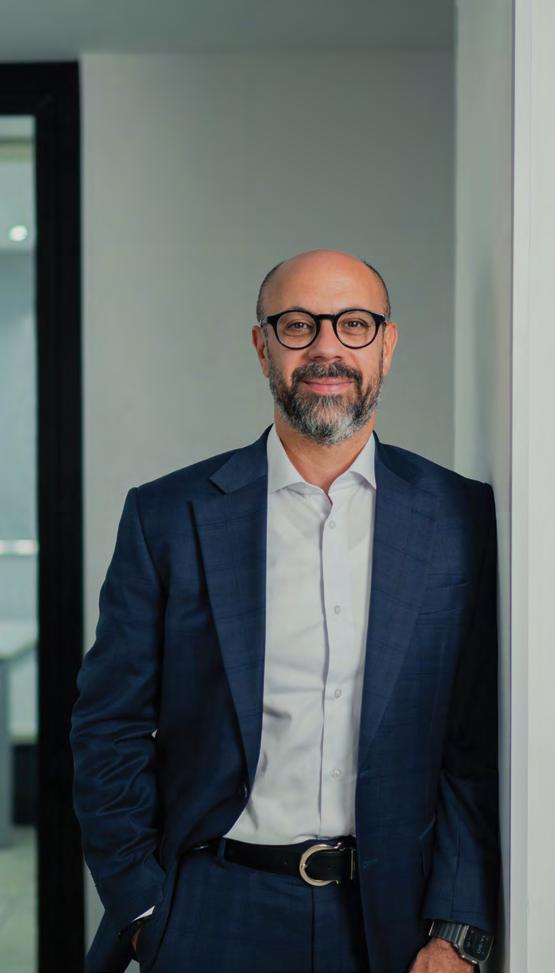
Eng. Hamzeh Awwad, CEO of AJi Group
The GameLong
Mohamed Moussa, Manager of Project Delivery at Masdar City, on what it took to deliver the UAE’s first Estidama 5 Pearl office building, and why he believes the real test for Gulf infrastructure only begins after the ribbon is cut.
Words by: Vibha Mehta
What were the biggest technical hurdles in delivering the UAE’s first Estidama 5 Pearl office building?
The M19 A&B Office Buildings are the first commercial development in the UAE to achieve a 5 Pearl Estidama rating, the highest level of sustainable building certification in Abu Dhabi. Getting there required the entire asset to perform exceptionally, not just individual systems within it.
The challenge was balancing sustainability, operational efficiency, occupant wellbeing and commercial viability in a climate defined by high cooling loads, intense solar radiation and extreme heat. Envelope specifications, shading strategies and MEP systems all had to be evaluated together. The result was 91.8 percent energy savings beyond international benchmark standards, a 63 percent reduction

in cooling load and a 56 percent reduction in heat insulation gain.
“The project reinforced a lesson that continues to shape our work today,” Moussa says. “The most significant sustainability outcomes are determined long before construction begins.”
In practical terms, what does an Estidama 5 Pearl rating actually mean for how the building performs day to day?
Estidama is Abu Dhabi’s sustainability certification framework for buildings and communities. A 5 Pearl rating is the highest level achievable, awarded to developments that meet exceptional standards across energy efficiency, water
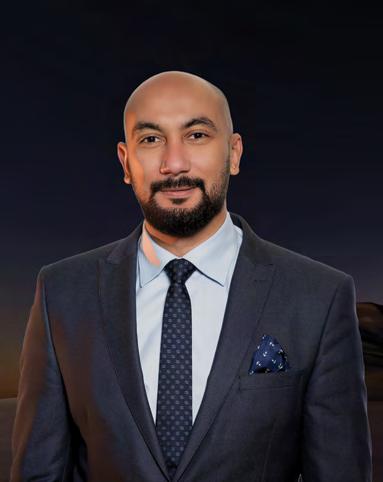
Mohamed Moussa, Manager of Project Delivery at Masdar City
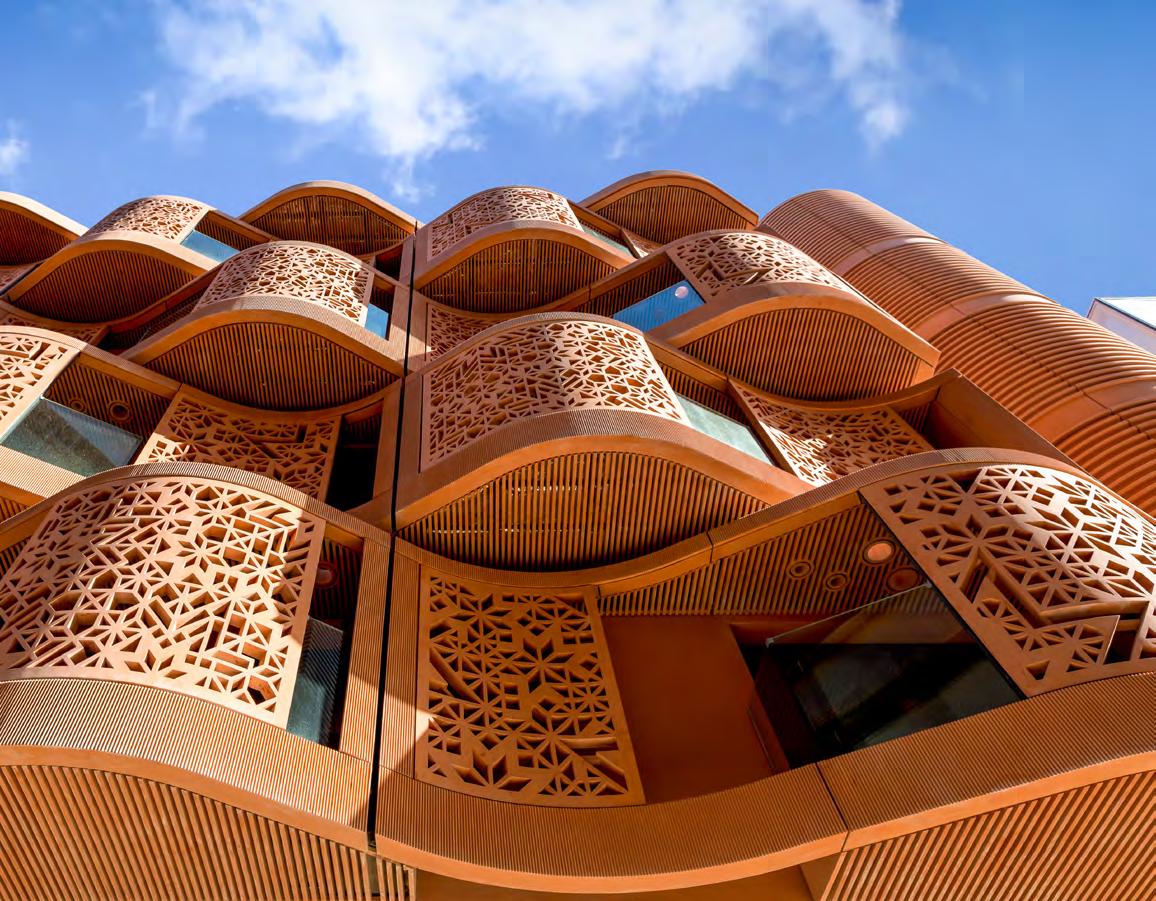
Facade detail of Masdar City, which last year earned LEED Communities Platinum Certification, reinforcing its vision as a place where people live, work, learn and play
conservation, environmental impact and occupant wellbeing.
For occupants, it means better air quality and thermal comfort. For owners and investors, that translates into lower operating costs, greater resilience and stronger long-term asset value.
The real measure is not the certification itself, but the performance it delivers year after year.
How has project delivery at Masdar City evolved to embed sustainability from the earliest design stages?
Sustainability is no longer a standalone consideration; it is embedded within every stage of project delivery. At Masdar City, we integrate sustainability objectives from project inception through design, procurement, construction and operations, focusing on measurable performance outcomes rather than certification alone.
The biggest shift has been bringing tools such as digital modelling, lifecycle assessment, and performance
analysis into the earliest design phases. This enables better decision-making and ensures assets deliver longterm environmental and operational value.
“M19 A&B DEMONSTRATES EXACTLY THAT,” MOUSSA SAYS. “THE PROJECT DID NOT ACHIEVE A 5 PEARL RATING BY APPLYING SUSTAINABILITY MEASURES LATE IN THE PROCESS. THE PERFORMANCE OUTCOMES WERE SET AT THE DESIGN STAGE, AND EVERY SUBSEQUENT DECISION WAS TESTED AGAINST THEM.”
How are Masdar City projects holding up against rising costs, supply chain pressures and tighter timelines? The sector has faced significant pressure over recent years. JLL’s Global Office Fit-Out Costs Guide 2026 recorded cost increases of 2 to 6 percent across regions in the past year alone.
Our response has focused on earlier procurement planning, stronger supplier engagement, and wider use of
digital project controls to maintain program visibility. We have also moved away from assessing projects on upfront capital cost alone. Lifecycle value assessment, which accounts for operational costs, maintenance and long-term asset performance, is now central to investment decisions.
“Projects are assessed and specified on their long-term value,”
Moussa says, “not just their initial capital cost.”
Where is the biggest gap between sustainability ambition and actual on-the-ground delivery in UAE infrastructure?
The UAE has established some of the world’s most ambitious sustainability targets. The Net Zero 2050 Strategy sets a clear national commitment to
full decarbonization. The next challenge is ensuring operational performance consistently matches that ambition.
The industry has become increasingly proficient at designing sustainable infrastructure, but long-term performance monitoring, asset management and operational optimization remain areas where further progress can be made. Bridging that gap requires stronger data collection, smarter operational systems and greater collaboration between developers, operators and end users.
“Success
should not be measured solely by what is delivered at handover,” Moussa says. “The real test is how assets perform five, ten and twenty years later.”
Masdar City exists at that intersection. By consistently translating sustainability ambition into measurable, on-the-ground performance, it has become a green
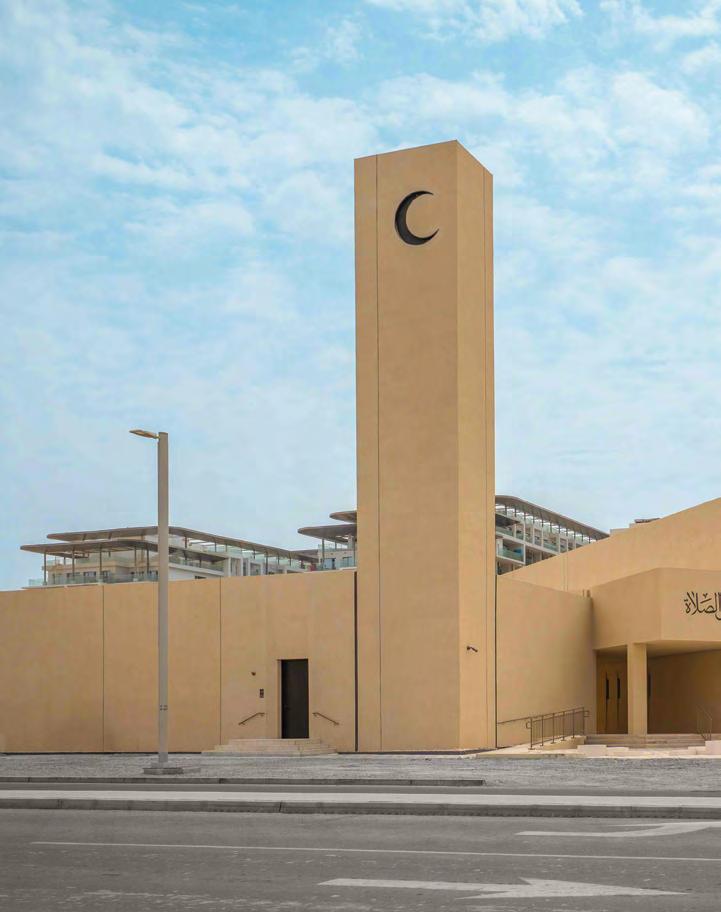
Exterior - Masdar City Mosque, Abu Dhabi’s first Net-Zero Energy Mosque, powered entirely by the sun.
print, a proven, tested framework that cities serious about climate resilience and human wellbeing can adapt and build from.
Which technologies being tested at Masdar City are closest to mainstream adoption across the wider industry?
Several technologies are approaching widespread adoption, particularly those that demonstrate clear commercial and operational benefits.
The UAE’s AI Strategy targets global leadership by 2031, with AI projected to contribute AED 335 billion to the economy. One of its core objectives is building the infrastructure to serve as a testing platform for AI at scale. That ambition creates a direct energy challenge: how cities respond will determine whether digital transformation and climate commitments can be delivered together.
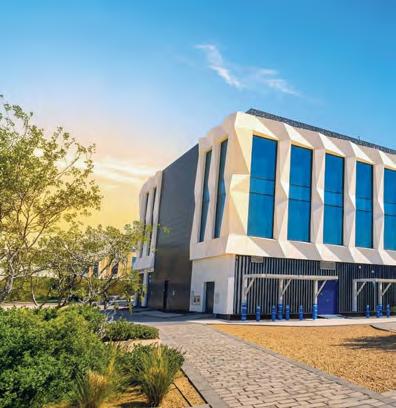
At Masdar City, that challenge is already being addressed. AI-enabled building management systems, advanced energy analytics, smart district infrastructure, predictive maintenance platforms and next-generation energy efficiency technologies are already

delivering measurable value, reducing energy demand, improving thermal comfort and streamlining maintenance scheduling across live assets.
“These are the technologies closest to mainstream adoption,” Moussa says, “precisely because they demonstrate clear operational benefits alongside their sustainability credentials.”
How is the project delivery function adapting to the growing complexity of net-zero and smart infrastructure briefs?
The role of project delivery has expanded significantly. Historically, success was measured by delivering projects on time, within budget and to specification. Today, project teams are expected to deliver those outcomes while also addressing sustainability, digital integration, resilience, operational efficiency and future adaptability.
This requires broader multidisciplinary expertise and a more collaborative delivery model. Data specialists, sustainability experts, technology providers and operational stakeholders are now involved much earlier in the project lifecycle.
ABU DHABI’S FIRST NET-ZERO ENERGY MOSQUE
AT MASDAR CITY REFLECTS WHAT THAT INTEGRATED APPROACH MAKES POSSIBLE.
Powered entirely by the sun, passive design strategies and
natural ventilation work together to eliminate energy demand at source, simultaneously achieving LEED Platinum, Estidama 4 Pearl and ILFI Net-Zero Energy certification.
At the midpoint of 2026, how would you read the overall health and momentum of UAE infrastructure development?
The UAE infrastructure sector remains exceptionally strong, driven by clear national priorities, sustained investment and a long-term vision for economic diversification. Abu Dhabi alone has committed AED 240 billion to infrastructure investment over the coming decade.
What is particularly encouraging is the shift from building at scale to building with purpose. Increasingly, success is being measured by resilience, sustainability and long-term value creation rather than volume alone. Lifecycle value and operational performance now inform investment decisions from the earliest stages of planning rather than entering the process later.
“That evolution positions the UAE as a global benchmark for the next generation of infrastructure,” Moussa says, “a standard that is visible in what is being delivered at Masdar City: recognized not only for the volume of infrastructure being built, but for the standard to which it is being built.”
M19 A&B Office Buildings, the UAE’s first commercial development to achieve a 5 Pearl Estidama rating
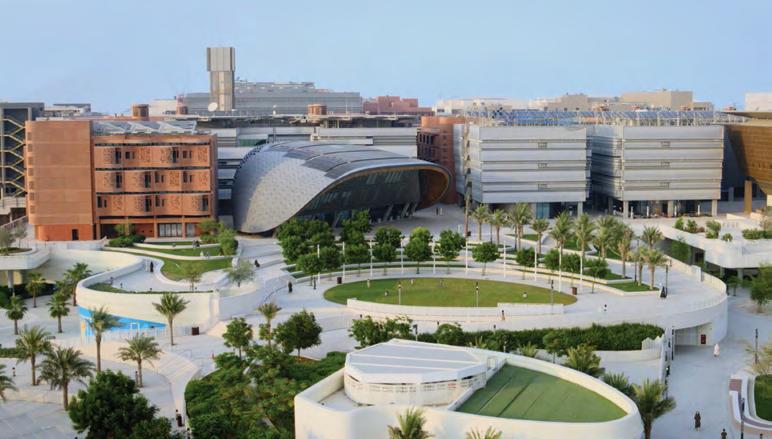
Aerial view of Masdar City, a sustainable urban development integrating clean energy, smart infrastructure and net-zero design
Ghassan Aboud Automotive Syria Expands with Launch of Grand Auto & Machinery Co. (GAMCO)
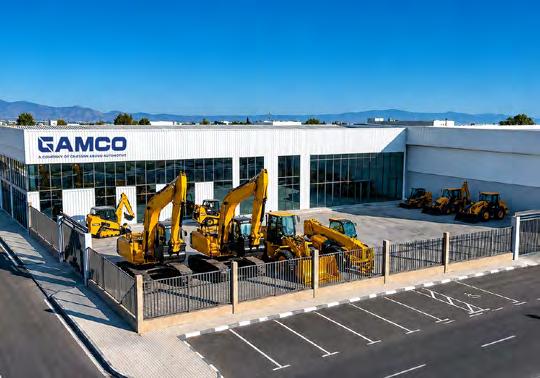
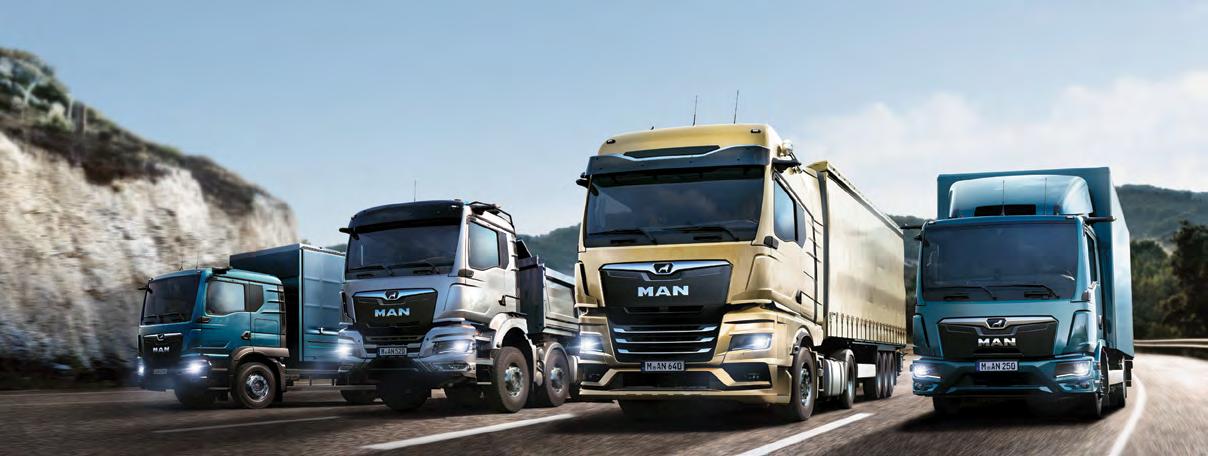
Ghassan Aboud Automotive, Syria, has launched Grand Auto & Machinery Co. (GAMCO), a new company within its portfolio specialising in commercial vehicles, agricultural equipment, construction machinery, heavy equipment, industrial technologies and integrated mobility solutions.
Established to support Syria’s rebuilding, GAMCO will act as an official distributor for leading global OEM brands, introducing equipment and technologies aimed at improving productivity and project delivery across the country’s infrastructure, construction, agriculture, transportation, logistics and industrial sectors.
The launch marks a key milestone in Ghassan Aboud Automotive’s regional growth strategy, reinforcing its commitment to emerging markets through strategic investment and long-term development.
GUIDED BY ITS VISION OF “REBUILDING SYRIA TOGETHER,” GAMCO AIMS TO COMBINE GLOBAL EXPERTISE, ADVANCED TECHNOLOGY AND LOCAL TALENT DEVELOPMENT TO SUPPORT THE COUNTRY’S NEXT PHASE OF GROWTH.
Saud Abbasi, CEO of Emerging Markets at Ghassan Aboud Holding, said: “The establishment of GAMCO reflects our strong belief in Syria’s future and its potential for economic recovery and growth. At Ghassan Aboud Automotive, we
see this expansion as more than a business investment; it is a commitment to supporting reconstruction efforts by partnering with some of the world’s most reliable and admired brands and delivering reliable mobility, machinery, and infrastructure solutions that contribute to rebuilding communities and empowering key industries.”
He added: “We believe the private sector has a vital role to play in accelerating recovery and creating long-term opportunities. Through GAMCO, we are committed to supporting national reconstruction efforts by introducing advanced technologies, facilitating knowledge transfer, and investing in training and skills development. Our ambition is not only to provide equipment and machinery, but also to help build local capabilities and strengthen the sectors that will drive Syria’s future growth.”
Shadi Kawerma, Managing Director at GAMCO, said: “This is a very exciting time to be part of Syria’s reconstruction journey, and we look forward to announcing a portfolio of world-class brands that will support the country’s infrastructure, construction, transportation, agriculture, and industrial sectors.” The company’s network expansion will begin in Damascus, extend to Homs, and continue north to cover Idlib and Aleppo, supported by modern service facilities, mobile service vans staffed by certified technicians, and a national parts distribution centre spanning approximately 1,500 sqm.
“Beyond equipment and technology, we are investing in people,” Shadi added. “Through our Automotive Academy, we are developing local talent through technical and professional training programmes designed to prepare the next generation of industry specialists.”
GAMCO’s mission is to support Syria’s reconstruction by delivering integrated solutions for public- and privatesector stakeholders, combining strategic OEM partnerships, professional training, modern service infrastructure, aftersales support, mobile field-service capabilities and a nationwide parts network. Its mobile service fleet will provide maintenance, diagnostics and technical support directly at customer sites, minimising downtime for businesses, contractors, developers and government-related projects.
The expansion aligns with Ghassan Aboud Automotive’s broader mission to drive sustainable growth across strategic sectors and strengthen economic connectivity across the region, while supporting Syria’s long-term reconstruction and development objectives.

Drive the new way.
New IVECO S-Way: high technology and efficiency on all missions
A wide choice of Euro III / V diesel engines, delivering class-leading power from 360 hp to 560 hp Euro III / 570 hp Euro V and superior fuel economy.
12-speed HI-TRONIX automated transmission with the most advanced technology in its category, electronic clutch and best-in-class torque-to-weight ratio.
Full range of fuel-saving devices, such as anti-idling feature, EcoSwitch, Ecoroll and Smart Alternator.
Top levels of comfort and safety, with a completely redesigned and reinforced cab, featuring enhanced direct visibility and enlarged cab livability.
Building Confidently in a Shifting Cost Environment
Word by: Daniel King
ever, the question on every developer’s mind appears to be, “are our numbers still right?”
It’s a fair question. Our latest benchmarking data, drawn from live tender returns, shows concrete works costs up 13% and reinforcement steel up 16% between Q4 2025 and Q2 2026. Commodity indices tell a similar story with rebar up 6%, while oil and aluminium have both risen around 20% over the same period, with both curves climbing from January 2026 onwards. For a developer working from a feasibility study completed as recently as Q4 2025 these figures are a prompt to revisit assumptions that the market may already have moved past.
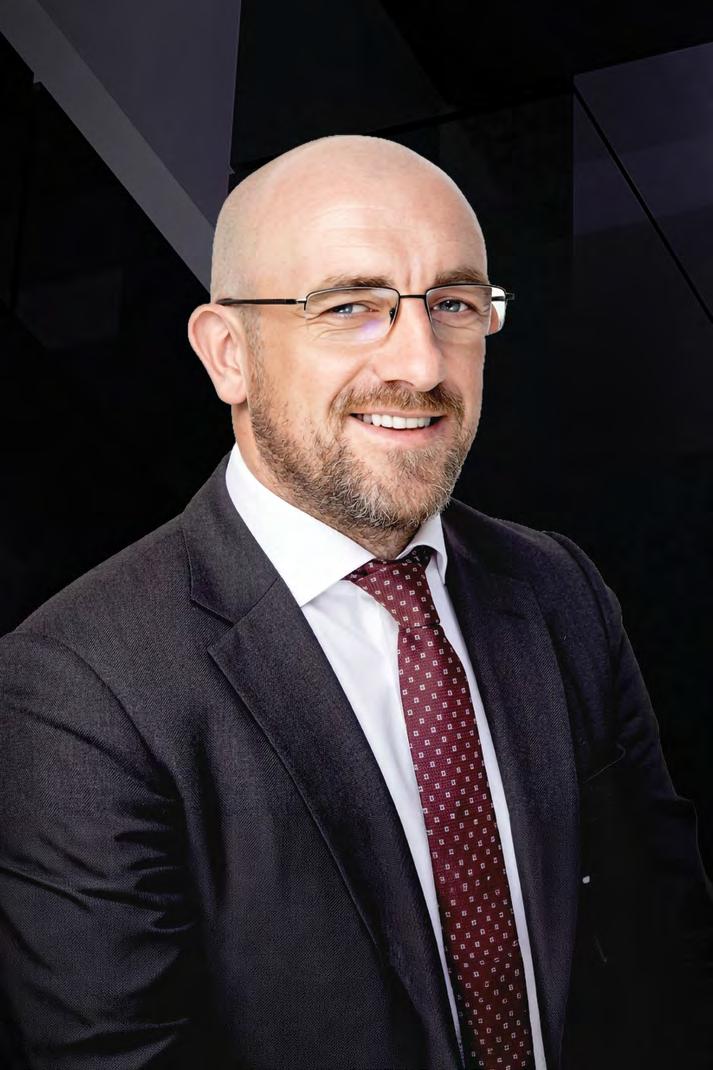
Bio: Daniel King is Regional Director, Cost Management at AESG, with over 25 years of experience across KSA, UAE, Qatar, and the UK. He has managed multimillion-dollar operations in KSA and delivered multibillion-dollar global portfolios, with a strong track record in driving revenue and client growth. He holds an MSc in Construction Management from Sheffield Hallam University and is a member of RICS, UK.
The GCC construction market is at an inflection point. Nearly US$951 billion in projects are under active execution which speaks to the extraordinary scale and ambition of what is being built here. This year more than
Before drawing the wrong conclusions, it is worth acknowledging what the supply data tells us. Cement supply is up 4% and average concrete supply up 13% over the same period. It’s clear that this is a market that is active, wellresourced, and absorbing cost pressure without losing momentum. The distinction matters, because the right response to a cost recalibration is very different from the right response to a supply crisis. The former calls for sharper planning, the latter might justify a pause, what we are seeing is firmly the former.
The
Feasibility Gap
One of the most consistent gaps is between when a feasibility study was completed and when a developer actually commits
Daniel King, Regional Director of Cost Management - UAE at AESG
to procurement. In a stable cost environment, that gap is manageable. In a dynamic one, that presents risk. That’s why best practice is to review feasibility studies on a quarterly basis.
That process must involve more than updating a cost line. It means reviewing the current design against what was originally appraised, applying an accurate Tender Price Index to bring benchmarks to the present date, revalidating procurement strategy and phasing assumptions, and revisiting OPEX allowances alongside the CAPEX picture. Funding streams, discount rates, and NPV assumptions all need to be in the conversation too. A feasibility study is only as useful as the date on which its assumptions were last tested.
Hospitality is a useful lens through which to understand why this matters. As the most capital-intensive asset class we benchmark in the GCC, with resort-class developments ranging from AED 15,000 to AED 20,000 per square metre in the UAE and SAR 16,500 to SAR 23,000 in KSA, it illustrates the stakes most vividly. An uplift of 11–16% in concrete and reinforcement costs lands here more than almost anywhere else in the built environment. The line items most worth tracking closely are structure, mechanical, electrical and plumbing (MEP) and facades, alongside specialist components such as feature finishes, AV/IT, sanitaryware & bespoke joinery. This is where cost creep can accumulate quietly through the development process, and where early market testing and value engineering tend to have the most meaningful impact. The same discipline applies across all asset classes, but often in hospitality makes the consequences of inaction most visible.
On contingency allowances, depending on the size, value & complexity of the project and as a function of the estimated CAPEX, I would generally carry 15% at the concept design stage, stepping down to 10% at schematic design, 5% at detailed design, and 2.5% through construction. Contingency is a planning instrument, not an overhead.
Procurement Needs A Rethink
Beyond revalidating feasibility, the more significant shift I would encourage developers to make is in how they approach procurement. The traditional fixed-price lump sum contract has long been the default across the region, and it has its logic. But in an evolving cost environment, it is rarely the clean risk transfer it appears to be on paper. Contractors price uncertainty into their bids, and what looks like a fixed position at contract award has a way of finding its way back to the developer through the life of a project.
There are better structures. For example, early-stage parallel design package procurement allows specific trade pricing to be locked in before broader cost movements feed through. Volume procurement of key materials such as concrete, rebar, and structural steel gives developers with clear pipeline programmes a real opportunity to access pricing ahead of the curve. Longer-term supply chain framework agreements are something the region’s more sophisticated developers are
already using to secure below-market rates in exchange for revenue certainty for their delivery partners.
What is equally important, and perhaps less discussed, is contractor selection. The gravitational pull toward the lowest price needs to be consciously resisted. More rigorous prequalification, greater weight given to technical appraisal, and a more genuinely comprehensive tender evaluation process all serve developers better when market conditions are less predictable and can serve to better mitigate risk of contractor failure. On contract terms, I would encourage more openness to price fluctuation clauses on key risk items, and to collaborative contracting mechanisms that give contractors a genuine stake in delivery outcomes. The adversarial contract model has a cost that is not always visible in the headline figures but becomes apparent over the life of a project.
The KSA Dimension
The difference between UAE and KSA cost profiles in our data is worth addressing directly, because it has implications for how uniquely developers in the Kingdom should be thinking. KSA benchmarks are higher across residential and hospitality tiers, reflecting greater import dependency and more extended supply chains.
Admittedly, local supply chain maturity has improved considerably in recent years, which provides some mitigation. A recent moderation in development activity has created residual capacity that offers further headroom. Developers active in KSA, particularly those connected to the giga-project programme, would be well served by establishing longlead procurement strategies and supply chain relationships earlier in the programme than has historically been standard practice. The prerequisite for that is clarity on funding and project prioritisation. Without it, firm supply chain decisions are difficult to make with the confidence the market requires.
What To Do Before You Break Ground
For any developer sitting on an approved project any older than 6 months that has not yet broken ground, the sequence is straightforward. Commission a cost revalidation first - not as a formality, but as a genuine stress test of current assumptions against live benchmarks. If the project passes that test, the next conversation is about which procurement strategy best fits the current environment and how to implement it with the right consultant team in place. That order of operations matters. Decisions made before revalidation are decisions made in the dark.
The GCC’s long-term story remains captivating with market drivers such as population growth, tourism ambition, and economic diversification remaining as compelling as ever. What has evolved is the cost environment in which those ambitions are currently being pursued. Navigating this effectively depends not on the size of the balance sheet, but the quality of market intelligence and the discipline with which it is applied. In a construction market of this scale and ambition, that rigour is not a differentiator. It is a prerequisite.
Arabian Construction Company Group appoints Eric Savage as Chief Technology Officer
Arabian Construction Company Group (ACC Group) has appointed Eric Savage as Chief Technology Officer (CTO). The appointment comes as ACC Group continues to expand its capabilities in response to growing project complexity and evolving operational demands across the construction sector.
As part of his role, Eric will lead ACC Group’s technology strategy, overseeing enterprise systems, cybersecurity, IT infrastructure, data initiatives, and digital innovation across the business. He will work closely with the leadership team to support operational efficiency, scalability and more integrated project delivery across the group’s global operations.
Eric brings more than 18 years of international experience leading enterprise technology, IT strategy, and transformation programmes across the Middle East, Europe, and Africa. His experience spans the construction, energy, and real estate sectors.
Commenting on his appointment, Eric said, “ACC Group has built a strong reputation for delivering complex projects across multiple regions. Technology is becoming increasingly important in how projects are planned, managed, and delivered. I look forward to contributing to ACC Group’s digital transformation and driving innovation in every aspect of my role, from overseeing business solutions and sourcing to digital enablement.”
“We are pleased to welcome Eric to ACC Group; it reflects ACC Group’s continued focus on strengthening its technology capabilities and supporting operational excellence across the business,” said Maher Merehbi, Chief Executive Officer of ACC Group. “As a technology executive with over 18 years of experience and a proven track record in delivering operational excellence across various businesses, Eric has the right profile to lead ACC Group’s strategic transformation initiatives.”
Founded in 1967, ACC Group is one of the Middle East’s leading construction and engineering companies, delivering large-scale developments across the commercial, hospitality, residential, industrial, and infrastructure sectors.
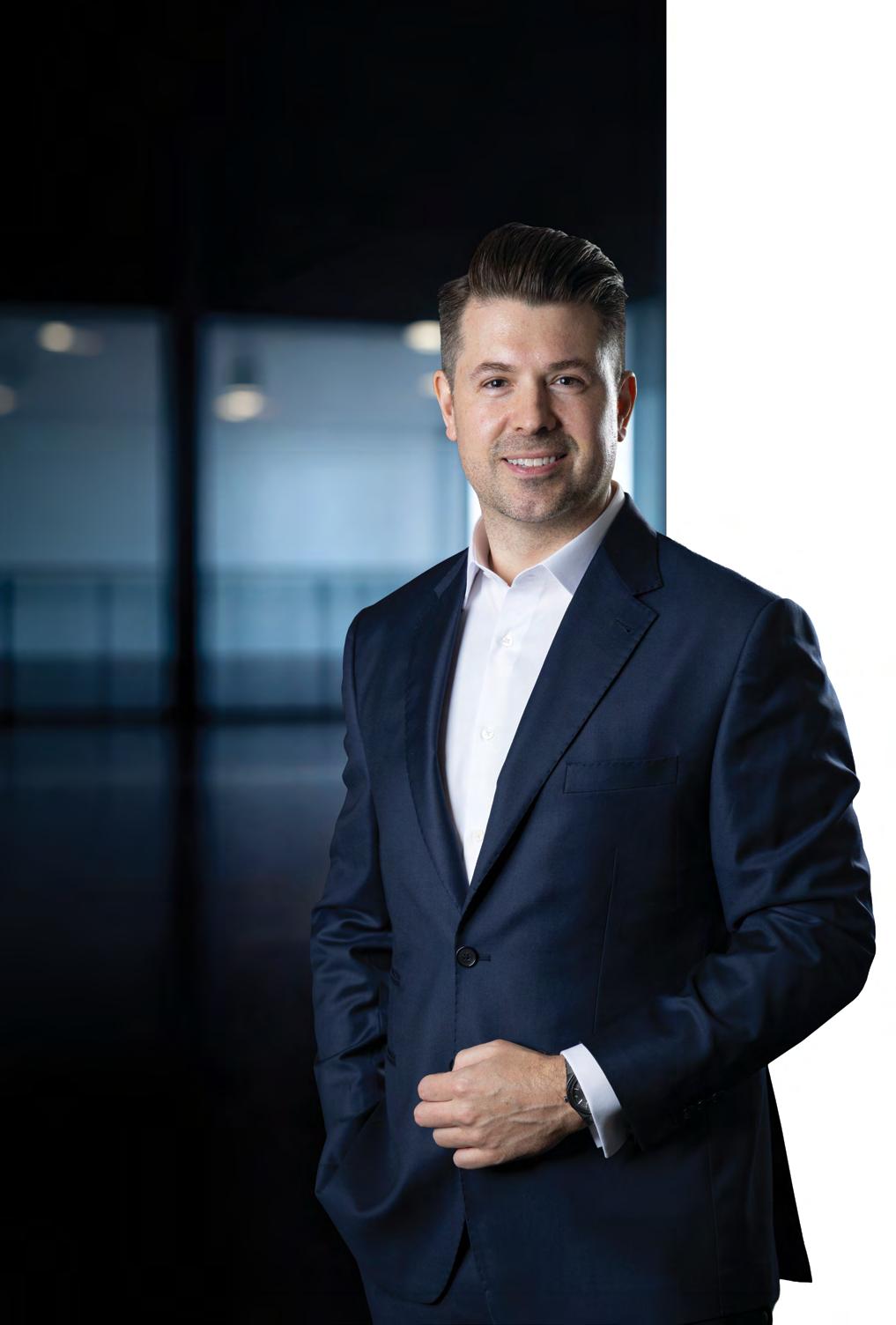
Eric Savage, Chief Technology Officer of ACC Group
Same icon.

Aeron never stops.
WHY THE GULF IS BEST PLACED TO POWER THE AI REVOLUTION
Bruno Melles, CEO of Hitachi Energy’s Transformers Business Unit, on why electricity — not silicon — has become AI’s real bottleneck, and why the GCC may be the one region built to scale fast enough to keep up
As artificial intelligence pushes power grids worldwide to breaking point, Bruno Melles, Executive Vice President and CEO of the Transformers Business Unit at Hitachi Energy, argues that the next constraint on AI growth won’t be chips or capital — it will be megawatts. From volatile, seconds-long swings in demand to multi-year transformer lead times, he explains why grid infrastructure is fast becoming the industry’s defining chokepoint, and why the Gulf, with its energy abundance and centralised decisionmaking, is emerging as one of the few regions capable of building AI infrastructure at the speed the industry now demands.
KEY FACTS
• AI data centres are being designed for 100–500 MW, with hyperscale facilities reaching 1 GW or more — far beyond the 1–10 MW typical of conventional data centres.
• Over 90% of AI data centres are currently concentrated in the United States and China.
• The IEA projects that up to 20% of global data centre capacity could face grid connection delays through 2030.
• Transformer lead times are now running roughly three times longer than the data centres they are built to power.
• The IEA forecasts a 40 GW increase in Gulf renewable generation capacity by 2028 — more electricity than the UAE generated in the whole of 2024.
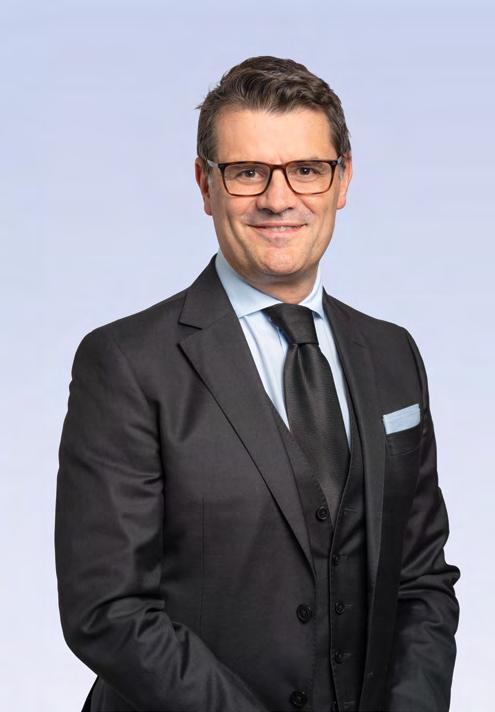
Bruno Melles, CEO of Hitachi Energy
A new kind of demand on the grid
Q: From a grid perspective, what makes AI workloads fundamentally different from traditional cloud or enterprise data centre demand? AI workloads differ fundamentally from traditional cloud or enterprise data centres because they introduce a step change in both the scale and the behaviour of electricity demand. Conventional data centres operate at 1–10 MW with relatively stable, predictable loads.
AI DATA CENTRES ARE DESIGNED FOR 100–500 MW, WITH HYPERSCALE FACILITIES REACHING 1 GW OR MORE,
driven by energy-intensive training, continuous inference, and rack power densities two to three times higher than standard equipment.
But the real distinction isn’t just scale — it’s behaviour. The rise of AI workloads has introduced a stream of power quality challenges. Unlike traditional computing loads, which maintain relatively steady consumption patterns, AI processing causes rapid, unpredictable fluctuations in power demand, leaving the grid scrambling to keep up and maintain reliability. Balancing the intricate nature of demand and supply is a constant task for grid operators — maintaining a consistent frequency is demanding even for traditional load profiles, let alone with AI demand stacking on top of already substantial cloud and digital requirements.
Equally important is where this infrastructure sits. AI data centres are far more geographically concentrated, with over 90% located in the United States and China, often clustered in specific regions. This concentration is pushing local grids to their capacity
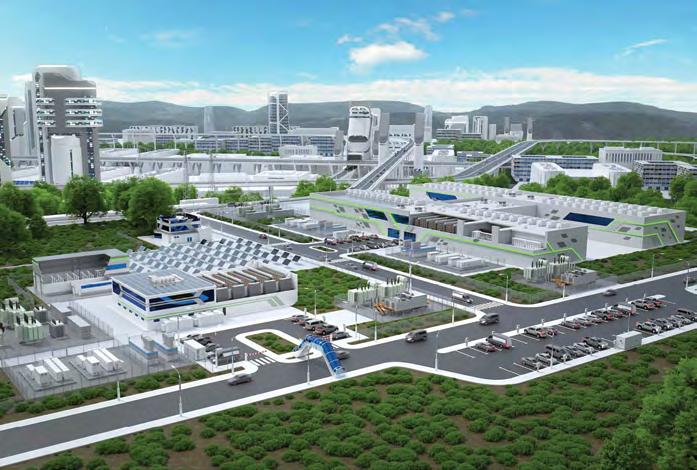
limits and underpins the International Energy Agency’s projection that up to 20% of data centre capacity could face grid connection delays through 2030 — reinforcing the need for storage, power quality solutions, and digital grid technologies alongside capacity expansion.
Designing grids for volatility, not just growth
Q: Hitachi Energy’s analysis points to extreme load volatility, with AI training workloads jumping from 100 MW to 250 MW within seconds. How are these demand patterns reshaping grid design, stability planning, and investment priorities for utilities worldwide?
We are seeing the emergence of “AI energy hubs” that integrate on-site generation, battery storage and intelligent energy management to stabilise grids locally, rather than simply drawing power from them.
Historically, grid design has been based on forecastable demand growth and stable consumption patterns.
AI overturns that model, introducing fast-moving, highly volatile loads that can change significantly within seconds. Utilities must move from static capacity planning to systems built for flexibility and responsiveness — advanced control systems, gridforming technologies, and stronger interconnection points. China’s buildout of Ultra-High Voltage transmission corridors, linking renewables-rich western regions to coastal AI hubs, shows how physical infrastructure itself must adapt to this new topology.
From a stability standpoint, the core issue is speed and unpredictability. Grids have traditionally been designed to manage gradual changes in load, anchored by stable consumption. AI workloads disrupt that entirely, introducing rapid ramping behaviour where large loads can rise or fall within seconds, placing immediate stress on frequency, voltage and overall system balance. This is why flexibility is becoming central to grid architecture, with systems needing to absorb these fluctuations through fast-response
assets — grid-scale storage, flexible interconnections and digitally enabled control systems.
The investment shift is equally profound.
AROUND 25% OF THIS INVESTMENT IS EXPECTED TO FLOW INTO POWER GENERATION, GRID
DEVELOPMENT AND MODERNISATION, COOLING SYSTEMS AND ELECTRICAL EQUIPMENT
— driving anticipatory investments and framework agreements to secure manufacturing capacity. On the generation side, priorities are shifting toward dispatchable sources — natural gas peaking plants and small modular reactors — that can provide reliable baseload to backstop AI’s volatility.
Where the bottlenecks really are
Q: In many regions, particularly North America, Europe, and parts of Asia, grid constraints are delaying or even blocking new AI data centre connections. Where are the most critical bottlenecks today, and why is up to 20% of global capacity at risk of connection delays?
The most immediate bottleneck is power infrastructure. Across North America, Europe and parts of Asia, three constraints are converging:
Transmission capacity and interconnection queues — connecting a new large load can take four to ten years in many regions, with transmission constraints cited as the primary barrier.
Equipment shortages — transformer lead times are now running roughly three times longer than the data centres they will eventually power.
Permitting and system-upgrade complexity — utilities must assess, and often upgrade, substations, transmission lines and local networks before connecting large loads, adding multiyear timelines.
These constraints are compounded by equipment shortages and slow permitting. Expanding grids for AI requires large volumes of transformers and other critical equipment, but manufacturing capacity and supply chains haven’t kept pace, leading to multi-year lead times. Even where equipment is available, regulatory and permitting processes often take years to clear. Together, these structural limits on grid capacity, equipment availability and permitting explain why a significant share of AI data centre projects are facing delays.
The Gulf’s structural advantage
Q: The white paper concludes that the GCC is one of the few regions capable of scaling AI infrastructure at the speed the industry now requires. What specific factors —
energy availability, grid expansion, policy alignment — give the Gulf a structural advantage over other markets?
While other nations grapple with energy bottlenecks driven by surging AI compute demand, the Gulf offers what no other region can match. The GCC’s oil production capacity is unparalleled, providing abundant energy at low prices. Beyond hydrocarbons, Gulf states are diversifying aggressively: the IEA projects a 40 GW increase in renewable power generation capacity by 2028 — more power than the UAE generated in the whole of 2024. Add strategic investment in nuclear power for long-term AI workloads, and this is the only region with the surplus oil, gas, fast-growing renewables and nuclear capacity to host energyintensive AI compute infrastructure at true scale.

Moreover, unlike Europe, the GCC benefits from significantly fewer regulatory barriers, closely aligned economic interests, substantial existing energy integration, and geographic proximity that makes physical connectivity far simpler. Most critically, sovereign wealth funds can commit capital at scale without navigating complex parliamentary budget processes or state aid regulations. Where other markets face five-toten-year permitting delays, the Gulf’s concentrated decisionmaking structure enables rapid deployment. The region’s geographic position also allows these facilities to support both regional innovation and global compute-intensive workloads, addressing latency and data sovereignty needs across multiple markets.
Renewables alone aren’t enough
Q: We’re seeing hyperscale AI projects in the 100–500 MW range and beyond emerging in Saudi Arabia and the UAE. How important is the co-location of AI data centres with renewable energy sources in enabling this scale, and what role does grid flexibility play?
Co-location with renewable energy is increasingly important for hyperscale AI data centres, but it isn’t sufficient on its own. Most AI facilities still rely partly on the grid, and existing grids were not designed for the speed, scale or load profile of multi-hundred-megawatt AI demand. In regions facing grid constraints and long permitting timelines, co-locating AI data centres with renewables, storage or other generation helps secure power availability and accelerate deployment. For the GCC, this strengthens its advantage by pairing large-scale energy availability with lower emissions — both critical for hyperscale AI growth.
However, co-location doesn’t remove the need for grid flexibility. AI workloads are high-density and highly dynamic,

with training and inference creating rapid changes in demand that must be actively managed. Grid flexibility — supported by storage, power quality solutions and digital grid technologies — is what allows variable renewable output and fast-changing AI loads to be integrated reliably at scale. Without it, even co-located projects face the same risks seen elsewhere: congestion, connection delays and equipment bottlenecks that can significantly slow deployment.
Choosing the right site
Q: Based on Hitachi Energy’s work with utilities and data centre operators globally, what practical criteria should hyperscalers and investors evaluate when selecting AI data centre sites in the GCC — from grid readiness to regulatory certainty?
Based on our work with utilities and data centre operators across the GCC, site selection for hyperscale AI projects comes down to a small number of practical, non-negotiable criteria.
Grid readiness comes first. Investors need firm capacity commitments and clear reinforcement timelines from utilities. The region’s advantage lies in avoiding long connection queues — but only where grid expansion is
planned and contractually secured. For very large AI loads, hybrid solar and storage arrangements can further strengthen cost and resilience while supporting decarbonisation goals.
Regulatory certainty is equally critical. Established digital districts and free zones with single-window permitting provide faster approvals and long-term stability, particularly where projects align with national transformation agendas. Climate resilience and scalability must also be built in from the start: Gulf conditions demand proven cooling strategies and flood-resilient site design, while proximity to subsea cable landings, internet exchanges and talent hubs ensures low-latency connectivity and the ability to scale to gigawatt level over time.
Holding the advantage
Q: Looking ahead, what will it take for the GCC to maintain its competitive edge as a global AI energy hub over the next decade, and where do you see the biggest risks if grid and AI strategies are not developed in lockstep?
The GCC can maintain its competitive edge only by treating AI compute growth and grid development as a single, integrated strategy. AI is now
a system-scale load, and energy abundance alone is not enough. The region’s advantage holds only if power infrastructure, data centres and digital capacity are planned and deployed together at scale.
That coordination must be regional. Operationalising the GCC Interconnection Authority beyond emergency use would allow AI-related power demand to be balanced across borders, turning energy into shared regional infrastructure. At the same time, the region must avoid fragmentation by building a federated GCC AI stack — scaling national compute first, then integrating through aligned standards, data centre planning and shared talent pools.
The biggest risks stem from misalignment. Building data centres without synchronised grid expansion creates stranded assets and wasted capital. Delays in grid readiness or permitting erode the GCC’s speed advantage, while a lack of alignment with trusted, interoperable ecosystems risks isolation. Energy creates opportunity — but only coordinated execution secures lasting advantage.
READING COASTTHE
Rob Sykes, Associate Principal at WATG’s Advisory Services, has spent the past several years shaping the strategy behind Ras El Hekma, Egypt’s ambitious new Mediterranean destination. He talks through the decisions, the risks, and the long game required to turn a seasonal coastline into a year-round draw.

From your work on Ras El Hekma, what are the critical decisions made at the advisory stage that can ultimately define whether a destination succeeds or struggles?
The key is truly understanding a destination: not just what it is today, but what it can become. You have to assess honestly whether ambition matches reality. At Ras El Hekma, we have a well-established client, a high-profile project, and
significant infrastructure investment planned. But with a new destination, you are defining the positioning and the offering entirely from scratch. That means guest profiling, demand validation, phasing logic, and operator alignment.
The questions that define success or failure are simple. How many hotel keys do you introduce in Phase 1 to credibly
North point island - Ras El Hekma will set a new standard for quality and exclusivity.
establish the destination without oversupplying it? How is that balanced against other revenue generators, such as residential units? And what should the positioning of those hotels be, so that you are building strong Day 1 operations while staying true to the long-term market ambition of the project?
“You have to assess honestly whether ambition matches reality.”
Advisory work often happens behind the scenes and can be overlooked compared to the visible aspects of development. Why is that early-stage planning process so important, and what risks do developers face when they underestimate its value?
Every project needs a strong foundation, financially, conceptually, and spatially. The role of advisory work is to give the client the research, information, and expertise to build that foundation properly. It is always a collaboration, and one that adds rigour to decisions that would otherwise be made through intuition or, worse, in an echo chamber.
What is often underappreciated is that the cost of good advisory work is marginal relative to the scale of capital at risk. A destination-scale development represents hundreds of millions in committed expenditure. What is more difficult to judge is the value of avoiding mistakes or pursuing the wrong strategy.
“The cost of good advisory work is marginal relative to the scale of capital at risk.”
When you first began assessing Ras El Hekma’s potential, what stood out to you as its greatest opportunity, and what were the biggest challenges that needed to be addressed to turn that potential into a viable destination?
In many ways, the greatest opportunity and the biggest challenge were the same thing. There is a massive greenfield site with the ambition for a city-scale development, on an exceptional stretch of Mediterranean coastline, backed by a major developer, in an established tourism market. That is a rare combination.
But the North Coast of Egypt is, historically, a domestic-dominated, highly seasonal destination. To create

something genuinely viable, you have to break that seasonality pattern and attract a significant volume of international guests who are not currently looking at the North Coast. This involves changing the way a whole market is perceived.
“The greatest opportunity and the biggest challenge were the same thing.”
How do you balance commercial objectives with creating an authentic and sustainable destination experience?
It is worth stating clearly that these two things are not necessarily in opposition. Today’s travellers are increasingly discerning and increasingly drawn to what they perceive as authentic. In practical terms, that means
Rob Sykes, Associate Principal at WATG’s Advisory Services
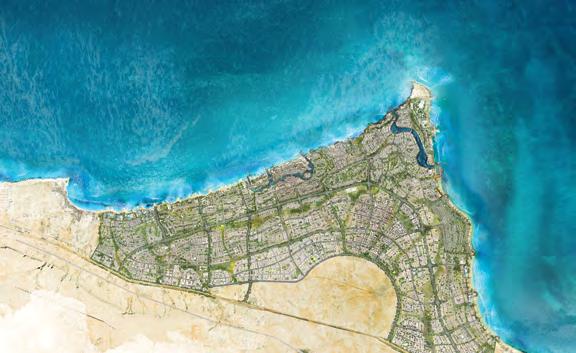
Aerial overall - Ras El Hekma is a luxury coastal development on Egypt’s North Coast, with
creating a genuine sense of place, something that defines Ras El Hekma as a destination in its own right rather than a resort product that could exist anywhere.
For us, that involves defining a hospitality offering that captures the spirit of the place while delivering the commercial returns the development requires. That extends beyond the operating performance of the hotels but runs through the longer-term master plan.
“Today’s travellers are increasingly discerning and increasingly drawn to what they perceive as authentic.”
How do you determine what a destination actually needs, rather than simply what developers might want to build?
Advisory work has to underpin the developer’s ambition, not simply validate it. The questions include: which guest segments can we capture, how long do they stay, and what do they require in terms of accommodation, F&B, activities, and amenities? That analysis should drive the product. In practice, developers often arrive with a product vision already formed. The advisory effort works to challenge that vision.
At Ras El Hekma, the overarching ambition was to create a new international destination. The goal was to create a hospitality strategy that would help achieve this. The hotels had to be of a standard capable of attracting top-tier international operators, which is precisely what the recently announced relationship with Montage International reflects.
“Advisory work has to underpin the developer’s ambition, not simply validate it.”
If visitors eventually experience Ras El Hekma as a seamless,

thriving destination, what are some of the unseen decisions, research, and advisory work that will have played a decisive role in making that happen?
They will not see the months of conversations with developers, consultants, designers, and local experts that preceded what they are experiencing. They will not see the discussions about the right operators, the correct room mix, or the careful work that went into making the hotels feel like part of the wider destination, while retaining their magic.
What they will experience is Ras El Hekma as a coherent, distinctive destination, one that feels considered and intentional. That is the end

High level - The destination will feature luxury residential units, branded apartments, and commercial districts.


product of a very large number of small decisions, made well.
“That is the end product of a very large number of small decisions, made well.”
Looking ahead ten or twenty years, what would success look like for Ras El Hekma from your perspective, and what foundations need to be put in place today to ensure that vision becomes a reality?
In ten to twenty years, a successful Ras El Hekma is internationally recognised in its own right. It is a year-round luxury destination that highend travellers seek out by name. The cycles of seasonality that have historically defined the North Coast have been broken, replaced by a destination that
sustains itself across twelve months.
The foundations that need to be in place today are threefold. First, an ambitious but appropriately phased master plan. Second, anchor institutions, including the hotels, that define the destination’s character and capture the imagination of both guests and the wider market. Third, a clear strategy for extending and diversifying demand beyond the peak season. That means investing in year-round amenities, programming, and residential communities, not as an afterthought once the hotels are open.
“A successful Ras El Hekma is internationally recognised in its own right.”
Marina view - Ras El Hekma will be a luxury destination known for integrating coastal living with upscale amenities.
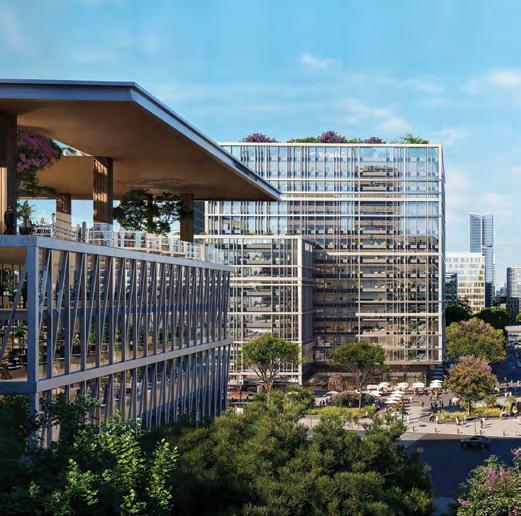
CBD North - WATG’s involvement in landmark mixed-use developments in the region underscores their commitment to shaping the country’s architectural future.
OHL ARABIA AND HASSAN ALLAM JOIN FORCES ON A VITAL SAUDI RAIL LINK TRACKING PROGRESS:
In the industrial heart of Saudi Arabia’s Eastern Province, a new joint venture is about to put steel in the ground that could reshape how goods move through one of the Kingdom’s busiest manufacturing corridors. Saudi Arabia Railways (SAR) has handed a construction contract to a partnership between OHL Arabia and Hassan Allam Construction Saudi Limited Co, tasking the pair with building the Dammam 2nd Industrial City Railway Connection Project — a rail link that promises to tighten the bond between factory floor and freight network.
A Short Line With Outsized Ambitions
On paper, the project sounds modest: a single-track railway stretching just 22.7 kilometres, threading through the Eastern Province near the Arabian Gulf. But in the logistics world, distance is rarely the point — connectivity is. This line will plug directly into Dammam’s Second Industrial City, one of the region’s most active manufacturing zones, giving factories there a direct rail gateway instead of relying solely on road haulage.
The scope handed to the joint venture is comprehensive. OHL Arabia and Hassan Allam Construction Saudi will be responsible for the full civil and railway works — earthworks, foundations, and track infrastructure built from the ground up — alongside the signalling and telecommunications systems
that will let the new line talk to the rest of SAR’s network. The companies will also coordinate the necessary interface works with the Saudi Electricity Company, ensuring the line’s power needs are folded smoothly into the wider grid.
ENGINEERING-WISE, TWO STRUCTURES STAND OUT. A 265-METRE BRIDGE WILL CARRY THE LINE OVER HIGHWAY HW615, WHILE A 118-METRE SPAN WILL LIFT IT ACROSS THE CORRIDOR OCCUPIED BY ARAMCO’S PIPELINE NETWORK
— a reminder of just how tightly industrial infrastructure is layered across this part of the Kingdom. Neither structure is small, and both will demand careful sequencing given the live infrastructure they cross.
Why This Particular Stretch of Track Matters
Industrial zones live and die by how efficiently they move materials in and finished goods out. Road transport has long carried that burden in Dammam, but rail offers something trucks cannot: scale, predictability, and lower per-tonne cost over distance. By extending dedicated rail access into the Second Industrial City, SAR is betting that freight volumes

here will only grow — and that the bottleneck, when it comes, will be capacity rather than demand.
That bet fits squarely within Saudi Arabia’s broader Vision 2030 ambitions, which have repeatedly singled out logistics and industrial diversification as pillars of the Kingdom’s economic future. A rail network that reaches deeper into manufacturing hubs supports that
diversification in a very literal sense: it is infrastructure built to move the products of a more industrialised, less oil-dependent economy.
Two Companies, One Track Record
The pairing of OHL Arabia and Hassan Allam is not a leap of faith — it’s a continuation of form. OHL Arabia is the Saudi arm of OHLA, the Spanish infrastructure group with decades of heavy civil engineering experience
across multiple continents. Hassan Allam Construction Saudi, meanwhile, operates under Hassan Allam Holding, an Egyptian engineering group that has quietly become one of the region’s go-to names for transit infrastructure.
That portfolio already includes Cairo Metro Line 4 and the Alexandria Raml Tram in Egypt, the monorail serving Riyadh’s King Abdullah Financial District, and the cross-border Hafeet Rail project linking Oman and the UAE. Add the Dammam connection to that list, and a pattern emerges: Hassan Allam is steadily positioning itself as a recurring contractor of choice wherever the Gulf and North Africa are laying new rail.
What Comes Next
Contract values and a firm completion timeline have not been made public, which is typical at this early stage of a project announcement. What is clear is the intent: another physical link in Saudi Arabia’s expanding rail map, built to carry industrial freight rather than passengers, and designed to make one of the Kingdom’s key manufacturing zones a little less dependent on the road.
For an economy working hard to diversify, that kind of unglamorous, behind-the-scenes infrastructure — bridges over pipelines, signalling systems, a single track stretching less than 23 kilometres — may end up mattering more than the headlines suggest.

TRACKING PROGRESS: OHL ARABIA AND HASSAN ALLAM
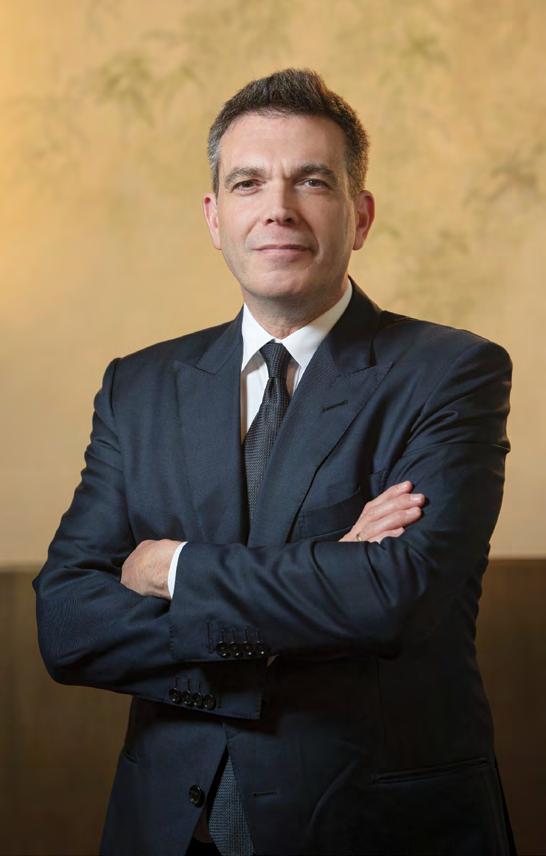
Ziad El Chaar, Chief Executive Officer of Dar Global
FOUNDATIONS OF FAIRWAY
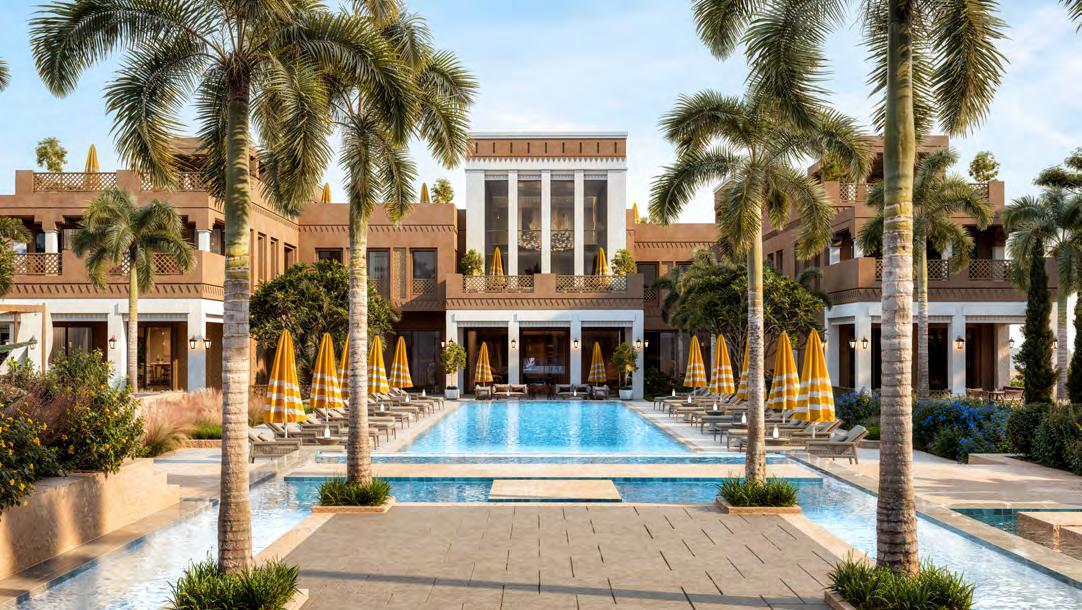
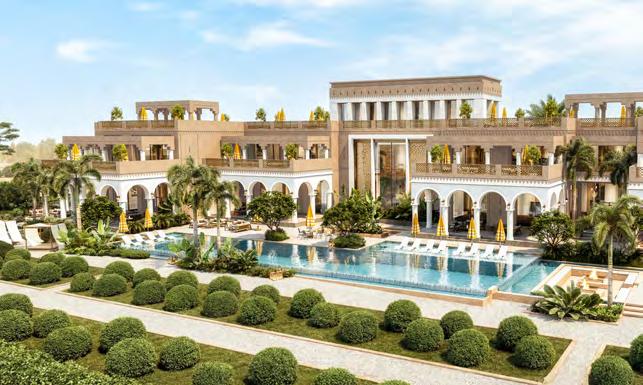
Dar Global is moving ahead with Rayana, the ultra-exclusive Wadi Safar community set to house the first Trump-branded residences within Diriyah’s wider masterplan
Dar Global, the London-listed luxury real estate developer, has awarded a SAR 338 million infrastructure contract for its ultra-exclusive Rayana community in Wadi Safar, Riyadh, to Compass and Bin Omairah Company for Contracting LLC.
The design-and-build contract covers the delivery of the primary infrastructure works supporting the Rayana community, including earthworks, roads, utility networks and access infrastructure across the development. For Dar Global, the award marks a major milestone in Rayana’s development
and reflects the company’s continued progress in delivering one of Saudi Arabia’s most prestigious residential destinations.
Inside Rayana
Located within Wadi Safar, one of the most exclusive districts of Diriyah, Rayana has been carefully designed as a low-density residential enclave that prioritises privacy, space and a seamless connection with the surrounding natural landscape. The infrastructure works now underway will establish the foundations for the community’s luxury residential offering, including Rayana Mansions and the branded Trump Mansions, with built-up areas ranging from approximately 1,900 sqm to 7,000 sqm. “The award of this infrastructure contract represents an important step forward in the delivery of Rayana and reinforces our commitment to creating exceptional residential destinations in Saudi Arabia,” said Ziad El Chaar, Chief Executive Officer of Dar Global. “As one of the most exclusive communities within Wadi Safar and the world, Rayana has been conceived around privacy, scale and a highly curated lifestyle experience. This milestone demonstrates the continued momentum of the project and our confidence in the long-term growth of the Kingdom’s luxury real estate sector.”

The milestone further supports Saudi Arabia’s Vision 2030 objectives by contributing to the development of world-class residential destinations that attract local and international investment. Positioned within Wadi Safar, Rayana offers residents access to one of Riyadh’s most sought-after lifestyle destinations, in close proximity to Diriyah, the King Abdullah Financial District (KAFD), Expo 2030 and the city’s future growth corridors.
The Wider Wadi Safar Vision Rayana forms part of the broader Wadi Safar masterplan that Dar Al Arkan, Dar Global and The Trump Organization first unveiled together on December 9, 2024, when the three partners announced two Trump-branded developments in Riyadh.
THE CENTREPIECE OF THAT ANNOUNCEMENT WAS TRUMP INTERNATIONAL GOLF CLUB, WADI SAFAR, A SPRAWLING 2.6 MILLION SQUARE METRE SITE WITHIN THE EXCLUSIVE MASTERPLAN BEING DEVELOPED BY DIRIYAH COMPANY.
“We are proud to expand our presence with this landmark development in Wadi Safar,” said Eric Trump, Executive Vice President of The Trump Organization. “Trump International Golf Club, Wadi Safar will redefine luxury and excellence in the region, setting a new standard that reflects the brand’s enduring commitment to quality, prestige and timeless elegance. We look forward to creating a destination that complements the rich
heritage of the region while delivering a global standard of luxury living.”
The site is set to house a world-class gated community featuring a Trumpbranded championship golf course, a luxury Trump hotel and premium residences overlooking the region’s dramatic wadis and golf vistas.
Trump International Golf Club, Wadi Safar blends world-class hospitality, architecture and lifestyle in a setting that pays tribute to the cultural and natural heritage of the Kingdom.
The project marked The Trump Organization’s first venture into the Diriyah masterplan and an expansion of its presence in the Kingdom, following earlier collaborations with Dar Al Arkan and Dar Global on signature developments across the region. “This new project represents a vision to deliver a destination that captures the prestige and the legacy of the Trump brand,” said Yousef Al Shelash, Chairman of Dar Al Arkan. “With Dar Global leading the development, we are confident this will become a flagship destination not just for Saudi Arabia, but for the world.”
The Trump brand brings its internationally recognized standards of luxury, service and design to a destination conceived to blend world-
class amenities with Saudi Arabia’s deep cultural roots and natural beauty.
“Dar Global is proud to collaborate with Diriyah Company and Dar Al Arkan on the development of Trump International Golf Club, Wadi Safar,” said Ziad El Chaar, CEO of Dar Global. “We have delivered landmark projects across Europe and the GCC in partnership with globally recognized luxury brands. Bringing this experience to the Diriyah project, we will deliver a destination that combines heritage, elegance, and world-class
standards, making Trump International Golf Club, Wadi Safar a truly iconic address.”
Located just outside Riyadh, Wadi Safar in Diriyah is one of the Kingdom’s most picturesque and strategically significant areas, envisioned as a luxury enclave that complements the broader Diriyah masterplan, an essential component of Vision 2030, Saudi Arabia’s roadmap to diversifying its economy and elevating its global profile.
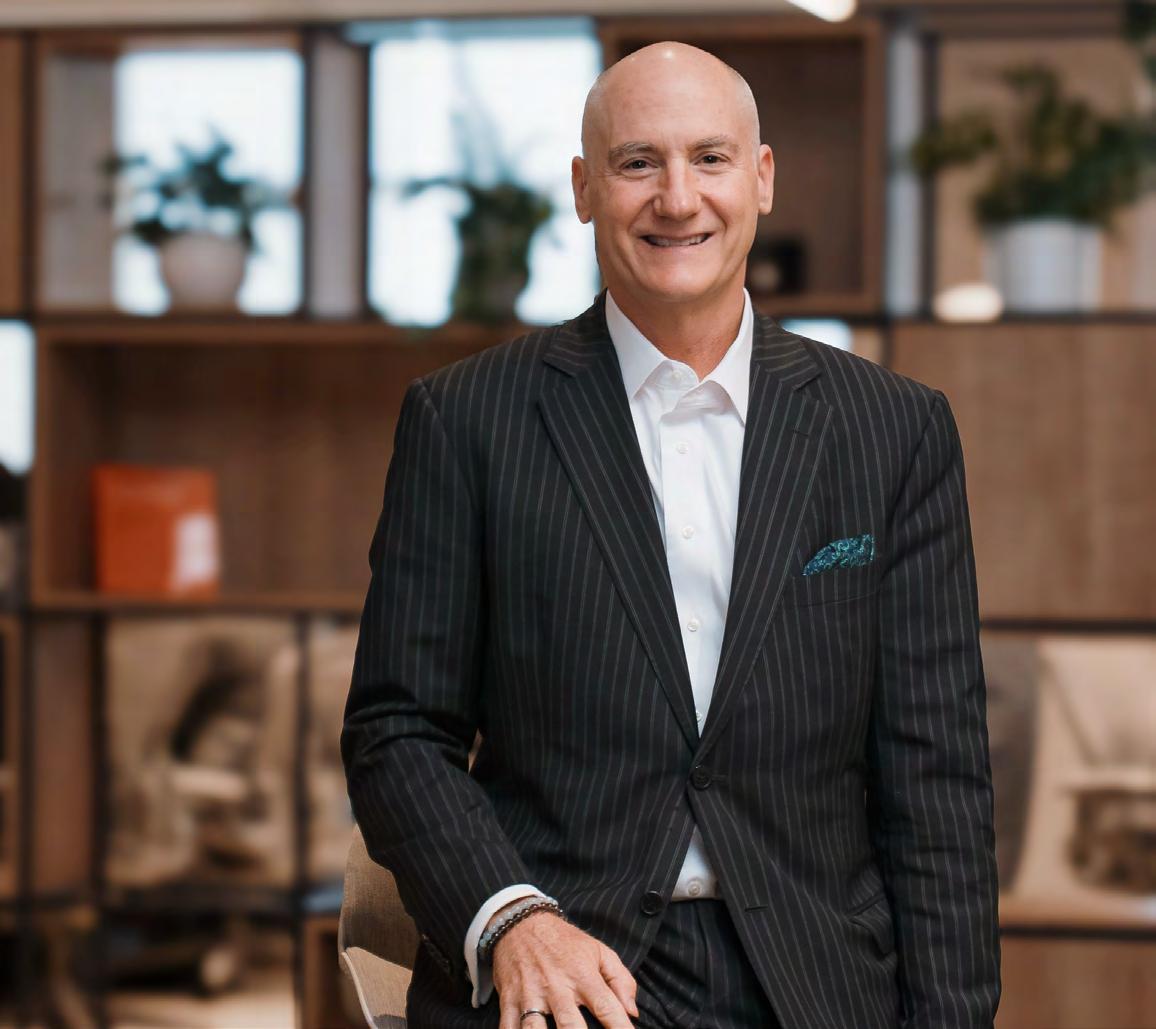
THE RETENTION ECONOMY
Christopher Knable, Chief Executive Officer of Districts & Community Services at Asteco, on why resident retention has become a measure of asset value in its own right, and what still gets lost in the handover between developers and the people who actually live there.
What does the role of Chief Executive Officer of Districts & Community Services actually look like day to day, and how do you define success in that position?
At Asteco, we manage more than 200 communities and 85,000 units in the UAE, including key destination districts across Saadiyat Island and Yas Island. As Chief Executive Officer of Districts & Community Services, my role is to ensure that
these communities operate effectively at every stage of their lifecycle, from development and delivery through to long-term management.
On any given day, this involves balancing operational performance, long-term planning and the priorities of multiple
Christopher Knable, Chief Executive Officer of Districts & Community Services at Asteco

stakeholders to create communities that continue to deliver value over time.
That balance is also how I define success. Resident satisfaction and Net Promoter Score, alongside operational excellence and business performance, are important measures, but the real challenge lies in bringing owners, regulators and service providers together around a shared outcome when no single stakeholder holds all the levers.
“Ultimately, the mark of success is when residents rarely think about who manages their community,” Christopher says, “because everything simply works.”
How is technology transforming the way communities are managed, and where is the biggest gap between what’s possible and what’s actually being implemented on the ground?
Community management has always been about making everyday life easier for residents, and technology is increasingly helping us do that in a more seamless and efficient way.
PLATFORMS LIKE LIVE ALDAR HELP SIMPLIFY EVERYDAY LIFE AND STRENGTHEN REAL-WORLD COMMUNITY ENGAGEMENT, BY GIVING RESIDENTS A SINGLE DIGITAL FRONT DOOR TO ACCESS SERVICES, STAY INFORMED AND CONNECT WITH THEIR COMMUNITY.
In Abu Dhabi, service charge collection has moved to TAMM, with a similar integration planned through DubaiNow. The growing volume of resident requests and service interactions is also helping shift operations from a reactive approach to a more
predictive one, allowing trends to be identified earlier and issues addressed before they escalate.
“The biggest gap is not the technology itself, but the operating model underneath,” Christopher mentions. “A smart app on messy data just surfaces the mess faster.”
Even the most advanced platform can only be as effective as the data that powers it. Creating clean, connected and reliable data across systems remains one of the most important enablers of better decision-making and service delivery.
Can you give us a concrete example of a curated event or activation that genuinely moved the needle on resident satisfaction or retention?
What truly drives resident satisfaction is not a one-off activation, but a sustained programme of engagement throughout the year. One example would be our back-to-school activations, delivered alongside new community amenities in collaboration with owners. While the activities themselves were well attended, the real value came from creating opportunities for residents to connect with one another and engage more closely with their community.
More broadly, over the past year we delivered more than 151 community events across 23 communities, engaging over 15,000 residents through a range of cultural, wellness and familyfocused initiatives. Alongside this, we delivered 81 activations across Yas communities, reaching more than 7,000 residents. This contributed to an event Net Promoter Score of 92 and a customer satisfaction score of 94 percent.
“For
us, the point of an activation is not attendance alone,” Christopher highlights. “It is whether residents feel a stronger connection to where they live afterwards.”
You talk about empathy as being central to community management and leadership: what does that actually look like in practice when you’re managing thousands of residents across multiple communities?
In community management, empathy is not about lowering expectations or making exceptions; it is about designing services and processes around the needs of the people who use them.
“If a resident complaint exposes a process failure, the focus should be on fixing the system,” Christopher adds, “so the next thousand residents do not encounter the same issue.”
It also means anticipating needs before they become complaints, whether that is supporting seniors and families during periods of extreme heat or identifying ways to remove friction from
everyday interactions. At its core, empathy is about creating communities that work better for everyone.
Resident retention is one of the most underrated metrics in real estate: what’s the relationship between community experience and long-term asset value?
Resident retention is one of the clearest indicators of whether a community is delivering a positive experience. People have more choice than ever, so when residents choose to stay,
it is often because they feel a sense of trust, convenience and belonging within the community.
That is why I see community experience as an asset value input, rather than a soft metric. Well-managed communities are more likely to sustain occupancy, strengthen their reputation and support long-term value. Research cited by CBRE shows that a single vacancy can reduce a property’s value by as much as 15 percent, highlighting the

importance of maintaining stable occupancy and strong resident relationships.
“A developer sells a building once,” Christopher says. “Service quality compounds. The impact may not always be immediate, but over the years it influences how residents perceive the community, whether they choose to stay and how the asset performs in the market.”
Managing communities across the full asset lifecycle means the challenges are constantly evolving: what’s the hardest phase to get right, and why?
The most challenging phase is the handover. It is where issues that were missed during construction can become long-term problems and where responsibility is often unclear. The challenge is that decisions and budgets sit with the developer during the build, but the impact of those decisions is felt later by operators, residents and owners.
The Grove is a live example of the challenge. As a largescale mixed-use community comprising multiple residential assets and shared amenities, handover is far more than a construction milestone. It requires close coordination between development, facilities management, community management and customer service teams to ensure every asset is operationally ready from day one. Our task-forceled handover model was designed specifically to bridge
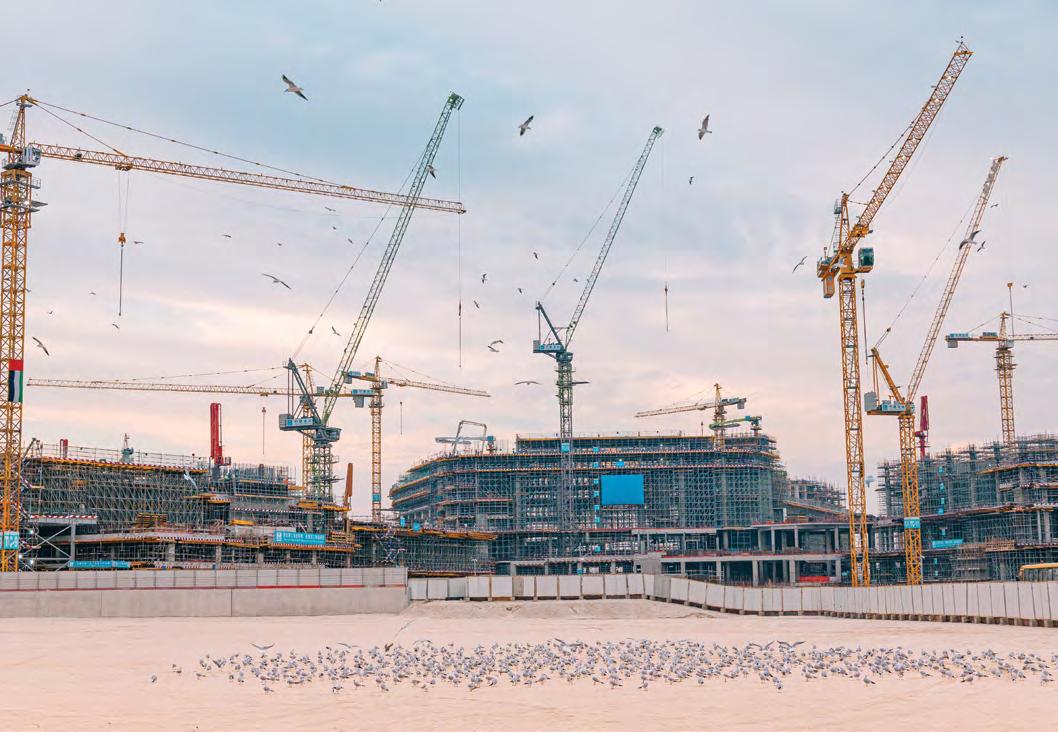
that gap and maintain accountability throughout the transition.
Looking ahead five years, how do you see the definition of a “community” changing in this region, and what should developers be building today that they’re currently overlooking? Community management is evolving beyond the physical environment to focus more on the overall resident experience. Wellness, health, sustainability and digital services are becoming just as important as the
quality of the buildings and amenities themselves.
“Thinking should not begin at the sales gallery,”Christopher adds. “The data, systems and service model need to be built in from day one.”
As communities become more sophisticated, greater focus will
need to be placed on operability and the full post-handover lifecycle. The organisations that get this right, supported by strong quality frameworks and digital platforms, will be best placed to scale. These capabilities are globally transferable, which is where the real regional opportunity lies.
The Surprising Change in the UAE’s Manufacturing Workforce Evolution
As the UAE’s manufacturing base expands, the conversation is shifting from output and automation to people. Claudius Fernandes of Dulsco People explains how the aluminium sector’s drive for inclusion, marked by a sharp rise in female participation, is reshaping what an industrial workforce looks like.

The UAE’s manufacturing and production sector is entering a new era which may challenge public perceptions of those working within the industry itself. A change defined not only by scale and advanced technology, but by inclusion, sustainability and responsible workforce practices.
This transformation is particularly visible in the aluminium industry, where global competitiveness, operational excellence and ESG accountability increasingly go hand in hand. At the heart of this shift is the UAE’s broader commitment to strengthening its industrial base, showcased through national initiatives including ‘Make it in the Emirates’. Led by the Ministry of Industry and Advanced Technology, the initiative has become a key driver of the country’s industrial strategy which, in 2025, saw the signing of 187 agreements supporting new industrial projects valued
at over AED 11 billion, underscoring both investor confidence and the UAE’s growing manufacturing momentum.
AS A LONG-STANDING WORKFORCE PARTNER WITHIN THE SECTOR, DULSCO PEOPLE HAS WITNESSED FIRST-HAND HOW THE DEFINITION OF INDUSTRIAL EXCELLENCE HAS EXPANDED BEYOND PRODUCTION METRICS TO ENCOMPASS PEOPLE AND PROGRESS, MAKING THE NEXT DECADE ONE TO WATCH.
From Five to 550
The Dulsco People journey in aluminium manufacturing began in 2012 with just five equipment operators supporting smelting operations. Today, that single partnership spans more than 550 personnel deployed across over 25 distinct roles, ranging from manufacturing helpers and utility operators
Originally written by Claudius Fernandes, Edited by Vibha Mehta.
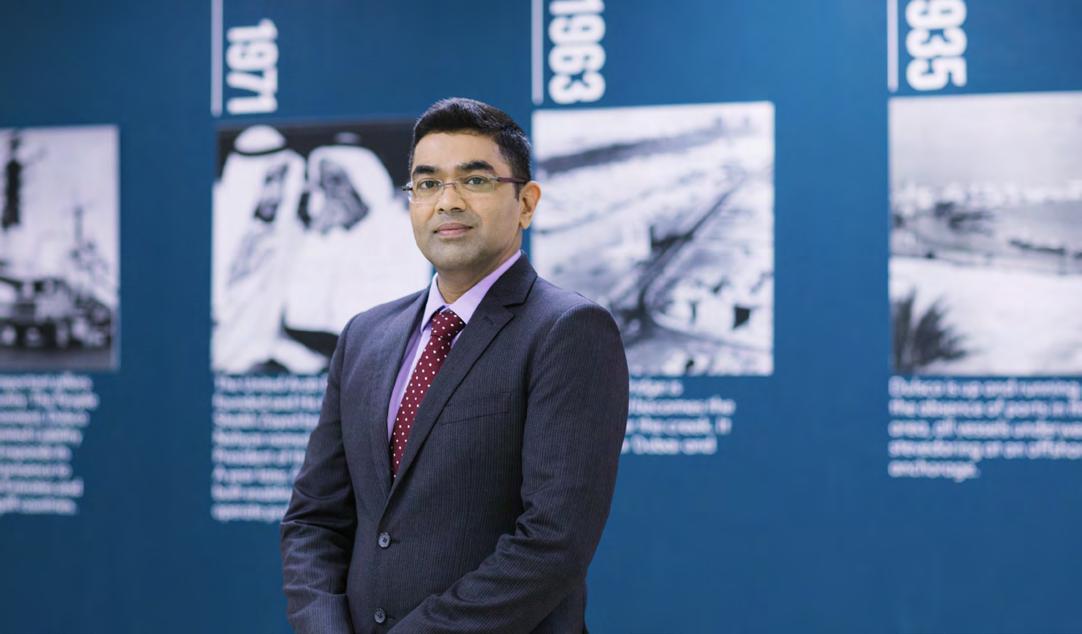
to laboratory technicians and machine specialists within heavy industry environments.
With a recently renewed partnership in the aluminium manufacturing space, structured over a potential six-year term, we’re ready to support operational continuity and future growth. With new smelters coming online, workforce requirements are expected to increase further, and, importantly, the projected growth in female participation will be over and above the current 550 headcount, signalling not just expansion, but transformation in the composition of the industrial workforce itself.
The Industry’s Most Significant Shift – Women in Heavy Industry
Manufacturing in the UAE has historically been perceived as a male-dominated environment, particularly in heavy industrial
operations characterised by high temperatures, physically demanding processes and round-the-clock shifts – a perception that is now changing in measurable ways.
One of the most defining shifts in the aluminium sector is the intentional increase in female workforce participation. With female representation currently hovering at approximately 10 per cent, there is an intention to reach 25 per cent within the next two years, and a move to ensure every operational role, whether office or field based, is gender-neutral, meaning opportunity is determined by capability and commitment rather than convention.
A powerful example of this shift is the rise in female utility operators and technicians. Traditionally regarded as one of the most demanding
operational roles due to exposure to furnaces, heat and humidity, the position was previously maledominated, but today, more women are entering and excelling in this role, reflecting both evolving mindsets and deliberate structural support.
Engineering Inclusion
Achieving and sustaining a solid inclusion framework in heavy industry requires more than recruitment targets; it requires operational readiness and extensive infrastructure investment. Worksites must evolve to include dedicated facilities, separate accommodation blocks and tailored transport arrangements to ensure safety, privacy and comfort. Health and well-being considerations must also be strengthened, with regular and specialised health check-ups aligned to the demands of industrial environments and role specifics.
Claudius Fernandes, Regional Head of People Solutions, Dulsco People
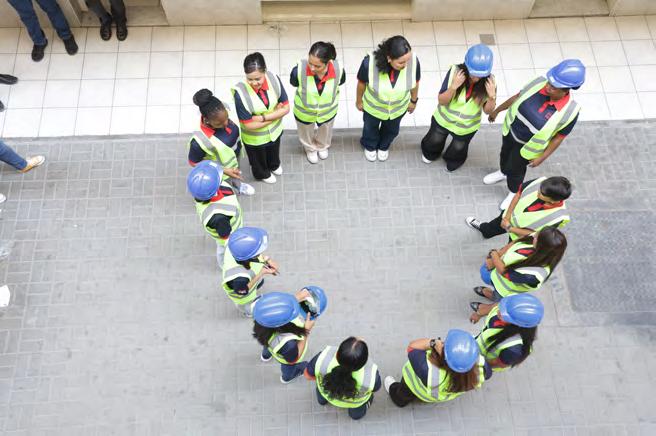
These changes should be supported by inclusive site policies embedded across management structures, reinforcing that gender diversity is not an initiative, but an operational standard.
It is our consistent advice to clients that inclusion, in this sense, must be engineered into the workplace just as carefully as production efficiency or safety protocols.
Ethical Hiring and Global Outreach
Supporting clients in achieving ambitious genderdiversity goals also requires rethinking recruitment outreach. Our approach has centred on ethical, transparent and structured overseas hiring initiatives that expand access to opportunity while maintaining strict compliance standards.
In Ghana, collaboration with the Youth Employment Agency under the Ministry of Labour has enabled the attraction of qualified female candidates from remote communities, creating economic mobility pathways while ensuring responsible onboarding practices. This transparent approach supports client diversity objectives and aligns closely with broader ESG priorities, from fair labour standards to responsible global supply chain governance.
Recognition through international sustainability assessment frameworks such as EcoVadis reinforces
the importance of responsible workforce practices within the wider industrial ecosystem.
The Next Phase of Growth
As the UAE continues to expand its industrial capacity, supported by national platforms that champion local manufacturing and production, the workforce powering this growth must evolve alongside it. The next phase of industrial expansion will not simply be defined by scale, but by diversity, technical capability and alignment with global ESG benchmarks.
This renewed long-term engagement reflects a shared understanding that sustainable manufacturing is powered by sustainable workforce strategies.
The UAE’s industrial story has always been one of ambition, and we believe that the next chapter will be defined by inclusion, where smelters and production lines are powered not only by advanced technology, but by opportunity extended more equitably across a global society.
Heavy industry is evolving, and the workforce evolving alongside it may prove to be its most powerful innovation yet.
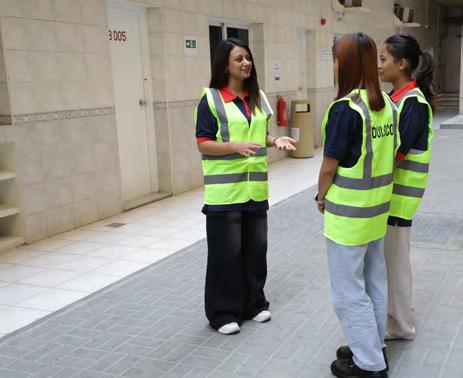


ABU DHABI’S ASCENT
How has Abu Dhabi evolved into a central real estate force over the past 10 years?
Over the past decade, the UAE property market has become more layered. The national conversation used to be centred heavily on pace, pricing cycles, and headline activity, with Dubai often setting the tone for how the wider market was judged. In 2026, that picture is broader. Along with ambition, the UAE rewards, regulation, liveability, and delivery discipline. Abu Dhabi reflects that shift in both demand and market functioning.
In 2016, Abu Dhabi’s residential market was steady but operating with a narrower demand base and weaker pricing momentum than today. The UAE Central Bank reported that residential sales prices fell by 3.3% during the year to around AED 11,500 per sq m, while residential rents declined by 2.5%. The market was holding together, but not yet expanding with conviction. Abu Dhabi was already a credible place to live and invest, yet residential demand was more conservative, less internationally driven, and less focused on distinct communities than it is today.
The Decade That Reset The Market
Since 2016, Abu Dhabi’s residential market has moved from cautious pricing to broad-based appreciation, with stronger gains coming in as demand widened and supply remained relatively disciplined. ADREC’s data shows residential sales values rising from AED 16 billion in 2019 to AED 76.1 billion in 2025.
Price growth also became more visible. In 2025, apartment sales prices rose 15.1%, while rents climbed 12.5%. This momentum has carried into 2026. In Q1 alone, Abu Dhabi recorded AED 66 billion in transactions, up 160.7% YoY, with 13,518 deals, nearly
double that of Q1 2025. Supply is also expanding in parallel, with residential stock in the city projected to rise by more than 10,000 units to 325,248 by the end of 2026. The strongest pull has come from districts with clear residential identity and long-term lifestyle appeal, such as Al Reem, Hudayriyat, Saadiyat, and Yas Islands.
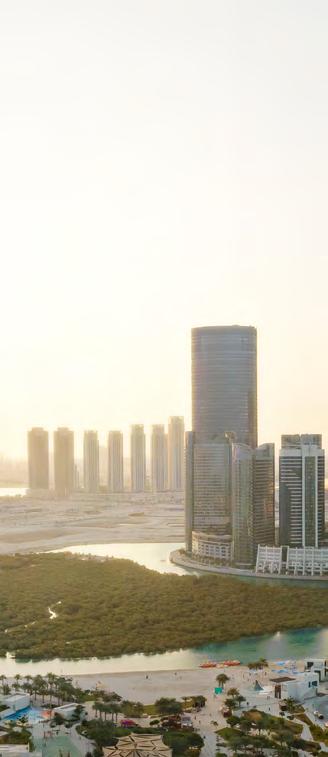
Regulation Became Part Of The Product

ADREC’s creation in 2023 gave Abu Dhabi a dedicated regulator for data transparency, digital transactions, and escrow oversight, strengthening governance, investor protection, and off-plan dispute resolution. For instance, ADREC’s Madhmoun platform, the region’s first government-led Multiple Listing Service, eliminated 50,000 fake listings in its initial phase. On the leasing side, Tawtheeq strengthens the rental market by making tenancy contracts legally binding, protecting tenant rights, and enabling utility activation and residency visa processing. Under Estidama’s
Faris Al Khattab, Managing Director at Object 1 Abu Dhabi
Originally written by
Faris Al Khattab. Edited by Vibha Mehta
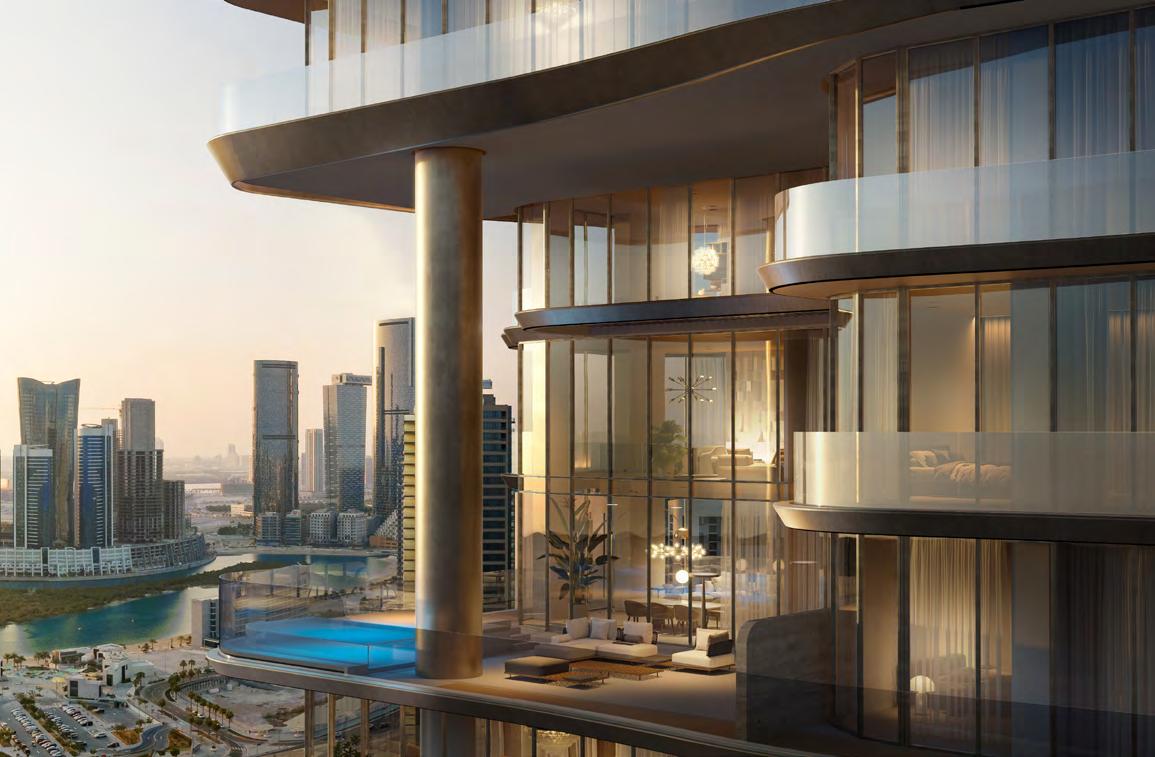
Pearl Rating System, sustainability standards are built into project requirements from design through operation, shaping decisions from materials and energy systems to longterm building performance.
Better Demand Changed What Gets Built
Demand today is broader, but buyers are also more selective. Abu Dhabi’s population reached about 4.14 million in 2024, up 51% from 2014, with projections indicating the emirate will exceed 6 million residents by 2040. That structurally changes housing demand by supporting leasing, absorption, and long-term community growth rather than one-off spikes in activity. Simultaneously, expat residents and international buyers drove 80% of residential sales growth from 2019 to 2024 and accounted for 62% of residential sales value in 2025. In 2016, foreign ownership in Abu Dhabi’s residential market was restricted to designated districts.
Today, longer-term buyers pay closer attention to layouts, schools,
childcare, walkability, and whether a district works in daily life. That is driving stronger demand for higherquality, master-planned communities, in line with the Year of the Family 2026, the National Family Growth Agenda 2031, and Abu Dhabi’s Liveability Strategy, backed by AED 42 billion for the next phase of family-friendly neighbourhoods.
Why Al Reem Stands Out
In 2016, Al Reem Island was already becoming one of Abu Dhabi’s key residential districts, but it was in a transitional phase, still absorbing new supply and facing softer rents. Today, it has g established itself as one of Abu Dhabi’s most liquid and dependable residential sub-markets through ADGM’s expanded jurisdiction, giving international investors a more familiar legal and financial framework. It combines proximity to the commercial core with a waterfront setting that is difficult to replicate at scale. The area has dominated the mid-tier apartment market, with average annual rents reaching AED 119,000 and strong offplan activity reinforcing interest from
global investors and HNWIs. Object 1’s acquisition of four waterfront plots spanning over two million sq ft, with a projected sales value of AED 4.5 billion, reflects confidence in the area’s long-term occupancy, rental stability, and gradual capital appreciation.
Growth Still Needs Discipline
The capital’s pipeline remains strong, with around 57,700 additional units projected by 2030. That supports long-term growth, but it also raises the need for sharper product discipline. Developers must avoid following the same positioning across projects and focus on clear differentiation, family appeal, and delivery discipline. Abu Dhabi is stronger today than it was in 2016 because the market is more transparent, investable, and structured. The next phase will depend on preserving those strengths as supply expands.
A1LA Residence frames Abu Dhabi’s skyline from Al Reem Island, creating homes where private terraces open directly onto the capital’s urban and waterfront landscape.
BEYOND COMMISSION
Dr Michael Waters, Associate Professor in Real Estate at HeriotWatt University Dubai, is challenging one of the industry’s most enduring misconceptions: that a successful property career begins and ends with brokerage
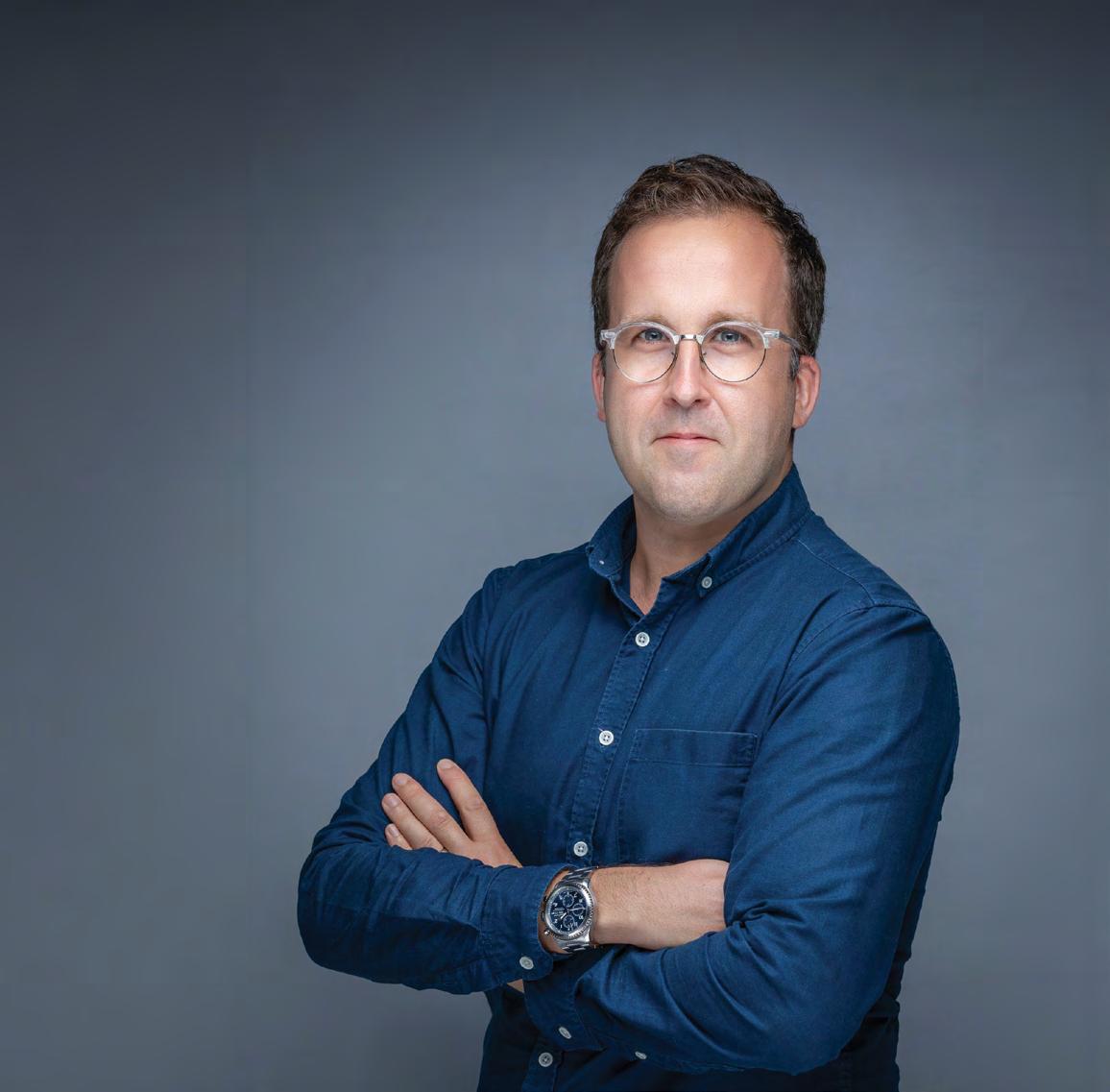
For many aspiring property professionals, the image of a successful real estate career is remarkably consistent: a luxury car, high-value transactions, and the promise of substantial commissions earned through brokerage. In global property hubs such as Dubai, this vision has attracted more than 35,000 brokers
seeking a fast-paced and potentially lucrative career.
Yet this represents only one part of a much broader industry. It is a theme I explore in my forthcoming book, Building a Global Career in Real Estate Beyond Brokerage, which challenges one of the property sector’s biggest misconceptions: that
a career in real estate begins and ends with brokerage.
The reality is that a career in real estate is far more diverse, complex and, arguably, far more exciting.
Real estate is the world’s largest asset class and one of the most influential industries globally. It shapes cities,
Dr Michael Waters, Associate Professor in Real Estate at Heriot-Watt University Dubai

drives economic growth, supports investment markets and influences almost every aspect of modern life. Despite this, many young people and school leavers remain unaware of the breadth of opportunities available within the profession.
Beyond brokerage lies a vast ecosystem of specialised career paths, including valuation, investment management, development, asset management, corporate real estate, consultancy, sustainability, technology and AI. These disciplines are not secondary to the industry; they are the foundations that allow property markets to operate effectively and contribute to wider economic growth.
The
Dubai Dream and the Reality Check
Dubai provides a fascinating example of the appeal of brokerage. The city’s dynamic property market, international outlook and entrepreneurial culture continue to attract talent from around the world. However, this highly visible side of the profession also highlights
the challenges of an industry with relatively low barriers to entry and intense competition.
For many newcomers, the promise of success does not always align with the realities of the role, with a significant number leaving the profession within their first few years. This raises an important question: are we directing too much talent towards a single career pathway while overlooking the wider opportunities available across the real estate sector?
Real estate is a Profession
Contrary to common perception, many real estate career paths are highly specialised professions requiring technical expertise, ethical judgement and professional qualifications comparable to fields such as law, engineering and accounting. Professional organisations such as the Royal Institution of Chartered Surveyors (RICS) have played a vital role in establishing standards, ethics and internationally recognised qualifications that enable professionals to build careers extending far beyond transactions. In an increasingly global property market, professional credibility and specialist expertise are becoming key differentiators, creating opportunities for international mobility and strategic leadership.
The future of Property Careers
The real estate profession is undergoing significant transformation. Artificial intelligence, digital transformation, sustainability priorities and changing workplace expectations are reshaping the skills future professionals will need. While routine tasks are becoming increasingly automated, demand is growing for individuals who can combine technical knowledge with
strategic thinking, creativity and strong interpersonal skills.
Today’s graduates are seeking more than financial reward. They are looking for careers that offer purpose, flexibility, global opportunities and the ability to create meaningful impact. Real estate is uniquely positioned to provide this. The profession is no longer simply about buying and selling property. It is about creating communities, managing assets, advising investors, improving cities, advancing sustainability and helping organisations make better decisions about the spaces they create and occupy.
The central message of my forthcoming book, Building a Global Career in Real Estate Beyond Brokerage, is simple: brokerage remains an important and valuable career pathway, but it is only one chapter in a much larger story. For those already working in brokerage, there is also a significant opportunity to leverage market knowledge and relationships into strategic advisory roles, creating additional value through expertise beyond transactions.
As the industry enters an era defined by technological disruption and changing societal expectations, the greatest opportunities may belong not only to those who follow the most visible path, but to those who recognise the full breadth of possibilities within real estate.
Many professionals look back on their careers with pride because of the impact they have made on places, spaces and communities. Ultimately, success in real estate may not be measured only by the positions we hold or the commissions we earn, but by the difference we make.
RUNWAY TO RESILIENCE
With global passenger traffic on track to hit a record 10.2 billion in 2026, Alex Cowen of Honeywell Building Automation argues that ageing infrastructure and rising operational pressure are leaving airports with little margin for error, and that connected, intelligent technology, from docking precision to power management, may be the only way to keep pace.
Airports sit at the centre of global mobility, and their importance is only growing. With global passenger traffic expected to reach a record 10.2 billion passengers in 2026 according to Airports Council International, airports are being asked to handle more and bigger challenges than ever before: process passengers and baggage efficiently, maintain rigorous safety standards and accelerate progress toward energy and efficiency goals. Yet airports face a stark contrasting reality, one that includes rising operational complexity, capacity constraints, infrastructure limitations and ageing facilities pushed beyond their original design.
To meet surging demand and prepare for longterm growth, they must adopt a new approach:
one centred on intelligent, connected technology that delivers precision, visibility and resilience across airside, terminal and ground operations.
“AIRPORTS HAVE LITTLE ROOM FOR INEFFICIENCY AND EVEN LESS MARGIN FOR OPERATIONAL FRICTION.”
Here are three key areas where advanced digital capabilities are already helping airports address these pressures.
Bringing Greater Precision to Aircraft Docking
Gate operations are one of the most timecritical and risk-sensitive activities in an airport environment. As traffic volume rises and airfields grow more congested, the limitations of traditional manual docking processes grow more evident, increasing the potential for delays, incidents and reduced throughput.
Modern visual docking and guidance tools are changing that. By providing real-time situational awareness to pilots, apron controllers and ground crews, these systems help enable safer, more predictable gate operations. They can detect potential obstacles early, reduce reliance on manual intervention and help airports maximise gate utilisation and support higher throughput without compromising safety.
This digital advancement is especially important as runway and taxiway incidents have increased in recent years in some regions. Enhanced visibility and technology-assisted safety checks help airports mitigate risks, reduce congestion and better position themselves for sustained passenger growth.
“ENHANCED VISIBILITY AND TECHNOLOGY-ASSISTED SAFETY CHECKS HELP AIRPORTS MITIGATE RISKS AND REDUCE CONGESTION.”
Orchestrating Faster, More Efficient Turnarounds
Few airport processes highlight operational complexity like aircraft turnarounds on the apron and in the terminal, or the airside movements that feed into them. Extended taxi times and aircraft idling on taxiways or at gates add to ground-level congestion, strain airside capacity
Originally written by Alex Cowen. Edited by Vibha Mehta.
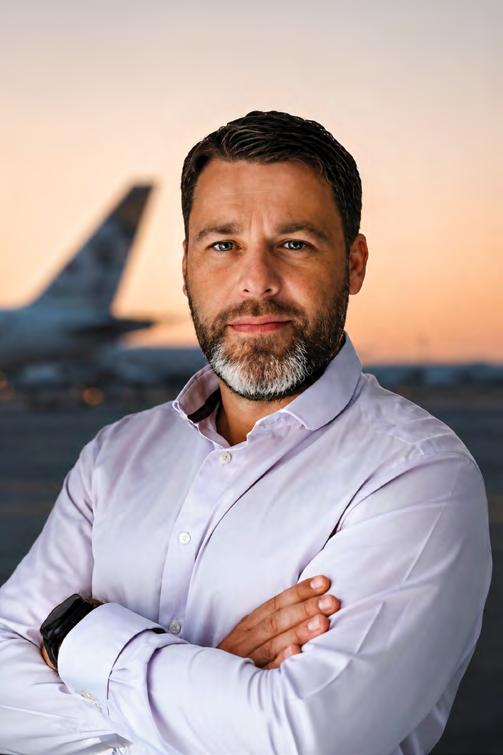
and contribute to the airport’s overall environmental footprint through increased local emissions and reduced throughput during peak periods.
Dozens of teams, from baggage handlers to cleaners to maintenance crews, must synchronise within tight time windows. A delay in any step can ripple through gates, stands, schedules and taxi flows, amplifying congestion and impacting on-time performance.
Historically, this process suffered from limited real-time transparency required to optimise performance. Today, integrated digital command platforms are changing that calculus. By aggregating data from ground operations, facilities, aircraft systems
and airside movements, they deliver a unified, live view of every phase, from approach to departure.
This enhanced visibility helps airports spot bottlenecks early, deploy resources more effectively and cut idle time at gates and in movement areas. These tools help improve operational reliability in the face of capacity pressures and growing demand, helping airports maintain smooth flow without major physical expansions.
“WHEN AIRPORTS ACHIEVE FASTER, SMOOTHER TURNAROUNDS AND FEWER DISRUPTIONS, THE ENTIRE ECOSYSTEM BENEFITS, STARTING WITH PASSENGERS.”
Increasing Efficiency Through Smarter Power Management
Energy efficiency is no longer a distant goal, it is a core operational and regulatory imperative for airports today. A prime opportunity for emissions reduction sits in how aircraft are powered while parked at gates under airport management.
Traditionally, parked aircraft depend on auxiliary power units that generate fuel burn, noise and emissions on the apron. Many airports are shifting to cleaner options like ground power units and preconditioned air systems. The key hurdle remains consistent, effective usage across all stands.
This is where smart monitoring systems can make a measurable impact. By analysing sound signatures or sensor data, they can help confirm whether
an aircraft is using onboard power or connected to airport-supplied ground systems. Accurate, actionable data helps enable airports to monitor emissions from ground activities, optimise power delivery, enforce compliance and advance toward efficiency targets.
“ACCURATE, ACTIONABLE DATA HELPS AIRPORTS MONITOR EMISSIONS, OPTIMISE POWER DELIVERY AND ENFORCE COMPLIANCE.”
The Airport of the Future: Connected, Flexible, Resilient
Airports stand at a critical inflection point. Escalating passenger volumes, capacity constraints, ageing infrastructure demands and environmental commitments will define the years ahead. Yet with an integrated, intelligent operational backbone, airports can not only navigate these challenges, they can set the standard for the industry.
At Honeywell, we believe the future of airport operations lies in seamlessly integrated technologies, systems that bring together airside, terminal and ground functions into a unified whole. These solutions help enhance safety, strengthen resilience against congestion and disruptions, and give teams the insight needed to anticipate and address issues before they escalate. The result is a smoother experience for travellers and greater efficiency across the entire airport ecosystem.
“THE DEMANDS ON AIRPORTS ARE INTENSIFYING, BUT SO IS THE POTENTIAL.”
With smart, connected technology as the foundation, the next chapter of aviation will be shaped not by limitations but by optimised performance and possibility.
Alex Cowen, Global GM, Airports, for Honeywell Building Automation
WHY AI IS A CO-PILOT, NOT AN AUTOPILOT
Simon Ulmann, Vice President Operations & Supply Chain, IMEA, at Henkel Adhesive Technologies, shares how Henkel is leveraging technology, talent and strategic investment to stay ahead of the curve
There is a great deal of excitement around AI, but where do you believe AI is creating the most tangible value in manufacturing and supply chains today, and where is the industry still overestimating its impact?
AI is undoubtedly transformative, but it is important to separate reality from hype. Today, the most tangible value it delivers in manufacturing and supply chains lies in predictive capabilities, safety and complexity management.
We are seeing measurable returns in demand forecasting, where machine learning algorithms analyse historical data, market trends and external variables to predict demand fluctuations with a level of accuracy that traditional models struggle to achieve. On the factory floor, AI-powered vision systems are enhancing workplace safety, while predictive maintenance is helping to prevent costly downtime by identifying equipment issues before they escalate into failures.
Where the industry tends to overestimate AI is in the notion of fully autonomous
decision-making. The idea of a completely self-managing, end-to-end supply chain remains some distance from reality. AI is exceptionally good at processing vast datasets and recommending actions, but it cannot replicate human judgement, empathy or the ability to navigate complex supplier relationships during periods of disruption.
I often describe AI as a powerful co-pilot rather than an autopilot. Our focus is on augmented intelligence – equipping supply chain professionals with better insights so they can make faster, smarter and more informed decisions.
If we walked into a Henkel manufacturing facility in 2035, what would look fundamentally different compared to today in terms of automation, workforce roles, and decision-making?
The most striking difference would be the seamless connectivity across the entire manufacturing ecosystem and the natural collaboration between advanced robotics and human talent. Our vision for 2035 is centred on operations that are inherently
Originally written by
Simon Ulmann, Vice President Operations & Supply Chain, Henkel Adhesive Technologies IMEA.
Edited by Reeba Asghar.
Simon Ulmann, Vice President Operations & Supply Chain, IMEA, at Henkel Adhesive Technologies
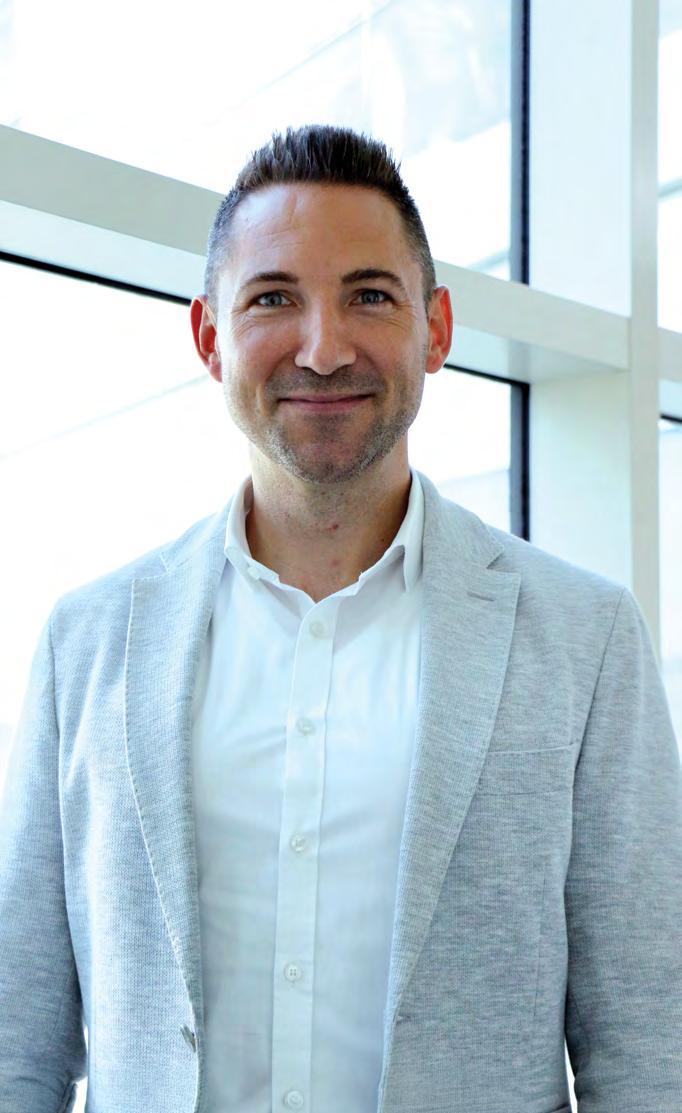
safe, agile, efficient and sustainable. We see our facilities becoming industry-defining blueprints, combining advanced automation with high-value human expertise and leveraging scalable technologies that can be adopted across the wider manufacturing sector.
In this environment, technology becomes a key driver of operational resilience. Planning and execution will be supported by integrated, real-time data, enabling facilities to respond rapidly to changing market conditions while maintaining a strong commitment to sustainability. The future
factory will not simply be more automated; it will be more intelligent, connected and adaptable.
How do you balance resilience with efficiency when both can sometimes pull organisations in different directions?
This is arguably the defining supply chain challenge of our time. For decades, efficiency was the dominant objective. Just-in-Time models were designed to eliminate waste and maximise productivity. More recently, global disruptions prompted a sharp shift towards Just-in-Case strategies, leading organisations to build significant inventory buffers and tie up working capital. Neither extreme offers a sustainable long-term solution.
The answer lies in what we call “smart resilience”. It is not about holding more inventory everywhere; it is about positioning the right inventory in the right locations based on a clear understanding of risk exposure. At Henkel, we use digital twin technology to model our supply chain network and simulate disruption scenarios in seconds. This allows us to identify the most cost-effective mitigation strategies before risks materialise. We also balance resilience and efficiency through greater visibility and regionalisation. By operating on an “in the region, for the region” approach wherever possible, we reduce lead times, minimise exposure to global shipping disruptions and lower transportation costs.
Ultimately, resilience is rooted in agility. Organisations with real-time visibility across their supplier networks can operate leaner because they have the ability to respond before disruptions reach their operations. Efficiency pays the bills, but resilience keeps the business moving. The two must work hand in hand.
What distinguishes companies that successfully transform from those that merely digitise existing processes?
The distinction is critical. Digitisation often means taking an existing process and moving it onto a screen. If a manual approval workflow is transferred from a paper form to a digital platform, the process may be faster, but the underlying inefficiency remains unchanged.
True transformation requires organisations to challenge the operating model itself. It begins by asking, “Why do we do it this
way?” rather than “How can we digitise this?.”Transformational organisations use technology to eliminate unnecessary steps altogether. For example, IoT-enabled systems can automatically trigger replenishment orders without the need for manual intervention, fundamentally redesigning the process rather than simply digitising it.
The greatest differentiator, however, is culture. Organisations can invest in the most advanced technologies available, but if employees do not trust the data or feel empowered to act on it, those investments will fail to deliver their full value. The most successful transformations invest as heavily in change management, upskilling and organisational culture as they do in technology itself.
Transformation is ultimately a human endeavour enabled by digital tools.
Do you see sustainability becoming a genuine source of competitive advantage in manufacturing and supply chains, or is it increasingly becoming a baseline expectation for doing business?
At present, it is both, although the direction of travel is clear: sustainability is rapidly becoming a baseline expectation.
Regulators, customers and business partners increasingly expect organisations to demonstrate measurable progress on sustainability. In the near future, companies that cannot provide transparency around carbon footprints, ethical sourcing and environmental performance may simply find themselves excluded from procurement processes. Sustainability is becoming a licence to operate.
At the same time, the way organisations pursue sustainability can create significant competitive advantages. Sustainability and operational efficiency are often closely aligned. Investments in energy-efficient manufacturing, renewable energy and water recycling not only reduce emissions but also lower long-term operating costs and provide greater protection against energy market volatility.
Within adhesive technologies, sustainability also creates opportunities for innovation. By developing solutions that support circularity and help customers achieve their own ESG objectives, sustainability moves beyond compliance and becomes a driver of commercial growth and customer value.
What are the biggest investments Henkel is making today to ensure its operations and supply chain remain competitive over the next decade?
As Henkel approaches its 150th anniversary, we recognise that long-term success depends on a continued commitment to future-focused investment. Our priorities are centred around three pillars: digital infrastructure, sustainable operations and people.
The first is strengthening our digital backbone. This includes scaling Industry 4.0 applications, expanding our use of AI-driven analytics and standardising data architecture across our global operations. Agility is impossible when critical data remains fragmented across different systems.
The second pillar is sustainability. We are investing significantly in renewable electricity, advanced water and waste reduction technologies and site upgrades that support our journey towards carbon neutrality.
We are already seeing the results of these efforts. Our flagship sites in Kurkumbh, India, and Gebkim, Türkiye, have achieved carbonneutral production through the

adoption of high-efficiency electric systems and a transition to 100 per cent renewable electricity, eliminating direct fossil fuel use and reducing Scope 1 and Scope 2 emissions to zero.
Most importantly, we continue to invest in people. The factory of the future demands new capabilities, and we are equipping our operators, engineers and supply chain professionals with the skills needed to thrive in an increasingly automated and datadriven environment. Technology evolves rapidly, but an adaptable workforce remains the most valuable long-term investment.
Across India, the Middle East and Africa, where do you see the most significant opportunities for industrial growth and supply chain innovation in the coming years?
The IMEA region is one of Henkel’s most dynamic growth engines, although the opportunities differ significantly across markets.
In the Middle East, rapid industrial localisation and investment in world-class infrastructure are creating compelling
opportunities. Programmes such as Saudi Arabia’s Vision 2030 and the UAE’s Operation 300bn are accelerating the transition towards advanced manufacturing and highly digitised logistics ecosystems.
India offers opportunities on an extraordinary scale. The country’s manufacturing ambitions, combined with its strong digital capabilities and deep technology talent pool, make it an ideal environment for advanced analytics, AI-driven supply chain platforms and nextgeneration operational innovation.
In Africa, growth is being driven by a rapidly expanding and increasingly urbanised consumer base. The challenge lies in overcoming infrastructure constraints and improving distribution networks, creating significant opportunities for decentralised supply chains, mobile-first technologies and last-mile innovation.
Across all three regions, the common thread is clear: immense potential for transformative growth, innovation and long-term industrial development.
Designing New Ground: Engineering intelligence in action as women shape the future of the Middle East
International Women in Engineering Day 2026, some of AECOM’s women professionals reflect on innovation, sustainability, leadership and the skills that will define the next generation of engineering excellence
As the engineering profession evolves in response to technological advancements, sustainability imperatives, and rapidly changing urban environments, women across AECOM are helping redefine what engineering direction looks like.
For International Women in Engineering Day (INWED) on 23 June,
three engineers from across the Middle East reflect on their careers, the opportunities shaping the region, and what #EngineeringIntelligence means in practice.
For many engineers, the profession begins with a passion for problem-solving.
For Maithah Albinali, Environmental Engineer –Transportation , that passion was coupled with a desire to make a meaningful contribution to society.
“I was drawn to engineering because it combines technical expertise with practical problem-solving and the opportunity to make a tangible impact,” she explains.
“Environmental engineering, in particular, appealed to me because it enables the integration of development and environmental stewardship, ensuring that progress is achieved responsibly and sustainably.”
That sense of purpose is echoed by Riham Rimawi, Technical Lead –Electrical, who leads AECOM’s Energy Team across Dubai and Abu Dhabi. “I was inspired to pursue a career in
engineering by the opportunity to turn ideas into practical solutions that have a real impact on people’s lives,” she says. “Engineering stood out to me as a field that blends problem-solving, creativity and continuous learning.”
For Alice Morterol, Manager –Transport Advisory , engineering became a way to improve everyday life through the built environment. “Through research projects and internships, I developed a real interest in the built environment: how it comes together, how it operates, and how we can improve everyday life,” she says.
“Even at a small scale, I can make a meaningful impact by improving people’s lives.”
Intelligence beyond technical expertise
This year’s INWED theme, Engineering Intelligence , recognises not only technical skills, but also the judgement, adaptability and leadership required to solve increasingly complex challenges. For Riham, engineering intelligence is about combining expertise with curiosity and innovation. “Professionally, it is about applying knowledge with clarity and purpose, understanding project context, client objectives and stakeholder needs, while continuously strengthening team processes and growth through
Maithah Albinali, Environmental Engineer – Transportation, AECOM
the use of new technologies and tools,” she explains.
Alice believes intelligence is closely linked to capability and the willingness to embrace uncertainty.
“Skills are one thing, and you can acquire new skills every day,” she says.
“Capability is a different matter: you don’t really know what you are capable of until you try.”
She recalls projects where the path forward was far from obvious. “Talking to experts, engaging with the team, doing research, and working hard, obviously, I made it happen. In engineering, no two projects are ever identical, and you need to push yourself to explore new ways and upskill yourself in the process.”
Maithah agrees that adaptability has become a defining characteristic of successful engineers. Her work within NEOM has demonstrated how innovation, collaboration and sustainability can be integrated at an unprecedented scale. “Being part of such a forward-thinking environment has challenged me to think beyond conventional approaches and consider the long-term implications of engineering decisions,” she says.
Building Sustainable Futures
Across the Middle East, engineers are playing a critical role in shaping more sustainable communities and infrastructure networks. As an environmental engineer working on major infrastructure and development projects within NEOM, Maithah sees sustainability as inseparable from engineering itself.
“Sustainability is a fundamental part of engineering and is integrated across all stages of project delivery,” she explains. “Working within a megaproject has reinforced the importance of embedding sustainability into decision-making from the outset to support responsible development and deliver
long-term environmental, social and economic value.”
Meanwhile, Alice is helping cities address evolving mobility needs through transport planning projects ranging from masterplanned developments to metro systems across the GCC. She is also exploring new analytical solutions, including leveraging AECOM’s partnership with TomTom to enhance transport insights.
For Riham, whose team delivers energy and infrastructure projects across the UAE and Saudi Arabia, the future will increasingly depend on engineers who can harness emerging technologies while maintaining strong engineering fundamentals. “Future engineers will need a balance of technical knowledge and adaptable skills,” she says. “The ability to embrace new technologies, such as digital tools, data-driven design and AI, will be increasingly important.”
A Changing Profession
The engineering profession is becoming more diverse, and all three women have witnessed encouraging progress. Maithah has seen a significant increase in the number of Saudi women entering engineering and advancing into leadership positions.
“GREATER REPRESENTATION IS BRINGING DIVERSE PERSPECTIVES, STRENGTHENING COLLABORATION AND CONTRIBUTING TO MORE INNOVATIVE APPROACHES TO SOLVING COMPLEX ENGINEERING CHALLENGES,” SHE SAYS.
Riham believes diversity directly improves project outcomes.
“The projects we deliver serve diverse communities, so having teams that reflect diversity helps us better understand and respond to the needs of our clients and stakeholders,” she explains. “Ultimately, it strengthens both team performance and project outcomes while helping to build a more sustainable and forward-thinking industry.”
Despite this progress, outdated assumptions still persist. “One of the key assumptions I would like to challenge is that engineering is still a maledominated profession where women are less suited for technical or leadership roles,” says Riham.
“In reality, success in engineering is defined by capability, expertise and experience rather than gender,” she reflects. Alice agrees, pointing to the persistent stereotype that women are somehow less
Riham Rimawi, Technical Lead –Electrical, AECOM
CBNME / ENGINEERING
Morterol, Manager – Transport Advisory, AECOM
technical. “Some of the best engineers I have worked with were women,” she says. “Maybe because they have to prove more?”
Learning, Mentoring and Leading
Each of the three engineers credits learning and collaboration as essential drivers of career growth. Having spent more than a decade with AECOM, Riham says the organisation’s commitment to mentoring, training and leadership development has been instrumental in her professional journey.
“AECOM has trusted me with increasing levels of responsibility, enabling me to lead multidisciplinary teams and contribute to the successful delivery of major infrastructure and energy projects.”
Maithah also highlights the value of mentorship in helping young engineers build confidence and professional judgement.
“STRONG MENTORS PROVIDE GUIDANCE, SHARE VALUABLE INSIGHTS AND HELP YOUNG ENGINEERS NAVIGATE CHALLENGES WITH CONFIDENCE,” SHE SAYS. “MENTORSHIP NOT ONLY ACCELERATES LEARNING BUT ALSO HELPS DEVELOP FUTURE LEADERS WITHIN THE INDUSTRY.”
For Alice, curiosity remains one of the most important qualities engineers can cultivate. “Curiosity means being
willing to explore new technologies, challenge how things are done, and think about what your client or project really needs,” she says. “Cultivating this mindset is key to success.”
She adds that while innovation is essential, rigour remains equally important. “There is still science behind what we do. We have to maintain scientific rigour and attention to detail in both the process and the outcome.”
Looking To The Future
The pace of development across the Middle East continues to create exciting opportunities for engineers. “Exactly because it is fast-paced and evolving, it is easy to stay motivated,” says Alice. “Each project presents unique challenges, technologies are constantly advancing, and we work with people from all over the world. This multicultural environment enriches both our work and our conversations.”
For Riham, contributing to the region’s transformational infrastructure programmes remains a major source of inspiration. “Working in an environment where major infrastructure and energy projects are continuously evolving keeps me challenged, engaged and constantly learning,” she says.
Looking ahead, all three women believe the next generation of engineers will play a vital role in shaping a more sustainable, innovative and inclusive future. Maithah’s advice is simple: “Remain curious, embrace challenges and never underestimate the value of your perspective.”
Riham encourages young women to believe in their abilities and pursue opportunities with confidence. “Engineering is a highly rewarding field with significant opportunities to make a real impact. With commitment, continuous learning and self-belief, you can build a successful and fulfilling career.” And for Alice, the importance of women in engineering extends beyond representation alone. “Engineering is even more fascinating when adding more perspective to the work we do,” she says. “That is one of the reasons women in engineering are such an essential asset.”
As the industry embraces new technologies, evolving sustainability goals and increasingly complex challenges, Engineering Intelligence will depend on exactly these qualities: curiosity, collaboration, resilience and the confidence to innovate. Across AECOM and the wider Middle East, women engineers are already demonstrating what that future looks like.
Alice





ONE TO WATCH
The Yards BEYOND Developments
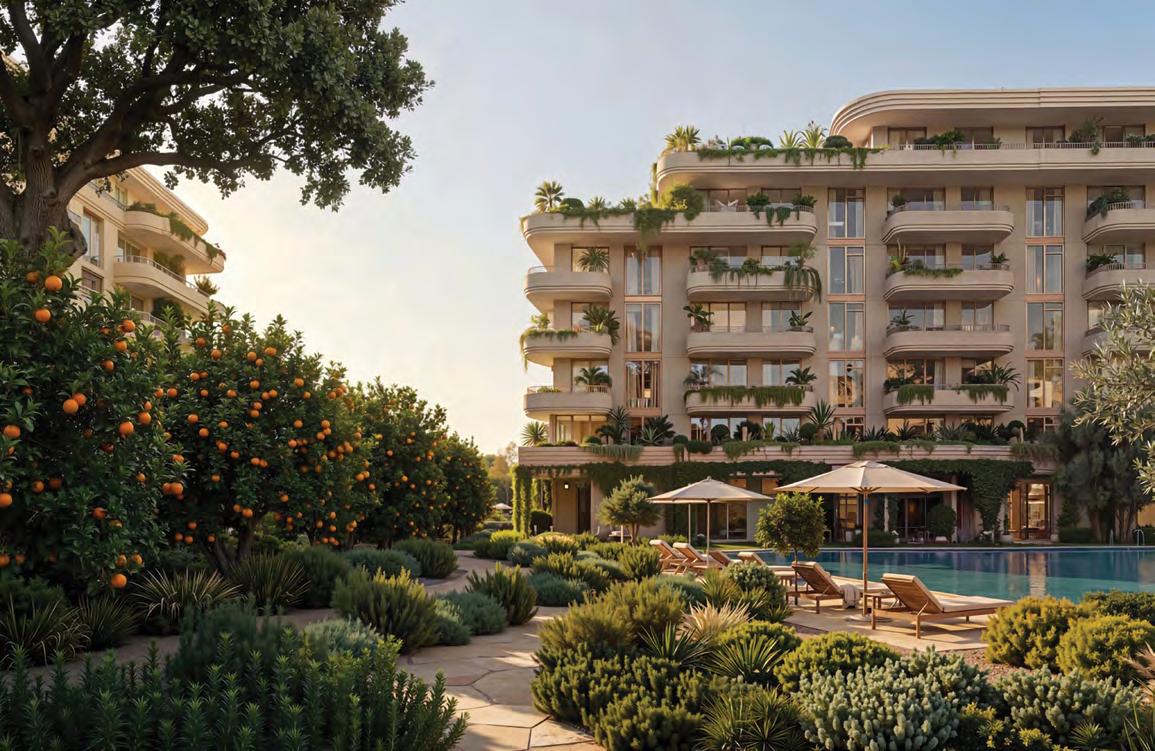
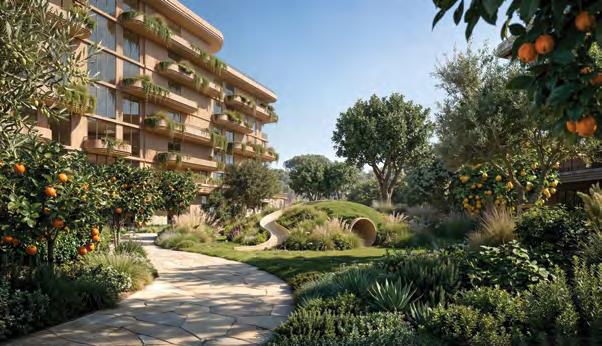
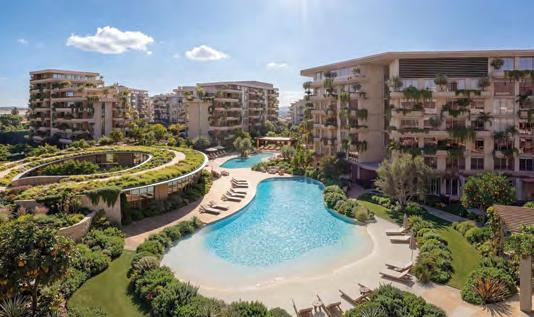
A flagship project that captures the very pulse of tomorrow, distilling the market’s direction and the quiet evolution of the built world into a single, resonant expression of vision and craft
BEYOND’s first inland masterplan, The Yards, marks a key step in the developer’s UAE expansion. Spanning 2.3 million square feet of gross floor area, the project will deliver 1,560 residential units across one- to threebedroom apartments.
The Mediterranean-inspired masterplan is built around a one-kilometre green spine, with 70 per cent of the site dedicated to open landscape, a notable allocation for an inland development of this scale. It sits along an urban corridor linking key employment, entertainment, and transport nodes across Dubai.
ANANTARA SHARJAH RESIDENCES
A NEW CHAPTER OF LUXURY EXPERIENCES BY THE SEA
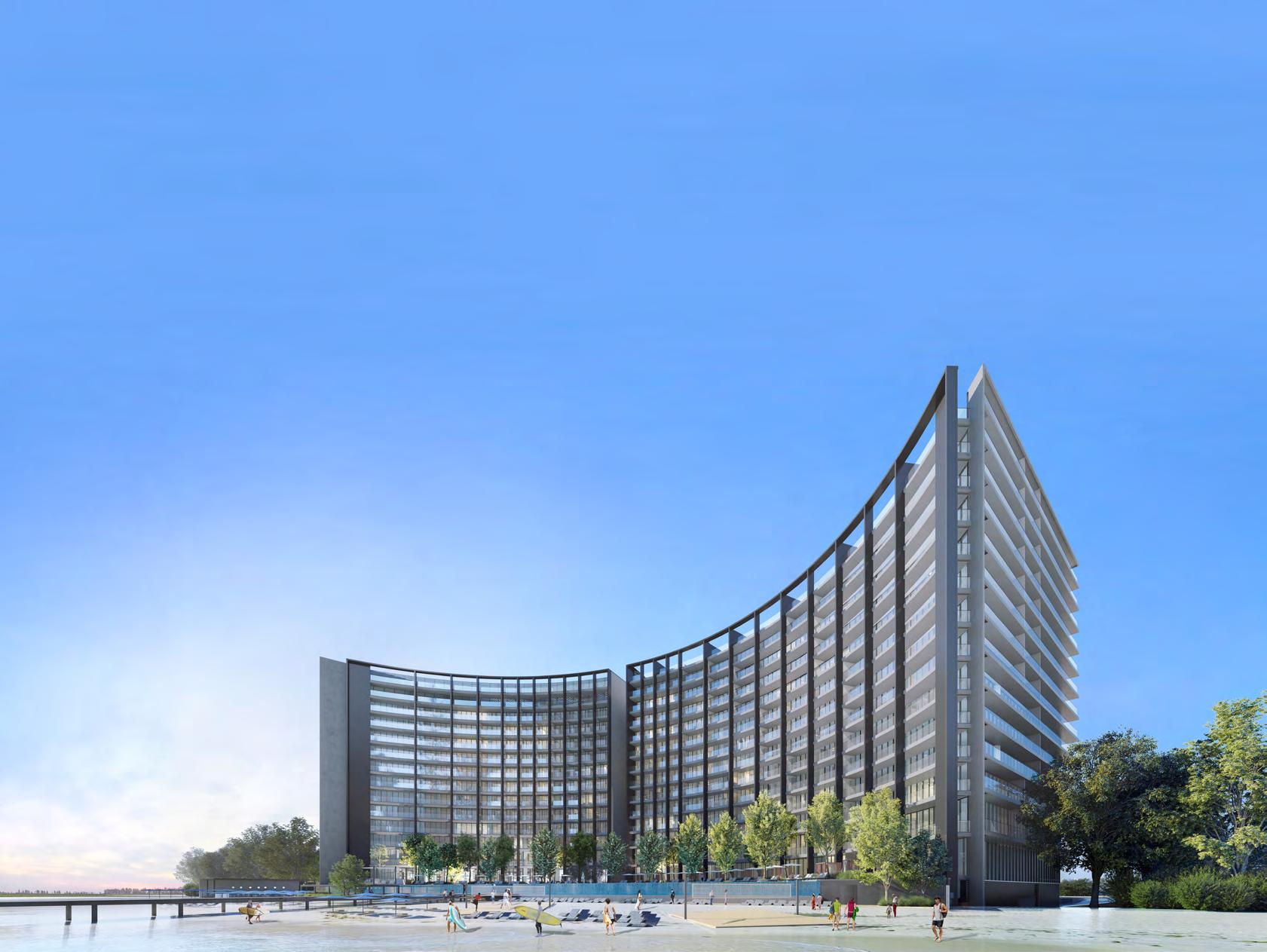
Bringing luxury seaside living to Sharjah for the first time, owners at the Anantara Sharjah Residences enjoy access to the Anantara Sharjah Resort’s world-class amenities, including an infinity pool, five distinctive restaurants, an Anantara Spa and a state-of-the-art gym. As an investment, owners can enjoy the benefits of a rental management scheme operated by Anantara Hotels, Resorts & Spas, allowing them to maximize their returns when they are not resident in the property.
To register your interest, visit arada.com
LIFE IS A JOURNEY.