THE DEFINITIVE GUIDE TO THE REGION'S CONSTRUCTION PROFESSIONALS
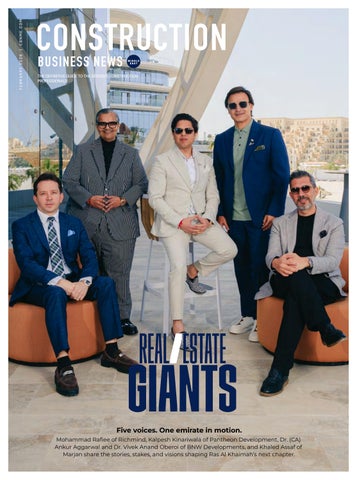
Five
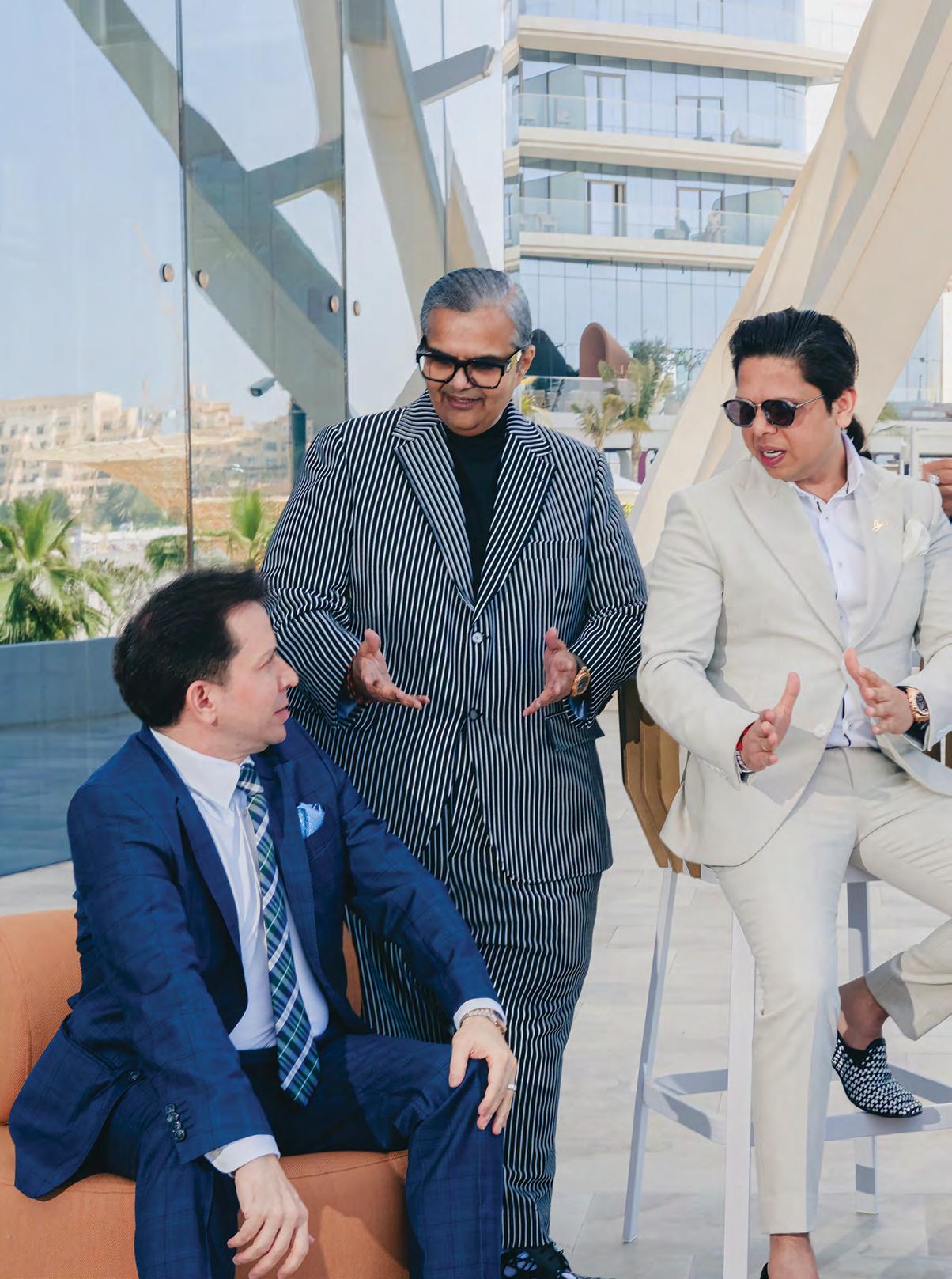
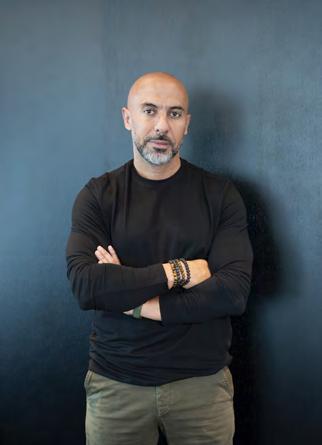
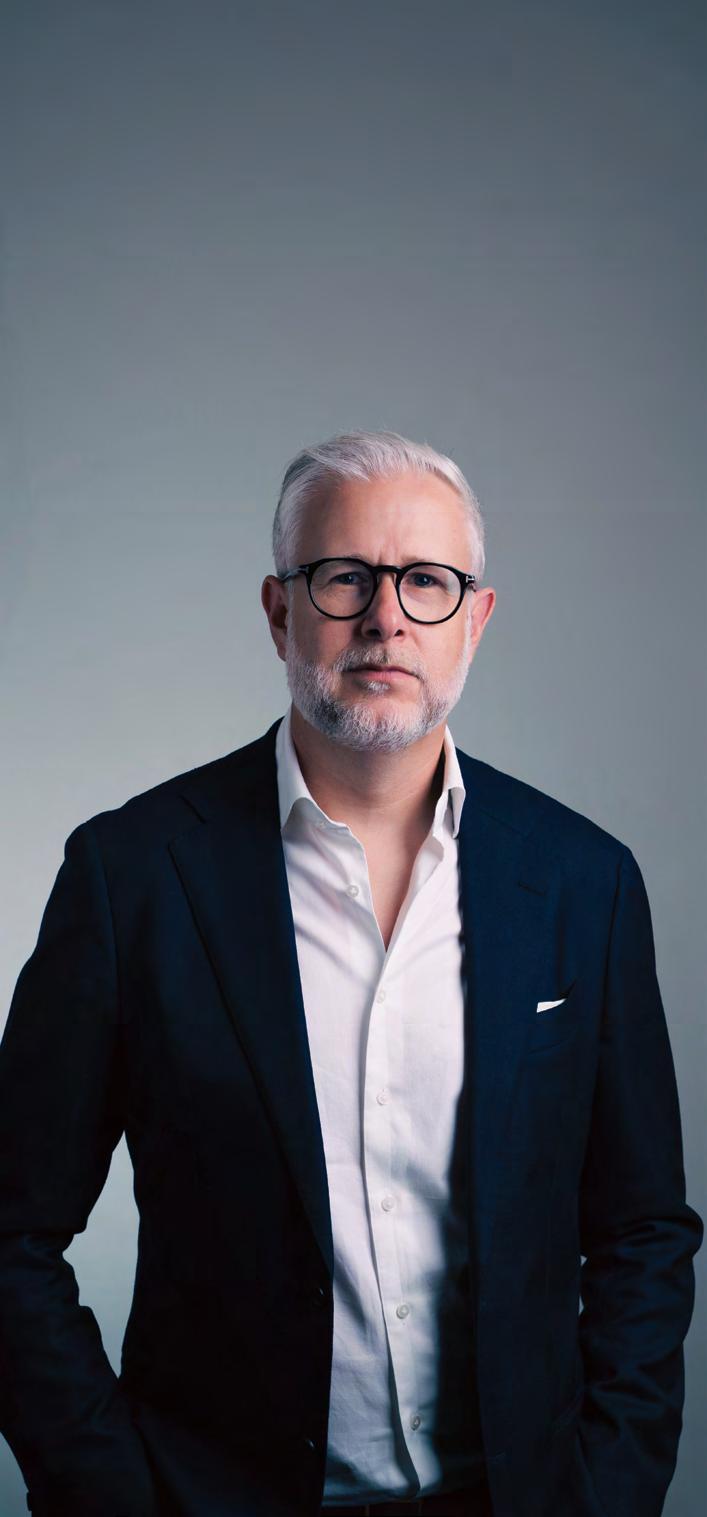
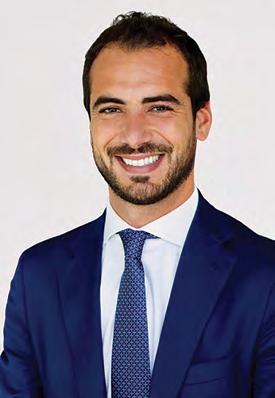
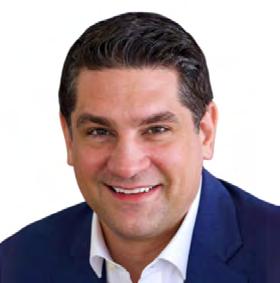
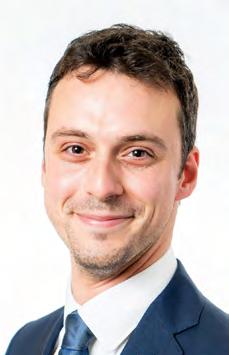
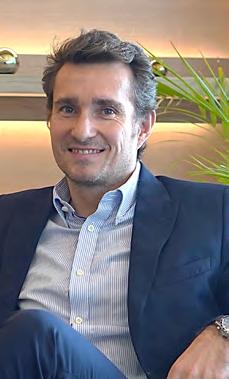
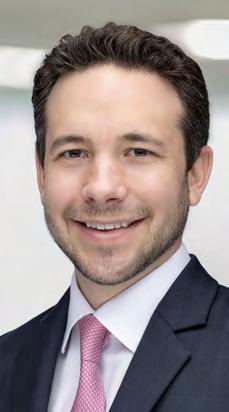
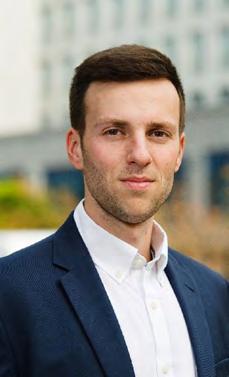
Mohammad Rafiee of Richmind, Kalpesh Kinariwala of Pantheon Development, Dr. (CA) Ankur Aggarwal and Dr. Vivek Anand Oberoi of BNW Developments, and Khaled Assaf of Marjan share the stories, stakes, and visions shaping Ras Al Khaimah’s next chapter.
voices. One emirate in motion.
Drive the new way.
New IVECO S-Way: high technology and efficiency on all missions
A wide choice of Euro III / V diesel engines, delivering class-leading power from 360 hp to 560 hp Euro III / 570 hp Euro V and superior fuel economy. 12-speed HI-TRONIX automated transmission with the most advanced technology in its category, electronic clutch and best-in-class torque-to-weight ratio. Full range of fuel-saving devices, such as anti-idling feature, EcoSwitch, Ecoroll and Smart Alternator. Top levels of comfort and safety, with a completely redesigned and reinforced cab, featuring enhanced direct visibility and enlarged cab livability.
34 COVER STORY When
RAK Moves, It Moves together
20 INTERVIEW
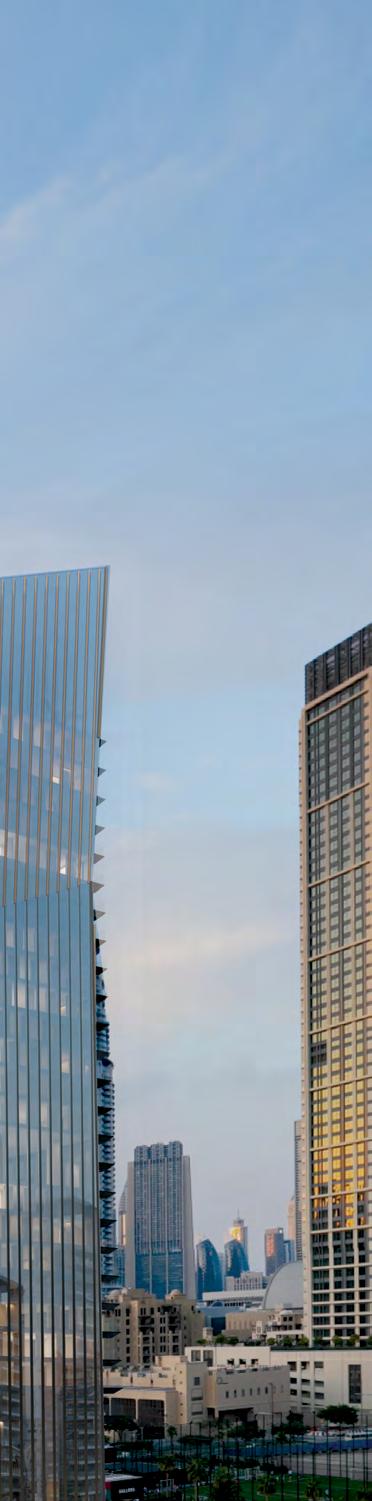
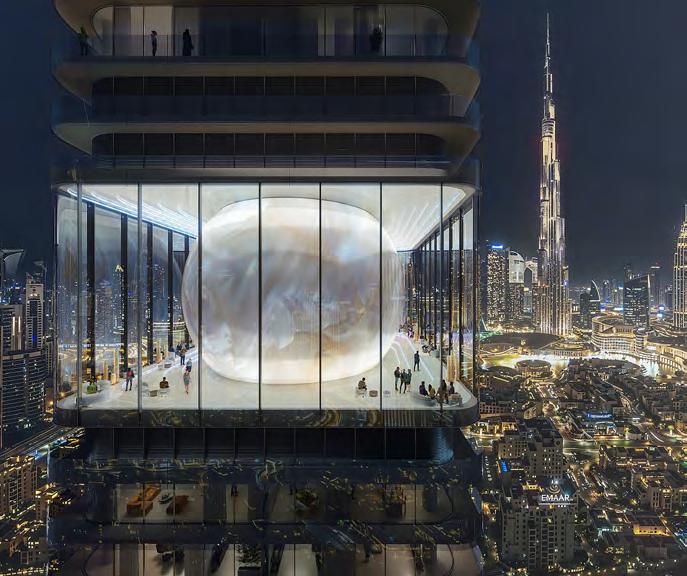
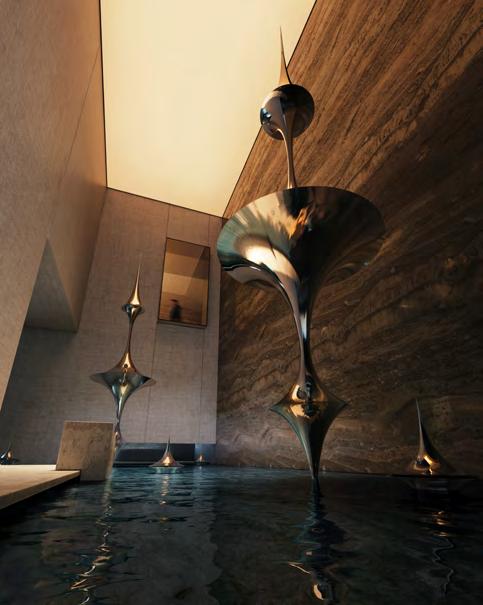
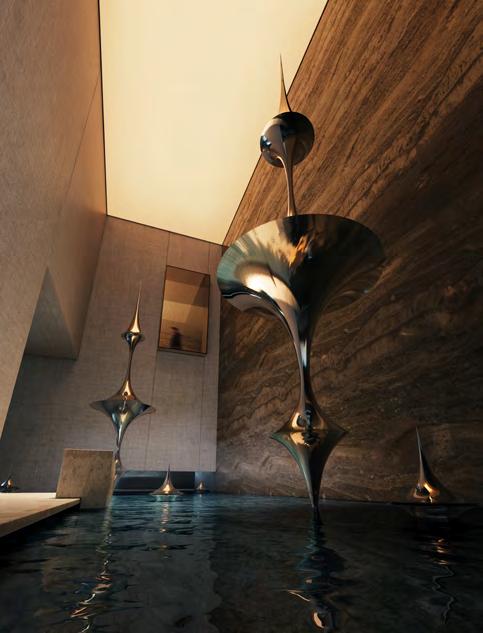
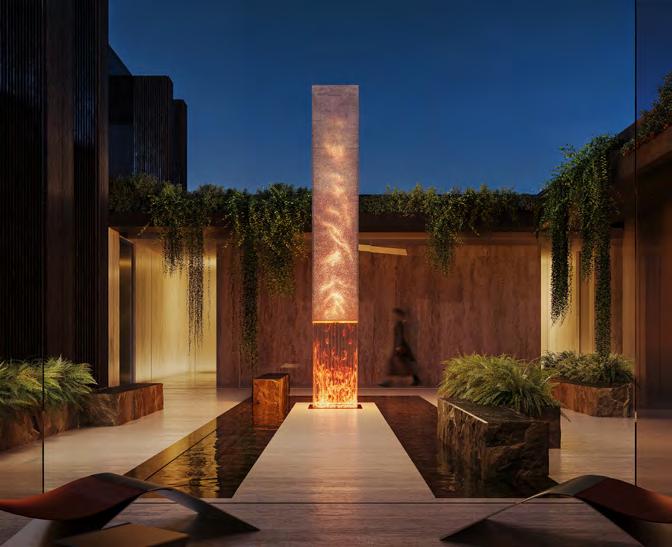
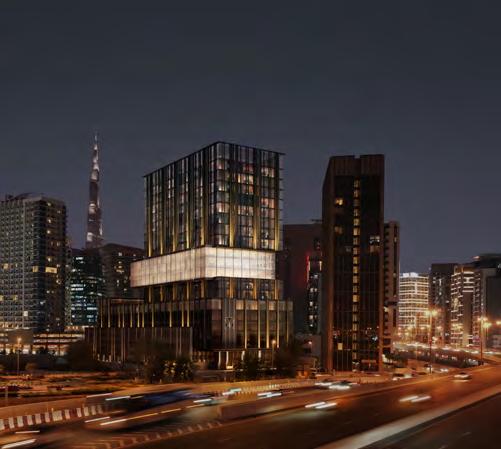
EDEN HOUSE ZA’ABEEL: BUILT FOR LIFE, NOT TRENDS
H&H CEO Miltos Bosinis shares how Eden House Za’abeel blends timeless design, wellness-led planning, and lasting value between DIFC and old Dubai.
24 HEAVY INDUSTRY
ELEGANCIA STEEL APPOINTED TO SUPERVISE STEEL WORKS FOR BALADNA INTEGRATED DAIRY PROJECTS
Elegancia Steel will supervise the steel structures and metal cladding works for Phase One of the Baladna Integrated Dairy Project
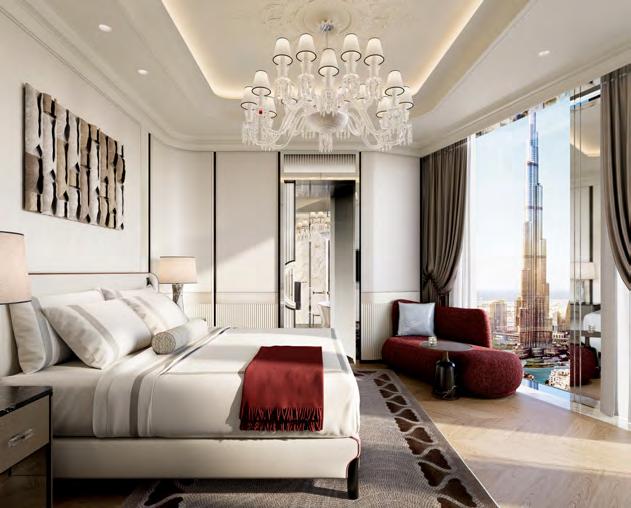
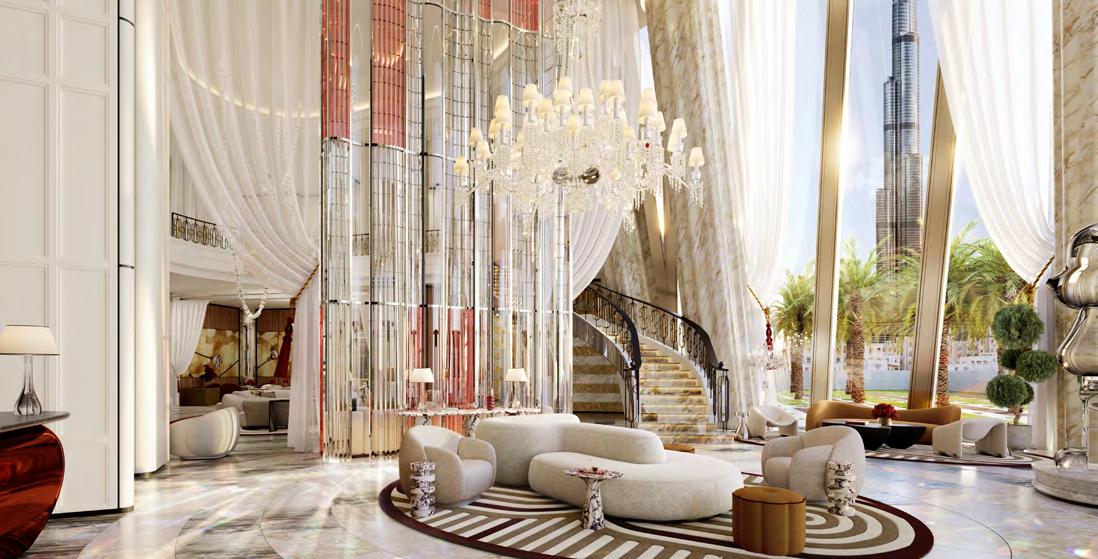
26 INTERVIEW WHERE HERITAGE LANDS: BACCARAT HOTEL & RESIDENCES DUBAI
Sudhin Siva, Chief Asset Management Officer at Shamal Holding, and Toni Stoeckl, Chief Marketing Officer at Starwood Hotels, reflect on a partnership that’s shaping something truly exceptional—an address poised to turn global eyes to Dubai, and a new property
designed to make the city’s next chapter unmistakably felt
32 CONTRACTOR
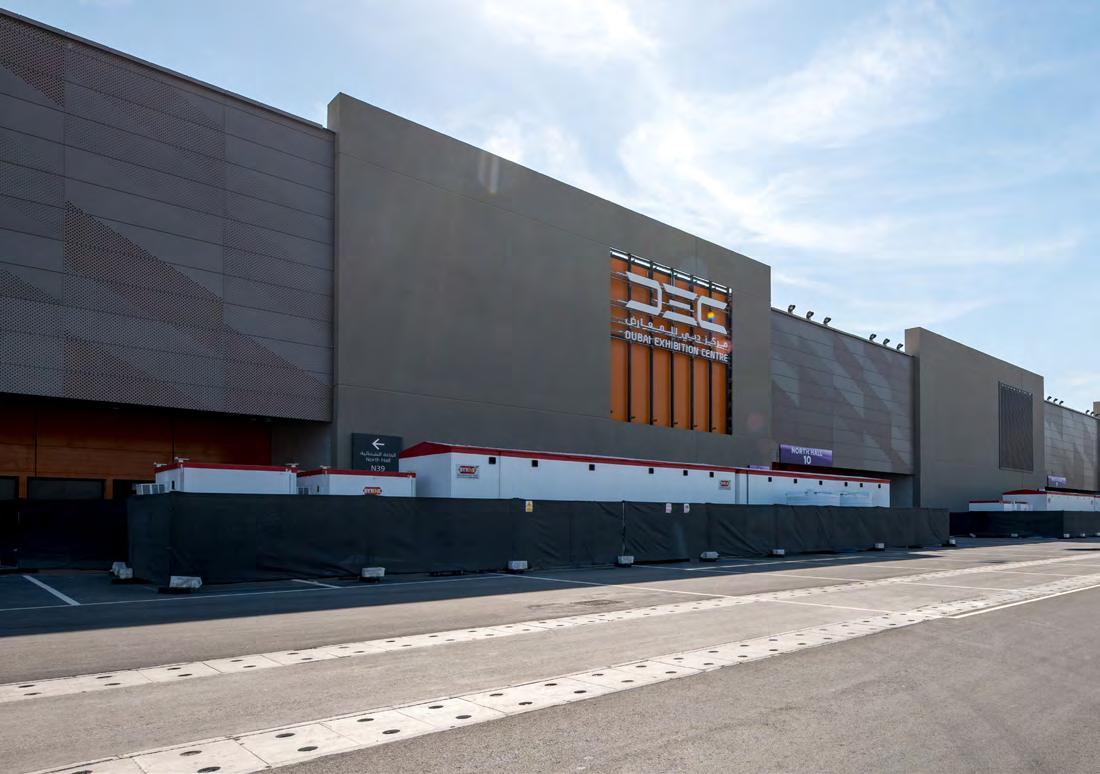
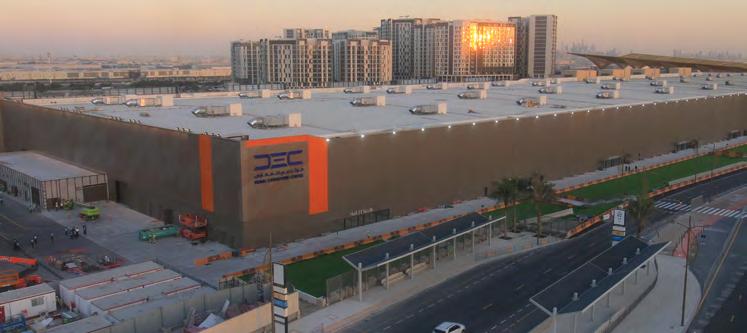
BUILT FOR THE CLOCK
Standfirst: With Dubai Exhibition Centre’s handover tied to immovable event dates, Howard McDonagh, Project Director, Khansaheb Civil Engineering, explains what it really takes to deliver a fast-track, large-scale venue expansion at speed, without sacrificing safety, finish quality, or commissioning discipline
34 COVER STORY WHEN RAK MOVES, IT MOVES TOGETHER
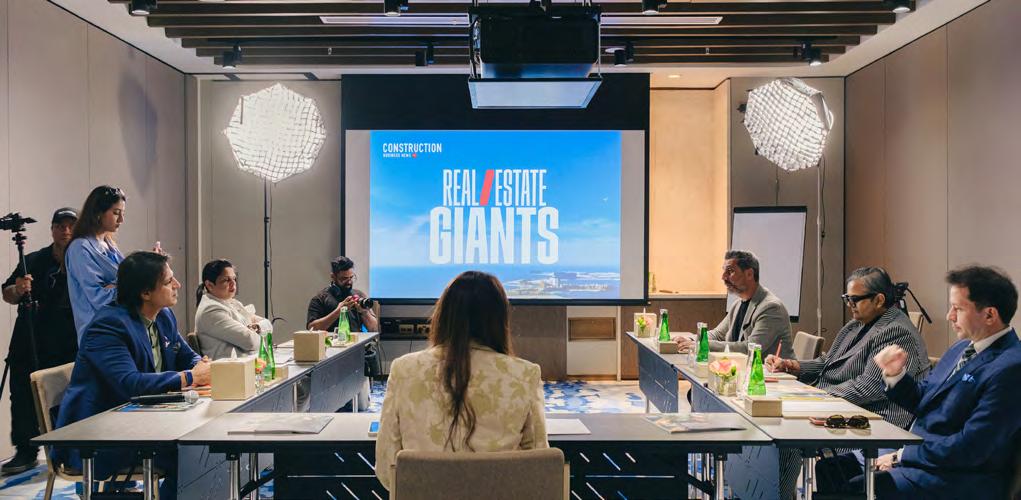
Inside the Real Estate Giants Roundtable, shaping Ras Al Khaimah’s next chapter
42 EXPANSION
D3’S NEXT CANVAS
Khalid Al Malik, CEO of Dubai Holding Real Estate, on turning Dubai Design District into a waterfront neighbourhood that protects creative culture, widens opportunity, and raises the bar on sustainability and liveability
46 PROJECT
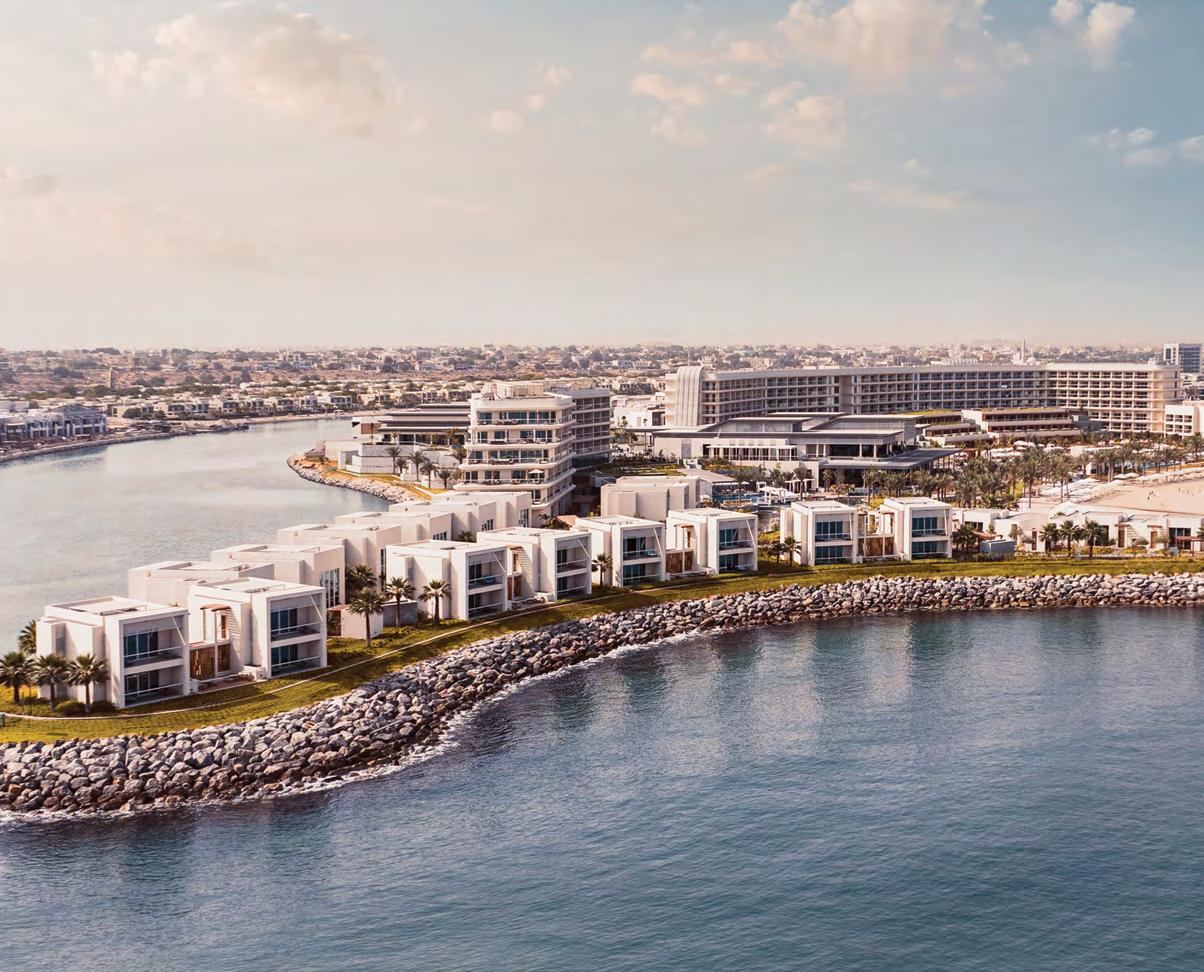
A REFINED VISION FOR RAS AL KHAIMAH’S COAST
Designed and delivered by P&T Group for RAK Properties, the InterContinental Ras Al Khaimah Resort & Spa redefines beachfront hospitality through architectural restraint, masterplanning clarity, and long-term sustainability.
50 SUB-CONTRACTOR FIT-OUT, REIMAGINED
Sherif Nagy, CEO of ME FITOUT, shares insights on leadership, in-house manufacturing, AI adoption, and how sustainability and luxury are redefining the region’s fit-out landscape.
54 LAUNCH
KINETIC, BRANDED, UNMISSABLE
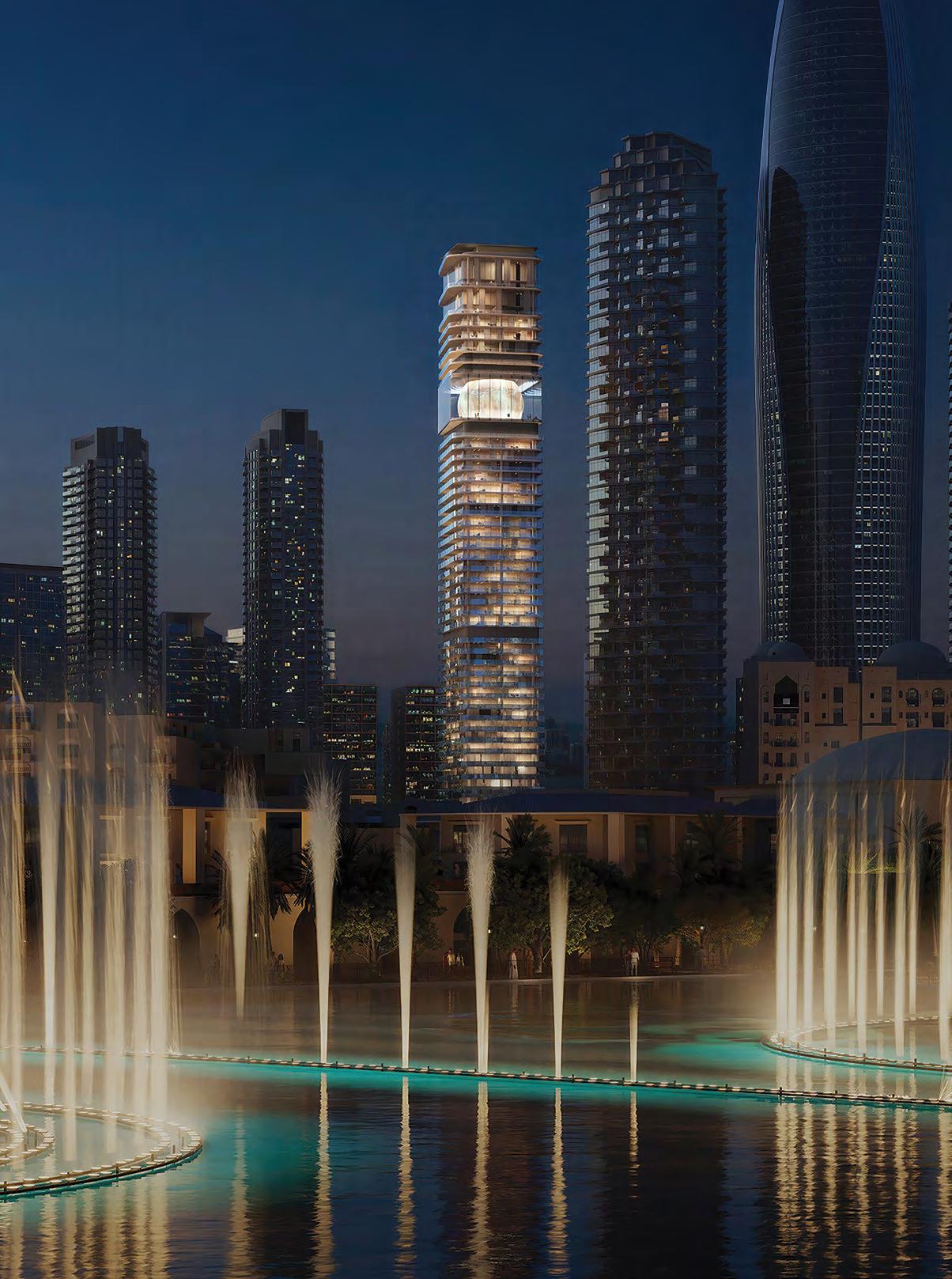
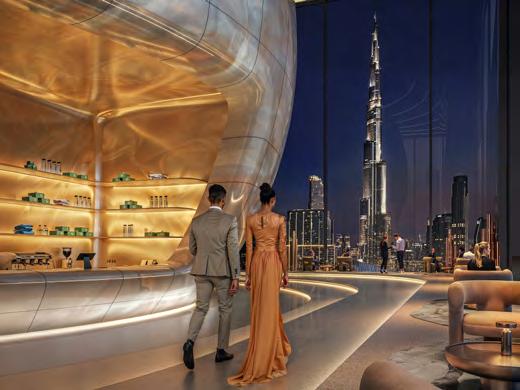
Arada’s new Inaura concept lands in Downtown Dubai with a bold promise: a fitness-led hotel and branded residences designed around movement, ritual, and everyday performance, not just aesthetics
58 SUPPLIER FOCUS THAT PERFORMS PAINT
Dirk Schilmöller, Managing Director Middle East, Africa & Asia at Caparol MEA, reflects on the brand’s recent growth, evolving market demands, and how colour, sustainability, and innovation are shaping the future of paints and coatings across the region.
62 TALKING POINT THE MIDDLE EAST’S WATER CROSSROADS
Why Women’s Leadership Matters in Construction?
64 OP-ED
SAUDI ARABIA’S REAL ESTATE MOMENT: WHY 2026 WILL DEFINE THE KINGDOM’S BUILT ENVIRONMENT
Co-Authored by: Oliver Morgan, Partner & Real Estate Leader at Deloitte Middle East, and Manika Dhama, Partner, Infrastructure & Real Estate at Deloitte
66 EXPERT INSIGHT
FRAMEWORKS OF THE FUTURE
The growing role of free zones in the UAE’s circular and clean energy agenda
70 ANALYSIS
GCC CITIES AT A CRITICAL JUNCTURE
As GCC nations advance their bold national visions, the region’s urban centres are emerging as key drivers of economic and social development
74 EDITOR’S CHOICE ONE TO WATCH
A flagship project that captures the very pulse of tomorrow, distilling the market’s direction and the quiet evolution of the built world into a single, resonant expression of vision and craft
CEO
Wissam Younane wissam@bncpublishing.net
Managing Director
Rabih Najm rabih@bncpublishing.net
Group Publishing Director
Joaquim D'Costa jo@bncpublishing.net
Editor-in-Chief
Vibha Mehta vibha@bncpublishing.net
Commercial Director
Andrea Mocay andrea@bncpublishing.net
Editorial Assistant
Aya Zhang aya@bncpublishing.net
Digital Reporter
Reeba Asghar reeba@bncpublishing.net
Creative Lead
Christian Harb chriss@bncpublishing.net
Junior Art Director
Rizaldi Febrian
Marketing Executive
Aaron Joshua Sinanbam aj@bncpublishing.net
Multimedia
Eduardo Buenagua and Joel Amparo
Contributors
Puneet Jain, Oliver Morgan, and Manika Dhama
PO Box 502511 Dubai, United Arab Emirates P +971 4 4200 506 | F +971 4 4200 196
For all commercial enquiries, contact jo@bncpublishing.net T +971 50 440 2706
Printed by United Printing and Publishing | upp.ae
Images used in Construction Business News Middle East are credited when necessary. Attributed use of copyrighted images with permission. All images not credited courtesy Shutterstock.
Keep up to date with all the latest news, features and much more on our website and social media platforms
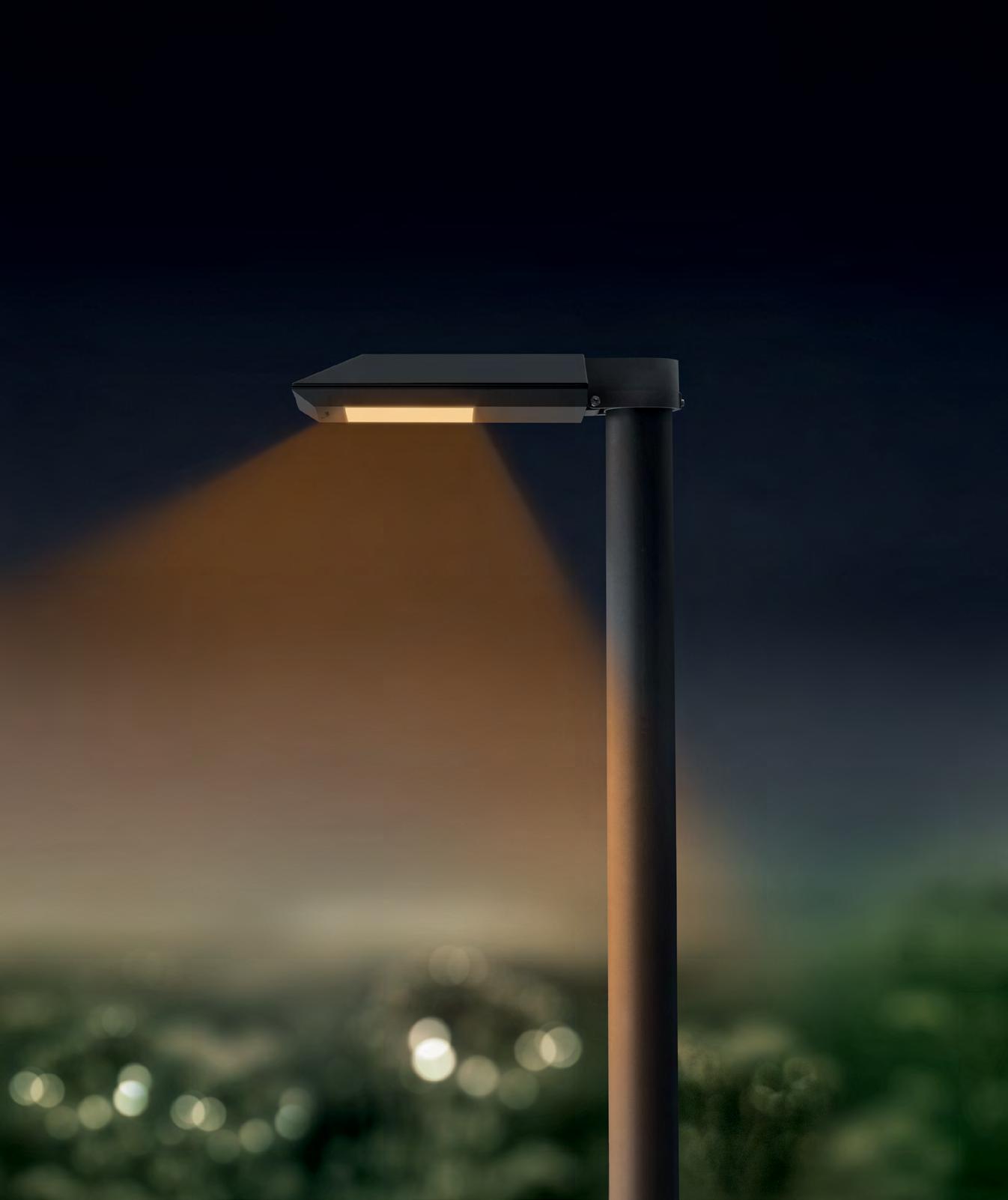
Protecting the night sky
BEGA pole-top luminaires with BugSaver® technology protect nocturnal fauna by reducing the color temperature from 3000 Kelvin to an amber color around 1800 Kelvin, which reduces the light attractive effect. The color temperature and output can be controlled dynamically. bega.com/bugsaver
Das gute Licht.
Ready or Not, Here It Comes
January usually tiptoes into construction. A few cautious announcements, a couple of site mobilisations, the predictable “let’s see how Q1 settles” refrain.
This year has done the opposite. It has arrived with its sleeves already rolled up.
The market isn’t easing back into motion; it’s already in full stride, as if someone quietly pressed fast-forward while we were still resetting our calendars.
I felt that acceleration most vividly in Ras Al Khaimah, where I recently hosted a closeddoor roundtable with leaders who aren’t simply “interested” in the emirate, but deeply invested in its next chapter. What stayed with me wasn’t just the scale of their plans, but the tone. There was no speculative shine, no polite optimism. It was conviction. The kind that shows up when the numbers, the cranes, the buyer appetite, and the infrastructure narrative begin to align into something undeniable. Around the table, the conversation moved with a rare clarity: less about whether RAK will rise, and more about how quickly it will recalibrate the region’s idea of what growth looks like.
The most telling moment came at the end, when the room landed on a shared conclusion that felt almost matter-of-fact: Ras Al Khaimah doesn’t need awareness. It doesn’t need a megaphone. It has already stepped onto the global map—and now the world is watching, waiting to see what the emirate does next. That, to me, is the real shift. RAK is no longer a “story to introduce.” It’s a story to keep up with.
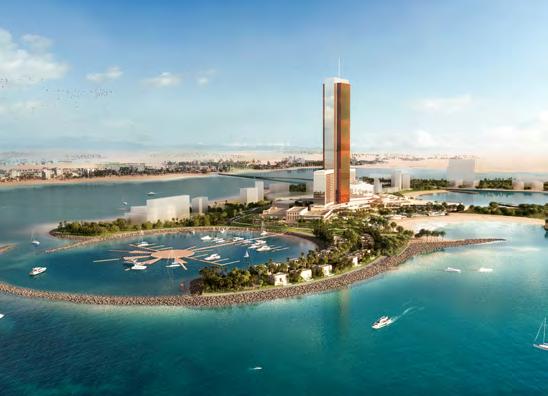
And then there’s Wynn Integrated Resort on Al Marjan Island, more than a project, really, a signal. As the integrated resort moves closer to opening, it carries the weight of a global
spotlight. It’s the kind of landmark that doesn’t just change a skyline; it changes perception. It places Ras Al Khaimah shoulderto-shoulder with major destination cities—and in doing so, it lifts the UAE’s profile yet again, not with noise, but with presence.
So yes, the year feels unusual. Not because it’s busy—we’re always busy—but because it’s busy with momentum. Launches are landing early. Pipelines feel bolder. Conversations are sharper. And for us, it means the months ahead won’t be about “finding stories.” They’ll be about choosing which ones to chase first: features to unpack, projects to track, leaders to sit down with, and a market that is moving too quickly to be treated like a footnote.
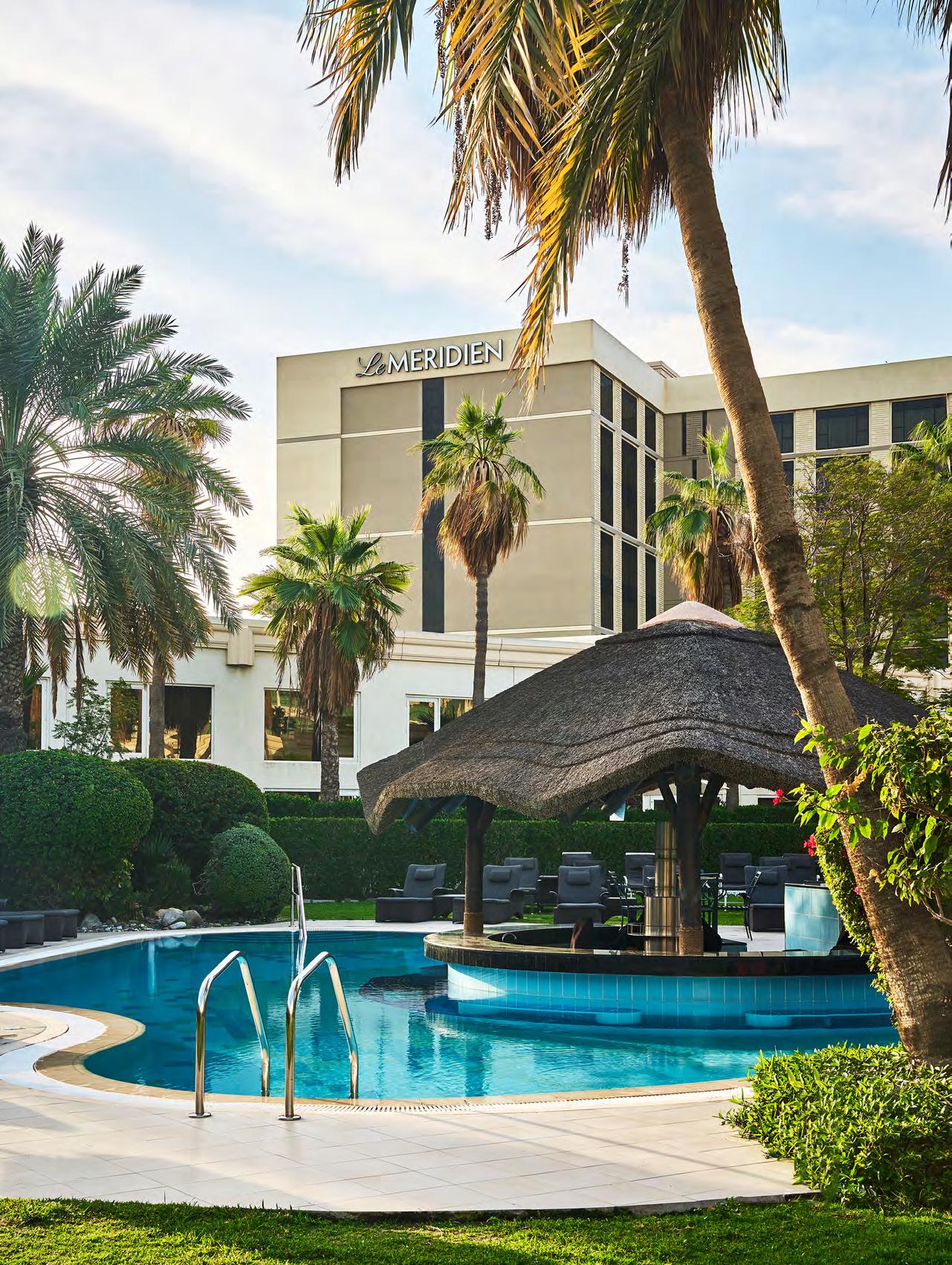
Rediscover Inspiration at Le Méridien Dubai Hotel & Conference Centre
A serene sanctuary at the heart of the city’s dynamic landscape, Le Méridien Dubai Hotel & Conference Centre redefines the art of urban hospitality. Set across 15 acres of immaculately landscaped gardens, the hotel o ers an elegant retreat just moments from Dubai International Airport, placing guests within e ortless reach of the city’s most iconic districts, from Dubai Mall and Burj Khalifa to the storied charm of the Gold Souk and Dubai Creek.
With 580 beautifully appointed rooms and suites, the property invites travellers into a world where contemporary design meets the timeless sophistication of the Le Méridien brand. The distinguished 196 rooms in the Le Royal Club wing elevate the experience with spacious, light-filled rooms, and refined club privileges, while select ground-floor accommodations in the main building open directly onto lush gardens and tranquil pools, o ering a resort-like ambience rarely found in the city.
Well-being is woven into the hotel’s DNA. Guests may indulge in five swimming pools, unwind in serene outdoor enclaves, or train at one of Dubai’s most expansive and advanced fitness facilities, sta ed by expert coaches and equipped with cutting-edge technology to nourish mind, body, and spirit.
At the heart of the property lies an extraordinary culinary journey. Housing 18 acclaimed restaurants and bars, Le Méridien Dubai is home to some of the city’s most storied dining institutions. From the ever-legendary Seafood Market, celebrated for its market-style freshness, to Casa Mia, Dubai’s pioneering Italian restaurant, each venue reflects a passion for authenticity, craftsmanship, and memorable dining artistry.
A beacon for global meetings and events, the hotel features more than 44,000 sq. ft. of versatile event spaces, comprising 24 impeccably designed venues outfitted with modern audiovisual capabilities. Whether orchestrating a grand celebration for 1,750 guests, hosting an international exhibition, or curating an intimate executive gathering, the hotel’s specialist events team and award-winning culinary experts bring each vision to life with impeccable precision and creative flair.
From inspired dining to world-class event facilities, and from resort-style relaxation to unmatched convenience, Le Méridien Dubai Hotel & Conference Centre stands as a destination where cosmopolitan energy and cultivated luxury converge, inviting every guest to unlock a stay that is truly memorable.
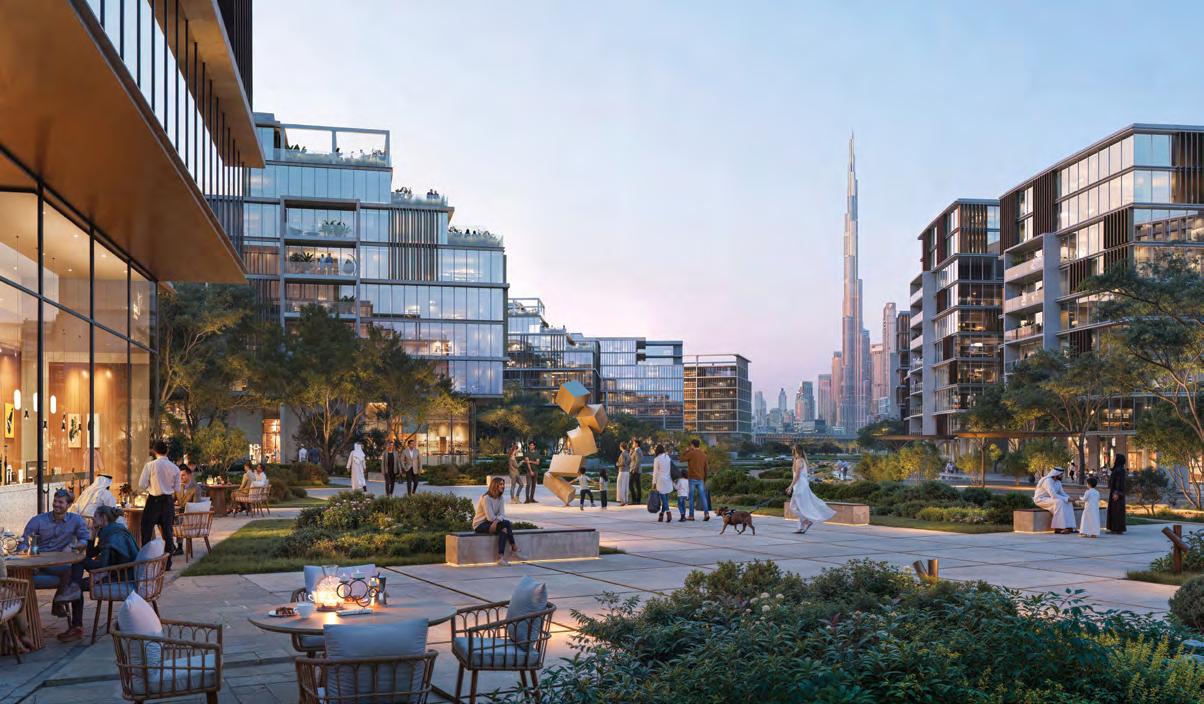
DUBAI UNVEILS DIFC ZABEEL DISTRICT IN MAJOR URBAN AND BUSINESS EXPANSION
The launch of DIFC Zabeel District marks a significant milestone in Dubai’s urban and financial development
His Highness Sheikh Mohammed bin Rashid Al Maktoum, Vice President and Prime Minister of the UAE and Ruler of Dubai, launched DIFC Zabeel District, a landmark expansion of Dubai International Financial Centre (DIFC) that will consolidate its status as the leading global financial centre in the Middle East, Africa and South Asia, while also reinforcing Dubai’s stature as the region’s preferred business and lifestyle destination.
DIFC Zabeel District is the largest demand-led expansion of a financial centre in the region, encompassing a massive site area of 7.1 million sq. ft and total gross floor area of 17.7million sq. ft. The estimated gross development value exceeds AED100 billion.
Futuristic projects
His Highness Sheikh Mohammed bin Rashid Al Maktoum stated that “Dubai continues to enhance its status as a leading global business and finance hub by launching landmark, futuristic projects that provide a comprehensive ecosystem integrating business requirements with high quality of life. This has made Dubai the preferred destination for businesses and talent worldwide.”
“Dubai is a story of ambition that knows no bounds, writing its chapters with future-forward achievements and a determination stemming from the belief that building the future is a time-sensitive responsibility. In Dubai, we do not wait for change, we make it. We transform dreams into a reality that speaks the language of leadership,” he affirmed.
His Highness Sheikh Mohammed bin Rashid added: “DIFC Zabeel District is a key step towards advancing the financial sector in Dubai and worldwide. The new district will see DIFC surge in scale to accommodate over 42,000 companies, a workforce exceeding 125,000, and more than one million square feet of space dedicated to future technologies and AI. It will also offer state-of-the-art spaces for business, innovation, education, and residential living. DIFC is the pulsing heart of Dubai’s economy and the bridge connecting East and West. It is the nexus of investment and innovation.”
His Highness praised the transformation of the financial services industry in Dubai since DIFC opened in 2004, and commended DIFC’s leadership for their commitment to driving a new era for
The DIFC Zabeel District expansion marks a bold new chapter for future technologies
global finance and positioning Dubai as a world-leading financial and investment destination.
A ceremony held on site in Zabeel, adjacent to the existing DIFC Gate District, marked the public launch of the DIFC Zabeel District development. The ceremony was attended by His Highness Sheikh Hamdan bin Mohammed bin Rashid Al Maktoum, Crown Prince of Dubai, Deputy Prime Minister, Minister of Defence, and Chairman of The Executive Council of Dubai; His Highness Sheikh Maktoum bin Mohammed bin Rashid Al Maktoum, First Deputy Ruler of Dubai, Deputy Prime Minister and Minister of Finance of the UAE and President of DIFC; His Highness Sheikh Ahmed bin Mohammed bin Rashid Al Maktoum, Second Deputy Ruler of Dubai; His Highness Sheikh Ahmed bin Saeed Al Maktoum, President of the Dubai Civil Aviation Authority, Chairman of Dubai Airports, and Chairman and Chief Executive of Emirates Airline and Group; and His Highness Sheikh Mansoor bin Mohammed bin Rashid Al Maktoum, President of the UAE National Olympic Committee, along with several senior officials.
His Highness was welcomed at the site by Essa Kazim, Governor of DIFC; Arif Amiri, Chief Executive Officer of DIFC Authority; members of the Higher Board of Directors of DIFC; and senior officials of the DIFC Authority, the Dubai Financial Services Authority (DFSA) and DIFC Courts.
A comprehensive ecosystem
His Highness Sheikh Maktoum bin Mohammed bin Rashid Al Maktoum said: “DIFC Zabeel District is a testament to our unwavering commitment to the vision and directives of His Highness Sheikh Mohammed bin Rashid Al Maktoum to foster a comprehensive financial ecosystem conducive to innovation that integrates infrastructure with financial regulations to drive growth. This development further enhances Dubai’s ability to lead financial sector transformation in line with the Dubai Economic Agenda (D33), which aims to double the emirate’s economy by 2033 and solidify its position as one of the world’s top four financial centres.”
His Highness Sheikh Maktoum added: “DIFC Zabeel District is a new, strategic step in DIFC’s journey, and a launchpad for a new era of innovation and progress in global finance. This development is key to accommodating the rapid growth of global financial and tech firms, and affirming our commitment to ensure an agile business environment that sets new benchmarks of financial excellence and drives economic growth in Dubai and the UAE.”
DIFC’s legacy of more than 20 years of success in facilitating trade and investment flows into Dubai was highlighted at the ceremony, represented by the theme ‘Tomorrow Begins Here’, outlining the journey of DIFC from its launch in 2004 to its remarkable progress as a global finance hub with world-class infrastructure and governance.
The ceremony offered a complete visualisation of the future of DIFC Zabeel District, which is set to double DIFC’s capacity to more than 42,000 businesses and a workforce of over 125,000.
Redefining the industry
His Excellency Essa Kazim commented: “This expansion will redefine the financial industry in the MEASA region and fast-track DIFC’s contribution to Dubai’s economic growth. As a powerful growth partner, innovation engine, regulatory innovator, and business enabler, DIFC Zabeel District will create unparalleled opportunities for businesses and entrepreneurs. It will firmly entrench Dubai’s position as a global financial leader and as a launchpad for the future of finance.”
His Excellency Arif Amiri, Chief Executive Officer of DIFC Authority, said: “By bolstering Dubai’s global competitiveness through the DIFC Zabeel District, DIFC lays the foundations of the next era of global finance. The expansion will be a magnet for financial services expertise and global talent. DIFC Zabeel District will set a new benchmark for integrating work and wellbeing, creating a destination where professional excellence and quality of life reinforce each other. As a thriving community of creators, innovators, and financial forerunners, it will power the next 20 years of growth.”
Future
technologies
The DIFC Zabeel District expansion marks a bold new chapter for future technologies, with over 1 million sq.ft. being allocated to the world’s largest innovation hub and world’s first purposebuilt AI Campus.
Tripling in scale, the Innovation Hub will anchor Dubai’s digital economy ambitions, along with a pioneering AI Campus. The facilities are being custom designed to meet the future needs of over 6,000 businesses and 30,000 tech specialists, enabling breakthroughs in AI development and commercial innovation. Complementing this, the District will include a Gaming & Immersive Technologies Hub to establish Dubai as a powerhouse for next generation gaming, simulation, and digital content creation.
In line with Dubai’s ambitious Education 33 (E33) strategy, DIFC will be positioned as the UAE’s leading hub for further education, and a leading global destination for higher education by attracting world class universities ranked among the top 25 in the QS World University Rankings.
THE DIFC ACADEMY WILL GROW TEN-FOLD TO 370,000 SQ.FT. CREATING A CAPACITY FOR 50,000 LEARNERS ANNUALLY.
Cutting-edge infrastructure
The expansion will also feature a first-of-its-kind art pavilion deepening DIFC’s standing as Dubai’s home to art and culture. Specific sites will be designed for landmark pieces of art and architecture.
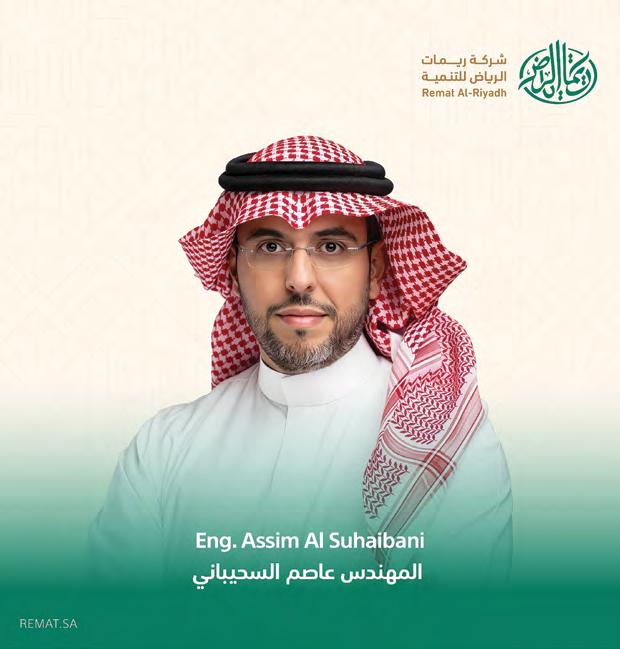
REMAT AL-RIYADH APPOINTS ENG. ASIM AL-SUHAIBANI AS CEO
He will be taking over, effective 1 April 2026
Remat Al-Riyadh Development Company, the development arm of Riyadh Municipality and strategic enabler of private sector participation, today announced the appointment of Eng. Asim bin Mohammed Al-Suhaibani as Chief Executive Officer, effective 1 April 2026, succeeding Mr. Abdullah bin Sulaiman Abdullah Abdudawood, who has served as CEO since the Company’s establishment in 2021.
The Board of Directors has also approved the appointment of Mr. Abdullah bin Sulaiman Abudawood as a Member of the Board of Directors, effective 1 April 2026, in recognition of his contributions and continued commitment to strengthening the Company’s institutional vision and expertise.
ENG. ASSIM BIN
MOHAMMED AL-SUHAIBANI BRINGS MORE THAN 20 YEARS OF PROFESSIONAL EXPERIENCE ACROSS THE PUBLIC AND PRIVATE SECTORS, WITH EXPERTISE SPANNING EXECUTIVE MANAGEMENT AND STRATEGIC DEVELOPMENT.
He joins Remat Al-Riyadh Development Company from Riyadh Holding Company, where he has served as Chief Executive Officer since 2022 and played a pivotal role in advancing several major development projects across the city of Riyadh. His career also includes leadership roles at the Public Investment Fund, MASIC Logistics, and Schlumberger.
Under its new leadership, Remat Al-Riyadh Development Company will continue to
deliver on its strategic mandate to contribute to improving the quality of life for residents and visitors of the capital, through the development and enhancement of municipal services, improving project execution efficiency, and activating municipal assets into sustainable investment opportunities that support the region’s cultural and economic vitality. The Company also remains firmly committed to empowering national talent, developing skills and capabilities, and fostering a supportive, highperformance work environment.
Eng. Asim bin Mohammed Al-Suhaibani as Chief Executive Officer
INVESTCORP PARTNERS WITH STAKE TO BROADEN ACCESS TO INTERNATIONAL REAL ESTATE
Investcorp has entered into a distribution agreement with Stake to expand its digital investment offering
Investcorp Saudi Arabia Financial Investments Company (together with its affiliates, “Investcorp”), a leading global alternative investment manager, has expanded its digital platform offering through a distribution agreement with Stake, the MENA region’s leading digital real-estate investment platform. The partnership provides investors with access to select international real estate opportunities via the Stake digital application, combining Investcorp’s institutional-grade investment expertise and rigorous due diligence with Stake’s world-class technology-enabled user experience.
Through the Stake platform, investors are able to participate seamlessly in opportunities traditionally available only to institutional partners, reinforcing Investcorp’s commitment to broadening access to private markets through digital innovation.
THE AGREEMENT FORMS PART OF INVESTCORP’S BROADER STRATEGY TO BUILD A GLOBAL DIGITAL PLATFORM ECOSYSTEM.
Following the wider launch last year of its proprietary, award-winning Investcorp Wealth mobile app, which provides investors with a streamlined gateway to private market investments. The joint initiative with Stake represents a complementary expansion of this strategy, extending Investcorp’s digital reach through a leading third-party fintech platform.
All offerings made available under the agreement are structured within the regulatory framework of the Capital Market Authority
(CMA) of the Kingdom of Saudi Arabia, which has established a progressive and forward-looking regime designed to broaden investor participation in private investment funds, while maintaining robust standards of investor protection and compliance.
Mashaal Al Jomaih, CEO of Investcorp Saudi Arabia, said: “Investcorp is committed to redefining access to private markets through digital innovation, and strategic partnerships with platforms such as Stake are a key pillar of our global digital platform strategy. This agreement enables individual investors to participate in high-quality opportunities historically reserved for institutions, combining Stake’s advanced technology with our global investment capabilities and disciplined approach.”
Manar Mahmassani, Co-Founder and Co-CEO of Stake, commented: “As we continue to make real estate investing more accessible, partnering with top tier investment managers like Investcorp allows us to bring high-quality opportunities to our users. This partnership brings us one step closer to our vision of enabling investors worldwide to access prime, institutional-grade global real estate investments through a single digital platform.”
The first US-based offering launched under the agreement attracted strong investor demand, with participation from thousands of investors. A second tranche is now live on the Stake platform.
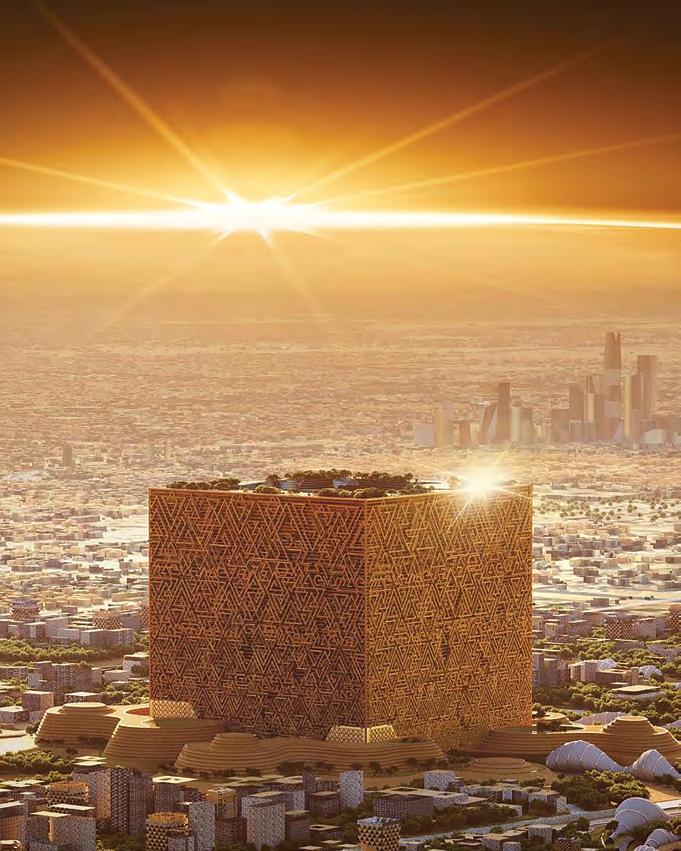
SAUDI ARABIA HALTS CONSTRUCTION OF MUKAAB PROJECT IN RIYADH
Saudi Arabia has suspended construction of the Mukaab, a massive cubeshaped skyscraper planned for central Riyadh
Saudi Arabia has suspended planned construction of the Mukaab, a colossal cube-shaped skyscraper intended to anchor a major downtown development in Riyadh, as it reassesses the project’s financing and feasibility, according to four people familiar with the matter.
The Mukaab was designed as a 400-meter by 400-meter metal cube housing a vast dome featuring an AI-powered display; envisioned as the largest of its kind in the world, visible from within a more than 300-meter-high ziggurat-style structure inside the building.
Work on the Mukaab beyond soil excavation and pilings has now been halted, three of the sources said, leaving the future of the project uncertain. However, development of surrounding real estate within the broader New Murabba district is expected to continue, according to five people familiar with the plans.
The sources include individuals involved in the project’s development as well as people with knowledge of internal deliberations at Saudi Arabia’s Public Investment Fund (PIF), which is backing the New Murabba development.
MICHAEL DYKE, CEO, DESCRIBED THE MUKAAB AS AN IMMERSIVE, OTHER-WORLDLY EXPERIENCE, WHILE ACKNOWLEDGING THE SIGNIFICANT CHALLENGES INVOLVED IN DELIVERING A PROJECT OF UNPRECEDENTED SCALE AND COMPLEXITY.
Real estate consultancy Knight Frank has estimated the total cost of the New Murabba district at around $50
billion, roughly equivalent to Jordan’s annual GDP. Projects commissioned so far within the district are valued at approximately $100 million, according to the consultancy.
Initial plans had targeted completion of New Murabba by 2030, but the timeline has since been extended to 2040.
The development was intended to include 104,000 residential units and was projected to add SR180 billion ($48 billion) to Saudi Arabia’s GDP while creating 334,000 direct and indirect jobs by 2030, according to previous government estimates.
The Mukaab was planned as a 400-meter by 400-meter metal cube
Eden House Za’abeel: Built for Life, Not Trends
H&H CEO Miltos Bosinis shares how Eden House Za’abeel blends timeless design, wellness-led planning, and lasting value between DIFC and old Dubai.
What was the original vision behind Eden House Za’abeel, and how does it reflect H&H’s approach to development?
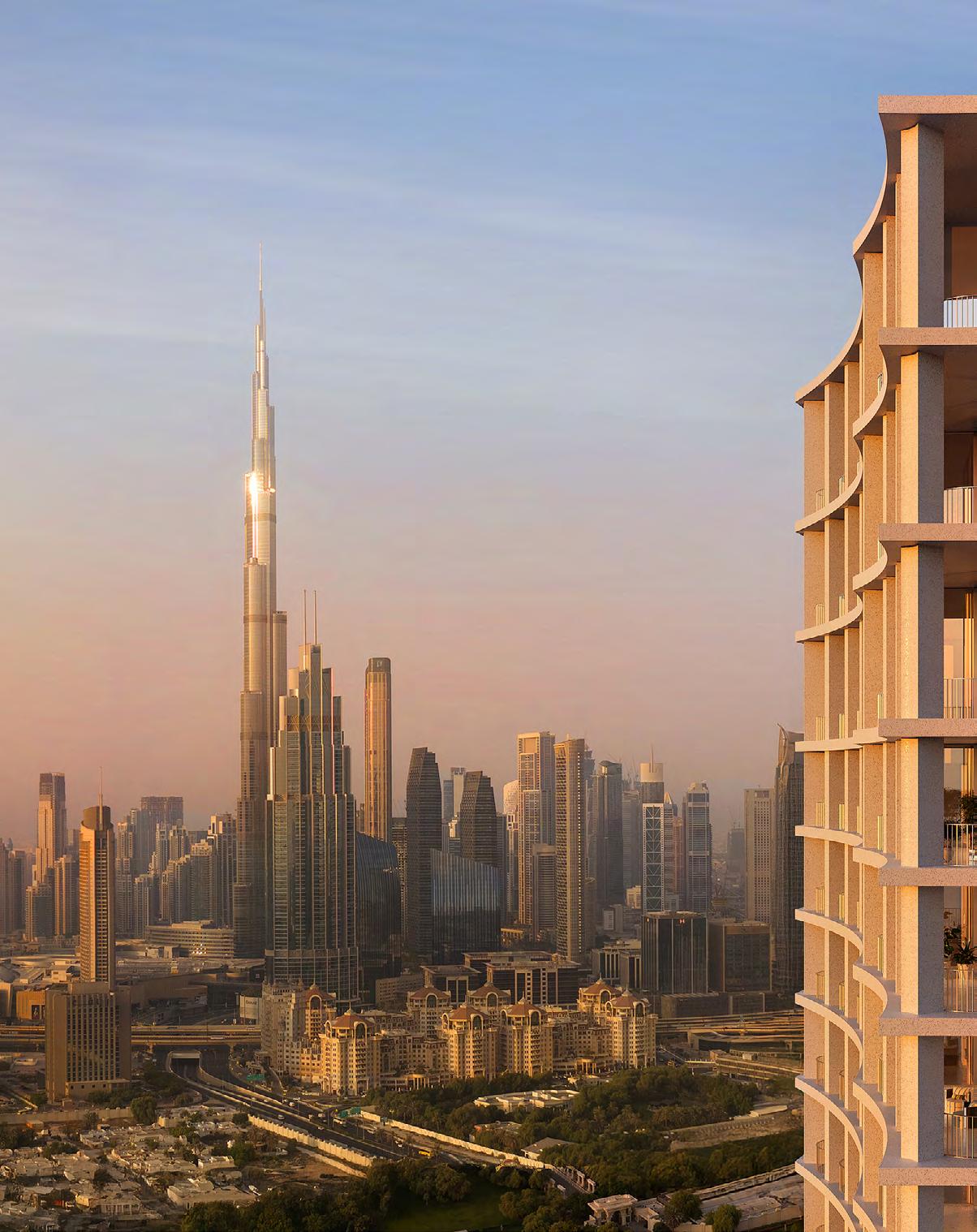
Eden House Za’abeel was conceived as a residential response to a unique urban condition, where the proximity of DIFC meets the established character of Za’abeel. The objective was never to create a landmark, but to deliver a restrained, well-built development designed for longterm living.
This approach reflects H&H’s philosophy—focusing on proportion, material quality, scale, and service planning. Eden House Za’abeel is designed to perform over time, both as a place to live and as a long-term asset.
Za’abeel sits between old Dubai, DIFC, and the newer districts. Why do you believe this neighbourhood is emerging as a prime residential address now?
Za’abeel occupies a strategic position within Dubai’s urban fabric. It connects heritage areas with the city’s primary cosmopolitan district and newer residential districts, offering proximity to DIFC and Downtown without the intensity of core business zones. As Dubai matures, residents are prioritising balance, accessibility, and long-term suitability over novelty.
What sets Za’abeel apart is its planning discipline: low density and established green spaces. Positioned between the major
EDEN HOUSE ZA’ABEEL:
financial district and the upcoming DIFC Phase 2, it is emerging as a stable residential enclave rather than a trend-driven location.
How does Eden House Za’abeel balance the tranquillity of Za’abeel with the cosmopolitan energy of DIFC in its planning and lifestyle offering?
This balance was a core consideration from the early planning stages. Architecturally, the building is designed to provide a degree of separation from the surrounding urban pace through its form, orientation, and spatial sequencing, while maintaining visual and physical connectivity to DIFC.
Direct access from 17th Street avoids major traffic flows, allowing residents to move easily between city life and a more residential environment. The result is flexibility: residents can engage with the city when they choose, without compromising privacy or daily comfort.
Can you walk us through the design collaboration with dxb lab and Tristan Auer, and what makes the architecture and interiors stand out in today’s market?
The collaboration with dxb lab and Tristan Auer was based on a shared commitment to timeless, human-centred design.
DXB LAB’S ARCHITECTURAL APPROACH RESPONDS
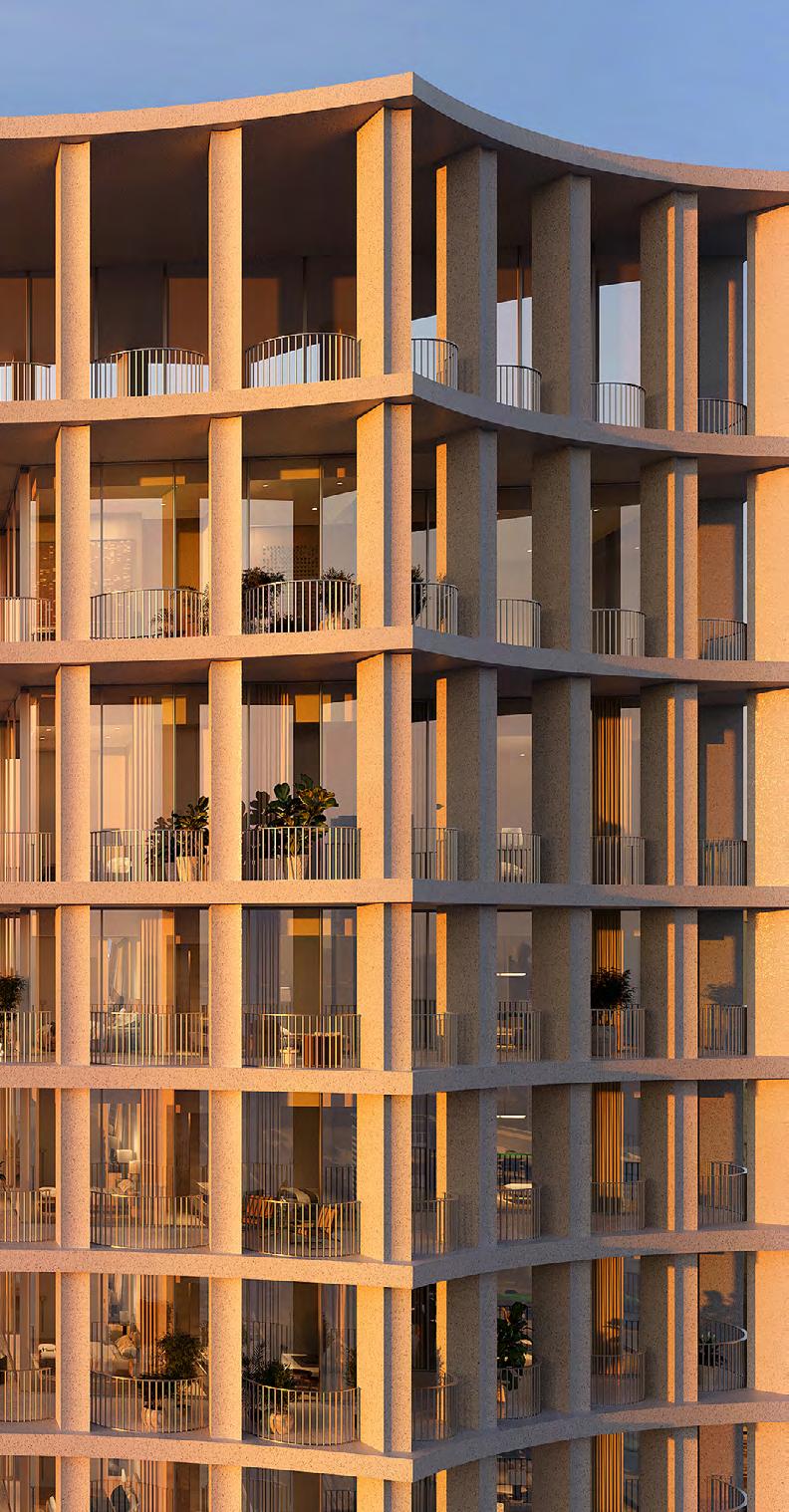
DIRECTLY TO THE SITE. THE CURVILINEAR CONCEPT OF THE BUILDING ACTS AS A TRANSITION BETWEEN THE “GLASS AND STONE” COMMERCIAL CHARACTER OF DIFC AND ZA’ABEEL’S GREENERY.
The interiors by Tristan Auer continue this logic, prioritising material quality, proportion, and usability over decorative trends. What sets
Eden House Za’abeel apart is this alignment between architecture and interiors, where every decision is deliberately focused on timeless design, durability, quality, comfort, and coherence rather than visual impact alone.
What kind of residents do you see Eden House Za’abeel attracting, and how are their expectations different from buyers in more established districts?
Eden House Za’abeel attracts residents who are deliberate about how they live. They value proximity to key business and lifestyle centres, reduced commute times, and a live-work-
play environment that supports efficiency and balance.
Many are globally mobile but increasingly committed to Dubai as a long-term base. Their expectations are shaped by mature international cities, where quality, discretion, thoughtful planning, and consistent service matter more than scale or visibility.
Wellness is a strong theme in new residential concepts. How have you integrated wellness and liveability into the amenities and spatial planning of Eden House Za’abeel? Wellness is embedded into the planning rather than treated as
an add-on. Spatial design prioritises natural light, airflow, greenery, and access to outdoor areas, supporting both physical comfort and daily routines.
Amenities are designed to support longterm living, including wellness suites with sauna, steam, and cold plunge facilities, movement studios, spa spaces, and indoor and outdoor pools. Equally important are less visible factors such as privacy and operational efficiency, which define liveability over time.
From an investment perspective, how does Eden House Za’abeel position itself in terms of value, long-term appreciation, and rental demand in Za’abeel?
Eden House Za’abeel is positioned as a long-term residential asset. Its low-density setting, central location, and proximity to the
city’s major financial district provide a strong foundation for sustained value appreciation as Za’abeel continues to mature.
From a rental perspective, the demand for well-managed, serviced, design-led residences close to DIFC remains consistently strong, particularly among senior professionals and long-term residents. The combination of timeless design, architectural integrity, hospitality-led service, and lifestyle-driven amenities ensures resilience across market cycles, making Eden House Za’abeel attractive to both end-users and long-term investors.
Looking ahead, how do you see Za’abeel evolving over the next five to ten years, and what role do you expect Eden House Za’abeel to play in that story?
Over the next decade, Za’abeel will increasingly be recognised as Dubai’s mature urban core. Its proximity to DIFC positions it as a long-term residential district.
Eden House Za’abeel will play a foundational role in shaping that identity. It demonstrates how residential developments in Za’abeel can engage with the context, prioritising human scale, and delivering lifetime value.
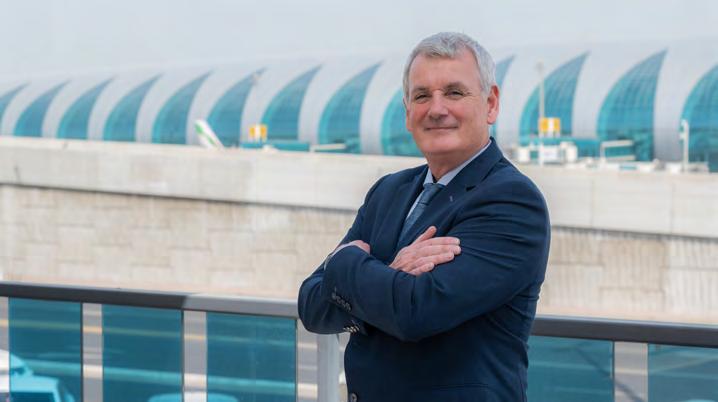
Chief Executive
Miltos Bosinis
Officer CEO of H&H Development
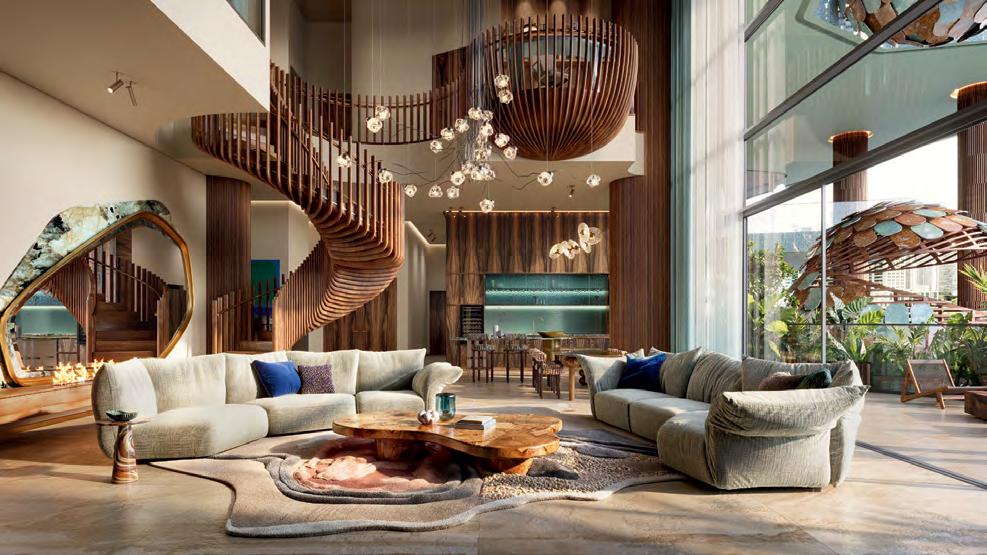
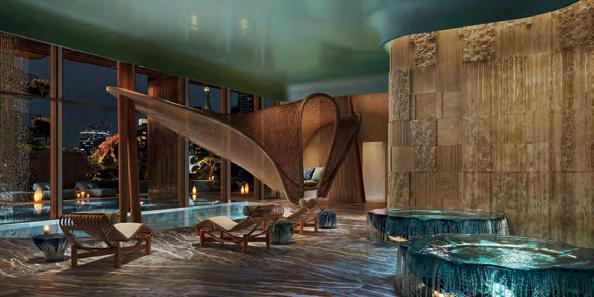
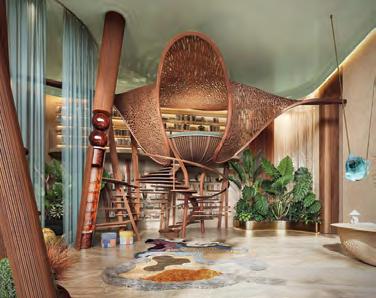
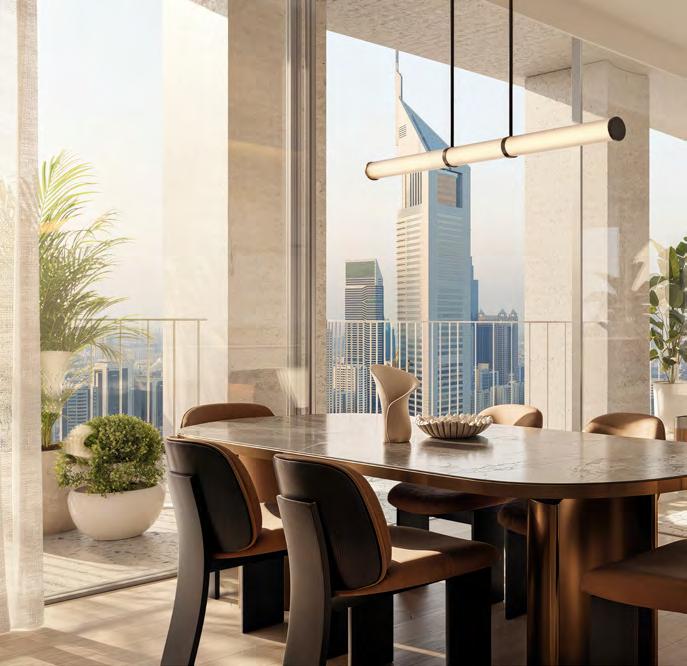
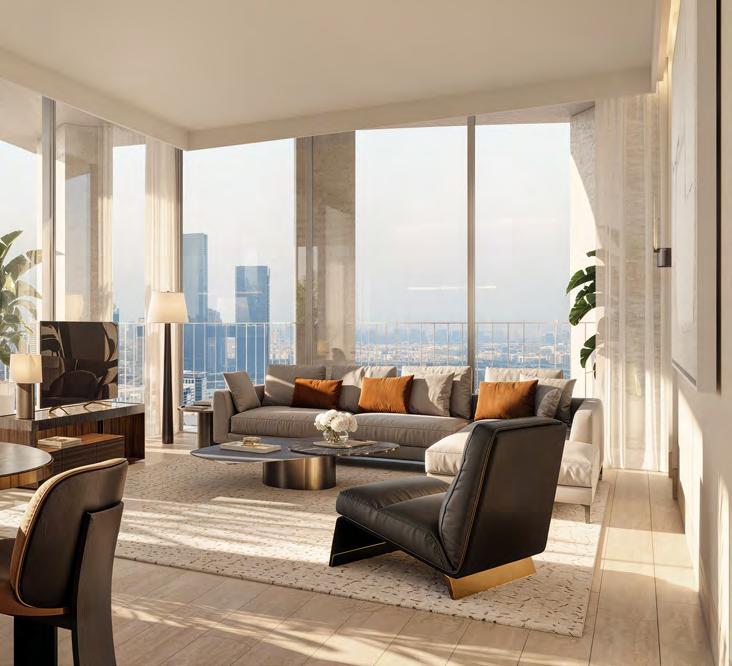
Interiors by Tristan Auer emphasise timeless materials, balance and comfort, reinforcing Eden House Za’abeel’s focus on lasting quality over visual trends.
Elegancia Steel Appointed To Supervise Steel Works For Baladna Integrated Dairy Project
Elegancia Steel will supervise the steel structures and metal cladding works for Phase One of the Baladna Integrated Dairy Project
Elegancia Steel, a subsidiary of Estithmar Holding Q.P.S.C., has been appointed to provide supervision services for the steel structures and metal cladding works of the Baladna Integrated Dairy Project in Adrar Province, Algeria. The project is considered one of the largest of its kind globally, spanning a total area of approximately 2.36 million square meters. Elegancia Steel’s scope of work includes supervising the design, supply, and installation of steel structures and metal cladding works for Phase One of the project, which comprises dairy farms, the main hub, operational hubs, accommodation complexes, manufacturing facility warehouses, in addition to all related operational and functional buildings.
BALADNA ALGERIA PROJECT IS ONE OF THE WORLD’S LARGEST INTEGRATED CATTLE FARMING, MILK, AND FEED PRODUCTION PROJECTS, DEVELOPED TO SUPPORT FOOD SECURITY OBJECTIVES AND PROMOTE SUSTAINABLE AGRICULTURAL DEVELOPMENT IN ALGERIA.
The project has been designed as a fully integrated production system, relying on advanced agricultural technologies and large-scale infrastructure to strengthen local supply chains, enhance self-sufficiency, and create long-term economic and social value.
Eyad Elkhorebi, Group Chief Executive Officer of Elegancia Contracting & Industries , stated that this appointment reflects the confidence placed in Elegancia Steel’s technical expertise and its ability to deliver specialized supervision services for large-scale and complex industrial projects. He noted that the company’s involvement in the Baladna Integrated Dairy Project reaffirms its commitment to engineering excellence, quality, and supporting strategic projects that contribute to food security and sustainable growth across the region.
Ashraf Eisouh, General Manager of Elegancia Steel, stated that the project brings together multiple facilities and functions within a single development, requiring disciplined coordination and consistent application of standards across all works. He emphasized that the company’s priority is to support smooth execution on site while ensuring alignment with the project’s technical requirements and delivery timelines.
Elegancia Steel operates under Elegancia Contracting & Industries, providing specialized services in steel fabrication and supervision of steel and metal works for large-scale and technically complex projects. The company has contributed to major infrastructure projects associated with the FIFA World Cup Qatar 2022™, serves as an approved steel supplier for industrial facilities and the oil and gas sector in Ras Laffan, and has delivered steel structure works for several major projects in the Kingdom of Saudi Arabia, including infrastructure works of the sports boulevard in Riyadh, in addition to other industrial and commercial projects within its regional portfolio.
Baladna Algeria project is one of the world’s largest integrated cattle farming, milk, and feed production projects
- 16 MAY 2026
WHERE HERITAGE LANDS:
Baccarat Hotel & Residences
Dubai
Sudhin Siva, Chief Asset Management Officer at Shamal Holding, and Toni Stoeckl, Chief Marketing Officer at Starwood Hotels, reflect on a partnership that’s shaping something truly exceptional—an address poised to turn global eyes to Dubai, and a new property designed to make the city’s next chapter unmistakably felt
By : Vibha Mehta
The lift doors open with a soft chime and a cool wash of citrus-clean air. On the 117th floor, Dubai feels composed: daylight fading, towers turning to silhouette, city lights flickering on, and the sea holding a last band of gold.
Inside, the office is quietly premium— carpet that swallows footsteps, warm stone-and-timber tones, and a low table set with coffee, water and untouched dates. Minimal, controlled, and ready for the conversation.
Sudhin Siva arrives first, measured and composed, sleeves sitting clean at the wrist. When he speaks, his hands open slowly, as if placing each point carefully on the table. Toni Stoeckl follows with easy energy and direct eye contact, leaning forward when something matters, punctuating ideas with small, precise gestures. Different temperaments, same focus. The topic is Baccarat Hotel & Residences Dubai and what it signals for a market that has no shortage of luxury, yet still rewards depth.
Beyond the Label
The phrase ‘branded residences’ is often thrown around as if it simply means a famous name on a façade. In this room, both men push back on that shorthand. For them, brand is only meaningful when it travels beyond a logo and becomes behaviour, consistency, and lived experience.
Sudhin frames it as a test of substance. He speaks about branded living as a translation exercise: taking a brand’s culture and turning it into daily standards, service rhythms, and a level of finish that holds up long after launch season. “It’s not just the identity of a brand on a building,” he says. “It’s the philosophy, the service levels, and how that experience is delivered.”
Toni, equally firm, brings it back to immersion. He describes it as a lifestyle you can feel, not a label you can point at. “It’s not just the name,” he says. “It’s about creating an emotional connection,
making people feel something when they’re at home.”
Shamal’s Long Lens
In a market quick to label every real estate player a ‘developer,’ Sudhin is keen to clarify how Shamal positions itself and why that matters for a project at this scale. He describes a holding company that thinks in asset life cycles rather than handover moments, where the responsibility doesn’t end when the keys are delivered.
Shamal’s approach, he explains, starts with understanding the resident and stays close through the full journey, because reputation is built after completion, not during the sales campaign.
“WE’RE IN IT THROUGH THAT WHOLE JOURNEY,” HE SAYS, “UNDERSTANDING THE END USER AND ENSURING THE LONGEVITY WE PROMISED REMAINS.”
Toni nods at the idea of selectivity, suggesting that the strongest partnerships aren’t formed by chasing volume, but by aligning standards. “You need that connectivity from the start,” he says. “That organic way of doing business results in a better product.”
The Misconception Problem
Branded residences, Toni insists, are still widely misunderstood. Too often, the assumption is that the “brand” is a quick premium lever rather than a long-term operating commitment. He rejects the idea that this is about short-term uplift.
“The misconception is that it’s just a logo on the building,” he says, before turning it into a simple reality check. Baccarat has lasted for centuries because it has repeatedly stayed relevant, not because it has stayed static. In his telling, heritage is not nostalgia. It is a standard that must remain present in everyday life, through ordinary mornings as much as celebratory evenings.
“A BRAND DOESN’T LAST 260 YEARS IF IT’S SUPERFICIAL,” HE SAYS. “IT LASTS BECAUSE IT FINDS WAYS TO STAY PRESENT IN PEOPLE’S LIVES.”
Sudhin backs that thinking with an operational angle: a brand only earns its place when it shows up in the experience, in the invisible details residents feel but rarely articulate. “It has to come through in the living experience,” he says, “not just in the look of it.”
Chemistry Without the Friction Partnerships in branded living usually come with pressure points: the moment brand standards meet procurement, programme, or on-site realities.
WITH BACCARAT HOTEL & RESIDENCES DUBAI, BOTH MEN DESCRIBE A RELATIONSHIP WHERE ALIGNMENT DID THE HEAVY LIFTING EARLY, LONG BEFORE ANYONE STARTED DEBATING FINISHING SCHEDULES OR SAMPLE BOARDS.
Sudhin describes the collaboration as unusually coherent, driven by shared instincts rather than constant negotiation. “The collaboration is exceptional,” he says. “The thinking was always aligned.” His view is simple: when both sides care about the same things, decisions become faster, not harder.
That alignment, he adds, is anchored in craftsmanship, in the discipline of doing small things properly and repeatedly.
Toni agrees, describing the partnership as something you can feel immediately. “From the moment we signed, you have an instant connection,” he says. For him, that connection matters because a project like Baccarat only works when the people behind it move as one. “That organic way of doing business will result in a better product,” he adds, returning the idea to outcome, not sentiment.
Luxury’s New Currency Dubai has mastered premium product. The next contest, they suggest, is about how the product performs as a daily experience. What lasts isn’t the marketing language. It’s the comfort, ease, and consistency residents live with. Sudhin calls it out plainly.
“THE TRUE DIFFERENTIATOR IS GOING TO BE EXPERIENCES,”
In a city packed with beautiful buildings, the edge comes from what you cannot capture in a render: how a space feels at night, how service anticipates needs, how standards remain intact over time.
Toni widens the view to global behaviour, noting a broader shift in what high-end consumers value. “We’re seeing a shift from products to experiences,” he says, underlining why branded residences are accelerating. In his view, luxury is
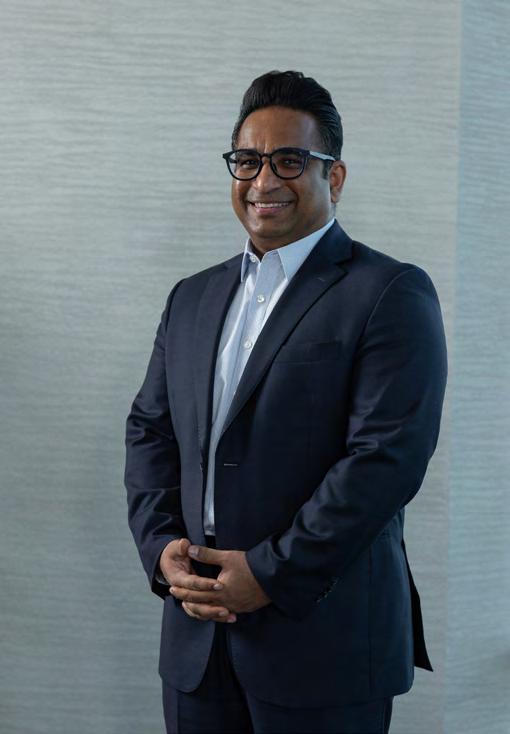
Sudhin Siva, Chief Asset Management Officer at Shamal Holding
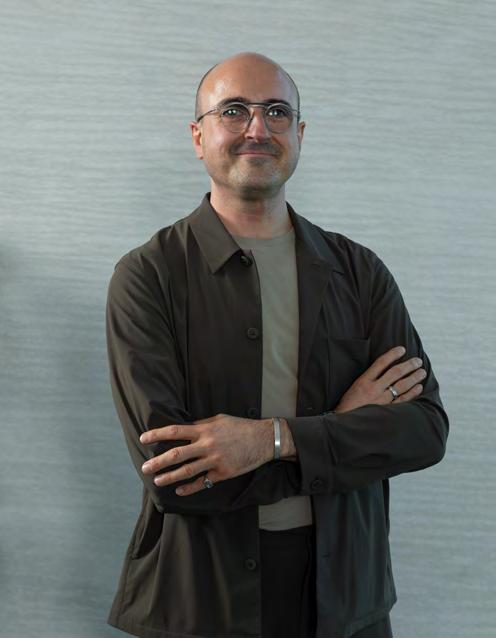
Toni Stoeckl, Chief Marketing Officer at Starwood Hotels
becoming more personal and more emotional, less about accumulation and more about immersion.
French, Not Theatrical
Baccarat’s heritage could easily become a styling exercise in Dubai, but Toni insists it has to be delivered as culture rather than costume. He speaks about authenticity as something built through repetition: sensory cues, service manners, and a precise understanding of atmosphere.
“It has to have the French heritage,” he says, “especially in how we deliver the service.” He moves quickly from big concepts to tangible details: fragrance in the ambience, music, sound levels, and the specific mood each space is meant to hold. For him, the brand is a full sensory identity, not a decorative layer.
Sudhin reinforces the point by pulling it back to lived reality. Heritage only matters, he suggests, if it remains believable when the building is occupied and the days become normal. “It’s about how the philosophy comes to life,” he says, “in the way people live, not just in the way it looks.”
Value That Doesn’t Fade
When the conversation turns to longterm value, Sudhin speaks like someone already thinking ten years beyond the ribbon cutting. The core idea is continuity: residents buy into a standard that must hold, not a moment that will pass.
“It’s not just the launch and delivery,” he says. “It’s how we ensure that value remains for years to come.”
Toni echoes the same point through emotion rather than infrastructure. “It’s not just the logo,” he says. “It’s the emotion at the end of the day.” He suggests the strongest branded residences are the ones people want to keep, not flip, because the experience becomes part of their identity and daily rhythm.
The Bar Moves Up
Projects like this don’t only raise expectations for residents. They raise the expectations for delivery itself:
IN HIS TELLING, BACCARAT HOTEL & RESIDENCES DUBAI IS BUILT ON THE RIGHT COMBINATION OF STAKEHOLDERS, DESIGN DISCIPLINE, AND OPERATIONS, BECAUSE WHAT MATTERS IS NOT ONLY WHAT IS DELIVERED, BUT WHAT REMAINS TRUE AFTER HANDOVER.
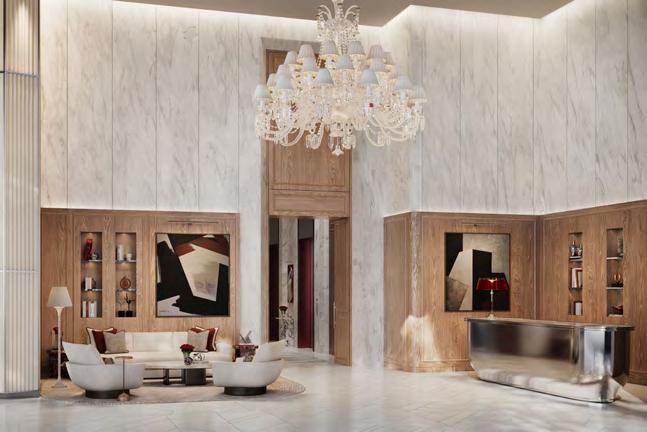
Lobby & Reception where timeless elegance meets contemporary luxury.
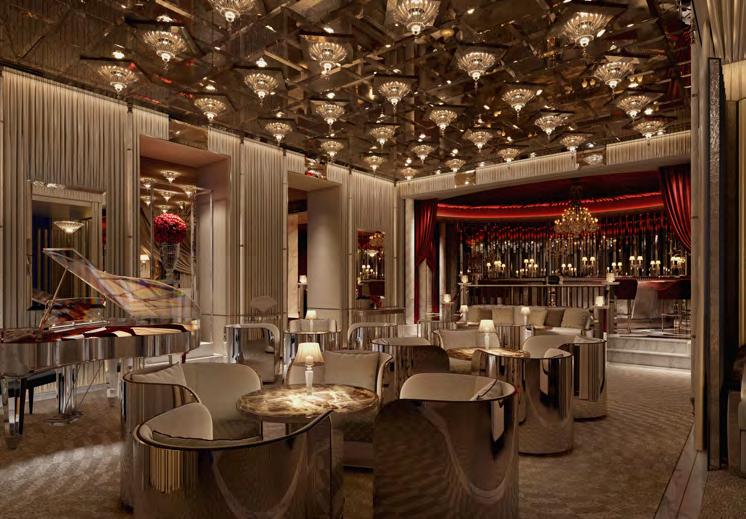
The Hotel Bar showcasing luxury interiors and an elevated guest experience.
the finishing discipline, the detailing, and the consistency across the full chain from design intent to operations.
Sudhin is clear that the work is not about assembling a luxury product, but refining it. “We’re refining the product with the experience in mind,” he says, describing a level of attention where every decision is tested against resident experience, not just visual impact. Dubai can deliver complex projects, he acknowledges, but the difference here is the intensity of focus on why each decision exists.
Toni frames the industry takeaway as a market correction. “It’s not just a name on top of a building,” he says again, returning to the misconception he wants to dismantle. In his view, branded living will increasingly be judged by standard, not badge: by how convincingly design and operations meet, and whether the promise remains intact long after the launch noise fades.
By the time the conversation ends, Dubai outside has shifted fully into dusk. The city looks cleaner from this height, the lights sharper, the sea darker, the horizon more deliberate. Coffee is finally lifted. A date is offered. Jackets are adjusted almost in sync, a small moment of rhythm between two
different personalities who have been speaking the same language all evening.
What lingers is not a sales pitch. It is a signal. In the next chapter of Dubai’s high-end residential market, prestige will not be won by whoever speaks loudest about luxury. It will be won by whoever can deliver it consistently, quietly, and for the long haul.
A refined lobby experience where craftsmanship and design take centre stage.
Lobby & Reception where timeless elegance meets contemporary luxury.
Clock for the Built
Standfirst: With Dubai Exhibition Centre’s handover tied to immovable event dates, Howard McDonagh, Project Director, Khansaheb Civil Engineering, explains what it really takes to deliver a fast-track, large-scale venue expansion at speed, without sacrificing safety, finish quality, or commissioning discipline
By : Vibha Mehta
The reality with a venue like the Dubai Exhibition Centre is that the calendar doesn’t negotiate. Events are published, exhibitor logistics are locked, and the handover date becomes an operational truth rather than a target. In that context, Howard McDonagh’s view is blunt: delivery only works when the team stays ruthless about what makes the building “event-ready” first, and refuses to let pressure dilute standards. It is, as he puts it, “crucial that we remain focused on the key event readiness works,” channeling resources into the items that allow safe
occupation, approvals, and real-world operation, not just visual completion.
That focus also reshaped how the team worked day to day in the final stretch. Instead of defaulting to routine meeting cycles, the approach became more immediate and site-led. Howard describes a decision to “temporarily postpone meetings and collectively focus exclusively on the on-site management of the remaining works,” essentially clearing the diary to protect the job. It is the kind of move that only happens when the project is in its decisive phase and every hour has a cost.
If there was one constraint that tested the programme most, it was the market itself. Howard points to the “fast track and large scale of the project” as the pressure point, mainly because it “posed challenges with sufficient and timely mobilisation of the required skilled resources.” The answer, he says, is not a single workaround but a stack of disciplined behaviours: early visibility on targets, constant engagement with subcontractors and suppliers, and a relationship-led approach that keeps teams committed when capacity is stretched across the city.
That long-standing relationship between Khansaheb and DWTC also shaped the delivery playbook. With fixed event dates, the programme cannot simply “push” risk to the end. Howard’s emphasis is on getting ahead of it early: collaborating closely with consultants to make the design more
buildable, accelerating structural progress to protect the back end, and keeping the site moving through cooperative problem-solving rather than contractual friction. He describes the intent clearly as a “collaborative and non-contractual teamwork approach,” designed to keep decisions fast and momentum intact.
What doesn’t change, even when the schedule is tight, are the nonnegotiables. Howard is explicit that “safety and quality” are not adjustable variables, calling them “nonnegotiable requirements.” In practical terms, that means disciplined control of workmanship, inspections, and signoffs, even when the pressure is highest. It also means treating testing and commissioning as core workstreams, not end-of-project formality. In Howard’s framing, commissioning is not something you squeeze in at the end; it is something you plan for from the start, because the building’s
performance is what ultimately carries the venue through live operations.
Quality at speed, he adds, is less about heroic effort and more about repeatable standards. The way to hold the line is to agree on benchmarks early and enforce consistency. He points to the importance of mock-ups and agreed minimum standards as an anchor for the whole supply chain, so teams don’t improvise under time pressure, and defects don’t multiply in the final weeks.
In the final run-in to significant events, priorities become very clear. Publicfacing areas, VIP routes, circulation and logistics zones, and the core building systems that need approvals must be complete, checked, and operating reliably. Howard’s logic is simple: a venue cannot pretend to be ready. It is either safe, commissioned, and functional—or it is not.
Asked what this delivery ultimately demonstrates, Howard returns to fundamentals: the only way to hit a fixed date on a complex job is through a dedicated team, an intense preconstruction phase, and a supply chain that can perform under sustained intensity. The programme, he suggests, is proof of capability, but also proof of method: clarity, coordination, and disciplined delivery—where “eventready” is treated as a technical standard, not a slogan.
Howard
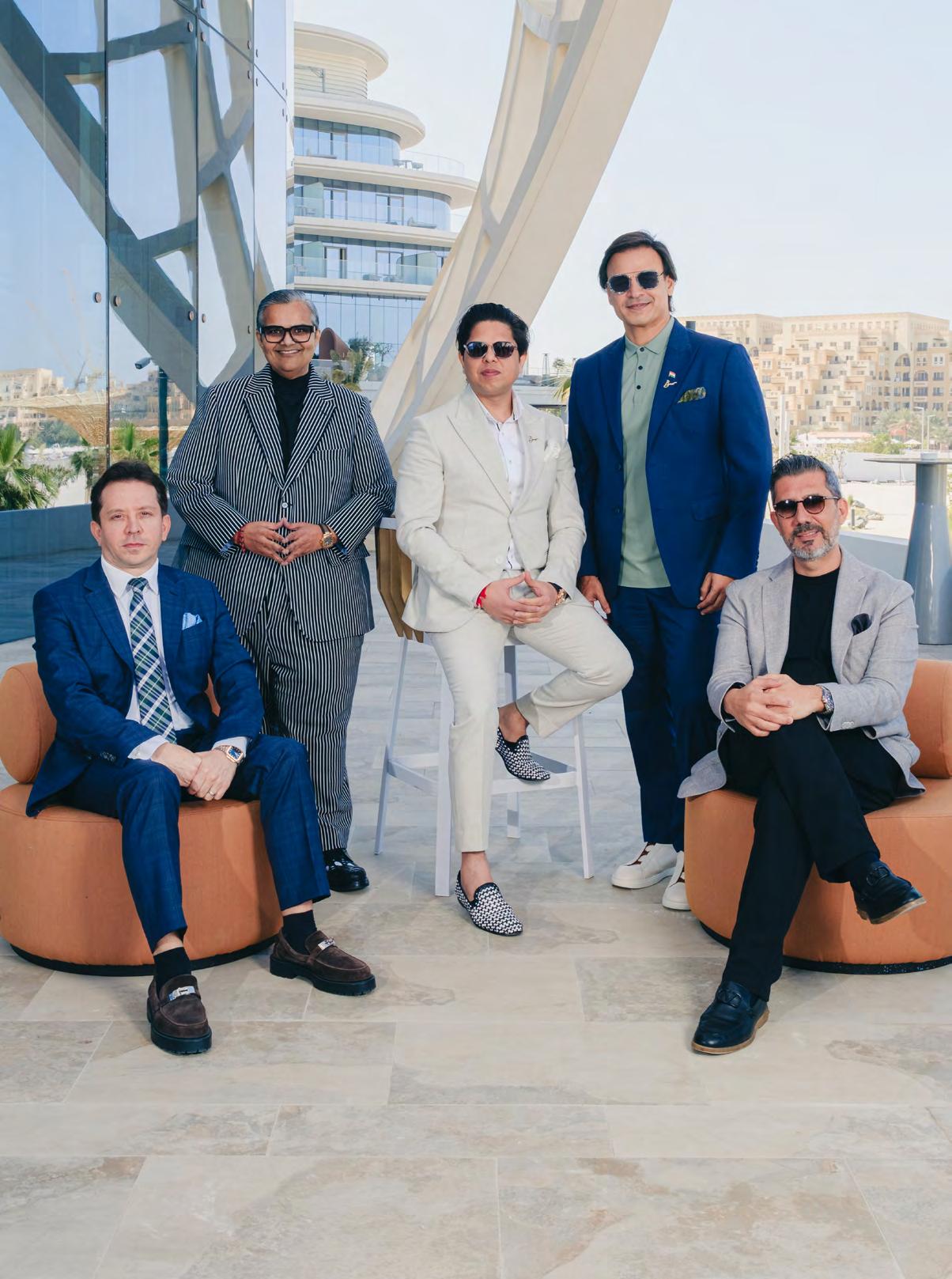
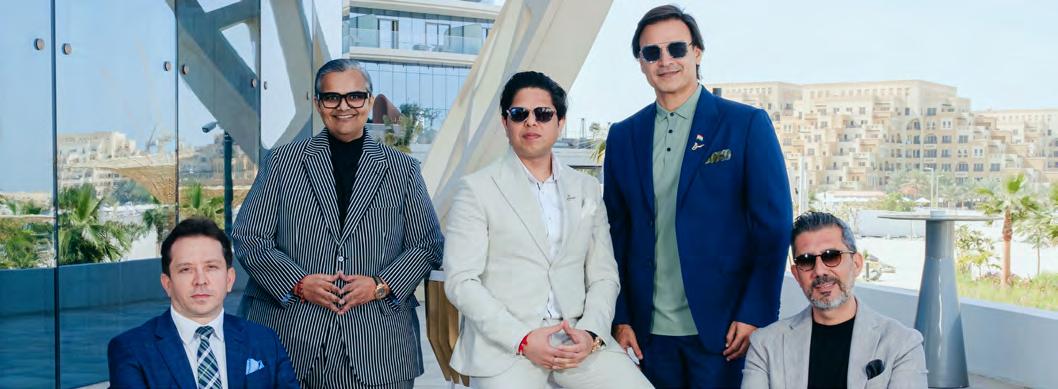
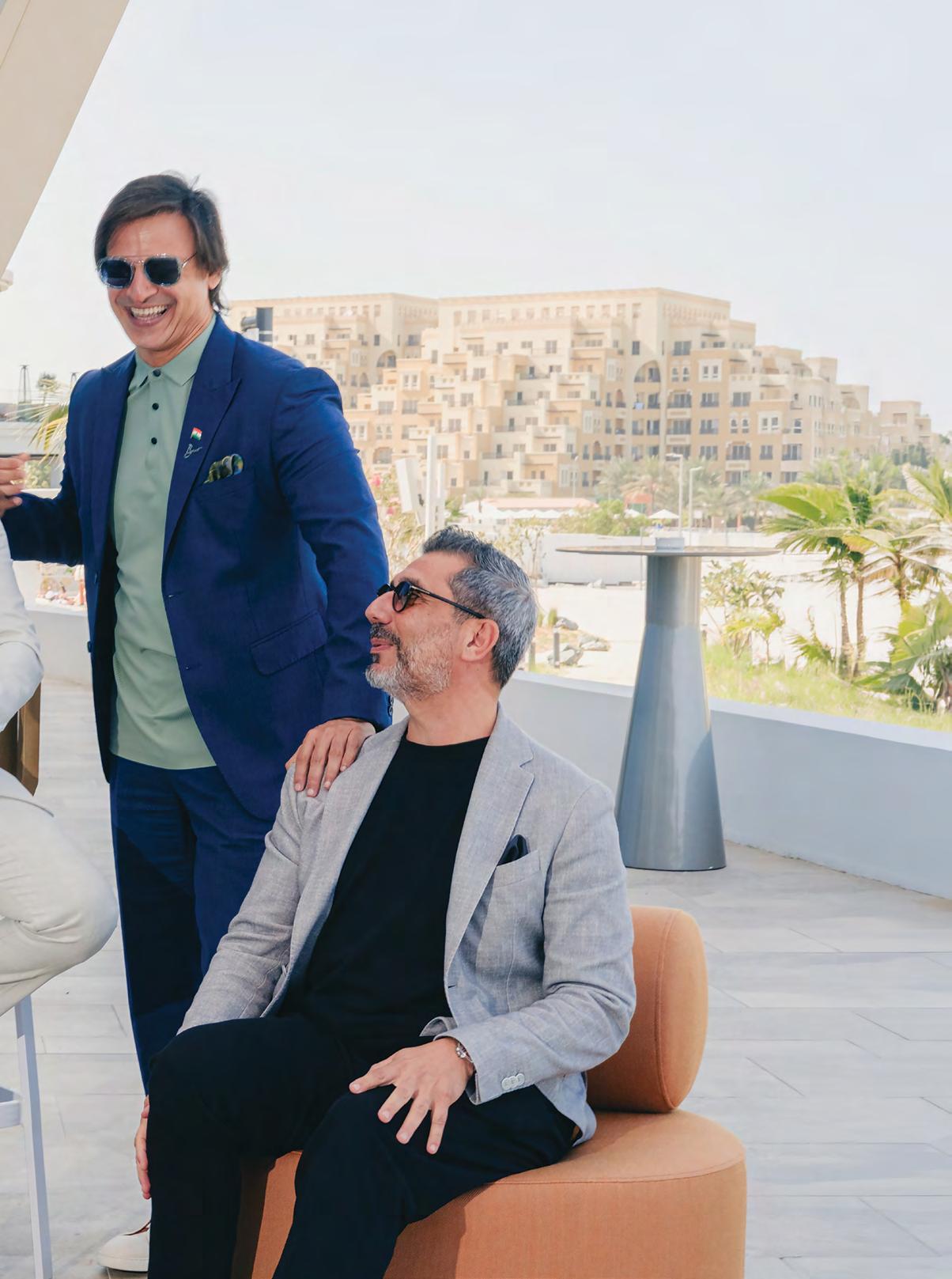
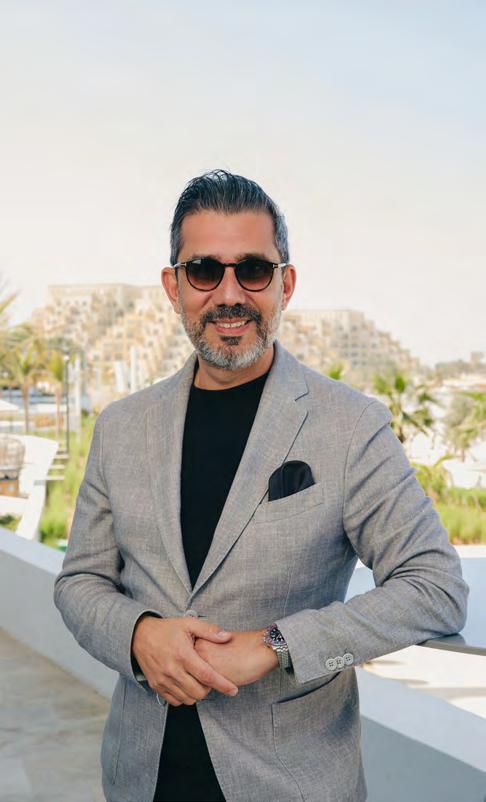
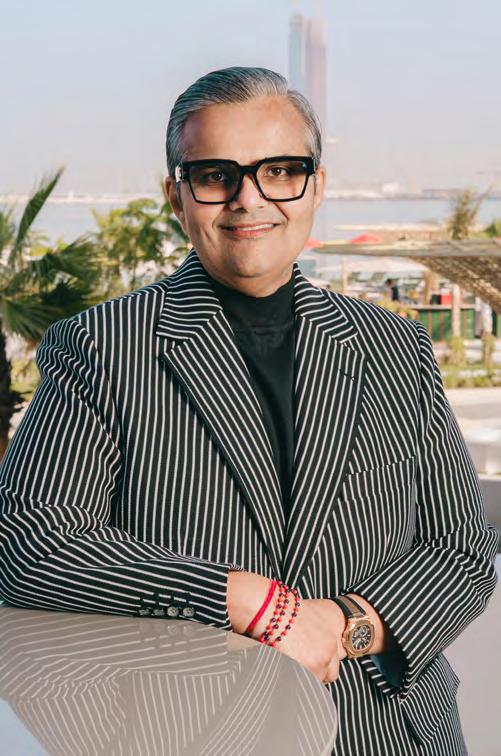
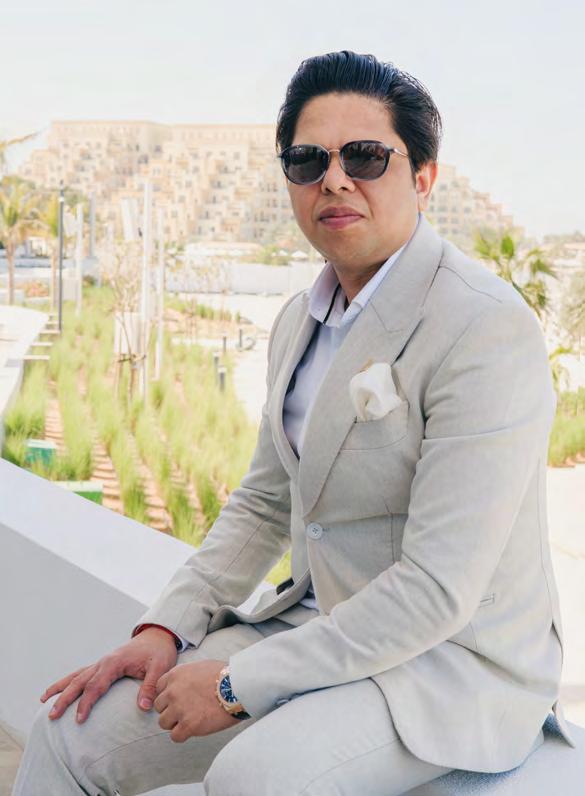
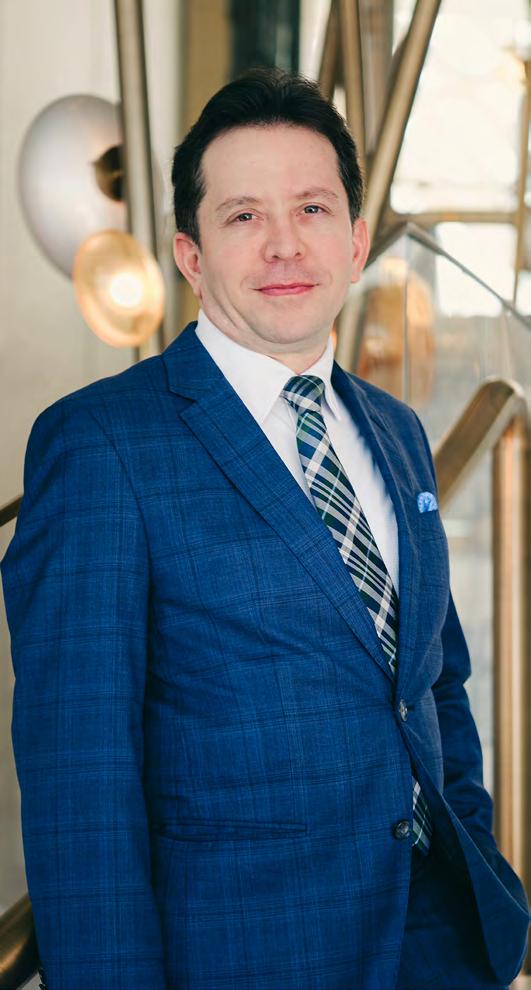
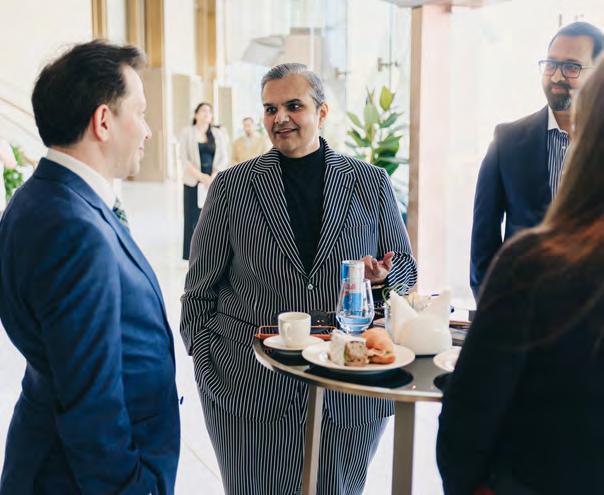
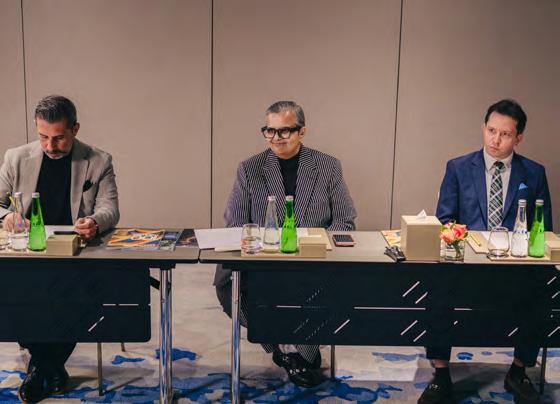
Left to right: Mohammad Rafiee, CEO, Richmind Development; Kalpesh Kinariwala, Founder, Pantheon Developments; Dr. (CA) Ankur Aggarwal, Chairman and Founder, BNW Developments
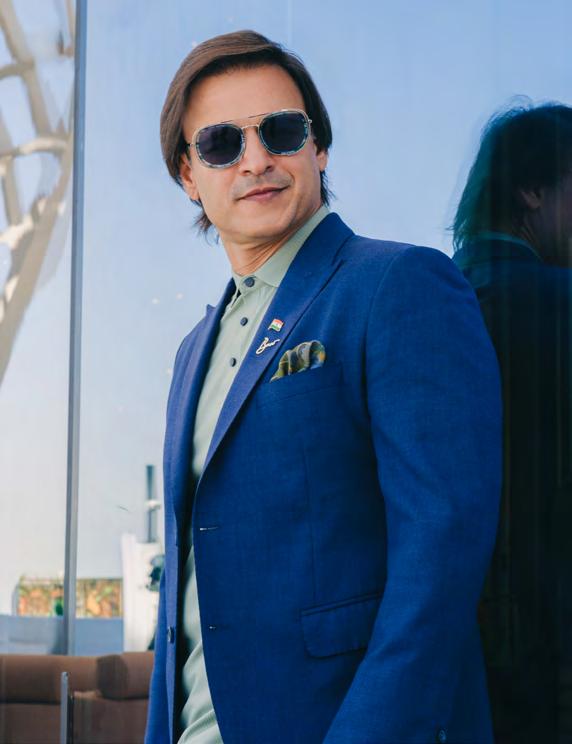
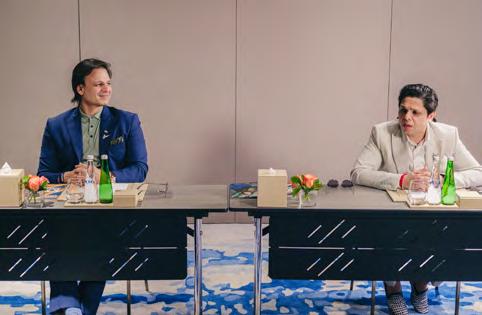
Dr. Vivek Anand Oberoi, Managing Director and Co-Founder, BNW Developments Khaled Assaf, Commercial Director, Marjan.
WHEN RAK MOVES,
IT MOVES TOGETHER
Inside the Real Estate Giants Roundtable, shaping Ras Al Khaimah’s next chapter
Venue:
By Vibha Mehta
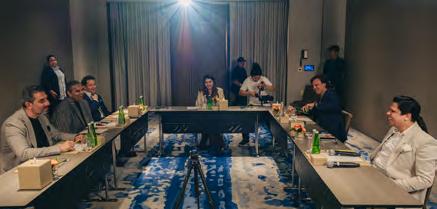
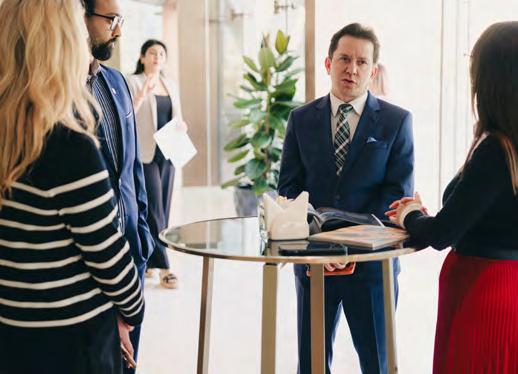
Ras Al Khaimah has stopped asking for attention. It is earning it. We were in the emirate this week to host a closed-door Real Estate Giants Roundtable, and the mood in the room matched what is happening outside it: momentum with purpose. The conversation was not about potential. It was about sequencing, delivery, and what happens when a destination becomes a market.
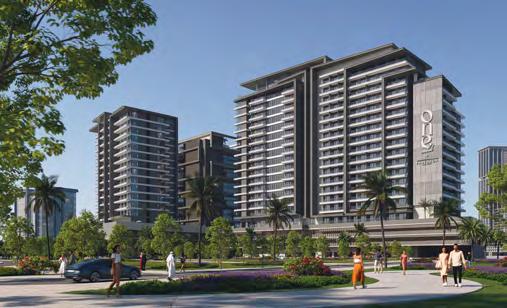
The table brought together the people building different parts of the same story. Khaled Assaf, Commercial Director at Marjan, spoke like a masterplanner who has lived through growth cycles and knows exactly which levers pull investment faster than marketing ever will. Kalpesh Kinariwala, Founder of Pantheon Developments, brought a sharp counterpoint: brands are powerful, but only when the developers still answer what customers actually want. Mohammad Rafiee, CEO of Richmind Development, framed RAK as a design-forward waterfront attracting buyers who value architecture as much as yield. And then there was BNW Developments, represented by Dr. Vivek Anand Oberoi and Dr. (CA) Ankur Aggarwal, one speaking in global patterns such as yield and migration, the other in founder momentum such as scale and delivery.
Three themes kept resurfacing. First, RAK’s growth is being underwritten by fundamentals, including diversified GDP, low debt, defined legal frameworks, and infrastructure built ahead of immediate need. Second, waterfront and branded living are no longer niche; they are now the market’s loudest signals of quality, pricing confidence, and buyer expectation. Third, the story is shifting from staycation imagery to everyday life logic, with offices, schools, health services, mobility, and the practical mechanics that turn a destination into a community.
Multimedia: Joel Amparo & Eduardo Buenagua
Photography: Sahal Abdulla Puthiyeduth
Khaled Assaf
Commercial Director, Marjan
Khaled Assaf did not speak like someone selling RAK. He spoke like someone engineering it. From the beginning, he positioned Marjan as the structural layer behind the emirate’s new identity. “Marjan is the master developer for Ras Al Khaimah,” he said.
“OUR ROLE IS TO BUILD THE INFRASTRUCTURE AND ENABLE DESTINATIONS ACROSS THE EMIRATE, IN LINE WITH THE GOVERNMENT’S VISION AND WHERE GROWTH IS NEEDED.”
He mapped RAK’s development as a sequence. Al Marjan Island remains the flagship freehold destination, now moving deeper into build-out and infrastructure completion. RAK Central is the second masterplan, designed around work, live, and play, not just weekend consumption. Marjan Beach is the following scale layer, described as an 85 million-square-foot upcoming beachfront destination focused on luxury and ultra-luxury,
with public infrastructure such as education, healthcare, and future attractions embedded into the plan.
When the conversation moved to why RAK is accelerating now, he pointed to fundamentals rather than headlines. “Ras Al Khaimah has diversified significantly,” he said, explaining that the economy is not reliant on a single engine. He also cited credit strength and fiscal position, describing a framework that investors read as stable and scalable. Then he returned to the lever that changes behaviour fastest: infrastructure. “Even when not immediately required, we are upgrading roads, utilities, and connectivity,” he said. “That signals confidence and attracts development.”
He also spoke openly about returns and why serious capital is watching RAK. Hospitality yields and residential performance, paired with the presence of established names, reduce perceived risk. Developers and investors like to be near strong anchors, he added, because it lowers uncertainty.
Finally, he addressed how Marjan shapes diversity without losing control. His answer was direct. The variety is the point. “Different developers bring different DNA, and that reflects in the project,” he said. “If everyone did the same thing, nothing would stand out.” But diversity is matched with close coordination. Marjan remains hands-on with delivery, problem-solving, and timelines, operating like a partner rather than a distant authority. In his words, that is how speed is achieved without losing structure.
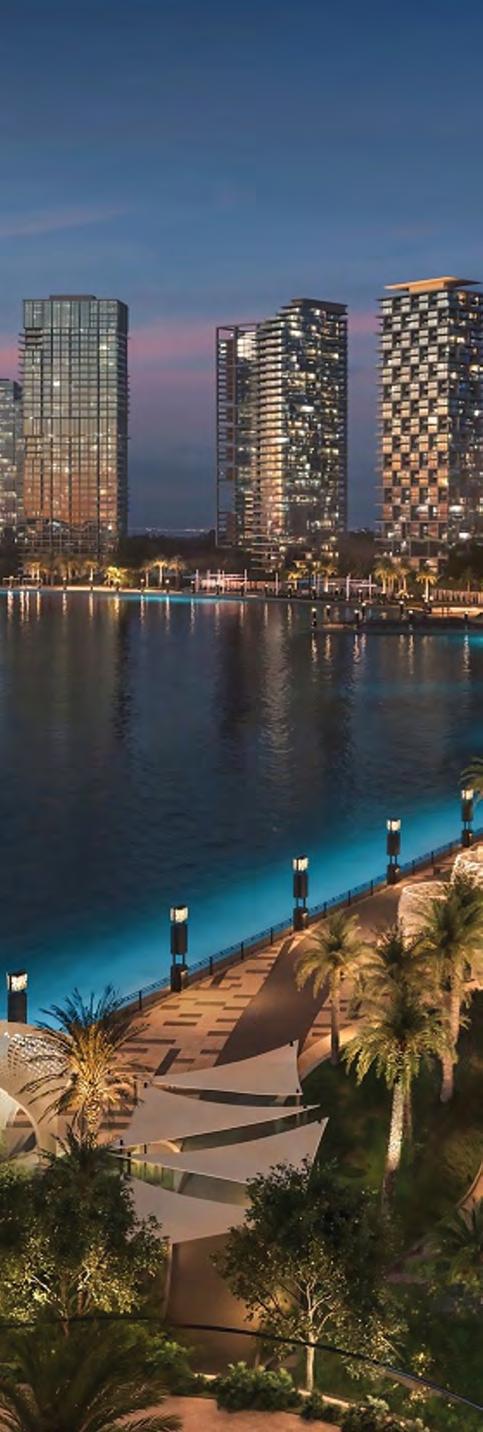
Wynn Integrated Resorts and Marjan mark a defining moment as Wynn Al Marjan Island tops out, signalling the rise of Ras Al Khaimah’s first fully integrated resort and cementing its place as one of the emirate’s most anticipated new landmarks
Kalpesh
Kinariwala
Founder, Pantheon Development
Kalpesh spoke with the precision of someone who has watched cycles repeat and has no interest in being carried by the current one. He made it clear that RAK’s opportunity is real, but the project cannot become cosmetic, attractive at first glance, but disappointing in real use.
He started by dismantling the myth that the market needs more logos to sell. “Demand isn’t the issue, brands
want to enter, developers want brands, and customers like brands,” he said. The tension, he argued, is fit. “The real challenge is balance: what the brand stands for, what the developer stands for, and what the customer actually wants.” He described being approached by multiple brands, then walking away once design and operational requirements stopped aligning with the customer profile Pantheon Development serves.
What made his point land harder was the story he shared about learning RAK Central in real time. Pantheon launched early and saw rapid traction for the strongest views. “The Wynn-facing, golf-facing and sea-facing units got sold out,” he said. But the units without those obvious advantages did not move. “Month two, month three, month four, no buyers.” The response was not a rebrand; it was a redesign. “We redesigned the project, we went back to our customers, got all the feedback, and then 90% of what was at the back got sold off.”
His argument was strict and straightforward. Branding cannot be a shortcut for weak planning. If the plan, sizing, amenity logic, and livability are wrong, the market will quickly expose them.
“MY WORLD REVOLVES AROUND MY CUSTOMER, AND I DON’T MOVE THAT FUNDAMENTAL PILLAR AT ANY COST,” HE SAID.
And if a brand does not belong in the product, he would rather build identity from scratch than force a badge into a unit mix. “If a brand doesn’t fit the customer ecosystem, we’d rather build our own identity than force a brand into the project.”
Dr. (CA) Ankur Aggarwal
Chairman and Founder, BNW Developments
BNW Developments arrived in the room as two voices, and the duality matters.
Dr. Vivek Anand Oberoi, speaks in macro terms, discussing credibility, yield, and the economics of quality of life. Dr. (CA) Ankur Aggarwal speaks in founder kinetics, discussing scale, delivery, and the urgency of building before the window closes. Together, they explain why BNW has become one of the most visible private-sector engines on Al Marjan Island and is now pressing hard into RAK Central.
Ankur opened with origin and surprise. “We initially came as brokers; we were simply sourcing plots. We never imagined we’d become developers here,” he said. That origin story became a credibility cue: BNW evolved with the emirate rather than
arriving with a pre-written development agenda. “As we understood the ecosystem and the trajectory, we realised this is where we should build,” he added, charting their path from a first project into a portfolio now spanning multiple branded plays.
Then he moved to scale and intent. “All in all, BNW has a total GDV of 32 billion dirhams, as we speak now,” he said, positioning their pipeline as a serious economic bet on the emirate. He framed RAK as the next central gravity point in the UAE market. “The most attractive in the UAE real estate market will be in Ras Al Khaimah,” he said. And he delivered the line that captures his positioning:
“RAK IS NO LONGER EMERGING, IT’S ACCELERATING. IN OUR WORLD, RAK ALSO STANDS FOR REAL ASSET KINGDOM.”
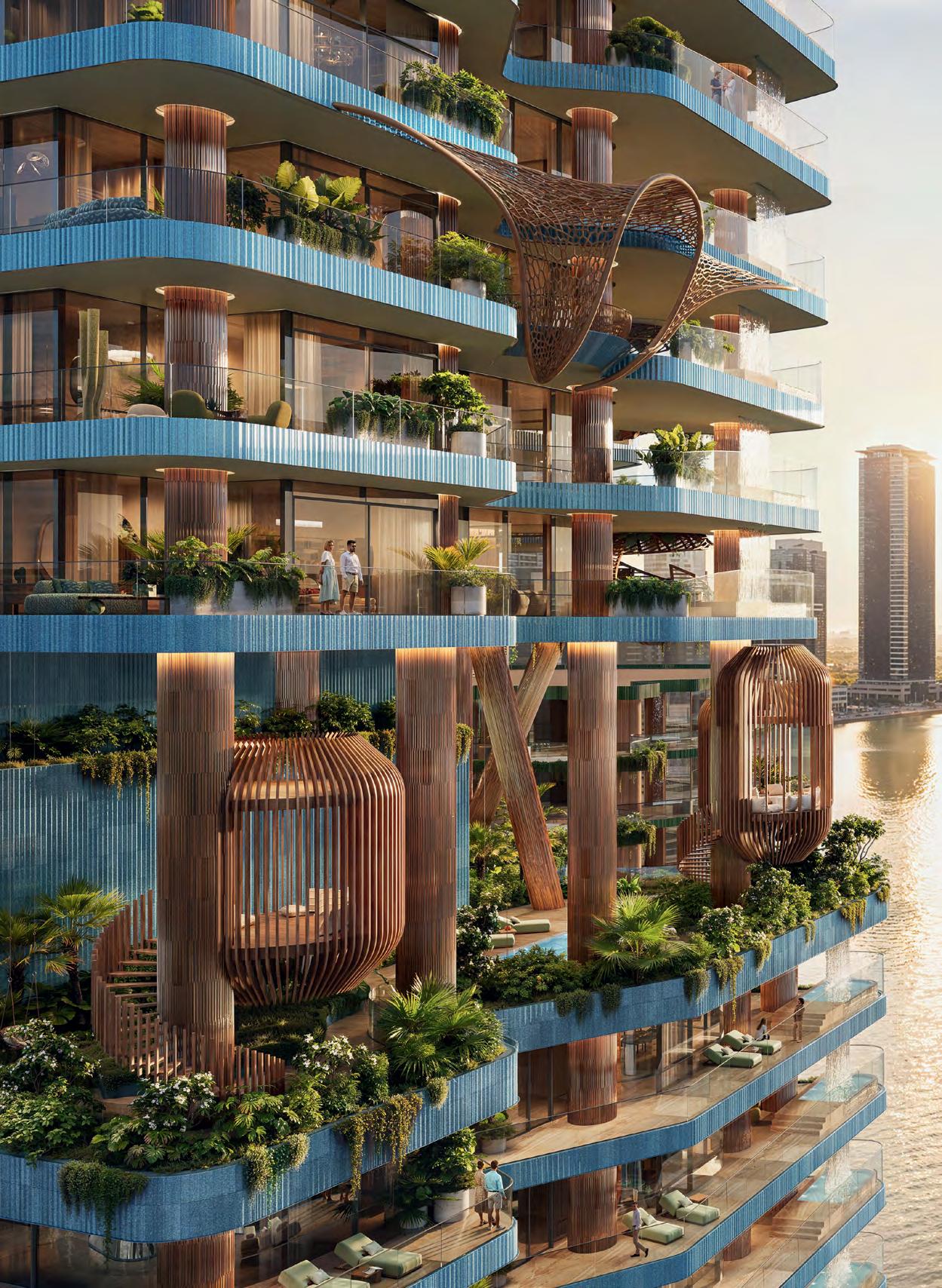
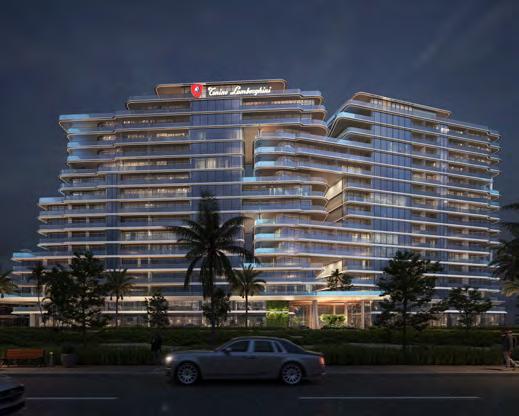
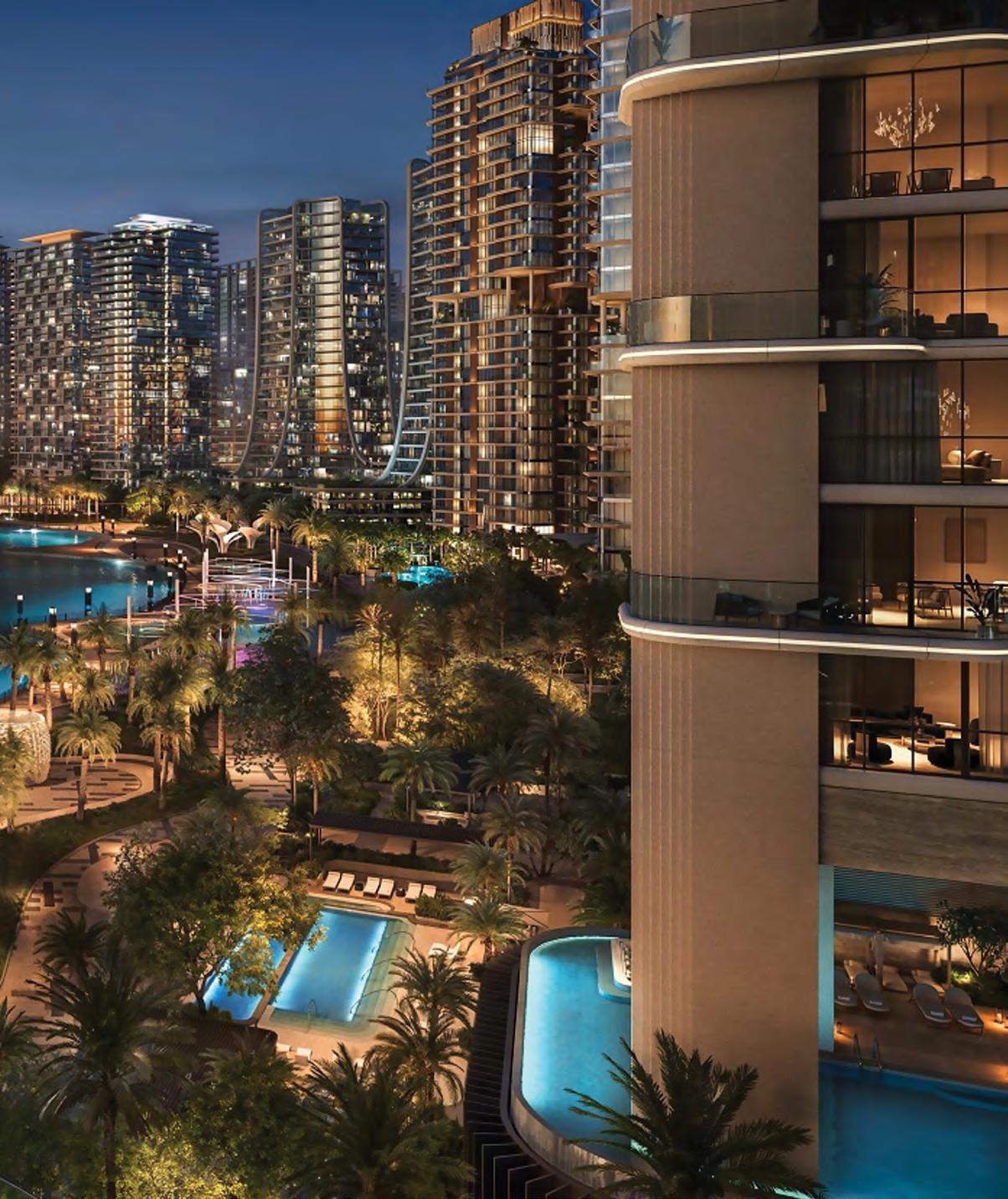
Tonino Lamborghini Residences by BNW Developments in Ras Al Khaimah brings Italian design heritage and performance-led living together on the coast, where bold aesthetics, precision craftsmanship and a refined waterfront lifestyle meet in a statement residential address
Dr. Vivek Anand Oberoi
Managing Director and Co-Founder, BNW Developments
“BRANDS BRING LEGACY, AND LEGACY BUILDS CREDIBILITY,”
For him, credibility is not sentiment; it is an investment tool, especially when buyers are making decisions based on future rentability and value retention. He also tied branding to place-making, arguing that global brands lift neighbourhood perception, accelerate pricing confidence, and help a location feel aspirational in a shorter time horizon.
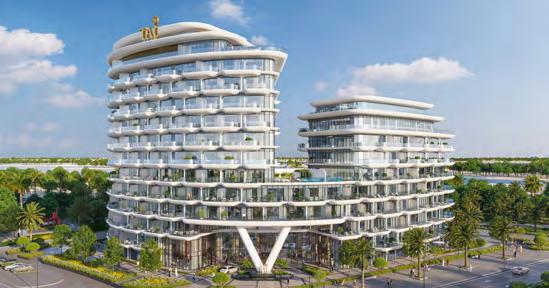
Both Vivek and Ankur stressed that branding is only meaningful when it is delivered. Ankur made that obligation explicit. A brand cannot be used as a nameplate. It has to be built into the materials, finishes, service logic, and lived experience. “This is the responsibility of a developer,” he said. “Not just for the namesake, but to do justice for that brand.” He referenced Taj as an example of legacy standards translating into tangible expectations.
The other non-negotiable that BNW returned to was delivery. For Ankur, this is not a private KPI; it is a collective duty. “It’s a collective effort,” he said, describing the need to deliver before visitor volumes surge and before construction becomes the headline. “Whatever you’re building, it is getting sold out. But the main question again is: it should be delivered on time!” In a market that is quickly becoming global-facing, the difference between hype and reputation will be whether projects arrive when promised.
Finally, they both leaned into the shift from staycation to daily life. Vivek described the work-live-play logic as a quality-of-life answer to UAE congestion. “Wake up, walk across the road, pick up your morning coffee, and you’re in your office,” he said, describing the appeal of walkability and proximity. Vivek pushed that into capacity economics: tourism expands into jobs, jobs expand into population, and population expands demand across price points. “Wynn Integrated Resort will be coming with 12,000 jobs,” he said, listing what follows, including healthcare, education, and the everyday services that make a place livable. Then he landed the line that explains why residential demand will not stay limited to holiday homes. “You cannot live in a resort every day. You need to have a place near the place where you want to be, as per your budget.”
Vivek anchored the investor thesis around brand credibility and yield logic.
Taj Wellington Mews blends heritage with modern luxury, as two connected towers rise from a circular podium to form a refined and contemporary architectural statement
Mohammad Rafiee’s stance was rooted in identity. He did not treat the waterfront as a marketing angle. He treated it as a discipline. For him, RAK’s strongest projects will be those that feel impossible to replicate, built on location logic, design conviction, and long-term intent.
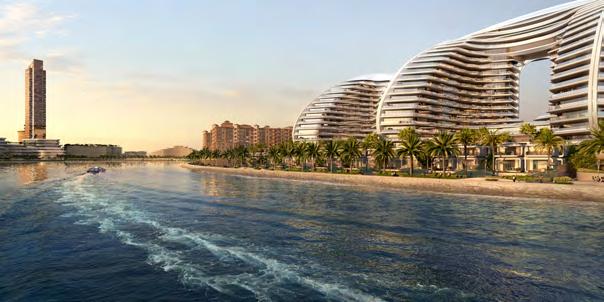
“We’re delivering one of the most iconic projects on Al Marjan Island, Oystra, designed by Zaha Hadid Architects,” he said, but he did not lean on the name alone. The thread he returned to was confidence in the plan behind the destination. “Our key question was: who is behind the vision, and what is the long-term plan for the island?” After engaging with Marjan’s leadership, he was persuaded that the pipeline had depth, which matters when you are building something intended to outlive the launch season.
He explained how waterfront forces necessitate sharper choices. “For waterfront projects, location and sea views are core to the design strategy,” he said. That strategy shows up in decisions that protect liveability, sometimes even relocating services to preserve the experience.
“WE PLAN EVERYTHING TO MAXIMISE VISIBILITY AND LIVEABILITY, SOMETIMES EVEN RELOCATING MEP AND UTILITIES TO PROTECT VIEWS AND OPEN SPACES.”
His point was practical: a waterfront buyer is paying for horizon, calm, and a clean relationship between building and landscape. If that is compromised, value suffers later.
His third pillar was lifestyle completeness. RAK is not selling units in isolation; it is selling a slower, better-paced version of UAE living. “We’re also building a complete lifestyle offering with 50-plus indoor and outdoor amenities, wellness, and curated F&B,” he said, adding that Al Marjan’s atmosphere is part of its premium. It is quieter, calmer, and less dense than high-intensity urban pockets. He closed with accountability rather than aesthetics. “Our commitment is to create something unique that aligns with Marjan’s vision, and to deliver it on time.”
Mohammad Rafiee Founder and CEO, Richmind
Designed by the globally acclaimed Zaha Hadid Architects, Oystra is poised to emerge as a landmark architectural icon and lifestyle address within one of the UAE’s pioneering entertainment and gaming destinations
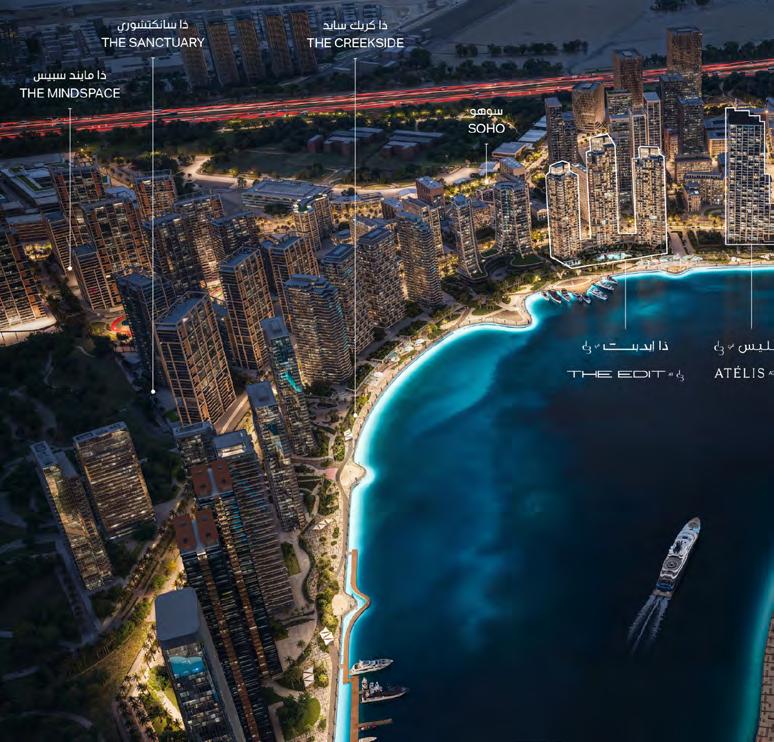
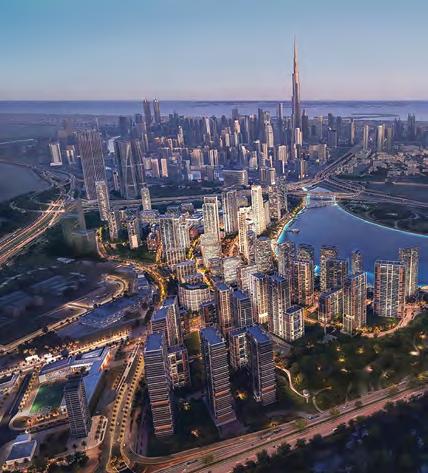
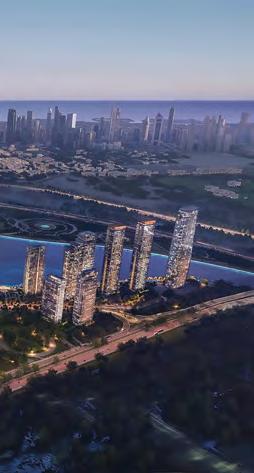
d3’s Next Canvas
Khalid Al Malik, CEO of Dubai Holding Real Estate, on turning Dubai Design District into a waterfront neighbourhood that protects creative culture, widens opportunity, and raises the bar on sustainability and liveability
BY VIBHA MEHTA
Dubai Design District, better known as d3, is stepping into a bigger role in the city’s story: not as a standalone creative hub, but as a fully integrated waterfront neighbourhood where ideas, enterprise, and everyday life share the same streets. In this feature interview, Khalid Al Malik outlines what is driving the expansion, how d3’s creative identity will stay intact as it scales, and why the next phase is being planned as an ecosystem, not a collection of buildings.
Waterfront Vision
For Khalid, the ambition is not simply growth. It is evolution. “The expansion of Dubai Design
District is driven by a clear ambition: to evolve d3 from a successful creative hub into a globally competitive, creative led waterfront neighbourhood where people can live, work, and create within a fully integrated environment,” he says.
The masterplan, he adds, is built to match the direction of the Dubai 2040 Urban Master Plan and the D33 agenda, responding to what talent and businesses increasingly seek: quality, connectivity, and a place that feels human in how it operates.
Creative First
Khalid is direct on this point: creativity is not decoration. It is structured. “Preserving
WE ARE INTENTIONALLY MOVING BEYOND CONVENTIONAL REAL ESTATE DEVELOPMENT TO SHAPE A HUMAN CENTRIC DISTRICT THAT BRINGS TOGETHER CULTURE, DESIGN, INNOVATION, AND WATERFRONT LIVING,” KHALID NOTES.
d3’s creative first identity is fundamental to the masterplan,” he says, stressing that it is embedded into how the district is organised, zoned, and activated, rather than added as a branding layer later.
The expansion reinforces d3 through distinct clusters that serve different parts of creative life, from production and studios to performance and year round cultural programming. Khalid describes the intent in plain terms: “This approach ensures creativity is lived and sustained.”
The Right Mix
The defining idea is integration. Not adjacent uses, but interwoven ones. “The expanded d3 masterplan is defined by integration,” Khalid says, pointing to a mix that brings residential, commercial, cultural, retail, hospitality, and wellness into one balanced framework.
Different zones play different roles, from culture and community to nature led living and wellness. The goal is a district that behaves like a complete place, not a single purpose destination. “Together, these components deliver a true live work environment,” he adds, designed around flexibility, proximity, and a strong sense of place.
Space to Start
Khalid frames affordability as nonnegotiable if the creative economy is the point of the district in the first place. “A successful creative district must remain accessible to emerging talent,” he says.
The strategy is to reduce friction for young businesses through purpose built creative infrastructure, shared amenities, and flexible spaces that lower barriers to entry. The intent is not a short cycle of hype, but retention and growth: an environment where early stage brands can begin small, collaborate,
and still find room to scale without having to leave the district.
Waterfront at Work
In Khalid’s view, the water’s edge is not a separate chapter. It is part of the same creative narrative. “The waterfront at d3 is conceived as an extension of the creative district, not a separate leisure destination,” he says.
The plan is to activate the waterfront with galleries, cafés, ateliers, and cultural programming that keeps daily engagement high, while public realm spaces host exhibitions, installations, and events. The design is also connectivity led, with pedestrian first movement intended to stitch the district together so the
waterfront functions as a working community asset, not a backdrop.
Proof, Not Promises
Khalid positions sustainability as a core delivery requirement. “Sustainability and resilience are integral to the d3 masterplan,” he says, linking the strategy to Dubai Holding Real Estate’s wider commitments.
The district is targeting LEED Silver community certification, supported by measurable benchmarks across energy efficiency, water conservation, waste management, and sustainable construction practices, with walkability designed to reduce reliance on private vehicles. Green spaces, including mangrove and sports parks, are planned to strengthen biodiversity and promote healthy lifestyles. “Progress will be monitored through certification frameworks and internal sustainability metrics,” Khalid adds, tying delivery back to measurable accountability rather than headline statements.
Khalid Al Malik, CEO of Dubai Holding Real Estate
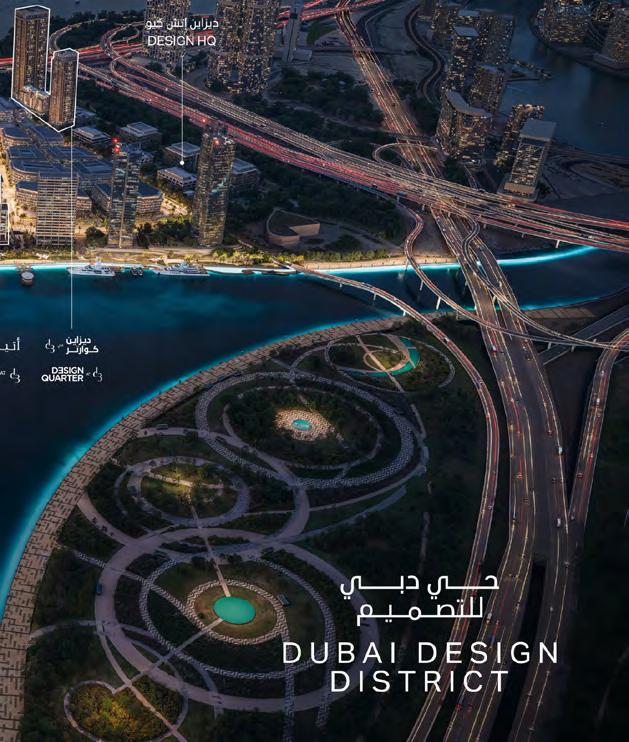
Dubai Design District Updated Visual Masterplan
Dubai Design District
A Refined Vision for Ras Al Khaimah’s Coast
Designed and delivered by P&T Group for RAK Properties, the InterContinental Ras Al Khaimah Resort & Spa redefines beachfront hospitality through architectural restraint, masterplanning clarity, and long-term sustainability.
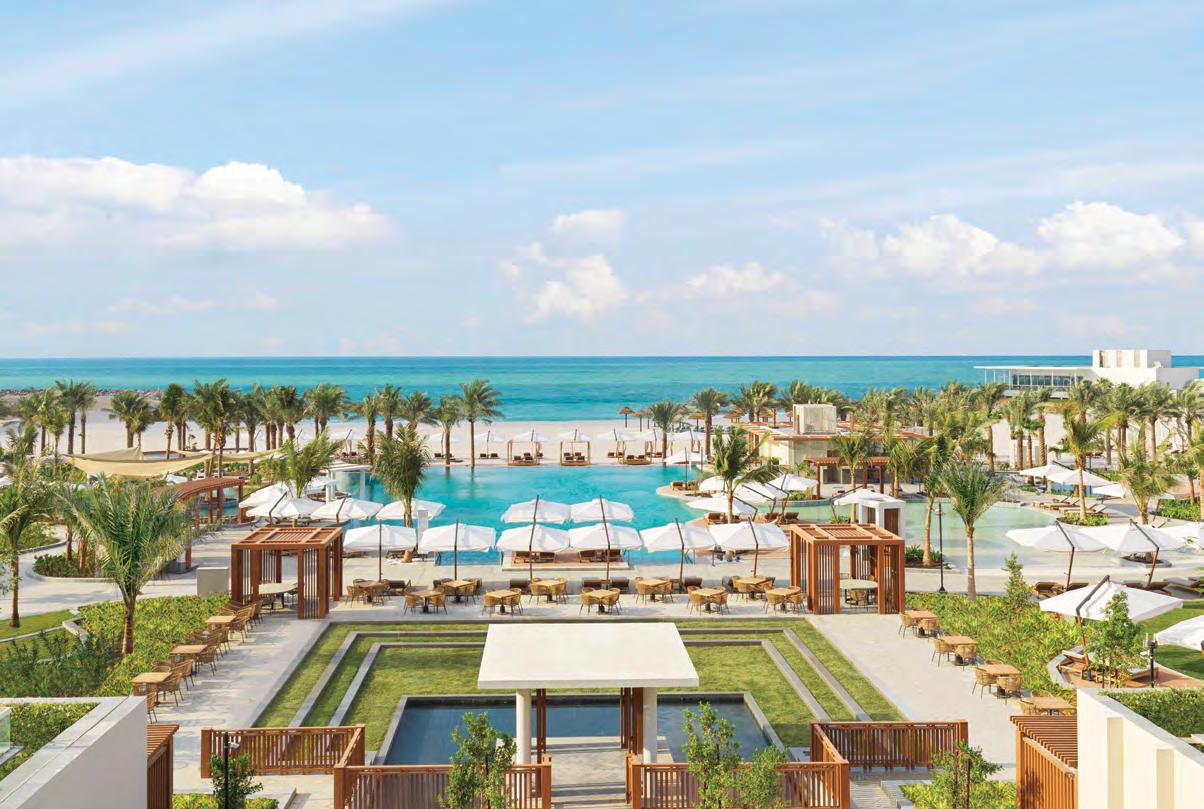
Distributed planning maximises sea views while preserving privacy and environmental performance.
A Contemporary Coastal Benchmark for Ras Al Khaimah
Delivered by P&T Group for RAK Properties, InterContinental Ras Al Khaimah Resort & Spa, is a 43,600 sqm beachfront development and a distinguished addition to IHG Hotels & Resorts’ luxury lifestyle collection, completed in 2021. Leveraging decades of experience in high-end hospitality, including landmark projects such as FIVE Palm Jumeirah, Dubai. P&T Group led the design from concept through to delivery, creating a resort that exemplifies architectural clarity, sustainability, and long-term operational performance.
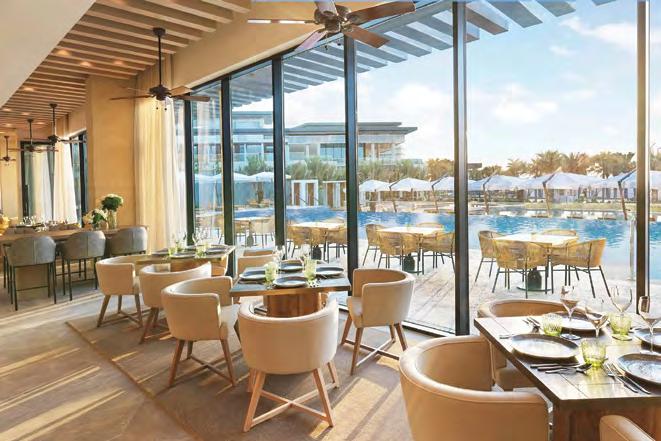
The resort brings together hotel rooms and suites, beachfront villas and chalets, alongside a comprehensive mix of dining, wellness and leisure facilities. A large spa, multiple swimming pools, destination restaurants and conference and event spaces are integrated into a carefully considered masterplan,
reinforcing the project’s role as both a leisure destination and a regional hospitality hub.
Responding to Ras Al Khaimah’s evolving identity
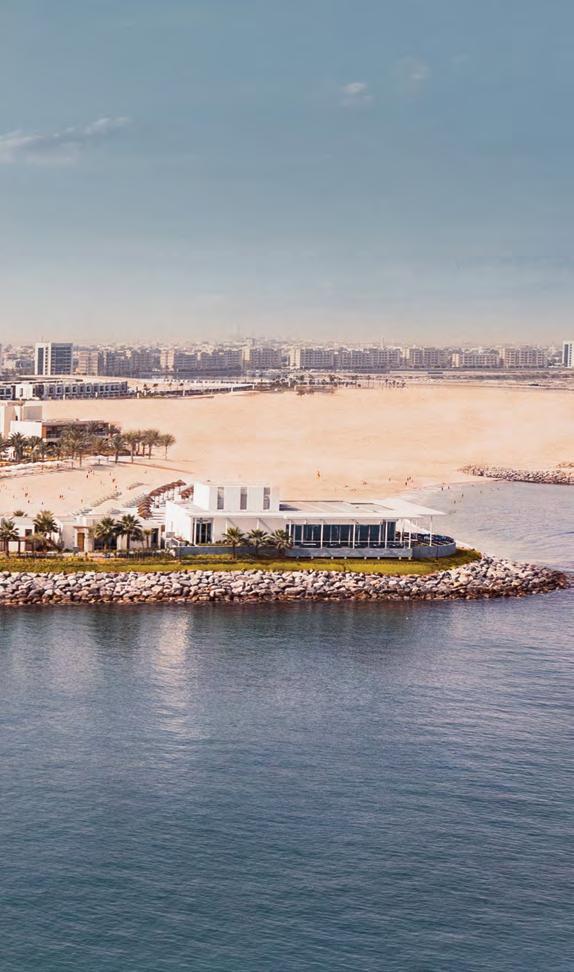
Located within the Mina Al Arab masterplan, the resort occupies a prominent headland defined by a rare dualwaterfront condition, with a natural beach on one side and a manmade waterway on the other. As Ras Al Khaimah continues to position itself within the UAE’s hospitality landscape, the project plays a key role in shaping a more understated, designconscious resort identity for the emirate.
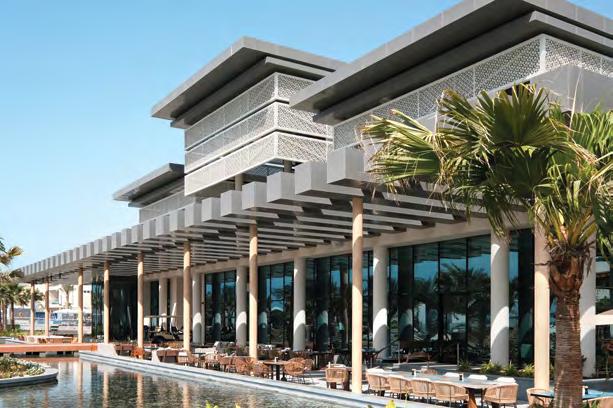
Rather than competing for visual dominance, the architecture adopts a measured, contextual approach. Low-rise forms, generous landscaping and carefully controlled massing allow the development to sit comfortably within its surroundings, reinforcing Mina Al Arab’s broader coastal vision while maintaining a strong sense of place.
Design strategy and masterplanning
The original brief called for a contemporary tropical resort with a strong relationship to landscape and water. As the project progressed, the scope evolved to accommodate an increased number of keys, rising from approximately 300 to 350. This shift required a strategic masterplanning response, increasing density while preserving privacy, openness and the resort’s relaxed character.
P&T’s solution was a distributed planning strategy, breaking the programme into a series of interconnected buildings rather than a singular dominant mass. This approach maximised sea views across the majority of guest spaces, improved environmental performance and allowed landscape to remain a defining element of the guest experience. Circulation
is intuitive and fluid, reinforcing a seamless transition between indoor and outdoor environments.
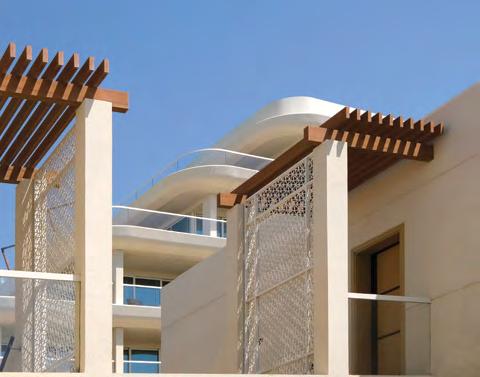
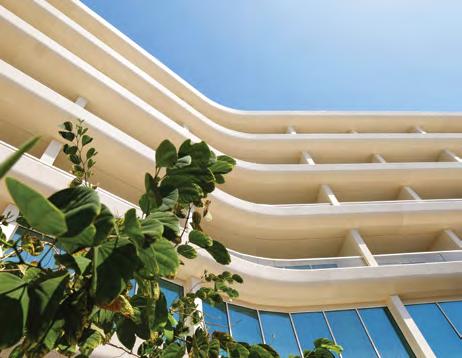
Architectural language and material restraint Architecturally, the resort is defined by a calm, contemporary language that prioritises proportion, durability and environmental response. White rendered façades are layered with shading devices, pergolas and screens in aluminium, GRP and wood-plastic composites, creating depth while mitigating solar gain. Natural stone is introduced at ground level and within key public areas, grounding the
architecture and reinforcing a sense of permanence.
Rather than relying on overt decorative gestures, the design is deliberately restrained. Materiality, light and shadow are used to create visual interest, ensuring the architecture remains timeless and adaptable over the long term, a critical consideration for resort developments of this scale.
Sustainability as a core design driver
Sustainability played a central role in shaping both design and technical decisions, with a clear focus on longterm operational efficiency. Flat plate solar hot water collectors were integrated to meet approximately 60-70% of the hotel’s hot water demand, delivering an estimated payback period of around 4 years. This approach allowed environmental performance to be aligned directly with
A low-rise resort composition designed to respond to its coastal setting.
The resort’s masterplan integrates hospitality, wellness, and leisure within a balanced beachfront setting.
commercial viability, a critical consideration for large-scale hospitality developments.
Mechanical and electrical systems were designed with long-term performance in mind. High-efficiency chillers, heat recovery systems and energy recovery devices reduce operational energy demand, while LED lighting and intelligent controls are implemented throughout. External lighting and landscape illumination are managed through photocells, timers and building management systems, balancing guest comfort with efficiency and reduced operating costs.
Reflecting on the project’s long-term performance, Moemen AbdElkader, Associate Director at P&T Dubai, highlights the importance of real-world feedback in shaping successful hospitality environments:
“ InterContinental Ras Al Khaimah Mina Al Arab Resort & Spa stands as a one-of-akind hospitality landmark, establishing a regional benchmark since its inauguration in 2021. We value the continuous feedback from end users and guests, as it provides critical insight into how the architecture performs in real conditions, across both short-term experiences and daily operations.
The project’s success lies in the careful orchestration of Front-of-House and Back-ofHouse environments, where spatial efficiency, operational clarity and user experience
are seamlessly integrated. This architectural harmony is fundamental to delivering a truly successful hospitality building.”
Delivering long-term value
Completed in 2021, the InterContinental Ras Al Khaimah Resort & Spa stands as a clear demonstration of P&T’s ability to deliver complex, multidisciplinary hospitality projects from concept to completion. The project reflects a design approach rooted in experience, one that understands the realities of construction, operation and lifecycle performance while maintaining architectural integrity.
As RAK continues to grow as a destination for high-end hospitality, the resort serves as a benchmark for contemporary coastal development, aligning design ambition with environmental responsibility and long-term value.
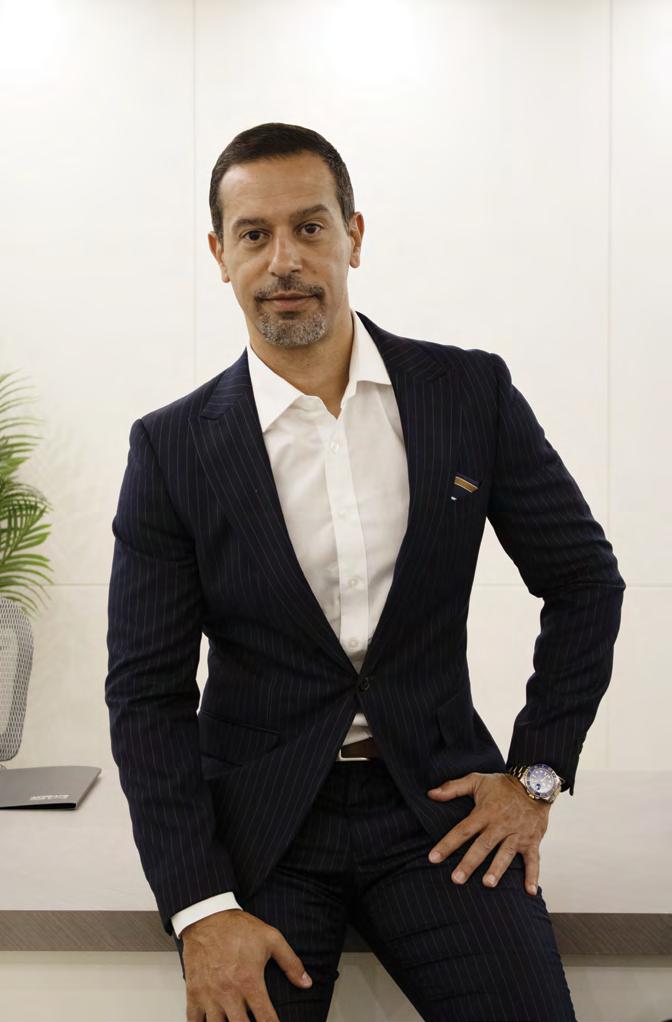
Sherif Nagy, CEO of ME FITOUT
FIT- OUT, REIMAGINED
Sherif Nagy, CEO of ME FITOUT, shares insights on leadership, in-house manufacturing, AI adoption, and how sustainability and luxury are redefining the region’s fit-out landscape.
What leadership lesson has shaped your approach to running me fitout?
Over the years, my leadership vision has greatly evolved, keeping pace with the dynamic needs of the modern fit-out landscape. However, safeguarding client trust, promoting transparency, and guaranteeing service quality at every touchpoint have always remained key priorities for me as a leader. At ME FITOUT, we
ensure this by facilitating all stages of manufacturing in-house, from joinery to upholstery, metal, and glass works.
I also believe that a true leader should be able to identify and nurture promising talent, positioning them as the cornerstone of each project. Moreover, I strive to lead by example, promoting eco-friendly practices and advanced technologies
that enhance exclusivity rather than diminish it.
As a leader, I champion both open management and lateral management principles, which are key to driving innovation and cross-team collaboration while ensuring efficient delegation of duties. Ultimately, my leadership vision focuses on transforming client demands into exceptional designs with a personal touch, further setting superior standards and delivering lasting impact.
Why is having an in-house, well-equipped manufacturing facility critical for today’s fit-out companies?
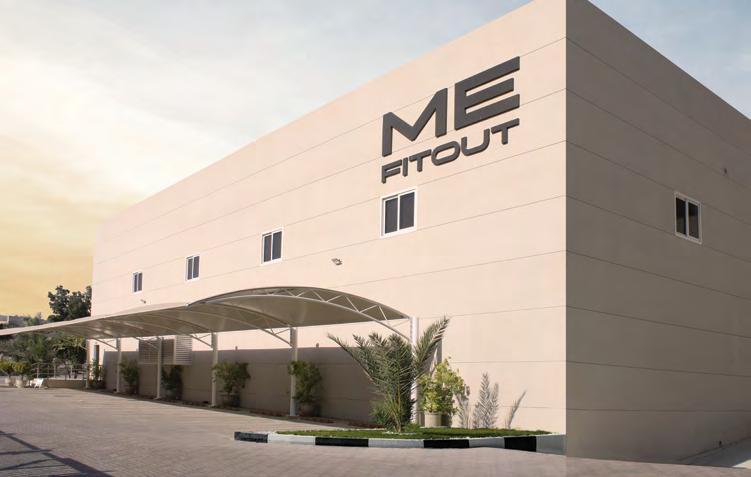
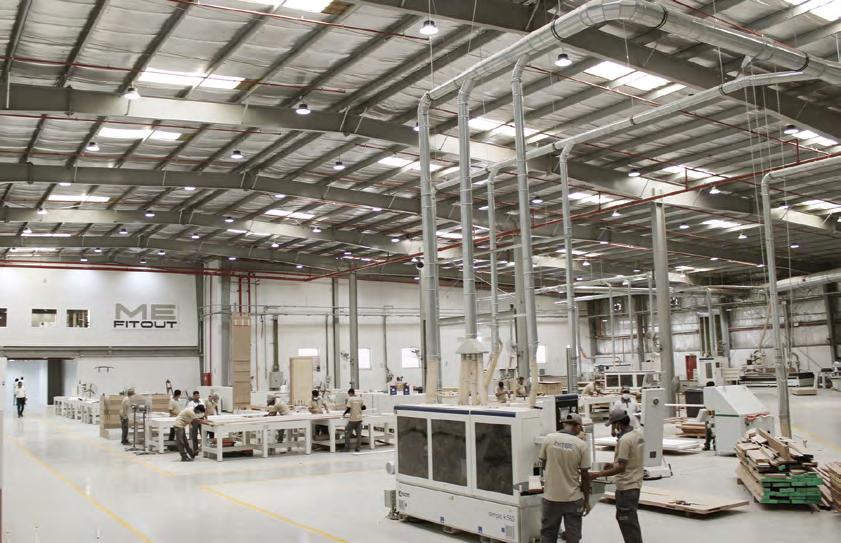
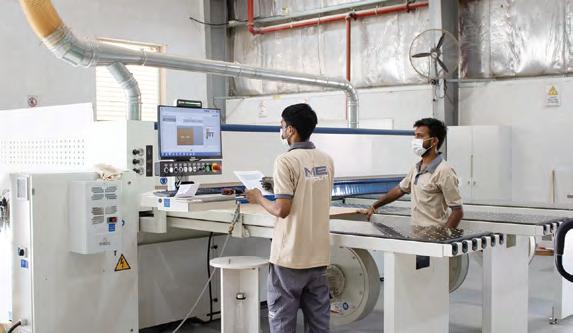
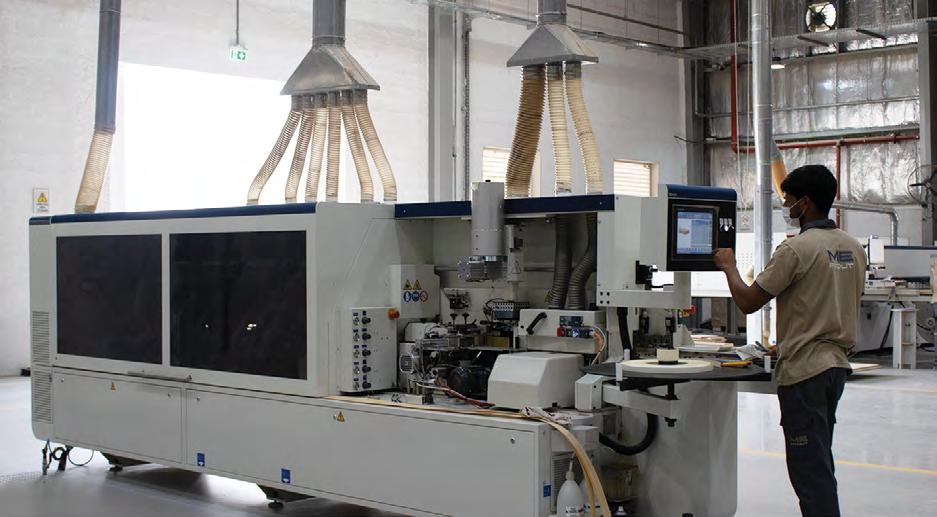
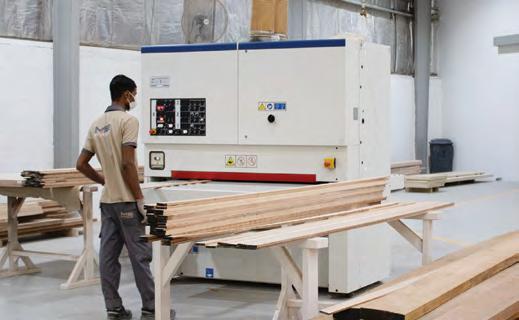
Integrated, in-house facilities are pivotal in expediting delivery cycles and achieving superior quality outcomes. This contributes to advancing the Dubai Industrial Strategy 2030, which aims to reduce reliance on imports and enhance localised production. Our in-house capabilities primarily stem from our large manufacturing facility in Dubai Investment Park (DIP), where technology, sustainability, and craftsmanship converge to drive precision, speed, and design excellence.
“INTEGRATED, IN-HOUSE FACILITIES ARE PIVOTAL IN EXPEDITING DELIVERY CYCLES AND ACHIEVING SUPERIOR QUALITY OUTCOMES. THIS CONTRIBUTES TO ADVANCING THE DUBAI INDUSTRIAL STRATEGY 2030, WHICH AIMS TO REDUCE RELIANCE ON IMPORTS AND ENHANCE LOCALISED PRODUCTION.”
The facility is equipped with next-generation European machinery, ensuring seamless delivery of bespoke joinery, upholstery, steelwork, and glass, among others. It can also execute multiple complex, large-scale projects simultaneously without compromising quality or customisation capabilities.
How do you balance high-end design expectations with strict budgets and timelines?
We are seeing a growing demand for integrated production models and digital workflow systems, as Dubai Smart City initiatives push for efficiency, digital integration, and cost optimisation in construction and interior projects. In line with this, we undertake design, manufacturing, joinery, upholstery, metalwork, and glasswork under one roof.
This empowers us to adhere seamlessly to strict budget and timeline constraints while ensuring best-in-class quality and eliminating reliance on external subcontractors. Furthermore, our advanced technology, material optimisation software, and real-time workflow management help optimise
resources and scheduling, catering to the evolving demands of clients, particularly in the luxury segment.
What roles are ai and automation currently playing in fit-out execution – and what’s next?
AI and automation have emerged as cornerstones of the fit-out landscape, with the UAE National Strategy for Artificial Intelligence 2031 establishing a unified framework for adoption across diverse industries to improve efficiency and sustainability.
ME FITOUT’s commitment to supporting this transition is exemplified by our DIP facility, tailored for digital integration and featuring ERP systems, Critical Path Method scheduling, and CNC automation. We have also integrated material optimisation software and advanced machinery into
ME FITOUT’s Dubai Investment Park facility integrates technology, craftsmanship and sustainability under one roof.
our operations, ensuring efficiency, flawless quality, and sustainability.
Looking ahead, AI-powered project management platforms and robotics are set to further shape the fit-out landscape, driving speed and quality while reducing costs.
How can sustainability and luxury co-exist without compromise in fit-out projects?
The future of interior contracting will be shaped by the synergy of sustainability and design excellence. The evolving regulatory landscape and growing market expectations are driving the use of sustainable materials and processes, positioning environmental responsibility as a key value proposition for high-end projects.
Recognising this shift, we have developed a sustainability-driven manufacturing facility, integrating intelligent recycling systems, material optimisation software, and a centralised sawdust collection process. For us, sustainability and luxury are not contradictory but complementary, advancing
environmental goals while ensuring high-end finishes.
How do modular joinery and offsite production improve speed, quality, and cost control?
There is a growing adoption of modular construction and offsite production, driven by demand for faster delivery cycles and sustainable building practices, aligning with the Dubai 2040 Urban Master Plan. Recent reports highlight the benefits of modular construction, including waste reduction, enhanced cost control, and improved quality assurance.
We support this transition by facilitating modular and offsite production without outsourcing, leveraging our in-house capabilities. Our advanced equipment, integrated workflows, real-time production tracking, and scheduling software allow us to execute multiple large-scale projects simultaneously, ensuring consistency, expediting delivery, and strengthening cost control.
Precision machinery and standardised workflows ensure consistent quality and tighter tolerances compared to traditional site-based fabrication. With
components produced in parallel with site preparation, project timelines are significantly reduced.
What’s the secret to managing demanding clients while maintaining project integrity?
Enhanced transparency, digital project tracking, and close client collaboration are key to achieving long-term success and meeting diverse client expectations in the dynamic UAE market. At ME FITOUT, we strive to combine
excellent service quality and value with clear accountability.
We utilise real-time dashboards and workflow management solutions to keep clients fully informed and engaged, ensuring that client demands are fulfilled seamlessly without compromising project integrity.
What major shift do you expect to redefine the middle east fit-out sector in the next five years?
The sector is entering a new phase where technological advancements, modular construction, and sustainability are integral. Urban development frameworks such as the Dubai 2040 Urban Master Plan and national sustainability commitments like Net Zero 2050 are driving the integration of eco-conscious and technology-driven practices.
We believe that the convergence of advanced manufacturing, AI-driven project management, and eco-conscious design will shape the sector, setting new benchmarks for speed, quality, and sustainability.
Our facility in Dubai Investment Park is tailored for this transformation, featuring ERP systems, Critical Path Method scheduling, CNC automation, and a workforce skilled in both traditional craftsmanship and digital systems.
Next-generation European machinery ensures precision fabrication, consistency and superior quality across all production stages.
KINETIC, BRANDED, UNMISSABLE
Arada’s new Inaura concept lands in Downtown Dubai with a bold promise: a fitness-led hotel and branded residences designed around movement, ritual, and everyday performance, not just aesthetics
Arada has unveiled Inaura, a new hospitality and branded living concept shaped around kinetic wellness, a philosophy that brings movement, balance, and everyday wellbeing into the rhythm of city life. The debut location, Inaura Downtown, is set to launch sales by the end of January, positioned as a luxury hotel and 114 branded residences in one vertical statement.
For HRH Prince Khaled bin Alwaleed bin Talal Al Saud , Executive Vice Chairman of Arada, the shift is deeply human. “Wellbeing today is defined by energy, movement and how we live day-today. Inaura brings this to life by creating places where physical vitality and urban experience meet. This brand reflects how people now want to live: connected to their environment and supported by spaces that foster momentum.”
Designed by Dutch architecture studio MVRDV, the tower is over 200 metres tall and rises 42 floors, with its defining signature being a central orb that hosts a social and dining space offering 360-degree views across Burj Khalifa, Business Bay, and Dubai Mall. More than a visual centrepiece, the building is planned as a curated journey, with active, city-facing energy at street level that gradually transitions into quieter, more private environments as the tower rises.
That sense of place is amplified by a rare location advantage.
INAURA DOWNTOWN SITS ON A PERMANENT BURJ KHALIFA VIEW CORRIDOR, A POSITIONING THAT IS INCREASINGLY DIFFICULT TO SECURE IN THE DISTRICT.
The AED 1.7 billion project is set at the edge of Downtown Dubai, with easy connectivity to Dubai Mall, Business Bay, DIFC, and major transport routes, placing it at a crossover of the city’s cultural, commercial, and lifestyle hubs.
Inside the tower, the residential mix is deliberately top-heavy. Inaura Downtown comprises a luxury hotel tower and 114 branded residences, including The Sky Penthouse, a three-storey, six-bedroom home, two duplex five-bedroom Sky Villas, and apartments ranging from one to four bedrooms.
Ahmed Alkhoshaibi, Group CEO of Arada , positions Inaura as a concept built to travel. “With
Inaura, we’re bringing together design, fitness and ritual to build spaces where energy flows through every element and cultivates belonging. This is the first in a series of kinetic wellness destinations designed to scale globally, combining rhythm, function and purpose to meet a growing demand for homes and hotels that prioritise movement, balance and everyday performance.”
He goes further in defining what makes Inaura Downtown distinct in an increasingly crowded luxury landscape.
“Inaura Downtown combines wellness, location, and longterm value in a single, high-performing asset. Its distinctive central orb structure and permanent Burj Khalifa view establish a strong architectural and investment position.
Backed by Arada’s wellness and fitness operating system and resources, Inaura Downtown sets a new
Designed by Dutch architecture studio MVRDV, the 42-storey, 200m-plus tower is defined by a central orb housing a social and dining venue with 360° views of Burj Khalifa, Business Bay, and Dubai Mall
Ahmed Alkhoshaibi, Group CEO of Arada,
benchmark for fitness-led hospitality and branded residences. We’re pleased that this launch marks our first project of 2026, a year where we continue to scale with intention and focus.”
The operating system is not a throwaway line here. Inaura’s amenities are designed to make wellness feel frictionless, anchored by a 3,000 sqm multi-level Formative fitness centre and gym, with dedicated yoga, Pilates, dance, and boxing studios, plus luxury changing rooms for both men and women.
The spa layer is equally ambitious. A fully fledged spa is planned with treatment rooms, immersive sound therapy, a bathhouse, cryotherapy, a multi-temperature mineral pool, sauna, and steam room, reflecting a hospitalitygrade approach to recovery and routine.
Dining is distributed throughout the building to match the tower’s movement narrative, rather than being confined to one podium zone. Food and beverage will span multiple levels, including the ground floors, the third and fourth levels, and levels 32 to 33, where an exclusive Sky Lounge sits inside the tower’s orb feature, turning the building’s most distinctive design gesture into a lived experience.
BEYOND WELLNESS AND DINING, THE DEVELOPMENT INCLUDES THE PRACTICAL SPACES THAT INCREASINGLY DEFINE PREMIUM LIVING. THERE WILL BE CO-WORKING AREAS, MEETING ROOMS, A CINEMA, A LIBRARY, AND A CHILDREN’S PLAY AREA, POSITIONING INAURA AS AN ECOSYSTEM RATHER THAN A STANDALONE ADDRESS.
Residential design is described as movement-led, with layouts, materials, and planning focused on
comfort, functionality, and long-term liveability. Homes will feature generous proportions, floor-to-ceiling glazing, and clear separation between living, private, and service areas, maximising natural light, alongside balconies with panoramic views across Downtown Dubai.
The hotel occupies the tower’s ten lower floors, framed as a contemporary hospitality experience rooted in movement, recovery, and connection, designed for guests who treat fitness and wellness as part of daily life. Crucially, it ties back into the same shared facilities, reinforcing the concept that residents and guests are buying into a lifestyle logic, not a one-off amenity list.
Inaura Downtown is also LEED Gold precertified, signalling a performance lens alongside its lifestyle positioning. And it arrives with context. Arada frames Inaura as the next chapter in its wellness
journey, following branded and wellnessled developments such as Armani Beach Residences at Palm Jumeirah, W Residences at Dubai Harbour, and Akala, described as the world’s first precision wellness destination.
Arada’s Formative platform, which the company says manages the UAE’s largest group of gyms by revenue, adds a delivery backbone to the concept, making Inaura less about wellness as a theme and more about wellness as an operational reality.
For Arada, the intention is clear: Inaura is not selling stillness. It is selling momentum. In a city where luxury is fluent, the next competitive edge is not another finish, another view, another headline. It is a living system that performs every day, and a residence that feels built around the way people actually move through their lives.
Exterior view of the Sky Lounge at Inaura Downtown
PAINT THAT PERFORMS
Dirk Schilmöller, Managing Director Middle East, Africa & Asia at Caparol MEA, reflects on the brand’s recent growth, evolving market demands, and how colour, sustainability, and innovation are shaping the future of paints and coatings across the region.
Looking back at 2024–2025, what were the biggest milestones for Caparol in the region?
The past 18 months marked a period of significant progress for Caparol across the Middle East and Africa. We delivered double-digit growth across the region, reflecting sustained demand for our premium solutions, the strength of our regional partner network, and a growing appetite for more expressive design.
Growth was matched by investment in people and presence. We onboarded almost 40 new colleagues across sales, marketing, supply chain, and technical functions, and expanded our footprint with the opening of our Caparol Africa office in Kenya, alongside a new office and dedicated training centre in Muscat, Oman. This investment reinforces our commitment to being closer to customers and supporting projects on the ground.
We also strengthened our market engagement through major industry platforms, including participation at The Big 5 Construct Kenya, IDF Oman, and Zak World of Façades UAE, while continuing to expand our dealer network across the UAE, including new partnerships in Abu
Dhabi. Being recognised as a Great Place to Work further reinforced our commitment to building a strong, people-led organisation that supports long-term growth and partnership in the region.
How has market demand evolved—especially around sustainability, wellness coatings, and performance finishes?
There has been a clear evolution in market demand, reflecting the region’s growing focus on sustainability and wellnessdriven solutions. With approximately 75% of consumers expressing concern about climate change, environmental awareness is increasingly influencing consumer behaviour across the region.
As a result, there is heightened demand for eco-friendly formulations, particularly products with low or zero volatile organic compounds (VOCs). We are also seeing regulatory transformation, with an increasing number of Gulf standards governing coating chemistry, while Dubai Municipality VOC thresholds, bilingual safety data sheets, and SABER certification in Saudi Arabia move regional compliance closer to European norms.
Premium, odourless, VOC-free paints have long been a priority for us and are present throughout our product range. These products support wellnessconscious customers while meeting and exceeding the region’s evolving regulatory requirements.
Health and indoor air quality are now key considerations for both residential and commercial customers. We are responding with ongoing innovation, including soon-to-be-announced interior paint offerings that further build on our portfolio combining aesthetics with wellness benefits. Demand for green building certifications continues to rise, and Caparol’s decades-long expertise in sustainable, high-performance finishes positions us strongly in this space. These trends not only shape our product development but also drive meaningful industry dialogue around healthier, more sustainable built environments.
How have colour preferences shifted across residential, commercial, and hospitality sectors this year?
Design sensibilities across the region are undergoing a notable shift. According to our recent UAE Colour Confidence survey, 70% of UAE residents expressed
a desire to move away from beige tones towards bolder and more expressive colour schemes. This reflects a growing interest in personalisation and the use of colour as a form of self-expression.
We are seeing a strong preference for earthy tones, including greens inspired by nature, browns that echo desert landscapes, and blues reminiscent of the Arabian Sea. These palettes resonate deeply with the region’s cultural and natural identity.
In residential spaces, there has been a noticeable uptake in green accent elements, particularly in kitchen cabinetry, reflecting global design influences. In commercial and hospitality environments, these trends are equally evident. Projects such as Mama Shelter demonstrate a multicoloured, eclectic approach to interiors, celebrating bold design choices. At the same time, destinations like SIRO One
An exciting Caparol project in Dubai Hills showcasing innovation, performance-driven coatings, and design-led solutions tailored to regional requirements.
Za’abeel highlight the growing focus on wellness, sustainability, and muted, natural finishes.
Which recent innovations or technologies have had the greatest impact on your product strategy?
Innovation is central to Caparol’s DNA, and recent developments have played a significant role in shaping our product strategy. We continue to prioritise wellness-focussed coatings, including air-purifying and anti-bacterial solutions.
One example is CapaCare Protect, developed using Silverbac technology to persistently inhibit the growth of viruses and bacteria on coated surfaces. This responds directly to increasing demand for healthier indoor environments.
We have also introduced new binders and raw materials that significantly reduce emissions, reinforcing our commitment to sustainability. Our exterior solution, CapaStone, remains a standout product in the region. Designed to replicate the beauty and texture of natural stone, it has proven particularly popular locally. We have since enhanced this range with advanced raw materials and a broader colour palette, improving both durability and aesthetic flexibility.
Which markets in the Middle East, Africa, or Asia show the strongest growth momentum going into 2026?
The UAE continues to be our largest and strongest market, with solid growth across all sales channels. The country’s active construction and design sectors continue to drive demand for premium, eco-friendly, and high-performance coatings.
Beyond the UAE, Iraq has emerged as our Best Newcomer market. In 2025, we successfully implemented a new go-tomarket strategy by partnering with a main importer, enabling more streamlined operations and stronger local responsiveness.
East Africa, particularly Kenya, also shows strong momentum. With our new office in Nairobi and increasing market interest, we are seeing promising project wins that highlight the region’s appetite for Caparol’s products and expertise.
How do you see functional coatings—such as thermal, anti-bacterial, or high-durability solutions—shaping the future?
Functional coatings are increasingly shaping the future of the industry, driven by growing awareness among end users and stakeholders. Customers are prioritising solutions that enhance health, energy efficiency, and long-term durability.
Architectural projects accounted for 68% of the market in 2024 and are expected to grow at a CAGR of approximately 4% through 2030. There is rising demand for fade-resistant, textured, and dirt-shedding solutions, requiring continued innovation from manufacturers.
As awareness around energy conservation increases, thermal coatings are becoming essential to improving building performance and meeting regulatory requirements. At the
same time, anti-bacterial and wellness-focused coatings are becoming standard expectations rather than niche offerings. This shift presents an opportunity for Caparol to lead by delivering solutions that balance performance, sustainability, and design flexibility.
What colour directions or themes do you predict will lead design trends in 2026?
In 2026, colour trends will be defined by confidence, contrast, and more intentional use of colour. We are seeing multiple colour narratives emerge simultaneously, ranging from soft, calming shades to bold, expressive hues.
Colour is increasingly being used to define mood, identity, and function, rather than serving as a neutral backdrop. This is reflected in the growing use of architectural elements, feature surfaces, and zoned applications. The ‘statement coat’ approach, in particular, is expected to see continued growth.
Sustainability remains a strong influence on colour choices. Caparol’s research shows that environmental awareness plays a key role in colour selection, with strong interest in earthy, nature-inspired tones. These are warmer, more expressive shades that reflect landscape, materials, and light.
Materiality and tactility are also becoming increasingly important. Natural materials, textured finishes, and handcrafted details contribute to interiors that feel more human and grounded. Colours such as Oase Green and Warm Terracotta pair seamlessly with these elements, while solutions like CapaStone reinforce the shift towards finishes that offer depth, authenticity, and character.
What will Caparol’s top priorities and focus areas be as you look ahead to 2026?
Our priority remains delivering high-quality surface and coating solutions tailored to regional climate conditions, supported by over 130 years of expertise and strong regional R&D.
Staying close to our partners and customers will remain central, with increased collaboration across retail, project, and specification channels, supported by on-ground technical expertise.
From an operational perspective, decentralising manufacturing is a key focus. A new manufacturing facility, expected to be announced shortly, will enhance supply resilience and speed to market.
Africa will continue to be a strong growth focus, with a strategy centred on building sustainable local presence while maintaining global quality standards. Organisational development also remains critical, with continued investment in talent, safety culture, and capabilities to support the next phase of growth.
THE UNSAID POWER
Why Women’s Leadership Matters in Construction?
The construction industry has undergone transformative changes in the last decade, driven by diversified funding and technological advancement. The sector’s progress has been most prominent in the Middle East region, where it contributes significantly to the economic growth of various countries. According to the Middle East Economic Digest, the GCC region alone has a construction and infrastructure projects pipeline exceeding USD 2.7 trillion, with Saudi Arabia contributing USD 1.5 trillion to this total. Major projects such as Saudi Arabia’s NEOM and the UAE’s Etihad Rail are attracting companies from around the world, while a growing expatriate population and demand for real estate drive further growth. However, this surge in construction activity also exposes challenges, such as labour shortages and regulatory changes, that hinder the industry’s ability to meet demand.
The construction industry has a reputation for being male-dominated, with women representing less than 11 per cent of the global workforce and 3 per cent of the front-line workers. Attracting and retaining women talent would not only ease the labour shortage in the short term but also accrue longterm benefits in terms of longevity and sustainability. Women who lead these companies and hold managerial positions are especially crucial in bringing about positive change. Their leadership has the potential to reshape the construction industry, making it more resilient, innovative, and successful.
Some of the key advantages that the industry gains from women’s leadership include:
Fresh Perspectives
Women bring unique and valuable perspectives that their male counterparts might not, paving the way for the industry to become more
flexible in its operations. Teams that include female leaders may brainstorm and experiment with a broader range of strategies and solutions rather than aligning with the status quo. Their insights can significantly contribute to risk management, as they may have a better grasp of challenges and pitfalls that others overlook.
Cultural Change
Women leaders have the power to drive broader cultural change within the companies they work with. Whether intentional or otherwise, a predominantly male-dominated industry carries forward certain biases and assumptions that can make women employees uncomfortable. Having women leaders and managers not only reduces the likelihood of offensive remarks and actions but also creates a safe space for junior employees to express their frustrations. By creating a more inclusive, welcoming, and equitable work environment, the entire organisation gains higher morale and thrives.
Community Impact
Women leaders in the construction industry serve as role models for the entire community. Young girls considering their career options are inspired by seeing themselves leading and taking charge in construction companies, which makes that future seem possible to them. Employees across the organisation also gain confidence in their workplace, knowing they can progress and grow regardless of their gender. Women leaders shatter stereotypes on two fronts: what careers in the industry look like and what women are capable of achieving.
Safety and Security
Physically demanding professions often have strict safety guidelines, ranging from work hours to uniforms. Having women represented ensures that these guidelines do not overlook the physiological differences between
men and women and that safety guidelines incorporate the unique challenges women may face on construction sites.
Stronger Communication and Collaboration
Studies have shown that women communicate more concretely and build stronger connections than their male counterparts, making them critical for long-term organisational success. Effective communication strengthens a company holistically, improving how project objectives are conveyed and how team members feel supported and empowered. This ensures that stakeholders understand key details and that team members collaborate to complete projects in a timely, fiscally sound manner.
Expanded Talent Pool
Perhaps the most potent change lies in how women leaders can expand the talent pool available to construction companies. They can help companies attract more women talent and meet industry demand, making genderbalanced teams a profitable and business-savvy investment. This could also make organisations more agile and adaptable, enabling them to draw on a broader range of skills to address emerging challenges or seize new opportunities.
While the construction industry remains a backbone of economic growth in the MENA region, the paucity of talent remains a key barrier to long-term sustainability. Women leaders don’t just help with tokenistic representation; they bring fresh insights, flexibility, and an inclusive work culture to their organisations. By highlighting their contributions and the avenues for growth in an industry as critical as construction, we can inspire the next generation and advance the socioeconomic development of our nations.
Originally written by Atousa. Edited by Vibha Mehta
Atousa Aslaminezhad, Assistant Professor at Heriot-Watt University Dubai
Saudi Arabia’s Real Estate Moment: WHY 2026 WILL DEFINE THE KINGDOM’S BUILT ENVIRONMENT
Co-Authored
by: Oliver Morgan, Partner & Real Estate Leader at Deloitte Middle East, and Manika Dhama, Partner, Infrastructure & Real Estate at Deloitte
As Saudi Arabia convenes global real estate leaders at the Real Estate Future Forum 2026 in Riyadh, the Kingdom’s property market finds itself at a defining inflection point. Few markets globally are operating at this scale, pace and level of ambition. With a development pipeline exceeding US$1 trillion, Saudi Arabia’s real estate sector is no longer just responding to demand, it’s actively
reshaping the economic, urban and investment landscape of the Kingdom.
The next phase of growth, however, will be focused on quality, governance and long-term value creation.
International Capital: Opening the Door - With Intent Recent reforms to non-Saudi ownership and investment regulations represent a significant shift in how global capital can participate in the Kingdom’s real estate story. These changes are about targeted openness, guided by clearly defined investment zones, robust controls and a growing governance framework.
As highlighted by His Excellency Majed Al-Hogail, Minister of Municipal and Rural Affairs and Housing, attracting international capital at this scale requires confidence, not just in returns, but in systems, transparency and long-term policy alignment. This view has been echoed across government, including by His Excellency Khalid Al-Falih and His Excellency Ibrahim Al-Mubarak, who have consistently emphasized the need to channel global investment into projects of national significance.
This perspective was reinforced at the Real Estate Future Forum by His Excellency Mohammed Al-Khatib, who underscored the Kingdom’s openness to foreign investment in large-scale and nationally significant projects. His remarks reflected a clear message to global investors: Saudi Arabia is seeking long-term partners who can bring capital, expertise and delivery capability to support complex, transformational developments aligned with Vision 2030.
This view has been echoed across government during a panel we hosted at REFF, including by His Excellency Khalid Al-Falih and His Excellency Ibrahim Al-Mubarak,
Oliver Morgan, Partner & Real Estate Leader at Deloitte Middle East
who have consistently emphasized the need to channel global investment into projects of national significance.
For investors, this signals maturity. For the market, it means capital will increasingly favor assets that meet global standards of design, sustainability, governance and operational performance.
Office and Commercial Real Estate: Quality as the Growth Lever
The rental freeze in Riyadh has had a stabilizing effect on the commercial office market, curbing rent escalation and shifting focus towards driving asset quality. While headline rental growth has paused, the underlying message to landlords is clear: future capital growth will be driven by refurbishment, ESG alignment and tenant experience, not pricing alone.
For international occupiers, this stability provides certainty, a critical factor as multinational firms continue to regionalize operations in the Kingdom. In 2026, as it becomes available new premium Grade A assets will outperform secondary stock as occupiers prioritize quality, flexibility and sustainability –even at a price premium.
Riyadh’s hospitality market has experienced a notable supply influx, with approximately 1,200 keys delivered towards the end of 2024. This temporarily reduced occupancy levels to around 60% in the first half of the year however showing a marked recovery as the stock was absorbed with the overall KSA market ADRs growing at 4%.Month-on-month performance through late 2025 shows steady recovery, underpinned by a diversification of demand beyond religious travel.
Domestic tourism, business travel, events and cultural programming are increasingly shaping occupancy dynamics, a trend we expect to strengthen into 2026.
As Saudi Arabia’s giga-projects and entertainment offerings come online, hospitality demand will continue to broaden, supporting long-term fundamentals despite near-term supply pressures.
Industrial and Logistics: The Engine Room of Diversification
Industrial and logistics real estate is emerging as one of the Kingdom’s most structurally compelling sectors. Trade flows are a central driver, with cargo volumes expected to grow at a CAGR of 4%, reaching approximately 420 million tons by 2030.
Warehouse rents increased year-on-year in 2025 across key port- and airport-linked zones in Riyadh, Jeddah and Dammam, driven by sustained demand for Grade A, specification-led space. While petrochemical-linked commodities remain dominant, growth in FMCG, food and beverage, cold chain
logistics and e-commerce fulfilment is reshaping demand for specialized storage facilities.
This momentum is reinforced by strategic infrastructure investment. Under the National Transport and Logistics Strategy, the US$7 billion Saudi Landbridge project will connect Riyadh directly to Jeddah via a new 950-kilometre freight rail corridor, providing the capital with direct access to the Red Sea while enhancing east-west connectivity across the Kingdom.
Looking Ahead: What 2026 will bring?
Deloitte’s 2026 outlook points to a market entering a more balanced, disciplined phase of growth:
Residential demand will increasingly focus on transitoriented developments and international buyers.
Office markets will remain stable, with quality-led differentiation driving performance.
Retail will continue shifting towards experiential destinations and large-scale mixed-use developments.
Hospitality demand will diversify further, supported by domestic consumption, events and cultural tourism.
Saudi Arabia’s real estate market is no longer defined by aspiration alone. It is being shaped by execution, governance and global relevance. As the Kingdom looks to 2026 and beyond, the opportunity lies in building better, smarter and with lasting impact.
Manika Dhama, Partner, Infrastructure & Real Estate at Deloitte
Frameworks of the Future
The growing role of free zones in the UAE’s circular and clean energy agenda
By: Puneet Jain
Circular economy and clean energy practices have moved to the centre of global business thinking in the last decade. Rising resource costs and tighter environmental regulations have pushed companies to rethink how they use materials and energy
to stay competitive, and many countries, including the UAE, have adjusted their production models and energy systems accordingly.
Over the past few years, the UAE has sent clear signals through the Circular Economy Policy and the Net Zero 2050 pledge, encouraging
public bodies to focus on material efficiency, waste reduction, and cleaner energy sources. They’ve also begun influencing industrial planning and how companies prepare environmental disclosures.
The UAE’s Free Zones have long been catalysts for trade and industrial
development, but today they are taking on a far more strategic role in advancing the nation’s sustainability agenda.
With over 40 Free Zones contributing roughly 40% of the country’s exports, these zones are emerging as strategic platforms for green transformation.
By integrating renewable energy infrastructure, promoting waste diversion & circular economy, and incentivizing sustainable manufacturing, these zones are enabling interconnected business ecosystems to transition toward circular and clean energy practices.
The sections below examine why these practices matter now and how free zones are turning these broad sustainability goals into actionable steps for tenants.
Why circular economy is moving into the mainstream Circular economy ideas used to sit on the margins of strategy, but in the UAE, they’re now part of national policy.
The Circular Economy Policy 2021–2031 identifies priority sectors, and the Circular Economy Council has continued developing regulations through 2024 and 2025. The motivation is straightforward.
Non-oil sectors generate most of the UAE’s GDP, and non-oil trade has grown steadily. The way goods are produced and disposed of has become an economic issue that directly influences energy use, waste costs, and reliance on imported materials.
Circular practices help keep materials in use longer and reduce the volume that needs to be landfilled or replaced. This connects to competitiveness in a region where industrial output and logistics activity are expanding quickly[HA1] . Beyond compliance, circularity is increasingly seen as a growth
opportunity—unlocking new business models, reducing input costs, and attracting sustainabilityconscious customers.
The UAE’s global role has reinforced this trend. The UAE Consensus from COP28 set clearer expectations for renewable energy and efficiency, and free zones are now part of that wider picture.
Free zones as ESG multipliers in the UAE
The concentration of industrial activity in free zones gives them significant influence over everyday ESG behaviour. They set the rules for utilities, district cooling and waste contracts, and determine the basic standard for new buildings. When these standards rise, every new tenant arrives with lower consumption rates and clearer expectations[HA2] . This clustering amplifies sustainability impact by leveraging shared infrastructure and collaboration, which reduce costs and accelerate ESG adoption.
Scale reinforces this influence, since a large share of the country’s exports and re-exports flow through these economic hubs. Any improvement in material efficiency or energy performance inside them shows up in national figures. Because companies accept zone rules as fixed conditions of operation, ESG requirements introduced at this level tend to be absorbed into normal business processes.
What circular economy looks like on the ground
Circular economy practice becomes real when companies exchange materials or design processes that minimise waste. In free zones, this often takes the form of one tenant’s by-product becoming another tenant’s input.
The Sharjah Waste-to-Energy plant is a vivid example at city scale. It diverts a substantial volume of municipal waste from landfill and turns it into electricity, helping reduce disposal costs and emissions. The plant works because industrial and commercial waste streams are collected in predictable volumes.
Masdar City also demonstrates how design influences behaviour. Efficient buildings, on-site solar power and shared mobility reduce resource use from the day a company moves in. The zone hosts firms working on energy and mobility technology, so the cycle between testing and application is short.
Ras Al Khaimah provides a further example. Its Integrated Sustainability (RIS) Strategy 2050 sets targets for electricity and water savings and aims for a growing share of renewables. Free zones and
industrial areas in the emirate, including those managed by RAKEZ, operate within this framework. This has encouraged projects ranging from energyfrom-waste to rooftop solar and targeted retrofits. [HA3]
Clean energy adoption inside free zones
Clean energy adoption has gathered momentum in the UAE, driven by lower costs and clear long-term policy signals. National clean energy capacity has expanded, and new strategies call for a far larger share of renewables in the power mix by 2030.
Free zones are adding their own layers of action. Masdar City draws power from a central solar plant and a series of rooftop systems that feed the grid. Logistics-focused zones in Dubai have expanded
warehouse-level solar programmes, enabling tenants to join through straightforward power agreements.
Working with energy developers, zones are implementing solar, storage and hybrid systems at zone level, supporting emirate-wide targets while giving tenants access to solutions they may not be able to deploy individually. Zone-wide retrofits across administrative and industrial buildings have also shown how central upgrades can reduce consumption without placing added operational or financial pressure on tenants.
Planning and infrastructure levers
Circular and clean-energy habits take root more easily when the physical environment supports
In the Northern Emirates, free zones are aligning their energy planning with Ras Al Khaimah’s Integrated Sustainability (RIS) Strategy 2050, which promotes the wider deployment of clean energy, including renewables.
them.In Ras Al Khaimah, the Barjeel green building regulations set requirements for energy efficiency, water conservation and recycling, and the use of sustainable materials in construction, alongside measures such as efficient HVAC systems, solar water heating and improved insulation.. Free zones and industrial developers in the emirate plan their facilities within these rules, which means efficiency features are built in from the start.
Cluster planning also strengthens circular flows. When complementary industries sit close together, offcuts, treated water or heat from one facility can be used by another with minimal transport cost. Emirate-level energy strategies highlight the industrial and waste sectors as priority areas, encouraging free zones to consider shared utilities rather than isolated systems.
Transport planning is another area of focus. Shorter internal routes and well-positioned loading areas make recycling collections more reliable, which in turn supports investments in shared recycling hubs or waste-to-resource facilities.
Practical ESG tools zones can roll out
Companies often say their ESG challenge is clarity. Free zones can support this by offering consistent templates and shared systems.
A zone-level ESG reporting format written in plain language helps tenants track energy, water, waste
and emissions in a way that stays comparable. This makes it easier for management teams to identify patterns and decide where pooled solutions have the strongest impact.
Shared solar schemes are another practical tool. A free zone can tender a single project and allow tenants to join through power purchase agreements, avoiding the need for individual assessments or financing.
A third, equally practical measure is the implementation of minimum waste-sorting rules supported by predictable collection schedules. This creates the groundwork for more advanced recycling and, over time, industrial symbiosis between tenants.
It is these types of zone-level projects that demonstrate how coordinated improvements can reduce resource use without requiring individual businesses to manage complex upgrades on their own.
Digital monitoring platforms are another practical lever. Material-tracking systems allow zones to follow waste streams and identify materials that appear in useful volumes, supporting recycling and industrial symbiosis. Energy dashboards linked to district cooling, electricity and water meters give tenants regular visibility that often prompts operational adjustments. When free zones apply a single greenhouse-gas accounting method with emission factors suited to the UAE grid, companies can report emissions in a format recognised by lenders and international partners, making wider ESG reporting more straightforward.
From pilot projects to normal practice
Global pressure for cleaner production continues to rise, and in the UAE, free zones sit at the point where these national goals meet day-to-day industrial routines.
They are powerful levers for systemic change. They host large clusters of companies and manage the shared systems that shape how easy it is to adopt better practices. When free zones raise standards and simplify the systems companies rely on, they help embed circular and clean-energy practices into normal commercial routines. It’s this steady influence that makes them one of the most practical levers the UAE has for turning long-term sustainability goals into measurable progress on the ground.
Puneet Jain, Chief Strategy Officer, Ras Al Khaimah Economic Zone (RAKEZ)
GCC Cities Juncture At A Critical
As GCC nations advance their bold national visions, the region’s urban centres are emerging as key drivers of economic and social development
A special report by Kearney Middle East’s Partners and Principals, examining urban development, capital projects, and infrastructure across the region.
A critical moment for the GCC As Gulf Cooperation Council (GCC) nations pursue bold national visions to diversify their economies and improve quality of life, the region’s cities have the chance to act as central engines of growth.
THE GCC ALREADY RANKS AMONG THE MOST URBANIZED REGIONS IN THE WORLD, WITH MORE THAN 85 PERCENT OF ITS POPULATION LIVING IN CITIES.
But global competition for talent, investment, and visitors is intensifying. Cities must move decisively from aspiration to execution, focusing on three core levers: attraction, monetization, and retention.
Becoming magnets of growth by attracting people, capital, and businesses
Attraction is the gateway to growth and cities must appeal simultaneously to four core
target groups: residents, visitors, businesses, investors and developers.
For residents, attraction depends on quality of life and
opportunity. Competitive cities offer reliable healthcare, high-end education, safe and inclusive neighborhoods, and efficient mobility. Residential real estate, from affordable housing to luxury estates, must be targeted to key customers to be attractive. In Singapore, for example, over 80 percent of the population live in publicly subsidized housing which supports affordable housing significantly.
Visitors are attracted by connectivity and distinctive experiences. Tourism, events, and cultural offerings generate external demand, enhance global visibility, and often serve as entry points for broader economic engagement. For example, Saudi Arabia’s hosting of
Formula One races in Jeddah and the upcoming Expo 2030 in Riyadh are attracting millions of visitors.
For businesses, investors and developers, attraction is driven by ease of doing business and access to markets. Clear regulations, efficient licensing, digital infrastructure, and connectivity to suppliers and customers matter more than oneoff incentives. Capital flows toward cities that demonstrate sustainable planning and a credible pipeline of economically grounded projects.
Creating a lasting impact by monetizing urban demand
Attraction of target groups is only part of the journey. The real test comes next: whether a city can monetize that demand. Monetization is the natural outcome of effective social and urban design, robust regulatory frameworks, and strong business ecosystems.
Cities can unlock sustainable revenues through a mix of land, asset, infrastructure, and fiscal monetization tools. Land value capture is particularly important in the GCC, where governments own large land reserves. By leasing land long term, selling development rights, or dedicating land to special uses such as eco-tourism, cities can attract investment and financing, as seen for example in South Korea’s Incheon.
Asset monetization involves privatization, PPPs, or concessions for real estate, enabling cities to generate income while improving efficiency, illustrated by Saudi Arabia’s private operation of major tourism assets and Hong Kong’s revenue-sharing retail models.
Infrastructure utilization turns transit systems, ports, and utilities into revenue sources through fees, concessions,
Vittorio Fontana Principal
Raffaele Tassi Principal
Philip Repar Consultant
Luka Pejanovic Consultant
Carlos Casado Partner
Helmut Scholze Partner
or listings, appealing to foreign investors seeking stable returns.
Finally, fiscal tools such as VAT, tourism charges, licensing fees, and selective luxury taxes allow cities to convert rising demand and consumption into public revenues that can be reinvested in infrastructure and services.
Sustaining the momentum by retaining demand
Attraction and monetization can kick-start growth, but lasting economic success depends on retaining the demand that has been generated.
Residents should start planting roots which means converting short-term stays into long-term residency. Policies such as the UAE’s and Saudi Arabia’s new
long-term golden visa residency schemes are designed to encourage talented expatriates to settle and build their futures in-country.
Visitor retention translates into repeat visitation and extended stays. Evolving cultural, leisure, and business offerings help cities move beyond one-off tourism toward recurring demand that supports broader economic sectors.
For businesses, investors and developers retention means they stay within the city, keep deploying capital and expand their commitments. Cities must ensure investors achieve expected returns and the business climate remains favorable. In addition, cities will
need to focus on businesses’ needs, such as making it easy to acquire additional licenses, gain access to the right infrastructure, or hire needed talent as companies grow.
The way ahead to lasting prosperity
GCC cities now stand at the crossroads of vision and reality. They are no longer just urban centers but the platforms through which national ambitions for diversification, innovation, and competitiveness will either succeed or falter. The Gulf now has the opportunity to future-proof its economies and demonstrate to the world that bold visions, when paired with thoughtful urban strategy, deliver lasting prosperity.
ONEto WATCH
A flagship project that captures the very pulse of tomorrow, distilling the market’s direction and the quiet evolution of the built world into a single, resonant expression of vision and craft
IRTH Group has unveiled Haus of Tenet, an art-led commercial address in Business Bay designed for leaders who prefer discretion over noise. Positioned as “a Haus for the few who move the many,” the project brings executive-grade, premium shell-and-core offices tailored to C-suite visionaries, family offices, and modern business decision-makers. With direct access to Sheikh Zayed Road and Al Khail Road, and views across the Dubai Canal and Godolphin Stables, the location matches the ambition: connected, central, and quietly influential.
What sets Haus of Tenet apart is its cultural layer. The building is conceived as a workplace and gallery in one, anchored by a dedicated Collector’s Program that
enables shared ownership in a curated art collection. These artworks will be integrated across public areas, turning circulation spaces into moments of pause, identity, and legacy.
Beyond the offices, the experience is built around 60,000 sq ft of private amenities , framed by intimate garden pockets. Expect VIP valet , a member’s club, executive wellness, and an elevated private F&B lounge. Haus of Tenet also marks the first commercial release within IRTH Group’s own branded portfolio series.