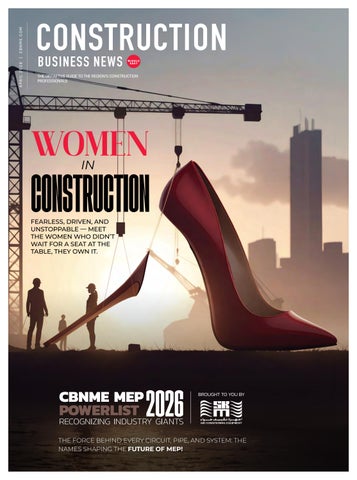
WOMEN CONSTRUCTION IN
FEARLESS, DRIVEN, AND UNSTOPPABLE — MEET THE WOMEN WHO DIDN’T WAIT FOR A SEAT AT THE TABLE, THEY OWN IT.

BROUGHT TO YOU BY
THE FORCE BEHIND EVERY CIRCUIT, PIPE, AND SYSTEM: THE NAMES SHAPING THE FUTURE OF MEP!










































































FEARLESS, DRIVEN, AND UNSTOPPABLE — MEET THE WOMEN WHO DIDN’T WAIT FOR A SEAT AT THE TABLE, THEY OWN IT.
BROUGHT TO YOU BY
THE FORCE BEHIND EVERY CIRCUIT, PIPE, AND SYSTEM: THE NAMES SHAPING THE FUTURE OF MEP!
18 IN FOCUS
VERTICAL CITY REVIVAL WITH PARSONS
King Abdullah Financial District (KAFD): The First Vertical City in Saudi Arabia and a Model for High-Rise Residential Retrofit
22 CRANES
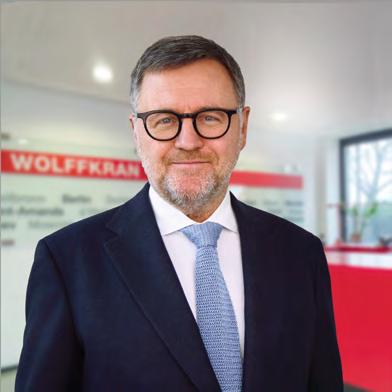
A RETURN TO THE HELM Wolffkran reshuffles its leadership as Peter steps back into the Group CEO role.
24 SUPPLIER
COMPLEXITY MADE BUILDABLE
Doka Raises The Structural Bar At Azizi’s Rêve Riviera
26 KSA
NEOM AXES TROJENA MOUNTAIN DESTINATION AS SAUDI ARABIA TIGHTENS THE BELT

28 DESIGN
BEYOND SQUARE FOOTAGE: THE RISE OF DESIGN-LED DEVELOPMENT IN ABU DHABI
Eng. Ashba Al Ghafli, CEO of Gaf Property, examines the growing importance of designled thinking in creating sustainable, livable, and culturally grounded communities
30 CBNME MEP POWERLIST 2026 RECOGNIZING INDUSTRY GIANTS
56 WOMEN IN CONSTRUCTION HARD HATS, SOFT POWER WOMEN SHAPING THE CONSTRUCTION INDUSTRY
78 CASE STUDY WEALTH BUILDS SKYLINES
The finance trends redefining Dubai real estate today
80 HW TALKING POINT
Professor Rabee Rustum of Heriot-Watt University Dubai highlights a growing shift in how cities approach wastewater
82 OPENING PLAYBOOK BEFORE THE RIBBON
The real secret to successful hotel openings isn’t the ribbon-cutting, it’s everything that happens before it
86 EDITOR’S CHOICE ONE TO WATCH Nuvé By Zoya

CEO
Wissam Younane wissam@bncpublishing.net
Managing Director
Rabih Najm rabih@bncpublishing.net
Group Publishing Director
Joaquim D'Costa jo@bncpublishing.net
Editor-in-Chief
Vibha Mehta vibha@bncpublishing.net
Commercial Director
Andrea Mocay andrea@bncpublishing.net
Editorial Assistant
Aya Zhang aya@bncpublishing.net
Digital Reporter
Reeba Asghar reeba@bncpublishing.net
Creative Lead
Christian Harb chriss@bncpublishing.net
Junior Art Director
Rizaldi Febrian
Marketing Executive
Aaron Joshua Sinanbam aj@bncpublishing.net
Multimedia
Joel Amparo, Eduardo Buenagua, and Harton Otlang
PO Box 502511 Dubai, United Arab Emirates P +971 4 4200 506 | F +971 4 4200 196
For all commercial enquiries, contact jo@bncpublishing.net T +971 50 440 2706
All rights reserved © 2025. The opinions expressed are solely those of the contributors. Construction Business News Middle East and its affiliated publications in the MENA region are exclusively licensed to BNC Publishing. No part of this magazine may be copied, reproduced, or transmitted in any form or by any means without prior written consent from the publisher.
Printed by United Printing and Publishing | upp.ae
Images used in Construction Business News Middle East are credited when necessary. Attributed use of copyrighted images with permission. All images not credited courtesy Shutterstock.
Keep up to date with all the latest news, features and much more on our website and social media platforms
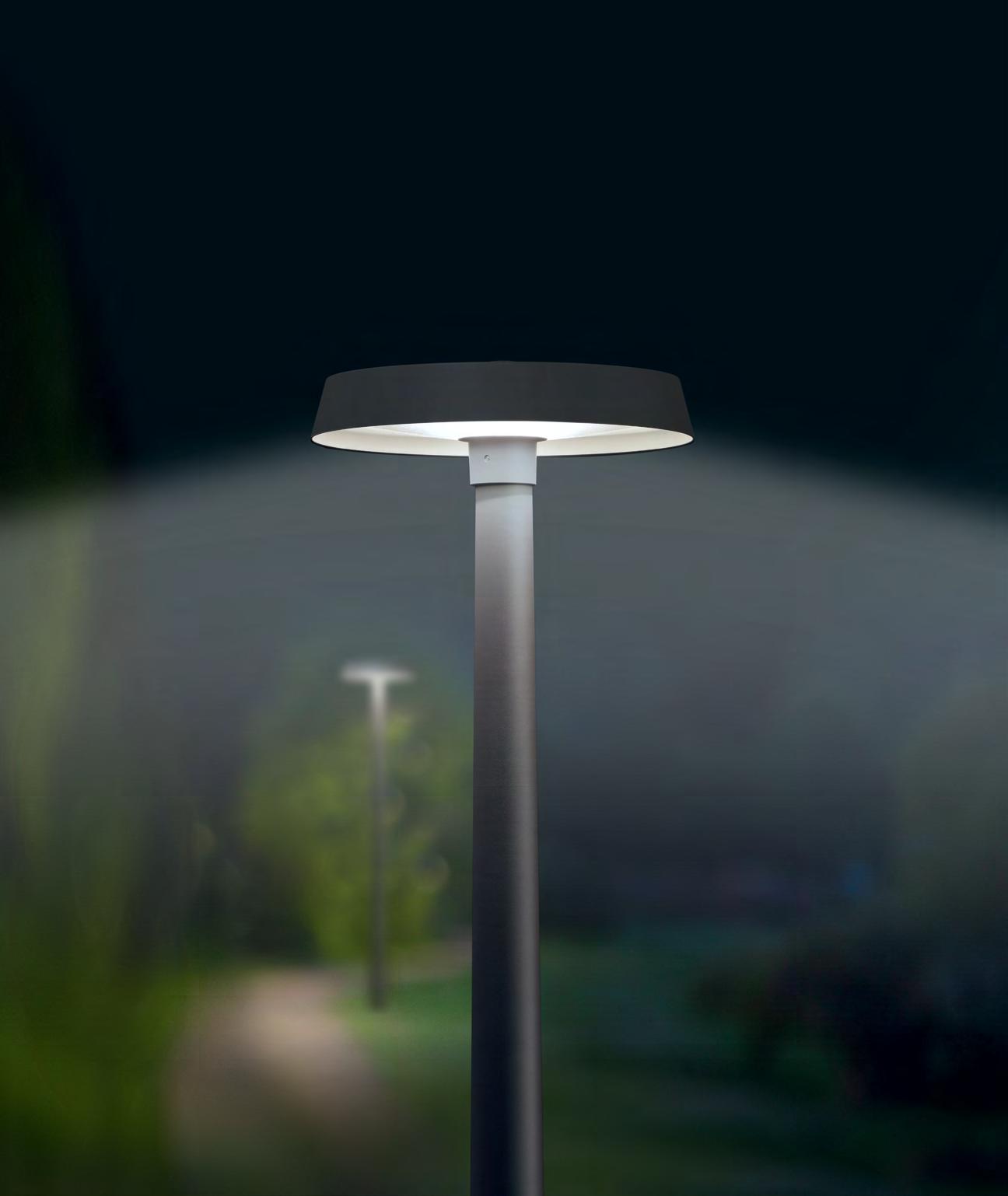
BEGA pole-top luminaires with Dark Sky technology direct the light in a highly efficient manner only where it is required. Light pollution of the night sky is avoided. bega.com/darksky
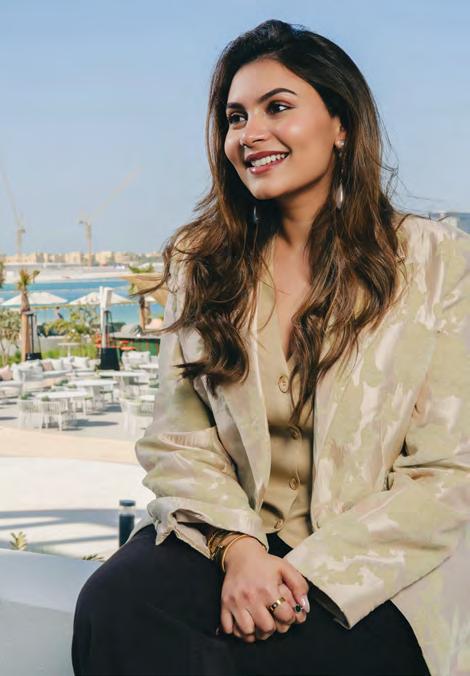
I’ll be honest with you. There are months where putting this magazine together feels like an exercise in persistence. Deadlines, copy edits, last-minute changes to a lead image at eleven o’clock on a Tuesday night. It is, as anyone in publishing will tell you, a grind.
And then this issue comes around, and I remember why I do it.
Women in construction is, and has always been, my favourite feature to shepherd into the world. Not because it is easy, but because of what happens when you actually get these women on the phone, or across a table, or into a voice note recorded somewhere between a site visit and a school run. They talk differently. They think out loud in a way that most people spend years learning to unlearn. There is a frankness to them, and underneath it, something I can only describe as grit with grace.
This year, that quality felt more necessary than ever. The region we cover is living through something heavy. The war, the uncertainty, the low hum of anxiety that has become the backdrop to daily life for so many; it is not abstract. It touches the industry, the people in it, and the stories we tell. I went into these conversations braced for that weight.
What I found instead was something that genuinely moved me. There were moments during some of these interviews where I had to set my notes down. Not because the conversation had gone somewhere difficult, but because the honesty of it caught me off guard. Women speaking about fear and uncertainty in the same breath as hope and tomorrow. Women who have lost sleep over what is happening around them, and who still show up, still lead, still mentor the person coming up behind them. That rawness, that refusal to pretend everything is fine while also refusing to stop moving forwards, it sat with me long after the calls ended.
There is something these women seemed to carry, quietly but unmistakably: the belief that one day, everything will be okay. That we will be okay. And until that day arrives, we smile our way through it. Not because the smile is easy, but because it is something no circumstance can take from us.
Perhaps that is what we are wired for. To hold things together when they are threatening to come apart. To find the next foundation worth laying.
This issue is for them. But honestly? It is a little bit for all of us.

Vibha Mehta Editor-in-Chief vibha@bncpublishing.net
Vibha Mehta vibhamehta01 @vibhamehta01
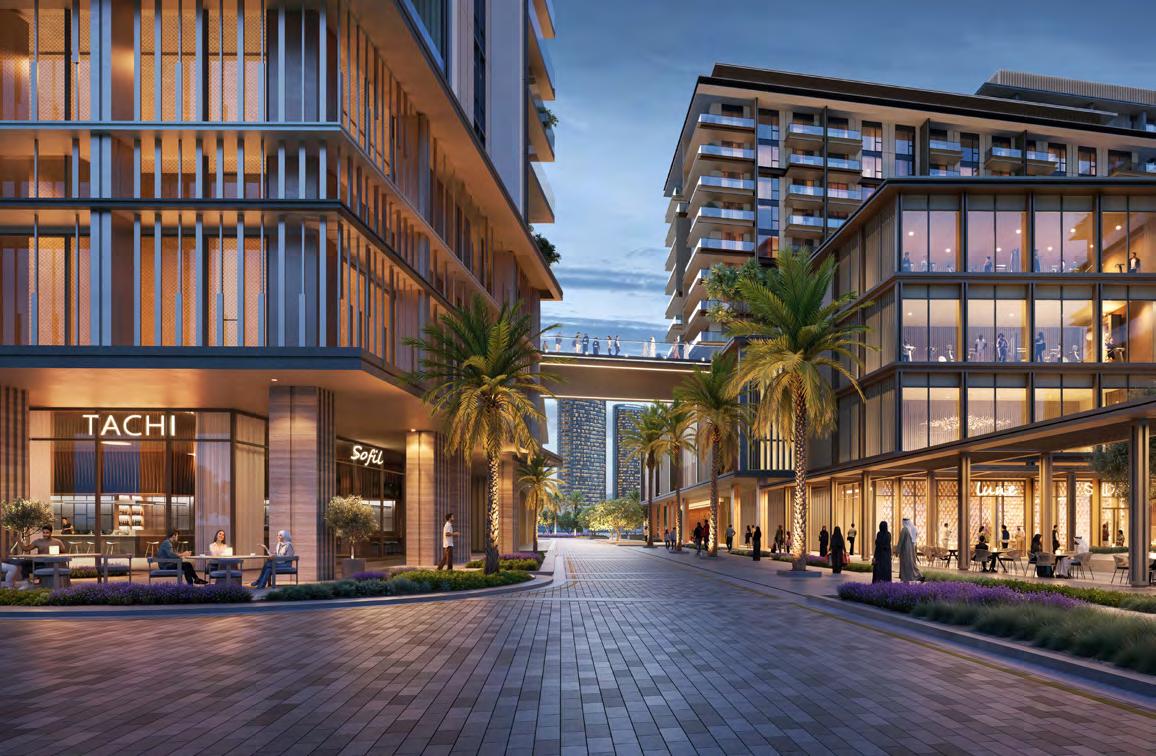
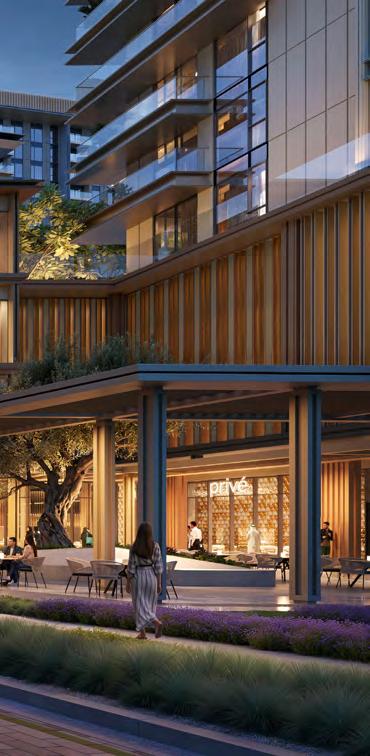
Modon’s newly launched Tara Park on Reem Island is positioned as a central, amenityrich community, pairing premium apartments with dayto-day practicality and a freehold proposition aimed at sustained demand in Abu Dhabi.
Anew residential launch on Reem Island rarely arrives without a familiar set of promises: location, lifestyle, and long-term value. Tara Park tries to make those claims measurable. Set close to ADGM and planned to connect seamlessly to Reem Mall, the development aims to shorten the practical distances that define day-today living in Abu Dhabi—work, school, retail, and downtime.
The positioning is straightforward. Reem Island already functions as one of the capital’s most active residential nodes, and Tara Park is designed to leverage that with quick bridge access and proximity to established anchors such as Sorbonne University Abu Dhabi, Repton School, and The Galleria Mall.
FOR RESIDENTS, THE PITCH IS LESS ABOUT NOVELTY AND MORE ABOUT CONSISTENT, CENTRAL CONVENIENCE.
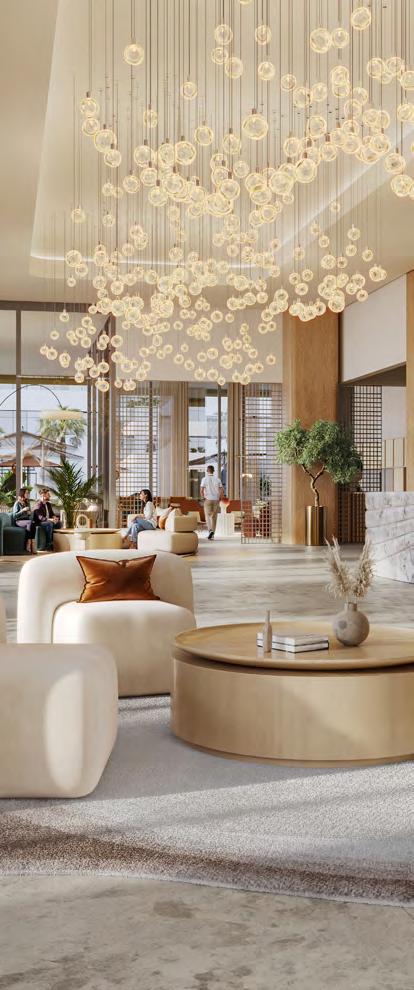
What differentiates the scheme is the emphasis on an integrated community layout. Rather than treating amenities as add-ons, Tara Park connects its towers via a shared podium intended to operate as a social and functional spine. The idea is to reduce friction: amenities stay within easy reach, and shared spaces create everyday opportunities for connection.
That design intent is reinforced by a wellness-led brief.
A 527-METRE RUNNING TRACK, GYMNASIUMS, YOGA STUDIOS, TEMPERATURE-CONTROLLED SWIMMING POOLS, AND PADEL COURTS SIGNAL A LIFESTYLE PROPOSITION THAT GOES BEYOND A SINGLE SIGNATURE FEATURE.
Practicality is also baked in, with coworking spaces and nurseries designed to support a balanced routine for modern professionals and families.
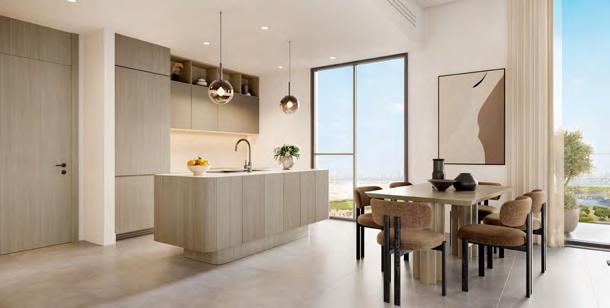
On the residential side, the unit mix spans one-, two-, and threebedroom apartments, with an explicit focus on high-spec finishes that aim to sit above standard market expectations. The variety is intended to keep the community dynamic— accommodating residents at different life stages without forcing them to trade location for suitability.
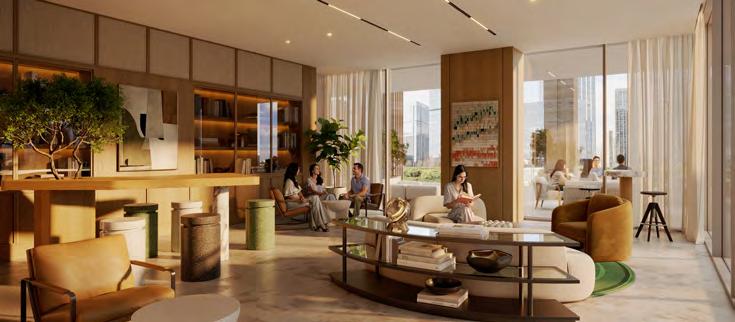
Tara Park is also framed as an investment play. As a freehold development open to buyers of all nationalities, it expands the addressable market while leaning on the fundamentals that typically drive rental performance: centrality, quality, and amenity depth. In a market where tenants increasingly price in convenience and quality-of-life features, the project positions itself for strong rental demand.
ULTIMATELY, TARA PARK’S PROPOSITION IS SIMPLE: PREMIUM LIVING THAT REMAINS WORKABLE. IT AIMS TO DELIVER A HOME THAT FEELS ELEVATED, WITHOUT MAKING DAILY LIFE COMPLICATED.
Against a backdrop of continued interest in well-located, lifestyleled developments in Abu Dhabi, Tara Park arrives as a timely addition—one that treats connection, convenience, and community as the real luxuries.
ACC has also been awarded the Bida Al Jubail phase
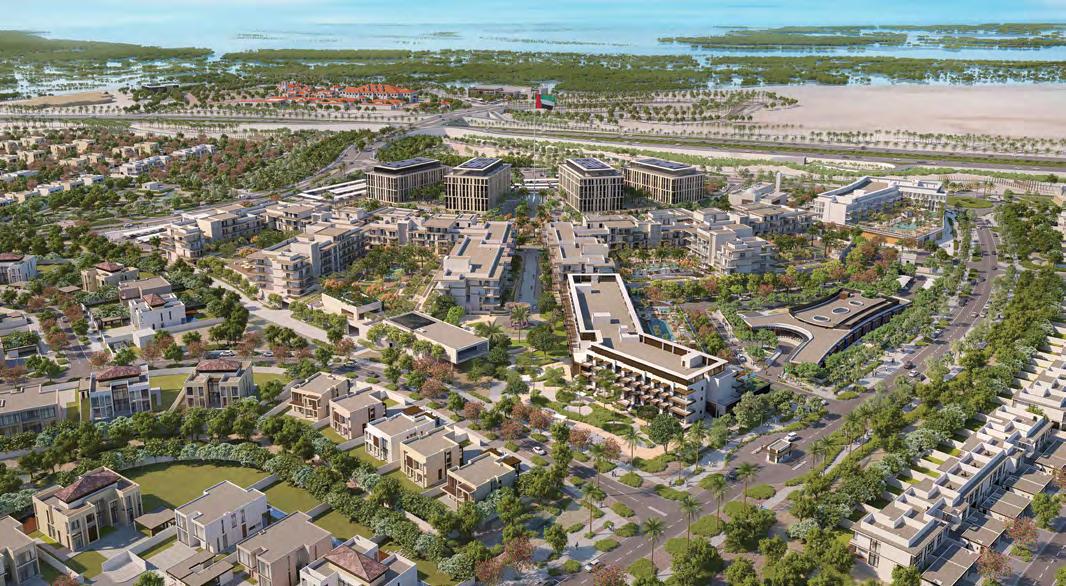
Arabian Construction Company (ACC) has been appointed by Jubail Island Investment Company to deliver Packages 1 to 5 at Jubail Island, reinforcing its continued role in shaping the UAE’s next generation of integrated, high-quality residential destinations.
The scope covers the construction of premium three- to six-bedroom villas, delivered through ACC’s execution-led approach that combines engineering rigour, detailed planning, and disciplined programme control. Completion is targeted for Q4 2026, positioning the packages as a key contribution to the wider masterplan’s delivery momentum and quality benchmarks.
ACC has also been awarded the Bida Al Jubail phase, further expanding its involvement across the development and signalling sustained confidence in its capability to deliver at scale.
LOCATED BETWEEN SAADIYAT ISLAND AND YAS ISLAND, JUBAIL ISLAND BLENDS LUXURY WATERFRONT LIVING WITH PROTECTED MANGROVE LANDSCAPES. THIS SETTING RAISES THE DELIVERY BAR, REQUIRING CAREFUL COORDINATION ACROSS INFRASTRUCTURE INTERFACES, SITE LOGISTICS, AND QUALITY ASSURANCE, AS WELL AS TECHNICAL PRECISION TO PROTECT THE DEVELOPMENT’S ENVIRONMENTAL CONTEXT.
Through these appointments, ACC strengthens its profile as a contractor capable of converting ambitious master plans into durable communities, delivering complex projects safely, efficiently, and to exacting standards.
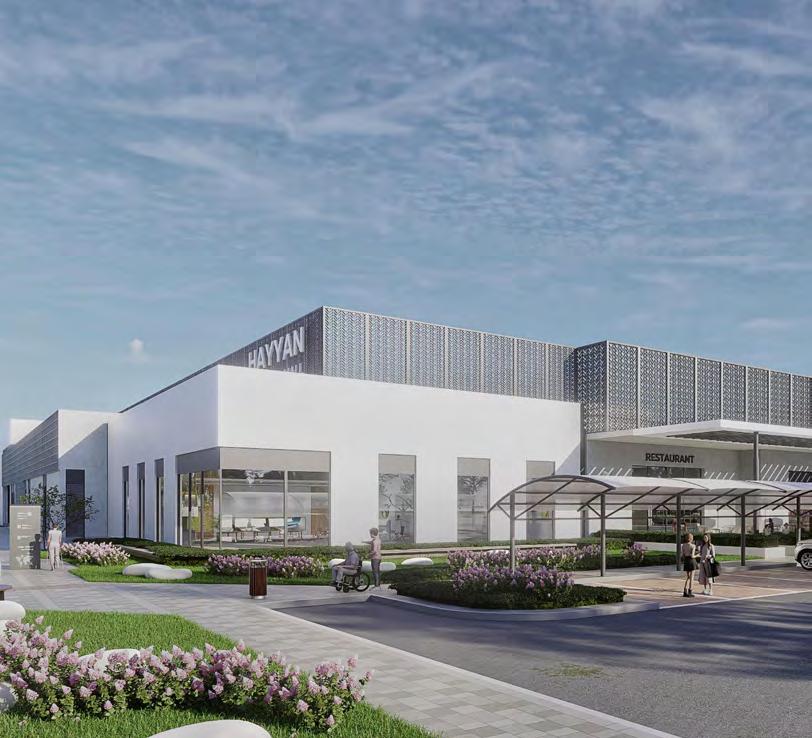
The mall will serve as a central retail and lifestyle hub within the Hayyan community
Alef Group, a premier real estate developer in Sharjah, has announced plans to develop a new community mall within Hayyan, one of its distinguished projects in the Emirate of Sharjah, reinforcing the group’s vision of creating integrated destinations that enrich everyday living.
The mall will serve as a central retail and lifestyle hub within the Hayyan community, bringing together a curated mix of retail outlets, cafés, dining concepts and essential services designed to support the daily needs of residents while creating a vibrant social destination for the wider community.
Strategically located along Emirates Road and positioned as a landmark component of Hayyan, the future retail destination will benefit from strong accessibility and connectivity, while attracting and enabling it to serve not only residents of Hayyan but also neighboring communities across Sharjah.
The project reflects Alef Group’s broader mission of developing lifestyle experiences inspired by people and guided by vision, contributing to Sharjah’s growing reputation as a destination for integrated, high-quality urban communities.
Once completed, Hayyan Mall will play a central role in supporting the daily life of residents while further positioning Hayyan as one of Sharjah’s most dynamic lifestyle destinations.
HAYYAN IS ONE OF SHARJAH’S MOST DISTINCTIVE NATUREINSPIRED COMMUNITIES, DESIGNED TO COMBINE CONTEMPORARY LIVING WITH EXPANSIVE GREEN LANDSCAPES, LAGOON AND FAMILY-FOCUSED AMENITIES. THE DEVELOPMENT REFLECTS ALEF GROUP’S COMMITMENT TO BUILDING COMMUNITIES THAT PRIORITIZE WELLBEING, CONNECTIVITY AND QUALITY OF LIFE.
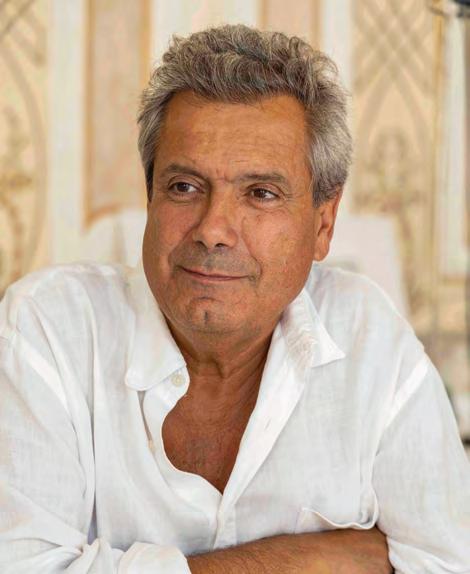
Al Ghurair Development has appointed Pessoa Prize-winning Lisbon studio Aires Mateus for a new residential project in Dubai South
Al Ghurair Development, Al Ghurair’s freehold real estate arm, has appointed Aires Mateus as lead architect for its upcoming premium residential development in Dubai South. The appointment marks the Lisbon-based practice’s first project in the UAE and continues Al Ghurair Development’s approach of working with internationally respected architects to deliver homes that are designed with purpose and built for generations to come.
Founded in Lisbon in 1988 by brothers Manuel and Francisco Aires Mateus, the practice has spent over three decades developing architecture rooted in the relationship between the physical and the cultural world. Working across architecture, interior, product, and graphic design, the studio approaches each project through careful research into its context, seeking what it describes as the perennial state of shapes and materiality in the continuity of time.
Sultan Al Ghurair, CEO of Al Ghurair Development, said: “Every architect we work with is chosen because they bring something distinct. With Aires Mateus, what stood out was their discipline. For more than 30 years, they have maintained a singular focus on precision, proportion and the quality of space. That aligns closely with how we approach residential design at Al Ghurair Development, where every decision is guided by quality, practicality and long-term value. We are delighted to bring their work to the UAE for the first time.”
Across cultural, civic, and residential projects throughout Europe, the Aires Mateus studio has consistently demonstrated this commitment to clarity and permanence. Notable projects include the EDP Headquarters in Lisbon, the Museums of L’Élysée and mudac in Lausanne, the Olivier Debré Contemporary Creation Centre in Tours, and the Faculty of Architecture in Tournai. The practice has been recognised with the Pessoa Prize (2017), Portugal’s most distinguished cultural honour, alongside the Secil Prize, multiple FAD Awards, and several nominations for the Mies van der Rohe Prize.
For Dubai South, the studio will design a residential building offering one, two and three-bedroom homes, including duplex residences. The full architectural concept is currently being developed. Aires Mateus’s approach to residential design starts with how a building is experienced from within. The practice has long held that domestic space should offer its residents freedom, and that the quality of a home is determined by proportion, light, and the relationship between interior and exterior, rather than by decorative complexity.
Manuel Aires Mateus, Founding Partner of Aires Mateus, shared: “We approach each project as an opportunity to understand what already exists. The scale of the city, the light, the climate, and the way people move and inhabit space. Architecture begins there. It is not about adding complexity, but about clarifying what matters. In Dubai, the context is strong and very present. Our role is to respond with precision, creating spaces that feel natural to live in and clear in their intention. We are pleased to work with Al Ghurair Development on a project that invites us to bring a new perspective to a city that is always looking forward.”
The new development forms part of Al Ghurair Development’s expanding residential portfolio, which includes The Weave in Jumeirah Village Circle, designed in collaboration with Australian architect Joe Adsett and now under construction, alongside Wedyan on Dubai Canal, designed by Kengo Kuma under the Al Ghurair Collection super-prime brand, and an upcoming tower in Wadi Al Safa 3 near The Wilds and Al Barari, designed by Neri&Hu Design and Research Office. Further developments in Dubai South and a masterplan in Al Jaddaf are also in the pipeline.
Guided by the company’s purpose of in pursuit of better, each project reflects Al Ghurair Development’s commitment to design-led, enduring spaces that contribute to Dubai’s urban fabric. The full architectural concept for the Dubai South development will be announced as the design progresses.
King Abdullah Financial District (KAFD): The First Vertical City in Saudi Arabia and a Model for High-Rise Residential Retrofit
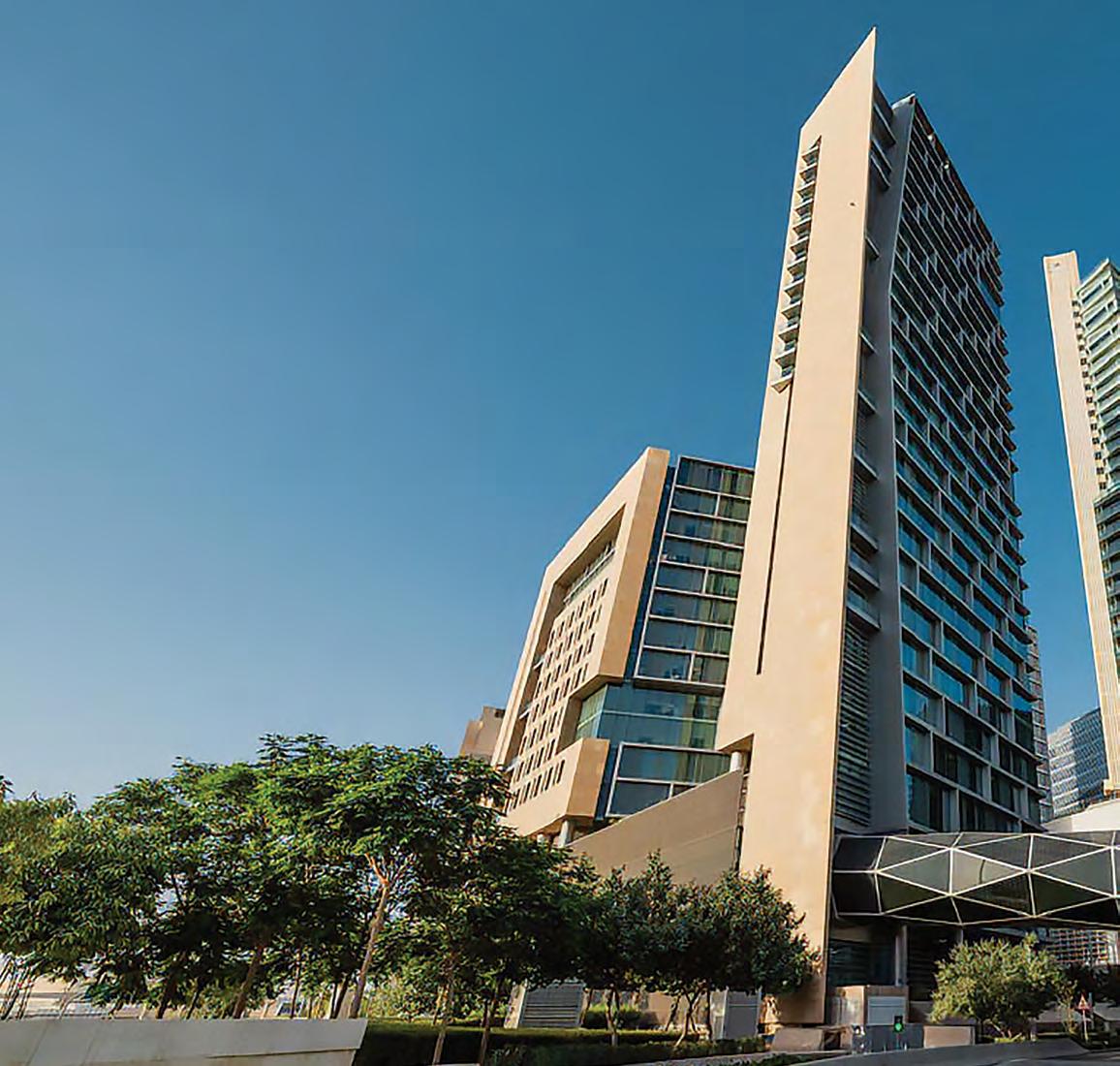
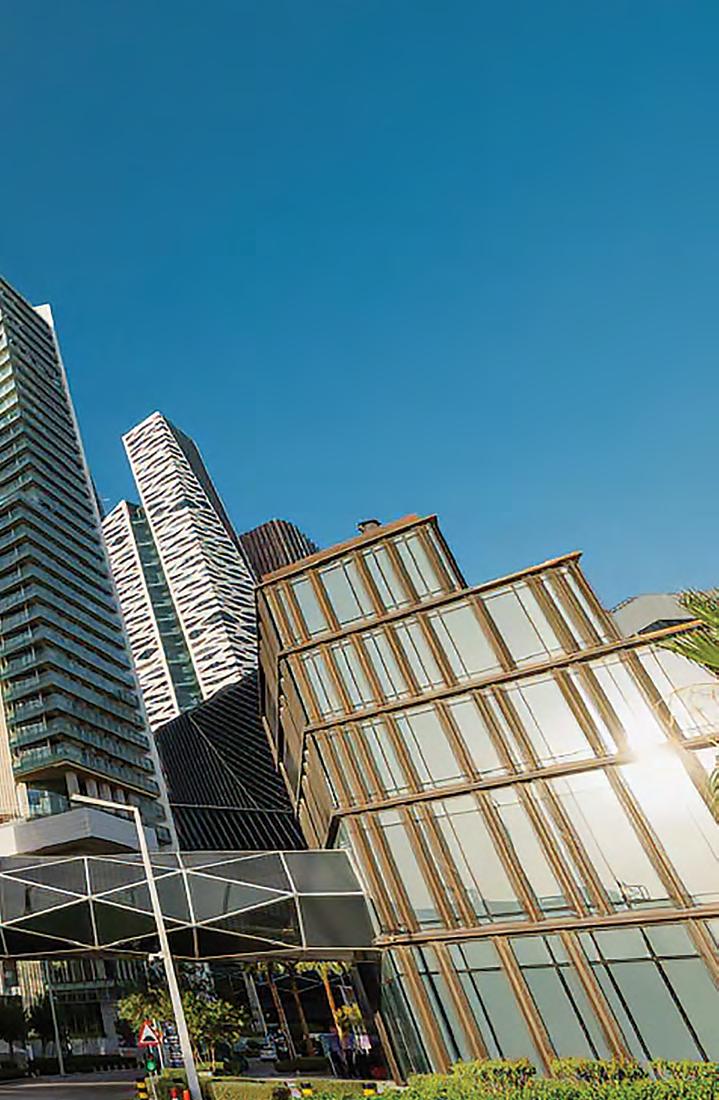
Within Riyadh’s global financial district King Abdullah Financial District (KAFD), the Parsons-led residential uplift project stands out as a landmark example of how structured program recovery, technical rigor, and stakeholder coordination can restore value and functionality to complex residential assets at scale. The project breathes new life into residential towers originally designed in 2009, transforming them into modern, premium living
spaces that set a new benchmark for quality and sustainability in Riyadh.
Why It Matters?
Located within Riyadh’s flagship business district,
THE KAFD RESIDENTIAL UPLIFT PROJECT INVOLVED THE REFURBISHMENT AND COMPLETION OF W HOTEL BRANDED 515 APARTMENTS ACROSS 16 HIGH-RISE RESIDENTIAL TOWERS, ALL DELIVERED WITHIN A LIVE, OPERATIONAL DISTRICT.
The team was tasked with recovering a legacy development, while maintaining safety, continuity, and confidence for residents and stakeholders.
The project was as much about program recovery and risk mitigation as it was about physical refurbishment. The ability to stabilize delivery, resolve any existing technical issues, and elevate residential quality without disrupting district operations was critical to protecting the long term value of the asset and
reinforcing KAFD’s position as a worldclass mixed-use destination for business and lifestyle.
Beyond its architectural and technical excellence, the project serves as an important asset for the district and the city. It provides flexible housing solutions that can accommodate corporate executives, long-term residents, and guests during major international events such as the World Expo and the World Cup. The upscale units and amenities can also be leveraged as high-end serviced residences or hotel apartments, attracting residents, investors, and tourists alike.
Parsons at the Helm Parsons provided integrated project and construction management services, focusing on structure, clarity, and accountability. From the outset, the team implemented disciplined governance, technical due diligence, and structured recovery planning.
Working across occupied residential towers,
PARSONS COORDINATED MULTIPLE CONTRACTORS WITHIN A TIGHT SCHEDULE WHILE MAINTAINING STRINGENT SAFETY AND QUALITY STANDARDS.
The team implemented robust stakeholder engagement processes to ensure tenant wellbeing, manage expectations, and enable uninterrupted district operations. This approach allowed construction activities to progress efficiently while safeguarding the day-today functioning of a live and operational district.
Consistency across design drawings, material schedules and the scope of work was rigorously maintained to reduce discrepancies and avoid costly variations during execution. This was reinforced through daily site visits with the client team, enabling rapid, on-site
decision‑making and early resolution of issues.
Drawing on Parsons’ expertise and experience with KAFD, impediments were swiftly addressed as they arose, allowing the project to progress efficiently and achieve timely delivery.
Additionally, Parsons’ construction and commercial teams played a vital role in protecting the client’s interests through disciplined cost control, contractual oversight, and site management. The commercial team maintained tight cost management and contractual oversight, ensuring the project stayed within budget while maximizing value, while the construction team applied robust on site supervision to sustain productivity and mitigate delays.
A defining differentiator of the KAFD Residential Uplift Project was Parsons’ ability to balance retrofit complexity with program recovery. The team conducted targeted technical reviews to identify root
causes of defects and gaps, translating findings into clear corrective action plans.
This methodical, data driven approach enabled progress without compromise, demonstrating how clarity of process and accountability can unlock momentum even in the most constrained delivery environments.
A STRONG COMMITMENT TO PREMIUM QUALITY STANDARDS UNDERPINNED THE PROGRAM ACROSS ALL RESIDENTIAL UNITS. AS PART OF A FLAGSHIP DEVELOPMENT WITHIN KAFD, THE REFURBISHED APARTMENTS WERE REQUIRED TO MEET THE STANDARDS OF A WORLD CLASS URBAN DESTINATION.
This required meticulous attention to finishing details, multi stage inspections, and strict quality assurance
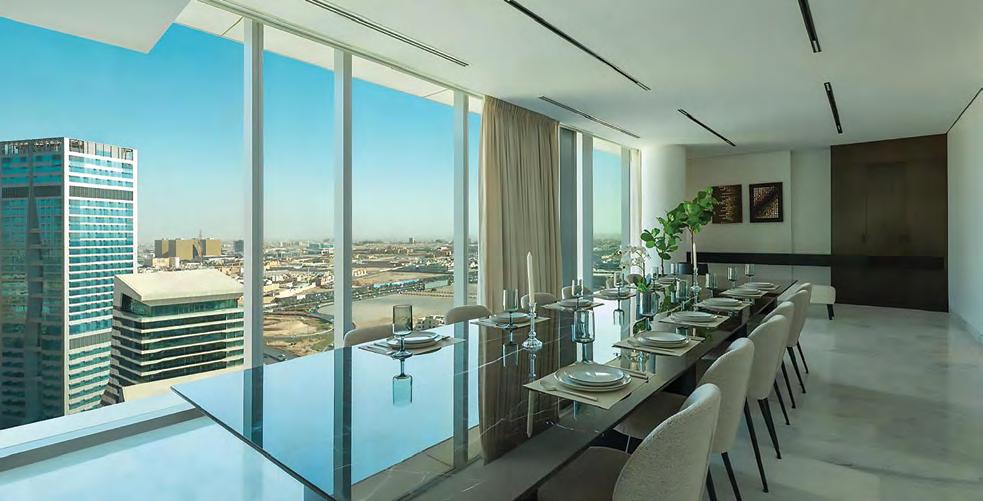
protocols throughout the retrofit process. Parsons supported this commitment by implementing enhanced verification procedures, strengthened contractor coordination, and proactive quality control measures to ensure that every apartment delivered aligned with the client’s expectations and the district’s premium residential positioning.
Rather than pursuing demolition or wholesale replacement, the project prioritized asset life extension through refurbishment. The KAFD Residential Uplift Project demonstrates a strong commitment to sustainable practices and climate responsibility. During construction, the project prioritized the use of sustainable building materials, including low-VOC (volatile organic compounds) paints and finishes, which improve indoor air quality and reduces environmental impact. Efficient waste management practices, recycling, and responsible disposal of demolition materials minimized landfill use and reduced the project’s construction footprint.
Design enhancements focused on improving energy efficiency through better insulation, modern fixtures, and sustainable finishes, ensuring that the towers operate more efficiently and consume less energy in the long term. This contributes to a measurable reduction in operational carbon emissions compared to the original design.
By resolving legacy construction issues and upgrading existing buildings, the program maximized the value of the original asset while minimizing material waste and disruption. The program enhanced residential functionality, quality, and occupancy readiness without disrupting district operations, reinforcing refurbishment as a sustainable and effective alternative to newbuild development in dense urban environments.
The project delivers significant social and economic benefits while demonstrating a clear commitment to sustainability and environmental responsibility. As a landmark urban regeneration initiative, the project revitalizes an important residential community within Riyadh’s premier business and lifestyle destination, enhancing the quality of life for residents and contributing positively to the city’s modern urban fabric. It
defines hospitality of the future, and Parsons was proud to be a part of that benchmark.
Socially, the project provides upgraded, highquality housing for residents, with modern amenities, welcoming lobbies, business lounges, and shared spaces that promote social interaction and a sense of community.
The revitalized apartments also help meet the growing demand for premium housing, especially during major international events in the coming years.
Delivering refurbishment within occupied towers required a people first approach, with resident safety and wellbeing guiding every stage of delivery. In parallel, maintaining uninterrupted district operations remained critical. By stabilizing and upgrading challenged residential assets, the program supported KAFD’s long term functionality and liveability while reinforcing the role of refurbishment in sustaining complex, high density urban districts.
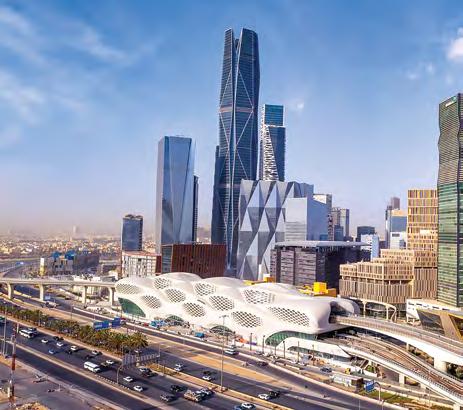
KAFD’s direct link to the Riyadh Metro strengthens its vertical-city appeal, offering seamless, car-light connectivity across the capital
Wolffkran reshuffles its leadership as Peter steps back into the Group CEO role.
When a founder returns to the top job, it rarely happens without reason. At Wolffkran, that reason is growth, and the ambition to sustain it.
Effective April 1, 2026, Dr. Peter Schiefer, currently Delegate of the Board of Directors, will resume the role of Group CEO, a position he previously held from 2005 to 2019. Alongside this, Duncan Salt, who has served as CEO since 2019, transitions into the role of Regional CEO and Board Member for the Middle East and APAC. It is a restructure that the board is framing not as a change of direction, but as a sharper alignment of the right people with the right remits.
The context matters. Since Peter first acquired Wolffkran from MAN in 2005, taking on what was then a commercially challenged business, the company has more than doubled its revenue over the past decade. A traditional European crane manufacturer has been steadily transformed into a global tower crane provider with a footprint stretching from Central Europe and the UK to Dubai, France, Texas, California, and most recently Saudi Arabia, where new subsidiaries in Riyadh and Dammam mark the company’s latest expansion.
Duncan’s contribution to that story is significant. A mechanical engineer who joined via the HTC acquisition in 2015, he oversaw Wolffkran’s entry into the U.S. market, which accounted for roughly a quarter of total revenue in 2024, and the steady growth of the French rental fleet. His new regional focus on the Middle East and APAC is a natural extension of work already underway. Wolffkran entered the Saudi market under his watch, and
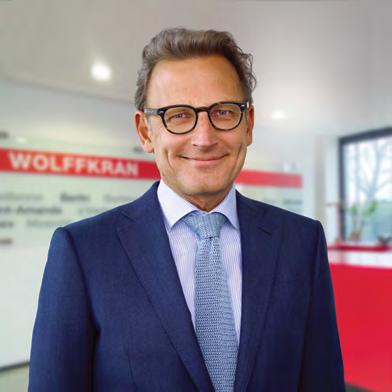
both executives appear aligned on continuing that momentum.
For a business with serious ambitions across the GCC, having Duncan embedded regionally while Peter steers the global strategy is a pairing that makes a great deal of sense. The structure is leaner. The intent is clear.
“I AM EXCITED TO FOCUS EVEN MORE ON THE GROUP’S GROWTH MARKETS,” DUNCAN SAID. PETER, MEANWHILE, IS DIRECT ABOUT THE RATIONALE: “WE ARE CONVINCED THAT THIS IS THE RIGHT STEP TO POSITION OUR LEADERSHIP FOR THE FUTURE.”
DESIGN, BUILD, FURNISH
THE 11th INTERNATIONAL INTERIOR, EXTERIOR, FURNISHING & FIT-OUT EXHIBITION

EGYPT’S INTERNATIONAL EXHIBITION CENTER, NEW CAIRO - EGYPT 14 - 16 MAY 2026
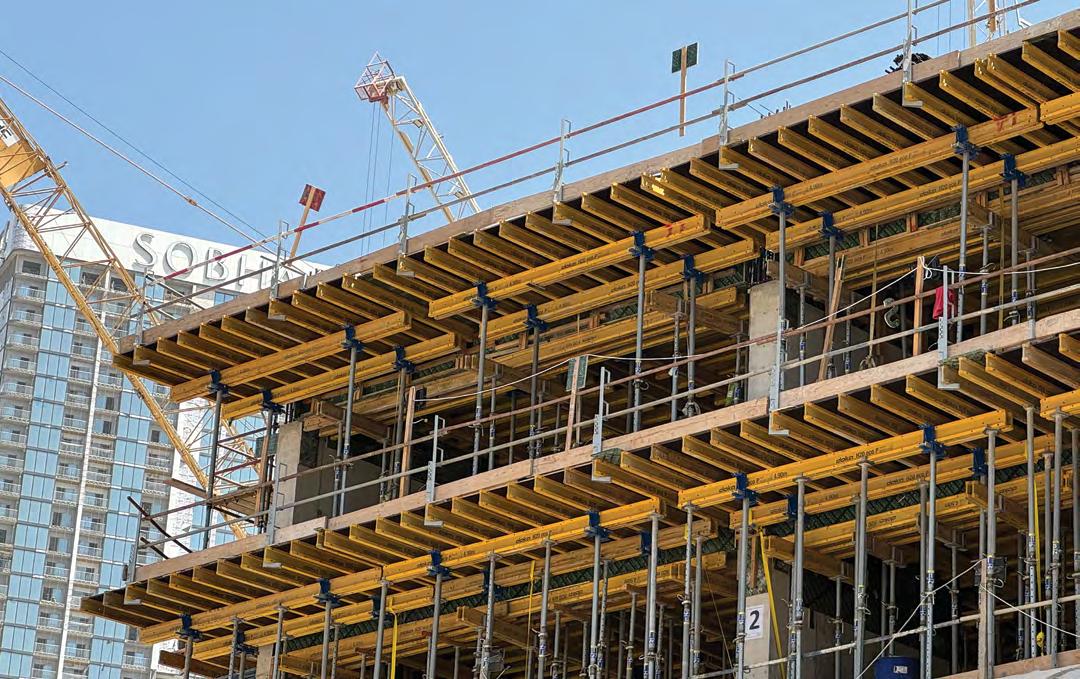
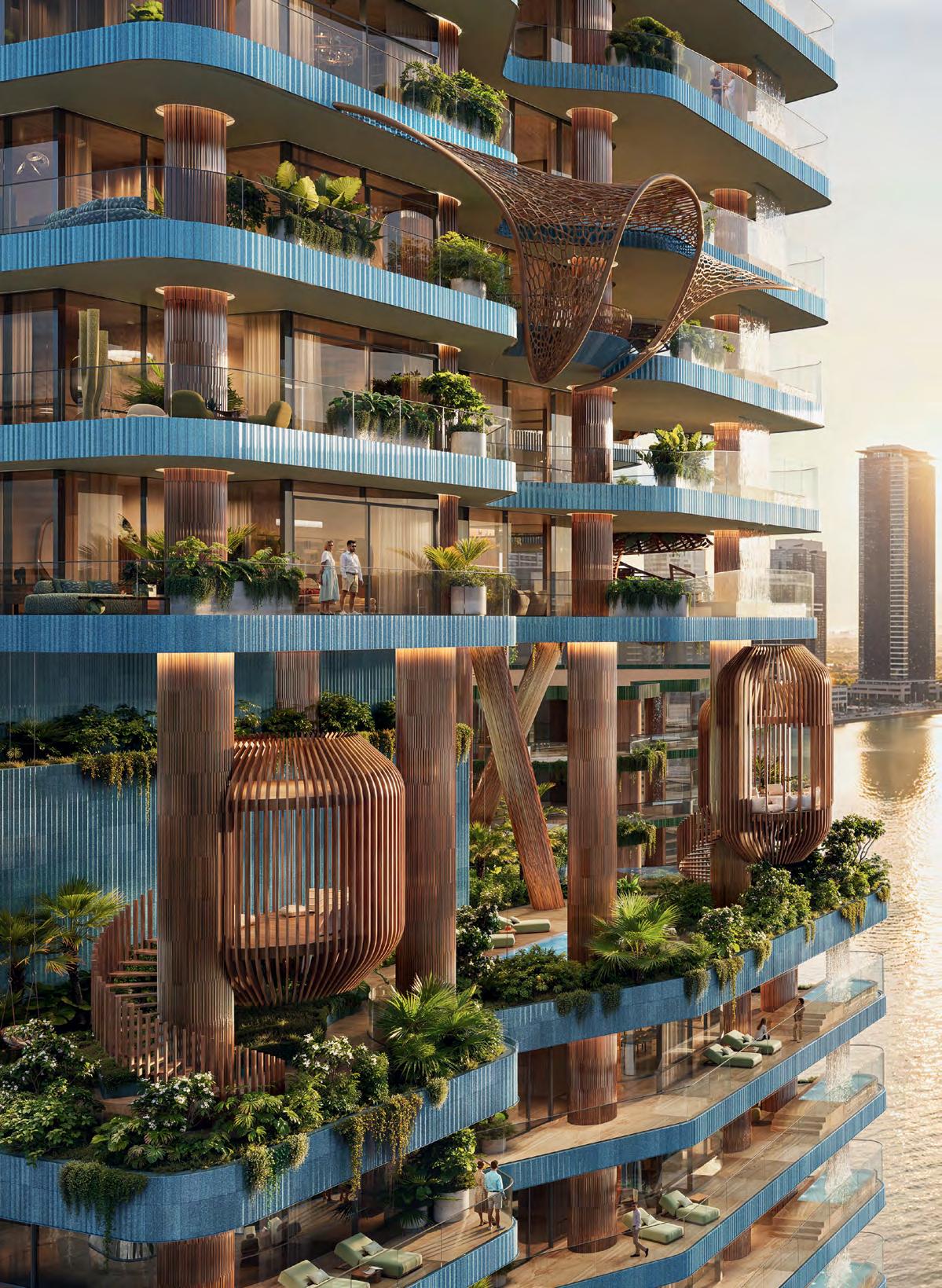
The landscape of Dubai’s Mohammed Bin Rashid (MBR) City continues its upward trajectory with the development of the 110-metre Rêve Riviera, a striking multibuilding complex designed to redefine waterfront urban living. Inspired by the elegance of the French Riviera, this ambitious project comprises three high-rise towers with distinctive, flowing, wave-like façades and panoramic glass elements. To ensure the highest levels of structural precision and to manage the complexities of a dense, fast-paced construction environment, Azizi Developments appointed Doka as the formwork and scaffolding partner.
As a global leader in formwork, scaffolding, and engineering solutions, Doka was tasked with providing a highly integrated system strategy to ensure efficiency and safety across all vertical and horizontal construction phases. By deploying a comprehensive suite of climbing systems, adaptable wall formwork, and compact shoring solutions, Doka played a pivotal role in maintaining the demanding project schedule
and upholding the structural integrity of this premium residential landmark.
The construction of the Rêve Riviera complex presented two principal challenges, both typical of a high-profile, fast-track development in a prime urban location. The first was the extremely limited working and storage space at the construction site. This necessitated formwork solutions that were easy to handle, compact to store, and minimised the need for large laydown areas. The second involved the tight construction schedule, which demanded rapid delivery of Ready-To-Use (RTU) formwork and consistently fast cycle times to meet the timeline for the three towers. This ultimately required systems with minimal dependency on the main tower crane for repositioning.
DOKA’S ENGINEERING TEAM DEVELOPED A TAILORED, MULTI‑SYSTEM STRATEGY TO OPTIMISE SPEED AND EFFICIENCY ACROSS ALL STRUCTURAL ELEMENTS.
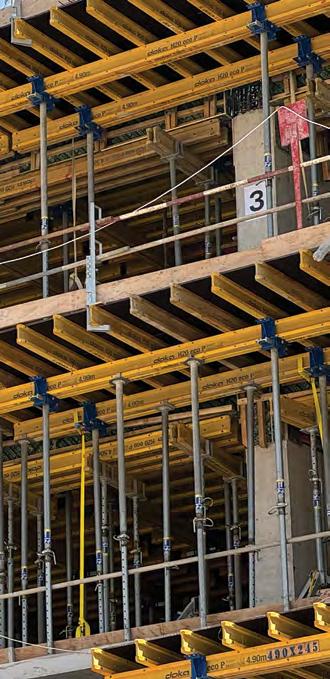
Central to the approach was the climbing formwork 150F, a proven crane-lifted system offering safe, efficient forming for vertical structural elements. With its fully railed-in working platforms, integrated ladder access, and quick rollback and adjustment features, the 150F system enabled fast, streamlined
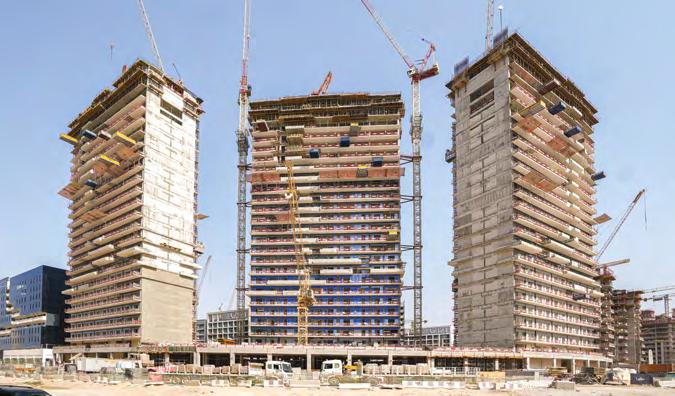
workflows while minimising crane time. The team also integrated a Shaft Platform to ensure efficient, safe shaft-forming operations throughout the build.
TO MANAGE ALL WALL AND SLAB FORMING, THE SOLUTION INTEGRATED VERSATILE, HIGH PERFORMANCE SYSTEMS, INCLUDING LARGE AREA FORMWORK TOP 50 AND FRAMI XLIFE, WHICH WERE CHOSEN FOR THEIR FLEXIBILITY AND COMPACT HANDLING, WHILE REMAINING IDEAL FOR THE RESTRICTED SITE CONDITIONS AND THE VARIED ARCHITECTURAL REQUIREMENTS OF THE TOWERS.
For slab construction, Dokaflex and Dokaflex table systems were deployed to reduce crane dependency during forming. The Dokaflex table provided pre-assembled units that could be moved swiftly via trolley or crane, maximising re-use and efficiency in the slab cycle. Furthermore, to address high shoring requirements in limited areas, the load-bearing tower d3 was utilised. This system provided compact, highcapacity support for heavy loads, critical to maintaining safety in the structure’s highdensity areas.
The successful execution of Rêve Riviera underscores the value of Doka’s comprehensive service offerings, which extend beyond the delivery of cuttingedge systems. The project benefited from detailed engineering support and a strong commitment to delivering Ready-ToUse materials on a tight schedule. This collaborative approach ensured that Doka’s solutions were tailored not only to the structures’ architectural complexity but also to the client’s exacting operational constraints, setting a new benchmark for construction logistics and structural excellence in Dubai.
While the project remains on track for its estimated completion in March 2026, the structural foundation laid by Doka’s systems has established Rêve Riviera as a significant case study in technical excellence for luxury high-rise development.
Trojena Lake shimmers like a sapphire crown in NEOM’s mountainscape—where mirrored waters meet the marvels of futuristic living
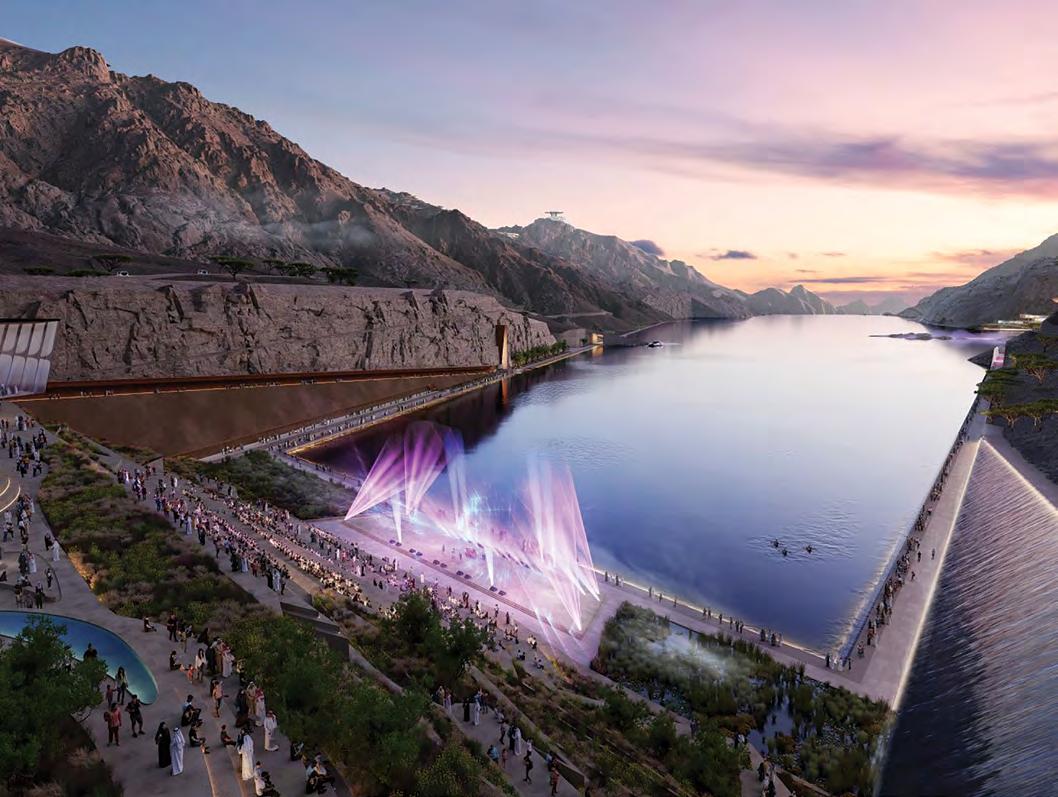
NEOM has terminated its contract with Italian construction giant Webuild for the Trojena mountain destination, ending works on a system of three dams, a 2.8km freshwater lake, and the dramatic overhanging structure known as The Bow. The termination takes effect on March 29, with construction sitting
at roughly 30% complete and a remaining backlog of approximately €2.8 billion.
Webuild says it will be fully reimbursed for costs incurred, leaving the group financially unscathed. Its wider backlog remains above €50 billion. But the decision is a significant moment for NEOM, and a telling one.
Trojena is not an isolated cancellation. NEOM had already terminated a structural steel contract with Eversendai at the Trojena ski village, and scrapped a tunnelling contract worth close to $1 billion at The Line. The cuts are becoming a pattern.
The context matters. Oil prices have softened to around $64 a barrel — well below the $81 average
recorded in 2024 — squeezing state revenues and forcing hard choices on capital allocation. Riyadh’s Expo 2030 and the 2034 FIFA World Cup are now the priority deadlines driving spend.
Reports from late 2024 suggested PIF had slashed project budgets across several NEOM components by as much as 60 percent. Trojena, with its enormous infrastructure demands and complex engineering requirements, was always going to be a difficult case to defend in a tighter fiscal climate.
Saudi Arabia is not abandoning Vision 2030. But it is making clearer, harder decisions about which parts of it get built first — and which get shelved.

Eng. Ashba Al Ghafli, CEO of Gaf Property, examines the growing importance of designled thinking in creating sustainable, livable, and culturally grounded communities
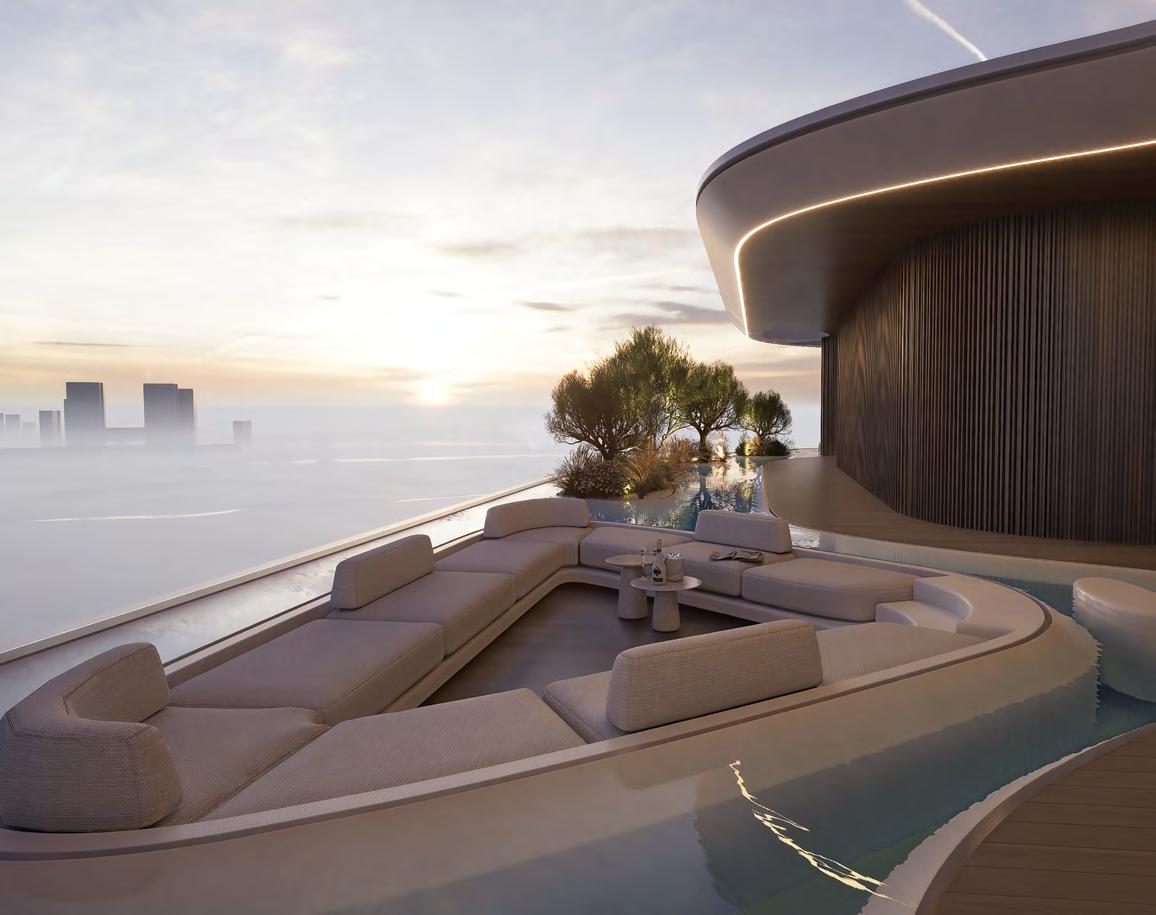
Across Abu Dhabi, the conversation around residential development is evolving. For years, the market centred on familiar metrics such as location, price, and square footage. While these factors remain important, they no longer tell the full story. Increasingly, both developers and residents recognise that the quality of design plays a defining role in how a home is experienced and how a community functions over time.
This shift extends beyond architecture as a purely aesthetic discipline. Design-led thinking is now influencing projects from the earliest stages, shaping decisions around planning, sustainability, liveability, and the relationship between people and the spaces they inhabit. In a city that continues to grow and diversify, this approach is becoming a key point of differentiation.
One of the driving forces behind this change is a more discerning buyer. Today’s residents are not simply investing in property; they are investing in lifestyle and long-term wellbeing. They seek homes that
feel comfortable, intuitive, and connected to their surroundings. As a result, developers are placing greater emphasis on how spaces function in everyday life, rather than how they appear on paper.
This begins with spatial planning. Elements such as ceiling heights, natural light, airflow, and internal circulation all influence how a home is experienced. When these aspects are carefully considered from the outset, they create environments that feel open, balanced, and practical. These are not superficial design features, but fundamental architectural decisions that shape how a home supports daily living.
Climate also plays a critical role in residential design in Abu Dhabi. The region’s environment demands thoughtful responses that go beyond conventional building models. Features such as shaded walkways, deep balconies, and carefully oriented structures can significantly enhance comfort while reducing energy consumption. When architecture responds intelligently to climate, it enables outdoor spaces to remain usable
even during warmer months, encouraging residents to engage more with their surroundings.
Equally important is the integration of nature within the fabric of a development. Across global cities, there is growing evidence that access to greenery and outdoor spaces contributes to both physical and mental wellbeing. In Abu Dhabi, where urban expansion has been rapid, incorporating natural elements into residential planning helps to balance density with liveability.
Design-led developments are increasingly treating landscape as an integral component of the built environment rather than a decorative afterthought. Tree-lined pathways, shaded courtyards, and interconnected outdoor areas allow residents to move comfortably through their surroundings while fostering a stronger sense of place. These environments encourage interaction, support healthier lifestyles, and contribute to a more cohesive community experience.
Another dimension gaining prominence is the relationship between architecture and cultural identity. The Gulf region has a rich architectural heritage shaped by climate, craftsmanship, and traditional ways of living. Features such as courtyards, shading systems, and natural ventilation have long been embedded within the region’s built environment.
Contemporary architecture presents an opportunity to reinterpret these principles using modern materials and technologies. When approached thoughtfully, this creates developments that feel rooted in their context rather than detached from it. It also ensures a sense of continuity between
past and present, allowing urban growth to progress without losing cultural character.
At the same time, design-led thinking is transforming how residential communities are structured. Increasingly, developments are conceived as interconnected neighbourhoods rather than standalone buildings. Walkable layouts, shared spaces, and integrated amenities encourage residents to engage with both their environment and one another.
This reflects a broader understanding that the success of a residential development is not defined solely by individual units, but by the quality of the community it creates. Thoughtful urban design can promote movement, strengthen social interaction, and support the rhythms of daily life in ways that conventional planning often cannot.
Technology is also playing an important role in this evolution. Advances in building materials, smart home systems, and energy-efficient infrastructure enable architects to design homes that respond to modern lifestyles while reducing environmental impact. However, technology alone does not define good design; its true value lies in supporting a wider vision of how people wish to live.
Looking ahead, design-led thinking is set to play an increasingly important role in Abu Dhabi’s residential market. As the city continues to attract a diverse population of professionals, families, and entrepreneurs, expectations around quality and liveability will continue to rise.
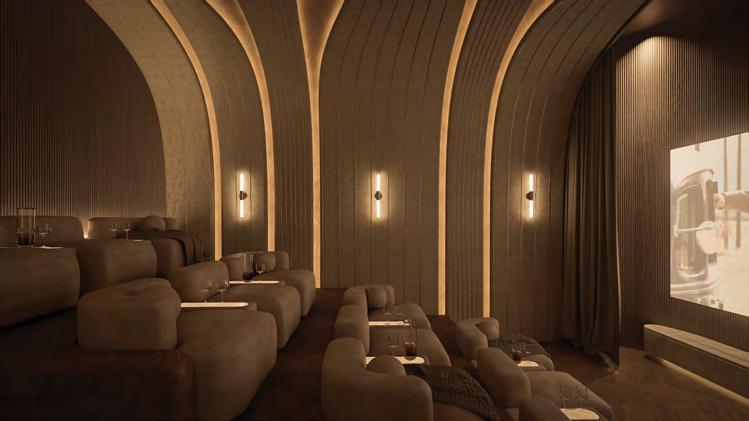
For developers, this presents both a challenge and an opportunity. It calls for a shift away from short-term considerations towards creating environments that remain relevant and desirable for decades to come.
Ultimately, the role of design is not simply to shape buildings, but to shape experiences. When architecture responds to climate, respects cultural context, and prioritises the human experience, it creates communities to which people feel genuinely connected. In a forward-looking city such as Abu Dhabi, this approach will play a defining role in shaping the future of residential development.
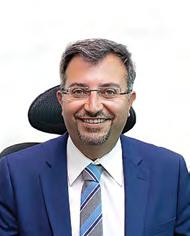
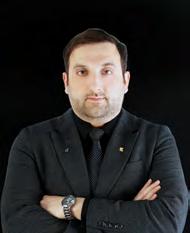
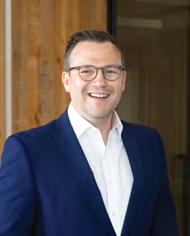
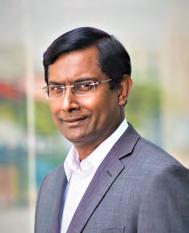
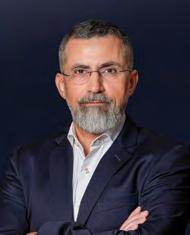
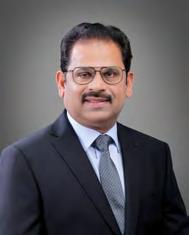
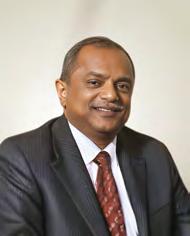
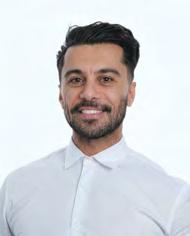

Words by: Vibha Mehta
Every city has a skeleton. In the Middle East, that skeleton is being rebuilt in real time, and the people responsible for making it breathe, pulse, and think are the MEP engineers.
Mechanical, electrical, and plumbing: three words that, stripped of context, sound almost mundane. Yet in a region where ambition has become the default architectural language, where entire cities are rising from desert sand and coastal reclamation, the MEP discipline has evolved into something far grander than its initials suggest. Without it, the towers do not cool, the hospitals do not function, and the airports do not land.
GCC nations sit at the centre of this story, and while they share a language, a faith, and a border, their MEP narratives carry distinct textures.
In the UAE, the numbers are staggering in their own right. The total project pipeline across the country nears $670 billion, with infrastructure contracts concentrated most heavily in Abu Dhabi at $89 billion and Dubai at $64 billion These are not figures that point to a
construction boom. They point to a structural transformation of what this country is and what it intends to become. MEP engineering in the UAE is entering a new era shaped by digital innovation, sustainability targets, and smarter building performance, with BIM technology now central to project delivery and AI-powered systems enabling predictive maintenance across residential, commercial, and high-rise developments.
Saudi Arabia presents a more textured story, and perhaps a more honest one. The recent scaling back of NEOM’s most audacious components, including the suspension of The Line’s tunnel contract and the termination of major works at Trojena, has prompted genuine reflection across the industry. Overall, the PIF construction contracts fell by nearly 60% between 2024 and 2025, and for MEP professionals operating at the frontier of these projects, it has been a sobering recalibration. Yet the instinct to read this as retreat misses a far more significant shift. The Kingdom is not stepping back from ambition. It is editing it, redirecting capital towards
data centre development, Expo 2030, and the 2034 FIFA World Cup, all of which carry substantial MEP programmes of their own.
Taken together, the UAE and Saudi Arabia form the twin engines of a regional built environment sector that continues to accelerate in ambition and complexity. The people who lead this industry do not often seek the spotlight. But in a region that is not merely building cities, but rethinking what cities are for, their work and their vision deserve to be recognised. This is their moment.
This CBNME MEP Powerlist 2026 celebrates the individuals shaping that moment, navigating technological transformation and regional change in equal measure. From AI-driven building systems to the shifting priorities of national vision programmes, these are the figures defining what MEP looks like today and what it will stand for tomorrow.
/ President and CEO, Nesma & Partners
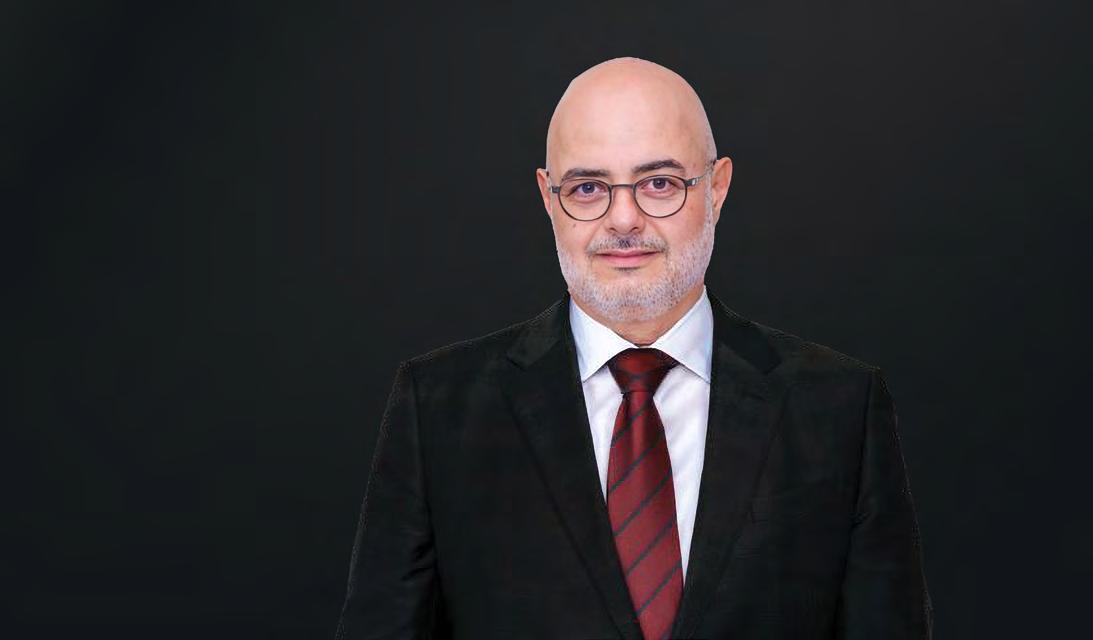
There is something telling about the fact that Samer Abdul Samad joined Nesma & Partners in 1994 as a site engineer. It speaks to a career built from the ground up, one shaped by proximity to the work itself before any boardroom responsibility came into view. Armed with a Bachelor’s and Master’s in Civil Engineering from New York University, Samer spent nearly three decades progressing steadily through
the organisation, taking on the Vice Presidency of Public Works in 2016 and the role of Executive Vice President and COO in 2020, before being appointed President and CEO in 2021.
Under his leadership, Nesma & Partners has grown into one of Saudi Arabia’s most consequential EPC contractors, with annual revenues exceeding $5.6 billion and a backlog that has since expanded to $9.9 billion. The project roster reflects the scale of the ambition:
NEOM Residential Communities, the Qiddiya City Performing Arts Centre, the Diriyah Qurain Cultural District, a joint venture valued at SAR 5.8 billion, and critical water infrastructure stretching from Jubail to Al-Qassim. His recognition as CEO of the Year at the CBNME MEP Awards 2024 was a measure of an industry that knows the difference between managing growth and genuinely driving it.

“When you have spent years on site, you never lose the instinct for what a project actually demands. That grounding does not leave you. It informs every strategic decision you make, whether you are in a boardroom or walking a foundation.”
Samer Abdul Samad, President and CEO, Nesma & Partners
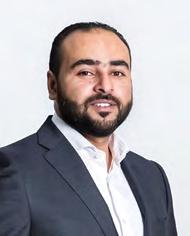
/ Managing Director, Innovo MEP
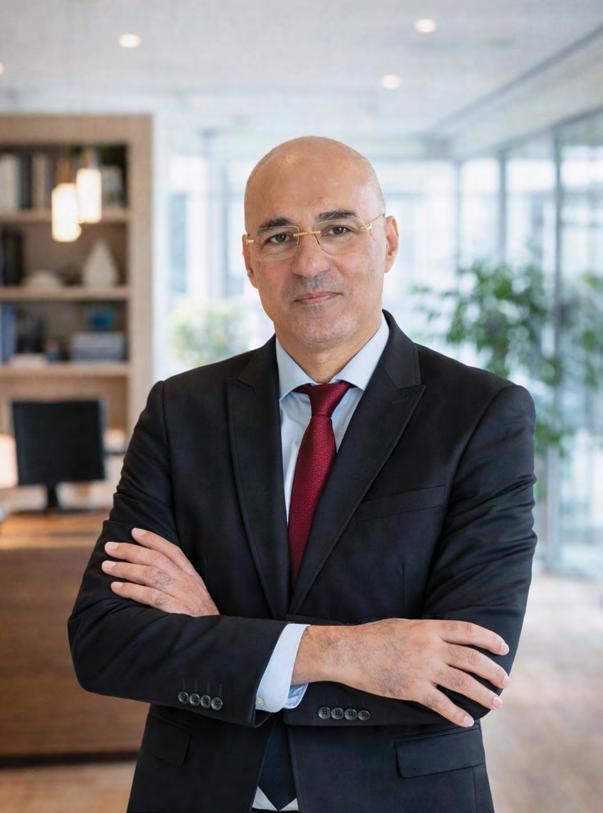
How They Set the Standard Khaled Elsharbatly, Managing Director of Innovo MEP, has built a reputation for technical precision and structured delivery across some of the UAE’s most complex MEP projects. Under his leadership, Innovo MEP works closely with project stakeholders from the earliest stages to ensure that complex building systems are planned and integrated effectively before construction begins.
One of the ways Innovo MEP maintains this level of precision is through its integrated project delivery model. Engineering, planning, procurement, and construction teams work closely together throughout the project lifecycle, ensuring that technical decisions are aligned with buildability and long-term system performance. Digital coordination has also become an important part of the company’s approach, with advanced modelling and coordination tools allowing teams to visualise complex installations, identify potential conflicts, and resolve issues before construction progresses.
As developments across the UAE continue to grow in scale and complexity, Khaled has built a structured methodology for breaking down complex
“MEP systems sit at the heart of how a building operates. Whether it’s life safety, cooling infrastructure, electrical distribution, or smart building technologies, these systems must work together seamlessly. Achieving that level of coordination requires the right engineering expertise and the right processes from the outset.”
Khaled Elsharbatly

scopes into manageable delivery packages while maintaining continuous coordination across engineering disciplines. Mechanical systems, electrical infrastructure, fire and life safety systems, and digital networks must all be integrated within highly constrained spaces while meeting strict performance requirements, demanding constant collaboration between consultants, architects, contractors, and suppliers.
“At the end of the day, managing complexity is about maintaining control. You need the right planning, the right engineering capability, and the right coordination between teams to ensure every system is delivered successfully.”
Beyond project delivery, Khaled recognises that the MEP sector is undergoing an important transformation as buildings become more digitally integrated and technologically advanced. The role of MEP contractors is evolving, with building management platforms,
data networks, and automation systems becoming central to how modern developments function. Innovo MEP has been strengthening its digital coordination capabilities to support this transition, while integrated delivery models are becoming increasingly important as projects grow in scale.
Looking ahead, Khaled believes the long-term performance of building systems will continue to shape how developments are delivered across the region. Innovo MEP’s approach focuses on designing and installing systems that support long-term operational reliability while remaining adaptable to evolving technologies. Structured commissioning processes verify that all systems perform as intended before handover, ensuring complex installations operate reliably and integrate properly across the entire building.
Through this focus on engineering coordination, technical expertise, and long-term system performance, Innovo MEP continues to contribute to the delivery of complex developments while supporting the advancement of the region’s construction sector.

“For developers and asset owners, the conversation is increasingly about lifecycle performance. It’s not just about delivering systems during construction, but ensuring they operate efficiently for years to come.”
Khaled Elsharbatly, Managing Director, Innovo MEP
/ CEO, Orascom Construction
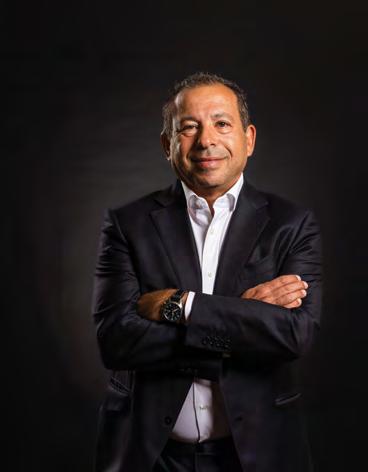
Osama Bishai has positioned Orascom Construction as one of the most capable integrated contractors across the Middle East and North Africa, with MEP delivery forming a core pillar of the company’s selfperform model. Under his leadership, Orascom has managed complex MEP scopes across landmark developments including the New Administrative Capital in Egypt, large-scale infrastructure programmes in the UAE and industrial projects across the wider region, maintaining tight governance over technical delivery, safety and programme certainty.
“Our strength lies in our ability to deliver complex, large-scale projects end to end, with the engineering capability and operational discipline to match the ambition of the developments we build.”
Osama has driven the adoption of digital construction technologies across Orascom’s operations, improving coordination, reducing rework and strengthening lifecycle performance across its MEP portfolio. His focus on vertical integration has reduced reliance on subcontractors, elevating quality control and positioning Orascom not simply as a contractor, but as a fully integrated engineering and construction leader shaping the built environment across the region.
/ Senior Vice President for Europe, Middle East and Africa, ABB Electrification Service
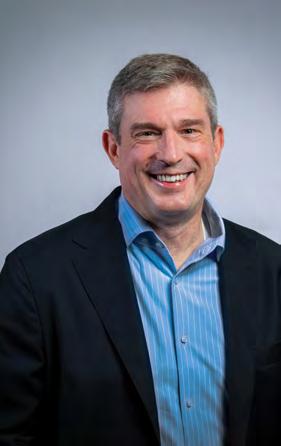
Marco Tellarini is redefining leadership in the MEP and power infrastructure space as Senior Vice President for Europe, Middle East and Africa at ABB Electrification Service. Overseeing one of ABB’s most dynamic regions, he operates at the intersection of digital innovation, sustainability and long-term systems resilience.
Marco has elevated electrification benchmarks by shifting the focus from product delivery to lifecycle value. Under his leadership, ABB Electrification Service has advanced predictive asset management, digital protection systems, and retrofit strategies that extend the life of critical infrastructure by up to 30 years while improving reliability and energy capacity. At Jindal Steel Sohar in Oman, ABB modernised ageing protection relays whilst retaining
more than 90 per cent of existing switchgear infrastructure, boosting performance without the carbon and capital burden of full replacement.
At the Bab Onshore field upgrade in Abu Dhabi, spanning 1,200 square kilometres, Marco demonstrated the full scale of what that thinking can achieve: automation, electrification, and telecommunications integrated into a single unified digital architecture, delivered within tight shutdown windows and with precision cross-regional engineering coordination.
A strong advocate for digitalisation as the engine of the energy transition, Marco champions data-driven modernisation as a commercially viable path to decarbonisation. By shifting customers away from capitalheavy replacement cycles towards circular, upgrade-led strategies, digital tools become a lever for lowering both carbon intensity and total cost of ownership. In 2025, ABB opened a USD 2 million AI and digital solutions Training and Customer Experience Centre in Dubai, designed to train approximately 2,000 engineers annually in predictive maintenance and smart asset management, accelerating the region’s shift from reactive maintenance towards condition-based performance models.
“By embedding intelligent monitoring, predictive analytics and cloud-enabled connectivity into both new and legacy systems, we are helping customers gain real-time visibility into asset health, energy performance and operational risk.”
Central to Marco’s strategy is his leadership in digital and emerging technologies that transform how electrical infrastructure is managed across its lifecycle. Through digital innovation, localised training and retrofit-led modernisation, Marco is embedding a culture of performance, sustainability and skills development across the Middle East, engineering the capabilities that will define tomorrow’s energy systems.

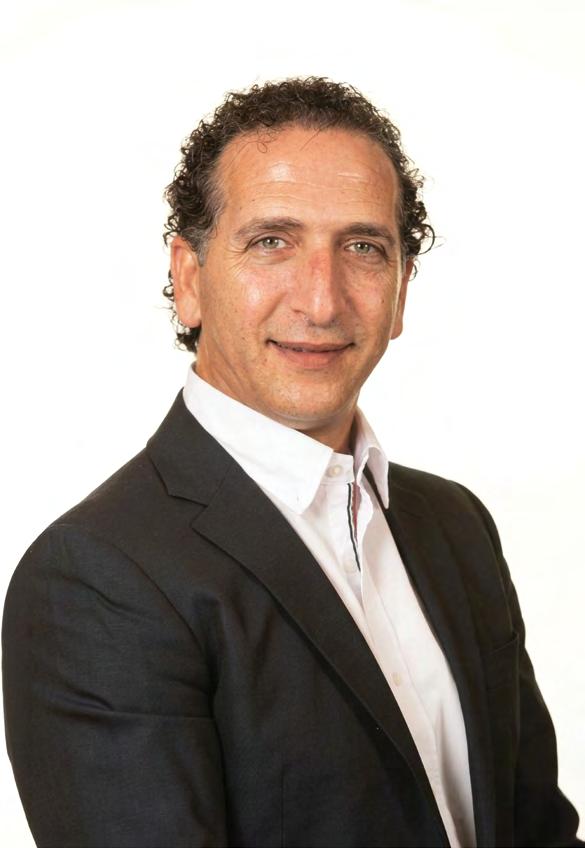
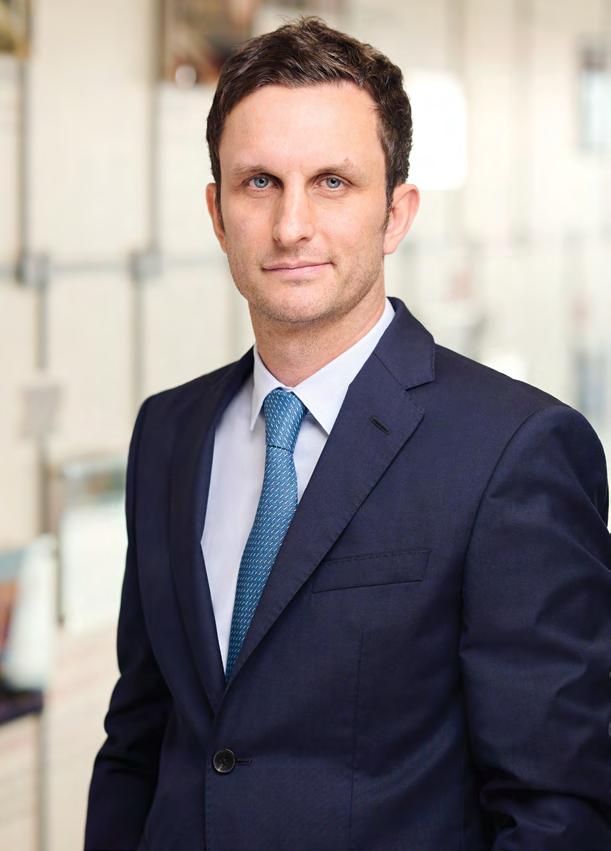
Mansour Kharoub leads the Mechanical Department at Khatib & Alami with a clarity of purpose that is rare at scale. As Director, he oversees a global team delivering technically complex developments across hospitality, mixed-use, cultural, and infrastructure sectors, with the construction value of projects under his leadership exceeding USD 8 billion in the past year alone. He operates at both strategic and technical levels, ensuring mechanical systems are holistically coordinated, fully constructible, code-compliant, and performance-optimised from concept design through construction supervision.
One of Mansour’s most significant contributions has been the scaling of K&A’s Global Mechanical Design Center, doubling its capacity from 50 to 100 engineers while implementing standardised governance frameworks across regions. This included unified design checklists, structured peerreview mechanisms, and internal audit protocols that strengthened technical consistency and risk mitigation across the portfolio. He has also embedded energy efficiency into mechanical design strategies, optimising HVAC systems in alignment with international benchmarks and sustainability frameworks, including ASHRAE, Estidama, and LEED.
In the fast-moving AEC industry, characterised by complex scopes and tight timelines, Mansour has consistently delivered major projects on time while
adhering strictly to regulatory and international standards. His leadership ensured design integrity was never compromised under pressure. He has played a central role in Saudi giga-projects, including Neom, the Central Jeddah Stadium, the Jeddah Opera House, and the Jeddah Institute of Making and Oceanarium. In the UAE, he led the mechanical scope for projects such as Bulgari Lighthouse, Bulgari Ocean Mansions, Riva Residence Tower, and Address Residences Dubai Opera, successfully managing intricate multidisciplinary designs and MEP integration.
To achieve these outcomes, Mansour spearheaded innovations in digital design delivery, strategically embedding digital transformation into his projects through BIM Level 3, smart automation, AI-assisted design, and lifecycle performance modelling. He also led his team in developing automation tools and integrated BIM processes for clash detection, design validation, and data-driven load analysis. These tools streamlined workflows, expedited authority approvals,
and accelerated project delivery, ensuring high performance even under demanding conditions.
Mansour expanded the department’s technical scope further by establishing new verticals, including Acoustic Engineering and Computational Fluid Dynamics, and internal centres of excellence, enabling K&A to diversify services, tackle specialised multisector projects, and deliver integrated mechanical solutions for iconic developments such as Al Jazira Stadium and Etihad Rail.
At a global level, Mansour unified design standards across K&A’s design centres and launched a comprehensive training programme focused on local authority requirements, regulatory updates, and cross-disciplinary coordination. Beyond his projects, he actively mentors within the industry, promoting best practices, strengthening compliance, and driving improved outcomes across the region’s MEP and
construction sectors. He lectures at universities, leads webinars on smart HVAC systems, and speaks at regional innovation forums, extending his impact to empower junior engineers and future talent.
Mansour’s vision and leadership have raised MEP standards and enhanced K&A’s competitive position across the region, reinforcing his standing as one of the most influential MEP figures in the Middle East.
Ryan Emsley leads Khansaheb Civil Engineering’s MEP division with a clear and consistent mandate: deliver quality projects on time and within budget. With more than 50 years of presence in the Middle East and a dedicated team of 200 full-time staff operating from Dubai, the division has built one of the region’s most enduring reputations in mechanical, electrical and plumbing delivery across infrastructure, commercial, residential and hospitality sectors.
“Our strategy is simple: deliver quality projects on time and within budget for our key clients,” says Ryan. “We are renowned for quality, which is supported by a continuous order book and long-standing relationships with repeat clients.” By consistently delivering quality projects and maintaining long-standing client relationships, the division continues to set the standard for reliable and high-quality MEP delivery across the region.
The division’s strength lies not only in its technical capability but in the depth of its client relationships. Over the past 12 months, the division has demonstrated its ability to manage complex MEP scopes across some of the UAE’s most high-profile developments. The Dubai Harbour Project, valued at AED 300 million, saw Khansaheb MEP deliver the full MEP scope for client Shamal, with Khansaheb Civil Engineering LLC as main contractor and H&H/SSH as lead consultant. In Ras Al Khaimah, the division is providing MEP works to 20 villas and various food and beverage areas at Wynn Al Marjan Island alongside ALEC. In Dubai, the team completed the Meydan Hotel Refurbishment, handling MEP
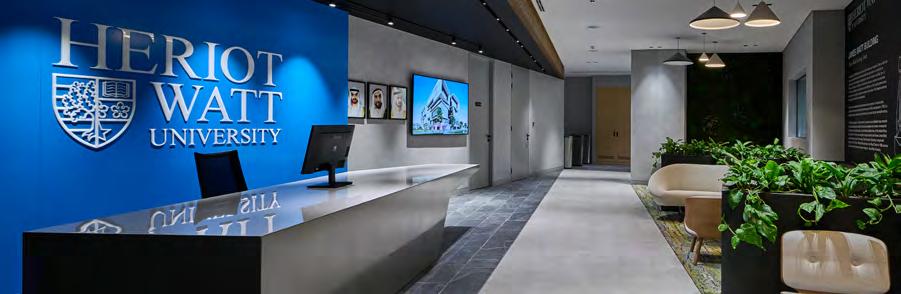
works across hotel rooms and public areas for Dubai Holding, with Khansaheb Interiors as main contractor and Dewan as consultant, and executed the Heriot Watt University Phase 2 fitout under JLL supervision. Through the delivery of these varied and large-scale projects, the division demonstrates its ability to manage complex MEP scopes across different environments with consistency and control.
“Technology is at the forefront of our operations,” says Ryan. “We implement Autodesk Construction Cloud across
new projects, are digitalising permits, and use HSE apps for onsite reporting.” The company also tracks electricity, water, fuel and waste to reduce consumption and improve efficiency.
By embedding these practices across its projects, Khansaheb MEP is contributing to wider digital adoption and more efficient and sustainable delivery approaches within the industry.
“Throughout 2025, over 500 operatives completed training at our dedicated MEP training centre,” says Ryan. “This enhances quality on site and ensures we get it right the first time, delivering a superior product to our clients.” The division is also addressing industry challenges. “There is a real shortage of talent in the market. We have recruited several graduates into our business and placed them on structured training programmes to develop the next generation of excellent engineers,” he adds.
engagement ensure safety is never compromised.”
“In 2025, Khansaheb MEP celebrated 17 million man-hours and 84 months without an LTI. Visual leadership and workforce
Ryan explains the company’s 2026 ambitions: “The outlook is very strong. We are on track to increase our turnover by 100% this year. As we grow, our focus remains on delivering projects on time and within budget while promoting our ‘One Khansaheb’ model, providing clients with a one-stop solution, consistent quality, and safe project delivery driven by our values of honesty, integrity, and customer satisfaction.” Together, these efforts reinforce long-term value for both clients and the wider MEP sector.
“In 2025, Khansaheb MEP celebrated 17 million man-hours and 84 months without an LTI. Visual leadership and workforce engagement ensure safety is never compromised.”
Ryan Emsley, General Manager, MEP, Khansaheb Civil Engineering
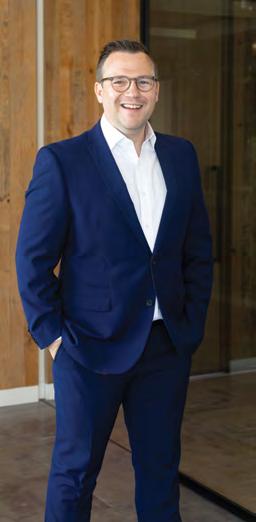
/ Director Building Services, Cundall
Mick Reilly brings more than 25 years of experience across the Middle East, the UK and Europe to his role as Director of Building Services at Cundall. Having begun his career on construction sites before rising to senior consultancy leadership, Mick leads with a grounded conviction that engineering must be buildable, safe and resilient in operation. Across major hospitality, mixed-use and civic projects in the Middle East, he has championed infrastructure redundancy, early-stage modelling and lifecycle-led decision-making, embedding technical rigour from concept stage and ensuring compliance and long-term performance are baseline expectations.
A people-first leader, Mick champions open dialogue, collaboration and highperforming teams. In the past year, his team earned multiple industry accolades, including Retrofit Project of the Year for Al Maryah Tower, reflecting his strong advocacy for upgrading the region’s existing building stock and addressing the urgent risk of stranded assets.
Mick applies disciplined workflow management, risk ranking and focused core-team delivery models across multidisciplinary MEP programmes with demanding timelines and multiple stakeholders. Rather than scaling teams reactively, he prioritises clarity, automation and clear communication, pairing technical authority with measured leadership to ensure large-scale packages are delivered with precision and programme control.
Mick is leading the rollout of a MENA-wide digitalisation and automation programme for integrated MEP design, which has already saved over 20,000 project hours. He champions
BIM automation and structured asset data to close the gap between design and operations, promoting interoperability and scalable systems thinking across the region.
Beyond delivery, Mick is building lasting impact through mentorship, developing awardwinning professionals and diverse, high-performing teams. Under his leadership, Cundall’s teams are advancing the firm’s ambition for every project to meet zero-carbon design criteria by 2030. He is equally committed to the profession’s future, collaborating with UAE universities to nurture the next generation of engineers and promote engagement in STEM.
“Digital adoption is not an enhancement but a commercial imperative, embedding data intelligence into engineering workflows to improve accuracy, efficiency and measurable lifecycle performance.”
Mick Reilly, Director Building Services, Cundall
8
–
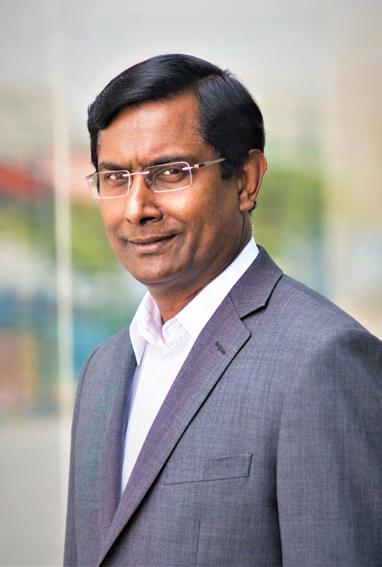
With over three decades at Voltas — a flagship Tata enterprise — A.R. Suresh Kumar has grown from management trainee to one of the MEP sector’s most respected leaders in the GCC. A Mechanical Engineering graduate from the College of Engineering Trivandrum (University of Kerala), he spent the early years of his career heading HVAC and building management projects across India before relocating to Saudi Arabia in 1998 to spearhead the company’s regional MEP and airconditioning operations.
In 2018, he assumed his current mandate as Head of the International Operations Business Group (IOBG), overseeing Voltas’ electromechanical business across the UAE, Oman, Qatar, Bahrain, and Saudi Arabia. Under his stewardship, the IOBG has built a consolidated order book exceeding INR 6,200 crores, with delivery spanning HVAC, electrical, plumbing, firefighting, ELV, district cooling, and solar systems. His establishment of a MEP prefabrication and modular solutions factory at Jebel Ali, Dubai, reflects his forward-thinking approach to construction efficiency and quality at scale.




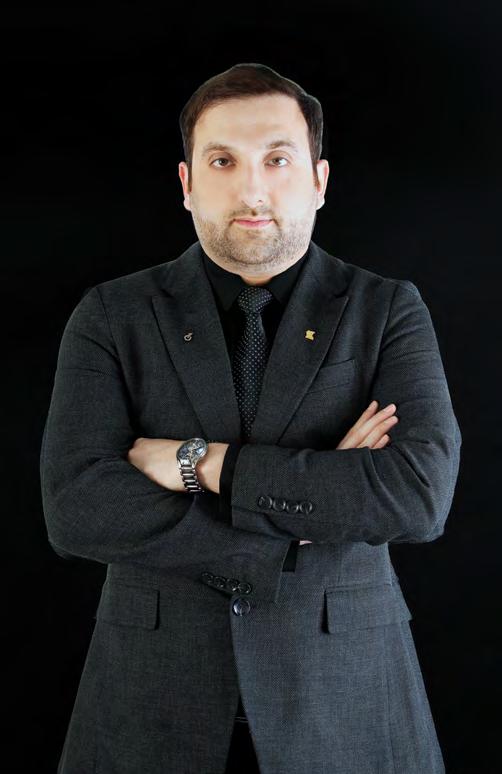
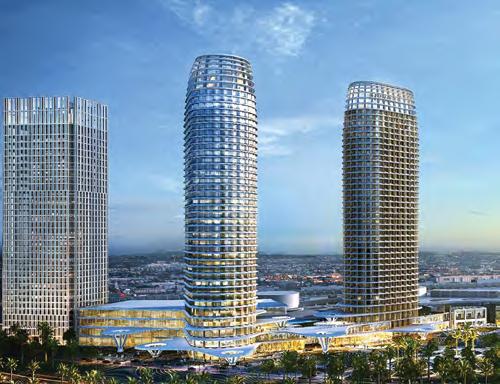
Imran Shaikh has established himself as one of the Middle East’s most influential MEP leaders by consistently redefining technical excellence across complex, high-profile developments. As Director of MEP, Specialisms and Infrastructure for Ramboll Middle East, and Chairman of CIBSE MENA, his influence spans landmark projects, institutional leadership, and the advancement of building services practice across the region.
A Chartered Fellow with more than 16 years of engineering and leadership experience, Imran has consistently raised the bar for performance-led
MEP design across hospitality, mixed-use, cultural, and megaproject sectors. His portfolio spans globally recognised developments including Jumeirah Marsa Al Arab in Dubai, Avenues Riyadh, and the Misk Art Institute, alongside numerous other high-profile schemes where bold architectural ambition required an equally disciplined and innovative engineering response.
Across these projects, Imran has consistently championed a shift away from prescriptive design toward measurable, outcome-based performance. By integrating lifecycle carbon assessment, advanced simulation, and digitally enabled
coordination, he has helped ensure that building systems are resilient, efficient, and futureready, setting a higher technical benchmark for the industry.
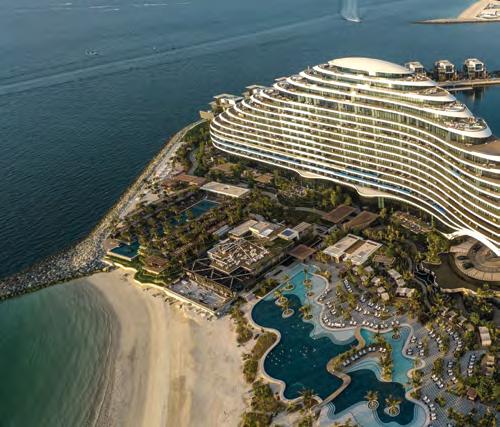
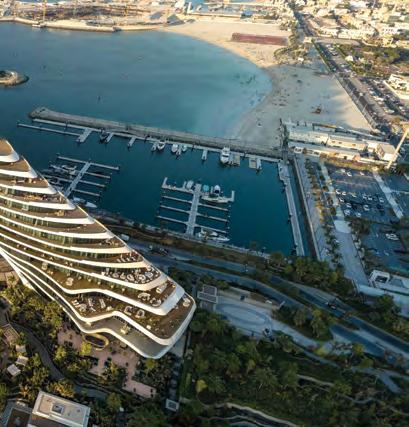
Imran’s reputation is built on his ability to lead large-scale, high-risk MEP packages with clarity, discipline, and control, often within programmes defined by iconic design, accelerated delivery, and stringent sustainability targets. On complex developments such as Jumeirah Marsa Al Arab, where ultra-luxury hospitality, waterfront conditions, and integrated mixed-use components converge, his team has demonstrated exceptional skill in balancing design intent with constructability,
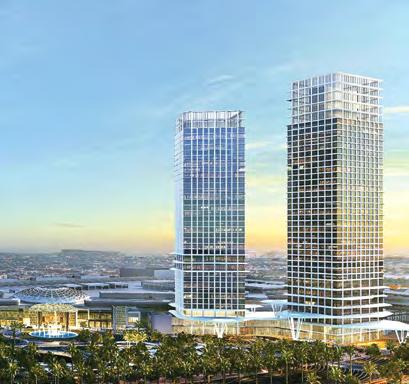
operational performance, and long-term asset value. Similarly, on major urban and cultural projects including Avenues Riyadh and the Misk Art Institute, he has guided multidisciplinary teams through demanding coordination, stakeholder alignment, and systems integration challenges.
His leadership approach combines deep technical oversight with calm, decisive governance. By embedding BIM-led coordination, digital rehearsal of construction sequencing, and systemlevel risk management, Imran has repeatedly de-risked delivery, enabling clients to realise ambitious architectural outcomes without compromising performance certainty or programme control.
Beyond individual projects, Imran is a market shaper, influencing strategy, digital adoption, and the evolution of MEP practice across the Middle East. Within Ramboll, he has played a key role in driving the firm’s regional MEP transformation, unlocking growth in sectors such as retrofit, data centres, modular construction, and performance-driven sustainability services. His digital-first mindset has accelerated the adoption of computational workflows, lifecycle carbon analytics, and smart building platforms, helping clients reduce energy use, optimise CAPEX, and improve delivery outcomes.
Externally, Imran is a respected industry voice. Through conferences, panel discussions, and technical thought leadership, he actively challenges traditional delivery models and advocates for evidencebased engineering. Increasingly, his focus also extends to new ways of working, including the responsible application of digitalisation, data-driven design, and emerging AI-enabled tools, not as ends in themselves, but as enablers of better decision-making, productivity, and whole-life building performance.
Imran’s most enduring contribution lies in the institutions, talent pipelines, and professional frameworks he has helped build. Under his leadership, CIBSE UAE evolved into CIBSE MENA, significantly expanding its regional reach with a clear mandate to uplift building services practice across the Middle East. During this period, several foundational initiatives were delivered, including the regional development and launch of Embodied Carbon Guidelines, providing much-needed clarity for low-carbon decision-making, and the establishment of the CIBSE Graduate Training Programme, creating a
structured launchpad for early-career engineers and a model now being followed by others in the industry.
In parallel, Imran championed the CIBSE Student Design Competition in the region, strengthening the bridge between academia and professional practice. By exposing students to real-world building services challenges, the initiative has helped attract emerging talent, elevate awareness of MEP careers, and embed performance-led thinking at the earliest stages of professional development.
Alongside his institutional leadership, Imran mentors and leads a team of over 100 MEP professionals, fostering a culture defined by collaboration, technical curiosity, and accountability. Through structured training, cross-disciplinary design reviews, hackathons, and industry engagement, he has helped build high-performing teams while contributing to a measurable uplift in capability across the wider market.
Imran’s leadership philosophy is clear and consistent: buildings should perform as intelligently as they look, innovation must translate into measurable value, and the future of the profession depends on sustained investment in people, knowledge, and systems. It is this rare combination of technical authority, strategic foresight, and commitment to industry-wide progress that firmly positions him as a standout figure on the CBNME MEP Powerlist 2026.
“The future of MEP isn’t about more technology— it’s about better decisions, stronger talent pipelines, and systems that perform for decades, not just at handover.”
Imran
Shaikh, Director of MEP & Specialisms
- ME, Ramboll
At Godwin Austen Johnson, MEP is not a secondary technical layer; it is a strategic foundation that enables architecture to perform with clarity, resilience and enduring value.
Established in 1989 under the leadership of Chairman Brian Johnson, Godwin Austen Johnson operates as a fully integrated multidisciplinary consultancy where engineering and design are conceived as one coordinated vision. Within this structure, the MEP discipline is embedded at the core of project strategy, ensuring performance, efficiency and buildability are considered from the earliest stages.
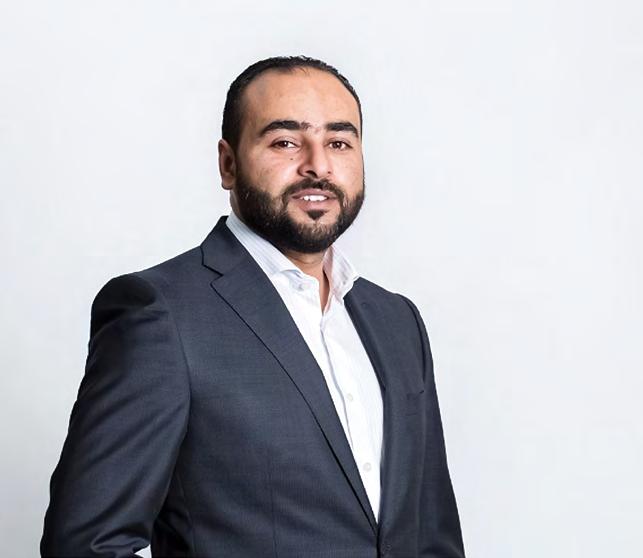
The MEP team is led by Executive Director Alaa Abdelmohsen Sayed, who brings more than two decades of experience in leading, designing
and delivering complex building systems across diverse sectors. Under his direction, the team combines technical depth with strategic oversight, managing large-scale and high-risk packages with precision and control. Across hospitality, education, commercial and residential developments, Godwin Austen Johnson MEP plays a defining role in delivering technically rigorous, future-ready solutions. Each project is approached with foresight, disciplined execution and a clear understanding that engineering excellence underpins architectural success.
Godwin Austen Johnson MEP consistently exceeds expectations by crafting innovative solutions tailored to project requirements. Every system is developed with precision to ensure comprehensive fulfilment of technical, operational and regulatory criteria. By adhering to strict internal standards and quality benchmarks, the team elevates technical services to a high professional standard. Engineering outputs are not treated as documentation exercises but as opportunities to create high-performance ecosystems where systems operate efficiently, reliably and cohesively.
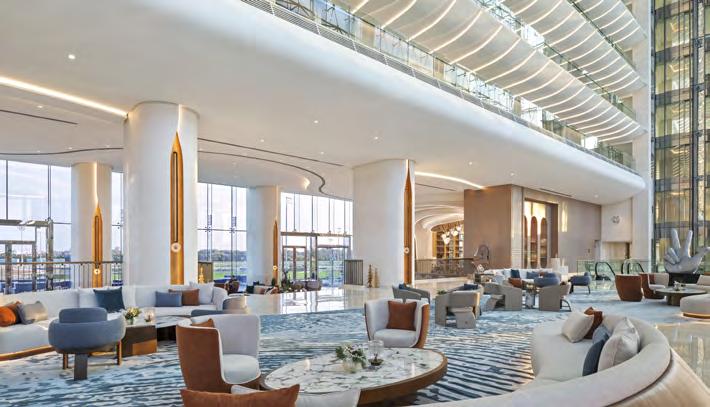
This approach is demonstrated across key developments including Serenia Living, Serenia Residences and Dubai College, Jafar Centre. At Serenia Living, premium waterfront residences required refined coordination between architectural intent and building performance. High-end residential environments demand seamless integration of HVAC, electrical, plumbing and lifesafety systems without compromising spatial quality. The MEP strategy ensured operational reliability, clarity of system control and long-term maintainability, supporting both developer objectives and resident comfort. At Dubai College, Jafar Centre, the infrastructure was designed to support contemporary education. Integration of advanced communication networks, AV systems and comprehensive monitoring platforms, including ELV systems, enables operational efficiency and smart campus functionality. These systems enhance maintainability, strengthen sustainability outcomes and support evolving technological demands. Across all sectors, solutions integrate seamlessly with architectural vision while strengthening efficiency, performance and operational intelligence.
Delivering large-scale, high-risk packages requires more than engineering knowledge; it demands disciplined
leadership and structured governance.
Godwin Austen Johnson MEP operates with a command-and-control approach to project management.
A defined workflow governs preand post-contract stages, ensuring continuity of technical oversight from concept to completion. Timelines and budgets are closely monitored. Risk is anticipated, not merely managed. The team maintains control over coordination interfaces, sequencing, procurement considerations and technical dependencies, ensuring intricate systems are delivered with confidence and resolved efficiently. This disciplined methodology reduces uncertainty, safeguards programme certainty and protects design integrity.
“Whether delivering highdensity hospitality environments or educational facilities with integrated smart infrastructure, the team maintains clarity, structure and technical authority throughout the project lifecycle. Control is embedded. Precision is deliberate.”
team remains committed to continuous improvement and knowledge-sharing. Integration of evolving construction technologies strengthens delivery standards across all asset classes and reinforces the practice’s position as a progressive engineering leader.
In modern education, where reliance on smart systems continues to grow, Godwin Austen Johnson MEP equips facilities with infrastructure for advanced communication, AV integration and comprehensive monitoring platforms. This enhances operational performance, supports efficient maintenance and contributes to improved sustainability outcomes. Across all projects, systems are selected and coordinated with longterm operation in mind. Maintainability, clarity of control and lifecycle performance are prioritised from the earliest stages. Engineering decisions align not only with
immediate delivery requirements but with long-term asset resilience.
Within a collaborative multidisciplinary culture, the MEP team contributes expertise early in the design process, reducing fragmentation and strengthening performance. Leadership is measured not only in technical output but in sustained value and consistency. Godwin Austen Johnson MEP delivers more than mechanical, electrical and plumbing systems. It delivers structured risk management, disciplined workflow control and digitally coordinated solutions that elevate building performance. In an increasingly complex built environment, engineering leadership is foundational. At Godwin Austen Johnson, MEP does not simply support architecture. It ensures architecture performs reliably, intelligently and sustainably.
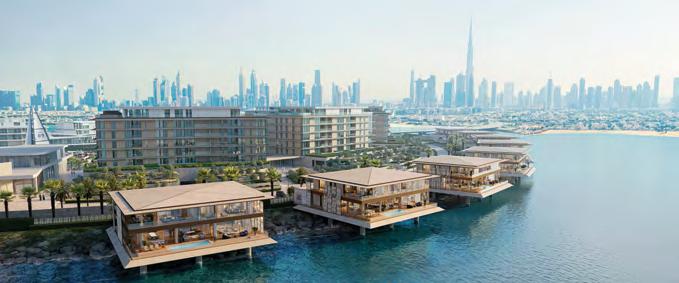
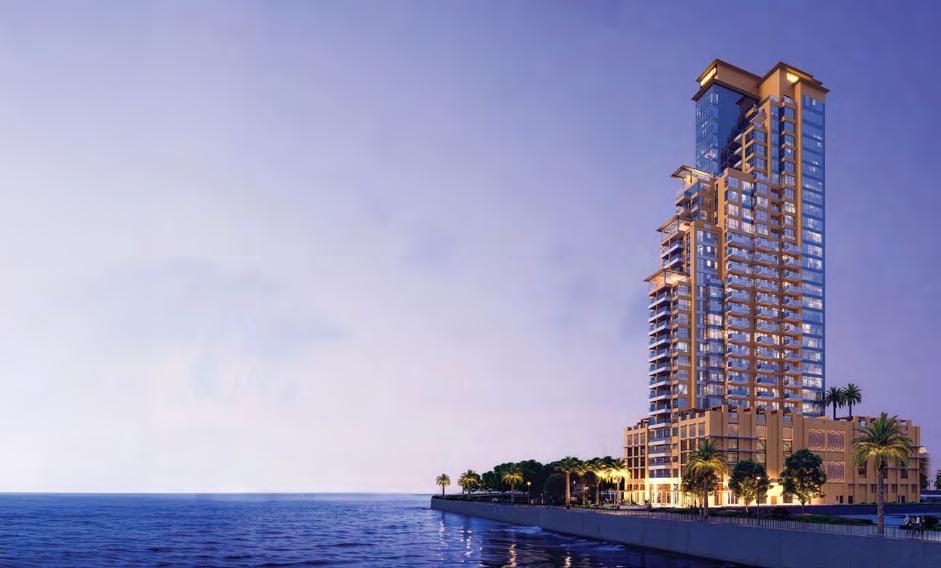
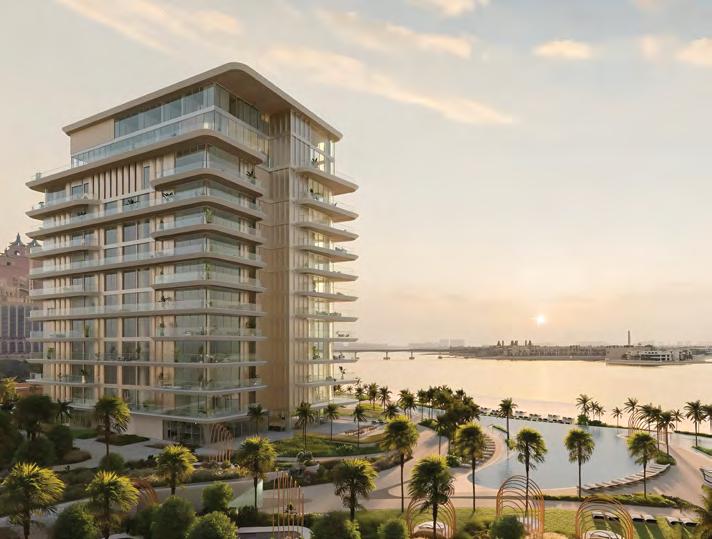
Precision-engineered living where architecture and MEP systems work seamlessly together, optimising thermal comfort, energy performance and longterm operational efficiency within a refined waterfront environment.
Godwin Austen Johnson MEP leads with digital capability and forwardthinking adoption of technology. The team excels in implementing BIM, cloud-based collaboration platforms, AI tools and remote working strategies. These systems enhance coordination, improve transparency and reduce inefficiencies during design development and construction. BIMled workflows support accurate system placement, early clash detection and improved buildability. Technology is applied with purpose to elevate quality, control and accountability. As projects increase in scale and complexity, the
/ Group CEO, BK Gulf LLC 11 12
/ Director – MEP & Life Safety Division, GECO Mechanical & Electrical Ltd
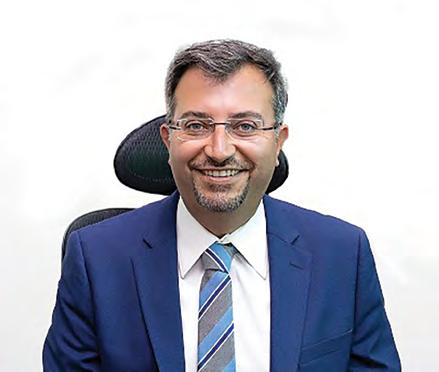
Hani M. Nsouli is a seasoned engineering leader whose career spans some of the most prestigious electromechanical organisations in the Middle East. Armed with a Bachelor of Engineering from the American University of Beirut and an MBA from the University of Liverpool, Hani brings a rare combination of deep technical expertise and strategic business acumen to one of the UAE’s most established MEP contractors.
Hani’s career trajectory reflects a steady rise through the ranks of the region’s electromechanical sector. He built foundational experience at Debbas Electric before progressing through key roles at Juma Al Majid Mapco Joint Venture and Juma Al Majid for Electro Mechanical Works LLC. He subsequently took on senior project leadership responsibilities at Al-Futtaim Engineering & Technologies — a multinational powerhouse — where he served as Director of Projects, overseeing complex, large-scale MEP delivery across the UAE.
Today, as Executive Director of the MEP & Life Safety Division at GECO Mechanical & Electrical Ltd., a member of Albatha Holding and a cornerstone of the UAE’s built environment since 1969, Hani leads a division responsible for fire protection, life safety systems, HVAC, electrical, and plumbing works across an iconic portfolio spanning luxury hotels, high-rise towers, shopping malls, hospitals, universities, and military facilities. His expertise in construction management, value engineering, procurement, and project estimation continues to drive GECO’s reputation for quality and reliability across the Emirates.
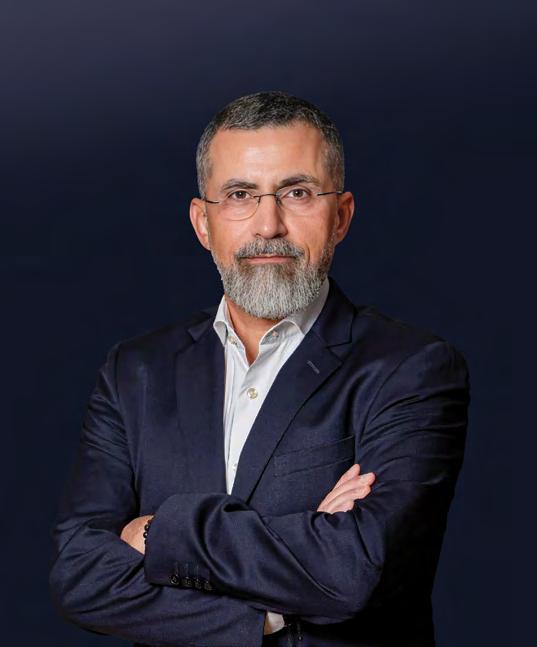
Basheer Massad is one of the UAE’s most accomplished MEP leaders, steering BK Gulf LLC — a Dutco Group company established in 1978 — as it continues to shape the region’s built environment. Basheer joined BK Gulf in 2006 as Operations Director, bringing with him a deep foundation in engineering and construction management. He went on to serve as Deputy General Manager before assuming the role of General Manager in November 2016, a tenure bookended by stints as Regional Director at EFECO LLC, a subsidiary of Arabtec Holding.
Under Basheer’s leadership, BK Gulf has cemented its standing as one of the Middle East’s foremost integrated MEP contractors, delivering electrical, mechanical, instrumentation, and building services across a formidable portfolio that includes the Etihad Yas Arena, the Burj Al Arab infrastructure refurbishment, and JA Lake View resort in Dubai. He has championed the company’s push into digital construction and modular MEP manufacturing, establishing the UAE’s first purpose-built MEP modular facility — a game-changing initiative that has delivered thousands of solutions region-wide. Basheer’s focus on renewable energy integration, smart buildings, and sustainable construction ensures BK Gulf remains at the industry’s cutting edge.
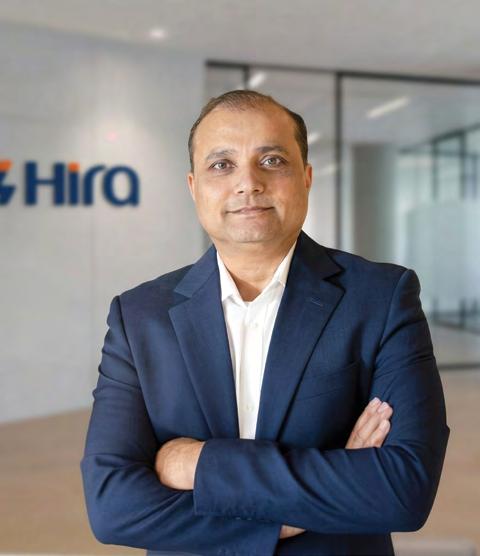
Pr akash Sarvaiya has built his leadership around a premise that sets him apart in the MEP industry: what matters is not how systems perform at the point of installation, but how they hold up years later, under real operating conditions. As Group CEO of Hira Industries, he has steered the company toward an engineering-led, solutions-driven model that prioritises material integrity, process control and lifecycle performance over shortterm cost decisions.
Under his leadership, Hira has invested significantly in advanced manufacturing and a Global R&D Centre in Ras Al Khaimah, operating to ISO/IEC 17025 standards. The objective is clear: validate performance, not assume it. Across thermal and acoustic insulation, fire safety systems and engineered components, the focus is on consistency in conditions where failure is not immediately visible but proves costly over time.
Prakash leads a business that operates at considerable scale, with 16 or more manufacturing and assembly facilities and over 30 sales offices globally. Managing multiple product verticals, regulatory environments and application demands, his approach is grounded in operational discipline and alignment. The portfolio spans insulation and fire protection systems, ventilation
technologies through joint venture Maico Gulf, piping support systems through joint venture Hira Walraven, and specialised rubber and adhesive solutions, each delivered with a focus on system-level performance rather than standalone products.
His influence extends beyond execution into how performance is evaluated within the MEP ecosystem. By consistently challenging the industry’s focus on upfront cost and advocating for lifecycle value, Prakash has pushed for more accountable decision-making in material selection and system design. His engagement with platforms such as ASHRAE and ISHRAE reflects an intent to shape industry thinking, not merely participate in it. Internally, he has built a culture centred on accountability, technical competence and execution consistency across a global workforce of over 2,000 employees, with sustainability initiatives, including solar integration across manufacturing facilities, approached with the same long-term discipline that defines everything he builds.
“In a sector where performance gaps often emerge over time, the focus must be on eliminating them at the source through engineering discipline and control.”
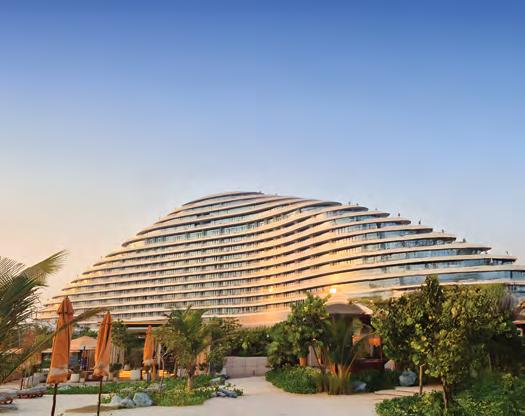
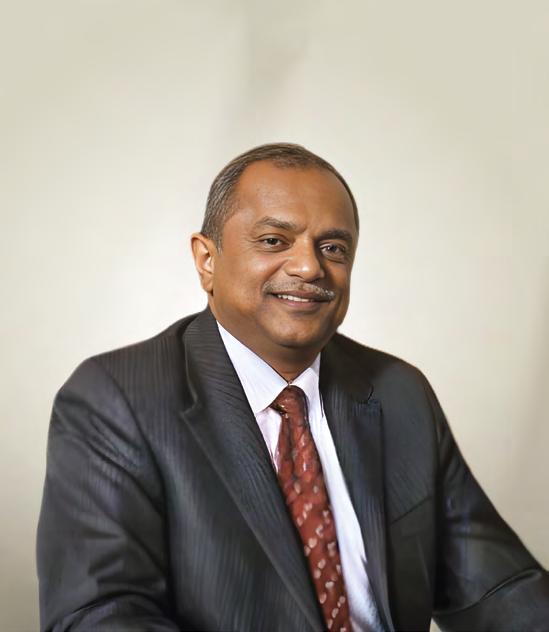
Sanu Mathew co-founded SEED Engineering Consultants in 2005 with a clear purpose: to fill a genuine gap in the quality of MEP building services consultancy in the Middle East. It was not a leap into the unknown. By that point,
Sanu had already accumulated serious pedigree, having worked with Roberts & Partners (later Hyder Consulting), WS Atkins & Partners, and International Bechtel Incorporated. A Bachelor of Technology in Electrical Engineering from the College of Engineering Trivandrum gave him the
foundations; those firms gave him the global perspective.
What he built thereafter is a consultancy that has quietly become one of Dubai’s most credible MEP design practices.
SEED’s work on the Wasl Tower, a 302metre mixed-use landmark on Sheikh Zayed Road housing a Mandarin Hotel, offices, and high-end residences, is a case in point. SEED was appointed from day one, working directly alongside Werner Sobek and UNStudio, and the success of that project generated a pipeline of more than seven further supertall towers across Business Bay and Downtown Dubai.
“A building’s true performance is never fully visible on handover day. It reveals itself over years of operation. That is the standard we design to, and it is the only one worth having.”
Sanu Mathew, Managing Director,SEED Engineering Consultants
Today, with over 28 years of personal experience in high and low-voltage power systems, building services design, and project management, Sanu leads a team of over 85 professionals across offices in Dubai, Singapore, Bangalore, and Kochi, delivering MEP consultancy across the Middle East, Central Asia, Africa, and the Indian subcontinent.
Partner, TROSTEN
TROSTEN Industries, a Bin Dasmal company, maintains the most extensive manufacturing footprint for airside HVAC equipment in the MENA region, operating four state-ofthe-art manufacturing facilities dedicated to applied HVAC solutions. By seamlessly integrating advanced technology with deep industry expertise, TROSTEN continues to set new benchmarks for innovation, quality and performance.
In 2025, the company recorded its highestever production volumes, manufacturing more than 5,600 Air Handling Units and over 80,000 Fan Coil Units. This milestone surpassed all previous records and further reinforced TROSTEN’s position as a regional manufacturing leader. Production momentum peaked toward the end of the third quarter, when Plant-1 consistently delivered over 7,000 chilled water Fan Coil Units per month, clear evidence of robust production planning, operational excellence and the unwavering commitment of TROSTEN’s workforce.
Expansion remains a cornerstone of TROSTEN’s growth strategy. In 2025, the company’s fourth manufacturing facility became fully operational, focusing on unitary products, primarily high-efficiency Roof Top Package Units. This strategic expansion sets the stage for 2026, with the planned launch of a next-generation Roof Top Package Unit featuring inverter compressor technology, strengthening TROSTEN’s value proposition for the UAE market and the wider region.
A key differentiator for TROSTEN is its in-house Psychrometric Performance Testing Laboratory, engineered by Q-Corporation (USA) and accredited to ISO/IEC 17025 and ILAC standards. The laboratory conducts comprehensive
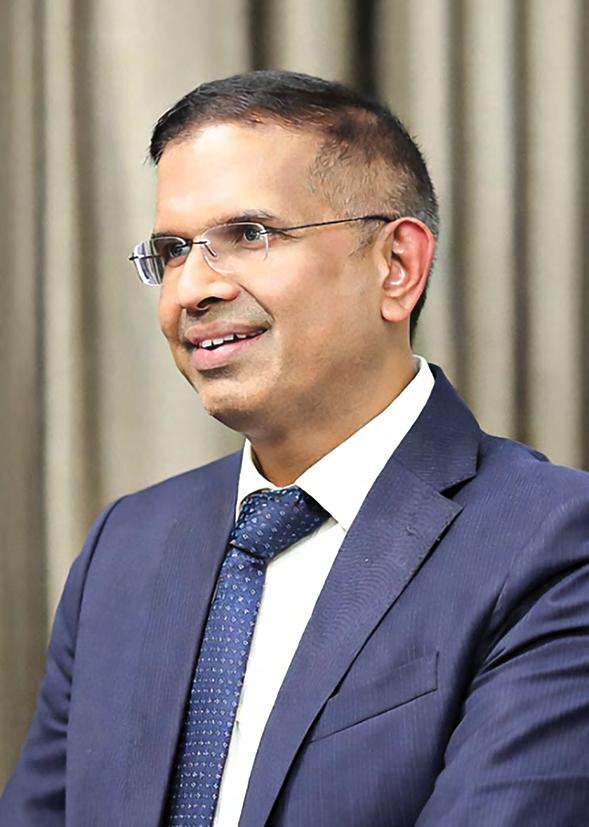
performance testing for Fan Coil Units, Air Handling Units, Roof Top Package Units and Non-Ducted Air Conditioners in accordance with AHRI, ASHRAE and ISO standards, including ISO 5801, AMCA 210, EN 1886 and ASHRAE 41. TROSTEN’s
portfolio includes EUROVENTcertified Air Handling Units and Fan Coil Units, supported by AHRI 410-certified cooling coils, ensuring reliable performance and full global compliance.
“Our continued investments in advanced manufacturing, testing laboratory and sustainable practices enable us to consistently raise performance and environmental benchmarks.”
SP Sarangan, Managing Partner, TROSTEN Industries
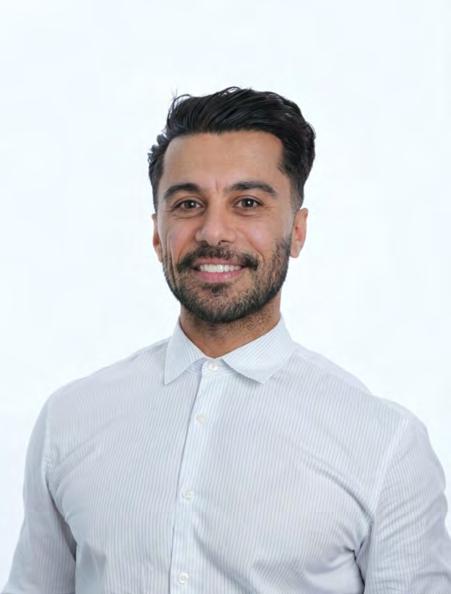
/ Principal & Senior Technical DirectorBuilding Services (MEP), GHD Middle East
Tarek Qabaha is a GHD Principal and Senior Technical Director providing executive leadership across the Middle East, setting the benchmark for advanced MEP engineering on highly technical and mission-critical developments. With close to two decades of international experience, he is recognised for delivering resilient, futureready building services solutions aligned with emerging technologies and evolving client demands.
Among his recent projects, Tarek has led the development of a standard reference design for modular data centre facilities
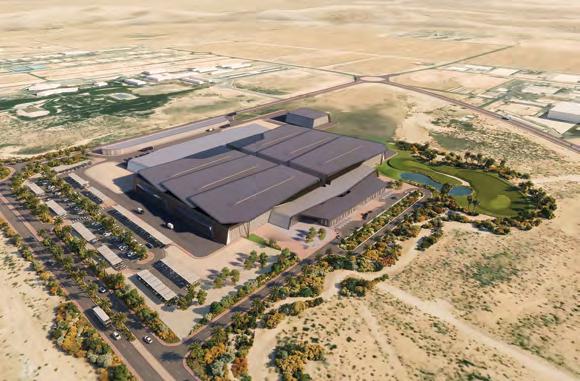
purpose-built for AI workloads, supporting rack densities of up to 150kW. This work establishes a replicable and scalable framework for nextgeneration computing infrastructure, integrating advanced cooling architectures and resilient power systems, and positions GHD at the forefront of one of the region’s most rapidly evolving sectors.
Tarek leads multidisciplinary teams delivering MEP systems across some of the most demanding and sensitive project environments in the region, including classified defence facilities in the UAE. In sectors where technical assurance, security compliance and delivery certainty are fundamental, he provides clear governance over complex electrical and mechanical systems, maintaining control and programme integrity throughout delivery.
Tarek has played a direct role in advancing the regional adoption of BS 7671, the IET Wiring Regulations, leading efforts to align GCC industry practices with this internationally recognised electrical standard. Beyond technical delivery, Tarek is committed to creating long-term value through mentorship, capability development and knowledge sharing, contributing to resilient teams and delivering enduring benefits for clients, communities and the built environment.
“At a time when the region is accommodating rising power demands and the increasing integration of sustainable systems, regulatory frameworks must keep pace with technical and operational change.”
Tarek Qabaha, Principal & Senior Technical Director - Building Services
(MEP),
GHD Middle East
/ Senior General Manager, BETAM
Sahul Hameed has spent his career at the intersection of engineering precision and large-scale delivery, building a reputation as one of the UAE’s most methodical and resultsdriven MEP leaders. As Senior General Manager at BETAM, he has steered the company beyond conventional contracting, embedding a culture of systems thinking, accountability, and performance-led
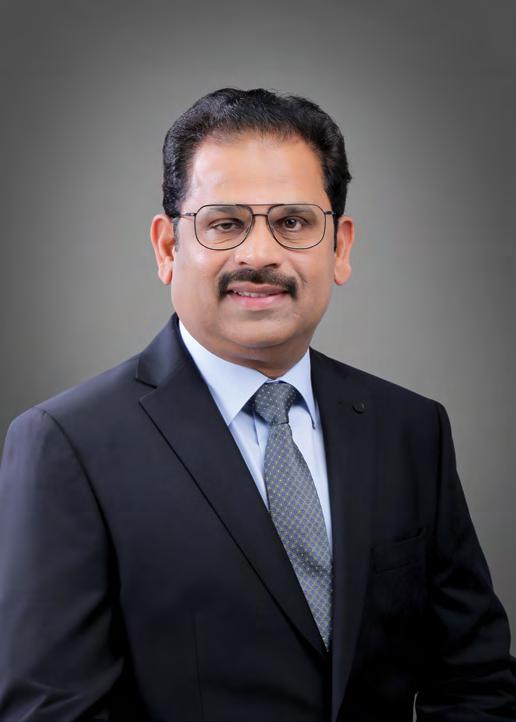
execution across some of the region’s most complex projects.
Where others see MEP as a compliance exercise, Sahul sees it as an integration challenge. Under his leadership, BETAM approaches every project, from HVAC and electrical to plumbing and sustainability systems, as a single cohesive mechanism rather than a collection of disconnected packages. That philosophy has translated into measurable outcomes: reduced rework, stronger programme integrity, and buildings that perform as designed long after handover.
His ability to manage multidisciplinary complexity, whether in live refurbishment environments, high-risk packages, or tightdeadline scenarios, has become a defining characteristic of BETAM’s delivery model. Procurement strategy, resource planning, and risk mitigation are not reactive functions under his watch; they are built into the process from day one.
Sahul is equally focused on where the industry is heading. He has positioned BETAM at the forefront of digital integration and sustainability measurement, driving the adoption of emissions tracking, performance monitoring, and ESG-aligned engineering metrics at a time when the market is only beginning to demand them.
His legacy, however, may ultimately be measured in people. Through mentorship, internal standards, and structured leadership development, he is shaping the next generation of MEP professionals, ensuring that BETAM’s standards outlast any single project.
“MEP is not a series of packages to be ticked off. It is the nervous system of a building, and if you treat it as anything less, the building will tell you eventually.”
Sahul Hameed, Senior General Manager,
BETAM
Berry / Director, CKR Consulting Engineers
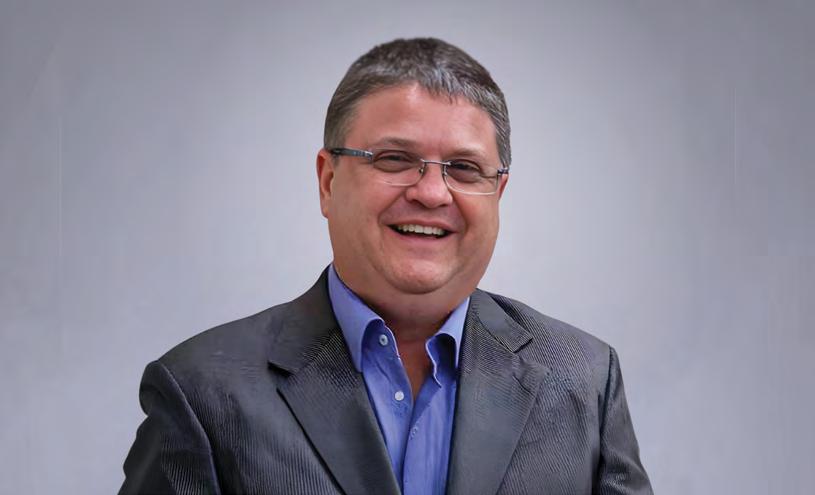
Michael Berry’s story with CKR is, in many ways, the story of the firm’s Middle East ambitions. He joined the South African consultancy in 1999 and was posted to Dubai to oversee a major project, a move that was meant to be temporary. He stayed, and what followed was the methodical construction of an entire regional operation built around his leadership.
A Bachelor’s-qualified Electrical Engineer from the University of Natal, Michael holds professional registration with both ECSA and the Engineering Council of the UAE, credentials that speak to the dual worlds he has successfully navigated. Under his stewardship, CKR’s Dubai office has grown to a team
of 60 highly accredited engineers, delivering MEP consultancy across the UAE and the broader Middle East, with projects extending as far as Sri Lanka and India.
The portfolio reflects the breadth of CKR’s expertise: from the Kempinski on Palm Jumeirah and Atlantis adventure rides, to Nakheel Mall, Madinat Jumeirah Resort Phase 4, and the Emirates Flight Training Organisation at Dubai World Central. In recent years, Michael has also steered the firm’s expanded focus into green building, specialist IT consultancy, and lighting design, ensuring CKR remains a genuinely multi-disciplinary force in a market that increasingly demands it.
“The Middle East does not reward consultants who show up with a formula. Every project demands that you think from first principles. That is what keeps this market genuinely interesting.”
Michael Berry, Director, CKR Consulting Engineers
/ Managing Director,MBM Gulf Electromechanical LLC
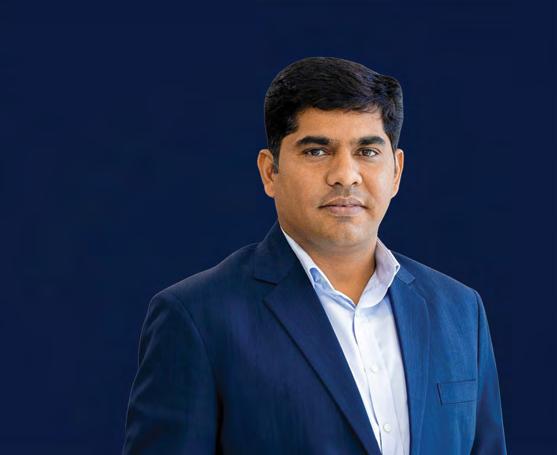
Zeeshan Haidar is not simply an executive who arrived at the top of an established organisation. He is, in the truest sense, an industry builder. With over 25 years of experience in the UAE’s MEP and HVAC sector, Zeeshan’s career is defined by the repeated act of building businesses from the ground up, taking on managing and ownership roles across several electromechanical ventures before consolidating his focus on MBM Gulf Electromechanical LLC, the company he has grown into one of Dubai’s most active MEP contractors.
Under his leadership, MBM Gulf has developed a broad and credible portfolio spanning airports, hotels, hospitals, commercial towers, residential developments, and universities. He also heads Ancient Builders Constructions LLC, underscoring the breadth of his operational reach across both MEP and civil disciplines.
Recent live projects tell the story of a business punching at a high level: MEP works on the Portofino cluster at Damac Lagoons, the Dusit Princess Hotel Apartments at Jumeirah Village Circle, and the Chic Tower in Business Bay. Zeeshan’s longevity in a fiercely competitive market reflects a founder’s instinct, an operator’s discipline, and a deep fluency in what the UAE’s built environment demands.
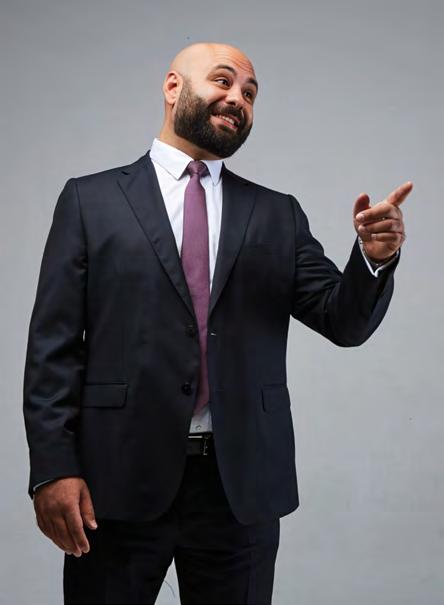
/
Board Member & CEO, James L. Williams Middle East (JLW)
Few careers in the region’s MEP sector tell as complete a story as Ramy Boufarhat’s. A master’squalified engineer who cut his teeth in Australia’s building services industry, working across both design consultancy and contracting, Ramy arrived in the Middle East in 2009 with a grounding that proved invaluable. He joined JLW as a Senior Engineer and quickly rose to Engineering Manager, spending those formative years quietly building what would become one of the firm’s defining strengths: its engineering and EPC capability.
By late 2012, he was COO. What followed was a period of sustained, deliberate growth, with JLW scaling considerably through 2013 to 2016 and earning a reputation by 2019 as the elite MEP contractor in the Middle East. The next strategic call was perhaps his boldest: a sharp pivot towards data centres, utilities, and critical infrastructure at a time when the region’s digital appetite was just beginning to accelerate.
It paid off. Data centres now account for over 85% of JLW’s revenue, with the company delivering multiple programmes each exceeding AED one billion, among them projects for Khazna Data Centres in Abu Dhabi and EITC in Dubai, alongside its first hyperscale facility in Riyadh. Appointed CEO in 2022, Ramy now oversees a workforce of more than 5,000, leading a business that has become the contractor of choice for global hyperscalers and the region’s largest digital infrastructure clients.

Words by: Vibha Mehta
At 5:17am, the Gulf is still deciding what shade of gold it wants to be. On a jobsite, that indecision doesn’t exist. Concrete pours, schedules tighten, radios crackle, and someone, somewhere, is already negotiating a problem that didn’t exist yesterday. Increasingly, that “someone” is part of the growing cohort of women shaping outcomes across the region’s sites and project rooms.
The Middle East’s construction story has long been told in megaprojects and metres: taller, faster, heavier, louder. Yet the more interesting shift isn’t only in skylines. It’s in site cabins, design reviews, inspection walks, and latenight coordination calls where credibility is earned in decimals, not declarations. Women are not “arriving” in construction as guests. They are becoming part of the operating system.
Ask a project manager what power looks like, and she may not say “authority”. She might say “certainty”. The certainty of a programme that holds. The certainty of a detail that’s been checked twice. The certainty of a subcontractor meeting the standard because someone refused to sign off anything less. In a region where delivery is the ultimate currency, that

kind of discipline travels faster than any stereotype.
This isn’t a single narrative. It’s a mosaic: a site engineer in Riyadh negotiating logistics with three trades at once; a sustainability lead in Abu Dhabi turning compliance into competitive advantage; a planner in Dubai building calm into chaos with a schedule that anticipates reality, not optimism; a façade specialist in Doha arguing for performance, not appearances. Their influence often shows up in what doesn’t happen: fewer reworks, fewer late surprises, fewer compromises dressed up as “practical”.
The change is also cultural, and quietly strategic. As organisations compete for scarce talent, diverse leadership isn’t a slogan, it’s risk management. Better teams make better decisions. Better decisions build better cities.
The Middle East knows how to build at scale. Now it is learning how to build with range.
If the old construction myth was that progress requires noise, the new truth is more nuanced. Sometimes progress looks like a woman in a hard hat, walking a site with steady pace, asking the sharp question nobody else thought to ask, and turning a complex project into a predictable outcome. That is not a headline. It’s a blueprint.
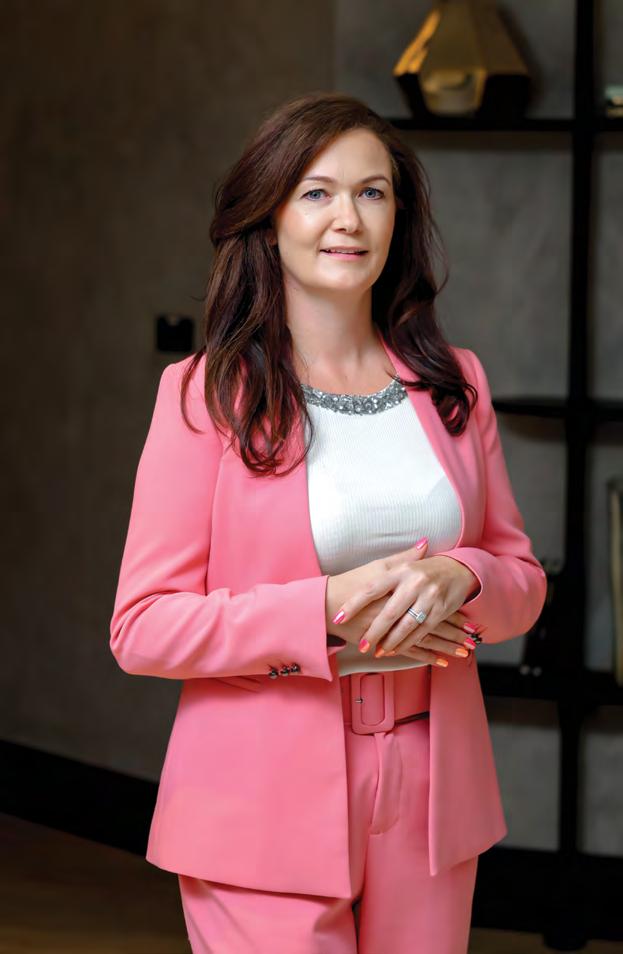
EVP – Brand, Marketing & Customer Experience, Shamal Holding
Donna Glasper has spent over 15 years building brands that do more than communicate; they shift perception, drive commercial outcomes, and compound over time through strong narrative.
Shaped by the high-stakes environments of global aviation and hospitality, where marketing decisions touch millions of customers across markets and where speed, precision, and commercial accountability are non-negotiable, Donna developed a rare fluency across brand strategy, customer
experience, and business performance. Early in her career, she recognised that marketing in experience-led industries is never simply about promotion. It is about shaping how people feel, behave, and remember, with measurable impact on the bottom line.
That understanding has defined every role since. As Executive Vice President of Brand, MarComms and Customer Experience at Shamal, a Dubai-based diversified investment company with a portfolio spanning real estate, leisure and entertainment, food and beverage, and destinations, Donna operates at the intersection of brand and business strategy. What sets her apart is the ability to connect brand, experience, and marketing into one cohesive system, one where decisions made in a boardroom directly shape the experiences millions of people will have for years to come. It is an environment that demands creative conviction, strategic thinking, and financial fluency in equal measure.
Her move into real estate and destination development was a natural progression rather than a departure. Donna has always been drawn to industries where brand and experience are inseparable from the product itself, and at Shamal, she found the environment where that belief could be tested at the highest level. Here, the opportunity is not to market developments in the traditional sense, but to shape how entire destinations, masterplans, and global partnerships are brought to life, balancing long-term asset value, customer behaviour, and commercial performance in ways that are both direct and quantifiable.
What differentiates Donna’s approach in a sector that often defaults to transactional marketing is her focus on balancing short-term demand generation with long-term brand building, ensuring sustained growth comes from the right blend of both. At Shamal, where assets range from ultra-luxury private estates such as Naïa Island to landmark developments including Baccarat Hotel and Residences Dubai and the dynamic waterfront of Dubai Harbour, the starting point goes beyond reaching the right audience. It is about defining what makes each offering truly distinctive, curating the right brand partnerships, and shaping a compelling end-to-end concept that drives both relevance and demand. For Donna, brand partnerships are not about association alone. They are a strategic lever used to shape the experience, attract the right audience, influence

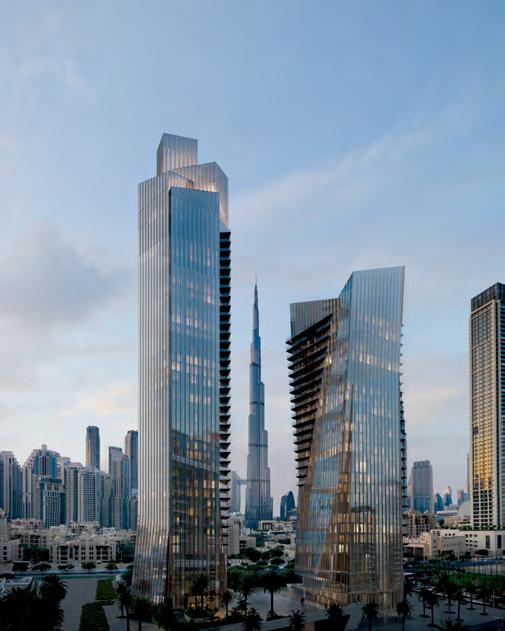
perception at scale, and drive long-term asset value, with each partner playing a defined role within a broader ecosystem that determines how a destination is perceived, experienced, and monetised.
That philosophy extends to how she thinks about experience design itself. Donna often cites that the success of a destination is not defined by what is built, but by how people experience it: how they arrive, move through a space, where they spend time, and what makes them return. This requires marketing to operate upstream, influencing decisions before concepts are locked in rather than promoting them after the fact. Customer experience is embedded from the outset, shaping everything from amenities and community design to positioning and narrative, with data and insights used to inform strategy, not simply measure performance, ensuring communication remains intentional. In a capitalintensive environment with long development timelines, the cost of retrofitting brand and experience later is simply too high.
That conviction also shapes how she builds teams. Across every role, Donna’s focus has been on developing teams that bring
genuine insight into the room, not just execution: teams that think commercially, challenge assumptions, and contribute to decision-making at the highest level.
IT IS A PHILOSOPHY SHE IS DIRECT ABOUT: “MARKETING SHOULD NOT SIT AT THE END OF THE PROCESS. IT SHOULD HELP SHAPE WHAT GETS BUILT IN THE FIRST PLACE.”
For Donna, the conversation needs to move beyond representation and towards influence and impact. There is no shortage of talented women across the industry; the opportunity lies in being present where commercial and strategic decisions are made. That is not simply an access issue. It is a credibility and positioning challenge for marketing as a discipline. Marketing, and the people leading it, is still too frequently treated as a downstream execution function rather than a driver of business strategy, and very few marketers hold board-level positions as a result.
Changing that, in Donna’s view, starts with how leaders choose to show up. It requires building credibility beyond marketing: engaging in investment conversations, bringing the voice of the customer into the room, ensuring insights sit alongside long-term growth drivers in decision-making, and demonstrating the commercial impact of brand and experience in terms that resonate at the highest level. The shift required is not just organisational. It is individual. If you want a seat at the table, you have to speak the language of the table.
Her advice to women navigating the sector is direct: do not wait for a seat, move from being visible to being valuable. From shaping campaigns to shaping business strategy. Build commercial acumen, and ensure your contribution is tied to business outcomes, not just marketing outputs. For Donna, that has always been the standard, and one she has applied consistently across markets, sectors, and roles.

CAREER HIGHLIGHT MAP
Five key moments that have defined her journey
1 2 3 4 5
Built the foundation of digital marketing across global brands
Scaled scaling customer-centric capabilities at Emirates
Unified brand, data and experience through integrated systems to drive commercial value in the hospitality sector
Led organisational transformation to reposition marketing into a strategic and growth-engine
Elevated customer insights into a decision-making driver to generate long-term brand value
From an early age, architecture held a strong fascination for Tamara. She was drawn to extraordinary buildings and to the way great structures shape skylines, communities, and the way people experience a city. Over time, that fascination evolved into a clear desire to help create places with lasting impact.
As her career progressed, she came to understand construction as the point where vision meets execution. It is where strategy, technical expertise, and leadership converge, and where ambitious ideas are tested against the discipline of delivery. That responsibility, and the opportunity to shape
environments that endure, confirmed construction as the career she wanted to pursue.
Leadership on Site
Mace Consult is recognised for delivering major projects and programmes across the Middle East and globally. Tamara has worked on high-profile commissions in the UAE and is currently supporting a leading developer in Abu Dhabi.
That pace has refined her leadership into something practical and precise: clarity, trust, and timely decision-making. Managing multiple stakeholders and compressed programmes has strengthened her ability to stay composed under pressure, make well-

One
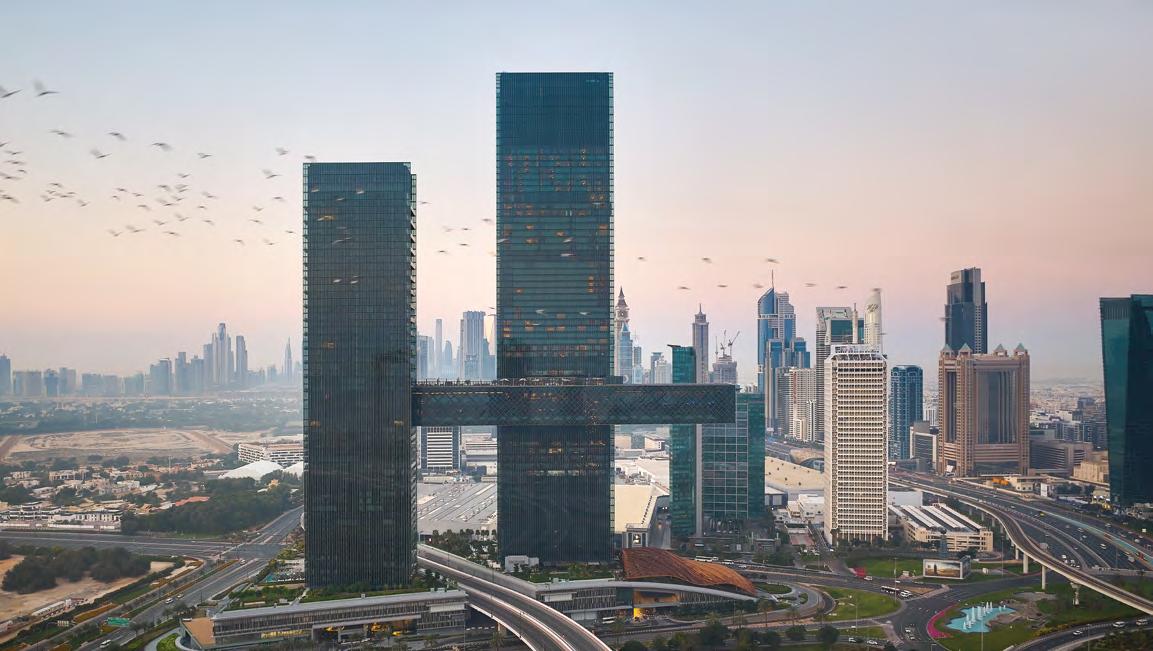
judged calls, and keep teams moving in the same direction as conditions evolve.
On site, complexity is part of the job. Tamara believes strong teams are built on transparency, accountability, and respect. She leads with a solutions-first approach, encourages collaboration, and ensures specialist expertise is heard, while keeping delivery anchored to the client’s outcomes.
Raising the Bar
Tamara views progress as real, but believes sustained momentum depends on deliberate action. Diverse leadership, in her view, is not simply a representation goal; it strengthens
decision-making, drives innovation, and supports long-term performance.
She also emphasises that opportunity must be anchored in capability and impact. Organisations that build merit-led cultures, create visible leadership pathways, and make space for different perspectives at the decision table unlock the full potential of their talent.
She is encouraged by the shift already visible in fast-moving markets across the region. As more women step into senior roles, they are delivering major developments and broadening what credible leadership looks like for the next generation.
CAREER HIGHLIGHT MAP
Five key moments that have defined her journey
Turning passion into profession: She turned her passion for architecture into a career in the built environment, believing that genuine interest is where lasting growth begins. 1 2 3 4 5
Taking an international leap: Her move to the UAE placed her at the heart of one of the world’s most ambitious development markets, accelerating her growth both professionally and personally.
Earning trust early: Early roles involved complex, high-value projects with multiple stakeholders, fast programmes, and uncompromising quality expectations.
Stepping into leadership: She transitioned into strategic oversight, leading multidisciplinary teams and delivering developments that shape communities, not just assets.
Operating at portfolio scale: At Mace Consult, she supports cityshaping developments, balancing commercial objectives with lasting impact.
Breaking Ground
Growing up in the UAE, Layal was drawn to construction by the sheer scale of its impact. Few industries offer the opportunity to shape skylines, influence communities, and create something tangible that lasts for generations. During her master’s in Engineering Management and in the early years of her career, she came
to see construction as a field where strategic planning, problem-solving, finance, and human collaboration converge, none of them defined by gender. That complexity, and the opportunity to prove herself within it, convinced her to build a long-term career in the industry.
Leadership on Site
Construction is fast-moving and often unpredictable, and those pressures
CAREER HIGHLIGHT MAP
Five key moments that have defined her journey
have shaped Layal’s leadership style to be both structured and adaptive. She has learned that strong leadership on site is less about authority and more about alignment, ensuring that every stakeholder understands the goal and their role in achieving it.
These experiences have reinforced her belief in leading with both technical confidence and emotional intelligence. Listening carefully, staying solution-oriented, and remaining composed under pressure are not soft skills; they are often the qualities that determine whether a project succeeds or fails.
Raising the Bar
Layal believes the conversation must move beyond representation and towards genuine inclusion, particularly in decision-making roles. More women are needed not only on projects, but in leadership across delivery, commercial strategy, and executive management.
For Layal, the most important shift is cultural. Construction has long rewarded a narrow leadership mould, yet the industry performs better when different approaches are recognised and valued.
Her message to younger women entering the field is clear: never underestimate the value you bring. Construction rewards resilience, curiosity, and consistency more than perfection. Staying technically grounded, speaking up early, and refusing to be intimidated by being the only woman in the room are all part of building a lasting career.
She believes progress is visible, but accelerating it will require intentional mentorship, visible role models, and working environments that open doors rather than expecting women to force their way through them alone. 1 2 3 4 5
Moving
Expanding into dispute resolution, arbitration, and contract strategy.
Building strong teams while supporting executive decisionmaking.
Sit your best.
Breaking ground
Loukia
Voultsaki’s path into construction began with a curiosity about how major infrastructure can transform people’s daily lives. During her academic years, she was deeply inspired by projects such as the London Underground and Greece’s Egnatia Odos motorway. These were not simply engineering achievements; they were national investments that improved mobility, reshaped communities, and demonstrated the power of well-executed infrastructure to influence quality of life.
That realisation stayed with her. It showed her that engineering is not only technical work, but also a contribution to society. This sense of purpose anchored her decision to build a longterm career in construction and project management. Over time, she came to see that what motivated her even more than technical complexity was the responsibility of bringing diverse teams together, solving problems, and delivering safe and resilient infrastructure.
Working across Greece, Qatar, Vietnam, Dubai, and other regions strengthened her belief
that construction is a profession defined by leadership, integrity, and the ability to anticipate risks while maintaining trust with clients and authorities. Today, what continues to energise her is not only the scale of the projects she leads, but also the opportunity to guide teams, mentor future engineers, and ensure that the work delivered leaves a lasting impact on communities.
Loukia’s leadership style has been shaped by years of managing technically demanding, fast-paced, and often high-pressure construction environments. Complex projects, whether metro systems in dense urban neighbourhoods or large-scale infrastructure involving multiple authorities and contractors, have required a balanced approach that is proactive, empathetic, and solution-driven.
Leading the elevated works of Hanoi Metro Line 3 challenged her to coordinate multidisciplinary teams while managing heavy traffic, limited workspace, and the safety of both workers and the public. She learned the value of structured planning, clear communication, and anticipating issues before they escalated.
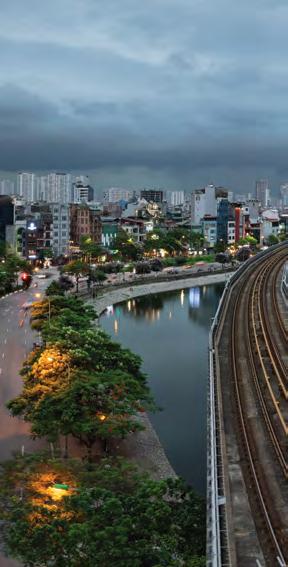
When a major design failure allowed rainwater to infiltrate external equipment, she guided the development of a permanent drainage solution that protected assets worth millions and kept the project on schedule. The experience reinforced her belief that leadership is measured by composure, transparency, and the ability to mobilise teams quickly.
In Dubai, managing 14 concurrent infrastructure projects has further shaped her style. With more than 150 staff under her leadership, she prioritises consistency in quality, early risk review cycles, and open engagement with
LOUKIA VOULTSAKI
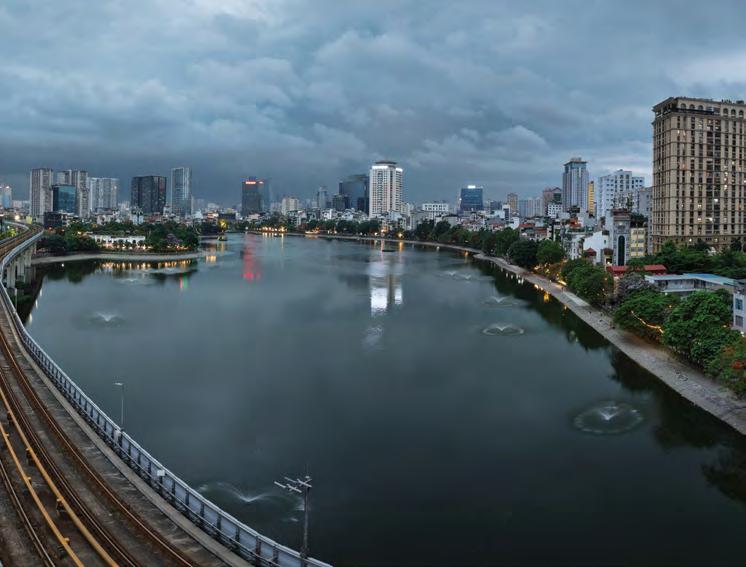
clients and authorities. Her role extends beyond solving technical challenges; it also involves creating a culture where people feel supported, confident, and accountable.
Across all regions, her leadership has come to be defined by fairness, clarity, and a firm commitment to safety. A record of zero accidents across her Dubai portfolio reflects this. Leading teams through complex challenges has strengthened
her belief that strong leadership requires direction and discipline, but also mentorship, accessibility, and trust.
Raising the bar
Loukia believes that women in construction continue to face invisible barriers, rooted not in capability but in long-standing industry norms. For women to thrive, she sees several shifts as essential. First, organisations need to create structured pathways for women to enter site-based
Five key moments that have defined her journey
roles early in their careers. Exposure to fieldwork builds confidence and technical judgement, and is often the experience that accelerates leadership progression.
Second, mentorship must be intentional. Throughout her career, she has seen how the right support can transform a young engineer’s trajectory. Companies should establish formal mentorship structures, ensuring that women have access to senior leaders, high-visibility responsibilities, and opportunities to present to clients and authorities.
Third, inclusivity must be more than policy; it must be part of the lived culture. This means fair leadership, psychological safety, and equal access to training, promotions, and challenging assignments. When teams experience inclusive leadership, performance improves and collaboration strengthens. Finally, visibility matters. Showcasing women in senior technical roles helps shift perceptions and encourages the next generation to pursue similar paths.
Loukia believes the industry benefits when it broadens its leadership base, and she has seen first-hand how diverse teams perform better, communicate more effectively, and deliver higher-quality outcomes. Creating that environment, in her view, is essential for the future of construction.
1 2 3 4 5
Leading the Hanoi Metro Line 3 elevated section, delivering eight stations and a viaduct in constrained urban conditions.
Receiving the QDVC LRT-HSE Innovation Award in Qatar for a safety initiative that raised HSE standards.
Delivering three underground Lusail LRT stations and the Ali Bin Hamad Al Attiya Arena within an 18-month schedule.
Expanding AECOM Dubai’s construction supervision portfolio to 14 active projects valued at AED8bn, while maintaining zero accidents.
Being promoted to Associate Director in recognition of technical excellence, operational leadership, and regional impact.
Creative Director, NKEY Architects
Breaking Ground
Nataliia was drawn to architecture from an early age, inspired by a natural blend of creativity and analytical thinking, where beauty and precision coexist. For her, architecture has always been about balance, between practicality and structure, form and function.
Guided by the philosophy of “Unlock your inner self,” she translates each client’s identity, aspirations and lifestyle into spaces that are both personal and functional, particularly in the premium and ultra-luxury residential segment, where detail, character and authenticity define the standard.
Leadership on Site
Working across 500+ projects in 45+ countries has shaped Nataliia into a precise and adaptive leader. At NKEY Architects, that leadership is embedded within a full-cycle model spanning
concept development, architecture, interior design, detailed drawings, 3D visualisation, supervision, renovation and turnkey delivery.
NKEY’s portfolio includes 250+ active projects in the UAE, with a strong concentration across the Middle East and
international reach extending to Canada, the United States, Brazil, Morocco and Australia.
Raising the Bar
Women will continue to progress when the architecture industry creates stronger pathways into leadership,
design direction and decision-making roles. Progress is not only about bringing more women into the field, but about ensuring they are given the visibility, trust and responsibility to lead concepts from idea to execution.
CAREER HIGHLIGHT MAP
Five key moments that have defined her journey
1 2 3 4 5
Co-founded NKEY Architects (2018); built its creative identity from inception.
Pioneered a distinctive branding and visual identity approach, elevating global demand.
Directed design across premium residential and bespoke interior portfolios.
Positioned Dubai as global HQ amid Middle East expansion.
Leads with balance and adaptability across teams and projects.
Chief of Sales, OCTA Properties
Breaking Ground
What first drew Donna to real estate was a deep fascination with architecture and interior design, and the quiet power of spaces to shape how people live, feel and experience their everyday lives.
Real estate became the perfect intersection of the two, combining a passion for design with the human side of sales, building relationships, creating trust and guiding people through some of the most important decisions they will ever make. For Donna, this is not just about selling property. It is about connecting people to spaces that become part of their lives.
Leadership on Site
Complex projects have taught Donna that leadership is less about control and more about clarity, trust and presence. Ultimately, strong leadership comes from staying connected to reality and empowering teams to perform at their best.
Raising the Bar
While opportunities for women have improved, real progress lies in creating cultures where women feel safe to lead authentically at every stage of life. The focus must shift from policies to everyday culture, such as who is heard, supported and promoted.
The future of leadership is not about women becoming more like men, it is about leadership becoming more human overall.
CAREER HIGHLIGHT MAP
Five key moments that have defined her journey
1 2 3 4 5
Relocating to Dubai and starting from scratch
Rebuilding professional network and sense of belonging
Developing confidence to lead and make decisions independently
Being supported by mentors who advocated and opened doors
Evolving into a leadership style rooted in emotional intelligence and selftrust
Khindey
Head of Corporate Communications, Douglas OHI
Breaking Ground
Davinder Khindey was drawn to construction by the distinctiveness of Douglas OHI and the scale of its ambition. It is one of the few industries where impact can be seen taking shape in real time. Watching projects and places come to life, while shaping how the organisation communicates its vision, strategy, and achievements, gave her a strong sense of purpose. That tangible progress is
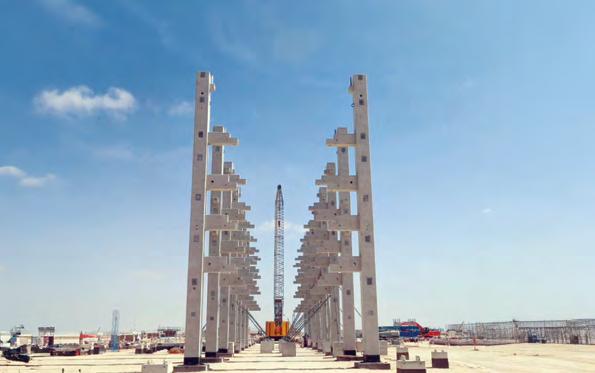
are essential to building trust and enabling collaboration across diverse teams.
Leadership on Site
Working closely with project teams on fast-paced, complex initiatives has shaped Davinder’s leadership style to be agile, grounded, and solutions-focused. By understanding team priorities and translating them into clear, timely communication, she remains closely connected to operational realities while helping teams perform at their best.
For Davinder, leadership is not defined by title, but by the ability to connect people, amplify achievement, and ensure communication reflects both the pressures and successes of delivery. She believes empathy, alignment, and responsiveness
Five key moments that have defined her journey
Raising the Bar
Davinder believes the industry must move beyond representation and focus more sharply on opportunity, visibility, and inclusion in decision-making. Mentorship, access to highimpact projects, and visible female role models, in her view, are all essential to helping women thrive in construction.
She also believes that when women are empowered to lead, both Douglas OHI and the wider industry benefit through a stronger culture, greater innovation, and deeper resilience. 1 2 3 4 5
Supporting communications around Douglas OHI’s first Gold RoSPA Award in 2018.
Building corporate communications into a stronger strategic function.
Championing peoplefirst storytelling rooted in site realities.
Leading award strategies that elevated team achievement and industry visibility.
Driving ESG positioning that supported Douglas OHI’s first Sustainability Report.

Vibha

Farah Addada’s path into construction began with a deep interest in how physical spaces shape human behaviour and productivity. What started as an academic curiosity soon became a broader fascination with the psychological impact of the built environment on how people work, interact, and feel in their daily lives.
During her studies, she came to a defining realisation: creating workplaces that are both functional and inspiring requires more than strong design ideas alone. It demands a clear understanding of the design process as well as the realities of construction. That insight drew her to the intersection of architecture, psychology, and construction,
where she saw how thoughtful workplace design could influence company culture, employee satisfaction, and long-term performance.
What ultimately convinced her to build a career in the industry was the opportunity to bring design visions to life and create spaces where people can genuinely thrive. For Farah, construction was never only about buildings; it was about shaping environments that improve the way people work and experience professional life.
Farah believes leadership in construction demands a balance of technical capability and interpersonal
intelligence. Success depends not only on expertise, but on the ability to coordinate complex projects involving multiple stakeholders with different priorities, backgrounds, and working styles.
For her, emotional intelligence is central to effective leadership. Selfawareness helps leaders understand their own strengths, limitations, and impact, while empathy allows them to build genuine connections with team members, clients, and stakeholders.
That emotional acuity, she believes, is what allows leaders to manage expectations, navigate diverse personalities, and build the trust required for long-term success. By reading the room, adapting communication styles, and responding thoughtfully to both spoken and unspoken concerns, leaders create stronger teams and more resilient client relationships.
Raising the Bar
Farah believes the industry’s most pressing need is greater female representation in senior construction leadership. For her, this is not simply a matter of visibility, but of ensuring that decision-making roles reflect a broader range of perspectives and leadership strengths.
She also sees growing opportunities in the increasing focus on workplace wellness and employee experience. As businesses place greater value on inclusive and effective environments, the industry is beginning to recognise how diverse perspectives can
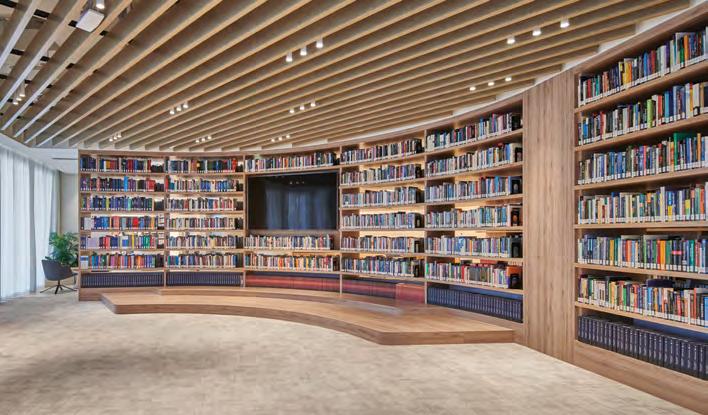
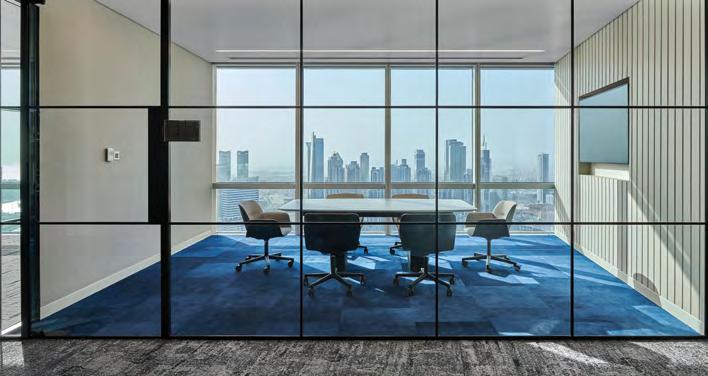
strengthen design outcomes and improve workplace performance.
Farah believes construction is gradually evolving to value a wider range of leadership styles. As more women demonstrate their technical strength through successful delivery, the sector is becoming more open
Five key moments that have defined her journey
to collaborative problem-solving, emotionally intelligent management, and authentic leadership. In her view, that shift is not only good for women, but essential to building stronger teams, serving clients more effectively, and creating better workplaces overall. 1 2 3 4 5
Completing her first project and seeing a vision built into reality.
Discovering that quiet confidence can command lasting respect.
Redefining success through a stronger balance between work and family.
Turning complex projects around through deeper client understanding.
Shifting towards purpose-led design rooted in story and intent.
Sevgi Gul Gode’s path into construction began with mining engineering. During underground mining training, she saw how demanding yet technically rewarding the field could be. Her graduation focus on natural stone proved decisive, shifting her interest from underground work to quarried materials used in construction. From that point, her career moved towards natural stone consultancy. Technical curiosity, strong timing, and growing management opportunities helped shape that direction, while Versatile International gave her the platform to turn that specialism into a career.
Working across complex projects with varied stakeholders, suppliers, and teams has shaped Sevgi’s leadership style to be analytical, measured, and highly responsive. She believes in listening first, understanding the client brief in full, and anticipating likely challenges before they arise.
Her approach is both forensic and practical. Stone performance depends on geology, finish, and application, so she focuses closely on quarry selection, finish testing, cutting, shipping, and installation details to protect material integrity. On heritage-led programmes such as Diriyah, that has required exceptional attention to colour, veining, durability, and supply-chain control. She believes her perspective on site is defined by precision, collaboration, and a strong focus on client outcomes.
As a Stone Project Management Consultant and Quarry Manager, Sevgi
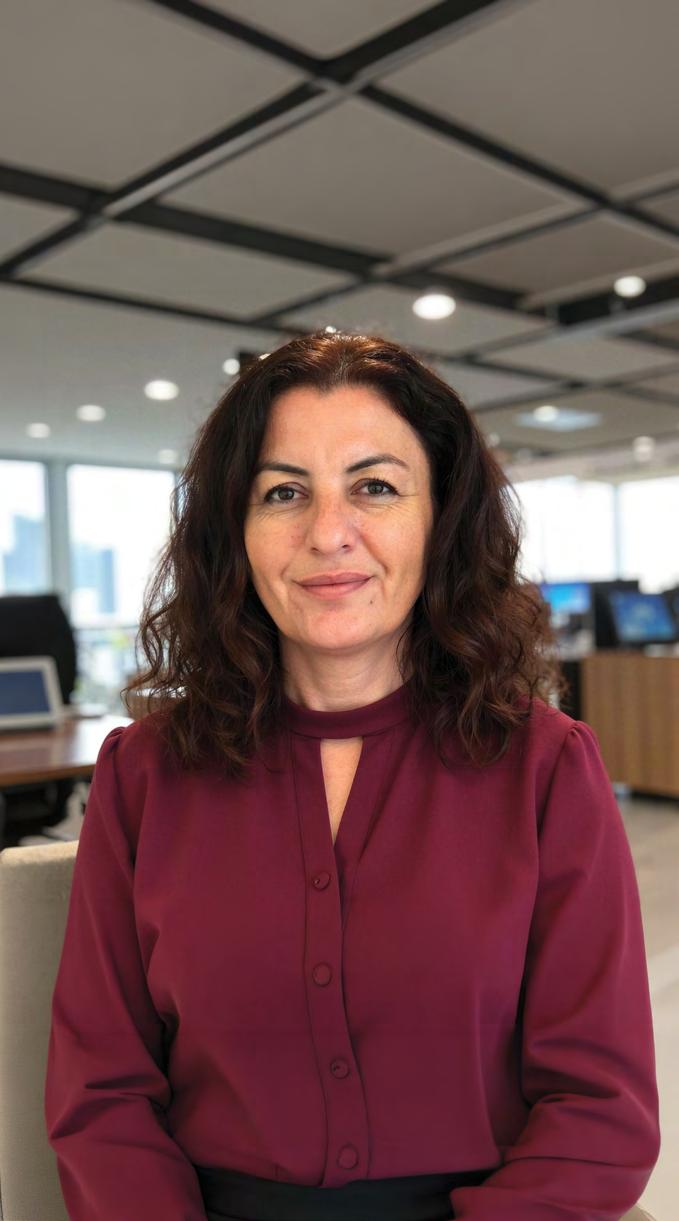
oversees sourcing to ensure materials meet client specifications. On a recent Diriyah project, she identified subtle colour variations between stone blocks that would have disrupted the final elevation. Instead of approving all material, she segregated batches by tonal range at the quarry, adjusted cutting sequences, and specified laying mockups for the contractor. The decision reduced rework and preserved the design intent, demonstrating how geological understanding and construction judgement can directly affect quality, schedule, and cost.
Raising the Bar
Sevgi believes women need both practical support and structural backing to thrive in construction. Family-friendly policies, leadership support, and real access to opportunity all matter. She also believes the industry should better recognise the value women already bring, particularly in attention to detail, systems thinking, and reading complex stakeholder dynamics.
For her, progress depends on having more women at every stage of the process, from quarries and sites to procurement and design decision-making. She sees leadership support as crucial
in turning potential into real expertise, especially on technically demanding and highprofile work.
• Passing on Knowledge
Sevgi is actively involved in on-site training, knowledge-transfer sessions, and multilingual briefings. She works with contractors and junior staff on reading block variability, anticipating weathering, specifying anchors and finishes, and managing procurement so design intent survives the supply chain. Her training is practical and site-led, focused on reducing mistakes before they happen and improving installation quality, long-term performance, and client confidence.
• Advice to Other Women
Her advice to women considering this path is to build strong technical foundations and combine discipline with curiosity. She believes agility is essential, particularly on site, where conditions shift quickly and informed decisions must often be made under pressure.
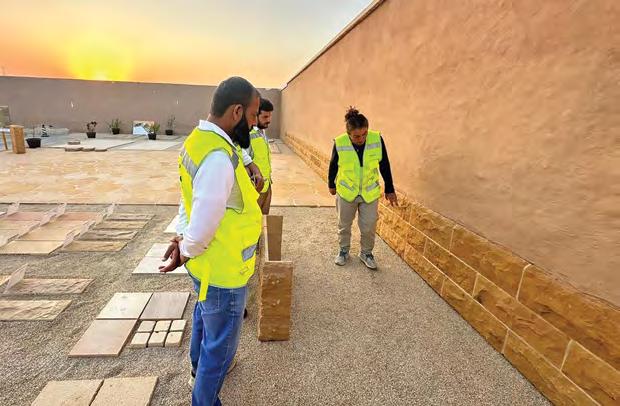
Five key moments that have defined her journey
For Sevgi, the work is not glamorous, but it is deeply rewarding. Much of it happens in quarries and on active sites, through inspections, logistics, and close coordination with teams on the ground. Yet that is precisely what drives her. She believes natural stone consultancy offers women a space to lead, teach, and influence how projects are delivered. 1 2 3 4 5
Studying mining engineering and building a strong technical base.
Specialising in natural stone through her graduation project.
Bridging geology and construction in early technical roles.
Moving into management across supply chains, quality, and specification.
Leading on-site stone work for major programmes such as Diriyah.
Breaking Ground
Idoia Zulueta Moreno was drawn to construction by its technical depth, tangible outcomes, and social impact. That ambition led her to study Industrial Technologies
CAREER HIGHLIGHT MAP
Engineering, followed by a Master’s in Industrial Engineering.
Her academic path took her through universities in Bilbao, Kraków, Madrid, and Ghent, shaping both her technical
Five key moments that have defined her journey
Earning her engineering degree and master’s, building a strong technical base.
Studying across Bilbao, Kraków, Madrid, and Ghent, broadening her global outlook.
Taking on her first major ACCIONA project at East Bay in the Philippines.
Relocating to Qatar for major reverse osmosis desalination projects.
grounding and her confidence in multicultural environments. She began her career at ACCIONA in Madrid, supporting water treatment and desalination projects across the Philippines, Saudi Arabia, and Qatar.
Less than a year into the role, she relocated to Qatar to work on reverse osmosis desalination projects, becoming the first person from her department to move to the site. The pace, coordination, and complexity of live project work confirmed construction as the field in which she wanted to grow as an engineer.
Relocating to a site with just one year of experience and stepping into the role of Expediting Lead was both demanding and defining. It placed Idoia at the centre of coordination across contractors, suppliers, clients, and internal teams, sharpening her confidence and clarity under pressure.
Travel to Malaysia and Indonesia to assess manufacturing progress further strengthened her negotiation skills, communication, and ability to represent the project in high-pressure settings. For Idoia, leadership on site is not about hierarchy, but about trust, responsiveness, and a proactive approach. Working in multicultural environments has reinforced her belief that respect, transparency, and accountability are fundamental to strong leadership.
When Idoia moved to Qatar and began working on site, she knew she was entering a largely male environment. Even so, she felt respected for her work, while recognising that the industry still has ground to cover.
She believes greater female representation is essential, particularly in technical and leadership roles, to challenge outdated perceptions of construction as a man’s world. Beyond visibility, she sees equal pay, fair responsibility, professional growth, and inclusive workplace cultures as critical. For Idoia, real progress will come when women in construction are no longer viewed as exceptions, but simply as professionals. 1 2 3 4 5
Stepping into the role of Expediting Lead on-site.




Breaking Ground
Natalie was drawn to surveying for its balance of commercial insight, technical rigour, and practical problemsolving. Progressing towards RICS chartership only strengthened that conviction, confirming construction as the career she wanted to pursue.
Leadership on Site Complex projects have shaped Natalie’s leadership to be calm, clear, and decisive. High-pressure environments have strengthened her focus on alignment, accountability,
risk management, and disciplined communication. She leads with sound judgement, control, and an uncompromising commitment to quality.
the Bar
Having built her career across the UK and the Middle East, Natalie has seen how leadership, culture, and structure shape opportunity. She believes real progress depends on transparency in promotion, professional development, and chartership. When pathways are clear, the industry becomes stronger,
more productive, and better at retaining talent.
She also believes sponsorship is critical. Mentorship matters, but lasting change requires senior leaders to actively champion diverse talent. Representation is equally important. The more women are seen leading projects, businesses, and major decisions, the more leadership becomes the norm rather than the exception. For Natalie, real progress means building an industry where women are not just included, but are shaping its future.
1 2 3 4 5
Achieving MRICS chartership, a milestone that cemented her professional standing.
Establishing CSQ in the Middle East, building a consultancy with strong sector expertise and RICS-backed credibility.
Shaping a company culture built on equality, diversity, and a clear path to professional growth.
Building a 20-year career as a Chartered Building Surveyor, leading multidisciplinary teams across the UK and the Middle East.
Joining the RICS UAE Board, championing stronger pathways for women and ethnic minorities.
For Aida El Shahabi, construction has always been where vision meets reality. What first drew her to the industry was its tangible impact: the ability to shape environments where people live, work, and grow.
To her, construction is not simply about structures; it is about bringing people, timelines, budgets, and ideas into alignment to create something lasting. She found purpose in that responsibility. The process of turning a concept into a physical space that can stand for decades is what continues to make the industry deeply fulfilling for her.
Leadership on Site
Complex projects have shaped Aida’s view of leadership as something rooted not in control, but in clarity, adaptability, and trust. Working on site requires real-time decisionmaking, often with incomplete information, and that has made her leadership style both decisive and collaborative. She believes in strong communication, empowering the right people, and staying focused on solutions rather than problems.
Site challenges have also reinforced the importance of resilience. In her view, no project unfolds exactly as planned, and effective leadership is defined by the ability to remain composed, reassess quickly, and move the team forward with confidence.
Raising the Bar
Aida believes that for women to truly thrive in construction, the industry must move beyond perception and focus on opportunity and representation. That means creating environments where women are not only welcomed, but
also trusted with leadership roles and decision-making authority.
She sees mentorship and visibility as essential. When women see others leading successfully in the sector, it reshapes what feels possible. At the same time, she believes organisations must build cultures that value capability over stereotype, creating a stronger and more inclusive industry for the future.
1 2 3 4
Stepping into the role of Group COO across Aurora Prime Investment, AMWAJ Development, and Green Gardenia.
Aligning multiple business entities under a unified operational vision.
Leading cross-functional teams across diverse sectors from strategy to delivery.
Turning high-pressure environments into structured, performance-driven systems.
Dubai’s real estate market isn’t just busy at the moment – it’s changing at a fundamental level. This isn’t the usual “prices up, prices down” noise, but something deeper. It’s about who’s buying, how they’re buying, and what that means for where we’re headed.
If you’ve been watching this market, you will have noticed this already. The way people finance property in Dubai today is nothing like it was five years ago. Let’s look at some of the reasons.
Think back to 2020 and 2021. Everyone talked about the same buyers. The Russian oligarch, the Indian tycoon, the European entrepreneur, all paying cash for villas in Emirates Hills or Palm Jumeirah. That was the Dubai story we all knew, but things are very different now.
Jigar Sagar, Founder of Triliv
Mortgage-backed purchases have risen swiftly since 2021. Transaction volumes are now more than twice early-cycle levels, even as cash buyers continue to dominate the top end of the market.
Look at ready properties – the ones already built and standing. Back in 2023, about 44% of those sales involved mortgages. By 2025, the figure was 61%. This isn’t speculative money flipping properties anymore. These are people – residents, families, professionals, all building equity and planning to stay. Markets built on mortgages behave differently from markets built on cash.
They’re more stable, predictable, and sustainable.
Dubai is growing
The Rate Drop Advantage
Why are mortgages suddenly so popular?
One obvious reason is that borrowing has become much cheaper. A significant fact about Dubai is that the dirham is pegged to the US dollar. What happens in Washington affects mortgages here. When the Federal Reserve cuts rates, the Central Bank of the UAE follows.
The bottom line is that mortgage rates hover in the mid-3% to mid-4% range, with industry expectations pointing to further stabilisation as policy rates ease. To put that in perspective, you can borrow money to buy a Dubai property at under 4% and rent it out for yields above 6%. That’s the
kind of arbitrage that gets investors’ attention. And all this is making homeownership accessible to people who couldn’t have considered it a few years ago.
The biggest cohort of mortgage applicants right now –nearly 30% of all requests, according to Mortgage Finder – are people earning between AED 20,000 and AED 40,000 per month. That means mid-level professionals, managers, and small business owners. In other words, regular people are building a life here. In 2025, Dubai
recorded AED 179.26 billion in mortgage transactions. That’s 50,974 deals. The pattern is clear: more people borrowing, but with each loan smaller on average than before.
That indicates more buyers entering the market, but they’re not looking for penthouses. This is middle-income Dubai putting down roots.
Where are they buying? Jumeirah Village Circle. Dubai Marina. Villanova. These aren’t the areas making headlines. But they’re where the actual volume is happening. Meanwhile, Emirates Hills and Palm Jumeirah still see mostly cash deals. It’s a different buyer here entirely. And this matters more than you might think. When the bulk of your market is people who live, work, and invest their savings here, you get stability. It’s a real market, not a speculative one.
Not everything has made life easier for buyers. Effective from February 2025, the Central Bank introduced a rule that caught people off guard: you can no longer roll Dubai Land Department fees and broker commissions into your mortgage. You have to pay those upfront, in cash.
On paper, this looked like responsible lending. But in practice, buyers suddenly needed more liquidity up front. For someone stretching to buy their first home, that’s a huge consideration.
In response, the market became creative. Developers, especially in off-plan, began absorbing these costs into their payment plans. The regulation didn’t kill demand – it just shifted how deals get structured. Offplan properties became even more attractive, and developers could work around the new requirement. It’s a great example of how Dubai’s real estate ecosystem adapts. Throw a regulatory
curveball, and within months, the market finds a workaround that keeps momentum going.
Rental yields here are remarkable. Industry data shows Dubai apartment yields range from 5% to 7%, while mid2025 figures showed the city averaging around 6.8% gross rental yield, with high-yielding locations hitting 9%–10%. Compare that to London at 2%–4%, or New York at similar levels. It’s like comparing night and day.
Now pair those yields with mortgage rates under 4%. You’re borrowing at 3.75 and earning 6 to 7 on the rent – that’s positive carry before you even think about capital appreciation. For incomefocused investors, this is exactly the setup they’re looking for, especially in a world where many traditional markets have been squeezed dry.
It’s not speculation anymore. These are investors building cash-flowing portfolios. And they’re finding Dubai offers something increasingly rare: genuine yield combined with improving access to leverage.
None of this happens in a vacuum. Dubai’s real estate finance market works because the underlying economy is genuinely strong – not “massage the numbers” strong. Tourism is booming, with 13.95 million international overnight visitors in the first nine months of 2025. That’s a 5% rise yearon-year, with hotel occupancy hitting 79%, up from 76%. This matters. Tourism drives short-term rental demand, which supports property values and yields.
Then there’s the population. There are now more than 4 million residents, and growth is continuing. More importantly, unemployment sits at around 2.1%. When people have jobs and stable incomes, they can service mortgages. It’s basic economics, but it’s the
foundation on which everything else is built. The Central Bank’s Q3 2025 Credit Sentiment Survey reflects this. Stronger household incomes and favourable economic conditions continue to support demand for home credit. So, banks are optimistic, borrowers are confident, and that’s the kind of environment where mortgage markets thrive.
This article opens by saying Dubai’s real estate market is changing at a fundamental level. Now you can see why. It’s not about whether prices go up or down next quarter. It’s about the transformation from a cashheavy, speculator-driven market to a fundamentally different one. One where mortgages matter, where middleincome residents drive the volume, and where yields and financing costs create real investment opportunities. The market is showing genuine end-user demand, structural depth, and longterm investor confidence.
The old playbook no longer works. You can’t just focus on ultra-luxury and cash buyers. The action is in mortgage-backed transactions. In neighbourhoods you might not have paid attention to five years ago. In buyer segments that didn’t exist when we were all obsessed with billionaires buying penthouses. The financing trends in Dubai – mortgage penetration, rate dynamics, mid-income participation, regulatory adaptation, yield sustainability – are not just statistics. They’re the foundation of a market that’s increasingly looking less like a frontier and more like a mature, globally integrated real estate ecosystem.
And that’s probably a good thing for everyone involved. Markets built on fundamentals tend to last longer than markets built on hype.
Dubai seems to be figuring that out.
Professor Rabee Rustum of Heriot-Watt
University Dubai highlights a growing shift in how cities approach wastewater
Many cities and governments have long treated wastewater as something to be concealed and disposed of. That mindset is now shifting. Increasingly, wastewater is being reframed as a strategic resource and a cornerstone of resilient water systems that support urban greening and circular economies.
This shift is significant because the traditional model, take, use, treat and discharge is no longer suited to rapidly urbanising and climate-stressed regions. Treating wastewater as essential infrastructure means planning sewer networks, treatment facilities and reuse systems alongside roads, power and transport, ensuring that reclaimed water becomes a reliable supply for irrigation, industry, district cooling, firefighting and, where appropriate, indirect potable reuse. The benefits are tangible: reduced reliance on desalination and groundwater, lower lifecycle energy use and carbon emissions, and new sources of value and resilience through the recovery of water, nutrients and energy.
Thus, wastewater belongs in the core portfolio. Urban growth and constrained freshwater supplies make traditional water systems vulnerable. Reclaimed effluent can substitute for high-value potable sources in many uses, freeing desalinated water for drinking and reducing vulnerability to supply shocks. Beyond water provision, modern treatment facilities can recover biogas for energy and extract nutrients for use as fertiliser, transforming a cost centre into a valuable resource hub. Reframing wastewater as infrastructure therefore shifts the investment rationale, enabling cities to develop long-term systems that deliver reliable services while unlocking wider benefits, including urban cooling through irrigated green spaces and the growth of circular local economies.
To put this into practice, three shifts are essential: first, systems thinking, aligning sewer networks, stormwater management, treatment capacity and reuse distribution with land-use planning so that neighbourhoods are designed around available water quality and quantity;
second, regulatory clarity, with clear standards and permitting frameworks for both non-potable and potable reuse to reduce uncertainty for developers and utilities; and third, financing innovation, moving beyond one-off capital grants towards blended models — including user fees, public–private partnerships, performance contracts and value capture — that recognise reclaimed water as an asset rather than a liability. Phased roll-outs combining centralised backbone systems with modular, decentralised plants can help balance economies of scale with resilience while reducing conveyance costs.
The UAE illustrates how policy, technology, and finance can reshape wastewater management. Abu Dhabi has set a goal to reuse 100% of treated wastewater and is expanding treatment capacity and sewer coverage to meet this goal. Across the country, investments in advanced treatment (membrane bioreactors, advanced oxidation, and nutrient recovery) are producing highquality effluent for irrigation, industry, and aquifer recharge. Utilities are piloting decentralised treatment for new developments, enabling localised circular water loops and reducing conveyance costs. These efforts reflect a national strategy to diversify water sources and reduce reliance on desalination.
Dubai’s Strategic Sewerage Tunnel and the expansion of major treatment facilities such as Warsan and Jebel Ali demonstrate how large-scale infrastructure can be designed with long-term resilience in mind. Substantial volumes of treated water are already being used to irrigate parks and roadside landscaping, helping to conserve desalinated water for potable use.
Advanced treatment and resource recovery require higher upfront investment and coordinated governance. However, lifecycle analysis often favours reuse. Diversified water portfolios reduce vulnerability to desalination outages and can lower long-term costs when energy and nutrient recovery are optimised. Cities should therefore assess lifecycle costs alongside wider co-benefits, adopting phased approaches that combine centralised and decentralised systems to balance efficiency with resilience.
In summary, rethinking wastewater as critical infrastructure transforms how cities are planned and managed. Streetscapes can function as corridors for both water and people, while parks are sustained by reclaimed flows. The United Arab Emirates, through rapid policy development and technological deployment, offers a practical model for arid and fast-growing cities seeking water security without compromising liveability. Wastewater treatment should therefore be recognised as a planned utility, integrated into zoning, financing and public space, rather than treated as a hidden cost.
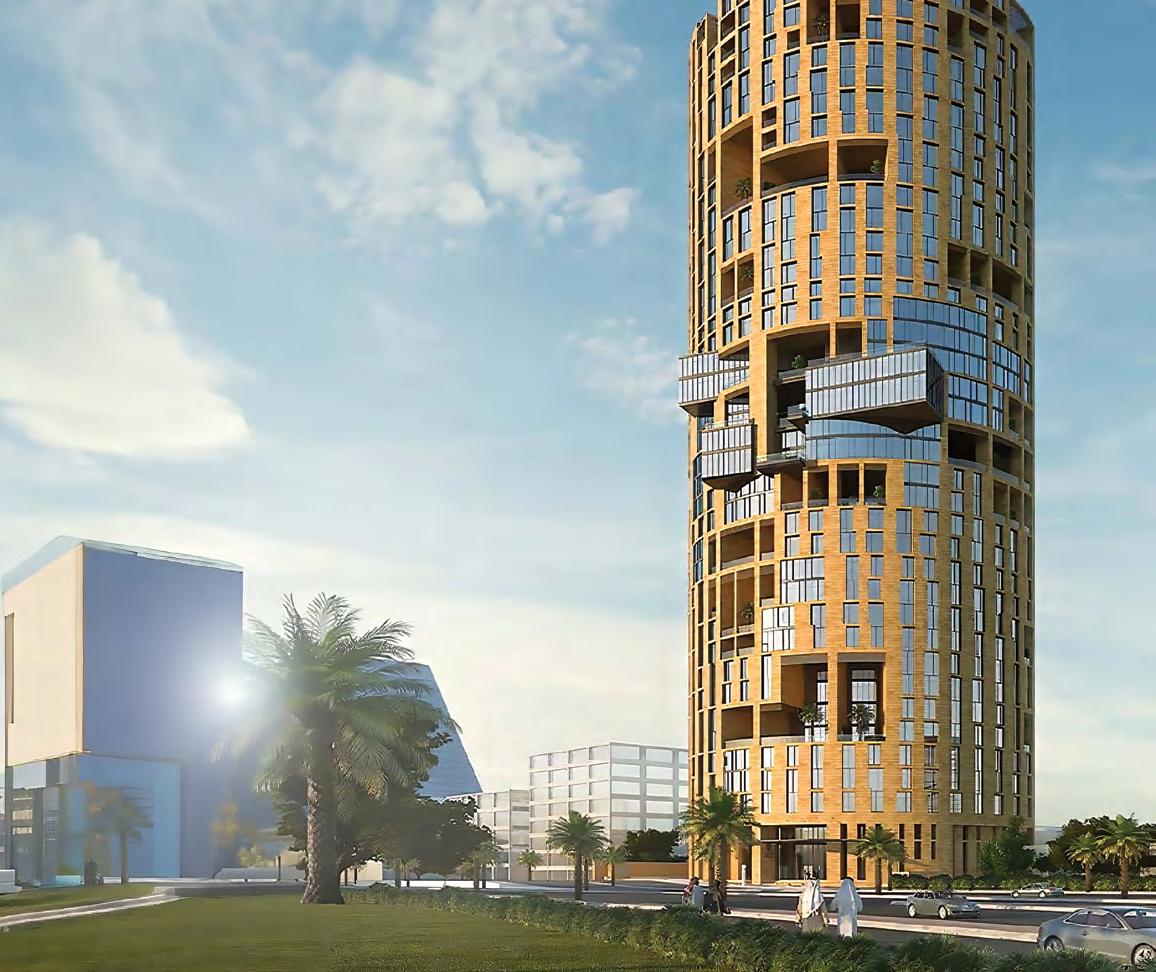
The real secret to successful hotel openings isn’t the ribbon-cutting, it’s everything that happens before it
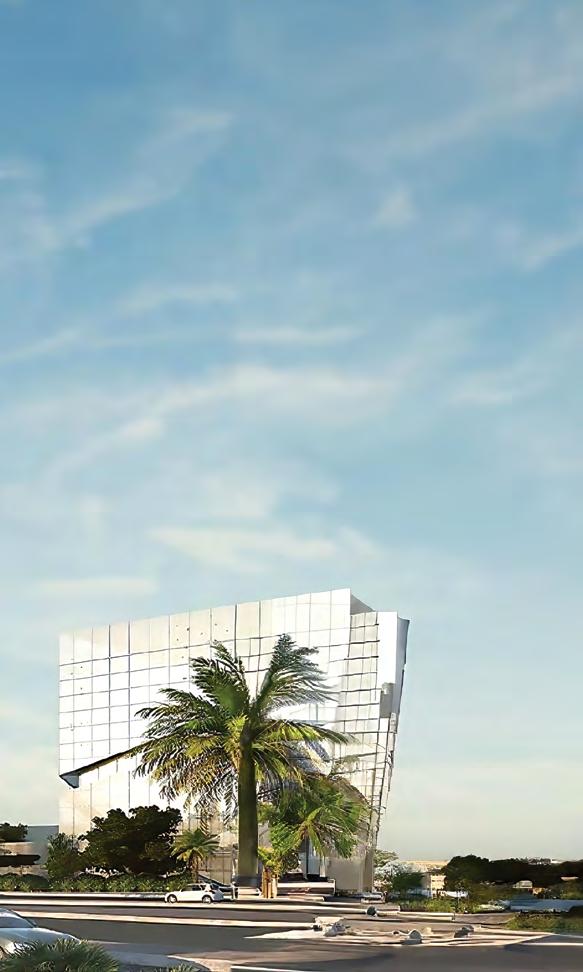
As guest expectations rise and project timelines tighten, successful hotel openings depend on far more than design and delivery.
Rob Collier, Managing Director, Future Openings, MEA & SEAP at Radisson Hotel Group, explains why agility, commercial readiness, and owner alignment have become the real differentiators.
For many people, an opening is the visible moment, the launch event, the first guests, the social media buzz, the brand reveal. In reality, the success of a hotel opening is determined much earlier. It is shaped by decisions made
across planning, construction, pre-opening, commercial strategy, recruitment, and owner alignment.
In my role as Managing Director for Future Openings across the Middle East, Africa, and Southeast Asia Pacific at Radisson Hotel Group, I oversee a pipeline of more than 100 projects across ten brands. That means working across very different markets, asset types, and owner profiles, from upper-midscale hotels to luxury lifestyle properties, and from conversions to new builds.
If there is one thing I have learned from more than 100 hotel openings, it is that there is no single formula for success. Every opening is different. What matters is having the right structure, the right people, and the flexibility to adapt when the unexpected happens, because it always does.
One of the biggest misconceptions in hospitality development is that opening readiness begins at the end of construction. It doesn’t.
By the time a project reaches its final stages, the foundations for success should already be in place, not only physically, but operationally and commercially.
THE HOSPITALITY INDUSTRY IS CHANGING FAST, AND HOTEL OPENINGS ARE CHANGING WITH IT.
That includes early owner alignment, a realistic opening timeline, disciplined pre-opening budgets, timely recruitment of key leaders, and a clear plan for how the hotel will enter the market with credibility.
In today’s environment, that process is under increasing pressure. Inflation, supply chain shifts, labour challenges, and geopolitical uncertainty all affect planning and execution. Timelines that looked achievable six months ago can shift quickly. Cost assumptions change. Priorities move. That is why agility is no longer optional. Teams need to stay focused on the end goal while remaining flexible in how they get there. In our industry, we often talk about opening “on time”. Of course, that matters. But opening on time is not the same as opening well. A hotel can be technically complete yet not ready to perform. If the commercial launch is weak, distribution is not fully activated, digital channels are not optimised, content is not ready, or teams are undertrained, the hotel risks losing momentum from day one.
That early momentum matters more than ever. First impressions in hospitality are immediate and public. Guests do not wait months to settle into a hotel. They review, post, and compare instantly. Owners understand this clearly, and rightly so.
Today’s owner conversations are also far more data-led than they were a few years ago. Revenue management, digital marketing, online reputation, and demand forecasting are no longer secondary topics. They sit at the centre of the opening strategy. Guests are buying an experience, not just a room, and that experience begins well before arrival through positioning, visibility, and trust.
If I had to give one practical piece of advice to anyone involved in hotel
openings, whether developers, contractors, or operators, it would be simple: plan for disruption. In complex projects, surprises are not the exception; they are the norm. A delay in one area quickly creates pressure somewhere else. A late approval affects training schedules. The system’s issue affects distribution readiness. A recruitment gap impacts service delivery. The difference between a stressful opening and a successful one is rarely the absence of problems. It is how quickly the team can respond, solve issues, and make decisions together. That requires a strong partnership between owners and operators. It also requires a shared understanding that a hotel opening is not just a construction milestone. It is a live business launch. Those are two different realities, and both need to be managed in parallel.
Technology and AI are already helping improve efficiency across planning, communication, and commercial activation. They support faster analysis, more accurate forecasting, and greater execution consistency. They are also playing an increasingly important role in shaping the guest journey. But even with that progress, the defining factor in any successful opening remains people.
The right general manager, the right department heads, and the right culture from the start will shape the guest experience far more than any launch campaign. Being seen as an employer of choice is therefore a business priority. The strongest openings happen when teams feel ownership, clarity, and pride before the first guest checks in.
No two openings are alike, and that is exactly the point. A resort opening requires a very different rhythm from a city-centre hotel. A conversion comes with different challenges than a new build. A heritage property being repositioned has different expectations from a newly developed lifestyle asset. Different assets require different playbooks. What unites them is the need for disciplined execution, commercial readiness, and trusted collaboration. As the industry evolves, owners are looking for more than a brand name. They want operators who understand development realities, balance standards with pragmatism, and think long term. In short, they want partners. That is where the future of successful hotel openings lies, at the intersection of construction readiness, operational discipline, commercial strategy, and trust.
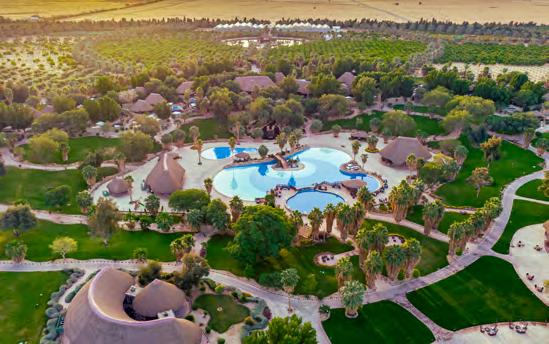



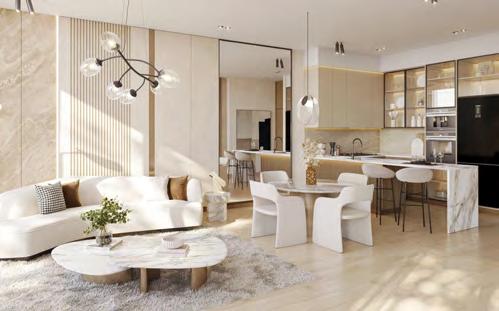
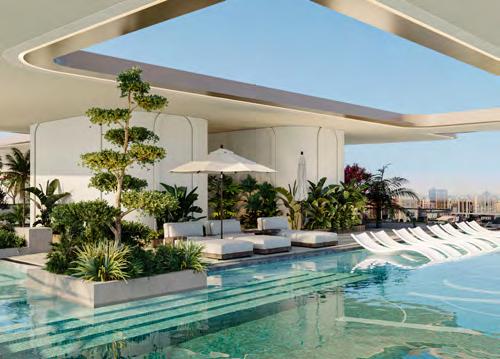
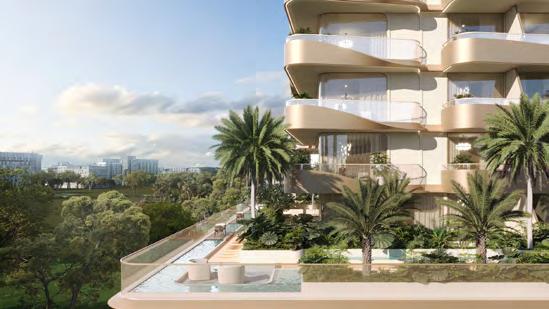
Nuvé By Zoya Zoya Developments
A flagship project that captures the very pulse of tomorrow, distilling the market’s direction and the quiet evolution of the built world into a single, resonant expression of vision and craft
Nuvé by Zoya is bringing a fresh, turnkey proposition to Dubai Land Residence Complex, introducing 232 fully furnished residences in one of the city’s established, fast-maturing neighbourhoods.
Set for handover in Q2 2028, the project offers a well-balanced mix of studios, one-bedroom and two-bedroom homes, with prices starting from AED 695,000 and a structured 50/50 payment plan designed to keep entry accessible within the segment. Architecturally, the mid-rise takes a contemporary
approach, using soft lines and clean geometry to create a quiet confidence that stands out without trying too hard.
Inside, the focus is on easy, ready-to-live design: neutral tones, natural finishes, floor-to-ceiling glazing, and integrated smart home systems, making the homes rental-ready from day one. Lifestyle facilities are equally robust, spanning pools and wellness zones to rooftop corners made for downtime, plus family-friendly outdoor spaces that round out the community feel.
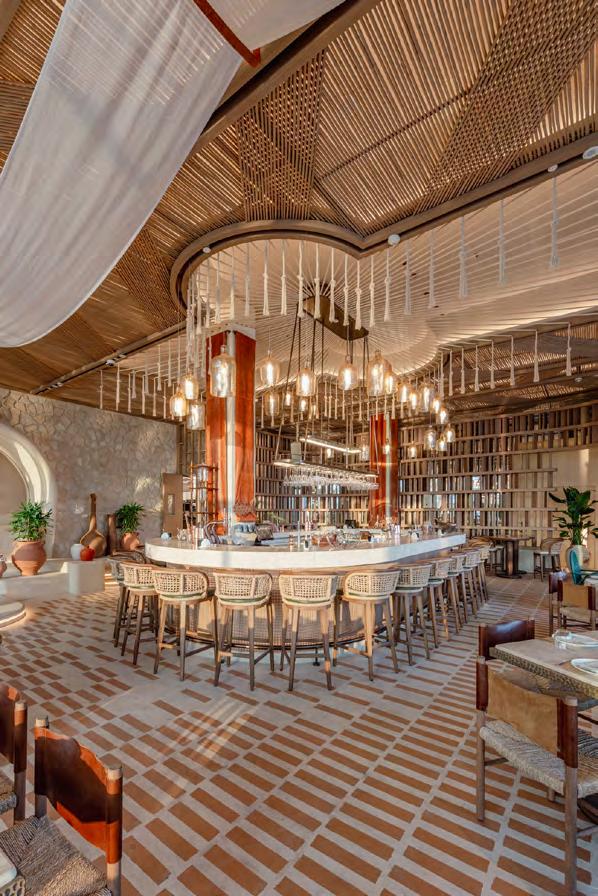
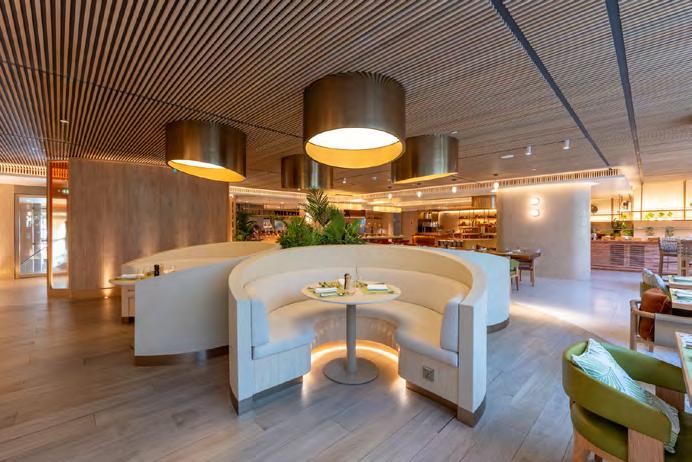
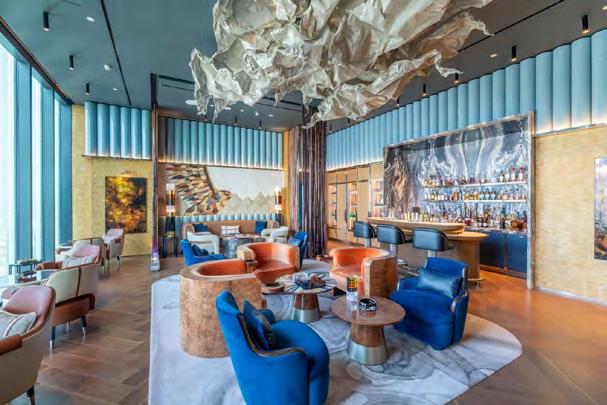
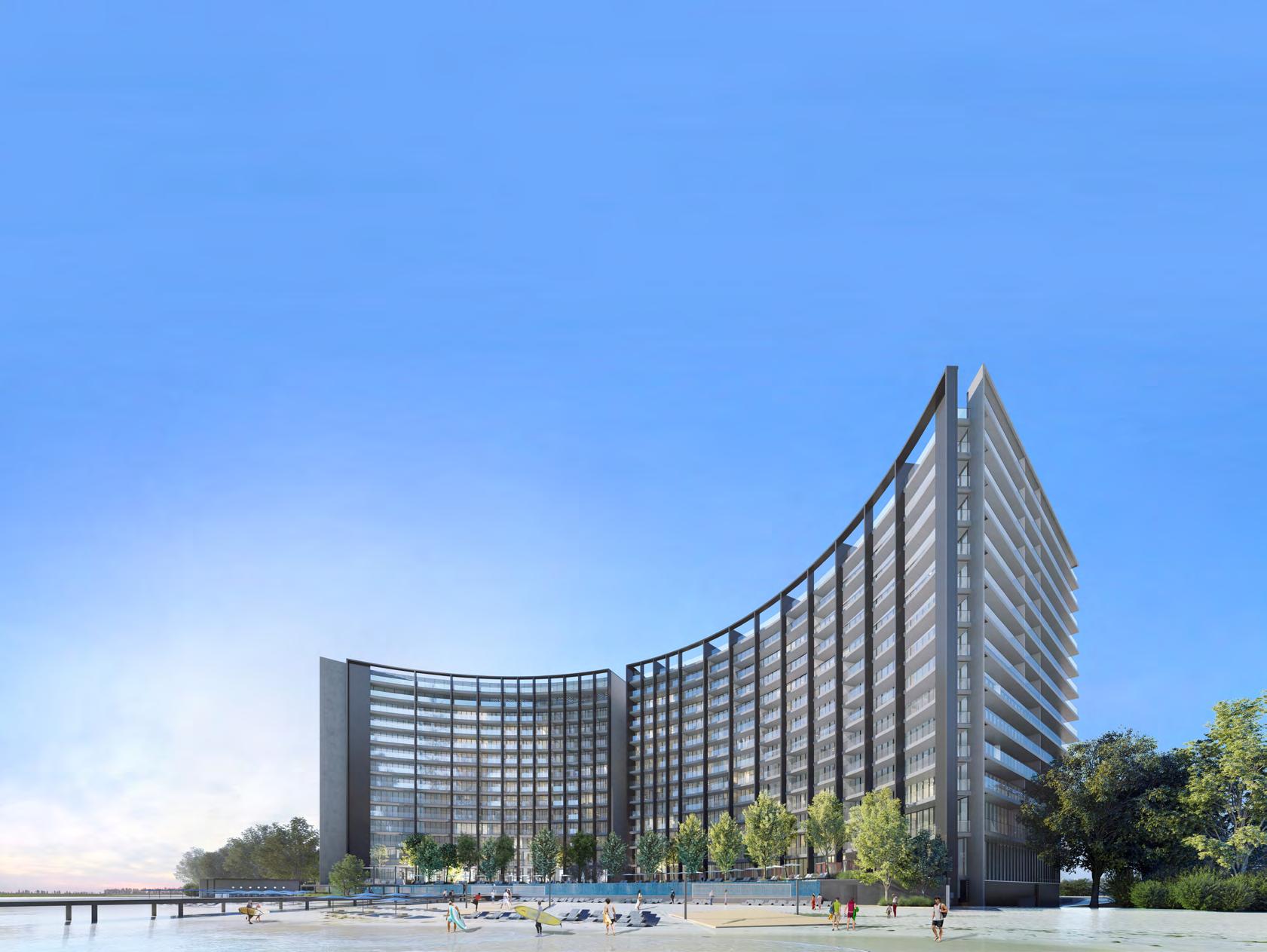
Bringing luxury seaside living to Sharjah for the first time, owners at the Anantara Sharjah Residences enjoy access to the Anantara Sharjah Resort’s world-class amenities, including an infinity pool, five distinctive restaurants, an Anantara Spa and a state-of-the-art gym. As an investment, owners can enjoy the benefits of a rental management scheme operated by Anantara Hotels, Resorts & Spas, allowing them to maximize their returns when they are not resident in the property.
To register your interest, visit arada.com
LIFE IS A JOURNEY.