
CITIES THAT THINK
A CONVERSATION WITH CHARBEL AOUN OF NVIDIA ON DIGITAL TWINS, SOVEREIGN AI AND THE NEXT DECADE OF MIDDLE EASTERN CITIES
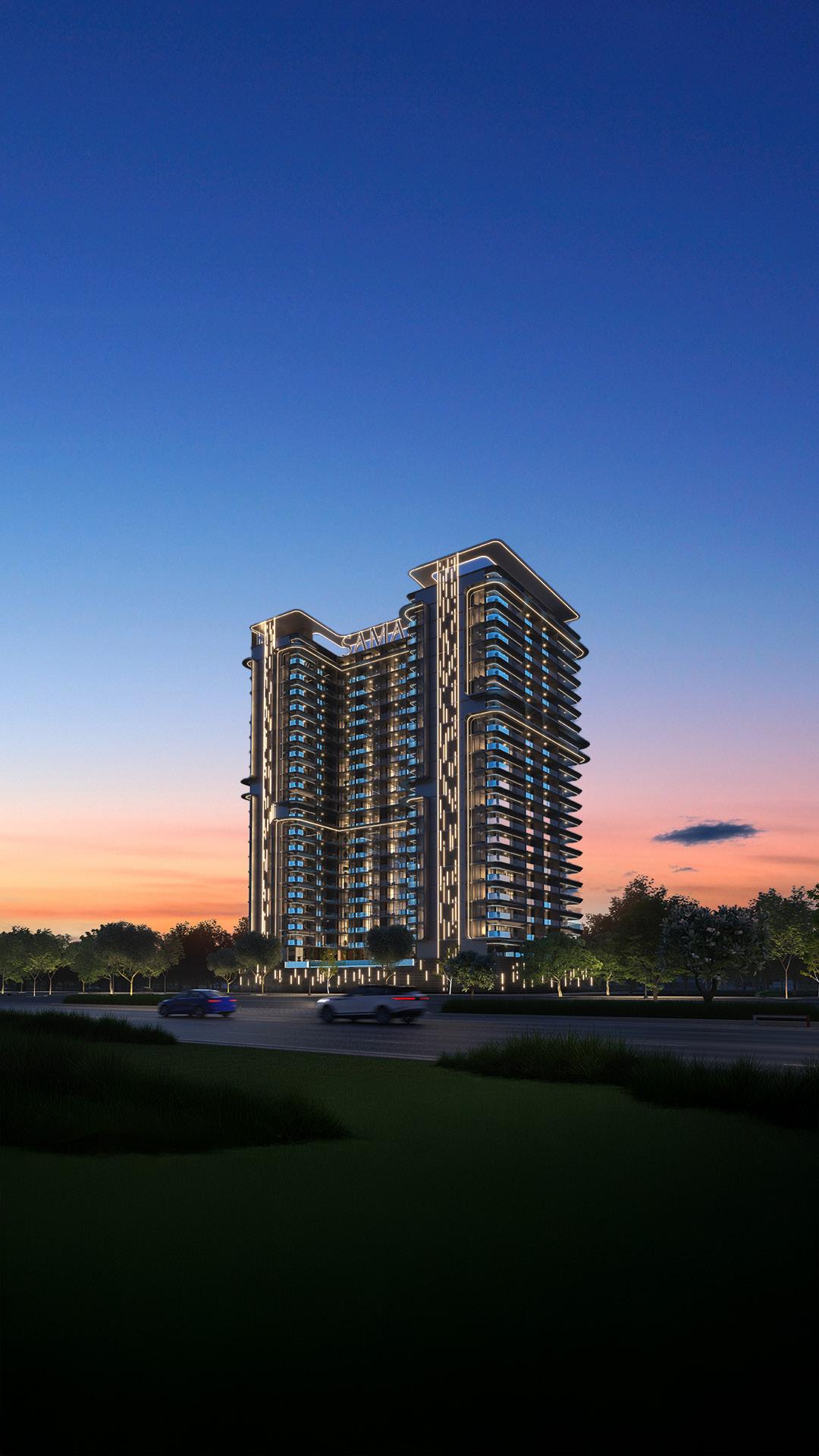
ANANTARA SHARJAH RESIDENCES
A NEW CHAPTER OF LUXURY EXPERIENCES BY THE SEA
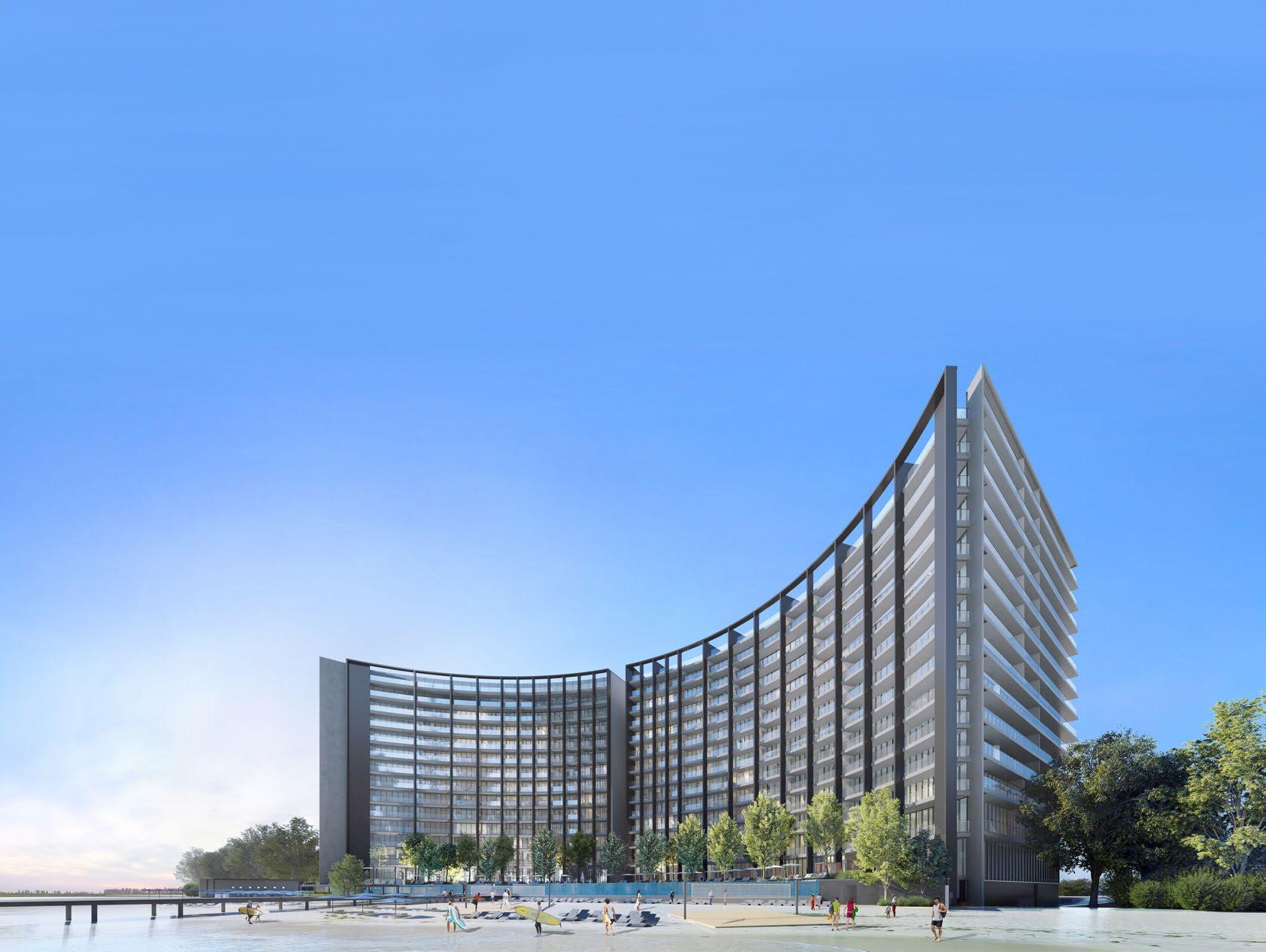
Bringing luxury seaside living to Sharjah for the first time, owners at the Anantara Sharjah Residences enjoy access to the Anantara Sharjah Resort’s world-class amenities, including an infinity pool, five distinctive restaurants, an Anantara Spa and a state-of-the-art gym.
As an investment, owners can enjoy the benefits of a rental management scheme operated by Anantara Hotels, Resorts & Spas, allowing them to maximize their returns when they are not resident in the property.
To register your interest, visit arada.com
LIFE IS A JOURNEY.



SUITE TREAT
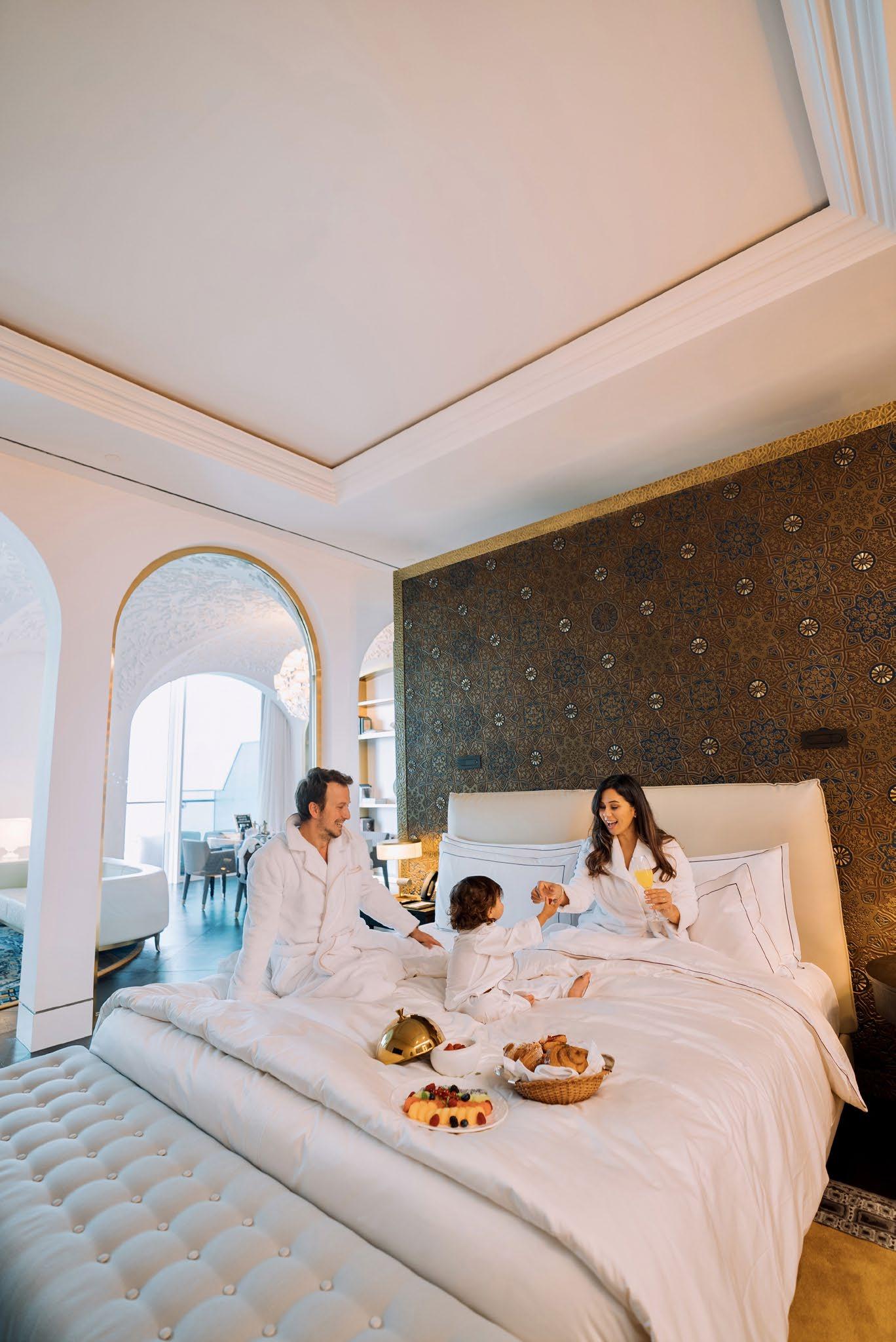
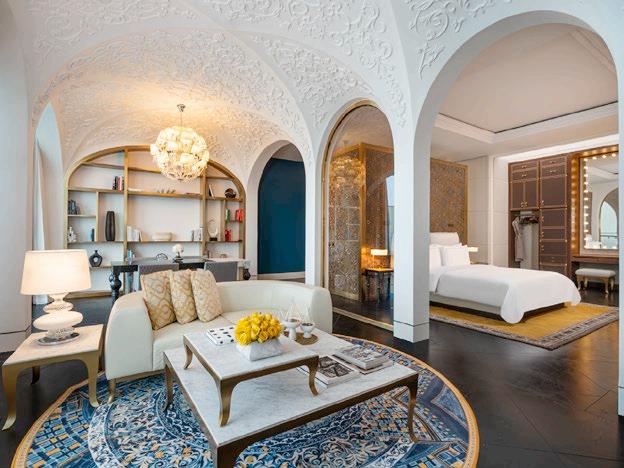
Step into a world of opulence when you book a Suite at Raffles Doha.
Experience the added luxury of QAR 750 credit to spend on dining in the hotel, and QAR 500 towards any Spa treatment.
Children aged 12 and below are welcome to indulge in the enchantment of complimentary dining.
Rates startng from QAR 3,500 per night
For reservatons, please call +974 4030 7100 or email reservatons.doha@raffles.com
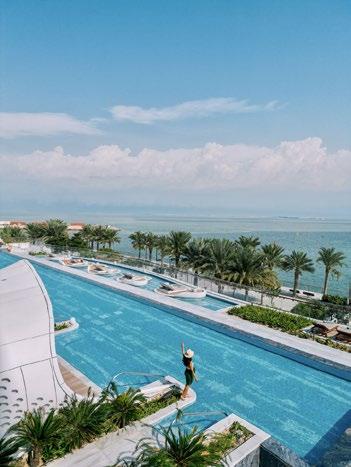
Raffles Doha, Iconic Towers, Marina District, PO BOX 4747, Lusail, Qatar
EXTRAORDINARY
PRIVATE POOLS | 30+ AMENITIES | PRIME LOCATIONS

Escape to a home where urban sophistication meets resort tranquility.

BUILT FOR MOMENTS THAT MATTER
CEO WISSAM YOUNANE | wissam@bncpublishing.net
Managing Director RABIH NAJM | rabih@bncpublishing.net
Group Publishing Director JOAQUIM D'COSTA | jo@bncpublishing.net
Editor AYA ZHANG | aya@bncpublishing.net
Digital Reporter REEBA ASGHAR | reeba@bncpublishing.net
Business Development Director ANDY SOULAHIAN | andy.soulahian@bncpublishing.net
Commercial Director ANDREA MOCAY | andrea@bncpublishing.net
Creative Lead CHRISTIAN HARB | chriss@bncpublishing.net
Junior Art Director IKA WAHYUNI
Marketing Executive AARON JOSHUA SINANBAM | aj@bncpublishing.net
Videographer EDUARDO BUENAGUA HARTON OTLANG JOEL AMPARO
Contributors ALICE H. CHANG DR. JELENA JANJUSEVIC INDIRA KASAEVA SERGEI GURIEV
SUBSCRIBE
subscriptions@bncpublishing.net
PO Box 502511 Dubai, United Arab Emirates P +971 4 4200 506 | F +971 4 4200 196
For all commercial enquiries, contact jo@bncpublishing.net T +971 50 440 2706
All rights reserved © 2025. The opinions expressed are solely those of the contributors. Business Today Middle East and its afliated publications in the MENA region are exclusively licensed to BNC Publishing. No part of this magazine may be copied, reproduced, or transmitted in any form or by any means without prior written consent from the publisher. Printed by United Printing and Publishing | upp.ae
Images used in Business Today Middle East are credited when necessary. Attributed use of copyrighted images with permission. All images not credited courtesy Shutterstock.
BIZTODAYME
@BIZTODAYME
BUSINESS TODAY MIDDLE EAST
BIZTODAYME
BIZTODAYME
BUSINESSTODAY.ME

Lights the way, not the sky
The Dark Sky luminaire head for the modular system bollard luminaires protects the night sky and nocturnal wildlife. Optionally available with BEGA BugSaver® technology to switch the colour temperature to an amber tone. Bollard tubes optionally available in sustainable Accoya® wood. bega.com/systembollards
Frankfurt am Main
LETTER FROM EDITOR
BUSINESS, IN THE MIDST OF THE MOMENT
There are moments when the pace of business reporting feels almost out of step with the world around it. Over the past week, tensions across parts of the region have once again dominated the headlines, reminding us that the stability many industries depend on is never something to be taken entirely for granted.
Yet the world of business rarely pauses. Conversations continue, decisions are made, and industries move forward in ways that are often quieter than the news cycle but no
This issue of Business Today Middle East brings together a wide range of perspectives from across the region’s business landscape.
We speak with the leadership behind El&N London and hear from the Senior Vice President of Fitness First Middle East, offering insight into sectors that continue to shape lifestyle and consumer culture. Elsewhere in the issue, we explore perspectives from companies

including Istabraq, WONDR Group and Grey HR, alongside a look at the technological momentum surrounding global players such as Nvidia.
This edition also places particular attention on women in business. Through both reporting and opinion pieces, we hear from women whose ideas and experiences continue to contribute to conversations around leadership, opportunity and the future of work.
Taken together, the stories in
industries and voices that make up the region’s business environment today. From hospitality and wellness
capital, each offers its own window into the conversations shaping the months ahead.
In many ways, that diversity of ideas and ambition continues to story. It is a story that continues to unfold, and one we are pleased to bring to you in this issue.
Aya Zhang Editor aya@bncpublishing.net
Xiaoyue (Aya) Zhang xiaoyuezhangg


One-stop-shop
Require formwork and scaffolding? Check out Doka’s extensive list of products and systems, which now includes scaffolding for a variety of applications. At Doka, our philosophy is to provide a broad range of services under one umbrella based on a growing demand for single-source solutions that adhere to the highest standards.
/DokaMEA /company/doka-middle-east-africa /doka_mea
meaapmarketing@doka.com | www.doka-me.com
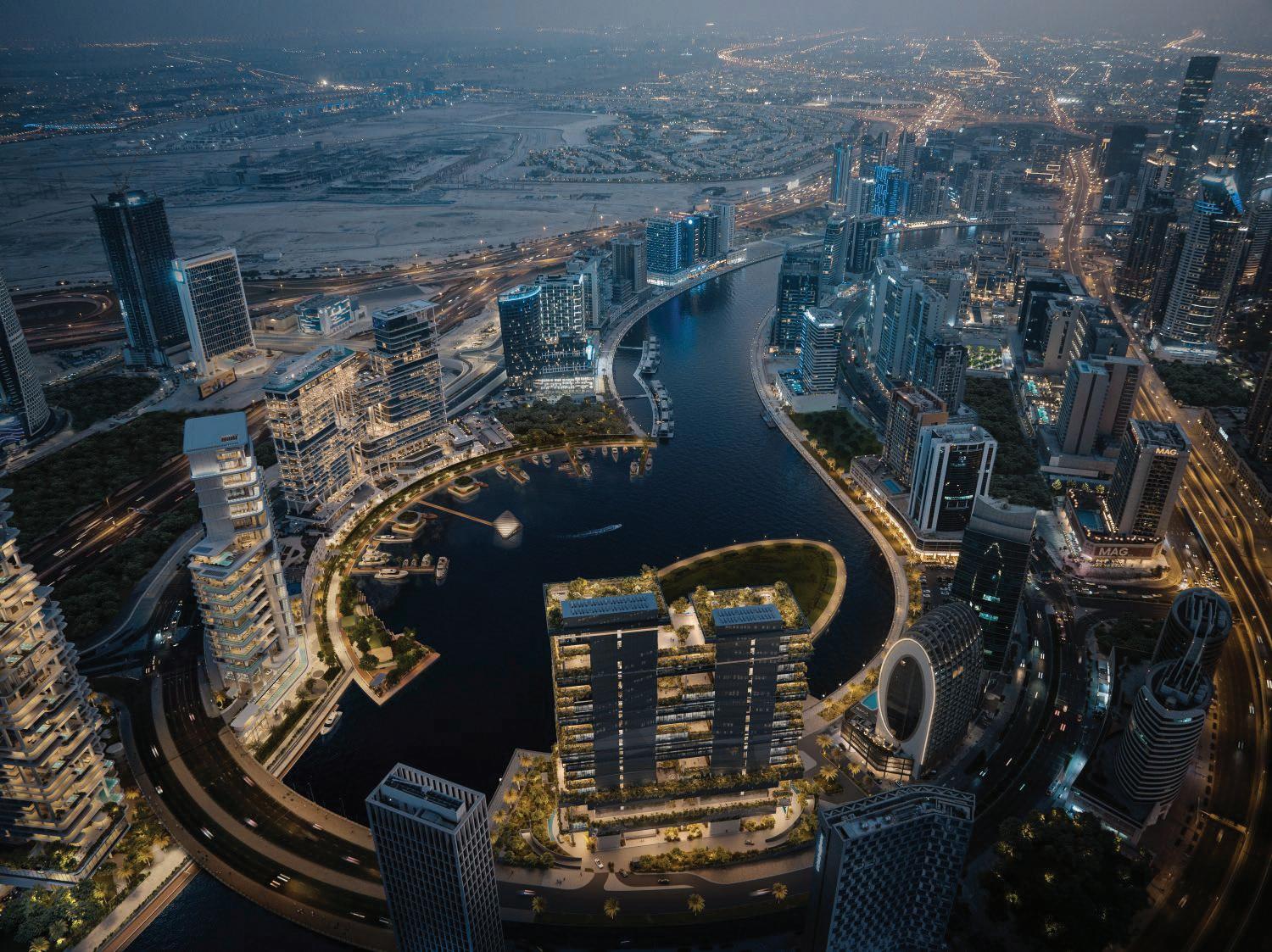
OMNIYAT Holdings Ltd
MNIYAT’ the leading ultra-lu ury real estate developer has successfully priced a USD million Sukuk with a fve-year tenor marking its third successful capital markets transaction since its debut issuance in May
The Sukuk attracted strong demand from international and regional investors with the peak order book e ceeding USD billion representing more than oversubscription and re ecting robust investor appetite and growing confdence in the company’s credit profle
MNIYAT released Initial Pricing Thoughts IPTs of and as a result of overwhelming investor demand achieved fnal pricing of an impressive yield compression of basis points during the course of the

day The Sukuk certifcates will be listed and traded on the London Stock E change’s International Securities Market and Nasda Dubai in the coming days
The senior unsecured Sukuk certifcates e pected to be rated BB- by both S&P and Fitch form part of MNIYAT’s USD billion Trust Certifcate Issuance Programme rated BB- by both S&P and Fitch
This issuance which e tends MNIYAT’s maturity profle to has been undertaken as part of the company’s ongoing funding strategy Proceeds will be used to support MNIYAT’s continued e pansion of its land bank and development pipeline
ver the past fve years MNIYAT has emerged as a market leader in Dubai’s ultra-lu ury residential and offce segment with properties valued at over USD million
ERICSSON AND MASTERCARD PARTNER TO TRANSFORM GLOBAL MONEY MOVEMENT

Ericsson NASDA ERIC and Mastercard have announced a collaboration to reshape how money moves across the world By integrating the Ericsson Fintech Platform Mobile Financial Services with Mastercard Move Mastercard’s portfolio of money movement solutions the partnership will enable telecommunications
service providers banks and fntechs to e pand digital wallet capabilities launch new payment services and reach unbanked or underbanked communities
Ericsson’s pre-integrated application programming interfaces APIs cloud-native deployment and compliance-ready infrastructure simplify fintech connectivity to Mastercard Move
These capabilities reduce technological comple ity lower operational barriers by streamlining integration deployment and compliance and accelerate time to market for new payment services all aimed at catalysing innovation and growth across the sector
The integration of Mastercard Move into Ericsson’s Fintech Platform is intended to accelerate the adoption of digital payments and broaden participation in the digital economy The global roll-out will begin in the Middle East and Africa where demand for mobile money remittances and interoperable payment services is particularly strong

TRUMP INCREASES GLOBAL TARIFFS FROM 10% TO 15%
Donald Trump has announced an increase in the temporary global tariff rate on imported goods from to following a ruling by the Supreme Court of the United States concerning tariffs introduced under an economic emergency law
The decision comes after the Court in a ma ority ruling determined that the administration had e ceeded its legal authority by imposing broad reciprocal tariffs without e plicit approval from Congress The udgment found that the measures enacted under emergency economic powers lacked suffciently clear legislative backing Earlier President Trump had introduced a global tariff after the Court deemed aspects of his administration’s reciprocal tariff framework unlawful
In a statement posted on Truth Social President Trump confrmed the revised rate stating that the increase to would take effect immediately He described the move as a response to what he characterised as an unfavourable ruling and reiterated his longstanding position that a number of trading partners had taken economic advantage of the United States over several decades

GOLD RATES RETREAT SHARPLY IN DUBAI FOLLOWING GLOBAL SELL-OFF
Gold prices in the UAE recorded a marked decline after reaching new highs a day earlier with rates falling by almost AED amid a broader downturn in international markets
Across the UAE -carat gold fell to AED per gram on Tuesday March down from AED representing a drop of AED in ust hours Similarly -carat gold decreased to AED compared with AED the previous day
Internationally spot gold tumbled by as much as to an ounce retreating after reaching a more than four-week peak in the previous session
The pullback re ects heightened volatility in precious metals markets as investors reassess price levels following the recent rally

SPACEX LAUNCHES 53 SATELLITES TO EXPAND STARLINK NETWORK
Space has successfully placed additional satellites into orbit as part of its rapidly e panding Starlink constellation carrying out two separate missions that underscore the company’s growing e pertise in orbital logistics and rocket reusability
During the missions the company achieved a new milestone in booster reuse further demonstrating the effciency of its refurbishment and relaunch process a cornerstone of its cost-reduction strategy
With these latest additions the Starlink network now comprises more than active satellites in low Earth orbit forming one of the largest satellite constellations ever assembled The e panding eet is designed to enhance global broadband coverage improve connection speeds and increase service reliability particularly in remote and underserved regions
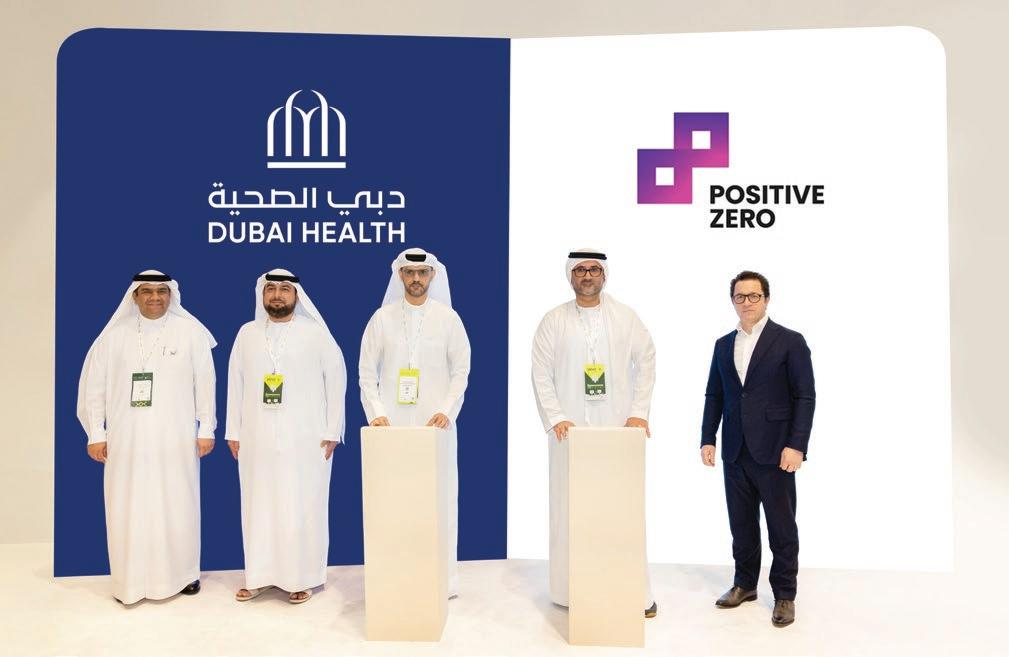
DUBAI HEALTH PARTNERS WITH POSITIVE ZERO TO POWER 26 FACILITIES WITH SOLAR ENERGY
Dubai Health has partnered with Positive ero the Middle East’s leading provider of sustainable and decentralised energy solutions to accelerate the adoption of clean energy across healthcare facilities in Dubai The partnership will see the deployment of on-site solar rooftop and carport systems with a combined capacity e ceeding megawatts reinforcing Dubai Health’s commitment to operational sustainability while maintaining the highest standards of patient care and safety
In the frst year of operation alone solar generation across the initial facilities is e pected to deliver nearly megawatt-hours MWh of clean energy ver the duration of the agreement the initiative is pro ected to reduce close to metric tonnes of carbon dio ide emissions e uivalent to the environmental impact of planting appro imately million trees
As part of the pro ect solar carport installations will also provide shaded parking for patients visitors
and staff creating almost parking spaces while generating clean electricity nce fully engineered the pro ect will represent the largest solar car park capacity within the UAE healthcare sector
New Cooling-as-a-Service project at ’
Positive ero will also deliver a series of effciency measures at Al Jalila Children’s Hospital including its frst Cooling-as-a-Service CaaS pro ect supporting the UAE Demand Side Management Programme and the Dubai Demand Side Management Strategy This initiative is e pected to deliver energy savings of up to and prevent more than tonnes of carbon emissions over the pro ect lifecycle
Dubai Health’s solar and Cooling-as-a-Service lease agreements across its sites will generate signifcant environmental benefts in line with the UAE Net ero Strategy and national Demand Side Management strategies
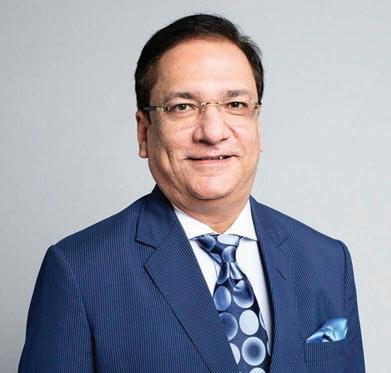
ZABADANI REAL ESTATE RECORDS DH3 BILLION WORTH OF LAND DEALS IN 2025
abadani Real Estate one of the pioneers in the UAE’s land and property sectors recorded si land transactions last year with a combined value of AED billion US million compared with four deals worth AED billion US million in
The land trading business has come a long way over the past uarter of a century in Dubai when land prices surged following the introduction of freehold property in said Anil Gehani Founder and Managing Director of abadani Real Estate
In we closed a landmark transaction in Al Jadaf at appro imately AED per s uare foot with a total land value of around AED million without freehold conversion This is a critical distinction abadani Real Estate’s transactions form part of the land plots sold in Dubai worth AED billion recorded in representing growth of compared with the previous year according to the Dubai Land Department
The growth re ects not only abadani Real Estate’s leadership position in the land trading market but also the continued appreciation in land and property values across Dubai which is supporting broader economic e pansion
BNW DEVELOPMENTS UNVEILS RADISSON BLU HOTEL & RESIDENCES AT RAK CENTRAL
BNW Developments the largest private developer in Ras Al haimah has unveiled the frst Radisson Blu Hotel and Radisson Blu Residences in RA Central in partnership with Radisson Hotel Group Led by senior leadership from both organisations and attended by prominent real estate and hospitality stakeholders the reveal marked a signifcant new benchmark for branded hospitality and elevated urban living in the emirate
Located within RA Central the development introduces Radisson Blu’s internationally recognised service standards and design ethos to a mi ed-use destination positioned at the heart of the emirate’s ne t phase of growth
Radisson Blu Hotel RA Central will comprise keys within a newly built property situated above a curated retail and cinema offering creating a vibrant day-to-night destination with strong appeal Designed for both business and leisure travellers the hotel will feature fve food and beverage outlets a rooftop terrace and pool bar meeting and events spaces a spa and gym a Business Class lounge and a children’s club
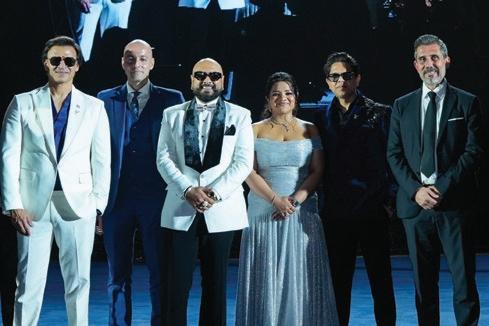
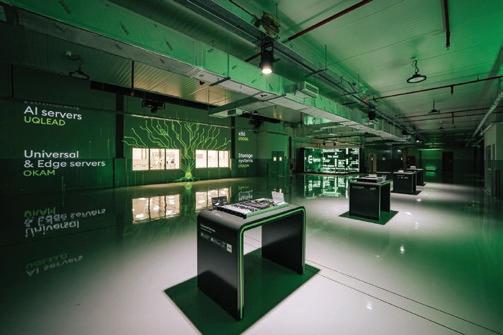
NEW MURABBA AND EVIQ PARTNER TO EXPAND EV CHARGING ACROSS KEY ASSETS
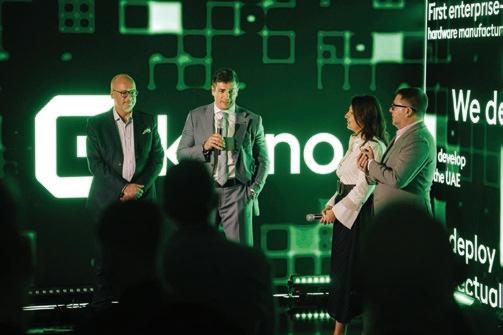
New Murabba a Public Investment Fund PIF company has signed a strategic partnership with Electric Vehicle Infrastructure Company EVI to support the installation operation and maintenance of electric vehicle EV charging solutions across key New Murabba assets The collaboration reinforces New Murabba’s commitment to sustainable urban development smart mobility and alignment with Saudi Arabia’s Vision green initiatives
Under the agreement alternating current AC chargers will be deployed at the New Murabba Head uarters for longer-duration parking such as workplace settings while direct current DC fast chargers will be
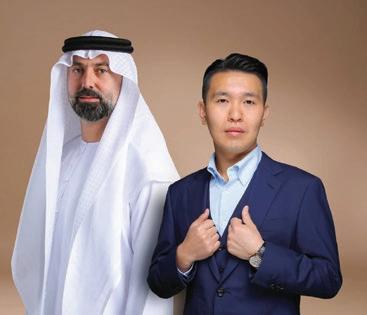
PRESIGHT–SHOROOQ
$100 MILLION AI FUND DEPLOYS CAPITAL IN FIVE COMPANIES IN ITS FIRST QUARTER
installed at other high-traffc locations to enable rapid and effcient charging Together these solutions will establish a reliable and accessible charging ecosystem for employees visitors and future residents while also creating a framework for ongoing collaboration on advanced mobility solutions aligned with New Murabba’s long-term development goals
Through this partnership New Murabba continues to advance its strategic vision of a globally competitive sustainable downtown while opening pathways for future collaborations that promote national green ob ectives and enhance mobility across the destination
Since its launch in September
The Presight Shoroo Fund I a US million global AI innovation fund has invested in fve advanced AI start-ups led by e perienced alumni from DeepMind Google Meta and Stanford across the US and UAE markets These companies are Nodeshift Candid Hebbia Blue and Crunched
The initial cohort represents a strategic cross-section of frontier intelligence spanning agentic reasoning physical AI and sovereign cloud infrastructure
Across these investments the fund has partnered with some of the most respected names in global venture capital and technology Portfolio companies are backed by frms including Andreessen Horowit a Inde Ventures GV uiet Capital First Round Capital and Y Combinator alongside prominent angel investors including Yann LeCun Paul Graham and Peter Thiel
The fund’s strategy is deliberate to back world-class founders building AI-native products with defensible data advantages strong distribution leverage or control over critical infrastructure
FROM FINANCE TO FOUNDER
REDEFINING WHAT TECH LEADERSHIP LOOKS LIKE
Alice H. Chang
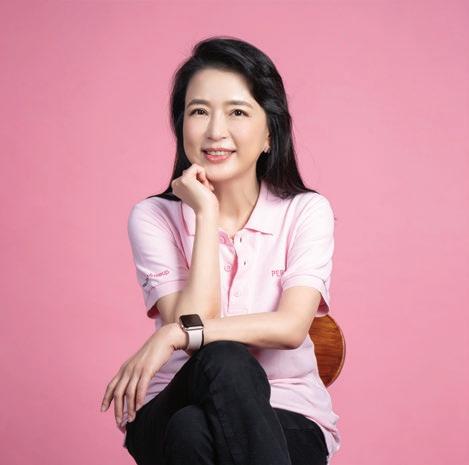
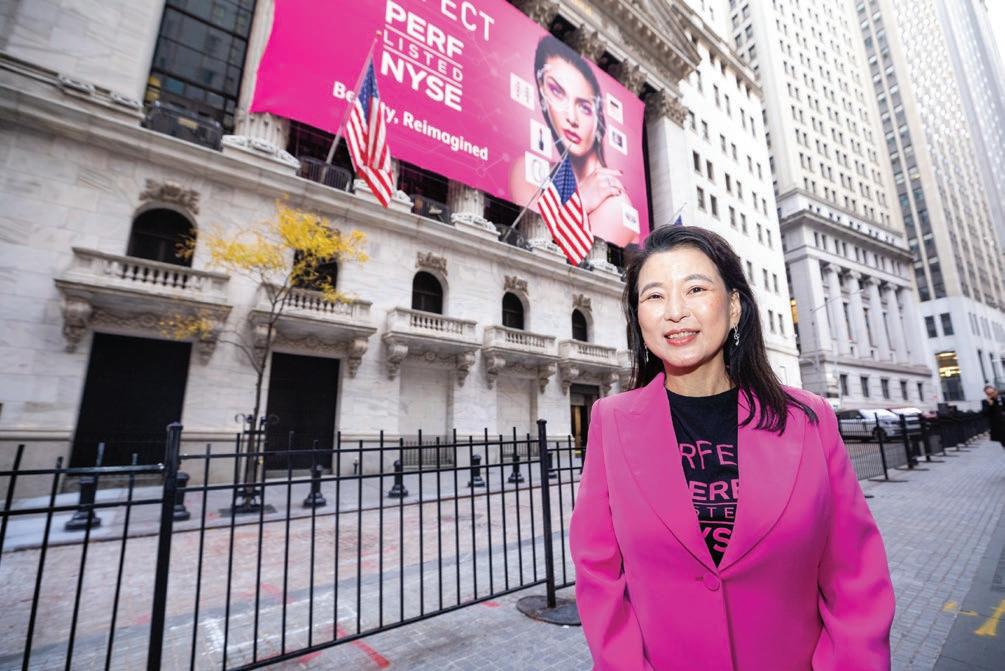
When people hear that I began my career in fnance they are often surprised that I now lead a global artifcial intelligence company listed on the New York Stock Exchange. The common assumption is that AI founders emerge from engineering labs or Silicon Valley incubators. My path was different I built my foundation in fnancial strategy operational management and corporate governance before founding Perfect Corp
That unconventional transition is not just a personal story It re ects a broader shift in how we defne leadership in technology and it challenges long-standing assumptions about who gets to build the future

Alice H. Chang, Founder and CE Perfect Corp
EXPANDING THE DEFINITION OF A TECH FOUNDER
For years the archetype of a technology founder has been narrowly defined Technical brilliance has often been positioned as the sole prere uisite for innovation Technical e pertise is undoubtedly critical but building a sustainable global AI company re uires far more than writing code.
My early career including nearly two decades leading CyberLink Corp taught me how to scale organisations manage risk and think long term I learned how to transform a small company into a global brand by aligning vision capital allocation and talent Those lessons became invaluable when I entered the world of AI Finance trains you to see patterns assess downside risk and allocate resources strategically. In emerging fields like artificial intelligence where hype can outpace fundamentals that discipline is essential. The ability to balance innovation with governance becomes even more critical when a company enters the public markets.
When Perfect Corp went public it was not ust a milestone for our business It was proof that leadership in tech can come from diverse professional backgrounds Women in fnance operations or strategy should not see technology as a closed door. The skills are more transferable than many realise.
BUILDING AT THE INTERSECTION OF TECHNOLOGY AND CONSUMER INSIGHT
more convenient way to experiment with products. I saw an opportunity to merge advanced AI and augmented reality with a deeply human industry.
That intersection required more than technical capability. It required understanding consumer behavior brand economics and global market dynamics. Finance provided me with the tools to evaluate scalable business models. Leadership experience taught me how to build teams capable of executing on a bold vision.
Today Perfect Corp partners with hundreds of brands worldwide delivering AI-powered virtual try-on skin analysis and personalisation solutions across digital and in-store channels. We also provide robust APIs and SDKs that allow retailers to integrate our technology directly into their platforms along with our AI Beauty Agent a conversational AI solution designed to guide consumers through personalised product discovery.
None of this would have been possible without strong operational foundations Innovation must be matched with execution.
REWRITING THE NARRATIVE ON WOMEN IN TECH LEADERSHIP
The conversation around women in technology often focuses on representation statistics. While those numbers matter they do not tell the full story What truly changes industries is in uence
Leadership diversity shapes decision-making. It affects which markets are prioritised which problems are solved and how risk is managed In AI those decisions carry enormous weight. Algorithms increasingly influence commerce media and communication. Ensuring diverse leadership in these companies is not ust about fairness It is about building more resilient and relevant businesses.
My inspiration to start Perfect Corp did not come from spreadsheets alone It came from personal e perience as a beauty consumer who wanted a safer
My ourney from finance to AI founder challenges the idea that having a technical background is a prerequisite to starting an AI business. There is no single blueprint. Technical founders fnancial leaders product visionaries and operators all have a role to play.
For many women the barrier is not capability but perception. We may underestimate how valuable our existing expertise can be in a technology context. Finance teaches discipline perations teach scalability Strategy teaches prioritisation. These are critical skills in AI especially when navigating rapid growth and public market scrutiny.
SCALING WITH DISCIPLINE AND VISION
Taking a tech company public introduces a new level of accountability. Investors expect transparency governance and long-term value creation. In the AI sector where innovation cycles are fast and competition is global maintaining that balance requires clarity of mission
ne of the most important lessons from my transition into AI entrepreneurship is that vision and discipline must coexist. Vision drives breakthrough ideas. Discipline ensures those ideas become sustainable businesses.
As more women enter leadership roles in technology we have an opportunity to broaden the defnition of what a tech CE looks like We can demonstrate that analytical rigor and creative ambition are not opposites. They are complementary forces
A BROADER BLUEPRINT FOR THE NEXT GENERATION
For aspiring leaders in the Middle East and beyond my advice is simple Do not limit your ambition based on your starting point Careers are not linear The world’s most transformative industries
are interdisciplinary by nature. Artifcial intelligence does not belong exclusively to engineers. It belongs to leaders who can connect technology with real-world needs who understand capital markets who can build culture and who can navigate complexity.
My move from fnance to founding an AI company was not a departure from my past It was an e tension of it. The analytical mindset I developed early in my career became a strategic advantage in a fast-evolving industry
If we want to rewrite the narrative on women in tech leadership we must e pand our imagination of who ualifes to lead When women step confdently across disciplines whether from fnance to AI or from operations to tech we do more than advance our own careers We redefne the boundaries of innovation itself
WHY RIT IN’S WEALTH AND TALENT ARE MOVING TO THE UAE
As tax pressures rise and geopolitical uncertainty deepens, UK entrepreneurs and high-net-worth individuals are increasingly relocating to the UAE in search of stability, growth, and long-term certainty.
BY DR. JELENA JANJUSEVIC
The relocation of UK businesses to the UAE shows little sign of slowing, driven by a mix of security, economic incentives and forwardlooking policy.
This trend has gained further momentum over the past month, as renewed geopolitical volatility affecting global trade routes and regional security has reinforced the appeal of stable, well-connected international hubs.
Entrepreneurs are increasingly moving not only their capital but also their families drawn by the UAE’s consistently high standard of living and its position as one of the world’s safest countries.
Economically, the UAE provides a predictable, low-tax environment and continues to attract record levels of foreign investment. In 2024 alone, the country saw $45.6 billion of FDI and greenfeld projects, ranking second globally. Such inflows create a strong “demonstration effect”: as major

banks tech frms and family offces establish operations, others follow.
Structural reforms have also played a role in enhancing the UAE’s appeal Initiatives in e port diversification, digitalisation, logistics, and the rapid expansion of fntech and innovation sectors align closely with long-term national strategies such as D33 and UAE Vision 2031.
Labour-market reforms and talentvisa programmes, including Golden, Green, and Freelance visas, have strengthened human capital, supporting high-value growth.
Education too is a priority. Over 42,000 students are now enrolled across 41 private higher-education institutions in Dubai, ensuring a steady pipeline of skilled talent.
Looking ahead, policies that clarify pathways from long-term residency to citizenship, as well as portable pension or social security frameworks, would make the UAE an even more attractive destination for long-term economic settlement.
A major accelerant of this trend is the strength of family-oriented lifestyle advantages. British professionals point to the UAE’s world-class healthcare system, extensive choice of international schools, and strong cultural and sporting infrastructure as decisive factors.
With over 200 private schools offering UK or IB curricula and a consistently safe urban environment, families often find that relocation provides greater stability and quality of life than in their home markets.
These lifestyle considerations frequently solidify long-term settlement intentions, which in turn anchor business owners’ economic activities in the UAE.
This perception of stability has been reinforced by the UAE’s continued non-oil growth and macroeconomic resilience despite heightened global uncertainty.
Tax considerations have further accelerated the movement of UK businesses to the UAE. While not the only factor, rising tax pressures in the UK are prompting owners of globally mobile businesses to reconsider their domicile.
Recent data show inheritance tax receipts continuing to rise into the current tax year, highlighting how frozen thresholds and fiscal drag are increasingly affecting a broader segment of UK households.
The abolition of the non-domicile regime, the inclusion of foreign assets in inheritance tax, increases in capital gains rates on business disposals, and tightened reliefs, combined with prolonged freezes in income tax thresholds, have heightened uncertainty.
In contrast, the UAE continues to offer no personal income or capitalgains tax, a relatively low 9% corporate tax, and favourable treatment for freezone and cross-border structures.
For many, the choice is as much about certainty and predictability as it is about tax savings.
The UAE’s strategic geopolitical positioning further reinforces these shifts.
Over the past month, renewed uncertainty surrounding Red Sea and Suez shipping routes has underscored the operational risks facing globally mobile businesses, increasing the value of jurisdictions that offer resilient logistics, aviation connectivity and political predictability.
As a neutral, globally connected hub, the UAE offers UK firms access to rapidly expanding markets across Asia and Africa, supported by comprehensive economic partnership agreements (CEPAs) with countries such as India and Indonesia, while continuing to emphasise diplomatic de-escalation amid rising regional tensions.
Post-Brexit, many UK companies view the UAE as a platform for regaining global reach benefting from harmonisation in financial regulations fntech standards and cross-border trade frameworks. This enhances the UAE’s role as a gateway for British expertise to enter high-growth economies.
From a global wealth perspective, the shift to the UAE is part of a
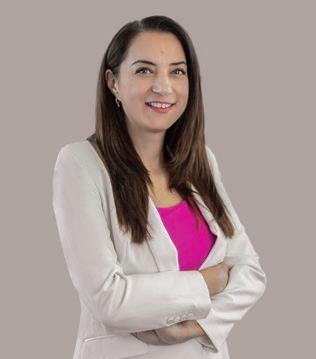
Dr. Jelena Janjusevic, Deputy Global Head of Department (Accountancy, Economics and Finance) at Heriot-Watt University Dubai
broader reshuf ing of capital and high-net-worth individuals. In 2024, roughly 6,700 millionaires moved to the UAE, according to Henley and Partners, with nearly 10,000 expected in 2025, while the UK is projected to lose more than 16,000 millionaires this year.
This concentration of mobile wealth in select hubs raises questions about inequality, tax bases, and global fscal policy International responses are emerging, including OECD minimum corporate tax rules and the UAE’s adoption of a top-up ta for very large multinationals.
For the UAE, the challenge and opportunity lie in channelling incoming wealth into productive areas such as green infrastructure, digital innovation, and talent development.
Over time, clearer pathways to citizenship and modernised social and pension systems could further embed this wealth in the local economy, turning short-term migration into longterm growth and integration.
Sustaining this momentum will require continued strategic planning, particularly as global tax frameworks evolve and international transparency standards tighten.
The UAE must balance rapid in ows of people and capital with long-term considerations related to urban development, environmental sustainability, and social integration.
For incoming U frms the longterm opportunity lies in investing in local talent, embedding operations in high-productivity sectors, and aligning with national priorities in sustainability, technology, and innovation. Those that do so will be best positioned to beneft from the UAE’s ne t phase of economic transformation.
In sum the UAE’s combination of safety, economic stability, strategic reforms, and tax advantages ensures it will remain a magnet for UK businesses and high-net-worth individuals in the years ahead.
MAKING LINKEDIN WORK FOR YOU
The rise of LinkedIn
and how to monetise
BY INDIRA KASAEVA
For most of its history, LinkedIn was a quiet corner of the internet where we updated résumés and recruiters scanned profiles. It was useful, credible and largely predictable.
TODAY, THAT HAS CHANGED.
Over the past few years, LinkedIn has been quietly transforming into a growing influencer channel (with genuine commercial upside). In fact, it has evolved into one of the most powerful (and underestimated) influencer channels in the digital ecosystem when you think of corporate marketing.
While there is a real rise in more authentic content showcasing the more human side of people behind businesses it’s not about the perfectly fltered content and viral dance trends It has grown into something arguably more valuable: authority, trust and commercial intent.
Professionals stopped treating LinkedIn as a static CV repository and started using it as a publishing platform. Founders began sharing unfiltered lessons from scaling businesses. Executives posted reflections on leadership and culture. Consultants broke down complex industry trends in plain language. What followed was not vanity engagement, but conversations. And conversations on LinkedIn tend to happen among people with budgets, teams and decision-making power.
NOW THAT CONTEXT IS EVERYTHING.
LinkedIn has leaned into this evolution. The introduction of Creator Mode signalled a shift from networking to broadcasting. Instead of sharing just job updates, users began publishing long-form articles, posting commentary on industry trends and experimenting with video content that resonated with peer audiences. The algorithm began rewarding consistent thought leadership.
What accelerated this transformation was LinkedIn’s strategic push into video and creator monetisation. Just last year, the platform launched its BrandLink program, which allows brands to place advertising around creator video content and share revenue with publishers and creators. Early results have been impressive. BrandLink revenue rose sharply quarter on quarter and payouts to creators more than tripled year-over-year. While this is still in its infancy in GCC it’s about the direction the platform is heading. It is a new type of engagement that blends professional relevance with commercial value.
At the same time B B in uencer marketing has matured LinkedIn’s move re ects a change in how brands
view influencer marketing in the business-to-business space.
Globally, brands in technology, finance, professional services and SaaS are allocating budgets. Agencies specialising in B2B in uencer campaigns report steady growth, driven by one simple reality: trust converts.
The rise of LinkedIn as an in uencer channel is not about follower counts. It is about credibility. A creator with 20,000 engaged followers in a niche industry can deliver more commercial value than someone with ten times that audience on a consumer platform. On LinkedIn, relevance outweighs reach.
SO HOW DO YOU MONETISE A LINKEDIN PRESENCE IN A WAY THAT FEELS STRATEGIC RATHER THAN OPPORTUNISTIC?
The most visible route is sponsored content. Professionals who have built authority in specific areas or industries, are partnering with brands aligned to their expertise. The key difference on LinkedIn is that audiences expect substance. Promotional posts that lack real insight rarely perform. Sponsored content works when it educates, challenges or adds perspective.
Affiliate partnerships are also gaining traction. Consultants and industry voices often recommend tools, software or training programmes they genuinely use, earning referral income when conversions follow. Because recommendations are delivered in a professional context, they often carry greater weight.
For many, however, monetisation is less direct and more strategic. And this is more relevant for our region in the GCC: LinkedIn functions as a
funnel. Consistent thought leadership leads to speaking invitations, advisory roles, board positions and consulting mandates. Coaches convert followers into paid clients. Agencies attract inbound leads from decision-makers who have been reading their insights for months. The revenue does not come from the platform itself, but because of it. Consistent posting of quality content and showcase of your work, paired with one comment on a relevant post, can equal new business (tried and tested).
Video is a growing lever. Brief, insightful commentary quickly builds familiarity and humanises expertise. LinkedIn’s video investment shows where attention is shifting, as professionals increasingly engage with video content that respects their time and intelligence.
Like with any growing platform, even if in a new direction - None of this means LinkedIn is easy. Discoverability can uctuate The algorithm changes Building a meaningful audience requires consistency and clarity of positioning. You cannot be everything to everyone. The most successful
LinkedIn creators are specifc about their point of view and disciplined about the themes they cover.
There is also a reputational balance to strike. LinkedIn remains a professional environment. Over-commercialisation can erode trust quickly. Audiences are sophisticated. They can distinguish between genuine insight and thinly veiled promotion. Sustainable monetisation depends on protecting credibility.
What makes LinkedIn particularly compelling right now is timing. The creator economy on consumer platforms is crowded and saturated. LinkedIn’s in uencer ecosystem by contrast, is still developing. There is space for subject matter experts, industry specialists and regional voices to build in uence without competing against entertainment algorithms.
For brands, the opportunity is e ually signifcant Partnering with credible LinkedIn creators offers access to tightly defned professional communities that are diffcult to reach through traditional advertising or earned media. It allows companies to show up in conversations rather than interrupt them.
Ultimately, the rise of LinkedIn as an in uencer channel re ects a broader shift in how authority is built. Professional credibility is no longer established solely through titles and tenure. It is built publicly, through ideas shared consistently and transparently.
Today, LinkedIn offers a compelling case for anyone who wants to turn professional e pertise into in uence and in uence into tangible business outcomes, whether your goal is to build thought leadership, grow a brand or monetise your voice. The platform may still carry the DNA of a professional network, but its potential as a creator economy hub is only just beginning to be realised.
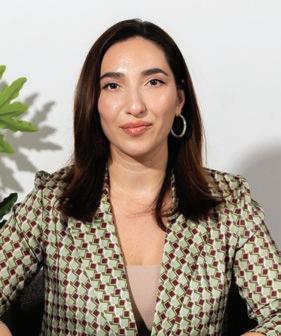
Indira Kasaeva, Senior PR Director, TishTash Group
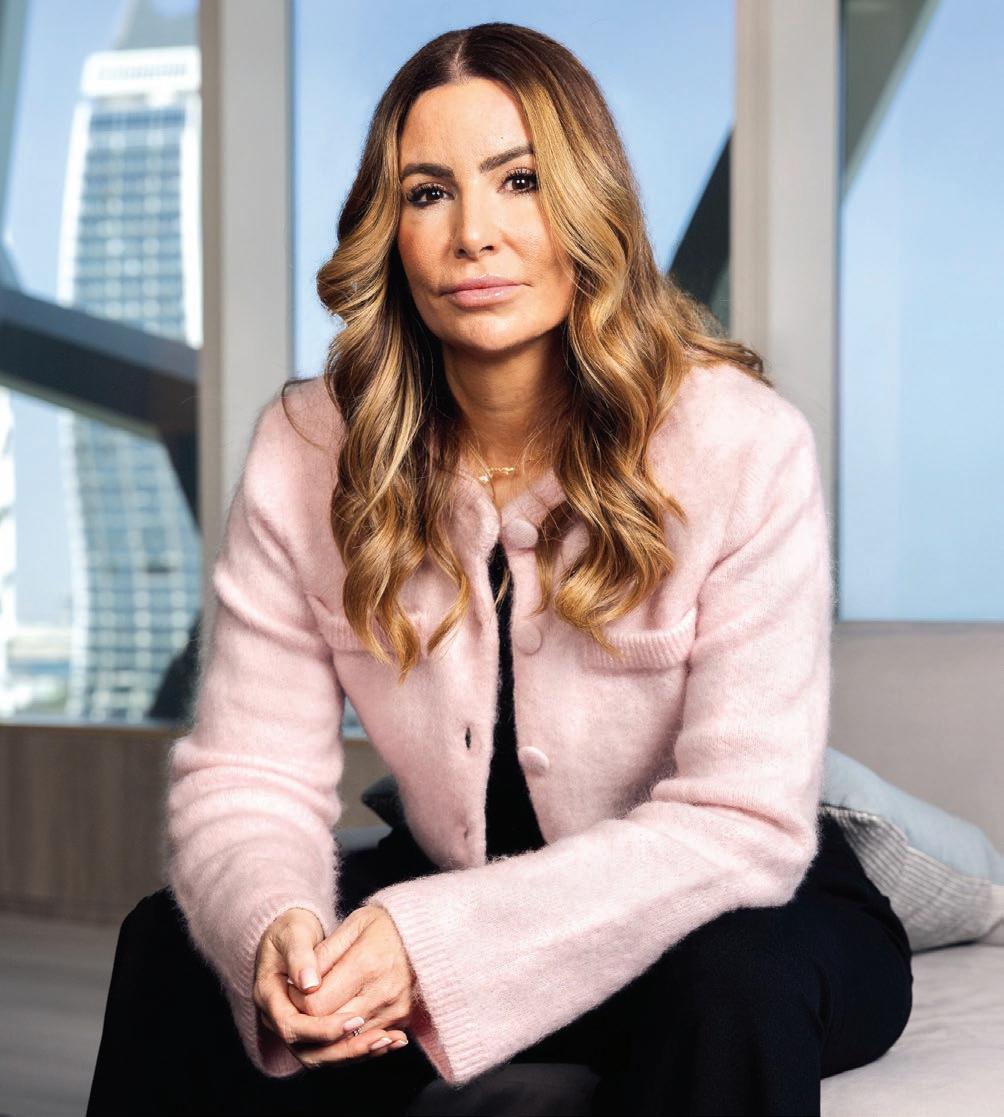
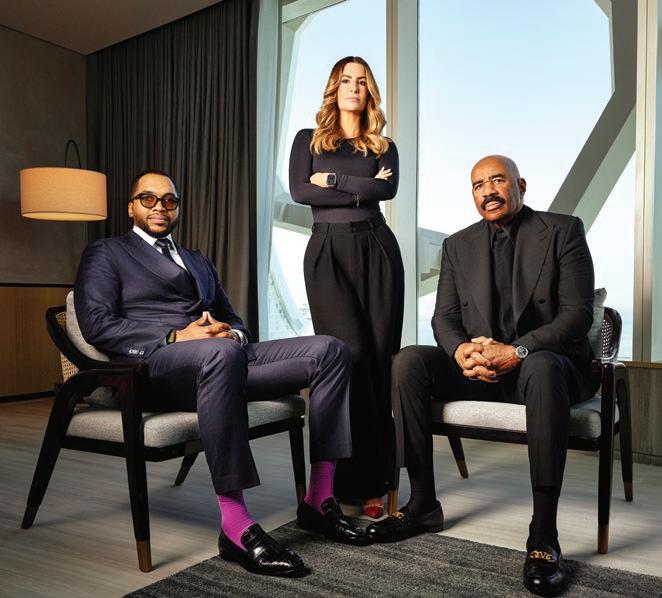
TURNING APPLAUSE INTO IMPACT
Claire Romano, CEO & Co-founder of Melt Media, shares how live events and cultural experiences in the Middle East are evolving from one-off moments into year-round platforms that drive business growth, digital engagement, and audience loyalty.
BY AYA ZHANG
The Middle East has become a major hub for large-scale cultural and live experiences. How do you see the business and economic value of these platforms evolving over the next few years?
The Middle East has shifted from being an emerging events market to becoming a global benchmark for large-scale cultural and live experiences. These platforms are no longer viewed purely as entertainment, they are economic engines. They boost tourism, attract investment, strengthen brand equity, and support long-term industry growth.
Over the next few years, the real evolution will happen behind the scenes. Physical events and digital ecosystems will become fully integrated. An event will no longer be defned by a three-day spectacle It will live year-round through content, community, data, and monetisation.
The real win is turning hype into loyalty, applause into sales, and attention into an asset you actually own. In markets like Saudi Arabia and the UAE, live experiences are becoming part of the economic infrastructure not just activation, but long-term strategy.
MANY
BRANDS INVEST HEAVILY IN VISIBILITY AROUND KEY MOMENTS OR FLAGSHIP EVENTS. IN YOUR EXPERIENCE, WHAT SEPARATES A SHORT-TERM CAMPAIGN FROM SOMETHING THAT BECOMES A LONGTERM DIGITAL ASSET?
It comes down to intention and infrastructure.
A short-term campaign is about being seen. A long-term digital asset is about owning the relationship. If a brand invests in a major moment but fails to capture data, retarget audiences, drive measurable ticket sales, or build content systems that extend beyond the event, the value fades as soon as the lights go down.
For events specifically it’s not ust about creating bu It’s about converting that excitement into revenue and then into a loyal audience you can activate repeatedly.
The smartest brands think beyond impressions. They focus on community building frst-party data ownership, measurable performance, and digital systems that compound over time. When visibility is supported by strong CRM architecture, clear tracking, and structured content ecosystems, marketing stops being spent, it becomes an asset.
It’s not a trade-off it’s a se uence
Performance marketing delivers clarity: conversions, revenue, measurable ROI. Brand building creates the conditions that make performance more effcient over time
If companies focus only on shortterm performance, acquisition costs eventually rise. If they focus only on brands without measurement, growth becomes diffcult to sustain
The real advantage comes from integration. Brand builds emotional equity and demand. Performance captures and converts it. One creates desire; the other drives sustainability.
The businesses that scale understand that brand is not a soft investment. It is a growth multiplier.
WITH THE LAUNCH OF MELT MEDIA, WHAT GAP IN THE MARKET WERE YOU SEEING, AND WHY DID NOW FEEL LIKE THE RIGHT TIME TO INTRODUCE THIS NEW DIGITAL ARM?
We repeatedly saw extraordinary physical productions, sold-out crowds, ambitious investment, cultural impact but limited digital infrastructure to sustain that momentum.
There was visibility, but not ownership. Energy, but not structure.
A short-term campaign is about being seen. A long-term digital asset is about owning the relationship.
And while we work extensively across live experiences, we are not just an event marketing agency. We partner with brands across industries that want to strengthen their digital performance, increase sales, and build scalable audience ownership.
O ’ E S ENT OF YOUR CAREER IN PERFORMANCE MARKETING. HOW SHOULD COMPANIES THINK ABOUT BALANCING MEASURABLE SHORT-TERM RESULTS
WITH LONG-TERM BRAND BUILDING?
At the same time, many brands were operating within traditional agency models that struggled to match the pace of the region. Strategies were often disconnected from measurable growth and long-term digital architecture. MELT Media was built to bridge that gap.
We combine performance discipline with cultural intelligence and scalable digital systems. Because today, visibility alone is not enough. Brands need measurable sales, owned audiences, and infrastructure designed for growth.
The region is no longer experimenting, it is scaling. And scaling requires structure. Our focus is simple: turning attention into assets.
TODAY, THE DIGITAL LAYER BEHIND AN EVENT OR PLATFORM CAN BE JUST AS IMPORTANT AS THE PHYSICAL EXPERIENCE ITSELF. HOW SHOULD ORGANISATIONS APPROACH BUILDING THAT DIGITAL INFRASTRUCTURE MORE STRATEGICALLY?
Digital should never be an afterthought. It should be embedded from the very beginning.
Whether it’s an event a product launch, or a brand expansion, the digital journey must be designed alongside the physical experience. From the frst interaction to ticket sale, from on-site engagement to post-event retention and future monetisation, every touchpoint should be intentional and measurable.
When digital infrastructure is layered in at the end, it becomes reactive. When it is architected from day one, it transforms the business model.
That transformation, from exposure to infrastructure, is where long-term value is created.
T ERE’S IN RE SIN DISCUSSION AROUND OWNERSHIP OF DATA, AUDIENCES AND PLATFORMS. HOW CRITICAL IS THIS FOR COMPANIES LOOKING TO CREATE SUSTAINABLE, COMPOUNDING GROWTH IN THE REGION?
It is absolutely critical.
Paid media costs fluctuate. Algorithms evolve. Platforms change. The only growth lever a company truly controls is its owned audience.
First-party data reduces acquisition costs, enables personalisation, and supports recurring revenue models. Without ownership, brands remain dependent. With ownership, growth compounds.
In a region expanding at this pace, digital infrastructure is the difference between short-term spikes and sustainable scale.
HAVING WORKED IN BOTH LONDON AND ACROSS THE MIDDLE EAST, WHAT DIFFERENCES HAVE
YOU
OBSERVED WHEN IT COMES TO SCALING DIGITAL BUSINESSES IN THIS REGION?
The Middle East moves fast with bold ambition and decisive investment. That creates enormous opportunity, but it also demands agility and clarity.
London operates within mature and highly competitive markets where growth is incremental. In contrast, many sectors in the Middle East are still expanding rapidly, creating space for innovation — provided infrastructure and talent scale accordingly.
The organisations that succeed here combine international standards with deep regional understanding.
Speed is an advantage but only when supported by structure.
AS A CEO OPERATING AT THE INTERSECTION OF CULTURE, TECHNOLOGY AND PERFORMANCE, WHAT LEADERSHIP MINDSET IS REQUIRED TO NAVIGATE SUCH A FAST-MOVING AND COMPETITIVE LANDSCAPE?
Clarity. Adaptability. And never compromising your values.
In fast-moving industries, leaders must make decisions quickly without losing direction. A strong long-term vision must be paired with tactical e ibility
Living and working across multiple countries has shaped my adaptability. After ten years in the Middle East I’ve learned how to operate between global standards and regional nuance and I’ve never felt more aligned with a market.
Operating at the intersection of culture and performance requires balancing bold creativity with measurable accountability. Culture drives relevance. Performance drives sustainability. You need both.
Leadership here also requires optimism. The region is building at scale, and where some see complexity, I see opportunity.
As a woman leader in the UAE, I feel genuinely supported. This is a region that champions ambition and that momentum is shaping a powerful new generation of leadership.


CITIES THAT THINK

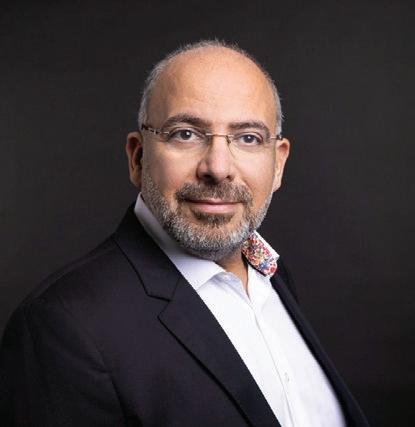
Charbel Aoun, Smart Spaces and Local Government Lead, EMEA at NVIDIA, explains how AI is becoming the “central nervous system” of Middle Eastern cities

THE NEXT DECADE OF AI IN MIDDLE EASTERN CITIES
AI is becoming the “central nervous system” of cities, shifting them from reactive to proactive environments. Cities are moving into spaces that don’t ust collect data but actually reason and adapt in real time.
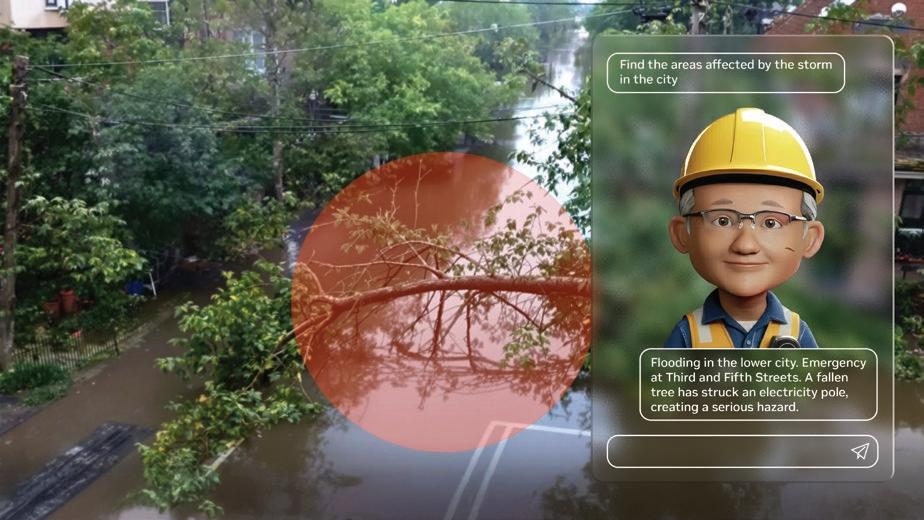
In urban planning, the era of Physical AI is emerging. Using NVIDIA Omniverse and the Cosmos world foundation models, leaders can build “SimReady” digital twins. These are not static 3D maps; they are physically accurate simulations where planners can test decades of climate impact or traffc growth in days For regions such as the Middle East, which face extreme heat and rapid population growth, the ability to simulate a district’s performance before breaking ground is a game-changer.
AI is also crucial in managing the transition to diversifed renewable-heavy energy grids It is being deployed at the edge to balance solar, EV charging, and district cooling street by street. In citizen services, cities are moving toward systems where AI agents don’t ust answer uestions but actually complete tasks from processing permits to managing emergency responses, reducing administrative lag from weeks to minutes
Charbel Aoun, Smart Spaces and Local Government Lead, EMEA at NVIDIA
AI is becoming the ‘central nervous system’ of cities, shifting them from reactive to proactive environments.
BALANCING COMMERCIAL OPPORTUNITY AND SOCIETAL IMPACT IN SMART CITY INITIATIVES
Commercial success and societal impact are structurally linked through the concept of Sovereign AI For a city to be truly “smart,” it must own its intelligence. NVIDIA facilitates this by helping nations build AI Factories which are high-performance data centers that turn raw data into a national asset.
The company’s approach is simple It helps cities build AI capability, not AI dependency. By providing open platforms like NVIDIA Metropolis and NVIDIA Inference Microservices (NIMs), the company empowers the local ecosystem to solve their own community’s challenges Whether it is reducing road fatalities or optimising water grids, the goal is a triple win for urban resilience: cities are becoming sustainable for operators operationally effcient for governments, and most importantly, life-enhancing for the people who live there.


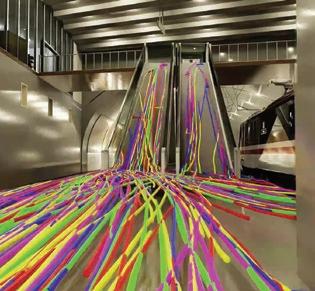
SMART CITY READINESS IN THE MIDDLE EAST
The UAE, Saudi Arabia, and Qatar have moved past the pilot pro ect phase and are now building smart cities at an industrial scale. They recognise that AI is the new electricity - it is the foundational infrastructure for a modern, post-oil economy.
The primary barrier isn’t a lack of technology but fragmentation. Many cities still have “islands of data” where the transport department doesn’t speak to the energy grid To overcome this, there is a need to move away from vendor lock-in and instead invest in a unifed sovereign AI fabric The nations that treat AI as a national priority on par with energy or security give the private sector the confdence to invest for the long term.
O ONTRO S T E IT ’S DATA?
Urban data is ultimately a public asset Charbel Aoun’s philosophy has always been: Made in the city, for the city, by the city. Governments are advised to act as stewards of an “urban data commons” - setting the rules and ensuring privacy while allowing an ecosystem of partners to innovate on top of anonymised data. NVIDIA provides the infrastructure, the AI Factory but the city must own the “fuel” (the data) and the “output” (the intelligence). This prevents the black bo problem where a city relies on an external vendor to understand its own operations. The real value isn’t in selling raw data but in creating high-value services like predictive maintenance for utilities or real-time
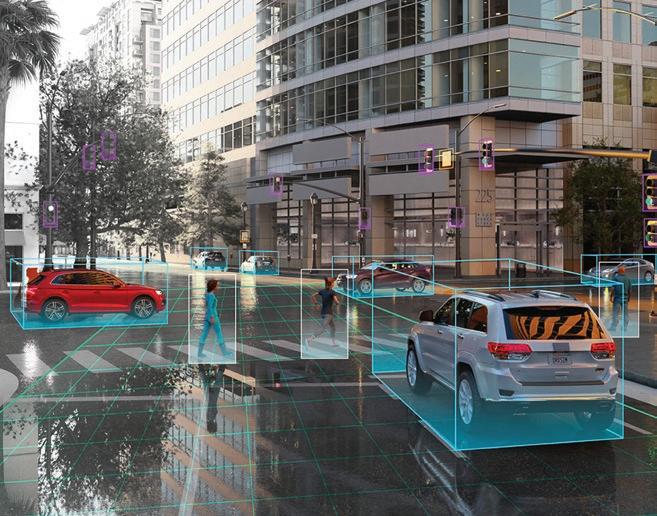
SMART CITIES AT THE EDGE AND IN THE CLOUD
The future isn’t Edge or Cloud - it’s a seamless computing continuum. Critical safety AI like autonomous shuttles or emergency response systems, must happen at the Edge with technologies such as NVIDIA Jetson to ensure zero latency. Cities cannot wait for a cloud connection when a vehicle needs to make a splitsecond safety decision.
logistics optimisation for ports that can help save millions in operational costs.
MAKING THE CASE FOR SUSTAINABLE SMART CITIES
In the age of accelerated computing, effciency is the R I NVIDIA anchors its discussions in hard evidence For e ample its work with partners like Akila and SNCF Gares et Conne ions has proven that AI-driven digital twins can reduce energy consumption in large facilities by 20% and unplanned downtime by 50%.
NVIDIA encourages an ROI strategy by phases. Starting with high-impact Physical AI use cases like smart building management or AI-optimised traffic flow, cities generate immediate savings. These savings then create a ywheel effect providing the capital needed to fund longer-term decarbonisation goals. In 2026, a sustainable city is simply a city that is too effcient to waste money or energy.
Urban data is ultimately a public asset. Charbel Aoun’s philosophy has always been: Made in the city, for the city, by the city.
At the same time, the Cloud and the local AI Factory handle the heavy lifting: training massive models and hosting the city-wide digital twin. NVIDIA bridges this through a unifed architecture. Reasoning-based AI agents can be refned in the cloud tested in an NVIDIA Omniverse simulation, and deployed to 10,000 edge devices instantly. It becomes one distributed brain working across the entire urban fabric.
SMART CITIES IN 2036
The term “Smart City” will probably be redefned as technology becomes invisible. Residents will simply live in a city that works The e perience will be defined by “flow.” Traffic lights will stay green because they detect an ambulance or a crowd of pedestrians; buildings will “breathe” and ad ust their temperature based on occupancy; and interactions with the city will take the form of a conversation with a digital assistant that actually understands the context.
NVIDIA is providing the foundational Physical AI, the intelligence that understands the physical laws of the world to make this possible If NVIDIA does its ob well residents will not notice the GPUs or the sensors; they will only notice that they have more time, cleaner air, and a city that feels as though it was designed specifcally for them.




TOP10
BRANDED RESIDENCES IN SAUDI ARABIA
THE DEVELOPERS, BRANDS AND CONCEPTS BEHIND THE KINGDOM’S MOST PRESTIGIOUS ADDRESSES
Alittle over a decade ago, the phrase branded residence’ barely registered in Saudi Arabia’s property le icon
Today it is the defning concept of the ingdom’s lu ury real estate boom With e isting branded residential units and a further to planned or under construction for delivery by Saudi Arabia is rapidly becoming one of the most dynamic branded residence markets on earth Savills pro ects growth of up to in the ingdom’s branded residential pipeline over the forecast period a fgure that even allowing for the hyperbole of real estate forecasting re ects a profound structural shift

The arithmetic behind this transformation is straightforward Vision demands diversifcation from oil diversifcation re uires tourism tourism re uires worldclass hospitality infrastructure and worldclass hospitality infrastructure generates branded residence opportunities The result is a wave of international lu ury brands from Armani and Baccarat to Four Seasons and Si Senses staking their ags in the ingdom’s sand Against this backdrop we identify the ten most signifcant branded residence developments in Saudi Arabia today profiling the developers who are building them the brands attached to them and the investment thesis that underpins each
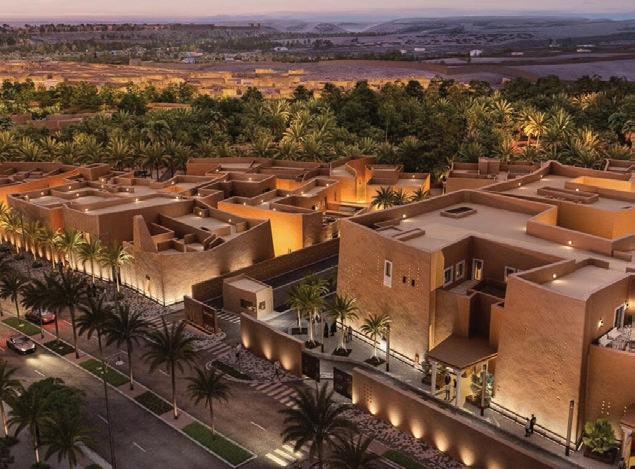
ARMANI RESIDENCES
DIRIYAH | Diriyah, Riyadh
Developer: Diriyah Company
Brand Partner:
Giorgio Armani / Armani/Casa Scale: 15 ultra-limited residences, 1,200–1,900 sq.m per unit
Launched at MIPIM Cannes in March the Armani Residences Diriyah represents the Italian fashion house’s debut in Saudi Arabia and arguably its most ambitious residential pro ect globally Housed within Diriyah S uare and ad acent to the new -room Armani Hotel Diriyah which broke ground in November the residences are personally curated by
Giorgio Armani himself each blending his trademark minimalism with the Na di architectural vernacular of Diriyah’s UNESC World Heritage Site surroundings Three design concepts The Palm Residences The Botanical Residences and The Royal Penthouses offer unit si es ranging from to s uare meters connected by an architectural centrepiece known as the Tower of Light’ staircase Each resiadence is fully furnished by Armani Casa Diriyah Company the billion PIF-backed master developer behind The City of Earth positioned this launch as the capstone of Diriyah’s branded residential collection which now comprises appro imately lu ury homes in total
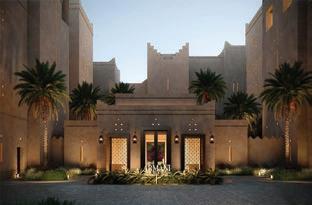

BACCARAT RESIDENCES DIRIYAH | Diriyah, Riyadh
Developer: Diriyah Company
Brand Partner:
Baccarat (SH Hotels & Resorts) Scale: 9 exclusive private residences, 1,029-2,438 sq.m per unit
Nine residences may seem an unusually intimate collection by global standards but at Diriyah scarcity is by design The Baccarat Residences are positioned as the rarest and most e clusive within the Diriyah branded residential portfolio set directly across from the Baccarat Hotel Diriyah Masterfully designed in the traditional Na di style with refned French in uence a nod to Baccarat’s Lorraine heritage
these residences fuse the French crystal house’s centuries-old tradition of craftsmanship with Saudi architectural heritage Diriyah Company engineered this particular pairing for its symbolic resonance Baccarat founded in and Diriyah birthplace of the First Saudi State in are nearcontemporaries in cultural age The result is a residence product that is as much a collector’s item as it is a home
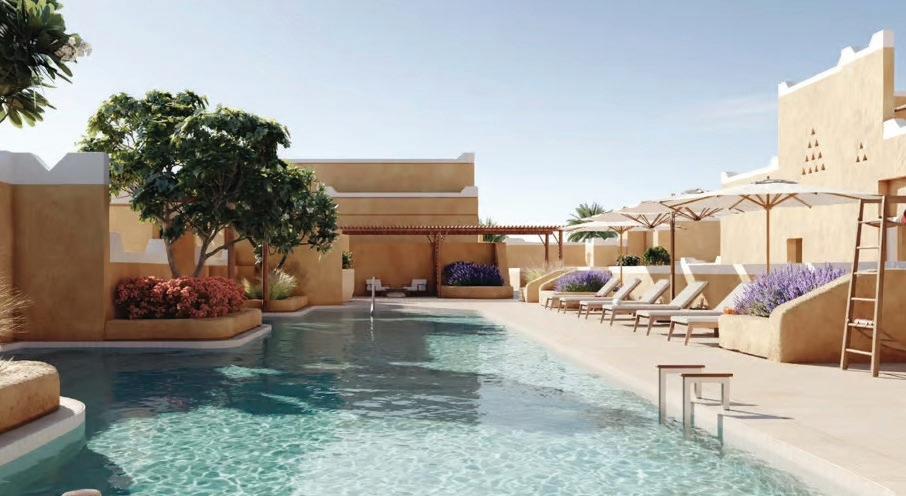
THE RITZ-CARLTON RESIDENCES, SIGNATURE
COLLECTION DIRIYAH | Diriyah, Riyadh
Developer: Diriyah Company
Brand Partner:
The Ritz-Carlton / Marriott International Scale: 165 residences across two collections (106 Residences + 59 Signature Collection)
RAFFLES RESIDENCES
DIRIYAH | Diriyah, Riyadh
Raf es synonymous with colonialera grandeur legendary service and literary romance is another cornerstone of the Diriyah branded residential cluster Raf es Residences Diriyah is strategically located in the south of Diriyah surrounded by Wadi Hanifah and a number of vital centres of culture The residences include simple es and -bedroom duple es and -bedroom and two e clusive villas with pictures ue views over Wadi Hanifah all combining Na di architectural heritage with Raf es’ timeless sophistication Accor’s Raf es brand one of the most deliberately selective lu ury hotel labels in the world brings e traordinary brand rarity to this offering Residents will beneft
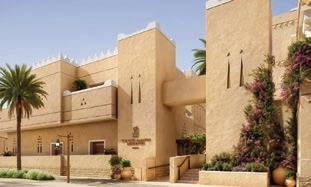
The Rit -Carlton has long been the gold standard of branded hospitality and its Diriyah residences cement that status in the Saudi conte t The development comprises two distinct product lines
The Rit -Carlton Residences Diriyah private villas available in three to fve-bedroom confgurations and The Rit -Carlton Signature Collection
Diriyah Launched at Cityscape Global in Riyadh the Signature Collection followed the successful sell-out of the initial residences offering fully furnished apartments and villas ranging from one to four bedrooms The residences are inspired by the timeless architecture of historic Na di forts As the brand with the deepest recognition among Saudi and Gulf HNW buyers
Rit -Carlton’s decision to anchor its Saudi residential debut at Diriyah rather than Riyadh’s downtown or the Red Sea coast signals the heritage destination’s standing as the ingdom’s premier lu ury address
The Rit -Carlton Hotel Diriyah e pected to open in will feature guestrooms including suites along with a specialty restaurant allday dining venue outdoor pool spa and ftness centre providing residents with the full ecosystem of Rit -Carlton services
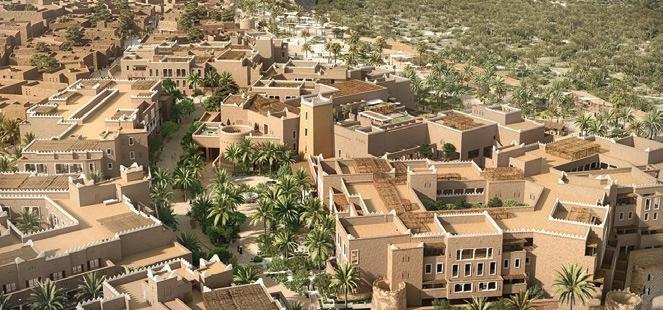
from e clusive access to Raffles Hotel services the Accor Benefts programme a rental programme concierge services and bespoke onre uest amenities For buyers drawn to storied heritage brands with global footprint and e clusivity Raf es at Diriyah with handover e pected in delivers on all counts
Developer: Diriyah Company
Brand Partner:
Scale: simplexes (1, 2 and 3-bedroom), duplexes (3 and 4-bedroom), and two exclusive villas
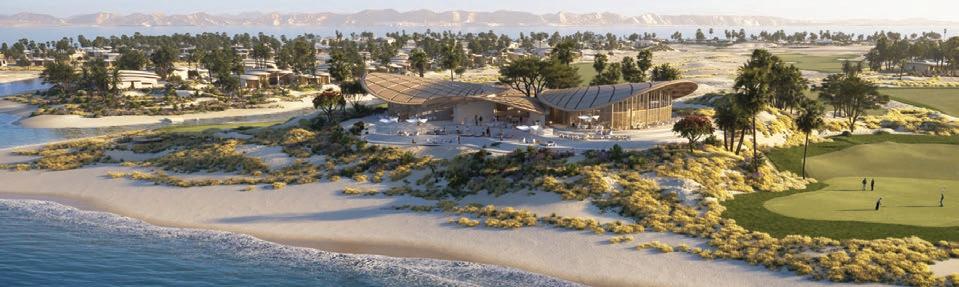
FOUR SEASONS PRIVATE RESIDENCES RED SEA AT SHURA ISLAND
| Shura Island, The Red Sea
Developer:
Shura Island is the crown ewel of Red Sea Global’s agship destination and the Four Seasons Private Residences it hosts are among the most coveted coastal properties in the ingdom Announced in with guests e pected from the residences are split between Dune Villas elevated within the natural sandscape and Waterside Villas sited along the island’s shoreline with direct beach and Red Sea access The development sits ad acent to Shura Links an -hole championship
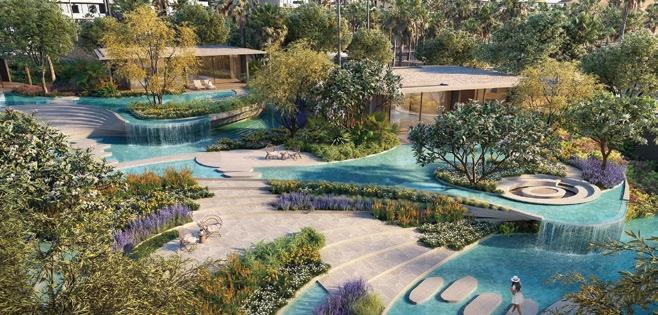
FOUR SEASONS RESORT AND RESIDENCES
AMAALA AT TRIPLE BAY
| AMAALA, Northwest Coast
Four Seasons’ second Saudi residential address is if anything even more dramatic in its setting AMAALA Triple Bay sits on the northwestern Red
Sea coast where the Hi a Mountains meet the sea a landscape of volcanic rock pristine beaches and e traordinary marine biodiversity The residences designed by international architects U A offer branded villas with uninterrupted Hi a Cove views private pools and access to a resort spa featuring halotherapy
golf course and the Four Seasons Resort itself giving residents access to signature restaurants led by worldrenowned chefs designer bouti ues tennis and padel facilities and a full wellness offering Red Sea Global the PIF company and developer of Saudi Arabia’s regenerative tourism megapro ect has built the entire destination on renewable energy a positioning that resonates strongly with the global HNW buyer segment that prioritises sustainability alongside lu ury
cryotherapy and advanced skin therapies The -hole oceanfront golf course and a partnership with fitness trainer Harley Pasternak further distinguish the wellness proposition here Conceived from the outset as Saudi Arabia’s premier international wellness destination AMAALA will accommodate no more than visitors annually as part of its commitment to nature with the entire destination powered by renewable energy a scarcity and sustainability model that directly underpins residential values
SIX SENSES RESIDENCES AMAALA | AMAALA, Northwest Coast
Si Senses has built its global reputation on the intersection of wellness sustainability and e traordinary natural settings making AMAALA a natural ft The branded residences here are integrated into a -key pool villa resort designed by U A with a spa delivering signature Si Senses Wellness programs across Sleep Yoga Deto Longevity and biohacking disciplines For buyers seeking a residence where longevity science meets coastal lu ury Si Senses AMAALA occupies a uni uely differentiated position The brand’s integration of biometric wellness programmes and its alignment with AMAALA’s net conservation benefit target
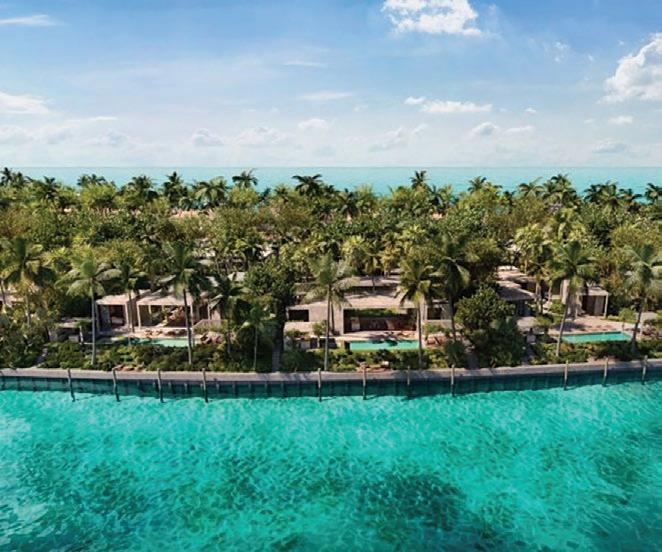
of by collectively represent a new archetype of branded residence one built e plicitly around health-span as much as lifestyle
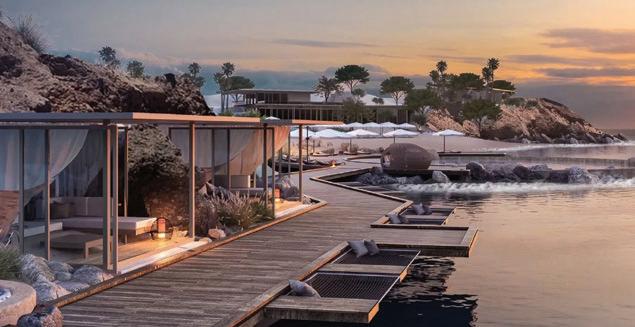
ROSEWOOD RESORT AND RESIDENCES AMAALA | AMAALA, Northwest Coast
Rosewood’s AMAALA residence positions itself as the most designforward of the coastal cluster The resort
anchors private residences in an architectural statement that ACPV Architects the studio of Antonio Citterio and Patricia Viel has designed to respond to AMAALA’s rugged coastal geology The Asaya wellness centre Rosewood’s
Developer: Red Sea Global Brand Partner: Six Senses Hotels Resorts Spas (IHG) Scale: 25 branded residences alongside 100-key pool villa resort
proprietary integrative wellness brand gives residents access to tradition-inspired treatments re uvenating activities and curated nutrition programmes Rosewood E plorers a children’s cultural club makes this one of the few AMAALA residence products targeted at multigenerational family buyers a segment that Red Sea Global has e plicitly identifed as central to the destination’s longterm commercial model
Developer: Red Sea Global Brand Partner: Rosewood Hotels & Resorts Scale: 25 private residences alongside 110-key resort
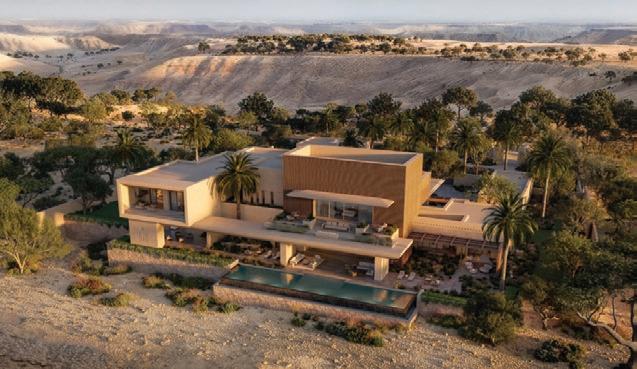
AMAN RESIDENCES AMANSAMAR (WADI SAFAR)
| Wadi Safar, Diriyah
Developer: Diriyah Company
Brand Partner: Aman Group Scale: Ultra-luxury villa and private estate collection (5–6 bedroom) alongside 80-key Aman hotel
Aman is perhaps the most globally coveted hospitality brand in the lu ury residential sector its properties are deliberately scarce and its residences command premium pricing in every market where they appear The Aman Residences Amansamar launched for sales in August occupy the dramatic desert escarpments of Wadi Safar within the broader Diriyah master development a setting of deep historical and cultural signifcance
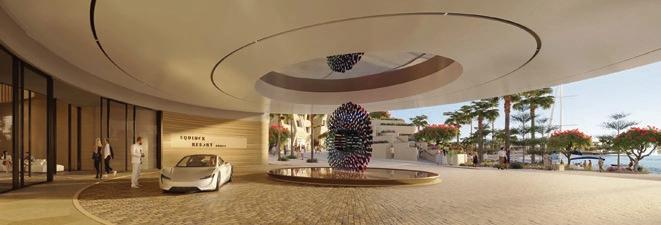
EQUINOX RESORT AND RESIDENCES AMAALA | AMAALA, Northwest Coast
E uino ’s arrival at AMAALA represents one of the most disruptive brand introductions in Saudi Arabia’s lu ury real estate market The resort is a centrepiece of the AMAALA Marina Village designed in its entirety by Foster Partners the studio of Prit ker Pri e laureate Norman Foster a lively retail and hospitality precinct featuring narrow winding streets inspired by
traditional Arabic architecture with irregular fa ades oriented to capture bree es provide shade and flter light for natural climate control Built around the philosophy of high-performance living where sports ftness and lifestyle converge with lu ury wellbeing the E uino Resort features a distinctive Porte Cochere with a oating canopy arrival four open courtyards inspired by traditional architecture and guest rooms carefully planned to capture either panoramic views of Hi a Cove or the marina with its superyachts and
ad acent to Diriyah’s UNESC World Heritage Site The name Amansamar intertwines Aman’s philosophy of tran uility with samar the Arabic term for storytelling at dusk rooting the development in the region’s living traditions Designed by Jean-Michel Gathy of Denniston Architects the collection comprises ultra-lu ury villas and private estates each with fve or si bedrooms set on plots starting from s uare metres blending Aman’s signature minimalist aesthetic with the natural desert landscape Residents en oy access to the Greg Norman-designed Royal Signature Golf Course the Royal Diriyah E uestrian and Polo Club an Aman Spa with hammam and banya a Rac uet Club multiple pools curated dining and membership to the global Aman Club offering access to e clusive Aman locations in cities including Tokyo New York and Bangkok This marks Aman’s frst branded residences in the ingdom of Saudi Arabia
lively promenade Amenities include fne dining restaurants a magnesium salt rooftop pool a serene spa and the signature E uino Fitness Club AMAALA is a destination that perfectly aligns with E uino ’s mission of redefning lu ury hospitality The branded residences target the globally mobile high-performer demographic buyers who see their home as an optimisation environment not merely a lifestyle statement In a market crowded with traditional lu ury cues the E uino proposition is analytically distinctive
Developer: Red Sea Global
Brand Partner: Equinox Hotels (Equinox Group) Scale: 21 branded residences alongside 128-key resort (including two exclusive penthouses)
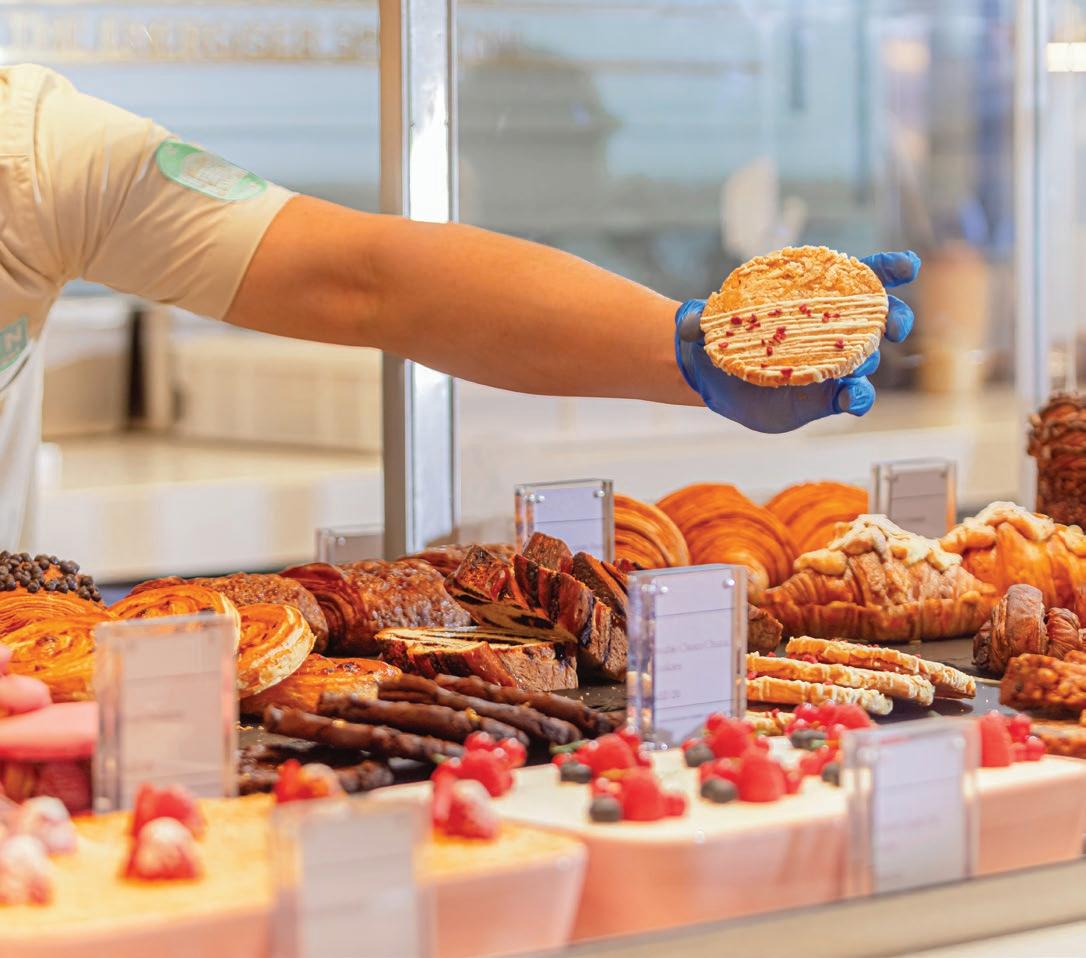
MORE THAN A PRETTY SPACE
In this interview, Sergio Lopez, CEO UAE, EL&N London, shares how design draws people in, but systems, leadership and emotional connection are what keep them coming back.
BY AYA ZHANG

The UAE rewards strong brands — but only those that combine ambition with discipline and a deep understanding of the market.
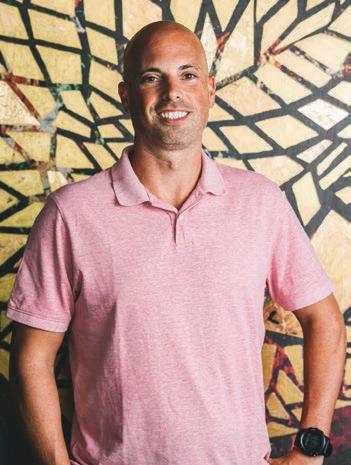
OVER THE PAST TWO DECADES, YOU HAVE BUILT, SCALED, AND EXITED MULTIPLE HOSPITALITY CONCEPTS. LOOKING BACK ON YOUR JOURNEY FROM FOUNDING AND GROWING YOUR OWN BRANDS TO LEADING EL&N DUBAI, HOW HAS YOUR PHILOSOPHY AROUND BUILDING A LIFESTYLE BRAND EVOLVED?
Over the past two decades, my philosophy has evolved from simply building successful restaurants to intentionally building lifestyle brands.
In the early years, my focus was on operational excellence — strong concepts, disciplined cost control, team development, and delivering a consistent guest experience. My initial key focus was fnding a great location with easy access, parking and visibility. As I scaled my own brands, I realised that long-term success in hospitality goes beyond product It’s about identity emotional connection, and creating spaces people want to belong to.
Leading EL&N Dubai reinforced this further. I saw how powerful design, storytelling, and digital presence are in shaping a brand’s cultural relevance
A lifestyle brand must be cohesive — from interiors and marketing to service standards and team culture.
Today, I focus on three pillars: operational strength, distinctive brand identity, and emotional connection. For me, the shift has been from building venues to building brands that become part of people’s daily lives and social experiences.
EL&N IS GLOBALLY RECOGNISED FOR ITS STRONG DESIGN IDENTITY. IN A MARKET AS SOPHISTICATED AS THE UAE, HOW DO YOU ADAPT AN INTERNATIONAL BRAND TO LOCAL EXPECTATIONS WHILE PRESERVING ITS CORE CHARACTER?
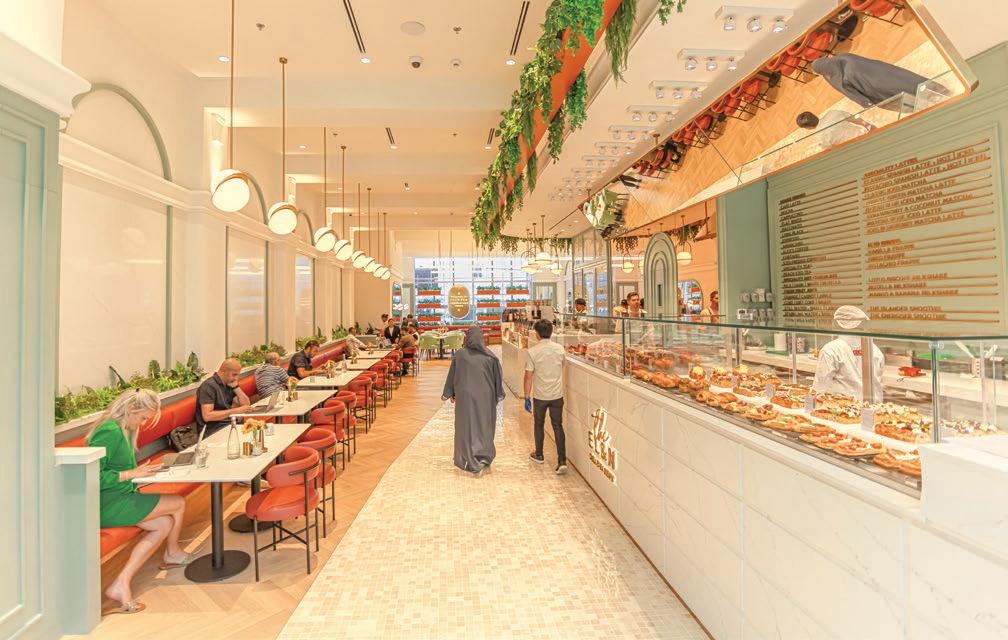
EL&N has a very clear and recognisable global design language, and preserving that core identity is essential to maintaining brand strength. However, in a sophisticated market like the UAE, localisation is equally important.
For me, adaptation is less about changing the brand and more about refining how it is expressed. The core visual identity, tone, and brand experience remain consistent, but we tailor elements such as menu engineering, service style, and space utilisation to align with local consumer behaviour and expectations. We adapt each of our branches based on its location in UAE to adapt to the specifc market in the vicinity
In the UAE, guests expect a premium experience — from service standards to product quality and presentation. There is also a strong social and digital culture, so ensuring the space remains visually impactful while operationally effcient is key
The balance lies in protecting the brand’s DNA while being commercially and culturally intelligent. If you understand both the brand and the market deeply, you can localise without diluting what makes the brand globally successful.
Sergio Lopez, CEO UAE, EL&N London
YOU WERE BROUGHT IN TO LEAD EL&N DUBAI THROUGH A PHASE OF PERFORMANCE RECOVERY AND EXPANSION. WHAT WERE THE FIRST PRIORITIES YOU SET, AND WHAT DID THAT EXPERIENCE TEACH YOU ABOUT SCALING RESPONSIBLY?
When I stepped in to lead EL&N Dubai, my frst priority was stabilisation before expansion. That meant gaining full visibility over fnancial performance operational ineffciencies and team structure. We focused on tightening cost controls, improving supply chain discipline, and reinforcing service standards to ensure consistency across locations.
At the same time, I prioritised leadership alignment. Scaling cannot happen without strong management on the ground, so investing in clear accountability, KPIs, and communication was critical.
Only once the operational foundations were solid did we
move into expansion planning. That experience reinforced an important principle for me: growth should never outpace infrastructure. Responsible scaling requires systems, datadriven decision-making and fnancial discipline — not just ambition.
It taught me that sustainable expansion is built on stability, clarity, and a strong operational core.
THE UAE IS OFTEN DESCRIBED AS ONE OF THE MOST DYNAMIC HOSPITALITY MARKETS IN THE WORLD. FROM YOUR PERSPECTIVE, WHAT MAKES IT SUCH A COMPELLING PLATFORM FOR GROWTH, AND WHERE DO INTERNATIONAL OPERATORS SOMETIMES MISJUDGE IT?
The UAE is one of the most dynamic hospitality markets in the world because of its diversity, pace, and global outlook. You have a highly international population, strong tourism inflow, high digital engagement, and consumers who are
constantly exposed to global trends. That creates an environment where innovative concepts can scale quickly if they resonate.
It’s also a market with strong infrastructure, supportive business ecosystems, and landlords who understand branded concepts — which makes it an attractive platform for regional and international growth.
Where international operators sometimes misjudge the UAE is in assuming it is easy. While the market is sophisticated, it is also highly competitive and marginsensitive. Consumer loyalty must be earned continuously, and operational excellence is non-negotiable. Concepts that succeed elsewhere cannot simply be replicated without adapting to local pricing psychology, service expectations, and cultural nuances.
In short, the UAE rewards strong brands — but only those that combine ambition with discipline and a deep understanding of the market.
HAVING WORKED CLOSELY WITH INVESTORS AND INSTITUTIONAL PARTNERS THROUGHOUT YOUR CAREER, HOW HAS YOUR UNDERSTANDING OF CAPITAL AND GOVERNANCE SHAPED THE WAY YOU BUILD AND EXPAND RESTAURANT GROUPS TODAY?
Early in my career, expansion was often driven by opportunity and instinct.
ver time I’ve developed a much deeper appreciation for disciplined capital allocation, governance structures, and transparent reporting.
Capital is not just fuel for growth — it comes with responsibility. Investors expect clarity, accountability, and predictable performance. That has pushed me to build stronger fnancial controls clearer PIs and governance frameworks that support sustainable decision-making rather than reactive expansion.
It has also changed how I evaluate opportunities. Today, I assess growth through the lens of return on capital, scalability of systems, risk management, and long-term brand equity — not just top-line revenue.
Ultimately, working with institutional partners has reinforced that strong governance is not a constraint; it is what enables responsible, scalable growth.
RAPID MULTI SITE EXPANSION CAN EASILY COMPROMISE QUALITY. WHAT OPERATIONAL FOUNDATIONS ARE ESSENTIAL IF A LIFESTYLE BRAND IS TO GROW WITHOUT LOSING CONSISTENCY OR PROFITABILITY?
Rapid multi-site expansion only works if the operational foundations are built frst Without systems and discipline growth quickly exposes weaknesses.
The first essential foundation is standardisation — clear SOPs, training frameworks, and defined brand standards that ensure consistency in product, service, and experience across every location. Secondly strong fnancial controls
are critical: real-time reporting, cost discipline, and clear unit-level economics so each site remains proftable on its own merit
Equally important is leadership structure. You need capable managers who understand both the brand DNA and the operational expectations, with clear accountability and performance metrics.
Maintaining strong relationships with designers, fit-out contractors, project managers, and all stakeholders involved in brand expansion is critical. They understand how I operate, the standards I expect on each site, and the importance of balancing timelines, cost control, and landlord requirements. That alignment ensures smoother execution, fewer delays, and a more disciplined rollout process.
Finally, supply chain alignment is key. Consistency in sourcing and quality control protects the brand as you scale.
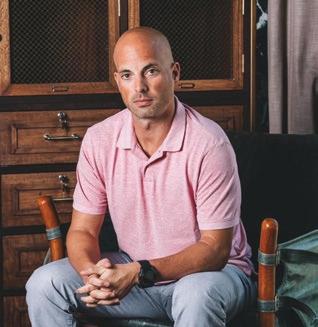
The balance lies in protecting the brand’s DNA while being commercially and culturally intelligent.
For me, expansion should never outpace infrastructure. When systems, people and fnancial discipline are in place, growth enhances the brand rather than diluting it.
SOCIAL MEDIA HAS TRANSFORMED THE VISIBILITY OF HOSPITALITY BRANDS. HOW DO YOU ENSURE THAT STRONG DIGITAL PRESENCE TRANSLATES INTO SUSTAINABLE COMMERCIAL PERFORMANCE?
Social media is a powerful amplifer but visibility alone does not guarantee proftability The key is ensuring that digital engagement supports a strong commercial model.
First, the in-store experience must deliver on the promise created online. If the product quality, service, and atmosphere do not match the digital narrative, repeat business suffers. Social media can attract frst-time guests — operations retain them.
Second, digital strategy should be data-driven. Understanding customer behaviour, peak trading patterns, and conversion from online engagement to footfall allows marketing efforts to be aligned with revenue objectives, not just impressions.
Finally, strong brand positioning online must be supported by sound pricing, cost control, and margin management. Aesthetic appeal creates traffic, but sustainable commercial performance comes from disciplined execution behind the scenes.
In short, social media should be an entry point into the brand — not the business model itself.
YOU HAVE SCALED CONCEPTS ACROSS THE UAE, EUROPE AND OTHER MARKETS. HOW DOES EXPANSION WITHIN THE GCC DIFFER FROM SCALING IN OTHER REGIONS YOU HAVE WORKED IN?
The GCC — particularly the UAE — moves quickly. Trends accelerate
faster, consumer expectations are high, and competition is intense. Site economics, rental structures, and staffng models also differ signifcantly from many European markets, which means fnancial discipline and strong unit-level economics are critical from day one.
Equally important is understanding that regulatory frameworks vary not only between GCC countries, but even within the UAE itself. Each emirate — whether Dubai, Abu Dhabi, or Sharjah — has its own licensing requirements, municipality processes, labour considerations, and landlord expectations. Successfully scaling requires detailed knowledge of these differences and the ability to navigate them effciently and compliantly The same applies across different GCC countries.
At the same time, the market is highly brand-conscious and digitally engaged. A concept that resonates can scale rapidly if it aligns with lifestyle positioning and social culture.
In contrast, many European markets tend to be more operationally stable but slower to adopt trends. Consumer loyalty can be stronger, but growth often requires longer-term positioning rather than rapid rollout.
Ultimately, scaling in the GCC requires agility, regulatory awareness, speed, and tight cost control, whereas other regions often demand patience and deeper local integration. The core principles remain the same — but the tempo, compliance landscape, and risk profle are very different
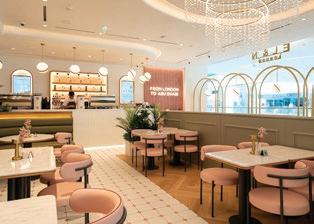
LOOKING AHEAD, DO YOU SEE THE UAE HOSPITALITY SECTOR AS ENTERING A MORE MATURE PHASE, OR IS IT STILL IN GROWTH MODE? WHERE DO YOU SEE THE NEXT MEANINGFUL OPPORTUNITIES FOR LIFESTYLE BRANDS?
I believe the UAE hospitality sector is entering a more mature phase — but it is still very much in growth mode. The market is no longer driven purely by novelty; consumers are more informed, selective, and valueconscious. That maturity is raising the
Social media should be an entry point into the brand — not the business model itself.
bar for operators, which is ultimately healthy for the industry.
At the same time, the fundamentals remain strong. The UAE continues to attract talent, entrepreneurs, and residents from all over the world, and population growth is expected to rise significantly in the coming years This in u brings new demand evolving tastes, and greater diversity in consumer expectations. We are also seeing stronger international and regional players entering the market, which further increases competition and professionalises the landscape. Growth therefore continues — but it is becoming more strategic. The next meaningful opportunities for lifestyle brands lie in deeper brand positioning
rather than rapid replication — concepts with clear identity, strong community engagement, and diversifed revenue streams
There is significant opportunity in neighbourhood-focused formats, premium casual dining, and brands that successfully integrate digital ecosystems with physical spaces. Consumers are looking for experiences that feel authentic, curated, and consistent.
In short, the UAE remains a growth market — but one that increasingly rewards disciplined operators, strong governance, and brands with long-term vision rather than short-term hype.
AFTER MORE THAN TWENTY FIVE YEARS IN HOSPITALITY, WHAT CONTINUES TO MOTIVATE YOU TO BUILD AND EVOLVE BRANDS IN THIS INDUSTRY?
The industry is constantly evolving. Consumer behaviour shifts, design trends change, technology advances — and that keeps it intellectually engaging. There is always an opportunity to refne improve and build something better than before.
I’m particularly motivated by new challenges whether that’s turning around performance, entering a new market, scaling responsibly, or adapting a brand to changing economic conditions. Hospitality never stands still, and that dynamic environment continues to push me to think strategically and evolve as a leader.
I’m also driven by the challenge of building teams and watching people grow within the brands we create. Seeing a concept move from idea to reality, then scale sustainably, is deeply rewarding.
At this stage of my career it’s less about opening venues and more about building lasting brands — businesses with strong foundations, clear identity, and long-term impact. That process of evolution is what continues to drive me.




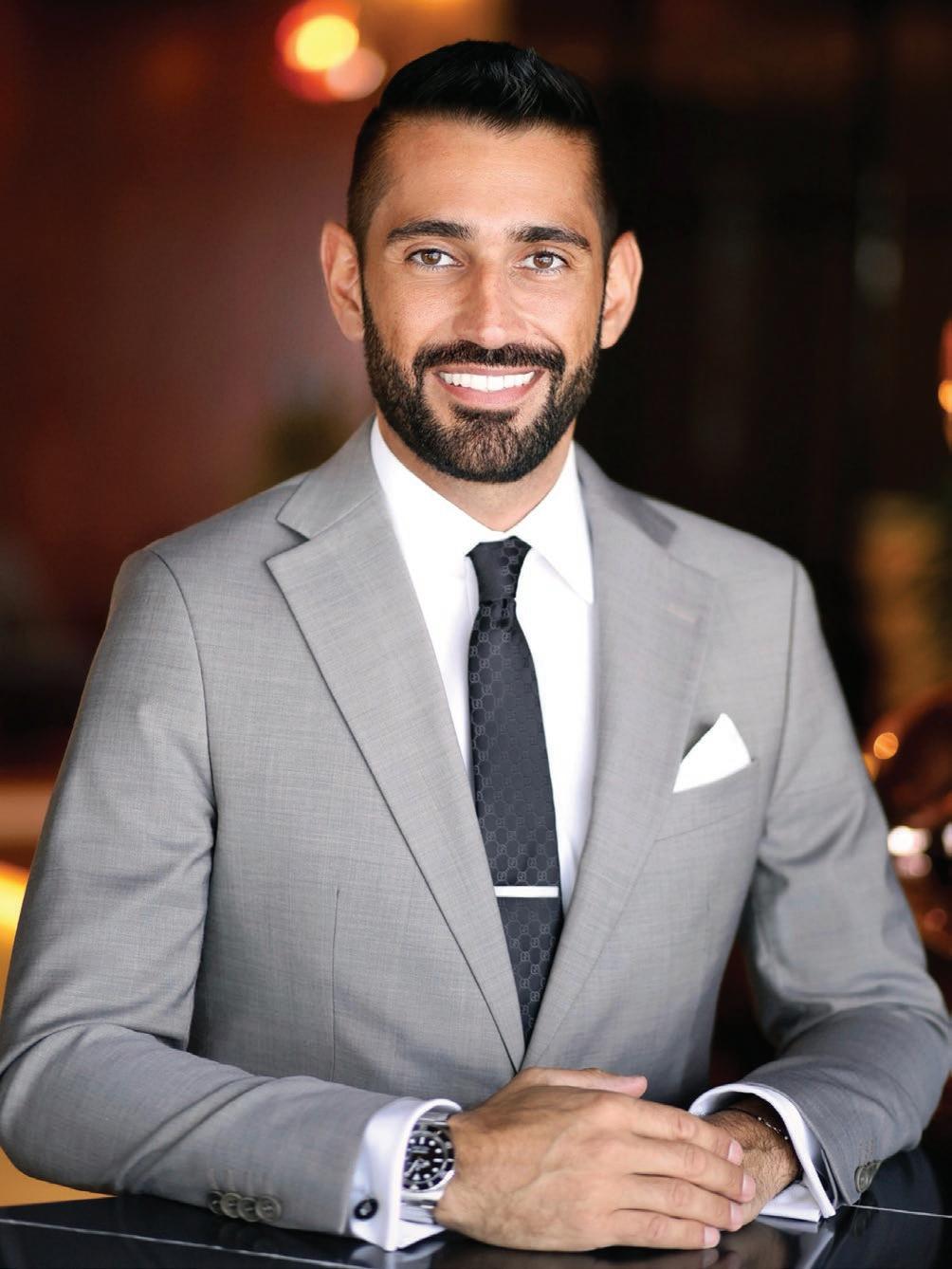
DIGITISING LEGACY
Alessandro Console, CEO of EasyWill discusses the journey from concept to market, and what the future holds for global estate planning.
TRANSFORMING A PAPER-HEAVY PROCESS INTO AN EMPOWERING CLIENT EXPERIENCE
My background is rooted in largescale communication and massmarket strategy, and when I arrived in Dubai When I frst arrived in Dubai one question immediately struck me: what kind of product could genuinely serve such a vast and diverse international investor base?
Dubai attracts capital and people from every corner of the world: different cultures, backgrounds, religions, and life stages. Identifying a shared, universal need within such diversity was a challenge. Yet one universal truth quickly became apparent: the natural cycle of life unites us all.
That realisation led me to estate planning. I quickly understood that for expats in the UAE, this topic is not just important, it is often misunderstood or completely overlooked. Many expats are unaware that, without a civil
Will, their assets may be distributed under Sharia law by default. In this context, estate planning is neither a luxury nor an abstract legal exercise; it is a matter of clarity, protection and responsibility.
The idea behind EasyWill was to remove fear, friction, and complexity from a process that is traditionally paper-heavy, intimidating, and frequently postponed. Our aim was to create a platform that makes something deeply serious both accessible and human, without ever compromising legal rigour or compliance.
Digitisation wasn’t about simplifying the law, it was about simplifying the experience. Education has been the cornerstone from day one. We aimed to launch a broad, transversal initiative across the market, helping people understand why this matters before asking them to take action.
The response has been exceptional. Clients consistently highlight the clarity, speed, and transparency of the process. More importantly, they tell
us they feel empowered rather than overwhelmed. That shift in mindsetfrom avoidance to awareness - is, for us, the true measure of success.
BUILDING A COMPLIANT LEGALTECH PLATFORM IN THE UAE
We were fortunate to build EasyWill in a country that is already structurally ahead of the curve. The United Arab Emirates has invested decades in creating a legal and institutional framework based on clarity, transparency, and trust, designed to attract international residents and capital. Our role was not to reinvent the system, but to complete it - to add the fnal layer of confdence the market was still missing. If UAE governance laid the foundations, EasyWill became the fnishing touch
From a regulatory perspective, this meant operating within a clear and purpose-built legal environment. The main challenge was ensuring full compliance with UAE legal frameworks while building
a scalable, user-friendly digital platform. The technological effort was substantial, requiring nearly a year of development, extensive validation cycles, and close collaboration with legal and compliance experts.
Today, EasyWill is fully compliant with the Abu Dhabi Judicial Department, and we are working through strategic partnerships with leading private notarial firms to extend registration processes to the Dubai courts. This journey has shaped us into what we believe is the frst LegalTech platform in the UAE to offer a fully trained Al assistant, capable of providing accurate guidance on Shariah and succession law in all major languages.
Operationally, the complexity lay in harmonising legal accuracy with automation. Our guiding principle was simple but demanding: compliance frst then technology We built the system around the law, stresstesting every work ow prompt and safeguard to withstand both legal scrutiny and real-world application.
Thanks to our development team and partners, clients can now create a Will entirely online, guided step by step by our Al assistant, Hamed trained specifcally on UAE succession law and Sharia-related principles. Making something so technically rigorous accessible at scale was our greatest challenge but it’s also where EasyWill found its identity: transforming legal certainty into everyday confdence
LOCAL COMPLIANCE WITH CULTURAL AND LEGAL SENSITIVITY
The UAE’s diversity is one of its defining strengths, and EasyWill was designed with that in mind. Our platform supports multiple languages and guides users through the process in a manner that respects cultural sensitivities while remaining fully compliant with UAE law.
Let me give you an e ample I’m Italian, and English is my second language. Naturally, I would prefer to
draft and read the draft of my Will in my native language. Our platform not only provides an assisted customer experience - both voice and textbased - in all major languages, but also allows users to write and view a draft of their Will in their native language. From Hindi to Chinese, Arabic to Russian, Italian to German, and many others this signifcantly increases clarity and comfort for those who do not speak Arabic and use English as a second language.
In addition, all legal guidance is delivered by our Al assistant, Hamed, in the language chosen by the user - whether by phone or WhatsApp. Even the online interface dynamically adapts to the chosen language.
In short, regardless of nationality, language, religion, or background, every client fnds the process clear and easy to understand, while every Will generated through EasyWill fully complies with UAE legal requirements and is officially registered with the relevant authorities, ensuring enforceability and peace of mind.
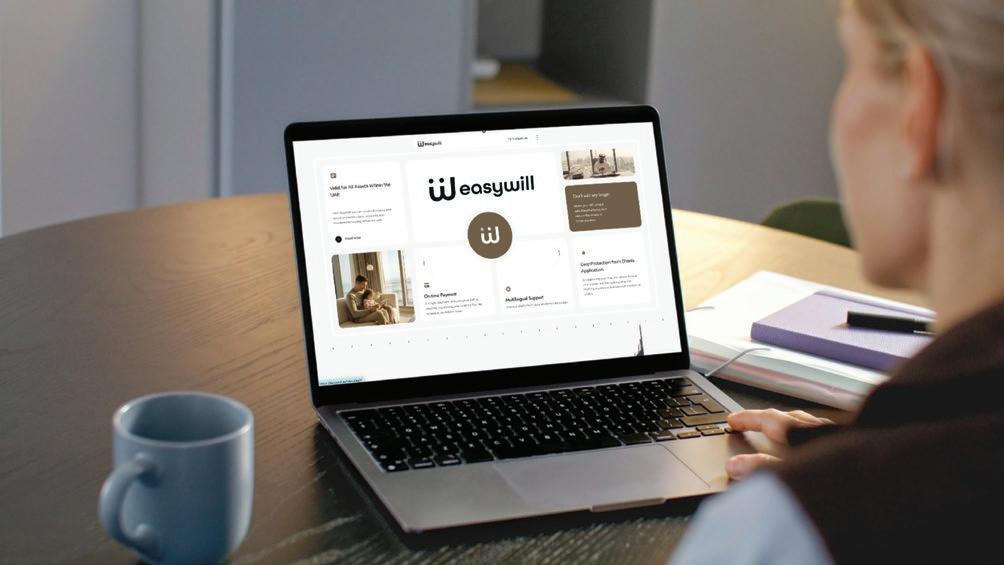
BUILDING DIGITAL TRUST IN I E’S OST ERSON DECISIONS
Trust is fundamental in what we do. We build that trust through transparency, security, and education.
Users are clearly informed about how their data is handled, where their will is registered, and what legal safeguards are in place. We use secure systems, encrypted data storage, and verified legal processes, but just as importantly, we communicate in plain language.
When people understand the process clearly and transparently confdence follows naturally. EasyWill is not about replacing legal credibility with technology; it is about using technology to deliver legal credibility more effectively, consistently and at scale.
BRAND IDENTITY, PARTNERSHIPS AND THE POWER OF WORD OF MOUTH
First and foremost, we chose to present EasyWill with a creative and original brand identity, slightly informal and even a bit playful. This approach helped dismantle the traditional barriers surrounding legal services, making the subject more approachable for the everyday social media user and less intimidating overall.
At the same time, we launched strategic collaborations within the real estate sector, where agencies and brokers have been genuinely enthusiastic about offering our service to their clients. More recently, banks, property developers and professional advisers have also begun recommending EasyWill.
Perhaps most notably, however, our strongest source of growth has been word of mouth Satisfed clients actively share their experiences and feedback, organically generating the highest number of new users.
Ultimately, EasyWill is genuinely user-centric. Seeing our clients become our most powerful advocates
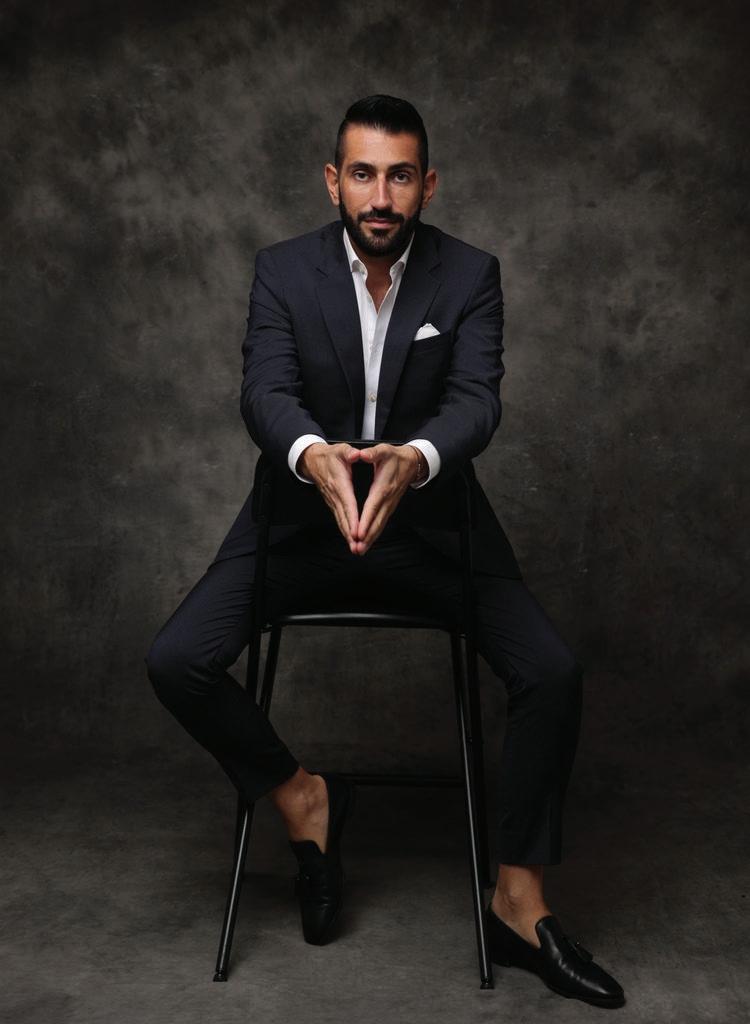
Alessandro Console, CEO of EasyWill
is not only commercially signifcant it is also deeply rewarding.
Building a Digital Estate Planning Ecosystem for a Global Investor Base ver the ne t three to fve years we see EasyWill evolving into a comprehensive digital estate planning ecosystem, a platform people naturally turn to whenever they acquire an asset to protect in the UAE, whether movable or immovable.
We plan to introduce more advanced asset management tools, Al-powered executor support, and post-registration services, such as proof-of-life verifcation for clients
While the UAE remains our core market, we are already exploring expansion into other jurisdictions where expatriates face similar estate planning challenges. That said, we remain frmly committed to the United Arab Emirates and to contributing meaningfully to the continued development of its legal and fnancial landscape.
Our long-term vision is clear: to make secure, compliant UAE estate planning accessible globally, while maintaining the same level of trust, precision and legal rigour that defnes EasyWill today.
PLANTING THE SEEDS OF SAUDI GROWTH
Abdullah Al Muzaini, Chairman of Istabraq Limited
are helping Saudi Arabia grow for the long term

PRIVATE CAPITAL AT THE E RT O S DI R I ’S TRANSFORMATION
Private capital has become central to how competitiveness is built and sustained in the Kingdom. For many years, Saudi capital markets operated primarily within a domestic framework. Liquidity was largely local, investor expectations were regionally shaped and performance was
assessed without sustained external benchmarking. The expansion of foreign access has introduced a higher level of global integration.
From Al Mu aini’s perspective international participation brings continuous evaluation against global standards of disclosure, governance and capital effciency That evaluation elevates transparency and strengthens institutional discipline. As regulatory
clarity and corporate governance mature investor confdence deepens and Saudi enterprises operate within a more internationally aligned framework.
Capital allocation now carries broader responsibility. When investment supports the development of competitive non-oil sectors, it advances diversifcation ob ectives and reinforces economic resilience in line
with the ingdom’s long-term strategy
Greater global integration strengthens institutional maturity and builds the foundation for sustained growth.
HOW SAUDI INVESTMENT IS EVOLVING
Over the next decade, three structural developments stand out.
The first is deeper integration into global capital markets. As

access broadens and governance standards align more closely with international expectations, the investment environment becomes more disciplined and institutionally grounded. Transparency, regulatory clarity and stronger disclosure practices improve the overall quality of capital formation.
The second is the continued diversification of economic activity.
Since the tourism sector opened to international visitors in 2019 and the Saudi Tourism Authority was established, tourism has become a national priority. I expect sustained development across fintech, entertainment, hospitality and cultural industries as the economic base expands and infrastructure prepares for ma or global events in the years ahead
The third is the strategic focus on data and artificial intelligence. The Kingdom has articulated clear ambitions in this space and has begun building institutional platforms to support them, including initiatives such as Humain. Investment in digital infrastructure and local talent development will shape competitiveness across industries and strengthen the ingdom’s regional and global position in advanced technologies.
FAMILY OFFICES IN THE SPOTLIGHT
Family offices are well positioned to play a larger role in domestic investment and diversifcation and this is seen as a portfolio opportunity as much as a national one. The Kingdom has opened high-potential sectors and investable platforms that allow family offices to participate in economic development while also broadening their own exposure beyond traditional asset concentrations.
Governance should evolve in line with the posture each family offce chooses. Many value privacy, and the ingdom’s business environment accommodates that. Others are becoming more public-facing through oint ventures institutional partnerships and cross-border activity. In those cases, global credibility re uires clearer frameworks defned mandates, documented decision rights, risk oversight and transparent reporting that international partners recognise and trust.
Family offices can also take a
more active role in nurturing the next generation of businesses. Through investments in local entrepreneurs, collaboration with SME-focused platforms and mentorship of emerging founders, they can strengthen the innovation ecosystem while building durable value within their own portfolios.
GOING GLOBAL WITHOUT LOSING HOME GROUND
International expansion should reinforce domestic strength and broaden institutional capability.
When Saudi investors participate in oint ventures co-investments and strategic alliances abroad, they operate within different regulatory environments and competitive markets. That exposure strengthens governance standards and execution discipline at home. Saudi investors also
contribute capital, sector expertise and strategic perspective to international partnerships as active participants.
Balance requires reinvestment discipline. Returns generated internationally can be redeployed into domestic sectors aligned with diversification and sustainable growth Capital ows governance standards and strategic priorities should move in alignment, ensuring that global engagement strengthens the domestic base.
In Al Mu aini’s e perience international positioning and domestic development advance most effectively when they move together.
MEASURING IMPACT BEYOND THE BOTTOM LINE
In healthcare and technology, meaningful impact is reflected in capacity, capability and quality of care.
measured by institutional strength and
In healthcare, that includes expanded clinical services and developing specialised talent. In technology, it includes digital infrastructure, cybersecurity strength, AI deployment and the sharp rise in the number and breadth of local fntech frms
As mentioned earlier, initiatives such as Humain re ect a clear national commitment to artifcial intelligence and digital capability. Venture building platforms such as LAB7, along with other programs that support SMEs and emerging founders, are helping young entrepreneurs and inventors turn ideas into operating businesses. These are practical pathways for private capital to support innovation while building on the ingdom’s existing strengths.
Family offices can play an important role here. By backing local entrepreneurs, particularly young founders with promising ideas, and making sustained investments in strategic sectors, they contribute to sector depth while strengthening their own portfolios.
At board level, this comes down to what is reviewed consistently. Alongside fnancial results boards should look at operational strength, talent development and collaboration across established domestic supply networks. When those elements inform investment decisions, impact becomes part of daily governance rather than a separate initiative.
THE DIFFERENCE BETWEEN LASTING SUCCESS AND QUICK WINS
If one plants a date palm today, they do not expect fruit tomorrow. They prepare the soil, water it, and give it time. If the process is rushed, the tree weakens and the harvest suffers.
Growth in business is similar. Quick expansion can create shortterm gains, but real strength comes from a strong foundation, like the roots of a palm tree. A company must have stable fnances capable leadership and the operational capacity to handle growth before it expands further.
In practice, this comes down to how decisions are made. Boards should ask simple questions. Can the company carry this expansion without straining its finances? Does the leadership team have the experience to manage a larger operation? Are systems and processes ready to support it?
When growth follows readiness, it lasts. When it runs ahead of capacity, it creates pressure.
LEAVING A LEGACY
Legacy is measured by institutional strength and credibility.
Istabraq is a communications advisory frm that supports companies and institutions across the Kingdom. The company’s work is rooted in a deep understanding of the local business, regulatory and cultural landscape. Istabraq has worked with government, semi-government and private sector entities, helping organisations articulate their role within Vision 2030 and present that role clearly to stakeholders and the broader public.
A central part of its work is helping companies understand how their strategy fits within national priorities and ensuring that alignment is conveyed with clarity and confdence For foreign companies, this often means helping them navigate the local environment, position themselves appropriately and engage with the market in a way that re ects both global standards and local expectations.
Beyond Istabra Al Mu aini’s interests also extend to foundational sectors such as real asset and asset management, construction, legal services and other industries that support economic activity. Strong infrastructure and sound professional services form part of the base upon which broader development depends. If the institutions Istabraq supports operate with clarity, attract responsible investment and strengthen confdence in the ingdom’s economic tra ectory that would represent a legacy Al Muzaini is proud of.
Abdullah Al Muzaini, Chairman of Istabraq Limited and head of a Saudi family offce
CAN A CITY DOUBLE ITS ECONOMY IN A DECADE?

AAgenda D33 shows how Dubai plans to grow by backing people, ideas and global connections, not just numbers.
BY SERGEI GURIEV
cross the world, governments are facing the same challenge: how to generate growth and resilience in an era defned by fscal constraints, technological disruption, geopolitical fragmentation, and the growing demands for green transition and social inclusion.
The UAE’s Dubai Economic Agenda D sets out an ambitious ob ective to double the si e of Dubai’s economy to AED trn by and secure its position among the world’s top three global cities It seeks to generate AED bn annually from digital
transformation, scale private sector investment to AED trn over the coming decade and integrate young Emiratis into the labour market These targets are bold But what matters more than their scale is what they signal about the changing nature of economic leadership.
As shown in the work of last year’s Nobel Pri e winners Philippe Aghion and Peter Howitt while middleincome countries’ growth models can rely on natural resources or low-cost labour in high-income economies such as the UAE, economic growth must be based on human capital
entrepreneurship, competition and innovation. This requires investment in education, research, and the capabilities to advance and adapt to rapid technological change. That also means encouraging frms to innovate helping promising businesses to scale and removing barriers for reallocating resources towards more dynamic sectors It also re uires a regulatory and fnancial environment that supports risk-taking while maintaining healthy competition
This new growth model is at the core of the UAE’s diversifcation strategy that places digital transformation,
entrepreneurship, higher education and skills at the centre of its agenda It acknowledges that the competitive advantage of the twenty-frst century lies in knowledge-intensive sectors
COMBINING PREDICTABILITY AND AGILITY
In order to create a conducive environment for investors, innovators and entrepreneurs D prioritises credible forward-looking institutions predictable policy framework and transparent regulation The stable rules of the game are critical for business and investment climate especially for internationally mobile capital and highskilled professionals that Dubai strives to retain and attract.
Commitment to the stable rules of the game does not imply stasis The world is changing fast – and governments must be agile enough to respond to change. The pandemic revealed not only how uickly supply chains labour markets and fnancial systems can be disrupted but also how swiftly they can be repaired and strengthened when communities, businesses and governments work together with purpose and adaptability Resilient leadership re uires both predictability and agility
In practice this means setting a clear long-term direction while remaining e ible about how goals are achieved Digital public services close dialogue with business and willingness to ad ust regulations when needed allow governments to respond uickly without creating uncertainty Investors and entrepreneurs value knowing where policy is headed even if specifc tools evolve over time By keeping digital infrastructure, education and private sector development at the core of its strategy D provides that sense of steady direction alongside room to adapt.
Capabilities to adapt that were so critical in Covid times are even more important today when leaders across the
world face geopolitical fragmentation, trade wars, and technological disruption. Successful countries respond to these shocks through combining their e ibility in responding to shocks with a transparent commitment to their long-term strategy D makes it clear that digital infrastructure, education reform, and private sector development are sustained priorities whatever the e ternal environment brings This clarity reassures entrepreneurs and investors.
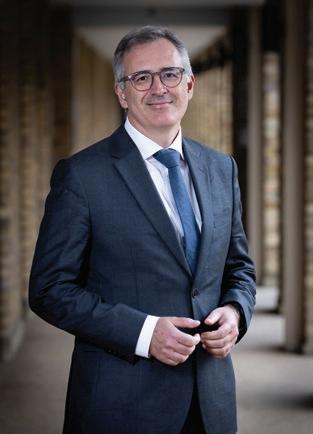
INNOVATION AND GROWTH THROUGH OPENNESS
The UAE’s ambition to identify and support the global e pansion of high-potential companies recognises that competitiveness is not achieved behind closed borders Access to global markets is crucial for innovationdriven growth Investment in research and new technology only pays off if the market si e is suffciently large This implies that no ambitious economy with possible e ceptions of the US and China can rely on internal markets alone Sustained international
engagement provides the scale and incentives that innovators and investors require.
International engagement also supports the circulation of ideas and e pertise Firms that operate across borders are e posed to new technologies, management practices and customer demands, which can accelerate learning and productivity By connecting markets across regions and positioning itself as a bridge between continents Dubai translates global integration into a concrete economic advantage.
The other key advantage of international integration is the attraction of best human capital which is critical for knowledgeintensive sectors Global companies need global talent In recent decades Dubai has thrived through bringing the best and the brightest from across the world and making them feel at home Further growth will re uire doubling down on this strategy This is why investment in higher education and doubling the student population an essential part of D is key to the success of the whole strategy Dubai strives to become a top global higher education hub by investing in new world-class universities and attracting top international providers. London Business School established its campus in Dubai in and has been teaching students from across the world many of our alumni have stayed in UAE to contribute to its unprecedented transformation.
Agenda D illustrates a clear and practical principle stable institutions and policies combined with sustained international engagement, innovation, and investment in human capital, create a strong foundation for sustained long-term growth By linking strategic clarity with a commitment to knowledge-intensive sectors Dubai demonstrates how ambitious goals can be translated into concrete and sustainable outcomes
Sergei Guriev Dean of London Business School
HOSPITALITY
Pratik Kachroo, Executive Director, Khamas Hospitality
BUILDING FOR LONGEVITY
Pratik Kachroo, Executive Director, Khamas Hospitality, shares how disciplined governance, data-driven strategy and long-term brand integrity are shaping the company’s next phase of growth.
BY REEBA ASGHAR
AT JUST 26, YOU ARE OVERSEEING A MASSIVE HOSPITALITY PORTFOLIO ACROSS THREE COUNTRIES. WHAT LEADERSHIP PRINCIPLES AND GOVERNANCE STRUCTURES HAVE BEEN CRITICAL IN MANAGING MULTI MARKET OPERATIONS AT THIS SCALE?
At Khamas Hospitality, we operate within a clear governance structure centered on accountability, transparency, and local empowerment. While our portfolio spans the UAE, the UK and Italy, each property is led by experienced onthe-ground leadership teams with a deep understanding of their respective markets. At group level, our responsibility is to provide strategic direction, rigorous performance oversight and alignment with long-term brand and ownership objectives.
A key principle I believe in is balancing data driven decision making with operational intuition. We monitor performance closely across the portfolio, from internationally branded hotels like DoubleTree by Hilton or independent lifestyle driven properties such as Mama Shelter Dubai and The Canvas Hotel, but we also recognise that hospitality fundamentally remains a people driven business.
Khamas Hospitality has a legacy of operating in the region for decades, and those deep roots continue to shape our leadership philosophy. Our approach is grounded in the values the company was founded on — integrity, accountability, and respect for local markets. We prioritise sustainable growth, operational consistency, and building strong, empowered teams capable of driving performance while safeguarding the identity and character of each asset within our portfolio.
WHAT ARE THE FIRST STRATEGIC LEVERS YOU ASSESS WHEN POSITIONING A HOTEL, AND HOW DO YOU BALANCE COST DISCIPLINE WITH BRAND ELEVATION?
The frst step is always to understand the asset’s positioning within its market
We examine whether the brand, guest offering, and commercial strategy are aligned with the current demand landscape. Often, underperformance is less about the physical asset and more about the positioning, distribution or operational execution.
We focus on three core areas, but more importantly, we recognise that sustainable performance comes from balancing them effectively. The first is commercial optimisation, including
pricing strategy, distribution mix, and segmentation. The second is operational efficiency, ensuring that costs are structured effciently without compromising the guest experience. The third is brand clarity, establishing a distinctive identity and value proposition that resonates within its market.
At Khamas Hospitality, we have successfully positioned several assets by focusing on long term brand credibility rather than short term cost cutting. Elevating the guest experience, strengthening digital presence, and ensuring operational discipline allows properties to improve proftability in a sustainable way
With AI, automation, and cybersecurity becoming central to hospitality operations, what is the business case for investing in these technologies today, and how are they tangibly improving efficiency, profitability, and guest experience across your portfolio?
Technology today is less about replacing people and more about enabling teams to operate more effciently and focus on enhancing guest experiences. Across our portfolio, we are witnessing tangible benefts from automation in areas such as revenue forecasting, guest communications, and operational planning.
AI-driven tools play a central role in understanding guest preferences and enhancing overall satisfaction. By analysing demand patterns and behavioral insights more accurately, we can anticipate preferences, tailor offerings, and optimise pricing strategy with what our guests truly value. At the same time, automation streamlines routine administrative tasks, enabling our operational teams to dedicate more time to personalised interactions, striking the perfect balance needed.
Cybersecurity has become indispensable as hospitality operations grow increasingly digital. Protecting
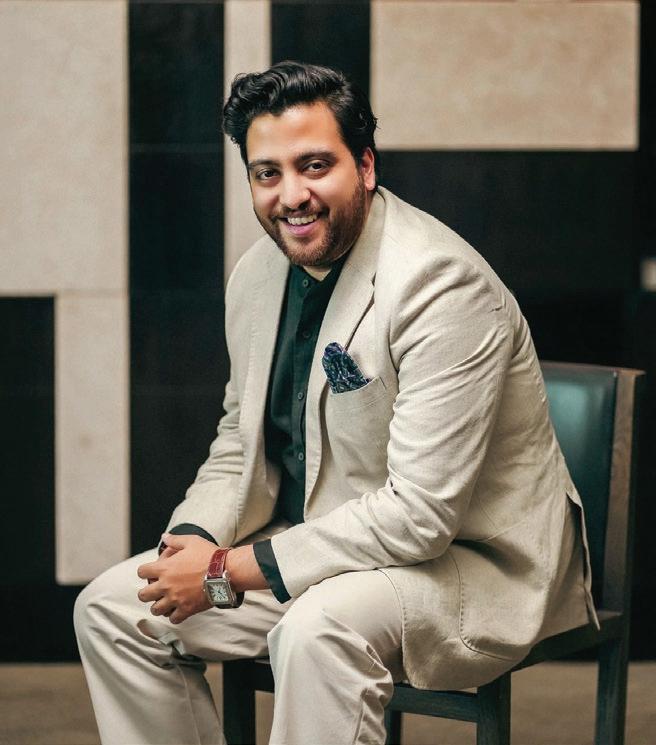
guest data and ensuring secure operational systems is fundamental to maintaining trust. At Khamas Hospitality, we view technology as an enabler that strengthens both commercial performance and service delivery, while preserving the humancentric approach that underpins our hospitality philosophy.
BRANDED RESIDENCES
AND HOTEL LED LIVING ARE RAPIDLY GAINING INVESTOR INTEREST. FROM YOUR PERSPECTIVE, WHAT IS DRIVING THIS DEMAND, AND HOW DO OPERATORS ENSURE LONG TERM VALUE CREATION RATHER THAN SHORT TERM BRANDING APPEAL?
Branded residences represent the new way of convenient living, where everything residents need is seamlessly integrated into one environment. Today’s homeowners are looking beyond just a physical space — they want access to integrated amenities, professionally managed surroundings, and the reassurance of personalised service available around the clock. The combination of convenience, consistent quality standards, and embedded hospitality creates a lifestyle that is both practical and aspirational.
For operators, long-term success depends on delivering genuine, enduring value rather than relying solely on the cachet of a brand name. This requires robust management structures, unwavering service consistency, and a long-term
operational commitment to ensure that the asset performs sustainably over time.
At Khamas Hospitality, we see branded residences as a natural extension of hospitality. Our focus is on creating secure, family-oriented environments where residents benefit from the same service culture, operational excellence, and long-term reliability that defne wellmanaged hotels — delivering quality and support indefnitely
YOU PLAYED A PIVOTAL ROLE IN THE LAUNCH OF MAMA SHELTER DUBAI IN A COMPETITIVE MARKET. WHAT DOES IT TAKE TO SUCCESSFULLY INTRODUCE AND SCALE A LIFESTYLE DRI EN R ND IN D I’S SATURATED HOSPITALITY LANDSCAPE?
Launching Mama Shelter Dubai was about introducing a brand with a very clear identity rather than trying to appeal to everyone. Lifestyle brands succeed
when they cultivate a strong sense of personality, community, and vibrancy.
Dubai is a highly competitive market, but it is also very receptive to differentiated concepts. The challenge lay in maintaining the authenticity of the brand experience while thoughtfully adapting to the local market. Success depended on identifying synergies across design, programming, guest engagement, and overall positioning to ensure coherence and resonance with the target audience.
As operators, our role was to provide the operational foundation and strategic support needed to allow the brand to ourish Mama Shelter Dubai has since established itself as a distinct lifestyle destination, demonstrating the value of clarity, consistency, and long term brand vision.
AS SOMEONE REPRESENTING A NEW GENERATION OF HOSPITALITY LEADERSHIP, HOW DO YOU BUILD NEXT GENERATION EXECUTIVE TEAMS WHILE MAINTAINING
STRONG COMMERCIAL PERFORMANCE AND UNCOMPROMISING GUEST EXPERIENCE STANDARDS?
Building strong teams starts with creating a culture of ownership and accountability. At Khamas Hospitality, we focus on empowering our teams to make decisions, innovate, and take responsibility for performance.
At the same time, we maintain clear expectations. Hospitality is, at its core, a people-driven industry, and investing in talent development is vital to achieving sustained success.
As the industry evolves, the next generation of leaders must balance experience and established hospitality principles with new generational ideas and innovation. Our goal is to build teams that blend commercial discipline with creative thinking, ensuring that the brand continues to thrive and realise its long-term vision, all while remaining frmly anchored in our core values of hospitality and consistently delivering exceptional guest experiences.
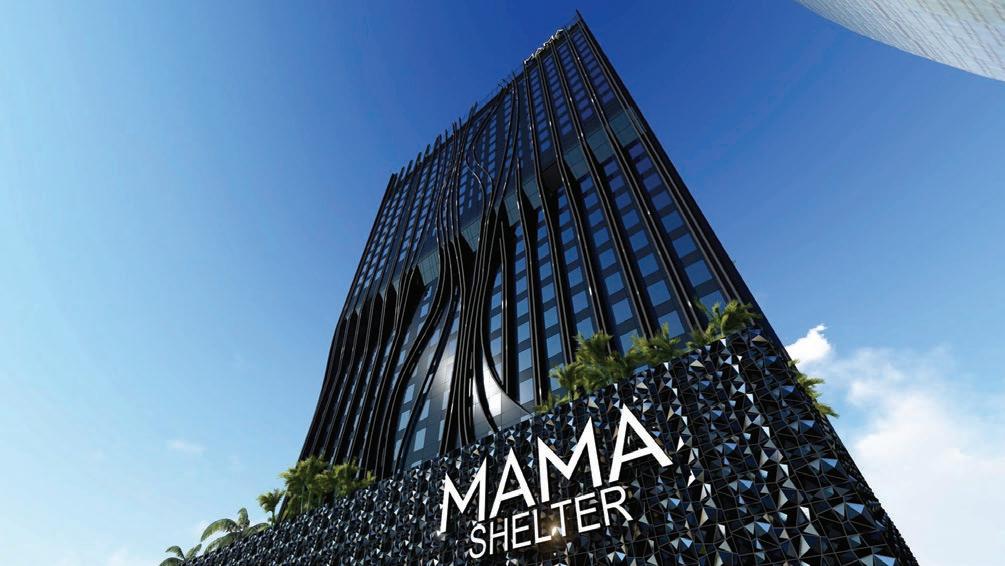
The Canvas hotel lobby Mama Shelter Dubai
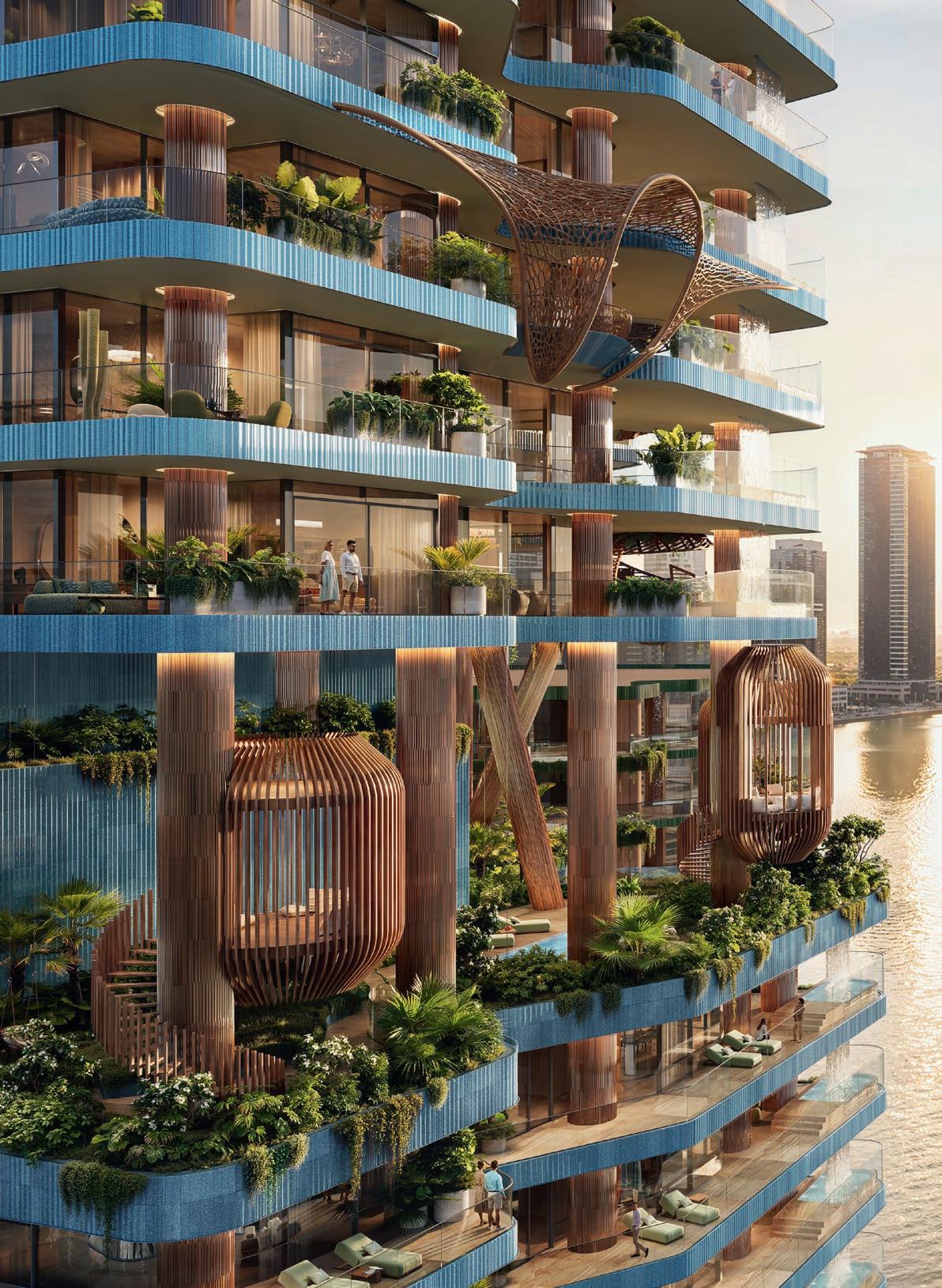
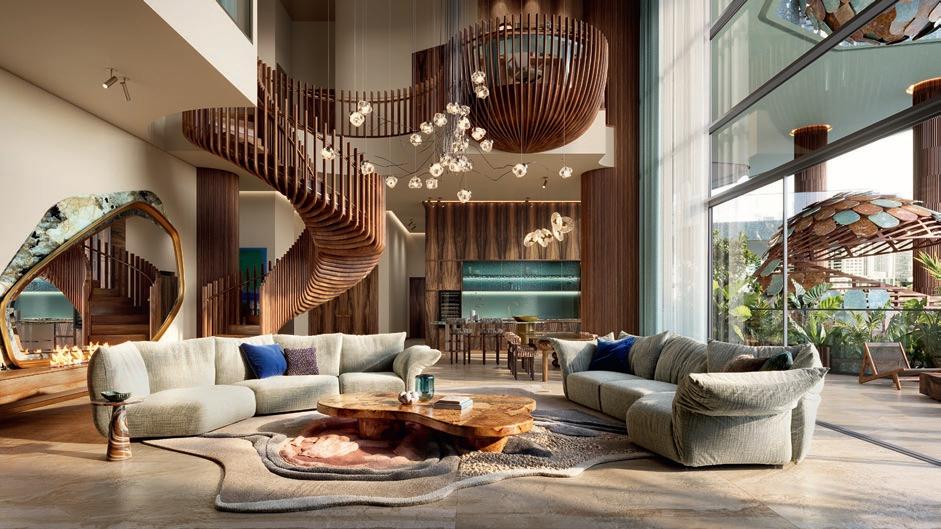
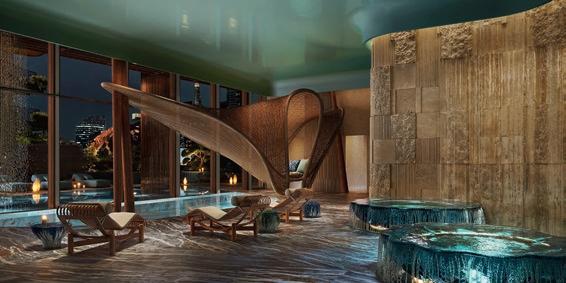
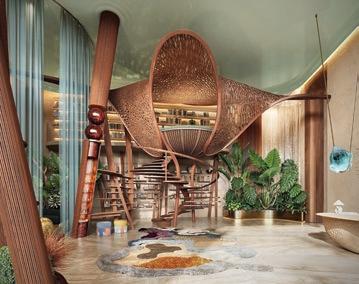
CRAFTING WHAT PEOPLE FEEL
Nicolas Makhoul, Founder & CEO of WONDR Group, rebuilt his career from scratch in Dubai and now crafts luxury experiences that linger in memory. At WONDR Group, every design is a story and every moment is a crafted experience.
BY AYA ZHANG
YOU REBUILT YOUR CAREER FROM THE GROUND UP AFTER MOVING TO DUBAI. WHAT DID STARTING AGAIN STRIP AWAY FROM YOU AND WHAT DID IT SHARPEN IN YOU AS A FOUNDER?
Dubai demanded a complete reset, one that removed the comfort of what I knew and challenged me to rebuild with renewed clarity.
I had to relearn the market, the culture, the desired preferences and rebuild credibility from scratch. It became a defning pause one that clarifed both my purpose and path.
Founding WONDR Group became an exercise in independence of thought. I wanted the freedom to think expansively, to take calculated risks, and to build something that could genuinely elevate and innovate the UAE market.
Starting over sharpened my focus, strengthened my ambition, and gave me the conviction to shape the company exactly as I had envisioned it.
WONDR GROUP IS DESCRIBED AS ARCHITECTURE LED AND EMOTIONALLY RESONANT. WHEN YOU DESIGN AN EXPERIENCE, WHAT COMES FIRST, THE STRUCTURE OR THE FEELING YOU WANT PEOPLE TO LEAVE WITH?
The emotional outcome is where every journey begins.
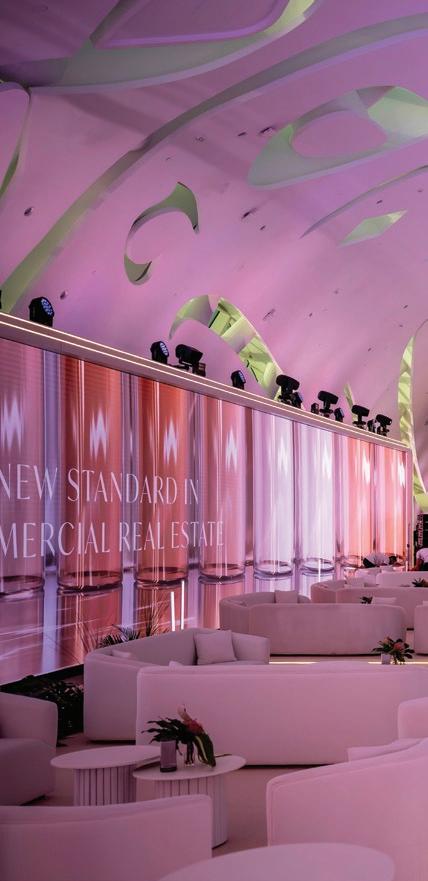
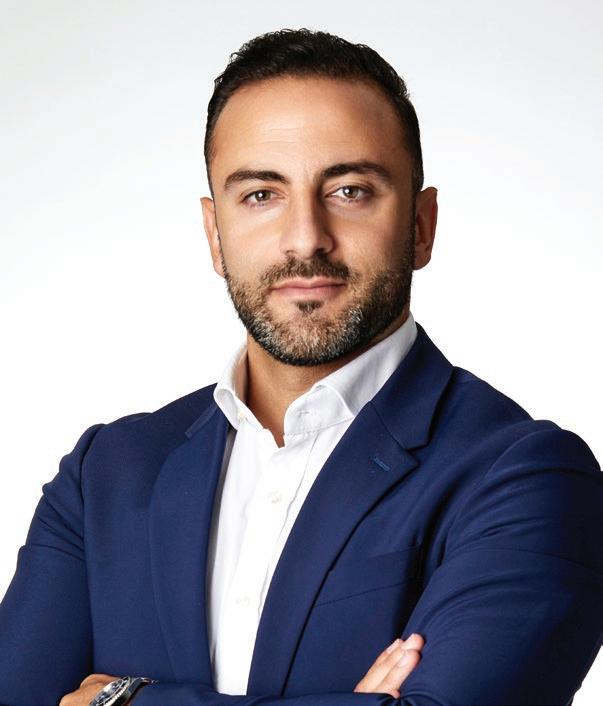
Nicolas Makhoul, Founder & CEO of WONDR Group
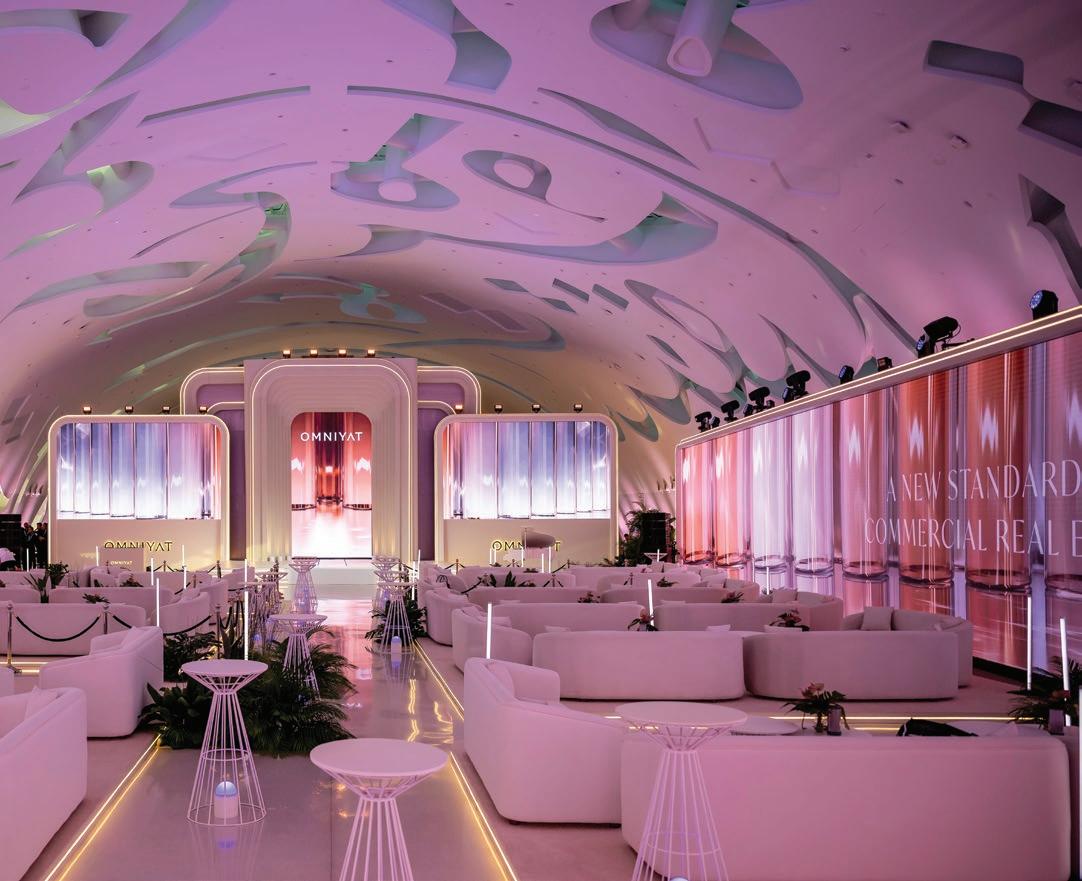
It all begins with the memory we are designing, not the space we are building.
Luxury today is frequently mistaken for excess. Cost alone does not create meaning.
Architecture then becomes the language through which that emotion is expressed. Structure brings discipline, clarity, and credibility. It grounds the intangible and gives it form.
Without emotion, architecture remains purely aesthetic. Without structure, emotion remains intangible. At WONDR Group, the relationship between the two is deliberate. Architecture leads the journey, but emotion defnes its purpose That balance is what makes the work both precise and deeply resonant.
LUXURY TODAY IS EVERYWHERE AND OFTEN OVERUSED. IN YOUR VIEW, WHAT TRULY SEPARATES MEANINGFUL LUXURY EXPERIENCES FROM EXPENSIVE BUT FORGETTABLE ONES?
Luxury today is frequently mistaken for excess. Cost alone does not create meaning.
True luxury is defined by the intention behind every detail.
A meaningful experience is designed with purpose, where every detail is deliberate and every moment carries weight. It is not about how much is spent, but how thoughtfully the journey is curated and how deeply it makes people feel.

Creative vision without discipline remains an idea. Discipline without vision becomes execution without soul.
The most memorable luxury experiences create emotion rather than noise. When both our clients and guests feel understood rather than overwhelmed, that is when luxury becomes lasting. It is how powerfully a brand’s vision is translated into a story that leaves an emotional imprint.
YOU WORK CLOSELY WITH GLOBAL BRANDS, DEVELOPERS, AND ULTRA HIGH NET WORTH CLIENTS. HOW DO YOU BALANCE CREATIVE VISION WITH THE DISCIPLINE AND PRECISION THESE CLIENTS DEMAND?
Creative vision without discipline remains an idea. Discipline without vision becomes execution without soul.
The balance lies in structure. I create frameworks that give creativity boundaries, timelines, budgets, and
operational excellence. This provides clients with confdence Within that framework, creativity is not restricted, it is strengthened.
Ultra high net worth clients value assurance. When precision is handled with care, it creates the trust required to take creative risks. That is where the work reaches its highest expression and impact.
AFTER MORE THAN 20 YEARS ACROSS PARIS, MONACO, BEIRUT, AND DUBAI, HOW HAS THE MIDDLE EAST CHANGED YOUR UNDERSTANDING OF AMBITION, SCALE, AND EXCELLENCE?
The Middle East recalibrates one’s perception of ambition. What is considered bold elsewhere often feels like a starting point here.

There is an expectation to think expansively, to move decisively, and to deliver at a scale that mirrors the region’s vision
Yet excellence in this region is equally rooted in intention and respect. Respect for culture, for relationships, and for the smallest details.
The Middle East challenged me to operate at a different velocity, where vision moves quickly and expectations move even faster. It required sharper judgment, deeper cultural awareness. Ambition became not only about scale, but about longevity and trust.
All markets shaped my approach in complementary ways. Some taught me the power of intimacy and legacy. While others taught me how to translate ambition into experiences that move industries forward.
TRUST
SEEMS CENTRAL TO YOUR LONG TERM PARTNERSHIPS. WHAT DO CLIENTS TEST FIRST WHEN DECIDING WHETHER THEY TRUST YOU WITH MOMENTS THAT CANNOT BE REPEATED?
Clients rarely test creativity frst They test reliability.
They observe whether you listen carefully, whether you understand the gravity of the moment, and whether you recognise what is truly at stake. Trust is built long before the event takes place. It lives in communication, in risk anticipation, in composure under pressure, and in the honesty to challenge when necessary.
For moments that offer no second chance, judgment becomes as vital as vision. When trust is firmly in place, creativity is not questioned, it
Architecture leads the journey, but its purpose.
is empowered by the discipline that supports it.
Trust also takes shape when clients recognise that their brand and vision are not only understood, but shared, allowing the relationship to grow into a true partnership.
LOOKING AHEAD, HOW DO YOU SEE LUXURY EXPERIENCES EVOLVING IN A REGION THAT IS CONSTANTLY REINVENTING ITSELF, AND WHERE DOES WONDR GROUP FIT INTO THAT FUTURE?
Luxury here is shifting from display to depth. There is a growing shift toward experiences that feel more human and more emotionally grounded.
As the region continues to evolve, so does its appetite for meaning and depth. Scale alone is no longer suffcient Lu ury is no longer udged by how big or ashy something is but by how meaningful and well-crafted it is.
WONDR Group operates at that intersection. Our role is to translate ambition into a full experience that feels considered and enduring.
An event reaches its full potential when every element exists in harmony, each discipline working alongside the other to shape an experience that lingers beyond the moment itself.
Lu ury’s future belongs not to those who do more, but to those who do it with meaning, and that is where our vision is anchored…

FROM SPREADSHEETS TO SMART HR
Sayeed Anjum, Co-Founder & CTO of greytHR, explains how integrated platforms are helping UAE organisations move from manual processes to seamless, outcome-driven HR experiences.

WHY TRADITIONAL ATTENDANCE SYSTEMS NO LONGER WORK IN THE UAE
The era of rigid attendance registers and clock-in machines is quietly drawing to a close Built for a f ed nine-to-si offce routine, traditional time-tracking systems belong to a world that no longer e ists They fail to capture the reality of how people work today, particularly as hybrid models, multiple worksites and shift-based schedules become the norm rather than the e ception
This shift is visible across industries. Retail floors, hospital wards, logistics hubs and construction sites now operate through uid decentralised work patterns
In the UAE, this evolution has been accelerated by an ambitious push towards digital transformation, guided by national visions that prioritise e ibility effciency and technology-led growth.
As a result, modern organisations are rethinking what attendance really means. The focus has moved away from simply recording hours to enabling outcomes. Mobile-first attendance solutions are answering this need, allowing employees to check in remotely while organisations maintain oversight through geo-fencing, biometric verification and real-time visibility across locations. Crucially, these capabilities are no longer standalone tools. They are increasingly part of a single Hire-to-Retire platform that connects every stage of the HR lifecycle.
WORKFORCE MANAGEMENT
Operating attendance in isolation is no longer practical. In a region where compliance, accuracy and transparency matter deeply, attendance has evolved into a strategic function, one that must be connected, intelligent and built for the way work truly happens today.
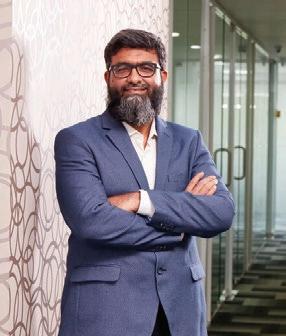
THE OPERATIONAL REALITIES HOLDING HR BACK IN THE GCC
For many HR teams, the real challenge lies not in adopting digital tools, but in using them to drive meaningful change. Too often, automation is layered onto outdated processes, leaving HR professionals caught between spreadsheets, emailbased approvals and a patchwork of disconnected systems. The result is not transformation, but a more complicated version of the same old work ows
WHY PAYROLL ACCURACY IS CENTRAL TO EMPLOYEE TRUST IN
THE UAE
Payroll is, at its core, a matter of trust. When salaries are paid accurately and on time, they reinforce confdence strengthen morale and support long-term engagement, retention, and even your employer brand. In the UAE, employees may tolerate delayed emails, but a late or incorrect salary immediately damages confdence
In the Gulf, attendance carries weight far beyond timekeeping. It directly affects payroll accuracy and adherence to labour regulations. This makes integration essential. Systems that seamlessly link attendance with payroll, leave management and compliance have become indispensable. Solutions such as greytHR’s multi-country management, designed to support GCC-specific mandates including WPS requirements across the UAE, Oman, Qatar, Saudi Arabia, Bahrain and uwait re ect this new reality
This comple ity is heightened across the GCC, where regulatory requirements are both rigorous and non-negotiable. In the UAE, for e ample compliance with the Wage Protection System (WPS) is mandatory, adding further pressure to ensure payroll processes are precise, timely and fully auditable. To move beyond simply digitising paper-based tasks, organisations must reconsider their approach. Integrated systems that are compliant by design, built to serve both employers and employees are needed. These platforms offer clear visibility across dispersed and remote workforces, deliver accurate payroll month after month, and handle high volumes of employee queries through intuitive, connected e periences nly then can HR move from administrative burden to strategic impact.
Salary represents financial stability and the ability to support families, often across borders. Accurate, transparent and timely payroll underpins fnancial inclusion giving individuals reliable access to banking and fnancial services and enabling them to participate fully in the digital economy. This reliability closely aligns with wider national ambitions, including the National Strategy for Wellbeing 2031, which seeks to position the UAE as a global leader in quality of life. When payroll works seamlessly, it supports these goals in a tangible way. When it fails, no engagement initiative or workplace programme can compensate. That is why payroll automation is not simply an operational upgrade, but a critical business function.
75% of GCC Companies Are Making Their First HR Tech Move
The fgure highlights two important realities. HR operations across the region are still evolving, yet adoption is accelerating rapidly, presenting a significant opportunity. Many organisations are bypassing interim solutions and moving directly from manual processes or spreadsheetbased systems to full-suite HRMS platforms.
Sayeed Anjum, Co-Founder & CTO, greytHR
This shift re ects growing pressure from compliance requirements, workforce e pansion and leadership e pectations while also confrming that HR digitisation in the GCC remains at an early stage. The advantage is clear frst-time adopters are not constrained by legacy systems, allowing them to implement modern, mobile-first, analyticsdriven hire-to-retire platforms such as greytHR The ne t phase will be about moving beyond effciency towards strategic workforce insight.
MANUAL PROCESSES REMAIN A BOTTLENECK DESPITE ADVANCES IN HRMS PLATFORMS
Adopting technology is not simply a matter of installing software, it requires a shift in mindset. When systems are intuitive and mobilefriendly, employees often adapt far more uickly than e pected The real challenge arises when tools e ist but are poorly implemented or not fully integrated. In such cases, HR teams are forced to rely on manual workarounds. Processes like manual leave management consume time, introduce payroll and compliance risks, and frustrate employees. As organisations grow, these inefficiencies compound, making manual fallbacks not just ineffective, but fundamentally unsustainable.
THE FUTURE OF EMPLOYEE EXPERIENCE IN THE UAE
Employee e perience in the UAE is quietly being reshaped. Personalisation, transparency and empathy are no longer aspirations, but e pectations driven by the country’s rapid digitisation smart city ambitions, high mobile usage and
the growing in uence of Gen in the workforce. As competition for talent intensifes employee e perience has emerged as a clear differentiator.
Today’s employees e pect HR systems to feel as simple and intuitive as the mobile apps they use every day, whether they are applying for leave, viewing payslips or tracking performance This is e actly where greytHR has placed its focus, through a mobile-frst approach In parallel and in step with the UAE government’s paperless initiatives, HR processes are steadily evolving into fully digital, automated workflows that remove paperwork and speed up approvals.
Looking ahead to 2030, the role of AI in HR will become increasingly pronounced. It will help organisations forecast attrition, personalise
career paths and surface potential issues before they escalate, shifting employee e perience from reactive to predictive ver the ne t fve years the organisations that succeed will place employee self-service at the centre, use analytics to anticipate challenges rather than simply report on them, automate compliance so HR can focus on people, and deploy tools that work equally well for desk-based and frontline employees. With talent mobility high and e pectations rising employee e perience will continue to defne how organisations compete in the region.
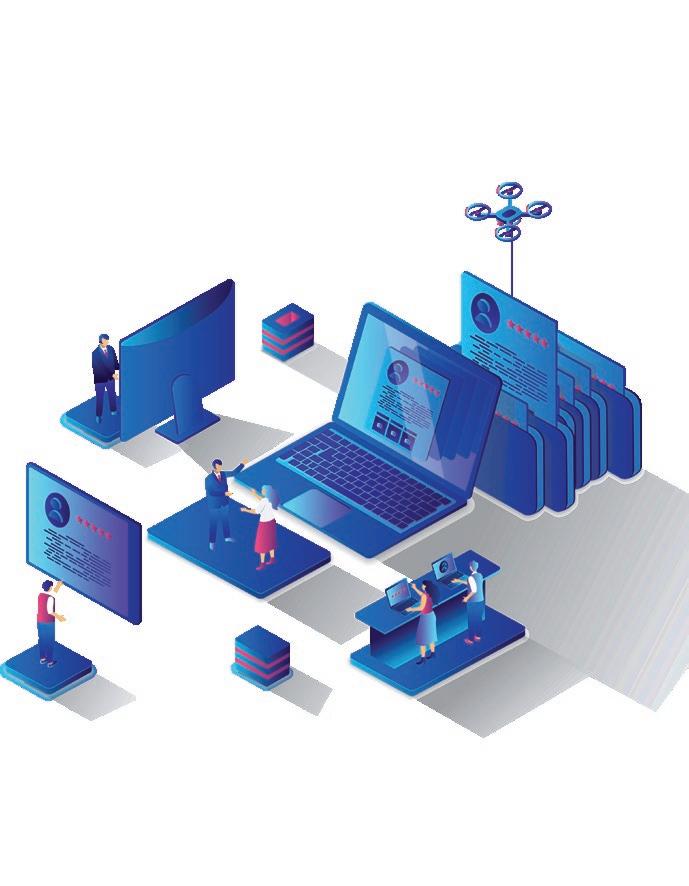
AI AT THE CROSSROADS

Arun Chandrasekaran, Distinguished VP Analyst at Gartner, explains why AI is now a strategic challenge and what leaders must consider
AI AS A GROWING STRATEGIC CHALLENGE
AI is no longer a mere technology that anyone can build. It depends on massive computing power, hyperscale data centers, secure energy supply, advanced networks, and proprietary data. That stack determines who can innovate, who captures value, and who controls the consumer and business ecosystem. For countries, AI affects economic competitiveness, national security, productivity, and even information sovereignty. For businesses, it reshapes cost structures, talent needs, and competitive advantage.
REAL AI INDEPENDENCE
Real AI independence does not mean building everything domestically, because that approach is both unrealistic and economically
ineffcient Instead true independence comes from having diversifed access to compute through multiple cloud and chip suppliers, maintaining control over critical data, and developing domestic AI talent and research capabilities. It also requires having clear governance and security frameworks, along with the ability to fne-tune and deploy models locally Countries often make several avoidable mistakes. They tend to over-focus on flagship models instead of building a full ecosystem, and they frequently overlook the importance of energy and data-center investments and their economics. Many underinvest in long-term talent pipelines or try to replicate hyperscalers rather than forming smart partnerships. They also risk treating AI purely as a technology project rather than as industrial policy,
and they sometimes fail to craft an AI strategy that balances innovation with governance.
CONCENTRATION IN A FEW COMPANIES: BOON OR RISK?
While there some benefits to concentration such as better economies of scale, overall, this degree of concentration presents a risk because:
■ Pricing power becomes concentrated.
■ Switching costs increase.
■ Innovation may narrow around dominant ecosystems.
■ National or enterprise dependency deepens.
■ The dominant companies become extremely secretive in their actions.
From a business perspective, the key is optionality. Concentration is effcient in the short term but creates structural lock-in risk over time
THE SCALE OF ENERGY AND SUSTAINABILITY CHALLENGES
AI’s energy demand is real and increasing. Training and inference require large amounts of power, and data centers depend on high-density electricity, water for cooling, and stable grid reliability For fast-growing regions such as the Middle East, this creates both an opportunity and a constraint. The opportunity comes from strong capital availability, potential access to renewable energy like solar, and the ambition to become digital hubs. The constraint comes from grid stability and scale water scarcity in coolingintensive environments long-term sustainability commitments, and competition for energy with other industrial uses. Energy is quickly becoming the hidden bottleneck of AI e pansion and regions that align their AI strategy with their power strategy will be better positioned.
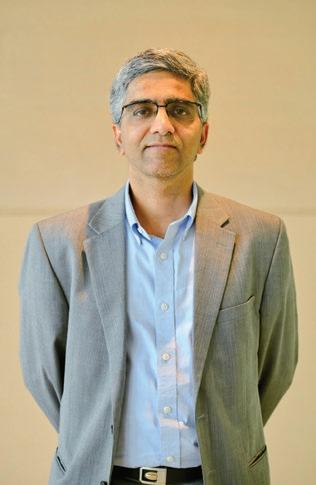
KEY QUESTIONS FOR LEADERS BEFORE AI PARTNERSHIPS
Before entering long-term agreements leaders need to probe the fundamentals that determine e ibility security and long-term value
Key questions include:
■ Exit strategy
How diffcult will it be to migrate workloads or models if the partnership no longer serves our needs?
■ Data ownership: Who ultimately controls the training data and any derived intellectual property?
■ Cost trajectory How will inference, usage, and overall pricing evolve over time?
■ Interoperability Will we be able to integrate alternative models or platforms in the future?
■ Security and compliance Where is the data stored and processed, and what safeguards are in place to protect it?
■ Dependency exposure Are we effectively tying our innovation roadmap to a single vendor’s pace and direction?
These questions help leaders ensure they’re building AI capabilities on e ible secure and future-proof foundations.
THE FUTURE OF AI: ACCESS OR CONTROL?
In response to the question on whether AI will become more accessible or more controlled: Both forces are unfolding in parallel, and the landscape is being shaped from both ends.
On the accessibility side, there are several strong drivers:
■ pen-source models are improving at an e ceptional pace
■ Hardware costs are gradually declining.
■ Smaller and more specialised models are emerging.
■ Edge AI on-premises deployments and local inference are e panding
forces are pushing toward greater control:
■ Chip manufacturing remains highly concentrated.
■ Training high-end models continues to be e tremely e pensive
■ Regulatory requirements are tightening globally.
■ Frontier AI research demands substantial capital investment.
Ultimately, the balance between accessibility and control will depend on four key factors:
■ The momentum and in uence of the open-source community
■ Energy economics and infrastructure availability
■ The regulatory posture in major markets
■ Advances in effciency particularly whether smaller models can match the performance of larger ones
The most probable outcome is that Frontier models at the very top will likely remain concentrated among a small number of players, while AI at the application layer becomes increasingly accessible.
THE AI DECISION LEADERS NEED TO PAUSE ON
The AI decision leaders should slow down on is committing to a single dominant AI ecosystem as their default platform strategy. Many organisations are selecting one cloud, one model provider, and one AI stack due to need for speed.
The risk with that approach is:
■ Architectural lock-in
■ Long-term cost escalation
■ Limited bargaining power.
■ Strategic vulnerability.
Leaders should instead design modular AI architectures, separate data, orchestration, and model layers, preserve multi-vendor e ibility and invest in internal AI literacy. The most e pensive AI mistakes are moving too slowly and committing too narrowly to a vendor too early.
Arun Chandrasekaran, Distinguished VP Analyst at Gartner
WHY THE UAE DOESN’T JUST GO TO THE GYM ANYMORE
Jason
Tubbs
,
Senior Vice President of Fitness
First Middle East, on how workouts turned into a lifestyle and why community, recovery and tech now shape the region’s approach to wellbeing.
BY REEBA ASGHAR
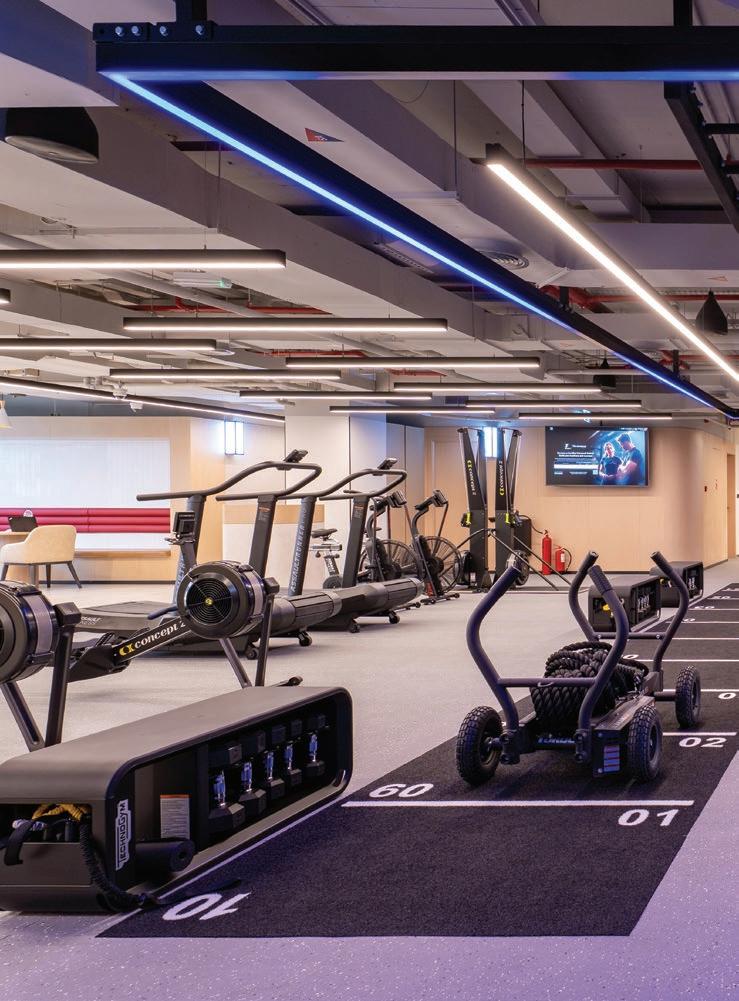
OVER THE YEARS, HOW E O SEEN T E E’S FITNESS AND WELLNESS LANDSCAPE EVOLVE, AND WHAT KEY TRENDS ARE SHAPING THE SHIFT FROM TRADITIONAL GYMS TO LIFESTYLE-LED WELLNESS?
The UAE’s fitness landscape has transformed dramatically over the past two decades When we frst launched Fitness First in the region years ago gyms were largely transactional
spaces somewhere you went purely to work out Today wellness has become a lifestyle choice and a daily priority
There is a clear shift from ftness as a task to wellbeing as a way of living People are thinking more holistically about their health They want training recovery nutrition mental wellbeing and community all working together Government initiatives such as Dubai Fitness Challenge have also played a big role in embedding movement
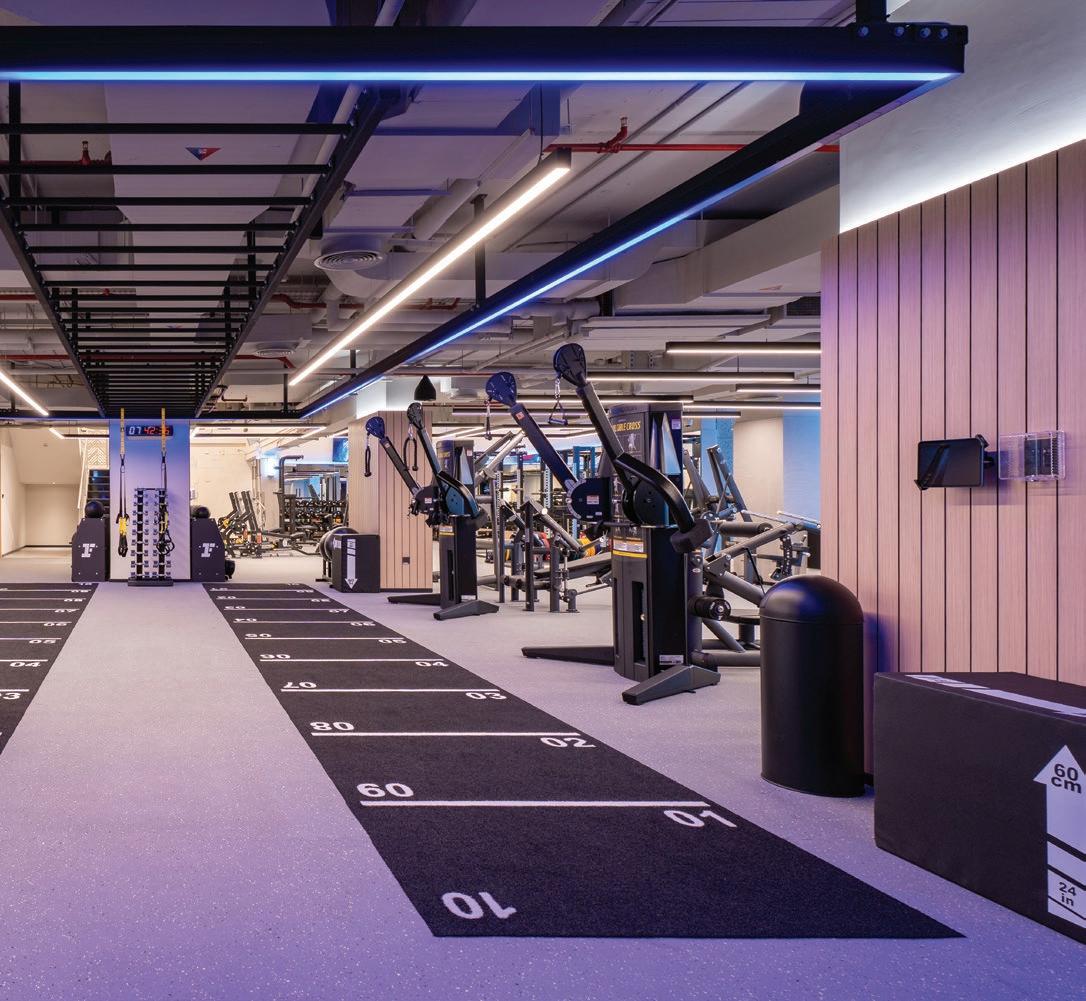
into everyday culture which has accelerated this evolution
What we’re seeing now is that members e pect more than e uipment and classes They’re looking for purpose-driven spaces that feel intuitive supportive and personalised That’s why the industry is moving beyond traditional gyms towards integrated wellness ecosystems and why we’ve always focused on putting the members frst rather than simply providing facilities
HOW DO YOU GO ABOUT CREATING FITNESS COMMUNITIES RATHER THAN JUST GYMS, AND WHY DO YOU THINK THIS APPROACH RESONATES WITH MEMBERS TODAY?
From day one we’ve believed that fitness is fundamentally social People stay consistent when they feel supported seen and connected Creating communities starts with designing spaces that encourage
interaction not isolation That could be group classes events challenges recovery lounges or simply environments where members feel comfortable spending time beyond their workout
We also invest heavily in our people ur trainers and club teams aren’t ust instructors they’re coaches and motivators who really care and who build genuine relationships That human connection is what turns a gym into a community
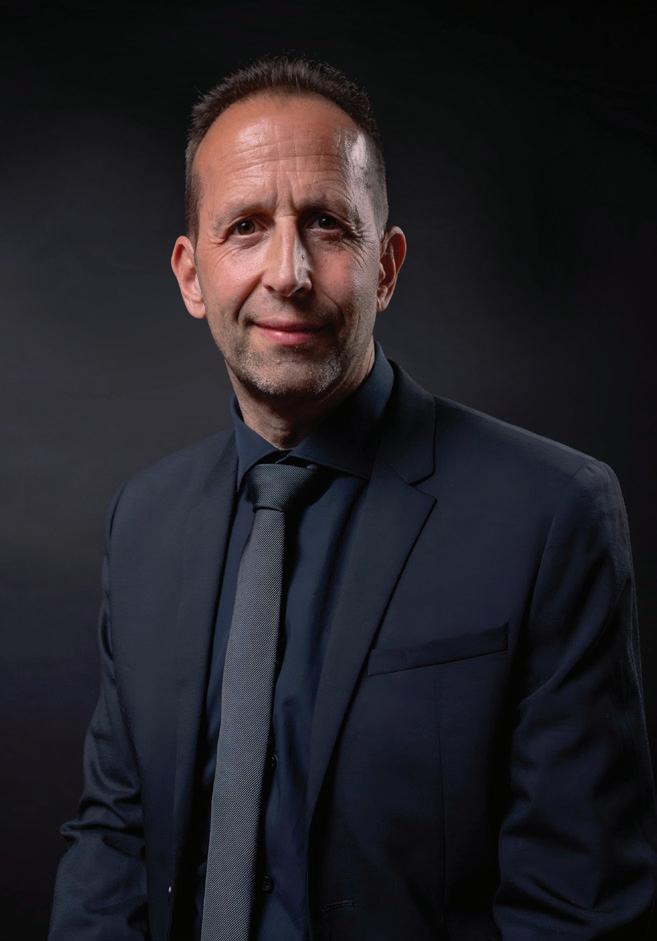
This approach resonates because modern consumers are looking for belonging In a busy city like Dubai or Abu Dhabi a ftness club can become a second home Some of our members have been with us for nearly years which speaks volumes We’ve always said we’re building communities not ust gyms and that philosophy continues to guide everything we do
HOW IS FITNESS FIRST ADAPTING ITS OFFERINGS, BOTH IN-CLUB AND DIGITALLY TO MEET THE
NEEDS
OF A MODERN, WELLNESS-FOCUSED AUDIENCE?
The way people approach ftness has changed so our offering has evolved with it
Physically we’ve undergone a signifcant transformation across our portfolio We’ve moved away from the traditional gym layout to create modern design-led clubs that re ect today’s e pectations ur newer and refurbished locations feature Reformer Pilates studios dedicated recovery ones functional training spaces and ladies-only clubs alongside familyfriendly environments
Digitally members want e ibility and insight They want to understand their progress and access support whenever they need it So we’ve focused on tools that help them track plan and personalise their ourneys rather than ust sign up and show up Ultimately it’s about evolving with purpose and making ftness ft seamlessly into everyday life not the other way around
HOW IS FITNESS FIRST LEVERAGING TECHNOLOGY TO ENHANCE MEMBER ENGAGEMENT AND RESULTS?
Technology plays a central role in how we support members today
We use data and insights to better understand behaviour from peak training times to preferred classes and workout habits This helps us forecast demand personalise programmes and deliver e periences that feel more relevant n a member level tech enables progress tracking smarter coaching and more tailored recommendations
Jason Tubbs Senior Vice President of Fitness First Middle East
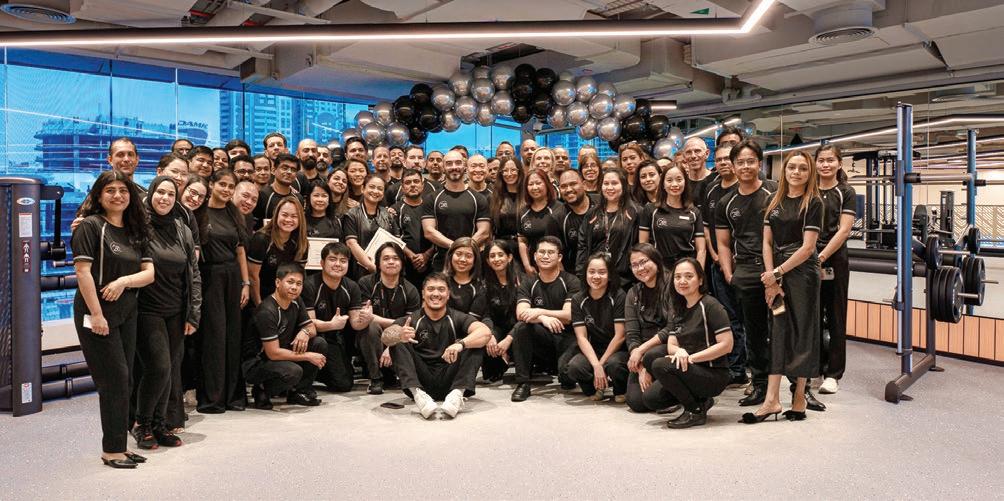
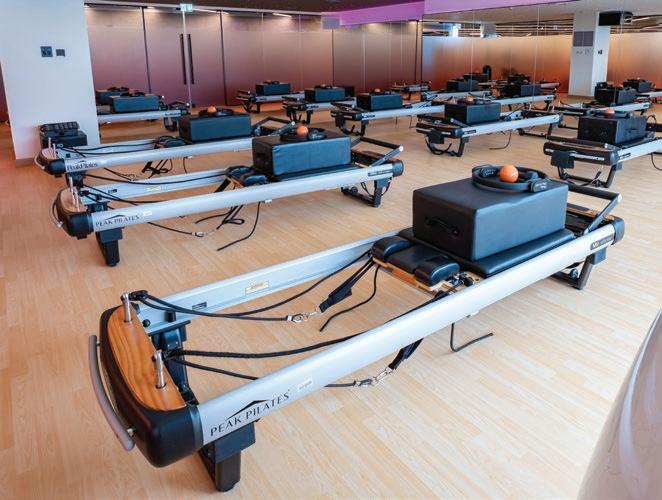
Rather than offering a one-si e-ftsall solution we can guide members based on their goals and patterns
But importantly technology complements the human touch it doesn’t replace it The best outcomes happen when data coaching and empathy come together
Looking ahead what do you see as the biggest opportunities and challenges for the ftness industry in the Middle East and how is Fitness
First positioning itself for the future?
The opportunity is enormous
The region is younger more healthconscious and increasingly prioritising
wellbeing There’s a genuine cultural shift happening where fitness is becoming part of everyday life
The challenge is staying relevant in a fast-moving market E pectations are higher competition is stronger and consumers are more informed
For us the answer is constant evolution This year we celebrated years in the Middle East growing from one club to locations But growth alone isn’t the goal It’s about continuing to raise the standard of the e perience and delivering meaningful impact
We’re focused on e panding smartly reinvesting in our e isting estate enhancing technology and developing our people so we’re not ust reacting to trends but helping shape the future of ftness in the region
We aim to make ftness something people look forward to not something they feel pressured into At the end of the day our goal is simple to help people feel stronger healthier and more confdent in every aspect of their lives
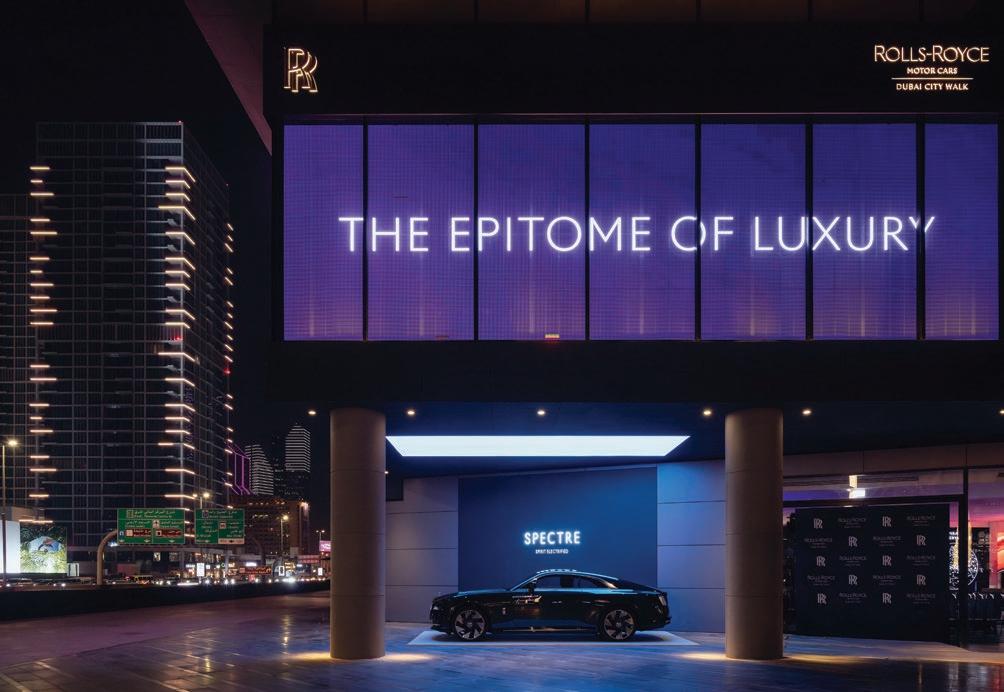
INSIDE RO S RO E’S
NEW CHAPTER AT CITY WALK
A second Dubai location signals the brand’s continued focus on bespoke luxury and regional growth.
Rolls-Royce Motor Cars
Dubai has opened a new showroom at City Walk, marking a significant e pansion of the mar ue’s presence in the Middle East. With the addition of the new location, Dubai becomes the frst city in the region to host two Rolls-Royce Motor Cars showrooms, underlining the market’s strategic importance to the brand.
James Crichton, Regional Director of Rolls-Royce Motor Cars Middle East & Africa said the opening re ects the mar ue’s long-term direction in markets that prioritise craftsmanship and individuality.
“The opening of Rolls-Royce Motor Cars Dubai City Walk reflects our long-term commitment to markets that value individuality, craftsmanship, and personal expression at the very highest level This showroom is a confdent embodiment of our new visual identity and our evolution as a true House of Luxury, creating an environment where Bespoke is not simply offered, but thoughtfully experienced. Dubai continues to lead by example globally, and Rolls-Royce Motor Cars Dubai City Walk represents an important step
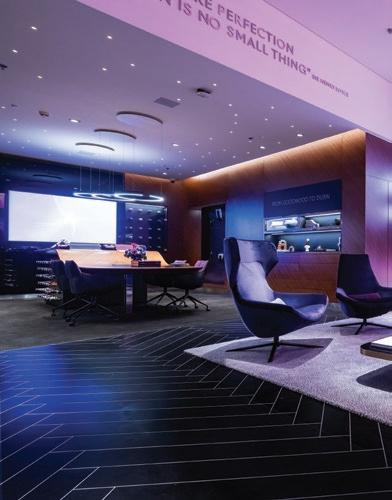
in how we bring our vision of modern luxury to life.”
The opening, attended by Chief Executive Chris Brownridge, signals continued investment in a region that remains central to Rolls-Royce Motor Cars’ global performance particularly in Bespoke commissions by value.
Located in the heart of City Walk, the showroom introduces the brand’s contemporary visual identity within a space designed to resonate with a younger, self-made and distinctly individual clientele. Conceived to complement the existing Sheikh Zayed Road showroom, the new location places commissioning and personalisation at its core, offering a more intimate and curated client experience.
Mamdouh Khairallah, Director for Rolls-Royce Motor Cars Dubai, said the second showroom represents a natural evolution in how the brand serves its clients in the region.
“We are incredibly proud to unveil the new Dubai City Walk showroom, a space that re ects the e ceptional craft and personal attention that define Rolls-Royce Motor Cars. Dubai has long been central to our success in the Middle East, and the
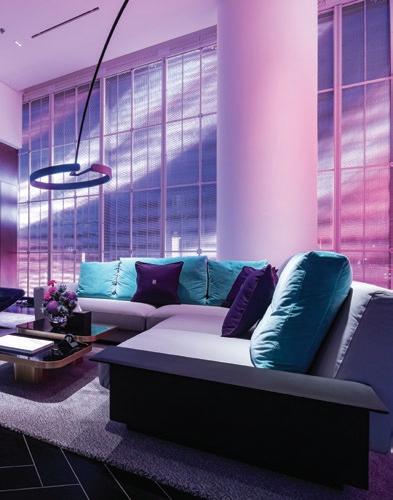
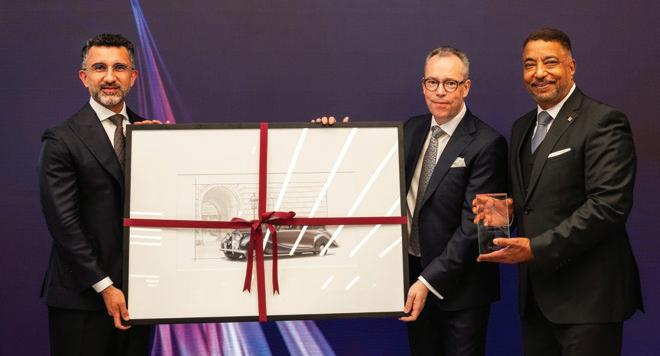

opening of this second showroom marks a natural evolution in how we serve our clients. Designed around commissioning and personalisation, City Walk creates the ideal setting for deeply immersive Bespoke e periences while reinforcing Dubai’s position as a global centre for luxury and craftsmanship.”
The showroom has been designed to create an immersive yet refned environment A natural ow of space enhanced by abundant sunlight and open architectural framing, guides clients through areas intended for both interaction and private consultation, including a speakeasy-
style bar designed to encourage relaxed conversation. Carefully selected materials, tactile finishes and integrated digital technologies contribute to a setting that supports exploration and creative dialogue.
At the centre of the new location is the Bespoke Commissioning Atelier, positioned on the upper level to provide privacy for clients. The space allows for detailed engagement with materials ranging from leathers and wood veneers to embroidery threads and fnishes A Cabinet of Curiosities presents objects and inspirations intended to spark further discussion, while the atelier’s layout supports extended collaboration during the commissioning process.
With the City Walk opening, RollsRoyce Motor Cars reinforces Dubai’s position as a key luxury hub while expanding its bespoke-focused footprint in one of its most important regional markets.
VAN CLEEF & ARPELS CELEBRATES RAMADAN WITH LUMINOUS PERLÉE CREATIONS
Van Cleef & Arpels presents a radiant dialogue between jewellery and art.






s Ramadan unfolds, Van Cleef & Arpels turns to one of its most recognisable signatures, the golden bead to re ect the season’s themes of light, rhythm and renewal.
At the centre of the Maison’s presentation is the Perlée collection, where fnely sculpted beads in yellow rose and white gold frame bracelets, rings, earrings and watches. Some pieces are punctuated with diamonds, designed to capture and re ect light with subtle movement. The aesthetic, rooted in the house’s archives traces back to historic creations such as the Couscous and Bagatelle designs of 1948, as well as playful clips from its boutique collections.
This year’s Ramadan e pression e tends beyond ewellery The Maison has collaborated with artist halid Shahin whose work e plores the relationship between form and meaning. For this occasion, Shahin created a bespoke artwork inspired by the Arabic letter “Ta” ( ت ). Rendered in a circular composition the piece re ects unity and continuity through repetition, a visual meditation aligned with the re ective spirit of the Holy Month
The rhythmic arrangement of the letter subtly echoes the rounded geometry of the Perlée motif, creating a visual bridge between ewellery craftsmanship and contemporary Arabic calligraphy. Together, the creations form a quiet study in balance, heritage and modern e pression where material symbolism and design converge.


ABERCROMBIE & FITCH LAUNCHES ITS FIRST-EVER RAMADAN COLLECTION IN THE UAE

Abercrombie & Fitch unveils its first-ever Ramadan Collection in the UAE, marking a significant moment for the brand as it presents a dedicated capsule designed specifcally for the region The limited collection brings a fresh perspective to seasonal dressing reworking key pieces from Abercrombie’s Spring assortment through a Ramadanfocused lens
The women’s edit centres on modest eveningwear, featuring uid silhouettes coordinated sets and carefully considered detailing Subtle moon and star accents and gold touches add a refned seasonal reference, while versatile designs allow for effortless styling across multiple occasions throughout the month and into Eid
The men’s collection plays a strong role in the capsule, introducing Middle East–inspired interest pieces alongside polished evening styles Tailored yet rela ed the range balances modern structure with comfort, offering enhanced options for seasonal dressing that feel current and intentional
Designed as a complete wardrobe offering, the Ramadan Collection responds to the demand for elegant, versatile pieces that can be styled in multiple ways Each look is designed to stand alone or be layered into a curated rotation re ecting how customers approach seasonal wardrobes during Ramadan
With this launch, Abercrombie & Fitch reinforces its commitment to regionally relevant design and storytelling delivering a considered capsule that speaks directly to its Middle Eastern audience
The Abercrombie & Fitch Ramadan Collection is available in all Abercrombie & Fitch stores across the UAE