DESIGNING A CITY FOR CREATIVE LIFE
KHALID AL MALIK, CEO OF DUBAI HOLDING REAL ESTATE, ON THE THINKING BEHIND THE D3 MASTERPLAN AND THE MAKING OF AN INTEGRATED CREATIVE CITY.
ANANTARA SHARJAH RESIDENCES
A NEW CHAPTER OF LUXURY EXPERIENCES BY THE SEA
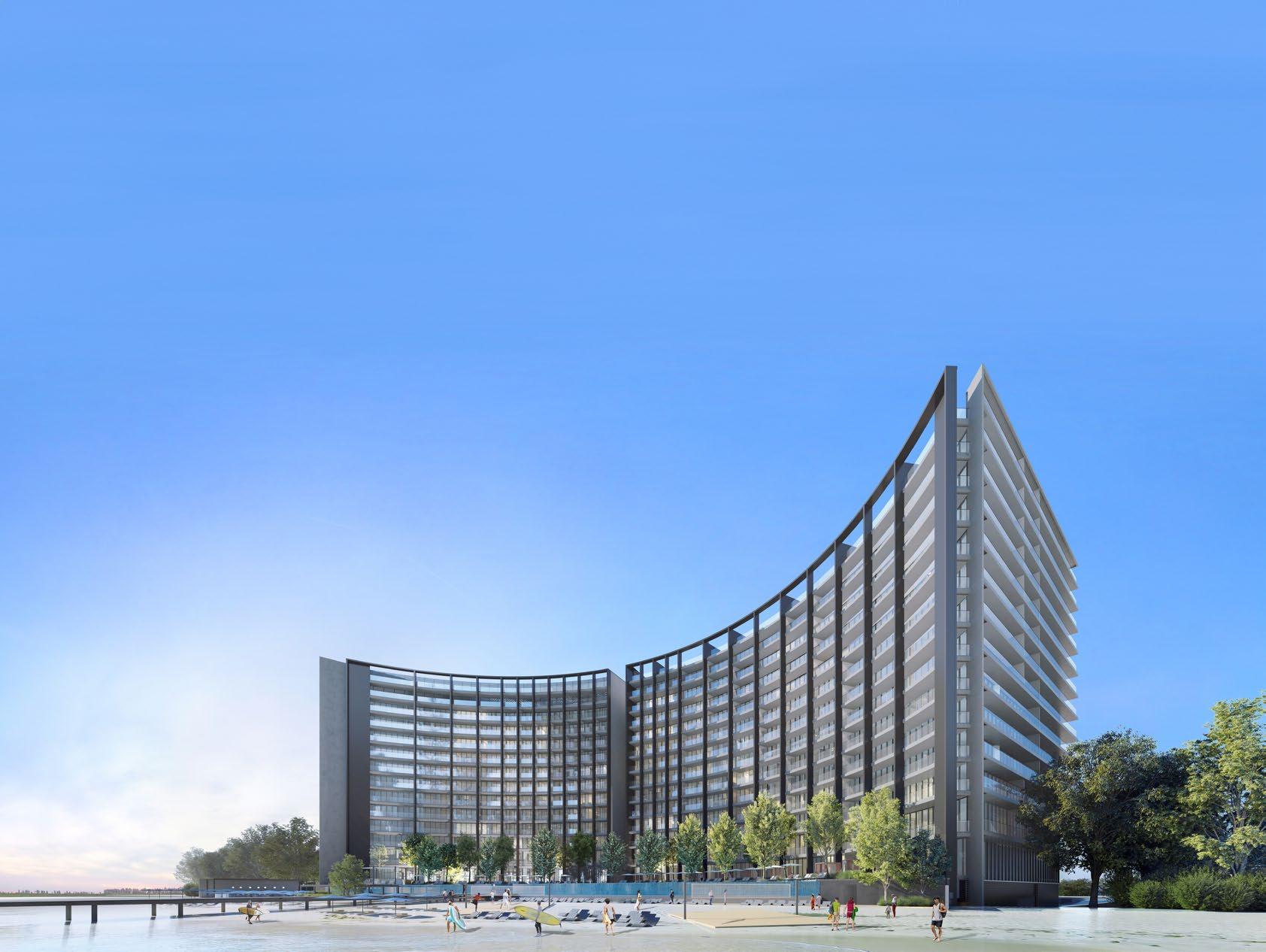
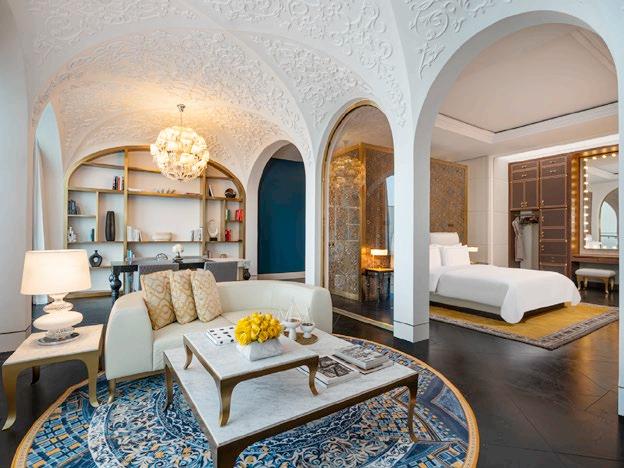
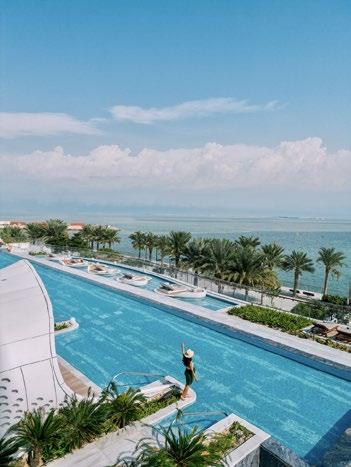
Bringing luxury seaside living to Sharjah for the first time, owners at the Anantara Sharjah Residences enjoy access to the Anantara Sharjah Resort’s world-class amenities, including an infinity pool, five distinctive restaurants, an Anantara Spa and a state-of-the-art gym.
As an investment, owners can enjoy the benefits of a rental management scheme operated by Anantara Hotels, Resorts & Spas, allowing them to maximize their returns when they are not resident in the property.
To register your interest, visit arada.com
LIFE IS A JOURNEY.



SUITE TREAT
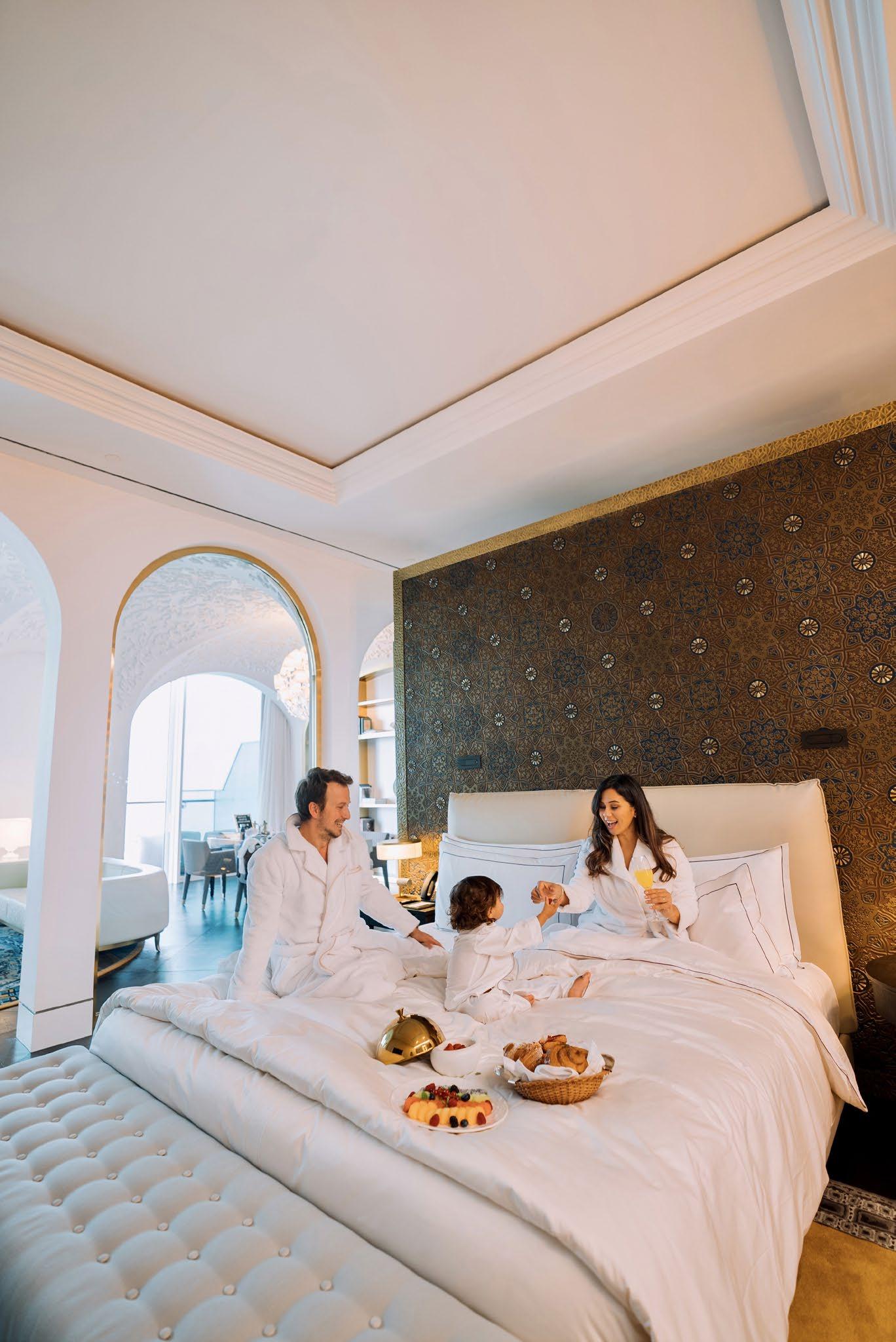
Step into a world of opulence when you book a Suite at Raffles Doha.
Experience the added luxury of QAR 750 credit to spend on dining in the hotel, and QAR 500 towards any Spa treatment.
Children aged 12 and below are welcome to indulge in the enchantment of complimentary dining.
Rates starting from QAR 3,500 per night
For reservations, please call +974 4030 7100 or email reservations.doha@raffles.com
Raffles Doha, Iconic Towers, Marina District, PO BOX 4747, Lusail, Qatar


CEO WISSAM YOUNANE | wissam@bncpublishing.net
Managing Director RABIH NAJM | rabih@bncpublishing.net
Group Publishing Director JOAQUIM D'COSTA | jo@bncpublishing.net
Editor AYA ZHANG | aya@bncpublishing.net
Digital Reporter REEBA ASGHAR | reeba@bncpublishing.net
Business Development Director ANDY SOULAHIAN | andy.soulahian@bncpublishing.net
Commercial Director ANDREA MOCAY | andrea@bncpublishing.net
Creative Lead CHRISTIAN HARB | chriss@bncpublishing.net
Junior Art Director IKA WAHYUNI
Marketing Executive
AARON JOSHUA SINANBAM | aj@bncpublishing.net
Videographer
EDUARDO BUENAGUA HARTON OTLANG JOEL AMPARO
Contributors
FREDERICO JUSTUS
HASSAN KHAIRAT
MARK HAMPSTEAD
SANJAY RAGHUNATH
SHIVANSH RACHIT
VIBHA MEHTA
SUBSCRIBE
subscriptions@bncpublishing.net
PO Box 502511 Dubai, United Arab Emirates P +971 4 4200 506 | F +971 4 4200 196
For all commercial enquiries, contact jo@bncpublishing.net T +971 50 440 2706
All rights reserved © 2025. The opinions expressed are solely those of the contributors. Business Today Middle East and its affiliated publications in the MENA region are exclusively licensed to BNC Publishing. No part of this magazine may be copied, reproduced, or transmitted in any form or by any means without prior written consent from the publisher. Printed by United Printing and Publishing | upp.ae Images used in Business Today Middle East are credited when necessary. Attributed use of copyrighted images with permission. All images not credited courtesy Shutterstock.
BIZTODAYME
@BIZTODAYME
BUSINESS TODAY MIDDLE EAST
BIZTODAYME
BIZTODAYME
BUSINESSTODAY.ME

Protecting the night sky
BEGA pole-top luminaires with BugSaver® technology protect nocturnal fauna by reducing the color temperature from 3000 Kelvin to an amber color around 1800 Kelvin, which reduces the light attractive effect. The color temperature and output can be controlled dynamically. bega.com/bugsaver
LETTER FROM EDITOR
AS IT HAPPENS
Reading through this month’s stories, I couldn’t help but notice a common thread: progress is happening everywhere, but in very different ways. In Saudi Arabia, partnerships are reshaping the city’s skyline. In Dubai, financial hubs are expanding. Across the region, investors are taking risks on ideas that once felt far away. And yes, the markets are surging, but behind these numbers are people and teams who have believed in their vision.
For me, what makes this region
exciting isn’t only growth or profits but that feeling of possibility when people come together, when old boundaries are challenged, and when bold steps create something new. That’s the story we want to tell in these pages: real people and companies who have achieved what they have today, showing how their courage and choices can open doors for all of us.
This month, I hope you see both the scale and the humanity of business in the Middle East. It’s bigger than numbers, and smaller than headlines. It is alive.

Aya Zhang Editor aya@bncpublishing.net
Zhang xiaoyuezhangg
Xiaoyue (Aya)

One-stop-shop
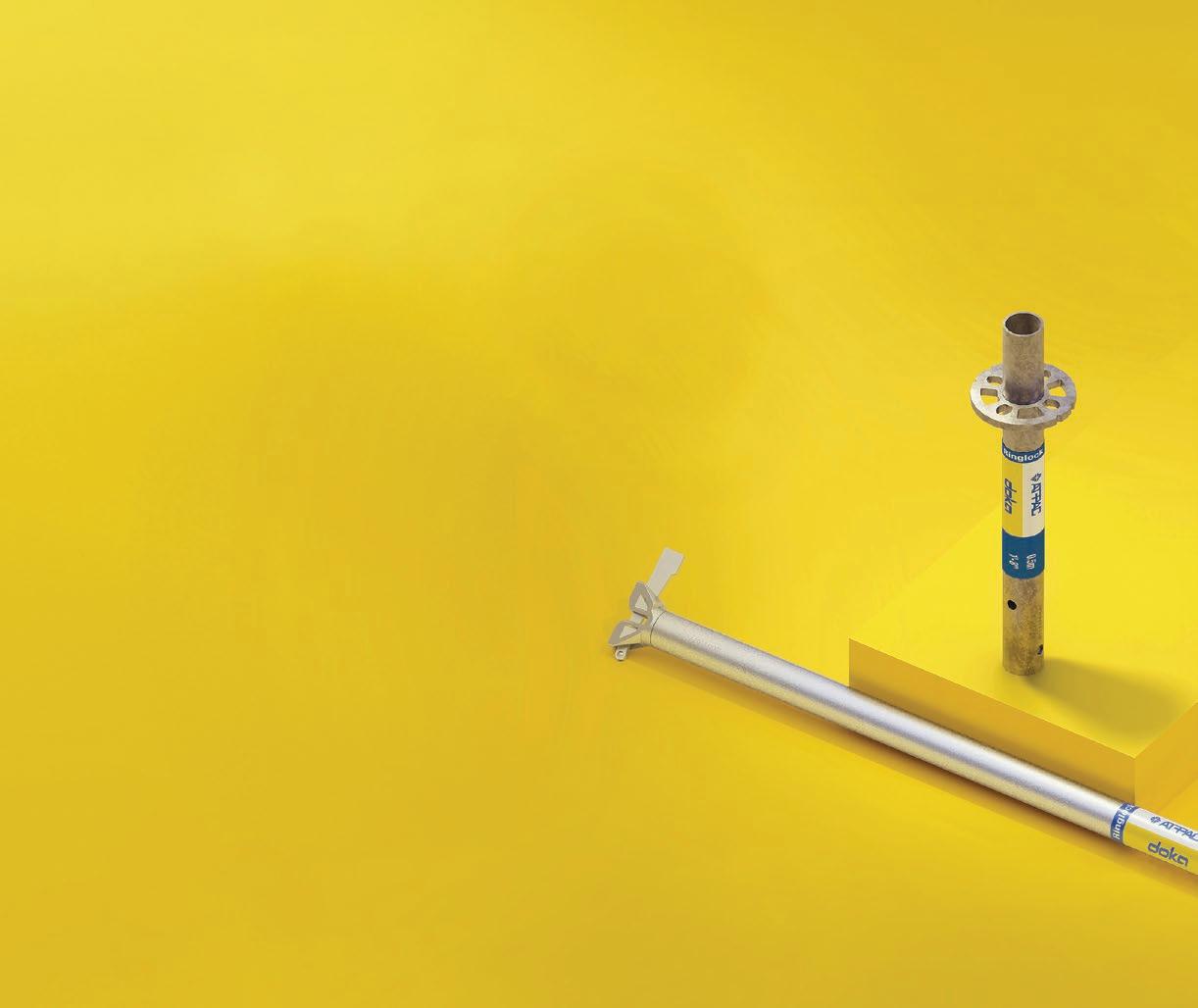
Require formwork and scaffolding? Check out Doka’s extensive list of products and systems, which now includes scaffolding for a variety of applications. At Doka, our philosophy is to provide a broad range of services under one umbrella based on a growing demand for single-source solutions that adhere to the highest standards.
/DokaMEA /company/doka-middle-east-africa /doka_mea
meaapmarketing@doka.com | www.doka-me.com

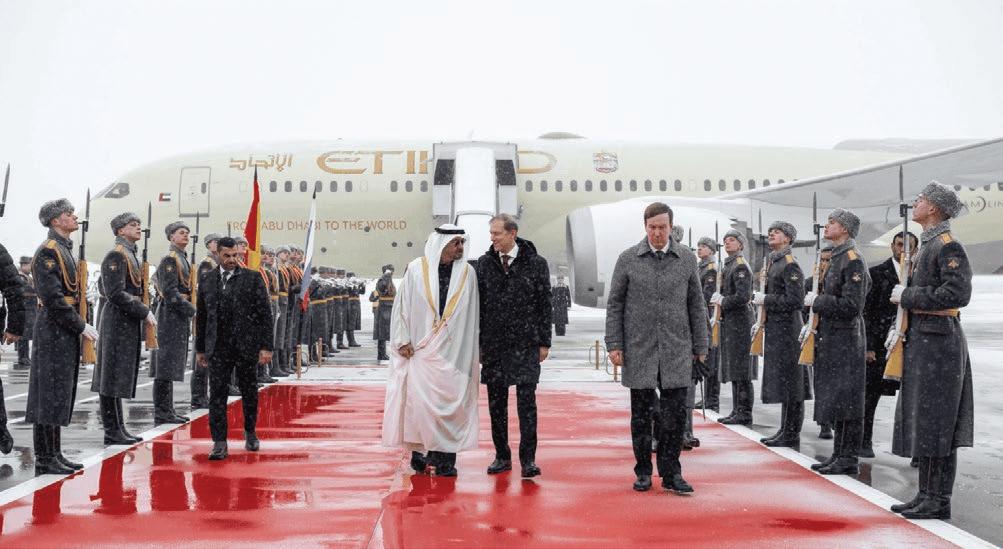
UAE PRESIDENT VISITS MOSCOW ON DIPLOMATIC TRIP
UAE President Sheikh Mohamed bin Zayed Al Nahyan arrived in Moscow for an official visit, accompanied by a high-level delegation. The visit aims to strengthen UAE-Russia diplomatic and economic ties and discuss regional and global cooperation.
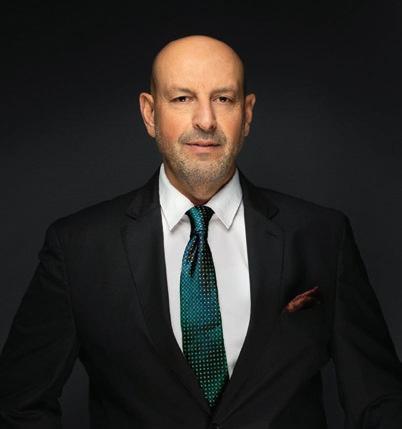
NMDC GROUP’S PROFIT RISES 29% TO OVER AED 4 BILLION
NMDC Group, a global leader in engineering, procurement, construction and marine dredging, today announced a strong set of financial results for 2025, reporting revenues of AED 28.8 billion, up 10% y-o-y, with the UAE representing 81% of total revenues and international markets representing the remaining 19%. Net profit surged 29% y-o-y to cross the AED 4.0 billion mark, on the back of operational efficiencies, margin expansion and a favorable business mix.
In light of these outstanding results, NMDC Group’s Board proposed a 20% year-on-year increase in cash dividends to reach AED 844.4 million in 2025, representing AED 1 per share, pending the approval of the Company’s upcoming Annual General Assembly meeting.

PUBLIC INVESTMENT FUNDS
ASSETS REACH NEARLY SAR 218 BILLION BY END OF Q3 2025
The value of assets held by local and foreign public investment funds in the Saudi financial market grew by 36.1% annually, climbing by SAR 57.9 billion to approximately SAR 217.9 billion by the end of the third quarter of 2025, compared to SAR 160.1 billion during the same period in 2024. Foreign investment assets increased by 21.1% year-on-year, rising by over SAR 5 billion to SAR 31.1 billion, representing 14.3% of total asset value, up from SAR 25.7 billion.
Public investment funds grew by 11.6% annually, with 36 new funds added, bringing the total to 346, up from 310 in the same period last year.
GOLD EXTENDS RALLY, JUMPS OVER 2%
Gold prices continued their upward momentum last week, marking their strongest daily gains since 2008.
Spot gold climbed 2.7% to $5,071.79 per ounce on 4th February, following a 5.9% surge on 3rd February, its biggest single-day rise since November 2008. The metal reached a record high of $5,594.82 per ounce on 30th January.
US gold futures for April delivery also rose 3.2% to $5,092 per ounce. Silver rose 3.2% to $87.84 per ounce, after touching a record of $121.64 per ounce on 30th January. Platinum gained 2.9% to $2,273.70 per ounce, having hit an all-time high of $2,918.80 on 26th January, while palladium increased 3% to $1,784.67.
SAUDI ARABIA
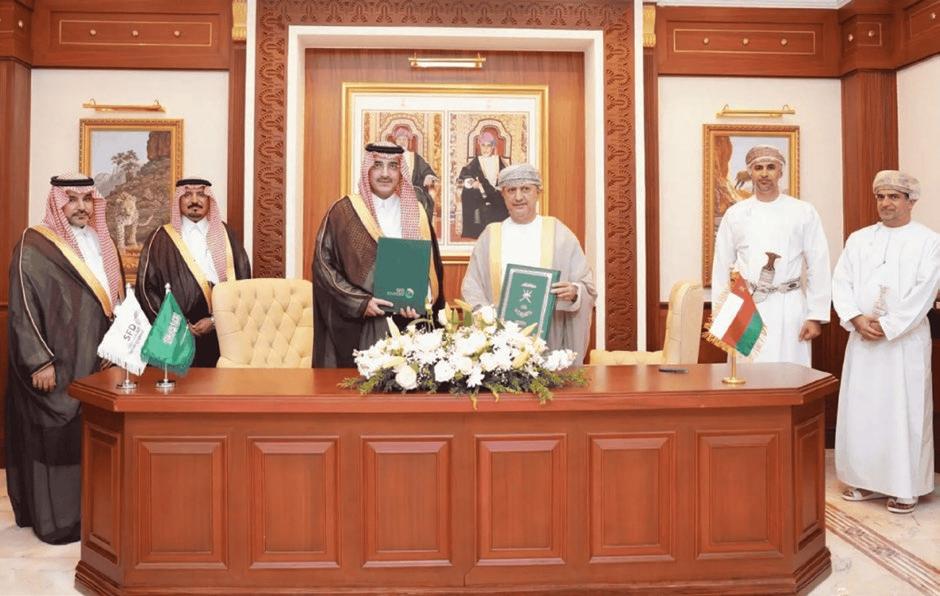
SAUDI ARABIA INVESTS $40 MILLION IN NEW INDUSTRIAL CITY DEVELOPMENT IN OMAN
The Saudi Fund for Development (SFD) and Oman have taken a major step toward enhancing regional industrial cooperation, as SFD CEO Sultan AlMarshad and Oman’s Minister of Finance Sultan Al Habsi signed a memorandum of understanding (MoU) to establish a new industrial city in Oman, with $40 million in funding provided by Saudi Arabia through the SFD. The agreement outlines plans to transform the Dhofar Governorate into a hub for industrial and logistical
development. The proposed industrial city will span approximately 3.94 million square meters and will feature a fully integrated infrastructure network. Planned facilities include administrative and service buildings, public amenities, extensive road networks, electricity and water supply systems, and two wastewater treatment plants. The project will also engage specialised engineering consultancy services to ensure state-of-the-art design and operational standards.
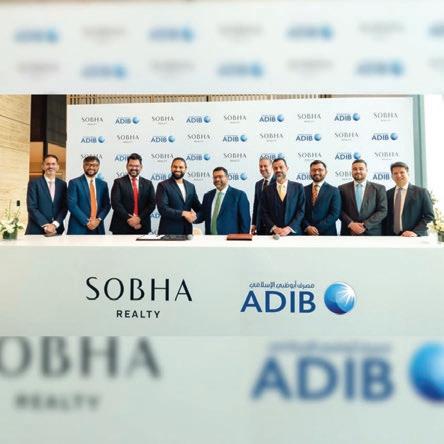
SOBHA REALTY COLLABORATES WITH ADIB TO EASE ACCESS TO OFF-PLAN PROPERTY FINANCING
In a strategic move that reflects a shared commitment to supporting homeownership in the UAE, Sobha Realty has announced a new partnership with Abu Dhabi Islamic Bank (ADIB), to offer innovative home finance solutions for off-plan property buyers. Under this collaboration, UAE residents will be able to access Sharia-compliant home financing facilities upon just 35% construction completion of Sobha off-plan properties. This initiative is designed to make homeownership more accessible by reducing the financial entry barrier for buyers.
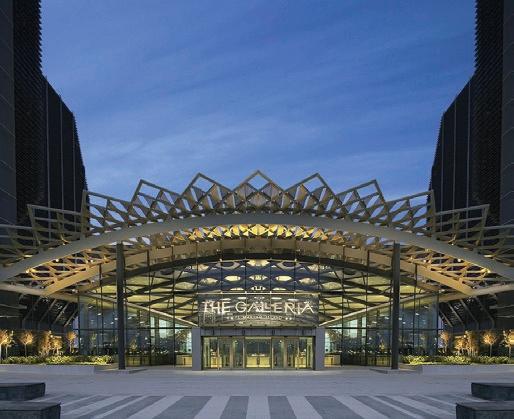
ALDAR, MUBADALA COMPLETE JOINT VENTURE TO ESTABLISH AED 10 BILLION RETAIL CHAMPION IN ABU DHABI
Aldar and Mubadala Investment Company have announced the completion of a strategic joint venture to create a premier retail platform that will anchor the next phase of Abu Dhabi’s evolution as a global destination for curated luxury retail experiences.
The new platform, which will be managed by Aldar, consolidates landmark retail destinations in Abu Dhabi. Aldar has contributed Yas Mall, while Mubadala has added The Galleria Luxury Collection, both prime income-generating properties with a combined gross asset value of approximately AED 10 billion.
The platform benefits from strong and reliable income streams, with occupancy at Yas Mall standing at 99% and The Galleria Luxury Collection’s occupancy at 92%.
The joint venture deepens and strengthens Aldar and Mubadala’s long-term strategic collaboration and directly complements the recently announced AED 60+ billion expansion of Al Maryah Island, which will further elevate the island’s position as Abu Dhabi’s premier business and lifestyle destination.
DUBAI’S COMMERCIAL PROPERTY MARKET REACHES AED 136 BILLION, LED BY OFFICES AND INSTITUTIONAL CAPITAL
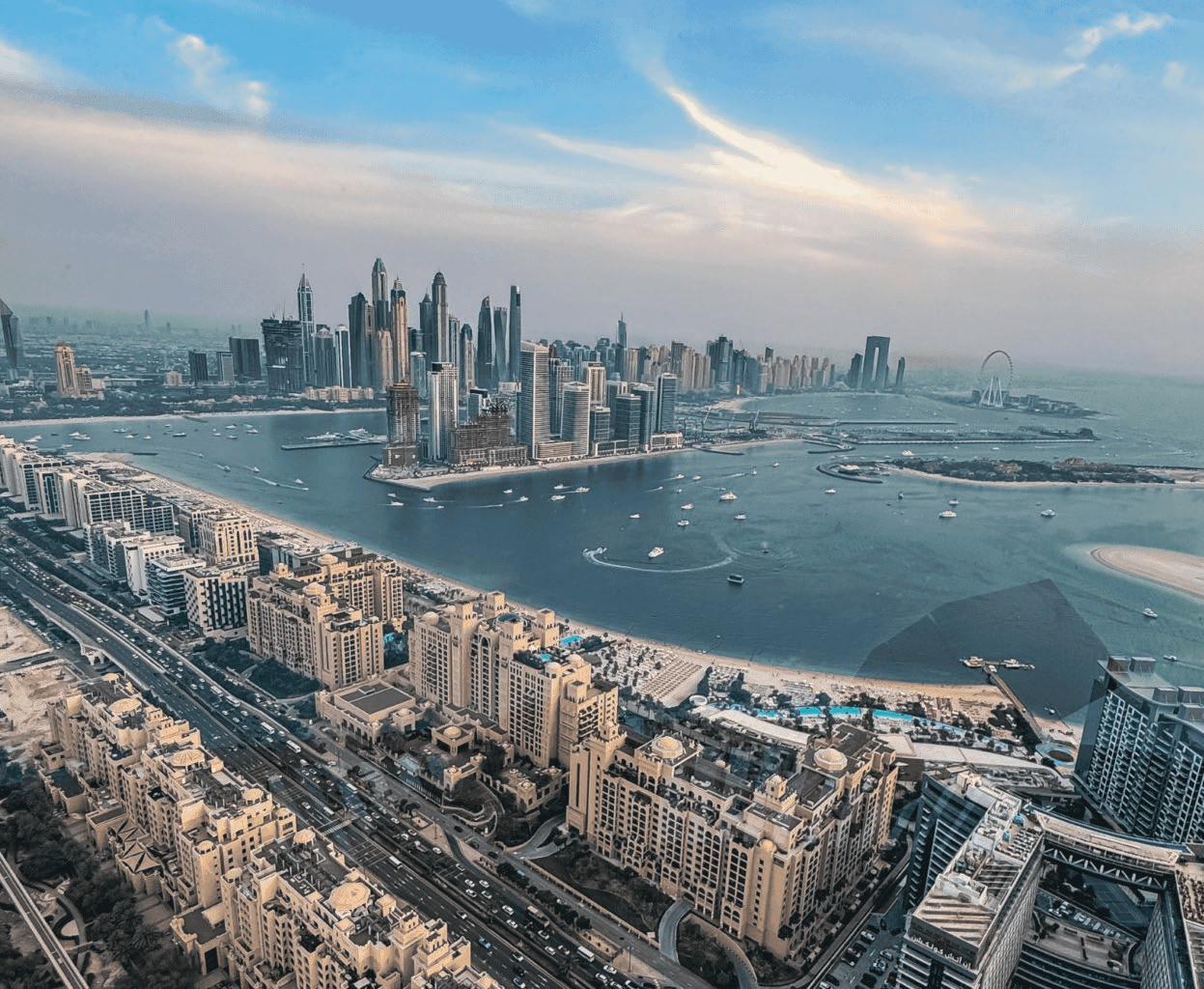
According to CRC Property’s FY 2025 Commercial Property Market Report, total commercial sales value reached AED 136 billion, representing a 41% year-onyear increase, while transaction volumes rose 14% to 13,377 deals; the highest annual total ever recorded. While activity remained robust across the year, momentum intensified sharply in the final quarter.
Q4 alone accounted for approximately AED 45 billion in sales value, following a 48% quarter-on-quarter surge, while transaction volumes grew at a more measured pace.
This widening gap between value and volume highlights a defining theme of 2025: the growing dominance of higher-ticket transactions and institutional-grade assets.
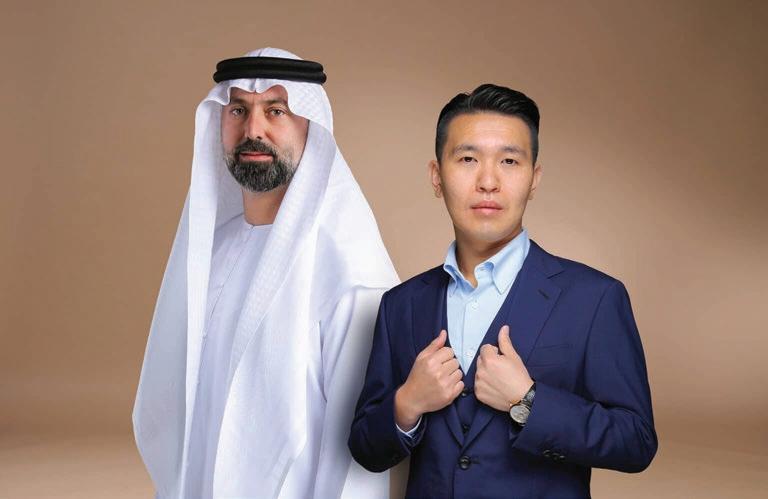
Shorooq, a leading tech-focused multi-strategy investment firm, today announced the launch of its $200 million late-stage growth fund, backed by QIA among others at Web Summit Qatar.
The Fund—launching under the Qatalyst Series—is built to support companies at a pivotal stage of maturity: businesses with proven scale, strong fundamentals, and clear pathways to exit, particularly through the IPO route. Backed by QIA and supported by Shorooq’s expanding
Shorooq Launches $200M Late-Stage Growth Fund
Backed by QIA
roster of sovereign and institutional partners across the GCC and Asia, the fund is designed to institutionalise the region’s missing late-stage and pre-IPO engine—making public-market readiness a repeatable pathway rather than an episodic outcome. As the GCC enters a new technology cycle—marked by concentrated sovereign liquidity and a maturing cohort of scale-ups—Shorooq via the Qatalyst Series brings the sophisticated, long-duration capital needed to help private champions become public leaders.
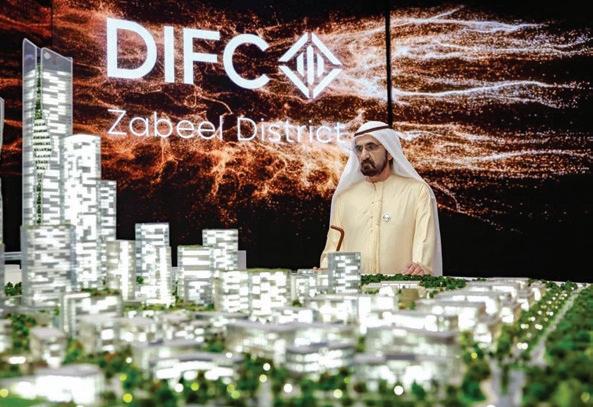
DIFC EXPANDS WITH ZABEEL DISTRICT
His Highness Sheikh Mohammed bin Rashid Al Maktoum, Vice President and Prime Minister of the UAE and Ruler of Dubai, launched DIFC Zabeel District, a landmark expansion of Dubai International Financial Centre (DIFC) that will consolidate its status as the leading global financial centre in the Middle East, Africa and South Asia, while also reinforcing Dubai’s stature as the region’s preferred business and lifestyle destination. DIFC Zabeel District is the largest demandled expansion of a financial centre in the region, encompassing a massive site area of 7.1 million sq. ft and total gross floor area of 17.7 million sq. ft. The estimated gross development value exceeds AED 100 billion.
THE NEW RULES OF PRIVATE EQUITY

Private equity has long thrived on outperformance over public markets, driven by operational improvements, leverage, the opportunity to invest in growth opportunities not available in public markets and more. Recently,
Private equity isn’t broken, but it is changing. Five non-negotiable strategies separating tomorrow’s winners from the rest of the pack.
BY MARK HAMPSTEAD
this foundation has been more challenged: deal flow has slowed, dry powder has reached record highs, distributions have lagged, and a strong stock market has challenged PE’s edge. Yet, while some question the industry’s future,
private equity is not losing its way, it’s evolving and opportunities for outperformance are more present than ever.
For those determined not just to survive but to thrive, five resolutions are non-negotiable.
FIRST
Embrace the innovation premium. The most exciting value creation is happening behind closed doors, long before companies ever ring the bell on public markets. The next wave of growth isn’t coming from yesterday’s household names— it’s being built in private, where AI, healthcare, and cybersecurity firms are scaling at breakneck speed. Private companies have posted average annual EBITDA growth of 11.5% over the past decade, leaving public benchmarks in the dust. The “services as software” revolution alone could unlock up to $5 trillion by 2030, and with 95% of software companies still private, the real action is off-exchange. Today’s tech firms are hitting IPO with five times the sales of their dot-com-era ancestors, capturing enormous value while still private. If you want to own tomorrow’s winners, you need to be in the private markets today.
SECOND
Think closer to home. The U.S. is no longer the only game in town. Europe’s private equity market has quietly outperformed its public counterpart, delivering around 6.8% annualised returns over the past decade. Why? Less competition, more fragmentation, and a deep pool of middle-market targets ripe for consolidation. European PE is also a gateway to long-term themes—think tech and telecom—that are hard to find in public markets. Meanwhile, Asia’s innovation engines are revving up, offering new avenues for growth as regional drivers diverge. In 2026, sticking to the familiar might be a recipe for mediocrity. Cast your net wide - across regions, sectors, and deal sizes - to capture the full spectrum of opportunity.
THIRD
Rethink liquidity and use new tools. Evergreen funds have tripled their share of capital raising since 2020 and could command up to 20% of the market within a decade. The secondary market is booming, expected to surpass $200 billion by the end of 2025. These aren’t just incremental changes- they’re reshaping how investors access, exit, and manage private equity exposure. The smart money is blending traditional drawdown funds with evergreen and secondary strategies, building portfolios that are flexible, resilient, and ready for whatever comes next.
FOURTH
Double down on manager selection. The gap between leaders and laggards is widening fast. In a world of moderate growth and higher rates, operational expertise and access to innovation are the new table stakes. Capital is abundant, but true know-how is rare. Investors need to be ruthless in their selection— backing managers with a proven track record of navigating complexity, driving efficiency, and unlocking growth. In this environment, not every manager will deliver. The winners will be those who can separate the best from the rest.
FIFTH
Stay agile and disciplined. The private equity landscape is evolving at breakneck speed. Dealmaking and distributions have lagged, but green shoots are emerging as global M&A and IPO activity picks up. Success in 2026 will belong to those who can pivot quickly, stress-testing portfolios for a range of scenarios, keeping liquidity on hand to seize opportunities, and adapting strategies as the market shifts. Passive investing has its place, but this is a market that will reward
active management, sharp risk controls, and a willingness to challenge the status quo.
Private equity isn’t fading, it’s transforming. The innovation premium is reshaping where and how value is created, and the expanding liquidity toolkit is giving investors more ways to participate. As more capital chases a limited number of high-quality deals, competition will intensify and manager selection will become even more critical. Given their speculative nature and increased risks, such as limited liquidity and transparency, these opportunities should be considered against an investor’s risk appetite. The bottom line: investors who resolve to embrace innovation, diversify globally, rethink liquidity, double down on manager selection, and stay agile will be better equipped for the next era of private equity. In 2026, these aren’t just smart moves—they’re survival skills for the new private equity frontier.
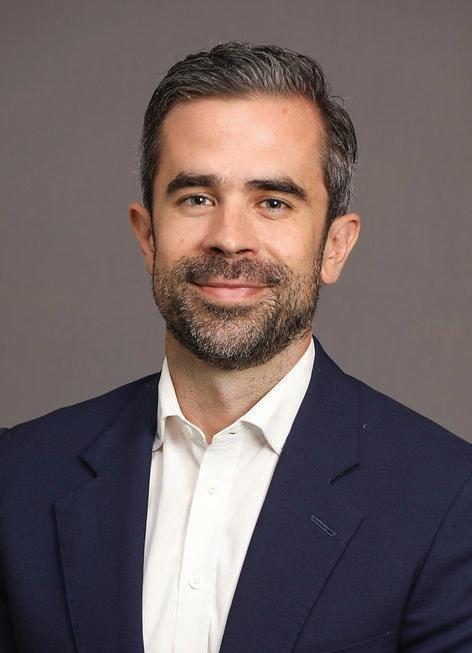
Mark Hampstead, EMEA Head of Alternative Investments for J.P. Morgan Private Bank
AFTER THE HYPE

Most organisations have the tools. Few are seeing the results. As digital becomes embedded in daily operations, success in 2026 will depend less on adoption and more on turning capability into performance.
BY SANJAY RAGHUNATH

We are living in a world where the latest technological innovations such as artificial intelligence (AI) are no longer an emerging trend. These technologies are embedded in everything we do, from daily activities and communications to professional workflow, reshaping every aspect of life. However, not all sectors are adapting to the changes at the same pace. Some industries lag behind due to constraints caused by legacy systems, regulatory frameworks or skill gaps.
This disparity in adoption is becoming very evident across certain industries, especially among those which view advanced technologies as a challenge to be navigated, rather than an opportunity to be capitalised on. The real barrier to digital transformation is not missing technology; it is the absence of clear strategies to adopt new operating models.
For instance, the UAE leads globally in AI and digital innovation through its national visions and strategies, which make advanced technologies widely accessible across diverse sectors. Despite the extensive support, numerous infrastructure and operational organisations are still struggling to convert these capabilities into measurable performance. Operational models that have not been updated in years, workflows that resist flexibility and decision-making processes that still follow traditional hierarchies are a few of the key factors that undermine the potential of cuttingedge digital tools.
In 2026, a real change to this situation can be brought by identifying the obstacles in organisations’ path towards converting the vast possibilities of technologies to tangible results. According to a recent study by McKinsey & Company, only 16% of digital transformation efforts result
about viewing digital transformation as an operational redesign. As part of it, companies must establish decision rights, accountability structures and workflows before deploying technology. To achieve real transformation and value, human resources should be complemented, not replaced. Companies need to upskill their teams and redesign their roles to empower them to adapt to digital transformation.
in long-term performance gains, signalling that execution, rather than tools, is the main cause of failure. For instance, transformation often slows down in operational environments such as industrial operations, laboratories, security systems and critical infrastructure due to unchanged decision-making, accountability and procedures.
Similarly, leadership behaviour presents an additional challenge. When an organisation’s founder or central management shows reluctance to transformation, it slows execution and limits implementation. Leadership must foster innovation, accelerate data and AI integration into real-world operations and tolerate controlled failure. PwC’s 2025 ‘Value in Motion’ analysis indicates that AI has the potential to raise global economic output by up to 15% when embedded into core operational systems.
Currently, organisations that fail to integrate analytics into everyday decision-making may gain visibility, but they will not succeed in creating a lasting impact. Here, the solution is not integrating new tools, rather it is
Prioritisation is another essential factor in the digital transformation journey. During transformation, companies must prioritise high-risk areas or processes with chances of costly failures. Predictive and AIdriven tools must be fully integrated into operational workflows to reduce downtime, improve throughput, and enhance reliability. Similarly, governance frameworks and data readiness ensure that digital investments lead to measurable performance improvements. Furthermore, when companies start to scale their transformation, it requires empowered second-line leadership. Beyond founders or top executives, companies need capable teams and an approach which treats technology as a performance multiplier to create lasting advantage.
In 2026, technology will no longer be judged by how advanced it appears but the way it is integrated into everyday execution. Organisations that translate digital capability into better decision making, risk management and reliable operations will set the standard. Companies that stop at adoption, without embedding technology into their work, will struggle to keep pace. In a landscape where precision, reliability and safety define credibility, transformation is no longer an ambition, it is an execution discipline, and leaders who master it will lead the path to long-term success and future impact.
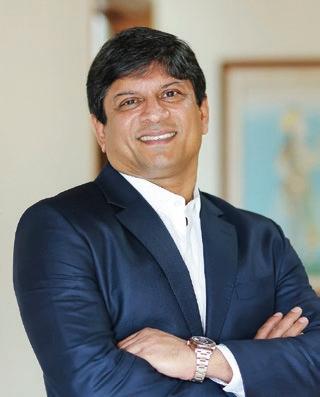
Sanjay Raghunath, Chairman and Managing Director, Centena Group.
THE HIDDEN COST OF WHAT LIES BENEATH
Poor coordination beneath city streets is fuelling inefficiencies and disruptions across the GCC, exposing the urgent need for unified infrastructure planning.
BY HASSAN KHAIRAT
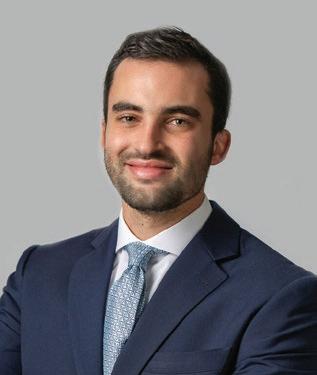
CHassan Khairat, Principal at Arthur D. Little
ities compete and residents thrive when infrastructure works seamlessly beneath their feet. Below every road lies a dense, interdependent web of utilities, telecom networks, and power systems. These underground assets are the arteries of modern life. Yet in many cities, they are planned, built, and maintained in silos. The result, especially in jurisdictions going through rapid transformation such as the GCC, is familiar: repeated roadworks, rising costs, preventable delays, and mounting public frustration. A study published in the International Journal of Engineering and Information Systems shows that, average schedule overruns reach 30% in select GCC cities, with improper planning and poor coordination identified as the leading contributors.
Gulf cities are expanding at unprecedented speed. According to Gulf Research Center, infrastructure spend is forecasted to reach $232 Billion in 2028 alone in the GCC. The challenge is no longer how to build more, but how to coordinate better. Effective infrastructureworks management is a strategic priority. Cities need to proactively approach it and put together a practical framework comprising three key components: governance and accountability, delivery archetype, and technology enablement.
DEFINE GOVERNANCE AND ACCOUNTABILITY ACROSS THE INFRASTRUCTURE VALUE CHAIN
Every city needs a unified infrastructure definition. A clear infrastructure definition enables decision makers to delineate roles and understand the ecosystem’s governance. Infrastructure is broader than physical assets and can refer to either hard infrastructure, such as utilities, and/or soft infrastructure, such as schools and hospitals. After clearly defining ‘infrastructure’, cities must then articulate roles and responsibilities across the infrastructure value chain. It includes: policy-making and regulation, planning, budgeting, permitting and service delivery, compliance and monitoring, and asset management. Without a single point of accountability, coordination breaks down across the value chain and the public pays the price through congestion and disruption.
DEFINE THE RIGHT DELIVERY ARCHETYPE
There is no one-size-fits-all model for managing infrastructure works. Some cities may opt for a centralised entity that directly manages permitting, planning, and execution (as in Qatar’s Ashghal). Others may establish a coordinating authority that sets standards and oversees compliance, while utilities continue to execute their own works. Riyadh’s
Infrastructure Projects Center (RIPC) is emerging as a pioneering model, standardising how works are planned and executed, and coordinating all infrastructure works between the relevant entities (e.g., water, electricity). There is no right model, what matters most is clarity of roles, accountability, and data sharing across all players.
INTRODUCE TECH-ENABLED COORDINATION
Technology is the enabler that ties it all together. Tech-enabled tools are reshaping how GCC cities manage infrastructure coordination. Centralised approval platforms streamline processes by consolidating all required NoCs into a single system (e.g., Dubai’s eNOC platform). GISbased networks integrate utility maps into one shared view, reducing excavation overlaps and improving planning (e.g., Abu Dhabi’s Spatial Data Infrastructure “AD-SDI”, a unified infrastructure geospatial
By redefining how utilities coordinate, digitising excavation management, and designing underground networks with future capacity in mind, GCC cities can dramatically reduce disruptions and enhance quality of life.
hub). Riyadh recently launched the infrastructure masterplan that provides a single source of truth for the City’s infrastructure works and planned works/developments. Realtime monitoring using IoT sensors and digital twins helps cities track asset health, flag issues early, and coordinate smarter maintenance (e.g., Qatar’s Lusail City digital twin project).
THE GCC’S OPPORTUNITY TO LEAD
With megaprojects reshaping skylines and entire new districts under construction, the region can leapfrog global standards. By redefining how utilities coordinate, digitising excavation management, and designing underground networks with future capacity in mind, GCC cities can dramatically reduce disruptions and enhance quality of life. Smart cities are not built only above ground. The real foundation of a livable GCC city lies beneath the surface, in how well we manage how we dig.
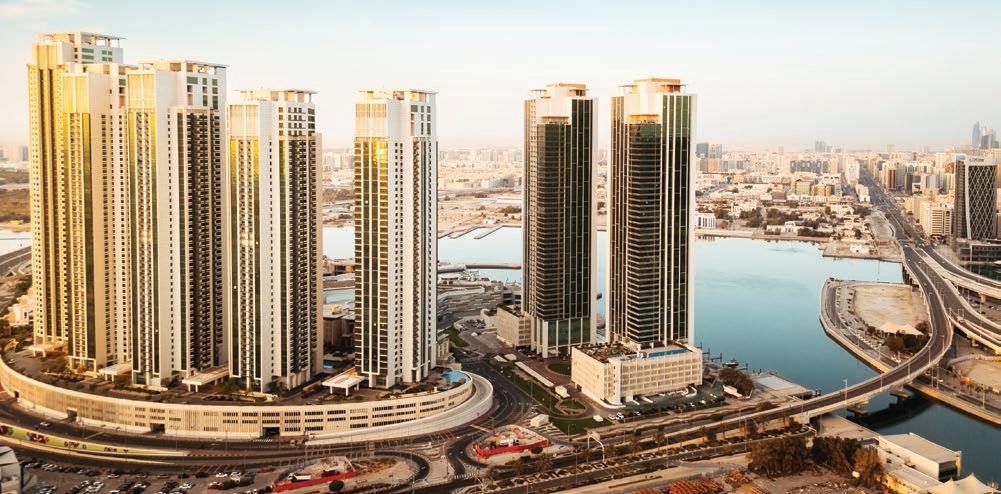
UAE BANKS AREN’T LOSING SLEEP OVER 2026
Strong loan growth, solid capital cushions, and diversified income streams are giving the sector unusual confidence in an uncertain year.
BY SHIVANSH RACHIT
As global investors adjust portfolios ahead of 2026, the UAE’s banking and financial services sector is increasingly drawing interest from income-focused capital. Anchored by strong credit growth, solid capital buffers, and strategic lending trends, the UAE’s financial system offers not only stability during geopolitical and economic shifts but also sustainable avenues for yield generation. For investors prioritising dependable income and growth in a year marked by monetary tightening and macro headwinds, the Emirates’ banking landscape warrants serious consideration.
A LANDSCAPE MARKED BY STRONG CREDIT MOMENTUM
According to the Central Bank of the UAE’s mid-year banking developments data, gross credit in the UAE banking sector expanded to around AED 2.33 trillion by June 2025, marking an 11.1% year-on-year increase, a clear signal of strong loan growth across consumer, corporate and institutional segments. During the same period, customer deposits rose to roughly
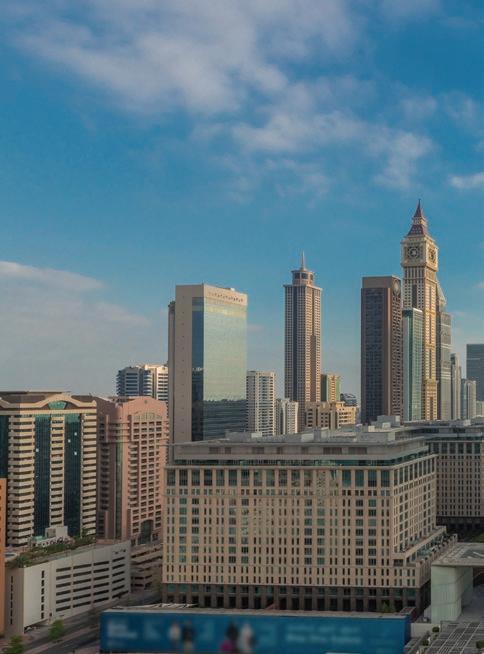
AED 3.05 trillion, up 13.1 % annually, underscoring robust liquidity and investor confidence in the banking system. Meanwhile, non-performing loans declined to about 3.4 % of total loans, reflecting improving asset quality and prudent risk management. Capital buffers remained strong, with total capital and reserves near AED 545.7 billion and capital adequacy ratios well above regulatory minimums.
This trend reflects more than just balance sheet expansion; it speaks to
confidence in the UAE economy. Credit growth has been fueled by strong activity in non-oil sectors particularly real estate, construction, services and broader private-sector lending as economic diversification accelerates. In early 2025, outstanding credit facilities surged about 24.1% year-onyear, outpacing regional peers and showcasing robust lending momentum.
For income-oriented investors, this steady expansion of credit translates into yield opportunities. Loan portfolios remain a primary driver of interest income even as banks diversify into fee-based services and the upward trajectory of lending activity suggests that net interest margins and interest-earning assets will continue to support returns.
ROBUST CAPITAL BUFFERS UNDERPIN STABILITY
The UAE banking sector continues to demonstrate a strong capital position, providing a solid foundation for financial stability and sustaining investor confidence. Capital adequacy ratios remain comfortably above regulatory thresholds, reflecting disciplined balance-sheet
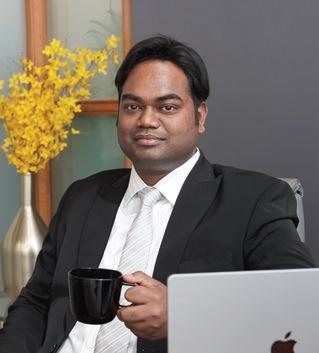
Shivansh Rachit, Founder and Chairman at Hedge & Sachs Group
management and a conservative approach to risk.
Leading institutions further illustrate this strength, maintaining robust capital and liquidity profiles that support continued lending without compromising solvency. These buffers enhance the sector’s capacity to absorb external shocks arising from global macroeconomic volatility, tighter financial conditions, or geopolitical uncertainty. Supported by a well-established regulatory framework and proactive supervision, UAE banks are positioned to maintain financial resilience while continuing to support economic activity.
For investors, this capital strength underpins earnings sustainability and dividend continuity, reinforcing the sector’s attractiveness as a core allocation within income- and stabilityoriented portfolios.
STRATEGIC LENDING TRENDS HIGHLIGHT RESILIENCE AND GROWTH
Beyond aggregate credit growth, the composition and strategic direction of lending activity in the UAE banking sector underscore both resilience
and growth potential. Banks have continued to expand lending across core segments, reflecting adaptability to evolving economic conditions and diversified demand.
Lending momentum remains intact, with the sector reporting sustained quarter-on-quarter increases in net loans and advances and deposits. Corporate and wholesale lending continue to play a key role in overall credit growth, supported by strong economic activity in non-oil sectors and ongoing investment in infrastructure and trade. Retail lending also contributes to portfolio expansion, buoyed by consumer demand and demographic trends.
In addition to traditional interest income, UAE banks have strengthened non-interest revenue streams. Major institutions have highlighted growth in wealth management, fee-based services, and digital financial offerings as important contributors to income diversification. For example, one of the leading banks reported notable increases in assets under management and expanded product suites that support fee income alongside core lending activities.
This balanced approach combining corporate, retail, and specialised finance, supports income stability and mitigates concentration risk. It also aligns with the UAE’s broader economic diversification objectives, with financial institutions channeling capital into priority areas such as SMEs, infrastructure, and sustainable finance while adapting to changing market conditions.
WHY INVESTORS SHOULD TAKE NOTICE IN 2026
Against this backdrop, the UAE banking sector presents several compelling reasons for investors to prioritise financials in 2026:
Yield opportunities amid credit expansion
Sustained growth in lending both retail and corporate supports interest income and dividend potential.
Strong capital and asset quality
Healthy CAR, improving NPL ratios, and disciplined risk management underpin stability even during economic shifts.
Diversification and innovation Banks are not solely reliant on net interest income but are expanding into fees, digital services, and crossborder operations.
Macro support Government reforms, economic diversification, and favorable business environments contribute to credit demand and financial stability.
In a year where global markets face tightening cycles, inflationary pressures, and geopolitical uncertainty, the UAE’s banking and financial services sector offers a rare combination: reliable income prospects backed by prudent risk management and robust economic fundamentals. As 2026 unfolds, income-oriented investors would be well-served to consider this cornerstone of the Emirates’ economy not merely for short-term returns, but as a sustainable engine in diversified investment portfolios.

FROM CASH TO CRYPTO IN ONE CLICK
ONCHAIN® Gateway strips away the friction that keeps users out of Web3, turning complex fiat-to-crypto flows into a simple, compliant checkout. CEO Jason Dominique explains how intent-driven finance is reshaping digital access.

ONCHAIN® Gateway is the world’s first permissionless fiat-to-on-chain access layer. How will this make it easier for businesses and individuals to move money into Web3?
The current path to Web3 participation is broken, leading to a 68% drop-off for first-time users. We believe access should be a network primitive, not a fragmented service. Today, moving money into Web3 usually means opening an exchange account, passing KYC again, buying a gas token, moving it to a wallet, bridging, and then swapping. Every step adds friction, cost, and risk.
ONCHAIN® Gateway compresses this into a single, coordinated flow using the Universal Access Schema (UAS). A user or business simply states what they want to own on-chain, how they want to pay, and where they want final settlement. Gateway translates that intent into a verified access path, and the ONCHAIN® Protocol Network (OPN) executes the settlement.
For individuals, it feels like a familiar checkout—Click. Pay. Done. They can pay with cards, bank transfers, or crypto and receive the asset they actually want on its native chain, instead of being left with an illiquid fuel token on the wrong network. For businesses, Gateway operates like a neutral access layer to the entire on-chain economy. It is permissionless and non-custodial, so any compliant wallet, app, or platform can plug in without listings, bilateral contracts, or custody integrations. This reduces integration time, simplifies compliance, and makes it easier to offer Web3 features directly in mainstream products.
ONCHAIN® is building a financial internet where money moves by intent. Can you explain what that means and why it’s important for users and businesses?
The Intent Economy is a direct result of our foundational Decoupling Thesis: for finance to truly scale, custody
(ownership) and service (access) must be fundamentally separated. In traditional finance, value moves by being pushed through accounts and ledgers. In an intent-based system, you start from the outcome, not the rail. You say, “buy this digital asset and send it to my wallet,” and the network is responsible for coordinating how that happens.
ONCHAIN’s OPN layer encodes these as signed intents, such as a BuyIntent or PayIntent. Once validated by our Smart Guardrails, OPN finds a deterministic, non-custodial path that satisfies liquidity and policy constraints across chains and payment methods. Value effectively travels as instructions until the very last step, when it settles on the target chain under the user’s control.
For users, this removes the confusing decisions about chains, bridges, and token pairs, replacing them with clear actions and predictable confirmations. For businesses, intents provide a clean abstraction for integrating on-chain capabilities into existing products and workflows. Compliance rules, risk filters, and treasury policies can be enforced at the intent level, meaning teams gain visibility and control without having to manage every underlying settlement route themselves.
Modular blockchain development is changing scalability and efficiency. How is ONCHAIN® using this approach to improve the user experience?
Modular development means breaking the stack into specialised components. At ONCHAIN®, we apply this principle to the access layer itself, so users do not have to think about any of it. The friction is removed at the source, allowing users to focus only on the desired outcome.
Gateway is the access and UX module: it handles discovery of verified assets, payment options, and a clear, consumer-grade checkout. OPN is the stateless coordination module: it
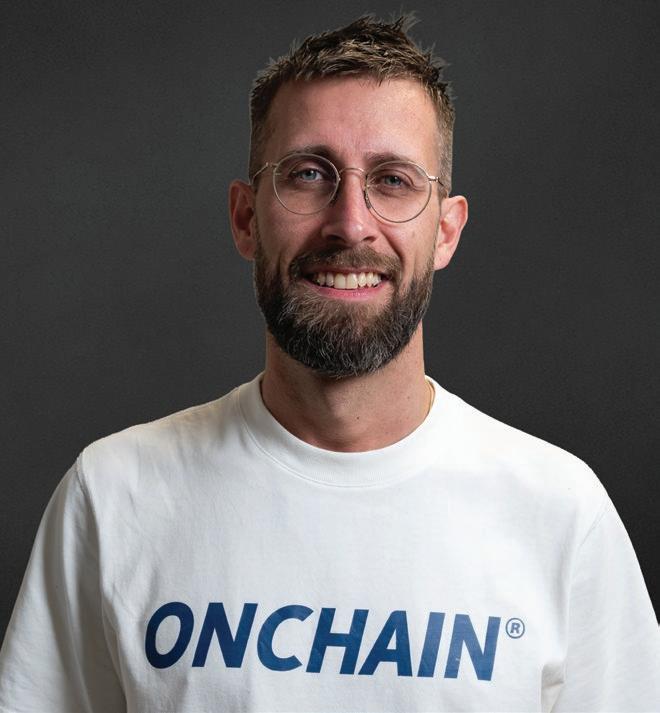
Jason Dominique, CEO & Co-Founder, ONCHAIN® Labs
interprets user intents, enforces Smart Guardrails on contracts, liquidity, and compliance, and orchestrates trustminimal, native settlement across multiple chains. The underlying networks simply focus on execution and finality.
Because these modules are decoupled, we can rapidly add new chains, payment methods, and liquidity sources without redesigning the user journey. Upgrades can happen on OPN or Gateway without forcing users to change wallets or habits. For the end user, modularity is invisible. They see a single flow—Click. Pay. Done.—while the network seamlessly composes whichever specialised modules are needed to deliver that intent safely and efficiently.
The Coordination Economy is a new way to think about finance. How can companies in the Middle East take advantage of intent-based, trust-minimised financial infrastructure?
The Coordination Economy is infrastructure built for real-time, cross-
border value transfer, defined by its noncustodial nature. This is a vital model for the Middle East, which prioritises strict regulatory alignment and risk management. In this model, networks handle intent matching, risk rules, and settlement, while businesses and users retain direct control over their assets.
For the Middle East, which sits at the intersection of trade, remittances, and regulated digital assets, this creates a practical opportunity. Companies can plug into an intentbased coordination layer like OPN and design flows that match how their markets actually operate.
A regional payments provider, for example, could use Gateway and OPN to allow customers to fund wallets in local currency while settling in stablecoins or tokenised deposits on regulated chains. A logistics or energy company could automate supplier payments and revenue sharing based on on-chain events, with funds settling directly into corporate wallets rather than pooled accounts. Because settlement is non-custodial and rules are encoded as Smart Guardrails, firms can maintain
compliance and control while still benefiting from interoperability. That combination establishes OPN as the essential infrastructure layer aligned with the region’s focus on sovereign digital economies, innovation, and compliant cross-border connectivity.
What real-world use cases do you see driving the next wave of on-chain applications, and how will they impact businesses and everyday users?
We are moving into the on-chain service era, where the next wave of applications will be driven by real economic workflows rather than speculation. We see three areas defining this shift:
Payments and Treasury: Crossborder B2B payments, payroll, and automated treasury rebalancing are perfectly suited for an intent-based network. A business can express an intent like, “keep 40% of reserves in short-term tokenised assets,” and OPN can coordinate the necessary conversions and deterministic settlements while Gateway presents a simple interface.
Real-World Assets (RWA) and Financing: Tokenised invoices, inventory, funds, and real estate can be financed, traded, or used as collateral on-chain. Gateway gives businesses and individuals a direct, verified access path to these assets, while Smart Guardrails ensure that only approved contracts, liquidity pools, and settlement venues are used.
Network-Native Rewards and Machine Economies: Loyalty programs, creator payouts, and machine-to-machine payments for DePIN and IoT can all run on the same coordination layer. For businesses, this means programmable engagement and revenue sharing that can be integrated directly into their apps.
In short, ONCHAIN is building the native access layer that finally allows digital assets to become indispensable infrastructure, fulfilling the true promise of a programmable, global economy.




AI BUILT TO WORK EVERYWHERE
At Yango Tech, Vladimir Razuvaev is deploying AI in ways that simplify complex processes, from voice assistants in enterprises to innovations in healthcare, education, and government services.
BY AYA ZHANG

For enterprises across industries, the promise of artificial intelligence is no longer just about automation, it’s about creating tools that work for people, not the other way around. At the forefront of this shift is Yango Tech, a UAE-based global technology company within the Yango Group delivering AIdriven B2B solutions for enterprises and public-sector clients across retail, logistics, cloud, and digital transformation. I spoke with Vladimir Razuvaev, the company’s CEO and Head of Legal, about the innovations his team is bringing to market and how AI can simplify complex processes across sectors.
Building AI That Works Everywhere
“The latest thing we’ve done,” Razuvaev explains, “is a platform which can create an AI voice assistant.”
Unlike traditional approaches where enterprises must go to external providers for each AI integration, Yango Tech’s platform allows organisations to build assistants internally. “All they need to do is prepare a good prompt to specify what kind of information the AI assistant should work on,” he says. From onboarding new employees to call centers, these assistants can pull data from company-specific documents, PDFs, or internal web links, ensuring
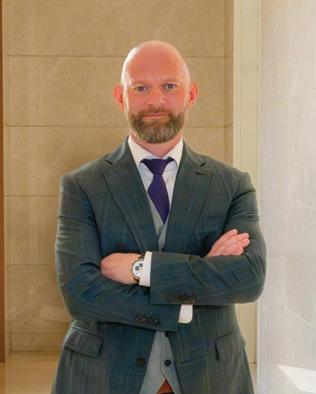
Vladimir Razuvaev, CEO and Head of Legal, Yango Tech

accuracy while limiting exposure to external information.
The platform is fast and accessible: an assistant can be created in just a few minutes, though Razuvaev notes that integration with internal resources, especially sensitive ones like IP, requires careful setup. Once deployed, the assistants speak in 18 languages with a natural, human-like voice. “It’s not like a robot, like Siri,” he says. “This can be used across support, onboarding, debt collection, and sales.”
Early tests in banks and other sectors have already demonstrated dramatic efficiency gains. “We’ve seen call center workloads decrease by up to 70%,” Razuvaev says.
The latest thing we’ve done is a platform which can create an AI voice assistant.
AI Across Healthcare, Education, and Government
Looking beyond enterprises, Yango Tech is focusing on three key areas in 2026: MedTech, education, and government services.
In healthcare, Razuvaev envisions AI streamlining medical consultations: “The doctor spends 20 minutes typing during a 30-minute session. With AI, the conversation itself could generate all necessary medical reports and forms automatically, allowing the doctor to focus fully on the patient.”
In education, AI could provide parents with instant insights on their children’s progress: “Instead of sending emails or attending parent-teacher meetings, AI could summarise lessons and student activities daily, giving real-time feedback on learning.”
For government services, the goal is simplification and digitisation. “Different ministries often operate with separate tools,” Razuvaev notes. “A unified AI-powered platform could centralise access, reduce reliance on paper documents, and streamline service delivery. Legal frameworks must adapt, but once digital documents are fully recognised, this could transform public administration.”
Collaboration as the Key to Growth
Razuvaev sees partnerships as central to AI’s future. He emphasises that no company can succeed in isolation: “If you try to do something alone, it doesn’t work. Collaboration ensures solutions are nondependent, reliable, and scalable for clients and countries.”
He also points to technological sovereignty: “It’s not just about creating your own AI. True independence comes from building solutions that integrate multiple partners safely and effectively.”

Looking Ahead
For Yango Tech, AI is about making work easier and smarter without losing sight of responsibility. “This is a hot topic, and we need to participate, discuss, and work together,” Razuvaev says. What emerges is a view of artificial intelligence as something to be handled carefully, shaped by context, and introduced with an understanding of its consequences.
THE LONG VIEW
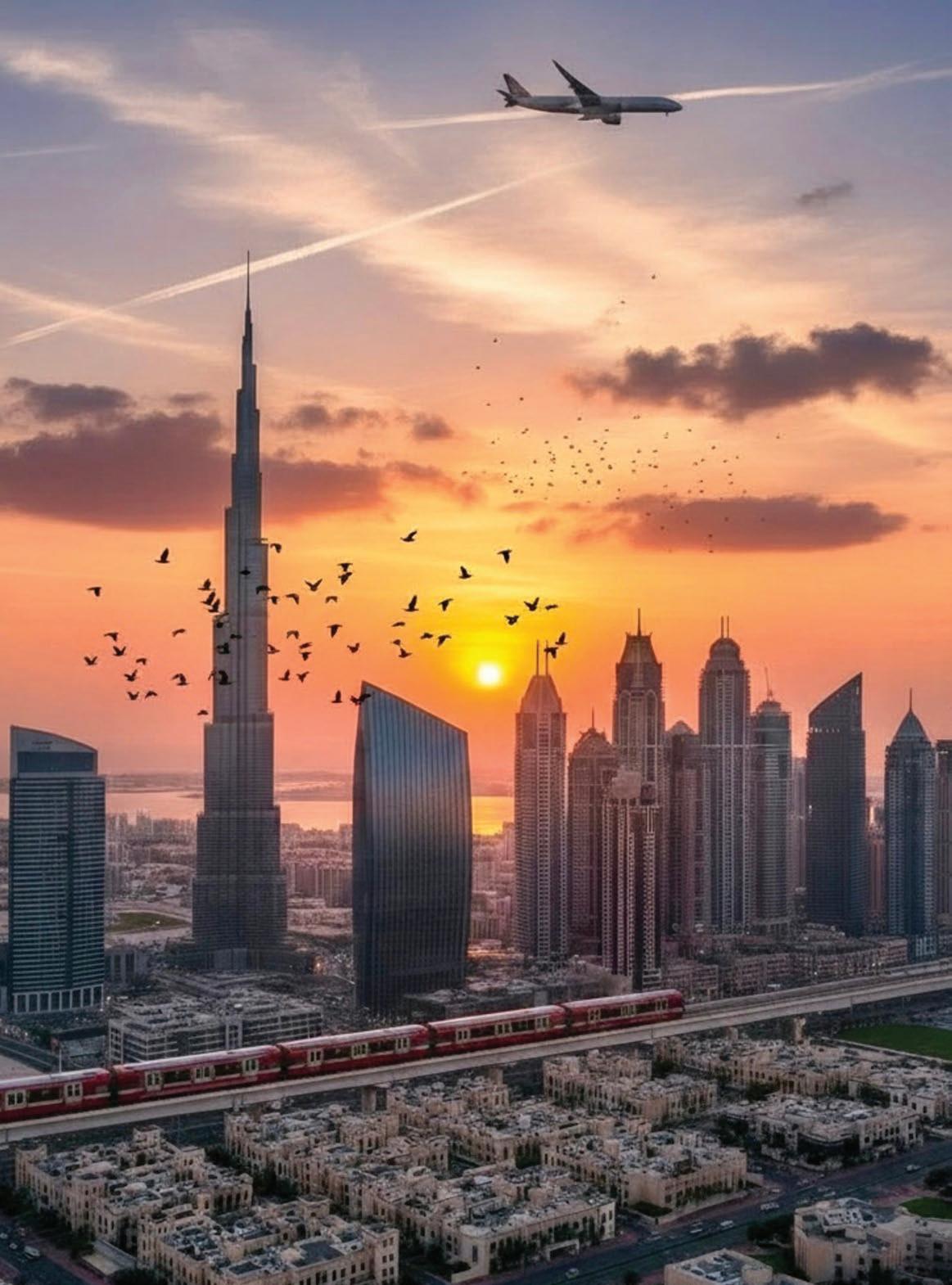
Dubai and Abu Dhabi are increasingly treated as permanent allocations within global real estate strategies. Insights from Olga Pankina, COO, Whitewill Dubai, and Svetlana Politova, COO, Whitewill Abu Dhabi, highlight the market’s depth and resilience.
Global wealth is becoming more mobile, but also more selective. Traditional financial centres like New York are no longer the automatic destination for investors looking to allocate capital or relocate families. Lifestyle quality, safety, education, healthcare, and long-term liveability now weigh as heavily as financial performance. Dubai and Abu Dhabi stand out because they deliver these factors simultaneously rather than forcing compromise.
Both cities now rank among the world’s top destinations for ultrawealthy individuals, reflecting a broader trend in which investors are prioritising environments that support family life and personal wellbeing alongside business opportunity. The UAE’s ability to combine connectivity, regulatory clarity, and a forwardlooking economy has repositioned it from a regional alternative to a global benchmark.
This shift is also evident across the wider GCC. Saudi Arabia and Qatar are gaining attention as emerging destinations, supported by largescale infrastructure projects and diversification strategies. However, the UAE continues to lead in terms of market depth, transaction liquidity, and the maturity of its residential investment ecosystem.
WHAT UAE-WIDE DEMAND INDICATORS SHOW
The UAE’s real estate market is projected to approach AED 486.2 billion by 2030, supported by population growth, continued urban development, and increasing participation from residents who view property ownership as a core financial and lifestyle decision. In fact, seven in 10 UAE residents indicate plans to purchase property within the
next six months, pointing to demand driven by employment stability, residency security, and quality-of-life considerations rather than short-term market timing. The overlap between resident demand and investor activity is narrowing, creating a more resilient demand base across price segments.
DUBAI IN 2025: SCALE, PARTICIPATION, AND MARKET DEPTH
Dubai’s real estate market in 2025 reflects a high degree of maturity at scale. Total transaction value reached AED 917 billion, reflecting the depth of liquidity across residential segments. Investment activity alone exceeded AED 680 billion across more than 258,000 transactions, pointing to broad participation rather than concentration in a limited set of assets or buyers.
The expansion of the investor base is particularly telling. Around 193,000 investors participated in the market, with nearly 130,000 entering for the first time. This level of entry suggests that demand is being supported by accessibility and market clarity, rather than dependence on a narrow pool of repeat buyers. Momentum was consistent throughout the year, with strong engagement already recorded in the first half, indicating steady demand rather than seasonal acceleration.
More than half of investors are residents, a market structure that tends to support longer holding periods, stronger rental fundamentals, and more disciplined decision-making, reducing volatility and strengthening market stability over time.
BUYER BEHAVIOUR IN DUBAI
Short-term flipping, particularly in offplan segments, has begun to moderate as supply visibility improves. This shift reflects greater discipline rather than
declining confidence. Investors are adjusting strategies in response to rising project deliveries and clearer timelines between 2025 and 2027.
At the same time, demand for branded and ultra-luxury residences remains strong. Buyers continue to pay premiums for developments that offer architectural distinction, brand value, and managed lifestyle services. This segment is supported by genuine wealth rather than leveragedriven activity, reinforcing its role as a stabilising force. Buyers are also prioritising rental yield, asset quality, and long-term appreciation over rapid resale, which signals a market that is aligning more closely with global investment norms.
STRUCTURAL DEMAND DRIVERS SUPPORTING DUBAI
Population growth remains a central driver of Dubai’s real estate market, with the city reaching four million residents in 2025. Importantly, the number of ultra-wealthy individuals living in Dubai has doubled over the past decade, positioning the city as one of the world’s fastest-growing wealth hubs. This creates sustained demand across ownership and rental markets and supports absorption even as new supply enters the market.
Regulatory transparency has improved, with broader access to transaction-level data enabling more informed decisions and reducing information gaps. This level of visibility is important for institutional and international capital assessing risk.
Dubai’s position as a safe-haven market rests on tax efficiency, progressive visa reforms, and sustained infrastructure investment. These factors support capital inflows and long-term wealth retention within the market.
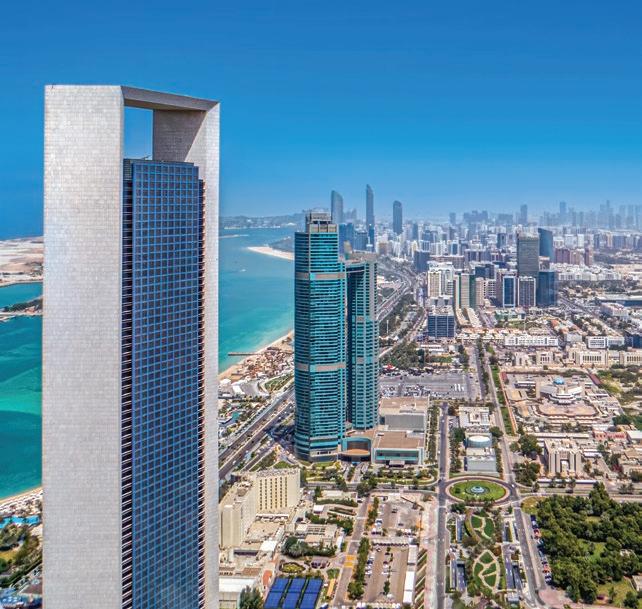
ABU DHABI IN 2025: STABILITY TRANSLATING INTO GROWTH
Abu Dhabi’s market performance in 2025 reflects a different but equally compelling investment trajectory.
Real estate sales increased from approximately $27 billion in 2024 to nearly $39 billion in 2025, with transaction volumes rising by close to 50%. The market benefits from a balanced mix of investors and end-users, which supports liquidity while limiting volatility. Abu Dhabi has shifted from being perceived as conservative to demonstrating one of the most stable and high-quality growth trajectories in the UAE.
RENTAL-LED STRENGTH AND LONG-TERM APPEAL
Rental demand remains strong across prime island locations, including Al Reem, Yas, and Saadiyat. Limited premium supply, combined with steady population inflows, has supported growth in rental volumes and rates.
The rental market grew from $4.48 billion in 2024 to $4.82 billion in 2025, despite supply constraints. This positions Abu Dhabi as particularly attractive for income-focused and

long-term investors rather than shortterm traders.
Macro stability plays a central role. A dollar-pegged currency, transparent regulation, and a low-tax environment underpin investor confidence. Ongoing investment in cultural institutions, lifestyle infrastructure, and master-planned developments continues to enhance the emirate’s global profile.
Unlike overheated markets, Abu Dhabi offers a more balanced priceto-quality ratio while maintaining strong liquidity, particularly in prime island locations. The capital remains not only a stable and predictable market, but a premium one, combining attractive yields with a high-quality urban environment and long-term investment appeal.
WHAT DATA SIGNALS FOR THE NEXT PHASE
Many global investors now allocate across both cities, using each to serve a distinct function within diversified portfolios. Dubai offers scale, liquidity, and breadth, making it attractive for investors seeking exposure across segments. Abu Dhabi provides stability, yield, and long-term visibility, appealing to capital prioritising predictability and income.
The data points toward longer holding periods, greater selectivity, and increased focus on fundamentals. Supply growth will require careful asset selection, but population growth, rental demand, and resident participation provide structural support.
Dubai and Abu Dhabi are no longer cyclical trades. They have become long-term allocations within global real estate strategies, supported by demographics, governance, and sustained demand rather than momentum alone.
Olga Pankina, COO, Whitewill Dubai
Svetlana Politova, COO, Whitewill Abu Dhabi

FUN COMES GUAR ANTEED
YOU DECIDE WHEN THE PARTY STOPS WITH 24HR FOOD & DRINK. NOW OPEN AT DUBAI D IGI TAL P ARK.
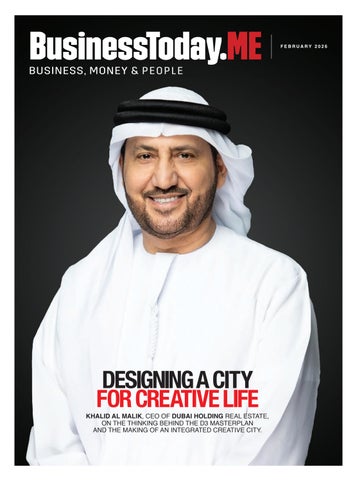
DESIGNING A CITY FOR CREATIVE LIFE
Khalid Al Malik, CEO of Dubai Holding Real Estate, on the thinking behind the d3 masterplan and the making of an integrated creative city.
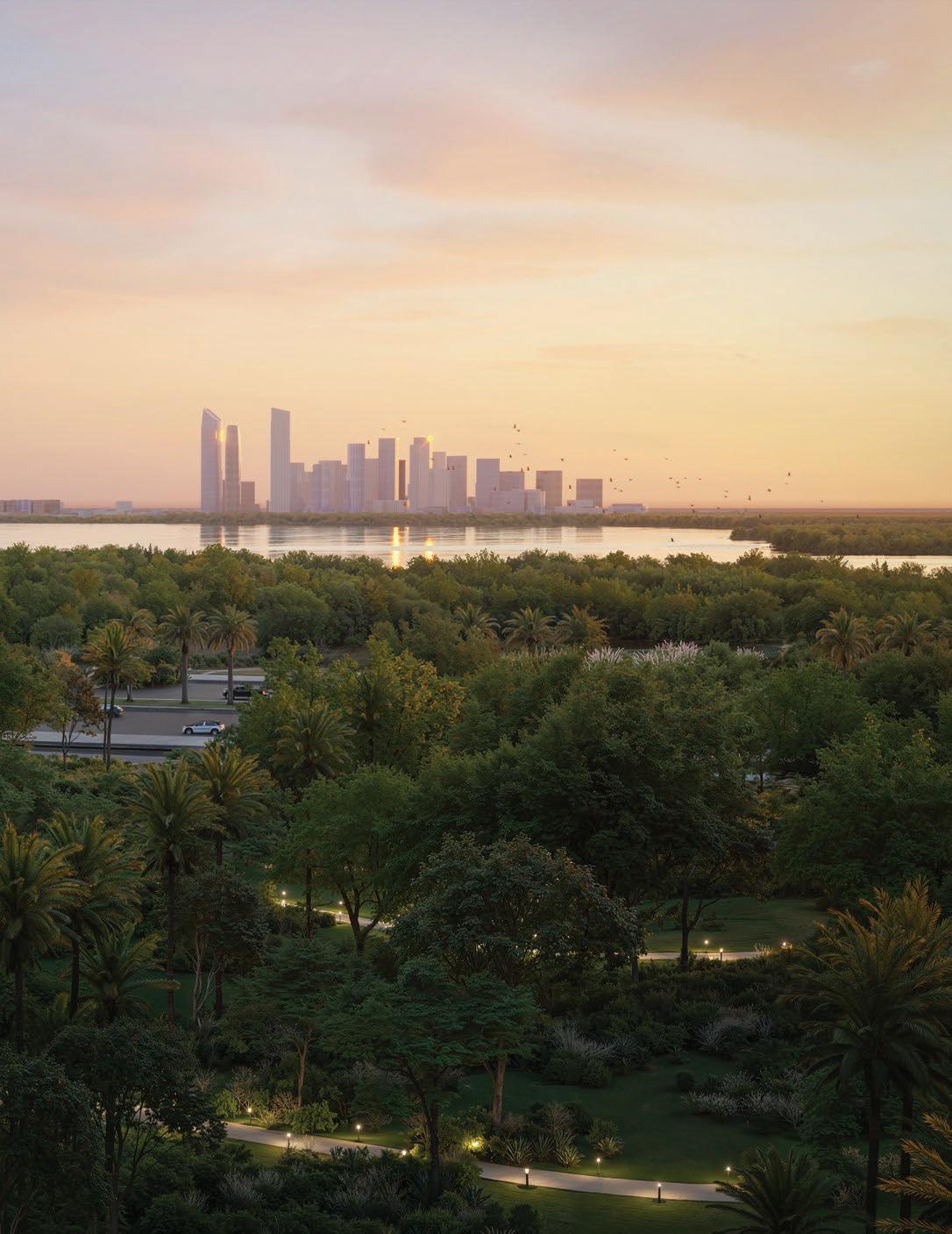
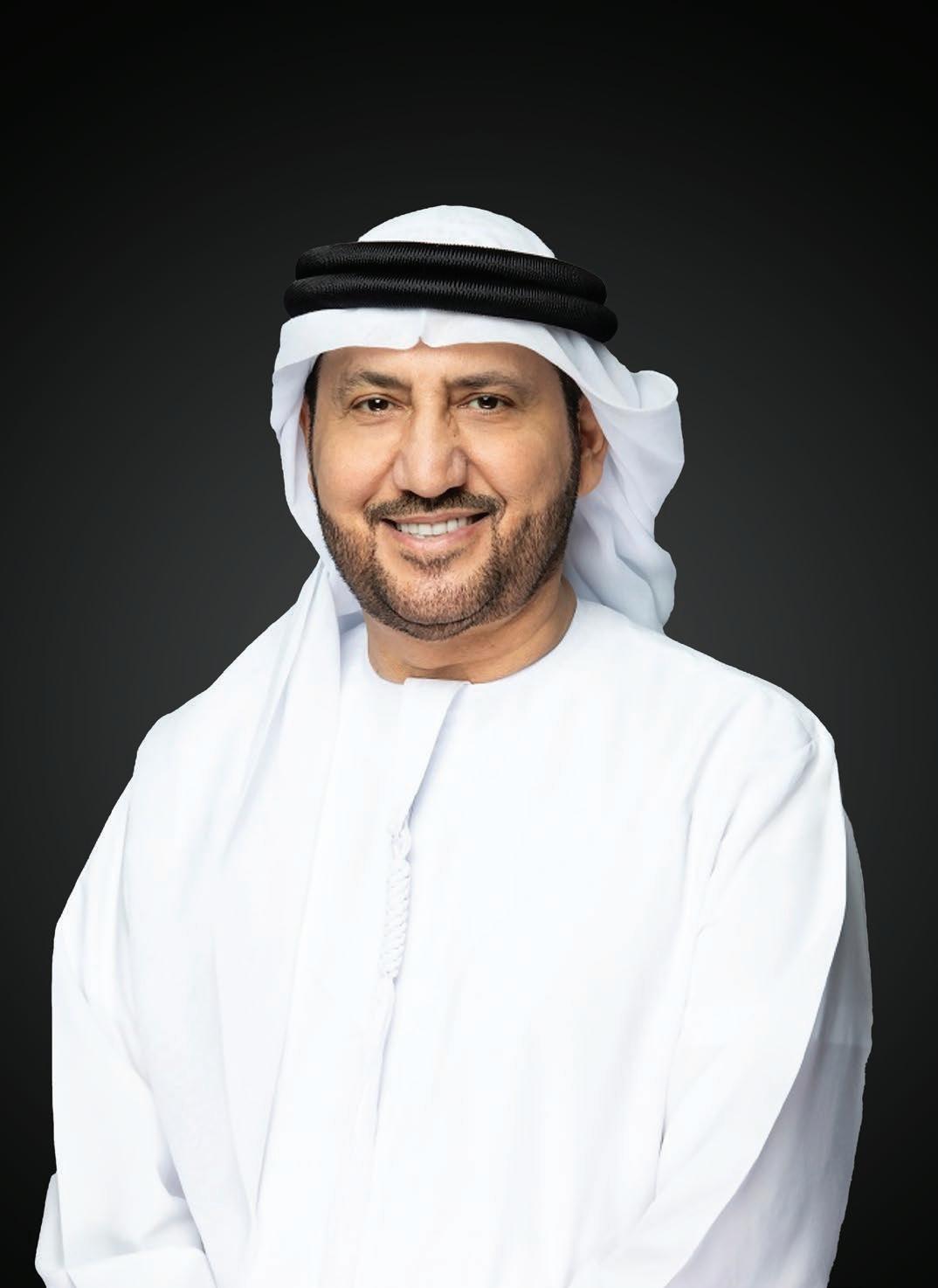
ubai’s skyline has long been a canvas for ambition, but the city’s next chapter in urban design and creative living is being penned at the Dubai Design District, known as d3. At the helm of this transformative expansion is Khalid Al Malik, Chief Executive Officer of Dubai Holding Real Estate, whose vision for d3 transcends conventional city planning to create a destination where art, design, innovation, and lifestyle converge.
Khalid Al Malik, Chief Executive Officer of Dubai Holding Real Estate
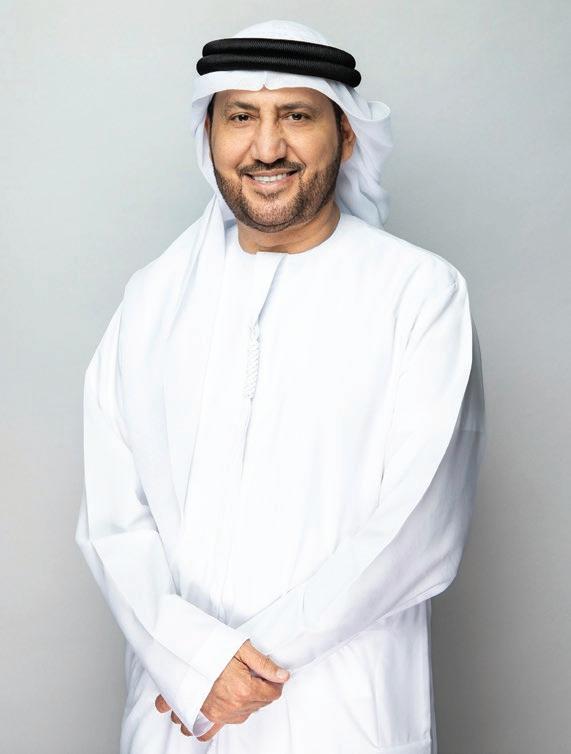
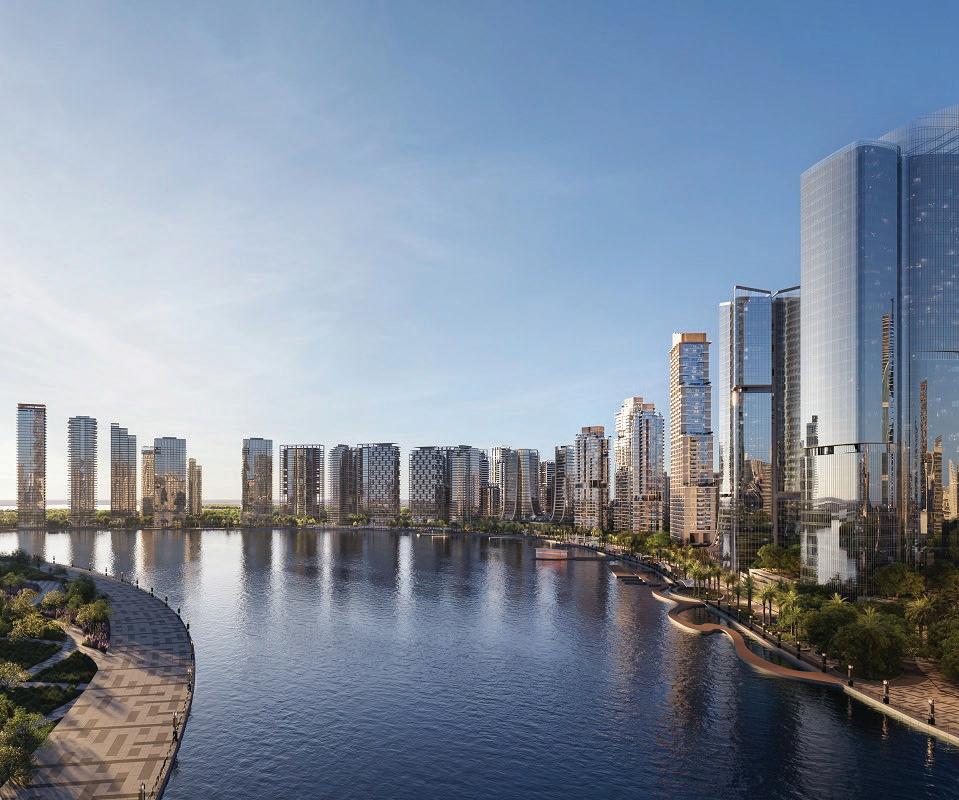
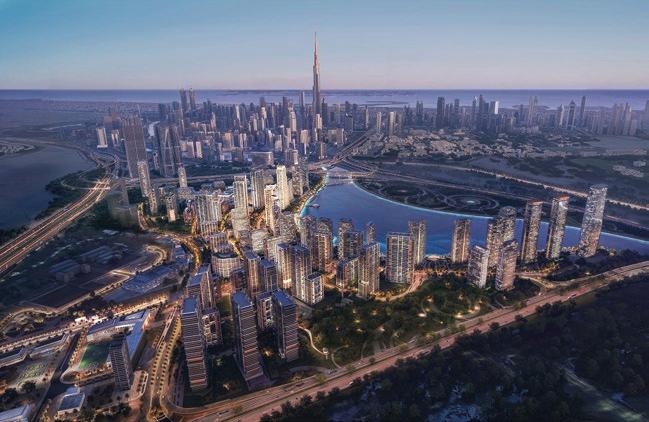
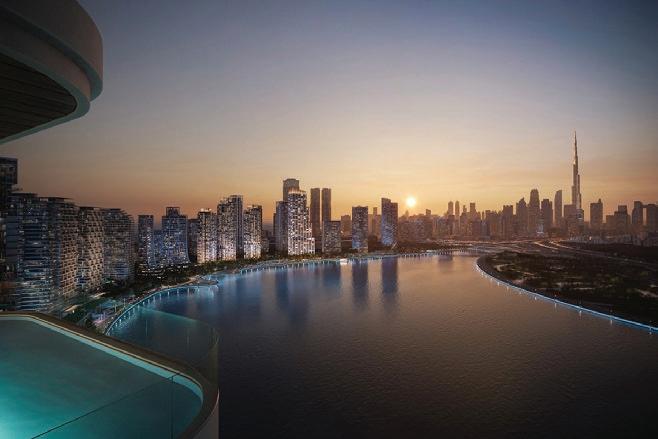
Situated on the historic banks of Dubai Creek, d3 is poised to become a global magnet for creative industries, drawing talent, investment, and international attention. “d3, as a location and as a project, is important for us to understand,” Al Malik said, highlighting the site’s strategic significance. “It is situated in a deeply historic area. Dubai Creek has long been central to the city, it was a hub for trade, active on both sides of the water.”
Today, d3 is more than a nod to Dubai’s heritage. It is a meticulously planned urban environment designed to balance human scale, sustainability, and innovation. With neighbouring districts such as Downtown Dubai, Business Bay, and
Dubai Festival City, the area is at the confluence of commerce, culture, and creativity. “To us, d3 is a very important destination. It is a place where we are attracting the most sensitive industries, the industry of design and art in that area,” Al Malik noted, underscoring the district’s targeted positioning within Dubai’s broader economic strategy.
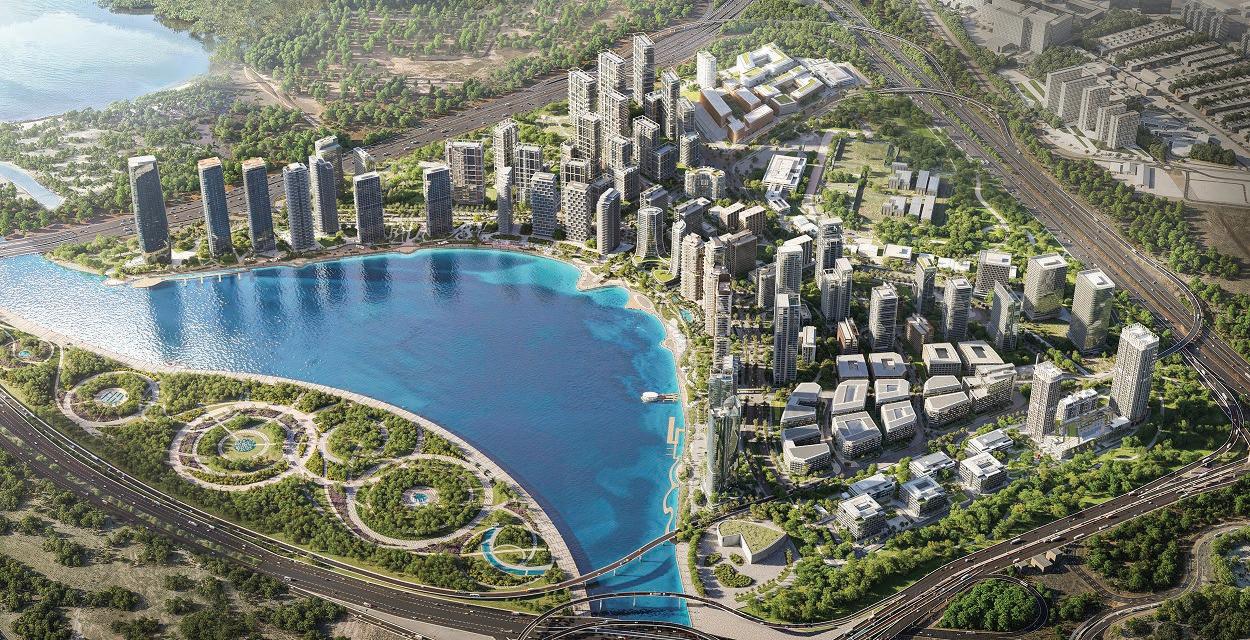
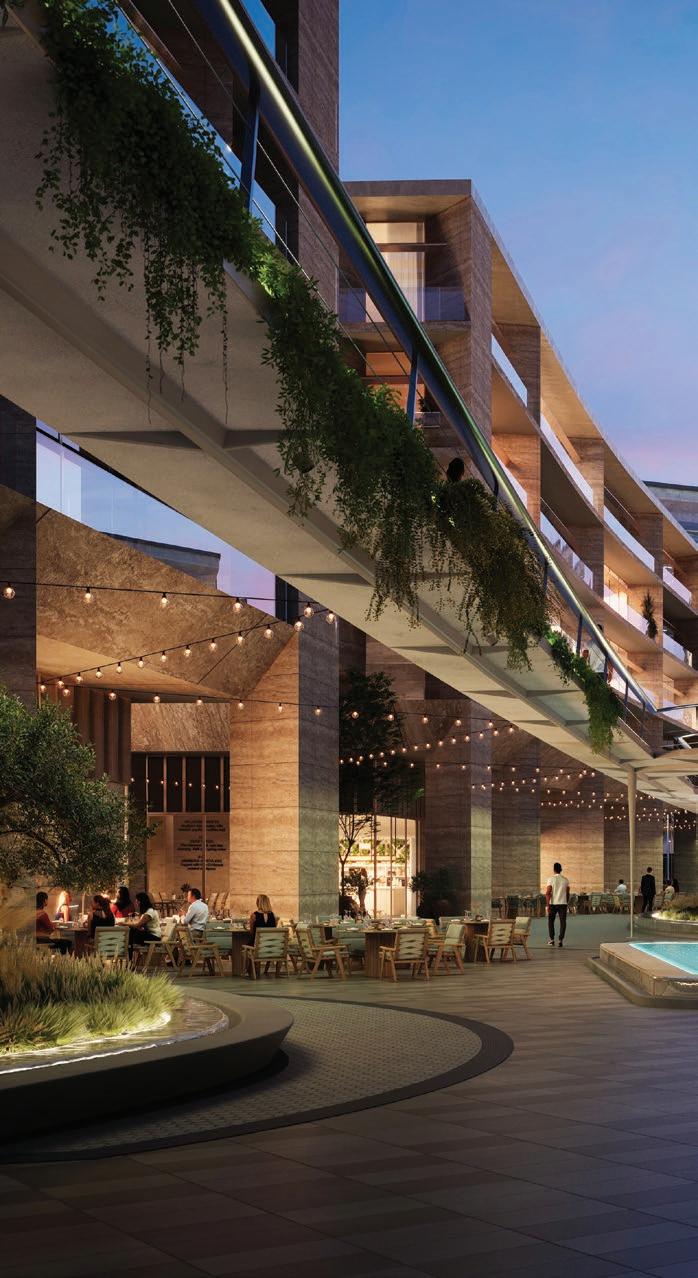
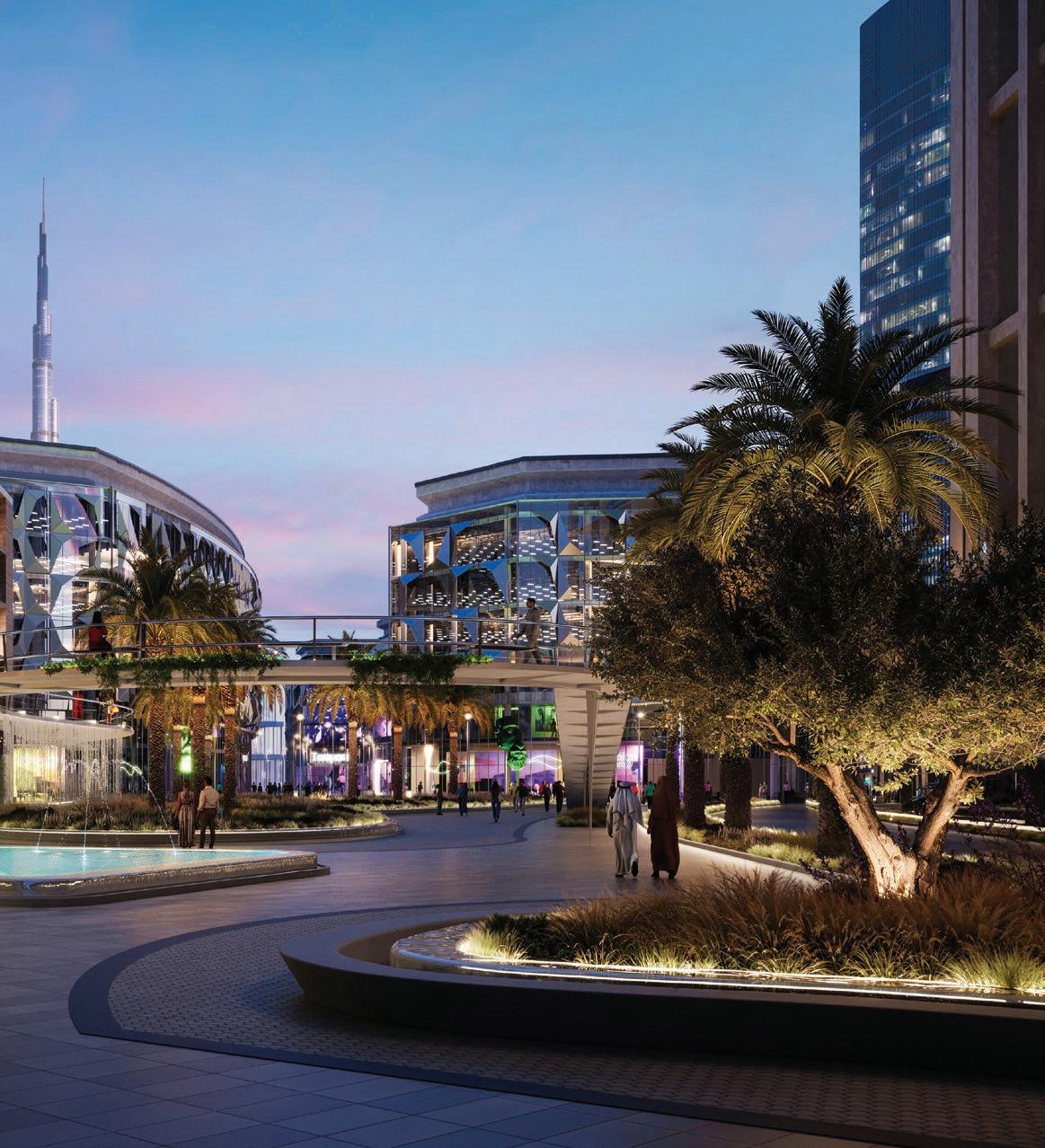
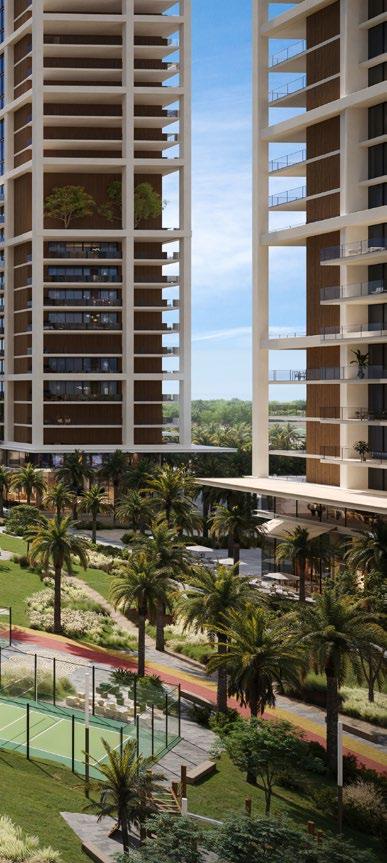
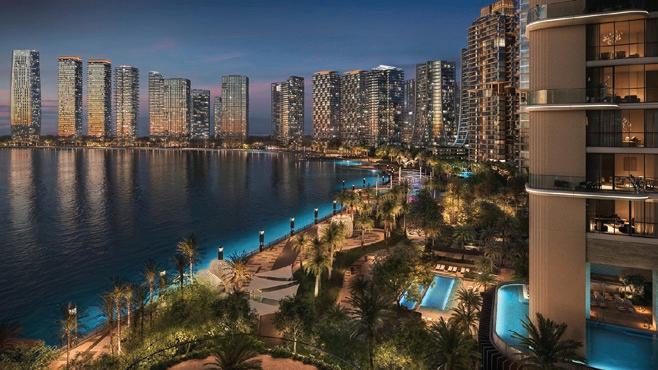
The 18 million square-foot masterplan is organised into five distinct zones, each serving a specific function while contributing to a seamless, integrated community. At the Creekside, residents and visitors experience contemporary waterfront living with boutique hospitality, scenic promenades, and direct access to Dubai Creek. The Design HQ is the urban heart, combining premium residences with curated retail, fine dining, and offices, fostering a vibrant ecosystem for creative professionals.
SOHO at d3 is conceived as the cultural nucleus, featuring mid-rise residential towers overlooking the d3 Bowl, with exhibition spaces, performance venues, and year-
We’re providing exhibition spaces, labs, and studios, including loft-style units for individuals who may not have a company yet. Even independent creatives can find a space to work and grow.
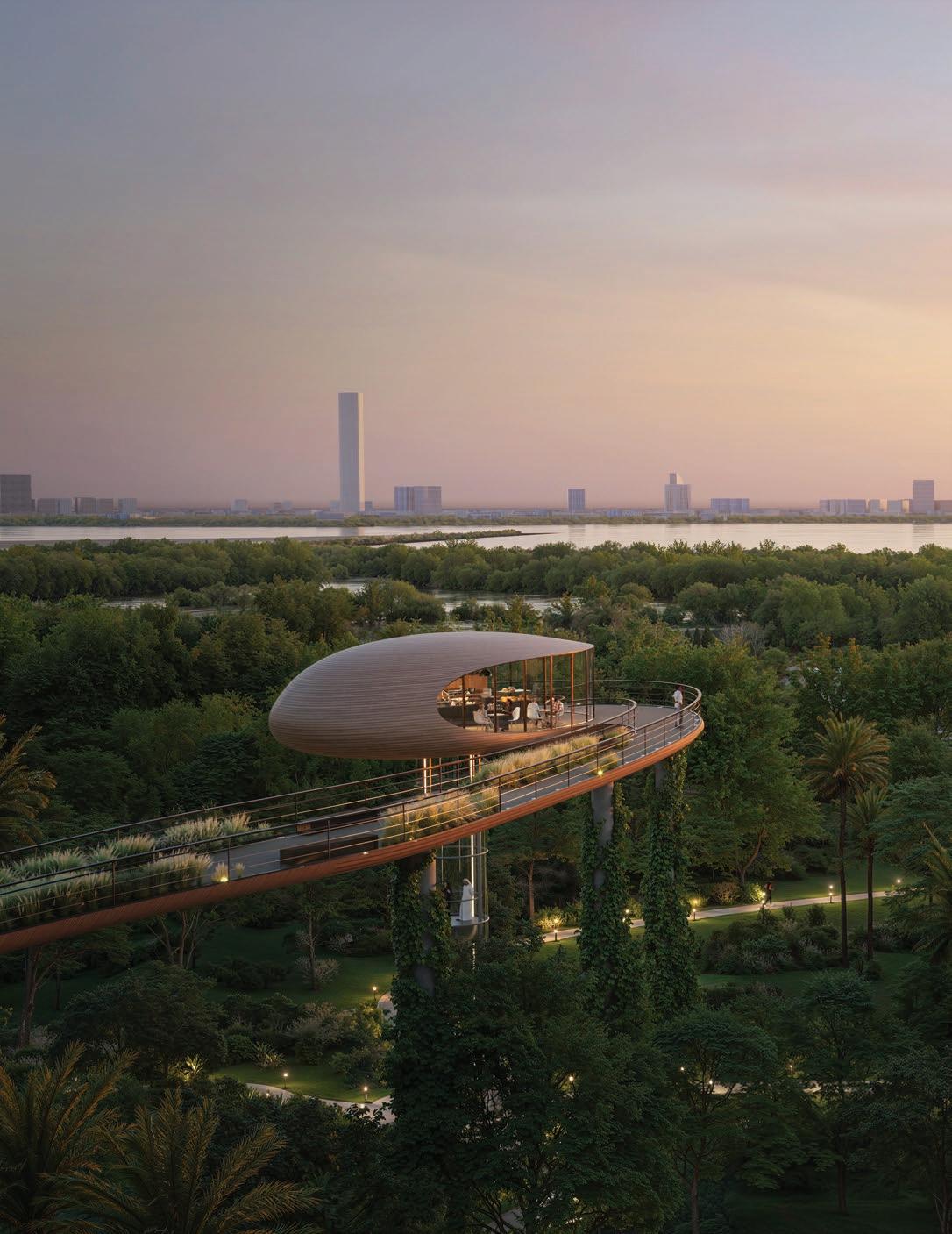
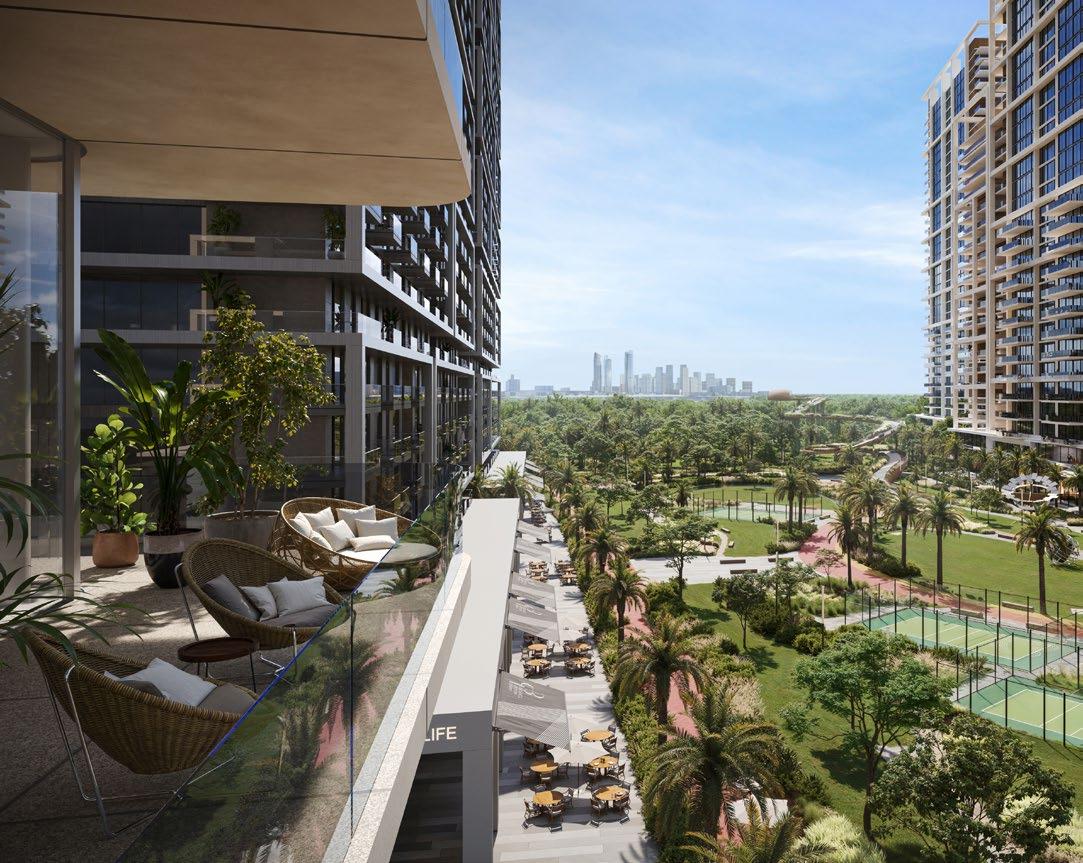
round festivals. It is here that Dubai’s creative heartbeat is most visible, where inspiration is woven into the rhythm of city living. Complementing this is The Sanctuary , a wellnessoriented precinct centred on a mangrove-inspired park and observation deck overlooking the Ras Al Khor Wildlife Sanctuary. “Wellbeing is being very much addressed also, as I said, in this area,” Al Malik emphasised. Green corridors, shaded walkways, and recreational amenities provide a retreat from the city’s pace without compromising connectivity or access.
The final zone, Mindspace , is designed to nurture creativity and collaboration. Galleries, studios, and loft-style spaces cater to designers, artists, and innovators, creating a live-work environment where ideas can flourish. Al Malik emphasised the careful planning behind the masterplan: “We’re providing exhibition spaces, labs, and studios, including loft-style units for individuals who may not have a company yet. Even independent creatives can find a space to work and grow.”
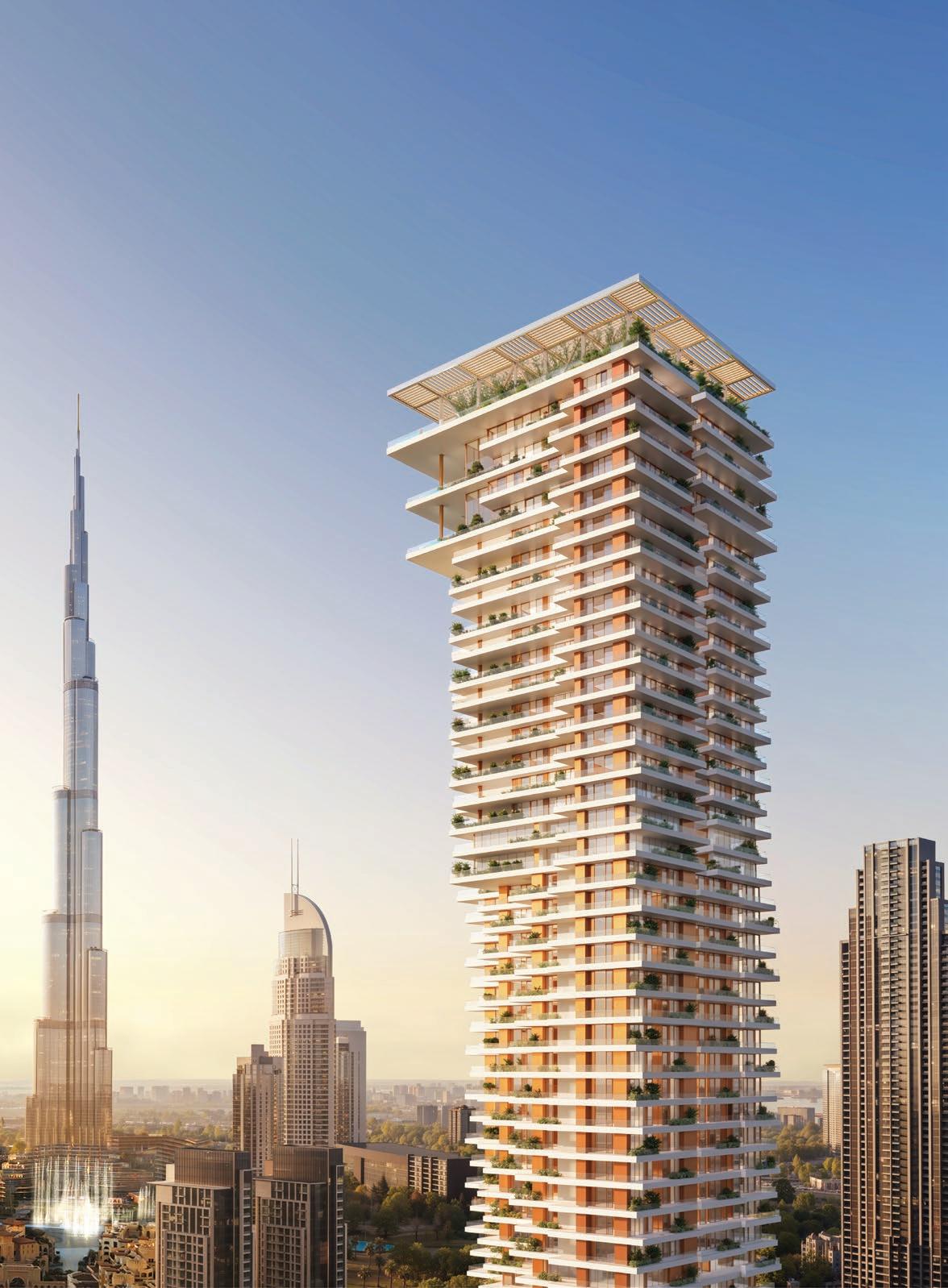
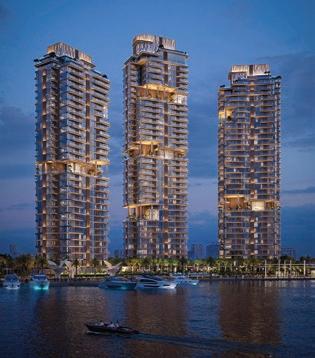
A standout in the d3 expansion is The Edit, a three-tower waterfront development that reflects the district’s focus on human-centric urban design. The project spans a range of residences, from one-bedroom apartments to signature penthouses, with every detail oriented towards both luxury and liveability. Panoramic views of Dubai Creek and the adjacent wildlife sanctuary are complemented by amenities designed to foster community and well-being, including wellness studios, co-working spaces, and recreational facilities. “The Edit will be a unique one. It will be a development that we will be, as I said, trying to elevate the standards of living with it,” Al Malik noted, underlining the ambition to set new benchmarks in urban residential design.
The appeal of The Edit is evident in early demand. “We have been seeing the demand actually improving year on year after Covid-19… the location itself and the features of the master plan… people love to be there. The demand, as I said, is very healthy,” Al Malik confirmed, signalling confidence in d3’s ability to attract both residents
and investors who prioritise quality, creativity, and lifestyle.
Sustainability and humancentric design are at the core of d3’s expansion. The district is targeting LEED Silver community certification , with energy-efficient building design, walkable and shaded streets, and public spaces that encourage physical activity and community engagement. “We have decided from the beginning to aim for a LEED certificate, which here, the category specified is silver… we ensure also those are delivered,” Al Malik said. By embedding principles of wellness, connectivity, and nature into the very fabric of d3, the district sets a new benchmark for urban development in Dubai and the region.
The d3 masterplan blends living, working, and cultural experiences in one integrated community, with around 15,000 units designed to accommodate roughly 60,000 residents. Homes range from onebedroom apartments to spacious penthouses, all with a focus on design and premium living. While d3 leans toward the high-end, Al Malik noted that affordability across Dubai varies by location: “The further north or into busier areas you go, prices rise. Head south, and they come down.” In other words, d3 is a showcase for upscale, design-conscious living, but Dubai as a city offers a full spectrum of housing to meet different needs.
Connectivity is another cornerstone of d3’s masterplan. The Design Line, a central pedestrian pathway, allows residents to navigate the district without relying on cars, while roads like Ras Al Khor, Al Khail, and Financial Centre Road link the district to Downtown Dubai, Burj Khalifa, and the wider city. Al Malik stressed the significance of this approach: “If you live in such a destination in the future, you really don’t need to leave the space. You will have everything close to yourself… hospitals,
community centers, workability spaces for your health.” The result is a district that is not only visually inspiring but operationally practical.
Meraas, part of Dubai Holding Real Estate , spearheads the development and delivery of d3.
Leveraging decades of experience in shaping iconic Dubai communities, the group ensures that each phase of the masterplan meets rigorous standards of quality, design, and sustainability. “We deliver the projects fast, and we focus on the timelines and on making sure that what we are delivering is really complying with the standards.” Al Malik said, emphasising
the group’s commitment to excellence in execution.
The d3 expansion is redefining what it means to live and work in a creative city. Rooted in Dubai’s rich heritage yet fully embracing innovation, the district brings together design, culture, and community in a way that feels effortless. For Khalid Al Malik, it is not just a collection of buildings but a vision for a lifestyle where creativity thrives, ideas flourish, and the city itself grows more vibrant.
As the district grows, so too does its impact on Dubai’s position in the global economy. d3 directly contributes to Dubai Economic Agenda D33, attracting international talent and
We deliver the projects fast, and we focus on the timelines and on making sure that what we are delivering is really complying with the standards.
investment while positioning the UAE as a leading global partner for creativity and innovation. In Khalid Al Malik’s words: “The idea of having a blend of components in a master plan like this is that we want it to be fully integrated, where people can live, work, innovate, and play, all in one area.”
As The Edit rises and the five precincts take shape, d3 is becoming a city within a city. It is a place where creativity is embedded in everyday life, where work, play, and living intersect seamlessly, and where Dubai’s ambition is expressed not just in architecture, but in the very way people experience the city.
THE LAND
SPEAKS WHEN
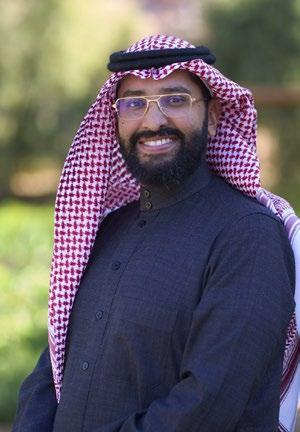
Hamad Alhomiedan, Arts and Creative Industries Director at the Royal Commission for AlUla, is shaping the region’s transformation with deliberate restraint. In AlUla, every road, building, and artwork is shaped by a single question: does it truly belong here?
BY AYA ZHANG
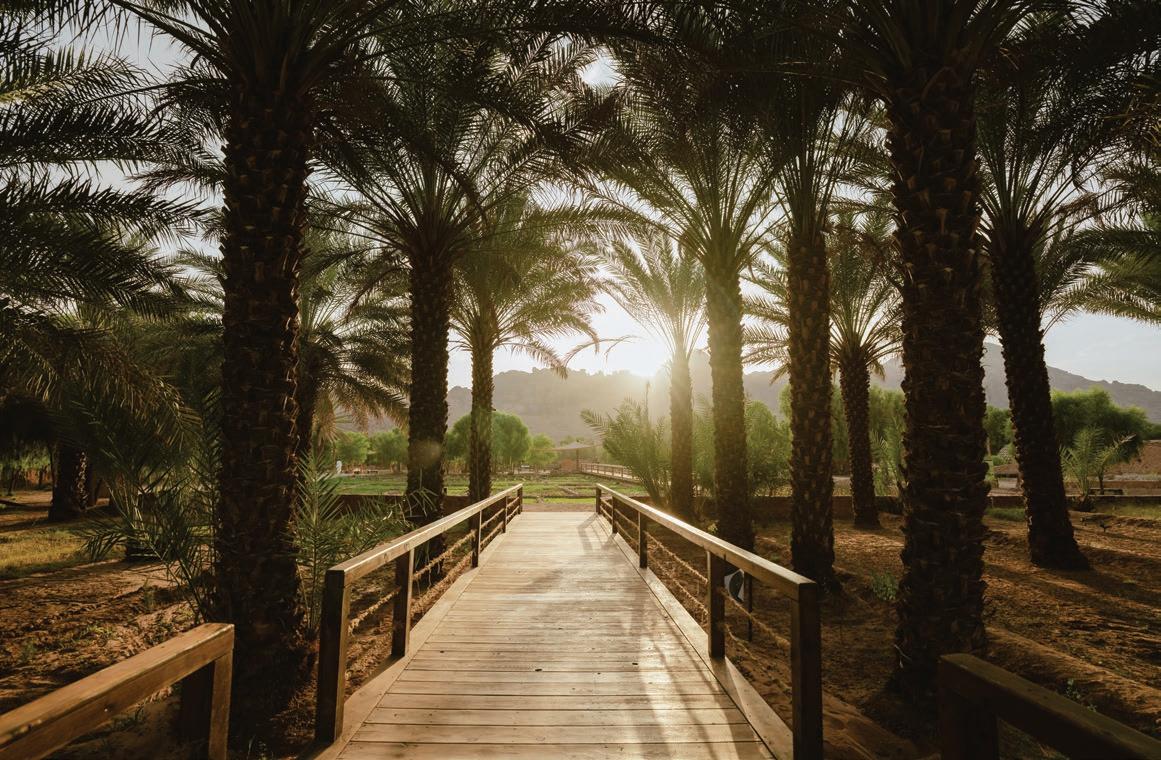
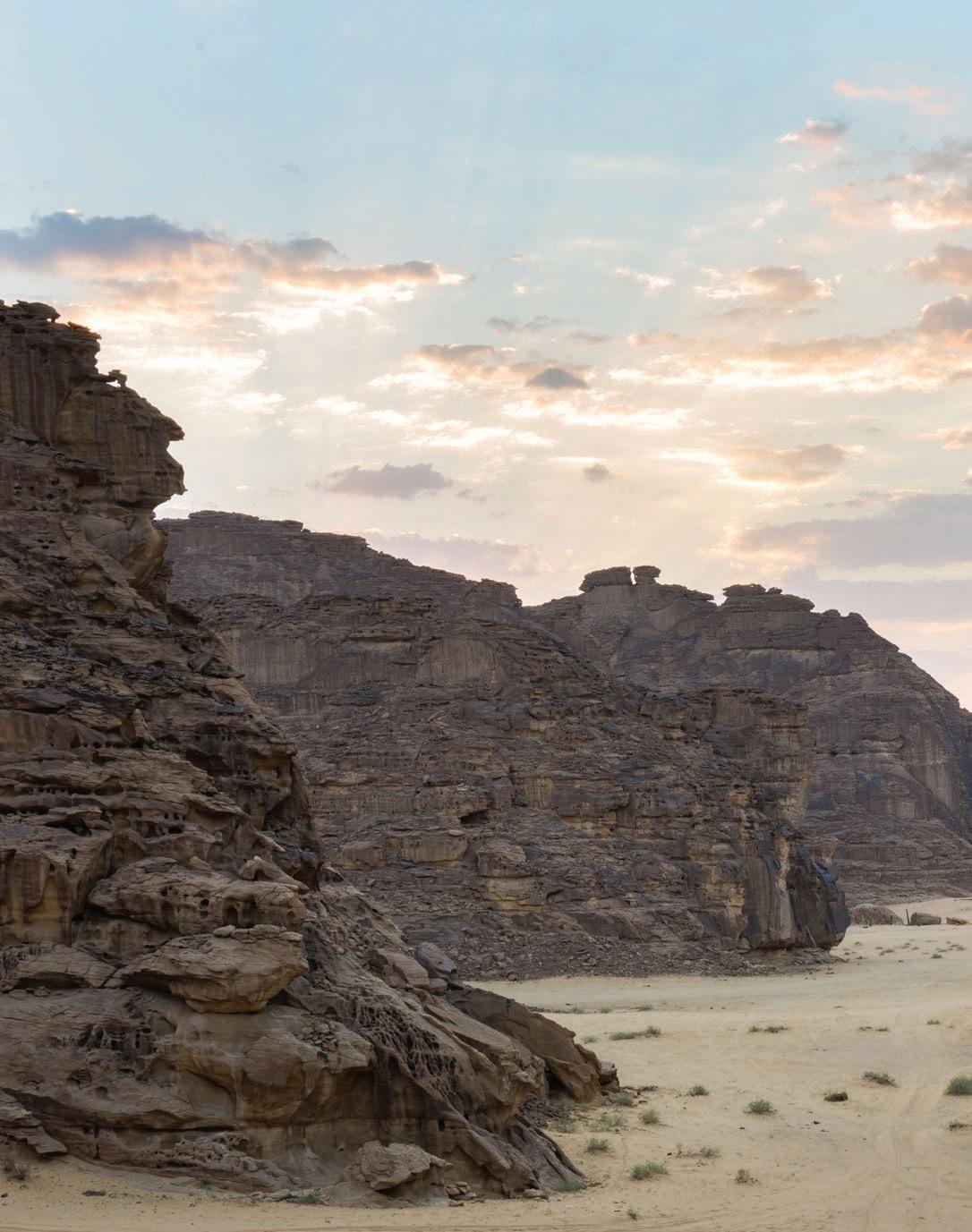
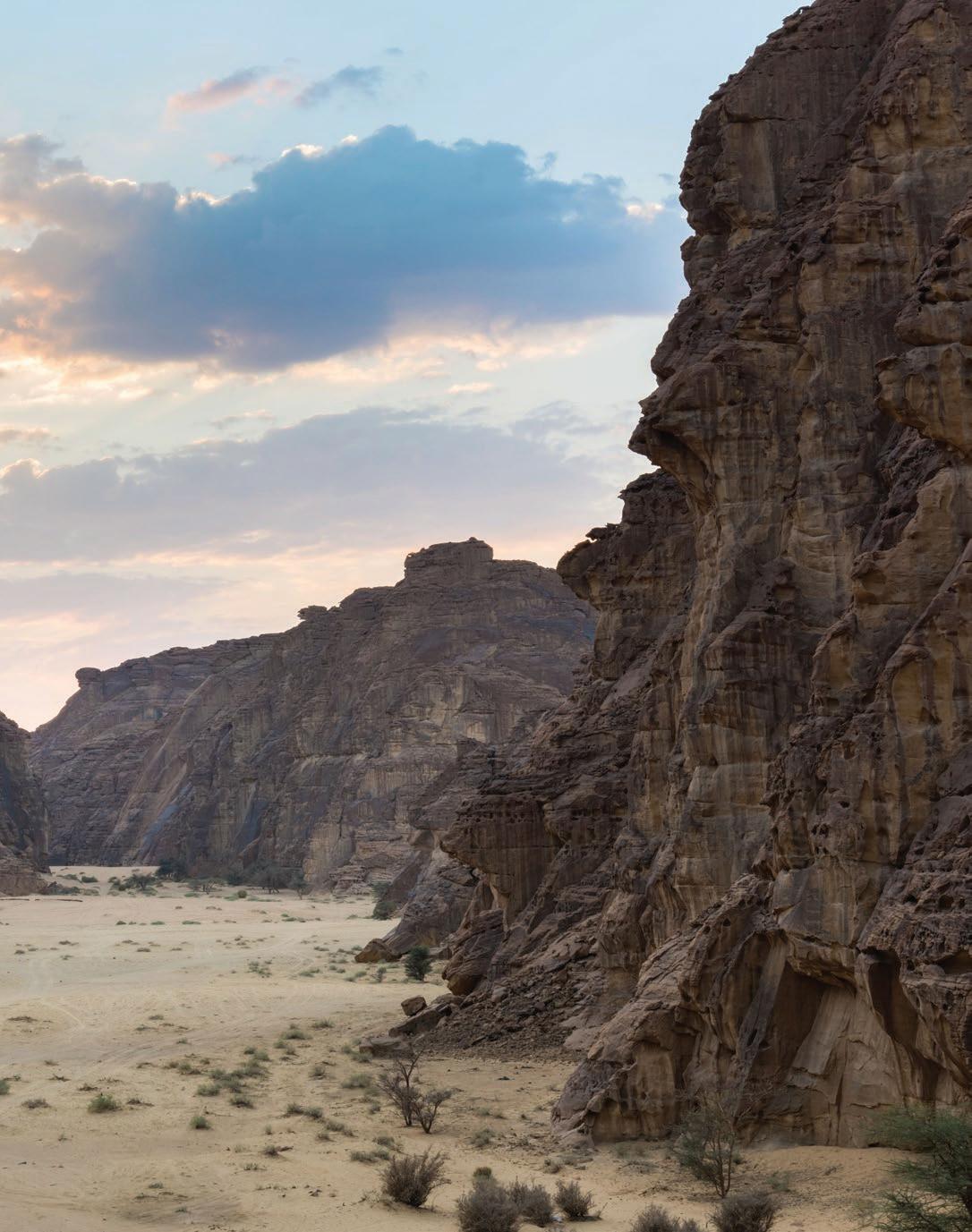
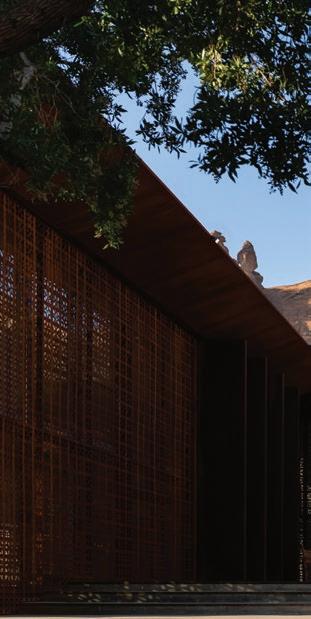
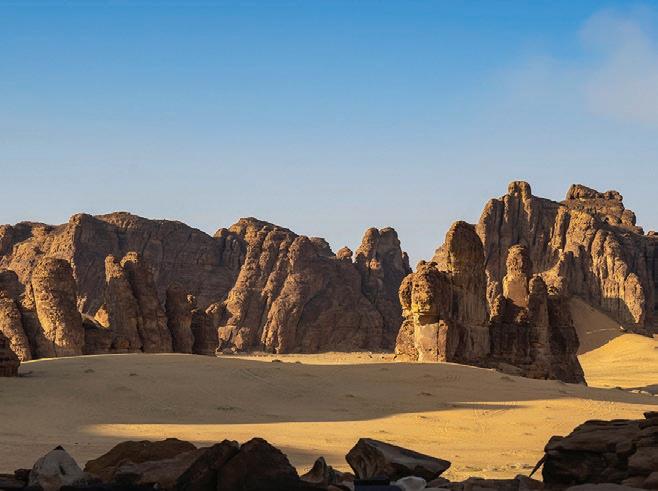
As you spend time in AlUla, you begin to notice that the place does not boast about its scale, but about how carefully it holds back. The sandstone formations dominate the horizon unapologetically, while the built environment seems to step back. Roads curve gently around rock faces and buildings sit low, melting into sightlines that have existed for centuries.
It is an approach that runs counter to much of what modern development has come to represent. Elsewhere, progress is measured in how tall buildings rise. In AlUla, it is measured in how little is disturbed.
This philosophy was not immediate or absolute. It evolved through years of questioning what development should mean in a place where landscape,
Hamad Alhomiedan, Arts and Creative Industries Director at the Royal Commission for AlUla
archaeology, and living communities exist side by side. Since 2017, the Royal Commission for AlUla has worked within this tension, balancing global access with the responsibility of preservation.
At the centre of that process is a belief that culture is not an overlay, but a foundation. Art, design, and creative practice are not treated as finishing touches, but as tools that guide decision-making, from materials and building heights to how people experience the land itself. It is a model that requires patience, and a willingness to accept limits.
Speaking at the fifth edition of the AlUla Arts Festival 2026, Hamad Alhomiedan reflects on a journey shaped not by expansion, but by careful calibration. As Arts and Creative Industries Director at the Royal Commission for AlUla, his work sits at the meeting point of heritage and ambition, anchored by one constant question: does it belong here?
Development here needs to be careful, needs to be curated, needs to be done right.
When Alhomiedan speaks about development, the conversation moves away from numbers and scale. It shifts instead toward intent, responsibility, and long-term consequence. What does development actually mean in a place like AlUla? And who gets to define progress when preservation is part of the brief?
Globally, the word development tends to conjure familiar images: towers rising quickly, density increasing, infrastructure expanding at speed. In AlUla, that definition feels out of place. Development here is quieter, deliberate. It listens to what is already there rather than imposing itself. It is measured not by scale, but by sensitivity. By how carefully progress can exist without erasing the land, its history, or the communities rooted within it.
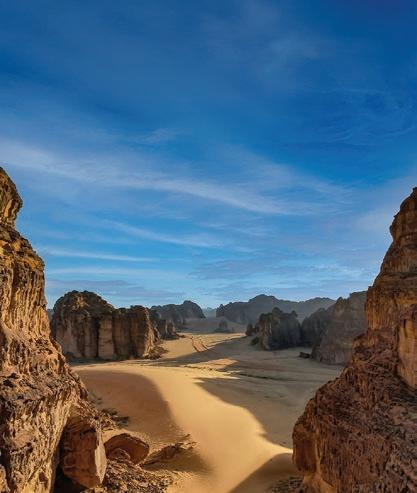
From the outset, the challenge was never just how to build, but how to pay attention. The landscape of AlUla is not a backdrop; it is a presence,
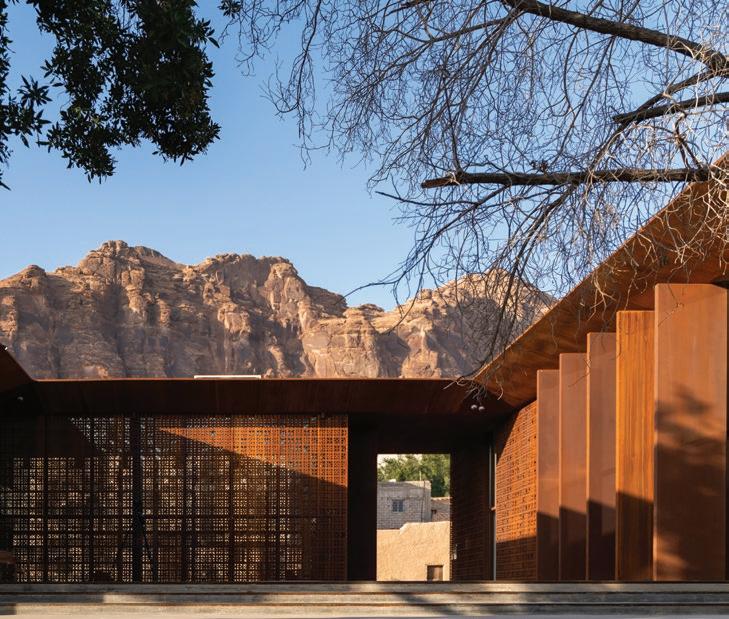
shaping every decision from the curve of a road to the height of a building. Here, design is not decoration. Walking through AlUla, the echoes of ancient craftsmanship are impossible to ignore. The tombs of Hegra, carved from sandstone more than two thousand years ago, still stand with a precision that feels strikingly contemporary. Their endurance is a quiet benchmark, a reminder that quality is not a modern invention.
For Alhomiedan, that lineage matters. If work created millennia ago can still command attention, today’s interventions must meet the same standard. Doing things carefully and well is a responsibility. This philosophy extends beyond aesthetics where practical choices reflect the same care. For example, building heights are restricted so the landscape remains visible. Footprints are reduced rather than expanded.
Existing structures are sometimes removed to restore balance. Mountains, palms and open sky dominate the experience, not human construction because the aim is to let people experience the beauty of the landscape and feel it. Materials do tell a similar story. Local resources are prioritised, not for novelty but because they belong. Initiatives such as the design residency and exhibitions like Material Witness
invite designers to explore what the land itself provides—palm fibres, slag, and other overlooked materials— reimagining them as furniture or construction elements.
When the conversation turns to ambition, Alhomiedan is clear that AlUla’s future is outward-looking. The region is shaping itself as a cultural and creative hub with a tangible economic role. Creative industries, he notes, are resilient by nature: they generate

value while preserving identity. Within Saudi Vision 2030, AlUla contributes to economic diversification and sustainability, welcoming visitors without compromising its integrity. et he resists scripting the visitor’s experience. AlUla is not a place that can be summarised. Photographs capture only fragments. The full impression emerges through walking the oasis, smelling ripening dates, touching the soil, listening to birdsong, or standing beneath a night sky untouched by light pollution. It is an experience that must be felt, not explained.
That careful openness extends to how the future is planned. Large swathes of AlUla remain untouched, protected as natural reserves. Development is guided by clear rules: environmental policies that safeguard the night sky, archaeological assessments that honour the layers of human history embedded in the land.
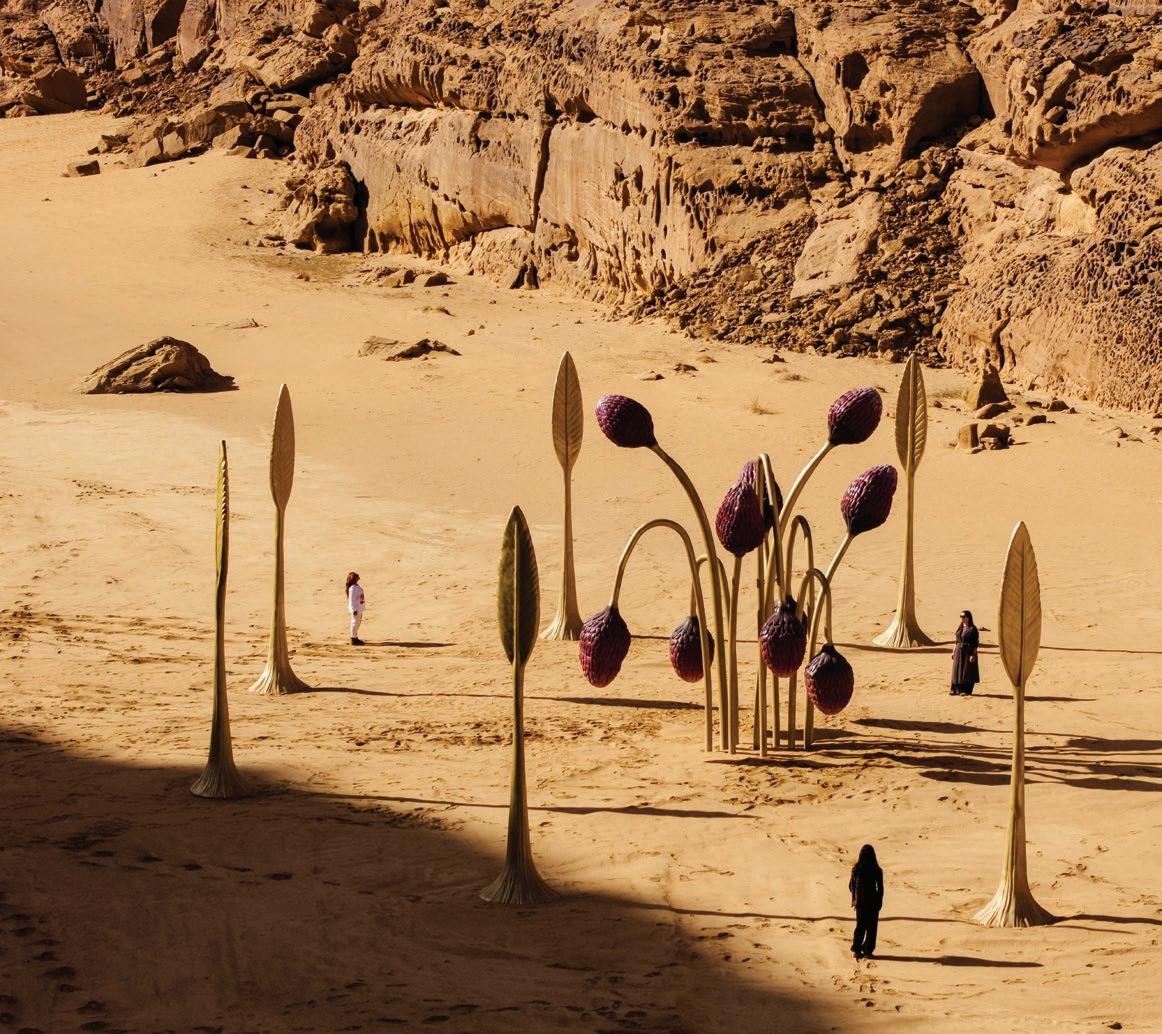
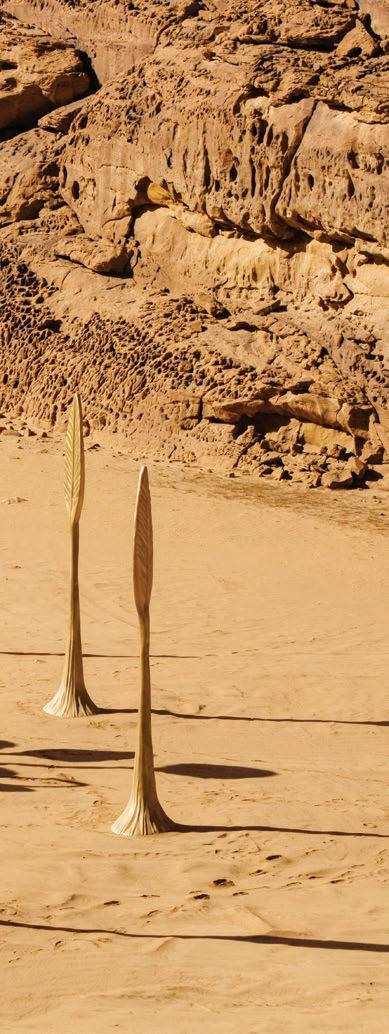
Art is central to this approach. At sites such as Wadi AlFann, artists engage directly with the landscape, choosing their own sites and responding to the land rather than reshaping it. The works vary in form and scale, but they all share one principle: they must speak AlUla’s language.
When asked what connects him most deeply to the region, Alhomiedan does not hesitate. It is the community. Their presence, openness, and willingness to participate form the backbone of every project in AlUla. Rather than being positioned as observers of change, local voices are embedded within it, shaping outcomes and anchoring progress in lived experience.
Looking ahead, immediate focus is placed on cultural programming that spans art, design, and contemporary practice, strengthening AlUla’s role as a living cultural landscape rather than a static destination. These initiatives form the foundation for what follows: the careful realisation of long-term assets, including districts, institutions, and purposebuilt spaces designed to anchor the region’s creative identity for generations to come.
Throughout the conversation, one idea returns with quiet consistency. In a landscape that has endured for hundreds of thousands of years, development is not about competition or visibility. It is about restraint. About knowing when to intervene, and just as importantly, when to step back.
BEYOND THE MEGAPROJECT ERA
From megaprojects to measurable performance, 2026 will see a Middle East infrastructure reset.
BY FREDERICO JUSTUS
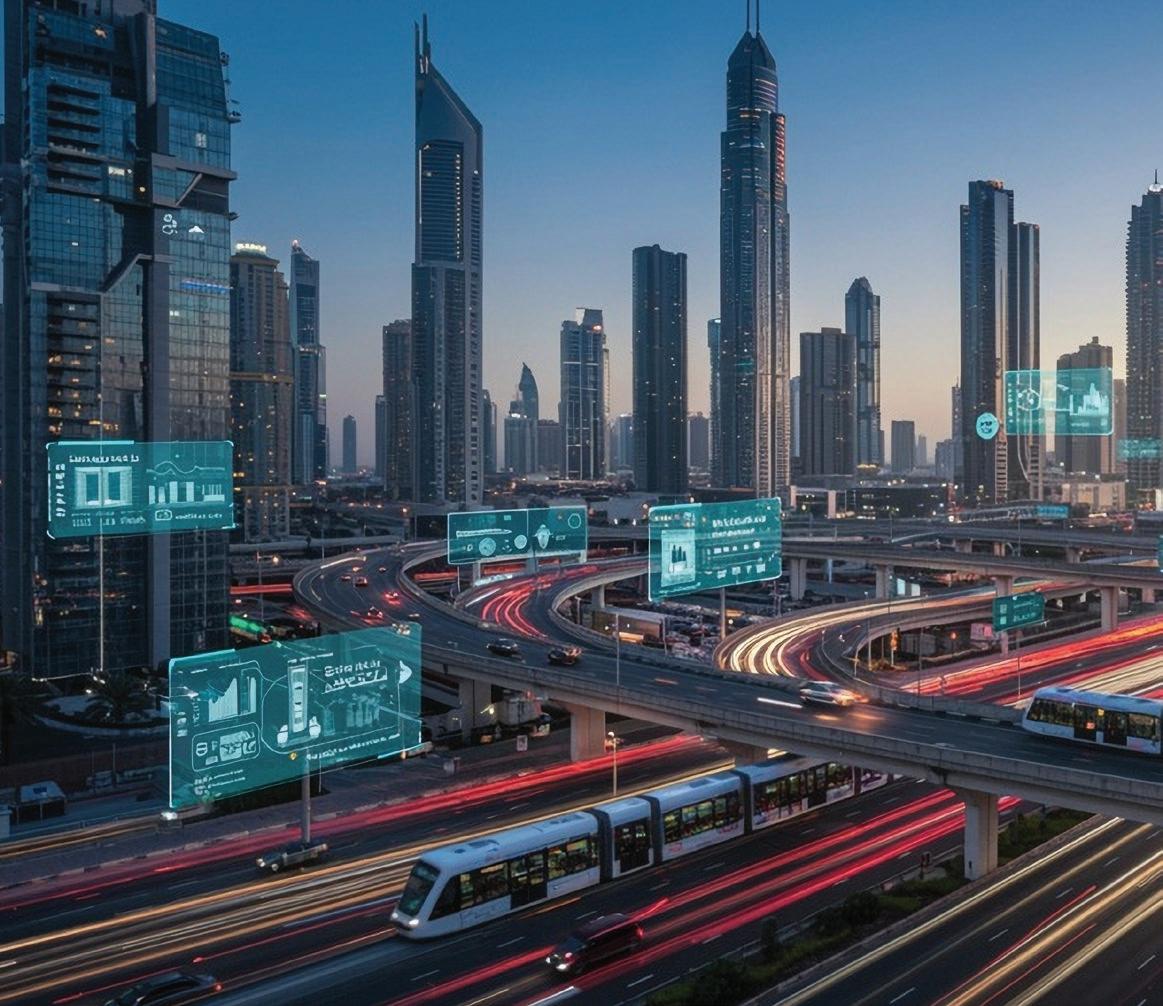
Entering 2026, the Middle East will be moving into a more demanding phase of development. The past decade was defined by the scale of ambition, the next will be defined by precision, performance, and long-term value. Across the Middle East region, infrastructure and city building are no longer treated as singular headlines, they are being assessed as portfolios that must deliver mobility, productivity, resilience, and carbon reduction in parallel. That shift will be the defining story of 2026.
In line with this transition, leading
delivery organisations are already reshaping their operating models. Egis, for example, exceeded its 2026 financial targets two years early, achieving €2.164 billion in turnover in 2024, up 14% year-onyear, with a record €4.0 billion order book and significant advances in digital transformation and climatealigned engineering. These results underscore a regional and global pivot from scale to measurable, high-performance outcomes. Market momentum remains strong. Across the Middle East, infrastructure construction is forecast to grow from
roughly USD 204.0 billion in 2025 to about USD 266.7 billion by 2030, equivalent to a 5.51% compound annual growth rate. In South Asia, the construction market is also expanding rapidly, valued at approximately USD 1.03 trillion in 2024 and projected to grow at a CAGR of around 5.8% through 2028. This expansion is not simply a continuation of earlier cycles, it reflects structural commitments to diversification, tourism, logistics, advanced industry, and the strategic importance of reliable infrastructure to regional competitiveness. A similar acceleration is underway in South
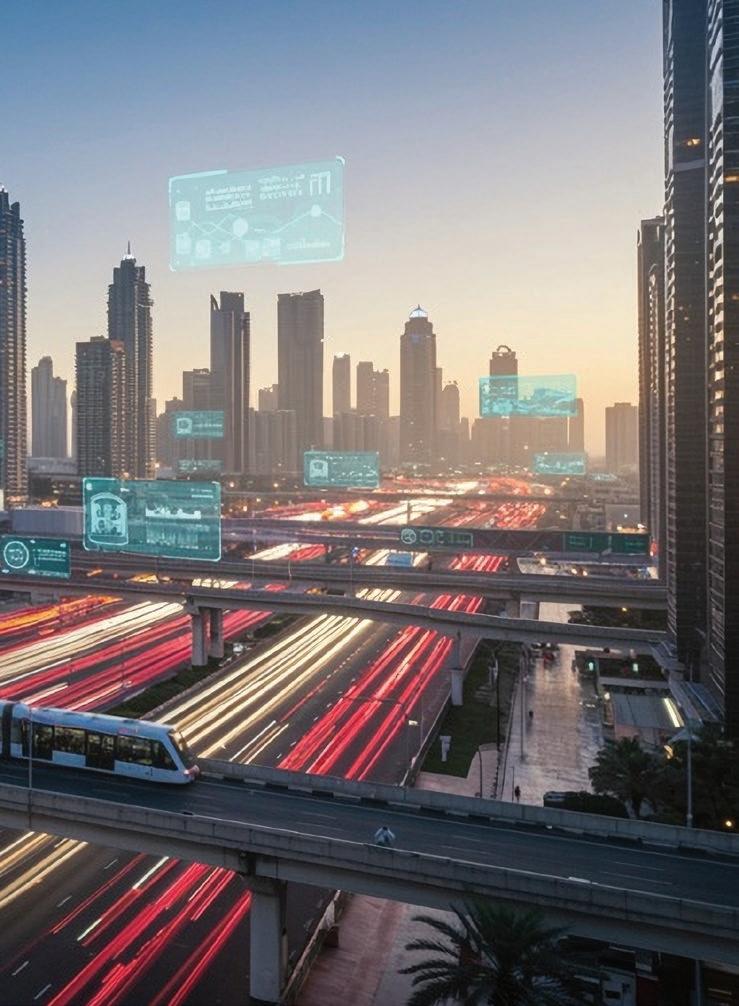
Asia, led primarily by India, where the infrastructure sector is estimated at about USD 190.7 billion in 2025 and is expected to reach about USD 280.6 billion by 2030, representing an approximately 8% compound annual growth rate.
Taken together, these trajectories reinforce a shared regional reality for 2026, infrastructure is being used not only to absorb growth, but to reshape economic models toward higher value services, deeper trade connectivity, and more resilient, climate ready urban systems. Three arenas will set the tone in 2026, mobility networks, sustainable
urban development, and the energy and industry transition.
Aviation deserves a specific call out within mobility in 2026, because the region treats air transport as an economic system tied to tourism, logistics, trade, and city competitiveness. Across the GCC airport expansion, new hub strategies, and air freight capacity are increasingly linked to wider multimodal networks, free zones, and visitor economy targets. The next phase is about operational efficiency and passenger experience as much as new terminals, with greater emphasis on digital airport management, turnaround performance, and lower carbon ground operations, all of which will shape how airports contribute to diversification goals.
Examples of this performance-led shift are visible across the region. Egis has supported the expansion of King Khalid International Airport Terminals 1 and 2 with digital and operational readiness advisory and has played a central role in Riyadh Metro - responsible for supervising the design and construction of 60% of the network, including award-winning stations such as Qasr Al-Hokm. The firm’s reactivation of the KAFD monorail further illustrates how mobility assets are being optimised, not only built.
What changes in 2026 is not the existence of these priorities, but the way governments and investors will demand that they interact. Mobility projects will increasingly be evaluated on integration and service quality rather than on size alone. Urban development will be judged by liveability, retrofit capability, and climate readiness. Energy and industry will be shaped by a dual mandate of transition and security, meaning decarbonisation must scale without compromising reliability.
Saudi Arabia is, undoubtedly, the region’s largest growth engine, but 2026 is likely to bring a sharper ordering of priorities. The Kingdom’s construction market is projected to
Frederico Justus, Chief Executive Officer, Middle East and South Asia, Egis Group
INFRASTRUCTURE
rise from USD 104.8 billion in 2024 to about USD 174.4 billion by 2030, an 8.7% compound annual growth rate. Infrastructure already represents a dominant share of the national pipeline, showing that transport, utilities, and city systems sit at the core of Vision 2030 delivery. In 2026, the most important development may be methodological rather than numerical, an increasing emphasis on sequencing projects for operational readiness, tightening commercial and delivery discipline, and expanding public private partnership models to manage risk and sustain speed.
The United Arab Emirates will continue along a slightly different but equally influential path. The UAE’s infrastructure sector is expected to grow at around 5% compound annual growth rate from 2025 to 2030, supported by sustained investment in transport, energy, and urban upgrades. The wider construction market is forecast to expand at roughly 4.2% compound annual growth rate through 2030. In 2026, opportunity is likely to tilt further toward retrofit and densification rather than pure greenfield expansion. The UAE is increasingly positioning itself as a laboratory for operational excellence, where digital asset management, predictive maintenance, and performance-based contracting are becoming normal expectations, not premium add-ons.
Qatar’s 2026 outlook will be steadier but still meaningful. The country’s infrastructure sector is estimated at about USD 33.4 billion in 2025 and forecast to reach around USD 41.3 billion by 2030, implying a 4.3% compound annual growth rate. The construction market overall is expected to grow at a similar pace, targeting approximately USD 64.3 billion by 2030. After the World Cup cycle, 2026 should be characterised by consolidation paired with targeted uplift, transport optimisation, environmental and water resilience, and diversified industrial capacity. The central challenge will be
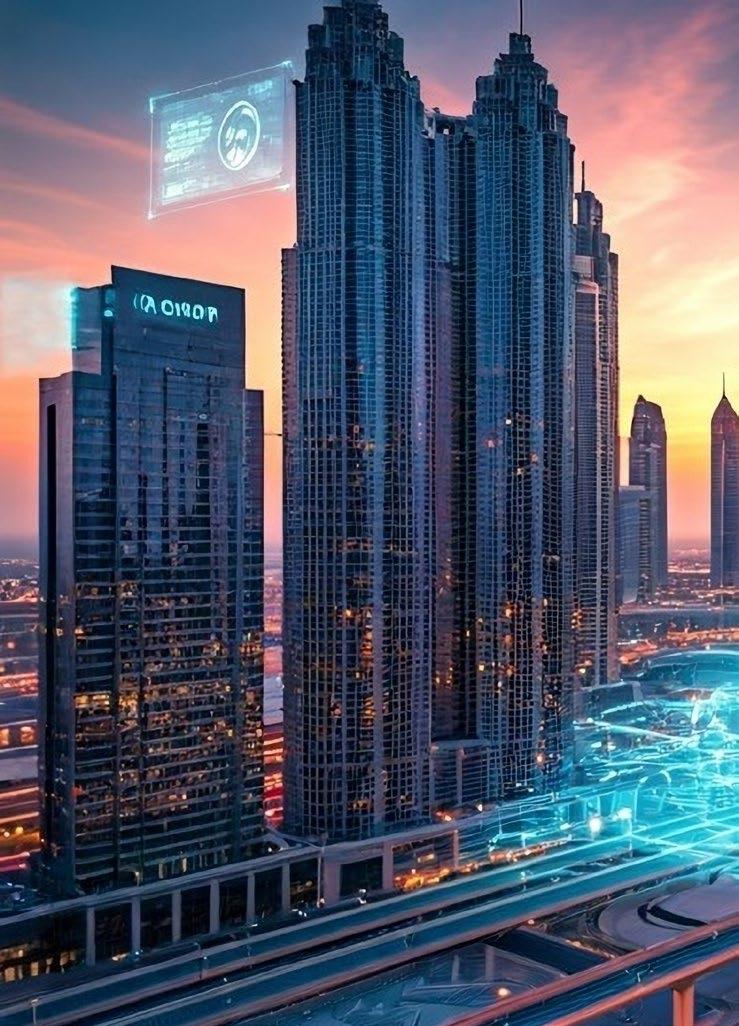
extracting maximum value from legacy assets while adapting them to new demand patterns.
This direction is already visible. Qatar’s Public Transport Master Plan, developed by Egis, is reshaping the long - term national mobility strategy across all modes. Additional programmes such as landfill rehabilitation and waste-to-energy advisory represent
the circular - economy dimension that will define Qatar’s next cycle of infrastructure investment.
Across these three markets, several region wide themes will matter more in 2026 than ever before. One is the rising importance of whole life performance. Governments are focusing more on whether assets will operate efficiently, safely, and affordably over decades, so the commercial calculus of projects is
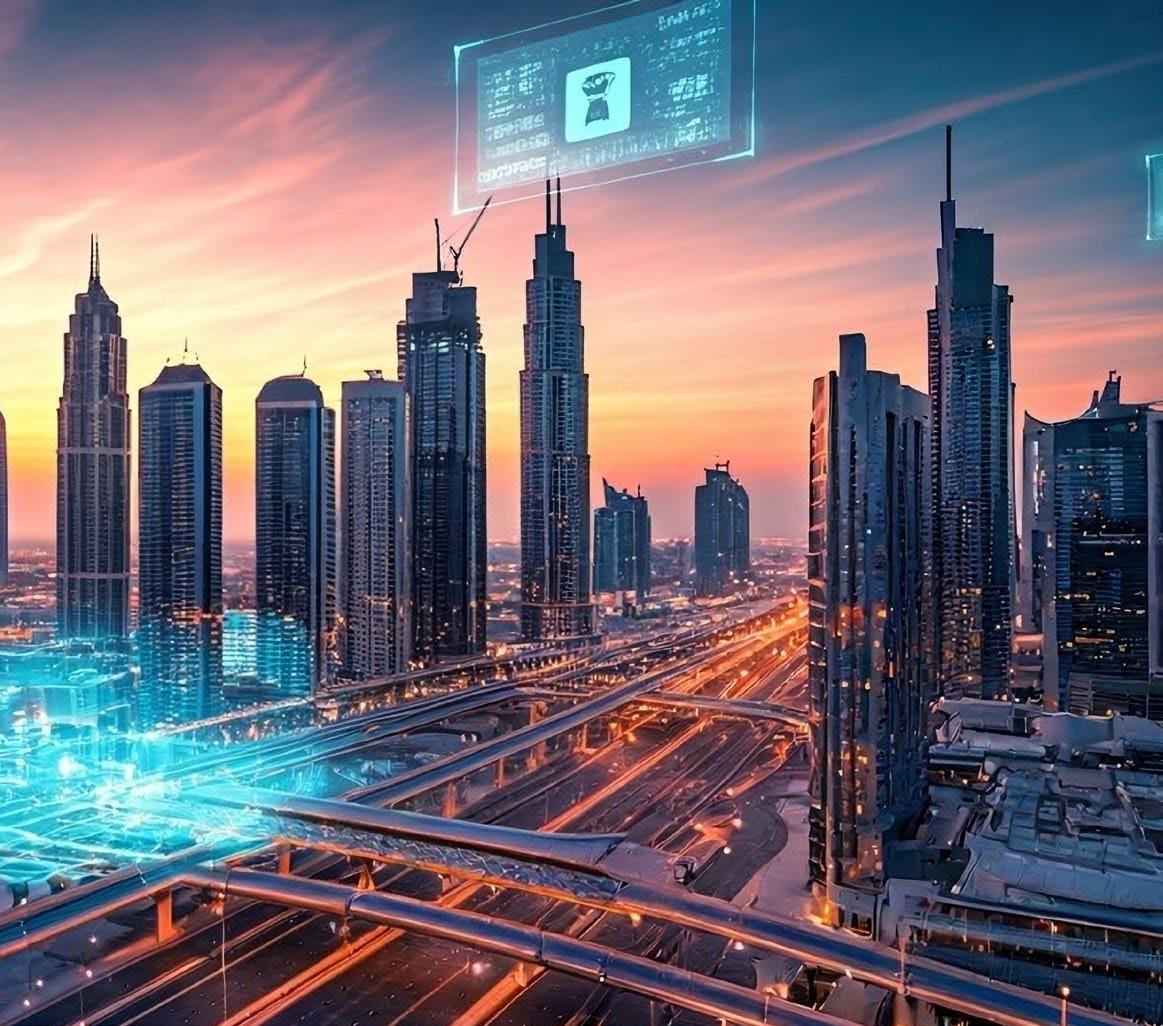
shifting from capital expenditure alone to operating expenditure, reliability, and adaptiveness. Another is the embedding of low carbon requirements into procurement. What was once an aspiration is now measurable, embodied carbon reporting, circular materials strategies, and climate adaptation features are becoming standard conditions of project approval. A third is productivity. Labour
markets, supply chains, and specialist skills are pacing items. In 2026, digital engineering, modular construction, and smarter phasing will be less about novelty and more about necessity.
The Middle East has already proven it can deliver world scale transformation. A crucial action for 2026 is to rapidly develop delivery models in order to match ambition. The region is entering an era where
success will be defined by systems that work together, cities that function under heat and resource stress, and energy models that support industry while meeting climate commitments. Those are not engineering challenges alone, they are governance, sequencing, and operational challenges. In 2026, the projects that matter most will be the ones that are not only built but built to perform.
WINGS OF A NATION
Samer Tamimi, Senior Vice President at Hill International Inc., lifts the curtain on the intricate project management story behind the Zayed National Museum, the cultural heart of Saadiyat Island. From coordinating specialist systems to honouring a nation’s heritage, he explains how Hill is helping to deliver a landmark worthy of the UAE’s founding father.
BY VIBHA MEHTA
When Samer Tamimi speaks about the Zayed National Museum, he sounds less like a consultant ticking off milestones and more like a custodian safeguarding a legacy. With decades of experience on complex schemes, he understands that this project is not just another line on a portfolio, it is a national narrative written in steel, stone and light. “Our responsibility is to protect the client’s vision at every step,” he says, “so that what eventually opens to the public feels worthy of Sheikh Zayed’s name.”
As a Project Management Consultant, Hill International sits at the centre of the project’s moving parts, safeguarding cost, schedule, quality and risk while keeping the client’s objectives in clear focus. The team oversees contractor performance, manages interfaces between designers, specialists and authorities, and supports the client through testing, commissioning, handover and operational readiness. Samer describes Hill’s role as “the central coordination point that holds the line, so this landmark is delivered to the standard a nation expects.”

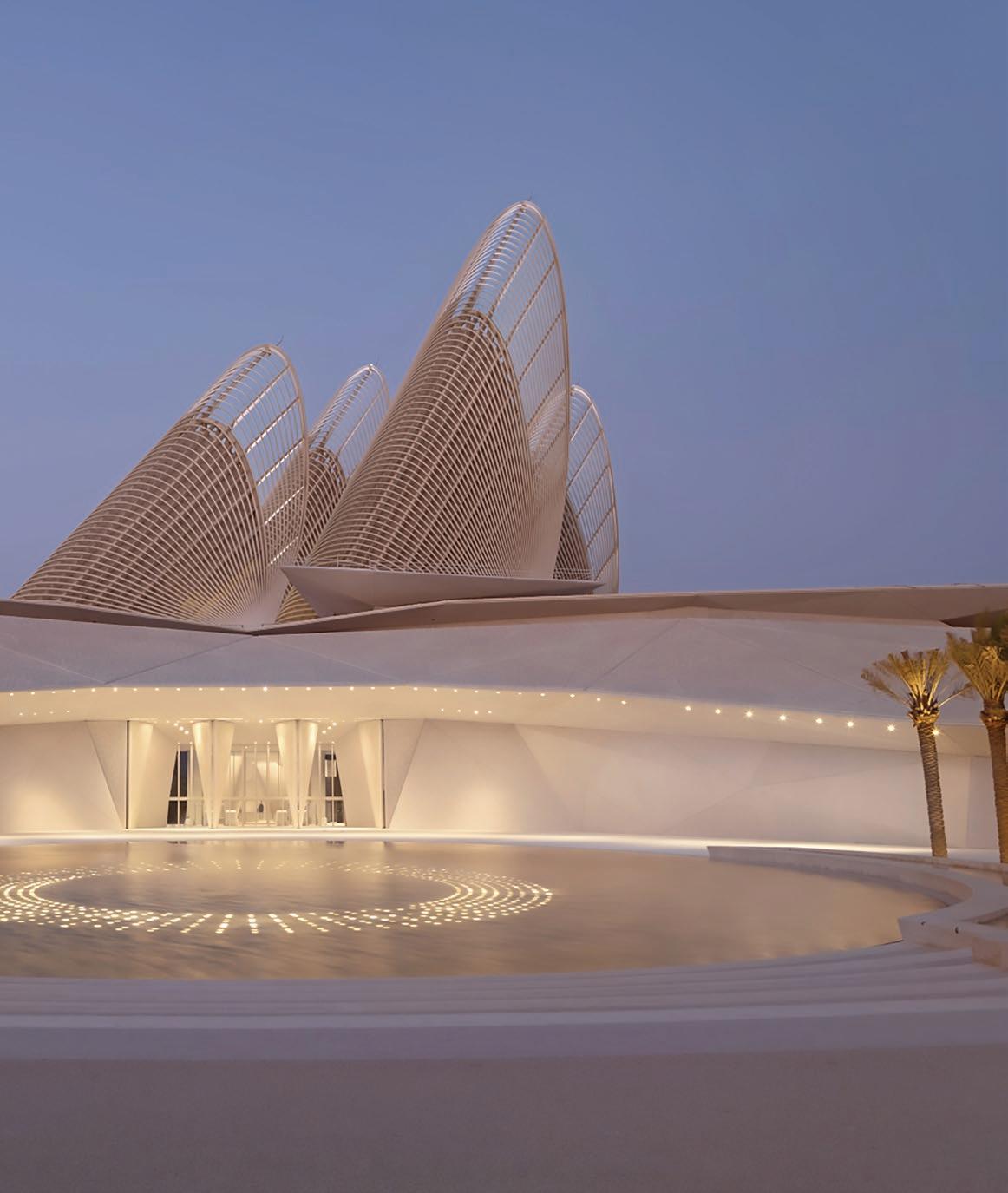
The challenges are as layered as the building itself. The museum’s distinctive façade of wings, its highly integrated building management systems and the sensitivities of worldclass exhibition spaces demand extraordinary precision. “This is a mega project in every sense,” he notes. “The architecture is expressive, the systems are complex, and the stakeholder list is long. Coordination is not a task; it is a discipline we live with every day.” Through strengthened reporting, coordinated oversight and accelerated rectification plans, Hill has worked to keep momentum while bringing the project to completion.
To maintain alignment, the consultancy has built a disciplined framework that keeps conversations structured and decisions visible. This includes:
Weekly executive-level and technical coordination meetings
Daily site coordination between PMC discipline engineers and contractor teams
Strict document and correspondence management through ACONEX
Rapid issue resolution through focused task forces for critical systems
Ongoing alignment with the client on priorities, risk mitigation and readiness targets
“Transparency is non-negotiable,” Samer explains. “When everyone can see the same information, it becomes much easier to move together rather than pull apart.”
Heritage and national identity sit at the core of Hill’s approach. The team drew on experience from cultural projects such as the Egyptian National Museum in Cairo, but knew that Zayed National Museum required its own language. From the earliest stages, they studied the museological narrative, coordinated tirelessly with curators, conservators and Abu Dhabi stakeholders and treated every gallery as a vessel for memory.
The museum’s significance shapes daily decisions in very practical ways:
Respect for storytelling, ensuring that every architectural, functional and experiential detail supports the museum’s role as the national home of history and culture
Care for quality and longevity, viewing the project as an institution for generations rather than a building for the present
Protection of exhibit integrity, working closely with curatorial teams so that spaces meet stringent conservation and environmental standards
Responsiveness to national expectations, aligning programmes, opening readiness and handover strategies with the museum’s importance to the UAE public and leadership
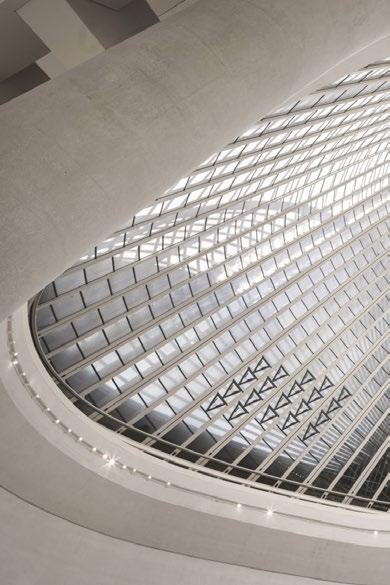
“We are not just erecting a structure,” Samer reflects. “We are helping to frame how future generations will encounter the story of their country.”
Sustainability and long-term performance are stitched into the delivery strategy rather than added on at the end. Hill’s brief extends beyond construction oversight into safeguarding lifecycle value.
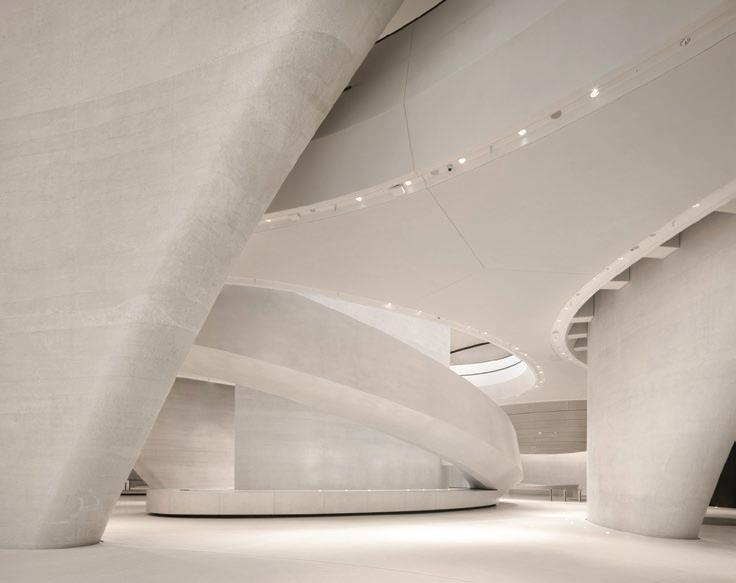
Samer, Tamimi, Senior Vice President at Hill International Inc.
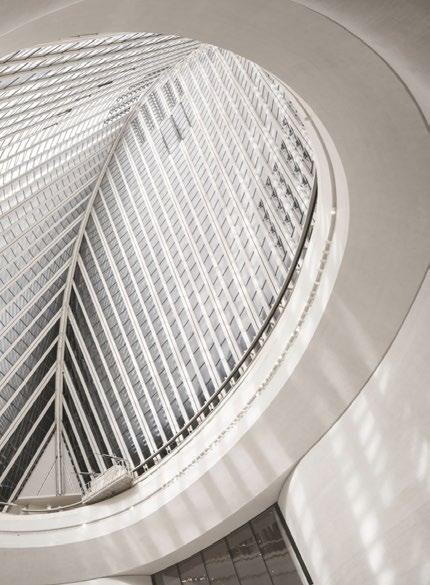
Key elements include:
Ensuring systems meet the required sustainability standards and operational efficiency
Supporting commissioning and finetuning of complex systems such as BMUs, GRUs, BMS, façade systems and environmental controls
Ensuring that as-built records and O and M manuals are accurate and complete to support future asset management
Working with the client on training programmes so the operations team can run the facility efficiently from day one
Preparing the building for long-term maintainability by ensuring access, safety systems and performance criteria are fully addressed
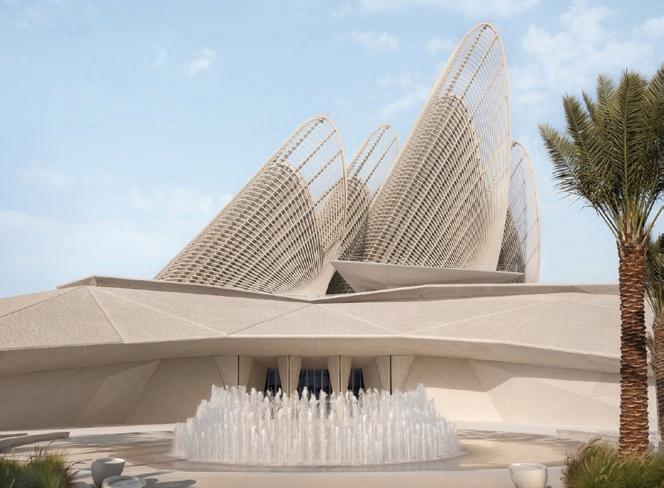
This is a mega project in every sense. The architecture is expressive, the systems are complex, and the stakeholder list is long. Coordination is not a task; it is a discipline we live with every day.
From a regional perspective, the project has generated lessons that will echo across future landmarks. Early planning for specialist systems, robust communication protocols, proactive testing and commissioning and early engagement with authorities all emerge as critical themes. Operational readiness, Samer emphasises, must be a priority from the outset for any public-facing cultural institution. “The closer you get to opening, the
more every hour counts,” he says. “You need the courage to make decisions quickly without compromising the integrity of the vision.”
Looking beyond Saadiyat, Hill International is deepening its role across the Middle East. The company is positioning itself as a preferred project management and consultancy partner for extensive infrastructure, aviation and mixed-use programmes, managing multiple mega schemes in parallel. The ambition is not simply to deliver individual projects, but to help shape the UAE’s and the wider region’s physical and cultural landscapes. As more complex, multistakeholder cultural and infrastructure projects come to market, Samer expects Hill’s value to lie increasingly in early engagement, risk allocation and governance modelling. “On projects of this scale, the biggest risks are often not technical,” he notes. “They are about alignment, accountability and the speed at which decisions can be made.”
By entering at the strategic and pre-development stages, Hill aims to design frameworks that prevent those issues before they appear on site.
In a region defined by ambitious skylines and fastmoving programmes, Zayed National Museum stands apart as a project where schedule and symbolism carry equal weight. It is, in Samer’s words, “a privilege and a responsibility”. Through disciplined management, cultural sensitivity, and an unwavering respect for the story the building must tell, Hill International is helping ensure that, when the doors finally open, they open onto a museum that feels as enduring as the legacy it honours.

CONNECTING THE UNCONNECTED
Spacecoin founder Tae Oh explains why the future of connectivity may come from orbit, not the ground.
BY REEBA ASGHAR

For decades, global internet access has expanded through ground-based networks built outward from major population centres. While this model has delivered scale, it has
also left large parts of the world offline, particularly in regions where geography, cost, or political instability limit infrastructure development. As digital access becomes more closely linked to economic participation and social mobility, the limitations of this approach are becoming harder to ignore.
Space-based connectivity is now being explored as an alternative. Spacecoin, founded by Tae Oh, is
among a small group of companies testing whether low-Earth orbit satellites combined with blockchainbased coordination can offer a viable path to broader access. The idea is to create a network that operates without a central authority and can remain functional even when local infrastructure fails. In the following interview, Tae Oh discusses the logic behind this model, the challenges of building it at scale, and what it could mean for regions that remain disconnected.
How does integrating blockchain into space-based infrastructure change the way data centers in orbit operate, especially in terms of security, transparency, and trust?
Integrating blockchain technology into space-based infrastructure has a profound impact on operations.
First, blockchain removes single points of failure by distributing
control across multiple independent nodes. Any infrastructure, such as an energy grid, a data center, or a telecoms network, that is controlled by a single centralised entity becomes an easier attack target. We have many examples where hackers have targeted critical infrastructure, most notably the Ukraine power grid attacks of 2015-16 that left 230,000 people without electricity for several hours. To compromise a blockchain-powered network, however, an attacker would need to simultaneously overpower a majority of the network’s nodes, significantly increasing the cost and complexity of the attack.
Second, blockchain ensures transparency in operations. Every computation performed, storage transaction, or resource allocation in a data center is recorded on an immutable ledger. Customers can verify exactly what services they received, what data was processed, and what they should be charged.
For the billions of people on the other side of the digital divide, our mission means enabling access to global markets, education, and financial services for the first time.
Tae Oh, Founder, Spacecoin
Centralised operations cannot provide this level of transparency because users need to trust the metrics reported by these centralised providers rather than being able to verify them themselves.
This brings us to the final benefit of blockchain-based operations: trustlessness. Blockchain replaces trust in a central authority with cryptographic proofs and smart contracts. Instead of trusting a single company to protect your data, meet uptime needs, and apply policies correctly, the network enforces these guarantees automatically via smart contracts.
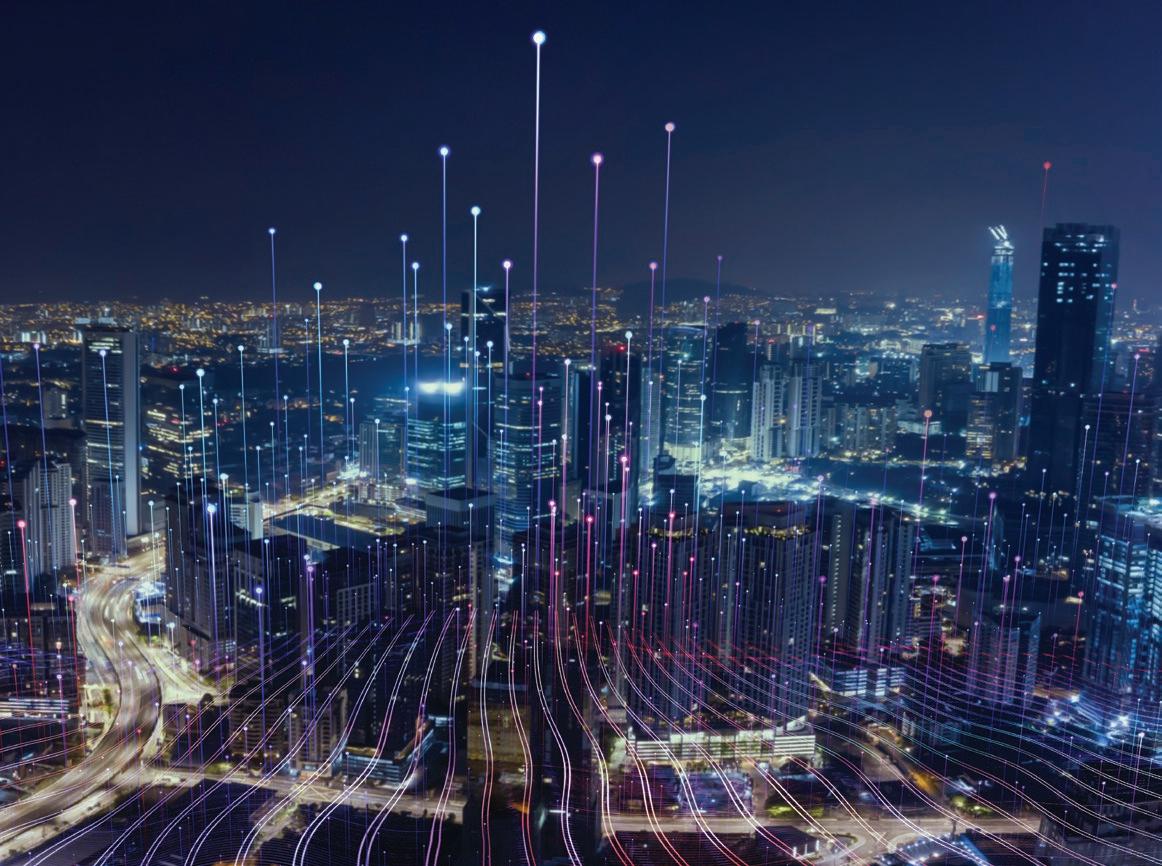
Why has traditional, groundbased infrastructure struggled to connect the remaining billions, and how does Spacecoin approach this challenge differently?
There are 2.6 billion people across the world today who have never connected to the Internet. Terrestrial connectivity networks have failed to bring these billions online because setting up terrestrial infrastructure is expensive, prohibitively so in remote or geographically challenging regions. To give you an idea of the scale of the expense, the ITU estimates that it will cost more
than $400 billion to connect the rest of the world with terrestrial infrastructure. Spacecoin bypasses this by providing global coverage from low-Earth orbit satellites, eliminating the need for expensive ground infrastructure in each region.
The key to our cost advantage is our permissionless, distributed network model. Unlike centralised players, Spacecoin does not want to own and operate each satellite in its network. Rather, we are creating a free-market economy for spacebased infrastructure. We allow independent satellite operators to turn their satellite’s idle capacity into
a new revenue stream by joining our network. This approach allows us to scale without bearing the massive capital costs of building and launching satellites globally. Because thousands of independent operators are financially incentivised to optimise their hardware’s performance and uptime, the network becomes faster, cheaper, and more robust than any single monopoly can build. These cost savings are then passed on to the users. We plan to launch in our target markets of Nigeria, India, and Indonesia at the monthly rate of only $1-2 per user.
What advantages does a decentralised satellite network offer when it comes to resilience, uptime, and recovery during major disruptions?
Decentralised satellite networks have inherent resilience that terrestrial systems cannot match. Any centralised infrastructure is vulnerable to attacks, whether they are natural disasters or human-coordinated, that can disrupt services for millions at once. We’ve seen this pattern repeatedly with major ISPs and cloud outages.
Decentralised networks such as ours distribute operations across multiple independent nodes. If individual satellites or links fail, traffic can automatically reroute through other available nodes, allowing the network to continue operating without interruption. Uptime improves because there is no single point of failure.
More importantly, satellite networks are immune to terrestrial disasters. In fact, they often act as lifeline connectivity for first responders, governments, and affected populations when terrestrial infrastructure is destroyed by earthquakes, floods, or hurricanes, as seen most recently in 2024 during the hurricanes Helene and Milton in the US.
As computing and data infrastructure increasingly move into orbit, what role does Spacecoin play in supporting that shift?
While Spacecoin is not building space-based computing infrastructure itself, it is designed to provide the communications layer that such infrastructure can
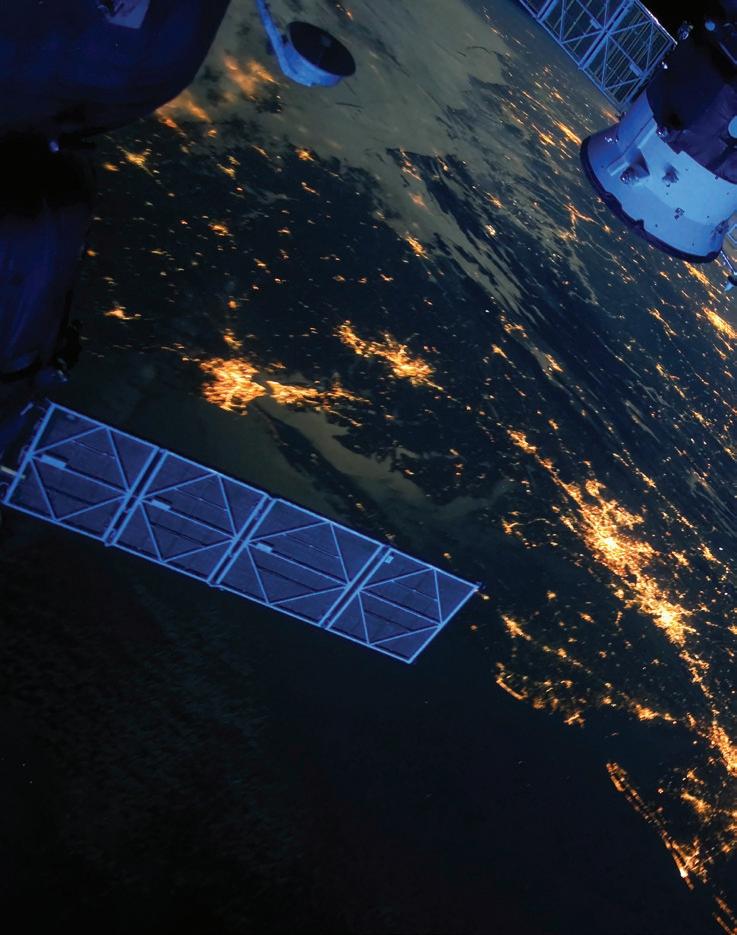
Launch of the three CTC-1 demo satellites

rely on. As data centers and other compute-intensive infrastructure move to space, they will need reliable inter-satellite communication networks. Spacecoin provides that infrastructure layer.
By enabling efficient, permissionless data routing and coordination across independently operated satellites, Spacecoin can help reduce duplication of infrastructure and act as a shared, interoperable connectivity layer that
By creating a permissionless, distributed network, Spacecoin can deliver connectivity more efficiently and affordably than traditional infrastructure, especially in remote or underserved regions.
orbital infrastructure can build on. The efficiency gains from spacebased computing, such as 24-hour solar power and superior cooling, can only be realised if there is a robust communications network to support them. Spacecoin is that network.
Looking beyond standard internet access, what new applications or markets could emerge from blockchainenabled, space-based data centers?
One of the most exciting possibilities of blockchain-enabled space data centers is the emergence of a machine-to-machine (M2M) economy in orbit. Satellites can autonomously discover, negotiate, and transact with one another, creating a realtime marketplace for space-based services. For example, one satellite could pay another for data relay or compute services, or an imaging satellite could sell verified data directly to a ground-based customer via an automated smart contract.
DeFi applications can also leverage the security, censorship resistance, and resilience of our network to
create services that are accessible to everyone, regardless of their location or political environment.
More broadly, we anticipate the rise of inter-satellite service markets, where satellites from different operators can seamlessly interact and provide services to each other, all facilitated by blockchain-based smart contracts.
How do you envision spacebased data centers and a blockchain-powered satellite network reshaping the global internet landscape over the next decade, particularly for regions underserved by traditional infrastructure?
Over the next decade, the amalgamation of blockchain and space-based infrastructure will fundamentally reshape internet access by creating a more resilient, decentralised, and permissionless connectivity layer. Our mission is to ‘Connect the Unconnected’. For the billions of people on the other side of the digital divide, this mission means enabling access to global markets, education, and financial services for the first time. We are laying the groundwork for a future where connectivity is not a privilege but a fundamental right accessible to all.
At the same time, the rapid growth of the space economy will accelerate this shift. With the space economy projected to grow to $1 trillion over the next two decades, increased investment from both governments and private companies will drive down the cost of access to orbit. As launch costs fall and infrastructure becomes more interoperable, innovation will expand beyond a small number of centralised players. This will ensure that the benefits of global connectivity reach regions historically underserved by traditional infrastructure.
DESIGN, BUILD, FURNISH
EGYPT’S INTERNATIONAL EXHIBITION CENTER, NEW CAIRO - EGYPT 14 - 16 MAY 2026 THE 11th INTERNATIONAL INTERIOR, EXTERIOR, FURNISHING & FIT-OUT EXHIBITION

INTERIORS. SOLUTIONS. TECHNOLOGY / EGYPT’S INTERNATIONAL EXHIBITION CENTER, NEW CAIRO - EGYPT (EIEC) 14 - 16 MAY 2026
INTERIORS EXHIBITION


A FUTURE CLASSIC IN THE MAKING
The eco-friendly iCAUR V27 makes its Middle East debut.

iCAUR, an electric-led automotive brand from China, is launching in the Middle East with the dynamic V27 SUV. Making its regional debut in the UAE, iCAUR is expected to expand its footprint across the Middle East.
DRIVING THE GREEN MOBILITY REVOLUTION IN THE REGION
In an important development for the Middle East market, with coordinated efforts being made by governments, companies and consumers to meet green mobility goals, the V27 is a range-extended electric vehicle (REEV) SUV offering longer distances alongside lower emissions. The V27 is powered by a battery and electric motors, with an additional 1.5L turbocharged petrol engine acting as a back-up generator to maintain the charge of the battery as required.
The REEV powertrain has a total range of more than 900km, with the capacity for 150km of pure electric zero-emissions driving, making it ideal

for most journeys in the UAE. With a combined power output of 449hp and a top speed of 170km/h for the rearwheel drive model and 180km/h for the all-wheel drive variants, the V27 offers thrilling performance for drivers in the Middle East.
“This is the right time to launch the V27 in the Middle East, especially in the exciting UAE market,” says Mr. Zhang Xiaolong (Tim), General Manager of iCaur Middle East. “In line with the UAE’s green mobility strategy, there is strong momentum and consumer interest in the low- and zero-emissions vehicle segments, and the iCAUR V27 supports this vision with exceptional fuel efficiency alongside an exciting driving experience.”
BOLD DESIGN FOR A FORWARD-THINKING MARKET
Design-wise, the V27 blends retro nostalgia with the latest innovations. With a bold and boxy body design and muscular lines reflecting a classic
SUV style, the V27 is set to draw attention on Middle East roads.
The dual sunroof is both attractive and practical, and at the front, the headlights feature a distinctive square housing with a black backdrop and round LED daytime running lights, complementing a functional, utilitarian grille.
Off-road elements such as the upright A-pillars, low window line and large side windows offer exceptional all-round visibility, while the protruding wheel arches offer a wide-body look that also allows drivers to fit larger upgraded wheels and tyres.
The interior does not compromise on modern style, practicality and technology, with 64-colour ambient lighting, 48 storage spaces, flat floor storage in the second row, 15 speakers and a 15.4-inch highresolution floating display screen.
“We are confident that this greatlooking SUV will prove very popular, especially among young, energetic buyers,” says Mr. Zhang Xiaolong
(Tim), General Manager of iCaur Middle East. “As well as standing out from the crowd, the V27 has practical off-road capabilities with 220mm ground clearance and 1.6T of towing capacity.”
MAKING ITS MARK IN THE MIDDLE EAST
The V27 makes a brave statement in the competitive Middle East SUV market. Combining timeless SUVinspired design with the comfort and technology expected by modern drivers, iCAUR’s first foray into the region promises to be the start of an exciting new era for sustainable motoring.
“By bringing the V27 to the Middle East, iCAUR is committed to being part of the solution as we work towards meeting important climate goals – we are proud to showcase a vehicle that looks great, is fun to drive and plays a role in reducing our reliance on fossil fuels,” says Mr Tim, the General Manager of the ME region
CARTIER HAD A MOMENT AT THE GRAMMYS
A Grammy night appearance underscores how the maison continues to convert heritage into modern cultural capital.




Cartier


Panthèrede
Cartier

artier returned to the global spotlight at the 68th Grammy Awards, with a strong showing that reinforced the maison’s enduring influence at the intersection of culture, craftsmanship and celebrity. From contemporary music icons to award-winning composers, some of the evening’s most recognisable names chose Cartier pieces, underscoring the brand’s continued relevance across generations and genres.

British singer-songwriter Olivia Dean appeared in creations from Cartier’s Panthère and Clash collections, wearing a mix of diamond-set pieces and bold

stones.
coloured
earrings, 18k white gold, diamonds, onyx
Panthèrede
bracelet, 18k white gold, emerald, sapphires, onyx, diamonds
Panthèrede
Cartier ring, 18k white gold, emerald, onyx, diamonds
Clash de Cartier ring, 18k white gold, diamonds
Clash de Cartier earrings, 18k rose gold, red agate
Clash de Cartier ring, 18k rose gold, red agate
Clash de Cartier ring, 18k yellow gold







Kendrick Lamar chose a Cartier Tank Américaine in white gold, a classic model long associated with discreet elegance. Bad Bunny, known for his eclectic personal style, wore a mix of archival and contemporary Cartier designs, combining a Tortue watch from the Cartier Collection with expressive jewellery. Composer Ludwig Göransson selected layered Cartier necklaces alongside a Tank Louis Cartier, underscoring the maison’s presence across music, film, and cultural spheres.
Beyond individual appearances, the evening also served as a reminder

Tortue watch, 2000, large model, yellow gold, sapphire, leather
of Cartier’s broader legacy. Established in 1983, the Cartier Collection preserves more than 170 years of the maison’s creative history, housing approximately 3,500 jewellery pieces, timepieces and accessories dating from the mid-19th century to the early 2000s. The collection has since become a fixture in the world’s leading museums, with exhibitions spanning Paris, New York, London, Beijing, Tokyo and most recently Abu Dhabi and Rome.
For audiences in the Middle East, Cartier’s presence resonates beyond celebrity moments. With exhibitions at institutions such as Louvre Abu Dhabi and a growing regional appreciation for heritage luxury, the brand continues to position itself not only as a symbol of glamour, but as a custodian of design history and cultural influence.



Trinity de Cartier necklace, 18k white gold, 18k yellow gold, 18k rose gold
Cartier Tank Américaine watch, small model, 18k white gold, diamonds
Cartier Collection
Panthèrede Cartier ring, 18k yellow gold, emeralds, onyx, diamonds
Cartier Cufflinks with spring motif, 18k yellow gold, onyx
Tank Louis Cartier watch, large model, 18kyellowgold, leather
Cartier Justeun Clou long necklace, extralarge model, 18k whitegold
THE ART OF INTENTIONAL LUXURY
At Serenity, what isn’t said matters as much as what is. Founder Maria d’Orey shows how every moment is designed to slow time and awaken the senses.
BY REEBA ASGHAR

HOW DO YOU TRANSLATE THE CONCEPT OF “CONSCIOUS LUXURY WELLBEING” INTO TANGIBLE EXPERIENCES FOR YOUR GUESTS?
For me, conscious luxury wellbeing begins with awareness of the guest, the moment they are in, and what they truly need. At Serenity – The Art of Well Being at Fairmont The Palm, this awareness shapes every experience. Nothing is rushed, forced, or excessive. Luxury, in this sense, is not about abundance but about intention. From the way a guest is welcomed, to the rhythm of a treatment, to the respectful use of silence, every detail is designed to create presence and moments of stillness with oneself. When done well, it feels as though time has slowed down and that, today, is the rarest luxury of all.
AS SERENITY EXPANDS INTO THE MIDDLE EAST, HOW ARE YOU ADAPTING YOUR APPROACH TO WELLBEING TO RESONATE WITH THE REGION’S CULTURE, CLIMATE, AND LIFESTYLE?
Working in Dubai teaches you very quickly that wellbeing must be responsive. Guests arrive from multiple time zones, often overstimulated, navigating demanding schedules in a high-energy environment. Our focus at Serenity is therefore on personalisation, grounding, and hydration. Treatments are adapted to address heat exposure, travel fatigue, and stress, while always respecting the region’s strong values around privacy and discretion. Just as importantly, our rituals are designed to feel intuitive and culturally respectful, never imposed. True resonance comes from understanding, not adaptation for its own sake.
WITH TECHNOLOGY AND WELLNESS INCREASINGLY INTERSECTING, HOW DO YOU PLAN TO INNOVATE SERENITY’S EXPERIENCES WHILE STAYING TRUE TO YOUR PHILOSOPHY OF MINDFUL, CONSCIOUS LUXURY? Technology should support wellbeing, not dominate it.
At Serenity, we believe innovation earns its place only when it enhances personalisation, recovery, or
Maria d’Orey, Founder & Global Director, Serenity Spa
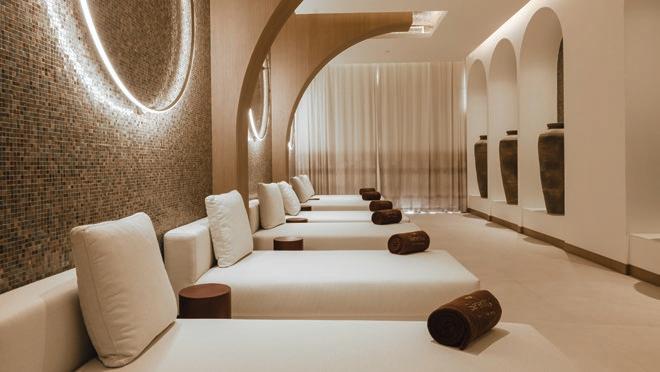
measurable results. That said, the heart of our experience will always remain human. The therapist’s intuition, the quality of touch, and the atmosphere of calm cannot be replicated by any device. Conscious luxury lies in balance; embracing modern tools with purpose, while preserving the emotional and sensory depth that defines true wellbeing.
AS SERENITY GROWS INTERNATIONALLY, HOW DO YOU BALANCE SCALING THE BRAND WITH PRESERVING THE INTIMATE, PERSONALISED EXPERIENCE THAT DEFINES YOUR VISION?
Consistency is important, but connection is essential. While systems help us maintain standards, they can never replace human judgment. At Serenity, we place great emphasis on training our teams to listen, observe, and adapt. As the brand grows, intimacy is protected through culture. When therapists feel empowered, supported, and deeply aligned with the brand’s values, personalisation happens naturally. It cannot be automated; it must be lived, every day, on the spa floor.


WHAT IS YOUR VISION FOR INSPIRING THE NEXT GENERATION OF WELLNESS PROFESSIONALS, AND HOW DO YOU SEE SERENITY CONTRIBUTING TO A BROADER CULTURE OF WELLBEING AND SELF-CARE?
I am passionate about developing wellness professionals who see this field as a vocation, not a stepping stone. At Serenity, we invest in continuous learning, emotional wellbeing, and long-term career growth because a fulfilled therapist creates a far more meaningful guest experience. Beyond our own spaces, I hope Serenity contributes to a broader cultural shift, one in which selfcare is not viewed as an occasional indulgence but as an essential practice for balance, resilience, and sustainable performance.
Guests are increasingly seeking experiences that support emotional clarity, physical longevity, and long-term balance, not just momentary escape.
HOW DO YOU ENVISION THE CONCEPT OF HOLISTIC WELLBEING EVOLVING OVER THE NEXT DECADE, AND WHAT ROLE DO YOU SEE SERENITY PLAYING IN SHAPING THAT FUTURE GLOBALLY?
Holistic wellbeing is becoming more intentional and more informed. Guests are increasingly seeking experiences that support emotional clarity, physical longevity, and long-term balance, not just momentary escape. Over the next decade, wellbeing will become more integrated into daily life, travel, and hospitality. Serenity’s role is to offer spaces that feel thoughtful, culturally sensitive, and deeply personal, places where guests can disconnect from external noise and reconnect with themselves, wherever they are in the world.
PUMA’S LOUNGE MEETS DUBAI’S CREATIVE CROWD
The sportswear brand brought its travelling PUMA Lounge to the city, offering a snapshot of how global fashion experiences are being adapted for Dubai’s growing creative scene.
PUMA brought one of its most celebrated global experiences to Dubai with the launch of the PUMA Lounge Dubai Edition, a concept that has travelled through Milan, Seoul and Paris, and now landed in a city whose creative energy the global team had been watching and loving.

The Lounge was about meeting the community where culture is being made. That meant opening the doors not only to influencers, but to the culture shifters and curators shaping the region’s creative scene every day, the talents setting visual language, driving style conversations and influencing how culture shows up both online and offline from photographers, directors, editors, artists, creatives and more.
Inside the space, guests were given first access to global PUMA drops that had not yet launched in the region. From apparel to sneakers, the pieces were curated directly from PUMA’s global teams, offering Dubai’s creative community an early look at what was coming next on a global level.
Beyond access, the PUMA Lounge marked a first of its kind in the region at this scale, operating as a true gifting lounge experience, both in terms of the volume of attendees and the breadth of products on offer. Over the two days, it was striking to see how the same PUMA pieces were styled in completely different ways across talents, reflecting the diversity of creative expression within Dubai’s community.
The Lounge also brought together some of the city’s favorites, featuring
a customisation station by Black Pearl Charms, a locally grown charms business where invitees created one off, personalised sneaker pairs, alongside a coffee bar byKnot Bakehouse, the Emirati-owned brand and community favorite.
From the Speedcat range including the Lux Ballet, the Wedge and the bold Cow Print, Mostro’s including XC Prime and Fey Gorp Sneakers and H-Street Premium Sneakers, the Lounge showcased PUMA’s range across fashion and sports style. Guests also explored key global collaborations including PUMA x REPRESENT and the highly anticipated A$AP ROCKY x PUMA collection.
The experience extended beyond the Lounge itself, coming to life throughout Sole DXB weekend, where talents were seen wearing their exclusive PUMA pieces across the event, each look styled in a distinctly personal way, reinforcing the brand’s connection to individual expression and culture.
This isn’t just another local event for PUMA Middle East but instead bringing a globally recognised concept to life in Dubai that’s inspired by the talent, creativity, and energy of the local community.